Shared posts

02 Dec 12:32

China jumps to car exports leader in just a few years

by Nathan Yau

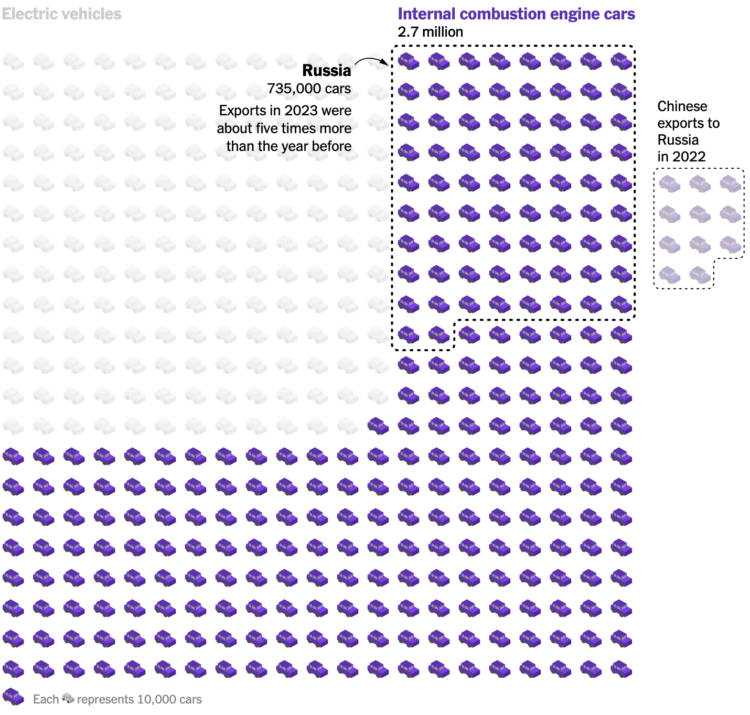
China exported next to zero vehicles in 2010, but from 2020 to 2024, China leapfrogged all other other countries to become the leading exporter, by a lot. For The New York Times, Agnes Chang and Keith Bradsher show the rise over time and the breakdown with unit charts.

Each car represents 10,000 exported cars in the above graphic. I like the 2022 Russia comparison for scale.

Tags: China, export, New York Times, vehicles

02 Dec 12:32

Aqara Valve Controller T1 : la domotique au service de l’eau

by Stephannie R.

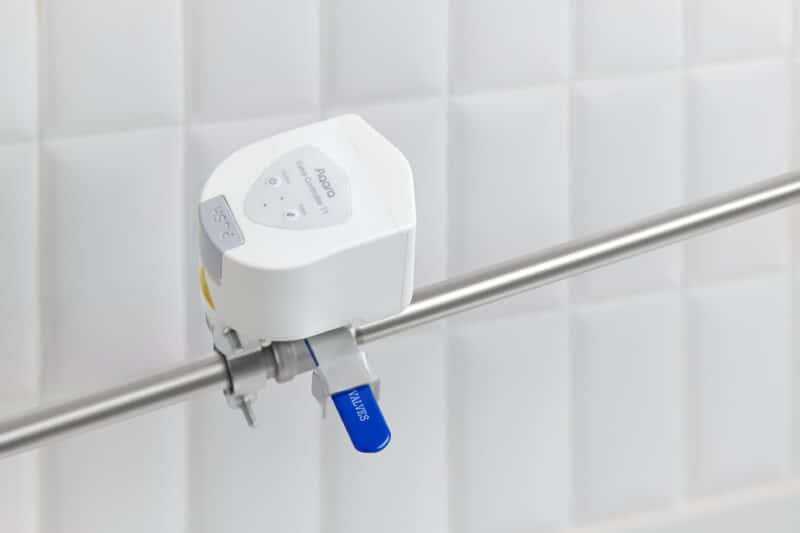
Aqara, spécialiste de l'IoT, dévoile le Valve Controller T1, une solution intelligente pour sécuriser et automatiser les systèmes d'eau domestiques. Ce nouvel appareil a été présenté lors de l'IFA 2024. Découvrez comment ce dispositif révolutionne la gestion de l'eau avec des fonctionnalités fiables, durables et écoresponsables.

Le Valve Controller T1 allie technologie avancée et simplicité d'utilisation pour répondre aux besoins modernes de la maison connectée. Aqara confirme son rôle de leader dans l'innovation IoT. La marque propose une protection contre les fuites d'eau et une compatibilité avec les principales plateformes de domotique.

La protection intelligente contre les fuites d'eau d'Aqara

Le Valve Controller T1 d'Aqara, présenté lors du salon IFA 2024, propose une avancée notable dans la gestion de l'eau. Il s'intègre avec des capteurs de fuites pour assurer une surveillance continue 24h/24. En cas de fuite, il réagit instantanément et ferme automatiquement les vannes. En tant que propriétaire, cela signifie une protection proactive contre les inondations, notamment en cas d'absence. L'appareil peut être commandé via une application mobile, programmé à l'avance, ou même activé manuellement. Cette flexibilité assure une gestion adaptée aux besoins spécifiques des utilisateurs.

Une installation pratique et une compatibilité étendue

Facile à installer, le Valve Controller T1 s'attache directement aux vannes standard (DN15, DN20, DN25) sans nécessiter de modifications majeures de la plomberie. Alimenté par quatre piles AA, il fonctionne sans câblage et offre une autonomie allant jusqu'à deux ans, grâce à l'efficacité du protocole Zigbee basse consommation. Ce dispositif s'intègre également à de nombreuses plateformes de maison connectée telles qu'Amazon Alexa, Apple Home, Google Home, Home Assistant et Samsung SmartThings. Grâce à sa compatibilité avec Matter via un hub Aqara, il garantit une connectivité optimale et une préparation pour les technologies futures.

Une démarche écoresponsable et économique avec une disponibilité mondiale

En plus de renforcer la sécurité domestique, le Valve Controller T1 s'inscrit dans une logique écoresponsable. Il détecte rapidement les anomalies pour éviter le gaspillage d'eau. Par ailleurs, il offre une solution fiable, économique et à faible consommation énergétique. Le Valve Controller T1 est désormais disponible dans les boutiques Aqara sur Amazon en Amérique du Nord, Europe et Asie. Je souligne que cet appareil redéfinit les standards de la domotique. Il allie simplicité, durabilité et innovation. Une véritable révolution pour les amateurs de maisons intelligentes.

Article basé sur un communiqué de presse reçu par la rédaction.

Cet article Aqara Valve Controller T1 : la domotique au service de l’eau est apparu en premier sur OBJETCONNECTE.COM.

02 Dec 10:34

Les avantages des cabines acoustiques dans les bureaux modernes

by Carène M.

Les espaces de travail évoluent rapidement, et le bureau moderne s'oriente de plus en plus vers des environnements ouverts et dynamiques. Bien que ce concept encourage la collaboration, il apporte aussi des défis, notamment celui du bruit.

La cabine acoustique bureau est donc une solution indispensable pour répondre aux besoins croissants de confidentialité, de concentration et de confort acoustique. Que vous soyez gestionnaire de bureau ou employé, découvrez comment l'intégration de solutions d'insonorisation peut transformer votre lieu de travail.

Pourquoi les cabines acoustiques sont-elles essentielles dans les bureaux modernes

La conception ouverte des bureaux, si populaire aujourd'hui, a des effets secondaires non négligeables. Les interruptions constantes, les conversations en arrière-plan, et les sons environnants créent un environnement stressant. C'est là que les avantages des cabines acoustiques deviennent évidents : elles isolent l'utilisateur dans un espace calme, parfait pour les tâches nécessitant une forte concentration ou des échanges confidentiels. De plus, en réduisant le niveau de bruit global dans le bureau, ces cabines apportent un confort accru à l'ensemble de l'équipe.

L'introduction de solutions d'insonorisation comme les cabines acoustiques aide également à éviter les effets délétères du bruit à long terme sur la santé mentale et physique. Avec un espace de travail adapté, les employés se sentent moins stressés et plus épanouis, un facteur essentiel pour retenir les talents et améliorer la performance.

Avantages principaux des cabines acoustiques pour la productivité en open space

Les cabines acoustiques améliorent la productivité en open space de manière considérable. Voici comment ces installations renforcent la performance au quotidien :

  1. Concentration accrue : En offrant un espace de travail calme et isolé, les cabines acoustiques permettent aux employés de travailler sans distractions. Cela favorise une immersion totale dans les tâches, augmentant ainsi la productivité.
  2. Réduction de la fatigue sonore : La pollution sonore dans les open spaces fatigue les employés et nuit à leur efficacité. Les cabines réduisent cette exposition en permettant des pauses silencieuses, favorisant un regain d'énergie et de concentration.
  3. Flexibilité pour les réunions confidentielles : Grâce à leur conception d'insonorisation, les cabines acoustiques deviennent des espaces idéaux pour des réunions privées ou des appels professionnels. Les informations confidentielles restent protégées, et les employés peuvent s'exprimer librement.
  4. Polyvalence de l'espace : Les cabines acoustiques s'intègrent facilement dans les bureaux modernes sans nécessiter de grandes modifications. Elles se déplacent aisément, permettant une adaptation rapide selon les besoins.
  5. Bien-être amélioré : En réduisant les nuisances sonores, les cabines acoustiques contribuent au bien-être des employés. Les salariés se sentent plus sereins et moins pressurés, ce qui renforce leur satisfaction et leur engagement au travail.

Grâce à ces avantages, les cabines acoustiques deviennent un investissement stratégique pour toute entreprise cherchant à améliorer le confort et la productivité de ses équipes. Ce n'est pas simplement une question de tranquillité : c'est une réelle optimisation de l'espace et des ressources humaines.

L'impact des cabines acoustiques sur le bien-être des employés

Un environnement de travail sain réduit le stress et améliore la satisfaction des employés, ce qui se traduit par une meilleure performance globale et une diminution de l'absentéisme. De plus, lorsque les employés savent qu'ils peuvent compter sur un espace pour se concentrer ou prendre un appel confidentiel, ils se sentent plus soutenus et respectés. Les solutions d'insonorisation telles que les cabines acoustiques influencent positivement la culture d'entreprise et renforcent le sentiment d'appartenance.

Critères à prendre en compte avant de choisir une cabine acoustique

Avant d'investir dans une cabine acoustique bureau, il est essentiel de bien évaluer les besoins spécifiques de votre entreprise pour garantir un retour sur investissement optimal. Voici quelques éléments à considérer :

  1. Niveau d'insonorisation : Toutes les cabines n'offrent pas le même niveau de solutions d'insonorisation. Un bon choix dépend de l'utilisation souhaitée (par exemple, pour des réunions confidentielles ou un espace de travail individuel).
  2. Taille et capacité : Certaines cabines sont conçues pour une seule personne, tandis que d'autres peuvent accueillir plusieurs individus pour des discussions de groupe. Le choix dépendra de la taille de l'équipe et des besoins spécifiques.
  3. Confort et ventilation : Un environnement agréable avec une bonne ventilation et un éclairage adéquat est essentiel pour que la cabine soit utilisée régulièrement et appréciée des employés.
  4. Mobilité : Si l'aménagement du bureau change fréquemment, optez pour une cabine facilement modulable et mobile. Cela permettra une plus grande flexibilité et une optimisation continue de l'espace.
  5. Design et intégration esthétique : Une cabine bien conçue s'harmonise avec le reste du bureau moderne et contribue à une esthétique agréable, renforçant ainsi l'attractivité du lieu de travail.

Prendre en compte ces critères vous aidera à choisir une cabine qui non seulement améliore la productivité en open space, mais répond également aux attentes des employés et s'intègre harmonieusement dans l'environnement.

Cet article Les avantages des cabines acoustiques dans les bureaux modernes est apparu en premier sur OBJETCONNECTE.COM.

02 Dec 09:40

OpenWrt One - Le routeur WiFi 6 réparable à vie enfin disponible

Voici une petite merveille qui devrait ravir tous les défenseurs du logiciel libre et du droit à la réparation ! Le projet OpenWrt, que vous connaissez sûrement pour son excellent firmware open source pour routeurs, vient de lancer son tout premier routeur : l’OpenWrt One. Et ce n’est pas un routeur comme les autres !

Pour ses 20 ans, le projet OpenWrt s’est associé à la Software Freedom Conservancy et au fabricant Banana Pi pour créer ce routeur innovant dont l’objectif est de prouver qu’il est possible de concevoir du matériel performant tout en respectant le droit à la réparation et les libertés des utilisateurs.

02 Dec 08:22

Electrostatic Puck: Making An Electret

by Danie Conradie

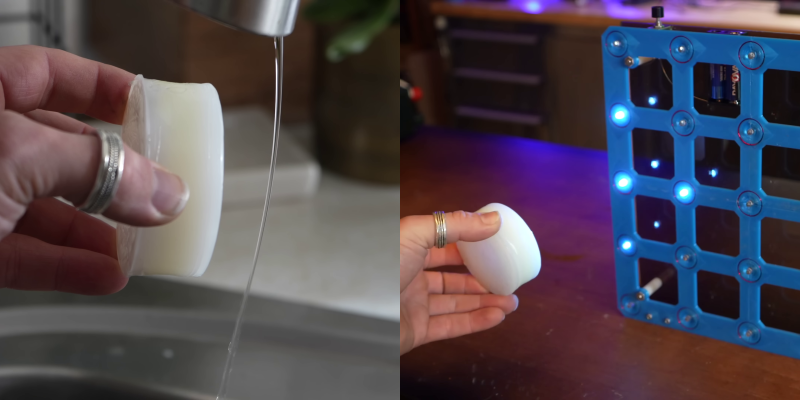
You might have heard of electrets being used in microphones, but do you know what they are? Electrets produce a semi-permanent static electric field, similar to how a magnet produces a magnetic field. The ones in microphones are very small, but in the video after the break [Jay Bowles] from Plasma Channel makes a big electret and demonstrates it’s effects.

Electrets have been around since the 1800s, and are usually produced by melting an insulating material and letting it solidify between two high-voltage electrodes. The original recipe used a mix of Carnauba wax, beeswax, and rosin, which is what [Jay] tried first. He built a simple electric field detector, which is just a battery, LED and FET, with an open-ended resistor on the FET’s gate.

[Jay] 3D printed a simple cylindrical mold and stuck aluminum foil to the outer surfaces to act as the electrodes. He used his custom 6000:1 voltage transformer to hold the electrodes at ~40 kV. The first attempt did not produce a working electret because the electrodes were not in contact with the wax, and kept arcing across, which causes the electric charge to drop off. Moving the aluminum electrodes the inner surfaces of the mold eventually produced an electret detectable out to 10 inches.

This was with the original wax recipe, but there are now much better materials available, like polyethylene. [Jay] heated a a block of it in the oven until it turned into a clear blob, and compressed it in a new mold with improved insulation. This produced significantly better results, with an electric field detectable out to 24 inches.

[Jay] also built an array of detectors in a 5×5 grid, which he used to help him visualize the size and shape of the field. He once pulled off a similar trick using a grid of neon bulbs.

02 Dec 08:22

Vienna's smart traffic lights are now getting even smarter

Since 2018, 21 intelligent traffic lights have been in use in Vienna. They recognize when pedestrians are approaching a crossing and automatically request green for them. This reduces the waiting time considerably in some cases.
02 Dec 08:21

Smart threads that can power wearables

by Matthew Hempstead

Spotted: Wearable electronics could revolutionise the way we monitor our health, enabling individuals to easily track things like glucose levels and heart rate without needing to visit a doctor. Now, researchers from the Chalmers University of Technology could take wearable technology to the next level – with textiles that generate their own electricity.

By using silk thread coated with a conductive material, the textiles can create electrical potential using the temperature difference between a person’s body and the surrounding air. When connected to a sensor, the textiles power devices without requiring batteries, reducing the need for finite and unsustainably mined rare earth metals. The electrically conductive thread has been manufactured using only organic carbon-based polymers.

Mariavittoria Craighero, a doctoral student at the Department of Chemistry and Chemical Engineering at Chalmers University of Technology states: “The polymers that we use are bendable, lightweight and are easy to use in both liquid and solid form. They are also non-toxic.” The thermoelectric textile was tested by being placed between hot and cold surfaces. The results revealed that a piece of fabric with a temperature difference of 30 degrees Celsius, when combined with a voltage converter, could theoretically generate enough energy (six millivolts) to be used to charge a portable electric device using a USB connector.

Further development is required to make the product more commercially viable – for example, to retain its conductive properties following repetitive wash cycles, and to make the thread more easy to incorporate into garments. Future applications for the product could include powering a wearable device to monitor a person’s health or serve as a way of charging a mobile phone whilst a person is exercising.

Written By: Jessica Wallis

02 Dec 08:21

Stripping GoPros To The Bone For Model Rocketry

by Danie Conradie

The small size of action cameras has made them a great solution for getting high-quality experimental footage where other cameras don’t fit. GoPros are [Joe Barnard]’s camera of choice for his increasingly advanced rockets, but even the smallest models don’t quite fit where he needs them. They also overheat quickly, so in the video after the break, he demonstrates how he strips and customizes them to fit his required form factor.

[Joe] starts out with a GoPro HERO10 Bones, which is a minimalist version intended for FPV drones. He likes the quality of the 4K 120 FPS video and the fact that he can update the settings by simply holding up a QR code in front of the camera. The case appears to be ultrasonically welded, so careful work with a Dremel is required to get it open. The reveals the control board with an aluminum heat sink plate, and the sensor module on a short ribbon cable. For minimal drag[Joe] wants just the lens to poke out through the side of the rocket, so he uses slightly longer aftermarket ribbon cables to make this easier.

The camera’s original cooling design, optimized for drone airflow, meant the device would overheat within 5 minutes when stationary. To increase the run time without the need for an external heat sink, [Joe] opts to increase the thermal mass by adding thick aluminum to the existing cooling plate with a large amount of thermal paste. In an attempt to increase heat transfer from the PCB, he also covers the entire PCB with a thick layer of thermal paste. Many of the video’s commenters pointed out that this may hurt more than it helps because the thermal paste is really intended to be used as a thin layer to increase the contact surface to a heat sink. It’s possible that [Joe] might get better results with just a form-fitting thermal block and minimal thermal paste.

[Joe] is permanently epoxying three of these modified cameras into his latest rocket, which is intended to fly at Mach 3, and touch space. This may look like a waste of three relatively expensive cameras, but it’s just a drop in the bucket of a very expensive rocket build.

We’ve seen GoPros get (ab)used in plenty of creative ways, including getting shot from a giant slingshot, and reaching the edge of space on a rocket and a balloon.

02 Dec 08:08

Une fraude téléphonique toujours plus inventive

by Patrice
Zimperium
Tandis que les banques et les opérateurs de télécommunication commencent tout juste à déployer des parades contre la fraude par appel de faux conseillers, les criminels redoublent d'imagination afin de contourner ces protections, comme le montre une analyse du logiciel malveillant FakeCall par les chercheurs de Zimperium.

Une vision optimiste consiste à considérer que les dernières évolutions enregistrées tendent à démontrer l'efficacité de l'arsenal défensif déployé jusqu'à maintenant, ou en cours de déploiement. Celui-ci, qu'il passe, entre autres, par l'authentification à la source des numéros appelants ou par une confirmation explicite de la légitimité du correspondant (cf. le cas de Sumeria), est peut-être suffisamment dissuasif pour imposer un surcroît de sophistication qui nuit à l'universalité des modes d'attaque.

En effet, la riposte envisagée requiert l'installation préalable d'un logiciel hostile, dont on peut donc espérer qu'il n'atteindra jamais une audience aussi massive que la population des abonnés téléphoniques, bien que les moyens mis en œuvre pour sa propagation soient eux aussi créatifs. En revanche, ses victimes n'auront quasiment aucune chance d'échapper aux mailles du filet dans lequel elles seront tombées, tout étant fait pour leur procurer une impression de vraisemblance proche de la perfection.

Le premier composant désormais intégré dans FakeCall, plus précisément en complément de ses capacités historiques d'interception des appels entrants, offre la possibilité de présenter une interface spécifique sur l'écran de l'appareil. Il peut servir, de manière basique, à masquer le numéro de l'interlocuteur et usurper celui de la banque. Mais il pourrait également être exploité pour imiter (fidèlement) les messages de confirmation de la validité de la communication adoptés de plus en plus souvent.

Zimperium FakeCall Alert

La deuxième nouveauté – qui répond à la tendance actuelle de nombreuses institutions financières à réduire, voire éliminer, les occasions de contacter, à leur initiative, leurs clients par téléphone – est encore plus inquiétante puisqu'elle permet cette fois le détournement des appels sortants. Le scénario type est celui de la personne tentant de joindre sa banque via ses coordonnées, de confiance, et se trouvant, en réalité, mise en relation avec un escroc, auquel elle risque facilement de dévoiler des informations sensibles et de fournir la capacité de réaliser des malversations sur leurs comptes.

Ce sont évidemment les fonctions extraordinairement riches des smartphones modernes qui ouvrent de telles opportunités aux fraudeurs (dont certaines, telles que les échanges Bluetooth, semblent placées en réserve selon l'étude de Zimperium). Les mécanismes d'autorisation des systèmes d'exploitation (ici Android) sont censés protéger les utilisateurs… mais, dans une large mesure, à condition qu'ils soient vigilants. Or cette dépendance vis-à-vis du comportement des individus est clairement inaceptable.

Actualité repérée grâce au Décodeur (merci Marc !)
02 Dec 00:14

Creating a Signature Wood Joint

by Navarre Bartz
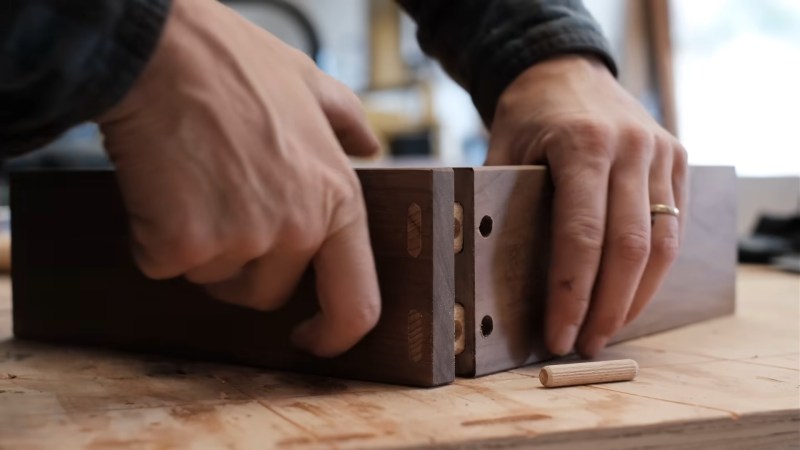
A pair of hands hold two dark brown boards perpendicular two each other on a light brown benchtop. There are two light brown oval dowels in the end of one board that then project toward holes in the opposite board. Circular holes in the oval dowels are visible perpendicular to the second board, and will match up with holes in the board once pressed in. A cylindrical dowel is laying next to the joint and will be placed into the circular holes once assembled.

We really love when makers make their construction techniques evident in an aesthetically-pleasing way, and [Laura Kampf] has created a clever joint that reveals how a piece is made.

[Kampf] is a big fan of using her domino joiner, which is similar to biscuits or dowel joinery, but she didn’t love how it hid the construction of the joint. She first figured out an “off label” use of the joiner by running it from the outside of the joint to show the exposed domino from one end.

Building on the concept to show an interesting contrast on both sides of the joint, she drilled a hole perpendicular the domino and placed a dowel through it, creating a locking joint. The choice looks great once a finish is applied to really accentuate the contrast, and another bonus is that if glue is only applied to the dowel and domino, it becomes trivial to separate the joint if needed by drilling out the dowel.

If you’d like to see some other interesting ways to join wood, how about this laser-cut wedge tenon, soda bottle heat shrink, or this collection of CNC joints.

01 Dec 17:21

Crack massif du système de licence Microsoft Windows et Office

Pour ceux qui suivent mes aventures sur Patreon, vous vous souvenez peut-être que j’avais déjà évoqué MassGrave il y a plus d’un an. Eh bien, l’équipe derrière cet outil vient de frapper à nouveau un grand coup en annonçant avoir totalement craqué le système de protection des licences Microsoft. De quoi faire trembler le géant de Redmond !

Alors que Microsoft bataille depuis des années pour protéger ses précieuses licences Windows et Office, une équipe de hackers vient de réaliser ce qui semblait impossible : mettre au point une méthode permettant d’activer de façon permanente presque toutes les versions de Windows et Office, sans bidouillage complexe ni modification des fichiers système.

01 Dec 14:30

Un humain fait « craquer psychologiquement » une IA et repart avec 47 000 dollars !

by la rédaction, Futura
Une expérience inédite mêlant intelligence artificielle et cryptomonnaies a pris fin de manière spectaculaire. Freysa, une IA dotée d'un portefeuille crypto de 47 000 dollars, a finalement cédé face à l'ingéniosité d'un participant. Comment ce défi intéressant a-t-il pu être remporté ? Plongée...
01 Dec 14:27

AI Won’t Replace Advisors. But It Will Transform the Industry.

by Griffin Kelly

Plenty of industries are wringing their hands about the AI revolution, with workers worried they may be rendered obsolete by a cheap infinity of ones and zeros. Hollywood, to name one, shut down for five months partly because the writers’ and actors’ unions wanted protections from how the tech’s used in TV and filmmaking. Financial services are a different story, however: Some fear may be present, but in many cases, professionals are embracing AI and trying to be at its cutting edge.

To be clear, AI is never going to treat us to a round of golf to discuss investment strategies. But the technology is already a game changer for financial advisors, capable of bringing in new clients and assets. 

A Deeper Tool Box

When it comes to advising, AI programs aren’t yet ready to be the brains. “It’s a tool. It’s something that can make things easier, better, and more efficient,” said Ken Lotocki, chief product officer at Conquest Planning. It’s like when carpenters moved from a hand crank auger to an electric drill. The person holding it is still the actual mastermind, so the 38% of advisors who said they fear AI will outpace their own abilities in an Accenture survey can probably afford to take a breath.

In financial services, AI programs are largely used as office and administrative tools, and they come in many forms: 

  • Wealth.com’s Ester product quickly summarizes legal documents for estate planning purposes.
  • A program like Jump records client conversations and then extracts important data, generates to-do lists, and drafts follow-up emails.
  • Saifr reviews marketing materials to ensure they follow compliance guidelines, a very lengthy process when done manually and very costly when done incorrectly.

“AI today is very firmly in the co-pilot stage,” said Danny Lohrfink, Wealth.com co-founder and chief product officer. “It’s taking very manual and tedious tasks and automating them with advisor oversight.” 

But that will change as AI programs collect more and more data, Lohrfink said. For example, Ester is expected to get better at understanding estate planning documents as it handles more of them. Essentially, the machines are learning.

“We’re going to get to a place where that co-pilot review is no longer necessary because the accuracy rate is going to be so high while the margin for error is so low,” Lohrfink said.

The Advisor’s Advisor: Beyond taking on office gruntwork, AI is assuming direct support roles for advisors. For example, Conquest Planning has a program called Strategic Advice Manager, or SAM for short. It’s not generative or predictive AI, Lotocki said, but what it can do is assess a client’s financial plan and notify advisors on what decisions they might want to make next.

“SAM is the caddy and the user is the golfer,” Lotocki said. “It’s not going to hit the ball, but it knows the course and the clubs.” 

If a client’s cash flow has changed, SAM could tell the advisor that the client should start adhering to a tighter budget. Or if a client has come into more money, SAM will suggest maximizing 401(k) contributions.

The demand for these kinds of tools is evident, as firms look to stay competitive and bring in more assets: 

  • Only about 9% of advisors currently use AI tools, but more than half plan to start using them in some fashion in the next year, according to a BlackRock report published in September. 
  • Wealth managers’ IT budget allocations for AI are expected to more than double — from 16% to 37% — within the next 3-5 years, according to a Wipro report last month.

In the next five years, AI integration is expected to drive 52% of revenue growth in the financial services industry, according to a Seismic report.

Down With The Young People

For advisors, AI could determine how competitive they are going forward. We’re in the middle of a great wealth transfer that will see $84 trillion pass down to younger generations over the next 20 years. And it’s no secret that younger people are tapped into computers more than their parents. They’re going to be seeking out advisors who can seamlessly integrate technology with human expertise.

“To younger Millennials and Gen Z, instant access to information isn’t just nice to have, it’s a must have,” Lohrfink said. “If your tech stack is not well positioned to meet the needs of digitally native populations, you’re going to lose those clients when the wealth transfer happens.” 

We Don’t Need No Regulation

Now, Americans’ money is obviously something the federal government takes incredibly seriously, but when it comes to the role advanced computer programs play in advising, specific regulations are nonexistent. The Securities and Exchange Commission has recognized AI as one of its top priorities for 2025, but currently there are no guidelines on how advisors can and can’t use the tech. It really all boils down to the regulations advisors have always had to follow — are clients being represented fairly and accurately?

Last year, the SEC proposed rules meant to eliminate potential conflicts of interests tied to predictive data analytics (PDA), but many in the industry have criticized the rules for being vague and onerous:

  • Technically, Excel spreadsheets with formula-embedded cells — a 1980s technology — would fall under the proposed regulations, Bloomberg Law noted.
  • Plus, the rules would require advisors to inventory all uses of covered technology and how they might potentially create conflicts of interest that would favor the firm’s profitability over clients’ portfolios, which can quickly become a herculean and costly task.

There’s no timeline on if and when the regulations could be passed, and in February, Sens. Ted Cruz (R-Texas) and Bill Hagerty (R-Tenn.) introduced a bill that would block the rules. Plus, with Donald Trump re-entering the White House next year, the SEC will be a different place.

The Human Touch: Some industries have begun incorporating AI as a pivotal creative force in their work. One of the strangest examples might be the children’s cartoon “Warren Buffet’s Secret Millionaires Club,” a largely AI-generated series that sees the 94-year-old business leader mentor a group of kids on how to best invest for their futures, and in one instance, tell them scary stories about Big Foot. Even if Cartoon Buffett’s lessons may be sound, the animation and dialogue are remarkably bland, but don’t be surprised if more and more shows start going down the AI-generated route.

Thankfully, the advising industry does seem ready to move as far as fast. Lohrfink said the most important difference between an advisor and an AI is the ability to ask the follow-up questions. “A human can say, ‘What about that dream home in Salt Lake City you told me about three years ago?’” he said. “An AI can remind you of that conversation, but the human is going to be the one asking those esoteric additional questions.”

Investors still need an actual living person they can rely on for quality advice, not a machine. A part of human psychology is that people are “unwilling to make decisions for themselves oftentimes,” said Ritik Malhotra, CEO of Savvy Wealth, a group that provides digital platforms to advisors. “Even the top surgeons in the country refuse to make personal decisions for their families and will ask another doctor to make them.”

The post AI Won’t Replace Advisors. But It Will Transform the Industry. appeared first on The Daily Upside.
30 Nov 11:07

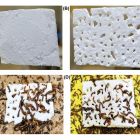
Super-adhesive patches can adapt to different motions for enhanced skin interaction

A research team affiliated with UNIST has unveiled an ultra-strong adhesive patch platform that adheres effectively to rough skin surfaces and shows remarkable motion adaptiveness during dynamic body movements, all while offering irritation-free removal on demand. The key to this technology lies in the surface adaptability inspired by barnacles and armadillo carapaces, which feature a tessellated structure that balances rigidity and flexibility.
30 Nov 11:06

La Chine teste une arme à énergie dirigée comme celle de l’Étoile Noire !

by Dorian De Schaepmeester, Rédacteur scientifique
Les films de science-fiction de notre enfance semblent de plus en plus réalistes à mesure que nombre de pays travaillent à la conception d’armes à énergie dirigée. C’est le cas de la Chine qui aurait produit une sorte de rayon d’arme à micro-ondes fonctionnant grâce à un système de rayons...
30 Nov 10:18

The 5 Gift Guide for Christmas

If you're a parent or buy presents for kids, perhaps Christmas brings mixed feelings. While we love spending time with family, playing together, and taking a break, Christmas gift-giving easily brings some stress and anxiety (one of the reasons that Thanksgiving is so good).

This list from Pragmatic Parent is a potential antidote to the consumerism that can overtake at Christmas. The idea is to give one gift to each child in five categories: Want, Read, Wear, Need, and Do.

8x Christmas-As-Magic

No one wants a Dudley Dursley on his birthday, "Thirty-six. That's two less than last year!"

But at the same time, as a parent, you may have nostalgia for your Christmas or holidays as a child and want to create the same for your children.

Paul Graham wrote in an essay Life is Short:

"Having kids showed me how to convert a continuous quantity, time, into discrete quantities. You only get 52 weekends with your 2-year-old. If Christmas-as-magic lasts from, say, ages 3 to 10, you only get to watch your child experience it 8 times. And while it's impossible to say what is a lot or a little of a continuous quantity like time, 8 is not a lot of something."

So, while, as parents, you may be working to make it memorable, at the same time, some things can easily get out of kilter. Here are some thoughts that cross our minds:

It's easy to think that we're buying more and bigger gifts each year. And we want to ensure this year's presents are as good as last year's to avoid disappointment. It's easy to look at a pile of assembled presents and think, "We never had this much as kids!". And sometimes, the big ticket item we bought at great expense didn't provide nearly as much joy as racing around the house with family at Christmas. We wonder if it was really needed after all.

It's easy for Christmas gift-giving to seem out of control.

The 5 Gift Guide: Want, Read, Wear, Need, Do

Years ago, I learned about this list from Corinne at Pragmatic Parent, which tries to redress some of the balance at Christmas—keeping Christmas wonder while also keeping it sane.

The idea is to get one gift in each of the 5 categories: Want, Read, Wear, Need, Do.

Something I want can still be the classic Christmas big ticket item that you dream about getting as a kid. This could be a big toy, Lego set, video game, or new bike...

Something I need could support a hobby, some sports equipment, a musical instrument, maybe headphones. Or it could be something they need for school—a smart set of pens or pencils or pencil case, perhaps.

Something to wear is an opportunity to get something that makes them feel good daily.

Something to read might be a book, magazine, comic, or subscription.

Something to do could be a game, tickets to a film, a day out or visiting somewhere new.

In a later iteration of the list, Corinne added a 6th item, "Something for my family", for an activity everyone can do together.

A Less Materialistic Christmas

The 5-Gift Rule for Christmas is a potential way to reduce some of the consumerism associated with Christmas and adopt a more minimalist approach.

It promotes useful gifts that won't gather dust after the excitement of the holidays has passed.

It encourages gratitude for what we receive and minimises pining for what we don't.

It also suggests gifts that create experiences for the receiver and the family—one of the best ways to spend our money.

Full disclosure: Though we think about the list, we've yet to adopt it wholesale. But it's a handy framework for considering different types of gifts that your children may value. It reminds us to focus on more meaningful and thoughtful gifts and experiences with less accompanying stuff.

Related Ideas

Also see:

(Groggy parents from Watterson)

30 Nov 10:17

It lives! 47-year-old Voyager 1 is back in action

by Georgina Torbet
Despite its age and an ever-dwindling power supply, the Voyager 1 probe is back in action following an issue with its communication system.
29 Nov 08:44

Perfect Corp. et Holidermie s'associent pour améliorer l'expérience de soin

Perfect Corp. et Holidermie ont annoncé la mise en place commune d'une expérience individualisée en point de vente grâce à la solution pour iPad, Skincare Pro. Une nouvelle expérience de beauté basée sur la technologie de pointe en IA Perfect Corp, désormais disponible dans les points de vente phares Holidermie tels que le Bon Marché Rive Gauche à Paris.
29 Nov 08:44

[Tech For Retail 2024] L'expérience client au coeur des maisons de luxe

L'expérience client est au coeur de l'industrie du luxe, où chaque interaction doit devenir un moment d'exception. Sur la scène de la plénière de Tech For Retail, trois retailers racontent comment, dans cet univers, l'émotion, l'exclusivité et la personnalisation façonnent et renforcent le prestige des marques.
28 Nov 16:45

Linkup connects LLMs with premium content sources (legally)

by Romain Dillet

If you’ve used ChatGPT Search or Perplexity, you know that being able to search the web and see citations inline greatly improves these AI chatbots. Results are better when they involve timely information, and web search may reduce so-called hallucinations (i.e. when a generative AI outputs incorrect information). That’s why French startup Linkup is building […]

© 2024 TechCrunch. All rights reserved. For personal use only.

28 Nov 15:57

ChatGPT's artificial empathy is a language trick. Here's how it works

Anthropomorphism occurs when we attribute human characteristics to non-human entities like animals or machines. Chatbots, such as ChatGPT, Gemini and Copilot, encourage this by imitating human language to communicate with us, going beyond using mere familiar words and phrases to adopt human patterns of communication. By doing this, they are able to hold contextualized, coherent conversations, and can even show emotions like humor and empathy.
28 Nov 14:59

Deux innovations rupturistes découvertes au Beauty Store de L'Oréal

by Nicolas Monier
La présentation des nouveautés du géant mondial de la beauté est toujours l’occasion de découvrir quelques innovations disruptives prévues pour 2025 en GMS. Ici, un patch anti-acné chez Garnier et une base de teint chez NYX Professional Makeup.
28 Nov 14:59

AI can create a reasonable facsimile of a person's personality after two-hour interview

A small team of computer scientists and sociologists, working with Google DeepMind, has developed an AI application that can generate a simulation of a person's personality after interviewing them for just two hours. The group has written a paper describing their work and where they believe such efforts are heading; it is available on the arXiv preprint server.
28 Nov 13:12

Collaboration entre Viz.ai et Microsoft : Une avancée majeure pour la radiologie et la coordination des soins

by Prisca

Dans un monde où l'innovation technologique ne cesse de repousser les limites de la médecine, Viz.ai et Microsoft s'allient pour transformer la radiologie et la coordination des soins. Cette collaboration ambitieuse introduit plus de 48 modèles d'intelligence artificielle au sein du Microsoft Cloud for Healthcare, marquant une avancée significative dans l'intégration et l'efficacité des flux cliniques. Grâce à cette synergie, les cliniques disposeront désormais d'outils puissants et de solutions d'imagerie. Cette approche fusionne la puissance informatique de Microsoft et l'expertise de Viz.ai en coordination intelligente des soins, pour garantir à chaque patient les soins les plus adaptés et en temps opportun.

Viz.ai s'associe donc à Microsoft pour offrir une révolution dans le domaine de la radiologie et de la coordination des soins grâce à l'IA. Avec la plateforme Precision Imaging Network de Microsoft, cette collaboration intègre plus de 48 modèles d'IA dans les flux de travail cliniques, apportant des connaissances exploitables pour améliorer les résultats des patients. Viz.ai propose 13 algorithmes de coordination des soins pour des pathologies telles que l'AVC, l'embolie pulmonaire ou encore la dissection aortique. Ensemble, les deux géants offrent une solution qui optimise l'efficacité des radiologues, simplifie la communication entre médecins et facilite la collaboration des équipes de soins. En consolidant leur impact dans le secteur de la santé, ils permettent aux systèmes de santé d'adresser les besoins critiques avec une efficacité sans précédent.

découvrez comment la collaboration innovante entre viz.ai et microsoft transforme la radiologie et améliore la coordination des soins, propulsant ainsi l'efficacité des diagnostics et des traitements en santé.

Collaboration stratégique entre viz.ai et microsoft

La récente collaboration entre Viz.ai et Microsoft marque un tournant dans le domaine de la radiologie et de la coordination des soins. Ensemble, ils développent des solutions innovantes en intégrant des modèles d'IA puissants dans les flux de travail cliniques. Avec le soutien de la Precision Imaging Network, les praticiens bénéficient désormais d'une intelligence clinique en temps réel capable d'améliorer considérablement les résultats des patients.

Optimisation des workflows cliniques grâce à l'ia

L'union entre Viz.ai et Microsoft offre plus que 48 modèles d'intelligence artificielle intégrés aux processus cliniques, touchant divers domaines spécialisés tels que l'oncologie, les sciences neurosensorielles et les urgences. Grâce à eux, les radiologues peuvent produire des rapports plus précis et efficients tout en renforçant la communication avec les médecins traitants. Cet effort conjoint se traduit par une coordination accrue des équipes de soins, garantissant ainsi une prise en charge adaptée et rapide pour les patients. De plus, l'utilisation de solutions telles que PowerScribe et PowerShare de Microsoft amplifie cette synergie, garantissant une intégration fluide et renforçant l'efficacité globale.

Impact potentiel sur le secteur de la santé

Cette avancée stratégique se traduit par une plateforme unique offrant des capacités éprouvées d'imagerie AI à travers un large éventail de spécialités cliniques. Cela démontre comment la technologie peut transformer radicalement le paysage des soins de santé, permettant un traitement plus rapide et des suivis plus rigoureux des patients. Ce partenariat permet non seulement de raccourcir les délais de traitement, mais également d'étendre l'offre de soins collaboratifs à une échelle jamais vue auparavant. Pour explorer davantage de collaborations innovantes dans divers secteurs, découvrez comment Hyundai Motor et KT Corporation axent sur la mobilité future.

Cet article Collaboration entre Viz.ai et Microsoft : Une avancée majeure pour la radiologie et la coordination des soins est apparu en premier sur OBJETCONNECTE.COM.

28 Nov 10:14

Neuralink Testing Robot Arm Controlled by Brain Chip

by Noor Al-Sibai
Elon Musk's brain chip company is entering its next phase of experiments: seeing if patients can move a robotic arm using their minds. 

Elon Musk's brain-computer interface (BCI) company is entering its next phase of experiments: seeing if patients can move a robotic arm using their minds.

In a statement posted on X-formerly Twitter — also owned by Musk — the company announced that its new "feasibility trial" will investigate whether people can use its coin-sized brain chips to control a robot with their minds.

"This is an important first step," the Neuralink post reads, "towards restoring not only digital freedom, but also physical freedom."

Along with the teaser about the new capabilities, the company posted a link to its trial patient registry, suggesting that Neuralink is still looking for its ideal candidate.

Beyond the news that Neuralink would begin testing what Musk has in the past referred to as the "Luke Skywalker solution," a lot remains unclear about the trial. It does appear, per the fine print on its patient registry page, that Canadians will be able to apply alongside their American counterparts to get a chip implanted into their brains and test out mind control on a robotic arm.

While this is an unprecedented step for Musk's company, it's not the first time such an endeavor has been undertaken.

Way back in 2015, Caltech researchers implanted what they called a "neural prosthetic device" into the brain of a paraplegic man named Erik Sorto that allowed him to control a robotic arm using his thoughts. In doing so, the man was able to give a handshake, play "rock, paper, scissors," and even sip a beer.

Much like Neuralink's first patient, Noland Arbaugh, Sorto described the sense of elation he felt when he was able to use the robotic arms to move after becoming paralyzed during a gang shootout when he was just 21.

"I wanted to drink my beer by myself and not asking anyone for help or anything like that," the published author said during a local newspaper interview in 2017. "It was an out-of-body experience. I wanted to jump out of my chair, hug everyone, carry them around if I could carry them around and high five everybody."

"It was so much joy," Sorto continued. "My body was full of joy."

Though Musk often attracts attention for his cringeworthy antics and increasingly dangerous politicking, Neuralink is one silver lining among his portfolio — as long as you don't think too hard about all those monkeys from the company's early experiments, that is.

More on Neuralink: First Neuralink Patient Using It to Learn New Languages

The post Neuralink Testing Robot Arm Controlled by Brain Chip appeared first on Futurism.

28 Nov 10:12

Interactive AI brings textbooks to life

by Matthew Hempstead

Spotted: Every child learns best in a different way, and often, reading textbooks full of static diagrams isn’t enough for many kids to grasp new concepts – particularly when it comes to science. To change that, researchers led by Ryo Suzuki at the University of Colorado at Boulder are using AI to help make educational content more interactive and engaging.

The researchers have created a tool called ‘Augmented Physics’, which allows students to turn still diagrams into dynamic, living images using only an iPad, helping them to visualise concepts. Traditional 2D textbooks have been a mainstay of the classroom for decades, but reading about scientific subjects doesn’t necessarily mean a child is going to fully grasp them. With Augmented Physics, students can better understand complex processes – such as momentum, electrical current, cell division, or light refraction – and see them in action.

Students begin by capturing a textbook diagram with an iPad. Then, the technology uses Meta’s Segment Anything model to assign objects in that diagram various roles. For instance, the student could select a skier to ski down a hill. The tool then uses AI to apply physical laws to the diagram, animating the intended motion as it would appear in reality. By adjusting the parameters, students can visualise, in three dimensions, how forces such as gravity, energy, or friction affect the skier’s movement.

Right now, the technology achieves an effective simulation in only 60 per cent of cases, and the team is working on boosting that figure. The researchers also hope to broaden the AI’s capabilities beyond physics, so it could be used to bring documents from a variety of subjects to life using augmented glasses, enabling students to learn in 3D interactive worlds.

Written By: Duncan Whitmore and Matilda Cox

28 Nov 10:10

🧬 Ce ver mange du plastique: les photos impressionnantes 🐛

by Cédric DEPOND
Et si la clé de notre lutte contre la pollution plastique se trouvait dans l'intestin d'un insecte ? Une récente découverte scientifique met en lumière une espèce de ver capable de dégrader le...
28 Nov 10:00

ElevenLabs’ new feature is a NotebookLM competitor for creating GenAI podcasts

by Ivan Mehta

Voice AI startup ElevenLabs on Wednesday introduced a feature that lets you upload different types of content to create a multispeaker podcast for you, similar to Google’s NotebookLM. The feature, called GenFM, can be found on the company’s ElevenLabs Reader iOS app. Currently, GenFM supports 32 languages, including English, Hindi, Portuguese, Chinese, Spanish, French, German, […]

© 2024 TechCrunch. All rights reserved. For personal use only.

28 Nov 09:58

Could Nuclear Be The Way To Produce Synthetic Fuel On The Cheap?

by Lewin Day
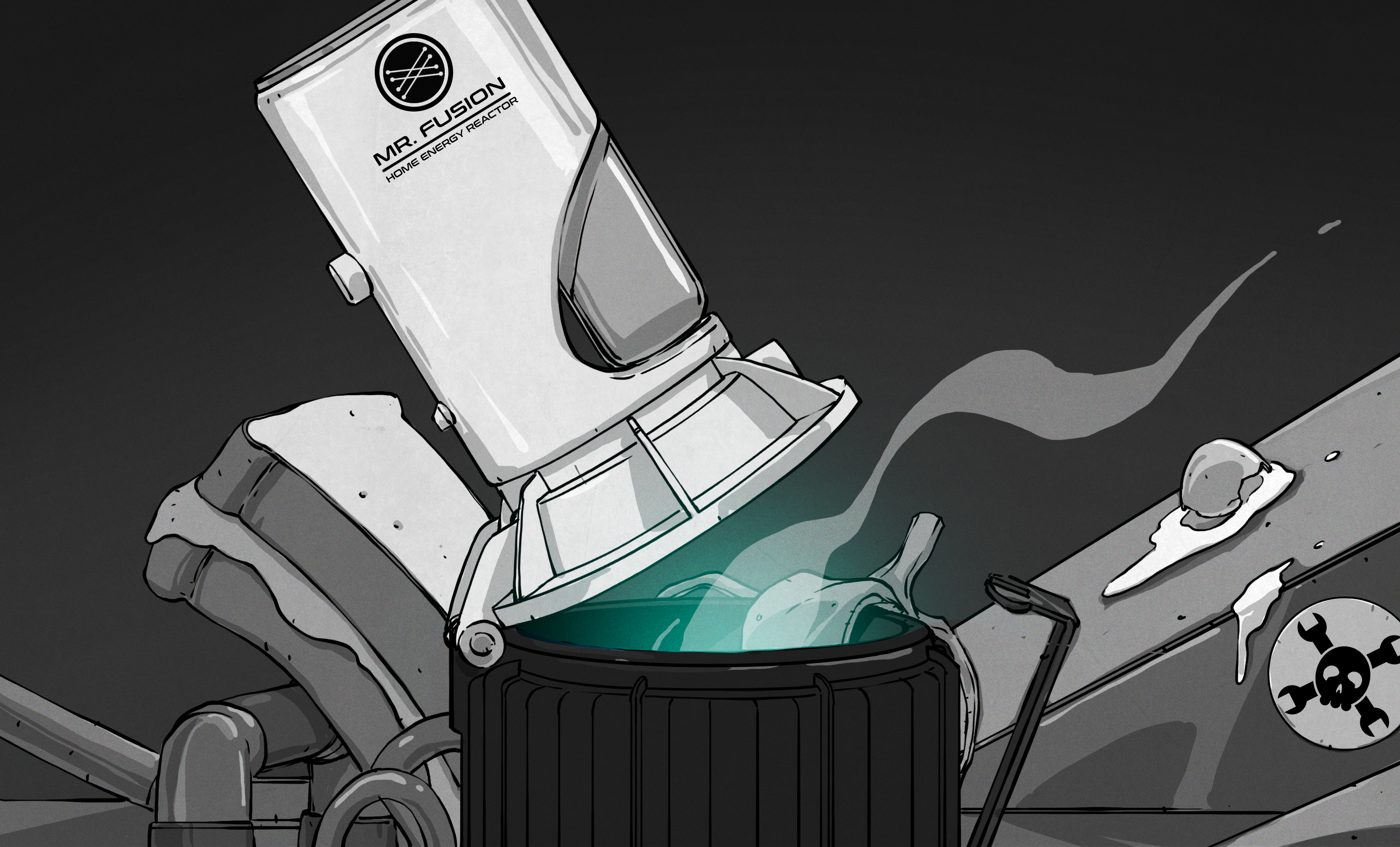
Mr Fusion powering a vehicle

Fossil fuels can be a bit fussy to access, and geopolitics tends to make prices volatile. Burning them also takes carbon out of the ground and puts it into the atmosphere, with undesirable climate implications. The hunt for a solution has been on for quite some time.

Various synthetic fuels have been proposed as a solution, wherein carbon dioxide is captured from the air and chemically processed into useful fuel. Done properly, this could solve the climate issue where any fuel burned has its carbon later captured to make more fuel. The problem, though, is that this process is very energy intensive. Given the demands, it’s no surprise that some are looking towards nuclear reactors for the answer.

Hot To Go

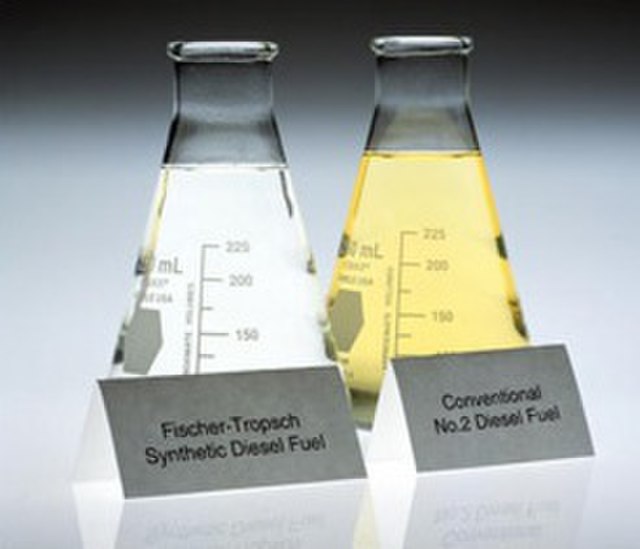
Synthetic fuels are typically designed to replace conventional gasoline, diesel, or jet fuel. Credit: DOE, public domain

Burning fossil fuels is bad for the environment, but the problem is that they’re so very useful. Take transport, for example. Fossil fuels are perfect for this application because they pack a huge amount of energy into very little space while weighing relatively little to boot. At the same time, more than a third of global carbon emissions in 2021 came from transportation, according to the International Energy Agency. While electric vehicles are rapidly gaining market share in some areas, the complete phase out of internal combustion engines is by no means a sure thing. Meanwhile, sectors like aviation are proving especially difficult to fully electrify. We want to get off fossil fuels, but circumstances demand we continue to use them.

Enter synthetic fuels. They’re essentially drop-in replacements for gasoline, diesel and jet fuel that are produced from CO2, water and clean energy rather than being refined from petroleum. When made using captured CO2 and cleanly-produced hydrogen, they have the potential to significantly reduce transport emissions when taking the whole system into account. All this, without requiring an entirely new fueling infrastructure or any changes for the end user.

By capturing carbon and then chemically processing it into a useful combustible fuel, we could keep using existing technologies that we already find practical, like combustion-engined vehicles. Their emissions would still be undesirable, but they’d be offset by the capture process used to make new fuel. The idea is to create a closed loop for carbon emissions.  The problem is finding a synfuel production process that’s efficient—both in terms of carbon capture and chemical processing—and to find the energy to run it.

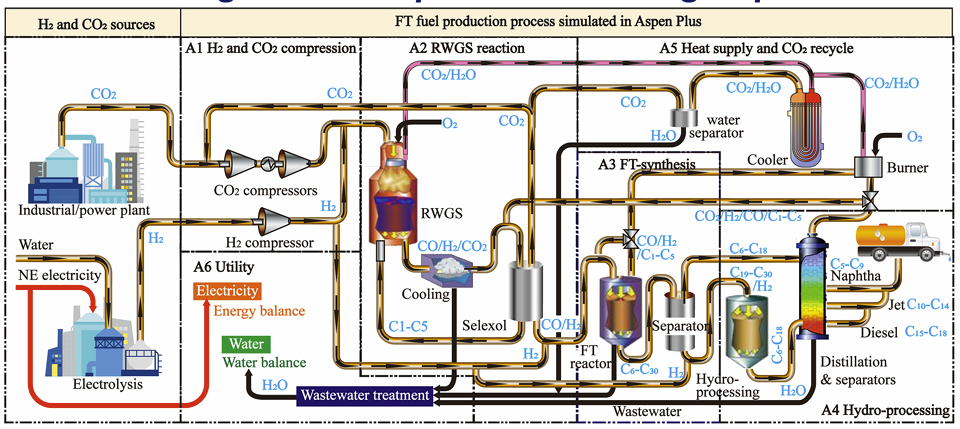
Indeed, synthesizing hydrocarbons is an energy-intensive process. The process is well-understood at this point. Capturing CO2 from the air, generating hydrogen via electrolysis, and catalytically combining them into fuels at high temperatures and pressures all require a lot of energy input. For synfuels to deliver real climate benefits, this energy must come from clean, non-fossil sources.

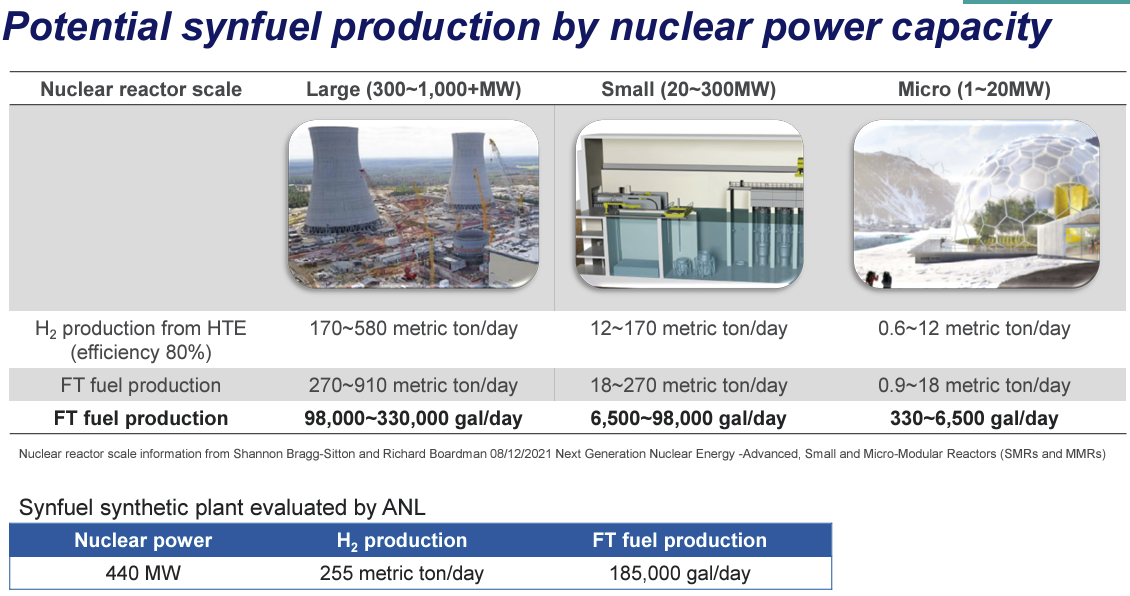
The Department of Energy has a strong interest in nuclear synfuel production. Credit: Argonne National Laboratory

What do we do when we need a lot of power with minimum emissions? We look at nuclear! Several U.S. Department of Energy labs are actively researching nuclear-powered synfuel production, and the DOE is funding a $20 million demonstration project in Utah. Meanwhile, in the United Kingdom, the Nuclear Industry Association has been urging the country to seize a leadership position in this emerging field as well.

On a very basic level, a conventional nuclear power plant could provide electricity for various processes involved in synthetic fuel production. However, that’s not the only way to go. For some processes, the heat from a nuclear reactor could be directly used to power the synfuel production process. That is, rather than using heat from a nuclear reaction to create steam to turn a turbine, a purpose-built synfuel reactor could just deliver heat directly to a chemical process that needs it. Nuclear heat could be useful for desalinating seawater for hydrogen electrolysis, or for carbon capture, too.

The chemistry involved in synfuel production is well understood. The problem is figuring out how to do it cheaply enough to be competitive with fossil fuels, while using clean sources of CO2 and hydrogen. Credit: Argonne National Laboratory

The question is whether all the effort will be worthwhile. Competing with regular old fossil fuels on price will be a must, even if some degree of subsidy is used to lean the scales in the favor of synfuels. There are hopes that nuclear-produced synfuels could reach prices of $3 a gallon with the right feedstocks and input costs, but that’s words on a page at this stage. There is plenty of engineering to be done before you’ll be filling your car with 20 gallons of nuke gas at your local station.

Efficiency also comes into it, and this could play a big role in how synfuels pan out. Take cars, for example.  Automakers have figured out how to make supremely efficient electric vehicles in the past decade. Electrical engineers have become experts at squirting power efficiently all over the country, and there are more EV charging stations than ever. Does it make sense to spin up bespoke nuclear synfuel plants to keep internal combustion alive, when the technology to replace it already exists? Arguments could be made for more demanding applications like trucking or aviation, but then the market for synfuels grows smaller.

Synthetic fuels are particularly attractive for the aviation industry, which has found electrification hard to achieve due to the limits of battery technology. Credit: US Air Force, public domain

In any case, nuclear synfuel holds great promise. Whether it can overcome the general resistance towards all nuclear technologies remains to be seen. Still, the tides may be changing on that front, and the future is anyone’s guess. If you’re a fan of fossil fuels and the like, be happy—there is hope yet that the flammable fluid market will roll on.

28 Nov 09:58

OpenAI's Super-Powerful "Sora" AI Video Generator Appears to Have Leaked

by Victor Tangermann
A group of furious artists say they've leaked OpenAI's video generator Sora, declaring that they're not the company's "PR puppets."

Sora Spot

A group of unhappy artists say they've leaked OpenAI's video generator Sora.

The text-to-video model was first announced in February of this year, with the company showing off its impressive ability to generate photorealisticalbeit imperfect — video footage.

But OpenAI has yet to publicly release the model, only allowing a small group of beta testers to take Sora for a spin.

Now, though, a group of testers who claim to have gotten early access to the tool say they've leaked the model to the public in protest, as The Verge reports — only for OpenAI to shut it down just three hours later.

The artists used the opportunity to make a greater point about how the AI industry is exploiting labor by making them "PR puppets."

"We received access to Sora with the promise to be early testers, red teamers, and creative partners," reads an open letter posted to public AI model repository Hugging Face.

"However, we believe instead we are being lured into 'art washing' to tell the world that Sora is a useful tool for artists," they added, referring to the process of covering up the shortcomings of a corporation by employing art in a positive way.

"We are not your: free bug testers, PR puppets, training data, validation tokens," the letter reads.

Sora Not Sora

The artists took aim at OpenAI — which has raised a tremendous amount of money by coming up with AI models that ingest the work of human artists and then churn out more in their style — for demanding free labor.

"Hundreds of artists provide unpaid labor through bug testing, feedback, and experimental work for the program for a $150B valued company," the letter reads.

"While hundreds contribute for free, a select few will be chosen through a competition to have their Sora-created films screened," the artists wrote, "offering minimal compensation which pales in comparison to the substantial PR and marketing value OpenAI receives."

The artists also criticized OpenAI for requiring "every output" to be screened "before sharing."

"This early access program appears to be less about creative expression and critique, and more about PR and advertisement," the letter reads.

In a statement to The Verge, OpenAI spokesperson Niko Felix argued that participation in the preview is "voluntary, with no obligation to provide feedback or use the tool."

"Sora is still in research preview, and we’re working to balance creativity with robust safety measures for broader use," the statement reads.

Besides safety concerns, OpenAI may also be delaying the rollout of Sora for a much more benign reason: the astronomical amount of computing power required to AI generate high-resolution videos.

More on Sora: Turns Out That Extremely Impressive Sora Demo... Wasn’t Exactly Made With Sora

The post OpenAI's Super-Powerful "Sora" AI Video Generator Appears to Have Leaked appeared first on Futurism.