Shared posts

25 Feb 13:36

This Muscle-Powered Robot Might Be the Creepiest Thing We've Ever Seen

by Frank Landymore
Protoclone is supposedly the world's first bipedal, musculoskeletal android. But it's mostly just got people creeped out.

Forget valleys; we're now entering veritable Grand Canyons of uncanniness.

Behold the robot known as "Protoclone," built by Clone Robotics. It's supposedly the world's first bipedal, musculoskeletal android. But it's mostly just got people extremely creeped out.

In a promotional video shared on X this Wednesday, the startup — of which little is known — makes every effort possible to subvert the industry's favored image of robots as servile little helpers there for the good of humankind.

Nope. With a menacing cinematic score, we're presented with this writhing, cadaverous mass, shorn of a recognizable face, blindly grasping at the world it didn't want to be brought into. A totally unsolicited reminder that we, too, are merely the supple impedimenta playing host to a network of electrical pulses. Or something.

Clearly the intent here is to shock, perhaps in lieu of sharing something more substantive. In any case, it worked: the video has gone instantly viral, spawning equal parts alarm and dark humor — plus plenty of comparisons to the TV show "Westworld."

"We should hook this thing up to a supercomputer miles below the surface of the earth and hang it up on meathooks and send searing hot sharp pain to every nerve ending in its body and make it handle simple computational tasks that are essential to the functioning of our society," one user joked.

Jitters aside, what actually is this thing? Here's what the startup claims. "The Protoclone is a faceless, anatomically accurate synthetic human with over 200 degrees of freedom, over 1,000 Myofibers, and 500 sensors," Clone Robotics said in a followup post.

According to its website, the android is equipped with the world's most sophisticated hydraulic powering system mimicking our human blood vessels. Its muscles are composed of Clone's proprietary "Myofiber" artificial muscle tech, providing an unparalleled combination of "weight, power density, speed, force-to-weight, and energy efficiency," Clone says. Underneath, the robot possesses a human-like skeleton with analogs for all 206 bones of the human body. It can also see using four cameras installed in its skull.

Clone co-founder Dhanush Radhakrishna — whose display name is "Necromancer" — calls the robot's progress "ground zero for the age of androids."

Needless to say, it's worth approaching these claims with healthy skepticism. So far, all we've seen is a video of the robot flailing around uselessly — and the android industry, after all, has never been above misleading public stunts.

And calling it the world's first bipedal, musculoskeletal android is also dubious, notes robotics blogger Mike Kalil. That title arguably goes to the Japanese robot Kengoro built in 2016, famed for its cooling system that lets it sweat like a human and its ability to crank out loads of push-ups.

But if you buy into the hype, there's good news. Clone Robotics says it'll start doing pre-orders for just 279 units of its "Clone Alpha" robot this year, which it advertises as capable of doing a bunch of household chores. Reserve your unnerving humanoid now!

More on robots: Military Robot Deployed as Nightclub DJ

The post This Muscle-Powered Robot Might Be the Creepiest Thing We've Ever Seen appeared first on Futurism.

25 Feb 13:35

Report: OpenAI plans to shift compute needs from Microsoft to SoftBank

by Maxwell Zeff

OpenAI is forecasting a major shift in the next five years around who it gets most of its computing power from, The Information reported on Friday. By 2030, OpenAI expects to get three-quarters of its data center capacity from Stargate, a project that’s expected to be heavily financed by SoftBank, one of OpenAI’s newest financial […]

© 2024 TechCrunch. All rights reserved. For personal use only.

25 Feb 13:14

F1 may ditch hybrids for V10s and sustainable fuels

by Jonathan M. Gitlin

High-revving naturally aspirated engines and their associated screaming soundtracks might be on their way back to Formula 1. Not with next year's rule changes—that will see even bigger lithium-ion batteries and an even more powerful electric motor, paired with a turbocharged V6. But the sport is starting to think more seriously about the technical rules that will go into effect in 2030, and in an Instagram post yesterday, the man in charge of those rules signaled that he's open to cars that might be louder, lighter, and less complicated.

Mohammed Ben Sulayem's tenure as president of the Federation Internationale de l'Automobile has been packed with controversy. The former rally driver has alienated many F1 drivers with clampdowns on jewelry and, most recently, swearing, as well as a refusal to explain what happens to the money the FIA collects as fines.

He also ruffled feathers when the FIA opened up the entry process for new teams into the sport and then approved an entry by Andretti Global. While the FIA said yes, the commercial side (which is owned by Liberty Media) and the teams wanted nothing to do with an 11th team—at least until the $200 million anti-dilution fee was more than doubled and Michael Andretti stepped aside.

Read full article

Comments

25 Feb 13:01

AI opens 'endless' doors for fashion models, closes others

London-based model Alexsandrah Gondora understands the power of being in "two places at the same time" thanks to an AI replica of herself: "She's doing the hard work so I don't have to!"
25 Feb 12:59

Parfumerie : Dior Beauté offre un vestiaire à sa Collection Privée

by Journal du Luxe
La Maison parisienne dévoile ces jours-ci un nouveau service permettant d'habiller sa ligne de parfumerie la plus exclusive avec quelques-uns de ses motifs emblématiques.
25 Feb 12:52

Watch this humanoid robot perform a front flip in world first

by Trevor Mogg
The impressive maneuver showcases the robot's advanced visual perception, balance control, and ability to deploy complex mechanical and algorithmic systems.
25 Feb 07:57

Fifth Walmart No Boundaries drop on Zepeto with real-world versions of items shoppable without leaving platform

by Staff Writer

Walmart has announced its fifth No Boundaries drop on Zepeto, featuring ten new virtual items, inspired by the Spring No Boundaries collection.

As with previous drops, the real-world versions of these items are shoppable without leaving the Korean metaverse platform. Every purchase includes a free virtual twin of the item.

In a LinkedIn post, Justin Breton, Head of Brand Marketing Innovation at Walmart, said: “If you’re going to activate on an emerging platform: Do it right, by listening to the community; Do it well, by testing, learning, and optimising; Do it often, with consistent, fresh updates.”

“That’s exactly how we’ve approached our No Boundaries activations on Zepeto. And today, we’re marking a milestone: our fifth drop, featuring ten new virtual items, all inspired by our Spring No Boundaries collection. Why are these items just tops? Because that’s what the community asked for. And we listened to them.”

He added: “To make this drop even more engaging, we’ve also added a new photobooth backdrop, giving users more ways to create and share their No Boundaries looks. We believe the future of fashion is community driven, immersive, and borderless. And we’re just getting started.”

2025 RTIH INNOVATION AWARDS

Immersive experiences will be a key focus area at the 2025 RTIH Innovation Awards.

The awards. which will open for entries in March, celebrate global tech innovation in a fast moving omnichannel world.

Our 2024 hall of fame entrants were revealed during an event which took place at RIBA’s 66 Portland Place HQ in Central London on 21st November, and consisted of a drinks reception, three course meal, and awards ceremony presided over by comedian Lucy Porter.

In his welcome speech, Scott Thompson, Founder and Editor, RTIH, said: “The event is now into its sixth year and what a journey it has been. The awards started life as an online only affair during the Covid outbreak, before launching as a small scale in real life event and growing year on year to the point where we’re now selling out this fine, historic venue.”

He added: “Congratulations to all of our finalists. Many submissions did not make it through to the final stage, and getting to this point is no mean feat. Checkout-free stores, automated supply chains, immersive experiences, on-demand delivery, next generation loyalty offerings, inclusive retail, green technology. We’ve got all the cool stuff covered this evening.”

“But just importantly we’ve got lots of great examples of companies taking innovative tech and making it usable in everyday operations - resulting in more efficiency and profitability in all areas.”

Congratulations to our 2024 winners, and a big thank you to our sponsors, judging panel, the legend that is Lucy Porter, and all those who attended November's gathering. 

For further information on the 2025 RTIH Innovation Awards, please fill in the below form and we will get back to you asap.

Name * First Name Last Name Email * Subject * Message *

Thank you!

24 Feb 17:26

Loomos AI smart glasses integrate GPT-4o, offer a 16MP camera and hi-fi audio for $199+ (Crowdfunding)

by Tomisin Olujinmi
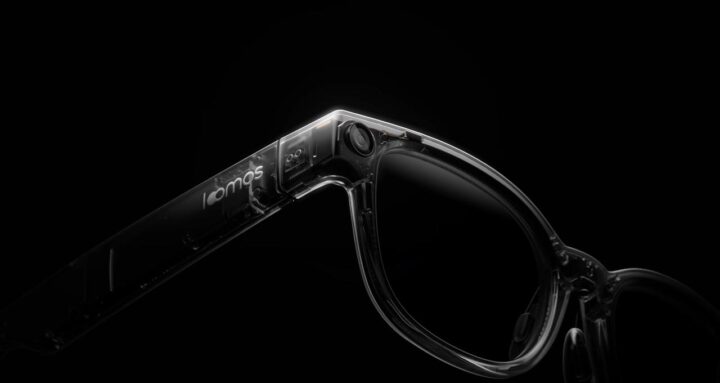
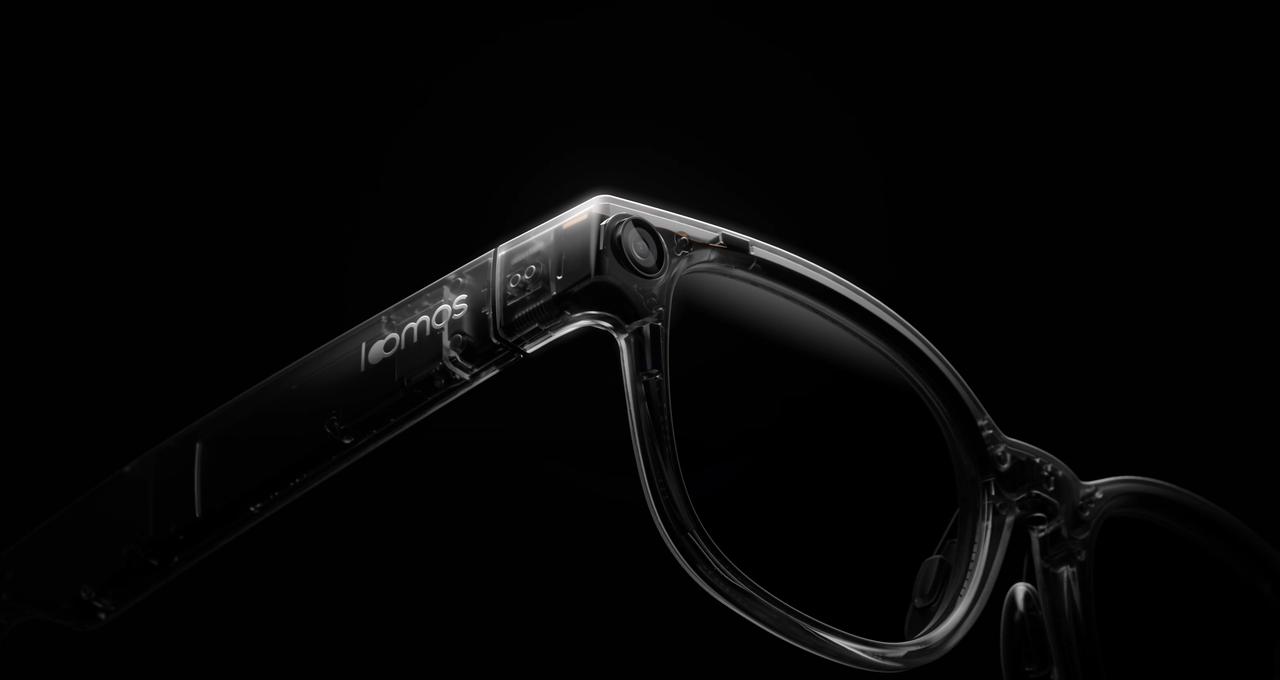
loomos AI smart glasses with 16MP camera

Chinese power supply company, SHARGE, has launched a pair of GPT-4o-powered smart glasses with a 16-megapixel camera capable of capturing 4K photos and 1080p videos. Like the Looktech AI glasses and Meta Ray-Ban series, the Loomos AI smart glasses have no onboard display. Instead, they feature a microphone array, onboard speakers, and side buttons for user control and feedback.

loomos AI smart glasses with 16MP camera

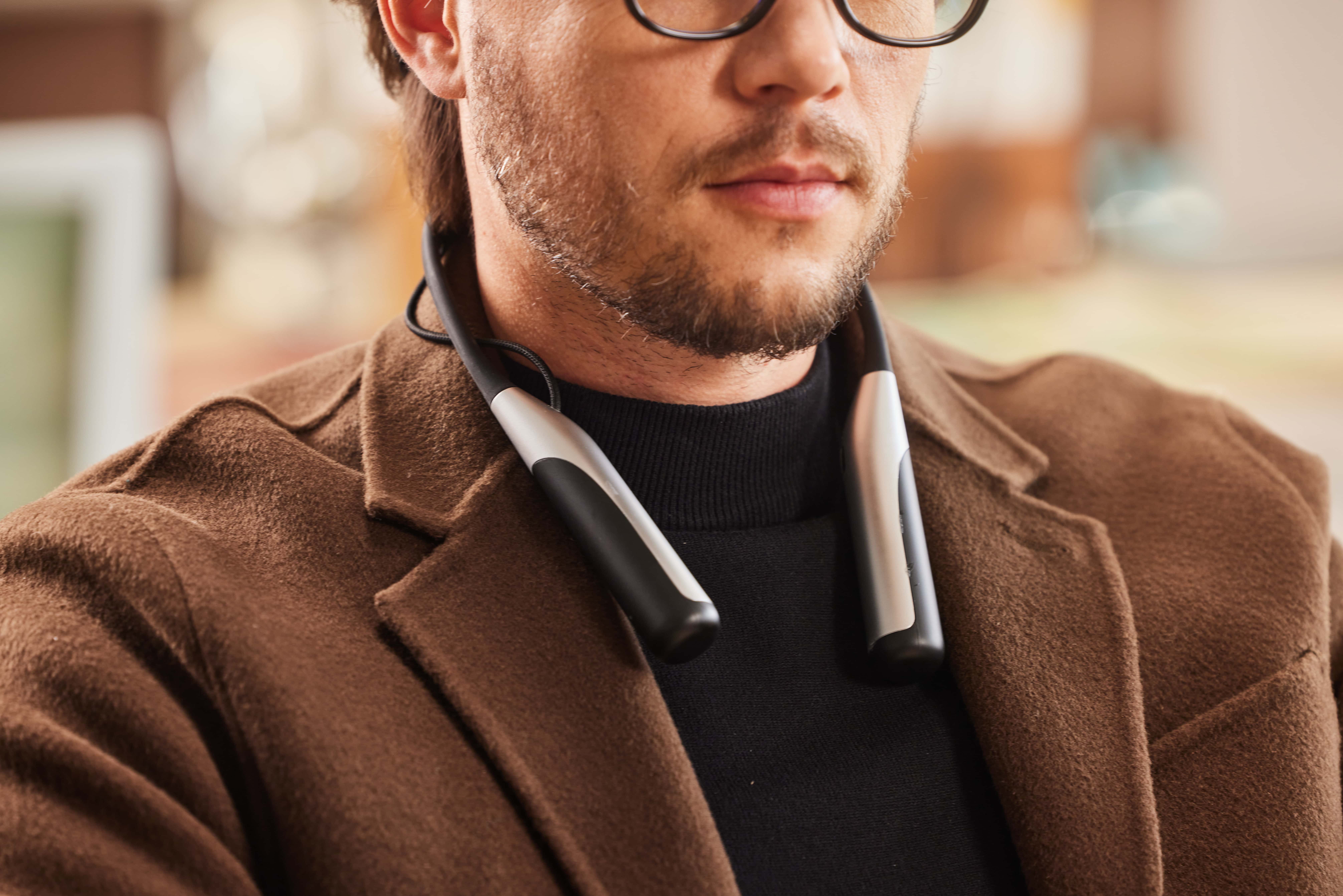
The Loomos glasses are powered by a 2.0Ghz UNISOC quad-core processor and come integrated with the multi-modal GPT-4o for real-time AI assistance. The stated battery life is much more impressive than the competition at 40 hours of standby time (from a 450mAh battery). The company also offers a 6,500mAh neckband power bank for uninterrupted all-day wearing.

loomos neckband power bank
6500mAh neckband power bank

The company promises security and privacy with the glasses. Data is processed anonymously with TLS encryption and users retain full control of their data. The glasses also include an indicator light to alert people around when you are recording, similar to the Ray-Ban Meta glasses.

Loomos AI glasses specifications:

  • SoC – UNISOC AI Processor with 4 cores (1x Cortex-A75 + 3x Cortex-A55) @ up to 2.0GHz (It looks like the Tiger T310 but it does not have AI features being released in 2019)
  • Memory – 2GB RAM
  • Storage – 32GB eMMC flash
  • Camera – 16MP Camera
  • Audio – AAC 0920 Speaker, 3-array directional microphone
  • Networking – WiFi, BLE 5.0
  • Misc – Media Control Touch Pane, Adjustable Nose Pads
  • Power Supply – 450mAh Battery
  • Dimensions – 53mm – 20mm – 164mm (lens width, bridge width, and temple length)
  • Weight – 49 grams

The smart glasses are powered by OpenAI’s multimodal GPT-4o model and are said to be capable of independent operation with Wi-Fi connectivity. The dedicated mobile app – available on Android and iOS – allows you to track the glasses and access captured videos and images.

The Loomos GPT-4o AI glasses are currently available on Kickstarter at a Super Early Bird price starting at $199 ($299 MSRP). The glasses come with a one-year GPT-4o subscription, magnetic top frame cover, case, nose pads, charging cable, cleaning cloth, and a user manual. Add-ons include a magnetic sunglasses clip ($20), neckband power bank ($49), and different prescription lens options (priced based on specification).

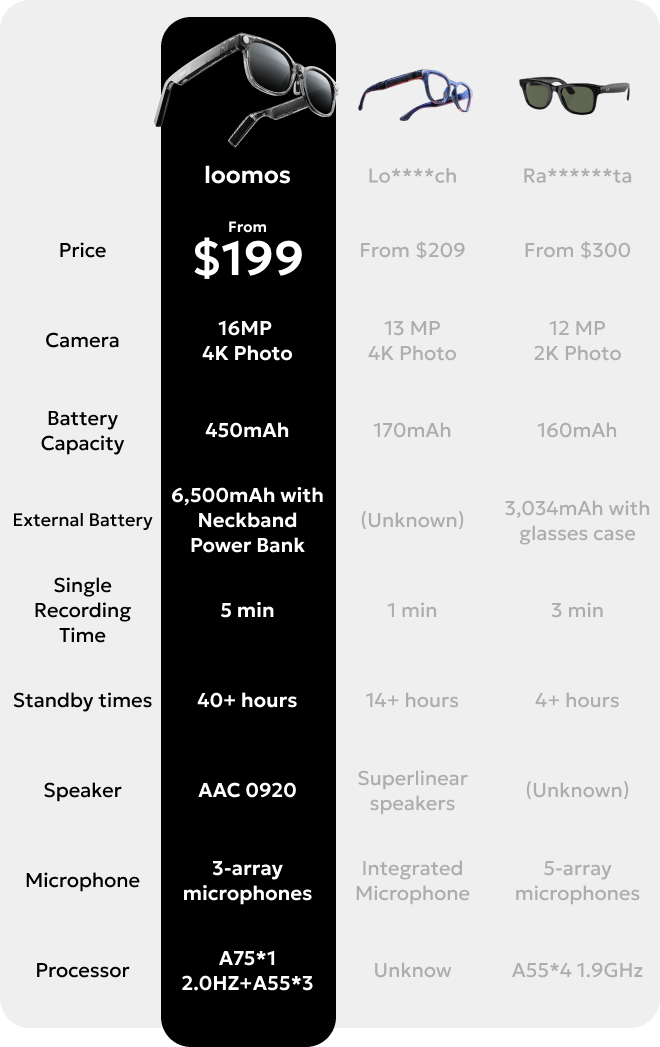
loomos comparison table
Comparison Table

The loomos glasses are cheaper than Looktech and Meta Ray Ban Glasses and they have a better onboard camera and a larger battery for more hours of operation.

The post Loomos AI smart glasses integrate GPT-4o, offer a 16MP camera and hi-fi audio for $199+ (Crowdfunding) appeared first on CNX Software - Embedded Systems News.

24 Feb 17:18

Qualebook : un nouveau standard pour la qualité du livre numérique

by Kaelig Alléaume
  • Qualebook, un référentiel de qualité basé sur 87 règles marque une avancée majeure pour l’édition numérique. Conçu par le groupe « Normes & Standards » du Syndicat national de l’édition et l’EDRLab, il vise à garantir l’accessibilité, l’interopérabilité et les bonnes pratiques professionnelles.

    Le secteur de l’édition numérique franchit une nouvelle étape avec Qualebook, un référentiel qualité dédié aux livres numériques. Face à des enjeux spécifiques (cadre juridique, interopérabilité, écoconception), l’objectif du projet Qualebook est d’élaborer des listes de contrôle de qualité du livre numérique afin de garantir un accès inclusif à tous les lecteurs, d’établir un référentiel commun et d’accompagner les professionnels dans l’appropriation des bonnes pratiques. 

    [...] Lire la suite de cet article sur Archimag.com
  • 23 Feb 13:46

    Even NASA's James Webb Space Telescope Is Getting Its Budget Slashed

    by Noor Al-Sibai
    The James Webb Space Telescope is slated to have a huge percentage of its budget cut amid other slashes at NASA.

    Less than four years after its showstopping launch, the James Webb Space Telescope is facing massive budget slashes that will, experts worry, harm scientific progress and stymie the beloved observatory's operations.

    As Space.com reports, the research center that oversees Webb's operations has been directed to steel the observatory for up to 20 percent in budget cuts.

    Officials with that center, the Maryland-based Space Telescope Science Institute (STSci) that also oversees the Hubble and Chandra space telescope missions, says the cuts will likely impact every aspect of Webb's operations.

    "NASA is having budget constraints across the entire board, so the institute is being asked to consider a significant — about 20 percent — cut to our operational budget for the mission starting later this year," Tom Brown, the head of the Webb mission at STSci, told his fellow scientists during a recent meeting of the American Astronomical Society (AAS), per Space.com.  "So the impacts of that, if it comes to pass, pretty much cut across the entire mission."

    It remains unclear if these cuts were ordered prior to Donald Trump taking office and letting Elon Musk run rampant on the federal government. Given that the new administration has already forced mass firings and implemented rollbacks on equity, and inclusion (DEI) policies at NASA, for which the STSci operates as a non-profit, there's little reason to think Trump and Musk's government dismantling couldn't be related to the forthcoming Webb budget cuts.

    It's also unclear when these cuts will go into effect and if they'll affect NASA's 2025 budget, which was granted by Joe Biden's administration last May and set aside $317 million for the JWST.

    As Brown told his fellow astronomers during the AAS meeting, Webb has exceeded expectations since it was launched on Christmas Day in 2021 — and the thought of losing any of its earmarked money this soon into the mission is troubling.

    "It's extremely worrisome that, while we're in the middle of the prime mission, we're also maybe looking at significant budget cuts," he said.

    During that same AAS meeting, STSci project scientist Macarena Garcia Marin echoed that ethos.

    "In a nutshell, [the telescope] is truly fulfilling its promise," Garcia Marin said. "Across every field, JWST is truly delivering cutting-edge science."

    With one-fifth of its relatively small budget facing the chopping block, the team behind the Webb telescope is rightfully concerned about the future of their mission.

    "It's a huge cut. That's not like kind of trying to nibble away at the edges," Brown said in an interview with Space.com. "That impacts everything across the board."

    More on Webb's important work: James Webb Spots First-Ever Alien "Steam World"

    The post Even NASA's James Webb Space Telescope Is Getting Its Budget Slashed appeared first on Futurism.

    23 Feb 13:42

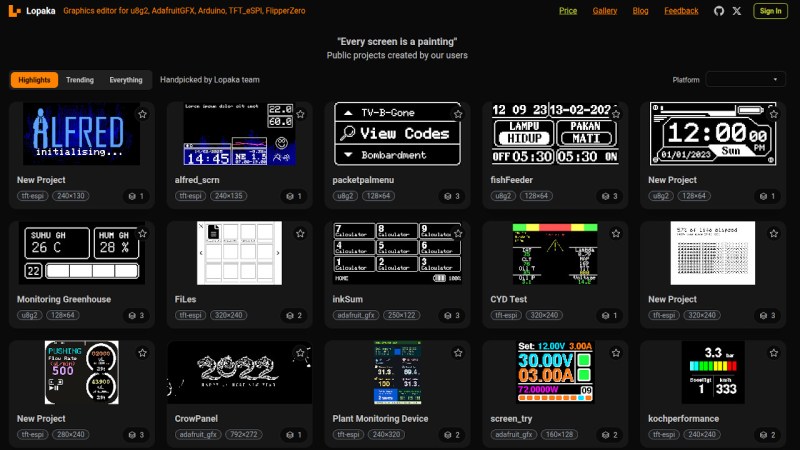
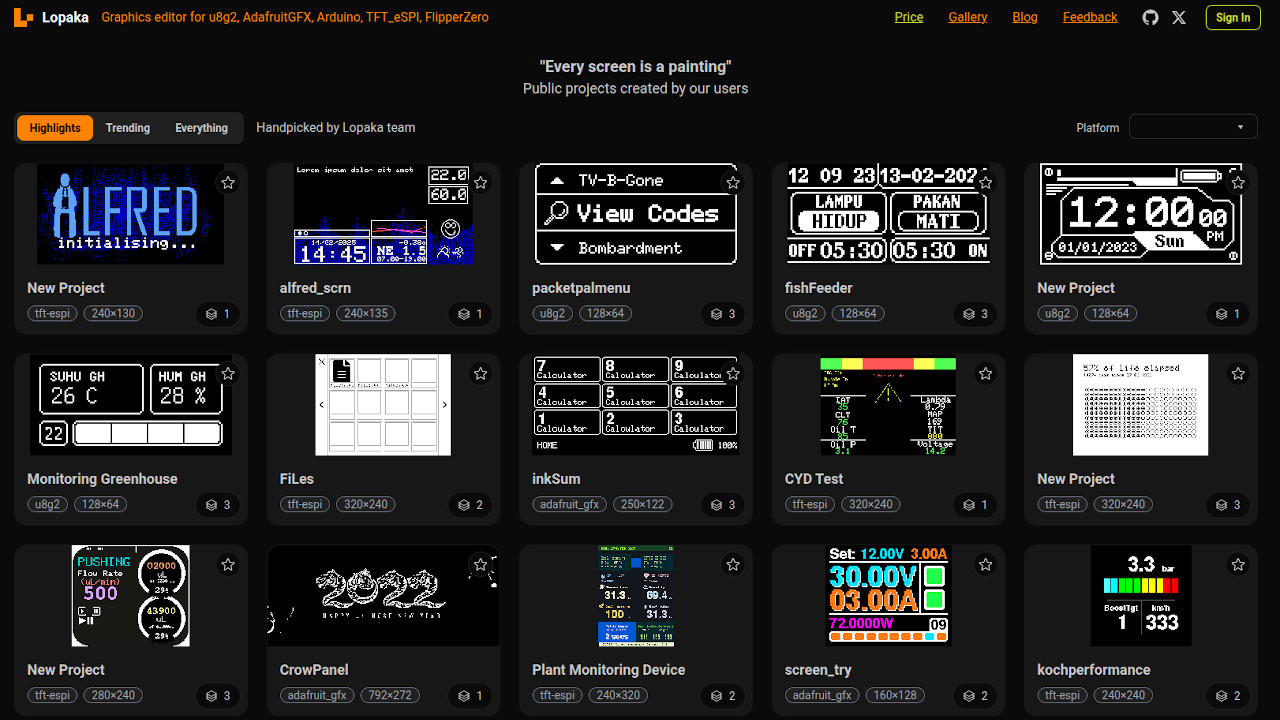
    A Web-Based Graphics Editor For Tiny Screens

    by Tom Nardi

    These days, adding a little LCD or OLED to your project is so cheap and easy that you can do it on a whim. Even if your original idea didn’t call for a display, if you’ve got I2C and a couple bucks burning a hole in your pocket, why not add one? Surely you’ll figure out what to show on it as the project develops.
    But that’s where it can get a little tricky — in terms of hardware, adding a screen just takes running a few extra wires, but the software side is another story. Not only do you have to contend with the different display libraries, but just creating the image assets to display on the screen can be a hassle if it’s not something you do regularly. Enter Lopaka, a graphics and user interface editor for electronic projects created by [Mikhail Ilin].

    More after the break…

    Using this web-based tool is pretty simple, you simply load it up, pick the display type you’ve got, and then start using the visual tools to do things like draw shapes and add text. As you work, a window on the bottom will start filling with the source code that you’ll ultimately copy and paste into your project to re-create what you’re seeing.

    You can import your own images and have them converted to arrays of data, though there’s also a selection of icons that you can select from which might meet your needs. In fact, there’s even a gallery of editable screens and user interfaces that have been created with Lopka if you don’t want to start from scratch.

    In playing around with the tool, the only annoyance we really noticed was the fact that the source code window isn’t editable. That is, we occasionally tried to code to modify what we were seeing in the visual preview, but it doesn’t work that way. We were somewhat concerned when we saw that the tool also features a paid “Plus” mode, but in truth, the features and capabilities available in the free mode (and what gets unlocked when you cough up the $5.95 a month) seem more than fair.

    If Lopaka looks similar, it could be because it’s the evolution of a tool offered up specifically for the Flipper Zero that we covered back in 2022. [Mikhail] saw an opportunity to open the tool up to the wider maker and hardware hacker community by adding support for other display types and libraries, which we think was a brilliant move.

    23 Feb 13:39

    Connaissez vous Senseen, la startup qui surveille la santé des cultures grâce à un scanner miniature?

    by LA REDACTION DE FRENCHWEB.FR

    Le suivi de la santé des cultures est un enjeu de plus en plus important face aux stress climatiques et biologiques croissants. Les solutions actuelles, bien que précises, restent peu adaptées à une utilisation de terrain en raison de leur complexité et de leur coût élevé. L’analyse du pH, de l’indice d’oxydoréduction (redox) ou encore …

    L’article Connaissez vous Senseen, la startup qui surveille la santé des cultures grâce à un scanner miniature? est apparu en premier sur FRENCHWEB.FR.

    23 Feb 13:33

    Handheld Compass CNC Lets Teensy Do the Driving

    by Tom Nardi

    If somebody asked you to visualize a CNC router, you’d probably think of some type of overhead gantry that moves a cutting tool over a stationary workpiece. It’s a straightforward enough design, but it’s not without some shortcomings. For one thing, the scale of such a machine can quickly become an issue if you want to work on large pieces.

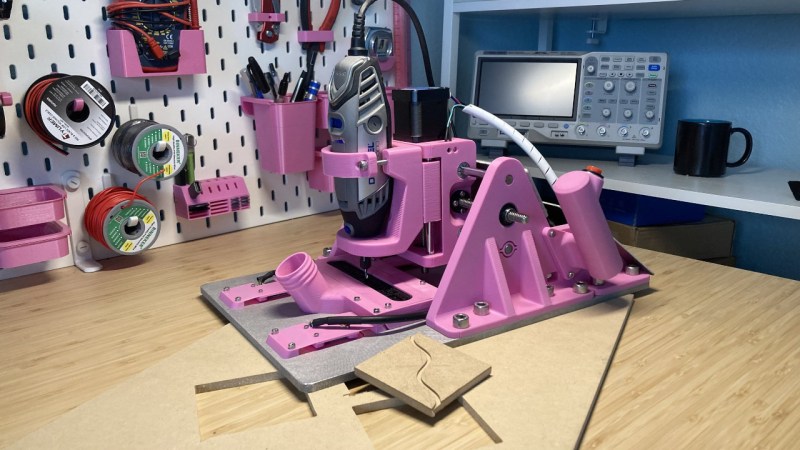
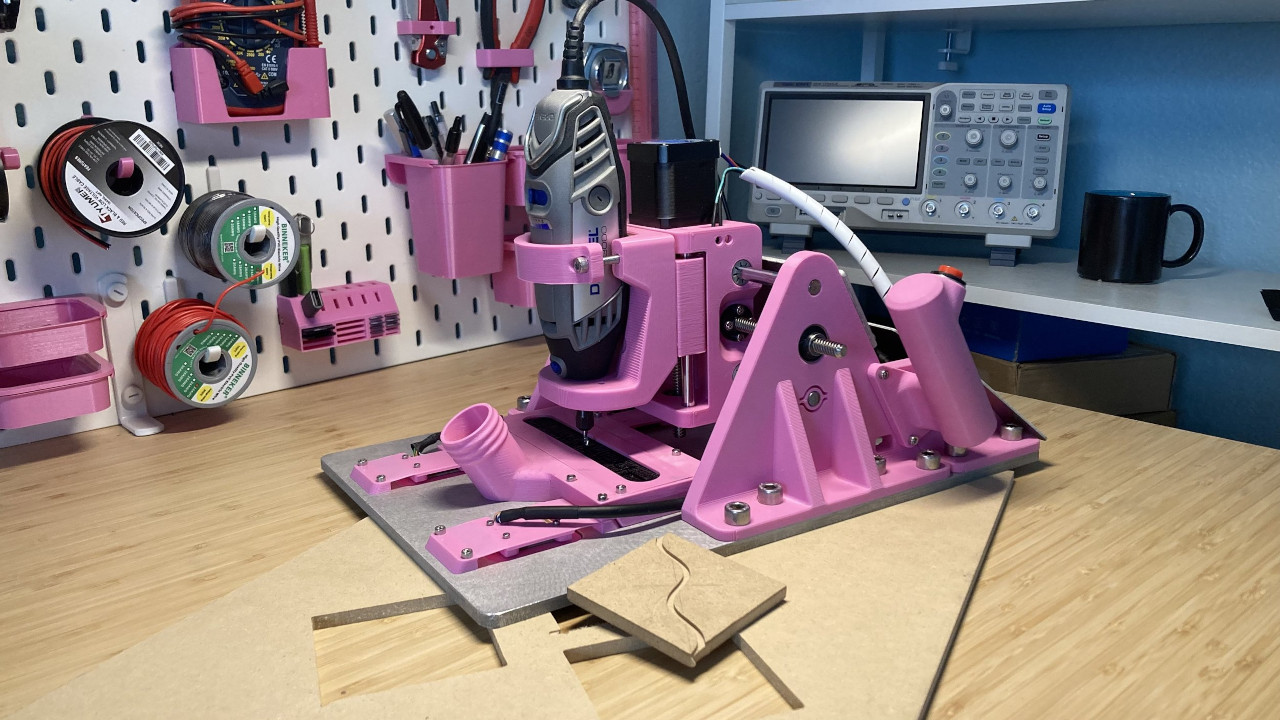
    But what if you deleted the traditional motion system, and instead let the cutting tool roam freely? That’s the idea behind the open source Compass Handheld CNC. Looking a bit more like a combat robot than a traditional woodworking tool, the Compass tracks its movement over the workpiece using a Teensy 4.1 microcontroller and four PMW3360 optical flow sensors. With a pair of handles that look like a flight yoke and a display that shows the router’s current position versus where it should be, the user can “drive” the tool to cut or carve the desired design.

    Admittedly, the Compass doesn’t pack quite the same punch as a more traditional setup. Rather than a beefy spindle motor or a full-sized consumer router clamped up in the gantry, the Compass uses a Dremel 3000. It’s fine for routing out an engraving and other fine work, but you wouldn’t want to use it for cutting thick stock. To help keep the work area clear and prevent dust and chips from jamming up the works, the 3D printed body for the tool includes a connection for a dust collection system.

    If this all seems familiar, you may be remembering a tool we first covered nearly a decade ago — the Shaper Origin. That router, which is still on the market incidentally, utilizes optical tracking and fiducial markers to keep track of its position. We’d be interested in seeing how well the Compass compares over large distances without similar reference points.

    23 Feb 13:32

    Connaissez-vous RoboVision? Cette AGTECH belge qui industrialise l’IA dans la robotique agricole

    by LA REDACTION DE FRENCHWEB.FR

    RoboVision : industrialiser l’IA de vision en robotique agricole Face à la raréfaction de la main-d’œuvre et à l’augmentation des exigences de productivité, l’automatisation agricole s’impose comme une nécessité impérieuse. Pourtant, malgré les avancées en intelligence artificielle, la mise en production de solutions d’IA de vision à grande échelle reste complexe. Entre la variabilité des …

    L’article Connaissez-vous RoboVision? Cette AGTECH belge qui industrialise l’IA dans la robotique agricole est apparu en premier sur FRENCHWEB.FR.

    21 Feb 08:45

    Ynsect bientôt en redressement judiciaire faute de repreneurs et d’investisseurs

    by Emilie-Xuân Nguyen
    L'entreprise spécialisée dans la production de protéines d’insectes n'a pas réussi à attirer de repreneurs ni d'investisseurs lors de l'appel d'offres lancé dans le cadre de sa procédure de sauvegarde, dont la date limite était fixée au 17 février 2025.
    21 Feb 08:42

    Microsoft (Again) Claims Topological Quantum Computing With Majorana Zero Mode Anyons

    by Maya Posch

    As the fundamental flaw of today’s quantum computers, improving qubit stability remains the focus of much research in this field. One such stability attempt involves so-called topological quantum computing with the use of anyons, which are two-dimensional quasiparticles. Such an approach has been claimed by Microsoft in a recent paper in Nature. This comes a few years after an earlier claim by Microsoft for much the same feat, which was found to be based on faulty science and hence retracted.

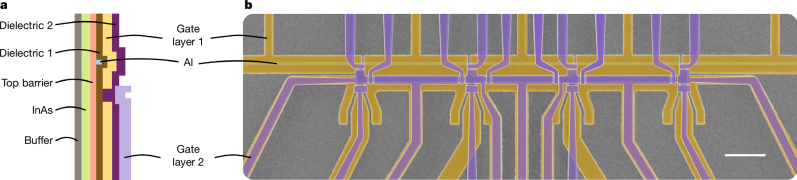
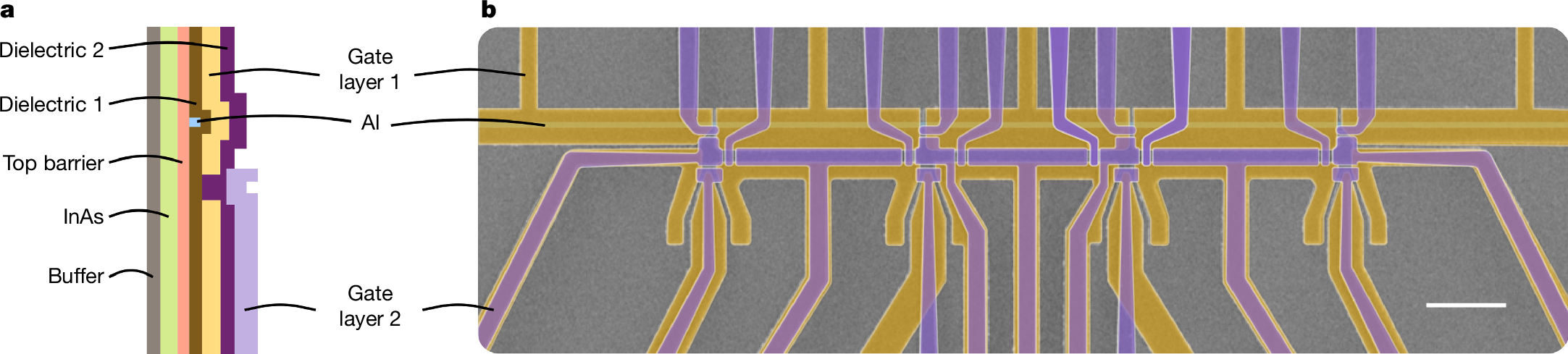
    The claimed creation of anyons here involves Majorana fermions, which differ from the much more typical Dirac fermions. These Majorana fermions are bound with other such fermions as a Majorana zero mode (MZM), forming anyons that are intertwined (braided) to form what are in effect logic gates. In the Nature paper the Microsoft researchers demonstrate a superconducting indium-arsenide (InAs) nanowire-based device featuring a read-out circuit  (quantum dot interferometer) with the capacitance of one of the quantum dots said to vary in a way that suggests that the nanowire device-under-test demonstrates the presence of MZMs at either end of the wire.

    Microsoft has a dedicated website to their quantum computing efforts, though it remains essential to stress that this is not a confirmation until their research is replicated by independent researchers. If confirmed, MZMs could provide a way to create more reliable quantum computing circuitry that does not have to lean so heavily on error correction to get any usable output. Other, competing efforts here include such things as hybrid mechanical qubits and antimony-based qubits that should be more stable owing to their eight spin configurations.

    21 Feb 08:41

    XRHealth to Build “World’s Largest XR Healthcare Platform,” with Acquisition

    by Rory Greener

    This week, XRHealth made further strides in deploying virtual and mixed reality solutions for healthcare end users and patients.

    Those strides come from XRHealth’s recent acquisition of RealizedCare, an immersive digital therapeutics firm that enables XRHealth to integrate AI services within its product portfolio. Outcome Capital acted as a strategic and financial advisor throughout the acquisition process.

    Following the purchase, the Founder & CEO of RealizedCare, Aaron Gani, is now lending their expertise to XRHeaelth by serving as its new US General Manager. 

    Gani said about the acquisition, “We are thrilled to become a part of XRHealth’s groundbreaking digital therapeutics platform.”  

    Gani also added:  

    By integrating our triage tool with XRHealth’s cutting-edge XR and mixed reality capabilities, we can expand access to evidence-based, value-based care solutions, helping more individuals manage chronic pain, and mental health conditions. 

    The integration of RealizedCare’s XR therapeutic solution platform also enabled XRHealth to include services to assist with various conditions, such as behavioural health, via “scientifically proven methods to manage chronic pain.” Additionally, XRHealth can leverage RealizedCare’s Triage tool, allowing AI-optimized, personalized patient care. 

    The RealizedCare solution appeared in the healthcare solutions market following a collaboration between the firm and Oxford University, Massachusetts General Hospital, Sumitomo Pharma, and Confluent Health.

    Building the World’s Largest XR Healthcare Platform

    “With the integration of RealizedCare’s groundbreaking triage tool and therapeutic solutions, we are building the world’s largest XR healthcare platform,” remarked Eran Orr, CEO of XRHealth.

    The news of the RealizedCare acquisition follows XRHealth’s acquisition of NeuroReality, another immersive patient-care healthcare solutions provider, and Amelia Virtual Care in 2023, showcasing XRHealth’s ongoing growth to deploy various patient care and digital therapeutic solutions.

    XRHealth notes that over 2,000 clinicians to treat more than 50,000 patients on the XRHealth platform marking positive adoption for its service, with recent acisutions only driving this forward more.

    Orr also added:

    By merging the power of mixed reality, extended reality, and AI-driven insights, we are forging a new era of immersive, value-based care. This transformative approach will expand global access to high-quality therapy, empower clinicians with unparalleled tools, and ultimately reshape the way patients experience and engage with their own healing journey.


    21 Feb 08:38

    Nvidia unveils powerful AI system for genetic research

    AI chipmaker Nvidia and research partners have created what they call the largest artificial intelligence system yet for biological research, the company said on Wednesday, aiming to speed up breakthroughs in medicine and genetics.
    21 Feb 08:36

    Armes hypersoniques : la nouvelle donne qui bouleverse l’échiquier mondial

    by Laurent Vilaine

    missile

    La vélocité et la maniabilité en vol des armes hypersoniques, développées par la Russie, la Chine, les États-Unis, ainsi que par la France, l’Inde, l’Iran et la Corée du Nord, changent profondément la donne en matière d’équilibre stratégique et de dissuasion nucléaire.

    20 Feb 10:05

    Visitors [Comic]

    by Geeks are Sexy

    [Source: @jenny_jinya]

    Click This Link for the Full Post > Visitors [Comic]

    19 Feb 09:40

    Belfry OpenSCAD Library (BOSL2) Brings Useful Parts and Tools Aplenty

    by Donald Papp

    OpenSCAD has a lot of fans around these parts — if you’re unaware, it’s essentially a code-based way of designing 3D models. Instead of drawing them up in a CAD program, one writes a script that defines the required geometry. All that is made a little easier with the Belfry OpenSCAD Library (BOSL2).

    Designing a part like this is a cinch with BOSL2.

    BOSL2 has an extensive library of base shapes, advanced functions for manipulating models, and some really nifty tools for creating attachment points on parts and aligning components with one another. If that sounds handy for designing useful objects, you’re in for even more of a treat when you see their functions for gears, hinges, screws, and more.

    There’s even one that covers bottle necks and caps. (Those are all standardized by the way, so it’s never been easier to interface to existing bottles or caps in a project.)

    OpenSCAD really is very versatile software. It powers useful tools like this screw, washer, and nut generator as well as having more unusual applications like a procedural terrain generator. It’s free, so if you’ve never looked into it, check it out!

    18 Feb 10:36

    Réduire l’empreinte carbone des télécoms grâce aux drones : SPIE en action

    by Stephannie R.

    SPIE CityNetworks intègre les drones dans ses opérations de conception d'infrastructures 5G. Cette avancée technologique permet d'améliorer la gestion des réseaux télécoms, de renforcer la sécurité des interventions et de réduire l'empreinte carbone des opérations sur le terrain.

    Des bénéfices concrets pour la sécurité et l'environnement

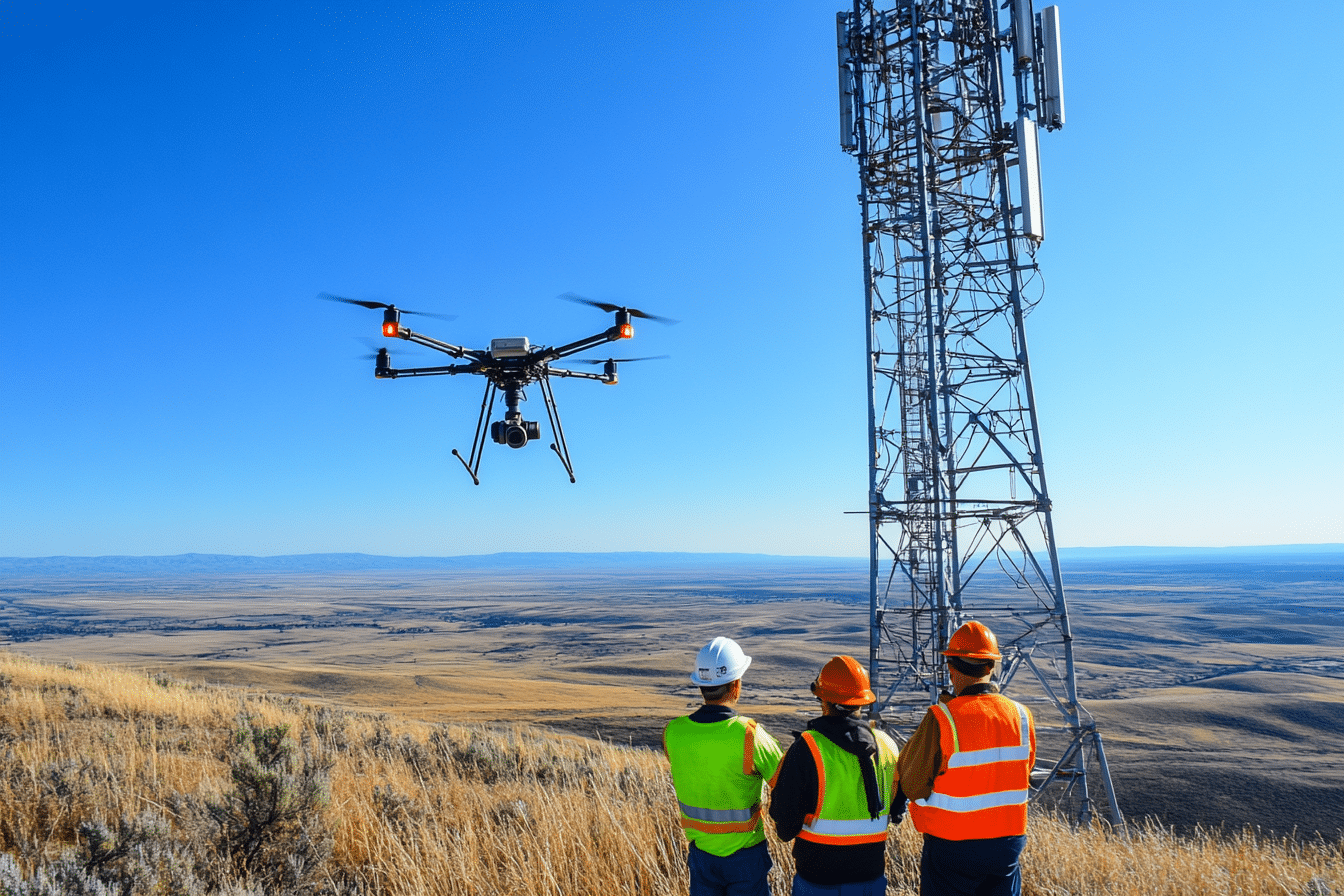
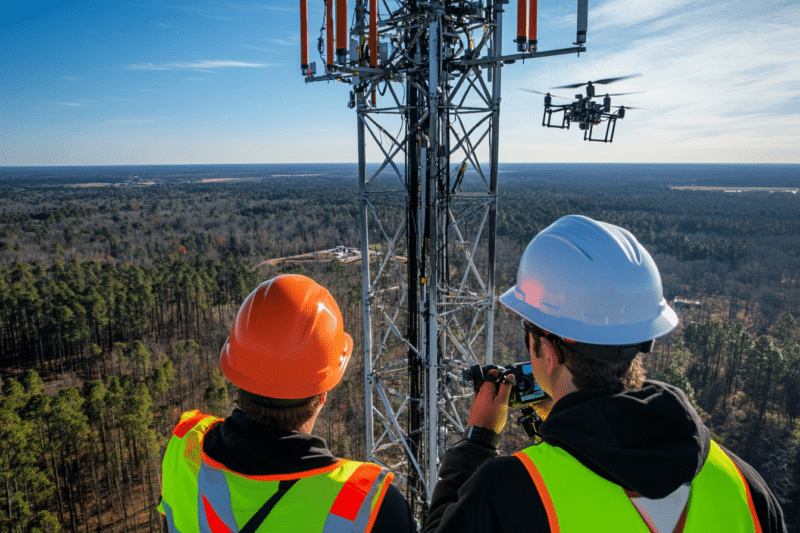
    SPIE CityNetworks déploie progressivement l'utilisation des drones dans ses interventions. Cela facilite la transformation numérique des territoires dans sa quête d'innovation. Ces appareils ont été initialement conçus pour optimiser la conception des projets. Ils permettent d'identifier de nouvelles implantations pour les antennes et équipements télécoms. Ainsi, ils ont rapidement trouvé leur place dans la maintenance des infrastructure. Cette approche permet de rendre les interventions en hauteur moins fréquentes. Cela réduit ainsi les risques pour les techniciens.

    Aujourd'hui, les équipes télécom de SPIE CityNetworks intègrent pleinement cette technologie et bénéficient de trois avantages majeurs. La sécurité des interventions est renforcée grâce à la limitation des travaux en hauteur. Cela permet aux techniciens de travailler en toute sûreté depuis le sol. L'impact environnemental des opérations diminue grâce à la réduction du recours aux nacelles et équipements lourds. Cela limite ainsi l'empreinte carbone. De plus, l'efficacité opérationnelle s'accroît, avec des interventions plus rapides qui libèrent du temps pour des missions à plus forte valeur ajoutée.

    Drones : SPIE en action

    SPIE CityNetworks dispose actuellement de 18 dronistes, formés par des experts et encadrés lors de leurs premiers vols. Ces collaborateurs, qu'ils soient négociateurs de sites, concepteurs de projets ou techniciens de maintenance, exploitent pleinement le potentiel des drones pour optimiser la gestion des infrastructures télécoms.

    L'intelligence artificielle au service de la gestion prédictive

    Au-delà de l'usage des drones, SPIE CityNetworks explore le couplage avec l'intelligence artificielle pour améliorer la surveillance et l'analyse des infrastructures. Le traitement automatisé des images captées permet d'identifier immédiatement des anomalies ou des risques potentiels. Cela facilite une maintenance prédictive plus efficace.

    Parallèlement, le développement de jumeaux numériques est en cours. Cela permet une modélisation en réalité augmentée pour une gestion encore plus précise des réseaux. Ces innovations promettent d'améliorer durablement la performance des infrastructures télécoms et de limiter leur impact environnemental.

    Drones : SPIE en action

    « Nous avons très rapidement saisi l'énorme potentiel des drones pour nos activités et nous continuerons à généraliser leur usage au sein de nos équipes, » déclare Sébastien Rivière. Il est le directeur opérationnel Télécom Sud chez SPIE CityNetworks. « Cette technologie nous permet d'innover tout en accompagnant nos clients, opérateurs télécoms et tower companies, vers un avenir plus durable et connecté.« 

    Article basé sur un communiqué de presse reçu par la rédaction.

    Cet article Réduire l’empreinte carbone des télécoms grâce aux drones : SPIE en action est apparu en premier sur OBJETCONNECTE.COM.

    17 Feb 23:16

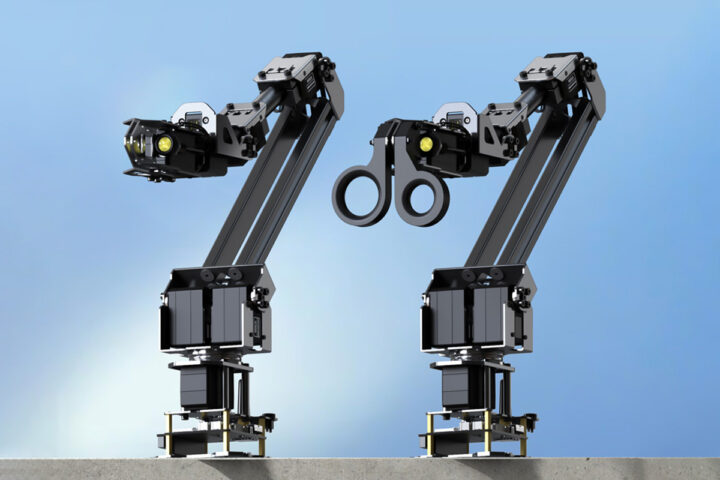
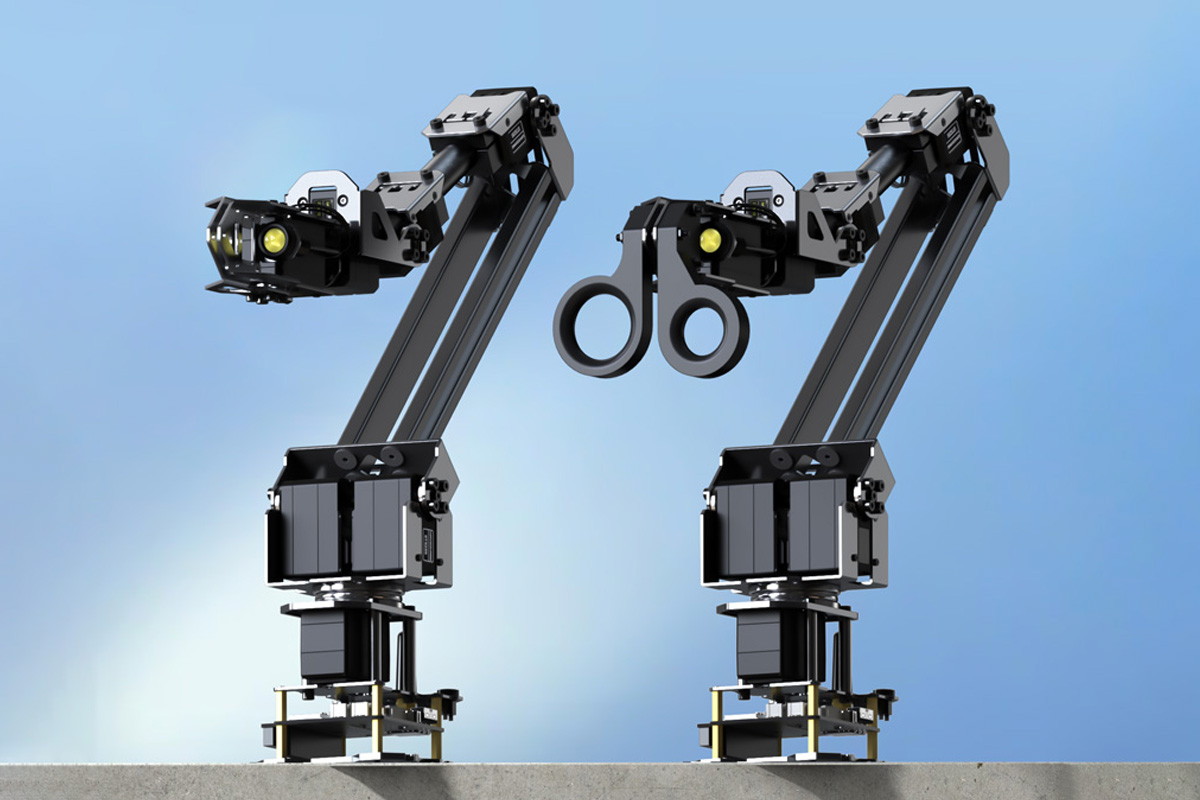
    Waveshare ESP32 robotic arm kit with 5+1 DoF supports ROS2, LeRobot, and Jetson Orin NX integration

    by Debashis Das
    RoArm M3 Pro and RoArm M3 S High Torque Serial Bus Servo Robotic Arm Kit

    Waveshare has recently released the RoArm-M3-Pro and RoArm-M3-S, a 5+1 DOF high-torque ESP32 robotic arm kit. The main difference between the two is that the RoArm-M3-Pro features all-metal ST3235 bus servos for durability and longevity, on the other hand, the RoArm-M3-S uses standard servo motors which are less durable for long-term use.

    These robotic arms feature a lightweight structure, a 360° omnidirectional base, and five flexible joints, which together create a 1m workspace with a 200 grams @ 0.5m payload. A 2-DOF wrist joint enables multi-dimensional clamping and precise force control. It integrates an ESP32 MCU, supporting multiple wireless control modes via a web app, it also supports inverse kinematics for accurate positioning, curve velocity control for smooth motion, and adaptive force control. The design is open source and with ROS2 compatibility, it allows secondary development via JSON commands and ESP-NOW for multi-device communication. Compatible with the LeRobot AI framework, it supports AI research with pre-trained models, imitation learning, and reinforcement learning, making it suitable for robotics, automation, and human-machine interaction projects.

    RoArm M3 Pro and RoArm M3 S Robotic Arm Kit with 5+1 DoF

    RoArm-M3-Pro and RoArm-M3-S specifications:

    • Degrees of Freedom (DOF) – 5 + 1
    • Payload – 200 grams @ 0.5m
    • Workspace – 1120mm (Max, 360° omnidirectional), Vertical: 798mm (Max)
    • Operating range – Base-360°, Shoulder-180°, Elbow-180°, Hand-135°/270°
    • Servos
      • Total servo – 7
        • All-metal ST3235 bus servos, direct-drive (RoArm-M3-Pro)
        • Standard servos for RoArm-M3-S
      • Servo speed – 40rpm (no-load, no torque limit)
      • Servo torque – 30 kg.CM @12V
    • Joint feedback – 12-bit 360° magnetic encoder (0.088° precision)
    • Host Operation – UART/USB/ESP-NOW/HTTP communication via JSON data format commands
    • Display – 0.91-inch OLED
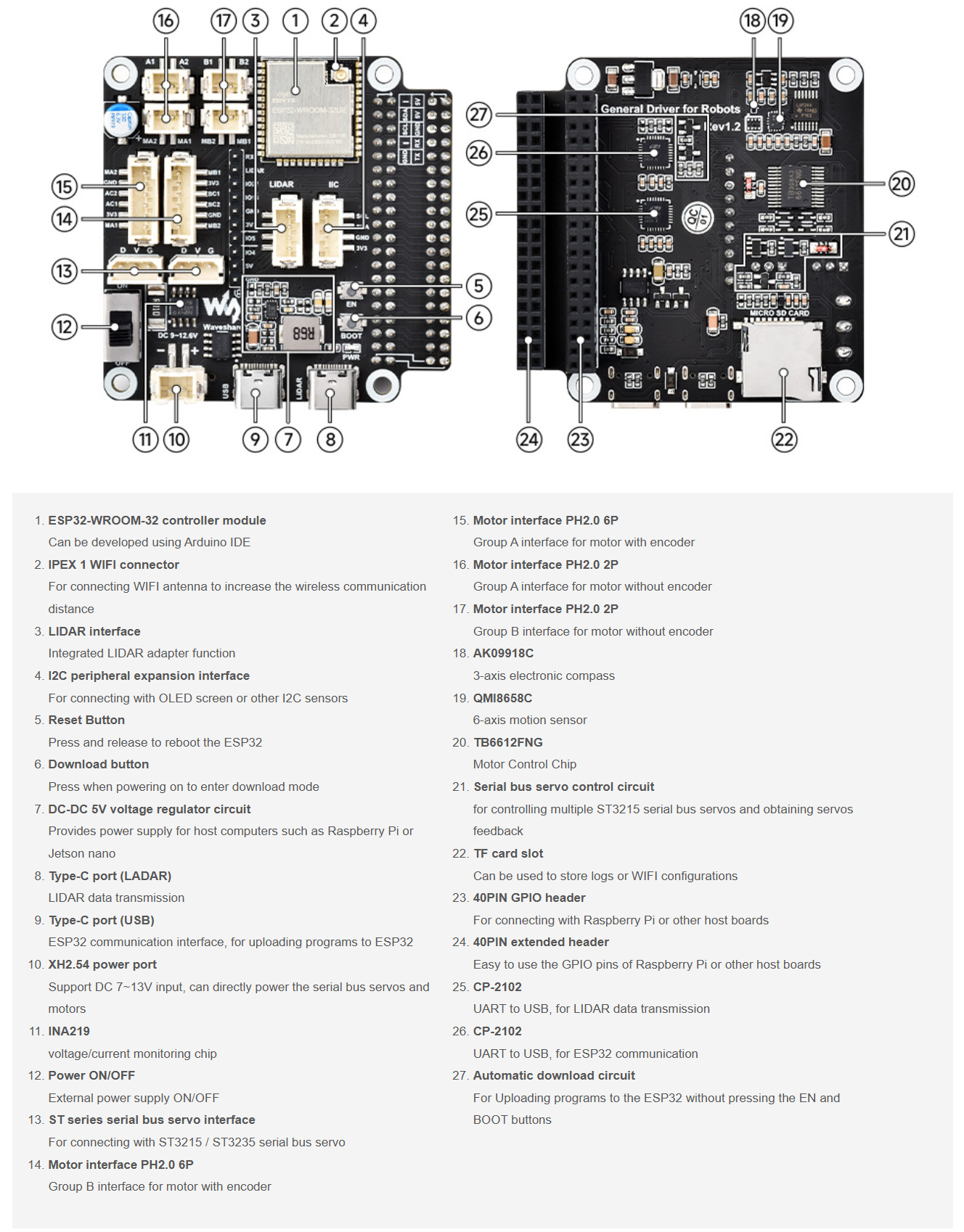
    • Control board
      • MCU module – Espressif ESP32-WROOM-32U with WiFi and Bluetooth
      • Storage – microSD card slot
      • Interfaces
        • I2C for OLED screens and I2C sensors
        • SPI
        • LiDAR Interface (supported sensor not specified)
        • ST3215 Serial Bus Servo Interface
        • 2x Motor Interface PH2.0 6P for motors with encoders (Group A and Group B).
        • 2x Motor Interface PH2.0 2P for motors without encoders (Group A and Group B).
        • 40-pin expansion header for connection to a Raspberry Pi or other host boards
        • 40-pin GPIO header
      • Sensors and ICs
        • AK09918C 3-axis electronic compass
        • QMI8658C 6-axis motion sensor
        • TB6612FNG motor control chip
        • ST3215/ST3235 serial bus servo control circuit
        • INA219 voltage and current monitoring chip.
      • USB
        • USB Type-C Port for power and programming the board
        • USB Type-C Port for LIDAR data transmission
      • Misc
        • Reset button
        • Download button
        • Power ON/OFF button
      • Power  – XH2.54 power port with DC 5V voltage regulator for host computers (Raspberry Pi, Jetson Nano).
    •  Expansion
      • EoAT customization (gripper, etc.)
      • Camera mount
      • Peripheral mounting rails
    • Operating voltage
      • 12V, 5A power supply with 2-channel supply switch
      • Supports 3S Lithium batteries (NOT included)
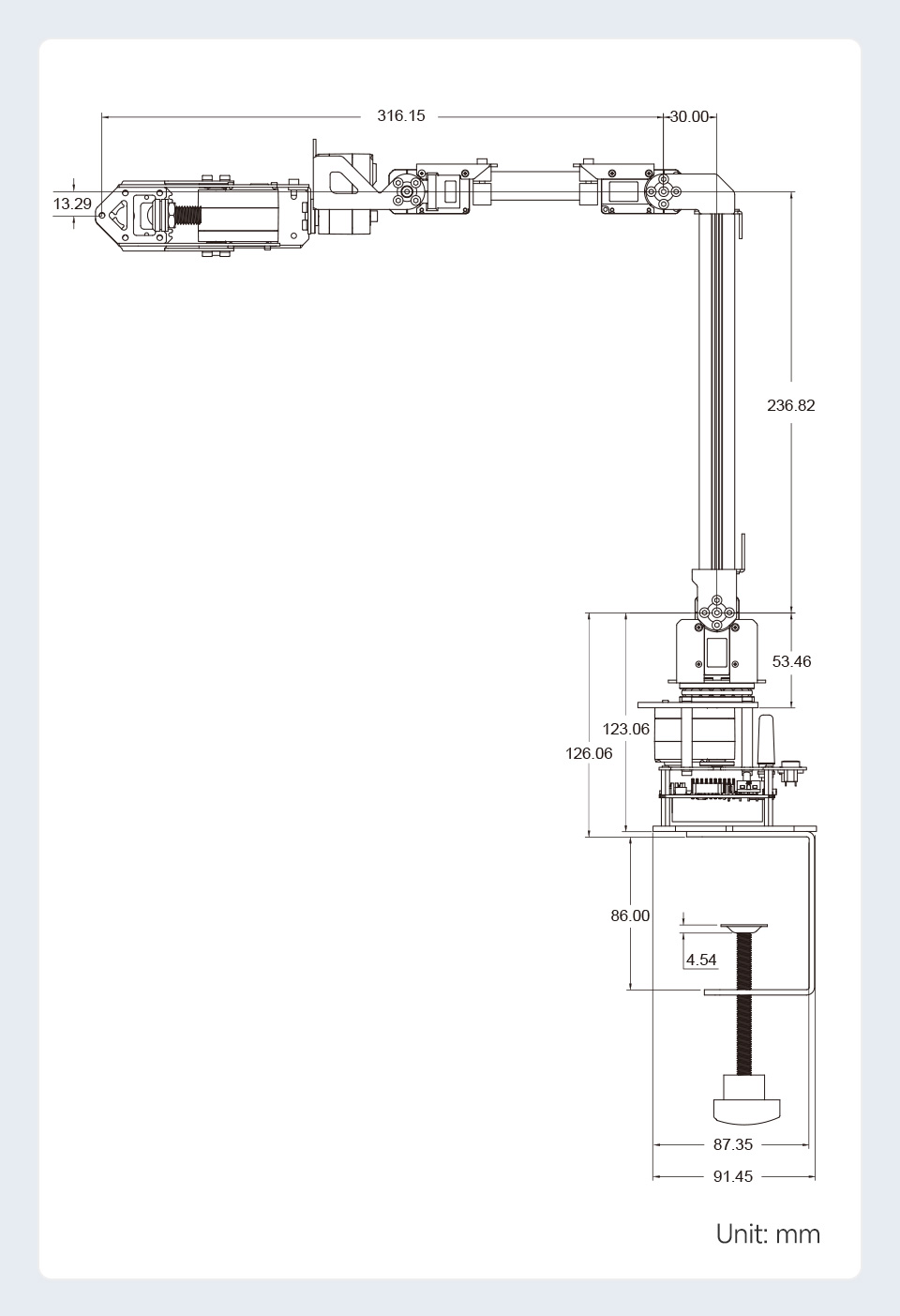
    • Dimensions
      • Horizontal reach – 316.15 mm (depending on arm configuration)
      • Vertical height – 236.8 mm (from the base to the top of the arm)
      • Base width – 87.35 mm to 91.45 mm (including clamp mechanism)
      • End-Effector Length – 13.29 mm
      • Additional Horizontal Extension – 30.00 mm
      • Base Height – 126.06 mm
      • Rotational Base Section Height – 123.06 mm
      • Arm Section Above Base – 53.46 mm
    • Weight
      • RoArm-M3-S – 973.5 ± 15g
      • RoArm-M3-Pro – 1020.8g ± 15g
      • Table Edge Fixing Clamp – 290g ±10g

    The End-of-Arm Tool (EoAT) clamp on the RoArm-M3 series consists of a two-degree-of-freedom (2-DOF) wrist joint, enabling pitch and horizontal rotation. It utilizes a direct-drive mechanism for precise force control, ensuring accurate object handling. The clamp supports modular attachments, such as mechanical grippers and vacuum-based suction tools, allowing customization based on application requirements. With LeRobot AI framework integration it can do inverse kinematics and deep learning-based control, optimizing motion planning and object manipulation in automated systems.

    RoArm M3 Pro and RoArm M3 S Arm Driverboard

    The RoArm-M3 series supports various tools, software, libraries, and web applications for integration and control. It is compatible with the LeRobot AI framework for motion control using inverse kinematics and deep learning. It supports  Python, C++, and ROS2 support for programming, with APIs for motion planning, sensor input, and control. The system also includes a web-based and standalone GUI for operation, calibration, and diagnostics. It integrates with OpenCV for vision-based tasks and TensorFlow/PyTorch for AI-based object recognition. Communication interfaces include MQTT, WebSocket, and REST APIs for industrial automation and cloud-based monitoring. You can generally find more information about the product on their wiki page, but at the time of writing the page is empty, but they have various other information available on their products page.

    Previously we have written about the previous generation Waveshare RoArm-M2 robotic arm, another ESP32-based robotic arm, but with four degrees of freedom (4 DoF) and built using carbon fiber and aluminum alloy. The main difference between the RoArm-M2 and RoArm-M3 is that the new model has 5+1 degrees of freedom, which means the arm includes all 5 DOF movements (base, shoulder, elbow, wrist pitch, and gripper) plus an additional wrist rotation (1 DOF), which allows the end effector (gripper) to rotate horizontally. This provides better maneuverability, making it more suitable for complex tasks like precision gripping, manipulation, and AI-based applications. We have also written about SO-ARM100 open-source AI robotic arm kit with LeRobot framework and NVIDIA Jetson integration.

    The RoArm-M3-xx series ESP32-based 5+1 DOF robotic arm is available on AliExpress for $331.39 (RoArm-M2-S) or $455.99 (RoArm-M2-Pro).

    RoArm M3 Pro and RoArm M3 S dimensions

    The post Waveshare ESP32 robotic arm kit with 5+1 DoF supports ROS2, LeRobot, and Jetson Orin NX integration appeared first on CNX Software - Embedded Systems News.

    17 Feb 23:01

    How far would you trust AI to make important decisions? Research suggests statistical literacy shapes trust

    From tailored Netflix recommendations to personalized Facebook feeds, artificial intelligence (AI) adeptly serves content that matches our preferences and past behaviors. But while a restaurant tip or two is handy, how comfortable would you be if AI-algorithms were in charge of your medical expert or new hire?
    17 Feb 09:51

    USB Stick Hides Large Language Model

    by Bryan Cockfield

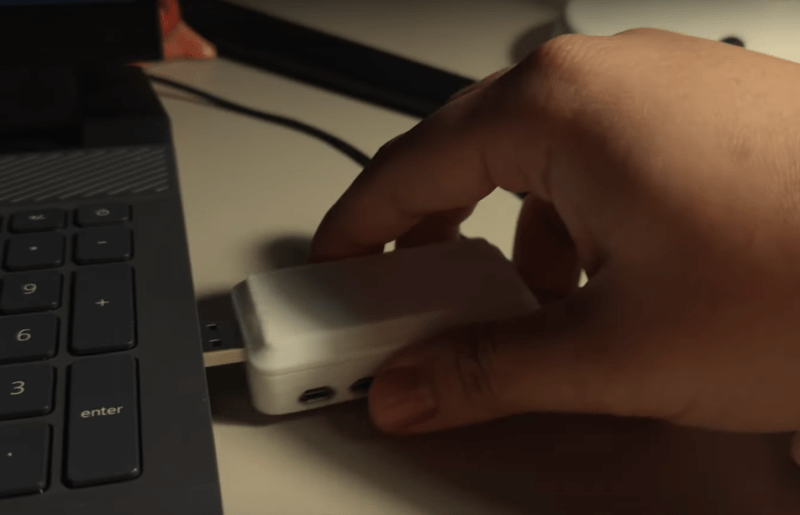
    Large language models (LLMs) are all the rage in the generative AI world these days, with the truly large ones like GPT, LLaMA, and others using tens or even hundreds of billions of parameters to churn out their text-based responses. These typically require glacier-melting amounts of computing hardware, but the “large” in “large language models” doesn’t really need to be that big for there to be a functional, useful model. LLMs designed for limited hardware or consumer-grade PCs are available now as well, but [Binh] wanted something even smaller and more portable, so he put an LLM on a USB stick.

    This USB stick isn’t just a jump drive with a bit of memory on it, though. Inside the custom 3D printed case is a Raspberry Pi Zero W running llama.cpp, a lightweight, high-performance version of LLaMA. Getting it on this Pi wasn’t straightforward at all, though, as the latest version of llama.cpp is meant for ARMv8 and this particular Pi was running the ARMv6 instruction set. That meant that [Binh] needed to change the source code to remove the optimizations for the more modern ARM machines, but with a week’s worth of effort spent on it he finally got the model on the older Raspberry Pi.

    Getting the model to run was just one part of this project. The rest of the build was ensuring that the LLM could run on any computer without drivers and be relatively simple to use. By setting up the USB device as a composite device which presents a filesystem to the host computer, all a user has to do to interact with the LLM is to create an empty text file with a filename, and the LLM will automatically fill the file with generated text. While it’s not blindingly fast, [Binh] believes this is the first plug-and-play USB-based LLM, and we’d have to agree. It’s not the least powerful computer to ever run an LLM, though. That honor goes to this project which is able to cram one on an ESP32.

    17 Feb 08:28

    Artome at ISE 2025 Movable All-in-One Audiovisual Solutions using Epson Projector

    by Charbax

    At ISE 2025, Artome’s Head of Sales for Europe, G, introduced the company’s innovative all-in-one, movable audiovisual solutions that require no installation. These systems integrate Epson ultra-short throw projectors to deliver large images from a short distance, ensuring high-quality visuals even in well-lit environments. The use of Ambient Light Rejecting (ALR) screens further enhances image clarity.


    Megapixel VR is my ISE 2025 video coverage sponsor, check out my Megapixel/Ventana playlist here: https://www.youtube.com/playlist?list=PL7xXqJFxvYvg9YC437j-BJHzdBeVEpVfb

    Artome’s technology seamlessly combines projection and audio components into a cohesive unit. Their proprietary integration framework connects the Epson projectors with a built-in 2.1 sound system, featuring front-facing speakers and a subwoofer, to provide an immersive audiovisual experience. This design simplifies user interaction, making it suitable for various settings.

    The mobility of Artome’s solutions allows users to adjust image sizes easily by repositioning the unit relative to the projection surface. This flexibility is particularly advantageous in educational environments, where spaces are repurposed frequently. The units are equipped with connectivity options to support meeting room peripherals such as microphones, cameras, and additional speakers, enhancing their versatility.

    Artome’s product lineup includes models like the Artome M10 and Artome X20. The M10 utilizes an Epson EB-805F projector, capable of delivering up to 5,000 lumens of brightness, and supports image sizes ranging from 60 to 150 inches. The X20 is designed for larger venues, featuring an Epson EB-PU2010W projector with a brightness of 10,000 lumens and interchangeable lenses to accommodate various projection requirements.

    These solutions are widely adopted in educational institutions and corporate environments. In schools, they facilitate dynamic teaching methods by providing flexible presentation tools. In corporate settings, they support modern office designs that prioritize adaptability and collaborative technologies. The installation-free nature of Artome’s products reduces setup time and costs, making them practical for diverse applications.

    Artome, based in Finland, emphasizes high-quality manufacturing standards. Their collaboration with Epson stems from a shared commitment to producing reliable and environmentally conscious products. This partnership ensures that Artome’s solutions meet rigorous performance and sustainability criteria, aligning with the company’s core values.

    For more information about Artome’s range of audiovisual solutions, visit their official website: https://artome.fi

    Check out all my ISE 2025 videos in this playlist: https://www.youtube.com/playlist?list=PL7xXqJFxvYvhSl82o7cYiTSXCtEJ5MeOZ

    This video was filmed using the DJI Pocket 3 ($669 at https://amzn.to/4aMpKIC using the dual wireless DJI Mic 2 microphones with the DJI lapel microphone https://amzn.to/3XIj3l8 ), watch all my DJI Pocket 3 videos here https://www.youtube.com/playlist?list=PL7xXqJFxvYvhDlWIAxm_pR9dp7ArSkhKK

    Join https://www.youtube.com/charbax/join for Early Access to my videos as soon as I upload them before they go public.

    17 Feb 08:26

    GeoBox at ISE 2025: Hardware-Based Video Processing for Immersive Displays

    by Charbax

    At ISE 2025, VNS Inc. showcased their GeoBox technology, a hardware-based video processing solution from Taipei, Taiwan, designed to enhance immersive displays and multi-viewer applications. GeoBox integrates all necessary video processing capabilities into a single device, distinguishing it from other market offerings. A typical setup includes a curved screen environment, utilizing GeoBox for geometric corrections to align images seamlessly across display areas. In one demonstration, two projectors were connected to a single GeoBox unit, effectively merging their outputs. The projectors used in this setup were provided by Vivitek, a partner known for their high-quality display solutions.


    Megapixel VR is my ISE 2025 video coverage sponsor, check out my Megapixel/Ventana playlist here: https://www.youtube.com/playlist?list=PL7xXqJFxvYvg9YC437j-BJHzdBeVEpVfb

    Another innovative display featured a special film developed by Infitech, a leading 3D solution provider. This film enables holographic-like projections without the need for glasses, creating what is often referred to as a “ghost screen.” When inactive, the screen appears transparent; upon projection at a 30-degree angle, it displays vivid images that are visible even under strong ambient light, making it ideal for storefronts and public displays.

    The GeoBox system simplifies the setup by requiring only a projector and a media player, such as a BrightSign unit, to deliver content. The GeoBox handles image alignment, geometric corrections, and flipping, ensuring the projected content fits precisely within the designated display area. This eliminates the need for complex power supplies or additional equipment, streamlining the installation process.

    GeoBox’s versatility extends to various applications, including edge blending, warping, and video wall control. Its hardware-based design ensures reliability and ease of use, eliminating the need for PC-based software and reducing potential points of failure. This makes it a robust solution for both permanent installations and temporary setups in diverse environments.

    For more information about GeoBox and its range of video processing solutions, visit VNS Inc.’s official website: https://www.vnstw.com/

    Check out all my ISE 2025 videos in this playlist: https://www.youtube.com/playlist?list=PL7xXqJFxvYvhSl82o7cYiTSXCtEJ5MeOZ

    This video was filmed using the DJI Pocket 3 ($669 at https://amzn.to/4aMpKIC using the dual wireless DJI Mic 2 microphones with the DJI lapel microphone https://amzn.to/3XIj3l8 ), watch all my DJI Pocket 3 videos here https://www.youtube.com/playlist?list=PL7xXqJFxvYvhDlWIAxm_pR9dp7ArSkhKK

    Join https://www.youtube.com/charbax/join for Early Access to my videos as soon as I upload them before they go public.

    16 Feb 09:10

    Chop, Chop, Chop: Trying Out VR for Woodworking

    by Heidi Ulrich
    Man using a table saw with a VR headset on

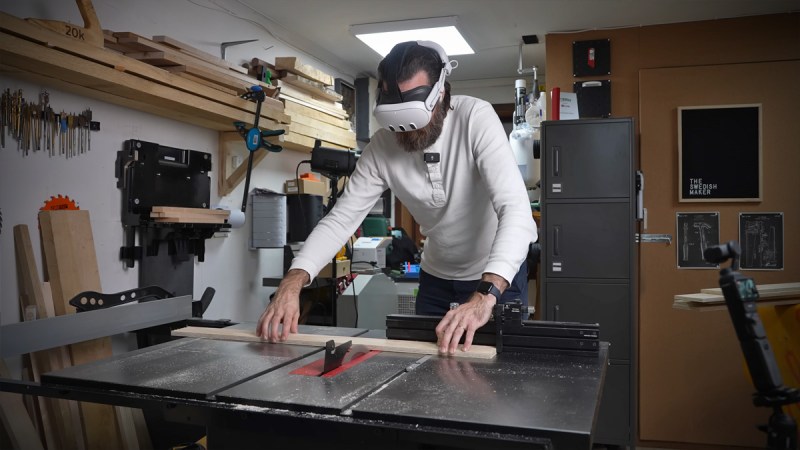
    Virtual Reality in woodworking sounds like a recipe for disaster—or at least a few missing fingers. But [The Swedish Maker] decided to put this concept to the test, diving into a full woodworking project while wearing a Meta Quest 3. You can check out the full experiment here, but let’s break down the highs, lows, and slightly terrifying moments of this unconventional build.

    The plan: complete a full furniture build while using the VR headset for everything—from sketching ideas to cutting plywood. The Meta Quest 3’s passthrough mode provided a semi-transparent AR view, allowing [The Swedish Maker] to see real-world tools while overlaying digital plans. Sounds futuristic, right? Well, the reality was more like a VR fever dream. Depth perception was off, measuring was a struggle, and working through a screen-delayed headset was nauseating at best. Yet, despite the warped visuals, the experiment uncovered some surprising advantages—like the ability to overlay PDFs in real-time without constantly running back to a computer.

    So is VR useful to the future of woodworking? If you’re a woodworking novice, you might steer clear from VR and read up on the basics first. For the more seasoned: maybe, when headsets evolve beyond their current limitations. For now, it’s a hilarious, slightly terrifying experiment that might just inspire the next wave of augmented reality workshops. If you’re more into electronics, we did cover the possibilities with AR some time ago. We’re curious to know your thoughts on this development in the comments!

    15 Feb 14:58

    DeepSeek founder Liang Wenfeng is reportedly set to meet with China’s Xi Jinping

    by Kyle Wiggers

    Chinese AI startup DeepSeek founder Liang Wenfeng is reportedly set to meet with China’s top politicians, including Chinese leader Xi Jinping, during a summit that Alibaba founder Jack Ma is also expected to attend. The summit, which could happen as soon as next week, may be intended as a signal by China’s Communist Party that […]

    © 2024 TechCrunch. All rights reserved. For personal use only.

    15 Feb 09:16

    Actualité : Donjons & Dragons : Netflix prépare une série adaptée du fameux jeu de rôle

    by Marine Pérot
    On le savait, Hasbro n'avait pas l'intention d'abandonner son projet de série live action basée sur le célèbre jeu de rôle Donjons & Dragons. Il a donc été revu et corrigé et prendra maintenant la forme d'une série chez Netflix intitulée The Forgotten Realms (Les Royaumes oubliés en français), titre donné à un cadre très connu des joueurs du jeu.Magi...