Durant leur survol de la Lune, les astronautes à bord de la mission Artémis II ont pu admirer la surface de notre satellite. Mais ils ne s'attendaient pas forcément à être témoins de l'impact de micrométéorites, ce qui a déclenché l'enthousiasme des équipes scientifiques.
Huzzah! A mass psychosis inducing machine is making money out the wazoo by bombarding users with highly-targeted corporate messages.
According to a new Axios scoop, OpenAI has already generated $100 million in annual recurring revenue from stuffing advertisements into ChatGPT in just two months, suggesting that its big bet on leveraging its users’ deeply personal conversations to offer hyper-effective commercials is paying off.
OpenAI told investors it expects to rake in $2.5 billion in ad revenue by the end of 2026, and a staggering $53 billion by 2029, per Axios. And by 2030, it predicted that figure will double to $100 billion, surpassing the revenue of giant companies like Tesla and Disney.
The projections are based on the assumption that OpenAI reaches 2.75 billion weekly users by 2030, we should note. As of February, that figure stands at 900 million.
The AI industry loves to throw around big numbers, so it’s worth taking these projections with a grain of salt, especially as OpenAI ingratiates itself to investors ahead of an anticipated multi-trillion dollar IPO. Nonetheless, $100 million is a handsome chunk of change for a pilot program that only began in February. If it turns out to be anywhere near as lucrative as OpenAI hopes, it could be the long-awaited answer to the nagging question hanging over the AI industry: how it expects to become profitable, as the vast majority of its users do not pay for its service.
The idea is sound: Google generates hundreds of billions in advertising revenue per year by collecting troves of user data that it uses to display vast numbers of ads to users. With more people turning to AI chatbots to get answers instead of search engines, ChatGPT ads could be even more effective by drawing on users’ extensive conversations, in which they will surely state their desires in plain or implicit terms.
It could come at a major cost, however. Ads have proved controversial with ChatGPT users, a paint point that its competitor Anthropic capitalized on in a series of Superbowl commercials emphasizing that its chatbot Claude would stay ad-free.
It’s true that some users see it as taking advantage of their trust. It threatens the technology’s image as an informed impartial tool, or as a close confidante or companion. OpenAI will have to walk a tight rope to avoid scaring off its core customers. Loyalties in this nascent but rapidly growing industry are fleeting: scores of ChatGPT users vowed to switch to Anthropic’s Claude chatbot, for instance, after Sam Altman agreed a deal with the Pentagon to deploy its tech across the military.
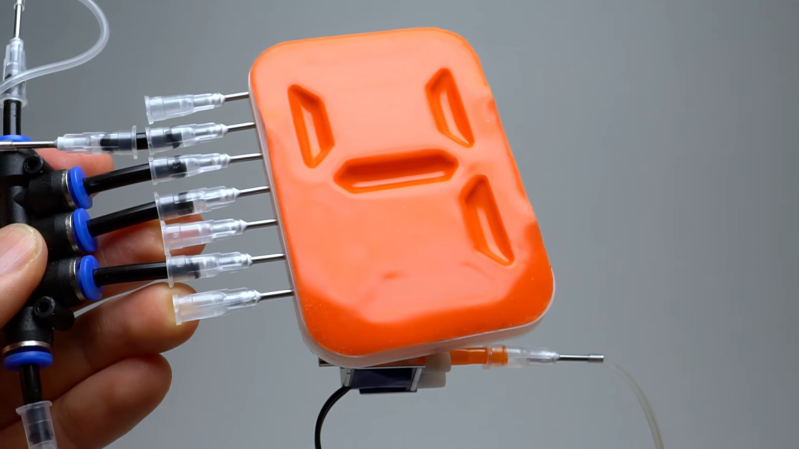
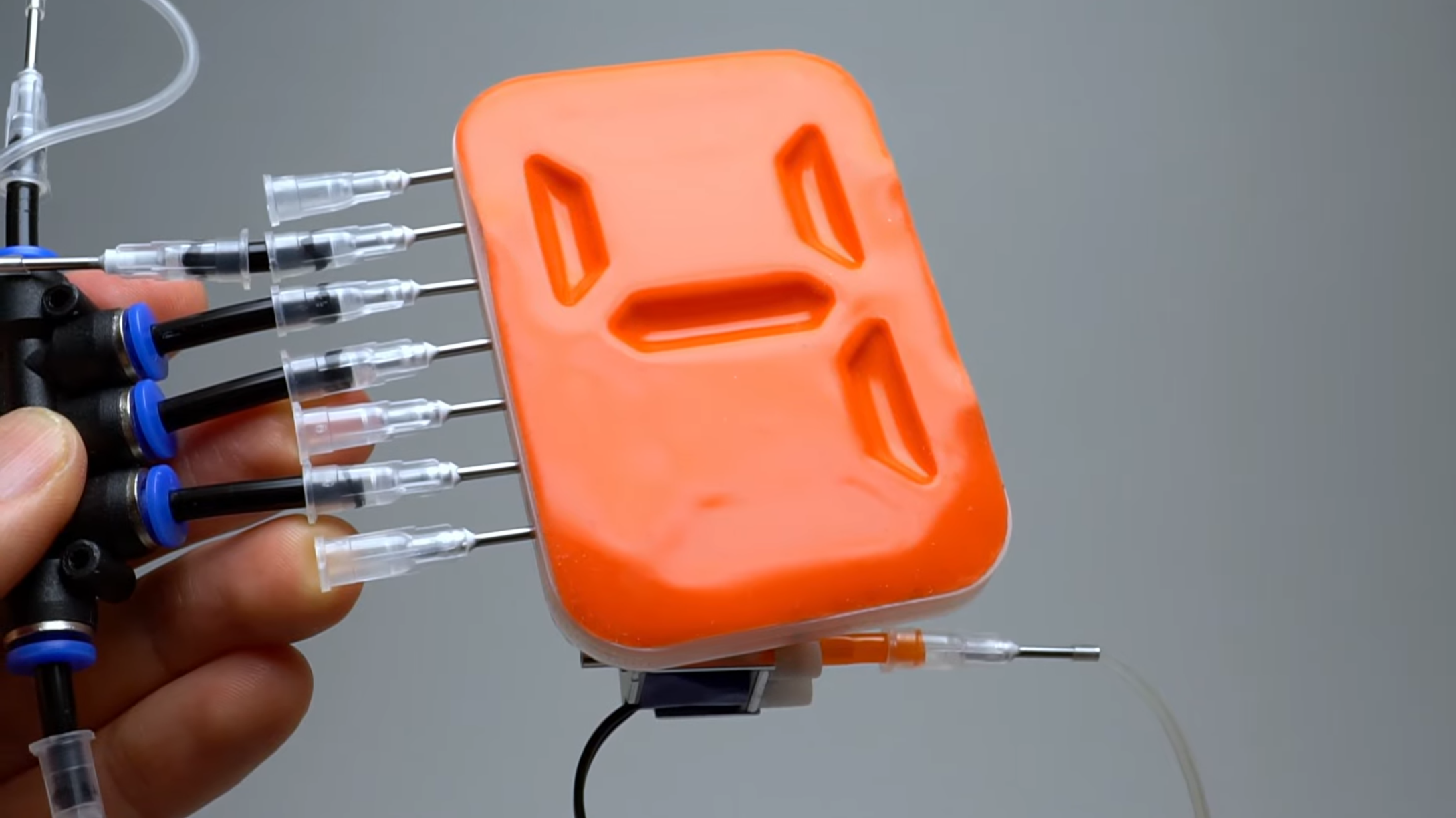
There’s a long history of devices originally used for communication being made into computers, with relay switching circuits, vacuum tubes, and transistors being some well-known examples. In a smaller way, pneumatic tubes likewise deserve a place on the list; [soiboi soft], for example, has used pneumatic systems to build actuators, logic systems, and displays, including this latching seven-segment display.
Each segment in the display is made of a cavity behind a silicone sheet; when a vacuum is applied, the front sheet is pulled into the cavity. A vacuum-controlled switch (much like a transistor, as we’ve covered before) connects to the cavity, so that each segment can be latched open or closed. Each segment has two control lines: one to pressurize or depressurize the cavity, and one to control the switch. The overall display has four seven-segment digits, with seven common data lines and four control lines, one for each digit.
The display is built in five layers: the front display membrane, a frame to clamp this in place, the chamber bodies, the membrane which forms the switches, and the control channels. The membranes were cast in silicone using 3D-printed molds, and the other parts were 3D-printed on a glass build plate to get a sufficiently smooth, leak-free surface. As it was, the display used a truly intimidating number of fasteners to ensure airtight connections between the different layers. [soiboi soft] used the display for a clock, so it sits at the front of a 3D-printed enclosure containing an Arduino, a small vacuum pump, and solenoid valves.
This capacity for latching and switching, combined with pneumatic actuators, raises the interesting possibility of purely air-powered robots. It’s even possible to 3D-print pneumatic channels by using a custom nozzle.
Skechers has unveiled a Proto hologram retail experience at its Manhattan Beach, LA store in the US, bringing the brand's ambassador Howie Mandel to life through an interactive, immersive 3D installation.
The experience marks one of the first permanent Proto hologram installations in a footwear retail environment. Shoppers can interact with a life size hologram, take a selfie with Mandel, and unlock a promotion through the experience.
A launch event featured appearances and interviews with Mandel, Skechers President Michael Greenberg, and Proto founder David Nussbaum, who discussed the future of retail, experiential technology, and how brands are rethinking the in-store experience.
Our 2025 hall of fame entrants were revealed during a sold out event which took place at The HAC on 16th October and consisted of a drinks reception, three course meal, and awards ceremony presided over by award winning comedian, actress and writer Tiff Stevenson.
In his welcome speech, Scott Thompson, Founder and Editor, RTIH, said: “This is the awards’ fifth year as a physical event. We started off with just 30 people at the South Place Hotel not far from here, then moved to London Bridge Hotel, then The Barbican, and last year RIBA’s HQ in the West End.”
“But I’m conscious of the fact that, to quote the legend that is Taylor Swift, You’re only as hot as your last hit, baby. So, this year we’ve moved to our biggest venue yet, and also pulled in our largest number of entries to date and broken attendance records.”
He added: “This year’s submissions have without doubt been our best yet. To quote one of the judges: The examples of innovative developments across both traditional and digital retail spaces were truly remarkable.”
Congratulations to our winners, and a big thank you to our sponsors, judging panel, the legend that is Tiff Stevenson, and all those who attended our 2025 gathering.
Velxio is an open-source, self-hosted simulator for Arduino, ESP32, and Raspberry Pi boards that works directly in your web browser. You can drag-and-drop boards, connect components and modules, write and run code in Arduino or Python, and access the serial console, all without hardware.
If it looks similar to what the Wokwi simulator has to offer, it’s because Velxio was inspired by it and even integrates the AVR8 CPU emulator, RP2040 emulator, and QEMU fork for ESP32 Xtensa emulation from the Wokwi project. But the key difference is that Velxio can be self-hosted, although there’s also an online demo.
Velxio online demo
Velxio currently supports 19 targets across five architectures
The project also offers 48 components. The developer mentions that additional features compared to Wokwi include multiple heterogeneous boards in the same circuit (e.g., two Arduinos connected over SPI or serial, ESP32 with Arduino, Raspberry Pi 3 with a Pico, etc.) and full QEMU emulation support for ESP32 and Raspberry Pi 3.
Besides using the online demo, I found it very easy to install on my Ubuntu 24.04 machine with a single command (assumes Docker is already installed and enabled):
jaufranc@CNX-LAPTOP-5:~/edev/sandbox$ sudo docker run -d -p 3080:80 ghcr.io/davidmonterocrespo24/velxio:master
Once the installation was complete, I could access it in a web browser using the local IP on port 3080 (http://localhost:3080).
Clicking “Try Simulator Free” brings you to the simulator preloaded with a blinky example for Arduino UNO, as in the top screenshot in this article. I could build it and run it to see the blinking LED. I added a Raspberry Pi 3 and Raspberry Pi Pico 2 W to the dashboard, and built the blinky sample for the Pico board.
The Raspberry Pi 3 can be started, but even after waiting for a few minutes, I was unable to access the serial console and run the Python and Bash sample scripts. It’s in beta, maybe that’s why.
Adding additional components or boards is very easy as everything is well described and you can just drag-and-drop the selected component in position before wiring it to one of the GPIO of the board.
If you don’t want to wire a project by yourself just yet, you can always head over to the example section to browse various samples for Arduino, Raspberry Pi Pico, or ESP32 boards.
I did try a few ESP32 examples. They will load the code and the required libraries, but the builds failed for me:
[1285/1297] Building C object esp-idf/libsodium/CMakeFiles/__idf_libsodium.dir/libsodium/src/libsodium/crypto_core/ed25519/ref10/ed25519_ref10.c.obj
ninja: build stopped: subcommand failed.
✕ ESP-IDF build failed
Doing the same on the online demo also fails with a similar error, but with a more verbose output.
Bootloader binary size 0x4350 bytes. 0x2cb0 bytes (40%) free.
ninja: build stopped: subcommand failed.
CMake Deprecation Warning at /opt/esp-idf/tools/cmake/project.cmake:2 (cmake_minimum_required):
  Compatibility with CMake < 3.10 will be removed from a future version of
  CMake.
  Update the VERSION argument <min> value.  Or, use the <min>...<max> syntax
  to tell CMake that the project requires at least <min> but has been updated
  to work with policies introduced by <max> or earlier.
Call Stack (most recent call first):
CMakeLists.txt:8 (include)
fatal: not a git repository (or any of the parent directories): .git
CMake Deprecation Warning at /opt/esp-idf/CMakeLists.txt:1 (cmake_minimum_required):
...
I decided to select a simpler ESP32 example (Blink LED), and this time it worked.
Velxio is a cool project, although there’s still some extra work to do to make it more stable. You’ll find the code and full details on GitHub. The code is released under a dual-licensing model with an AGPLv3 licence for personal, educational, and open-source projects, and a commercial license for proprietary and closed-source products or SaaS.
Une équipe franco-japonaise affirme avoir réussi, pour la première fois en conditions réelles, à chiffrer et déchiffrer des données à partir d’ADN. Présentée par Emmanuel Macron le 1er avril 2026, cette démonstration explore une nouvelle voie pour la cryptographie.
L'éditeur suisse se positionne sur un marché qui est aujourd'hui très largement occupé par Microsoft et Google. Proton joue notamment la carte de la souveraineté numérique pour se démarquer de ses concurrents.
Depuis son apparition en 2014 sur le marché des messageries sécurisées, Proton n'en finit pas d'élargir sa palette d'outils numériques. L'éditeur suisse vient de dévoiler sa suite collaborative Proton Workspace avec toutes les fonctionnalités que l'on retrouve habituellement dans ce genre d'outil : messagerie, agenda, traitement de texte, tableur, visioconférence, stockage en ligne, VPN… sans oublier un service d'IA générative baptisé Lumo.
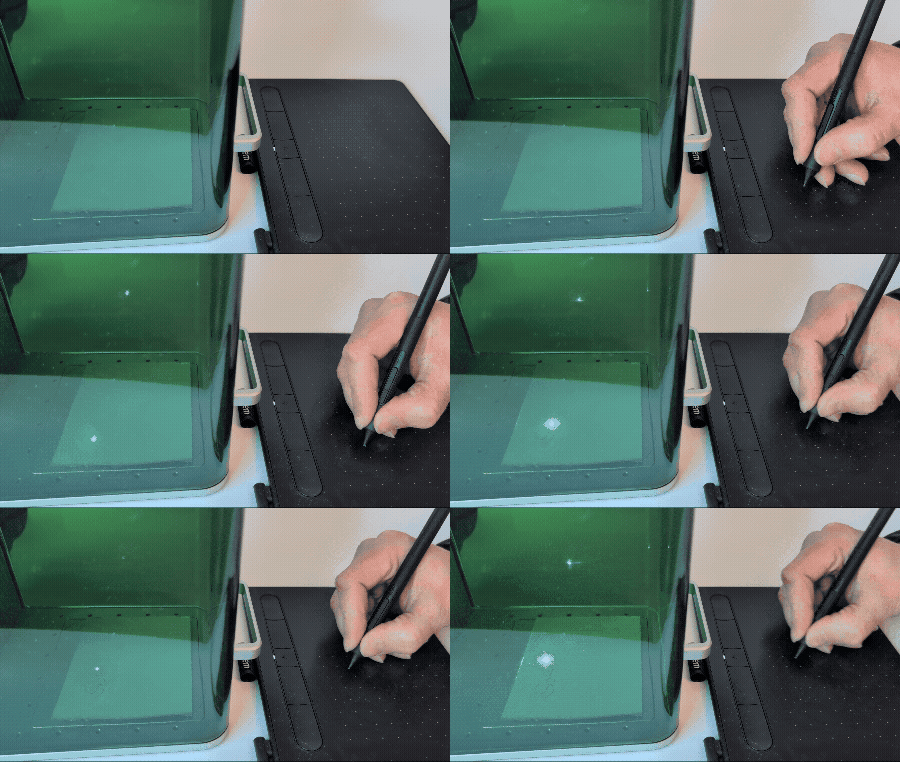
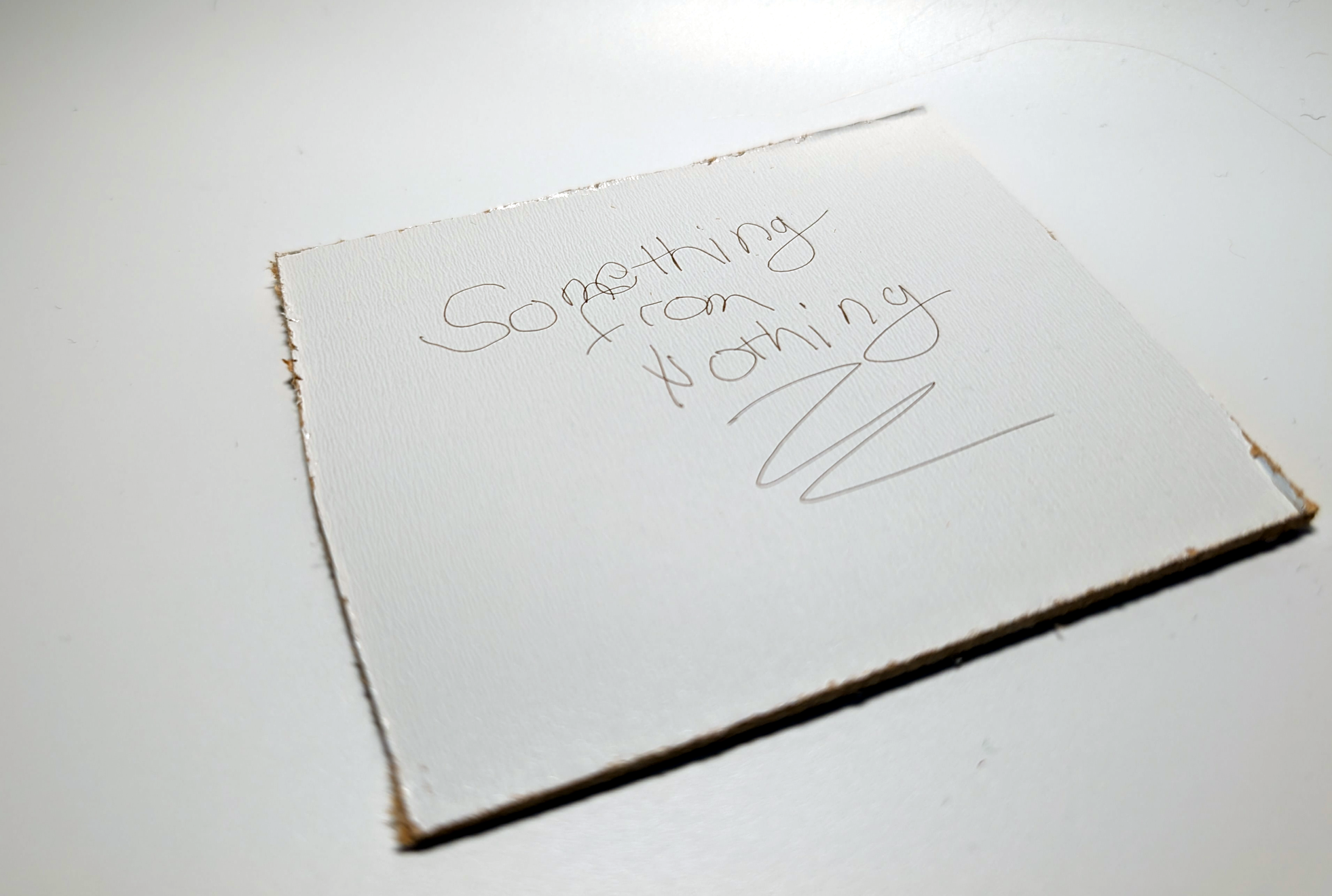
Some projects need no complicated use case to justify their development, and so it was with [Janne]’s BeamInk, which mashes a Wacom pen tablet with an xTool F1 laser engraver with the help of a little digital glue. For what purpose? So one can use a digital pen to draw with a laser in real time, of course!
Pen events from the drawing tablet get translated into a stream of G-code that controls laser state and power.
Here’s how it works: a Python script grabs events from a USB drawing tablet via evdev (the Linux kernel’s event device, which allows user programs to read raw device events), scales the tablet size to the laser’s working area, and turns pen events into a stream of laser power and movement G-code. The result? Draw on tablet, receive laser engraving.
It’s a playful project, but it also exists as a highly modular concept that can be adapted to different uses. If you’re looking at this and sensing a visit from the Good Ideas Fairy, check out the GitHub repository for more technical details plus tips for adapting it to other hardware.
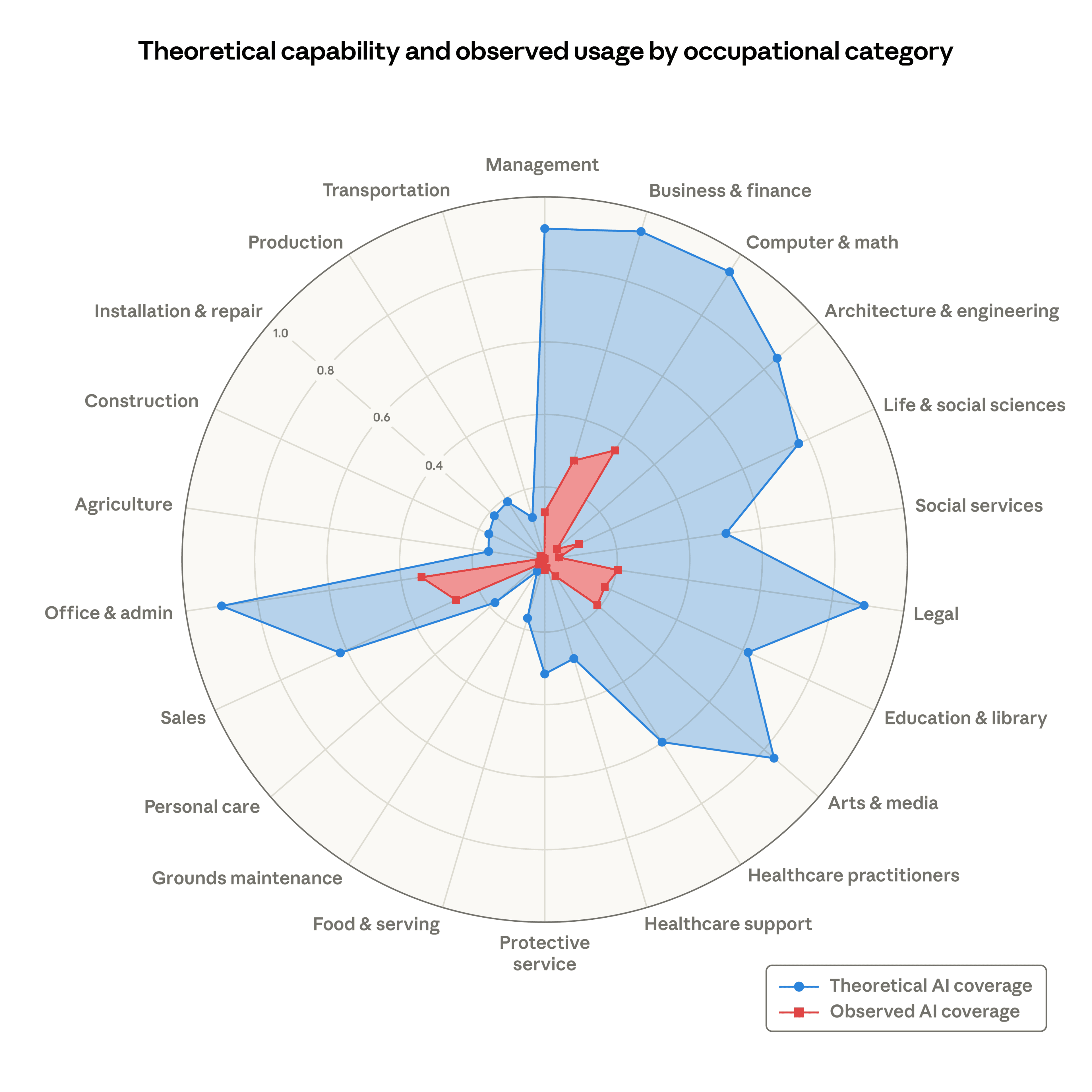
If you follow the ongoing debate over AI's growing economic impact, you may have seen the graphic below floating around this month. It comes from an Anthropic report on the labor market impacts of AI and is meant to compare the current "observed exposure" of occupations to LLMs (in red) to the "theoretical capability" of those same LLMs (in blue) across 22 job categories.
While the current "observed exposure" area is interesting in its own right, it's the blue "theoretical capability" that jumps out. At a glance, the graph implies that LLM-based systems could perform at least 80 percent of the individual "job tasks" across a shockingly wide range of human occupations, at least theoretically. It looks like Anthropic is predicting that LLMs will eventually be able to do the vast majority of jobs in broad categories ranging from "Arts & Media" and "Office & Admin" to "Legal, Business & Finance," and even "Management."
That "theoretical AI coverage" area seems like it's destined to eat a huge swath of the US job market!
Credit:
Anthropic
Digging into the basis for those "theoretical capability" numbers, though, provides a much less chilling image of AI's future occupational impacts. When you drill down into the specifics, that blue field represents some outdated and heavily speculative educated guesses about where AI is likely to improve human productivity and not necessarily where it will take over for humans altogether.
Since the mid-1990s, scientists have been obsessed with cloning animals. Dolly the sheep famously became the first mammal to be cloned from a cell taken from an adult mammary gland almost 30 years ago, in 1996.
Transitioning from cloning animal embryos to human ones has proven far more controversial, and not only because of the litany of risks involved. So far, scientists have only gone as far as to generate human embryo models grown stem cells and clone primates from fetal cells — rather than adult cells, like Dolly.
That hasn’t stopped some from exploring the idea as part of a secretive effort to realize an alternative to anti-aging tech that sounds like it was ripped straight out of a dystopian science fiction novel. A billionaire-backed stealth startup, called R3 Bio, recently announced that it was raising money to develop non-sentient monkey “organ sacks,” as Wired reported last week, an eyebrow-raising alternative to animal testing. Such structures would contain all typical organs excluding the brain, ultimately serving as a source for donor organs and tissues.
But according to a sprawling followup investigation by MIT Technology Review, R3 Bio’s founders secretly have a far more ambitious goal in mind: creating entire “brainless clones” of the human body that aging or ill individuals could one day transplant their brain into. One advantage of not developing the brain in the donor bodies, albeit a ghoulish one: such a brain-free clone would neatly circumvent certain moral conundrums over the concept.
Still, to call the idea ethically fraught would be a vast understatement. Despite an insider likening a pitch they heard from R3’s founder, John Schloendorn, to a “close encounter of the third kind” with “Dr. Strangelove” in an interview with Tech Review, the company has since distanced itself from the idea of brainless human clones.
The company said its founder “never made any statement regarding hypothetical ‘non-sentient human clones’ [that] would be carried by surrogates” in a statement to TechReview, and insisted that “any allegations of intent or conspiracy to create human clones or humans with brain damage are categorically false.”
Strikingly, though, cofounder Alice Gilman told the publication that the “team reserves the right to hold hypothetical futuristic discussions” about brainless clones involving humans.
Beyond the ethical implications, experts also threw cold water on the biological feasibility of full body replacement.
“There are so many barriers,” Michigan State University researcher Jose Cibelli, who was among the first to try to clone human embryos by obtaining matched stem cells in the early 2000s, told TechReview, from illegality and safety issues to the fact that an artificial womb remains science fiction.
“You’d have to convince a woman to carry a fetus that is going to be abnormal,” he said.
The considerable “yuck factor,” per Cibelli, seemingly has R3’s founders undeterred. Schloendorn has been investigating the idea of human replacements for years now, Tech Review reports, regularly giving seminars behind the scenes about the idea and pitching investors on it.
“We will try to do it in a way that produces defined societal benefits early on, and we need to be prepared to take no for an answer, if it turns out that this cannot be done safely,” he wrote in a 2024 LinkedIn message to TechReview.
He declined an interview with the magazine, arguing that he wanted to show that the benefits are “reasonably grounded in reality” before taking R3 out of stealth mode.
LILYGO T-Display-P4 is a feature-rich ESP32-P4 + ESP32-C6 devkit, but with a smartphone-like design and support for GPS, Ethernet, and LoRaWAN through SX1262 or LR2021 LoRa transceiver, besides the usual WiFi 6, Bluetooth 5.x, and 802.15.4 wireless connectivity.
The T-Display-P4 is offered with either a 4.05-inch IPS display and a 2MP front-facing camera or a 4.1-inch AMOLED with a 2MP rear camera. The devkit is equipped with 32MB PSRAM and 16MB NOR flash for the ESP32-P4, a microSD card slot, a built-in microphone and speaker, a 3.5mm audio jack, a few USB ports, and a 9-axis motion sensor, as well as a GPIO port and two Qwiic connectors for expansion.
T-Display-P4 specifications:
MCU – ESP32-P4
CPU
Dual-core RISC-V microcontroller @ 360 MHz with AI instructions extension and single-precision FPU
Single-RISC-V LP (Low-power) MCU core @ up to 40 MHz
2x micro-miniature coaxial antenna connectors for LoRa (Sub-GHz/2.4 GHz)
USB
USB Type-A high-speed port
USB Type-C high-speed port
USB Type-C “basic” port
Sensor – 9-axis motion sensor (lCM20948)
Expansion
16-pin expansion connector with 8x GPIO, SPI, 5V, 3.3V, GND
2x Qwiic I2C connectors
Misc
Battery switch
Boot and Reset buttons for ESP32-P4
Boot and Reset buttons for ESP32-C6
PCF8563 RTC
AW86224AFCR X-axis linear motor (for vibration/haptic feedback)
RF switch for sub-GHz/2.4GHz LoRa (for LR2102 only)
Support for an external keyboard (T-Display-P4-Keyboard; under development, not for sale yet)
XL9535 16-bit GPIO expander
M.2 thread for mounting
Power Supply
5V, 500 mA via USB-C port
Legend-Si LGS4056H charge management OC
TI BQ27220 I2C battery gauge
Dimensions – 109 x 63 x 22 mm
Weight – TBD
LILYGO provides support for the ESP-IDF framework using VS Code with various firmware (LVGL UI, xiaozhi voice assistant, iperf, etc.) and code samples for all key features of the devkit. You’ll find all that on GitHub along with PDF schematics and a few tools. The wiki provides information similar to what’s on GitHub, but may have a few additional resources.
Since the T-Display-P4 was first released a few months ago in limited quantities on the LILYGO store, and at least one third-party firmware has been ported to the devkit: MeshCore (note that the basic features are free, but extra features require an 8 GBP one-time license). I also came across a”Meshtastic port”, but it was a vibe-coded attempt… Support for ESP32-P4 targets will be enabled through PR9112, and will be one of the steps required before T-Display-P4 is fully supported.
The T-Display-P4 is sold on AliExpress for about $111 (TFT) or $136 (AMOLED) with SX1262 830-945MHz LoRa transceiver. You can also find the TFT version on Amazon for $104, and the LILYGO store has both models listed as “unavailable” at this time. The device ships with a T-shaped LoRa antenna, but there’s no information about the battery, so it’s probably not included.
When it comes to deploying local LLMs, many people may think that spending more money will deliver more performance, but it’s far from reality. That’s why Sipeed created the “AI Agent Local LLM Inference Device Deployment Guide” hosted on the llmdev.guide website.
The website lists common hardware with price, performance (tokens/s), power consumption, and more for various LLMs. If we take Qwen3.5 9B as an example, we can see that $4K+ hardware like NVIDIA DGX Spark or Apple Mac Studio M3 delivers about the same TPS as a machine equipped with a $260 Intel Arc B580 12GB GPU.
If money is no object and you’d like the best performance, the NVIDIA GTX 5090 32GB makes the most sense. I reckon the price comparison is imperfect because some data points reflect the price of a complete system, while others only list the price of a graphics card. However, for Qwen 122B-A10B, the NVIDIA DGX Spark offers the best price/performance compared to an Apple Mac Studio M3 Ultra 256GB. There are fewer options here because of the large memory required to run the model.
You can select from a range of options for the X and Y Axes, and the bubble size with parameters from device specifications (memory bandwidth/capacity, claimed TOPS…), LLM output and prefill, and ratios (Perf/watt, Perf/dollars…).
The website relies on Qwen 3.5 models for benchmarking:
Sadly, there’s no option to filter by price. Instead, we can select a logarithmic scale to better see the price/performance of entry-level options. [Update: You can also draw a box with your mouse to zoom in instead]
Alternatively, we can switch to the list view and sort the results by price
You can get more details about each device, including specs and test results, by clicking on the list or bubble in the chart.
Note some results as estimated, and for instance, the Raspberry Pi 5 16GB’s Qwen 3.5 9B data was extrapolated from Llama 7B results.
The list of hardware can be expanded since the project accepts user submissions. If you want to submit new hardware, you’ll need to deploy the benchmark and follow the instructions. Sadly, the system does not gather data automatically, so you’d have to fill in all information after copying a template in the devices folder, then run at least Qwen 3.5 9B with a long query, and take a photo of your board. If they want more submissions, they should probably automate part of the process like sbc-bench.sh script does, or use a wizard script.
I had started to do it for the UP Xtreme ARL AI Dev Kit, but since all data needs to be entered manually, I’ll delay and submit the information during a weekend when I may have more time to play around. I’m still glad this resource exists, and hope it can be further improved.
Une faille découverte dans l'extension Chrome de Claude permettait à n'importe quel site web d'injecter silencieusement des prompts dans votre assistant IA. Pas besoin de cliquer, pas besoin de permission... non, fallait juste visiter une page web et c'était réglé. Le chercheur Oren Yomtov de
Koi Security
à l’origine de cette découverte, a baptisé ça "ShadowPrompt" et vous allez voir, c'est dingue.
En fait, cette attaque enchaînait deux failles. La première, c'est que l'extension acceptait les messages de n'importe quel sous-domaine en *.claude.ai, car Anthropic avait mis en place un allowlist trop permissif. Sauf qu'Arkose Labs, le fournisseur de CAPTCHA, hébergeait un composant sur a-cdn.claude.ai et malheureusement, ce composant contenait une jolie faille XSS bien classique. Celui-ci acceptait les postMessage sans vérifier l'origine, et le texte reçu était ainsi injectable via un
dangerouslySetInnerHTML
. Donc y'a bien ZERO validation côté client. Ouééééé !
Un attaquant n'avait qu'à embarquer ce composant CAPTCHA vulnérable dans une iframe cachée sur son site, envoyer un payload via postMessage, et hop, le script injecté pouvait balancer un prompt directement à l'extension. Elle le recevait depuis un domaine *.claude.ai, donc elle l'acceptait les yeux fermés et l'affichait alors dans la sidebar comme une requête légitime de l'utilisateur. La victime ne voyait strictement rien.
Et les dégâts potentiels ne sont clairement pas anecdotiques ! Avec cette technique, un attaquant pouvait voler vos tokens d'accès Gmail, exfiltrer des documents Google Drive, lire tout l'historique de vos conversations avec Claude, et même envoyer des mails en votre nom. Perso, ça fait beaucoup pour un simple onglet ouvert dans Chrome, quoi.
Le chercheur a trouvé le vecteur en bruteforçant les anciennes versions du composant Arkose Labs, en remontant depuis la version 1.26.0 jusqu'à trouver une mouture encore vulnérable. Simple, basique comme dirait Orel :)
Si vous suivez les failles des assistants IA, c'est pas la première fois qu'on voit ce genre de scénario.
Claude Cowork s'était déjà fait épingler
pour de l'exfiltration de fichiers via des documents piégés, et
le navigateur Perplexity Comet
avait le même problème avec des invitations de calendrier. Le problème de fond, c'est que ces extensions veulent tout faire à votre place, mais elles ne sont pas forcément capables de distinguer une requête légitime d'une attaque.
Par contre, attention, le fix ne protège que les utilisateurs qui ont mis à jour l'extension, donc n'oubliez pas de vérifier votre version. Koi Security a signalé la faille à Anthropic le 26 décembre 2025 (joyeux Noël !) et ces derniers ont confirmé le lendemain et déployé le correctif le 15 janvier, dans la version 1.0.41 de l'extension Chrome.
Maintenant au lieu d'accepter *.claude.ai, l'extension exige maintenant une correspondance exacte avec
https://claude.ai
. Arkose Labs a de son côté aussi corrigé la faille XSS en février, en renvoyant un 403 sur l'URL vulnérable. À vrai dire, la réactivité d'Anthropic a été plutôt correcte sur ce coup.
Bref, allez vérifier que vous êtes au moins en v1.0.41 (chrome://extensions pour checker). Et n'oubliez pas, plus une extension IA a de pouvoirs, plus elle est intéressante à hacker...
Google a publié sur son blog technique un avertissement sans ambiguïté : les systèmes de chiffrement actuels pourraient être percés par un ordinateur quantique suffisamment puissant avant la fin de la décennie. L'entreprise recommande aux équipes d'ingénierie de l'ensemble du secteur d'entamer sans délai leur migration vers des protocoles cryptograph...
Depuis des décennies, ils hantent les équations des cosmologistes sans jamais s'être laissé approcher. Les trous noirs primordiaux (PBH), théorisés notamment par Stephen Hawking, ne sont pas issus de l'effondrement d'une étoile massive en fin de vie, mais de fluctuations de densité dans l'Univers ultra-jeune. Aujourd'hui, une publication sur arXiv, e...
KiCad 10 open-source EDA software has just been released with support for dark mode, importers for Allegro, PADS, and gEDA/Lepton PCB, and various changes to the Schematic Editor (e.g., hop-over display) and the PCB Editor, notably adding a graphical DRC rule editor.
KiCad 10 was built by hundreds of developers, translators, library contributors, and documentation submitters, who submitted 7,609 unique commits after KiCad 9 was released in February 2025. The new version also gains 952 new symbols, 1216 new footprints, and 386 new 3D models.
Some UI and usability improvements include dark mode support (Windows only), customizable toolbars, undo/redo support in dialogs, lasso/freeform selection instead of only rectangular selection, and new importers for Allegro, PADS, and gEDA/Lepton PCB.
Dark mode in KiCad 10
Schematic editing gains support for variants (e.g., single project with different BoM), hop-over display, jumper support, grouping support, and pin table CSV export/import.
Hop over examples
PCB Design adds time-domain tuning beyond just length constraints (along with Tuning Profiles), PCB Design Blocks have been added to the PCB editor (Blocks were added to the schematic editor in Kicad 9), and support for inner-layer objects in footprints allows users to add graphical shapes, keepouts, and more on inner layers. An unconstrained pin/pad and gate/unit swap feature was added to support forward and back annotation of changes between the schematic and PCB, and finally, KiCad 10 now offers a graphical DRC rule editor.
Graphical Design Rule Editor
Other small changes include support for barcodes, hatched fills in graphic shapes, precise point editing for polygons, suggested fix actions for DRC errors, 3D PDF export, native rounded rectangles, and more. You’ll find more details and screenshots in the official announcement.
You can head to the Download page to install KiCad 10 on your operating system. I installed it on Ubuntu 24.04 in a similar way to what I did for KiCad 9:
I quickly tried it using Olimex’ ESP32-C3-DevKit-LiPo hardware design files. I had the usual “this file was created by an older version of Kicad” warning, but apart from that, I could not see any obvious issue with the schematics…
… and the PCB layout, both of which opened normally.
As usual, there may be some breaking changes between major versions, at least until the dot versions with bug fixes are released. For instance, one user on X complain about KiCad 10 messing up with his custom symbols and footprint libraries, but I’m sure rough edges will be fixed soon enough.
Le 23 mars 2026, une vidéo publiée sur X par Claude a propulsé Dispatch sur le devant de la scène. Cette fonctionnalité de Cowork permet à l'IA d'Anthropic de travailler seule sur votre ordinateur pendant que vous lui donnez des ordres depuis votre téléphone. Lancée discrètement quelques jours plus tôt, elle est désormais au cœur de l'attention, et ce qu'Anthropic écrit en petites lettres sur la sécurité mérite qu'on s'y attarde.
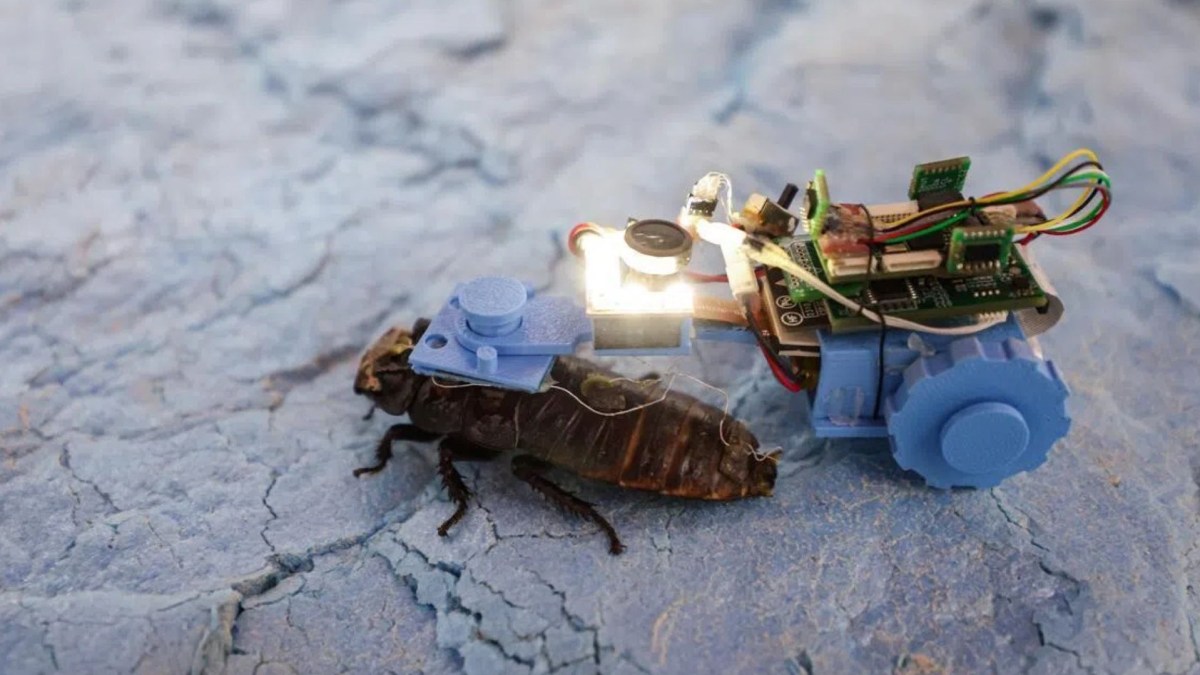
À Singapour, des chercheurs de l’Université technologique de Nanyang développent des cafards cyborgs capables d’explorer des zones sinistrées ou des infrastructures souterraines. Équipés de capteurs, de caméras et de dispositifs de guidage à distance, ces insectes pourraient bientôt être utilisés bien au-delà des opérations de secours.
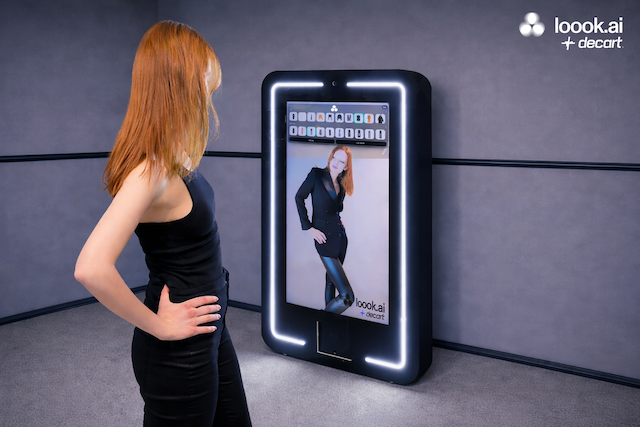
LOOOK.AI has introduced a new feature enabling real-time AI clothing try-on within its smart mirror platform, allowing fashion brands and retailers to showcase entire collections without traditional 3D modelling or product development.
“What was a long-time dream of the fashion industry brands, has finally become a reality. We are excited about the integration of Decart SDK into our smart mirror platform, and unlocking a higher quality real-time AI clothing try-on experience, instant addition of an unlimited number of clothing items with no development needed and never before seen seamless navigation that allows the user to easily switch between tens of items,” says Dmytro Kornilov, LOOOK.AI CEO.
“Most virtual try-on platforms depend on manually created 3D assets and long production cycles,” says Kfir Aberman, Founding Member at Decart. “Our real-time generative models allow these experiences to be created directly from simple images, eliminating traditional 3D pipelines and enabling scalable, high-fidelity try-on across entire retail catalogues.”
LOOOK.AI claims that, unlike traditional AR try-on solutions that require detailed 3D garment modeling, the AI-based system enables brands to integrate an unlimited number of clothing items without additional production work. Retailers can upload full product catalogues and allow users to explore and combine multiple items instantly.
The experience is controlled directly from the user’s smartphone. By scanning a QR code, visitors can navigate the mirror interface, switch between clothing pieces and combine outfits including tops, bottoms and footwear. The system allows users to experiment with different looks in real-time without touching the screen or using gesture controls.
The feature is designed for both storefront installations and in-store experiences. In storefront environments, the mirror can automatically showcase selected items to attract attention from passersby. Inside retail spaces, customers can explore collections, assemble outfits and experiment with combinations before selecting items to try physically.
The platform also includes the likes of performance analytics, photo capture and printing, allowing brands to track engagement and generate user-generated content directly from the installation.
Our 2025 hall of fame entrants were revealed during a sold out event which took place at The HAC on 16th October and consisted of a drinks reception, three course meal, and awards ceremony presided over by award winning comedian, actress and writer Tiff Stevenson.
In his welcome speech, Scott Thompson, Founder and Editor, RTIH, said: “This is the awards’ fifth year as a physical event. We started off with just 30 people at the South Place Hotel not far from here, then moved to London Bridge Hotel, then The Barbican, and last year RIBA’s HQ in the West End.”
“But I’m conscious of the fact that, to quote the legend that is Taylor Swift, You’re only as hot as your last hit, baby. So, this year we’ve moved to our biggest venue yet, and also pulled in our largest number of entries to date and broken attendance records.”
He added: “This year’s submissions have without doubt been our best yet. To quote one of the judges: The examples of innovative developments across both traditional and digital retail spaces were truly remarkable.”
Congratulations to our winners, and a big thank you to our sponsors, judging panel, the legend that is Tiff Stevenson, and all those who attended our 2025 gathering.
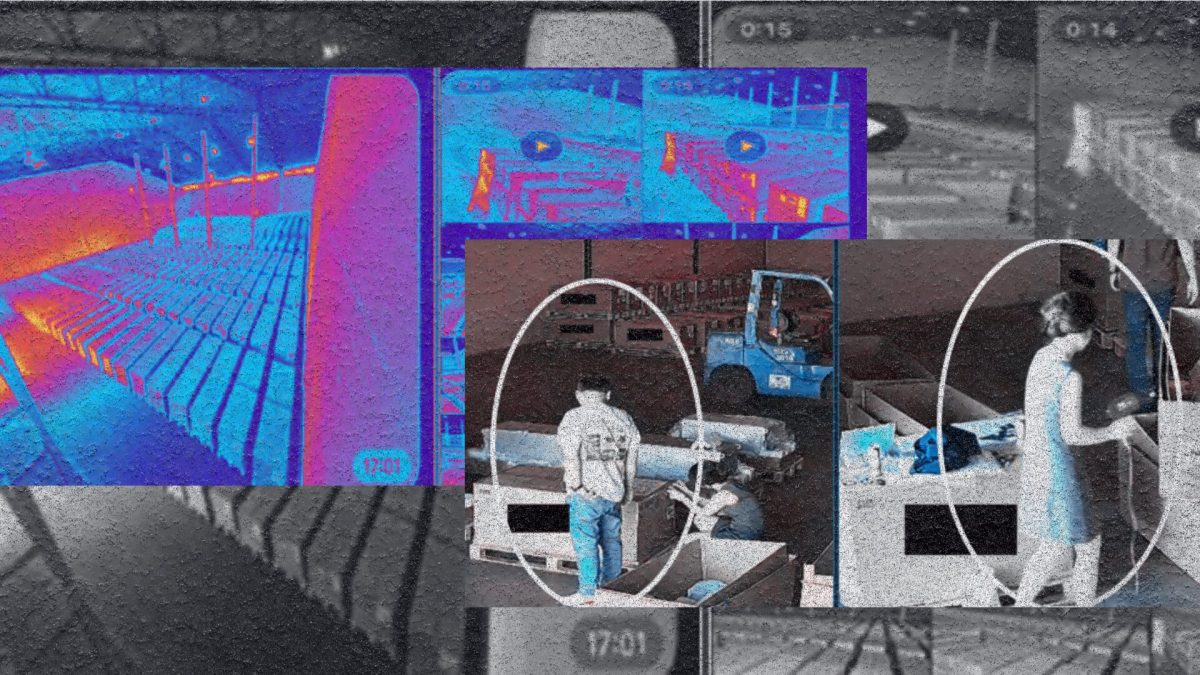
Le 19 mars 2026, le département américain de la Justice a inculpé trois personnes liées à Super Micro Computer, un fabricant californien de serveurs coté en bourse. Leur crime présumé : avoir orchestré un vaste réseau de contrebande de semi-conducteurs à destination de la Chine, principal rival technologique des États-Unis.
Regardless of whether you’re stuck in a prison cell, a tiny office cubicle, or just fear the outside world, these light simulating blinds will help you pretend the outside world is shining in. These light simulating blinds are also perfect for the basement dwellers.
Turn every high five into a confetti explosion with this palm mounted air powered confetti cannon. Strap it to your hand, load a cartridge, and slap some skin to unleash a colorful burst that makes any celebration instantly more legendary.
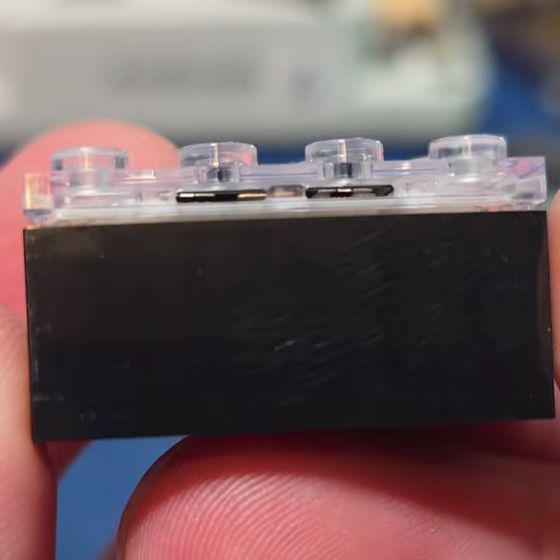
LEGO SMART brick from its side. (Credit: EvilmonkeyzDesignz, YouTube)
At the beginning of March this year LEGO released their new SMART brick, which looks like a 2×4 stud brick and is filled to the brim with sensors, LEDs, NFC and Bluetooth functionality, as well as a purported custom ASIC. The central idea behind it appears to be to add a lot of interactivity to LEGO builds while allowing for mesh-style communication with other SMART bricks. Naturally, this makes it a great subject for a teardown, which is what [EvilmonkeyzDesignz] over on YouTube did in a recent video.
Normally the only way you can purchase one of these new bricks is by buying them as part of a ‘Smart Play’ set, but someone was selling singular bricks on EBay. As the brick is inductively recharged, it’s pretty well-sealed, requiring a fairly destructive opening method.
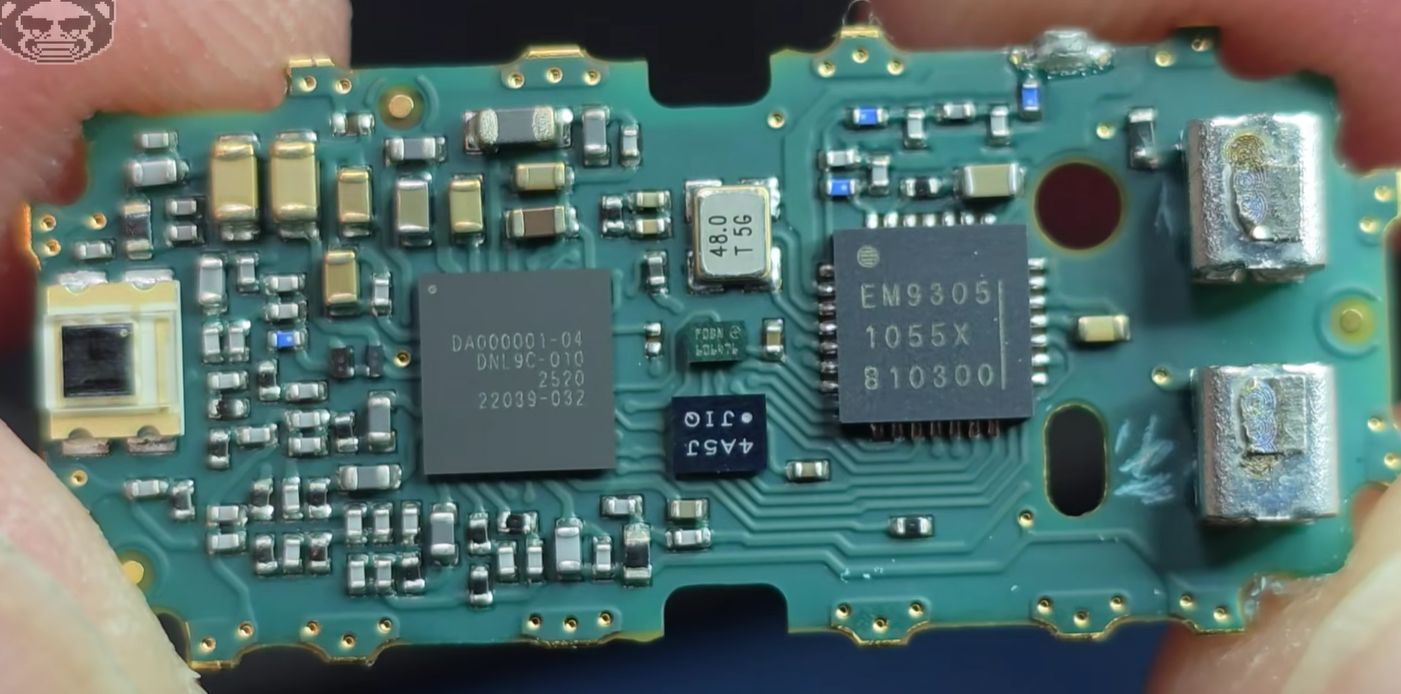
Directly below the transparent top is a speaker, with the opposing PCB on the main body containing a microphone as well as a number of RGB LEDs. On the opposite side of this PCB we find the photo sensor, but to get to this part of the PCB the copper wires that wrap around the entire main assembly have to be disconnected from the PCB’s side pads with some force as they’re apparently pressed in place without the use of solder.
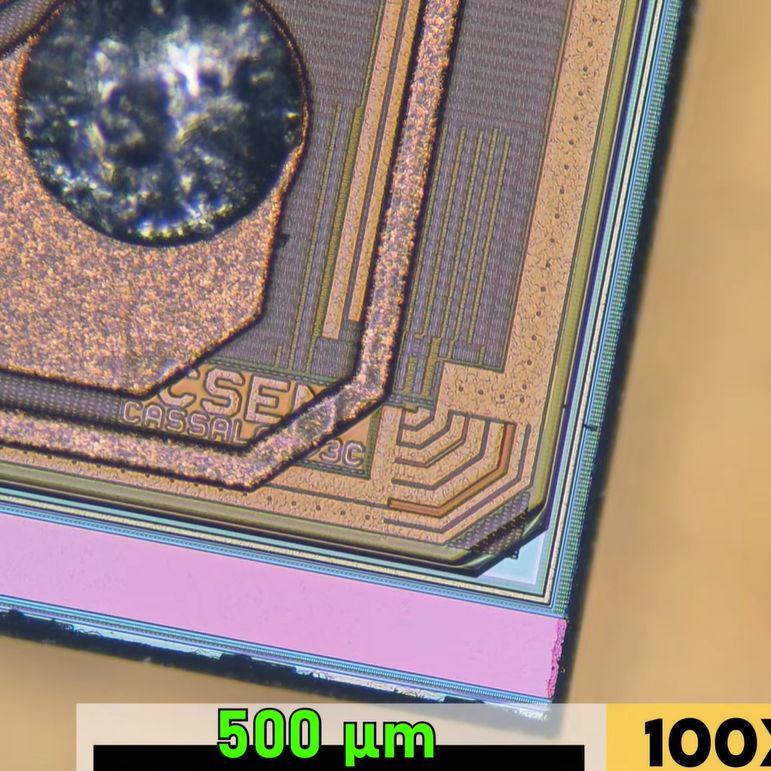
Markings in the LEGO SMART brick application ASIC die. (Credit: EvilmonkeyzDesignz, YouTube)
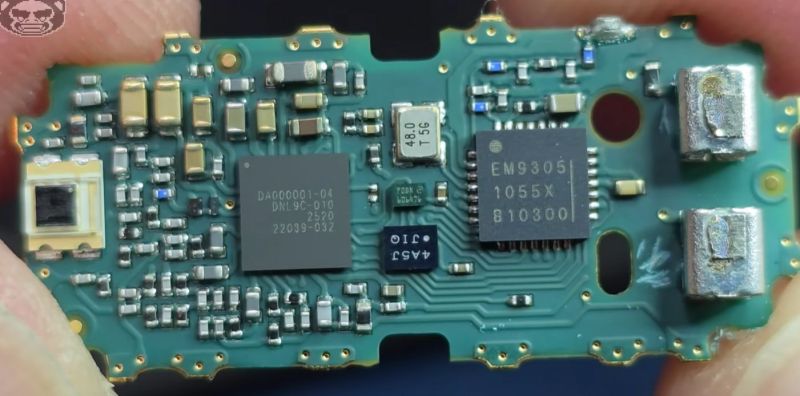
Freeing the main PCB from its plastic enclosure also ended up being fairly destructive, but gave the first good look at its guts. Courtesy of Redditor [PsychologicalYak4619] who previously did a teardown and analysis of such a brick, many details are already available. There’s a separate Bluetooth 5.4 SoC marked EM9305 from EM Microelectronics as well as a 16 Mb Winbond SPI Flash memory chip.
The main application ASIC – marked as DA000001-04 – is the real mystery, which is the marketed custom ASIC. Since this is a flip-chip package, taking a look at the die is super-easy, barely an inconvenience.
On this die shot we can see what looks like CSEM along with some additional letters that may or may not give a hint as to its design origins. This unfortunately means that we do not get any in-depth details on what this ASIC contains and what its capacities are.
Since there is no RAM on the PCB, it appears to at least contain some amount of RAM inside, so assuming that the SPI Flash IC is used by it and not the Bluetooth SoC there might be some hints in the firmware if it were to be extracted.
It’s also of note just how well-sealed these bricks are, making them instant e-waste if anything were to go wrong with any of its components. Considering that the lifespan of Li-ion batteries is generally 2+ years before they begin to significantly degrade, its built-in battery might be the thing that these bricks become the most famous for, not to mention make it run afoul of EU regulations that come into effect next year.
À moins de deux semaines du troisième Grand Prix de Formule 1, qui se déroulera au Japon sur le circuit de Suzuka, Canal+ a dévoilé une bande-annonce pour préparer le rendez-vous. Elle s'inspire des jeux vidéo Mario Kart, en phase avec les commentaires de certains pilotes.
Le Japon devient le premier pays à autoriser des traitements basés sur les cellules souches pluripotentes induites, des cellules révolutionnaires capables de régénérer les tissus dégradés. Encore en phase d'évaluation, ces thérapies ouvrent de nouvelles perspectives contre des maladies comme Parkinson ou l’insuffisance cardiaque.
On Monday, the multi-trillion dollar AI chipmaker unveiled its latest effort at weaving advances in AI into video games, and it immediately backfired.
The feature, DLSS 5, is supposed to be a souped-up version of the deep-learning upscaling tech Nvidia has offered since 2018. The company called it its “most significant breakthrough in computer graphics since the debut of real-time ray tracing” in that same year. But the reactions to demo footage shared has been overwhelmingly negative.
Gamers and developers fumed against the announcement, calling it “slop” and a “betrayal” of games’ artistic intent. Memes spreadparodying the AI feature’s garish aesthetic, in which an original character or person is contrasted with a “DLSS 5” image that shows the subject in an unrecognizable style. Some even gave it a harsh nickname: “sloptracing,” a play on Nvidia’s ray tracing tech.
The reactions are warranted. Rather than just providing a little clarity to a fuzzy image, the feature looks more like a glorified Snapchat filter, varnishing the art style of your favorite games with an overwrought, generative AI finish.
The effect is most noticeable when applied to faces. Iconic characters in the demo like Leon Kennedy from the Resident Evil franchise are, it’s no exaggeration to say, literally yassified.
Announcing NVIDIA DLSS 5, an AI-powered breakthrough in visual fidelity for games, coming this fall.
DLSS 5 infuses pixels with photorealistic lighting and materials, bridging the gap between rendering and reality.
According to Nvidia’s announcement, DLSS 5 “introduces a real-time neural rendering model that infuses pixels with photoreal lighting and materials.” It takes a “game’s color and motion vectors for each frame as input, and uses an AI model to infuse the scene with photoreal lighting and materials that are anchored to source 3D content.”
This AI model, it says, “is trained end to end to understand complex scene semantics such as characters, hair, fabric and translucent skin.”
Nvidia chief Jensen Huang was effusive about the tech’s implications, calling it gaming’s “GPT moment.”
“DLSS 5 is the GPT moment for graphics — blending hand-crafted rendering with generative AI to deliver a dramatic leap in visual realism while preserving the control artists need for creative expression,” he said in the announcement.
It’s a little hard to buy Huang’s promise of preserving creative expression, however, when in all of the examples shared, DLSS 5 dramatically alters the aesthetic of the games. More than that, it exemplifies how generative AI uniformly reinforces bland aesthetic norms and defaults to gooner beauty standards. (Grace Ashcroft from the upcoming Resident Evil game gets hollower cheeks, stronger cheekbones, and poutier lips.) The games no longer look like games, but like any other clip spat out by a video generating model that gets shared in AI circles with a caption like “Hollywood is cooked.”
Nvidia says DLSS 5 is arriving this fall — but, it seems, only to participating games that will include Resident Evil Requiem, Starfield, Hogwarts Legacy, and Assassin’s Creed Shadows. These are major titles, though, a show of how Nvidia says its feature is being supported by the industry’s biggest publishers and developers, like Capcom, Bethesda, Ubisoft, and Warner Bros Games.
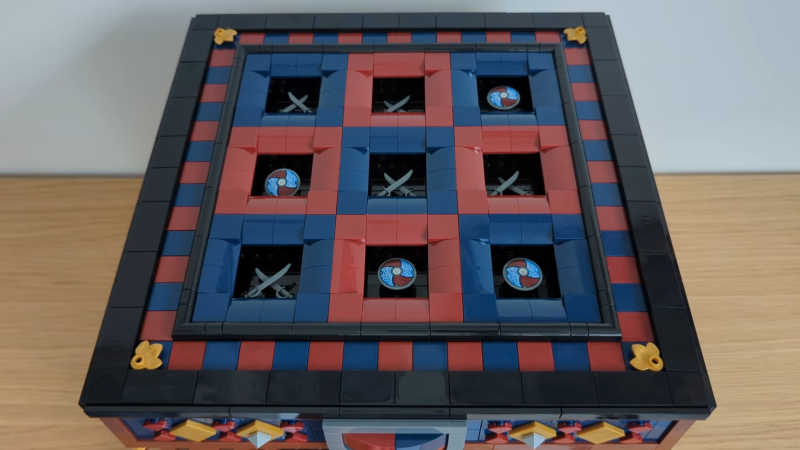
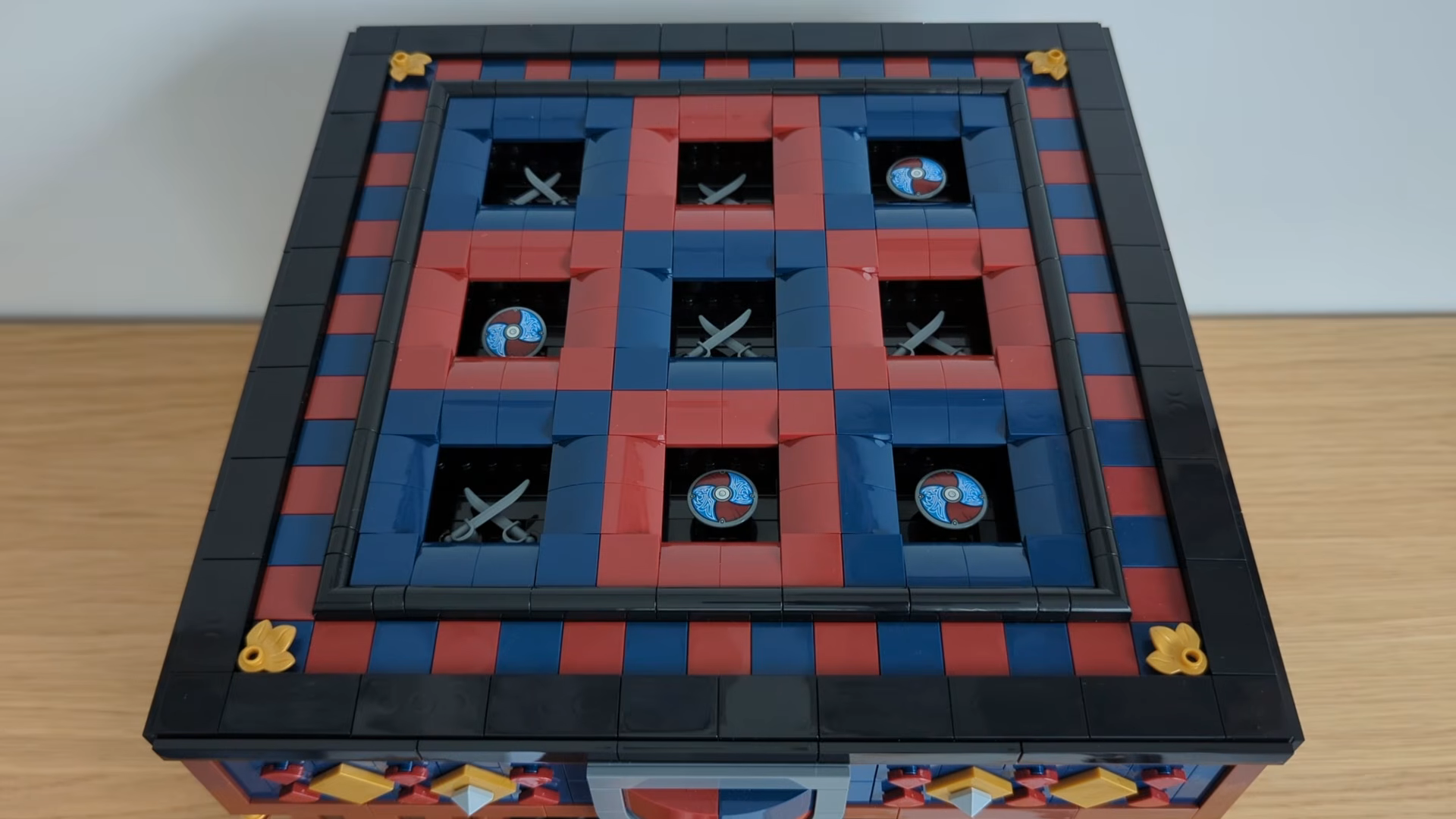
Tic-Tac-Toe is a relatively simple game, and one of the few which has effectively been solved for perfect play. The nature of the game made it possible for [Joost van Velzen] to create a LEGO machine that can play the game properly in an entirely mechanical fashion.
The build features no electronics to speak of. Instead, it uses 52 mechanical logic gates and 204 bits of mechanical memory to understand and process the game state and respond with appropriate moves in turn. There are some limitations to the build, however—the game state always begins with the machine taking the center square. Furthermore, the initial move must always be played on one of two squares—given the nature of the game though, this doesn’t really make a difference.
It’s also worth heading over to the Flickr page for the project just to appreciate the aesthetics of the build. It’s styled in the fashion of an 18th-century automaton or similar. It’s also been shared on LEGO Ideas where it’s raised quite a profile.
If you’ve ever wanted to think about computing in a mechanical sense, this build is a great example of how it can be done. We often see some fun LEGO machines around these parts, from massive parts sorters to somewhat-functional typewriters.
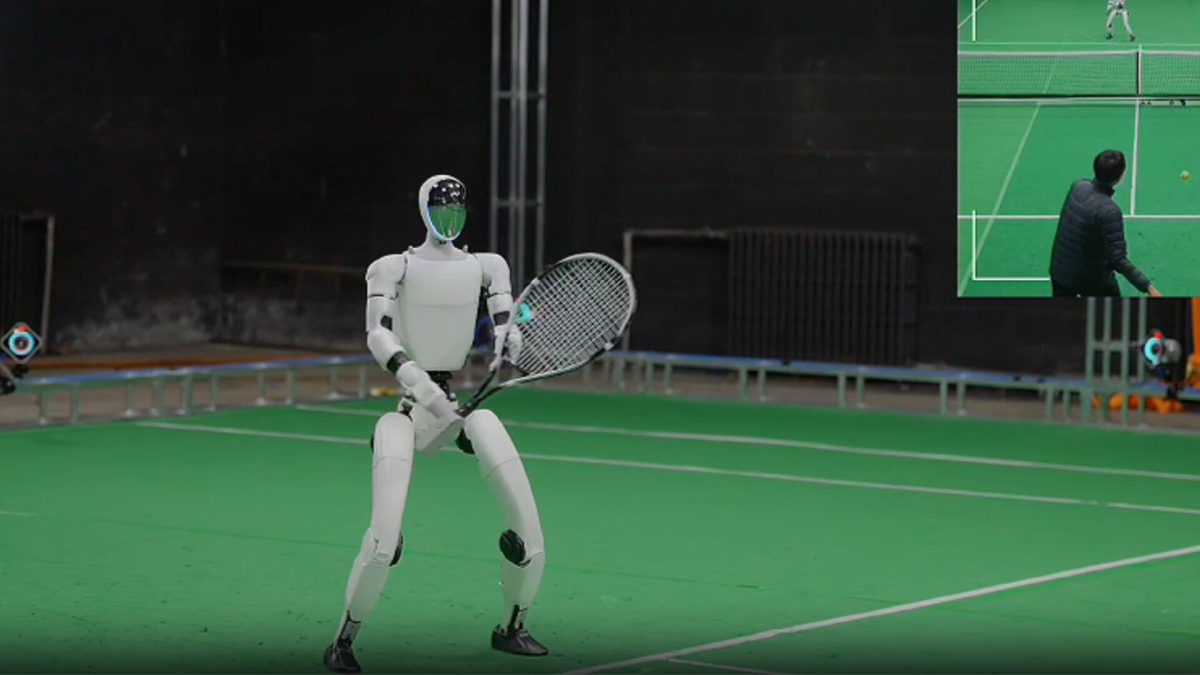
Baptisé « LATENT », le projet mené par l’université Tsinghua montre qu’un robot humanoïde peut apprendre à jouer au tennis avec très peu de données : le G1 d’Unitree s’entraîne ici à partir de seulement cinq heures de motion capture de joueurs humains.
Sometimes the coolest starfighter shots don’t come from giant studios, they come from clever camera nerds with the right gear.
Using the new Probe Zoom Macro Lens from Laowa ($3,499.00 – $21,999.00), Youtuber “Macro Room” filmed a tiny X-Wing fighter on an epic trench-run-style journey through a maze of obstacles. As the camera glides behind the miniature ship, the probe lens’ ultra-wide field of view and low distortion create the illusion of a full-scale space battle, only this one is happening inches from the camera.
The Laowa probe zoom system (including the 15-35mm T12 and 15-24mm T8) is built for shots most lenses simply can’t capture. Its long tubular design can slip into tight spaces, its 110.5° field of view keeps everything dramatic, and interchangeable modules, including a periscope option, open the door to some seriously wild filmmaking angles.
The result? A tiny X-Wing flight that somehow feels huge! Check it out!
Jusqu'à présent, les patients diagnostiqués avec une apnée obstructive du sommeilmodérée à sévère se retrouvaient face à une seule et unique option véritablement efficace : la machine CPAP. Ce dispositif, composé d'un masque à pression positive continue à porter chaque nuit, s'avère toutefois si contraignant et inconfortable qu'il est abandonné par p...








 That "theoretical AI coverage" area seems like it's destined to eat a huge swath of the US job market!
Credit:
That "theoretical AI coverage" area seems like it's destined to eat a huge swath of the US job market!
Credit: