Shared posts

22 Nov 21:14

Crypto Company Creates Bizarre Drug

by Joe Wilkins

Now that the Food and Drug Administration is using AI to “speed up” the drug approval process, it seems the sky’s the limit on what wacko products are approved for commercial sale.

The crypto company Tharimmune Inc, for example, was recently given “positive feedback” from the FDA on a drug called Nalmefene, clinically labeled TH104. According to Filter, the drug is being developed as a longer-lasting alternative to Nalaxone, an opioid-reversal agent which typical wears off in 20 to 90 minutes.

Nalaxone is easily administered by non-medical personnel through the nose, and has become widely available either over the counter or through harm reduction programs. Nalmefene is different — and not without controversy. Per Filter, the drug isn’t meant for reversing overdoses in people with substance abuse disorders, but in first responders and military members who might come in contact with them. It also increases the risk of fatal overdose in drug users.

The fact of the matter, though, is that a fentanyl overdose is believed to be nearly impossible through the skin — one would have to ingest, inject, or snort the drug to hope to cause a reaction. However, widely-parroted belief among police officers and law enforcement agencies holds that incidental contact with the substance can cause a first responder to fatally overdose.

The reality is that it’s a crank belief that causes problems when interacting with vulnerable members of the public. As the Maryland Office of Overdose Responce notes, the “notion that one could overdose just from responding to an overdose paints the person overdosing as toxic, untouchable, and unsafe.”

Making the matter more unhinged is the fact that Tharimmune explicitly markets itself as a crypto company, with a clinical pharmacology division attached.

“Tharimmune, Inc. advances institutional blockchain adoption and the digitization of financial markets through a digital assets treasury strategy with Canton Coin,” the company’s website boasts. “Tharimmune also operates a clinical-stage biotech.”

Canton Coin is a digital asset tied to “The Canton Network,” a “privacy-enabled open blockchain network.” In other words, it’s a blockchain meant to link assets from private companies to the blockchain, like Tharimmune’s Nalmefene. How this business model impacts the drug’s development cycle remains to be seen — but if it does get full FDA approval, it’ll be the first of its kind.

More on drugs: The “Sober” RFK Jr. Has Allegedly Been Smoking DMT 

The post Crypto Company Creates Bizarre Drug appeared first on Futurism.
22 Nov 17:42

Un mois avec le Google Pixel 10 Pro Fold : plein de bonnes idées, mais vous ne devriez pas l’acheter

by Nicolas Lellouche

Malgré son prix élevé (1 899 euros), le Pixel 10 Pro Fold est un smartphone pliant obsolète dès sa sortie, alors que Samsung, Honor ou Huawei réussissent des exploits avec des appareils de plus en plus fins et légers. Il est néanmoins un produit très bien pensé, notamment sur le logiciel, grâce aux optimisations de Google.

22 Nov 17:41

Scientists Discover That People Act Way Better When Batman Is Present

by Frank Landymore

Folks, we have some revolutionary sociological research to share with you today.

After making a guy dressed as Batman stand around in a subway car, a team of researchers found that the behavior of people around him suddenly improved the moment he showed up. No longer was everyone completely self-involved; with the presence of a superhero, commuters started helping each other more than they would’ve without him around.

Behold: the “Batman effect.”

The findings of the unorthodox study, published in the journal npj Mental Health Research, demonstrate the power of introducing something offbeat into social situations to jolt people out of the mental autopilot they slip into to navigate the drudgery of everyday life.

Batman showing up is just one — albeit striking — way of promoting what’s called “prosocial behavior,” or the act of helping others around you, via introducing an unexpected event, the researchers write.

“Our findings are similar to those of previous research linking present-moment awareness (mindfulness) to greater prosociality,” said study lead author Francesco Pagnini, a professor of clinical psychology at the Università Cattolica in Milan, in a statement about the work. “This may create a context in which individuals become more attuned to social cues.”

In a series of experiments, the researchers had a woman who visibly appeared pregnant enter a busy train, and observed how often people offered to give up their seats. They then repeated this scenario with a crucial change: when the pregnant woman entered the train from one door, a man dressed as Batman entered from another.

In all, the team observed 138 passengers, and the results were clear-cut. Over 67 percent of passengers offered their seats when Batman was present, compared to just over 37 percent when Batman wasn’t there. Most, in both cases, were women: 68 percent with Batman there, and 65 without him.

But the most strange detail? 44 percent of the people who offered their seats later reported that they didn’t even notice Batman was there in the first place, suggesting that they don’t need to be consciously aware of the offbeat event itself to, in colloquial terms, pick up the prosocial vibes.

“Unlike traditional mindfulness interventions that require active engagement, this study highlights how situational interruptions alone may be sufficient to produce similar effects,” Pagnini said.

In the study, he added the findings “could inform strategies to promote altruistic behaviors in daily life, from public art installations to innovative social campaigns.

More on mental health: Parents Using ChatGPT to Rear Their Children

The post Scientists Discover That People Act Way Better When Batman Is Present appeared first on Futurism.

22 Nov 17:35

Something Disturbing Happens When You “Learn” Something With ChatGPT

by Frank Landymore
Jean-Philippe Encausse

Sans déconner ... travailler son sujet permet de l'aprendre ???

ChatGPT and other AI chatbots are replacing the search engine. Instead of letting you suffer the laborious task of looking up sources of information, these powerful large language models will simply concoct an answer for you, with the minor risk that it might be totally made up.

It turns out there’s another hazard: while getting your answers this way may be quick, it isn’t great for actually learning, according to a new study published in the journal PNAS Nexus.

“When people rely on large language models to summarize information on a topic for them, they tend to develop shallower knowledge about it compared to learning through a standard Google search,” study co-lead author Shiri Melumad, a professor at the Wharton School of the University of Pennsylvania, wrote in an essay for The Conversation about her work.

The findings are based on an analysis of seven studies with more than 10,000 participants. The gist of their experiments went like this: the participants were told to learn about a topic, and were randomly assigned to either only use an AI chatbot like ChatGPT to do their research, or a standard search engine like Google. At the end, the participants were asked to write advice to a friend about what they learned.

A clear pattern emerged. The participants who used AI to do their research wrote shorter advice, with generic tips and less factual information, while the people who used a Google search produced more detailed and thoughtful tips. The pattern held even after controlling for factors like the information the users saw during their research by showing each group the same facts, or what tools they used.

“The findings confirmed that, even when holding the facts and platform constant, learning from synthesized LLM responses led to shallower knowledge compared to gathering, interpreting and synthesizing information for oneself via standard web links,” Melumad wrote.

Scientists are still only beginning to grasp the longterm effects of AI usage on the brain, but the body of evidence so far suggests alarming risks. One major study that turned heads was conducted by researchers from Carnegie Mellon and Microsoft, and found that people who trusted the accuracy of AI tools saw their critical thinking skills atrophy. Another study linked students who heavily relied on ChatGPT to memory loss and tanking grades. 

“One of the most fundamental principles of skill development is that people learn best when they are actively engaged with the material they are trying to learn,” Melumad explained. “When we learn about a topic through Google search, we face much more ‘friction’: We must navigate different web links, read informational sources, and interpret and synthesize them ourselves.”

“But with LLMs,” Meluad added, “this entire process is done on the user’s behalf, transforming learning from a more active to passive process.”

While scientists continue to explore AI’s risks, the tech is making rapid inroads into education, where they’re a popular tool for cheating on assignments. Leaders like OpenAI, Microsoft, and Anthropic are spending millions of dollars to provide teachers training on how to use their AI products, while universities partner with these same firms to create their own tailor-made chatbots to foist on their students, like Duke University’s creatively named collaboration with OpenAI, “DukeGPT.”

More on AI: As AI Reigns, Students’ Math and Reading Scores Just Hit an All-Time Low

The post Something Disturbing Happens When You “Learn” Something With ChatGPT appeared first on Futurism.

22 Nov 15:04

Sweet Sound Sculpture Helps You Sleep Soundly

by Kristina Panos
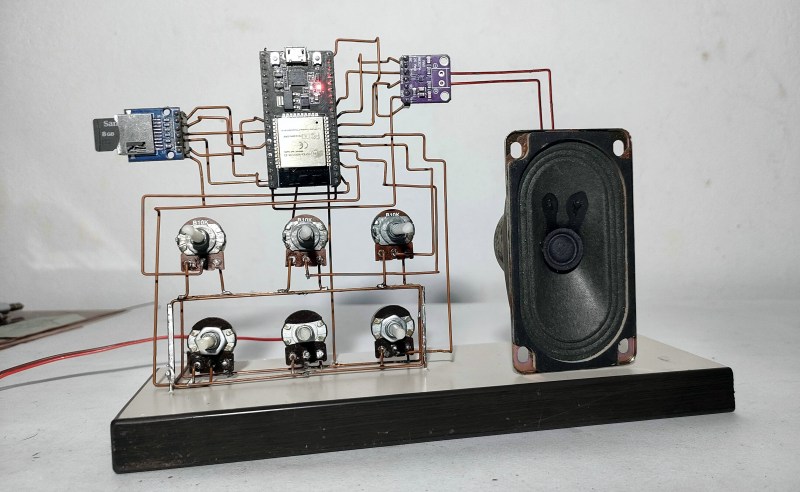
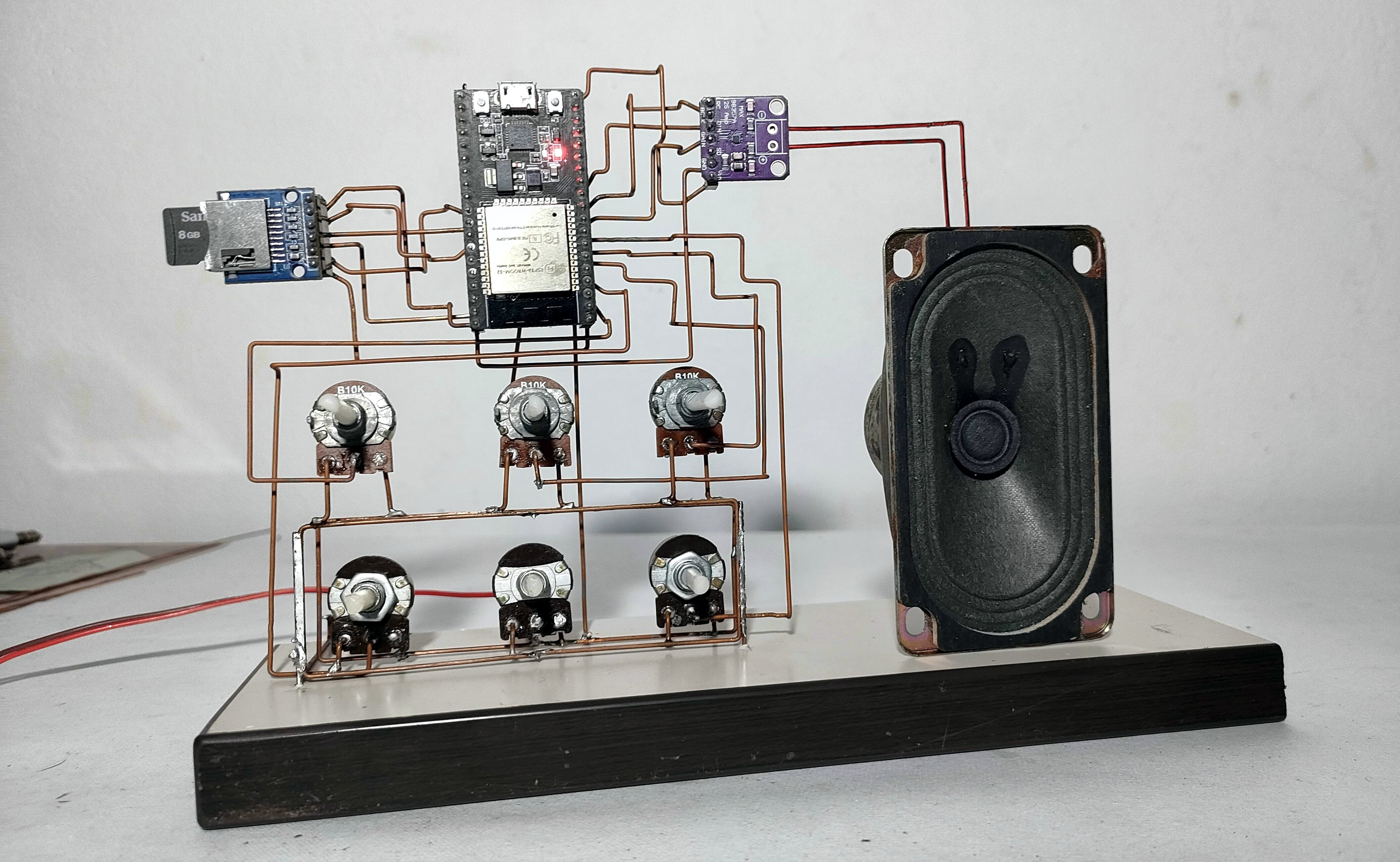
A circuit sculpture designed to help you sleep.

Have trouble sleeping, or getting to sleep in the first place? You’ve no doubt heard of white noise machines, but know it would be much cooler to make your own. Enter Noise Maker, a DIY sound sculpture by [optimus103733], who wanted to learn something in the process of creating.

The best thing about this sound sculpture aside from the looks is that you can not only play five different sounds (e.g. birds, traffic, water, frog, white noise), you can mix them together into a rich but relaxing cacophony.

As you can probably see from the picture, Noise Maker is based on the ESP32 and uses an SD card module, an amplifier, and five six pots. Be sure to check out the pictures, because there are three layers of copper connections and a lot of careful bending to make it all come together. In the video after the break, you can hear it in action.

It seems [optimus103733] isn’t completely satisfied and wants to make a few improvements in the future, such as a voltage regulator, a power switch, and a timer to automatically stop playback once (we assume) sleep has come. Evidently the ESP32 struggles a little with mixing six audio sources, but hey, lesson learned.

Wait, why do we sleep in the first place?

22 Nov 15:03

Understanding Quantum Technologies 2025 on Amazon

by Olivier Ezratty
The online PDF version of the 8th edition of the book “Understanding Quantum Technologies” is available since September 29th. As I do every year, I continue to update the book, first to publish it on arXiv which I did late October. On top of many small updates, I added a small section on the “Making […]
22 Nov 08:55

Oops. Cryptographers cancel election results after losing decryption key.

by Dan Goodin

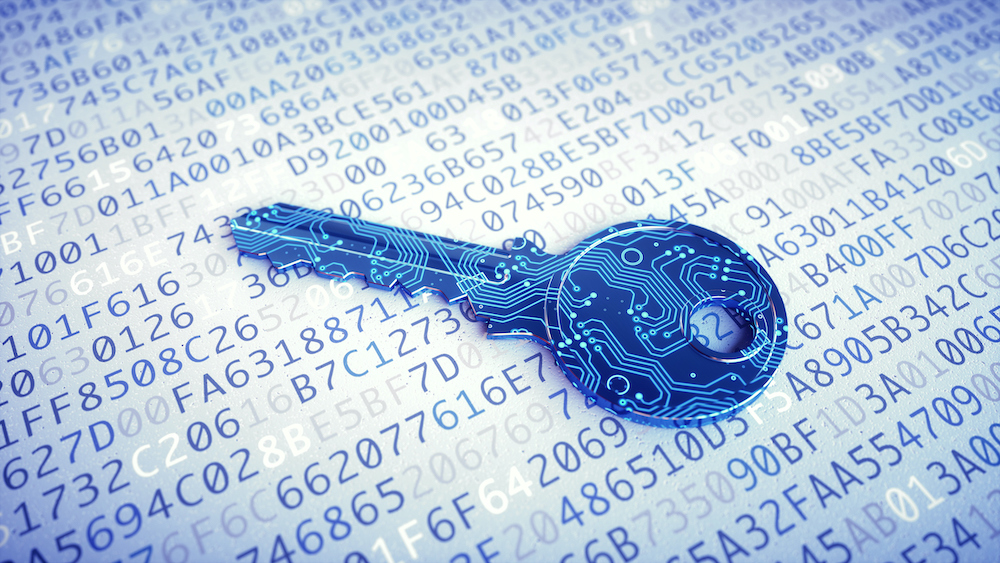
One of the world’s premier security organizations has canceled the results of its annual leadership election after an official lost an encryption key needed to unlock results stored in a verifiable and privacy-preserving voting system.

The International Association of Cryptologic Research (IACR) said Friday that the votes were submitted and tallied using Helios, an open source voting system that uses peer-reviewed cryptography to cast and count votes in a verifiable, confidential, and privacy-preserving way. Helios encrypts each vote in a way that assures each ballot is secret. Other cryptography used by Helios allows each voter to confirm their ballot was counted fairly.

An “honest but unfortunate human mistake”

Per the association’s bylaws, three members of the election committee act as independent trustees. To prevent two of them from colluding to cook the results, each trustee holds a third of the cryptographic key material needed to decrypt results.

Read full article

Comments

22 Nov 08:54

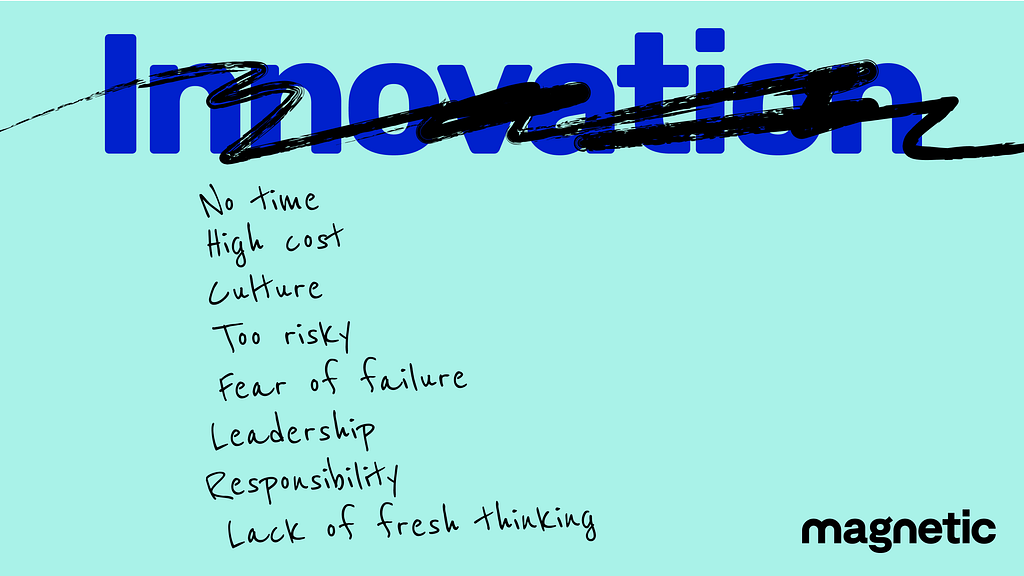
Eight reasons businesses don’t do innovation (and our solutions)

by Magnetic

We’ve heard all of these excuses many times and they’re all valid. We have ways to overcome them all and proof that our solutions work, to move you forward and get results.

1: No time

“We’ve got too much going on. We don’t have time to focus on anything new.”

Solution: Breakthrough ideas can feel distracting from the core business. Start with some focused continuous improvement of your current products and services.

Magnetic example: With Bupa, we co-created a narrative and platform for a b2b mental health proposition. It evolved iteratively and later became the model for a further proposition, without reinventing the wheel.

2: High cost

“Innovation costs time, money and resources so it’s hard to justify.”

Solution: Think big but start small and start now.

Magnetic example: In partnership with Severn Trent Water and Atkins, we set up an innovation lab with a wide remit but a clear framework for prioritising initiatives. We used lean experiments to validate solutions. Now, Severn Trent’s teams can generate, validate and scale ideas within weeks. The lab has put more than £10m of value back into the business.

3: Culture

“There’s no culture of innovation. We aren’t exactly Apple or Amazon.”

Solution: Developing a culture where people are empowered to have ideas and act on them can energise them and the business. Innovation is a process, and it can be learnt.

Magnetic example: We created an innovation toolkit and training programme for HSBC that was rolled out at scale. We trained 250+ innovation leaders in the bank across five global functions, who have in turn influenced hundreds of champions.

4: Too risky

“Real-time experimentation can be dangerous. It can put off customers who are happy with our products.”

Solution: Involve customers in plans at an early stage.

Magnetic example: Two of our team embedded into the M&S UX and analytics teams to work together on customer experiments, which are a big part of how M&S develops new products. With user feedback, we were able to learn quickly, de-risk our prototypes and get higher impact results in DVF testing.

5: Fear of failure

“I fear that innovation projects will fail, hurting our morale, financials and my career.”

Solution: Innovation is about creating or improving your products and services, not about taking huge risks. Failure is how we learn what’s not going to work. Just keep it fast and cheap.

Magnetic example: When we worked on a store concept design with adidas in Texas, we reduced the risk by researching it with customers and staff to validate and optimise ideas before the concept was rolled out.

6: Leadership

“Senior management focuses on short-term performance. Longer-term innovation is harder to achieve.”

Solution: For an innovation programme to succeed, senior management have to be involved. They can secure commitment and ongoing investment.

Magnetic example: On a project with PepsiCo, our interviews with senior stakeholders gave us a deeper understanding of the landscape. Their insights helped us to better frame the problem area.

7: Responsibility

“People feel it’s not their responsibility to come up with new ideas and are reluctant to get involved.”

Solution: Innovation needs active collaboration.

Magnetic example: When we worked with Mars to develop a 2050 vision for cocoa, we sought diverse perspectives from many experts, stakeholders and customers. This collaboration led to a sustainability strategy that got high alignment and engagement.

8: Lack of fresh thinking

“We’re constantly following competitors and not creating our own ideas.”

Solution: It’s inspiring and empowering to develop fresh concepts and try to break trail, at least some of the time.

Magnetic example: All4, Channel 4’s on-demand digital channel, wanted to do more than optimisation tweaks. We worked with the broadcaster to design a robust early ideation and discovery process for its own pipeline of product ideas.

Magnetic is a design and innovation company that helps design better futures. We’ve worked with global businesses, government organisations and fast-growing startups to build capabilities, products and services and to transform organisations.

This is an excerpt from our 2024 book, Optimism. Order your copy here.


Eight reasons businesses don’t do innovation (and our solutions) was originally published in Magnetic Notes on Medium, where people are continuing the conversation by highlighting and responding to this story.

21 Nov 13:09

Cardinal - Le Everything de Windows débarque enfin sur macOS

by Korben

Si vous avez déjà utilisé Everything sous Windows, vous savez à quel point c’est relou de ne pas avoir d’équivalent sur Mac. Spotlight c’est bien gentil, mais pour faire une recherche de fichiers précise avec des filtres avancés, c’est pas vraiment ça.

Heureusement, y’a Cardinal qui vient combler ce vide !

Cardinal c’est donc un outil de recherche de fichiers ultra-rapide pour macOS qui reprend la même syntaxe de recherche que ce qu’on retrouve dans Everything. Vous tapez vos critères, et pouf, les résultats apparaissent instantanément. Ce projet est développé par un certain Donough Liu, codé en Rust avec Tauri pour l’interface, et distribué, évidemment, sous licence MIT.

Alors qu’est-ce qu’on peut faire avec ?

Bah déjà, la syntaxe de recherche est hyper puissante. L’espace sert d’opérateur AND, donc si vous tapez “brouillon rapport” vous obtenez tous les fichiers qui contiennent les deux mots. Vous pouvez aussi filtrer par extension avec “*.pdf briefing* pour ne voir que les PDF, ou par taille avec “.zip size:>100MB” pour trouver les grosses archives zip.

Y’a aussi le filtre “infolder:” pour limiter la recherche à un dossier spécifique. Et si vous voulez exclure certains types de fichiers ou utiliser des regex, c’est possible aussi. Bref, y’a tout ce qui manque cruellement à Spotlight.

Et les raccourcis clavier sont bien pensés, je trouve. Cmd+Shift+Space pour afficher Cardinal depuis n’importe où (comme vous le faites avec Spotlight), Espace pour prévisualiser le fichier sélectionné avec Quick Look, Cmd+R pour afficher vos trouvailles dans le Finder, Cmd+C pour copier le chemin. Que du classique !

Pour l’installer, téléchargez le .dmg depuis les releases GitHub et installez le. L’app supporte aussi plusieurs langues grâce à un bouton dans la barre de statut, ce qui est top si vous préférez une interface en français.

Le seul truc à garder en tête, c’est que Cardinal doit indexer vos fichiers pour être rapide, donc la première indexation peut prendre un peu de temps selon la taille de votre disque, mais ensuite c’est instantané !

Merci à Lorenper pour le partage !

21 Nov 08:22

Battu par Google, OpenAI déploie deux modèles débridés pour sauver l’honneur de ChatGPT

by Nicolas Lellouche

Face à Gemini 3 Pro, qui bat des records dans les tests de performance et séduit ses premiers utilisateurs, OpenAI lance GPT-5.1-Pro et GPT-5.1-Codex-Max, deux modèles ultra-performants réservés aux utilisateurs les plus exigeants. L'objectif semble de rassurer : Google a le meilleur modèle grand public, mais OpenAI a la capacité de monter en puissance.

21 Nov 08:20

System.css - Donnez un look 100% retro Apple à votre site web

by Korben

Si vous aimez tout ce qui est rétro, vous avez peut-être déjà essayé de donner un look MS Dos , Windows 95 , Windows 98 , Windows XP ou encore Windows 7 à votre site web.

Ce que vous n’avez jamais osé faire, c’est de lui donner un look Apple System 6 !

Et ça c’est quand même un OS qui est sorti en 1988 soit 7 ans avant Windows 95 et ce qui est incroyable c’est qu’il avait déjà une interface parfaitement mature avec des fenêtres, des icônes, des menus déroulants et tout ça était en noir et blanc, mais c’était pas moche, bien au contraire !

Et ce qu’on oublie c’est que Windows 3.0 a débarqué deux ans plus tard en 1990 avec une interface… étrangement familière. Alors on ne va pas se mentir, Microsoft s’est LARGEMENT inspiré de ce qu’Apple faisait depuis 1984 avec le premier Macintosh qui se sont eux-mêmes inspiré des interfaces vues lors de la visite de Steve Jobs au Xerox PARC.

Apple qui ne doute de rien, a même attaqué Microsoft en justice pour ça en 1988. Le procès a été perdu, mais bon, l’histoire retient qui a copié qui !

Du coup, plutôt que de continuer à cloner les clones, system.css ferme la boucle en revenant à la source. Ce projet est développé par Saket Choudhary et prend son inspiration directe des guidelines de design d’Apple pour System 6, la dernière version monochrome de macOS avant l’arrivée de System 7 en couleur en 1991.

Le truc cool avec system.css, c’est que ça fonctionne exactement comme 98.css. Y’a aucun JavaScript… Vous incluez juste le fichier CSS via CDN ou npm, et hop, tous vos composants HTML prennent instantanément l’apparence d’une interface Macintosh de 1988. Des boutons arrondis, des fenêtres avec une bordure de 19 pixels, des barres de titre, des menus déroulants incroyables, des checkboxes carrées, des boites de dialogues avec double bordure. Tout est là !

L’installation se fait en deux lignes. Via CDN, vous balancez ce code dans votre HTML:

<link rel="stylesheet" href="https://unpkg.com/@sakun/system.css">

Ou via npm, c’est :

`npm i @sakun/system.css`

C’est compatible avec React, Vue, Svelte, ou du HTML vanilla pur jus !

La page de démo affiche d’ailleurs tous les composants disponibles et tout respecte scrupuleusement les spécifications originales de l’OS.

Voilà, avec system.css , vous pouvez donc créer des interfaces web qui ressemblent à celles que les gens utilisaient quand internet n’existait pas encore pour le grand public. Impec pour filer un petit coup d’vieux à votre prochain site web !

Merci à Lorenper pour l’info !

21 Nov 08:16

Google dévoile Nano Banana Pro, un modèle qui génère des images en 4K grâce à Gemini 3 Pro

by Nicolas Lellouche

Deux jours après l'annonce de Gemini 3 Pro, le nouveau meilleur modèle de langage du marché, intégré à tous ses services, Google dévoile Nano Banana Pro, une évolution haut de gamme de son modèle pour générer ou éditer des images. Les requêtes coûtent jusqu'à six fois plus cher, mais les résultats font un bond en avant.

21 Nov 08:13

Amazon Wants AI Up-to-Date and Personal 

by Caitlin Wolper Phillips

Everyone has their preferences. That doesn’t change when they’re using AI, which is why Amazon is considering ways to personalize the tech for its users. 

The Seattle-based company has just filed a patent application for “dynamic language model updates.” 

The system would enable a language model to quickly learn about topics that matter to a user at a given moment. First, users would give the system examples of their interests, citing names, terms or topics. 

Then, the system would utilize those examples to create a “weight map” that tells the language model which topics and ideas are especially important to the user and should be emphasized.

Using the map, the model is updated and tuned to pay closer attention to the user’s interests and related trending topics when generating answers. 

The patent application also mentions “boosting,” which supercharges emphasis on preferred topics. Basically, it helps the system become even better at relaying the most important, pertinent info. 

Amazon has been focusing on ways to make AI more beneficial to users, including through a patent for personal data collection. Its Alexa assistant has been a particular priority, though the personalization efforts are being affected by organizational and tech issues.

The post Amazon Wants AI Up-to-Date and Personal  appeared first on The Daily Upside.

20 Nov 08:48

SecretDesires.ai - 2 millions de deepfakes pornos et autres photos intimes fuitent publiquement

by Korben

C’est dégueulasse, j’ai pas d’autre mot.

La plateforme SecretDesires.ai, un service de chatbot érotique avec génération d’images par IA, a laissé fuiter dans la nature près de 2 millions de photos et vidéos dans des conteneurs Azure pas du tout sécurisés. Hé oui, n’importe qui pouvait y accéder via de simples fichiers XML contenant tous les liens vers les images, et ça ont le sait grâce à cette enquête de 404 Media .

Alors qu’est-ce qu’on trouve dans cette fuite ?

Hé bien sans surprise des photos de célébrités mais surtout des photos de parfaites inconnues. Des selfies pris dans des chambres, des photos de profil de réseaux sociaux, des photos de remise de diplôme universitaire et j’en passe. Certains fichiers contiennent même les noms complets des femmes photographiées donc autant vous dire que ça craint un max !

Alors pourquoi y’avait tout ça ? Et bien SecretDesires proposait une fonctionnalité de “face swapping” dans ses abonnements payants (entre 7,99 et 19,99 dollars par mois, les pervers ont les moyens), qui permettait en uploadant la photo d’une vraie personne, de “coller” son visage sur d’autres images et vidéos sexuellement explicites générées pour l’occasion. Un container “removed images” contenait environ 930 000 images, un autre baptisé “faceswap” en contenait +50 000, et un troisième nommé “live photos” (des shorts vidéos IA) en contenait +220 000 dont des vidéos montrant des personnes d’apparence trèèèès jeune…

Et les prompts visibles dans certains noms de fichiers sont encore plus flippants car certains “clients” de cette plateforme ont demandé clairement des images de mineures. Et bien sûr, même si SecretDesires interdisait ça dans ses CGU, rien n’était fait techniquement pour l’empêcher.

De plus, la plateforme mentait à ses clients !! Elle se vantait d’utiliser un chiffrement de bout en bout et des serveurs ultra-sécurisés, sauf que leurs conteneurs Azure étaient grands ouverts depuis des mois vu les dates des fichiers et absolument rien n’était chiffré.

Heureusement, environ une heure après que 404 Media ait contacté SecretDesires pour les prévenir de la faille, les fichiers ont été rendus inaccessibles.

Alors j’sais pas si certains d’entre vous se sont déjà amusés à créer des deepfakes sexuels d’autres personnes sans leur consentement, mais sachez que les conséquences pour les victimes sont souvent dévastatrices. Cela a un impact sur leur carrière, leur confiance en soi, et parfois leur sécurité physique… Et bien sûr cela fait de vous des agresseurs sexuels !

Donc arrêtez d’utiliser ces services de merde, utilisez votre cerveau, faites preuve d’empathie et bien sûr, comme toujours, force aux victimes !

Source

20 Nov 08:40

Le créateur de Mastodon se casse de sa propre plateforme (et je le comprends)

by Korben

Hé bien voilà, c’est officiel ! Eugen Rochko, le créateur de Mastodon, quitte son poste de CEO avec un chèque d’un million d’euros et un soupir aussi profond que la Fosse des Mariannes. Et franchement, on peut pas lui en vouloir.

Dans son annonce, Rochko explique que “les deux dernières années ont été particulièrement difficiles” et que sa santé mentale et physique en a pris un coup. Il mentionne notamment une interaction “particulièrement difficile” avec un utilisateur l’été dernier qui l’a vraiment poussé à reconsidérer son rôle.

Quand le mec qui a créé un réseau social se barre de ce même réseau social à cause de la toxicité de ses utilisateurs, je pense qu’on peut officiellement déclarer le web social complétement mort.

Ça confirme totalement mon choix de m’être cassé de ces trous à merde parce que de ce que je lis dans cet article et de ma propre expérience, Mastodon ne vaut finalement pas mieux que X ou Facebook en matière de faune toxique. C’est dommage parce qu’à la base, l’idée du Fediverse c’était justement d’échapper à ça. Mais bon, mettez des humains ensemble sur Internet et attendez cinq minutes, vous obtiendrez invariablement un zoo où les animaux se lancent leurs excréments à la figure.

Pour rappel, Mastodon avait connu son heure de gloire après le rachat de Twitter par Elon Musk, atteignant un pic de 2,5 millions d’utilisateurs mensuels actifs. Mais aujourd’hui, ils ne sont plus qu’environ 750 000. C’est quand même une chute de 70% ! J’ai l’impression que les gens sont partis aussi vite qu’ils étaient venus, probablement fatigués de se faire engueuler parce que “insérez ici n’importe quoi pourvu que ça permette de beugler publiquement”.

Matthew Hodgson, le fondateur de Matrix / Element, résume également la situation en expliquant que les utilisateurs de ces plateformes décentralisées attendent qu’elles les “sauvent du paysage dystopique insupportable” des réseaux sociaux centralisés, sauf que spoiler alert, le problème ce n’est pas uniquement les plateformes… ce sont aussi les gens dessus. Vous pouvez décentraliser tant que vous voulez, si les utilisateurs sont des connards toxiques ou des victimes du syndrome de Stockholm accros à leur dose quotidienne de drama, ça ne changera rien.

Rochko va donc passer à un rôle consultatif le temps d’une transition de deux à trois mois et c’est le conseil d’administration de Mastodon, qui inclut Biz Stone (co-fondateur de Twitter, ça ne s’invente pas..), qui supervisera la suite. Je leur souhaite bon courage pour trouver quelqu’un d’assez maso pour reprendre le flambeau ^^.

Alors c’est vrai qu’échanger avec des gens normaux sans se faire agresser pour rien, ça me manque parfois, c’est vrai. Mais heureusement, j’ai mon Discord rempli de gens cools et mon Patreon qui est le temple de la bienveillance. Ce sont des endroits où on peut encore discuter sans qu’un random débarque pour m’expliquer que je suis un monstre pour avoir écrit tel ou tel article ou parce que j’ai mis de l’ananas sur ma pizza.

Et c’est normal car y’a pas de cour devant laquelle se faire mousser pour faire grimper son klout ^^.

M’enfin, bon courage à Eugen Rochko… je pense qu’il a fait le bon choix et avec son million d’euros, il va pouvoir s’offrir une belle thérapie et peut-être même des vacances dans un endroit sans WiFi. Le web social a certes été tué par les algorithmes mais surtout par ses propres utilisateurs qui ont complétement vrillés (les autres sont partis).

Sur ce, je retourne sur mes réseaux chillax et je vous souhaite une excellente soirée !

Source

19 Nov 21:47

TOON : Un format JSON compact et lisible optimisé pour les prompts LLM

by Camille Roux

TOON (Token-Oriented Object Notation) est un nouveau format de données conçu spécifiquement pour optimiser les prompts des modèles de langage. Plus compact que JSON traditionnel tout en restant lisible par les humain·e·s, TOON intègre une validation de schéma native. Le projet open-source inclut une spécification complète, des benchmarks de performance et un SDK TypeScript pour faciliter son adoption par les développeur·se·s travaillant avec les LLM.


Commentaires
L'article TOON : Un format JSON compact et lisible optimisé pour les prompts LLM a été posté dans la catégorie IA de Human Coders News
19 Nov 21:42

Smart Bandage Leverages AI Model For Healing Purposes

by Lewin Day

If you get a small cut, you might throw a plastic bandage on it to help it heal faster. However, there are fancier options on the horizon, like this advanced AI-powered smart bandage.

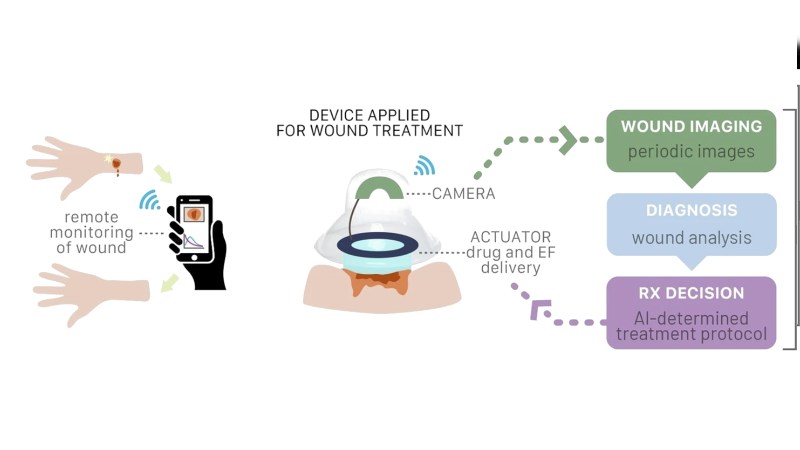
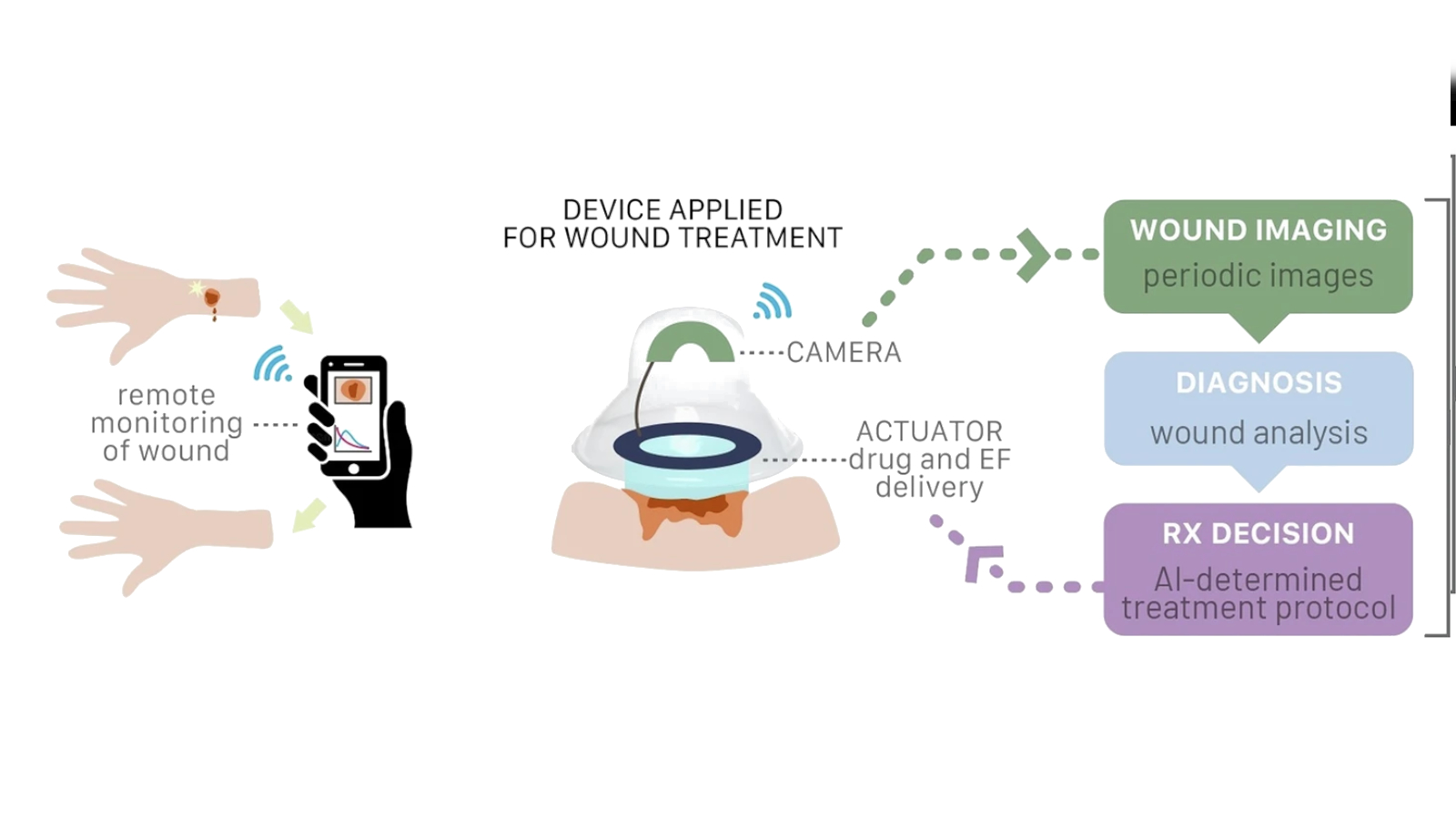
Researchers at UC Santa Cruz have developed a proof-of-concept device called a-Heal, intended for use inside existing commercial bandages for colostomy use. The device is fitted with a small camera, which images the wound site every two hours. The images are then uploaded via a wireless connection, and processed with a machine learning model that has been trained to make suggestions on how to better stimulate the healing process based on the image input. The device can then follow these recommendations, either using electrical stimulation to reduce inflammation in the wound, or supplying fluoxetine to stimulate the growth of healthy tissue. In testing, the device was able to improve the rate of skin coverage over an existing wound compared to a control.

The long-term goal is to apply the technology in a broader sense to help better treat things like chronic or infected wounds that may have difficulty healing. It’s still at an early stage for now, but it could one day be routine for medical treatment to involve the use of small smart devices to gain a better rolling insight on the treatment of wounds. It’s not the first time we’ve explored innovative methods of wound care; we’ve previously looked at how treatments from the past could better inform how we treat in future.

19 Nov 21:41

« Les attaquants augmentent leur puissance au même rythme qu’Internet », cette cyberattaque d’une ampleur inédite a discrètement été désamorcée

by Amine Baba Aissa

Le 17 novembre 2025, Microsoft Azure a annoncé avoir subi une attaque DDoS d’une ampleur phénoménale, atteignant 15,72 Tbit par seconde. Cette opération malveillante, survenue quelques semaines plus tôt, serait l’œuvre d’un vaste réseau d’ordinateurs et d’appareils infectés nommé Aisuru.

19 Nov 21:33

LexisNexis lance Protégé, un assistant d’IA juridique personnalisé

by Bruno Texier
  • LexisNexis-lance-Protege-assistant-IA-juridique-personnalise
    L'éditeur souhaite se différencier des IA utilisées par le grand public et met en avant son corpus documentaire juridique composé de plus de 125 millions de documents.

    Un an après avoir dévoilé Lexis+ AI, LexisNexis présente son nouvel assistant d'IA juridique personnalisé. Baptisé Protégé, cet outil se veut plus proche du travail quotidien des professionnels du droit notamment dans sa capacité à comprendre le contexte d'une question juridique. Cette IA générative est en mesure "d’analyser des documents, de rédiger des notes, clauses ou résumés, et de formuler des propositions argumentées appuyées sur des références juridiques fiables issues du corpus documentaire LexisNexis" explique l'éditeur. Ce corpus est composé de plus de 125 millions de documents.

    LexisNexis met en avant la spécificité de Protégé qui, contrairement aux IA utilisées par le grand public, est conçu dès l’origine pour le monde juridique et réglementé. 

    [...] Lire la suite de cet article sur Archimag.com
  • 19 Nov 21:31

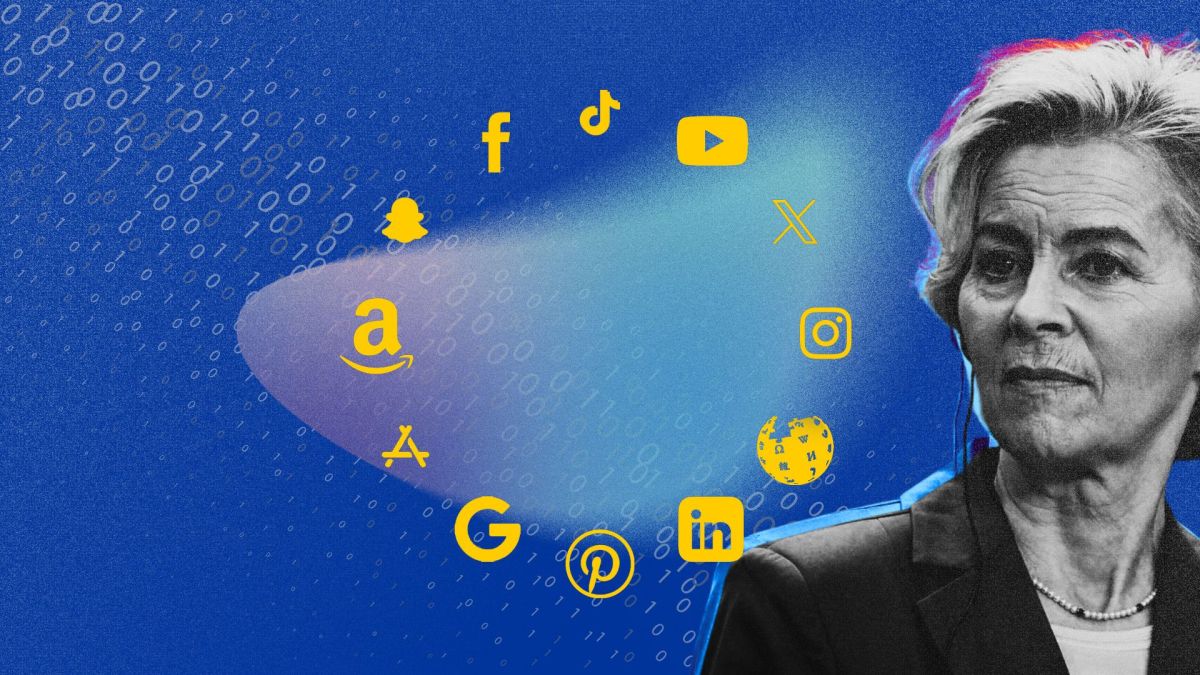
    Moins de clics, moins de règles : l’Europe s’apprête à détricoter le RGPD

    by Julien Lausson

    ursula von der leyen dma dsa europe ia act numérique digital

    Faut-il desserrer l'étau autour du numérique en Europe ? Bruxelles lance un grand chantier sur la question, avec des propositions visant à simplifier plusieurs aspects de certaines grandes réglementations, comme le RGPD et l'AI Act. Avec, en ligne de mire, le souhait de retrouver le chemin de la compétitivité et de l'innovation.

    19 Nov 21:26

    Stargate Returns: A New Series Officially Greenlit for Prime Video

    by Geeks are Sexy

    New Stargate Series

    Chevron seven locked.

    After fourteen long years of waiting, rewatches, convention talk, and countless “When is Stargate coming back?” conversations, the impossible has finally happened: Amazon MGM Studios has officially greenlit a brand-new Stargate series for Prime Video. And the best part? It isn’t a reboot. It’s a completely new chapter in the existing Stargate universe, created with the very people who helped build it in the first place.

    The announcement came straight from Darren Sumner of GateWorld and David Read of Dial the Gate, joined by franchise legends Brad Wright and Joe Mallozzi. Hearing them talk about the project was enough to make any longtime fan emotional. They emphasized again and again how rare it is for original creators to return to shepherd a new version of a show, and how grateful they are that Amazon chose to honor the legacy instead of reinventing it from scratch.

    They also gave full credit to the fans. According to the team, the Stargate community, fan sites, podcasters, cosplayers, convention-goers, and everyone who kept rewatching the shows, played a direct role in keeping the franchise alive during its fourteen-year hiatus. The enthusiasm never faded, and that passion helped push this revival forward.

    Even though this will be a brand-new story, the creators stressed that it will still feel unmistakably like Stargate. New viewers will be able to jump in without having to watch 350 episodes, but longtime fans will immediately recognize the tone, humor, and world they love. And with modern VFX and today’s production capabilities, the team says they can finally bring ideas to life that weren’t possible back in 1997.

    As for familiar faces? They’re staying quiet… for now. But the way they dodged the question suggests there’s plenty more news to come.

    For the first time, Stargate will debut globally on a platform where everyone around the world can share the experience together. No staggered release, no regional delays. Just one huge, united Stargate moment.

    The creators promised that this is only the beginning, with more updates coming soon. After more than a decade of waiting, the gate is finally spinning up again.

    Stargate is back. Indeed.

    Click This Link for the Full Post > Stargate Returns: A New Series Officially Greenlit for Prime Video

    19 Nov 14:40

    4 scénarios pour l'IA selon Gartner

    by Patrice
    Gartner
    La traditionnelle saison des symposiums IT du cabinet Gartner, dont l'édition européenne vient de s'achever à Barcelone, semble avoir été consacrée essentiellement – sinon exclusivement – à l'intelligence artificielle. Un exercice prospectif mené dans ce domaine propose ainsi quatre scénarios pour la future collaboration entre IA et employés.

    En guise d'introduction, faisant fi (ou s'accommodant ?) de ceux qui dénoncent une bulle prête à éclater, les analystes estiment que rien ne laisse entrevoir une apocalypse pour le monde du travail… mais prédit tout de même le chaos, à partir de 2028-2029, dans un contexte où 32 millions de postes seront bouleversés chaque année. Les entreprises devront apprendre à adapter leurs métiers à de nouvelles conditions et, dans de nombreux cas, profondément reconfigurer leurs approches existantes.

    À l'instar de tous les Cassandre de la révolution à venir, Gartner insiste sur l'impératif de penser non pas à un modèle dans lequel l'intelligence artificielle prend l'ascendant sur l'humain mais plutôt de viser une démarche d'abord centrée sur les personnes, intégrant leur relation avec la machine. En perspective, la performance de l'organisation serait alors mesurée par la qualité de la coopération entre les deux. Mais on va le voir, ces messages rassurants n'interdisent pas des options extrêmement radicales.

    La réflexion aboutit à quatre cibles possibles, distribuées sur deux axes, selon, d'une part, que le travail reste inchangé (mais est effectué différemment) ou qu'il doit changer et, d'autre part, que les individus restent aux commandes, avec une assistance, ou qu'ils laissent l'IA prendre les choses en main. Et de souligner que, quel que soit le choix ou la préférence de chaque entreprise pour sa trajectoire, elle sera probablement contrainte de se préparer à naviguer parmi les quatre hypothèses, toutes réalistes.

    Gartner – AI Ripple Effect

    Au bas de l'échelle (dans mon interprétation), figure la formule la plus répandue aujourd'hui : les agents intelligents sont conçus pour aider les salariés – qui continuent à opérer comme auparavant – à accomplir leurs tâches mieux et plus rapidement.

    La situation évolue ensuite dans deux directions. L'une, évidente et naissante dans les centres d'appel, voit l'IA réaliser la plus grosse part de l'activité, laissant à quelques humains le soin de traiter ce qu'elle ne sait pas prendre en charge. L'autre, plus futuriste, propose une véritable synergie débouchant sur une réinvention complète du travail.

    Enfin, et le fait s'avère incontournable, le paysage inclut également le principe de la firme, ou, a minima, du département, autonome, sans humain ou presque.

    Quand les analystes de Gartner jouent sur les mots entre apocalypse et chaos, en laissant croire que la transition sera suffisamment progressive pour que le personnel puisse s'adapter et ne reste pas sur le carreau, ils n'évoquent que le volet de l'emploi. Car les ruptures envisagées seront aussi éprouvantes pour les entreprises elles-mêmes, qui devront à la fois prendre garde à l'équilibre de leurs effectifs (humains ou non) et au contrôle dont elles disposent sur leurs outils d'intelligence artificielle…
    19 Nov 14:37

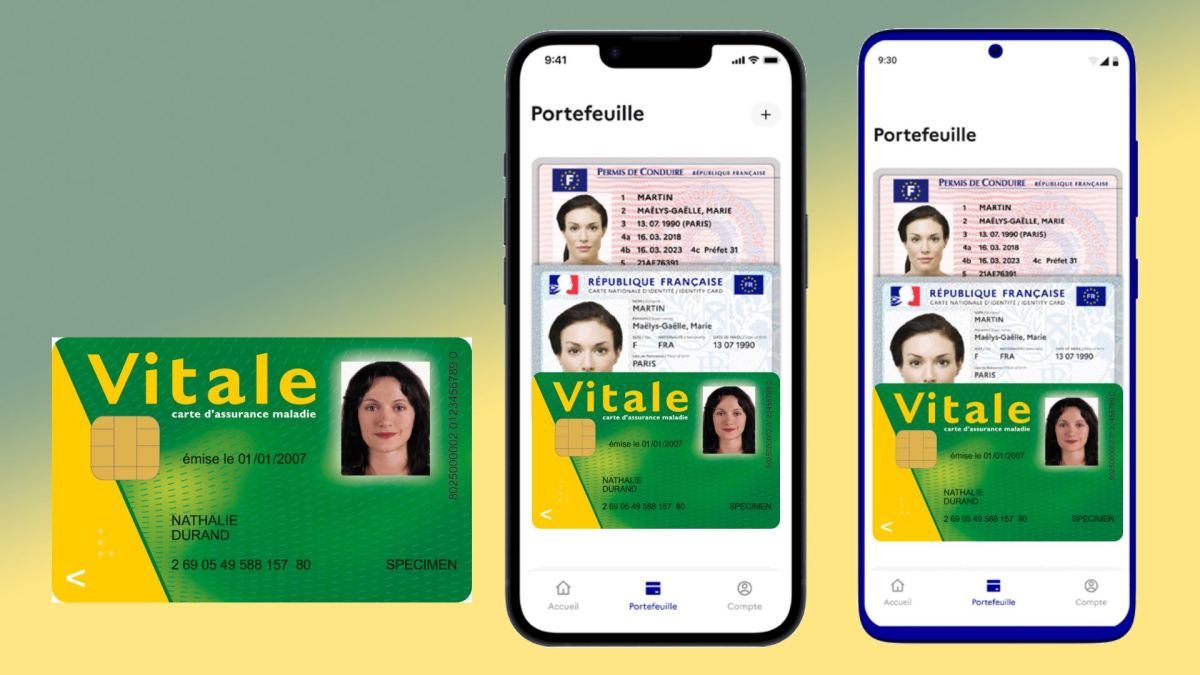
    La carte Vitale est disponible sur smartphone : comment l’ajouter facilement ?

    by Julien Lausson

    Depuis novembre 2025, la carte Vitale est disponible en version dématérialisée sur tous les smartphones, peu importe le format de votre carte d'identité. L'ajouter ne prend que quelques minutes.

    19 Nov 14:32

    Gemini 3 Pro est officiel : Google dévoile son « anti-ChatGPT » et atomise les records pour une IA

    by Nicolas Lellouche

    Huit mois après Gemini 2.5 Pro, Google remplace son meilleur modèle de langage par Gemini 3 Pro, qui atomise tous les records dans les tests dédiés aux LLM. Pour la première fois, un nouveau modèle est immédiatement disponible partout, y compris dans la recherche Google et dans les applications. L'entreprise veut frapper fort pour détourner les utilisateurs de ChatGPT, Claude et Perplexity.

    19 Nov 13:26

    Hacking a Pill Camera

    by Lewin Day

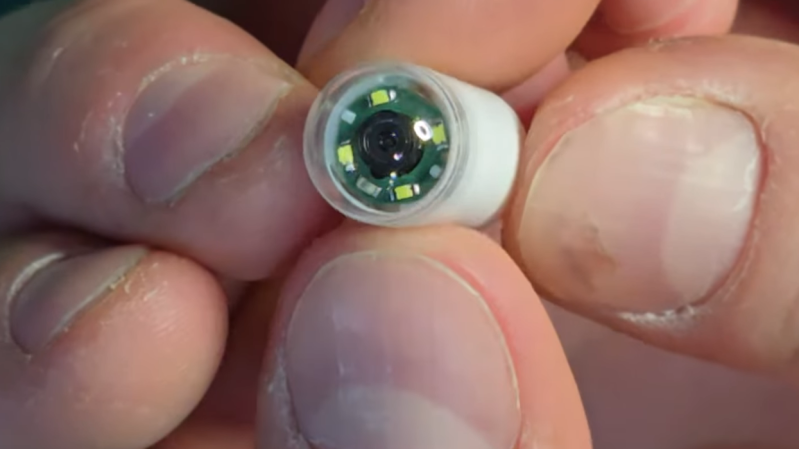
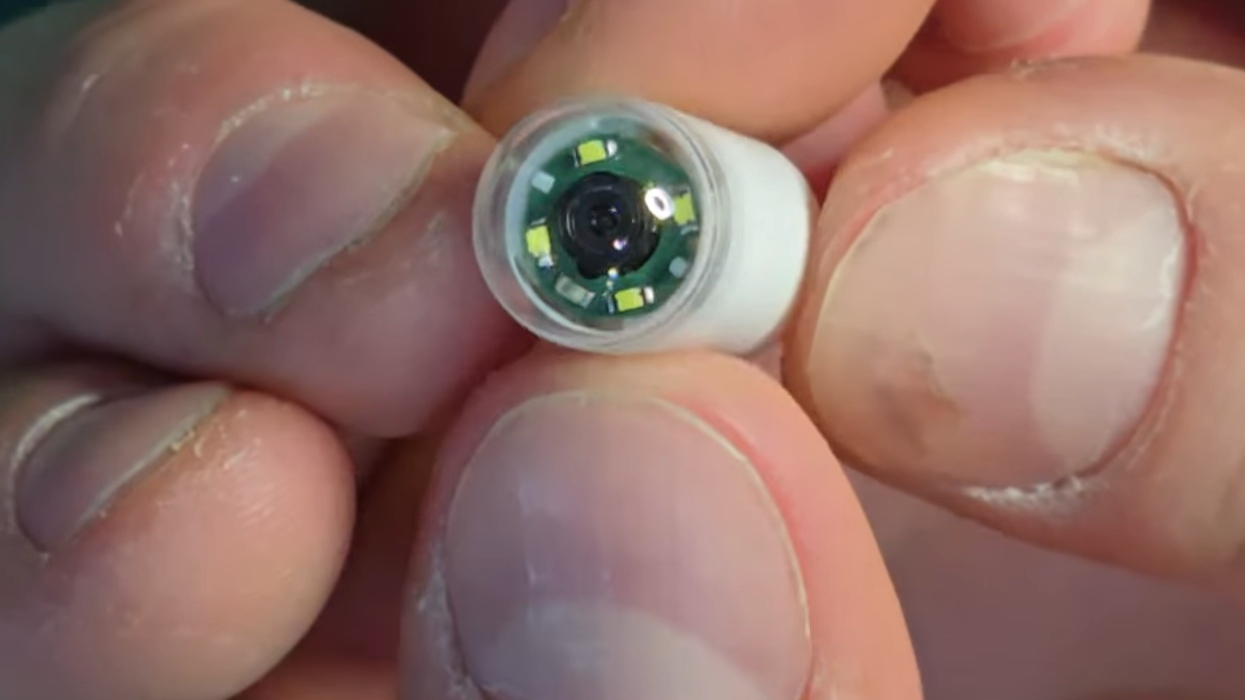
    A gastroscopy is a procedure that, in simple terms, involves sticking a long, flexible tube down a patient’s throat to inspect the oesophagus and adjacent structures with a camera fitted to the tip. However, modern technology has developed an alternative, in the form of a camera fitted inside a pill. [Aaron Christophel] recently came across one of these devices, and decided to investigate its functionality.

    [Aaron’s] first video involves a simple teardown of the camera. The small plastic pill is a marvel of miniaturization. Through the hemispherical transparent lens, we can see a tiny camera and LEDs to provide light in the depths of the human body. Slicing the camera open reveals the hardware inside, however, like the miniature battery, the microcontroller, and the radio hardware that transmits signals outside the body. Unsurprisingly, it’s difficult to get into, since it’s heavily sealed to ensure the human body doesn’t accidentally digest the electronics inside.

    Unwilling to stop there, [Aaron] pushed onward—with his second video focusing on reverse engineering. With a little glitching, he was able to dump the firmware from the TI CC1310 microcontroller. From there, he was able to get to the point where he could pull a shaky video feed transmitted from the camera itself. Artists are already making music videos on Ring doorbells; perhaps this is just the the next step.

    Smart pills were once the realm of science fiction, but they’re an increasingly common tool in modern medicine. Video after the break.

    19 Nov 13:26

    GEMINI3, le vrai moat de GOOGLE dans l’IA ce sont ses 8 milliards d’utilisateurs

    by LA REDACTION DE FRENCHWEB.FR

    Le lancement de Gemini 3 marque un tournant pour Google. Après plusieurs années de rattrapage, Google revient au centre du jeu avec un modèle qui dépasse ses prédécesseurs sur les benchmarks, dont un score de 1501 Elo sur LMArena. Ce lancement éclaire aussi la course effrénée menée par Sam Altman, car Google déplace désormais le …

    L’article GEMINI3, le vrai moat de GOOGLE dans l’IA ce sont ses 8 milliards d’utilisateurs est apparu en premier sur FW.MEDIA.

    19 Nov 13:24

    Une enquête sur des jouets dopés à l’IA pousse OpenAI à bloquer son modèle GPT-4o à un fabricant de peluches

    by Eitanite Bellaiche

    À l’approche des fêtes de Noël, un groupe de chercheurs américains et canadiens a voulu tester des jouets dotés d’intelligence artificielle pour évaluer leur sécurité. Les conclusions de leur rapport se sont avérées si inquiétantes qu’OpenAI a décidé de bloquer l'accès à l'un d'eux à son modèle GPT-4o.

    19 Nov 13:21

    On sait enfin pourquoi le web a planté dans le monde entier, et ce n’était pas une attaque

    by Julien Lausson

    cloudflare

    Après une panne mondiale de plusieurs heures ayant paralysé une partie importante du web, Cloudflare a dévoilé les causes de l'incident. Contrairement aux soupçons initiaux, il ne s'agissait pas d'une cyberattaque, mais d'une erreur technique assez banale. Mais cela a fini par devenir la pire panne de Cloudflare depuis 2019.

    17 Nov 13:55

    🦷 Fin des caries ? Un gel fait repousser l'émail des dents naturellement

    by Adrien BERNARD
    Nature Communications vient de publier une découverte qui pourrait transformer notre approche des soins dentaires. Des chercheurs britanniques ont mis au point un gel capable de régénérer...
    16 Nov 23:11

    Kimi K2 Thinking