This summer, one of Switzerland's biggest logistics companies is trying its hand at drone delivery. The drone company Matternet announced this week that it will be partnering with Swiss Post and its parent company Swiss WorldCargo for a drone delivery pilot project this summer, serving as a last mile delivery service attached to Swiss Post's larger infrastructure. It's the first major test of Matternet's drone technology in a commercial setting, and a crucial milestone for the company. "The primary aim of this pilot project is a proof of concept to clarify the legal framework, consider local conditions, and explore the technical and business capabilities of the drones," Matternet wrote in a statement. If the system performs well,...
Jean-Philippe Encausse
Shared posts
Internet des objets et privacy by design.
Hello 
Il y a quelques semaines je vous écrivais un très long article sur le Privacy by Design, et c’est donc avec plaisir que je vous présente aujourd’hui la 8e rencontre de la Chaire : Internet des objets et Privacy by Design. Etaient invités :
- Bernard Benhamou, Fondateur du portail de services mobiles Proxima Mobile et Coordinateur de la première conférence ministérielle européenne sur l’Internet des objets
- Olaf Avenati, designer graphique et numérique, enseignant à l’ESAD de Reims

Présentation
« Avec la montée en puissance de l’Internet des objets, et leur diversification dans la quasi-totalité des secteurs d’activité économique (de la santé au tourisme, de la maîtrise de l’environnement aux loisirs…) de nouvelles questions sont désormais posées aux concepteurs de ces objets pour répondre aux attentes de leurs usagers, en particulier en matière de protection des informations personnelles. Les objets connectés diffèrent en effet des objets industriels traditionnels en ce qu’ils conservent, durant l’ensemble de leur cycle de vie, un lien avec l’Internet mais aussi et surtout avec l’entreprise qui les a produits. Leur conception même (leur design) doit donc désormais intégrer ces préoccupations pour que les usagers puissent garder la maîtrise de leurs données. La protection de la vie privée des utilisateurs des objets connectés devient ainsi une préoccupation majeure de l’ensemble des acteurs industriels. En effet, la confiance qui constitue la clé de voûte du développement de ces technologies connaît déjà de nombreuses remises en question. «

Internet des objets et Privacy by Design
Au travers de cette rencontre ont ainsi été abordés les risques de surveillance généralisée liés aux objets connectés et la possibilité de recueillir des données durant l’ensemble des activités quotidiennes des usagers. À mes yeux, les questions importantes sont notamment la représentation des traces numériques de l’objet connecté mais aussi les signes visibles de la confiance entre les objets connectés et leurs utilisateurs… Vaste terrain à défricher et dans lequel le design a un rôle primordial à jouer.Ces articles peuvent aussi vous intéresser:
- Un petit point sur l’Internet des objets !
- Les « Privacy icônes » de Mozilla pour mieux protéger votre vie privée

- Visualisez (vraiment) Internet sur votre mobile.
- « Les objets connectés » par The Walking Web !
- SAM, votre pote pour l’Internet des objets !
- Prospective pour 2030 : Internet et la France!
- « La conception à l’ère de l’Internet des Objets » : modèles et principes pour le design de produits aux fonctions augmentées par des applications
Internet des objets et privacy by design. est publié originellement sur le blog de graphisme & design : Graphisme et interactivité blog par Geoffrey Dorne
Apple Watch : déjà un succès pour les copies chinoises

Alors que l’Apple Watch s’apprête à déferler sur le marché, les entrepreneurs chinois n’ont pas attendu avant de proposer leurs versions de montres connectées pour le moins très inspirées du produit d’Apple.
© Rédigé par, Sebastien Veyrier pour Begeek.fr le jeu, 23 avr 2015 à 10h25
Listening table makes sense of conversations that happen around it

Technology is changing the way organizations go about even the most basic, everyday tasks. Not long ago we featured the Equil Smartmarker, a device which retrofits whiteboards with the capability to stream, share and save notes as digital files. A new design concept, called the Listening Table, now promises to make meetings even more streamlined.
The table, designed by New York Times Research and Development Labs, captures the conversation of those sat around it. It is fitted with a central array of microphones connected to thermal cameras, which are able not only able to accurately pick up everything that is said, but also to identify who said what.
While the capacity for accurate voice recording is certainly useful, as an innovation it does little to advance on the trusty old Dictaphone. What truly sets the Listening Table apart is its ability to discern important moments in a conversation, and to remove filler. The table incorporates capacitive strips which, when touched, drop a marker in the recorded conversation. When the recording is reviewed, participants can see a high-level summary of the meeting, outlining the topics covered, the markers dropped and the available recordings.
The designers created the table with a straightforward aesthetic that clearly communicates its function. The clean simplicity of the design, the prominence of its recording equipment and a basic on/off flick switch are all conscious features, intended to distance the Listening Table from more surreptitious recording devices, which are an increasing concern in this era of state snooping and eavesdropping TVs.
At present the design is only conceptual, and is unlikely to be hitting meeting rooms soon, but the idea of sensors that can measure context as well as content is incredibly exciting, and will become more so as the Internet of Things delivers ever-more connected devices into our homes.
Website: www.nytlabs.com/projects/table.html
Contact: @nytlabs
Gagnez des entrées pour la MAKER Faire de Paris
La Maker Faire PARIS 2015 aura lieu le week-end du 02 et 03 mai 2015 à la foire de PARIS.
Leroy Merlin partenaire de Maker Faire PARIS 2015 vous offre sur Hotfirenet.Com 9 places pour vous rendre à la foire de PARIS surtout le 02 ou 03 mai pour découvrir cet évènement qu’est le Maker Faire.
Pour participer c’est très simple, il vous suffit de laisser un commentaire en bas de cette page : http://blog.hotfirenet.com/concours/gagnez-des-invitations-pour-le-maker-faire-paris-2015/
Le jeu concours débute dés à présent et se termine le 24 avril 2015 à 23h59.
Vous pouvez également partager :
je viens de participer pour gagner des invitations pour le @MakerFaireParis 2015 – hfn.me/1F5v5rU – #HFNMKFAI2015 @leroymerlinfr
sur les réseaux sociaux pour multiplier vos chances: Twitter, Facebook, Google+ (il faudra indiquer le lien vers votre partage dans les champs au dessus de votre commentaire).
Ainsi, par exemple, si vous laissez un commentaire sur la page de Hotfirenet, et que vous partagez le concours sur Facebook et Twitter, cela vous fait 3 chances de gagner. Compris ?
Une fois le tirage au sort effectué vous serez contacter par mail.
Selon Gartner, 60% des projets de #BigData seront...
The Chevrolet FNR concept is impossible to describe — seriously, just look at it
Jean-Philippe EncausseLa BatMobile ?
Introduced at the Shanghai auto show this week, Chevy's FNR concept basically defies all description. The closest thing I can come up with is that it looks like you took a next-gen Volt, mixed it with a BMW i8, and sent the two spiraling 50 years into the future.
The car — designed by GM's Shanghai-based Pan Asia Technical Automotive Center team, is described as featuring a "futuristic capsule design." That's an understatement, needless to say. Once you get beyond the insane design, there's a set of "dragonfly"-style swinging doors, hubless motors inside the wheels, and a wireless charging system for the electric drivetrain.
Like the self-driving Mercedes-Benz F 015 — which looks just as wild, albeit with very different styling — the...
Ipsos s'appuie sur la géolocalisation
Jean-Philippe EncausseDu "Big Data" maitrisée / utilisable
Make Your Own BB-8 Droid From A Sphero
Word around the outer rim is Ortobix, the company behind the Sphero robotic ball, helped create the rolltastic BB-8 Droid from the upcoming Star Wars movie. And ever since BB-8 rolled across the stage at last week’s Star Wars convention, I’ve wanted one. Well, someone with a bit more gumption than I hacked together a tiny BB-8 from a Sphero and it’s fantastic.
From the… Read MoreGhostbusters Ghost Trap
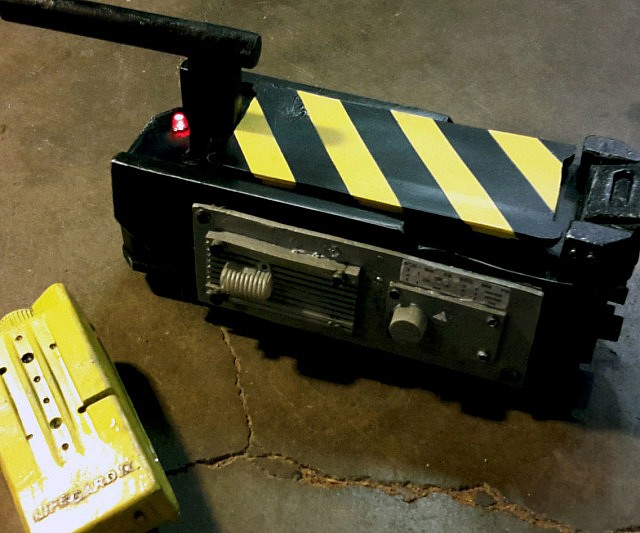
Begin a promising career in the paranormal by hunting down ghouls using the Ghostbusters ghost trap and pedal. This meticulously detailed prop is ideal for use in live action roleplaying and includes everything you and your team will need when the ghosts arrive.
$275.00
The Rolling Robot From The Star Wars Trailer Actually Exists And It’s Awesome
Remember that incredibly neat soccer-ball lookin’ robot from the Star Wars: The Force Awakens trailer? The fans started debating about it pretty much immediately, as they tend to do. How the hell did it work? It had to be CGI, right?
NOPE!
Its name is BB-8, and it’s totally real. Read MoreC’est confirmé, la France adopte la surveillance de masse
Pendant que vous dormiez hier soir, discrètement, 30 députés ont décidé pour nous, que ce serait bien que TOUT ce qu'on fait sur le net soit surveillé. (25 ont voté pour / 5 ont voté contre)
Je vous passe toutes les subtilités, mais en gros, on va avoir le droit aux boites noires. Cazeneuve a utilisé tout ce qu'il connait de la langue de bois pour dire que "non ce n'est pas de la surveillance de masse" mais faut pas être un génie pour comprendre que si on fait passer TOUT le trafic Internet des Français dans des boites noires, c'est de la surveillance de masse. Le Bernard était tellement acharné hier soir, que je me suis dit qu'il voulait probablement cette loi pour l'utiliser à titre personnel.
Ah et scoop relevé par Numérama, la vie privée n'est pas une liberté. Donc, les Français ne verront pas d'objection à ce qu'on la retire ? N'est-ce pas ?
Bref, sur ces 30 gus dans l'Assemblée, seuls 5 courageux ont voté contre. BRAVO ET MERCI à eux !
Les autres, ceux qui n'étaient pas là et ceux qui ont voté pour cette loi liberticide sont, pour moi, des traitres envers la France et envers les Droits de l'Homme. Des députés godillots qui votent ce qu'on leur dit de voter. Et "On" ce ne sont pas les Français, car comme le rappelle Isabelle Attard sur son blog, tout le monde était contre cette loi. Avocats, Experts informatique, mais surtout policiers, juges anti-terroriste et même le mec qui contrôle les demandes des services de renseignement (CNCIS).
Pour le sport, les copains de la Quadrature s'étaient rassemblés devant l'Assemblée Nationale lundi midi et ils ont eu le bonheur de voir que leurs téléphones étaient surveillés par au moins 2 IMSI Catcher, vous savez, ces valises qui permettent de capter tout ce qui entre et sort de votre téléphone portable. J'imagine que ça leur était destiné comme une démonstration de force, un cadeau de bienvenue dans ce nouveau monde Orwelien. À moins que ce soit les députés proches de là qui étaient surveillés...
Edit : Ce point est controversé par les spécialistes qui disent que non c'est pas obligé que ce soit des IMSI-catchers.
Ahaha, ils sont beaux les terroristes... C'est facile de les reconnaitre, ils ont tous des t-shirts de geeks.
Bref, vous l'aurez compris, on l'a dans le cul, même si le vote définitif aura lieu le 5 mai prochain. Vous aviez peur de la NSA ? Et bien maintenant, il faudra craindre la NSA + le gouvernement Français qui grâce à son incompétence notoire nous confirmera très très vite l'absence de garde fou grâce à des abus qui seront, je pense, très vite révélés au grand jour. On ne change pas une équipe qui gagne.
En attendant qu'un jour on revienne à la raison dans ce foutu pays, je ne peux que vous conseiller de faire passer toutes vos connexions Internet par un VPN. Et un VPN à l'étranger hein, pas situé sur le sol français (évitez les VPN qui ressortent aux US aussi). Ce serait bien aussi que le chiffrement devienne la norme pour tout ce qui est email (PGP) et surf (SSL). J'imagine bien aussi un petit soft qui ira se connecter tout seul et en tâche de fond à des sites terroristes et lancera des requêtes supposées être détectées par les boites noires, que tout le monde installerait pour flooder cette surveillance de masse...
J'ai déjà publié pas mal d'outils et de tutos sur ce site pour que vous sachiez comment faire tout ça, mais on continue de réfléchir à tout ça et on essaye de faire des trucs, ok ? Déjà parlez en autour de vous. Un Internaute averti en vaut mille.
Et en attendant, souvenez-vous que lorsque vous utilisez Internet, que ce soit pour le boulot, le perso ou le porno, il y a Bernard Cazeneuve au-dessus de votre épaule en train de vous observer.
TREMBLEZ CITOYENS !
Allez bonne journée !
Cet article merveilleux et sans aucun égal intitulé : C’est confirmé, la France adopte la surveillance de masse ; a été publié sur Korben, le seul site qui t'aime plus fort que tes parents.
Works with Google Cardboard: creativity plus compatibility
Posted by Andrew Nartker, Product Manager, Google Cardboard
All of us is greater than any single one of us. That’s why we open sourced the Cardboard viewer design on day one. And why we’ve been working on virtual reality (VR) tools for manufacturers and developers ever since. We want to make VR better together, and the community continues to inspire us.
For example: what began with cardboard, velcro and some lenses has become a part of toy fairs and art shows and film festivals all over the world. There are also hundreds of Cardboard apps on Google Play, including test drives, roller coaster rides, and mountain climbs. And people keep finding new ways to bring VR into their daily lives—from campus tours to marriage proposals to vacation planning.
It’s what we dreamed about when we folded our first piece of cardboard, and combined it with a smartphone: a VR experience for everyone! And less than a year later, there’s a tremendous diversity of VR viewers and apps to choose from. To keep this creativity going, however, we also need to invest in compatibility. That’s why we’re announcing a new program called Works with Google Cardboard.
At its core, the program enables any Cardboard viewer to work well with any Cardboard app. And the result is more awesome VR for all of us.
For makers: compatibility tools, and a certification badge
These days you can find Cardboard viewers made from all sorts of materials—plastic, wood, metal, even pizza boxes. The challenge is that each viewer may have slightly different optics and dimensions, and apps actually need this info to deliver a great experience. That’s why, as part of today’s program, we’re releasing a new tool that configures any viewer for every Cardboard app, automatically.
As a manufacturer, all you need to do is define your viewer’s key parameters (like focal length, input type, and inter-lens distance), and you’ll get a QR code to place on your device. Once a user scans this code using the Google Cardboard app, all their other Cardboard VR experiences will be optimized for your viewer. And that’s it.
Starting today, manufacturers can also apply for a program certification badge. This way potential users will know, at a glance, that a VR viewer works great with Cardboard apps and games. Visit the Cardboard website to get started.
For developers: design guidelines and SDK updates
Whether you’re building your first VR app, or you’ve done it ten times before, creating an immersive experience comes with a unique set of design questions like, “How should I orient users at startup?” Or “How do menus even work in VR?”
We’ve explored these questions (and many more) since launch, and today we’re sharing our initial learnings with the developer community. Our new design guidelines focus on overall usability, as well as common VR pitfalls, so take a look and let us know your thoughts.
Of course, we want to make it easier to design and build great apps. So today we're also updating the Cardboard SDKs for Android and Unity—including improved head tracking and drift correction. In addition, both SDKs support the Works with Google Cardboard program, so all your apps will play nice with all certified VR viewers.
For users: apps + viewers = choices
The number of Cardboard apps has quickly grown from dozens to hundreds, so we’re expanding our Google Play collection to help you find high-quality apps even faster. New categories include Music and Video, Games, and Experiences. Whether you’re blasting asteroids, or reliving the Saturday Night Live 40th Anniversary Special, there’s plenty to explore on Google Play.
Today’s Works with Google Cardboard announcement means you’ll get the same great VR experience across a wide selection of Cardboard viewers. Find the viewer that fits you best, and then fire up your favorite apps.
For the future: Thrive Audio and Tilt Brush are joining the Google family
Most of today’s VR experiences focus on what you see, but what you hear is just as important. That’s why we’re excited to welcome the Thrive Audio team from the School of Engineering in Trinity College Dublin to Google. With their ambisonic surround sound technology, we can start bringing immersive audio to VR.
In addition, we’re thrilled to have the Tilt Brush team join our family. With its innovative approach to 3D painting, Tilt Brush won last year’s Proto Award for Best Graphical User Interface. We’re looking forward to having them at Google, and building great apps together.
Ultimately, today’s updates are about making VR better together. Join the fold, and let’s have some fun.
Amazon is streaming Orphan Black's first season for free this Friday
Jean-Philippe EncausseA voir !
If you've heard sci-fi fans obsessing over Orphan Black for two years but still haven't checked out the show, this week's your chance: Amazon is making the full first season of Orphan Black free to stream on Friday. The show, a thriller about a clone trying to uncover her secretive origins, has consistently received high but tempered praise and goes into its third season on Saturday. Amazon says that the one-day-only promotion came after seeing the success of a similar promotion for Transparent. Though Orphan Black isn't Amazon's own show, it does have exclusive streaming rights to its first and second seasons, so getting viewers interested may well push Prime subscriptions. This weekend, certainly, would be a good time to start catching...
The Segway is now Chinese
Segway, maker of the famous (and oft-ridiculed) two-wheeled vehicles, has been acquired by a Chinese robotics company, The Wall Street Journal reports. Beijing-based Ninebot said in a news conference today that it purchased its US rival for an undisclosed sum, adding that it received an $80 million investment from Xiaomi and Sequoia Capital, a venture capital firm.
Test drive: Amazon Machine Learning + Redshift
Last week, AWS launched their flavor of "Machine Learning as a service", aka Amazon Machine Learning. It was not a moment too soon, given the number of existing cloud-based ML propositions. To name just a few: BigML, Qubole and yes, Azure Machine Learning (pretty impressive, I'm sorry to admit).So, here it is finally. Let's take it for a ride.
First things first: some data is needed. Time to use a little Java program that I wrote to pump out test data simulating an e-commerce web log (see Generator.java in https://github.com/juliensimon/DataStuff).
Here's the format, columns are pretty self-explanatory:
Nothing fancy, but it should do the trick.
Next step: connect to my super fancy 1-node Redshift cluster and create an appropriate table for this data:
Next, let's generate 10,000,000 lines, write them in a CSV file and upload it to my favorite S3 bucket located in eu-west-1. And now the AWS fun begins! Right now, Amazon ML is only available in us-east-1, which means that your Redshift cluster must be in the same region, as well as the S3 bucket used to output files (as I later found out). Bottom line: if everything is in us-east-1 for now, your life will be easier ;)
Lucky me, the only cross-region operation allowed in this scenario is copying data from S3 to Redshift, here's how:
For the record, this took just under a minute for 450MB. That's about 100MB per second sustained. Not bad :)
Let's take a quick look: SELECT * FROM mydata LIMIT 10;
Looks good. Time to fire up Amazon ML. The process is quite simple:
- Create a datasource, either from an S3 file of from Redshift
- Pick the column you want to predict the value for (in our case, we'll use 'basket')
- Send some data to build and evaluate the model (we'll use the 10M-line file)
- If the model is good enough, use it to predict values for new data
Once connected to Redshift, Amazon ML figures out the schema and data types:
Now, let's select our target column (the one we want to predict):
Next, we can customize the model. Since this is a numerical value, Amazon ML will use a numerical regression algorithm. If we had picked a boolean value, a different algorithm would have been used. Keep on eye on this in future releases, I'm sure AWS will add more algos and allow users to tweak them much more than today.
As you can see, 70% of data is used to build the model, 30% to evaluate it.
Next, Amazon ML ingests the data: In our case, this means 10 million lines, which takes a little while. You can see the different tasks: splitting the data, building the model, evaluating it.
A few coffees later, all tasks are completed. The longest one was by far building the ML model. The whole process lasted just under a hour (reminder: 10 columns, 10 millions lines).
So, is this model any good? Amazon ML gives limited information for now, but here it is:
That promising "Explore the model performance" button displays a distribution curve of residuals for the part of the data set used to evaluate the model. Nothing extraordinary.
As a sidenote, I think it's pretty interesting to see that a model can be build from totally random data. What does this say about the Java random generator? I'm not sure.
Now, we're ready to predict! Amazon ML supports batch prediction and real-time prediction through an API. I'll use batch for now. Using a second data set of 10,000 lines missing the 'basket' column, let's build a second data source (from S3 this time):
Two news tasks are created: ingest the data from S3 and predict. After a 3-4 minutes, prediction is complete:
A nice distribution curve of predicted values is also available.
Actual predicted values are available in a gzip'ed text file in S3:
Pretty cool... but one last question needs to be answered. How much does it cost? Well, I did push the envelope all afternoon and so...
Over a thousand bucks. Ouch! Expensive fun indeed. I guess I'll expense that one :D
One thousand predictions cost $0.1. So, the scenario I described (model building plus 10K predictions) only costs a few dollars (thanks Jamie
However, if you decide to use live prediction on a high-traffic website or if you want to go crazy on data-mining, costs will rise VERY quickly. Caveat emptor. AWS has an history of adapting prices pretty quickly, let's see what happens.
Final words? Amazon ML delivers prediction at scale. Ease of use and documentation are what you'd expect from AWS. Features are pretty limited and the UI is still pretty rough but good things come to those who wait, I guess. Cost rises quickly, so make sure you set and track ROI targets on your ML scenarios. Easier said than done... and that's another story :)
Till next time, keep crunchin'!
(Update: want to learn about real-time prediction with Amazon ML? Read on!)
Arrow et The Flash : The CW se la joue Fight Club pour les derniers épisodes

Pour toujours plus teaser la reprise de The Flash et Arrow, The CW a produit une vidéo de promotion efficace inspirée de Fight Club.
© Rédigé par, Antoine Roche pour Begeek.fr le mar, 14 avr 2015 à 11h45
A How to Train Your Dragon series will premiere on Netflix this June
The How to Train Your Dragon franchise is set to continue on Netflix this summer. Entertainment Weekly reports that DreamWorks Animation's new series, Dragons: Race to the Edge, will premiere on Netflix on June 26.
Race to the Edge will follow the continuing adventures of the dragonriders of Berk, which first started in 2010's How to Train Your Dragon. The series will involve Hiccup, the hero, and his friends discovering an ancient artifact known as the Dragon Eye, which leads them to new lands, new dragons, and new enemies.
Space X : nouvelle tentative pour récupérer le lanceur de Falcon 9 ce soir

Space X va effectuer une troisième tentative de récupération du premier étage du lanceur de la fusée Falcon 9 lors d’une mission de ravitaillement d’ISS.
© Rédigé par, Sebastien Veyrier pour Begeek.fr le lun, 13 avr 2015 à 10h30
Man Fights Own Shadow in Projection-Mapped Combat Choreography [Video]
Watch as a man fights in own shadow in a projection-mapped multimedia performance that combines fiction and realty. The show took place back in March 2015 at the Hamdan International Photography Award in Dubai.
The post Man Fights Own Shadow in Projection-Mapped Combat Choreography [Video] appeared first on Geeks are Sexy Technology News.
Réalité virtuelle et augmentée au salon Laval Virtual
Agloe: Fake Places That Only Exist to Catch Copycat Mapmakers

Have you ever been to Agloe, New York? You might not have, considering it was made up to throw fake map makers off. Thing is, the (fake) place has taken on a life of its own, and is just one of many examples of such creations implemented to complicate the work of evil-doers.
Take Argleton, for example, a town in northeastern England—or, more accurately, an empty field in northeastern England. Yet, for a while, Argleton existed on Google Maps, and websites listed hotels, businesses, and apartments for rent in the town. The businesses were real, but they just existed in other nearby towns. In 2009, Google erased Argleton from its digital map.
Might be worth looking into your own town and seeing if there is any history of fake towns used to catch pseudo map makers.
[Image via HudsOnUrbanism, story via Gizmodo)
The post Agloe: Fake Places That Only Exist to Catch Copycat Mapmakers appeared first on Geeks are Sexy Technology News.
Microsoft Office Lens transforme votre smartphone en un scanner de poche
L’application Office Lens de Microsoft vous permet de capturer des images avec l’appareil photo de votre smartphone, de les nettoyer automatiquement, et de les enregistrer au sein de OneNote. Jusqu’à récemment, Office Lens était exclusivement destinée aux dispositifs Windows Phone. Mais maintenant, l’application est disponible pour iOS. Il y a aussi une version preview disponible pour Android.
Office Lens est donc la réponse de Microsoft au problème de papier. En effet, l’application transforme l’appareil photo de votre smartphone en un véritable scanner. Pointez-le vers un document physique, et l’application numérise celui-ci. Cependant, ce n’est pas juste capturer une photo, puisque Office Lens convertit effectivement le papier en un document éditable. Grâce à la reconnaissance optique de caractères (OCR), Office Lens reproduit le papier avec du texte modifiable, des tableaux, et des photos. Il peut créer des fichiers Word, PowerPoint, et PDF à part entière, à partir d’un simple scan.

Bien sûr, vous pouvez toujours prendre des photos de documents avec votre appareil photo incrusté sur votre smartphone. Mais, Office Lens offre des choses sympathiques à vos photos :
- Reconnaître les coins et recadrer automatiquement une image
- Identifier un texte imprimé, et utiliser la reconnaissance optique des caractères pour consulter le texte de vos photos dans OneNote ou OneDrive
- Convertir des images au format PDF, Word ou PowerPoint afin qu’elles puissent être modifiées et reformatées
- Capturer des informations à partir d’une carte de visite et l’utiliser pour ajouter un contact à votre smartphone
L’application peut également redresser des images avec un angle défini, ce qui signifie que vous pouvez prendre une photo d’un document, d’un tableau blanc, ou un autre objet et le convertir en un document utilisable même si l’objet n’est pas directement en face de votre appareil photo.

Elle est disponible dès aujourd’hui gratuitement en téléchargement à partir de l’App Store, ou le Google Play Store (après avoir rejoint la communauté bêta).
Benjamin Hoguet et le guide du nouveau storyteller
![]()
Chaque semaine, dans le « Guide du Nouveau Storyteller », Benjamin Hoguet nous livre un article dédié à la découverte de la création et de la production de contenus interactifs et transmédias. Une démarche qui débouchera bientôt sur la publication d’un livre par cet auteur très actif dans la promotion et le développement des nouvelles pratiques de storytelling. Il a d’ailleurs, par le passé, cofondé Racontr, une plateforme de création de contenus interactifs notamment à destination des médias, et il co-anime la branche française de l’association Storycode qui organise régulièrement des conférences et des workshops dédiés aux nouvelles formes de narration.
Pouvez-vous nous dire ce qu’est un storyteller ?
Par définition, c’est quelqu’un qui raconte une histoire. Un storyteller interactif, c’est un auteur qui est capable de réinventer la manière dont il fait les choses, les imagine et les construit. Tout cela en fonction du thème, du public auquel il veut s’adresser et des opportunités technologiques qu’il a à sa disposition. Il peut s’adapter et proposer à chaque fois ce qui est le plus pertinent. Un storyteller, au final, c’est quelqu’un qui est capable de se projeter et de faire preuve d’empathie pour son public tout en trouvant la bonne forme, et la bonne manière de raconter une histoire. On parle souvent des nouvelles écritures pour définir les nouvelles pratiques de storytelling.
Pouvez-vous me définir d’une manière générale ce que sont les nouvelles écritures et quels types de formats ce concept englobe ?
C’est une désignation dans laquelle on met un peu toutes les formes d’innovations en termes de contenu. On écrit du contenu pour la télé, la radio, le web, le cinéma et la presse. Les nouvelles écritures créent une convergence entre tous ces formats qui permet d’inventer de nouvelles manières de diffuser et de partager les contenus. Ce terme de nouvelles écritures englobe des réalités qui sont extrêmement variées. Cela regroupe toutes les expérimentations et toutes les réflexions qui se font autour d’une question : comment créer, imaginer, produire et diffuser différemment du contenu pour mieux toucher son public?
En ce qui concerne le journalisme, où en sommes-nous ?
En matière de journalisme, il y a beaucoup de choses très différentes qui se testent. Le journalisme sur le web a commencé avec des choses assez simples qui étaient plus ou moins la reproduction des contenus papier avec la même temporalité que dans un journal ou dans un magazine. Aujourd’hui, la presse en ligne essaye de trouver de nouvelles manières, à la fois de toucher un public, mais aussi de mieux valoriser l’information. C’est pourquoi, on voit de plus en plus de nouveaux formats comme le documentaire interactif ou la data visualisation par exemple. L’information est présentée de manière plus interactive et cela permet de produire des choses qui ont une plus grande valeur ajoutée ainsi qu’une plus grande pertinence par rapport aux attentes du public.

Comment les médias s’adaptent-ils à ces changements ?
Il y a des médias qui ont les moyens d’avoir des équipes en interne pour développer des projets, comme Le Monde par exemple, dont le département Grands Formats produit des articles longs et multimédias. Après, d’autres médias avec moins de capital humain vont utiliser les nombreux outils qui sont apparus pour créer du contenu multimédia comme avec Storyfy qui est un outil très utilisé. Les outils à disposition permettent de créer des expérimentations interactives qui mettent à profit le savoir-faire du journaliste et permettent de créer des œuvres qui ont plus de valeur ajoutée.
Vous parlez notamment d’expérimentations interactives et d’interactivité. En quoi cela consiste exactement ?
Pour moi, l’interactivité englobe de nombreuses expériences utilisateurs. Il existe différentes formes d’interaction. Il y a l’interactivité machine-qui nous pousse à toucher l’écran de la tablette, du mobile ou à cliquer sur l’ordinateur- il y a l’interactivité sociale- qui nous fait participer à des discussions sur les réseaux sociaux par exemple- et finalement, il y a l’interactivité collaborative- où les gens participent à la création d’une œuvre en co-construction. Le mot interactivité, je l’utilise vraiment comme une ombrelle très large et dedans il y a toutes les formes d’innovations.
Est-ce que certains médias ont des difficultés à changer l’organisation de leur rédaction et de logique de production de contenu ? Cela ne va-t-il pas trop vite ?
Effectivement, cela va vite. Après le but n’est pas d’être toujours forcément à la pointe des nouveaux usages. Un média s’adresse à un public relativement large. Par exemple, en ce moment, les casques de réalité virtuelle se développent mais ils restent relativement confidentiels. Du coup, pour un média, réaliser des œuvres de réalité virtuelle pourrait être un peu prématuré. Mais par contre, sans être à la pointe, il faut quand même adopter un certain nombre de choses assez vite. Cela suppose effectivement beaucoup de changements en termes d’organisation de la rédaction et en termes de conception d’un projet. Ce sont des projets plus complexes à envisager et qui demandent plus de temps, de compétences et de collaborations.
Qu’est ce qui a poussé les médias à amorcer ces changements ?
Beaucoup de comportements ont changé. Beaucoup de choses ne fonctionnent plus comme elles ont fonctionné auparavant. A ses débuts, la presse en ligne avait des mécanismes d’engagement d’audience très différents. Aujourd’hui, on remarque qu’il y a une réalité assez forte qui est « la mort de la home page ». C’est-à-dire que l’on ne tape plus forcément Le Monde.fr pour accéder au contenu du Monde. On va plutôt passer par les médias sociaux ou par le mobile. On s’aperçoit qu’il y a plein de nouvelles habitudes de consommation de l’information qui remettent en cause ce qui existait avant. Nous sommes donc actuellement dans une phase de recherche et de développement et le but, c’est de tester des choses assez différentes et d’essayer de comprendre ce qui marche et ce qui ne marche pas auprès du public dont les usages ont changé.
Vous utilisez le terme de « recherche et développement » pour désigner l’ensemble de ses projets expérimentaux. Quels sont les avantages pour les médias de se lancer dans cette logique ?
Il y a plusieurs avantages à se lancer dans ces projets au-delà de la simple recherche et développement. En premier lieu, c’est la montée en compétence des personnes qui travaillent dessus. Par la collaboration et la complexité de ces projets, les gens qui sont impliqués ont tendance à s’apprendre mutuellement beaucoup de choses. Les journalistes peuvent vraiment monter en compétence. L’autre avantage, c’est l’aspect image. Cela permet de se positionner comme un média innovant comme par exemple avec le NYT qui, en 2012, publiait le reportage Snowfall qui lança cette mode des «Long Forms » qui perdure aujourd’hui. Les retombées économiques ont été assez négatives mais les retombées en termes d’image au niveau de la presse et du grand public ont été assez importantes (3,5 millions de lecteurs).
Ces contenus ont-ils un modèle économique ?
Concernant le modèle économique, il y a la possibilité de le développer petit à petit, ou du moins, d’intégrer ces différents formats dans le modèle économique déjà existant. Car ce genre de projets peut servir à promouvoir des abonnements ou à faire du contenu sponsorisé pour ceux qui le pratiquent. Par contre, il est également possible d’imaginer des business modèles propres à certains projets pour lesquels, par exemple, une application serait développée. C’est tout à fait envisageable mais tout dépend de la stratégie du groupe.
par Alexander Paull
Articles en relation :
- Vers la fin de l’information gratuite ?
- Alice Antheaume et les Nouvelles Pratiques du Journalisme
- Rencontre avec David Dufresne réalisateur de Fort McMoney
- Thierry Gadault, focus sur le fondateur et rédacteur en chef du site Hexagones.fr
- Le Cube, une communication au service de la création numérique
LED Sneakers
Light up the streets with your great fashion sense by wearing a pair of LED sneakers. These eye-catching kicks sport a wrap-around LED band that can be customized with one of seven colors so you can match them with any outfit.
$108.00
Skype's real-time translator now speaks Italian and Chinese
Microsoft has been trialling its Skype Translator software that automatically translates voice calls between people, and it’s getting a language update today. While the initial version only supported English and Spanish, today’s update brings Italian and Chinese (Mandarin). "As you can imagine, Mandarin is a very challenging language to learn, even for Skype Translator," explains Microsoft’s Yasmin Khan. "With approximately 10,000 characters and multiple tones, this is one of the most difficult languages for a native English speaker to master, along with Arabic, Japanese, and Korean."
Development of Novel Sensing Materials and Chemical Sensors with Broad Medical Applications
Suzuki & Citterio Laboratory is part of the Department of Applied Chemistry in the Faculty of Science and Technology at Keio University and focused on research into developing new sensing materials and chemical sensors.
Not limiting themselves to analytical chemistry, which is their field of specialization, they also refer to other disciplines including organic chemistry, inorganic chemistry, and biochemistry, merging these technologies to develop highly practical chemical sensors.
Apple Patents Learning Computer Vision For Gesture Control
Apple has a new patent (via AppleInsider) for 3D gesture control, specifically describing the tech used to help a computer identify hand motions made by a user. The patent goes into detail about how the system can not only recognize gestures, but learn them so well that it can even spot them when part of the hand making the gesture is blocked or not visible by the camera, leading to greater… Read MoreNiptech 271 – Sabre à la main
Après un passage matinal sur le rendez-vous tech de notre ami @notpatrick, Ben et Mike reviennent en force avec plein d’autres nouvelles, des produits et une bonne dose d’inspiration qui vous préparera à l’été ;)
Podcast: Téléchargement
Liens
Startups & Big Cos
- Which billion-dollar ‘unicorn’ startups are at most risk of dying? Here’s what some data suggests
- Re-imagining the way you send files: Infinit for iOS and Android
- Community-Based Car Rental Service Drivy Grabs Another $8.6 Million, Acquires Buzzcar
- @VizzyApp (iOS) lets users record video from an iPhone’s rear camera then record commentary using front-facing cam http://www.vizzy.io/
- Amazon
Tendance
- How Google foster innovation: « Projects are killed after 2 years, PMs are let go. It creates a sense of urgency.
- Pricing: What Can the Video Game Business Learn From Airlines and Uber?
- De La Soul’s NEW ALBUM on Kickstarter
- Wearable shipments to reach 45.7M units in ’15, 126.1M in ’19
- Customizing a smartwatch is as underwhelming as using one
- Dropbox Is Testing An Online Note-Taking Service With “Project Composer”
Inspiration
- #DEFI :: @syde et ses potes
- #PODCAST :: .@TWistartups ep 530: @Jason speaks w/ @PeriscopeCo co-founder Kayvon Beykpour (@Kayvz) about Twitter’s acquisition http://thisweekinstartups.com/periscope-kayvon-beykpour/ …
- #BLOG :: 10 Simple Actions to Achieve Massive Success in 2015 https://medium.com/life-hacking-2/10-simple-actions-to-achieve-massive-success-in-2015-4e2beb1d0c1b
#QUOTE :: « Don’t let someone else’s opinion of you become your reality. » Les Brown
Hearthstone 3D card viewer in pure Javascript/CSS3

To celebrate the new Hearthstone extension, Blackrock Mountain, I’m releasing a Hearthstone 3D card viewer written in pure Javascript. I feel Blackrock Mountain’s release is the perfect opportunity to showcase HTML5’s top notch performance and inspire more people to do cool visualizations on the web. With well over 500 cards, it’s high time to create a tool with powerful filtering and attractive visualization to explore the cards in an interesting fashion that works both on desktops and tablets. Hope you like it :)
For the impatient (or those who don’t care about technical details) you can click here for the visualizer. If you want to see what the tool looks like, here’s a short video that demos it:
Let’s go briefly over how to get the card data, what Javascript library I used, and some of the key challenges that I had to solve.
Where do you get the card data?
The card data are located in the game folder under the files card* files. The most important one is the file called: cardxml0.unity3d which contains the cards meta-data in a pseudo XML format where an <entity> block contains the data for a single card. The other files contain the textures/images for the cards. For example, here’s what the entity Holy Smite looks like:
Over time, parsing this file has become a little tricker. That’s because Hearthstone moved from having a single entry per card (with all the translations) to one entry per translation sometime after the Nax release. Blizzard also removed the string that previously described what each tag means. Now only the enumID appears. Nevertheless, this file contains all the information needed. It just takes a bit more time to write the correct parser :)
What libraries does the tool use?
I found out that if you want to do the type of visualization I wanted, there are many good Javascript 3D engines. After doing my research, I ended up using Three.js as framework after I tested its periodic element demo that’s fairly close to what I envisioned. Here’s a screenshot of this demo -- it’s not quite what I wanted but it was close enough to convince me:
From there, I simply ended up using the same libraries that Ricardo Cabello used for his periodic elements demo as they were very easy to use. Since Three.js doesn’t do animation natively, the viewer uses Tween.js to manage the transitions from point A to point B. To deal with user controls including pan, zoom, pinch, and rotate, the library of choice is called TrackballControls.
Gotchas
The first gotcha is: How do you paint the cards in your engine? The standard approach would be to create textures based on the cards. This allows for neat deformations but it is quite involving and I didn’t get good performance (probably because I did it wrong). It turns out that there is a simpler and more elegant way to display the cards: describe them as HTML objects and use a nifty little library called CSS3DRenderer to do the magic of importing them as 3D objects.
The second challenge was a usability one. As I added more and more filtering functions -- like the ability to filter by card race or hero class -- the left menu become longer and longer. Eventually it no longer fit on the screen. This was especially acute on tablet and small screens.
To fix this, I decided to implement a collapsible menu and control switch that would work well on tablets and desktops. I didn’t wanted to add additional burdens to the Javascript engine, and wanted to be sure it would be smooth on tablets, so I wrote a menu which uses only CSS3 animation. This makes the menu fluid and lightweight. I discovered that to do a CSS-only menu, you have to use what is known as the checkbox hack. This hack uses the checkbox state to keep track of the menu state, and uses the CSS selector input[type=checkbox]:checked to add extra styling once the menu is open ( == checked).
Last, but not least, it was more tedious than I anticipated to find the right set of parameters for the field of depth, the space between cards for the various layout settings, and the animation timing. All-in-all, ensuring that the cards remained visible and look nice regardless of how many are displayed was a tremendous time sink.
Please let me know what you think of this tool and how you use it! If you find this post and my tool useful, please share it on your favorite social network by clicking one of the links below. I would love to have many fellow Hearthstone players use it. Speaking of this, if you’re a legend-level player and have time to coach me, drop me a message! I always love to learn more :)