25 Mar 11:35
by Flávio L. Pinheiro, Francisco C. Santos, and Jorge M. Pacheco
Author(s): Flávio L. Pinheiro, Francisco C. Santos, and Jorge M. Pacheco
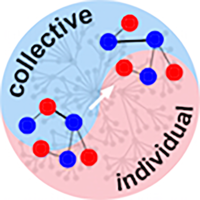
The local interactions of individuals in a network is connected to the global network dynamics using the Prisoner’s Dilemma game theory model.
[Phys. Rev. Lett. 116, 128702] Published Thu Mar 24, 2016
24 Mar 17:31
by Alexey A. Koronovskii, Alexander E. Hramov, Vadim V. Grubov, Olga I. Moskalenko, Evgenia Sitnikova, and Alexey N. Pavlov
Author(s): Alexey A. Koronovskii, Alexander E. Hramov, Vadim V. Grubov, Olga I. Moskalenko, Evgenia Sitnikova, and Alexey N. Pavlov
Intermittent behavior occurs widely in nature. At present, several types of intermittencies are known and well-studied. However, consideration of intermittency has usually been limited to the analysis of cases when only one certain type of intermittency takes place. In this paper, we report on the t…
[Phys. Rev. E 93, 032220] Published Wed Mar 23, 2016
24 Mar 17:31
by Filippo Radicchi and Claudio Castellano
Author(s): Filippo Radicchi and Claudio Castellano
Theoretical attempts proposed so far to describe ordinary percolation processes on real-world networks rely on the locally treelike ansatz. Such an approximation, however, holds only to a limited extent, because real graphs are often characterized by high frequencies of short loops. We present here …
[Phys. Rev. E 93, 030302(R)] Published Wed Mar 23, 2016
24 Mar 00:24
by Jürgen Kurths
23 Mar 00:42
by Ido Tishby, Ofer Biham, Eytan Katzav
We present an analytical and numerical study of the paths of self avoiding
walks (SAWs) on random networks. Since these walks do not retrace their paths,
they effectively delete the nodes they visit, together with their links, thus
pruning the network. The walkers hop between neighboring nodes, until they
reach a dead-end node from which they cannot proceed. Focusing on
Erd\H{o}s-R\'enyi networks we show that the pruned networks maintain a Poisson
degree distribution, $p_t(k)$, with an average degree, $\langle k \rangle_t$,
that decreases linearly in time. We enumerate the SAW paths of any given length
and find that the number of paths, $n_T(\ell)$, increases dramatically as a
function of $\ell$. We also obtain analytical results for the path-length
distribution, $P(\ell)$, of the SAW paths which are actually pursued, starting
from a random initial node. It turns out that $P(\ell)$ follows the Gompertz
distribution, which means that the termination probability of an SAW path
increases with its length.
Donate to arXiv
19 Mar 07:01
by Anatoly Zlotnik
Article
Organizing and manipulating dynamic processes is important to understand and influence many natural phenomena. Here, the authors present a method to design entrainment signals that create stable phase patterns in heterogeneous nonlinear oscillators, and verify it in electrochemical reactions.
Nature Communications doi: 10.1038/ncomms10788
Authors: Anatoly Zlotnik, Raphael Nagao, István Z. Kiss, Jr-Shin Li

16 Mar 18:55
by Justus A. Kromer, Lutz Schimansky-Geier, and Alexander B. Neiman
Author(s): Justus A. Kromer, Lutz Schimansky-Geier, and Alexander B. Neiman
We study the emergence and coherence of stochastic oscillations in star networks of excitable elements in which peripheral nodes receive independent random inputs. A biophysical model of a distal branch of sensory neuron in which peripheral nodes of Ranvier are coupled to a central node by myelinate…
[Phys. Rev. E] Published Fri Mar 11, 2016
16 Mar 01:34
by Mor Nitzan, Eytan Katzav, Reimer Kühn, Ofer Biham
We present analytical results for the distribution of shortest path lengths
between random pairs of nodes in configuration model networks. The results,
which are based on recursion equations, are shown to be in good agreement with
numerical simulations for networks with degenerate, binomial and power-law
degree distributions. The mean, mode and variance of the distribution of
shortest path lengths are also evaluated. These results provide expressions for
central measures and dispersion measures of the distribution of shortest path
lengths in terms of moments of the degree distribution, illuminating the
connection between the two distributions.
Donate to arXiv
15 Mar 22:09
by Tommaso Coletta and Philippe Jacquod
Author(s): Tommaso Coletta and Philippe Jacquod
We investigate the influence that adding a new coupling has on the linear stability of the synchronous state in coupled oscillators networks. Using a simple model we show that, depending on its location, the new coupling can lead to enhanced or reduced stability. We extend these results to electric …
[Phys. Rev. E] Published Mon Mar 14, 2016
15 Mar 22:09
by Marc Wiedermann, Jonathan F. Donges, Jürgen Kurths, and Reik V. Donner
Author(s): Marc Wiedermann, Jonathan F. Donges, Jürgen Kurths, and Reik V. Donner
Networks with nodes embedded in a metric space have gained increasing interest in recent years. The effects of spatial embedding on the networks' structural characteristics, however, are rarely taken into account when studying their macroscopic properties. Here, we propose a hierarchy of null models…
[Phys. Rev. E] Published Mon Mar 14, 2016
14 Mar 21:53
by Iryna Omelchenko, Oleh E. Omel’chenko, Anna Zakharova, Matthias Wolfrum, and Eckehard Schöll
Author(s): Iryna Omelchenko, Oleh E. Omel’chenko, Anna Zakharova, Matthias Wolfrum, and Eckehard Schöll
We propose a control scheme which can stabilize and fix the position of chimera states in small networks. Chimeras consist of coexisting domains of spatially coherent and incoherent dynamics in systems of nonlocally coupled identical oscillators. Chimera states are generally difficult to observe in …
[Phys. Rev. Lett. 116, 114101] Published Mon Mar 14, 2016
14 Mar 21:52
by Silvio C. Ferreira, Renan S. Sander, and Romualdo Pastor-Satorras
Author(s): Silvio C. Ferreira, Renan S. Sander, and Romualdo Pastor-Satorras
We consider a general criterion to discern the nature of the threshold in epidemic models on scale-free (SF) networks. Comparing the epidemic lifespan of the nodes with largest degrees with the infection time between them, we propose a general dual scenario, in which the epidemic transition is eithe…
[Phys. Rev. E 93, 032314] Published Mon Mar 14, 2016
14 Mar 21:52
by Carl P. Dettmann and Orestis Georgiou
Author(s): Carl P. Dettmann and Orestis Georgiou
In the original (1961) Gilbert model of random geometric graphs, nodes are placed according to a Poisson point process, and links formed between those within a fixed range. Motivated by wireless ad hoc networks “soft” or “probabilistic” connection models have recently been introduced, involving a “c…
[Phys. Rev. E 93, 032313] Published Mon Mar 14, 2016
11 Mar 21:04
by Shantanav Chakraborty, Leonardo Novo, Andris Ambainis, and Yasser Omar
Author(s): Shantanav Chakraborty, Leonardo Novo, Andris Ambainis, and Yasser Omar
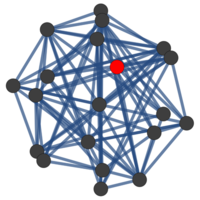
The continuous time quantum walk algorithm for searching a network is optimal for nearly all graphs.
[Phys. Rev. Lett. 116, 100501] Published Fri Mar 11, 2016
10 Mar 18:12
by Yang Wang, Avi Gozolchiani, Yosef Ashkenazy and Shlomo Havlin
The so-called El Niño-southern oscillation (ENSO) is the most important and influential climate
phenomenon of contemporary climate variability, in which oceanic wave dynamics plays an important
role. Here we develop and apply an approach based on network theory to quantify the characteristics
of El-Niño related oceanic waves using the satellite dataset. We associate the majority of dominant
long distance (≥500 km) links of the network with several kinds of oceanic waves, i.e. equatorial
Kelvin, Rossby, and tropical instability waves. Notably, we find that the location of the out-going
( ##IMG## [http://ej.iop.org/images/1367-2630/18/3/033021/njpaa1835ieqn1.gif] {$\sim 180^\circ
{\rm{E}}$} ) and in-coming hubs ( ##IMG##
[http://ej.iop.org/images/1367-2630/18/3/033021/njpaa1835ieqn2.gif] {$\sim 140^\circ {\rm{W}}$} ) of
the climate network coincide with the locations of the wave initiation and dissipation,
respectively. We also find that thi...
08 Mar 22:10
by Leonhard Lücken, Oleksandr V. Popovych, Peter A. Tass, and Serhiy Yanchuk
Author(s): Leonhard Lücken, Oleksandr V. Popovych, Peter A. Tass, and Serhiy Yanchuk
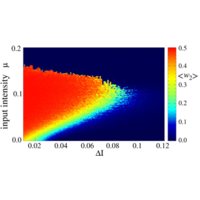
The authors address the plasticity of the coupling between neurons subjected to stochastic excitations. By reducing the problem to a system of two neurons, they show the onset of new states that do not appear in deterministic models. Interestingly, they find that noise could act to stabilize the coupling and enhance synchronization.
[Phys. Rev. E 93, 032210] Published Tue Mar 08, 2016
08 Mar 22:06
by Filippo Radicchi and Claudio Castellano
Author(s): Filippo Radicchi and Claudio Castellano
Theoretical attempts proposed so far to describe ordinary percolation processes on real-world networks rely on the locally tree-like ansatz. Such an approximation, however, holds only to a limited extent, as real graphs are often characterized by high frequencies of short loops. We present here a th…
[Phys. Rev. E] Published Thu Mar 03, 2016
08 Mar 22:06
by H. H. Yoo and D. -S. Lee
Author(s): H. -H. Yoo and D. -S. Lee
Synchronizing individual activities is essential for the stable functioning of diverse complex systems. Understanding the relation between dynamic fluctuations and the connection topology of substrates is therefore important, but it remains restricted to regular lattices. Here we investigate the flu…
[Phys. Rev. E] Published Fri Mar 04, 2016
08 Mar 15:50
by Soumen K. Patra and Anandamohan Ghosh
Author(s): Soumen K. Patra and Anandamohan Ghosh
Characterization of spatiotemporal dynamics of coupled oscillatory systems can be done by computing the Lyapunov exponents. We study the spatiotemporal dynamics of randomly coupled network of Kuramoto oscillators and find that the spectral statistics obtained from the Lyapunov exponent spectrum show…
[Phys. Rev. E 93, 032208] Published Mon Mar 07, 2016
08 Mar 10:35
by Paul Schultz, Peter J. Menck, Jobst Heitzig, Jürgen Kurths
Stability assessment methods for dynamical systems have recently been
complemented by basin stability and derived measures, i.e. probabilistic
statements whether systems remain in a basin of attraction given a distribution
of perturbations. This requires numerical estimation via Monte-Carlo sampling
and integration of differential equations. Here, we analyze the applicability
of basin stability to systems with basin geometries challenging for this
numerical method, having fractal basin boundaries and riddled or intermingled
basins of attraction. We find that numerical basin stability estimation is
still meaningful for fractal boundaries but reaches its limits for riddled
basins with holes.
Donate to arXiv
07 Mar 10:23
by Chengcheng Shao, Giovanni Luca Ciampaglia, Alessandro Flammini, Filippo Menczer
Massive amounts of misinformation have been observed to spread in
uncontrolled fashion across social media. Examples include rumors, hoaxes, fake
news, and conspiracy theories. At the same time, several journalistic
organizations devote significant efforts to high-quality fact checking of
online claims. The resulting information cascades contain instances of both
accurate and inaccurate information, unfold over multiple time scales, and
often reach audiences of considerable size. All these factors pose challenges
for the study of the social dynamics of online news sharing. Here we introduce
Hoaxy, a platform for the collection, detection, and analysis of online
misinformation and its related fact-checking efforts. We discuss the design of
the platform and present a preliminary analysis of a sample of public tweets
containing both fake news and fact checking. We find that, in the aggregate,
the sharing of fact-checking content typically lags that of misinformation by
10--20 hours. Moreover, fake news are dominated by very active users, while
fact checking is a more grass-roots activity. With the increasing risks
connected to massive online misinformation, social news observatories have the
potential to help researchers, journalists, and the general public understand
the dynamics of real and fake news sharing.
Donate to arXiv
05 Mar 11:39
by Kevin P. O'Keeffe
Author(s): Kevin P. O'Keeffe
We consider the transient behavior of globally coupled systems of identical pulse-coupled oscillators. Synchrony develops through an aggregation phenomenon, with clusters of synchronized oscillators forming and growing larger in time. Previous work derived expressions for these time dependent cluste…
[Phys. Rev. E 93, 032203] Published Fri Mar 04, 2016
04 Mar 12:37
by Felix P. Kemeth, Sindre W. Haugland, Lennart Schmidt, Ioannis G. Kevrekidis, Katharina Krischer
We present a universal characterization scheme for chimera states applicable
to both numerical and experimental data sets. The scheme is based on two
correlation measures that enable a meaningful definition of chimera states as
well as their classification into three categories: stationary, turbulent and
breathing. In addition, these categories can be further subdivided according to
the time-stationarity of these two measures. We demonstrate that this approach
both is consistent with previously recognized chimera states and enables us to
classify states as chimeras which have not been categorized as such before.
Furthermore, the scheme allows for a qualitative and quantitative comparison of
experimental chimeras with chimeras obtained through numerical simulations.
04 Mar 11:08
by Per Sebastian Skardal, Alex Arenas
The control of network-coupled nonlinear dynamical systems is an active area
of research in the nonlinear science community. Coupled oscillator networks
represent a particularly important family of nonlinear systems, with
applications ranging from the power grid to cardiac excitation. Here we study
the control of network-coupled limit cycle oscillators, extending previous work
that focused on phase oscillators. Based on stabilizing a target fixed point,
our method aims to attain complete frequency synchronization, i.e., consensus,
by applying control to as few oscillators as possible. We develop two types of
control. The first type directs oscillators towards to larger amplitudes, while
the second does not. We present numerical examples of both control types and
comment on the potential failures of the method.
03 Mar 18:12
by Laurent Hébert-Dufresne, Antoine Allard, Jean-Gabriel Young, and Louis J. Dubé
Author(s): Laurent Hébert-Dufresne, Antoine Allard, Jean-Gabriel Young, and Louis J. Dubé
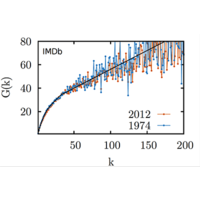
Scale-free distributions of resources arise in very diverse systems, such as in the distribution of wealth or of the population of cities. By coupling the overall population growth with the individual growth in resources, the authors propose a model describing the emergence of such behavior. Through this model, the authors introduce a method to reconstruct the past or forecast the future from a snapshot of data.
[Phys. Rev. E 93, 032304] Published Thu Mar 03, 2016
02 Mar 18:54
Publication date: 5 April 2016
Source:Physics Reports, Volume 624
Author(s): György Szabó, István Borsos
Game theory provides a general mathematical background to study the effect of pair interactions and evolutionary rules on the macroscopic behavior of multi-player games where players with a finite number of strategies may represent a wide scale of biological objects, human individuals, or even their associations. In these systems the interactions are characterized by matrices that can be decomposed into elementary matrices (games) and classified into four types. The concept of decomposition helps the identification of potential games and also the evaluation of the potential that plays a crucial role in the determination of the preferred Nash equilibrium, and defines the Boltzmann distribution towards which these systems evolve for suitable types of dynamical rules. This survey draws parallel between the potential games and the kinetic Ising type models which are investigated for a wide scale of connectivity structures. We discuss briefly the applicability of the tools and concepts of statistical physics and thermodynamics. Additionally the general features of ordering phenomena, phase transitions and slow relaxations are outlined and applied to evolutionary games. The discussion extends to games with three or more strategies. Finally we discuss what happens when the system is weakly driven out of the “equilibrium state” by adding non-potential components representing games of cyclic dominance.
02 Mar 11:10
by David Papo, Massimiliano Zanin, Johann H. Martínez, Javier M. Buldú
The SW has undeniably been one of the most popular network descriptors in the
neuroscience literature. Two main reasons for its lasting popularity are its
apparent ease of computation and the intuitions it is thought to provide on how
networked systems operate. Over the last few years, some pitfalls of the SW
construct and, more generally, of network summary measures, have widely been
acknowledged.
Donate to arXiv
01 Mar 22:53
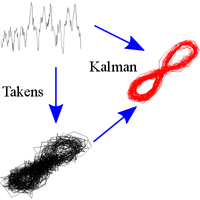
by Franz Hamilton, Tyrus Berry, and Timothy Sauer
Author(s): Franz Hamilton, Tyrus Berry, and Timothy Sauer
Drawing inferences from data is at the heart of many fields of science. A new kind of data analysis, free of assumptions from underlying models, is proposed and its use demonstrated on weather data.
[Phys. Rev. X 6, 011021] Published Tue Mar 01, 2016
29 Feb 11:38
by Bastian Pietras, Nicolás Deschle, Andreas Daffertshofer
Populations of oscillators can display a variety of synchronization patterns
depending on the oscillators' intrinsic coupling and the coupling between them.
We consider two coupled, symmetric (sub)populations with unimodal frequency
distributions and show that the resulting synchronization patterns may resemble
those of a single population with bimodally distributed frequencies. Our proof
of the equivalence of their stability, dynamics, and bifurcations, is based on
an Ott-Antonsen ansatz. The generalization to networks consisting of multiple
(sub)populations vis-\`a-vis networks with multimodal frequency distributions,
however, appears impossible.
Donate to arXiv
26 Feb 02:56
by Rosen, Y., Louzoun, Y.
Vertices in networks often have external classifications. Vertices with similar classifications may have similar connection patterns in the network, even if they reside in remote regions of the network. We thus introduce a novel method for the detection of groups of non-adjacent vertices with similar classifications in networks through the similarity of measures on the network surrounding them. In the algorithm, vertices are characterized by a large set of structural properties of local and global scale, composing a network attributes vector for each vertex. This characterization is used to construct an affinity dual graph, where clustering is applied. When tested in several real-world networks with ground truth classifications, the groups detected by our algorithm had significantly more homogenous groups than those found by common community detection algorithms. The algorithm allows the clustering of non-adjacent vertices in remote network locations, as shown in two networks. When used in a supervised context, precise predictions of vertices content are accomplished.
