06 Dec 17:02
by Sebastian Fürthauer and Sriram Ramaswamy
Author(s): Sebastian Fürthauer and Sriram Ramaswamy
We present a theory for self-driven fluids, such as motorized cytoskeletal extracts or microbial suspensions, that takes into account the underlying periodic duty cycle carried by the constituent active particles. We show that an orientationally ordered active fluid can undergo a transition to a sta...
[Phys. Rev. Lett. 111, 238102] Published Fri Dec 06, 2013
05 Dec 11:51
by Manlio De Domenico, Albert Solé-Ribalta, Emanuele Cozzo, Mikko Kivelä, Yamir Moreno, Mason A. Porter, Sergio Gómez, and Alex Arenas
Author(s): Manlio De Domenico, Albert Solé-Ribalta, Emanuele Cozzo, Mikko Kivelä, Yamir Moreno, Mason A. Porter, Sergio Gómez, and Alex Arenas
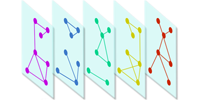
 A “monoplex” network, like a Facebook-based social network, can be represented by a set of nodes (people) linked by their Facebook connections (interactions). But real-world networks can be “multiplex,” with multiple types of interactions and where one type of interaction can influence another. A unifying framework for describing “multiplex” networks has been missing so far. Deftly employing the concept of tensors, theorists now present such a framework that will power studies of “multiplex” networks across many scientific disciplines.
[Phys. Rev. X 3, 041022] Published Wed Dec 04, 2013
04 Dec 18:45
by Tony E. Lee and H. R. Sadeghpour
Author(s): Tony E. Lee and H. R. Sadeghpour
The van der Pol oscillator is the prototypical self-sustained oscillator and has been used to model nonlinear behavior in biological and other classical processes. We investigate how quantum fluctuations affect phase locking of one or many van der Pol oscillators. We find that phase locking is much ...
[Phys. Rev. Lett. 111, 234101] Published Wed Dec 04, 2013
04 Dec 18:12
We study how reliably generalized synchronization can be detected and characterized from time series analysis. To that end, we analyze synchronization in a generalized sense of delay-coupled chaotic oscillators in unidirectional ring configurations. The generalized synchronization condition can be v...
02 Dec 18:10
by Babak Fotouhi and Michael G. Rabbat
Author(s): Babak Fotouhi and Michael G. Rabbat
This paper provides time-dependent expressions for the expected degree distribution of a given network that is subject to growth. We consider both uniform attachment, where incoming nodes form links to existing nodes selected uniformly at random, and preferential attachment, where probabilities are ...
[Phys. Rev. E 88, 062801] Published Mon Dec 02, 2013
02 Dec 18:09
by Cong Li, Huijuan Wang, and Piet Van Mieghem
Author(s): Cong Li, Huijuan Wang, and Piet Van Mieghem
Epidemics have so far been mostly studied in undirected networks. However, many real-world networks, such as the online social network Twitter and the world wide web, on which information, emotion, or malware spreads, are directed networks, composed of both unidirectional links and bidirectional lin...
[Phys. Rev. E 88, 062802] Published Mon Dec 02, 2013
Thomas and -1 others like this
02 Dec 14:18
Publication date: 20 March 2014
Source:Physics Reports, Volume 536, Issue 3
Author(s): Z. Kalogiratou , Th. Monovasilis , G. Psihoyios , T.E. Simos
In this work we review single step methods of the Runge–Kutta type with special properties. Among them are methods specially tuned to integrate problems that exhibit a pronounced oscillatory character and such problems arise often in celestial mechanics and quantum mechanics. Symplectic methods, exponentially and trigonometrically fitted methods, minimum phase-lag and phase-fitted methods are presented. These are Runge–Kutta, Runge–Kutta–Nyström and Partitioned Runge–Kutta methods. The theory of constructing such methods is given as well as several specific methods. In order to present the performance of the methods we have tested 58 methods from all categories. We consider the two dimensional harmonic oscillator, the two body problem, the pendulum problem and the orbital problem studied by Stiefel and Bettis. Also we have tested the methods on the computation of the eigenvalues of the one dimensional time independent Schrödinger equation with the harmonic oscillator, the doubly anharmonic oscillator and the exponential potentials.
28 Nov 15:25
\textcolor{black}{We investigate the synchronization of oscillators based on anharmonic nanoelectromechanical resonators. Our experimental implementation allows unprecedented observation and control of parameters governing the dynamics of synchronization. We find close quantitative agreement between...
28 Nov 10:58
by V. H. P. Louzada, N. A. M. Araújo, J. S. Andrade Jr, H. J. Herrmann
Global synchronization in a complex network of oscillators emerges from the
interplay between its topology and the dynamics of the pairwise interactions
among its numerous components. When oscillators are spatially separated,
however, a time delay appears in the interaction which might obstruct
synchronization. Here we study the synchronization properties of interconnected
networks of oscillators with a time delay between networks and analyze the
dynamics as a function of the couplings and communication lag. We discover a
new breathing synchronization regime, where two groups appear in each network
synchronized at different frequencies. Each group has a counterpart in the
opposite network, one group is in phase and the other in anti-phase with their
counterpart. For strong couplings, instead, networks are internally
synchronized but a phase shift between them might occur. The implications of
our findings on several socio-technical and biological systems are discussed.
Thomas and -1 others like this
28 Nov 10:56
by Filippo Radicchi
Networks in the real world do not exist as isolated entities, but they are
often part of more complicated structures composed of many interconnected
network layers. Recent studies have shown that such mutual dependence makes
real networked systems potentially exposed to atypical structural and dynamical
behaviors, and thus there is a urgent necessity to better understand the
mechanisms at the basis of these anomalies. Previous research has mainly
focused on the emergence of atypical properties in relation with the moments of
the intra- and inter-layer degree distributions. In this paper, we show that an
additional ingredient plays a fundamental role for the possible scenario that
an interconnected network can face: the correlation between intra- and
inter-layer degrees. For sufficiently high amounts of correlation, an
interconnected network can be tuned, by varying the moments of the intra- and
inter-layer degree distributions, in distinct topological and dynamical
regimes. When instead the correlation between intra- and inter-layer degrees is
lower than a critical value, the system enters in a supercricritical regime
where dynamical and topological phases are not longer distinguishable.
27 Nov 13:07
by Bosch, O. G., Rihm, J. S., Scheidegger, M., Landolt, H.–P., Stampfli, P., Brakowski, J., Esposito, F., Rasch, B., Seifritz, E.
In many patients with major depressive disorder, sleep deprivation, or wake therapy, induces an immediate but often transient antidepressant response. It is known from brain imaging studies that changes in anterior cingulate and dorsolateral prefrontal cortex activity correlate with a relief of depression symptoms. Recently, resting-state functional magnetic resonance imaging...
26 Nov 17:35
by P. A. Robinson
Author(s): P. A. Robinson
 The efficacy of the common practice of tracking brain dynamics using a few key regions of interest is explained via the fact that these regions are sensitive to underlying extended modes of activity, not just local dynamics. This underlines the inseparable interplay between modes and regions and ref...
[Phys. Rev. E 88, 054702] Published Tue Nov 26, 2013
26 Nov 16:45
by Enrique Mallada and Ao Tang
There are three key factors in a system of coupled oscillators that characterize the interaction
between them: coupling (how to affect) , delay (when to affect) and topology (whom to affect) . The
existing work on each of these factors has mainly focused on special cases. With new angles and
tools, this paper makes progress in relaxing some assumptions on these factors. There are three main
results in this paper. Firstly, by using results from algebraic graph theory, a sufficient condition
is obtained that can be used to check equilibrium stability. This condition works for arbitrary
topology, generalizing existing results and also leading to a sufficient condition on the coupling
function which guarantees that the system will reach synchronization. Secondly, it is known that
identical oscillators with sin () coupling functions are guaranteed to synchronize in phase on a
complete graph. Our results prove that in many cases certain structures such as symmetry an...
25 Nov 17:27
by Davide Cellai, Eduardo López, Jie Zhou, James P. Gleeson, and Ginestra Bianconi
Author(s): Davide Cellai, Eduardo López, Jie Zhou, James P. Gleeson, and Ginestra Bianconi
From transportation networks to complex infrastructures, and to social and communication networks, a large variety of systems can be described in terms of multiplexes formed by a set of nodes interacting through different networks (layers). Multiplexes may display an increased fragility with respect...
[Phys. Rev. E 88, 052811] Published Mon Nov 25, 2013
Thomas and -1 others like this
24 Nov 12:31
Publication date: 10 March 2014
Source:Physics Reports, Volume 536, Issue 2
Author(s): Dimitrije Marković , Claudius Gros
Power laws and distributions with heavy tails are common features of many complex systems. Examples are the distribution of earthquake magnitudes, solar flare intensities and the sizes of neuronal avalanches. Previously, researchers surmised that a single general concept may act as an underlying generative mechanism, with the theory of self organized criticality being a weighty contender. The power-law scaling observed in the primary statistical analysis is an important, but by far not the only feature characterizing experimental data. The scaling function, the distribution of energy fluctuations, the distribution of inter-event waiting times, and other higher order spatial and temporal correlations, have seen increased consideration over the last years. Leading to realization that basic models, like the original sandpile model, are often insufficient to adequately describe the complexity of real-world systems with power-law distribution. Consequently, a substantial amount of effort has gone into developing new and extended models and, hitherto, three classes of models have emerged. The first line of models is based on a separation between the time scales of an external drive and an internal dissipation, and includes the original sandpile model and its extensions, like the dissipative earthquake model. Within this approach the steady state is close to criticality in terms of an absorbing phase transition. The second line of models is based on external drives and internal dynamics competing on similar time scales and includes the coherent noise model, which has a non-critical steady state characterized by heavy-tailed distributions. The third line of models proposes a non-critical self-organizing state, being guided by an optimization principle, such as the concept of highly optimized tolerance. We present a comparative overview regarding distinct modeling approaches together with a discussion of their potential relevance as underlying generative models for real-world phenomena. The complexity of physical and biological scaling phenomena has been found to transcend the explanatory power of individual paradigmal concepts. The interaction between theoretical development and experimental observations has been very fruitful, leading to a series of novel concepts and insights.
Thomas and -1 others like this
22 Nov 16:40
by Wataru Kurebayashi, Sho Shirasaka, and Hiroya Nakao
Author(s): Wataru Kurebayashi, Sho Shirasaka, and Hiroya Nakao
The phase reduction method for limit cycle oscillators subjected to weak perturbations has significantly contributed to theoretical investigations of rhythmic phenomena. We here propose a generalized phase reduction method that is also applicable to strongly perturbed limit cycle oscillators. The fu...
[Phys. Rev. Lett. 111, 214101] Published Fri Nov 22, 2013
Thomas and -1 others like this
22 Nov 15:42
For random matrices with tree-like structure there exists a recursive relation for the local Green functions whose solution permits to find directly many important quantities in the limit of infinite matrix dimensions. The purpose of this note is to investigate and compare expressions for the spectr...
Thomas and -1 others like this
21 Nov 18:23
by V. H. P. Louzada
Global synchronization in a complex network of oscillators emerges from the interplay between its topology and the dynamics of the pairwise interactions among its numerous components. When oscillators are spatially separated, however, a time delay appears in the interaction which might obstruct synchronization. Here we study the synchronization properties of interconnected networks of oscillators with a time delay between networks and analyze the dynamics as a function of the couplings and communication lag. We discover a new breathing synchronization regime, where two groups appear in each network synchronized at different frequencies. Each group has a counterpart in the opposite network, one group is in phase and the other in anti-phase with their counterpart. For strong couplings, instead, networks are internally synchronized but a phase shift between them might occur. The implications of our findings on several socio-technical and biological systems are discussed.
Scientific Reports 3 doi: 10.1038/srep03289

Thomas and -1 others like this
21 Nov 18:03
Statistical properties of binary complex networks are well understood and recently many attempts have been made to extend this knowledge to weighted ones. There are, however, subtle yet important considerations to be made regarding the nature of the weights used in this generalization. Weights can b...
Thomas and -1 others like this
21 Nov 18:03
\noindent Spectra of ordered eigenvalues of finite Random Matrices are interpreted as a time series. Data-adaptive techniques from signal analysis are applied to decompose the spectrum in clearly differentiated trend and fluctuation modes, avoiding possible artifacts introduced by standard unfolding...
Thomas and -1 others like this
16 Nov 19:04
Epidemics have so far been mostly studied in undirected networks. However, many real-world networks, such as the online social network Twitter and the world-wide web, on which information, emotion or malware spreads, are directed networks, composed of both unidirectional links and bidirectional link...
15 Nov 18:42
by Maxim Komarov and Arkady Pikovsky
Author(s): Maxim Komarov and Arkady Pikovsky
We study the Kuramoto model of globally coupled oscillators with a biharmonic coupling function. We develop an analytic self-consistency approach to find stationary synchronous states in the thermodynamic limit and demonstrate that there is a huge multiplicity of such states, which differ microscopi...
[Phys. Rev. Lett. 111, 204101] Published Fri Nov 15, 2013
Thomas and -1 others like this
15 Nov 17:03
by L. D. Valdez, P. A. Macri, H. E. Stanley, and L. A. Braunstein
Author(s): L. D. Valdez, P. A. Macri, H. E. Stanley, and L. A. Braunstein
 Many real-world networks depend on other networks, often in nontrivial ways, to maintain their functionality. These interdependent “networks of networks” are often extremely fragile. When a fraction 1−p of nodes in one network randomly fails, the damage propagates to nodes in networks that are inter...
[Phys. Rev. E 88, 050803] Published Fri Nov 15, 2013
14 Nov 18:03
by R. Gutiérrez, R. Sevilla-Escoboza, P. Piedrahita, C. Finke, U. Feudel, J. M. Buldú, G. Huerta-Cuellar, R. Jaimes-Reátegui, Y. Moreno, and S. Boccaletti
Author(s): R. Gutiérrez, R. Sevilla-Escoboza, P. Piedrahita, C. Finke, U. Feudel, J. M. Buldú, G. Huerta-Cuellar, R. Jaimes-Reátegui, Y. Moreno, and S. Boccaletti
We demonstrate the existence of generalized synchronization in systems that act as mediators between two dynamical units that, in turn, show complete synchronization with each other. These are the so-called relay systems. Specifically, we analyze the Lyapunov spectrum of the full system to elucidate...
[Phys. Rev. E 88, 052908] Published Thu Nov 14, 2013
14 Nov 16:20
Van der Pol oscillators are prototypical self-sustaining oscillators which have been used to model nonlinear processes in biological and other classical processes. In this work, we investigate how quantum fluctuations affect phase locking of one or many van der Pol oscillators. We find that phase lo...
13 Nov 18:48
Percolation theory is an approach to study the vulnerability of a system. We develop an analytical framework and analyze the percolation properties of a network composed of interdependent networks (NetONet). Typically, percolation of a single network shows that the damage in the network due to a fai...
Thomas and -1 others like this
13 Nov 10:20
by Manlio De Domenico, Albert Solé-Ribalta, Elisa Omodei, Sergio Gómez, Alex Arenas
Real-world complex systems exhibit multiple levels of relationships. In many
cases, they require to be modeled by interconnected multilayer networks,
characterizing interactions on several levels simultaneously. It is of crucial
importance in many fields, from economics to biology, from urban planning to
social sciences, to identify the most (or the less) influent nodes in a
network. However, defining the centrality of actors in an interconnected
structure is not trivial.
In this paper, we capitalize on the tensorial formalism, recently proposed to
characterize and investigate this kind of complex topologies, to show how
several centrality measures -- well-known in the case of standard ("monoplex")
networks -- can be extended naturally to the realm of interconnected
multiplexes. We consider diagnostics widely used in different fields, e.g.,
computer science, biology, communication and social sciences, to cite only some
of them. We show, both theoretically and numerically, that using the weighted
monoplex obtained by aggregating the multilayer network leads, in general, to
relevant differences in ranking the nodes by their importance.
Thomas and -1 others like this
12 Nov 22:17
by Yu Atsumi, Shigefumi Hata, and Hiroya Nakao
Author(s): Yu Atsumi, Shigefumi Hata, and Hiroya Nakao
We study a system consisting of diffusively coupled noisy bistable elements on a scale-free random network. This system exhibits an order-disorder phase transition as the noise intensity is varied. The phase ordering process takes place consecutively and in order of the degrees, reflecting strong de...
[Phys. Rev. E 88, 052806] Published Mon Nov 11, 2013
12 Nov 22:16
by Hiroaki Daido, Akira Kasama, and Kazuho Nishio
Author(s): Hiroaki Daido, Akira Kasama, and Kazuho Nishio
The onset of dynamic activity is studied in heterogeneous populations of globally coupled units such that each unit is either excitable or oscillatory depending on its parameter. By varying the mean of the parameter distribution as well as coupling strength, we show that all or part of the populatio...
[Phys. Rev. E 88, 052907] Published Mon Nov 11, 2013
12 Nov 20:40
Experiments are presented to describe the effect of capacitive coupling of two electrochemical oscillators during Ni dissolution in sulfuric acid solution. Equivalent circuit analysis shows that the coupling between the oscillators occurs through the difference between the differential of the electr...