29 Jan 07:41
by En-Chih Liu, Sabrina M. Reich, Mayank Tanwar, Matthew Neurock, Long Luo, and Melanie S. Sanford

The Journal of Organic Chemistry
DOI: 10.1021/acs.joc.4c02540
22 Jan 09:53
Green Chem., 2025, 27,2019-2034
DOI: 10.1039/D4GC05498A, Paper
Chenjun He, Fengqi Luo, Yongzhi Zhu, Ao Zhan, Jiajun Fan, James H. Clark, Jie Lv, Qiang Yu
A schematic diagram of the “lignin-first” dissolution and conversion from lignocellulosic biomass.
The content of this RSS Feed (c) The Royal Society of Chemistry
21 Jan 08:27
by Sayan Ray, Deepak Behera, Mahesh Singh Harariya, Subrata Das, Pradip K. Tarafdar, and Santanu Mukherjee

Journal of the American Chemical Society
DOI: 10.1021/jacs.4c13713
21 Jan 08:24
by David M. Köpfler, Gabriele Laudadio, Clara Bovino, Michael Bersier, Ryan Littich, Dominique M. Roberge, Simon Wagschal, C. Oliver Kappe, and David Cantillo

Organic Letters
DOI: 10.1021/acs.orglett.5c00055
20 Jan 07:39
by Thomas L. Clanton
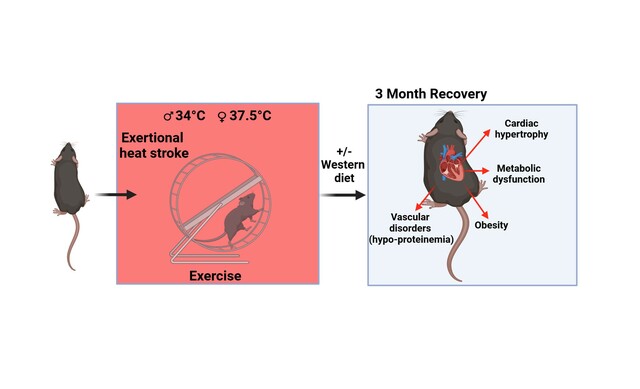
As global temperatures rise, heat-related chronic health disorders are expected to increase. We asked if severe exertional heat stress induces long-term health effects in a mouse model. We found that after a 3 month recovery, mice developed obesity, cardiac hypertrophy and metabolic dysfunction.
20 Jan 07:35
Green Chem., 2025, 27,1771-1776
DOI: 10.1039/D4GC06362G, Paper

Open Access
Koji Kubota, Tetsu Makino, Keisuke Kondo, Tamae Seo, Mingoo Jin, Hajime Ito
A simple mechanochemical protocol for solid-state aromatic nucleophilic fluorination using potassium fluoride (KF) and quaternary ammonium salts was developed.
The content of this RSS Feed (c) The Royal Society of Chemistry
17 Jan 07:53
by Xiao, Xiao
The escalating plastic waste crisis stems from limitations in conventional recycling methods, which are energy-intensive and produce lower-quality materials, leaving a substantial portion unrecycled. Here, we report a versatile organo-photocatalytic upcycling method employing an easily accessible phenothiazine derivative, PTH-3CN, to selectively depolymerize an unprecedented array of commodity polymers—including polyethylene terephthalate (PET), polyethylene (PE), polypropylene (PP), polystyrene (PS), polyvinyl chloride (PVC), polyurethanes (PU), polycarbonates (PC), and other vinyl polymers—into valuable small molecules with minimal catalyst loading (as low as 102 ppm). Operating under mild conditions with visible light and ambient air, this protocol requires no additional acids or metals and adapts effectively to mixed and post-consumer plastic waste. Mechanistic analysis reveals that PTH-3CN serves as a precatalyst, decomposing into active triarylamine species that drive efficient depolymerization likely through a consecutive photoinduced electron transfer mechanism. This approach offers a promising, scalable route for sustainable plastic upcycling with broad applicability.
16 Jan 10:06
by Honggen Wang,
Yin Li,
Xiao-Bin Liu,
Vadym Sham,
Ivan Logvinenko,
Jiang-Hao Xue,
Jun-Yunzi Wu,
Jia-Luo Fu,
Shuang Lin,
Yuan Liu,
Qingjiang Li,
Pavel K. Mykhailiuk

Incorporating fluorine into aliphatic rings induces significant changes in molecular conformation, acidity/basicity, and lipophilicity. A general method has been developed to transform exocyclic alkenes into saturated F2-rings. This reaction utilizes the reagent C6F5I(OAc)2, enabling the straightforward synthesis of gem-difluorinated macrocyclic, fused, spiro, bridged, and natural product-derived structures. The practicality of this protocol is demonstrated through several decagram-scale syntheses.
Abstract
A general method to convert simple exocyclic alkenes into saturated F2-rings has been developed. The reaction involves reagent C6F5I(OAc)2. The reaction efficiently works on the mg-, g-, and even multigram scale.
15 Jan 07:38
by Zhang Feng,
Ziyi Lin,
Hong Huang,
Ruichen Zhang,
Pengjie Xian,
Bohao Guo,
Chang Qiao

Abstract
Herein, we present the example of iron-catalyzed reductive amination of nitroarenes under the iron/borane system, providing diverse N-heterocycles in moderate to good yields. This transformation has high efficiency, broad substrate scope, and good functional group compatibility. Preliminary mechanistic studies indicate that hydroxylamines derived from nitrosoarenes may serve as crucial intermediates rather than anilines, and free organic radicals may not participate in the catalytic cycle.
13 Jan 12:38
by Xavier, Marset
Lignin valorization has become an urgent priority due to its status as the most abundant natural biopolymer containing aromatic structures, yet industrially unexploited. In this study, we present a photocatalytic method using a simple anthraquinone catalyst to break down lignin's recalcitrant structure into valuable monomers. Notably, this process is described under flow conditions for the first time. The monomer yields achieved are the highest reported in literature, although lignin is not fully depolymerized. However, the remaining oligomers can be effectively repurposed as polylactic acid (PLA) plasticizers, significantly enhancing PLA's mechanical properties and imparting shape-memory behavior. Thus, by processing lignin through a photochemical flow reactor, it is fully converted either into industrially relevant monomers, such as vanillin and syringaldehyde, or fragmented sufficiently for use as PLA plasticizers. This approach ensures that no wasteful by-products are generated, offering a sustainable pathway for lignin valorization.
10 Jan 09:30
by Ganfei Zeng, Yanming Su, Jianwei Jiang, and Zhiliang Huang

Journal of the American Chemical Society
DOI: 10.1021/jacs.4c15500
08 Jan 07:19
by Georgios Giannakakis, Marc Eduard Usteri, Aram Bugaev, Andrea Ruiz-Ferrando, Dario Faust Akl, Núria López, Serena Fantasia, Kurt Püntener, Javier Pérez-Ramírez, and Sharon Mitchell

ACS Catalysis
DOI: 10.1021/acscatal.4c05134
06 Jan 15:07
by Michele Melchionna and Paolo Fornasiero

Journal of the American Chemical Society
DOI: 10.1021/jacs.4c15803
06 Jan 08:33
Chem. Commun., 2025, 61,2524-2527
DOI: 10.1039/D4CC06267A, Communication
Open Access
Pankaj Bhattarai, Suvajit Koley, Krttika Goel, Ryan A. Altman
This deoxyfluoroalkylation/aromatization strategy exploits cyclohexanones as precursors to access valuable fluoroalkylarenes.
The content of this RSS Feed (c) The Royal Society of Chemistry
06 Jan 07:22
Green Chem., 2024, Accepted Manuscript
DOI: 10.1039/D4GC06362G, Paper
Open Access
Koji Kubota, Tetsu Makino, Keisuke Kondo, Tamae Seo, Mingoo Jin, Hajime Ito
A simple mechanochemical protocol for solid-state aromatic nucleophilic fluorinations using potassium fluoride (KF) and quaternary ammonium salts was developed. This solid-state fluorination is fast and a variety of N-heteroaryl halides...
The content of this RSS Feed (c) The Royal Society of Chemistry
03 Jan 07:18
by Martin Stang, Erin M. Hanada, and Suzanne A. Blum

The Journal of Organic Chemistry
DOI: 10.1021/acs.joc.4c02726
02 Jan 07:59
by Mathias Christmann

Organic Letters
DOI: 10.1021/acs.orglett.4c03458
02 Jan 07:48
by Jian Zhao, Jiaxin Li, Xiaolong Su, Dianfeng Luo, Yaling Zhai, Zhe Xu, Jiamei Liu, Rufan Zhuang, Chao Jia, and Meifang Zhu

ACS Sustainable Chemistry & Engineering
DOI: 10.1021/acssuschemeng.4c07749
02 Jan 07:40
Green Chem., 2024, Accepted Manuscript
DOI: 10.1039/D4GC05928J, Communication
Xiaosha Wang, Qiaohui Zhang, Yu Guo, Shihui Zeng, Qingqing Xuan, Qiuling Song
H2O, the most environmental benign solvent which is largely existing in nature, usually provide hydrogen as proton source. However, we found H2O could serve as hydride provider in the presence...
The content of this RSS Feed (c) The Royal Society of Chemistry
19 Dec 14:26
by Cyrille Kiaku, Simon Kaltenberger, Daniel Raydan, Valerio Morlacci, Bini Claringbold, Charles A. I. Goodall, Laura Palombi, Darren L. Poole, and Kevin Lam

Organic Letters
DOI: 10.1021/acs.orglett.4c04093
19 Dec 07:58
by Zheng Zhu, Wing Chun Chan, Bin Gao, Guanwen Hu, Peiqi Zhang, Yiyi Fu, Kit San Ly, Zhenyang Lin, and Yangjian Quan

Journal of the American Chemical Society
DOI: 10.1021/jacs.4c13726
17 Dec 09:06
by Tejasvi Laxminarayan, Søren Kiil, and Narayanan Rajagopalan

ACS Sustainable Chemistry & Engineering
DOI: 10.1021/acssuschemeng.4c07882
17 Dec 07:44
by Ilya D. Deltsov, Dmitry B. Vinogradov, Konstantin A. Monogarov, and Leonid L. Fershtat

The Journal of Organic Chemistry
DOI: 10.1021/acs.joc.4c02678
16 Dec 08:05
by Josef T. Boronski, Agamemnon E. Crumpton, and Simon Aldridge

Journal of the American Chemical Society
DOI: 10.1021/jacs.4c12125
16 Dec 07:54
by Tomislav, Friscic
We outline the systematic development of Resonant Acoustic Mixing (RAM) for rapid, scalable Buchwald-Hartwig amination in the absence of bulk solvent. While RAM is rapidly emerging as a scalable methodology for media-free mechanochemical synthesis, the design parameters for reaction control, optimization, and scale-up remain poorly understood. This study establishes the filling ratio (φ), acceleration, and amount of liquid additive (η) as three critical parameters that can be used to design scalable Buchwald-Hartwig coupling reactions under RAM conditions. Systematic investigation of several model reactions reveals a relationship between reaction conversion and φ, providing a simple means to maximize conversion. The simultaneous real-time in situ monitoring of a model reaction through infrared thermography, fingerprint Raman, as well as low-frequency Raman (THz-Raman) spectroscopy enabled correlation of the reaction progress with the evolution of temperature during RAM, and established the RAM acceleration as a parameter that can be used to tune the reaction kinetic behavior. At high accelerations the reactions can proceed under sigmoidal kinetics, enabling multi-gram syntheses within 5 minutes, while lower accelerations can be used to switch the reactions to a more linear kinetic profile, associated with longer reaction times and milder temperature profiles. Following the reaction progress in the THz-Raman region is a reaction monitoring strategy that enables the detection of crystalline and non-crystalline phases in the reaction, permitting the observation of a non-crystalline intermediate whose evolution and replacement with the crystalline product could be tracked through non-negative least-squares fitting algorithm of the real-time spectroscopic data. This study establishes key parameters for manipulating the course and stoichiometric selectivity of a metal-catalyzed reaction in RAM and illustrates the scalability to at least 100 mmol without any protocol changes, except the volume of the vessel.
13 Dec 14:35
by Heather O. LeClerc, Hanno C. Erythropel, Andreas Backhaus, Darren S. Lee, Dylan R. Judd, Maria M. Paulsen, Momoko Ishii, Avery Long, Lars Ratjen, Gabriel Gonsalves Bertho, Cosima Deetman, Yan Du, Mary Kate M. Lane, Predrag V. Petrovic, Andrew T. Champlin, Alexis Bordet, Nicolas Kaeffer, Gregor Kemper, Julie B. Zimmerman, Walter Leitner, and Paul T. Anastas

ACS Sustainable Chemistry & Engineering
DOI: 10.1021/acssuschemeng.4c07582
13 Dec 08:36
by Michel C. Milinkovitch

Our experiments and computer simulations indicate that crocodile head scales self-organise through a purely mechanical process of compressive folding. The diversity of head-scale patterns among crocodilian species evolved through variation of embryonic skin growth and mechanical properties.
11 Dec 08:00
by Cefei Zhang,
Sitong Li,
Lijun Deng,
Jinmeng Yan,
Zhishan Su,
Zhipeng Yu,
Changwei Hu

The photophysical properties of DTMAs, a stepwise photo-defluorination mechanism and a photo-induced intramolecular single electron activation model for ArC(sp3)−F bond in photo-DAFEx reaction were revealed by TD(DFT) study. Guided by the theoretical studies, new molecules with long excitation wavelength and good activity in photo-DAFEx reaction were designed and synthesized experimentally.
Abstract
Trifluoromethylarenes (ArCF3) are crucial bioisosteres in medicinal chemistry, but catalyst-free and controlled photo-activation of the ArC(sp3)−F bond remains a significant challenge. The photo-induced defluorination acyl fluoride exchange (photo-DAFEx) of m-trifluoromethylaniline, induced by ultraviolet light, emerges as a promising novel photo-click reaction for photoaffinity drug discovery. However, the photophysical properties of NMe2PhF2C(sp3)−F derivatives and factors affecting ArC(sp3)−F bond activation in photo-DAFEx are not yet fully understood, hindering the development of new photo-defluorination reagents with longer absorption wavelength for the photo-DAFEx. Herein, the photophysical properties, the related mechanism and their affecting factors of a series of ArCF3 compounds are systematically studied using (TD)DFT methods. The skeleton of aromatic core is found to be intimately related to the absorption wavelength needed for ArC(sp3)−F bond activation. A photo-induced intramolecular single-electron activation model was proposed to rationalize the photo-activation of the ArC(sp3)−F bond. The transfer of excited electron to C(sp3)−F antibonding orbital determined the activation. Based on the above knowledge, three novel ArCF3 reagents with extended excitation wavelength were designed and predicted, and the absorption spectra and photo-defluorination reactivity of two of them with visible absorption wavelength were validated experimentally, which provided a theoretical guidance for designing next-generation photo-DAFEx.
   This article is licensed under a Creative Commons Attribution-NonCommercial 3.0 Unported Licence.


