
Electrikmonkrjs
Shared posts
28 Jun 20:15
EU ISPs will slow parts of the Internet to a crawl if we don't stop bad net neutrality rules
by Tiffiny Chen, Fight for the Future
28 Jun 05:06


Open Thread: Racism, Folks.
by Frances Langum
Open Thread Below...
Glennamaes likes this
26 Jun 17:06
Donald Trump's annotated Walk of Fame star: MUTE
by Cory Doctorow

Photographer unknown, spotted on Sunset Boulevard.
24 Jun 18:15

Congress Could Save Puerto Rico From Collapse. They Have One Week
by AJ Vicens
The governor of Puerto Rico said Thursday that even if he completely shut down the island's government, there would not be enough money to cover the roughly $2 billion in debt payments due July 1.
"Defaulting is not an option," Gov. Alejandro Garcia Padilla said during a panel discussion on the Puerto Rican debt crisis that took place at the Center for American Progress on Thursday. "It's just a reality. We do not have the money. I cannot opt out or refuse to pay. It's an issue that the money is not there."
Garcia Padilla is in Washington, D.C. this week to urge lawmakers to pass the PROMESA bill (the Puerto Rico Oversight, Management and Economic Stability Act). On June 9, the House of Representatives passed the measure, which allows for the restructuring of Puerto Rico's roughly $70 billion in debts by a controversial financial review board, nominated by Congressional leadership and appointed by the President.
The bill, currently awaiting Senate approval, would allow the Puerto Rican government to restructure the debt with 18 different creditors, and put on hold 14 different debt-related lawsuits. This would ensure that the island's government could keep providing essential services to the island's 3.5 million residents. Puerto Rico owes more than $800 million in general-obligation bonds, according to Bloomberg, part of a $2 billion principal and interest payment due on July 1. A default on the general-obligation debt would be the first by a state-level borrower since Arkansas defaulted in 1933, Bloomberg observes.
The panel discussion took place shortly after House Democrats staged a 26-hour sit-in on the House floor to protest House Republicans' refusal to vote on a bill to prevent those on the no-fly list from buying guns. During the sit-in, Republicans announced they had a deal on a $1.1 billion emergency financing plan to combat the Zika virus, a major problem in debt-riddled Puerto Rico as the virus sweeps across the island. It's unclear what part of the $1.1 billion would be directed to Puerto Rico.
Garcia Padilla said that unless the PROMESA bill passes the Senate and is signed by the President, essential services will be cut, including what little the government could do to fight the spread of Zika. He said that the island faces no fuel "for patrol cars and fire truck," or funds for special education or the operations of the medical center. Simon Johnson, a professor of entrepreneurship at MIT and former chief economist at the International Monetary Fund agreed. "If it's not done by July 1, I think the nightmare scenario is already upon us," he said.
Rep. Pedro Pierluisi, the island's non-voting representative to Congress sat next to the governor Thursday and observed, "The government of Puerto Rico is about to collapse."
Many Puerto Ricans view the proposed financial review board with suspicion, concerned that it would close schools, lay off government employees, and affect pensions. Hundreds have protested in the streets of San Juan in recent weeks opposing the plan. But Pierluisi said that most opposition to the financial review board is based on "misinformation" and "semantics" and that the board would have to allow the governor to continue to provide essential services and meet pension obligations.
The current bill does insure that any plan approved by the board allows for essential services and pension obligations, but also gives the board power to prohibit public employees' participation "in a strike or a lockout." In addition, the measure requires that the island's cash-strapped government pay the initial $2 million to fund the board, which would not be subject to any oversight by the island's governor or legislature. The board would dissolve if the island has acceptable budgets for four consecutive years and those budget targets are met.
"I do not like the board," Padilla said. "I do not like that it doesn't add a mechanism to make our economy grow. But what's the alternative right now? Without the bill, fixing the Puerto Rican economy will be like building the Eiffel Tower with a screw driver."
One lawsuit, filed Tuesday in New York on behalf of several bondholders, puts the July 1 deadline in stark context. The bondholders—suing over a Puerto Rican law passed in early April that created a debt moratorium—are asking a court to order the island’s government to pay them before providing essential services for citizens.
"It has long been settled law that Constitutional Debt is constitutionally required to be paid first in times of scarcity, ahead of even what the government deems ‘essential services,'" the lawsuit states.
"If anyone had any doubt about what would happen on July 1st, [the lawsuit] that was filed by hedge funds in New York on Tuesday puts those doubts aside," said Antonio Weiss, counselor to Treasury Secretary Jack Lew during Thursday’s panel.
24 Jun 17:03

Rep. Debbie Dingell At The Sit-in: 'I Know What It's Like To Have A Gun Pointed At You'
by Frances Langum
During the Democratic sit-in last night, one Congresswoman made it personal. Rep. Debbie Dingell had a childhood marked by domestic abuse and threatened gun violence. This is not the first time she has made a stand that those convicted of domestic violence should be denied access to guns. Detroit News:
U.S. Rep. Debbie Dingell, D-Dearborn, invoked a personal experience in her childhood with gun violence during a sit-in on House floor by Democrats in the chamber that began on Wednesday and continued into Thursday morning in a bid to force a vote on a gun control measure.
“I lived in a house with a man that should not have had access to a gun,” Dingell said in a floor speech that began after midnight Wednesday. “I know what it is like to see a gun pointed at you and wonder if you were going to live. And I know what it is like to hide in the closet and pray to God ‘Do not let anything happen to me.’ ”
“We don’t talk about it,” she continued. “We don’t want to say that it happens in all kinds of households and we still live in a society where we will let a convicted felon who was stalking somebody of domestic abuse still own a gun.”
The National Coalition against Domestic Violence reports that
24 Jun 16:55


Brexit is what happens when millennials don’t vote
by John Aravosis
As you probably know, the United Kingdom voted last night to leave the European Union.
When you look at the numbers, it’s quite fascinating. The youngest voters wanted to stay in wide margins, and the oldest voters wanted to leave.
And that’s the exact opposite of who turned out to vote. Older voters turned out, younger voters did not. So it didn’t matter if the overwhelming majority of millennials preferred to remain in the EU, they simply didn’t vote to express that opinion.
Check out these two tables. First, support for Brexit:
Now, check out who actually turned out to vote — those who wanted to leave, and older voters:


The Financial Times has more. FT claims the relationship between age and turnout is “far from clear cut.” Then they post a chart that makes it as clear cut as it can get. Look at that chart. You’ve got two groups — 20 to 38 or so, with lower turnout; and 40 to to 50 with much higher turnout.

Then there’s this chart, that shows turnout by age group in each of the last five elections in the UK:

What we see is that old people turned out far more than younger people.
Some young Britons are now complaining that old people are to blame — hardly:

Brexit is what happens when young people — or anyone, for that matter — fail to turn out to vote. You think your side has a guaranteed win, so you don’t vote, and then you lose.
Everyone should keep that in mind, lest they plan on not voting this fall, or just as bad, voting for Jill Stein or Gary Johnson. You might think your vote doesn’t matter — and that is what’s going on if you’re voting for a third party, in your heart of hearts you “know” that your vote won’t really get Trump elected. Well, you might want to talk to some British millennials right about now.

In other words, Brexit is Britain’s Ralph Nader. Good luck with that.
Follow me on Twitter: @aravosis — Win a pony! (not really)
23 Jun 18:49

How I Got Arrested While Reporting on a Private Prison
by James West
Read Mother Jones reporter Shane Bauer's firsthand account of his four months spent working as a guard at a corporate-run prison in Louisiana.
One of the best parts of my job at Mother Jones is teaming up with colleagues to shoot and produce video for our investigations. In March 2015, I traveled to Louisiana to work with Shane Bauer, a reporter who was in his fourth month as a guard at Winn Correctional Center, a medium-security private prison operated by the Corrections Corporation of America (CCA).
It was Friday the 13th, around 7:45 p.m. The night was warm and overcast when I set out to collect "B-roll" of the prison, a 20-minute drive from Winnfield, the nearest town. Between the prison and the Kisatchie National Forest was a wide, unfenced field. I didn't know it at the time, but it was prison property. I walked into this open field with a telephoto lens, intending to get a shot of Winn from about 1,000 feet away.

Then I stepped deep in mud. I used my iPhone flashlight to check out the muck. About two minutes later I saw searchlights coming from the direction of the prison. I walked back to my rental car parked on the side of the road. A powerful light swept the trees, emanating from a prison patrol vehicle that pulled up about 150 feet behind me. I called out "Hello? Hello?" and waited for an answer. When no one addressed me, I got into my car and drove away.
I wound my SUV back through the dark forest—and straight into several police cars and prison vehicles blocking the road outside Winn. I stepped out of the car and was surrounded by three sheriff's deputies and five or six men dressed in black from head to toe. I saw their faces as they passed in and out of the light from their headlights and flashers. Shane had told me about them: They were members of the prison's Special Operations Response Team (SORT), the tactical squad called in to restore order when things got out of hand.
I handed over my Australian driver's license. In my panic, I told the cops I'd stopped to go to the bathroom beside the road. I quickly realized things were getting serious, and I told them I was a photographer working in the area.
Police body camera footage that I later obtained captured part of my arrest (and gloriously, for a videographer, from two angles). "What kind of pictures you got there?" asked the main arresting officer, Winn Parish deputy Kelly Fannin, a paunchy man with a white mustache.
"They're my pictures," I replied. I knew they probably couldn't look at the images on my cameras or memory cards without a search warrant. I don't remember acting this defiant at the time, but there it is, on video. Still, I wore a worried grin on my face and I sounded scared.
"Now, wait a minute. Let me explain something: What you took here don't belong to you," Fannin said, stabbing the air with his finger. "When you come here in this country, when you get around a prison, you don't fuck around, okay?"
With my camera gear now strewn on the road by the SORT officers, my profession seemed obvious. But the cops and guards were amped up like I was a big catch. I heard them talking repeatedly about the threat of ISIS and the possibility that I was an actual terrorist. "An Australian with a Texas license plate in Louisiana runs some red flags," Winn Parish Sheriff Cranford Jordan later joked to CNNMoney.
Fannin demanded my camera's memory card. His temper was rising: "Let's have it."
"No, sir, I'm not going to show you that," I said.
"I will take everything you've got!" he said.
I reached down to grab my camera from the pile of gear, setting off a bout of tussling and yelling. "Whoa, come here!" Fannin grabbed my arm in a stiff grip.
"You can't take my camera," I protested. "I know that." The cops said they would get a search warrant. But, Fannin warned, "If you don't want to give it to me, I will take it. It's just that simple."
"Do you want me to charge you for going on that property?" he continued. "And put you in jail tonight and show you what a jail is?"
"I mean, no sir, I do not want that," I replied.
Going through my gear, the officers pulled out an aerial drone I'd brought along—a discovery that ratcheted up the tension even more. Never mind that it was broken and I was planning to return it to Amazon.
Deputy Tommy Chandler told me to "go ahead and turn and put your hands behind your back."
"I'm cooperating," I said.
"No, you ain't," he shot back.
After a Miranda warning, I was put in the back seat of a patrol car next to a police dog in a cage. The door slammed.
The deputies' body cameras continued to roll after I was taken into custody. "We'll just book him for trespassing," one said. "I know what it was: He was out here looking for kangaroos!"
"Apparently they've got different laws over there in New South Wales, Australia," an officer can be heard saying. "Welcome to the Free State of Winn!"
The footage also shows one of the prison's SORT members scrolling through the contents of my camera, without a warrant, while the deputies looked on. The Winn Parish sheriff later said he was "not aware" of anyone searching my belongings; his office declined to comment further for this article. CCA's spokesman said that the company was "not aware of the camera footage or what it contains." Yet months later, Winn's former assistant chief of security emailed Shane what looked like a photo of a screen showing an image of him. The image's geolocation data suggested it had been created on the premises of the sheriff's office. There's only one place the original image of Shane could have come from: my memory card, which contained a video of him that I'd made shortly before my arrest.
I arrived at the Winnfield jail sometime around 10pm. I was charged with simple criminal trespass, a misdemeanor. (In Louisiana you can be charged with trespassing even if you didn't know that you were on private land.) The computer system couldn't compute the address on my Australian drivers' license, which gave one guy plenty of time to brag about how he once made it with an Aussie girl with hairy armpits.

"Are kangaroos good for hunting?" the old jailer asked me. "Perhaps we'll all have to go there when Hillary Clinton becomes president." After I was made to strip and show my asshole (just to make sure I wasn't carrying any contraband), I was put in handcuffs and leg shackles and made to wait in a small office surrounded by three or four guards.
I mostly observed my right to remain silent. But I also wanted to be a good cultural ambassador, so I told them kangaroos are eaten for meat and sometimes are regarded as pests that need to be shot. They seemed to like that.
Maybe it was the stress, or the adrenaline, or the accents, but I understood only every fourth or fifth word the cops and prison orderlies were saying to me. The bewilderment was mutual. I do know that I was threatened with an FBI investigation, immigration detention, and deportation. I asked to speak to a lawyer, but that never happened. I was allowed to call my editor, who started working like hell to get me out.
A couple of hours later, around midnight, my mugshot was snapped and my fingerprints were taken. My arrest records indicate that CCA said that night that it wanted trespassing charges filed against me. The jailer finally led me to a small cell separated from rest of the prisoners. The sheriff had told me earlier that, "They'd whoop you bad." A 23-year-old named Alex was put in there with me, but he was too out of it to really talk, apart from telling me everything was gonna be okay. My standard-issue orange jumpsuit swam on me. "I wish I could keep it and wear it out in Brooklyn," I thought.
The next morning, I felt grateful to be protected by prison bars. "Hey girl, hey girl," someone shouted from the next cell. "You ever slept with a man? Do you want to?" It wasn't an invitation; it was a threat.
This went on sporadically for hours. "No one's letting us rape that girl's hole." I was scared I might do something to really out myself—I'm gay. I was hoping that just as being an Aussie threw a curve ball at the cops' ability to identify a real terrorist, it also might scramble their gaydar.
Sheriff Jordan, a big man with a comb-over who liked to make jokes, came by to tell me the judge had denied me bail. It was Saturday, which meant it would be two days before I could get a hearing. Worse, it meant two nights of threats and snoring and unpredictable meals and gawking. I asked if I could call my parents. "Tell them we didn't shoot you at dawn," Jordan said.
I tried to start reading the the third volume of Game of Thrones, taken from the jail bookshelf. I wrote a letter. A prisoner sang a top 40 tune, but in a slow, sad baritone—"So baby now, take me into your loving arms, kiss me under the light of a thousand stars…" The prisoners and guards all began to call me "Australia."
I started to resign myself to several days in this shithole, even though Jordan told me Mother Jones' lawyer had been "hollering" down the phone line, a fact that made him displeased.
Then suddenly, at about 4:30 p.m., I was shackled again and taken to be interrogated by two state police officers, a local deputy, and—you've got to be kidding me—a Homeland Security agent. These new guys already knew everything about me, and seemed bored that I was just a journalist. "Write all the exposés about CCA you like," one told me. After about 45 minutes, I shuffled from the room with promises that the judge would soon set bond.
About five hours later, I heard that I'd made bail—for $10,000. "How cool are drones! I really want one!" said an officer, a professed camera buff, as he took stock of my equipment and processed me out of the jail. "Send me a copy of the article when it's done."
The old jailer came down to say good-bye. "I'm so sorry you had to see that," he said. "Some of these places I wouldn't put my dog in." I thought about my cellmate Alex and wondered about the people who would never see the outside of Louisiana's criminal justice system. I felt good to be walking free, unscathed.
Everyone shook my hand as I left to meet the bail bondsman, who turned out to be the son of the local lawyer hired to kick-start my defense, the fabulously named Bobby Culpepper. (Culpepper died suddenly several months later at age 74. My case was eventually concluded by a criminal defense lawyer named Marty Stroud.) The bondsman drove me to a gas station at the edge of Winnfield where Shane and his wife Sarah were waiting for me, tired yet relieved. We embraced, then we got the hell out of there.
News of my arrest broke not long after we left town, first in the local paper (the Winn Parish Enterprise called me a "renowned international journalist," which I will treasure forever), then in CNNMoney, the Washington Post, and Gawker. I didn't comment publicly, but the police account of was over-dramatized: The sheriff claimed I'd run from my vehicle toward the prison's fence, which never happened. "You don't go to a prison at night. You don't violate the law when you're doing a story," Sheriff Jordan told CNNMoney. CCA issued a statement about Shane and me. It said that trespassing "is a security threat that we take very seriously" and noted that a drone "could be used to transport contraband or provide detailed imagery in a way that could create a security risk."
Seven months later, I entered a no contest plea on a criminal trespass charge and paid a $500 fine. The alternative was to face down a maximum sentence of 30 days in prison and a trial that could have potentially compromised our investigation. The court then dismissed the conviction under a state law that allowed me to have my criminal record expunged.
I recall one prisoner yelling out to me during my night in orange: "You're gonna get Winnfield on the news."
We did. I'm really proud of our work.
23 Jun 15:01
Mark Cuban Amazed To See Trump 'Get Stupider'
by Frances Langum
Today's Don't Sugarcoat It Award goes to Billionaire Mark Cuban, interviewed on the syndicated celebrity show "Extra!" this week: (emphasis added)
[Cuban] held nothing back. He said, “You know what? It’s rare that you see someone get stupider before your eyes, but he’s really working at it…You have to give him credit. It’s a difficult thing to do, but he’s accomplished it.”
“...Name one good deal he’s done… When he talks about his great re-negotiations, they’re re-negotiations, so tell me if you think this is a good deal: I lose four casinos, they go out of business, but I’m really good at re-negotiating the debt of companies that have already gone out of business.”
Mark smiled, “He’d get kicked out of 'Shark Tank' so fast, it would make your head spin.”
21 Jun 21:23
Read More
The #1 Reason for Poor Student Performance
by Derek Beres
Economic disparity and character development are both influenced by the underlying root of poor performance.
Read More
21 Jun 20:00

Cleveland: "First Amendment zones" will fence protesters far away from RNC
by Cory Doctorow
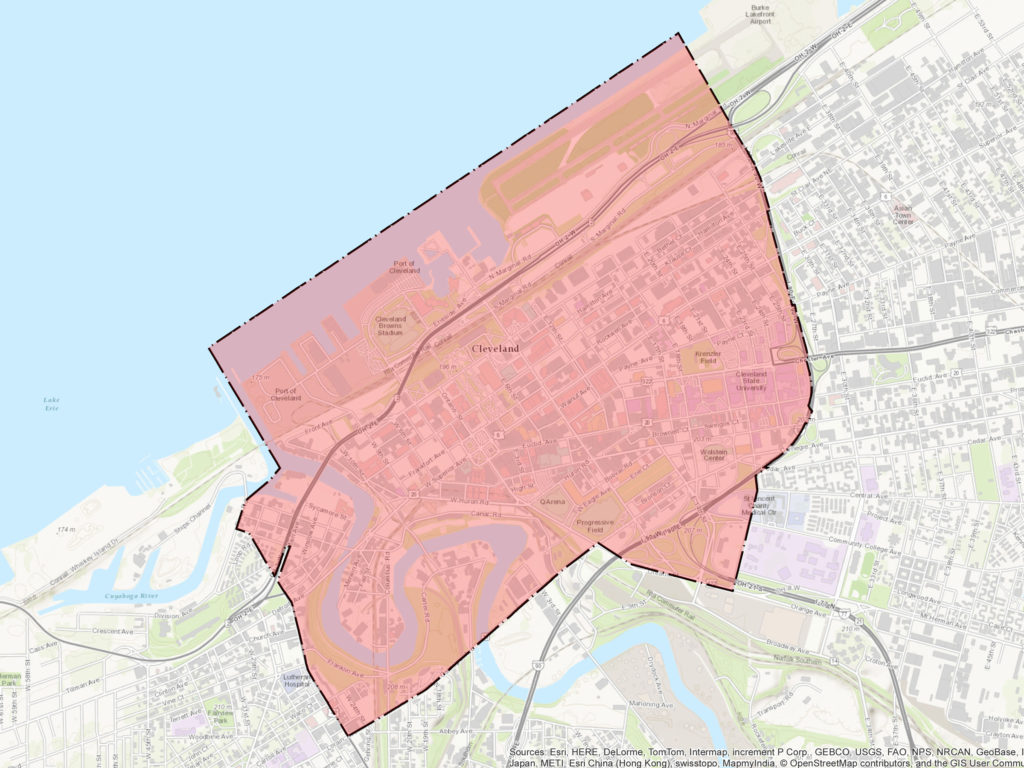
The city of Cleveland has revealed its crowd control plan for next month's Republican National Convention, a heavily policed, fenced off 3.3 square-mile "event zone" -- the size of Baghdad's Green Zone -- with fenced-off protest areas far from the convention itself. (more…)
21 Jun 19:50

Sotomayor's Blistering Dissent Against 'Frisk While Brown'
by Frances Langum
The Supreme Court this morning announced their ruling in the case of Utah v Strieff. The case concerned a pedestrian who was stopped by a police officer. SCOTUSblog explains it like this:
Utah v. Strieff (argued February 22, 2016). When a police officer stops a pedestrian in violation of the law, asks him for identification, discovers that there is a traffic warrant for his arrest, arrests him, and in the process of searching him discovers drug paraphernalia and methamphetamines, can the evidence found in the search of the pedestrian be used against him? Edward Strieff argues that it cannot: because the police officer’s stop was illegal, then anything obtained as a result of the stop is also tainted. The state, on the other hand, contends that the evidence should be admitted because it resulted from the lawful warrant for his arrest, rather than the illegal stop.
The Supreme Court found for the state in a 5-3 decision.
What is not mentioned in this description is the frequent, blatant practice among police departments of Stop and Frisk while Black or Brown. Sonia Sotomayor noticed that aspect of the argument, as she often does in cases like this. Stopping a pedestrian based on race should be illegal, right? And that underlying cause is so often lost once the individual is arrested. Sotomayor let loose on the decision in a scathing dissent, that refers to W.E.B. Dubois, Michelle Alexander, James Baldwin, and Ta Nahisi Coates.
Glennamaes likes this
21 Jun 00:43

Almost Every GOP Senator Just Voted to Keep Letting Terror Suspects Buy Guns
by Becca Andrews
In a special Senate session on Monday, US lawmakers once again voted down gun safety regulations introduced in the aftermath of a mass shooting. Each measure needed 60 votes to pass.
The Democratic proposals were brought by Sen. Dianne Feinstein (D-Calif.), and Sen. Chris Murphy (D-Conn.), who led a nearly 15-hour filibuster last week to pressure Republican leaders to hold Monday's vote. Feinstein's proposal would have made it possible for the Justice Department to stop anyone from purchasing a firearm if the purchaser has been on the federal terrorist watchlist in the prior five years, a measure backed by the White House. "To me, this isn't a gun control issue, this is a national security issue," Feinstein said. "Terrorist groups...know that our gun laws are weak and can be exploited."
Murphy's amendment sought to close the so-called gun show loophole—requiring background checks universally for gun buyers, including Internet sales, as well as expanding the federal background check database.
The final votes on these two measures both came in at 47-53 mostly along partisan lines. Sen. Mark Kirk (R-Ill.) was the only Republican to vote in favor of both Democratic bills. Sen. Jon Tester (D-Mont.), chair of the Democratic Senatorial Campaign Committee, voted against Murphy's measure on background checks. Sen. Kelly Ayotte (R-N.H.) voted for Feinstein's bill, but against Murphy's.
The GOP proposals were brought by Sen. John Cornyn (R-Texas) and Sen. Chuck Grassley (R-Iowa). Cornyn's amendment, similar to one he unsuccessfully introduced last year, required law enforcement to be notified when anyone on the terrorist watchlist attempts to buy a weapon from a licensed gun dealer. If the purchaser has been on the watchlist in the prior five years, the sale could be blocked for up to 72 hours while the attorney general investigates. However, the government would have to show probable cause that the suspect is indeed a known or suspected terrorist.
"If they’re too dangerous to buy a firearm, they’re too dangerous to be loose on our streets," Cornyn said. "Islamic extremists want the American people to trade our liberties and values with fear and panic."
Grassley's proposal sought to expand funding for the federal background check system and would have defined what it means to be found "mentally incompetent." The measure also included a process for individuals to challenge a disqualifying diagnosis of mental illness. Sen. Joe Donnelly was the only Democrat to vote in favor of Grassley's amendment; he also voted in favor of Cornyn's proposal, as did Democratic Sen. Joe Manchin (W. Va.).
The final votes on these two measures both came in at 47-53, mostly along partisan lines.
The failed measures come in the wake of a massacre in a LGBT club in Orlando that left 49 dead, the worst mass shooting in modern US history.
The votes were deja vu all over again. Last December, Republicans (and a single Democrat) blocked the Denying Firearms and Explosives to Dangerous Terrorists Act of 2015 amendment in the Senate; brought by Sen. Feinstein, it would have empowered the attorney general to use the FBI-administered terrorist watchlist to deny the sale of a firearms to suspected terrorists.
Also in December, a NRA-backed measure brought by Sen. Cornyn aimed to implement a 72-hour delay for gun purchases by people on the watchlist so that the government could investigate them. It also failed.
According to the New York Times, as of September 2014, there were 800,000 people on the consolidated federal terrorist watchlist. Feinstein said in her remarks on the floor on Monday that there are currently around 1 million people on the list, less than 1 percent of whom are American citizens.
20 Jun 17:19

10 Surprising Snacks That May Have BPA
by Erica Langston
Bisphenol A may very well be the Donald Trump of the chemical world: it’s divisive, no one can agree how much we can safely be exposed to, and it’s everywhere.
Frequently used in food packaging and plastics, BPA has been linked to reproductive toxicity, cancer, and other serious health disorders. The FDA says that the risk of exposure to BPA from packaged foods is low and does not compromise consumer safety. But several states have passed legislation banning its use in reusable food and drink containers, and manufacturers are no longer allowed to use BPA-based materials in baby bottles, sippy cups, and infant formula packaging nationwide. Despite years of attracting national headlines, the chemical’s prevalence in common food items and packaging was largely unknown—until now.
Last month, in response to California legislation passed in 2015, the Grocery Manufacturers Association created a database of food and beverage products with packaging that could expose consumers to the hormone-disrupting chemical. Ongoing studies have yet to determine just how much BPA each item might contain, but the sheer size of the list of products that could be affected is staggering: nearly 12,000 snacks, drinks, and alcoholic beverages are on it.
The Environmental Working Group, a research and advocacy organization, analyzed the food and beverage industry's data and found an additional 4,000 products that may contain BPA.
Some manufacturers specified which product containers may contain BPA, others did not. Here are 10 common household snacks on the list:
- Cool Whip Topping, aerosol cans
- Hershey’s Special Dark Fudge Topping
- Jif Creamy Peanut Butter
- Mott's Apple Sauce, containers with metal and plastic lids
- Nabisco Easy Cheese, spray can
- Pabst Blue Ribbon
- Simply Tostitos Organic Chunky Salsa
- Smucker's Natural Fruit Spread
- Starbucks Frappuccino Chilled Coffee
- Trader Joe’s Kosher Dill Pickles
Earlier this year, Campbell Soup Company announced its plan to phase out cans containing BPA by 2017, but the alternatives may not be any better. Meanwhile public and environmental health advocates continue to petition for nationwide legislation that establishes what level of BPA is safe for consumers to be exposed to and laws that would require BPA to be disclosed on product labels. A comprehensive searchable list of items whose packaging might expose consumers to BPA is available at the EWG website.
20 Jun 17:19

A Brief History of How Kansas Republicans Destroyed Their State
by Pema Levy
In 2012, Kansas Gov. Sam Brownback launched a "real live experiment" in conservative governance. He slashed income taxes for top earners and eliminated them for more than 330,000 small businesses, promising the cuts would be "a shot of adrenaline into the heart of the Kansas economy." Instead, the result has been disastrous. By the end of 2015, the state had lost nearly $3 billion in revenue and was behind most other states in job growth. And when the courts challenged the constitutionality of the bare-bones budgets, Brownback and his allies launched an all-out war on the state's judges.
May 22, 2012: Over the objections of many fellow Republicans, Brownback signs a tax-cut bill predicted to gut the budget and slash school funding.
Brownback is "trying desperately to get ahold of the third branch of government, because right now it's the only branch that stands in the way of his complete takeover of Kansas government."
—Ryan Wright, the Republican leader of Kansans for Fair Courts
March 7, 2014: The state Supreme Court rules that Kansas is violating the state constitution's mandate that schools get equitable funding. It orders the Legislature to devote tens of millions of dollars to low-income districts and asks lower courts to reexamine school spending.
April 17, 2014: Brownback retaliates by signing HB 2338, a bill that strips the state Supreme Court of the power to appoint chief judges to district courts.
"It was a blatant attempt to purchase a court opinion. Either you find this bill constitutional or we revoke all your funding. I mean, what kind of message is that?"
—Kansas state Rep. Steven Becker, a Republican and former district court judge
February 18, 2015: A chief district judge files a lawsuit against HB 2338, arguing that it is an unconstitutional violation of the separation of powers.
June 4, 2015: Brownback signs a budget for the courts that contains a self-destruct button: If any court rules against HB 2338, the state's entire judicial budget becomes "null and void."
September 2, 2015: District Judge Larry Hendricks finds HB 2338 unconstitutional—and just like that, Brownback and his allies have defunded the state courts.
September 3, 2015: A constitutional crisis ensues: How can the state defend its law in court if the courts themselves have been shut down? Hendricks agrees to put his ruling on hold until the state Supreme Court can resolve the HB 2338 case.
September 4, 2015: Four judges file a new lawsuit challenging the constitutionality of the "null and void" provision.
September 18, 2015: Kansas Attorney General Derek Schmidt, a rising political star, recuses himself from this new case. In his place, he hires Bradley Schlozman (whom an inspector general once found "unsuitable for federal service" due to his role in the politicization of the Justice Department during the Bush administration). But Schmidt then hatches a bizarre plan to shut down the judges' lawsuit: He convinces a Brownback-appointed judge in tiny Neosho County to freeze the "null and void" provision.
November 10, 2015: Two weeks before the Kansas Supreme Court considers HB 2338, the state requests the recusal of every justice on the court. In essence, the state argues it has created a law its highest court cannot review. The chief justice recuses himself, but the other six justices hear the case.
December 23, 2015: The state Supreme Court finds HB 2338 unconstitutional, daring Brownback and his allies to shut down the courts.
February 8, 2016: Brownback blinks, signing a bill to reverse the "null and void" provision and preserve the judicial budget.
February 11, 2016: The state Supreme Court threatens to shut down the schools if the state does not appropriate more money to them. Later that day, lawmakers pass a new budget that ignores the ruling. The Legislature now has until June 30 to come up with the money; otherwise, schools may not open in August.
"Our governor is trying his best to take total control of the judiciary...I don't know of any other governor that's ever had total control of all three branches of government."
—Former state Sen. Stephen Morris, a Republican
March 22, 2016: The Kansas Senate narrowly passes a bill that would let lawmakers impeach state judges for "discourteous conduct" and other transgressions—a measure that could be invoked if the state Supreme Court continues to challenge the Brownback experiment.
17 Jun 14:37

GOP 'Utopia' In Kansas Forces Healthcare Company To Relocate
by LeftOfCenter
Kansas is in the second term of perhaps the worst GOP Governor in the nation, and that bar has been set pretty low by fellow Republicans Paul LePage of Maine, Rick Scott of Florida and Pat McCrory of North Carolina. Kansas is such a mess, Jeff Blackwood, CEO of Pathfinder Health Innovations has decided to pack up and move his corporate headquarters to Missouri.
His privately held company provides software to autism therapy centers. Pathfinder's CEO states that he is moving mainly because his conscience won't permit him to stay in Kansas anymore.
The CEO's blog post, which he admits is his own opinion, and not necessarily the opinions of shareholders etc, leaves no doubt why he made his decision. He puts the blame squarely on the shoulders of the Brownback Administration, which is just all kinds of awful.
“In the end, I believe the goals of the Brownback administration are going exactly to plan — starve the state of resources to the point where it just makes sense to turn over critical government functions to for-profit entities,” Blackwood said.
Glennamaes likes this
16 Jun 22:16

Canadian trade policy expert calls TPP a "threat to democracy"
by Cory Doctorow

Gus Van Harten is a law professor at York University's Osgoode Hall and a well-respected expert on trade law; he's published a damning report on the Trans Pacific Partnership deal. (more…)
16 Jun 22:05


Stephen Colbert destroys Donald Trump (video)
by John Aravosis
Stephen Colbert just destroyed Donald Trump, over Trump’s claim that Obama is a secret Muslim terrorist.
I was laughing out loud.
Just watch.
16 Jun 04:45

Use the Crescent Moon to Find Your Way at Night
by Alan Henry
If you’re lost in the forest at night, disoriented, and without tools to help you figure out which way is which, the folks at Atlas Obscura have a simple suggestion: Look to the moon. If it’s a crescent moon, you’ll be able to figure out which way is south pretty easily, and this short video explains how.
15 Jun 22:48

Dozens of news orgs demand DOJ release its secret rules for targeting journalists with secret National Security Letters
by Xeni Jardin
Freedom of the Press Foundation recently filed a huge brief in the organization's case demanding that the Justice Department release its secret rules for targeting journalists with National Security Letters. And in related news, a coalition of 37 news organizations - including the New York Times, The Associated Press, USA Today, Buzzfeed, and tons more - filed an amicus brief in support of the Freedom of the Press Foundation case, demanding that the Department of Justice do the same.
15 Jun 22:20
Open Thread - We Shall Overcome
by Frances Langum
The Gay Men’s Chorus of Washington DC sings "We Shall Overcome" at a vigil outside the White House.

h/t Wonkette commenter kcnewhaven for the video and @quinncy for the Don Winsor post.
Open thread below....
15 Jun 00:28

Carpooling (and wrestling) with the Red Hot Chili Peppers
by David Pescovitz
The unfamiliar track is "Heemi Lheemey," a quirky tune that Anthony Kiedis and Flea wrote when they were 15-years-old and "smoking large quantities of marijuana" in the Sierra Nevadas.
(The Late Late Show via Rolling Stone)

15 Jun 00:00

Will Kansas Finally Start Registering the Thousands of Voters It Illegally Blocked?
by AJ Vicens
Tuesday is a big day for thousands of potential voters in Kansas who were blocked from registering to vote by a 2013 state law that required proof of citizenship to register. Or at least it's supposed to be. The law was recently overturned in court, and Kansas Secretary of State Kris Kobach's court-mandated deadline to begin the process of registering at least 18,000 people who were affected by the measure was this Tuesday. Whether he's actually started to do so remains unclear.
The situation dates back to February, when the American Civil Liberties Union, the ACLU of Kansas, and a local law firm sued Kobach over the law that required additional proof of citizenship from people registering to vote while applying for or renewing driver's licenses. The US District Court for the District of Kansas agreed with the ACLU in May, and a federal appeals court concurred last week, setting a deadline of June 14 for Kobach to being registering voters.
The district court judge said that the law likely violated the National Voter Registration Act, according to the Associated Press, which mandates that states require only "minimal information" to determine a voter's eligibility for federal elections. Kobach argued that throwing out the law would create a heavy administrative burden, as it could potentially affect 50,000 voters in the state. The AP noted that the state's proof-of-citizenship requirement hit young voters the hardest. People between the ages of 18 and 29 make up 14.9 percent of the state's registered voters but 58 percent of voters whose registrations were canceled or suspended under the law.
"Secretary Kobach has repeatedly stood in the way of thousands of Kansans who have tried to exercise their right to vote," Dale Ho, the director of the ACLU Voting Rights Project, said in a statement. "Today that ends. He must let them vote."
Kobach's office told Mother Jones on Tuesday that the secretary of state had no comment about the deadline.
14 Jun 16:22

House Democrats Shout "Where's the Bill" to Demand Gun Control Laws
by Inae Oh
After pausing to observe a moment of silence to honor the victims in the Orlando mass shooting, Democrats in the House on Monday erupted in protest repeating the question "Where's the bill?" Their emotional demand was directed at Speaker Paul Ryan and House Republicans to bring forth gun control legislation in the wake of the deadliest mass shooting in American history in which 49 people were killed and 53 wounded.
As more Democrats joined in on the chanting, Ryan refused to acknowledge the calls and instead attempted to bring order to the floor. He even dismissed Rep. James Clyburn's attempt to speak about the upcoming anniversary of the Charleston mass shooting, in which nine people were killed inside a historic black church on June 17, 2015.
The rare display of protest on Monday is likely to fall on deaf ears, as Republicans in the House continue to stall efforts to enact gun control legislation.
14 Jun 16:20

Appeals court: FCC has jurisdiction to impose net neutrality on ISPs
by Cory Doctorow

The Federal District Appeals Court has upheld the FCC's jurisdiction to impose net neutrality rules on telcos, leaving intact last year's landmark FCC ruling prohibiting carriers from downgrading the connections to networked services that didn't pay for "premium carriage." (more…)
13 Jun 16:14

Open Thread - Sympathy And Solidarity
by Frances Langum
.@Lin_Manuel shares beautiful poem for Orlando during his #TonyAwards acceptance speech || https://t.co/37LdjHdcudhttps://t.co/Men3uQG7zY
— TheWrap (@TheWrap) June 13, 2016
Open thread below....
10 Jun 19:20

GOP Senator David Perdue leads prayer for Obama's death
by Mark Frauenfelder
ElectrikmonkrjsSeriously, WTF.
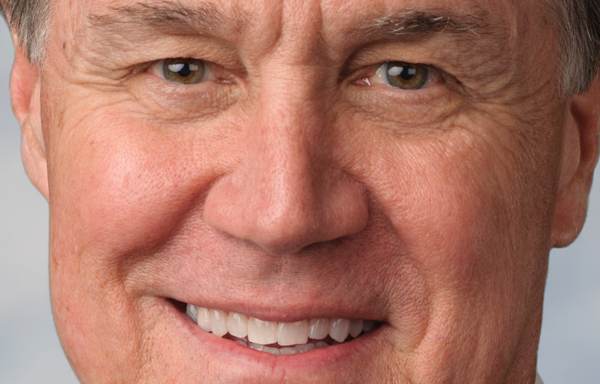
Senator David Perdue from Georgia led attendees of the Faith & Freedom Coalition’s Road to Majority conference in a good-natured prayer for Obama's early death. He said, “We should pray for him like Psalms 109:8 says: May his days be short and let another have his office.” The crowd, no doubt aware of the passage, chuckled at the thought.
Here's more from the passage (New Living Translation):
Let his years be few; let someone else take his position.
May his children become fatherless, and his wife a widow.
May his children wander as beggars and be driven from their ruined homes.
May creditors seize his entire estate, and strangers take all he has earned.
Let no one be kind to him; let no one pity his fatherless children.
May all his offspring die. May his family name be blotted out in a single generation.
May the LORD never forget the sins of his fathers; may his mother’s sins never be erased from the record.
May the LORD always remember these sins, and may his name disappear from human memory.
Naturally, many people outside the conference took issue with Senator Perdue's remarks, and it was reported in the media. Perdue spokeswoman Caroline Vanvick issued a statement blaming it all on the awful, awful press:
“Senator Perdue said we are called to pray for our country, for our leaders, and for our president. He in no way wishes harm towards our president and everyone in the room understood that. However, we should add the media to our prayer list because they are pushing a narrative to create controversy and that is exactly what the American people are tired of.”
10 Jun 19:18

DEA wants to look at millions of people's private medical records without a warrant
by Mark Frauenfelder
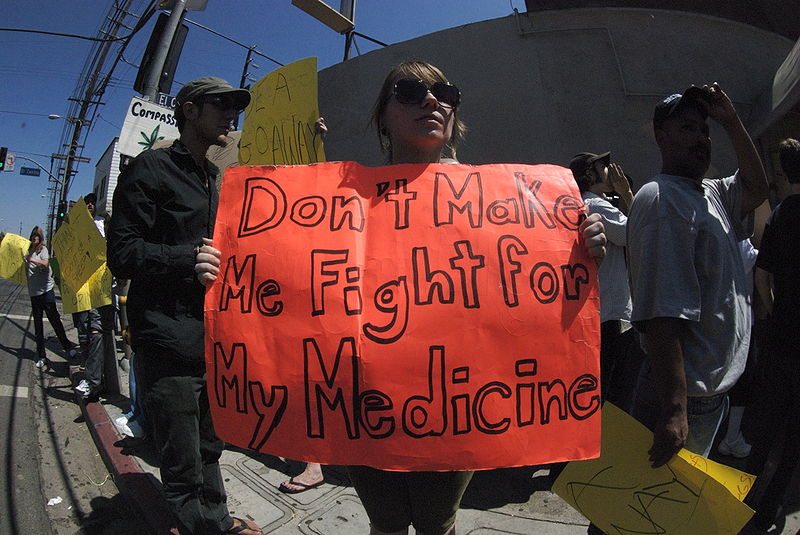
The DEA is suing states for warrantless access to millions of individuals' medical records, so they can inflict more misery on people in chronic pain or other legitimate needs for controlled substances.
In his 2014 ruling against the DEA, District Court Judge Ancer L. Haggerty called warrantless searches of such data an egregious invasion of privacy.
“It is difficult to conceive of information that is... more deserving of Fourth Amendment protection,” Haggerty said. “By obtaining the prescription records for individuals like John Does 2 and 4, a person would know that they have used testosterone in particular quantities and by extension, that they have gender identity disorder and are treating it through hormone therapy.
“Although there is not an absolute right to privacy in prescription information... it is more than reasonable for patients to believe that law enforcement agencies will not have unfettered access to their records,” he added.
The Obama administration disagrees, and argues that since the records have already been submitted to a third party (Oregon’s PDMP) that patients no longer enjoy an expectation of privacy.
10 Jun 05:12

Scanners let Oklahoma cops seize funds from prepaid debit cards without criminal charges
by Xeni Jardin
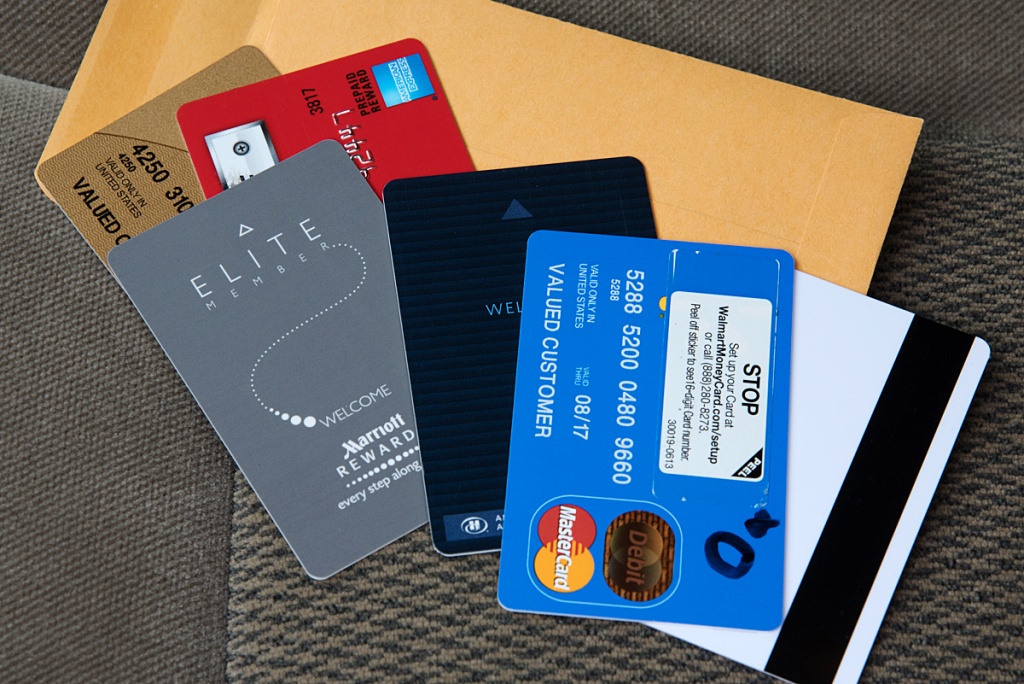
The Oklahoma Department of Public Safety has purchased several 'Electronic Recovery and Access to Data' devices to install in police cruisers for seizing funds from prepaid debit cards during roadside arrests.
09 Jun 22:40

The Stanford Sexual-Assault Judge Is Getting Called Out by Would-Be Jurors
by Madison Pauly
Last Friday, Judge Aaron Persky sparked outrage when he sentenced Brock Turner, the former Stanford student convicted of sexually assaulting an unconscious woman behind a dumpster, to just six months in a county jail. The short sentence angered supporters of the anonymous victim, many of whom were galvanized by a moving letter to Turner that the victim read out loud during his sentencing hearing.
Now, prospective jurors for another trial in California's Santa Clara County Superior Court are refusing to serve in Persky's courtroom on an unrelated case, reports the East Bay Times. During jury selection Thursday, at least 10 jurors called out Persky for his sentencing decision.
"I can't believe what you did," one prospective juror told the judge. "I can't be here, I'm so upset," said another. Persky reportedly thanked the objectors for their service and excused them from jury duty.
Persky, a former sex crimes prosecutor appointed to the bench in 2003, is now facing a recall effort spearheaded by Michele Landis Dauber, a Stanford law professor who has long been an advocate for sexual-assault survivors. While Persky has his supporters—mainly public defenders in his county—a Change.org petition to impeach Persky is quickly approaching a million signatures. (On Tuesday, Persky ran unopposed in his primary election.)
In handing down the controversial sentence last week, Persky cited Turner's age (20) and clean record as "unusual circumstances" that led him to decide against the mandatory sentence of two years in state prison. Persky was following the recommendation of a probation report, which determined that he should serve six months in county jail, plus probation. Turner is expected to serve three months and be released on good behavior.