Shared posts
Mixed nonergodicity of a forced system and its non-stationary strength
Synopsis: Perturbing Polymers with Salty Solutions
A new model explains the deformation of polymers in an ionic solution in terms of the concentration and distribution of ions.

[Physics] Published Tue Oct 29, 2019
Formation and dynamics of fission fragments. (arXiv:1312.4669v2 [nucl-th] UPDATED)
Although the overall time-scale for nuclear fission is long, suggesting a slow process, rapid shape evolution occurs in its later stages near scission. Theoretical prediction of the fission fragments and their characteristics are often based on the assumption that the internal degrees of freedom are equilibrated along the fission path. However, this adiabatic approximation may break down near scission. This is studied for the symmetric fission of $^{258,264}$Fm. The non-adiabatic evolution is computed using the time-dependent Hartree-Fock method, starting from an adiabatic configuration where the fragments have acquired their identity. It is shown that dynamics has an important effect on the kinetic and excitation energies of the fragments. The vibrational modes of the fragments in the post-scission evolution are also analyzed.
Energy-density-functional calculations including proton-neutron mixing
Author(s): Koichi Sato, Jacek Dobaczewski, Takashi Nakatsukasa, and Wojciech Satuła
 We present results of calculations based on the Skyrme energy density functional that include arbitrary mixing between protons and neutrons. In this framework, single-particle states are superpositions of proton and neutron components and the energy density functional is fully invariant with respect...
[Phys. Rev. C 88, 061301] Published Mon Dec 02, 2013
Neutron-pair transfer in the sub-barrier capture process
Author(s): V. V. Sargsyan, G. Scamps, G. G. Adamian, N. V. Antonenko, and D. Lacroix
Sub-barrier capture reactions following neutron-pair transfer are proposed to be used for the indirect study of the neutron-neutron correlation in the surface region of a nucleus. The strong effect of dineutron-like cluster transfer stemming from the surface of magic and nonmagic nuclei 18O, 48Ca, 6...
[Phys. Rev. C 88, 064601] Published Mon Dec 02, 2013
Signatures of alpha clustering in light nuclei from relativistic nuclear collisions. (arXiv:1312.0289v2 [nucl-th] UPDATED)
We argue that relativistic nuclear collisions may provide experimental evidence of alpha clustering in light nuclei. A light alpha-clustered nucleus has a large intrinsic deformation. When collided against a heavy nucleus at very high energies, this deformation transforms into the deformation of the fireball in the transverse plane. The subsequent collective evolution of the fireball leads to harmonic flow reflecting the deformation of the initial shape, which can be measured with standard methods of relativistic heavy-ion collisions. We illustrate the feasibility of the idea by modeling the 12C-208Pb collisions and point out that very significant quantitative and qualitative differences between the alpha-clustered and uniform 12C nucleus occur in such quantities as the triangular flow, its event-by-event fluctuations, or the correlations of the elliptic and triangular flows. The proposal offers a possibility of studying low-energy nuclear phenomena with "snapshots" made with relativistic heavy-ion collisions.
Hartree-Fock-Bogoliubov nuclear mass model with 0.50 MeV accuracy based on standard forms of Skyrme and pairing functionals
Author(s): S. Goriely, N. Chamel, and J. M. Pearson
We present a new Hartree-Fock-Bogoliubov nuclear mass model based on standard forms of Skyrme and pairing functionals, which corresponds to the most accurate mass model we ever achieved within the framework of the nuclear energy density functional theory. Our new mass model is characterized by a mod...
[Phys. Rev. C 88, 061302] Published Thu Dec 05, 2013
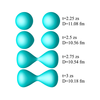
Microscopic approach to coupled-channels effects on fusion
Author(s): C. Simenel, M. Dasgupta, D. J. Hinde, and E. Williams
Macroscopic and microscopic approaches to nuclear fusion near the Coulomb barrier are combined to investigate the couplings between relative motion and internal degrees of freedom of the collision partners. The coupling to vibrational modes lowers the barrier, in good agreement with predictions of fusion thresholds. The method has a broad range of potential applications in nuclear reaction theory.
[Phys. Rev. C 88, 064604] Published Thu Dec 05, 2013
New Fission Fragment Distributions and r-Process Origin of the Rare-Earth Elements
Author(s): S. Goriely, J.-L. Sida, J.-F. Lemaître, S. Panebianco, N. Dubray, S. Hilaire, A. Bauswein, and H.-T. Janka
Neutron star (NS) merger ejecta offer a viable site for the production of heavy r-process elements with nuclear mass numbers A≳140. The crucial role of fission recycling is responsible for the robustness of this site against many astrophysical uncertainties, but calculations sensitively depend on nu...
[Phys. Rev. Lett. 111, 242502] Published Mon Dec 09, 2013
N and Z odd-even staggering in Kr+Sn collisions at Fermi energies
Author(s): S. Piantelli et al. (FAZIA Collaboration)
The odd-even staggering of the yield of final reaction products has been studied as a function of proton (Z) and neutron (N) numbers for the collisions 84Kr+112Sn and 84Kr+124Sn at 35 MeV/nucleon in a wide range of elements (up to Z≈20). The experimental data show that staggering effects rapidly dec...
[Phys. Rev. C 88, 064607] Published Tue Dec 10, 2013
Spontaneous fission lifetimes from the minimization of self-consistent collective action
Author(s): Jhilam Sadhukhan, K. Mazurek, A. Baran, J. Dobaczewski, W. Nazarewicz, and J. A. Sheikh
The spontaneous fission lifetime of 264Fm has been studied within nuclear density functional theory by minimizing the collective action integral for fission in a two-dimensional quadrupole collective space representing elongation and triaxiality. The collective potential and inertia tensor are obtai...
[Phys. Rev. C 88, 064314] Published Tue Dec 10, 2013
Isoscalar giant resonance strengths in ^{32}S and possible excitation of superdeformed and ^{28}Si + α cluster bandheads
Author(s): M. Itoh, S. Kishi, H. Sakaguchi, H. Akimune, M. Fujiwara, U. Garg, K. Hara, H. Hashimoto, J. Hoffman, T. Kawabata, K. Kawase, T. Murakami, K. Nakanishi, B. K. Nayak, S. Terashima, M. Uchida, Y. Yasuda, and M. Yosoi
Isoscalar giant resonances and low spin states in 32S have been measured with inelastic α scattering at extremely forward angles including zero degrees at Eα=386 MeV. By applying multipole decomposition analysis, various excited states are classified according to their spins and parities (Jπ), and a...
[Phys. Rev. C 88, 064313] Published Tue Dec 10, 2013
Measurement of the Dipole Polarizability of the Unstable Neutron-Rich Nucleus ^{68}Ni
Author(s): D. M. Rossi et al.
The E1 strength distribution in 68Ni has been investigated using Coulomb excitation in inverse kinematics at the R3B-LAND setup and by measuring the invariant mass in the one- and two-neutron decay channels. The giant dipole resonance and a low-lying peak (pygmy dipole resonance) have been observed ...
[Phys. Rev. Lett. 111, 242503] Published Tue Dec 10, 2013
Examples of the failure of proximity approach when the nuclear surface is irregular or has concave regions
Source:Nuclear Physics A, Volume 922
Author(s): M. Ismail , I.A.M. Abdul-Magead
We study the results of the proximity approach in calculating the fusion barrier parameters (the height of Coulomb barrier VB and its radius RB) compared with the results of double folding model (DFM). We considered five interaction systems as examples and made our study at several relative orientations for the interacting deformed nuclei. We found that VB and RB, evaluated by using the proximity approach, have nonphysical Φ-dependence when the value of hexadecapole deformation parameter β4<0 or at least one nucleus has octupole deformation order, β3. The results almost agree with those of DFM when β4=0. For positive β4 values the results of the two models almost agree in behavior but differ in values. The reason for failure when β4 has negative value is due to the existence of concave region in the nuclear surface, which does not satisfy the requirement of proximity approach based on gently-curved surface. Since the existence of β6 and β8 induce irregularity and concave regions in the surface, we expect failure of proximity approach in this case, for an example, β6 was given.
Tensor parameters in Skyrme and Gogny effective interactions: Trends from a ground-state-focused study
Author(s): Marcella Grasso and Marta Anguiano
Recent ground-state-focused studies of the tensor effects in the mean-field framework are our starting point. On the basis of phenomenological arguments, we indicate regions for acceptable values of the parameters that are associated with the tensor effective forces within both the Skyrme and the Go...
[Phys. Rev. C 88, 054328] Published Wed Nov 27, 2013
Giant dipole resonance width and the universality of a fluctuation model including critical temperature
Author(s): Deepak Pandit, Srijit Bhattacharya, Balaram Dey, Debasish Mondal, S. Mukhopadhyay, Surajit Pal, A. De, and S. R. Banerjee
The universality of the critical-temperature-included fluctuation model (CTFM) in explaining the evolution of the giant dipole resonance (GDR) width as a function of angular momentum is examined in light of recent experimental data on 144Sm and 152Gd. We compare both data sets with the phenomenologi...
[Phys. Rev. C 88, 054327] Published Wed Nov 27, 2013
Fission properties of the Barcelona-Catania-Paris-Madrid energy density functional
Author(s): Samuel A. Giuliani and Luis M. Robledo
Fission dynamics properties of the Barcelona-Catania-Paris-Madrid energy density functional are explored with mean-field techniques. Potential energy surfaces as well as collective inertias relevant in the fission process are computed for several nuclei where experimental data exist. Inner and outer...
[Phys. Rev. C 88, 054325] Published Wed Nov 27, 2013
Description of α-decay chains for ^{293,294}117 within covariant density functional theory
Author(s): W. Zhang (张炜), Z. P. Li (李志攀), and S. Q. Zhang (张双全)
The covariant density functional theory with the point-coupling density functional PC-PK1 and the meson-exchange density functional PK1 has been applied to study the intrinsic triaxial and octupole deformation for 293,294117 isotopes, and the Qα values of their α-decay chains. The shape coexistence ...
[Phys. Rev. C 88, 054324] Published Tue Nov 26, 2013
Mapping quasifission characteristics and timescales in heavy element formation reactions
Author(s): R. du Rietz, E. Williams, D. J. Hinde, M. Dasgupta, M. Evers, C. J. Lin, D. H. Luong, C. Simenel, and A. Wakhle
Background: The formation of superheavy elements by fusion of two massive nuclei is severely inhibited by the competing quasifission process.
Purpose: Through extensive mass-angle distribution measurements, we map out the systematic dependence of quasifission characteristics as a function of the iden...
[Phys. Rev. C 88, 054618] Published Mon Nov 25, 2013
Analysis of heavy-ion fusion reactions at extreme sub-barrier energies using the proximity formalism
Author(s): O. N. Ghodsi and R. Gharaei
The recent measured values of the fusion excitation functions of the heavy-ion colliding systems 28Si+100Mo, 58Ni+54Fe, and 64Ni+64Ni are investigated using the original version of the proximity formalism. The fusion cross sections are calculated based on the coupled-channels approach, including cou...
[Phys. Rev. C 88, 054617] Published Mon Nov 25, 2013
Dependence of the energy of vanishing flow on different components of the nuclear potential
Author(s): Mandeep Kaur, Varinderjit Kaur, and Suneel Kumar
The contribution of various components of potential towards balance energy is analyzed for the reactions of 2658Fe+2658Fe, 2858Ni+2858Ni, 3686Kr+4193Nb, and 79197Au+79197Au using an isospin-dependent quantum molecular dynamics (IQMD) model. We show that the balance energy changes with the addition o...
[Phys. Rev. C 88, 054620] Published Wed Nov 27, 2013
Reexamining the heavy-ion reactions ^{238}U+^{238}U and ^{238}U+^{248}Cm and actinide production close to the barrier
Author(s): J. V. Kratz, M. Schädel, and H. W. Gäggeler
Recent theoretical work has renewed interest in radiochemically determined isotope distributions in reactions of 238U projectiles with heavy targets that had previously been published only in parts. These data are being reexamined. The cross sections σ(Z) below the uranium target have been determine...
[Phys. Rev. C 88, 054615] Published Wed Nov 20, 2013
Fusion at near-barrier energies within quantum diffusion approach. (arXiv:1311.5020v1 [nucl-th])
The nuclear deformation and neutron-transfer process have been identified as playing a major role in the magnitude of the sub-barrier fusion (capture) cross sections. There are a several experimental evidences which confirm the importance of nuclear deformation on the fusion. The influence of nuclear deformation is straightforward. If the target nucleus is prolate in the ground state, the Coulomb field on its tips is lower than on its sides, that then increases the capture or fusion probability at energies below the barrier corresponding to the spherical nuclei. The role of neutron transfer reactions is less clear. The importance of neutron transfer with positive Q-values on nuclear fusion (capture) originates from the fact that neutrons are insensitive to the Coulomb barrier and therefore they can start being transferred at larger separations before the projectile is captured by target-nucleus. Therefore, it is generally thought that the sub-barrier fusion cross section will increase because of the neutron transfer. The fusion (capture) dynamics induced by loosely bound radioactive ion beams is currently being extensively studied. However, the long-standing question whether fusion (capture) is enhanced or suppressed with these beams has not yet been answered unambiguously. The study of the fusion reactions involving nuclei at the drip-lines has led to contradictory results.
Derivation of capture and reaction cross sections from experimental quasi-elastic and elastic backscattering probabilities. (arXiv:1311.5012v1 [nucl-th])
The direct measurement of the reaction or capture (fusion) cross section is a difficult task since it would require the measurement of individual cross sections of many reaction channels, and most of them could be reached only by specific experiments. This would require different experimental set-ups not always available at the same laboratory and, consequently, such direct measurements would demand a large amount of beam time and would take probably some years to be reached. Because of that, the measurements of elastic scattering angular distributions that cover full angular ranges and optical model analysis have been used for the determination of reaction cross sections. This traditional method consists in deriving the parameters of the complex optical potentials which fit the experimental elastic scattering angular distributions and then of deriving the reaction cross sections predicted by these potentials. Even so, both the experimental part and the analysis of this latter method are not so simple. In the present work we present a much simpler methods to determine reaction and capture (fusion) cross sections. They consist of measuring only elastic or quasi-elastic scattering at one backward angle, and from that, the extraction of the reaction or capture cross sections can easily be performed.
Shape coexistence and triaxiality in nuclei near 80Zr. (arXiv:1311.5637v1 [nucl-th])
Total-Routhian-Surface calculations have been performed to investigate the shape evolutions of $A\sim80$ nuclei, $^{80-84}$Zr, $^{76-80}$Sr and $^{84,86}$Mo. Shape coexistences of spherical, prolate and oblate deformations have been found in these nuclei. Particularly for the nuclei, $^{80}$Sr and $^{82}$Zr, the energy differences between two shape-coexisting states are less than 220 keV. At high spins, the $g_{9/2}$ shell plays an important role for shape evolutions. It has been found that the alignment of the $g_{9/2}$ quasi-particles drives nuclei to be triaxial.
Calculations of the cross sections for the synthesis of new ^{293–296}118 isotopes in ^{249–252}Cf(^{48}Ca,xn) reactions
Author(s): T. Cap, K. Siwek-Wilczyńska, M. Kowal, and J. Wilczyński
A project of using a target consisting of the mixture of 249–252Cf isotopes to be bombarded with the 48Ca beam, aimed at synthesizing new isotopes of the heaviest known element Z=118, is under way at the Flerov Laboratory of Nuclear Reactions in Dubna, Russia. In the present work excitation function...
[Phys. Rev. C 88, 037603] Published Fri Sep 20, 2013
Neutron pair transfer in sub-barrier capture process. (arXiv:1311.4353v2 [nucl-th] UPDATED)
The sub-barrier capture reactions following the neutron pair transfer are proposed to be used for the indirect study of neutron-neutron correlation in the surface region of nucleus. The strong effect of the dineutron-like clusters transfer stemming from the surface of magic and non-magic nuclei $^{18}$O, $^{48}$Ca, $^{64}$Ni, $^{94,96}$Mo, $^{100,102,104}$Ru, $^{104,106,108}$Pd, and $^{112,114,116,118,120,124,132}$Sn is demonstrated. The dominance of two-neutron transfer channel at the vicinity of the Coulomb barrier is further supported by time-dependent mean-field approaches.
Production of exotic isotopes in complete fusion reactions with radioactive beams. (arXiv:1311.4351v1 [nucl-th])
The isotopic dependence of the complete fusion (capture) cross section is analyzed in the reactions $^{130,132,134,136,138,140,142,144,146,148,150}$Xe+$^{48}$Ca with stable and radioactive beams. It is shown for the first time that the very neutron-rich nuclei $^{186-191}$W can be reached with relatively large cross sections by complete fusion reactions with radioactive ion beams at incident energies near the Coulomb barrier. A comparison between the complete fusion and fragmentation reactions for the production of neutron-rich W and neutron-deficient Rn isotopes is performed.
Examining fine potential energy effects in high-energy fission dynamics
Author(s): K. Mazurek, C. Schmitt, P. N. Nadtochy, M. Kmiecik, A. Maj, P. Wasiak, and J. P. Wieleczko
The potential energy surface plays a decisive role in nuclear fission. Together with inertia and viscosity, it influences the trajectory of the system, and the properties of the fission fragments result from the puzzling interplay between static and dynamical effects. A careful study on the influenc...
[Phys. Rev. C 88, 054614] Published Tue Nov 19, 2013
Derivation of reaction cross sections from experimental elastic backscattering probabilities. (arXiv:1311.4145v1 [nucl-th])
The relationship between the backward elastic scattering probabilities and reaction cross sections is derived. This is a a very simple and useful method to extract reaction cross sections for heavy ion systems. We compare the results of our method with those using the traditional full elastic scattering angular distributions, for several systems, at energies near and above the Coulomb barrier. From the calculated reaction and capture cross sections using the present method, we derive the cross sections of other mechanisms for nearly spherical systems.