Shared posts
15 Dec 17:28
Surge In Litecoin Mining Leads To Graphics Card Shortage
by timothy
New submitter Kenseilon writes "Extremetech reports that the recent price hike of Litecoins has triggered yet another arms race for the *coinminers out there, leading to a shortage of AMD graphics cards. While Bitcoin mining is quickly becoming unfeasible for GPU rigs with general purpose graphics cards, there are several alternative currencies with opportunities. The primary candidate is now Litecoin, which has the aim of 'being silver if Bitcoin is gold' Swedish Tech site Sweclockers also reports [in Swedish] that GPU manufacturer Club3D have told them that miners are becoming a new important group of potential customers. However, concerns are being raised that this is a temporary boom that may hurt AMD in the long run, since gamers, their core consumer group, may not be able to acquire the cards and instead opt for Nvidia." 


Read more of this story at Slashdot.
15 Dec 17:23
I Love That Movie! ME
by ctstalker@somethingawful.com (Dennis "Corin Tucker's Stalker" Farrell)
Oh man, did I just hear you guys talking about Forest Gump? That is so great! It's probably my favorite movie of all time. I know everything about it. The best part is when he finally escapes after being stranded in the forest for all those years. What a powerful film.


13 Dec 22:56

flOw releasing on PlayStation 4 next week
by Conrad Zimmerman
flOw, the first PS3 game released by thatgamecompany, will soon be making its appearance on PlayStation 4. In a post to the PlayStation Blog, Sony Santa Monica producer Eric Fong announced that the title will be available on Tuesday, December 17. Through Cross-Buy, players who have already purchased fl0w on PS3 or PS Vita will be able to download the PS4 version free of charge, while newcomers will be asked to cough up $5.99 for the game.
Oddly, I don't think I actually got around to playing fl0w. I loved Flower (thatgamecompany's second release, which launched with the PS4 console) and I recall that giving me the thought that I should play fl0w, but I was likely then distracted by some other shiny object because I have no recollection of experiencing the game. Is it too late for me?
Thatgamecompany’s Flow Comes to PS4 Tuesday [PS Blog]

13 Dec 22:23



How Oculus Plans To Be Riding High When The Virtual Reality Wave Breaks
by Darrell Etherington
A company that was conceived less than a year ago today announced its Series B round of funding late last night, with a massive raise of $75 million to add to its existing $16 million Series A and $2.4 million in Kickstarter crowdfunding dollars. That company is Oculus Rift: A virtual reality headset dreamt up by Gaikai veteran Brendan Iribe and a team of other startup vets. With nearly $100 million invested, expectations are huge, but the company is ready to meet those expectations, Iribe tells TechCrunch, and exceed them with a vision of the future that blurs the line between the virtual and the real.
Why So Much Money, So Fast
The Rift has already managed to sell over 42,000 units prior to its consumer launch, via development kits that are admittedly rough around the edges, according to Iribe. That’s impressive enough, but it’s not what’s selling investors like Marc Andreessen and game industry legends like John Carmack on the Rift – that’s the experience provided by the next-generation prototype, which is functionally the same as what we’ll see from the first consumer device, Iribe says, but which has been used by only a few hundred people at most as of right now.
Once the new prototype was perfected, Iribe got in touch with Marc Andreessen and Chris Dixon, to say that they’d achieved what they’d set out to do and asked how soon they could come in to see it. The combination of the prototype demonstration, and former id founder and Doom creator John Carmack explaining his vision of where he sees the entire Oculus project headed “pretty much convinced them on the spot,” Iribe tells me. Dixon and Andreessen join the fairly limited group of outside VCs with ownership stake in Oculus VR, and Iribe says that the partners and funding were chosen specifically with the intent that they should help them get to through the initial V1 consumer launch without having to go find more money elsewhere.
“The point of the first raise was to build out the technology,” Iribe says, explaining what the money has been spent on so far. “We actually thought it would take us a bit longer to get to the point of where we’re at now.”
But it didn’t take that long. The new Oculus Rift prototype should be virtually identical in terms of experience to the version that ships to consumers.
Achievement Unlocked: Consumer-Caliber Experience
“We got to the point where the latest prototype of this technology really is beyond even what we expected for V1,” Iribe told me. “We kind of put the hammer down and said ‘Okay, this is it, this is definitely enough to totally blow away the world and deliver our consumer, V1 product.’ We’re looking back even now on the dev kit and going ‘oh gosh, this new one is so much better.’ It is literally an entirely different experience.’”
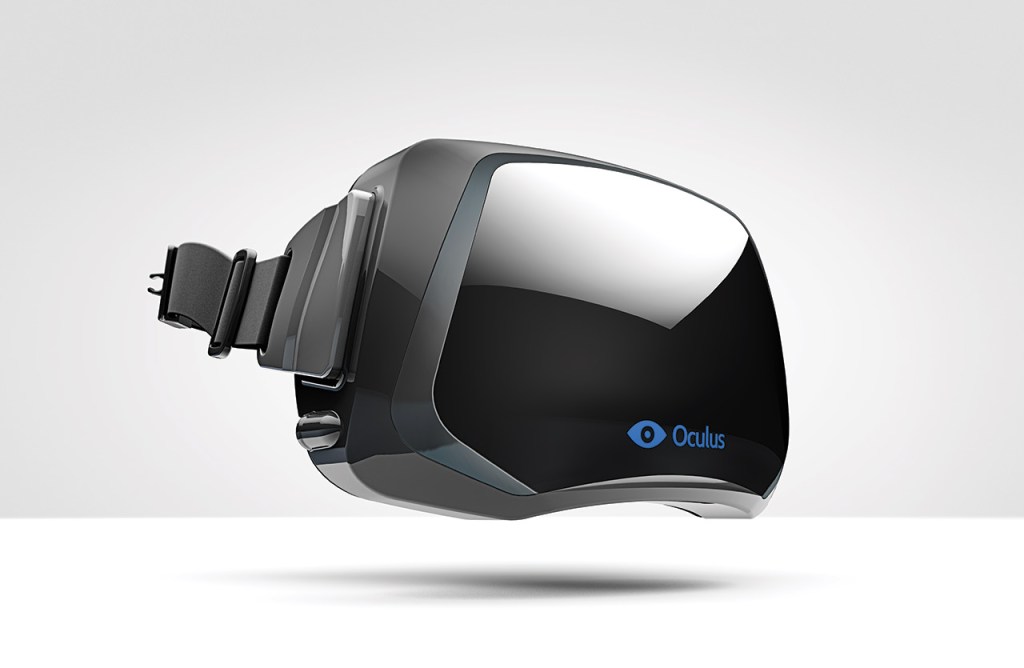 “Of the 300 people who have seen the current prototype, not a single person has come away not saying ‘That’s gonna change the world,’ and that’s really [what we needed to accomplish] in terms of delivering on the promise of the vision we’ve all had for so many years,” Iribe says.
There’s a general feeling that it’s a true ‘Holy Grail’ experience in terms of immersive reality tech among those who’ve tried the latest prototype, Iribe says. I asked if I’d be able to see for myself at CES coming up in January, but he says they’re not ready to announce yet what they’re bringing to the show, and we’ll find out closer to the date. Not to read too much into it, but that does sound pretty promising for those hoping to get a sense of this new design in action. The latest hardware still isn’t close to final in terms of product design, however, Iribe adds:
“It’s what we want to bring as an experience,” he said. “It’s a prototype, so it still has its circuit boards and exposed wires and all that, but the experience, meaning once you put the device on, it is what we want to deliver in a consumer product. People go in, spend long periods of time in the experience and come out and say ‘I want to do more of that.’ There’s no kind of discomfort, no dizziness, no nausea. So many of the technical hurdles have been pretty much nailed.”
Vision In The Near-Term: Both Literal And Figurative
As for things they’re still working on the engineering side, Iribe says that there’s an increasing interest in building more advanced eye movement detection to the Rift’s functionality.
“[We recently hired] a lot of vision guys, that’s a big effort for us now,” he says. “We’re really focusing on the vision side, in terms of tracking and using optical tracking and camera tracking. That’s going to be a big focus for us going forward. Over time, we want to get more of the body in the game, but right now we’re trying to get your eyes in the game, combining your vision with your head tracking.”
Aside from engineering work, there’s a lot that needs to be nailed down in the immediate future. There’s figuring out how to consumerize the actual product design itself, and then ramping up the initial production run. That’s why Iribe isn’t putting a firm date on the Rift’s availability date just yet: internally, they have a pretty good idea of when to expect it to reach retailers and customers, but they’re purposely keeping tight-lipped about those projections to make sure everything’s ready when the time comes. To that end, they’re also hiring smart people aggressively in virtually every capacity, as there’s not just a hardware and software component to the Rift, but services, an ecosystem, a consumer education initiative and much, much more that all need to come together at launch.
Carmack Codes And Codes And Codes To Avoid A Deflating Launch
Hardware startups, especially those dealing with novel input paradigms or wearable computing, have been multiplying sharply in the past couple of years, and recently we’ve seen a number that were initially crowdfunded via pre-orders deliver their shipping consumer devices. The results aren’t pretty: while some like the Pebble have been fairly well-received (though not universally loved), others like the Leap Motion and the Ouya have sounded a sour note. Iribe admits that potential fate is a little daunting, but believes that Oculus is doing everything right to avoid the same kind of crash at the gate.
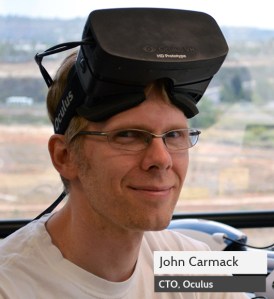 “John Carmack is writing code as fast as he can, travelling as little as he can,” he said. “I think he’s back to the early days of kind of a Doom and Quake era of him being held up in a room just programming as fast as he can to make this work really well, and he tells me having more fun than he’s had in a really long time.”
That likely explains why his dual roles at both Oculus and id didn’t last long, as he stepped down from the original home of Doom and Quake late last month to focus on being Oculus VR’s CTO full-time. Carmack is doing what he loves most at Oculus, according to Iribe, which is tackling a difficult problem that’s “right on the edge of reality.” Carmack pioneered both 2D and 3D gaming, and he’s doing the same thing all over again with the Oculus Rift, and it “really works,” Iribe says.
Acquisition Potential, Valuation And Launch Sales Estimates
Along with launch date and Carmack project specifics, Oculus is also keeping mum on valuation. Essentially, Iribe very loosely suggested a 20 to 40 percent equity sale at this stage for a startup like Oculus VR, which would put the valuation somewhere between $200 and $400 million or so, with the heavy caveat that this is mostly educated guessing on my part and not data sourced direct from the company.
“The valuation wasn’t so high that [our investors] were getting a tiny sliver, we had a pretty good valuation at each round [...] that was fair for everybody,” was the only thing Iribe would say for sure on the matter. “It’s good, but not too crazy.”
That valuation is high enough that any prospects of Oculus Rift getting scooped up by Microsoft, Sony or any other major incumbent gaming company is slim to none, Iribe says, at least until after they deliver their initial run of consumer devices. He also says that personally, the idea of having built what they have and not releasing it themselves just seems impossible.
“We feel like we have a pretty good idea of what we can sell through pre-orders, and through consumer launch, for the first six, eight or even twelve months,” Iribe explains regarding their budgeting and the amount raised, and why they don’t anticipate having to find more capital pre-launch. Extrapolating from comments he made to me, I’d suggest they’re looking somewhere in the neighborhood of one million devices for a production run funded by what’s in their existing coffers, though Iribe declined to get into specifics. He did say that they see that expanding to hundreds of millions of devices and active users sometime in the next decade or so, thanks to the long-term Oculus vision of VR beyond the confines of gaming.
Immersed In The Big Picture
What we’re looking at is the evolution of virtual reality, starting with this headset. It’s going to be a little bigger than we’d all want it to be of course, and it will have its form factor challenges, but the experience inside is good enough that people are going to really enjoy it, and love going in, playing games and watching movies. And then it’ll quickly evolve, and its form factor will keep getting better; closer and closer to sunglasses, lighter and easier to wear. Very quickly, over the next decade or two, what we’re looking at really becomes about communications.
Just like the smartphone now represents the primary means with which we communicate digitally, Iribe sees a future where VR supplants a lot of the same usage, so that you have a pair of sunglass-style Rift goggles that you simply slip on when you want to talk face-to-face, as if in person, with your friend halfway around the world. Our kids will laugh at stories of typing away on virtual keyboards and smiling back at grainy video into the unblinking eye of a monitor-mounted webcam, and remote business won’t be so remote anymore. In short, Oculus is taking the first step towards a world where the “virtual” in virtual reality is just a technical distinction, not a description of experience.
13 Dec 18:39


Report: Mandela Interpreter's Murky Past Includes Murder and Rape Charges
by Fran Berkman
The sign language interpreter for Nelson Mandela's memorial service has a checkered past that includes murder and rape charges, according to a report by South Africa-based eNews Channel Africa (eNCA)
Thamsanqa Jantjie, who is being treated for schizophrenia, faced charges for murder, attempted murder and kidnapping in 2003, rape in 1994, theft in 1995, breaking and entering in 1997 and malicious damage to property in 1998, eNCA reported.
Jantjie stood on stage at a soccer stadium in Johannesburg for more than three hours Tuesday, providing sign language translations — which were later revealed to be gibberish — for speeches from world leaders including President Barack Obama, South African President Jacob Zuma and Cuban President Raúl Castro. Read more...
More about Barack Obama, Crime, South Africa, Nelson Mandela, and Thamsanqa Jantjie

13 Dec 18:28


Reubens That Don't Kill You Make You Stronger
by Max Falkowitz

[Photograph: Robyn Lee]
I can't decide if the cooks at Odessa, one of our favorite dive-diners in the East Village, are sadists or just really in love with life. Because a Reuben like this one needs some kind of explanation for its size and splendor and general "screw your cardiologist" work ethic.
What you're looking at is a huge slab of rye covered in fold upon fold of thinly sliced pastrami, a heap of sauerkraut, an especially sweet Russian dressing, and enough melted Swiss to obscure it all in a glistening sheen of whiteness. Then, next to this fatty tower of triumph, is another whole sandwich, just as massive. Odessa serves this sandwich open face—a common thing for tuna melts, but less so for Reubens. The result is an incredible deal for $9, $12 if you opt for the "deluxe" version of fries, which you most assuredly will not need.
As for the details: the rye is of higher quality than most delis and diners, insofar as it tastes more like sliced bread than foam, though that may just be the soaked-in pastrami fat talking. As for the pastrami, it's really more of a lightly peppered corned beef—no smoky or spicy flavors to speak of. The Russian dressing is quite sweet, but it's kept in check by the sauerkraut and cheese flood on the plate. Whether the short order cooks at Odessa were trying to kill me or make me stronger, they knew what they were doing.
I'd call this a great deal and a solid sandwich, in that order, but it deserves to be a centerpiece of any meal of excess on your next visit.
About the author: Max Falkowitz is the New York editor and ice cream maker in residence at Serious Eats. You can follow him on Twitter at @maxfalkowitz.

12 Dec 08:24
(425): He started a convo with me...
Fatbobsounds great, what happened next?
(425): He started a convo with me by saying that we went to high school together and then recommended I try meth.


12 Dec 04:51
Two Historical Events That Happened Around The Same Time
by noreply@blogger.com (Damn Cool Pics)
Two historical events you never would guessed happened around the same time.


12 Dec 04:37

John Carmack: 360 and PS3 were 'far from tapped out'
by Alasdair Duncan
John Carmack may have left id to join the team making the Ocuclus Rift full time but he still has plenty to say on the console market, both the previous generation and the hot new PS4 and Xbox One. Whilst one might think Carmack might be the type of guy to always be pushing for newer hardware, he feels that the power of the previous consoles weren't full utilized.
"There's so much you can still do on the previous console generation," Carmack said. "The 360 and PS3 are far from tapped out in terms of what a developer could do with them, but the whole world's gonna move over towards next-gen and high-end PCs and all these other things." It does surprise me to think that those consoles weren't straining towards the end of their long lifecycles but Carmack seems to feel that you can only really move on from a generation once you've full mastered the previous one.
One thing Carmack wasn't fond of during the last generation of consoles was the long development cycles and id's perfectionism which led to the studio only shipping two big games in the generation. "...we fell into was the longer and longer times between releases," John concludes. "If I could go back in time and change one thing along the trajectory of id Software, it would be, do more things more often."
Considering id's last two games were Quake IV and RAGE, it would have been interesting to see if id could have made smaller, download-only games as a way to test its technology whilst still being in the habit of putting out releases.
John Carmack laments next-gen push [GamesIndustry International]

12 Dec 04:32


Do people really leave browser tabs open all day?
by Walter Glenn

Great discussions are par for the course here on Lifehacker. Each day, we highlight a discussion that is particularly helpful or insightful, along with other great discussions and reader questions you may have missed. Check out these discussions and add your own thoughts to make them even more wonderful!
    
|
12 Dec 03:49
Forget Ugly Christmas Sweaters, These Are Just Plain Wrong
by Jill Harness

There are plenty of ugly sweaters out there this time of year, but while most of them are trashy and tacky, it takes a lot to be downright offensive and terrible like this Santa spelling out Merry Christmas in the snow.

The vomitting reindeer above is even downright classy compared to some of the really bad ones that show reindeers making love, a gingerbread man's "jingle bells" and Santa in a seriously comprimising position.
Don't miss the whole hilarious list over at InventorSpot.
12 Dec 03:37
What the terrifying future of a drone police force would look like
by Casey Chan on Sploid, shared by Casey Chan to Gizmodo

Let's face it. If you believe that Amazon can realize the awesomeness that is drone delivery, you should halfway fear a future of an overbearing police drone force monitoring us. That terrifying totalitarian future might not be as promising as Amazon's vision for drones but what does that matter to an obsessive government? They'd just abuse drones as a pervasive eye in the sky, all in the name of security.
Mason likes this
12 Dec 03:37
Scientists and Linguists Crafted the Hardest Tongue Twister in the English Language, Give it a Shot!
jaume.uep and -1 others like this

11 Dec 22:29

Review: Samurai Gunn
by Chris Carter
Arena-like games are seeing a resurgence in this era, with titles like Towerfall and Gun Monkeys -- games that take us back to the days where local play reigned supreme, and couch parties were commonplace. They offer up a unique blend of fighting game-esque strategy and platformer grace -- a combination that's pretty rare, even dating back to the retro era.
Samurai Gunn seeks to capture the essence of arena fighting in a rather unique way, as it takes a minimalist approach that favors skill over flash. Despite the lack of online play, I'd say it succeeds in spades.

11 Dec 21:21


Meat Lite: Turkey-Ricotta Burgers With Leeks and Dill
by Lauren Rothman

Turkey-ricotta burgers cook up incredibly moist, with a fluffy, yielding texture and tons of flavor. [Photograph: Lauren Rothman]
I love making turkey burgers: ground turkey, which can be kind of bland, is a perfect vehicle for a variety of spices and flavorings. When I cook beef burgers, I always keep things simple with plenty of salt and freshly ground black pepper; with turkey I tend to go pretty crazy, never making my burgers the same way twice but always adding plenty of dried and fresh herbs, spices, and often a dollop of something moist and fatty like yogurt to keep the meat juicy as it cooks.
I seem to have extraordinary luck with these turkey burgers, and they always come out great. So when I was recently mulling over the idea of a "meat lite" turkey burger—seems like an oxymoron, doesn't it?—the nutty idea of replacing quite a bit of the turkey meat with rich, milky ricotta cheese flew into my mind, and I decided to just go for it, whipping up a turkey and ricotta mixture folded through with soft leeks and garlic, accented with fresh dill, and all fried up in a cast-iron pan.
People: I had never made these "burgers" before tonight, and they are singularly the best turkey burger I have ever cooked or eaten. The light, delicate meat mixture barely bound with just a bit of fresh breadcrumbs and broken up here and there by the oniony sweetness of caramelized leeks cooks up incredibly moist, with a fluffy, yielding texture and so much flavor that the burgers barely need any condiments, just a warm toasted bun. My days of kitchen-sink turkey burgers are over: this is the only recipe I'll need from now on.
About the author: Lauren Rothman is a former Serious Eats intern, a graduate student of journalism, and an obsessive chronicler of all things culinary. Try the original recipes on her blog, For the Love of Food, and follow her on Twitter @Lochina186.
Get the Recipe!
11 Dec 21:06


Watch This: Scarecrow Video: An Inside Look at the World’s Biggest Independent Video Store
by David Chen

What is the place of the video store in modern society?
For decades, video stores were our sole way of accessing thousands of movies, from the newest releases to foreign classics. If you were lucky, you lived near a video store with a great selection and knowledgeable clerks. Driving to the video store, wandering through the aisles, evaluating the box art, and reading plot descriptions became its own experience, perhaps even a communal one. But Blockbuster and Hollywood Video drove the mom-and-pop stores out of business, only to see its own business upended by the internet and by the convenience of supermarket kiosks. Now the few brick-and-mortar shops that have outlasted the big chains are fighting to stay alive.
Seattle is famous for its incredible film scene. Aside from the superlative Seattle International Film Festival, one amazing film resource we have here is Scarecrow Video, which is probably the largest independent video store on the planet. With over 117,000 video titles, Scarecrow is revered and admired, counting filmmakers like Bernardo Bertolucci and Quentin Tarantino as previous visitors. This past weekend, I took a peak inside Scarecrow Video to see how they’re adapting to the changing economic environment. I filmed my tour there using a Black Magic Pocket Cinema Camera. Check out Scarecrow’s awe-inspiring video selection after the jump.
Special thanks to Sam Kelly, Eva Chung, Matt Lynch, and yesper for their help in making this video possible!
- No Related Post