Shared posts
20 Dec 05:34
Angel Haze Showers Us With Gifts From On High, Including First Listen to New Track
by Laura Mandanas
Dirty Gold release date, cover art, song and lyric video. Are you a puddle on the floor yet?
20 Dec 05:32
BPM: Kate Boy, The One with The Fictitious Androgynous Band Member
by Jeanie
Booze Paired With Music: Some incredible androgynous dance music, torrential rain that washes away regrets, and also a whiskey drink. Nothing not to love here.
14 Dec 08:39
Why the Dust Must Remain Unsettled: This is India’s Stonewall
by Jay
"It is a pivotal moment to reignite the movement, pick up the momentum, and strike again. Yes, we will not have it easy but meaningful, sustainable changes in history have never come easy."
14 Dec 08:11
Roundtable: On Coming Out In Our Applications, Interviews, and Lives
by the team
Should you tell your dream school that you're queer in your college application? What about your future employer? The New York Times got us talking about this so we put together a roundtable and now we wanna know how you feel, too.
07 Dec 09:09

12 Shoes for 12 Lovers by Sebastian Errazuriz ~ and viewable at the Melissa Pop-Up in Miami Dec 6 - Jan 6. They have finally all launched on his site ~ and beyond the designs, see the photos and stories of the women who inspired them.
(Want more? See NOTCouture)
12 Shoes for 12 Lovers by Sebastian Errazuriz ~...
by NOTCOT
12 Shoes for 12 Lovers by Sebastian Errazuriz ~ and viewable at the Melissa Pop-Up in Miami Dec 6 - Jan 6. They have finally all launched on his site ~ and beyond the designs, see the photos and stories of the women who inspired them.
(Want more? See NOTCouture)
28 Nov 04:48

The Feministing Guide to Surviving the Holidays
by Alexandra
AnjaInteresting...
 The holidays are a glorious time of shiny baubles and delicious food and sepia memories — unless, of course, your life is even a tiny bit complicated, in which case there’s a 97% chance that the mere idea of the next month of celebrations makes you want never, ever to get out of bed.
Some of us have messy families or Republican uncles. Others, particularly survivors of violence and members of marginalized groups, face depression and unsafe gatherings. Luckily, there’s a lot of really good advice on the internet. Here’s some of the best advice we’ve found online for surviving the holidays. Add your own suggestions in the comments to support feminist in need of some help this season.
(Note: Internet advice is great, but sometimes it isn’t enough. If you need immediate help, I urge you to call into a hotline rather than turn to my WordPress-constructed guide.)
If you don’t have a place to go for the holidays…
…but are up for throwing yourself a party, here are some fun, cheap(er) recipes and a list of immediately available holiday movies.
If you’ve got plans and are worried about dinner table political debates…
…and you couldn’t be paid to utter the words “health care” around your family, Jill Filipovic has some suggestions for dodging heated conversations.
…and you want to finally convince your bigoted cousin that he’s wrong, then may the force be with you! Sometimes you’ve got to stand up for your beliefs and embrace the awkwardness. If the conflict falls along traditional party lines, check out the Dem’s guide to arguing with your Republican uncle. RH Reality Check published a great Planned Parenthood break-down of how to talk about repro justice over turkey (or tofurkey), including some sample answers to common questions. You can also use your family’s own traditions against them by pointing out the feminist messages within their cherished holiday stories.
For a family insensitive — or downright hostile — to indigenous rights and history, bring along one of these children’s books. Pass it off to a relative to read to a little niece or nephew and educate two generations at once. You can also use a video to start a conversation, on your own terms, about the bloody history of colonialism and genocide erased by the cheery Thanksgiving story.

Photo: Tanie Laramie
…stand up for yourself. Help out preparing the meal or cleaning up because it’s the nice thing for anyone of any gender to do, but, as this feminist Thanksgiving guide insists, tell your uncle to get off his butt and help, too.
…meet people where they are. When I turned to Feministing writers for advice, Juliana reminded me to keep in mind the context from which each person comes, and Suzanna stressed the importance of recognizing what gets lost in (literal) translation when not everyone at the table speaks the same language. Plus, as a reflection at the Feminist Legal Theory blog from UC Davis Law School points out, you have to consider whether your family is so stuck in its old ways that your efforts will do more harm than good to your own health and happiness.
If you’re anxious about travel…
… you have options. Check out this guide if you’re traveling while trans. If you need special accommodations, check out these tips on air travel and other forms of transportation. xoJane has a good list of coping mechanisms for travel anxiety, and you can of course always call into a hotline to talk you through your anxiety. Me? I like to make lists of what I’m worried about, think over each item, and then cross them out.
If you don’t feel safe at the celebration…
…you don’t have to go. As this guide for adult survivors of child abuse explains, this is a time when it’s really, really ok to lie. Pretend you’re sick, don’t answer your phone, and take care of yourself. Lori’s colleagues passed around a guide to the holidays that encouraged everyone to make the decision to spend holidays with their family of choice, rather than going home, if they know it won’t be good for them.
…but you’ve decided to anyway, make sure to practice self-care. The holidays are hard, really, for more reasons than we could possibly address. Our library is far from comprehensive, but here are some of our favorite resources (and please suggest more in the comments):
- The guide I mentioned above about getting through the holidays as an adult survivor of child abuse is powerful and insightful — and it’s insistence on self-care makes it a helpful read for anyone.
- Turn to Spectra Speaks for their advice to queer people of color.
- A few years back Radically Queer published a guide to surviving the holidays as a queer person.
- Autostraddle has some advice for bringing home your same-sex partner for the holidays.
- There isn’t a ton of advice out there about navigating the holidays as a person with a disability, but Disabilities Unlimited has a few tips.
- If you’re trans, or love someone who is trans, sign up for the December Project and get ready for a friendly, supportive call!
- Listen to this short segment from NPR on relatives missing from the table — some deployed abroad, some deceased, some at work.
If you’re struggling with or recovering from an eating disorder…
… you’re far from alone. Melissa A. Fabello and other online activists will gather together under the #THX4SUPPORT hashtag on Thanksgiving, and six awesome feminists will be available to talk you through any feelings of negativity. Fabello also has a great vlog on how to support a friend or relative recovering from an eating disorder during the holiday season. The National Eating Disorders Association’s offers a holiday survival guide, and the National Association of Anorexia Nervosa and Associated Disorders’ phone and email help lines will be up on holidays.
If you’re looking for food or shelter this season…
… services are available. Options vary by location, but religious centers are always a good place to check and the National Coalition for the Homeless can point you toward local resources.
What resources do you find helpful during the holidays? Share below!

Alexandra Brodsky is sure he’s lovely, Grandma, but doesn’t need to meet that nice boy from shule.
Sophianotloren, Anja likes this
22 Nov 07:04
Totally Biased: A Totally Biased Proposal!
by Totally Biased with W. Kamau Bell
 |
Simone Jhingoor and Chirag Shah recently got engaged on the Today Show, but Chirag's proposal was seen by some as anti-feminist. In his first step to becomin...
|
Views:
8635
 
108
ratings
|
| Time: 03:34 | More in Comedy |
16 Nov 06:19
I'm Not Broke As F*ck Anymore, Does This Mean I Made It
by Carmen
"It's like you're so good at your weird, low-cost lifestyle, but you know nothing about the real world."
Anja likes this
15 Nov 03:43
Angel Olsen: "Forgiven/Forgotten"
by Lindsay Zoladz
Front page photo by Zia Anger
Most of the songs on Angel Olsen's bewitching full-length debut Half Way Home may have been acoustic, but no matter: her voice box is its own portable source of electricity. Olsen's live-wire vocals lit up muted, sparsely arranged folk numbers like "Acrobat" and "Tiniest Seed"—the latter of which offered up a line that captured the album's underlying tension: "It's known that the tiniest seed is both simple and wild."
But how wild that seed's grown: On "Forgiven/Forgotten" the explosive lead-off single from her second album Burn Your Fire for No Witness, the instruments around her finally match the intensity of her voice. Foreshadowed earlier this year by her rollicking single "Sweet Dreams", "Forgiven/Forgotten" is an inspired blast of scorched-earth psych-pop—all charred distortion and kick drum blows that sounds like somebody's trying to stomp out a fire. Olsen's voice grows in power as it rushes towards its bared-heart chorus, "I don't know anything! I don't know anything! But I love you." At that, the kick drum steps off. May as well let it burn.
06 Nov 06:28
iStockphoto.com
Fla. School District Trying To Curb School-To-Prison Pipeline
AnjaYay!
Fla. School District Trying To Curb School-To-Prison Pipeline
by Greg Allen
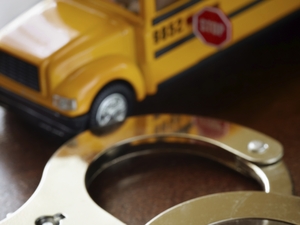
In 2010 and 2011, there were more than 1,000 school-related arrests in Broward County. Nearly three-quarters of them were for non-violent misdemeanors.
In Florida, one of the nation's largest school districts has overhauled its discipline policies with a single purpose in mind — to reduce the number of children going into the juvenile justice system.
It's a move away from so-called "zero tolerance" policies that require schools to refer even minor misdemeanors to the police. Critics call it a "school to prison pipeline."
Civil rights and education activists say the policy can be a model for the nation.
Under a new program adopted by the Broward County School District, non-violent misdemeanors — even those that involve alcohol, marijuana or drug paraphernalia — will now be handled by the schools instead of the police.
At a school board meeting today in Fort Lauderdale, a room full of lawyers, judges, police and educators applauded chair Laurie Rich Levinson's announcement.
"Zero tolerance" school policies became the norm across the country over the last 20 years and were fueled by concerns about gang violence and school shootings.
But Broward County, the nation's seventh largest school district, began looking seriously at changing its policies two years ago. District superintendent, Robert Runcie had just taken the job and was troubled.
"We saw huge differentials in achievement gaps among white, black and Hispanics students," Runcie said. "Black males in particular were in probably some of the worst situation in this district."
One of the first things Runcie did was order the district to compile its numbers on suspensions, arrests and expulsions — and they were startling. In 2010 and 2011, there were more than 1,000 school-related arrests, and nearly three-quarters of them were for non-violent misdemeanors.
Just as troubling is that in Florida and around the country, minorities are disproportionately affected — especially black males. State judge Elijah Williams said that although African-American kids make up just 40 percent of the school district's population, they account for 71 percent of the school arrests.
"We had the highest arrest rate in the state of Florida. And coincidentally, we had the highest drop-out rate," Williams said.
Although the agreement was signed today, the policies were adopted at the beginning of the school year. It's a series of counseling sessions, activities and interventions called the "Promise" program.
Officials say they're already seeing a steep drop in school-related arrests. And the Promise program is helping students like 17-year-old Maria Martinez. She's a senior and doesn't want to give details about what got her into trouble. But she said she was very nearly arrested.
"During my suspension, I went to the Promise program and it saved me. It saved my behind. If not, I would have been in bars, or behind bars," Martinez said.
Martinez said she's now getting ready to apply to college, and hopes to become a nurse or doctor.
Broward County is far from the only school district re-evaluating its zero tolerance disciplinary policies. Officials in Broward credit Clayton County, Ga. with leading the way. School districts in Wichita, Kan., Columbus, Ohio, and Birmingham, Ala., are just a few of many already following suit.
But Marcia Ellison, a member of the local NAACP, said this agreement goes further than the other programs: "What Broward has done is gone to make sure the administration is truly back in charge of the school. They have changed their school code of conduct which was a tool of funneling these kids. That has not happened across the country."
The NAACP is involved in a number of lawsuits challenging school discipline policies across the country. Ellison said this agreement shows a better way to begin dismantling the school to prison pipeline.
Copyright 2013 NPR. To see more, visit http://www.npr.org/.9())
06 Nov 00:02
Yoko Ono dance break!
by Jos
AnjaHow did all my favorite people end up on this Yoko Ono video?

Yoko Ono makes the world a better place with the help of some of her artist friends, including the Beastie Boys, Questlove, Cibo Matto, Ira Glass, Reggie Watts in a silver cape, Roberta Flack, Heems from Das Racist, and Mx Justin Vivian Bond.
(Lyrics here.)
The video was directed by Ben Dickinson and the dancing was inspired by a painting Yoko makes at the beginning. They were apparently going to hire someone else to paint the set before they realized it was a video for Yoko.
Yoko Ono previously increased the global supply of happiness with her cover of Katy Perry’s Firework.
Let’s take a couple minute break from whatever we’re doing to get our bad dance on. Because feminism.
10 Oct 20:53
Court rules unpaid intern can’t sue for sexual harassment
by zerlina
You can’t be serious! A woman who was allegedly sexually harassed while working an unpaid internship cannot sue her harasser because she was unpaid.
When unpaid interns encounter sexual harassment at work, federal law tells them tough luck. Some states and cities have expanded discrimination and harassment definitions to interns, but that does not include New York City, where a district court dismissed a sexual harassment claim from a former intern at Phoenix Satellite Television, Lihuan Wang. The reason she is not protected, the court said, was because she was not a compensated employee.
In January, Wang filed a complaint that two weeks into her internship in 2010, her supervisor had allegedly invited Wang to his hotel room, where he put his arms around her, tried to kiss her, and squeezed her butt. She pushed him away and said that she was not considered for a job later because of it.
This is one of those moments where the current law doesn’t cut it and serious lobbying to make sure that states and cities nationwide, including New York City, pass legislation that protects unpaid interns. It’s already an abuse of free labor to have interns who are not compensated, but to then subject them to a hostile and abusive work environment without any method of redress should they be harassed seems beyond the pale.
25 Sep 21:37
Black Girl Dangerous and Julio Salgado radicalize childhood cartoon characters
by Jos
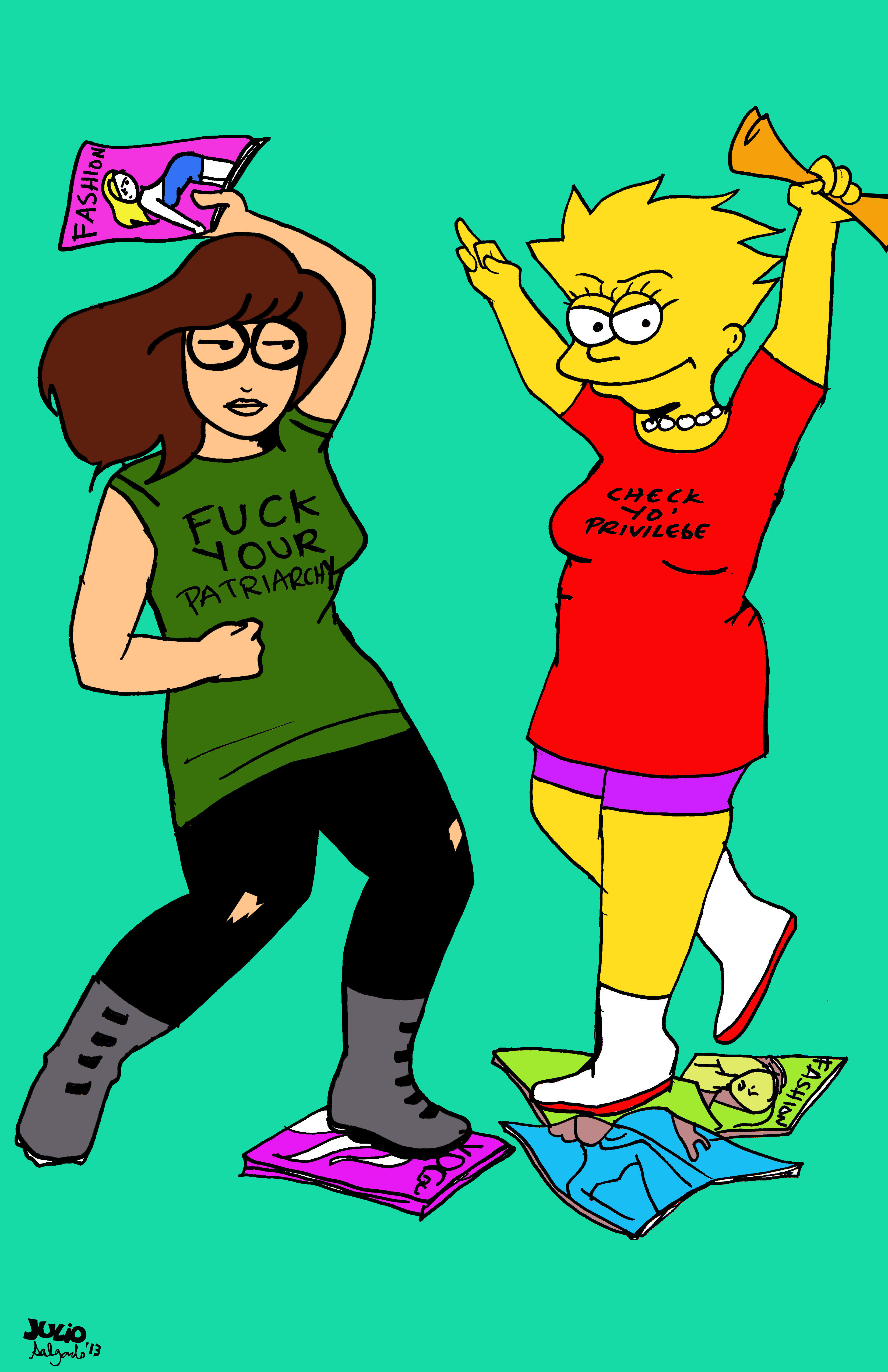
This week in awesome, Black Girl Dangerous commissioned artist Julio Salgado to draw childhood cartoon characters as social justice organizers. Mia McKenzie explains the genesis of the project:
So, a couple of weeks ago, there was this link going around that depicts certain 90s cartoon characters “taking on” New York fashion week in trendy outfits. Among them are Lisa Simpson and Daria. When I saw this, the first thing I thought was, Ugh. Lisa Simpson, proud feminist with so much to say about gender roles, body shaming and capitalism, drawn in this hyper-thin, rich girl way? Why, baby Jesus? Why? My friends had the same question, plus not-so-thrilled reactions to Daria. You know Daria, who once said, …”edgy” occurs when middle-brow, middle-aged profiteers are looking to suck the energy–not to mention spending money–out of the “youth culture”? Yep, that Daria is depicted in overpriced clothes, standing in front of a Mercedes dealership. Yuck.
BGD decided to respond with their own updated and radicalized versions of cartoon characters, hence Salgado’s kick ass illustrations. Here’s a couple of drawings from the project, with accompanying character bios:
Daria and Lisa Simpson
bio by Tina VasquezLisa Simpson and Daria Morgendorffer met by way of an alumni group through their mutual alma mater: Smith College. Once, after the Feminism & Media conference, they had one too many cocktails and ended up kissing in a Marriott Hotel hallway, but no weirdness ensued. Their shared love of dismantling patriarchy, smashing mainstream beauty standards, and using their middleclass, cisgender, heterosexual, white girl privilege to fuck shit up from inside was strong enough to push past the awkward aftermath. Morgendorffer works as a writing instructor with San Francisco’s 826 Valencia and Simpson is a women’s studies professor at the University of Illinois at Urbana-Champaign. In their free time, they collaborate on their zine Cat Fancy. Both women are still processing what they learned from #solidarityisforwhitewomen.
Susie Carmichael (Rugrats)
bio by Mia McKenzieSusie knew she was queer in 1993 when she watched the first episode of Living Single and saw Queen Latifah wearing that vest. She didn’t come out until her twenties, though, when she fell in love with another black femme (Jackie from Cyberchase) and moved with her to Oakland, where the two of them run an urban farm. She had a falling out with Angelica Pickles over her inability to recognize her white privilege and they didn’t talk for a couple of years. Eventually, Angelica got her shit together, started reading Black Girl Dangerous, apologized for her behavior, and they’re cool now. Susie spends most of her time preparing the farm to be a safe haven for QTPOC when capitalism finally falls and motherfuckers go berserk, and volunteering for People’s Community Medics. She documents her progress with both on her tumblr.

All the updated characters are wonderful – check them out at Black Girl Dangerous and check out more of Julio Salgado’s art at juliosalgado.com.
21 Sep 00:01
California Appeals Court Considers Whether Gays Qualify to Be On A "Jury of One's Peers"
by Kaitlyn
AnjaClint? Opinions?
What started in 2011 as an antitrust case between two pharmaceutical companies may now hinge on whether judges believe Abbott violated the rights of a gay man who was excluded from the jury.
20 Sep 04:24
Movement: "Us"
by Jamieson Cox
Sydney trio Movement inhabit a shadowy subspace where R&B and dance music begin to blur together and blend. Their new single on Modular, "Us", transcends standard lyrical lecherousness, advancing onto more troubling terrain. The vocal take is light and controlled, but it burns with menace and the type of heat lent to whispered threats in the corner of a black-lit club: "When we're alone in the dark/ And I could take you right now/ You're the way that I want you/ Moving for me." Flecks of steel drum sprinkled throughout the song's second half serve as welcome bits of color and light, an indication of the band's gift for cultivating atmosphere-- the darkness of "Us" threatens to overwhelm, demands a search for relief.
Movement: "Us" on SoundCloud.
Anja likes this
19 Sep 22:37
Daily Feminist Cheat Sheet
by Verónica Bayetti Flores
Meet Terra, the cutest 6-year-old b-girl whose fly moves we’re totally admiring today.
Texas women are struggling to find affordable reproductive health providers as clinics close. “There weren’t any less women [who] needed the service,” he said, adding, “There were just less women [who] got served.”
Pope Francis thinks the Catholic church has become obsessed with gays, abortion, and contraception to the detriment of its larger mission.
Ew. New Koch brother ads try to scare college students out of enrolling in Obamacare by depicting a creepy OB/GYN visit.
15 Sep 06:18
Blood Orange: "Chamakay"
by Jamieson Cox
AnjaLoving this video. It seems like it could belong in Kenyon Farrow's So Black and So Gay. Apparently he's not, though.
There are immediate visual similarities between the clips for Blood Orange's "Chamakay", the lead single from his upcoming record Cupid Deluxe, and Solange's "Losing You", one of the songs that shot Dev Hynes to a new level of prominence as a songwriter and producer: international settings, idiosyncratic fashions, plenty of dancing. But instead of running back the latter's bubbly, sun-dappled 1980s pop-R&B and South African backdrop, Hynes enlisted Chairlift vocalist Caroline Polachek and decamped to his ancestral home of Guyana for a beautifully produced, overcast duet.
It's up to Hynes and Polachek to bear much of the song's melodic weight-- they're supported by the odd hazy synth wash and some movement in the bass, and not much else-- and they do so capably, their interplay lending emotional heft to Hynes' lyrics. He layers Polachek's featherlight voice to build choruses and lingering, misty waves and shows off his keen ear for space, leaving a chasm between their vocals and a rich bass line. Taken together, his choices render "Chamakay" a weightless mid-tempo glide, a stark gem from an artist who's ready for a star turn.
07 Sep 05:06
Friday Feminist Fuck Yeah: LEGO unveils its first female scientist
by Maya

Photo credit: Maia Weinstock
I mean, it’s only taken a few decades since LEGO first launched minifigures in 1978 to get a female scientist on the roster. And sure, the total gender ratio of minifigure models is roughly 4:1 in favor of men–and the female ones that do exists seem excessively pink. (Last year, our friends over at SPARK protested the way the LEGO Friends line reinforced gender stereotypes.)
But hopefully this is one small step toward a future in which The New York Times isn’t still writing perplexed articles about the missing women in math and science.
07 Sep 05:05
Alan Rogers/Casper Star-Tribune
Did The NAACP Learn Anything From Meeting With The KKK?
Did The NAACP Learn Anything From Meeting With The KKK?
by TELL ME MORE STAFF
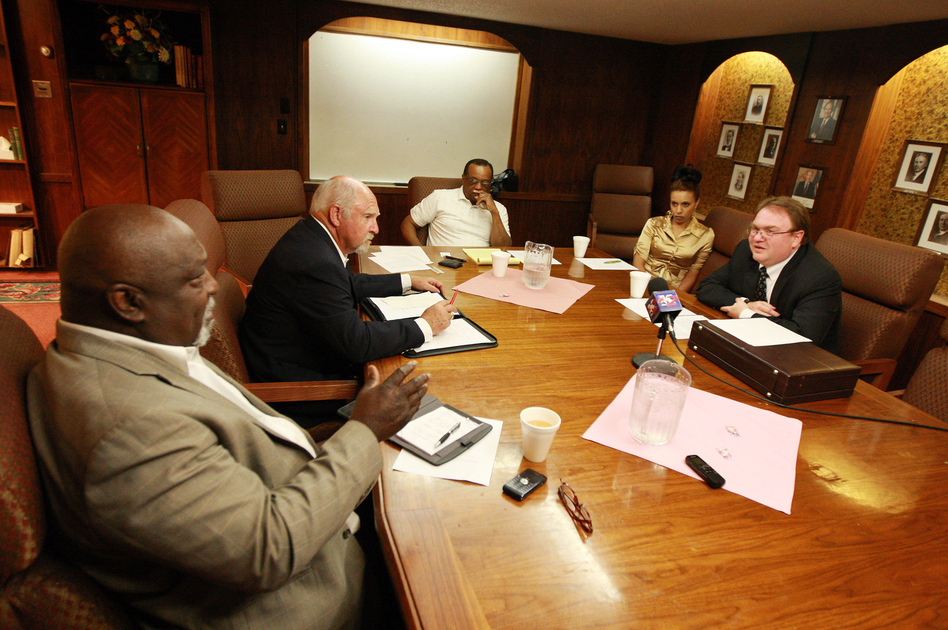
NAACP leaders from the Casper, Wyo., branch speak with members of the KKK at a heavily guarded meeting this past week.
"I think all my first dates were probably less awkward than this," says Jeremy Fugleberg, referring to the NAACP's meeting on Saturday night with the Ku Klux Klan in a hotel conference room in Casper, Wyo. Fugleberg is assistant managing editor for news at the Casper Star-Tribune and reported on the gathering.
The meeting took months to set up. It was prompted by a number of assaults on African-American men in Gillette, a town about 130 miles north of Casper. Jimmy Simmons, the president of the local NAACP chapter, said he was concerned that the attacks might have been racially motivated because the men were reportedly attacked after hanging out with white women. Klan literature began appearing in Gillette. So Simmons negotiated with the Klan for a sit-down meeting with John Abarr, a kleagle in the United Klan of America.
The meeting took place last Saturday night, and Fugleberg was one of the few members of the media invited to attend. He shared his observations with Tell Me More host Michel Martin.
Interview Highlights
On the meeting
"You had the NAACP on one side of a table. You had the one Klansman on the other. And they swung right into it. There were certainly some pleasantries at the beginning, and the next moment, we were talking about interracial marriage, and [John Abarr] would come out and say things that were completely consistent with his position as a Klansman, but just odd to hear said out in the air, much less in front of leaders of the NAACP."
On whether the NAACP challenged John Abarr on his opinions
“ Other members there were much harsher on him, saying, 'Look, how can you say that? How do you know that you're not black?'... because they were talking about Klan recruiting and he was insisting, 'I wouldn't let anybody who is black join.'
- Jeremy Fugleberg, Casper Star-Tribune
"They certainly challenged him. Jimmy Simmons, the branch president, he definitely took a lead in almost moderating it ... almost saying, 'Tell me more about that.' Other members there were much harsher on him, saying, 'Look, how can you say that? How do you know that you're not black?'... because they were talking about Klan recruiting and he was insisting, 'I wouldn't let anybody who is black join.' And they said, 'Well OK, so how do you know?' They said, 'Do you subscribe to this 'one drop of blood' process?' and he said, 'Oh yeah, that's definitely how we do it.' And again, of course, the question is: How do you know? 'Oh, I would know. I would know if somebody was black.' And they all laughed at that, because under his standards, that's not necessarily an easy thing to claim."
On what Abarr likes about being in the Klan
"He definitely seemed excited about the sense of belonging that you get from an organization like that, I suppose. He even mentioned at one point ... he almost equated being a member of the KKK to being an historical re-enactor — almost. And ... the NAACP members pushed him on that, and said, 'How do you do that without realizing that you are taking on the form and the character of an organization with the history that it has?' And every time he was pushed on that, he would admit that, sure, there had been some things during Reconstruction, but other than that, he wasn't aware of anything."
On how the meeting ended
"One of the [NAACP] members, Mel Hamilton, took the stance of trying to sum it up, saying, 'You know I'm really not happy with what I'm hearing. I don't think you're aware of your own history, and I don't feel like you're coming here seriously. I don't think you're taking this seriously.' Then [Abarr] was asked near the end, 'So what do you think of the NAACP now, after this meeting?' He said, 'Oh I think ... I really have more respect for the NAACP for having this meeting. I think it was awesome.' And then Mr. Simmons, out of the blue, says, 'Well, would you like to join up? Would you like to become a member [of the NAACP]?' And [Abarr] said, 'Sure. Yeah. I'd have no problem doing that.' And the next thing you know, he was signing the application form to become a member of the NAACP."
On the NAACP's reaction after the meeting
"I don't know that they were ultimately happy with what they heard. They got, maybe, a better understanding of this man's beliefs. But as far as changing something, I'm not sure that happened."
Copyright 2013 NPR. To see more, visit http://www.npr.org/.9())
04 Sep 04:36
Autostraddle Calendar Girls 2014: Rachel is Miss September
by Robin
AnjaHey Clare! Your girl Rachel is the calendar of the month!
Well this is your very own Rachel Fucking Walker without a shirt. Why are you still reading the excerpt?
28 Aug 19:55
Summer camp reunites kids with incarcerated fathers
by Sesali Bowen

Summer is just about over. And for some kids, that means that their time at camp has come to an end as well. Some of them could have been at band camp, dance camps, day camps, or even fat camp (which I have some serious issues with. But I digress…). But for some kids, camp was a week long trip that allowed them to spend time with their fathers behind bars.
House Hope is a DC based organization that offers multiple programs to not only strengthen the relationships among families in which the father is a DC prisoner, but attempts to build community among the mother and children left behind. According to their site:
“It has been said that when a person is sent to prison, the whole family is imprisoned as well. There are more than two million men and women in U.S. prisons. It is estimated that seventy-five percent are parents who have left behind between two and five million children. Most families who begin the incarceration experience intact will not remain so together.
According to a report in the Baltimore Sun (March 2, 1997), Washington D.C. has an incarceration rate that is four times the national average. Faced with a Congressional mandate to close its troubled Lorton Correctional Complex in Fairfax County by December 2001, all District of Columbia inmates were transferred to federal custody, and are being held in dozens of prisons, some as far away as California.”
The Father to Child Summer Camp Behind Bars is one of House Hope’s programs. Children of prisoners spend a week at a campground or conference center near a prison in Maryland or North Carolina. For several hours a day they engage in activities with their dads in prison. According to the site, the program is the first of it’s kind and the only summer camp for male prisoners in the nation.
Organizations like Hope House really remind me of the capacity we have to envision solutions to issues affecting our communities. This is an innovative way to address the multi-faceted issue that is the prison industrial complex.
27 Aug 06:19
Jagrap/Flickr
 Wikimedia Commons
A History Of 'Snake Oil Salesmen'
A History Of 'Snake Oil Salesmen'
by Lakshmi Gandhi
"Snake Oil Salesman." The phrase conjures up images of seedy profiteers trying to exploit an unsuspecting public by selling it fake cures. In fact, the Oxford English Dictionary defines snake oil as "a quack remedy or panacea." What the OED does not note, however, is that the history of snake oil is linked to an often forgotten chapter of Asian-American history.
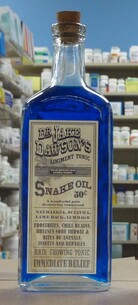
Made from the oil of the Chinese water snake, which is rich in the omega-3 acids that help reduce inflammation, snake oil in its original form was effective, especially when used to treat arthritis and bursitis.
Because the words "snake oil" are so evocative, it has been a favorite go-to phrase for politicians and lobbying groups on both sides of the aisle. Earlier this month, Kentucky Sen. Mitch McConnell called his opponent in the Republican primary, Tea Party candidate Matt Bevin, a snake oil salesman in a campaign mailer. While campaigning for a second term last year, President Obama referred to the Romney-Ryan tax plan as "trickle-down snake oil" at a rally. In 2008, the Natural Resources Defense Council Action Fund took out full-page ads in The Washington Post to denounce then-President George W. Bush's plan to drill in the Arctic National Wildlife Refuge, calling it "100 percent snake oil."
But what, exactly, is snake oil? And why is peddling it such a terrible thing?
The 1800s saw thousands of Chinese workers arriving in the United States as indentured laborers to work on the Transcontinental Railroad. According to historian Richard White's book Railroaded, about 180,000 Chinese immigrated to the United States between 1849 and 1882. The vast majority of the workers came from peasant families in southeastern China and were signed to contracts that ran up to five years for relatively low wages (compared with their white counterparts), wrote David Haward Bain in his book Empire Express.
Among the items the Chinese railroad workers brought with them to the States were various medicines — including snake oil. Made from the oil of the Chinese water snake, which is rich in the omega-3 acids that help reduce inflammation, snake oil in its original form really was effective, especially when used to treat arthritis and bursitis. The workers would rub the oil, used for centuries in China, on their joints after a long hard day at work. The story goes that the Chinese workers began sharing the oil with some American counterparts, who marveled at the effects.
So how did a legitimate medicine become a symbol of fraud? The origins of snake oil as a derogatory phrase trace back to the latter half of the 19th century, which saw a dramatic rise in the popularity of "patent medicines." Often sold on the back pages of newspapers, these tonics promised to cure a wide variety of ailments including chronic pain, headaches, "female complaints" and kidney trouble. In time, all of these false "cures" began to be referred to as snake oil.
As word of the healing powers of Chinese snake oil grew, many Americans wondered how they could make their own snake oil here in the United States. Because there were no Chinese water snakes handy in the American West, many healers began using rattlesnakes to make their own versions of snake oil.
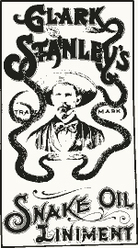
This set the stage for entrepreneur Clark Stanley, aka The Rattlesnake King. In an 1897 pamphlet about Stanley's life and exploits, the former cowboy claimed he had learned about the healing power of rattlesnake oil from Hopi medicine men. He never publicly mentioned Chinese snake oil at all. Stanley created a huge stir at the 1893 World's Exposition in Chicago when he took a live snake and sliced it open before a crowd of onlookers.
Joe Schwarcz, the director of McGill University's Office for Science and Society, described the scene in this 2008 article:
How did a legitimate medicine become a symbol of fraud?
"[Stanley] reached into a sack, plucked out a snake, slit it open and plunged it into boiling water. When the fat rose to the top, he skimmed it off and used it on the spot to create 'Stanley's Snake Oil,' a liniment that was immediately snapped up by the throng that had gathered to watch the spectacle."
There were two major problems with Stanley's claim about his oil:
First, rattlesnake oil was far less effective than the original Chinese snake oil it was trying to emulate. A 1989 letter to The Western Journal of Medicine from psychiatrist and researcher Richard Kunin revealed that the Chinese oil contained almost triple the amount of a vital acid as did rattlesnake oil.
Secondly, Stanley's Snake Oil didn't contain any snake oil at all. The Pure Food and Drug Act of 1906 sought to clamp down on the sale of patent medicines and it was that legislation that led to Stanley's undoing. After seizing a shipment of Stanley's Snake Oil in 1917, federal investigators found that it primarily contained mineral oil, a fatty oil believed to be beef fat, red pepper and turpentine. That's right — Stanley's signature product did not contain a drop of actual snake oil, and hundreds of consumers discovered they had been had.
It was probably around then that snake oil became symbolic of fraud. Snake oil salesmen and traveling doctors became stock characters in American Westerns. The first written usage of the phrase appeared in Stephen Vincent Benet's epic 1927 poem John Brown's Body, when the poet refers to "Crooked creatures of a thousand dubious trades ... sellers of snake-oil balm and lucky rings." About 30 years later, playwright Eugene O'Neill referred to snake oil in his 1956 play The Iceman Cometh, when a character suggested that a rival was "standing on a street corner in hell right now, making suckers of the damned, telling them there's nothing like snake oil for a bad burn."
As for what happened to Clark Stanley after it was found that his whole empire was based on a lie? He was fined $20 (that's about $429 in today's dollars) for violating the food and drug act and for "misbranding" his product by "falsely and fraudulently represent[ing] it as a remedy for all pain."
Stanley did not dispute the charges.
Copyright 2013 NPR. To see more, visit http://www.npr.org/.9())
17 Aug 04:18
Daily Feminist Cheat Sheet
by Alexandra
Anjathe letters from black men is incredible. i only we could all be as conscientious about our privilege
#fuckcispeople is trending on Twitter. Read it.
The Ohio “heartbeat” bill to ban abortion after six weeks is back.
Dream Defenders leave capitol: “our work has grown too big for these halls.”
A NARAL intern went undercover at a crisis pregnancy center.
Six facts about Harriet Tubman that have nothing to do with Russell Simmons.
Keeping with the theme: six things to know as a queer freshman.
Letters from black men (including our own Mychal) in response to #blackpowerisforblackmen.
17 Aug 04:16
Eric Risberg/AP
Yoichi Okamoto/Lyndon Baines Johnson Library
The Shift In Black Views Of The War On Drugs
Anjai thought this was a really nuanced way of looking at the war on drugs
The Shift In Black Views Of The War On Drugs
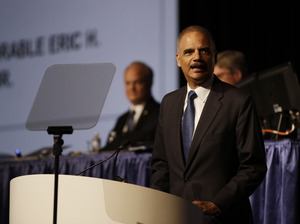
U.S. Attorney General Eric Holder is calling for major changes to the nation's criminal justice system that would cut back the use of harsh sentences for certain drug-related crimes.
This week, Attorney General Eric Holder called for sweeping changes to America's 40-year war on drugs. Holder is the first African-American in the nation's top law enforcement post. He's also part of a growing movement of black leaders who have pushed for major reforms to the drug war.
Four years ago, New York's then-Gov. David Paterson stood in a drug treatment center in Queens and made history. "And finally today, on this sunny day, with the stroke of a pen, we will end the regime of the Rockefeller drug laws."
New York's first black governor rolled back the mandatory minimum sentencing laws, first passed in 1973, that disproportionately locked up African-American men.
And now Holder argues that Rockefeller-style laws should be eased at the federal level as well.
"The war on drugs is now 30, 40 years old. There have been a lot of unintended consequences. There's been a decimation of certain communities, in particular communities of color," says Holder.
This idea — that strict drug laws have done more harm than good in black America — is common these days. But early on, many African-American leaders championed those same tough-on-crime policies.
The Rev. George McMurray was lead pastor at the Mother A.M.E. Zion Church in Harlem in the 1970s, when the city faced a major heroin epidemic. He called for drug dealers to spend the rest of their lives behind bars.
"When you send a few men to prison for life, someone's going to pass the word down, 'It's not too good over here.' ... Instead of [robbing] and selling dope, 'I want to go to school and live a good life.' "
Black support for the drug war didn't just grow in New York alone. At the federal level, members of the newly formed Congressional Black Caucus met with President Richard Nixon, urging him to ramp up the drug war as quickly as possible.
Michael Javen Fortner, a political scientist and historian at Rutgers University, says that "the silent black majority of Harlem and New York City felt constantly accosted by drug addicts, by pushers, by crime."
But the idea that black leaders played a pivotal role in the drug war is controversial. Some black academics, including Michelle Alexander — author of the best-selling book The New Jim Crow — disagree about the role of black America in promoting and sustaining the drug war.
Alexander declined to be interviewed for this story, but in previous public comments she has portrayed the drug war as the creation of white politicians, deliberately targeting black Americans.
"The drug war was motivated by racial politics, not drug crime. The drug war was launched as a way of trying to appeal to poor and working-class white voters, as a way to say, 'We're going to get tough on them, put them back in their place.' And 'them' was not-so-subtly defined as African-Americans."
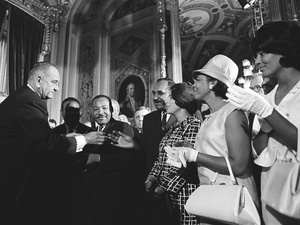


Martin Luther King Jr. attends Lyndon B. Johnson's signing of the Voting Rights Act on Aug. 6, 1965. During this time, the drug war was expanding.
But Fortner is not the only historian who has documented the push by black leaders for strict sentencing laws. Still, he admits his account is deeply controversial.
"If you think that everything can be explained by white backlash, if you think the white racial order is somehow omnipresent and all-powerful, and is always trying to... re-establish its power and legitimacy, then you hate what I do," says Fortner.
Voting records show that many black lawmakers supported some of the most punitive drug-war-era laws in America. But even some people who have long opposed harsh sentencing laws understand where supporters were coming from. The Rev. Herbert Daughtry, a longtime pastor in New York, once was addicted to heroin and served time. He's convinced that black leaders who embraced the drug war did serious harm to the community, but says a lot of African-Americans were desperate for ways to make their neighborhoods safe again. "If you're the victim, then you don't want to hear anything about treatment, just, 'Get this guy off the street.' "
But eventually, even some of the staunchest supporters of mandatory minimums saw that these policies had badly backfired, in part because they lumped addicts and small-time dealers with drug kingpins and violent gang leaders. And they also consigned countless African-American men to prisons across the country.
This story was produced in partnership with the Prison Time Media Project.
Copyright 2013 WNYC Radio. To see more, visit http://www.wnyc.org/.9())
16 Aug 03:41
American Bar Association Confirms Neither "Gay Panic" Nor "Trans Panic" Are Excuses for Murder
by Daniela
The American Bar Association urges for legislative action to limit the availability and effectiveness of the "gay panic" and "trans panic" defenses in any criminal trial.
15 Aug 07:13
Style Thief: How to Dress Like Esther Quek
by Lizz
Anjastyle inspiration
Grab your shades, your suit and all the style you can muster. We're stripping down Esther Quek.
12 Aug 21:00

Laurence Doligé FW13 Collection. Some chic and feminine silhouettes, inspired by the masculine style.
(Want more? See NOTCouture)
Laurence Doligé FW13 Collection. Some chic and...
by LABELLESOCIETE
AnjaClare? thoughts on this line?
Laurence Doligé FW13 Collection. Some chic and feminine silhouettes, inspired by the masculine style.
(Want more? See NOTCouture)
10 Aug 05:27
Drake: "Hold On We're Going Home"
by Corban Goble
Much has certainly been made of Drake's ability to rap and sing on the same song-- "That's why every song sounds like Drake featuring Drake", remember-- but the truth is, he's at his best when he picks one side or the other. As he continues to knock out teasers for the forthcoming Nothing Was the Same, Drake checks in by going full pop, dropping a disco-y two-step called "Hold On We're Going Home" the morning after his own OVO Fest wrapped up. It's a joint that comes across as a more quickly paced, more assertive take on cuts like Thank Me Later's "Find Your Love" or "Karaoke". "I want your hot love and emotion, endlessly," Drake sings, starry-eyed, charging headfirst into an heavenly breakdown. "Hold On We're Going Home" is pure pillow. Don't be surprised if it smothers the radio.
Drake: "Hold On, We're Going Home" [ft. Majid Jordan] on SoundCloud.
06 Aug 05:30
More Than Words: Pronouns Pt. 2 — How'd Gender Get In Here?
by Cara
"I'd skipped a really basic question: why do some languages, including English, have gender woven into them in the first place?"