Scott Lord Mystery Film
Shared posts
21 Oct 04:17
Scandinavian Silent Film: Victor Sjostrom as Seastrom, Mauritz Stiller, John Brunius, Greta Garbo: Scott Lord Silent Film: Beau Brummel (Beaumont, 1924)
Scott Lord, Scott Lord Mystery Film and 2 others like this
02 Jul 04:53
Bloggportalen.se - Greta Garbo Silent Film
Scott Lord, Scott Lord and 3 others like this
22 Jun 04:02
Bloggportalen.se - Greta Garbo
Scott Lord, Scott Lord Mystery Film and one other like this
22 Jun 04:01
Bloggportalen.se - Svensk bloggportal - Din guide till den svenska bloggvärlden
Scott Lord, Scott Lord and one other like this
03 Jun 04:36
In Memory of her father, Frank McLaughlin
by Scott Lord on Silent Film
I gave Donna a sympathy card on her father’s passing away which reads Nothing Loved Is Ever Lost. She had a doctor’s appointment today after which we went to lunch in an unfamiliar suburb. During a walk before going home we found a museum devoted to the American Revolutionary War. It was the house of a soldier that died during the first shots of the Revolutionary. The garden was fairly beautiful and there are outdoor guided tours during the week- in fact the house itself looks empty, so we gained as much as anyone would. Donna’s father was the prinicpal of Pleasant Point High School in New Jersey and she likes anything to do with the American Revolution here in Boston and near Harvard University. The church library where she worked before Co-Vid 19 in fact had a window to an adjoing graveyard where John Hancock, John Adams, Paul Revere and James Otis were buried. Since her father passed way this week, the musuem after hours provided a meditaive place for seenity that combines with the curiousity which life itself affords, ie. the wonder of prayer. In that way the afternoon, despite being a romantic date, was spent in the memory of her father. 


 The above is a photo of Donna's father from the Point Pleasant Beach Highschool year book from when Donna was attending highschool at nearby Tom's River High School, North, both on the New Jersey Shore.


Scott Lord, Scott Lord and 2 others like this
03 Jun 04:36
Donna as Boston reopens
by Scott Lord on Silent Film
We went to lunch again, its SPRING. This time on the other side of the Longfellow Bridge. 

Scott Lord, Scott Lord and 2 others like this
03 Jun 04:36
Donna as Harvard Square reopens
by Scott Lord on Silent Film
During Christmas and New Year, Donna and I spent from a thousand to fifteen hundread dollars on food delivery in light of her having been sick, including with COVID. Particulalry baked scallops (I pronounced them scollops). The beginning of Spring has brought us out to restaurants again. 


Scott Lord, Scott Lord and 2 others like this
03 Jun 04:36


 We had Rice Crispies after being awake all night.
early morning Cambridge
by Scott Lord on Silent Film


Scott Lord, Scott Lord and 2 others like this
25 May 13:38
During 1912, Lilli Beck appeared in the sequel to the film "The Flying Circus" (Lind, 1912), again appearing on the screen as a snake charmer under the direction of Alfred Lind in "The Bear Tamer of the Flying Circus".
Alfred Lind is notable for having directed the seven reel film "The Masque of Life/The Jockey of Death" during 1916 if only for its having been an example of an early attempt to create a new genre of "Thrill" movies in it continuance of circus themes and motifs, the publicity for the film similar to that of serials, or "cliffhangers", a later short film directed by Lind survives from 1923 entitiked "Filmens vovehals" (Daredevil of the Movies", starring Emilie Sannom.
During 1913, Motography Magazine in the United States introduced The Great Northern Film Company to its readers by defining the "circus thrill" film as an emerging genre, "The natural scenery in the suburbs of Copenhagen and in the country surrounding this old city afford all that could be desired for the taking of motion pictures and the atmospheric conditions have been pronounced as ideal by experts in the art of motography. The companyy boasts of a perfectly equipped circus arena in which many of its talked of feature productions are made." Lilli Beck Silent Film
Scott Lord Scandinavian Silent Film: Bjrnetaemmern (Bear Tamer of the Fl...
by Scott Lord on Silent Film
During 1912, Lilli Beck appeared in the sequel to the film "The Flying Circus" (Lind, 1912), again appearing on the screen as a snake charmer under the direction of Alfred Lind in "The Bear Tamer of the Flying Circus".
Alfred Lind is notable for having directed the seven reel film "The Masque of Life/The Jockey of Death" during 1916 if only for its having been an example of an early attempt to create a new genre of "Thrill" movies in it continuance of circus themes and motifs, the publicity for the film similar to that of serials, or "cliffhangers", a later short film directed by Lind survives from 1923 entitiked "Filmens vovehals" (Daredevil of the Movies", starring Emilie Sannom.
During 1913, Motography Magazine in the United States introduced The Great Northern Film Company to its readers by defining the "circus thrill" film as an emerging genre, "The natural scenery in the suburbs of Copenhagen and in the country surrounding this old city afford all that could be desired for the taking of motion pictures and the atmospheric conditions have been pronounced as ideal by experts in the art of motography. The companyy boasts of a perfectly equipped circus arena in which many of its talked of feature productions are made." Lilli Beck Silent Film
Scott Lord, Scott Lord and 4 others like this
25 May 13:38
Actress Linda Arvidson, writing in the periodcial Film Fun during 1916, includes the "now historic" film "The Advntures of Dollie" (one reel) directed by D.W Griffith for the Biograph Film Companyin 1908. Arvidson wrote under the name Mrs. D.W. Griffith. In one installment she reminisces about travelling to film exterior scenes, claiming they hadn't automobiles yet and visited locations by train or by boat. In a later installment she dicusses her salary for the film, "How much money I made! Twenty eight dollars in two weeks, enough for a whole spring outfit." What is more enjoyable is the autobiography of Mrs. D.W. Griffith, When Movies Were Young, published in 1925. Much of the material from the Film Fun periodical is repeated, worded similarly, as she gives an account of D.W. Griffith the actor being offered a provisional chance to direct his first film, "The Adventures of Dollie", given that he could return to acting if necessary. Mrs. D.W. Griffith exlains Griffith having been accepted as a director for Biograph, "For one year now, those movies so covered with slime and so degraded would have to come first to come first in his thoughts and affections....agonizing days when he would have given his life to be able to chuck the job." She includes not only the studio on East Fourteenth Street but the theaters on Third and Ninth Avenues as places into which one would not be seen going.
Author Edward Wagenkneckt, in his volume The Films of D.W. Griffith, chronicles that 'The Adventures of Dollie", filmed in July of 1908, was the first of 450 films directed by D.W. Griffith for the Biograph Film Company before leaving in September of 1913 all but eleven having been one reelers. The cinematographer to the film was Arthur Marvin. Arthur Marvin also during 1908 photographed the film "Behind the Scenes" for D.W. Griffith, the film having starred Florence Lawrence, Kate Bruce and Gladys Egan.
Lillian Gish, i her autobiography The Mr. Griffith and Me, with writer Ann Pinchot, chronicles that "The Adventures of Dollie" was the film that had begun Griffith's catapult to fame, "Although Billy Bitzer was not the photographer to the film, he helped with the direction...Soon everyone wanted more films by the man who was responsible for 'Dollie' . On the momentum of his first success, he turned out ten more pictures in a month." Lillian Gish quotes G.W. Bitzer in the chapter, but note that Bitzer's autobiography was published four years after Gish's.
Author Roger Manvell, in his sixty page introduction to the anthology "Experiment in the Film" credits "The Adventures of Dollie" as the first film in which D.W. Griffith had used the flashback.
Peter Cowie, in his volume Eighty Years of Cinema, notes that it was in 1908, in the film "For Love of Gold", that D.W. Griffith had first used the close up shot in film.
In regard to my webpage series "Lost Films, Found Magazines", begun at a time when film preservation was unearthing many unseen masterpieces from the silent era, author Tom Gunning, in his volume D.W. Griffith and the origins of American Narrative Film, lends a caution that supports the premise of needing a film history detective while dismissing the perfect accuracy of historiography and the endeavor. "The accounts of Griffith's biograph films given by Lewis Jacobs, George Sandoul and Jean Mitry are filled with descriptions that do not correspond with the actual films. Based primarily on written descriptions rather than on the films themselves, these errors are recycled in textbooks on film history." Gunning cites in particular the autobiography of the wife of D.W. Griffith, Linda Arvidson. According to Gunning, the point of departure used by Lewis Jacobs was primarily the editing that Griffith employed; while looking at Terry Ramsaye and his analysis of shot structure, Gunning adds the phrases "screen grammar" and "pictorial rhetoric" to the familiar "syntax of film narration". "For Sandoul, Griffith's stylistic innovation shattered the theatrical unity of space by introducing the ubiquity of the camera and a unity of action." Gunning also advances the semilogical analysis of Christian Metz as a review of Griffith at Biograph having brought a "liberation of film from theatrical tradition" with the creation of a "film language.", the cinema of attractions bringing new "codified constuctions" to accomadate the cinema of narrative integration, "syntagmas in which individual shots depend on their relation to other shots in the chain for their meaning." Tom Gunning writes, "Dollie's story forms a perfect match with Todorov's "minimal complete plot" although Griffith structures the story through a "spatial as well as narrative circuit". Gunning is referring to the writing of Tzvetan Todorov on narrative equilibrium, progress and resolution who places plot among the elements of narrative, which also include characters, point of view, setting, theme, comflict and style.
Arthur Knight, in his volume The Livliest Art gives one summary of the importance of D.W. Griffith, "He created the art of the film, its language, its syntax. It has often been said that Griffith 'invented' the close-up, that he 'invented' cutting, the camera angle, or the last minute rescuse...He refined these elements already present in motion pictures."
Silent Film
Scott Lord Silent Film: Linda Arvidson in The Adventures of Dollie (D.W....
by Scott Lord on Silent Film
Actress Linda Arvidson, writing in the periodcial Film Fun during 1916, includes the "now historic" film "The Advntures of Dollie" (one reel) directed by D.W Griffith for the Biograph Film Companyin 1908. Arvidson wrote under the name Mrs. D.W. Griffith. In one installment she reminisces about travelling to film exterior scenes, claiming they hadn't automobiles yet and visited locations by train or by boat. In a later installment she dicusses her salary for the film, "How much money I made! Twenty eight dollars in two weeks, enough for a whole spring outfit." What is more enjoyable is the autobiography of Mrs. D.W. Griffith, When Movies Were Young, published in 1925. Much of the material from the Film Fun periodical is repeated, worded similarly, as she gives an account of D.W. Griffith the actor being offered a provisional chance to direct his first film, "The Adventures of Dollie", given that he could return to acting if necessary. Mrs. D.W. Griffith exlains Griffith having been accepted as a director for Biograph, "For one year now, those movies so covered with slime and so degraded would have to come first to come first in his thoughts and affections....agonizing days when he would have given his life to be able to chuck the job." She includes not only the studio on East Fourteenth Street but the theaters on Third and Ninth Avenues as places into which one would not be seen going.
Author Edward Wagenkneckt, in his volume The Films of D.W. Griffith, chronicles that 'The Adventures of Dollie", filmed in July of 1908, was the first of 450 films directed by D.W. Griffith for the Biograph Film Company before leaving in September of 1913 all but eleven having been one reelers. The cinematographer to the film was Arthur Marvin. Arthur Marvin also during 1908 photographed the film "Behind the Scenes" for D.W. Griffith, the film having starred Florence Lawrence, Kate Bruce and Gladys Egan.
Lillian Gish, i her autobiography The Mr. Griffith and Me, with writer Ann Pinchot, chronicles that "The Adventures of Dollie" was the film that had begun Griffith's catapult to fame, "Although Billy Bitzer was not the photographer to the film, he helped with the direction...Soon everyone wanted more films by the man who was responsible for 'Dollie' . On the momentum of his first success, he turned out ten more pictures in a month." Lillian Gish quotes G.W. Bitzer in the chapter, but note that Bitzer's autobiography was published four years after Gish's.
Author Roger Manvell, in his sixty page introduction to the anthology "Experiment in the Film" credits "The Adventures of Dollie" as the first film in which D.W. Griffith had used the flashback.
Peter Cowie, in his volume Eighty Years of Cinema, notes that it was in 1908, in the film "For Love of Gold", that D.W. Griffith had first used the close up shot in film.
In regard to my webpage series "Lost Films, Found Magazines", begun at a time when film preservation was unearthing many unseen masterpieces from the silent era, author Tom Gunning, in his volume D.W. Griffith and the origins of American Narrative Film, lends a caution that supports the premise of needing a film history detective while dismissing the perfect accuracy of historiography and the endeavor. "The accounts of Griffith's biograph films given by Lewis Jacobs, George Sandoul and Jean Mitry are filled with descriptions that do not correspond with the actual films. Based primarily on written descriptions rather than on the films themselves, these errors are recycled in textbooks on film history." Gunning cites in particular the autobiography of the wife of D.W. Griffith, Linda Arvidson. According to Gunning, the point of departure used by Lewis Jacobs was primarily the editing that Griffith employed; while looking at Terry Ramsaye and his analysis of shot structure, Gunning adds the phrases "screen grammar" and "pictorial rhetoric" to the familiar "syntax of film narration". "For Sandoul, Griffith's stylistic innovation shattered the theatrical unity of space by introducing the ubiquity of the camera and a unity of action." Gunning also advances the semilogical analysis of Christian Metz as a review of Griffith at Biograph having brought a "liberation of film from theatrical tradition" with the creation of a "film language.", the cinema of attractions bringing new "codified constuctions" to accomadate the cinema of narrative integration, "syntagmas in which individual shots depend on their relation to other shots in the chain for their meaning." Tom Gunning writes, "Dollie's story forms a perfect match with Todorov's "minimal complete plot" although Griffith structures the story through a "spatial as well as narrative circuit". Gunning is referring to the writing of Tzvetan Todorov on narrative equilibrium, progress and resolution who places plot among the elements of narrative, which also include characters, point of view, setting, theme, comflict and style.
Arthur Knight, in his volume The Livliest Art gives one summary of the importance of D.W. Griffith, "He created the art of the film, its language, its syntax. It has often been said that Griffith 'invented' the close-up, that he 'invented' cutting, the camera angle, or the last minute rescuse...He refined these elements already present in motion pictures."
Silent Film
Silent Film
Scott Lord, Scott Lord and 4 others like this
16 Oct 02:25
Charles River Yacht Club, date for cheeseburgers
by Scott Lord on Silent Film, Swedish Silent Film, Danish Silent Film,
Scott Lord, Scott Lord and 2 others like this
26 Sep 01:44
Scott Lord Horror Comedy: Spooks in 3D
by Scott Lord on Silent Film, Swedish Silent Film, Danish Silent Film,
Scott Lord Mystery Film, Scott Lord likes this
24 Sep 06:07
Scandinavian Silent Film: Victor Sjostrom as Seastrom, Mauritz Stiller, John Brunius, Greta Garbo: Scott Lord Silent Film: The Unbeliever (Alan Crosland, Edison Company, 1...
Scott Lord, Scott Lord Mystery Film and 2 others like this
24 Sep 06:07
The Photoplay: Silent Film Movie Posters
Scott Lord, Scott Lord Mystery Film and 2 others like this
24 Sep 05:47


 Victor Fleming, who appeared onscreen in the film as himself, directed Douglas Fairbanks with actress Kathleen Clifford in the film ""When the Clouds Roll BY" (six reels) during 1919 from a photoplay written by Thomas J Geraghty. Fleming had began as a cinematographer for director Alan Dwan. Victor Flemming the following year directed Douglas Fairbanks in the film "The Mollycoddle".
During 1919 Douglas Fairbanks starred with Marjorie Daw in the five reel film "Knickerbocker Buckaroo", which he wrote under the pseudonym Elton Thomas (Elton Banks). Directed by Albert Parker the film is presumed lost, with no existing surviving copies.

 Silent Film
In regard to "Lost Films, Found Magazines" a theme in the historiography of my archive on the internet:like the subtitle of a thesis- although the film "A Knickerbocker Buckaroo" does not exist, there being no surviving copies at present, the Exhibitor's Press Book does, providing extratextural discourse to the film within the context of the silent era and at a specific point in Douglas Fairbank's career.


 Douglas Fairbanks in Reaching for the Moon
Exhibitor's Trade Review claimed, "You can make good on Big Promises with this 'Knickerbocker Buckaroo'", the publication urging the four column newspaper ad and 24 sheet be used in "A Chance to Cash in on Ad Exploitation". Douglas Fairbanks
Lost Silent Film
Scott Lord Silent Film: Douglas Fairbanks in When the Clouds Roll By (V...
by Scott Lord on Silent Film


During 1919 Douglas Fairbanks starred with Marjorie Daw in the five reel film "Knickerbocker Buckaroo", which he wrote under the pseudonym Elton Thomas (Elton Banks). Directed by Albert Parker the film is presumed lost, with no existing surviving copies.


In regard to "Lost Films, Found Magazines" a theme in the historiography of my archive on the internet:like the subtitle of a thesis- although the film "A Knickerbocker Buckaroo" does not exist, there being no surviving copies at present, the Exhibitor's Press Book does, providing extratextural discourse to the film within the context of the silent era and at a specific point in Douglas Fairbank's career.


Exhibitor's Trade Review claimed, "You can make good on Big Promises with this 'Knickerbocker Buckaroo'", the publication urging the four column newspaper ad and 24 sheet be used in "A Chance to Cash in on Ad Exploitation".

Lost Silent Film
Scott Lord, Scott Lord Mystery Film and 2 others like this
24 Sep 05:47


 "Outside the Law" (eight reels), directed by Tod Browning during 1920, was coscripted by Browning with Gardner Bradford and Lucien Hubbard and photographed by William Fildew. The films stars Lon Chaney and actress Priscilla Dean. Advertisements placed in the periodical Motion Picture News annouced Leo McCarey as first executive assistant to Tod Browning, whom it credited with not only being the film's director but its "Author". The Film Daily reviewed its direction as being "uniformly excellent" but its story as lacking stregnth although lifted by its actors Lon Chaney and Priscilla Dean.
Motion PIcture News reintroduced Tod Browning to its readers during 1921 as one of the youngest directors, then still in his thirties, whom D.W.Griffith had brought to Hollywood while with Mutual, which led to Browning directing two-reelers at Majestic. While reviewing "Outside the Law" the periodical credited Tod Browning, "master of melodrama" with priviledged knowledge of "underworld haunts". It reminded readers that they had seen Lon Chaney and Priscilla Dean together in the film "The Wicked Darling."
The later film, "Outside the Law" was directed by Tod Browning during 1930 but has different characters than the earlier film, his having coscripted the film with Garret Fort. The film was photographed by Roy Overbaugh and starred actress Mary Nolan. Lon Chaney Lon Chaney Silent Film
Scott Lord Silent Film: Lon Chaney in Outside the Law (Tod Browning, 1920)
by Scott Lord on Silent Film


Motion PIcture News reintroduced Tod Browning to its readers during 1921 as one of the youngest directors, then still in his thirties, whom D.W.Griffith had brought to Hollywood while with Mutual, which led to Browning directing two-reelers at Majestic. While reviewing "Outside the Law" the periodical credited Tod Browning, "master of melodrama" with priviledged knowledge of "underworld haunts". It reminded readers that they had seen Lon Chaney and Priscilla Dean together in the film "The Wicked Darling."
The later film, "Outside the Law" was directed by Tod Browning during 1930 but has different characters than the earlier film, his having coscripted the film with Garret Fort. The film was photographed by Roy Overbaugh and starred actress Mary Nolan. Lon Chaney Lon Chaney Silent Film
Silent Film
Scott Lord, Scott Lord Mystery Film and 2 others like this
24 Sep 05:47
The Photoplay: Silent Movie Lobby Cards, Mary Pickford
by Scott Lord on Silent Film


Scott Lord, Scott Lord Mystery Film and 2 others like this
24 Sep 05:47

 Author Paul Rotha, in his volume The Film Till Now, seems to have begun a retrospective on the work of film director Dimitri Buchowetski, "Of other European directors who have had their fling in Hollywood, Dimitri Buchowetski has not been successful." He apparently lacks the need to include Buchowetski having been taken of the set of the Greta Garbo film "Love", much like Mauritz Stiller had been taken of the set of the Greta Garbo film "The Temptress", and continues to asses other unsuccesul directors by merely listing them.
The review of "The Swan" (six reels) in the periodical "Film Daily" from 1925 predates Rotha, "Tinselled Production That Glitters With The Best Art Directors Can Give and the Best Buchowtski Direction" It noted the film's direction by Buchowetski as having been "excellant", claiming "his unusual skill is displayed throughout." Buchowetski wrote and directed the film. His cameraman was Alvynn Wycoff.
Silent Film
Victor Sjostrom
The Grand Duchess and the Waiter
Author Paul Rotha, in his volume The Film Till Now, seems to have begun a retrospective on the work of film director Dimitri Buchowetski, "Of other European directors who have had their fling in Hollywood, Dimitri Buchowetski has not been successful." He apparently lacks the need to include Buchowetski having been taken of the set of the Greta Garbo film "Love", much like Mauritz Stiller had been taken of the set of the Greta Garbo film "The Temptress", and continues to asses other unsuccesul directors by merely listing them.
The review of "The Swan" (six reels) in the periodical "Film Daily" from 1925 predates Rotha, "Tinselled Production That Glitters With The Best Art Directors Can Give and the Best Buchowtski Direction" It noted the film's direction by Buchowetski as having been "excellant", claiming "his unusual skill is displayed throughout." Buchowetski wrote and directed the film. His cameraman was Alvynn Wycoff.
Silent Film
Victor Sjostrom
The Grand Duchess and the Waiter
Scott Lord Silent Film: Frances Howard in The Swan (Dimitri Buchowetzki,...
by Scott Lord on Silent Film
Scott Lord, Scott Lord Mystery Film and 2 others like this
24 Sep 05:47
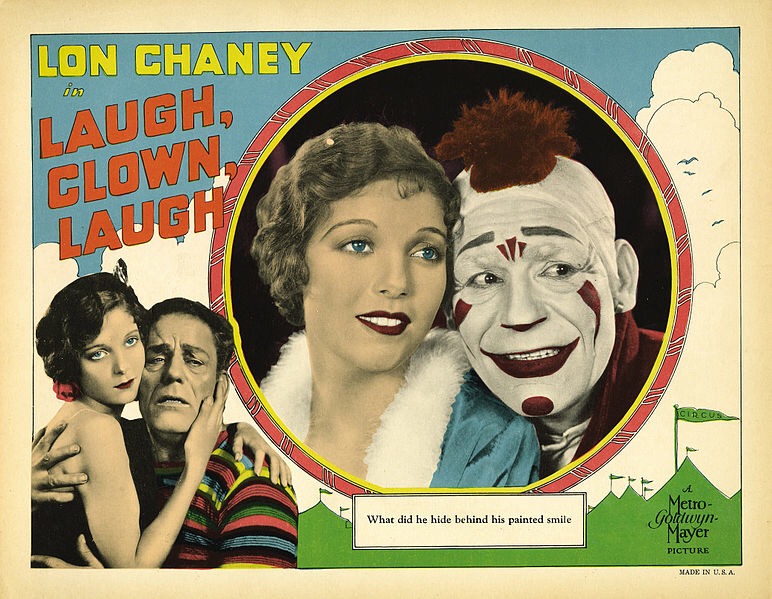
The Photoplay: Silent Movie Lobby Cards, Lon Chaney
by Scott Lord on Silent Film




Scott Lord, Scott Lord Mystery Film and 2 others like this
24 Sep 05:46
Scott Lord The Cat and the Canary (1927)
by Scott Lord on Silent Film
Scott Lord, Scott Lord Mystery Film and 2 others like this
24 Sep 05:46
Scott Lord Silent Film: Raffles, the Amateur Cracksman (1917)
by Scott Lord on Silent Film
John Barrymore portrayed the titular character in "Raffles, the Amateur Cracksman" directed by George Irving in 1917. Starring in the film with Barrymore were actresses Evelyn Brent and Christine Mayo.
John Barrymore
John Barrymore
Scott Lord, Scott Lord Mystery Film and 2 others like this
24 Sep 05:46
 The caption to the review of "A Girl's Folly" (five reels) in the periodical Wid's Films and Film Folk during March 1917 read "Bad Moral and Tells Secrets, But Will Get Money." It elaborated further with "Very interesting, but tells studio secrets, which is dangerous," if that too can be deciphered by a modern audience sauntering through the cannon of silent films left remaining that have not yet deteriorated over time. The periodical then went so far as to, half-heartedly or not, suggest that "exhibitors", theater owners, should "protest" the film's having divulged what were "backstage secrets". The periodical admittedly was looking for the exploitation of silent films but it takes a historian's glance to decided if there was a sensationalism on which the reviewer may have counted during an extratextural discourse. It continued to question "purely from the viewpoint of whether you can get money with it" and conceded, "The thread of the story is quite slender and has a very questionable moral as presented, but the introduction of scenes showing clearly activity about a film studio is sure to prove exceptionally interisting to any film fan." It offerred the theater owner consolation, "Since the producer has already gone and 'done it', I presume you might as well go ahead and get the money with this, because it would be impossible to eliminate the back-stage scenes and have a picture left."
The photoplay was cowritten with director Maurice Tourneaur by Frances Marion and starred actresses Doris Kenyon, Robert Warwick and June Eldvidge. Frances Marion that year also wrote the photplays to to the films Rebecca of Sunnybrook Farm and Poor Little Rich Girl both starring Mary Pickford. Actress Doris Kenyon appeared on screen in the films of Alice Guy Blanche, in 1916 in the film "The Queen's Waif" and in 1917 in "The Empress".
During 1917 Robert Warwick and Doris Kenyon also starred together in "The Man Who Forgot" (Emile Chautard). The film is presumed to be a lost silent film, with no surviving copies existing.
Silent Film Silent Film
Scott Lord Silent Film: A Girl's Folly (Tourneur, 1917)
by Scott Lord on Silent Film

The photoplay was cowritten with director Maurice Tourneaur by Frances Marion and starred actresses Doris Kenyon, Robert Warwick and June Eldvidge. Frances Marion that year also wrote the photplays to to the films Rebecca of Sunnybrook Farm and Poor Little Rich Girl both starring Mary Pickford. Actress Doris Kenyon appeared on screen in the films of Alice Guy Blanche, in 1916 in the film "The Queen's Waif" and in 1917 in "The Empress".
During 1917 Robert Warwick and Doris Kenyon also starred together in "The Man Who Forgot" (Emile Chautard). The film is presumed to be a lost silent film, with no surviving copies existing.
Silent Film Silent Film
Scott Lord, Scott Lord Mystery Film and 2 others like this
24 Sep 05:46
Scott Lord Silent Film: Mary Pickford in What The Daisy Said (D.W. Griff...
by Scott Lord on Silent Film
During 1910 D.W. Griffith directed actress Mary Pickford in the short film "What The Daisy Said", photographed by G.W. Bitzer for the Biograph Film Company. Peter Cowie, in his volume Eighty Years of Cinema, gives the 1910 film "Simple Charity", directed by Griffith, as one of the earliest on screen appearances made by Mary Pickford.
Silent Film
Biograph
Silent Film
Scott Lord, Scott Lord Mystery Film and 2 others like this
24 Sep 05:46
Scott Lord Scandinavian Silent Film :Dodsspring til het fra circuskuplen...
by Scott Lord on Silent Film
The film "The Death Jump/Fatal Decision" was directed in 1912 by Eduard Schnedler-Sorensen and starred actress Jenny Roelsgaard. The photoplay was scripted by Alfred Kjerulf. Jenny Roelsgaard had starred in the 1910 film "The Face Thief" (Gunnar Helsengren,1910) for the Fotorama studiowith actresses Martha Helsengren and Marie Niedermann. Eduard Schnedler-Sorensen during 1912 also directed the film "Ablaze at Sea" (Et drama pa Havet) in which Valdemar Psilander starredwith Ellen Ageeholm and Otto Langoni. Sorensen also that year directed a comedy, "The Bewitched Rubber Shoes" (De Forhexede Galoscher), starring Maja Bjerre-Lind. Silent Film Silent Film Silent Circus Movie Danish Silent Film
Scott Lord, Scott Lord Mystery Film and 2 others like this
24 Sep 05:46
Scott Lord Scandinavian Silent Film: Dodsritten under Circuskupolen (Geo...
by Scott Lord on Silent Film
"The Last Performance" (The Death Knell under the Circus Dome", directed by George af Klercker in 1912 was thought to be a lost film, with no surviving copies untill researcher Gosta Werner discovered a copy in the archive at Rochester, New York. The film was scripted by Svenska Bio production head Charles Magnusson. Like the first film directed by Victor Sjostrom, "The Gardner", the first film directed by George af Klercker, "Two Brothers" (Tva Broder) starring Tollie Zellman and Ingeborg Nilsson, was banned for public exhibition by the Swedish Censorship Board.
"The Last Scream" (Sista Skriket, 1995) depicts a fictional assignation between silent film director George af Klercker and Charles Magnusson, who appointed Klercker studio manager- Klercker during 1915 had left for the Hasselblad studio in Gotenburg only to face Magnusson again after several company mergers. Directed by Ingmar Bergman from his own play, the film stars Ingvar Kjellison, Bjorn Granath and Anna von Rosen, the cinematographer to the film Per Noren. The play was published by New Press in the volume The Fifth Act. Actor Bjorn Granath portrays George af Klercker in the film "Jag ar nyfiken, film" (Stig Bjorkman, 1995), narrated by, of course, Lena Nyman, who appears in the film with Stefan Jarl, Erland Jospehsen, Sven Nykvist, Eva Isaksen and Liv Ullmann.
George af Klercker also appears as an actor in the film "The Last Performance" with his wife, Selma Wiklund by Klercker. It was filmed in Lindingo, where George af Klercker had costarred with Victor Sjostrom and Mauritz Stiller under the direction of Paul Garbagni in the film "In the Spring of Life".
George af Klercker that year also directed the films "Musiken makt" (The Power of Music), in which Klercker appeared on screen with Lilly Jacobsson, "Jupiter pa Jorden", which he also wrote, and "Tva Broder" with Birger Lundstedt and Eugen Nilsson.
The following year, in 1913, George af Klercker directed "The Scandal" (Skandalen) for Svenska Biographtearterns, in which the director also appeared with his wife, Selma Wickland by Klercker.
Silent Film
Silent Film
Silent Circus Movie
Scott Lord, Scott Lord Mystery Film and 2 others like this
24 Sep 05:46
Scott Lord Silent Film: The Last Performance (Paul Frejos, 1929)
by Scott Lord on Silent Film
The stockmarket had apparently already crashed by the time "The Last Performance", starring Conrad Veidt and Mary Philbin, was screened first run at the Park Theatre in Boston. Universal Weekly, primarily an advertising journal, after having remarked the film was "conspicuous for its camera effects and discriminating direction" tied in the New England premiere to its reception by excerpting three "leading newspapers", The Boston Globe, The Boston Herald and the Daily Record. The Daily Record mentioned the film as having been one of the two "first rate pictures" then on the marquee of the Park Theatre, the other also produced by Universal. It may be important to the history of film appreciation that the paper had written, "The Philbin-Veidt is part talkie. But in some cases, the less talk, the better the picture. This is one of those cases, for Veidt is a high rating character actor and needs no dialogue to score his points."
An earlier issue of Universal Weekly, while noting that Conrad Veidt and Mary Philbin had previously costarred together in the film "The Man Who Laughs", showed the trick photography in the film "The Last Performance" by providing a still from the film where the magician Veidt is holding Philbin in his hand. The Universal Weekly, owned by Universal Pictures Corporation, clarified itself with its captioned subtitle, "A Magazine for Motion Picture Exhibitors" and listed its editor as Paul Gulick. Letters to the editor to be published were addressed to Carl Laemmle, President.
Silent Film Lon Chaney Bela Lugosi
An earlier issue of Universal Weekly, while noting that Conrad Veidt and Mary Philbin had previously costarred together in the film "The Man Who Laughs", showed the trick photography in the film "The Last Performance" by providing a still from the film where the magician Veidt is holding Philbin in his hand. The Universal Weekly, owned by Universal Pictures Corporation, clarified itself with its captioned subtitle, "A Magazine for Motion Picture Exhibitors" and listed its editor as Paul Gulick. Letters to the editor to be published were addressed to Carl Laemmle, President.
Silent Film Lon Chaney Bela Lugosi
Scott Lord, Scott Lord Mystery Film and 2 others like this
24 Sep 05:46
Scott Lord Silent Film: The Lonedale Operator (Griffith, 1912)
by Scott Lord on Silent Film
In her autobiography, Lillian Gish discusses D.W. Griffith's cutting between camera distances in "The Lonedale Operator" (one reel). The photoplay was written by Mack Sennett and photographed by G.W. Bitzer for the Biograph Film Company durin 1912.
Linda Arvidson, writing as Mrs. D. W. Griffith, in her autobiography entitled "When the Movies Were Young" recounts the importance of "The Lonedale Operator" to the career of actress Blanche Sweet, "Mr. Griffith, as of yet unwilling to grant that she had any soul or feeling in her work, was using her for 'girl' parts. But he changed his opinion with 'The Lonedale Operator'. That was the picture in which he first recognized ability in Miss Sweet." Arvidson later phrases it as "screen acting that could be recognized as a portrayal of human conduct". In another account contained in the volume, Arvidson chronicles D.W. Griffith having met with Blanche Sweet "on the road" with an offer to film two reelers in Calfornia neccesitated by the departure of Mary Pickford to the IMP Studios.
The account Lillian Gish gives of the "Lonedale Operator" in her autobiography The Movies, Mr. Griffith and Me includes D.W. Griffith being preemptive of his film's editor, "he refined the devices for building suspense...To increase suspense and build up to the climax, Mr. Griffith again employed crosscutting, switching from the girl to the sweetheart in evershortening intervals."
Arthur Knight, in his volume The Liveliest Art, describes Griffith's use of the insert shot in "The Lonedale Operator" when Blanche Sweet uses a wrench that is thought to be a pistol. "It was the close up that let us in on the secret, when the director was ready to reveal it. Griffith discovered that one basic function of the close up was to emphasize the inanimate, to make tings a dynamic part of the world through which the actors move. But the close up does more than emphasize what is in a scene, it elimantes everything else."
Magazine advertisements paid for by the Biograph Film Company described "The Londale Operator", reading: "With this Biograph subject is presented without a doubt the most thrilling melodramatic story ever produced." Silent Film
D.W. Griffith
Biograph Film Company
The account Lillian Gish gives of the "Lonedale Operator" in her autobiography The Movies, Mr. Griffith and Me includes D.W. Griffith being preemptive of his film's editor, "he refined the devices for building suspense...To increase suspense and build up to the climax, Mr. Griffith again employed crosscutting, switching from the girl to the sweetheart in evershortening intervals."
Arthur Knight, in his volume The Liveliest Art, describes Griffith's use of the insert shot in "The Lonedale Operator" when Blanche Sweet uses a wrench that is thought to be a pistol. "It was the close up that let us in on the secret, when the director was ready to reveal it. Griffith discovered that one basic function of the close up was to emphasize the inanimate, to make tings a dynamic part of the world through which the actors move. But the close up does more than emphasize what is in a scene, it elimantes everything else."
Magazine advertisements paid for by the Biograph Film Company described "The Londale Operator", reading: "With this Biograph subject is presented without a doubt the most thrilling melodramatic story ever produced." Silent Film
D.W. Griffith
Biograph Film Company
Silent Film
Scott Lord, Scott Lord Mystery Film and 2 others like this
24 Sep 05:45
Scott Lord SIlent Film: Wax Works (Paul Leni, 1924)
by Scott Lord on Silent Film
Paul Leni directed the expressionistic film "Wax Works" before coming to America to direct the films "The Cat and the Canary" and "The Last Warning". Silent Film
Scott Lord Mystery Film, Scott Lord and one other like this
24 Sep 05:45
E and M Robson, in their volume The Film Answers Back, note that upon being established in 1909, the Swedish Biograph Company "immediately excerted a great influence upon European cinema". Leslie Wood, in Mirace of the Movies adds that Swedish Silent Film during 1909 had propitiated a "comparatively late start compared with other nations and its output at first confined to scenic subjects".
Before Charles Magnusson, who became manager of Svenska Bio during 1909, had initiated the beginning of the classic period of the Golden Age of Swedish Silent Film, while Victor Sjostrom and Mauritz Stiller were involved with acting and theater production on the stages of Sweden, Sweden was not far behind other nations in producing one reel news footage and actualities. Documentary like news footage of royalty, Presidents and poltical personages was not uncommon during the transnational cinema of attractions and, notably, while under N.E. Sterner of Svenska Kinematograf, Charles Magnusson had photographed "Konung Haakongs mottanging i Kristiana" (1906), a short film on the King of Norway's visit to Kristiania, almost as though to presage that it would be there rather in the later Rasunda that the groundwork of his beginning the Swedish film industry would be laid, his also having directed the short films "Gosta Berlingsland Bilder fran Frysdan" ("Bilder fran Fryksdaeln,1907) an early lost Swedish Silent Film and example of his interest in the work of Selma Lagerlof and the Swedish landscape joining him tighter with the Golden Age of Swedish Silent Film and "Krigsbilder fran Bohusian", leaving the question of how much influence the cinema of attractions through the travelougue documentaries and newsreels of Magnusson had had upon the later camerawork of Jules Jaenzon. Photographer Charles Magnusson for Biokronan followed with "Gota elf katastafen" (1908) and Resa Stockholm-Goteborg genom Gota och Trollhatte kanalor" (1908).
Peter Cowie notes that despite the weather conditions of thick fog, Magnusson had shot the most professional footage of the event of the royal visit of the King of Norway when compared to other Swedish cameramen of the time. Peter Cowie writes about the dynamic between Charles Magnusson and the cinema of attractions, "He sensed that the short farces made by the aristocratic Carl Florman would only play into the hands of the showmen who were determined to exploit the cinema as if it were some circus spectacle.
Photographer Robert Olsson is listed as having worked on the filming of King Oscar in Kristianstad, his having filmed several of the earliest films photographed in Scandinavia before working with Carl Engdahl, among them "Pictures of Laplanders" (Lappbilder, 1906), "Herring Fishing in Bohuslan" (Sillfiske i Bohuslan, 1906) and "Equal to Equal" (Tit for Tat, Lika mot lika, 1906), directed by Knut Lambert and starring Tollie Zelman. John Fullerton, in his paper Intimate Theatres and imaginary scenes: film exhibition in Sweden before 1920, notes the presentational mode within the cinema of attractions in one reel comedies such as "Tit for Tat" suggesting a dynamic between fiction and actuality.
During 1897, Ernest Florman photographed Oscar II, King of Sweden, in a one minute film, "Landing of the King of Siam at the Logardtrappen", featuring the Crown Prince Gustaf. Author Peter Cowie, in his volume Scandinavian Cinema, credits Ernest Oliver Florman with having directed Sweden's first fiction film, "The Village Barber". During 1903 Florman directed actress Anna Norrie in the short film "Skona Helena".
Jan Christopher Horak typifies the cinema of attractions as a "fascination with movement within the frame". William Rothman writes that only one sixth of the silent film shot before 1907 had storyline. Author Charles Musser maintains that no more than four fifths of the films made by the Edison studios between 1904-1907 were narrative, or stage fiction. It is not suprising that Kenneth Magowan writing as ealy as 1965 in Behind the Screen divides early silent film into three periods: 1896-1905; 1906-1915 and 1916-1925. Form and content in film technique seem to have developed together. This can apparently refer to Sweden as well. Scholar Sandra Walker, University of Zurich writes, "At the time of Svenska Bio's first operations approximately 75% of the film produced in Sweden were nature films and journalistic reportage films. The journalistic films, such as the funeral of King Oscar II, in 1907, have been mentioned inconnection with the development of narrative techniques." It would be interesting to as if from the choice of these subjects we could infer a need or desire to view narrative on the screen or if the subjects were suggestive of real life stories that might be expanded into fictional fantasy, a deigesis that might be exotic or with which we were ordinarily familiar, causing us to wonder what would happen later, identifying with the subject for that reason.
Film historians have noted that Kristianstad, Sweden was home to another early Swedish Silent Film, "The Man Who Takes Care of the Villian" (Han som clara boven), filmed in 1907. Produced by Franz Wiberg, the film has never been released theatrically. It appears to be the first example of narrative integration, ie. fiction film, in Sweden. On further study, the film was the only film directed by Oscar Soderholm, who went on to be an actor for director Carl Engdahl in 1910. The film has been listed as being presumed lost, with no surviving copies existing.
Forsyth Hardy, in his volume Scandinavian Film mentions cameraman Julius Jaenzon as having been in the United States during 1907 to make a film of Teddy Roosevelt (Report from the United States on President Theodore Roosevelt). Author Aleksander Kwiatkowski gives an account of Charles Magnusson having sent Julius Jaenzon to America during 1911 to shoot footage of Niagra Falls. Ironically, Julius Jaenzon has been credited with having photographed the funeral of playwright August Strindberg in Stockholm (August Strindberg's Begravning, 1912). The film was produced by Pathe Freres at a time when Jaenzon had directed himself almost entirely to narrative films. Not incidentally, the Intima Teatern (Intimate Theater) was closed with Strindberg's death, it already having had been long bankrupt. John Fullerton leaves a reminder that Mauritz Stiller performed on stage during the premiere of August Strindberg's play "Leka med elden", which he later directed at the Lilla Teatern for the 1912 sixty third birthday of the playwright.
Writing about what control Theodore Roosevelt may have had over his likeness or public image, Roosevelt supressing an early newsreel due to a woman in a skirt with sensuous legs having entered the frame, scholar Jan Olsson sees the cinema of attractions as having been flaneuran but while discussing the "unnoticed camera", Olsson comes near to a cinema of attractions cinema of narrative integration chronology by looking to Richard deCardova's discourse analysis and screen bodies, the plasticity of human form onscreen, models posing as photographic discourse and performers acting as theatrical discourse.
The periodical Nickelodeon in 1909 chronicled the Swedish National Moving Picture Company, headed by Ture Marcus, as having exhibited footage showing "scenes from the life of King Oscar" and his funeral to audiences in the United States.
Laura Horak, in The Global Distribution of Swedish Silent Film notes that before 1910 the film made by Charles Magnusson and Svenska Bio did not circulate widely outside Sweden, the first widely popular Swedish export, "To Save a Son" (Massosonns offer), it having had been directed by Alfred Lind for Frans Lundberg in 1910. The film features actress Agnes Nyrup Christensen in the first of a handful of appearances as a Swedish Silent film actress.
Swedish Silent Film producer Frans Lundberg in 1910 filmed "The People of Varmland" (Varmlandinggarna) directed by Ebba Lindkvist, photographed by Ernst Dittmer and starring actresses Agda Malmberg, Astrid Nilsson and Esther Selander.
In Kristianstad, Sweden, Svenska Biografteatern released the film "The People of Varmland" (Varmlannigarne)directed by Carl Engdahl during 1910, the film having starred actresses Ellen Stroback, Kattie Jacobsson, Ellen Hallberg and Frida Greiff.
Peter Cowie, in his volume Scandinavian Cinema notes that the early silent narrative films of Carl Engdahl filmed in Kristianstad exhibited "the bucolic, folkloric tinge that would colour so much of Swedish cinema in the years ahead." Forsyth Hardy, in his volume Scandinavian Film, prefigures the historiography of transnational analysis within genre theory when noting that "Men of Varmland", filmed at Kristianstad, held a "national theme that could not be duplicated elsewhere" 'and a "characteristic Swedish concern with national folklore and national landscape".
With an onscreen running time of over a half hour, the film "Entrusted Funds" (Anfortrodda medel), directed in 1911 by Ernest Dittmer for Frans Lundberg brought actresses Phillipa Fredrikssen and Agnes Nyring Christensen to the screen. The film is presumed lost with no surviving copies existing. Ernest Dittmer that year also directed the lost silent film "Rannsakningsdomaren", starring actresses Gerda Malberg and Ebba Bergman for Frans Lundberg. "The Black Doctor" (Den Svarte Doktorn), also directed that year for Stora Biografteatern by Frans Lundberg, held theatergoers in their seats for three quarters of an hour. Actress Olivia Norrie stars in the film, which is presumed lost, with no surviving copies existing.
In 1911, Gustaf Linden directed the film "The Iron Carrier" (Jarnbararen) photographed Robert Olsson and starring Ana-lisa Hellstrom and Gucken Cederborg. Scholar Mattias Lofroth, Stockholm University, includes the film among early Swedish Silent fiction films that illustrate an intermediality in an early Swedish cinema that "depended on their association on other media" in regard to "pictorialism and literary presentation", an intermediality that perhaps paved the way for audiences to find themselves no longer viewing a cinema of attractions, but a cinema of narrative integration.
Aleksander Kwaitowski, in his volume Swedish Film Classics, chronicles the shift if early cinema from documentary to fiction feature, "With Magnusson, Svenska Bio soon surged ahead. The result was a whole series of films patterned after the French film'dart, painstakingly crafted to the extent that limited running time allowed. Extremely stage-orientated versions of literary works were directed for the firm by Gustaf Linden. a theatrical director from Stovkholm."
While chronicling the move of Svenska Biografteatern from Kristianstad to Stockholm, then, during 1911, comprised of Julius Jaenzon and Charles Magnusson, author Forsyth Hardy in his volume Scandinavian Film, describes Swedish Silent Film prior to its Golden Age, "The camera remained static and the action was artificially concentrated in a small area in front of it." Hardy is describing the exingencies of the cinema of narrative integration after the theatricality of the novelties and actualities of the cinema of attractions, the second hand filmed theater left over from the camera technique of earlier news and travel footage.
Leslie Woods, author of Miracle of the Movies described Charles Magnusson, "He regarded the screen as much more akin to the printed page than to either the stage or photograph. Every Swedish film hpad an intellectual, almost lyrical, appeal to the mind rather than the eye or to emotions."
Author Bo Florin, Stockholm University, mentions that Julius Jaenzon's brother, Henrik Jaenzon, was also present at Svenska Bio in Lindingo. Among the first films for Svenska Biografteatern to which Henrik Jaenzon was assigned cinematographer were two directed by George af Klercker during 1912, "Jupiter pa Jordan" and "Musikas makt", starring Lilly Jacobsson. Both films are presumed to be lost, with no surviving copies existing.
During 1912 JuliusJaenzon was the photographer and director of the film "Condemned by Society".
Swedish Silent Film Director Anna Hofmann-Uddgren Silent Film
Swedish Silent Film Swedish Silent Film
Early Scandinavian SIlent Film,: FIlmed Theater and the Cinema of Attractions/Cinema of Narrative Integration
by Scott Lord on Silent Film
E and M Robson, in their volume The Film Answers Back, note that upon being established in 1909, the Swedish Biograph Company "immediately excerted a great influence upon European cinema". Leslie Wood, in Mirace of the Movies adds that Swedish Silent Film during 1909 had propitiated a "comparatively late start compared with other nations and its output at first confined to scenic subjects".
Before Charles Magnusson, who became manager of Svenska Bio during 1909, had initiated the beginning of the classic period of the Golden Age of Swedish Silent Film, while Victor Sjostrom and Mauritz Stiller were involved with acting and theater production on the stages of Sweden, Sweden was not far behind other nations in producing one reel news footage and actualities. Documentary like news footage of royalty, Presidents and poltical personages was not uncommon during the transnational cinema of attractions and, notably, while under N.E. Sterner of Svenska Kinematograf, Charles Magnusson had photographed "Konung Haakongs mottanging i Kristiana" (1906), a short film on the King of Norway's visit to Kristiania, almost as though to presage that it would be there rather in the later Rasunda that the groundwork of his beginning the Swedish film industry would be laid, his also having directed the short films "Gosta Berlingsland Bilder fran Frysdan" ("Bilder fran Fryksdaeln,1907) an early lost Swedish Silent Film and example of his interest in the work of Selma Lagerlof and the Swedish landscape joining him tighter with the Golden Age of Swedish Silent Film and "Krigsbilder fran Bohusian", leaving the question of how much influence the cinema of attractions through the travelougue documentaries and newsreels of Magnusson had had upon the later camerawork of Jules Jaenzon. Photographer Charles Magnusson for Biokronan followed with "Gota elf katastafen" (1908) and Resa Stockholm-Goteborg genom Gota och Trollhatte kanalor" (1908).
Peter Cowie notes that despite the weather conditions of thick fog, Magnusson had shot the most professional footage of the event of the royal visit of the King of Norway when compared to other Swedish cameramen of the time. Peter Cowie writes about the dynamic between Charles Magnusson and the cinema of attractions, "He sensed that the short farces made by the aristocratic Carl Florman would only play into the hands of the showmen who were determined to exploit the cinema as if it were some circus spectacle.
Photographer Robert Olsson is listed as having worked on the filming of King Oscar in Kristianstad, his having filmed several of the earliest films photographed in Scandinavia before working with Carl Engdahl, among them "Pictures of Laplanders" (Lappbilder, 1906), "Herring Fishing in Bohuslan" (Sillfiske i Bohuslan, 1906) and "Equal to Equal" (Tit for Tat, Lika mot lika, 1906), directed by Knut Lambert and starring Tollie Zelman. John Fullerton, in his paper Intimate Theatres and imaginary scenes: film exhibition in Sweden before 1920, notes the presentational mode within the cinema of attractions in one reel comedies such as "Tit for Tat" suggesting a dynamic between fiction and actuality.
During 1897, Ernest Florman photographed Oscar II, King of Sweden, in a one minute film, "Landing of the King of Siam at the Logardtrappen", featuring the Crown Prince Gustaf. Author Peter Cowie, in his volume Scandinavian Cinema, credits Ernest Oliver Florman with having directed Sweden's first fiction film, "The Village Barber". During 1903 Florman directed actress Anna Norrie in the short film "Skona Helena".
Jan Christopher Horak typifies the cinema of attractions as a "fascination with movement within the frame". William Rothman writes that only one sixth of the silent film shot before 1907 had storyline. Author Charles Musser maintains that no more than four fifths of the films made by the Edison studios between 1904-1907 were narrative, or stage fiction. It is not suprising that Kenneth Magowan writing as ealy as 1965 in Behind the Screen divides early silent film into three periods: 1896-1905; 1906-1915 and 1916-1925. Form and content in film technique seem to have developed together. This can apparently refer to Sweden as well. Scholar Sandra Walker, University of Zurich writes, "At the time of Svenska Bio's first operations approximately 75% of the film produced in Sweden were nature films and journalistic reportage films. The journalistic films, such as the funeral of King Oscar II, in 1907, have been mentioned inconnection with the development of narrative techniques." It would be interesting to as if from the choice of these subjects we could infer a need or desire to view narrative on the screen or if the subjects were suggestive of real life stories that might be expanded into fictional fantasy, a deigesis that might be exotic or with which we were ordinarily familiar, causing us to wonder what would happen later, identifying with the subject for that reason.
Film historians have noted that Kristianstad, Sweden was home to another early Swedish Silent Film, "The Man Who Takes Care of the Villian" (Han som clara boven), filmed in 1907. Produced by Franz Wiberg, the film has never been released theatrically. It appears to be the first example of narrative integration, ie. fiction film, in Sweden. On further study, the film was the only film directed by Oscar Soderholm, who went on to be an actor for director Carl Engdahl in 1910. The film has been listed as being presumed lost, with no surviving copies existing.
Forsyth Hardy, in his volume Scandinavian Film mentions cameraman Julius Jaenzon as having been in the United States during 1907 to make a film of Teddy Roosevelt (Report from the United States on President Theodore Roosevelt). Author Aleksander Kwiatkowski gives an account of Charles Magnusson having sent Julius Jaenzon to America during 1911 to shoot footage of Niagra Falls. Ironically, Julius Jaenzon has been credited with having photographed the funeral of playwright August Strindberg in Stockholm (August Strindberg's Begravning, 1912). The film was produced by Pathe Freres at a time when Jaenzon had directed himself almost entirely to narrative films. Not incidentally, the Intima Teatern (Intimate Theater) was closed with Strindberg's death, it already having had been long bankrupt. John Fullerton leaves a reminder that Mauritz Stiller performed on stage during the premiere of August Strindberg's play "Leka med elden", which he later directed at the Lilla Teatern for the 1912 sixty third birthday of the playwright.
Writing about what control Theodore Roosevelt may have had over his likeness or public image, Roosevelt supressing an early newsreel due to a woman in a skirt with sensuous legs having entered the frame, scholar Jan Olsson sees the cinema of attractions as having been flaneuran but while discussing the "unnoticed camera", Olsson comes near to a cinema of attractions cinema of narrative integration chronology by looking to Richard deCardova's discourse analysis and screen bodies, the plasticity of human form onscreen, models posing as photographic discourse and performers acting as theatrical discourse.
The periodical Nickelodeon in 1909 chronicled the Swedish National Moving Picture Company, headed by Ture Marcus, as having exhibited footage showing "scenes from the life of King Oscar" and his funeral to audiences in the United States.
Laura Horak, in The Global Distribution of Swedish Silent Film notes that before 1910 the film made by Charles Magnusson and Svenska Bio did not circulate widely outside Sweden, the first widely popular Swedish export, "To Save a Son" (Massosonns offer), it having had been directed by Alfred Lind for Frans Lundberg in 1910. The film features actress Agnes Nyrup Christensen in the first of a handful of appearances as a Swedish Silent film actress.
Swedish Silent Film producer Frans Lundberg in 1910 filmed "The People of Varmland" (Varmlandinggarna) directed by Ebba Lindkvist, photographed by Ernst Dittmer and starring actresses Agda Malmberg, Astrid Nilsson and Esther Selander.
In Kristianstad, Sweden, Svenska Biografteatern released the film "The People of Varmland" (Varmlannigarne)directed by Carl Engdahl during 1910, the film having starred actresses Ellen Stroback, Kattie Jacobsson, Ellen Hallberg and Frida Greiff.
Peter Cowie, in his volume Scandinavian Cinema notes that the early silent narrative films of Carl Engdahl filmed in Kristianstad exhibited "the bucolic, folkloric tinge that would colour so much of Swedish cinema in the years ahead." Forsyth Hardy, in his volume Scandinavian Film, prefigures the historiography of transnational analysis within genre theory when noting that "Men of Varmland", filmed at Kristianstad, held a "national theme that could not be duplicated elsewhere" 'and a "characteristic Swedish concern with national folklore and national landscape".
With an onscreen running time of over a half hour, the film "Entrusted Funds" (Anfortrodda medel), directed in 1911 by Ernest Dittmer for Frans Lundberg brought actresses Phillipa Fredrikssen and Agnes Nyring Christensen to the screen. The film is presumed lost with no surviving copies existing. Ernest Dittmer that year also directed the lost silent film "Rannsakningsdomaren", starring actresses Gerda Malberg and Ebba Bergman for Frans Lundberg. "The Black Doctor" (Den Svarte Doktorn), also directed that year for Stora Biografteatern by Frans Lundberg, held theatergoers in their seats for three quarters of an hour. Actress Olivia Norrie stars in the film, which is presumed lost, with no surviving copies existing.
In 1911, Gustaf Linden directed the film "The Iron Carrier" (Jarnbararen) photographed Robert Olsson and starring Ana-lisa Hellstrom and Gucken Cederborg. Scholar Mattias Lofroth, Stockholm University, includes the film among early Swedish Silent fiction films that illustrate an intermediality in an early Swedish cinema that "depended on their association on other media" in regard to "pictorialism and literary presentation", an intermediality that perhaps paved the way for audiences to find themselves no longer viewing a cinema of attractions, but a cinema of narrative integration.
Aleksander Kwaitowski, in his volume Swedish Film Classics, chronicles the shift if early cinema from documentary to fiction feature, "With Magnusson, Svenska Bio soon surged ahead. The result was a whole series of films patterned after the French film'dart, painstakingly crafted to the extent that limited running time allowed. Extremely stage-orientated versions of literary works were directed for the firm by Gustaf Linden. a theatrical director from Stovkholm."
While chronicling the move of Svenska Biografteatern from Kristianstad to Stockholm, then, during 1911, comprised of Julius Jaenzon and Charles Magnusson, author Forsyth Hardy in his volume Scandinavian Film, describes Swedish Silent Film prior to its Golden Age, "The camera remained static and the action was artificially concentrated in a small area in front of it." Hardy is describing the exingencies of the cinema of narrative integration after the theatricality of the novelties and actualities of the cinema of attractions, the second hand filmed theater left over from the camera technique of earlier news and travel footage.
Leslie Woods, author of Miracle of the Movies described Charles Magnusson, "He regarded the screen as much more akin to the printed page than to either the stage or photograph. Every Swedish film hpad an intellectual, almost lyrical, appeal to the mind rather than the eye or to emotions."
Author Bo Florin, Stockholm University, mentions that Julius Jaenzon's brother, Henrik Jaenzon, was also present at Svenska Bio in Lindingo. Among the first films for Svenska Biografteatern to which Henrik Jaenzon was assigned cinematographer were two directed by George af Klercker during 1912, "Jupiter pa Jordan" and "Musikas makt", starring Lilly Jacobsson. Both films are presumed to be lost, with no surviving copies existing.
During 1912 JuliusJaenzon was the photographer and director of the film "Condemned by Society".
Swedish Silent Film Director Anna Hofmann-Uddgren Silent Film
Swedish Silent Film Swedish Silent Film
Silent Film
Scott Lord, Scott Lord and 3 others like this
24 Sep 05:43
 I am hoping not to bother Kate Middleton about copyrighted material, but my reasoning was that magazine covers appear liberally on EBAY. This month we celebrated our tenth anniversary of living together. The royal couple were married near to that time and were still in the media as newlyweds. I picked up the magazine while she was looking at dresses. Actually, I brought her home some house plants for the week of the anniversary in addition to quietly supervising some of her earlier fashion excursions. Ten years ago were were caught in a thunder and lighning storm and needed a taxi on our first date. Virtually, I moved in that night. Eerily, this June it has happenned twice that we were caught iin the thunder and lightning. Thank you Donna for ten years of living together. (She asked me to write down that she has dieted down to her goal of 144 lbs, so I shall.) Again, I am thrilled that we have been together this long, but am reluctant to use a famous persons likeness without some type of disclaimer that I am not published in the magazine and am not enrolled in anytype of journalism course at any University. If it is upsetting to anyone, for now, leave a comment and we’ll go with the consensus. It happenned to be what we were doing on that day- we happenned to combine the anniversary with a later birthday party.
The thought that counts; our tenth anniversary.
by Scott Lord on Silent Film

Scott Lord, Scott Lord and 2 others like this