Shared posts

29 May 07:35

[ASAP] Phosphine-Catalyzed Cross-Coupling of Benzyl Halides and Fumarates

by Tingting Yan, Kaki Raveendra Babu, Yong Wu, Yang Li, Yuhai Tang, and Silong Xu

TOC Graphic

Organic Letters
DOI: 10.1021/acs.orglett.1c01214
28 May 11:35

Transition Metal Free Sandmeyer-Type Reductive Disulfuration of Anilines

A transition metal/ligand free disulfuration of anilines with disulfur transfer reagents (dithiosulfonate or tetrasulfide) is reported herein. The reaction, which can be considered as a reductive disulfuration variation of the classic Sandmeyer reaction, is performed under mild conditions and exhibits broad scope across aniline substrate and disulfur transfer reagent classes. The gram-scale synthesis of disulfides is successfully achieved through this method, rendering the approach highly valuable.
28 May 11:34

Phosphite mediated asymmetric N to C migration for the synthesis of chiral heterocycles from primary amines

Chem. Sci., 2021, 12,8996-9003
DOI: 10.1039/D1SC01217G, Edge Article
Open Access Open Access
Soniya Rani, Soumya Ranjan Dash, Asish Bera, Md Nirshad Alam, Kumar Vanka, Pradip Maity
N-Alkylpyridinium salt of chiral amines undergoes phosphite mediated stereoretentive migrations to generate chiral alkylpyridines. The role of phosphite on reactivity and stereoselectivity were examined to achieve a catalytic asymmetric version.
The content of this RSS Feed (c) The Royal Society of Chemistry
28 May 11:31

Photocatalytic Cycloaddition Reaction of Triarylphosphines with Alkynes Forming Cyclic Phosphonium Salts

Herein reported is a photocatalytic cycloaddition reaction of triarylphosphines with alkynes. Phosphonium salts of unique bicyclic structures are synthesized through a radical pathway under mild reaction conditions. The phosphonium salts are subjected to the Wittig olefination reaction to afford structurally interesting phosphine oxides.
28 May 06:03

Facile, Mild-Temperature Synthesis of Metal-Free Phthalocyanines

by Cong, Fangdi

Synthesis
DOI: 10.1055/a-1499-8865


It is important for the synthesis and research of phthalocyanine compounds for these compounds to be easily obtained at low temperature. We observed that metal-free phthalocyanine was sometimes found in a simple system used to synthesize phthalocyanine precursors at room temperature, and further studies showed that the key to the effective formation of phthalocyanines at low temperature lay in the presence of equal volumes of alcohol and amine, in addition to substrate phthalonitriles and solvents, in the reaction system. A synthetic mechanism was proposed and facile syntheses have been realized, such as the synthesis of tetra-α(β)-nitrophthalocyanines and tetra-α(β)-(4-tert-butylphenoxy)phthalocyanines from the corresponding substituted phthalonitriles at mild temperature (37 °C). The results are significant for the design and synthesis of new phthalocyanine derivatives, and the method is convenient and easy to adopt for general use in standard laboratories.
[...]

Georg Thieme Verlag KG Rüdigerstraße 14, 70469 Stuttgart, Germany

Article in Thieme eJournals:
Table of contents  |  Abstract  |  Full text

27 May 14:44

A Cyaphide Transfer Reagent

We describe the synthesis of the first cyaphide transfer reagent and its use for the synthesis of novel metal complexes of the cyaphide ion.
27 May 06:43

Evolution of the Diels–Alder Reaction Mechanism since the 1930s: Woodward, Houk with Woodward, and the Influence of Computational Chemistry on Understanding Cycloadditions

by Kendall N. Houk, Fang Liu, Zhongyue Yang, Jeffrey I. Seeman
Evolution of the Diels–Alder Reaction Mechanism since the 1930s: Woodward, Houk with Woodward, and the Influence of Computational Chemistry on Understanding Cycloadditions

The evolution of understanding of the Diels–Alder reaction mechanism is described, from R. B. Woodward's boyhood visions, to Ken Houk's experiences as a graduate student in Woodward's laboratory, to today's dynamical view of Diels–Alder and higher-order cycloadditions. Roald Hoffmann's Coda gives his view of Woodward and the zig-zag processes of scientific discovery.


Abstract

This review article describes the evolution of Woodward's mechanistic thinking, beginning in the late 1930s and early 1940s with his proposal of a charge-transfer mechanism for the Diels–Alder reaction, eventually leading to the Woodward–Katz two-stage concerted mechanism in 1959, and then to its mechanistic solution in terms of orbital symmetry control. Houk′s research in the Woodward labs, testing the predictions of this theory, is described. Subsequent modern calculations with quantum mechanics and molecular dynamics simulations have shown that Woodward indeed had perfectly described not only the cyclopentadiene dimerization mechanism, but a new class of transition states now known as ambimodal or bis-pericyclic transition states. In recent years, the Houk group has found that ambimodal reactions are operative in the [6+4] cycloaddition. Molecular dynamics simulations of many Diels–Alder and ambimodal cycloadditions provide a time-resolved picture of how these reactions occur. Lastly, Roald Hoffmann provides a Coda in which he describes his joy in “being taken along the journey” of the cycloaddition story from Woodward's youth to today's trajectory simulations.

27 May 06:42

Hydroxylamine as a Superior Organocatalyst for Morita-Baylis-Hillman Reaction

Computational investigations indicate that the use of N,N-dimethylhydroxylamine as organocatalyst enhances the rate of Morita-Baylis-Hillman reaction by lowering the activation energy of the rate-controlling aldol step. The rate enhancement is understood to originate from the a-effect of oxygen on nitrogen in hydroxylamine, which enhances the nucleophilicity of the nitrogen and results in its more effective conjugate addition to the enone to form an advanced and, thus, reactive enolate to participate in the aldol process. The activation energy of the aldol reaction is therefore reduced.
27 May 06:41

[ASAP] Regioselective C–H Azidation of Anilines and Application to Synthesis of Key Intermediate for Pharmaceutical

by Masahiko Seki and Yusuke Takahashi

TOC Graphic

The Journal of Organic Chemistry
DOI: 10.1021/acs.joc.1c00734
26 May 09:21

Autoxidation vs. antioxidants – the fight for forever

Chem. Soc. Rev., 2021, 50,7343-7358
DOI: 10.1039/D1CS00265A, Tutorial Review
Julian Helberg, Derek A. Pratt
Autoxidation limits the longevity of essentially all hydrocarbons and materials made therefrom – including us.
The content of this RSS Feed (c) The Royal Society of Chemistry
26 May 05:34

Icilio Guareschi and his amazing “1897 reaction”

by Gian Cesare Tron, Alberto Minassi, Giovanni Sorba, Mara Fausone and Giovanni Appendino

Abstract

Organic chemistry honors Icilio Guareschi (1847–1918) with three eponymic reactions, the best known ones being the Guareschi synthesis of pyridones and the Guareschi–Lustgarten reaction. A third Guareschi reaction, the so-called “Guareschi 1897 reaction”, is one of the most unusual reactions in organic chemistry, involving the radical-mediated paradoxical aerobic generation of hydrocarbons in near-neutral water solution. A discussion of the mechanism of this amazing reaction, the only metal-free process that generates hydrocarbons, and the implications of the approach in biology and geosciences mirrors the multifaceted scientific personality of the discoverer. Thus, Guareschi’s eclectic range of activities spans a surprising variety of topics, overcoming the boundaries of the traditional partition of chemistry into organic, inorganic, and analytical branches and systematically crosses the divide between pure and applied science as well as between the history of chemistry and the personal contributions to its development.
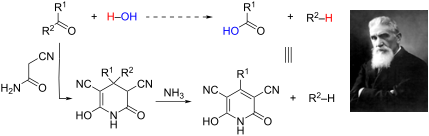
Beilstein J. Org. Chem. 2021, 17, 1335–1351. doi:10.3762/bjoc.17.93

26 May 05:29

Withdrawal: Asymmetric Alkenyl Catellani Reaction for the Construction of C−N Axial Chirality

by Qianghui Zhou, Chenggui Wu, Yong Shang, Chang Liu, Ze-Shui Liu, Hong-Gang Cheng, Hengjiang Cong, Shuang Deng, Yinchun Jiao
Angewandte Chemie International Edition, Volume 60, Issue 32, Page 17248-17248, August 2, 2021.
26 May 05:28

A Photoinduced Multicomponent Regioselective Synthesis of 1,4,5‐Trisubstituted‐1,2,3‐Triazoles: Transition Metal‐, Azide‐ and Oxidant‐Free Protocol

by Bhargava Sai Allaka, SRINIVAS BASAVOJU, Rama Krishna Gamidi
A Photoinduced Multicomponent Regioselective Synthesis of 1,4,5-Trisubstituted-1,2,3-Triazoles: Transition Metal-, Azide- and Oxidant-Free Protocol


Abstract

A transition metal- and azide-free approach is explored to synthesize 1,4,5-trisubstituted-1,2,3-triazoles under sunlight. The reaction proceeds via C−N and N−N bond formations. These regioselective 1,2,3-triazoles are obtained from isatin Schiff bases, benzaldehydes and tosylhydrazine in the presence of base. This protocol offers the structurally diverse 1,2,3-triazole derivatives with 75–90% yields.

26 May 05:26

Acid Hydrotropic Fractionation of Lignocelluloses for Sustainable Biorefinery: Advantages, Opportunities, and Research Needs

by Junyong Zhu, Liheng Chen, Cheng Cai
Acid Hydrotropic Fractionation of Lignocelluloses for Sustainable Biorefinery: Advantages, Opportunities, and Research Needs

Acid hydrotropic fractionation: This Minireview provides a comprehensive discussion on the potential of using acid hydrotropes for sustainably fractionating lignocelluloses for biorefinery applications. The mechanism of hydrotropic dissolution of lignin is reviewed, and the performances of p-toluenesulfonic acid and maleic acid are evaluated in terms of delignification, dissolution of hemicelluloses, and reducing lignin condensation.


Abstract

This Minireview provides a comprehensive discussion on the potential of using acid hydrotropes for sustainably fractionating lignocelluloses for biorefinery applications. Acid hydrotropes are a class of acids that have hydrotrope properties toward lignin, which helps to solubilize lignin in aqueous systems. With the capability of cleaving ether and ester bonds and even lignin-carbohydrate complex (LCC) linkages, these acid hydrotropes can therefore isolate lignin embedded in the plant biomass cell wall and subsequently solubilize the isolated lignin in aqueous systems. Performances of two acid hydrotropes, that is, an aromatic sulfonic acid [p-toluenesulfonic acid (p-TsOH)] and a dicarboxylic acid [maleic acid (MA)], in terms of delignification and dissolution of hemicelluloses, and reducing lignin condensation, were evaluated and compared. The advantages of lignin esterification by MA for producing cellulosic sugars through enzymatic hydrolysis and lignin-containing cellulose nanofibrils (LCNFs) through mechanical fibrillation from the fractionated water insoluble solids (WIS), and for obtaining less condensed lignin with light color, were demonstrated. The excellent enzymatic digestibility of maleic acid hydrotropic fractionation WISs was also demonstrated by comparing with WISs from other fractionation processes. The recyclability and reusability of acid hydrotropes were also reviewed. Finally, perspectives on future research needs to address key technical issues for commercialization were also provided.

25 May 14:31

Synthesis of 5,15-meso-bis(2-chlorothiophen-3-yl)porphyrin as a building block for further functional materials

by Safi Ullah
Journal of Porphyrins and Phthalocyanines, Volume 25, Issue 10n12, Page 944-950, October & December 2021.
A Suzuki–Miyaura coupling reaction was performed to synthesize 5,15-meso-bis(2-chlorothiophen-3-yl)porphyrins in order to obtain a building block for further functional porphyrins. Photophysical and electrochemical properties were investigated to understand the effect of 2-chloro substituted thiophenes which are connected at their 3-position to the meso-position of the porphyrin. A computational calculation with counterpoise method was demonstrated to estimate the relative intermolecular interaction in order to compare solubility. Installed chloro atoms at the 2-position of thiophen-3-yl decreased in intermolecular interaction which caused an increase in solubility.
25 May 09:54

[ASAP] Copper-Catalyzed Vicinal Cyano-, Thiocyano-, and Chlorophosphorylation of Alkynes: A Phosphinoyl Radical-Initiated Approach for Difunctionalized Alkenes

by Ze-Kun Tao, Cheng-Kun Li, Jian-An Li, Adedamola Shoberu, Wei Zhang, and Jian-Ping Zou

TOC Graphic

Organic Letters
DOI: 10.1021/acs.orglett.1c01286
24 May 16:01

The key role of the latent N–H group in Milstein's catalyst for ester hydrogenation

Chem. Sci., 2021, 12,8477-8492
DOI: 10.1039/D1SC00703C, Edge Article
Open Access Open Access
John Pham, Cole E. Jarczyk, Eamon F. Reynolds, Sophie. E. Kelly, Thao Kim, Tianyi He, Jason M. Keith, Anthony R. Chianese
We report a detailed mechanistic study of ester hydrogenation catalyzed by the activated form of Milstein’s catalyst. Catalyst activation leads to the replacement of a dialkylamino side group with an NHEt group, which has a key role in catalysis.
The content of this RSS Feed (c) The Royal Society of Chemistry
24 May 07:55

One-pot route to convert technical lignin into versatile lignin esters for tailored bioplastics and sustainable materials

Green Chem., 2021, 23,4567-4579
DOI: 10.1039/D1GC01033F, Paper
Open Access Open Access
Li-Yang Liu, Siwei Chen, Lun Ji, Soo-Kyeong Jang, Scott Renneckar
This study developed a green and scalable route to obtain esterified lignin derivatives with controllable structure-property.
The content of this RSS Feed (c) The Royal Society of Chemistry
21 May 14:29

Recent progress in the nitration of arenes and alkenes

Org. Biomol. Chem., 2021, 19,4835-4851
DOI: 10.1039/D1OB00384D, Review Article
Yu-En Qian, Lan Zheng, Hao-Yue Xiang, Hua Yang
This mini review summarizes the recent advances in the regiospecific nitrations of arenes and alkenes based on the structural features of substrates.
The content of this RSS Feed (c) The Royal Society of Chemistry
21 May 14:27

Cover Feature: The Ugly Duckling Metamorphosis: The Ammonia/Formaldehyde Couple Made Possible in Ugi Reactions. (Eur. J. Org. Chem. 20/2021)

by Thaissa Pasquali F. Rosalba, Samia Sayegh A. Kas, Ana Beatriz S. Sampaio, Carlos Eduardo M. Salvador, Carlos Kleber Z. Andrade
Cover Feature: The Ugly Duckling Metamorphosis: The Ammonia/Formaldehyde Couple Made Possible in Ugi Reactions.  (Eur. J. Org. Chem. 20/2021)

The Cover Feature shows a combination that could be called the ugly duckling of the Ugi 4-component reactions, which involves the concomitant use of the ammonia/formaldehyde pair. There was not a single methodology so far to successfully achieve this goal. The metamorphosis could finally happen with the intermediacy of hexamethylenetetramine (HMTA), which allows the in situ generation of both ammonia and formaldehyde for the Ugi reactions with carboxylic acids and isocyanides, yielding a variety of acylaminoacetamide derivatives in good to excellent yields. More information can be found in the Full Paper by C. K. Z. Andrade et al.


21 May 05:45

Obtaining lignocellulosic biomass-based catalysts and their catalytic activity in cellobiose hydrolysis and acetic acid esterification reactions

RSC Adv., 2021, 11,18259-18269
DOI: 10.1039/D1RA02824C, Paper
Open Access Open Access
Daniela Godina, Kristine Meile, Aivars Zhurinsh
In this work different biochars that were obtained as a by-product from birch chip fast pyrolysis and carbonization were used as is or chemically/physically treated. The characterisation was done using CB hydrolysis and acetic acid esterification.
The content of this RSS Feed (c) The Royal Society of Chemistry
21 May 05:43

[ASAP] Electrolytic C–H Oxygenation via Oxidatively Induced Reductive Elimination in Rh Catalysis

by Seongho Jin, Jinwoo Kim, Dongwook Kim, Jung-Woo Park, and Sukbok Chang

TOC Graphic

ACS Catalysis
DOI: 10.1021/acscatal.1c01670
21 May 05:38

Photocatalytic C-H activation and the subtle role of chlorine radical complexation in reactivity

by Yang, Q., Wang, Y.-H., Qiao, Y., Gau, M., Carroll, P. J., Walsh, P. J., Schelter, E. J.

The functionalization of methane, ethane, and other alkanes derived from fossil fuels is a central goal in the chemical enterprise. Recently, a photocatalytic system comprising [CeIVCl5(OR)]2– [CeIV, cerium(IV); OR, –OCH3 or –OCCl2CH3] was disclosed. The system was reportedly capable of alkane activation by alkoxy radicals (RO•) formed by CeIV–OR bond photolysis. In this work, we present evidence that the reported carbon-hydrogen (C–H) activation of alkanes is instead mediated by the photocatalyst [NEt4]2[CeCl6] (NEt4+, tetraethylammonium), and RO• are not intermediates. Spectroscopic analyses and kinetics were investigated for C–H activation to identify chlorine radical (Cl•) generation as the rate-limiting step. Density functional theory calculations support the formation of [Cl•][alcohol] adducts when alcohols are present, which can manifest a masked RO• character. This result serves as an important cautionary note for interpretation of radical trapping experiments.

21 May 05:37

The problem with 'follow your dream

by Sen, A.
20 May 13:03

Carbon dioxide based methodologies for the synthesis of fine chemicals

Org. Biomol. Chem., 2021, 19,5725-5757
DOI: 10.1039/D1OB00755F, Review Article
Dhanashri A. Sable, Kamlesh S. Vadagaonkar, Anant R. Kapdi, Bhalchandra M. Bhanage
Rapid environmental changes triggered by the increase in the concentration of heat-absorbing gases such as CO2 in the atmosphere have become a major cause of concern.
The content of this RSS Feed (c) The Royal Society of Chemistry
20 May 06:01

[ASAP] Role of TEMPO in Enhancing Permanganate Oxidation toward Organic Contaminants

by managing.editor@est.acs.org (American Chemical Society)

TOC Graphic

Environmental Science & Technology
DOI: 10.1021/acs.est.1c01824
19 May 15:54

Chemolytic depolymerisation of PET: a review

Green Chem., 2021, 23,3765-3789
DOI: 10.1039/D1GC00887K, Critical Review
Elaine Barnard, Jose Jonathan Rubio Arias, Wim Thielemans
We reviewed the current state of the art of poly(ethylene terephthalate) (PET) chemolysis used in the chemical recycling of PET.
The content of this RSS Feed (c) The Royal Society of Chemistry
19 May 09:00

Green Chemistry Meets Asymmetric Organocatalysis: A Critical Overview on Catalysts Synthesis

by Achille Antenucci, Stefano Dughera, Polyssena Renzi
Green Chemistry Meets Asymmetric Organocatalysis: A Critical Overview on Catalysts Synthesis

E factor under scrutiny: Do you know which is the impact on the overall process of the organocatalyst synthesis? Within the framework of the green chemistry principles, this Review analyses the synthetic routes towards some of the most important organocatalyst scaffolds. The introduction of a new chemistry metric, the E G factor, will provide an idea of the actual impact of the catalyst synthesis within the overall organocatalytic process.


Abstract

Can green chemistry be the right reading key to let organocatalyst design take a step forward towards sustainable catalysis? What if the intriguing chemistry promoted by more engineered organocatalysts was carried on by using renewable and naturally occurring molecular scaffolds, or at least synthetic catalysts more respectful towards the principles of green chemistry? Within the frame of these questions, this Review will tackle the most commonly occurring organic chiral catalysts from the perspective of their synthesis rather than their employment in chemical methodologies or processes. A classification of the catalyst scaffolds based on their E factor will be provided, and the global E factor (E G factor) will be proposed as a new green chemistry metric to consider, also, the synthetic route to the catalyst within a given organocatalytic process.

18 May 09:33

Propargyl Radicals in Organic Synthesis

by Marcus Muresan, Hariharaputhiran Subramanian, Mukund P. Sibi, James R. Green

The appearance of propargyl radicals as synthetic intermediates has increased in recent years from a structural curiosity to a frequent occurrence. This minireview covers the synthetically relevant organic chemistry involving the intermediacy of propargyl radicals. The review is organized by the process employed in radical generation, including H-atom abstraction, propargyl-X homolyses, radical addition to enynes, reduction of polar C=X bonds, reductions of stable carbocations, and metal-mediated coupling reactions. The relevant mechanisms of generation and reaction are discussed, as are applications in syntheses of target molecules of interest.

18 May 05:45

Transition-metal-catalyzed ortho-selective C–H functionalization reactions of free phenols

Org. Biomol. Chem., 2021, 19,5028-5047
DOI: 10.1039/D1OB00506E, Review Article
So Won Youn, Cheon-Gyu Cho
This review provides a brief overview of recent progress in the transition-metal-catalyzed direct ortho-selective C–H functionalization of free phenols.
The content of this RSS Feed (c) The Royal Society of Chemistry