Adrian X
Shared posts
Kjell Nilsson, ‘Mad Max’ Actor, Dies at Age 76

The spy who ate live animals, documents, and possibly a toddler

Tarrare was an 18th-century French showman and soldier who could eat almost without limit and was "constantly hungry." As a performer, he "swallowed corks, stones, live animals, and a whole basketful of apples." In the French Revolutionary Army, "even quadrupling the standard military ration was unable to satisfy his large appetite." — Read the rest
The post The spy who ate live animals, documents, and possibly a toddler appeared first on Boing Boing.
How to Build a Winter Skincare Routine Under $100, According to a Grooming Editor
You don’t need to accept dry, cracked skin this year.

The Shape Up: The Best December Releases in Men's Grooming
Kick off 2026 with better skin and elevated scents.

No Man’s Sky Goes Full Space Pirate In Latest Free Update
The post <i>No Man’s Sky</i> Goes Full Space Pirate In Latest Free Update appeared first on Kotaku.

The maker of the electric USPS truck is also building garbage robots and EV firefighters

Oshkosh, the 108-year-old American company that makes military vehicles and other specialty equipment, has big plans for your neighborhood.
The company appeared at CES in Las Vegas for the first time to announce a raft of new commercial electric vehicles, including plug-in fire engines and garbage trucks as well as AI-powered technology that it says will make these vehicles safer and more convenient.
You may know Oshkosh, which has a lot of credibility as a defense contractor, from its contract with the United States Postal Service to build the first all-electric postal truck. Last year, The Washington Post reported that the project was mired in delays, with only 93 trucks delivered to the USPS as of November.
But despite these delays, Oshkosh thinks it’s well positioned to help build these next-generation specialty vehicles and says it plans to eventually deliver 165,000 vehicles to USPS, up to 70 percent of which will be electric. The company also announced plans to build a variety of electric and autonomous vehicles for airports, including a robot cargo handler and EVs for construction sites.
But the “neighborhood” EVs, as Oshkosh calls them, stand the chance to be the most visible and impactful — if the company can get them built.
The first vehicle to be announced today is the McNeilus Volterra ZFL, an all-electric front-loader garbage truck with an AI-powered detection system for refuse bins. The sensors detect the location of the garbage cans and communicate with the truck to ensure it’s positioned accurately. Then a robotic arm is deployed to snag the bin and lift it for trash disposal. Oshkosh is also rolling out a new AI-powered, vision-based contamination system to identify and remove items that don’t belong in the waste or recycling streams.
Speaking of robots, Oshkosh has introduced HARR-E, an autonomous electric refuse collection robot that purports to offer on-demand trash and recycling pickup via a smartphone app or virtual home assistant like Amazon Alexa.
The robot “makes trash removal as easy as ordering an Uber or a Lyft right from your home,” said Jay Iyengar, Oshkosh’s chief technology officer. HARR-E deploys from a central refuse collection area within the neighborhood and navigates to the resident’s home autonomously for collection before returning to the base to unload and recharge.
“Trash removal as easy as ordering an Uber or a Lyft right from your home”
For firefighters, Oshkosh is introducing a new Collision Avoidance Mitigation System, or CAMS, that aims to tell emergency workers when it’s safe to get out of their vehicles. According to Iyengar, “CAMS uses an advanced camera and radar sensor suite with AI to accurately detect the trajectory, the speed and proximity of ongoing vehicles relative to a parked emergency vehicle. CAMS can provide up to two to three seconds of advanced notice of an impending collision, giving an extra layer of safety during roadside operations.”
It’s an ambitious suite of technologies. Oshkosh says it’s up to the task. But political headwinds, including President-elect Donald Trump’s promises to eliminate billions of dollars in EV incentives, could make success more difficult.
Despite this, Oshkosh executives tried to project a sunny outlook. “The reviews on the first vehicle are fantastic,” Oshkosh CEO John Pfeifer said of the new USPS delivery truck. “It’s been written up in a lot of publications about the postal carrier’s responses to the first vehicles. But it’s going exceptionally well.”

Steve Bannon suggests Trump run for 3rd term in 2028 to explosive cheers (video)

Steve Bannon riled up a crowd last night when he suggested Donald Trump run again in 2028.
"Donald John Trump is going to raise his hand on the King James Bible and take the oath of office, his third victory and his second term," said the MAGA strategist, suggesting that Trump's "third" victory was in 2020, when Trump lost to President Joe Biden. — Read the rest
The post Steve Bannon suggests Trump run for 3rd term in 2028 to explosive cheers (video) appeared first on Boing Boing.
Elon Musk is directing harassment toward individual federal workers

Elon Musk is, in addition to many other things, now the co-lead of the currently nonexistent Department of Government Efficiency (DOGE) advisory group. Now, before it even gets rolling, he has begun singling out individual government employees he says are emblematic of the government’s bloat and posting about them to his hundreds of millions of followers on X.
Earlier this week, as first reported by The Wall Street Journal, the X user “datahazard” shared a screenshot on X highlighting the role of Ashley Thomas, the Director of Climate Diversification at the US International Development Finance Corporation, saying, “I don’t think the US Taxpayer should pay for the employment” of that role. Musk reposted it, adding the comment “so many...
New POPEYE THE SLAYER MAN Trailer Will Ruin Your Childhood

Bats From a Different Point of View
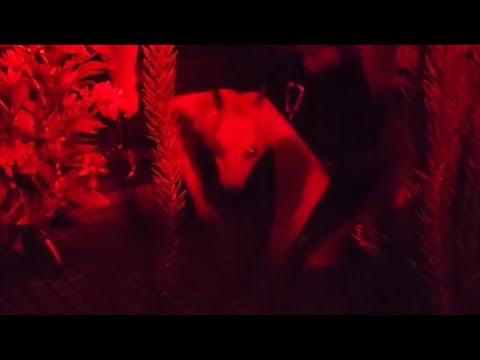
As we slide into October, it's time to get to know the creatures of Halloween. The more we know about them, the less frightening they are.
Bats are scary because they fly in the dark and you won't see them coming until they startle you with a sense of movement out of the corner of your eye. There's something alien about mammals that fly and rest by hanging upside down. But they have their place in the ecosystem, as some bats eat thousands of mosquitos every night, while others pollinate crops. At Bat World Sanctuary in Texas, injured or orphaned bats can be sheltered and then released back into the wild, and bats rescued from labs and zoos can find a permanent home. They know how to make bats less alien-looking just by turning the camera upside down! Then they are just animals dealing with weird gravity. You can get to know more of the residents of Bat World at Instagram, and in a gallery of livestreams.
Hair Dye Caused Woman to Go Temporarily Blind

MAXXXINE Heading To 4K And Blu-ray This Fall

PS2 Games Are Coming To PS5 Again Starting With Tomb Raider And Star Wars

The PlayStation Plus Classics Catalog is an underutilized service on Sony’s part, especially when it comes to PlayStation 2 games. Since the company didn’t go the way of Xbox by allowing users to natively play old games on new hardware, PS4 and PS5 owners wanting to play their classic games on modern hardware have had…
LEGO Star Wars introduces Darth Jar Jar

LEGO Star Wars: Rebuild the Galaxy nods to a long-suspected fan theory: Jar Jar Binks as the Sith mastermind.
A new LEGO Star Wars program streaming on Disney+ will take What-If to a new level and mix up all the Star Wars tech in LEGO Style. — Read the rest
The post LEGO Star Wars introduces Darth Jar Jar appeared first on Boing Boing.
The Absolute Unit Garzapelta Is Friend-Shaped. Shame It's Dead

After death, we all run the risk of being forgotten. Such was the case of Garzapelta muelleri, an ancient reptile that lived over 200 million years ago and even went unidentified for 30 years after its bony remains were found.
Could Seaweed Become a Food Source after a Nuclear War?

Florian Ulrich Jehn is a scholar who examines ways that humanity could mitigate starvation risks in the event of existential crises, such as nuclear war. He and colleagues have published a peer-reviewed report which considers the possibility of the mass cultivation of seaweed in the aftermath of a nuclear war.
Such an event and any ensuing nuclear winter could devastate terrestrial food production due to reduced sunlight. But tropical oceans are likely to remain environmentally sound. The authors conclude that it might be possible to produce sufficient quantities of Gracilaria tikvahiae in quantities equal to 45% of global human food needs.
-via Marginal Revolution | Still shot from Stanley Kubrick's Dr. Strangelove
Ever Wonder Why We Sometimes See Strange Floating Shapes?

Sometimes, when we find ourselves daydreaming or staring into the air, we might notice some squiggly lines or funny shapes floating about, and no matter where we look, they seem to be moving along with our eyes. There are different names for these shapes: eye floaters, vitreous floaters, and Muscae volitantes (lit. "flying flies"), but its scientific term is myodesopsia.
These floaters appear in our vision when blood or other cells that got into the vitreous humor - the transparent, gel-like substance filling the space between the lens and the retina - block light passing through the eye, casting shadows onto the retina.
Unlike the aqueous humor, the liquid substance found between the iris and the cornea, the vitreous humor never washes out or gets replenished. So, whatever gets into the vitreous, stays there for the rest of our lives. Meaning, if you are seeing eye floaters right now, you will continue seeing them until death do you part.
For most people, these eye floaters present no issues. We sometimes take notice of them until our attention drifts elsewhere. Others, however, might experience too many floaters clouding their vision, but this is more common in older people.
A sudden increase in floaters may be a sign that someone is suffering from posterior vitreous detachmant (PVD), when the vitreous becomes separated from the retina. This poses the risk of retinal tearing which can cause blindness.
Several treatments are available, but even the standard procedure, a vitrectomy, is still considered risky and must only be used as a last resort.
(Image credit: Acdx/Wikimedia Commons)

Robert Butler, Star Trek & Batman TV Director, Has Died at Age 95

Filmmaker Robert Butler passed away earlier in the month on November 3 at 95 years old, according to the Hollywood Reporter.
Authors VS ChatGPT: The Class-Action Against OpenAI

You may have heard that several authors from the Authors Guild of America has decided to sue ChatGPT a few days ago over copyright claims. The writers include George R.R. Martin and John Grisham, and this has even led Amazon to start making restrictions on selling self-published books on their site.
In their filing, the Guild alleged that OpenAI may have downloaded authors’ books from pirated ebook sites and used them to train its ChatGPT models. The authors say that OpenAI should have paid a reasonable licensing fee or opted to train their models using works that are already in the public domain.
AI models have made it a lot easier for written works to be produced lickety-split, which makes certain people's jobs a lot easier, but also others, such as professors in academia, might have a harder time checking students' work for any sign of AI assistance. What could be the best way to harness the potential of AI models such as ChatGPT while mitigating the possible negative effects? That is something we can only wait and see.
(Image credit: Mohajid Mottakin/Unsplash)
South Dakota is the only US state without a ska band

The Hard Times is a gift to this world. Or at least, a gift for me, the target audience for their Onion-esque satires of music and music fandoms, particularly of the underground variety. For example: the site recently published a delightful package highlighting the Best Ska Bands in every US state, which really went above and beyond to embrace the worst cliche jokes about ska while also highlighting some fantastic bands at varying levels of success across the country. — Read the rest
SAG-AFTRA Voting to Authorize Potential Video Game Actor Strike

It’s been a strike-heavy couple of months, and now video game actors may get brought into the mix.
LAist Studios relaunches Imperfect Paradise as weekly podcast and radio program

This is Hot Pod, The Verge’s newsletter about podcasting and the audio industry. Sign up here for more.
I’m writing to you today from Podcast Movement in Colorado — where I hope to meet many of you over the next few days.
This morning kicked off with a discussion on the state of the podcasting industry hosted by Amplifi Media’s Steven Goldstein. Panelists included industry veterans such as Magnificent Noise’s Eric Nuzum, Lemonada Media’s Jessica Cordova Kramer, Workhouse Media CEO Paul Anderson, and Barometer CEO Tamara Zubatiy.
Some interesting insights from the panel:
- Brand safety is a huge factor right now in the marketplace. “There’s never been more sensitivity than there is right now,” noted Anderson. It’s easier for...