James.galbraith
Shared posts
Our courts also have a big corruption problem
James.galbraithSERIOUSLY
Engineer at the center of Waymo/Uber legal battle declares bankruptcy
James.galbraithA personal 11? That's highly unusual and means there may be quite a few assets he's trying to protect.
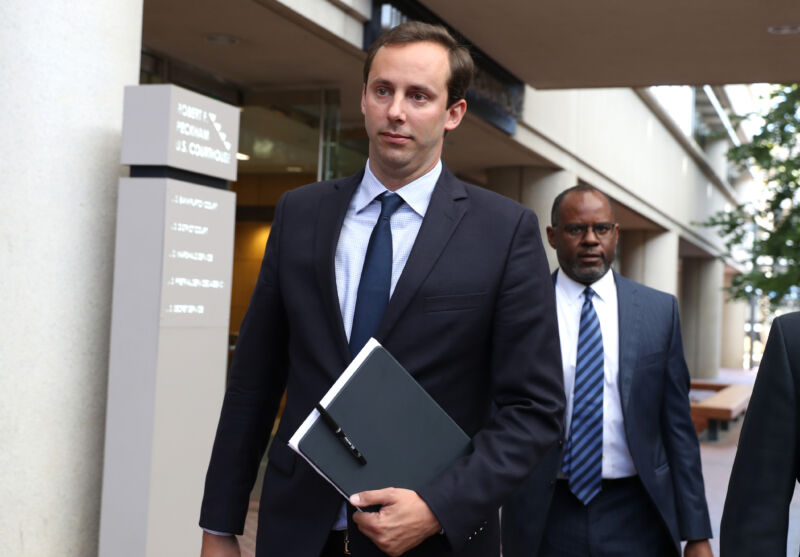
Enlarge / Anthony Levandowski leaves court in September 2019. (credit: Justin Sullivan/Getty Images)
Anthony Levandowski, the controversial engineer at the center of the recent legal battle between Google's Waymo and Uber, has filed for Chapter 11 bankruptcy protection. The move comes shortly after a California federal judge confirmed that Levandowski owed Waymo $179 million for theft of trade secrets.
Levandowski was an early member of Google's self-driving car team, earning tens of millions of dollars for his efforts. Then in early 2016, he left Google to co-found a self-driving startup called Otto. A few months later, Uber acquired Otto in a deal reportedly worth around $680 million.
But a forensic investigation by Google revealed that Levandowski had taken thousands of confidential technical documents with him on his way out the door—including schematics for Google's cutting-edge lidar technology. Google sued Levandowski and Uber for theft of trade secrets. Google and Uber settled their lawsuit in 2018, but Google's battle with Levandowski continued.
Read 6 remaining paragraphs | Comments
It looks like Trump is trying to trick people into filling out “census” forms online
James.galbraithThey will keep trying everything
 President Donald Trump on March 4, 2020. | AFP via Getty Images
Facebook says it’s taking down ads that link to the form because of its policy against misleading census content.
Shortly ahead of the US National 2020 census, President Trump’s campaign is running ads on Facebook that some are saying are misleading users into thinking that a data-gathering and fundraising survey for the Trump presidential campaign is actually the official US national census. Facebook confirmed with Recode that it plans to take down the ads.
According to Facebook’s ad library, Trump’s Facebook page is running a series of hundreds of ads asking users to respond to what it calls a “census.” But in fact, the ads point to a campaign survey for Trump, not the official 2020 US census. Critics say the ads could mislead users into thinking that they’re filling out the actual census when they’re not — potentially discouraging people from filling out the real US census that will be hitting mailboxes next week. The US census is critical in determining representation and funding for communities, including how $1.5 trillion in federal resources are spent.
While the ads also refer to the form as a “survey” to help Trump craft a “winning strategy,” many are saying they conflate political campaign language with that of official census communications. Facebook has touted its policy against census misinformation, banning “misleading information about when and how to participate in the census and the consequences of participating,” including in ads. But the social media giant reportedly told Judd Legum’s Popular Information, which first pointed out the issue Thursday morning, that the ads do not violate Facebook’s policy because in Facebook’s view they are related to the Trump campaign and not the census.
Upon further review, though, Facebook spokesperson Andy Stone told Recode later on Thursday that Facebook is taking down the ads in question and shared the following company statement:
“There are policies in place to prevent confusion around the official U.S. Census and this is an example of those being enforced.”
Trump’s campaign did not respond to a request for comment in time for publication.
Here’s the language of one of the Trump Facebook ads in question:
This survey is ESSENTIAL to our team’s 2020 campaign strategy. We need Patriotic Americans like YOU to respond to this census, so we can develop a winning strategy for YOUR STATE. Your participating in this national effort will provide us with the detailed data we need for YOUR CONGRESSIONAL DISTRICT. It is important that we get as many responses as possible, so we can craft a winning messaging strategy.
/cdn.vox-cdn.com/uploads/chorus_asset/file/19769725/Screen_Shot_2020_03_05_at_9.43.10_AM.png)
The ads are labeled as “Paid for by the Trump Make America Great Again Committee,” and they link to a form on Trump’s website that’s topped with a bright red banner that reads “OFFICIAL 2020 CONGRESSIONAL DISTRICT CENSUS.” The form then asks a series of questions such as, “Do you plan on supporting President Donald Trump in the 2020 Presidential Election?” and, “From what media source do you regularly receive your political news?” At the end, survey takers are asked to donate to the Trump campaign.
/cdn.vox-cdn.com/uploads/chorus_asset/file/19769763/Screen_Shot_2020_03_05_at_9.35.36_AM.png)
“I absolutely think that these ads are deceptive,” said Keshia Morris Desir, the census project manager for government watchdog organization Common Cause. Morris Desir acknowledged that the ads also clearly affiliate themselves with Trump’s campaign, but said they were still misleading. “Although they also say things like ‘Help Trump Win’ — I definitely think that the fact that you name this as a census at the same time that the 2020 census bureau will be sending similar communications for folks to fill out their census form is unfortunate.”
The real census does not ask partisan questions, nor does it ask people to donate money or support to any political campaign.
Morris Desir said this is another example of how, even beyond using the word “census,” the ads are using deceptive tactics. In one case, one of the Trump Facebook ads includes a video with a clip-art-style image of a scroll that says “2020 Census” with an American Flag on it, next to an image of Trump giving a thumbs-up sign and text that says “Help Shape President Trump’s Winning.”
/cdn.vox-cdn.com/uploads/chorus_asset/file/19769749/Screen_Shot_2020_03_05_at_10.22.17_AM.png)
This isn’t the first time that the use of the word “census” in political materials has been criticized. The Trump campaign has recently also been criticized by California Rep. Katie Porter for allegedly sending out texts urging recipients to complete a “census survey” that asked similar questions.
Meanwhile, since 2000, the Republican National Committee has sent out “Congressional District Census” mailers that request fundraising dollars in addition to asking partisan questions, around the same time as the official US census forms are sent. (Notably, Trump’s campaign site also calls its form a “Congressional District Census.”) The Democratic party has repeatedly complained about the mailers and pointed to people who reported being confused about the surveys. But so far, they’ve avoided any penalty because they skirt the existing regulations on deceptive mail practices.
Back in 2010, New York Rep. Carolyn Maloney introduced successful legislation to make it illegal for look-alike census communications to use the word “census.” The law was a response to census-style mailings from the RNC a decade ago, and some politicians have called for it to be updated.
But aside from US law, Facebook already has its own established rules to deal with this kind of content. Now, with these new Trump ads, it’s coming down to a question of how the company is going to actually enforce those rules.
LGBTQ voters turned out in record numbers on Super Tuesday
James.galbraithGood turnout numbers for sure
 Activists are escorted away from the stage after protesting deadly violence against transgender women of color at the Human Rights Campaign Foundation’s LGBTQ-focused town hall for Democratic presidential candidates on October 10, 2019, in Los Angeles. | Mario Tama/Getty Images
More voters are identifying as queer and responding to Trump’s anti-LGBTQ policies.
Many Democratic presidential candidates have released extensive and detailed plans for addressing LGBTQ equality over the course of the campaign cycle. On Super Tuesday, LGBTQ voters rewarded that work by turning out in record numbers.
Nearly one in 10 voters on Tuesday identified as lesbian, gay, bisexual, or transgender, according to exit poll data from NBC News. That turnout was up from the 2018 midterms, when 6 percent of the electorate identified as LGBTQ.
“All of the data from this year’s presidential primary, the 2018 midterms, and the 2016 presidential election shows the LGBTQ voting bloc is growing and that LGBTQ voters are difference-makers and a constituency to court,” Geoff Wetrosky, a campaign director at the Human Rights Campaign, told Vox. “We turn out at rates much higher than the general public, and we overwhelmingly support pro-equality candidates.”
There are several potential reasons for increased LGBTQ turnout this year. People may be more willing to identify themselves as queer to exit pollsters, for instance, or to publicly label themselves as LGBTQ in general. According to a 2018 Gallup report, about 4.5 percent of the total population identifies as LGBTQ, up from 3.5 percent in 2012.
Voters identifying as LGBTQ in the first wave #SuperTuesday exit polls:
— Michael Del Moro (@MikeDelMoro) March 3, 2020
AL 6%
CA 11%
CO 9%
ME 13%
MA 13%
MN 10%
NC 7%
TN 8%
TX 10%
VA 8%
VT 9%
Wetrosky notes that the jump in turnout over the last two years could also be a result of the White House’s anti-LGBTQ agenda.
Since President Donald Trump took office in 2017, his administration has: banned trans troops from serving in the military; petitioned the Supreme Court to roll back employment protections for LGBTQ workers under Title VII; proposed a rule to allow federal contractors to discriminate against LGBTQ employees; proposed a rule to undo Affordable Care Act nondiscrimination protections for trans patients; allowed federally funded shelters to bar trans people from facilities consistent with their gender identity; and required prisons to house trans prisoners according to their assigned sex at birth.
“The fate of LGBTQ people and our rights have been on the ballot for decades, compelling us to register to vote and participate in politics, as opposed to letting others decide our rights for us,” Wetrosky said.
Whether a result of more people identifying as LGBTQ, efforts to increase turnout, or a response to Trump’s anti-LGBTQ policies — or, more likely, some combination of all three — it’s clear that queer voters have created a consistent voting bloc. And politicians tend to listen to people who vote.
LGBTQ voters tend to skew more liberal
It’s no surprise that queer voters skewed to the left on Super Tuesday, with 50 percent calling themselves “very liberal” and 30 percent labeling themselves “somewhat liberal,” according to NBC News exit polls. Just 4 percent of LGBTQ Democratic voters identified themselves as “conservative.”
As a result, almost 40 percent backed Vermont Sen. Bernie Sanders, with 21 percent going for Massachusetts Sen. Elizabeth Warren and 19 percent voting for former Vice President Joe Biden, NBC News reported late Tuesday.
Historically, LGBTQ voters tend to lean more liberal, for obvious reasons such as the Republican opposition to marriage equality and hands-off handling of the AIDS crisis. In 2016, 78 percent of queer voters voted for Hillary Clinton versus 14 percent for Trump, whose performance with LGBTQ voters was lower than every previous Republican candidate since polls first began tracking LGBTQ voter data.
That pattern repeated itself in the 2018 midterms, with 82 percent of LGBTQ voters voting for Democratic candidates for the US House of Representatives and 17 percent voting for Republicans.
By consistently coming out to vote in each election, queer voters force politicians to take their needs and concerns seriously, and that’s likely why this primary season saw so many Democratic candidates offering very detailed plans for LGBTQ equality. Many included basic protections like passing the Equality Act, which would give LGBTQ people comprehensive civil rights protections under federal law for the first time.
But many of those plans also pushed the envelope in ways we haven’t seen previously. Each of the major Democratic candidates this year, except for former New York City Mayor Mike Bloomberg, backed gender-neutral passports. Many firmly denounced the violence faced by Black and other trans women of color.
Though relatively small in population numbers (but not insignificant in turnout), LGBTQ people have become one of the most reliable Democratic voting blocs, and reliable electoral turnout helps queer people build real political power over the long term.
LGBTQ get-out-the-vote campaigns are increasingly focusing on turning out allies
Organizers realize, though, that being a relatively small portion of the general population means LGBTQ voters as a group have a ceiling. The next step for organizations devoted to turning out the queer vote is to turn out allies who care about LGBTQ people and the issues they face
“Support for LGBTQ equality has increased tremendously in recent years across partisan, ideological, and demographic groups,” said Wetrosky. “This broad and increasing support means the LGBTQ movement is no longer limited to organizing and mobilizing self-identified LGBTQ people. With all of this in mind, HRC recognized that we could maximize the LGBTQ community’s impact on elections by mobilizing our allies who would support pro-equality candidates, but [who] are less likely to turn out.”
That’s why the Human Rights Campaign began working with data analytics firm Catalist in 2016 to identify 57 million “equality voters” who care deeply about LGBTQ equality.
According to HRC data, “equality voters” constituted 29 percent of the total 2018 electorate. In the 2016 general election, 29 percent of identified “equality voters” voted; that number jumped to 56 percent in the 2018 midterms.
HRC used the “equality voter” model to shape a larger get-out-the-vote effort in Virginia’s state elections last year. Nine of its top 10 targeted seats in the state were won by HRC-backed candidates, helping Democrats flip control of both chambers of the Virginia legislature. Last month, the new Democratic majority passed comprehensive LGBTQ protections for the first time in the state’s history.
LGBTQ voters and allies will continue to play a key role in what is now a two-person race between Sanders and Biden for the Democratic nomination. It remains to be seen whether LGBTQ people who supported more progressive candidates like Sanders and Warren will turn out to support a potential Biden candidacy in the general election.
But with so much at stake for the LGBTQ community — from civil rights protections to the future of the judiciary — queer people and their allies are needed to turn out for a better and safer future.
Elizabeth Warren’s political legacy should include destroying Mike Bloomberg and Chris Matthews
James.galbraithYes indeed
 Sen. Elizabeth Warren slammed Mike Bloomberg in Las Vegas debate with this memorable opener: “I’d like to talk about who we’re running against: a billionaire who calls women ‘fat broads’ and ‘horse-faced lesbians. And no, I’m not talking about Donald Trump.” | Mark Ralston/AFP via Getty Images
On her way down, she took them with her.
Sen. Elizabeth Warren is dropping out of the presidential race, leaving two white men to duke it out for the Democratic nomination and then take on the white man sitting in the Oval Office.
It’s a disappointing turn of events for Democrats who are proud of recent historic firsts — electing America’s first black president and then electing a woman as a major party’s nominee in 2016. The 2020 Democratic field started out diverse but winnowed over time until Warren was the only candidate standing who wasn’t a white man.
And while there’s plenty to unpack about the role gender and race played in this year’s contest, Warren can at least have some modicum of satisfaction that as she went down, she took Mike Bloomberg and Chris Matthews with her.
Warren eviscerated Bloomberg, the former New York City mayor, twice on primary debate stages, going after him for his treatment of female employees at his company, Bloomberg LP, in a stunningly effective assault. And she knows it.
“In this campaign, we have been willing to fight, and, when necessary, we left plenty of blood and teeth on the floor,” Warren said in a press call announcing her departure from the race. “And I can think of one billionaire who has been denied the chance to buy this election.”
She appeared on MSNBC after one of the debates to talk about Bloomberg’s history and ended up taking a prominent network figure, Chris Matthews, to task in a way feminists had wanted to see for years. The exchange went viral and inspired women to speak up about his behavior. He was gone from MSNBC just days later.
Warren destroyed Bloomberg at his first debate (NDA edition)
Mike Bloomberg spent roughly $400 million on television ads before he stepped onto a debate stage. When he finally did, Warren made him wish he hadn’t.
In a series of stunning confrontations, Warren forced Bloomberg to contend with his alleged history of mistreating women — including signing nondisclosure agreements with former female employees who say he harassed or discriminated against them.
“The mayor has to stand on his record. And what we need to know is what is lurking out there. He has gotten some number of women — maybe dozens, who knows — to sign nondisclosure agreements for gender discrimination in the workplace,” Warren began, winding up before landing the punch: “So, Mr. Mayor, are you willing to release all those women from those nondisclosure agreements so we can hear their side of the story?”
Bloomberg attempted to play down the matter. “We have a very few nondisclosure agreements,” he said.
“How many is that?” Warren interjected.
/cdn.vox-cdn.com/uploads/chorus_asset/file/19770077/GettyImages_1201954109.jpg) Mark Ralston/AFP/Getty Images
Mark Ralston/AFP/Getty Images
“None of them accused me of anything other than maybe they didn’t like a joke I told,” Bloomberg went on, not answering Warren’s question but somehow making things worse for himself anyway. (His jokes were really funny, by the way, like saying of female employees: “I’d f--- that in a second,” according to a lawsuit.)
Warren looked at the crowd knowingly, which, by this point, was squarely on her side. Bloomberg was done.
He stammered through an argument about how the women “decided they wanted to keep it quiet for everybody’s interest. They signed the agreements, and that’s what we are going to live with.”
Warren had won. Still, she dug the knife in deeper, just to be sure: “This is not just a question of the mayor’s character,” she concluded. “This is also a question about electability. We are not going to beat Donald Trump with a man who has who-knows-how-many nondisclosure agreements and the drip, drip, drip of stories of women saying they have been harassed and discriminated against. That’s not what we do as Democrats.”
Then the next day, Warren did some epic trolling. Warren, a lawyer and former Harvard Law professor, wrote up a contract for Bloomberg to use to allow the women involved in the NDAs to be released from the agreement.
Amazingly, the Bloomberg campaign responded by actually following through — for three women. They offered to release those three women from their NDAs. But we still don’t know how Bloomberg’s lawyers selected just these three cases, how many other women remain bound by NDAs, or what the specific allegations are — about him and about the company culture he created. Also, we don’t know if he’d fight what comes out in public, or in court.
It was an attempt at atonement, but a failed one. And after his disastrous appearance, Bloomberg started sinking in the polls.
Warren destroyed Bloomberg at his second debate (pregnancy edition)
Two weeks after laying into Bloomberg during his first debate appearance, Warren went back at him. This time she started out telling a story she’s told before about losing her job as a special needs teacher when the principal discovered she was pregnant. The kicker this time, though, was different. “At least I didn’t have a boss who said to me, ‘Kill it,’ the way that Mayor Bloomberg is alleged to have said to one of his pregnant employees,”
Bloomberg responded, “I never said that.”
When moderator Gayle King asked Warren what the evidence was for the allegation, Warren backed the accuser and said: “her words.”
Warren was referencing an allegation made by Sekiko Sakai Garrison, a former employee at Bloomberg LP. In a 1998 lawsuit, Garrison said that when she told Bloomberg she was pregnant, he told her to “kill it.” Garrison has never changed her story.
(Warren didn’t mention, it, but there is another witness to the incident. In a recent Washington Post article, another former Bloomberg employee, David Zielenziger, said he heard Bloomberg make the comment. He told the Post he thought Bloomberg’s behavior toward Garrison was “outrageous,” adding, “I understood why she took offense.”)
A few days later, on Super Tuesday, Bloomberg discovered that $400 million can’t undo two minutes in the ring with Warren.
Chris Matthews spiraled along with Bloomberg
On the night Warren took Bloomberg to task over the “kill it” saga, she appeared on MSNBC, where she went on to knock down another man who has a long documented history of making sexist comments: Chris Matthews.
Chris Matthews demands to know why Warren believes the woman who accused Bloomberg of telling her to "kill" her unborn child: "You’re confident of your accusation?" pic.twitter.com/sroztgr9kB
— TPM Livewire (@TPMLiveWire) February 26, 2020
Matthews was puzzled why Warren would believe that Bloomberg would make such a terrible comment to a pregnant employee.
“A pregnant employee sure said he did,” Warren replied. “Why shouldn’t I believe her?”
Matthews asked Warren if she believed Bloomberg was lying and Warren held firm: “I believe the woman, which means he’s not telling the truth.”
“Why would he lie?” Matthews responded, a question that has a pretty obvious answer.
“Why would she lie?” Warren fired back.
Matthews critics have been frustrated by the attitudes he’s displayed on air, unchallenged, for years. The moment with Warren felt different. Suddenly, the tide turned.
/cdn.vox-cdn.com/uploads/chorus_asset/file/19770071/GettyImages_1152248078.jpg) Jim Watson/AFP via Getty Images
Jim Watson/AFP via Getty Images
Journalist Laura Bassett followed up on the viral moment with a piece in GQ titled “Like Warren, I had my own sexist run-in with Chris Matthews,” where she detailed creepy comments he made to her in the MSNBC green room. The piece, likewise, went viral, and other women chimed in, sharing their own accounts of Matthews’s attitudes.
By Monday night, Matthews stepped down as the anchor of Hardball.
Matthews was a major player in shaping American political journalism for a generation, including how we view the intersection of gender and politics.
He got away with demeaning female guests for years. They were on his show to boost their profile and their careers, not to get in fights with him about sexism (which certainly wouldn’t get them invited back). So he got away with diminishing them by commenting on their looks, a signal to the audience that the conduct is okay.
Warren’s appearance was different, though. Not only did she not give a damn what Matthews thought of her, showing she didn’t care was the whole point. She was running against Bloomberg on the case that he is wrong. She wanted to tell Matthews he was wrong.
Warren stepped down from the presidential race on Thursday. But she didn’t back down from sexism, even at the very end. She won’t be the first woman to serve as president, but her contributions to confronting sexism on the trail are a worthy piece of her legacy.
Polls show Biden and Sanders are probably going to split Warren’s voters
James.galbraithWhich means Biden will win
 With Sen. Elizabeth Warren dropping out, her voters will probably be split between former Vice President Joe Biden and Sen. Bernie Sanders, Democratic primary polls show. | Joe Raedle/Getty Images
That’s arguably a win for Biden after his strong Super Tuesday performance.
Sen. Elizabeth Warren might be closer to Sen. Bernie Sanders ideologically, but it looks like her voters are actually split between Sanders and former Vice President Joe Biden, the remaining two presidential candidates.
Now that Warren has dropped out of the presidential race, the question is what happens to her supporters. Second-choice polling from Morning Consult doesn’t show either Sanders or Biden with a decisive advantage: Earlier this week, before she dropped out, 43 percent of Warren supporters said they’d move to Sanders, and 36 percent said they would go with Biden if she dropped out. Add it all up with those candidates’ current vote shares nationally, and Biden is at 40 percent (potentially) and Sanders moves to 31 percent, according to Morning Consult’s polling.
One wild card: Does Warren affirmatively urge her candidates to support Sanders? She could also support Biden, in theory, or simply decline to endorse at all. So far, we have few clues about a possible endorsement.
Warren had a disappointing Super Tuesday, in which she finished fourth in the popular vote and finished third in her home state of Massachusetts. Doing well this week was crucial to her campaign’s ability to carry on, and when it didn’t happen, she dropped out.
Biden, meanwhile, has reasserted himself as the frontrunner for the Democratic nomination, and Warren voters tend to be college-educated women, two demographics that seems to be leaning more toward Biden than Sanders based on Super Tuesday exit polls.
An even split between Biden and Sanders would look like a win for Biden. The upcoming states already seem more favorable to him, especially after he won in the South, Midwest and Northeast, and Super Tuesday. Sanders, who racked up delegates in California and Texas, is at risk of being unviable for delegates in Florida, which has 400-plus delegates. Such a blow could be fatal to a campaign.
For now, Sanders still holds a lead in the FiveThirtyEight national polling average (a full 10 points over Biden, 29 percent vs. 19 percent), but it often takes a little time for polling changes to respond to changes in the race. The most recent polls from Morning Consult and YouGov put Biden over Sanders by 8 and 4 points, respectively. Those numbers could change even more now that Bloomberg and Warren are gone.
According to Morning Consult, twice as many Bloomberg voters were going to Biden (48 percent) as were going to Sanders (25 percent) when they picked their second choice. And now it looks like Biden and Sanders may split Warren’s backers.
Whether any of that changes with a Warren endorsement remains to be seen.
Ex-GOP Congressman Aaron Schock Finally Comes Out: ‘I Am Gay’
James.galbraithYeah, go die in a fire. No apology for his votes and anti-gay advocacy? Nope.

Aaron Schock, the disgraced former Republican congressman from Illinois, confirmed what most already knew on Thursday when he came out as gay in an Instagram post and on his website.
“For those who know me and for many who only know of me, this will come as no surprise,” Schock began. “For the past year, I have been working through a list of people who I felt should finally hear the news directly from me before I made a public statement. I wanted my mother, my father, my sisters, my brother, and my closest friends to hear it from me first.
“The fact that I am gay is just one of those things in my life in need of explicit affirmation, to remove any doubt and to finally validate who I am as a person,” he continued. “In many ways I regret the time wasted in not having done so sooner. …
Read the full text of Schock’s lengthy post on his website and on Instagram below, along with a few initial reactions.
View this post on InstagramA post shared by Aaron Schock (@aaronschock) on
Congratulations to former Congressman Aaron Schock on coming out and living your truth. But until you show remorse for, and do the work of correcting, your own actions against your community, you can fuck right the hell off. pic.twitter.com/1qLQv8S5aO
— Tom & Lorenzo (@tomandlorenzo) March 5, 2020
Reminder that if prosecutors hadn’t completely botched the case, Aaron Schock would likely be in prison for using your taxpayer money to pay for massages and Katy Perry tickets. https://t.co/h7vs0fiZPF
— Scott Bixby (@scottbix) March 5, 2020
Aaron Schock wrote a long post about him coming out as gay and how worried he was telling his family and friends and whatever, but failed to even apologize to the LGBTQ community for the hatred he displayed towards us for MANY years. So he can fuck all the way off
— david (@homesweethomo) March 5, 2020

Between Aaron Schock coming out after years of voting against gay rights and Rod Blagojevich's commuted sentence, it's a bad time for 2000s Illinois politics https://t.co/fluyK8AJkf
— Joseph Longo (@josephlongo_) March 5, 2020
aaron schock saying he would support LGBTQ rights now after a lifetime of voting against them,,,,,,,,,,,,, pic.twitter.com/wDC5YZ0Gtb
— E. Alex Jung (@e_alexjung) March 5, 2020
So Aaron Schock has finally come out. Good for him. That's great.
— David Mack (@davidmackau) March 5, 2020
In his coming-out note, he doesn't say sorry for supporting efforts to stop same-sex marriage or his votes against repealing DADT or enacting hate crime laws.
He does say he'd support LGBTQ rights today. pic.twitter.com/XpIDiYUeBu
I speak for every LGBTQ+ person in the world when I say that we reject you, Aaron Schock. We don't want you. You have caused pain and suffering to our entire community and our supporters. pic.twitter.com/pURmN8Z6py
— Dave Temkin (@dtemkin) March 5, 2020
Aaron Schock coming out pic.twitter.com/VgDVzKzRi8
— Jon (@prasejeebus) March 5, 2020
Let me tell you something about Aaron Schock pic.twitter.com/OIZDcCSjmE
— Jacob Bell (@realJacobBell) March 5, 2020
Gay Twitter on Aaron Schock coming out in a nine screen essay on Instagram and STILL not apologizing for voting against LGBT rights: pic.twitter.com/Qn7ZIUrvVK
— Boston Gay Boy(@BostonGayBoy) March 5, 2020
The post Ex-GOP Congressman Aaron Schock Finally Comes Out: ‘I Am Gay’ appeared first on Towleroad Gay News.

Did BYU Trick Gay Students Into Coming Out So It Could Discipline Them? (VIDEO)
James.galbraithSounds par for the course
Last month, we told you how Mormon church-owned Brigham Young University had removed a ban on “homosexual behavior” from its honor code.
LGBT students, who have long suffered in the shadows at the Provo school, celebrated the decision by coming out, sharing same-sex kisses on campus, and gathering for a large Rainbow Day Celebration.
Today this letter from Elder Paul V. Johnson, Commissioner of the Church Educational System, regarding the updated Honor Code was sent to students and employees at all CES schools. pic.twitter.com/sADljd8lQT
— BYU (@BYU) March 4, 2020
Then, on Wednesday, BYU’s administration formally backtracked, saying “same-sex romantic behavior” — which presumably includes things like kissing and holding hands — still violates the school’s honor code.
Heartbroken and betrayed, LGBT students staged a powerful protest, and some even suggested they were tricked into coming out as part of a sting, according to the Salt Lake Tribune.
BYU students chanting “Let all students date!” We love to see it
— Amy Franco (@_amycita) March 4, 2020
Lilly Bitter, a junior who celebrated the removal of “homosexual behavior” from the honor code with a public kiss, now fears expulsion.
“There’s pictures of me on the news, kissing a girl in front of the Brigham Young statue,” she said. “People who didn’t know before know now because I thought it didn’t matter. It’s so much more scrutiny, and I feel like I’m not safe here anymore. I have kind of blown my cover as an LGBT student.”
The Tribune reported that it’s still unclear whether those who’ve been open about their sexual orientation in the last few weeks will be questioned or disciplined.
Tiauna Lomax, a BYU student who came out as bisexual in response to last month’s change, said she was feeling “traumatic whiplash” and is considering transferring.
“I thought BYU cared about me,” Lomax said.
Wednesday’s announcement came in the form of a letter from the commissioner of the Mormon church’s education system, Paul V. Johnson, as well as a Q&A posted by the director of BYU’s honor code office, the Associated Press reports.
“Same-sex romantic behavior cannot lead to eternal marriage and is therefore not compatible with the principles included in the honor code,” Johnson wrote.
More scenes from Wednesday’s protest below.
Jesus Loves everyone even if BYU doesn’t pic.twitter.com/0Kja5njwHU
— aliens can be happy too (@megsanalien) March 4, 2020
Pictures are worth 1000 words. To me, this one is worth 1,000,000. pic.twitter.com/IUxF5gFx5c
— jacob is disappointed in BYU (@PayneJacob_) March 5, 2020
BYU once again slapped gay students across the face today. They went back on their word, on personal promises they gave, when they told us gay students would be treated equally to straight students.
— Zachary Ibarra (@zachary_ibarra) March 4, 2020
Of course I’m mad, but more than anything I’m heartbroken. I just want love. pic.twitter.com/7zw33M5VF2
Look at these good, brave kids protesting. BYU doesn't know it yet, but love has already won. The genie can't be put back in the bottle. pic.twitter.com/QKzeeqFJ7v
— Kristine Haglund (@KHaglund1) March 4, 2020
I wasn't kidding pic.twitter.com/VndQgHJtg9
— jacob is disappointed in BYU (@PayneJacob_) March 5, 2020
The post Did BYU Trick Gay Students Into Coming Out So It Could Discipline Them? (VIDEO) appeared first on Towleroad Gay News.

Bernie's revolution fizzled on first contact with actual voters. It didn't have to be that way
James.galbraithYep, there's actual numbers now
From the beginning, Bernie Sanders’ campaign was predicated on taking 30% of the delegates into the convention, then demanding the nomination. “Sanders aides believe, he’ll easily win enough delegates to put him into contention at the convention,” The Atlantic reported in April 2019. “They say they don’t need him to get more than 30 percent to make that happen.” (My emphasis.)
So they built a campaign that demanded little of Sanders : no change in message, no effort to broaden the coalition. Like his utter lack of interest in legislating, his campaign had zero interest in building actual majority support. Everything else flowed from there, from his failure to grow Black support (the very same voters who defeated him in 2016) to his tolerance of toxic surrogates and online supporters. It’s easy to make enemies of your detractors if you don’t have to worry about winning their support. But what’s amazing about Super Tuesday results isn’t just that Sanders lost, it’s that he did so by actually shrinking his base compared to 2016. Youth turnout was abysmal. His raw vote totals are significantly down. And where we did see record turnout, it was predominantly in the states that Biden won!
Voter turnout last night vs. 2016: Virginia +23% South Carolina +21% North Carolina +20% Texas + 27% Tennessee + 19% Maine +17% Alabama +22% Oklahoma +16% Colorado +12% America is itching to get Trump out.
— Joshua Potash (@JoshuaPotash) March 4, 2020
Of those, Sanders won only Colorado. If there’s anyone expanding the electorate, it’s Biden. Ironic, I know. I would’ve never guessed it, but the numbers don’t lie.
Meanwhile, Sanders’ own numbers are going backward. Here’s his 2020 vs. 2016 vote totals in the Super Tuesday states:
| 2020 | 2016 |
| 74,867 ⬇️ | 76,399 |
| 51,855 ⬇️ | 66,236 |
| TBD | - |
| 282,473 | 72,846* |
| 64,831 | 2,226* |
| 359,198 ⬇️ | 589,803 |
| 222,619 | 126,229* |
| 318,772 ⬇️ | 467,018 |
| 77,302 ⬇️ | 174,228 |
| 128,694 ⬆️ | 120,800 |
| 736,920 ⬆️ | 476,547 |
| 31,571 | 62,992* |
| 79,919 ⬇️ | 115,900 |
| 306,052 ⬆️ | 276,370 |
The italicized states with an asterisk are those that went from exclusionary caucuses in 2016 to regular primaries this year, so we can’t do an apples-to-apples comparisons. California will take its usual several weeks to get a final count, so we don’t know anything there yet. Of the other nine states, Sanders’ vote totals went down in six of them.
Sanders’ vote increase in Texas was impressive (even if he did ultimately lose the state), but some of those drops were dramatic. In his own home state of Vermont, he barely got 50% of the vote as his total dropped a shocking 31%.
All told, in 2016, he got 43.1% of the total vote. So far, this year, he's running at 27.65%. Even if you were to add Elizabeth Warren’s entire total to that amount (and not all her support would go to Sanders), it would still only add up to 40.41%. No matter how you slice it, his movement shrunk.
This has always been about simple math. His 43% in 2016 was short of a majority. Why not work to build that back up? He could’ve done so in any number of ways:
He could’ve stayed a Democrat, working to help Democrats get elected. Instead, he ran against and demagogued the party that he needed to elect him. He could’ve worked to expand his support in the Black community. Instead, he skipped Selma, didn’t bother to try and get South Carolina Rep. Jim Clyburn’s endorsement (which ended up supercharging Biden’s results), and refused to adapt his “all lives matter” one-size-fits-all economic message to an intersectional one that explicitly acknowledges the effects of race on policy and governance. He could’ve set a tone that extended from him to his surrogates to his fan base that prohibited treating any potential ally (read: Democrats) as the enemy. Even had his 30% gambit worked, he would’ve needed to rally the support of those very same people to win in November. Maybe it made supporters feel good to rail against the “neoliberal corporatists” or whatever empty slogans they used to slur supporters of other candidates. But how was that, in any way, conducive to winning either the primary or general election? I know Sanders and his campaign have been in love with their enthusiastic youth support. But no one will ever win a majority on the backs of the youth vote. It is the lowest-performing. And while it can be motivated to turn out at higher numbers (Barack Obama was good at that), it will never outperform the votes of reliable older voters. If you have a candidate who is running strong with the youth, and another running strong with seniors, I can tell you with 99.9% confidence who will win that election. Sanders always needed to build beyond that youth vote. He didn't. Instead of wasting time trying to win back Obama-to-Trump white working-class voters, he should’ve focused instead on Democrats. Those Trump voters are (mostly) lost to Fox News land. Like trying to get voters who don’t vote, trying to get voters who abandoned the Democratic Party for Donald Fucking Trump was always a weird play. In the end, that vote never materialized. Or, if it did, it went to Biden. He could’ve handed his movement to a less divisive, less polarizing progressive. Yeah, I’m thinking about Elizabeth Warren, someone who could bridge the divide between the left and the establishment, and who had a track record of delivering on progressive priorities. But it didn’t have to be her. In a party that is heavily dominated by women and people of color, he could’ve found a standard-bearer that could’ve pushed his priorities, but is better able to reflect what our party has become. Instead, his personal ambitions overrode such considerations.If I sound a little bitter, it’s because I am. We’re stuck with Joe Biden despite starting with the most diverse field in our history, and any number of candidates who would be better standard-bearers than him. The left isn’t shut out just yet: Let’s see who Biden is picking for VP. But a Biden administration will be a slog. No kids in cages! But still, a slog. And instead of rallying around a progressive who could be electable in a Democratic primary, Sanders and his movement bet it all on a kamikaze 30% strategy.

Cartoon: Super Medical Force detects a deadly medical anomaly
James.galbraithand getting worse by the day
Announcing TWO Tom the Dancing Bug books coming in May from Clover Press, in celebration of the comic's upcoming 30th(!) anniversary--> Tom the Dancing Bug: Into the Trumpverse, and The Super-Fun-Pak Comix Reader! Information about the books, including special pre-order offers HERE!
You can pre-order Into the Trumpverse on Amazon here.
"Behold the wondrous, whimsical, witty world that is Tom the Dancing Bug! If you're someone who's not a fan of potent political humor with an incisive absurdist twist that's not only consistently funny, but downright therapeutic for an ailing world, I suggest you avoid this book like the plague. For everyone else, it's a MUST-READ!" -Mark Hamill
JOIN Tom the Dancing Bug's INNER HIVE! Be the first kid on your block to see each week's comic, get exclusive extra comics, sneak peeks, insider scoops, and lots of other stuff! JOIN TODAY!
FOLLOW @RubenBolling on the Twitters and a Face Book perhaps some Insta-grams, and even my/our MeWe.

AT&T to lay off more workers and cut costs by tens of billions—those tax breaks are working!
James.galbraithYup
Remember those luxurious tax cuts the Republican Party gifted the tippy-top Americans and corporations? The one that has helped to blow out our deficit while allowing top companies to basically pay nothing in taxes? Of course you do! I mean, you are probably swimming in job opportunities and wage increases as we speak! That was the promise from the GOP and their wealthy overlords, overlords such as telecommunications giant AT&T. AT&T has reportedly been able to save $42 billion because of the GOP tax break, but has also been making big cuts and layoffs since 2018. It has also been slowing down spending on infrastructure during that time.
This, of course, is the opposite of what the American public was promised by big businesses and their Republican cronies. A big part of the issue for AT&T is the debt created by its acquisitions of DirectTV and Time Warner Inc. Those acquisitions haven’t worked out the way AT&T had hoped, and the company has begun moving into the online-only streaming sector and away from the satellite services that DirectTV offers. The debt acquired by AT&T, according to Ars Technica, is almost $200 billion, and the telecom has been cutting costs and jobs ever since to get out from under it.
On Tuesday, during an investors event at Morgan Stanley, AT&T president and COO John Stankey told the audience that part of the exciting new moves for the company will be cutting costs. “In the near term, things that fall in that short-term bucket, I already talked to you about some of them, some of the headcount rationalization work we're doing on overhead, some of the benefit restructuring that we've done that we've already communicated out that get us a good way to some of our objectives this year.” “Headcount rationalization” is a brand new way of saying “firing people.”

Georgia closes probe into Kemp's bogus claim of Democratic election hacking in 2018
James.galbraithThe GOP lies? I'm shocked. Just shocked, I tell you.
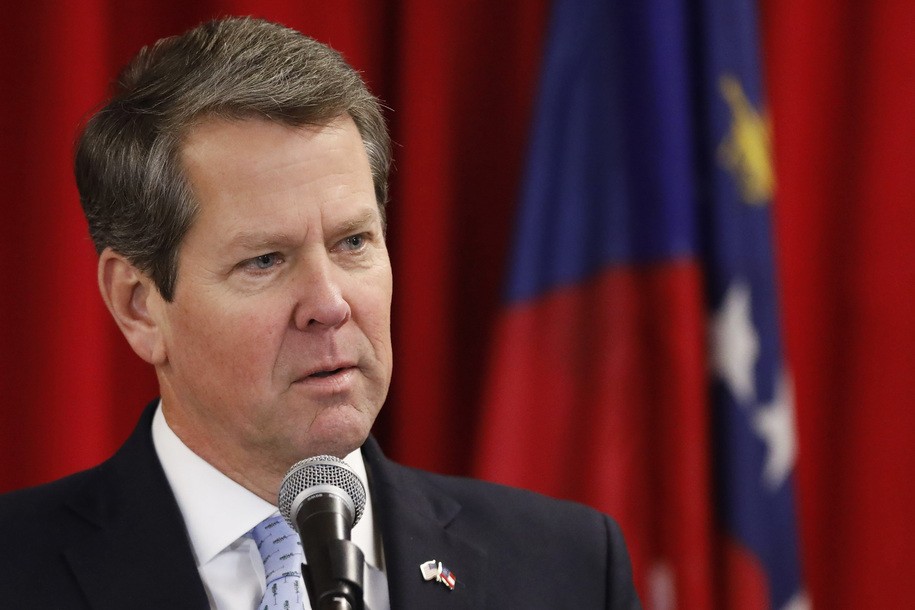
Remember when Brian Kemp, then the secretary of state of Georgia, was running for governor against Stacey Abrams in 2018? He was using his position to suppress the vote and, as Daily Kos’ Stephen Wolf wrote in November of that year, "suspended and purged countless voter registrations, removed hundreds of polling places to make voting less convenient for those with limited transportation options, had his allies on local elections boards fail to provide adequate resources to handle high turnout, exposed Georgia's election systems to massive security vulnerabilities, and baselessly claimed Democrats had committed cyber crimes to cover up his own security failures." Surely you remember all that, because Kemp "won" that election, the most blatant case of electoral theft since the Supreme Court selected George W. Bush to be president in 2000.
That wasn't all Kemp did, though. He made a big announcement the Sunday before the election, saying that "the Democratic Party of Georgia is under investigation for possible cyber crimes" and that he was launching an investigation into it. That "investigation" has now been quietly closed by the state's attorney general's office, which says that it had found no evidence at all to substantiate the claim.
Campaign ActionState Democrats have called Kemp's investigation what it is—a sham—and now they have the state's findings to back them up. "More than a year after the sitting secretary of state leveraged baseless accusations against his political opponents, we're finally receiving closure on an 'investigation' that has been a sham from the start," said Democratic Party of Georgia Chairwoman Nikema Williams. "As we have since well before these outright lies came to light in the first place, Georgia Democrats will continue to do everything in our power to fight back against voter suppression."
"This is Kemp's playbook in his desperate attempt to keep his ever-loosening grasp on power," said Lauren Groh-Wargo, Abrams' campaign director and currently the CEO for Fair Fight Action, a voting rights group. "The motivation is clear: producing headlines while wasting the time and resources of individuals and groups who dared to challenge Kemp." And, of course, to eke out whatever other support he could to steal the election.
Reporting at the time of the election pointed to the efforts of a private citizen, Richard Wright, to inform the state about vulnerabilities he had found in two of the state's election webpages. Wright provided this information both to a Democratic Party volunteer and to lawyers who were involved in an election security-related lawsuit against Kemp. Kemp found out about it, and, rather than addressing the vulnerabilities, started this bogus investigation. The AG's office said in its memo on its closing of the investigation that it "did not reveal any evidence to support the criminal prosecution of Mr. Wright." Well, duh.
The voters didn't pick my candidate, and I respect that
James.galbraithExactly. We're now getting to where there's a bunch of votes, and that's ok.
I openly supported Elizabeth Warren this primary season, and still do! But it’s obvious by now that she won’t be our nominee. Despite the best efforts of so many, and for any number of reasons, the voters had other ideas.
Rural, white Iowa had other ideas, picking Pete Buttigieg and Bernie Sanders. New Hampshire had other ideas, picking those two while giving a lift to Amy Klobuchar. Nevada and its Latinos went for Bernie. South Carolina decisively said, “JOE gets the Black vote.” And just like that, what was expected to be a day for Sanders to amass a delegate lead turned into a decisive and race-ending Biden rout.
Nowhere, in any of those contest, did Warren figure. Not even in her own home state of Massachusetts.
This race isn’t over, and there’s no reason Biden and Bernie shouldn’t keep fighting it out (and maybe even Warren, to keep her voice in the debates and maybe get some convention leverage). But looking at what’s left on the map, it’s pretty clear that Biden is likely to be the nominee.
I’m not at peace with Biden being the nominee. Not because of electability issues (I’ve long maintained that all our candidates are electable), but because of ideology and policy. I’m never going to be “excited” about Biden.
But you know what? I don’t need to be excited. Too many people act like picking a president is like picking a partner, or an American Idol winner. It’s not. You don’t need to be in love. You just have to fight for the candidate that will be better for America. And none of our candidates would put kids in cages.
If you want to be “excited,” there are plenty of down-ballot candidates who will light this place on fire. We can continue building a bench so that we have those better choices in the future. We also need the Senate for all the obvious reasons (No. 1: The Supreme Court.) But our job is to beat Trump, and whether it’s Biden, or whether Bernie somehow pulls off a miracle, we’ll need to rally. (We can save the policy battles—and there will be plenty—for after we win.)
Had Warren won the nomination, I would’ve hoped that the supporters of the rest of the field would come together and fight for the common good. It’s only right and fair that I extend that same courtesy to the eventual winner of this primary.
You don’t have to love Biden to fight to free kids from cages, and to ensure a liberal replacement for Ruth Bader Ginsburg on the Supreme Court. This isn’t about you or me. It’s not about what makes you “feel” better. With 22 candidates in the field, the odds were always stacked against our candidate winning.
This is about our country. And right now, we have to defeat Republicans from the top of the ballot on down. That’s the only thing that matters.

In a major boost to Democrats, Montana governor reportedly may run for Senate against GOP incumbent
James.galbraithOh thank goodness. Hopefully he'll win
On Wednesday, The New York Times reported that Democratic Gov. Steve Bullock would likely reverse himself and run for Senate against GOP incumbent Steve Daines after all. Bullock, who mounted a failed bid for the Democratic presidential nomination last year, hasn't addressed the matter directly, and he only refused to rule it out in an email with the Times. However, Bullock has reportedly been the target of aggressive persuasion efforts by Barack Obama and Senate Minority Leader Chuck Schumer. Bullock only has until the Monday filing deadline to decide, meaning we will soon have an answer.
If Bullock does join the race, he would instantly give Democrats a far better shot at pulling off an upset in a state that went solidly for Trump in 2016 but has been more amenable to Democrats downballot. As the sitting governor, Bullock has already won two hard-fought elections in 2012 and 2016, and he had a strong approval rating in the few available polls. Bullock would also be starting with very high name recognition and be able to raise ample money, giving him a major edge over the current field of little-known Democratic contenders.
Bullock's entry would give Democrats their best shot at ousting Daines, but it will still be an uphill battle. Montana backed Trump by a punishing 56-35 in 2016, and there's little indication that Trump will fare much worse there in November. In an era where fewer and fewer voters are willing to split their tickets, especially in federal races, Bullock will have a tougher time convincing Trump-leaning voters to cross over for him when the stakes appear higher. However, there's still a real chance he could pull off an upset win, and his running would be a boon to national Democrats' odds of taking back control of the Senate.

Trump’s latest attack on Jeff Sessions inadvertently confirms one of Mueller’s key findings
James.galbraithYep
 Trump and Jeff Sessions during happier times in February 2017. | Saul Loeb/AFP via Getty Images
Oops.
President Donald Trump reacted to Jeff Sessions’s so-so primary showing in his quest to regain his old Alabama US Senate seat by taking yet another shot at his former attorney general. But in the process of doing so, Trump confirmed one of the Mueller report’s key findings about his efforts to obstruct justice.
On Wednesday morning, Trump quote-tweeted a post from Politico about Sessions’s second-place finish in Tuesday’s Republican primary — one that will result in a runoff next month between Sessions and first-place finisher Tommy Tuberville — and wrote, “This is what happens to someone who loyally gets appointed Attorney General of the United States & then doesn’t have the wisdom or courage to stare down & end the phony Russia Witch Hunt. Recuses himself on FIRST DAY in office, and the Mueller Scam begins!”
This is what happens to someone who loyally gets appointed Attorney General of the United States & then doesn’t have the wisdom or courage to stare down & end the phony Russia Witch Hunt. Recuses himself on FIRST DAY in office, and the Mueller Scam begins! https://t.co/2jGnRgOS6h
— Donald J. Trump (@realDonaldTrump) March 4, 2020
Trump’s tweet is factually incorrect. Sessions actually served as attorney general for about three weeks before he recused himself from the Russia probe on March 2, 2017, on the heels of revelations that he had misled senators during his confirmation hearing about the extent of his communications with Russians in 2016. But more significant than that fib is the broader point Trump communicated: that Sessions should have quickly shut down the investigation into the Trump campaign’s contacts with Russia instead of recusing himself.
Here’s the thing: The president isn’t supposed to direct the attorney general to end specific investigations, especially ones directly involving his campaign. In fact, the perception that Trump had interfered in the Russia investigation (by firing then-FBI Director James Comey two months after Sessions’s recusal) led to special counsel Robert Mueller’s appointment in the first place.
As part of his investigation, Mueller investigated 10 instances where Trump potentially committed obstruction of justice. A number of them involved Trump’s repeated efforts to cajole Sessions into either limiting the investigation or unrecusing himself and ending it.
As Marshall Cohen of CNN noted, the evidence Mueller laid out indicated that Trump’s conduct met all the criteria for an obstruction of justice charge. But Mueller ultimately determined that because of the Justice Department Office of Legal Counsel’s 2000 opinion that the department can’t indict a sitting president, charging Trump with crimes while he’s still in office wasn’t an option for him.
The good people at @lawfareblog have a very handy collection of all the Mueller analysis on obstruction of justice. Here's what Mueller said about Trump's behavior toward Sessions, and how it met the threshold for all three elements needed for an obstruction charge. pic.twitter.com/5oP6YEH4AS
— Marshall Cohen (@MarshallCohen) March 4, 2020
Wednesday’s tweet is not the first time Trump has basically publicly admitted that he asked Sessions to end the Russia investigation. He posted a tweet that was even more direct about that demand in August 2018, one day after the trial of his former campaign manager Paul Manafort began on a host of charges related to financial crimes and money laundering that stemmed from the Mueller investigation. This was also back when Sessions was still serving as AG (Sessions resigned under pressure three months later and was replaced by William Barr).
..This is a terrible situation and Attorney General Jeff Sessions should stop this Rigged Witch Hunt right now, before it continues to stain our country any further. Bob Mueller is totally conflicted, and his 17 Angry Democrats that are doing his dirty work are a disgrace to USA!
— Donald J. Trump (@realDonaldTrump) August 1, 2018
In his report that was released almost a year ago now, Mueller concluded “that Sessions was being instructed” by Trump “to tell the Special Counsel to end the existing investigation into the President and his campaign.”
From the Mueller report (emphasis mine):
The President sought to have Sessions announce that the President “shouldn’t have a Special Prosecutor/Counsel” and that Sessions was going to “meet with the Special Prosecutor to explain this is very unfair and let the Special Prosecutor move forward with investigating election meddling for future election so that nothing can happen in future elections.” The President wanted Sessions to disregard his recusal from the investigation, which had followed from a formal DOJ ethics review, and have Sessions declare that he knew “for a fact” that “there were no Russians involved with the campaign” because he “was there.” The President further directed that Sessions should explain that the President should not be subject to an investigation “because he hadn’t done anything wrong.” Taken together, the President’s directives indicate that Sessions was being instructed to tell the Special Counsel to end the existing investigation into the President and his campaign, with the Special Counsel being permitted to “move forward with investigating election meddling for future elections.”
Trump’s tweet on Wednesday basically confirmed the key passage in bold — that he instructed Sessions to end the investigation and became angry with him when he refused to do it.
Why does any of this matter? Aside from serving as an example of how reckless Trump’s tweeting continues to be — and as an illustration that his long-simmering, one-sided feud with Sessions isn’t over — it’s also worth remembering that while Mueller concluded Trump couldn’t be charged with obstruction of justice while he’s in office, he could still face charges once his presidency ends.
Read in that context, Trump’s tweet reads uncomfortably like an admission.
The news moves fast. To stay updated, follow Aaron Rupar on Twitter, and read more of Vox’s policy and politics coverage.
White House still hiding Russia documents it said Trump declassified
James.galbraithBut you'd better believe anything related to Burisma will suddenly be pouring out to credulous outlets
When former White House press secretary Sarah Huckabee Sanders issued a press statement in September 2018 saying that Donald Trump had ordered the declassification of certain documents relating to the Russia probe, she apparently lied. Surprise!
Despite Sanders' claims to the contrary, Justice Department lawyers convinced a federal judge Tuesday that they couldn't make those documents available in a lawsuit brought by media outlets because they had never actually been declassified, according to TPM.
The Justice Department and media outlets have been locked in an ongoing dispute over the documents, which pertain to unredacted versions of the department's FISA applications to surveil Trump campaign adviser Carter Page. A top DOJ official finally submitted a declaration in the dispute claiming that the department never got that declassification order from the White House.
“DOJ’s declaration now makes clear that the Press Release was not a declassification order,” Judge Amit Mehta explained in an opinion denying the media outlets access to the unredacted documents. In other words, Sorry, Sanders lied, no documents for you.

Italy is shutting down schools nationwide to help curb its growing coronavirus outbreak
James.galbraithYeah that's a fairly big deal
 University students hang out in front of La Sapienza University campus in Rome on March 4, 2020. | Marco Di Lauro/Getty Images
The country has recorded more than 3,000 cases and more than 100 deaths.
Italy is shutting down its schools for two weeks, as the government works to contain the novel coronavirus outbreak that has hit the European country particularly hard.
Officials said the new coronavirus has infected more than 3,000 people and killed at least 107 in the country as of Tuesday. As a result, all schools, universities, and day cares will be shut starting Thursday and will remain closed until at least March 15.
“It is a prudent decision to contain the virus because we have a health-care system at risk of being overloaded,” Prime Minister Giuseppe Conte said in a statement Wednesday.
/cdn.vox-cdn.com/uploads/chorus_asset/file/19767644/GettyImages_1205083589.jpg) Tiziana Fabi/AFP via Getty Images
Tiziana Fabi/AFP via Getty Images
Italy had already imposed similar measures in February in the northern part of the country — the epicenter of the country’s outbreak — and cities like Milan and Venice are basically under lockdown because of travel restrictions. This new directive expands the school closures nationwide and affects about 8.7 million students, according to Bloomberg. The Italian government has also banned fans from attending sporting events and some fashion shows.
Italy is the first country in Europe to take such sweeping measures, though France has closed around 120 schools in the most heavily affected areas of that country, the Guardian reports.
But many places in East Asia have already taken similar steps: Japan has closed schools for roughly a month, until early April; Hong Kong schools have been shut for weeks and won’t reopen until late April. China, too, has shuttered schools and deployed an online learning curriculum instead.
So far, children don’t seem to be particularly vulnerable to the coronavirus, at least relative to other demographics. According to the US Centers for Disease Control and Prevention (CDC), “There is no evidence that children are more susceptible. In fact, most confirmed cases of COVID-19 reported from China have occurred in adults.” (Covid-19 is the formal name for the disease caused by the novel coronavirus.)
But Covid-19 risk increases with age or with underlying medical conditions, according to the World Health Organization (WHO), with those 80 or older with the highest mortality rates, according to the available data from the WHO. Italy, in particular, has a large elderly population, which makes the country particularly vulnerable.
“Italy is a country of old people,” Massimo Galli, the director of infectious diseases at Sacco hospital in Milan, told the Guardian. “The elderly with previous pathologies are notoriously numerous here. I think this could explain why we are seeing more serious cases of coronavirus here, which I repeat, in the vast majority of cases start mildly and cause few problems, especially in young people and certainly in children.”
But there’s still a lot scientists don’t know about the virus and how it spreads, so governments like Italy’s are taking proactive and vigorous measures to slow the spread and rate of infections. And, public health officials believe that limiting access to places where a lot of people gather — like schools and other public events — is an effective tool.
“Children could amplify the epidemic and carry the disease to their grandparents. Paradoxically, school closures help protect the elderly,” Giovanni Rezza, who leads the infectious-disease department at Italy’s National Health Institute, told the Wall Street Journal. “We need to avoid a big wave of cases.”
The question with all these school closings is what the ripple effects will be, particularly for parents who work, and what that might do to the economy if the workforce is upended. “It’s right to close schools, but that has a cost,” Cristina Tagliabue, a mother of a 2-year-old and communications entrepreneur from Milan, told the New York Times. “The government could have done something for mothers — we are also in quarantine.”
PlayStation 2 Is Now Officially 20 Years Old
James.galbraithI officially feel ancient


Read more of this story at Slashdot.
Mike Bloomberg spent $500 million to win nothing but American Samoa
James.galbraithlol. $500M to effectively tie with Gabbard. Bye.
 Mike Bloomberg held his Super Tuesday night event in West Palm Beach, Florida, on March 3, 2020. | Joe Raedle/Getty Images
Bloomberg spent more money on TV and radio than all the remaining candidates combined — and he flopped horribly.
Former New York City Mayor Mike Bloomberg dropped out of the presidential race on Wednesday and endorsed former Vice President Joe Biden — after spending more than $500 million of his own fortune on his campaign, all to only win the American Samoa caucus.
Bloomberg appeared on the ballot for the first time on Super Tuesday, with a particularly weak showing, despite throwing more money at his presidential bid than all the remaining candidates combined. His only victory was in the tiny American Samoa caucus, where he got five delegates (out of 1,991 need to win). Otherwise, he didn’t make the top two in any state on Super Tuesday, based on the results so far. While he may still win some delegates in California, and could pick up some district-level delegates in other states, Bloomberg was on track to come out of Tuesday with just one-tenth as many delegates as Biden, who’s now the frontrunner in the race.
Virginia marked a particularly embarrassing loss for Bloomberg, as Vox’s Emily Stewart has explained:
Bloomberg came in a distant fourth in Virginia, which former Vice President Joe Biden won, and appears to have failed to pass the threshold to get delegates. Not a great sign, given that he poured $18 million into television and digital ads there, spent millions of dollars there in the 2018 midterms, and held multiple campaign events and rallies there. A Bloomberg aide told CNN that though Bloomberg’s operation was good, it’s a “breeding ground” for Biden voters.
As Wall Street Journal reporter Julie Bykowicz pointed out, Biden and his allies spent about $360,000 in Virginia — 2 percent of what Bloomberg put into the state. Biden won Virginia with 53 percent of the vote, followed by Sen. Bernie Sanders with 23 percent, Sen. Elizabeth Warren with 11 percent, and then Bloomberg with 10 percent. Bloomberg didn’t even get the 15 percent of the vote needed to qualify for delegates there.
One of the fears among the moderate wing of the Democratic Party going into Tuesday was that Bloomberg would play as a spoiler to Biden, who has surged in the polls thanks to a big primary win in South Carolina. Bloomberg didn’t even do well enough to accomplish that — as Biden swept most of the states on Tuesday, including delegate-rich Texas.
All of this was obviously bad news for Bloomberg, but it’s good news for Democrats who were worried about big money buying presidential elections. In Bloomberg’s case, that didn’t seem to be true. And it also wasn’t true for billionaire activist Tom Steyer, who recently dropped out after his own presidential bid sputtered.
That doesn’t necessarily prove that money doesn’t play a big role in elections. Maybe it’s just that Bloomberg is a uniquely weak candidate — a real possibility, given his disastrous initial debate performance and forgettable second debate. And Bloomberg launched his presidential bid relatively late, which is why Tuesday was the first time he appeared on any ballots.
But hundreds of millions of dollars later, it was all for nothing.
This North Carolina Democrat will try to unseat Thom Tillis this fall
James.galbraithGood. Glad to see the GOP's attempted interference failed.
 Senate candidate Cal Cunningham at a primary election night party in Raleigh, North Carolina, on March 3, 2020. | Gerry Broome/AP
The state is one of Democrats’ biggest targets come November.
Cal Cunningham, an army veteran and former state senator, will take on Sen. Thom Tillis (R) in what’s expected to be an extremely competitive North Carolina Senate race this fall.
Cunningham beat out a slate of opponents, including progressive state Sen. Erica Smith, to win Democrats’ North Carolina Senate primary on Tuesday night. Viewed as a more moderate option, he’s centered his campaign on the expansion of the Affordable Care Act, opposed the Green New Deal, and garnered the backing of Senate Democrats’ national campaign arm.
With 99 percent of precincts reporting, Cunningham won 57 percent to Smith’s 35 percent. Cunningham, now in-house counsel for an environmental consultancy, had previously run for the Senate in 2010 and lost in the runoff. After his more successful bid Tuesday night, he previewed some of the attacks he plans to levy against Tillis during his victory speech in Raleigh.
“In the push and pull of Washington politics, Thom Tillis has decided there is something more important than representing us,” Cunningham said. “He has put his own political interests and special interests ahead of North Carolina’s interests.”
Cunningham called out Tillis for supporting President Donald Trump’s efforts to shift $80 million from the state’s military bases to fund his border wall, and his backing for offshore drilling along the North Carolina coast, among other actions.
Cunningham is one of several candidates running in pivotal swing states this November. Democrats have long eyed North Carolina, Maine, Arizona, and Colorado as part of their bid to retake the Senate this fall — and the race in the Tar Heel State is expected to be close.
Currently, Cook Political Report gives Republicans a slight edge in North Carolina, rating the race “Lean Republican.”
“North Carolina is probably a must-win for Democrats to retake the Senate,” Kyle Kondik, editor of Sabato’s Crystal Ball, tells Vox. “The race appears highly competitive, as Senate races in the state often are.”
Democrats’ efforts to retake the Senate runs through North Carolina
Currently, the Democrats are in the Senate minority by just a few seats. Republicans have the advantage 53-47, and this year’s electoral map puts more GOP members on the spot than it does Democrats.
Among Republicans, a handful of members including Tillis and Arizona Sen. Martha McSally are vulnerable this cycle, while Sen. Doug Jones in Alabama is seen as the main Democrat who faces strong competition this fall.
/cdn.vox-cdn.com/uploads/chorus_asset/file/19767313/GettyImages_1204818719.jpg) Brian Blanco/Getty Images
Brian Blanco/Getty Images
The North Carolina Senate seat is a prime pick-up opportunity for Democrats given how incredibly tight prior races have been. The state’s Senate seats have swung between the two parties for several cycles in the past: Tillis most recently won in 2014 when he beat out the late Democratic Sen. Kay Hagan by just 46,000 votes, 48.8 percent to 47.3 percent.
When it comes to presidential elections, too, North Carolina has gone back and forth in recent elections. In 2008, former President Barack Obama won the state by an extremely narrow margin, and in 2012 and 2016, Sen. Mitt Romney and President Donald Trump took it back.
“This will be one of the more expensive races in the country. We’ve seen North Carolina be a battleground state for Senate races for a while,” Meredith College political science professor David McLennan told North Carolina-based network WTVD.
So far, Tillis has a major advantage when it comes to funding: He’s got $5.4 million cash on hand while Cunningham has $1.4 million, according to the Raleigh News & Observer. Polling up until this point has had mixed results, with a February East Carolina University poll showing Tillis up by two points, and another NBC News poll with Cunningham up by 5 points. There are, of course, still several months until the election and these dynamics would well change before then.
Tillis has sought to align himself closely with Trump, who endorsed him for the Republican ticket last year, as part of his campaign. The president’s approval ratings have dipped some in the state, but he remains very popular among Republicans: His approval across all voters is currently at 51 percent, according to Morning Consult, while Tillis’s is at 34 percent.
Cunningham has repeatedly targeted the ties between the two and is expected to keep on doing so.
Voter turnout surged in Super Tuesday states that ditched caucuses
James.galbraithyup. Get rid of caucuses forever.
 Sen. Bernie Sanders supporters participate in the Iowa Caucus at Drake University, in Des Moines, Iowa on February 4, 2020. | Jeremy Hogan/Barcroft Media via Getty Images
One simple trick for getting a lot more people to vote.
If you’re looking for an argument against caucuses (beyond that whole Iowa debacle), look no further than the results of Super Tuesday’s primary elections.
Between 2016 and 2020, Maine, Minnesota, Colorado, and Utah all switched from caucuses, in which people meet and debate before publicly aligning themselves in groups with the candidate they support, to primary elections, in which people simply vote in private as they do in general elections.
In all four caucus-ditching states, turnout surged dramatically from 2016 to 2020:
- In Colorado, turnout more than sextupled from around 122,000 in 2016, with all votes counted, to more than 755,000 in 2020, with nearly 99 percent of precincts reporting.
- In Maine, turnout more than quadrupled from nearly 47,000, based on an estimate from Democratic officials, to more than 194,000, with 90 percent of precincts reporting.
- In Minnesota, turnout nearly quadrupled from more than 205,000, with all votes counted, to more than 745,000, with more than 99 percent of precincts reporting.
- In Utah, turnout more than doubled from more than 77,000, with all votes counted, to nearly 175,000, with 99 percent of precincts reporting.
One other way to look at it: In Colorado, former Vice President Joe Biden, who was second in the state, got more votes in 2020 than Sen. Bernie Sanders and Hillary Clinton combined in 2016. Sanders, who again won Colorado this year, nearly quadrupled his vote count from 2016 to 2020.
In some ways, this isn’t really surprising. Caucuses require people to show up in a public setting, stay there for potentially hours through lengthy discussions about the candidates and possibly multiple votes, and eventually group up in a lightly regulated system to select a nominee.
That’s simply much more work than just casting a ballot by mail or in person — and it’s particularly bad for people with disabilities, people who work night shifts, people who don’t have a lot of free time, people who don’t have consistent transportation, and just about anyone who for whatever reason can’t make it out to a school gym for possibly hours on a Tuesday night.
This isn’t to say that everything goes smoothly in regular primaries. On Super Tuesday, for instance, long lines at the polls were a big problem — particularly in communities of color.
But the numbers drive home just how bad caucuses are for democracy, given that they appear to suppress turnout so much. Especially among Democrats, who have opposed Republican efforts to suppress voters, it’s hard to square all the talk about boosting voter turnout and access to the polls with the continued use of caucuses in places like Iowa and Nevada.
If Democrats really want to make it easier to participate in democracy, the Super Tuesday figures suggest getting rid of caucuses is one concrete way to do that.
Bernie Sanders promised to bring in younger voters. It’s not happening so far.
James.galbraithNo, no it is not. Sanders' revolution didn't show up at the ballot box and that will likely doom his campaign.
 Sen. Bernie Sanders’s supporters gather ahead of the Super Tuesday rally in Essex Junction, Vermont, on March 3, 2020. | Salwan Georges/The Washington Post via Getty Images
Sanders’s vowed political revolution is struggling to get off the ground.
When Sen. Bernie Sanders talks about his presidential campaign, he emphasizes that it’s a movement — the start of a “political revolution,” which he says will drive typically apathetic voters, particularly the young, to turn out and vote.
But if Super Tuesday was anything to go by, Sanders’s political revolution isn’t happening — and it’s former Vice President Joe Biden’s campaign, or perhaps general opposition to President Donald Trump, that seems to be driving turnout.
Consider Texas: According to NBC News’s exit polls, the Democratic electorate actually skewed older in Tuesday’s primary compared to past primaries. In 2008 and 2016, 13 and 18 percent of the electorate, respectively, was 65 and older. In 2020, it was 24 percent.
Texas is getting older, but not at a rapid enough rate for that increase to be tied solely to state demographic trends. In fact, the share of the population that’s 65 and older is just 12.6 percent. Given Biden’s strength with this group of Texas voters — 46 percent support Biden, while just 16 percent support Sanders — that surge in older voters helps explain Biden’s narrow victory in the state.
It seems like Texas wasn’t an outlier. Domenico Montanaro at NPR found that, from the start of the primary elections to Super Tuesday, we just haven’t seen a surge in younger voters:
Before Tuesday, voters younger than 30 were not keeping pace with the overall increase in voter turnout. In fact, young voters’ share of the electorate went down in three of the first four states compared with 2016.
On Tuesday night, not a single state saw an increase in young voters’ share of the electorate, according to exit polls conducted by Edison Research and sponsored by several of the television networks.
It’s really hard to overstate how bad this is for Sanders. It’s not just that his campaign relies on these voters, although it does. It’s that a core driving philosophy of his campaign is that he will inspire a political revolution, one led, in particular, by a surge in young voters. That’s how he has envisioned defeating Trump in November. If that’s not happening, then how is the Sanders campaign a movement at all?
Political analyst Dave Wasserman put it in blunt terms on Tuesday: “Sanders’s pledge to bring new voters into his movement seems fairly empty in the results we’re seeing so far. His coalition has shrunk since 2016, not grown.”
That’s not to say it’s all bad. On Tuesday, Sanders did win in Vermont, Colorado, and Utah, and, as of Wednesday morning, he has a significant lead in California. He has made inroads with Latin voters, who fondly call Sanders “Tío Bernie.”
But just winning a few states isn’t enough here. Sanders has promised that his campaign would bring all sorts of new voters into the Democratic Party. And so far it seems to be struggling to do so.
Virginia Governor Ralph Northam Signs Bill Banning Harmful Gay ‘Conversion Therapy’
James.galbraithSo nice to see dems actually doing something with their power.

Virginia Governor Ralph Northam on Tuesday signed a bill banning harmful gay “conversion therapy” for minors.
Said Northam in a statement: “Conversion therapy sends the harmful message that there is something wrong with who you are. This discriminatory practice has been widely discredited in studies and can have lasting effects on our youth, putting them at a greater risk of depression and suicide. No one should be made to feel they are not okay the way they are—especially not a child. I’m proud to sign this ban into law.”
Virginia is the first state in the South, and the 20th in the U.S. to ban the harmful practice.
NBC News reports: “Virginia’s measure, HB 386, which takes effect July 1, prohibits health care providers or counselors licensed by the state from subjecting anyone under 18 to the practice. Doing so, according to the bill, will constitute ‘unprofessional conduct and is grounds for disciplinary action.'”
Proud to sign 68 more bills into law, including legislation to end the dangerous practice of "conversion therapy" for minors, accommodate working parents in state buildings, and help returning citizens reintegrate into society. See the full list here: https://t.co/nRe3McbqAI pic.twitter.com/DVLstbBeVY
— Ralph Northam (@GovernorVA) March 3, 2020
The post Virginia Governor Ralph Northam Signs Bill Banning Harmful Gay ‘Conversion Therapy’ appeared first on Towleroad Gay News.

Update: Emerald City Comicon
James.galbraithYep I'm expecting ECCC to cancel
In 21 years of exhibiting at Comic-Cons, I’ve never once cancelled on a show. But today, my friends, I have to break that streak. I won’t be at next week’s Emerald City Comicon in Seattle.
This breaks my heart.
I’ve been going to this show every year since 2007. It keeps calling me back. There’s a joy I get from meeting and laughing with you all that carries me through the year.
But here’s the bottom line: I’m an asthmatic whose lungs like to pretend they’re an old, tired basset hound. Sometimes they just lay down and give up (and put me in the hospital). In fact, at the moment I’m still on inhaled steroids from a respiratory soirée my lungs and I had in early February. These are details I wouldn’t normally bother you with, but…you’re owed an explanation for my first-ever cancellation.
Basically, it’s not smart of me to bring my lil’ comorbidity to Seattle at the moment. COVID-19 will get down here to Los Angeles soon enough, and I’m doing my damndest to get my lungs in the best shape they can be before it does.
So! Until I see you again, Seattle friends: Be well, and be safe, and be kind to each other. I will miss seeing your wonderful faces!
Fascism: Hours after Biden wins, Senate Republicans relaunch Biden probe
James.galbraithIf only the media would realize this and stop fucking playing stenographer to their obvious bad faith
It isn't even the slightest bit surprising that the very moment Democratic presidential contender Joe Biden leapt back into frontrunner status, Republican Sen. Ron Johnson used his post as Senate "Homeland Security" Committee chair to announce that it turns out he will also be reviving the Trump-backed claims against Biden's son Hunter that Rudy Giuliani has been shipping in from disgraced oligarchs with an axe to grind against the new anti-corruption Ukrainian government.
Fortunately, Ron Johnson does nuance the way a bag full of rattlesnakes does nuance, so he was not able to play coy about why, exactly, corrupt Senate Republicans need to rededicate themselves to an anti-Biden conspiracy theory. The Wisconsin senator is doing it because people are voting for Biden, he admits.
Politico reports Johnson's explanation to reporters thusly: “These are questions that Joe Biden has not adequately answered. And if I were a Democrat primary voter, I’d want these questions satisfactorily answered before I cast my final vote.”
If Ron Johnson was a "Democrat" primary voter, we'd have to fumigate the voting booths afterward. More to the point, though, Johnson is quite upfront here. Joe Biden is leading in the polls again. Therefore, Trump's Senate allies, crooked to a non-Romney person, will be investigating Joe Biden.
Donald Trump Jr. arranging a meeting with Russian go-betweens to discuss Russian government-promised "dirt" on Hillary Clinton, paired with a discussion of which specific sanctions against Russia they would like a grateful Trump to lift? Ron Johnson has no problem with that. Trump and his clan funneling federal cash into their own corporate pockets with every golf trip, weekend getaway, and supplicant-booked federal conference? The Way Things Should Be, says Johnson.
Oh, but Trump's likely election opponent's son may have profited off his father's good name, frets Ron Johnson, supposedly. We Republicans must get to the bottom of this travesty.
Johnson is the perfect embodiment of the new Republican party. He is dumb; dishonest; a hack; has evident contempt for democracy in any situation in which he or his allies risk losing any sliver of power; and, as his every act has demonstrated, is willing to be crooked if crookedness will win elections. He a Lindsey Graham with even less shame or charisma, which probably means he, too, will eventually thrust himself upon the nation in a Republican presidential bid.
It is absolutely clear that Republican lawmakers are intent on helping Trump corrupt the next election with conspiracy claims, foreign interference, extorted foreign help, the blocking of election security efforts, the closing of polling places, and outright vote-rigging if they think they can get away with it. This is a fascist movement now. They exist to assert Dear Leader's power; party ideology and the law alike are now whatever Dear Leader claims them to be, and the party's enemies are whoever Dear Leader believes his enemies to be, guilty of whatever supposed crimes Dear Leader claims they are.
From Ron Johnson to Attorney General Bill Barr, they will corrupt every institution as much as is necessary to retain and expand power. There will be no bottom. Ron Johnson, personally, will support much worse.

The Trump effect: Democratic turnout soars on Super Tuesday
James.galbraithMore excellent reasons to ditch caucuses forever
Even before all the votes have been tallied, one thing is clear: participation in Democratic primaries is soaring in 2020 as compared to 2016 and even 2008 in some places.
In some states, that's partly a function of moving from the caucus system to the much less time-intensive primary process. Those states include Colorado, where turnout was up about 517% over 2016; Maine quadrupled voter participation from about 47,000 in '16 to some 194,000 with 90% reporting; Minnesota also almost quadrupled from 205,000-plus in ‘16 to 745,000-plus Tuesday night; and Utah is up about 120% over last cycle.
But where participation soared was another important part of the story, with the suburban areas that helped push Democrats to sweeping victories in the midterms again showing a surge in voting. Virginia participation nearly doubled to 1.3 million voters, and Joe Biden won nearly every county there, including in the suburbs that surround D.C. Additionally, Biden beat Sanders by double digits in the suburb-heavy counties of Texas that include Dallas and Houston. And much like the results from South Carolina, Biden also turned in dominant performances among black voters in Virginia, North Carolina, and Alabama.
Sanders, on the other hand, drew a shrinking share of the electorate compared to four years ago in every one of the 15 states and territories. In his home state of Vermont, for instance, he claimed just over 50% of the vote compared to 86% four years earlier.
But maybe even more telling is the fact he doesn't seem to be animating record-level participation this cycle among the demographic groups with which he performs very well. Among Latino voters in California, for instance, he beat Biden by roughly 34 points but the group's share of the electorate appeared to be down about 2 points from 2008.
The story of Super Tuesday is one of increased participation, who exactly turned out in higher numbers, and which candidate they overwhelmingly chose. Biden claimed the lion’s share of arguably the two most important demographic groups heading into 2020: black voters, the backbone of the Democratic party, and white suburban voters, the cohort that helped drive Democrats to such a decisive win in 2018.
On a final note, we cannot forget that although increased turnout on Super Tuesday is cause for celebration, voters of color, particularly in Texas, faced far greater hurdles to casting their votes. We have simply got to do better and voters of color certainly deserve better after centuries of fighting for their right to vote in this country.
Today is many things. But it is also Hervis Rogers Day. The fight for fair elections has literally been for centuries! https://t.co/BdkRjQ2OOv
— Stacy Parker LeMelle (@StacyLeMelle) March 4, 2020

Super Tuesday takeaway: No one should have to stand in line for 6 hours to vote
James.galbraithThe GOP is deeply opposed to actual democracy
All over the Super Tuesday states, but particularly in Texas and California, the right to vote was the loser. Both out-and-out voter suppression and technical problems marred Tuesday's voting, ending up in hours-long lines and confusion. It's a disturbing preview for the general election that the Democratic campaigns are going to have to find a way to address, since Senate Majority Leader Mitch McConnell is not going to allow Congress to do so.
Since 2012, Texas has closed 750 polling locations, the vast majority in the 50 counties with the largest black and Latino populations. Between 2012 and 2018, those counties lost 542 polling sites while at the same time saw their populations grow by 2.5 million. The 50 counties with the lowest populations of color only lost 34 polling locations, but also saw a population drop of 13,000. That's as casebook as it gets for voter suppression. The practical effect of that was Hervis Rogers, waiting more than six hours in line at Texas Southern University to cast his ballot. Until nearly 1:30 AM. "I wanted to get my vote in, voice my opinion. I wasn't going to let anything stop me, so I waited it out," Rogers said. He should not have had to. And for every Hervis Rogers who was able to wait in line for six hours, who knows how many couldn't and walked away.
Those long lines were reported all over the state, where two and three hour waits were common. But polling location scarcity wasn't the only issue. Compounding that, there was a wave of robocalls to Texas voters telling independents and Republicans to show up to vote, and telling Democrats the vote was on Wednesday. Heavy web traffic took a state-run voter information website listing polling locations down for a chunk of the day. The same issue happened in Minnesota.
In California, technical problems with a $300 million new system in Los Angeles caused hours-long waits for many and many having to cast provision ballots because the systems were just too clogged with voters. Some efforts to expand voting compounded problems, with new same-day registrations coming in at the same time Los Angeles County tried a new system where voters could go to any one of 979 vote centers. Some centers were overwhelmed and checking in voters caused problems. New touch-screen voting devices were bogged down when too many people were trying to use that system. Beyond the problems in LA, "election workers in 15 counties, including Fresno, Napa and Sacramento, were unable to connect to the statewide voter registration database, said Sam Mahood, spokesman for the secretary of state’s office."
What can be done? In the absence of help from McConnell and Trump—both of whom see personal benefit in electoral chaos—the focus of Democratic campaigns needs to be on voter registration, turning out early, and absentee voting to the maximum. Make as many ballots in as many states as possible happen on paper. Maybe that's something Michael Bloomberg could spend his millions advertising, now that he's out of the running.

Biden's wins can't be dismissed as 'the establishment' taking over. We have to talk about voters
James.galbraithSeriously...a lot of people voted and this is the result. This isn't a top-down "you're going to take our candidate and like it" situation.
As former Vice President Joe Biden won state after state on Tuesday night, the accusations flew: The Establishment stole the election from Sen. Bernie Sanders. Former rival and current campaign surrogate Marianne Williamson called it “a coup,” in a now-deleted tweet. Another prominent Sanders booster said the “party brass” “wants to foist Biden on the party.” This disrespect for voters needs to stop.
It’s pretty clear that large chunks of the Democratic establishment, however you define it, didn’t want to see Bernie win. But whatever those chunks of that establishment did to block him wasn’t done in some back room conspiracy. It was done out in the open by the most basic, routine of means: in the wake of a big win in South Carolina that suggested Biden was the strongest non-Bernie candidate, two of his competitors dropped out and endorsed him. Some other prominent people endorsed him. And then the voters in 14 states had their say, and it wasn’t good for Sanders—and the fact that that’s all it took to give Biden a surge of this magnitude is something that all of us who were supporting other candidates have to reckon with, seriously.
The real engine for Biden’s comeback was built from voters. That started with the overwhelmingly black voters of South Carolina—people too many Sanders supporters have been eager to dismiss and denigrate, now as in 2016, but certainly not billionaires buying an election or shadowy operatives rigging, well, anything—but it didn’t stop there. While Sanders had built admirable strength among Latino voters and younger voters, he didn’t expand his support enough.
Voters who decided in the last few days before the election, according to exit polls, went massively for Biden. That may partly have been in response to signals from the Democratic establishment, for sure—but not in a deal-cut-in-a-smoky-back-room kind of way. Not in a deal-cut-in-a-billionaire’s-wine-cave way, either.
Party elites did decide Biden was their guy, but they only did so after he won in South Carolina—with a key boost from the endorsement of Rep. Jim Clyburn—and won big there. Biden didn’t have the advantages of a candidate the establishment decides on early and boosts throughout the early stages of the campaign. Former South Bend Mayor Pete Buttigieg led the high-dollar donor chase for much of the race. Biden didn’t even—until Monday—have an overwhelming pile of impressive endorsements. His surge didn’t originate in a secret meeting of powerful people. Maybe it was a response to key endorsements, but even if so, endorsements are not exactly a dirty trick. They’re a standard part of political campaigns.
And Sanders’ entire theory of change, of how he’ll win both the election and legislative victories thereafter, was decisively undercut. He has not mobilized massive waves of new voters and young voters, on which he based his plans for winning not just the primary but the general election and then Medicare for All. In fact, the state with the most notably high turnout was Virginia, which Biden won. Exit polls showed lower youth turnout than in 2016 in Alabama, North Carolina, Tennessee, Virginia, Vermont, and Texas. In North Carolina, South Carolina, and Virginia, Sanders actually got a lower percentage of the youth vote in 2020 than in 2016. According to a New York Times analysis, “in the Iowa precincts where Mr. Sanders won, turnout increased by only 1 percentage point”—lower than in the state as a whole. Sanders was obviously not the only one to have a rough night. Sen. Elizabeth Warren and former New York City Mayor Michael Bloomberg struggled badly. But Sanders is the one whose surrogates and prominent supporters are claiming a conspiracy against him, after spending four years claiming that the 2016 primary was “rigged”—when what happened was that millions more people voted for Hillary Clinton than for Sanders. And Sanders is the one who had the biggest claim about how radically he was going to shift the voting population. Where anyone who believes in democracy has to be thrilled that Bloomberg’s money-fueled plan for victory failed, it is truly unfortunate for U.S. democracy that Sanders hasn’t been able to produce the surge of young voters and new voters he’s promised. But that failure, plus a few high-profile endorsements, plus the decisions of millions of voters to vote for Biden, does not an establishment conspiracy, a coup, or a rigged primary make.
Cartoon: Do NOT improve society, even somewhat
James.galbraithThe entire GOP philosophy in 4 panels
Follow me on Twitter at @MattBors or on my Facebook page.


Cuellar edges out liberal challenger in Texas, and other Super Tuesday House results
James.galbraithWell fuck. We needed this idiot out.
Texas Rep. Henry Cuellar, one of the most conservative House Democrats, barely held off a primary challenger Tuesday in the first 2020 test of whether moderates can survive the rise of the party's ascendant liberal wing.
Cuellar narrowly defeated Jessica Cisneros, a 26-year-old immigration attorney, 52 to 48 percent, when The Associated Press called the race for the South Texas district Wednesday morning.
A win that tight by Cuellar will likely do little to quell the liberal forces who had pegged the race as the next major opportunity to shake up the Democratic conference. Cisneros was backed by Justice Democrats, the group that helped propel now-Rep. Alexandria Ocasio-Cortez (D-N.Y.) to victory in 2018.
Cisneros conceded Wednesday morning but struck a defiant tone, saying her race was proof "a brown girl from the border with a whole community behind her could take on the machine."
"This is just the beginning," she said in a statement. "The first thing we had to defeat was the culture of fear — and our movement was victorious in proving we're within striking distance of bringing fundamental change to South Texas.”
Throughout the campaign, Cisneros knocked Cuellar as “Trump’s favorite Democrat” and made a generational argument against the eight-term incumbent. Taking on Cueller, who opposes abortion rights and once had an A-rating from the National Rifle Association, Cisneros quickly became a cause celebre for the left.
She championed both "Medicare for All" and the Green New Deal and notched endorsements from Sen. Bernie Sanders (I-Vt.), Elizabeth Warren (D-Mass.) and Ocasio-Cortez.
"As someone who was also outspent 10 to 1, she can absolutely pull it off. But if she doesn't pull it off, I don't think we've seen the last of her," Ocasio-Cortez said in an interview shortly before the election.
The high-profile endorsements gave Cisneros a national network of grassroots donors and ample earned media, but Cuellar and his supporters maintained that it would not translate into local support in a district that is heavily rural and dependent on oil.
Her near-miss is likely to embolden a score of liberal primary challengers hoping to take out House Democrats, including two later this month. In Illinois, Democrat Marie Newman is making another run at Rep. Dan Lipinski who, like Cuellar, also opposes abortion rights. And in Ohio, Rep. Joyce Beatty faces a stiff challenge from consumer advocate Morgan Harper.
Cuellar, perhaps spooked by the rash of Democratic incumbents who fell last cycle, assembled a formidable campaign apparatus. Former staffers of Joe Crowley, who lost to Ocasio-Cortez, reached out last year to Cuellar's team to offer advice.
While Cisneros raised over $1 million — and had sizable help from an EMILY’s List affiliate — Cuellar still dwarfed her in spending. Buoyed by a massive campaign war chest bolstered by years of uncompetitive races, he dropped $2.3 million as of mid-February and still had $2 million left in the bank for the final stretch.
Cuellar’s allies said he took the race seriously from the start, deploying television, radio, digital and newspaper ads. The campaign hired paid canvassers in December and said it has knocked on 100,000 doors.
For much of the race, Cuellar scoffed at the idea that Cisneros could gain traction. The campaign polled several times, according to Cuellar strategist Colin Strother, and maintained a strong lead throughout.
Cuellar refused to debate Cisneros during the race but he did blast out negative mailers and one contrast television ad, knocking her as a New York transplant. One mail piece showed a picture of Cisneros in front of the Brooklyn Bridge. (Cisneros was born in Laredo and attended law school in Austin before completing a legal fellowship in Brooklyn.)
His campaign suggested that at least some of his spending was to protect his South Texas brand. The Cuellar family is an institution in Laredo, which makes up a bulk of the electorate. His brother is the Webb County sheriff, and his sister is the county’s tax assessor-collector.
Part of Cisneros’ strategy was to significantly change the electorate, bringing in young and low-propensity voters. She campaigned on college campuses throughout the district.
Establishment forces banded together behind Cuellar. House Speaker Nancy Pelosi both endorsed him and campaigned with him in the district. And he no doubt benefited from a policy change at the Democratic Congressional Campaign Committee that essentially blacklists campaign consultants who work to oust a sitting member of the conference.
His campaign also received support from the U.S. Chamber of Commerce, the oil industry and the conservative Koch network — a donor list that Cisneros said was further proof that Cuellar is out of touch with such a Democratic-leaning district.
Cuellar was one of three members who faced credible primary challengers on Tuesday.
In California's Central Valley, Rep. Jim Costa, a fellow Blue Dog Democrat, appeared on track to stave off Fresno City Council Member Esmeralda Soria. He held a 20-point lead over Soria with 100 percent of precincts reporting, though the AP had yet to call the race.
And in North Texas, GOP Rep. Kay Granger easily dispatched primary challenger Chris Putnam, delivering a boon to the GOP establishment as well as the forces within her party working to combat the dwindling ranks of Republican women.
Granger led Putnam, a technology executive backed by the conservative Club for Growth, by 16 points, with 100 percent of precincts reporting.
The comeback bids
Three former GOP members attempted comebacks Tuesday night. One has advanced to a primary runoff in May, while the fate of the other two was still uncertain as of Wednesday afternoon.
Former Rep. Pete Sessions (R-Texas) spurned the suburban Dallas seat he lost last cycle to Democrat Colin Allred to run in a Waco-based district 100 miles south that is more GOP-friendly. He notched a spot Tuesday in the May 26 primary runoff, but the AP had not determined his opponent as of Wednesday afternoon.
In a vacant southern California seat, former GOP Rep. Darrell Issa was locked in an intraparty fight for a spot in the general election to replace former Rep. Duncan Hunter (R-Calif.). Issa retired last cycle rather than run for reelection in a neighboring district, which Democrats ultimately flipped by a double-digit margin.
After a bruising race, Issa and fellow Republican Carl DeMaio were still fighting for the second spot in California's protracted vote count. Democrat Ammar Campa-Najjar was the top vote-getter, but he will be at a disadvantage in November when the Republican vote is not splintered.
Meanwhile, former GOP Rep. Steve Knight was struggling to advance in the special election for the northern Los Angeles seat he lost last cycle to Democrat Katie Hill, who resigned late last year. Knight currently trails Navy veteran Mike Garcia, though the AP has not called the race. Democratic state Assemblywoman Christy Smith took first place but finished shy of a majority, prompting a May 12 runoff.
National Democrats spent upward of $500,000 in an attempt to nudge Knight into the general election, a sign that they believe Garcia would be a more formidable Republican foe.
The Texas battleground
Pierce Bush, the latest member of the Bush clan to run for office in Texas, fell short in an open, suburban Houston battleground district on Tuesday. Bush, a nonprofit leader and grandson of George H.W. Bush, failed to qualify for a GOP runoff, finishing behind Fort Bend County Sheriff Troy Nehls and GOP megadonor Kathaleen Wall.
Bush tried to stake out a compassionate-conservative message in a massive 15-candidate field, but he got a late start and struggled somewhat with his family's messy history with President Donald Trump.
The winner of the May 26 runoff will face Democrat Sri Preston Kulkarni, the 2018 nominee for the seat, in the general election to replace retiring Rep. Pete Olson (R-Texas).
House Democrats and Republicans tapped nominees in some districts targeted by both parties in November. Army veteran Wesley Hunt and businesswoman Genevieve Collins will take on freshmen Democratic Reps. Lizzie Fletcher and Allred, respectively.
Wendy Davis, the 2014 nominee for governor, will face GOP Rep. Chip Roy in a central Texas district.
And in a safe red seat in the Texas panhandle, Ronny Jackson, Trump's former physician, advanced to a Republican runoff with Josh Winegarner.
Laura Barrón-López contributed to this report.