Read more of this story at Slashdot.
James.galbraithThat seems rather problematic
Read more of this story at Slashdot.
James.galbraithYup, there have to be consequences for signing on to this disaster
Lackeys from the Trump administration aren’t one teensy bit concerned about the mess they’ll leave behind should their impeached president lose reelection in just under 20 days. Oh no, the fact that they’re all on a superspreader tour of the country is proof of that. Like their boss, what they’re concerned about instead are their own sorry asses.
Trump staffers, The Washington Post reports, “are hoping the Trump presidency isn’t a disqualifying blemish on their resumes or Google footprint as the door revolves the other way and they seek to land, once again, in the private sector.” Considering the kinds of horrific crimes this administration has carried out, they should be grateful that not being able to find a six-figure job at a fancy D.C. firm is the worst thing they have to worry about.
Some of former officials have already gotten a taste of a post-Trump life. For former White House press secretary Sean Spicer, “[t]here’s been no cushy landing on K Street or high-profile consultancy at a major lobbying or public relations firm,” The Post said. While he published a book about being a taxpayer-funded liar, it flopped. Another one of his post-Trump jobs wasn’t too pretty either—no really, he wore some hideous dollar store piñata for the 28th season of Dancing with the Stars, where he was the sixth contestant eliminated.
But just because Sean "This was the largest audience to ever witness an inauguration, period!” Spicer had trouble doesn’t mean other former Trump officials have had the same experience. “Ex-White House chief of staff Reince Priebus is president of the Michael Best & Friedrich law firm,” The Post continued. Former Department of Homeland Security (DHS) Sec. John Kelly continued cashing in on cruelty and joined the board of a company that operated the now-closed prison camp for migrant children in Homestead, Florida. His successor, Kirstjen Nielsen, didn’t really stray far and joined a government council.
Kelly and Nielsen in particular tried rehabilitation tours that really just continued exposing them as liars. They probably wished for the luck of Nielsen’s former chief of staff Miles Taylor, who got a CNN contributor’s gig after managing to convince enough people that he was shocked, shocked! about shenanigans he saw at DHS even though he was there for two years, from 2017 and 2019. Taylor didn’t speak out then as a moral whistleblower to expose hateful policies, but instead until this past summer when it was convenient for him. Nor has Taylor fully apologized for many of the policies he helped carry out.
“The longtime GOP strategist who runs a public affairs firm recalled coming close to hiring a former Trump White House staffer until a Google search revealed the prospective hire’s track record defending Trump on race and immigration,” The Post continued. “It ground the interview process to a halt, the strategist said.” But, at the same time, “Americans have short memories,” a former Bush and Clinton staffer continued to The Post.
The fact is that from White House aide Stephen Miller to unlawfully appointed acting DHS Sec. Chad Wolf, these officials deserve to become pariahs when the administration is at last finished. They brought it on themselves because they knew what they were signing up for from the start: a vulgarian who bragged about committing sexual assault and a racist who vowed to deport millions of undocumented immigrants even as he exploited many at his own businesses. Don’t feel sorry for these officials. Feel sorry for the many people they hurt.
James.galbraithHallelujah
Read more of this story at Slashdot.
James.galbraithWell that'd be fantastic
The race for U.S. Senate in Texas has gotten a lot hotter than incumbent GOP Sen. John Cornyn ever imagined at the outset of this cycle. Due to Cornyn and his Republican senate colleagues building Donald Trump into the monster that escaped from lab, Cornyn’s Democratic challenger MJ Hegar is breathing down his neck in her bid to unseat him.
In fact, a Public Policy Polling survey released Friday put Hegar just a few points down. "MJ Hegar trails John Cornyn just 49-46, making up for the Republican lean of the state thanks to a 55-34 advantage with independent voters," writes PPP. The polling outfit also noted the race was surprisingly close given that Cornyn has a 15-point advantage in name recognition.
76% of voters have an opinion about him with 39% rating him favorably and 37% unfavorably. 61% of voters have an opinion about Hegar with 32% rating her favorably and 29% unfavorably.
In other words, if Hegar managed to up her name recognition in these closing weeks, she certainly stands a chance of closing that 3-point gap.
Senate Democrats’ top super PAC liked those odds. The day before PPP's survey was released, Senate Majority PAC announced it was directing $8.6 million toward the race for both English and Spanish-language ads that begin airing Friday and run through Election Day. The first ad focuses on Cornyn's numerous votes to repeal the Affordable Care Act.
“Three weeks out, and John Cornyn has a weaker standing than Ted Cruz ever did,” J.B. Poersch, President of Senate Majority PAC, said in a statement. Of course, Cruz only edged out Democrat Beto O'Rourke by about 2.5 points in 2018.
Hegar also raised almost double what Cornyn did in the third quarter, bringing in nearly $14 million to his $7.2 million. That haul basically erased the GOP senator's cash advantage. From June through September, Cornyn spent more than twice as much as Hegar, $13.7 million to $6.4 million, according to the Dallas Morning News.
But between Hegar's increased fundraising and some help from Senate Majority PAC, Hegar is poised to make a real run at Cornyn in these final weeks.
Since 2016, the state has seen a net gain of 1.8 million more voters on its rolls. On the first day of early voting Tuesday, both Harris and Dallas Counties shattered their previous first-day turnout records in what are two of the bluest counties in the state.
James.galbraithLooks like a wet winter is on track for WA. While CA and the South is gonna continue to dry out
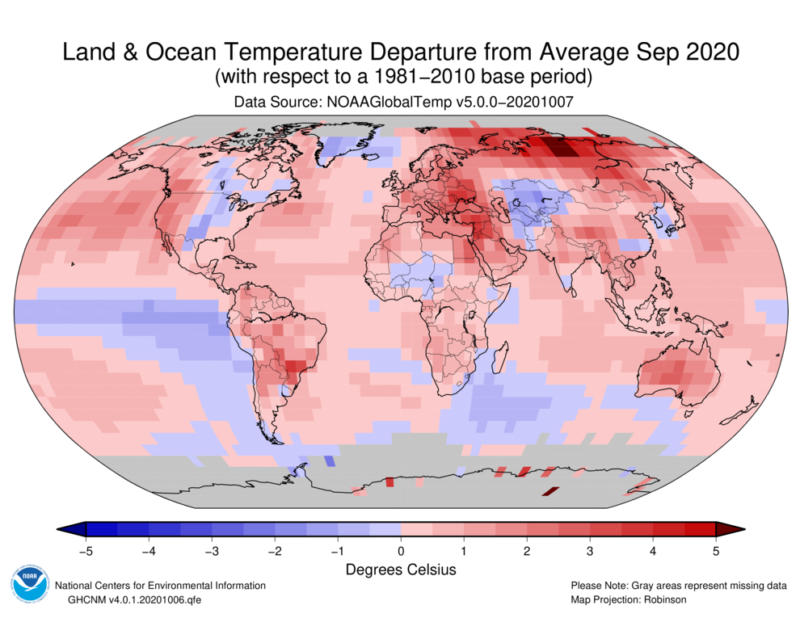
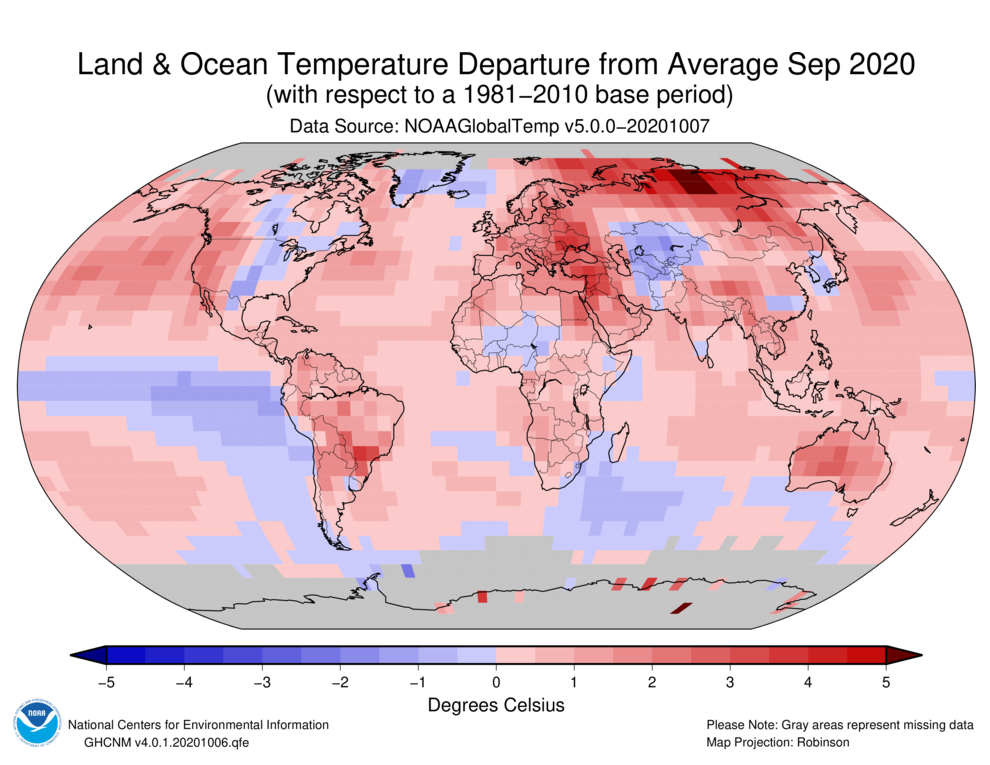
Enlarge / The global average temperature for September was a new record. (credit: NOAA)
September apparently wasn’t feeling like doing anything unusual, so it ended up being the warmest September on record for the globe. That’s been something of a trend this year, with each month landing in its respective top three. It has become increasingly clear that 2020 will likely be the second warmest year on record, if it isn’t the first.
Unlike in August, the contiguous US didn’t set a record in September, though it was still above the 20th-century average. A high-pressure ridge dominated over the West Coast again, leading to even more warm and dry weather for much of the Western US. But a trough set up over the Central US in mid-September, bringing cooler air southward.
Two more hurricanes—Sally and Beta—led to above-average rainfall in the Southeast. Total precipitation for the contiguous US was a touch above average as a result, but the average as usual masks local differences. Drought conditions have expanded and worsened over much of the West, and there has been little relief for wildfire conditions.
Read 8 remaining paragraphs | Comments
James.galbraithSuch a refreshing contrast with the fuckwit Cheeto
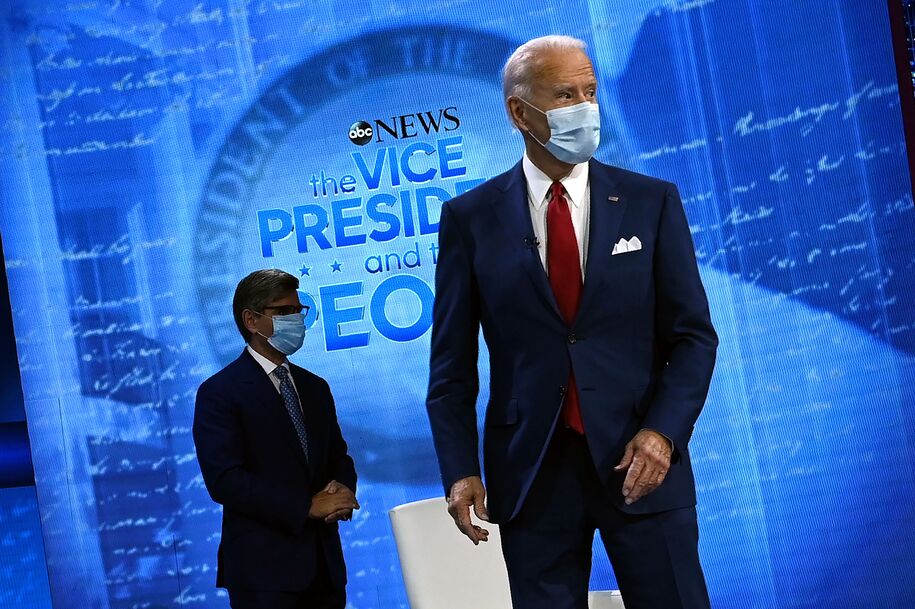
 Former Vice President Joe Biden spoke at an ABC News town hall this week. | ABC
Biden’s support for transgender rights highlighted his empathy — and some fumbles with language.
Former Vice President Joe Biden’s response on transgender rights during a town hall on Thursday highlighted his empathy on these issues — as well as some of his struggles with the language around them.
Biden, in his answer to a mother who asked how he’d guarantee protections for her trans child, emphasized that he’d roll back President Trump’s executive actions including a measure that bars transgender people from openly serving in the military; he then went on to condemn the murders of transgender women of color.
“Eliminate those executive orders, number one,” he said. “There is no reason to suggest that there should be any right denied your daughter.”
Biden’s positions on trans issue were — as they long have been — a stark contrast to Trump’s approach, which has included outright attacks against the rights of transgender people, including rolling back an Obama-era memo directing schools to protect trans students from discrimination and reducing protections when it comes to health care discrimination. (Trump was not asked about transgender rights during his town hall on Thursday.)
We deserve a president who will fight for transgender rights, advocate for our community and affirm that #BlackTransLivesMatter. @JoeBiden is that leader. #BidenTownHall pic.twitter.com/9v1G4xh3kb
— Human Rights Campaign (@HRC) October 16, 2020
Biden’s response covered some of his policy proposals as well: He committed to changing the law to guarantee protections for transgender people, and to use his executive power to reverse actions taken by the Trump administration. Biden has said he’d sign the Equality Act, legislation that changes civil rights law so sexual orientation and gender identity are explicitly protected characteristics.
Biden, in his remarks, also specifically drew attention to the murders of transgender women of color, disparities that have rarely been addressed on the presidential debate stage. According to the Human Rights Campaign, 33 transgender or gender-nonconforming people have been killed this year, and this violence has disproportionately affected Black and Latinx transgender women.
“What’s happening, too many transgender women of color are being murdered,” Biden said.
The language Biden used in his response, however, was not always clear. In one instance, he appeared to make a point about the challenges transgender people face — noting that some people may wrongly see being trans as a decision when it isn’t one. He did so confusingly, however, without fully finishing his thought. “The idea that an 8-year-old child, or a 10-year-old child, decides, you know, ‘I decided I want to be transgender. That’s what I think I’d like to be, it would make my life a lot easier,’” he said. “There should be zero discrimination.”
Biden’s LGBTQ+ engagement director Reggie Greer clarified that “during last night’s exchange he was critiquing the wrong idea that being transgender is a choice.”
Other times, Biden fumbled. When speaking about the work of his late son Beau Biden, he described a person in his office as a “young man who became a woman” — but a trans person doesn’t “become” a person of a certain gender; that’s who they are. Beau “was the guy that got the first transgender law passed in the state of Delaware and because of a young man who became a woman, who worked for him in the attorney general’s office,” he said.
As noted by the Advocate, “Biden did not mention the woman’s name, but trans woman Sarah McBride, now a candidate for state senator in Delaware, worked closely with Beau Biden on [anti-discrimination protections.]” McBride posted a tweet in support of Biden following the town hall. Biden’s campaign didn’t directly address questions about Biden’s comment regarding Beau Biden’s former staffer.
I'm proud to call @JoeBiden a friend and ally.
— Sarah McBride (@SarahEMcBride) October 16, 2020
When I came out, Beau joined us at the front lines of the fight to pass landmark protections for trans folks in Delaware. In this campaign, Joe Biden has carried forward that legacy. Their support has made so much possible.
And no, it was not a perfect answer. Biden stumbled over his words, as he sometimes does. The difference here is that so many of us have heard him speak movingly on this so many times in the past that we can have good faith with an imperfect answer. Grace. We know his heart.
— Charlotte Clymer ️ (@cmclymer) October 16, 2020
A tension between Biden’s policy proposals and the language he’s used has been evident previously as well, such as when he was criticized for making off-color jokes and for pretending to kiss CNN anchor Anderson Cooper, who is gay, at a town hall in 2019. As LGBTQ advocate Charlotte Clymer has written, Biden has a strong record on LGBTQ rights: In 2012, he said “discrimination against trans people is ‘the civil rights issue of our time,’” and that same year, he became the first national leader to publicly support marriage equality.
“Vice President Biden is proud of his unmatched record advancing equality, inclusion, and acceptance for millions of transgender people in America and around the world,” said Greer. “As president, Joe Biden will build on his legacy and center the Biden-Harris administration around the lived experiences of the transgender community.”
Ultimately, Biden’s record — as well as the language he employs — matters, and if he becomes president, both what he says and does will set an important example.
Will you help keep Vox free for all?
The United States is in the middle of one of the most consequential presidential elections of our lifetimes. It’s essential that all Americans are able to access clear, concise information on what the outcome of the election could mean for their lives, and the lives of their families and communities. That is our mission at Vox. But our distinctive brand of explanatory journalism takes resources. Even when the economy and the news advertising market recovers, your support will be a critical part of sustaining our resource-intensive work. If you have already contributed, thank you. If you haven’t, please consider helping everyone understand this presidential election: Contribute today from as little as $3.
James.galbraithSurprise
The airline industry began begging for bailout money the moment it became clear that our country would need to put together a package to help Americans during the COVID-19 pandemic. Right away, one of the problems that most Democratic representatives saw was that every time big corporations like airlines get taxpayer money, whether through Republican tax giveaways, or the last economic bailout in 2009, they tend to spend it on buy backs and C-suite executives—not on their workforce or on creating a more robust business model. In fact, the airline industry spent 96% of its free cash reserves on stock buy backs over the past decade. They did this instead of making sure they could withstand a downturn in the economy, or say, a catastrophic global pandemic.
But, the CARES package went through with hundreds of millions of dollars held secretly by Treasury Secretary Steven Mnuchin, suspected of using the taxpayer reserves to make big corporations beg and cut deals behind the scenes. Sort of an incentive to pay to play. ProPublica reports that a House Select Subcommittee on the Coronavirus Crisis led an investigation, published Oct. 9, showing that the no-strings attached money given away by the Trump administration didn’t go to secure workers’ jobs during the economic downturn. Instead, airlines used the money in the same way Mnuchin used it, to hold onto, while shedding workforce, and then boosting management.
Part of the CARES Act was $32 billion Payroll Support Program that was earmarked to help companies pay workers and therefore retain them and their health benefits during this emergency time. (Disclosure: Kos Media received a Paycheck Protection Program loan.) However, it turns out that companies were simply laying off workers during this time, while pulling in that sweet cash for the jobs they had gotten rid of. Steven Mnuchin and Donald Trump didn’t want there to be any oversight for the Payroll Support Program, and made no effort to create any real incentive for these companies to actually distribute the money through their workforce.
A Treasury spokesperson wrote to ProPublica that “the Payroll Support Program has supported hundreds of thousands of aviation industry jobs, kept workers employed and connected to their healthcare, and played a critical role in preserving the U.S. airline industry. Implementation focused first on the largest employers to help stabilize an industry in crisis and support as many jobs as possible for as long as possible.” Like everything in this administration this is a statement of things that are supposed to happen but evidence of greed and corruption contradict every fact free assertion the White House makes.
The evidence, as the report explains, shows that the Treasury Department either neglected, were incompetent, didn’t care, or (most likely) all of the above, in their handling of American taxpayer money. The report highlights that Mnuchin for one, allowed companies to fire workers right up until enacting the agreements. So instead of incentivizing companies to keep workers, Mnuchin and friends incentivized companies to furlough and fire as many workers as possible before signing the agreements.
These agreements were based on 2019 payrolls, and tens of thousands of workers were laid off by these companies in between asking for the money and receiving the deal for the money. This meant that Trump’s Treasury didn’t reduce the amount of cash being given out once it became clear that the aviation companies didn’t have the number of jobs they were asking assistance for.
The Treasury also did not require these companies to spend the money they were being given by a certain time. This meant that companies like Flying Food Fare just took around $85,000,000 from the government, fired a couple thousand workers, and continue to hold onto cash while not rehiring those workers.
And as the CARES Act expires, tens of thousands more airlines workers have been laid off, as well as thousands of workers in other industries that have been given hundreds of millions of dollars in no-strings attached bailout money. As the months go by it is guaranteed that oversight committees and investigative reports will show that big business after big business hoarded most of the taxpayer money given to them during the initial COVID-19 CARES Act. The guarantee comes from the fact that without regulation, big business does one thing: it collects money for the very few people on top that it makes money for.
James.galbraithAnd they staffed it with someone who was happy to let the CDC be raped and pillaged. GOP governance in action.
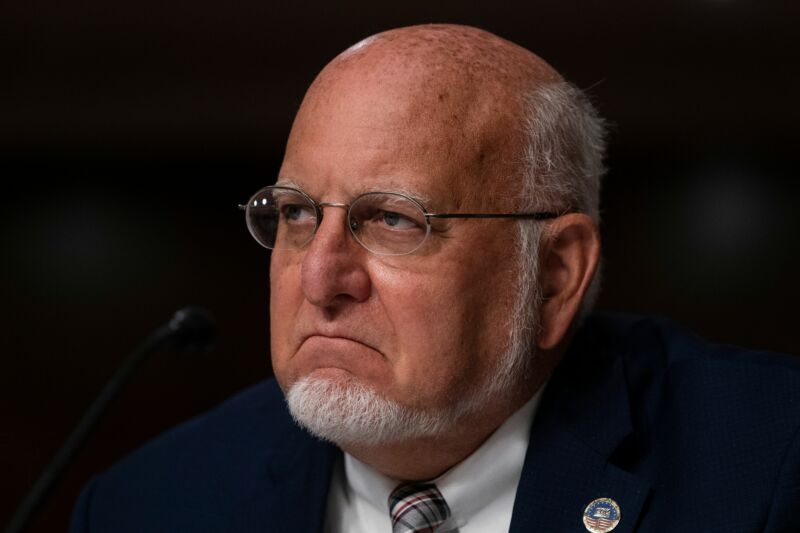
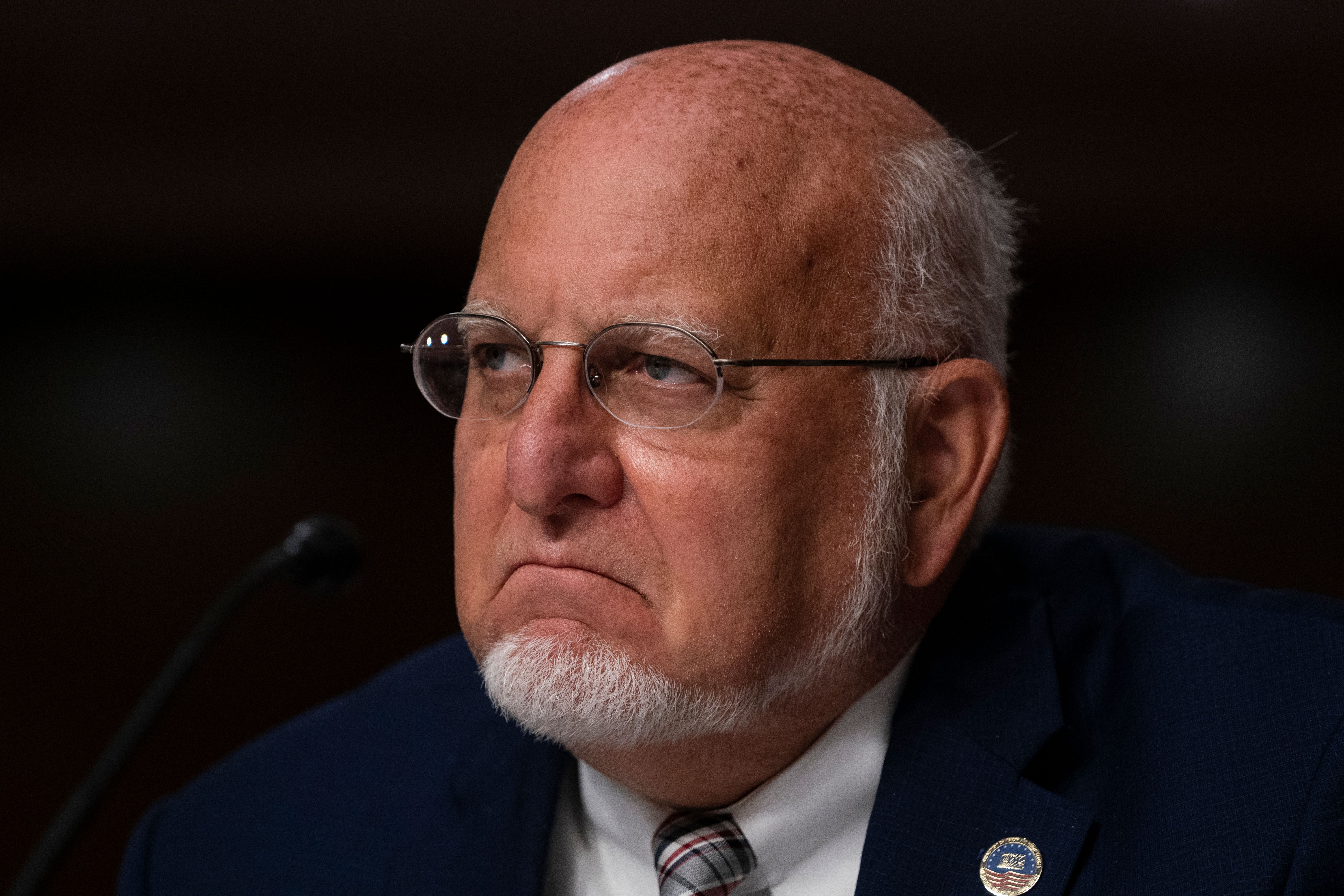
Enlarge / CDC Director Dr. Robert Redfield. (credit: Getty | Alex Edelman)
The CDC has been neutered, shamed, and blamed amid the novel coronavirus pandemic and global crisis. From internal missteps that bungled the country’s rollout of diagnostic testing to blatant political interference and strong-arming on critical public health guidance, the CDC has gone from the world’s premier public health agency to a silenced, overridden, distrusted afterthought in the US response—an agency stripped of its ability to collect even basic health data from hospitals during a raging pandemic.
The heavy blows to the agency’s reputation and role have been well documented throughout the pandemic. President Trump and his administration have openly undermined the agency and, behind the scenes, attacked it while overriding expert public health advice on testing, school reopening, and the handling of outbreaks on cruise ships, among other things.
But while the broad strokes of the agency’s undoing were noted in real time, a set of new investigations and reports offer new details. In a sweeping investigative report by ProPublica, three journalists retraced a number of events, digging up emails, heated exchanges, and alarm within the agency. For instance, it provides fresh insight into how a single CDC researcher valiantly worked to develop diagnostic tests for the novel coronavirus, only to fumble, producing tests contaminated with genetic sequences of the virus. That contamination produced false positive results in public health labs around the country, rendering the tests useless and losing precious time to get ahead of the disease's spread.
Read 16 remaining paragraphs | Comments
James.galbraithIt really is delightful
Every once in a great while, a clarifying debate moment still transpires that encapsulates the stark differences between two candidates. That's exactly what happened Thursday night in the debate between incumbent GOP Sen. Joni Ernst of Iowa and her Democratic challenger Theresa Greenfield. The fact that the question centered on the fundamentals of farming in a state with a proud agricultural tradition was even more telling.
Greenfield was actually queried first in the exchange about the "break-even price” for a bushel of corn in Iowa this week. Without hesitation, Greenfield responded that a bushel of corn was going for about $3.68 to $3.69 in the state right now.
"And break-even really just depends on the amount of debt someone has," she explained. "I suspect there's farmers that breaking even at that price, however, if their yields are down 50%, that's certainly not going to cover it for them." Greenfield finished by noting that commodity prices have been too low for too long. "They've been going out of business prices," she said.
Whew! That's like an entire business 101 class for farmers right there: here's the price; not bad, but if you're leveraged too much, it may not be cutting it; and the whole equation is compounded by the fact that commodities like corn have been underpriced for a sustained period of time.
"That's correct," moderator Ron Steele responded. Great, thanks for summing that up so neatly, Greenfield. Onward. Sen. Ernst, what's the break-even price for soybeans?
Ernst filibustered at first, choosing to instead discuss the U.S.-Mexico-Canada trade agreement. When she finished, Steele responded, "I might have missed it, but I don't think you answered my question: What's the break-even price for soybeans in Iowa?"
Silence.
"You grew up on a farm, you should know this," he offered. Ouch.
Ernst decided her best option was to revisit Greenfield's corn response as a dodge to bypass the soybean pricing she clearly didn't know. "I think you had asked about corn, and it depends on what the inputs are, but probably about $5.50," Ernst said.
"Well, you're a couple dollars off, I think here, because it's $10.05,” Steele said, referring to soybean pricing, “but we'll move on to something else.”
Oops. Time to point fingers. "And I don't think Miss Greenfield answered either," Ernst charged.
"She actually did with the price of corn," clarified another moderator. "We had asked for the price of soybeans from you, Senator. You want to take another crack at it?"
But given a third chance, Ernst doubled down on corn. "No, thank you,” she said, adding, “You said, the breakeven for corn is $10.50? I don't think that's correct.”
Nope, it's not. Because the right answer on corn was $3.68-$3.69, as Greenfield had already said and the moderator confirmed.
The early part of the debate had been plagued by technical glitches, and Ernst tried to play it off like she hadn't accurately heard the question, but she had three clear cracks at it and still took a pass.
Sorry, you're out, Senator.
Ernst’s debate wipeout produced some headline classics like this one from Yahoo News: “Debate in crucial Senate race shows Iowa's Joni Ernst doesn't know beans about soy.”
Matt Hildreth, Executive Director of the progressive group RuralOrganizing.org, told Daily Kos the fumble was disqualifying. “Joni Ernst doesn't know the break-even price on soybeans. It's no wonder why she supports President Trump's Ag agenda,” he said. “Farmers live and die by the break-even price and as the moderator said, a senator from Iowa should know this.”
This was the third and last debate heading into the final stretch of an unexpectedly down-to-the-wire race. Recent polling in the state has given Democrat Greenfield a several-point advantage. Thursday's debate doesn't seem to have done Ernst any favors in terms of changing that trend—if the trend is indeed accurate.
Watch Greenfield:
Here’s the other part of that #IASen exchange, where Theresa Greenfield nails the price of corn pic.twitter.com/BMoTDJAKX7
— Iowa Starting Line (@IAStartingLine) October 16, 2020
Better yet, watch Ernst:
Watch Joni Ernst fail to know the price of soybeans in Iowa and then fight w/ the moderator before simply giving up #iasen pic.twitter.com/kMhGR8malp
— Justin Barasky (@JustinBarasky) October 16, 2020
James.galbraithThe GOP brain hard at work: unable to conceive of things that don't happen to themselves, then suddenly an epiphany.
What do you get if you take people who enjoy how white privilege gives them advantages in society, how male privilege lets men dictate the lives of women, and how social privilege buffers the wealthy from economic misfortunes that beset millions of Americans? The Republican Party. And at the top of the Republican Party is a reliable layer of wealth, white males whose privilege on top of privilege on top of privilege has left them so isolated that their empathy muscles have atrophied away to dust.
Take Chris Christie. In addition to being the man who famously thought it would be hilarious to punish thousands of commuters to demonstrate his power over a local mayor, the most recent appearance of Christie in the news came following questions over whether he encouraged Donald Trump to try and make Joe Biden stutter. Then he got sick. Now, after spending a solid week in the ICU, Christie has been gifted an epiphany: COVID-19 is bad.
It might seem that having 220,000 Americans die—including 16,300 in New Jersey—would be enough of a signal that COVID-19 was serious business and every step should be taken to avoid catching it or spreading it to others. But there’s that empathy problem again: For guys like Christie, it’s not an issue until it happens to them.
So on September 26, as Trump was rolling out Amy Coney Barrett to a superspreader event featuring over 100 Republican “stars,” Christie was right there, walking around without a mask, shaking hands, getting in people’s faces, and sucking down coronavirus. Inside and outside on that day, Christie seemed to operate with the same general disdain for the disease that Trump and his followers have demonstrated both before and after that day. That was, as Christie now admits, a bad idea.
In a statement to The New York Times Christie wrote, “I was wrong. I was wrong not to wear a mask at the Amy Coney Barrett announcement and I was wrong not to wear a mask at my multiple debate prep sessions with the president and the rest of the team.” And Christie goes on to write, “I hope that my experience shows my fellow citizens that you should follow C.D.C. guidelines in public no matter where you are and wear a mask to protect yourself and others.”
It would be nice if part of his next debate prep for Trump included having him repeat that message, because on Thursday night, Trump once against refused to say that he had been wrong about not insisting on masks and explained that “85% of people who wear masks catch coronavirus.” When NBC host Savannah Guthrie attempted to correct him, Trump steamed on, saying, “That’s what I heard and that’s what I saw.”
Actually, the 85% survey comes from a questionnaire in which patients who have contracted COVID-19 were asked about their habits. And 85% said that they “always” or “usually” wore a mask in social distancing situations. But then … what are they going to say? Any other box on the form might as well be labeled “Nope, I got this disease through my own foolishness or by following the example set by Donald Trump.”
How effective is wearing a mask in real life? Winding back the clock to early summer, Arizona Gov. Doug Ducey enthusiastically threw off social distancing guidelines and became one of the most vocal supporters of Trump’s calls to “reopen” everything. When cities and counties in his state issued mask mandates, Ducey even issued a order blocking all such regulations. Which is how by early June, Arizona has sailed to the top of the charts on new COVID-19 cases. As hospitals filled and death rates raced up, local officials begged Ducey to relent.
Finally, on June 18, after weeks of refusing to issue a mandate, Ducey relented and allowed local authorities to create mandates in their areas. Which they did. So how is that going? As Arizona Central reports, the rate of COVID-19 zoomed up after Ducey removed restrictions at the end of May. But for those areas that implemented mask mandates, new cases of COVID-19 fall 75% in the following six weeks. That number is almost perfectly in line with what experts have predicted if there was a general mandate to wear masks.
Christie, who received both first-rate care and yet another of those experimental monoclonal antibody “cocktails” unavailable to normal COVID-19 patients, is now feeling better. But if he wants to show that he’s actually grown a heart at least one grinch-size larger, he needs to convince Trump to issue a national mask mandate.
From a Christie statement released on Friday.
"No matter what you're doing, you should have a mask on and you should try to remain socially distant from folks. I did it for seven months and I stayed healthy. I didn't do it for four days and I wound up in the ICU."
James.galbraithlol
Donald Trump really, really wanted a ratings win over Joe Biden on Thursday night. After Trump backed out of the scheduled debate, he decided to do an NBC town hall at exactly the same time as Biden’s ABC town hall—a move that was expected to generate a Trump ratings win since his town hall would be simulcast on MSNBC and CNBC, while ABC doesn’t have any relevant cable networks for simulcasting a political event.
Well. Trump lost the ratings war anyway. Biden didn’t just pull in more viewers on ABC than Trump did on NBC, he got more viewers on ABC than Trump got on NBC and MSNBC and CNBC—13.9 million to 13 million. The ABC vs. NBC alone result was one “virtually no one in the TV business expected,” CNN reports. And there’s one very important message to take from this.
Ha ha ha ha ha ha ha ha ha.
Trump really cares about this stuff, and he set it up so he thought he would definitely win, and he lost anyway. He could have done the remote debate and been guaranteed a huge audience. He could have done his town hall at a different time so that direct comparison would be more difficult. But no, Mr. Petty thought he was going to win and rub it in everyone’s faces.
As Biden digital director Rob Flaherty tweeted when the initial ratings came out, “only one presidential candidate is going to care about this and that is what makes it even better.”
Look for Trump to move the goalposts somehow or find a way to claim a win. When he does, laugh a little more.
James.galbraithBecause Twitter is nothing if not completely supine to Right Wing screaming
Twitter reversed course Friday on blocking users from posting an unverified New York Post report alleging ties between Joe Biden and his son’s business interests, hours after reaffirming a ban that drew a firestorm of criticism from President Donald Trump and his Republican allies.
A striking and sudden about-face: The social media company announced late Thursday it was changing some of the rules that the Post’s report ran afoul of, but reaffirmed that it would still bar users from posting links to the article since it violated a separate policy against publishing user’s private personal information. The report contains images that include individuals’ email addresses.
Users on Friday, however, successfully shared links to the original article, including at least one Republican lawmaker and an opinion writer for the New York Post.
“You can now share the bombshell story Big Tech didn’t want you to see,” tweeted Rep. Paul Gosar (R-Ariz.), along with a link to the Post’s Wednesday report.
Later Friday, Twitter said it stopped blocking the links because the private information contained in the report is now widely available on other platforms and in the press.
The company also stopped displaying a warning for users who clicked on the report — a step it had taken Wednesday to limit the report’s circulation amid scrutiny of its claims.
Facebook said Wednesday it would limit distribution of but not block users from posting the article pending potential review by third-party fact-checkers. A Facebook spokesperson said Friday the company's handling of the report remains unchanged.
Content moderation under fire: Republicans ratcheted up their attacks on Twitter and Facebook after they moved Wednesday to limit access to the article, with Senate Republicans demanding the companies’ CEOs testify on the matter before Congress and reigniting calls to revamp the legal shield that protects them and other internet companies from many lawsuits.
The CEOs of Twitter, Facebook and Google are slated to testify before the Senate Commerce Committee later this month at a hearing drilling into those legal protections, and the Senate Judiciary Committee on Tuesday will vote on whether to authorize subpoenas for Twitter CEO Jack Dorsey for a potential separate session.
James.galbraithAnd again, the GOP is fine with it
 Trump speaks in North Carolina on Thursday. | Peter Zay/Anadolu Agency via Getty Images
Savannah Guthrie criticized Trump for acting like a “crazy uncle” online. He wasted no time proving her point.
Two embarrassing episodes over the past 24 hours highlighted the depth of President Donald Trump’s credibility crisis as time runs short for him to turn around his flailing reelection campaign.
From refusing to denounce an absurd, obviously false online conspiracy theory during a high-profile town hall on NBC to retweeting a satirical website as if it’s breaking news, it’s becoming increasingly difficult to tell if Trump can separate fact from fiction.
While Trump campaigns on misleading messages about the coronavirus (which he insists is going away despite rising case numbers) and the economy (which he says is strong even as he’s poised to become the first president in modern history to oversee a net shrinkage in jobs), he’s behaving online like that far-right family member we’ve all had to mute on Facebook. And he doesn’t feel any shame about it.
At this late date, everyone, whether they’re on social media or not, understands that Trump isn’t above lying. But an exchange during his NBC town hall with Savannah Guthrie showcased for viewers who aren’t on Twitter just how off the rails his posting has become.
Guthrie grilled Trump about a retweet he posted on Wednesday evening of a conspiracy theory promoted by a QAnon account. The tweet accused Biden of pulling strings to take out the group of Navy SEALs who killed Osama bin Laden — a theory refuted by the fact that every Navy SEAL involved in the bin Laden raid is in fact still alive.
Instead of even trying to defend himself, Trump suggested to Guthrie that because he read it on the internet it might be true, describing the conspiracy theory as “an opinion of somebody and that was a retweet. I’ll put it out there. People can decide for themselves. I don’t take a position.”
It’s obviously reckless and irresponsible for the president to amplify incendiary conspiracy theories that are clearly false, not to mention defend QAnon, which he did during the same town hall. And in one of the more memorable moments of the evening, Guthrie hit back, admonishing Trump, “You’re the president. You’re not someone’s crazy uncle who can retweet whatever.”
Watch:
The President provides a strange defense of his retweeting of a Seal Team Six conspiracy theory pic.twitter.com/3TrCRwF5Au
— Acyn Torabi (@Acyn) October 16, 2020
But if you thought Guthrie drawing blood on national TV would be enough to chasten Trump, he quickly demonstrated otherwise.
On Friday morning, Trump embarrassed himself for the second time within a day by retweeting an article from the satirical Babylon Bee website (the site’s motto is “Fake news you can trust”) as part of a failed attack on Twitter and Hunter Biden.
Twitter Shuts Down Entire Network To Slow Spread Of Negative Biden News https://t.co/JPmjOrKPcr via @TheBabylonBee Wow, this has never been done in history. This includes his really bad interview last night. Why is Twitter doing this. Bringing more attention to Sleepy Joe & Big T
— Donald J. Trump (@realDonaldTrump) October 16, 2020
Suffice it to say, Twitter did not shut down in order to suppress bad Hunter Biden news. But instead of admitting his error or even deleting the tweet, Trump followed up with another, clarifying that by “Big T” he wasn’t referring to himself, but rather “Big Tech.”
Big T was not a reference to me, but rather to Big Tech, which should have been properly pointed out in Twitter’s Fake Trending Section!
— Donald J. Trump (@realDonaldTrump) October 16, 2020
The CEO of the Babylon Bee, Seth Dillon, responded to Trump by tweeting, sarcastically, that his satire site is “the president’s most trusted news source.”
It’s unclear whether Trump has anybody in his orbit at this point who’s willing to point out to him that he’s tweeting out satire as though it’s breaking news. It’s also possible he simply has no shame about amplifying egregious fake news if he thinks getting people to believe lies is in his self-interest.
Whatever the case, it’s clear that this president’s truth barometer is broken beyond repair. He has access to the best intelligence in the world, yet all too often he’s liable to believe anything he reads on the internet so long as it’s useful for his political ends. And his fake news problem only seems to be getting worse.
Will you help keep Vox free for all?
The United States is in the middle of one of the most consequential presidential elections of our lifetimes. It’s essential that all Americans are able to access clear, concise information on what the outcome of the election could mean for their lives, and the lives of their families and communities. That is our mission at Vox. But our distinctive brand of explanatory journalism takes resources. Even when the economy and the news advertising market recovers, your support will be a critical part of sustaining our resource-intensive work. If you have already contributed, thank you. If you haven’t, please consider helping everyone understand this presidential election: Contribute today from as little as $3.
James.galbraithIs anyone surprised?
If you watched last night’s Trump Town Hall in Miami you may have been distracted, as many social media users were, by a woman behind the president wearing a red mask, who nodded at nearly all the crazy that came out of Trump’s mouth.
The star of the Trump town hall was the woman sitting over Trump's shoulder
— Ryan Saavedra (@RealSaavedra) October 16, 2020
It's excellent to have a black woman nodding in agreement and showing support for Trump as he gets attacked by a hostile leftist pic.twitter.com/2XVzbn1v6a
Trump must have planted her there. A woman incessantly nodding her head at everything he says. I’m sure if she asked a question it would be ‘What makes you so awesome?’ pic.twitter.com/SR1KtB2sV1
— ericindiana(@LahueEric) October 16, 2020
Who the hell is that woman in the background behind Trump at the townhall? She is nodding her head like a dashboard dog in total agreement with Trump. This is not an undecided voter. The woman in the pink. pic.twitter.com/LdGk7vEnAX
— Republican no more/Kraig Hubbs (@kraighubbs) October 16, 2020
The woman’s name is Mayra Joli, according to the Miami Herald, who ran for Congress two years ago as a pro-Trump candidate.

The Herald reports: “Joli, an immigration attorney and pro-Trump activist who once declared herself Miami’s ‘master of selfies’ during her 2018 campaign, was seated behind the president during his hour-long town hall. After the event, she greeted the president, according to a video posted to her Facebook page.”
The post Trump’s Nodding Town Hall Supporter Unmasked: WATCH appeared first on Towleroad Gay News.
James.galbraithAnd they cannot be allowed to get away with that.
James.galbraithYup. Ms. "haha I'm such a farm girl I castrate pigs" reminds everyone that she's just another Republican who doesn't know anything about her constituents.
 Iowa Sen. Joni Ernst, a Republican, is in for a tough reelection fight against Democratic challenger Theresa Greenfield, and a debate misstep Thursday night could hurt her. | Michael Reynolds/Getty Images
How a debate misstep could impact a hotly contested Senate race.
In the middle of an unexpectedly close reelection fight, Iowa Sen. Joni Ernst could have used a strong night at a virtual debate Thursday against Democratic challenger Theresa Greenfield. Instead, she bungled a question that her opponent said an Iowa senator should know the answer to.
It started when Greenfield correctly answered a question about the “break-even” price of corn — it’s going for about $3.68 per bushel, she said, and at that price, there might be some farmers who are meeting their production costs. Then the moderator asked Ernst a similar question about the break-even price of soybeans. Ernst answered $5.50, well below the actual price of $10.05. She then complained to the moderator that Greenfield had not been posed the same question.
Greenfield immediately seized on the moment, tweeting that Ernst “should know the price of soybeans.”
A Senator from Iowa should know the price of soybeans, @joniernst. #IASen pic.twitter.com/QrbNIdWgdk
— Theresa Greenfield (@GreenfieldIowa) October 16, 2020
The clip quickly blew up on social media, even with most of the political sphere talking about the presidential candidates’ dueling town halls.
The question may have seemed gimmicky to some, but as NBC News political correspondent Sahil Kapur noted, familiarity with local agricultural concerns has been important to Iowa voters in the past. And six years after winning an eight-point victory to secure her first term in the US Senate, Ernst — once viewed as a rising star in the Republican Party — needs those voters.
The corn/soybeans thing was a gotcha but it calls to mind that Joni Ernst is a senator in part because her last opponent sounded tone deaf to Iowa farmers. pic.twitter.com/A0wVM6xc4P
— Sahil Kapur (@sahilkapur) October 16, 2020
Both Ernst and Greenfield grew up on farms. Ernst spent 22 years in the Iowa Army National Guard and served in the Iowa State Senate from 2011 to 2014 before being elected to the US Senate, replacing retiring Sen. Tom Harkin.
Greenfield, meanwhile, has never held elected office. After putting herself through college, she has worked as an urban planner and real estate developer in Iowa. But she’s been polling neck-and-neck with the incumbent Ernst, sometimes even a few points ahead.
Iowa has been a bellwether state in recent presidential elections. Barack Obama won the Hawkeye State by nearly 10 percentage points in 2008 and by around 6 points in 2012. But Donald Trump coasted to victory there in 2016, winning by over 9 percentage points.
Democrats, however, appear to have some momentum there now. Before the 2018 midterm elections, Republicans held three of the four US House seats in Iowa, but two of those changed hands in the last cycle. Abby Finkenauer flipped the First District, which covers the northeastern part of the state and includes Cedar Rapids, and Cindy Axne did the same in the Third District, which covers the southwestern part of the state and the capital city of Des Moines.
As Vox’s Dylan Scott explained, Iowa, which is 91 percent white, appeared to be moving permanently to the right after Republican success there in 2014 and 2016. But the more urban and suburban parts of Iowa are growing, which could pose problems for both Ernst and Trump. And Thursday didn’t help. As one Democratic strategist had previously told Scott:
“The thing people like about Joni Ernst, she was real and relatable,” the Democratic strategist said. “Greenfield has that in spades. ... Voters want to vote for somebody they think understands the life they’re leading.”
Will you help keep Vox free for all?
The United States is in the middle of one of the most consequential presidential elections of our lifetimes. It’s essential that all Americans are able to access clear, concise information on what the outcome of the election could mean for their lives, and the lives of their families and communities. That is our mission at Vox. But our distinctive brand of explanatory journalism takes resources. Even when the economy and the news advertising market recovers, your support will be a critical part of sustaining our resource-intensive work. If you have already contributed, thank you. If you haven’t, please consider helping everyone understand this presidential election: Contribute today from as little as $3.
James.galbraithGood data breakdown
 A community of forest homes lies in ruins after the Creek Fire swept through on September 8 near Shaver Lake, California. | David McNew/Getty Images
Different ways of looking at the problem.
With heat waves, wildfires, intense hurricanes, and other extreme weather events in the headlines, the ravages of climate change have become undeniable and unavoidable. Who or what is responsible for this?
It seems like a simple enough question, but like so many things about climate change, it gets more complicated the more you look into it. It turns out there are a number of ways of divvying up the blame.
To illustrate the point, I’ve borrowed some charts from a recent research note by the investment firm Morgan Stanley (with permission). They help distinguish who is emitting in the present from who emitted in the past, who’s emitting more and less over time, and which fuels and activities are driving the change.
None of this data is original — it’s all public — but putting these charts in one place can help us wrap our minds around the many different ways that questions about responsibility for climate change can be phrased.
If the question is which country currently emits the most greenhouse gas emissions, the answer is China.
/cdn.vox-cdn.com/uploads/chorus_asset/file/21865784/Screen_Shot_2020_09_08_at_8.29.55_PM.png) Morgan Stanley
Morgan Stanley
If the question is which country or region emits the most greenhouse gases, the answer is ... still China, but “Other Asia” is coming up fast (even as Europe declines).
/cdn.vox-cdn.com/uploads/chorus_asset/file/21865796/Screen_Shot_2020_09_08_at_9.59.38_PM.png) Morgan Stanley
Morgan Stanley
If the question is which country’s people emit the most greenhouse gases on a per-capita basis, the answer is Americans, by a fairly wide margin. (Canada and Australia also have high per-capita emissions, as do a few Middle Eastern countries, not on this chart.)
/cdn.vox-cdn.com/uploads/chorus_asset/file/21865801/Screen_Shot_2020_09_08_at_8.31.22_PM.png) Morgan Stanley
Morgan Stanley
If the question is which region or country is responsible for the biggest portion of the greenhouse gases already in the atmosphere, for a long time, the answer was Europe ...
/cdn.vox-cdn.com/uploads/chorus_asset/file/21865811/Screen_Shot_2020_09_08_at_8.35.02_PM.png) Morgan Stanley
Morgan Stanley
... and today it still is (with Russia and the rest of Eastern Europe included), with North America and Asia tied for second, according to Our World in Data.
/cdn.vox-cdn.com/uploads/chorus_asset/file/21868684/Cumulative_CO2_treemap.png) Our World in Data
Our World in Data
If the question is which individual country is responsible for the most emissions, it’s the US, at almost double its nearest competitor, China.
Animation: The countries with the largest cumulative CO2 emissions since 1750
— Carbon Brief (@CarbonBrief) April 23, 2019
Ranking as of the start of 2019:
1) US – 397GtCO2
2) CN – 214Gt
3) fmr USSR – 180
4) DE – 90
5) UK – 77
6) JP – 58
7) IN – 51
8) FR – 37
9) CA – 32
10) PL – 27 pic.twitter.com/cKRNKO4O0b
If the question is which country or region is heading fastest in the right direction, the answer is Europe. (Look at China — is that a peak or a pause?)
/cdn.vox-cdn.com/uploads/chorus_asset/file/21865818/Screen_Shot_2020_09_08_at_8.30.39_PM.png) Morgan Stanley
Morgan Stanley
If the question is which fuel has contributed most to climate change, the answer, as of the 21st century, is coal, followed by oil and natural gas.
/cdn.vox-cdn.com/uploads/chorus_asset/file/21865839/Screen_Shot_2020_09_08_at_8.36.22_PM.png) Morgan Stanley
Morgan Stanley
If the question is which economic sector contributes the most greenhouse gases, the answer is electricity and heat.
/cdn.vox-cdn.com/uploads/chorus_asset/file/21865845/Screen_Shot_2020_09_08_at_11.03.27_PM.png) Morgan Stanley
Morgan Stanley
This chart from Our World in Data makes it even clearer that, globally, the rising demand for electricity and heating is the main driver of emissions, with transport rising at a distant second.
/cdn.vox-cdn.com/uploads/chorus_asset/file/21868717/co_emissions_by_sector.png) Our World in Data
Our World in Data
(Note that in the US, the situation is somewhat different — transportation emissions are rising and electricity sector emissions are falling. The lines recently crossed.)
The story told by these charts is familiar to people who have followed climate change for a while. Fossil-fueled industrial development came to the EU, then it came to North America, and just as it was getting underway in China, the world found out that, oops, this development is going to destabilize the atmosphere and potentially devastate the biosphere. And what’s more, the amount of greenhouse gases already in the atmosphere means that humanity’s remaining carbon budget is perilously low. The model of development with a proven record of success has been revealed as extremely dangerous if it continues as it has in the past.
That’s a raw deal for China, as well as India, Vietnam, and other countries trying to raise their citizens to the level of affluence and comfort afforded those in the West. At the same time, it is mostly emerging economies that face the greatest risks from climate change, so they simply must change course, at their own peril.
In this mess of a situation, the answer to the question of responsibility for climate change is always yes, and. Yes, North America and the EU ought to acknowledge their historical responsibility for emissions. They ate up most of the carbon budget, developing in a way that is now off limits to the world’s billions of poor people. In exchange for this good fortune, they have an obligation to help the emerging economies of the world shift to sustainable development and increase their resilience to the climate damages.
And China, India, and other developing nations have a responsibility to see that, for better or worse, they are in the climate driver’s seat in the coming century and that every bit of fossil-fueled development bakes in more suffering later in the century.
North America and the EU owe the world some room (and some help) to raise their standard of living; the rest of the world owes it to itself to try to decouple welfare from material consumption and waste.
In the end, the conversation about responsibility leads where all climate conversations lead: The only hope of avoiding catastrophic damage is most every country decarbonizing as rapidly as they are capable, regardless of their histories and rivalries.
Electricity must be rapidly decarbonized to get rid of coal; heating and transportation must be rapidly electrified to get rid of oil and natural gas. Wealthy countries should mobilize to drive down the costs of clean-energy technologies through research and large-scale deployment; developing nations should work as hard as possible to substitute clean technologies when long-term industrial policy and infrastructure decisions are being made. And those with resources should help those with fewer prepare for the turbulent century to come.
Whoever’s fault it is, we either all chip in to solve it or we all suffer.
Help keep Vox free for all
Millions turn to Vox each month to understand what’s happening in the news, from the coronavirus crisis to a racial reckoning to what is, quite possibly, the most consequential presidential election of our lifetimes. Our mission has never been more vital than it is in this moment: to empower you through understanding. But our distinctive brand of explanatory journalism takes resources. Even when the economy and the news advertising market recovers, your support will be a critical part of sustaining our resource-intensive work. If you have already contributed, thank you. If you haven’t, please consider helping everyone make sense of an increasingly chaotic world: Contribute today from as little as $3.
James.galbraithNo shit, so of course the White House is all in
 Society doesn’t neatly sort itself into different risk groups. | Orbon Alija/Getty Creative Images
These scientists want more young, healthy people infected by the coronavirus. It’s a bad idea.
It’s been eight, long, devastating months in the United States since the pandemic began. A staggering number of people have been sickened and hospitalized, and hundreds of thousands have died. People are isolated from those they care about, businesses are hurting, education has suffered, and so has our mental health.
It’s understandable, then, why the concept of ending the pandemic through building up herd immunity continues to hold allure. The proponents of herd immunity, who want all schools and businesses to reopen and sports and cultural activities to resume, say they want to ease the burden of the pandemic: “Those who are not vulnerable should immediately be allowed to resume life as normal,” reads a document called The Great Barrington Declaration, the latest vessel for this hope that life can return to normal for some before community spread of the virus is contained.
The authors of the Declaration — a trio of scientists from Harvard, Stanford, and Oxford, whose views, we should say, are outside the mainstream — call their approach “focused prevention.” The big idea is that we could let the virus spread among younger, healthier people, all the while making sure we protect older, more vulnerable people.
The declaration attracted 10,000 signatures (though the names of those who signed have not been made public) and has fans on the right and at the White House, where pandemic adviser Scott Atlas (who is a neuroradiologist, not an epidemiologist) has previously suggested this is a good thing to do. “When younger, healthier people get infected, that’s a good thing,” he said in a July interview with a San Diego local news station.
And yet there are ample reasons to fear that this “focused prevention” strategy of allowing the young and healthy to get sick to build population immunity to the virus would never work. And it could cause devastating unintended consequences.
“It just presumes this level of control that you can really wall off people who are at high risk,” Natalie Dean, a University of Florida biostatistician, told me earlier this year. Society doesn’t neatly separate itself into risk groups. We’ve seen outbreaks that have begun in younger populations move on to infect older ones.
The Barrington Declaration has been getting a lot of attention in the news and through viral social media posts. That’s caused alarm among scientists who see through its thin scientific reasoning. One group has written a counter piece in the Lancet.
“Prolonged isolation of large swathes of the population is practically impossible and highly unethical,” a group of scientists representing the mainstream thinking writes in a letter they are calling the John Snow Memorandum (named after the “father” of modern epidemiology).
It’s unethical for many, many reasons. Here’s why.
There are multiple dimensions that put someone at risk for severe Covid-19. It’s not just age. Conditions like diabetes and hypertension exacerbate risk. So do societal factors like poverty, working conditions, and incarceration.
Severe Covid-19 and coronavirus deaths have disproportionately impacted minorities and the less advantaged in the United States. This herd immunity strategy risks either isolating these already marginalized communities even further from society since they may not feel safe in a more relaxed environment. Or even worse: We risk sacrificing their health in the name of building up a level of population immunity sufficient to control the virus.
The risk of transmission is complex and multi-dimensional. It depends on many factors: contact pattern (duration, proximity, activity), individual factors, environment (i.e. outdoor, indoor) & socioeconomic factors (i.e. crowded housing, job insecurity). (2/n) pic.twitter.com/0mEiHhbnWa
— Muge Cevik (@mugecevik) September 21, 2020
Harvard epidemiologist Bill Hanage underscores a gross inequality here: Herd immunity achieved through natural infection would come at an undue cost to some of the most vulnerable groups in the country.
“Because of the fact that some groups are more at risk of becoming infected than others — and they are predominantly people from racial [and] ethnic minorities and predominantly poor people with less good housing — we are effectively forcing those people to have a higher risk of infection and bear the brunt of the pandemic,” Hanage says.
I think about my grandmother, who recently died at age 94, of her final years of life in a nursing home, where she spent most of her time confined to her room, due to Covid-19 precautions. “I’m so lonesome here,” she would say when I called. Older people don’t deserve to be written off, isolated further, and forgotten.
Or as the John Snow memorandum (which Hanage signed) states: “Such an approach also risks further exacerbating the socioeconomic inequities and structural discriminations already laid bare by the pandemic.”
Typically, the term herd immunity is thought of in the context of vaccination campaigns against contagious viruses like measles. The concept helps public health officials think through the math of how many people in a population need to be vaccinated to prevent outbreaks.
“Never in the history of public health has herd immunity been used as a strategy for responding to an outbreak, let alone a pandemic,” World Health Organization Director-General Tedros Ghebreyesus said this week. “It is scientifically and ethically problematic.”
Let’s count the reasons why.
1) Even if we could limit exposure to the people least likely to die of Covid-19, this group still can suffer immense consequences from the infection — like hospitalization, long-term symptoms, organ damage, missed work, and high medical bills. The long-term health consequences of the virus have barely been studied. When we expose younger, healthier people to the virus (on purpose!), we don’t know what the consequence of that will be down the road.
2) We have a lonnnnnngggggg way to go. There’s no one, perfect estimate of what percentage of the US population has already been infected by the virus. But, by all accounts, it’s nowhere near the figures needed for herd immunity to kick in. Overall, a new Lancet study — which drew its data from a sample of dialysis patients — suggests that fewer than 10 percent of people nationwide have been exposed to the virus. No one knows the exact threshold percentage for herd immunity to kick in for a meaningful way to help end the pandemic. But common estimates hover around 60 percent.
So far, there have been more than 200,000 deaths in the United States. There’s so much more potential for death if the virus spreads to true herd immunity levels. “The cost of herd immunity [through natural infection] is extraordinarily high,” Hanage says.
Look at what happened to Manaus, Brazil, an Amazonian city of around 2 million people, which experienced one of the most severe Covid-19 outbreaks in the world.
Researchers now estimate between 44 percent and 66 percent of the city’s population was infected with the virus, which means it’s possible herd immunity has been achieved there. (This research has yet to be peer-reviewed.) But during their epidemic period, there were four times as many deaths as normal for that point in the year.
3) Scientists don’t know how long naturally acquired immunity to the virus lasts or how common reinfections might be. If immunity wanes and reinfections are common, then it will be all the more difficult to build up herd immunity in the country. In the spring, epidemiologists at Harvard sketched out the scenarios. If immunity lasts a couple of years or more, Covid-19 could fade in a few years’ time, per their analysis published in Science (much too long a time to begin with, if you ask me). If immunity wanes within a year, Covid-19 could make fierce annual comebacks until an effective vaccine is widely available.
At the same time, we don’t know how long immunity delivered via a vaccine would last. But, at least a vaccine would come without the cost of increased illnesses, hospitalizations, and long-term complications.
If immunity doesn’t last, “such a [focused prevention] strategy would not end the COVID-19 pandemic but result in recurrent epidemics, as was the case with numerous infectious diseases before the advent of vaccination,” the John Snow Memorandum says.
4) By letting the pandemic rage, we risk overshooting the herd immunity threshold. Once you hit the herd immunity threshold, it doesn’t mean the pandemic is over. After the threshold is reached, “all it means is that, on average, each infection causes less than one ongoing infection,” Hanage says. “That’s of limited use if you’ve already got a million people infected.” If each infection causes, on average, 0.8 new infections, the epidemic will slow. But 0.8 isn’t zero. If a million people are infected at the time herd immunity is reached, per Hanage’s example, those already infected people may infect 800,000 more.
There are a lot of other unknowns here, too. One is the type of immunity conferred by natural infection. “Immunity” is a catchall term that means many different things. It could mean true protection from getting infected with the virus a second time. Or it could mean reinfections are possible but less severe. You could, potentially, get infected a second time, never feel sick at all (thanks to a quick immune response), and still pass on the virus to another person.
The mainstream scientific consensus on fighting the pandemic has never been calling for endless lockdowns and an endless choking of our economy.
Rather, health experts have argued that the first thing we need to do is manage community transmission of the virus, and then keep new huge outbreaks from forming with aggressive testing, contact tracing, and interventions like universal masking, better indoor ventilation, and social distancing.
But we never managed to get the virus down to containable levels. (It’s not impossible; other countries like South Korea and Japan have.) So here we are.
The last thing that strikes me as really cynical about the Great Barrington Declaration is it avoids discussing how the government could have done more to help people suffering the downstream economic impacts of the pandemic. Instead of forcing restaurants to choose between their livelihoods and putting their customers and staff at risk, they could have been paid by the government to remain closed. Instead of letting people face the stark psychological insecurity of a missing paycheck, Congress and the White House could have extended unemployment insurance benefits by now (they haven’t).
For so many reasons, the Great Barrington Declaration — like all herd immunity proposals — just feels like giving up, while sacrificing young people’s health and the health of the marginalized. Don’t give up. There’s no easy way out.
Millions turn to Vox each month to understand what’s happening in the news, from the coronavirus crisis to a racial reckoning to what is, quite possibly, the most consequential presidential election of our lifetimes. Our mission has never been more vital than it is in this moment: to empower you through understanding. But our distinctive brand of explanatory journalism takes resources. Even when the economy and the news advertising market recovers, your support will be a critical part of sustaining our resource-intensive work. If you have already contributed, thank you. If you haven’t, please consider helping everyone make sense of an increasingly chaotic world: Contribute today from as little as $3.
James.galbraithGood. Get rid of Ernst
 Sen. Joni Ernst speaks to reporters after the Senate Republican luncheon on September 9. | Caroline Brehman/CQ-Roll Call via Getty Images
Donald Trump could bring down Sen. Joni Ernst in the Iowa Senate race.
When Joni Ernst was first elected to the US Senate in 2014, it seemed like she had come to Capitol Hill to stay.
She earned a spot in Senate Republican leadership in her first term and even landed on the vice presidential shortlist in 2016. Many thought she’d be the latest in a long tradition of Sens. Chuck Grassley and Tom Harkin, powerful senators who outstripped the size of their state.
Ernst, a military veteran, had won her race by 9 percentage points, powered by a Republican wave election year and an unforgettable ad in which she promised to castrate the corrupt “pigs” in Washington. Two years later, Donald Trump won the state by the same margin. Iowa seemed to be getting more solidly Republican.
But now, less than a month from Election Day 2020, something has clearly shifted. Ernst has trailed Democratic candidate Theresa Greenfield by roughly 5 points in recent polls. And Trump is running behind his 2016 numbers, with former Vice President Joe Biden holding a slim advantage in the polls.
/cdn.vox-cdn.com/uploads/chorus_asset/file/21962412/GettyImages_1163047690.jpg) Caroline Brehman/CQ Roll Call via Getty Images
Caroline Brehman/CQ Roll Call via Getty Images
“She’s had six years, and she’s forgotten Iowans,” Greenfield, a business leader who has never held elected office, told Vox of Ernst in a phone interview. “She has sold out Iowans for her big corporate donors.” It’s an argument that has some resonance; polls show most Iowa voters say that Ernst hasn’t done enough to help the state in her first term.
Ernst has a few problems; the state’s suburbs are growing, and like suburbs everywhere, those voters don’t like Trump. She also voted to repeal Obamacare in 2017 (Iowa is a Medicaid expansion state) and has been saddled with the effects of Trump’s ethanol policies on the state’s farmers. And in the past few months, Covid-19 cases have been rising in the state.
Ernst has been emphasizing her work on issues like domestic violence and sexual assault in the military, while leaning on support from Iowa’s senior senator, Chuck Grassley, and her Iowa bona fides. Fundamentally, Ernst needs to pull ahead of Trump, rather than run behind him, and she is running out of time to do it.
Both the presidential and Senate races should be close in Iowa this year. But it is still a stark reversal from 2014 and 2016, a sign of Republicans’ struggles in the Midwest that could doom their Senate majority and Trump in 2020.
Ernst’s sizable 2014 win seemed to portend a more permanent rightward shift in Iowa, and Trump’s convincing 2016 victory appeared to confirm it. This is a state that’s 91 percent white. The percentage of people with a bachelor’s degree is below the national average, while the share of Iowans who identify as evangelical Christians is higher than it is in the US as a whole. Those are demographics most favorable to Republicans in the Trump era.
The problem for Ernst, and Trump, is that the parts of the state that are more urban and suburban are where the population is growing — and where voters are defecting from the Republicans.
The easiest way to understand Iowa politics is to look at each of its four congressional districts. Because the state has a nonpartisan redistricting commission, the four districts form a pretty neat squared grid.
/cdn.vox-cdn.com/uploads/chorus_asset/file/21958617/Iowa_Congressional_Districts__113th_Congress__1_.png) Wikipedia
Wikipedia
The First District covers the northeastern part of the state, including the cities of Cedar Rapids, Dubuque, and Waterloo. About two-thirds of the population lives in or near the cities; the other third lives in rural communities. The Second District covers the southeastern part of the state, including Iowa’s third-largest city, Davenport. Like the First District, it’s about two-thirds urban and one-third rural.
These are the battlegrounds. Barack Obama won the First District by 13 points over Mitt Romney, but Ernst eked out a victory in 2014, and Trump won it by 3 points against Hillary Clinton. Then in 2018, the district swung back toward Democrats. Abby Finkenauer was elected to the US House, reclaiming the seat for her party after two terms in Republican hands, and the Democratic candidate for governor, Fred Hubbell, also won the First District by a single point, a 4-point swing from the Trump-Clinton race.
The Second District has mirrored the movement in the First, going from a big Obama win in 2012 to small Ernst and Trump triumphs in 2014 and 2016, respectively, and then a rebound for Democrats in 2018.
One Democratic strategist told me that a mixture of Obama-Trump working-class voters who have soured on Trump and suburban voters (especially women) who have abandoned Republicans has boosted the Democrats in these areas. That likely explains Ernst’s struggle to rebuild her 2014 coalition. She won her first race with 52 percent of the vote, but she’s pulling less than 43 percent on average in the 2020 polls.
“Suburban women have said, ‘To hell with this’ and voted up and down the ticket for us,” the strategist, who spoke on condition of anonymity, said. “We’ve also picked up some men outside of suburbia who wanted to see a federal check on Trump. I think that’s part of the trend we’re seeing in the Senate race.”
/cdn.vox-cdn.com/uploads/chorus_asset/file/21962415/GettyImages_1268945934.jpg) Republican National Committee via Getty Images
Republican National Committee via Getty Images
A Republican operative told me that Ernst has to stanch the bleeding and stay competitive in the First and Second districts in order to have a shot at reelection. If the race is within a few points, as it has been the past few cycles, she will have a chance. But if the Democratic margin grows, it’ll be a struggle.
The Third District, home to Des Moines and the southwestern corner of the state, has flipped toward Democrats under Trump. Obama barely won the Third in 2012, and Ernst saw a commanding 8-point margin in 2014. But then Republican support started to erode: Trump won the district by just 3 points in 2016, and Hubbell beat Kim Reynolds by 3 points in 2018, an 11-point swing toward Democrats since Ernst’s 2014 victory.
Or, to look at it through the lens of its US House races: Republican Rep. David Young won reelection by 13 points in 2016, before losing to Democrat Cindy Axne by 2 points in 2018. This is a serious trouble spot for Ernst and Trump in 2020, according to the GOP strategist, given those recent electoral trends.
“You’ve gotta narrow the window. You’re going to lose, but you want to lose less,” the strategist said. “Joni and the president are down or tied [in the polls] because they haven’t closed the gap enough in the Third.”
The Fourth District, covering the more rural northwestern region of Iowa, is the friendliest territory for Republicans. But the margins still matter: Obama lost the Fourth by “just” 8 points on his way to a win in 2012. But Trump blew Clinton out, with a 27-point victory, and won the state easily.
If Biden and Greenfield can narrow that gap in the Fourth, it would bode well for their chances of flipping the state back to Democrats. A recent Des Moines Register poll found a generic Democrat beating a generic Republican by comfortable margins in the First, Second, and Third districts, while the Republican was running just 5 points ahead in the Fourth.
That translated to a 48-44 lead for Democrats statewide, a good indicator of how a relatively weak performance in the Fourth would be doom for Republicans if they struggle in other parts of the state.
“Gotta run up the margins,” the Republican operative said of the Fourth.
Trump dominates the political climate in Iowa, and that’s where Ernst’s struggles begin.
Trump won Iowa with 51 percent of the vote, but he’s lost some support during his first term. A recent Quinnipiac University poll showed the president has a 46 percent approval and 52 percent disapproval rating. Trump’s average support against Biden in the polls is also 46 percent, according to RealClearPolitics.
Timothy Hagle, a political scientist at the University of Iowa, pinned Trump’s troubles on less engaged, less partisan voters. They may not have liked Trump’s style, but they voted for him in 2016 anyway as a political outsider running against Hillary Clinton. But between Trump’s record of trying to roll back the Affordable Care Act and the economy’s downturn during the Covid-19 pandemic, those voters, who are most preoccupied with “pocketbook” issues, may be looking for a change from Trump.
“If the pandemic hadn’t hit, the economy would have been a real selling point,” Hagle told me. “Then, boom, the economy tanked. Not everybody has been helped. A lot of businesses are hurting.”
And because Ernst had only two years in the Senate before Trump took over Washington, her record is largely his. She voted to repeal Obamacare and in favor of the Republican tax bill. She’s been a reliable vote for Trump’s agenda, and that will be a problem for her if Iowa voters don’t like the president.
/cdn.vox-cdn.com/uploads/chorus_asset/file/21962425/GettyImages_1155308404.jpg) Scott Olson/Getty Images
Scott Olson/Getty Images
Last month’s Des Moines Register poll found that most Iowans, 56 percent, thought Ernst had not done enough for the state in her first term; 33 percent said she had. Voters were evenly divided on whether she was too close to Trump (37 percent), or whether she gets it about right (43 percent). Her overall job approval rating has been middling.
“You’re a young new US senator. You have a majority in the Senate, you have the House. Then the president comes in, and the ability to stand out and be unique is pretty hard,” the GOP operative told me. “It’s difficult to find your voice.”
The incumbent senator might have also been undermined by Trump’s and Reynolds’s handling of Covid-19. Iowa voters say they disapprove of the job both the president and their governor are doing, recent polls found.
Additionally, coronavirus cases are nearing their previous peak from August, and more Iowans are hospitalized with the virus than at any point in the outbreak. Reynolds has pointedly refused to issue a mask mandate and pushed ahead with reopening schools and businesses. Iowa’s college towns have been the site of notable outbreaks among students.
Ernst may not have helped either when she appeared to entertain conspiracy theories about the Covid-19 death count, comments that she tried to walk back at a debate with Greenfield.
“Between President Trump’s unpopularity and the criticisms of Governor Reynolds, that has all led to a pox on all their houses and dragged down Ernst,” Karen Kedrowski, a political science professor at Iowa State University, told me. “Ernst has been a good soldier on the Republican side, and Greenfield has used that against her.”
/cdn.vox-cdn.com/uploads/chorus_asset/file/21962429/GettyImages_1197609623.jpg) Bill Clark/CQ-Roll Call via Getty Images
Bill Clark/CQ-Roll Call via Getty Images
The Ernst campaign points to the huge spending by outside Democratic groups — the Democratic Senatorial Campaign Committee and Senate Majority PAC have already spent more than $45 million combined — to explain the senator’s apparent weakness in the polls.
They believe a focus on her Iowa bona fides and the issues where she’s distinguished herself from her party (Ernst was ranked as one of the more bipartisan senators of the last 25 years in a Lugar Center analysis) can carry her to a victory.
“As I learned from my time in the Iowa Legislature, not much gets done unless you work with both Democrats and Republicans,” Ernst wrote in a recent Des Moines Register op-ed, which highlighted her opposition to some of the Trump EPA’s policies that she said would hurt Iowa farmers. “From fighting for relief for our farmers to helping our working families, more than 60 percent of my bills have bipartisan support.”
In the final weeks of the campaign, she’s running on her record on domestic violence (seeking more government assistance for victims during the pandemic) and on sexual assault in the military (she has authored bipartisan bills to reform how such crimes are investigated and prosecuted). Ernst is recently divorced from her husband, who she said had been abusive; she has also said she was raped in college.
She’s been appearing at events with Grassley, who has served in the Senate since 1981 and is the most popular politician in the state. The strategy is one reason some experts in Iowa believe Ernst could run ahead of Trump on Election Day, even though she is polling behind the president right now.
Either way, Ernst’s fate will be tied closely to Trump’s — and that could be an advantage for Democrats.
Reciprocally, Greenfield’s prospects are likely dependent, in large part, on how Joe Biden performs in Iowa because, as a political novice, she is still establishing herself with voters. She has sought to weave her personal story — about growing up on a farm, losing her first husband in her 20s, and later going into business to become a real estate developer— into a message aimed squarely at the voters with whom Republicans are already struggling.
She’s turned that personal story partly into a policy critique of Ernst, by associating the senator with Republican plans to privatize Social Security. The program provided benefits for Greenfield when her husband died in a work-related accident when she was 24.
“I saw what a difference it made,” Greenfield said. “I will carry that with me all my life.”
She’s also focused on some Iowa-centric issues, like biofuel waivers, and tried to undercut Ernst’s image as a born-and-bred Iowan. Her campaign seized on a moment in the candidates’ most recent debate when the senator was asked about the price of soybeans and flubbed the answer.
A Senator from Iowa should know the price of soybeans, @joniernst. #IASen pic.twitter.com/QrbNIdWgdk
— Theresa Greenfield (@GreenfieldIowa) October 16, 2020
The Greenfield campaign has accused Ernst of being too close with the oil industry to be a good ally for the ethanol industry, part of her message about the dangers of political corruption. The candidate told me her first priority as senator would be reversing Citizens United.
Like many Democrats in competitive states, Greenfield doesn’t spend as much time talking about Trump. In one recent tweet, she conspicuously named the renewable fuel standards waiver that she said is harmful for ethanol interests, mentioning Ernst and acting EPA Administrator Andrew Wheeler — but not the president.
Just like her opponent is trying to do, Greenfield is striking a more moderate message. She supports a public option, like Joe Biden, but not Medicare-for-all. It appears to be having the desired effect: The Des Moines Register poll found that 42 percent of Iowa voters thought Greenfield’s political views were “about right” for the state; 34 percent said she was too liberal.
/cdn.vox-cdn.com/uploads/chorus_asset/file/21962436/GettyImages_1161101596.jpg) Caroline Brehman/CQ Roll Call via Getty Images
Caroline Brehman/CQ Roll Call via Getty Images
/cdn.vox-cdn.com/uploads/chorus_asset/file/21962438/GettyImages_1228825539.jpg) Caroline Brehman/Getty Images
Caroline Brehman/Getty Images
Ernst has attacked Greenfield’s record as a developer, pointing (with questionable legitimacy) to layoffs and evictions at her company. Business interest groups have also tried to tar Greenfield with progressive policies like the Green New Deal.
So far, with big spending on both sides, Greenfield is holding on to a lead in the polling averages. The Senate election is probably going to be close, no matter what, because this is Iowa. But something about the Democrat’s message seems to be working.
“The thing people like about Joni Ernst, she was real and relatable,” the Democratic strategist said. “Greenfield has that in spades. ... Voters want to vote for somebody they think understands the life they’re leading.”
Will you help keep Vox free for all?
The United States is in the middle of one of the most consequential presidential elections of our lifetimes. It’s essential that all Americans are able to access clear, concise information on what the outcome of the election could mean for their lives, and the lives of their families and communities. That is our mission at Vox. But our distinctive brand of explanatory journalism takes resources. Even when the economy and the news advertising market recovers, your support will be a critical part of sustaining our resource-intensive work. If you have already contributed, thank you. If you haven’t, please consider helping everyone understand this presidential election: Contribute today from as little as $3.
James.galbraithProfiles in GOP courage. Only when it's screamingly obvious that he'll lose do they say anything, but keep voting for every Trump priority.
Ben Sasse likes to posture as a decent, moral man, standing for principle despite standing with a party led by Donald Trump. And every time he strikes that pose, he underlines what a contemptible coward he is. In everything that matters, Sasse is right there for Trump. But every so often he emerges, as he did in a telephone town hall with thousands of constituents on Wednesday, to emphasize that he’s somehow better than Trump.
Asked why he’s so critical of Trump, Sasse made clear that his major concern is electoral. “I’m now looking at the possibility of a Republican blood bath in the Senate, and that’s why I’ve never been on the Trump train,” he said, suggesting that Trump could damage Republicans for years to come with groups of voters including women and young people. That’s crucial: While Sasse will get attention for his other, more substantive criticisms of Trump, when it comes down to it, his “that’s why I’ve never been on the Trump train” is about losing Senate seats.
So, yeah, Sasse said Trump’s values are “deficient, not just for a Republican but for an American.” Of Trump’s handling of the coronavirus pandemic, he said, “For months, he treated it like a news-cycle-by-news-cycle P.R. crisis.”
Sasse complained of ”The way he kisses dictators’ butts.” Specifically, “I mean, the way he ignores that the Uighurs are in literal concentration camps in Xinjiang right now. He hasn’t lifted a finger on behalf of the Hong Kongers.” Going on, he whined that “The United States now regularly sells out our allies under his leadership, the way he treats women, spends like a drunken sailor.”
Okay, Ben, but unless you’re going to do something about it, shut the hell up. Constantly insisting on a version of yourself in which you are noble and moral and forthright while never acting on those supposed values is simply cowardice. Sasse’s values don’t extend to having voted for conviction on Trump’s abuse of power. Sasse’s values don’t preclude packing the Supreme Court—he might think Trump is crass, but he’s right there with him on that. Sasse is right there on that even though he claims to be primarily concerned about Senate losses and polls show that rushing Amy Coney Barrett’s nomination through the Senate is not popular with voters.
Every damn time it matters, Sasse is right there with the vote Trump wants from him. Then he strikes a pose so obvious you can see him having practiced it in the mirror and insists he is better than all that Trumpiness. It’s pathetic.
James.galbraithGOP governance in action
Right now in California, the largest wildfire to ever strike the state is still burning. Overall, the situation may not be quite so dire as it was a few weeks ago—so long as temperatures and winds cooperate—but at this moment the state estimates that over 4.1 million acres have burned in over 8,500 individual fires. Triggered by climate change that has brought both rising temperatures and shifting rainfall patterns, the incredible wash of flames has also destroyed over 5,000 homes, created some of the worst air conditions on the planet, led to regular power outages for millions … and left eight people dead.
In fact, the lives directly lost in the flames are only a small part of the toll. Healthcare experts attribute thousands of premature deaths and tens of thousands of illnesses to the air pollution generated by the fires. And in this pandemic season, the thousands of cases of COVID-19 that are springing up in California each day can be directly connected to the large numbers of displaced citizens, many of whom were forced into temporary housing—or no housing at all—in conditions that promoted the spread of the disease. Against that backdrop, it seems particularly shocking, if not simply vile, that on Thursday evening, Donald Trump turned down California’s request for a disaster declaration. With billions of dollars in damage, including over $200 million’s worth of state infrastructure, a disaster declaration might seem automatic.
What does it take to get a disaster declaration from Trump? Let North Carolina explain.
On the last day of July, Hurricane Isaias began to batter the Outer Banks of North Carolina. Over the next three days, the storm came inland, and while it didn’t bring the devastating winds or feet of rain produced by some major storms along the Gulf, it struck an area much less prepared for large storms. In the next week, the remnants of Isaias continued north, causing over $1 billion dollars in damage from Virginia to New England. Four deaths were directly attributed to the storm, and there was damage to highways, bridges, and utilities throughout North Carolina.
North Carolina’s Democratic governor, Roy Cooper, waited until after the storm’s damage had been tallied before asking Trump for a disaster declaration. Meanwhile in California, Gov. Gavin Newsom made the request following some of the first major fires of the season. As a result, both applications were on Trump’s desk in September, just four days apart. But on Tuesday evening, Trump approved the disaster declaration for North Carolina. On Thursday, he refused to grant federal assistance to California.
There are a number of reasons why Trump might have turned California down. None of them are good reasons, but there are very Trump reasons. He has, after all, continued to downplay the threat from climate change and describe the whole idea as a “hoax.” He has also repeatedly blamed California for the fires, arguing with Newsom and other officials, and talking about the need to “sweep the forest floor,” because Trump’s understanding of nature is that it’s just another golf course. While visiting California shortly before Newsom filed his request, Trump blamed the fires on exploding trees, then went on to explain how Europeans manage to build “forest cities” despite having even more explosive trees. With lots of sweeping.
Trump could easily have decided to deny funds to California simply because he wants the state to hurt. After all, blaming blue-state governors for problems is so important to Trump that he deliberately allowed 220,000 Americans to die in hopes that he could pin it on Democratic officials.
But the easiest explanation is this one: Trump lost California to Hillary Clinton by 30%. Again … by 30%. And he’s trailing Joe Biden in the state by an almost identical margin. In North Carolina, Trump won by four points in 2016, but recent polling has him behind. Plus, the announcement that he would provide federal funds to North Carolina came less than a day before Trump appeared for a rally at the Greenville, North Carolina airport. That was Trump’s fifth visit to North Carolina in the last six weeks.
Would Donald Trump hand over millions to a state where he’s losing in a desperate ploy to gain votes? Sorry … that was not a serious question. In other news, Trump sent record subsidies to farmers in the Midwest and South this week. That $434 billion makes the disaster relief to North Carolina look like a pittance. But then … Biden has edged ahead in both Iowa and Georgia, while drawing level with Trump in Ohio. That’s what Trump considers a real disaster.
Of course, the reason farmers are suffering comes back largely to Trump’s trade policies that have driven record losses, record debt, and record farm foreclosures. But … Trump probably blames that on exploding tractors.
James.galbraithyup
Donald Trump and Joe Biden were supposed to debate each other Thursday night, but instead they appeared in town hall events on different networks, after Trump backed out of the debate and then scheduled an NBC town hall to compete with Biden’s ABC one. Toggling between the two, viewers got a very clear view of the differences between the two candidates and their visions of the United States—and Biden even got to speak uninterrupted for more than three seconds at a time, so that was a win.
On the one hand, you had Trump deflecting responsibility for having tweeted a conspiracy theory that Biden had SEAL Team Six killed to cover up the fake death of Osama bin Laden, saying “That was a retweet. I’ll put it out there. People can decide for themselves. I don’t take a position,” to which moderator Savannah Guthrie responded “I don’t get that, you’re the president. You’re not like, someone’s crazy uncle who can just retweet whatever.” On the other hand, you had Biden saying “I am running as a proud Democrat, but I am going to be an American president. I am going to take care of those who voted against me as well as those who voted for me. For real. That’s what presidents do. We’ve got to heal this nation.”
Trump didn’t just refuse to condemn QAnon but actually praised the baseless, anti-Semitic conspiracy theory that Democrats are running a satanic global pedophile ring, first claiming “I know nothing about QAnon,” then attacking antifa, then finally saying “What I do hear about it, is they are very strongly against pedophilia. And I agree with that.” In reality, QAnon isn’t just spreading a conspiracy theory, it’s hijacking actual efforts to combat child trafficking, getting in the way of organizations doing that work.
As The New York Times reports, “At the moment that Mr. Trump was effectively defending a fringe corner of the internet, Mr. Biden, the former vice president, was speaking about corporate tax rates and citing the business-analysis service Moody’s, underscoring the extraordinary gulf separating the two candidates in their worldviews, policies and connections to factual reality.”
Biden not only gave substantive, meaty policy answers to many questions—whether you like his policies or not—he stayed and talked with the voters at the event for an hour after it ended, still answering questions.
Trump left and his campaign immediately claimed he “soundly defeated NBC’s Savannah Guthrie in her role as debate opponent and Joe Biden surrogate.” It’s true that Guthrie did her best to make up for NBC’s cravenness in giving Trump the time directly opposite Biden despite his refusal to debate, subjecting Trump to the unfamiliar experience of follow-up questions and refusing to allow him to talk over and dominate her, but if Trump hadn’t been defending conspiracy theories and lying constantly, he might have had an easier time.
Guthrie also pushed Trump on when he last had a negative test before his COVID-19 diagnosis—something it seemed he might genuinely not remember, possibly because it had been so long—and whether he had been tested the day of the first debate. “Possibly I did, possibly I didn’t,” Trump answered, which is as close to a firm no as we’re ever going to get—certainly it’s confirmation he didn’t, despite the debate rules requiring it. One hopes the Commission on Presidential Debates has learned its lesson about the honor system and the Trump campaign.
Biden, as usual, showed leadership on mask-wearing and took the coronavirus pandemic seriously, offering ideas for safely reopening schools. But most of all, his basic decency came through, and if that is not as entertaining, by some standards, as Trump, it can be a “delightful boringness,” as Matt Yglesias put it. He’s a good guy. He knows a lot about a lot of things, and you may disagree with him but he’ll talk to you about how and why rather than yelling at you. He wants to make things better for the public and the nation and the world, not profit his own company and stroke his own ego.
As contrasts go, I’ll take it.
Editor’s Note: White Noise, the debut feature film from The Atlantic, is in theaters now and will be available to rent in the U.S. starting October 21. Find more information here.
Updated on October 20, 2020, at 10:20 a.m. ET
Gavin McInnes took a swig of whiskey from a bottle on his talk show’s on-set bar before bringing Lauren Southern onstage. It was June 2018, in Washington, D.C. Southern was only in her early 20s, but she had already emerged as the alt-right’s most influential woman. Her fellow guests were all men: an Army veteran, a Washington think tanker, and a radio shock jock. There was no chair for her. The men rushed to reshuffle. “This is the patriarchy right here,” Southern bantered. “Men get seats at the table.”
McInnes is a founder of Vice magazine and of the Proud Boys, an all-male, neofascist group that promotes violence against its political opponents. Last month, debate moderator Chris Wallace asked President Donald Trump to condemn the Proud Boys and white-supremacist organizations. “Proud Boys—stand back, and stand by,” Trump replied, only semi-ambiguously.
[From the November 2020 issue: Right-wing militias are bracing for civil war]
McInnes watched stonily as Southern joined the men. “Are you ever gonna have kids, give birth, are you going to be a mother?” he asked her. “Then I’ll give them my seat.” The men laughed, and Southern, submitting to the last-minute ministrations of a makeup artist, laughed along—just one of the guys, with long, stick-straight blond hair and an off-the-shoulder, floral-print dress. McInnes wasn’t quite finished yet. “If you’re not making humans, then fucking stand up, bitch.” Southern, who was joining him to talk about her documentary Farmlands, which focuses on the alleged persecution of white farmers in South Africa, gasped in faux horror.
Southern’s reporting for Farmlands had rippled through right-wing media—Trump would order Secretary of State Mike Pompeo to “closely study” the issue—and McInnes, now finished with his commentary on gender roles, had Southern discuss her revisionist history. In the 19th century, the Zulu people took the land that is now South Africa from another ethnic group, she said, and therefore Blacks are just as responsible for apartheid as whites. When McInnes brought the conversation closer to home, noting that white “self-hatred” is so rampant that he can’t even find South African wine at his local bar, Southern nodded. “The word racist just means nothing to me anymore,” she said. “It’s been so overused, I just have no respect for the term.”
Southern finished on set and ordered an Uber to the airport for her flight home to Toronto. Partway through the ride, her phone rang. It was McInnes. Southern listened to him closely for a few seconds.
“We shouldn’t be talking about this at all,” she said, laughing uncomfortably. Then her face tightened. “See, the thing is, because my moral compass tells me you have a wife and kids, it’s not even in my realm of consideration.” McInnes, according to Southern, had just reiterated an offer he’d made the night before, when she’d been out with him and a group of other far-right friends: “You know you want to fuck me; I’m your childhood hero.”
(When reached for comment, McInnes stated, “As a married man, I have never sexually propositioned Lauren Southern or any other woman.”)
With a grimace, Southern hustled him off the phone. She was speechless for a moment. “Send help,” she said feebly. “Help.”
By the time Southern went on McInnes’s show, I had been following her for nearly a year. I was making a documentary for The Atlantic about the white-nationalist movement, called White Noise. I’d already become accustomed to the accommodations Southern made to stay within a movement whose hatreds are prolific. (Southern denies being a white nationalist.) And I’d already become her confidant of sorts, too—I kept feeling compelled to remind her that I was a reporter. “Hey Daniel, in your honest opinion am I a little crazy?” she texted me once. “Do you think I’m irredeemable and can’t go back to a normal life?”
[Read: Four years embedded with the alt-right]
I did not know the answer. It wasn’t the first time she’d expressed disenchantment with the alt-right, or at least some parts of it. But it was always hard to know what Southern was really thinking, or how deeply committed she was to anything at all. Her misgivings mostly revolved around the harassment she received from other members of her movement. Signs of empathy for others flickered only intermittently. “You have to keep playing the game until you’re out of it, keep up the charade,” she said the day of the McInnes taping. But it seemed likely that she was trying to play me, as well.
When I first got to know her, Southern was among YouTube’s most effective and sophisticated extremists—an alt-right propagandist who masqueraded as a run-of-the-mill influencer. In one June 2017 post titled “Ad Friendly Makeup Tutorial,” she walks viewers through her skin-care routine, as electro-pop plays over cherry-colored graphics. “You want to use a beauty blender … and cover up all of your face’s imperfections,” she says. “All right, we’re looking gorg.” As she applies the finishing touch, red lipstick, her hand drifts from her mouth to her right cheek. “F … U … C … K,” she slowly writes. She switches to the left: “I … S … L … A … M.” She tosses back her blond hair and smiles: “You’ve got this cute, ad-friendly makeup look, it’s super flirty.” Her 7,000 commenters were thrilled. “Omfg. This girl is on fire!” gushed a faceless avatar. An admirer who went by “Hubert” jumped in: “Trolling level: Elite Grandmaster.”
Southern, I came to learn, was also an adept troll in person. In another YouTube video viewed nearly 3 million times, she pushes to the front of a crowd of sexual-assault survivors and activists in June 2015 in downtown Vancouver and lifts a Sharpie-painted placard: “There is no rape culture in the West.” As the marchers protest, Southern screams back, “Go to Africa and you will see a real rape culture!”
Janice Atkinson, a former far-right British member of the European Parliament—which Southern would be invited to address seven months after her appearance on McInnes’s show—told me that the young woman’s tools, among them a quick wit and good looks, made her the best spokesperson for the nationalist cause. “She can sell it better to my sons than I can sell it,” Atkinson said. Richard Spencer, the neofascist writer who coined the term alt-right and is known for, among other things, parsimony in praising his comrades, was also a fan of Southern’s videos. “They’re touching on that hot stuff,” he told me once.
[From the June 2017 issue: How Richard Spencer became an icon for white supremacists]
Southern was born in Surrey, British Columbia, one of Canada’s most racially and ethnically diverse cities. In her private Christian elementary school, many of the students were ethnically Chinese, she told me, though back then she didn’t pay much attention to race. Her father, however, began to feel like an outsider in his community, she said. While Southern called her dad “the least racist person I know,” she said he felt frustrated walking into coffee shops to find that his Asian neighbors wouldn’t address him in English. So when Lauren was in middle school, her father moved the family, which included her mother and her older sister, to Langley, one of greater Vancouver’s whitest towns.
She had a comfortable, middle-class upbringing. One of her Bible-study friends, Kenzo Nishidate, who is half Japanese, described her as both nerdy and popular. She’d go to weekend house parties with the cool girls from volleyball, then show up at school on Monday in a Marvel graphic T-shirt, excited about the latest League of Legends update. Southern never cared much about her education. She spent much of her free time reading the fantasy novels of J. R. R. Tolkien and Robert Jordan. “My grades were garbage,” she said. “I was always more interested in whatever book that I had picked up from the library than the one I was assigned in class.” She says she was diagnosed with ADHD, but her parents didn’t want her to go on medication. She planned to join the military after high school.
But then, as she described it, she found a fight worth waging, right at home. One day in her social-justice class, the teacher asked everyone to separate by race and gender, according to Southern: white kids on one side, Black and brown on the other; boys on one side, girls on the other. The teacher turned to the female students of color: “You’re oppressed.” She pointed to the white kids—including Southern—and said two words that changed the course of her life: “You’re privileged.” (Her teacher denies that this ever occurred.)
Southern told me she was incensed. Her paternal grandfather had immigrated to Canada from Scandinavia with little money or knowledge of English. Her maternal grandmother was an orphan. Sure, her parents had raised her in one of Vancouver’s wealthiest suburbs, but they had earned it through “hard work” and “assimilation.” Plus, she was surrounded by “rich Asian kids,” who she believed enjoyed far more privilege than white girls like her. Southern felt scapegoated when the class discussed topics like slavery or the ethnic cleansing of indigenous Canadians.
Around the same time, her father turned her on to right-wing radio on their morning drives to school. She heard the American shock jock Michael Savage say things like Barack Obama was “the most divisive, hateful president in American history. He has isolated and marginalized the white male like never before.” Southern began to read more widely, devouring books by Ann Coulter and Ayn Rand. At night, she watched McInnes on her favorite late-night show, Fox’s Red Eye, where he expressed particular animus toward those who say they are victims of sexual harassment. “If your boss grabs your ass, and it doesn’t hurt, and you don’t like it, quit,” he asserted on one panel, which featured another guest, future National Security Adviser John Bolton.
Southern started to challenge her teachers about feminism, immigration, and Islam. She gave an anti-global-warming presentation. For a class assignment, Southern and a Jewish friend dressed up as Hitler and Mussolini, respectively, and afterward they went over to his house in full dictator regalia. “Good times!” she recalled, laughing about this incident with another childhood friend. Southern found that she loved being a contrarian. She didn’t necessarily believe the things she said or did, she told me, but the power of making her teachers squirm was intoxicating.
Her rise to social-media stardom was meteoric. Trump’s nativist presidential campaign coincided with the explosive expansion of the far-right media ecosystem. The premier outlet at the time, Breitbart News, was run by the future White House chief strategist Steve Bannon, and the Canadian media executive Ezra Levant had set out to create an equivalent site in his country. He called it Rebel Media and asked Southern to audition after meeting the young firebrand at an energy conference where she peppered the speakers with questions.
Southern, struggling at college while working as a cocktail waitress at a casino, seized the opportunity. She raced back to her high school, paid a student from A/V class a few hundred dollars, and worked with him to record her first viral hit: “Why I Am Not a Feminist.” Sporting the red lipstick and fake lashes that became her defining aesthetic, Southern asserted, “Despite popular belief, feminism is not, in fact, a synonym for equality.” To her shock, the four-minute video took off, reaching 1.2 million viewers on YouTube and another 30 million on Facebook.
Southern dropped out of college and relocated to Toronto, where Rebel’s offices were located. Each week, her videos seemed to grow more inflammatory and offensive. She converted her state-registered gender to male as a critique of Canada’s “lax” policy toward gender transition; she traveled to a refugee camp in France to prove that the asylum seekers there were “economic migrants,” not Syrian refugees as the mainstream media reported. Mike Cernovich, a far-right activist and fake-news purveyor whose maxims—Conflict is attention and Attention is influence—form the bedrock of the alt-right philosophy of provocation, told me that Southern’s videos were more extreme than he was used to seeing, even among denizens of his world. Southern will “end up, you know, probably getting killed,” he predicted after she visited a town in England with a large Muslim population to hand out flyers claiming, “Allah is gay.” This particular stunt caused the authorities to ban her from the United Kingdom.
A few weeks after McInnes’s show, in July 2018, I went to visit Southern in Toronto, where she lived in a high-rise in the city’s downtown district. Her spotless one-bedroom condo looked more like a showroom than a home—the walls were bare, except for a YouTube plaque congratulating her on gaining 100,000 subscribers.
We were sitting together in her living room, while she scripted a video, when her new boyfriend emerged from the bedroom. George Hutcheson, who was 30 at the time, runs a Canadian group called Students for Western Civilization, which works to “advance the interests of European peoples.” Her most recent boyfriends had also been adherents of far-right ideologies. She had nearly gotten engaged to a prominent conspiracy theorist, and had had an on-again-off-again fling with a Croatian neo-Nazi. “Maybe I’m too picky,” she’d mused before Hutcheson joined us on her IKEA couch. In appearance, Hutcheson is the caricature of the Aryan ideal. His undercut haircut, known in the alt-right as the fashy (short for fascist), and his fit, thick, soldier-like frame give him a Teutonic air. He and Southern decided to go out to dinner, and to let me film them. Hutcheson refuses to eat food originally from nonwhite countries, such as ketchup, whose origins are in China, so the two, facing limited restaurant options, chose the British-style Oxley Public House in Toronto’s Yorkville neighborhood.
[From the December 2017 issue: Angela Nagle on the young men of the alt-right]
Boisterous diners were enjoying one of summer’s first long evenings on the restaurant’s patio, but Southern and Hutcheson mostly sat in silence, scrolling on their phones. Southern dipped into a red sauce next to Hutcheson’s burger. “That tastes non-European, are you allowed to eat that?” she asked sardonically. “Yeah, tastes non-European,” he confirmed, without a hint of irony.
After a drink, the couple loosened up a bit. Southern told Hutcheson that she dreamed of graduating from short videos to feature-length films. Sure, her direct-to-camera videos offered strong arguments and reached a lot of people, she said, but they were starting to feel derivative. If she could pursue longer narrative projects—brought to life with Hollywood-level soundtracks, sweeping drone shots, and high-resolution cameras—she thought she could tell more powerful stories.
Hutcheson looked uneasy as his girlfriend continued to talk about her career ambitions. “All of us Europeans have the responsibility to reproduce,” he interjected.
Southern looked down at her plate. “That’s a very cold way of putting it,” she responded. “Do you want to have a family for the sake of love or just because it’s a duty thing?”
“Motherhood is to women as war is to men,” her boyfriend replied stolidly. “I want to serve my nation.”
Southern’s eyes glazed over as Hutcheson kept talking. Finally, the waitress arrived with the bill. Hutcheson gestured for Southern to grab it. “Okay, cool. I’ll make it a business expense,” she whispered. Earlier, she’d told me that her boyfriend leaned on her financially. (Hutcheson did not respond to our request for comment.)
In the condo the next day, Southern was subdued. She was feeling burned out, professionally and personally, she told me. Two months before, I’d trailed after her to Moscow, where she’d planned to interview oligarchs, Kremlin sycophants, and other far-right influencers for a documentary she hoped would be a corrective to what she saw as America’s irrational fear of Russia. But to her consternation, she found Putin’s Russia to be alienating. The food was unappealing, the taxi drivers invented rates depending on their mood, and people on the street had little interest in being interviewed. And few of them spoke English. She spent most of her nearly two weeks there in her hotel, drinking lattes and refreshing her Twitter feed.
Back in Toronto, she sounded almost wistful about her past, recalling the days when she and her far-right friends had stayed up all night eating burritos and making videos for Rebel. “I discovered it gets much darker and much scarier when you stay in it long enough,” she said.
Southern had a Phyllis Schlafly problem. Her ostensible allies frequently attacked her as a “tradthot”—an alt-right term for single women who support “traditional” values but don’t live them. (If you look up tradthot in the Urban Dictionary, the first thing you see is a video clip of Southern.) She seemed to sincerely share her movement’s views about the female temperament and women’s rightful roles; at the very least, she was adept at parroting them. She told me that “women biologically hate the stress of work” and that “it sucks being a girl in a feminist world.” “We’ve got an ambition problem as women in politics—we’ve seen so much and experience so much, will we be able to be a housewife?” she said another time. Still, she felt so besieged by the insults directed at her by the alt-right men that she made a response video called “Why I’m Not Married.” She was 22 at the time.
While the alt-right’s men were forever putting Southern in her place, they simultaneously venerated her as a goddess—although this often collapsed into crude come-ons on social media and in person. The movement grew, in part, out of the “manosphere,” epitomized by Cernovich, a onetime sex blogger. The headlines on his website ranged from “What Is Rape?” to “How to Cheat on Your Girlfriend” to “When in Doubt, Whip It Out.”
[Read: To learn about the alt-right, start with the ‘manosphere’]
Then there was Spencer, who was accused of verbally and physically abusing his now ex-wife. “The only language women understand is violence,” he told his former spouse, according to their divorce filings. (Spencer denied the allegations.) One of Spencer’s colleagues, Matthew Heimbach, co-founder of a fascist organization called the Traditionalist Worker Party, squeezed his wife’s cheeks until they bled after she confronted him about having an affair, according to a police report.
In 2016, I’d attended a Spencer-led conference, in Washington, D.C., where a speaker described women as “reptilian” animals who should be left to hang naked in the public square should they ever have sex with a Muslim man. We need to “flush disloyalty from our gene pool,” he announced to the roughly 200 men and 10 women in attendance.
Southern’s attitude about her own sexualization was convoluted and contradictory. She knew her audience would respond to a cleavage shot. “Like you see girls that do a political video, and if they put their boobs up and out, they’ll get 500,000 extra views. It’s clickbait. It works,” she told me. She didn’t do that, she added, but she also rarely appeared on camera without being fully made up. Still, she would express anxiety, if not fear, about the ugliness and aggression of the men who were drawn to her. She told me about an email folder labeled “nutjobs” where she deposited notes from fans asking for sex. Her mother had discovered deepfake porn videos juxtaposing her daughter’s face onto a body being penetrated, she said, and one man messaged her saying he hoped she was “raped” to the point of having her “face destroyed,” so she could never benefit from her looks again.
[From the May 2018 issue: The era of fake video begins]
I asked Southern in Toronto what advice she had for women entering the alt-right world. She hesitated. “Don’t,” she said.

Southern decided to abandon the Russian documentary, but by the fall of 2018 she had a new project: Borderless, about the migrant crisis in Europe. When I joined her in October, she had already been on the road for more than a month. We met at a chateau an hour outside Paris, which she’d booked to recharge while her crew was off shooting around Europe. I’d been the one to suggest the chateau, where I was also staying, and which was far enough outside of Paris to be relatively affordable.
Not that money was a tremendous issue for Southern. Thanks to the proceeds from her work, Southern could afford not only a retreat in the French countryside, but expensive cameras and other gear that made a professional journalist’s equipment look amateurish by comparison. She was bringing in more than $6,000 a month in donations. Her father printed and sold Lauren Southern–branded merchandise, and her mother ran her email and accounting (for a fee).
At the chateau, it was eerily quiet. Behind 15-foot gates, the vast estate’s only other inhabitants seemed to be horses, goats, and a Polish guest worker. We chatted in one of the chateau’s bedrooms as Southern gave herself a manicure. “This is the small luxury I get on the road, and I just can’t get it perfect,” she said, blowing on her fingertips.
In the evening, we decided to set out in search of a restaurant that served French fries with hamburgers or steak—she wasn’t a culinary white supremacist like Hutcheson, but she was a picky eater. She didn’t say much as we passed a series of bucolic dairy farms. Then she began to cry. A former fan had become a sex-crazed stalker, messaging her numerous times a day and posting personal information about her family and friends on social media. She was so worried about getting hit on by far-right figures that she refused to attend fund-raising meetings without a chaperone. Even McInnes had not stopped sending flirtatious messages to her, she said. She didn’t know what to do, or whom to tell. If her father found out, it would “break him,” she said. He was a huge fan of conservative pundits like McInnes.
If everything was so awful, I asked, why had she embarked on this new film? She offered the same explanation I’d heard many times before: She didn’t want Europe to be overtaken by Islam. I responded with familiar arguments. Europe’s Muslim population, for example, was a mere 5 percent and was expected to increase to only about 11 percent by 2050. Even in France, where right-wing philosophers warn of a grand remplacement of whites, Muslims don’t make up more than 10 percent of the citizenry.
By the time we sat down to dinner, she was calmer and told me she had some exciting news. She’d met someone special. Catholic. Tough. He made her feel safe. She smiled with what looked like genuine pleasure. And then, with some hesitation, she told me her new crush wasn’t white. “Race isn’t everything,” she said, as I strained to keep a poker face. “What matters is happiness, not race.”
The next morning, as we walked the empty chateau grounds, Southern still seemed jittery, and kept tugging at her beige trench coat. “We have almost the same symptoms as addicts,” she declared, apropos of nothing, clutching her phone. I thought back to an interview I had with her in Russia, where she first mentioned her “addiction” to celebrity. “You get a little high when you get all those likes on YouTube, when you get all those shares when all these people are talking to you. It’s a crazy sensation and feeling that I never had psychologically prepared for.”
She vowed again that she was going to quit YouTube, as soon as she finished Borderless. Her new boyfriend gave her a real reason to get out.
Several days later, at an Airbnb closer to Paris, Southern’s video team reassembled, including two Brits: Caolan Robertson, the director, and George Llewelyn-John, the cameraman. The two were partners—another surprise for me—and had dated for five years. Soon we were joined by Southern’s latest man. Shirtless and clutching coffee, he conferred with her in whispers, before turning to me: He wanted to remain anonymous. Southern chimed in to add that I was prohibited from reporting on his specific ethnic identity, trying to manage a detail she’d already revealed. She later clarified over text that she didn’t want him used as a prop to accumulate “not racist” points. This was true love, after all.
With the assistance of Robertson, a marketing man by trade, Southern was making good on the aspirations she’d outlined to the grumpy Hutcheson: The DIY aesthetic of YouTube was no more. Southern had revamped her wardrobe, purchased Netflix-quality documentary gear, and stopped making references to white nationalism on her Instagram account. Instead, her crew helped her use the platform to release slow-motion videos of her posing in front of the Eiffel Tower, as if in an ad for French Vogue. This pivot away from explicit alt-right propaganda seemed to be having the desired effect. She had gotten word that the European Parliament wanted to premiere Borderless once it was complete.
[Read: Instagram is the internet’s new home for hate]
The team climbed into a gray van and headed toward Paris’s infamous migrant neighborhood, Porte de la Chapelle. But migrants were thin on the ground. Southern checked her Facebook in a familiar nervous twitch. “‘Hi Lauren, you’re hot, tell me if I can fuck you please?’” she read out. “Go on, Lauren, give him that blow job,” Llewelyn-John deadpanned.
After more than an hour of hunting, Southern ordered her driver to stop. She had spotted a campsite under a highway overpass. We would all go in together, she said, but her security guard, who had served in the military, stopped her. To gain genuine access, they should first try to build some kind of rapport with the people living there. He would do it, he said. He entered the cluster of makeshift dwellings alone, and eventually emerged to beckon us in. He had lied and told the migrants he was a Chechen asylum seeker who had met some well-intended journalists interested in their stories. He warned us that the men were hungry, so things might get tense, but it also gave Southern a little leverage. “Half the pizza now, half after the interview,” Llewelyn-John said, only partly joking. (He and Robertson have since renounced their association with the far right and expressed regret that their skills were used to further Southern’s anti-immigrant agenda.)
[Read: The women behind the ‘alt-right’]
We ran across a highway, through some bushes, and settled under the overpass. The migrants graciously made room for us closer to their fire. “Hi, I’m Alex,” Southern introduced herself, using one of her stage names. She started to pass out chocolate and cigarettes. “I want to know your story. I want to know why you came to Paris for a new life.” As the men warmed their weathered hands over the flames, they told of fleeing bloodshed and gang violence. Mostly from Mali and Sierra Leone, they had escaped via a treacherous route across the Mediterranean that has left an estimated 19,000 people dead or missing since 2013. When they had finally made it to France, they discovered that they were prohibited from working and could wait nearly a year to have their asylum claims heard.
Their chances of ever being admitted to any country in Europe were shrinking. In 2015, Hungary’s nationalist prime minister, Viktor Orbán, was the first leader to shut his borders, calling the migrant crisis an “invasion.” But in Europe as a whole today, close to two-thirds of asylum applicants are rejected, according to the Eurostat.
Before we left, one of the younger men, hiding beneath a shy grin and layers of dirty overcoats, raised his hand to speak. Maybe something good could come of telling his story to the world, he said. He had crossed from Libya to Italy, and then into France, which he imagined to be “El Dorado” for a French speaker like himself, he told Southern. “We didn’t come here to steal,” he emphasized. It had been six months since he’d arrived, and not only couldn’t he find work, but the French shunned him, and the police destroyed his temporary encampments, keeping him on the move. “I have no hope left,” he said, as rats scampered near our feet.
Southern walked back to the van contemplatively. “There’s no denying they had shitty lives,” she said. “I can have cookies with these people and hear their life story. That doesn’t mean we suddenly—just because I feel bad in that moment—we need to destroy all borders and allow everyone to come in here.”
The finished documentary would portray asylum seekers generally as opportunists looking to get rich, and would pluck from this campfire interview quotes that emphasized the migrants’ failure to assimilate into French culture rather than the dire circumstances from which they had fled. That night, coming back from filming, I asked Southern if she was proud of the work she was doing. A smile broke out on her wind-chapped face. “I’ve really come a long way,” she said.
In January 2019, Southern screened excerpts of Borderless at the European Parliament in Brussels, and was feted like a visiting head of state. Junior staffers rushed to take pictures with her. Right-wing parliamentarians extended invitations to upcoming events, or asked to feature Southern on their social-media accounts. With nearly a quarter of the European Parliament now controlled by the far right, and much of its center pandering to that group’s anti-immigrant base, Southern faced no opposition inside the hall. “Lauren is beautiful,” David Coburn, a Scottish politician who was then a member of the Parliament, told me twice. “[She] makes me feel that the future is maybe in safe hands.”
Southern considered her appearance a rousing success, but five months later, she finally did what she had told me she was going to do so many times. She quit her life as an activist. In the post announcing her decision, titled “A New Chapter,” Southern announced to her hundreds of thousands of supporters that she needed space to focus on her “soul.” Her departure fueled intense speculation in the alt-right community. Milo Yiannopoulos claimed in an “exposé” that Southern ran a fraudulent operation trading sex for professional favors and wanted to escape accountability. Internet sleuths guessed that she was locked up in Turkey or had settled down with a “sugar daddy.” The real story is more mundane.
[Watch: Rebranding white nationalism]
I met Southern in Vancouver’s Stanley Park shortly after her retirement. Waves crashed against the peninsula’s rocky belt. Southern greeted me wearing a large knitted sweater and a floral top, much looser than her usual attire. I set up my camera and prepared to roll.
“Well, we haven’t even established that I’m married yet,” she announced, turning to face me and revealing a slightly protruding belly. She was about five months pregnant by the boyfriend she’d introduced me to in France. They’d wed about a month before I arrived for this visit—the alt-right’s avatar of femininity had conceived a child out of wedlock. “I got married and, um, now my husband and I are expecting our first little one,” Southern said, with the careful cadence of an actress working through her lines for the first time.
She told me about her life in Vancouver. It was idyllic, she said. She had re-enrolled at the University of the Fraser Valley to study philosophy. She was particularly taken by Saint Augustine and his treatise The City of God, which criticizes a society consumed by vanity. In the evening, she played in a community volleyball league. Her new friends had no idea about her past, and Southern, it appeared, didn’t dwell on it much herself. Clutching a book on Christian spirituality, Thirsty for God, Southern was eager to tell me about how she had embraced her partner’s Catholic faith. Most nights were spent cooking with “hubby” and watching Netflix. “I couldn’t be happier,” she said.
I had seen Lauren Southern challenge sexual-assault survivors, turn back refugee boats, exploit desperate migrants for political gain, and rake in considerable cash—all to the benefit of an insurgent racist right. The day after I landed in Belgium to see her give her speech at the European Parliament, I’d learned that my grandmother, a Holocaust survivor, had died. As my family gathered in Israel to lay Shulamit Lombroso to rest, I’d watched the parliamentarians applaud their brightest young star. Now Southern was acting like none of this had ever happened. Having thrown her bombs, she had, indeed, simply gone back to a normal life.
The 2010s saw dozens of lethal terror attacks by white nationalists, including Anders Breivik’s murder of 77 of his fellow Norwegians to protest Europe’s growing diversity, and the American extremist Dylann Roof’s killing of nine black worshippers in hopes of igniting a race war. Between the time Southern entered politics and the time she left, far-right extremists had murdered 11 Jews at a synagogue in Pittsburgh, 51 Muslims at a mosque in New Zealand, and 22 people at a Walmart in El Paso, Texas (in an effort to target Mexicans). More than a hundred smaller attacks had occurred worldwide. Many of the killers were radicalized on YouTube, and some echoed the kind of anti-immigrant rhetoric Southern liked to use.
I asked Southern if she took any responsibility for this surge in hate. She responded briskly: “If anything I’ve said has contributed to that, it was because someone misinterpreted me.” What about her ridiculing of rape culture? “I still stand by the points today.” And what about her partner, who is part Asian—what does he think of her politics? Southern started to speak, then stopped, before recasting my question: “My arguments about family and focusing on community, I believe it’s true. It’s just, it’s hard to personally follow something that is, quite frankly, an ideal.” She kept telling me she had grown more “compassionate,” but whenever I asked her pointedly if she regretted her past work, I got obfuscation and tactical apologies. “I regret letting myself get as cold as I did” is the most she would offer during our last in-person interview.
This past summer, Southern moved with her husband and her son to Australia, where she has returned to activism. She is working on a new documentary called Crossfire, which she promises will bring “nuance” to political discourse. It is centered on “policing, brutality, [and] race,” according to the trailer, and it will “expose the reality for those caught in the crossfire of lawless protest and crime.” She also frequently appears as a commentator on the country’s Sky News channel, inveighing against COVID-19 restrictions and “cancel culture.”
There was never going to be a reckoning. No accountability, only retreat. It’s chilling how much damage one young person with a knack for social media can do.
James.galbraithI predict a circuit split or two, and a whole lot more district courts
Nothing better explains the Republican rush to confirm Amy Coney Barrett to the Supreme Court than the record crowds that thronged polling places for the first days of early voting this week in Georgia and Texas.
The historic number of Americans who stood in long lines to cast their ballot in cities from Atlanta to Houston symbolizes the diverse, urbanized Democratic coalition that will make it very difficult for the GOP to win majority support in elections through the 2020s. That hill will get only steeper as Millennials and Generation Z grow through the decade to become the largest generations in the electorate.
Every young conservative judge that the GOP has stacked onto the federal courts amounts to a sandbag against that rising demographic wave. Trump’s nominations to the Supreme Court of Brett Kavanaugh, Neil Gorsuch, and Barrett—whom a slim majority of Republican senators appears determined to seat by Election Day—represent the capstone of that strategy. As the nation’s growing racial and religious diversity limits the GOP’s prospects, filling the courts with conservatives constitutes what the Princeton University historian Sean Wilentz calls “the right-wing firewall” against a country evolving electorally away from the party.
This dynamic suggests that the 2020s could reprise earlier conflicts in American history, when a Court majority nominated and confirmed by the dominant party of a previous era systematically blocked the agenda of a newly emerging political majority—with explosive consequences. That happened as far back as the first years of the 19th century, when electoral dominance tipped from John Adams and the Federalists to Thomas Jefferson and his Democratic-Republican Party. At the time—and in language today’s Democrats would recognize—Jefferson complained that the Federalists “have retreated into the judiciary as a stronghold … the tenure of which renders it difficult to dislodge them.”
Some lag time between the composition of the courts, particularly the Supreme Court, and the country’s electoral balance is built into the constitutional system, with federal judges receiving lifetime appointments.
But just as in earlier eras, conflict is likely to be on tap for the 2020s once Barrett’s seemingly inevitable confirmation cements a 6–3 conservative majority. Because the oldest Republican-appointed justices, Clarence Thomas and Samuel Alito, are only 72 and 70, respectively, this majority might hold the last word on the nation’s laws for at least the next decade. The oldest Millennials may be in their 50s before any of these Republican justices step down from the high court.
Republicans have built this Supreme Court majority over the past 30 years even as Democrats have consistently won more votes. If Joe Biden takes the popular vote in November, Democrats will have captured the most votes in seven of the past eight presidential elections. No party has done that since the formation of the modern party system in 1828. Yet Republicans have controlled the White House, and thus the right to nominate Supreme Court justices, for 12 of the past 28 years.
The pattern in the Senate is similar. Boosted by their dominance of smaller states between the coasts, Republicans have controlled the Senate for 22 of the 40 years since 1980. But according to calculations shared with me by Lee Drutman of the centrist New America think tank, if you assign half of each state’s population to each senator, the GOP has represented a majority of the American public for only one two-year period during that span: 1997 to 1998. Today, according to Drutman’s figures, the 47 Democratic senators represent almost 169 million people, while the 53 Republican senators represent about 158 million. Measured by votes, the disparity is even more glaring: The current Democratic senators won about 14 million more votes (69 million) than the Republican incumbents (55 million), according to calculations by Molly Reynolds, a senior fellow in governance studies at the Brookings Institution.
The result is a Republican Supreme Court majority that, to an unprecedented extent, embodies minority rule. Assuming Barrett is confirmed, five of the six sitting Republican justices will have been appointed by GOP presidents who initially lost the popular vote. (George W. Bush, like Trump, won the Electoral College and lost the popular vote in his first election.) And all three of Trump’s nominees will have been confirmed by senators who represented less than half of the American public. The same is true for Thomas, who was nominated by George H. W. Bush.
As the party is now constituted, the GOP’s chances of winning popular majorities in presidential elections—or representing most Americans in the Senate—will probably be even lower in the coming decade than they’ve been in the past few. Trump has relentlessly targeted the GOP on the priorities and resentments of non-college-educated, Christian, and rural white voters—groups whose numbers are either stagnant or shrinking.
Meanwhile, the key groups that favor Democrats—such as college-educated white voters, people of color, and adults who don’t identify with any religious tradition—are growing. Generational transition is accelerating all of these changes. Millennials were the most diverse generation in American history, but Generation Z is more diverse still. The unnamed generation younger than Gen Z is the first in American history in which people of color compose the majority, according to recent calculations by the Brookings Institution demographer William Frey.
In November, for the first time, the diverse generations born after 1981—Millennials and Gen Zers—will equal the preponderantly white generations born before 1964 as a percentage of eligible voters, Frey calculates. By 2024, those younger generations will almost certainly exceed them as a share of actual voters, with the gap widening quickly after that. Figures provided to me by Frey on the racial composition of the millions of young people who have turned 18 since the 2016 election offer a preview of what’s coming: Young people of color make up about 70 percent of those newly eligible voters in California and Nevada, two-thirds in Texas, three-fifths in Arizona, and about 55 percent in Georgia, Florida, New York, and North Carolina.
It’s not hard to see a collision ahead between a conservative Supreme Court majority and the priorities of those younger Americans, including climate change, racial equity, voting rights, gun control, and protections for same-sex couples. “This focus on judgeships that [Senate Majority Leader Mitch] McConnell has put in place is really the only way” that conservatives can see of “guaranteeing their ideological priorities,” Alvin Tillery, the director of Northwestern University’s Center for the Study of Diversity and Democracy, told me.
[Read: The true victors of Trump’s Supreme Court nomination]
Although Barrett did her best to avoid answering direct questions this week, several exchanges with Democratic senators on gay rights, voting rights, immigration, and workplace discrimination offered a kind of flash-forward to the fireworks ahead if and when this Court strikes down legislation passed by a future Democratic president and Congress, such as a new Voting Rights Act. “Those decisions are only going to make the national [electoral] majority larger, fiercer, angrier,” Wilentz, the author of The Rise of American Democracy, told me.
America has been here before.
In the late 1850s, the newly formed Republican Party was emerging as the nation’s majority party, consolidating support in the more populous North behind a platform of opposing the spread of slavery into the nation’s Western territories. But at that point, seven of the nine Supreme Court justices had been appointed by pro-Southern, pro-slavery Democratic presidents who had dominated American politics for the previous 30 years. That resulted in the Dred Scott decision of 1857; widely considered among the most egregious Court rulings in history, that decision declared that Congress had no right to restrict slavery from the territories. “What Dred Scott did, in effect, was to declare the platform of the Republican Party unconstitutional,” Wilentz said.
A similar collision between a graying Court majority and a new electoral majority erupted in the 1930s. When Franklin Roosevelt won the presidency in 1932, coalescing the New Deal coalition that would dominate American politics through 1968, seven of the nine Supreme Court justices had been appointed by the Republican presidents who controlled the White House for most of the previous three decades. That Court—memorably labeled “the nine old men” by the muckraking columnist Drew Pearson—struck down so many of Franklin D. Roosevelt’s initiatives that the president ultimately proposed to enlarge the Court, with his famous court-packing proposal of 1937.
Events overran Dred Scott: The Civil War, and then the passage of the Thirteenth Amendment, banning slavery, rendered it moot. And while Congress shelved FDR’s plan to enlarge the Court, the threat had its desired effect; in “the switch in time that saved nine,” one justice in the conservative block flipped to provide a narrow majority for FDR’s key programs, including Social Security. Afterward, justices’ death and retirement allowed Roosevelt to appoint eight new jurists to the Court over his three-plus terms.
Jefferson’s irritation in the early 19th century may most closely resemble the frustration building among Democrats, as the GOP races to seat Barrett before an election that could provide Democrats with unified control of government, perhaps resoundingly. In the 1800 election, Jefferson ousted Adams, and his Democratic-Republican Party took the House and the Senate, beginning a quarter-century of complete political dominance. But in a long lame-duck session after their 1800 defeat, Adams’s Federalists passed legislation substantially expanding the number of federal judges. Adams, much like McConnell now, worked so tirelessly to fill those positions that Jefferson privately complained he had “crowded [them] in with whip & spur.” (Separately, Adams and the Senate rushed to confirm John Marshall as the Supreme Court’s chief justice after the Federalist in the job resigned weeks after Election Day.) Even “at 9 p.m. on the night of March 3, 1801, only three hours before officially leaving office, Adams was [still] busy signing commissions,” wrote James F. Simon in his book What Kind of Nation.
Jefferson responded by launching impeachment proceedings against several Federalist judges, including one that failed against a Supreme Court justice who had openly disparaged the new president’s party. Impeachment isn’t likely to be the Democrats’ response if they win the Senate and the White House next month. But Democrats—and the younger generations emerging as the core of their coalition—may be as unlikely as Jefferson to quietly submit if a Supreme Court that embodies an earlier electoral majority impedes the priorities of their own.
James.galbraithThere's some pattern here, if only we could figure out what it is...
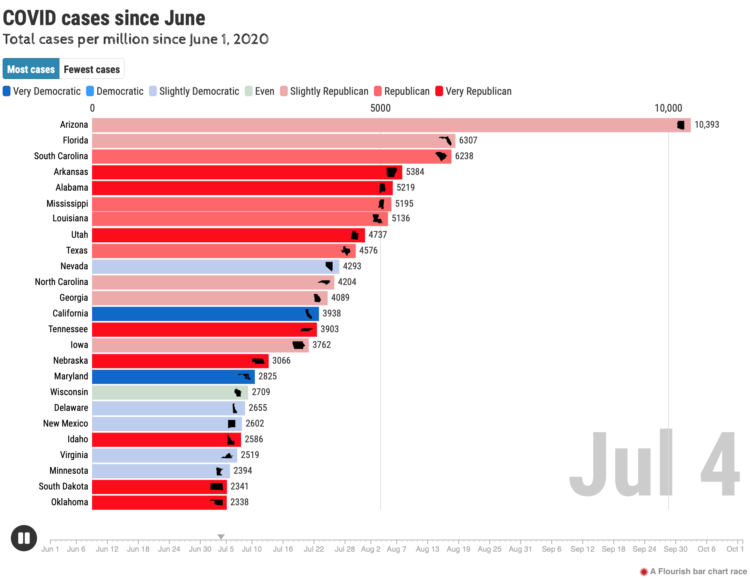
From Dan Goodspeed, the bar chart race is back. The length of the bars represents Covid-19 case rates per state, and color represents partisanship. The animation currently starts on June 1 and runs through October 13. It plays out how most of us probably assumed at some level or another.
Tags: coronavirus, Dan Goodspeed, partisanship
James.galbraithlol
 President Donald Trump speaks with audience members after participating in a town hall in Miami, Florida, on October 15. | Brendan Smialowski/AFP/Getty Images
Winner: Savannah Guthrie. Loser: Trump.
Dueling town halls between President Donald Trump and former Vice President Joe Biden created a stark contrast between the two candidates — but probably not the one the president wanted.
This is all because Trump refused to do Thursday’s planned virtual town hall debate due to his Covid-19 diagnosis, so Biden decided to schedule a solo town hall on ABC at 8 pm Eastern. Trump, looking to counterprogram Biden, convinced NBC to schedule his own town hall at the same time — hoping to win the ratings war and come out looking stronger than Biden.
Trump may regret that strategy; he faced hard questions from voters and NBC host Savannah Guthrie on issues ranging from wearing masks to electoral fraud to Trump’s refusal to disavow extremist groups, eliciting a series of responses that ranged from blatantly false (claiming masks don’t really work) to the dangerously absurd (suggesting some parts of the QAnon conspiracy theory might actually be true).
Meanwhile, Biden’s town hall was calm, polite, and packed with policy substance. Biden laid out plans for how he would get Covid-19 under control and reorient the economy toward being more equitable for lower-income Americans — two things Trump has not accomplished. For voters yearning for a return to some sense of normalcy, Biden hit all the right notes.
The night-and-day contrast served to highlight the core differences between the two options in front of the American people: continuing the reality TV maelstrom of the Trump presidency or a shift to a Biden presidency, where politics returns to being boring, and maybe even calm.
What follows is our attempt to figure out who benefited from the events and their striking contrasts — and who came out looking just a little bit worse.
Biden’s town hall made a big case for the return of boring normalcy in the White House. Even though it may not have made for the most riveting television, it could well work in his favor.
Biden’s town hall harked back to the days when Americans didn’t have to worry about what the president was doing — or tweeting — every day. As Trump was being asked why he wouldn’t wear a mask at the NBC town hall, Biden was talking about how he has started wearing two masks, and talked about his plan for implementing mask-wearing around the country.
“We’re in a situation where we have 210,000-plus people dead and what’s he doing? Nothing. He’s still not wearing masks,” Biden said of Trump. “It is the presidential responsibility to lead. And he didn’t do that.”
/cdn.vox-cdn.com/uploads/chorus_asset/file/21962587/GettyImages_1229094690.jpg) Jim Watson/AFP/Getty Images
Jim Watson/AFP/Getty Images
While Trump’s recent Covid-19 diagnosis signaled the president’s failure to contain the coronavirus in his own White House, Biden finally got to explain — uninterrupted — how he would coordinate a federal response to stop the virus’s spread around the United States. He even brought notes.
Talking to the American people directly about Covid-19 and the havoc it has wreaked on millions of people’s lives was Biden’s strong suit in the first debate. The town hall format seemed to benefit him even more. Biden seemed sharp and prepared — talking about commonsense virus control tactics like wearing masks and making sure schools had good air ventilation.
“We need more teachers in our schools to be able to open, smaller pods,” Biden said. “We need ventilation systems changed. There’s a lot of things we know now.”
Just recognizing that there’s a way to make schools safer for students to return could be a welcome answer to millions of overworked, stressed parents who are trying to juggle working from home and overseeing their kids’ remote schooling at the same time.
Pollsters have found a consistent theme among voters who dislike Trump and favor Biden: They’re tired of the daily chaos of the past four years — whether it’s the revolving door for White House chiefs of staff or Trump catching Covid-19 himself.
If a comparatively boring town hall means America can go back to the days where the country doesn’t have to worry about what the president is tweeting, that’s a win for Biden.
—Ella Nilsen
Trump wouldn’t say whether he was tested for the coronavirus before the first debate with Biden. He couldn’t defend his refusal to require mask use at his rallies. He tried to downplay broadcasting a wild conspiracy theory that Biden tried to have members of Seal Team 6 killed by saying “that was a retweet, I do a lot of retweets.” He suggested parts of the QAnon conspiracy theory could be true, saying “I don’t know,” when Guthrie asked him whether he believes the Democratic Party is run by a cult of satanic pedophiles.
That may sound like a list of the lowlights from the night. But it was all in the first 15 minutes of the event.
/cdn.vox-cdn.com/uploads/chorus_asset/file/21962599/GettyImages_1229094705.jpg) Brendan Smialowski/AFP/Getty Images
Brendan Smialowski/AFP/Getty Images
You could call this “Trump being Trump,” and you’d probably be right. But the difference is that, this time around, Trump was facing questions from ordinary Americans whom he couldn’t talk over and a host who was unafraid to follow up repeatedly and fact-check the president in real time. This format made it much harder for Trump to ignore questions through his patented combination of lying, bluster, and deflection — forcing him to engage on his own record, the area where’s at his weakest.
Take this health care exchange, for example. After a question about making health care affordable and accessible, Guthrie followed up by asking Trump about his administration’s plans to replace Obamacare — and the glaring contradiction between its claim to protect coverage for people with preexisting conditions and its argument, in court, that all of Obamacare (including said coverage) is unconstitutional.
Here’s the end of the exchange:
GUTHRIE: You’ve been in office almost four years. You had both houses of Congress, Senate and House, in Republican hands. And there is not a replacement yet.
TRUMP: That’s right. I’m sorry. But if you look, we had both houses and what did we do? We got rid of the individual mandate.
GUTHRIE: The promise was repeal and replace.
TRUMP: Look, look, we should be on the same side. I want it very simple. I’m going to put it very simple. We would like to terminate it and we would like to replace it with something that’s much less expensive and much better. We will always protect people with preexisting conditions.
GUTHRIE: But if you’re successful in court in November, the preexisting conditions, that promise will be gone.
TRUMP: If we don’t succeed, we are running the remnants of whatever is left because we took it apart. We are running the remnants of whatever is left much better than the previous administration, which ran it very badly. We would like to have new health care, much better and much less expensive.
Trump is unable to explain why he couldn’t come up with a better health care plan when his party controlled all three branches of government. His answer to the question about preexisting conditions is gibberish, largely because there is no good answer.
Trigger Alert: I’m about to say something that will upset many people reading my Twitter feed tonight.
— Frank Luntz (@FrankLuntz) October 16, 2020
My group of undecided voters say that the more Trump speaks, the worse he looks.
If the town hall format brought out Biden’s strengths — his ability to empathize with voters, his long experience with and knowledge about policymaking — it brought out Trump’s weaknesses in the same areas. His event served to remind us that his presidency has been four years of chaos and conflict, with too little in the way of substance done to help ordinary Americans in an especially difficult time in our history.
Trump is trailing badly in the polls, and he desperately needed a strong performance to try to turn things around. This seems, if anything, more likely to make that hole a bit deeper.
—Zack Beauchamp
There were a few moments in Thursday’s ABC town hall where Biden sounded a bit like the progressive Sen. Elizabeth Warren (D-MA), a onetime rival for the Democratic nomination.
If Biden’s audience was looking for wonky statistics on issues from the economy to climate change, the former vice president had them.
Biden came prepared for his town hall with notes, at one point casually throwing around statistics about the British Thermal Unit as it pertains to wind and solar power, and talking about pelletizing chicken and cow manure to take out the methane that contributes to climate change from big agriculture.
“Electric vehicles will save billions of gallons of oil ... [and create] 1 million automobile jobs,” Biden said. “But we’re lagging. We’re not investing. We’re not doing the research.”
/cdn.vox-cdn.com/uploads/chorus_asset/file/21962650/GettyImages_1280422774.jpg) Chip Somodevilla/Getty Images
Chip Somodevilla/Getty Images
Discussing a longstanding racial wealth gap, Biden recognized that even as the economy has slowly recovered over the summer, the economic picture looks far bleaker for Black and brown workers. The most recent overall unemployment rate is 7.9 percent. But when you break it down along racial lines, the story on what’s happening is quite different: White unemployment is 7 percent, while Black unemployment is 12.1 percent and Hispanic unemployment is 10.3 percent.
“[Trump] talks about a V-shaped recovery; it’s a K-shaped recovery,” Biden said, pointing to the theory that those with means in America are bouncing back quite easily, while everyone else is suffering. “If you are on the top, you’re going to do very well. If you’re on the bottom, in the middle or the bottom, your income is coming down.”
At one point, Biden had a mea culpa about his 1994 crime law — one of the more controversial parts of his Senate history that contributed to mass incarceration in the 1990s and following decades.
After host George Stephanopoulos asked whether it was a mistake to support it, Biden simply responded, “Yes, it was.”
But Biden also tried to deflect blame away from the law’s original drafting, saying the worst effects of the crime bill came from state and local police departments implementing it themselves.
“Here’s where the mistake came: The mistake came in terms of what the states did locally,” Biden said. “What happened? They eliminated the funding for community policing.”
While Biden has adamantly come out against defunding the police and maintained that “most cops don’t like bad cops,” he told Stephanopoulos he wants more reforms and additional resources going to community policing and strengthening mental health resources.
Even if viewers may have disagreed with some of Biden’s stances, the nominee came prepared and showed off his policy chops.
—EN
This election is a choice between two candidates. To actually decide whom they want to vote for, voters typically need to be informed about both candidates’ views and positions. But tonight, voters had to choose between the Biden town hall or the Trump town hall.
It was a real-time example of FOMO (fear of missing out) in action. If you were on social media during the town halls, you might have seen people talking about the town hall that you weren’t watching. But you couldn’t contribute to the conversation because you couldn’t tune in.
/cdn.vox-cdn.com/uploads/chorus_asset/file/21962645/GettyImages_1280424503.jpg) Chip Somodevilla/Getty Images
Chip Somodevilla/Getty Images
/cdn.vox-cdn.com/uploads/chorus_asset/file/21962646/GettyImages_1229094629.jpg) Brendan Smialowski/AFP/Getty Images
Brendan Smialowski/AFP/Getty Images
Only in this case, the stakes are very high. This isn’t missing a movie’s opening day or brunch with your friends. It’s missing the kind of event that voters genuinely rely on to inform their decisions about who will run the most powerful country in the world. That’s particularly true in this case, because tonight’s main political event was supposed to be a debate between Biden and Trump.
It didn’t have to be this way. The debate could have been held virtually, given Trump’s recent coronavirus infection, but the Trump campaign rejected the idea of a virtual debate. The town halls could have been scheduled at different days or times, but Trump reportedly wanted to beat Biden in the ratings in a direct, same-hour matchup.
So we got a mess of FOMO. Americans — and especially any remaining undecided voters — were left less informed as a result.
—German Lopez
Savannah Guthrie is a lead anchor on the Today show for a reason — and on Thursday night, it showed.
NBC got a lot of flak for programming a Trump town hall at the same time as the Biden event on ABC, especially given that it was the president who dropped out of the originally scheduled debate in the first place. Guthrie’s quick line of questioning, pushback, and real-time fact-checking of the president probably made the White House wish they had just done the debate.
/cdn.vox-cdn.com/uploads/chorus_asset/file/21962590/AP_20290026427738.jpg) Evan Vucci/AP
Evan Vucci/AP
Guthrie, who has co-anchored Today since 2012, opened the night reminding the audience why the event was happening in the first place — the president got Covid-19 and refused to participate in a virtual debate proposed for safety reasons, causing this dueling town hall mess in the first place.
And then she got to the questions. Were you tested the day of the last presidential debate in Cleveland, which took place just two days before Trump’s positive coronavirus test? How often are you tested? Why did you hold the event honoring Supreme Court nominee Judge Amy Coney Barrett at the White House without precautions? Shouldn’t you have known better? Are you blaming grieving military families for giving you Covid-19? Why did it take you two days to denounce white supremacy?
Then Guthrie asked the president about QAnon. In asking her question, she reminded him what it was — the dangerous conspiracy theory spreading across the internet that claims Democrats are behind a pedophilia ring and that sees Trump as a savior.
“Can you just once and for all state that this is completely not true and disavow QAnon in its entirety?” she asked. “I know nothing about QAnon,” he said. “I just told you,” she responded.
Guthrie also asked the president about something he retweeted suggesting that Biden had a Navy SEAL team killed to cover up that the death of Osama bin Laden was faked. (This is not true.)
“That was a retweet, that was an opinion of somebody,” Trump said.
“You’re the president; you’re not someone’s crazy uncle where you just retweet whatever,” Guthrie said.
Guthrie stepped into a tough spot on Thursday, and in that spot, she seized on the chance to ask questions that really matter to the American people — and press on their behalf to get answers.
—ES
Guthrie gave Trump as many opportunities as she could to denounce the online conspiracy theory about a satanic pedophilia ring run by global elites.
He wouldn’t do it.
“I don’t know anything about QAnon,” Trump said at first.
Guthrie pointed out she’d just explained the theory in brief: Prominent Democrats are satanic pedophiles and Trump is going to save the world from them.
So would Trump denounce QAnon? Quite the opposite.
“Let me just tell you what I do hear about it is they are very strongly against pedophilia and I agree with that,” Trump said. “I do agree with that.”
Guthrie pressed: “But there’s not a satanic cult.”
“I don’t know that,” the president said. “And neither do you know that.”
The rest of the short version of QAnon is that a top-level official — “Q” — is leaking a top-level state secret on the internet. Its believers thrive on tiny hints they claim they detect in official statements and social media posts by Trump and his confidants.
Now they had the president in front of a huge TV audience, saying that what he did know about QAnon, he agreed with.
—Dylan Scott
The mandate has taken a beating lately, both from Trump and from health policy wonks.
At his town hall, the president defaulted to his favorite answer when a journalist or anybody points out he has not released a comprehensive health care plan, in case the Supreme Court overturns Obamacare early next year and millions of people could be at risk of losing health coverage.
When asked by a voter who buys her own health insurance about what his health care plan would be, Trump instead talked about his most significant legislative achievement on health care. As part of their tax bill, Republicans eliminated Obamacare’s financial penalty for failing to carry health insurance that was established by the 2010 health care law. (They had also, of course, failed to repeal and replace Obamacare earlier the same year.)
“We got rid of the individual mandate on Obamacare, which was the worst part of Obamacare, and now you could actually say it’s not Obamacare because that’s how big it was,” the president said.
/cdn.vox-cdn.com/uploads/chorus_asset/file/21962691/GettyImages_1229094666.jpg) Brendan Smialowski/AFP/Getty Images
Brendan Smialowski/AFP/Getty Images
Trump is right about one thing: The mandate was very unpopular. It makes sense for him politically to highlight how he got rid of it.
But he’s wrong about something else: Ending the mandate may not actually be that big of a deal in terms of how Obamacare functions.
A consensus has been forming among health policy experts that the mandate wasn’t as crucial to the law’s markets as its authors thought it would be, because the actual size of the financial penalty was relatively small. More than 80 percent of the people who buy private insurance on the marketplaces get federal tax credits, which makes their premiums more affordable. Obamacare’s enrollment has declined only slightly since the mandate was repealed, from 12.2 million in 2017 to 11.4 million in 2020.
Yet Republican state officials, supported by the Justice Department, are suing to overturn the law in its entirety because the mandate is now gone. (To get into the weeds on the topic, read Vox’s Ian Millhiser.) Those millions of Americans who buy insurance on the marketplaces, and more than 12 million people covered by Medicaid expansion, could lose insurance unless there is a plan to cover them in that scenario.
“I want to give great health care,” the president said Thursday night, sounding much like he did four years ago. The rest is still TBD.
—DS
If there’s anything we’ve been told over the past five years about Donald Trump, it’s that he’s “tough.” But responses to Trump’s performance in Thursday night’s town hall conversation with Guthrie from conservative media figures seemed to imply otherwise. They focused not on Trump’s answers, but on how “bullied” he was by Guthrie for asking him moderately difficult questions.
it takes a lot to make Trump look like the bullied one, but @SavannahGuthrie nailed it with flying colors. what an over-the-top performance by this frantic host
— GregGutfeld (@greggutfeld) October 16, 2020
Trump is the president of the United States, and presumably would have the capacity to answer tough questions about his handling of the coronavirus and other issues (not to mention he had mocked Guthrie earlier Thursday during a rally).
And yet Fox News host and occasional Trump rally guest Sean Hannity introduced his show Thursday night saying, “NBC fake news did their best to ambush President Trump at tonight’s town hall,” and describing Guthrie as Biden’s surrogate.
Hannity kicks off his show tonight by complaining that Savannah Guthrie was very nasty to Trump.
— Justin Baragona (@justinbaragona) October 16, 2020
"NBC fake news did their best to ambush President Trump at tonight’s town hall... it was a political debate with the morning host of [TODAY] serving as, well, Joe Biden's surrogate pic.twitter.com/y6thtHvDnH
The Trump campaign mirrored that language in a statement, again calling Guthrie a “Biden surrogate” and adding, “President Trump masterfully handled Guthrie’s attacks and interacted warmly and effectively with the voters in the room.”
Trump’s allies, in the face of his performance, focused on working the refs — the media. The rule for interviewing Donald Trump is very clear: He can be mean to you, but you have to be nice to him, obsequiously so, no matter what he says or does.
But this was Trump’s choice. As he said about the decision to do the town hall: “They asked me if I’d do it, and I figured what the hell? We’ll get a free hour of television.”
He did indeed. And now some of his biggest allies are very upset about it.
—Jane Coaston
Will you help keep Vox free for all?
The United States is in the middle of one of the most consequential presidential elections of our lifetimes. It’s essential that all Americans are able to access clear, concise information on what the outcome of the election could mean for their lives, and the lives of their families and communities. That is our mission at Vox. But our distinctive brand of explanatory journalism takes resources. Even when the economy and the news advertising market recovers, your support will be a critical part of sustaining our resource-intensive work. If you have already contributed, thank you. If you haven’t, please consider helping everyone understand this presidential election: Contribute today from as little as $3.
James.galbraithThis idiot has to go
Enlarge / FCC Chairman Ajit Pai speaking at a press conference on October 1, 2018, in Washington, DC. (credit: Getty Images | Mark Wilson )
Federal Communications Commission Chairman Ajit Pai is backing President Donald Trump's proposal to limit legal protections for social media websites that block or modify content posted by users. Pai's views on the matter were unknown until today when he issued a statement saying that he will open a rule-making process to clarify that, despite the First Amendment, social media companies do not have "special immunity" for their content-moderation decisions.
"Social media companies have a First Amendment right to free speech," Pai said. "But they do not have a First Amendment right to a special immunity denied to other media outlets, such as newspapers and broadcasters."
Trump's attempt to punish social media websites like Twitter and Facebook for alleged anti-conservative bias landed at the FCC because Trump had the National Telecommunications and Information Administration (NTIA) petition the FCC to issue a new interpretation of Section 230 of the Communications Decency Act. This US law says that providers and users of interactive computer services shall not be held liable for "any action voluntarily taken in good faith to restrict access to or availability of material that the provider or user considers to be obscene, lewd, lascivious, filthy, excessively violent, harassing, or otherwise objectionable, whether or not such material is constitutionally protected." The law also says that no provider or user of an interactive computer service "shall be treated as the publisher or speaker of any information provided by another information content provider."
Read 20 remaining paragraphs | Comments
James.galbraithWell that's disappointing
Read more of this story at Slashdot.
James.galbraithOf course. Because voter suppression is the only play the GOP has left
TALLAHASSEE — Florida will seek to push former felons from voter rolls if they have outstanding court debts, a surprise, late-hour move that comes after more than 2 million people already have voted in the presidential battleground.
The announcement, which was distributed to local election officials but not the wider public, drew immediate pushback from county election supervisors and suspicion from Democrats who say it could be used to challenge the eventual election results.
Division of Elections Director Maria Matthews, in an email to the state’s 67 local election supervisors late Tuesday, said they would “begin to see” files on registered voters “whose potential ineligibility is based on not having satisfied the legal financial obligations of their sentence.”
Unwritten in the email, which was obtained by POLITICO, was the assumption that local officials should start acting on any information they receive. The email also instructed supervisors to act on information from other sources, including court clerks, that raises eligibility questions.
The move is one of the state’s most consequential actions to meet the terms of a 2019 law on felon voting rights. Florida voters in 2018 overwhelmingly approved Amendment 4, a ballot measure that ended a lifetime voting ban for most felons. But state legislators the following year limited that right to those people who have paid any court-ordered fees, fines and restitution.
The action lands late in a presidential campaign cycle that has President Donald Trump and Democrat Joe Biden scrambling for every ballot in Florida, where Trump won with fewer than 113,000 votes in 2016.
Secretary of State Laurel Lee, a Republican, released a written statement to POLITICO saying her office has a duty to enforce the 2019 law after it was upheld by the 11th Circuit Court of Appeals in a 6-4 decision last month.
“The law requires the department to review information from a number of sources and make an initial determination as to whether the information is credible and reliable,” she wrote. “With the 11th Circuit’s recent decision, the law with respect to legal financial obligations is now clear and there is no legal basis for the department to ignore the obligations spelled out in Florida Statutes.”
With less than three weeks until Election Day, millions of Floridians already have mailed or dropped off their ballots, and early voting sites are scheduled to open Monday.
Democratic attorney Mark Herron called the action “smelly” and said it could be used by the Trump campaign to challenge election results. A defeat in Florida could doom Trump’s reelection effort, and the president repeatedly has raised unsubstantiated allegations of potential fraud in this year’s election.
Biden campaign spokesperson Carlie Waibel blasted the state's move.
“Plain and simple: this is voter suppression,” Waibel said in an email. “For the past two years, we’ve seen Florida Republicans do everything in their power to defy the will of the overwhelming majority of Florida voters who cast their ballot in favor of Amendment 4. And here they go again.”
Trump Victory spokesperson Emma Vaughn did not respond to questions about whether the campaign would seek to obtain the names of people flagged by the state, or contest the election results if any of them voted.
State rules leave it up to local election supervisors to add and remove voters from the rolls. But it’s the job of the state to review law enforcement and court records to see if a registered voter is ineligible. The state Division of Elections sends that information to supervisors, who must follow a process to remove the voter, including mailing a written notice.
Supervisors reached by POLITICO said that timeline makes it impossible for them to remove anyone from the rolls before the Nov. 3 election.
Brian Corley, the Republican supervisor for Pasco County, called the timing “problematic, especially during one of the most scrutinized elections ever.”
Corley said he has no idea how many voters the Division of Elections might send his way.
“Are we going to get these next week? Am I getting a hundred or a thousand?” Corley said. “It’s a little disappointing, as you might imagine.”
Florida voters in 2018 overwhelmingly approved a constitutional amendment to give felons a vote. In 2019, the Republican-led state Legislature passed a contentious law that requires felons to first pay off any court-ordered debts before registering. Gov. Ron DeSantis, also a Republican, signed the bill into law.
But even as the law was hit with a ferocious legal challenge, the DeSantis administration flagged no voters on the rolls who might be violating the requirements.
Leon County Supervisor of Elections Mark Earley, a Democrat, said that it’s possible that someone flagged by state officials at this late date might already have voted.
“If someone has voted or voted before they are removed from the rolls, we cannot prevent that and those will votes will be counted,” Earley said.
The number of registered voters who owe court debts isn’t known, but a University of Florida study estimated that there could be nearly 775,000 felons in the state with unpaid debts. During a trial this spring over the felon voting law, Matthews, the state elections director, testified in federal court that some 85,000 voters on Florida’s rolls could be ineligible under the felon voting law.