James.galbraith
Shared posts
Democrats have one big weapon left against Trump. Will they use it?
James.galbraithNo, no they will not
How Democrats Are Trying To Convince Republican Senators To Convict Trump
James.galbraithFutile in the face of such overwhelming bad faith
In this installment of the FiveThirtyEight Politics podcast, Cardozo School of Law professor and ABC News contributor Kate Shaw discusses the evidence presented by House impeachment managers in former President Trump’s second impeachment trial.
[Related: How Has The Nation Changed Since The Insurrection At The Capitol?]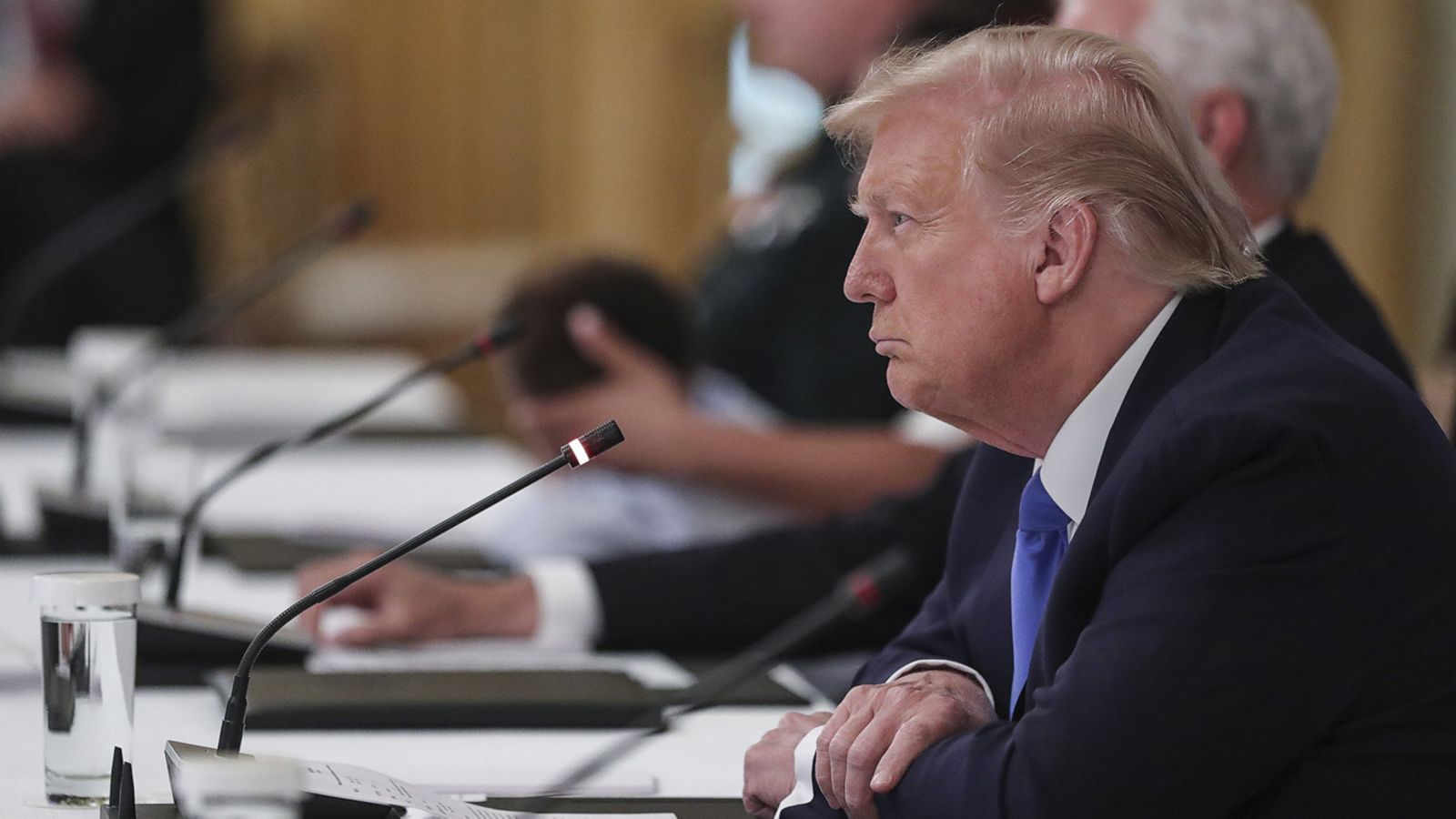
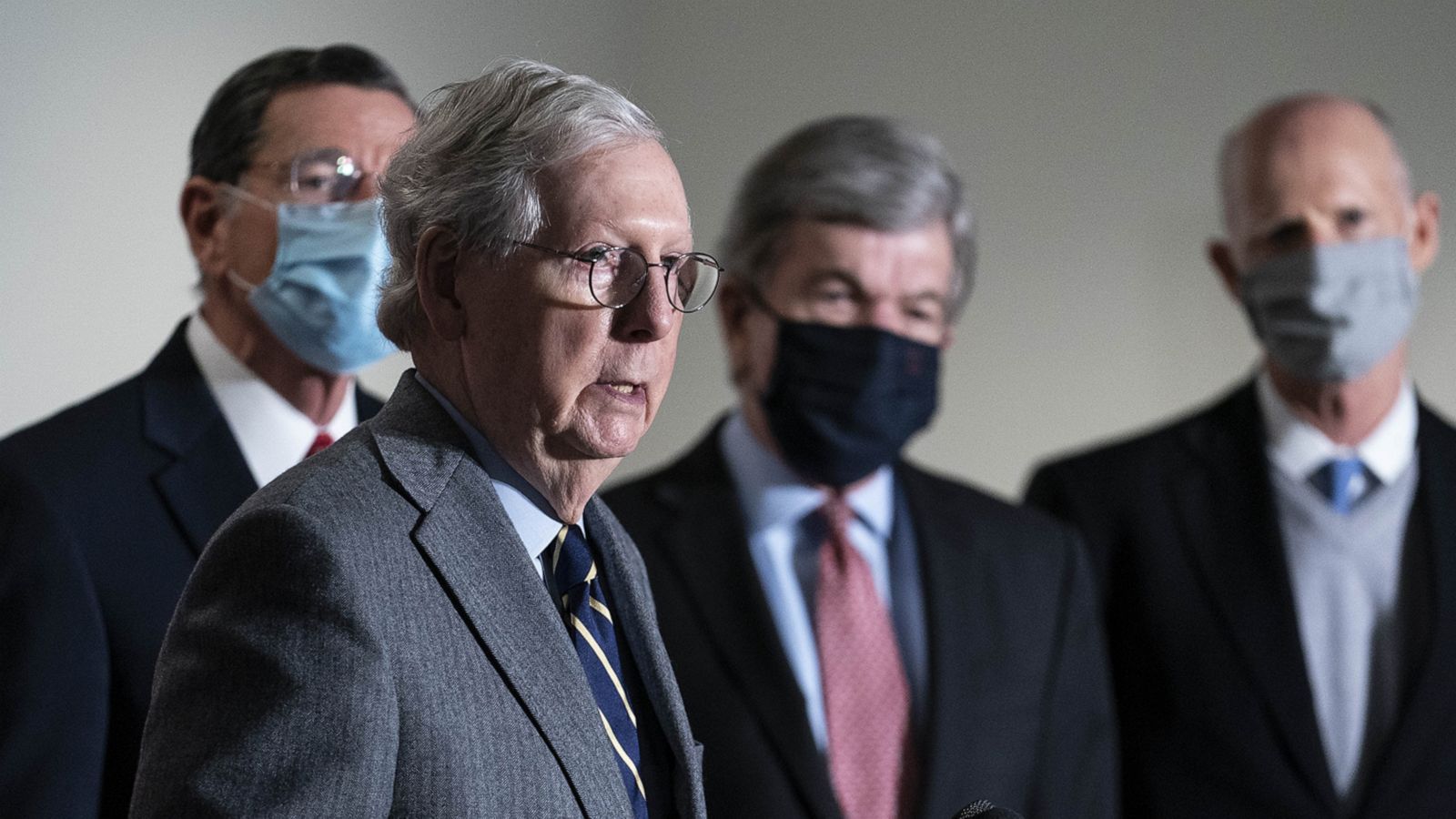
The stakes at Trump’s trial: Whether GOP will fully denounce political violence
James.galbraithFully? Try "at all", and the answer is still no.
Lindsey Graham’s toadyism on Fox News shows where the GOP is heading
James.galbraithyup
Trump lawyer David Schoen’s crazy theory on ‘Hannity’ unmasks the GOP’s ugly core
James.galbraithif you're surprised....
Apple Will Proxy Safe Browsing Traffic on iOS 14.5 To Hide User IPs from Google
James.galbraithquite the middle finger to google lol


Read more of this story at Slashdot.
Kombucha tea is trendy, but it has also inspired new “living materials”
James.galbraith*gag*

Enlarge / Brewing kombucha tea. Note the trademark gel-like layer of SCOBY (symbiotic culture of bacteria and yeast). (credit: Olga Pankova/Getty Images)
Kombucha tea is all the rage these days as a handy substitute for alcoholic beverages and for its supposed health benefits. The chemistry behind this popular fermented beverage is also inspiring scientists at MIT and Imperial College London to create new kinds of tough "living materials" that could one day be used as biosensors, helping purify water or detect damage to "smart" packing materials, according to a recent paper published in Nature Materials.
You only need three basic ingredients to make kombucha. Just combine tea and sugar with a kombucha culture known as a SCOBY (symbiotic culture of bacteria and yeast), aka the "mother," also known as a tea mushroom, tea fungus, or a Manchurian mushroom. (It's believed that kombucha tea originated in Manchuria, China, or possibly Russia.) It's basically akin to a sourdough starter. A SCOBY is a firm, gel-like collection of cellulose fiber (biofilm), courtesy of the active bacteria in the culture creating the perfect breeding ground for the yeast and bacteria to flourish. Dissolve the sugar in non-chlorinated boiling water, then steep some tea leaves of your choice in the hot sugar water before discarding them.
Once the tea cools, add the SCOBY and pour the whole thing into a sterilized beaker or jar. Then cover the beaker or jar with a paper towel or cheesecloth to keep out insects, let it sit for two to three weeks, and voila! You've got your own home-brewed kombucha. A new "daughter" SCOBY will be floating right at the top of the liquid (technically known in this form as a pellicle). But be forewarned: it's important to avoid contamination during preparation because drinking tainted kombucha can have serious, even fatal, adverse effects. And despite claims that drinking kombucha tea can treat aging, arthritis, cancer, constipation, diabetes, or even AIDS, to date there is no solid scientific evidence to back those claims.
Read 10 remaining paragraphs | Comments
Google flags its iOS apps as “out of date” after two months of neglect
James.galbraithlol

Enlarge / The current state of Google's iOS app lineup. (credit: Aurich Lawson)
Google's major iOS apps have been seeing serious neglect for the past few months. On December 8, Apple's App Store started requiring all apps to show privacy "nutrition labels" in their app store listing, where developers self-report what data an app uses for tracking and how that data is linked to a user. Coincidentally, a lot of Google's apps, especially the most popular ones, have not been updated since December 8.
The situation has gotten so bad that Google's servers were briefly flagging its own iOS apps as "out of date." As detailed by Techmeme editor Spencer Dailey, Gmail, Google Photos, and Google Maps on iOS were all caught showing a server-side pop-up message to users saying, "You should update this app. The version you're using doesn't include the latest security features to keep you protected. Only continue if you understand the risks." Actually Google, you should update this app. Thanks to Google's sudden disinterest in iOS app updates, the messages were showing even when users had the latest, 2-month-old updates of these Google apps. The messages have since been removed through a server update.
Presumably, this was an automatic notice that pops up when Google's app updates hit a certain age and are meant to catch people who haven't been to the App Store in a while. Presumably, Google picked a timeframe (approximately two months) that it thought it would never pass without shipping some kind of app update. Now, for some mysterious reason, that time period has passed, and Google's servers were briefly accusing Google's app developers of putting users "at risk."
Read 7 remaining paragraphs | Comments
Solar and Wind Are Reaching for the Last 90% of the US Power Market
James.galbraithlol the last 90%?
Read more of this story at Slashdot.
Facebook Is Said to Be Building a Product to Compete With Clubhouse
James.galbraithYou misspelled "copy"
Read more of this story at Slashdot.
Democrats back down from calling witnesses at Trump’s impeachment trial
James.galbraithBecause if it's one thing Dems can't abide, it's a spine

In a late twist, the House impeachment managers requested to subpoena at least one witness. Then they backed down.
In a surprising turn of events, the Senate briefly considered calling witnesses at the second impeachment trial of Donald Trump.
But then they decided not to.
On Saturday morning, the House impeachment managers requested seeking the testimony of Rep. Jaime Herrera Beutler (R-WA) as part of their case that the former president incited an insurrection. The Senate subsequently voted to debate calling witnesses, and briefly, it appeared the trial could stretch on a good deal longer.
But within hours, a deal was struck behind the scenes to avert that outcome. Trump’s team agreed that Herrera Beutler’s testimony would match her public statements, and Democrats agreed to drop their demand for witnesses, paving the way for the trial to conclude later Saturday.
The outcome of the trial wasn’t in serious question, since Democrats never got anywhere near the 17 Republican Senate votes they’d need to convict Trump. (For instance, Senate Minority Leader Mitch McConnell announced he would vote to acquit Trump Saturday morning, ending rumors to the contrary.)
This means the witness question would mainly be about attempting to further unearth facts about what happened, or aimed at hurting Trump’s political support (rather than having a real chance of convicting him). But in the end, political leaders in both parties preferred the trial to end now, rather than dragging it out. Democrats hope to return to a focus on President Biden’s agenda, and Republicans want the focus off Trump’s ugly actions.
Herrera Beutler’s revelations, and Kevin McCarthy’s phone call to Trump, briefly explained
Herrera Beutler became the sudden focus of attention Friday night, after she released a statement recounting what House Minority Leader Kevin McCarthy (R-CA) told her about a call he had with Trump while the Capitol insurrection was taking place on January 6.
According to Herrera Beutler, McCarthy told her that he asked Trump to forcefully call off the riot, and Trump responded, “Well, Kevin, I guess these people are more upset about the election than you are.” This account indicates that even as the riot unfolded, Trump remained sympathetic to the rioters and reluctant to rein them in.
There had been previous reports that McCarthy had spoken to Trump the day a group of the then-president’s supporters stormed the US Capitol. But CNN reported new details on the matter Friday night, and the report spurred Herrera Beutler — one of just 10 House Republicans to vote in favor of Trump’s second impeachment — to release a statement confirming the account, and calling on other “patriots” with relevant knowledge to come forward.
For weeks, the widespread expectation in Washington was that the House impeachment managers would not request witnesses, acquiescing to a bipartisan desire among party leaders to get the trial over this Saturday.
But the House impeachment managers, led by Rep. Jamie Raskin (D-MD), seized on this late revelation and, on Saturday morning, revealed that they would request at least one witness — Rep. Herrera Beutler. Raskin said he wanted to subpoena Herrera Beutler and any contemporaneous notes she had, and to get her testimony by Zoom for an hour or less as soon as she was available.
And Raskin said he might not stop there. He said that if other “patriots” did indeed come forward, as Herrera Beutler requested, he reserved the right to request testimony from them as well.
Trump’s team was furious. “We should close this case out today!” his attorney Michael van der Veen said. He suggested that if the House asked for one witness, he’d want “over 100 witnesses” (though the Senate would have to approve those witness requests).
But though the Senate initially appeared sympathetic to Raskin’s demand — with all Democrats and five Republicans voting to consider witness testimony — behind the scenes, they were far less keen on the idea.
Party leaders on both sides preferred to end the trial quickly, and after a few hours of negotiation, Raskin agreed to back down, so long as Herrera Beutler’s statement was entered into the record and Trump’s team stipulated her testimony would match that statement. And so the trial is headed to its conclusion.
Mitch McConnell plans to vote to acquit Trump in the impeachment trial
James.galbraithAnd all those breathless "oh McConnell is so independent, he's thinking about breaking with trump" pieces that just couldn't stop slobbering all over him...jesus fucking christ you idiots

Given his leadership of the Republican Party, his decision is a highly influential one.
Senate Minority Leader Mitch McConnell has told Republican colleagues that he plans to acquit former President Donald Trump of an impeachment charge for the second time, according to a Politico report.
McConnell’s comments, relayed to other members of the GOP conference in a letter, make his position on impeachment clear: The minority leader cites the issue of jurisdiction as a key reason for his acquittal, and describes impeachment as a tool mainly used to remove a president from office. He writes that because Trump is no longer president, the Senate lacks purview.
Previously, McConnell had signaled that he was weighing whether to acquit or convict, and wasn’t pressuring members of his conference on this decision. In the end, McConnell appears to have concluded the issue of jurisdiction requires a vote for acquittal.
“Today’s vote is a vote of conscience and I know we will all treat it as such,” McConnell wrote in the letter, first obtained by Politico’s Burgess Everett. “While a close call, I am persuaded that impeachments are a tool primarily of removal, and we therefore lack jurisdiction.”
McConnell says it was a “close call” but says impeachment is “primarily a tool of removal” and the Senate lacks jurisdiction . He says criminal conduct by a president in office can be prosecuted when the president is out of office pic.twitter.com/JGMTjCp2OL
— Burgess Everett (@burgessev) February 13, 2021
McConnell also argues conviction is unnecessary because Trump could face consequences for his actions via criminal prosecution.
“The Constitution makes perfectly clear that Presidential criminal misconduct while in office can be prosecuted after the President has left office, which in my view alleviates the otherwise troubling ‘January exception’ argument raised by the House,” he writes.
Regarding the issue of Senate jurisdiction, it’s worth noting that McConnell played a key role in setting the timing for the impeachment trial, and could have allowed it to begin before Trump had already left the presidency. Democrats had wanted to hold the trial right after the House impeached Trump on January 13, but McConnell insisted on sticking to a previous schedule, which meant that the Senate couldn’t take up the articles before January 19.
McConnell’s decision to acquit is significant given his position as leader of the Senate Republicans — and his influence over the conference. Had he voted to convict, he could have opened the door for other GOP senators to do the same. Now many Republicans are likely to follow suit with acquittal, a scenario that seems all the more likely since 44 GOP lawmakers voted to dismiss the trial earlier this week.
The impeachment vote, ultimately, is expected to fall short of the 67-person threshold that’s needed to secure Trump’s conviction. Given McConnell’s position — and the earlier vote to end the trial itself — it would appear that the Republican Party isn’t quite ready to distance itself from the former president.
Trump’s lawyers utterly failed to answer questions from wavering Republican senators
James.galbraithCall 'em up.

For instance, they would not give new specifics on how Trump responded to the Capitol breach.
Key Republican senators on the fence about the verdict in Donald Trump’s second impeachment trial had some specific factual questions for Trump’s lawyers about his actions on the day the US Capitol was stormed.
Trump’s attorneys did not come close to answering them.
During a period of the impeachment trial in which senators could submit written questions to either side’s legal team Friday afternoon, Sens. Susan Collins (R-ME), Lisa Murkowski (R-AK), Mitt Romney (R-UT), and Bill Cassidy (R-LA) all wanted to know more about why, exactly, it took so long for Trump to mobilize the federal government to stop the mob, and how the president responded to the situation as it was unfolding.
Michael van der Veen, an attorney for Trump, gave them nothing. All he could cite were the tweets issued by Trump publicly at the time. But this wasn’t his fault, he said — it’s the fault of the House, for not doing a sufficient investigation.
“There’s nothing at all on the record on this point. Because the House failed to do even a minimal amount of due diligence,” van der Veen said, while batting away one question on the topic.
“With the rush to bring this impeachment there’s been no investigation into that. And that’s the problem with this entire proceeding,” he said in response to another.
To be clear, van der Veen and his fellow attorneys could have voluntarily offered new exculpatory evidence — about how Trump responded to the January 6 riot or other related topics — as part of their defense for the former president. They didn’t.
But what we do know of Trump’s conduct that day from reporting is not flattering. Sources have told journalists, for instance at the Washington Post, that he was watching the chaos closely on television and resisting some advisers’ pleas that he should condemn the violence. Sen. Ben Sasse (R-NE) has claimed White House aides told him Trump was “delighted” as the Capitol was stormed. And Friday night, CNN reported that Trump had spurned House Minority Leader Kevin McCarthy’s pleas to condemn the rioters, saying, “Well Kevin, I guess these people are more upset about the election than you are.”
Yet Trump’s team correctly pointed out that, so far, Democrats have made a strategic choice not to pursue sworn testimony from Trump’s aides as part of this inquiry. That means on-the-record statements about what Trump did from people with firsthand knowledge are few and far between.
It’s unclear if sworn witness testimony would have much of an impact on Republican senators’ votes on a verdict (17 would be necessary to convict Trump, and far fewer currently seem open to it). Note also that McCarthy voted against impeachment even though he obviously knew what Trump had said to him on January 6. But the lack of witness testimony does mean the Republicans who are considering convicting have less to go on.
Key Republican senators had questions. They didn’t get answers.
The first skeptical Republican question, from Sens. Collins and Murkowski, was: “Exactly when did President Trump learn of the breach of the Capitol? What specific actions did he take to bring the rioting to the end and when did he take them? Please be as detailed as possible.”
Van der Veen’s response was not detailed. “We have a tweet at 2:38, so it was certainly sometime before then,” he said. (At 2:38 pm, Trump sent a tweet reading: “Please support our Capitol Police and Law Enforcement. They are truly on the side of our Country. Stay peaceful!”)
But van der Veen couldn’t offer anything more, and he tried to blame the House impeachment managers for that failure. “The House managers did zero investigation and the American people deserve a lot better than coming in here with no evidence, hearsay on top of hearsay on top of reports that are of hearsay,” he said.
Later, Romney and Collins asked another question intended to suss out when Trump learned Vice President Mike Pence could have been in physical danger.
The background here is that Sen. Tommy Tuberville (R-AL) has publicly stated that, after protesters had already gotten inside the Capitol building, he spoke to Trump on the phone. (Trump was trying to get Tuberville to slow down the count of the electoral votes.) Per Tuberville’s recounting to Politico, he had to cut the call short, and he told Trump, “Mr. President, they just took the vice president out, I’ve got to go.”
The Secret Service had evacuated Pence from the Senate chamber at 2:15 pm, so this exchange between Tuberville and Trump likely took place around that time. Then, at 2:24 pm, Trump sent this tweet disparaging Pence:
Donald J. Trump
@realdonaldtrump
Mike Pence didn’t have the courage to do what should have been done to protect our Country and our Constitution, giving States a chance to certify a corrected set of facts, not the fraudulent or inaccurate ones which they were asked to previously certify. USA demands the truth!
Jan 6th 2021 - 2:24:22 PM EST
So Romney and Collins asked, when Trump sent that tweet, was he in fact aware that the “the vice president had been removed from the Senate by the Secret Service for his safety?”
Van der Veen claimed that “the answer is no,” and that “at no point was the president informed the vice president was in any danger.” But he didn’t give any explanation of how the apparent timeline outlined above was wrong, instead pivoting to arguing that “the House rushed through this impeachment in seven days with no evidence.”
Later still, Sen. Cassidy returned to this topic, again laying out the timeline of Tuberville’s call and Trump’s tweet insulting Pence. “The tweet and lack of response suggests President Trump did not care that Vice President Pence was endangered or law enforcement was overwhelmed,” he asked. “Does this show that President Trump was tolerant of the intimidation of Vice President Pence?”
Van der Veen returned to his same talking point. “I dispute the premise of your facts. I dispute the facts that are laid out in that question. And, unfortunately, we are not going to know the answer to those facts in this proceeding, because the House did nothing to investigate what went on.”
But, he continued, “Mr. Trump and Mr. Pence have had a very good relationship for a long time and I’m sure Mr. Trump very much is concerned and was concerned for the safety and well-being of Mr. Pence and everybody else that was over here.”
The Washington Post’s Josh Dawsey soon tweeted that anonymous Pence aides do “not agree” with that assessment:
Pence's team does not agree with the Trump lawyer's assessment that Trump was concerned about Pence's safety. Trump didn't call him that day — or for five days after that. No one else on Trump's team called as Pence was evacuated to one room & another, with screaming mob nearby.
— Josh Dawsey (@jdawsey1) February 12, 2021
Tuberville also reiterated his account of his phone call with Trump to reporters Friday afternoon.
The witness problem
Still, on-the-record statements about Trump’s private behavior and actions as the Capitol was stormed remain elusive — because the people with him at the time were hardcore loyalists. According to the Washington Post:
[President Trump] spent the afternoon and evening cocooned at the White House and listening only to a small coterie of loyal aides — including Meadows, deputy chief of staff Dan Scavino, personnel director Johnny McEntee and policy adviser Stephen Miller. Many of his top confidants — Meadows, son-in-law Jared Kushner and first lady Melania Trump, among others — were publicly silent.
If you wanted to make a shortlist of people who would be least likely to provide harmful information about Donald Trump, Meadows, McEntee, Scavino, and Miller would be near the top of that list, perhaps just under Trump’s children. The latter three are longstanding aides who still see their professional fortunes as linked to the president; Meadows, who joined the administration more recently, was reportedly considering taking a job in the Trump Organization.
These aides would also likely wage a court battle against any subpoena compelling their testimony. Former White House counsel Don McGahn has already been doing this in response to a 2019 subpoena, and he has successfully evaded providing any testimony so far.
And even if damning new information did emerge about Trump’s private behavior on January 6, more than enough Republican senators to acquit Trump have already embraced the argument that it’s unconstitutional for the Senate to try a former president — making the specific facts apparently irrelevant.
Why it doesn’t look like Democrats will call witnesses at Trump’s impeachment trial
James.galbraithWell that article aged well

Democrats fear the outcome is assured, and doubt new witnesses will make a difference.
House Democrats put on an effective and often moving presentation of evidence during their opening arguments at former President Donald Trump’s second impeachment trial this week.
And the question now is whether they will stop there — or whether they will try to advance their case that Trump incited an insurrection further, by asking the Senate to allow testimony from witnesses.
The current betting in Washington is that they will not do so. With all but six Senate Republicans having coalesced around the position that an impeachment trial for a former president is unconstitutional, Trump’s acquittal seems nearly certain. (A conviction would require at least 17 Republicans joining all 50 Senate Democrats.)
As a result, senators on both sides seem eager to end the trial quickly. Republicans and Trump’s team want to avoid dwelling on the ugly topic any longer, and Democrats want to get back to doing things they can actually achieve with their congressional majorities, such as passing a pandemic relief bill and confirming more Biden nominees. (The impeachment managers did not use all 16 hours of their allotted argument time, and Trump’s team may use well less than half of theirs.)
Witnesses were of course a major issue in Trump’s first impeachment trial — Democrats argued that the Senate should allow former officials like John Bolton to testify, but Republicans, then in the majority, refused. But Democrats’ thinking on the importance of witnesses is not the same this time around (in part because the storming of the Capitol took place in public, with lots of video evidence showing what happened).
Still, under the Senate’s agreement to govern the trial, both the House impeachment managers and Trump’s team will have the opportunity to at least request witnesses. Trump’s team has no interest in doing this at the moment and have clearly signaled they want the trial over soon.
In contrast, House Democrats involved in impeachment have refused to say whether they will or won’t request witnesses. But while it’s technically up to them to make the ask, they likely wouldn’t go out on that limb unless Democratic leaders Nancy Pelosi and Chuck Schumer agreed — and signs indicate they aren’t keen on the idea.
What sorts of witnesses would make a difference? (Would any?)
The case for witness testimony in the abstract is straightforward and intuitive: It can strengthen the case against Trump.
Unlike in a criminal trial, sworn witness testimony isn’t strictly necessary for procedural reasons — an impeachment trial is fundamentally a political proceeding, and senators are free to make up their minds based on whatever considerations they want (rather than only considering evidence specifically put forward). Still, information provided under oath is theoretically at least somewhat more credible than relying on media reports of what people were saying or thinking.
Of course, whether testimony actually would strengthen a case, and how much it would strengthen it, depends on who those witnesses are and what they say. So who would they be? (The only person whom we know the impeachment managers have asked to testify was Trump himself, though he declined that invitation.)
Some have speculated that Democrats could call Capitol Police officers to testify about their experience as the mob stormed the Capitol January 6. However, the impeachment managers have already shown clips of police officers being interviewed in the press on the matter. It’s not clear how much live testimony would add.
Another possibility that has been bandied about is asking, or subpoenaing, White House aides to testify about Trump’s private behavior and conduct on January 6 and the days beforehand. The problem here is that if these witnesses are reluctant to testify, they could stonewall (including by suing in court, as former Trump White House counsel Don McGahn did in 2019, setting off a nearly two-year legal battle).
The best-case scenario for a witness would be someone who has firsthand knowledge of relevant, not publicly known damning behavior by Trump — and who is both willing and eager to testify. It is unclear whether such a person exists. The best way to find out would be for the impeachment managers to make discreet inquiries out of public view.
The practical obstacles
But even if Democrats get the witnesses of their dreams, there’s the additional question of whether bombshell revelations would matter. That is: Would new testimony be likely to change any Republican senators’ votes, or meaningfully impact the public’s opinion about Trump?
Throughout the Mueller investigation and Trump’s first impeachment, Democrats hoped for the elusive bit of information that would finally, indisputably prove Trump’s malfeasance, drive Republican politicians away from him, and crater his support among Republican voters. But despite damning scandal after damning scandal, the GOP base continued to stand by Trump — as did GOP politicians. New evidence simply didn’t matter.
Trump famously claimed he could shoot someone in the middle of Fifth Avenue and not lose any voters. The insurrection at the Capitol does seem to have lost him some voters (the New York Times reports that a higher-than-usual number of voters left the Republican Party in the days after it), but the GOP continues to be overwhelmingly the party of Trump, and Republican senators are acting accordingly.
On Tuesday, 44 of 50 GOP senators voted that trying a former president was unconstitutional, which certainly makes it appear that the outcome is predetermined. (A few Republican senators have insisted that, despite this vote, their minds aren’t made up yet when it comes to a verdict — such as Minority Leader Mitch McConnell and even Sen. Tommy Tuberville of Alabama — but there are reasons to doubt they are genuinely open-minded rather than just posturing as such.)
Of course, Democrats should still try to make a strong case even if they don’t think they will win. Getting top officials under oath about what happened on January 6 would be valuable for the historical record at the very least. However, that is also something that could be handled through committee investigations rather than an impeachment trial.
What looms largest over all these calculations is that Democrats have other priorities. All other Senate floor business has been halted as the trial proceeds. Only seven of President Biden’s nominees have been confirmed so far, and he has dozens more awaiting action. He also hopes to sign a major pandemic relief bill into law this month. According to a report in Politico Playbook, Biden officials, Schumer, and Pelosi are all united that they want to wrap up impeachment soon and return to these other matters — to the “frustration” of some Democrats who would prefer to call witnesses.
The Senate floor time problem is a real one, but it’s unclear if it’s an insurmountable one. Claims that the Senate majority “can’t” do something, like tackling floor votes on other business on certain days or in the mornings while the trial continues, are often simplifications of the underlying reality that they’d simply prefer not to push the envelope on it. (That is, they’d prefer not to deal with the minority party making a big procedural stink, not to use the nuclear option, or not to override the parliamentarian’s judgments.)
That is: if Democratic leaders really wanted a trial with witnesses, they could probably figure out how to make it happen. So the true objection is probably just that they don’t think this would be time well spent politically. In other words, why not move on to things the Democratic majority can do, rather than sinking time into something they can’t — convict Donald Trump?
Charging patients just $10 more for medications leads to more deaths
James.galbraithgood to have data

The economic argument for eliminating out-of-pocket costs, in one new study.
It turns out $10 can be a matter of life and death, according to a new study on how patients respond to higher health care costs.
Researchers at Harvard University and the University of California Berkeley examined what happened when Medicare beneficiaries faced an increase in their out-of-pocket costs for prescription drugs. They found that a 34 percent increase (a $10.40 increase per drug) led to a significant decrease in patients filling their prescriptions — and, eventually, a 33 percent increase in mortality.
The rise in deaths resulted from people indiscriminately cutting back on medications when they had to pay more for them, including drugs for heart disease, hypertension, asthma, and diabetes.
“We find that small increases in cost cause patients to cut back on drugs with large benefits, ultimately causing their death,” the authors — Amitabh Chandra, Evan Flack, and Ziad Obermeyer — wrote. “Cutbacks are widespread, but most striking are those seen in patients with the greatest treatable health risks, in whom they are likely to be particularly destructive.”
It is difficult to come up with a study design that directly measures the effect of health insurance on health outcomes. These researchers overcame that problem by tracking the prescription benefits for people newly enrolling in Medicare when they turn 65. People with birthdays earlier in the year would be more likely to face higher out-of-pocket costs than people with birthdays later in the year, given the way Medicare’s benefits are designed. By comparing the data between the different age groups, using as a baseline an estimate of how much the patients would have been expected to spend without any cost-sharing, the researchers were able to isolate the effect of cost-sharing on the use of prescription drugs and mortality rates for patients.
This finding challenges an important assumption embedded in American health care policy. In the 1970s and ’80s, the RAND Health Insurance Experiment concluded that small copays encouraged patients to use fewer health care services without leading to worse health outcomes. That helped establish a new economic argument for insurers to ask their customers to put more “skin in the game”: it would encourage more efficient use of health care services with no downside.
But that premise presumed people would be rational. For example, if they are being asked to pay more money for prescription drugs, they would cut back on less-valuable medications first. The Harvard/Cal study didn’t detect any such rationality. When costs went up, people just stopped filling their prescriptions for statins — high-value drugs that are effective in preventing heart attacks.
The researchers explained it like this: The way patients behaved when faced with higher out-of-pocket costs would suggest that they placed very little value on their lives. They literally stopped taking high-value drugs because of the price.
“I never thought we would get a mortality effect of this size,” Chandra told me. “We never thought people would be cutting back on life-saving drugs to this degree.”
If patients can’t make good value judgments, the economic argument for cost-sharing starts to crumble, and it starts to seem like eliminating cost-sharing — increasing the likelihood patients will continue to take the medications they need to stay alive — would be a cheap way to “buy” people more health. As the researchers wrote, “improving the design of prescription drug insurance offers policy makers the opportunity to purchase large gains in health at extremely low cost per life-year.”
Bernie Sanders’s Medicare-for-all single-payer plan eliminated cost-sharing. That’s one way to do it. Chandra said that, alternatively, the government could create new regulations to put a limit on cost-sharing for the large employer plans that cover most working Americans. He said Medicaid is really the model; the 70 million poor Americans enrolled in the program generally have no out-of-pocket obligations.
Eliminating out-of-pocket costs would come with a price: Insurers would likely charge higher premiums to offset the loss of the copays and coinsurance that currently reduce their direct costs. But if the goal is better health outcomes, that is arguably a price worth paying.
“If we care about the sick more than the healthy, then we should be willing to raise premiums to reduce cost-sharing,” Chandra said. “I think a lot of American health care is catastrophic coverage to the healthy, which is fine. That’s valuable. But it’s not as valuable as first-dollar coverage for the sick.”
Abolish the debt ceiling
James.galbraithgod that'd be huge. disarm the GOP

The debt limit nearly caused a financial crisis in 2011, and it could do the same under President Biden.
The debt ceiling is ridiculous. It’s a pointless federal law, and the last time a Democrat held the presidency, the Republican opposition in Congress (led in part by members still in power today) held it hostage and nearly brought the global economy to its knees. It is a ticking time bomb, and now that Democrats have the presidency and both houses of Congress, they should defuse it.
As it happens, they have just the tool needed to do so: the budget reconciliation process. The process, which allows the Senate’s 50 Democrats to pass legislation without being blocked by a Republican filibuster, has gotten a lot of deserved attention since Democrats took the upper house.
Less attention has been paid to the fact that reconciliation can be used to raise the debt ceiling, and Democrats can use it to effectively abolish the debt ceiling for all practical purposes by raising it by an amount so high that a breach won’t happen until far into the future. In doing so, Democrats have a chance to think long-term and prevent costly political and financial crises before they happen.
Democrats’ current control of both houses of Congress might make raising the debt ceiling seem not particularly urgent. Because you can raise the debt limit through reconciliation, Republicans cannot block Democrats from raising it to whatever level they want.
Currently the limit is suspended through the end of July, and the Treasury will be able to use “extraordinary measures” to avoid default for a few months even after that. With a pandemic and an economic crisis to combat in the meantime, it makes sense for the debt ceiling to not be the president’s or Congress’s highest priority.
But it should be a priority all the same. One day — maybe in 2023, maybe in 2025, maybe later — the US will be under divided government again. If the debt ceiling still exists then, chances are the party with a house of Congress but not the presidency will use it to force a crisis and extract concessions from the president. This is particularly true if the president is a Democrat; Republicans were very willing to hold the debt ceiling hostage under President Obama while Democrats were averse to doing so under President Trump.
Another debt ceiling crisis would be calamitous. In the best-case scenario, it could force the government to enact whatever bad policies (like across-the-board spending cuts) the hostage-taking party wants. In the worst-case scenario, it could spark a global financial crisis. It would also worsen inter-branch conflict in the US and lead to an escalation of “constitutional hardball” of the kind that’s corroding our democratic institutions.
Democrats in Congress can pass legislation that would prevent a crisis like that from happening again. It would take substantial political capital — but eliminating the potential for a serious catastrophe in the future is worth it.
The debt ceiling, explained in under 250 words
The debt ceiling in the US is, in international terms, very uncommon. Out of the OECD group of wealthy democracies, only Denmark and Poland join the US in having a hard legal limit on debt. Peer countries like Japan, Canada, the UK, France, and Germany get along just fine without debt ceilings. They just pass laws setting up their tax and spending policies, and issue debt to make up the difference.
The US is different. Congress has to both regularly pass tax and spending laws, and then manually update a score marker (the debt ceiling) and make sure it’s keeping up with those laws. And if Congress doesn’t keep up, the effects are incredibly dire. At “best,” the US stops making legally mandated payments, like salaries for members of the military or benefits for veterans. At worst, it stops making interest payments on existing debt, meaning the US goes into default, a move that could cause a global financial crisis.
In her evaluation of the effects of a debt ceiling breach, Beth Ann Bovino, chief US economist at Standard and Poor’s, wrote that “the impact of a default by the U.S. government on its debts would be worse than the collapse of Lehman Brothers in 2008, devastating markets and the economy.” A sudden cutback in government spending would cause a huge negative shock to GDP, forcing a recession.
The case for fixing the debt ceiling through budget reconciliation
The simplest way to change the debt ceiling is through normal legislation. But normal legislation can be delayed through a Senate filibuster, which requires 60 senators to break. Given that there are only 50 Democrats in the Senate, and Senate Republicans likely will be loath to pass legislation that reduces their bargaining power should they one day retake control of the body, abolishing or weakening the debt ceiling through ordinary legislation seems untenable.
The president could also try to de facto abolish the debt ceiling, through a variety of means. The zaniest by far would be to exploit a law passed in 1996, and meant to benefit coin collectors, that lets the secretary of the treasury issue platinum coins of arbitrary value. The treasury secretary could thus mint a coin valued at, say, $1 trillion or $2 trillion, and use it to purchase and pay off an equivalent amount of debt from the Federal Reserve, which currently holds $4.7 trillion in federal Treasury bonds. The move could trigger inflation by expanding the money supply, but it’d keep the US under the statutory debt limit.
Another, less zany move would be for the president to simply announce he’s not honoring the debt ceiling. He could argue that it’s unconstitutional under the 14th Amendment for the US not to honor its debts, and thus that the debt ceiling violates the Constitution; some eminent constitutional law scholars like Yale’s Jack Balkin have backed this argument. He could also argue that the debt limit contradicts other laws passed by Congress specifying a particular amount of spending and taxation, and announce that the “least illegal” thing for him to do would be to honor those spending and taxing laws at the expense of disobeying the debt limit law.
All of these options, however, would amount to a substantial usurpation of power by the executive. They also come with some legal risk, though it’s unclear who exactly would have the standing to challenge such actions in court.
And that brings us to the option I suggest here: raising the debt ceiling through reconciliation legislation. Less fraught than executive action, and more politically realistic than passing ordinary legislation, it’s an option that lawmakers should seriously consider.
Under Senate rules, the Senate can pass as many as three reconciliation bills per budget resolution: one that adjusts taxes, one that adjusts spending, and one that adjusts the debt limit. The reconciliation instructions in the just-passed budget resolution suggest that the same piece of legislation will affect taxes and spending together. The resolution did not include instructions for a change in the debt limit. But Congress could easily amend the legislation to include such instructions, or include them in the forthcoming budget for fiscal year 2022.
What today’s Democrats can do to effectively end the debt ceiling brinkmanship
Under a deal passed in the summer of 2019, the debt ceiling is suspended until the end of July. At that point, if the debt ceiling isn’t raised (and if Treasury doesn’t take extraordinary measures), the US would go into default, likely sparking a global meltdown.
Thankfully, that likely won’t happen — with both houses of Congress in Democratic hands, it’s all but certain that Biden and Congress will be able to raise the debt ceiling anew.
But Democrats have an opportunity right now to do much more than that.
To be clear, federal law suggests that reconciliation legislation — the type of legislation that will come out of today’s Congress — cannot suspend the debt limit until a certain date. It can only increase or decrease the amount of debt specified in the limit. Under Section 310 of the Congressional Budget Act, a reconciliation bill may “specify the amounts by which the statutory limit on the public debt is to be changed,” but not suspension or timing. And if reconciliation bills cannot suspend the debt limit, they certainly cannot abolish it outright.
Alan Frumin, who served as Senate parliamentarian — a nonpolitical expert who advises the body on procedural matters — from 1987 to 1995 and then from 2001 to 2012, affirms that interpretation, telling me in an email that reconciliation bills can raise but not abolish the debt ceiling. “My best guess is that the numerical value of the ceiling could be adjusted to any amount without violating the Byrd Rule, although it is possible that there could be a prohibited (non Byrd) budgetary effect of an increase to a certain level,” Frumin told me. “I also think that the statutory imposition of the debt ceiling per se could not be abolished in a reconciliation bill.”
If the current Senate parliamentarian, Elizabeth MacDonough, were to agree with this assessment, the presiding officer of the Senate (most likely Vice President Kamala Harris) could overrule it and declare that under reconciliation, the debt limit can be abolished entirely. But that would involve some procedural norm-breaking that Democrats may want to avoid.
However, there’s a way out of this bind. Call it the Danish option.
As noted above, Denmark is one of the few other nations besides the US to have a legal debt ceiling. But there, the ceiling is not really binding — and not just because the country has a parliamentary system with a single house of parliament that appoints the prime minister, meaning that conflicts between the prime minister and the parliament that elected them are rarer than conflicts between the US president and Congress.
The more important factor that renders is that in 2010, Danish lawmakers consciously raised the ceiling to 2 trillion Danish kroner, more than double the then-current debt level (and way above today’s level, too). The very purpose of this action, Danish economist and Peterson Institute for International Economics fellow Jacob Funk Kirkegaard writes, was to make the debt ceiling a non-factor for the purposes of legislating. The Danes raised it high enough that they didn’t need to worry about it for a long, long time.
Under the Danish option, Biden and his Democratic allies in Congress would raise the debt ceiling to a level high enough that they do not need to worry about it for the foreseeable future. The limit, once it’s un-suspended in August, is expected to be around $27 trillion. Congress could set it at $50 trillion or $100 trillion, or, if it wants to be extra safe, some preposterously large number like $1 googol (also known as $10^88 trillion).
That would effectively eliminate the debt ceiling as a hostage-taking device, at least for a good long while. True, it could also invite misinterpretation: Republicans could claim that Democrats voted to allow tens of trillions of dollars in new debt, which, while technically true, would be wildly misleading.
Sarah Binder, a professor of political science at George Washington University and expert on congressional procedure, notes that reconciliation has only been used four times to raise the debt limit (in 1989, 1990, 1993, and 1997). “My sense is that increased political heat over the debt limit has made reconciliation a less politically viable tool for raising the limit,” she writes in an email. “Not entirely sure why that is, except neither party typically wants to own the increase.”
But Democrats should not let that risk prevent them from disabling the ticking time bomb of the debt limit. There’s a real chance that Republicans will capture one or both houses of Congress in 2022. If they do, the odds of a debt ceiling standoff akin to the one that President Obama faced in 2011 will go way, way up.
America can’t afford to take that risk again. That’s why Jason Furman (who served as Obama’s chief economist) and Rohit Kumar, former domestic policy director for Senate Republican leader Mitch McConnell, united in 2017 to urge that the debt ceiling be abolished. Kumar and Furman were on opposite sides of the 2011 negotiations but agreed that a crisis like that could not be allowed to repeat itself. Senate Democrats have the power to eliminate the odds of another such crisis. They should use it.
Even right-wing pundits had no clue what Bruce Castor was doing during his impeachment trial speech
James.galbraithYeah well when you're a client as bad as Trump, these are the lawyers you're gonna get

“I have no idea what he is doing,” Alan Dershowitz said.
The House impeachment managers began former President Donald Trump’s second impeachment trial on Tuesday by making legal and emotional arguments about why Trump must be held to account for his role encouraging a January 6 insurrection aimed at overturning his election loss. One of Trump’s lead lawyers, meanwhile, opened with a presentation that was more akin to an open mic night.
That attorney, Bruce Castor, delivered a rambling defense of Trump that included inscrutable lines like, “Nebraska, you’re going to hear, is quite a judicial thinking place,” and concluded with a dare for the Department of Justice to arrest Trump if it’s really the case that he committed high crimes and misdemeanors.
At times, his remarks — which began with him buttering up senators as “extraordinary people” — had the flavor of an improv set and it was hard to figure out what point he was trying to make.
I challenge you to make sense of what Bruce Castor is trying to say here. This is like the worst college lecture of all time. pic.twitter.com/x7rHNjYByT
— Aaron Rupar (@atrupar) February 9, 2021
There may have been some method to Castor’s seeming madness. Maggie Haberman of the New York Times reported that coming as it did on the heels of Rep. Jamie Raskin’s (D-MD) heart-wrenching account of how the insurrection impacted his family, Castor’s goal was to lower the temperature in the room.
FWIW: A Trump adviser tells me Castor is intentionally trying to reduce the emotion in the room after the House managers' case. Calls it a "deliberative strategy."
— Maggie Haberman (@maggieNYT) February 9, 2021
Castor nodded to that strategy at one point, saying, “I’ll be quite frank with you, we changed what we were going to do on account that we thought the House managers’ presentation was well done.”
Still, the arguments Castor used toward that end were so convoluted that his performance was panned by Alan Dershowitz, a staunch Trump supporter who was part of Trump’s legal team during his first impeachment trial.
“There is no argument — I have no idea what he is doing,” Dershowitz said during a Newsmax interview that took place while Castor was speaking on the Senate floor.
'There is no argument - I have no idea what he is doing,' @AlanDersh on Trump's defense lawyer Bruce Castor 'talking nice' to U.S. Senators - via Newsmax TV's 'American Agenda.' https://t.co/VlT7z8drtO pic.twitter.com/7P7uVk5X19
— Newsmax (@newsmax) February 9, 2021
Other right-wingers also gave Castor a thumbs down. Washington Examiner chief political correspondent Byron York described his speech on Twitter as “a waste of time,” and conservative pollster Frank Luntz criticized both the optics and substance of the presentation.
Has anyone told Trump’s lawyer not to wear a black pinstriped suit?
— Frank Luntz (@FrankLuntz) February 9, 2021
They make viewers think of the Mafia – and what you wear has an impact on what people think.
Then again, judging by his comments, I guess this lawyer doesn’t know what people think.https://t.co/dNrVpIRZqg
Unsurprisingly, liberal lawyers like Norm Eisen (who served as a lawyer for Democrats in Trump’s first impeachment) were even more unforgiving.
That was perhaps the worst argument that I have ever heard from a lawyer.
— Norm Eisen (@NormEisen) February 9, 2021
One notable tidbit from Castor’s speech came when he acknowledged that Trump lost the election fair and square — a comment that may not have sat well with his client, who reportedly urged an earlier set of attorneys working on his impeachment defense to push long-debunked lies about election fraud, prompting them to resign from the case.
Here's Bruce Castor admitting that Trump lost fair and square pic.twitter.com/cNLUqkqDyo
— Aaron Rupar (@atrupar) February 9, 2021
At other points, Castor touched upon a procedural argument that the Constitution doesn’t allow for presidents who have left office to be convicted of articles of impeachment.
That argument is dubious both in terms of the Constitution and with regard to common sense — after all, if impeached presidents can just resign from office and undercut Congress’s ability to prohibit them from running office again, then Congress can’t really hold them accountable — but it will likely be enough for a critical mass of Republican senators.
All but six of them voted at the end of Tuesday’s proceeding to end Trump’s impeachment trial on the basis of its purported unconstitutionality. Those 44 votes weren’t sufficient, but since a two-thirds vote is needed for conviction, they would be enough to secure Trump’s acquittal.
One of the Republican senators who voted to end the trial — John Cornyn of Texas — acknowledged that Castor’s case left a lot to be desired.
CORNYN: “The president’s lawyer just rambled on and on... I’ve seen a lot of lawyers and a lot of arguments and that was not one of the finest I’ve seen.”
— Julie Tsirkin (@JulieNBCNews) February 9, 2021
And yet Cornyn, along with 43 of his colleagues, ultimately voted to affirm it.
Correction, February 9: A previous version of this article mischaracterized the 56-44 vote to proceed with the impeachment trial at the end of Tuesday’s hearing.
$1.9 trillion is a lot, and Democrats intend to ensure all Americans realize what that money does
James.galbraithactual salesmanship instead of just trusting people to realize that things are improving? about fucking time
President Biden knows exactly what happened to President Obama, and he’s not going to let it happen again.
President Barack Obama is now universally credited, even by Republicans, for pulling this country back from the precipice of an economic catastrophe that would have been nothing short of a second Great Depression. Passed in February 2009, just a month into Obama’s first term, the American Recovery and Reinvestment Act of 2009 (ARRA, or the “Recovery Act”) came in at a cost of $787 billion, readjusted to approximately $831 billion over the next few years. Its purpose was to stimulate an economy in free fall due, in part, to criminally lax safeguards “regulating” the U.S. and global financial industry. Containing billions toward infrastructure improvement, education, worker assistance, health care, and renewable energy initiatives among other provisions, the Recovery Act effectively ended the 2008-2009 recession bequeathed to Barack Obama by President George W. Bush.
Unless you happened to be among those who actively followed the progress of its specific programs, the only visible hints of the Recovery Act’s impact you may have seen were the many highway and bridge projects that suddenly appeared in your state and community, staffed with suddenly employed workers, using new equipment. You may have noticed a building project that suddenly came to life after being dormant for years. If you paid close attention to the news, you could see the unemployment levels gradually dropping, while the number of people falling into poverty reversed itself. You could see the foreclosures, firings, and evictions finally coming to a halt. And while the stimulus could and should have been larger, had Obama not been so intent on mollifying conservative Democratic senators and attempting to secure Republican cooperation by agreeing to substantial (and essentially pointless) tax cuts contained in the final package, it effectively mitigated an economic catastrophe.
President Obama believed that Americans would be savvy enough to realize just how critical this economic miracle was that the Democrats—with virtually no Republican assistance—had pulled off for the country. How many lives and careers were salvaged, and how many families’ futures were saved. In fact, he and his people were so confident of this that they thought it was unnecessary to go out in the field each and every day to talk up this accomplishment to the American people. As a result, in 2010, buoyed by a cynical, astro-turfed campaign perversely calling itself the “tea party” (which was funded by some of the very industries that the Recovery Act had saved from collapse), voters rewarded the Democrats by turning over the House of Representatives to the Republicans, an action that effectively stymied further progressive legislation for the remainder of Obama’s time in office.
Now a new Democratic president finds himself beset with a crisis of similar, if not greater historical magnitude. Joe Biden has already confirmed that this crisis warrants more than twice the stimulus provided by the 2009 Recovery Act: A total of $1.9 trillion is necessary to bring the nation back from the brink yet again. It’s an effort that is expected to have a similar lifesaving benefit for millions Americans and the U.S. economy as it digs us out from another Republican-made catastrophe.
But this time around, Democrats are not going to allow themselves to be “tea-partied” by a Republican Party that has not only abdicated its responsibility toward the American people, but has recently sunk to even further depths by advocating outright sedition.
As reported by Christopher Catalago and Natashi Korecki writing for POLITICO, the administration is prepared to put the benefits of the new COVID-19 relief and economic stimulus legislation, named the American Rescue Plan, front and center over and over again, preferably until Republicans collapse into a crouch and beg for mercy.
Democrats are plowing forward with plans to pass a massive Covid-19 relief package. And if Republicans don't join them, they won’t forget it.
Already, there’s talk about midterm attack ads portraying Republicans as willing to slash taxes for the wealthy but too stingy to cut checks for people struggling during the deadly pandemic. And President Joe Biden’s aides and allies are vowing not to make the same mistakes as previous administrations going into the midterms elections. They are pulling together plans to ensure Americans know about every dollar delivered and job kept because of the bill they’re crafting. And there is confidence that the Covid-19 relief package will ultimately emerge not as a liability for Democrats, but as an election year battering ram.
Catalago and Korecki’s article is tinged with the slyly anti-Democratic headline that we should expect from POLITICO: “Inside Bidenworld’s plan to punish the GOP for opposing COVID relief.” And indeed, the new and faintly ominous specter of an aggressive “Bidenworld” (is that like Westworld?) probably does strike a sense of unfamiliarity into what has essentially always been a decidedly pro-Republican outlet. One can imagine how strange it must be to include this type of information:
The effort will include a giant outreach effort touting the package’s benefits as well as pledges from the Democratic House and Senate campaign arms to promote it in their own messaging. The Democratic National Committee, working with state parties across battlegrounds, is mobilizing to highlight Biden’s legislation as helping to save lives and create jobs, which officials expect to ramp up in the coming months.
The POLITICO authors allow that the Biden administration is acutely aware of how President Obama and the Democrats never received the credit they deserved for literally saving the country in 2009, or, similarly, for the Affordable Care Act, which was similarly demonized and smeared by Republicans.
Much like Republicans now refuse to come to the aid of the American people during the COVID-19 crisis, no Republicans in the U.S. House of Representatives voted for the Recovery Act in 2009; at the time it garnered the support of only three Republican senators. Nevertheless, even in that partisan political environment, that Act, passed by a Democratic House and Senate, had within a few months begun to exert an unmistakably positive impact on the U.S. economy.
In a measure of just how different the effort will be this time around, the administration has already dispatched its formidable “Bidenworld” forces to institute what will amount to an all-out public relations blitz in support of the COVID-19 relief legislation, which is expected to pass through the budget reconciliation process next month.
Fourteen senior Biden administration officials have already sat for more than 100 national TV, radio and podcast interviews on the “rescue” plan alone, aides said, with Treasury Secretary Janet Yellen appearing on several Sunday shows, communications director Kate Bedingfield on “The View,” and chief of staff Ron Klain rotating between evening TV networks. White House aides and outside allies have met with dozens of interest groups and community organizations while having some early success in convincing conservative governors, local officials and business groups to endorse the package — even if congressional Republicans are holding off.
In particular, these administration allies will be making a pointed effort to appear in rural and agricultural areas to explain the real-world effects of the rescue plan. The desired political impact, as explained by one White House official interviewed by POLITICO, will force “Republican lawmakers to look their constituents in the eyes and try to explain why they voted against giving them $1,400 checks, why they voted against reopening schools, and why they voted against speeding up vaccinations.” Helpfully, this will all be occurring as newly vaccinated Americans find their lives and travel and social options suddenly opening up.
It’s admittedly difficult for the human mind to grasp a figure approaching $2 trillion, let alone what can be accomplished by an administration that actually cares about the American people. Republicans in the U.S. Senate, aware of what is coming, have already promised to erect as many roadblocks as possible in an attempt to slow down the process. In fact, last week they introduced a deliberately obstructive series of pointless, losing amendments in a futile “vote-a-rama,” designed to gum up the works. So-called Republicans sought more time to negotiate, “warning that they view reconciliation as Democrats undercutting the bipartisan talks and contradictory to Biden’s pledge for unity.”
But it appears these Republicans really needn’t worry about “undercutting bipartisan talks.” There will be plenty of time for bipartisan “talking” about the Rescue Act—but this time, those talks will come after it’s been signed into law. It appears that the Biden administration has learned well from the mistakes of the past—specifically that the most important thing, when you’re spending that kind of money on the American people, is not to shy away from talking about it … over and over again.

Kansas judge asks Texas court to investigate ‘hidden compensation’ of NRA leadership
James.galbraithWell that'll be fun
At the beginning of the new year, the National Rifle Association announced its plans to file for bankruptcy in order to reorganize and set up shop in Texas. One of the reasons the Second Amendment cult and money-laundering scheme organization filed for bankruptcy was to get out from under the New York state investigation into the dubious financial dealings of the “nonprofit.” Those dubious dealings had been leaking out to the press as a result of a legal civil war within the money-loving, gun-obsessed group and their longtime bankrollers, PR firm Ackerman McQueen. Even before those lawsuits and the public civil war between Ackerman McQueen and the NRA began, story after story of the financial woes of the organization was coming out. Since the battle between the two former dirtbag organizations has been unearthed, story after story after story has also leaked detailing wild spending habits, mismanagement, and corruption among the top executives. Meanwhile, board members have been pushed out or resigned.
In more bad* news, a possible new civil war is breaking out within the board as Wichita, Kansas, judge and veteran board member Phil Journey is adding a wrinkle into the NRA leadership’s attempt to cleanly move through bankruptcy court in the Lone Star State. According to the Wichita Eagle, Judge Journey’s attorney filed a motion in a Dallas court asking for “an independent examiner to investigate allegations that the NRA’s longtime chief executive and others mismanaged the organization to enrich themselves and a handful of well-connected insiders.” Journey is quoted as saying that in having an independent investigator mandated by the courts, “The hope is to either confirm or deny the allegations swirling around the association.”
*See “not bad.”
This move by Journey, who served on the board for three years in the 1990s and had returned to the board last year, is entirely plausible due to all of this crazy spending by higher-ups. This move might make the more cynical minds among us scratch their collective heads as to what exactly is happening here. According to the filing, at issue is NRA chief Wayne LaPierre’s housecleaning over the past few years, as he has centralized his hold on the organization.
“The Debtors (the NRA) have improperly paid excessive compensation to current management in base salaries, and, perhaps more troubling, via a series of excessive perks that were wholly for the Debtors’ insiders’ personal benefit.
“The Debtors’ insiders received this hidden compensation for items via direct payment of purely personal costs. This includes the Debtors paying for purely personal travel costs for private chartered airplane trips for the Debtors’ insiders and extended family members and friends.”
Journey’s motion also alleges that a swath of board members were not made aware of the Chapter 11 filing, nor the new LLC, Sea Girt, being used to “bootstrap this filing into this district and venue.” According to Judge Journey, he and others found out about all of this by way of the news. Teehee. Journey, of course, has no issue with the move to Texas, but he is clearly making a move against the current leadership. I’m praying for you guys!
Some of the many things at play here are NRA frontman Wayne LaPierre’s spending habits. That includes little things like LaPierre’s reported interest in getting the NRA to help him purchase a $6 million mansion on the company dime. LaPierre and his family also seemed to enjoy jetting about on private excursions, billing their lifestyle back to the ‘nonprofit.’ What all of these allegations and stories have in common is that they try to point fingers at one another to lay the blame for the company’s continued financial decline.
But financial issues have been at the forefront of the gun group’s concerns over the past couple of years, as proven by choices to pull back on lawsuits defending them against being labeled “domestic terrorists” and the like. Their fundraising efforts in recent years have led them far afield of our country’s borders—you know, the way real faketriots like the NRA are wont to do.
Is this the first sign that Wayne LaPierre might really lose control over the organization he has worked so hard to make money off of? Possibly. It shows that the bankruptcy process is going to be more than simply getting out from under the numerous legal issues the Second Amendment conmen are running away from. If Journey is successful, he and whomever else he has in his corner might angle their way into leadership positions with the shady public relations claim that they have cleaned house of their bad apples.

AI Program Claims To Predict COVID-19 Death Rate With 90 Percent Accuracy
James.galbraithinteresting
Read more of this story at Slashdot.
Disney redundancy: Fox CGI-animation studio behind Ice Age, Rio to shut down
James.galbraithFinally Ice age dies...

Enlarge / By the end of April, the dedicated Blue Sky Studios team behind the above films will be shuttered by its current owners at Disney. (credit: Blue Sky Studios)
After acquiring 21st Century Fox in 2018, Disney moved forward with content plans that, in some ways, celebrated and married the combined corporate-entertainment universes. But film cancellations and corporate redundancies soon followed, and today's announcement is a huge one for CGI animation. Blue Sky Studios, the makers of the Ice Age and Rio film series, is shutting down.
Citing "the current economic realities," a Disney spokesperson confirmed to Deadline that Blue Sky will be fully shut down by this April, affecting all 450+ employees in the Greenwich, Connecticut, studio. But Disney will keep all the rights to Blue Sky's series and characters, and according to the same Deadline report, an unnamed animation team inside the Disney corporate machine is moving forward with an Ice Age series exclusively for Disney+.
Bad Nimona news
For years, CG animation at Disney had a severe split in quality between its outside partnership with Pixar and the company's in-house Disney Animation Studios. That changed with the megaton budget and years of stops-and-restarts in the making of 2010's Tangled, a critical and commercial success that paved the way to more internal-production successes like Frozen, Moana, and Wreck-It Ralph. At the same time, Pixar became a wholly owned Disney property in 2006 and continued to thrive with its own universe of existing IP and new series.
Read 3 remaining paragraphs | Comments
That wrenching video alone makes an utterly damning case against Trump
James.galbraithIt definitely needs to be seen
Trump’s weak defense will expose the depravity of GOP senators who acquit him
James.galbraithYup they'll be voting for arguments made in crayon
Scientists Develop Transparent Wood That Is Stronger, Lighter Than Glass
James.galbraithneat
Read more of this story at Slashdot.
Biden DOJ Halts Trump Admin Lawsuit Against California Net Neutrality Rules
James.galbraithGood
Read more of this story at Slashdot.
Trump’s impeachment trial brief constructs an alternative reality of January 6
James.galbraithIf only there were a party politically adept enough to make the GOP pay a price for this shit

Trump’s lawyers want you to believe his pre-insurrection speech was focused on election security and peaceful protest.
The pre-trial brief prepared by former President Donald Trump’s attorneys ahead of his second impeachment trial, slated to begin Tuesday, constructs an alternative reality regarding the chain of events that preceded the deadly January 6 insurrection at the Capitol and resulted in his impeachment on a charge of incitement.
To hear Trump’s lawyers tell it, just before the insurrection, Trump delivered a speech to his followers in which he focused on election security issues and urged them to remain calm and peaceful. Because he did not explicitly direct them to commit crimes, and because a few of the rioters may not have been supporters of his, they argue, the Senate must acquit.
“Words do matter and the words of President Trump’s January 6th speech speak for themselves,” the brief states. “President Trump did not direct anyone to commit lawless actions.”
That sounds nice, but it doesn’t capture what actually happened on January 6. In reality, the main theme of Trump’s speech was the need to “fight like hell” in the hope of stopping Congress from certifying his Electoral College loss to now-President Joe Biden — an effort that culminated in a mob of his supporters overrunning law enforcement officers in a riot that ultimately claimed five lives and nearly allowed rioters to lay hands on members of Congress who fled the House and Senate chambers under duress.
"You'll never take back our country with weakness. You have to show strength. You have to be strong." -- this is what Trump told his followers just before a mob of them stormed the Capitol, resulting in at least five deaths pic.twitter.com/oRFUcTfsNn
— Aaron Rupar (@atrupar) January 8, 2021
The new brief fleshes out the defense Trump’s attorneys will use during his impeachment trial, which will be the first ever held for an ex-president. It indicates his team will both try to cast the events of January 6 in a light that absolves Trump of responsibility, as well as make procedural arguments about the purported unconstitutionality of convicting an ex-president that Republican senators have already indicated they’re sympathetic to.
While Trump’s defense may end up being successful, it’s misleading. The over 70-page brief ignores the reality that Trump’s January 6 speech didn’t happen in a vacuum. It came at the end of a two-month post-election period in which Trump relentlessly pushed big lies about the election and tried to bully state officials into overturning the results for him, agitating supporters of his he then summoned to the Capitol for a protest he planned would be “wild.” And in that respect, he wasn’t lying.
Trump’s lawyers dwell upon one line from his January 6 speech while ignoring the broader context
Trump’s lawyers’ brief repeatedly mentions one line from Trump’s January 6 speech in which he said, “I know that everyone here will soon be marching over to the Capitol building to peacefully and patriotically make your voices heard” — the idea being that since Trump told his supporters to remain peaceful, he didn’t incite anything.
But that remark was buried deep in a more than hour-long speech in which he used the words “fight” or “fighting” at least 20 times, saying things like “we’re going to have to fight much harder” and “we will not let them silence your voices. We’re not going to let it happen.” A single mention in passing of peace cannot unring that bell.
The brief uses similarly out-of-context arguments to dismiss the idea that Trump’s remarks might’ve been taken as a call for insurrection.
“Notably absent from his speech was any reference to or encouragement of an insurrection, a riot, criminal action, or any acts of physical violence whatsoever,” it says, adding later: “What is required, to forfeit constitutional protection, is incitement speech that ‘specifically advocate[s]’ for listeners to take unlawful action.”
The argument is that Trump didn’t literally say “go commit crimes,” therefore he didn’t incite anyone to do so. While that argument may hold water in a criminal proceeding, an impeachment trial is political, and it’s worth keeping in mind the broader context: Trump was speaking to an angry crowd of his supporters just ahead of a march to the Capitol aimed at intimidating lawmakers into overturning the results of a free and fair election.
Gateway Pundit is not a source any lawyer should cite
Trump has had a difficult time assembling a legal team to defend him during his second impeachment trial. His initial team departed late last month amid reports Trump wanted them to use the trial as a forum to relitigate his lies about the election being stolen from him. The new team, headed by trial attorney David Schoen and Bruce Castor Jr., doesn’t invoke those lies in their pre-trial brief — but one footnote in particular stands out as an example of shoddy work.
That footnote suggests some of the January 6 rioters weren’t Trump supporters, citing the presence of at least one Black Lives Matter supporter in the Capitol during the riot. Its source? An article from Gateway Pundit, a far-right conspiracy site whose founder, Jim Hoft, was just banned from Twitter. That article insists “anti-Trump groups primarily perpetrated” the insurrection. In reality, however, the rioters were filmed chanting things like “We want Trump!” and “Stop the steal!” while wearing Trump campaign merchandise and waving Trump flags.
It’s not the only example of questionable defense work: Another footnote in the brief all but acknowledges that Trump pushed false claims about the election.
Footnote #7 in the Trump legal team's anti-impeachment submission is an article headlined "Trump tells Capitol rioters to ‘go home’ but repeatedly pushes false claim that
— Daniel Dale (@ddale8) February 8, 2021
election was stolen." pic.twitter.com/FvmbWGimrY
After the attempt to rewrite the history of January 6, the brief makes a series of dubious procedural arguments that convicting a president of an article of impeachment after they’ve left office is unconstitutional and would also be a violation of Trump’s First Amendment rights. But what the free-speech argument misses is that the First Amendment is a protection against criminal prosecution, not impeachment.
Trump could be defended by Lionel Hutz and the Senate Republicans would almost certainly still acquit
As my colleague Andrew Prokop detailed, the case Democrats outlined in their brief focuses on things we all saw with our own eyes: Trump spent months lying about election fraud, encouraged his followers to assemble in DC on January 6 and urged them to “fight like hell,” posted a tweet attacking Vice President Mike Pence as a mob of his supporters hunted for him in the Capitol, and was slow to do anything to stop the rioting.
A conviction means Trump could be barred from running for office again. That’s unlikely to happen. The Trump team’s legal brief may have some glaring problems, but it’s unlikely to affect the outcome of Trump’s trial. Convicting Trump requires 67 votes, meaning 17 senators would have to vote with all 50 Democrats for conviction. But 45 Republican senators have already voted to dismiss the trial due to procedural objections, and the brief echoes arguments Trump defenders have been publicly making.
Rand Paul previews Trump's impeachment trial defense: whataboutism and false equivalencies pic.twitter.com/I5MPfHEW4N
— Aaron Rupar (@atrupar) February 7, 2021
So while Trump’s second impeachment trial is important for establishing a public record of what happened on January 6 and why, Republicans have telegraphed that the outcome will likely be the same as the first.
Pfizer Is Doubling Its Output of Covid-19 Vaccines
James.galbraithWell that's encouraging
Read more of this story at Slashdot.
Florida Named as State with Most Highly-Contagious UK COVID Variant Cases as Maskless Superspreader Bowl Celebrations Rock Downtown Tampa: WATCH
James.galbraithFlorida at it again


The highly-contagious UK COVID-19 variant is rapidly spreading in the United States, according to a report released on Sunday, “outcompeting other strains and doubling its prevalence among confirmed infections every week and a half” according to the Washington Post: “Florida leads the nation in reported cases involving B.1.1.7, with 187 as of Thursday, followed by much more populous California with 145, according to the CDC.”
Meanwhile, The Hill shared several clips and photos of mobs of Super Bowl fans running rampant and maskless in downtown Tampa following the Buccaneers win on Sunday night: “Photos and video of the celebration, which kicked off soon after the home-team Bucs notched a 31-9 win over the Kansas City Chiefs, show hundreds of people packed tightly together on street corners and in bars. Many fans were not wearing masks or practicing social distancing. “
In Tampa's SoHo area, a cluster of maskless Bucs fans turn a celebration into a dangerous scene, as captured by our reporter. Officers get into the middle of the crowd, appearing overwhelmed before taking a person into custody.
— Tampa Bay Times (@TB_Times) February 8, 2021
Read live updates: https://t.co/cgoJswyYsr https://t.co/tsKUrxPgBL
Celebrations getting a little wild downtown pic.twitter.com/efc1ghfZ7y
— Gloria Gomez, FOX 13 (@ggome13) February 8, 2021
And in Ybor City, reporter Divya Kumar (@divyadivyadivya) shows more maskless fans flooding Seventh Avenue: pic.twitter.com/N53NHZUcES
— Tampa Bay Times (@TB_Times) February 8, 2021
Just FYI, @GoHART bus and bus driver came out unscathed in all of this. This only lasted a few minutes. https://t.co/PqZPrig9jj
— Jennifer Holton FOX 13 (@jennholtonFOX) February 8, 2021
Over in SoHo, from our reporter Juan Carlos Chavez: https://t.co/UZ20jdmmJO
— Tampa Bay Times (@TB_Times) February 8, 2021
In related news, a new study reports that the BioNTech/Pfizer coronavirus vaccine should protect against the UK and South African variants: “The researchers tested the blood sera of participants who had been given the vaccine against virus samples that were genetically modified to resemble the variants, finding that the antibodies responded to these viruses. However, one limitation of the peer-reviewed study is ‘that the engineered viruses do not include the full set of spike mutations found in the [U.K.] or [South African] variants,’ the researchers said.”
Cartoon: Bipartisanship
James.galbraithSeriously
Please consider supporting my work on Patreon or on Ko-Fi so I can continue creating it.
Also, please sign up for my free editorial cartooning newsletter.
Also, check out a time-lapse video of this cartoon being drawn:
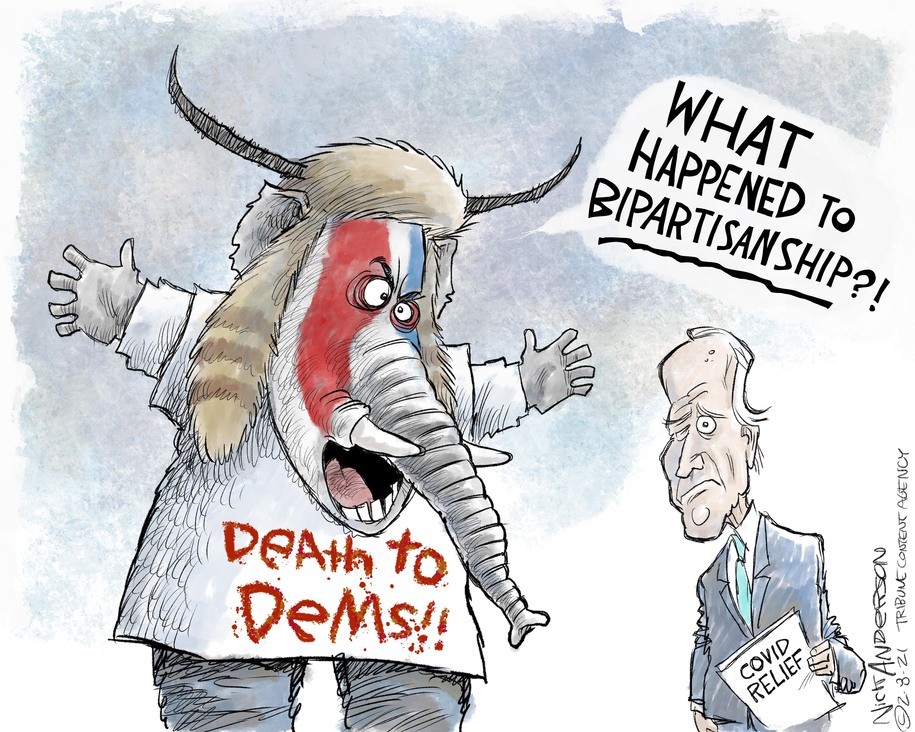
The incredibly smart politics of the Democrats' $3,600 child credit
James.galbraithgreat
In a stunningly ambitious and smart move, Democrats have proposed a child credit of $3,600 for children under the age of 6, and $3,000 for children up to the age of 17. The hope is to make it a permanent plan, structured as monthly payments, and would be means-tested to phase out starting at $75,000 for a single filer, and $150,000 for joint earners. Utah Sen. Mitt Romney has proposed a similar plan, increasing chances of a bipartisan agreement on the credit. (His plan even does the smart thing and sends the cash to everyone, to make things simple, and recaptures payments to high earners at tax season.)
On the policy side, this child credit would be perhaps the single most economically impactful possible action, cutting child poverty in half.
President Biden’s $1.9 trillion #CovidRelief plan includes a #ChildTaxCredit expansion that would lift 9.9 million children above/closer to the #poverty line, including 2.3 million Black kids, 4.1 million Latino kids, & 441,000 Asian American kids. https://t.co/kkOGC5TTBw
— Center on Budget (@CenterOnBudget) January 21, 2021
But here’s the thing, not only is this brilliant policy. It’s even more brilliant politics as we head into the 2022 and 2024 election cycles.
Campaign ActionAccording to the Bureau of Labor Statistics, 40% of all families have children under the age of 18, or 33.4 million families. Two-thirds of American households earn less than $75,000, and just shy of 80% make less than $150,000, meaning that a solid majority of households with children will be impacted by this credit.
Parents are getting free money.
Now picture the 2022 and 2024 campaigns—Democrats (and non-asshole Republicans) can run on delivering that money to parents. And more importantly, they can run on Republicans trying to take that money away. Campaign messaging doesn’t get simpler than this.
Conservatives have two main public arguments against the child credit. They claim that it would incentivize lower earners like single mothers from working more, as if staying home taking care of kids is inherently bad. They argue that it would blow up the deficit, which they can stuff it. Any conservative argument based on the size of the deficit is inherently bad faith until they themselves introduce legislation reversing their irresponsible tax cuts for billionaires, not to mention rein in Pentagon spending. If they want to be taken seriously as deficit hawks, they can act the part.
Both of these arguments lack substance, and really, they’re not trying. Conservatives are merely resorting to their old worn framework arguments to pretend to object on substantive grounds: There’s their old appeal to racism (“welfare mothers!”), and their claims of Democratic fiscal irresponsibility. It’s all rote and half-assed, and that’s because they don’t want to talk about their real reason for opposing the child credit—a child credit that would dramatically help their core, poor, rural, white constituency.
In short, Republicans don’t want voters to have to chose between them and $3,000-3,600 per year, per child. That’s a choice that will cause even the most brain-addled QAnon conspiracy theorist to think twice when voting. And given a base that is largely exiting the electorate (they are old and dying off), Republicans can’t afford to lose more ground among younger generations of white voters.
For traditionally low-performing core Democratic constituencies like Black and Latinos, it’s no longer a question of “what have you done for me lately” that breeds voter non-performance and apathy. It’s clear what’s at stake: monthly checks for parents. It can also help blunt any lasting Republican gains among these voters.
If played right, the child tax credit could be the issue for 2022, just like health care dominated the 2018 campaign and led to a Democratic wave election. If Democrats want to buck the traditional losses suffered by the party in the White House in its first midterm, it’ll need to be on the offensive. Pointing to Rep. Marjorie Taylor Greene won’t get people excited to vote for Democrats. Pointing to free money will.
Of course, Democrats being Democrats, they don’t have this quite right. They insist on means-testing it at the source, meaning high earners won’t get a check. Problem is, the IRS doesn’t know if you are a high earner this year. Maybe you were killing it until the pandemic crushed your business. Or you bucked the macro trends and had a gangbuster year amidst an economic calamity. The IRS only knows what happened in 2019.
And even after taxes are filed this year, and the IRS has a more updated picture, it won’t know if you had a new baby or adopted a child until next year. Meanwhile, people’s financial situation will continue to shift irrespective of the tax filing schedule. Meanwhile, the overworked IRS would have yet another administrative headache after years of being starved for funding. And you know what happens when people don’t get their check, or it’s the wrong size? People get angry, undercutting the policy side, yes, but also the political benefits.
Simplicity works in messaging. Send everyone a child credit. If someone makes too much money, claw it back during tax season. Set the income threshold high so that if someone gets an overpayment they don’t really notice it. If they notice it, the threshold is too low. And then create a robust safe harbor for edge cases to avoid the sort of debt collection nightmares seen in other countries, as documented in this Twitter thread.
“There is something symbolically important about this being a universal child benefit,” said Sam Hammond, a policy expert at the conservative Niskanen Center who wrote Romney’s plan. “Overall, Neal’s plan would be, unequivocally, a massive win against child poverty. But it could do more to clean up the administrative complexity of the current system by making the payment universal.”
(To be clear, the Romney proposal eliminates other poverty programs like the Earned Income Tax Credit, so I’m not advocating for it, just the part that eliminates means testing up front.)
Still, even if the complicated and cumbersome means testing survives, this child credit is a stunning validation of Democratic governance, delivering real tangible benefits to the people who put their faith and money and blood, sweat, and tears into the last two election cycles. And they’re setting themselves up nicely for the next two election cycles.
Because we might wish that voters voted on Q craziness, or climate change, or immigration reform, or social justice, or any of the other myriad issues that drive our activism here at Daily Kos. But in the end, Democrats will get far more traction by merely sending them a check in the mail.
Oh, and Donald Trump set the precedent: Put Joe Biden’s name on them, really big.