The application deadline for ATPESC 2024 has been extended to March 10.
This year's program will be held July 28-August 9, 2024. Doctoral students, postdocs, and scientists interested in conducting computational science and engineering research on large-scale computers are encouraged to apply. More information and application instructions may be found at: http://extremecomputingtraining.anl.gov
SINGULAR (mixing metaphors--so sue me) deepdive into a giant slice of the US deepstate in its ascendant and deeply-{criminal, evil} period c1945-c1991. Very Excellent funny /and/ informative 56:35. You. Must. Listen.
Blowback’s Noah Kulwin joins Will in talking to filmmakers Christian Hansen and Zachary Treitz about their new Netflix series “American Conspiracy: The Octopus Murders”. Centered around the mysterious death of journalist Danny Casolaro, the sprawling story eventually touches on everything from spy software, the CIA, Native American Reservations, the mob, Iran-Contra, rail guns, and more.
Catch American Conspiracy: The Octopus Murders streaming now on Netflix.
pullquote: > part of the blame for this extreme ignorance can be laid at the doorstep of the media. They routinely refer to spending amounts in [billions] of dollars, sums that are meaningless to almost everyone who sees them. It would be a very simple matter to refer to these numbers as shares of the budget. For example, the $60 billion proposal current on the table is equal to approximately 0.9 percent of this year’s budget. If the media routinely reported budget numbers in a way that provided some context, it is less likely that we would find that the vast majority of the public overstates [government spending] by an order of magnitude.
The Washington Post had a news quiz that included the results of a survey showing how much money people thought we had given to Ukraine. What is striking is not just that people were wrong, but rather they were insanely wrong. (Post readers thankfully did considerably better than the people responding to the poll.)
The first question asked people how much aid we gave to Ukraine measured as a share of GDP. The correct number is around 0.5 percent of GDP, or $140 billion. (I haven’t tried to add it up carefully, so I am taking the Post at its word here.) According to the Post, 46 percent of people answered that we had spent close to 10 percent of GDP, which would come to $2.8 trillion. The piece reported that 23 percent answered that we spent an amount that was more than 20 percent of GDP, or $5.6 trillion.
The second number asked how Ukraine spending compared to Social Security spending. Forty two percent said we spend about the same on Ukraine as on Social Security and 28 percent said 18 times more. We spend roughly $1.4 trillion a year on Social Security, which means that over the last two years we have spent close to 20 times as much on Social Security as on Ukraine.
No one can expect the average person to know with any precision how much money the government is spending on Ukraine or anything else. People have jobs. They don’t have time to go digging through budget documents to figure out where the government’s money is going. But we might expect that they would be somewhere in the ballpark, maybe off by a factor of two or three, but not a factor of 20 or 40.
If people believe that we are spending twenty times as much on Ukraine as is actually the case, what does it mean when they say they are opposed to aiding Ukraine? Are they opposed to giving Ukraine the amount of money that is actually on the table or are they opposing giving an amount that is twenty times as large, which absolutely no one is proposing?
Part of this story is that the politicians opposed to aiding Ukraine have reason to lie about the money being spent. To advance their case they would like people to believe that the money going to Ukraine is preventing the government from spending money on popular domestic items. For this reason, they are happy to talk about Ukraine aid as though it is twenty or even forty times larger than is actually the case.
However, part of the blame for this extreme ignorance can be laid at the doorstep of the media. They routinely refer to spending amounts in the billions or tens of billions of dollars, sums that are meaningless to almost everyone who sees them.
It would be a very simple matter to refer to these numbers as shares of the budget. For example, the $60 billion proposal current on the table is equal to approximately 0.9 percent of this year’s budget. If the media routinely reported budget numbers in a way that provided some context, it is less likely that we would find that the vast majority of the public overstates spending on Ukraine or other items by an order of magnitude.
For what it’s worth, people in the media do recognize this problem. However, for some reason they refuse to do anything to address it. I will also add that there are entirely legitimate reasons that people may oppose aid to Ukraine, however being 10 percent of GDP is not one of them.
excellent (except for the pre- and post-episode Acast ads, but, hey, it's a free feed)
On Friday, Israel’s Prime Minister Benjamin Netanyahu announced plans for a ground invasion of Rafah, where at least 1.3 million Palestinians are sheltering; the vast majority are refugees who have fled their homes. Israel’s most recent bombardments on Rafah have killed at least 14 people in a set of strikes on Thursday and upward of 100 on Monday. This week on Intercepted, guest host Sharif Abdel Kouddous — a contributing writer for The Intercept — and Tareq Baconi discuss Israel’s latest assault on Gaza, the history of Palestine, and prospects for the future. Baconi is the president of the board of Al-Shabaka: The Palestinian Policy Network, a former senior analyst for the International Crisis Group on Israel/Palestine, and author of “Hamas Contained: The Rise and Pacification of Palestinian Resistance.”
If you’d like to support our work, go to theintercept.com/give, where your donation, no matter what the amount, makes a real difference.
And if you haven’t already, please subscribe to the show so you can hear it every week. And please go and leave us a rating or a review — it helps people find the show. If you want to give us additional feedback, email us at Podcasts@theintercept.com.
Only Ciarán+Nick, but they're in fine form. Show notes do not do this ep justice, as Our Boys cover topics including (in ~order of presentation):
* Russian antiwoke comedy GOTV PSA * France wine theft * European Parliament bans Amazon lobbyist for Amazon being too evil * German politicians and corporate-funded media vs Palestine, again: the Berlinale edition (but also much back coverage of the German scumbag Zionists, anti-Deutsch, and Greens involved) * more Macron insanity: strategic ambiguity and EU militarism vs Russia (with a French side-hustle/intervention in ... Armenia! sure to go well :-) * the latest (and even more depressing) news outta Eurovision 2024 (spoiler--the boycott is still on)
Live from Gay Liberator Street 69 we talk about Eurovision, Berlinale and Macron's strategic ambiguity plans
Krystal and Saagar discuss SCOTUS 9-0 ruling in Trump's favor on ballot access, Kamala gaslights on ceasefire, US airdrops Gaza aid, women and non-whites shift to Trump, Biden terrified of college campus events, Nikki wins DC primary as uncommitted looms, Biden's favorite CNN anchor trashes his Gaza policy, NYT chaos after Oct 7 report debunked, flour massacre evidence disproves Israel lies, Elon sues Sam Altman in AI dispute.
Yet another Radio 4 comedy gameshow extruded by the BBC light-entertainment machinery, but oh-so-competently amusing and well worth your half-hour.
Frank & guests Simon Evans, Jessica Fostekew, Amy Gledhill and Ahir Shah find out what you think about mead, Poirot and a stinky brontosaurus.
This is the panel game based on what we all sit down and do at least once a day – shop online and leave a review, as an all-star panel celebrate the good, the bad & the baffling.
Everyone has an online life, and when the great British public put pen to keyboard to leave a review, they almost always write something hilarious. And our all-star panel have to work out just what they were reviewing – and maybe contribute a few reviews of their own... and more... So if you’re the person who went on Trip Advisor to review Ben Nevis as “Very steep and too high”, this show salutes you!
Written by Frank Skinner, Catherine Brinkworth, Sarah Dempster, Jason Hazeley, Rajiv Karia, Karl Minns, Katie Sayer & Peter Tellouche
Devised by Jason Hazeley and Simon Evans with the producer David Tyler
another EXCELLENT global Week in Review from Davison and Bessner
Danny and Derek work on leap days. This week: in Gaza, a massacre in Gaza City (0:29), ceasefire talks (5:20), and Netanyahu’s postwar plan (8:35); the U.S. and U.K. launch more joint airstrikes against Yemen (10:25); North Korea trades arms for food with Russia (11:54); in Sudan, military groups block aid shipments to Darfur (14:13); a new date is set for a presidential election in Senegal (15:58); a Ukraine War update (19:04); Sweden’s NATO accession is finally ratified (26:08); Colombia reopens talks with the ELN (28:29); NORAD intercepts a new balloon (29:55).
interesting, bit thin but waaay better than last week's IOT
Melvyn Bragg and guests discuss the Hanseatic League or Hansa which dominated North European trade in the medieval period. With a trading network that stretched from Iceland to Novgorod via London and Bruges, these German-speaking Hansa merchants benefitted from tax exemptions and monopolies. Over time, the Hansa became immensely influential as rulers felt the need to treat it well. Kings and princes sometimes relied on loans from the Hansa to finance their wars and an embargo by the Hansa could lead to famine. Eventually, though, the Hansa went into decline with the rise in the nation state’s power, greater competition from other merchants and the development of trade across the Atlantic.
With
Justyna Wubs-Mrozewicz
Associate Professor of Medieval History at the University of Amsterdam
Georg Christ
Senior Lecturer in Medieval and Early Modern History at the University of Manchester
And
Sheilagh Ogilvie
Chichele Professor of Economic History at All Souls College, University of Oxford
Producer: Victoria Brignell
Reading list:
James S. Amelang and Siegfried Beer, Public Power in Europe: Studies in Historical Transformations (Plus-Pisa University Press, 2006), especially `Trade and Politics in the Medieval Baltic: English Merchants and England’s Relations to the Hanseatic League 1370–1437`
Nicholas R. Amor, Late Medieval Ipswich: Trade and Industry (Boydell & Brewer, 2011)
B. Ayers, The German Ocean: Medieval Europe around the North Sea (Equinox, 2016)
H. Brand and P. Brood, The German Hanse in Past & Present Europe: A medieval league as a model for modern interregional cooperation? (Castel International Publishers, 2007)
Wendy R. Childs, The Trade and Shipping of Hull, 1300-1500 (East Yorkshire Local History Society, 1990)
Alexander Cowan, Hanseatic League: Oxford Bibliographies (Oxford University Press, 2010)
Philippe Dollinger, The German Hansa (Macmillan, 1970)
John D. Fudge, Cargoes, Embargoes and Emissaries: The Commercial and Political Interaction of England and the German Hanse, 1450-1510 (University of Toronto Press, 1995)
Donald J. Harreld, A Companion to the Hanseatic League (Brill, 2015)
T.H. Lloyd, England and the German Hanse, 1157 – 1611: A Study of their Trade and Commercial Diplomacy (first published 1991; Cambridge University Press, 2002)
Giampiero Nigro (ed.), Maritime networks as a factor in European integration (Fondazione Istituto Internazionale Di Storia Economica “F. Datini” Prato, University of Firenze, 2019), especially ‘Maritime Networks and Premodern Conflict Management on Multiple Levels. The Example of Danzig and the Giese Family’ by Justyna Wubs-Mrozewicz
Sheilagh Ogilvie, Institutions and European Trade: Merchant Guilds, 1000-1800 (Cambridge University Press, 2011)
Paul Richards (ed.), Six Essays in Hanseatic History (Poppyland Publishing, 2017)
Paul Richards, King’s Lynn and The German Hanse 1250-1550: A Study in Anglo-German Medieval Trade and Politics (Poppyland Publishing, 2022)
Stephen H. Rigby, The Overseas Trade of Boston, 1279-1548 (Böhlau Verlag, 2023)
Justyna Wubs-Mrozewicz and Stuart Jenks (eds.), The Hanse in Medieval & Early Modern Europe (Brill, 2012)
Justyna Wubs-Mrozewicz, ‘The late medieval and early modern Hanse as an institution of conflict management’ (Continuity and Change 32/1, Cambridge University Press, 2017)
yet another way US corporate-funded media is saturated with /out/ Zionists
These days, Wolf Blitzer is famous as a primetime anchor on CNN’s “The Situation Room.” Decades ago, however, when Blitzer was far less known, the founder and longtime director of the controversial America Israel Public Affairs Committee, or AIPAC, said that he and Blitzer had “a very close and intimate friendship.” The pro-Israel lobbyist called Blitzer “one of my proteges.” The relationship apparently led Blitzer to, early in his career, work simultaneously as a journalist and an advocate doing what amounted to propaganda. By the standards of today’s journalism ethics, the two jobs would raise serious questions.
One of the jobs, during the 1970s, was as Washington correspondent for the Jerusalem Post, an independent newspaper in Israel. The other was editing publications that were joined at the hip with AIPAC. The Israeli government reportedly used Blitzer’s two hats to launch a stealth attack on Breira, an American Jewish group that had recently gained fame for criticizing Israel’s mistreatment of Palestinians; Breira folded soon after. One historian has linked its demise to AIPAC’s subsequent pressure to quash critical American discussion about Israeli policy. Blitzer’s dual roles suggest that he helped to stifle the conversation.
Asked about the propriety of covering the Middle East during the 1970s as a reporter for independent media, and simultaneously working for a man famous as a leader of AIPAC and lobbyist for the Israeli government, CNN spokesperson Dylan-Rose Geerlings wrote in an email, “In the 1970s as a young journalist in his 20s, Wolf reported extensively on the Middle East. Wolf is very proud of his reporting from that time and throughout his long and distinguished career.”
“Wolf’s work as an editor for ‘The Near East Report’ and ‘Myths and Facts’ nearly 50 years ago is not new information,” Geerlings said. “The Jerusalem Post, his employer at the time, knew of and approved of Wolf taking on the additional role.”
Zvika Klein, the editor-in-chief of the Jerusalem Post, said, “The Jerusalem Post is now owned by a different company and the previous editor in chief whom I’ve asked had no recollection of this issue.”
The two AIPAC-linked publications that Blitzer worked for were the weekly Near East Report and the occasional booklet “Myths and Facts: A Concise Record of the Arab-Israeli Conflict.” Both were started and run for years by Isaiah L. “Si” Kenen, a famous lobbyist and diplomat for Israel, and AIPAC’s founder and longtime director until he stepped down from its leadership in early 1975.
By the time Kenen retired from AIPAC, Blitzer had been working for two years for the Jerusalem Post. He was also associate editor at the Near East Report while Kenen was still publishing it. Meanwhile, AIPAC’s new executive director, Morris Amitay, was a contributing editor. And even after retiring from AIPAC, Kenen was still helping the group to distribute Near East Report to AIPAC’s thousands of members and to public officials.
Kenen loved Blitzer. In a letter he wrote to an editor at the Jewish Chronicle, in London, Kenen agreed to report on Washington for the Chronicle, and added that he wanted to do the work with help from Blitzer. After describing how close he and Blitzer were and how Blitzer was his protege, Kenen suggested that the two could produce articles as a team. “In fact,” Kenen wrote, he and Blitzer “could go to work together frequently and I would be the beneficiary of his expert reporting.”
In 1976, Blitzer took over full editorship of the Near East Report. He would hold that post for two years. He also was editor of the 1976 “Myths and Facts” —also a Kenen product. Among the items that Blitzer’s edition listed as “myths”: “Acquisition of territory by force is inadmissible,” and “Israel has no right to hold on to the Golan Heights” — both propositions that run athwart of the premise of international law, and its specific application by the U.N. to the Arab–Israeli conflict.
The 1976 issue of “Myths and Facts” edited by Blitzer has a cover that illustrates the dubious contentions. It shows a map of the Middle East and North Africa in red. Israel stands apart in bold white, with an outline that encompasses the Egyptian Sinai, Syrian Golan Heights, and Palestinian territories of the West Bank, Gaza Strip, and East Jerusalem, which had been occupied by Israel in 1967. At the time of Blitzer’s magazine cover, all of those territories were seeing Israeli settlement activity in contravention of international law.
The 1976 edition of “Myths and Facts,” edited by Wolf Blitzer, showing an outline of Israel that includes the territories it seized by force in 1967, including the Egyptian Sinai, Syrian Golan Heights, as well as the Palestinian West Bank, Gaza Strip, and East Jerusalem. The publication contended that the seizure of territory by force was legitimate, a claim that runs contrary to the foundations of international law.
The latter claim implied tacit endorsement of the Zionist religious right’s goal to annex the territories that Israel had occupied in the 1967 Arab–Israeli war. “Myths and Facts,” under Blitzer’s editorship, further argued that Israel couldn’t relinquish the Golan Heights because it was “an area crucial for the safety of Israel’s settlements.”
Near East Report, still edited by Blitzer in 1977, ran a lengthy article defending the legality of the West Bank settlements, which are considered illegal by international law and every country in the world apart from Israel and the U.S. (The latter shifted to this stance during the Trump administration.)
Another piece, with a decidedly celebratory tone, noted that a Dallas evangelical pastor, a past president of the Southern Baptist Convention, presented Israel with a scroll proclaiming strong support from the U.S. evangelical Christian community for Israel. According to the article, the pastor said that his support was “fulfilling God’s teachings, which promised the Land of Israel to the Jewish people.”
Blitzer left Near East Report at the end of 1977. Later, in 1985, he authored a book based on his Middle East journalism, “Between Washington to Jerusalem: A Reporter’s Notebook.” It opens with a veritable resume of the venues where he had worked or been published: from the Jerusalem Post to the New York Times to the Jewish Chronicle, and many more. But the book never mentions his AIPAC-related work. It does approvingly quote a former AIPAC functionary who called the organization “sexy.”
mostly excellent: Barghouti is a bit (though not overly) too PA-friendly (and Scahill pushes back), but quite fair to {Muslim Brotherhood, Hamas, al-Qassem}
The Israeli government is on the brink of a long-feared military offensive against the town of Rafah, where more than 1 million Palestinian civilians have taken shelter from the Israeli campaign in Gaza. An attack on Rafah could trigger the worst humanitarian catastrophe of the war so far, including a potential ethnic cleansing of Gaza as Palestinians are pushed into Egypt. This week on Intercepted, hosts Jeremy Scahill and Murtaza Hussain discuss the current state of the war as well as the ongoing Palestinian campaign for political unity with Dr. Mustafa Barghouti, a physician and general secretary of the Palestinian National Initiative. Barghouti speaks about the current humanitarian crisis in Gaza, the role of the U.S. in facilitating the war, and his own political future and that of the Palestinian national movement in the wake of this crisis.
If you’d like to support our work, go to theintercept.com/give, where your donation, no matter what the amount, makes a real difference.
And if you haven’t already, please subscribe to the show so you can hear it every week. And please go and leave us a rating or a review — it helps people find the show. If you want to give us additional feedback, email us at Podcasts@theintercept.com.
VERY EXCELLENT analysis from Mohammed Elnaiem @ (UK) Decolonial Centre, inc
* colonial esp Zionist narratives in {Western, global NATO} media supporting Israel’s 'livestreamed genocide' * importance of Namibia's confrontation of Germany-Israel alliance: BRD announced its support of Israel's genocide defense at ICJ on the same day that Namibia (but not BRD) observes annual day of mourning for the 1st 20th-century genocide (1904-1908) committed by Imperial Germany in "German South West Africa," doing extermination and collective punishment campaigns against the Herero and Nama people very similar to (though less technologically-sophisticated than) what the global Zionist alliance (US, Israel, UK, BRD, etc) {has done, continues to do} in Palestine 1917-2024. * notes Aimé Césaire's prescient analysis (in his [Discourse on Colonialism](https://en.wikipedia.org/wiki/Discourse_on_Colonialism)) that "Westerner's" /real/, underlying objection to the Nazi Holocaust was that it applied by-then-traditional colonial methods, which global NATO accepts when applied to impoverished people in the "global South," to white Europeans in the metropole. (Césaire should have added that global NATO also did not then, and does not now, object to the Nazis 1st application of genocidal terror, which was to white Europeans who were socialists and especially Communists.)
The U.S.-backed Israeli war on Gaza is entering its fifth month. As the brutal siege and bombing continues, the United Nations and other international organizations are warning of famine and the outbreak of diseases. Powerful nations around the world, led by the U.S., are not just supplying weapons and political support for Israel, but also have now joined in the campaign to further restrict vital humanitarian aid to Gaza. The Biden administration has led the charge to suspend funding to the United Nations Relief and Works Agency for Palestine Refugees in the Near East, the most important aid organization operating in Gaza. Israel has waged a smear campaign against UNRWA, baselessly characterizing the whole organization as a front group for Hamas. What began as an accusation that a few UNRWA employees may have participated in the October 7 attacks has now become a sweeping attack against the organization’s very existence.
This week on Intercepted, Jeremy Scahill is joined by Mohammed Elnaiem, a political educator and director of the Decolonial Centre in London. Elnaiem discusses the ways pro-colonial narratives provide support to Israel’s onslaught on Gaza, despite people around the world watching a “livestreamed genocide.” He also breaks down the major imperial powers’ role in the conflict, connecting the historical thread of colonialism to the current war.
If you’d like to support our work, go to theintercept.com/give, where your donation, no matter what the amount, makes a real difference.
And if you haven’t already, please subscribe to the show so you can hear it every week. And please go and leave us a rating or a review — it helps people find the show. If you want to give us additional feedback, email us at Podcasts@theintercept.com.
Sweet Palma aka Max stops by to discuss El Salvador and their epic bitcoin president Nayib Bukele. Palma takes us on a humorous and harrowing tour of the recent history of El Salvador, the development of their parties, and the issues that animate Salvadorans, as well as what Bukele’s Whole Thing can illustrate of current political trends. We also touch on recent developments around Israel/Gaza, Trump’s claims about languages “no one’s ever heard”, and Meek Mill’s mastery of crisis PR.
Support Palma and the whole Seeking Derangements crew over at https://www.patreon.com/seekingderangements
In this episode James Klagge discusses the life and times of Ludwig Wittgenstein with David Edmonds. This is part of our mini series on the biographies of philosophers, Bio Bites.
'Screams Without Words' == lies without accountability
Anat Schwartz had a problem. The Israeli filmmaker and former air force intelligence official had been assigned by the New York Times to work with her partner’s nephew Adam Sella and veteran Times reporter Jeffrey Gettleman on an investigation into sexual violence by Hamas on October 7 that could reshape the way the world understood Israel’s ongoing war in the Gaza Strip. By November, global opposition was mounting against Israel’s military campaign, which had already killed thousands of children, women, and the elderly. On her social media feed, which the Times has since said it is reviewing, Schwartz liked a tweet saying that Israel needed to “turn the strip into a slaughterhouse.”
“Violate any norm, on the way to victory,” read the post. “Those in front of us are human animals who do not hesitate to violate minimal rules.”
The New York Times, however, does have rules and norms. Schwartz had no prior reporting experience. Her reporting partner Gettleman explained the basics to her, Schwartz said in a podcastinterview on January 3, produced by Israel’s Channel 12 and conducted in Hebrew.
Gettleman, she said, was concerned they “get at least two sources for every detail we put into the article, cross-check information. Do we have forensic evidence? Do we have visual evidence? Apart from telling our reader ‘this happened,’ what can we say? Can we tell what happened to whom?”
Schwartz said she was initially reluctant to take the assignment because she did not want to look at visual images of potential assaults and because she lacked the expertise to conduct such an investigation.
“Victims of sexual assault are women who have experienced something, and then to come and sit in front of such a woman — who am I anyway?” she said. “I have no qualifications.”
Nonetheless, she began working with Gettleman on the story, she explained in the podcast interview. Gettleman, a Pulitzer Prize-winning reporter, is an international correspondent, and when he is sent to a bureau, he works with news assistants and freelancers on stories. In this case, several newsroom sources familiar with the process said, Schwartz and Sella did the vast majority of the ground reporting, while Gettleman focused on the framing and writing.
The resulting report, published in late December, was headlined “‘Screams Without Words’: How Hamas Weaponized Sexual Violence on Oct. 7.” It was a bombshell and galvanized the Israeli war effort at a time when even some of Israel’s allies were expressing concern over its large-scale killing of civilians in Gaza. Inside the newsroom, the article was met with praise from editorial leaders but skepticism from other Times journalists. The paper’s flagship podcast “The Daily” attempted to turn the article into an episode, but it didn’t manage to get through a fact check, as The Intercept previously reported. (In a statement received after publication, a Times spokesperson said, “No Daily episode was killed due to fact checking failures.”)
The fear among Times staffers who have been critical of the paper’s Gaza coverage is that Schwartz will become a scapegoat for what is a much deeper failure. She may harbor animosity toward Palestinians, lack the experience with investigative journalism, and feel conflicting pressures between being a supporter of Israel’s war effort and a Times reporter, but Schwartz did not commission herself and Sella to report one of the most consequential stories of the war. Senior leadership at the New York Times did.
Schwartz said as much in an interview with Israeli Army Radio on December 31. “The New York Times said, ‘Let’s do an investigation into sexual violence’ — it was more a case of them having to convince me,” she said. Her host cut her off: “It was a proposal of The New York Times, the entire thing?”
“Unequivocally. Unequivocally. Obviously. Of course,” she said. “The paper stood behind us 200 percent and gave us the time, the investment, the resources to go in-depth with this investigation as much as needed.”
Shortly after the war broke out, some editors and reporters complained that Times standards barred them from referring to Hamas as “terrorists.” The rationale from the standards department, run for 14 years by Philip Corbett, had long been that Hamas was the de facto administrator of a specific territory, rather than a stateless terror group. Deliberately killing civilians, went the argument, was not enough to label a group terrorists, as that label could apply quite broadly.
Corbett, after October 7, defended the policy in the face of pressure, newsroom sources said, but he lost. On October 19, an email went out on behalf of Executive Editor Joe Kahn saying that Corbett had asked to step back from his position. “After 14 years as the embodiment of Times standards, Phil Corbett has told us he’d like to step back a bit and let someone else take the leading role in this crucial effort,” Times leadership explained. Three newsroom sources said the move was tied to the pressure he was under to soften coverage in Israel’s favor. One of the social media posts that Schwartz liked, triggering the Times review, made the case that, for Israeli propaganda purposes, Hamas should be likened at all times to the Islamic State. A Times spokesperson told The Intercept, “Your understanding about Phil Corbett is flatly untrue.” In a statement received after publication, “Phil had asked to change roles before Joe Kahn even became executive editor in June 2022. And it had absolutely nothing to do with a dispute over coverage.”
Since the revelations regarding Schwartz’s recent social media activity, her byline has not appeared in the paper and she has not attended editorial meetings. The paper said that a review into her social media “likes” is ongoing. “Those ‘likes’’ are unacceptable violations of our company policy,” said a Times spokesperson.
The bigger scandal may be the reporting itself, the process that allowed it into print, and the life-altering impact the reporting had for thousands of Palestinians whose deaths were justified by the alleged systematic sexual violence orchestrated by Hamas the paper claimed to have exposed.
Another frustrated Times reporter who has also worked as an editor there said, “A lot of focus will understandably, rightfully, be directed at Schwartz but this is most clearly poor editorial decision making that undermines all the other great work being tirelessly done across the paper — both related and completely unrelated to the war — that manages to challenge our readers and meet our standards.”
“A lot of focus will understandably, rightfully, be directed at Schwartz but this is most clearly poor editorial decision.”
The Channel 12 podcast interview with Schwartz, which The Intercept translated from Hebrew, opens a window into the reporting process on the controversial story and suggests that The New York Times’s mission was to bolster a predetermined narrative.
In a response to The Intercept’s questions about Schwartz’s podcast interview, a spokesperson for the New York Times walked back the blockbuster article’s framing that evidence shows Hamas had weaponized sexual violence to a softer claim that “there may have been systematic use of sexual assault.”
Times International editor Phil Pan said in a statement that he stands by the work. “Ms. Schwartz was part of a rigorous reporting and editing process,” he said. “She made valuable contributions and we saw no evidence of bias in her work. We remain confident in the accuracy of our reporting and stand by the team’s investigation. But as we have said, her ‘likes’ of offensive and opinionated social media posts, predating her work with us, are unacceptable.”
After this story was published, Schwartz, who did not respond to a request for comment, tweeted to thank the Times for “standing behind the important stories we have published.” She added, “The recent attacks against me will not deter me from continuing my work.” Addressing her social media activity, Schwartz said, “I understand why people who do not know me were offended by the inadvertent ‘like’ I pressed on 10/7 and I apologize for that.” At least three of her “likes” have been the subject of public scrutiny.
In the podcast interview, Schwartz details her extensive efforts to get confirmation from Israeli hospitals, rape crisis centers, trauma recovery facilities, and sex assault hotlines in Israel, as well as her inability to get a single confirmation from any of them. “She was told there had been no complaints made of sexual assaults,” the Times spokesperson acknowledged after The Intercept brought the Channel 12 podcast episode to the paper’s attention. “This however was just the very first step of her research. She then describes the unfolding of evidence, testimonies, and eventual evidence that there may have been systematic use of sexual assault,” the spokesperson asserted. “She details her research steps and emphasizes the Times’s strict standards to corroborate evidence, and meetings with reporters and editors to discuss probing questions and think critically about the story.”
The question has never been whether individual acts of sexual assault may have occurred on October 7. Rape is not uncommon in war, and there were also several hundred civilians who poured into Israel from Gaza that day in a “second wave,” contributing to and participating in the mayhem and violence. The central issue is whether the New York Times presented solid evidence to support its claim that there were newly reported details “establishing that the attacks against women were not isolated events but part of a broader pattern of gender-based violence on Oct. 7” — a claim stated in the headline that Hamas deliberately deployed sexual violence as a weapon of war.
Israel reservists search for evidence and human remains in Kibbutz Be’eri, southern Israel, on Feb. 21, 2024.
Photo: Ohad Zwigenberg/AP
Schwartz began her work on the violence of October 7 where one would expect, by calling around to the designated “Room 4” facilities in 11 Israeli hospitals that examine and treat potential victims of sexual violence, including rape. “First thing I called them all, and they told me, ‘No, no complaint of sexual assault was received,’” she recalled in the podcast interview. “I had a lot of interviews which didn’t lead anywhere. Like, I would go to all kinds of psychiatric hospitals, sit in front of the staff, all of them are fully committed to the mission and no one had met a victim of sexual assault.”
The next step was to call the manager of the sexual assault hotline in Israel’s south, which proved equally fruitless. The manager told her they had no reports of sexual violence. She described the call as a “crazy in-depth conversation” where she pressed for specific cases. “Did anyone call you? Did you hear anything?” she recalled asking. “How could it be that you didn’t?”
As Schwartz began her own efforts to find evidence of sexual assault, the first specific allegations of rape began to emerge. A person identified in anonymous media interviews as a paramedic from the Israeli Air Force medical unit 669 claimed he saw evidence that two teenage girls at Kibbutz Nahal Oz had been raped and murdered in their bedroom. The man made other outrageous claims, however, that called his report into question. He claimed another rescuer “pulled out of the garbage” a baby who’d been stabbed multiple times. He also said he had seen “Arabic sentences that were written on entrances to houses … with the blood of the people that were living in the houses.” No such messages exist, and the story of the baby in the trash can has been debunked. The bigger problem was that no two girls at the kibbutz fit the source’s description. In future interviews, he changed the location to Kibbutz Be’eri. But no victims killed there matched the description either, as Mondoweiss reported.
After seeing these interviews, Schwartz started calling people at Kibbutz Be’eri and other kibbutzim that were targeted on October 7 in an effort to track down the story. “Nothing. There was nothing,” she said. “No one saw or heard anything.” She then reached the unit 669 paramedic who relayed to Schwartz the same story he had told other media outlets, which she says convinced her there was a systematic nature to the sexual violence. “I say, ‘OK, so it happened, one person saw it happen in Be’eri, so it can’t be just one person, because it’s two girls. It’s sisters. It’s in the room. Something about it is systematic, something about it feels to me that it’s not random,” Schwartz concluded on the podcast.
Schwartz said she then began a series of extensive conversations with Israeli officials from Zaka, a private ultra-Orthodox rescue organization that has been documented to have mishandled evidence and spread multiple false stories about the events of October 7, including debunked allegations of Hamas operatives beheading babies and cutting the fetus from a pregnant woman’s body. Its workers are not trained forensic scientists or crime scene experts. “When we go into a house, we use our imagination,” said Yossi Landau, a senior Zaka official, describing the group’s work at the October 7 attack sites. “The bodies were telling us what happened, that’s what happened.” Landau is featured in the Times report, though no mention is made of his well-documented track record of disseminating sensational stories of atrocities that were later proven false. Schwartz said that in her initial interviews, Zaka members did not make any specific allegations of rape, but described the general condition of bodies they said they saw. “They told me, ‘Yes, we saw naked women,’ or ‘We saw a woman without underwear.’ Both naked without underwear, and tied with zip ties. And sometimes not zip ties, sometimes a rope or a string of a hoodie.”
Schwartz continued to look for evidence at various sites of attack and found no witnesses to corroborate stories of rape. “And so I searched a lot in the kibbutzim, and apart from this testimony of [the Israeli military paramedic] and additionally, here and there, Zaka people — the stories, like, didn’t emerge from there,” she said.
As she continued to work the phones with rescue officials, Schwartz then saw interviews that international news channels began airing with Shari Mendes, an American architect who serves in a rabbinical unit of the Israel Defense Forces. Mendes, who was deployed to a morgue to prepare bodies for burial after the October 7 attacks, claimed to have seen voluminous evidence of sexual assaults.
“We saw evidence of rape,” Mendes stated in oneinterview. “Pelvises were broken, and it probably takes a lot to break a pelvis … and this was also among grandmothers down to small children. This is not just something we saw on the internet, we saw these bodies with our own eyes.” Mendes has been a ubiquitous figure in the Israeligovernment and major media narratives on sexual violence on October 7, despite the fact that she hasno medical or forensic credentials to legally determine rape. She had also spoken about other violence on October 7, telling the Daily Mail in October, “A baby was cut out of a pregnant woman and beheaded and then the mother was beheaded.” No pregnant woman died that day, according to the official Israeli list of those killed in the attacks, and the independent research collective October 7 Fact Check said Mendes’s story was false.
“I kept wondering all the time, whether if I just hear about rape and see rape and think about it, whether that’s just because I’m leading toward that.”
After Schwartz saw interviews with Mendes, she was further convinced that the systematic rape narrative was true. “I’m like — wow, what is this?” she recalled. “And it feels to me like it’s starting to approach a plurality, even if you don’t know which numbers to put on it yet.”
At the same time, Schwartz said that she felt conflicted at times, wondering if she was becoming convinced of the truth of the overarching story precisely because she was looking for evidence to support the claim. “I kept wondering all the time, whether if I just hear about rape and see rape and think about it, whether that’s just because I’m leading toward that,” she said. She pushed those doubts aside. By the time Schwartz interviewed Mendes, the IDF reservist’s story had ricocheted around the world and been conclusively debunked: No baby was cut from a mother and beheaded. Yet Schwartz and the New York Times would go on to rely on Mendes’s testimony, as well as those of other witnesses with track records of making unreliable claims and lacking forensic credentials. No mention was made of questions about Mendes’s credibility.
Shari Mendes speaks during a special event to address sexual violence during October 7 Hamas terror attacks held at U.N. headquarters, on Dec. 4, 2023, in New York City.
Photo: Lev Radin/Pacific Press/LightRocket via Getty Images
How Schwartz landed in such an extraordinary position at a crucial moment in the war is not entirely clear. Prior to joining the Times as a stringer last fall, Sella was a freelance journalist covering stories on issues ranging from “food, photography, and culture to peace efforts, economics, and the occupation,” according to his LinkedIn profile. Sella’s first collaboration with Gettleman, published on October 14, was a look at the trauma experienced by students at a university in southern Israel. For Schwartz, her first byline landed on November 14.
“Israeli police officials shared more evidence on Tuesday of atrocities committed during the Oct. 7 Hamas-led attacks, saying they had collected testimonies from more than a thousand witnesses and survivors about sexual violence and other abuses,” Schwartz reported. The story went on to quote Israel’s police chief, Kobi Shabtai, explaining a litany of evidence of gruesome killings and sexual assaults on October 7.
“This is the most extensive investigation the State of Israel has ever known,” Shabtai said in the Schwartz article, promising ample evidence would soon be provided.
When the Times later produced its definitive “Screams Without Words” investigation, however, Schwartz and her partners reported that, contrary to Shabtai’s claim, forensic evidence of sexual violence was non-existent. Without acknowledging the past statements by Shabtai in the Times, the paper reported that quick funerals in accordance with Jewish tradition meant evidence was not preserved. Experts told the Times that sexual violence in wars often leaves “limited forensic evidence.”
On the podcast, Schwartz said her next step was to go to a new holistic therapy facility established to address the trauma of October 7 victims, particularly those who endured the carnage at the Nova music festival. Opened a week after the attacks, the facilitybegan welcoming hundreds of survivors where they could seek counseling, do yoga, and receive alternative medicine, as well as acupuncture, sound healing, and reflexology treatments. They called it Merhav Marpe, or Healing Space.
In multiple visits to Merhav Marpe, Schwartz again said in the podcast interview that she found no direct evidence of rapes or sexual violence. She expressed frustration with the therapists and counselors at the facility, saying they engaged in “a conspiracy of silence.” “Everyone, even those who heard these kinds of things from people, they felt very committed to their patients, or even just to people who assisted their patients, not to reveal things,” she said.
In the end, Schwartz came away with only innuendo and general statements from the therapists about how people process trauma, including sexual violence and rape. She said potential victims might be ashamed to speak out, experiencing survivors’ guilt, or were still in shock. “Perhaps also because Israeli society is conservative, there was some inclination to keep silent about this issue of sexual abuse,” Schwartz speculated. “On top of this, there is probably the added dimension of the religious-national aspect, that this was done by a terrorist, by someone from Hamas,” she added.“There were lots and lots of layers that made it so that they didn’t speak.”
According to the published Times article, “Two therapists said they were working with a woman who was gang raped at the rave and was in no condition to talk to investigators or reporters.”
Schwartz said she had focused on the kibbutzim because she had initially determined it was unlikely sexual assaults had occurred at the Nova music festival. “I was very skeptical that it happened at the area of the party, because everyone I spoke to among the survivors told me about a chase, a race, like, about moving from place to place,” she recalled. “How would they [have had the time] to mess with a woman, like — it is impossible. Either you hide, or you — or you die. Also it’s public, the Nova … such an open space.”
Israeli solders stand at the Nova music festival site, on Dec. 21, 2023, in Re’im, Israel.
Photo: Maja Hitij/Getty Images
Schwartz watched interviews given to international media outlets by Raz Cohen, who attended the Nova festival. A veteran of Israel’s special forces, Cohen did multiple interviews about a rape he claimed to have witnessed. A few days after the attacks, he told PBS NewsHour that he had witnessed multiple rapes. “The terrorists, people from Gaza, raped girls. And after they raped them, they killed them, murdered them with knives, or the opposite, killed — and after they raped, they — they did that,” he said. At an appearance on CNN on January 4, he described seeing one rape and said the assailants were “five guys — five civilians from Gaza, normal guys, not soldiers, not Nukhba,” referring to Hamas’s elite commando force. “It was regular people from Gaza with normal clothes.”
In Cohen’s interview with Schwartz for the Times:
He said he then saw five men, wearing civilian clothes, all carrying knives and one carrying a hammer, dragging a woman across the ground. She was young, naked and screaming.
‘They all gather around her,’ Mr. Cohen said. ‘She’s standing up. They start raping her. I saw the men standing in a half circle around her. One penetrates her. She screams. I still remember her voice, screams without words.”
“Then one of them raises a knife,” he said, “and they just slaughtered her.”
It was this interview that gave the Times its title: “‘Screams Without Words’: How Hamas Weaponized Sexual Violence on Oct. 7.” That Cohen had described alleged assailants as not being members of Hamas undermines the headline, but it remains unchanged. The Times did not address Cohen’s earlier claims that he witnessed multiple rapes.
Schwartz said in the podcast interview that, since the Times insisted on at least two sources, she asked Cohen to give her the contact information of the other people he was hiding with in the bush, so she could corroborate his story of the rape. She recalled, “Raz hides. In the bush next to him lies his friend Shoam. They get to this bush. There are two other people on the other side looking to the other direction, and another, fifth, person. Five people in the same bush. Only Raz sees all the things he sees, everyone else is looking in a different direction.”
Despite saying on the podcast that only Cohen witnessed the event and the others were looking in different directions, in the Times story Shoam Gueta is presented as a corroborating witness to the rape: “He said he saw at least four men step out of the van and attack the woman, who ended up ‘between their legs.’ He said that they were ‘talking, giggling and shouting,’ and that one of them stabbed her with a knife repeatedly, ‘literally butchering her.’” Gueta did not mention witnessing a rape in aninterview he did with NBC News on October 8, a day after the attack, but he did describe seeing a woman murdered with a knife. “We saw terrorists killing people, burning cars, shouting everywhere,” Gueta told NBC. “If you just say something, if you make any noise, you’ll be murdered.” Gueta subsequently deployed to Gaza with the IDF and has posted many videos on TikTok of himself rummaging through Palestinian homes. Cohen and Gueta did not respond to requests for comment.
The independent site October 7 Fact Check, Mondoweiss, and journalists Ali Abunimah of Electronic Intifada and Max Blumenthal of The Grayzone have flagged numerous inconsistencies and contradictions in the stories told in the Times report, including the account of Cohen, who had initially said “he chose not to look, but he could hear them laughing constantly.”
Under pressure internally to defend the veracity of the story, the Times reassigned Gettleman, Schwartz, and Sella to effectively re-report the story, resulting in an article published on January 29. Cohen declined to speak to them, they reported: “Asked this month why he had not mentioned rape at first, Mr. Cohen cited the stress of his experience, and said in a text message that he had not realized then that he was one of the few surviving witnesses. He declined to be interviewed again, saying he was working to recover from the trauma he suffered.”
In addition to Cohen’s testimony, Schwartz said on the Channel 12 podcast that she also watched video of an interrogation of a Palestinian prisoner taken by the IDF whom she said described “girls” being dragged by Palestinian attackers into the woods near the Nova festival. She was also moved, she said, by a clip of an interview she watched in November at a press conference hosted by Israeli officials, the one that became the focus of her first Times article.
An accountant named Sapir described a lurid scene of rape and mutilation, and Schwartz said she became fully convinced there was a systematic program of sexual violence by Hamas. “Her testimony is crazy, and hair-raising, and huge, and barbaric,” Schwartz said. “And it’s not just rape — it’s rape, and amputation, and … and I realize it’s a bigger story than I imagined, [with] many locations, and then the picture starts to emerge, What is going on here?”
The Times report states they interviewed Sapir for two hours at a cafe in southern Israel, and she described witnessing multiple rapes, including an incident where one attacker rapes a woman as another cuts off her breast with a box cutter.
At the press conference in November, Israeli authorities said they were collecting and examining forensic materials that would confirm Sapir’s specifically detailed accounts. “Police say they are still gathering evidence (DNA etc) from rape victims in addition to eyewitnesses to build the strongest case possible,” said a correspondent who covered the press event. Such a scene would produce significant amounts of physical evidence, yet Israeli officials have, to date, been unable to provide it. “I have circumstantial evidence, but in the end, it’s my duty to find supporting evidence for her story and discover the victims’ identities,” said Superintendent Adi Edri, the Israeli official leading the investigation into sexual violence on October 7, a week after the Times report went online. “At this stage, I have no specific bodies.”
In the Channel 12 podcast, Schwartz is asked if firsthand testimonies of women who survived rape on October 7 exist. “I can’t really speak about this, but the vast majority of women who have been sexually assaulted on October 7 were shot immediately after, and that’s [where] the big numbers [are],” she replied. “The majority are corpses. Some women managed to escape and survive.” She added, “I do know that there is a very significant element of dissociation when it comes to sexual assault. So a lot of times they don’t remember. They don’t remember everything. They remember fragments of the events, and they can’t always describe how they ended up on the road and [how they were] rescued.”
In early December, Israeli officials launched an intensive public campaign, accusing the international community and specifically feminist leaders of standing silent in the face of the widespread, systemic sexual violence of Hamas’s October 7 attack. The PR effort was rolled out at the United Nations on December 4, with an event hosted by the Israeli ambassador and the former Meta executive Sheryl Sandberg. The feminist organizations targeted by the pro-Israel figures were caught flat-footed, as charges of sexual violence had not yet circulated widely.
Sheryl Sandberg speaks during a special event to address sexual violence during October 7 Hamas terror attacks held at U.N. headquarters on Dec. 4, 2023, in New York City.
Photo: Lev Radin/Pacific Press/LightRocket via Getty Images
Sandberg was also quoted attacking women’s rights organizations in a December 4 New York Times article, headlined “What We Know About Sexual Violence During the Oct. 7 Attacks on Israel” and whose publication coincided with the launch of the PR campaign at the U.N. The article, also reported by Gettleman, Schwartz, and Sella, relied on claims made by Israeli officials and acknowledged the Times had not yet been able to corroborate the allegations. A revealing correction was subsequently appended to the story: “An earlier version of this article misstated the kind of evidence Israeli police have gathered in investigating accusations of sexual violence committed on Oct. 7 in the attack by Hamas against Israel. The police are relying mainly on witness testimony, not on autopsies or forensic evidence.”
Israel promised it had extraordinary amounts of eyewitness testimony. “Investigators have gathered ‘tens of thousands’ of testimonies of sexual violence committed by Hamas on Oct. 7, according to the Israeli police, including at the site of a music festival that was attacked,” Schwartz, Gettleman, and Stella reported on December 4. Those testimonies never materialized.
“I’m also an Israeli, but I also work for New York Times. So all the time I’m like in this place between the hammer and the anvil.”
Israeli Prime Minister Benjamin Netanyahu hammered on the theme in a December 5 speech in Tel Aviv. “I say to the women’s rights organizations, to the human rights organizations, you’ve heard of the rape of Israeli women, horrible atrocities, sexual mutilation? Where the hell are you?” The same day, President Joe Biden gave a speech in which hesaid, “The world can’t just look away — what’s going on. It’s on all of us — the government, international organizations, civil society, individual citizens — to forcefully condemn the sexual violence of Hamas terrorists without equivocation — without equivocation, without exception.”
The two-month-long Times investigation was still being edited and revised, Schwartz said in the podcast, when she started to feel concerned about the timing. “So I said, ‘We’re missing momentum. Maybe the U.N. isn’t addressing sexual assault because no [media outlet] will come out with a declaration about what happened there.’” If the Times story doesn’t publish soon, she said, “it may no longer be interesting.” Schwartz said the delay was explained to her internally as, “We don’t want to make people sad before Christmas.”
She also said that Israeli police sources were pressuring her to move quickly to publish. She said they asked her, “What, does the New York Times not believe there were sexual assaults here?” Schwartz felt like she was in the middle.
“I’m also in this place, I’m also an Israeli, but I also work for New York Times,” she said. “So all the time I’m like in this place between the hammer and the anvil.”
Police officers check cars that were damaged during Hamas’s attack on the Israeli south border at a collection site, on Oct. 31, 2023, in Netivot, Israel.
Photo: Amir Levy/Getty Images
The December 28 article “Screams Without Words” opened with the story of Gal Abdush, described by the Times as “the woman in the black dress.” Video of her charred body appeared to show her bottomless. “Israeli police officials said they believed that Ms. Abdush was raped,” the Times reported. The article labeled Abdush “a symbol of the horrors visited upon Israeli women and girls during the October 7 attacks.” The Times report mentions WhatsApp messages from Abdush and her husband to their family, but doesn’t mention that some family members believe that the crucial messages make the Israeli officials’ claims implausible. As Mondoweiss later reported, Abdush texted the family at 6:51 a.m., saying they were in trouble at the border. At 7:00, her husband messaged to say she’d been killed. Her family said the charring came from a grenade.
“It doesn’t make any sense,”said Abdush’s sister, that in a short timespan “they raped her, slaughtered her, and burned her?” Speaking about the rape allegation, her brother-in-law said: “The media invented it.”
Another relative suggested the family was pressured, under false pretenses, to speak with the reporters. Abdush’s sister wrote on Instagram that the Times reporters “mentioned they want to write a report in memory of Gal, and that’s it. If we knew that the title would be about rape and butchery, we’d never accept that.” In its follow-up story, the Times sought to discredit her initial comment, quoting Abdush’s sister as saying she “had been ‘confused about what happened’ and was trying to ‘protect my sister.’”
The woman who filmed Abdush on October 7 told the Israeli site YNet that Schwartz and Sella had pressured her into giving the paper access to her photos and videos for the purposes of serving Israeli propaganda. “They called me again and again and explained how important it is to Israeli hasbara,” she recalled, using the term for public diplomacy, which in practice refers to Israeli propaganda efforts directed at international audiences.
At every turn, when the New York Times reporters ran into obstacles confirming tips, they turned to anonymous Israeli officials or witnesses who’d already been interviewed repeatedly in the press. Months after setting off on their assignment, the reporters found themselves exactly where they had begun, relying overwhelmingly on the word of Israeli officials, soldiers, and Zaka workers to substantiate their claim that more than 30 bodies of women and girls were discovered with signs of sexual abuse. On the Channel 12 podcast, Schwartz said the last remaining piece she needed for the story was a solid number from the Israeli authorities about any possible survivors of sexual violence. “We have four and we can stand behind that number,” she said she was told by the Ministry of Welfare and Social Affairs. No details were provided. The Times story ultimately reported there were “at least three women and one man who were sexually assaulted and survived.”
When the story was finally published on December 28 Schwartz described the flood of emotions and reactions online and in Israel. “First of all, in the paper, we gave it a very, very prominent place, which is, apropos all my fears — there is no greater show of confidence than being put on the front page,” she said. “In Israel, the reactions are amazing. Here I think I was given closure, seeing that all the media treat the article and treat it as something of [a] thank you for putting a number on it. Thank you for saying there were many cases, that it was a pattern. Thank you for giving it a title which suggests that maybe there is some organizing logic behind it, that this is not some isolated act of some person acting on his own initiative.”
Times staffers who spoke to The Intercept on the condition of anonymity for fear of professional reprisal described the “Screams Without Words” article as the product of the same mistakes that led to the disastrous editor’s note and retraction on Rukmini Callimachi’s podcast “Caliphate” and print series on the Islamic State group. Kahn, the current executive editor, was widely known as a promoter and protector of Callimachi. The reporting, which the Times determined in an internal review was not subjected to sufficient scrutiny by top editors and fell short of the paper’s standards on ensuring accuracy, had been a finalist for a 2019 Pulitzer Prize. That honor, along with other prestigious awards, was rescinded in the wake of the scandal.
Margaret Sullivan, the last public editor for the New York Times to serve a full term before the paper discarded the position in 2017, said that she hopes such an investigation will be launched into the “Screams Without Words” story. “I sometimes joke ‘it’s another good day not to be the New York Times public editor’ but the organization could *really* use one right now to investigate on behalf of the readers,” she wrote.
At some story meetings, Schwartz said on the Channel 12 podcast, editors with Middle East expertise were there to offer probing questions. “We had a weekly meeting, and you bring out the status of your work on your project,” she said. “And Times writers and editors who are concerned with Middle Eastern affairs coming from all kinds of places in the world, they ask you questions that challenge you, and it’s excellent that they do that, because you yourself, all the time, like — you don’t believe yourself for a moment.”
Those questions were challenging to answer, she said: “One of the questions you get asked — and it’s the hardest ones to not be able to answer — if this has happened in so many places, how can it be that there is no forensic evidence? How can it be that there is no documentation? How can it be that there are no records? A report? An Excel spreadsheet? You are telling me about Shari [Mendes]? That’s someone who saw with her own eyes, and is now speaking to you — is there no [written] report to make what she’s saying authoritative?”
The host interjected. “And you went at that stage to those official Israeli authorities, and asked that they give you — something, anything. And how did they respond?”
“‘There is nothing,’” Schwartz said she was told. “‘There was no collection of evidence from the scene.’”
But broadly, she said, the editors were fully behind the project. “There was no skepticism on their part, ever,” she claimed. “It still doesn’t mean I had [the story], because I didn’t have a ‘second source’ for many things.”
A Times spokesperson pointed to this portion of the interview as evidence of the paper’s rigorous process: “We have reviewed the wider transcript and it’s clear you’re persisting in taking quotes out of context. In the portion of the interview you refer to, Anat describes being encouraged by editors to corroborate evidence and sources before we’d publish the investigation. Later, she discusses regular meetings with editors where they would ask ‘hard’ and ‘challenging’ questions, and the time it took to undertake the second and third stages of sourcing. This is all part of a rigorous reporting process and one which we continue to stand behind.”
In her interview with the Channel 12 podcast, Schwartz said she began working with Gettleman soon after October 7. “My job was to help him. He had all kinds of thoughts about things, about articles he wanted to do,” she recalled. “On the first day, there were already three things on [his] lineup, and then I saw that at number three was ‘Sexual Violence.’” Schwartz said that in the initial aftermath of the October 7 attacks, there was not much focus on sexual assaults, but by the time she began working for Gettleman, rumors began spreading that such acts had taken place, most of it based on the commentary of Zaka workers and IDF officials and soldiers.
After the article was published, Gettleman was invited to speak on a panel about sexual violence at Columbia University’s School of International and Public Affairs. His efforts were lauded by the panel and its host, Sandberg, the former Facebook executive. Instead of doubling down on reporting that helped win the New York Times a prestigious Polk Award, Gettleman dismissed the need for reporters to provide “evidence.”
“What we found — I don’t want to even use the word ‘evidence,’ because evidence is almost like a legal term that suggests you’re trying to prove an allegation or prove a case in court,” Gettleman told Sandberg. “That’s not my role. We all have our roles. And my role is to document, is to present information, is to give people a voice. And we found information along the entire chain of violence, so of sexual violence.”
Gettleman said his mission was to move people. “It’s really difficult to get this information and then to shape it,” he said. “That’s our job as journalists: to get the information and to share the story in a way that makes people care. Not just to inform, but to move people. And that’s what I’ve been doing for a long time.”
One Times reporter said colleagues are wondering what a balanced approach might look like: “I am waiting to see if the paper will report in depth, deploying the same kind of resources and means, on the United Nations’ report that documented the horrors committed against Palestinian women.”
Update: February 29, 2024 This story has been updated to include comments tweeted after publication by Anat Schwartz.This story has also been updated to include a statement from the Times, received after publication, that standards editor Phil Corbett planned to leave as of June 2022 and regarding an episode of “The Daily” that never aired.
Correction: February 29, 2024 This story has been corrected to remove an errant reference to unnamed experts in a New York Times article; the Times named one expert. A reference to guests at a Times editorial meeting, made due to a translation error, has been removed; the attendees were editors. This story has been corrected to reflect that Adam Sella is the nephew of Anat Schwartz’s partner, not Schwartz.
This year’s Robert Fitch memorial lecture—here’s the text of the first, which I gave in March 2011, which has a lot of background on Bob—will be delivered by Robin D.G. Kelley on Monday, March 18, at LaGuardia Community College in Long Island City, Queens. Kelley, a distinguished professor of history at UCLA, is calling his talk “From the Waterfront to the Sea: Working Class Democracy and the Question of Palestine.” I’ll be doing the intro.
More info here.
Danny and Derek speak with Malak Silmi, a freelance journalist based in Michigan, about the state’s Arab American community, its relationship to the Democratic Party, organizing efforts in response to the Biden Administration, and the future of the “uncommitted” vote.
yet another way US corporate-funded media pushes hasbara frauds
Yossi Landau is the head of operations for the southern region at Zaka, an Israeli search-and-rescue organization. Assigned to collect human remains after the October 7 Hamas attack in Israel, Landau and his fellow Zaka members riveted media outlets worldwide with the horrific atrocities they saw.
Speaking through tears at the Jerusalem Press Club shortly after the attack, Landau described finding a pregnant woman in Kibbutz Be’eri in a “big puddle of blood, face down.”
“Her stomach was butchered open,” Landau said. “The baby that was connected to the cord was stabbed.”
In Be’eri, he said, he also found a family who was tied up, tortured, and executed with a bullet to the back of the head: father, mother, and two small children around 6 or 7 years old. An eye was missing, fingers chopped off. Landau later told CNN, “The terrorists were having a ball,” with Palestinian militants devouring a holiday meal set out by the family. Landau broke down recounting the tale, as a CNN reporter comforted him.
Long after Landau’s emotional recollections were replayed, repeated, cited, and quoted in the global media, a problem emerged: No one could find any evidence that the two massacres ever took place — in Be’eri or elsewhere.
In the case of the butchered mother and fetus, the Israeli newspaper Haaretz concluded the killing “simply didn’t happen.” As for the tortured family, no one killed in Be’eri matches Landau’s account. The one brother and sister to die in the kibbutz were 12-year-old twins, killed when an Israeli generalordered a tank to fire on a house where Hamas militants were holding them hostage. Nevertheless, Landau told these stories unchecked in interviews and pressconferences.
Landau spread his tales far and wide with little pushback — telling similar stories on camera to CNN, Fox News, and the Media Line, and at an outdoor press conference. Even after reporters showed his accounts lacked any substantiation, news organizations continued to let him off the hook. The New York Times recently interviewed Landau as part of a profile about Zaka, but it did not mention either of his atrocity stories.
Western Media Whitewash
Zaka stories have been essential to justifying Israel’s all-out war against Gaza, which has killed around 30,000 Palestinians in less than five months. Speaking at the United Nations in December, Zaka deputy commander Simcha Greiniman broke down while describing alleged atrocities. He later told the same stories to a meeting of British parliamentarians.
Given its prominence, Zaka has been scrutinized by the Israeli press but not the U.S. media. A blockbuster Haaretz report found after October 7, senior military leaders sidelined Israel Defense Forces soldiers specializing in recovering bodies and preserving evidence and sent in untrained Zaka volunteers instead. Zaka reportedly turned massacre sites into a “war room for donations,” used corpses as fundraising props, “spread accounts of atrocities that never happened,” and botched forensics that are central to Israel’s claim that Hamas carried out a premeditatedcampaign of mass rape.
Even when Western media outlets have questioned Landau, the inquiries were half-hearted. The Times asked Landau “about reports, attributed to him, that children had been beheaded on Oct. 7.” It reported: “Mr. Landau denied making the claim, though he acknowledged sometimes misspeaking in the immediate aftermath of the attack. What he saw himself, he said, was a small, burned body with at least part of the head missing, perhaps severed by the force of a blast. It was unclear, he added, if it was the body of teenager or someone younger.”
While the Times said the statements had been “attributed” to Landau, there is no dispute he said them. He told the stories on camera, and the clips were posted widely online. He told CNN he found “a body, of a 14, 15-year-old. Head chopped off. We were looking around for the head. Couldn’t find it.” On India’s Republic TV, Landau said of beheaded children, “Yes, this occurred. This happened.” He made similar comments to Channel 14 Israel and CBS News. There is no evidence Hamas beheaded children or babies. As The Intercept reported at the time, the Israeli military said it couldn’t confirm the claims just four days after the attack.
The Times report on Zaka reads like a glowing portrait of selfless volunteers on a “holy mission” to honor the dead and give families closure in accordance with Jewish law. The article could also be read as a whitewash of an organization mired in sexual abuse and financial scandals for decades. The Times never notes that Landau appears to be a serial fabulist, and other Zaka volunteers tell stories that stretch credulity.
These outlets fail to scrutinize Zaka stories. Many volunteers describe extreme crimes that would leave extensive evidence yet aren’t corroborated by reporting. Greiniman, Zaka’s deputy commander, claimed naked women were tied to trees at the Supernova music festival. He said he found a toddler with a knife stuck through his head and that he discovered foreign fighters — they had left their IDs in their pockets. A Zaka spokesperson said he saw dozens of dead babies, and children bound together and burned. Another volunteer claimed they found a sexually mutilated woman’s corpse under rubble with her organs removed.
No one else has corroborated Greiniman’s story of foreign fighters. Months later, another source did claim to find five dead women tied naked to trees: According to a new report from an Israeli group, a farmer who rescued attendees from the music festival alleged the five women’s organs were all slashed and made bizarre claims about sexual mutilation. In three previousinterviews, the farmer never made such claims nor is there any forensic or photo evidence to back up his account.
Instead of offering verifiable evidence of war crimes, Zaka volunteers serve another purpose: They are an invaluable part of Israel’s propaganda machine. Israeli government officials, in pushing for a total war on Palestinians, portray Hamas as another Islamic State, the Iraq- and Syria-based terror group that shocked the world by making women sexual slaves and posting a spate of execution videos beginning around 2014.
In an interview with the Israeli news site Ynet, Eitan Schwartz, a volunteer consultant in the prime minister’s National Information Directorate, a public diplomacy office, explained how Zaka volunteers influenced news coverage.
“The testimonies of Zaka volunteers, as first responders on the ground, had a decisive impact in exposing the atrocities in the South to the foreign journalists covering the war,” Schwartz said. “The entire state of Israel was engaged in framing the narrative that Hamas is equal to ISIS and in deepening the legitimacy of the state to act with great force.”
“The entire state of Israel was engaged in framing the narrative that Hamas is equal to ISIS.”
“The first-hand testimonies of the organization’s amazing men of grace, who were exposed to the most difficult sights, had a tremendous impact on the reporters,” he went on. “These testimonies of Zaka people caused a horror and revealed to the reporters what kind of human-monsters we are talking about.”
In the same Ynet article, Nitzan Chen, director of the government press office, said, “It’s hard for me to imagine Israeli hasbara advocacy vis-a-vis the foreign press without the amazing, effective activity of Zaka people.” (Hasbara is usually translated as explanation or diplomacy, but in practice it’s sophisticated information warfare to mold public opinion to serve Israel’s strategic ends.)
Western media lapped up Zaka stories. An Israeli government video of Landau telling his tortured family story is emblazoned with “HAMAS = ISIS.”
The political response after October 7 played out like a coordinated campaign. Israeli Prime Minister Benjamin Netanyahu led the way, proclaiming “Hamas is ISIS” on October 9. Netanyahu’s rival and ruling partner Benny Gantz rallied behind the slogan, as did Defense Minister Yoav Gallant and other Israeli officials. Within days, top American officials lined up too. Secretary of State Antony Blinken and Pentagon chief Lloyd Austin both echoed the sentiment. Even President Joe Biden said, “The brutality of Hamas — this bloodthirstiness — brings to mind the worst rampages of ISIS.”
Fundraising on the Scene
Israeli news outlets — in particular Haaretz’s investigation into Zaka — have called into question credulous media reports repeatingIsraeli claims that religious concerns and chaos prevented gathering of forensic evidence in the aftermath of the attack.
After Zaka personnel and soldiers from the IDF’s Military Rabbinate were deployed to recover remains, much of the collection was bungled, according to Haaretz. When soldiers trained in recovery were finally let in the second week after the attack, they were alarmed by Zaka’s actions.
An ultra-Orthodox organization made up of male volunteers, the precursor to Zaka, was founded by Yehuda Meshi-Zahav in 1989, formally becoming Zaka in 1995. The group relies on donations and government tenders for its budget, and after October 7 it made the most of both, according to Haaretz. The Israeli newspaper published a photo of Zaka members carrying out fundraising activities near a dead body; sources from other rescue groups observed Zaka volunteers make fundraising calls and videos with corpses in the background. The second week after the attacks, the Defense Ministry began paying Zaka for its work on the ground.
All available evidence suggests Zaka needed a cash infusion. The group was nearly insolvent on October 7. According to a 2022 Haaretz investigation, Zaka netted millions of dollars in public funds over the last five years by claiming more than three times the number of volunteers than it had, a timespan that includes the tenure of the current CEO, Duby Weissenstern, who was featured in the New York Times profile. Even as Zaka was under threat of bankruptcy in 2021, according to the Times of Israel, it used “shadow organizations” to divert millions of dollars to Meshi-Zahav and his family, allegedly spending it on groceries, plane tickets, luxury hotels, “and a multi-million dollar villa.” Zaka’s schemes, reported the Israeli news site NRG, included hitting up donors for money to buy the same motorcycle and changing a plaque to reflect the new donor’s name.
All available evidence suggests Zaka needed a cash infusion. The group was nearly insolvent on October 7.
Under Meshi-Zahav, the organization was beset by financial and abuse scandals. Despite knowing of “at least 20 cases” where Meshi-Zahav allegedly sexually assaulted minors, police failed to investigate him and closed the case without charging him in 2014. More than a dozen people came forward in 2021 claiming Meshi-Zahav raped, assaulted, and threatened them. “He allegedly exploited his status, power, money and even the organization he heads [Zaka] to assault teenagers and … boys and girls” as young as 5 years old, Haaretz reported. The abuse was a family affair: One brother was imprisoned for raping a female relative and a second fled abroad after being investigated, along with Yehuda, for lavishing gifts on seven teenaged girls in distress and then sexually abusing them, sometimes in Zaka vehicles.
One teenaged victim said Meshi-Zahav effectively turned him into a “prostitute” and rewarded the teen with “a Zaka beeper” and a coveted certificate of volunteer work. A young woman alleged that after being raped by Meshi-Zahav, he threatened: “If you say anything to anyone, a Zaka van will run you over.” Police suspected that top Zaka officials and figures in the ultra-Orthodox community knew of the abuse but helped silence the criticisms. Meshi-Zahav attempted suicide shortly after the abuse allegations were reported and died a year later.
No mention of this history made it into the Times profile, or that of any other U.S. media outlet that has featured Zaka volunteers. Meanwhile, the positive reports have been a boon to Zaka’s image and bankroll.
Zaka fundraises on Facebook and buys Google ads for donations. Days after October 7, with specialized fundraising efforts popping up, money began flowing to different Zaka outfits. The group was showered with some of the $242 million disbursed by the Jewish Federation of North America. It shared in a $15 million donation from chip-making giant Nvidia. Billionaire Roman Abramovich pledged $2.2 million to Zaka. At a November 19 “Unity Concert for Israel” in Manhattan, with Yossi Landau on stage, a sign displayed $1,000,430 raised for Zaka. The Zakaworld website has a campaign that has topped $3.5 million, and apparently a separate post-October 7 fundraiser totaled nearly $2.1 million. Haaretz calculated that Zaka has raked in at least $13.7 million since the attacks.
Zaka volunteers seemed less intent on bagging bodies than grabbing money. According to Haaretz, Zaka failed to document remains, put parts from different bodies in the same bag, and did not collect all the remains in homes and the field. Zaka volunteers apparently did find time to rewrap already bagged remains in material that “prominently displayed the Zaka logo.”
“Not Pathology Experts”
The New York Times’s Zaka profile came after the paper’s controversial December 28 article titled “Screams Without Words” about allegations of sexual assault during the October 7 attack. The report was widely criticized for weak sourcing and citing cases that lacked physical evidence. The Times, The Intercept reported in January, pulled a related episode of its podcast “The Daily” over issues with the article, stoking internal worries it could be another “‘Caliphate’-level journalistic debacle.”
In the “Screams Without Words” story, the Times quoted two Zaka figures, one being Landau. “I did not take pictures because we are not allowed to take pictures,” Landau said. “In retrospect, I regret it.”
The Times beatific portrait of Zaka from January 15 seems to take an approach of blind trust in Zaka statements, suggesting that perhaps Landau did not say children were beheaded; that he “worries about getting details right”; that he diligently gathers human remains; that Zaka isn’t trained in forensics; and, finally, that women were subjected to sexual violence.
Yet these are Landau’s assertions, as is his claim that Zaka volunteers can’t take pictures of the dead. Haaretz reported that Zaka “released sensitive and graphic photos” from massacre sites. There is news footage, showing remains being carried on stretchers, labeled “Videos taken onsite by Zaka volunteers.” And Greiniman, the Zaka deputy commander, has bragged at least three times of “all the pictures and all the evidence, we have everything to prove it” — but nothing has ever been publicly produced.
Zaka always seemed ill-suited for the task of forensics. In the 1980s, Meshi-Zahav led an extremist ultra-Orthodox movement called Keshet, which protested archaeological digs and autopsies as religious desecration. Keshet members reportedly terrorized doctors and pathologists by planting fake explosives at their homes and sending them bullets with a note “this time it’s only in the mail.”
The group has also operated a legal department “for decades” whose purpose was to block police and pathologists from conducting medical examinations on dead bodies, which has hampered criminal investigations. No Western media outlet has asked why an organization hostile to forensic pathology was allowed to bungle the most significant forensic evidence in Israel’s history.
Zaka acknowledges the shortcomings of testimony from its own members. Haaretz debunked Landau’s tale of the pregnant woman’s corpse in Kibbutz Be’eri whose fetus was cut out by Hamas attackers. There is no independent corroboration of Landau’s claim, Kibbutz Bee’ri denied that the incident occurred there, police said they have no record of the case, and a “pathology source” at the main morgue did not know of the case.
In a statement to Haaretz on the lack of supporting evidence for its volunteers’ accounts, Zaka said: “The volunteers are not pathology experts and do not have the professional tools to identify a murdered person and his age, or declare how he was murdered, except for eyewitness testimony.”
EXCELLENT (if necessarily shallow) 38 min romp through recent south and east Asian history as brought to them by Perfidious Albion
Opium had long been used sparingly in India and China as a valuable and useful medicine. When Britain's dependency on Chinese tea created a balance of trade problem, the East India company turbo-charged the opium industry and found an infinitely expanding market for opium in China.
Guest: Amitav Ghosh, author of Smoke and Ashes: Opiums Hidden Histories (Hachette)
VERY EXCELLENT (and funny) survey of {rise-and-grind, grindset} social-media "influencers" aka "sigma hustlers" (particularly Jocko Willink, David Goggins, Andy Elliott, and Ed Mylett), their ideology, and its place in Our Political Economy. Extra points to Nima for introducing the term (and goal of) "shredded socialism."
In this Live Show Beg-A-Thon recorded Jan 30, we break down the worst Rise-And-Grind social media stars and how they've moved from Silicon Valley-adjacent to subprime motivational content helping middle and working class people get through the daily grind.
Ryan and Emily discuss Starbucks caves to union, 100k Michigan votes for uncommitted, Trump defeats Nikki in Michigan, Trump skyrockets with young and Hispanic voters, Dems force vote on IVF, Biden promise of Monday ceasefire collapses, students troll Lockheed executive over war crimes, Jon Stewart thrashes Biden over Russia Israel hypocrisy, Schumer demands Ukraine border protection ahead of shutdown, and Assange's brother joins to discuss where his extradition stands.
Alex joins us once again to look at the news of the day, starting with a more serious look at the recent self-immolation in protest of U.S. Airman Aaron Bushnell. After that some lighter fare, with some stories of the bad Biden dog, Elizabeth Warren smoking weed with Ed Markey, and an article chronicling Biden’s stroke game going back to the 70’s. Finally, we read the big new piece on Bari Weiss’ University of Austin and its “Forbidden Courses”.
Check out Fortune Kit here or wherever you get pods: https://soundcloud.com/fortune-kit
And the FYM podcast here or wherever you get pods: https://chapofym.podbean.com/
summary/pullquote: > reasons for Emacs’s “resurgence” in recent years. I believe that numerous factors played a part in this and I’ll try to list the ones I consider the most important.
The people who live in a Golden Age usually go around complaining how yellow
everything looks.
– Randall Jarell
Yesterday I wrote that I think Emacs is currently experiencing its (second)
Golden Age.1 Today I’ll expand on this and I’ll offer my perspective on
the reasons and factors that lead to it.
The Road to Success
Yesterday someone mentioned on X the following:
I think @emacs was kind of revived thanks to VSCode (LSP) and Atom (tree-sitter).
While having access to shared editor infrastructure definitely helps, I think that’s only a tiny part of the reasons for Emacs’s “resurgence” in recent years.
I believe that numerous factors played a part in this and I’ll try to list the ones I consider the most important.
I’ll list those in no particular order in the sections that follow.
GitHub
The creation of GitHub in 2008 was a revolution for OSS developers around the world.
It was a massive step forward from the days of SourceForge and EmacsWiki,
and a ton of Emacs projects were born on it.
I rarely contributed to OSS projects before the birth of GitHub, but drastically changed afterwards. GitHub was a big part of my OSS work and all of my projects are still hosted there. Its scale and reach allowed projects to connect with numerous potential contributors. Many of the most impactful Emacs packages
in recent history were born and popularized on GitHub.2
I think it a bit ironic that a proprietary platform did so much for FOSS community, but I don’t think anyone can argue with the results. I won’t dwell much on this section, as I doubt that anything I can say about GitHub will be news to anyone.
Clojure
Around the same time (in 2007) Clojure was created. The language generated a ton of interest in excitement in the programming
community when it was released and this translated into increased interest in Emacs. Why so?
Well, Emacs was the first editor to provide some decent support for Clojure programming - clojure-mode (a slightly modified version of lisp-mode)
and a Clojure adapter for SLIME (swank-clojure). CIDER (the successor of SLIME + swank-clojure) is still one of the most popular and
most powerful Clojure programming environments today.
I’ve noticed that many of the active contributors to the Emacs community were connected to Clojure in some way. Here are a few examples:
Phil Hegelberg (a.k.a. technomancy), a prolific Emacs hacker. He had also made one of the most famous “intro to Emacs” back in the day - Meet Emacs.
Magnar Sveen (Emacs Rocks, dash.el, multiple-cursors.el and many others)
Steve Purcell (author/maintainer of many Emacs packages, one of the driving forces behind MELPA)
Me :-) Yeah, I was an Emacs user even before I got interested in Clojure, but much of passion for Emacs was coming from my passion for Lisps. Clojure gave me more reasons
to use spend time in Emacs and motivated to work harder on improving things in Emacs.
I’m reasonably sure that Clojure played a major role in the success of Emacs in recent years by attracting both new users and new contributors to the project.
There’s more to the story, though. Clojure also had some impact on the core Emacs APIs, as macros like if-let and thread-first and libraries like dash.el and seq.el were influenced by it.
MELPA
Sadly many Emacs packages were a total mess a few years ago. Many maintainers would never cut releases and users were just expected to use the latest version of the code.
This made the concept of a package repository that’s distributing only “tagged” releases problematic. Not to mention that package.el was very new and wasn’t popular enough
to encourage people to change their ways. Do you remember that many Emacs packages weren’t using VCS and were distributed only on EmacsWiki? Fun times!
MELPA was a true revolution was it was released - a repo that was building snapshot release packages from a ton of sources (GitHub, person code repos, EmacsWiki). It was trivial
to add a package there and it was a “one and done” thing (unlike its predecessor Marmalade, when you had to upload each new release manually). You’d just submit a package recipe and MELPA will rebuild your package when needed.
Today MELPA hosts a whopping 6000 (!!!) Emacs packages and its’ a true pillar of our community. For context - the official GNU ELPA and NonGNU ELPA repos are home to about 650 packages. I don’t know about you, but I’ve discovered a lot of cool packages while browsing MELPA and I can’t imagine the Emacs community without it.
Spacemacs showcased the full potential of Emacs to a lot of people and managed to convert many Vim users to Emacs. That’s no small feat!
It wasn’t the first Emacs distro by any means, but it was the most ambitious one at the time for sure. Its decision to leverage heavily evil-mode and to target
Vim users turned out to be a great choice!3
Emacs “Distributions” (a.k.a. “starter kits”) in general were quite important to bridge the gap between the spartan default Emacs experience and what users of the other
editors would often expect. Today we have many of them, but I still believe
that Spacemacs had the biggest impact on the community overall.
Shared Editor Infrastructure (LSP, TreeSitter)
Emacs was getting a lot of criticism for lacking some of the advanced code analysis and refactoring capabilities of “modern” editors and IDEs.
Its adoption of the industry standards LSP (Language Server Protocol) and TreeSitter changes this and makes sure Emacs developers don’t have to
invest time solving problems that are already solved elsewhere. I’m guessing that in the long run this will allow the Emacs maintainers to
focus more on the features that make Emacs unique and that’s a great thing in my book.
The complete transition to LSP and TreeSitter won’t happen overnight and we’ll need years
to finish it. Still, the progress to date is nothing short of amazing. Exciting times ahead!
Progressive Emacs maintainers
Richard Stallman stepped down as the head maintainer of Emacs in 2008, and was succeeded by a string of more progressive Emacs maintainers.
I think that Stefan Monnier, John Wiegly and Eli Zaretskii have helped create an environment that’s collaborative and welcoming
to contributions.
Here we can highlight a few major milestones:
Switching from CVS to Bazaar in 2008
Switching to Git in 2014
The adoption of package.el as the standard package manager (bundled with Emacs 24 in 2012)
The creation of NonGNU ELPA (an official package repo with relaxed requirements for package inclusion)
Probably there are other extremely important achievements resulting from the actions of the head maintainers that I’ve forgotten about. Feel free to mention those in the comments.
People Looking for Something Different
You can never be wrong by being yourself.
While the editors of the day (e.g. VS Code) get the job done they aren’t necessary a great fit for everyone. There will always be those of us who are looking for something different for whatever reasons.
Given how similar most editors are today, those who are not happy with the status quo don’t really have that many options. If you want an editor that’s different from the mainstream and has a strong community - it’s essentially a choice between Emacs and Vim.
And if you want to build an editor that’s uniquely tailored to your preferences in every conceivable way - it’s probably Emacs.
Closing Thoughts
Success occurs when opportunity meets preparation.
– Zig Ziglar
As you can see - that was quite the journey, that spans over 15 years. If I had pick one year that was the most important for what followed next it would
probably be 2008:
The rise of GitHub and Clojure
The change of the Emacs leadership
The creation of Magit
What a year!
So there you have it - my take on the factors and the events that lead to Emacs’s second Golden Age. Is there anything you’d disagree with?
Is there anything important that you think I’ve missed? Please, let me know in the comments!
Epilogue
You’re here because you know something. What you know you can’t explain, but
you feel it. You’ve felt it your entire life, that there’s something wrong
with the world. You don’t know what it is, but it’s there, like a splinter in
your mind, driving you mad. It is this feeling that has brought you to me.
– Morpheus (“The Matrix”)
So, why should you try Emacs in 2024?
You’re a curious person and a constant tinkerer who likes playing with (insanely cool) vintage software.
You want to experience life outside the mainstream.
You’ve always wanted to learn a bit of Lisp.
You want to build an editor that’s uniquely tailored to your needs and preferences.
You’ve got a lot of time to kill.
You’re now ready to begin your life-long journey to Emacs mastery. Meta-x forever! In parentheses we trust!
EXCELLENT: weird, occ hilarious parody of rural British life
Amy and Chris are reporting all the action live from the 233rd Icklewick Agricultural Festival! As the festival’s newly crowned “Lady Muck”, Amy is preoccupied with her upcoming performance at the closing ceremony. Whilst first time camper, Chris is trying his best to embrace the countryside in all its beautiful, harrowing glory. Ever the renaissance man, Mr Patel has decided to try his hand at hospitality, which should be simple as long as his customers remember to eat around the teeth.
The extortionate cost of a festival pint sets Simon Toke spiraling but will he make it back in time to interview Toploader, and will Amy be able to overcome her nerves and save Icklewick from another year of blight?
Mr. Patel has managed to get a special sponsor for this episode. ChemNice. Just nice chemicals. Nothing weird.
Created and written by Chris Cantrill and Amy Gledhill with additional material from the cast
Starring:
Tom Burgess
Tai Campbell
Janice Connolly
Colin Hoult
Ed Night
Nimisha Odedra
Benjamin Partridge
Nicola Redman
Mark Silcox
Sound Design and Music by Jack Lewis Evans.
The Line Producer is Laura Shaw.
Produced by Benjamin Sutton.
Icklewick FM is A Daddy’s SuperYacht Production for BBC Radio 4.
possibly not the /worst/ IOT ever, definitely in the bottom 1%
Melvyn Bragg and guests discuss the idea that some kind of consciousness is present not just in our human brains but throughout the universe, right down to cells or even electrons. This is panpsychism and its proponents argue it offers a compelling alternative to those who say we are nothing but matter, like machines, and to those who say we are both matter and something else we might call soul. It is a third way. Critics argue panpsychism is implausible, an example of how not to approach this problem, yet interest has been growing widely in recent decades partly for the idea itself and partly in the broader context of understanding how consciousness arises.
With
Tim Crane
Professor of Philosophy and Pro-Rector at the Central European University
Director of Research, FWF Cluster of Excellence, Knowledge in Crisis
Joanna Leidenhag,
Associate Professor in Theology and Philosophy at the University of Leeds
And
Philip Goff
Professor of Philosophy at Durham University
Producer: Simon Tillotson
Reading list:
Anthony Freeman (ed.), Consciousness and Its Place in Nature: Does Physicalism Entail Panpsychism? (Imprint Academic, 2006), especially 'Realistic Monism' by Galen Strawson
Philip Goff, Galileo's Error: Foundations for A New Science of Consciousness (Pantheon, 2019)
Philip Goff, Why? The Purpose of the Universe (Oxford University Press, 2023)
David Ray Griffin, Unsnarling the World-Knot: Consciousness, Freedom and the Mind-Body Problem (Wipf & Stock, 2008)
Joanna Leidenhag, Minding Creation: Theological Panpsychism and the Doctrine of Creation (Bloomsbury, 2021)
Joanna Leidenhag, ‘Panpsychism and God’ (Philosophy Compass Vol 17, Is 12, e12889)
Hedda Hassel Mørch, Non-physicalist Theories of Consciousness (Cambridge University Press, 2024)
Thomas Nagel, Mortal Questions (Cambridge University Press, 2012), especially the chapter 'Panpsychism'
David Skrbina, Panpsychism in the West (MIT Press, 2007)
James van Cleve, 'Mind-Dust or Magic? Panpsychism versus Emergence' (Philosophical Perspectives Vol. 4, Action Theory and Philosophy of Mind, Ridgeview Publishing Company, 1990)
Danny and Derek speak to Umair Javed, assistant professor of politics and sociology at Lahore University of Management Sciences, about this month’s general election in Pakistan. They discuss the major issues facing the country, the struggles of PTI and jailed candidate (and former prime minister) Imran Khan, the role of the U.S., and more.
Danny and Derek welcome returning champion Mark Ames, co-host of Radio War Nerd, to give us a update on Russia and Ukraine. The get into the death of Alexei Navalny in Russia, the firing of General Valerii Zaluzhnyi in Ukraine, the latter country’s manpower issues, and the state of the war now.
Genocides happen in broad daylight – it is only afterwards that they are covered up. There are still fewer countries that recognize the Armenian Genocide than countries that do not. We read scholars that take the view that it was a genocide as well as a scholar that describes the events without using the label, … Continue reading "World War Civ 34: The Armenian Genocide 1915-16"

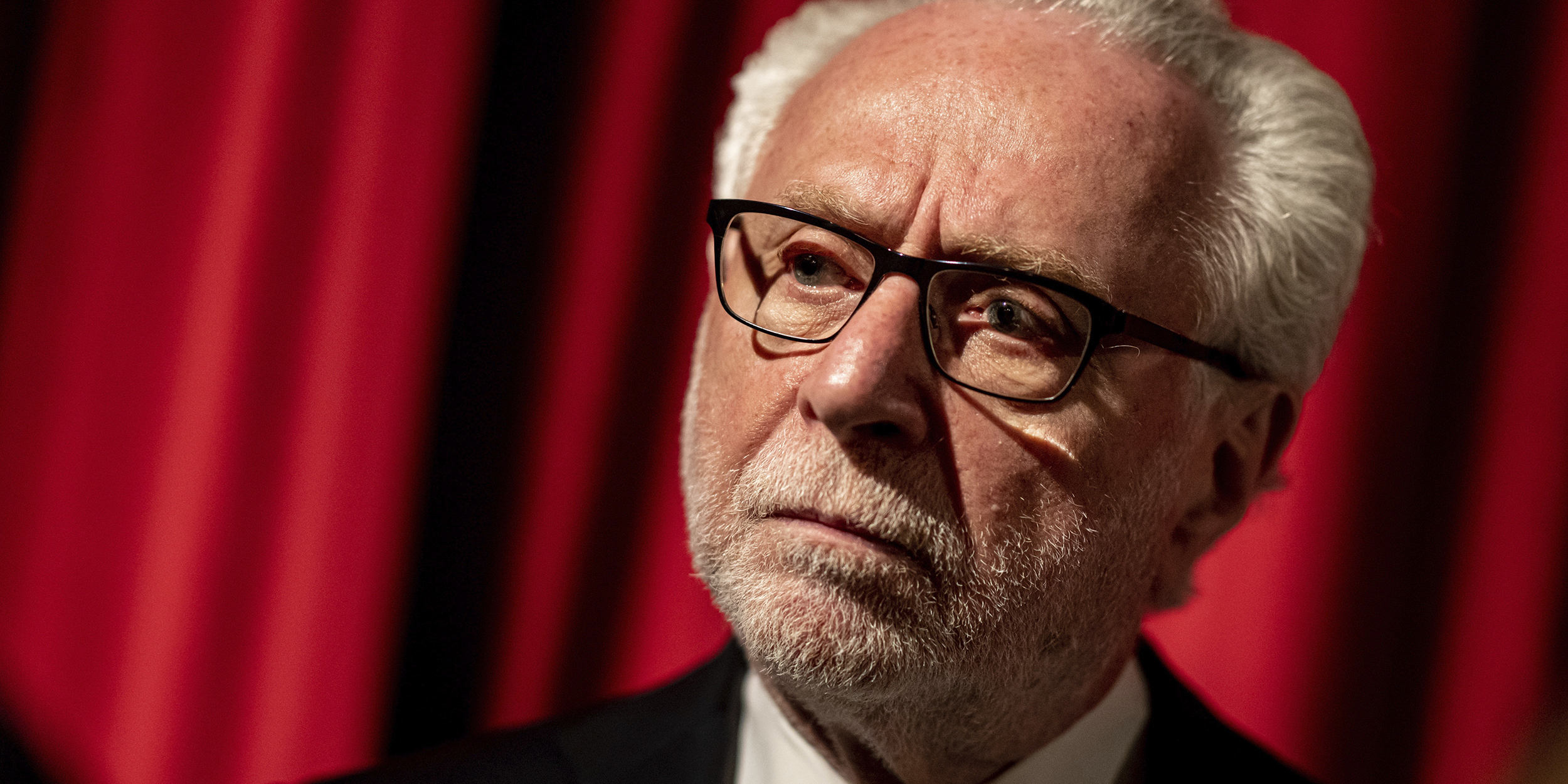


 on Monday, March 18, at LaGuardia Community College in Long Island City, Queens. Kelley, a distinguished professor of history at UCLA, is calling his talk “From the Waterfront to the Sea: Working Class Democracy and the Question of Palestine.” I’ll be doing the intro.
More info
on Monday, March 18, at LaGuardia Community College in Long Island City, Queens. Kelley, a distinguished professor of history at UCLA, is calling his talk “From the Waterfront to the Sea: Working Class Democracy and the Question of Palestine.” I’ll be doing the intro.
More info 