Tom Roche
Shared posts
BOOKS RECEIVED: Keith Hart and John Sharp, eds., “People, Money and Power in the Economic Crisis: Perspectives from the Global South” (Berghahn Books, 2016),
Tom Rocheno download available (?)
If Clinton Campaign Believes WikiLeaks Emails Are Forged, Why Don’t They Prove It?
Tom Rocheshowing not only the shamelessness of Hillary's campaign, but also that of the subset of that campaign that is virtually all of the US corporate-funded media
Top Democrats have repeatedly waved off substantial questions arising from their hacked emails by falsely implying that some of them are forgeries created by Russian hackers.
The problem with that is that no one has found a single case of anything forged among the information released from hacks of either Clinton campaign or Democratic Party officials.
The strategy dates all the way back to a conference call with Democratic lawmakers in August. Politico reported that a number of Democratic strategists suggested that Russian hackers — who have been blamed by U.S. intelligence agencies for supplying the emails to Wikileaks and other web sites — could sprinkle false data among the real information.
Since then, despite the complete lack of evidence to support such a claim, it’s become a common dodge among leading Democrats and the Clinton campaign when asked questions about the substance of the emails.
Clinton strategist Joel Benenson, asked about an email in which Clinton campaign staffers decide to accept foreign lobbyist money, used that line on MSNBC on Sunday.
“These emails, we have no idea whether they’re authentic or not,” he said. “Or whether they’ve been tampered with. I know I’ve seen things that aren’t authentic, that we know aren’t authentic, and it’s not surprising.”
Clinton’s running mate, Virginia Democratic Sen. Tim Kaine, also suggested that the emails may have been doctored during an appearance on Meet the Press on Sunday.
“The one [email] that has referred to me was flat-out completely incorrect,” he said. “So I don’t know whether it was doctored or whether the person sending it didn’t know what they were talking about. Clearly, I think there’s a capacity for much of the information in them to be wrong.”
Kaine appeared to be referring to a July 2015 email to Clinton campaign chair John Podesta from political consultant Erick Mullen. In the email, Mullen claimed a man named Bob Glennon has informed two Democratic senators that Clinton “has personally told Tim Kaine he’s the veep.”
Clinton may or may not have selected Kaine as her running mate a year before announcing it publicly. However, that doesn’t mean the email is a forgery. It was simply Mullen’s view of things. Podesta’s response to the email is itself jovial: “And here I thought it was going to be me.” No one has alleged the email as it was published on Wikileaks is a forgery.
The Intercept contacted Benenson to point to any emails he believes are inauthentic. He did not respond.
Jennifer Granholm, a senior adviser to the pro-Clinton Super PAC Correct the Record, was asked by CNN’s Jake Tapper whether the Clinton campaign should be responding to revelations revealed by Wikileaks.
“There are reports that these have been doctored,” she told Tapper on October 19. “And Newsweek had found that, in fact, that was happening.”
Granholm was referring, inaccurately, to a blog post by Kurt Eichenwald where the Newsweek writer pointed out that the English-language, Russian-owned news website Sputnik had misreported the contents of one of the emails. But there was no evidence that the email itself as it existed on the Wikileaks website was false or doctored. Eichenwald himself added to the misunderstanding by posting a series of tweets imputing that the email had been forged — by Russian leader Vladimir Putin.
In an interview with CNN’s Wolf Blitzer on October 18, Rep. Adam Schiff, D-Calif., a ranking member on the House Intelligence Committee, was asked if the Russian government would impact the election by hacking voting systems.
“What worries me the most … is between now and the election the Russians dump information that is fabricated,” Schiff warned. “To get a last minute dump of emails that contain fabricated emails that are widely reported in the press, and there isn’t enough time to fact check and demonstrate the forgery, that is what really concerns me.”
CNN host Wolf Blitzer pushed back, “But have you confirmed that any of these emails released over the past two weeks, if you will, by Wikileaks are fabricated or doctored?”
“You know I’m not in a position to be able to do that,” Schiff demurred.
The Democrats’ muddy-the-waters strategy has had some success. For example, the popular fact-checking website Politifact wrote an article on Sunday titled: “Are the Clinton WikiLeaks emails doctored, or are they authentic?”
The article cited numerous claims by Democrats that they cannot verify the authenticity of the emails and a number of experts who claimed that it is in fact possible that false information is in the emails. But the writer also noted that the Clinton campaign has not offered any evidence that any of the emails have been doctored.
Ordinarily, if there is no supporting evidence for a claim, PolitiFact has no problem declaring it false. But in this case PolitiFact reached no conclusion — and actually went so far as to raise the possibility that the Clinton campaign does have proof that the emails have been doctored, but isn’t sharing it for political reasons.
(Ironically, the website has no problem citing the emails to fact-check other statements).
The strategy has not been entirely effective. There has still been discussion about the contents of Clinton’s private speeches to megabanks like Goldman Sachs, her campaign team’s coordination with Super PACs, and the candidate’s affinity for Wal-Mart, among other topics.
The Washington Post published a lengthy article on Tuesday delving into the internal squabbling among Clinton aides and allies over the candidates use of a private email server. And the Wikileaks disclosure of a 13-page memo by former Bill Clinton aide Doug Band formed the basis of a Post article Thursday that showed how Band co-mingled the clients of his for-profit consulting firm Teneo with the former president’s speaking clients and financial backers of the Clinton Foundation.
Top photo: Wikileaks founder Julian Assange prepares to speak from the balcony of the Ecuadorian embassy in London, on Feb. 5, 2016.
The post If Clinton Campaign Believes WikiLeaks Emails Are Forged, Why Don’t They Prove It? appeared first on The Intercept.
Liquid assets: how the business of bottled water went mad – podcast
Tom Rocheoriginal article/transcript by Sophie Elmhirst @ https://www.theguardian.com/business/2016/oct/06/liquid-assets-how--business-bottled-water-went-mad
Edgar Allan Poe: The Fever Called Living by Paul Collins.
Tom Rocherepeat, but good
HYPERNORMALISATION
Tom Rocheif outside UK, see this mostly excellent but occasionally-just-plain-wrong video @ http://thoughtmaybe.com/hypernormalisation/
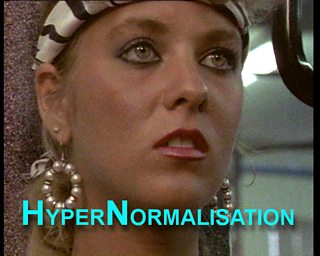
I have a new film going up on iPlayer this Sunday - the 16th. Here’s a background to what the film is about. And a trail.
We live in a time of great uncertainty and confusion. Events keep happening that seem inexplicable and out of control. Donald Trump, Brexit, the War in Syria, the endless migrant crisis, random bomb attacks. And those who are supposed to be in power are paralysed - they have no idea what to do.
This film is the epic story of how we got to this strange place. It explains not only why these chaotic events are happening - but also why we, and our politicians, cannot understand them.
It shows that what has happened is that all of us in the West - not just the politicians and the journalists and the experts, but we ourselves - have retreated into a simplified, and often completely fake version of the world. But because it is all around us we accept it as normal.
HyperNormalisation
The film has been made specially for iplayer - and is a giant narrative spanning forty years, with an extraordinary cast of characters. They include the Assad dynasty, Donald Trump, Henry Kissinger, Patti Smith, the early performance artists in New York, President Putin, intelligent machines, Japanese gangsters, suicide bombers - and the extraordinary untold story of the rise, fall, rise again, and finally the assassination of Colonel Gaddafi.
All these stories are woven together to show how today’s fake and hollow world was created. Part of it was done by those in power - politicians, financiers and technological utopians. Rather than face up to the real complexities of the world, they retreated. And instead constructed a simpler version of the world in order to hang onto power
But it wasn’t just those in power. This strange world was built by all of us. We all went along with it because the simplicity was reassuring. And that included the left and the radicals who thought they were attacking the system. The film shows how they too retreated into this make-believe world - which is why their opposition today has no effect, and nothing ever changes.
But there is another world outside. And the film shows dramatically how it is beginning to pierce through into our simplified bubble. Forces that politicians tried to forget and bury forty years ago - that were then left to fester and mutate - but which are now turning on us with a vengeful fury.
Trailer for the 2016 Adam Curtis film - HyperNormalisation
‘Nothing to See Here’ Is Pundit Takeaway on DNC Leaks
Tom Rochethe Snowden Cycle meets Crooked Hillary

The Atlantic‘s Russell Berman (10/13/16) says you “shouldn’t be surprised” by what’s in the leaked Clinton campaign emails.
Leaks from Hillary Clinton’s campaign emails have been trickling in for the past week. The leaks—along with previous DNC emails—provide intimate details about the inner workings of the campaign that may well soon elect the most powerful person on Earth.
The response from some journalists has been to analyse, dissect and find the most newsworthy bits. For others, the reaction has been to dismiss and downplay, turning the often cynical meatgrinder of American politics into a snooze barely worthy of discussion.
Call that second group the “are you surprised” crowd:
- What Hillary Clinton Told Wall Street Bankers in Private, According to Leaked Emails (Vox, 10/11/16):
These remarks aren’t really very new or surprising.
- What the WikiLeaks Emails Say About Clinton (Russell Berman, The Atlantic, 10/13/16):
But on the whole, they shouldn’t be surprised by what’s in them. Though anti-Clintonites on the right and left may find their suspicions about Clinton confirmed, there’s nothing in the emails that would provide them new lines of criticism—or provide new sources of worry to her allies.
- What the WikiLeaks Emails Tell Us About Hillary Clinton (Doyle McManus, LA Times, 10/16/16):
This is a finding that will surprise no one who has watched the Clintons since, say, 1982…. It certainly won’t surprise Bernie Sanders voters.
- I Read Hillary Clinton’s Speeches to Goldman Sachs. Here’s What Surprised Me the Most (Daniel W. Drezner, Washington Post, 10/17/16):
This isn’t terribly surprising, as Clinton’s position on trade policy has easily been the most cynical part of her campaign. But it is worth noting.
What surprised Drezner the most, by the way, was: “After reading all three speeches…I don’t understand why Clinton didn’t make them public back in the spring.” Or possibly, “Clinton’s comfort talking about the subtleties of international relations,” or that “the private Hillary Clinton [is] more assured and less awkward than the public Hillary Clinton”—it’s not quite clear.
But this whole “surprised” line is a complete red herring. Who has ever claimed they were surprising, and what does surprise or lack thereof have to do with anything?
Something doesn’t have to be shocking or surprising to be newsworthy, much less objectionable. Indeed, the routine banality of Clinton and her aides colluding with the DNC to undermine Sanders, and cozying up to Wall Street, makes it more consequential, not less. The “why is this shocking?” tic is a rhetorical gimmick meant to downplay revelations that, while perhaps assumed, had heretofore not been backed by specific evidence.
This is what we’ve called the Snowden Cycle (FAIR.org, 7/24/16)—a PR trick employed by those attempting to downplay the NSA revelations in 2013. Obviously, this situation is different, but the spin is the same: Claims of illegal surveillance were either ignored or dismissed as conspiracy theories, then, when the NSA leaks documented widespread domestic spying and unconstitutional overreach, the response from the same pundits was, “Yawn, we already knew that.”
But we didn’t really know that, we simply assumed that, and there’s a world of difference between the two. The fact that Clinton is cozy with much of the press, told climate change activists to “get a life,” and touted TPP in front of Goldman Sachs despite going on to oppose it in public may have been assumed, but now it’s something we know to be true. This, on its face, is significant.
As David Dayen (New Republic, 10/14/16) notes, the revelation that a Citigroup employee knew what the makeup of Obama’s cabinet would be weeks before the 2008 election is also noteworthy. But never mind, it’s important we ignore all this, and instead cherry pick a few vague comments that align with what we already know.

Was it “Clinton’s comfort talking about the subtleties of international relations”?
The Washington Post’s Drezner, in his obligatory “why is this surprising” clause, casually admits Clinton is lying about her position on trade—one she campaigned on in the primaries—but doesn’t seem to really care. Her embrace of TPP in front of Goldman Sachs, he writes,
isn’t terribly surprising, as Clinton’s position on trade policy has easily been the most cynical part of her campaign. But it is worth noting.
Clinton, he says, is clearly lying about her stance on the TPP—in his own piece that he links to, he says “there is no genuine policy motivation for her opposition”—but, meh, what are you gonna do? Any notion that one’s political stances should be the least bit consistent is simply shrugged off by virtue of being boring. This is totally contradicted in his last passage, when Drezner insists “these transcripts mostly reveal a person who says similar things in private that she does in public.” Except about totally trivial things like labor and trade agreements.
Part of the trick is conflating the descriptive (how things are) with the normative (how things ought to be). By asserting that Clinton’s cozy Wall Street relationships and “fluid” positions in and out of the public spotlight are just The Way of Things, Drezner and others never stop to take ethical inventory of any of this. They never bother to ask if what’s revealed in the Podesta emails are the way it should be—or whether, more importantly, it’s the way the primary voters were led to believe they were. It’s the normalization of venality posing as jaded realism. (It’s worth remembering that an AP/National Opinion Research Center report in August found that 86 percent of Americans were angry or dissatisfied with the state of politics in the nation—something that an in-depth look at the inner workings of one of the two major parties might help to explain.)
There are at least two major revelations on foreign policy that are clearly consequential, and both are overlooked by the above op-eds. The first is an admission by Hillary Clinton in June 2013 that a no-fly zone in Syria–something she openly supports–would “kill a lot of Syrians.” This is a crude reality often ignored by liberal interventionalists and certainly newsworthy, though it has been largely overlooked in favor of the more personality-based aspects of the leaks.
Another foreign policy revelation ignored by the “is this shocking?” crowd is one email that seemingly shows Clinton endorsing the idea that Qatar and Saudi Arabia, two of the US’s closest allies–and major Clinton Foundation donors–are funding and supporting ISIS and al-Qaeda. One email she sent—it’s unclear whether this is her language or someone else’s—read:
While this military/paramilitary operation is moving forward, we need to use our diplomatic and more traditional intelligence assets to bring pressure on the governments of Qatar and Saudi Arabia, which are providing clandestine financial and logistic support to ISIL and other radical Sunni groups in the region.
This is in glaring contradiction to US government’s public line, including Clinton’s, on our Gulf allies. Does Clinton think Saudi Arabia and Qatar are funding and backing ISIS? Shouldn’t this be followed up on? Highlighted? No. Instead, those with the most influential column space in the world spend their media capital playing up personality disputes, spinning corporatism as pragmatism, and insisting, above all, there’s nothing “shocking” here.
Adam Johnson is a contributing analyst for FAIR.org. You can follow him on Twitter at @AdamJohnsonNYC.
Tim Fischer: world trade disconnect
Tom Rochepro-corporate-government pushback
Notorious Victoria: the first woman to run for president – podcast
Tom Rocheoriginal article by Eileen Horne @ https://www.theguardian.com/us-news/2016/jul/20/notorious-victoria-first-woman-run-for-us-president
Democratic Sen. Chuck Schumer Says Top Priority for Next Year Is Giant Corporate Tax Cut
Tom RocheYet more naked duplicity from Team Clinton. Comments @ https://theintercept.com/2016/10/19/democratic-sen-chuck-schumer-says-top-priority-for-next-year-is-giant-corporate-tax-cut/?comments=1#comment-298609 and https://theintercept.com/2016/10/19/democratic-sen-chuck-schumer-says-top-priority-for-next-year-is-giant-corporate-tax-cut/?comments=1#comment-298616
New York Sen. Chuck Schumer, likely to be majority leader next year if Democrats take back the Senate, told CNBC Tuesday that one of his top two 2017 priorities would be an enormous corporate tax cut.
Speaking of himself in the third person, Schumer said that “we’ve got to get things done. … The two things that come, that pop to mind — because Schumer, Clinton, and Ryan have all said they support these — are immigration and some kind of international tax reform tied to a large infrastructure program.”
American multinational corporations are now holding a staggering $2.5 trillion in profits overseas, refusing to bring the money back at the current tax rates until they get a special deal.
Revenue-starved Democratic leaders have broadly hinted they are prepared to cave, either for a “holiday” period or permanently.
In an exchange with CNBC’s John Harwood, Schumer confirmed that the latter is in fact in the works. When Harwood asked Schumer if “it would be a permanent lower rate, not a holiday rate,” Schumer replied, “Yes, you can’t do a one-shot deal.”
Schumer said he envisions “international tax reform” as providing funding for an infrastructure bank.
Hillary Clinton has not publicly supported such a plan. However, during a private October 13, 2014, speech to the Council of Insurance Agents and Brokers, Clinton told the audience that “A number of business leaders have been talking to my husband and me about an idea that would allow the repatriation of the couple trillion dollars that are out there. And you would get a lower rate — a really low rate — if you were willing to invest a percentage in an infrastructure bank.”
For his part, Schumer has long been negotiating with Ohio Republican Sen. Rob Portman to lay the groundwork for such a corporate-friendly deal.
While Massachusetts Democrat Sen. Elizabeth Warren has called such a scheme “a giant wet kiss for the tax dodgers,” Schumer told CNBC that he’d have no trouble getting her on board. “She’s going to surprise everybody,” Schumer said. “She’s going to be both a progressive and a constructive force.”
Top photo: Sen. Chuck Schumer speaks about social security, during a news conference on Capitol Hill.
The post Democratic Sen. Chuck Schumer Says Top Priority for Next Year Is Giant Corporate Tax Cut appeared first on The Intercept.
Is Disclosure of Podesta’s Emails a Step Too Far? A Conversation With Naomi Klein
Tom RocheNot a high point for either Greenwald or Klein, who I generally respect greatly. Comments @ https://theintercept.com/2016/10/19/is-disclosure-of-podestas-emails-a-step-too-far-a-conversation-with-naomi-klein/?comments=1#comment-298485 and https://theintercept.com/2016/10/19/is-disclosure-of-podestas-emails-a-step-too-far-a-conversation-with-naomi-klein/?comments=1#comment-298524
Some news organizations, including The Intercept, have devoted substantial resources to reporting on the newsworthy aspects of the archive of emails of Clinton campaign chairman John Podesta that was published last week by WikiLeaks. Numerous documents from that archive have shed considerable light on the thought processes and previously secret behavior of top Clinton campaign aides and often the candidate herself. While the significance of particular stories has been debated, there is no denying that many of those disclosures offer a valuable glimpse into campaign operatives who currently exercise great political power and who, as of January of next year, are likely to be among the most powerful officials on the planet.
Despite her agreement with those propositions, the author and activist Naomi Klein believes there are serious threats to personal privacy and other critical political values posed by hacks of this sort, particularly when accompanied by the indiscriminate publication of someone’s personal emails.
The fact that the individual whose emails were hacked wields significant power may mitigate some of those concerns, but, she believes, it does not remotely obviate them. She also believes that while a public service has been performed by the reporting on some of these emails, media organizations (including The Intercept) have not sufficiently emphasized the dangers to personal privacy posed by the hacking of someone’s email inbox.
Earlier this week, Klein and I discussed her views and concerns about these issues. The discussion has been lightly edited into a 30-minute podcast, which you can listen to on the player above. A transcript is also provided. Klein, invariably, is extremely thoughtful and insightful, and so I believe the discussion is well worth listening to.
This transcript has been edited for space and clarity.
GLENN GREENWALD: Hi, this is Glenn Greenwald of The Intercept, and I am very excited that my guest today is one of the world’s most influential and accomplished journalists, activists, and thinkers, who also happens to be my good friend, Naomi Klein. Hi, Naomi. Thank you so much for taking the time to talk today.
NAOMI KLEIN: Hey Glenn, it’s great to be with you.
GG: So the principal impetus for this conversation is that over the last two or three weeks, there has emerged this spirited debate prompted by the publication of many thousands of emails from the account of Clinton campaign chairman John Podesta.
Nobody knows for certain who actually hacked them. The U.S. government says the Russian government was involved — although they presented no evidence for that — but there are a lot of people who believe Russia was at least implicated in some way. Whoever did it gave it to WikiLeaks, which instead of curating any of it or trying to figure out what would be in the public interest and what wouldn’t, simply took it all and dumped it on the internet.
And from what I’ve seen, at least, the debate that has ensued — as news organizations went through this archive and began to report on material they thought was newsworthy and in the public interest — was this dichotomized debate. So on the one hand, you have these actors who caused all of John Podesta’s emails — without discrimination about their impact or content or whether they had anything to do with public interest — to be published on the internet, which was the hackers combined with WikiLeaks.
And then you have this separate debate once that happens. Once these materials are made available, for better or for worse, what is the duty of journalists? Should they ignore it on the grounds that it’s illicitly obtained or might incentivize future similar bad acts? Should they weigh the fact that there’s been a massive privacy invasion against the journalistic value that can undoubtedly come from some of the specific materials? And obviously, we at The Intercept have been centrally involved in that debate, because we did make a decision to do so much reporting on the documents that we believe shed light on the person highly likely to be the next president of the United States.
So those are the contours of the debate — there’s certainly a lot of disagreement within them — but I guess I’m curious about whether you think that’s the right way to think about this debate, whether that’s the right way to carry it out, whether there have been things that have gotten distorted or not gotten enough attention. What are your overall thoughts on this?
NK: I really appreciate the chance to talk about it with you. I think a lot of that is exactly how we should be thinking about it, but there are some things that need a little bit more emphasis. I would add that it’s not just that they didn’t curate it and dumped it all. They are dumping it, but they are doling out the dumps to maximize damage. So they’re not just saying, “Hey, information wants to be free, here is everything we have. Journalists, have a field day, go through it.” They’re very clearly looking for maximum media attention and you can tell that just by looking at the WikiLeaks Twitter feed and at how they are timing it right before the debates. Now everybody uses leaks as a political weapon, including the Clinton campaign, which we already knew but we have lots more evidence of, thanks to these emails. They’re constantly talking about leaking information to their own benefit.
The other thing I would say is I think there’s a particular responsibility for you as a journalist — and others at The Intercept — because you’re the ones who brought us the Snowden files, and I am one of many people who are tremendously grateful for that line in the sand about our rights to electronic privacy. You are one of three or four people in the world who have done the most to defend that principle for our electronic communications — because we live our lives online, we can’t distinguish that from our right to privacy, period. These leaks are not, in my opinion, in the same category as the Pentagon Papers or previous WikiLeaks releases like the trade documents they continue to leak, which I am tremendously grateful for, because those are government documents that we have a right to, that are central to democracy. There are many things in that category.
These leaks are not, in my opinion, in the same category as the Pentagon Papers or previous WikiLeaks releases like the trade documents they continue to leak, which I am tremendously grateful for.
But personal emails — and there’s all kinds of personal stuff in these emails — this sort of indiscriminate dump is precisely what Snowden was trying to protect us from. That’s why I wanted I wanted to talk with you about it, because I think we need to continuously reassert that principle.
As journalists — now that it’s out there — we do have to go through it and talk about the parts that are politically important and newsworthy. But at the same time, we have a tremendous responsibility to say that people do have that right to privacy. I heard you defend [the leak] to some degree on the grounds that these are very powerful people. Certainly Podesta is a very powerful person, and he will be more powerful after Hillary Clinton is elected, if she’s elected, and it looks like she will be. But I’m concerned about the subjectivity of who gets defined as sufficiently powerful to lose their privacy because I am absolutely sure there are plenty of people in the world who believe that you and I are sufficiently powerful to lose our privacy, and I come to this as a journalist and author who has used leaked and declassified documents to do my work. I could never have written “The Shock Doctrine” or “This Changes Everything” without that. But I’m also part of the climate justice movement, and this is a movement that has come under incredible amounts of surveillance by oil industry-funded front groups of various kinds. There are people in the movement now who are being tracked as if they were political candidates, everywhere they go.
So how are we defining powerful? Because once we say this is OK, and I’m not saying you’ve said it — you’ve made that distinction — but I think we need to say it louder. And particularly you, as the guy who brought us the Snowden files, need to say it louder.
GG: There’s an amazing irony here in some sense because I’ve been defending the news value of the WikiLeaks archives over the past several months, not just the Podesta but also the DNC archive. And I’ve defended WikiLeaks in the past, long prior to the Snowden archive. There are a couple of really fascinating nuances that I think set the stage for the kinds of distinctions that you’re urging be drawn.
When I first started defending WikiLeaks back in 2010, one of my primary arguments was that WikiLeaks, contrary to the way they were being depicted by the U.S. intelligence community and their friends, was not some reckless rogue agent running around sociopathically dumping information on the internet without concern about who might be endangered. And in fact, if you look at how the biggest WikiLeaks releases were handled early on — the Iraq and Afghanistan war logs, as well as the State Department cables — not only did they redact huge numbers of documents on the grounds that doing so was necessary to protect the welfare of innocent people, they actually requested that the State Department meet with them to help them figure out what kind of information should be withheld on the grounds that it could endanger innocent people.
So they were very much an ardent and enthusiastic proponent of that model — that when you get tons of information that belongs in the public eye, you have the corresponding responsibility to protect not only people’s physical security but also their privacy. I used to defend them on that all the time.
Somewhere along the way, WikiLeaks and Julian decided, and they’ve said this explicitly, that they changed their mind on that question — they no longer believe in redactions or withholding documents of any kind.
During our reporting on the Snowden material, we did not just take the archive and dump it on the internet, as a lot of people called for. We spent years very carefully curating it and keeping parts of it secret that might endanger individual privacy, harm people’s reputations unjustifiably, or otherwise put them in harm’s way. And WikiLeaks publicly and viciously attacked us for years. They continue to, actually, over the fact that we were the so-called gatekeepers of information. It was always my view — and continues to be — that it would have been incredibly hypocritical for us to say that these documents need to see the light of day because people’s privacy is being compromised, and then in the same breath, release documents that would destroy people’s privacy because they’re too lazy or don’t think it’s justifiable to go through and redact.
So there’s debate, even among people who believe in radical transparency, over the proper way to handle information like this. I think WikiLeaks more or less at this point stands alone in believing that these kinds of dumps are ethically — never mind journalistically — just ethically, as a human being, justifiable. I think that debate has been vibrant and healthy, and I do think you’re probably right that it needs to be even more so now that we have so many more examples, like the leak of climate scientists, of Sony executives, and other leaks that are inevitably coming.
I think WikiLeaks more or less at this point stands alone in believing that these kinds of dumps are ethically — never mind journalistically — just ethically, as a human being, justifiable.
We do need to figure out a way to say both at the same time: Powerful institutions and powerful actors need the kind of transparency these leaks can provide, but at the same time, even people who are in powerful positions and wield influence continue to retain the right to privacy, and there should never be any publishing of personal matters or things that aren’t directly in the public interest.
Is that what you mean when you say this needs to be more prominent? Is that the distinction that you think is crucial?
NK: I think we have a very strong interest in continuously reasserting the right to electronic privacy, particularly when we’re talking about people who are not elected officials.
It’s just so subjective what criteria we’re using to define powerful, because that word is flexible. And I’m not saying that emails are out of bounds — I think about emails that came out about legitimizing torture during the Bush administration. But those were particular, relevant emails, rather than: “You’ve just lost all your electronic privacy. We’re dumping the whole thing, or rather, we’re dumping it in stages to maximize damage.”
We need to defend that because certainly in the climate movement, we are up against forces that will always have massively more resources than the movement does. We can encrypt our emails, and we should encrypt our emails, but the principle still has to be defended because we lose if this gets blurry.
GG: But let me ask you this. We started out by saying that with this particular leak, because of WikiLeaks’ philosophy, the hacker went in and grabbed everything, which sometimes hackers will do even if they’re well-intentioned — because you don’t have time to grab only the relevant material, you hope that the people to whom you then give the material are going to do that. That was Snowden’s theory: I’m going to take as much as I can but make sure I’m only giving it to journalists who promise to safeguard the material and let the public see the stuff they should see, not what they shouldn’t.
Let’s say you had a good faith hacker who said, “I’m going to take all of John Podesta’s emails and I’m just going to download them. And instead of giving them to WikiLeaks, I’m going to give them to this organization and tell this organization, ‘What I want you to do is go through them and get rid of the ones where John Podesta is talking about the emotional difficulties staff members are having, or personal conversations he’s having with family members or friends, and pick the ones that really shed light on what the Clinton campaign is doing that affects public policy and discourse.’” Would you have qualms about that process?
NK: No. I think they set themselves up for the bank speeches coming out because they refused to release them. They should have released them, and what’s interesting is that some of the most relevant, newsworthy information is not in email traffic — it’s in documents like that. Or, for instance, an attachment that’s a transcript of Hillary Clinton’s conversations behind closed doors with labor leaders in which she says that climate activists should “get a life” rather than coming to her events. That’s not an email. To me, that doesn’t fall into the same category. I wouldn’t have a problem with it if it were curated.
It’s also the way in which it’s being released, to clearly maximize damage, and the recklessness about the implications of that when it comes to electing Trump. You’ve written about how dangerous it is for media organizations to take such a highly political approach to this election because they don’t want Trump to get elected, so they’re engaging in what you described as “journalistic fraud.” I agree with you.
But we have to acknowledge how political WikiLeaks and Julian are being here.
GG: It’s interesting. All we can do is speculate because it involves what’s going on in somebody else’s head, in this particular case, a person who’s even in the best of times quite complicated, who’s been trapped in a single room for five years, who literally has not seen the outdoors in many years, and who doesn’t have much of a future to see one shortly — so it’s hard to assess what’s going on in the mind of a person like that.
Still, as somebody who does know Julian, and that includes you and me as well to varying degrees, are you persuaded by this idea that Julian’s goal here is this conventionally partisan objective, that he has simply sided with the Republican candidate over the Democratic candidate and is doing what he can to help Trump? Or do you think it’s more about Julian harboring a substantive philosophical animosity toward U.S. empire and U.S. hegemony as a force for evil in the world, and looking for any opportunity to undermine and burn it?
To the extent that Hillary Clinton represents that, that she’s a target of his anger, on top of his view of her as desiring his imprisonment and therefore there’s this personal anger too — that goal isn’t the way Paul Begala wants the Democrat to win and the Republican to lose. I don’t think Julian has these simple partisan motives. I think it’s more about wanting to see things burn, out of a combination of political philosophy and personal resentment. I’m curious what you think about that.
NK: I don’t know. I don’t know him well. I’ve met him and I’m not sure I can answer that. I have to be perfectly honest with you, Glenn, I’m actually nervous about it, because there is clearly a vendetta element going on, which is understandable, because Hillary Clinton’s State Department is massively responsible for his lack of freedom. So I can understand that, but at the same time, Assange is not the only person who has lost their freedom for standing up for their beliefs.
I’m not comfortable with anybody wielding this much power.
I spoke recently with a guy named Rodney Watson, who has spent seven years in a church in the downtown Vancouver East Side, also not seeing the outdoors, not seeing his son, because he refused to go and fight in Iraq. He went to Iraq, he saw war crimes, he refused to go back, and he fled to Canada. He wants a pardon. He’s angry. But he’s not trying to burn it down — this is a principled war resister. I am very disturbed by this seeming willingness to burn it down. I am disturbed by the ego of seeing this election through one’s personal lens when the stakes are so incredibly high. All of us have personal issues — not as much as Assange, obviously — invested in this, but a lot of people are seeing the big picture as well.
GG: It’s interesting, this burn it down model. I remember one of the first distinctions that Edward Snowden drew when we met in Hong Kong — not to keep drawing this Assange-Snowden distinction, but it’s one that is actually quite fundamental that I think a lot people have overlooked.
He made a fascinating point when I asked him: You have this incredibly sweeping trove of unimaginably sensitive information, which if published on the internet would instantly destroy huge numbers of U.S. surveillance programs, including ones you strongly dislike. Why didn’t you just do that? Why didn’t you just upload it to the internet? Why did you need to work with us, to have journalists as the middleman and mediators to process this information and take the decision-making out of your hands about what the public will and won’t see?
And he said: Think about how incredibly sociopathic, how narcissistic it would be for me, Edward Snowden, to decide that I have the right, singlehandedly, to destroy all of these programs simply because I don’t like them.
He said he doesn’t want to destroy anything, that his goal instead is to take the information that gives human beings around the world the ability to know what it is their governments are doing, what is being done to the internet, so that those people, democratically and collectively, can make that choice about should these programs continue? In what form? Do we need safeguards? Do we need pushback? Do we need citizen movement? All of that. He felt very uncomfortable with the idea that his role could ever be anything other than facilitator of information that allows others to make that choice.
I think Julian quite clearly views himself and his activism in a much more, I guess you could call it aggressive, and even solitary way. That he is content and does believe he has the prerogative to burn things down — and sometimes institutions that are real acts of evil — and when they burn down, that you can argue it is actually an event of good in the world.
But there are also very extreme concerns from vesting so much power in one person. It’s sort of ironic given that the NSA scandal and all these other scandals arose out of the idea that a tiny number of people, in secret, with no accountability, have been making these choices. And now you have other people posing as their adversaries creating a similar framework for themselves.
NK: This is why I say I’m nervous. I’m not comfortable with anybody wielding this much power.
I am not comfortable when it’s states, but I’m also not comfortable when it’s individuals or institutions. I don’t like people making decisions based on vendettas because the message it sends is: “If you cross me, this could happen to you.” That’s a menacing message to send. Now I acknowledge that this could be over the edge, but I’m sure I’m not the only one who’s had that thought, and I think we have to acknowledge that this is how fear spreads. It isn’t only states that are capable of sending that message .The level of ego makes me uncomfortable given the role of ego in this election cycle and people thinking these elections are just all about them personally. We don’t need somebody else treating it like that.
GG: I started off saying —
NK: I just want to add something else, which is the way you’re describing the care with which Edward Snowden treated that information is why he is seen as a hero around the world, why these revelations were so incredibly important, why he is such an easy guy to defend based on principle. And this is why it is so important for you, as the person who has worked — along with Laura [Poitras] — so closely with him, to be saying the things you’re saying now.
GG: I don’t want to get a little bit ahead of at least where I think things should be. Chelsea Manning is also regarded as a hero; even though the way in which her material was published, at first, was incremental and careful, it ended up just published indiscriminately. But I do think there are types of information where this concern you’re expressing, which I share, is less compelling.
You’re talking about logs of military fighters who are simply describing what they’re seeing every day in the field in Iraq and Afghanistan. To publish those doesn’t really have a lot of privacy implications the way a private email inbox would. Same with diplomatic cables — it might make embarrassment between countries, and there may be other reasons not to do it, but I think different types of archives present different kinds of privacy concerns. When you’re talking about hacking into the personal email inbox of somebody — although they are quite powerful and in three months will probably be the chief of staff of the United States White House — there are still serious privacy implications from dumping it indiscriminately, and the problem is that this is going to continue. There’s not a lot that can be done about it because these hackers and WikiLeaks believe in this model.
NK: I think the main thing we’ve learned from these emails is that the folks around Hillary Clinton are just as venal and corrupt as we thought they were, for the most part, with all the conflicts of interest. I don’t think we’re learning a huge amount. Your colleague Lee Fang tweeted yesterday that the WikiLeaks emails show that Hillary respects and values the opinion of rich people, lobbyists, loyal partisans — while activists are losers.
What it really does is just reinforce that because all you have to do is look at the way she treated Black Lives Matter activists on the campaign trail — the absolute disdain. The way she practically spat “I’m so sick of this” to a young climate activist who asked her about her fossil fuel money. We knew this.
GG: We knew it —
NK: We’re getting it reinforced. If the price of having it reinforced, or having more people know it, is this idea that once you go into politics you lose all privacy, my concern is that decent people seeing this who do not have these values and these conflicts of interest will just go, “There’s no way I’m going into politics. I will not give up my privacy.” I know a lot of people who feel that way.
GG: We have drawn this important line that if you exercise public power — public power meaning you’re a public official exercising power given to you by the public, and it’s exercised over them — you definitely give up a huge amount of what ordinary private citizens would enjoy as privacy, just under the law. We’ve already created a framework where that’s the case.
NK: But then you have the knowledge. I think what people would worry about is retroactively losing their privacy.
GG: One of the things that very well may happen from all of these hacks — and if you go back and read WikiLeaks’ philosophies and theories early on, it’s consistent with it — is that the more people start to fear that their emails are going to end up hacked and public, the less they’ll use emails. They’ll just stop using emails for anything beyond cursory transactions, and institutions will become more closed. They’ll be less capable of communicating internally. Julian thought that was a great thing because that was the way he wanted to weaken them —by bringing so much transparency that they fly blind as an authoritarian institution.
But I absolutely agree with you that there are very profound concerns about individual privacy that are being trampled over with these leaks and certainly with the ones to come. And we probably haven’t given that enough thought, primarily because what ends up happening is the leaks happen; journalists like me give lip service to the fact that it’s too bad they weren’t curated, they should have been; and then everyone starts digging into them for newsworthy stories. Maybe it’s been rewarding that approach, maybe it’s just not given sufficient attention to it, but I’m not sure what the answer is, because as long as the capability exists, I think people are going to continue to do it.
NK: I’m not sure either except for front-loading the fact that we do believe people have a right to electronic privacy. The issue is not the illegality; as you pointed out, we have relied on leaks that are technically illegal for incredibly important information. But there is a distinction between the fact that we live our lives on email now, and we use this the way we use talking on the phone or in person. And if we give that up, we are giving up a huge amount.
GG: All those discussions from 2013 about the dangers of having privacy eroded by the state certainly apply to having privacy eroded by these stateless actors who are hacking and publishing people’s private communications indiscriminately. That too kills privacy in a really profound way. And it’s hard to care about one but not the other.
NK: It’s a little bit hard to see an upside for how we get out of this. I’m not sure where this goes.
GG: I guess the only upside I can think of — one of Edward Snowden’s primary objectives was not only to show the world the extent to which their privacy was being compromised and their communications were vulnerable, but to teach people how to safeguard against it, just like homeowners are increasingly cognizant about the need for home alarms, or building fences, or building communities to keep them safe. There are steps organizations can take to make it a lot harder for this to happen.
One of the things that’s remarkable is that very powerful people — like the Clinton campaign, even political leaders in Brazil, where there was so much reporting on Snowden and the way they were compromised — seem not to have taken that very seriously.
It’s an unsatisfying and kind of ancillary response, but it nonetheless is true that the more you see of this, the more I would hope people understand the need to start using these technologies to make it much more difficult for people to get ahold of their data.
NK: I agree, it’s completely shocking. Talk about reckless. It speaks to their sense of impunity is all I can think of — that they could write like this and it wouldn’t come out.
GG: They know better than anybody how easy it is to spy because they’re all part of the operations that do it.
NK: And they don’t think the rules apply to them. The problem is they do apply to the rest of us.
GG: Exactly.
Well, this has been really helpful, Naomi. For me personally, I’ve been gliding back on this dichotomy that I started with, like “Oh yeah, OK fine, WikiLeaks and the hackers acted wrong. I wouldn’t do it, but anyway, now let’s get on to the duty to do journalism.” I think you’re right to say that’s not really an adequate response, or at least it’s not an adequate emphasis on this first part of the equation, which needs a lot more attention.
NK: Thanks for giving me the chance to chat with you, it was really fun.
GG: It’s always fun, Naomi, let’s do it anytime.
The post Is Disclosure of Podesta’s Emails a Step Too Far? A Conversation With Naomi Klein appeared first on The Intercept.
State of Ohio to Investigate Satirical Tweet That Fooled Drudge and Limbaugh
Tom Rochewhy I don't have a twitter account: 'Twitter is just this fucking insane asylum of undifferentiated, context-free streams blasting in your face, it strips your ability to do any kind of rational balanced analysis of things, any ability to challenge whether something is true, and you just become this raw nerve of response.'
A chorus of outraged conservatives, including Matt Drudge, Rush Limbaugh, and Curt Schilling, expressed anger on Monday at what they wrongly called evidence that a postal worker in Ohio had destroyed absentee ballots cast in the Republican’s favor.
The anger was prompted by the widespread misunderstanding of a satirical tweet posted online Sunday by a member of the loose coalition of pranksters known as Weird Twitter, who use the social network to post Dadaist jokes and fictional anecdotes disguised as earnest statements of fact.
i love working at the post office in Columbus, Ohio and ripping up absentee ballots that vote for trump
— raandy (@randygdub) October 16, 2016
The satirist, who writes as @randygdub, describes himself only as a “cool and chill guy of online,” living in California. Within minutes of posting his tweet on Sunday, he was surprised and delighted that his joke was mistaken for a genuine confession by Trump supporters eager to find any evidence of the election rigging their candidate, falsely, claims is rampant.
The clearest evidence that the tweet was a joke was found in the author’s deadpan replies to other Twitter users who scolded him for breaking the law.
@Jackson_Avenue @drewtoothpaste no, it's legal
— raandy (@randygdub) October 16, 2016
@Jackson_Avenue @drewtoothpaste source?
— raandy (@randygdub) October 16, 2016
@Jackson_Avenue you just made that up. nice try, though
— raandy (@randygdub) October 16, 2016
@timps15 @Jackson_Avenue excuse me but ripping all these up is hard work and karma likes it
— raandy (@randygdub) October 16, 2016
Despite those clues, late Sunday night, several Trump supporters, including Scott Baio, tried to share their alarm over the rigging in Ohio with the candidate himself. For once, Trump failed to take the bait and did not mention the alleged fraud to his own followers.
I hope you get fired! Cheating is the only way she'll win. @realDonaldTrump Hey @JohnKasich is this okay with you? https://t.co/9mgk11KZHk
— Scott Baio (@ScottBaio) October 17, 2016
The satirist, and some of those who did get his joke, continued to troll those who failed to see it.*
@MrsScottBaio @realDonaldTrump @LynnePatton @FoxNews @FBI @CNN @seanhannity @WayneDupreeShow no it isn't
— raandy (@randygdub) October 17, 2016
@ChrisCaesar @ScottBaio @realDonaldTrump @JohnKasich they investigated and determined it's rad as hell
— raandy (@randygdub) October 17, 2016
By Monday morning, however, the satirist’s joy at confusing enraged conservatives reached new heights when his tweet was reported as genuine by the right-wing blogger Jim Hoft, who demanded to know if someone in a position of authority would “follow up on this.” It apparently never occurred to Hoft that he could have followed up himself, by attempting to contact the Californian who posted the tweet, or by scanning the rest of his Twitter feed, which is devoted to political comedy.
you know things are going great for the trump campaign when surrogates start saying it's actually normal & cool to think 10 yr olds are hot
— raandy (@randygdub) October 13, 2016
i am a Black man for trump. that's right libs, we do exist pic.twitter.com/TXx9lX7kM4
— raandy (@randygdub) October 12, 2016
frank luntz can i be in your next focus group im also a huge idiot
— raandy (@randygdub) October 10, 2016
i am a small business owner and i fired an employee for being a trump supporter
— raandy (@randygdub) September 30, 2016
After Hoft’s post was linked to from the home page of the Drudge Report, it was shared more than 90,000 times on Facebook and Twitter.
Postal Worker Brags About Destroying Trump Ballots… https://t.co/WlWz0aG9aY
— DRUDGE REPORT (@DRUDGE_REPORT) October 17, 2016
Within hours, the fictional story had also been discussed, as fact, by Rush Limbaugh and prompted investigations from both the United States Postal Service and the Ohio secretary of state, Jon Husted.
Hilarious audio of Rush Limbaugh falling for the @randygdub joke picked up by geniuses @gatewaypundit & @DRUDGE. https://t.co/EMCCFgIs7l pic.twitter.com/MpHRPO84Do
— Andrew Kirell (@AndrewKirell) October 17, 2016
@MisterGoldiloxx The Postal Service has completed an initial investigation of this matter and believes this is a hoax. ^DC
— USPS Help (@USPSHelp) October 17, 2016
I’ve contacted @USPS about posts alleging destruction of absentee ballots. We’ll get the #facts & if true, hold anyone guilty accountable
— Jon Husted (@JonHusted) October 17, 2016
While many conservatives were fooled, those in on the joke, like my colleague Lee Fang, who has followed the @randygdub account for some time, understood the satirist’s method and aim. “His group of Twitter friends have done this all year,” Lee explains, “testing absurdity of how left- and right-wing media echo chambers pick up any info that validates what they want to hear.”
Earlier this year, at a fraught moment of the Democratic primary campaign, another card-carrying member of Weird Twitter, Matt Christman, parodied exaggerated reports of violence at the Nevada state convention in a satirical message.
Vile Berniebros at #nvdemconvention fired an RPG covered in dildos at Barbara Boxer. This is unacceptable.
— Matt Christman (@cushbomb) May 15, 2016
Christman explained what happened next in an episode of the Chapo Trap House podcast in May. His absurdist parody was, remarkably, mistaken for a genuine eyewitness report and retweeted by a prominent Hillary Clinton supporter, Amy Siskind. Then, he recalled, “I got hundreds of people, freaking out, in my mentions: ‘I cannot believe this is happening!’ ‘The Sanders campaign has to condemn this behavior!’ And it’s something that no person on Earth would take seriously for a second.”
To Christman, the explanation for why supporters of political candidates seem to be so gullible online is that “politics in America is dead as a part of your life.” He continued:
We think of politics all the time, we talk about it, but it’s generally as this spectacle that we absorb. We don’t have a praxis, as the obnoxious say in Marxist lingo, there’s nothing we do on a day-to-day basis that constitutes making a political choice and asserting political ideology. All we really do is, we observe and then we spout off online.
And so what happens is that on the internet, specifically on Twitter, millions of people, fans of every candidate basically have volunteered themselves to be part of the rapid response crew of a given campaign. And they’re going to respond to everything, thinking that they’re helping, having the psychic satisfaction of thinking that they’re helping the campaign.
And because Twitter is just this fucking insane asylum of undifferentiated, context-free streams blasting in your face, it strips your ability to do any kind of rational balanced analysis of things, any ability to challenge whether something is true, and you just become this raw nerve of response. You just have to reflexively respond to any stimuli in this way that’s instantaneous.
* This post was updated to make it clear that @ChrisCaesar was only pretending to not get the joke, and was, in fact, helping to troll @ScottBaio.
The post State of Ohio to Investigate Satirical Tweet That Fooled Drudge and Limbaugh appeared first on The Intercept.
What Ever Happened to the Party of the People? [Audio]
Tom Rocheoccasionally brilliant but just as often goofy or just point-missing
In wake of Wikileaks, Clinton’s campaign chair seeks to reassure climate activists
Tom RocheHillary is obviously preparing to sell out progressives, just as Obama did in 2008 (preparing his transition team) and 2009 (staffing political positions and making initial policy, including the first hundred days).

Last week couldn’t have been an easy one for Clinton campaign chief John Podesta. On the one hand, his candidate continued to increase her polling lead over Republican Donald Trump. But on the other, he had to watch a steady drip of revelations from his hacked campaign emails as they were posted online by Wikileaks.
In an exclusive interview with Grist conducted as revelations were still pouring out last week, Podesta sought to assure climate hawks of the sincerity of Hillary Clinton’s commitment to fighting climate change. “She’s put out an extremely robust agenda that goes beyond what President Obama has pledged,” he told Grist (the interview was scheduled before the first of the Wikileaks releases and not in response to them).
“These are big, bold plans,” Podesta said. “It would exceed the goals that the United States took on in the Paris negotiations.”
For the most part, Podesta’s hacked emails reveal about what you would expect: the professional sausage-making of a modern presidential campaign. But there are details that look bad, too, such as an account that came out over the weekend of Clinton saying that she’s “at odds with the most organized and wildest” of the environmental movement — those who want to keep all fossil fuels in the ground — and that they should “get a life.”
House Minority Leader Nancy Pelosi was forced to defend that last one to CNN’s Jake Tapper on Sunday, who said: “‘Get a life,’ you know, that’s kind of a harsh statement to say to environmentalists.” Pelosi stuck up for Clinton’s commitment to climate action.
It doesn’t help that hard-core climate hawks have long been suspicious of Clinton as a moderate who only adopted some of their positions in response to a strong primary challenge from Sen. Bernie Sanders and pressure from climate activists on the campaign trail. Last week, Clinton attempted to make the issue her own by campaigning in Miami with former vice president Al Gore. Her campaign followed that up with an ad contrasting her climate stance with Donald Trump’s.
The Wikileaks dump also reveals internal exchanges showing that the Clinton team carefully weighed the political implications of her stance on the Keystone XL pipeline, including whether coming out in opposition to the proposal (which was eventually rejected by President Obama) could be used to assuage environmentalists’ concerns about the candidate.
That kind of political calculation is common in a campaign — but it normally doesn’t see the light of day. Podesta sought to assure Grist that a President Clinton would be a strong force against the expanded use of fossil fuels.
“The truth is what she has put forward in this campaign,” Podesta said, before rattling off some of Clinton’s ambitious proposals for clean energy, including the installation of half a billion solar panels by the end of her first term, powering every home in America with renewable energy within 10 years, and cutting energy waste in every sector of the U.S. economy by a third.
“The discussions that we had inside the campaign” about how to handle the KXL pipeline, Podesta said, “were really just about how to communicate the conclusion she had come to, which was that Keystone was not in the interest of the United States.”
If Keystone was the defining energy infrastructure issue of the Obama presidency, Clinton could face a challenge of her own in the form of the Dakota Access pipeline, which is being blocked by a large and growing coalition of native groups and their allies. Podesta was vague when Grist questioned him on how Clinton would handle the construction project, which the Obama administration has put on hold for further review. “I think she believes that stakeholders need to get together at this point. It’s important that all voices are heard.”
Some former members of the Obama administration, including Heather Zichal, who stepped down in late 2013 as the president’s chief climate and energy adviser, have suggested that their boss made so much progress on the regulatory front that there would be little a new president could do to combat climate change without a friendly Congress. Podesta disagreed with that assertion.
“I don’t think we have reached the limit of executive action,” he said. “Take reductions in methane: President Obama has taken action to reduce emissions from new sources, but he has not tackled the problem of existing sources.”
Clinton has also proposed incentives that would encourage states and cities to take more climate action on their own, beyond what the federal government can do, Podesta said. “While we would certainly welcome a more climate-friendly Congress — and the way Donald Trump’s going, maybe we’ll get one — this program can be carried out with aggressive action by the president.”
For hard-core environmentalists, one of the most troubling aspects of Clinton’s energy rhetoric is her references to natural gas as a “bridge fuel.” The “get a life” Wikileaks revelation from this weekend recounts a 2014 meeting between Clinton and the building trades union in which she said she wanted to defend natural gas and fracking — but only “under the right circumstances.”
Podesta said that Clinton’s use of the “bridge” term means she wants to replace coal with natural gas and that she wants to repeal the loophole that exempts fracking operations from the Safe Drinking Water Act: “We need to produce, transport, and distribute it in a way that has the smallest environmental footprint, which means that we need to require additional regulation, including closing the Halliburton Loophole to protect our water supply, including reduction of methane in order to alleviate the short-term effect of methane pollution as a greenhouse gas.”
Podesta wouldn’t, however, go so far as to commit Clinton to some of the goals of the “keep it in the ground” movement, which has gained standing in recent years with wins such as KXL. For instance, he wouldn’t tell Grist whether Clinton will designate the Arctic National Wildlife Refuge as a national monument in order to put it permanently off-limits to drilling, as activists have called for, but he underscored Clinton’s plans to protect ecologically sensitive areas from fossil fuel production.
“That will be something that we will have to consider when she’s elected,” Podesta said. “Very early in the campaign she came out against Arctic drilling. She’s taken Atlantic drilling off the table, and the president has followed up on that. Her argument is that we should really be looking to public lands and waters as a means of pursuing more renewable energy. That includes a tenfold increase in production of renewable energy from public lands and waters.”
Podesta also argued that Clinton would lead international efforts to combat climate change, continuing a role she played as President Obama’s Secretary of State.
“She put climate front and center with respect to our relationship on the U.S.-China bilateral relationship that came to fruition in the work that President Obama has been able to do with China’s President Xi,” Podesta said. “The bilateral agreement with the U.S. and China on climate has been an important driver of the global commitment and the Paris agreement.”
Donald Trump, of course, has suggested climate change is a Chinese hoax and threatened to “cancel” the Paris agreement. Podesta said that Clinton plans to keep using these words against him in the last three weeks of the campaign. Bottom line, he said: “We’re running against a guy who is denying climate change.”

This story was originally published by Grist with the headline In wake of Wikileaks, Clinton’s campaign chair seeks to reassure climate activists on Oct 17, 2016.
Song of Wrath: The Peloponnesian War Begins by J. E. Lendon.
Tom Rochererun but excellent
Heaven's Bride: The Unprintable Life of Ida C. Craddock, American Mystic, Scholar, Sexologist, Martyr, and Madwoman by Leigh Eric Schmidt
Tom Rochererun but excellent
Empire of Cotton: A Global History by Sven Beckert. PART 1 of 3.
Tom Rocherepeat but excellent
Embers of War: The Fall of an Empire and the Making of America's Vietnam by Fredrik Logevall
Tom Rocherepeat but excellent
Man v rat: could the long war soon be over? – podcast
Tom Rochenote {transcript, original text} by Jordan Kisner @ https://www.theguardian.com/science/2016/sep/20/man-v-rat-war-could-the-long-war-soon-be-over
McKenzie Wark, “Molecular Red: Theory for the Anthropocene” (Verso, 2015)
Tom RocheExcellent though necessarily schematic talk on aspects of a theory of knowledge as labor in Soviet and American contexts. Vignettes by Alexander Bogdanov, Andrey Platonov, Paul Feyerabend, Donna Haraway, Karan Barad, Paul Edwards, Kim Stanley Robinson.
Behind the News – October 6, 2016
Tom RocheExcellent show. First half (after the news): Alex Nunns, author of "The Candidate: Jeremy Corbyn's Improbable Path to Power" on Corbyn and UK Labour before and after the 2016 leadership election (starting roughly with Blair and the neoliberal "Third Way"). Second half: Greg Grandin on Colombian politics from the 1948 killings of the left Liberals by the Conservative-controlled government that began "La Violencia" through the FARC campaign and the US-Uribe-paramilitary coalition to the recently unpassed peace accord. Includes a significant discussion of the malfeasance of Human Rights Watch WRT Latin America generally and Colombia particularly.
Big Business Declares TPP the Winner in Vice Presidential Debate
Tom Rocheand of course Hillary was for TPP before she was against it ...
The U.S. Chamber of Commerce has already picked the winner in Tuesday night’s vice presidential debate between Sen. Tim Kaine, D-Va., and Gov. Mike Pence, R-Ind.
It’s free trade! (Or, more accurately, corporate-friendly trade agreements.)
Previewing the debate Tuesday morning, the Chamber tweeted merrily that both candidates have a “great track record on trade.”
Their running mates are both on the record opposing the hugely controversial Trans-Pacific Partnership Agreement, but as the Chamber notes so happily, Kaine and Pence both have a long history of siding with big business. Both have praised the TPP and backed similar deals in the past.
The Chamber, a trade group that represents some of the largest corporate entities in the world, from Goldman Sachs to Dow Chemical, has spent over $1.2 billion just on lobbying since 1998, making it by far the largest influence peddler in Washington, D.C.
Tim Kaine has a great track record on trade https://t.co/YHEW77qn1o #VPdebate2016 pic.twitter.com/3hj4AdB4hR
— U.S. Chamber (@USChamber) October 4, 2016
Mike Pence has a great track record on trade https://t.co/2v8T6tz00Q #VPdebate2016 pic.twitter.com/lvp5ba4xhj
— U.S. Chamber (@USChamber) October 4, 2016
When Pence entered Congress, he “praised the benefits of the North American Free Trade Agreement,” the Chamber noted, adding approvingly that he also “voted for every free-trade agreement that came before him.”
Kaine was one of only 13 Senate Democrats to vote in support of fast track authority for President Obama to move ahead with the TPP, and just hours before he was tapped for the veep spot Kaine defended that vote. Two days later, he said he was against the deal in its current form. But the Virginia senator also praised the agreement, the Chamber argues, suggesting that they believe his newfound skepticism might quickly fade.
Tom Donohue, the president of the Chamber, said in January that Clinton’s opposition to the TPP was motivated only by the political threat of Bernie Sanders and that once elected, she will ultimately support the trade agreement.
Top photo: A control booth and the stage as final preparations for the debate are checked.
The post Big Business Declares TPP the Winner in Vice Presidential Debate appeared first on The Intercept.
Economists Keep Getting It Wrong Because the Media Cover Up Their Mistakes
Tom RocheBaker quote from later in the article (follow top link, not the 'Read More ...'
> If economists were like custodians and dishwashers, the failure to recognize this obvious outcome of trade policy would have put them out on the street. Instead, we get major news outlets like the New York Times, telling us this is all a remarkable surprise. No one could have seen that trade would have bad outcomes for large segments of the workforce. Rather than lose their jobs, economists can still draw comfortable six figure salaries as they tell reporters how it was impossible for them to understand the economy. Economic theory tells us that if economists don't face consequences for completely messing up on the job then they have no incentive to get things right.
Most workers suffer serious consequences when they mess up on their jobs. Custodians get fired if the toilet is not clean. Dishwashers lose their job when they break too many dishes, but not all workers are held accountable for the quality of their work.
At the top of the list of people who need not be competent to keep their job are economists. Unlike workers in most occupations, when large groups of economists mess up they can count on the media covering up their mistakes and insisting it was just impossible to understand what was going on.
This is first and foremost the story of the housing bubble. While it was easy to recognize that the United States and many other countries were seeing massive bubbles that were driving their economies, which meant that their collapse would lead to major recessions, the vast majority of economists insisted there was nothing to worry about.
The bubbles did burst, leading to a financial crisis, double-digit unemployment in many countries, and costing the world tens of trillions of dollars of lost output. The media excused this extraordinary failure by insisting that no one saw the bubble and that it was impossible to prevent this sort of economic and human disaster. Almost no economists suffered any consequences to their career as a result of this failure. The "experts" who determined policy in the years after the crash were the same people who completely missed seeing the crash coming.
We are now seeing the same story with trade. The NYT has a major magazine article on the impact of trade on the living standards of workers in the United States and other wealthy countries. The subhead tells readers:
"Trade is under attack in much of the world, because economists failed to anticipate the accompanying joblessness, and governments failed to help."
Of course many economists did not anticipate the negative impact of trade, but of course many of us did. The negative impact was entirely predictable and predicted. (Here are a few from CEPR, there are many more books and papers from my friends at the Economic Policy Institute.) The argument is straightforward: trade policy has been designed to put manufacturing workers in direct competition with low paid workers in the developing world. This costs jobs and puts downward pressure on the wages of these workers. It also puts downward pressure on the wages of less-educated workers more generally, as displaced manufacturing workers seek jobs in retail and other sectors. Stagnating wages and increasing inequality are the predicted result of this pattern of trade, not a surprising outcome.
Behind the News – September 29, 2016
Tom RocheFirst half is OK: Elise Gould from the Economic Policy Institute on current US labor markets and incomes, esp as given by the Sep 2016 Census Bureau report on income and poverty 2014-5. Second half is excellent: Joel Beinin from Stanford on the terrorist, war-criminal, and ethnic-cleanser Shimon Peres and the fraudulent protrayal vomited in unison by the US corporate-funded media and US elites.
Hacked Audio Reveals Hillary Clinton Sees Herself Occupying “Center-Left to Center-Right”
Tom Rochefurther driving a spike through the heart of the belief that Hillary is secretly progressive
In the hacked recording of a private conversation with campaign donors in February, Hillary Clinton distanced herself from progressive goals like “free college, free healthcare” and described her place on the political spectrum as spanning from the center-left to the center-right.
Clinton has been inconsistent in the past about espousing political labels. She has at times touted herself as stalwart liberal. For instance, she said last July: “I take a backseat to no one when you look at my record in standing up and fighting for progressive values.” But a few months later, she told a group in Ohio: “You know, I get accused of being kind of moderate and center. I plead guilty.”
The newly disclosed comments came in audio, apparently from hacked emails, that was revealed this week by the Washington Free Beacon, a conservative blog run by a Republican communications strategist. Clinton was speaking at a Virginia fundraiser hosted by Beatrice Welters, the former U.S. ambassador to Trinidad and Tobago, and her husband Anthony Welters, the executive chairman of an investment consulting firm founded by former Clinton aide Cheryl Mills.
Clinton’s opponent at the time, Sen. Bernie Sanders, was pointing to successful programs in Norway and Sweden, which provide universal daycare, family leave, and government sponsored healthcare and college education, as policies that he would seek to adopt.
CLINTON: It is important to recognize what’s going on in this election. Everybody who’s ever been in an election that I’m aware of is quite bewildered because there is a strain of, on the one hand, the kind of populist, nationalist, xenophobic, discriminatory kind of approach that we hear too much of from the Republican candidates. And on the other side, there’s just a deep desire to believe that we can have free college, free healthcare, that what we’ve done hasn’t gone far enough, and that we just need to, you know, go as far as, you know, Scandinavia, whatever that means, and half the people don’t know what that means, but it’s something that they deeply feel. So as a friend of mine said the other day, I am occupying from the center-left to the center-right. And I don’t have much company there. Because it is difficult when you’re running to be president, and you understand how hard the job is — I don’t want to overpromise. I don’t want to tell people things that I know we cannot do.
Listen here:
Clinton went on to explain why she felt so many Democratic voters were gravitating to Sanders.
CLINTON: Some are new to politics completely. They’re children of the Great Recession. And they are living in their parents’ basement. They feel they got their education and the jobs that are available to them are not at all what they envisioned for themselves. And they don’t see much of a future. I met with a group of young black millennials today and you know one of the young women said, “You know, none of us feel that we have the job that we should have gotten out of college. And we don’t believe the job market is going to give us much of a chance.” So that is a mindset that is really affecting their politics. And so if you’re feeling like you’re consigned to, you know, being a barista, or you know, some other job that doesn’t pay a lot, and doesn’t have some other ladder of opportunity attached to it, then the idea that maybe, just maybe, you could be part of a political revolution is pretty appealing. So I think we should all be really understanding of that and should try to do the best we can not to be, you know, a wet blanket on idealism. We want people to be idealistic. We want them to set big goals. But to take what we can achieve now and try to present them as bigger goals.
Listen here:
Clinton has been accused numerous times in the past of patronizing young Sanders supporters. On Meet The Press in April, Clinton said she said “I feel sorry sometimes for the young people” who believe Sanders’s claims about her taking money from the fossil fuel industry.
During her remarks, she reiterated her belief that politics is the art of the possible, dismissing the more aspirational approach of Sanders and his supporters. “I want to be very clear about the progress I think we can make,” she said.
Top photo: Hillary Clinton in Florida.
Sign up for The Intercept Newsletter here.
The post Hacked Audio Reveals Hillary Clinton Sees Herself Occupying “Center-Left to Center-Right” appeared first on The Intercept.
Russia’s new scapegoats
Tom RocheThis piece is one of the more hysterical attempts at liberal warmongering that I've heard recently. Read the transcript at https://www.revealnews.org/episodes/russias-new-scapegoats/ (archived @ http://web.archive.org/web/20160926150712/https://www.revealnews.org/episodes/russias-new-scapegoats/ ). The thesis of the host (from CIR) and his guests (from something called Coda Story) is that Russian homophobia is being manufactured by Putin to whip Russians (and their neighbors) into anti-Western hysteria so that Putin can crack down on dissidents and start a war with the West. E.g., this quote (see the transcript):
> host: So it's clear that Vladimir Putin is using his anti-LGBT agenda to basically solidify his rule in Russia and also to make the western world the boogeyman that he can fight up against. We know how that's playing out in Russia but what does that mean in a larger context for the world?
> reporter: I think the really, really important thing to understand is that all of this stuff that is being said on Russian TV, all of them have very, very real impact on the world that we live in. One of the big conflicts today in the world is the conflict over Ukraine. It has changed the balance of power, it has changed Russia's relationship with Europe, Russia's relationship with the United States. It has had huge consequences. It has really affected the war in Syria. It's all interconnected. Yet I can't begin to tell you how much that anti-gay rhetoric, what a role it played in the Ukraine conflict. I covered the Ukraine war throughout and I was always amazed that every time people who wanted to break away from Ukraine who would say to me, and I quote, "We need to fight because if we don't this homo-fascist from Europe will come and force us into homosexual marriages."
Mario Murillo on Colombian Accord, Kevin Miller on Gender Wage Gap
Tom Rochethe Murillo piece is excellent

Colombian counterinsurgency troops (cc photo: Mrnico1092/Wikimedia)
This week on CounterSpin: After more than a half century of bloody conflict that saw more than 200,000 mostly poor civilians killed, Colombia has a chance at a peace accord between the government and the FARC, the region’s oldest insurgent movement. You aren’t hearing too much about it in the press; we’ll get more from Mario Murillo, author of Colombia and the United States: War, Unrest and Destabilization.
 Also on the show: Media aim a lot of individualized advice at working women–speak up, demand a raise, lean in and all of that. It’s important to see that there are barriers beyond a woman’s level of gumption. The release of data on wage discrimination is a good time to talk about that. We’ll hear from Kevin Miller of the American Association of University Women, author of the association’s brand new report, The Simple Truth About the Gender Pay Gap.
First, as usual, we take a quick look back at recent press, including fake people in support of the Dakota Access Pipeline, terrorism and the election, and police violence against African-Americans.
SOURCE LINKS:
- “After 50 Years of War, a Chance at Peace,” by Mario Murillo (Indypendent, 9/19/16)
- The Simple Truth About the Gender Pay Gap (American Association of University Women, Fall/16)
Ibram X. Kendi, “Stamped from the Beginning: The Definitive History of Racist Ideas in America” (Nation Books, 2016)
Tom Rocheunfortunately marred by dysfunctional host Lilian Barger
The Third Horseman: A Story of Weather, War, and the Famine History Forgot by William Rosen..
Tom Rocheexcellent, but a rerun from Jan 2016
And So It Goes: Kurt Vonnegut: A Life by Charles J. Shields
Tom Rocheexcellent but the period discussed here ends ~1960
Brian Okken: 22: Converting Manual Tests to Automated Tests
Tom Rochenote: this is an audio podcast from series='Python Testing Podcast', feed @ http://pythontesting.net/category/podcast/feed/
How do you convert manual tests to automated tests? This episode looks at the differences between manual and automated tests and presents two strategies for converting manual to automated. Support Special thanks to my wonderful Patreon supporters and those who have supported the show by purchasing Python Testing with unittest, nose, pytest
The post 22: Converting Manual Tests to Automated Tests appeared first on Python Testing.