Tom Roche
Shared posts
15 May 05:56
Sam Lebovic, “Free Speech and Unfree News: The Paradox of Press Freedom in America” (Harvard UP, 2016)
by Dexter Fergie
Tom Rochevery excellent
Appeals to “press freedom” can be heard from across the political spectrum. But what those appeals mean varies dramatically. Sam Lebovic, in his excellent new book, Free Speech and Unfree News: The Paradox of Press Freedom in America (Harvard…
Tom Roche likes this
15 May 05:48
Yanis Varoufakis on Iran Nuclear Deal Demise, US Trade Negotiations, Europe's Far Right & Capitalism
Tom Rochevery excellent
In Part 2 of our interview with economist Yanis Varoufakis, the former finance minister in Greece and co-founder of the Democracy in Europe Movement 2025 discusses fallout from the U.S. withdrawal from the Iran deal, U.S. trade negotiations, the rise of right-wing politicians in Europe, the Greek economy and political developments, and Bitcoin. He also discusses his new book, “Talking to My Daughter About the Economy: Or, How Capitalism Works—and How It Fails.”
Watch Part 1: Yanis Varoufakis on Lost U.S. Credibility in Middle East, from Iran Deal to Israel Embassy Move
Tom Roche likes this
15 May 05:48
Sunday Feature: The Other Iran
Tom Rocheexcellent, though very focused on classical music to the exclusion of other genres
Harpsichordist Mahan Esfahani visits Azerbaijan to explore the effect of a border on two musical cultures
Tom Roche likes this
15 May 01:46
Yanis Varoufakis: Marx predicted our present crisis, and points the way out – podcast
Tom Rocheoriginal article/transcript @ https://www.theguardian.com/news/2018/apr/20/yanis-varoufakis-marx-crisis-communist-manifesto
The Communist Manifesto foresaw the predatory and polarised global capitalism of the 21st century. But Marx and Engels also showed us that we have the power to create a better world • Read the text version here
14 May 13:38
The Enright Files: Philosophy outside the Ivory Tower
Tom Rochererun
As universities come under increasing pressure to prove their economic value — to both students and the business world — the humanities seem to be the first things put on the chopping block. And more than most disciplines, a philosophy degree is considered to be of dubious value. On this month's edition of The Enright Files, we revisit interviews with thinkers who make the case for philosophy’s enduring relevance, particularly as our lives and our society becomes more enmeshed in technology.
12 May 00:54
The News Quiz 110518
Tom Rocheconsistently excellent, esp Hardy's opening bit on Israel and Iran
Miles Jupp is joined by Jeremy Hardy, Kiri Pritchard-Mclean, Helen Lewis and Fern Brady satirical review of the week's news.
The panel discuss the USA's withdrawal from the Iran Nuclear Deal, Vladimir Putin's surprise fourth term in office and Dr Dre's legal dispute with a gynecologist of the same name,
The chair's script was written by Madeleine Brettingham, James Kettle and Robin Morgan, with additional material by Mike Shepherd and Catherine Brinkworth.
The Producer is Joe Nunnery
A BBC Studios Production.
Tom Roche likes this
11 May 19:59
BONUS EDITION: 40 Years of The News Quiz
Tom Rochevery excellent, well worth 58 min of your time
Miles Jupp presents a look back at 40 years of the Great British institution that is The News Quiz. Since 1977 when Barry Norman, the inaugural chairman of the programme advised us to “keep taking those tabloids”, the News Quiz has charmed generations of listeners at home and abroad. The programme boasts upwards of 18 million listeners worldwide each year and the hallowed seats on its panel have been warmed by some of the biggest names from the worlds of both comedy and politics.
In this programme, incumbent News Quiz chairman Miles Jupp takes a look back at the funniest, most controversial and downright delightful moments from the last forty years of a programme that has helped to define British satire. Miles will remind us how the News Quiz team tackled not just the serious world events of the last four decades but also how they got to grips with stories of donkeys getting stuck down wells and similar whimsy. Join Miles for 40 years of laughs (big ones), political insight (fleeting) and cuttings (rude) in one hour!
Featuring:
Linda Smith, Alan Coren, Andy Hamilton, Jeremy Hardy, Susan Calman, Barry Norman, Barry Took, Simon Hoggart, Sandi Toksvig, Clive James, Richard Ingrams, Mark Steel, Zoe Lyons, Angela Barnes, Fred MacAulay, Ian Hislop, Francis Wheen, Hugo Rifkind, Helen Lewis, Danny Finkelstein, Holly Walsh, John Sergeant, Desiree Birch, Sara Pascoe, Sarah Millican, Rory Bremner, Rich Hall, Vicki Pepperdine, Charles Kennedy, Clive Anderson, Sue Perkins, David Mitchell, Armando Iannucci
Susan Rae, Brian Perkins, Charlotte Green, Alan Smith, Catriona Young, Neil Sleat, Peter Donaldson, Corrie Corfield, Diana Speed, Kathy Clugston
Presented by Miles Jupp and written by James Kettle
Producer: Richard Morris
A BBC Studios Production
Stuart.ward.uk, Tom Roche likes this
11 May 05:11
Behind the News 5/10/18
Tom RocheChristy Thornton on AMLO and Mexico’s July elections • Richard Florida on the spatial dimensions of inequality
Behind the News 5/10/18 - guests: Christy Thornton, Richard Florida - Doug Henwood
10 May 13:23
Behind the News, 5/3/18
Tom RocheAlejandro Velasco on Venezuela • Jessica Blatt, author of Race and the Making of American Political Science, on the racist origins of the discipline • both excellent
Behind the News, 5/3/18 - guests: Alejandro Velasco, Jessica Blatt - Doug Henwood
09 May 13:24
Evening at the Talk House (Part 1)
Tom Rocheexcellent 'radio drama'
Intercepted presents "Evening at the Talk House", an original play by Wallace Shawn. Part 1 of 3. A group of writers and actors reunite to celebrate a collaboration from their past. But the world is now very different. And so are they
Cast: JANE - Annapurna Sriram; DICK - Wallace Shawn; ROBERT - Matthew Broderick; TED - John Epperson; NELLIE - Jill Eikenberry; TOM - Larry Pine; ANNETTE - Claudia Shear; BILL - Michael Tucker
Based on the original U.S. theatrical production directed by Scott Elliott for the New Group in New York. Written by Wallace Shawn. Directed and produced by Pejk Malinovski. Assistant Director Marie Masters. Original music by John Epperson. Additional music, mixing, and sound design by Bart Warshaw. Executive producers Jeremy Scahill and Leital Molad.
Tom Roche likes this
09 May 05:24
The Life and Death of American Resistance to Organized Wealth and Power
Tom Roche likes this
06 May 17:20
Living on Earth: May 4, 2018
Tom Rochegood Kerala piece
Late Spring Imperils Birds / Beyond the Headlines / Champions for Children and Corals / BirdNote®: Whooping Cranes / Kerala's Ambitious Organic Pledge
Tom Roche likes this
05 May 14:50
Unpacking Syria war propaganda with Patrick Cockburn, from Afrin to Eastern Ghouta (Ep. 15)
Tom Rochevery excellent
Moderate Rebels episode 15 – Max Blumenthal and Ben Norton are joined by veteran Middle East reporter Patrick Cockburn to discuss the war in Syria. We analyze several key cities and battles in the conflict, including Afrin, Eastern Ghouta, Idlib, Aleppo, and Raqqa, along with Mosul and other areas in neighboring Iraq.
Cockburn says the Western media reporting on Syria is the worst he has ever seen. We address the extreme pro-opposition bias in the press corps and dispel prevalent myths and talking points.
TOPICS 2:43 Patrick Cockburn on his trip to northern Syria 6:45 Sieges and media double standards 7:10 Mosul 10:20 Sieges 10:38 Raqqa 13:02 Rumors of population transfer 15:01 Afrin 18:25 Idlib 19:19 Afrin 20:44 US role in Syria, YPG/SDF 23:40 Misleading maps showing areas controlled 24:56 US role in Syria 26:23 Manbij, YPG/SDF 29:35 Syrians' opposition to the opposition 32:43 Casualties on different sides of the war, and media double standards 34:56 Media myths and propaganda on Syria 36:50 Eastern Ghouta 37:34 Biased, hypocritical pro-opposition media reporting on Syria 43:03 Journalists not on the ground in rebel areas 44:23 Syria reporting is the worst Cockburn has seen 44:37 Libya 47:58 Attacks by pro-war trolls 49:32 Extremely biased journalists 53:32 Worst, most biased journalism Cockburn knows of 54:32 One-sided Syria propaganda 55:07 Libya and Iraq 56:59 Overlap of Western intelligence services and media 59:28 Propaganda — and the danger of believing your own 1:03:16 Future of Syria, and the shifting war 1:06:56 Importance of reporting on the ground
Tom Roche likes this
05 May 14:33


Donald Trump Is Not Very Good With Numbers #54,362: U.S. and China
by dean.baker1@verizon.net (Dean Baker)
Tom Rochepullquote not only useful here, but *much* more broadly for media criticism:
> It's not clear that anyone in Washington actually "believed" that they would transform with China with more trade, although this is something that many people said. There were powerful corporations that stood to make lots of money from expanded trade with China. It was useful for them to have people say that this trade would advance democracy in China.
> The people who argued that more trade would advance democracy in China were well-paid for their efforts. We have no way of knowing how many actually believed this view.
archived @ https://web.archive.org/web/20180505143214/http://cepr.net/blogs/beat-the-press/donald-trump-is-not-very-good-with-numbers-54-362-u-s-and-china
Heather Long has a piece in the Washington Post detailing the demands that Donald Trump is making on China in exchange for not imposing tariffs. As she rightly points out, the list essentially amounts to asking China to remake its economy.
It would have been useful to point out how ridiculous this list of demands is, given the limited ability of the US to hurt China with tariffs. The US currently is importing a bit more than $500 billion a year from China. On an exchange rate basis, this comes to about 3.6 percent of its GDP.
Suppose that Trump tariffs cut this volume of imports in half, which would be a huge reduction. This would be a reduction in Chinese exports equal to 1.8 percent of its GDP. That would undoubtedly be somewhat of a hit to its economy, sort of like the hurricanes that hit the United States last summer.
From 2008 to 2011, China's trade surplus fell by 7.3 percentage points of GDP. That's a decline averaging 2.4 percentage points of GDP for three years. Its economy continued to grow at close to a 10.0 percent annual rate through this period. If we take Trump's big tariff scenario, it will hit China less than one-quarter as hard as the 2008–2011 drop in its trade surplus. I'm sure that President Xi is shaking in his boots.
Apparently, Trump has no clue of how limited the U.S. ability to influence China's economic policy is, or he doesn't care and is just making his tariff threats for show. The one thing we can say with a high degree of certainty is that China is not going to fundamentally change the way it operates its economy because of Trump's threats.
Long makes another point in this piece that is questionable. She claims:
"The belief in Washington for decades was that more trade with China would be a win-win, but Trump has forced both parties to rethink that conclusion. As John Pomfret, a longtime journalist in China, chronicles in his new book 'The Beautiful Country and the Middle Kingdom: America and China, 1776 to the Present,' the old thinking was that more trade would cause the Chinese to become more capitalist and democratic. That's not what happened."
It's not clear that anyone in Washington actually "believed" that they would transform with China with more trade, although this is something that many people said. There were powerful corporations that stood to make lots of money from expanded trade with China. It was useful for them to have people say that this trade would advance democracy in China.
The people who argued that more trade would advance democracy in China were well-paid for their efforts. We have no way of knowing how many actually believed this view.
Addendum
I forgot to mention that Trump's list of demands against China doesn't include anything about its currency. After running around the country for a year and a half denouncing China as a "world class currency manipulator," Trump doesn't even include it on his dream list of changes he expects from China.
Oh well, no one ever said that Donald Trump was consistent, or had a clue.
Tom Roche likes this
04 May 15:03
The Dig: The Right to Have Rights Part I
by Jacobin magazine
Tom Rochedon't waste your time ... just virtue-posturing with literally nothing to add to Arendt's argument.
What are rights worth when government denies people the very right to have rights? Political theorist Hannah Arendt recognized this loss of "the right to have rights" as millions of refugees found themselves without a national home in the wake of world wars. Human rights, it became clear, proved to be an empty promise for those excluded from citizenship—the foundational right to be a member of a political community. Today, this insight remains a critical one as a record number of humans transit the globe in search of economic and physical security, and far-right nativists and establishment liberals alike scapegoat them for the chaos and precarity unleashed by neoliberalism and war. As a result, migrants are condemned to second-class citizenship or even death in the Mediterranean and desert Mexican-American borderlands.
My guests today, Stephanie DeGooyer and Astra Taylor, just wrote a book about this for Verso, called the The Right to Have Rights. This is part 1. Part 2 will be posted on Thursday or Friday.
Thanks to Verso Books. Check out Hara Hotel: A Tale of Syrian Refugees in Greece by Teresa Thornhill versobooks.com/books/2713-hara-hotel. And Work: The Last 1,000 Years by Andrea Komlosy versobooks.com/books/2608-work. And please make a contribution to support the long-run viability of this show at Patreon.com/TheDig
04 May 14:35
Japan's Never-Ending War
Tom Roche403s as of 1430 UTC F 4 May 2018
Rana Mitter visits Tokyo to explore how Japan remembers World War Two through movies.
02 May 13:53
Harlan Ullman, “Anatomy of Failure: Why America Loses Every War It Starts” (Naval Institute Press, 2017)
by Charles Coutinho
Tom Rocheper https://en.wikipedia.org/wiki/Harlan_K._Ullman , author is 'Senior Advisor of the Atlantic Council'. (Also outed as a client of the DC Madam, who also described him as an "unpleasant person." :-)
Since 1945, the United States has lost every war it started. Why? A Vietnam War veteran, Tufts University Ph. D. and intimate of many of the leading figures in the American national security apparatus in the past forty-years, Dr. Harlan …
02 May 04:28
 The administration used this purported power after José Padilla, a U.S. citizen born in Brooklyn, was arrested at Chicago’s O’Hare Airport in May 2002 when returning from the Mideast. Bush designated Padilla as an “enemy combatant,” claimed he was “closely associated with Al Qaeda,” and had “engaged in conduct that constituted hostile and war-like acts.” On this basis, Bush placed him in a military prison without charges or a trial.
 So this provided a congressional codification of the executive branch’s power “to detain covered persons” under the 2001 AUMF. But it also expanded it, giving a legislative imprimatur to previous broad executive and judicial interpretations of the AUMF. The AUMF had spoken only to anyone involved in the 9/11 attacks, in language that the NDAA reproduced in paragraph (b)(1) above. But paragraph (b)(2) defines “covered persons” to also include “a person who was a part of or substantially supported al-Qaeda, the Taliban, or associated forces that are engaged in hostilities against the United States or its coalition partners, including any person who has committed a belligerent act or has directly supported such hostilities in aid of such enemy forces.”
 Does this mean that the NDAA explicitly grants the president the power to detain any U.S. citizen forever? Not exactly. Sen. Dianne Feinstein, D-Calif., attempted to amend the NDAA so that it clarified that the above language did not apply to Americans, but was voted down. However, this paragraph was added to Section 1021:
 But there is less here than meets the eye: Again, the executive branch had already successfully claimed that the 2001 AUMF alone gave it the authority to detain Padilla and by extension, other U.S. citizens. So while the NDAA did not affirm this, it also did not repudiate it. It simply appears not to address it — while expanding the universe of malefactors for which a U.S. citizen could be accused of performing “a belligerent act.”
 This language means that if the Corker-Kaine AUMF becomes law, the NDAA will be amended to read:
 It’s true that the new AUMF would be a small step forward for clarity, since, until now, presidents have decided that groups scattered across the planet were associated forces of Al Qaeda, etc., without necessarily letting Congress know. It’s also true that the Corker-Kaine bill attempts to make it easier than it would normally be for members of Congress to force a vote on such presidential designations. But it would not require such a vote, and in any case, Congress would almost certainly need a two-thirds supermajority in both houses to override a presidential veto and reject a designate — so in practice, it would be near impossible. Thus, the AUMF essentially turns Congress’s constitutional war-making power on its head: Now the president would decide where to go to war, and it would be up to Congress to stop him.
New Bipartisan Bill Could Give Any President the Power to Imprison U.S. Citizens in Military Detention Forever
by Jon Schwarz
Tom Rochepullquote:
> the Corker-Kaine AUMF would give the president the power to seize anyone on earth, including Americans, just by sending a piece of paper to Congress asserting that a person or organization is associated with an already-named terrorist group. And like the 2001 AUMF and the NDAA before it, the Corker-Kaine AUMF does not prohibit the executive branch from using the military to apprehend and detain Americans in the U.S. itself.
> Worst of all, the Corker-Kaine AUMF, like the one passed in 2001, has no sunset clause. If passed, repealing it would likely require supermajorities in both houses of Congress, so it could outlive all of us. The executive branch would potentially be able to hold prisoners without charge forever.
One of the most outrageous acts of Barack Obama’s presidency was his failure to veto the National Defense Authorization Act for fiscal year 2012.
The fiscal year 2012 NDAA included provisions that appeared to both codify and expand a power the executive branch had previously claimed to possess — namely, the power to hold individuals, including U.S. citizens, in military detention indefinitely — based on the Authorization to Use Military Force passed by Congress three days after 9/11.
The New York Times warned that the bill could “give future presidents the authority to throw American citizens into prison for life without charges or a trial.” Not surprisingly, Obama’s decision generated enormous outcry across the political spectrum, from Rep. Ron Paul, R-Texas, on the right to Sen. Bernie Sanders, I-Vt., on the left.
However, the NDAA did provide some weak restraints on the executive branch’s ability to use this power. In theory, the NDAA’s provisions only apply to someone involved with the 9/11 attacks or who “substantially supported al-Qaeda, the Taliban, or associated forces.”
But now, incredibly enough, a bipartisan group of six lawmakers, led by Sens. Bob Corker, R-Tenn., and Tim Kaine, D-Va., is proposing a new AUMF that would greatly expand who the president can place in indefinite military detention, all in the name of restricting presidential power. If the Corker-Kaine bill becomes law as currently written, any president, including Donald Trump, could plausibly claim extraordinarily broad power to order the military to imprison any U.S. citizen, captured in America or not, and hold them without charges essentially forever.
Even opponents of the bill do not believe this is the goal of Corker, Kaine et al. “I think they’re acting in good faith,” says Elizabeth Goitein, co-director of the Liberty & National Security Program at the Brennan Center at New York University Law School. Kaine himself has explained that they authored the bill because “for too long, Congress has given presidents a blank check. We’ve let the 9/11 and Iraq War authorizations get stretched. … Our proposal finally repeals those authorizations and makes Congress do its job by weighing in on where, when, and with who we are at war.”
But thanks to a combination of sloppy drafting and clear reluctance to take the executive branch head-on, Corker and Kaine’s proposed AUMF could do the opposite, handing genuinely tyrannical powers over to the president. Christopher Anders of the ACLU characterizes the bill as “a legislative dumpster fire.”
“There’s such a desire to put Congress back in the game,” says Goitein. The perspective of the new AUMF’s authors, she believes, seems to be “we have to do something. This is something. Therefore, we have to do this.”
Understanding the terrible potential consequences of this bill requires a close look at the relevant history and law.
Can the president hold U.S. citizens apprehended far away from a battlefield without charges in the military detention system?
During peacetime, the answer is obvious: absolutely not. It would be one of the clearest violations of the Bill of Rights imaginable.
But this changes in wartime. The 2001 AUMF did not give explicitly give this power to the executive branch, but the George W. Bush administration claimed that this language from the resolution provided it implicitly:

The Supreme Court never ruled on whether this was legitimate; the Bush administration moved Padilla to the civilian court system before it could do so. But prior to Padilla’s transfer, a three-judge panel from the U.S. Court of Appeals for the 4th Circuit declared that the 2001 AUMF did, in fact, give the president “the power to detain identified and committed enemies such as Padilla.” At the time, Padilla’s lawyer said this could mean “that the president conceivably could sign a piece of paper when he has hearsay information that somebody has done something he doesn’t like and send them to jail — without a hearing [or] a trial.”
This was the state of play when the FY 2012 NDAA was being written. The executive branch had claimed that the 2001 AUMF gave it the right to indefinitely detain individuals, including U.S. citizens who had not been captured on a battlefield, and a court had concurred.
Significantly, however, Congress had not explicitly affirmed anything on this subject. That changed with the now-notorious Section 1021 of the NDAA:

The NDAA provision did not define “associated forces,” “a belligerent act,” or “direct support” — terms which, in the hands of an unscrupulous president, could mean anything, including criticizing the U.S. government.
It does, however, define the “disposition under the law of war” to which covered persons are subject. This can include detention by the military without trial until the 2001 AUMF is repealed, or even transfer to a foreign country:


With Padilla and others moved to the civilian court system, the purported presidential power to detain U.S. citizens had for years “flown under the radar because of decisions made during the late Bush administration and the Obama administration that this was more trouble than it’s worth,” according to Deborah Pearlstein, a professor of constitutional and international law at Cardozo Law School. But, she says, it remained “latent.”
This was made clear by Obama’s signing statement for the NDAA. In it, he declared that Section 1021 “does nothing more than confirm authorities that the Federal courts have recognized as lawful under the 2001 AUMF,” but “my Administration will not authorize the indefinite military detention without trial of American citizens.” In other words, the president can hold Americans indefinitely, but Obama himself was choosing not to.
On the other hand, supporters of the NDAA’s new provisions excitedly averred that they were new and did apply to U.S. citizens. Sen. Lindsay Graham, R-S.C., claimed that the bill would “basically say in law for the first time that the homeland is part of the battlefield,” and individuals could now be imprisoned by the military without charge, “American citizen or not.”
A group of journalists and human rights activists, including Chris Hedges, Daniel Ellsberg, Noam Chomsky, and Alexa O’Brien, soon sued the government, claiming the NDAA would chill their speech and put them at risk for arrest. Their case had enough merit that U.S. District Judge Katherine Forrest found Section 1021(b)(2) unconstitutional and issued a permanent injunction preventing the government from relying on it. The U.S. Court of Appeals for the 2nd Circuit later vacated the injunction on the basis that the NDAA “has no bearing on the government’s authority to detain the American citizen plaintiffs.”
That brings us to the present day and the proposed new AUMF from Corker and Kaine.
There are often small, banal bits of legislative housekeeping tucked away at the end of bills. The ACLU’s Christopher Anders points out that this appears to be the case with the new AUMF too – unless you read this section very carefully:

Congress affirms that the authority of the President to use all necessary and appropriate force pursuant to the Authorization for Use of Military Force (Public Law 107–40; 50 U.S.C. 1541 note) and the Authorization for Use of Military Force of 2018 [i.e., the Corker-Kaine AUMF].
This matters because the Corker-Kaine AUMF allows the president to decide that he has the power to use force against any “organization, person, or force” essentially at will, by designating them as associated with previously named enemy groups.
Here’s how it works: The Corker-Kaine AUMF codifies an expanded list of entities against whom the president is authorized to use force. They are “the Taliban, al Qaeda, the Islamic State in Iraq and Syria, and designated associated forces.” The associated forces designated by the bill are Al Qaeda in the Arabian Peninsula; Shabab; Al Qaeda in Syria; the Haqqani Network; and Al Qaeda in the Islamic Maghreb.
Then when the bill is passed, the president is invited to designate additional “associated forces” to the list. And going forward, the president can add more at any time. All he needs to do is inform “the appropriate congressional committees and leadership” that he’s doing so.

The dangerous flexibility this would grant the executive branch is clear. The new AUMF forbids a president from designating a “sovereign nation” as an associated force of Al Qaeda, the Taliban, or ISIS. But could he, for instance, designate Iran’s Islamic Revolutionary Guard Corps? Questioned by email, Kaine’s office stated this would not be possible because they are part of the military of a sovereign nation. But there’s no clear language in the AUMF to prevent it. Moreover, the Trump administration has already flirted with designating the IRGC specifically as a terrorist organization — even though Iran overall has been a designated state sponsor of terrorism since 1984 — and the U.S. has previously claimed the IRGC has associations with Al Qaeda. It’s easy to imagine Trump deciding the Corker-Kaine AUMF authorized him to attack the IRGC, thus inevitably starting a wider war with Iran (or Syria).
Then from the perspective of U.S. citizens, there’s an even more alarming prospect. As the ACLU’s Anders points out, there’s nothing in the Corker-Kaine AUMF that prevents a president from naming an American organization or individual to the list.
And where the executive branch has the power to use force, three presidents have now either proclaimed, or at least refused to disavow, that they also have the power to use the military to indefinitely detain U.S. citizens without charges.
Kaine’s office protests that the new AUMF would encourage congressional debate about the president’s detention authorities. But it’s difficult to imagine this happening in any significant way, given the fact that it’s taken Congress 17 years to get around even to considering the problems with the 2001 AUMF.
So that’s the extraordinary peril that Americans would face under the Corker-Kaine AUMF. It was bad enough with the 2001 AUMF, when U.S. citizens could be imprisoned forever if they had some connection to 9/11. The NDAA made it worse by expanding this to any connection to Al Qaeda, the Taliban, and “associated forces.” But the Corker-Kaine AUMF would give the president the power to seize anyone on earth, including Americans, just by sending a piece of paper to Congress asserting that a person or organization is associated with an already-named terrorist group. And like the 2001 AUMF and the NDAA before it, the Corker-Kaine AUMF does not prohibit the executive branch from using the military to apprehend and detain Americans in the U.S. itself.
Worst of all, the Corker-Kaine AUMF, like the one passed in 2001, has no sunset clause. If passed, repealing it would likely require supermajorities in both houses of Congress, so it could outlive all of us. The executive branch would potentially be able to hold prisoners without charge forever.
Both Corker and Kaine appear eager to bring their bill to a vote in the Senate Foreign Relations Committee, which Corker chairs. But no full hearings have been scheduled to examine the AUMF’s meaning in detail, and Corker has so far declined to commit to any. “There has been so much preparatory work done on this,” he cheerily declared in April. “I think people understand the implications.”
Top photo: A U.S. military guard carries shackles before moving a detainee inside the U.S. detention center for “enemy combatants” on Sept. 16, 2010, in Guantánamo Bay, Cuba.
The post New Bipartisan Bill Could Give Any President the Power to Imprison U.S. Citizens in Military Detention Forever appeared first on The Intercept.
Tom Roche likes this
01 May 19:38
Japan's Never-Ending War
Tom Roche403s as of 1930 UTC T 1 May 2018
Rana Mitter visits Tokyo to explore how Japan remembers World War Two today through film.
01 May 13:14


Law and Disorder April 30, 2018
by lawadmin
Tom Roche1st half is good explanation of the disgraceful evolution of the doctrine of qualified immunity
Kisela vs Hughes: Qualified Immunity
All too often government officials including law-enforcement agencies get away with gross abuses of power because they invoke the doctrine of qualified immunity. This is a doctrine which protects police who kill civilians.
In the United States, 2,934 civilians were shot and killed by police since 2015. That is nearly 1000 people a year. In most European countries the number of people killed by the police is zero.
The doctrine of qualified immunity prevents government agents from being held personally responsible for constitutional violations unless the violation was of clearly established law. This is something nearly impossible to prove.
A Supreme Court decision two weeks ago in the Kisela vs Hughes case decided against the plaintiff victim of police abuse by a 7 to 2 majority two liberal justices Sotomayor and Ginsberg dissented. They opined that the majority of supreme court judges have established what they called an absolute shield protecting police from what they labeled palpably unreasonable action that will go unpunished.
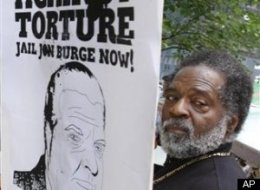
Guest – Attorney G.Flint Taylor, a graduate of Brown University and Northwestern Law School, is a founding partner of the People’s Law Office in Chicago, an office which has been dedicated to litigating civil rights, police violence, government misconduct, and death penalty cases for more than 40 years.
Guest – Attorney Ben Elson is a partner at the People’s Law Office. His practice focuses on representing victims of police and other governmental misconduct in civil rights cases, including people who have been wrongfully convicted, subjected to police brutality, and denied medical attention. He has obtained tens of millions of dollars in compensation for his clients through verdicts and settlements.
—-
Lawyers You’ll Like: Cathleen Caron – Justice In Motion
Attorneys who represent migrant workers face a host of challenges in transnational employment litigation. Some of these challenges range from not being able to obtain a visa for clients posed to begin trial but are physically back at home in Guatemala or another country, and cannot return to testify. Or clients may be entitled to past wages but their US lawyers are unable to find them once they have left the States.
For some lawyers, it’s cost-prohibitive to keep in contact or to track down clients when the case goes to trial and forgo representing them entirely.
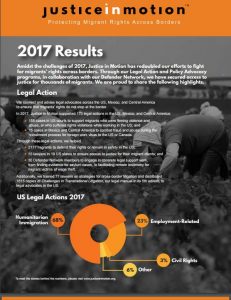
This is where the organization Justice in Motion comes in. Their unique cross-borer model helps advocates and migrants overcome these barriers to what they call portable justice. Their mission is to ensure that migrants who suffered exploitation abroad are able to access justice even if they have returned to their home countries. They connect advocates and defenders, and support the development of cases to ensure that transnational litigation is working effectively and smoothly on behalf of migrants. They play a pivotal role in persuading attorneys to work on cases with a transnational dimension, and to not forgo them because of legal or logistical obstacles. This has led to a significant increase in the number of advocates in the region providing transnational legal services to migrants. Justice In Motion 2017 Brochure
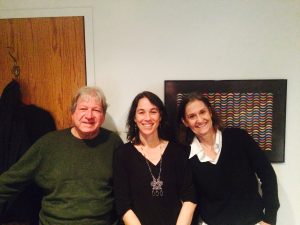
Guest – Attorney Cathleen Caron, National Lawyers Guild member, Cathleen is the founding executive director of Justice in Motion, and she’s also one of our Lawyers You’ll Like. Cathleen has more than twenty years of human rights experience in the United States and abroad. Prior to launching Justice in Motion (formerly known as Global Workers Justice Alliance), she was in East Timor where she directed a national needs assessment of the human trafficking situation for the Alola Foundation, chaired by East Timor’s First Lady.
—————

—————
Tom Roche likes this
01 May 03:55
The Population Bomb, 50 Years Later: A Conversation with Paul Ehrlich
In 1968, the best-seller “The Population Bomb,” written by Paul and Anne Ehrlich (but credited solely to Paul) warned of the perils of overpopulation: mass starvation, societal upheaval, environmental deterioration. The book was criticized at the time for painting an overly dark picture of the future. But while not all of the Ehrlich’s dire predictions have come to pass, the world’s population has doubled since then, to over seven billion, straining the planet’s resources and heating up our climate. Can the earth continue to support an ever-increasing number of humans? On its 50th anniversary, we revisit “The Population Bomb” with Paul Ehrlich.
Guest:
Paul R. Ehrlich, President, Center for Conservation Biology, Bing Professor of Population Studies, Stanford University; co-author, “The Population Bomb” (Ballantine, 1968)
This program was recorded at Stanford University.
01 May 03:55
Geo-Engineering Climate Solutions
In an emergency, we’re told to “break the glass” and grab the fire extinguisher. If we’re in the midst of a climate emergency, is there a firehose we could spray into the sky to cool down our atmosphere? It may sound like science fiction, but some climatologists endorse research into such techniques known as geo-engineering. But could tinkering with the stratosphere in this way lead to a new ice age – or worse? What group of people could be trusted with such God-like powers? Join us for a discussion of the scientific, moral, economic and technological dimensions of geo-engineering.
This program was recorded live at the Commonwealth Club of California in San Francisco.
01 May 01:26
Humans Evolved but Are Still Special
by Kenneth Miller
Tom RocheYet another example of how good scientists do bad philosophy. Does a reasonable job of demolishing the science-destroys-wonder argument (notably as given in Keats' Lamia https://en.wikipedia.org/wiki/Lamia_(poem) ) but that was done previously at length by Richard Dawkins' book 'Unweaving the Rainbow'. Net: don't waste your time.
Brown University biologist and author Ken Miller talks about his new book The Human Instinct: How We Evolved to Have Reason, Consciousness and Free Will.
-- Read more on ScientificAmerican.com


-- Read more on ScientificAmerican.com
30 Apr 04:21
AskHistorians Podcast 110 - Marxist Historiography and Contemporary Academia with w/CommieSpaceInvader
Tom Rocheappallingly weak episode--unless you know literally nothing about historiography since, say, 1800, you will learn nothing from this episode. It's just 2 guys chatting.
In today's episode we talk with u/CommieSpaceInvader about Marxist historiography and contemporary academia. This episode isn't a systematic analysis of the Marxist school within History so much as it is a broader reflection on the evolution of Marxist historiography and the ways it is perceived in contemporary academia and beyond.
29 Apr 18:31
How much is an hour worth? The war over the minimum wage – podcast
Tom Rochearticle/transcript by Peter C. Baker @ https://www.theguardian.com/news/2018/apr/13/how-much-is-an-hour-worth-the-war-over-the-minimum-wage
Some economists say it should be raised. Others say it’s already too high. But what if both sides are missing the point? Read the text version here
28 Apr 17:27
Behind the News, 4/26/18
Tom RocheCorey Pein, author of Live Work Work Work Die, on the dark side of the Silicon Valley • an anonymous sex worker on the legal dangers of SESTA/FOSTA
Behind the News, 4/26/18 - guests: Corey Pein, anonymous sex worker - Doug Henwood