Shared posts

15 Jun 05:12

Kushal Das: Curious case of image based email signatures and Kmail

Tom Roche

tool to monitor all processes for any network connection

We already talk about why HTML emails are bad, but that is the default in most of the email service providers. HTML emails means some code is getting executed and rendered on your system. Maybe on a browser, or on a desktop email client.

Many people do not use any HTML tag in their emails, but then they have fancy email signatures. A lot of time they have fancy image generated on a website and they use the generated image URL as signature. This means every time someone opened the email (with HTML rendering on) the third party company will be able to track those usages. We don't know what happens next to all of these tracking information.

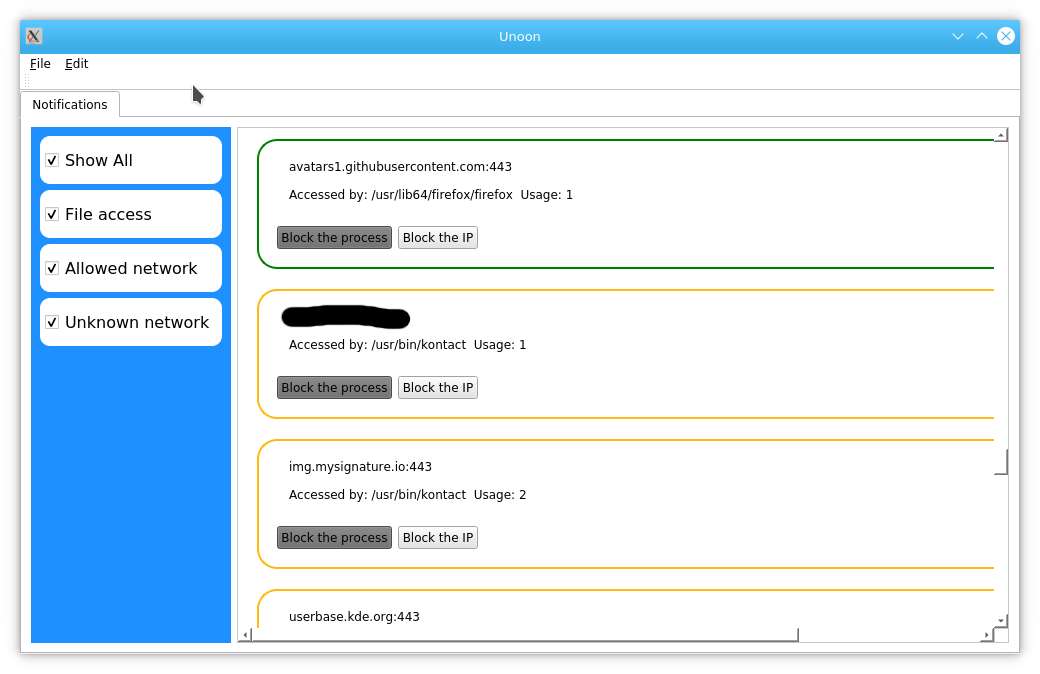
Last week I was trying out various desktop email clients available on Fedora 32, and noticed a strange thing on Kmail/Kontact, the email client of KDE. I run my Unoon tool to monitor all processes for any network connection on system. And, suddenly it popped a notification about Kmail connecting to mysignatures.io. I was surprised for a second, as Kmail also disables loading of any remote resource (say images) and does not render HTML email by default.

Screenshot of Unoon

Then I figured that if I click on reply button (the compose window), it fetches the image from the signature (or any <img> tag). This means the HTML is getting rendered somehow, even if it is not showing to the user. After I filed a bug upstream, I also pinged my friend ADE. He helped to reproduce it and also find more details on the same. Now, we are waiting for a fix. I hope this does not involve JS execution during that internal rendering.

I also checked for same behavior in Thunderbid, and it does not render in similar way.

13 Jun 15:02

Weekends with Ana Kasparian and Michael Brooks: June 6, 2020 (ft. Touré Reed)

by Jacobin magazine
Tom Roche

the Touré Reed interview is excellent, the rest (pre- and postfix) is very skippable

Every Saturday starting at 1 PM ET, Ana Kasparian and Michael Brooks broadcast live from the Jacobin YouTube channel. Ana's out this week, June 6, 2020, but we have the writer Touré Reed to discuss recent protests, Amy Cooper, and race essentialism.

Weekends on YouTube https://www.youtube.com/playlist?list=PLxlNhP2f0kULVe45TbPaF-uLuMQYMJcLk

Brooks on Twitter https://twitter.com/_michaelbrooks

Kasparian on Twitter https://twitter.com/AnaKasparian


13 Jun 14:59

The Cult of the Presenter

Tom Roche

excellent

Michael Goldfarb recounts the history of the big changes in reporting and the business of news in US journalism over the last 40 years. In this episode, the influence of news programming based around a studio-based presenter, rather than correspondents reporting from the field. Journalism is a calling. The "news" is a business. And in the difference between a calling and a business is the tension and destructive force that has marked the four decades Michael Goldfarb has spent working as a reporter, a hack. June 1 2020 marks the 40th anniversary of the founding of CNN. The 24-hour television news network completely changed first broadcast news and then all news reporting. Six months later, in January 1981, Michael Goldfarb began his career in journalism as a lowly copy aide at the Washington Post. A few weeks later Ronald Reagan was shot a mile away at a DC hotel. He observed the newsroom shift into maximum high gear. But many people stayed in the office and watched the event on CNN, which was reporting all the rumour and chaos as if it were fact. The primacy of the instant in news was established that day. It has dramatically changed the nature of the news business.
13 Jun 14:53

Spyder IDE: Thanking the people behind Spyder 4

Tom Roche

strengthening Spyder's specialized focus on scientific programming in Python

This blogpost was originally published on the Quansight Labs website.

After more than three years in development and more than 5000 commits from 60 authors around the world, Spyder 4 finally saw the light on December 5, 2019! I decided to wait until now to write a blogpost about it because shortly after the initial release, we found several critical performance issues and some regressions with respect to Spyder 3, most of which are fixed now in version 4.1.3, released on May 8th 2020.

This new release comes with a lengthy list of user-requested features aimed at providing an enhanced development experience at the level of top general-purpose editors and IDEs, while strengthening Spyder's specialized focus on scientific programming in Python. The interested reader can take a look at some of them in previous blog posts, and in detail in our Changelog. However, this post is not meant to describe those improvements, but to acknowledge all people that contributed to making Spyder 4 possible.

Spyder 4 is the first version developed with financial support from multiple companies and organizations, as well as donations by the international user community. However, as a project, we couldn't have been able to reach the level of maturity needed to receive and handle that support without the pivotal opportunities Travis Oliphant, former CEO of Anaconda and current leader of Quansight, gave me to work in Scientific Python. Thanks to him, I became part of Anaconda Inc. in 2015; I was able to hire a small small team to improve Spyder within Anaconda in late 2016; and I was hired by Quansight to work solely on Spyder in 2018. As with other projects in our ecosystem, such as Bokeh, Dask and Numba, Spyder benefited immensely from Travis' trust in the role these efforts and ours could play in the future. He certainly believed in the vision their maintainers worked so hard to make a reality, even if their beginnings were humble and their chances of survival uncertain. Therefore, my first big acknowledgment is to Travis: thanks for giving us a chance!

I also want to thank our community for its continued support. As I've witnessed during my years as Spyder's lead developer, many newbies and veterans alike keep choosing Spyder as their primary tool for scientific programming in Python. It's really you, the members of this fantastic community, which keep Spyder relevant in a highly competitive field by using and contributing back to it. Furthermore, when the future looked grim, after my team and I were let go from Anaconda at the end of 2017 (not by Travis' decision), a lot of users came to our rescue by making donations through our Open Collective page. That, and a NumFOCUS development grant we received the next year, filled us with confidence and allowed us to continue with Spyder's development in 2018, even after losing part of our team in the process.

Last year it was also a pleasant surprise to learn that several companies were interested in seeing Spyder prosper and thrive. Through Quansight Labs and its Community Work Order concept, we were able to sign contracts with two of them: TDK-Micronas and Kite. Their support was critical to finish Spyder 4 because it allowed me to hire most of my old Anaconda team back, plus two new additions, to work full-time on the project. Therefore, I can't thank them enough for showing up just at the right time!

And finally, even when I am often seen as the public face of Spyder, due to my presence in our issue tracker and Stack Overflow, it's really the Spyder team that is in charge of implementing new features and fixing most bugs. So my last round of acknowledgments goes to them. I was fortunate enough to convince some of the most talented Colombian software developers to work for the project, and to attract the interest of several other equally accomplished developers from around the world. All of them did a hell of a job in this release!

Jean-Sébastien Gosselin contributed our new Plots pane in its entirety; Quentin Peter did a complete re-architecting of our IPython console, which enabled numerous improvements to our debugger; Jitse Niesen added auto-saving functionality to our editor; Brian Olsen contributed the initial implementation of the runcell command; and CAM Gerlach made significant improvements to our documentation. Gonzalo Peña-Castellanos helped us to greatly improve the user experience of code completion and linting in the editor, implemented most of the enhancements to the Files pane, and refactored and improved our configuration system; Edgar Margffoy single-handedly created a client to support the same protocol used by VSCode to provide completion and linting for lots of programming languages, added code snippet completions and vastly improved code folding in the editor; Daniel Althviz developed the necessary infrastructure to install and use Kite smoothly within Spyder, and added the new object viewer to the Variable Explorer. Finally, our junior developers, Stephannie Jimenez and Juanita Gomez, although still finding their way around our complex codebase, managed to make important contributions, such as improving the icons we use per file type in Files (Juanita), and allowing users to run code in an external system terminal on macOS (Stephannie).

I hope you all enjoy the results of this massive effort! And happy Spydering!!!
12 Jun 04:24

Foreign Correspondent

Tom Roche

excellent

Michael Goldfarb recounts the history of the big changes in reporting and the business of news in US journalism over the last 40 years. In this episode, he talks about building a career reporting as a foreign correspondent and watching as the American news business stopped covering foreign news. Journalism is a calling. The "news" is a business. And in the difference between a calling and a business is the tension and destructive force that has marked the four decades Michael Goldfarb has spent working as a reporter, a hack. June 1 2020 marks the 40th anniversary of the founding of CNN. The 24-hour television news network completely changed first broadcast news and then all news reporting. Six months later, in January 1981, Michael Goldfarb began his career in journalism as a lowly copy aide at the Washington Post. A few weeks later Ronald Reagan was shot a mile away at a DC hotel. He observed the newsroom shift into maximum high gear. But many people stayed in the office and watched the event on CNN, which was reporting all the rumour and chaos as if it were fact. The primacy of the instant in news was established that day. It has dramatically changed the nature of the news business.
11 Jun 14:32

Frederick Douglass

Tom Roche

rerun

In a programme first broadcast in 2018, Melvyn Bragg and guests discuss the life and ideas of Frederick Douglass, who was born into slavery in Maryland in 1818 and, once he had escaped, became one of that century's most prominent abolitionists. He was such a good orator, his opponents doubted his story, but he told it in grim detail in 1845 in his book 'Narrative of the Life of Frederick Douglass, an American Slave.' He went on to address huge audiences in Great Britain and Ireland and there some of his supporters paid off his owner, so Douglass could be free in law and not fear recapture. After the Civil War and the abolition of slavery, he campaigned for equal rights for African-Americans, arguing against those such as Lincoln who had wanted freed slaves to leave America and found a colony elsewhere. "We were born here," he said, "and here we will remain." With Celeste-Marie Bernier Professor of Black Studies in the English Department at the University of Edinburgh Karen Salt Assistant Professor in Transnational American Studies at the University of Nottingham And Nicholas Guyatt Reader in North American History at the University of Cambridge Producer: Simon Tillotson.
11 Jun 14:29

New Business Models: Debt and Gannett

Tom Roche

Goldfarb excellent as usual

This essay looks at how in the 1980s one man, Frank Gannett, built America's biggest newspaper chain and founded USA Today Michael Goldfarb recounts the history of the big changes in reporting and the business of news in US journalism over the last 40 years. Journalism is a calling. The "news" is a business. And in the difference between a calling and a business is the tension and destructive force that has marked the four decades Michael Goldfarb has spent working as a reporter, a hack. June 1 2020 marks the 40th anniversary of the founding of CNN. The 24-hour television news network completely changed first broadcast news and then all news reporting. Six months later, in January 1981, Michael Goldfarb began his career in journalism as a lowly copy aide at the Washington Post. A few weeks later Ronald Reagan was shot a mile away at a DC hotel. He observed the newsroom shift into maximum high gear. But many people stayed in the office and watched the event on CNN, which was reporting all the rumour and chaos as if it were fact. The primacy of the instant in news was established that day. It has dramatically changed the nature of the news business.
11 Jun 14:29

The Primacy of the Instant: CNN and Computers

Tom Roche

Goldfarb excellent as usual

Michael Goldfarb recounts the history of the big changes in reporting and the business of news in US journalism over the last 40 years. Journalism is a calling. The "news" is a business. And in the difference between a calling and a business is the tension and destructive force that has marked the four decades Michael Goldfarb has spent working as a reporter, a hack. June 1 2020 marks the 40th anniversary of the founding of CNN. The 24-hour television news network completely changed first broadcast news and then all news reporting. Six months later, in January 1981, Michael Goldfarb began his career in journalism as a lowly copy aide at the Washington Post. A few weeks later Ronald Reagan was shot a mile away at a DC hotel. He observed the newsroom shift into maximum high gear. But many people stayed in the office and watched the event on CNN, which was reporting all the rumour and chaos as if it were fact. The primacy of the instant in news was established that day. It has dramatically changed the nature of the news business.
10 Jun 16:00

The Lessons of James Baldwin & The Kerner Commission

10 Jun 15:59

The History of Tear Gas

Tom Roche

repeat

10 Jun 15:43

Elizabeth Anderson on 'Let's Talk'

Tom Roche

you've heard all this before

In this episode of the Philosophy Bites podcast, recorded before the Covid-19 lockdowns, the political philosopher Elizabeth Anderson explains why we need to be prepared to talk more, even with people with whom we strongly disagree.

10 Jun 15:42

Philip Goff on Galileo and Consciousness

Tom Roche

interesting talk but very unconvincing

Philip Goff discusses some of Galileo's insights into the nature of matter. He then goes on to discuss his own view about consciousness, panpsychism. Goff believes that matter is conscious at some level.

09 Jun 02:48

Everything you ever wanted to know about Nazi Germany, but were afraid to ask

Tom Roche

excellent, esp on rise to and consolidation of power

In the latest of our series tackling the big questions on major historical topics, historian Richard J Evans responds to listener queries and popular search enquiries about the Third Reich. Historyextra.com/podcast


See acast.com/privacy for privacy and opt-out information.

08 Jun 21:19

A legendary pirate

Tom Roche

excellent

Bestselling author Steven Johnson talks to us about his new book, Enemy of All Mankind, which tells the story of the infamous 17th-century English pirate Henry Avery, whose audacious raid on an Indian treasure ship sparked a global manhunt. Historyextra.com/podcast


See acast.com/privacy for privacy and opt-out information.

07 Jun 17:28

Explaining the Insurrection Act of 1807 & Looking Back on Nixon’s Law and Order Campaign

07 Jun 17:22

277- CIA Spies & Julian Assange's baby's stool samples with Max Blumenthal

Tom Roche

Blumenthal is VERY EXCELLENT, as usual

Journalist Max Blumenthal talks about his latest investigation into the way Sheldon Adelson and the CIA worked together to spy on Julian Assange, thwart his asylum plan and analyze his baby's stool. Plus how Bernie should have responded to media attacks, what the Left needs to do if it wants to gain power, how a Biden presidency would compare to a Trump one, Michael Flynn and Syria.
07 Jun 17:18

Rethinking The Migration Of All Living Things

When living things cross into new territory, they are often viewed as threats. But science writer Sonia Shah, who has written a new book — 'The Next Great Migration' — says the "invaders" are just following biology. Shah talks about the migration of people, animals and plants (especially due to climate change), and our misconceptions about "belonging."
05 Jun 13:43

The capture of a genocide financier

Tom Roche

interesting talk from Narelle Fletcher @ UTS but VERY anti-French

Business tycoon Félicien Kabuga had been on the run for 26 years, since he was indicted of using his wealth to fund Rwanda’s 1994 genocide. Will his dramatic arrest in Paris actually lead to a trial?
05 Jun 13:36

Alex Schroeder: Gemini Write

by Alex Schroeder
Tom Roche

https://gemini.circumlunar.space/docs/faq.txt
> You may think of Gemini as "the web, stripped right back to its essence" or as "Gopher, souped up and modernised a little", depending upon your perspective.

My new package gemini-write can be used to edit this site via my Gemini Write proposal.

In order to browse Gemini sites, I use Elpher.

In order to get Gemini highlighting, I use Gemini Mode.

Once you have all three packages installed, visit this site, find a page you want to edit, follow the link to the “Raw text” at the bottom and then use e to edit it. The raw pages are the only pages that can be edited. Use C-c C-c to save, use C-c C-k to cancel. Customize elpher-gemini-tokens to set passwords, tokens, or whatever you need in order to edit sites.

Currently this only works on this site, I guess.

And I currently don’t have a markup rule to render Gemini links, but I’ll add that as soon as somebody posts one. 😀

Test it here: Gemini Test.

Tags: Web Gemini Emacs Elpher Wiki

03 Jun 05:51

AskHistorians Podcast Episode 149 - The Opium Wars part2

Tom Roche

excellent

This is the second part of the discussion between myself, /u/Steelcan909, and /u/EnclavedMicrostate, wherein we discuss the Opium Wars themselves, the actual role of opium in the wars, and the fallout that these events had on subsequent Chinese and European history.

03 Jun 05:51

AskHistorians Podcast Episode 148 - The Opium Wars part 1

Tom Roche

excellent

Welcome to the first of our two part series on the Opium Wars!  Today I, /u/Steelcan909, am joined by /u/EnclavedMicrostate in a discussion about the development of the opium trade and the tensions between the Qing government and British merchants that erupted into two wars between these Imperial giants. 

03 Jun 05:49

Saturday lecture: Medieval food

Tom Roche

excellent, comprehensive (though, as usual for History Extra, "medieval" == "late medieval England")

In the second of five talks from our virtual Medieval Life and Death Day event, historian Chris Woolgar presents a broad survey of what, when and how people ate during the middle ages. Historyextra.com/podcast


See acast.com/privacy for privacy and opt-out information.

31 May 03:13

Deep Breaths: How Breathing Affects Sleep, Anxiety & Resilience

Humans typically take about 25,000 breaths per day — often without a second thought. But the COVID-19 pandemic has put a new spotlight on respiratory illnesses and the breaths we so often take for granted. We talk with journalist James Nestor about why breathing through your nose is better than breathing through your mouth, snoring, and how breath work can affect your overall health. His book is 'Breath: The New Science of a Lost Art.'

Kevin Whitehead reviews a new album of Transylvanian folk songs by the trio Lucian Ban, John Surman and Mat Maneri.
31 May 01:48

Aaron Mate on New #Russiagate Bombshells, Plus More From the Stupid Bay of Pigs

Tom Roche

VERY EXCELLENT Maté interview (pre-interview is good but not great)

Aaron Mate of the Grayzone and 'Pushback' joins the show to talk recent developments in #Russiagate, how it’s helping Trump, plus Matt and Katie continue to dive into the Stupid Bay of Pigs

Merch Link: https://teespring.com/stores/useful-idiots

Learn more about your ad choices. Visit megaphone.fm/adchoices

31 May 01:47

The Case Against Censoring Trump and Palestinians With Ali Abunimah + George Floyd and Amy Cooper

Tom Roche

VERY EXCELLENT, both the pre-interview (which also delves into the Biden-Charlamagne [sic] interview) and Abunimah interview

Ali Abunimah, co-founder of The Electronic Intifada, joins the show to discuss the problems with social media censorship. Katie and Matt discuss the horrific George Floyd story, and the similarities with Eric Garner


Merch Link: https://teespring.com/stores/useful-idiots

Learn more about your ad choices. Visit megaphone.fm/adchoices

29 May 15:55

Rebuilding America post the Trumpocalypse

Tom Roche

David Frum -> skip

How far-reaching will the damage caused by the Trump Presidency extend? Looking past the next Presidential election, what changes need to take place to ensure the US government is never again held ransom to political polarisation?
29 May 15:50

- - Doug Henwood

Tom Roche

[Jodi Dean @ Hobart and William Smith C](https://www.hws.edu/academics/polisci/facultyProfile.aspx?facultyID=95), [Asad Haider @ New School and Jacobin](https://www.newschool.edu/nssr/faculty/asad-haider/), and [Leo Panitch @ York U Toronto and Socialist Register](https://www.versobooks.com/authors/357-leo-panitch): 21 May 2020 virtual panel sponsored by [Red May, Seattle](https://www.redmayseattle.org/): on the current crisis, esp which strategies the Left should follow to derail the next push for more austerity (see [full session video](https://www.youtube.com/watch?v=z2vvBz9ObdM))

29 May 02:31

Fresh audio product

by Doug Henwood
Tom Roche

https://www.youtube.com/watch?v=z2vvBz9ObdM (edited)
> streamed live on May 21, 2020
...
> Things seemed to be looking up on the left. People started to wonder: are the zombie years finally over? Will French strikes and street battles in Chile light sparks around the world or will their effects be merely local? What are the prospects in the USA for the movement coalescing around Sanders and the DSA? Then suddenly the roof collapsed. In three stunning days, Sanders went from unstoppable front-runner to toast. Before anyone could recover enough of their senses to reflect on what just happened, Coronavirus sent much of the U.S.A. into lockdown and shelter-in-place, bursting the latest economic bubble, sending the nation into a probable depression with projected 30% unemployment. Something is happening here, in the words of Buffalo Springfield: what it is ain’t exactly clear. So, let’s join Doug, Jodi, Leo and Asad for a wide-ranging panorama of the current moment: what strategies should the Left follow to derail the next push for more austerity?

Just added to my radio archive (click on date for link):

May 28, 2020 Excerpts from a virtual panel sponsored by Red May, Seattle: Jodi Dean, Leo Panitch, and Asad Haider on the current crisis, with lots about how socialists should engage with the state (full session, with video, here)

28 May 16:46

Zeno's Paradoxes

Tom Roche

rerun (from 2016)

Melvyn Bragg and guests discuss Zeno of Elea, a pre-Socratic philosopher from c490-430 BC whose paradoxes were described by Bertrand Russell as "immeasurably subtle and profound." The best known argue against motion, such as that of an arrow in flight which is at a series of different points but moving at none of them, or that of Achilles who, despite being the faster runner, will never catch up with a tortoise with a head start. Aristotle and Aquinas engaged with these, as did Russell, yet it is still debatable whether Zeno's Paradoxes have been resolved. With Marcus du Sautoy Professor of Mathematics and Simonyi Professor for the Public Understanding of Science at the University of Oxford Barbara Sattler Lecturer in Philosophy at the University of St Andrews and James Warren Reader in Ancient Philosophy at the University of Cambridge Producer: Simon Tillotson
27 May 14:00

Ep 166 The Russiagate Walls Are Closing In feat Aaron Maté

Tom Roche

excellent

Guest: Aaron Maté. Key allegations from the Russiagate conspiracy have now officially collapsed with the release of transcripts from witness interviews that were conducted over the past three years. Now the walls are truly closing in and not in the way the Trump-Russia obsessed media presented it in the past. Key Obama administration officials, under oath, said they had no evidence of collusion between the Trump campaign and Russia. Perhaps the biggest blow was delivered by Crowdstrike, the private cybersecurity firm that served as a critical source on the Russian hacking claim. We now know that Crowdstrike’s president told Congress more than two years ago that it had no real evidence that Russian hackers exfiltrated emails and passed them to Wikileaks. Aaron notes, in an understated manner, that this “raises new questions about whether Special Counsel Robert Mueller, intelligence officials and Democrats misled the public.”  At the end of the interview, there’s an extra/bonus segment for patrons on the question of which forces were driving the Russiagate conspiracy. You can find that at Patreon, Episode 166 EXTRA. 

Aaron is the host of the Pushback With Aaron Maté show at the Grayzone and a contributing writer at The Nation

FOLLOW Aaron on Twitter @aaronjmate, subscribe to his show Pushback with Aaron Maté at the Grayzone channel on YouTube and support him at Patreon.

Around the Empire is listener supported, independent media. Pitch in at Patreon: patreon.com/aroundtheempire or paypal.me/aroundtheempirepod. Find all links at aroundtheempire.com

SUBSCRIBE on YouTube. FOLLOW @aroundtheempire and @joanneleon.  SUBSCRIBE/FOLLOW on iTunes, iHeart, Spotify, Google Play, Facebook or on your preferred podcast app.

Recorded on May 21, 2020. Music by Fluorescent Grey.

Reference Links:

  1. Hidden Over 2 Years: Dem Cyber-Firm's Sworn Testimony It Had No Proof of Russian Hack of DNC, Aaron Maté 
  2. House Intel transcripts
  3. 5/7/20 Remarks by President Trump in Meeting with Governor Abbott of Texas
  4. 5/8/20 President Trump Meets with Republican Members of Congress