I had such a nice time interviewing Diana about her podcast and passion of helping people find personalized and comfortable ways to take care of the selves in mind, body, and spirit. I talk with her about yoga, reiki, and the Celtics! and as always we talk about it in the context of New England.
She also interviewed me for her show! So check that out and the rest of her work online.
Website
I have also started a Patreon Page just to cover subscription costs. So if you want to support that and get bonus episodes about me and my summer and BEYOND!!!
CLICK HERE
Shared posts
04 Jun 17:50
#6 Pilgrims Podcast Pals: Diana of Watered Grass Podcast
04 Jun 17:50
#8 Pilgrims Digress: Pilgrim's Podcast Pals with Cameron Autry of the Southern Maine Report
In this episode I am so excited to be joined with Cameron. His show, the Southern Maine Report, is an insightful and interesting look at the most populous part of Maine. He is from the south but, like me, an alien to New England. We talk about his show, some of the issues he is reporting on and the importance of local involvement.
https://www.thesouthernmainereport.com/
08 Apr 13:07
Rodney Dangerfield
"I haven't spoken to my wife in years. I didn't want to interrupt her."
02 Apr 13:09
Pilgrims Digress Episode 3: Pilgrims Pedagogy
MintonHere is me talking about ED Hirsch with a close colleague of mine.
Pedagogy is a fancy word for the art/science of teaching. In this episode the Pilgrims talks with a fellow educator and good friend "D". WE talk about "core knowledge" and "what every American should know"
29 Mar 15:01
The Alt-Right Playbook: Always a Bigger Fish
Minton,
patreon: http://patreon.com/InnuendoStudios
tumblr: http://innuendostudios.tumblr.com
twitter: https://twitter.com/InnuendoStudios
transcript: http://innuendostudios.tumblr.com/pos...
research: http://innuendostudios.tumblr.com/pos...
Your Conservative Friend played by Real Good Dude Steve Shives: https://www.youtube.com/channel/UCD4q...
The primary source for this video is The Reactionary Mind by Corey Robin, which I livetweeted the entirety of here: https://twitter.com/InnuendoStudios/s...
Minton likes this
23 Mar 17:01
Pilgrim's Digress Episode 1: An Introduction
MintonSoft opening. More episodes forthcoming.
Hi thanks for tuning in! This Podcast is about New England. Its a great region of the country. I am so excited to share my experiences in New England and to talk with the many amazing people I have met over the years!
Please share with your friends and on Social Media.
www.pilgrimsdigress.com
@PilgrimsDigress Twitter
@PilgrimsDigressne Instagram
18 Mar 13:03
It’s Basically Just Immoral To Be Rich | Current Affairs
Here is a simple statement of principle that doesn’t get repeated enough: if you possess billions of dollars, in a world where many people struggle because they do not have much money, you are an immoral person. The same is true if you possess hundreds of millions of dollars, or even millions of dollars. Being extremely wealthy is impossible to justify in a world containing deprivation.
Even though there is a lot of public discussion about inequality, there seems to be far less talk about just how patently shameful it is to be rich. After all, there are plenty of people on this earth who die—or who watch their loved ones die—because they cannot afford to pay for medical care. There are elderly people who become homeless because they cannot afford rent. There are children living on streets and in cars, there are mothers who can’t afford diapers for their babies. All of this is beyond dispute. And all of it could be ameliorated if people who had lots of money simply gave those other people their money. It’s therefore deeply shameful to be rich. It’s not a morally defensible thing to be.
To take a U.S. example: white families in America have 16 times as much wealth on average as black families. This is indisputably because of slavery, which was very recent (there are people alive today who met people who were once slaves). Larry Ellison of Oracle could put his $55 billion in a fund that could be used to just give houses to black families, not quite as direct “reparations” but simply as a means of addressing the fact that the average white family has a house while the average black family does not. But instead of doing this, Larry Ellison bought the island of Lanai. (It’s kind of extraordinary that a single human being can just own the sixth-largest Hawaiian island, but that’s what concentrated wealth leads to.) Because every dollar you have is a dollar you’re not giving to somebody else, the decision to retain wealth is a decision to deprive others.
Note that this is a slightly different point than the usual ones made about rich people. For example, it is sometimes claimed that CEOs get paid too much, or that the super-wealthy do not pay enough in taxes. My claim has nothing to do with either of these debates. You can hold my position and simultaneously believe that CEOs should get paid however much a company decides to pay them, and that taxes are a tyrannical form of legalized theft. What I am arguing about is not the question of how much people should be given, but the morality of their retaining it after it is given to them.
Many times, defenses of the accumulation of great wealth depend on justifications for the initial acquisition of that wealth. The libertarian-ish philosopher Robert Nozick gave a well-known hypothetical that is used to challenge claims that wealthy people did not deserve their wealth: suppose millions of people enjoy watching Wilt Chamberlain play basketball. And suppose, Nozick wrote, that each of these people would happily give Wilt Chamberlain 25 cents for the privilege of watching him play basketball. And suppose that through the process of people paying Wilt Chamberlain, he ended up with millions of dollars, while each of his audience members had (willingly) sacrificed a quarter. Even though Wilt Chamberlain is now far richer than anyone else in the society, would anyone say that his acquisition of wealth was unjust?
Libertarians use this example to rebut attempts to say that the rich do not deserve their wealth. After all, they say, the process by which those rich people attained their wealth is totally consensual. We’d have to be crazy Stalinists to believe that I shouldn’t have the right to pay you a quarter to watch you play basketball. Why, look at Mark Zuckerberg. Nobody has to use Facebook. He is rich because people like the product he came up with. Clearly, his wealth is the product of his own labor, and nobody should deprive him of it. People on the right often defend wealth along these lines. I earned it, therefore it’s not unfair for me to have it.
But there is a separate question that this defense ignores: regardless of whether you have earned it, to what degree are you morally permitted to retain it? The question of getting and the question of keeping are distinct. As a parallel: if I come into possession of an EpiPen, and I encounter a child experiencing a severe allergic reaction, the question of whether I am obligated to inject the child is distinguishable from the question of whether I obtained the pen legitimately. It’s important to be clear about these distinctions, because we might answer questions about systems differently than we answer questions about individual behavior. (“I don’t hate capitalism, I just hate rich people” is a perfectly legitimate and consistent perspective.)
I therefore think there is a sort of deflection that goes on with defenses of wealth. If we find it appalling that there are so many rich people in a time of need, we are asked to consider questions of acquisition rather than questions of retention. The retention question, after all, is much harder for a wealthy person to answer. It’s one thing to argue that you got rich legitimately. It’s another to explain why you feel justified in spending your wealth upon houses and sculptures rather than helping some struggling people pay their rent or paying off a bunch of student loans or saving thousands of people from dying of malaria. There may be nothing unseemly about the process by which a basketball player earns his millions (we can debate this). But there’s certainly something unseemly about having those millions.
One of the reasons wealthy people rarely have to defend their choices is that “shaming the rich” is not really compatible with any of the predominating political perspectives. People on the right obviously believe that having piles of wealth is fine. Centrist Democrats can’t attack rich people for being rich because they’re increasingly a party for rich people. And socialists (this is the interesting case) tend to believe that questions about the morality of having wealth are relatively unimportant, because they are far more interested in how the state divides up wealth than in what individuals choose to do with it. As G.A. Cohen points out in If You’re an Egalitarian, How Come You’re So Rich?, Marxists have been concerned with eliminating capitalism generally, which has kept them from thinking about questions of the justice of people’s personal choices. After all, if the problem of inequality is systemic, and rich people do not really make choices but pursue their class interests, then asking whether it is moral for wealthy people to retain their wealth is both irrelevant (because individual decisions don’t affect the systemic problem) and incoherent (because the idea of a moral or immoral capitalist makes no sense in the Marxist framework). In fact, there is a certain leftist argument that giving away wealth in the form of charity is actually bad, because it allows capitalism to look superficially generous without actually altering the balance of power in the society. “The worst slave owners were those who were kind to their slaves, because they prevented the core of the system from being realized by those who suffered from it,” as Oscar Wilde ludicrously put it. (In their book Blueprints for a Sparkling Tomorrow, Nimni and Robinson parody this perspective by portraying two leftist academics who insist on being rude to servers in restaurants, on the grounds that being polite to them obscures the true brutality of class relations.)
But I think it is a mistake to avoid inquiring into the moral justifications for wealth. This is because I think individual decisions do matter, because if I am an extremely wealthy man I could be helping a lot of people who I am choosing not to help. And for those people, at least, it makes a difference when a billionaire decides to retain their wealth rather than rid themselves of it.
Of course, when you start talking about whether it is moral to be rich, you end up heading down some difficult logical paths. If I am obligated to use my wealth to help people, am I not obligated to keep doing so until I am myself a pauper? Surely this obligation attaches to anyone who consumes luxuries they do not need, or who has some savings that they are not spending on malaria treatment for children. But the central point I want to make here is that the moral duty becomes greater the more wealth you have. If you end up with a $50,000 a year or $100,000 a year salary, we can debate what amount you should spend on helping other people. But if you earn $250,000 or 1 million, it’s quite clear that the bulk of your income should be given away. You can live very comfortably on $100,000 or so and have luxury and indulgence, so anything beyond is almost indisputably indefensible. And the super-rich, the infamous “millionaires and billionaires”, are constantly squandering resources that could be used to create wonderful and humane things. If you’re a billionaire, you could literally open a hospital and make it free. You could buy up a bunch of abandoned Baltimore rowhouses, do them up, and give them to families. You could help make sure no child ever had to go without lunch.
We can define something like a “maximum moral income” beyond which it’s obviously inexcusable not to give away all of your money. It might be 5o thousand. Call it 100, though. Per person. With an additional 50 allowed per child. This means two parents with a child can still earn $250,000! That’s so much money. And you can keep it. But everyone who earns anything beyond it is obligated to give the excess away in its entirety. The refusal to do so means intentionally allowing others to suffer, a statement which is true regardless of whether you “earned” or “deserved” the income you were originally given. (Personally, I think the maximum moral income is probably much lower, but let’s just set it here so that everyone can agree on it. I do tend to think that moral requirements should be attainable in practice, and a $30k threshold would actually require people experience some deprivation whereas a $100k threshold indisputably still leaves you with an incredibly comfortable lifestyle better than almost any other had by anyone in history.)
Of course, wealthy people do give away money, but so often in piecemeal and self-interested and foolish ways. They’ll donate to colleges with huge endowments to get needless buildings built and named after them. David Geffen will pay to open a school for the children of wealthy university faculty, and somehow be praised for it. Mark Zuckerberg will squander millions of dollars trying to fix Newark’s schools by hiring $1000-a-day-consultants. Brad Pitt will try to build homes for Katrina victims in New Orleans, but will insist that they’re architecturally cutting-edge and funky looking, instead of just trying to make as many simple houses as possible. Just as the rich can’t be trusted to spend their money well generally, they’re colossally terrible at giving it away. This is because so much is about self-aggrandizement, and “philanthropy” is far more about the donor than the donee. Furthermore, if you’re a multi-billionaire, giving away $1 billion is morally meaningless. If you’ve got $3 billion, and you give away 1, you’re still incredibly wealthy, and thus still harming many people through your retention of wealth. You have to get rid of all of it, beyond the maximum moral income.
The central point, however, is this: it is not justifiable to retain vast wealth. This is because that wealth has the potential to help people who are suffering, and by not helping them you are letting them suffer. It does not make a difference whether you earned the vast wealth. The point is that you have it. And whether or not we should raise the tax rates, or cap CEO pay, or rearrange the economic system, we should all be able to acknowledge, before we discuss anything else, that it is immoral to be rich. That much is clear.
Minton likes this
13 Mar 12:13

Pizza Hut’s Book-It Program Is Still Around
by Kim Kelly on Skillet, shared by Kim Kelly to Lifehacker
MintonHoly Shit
As a bookish, curious kid growing up in a rural, working class area in the 90s, my life revolved around three things: my soccer team, the library, and Pizza Hut. The latter two were intrinsically connected for reasons I will explain shortly (and the first certainly helped burn off the calorific aftereffects of the…
Minton likes this
29 Nov 01:43
A Metaphysical Defense of Free Will
by Greg Boyd
Warning: As the title of this post may have already suggested, this post is a bit heady – and a bit long. I’m going to get into some rather tall metaphysical grass as I go about defending free will. But for those who are interested in the free will debate and who are willing to tax their brain a bit, this post may prove worth the time and effort.
First a little background. For the last three months I’ve been involved in a friendly e-mail debate with a brilliant physicist who was once a Christian but who became an atheist several years ago when he concluded that free will was an illusion. I’ll refer to my friend as K, shamelessly borrowing from Kalfka’s great novel, The Castle.
K’s reasoning was that all events, including people’s “free” decisions, have antecedent causes that determine them, or they happen capriciously. But an event that is either determined or that happens capriciously is not free. Hence, K concluded, the concept of morally responsible free will is incoherent.
As an aside, early on in our correspondence I pointed out to K that his conclusion did not necessarily require him to reject Christianity, for some Christians (Calvinists) also deny that people have free will. But K responded that he’d rather be an atheist than bow his knee to a God who predestines all the hideous evil we find in our world. I had to admit that his stance was morally commendable.
In K’s last email to me, he argued that our sense of being free morally responsible agents was an illusion. In fact, he argued,
Virtually all human experiences are illusions…Color, to use one example, does not exist outside of the human brain….It just so happens that the receptors in our eyes are tuned to resonate with EM waves in the frequency band which we call “visible light”.
K argued that we evolved the ability to see color because it was useful. The same is true for all our sense experiences. And, in K’s view, the same holds true for all our internal experiences. We evolved the inner illusion of being free and morally responsible because it was evolutionarily advantageous. What follows is part of my response to K’s argument.
So, K, you say that “virtually all human experiences are illusions,” and you illustrate this (for example) with color. Since color results from the interaction of our eyes with light and has no reality independently of this interaction, you contend that colors “are not ontologically real things.” I would like to raise two objections to your way of assessing what is and is not “ontologically real,” and then I’ll flesh out the implications this has for our assessment of the ontological reality of free will.
First, K, can you see that you arrive at this conclusion only because you assume that particle physics tells us the “real story” about what is and is not “real”? But why should we assume this perspective? Physics gives us one perspective on things, but why privilege this perspective over all other perspectives? Yes, physics tells us that the rainbow wouldn’t exist unless our eyes had the qualities they have, empowering them to interact with sunlight in such and such ways. But why conclude on this basis that the rainbow isn’t “ontologically real”?
I would argue that the rainbow is as “real” as sunlight and human eyes. In fact, I would define the reality of the rainbow as the disposition of sunlight to appear in such and such ways to visual receptors with such and such qualities and in such and such conditions. Why should the fact that this disposition is only actualized in such and such specific circumstances render the rainbow “unreal,” for this much is true of all reality.
The final thing that can be said about every distinct thing is that it is what it is by virtue of how it is disposed to interact with every other distinct thing in such and such conditions. We can wonder what X would be like in isolation from everything else – what Kant called the ding an sich (“thing-in-itself”) – but we can form no conception of it for, among other considerations, we can only conceive of X by imagining ourselves interacting with X! Which brings me to my second objection.
It seems to me that this holds as true in physics as it does for everything else. We only know particles by virtue of interacting with them (which generated Heisenberg’s Uncertainty Principle, as you know). What it means to be particle X is, at its base, nothing more than this: we generate such and such responses on our measuring devices in such and such circumstances. When we refer to particle X, all we mean is that reality is disposed to act in such and such ways under such and such conditions as measured by our devices. And notice, our measuring devices and measurements are nothing more than the fact that reality is disposed to interact with our senses in such and such ways and under such and such conditions.
You see where this is going, don’t you K? If we slap the “illusion” label on everything that is “real” only by virtue of our interacting with it, then we have to accept that everything physics deals with is also an illusion. Unfortunately, this was the standard of reality you appealed to when you judged virtually all human experience to be an illusion. And so, K, it seems to me your reasoning process has undermined your standard of reality against which everything else was judged an illusion, thus leaving you with no criteria to assess anything, including human experience, to be an illusion.
In short, K, I would argue that your perspective is a) arbitrary, inasmuch as it privileges one perspective (physics) on reality over other perspectives, and 2) self-defeating, inasmuch as it saws off the only branch of reality you had to sit on.
Allow me to offer up for your consideration an alternative approach, which I’ve already hinted at. Instead of starting from a position that leads us to conclude everything that is disposed to interact with us is an illusion, why not start with the assumption that everything that is disposed to interact with us is real? In fact, I suggest we define “reality” as the set of all interactional dispositions.
This is, after all, all we really know. To know X is to know how X is disposed to interact with every other distinct thing in such and such conditions. We might call this perspective a phenomenology of interactive dispositions, and if we assume this perspective, we can see that there is no basis for privileging one set of interactional dispositions (physics) as telling “the real story” and then judging all other sets of interactional dispositions to be “illusions.” There is only reality, which is to say, there are only interactional dispositions.
This doesn’t mean we can’t talk any longer about “illusions,” such as when a child imagines they’re seeing a ghost lurking in the corner of their bedroom. But “illusion” must always be contextually defined. When we say the ghost is an “illusion,” we mean that no other person would see it if they were in the bedroom. The way reality is disposed to interact with this child in these conditions doesn’t correspond to the way reality is disposed to interact with all other people in those or similar conditions. Hence we conclude that things are going on in the child’s mind that caused him to see this “illusion”. To be sure, the ghost is real, just real in a way that fails to correspond to everyone else’s perception of reality, and thus is defined, in a social context, as “illusory.”
But by the same token, when everyone experiences the same thing in the same or similar conditions, this must be accepted as real. And since everybody (even determinists) experience themselves as free moral agents, this means that free will is real. If the perspective I’m advocating is accepted, it entails that our experience of ourselves as agents who originate new lines of causation – who make choices that are neither pre-determined nor random – must be allowed to form our understanding of reality as much as the perspective of physics.
To make the same point another way, within the metaphysical framework I’m advocating, it would be arbitrary to assume that the way reality is disposed to interact with humans that we call “being a free morally responsible agent” can be adequately understood by reducing it down to the framework of the interactional dispositions that define physics. This perspective, in other words, bucks up against the foundational Enlightenment reductionist assumption that the we only understand X when we’ve reduced it to its smallest constituent parts.
This assumption is at work when you insist that determinism and capriciousness exhaust the possibilities (based on the assumption that physics tells “the real story”), which is tantamount to assuming that morally responsible free will doesn’t exist. But K, you experience yourself as an originator of new lines of causation that is neither predetermined nor random. While we can’t fully understand it within the framework of physics, that experience is as real as anything could be! Indeed, it’s at the heart of your experience of being human!
Yet, your reductionistic Enlightenment assumption requires you to force this experience of freedom into the Procrustean bed of antecedent causes and to thus judge it to be illusory. As I’ve argued, this is not only arbitrary, it’s self-defeating, for the same logic that leads you to judge your free will to be illusory must also lead you to judge physics to be unreal and to end up judging all reality to be an illusion – but without even a standard of reality to measure it against.
In the end, K, I’m simply encouraging you to allow the whole of reality as you experience it to inform your understanding what is real instead of allowing one vantage point on reality (physics) to undermine the reality of every other vantage point. I look forward to hearing your response to my metaphysical musings.
Your friend,
Greg
Photo by Harold Laudeus on Visual hunt / CC BY-ND
The post A Metaphysical Defense of Free Will appeared first on Greg Boyd - ReKnew.
29 Nov 01:33

How is Your Brotiquette (Bro Etiquette)?
by Joe Doe
MintonCool
TASK #42: BROTIQUETTE
“Good breeding consists of concealing how much we think of ourselves and how little we think of the other person.” Mark Twain
What separates man from beast? Not much. Take your average ape. He walks around with his ass hanging out. Or dogs–they crap in the neighbor’s yard. Camels spit. Pigs don’t bathe and coyotes eat cats. I’ve done all of the above, except eat cat. So I ask you again: What’s the difference? I’ll tell you: a soul, a pair of jeans, and etiquette!
Brotiquette is bro etiquette, which means being a good wing man, and not hitting on your bud’s woman, or napalming another man’s bathroom, or drinking a guy’s last beer, or vomiting on a friend’s $100 dress shoes that he wears once or twice a year to weddings, funerals and family occasions. |
Brotiquette is bro etiquette, which means being a good wing man, and not hitting on your bud’s woman, or napalming another man’s bathroom, or drinking a guy’s last beer, or vomiting on a friend’s $100 dress shoes that he wears once or twice a year to weddings, funerals and family occasions.
But I also want to talk about etiquette in general, which is important, especially in this day and age, when tempers are on edge and violence is in the air.
So I looked up some rules on etiquette, which is a weird word by the way. Anywhoo, this is some of the stuff I found:
IN GENERAL:
–Dress appropriate to the occasion, i.e. don’t wear crocs to a restaurant. Actually, don’t wear crocs at all.
–Let people OFF the elevator before you try to push your way on.
–Give a brother a “good morning”, or “how the hell are ya?”, or at least a smile.
–Hold the damn door open for the next person through…
–Be on time. Always.
–Tip appropriately.
–Do you have roommates? Don’t eat their food or drink their liquor.
–Shake hands with a purpose.
AT SOMEONE’S HOME
–Chew with your mouth closed.
–Say please, thank you and excuse me.
–Don’t hog the food.
–Complement their furniture, even if it looks like they dragged it out of the alley.
–Wash your hands after you use the bathroom.
–No spit takes.
WHEN COMPETING
–Play fair. Don’t cheat. Even if you can…
–Lose with dignity. I know this one personally, as I had to take shit this fall from a dumbass who is a die-hard Iowa fan. The corn-fucks lucked out and beat the Buckeyes and I just smiled and congratulated him, though I wanted to wring his neck.
AT THE GYM
–Rack your weights.
–Wipe down the equipment. Don’t be that guy…
–Keep a towel on in the locker room. Don’t show off your junk.
ON-LINE
–Never say something on-line that you wouldn’t say to a person’s face.
AROUND WOMEN
–Don’t stare at their tits.
–Put down the toilet seat.
–Hold open the car door.
–If you’re sitting next to a woman, keep the man-spread to a minimum.
–Try a little hygiene.
TASK:
Get out there in the world and try a little etiquette. And don’t be stingy about it.
Photo by Vilmos Vincze
The post How is Your Brotiquette (Bro Etiquette)? appeared first on The Good Men Project.
29 Dec 14:09
I’m Having a Hard Time Trusting Christians Right Now, Especially the White Kind
by Ulysses Burley III
Lately, I’ve found myself not wanting to be associated with christians. Not Christianity – nothing’s wrong with Christianity or Christ for that matter – but christians. I’ve just been disappointed with so-called “people of the way”, who have recently shown that their way and mine are markedly different, even though we say the way begins and ends at the same place – Christ.
Christians doing unChristian like things in the name of Christianity is nothing new, however. From the Christian Crusades to the Gunpowder Plot of 1605 in Great Britain; and the Tripura rebellion, the religious violence in Odisha, and the National Socialist Council of Nagaland and their religious cleansing in Manipur – all in India; to the sectarian violence against Muslim civilians by Anti-balaka Christian militants in Central African Republic and Maronite Christian militias in Lebanon, or the Orange Volunteers in Northern Ireland; and The Lord’s Resistance Army led by infamous Joseph Kony in Uganda, to the Ku Klux Klan in the U. S. whose early goals included reestablishing protestant christian values in America “by any means possible;” the list of christians historically being unChristian-like goes on and on.
But that’s what makes us christians, right? Our brokenness; our fallibility – generally understood to be a result of our separation from Christ. And it’s my separation from these historical events and actors in Christianity that allows me personal comfort in my present day faith. They are not me. I am not them. Every thing that is good today was not necessarily good yesterday. “This is not Christianity today,” I tell myself.
Until Dylann Roof walks into a christian church and murders, in cold blood, other christians who welcomed him. And not only is he christian, but a Lutheran, baptized and confirmed just like me. So was Dylan Klebold, 1 of 2 of the Columbine killers, and James Eagan Holmes, the Aurora, Colorado theater shooter, and Dennis Rader, the BTK serial killer – who was even church council president.
I’m 4th generation Lutheran.
And while I’m not sure what any of this means exactly, I have been examining my faith a lot lately as it relates to other people who claim to believe what I believe, who were taught what I was taught by the church. Is this Christianity today? My Christianity?
I feel guilty by association.
Particularly in the wake of the last 1.5 years of politics and subsequent election of Donald J. Trump as president, thanks to a heavy lift from 81% of white evangelical “born again” christians. People who I am not that separated from. People who I am very connected to whom I share the gospel with. Was it you? Or was it you??
I feel guilty by association.
While my personal faith is in no way dependent upon other people, I find myself not wanting to be associated with people whom I allegedly share the same God with, who are capable of committing such unGodly acts, or capable of committing to such an unGodly candidate.
I just wonder which part of the gospel, or which message of God’s grace they heard over their lifetimes that was different from what I’ve heard and internalized over mine? I’m questioning everything and everyone these days. I thought we left THOSE christians in the past with history – in some far away land, even further away from God.
But we are right here. You are right here. History repeats itself.
Then I look in the mirror.
Can I, a black man in a Lutheran church of 1% African Descent trust you, the 96% of white Lutherans whom I’ve called brothers and sisters in Christ for all of my life despite our church’s failure to live up to its promise to diversify? Can I, a black man in America trust you, the 81% of white evangelical “born again” christians whom I’ve embraced as my brothers and sisters in Christ for the better part of the last decade, despite our very different interpretations of what it means to be “evangelical”? Can I?
White people, I have no problem with. Racist white people I can deal with. But christian white people who have weaponized their faith to other the other instead of loving the other – I’m terrified of.
Can I trust you not to kill me when I welcome you into my safe space unlike Dylann Roof?
Can I trust you not to hurt me, or the women I love, or the Muslims I share tea with, or the disabled I care for, or the LGBTQ I advocate for, or the foreigner I welcome into my home unlike the presidential candidate and cabinet we just elected to office?
Can I trust you?
God didn’t. God didn’t trust us to love our neighbors as ourselves because God understood that some of us didn’t even love ourselves, so God sent Christ to give us a new covenant to love our neighbors as God first loved us. And in Jesus’ very first sermon on the mount, he affirms me, and the poor, and the mournful, and the meek, and the merciful, and the pure of heart, and the persecuted, and #blacklivesmatter.
For that, I still trust Christ. But christians? Lately I find myself not wanting to be associated with christians, especially the white kind. And while I’m not sure what that means exactly, I have been examining my faith a lot as it relates to other people who claim to believe what I believe, who were taught what I was taught by the church; yet who are capable of committing such unGodly acts, or capable of committing to such an unGodly candidate – and I’m having a hard time trusting anyone down here these days.
So do me a favor christians: this holiday season, let us worry less about putting “Christ” back in Christmas, and more about putting Christ back in christians. Amen?
Amen.
The post I’m Having a Hard Time Trusting Christians Right Now, Especially the White Kind appeared first on The Salt Collective.
29 Dec 14:05
Facts Are Out, Rhetoric Is in
by Ulysses Burley III
I recently had an impromptu conversation with a former classmate I ran into at a sports bar. What was only supposed to be a brief exchange of pleasantries turned into an hour long thought provoking discussion about social movements like #blacklivesmatter, the 2016 presidential election, and rhetoric – the latter being what struck a chord with me.
Rhetoric.

Rhetoric is an art, the art of discourse. The art of persuasion. Those who master it can effectively communicate anything to anyone, and convince them to believe it whether it’s true or not.
That last part, “whether it’s true or not,” is the problem with rhetoric – it doesn’t matter if the basis for which you persuade, inform, or motivate is false – only that you are good at persuading, informing, and motivating.
My classmate expressed that he doesn’t believe the BLM movement, in its current iteration, will achieve the outcome we desire because despite the fact that the basis for the argument that black lives matter is absolutely true, the way in which it’s communicated is ineffective to the audience in which we need to reach – in his opinion. We say “black lives matter” and they hear racism. We peacefully protest injustice and they see rowdy rioters disturbing the peace. We lament over the brutalization of black and brown bodies by police and they only see anti-police rhetoric.
Rhetoric.
Rhetoric is the art of persuasion. Those who master it can effectively communicate anything to anyone, and convince them to believe it whether it’s true or not.
In contrast, my classmate predicted the election of Trump long before it was a reality, despite the fact that Trump ran a campaign largely predicated on falsities. But it didn’t matter, because he’d mastered the art of rhetoric – and rhetoric doesn’t require the message to be true – only eloquent. Except linguists analyzed Trump’s speech and determined that he speaks at a 4th grade reading level; many wouldn’t classify that as “eloquent”, but rather basic. I’d agree, if I didn’t know that 40% of Americans read below literacy – the average American being at a 7th or 8th grade level, or that even the highly educated prefer to read at a level lower than what their schooling would suggest.
To give this more context, George W. Bush spoke at a 5th grade reading level according to the Flesch-Kincaid index – the lowest of presidents examined at the time. Both Presidents Clinton and Obama spoke closer to an 8th grade level during their presidencies. But Trump? 4th grade on average, meaning there were times his speech dipped as low as 3rd grade, and as high as 6th grade levels. Trump’s rhetoric was the closest a president has ever come to matching the literacy of the American people. He was the perfect messenger with the perfect message for Americans where it counted the most.
Audience.
All of this is hinged upon knowing your audience, and if we’ve learned anything in the last year, it’s that the audience is anti-truth. Facts are out. Beliefs are in. The word of the year is “post-truth”.

Yikes.
Alister McGrath, both scientist and theologian, once said that, “Beneath all the rhetoric about relevance lies a profoundly disturbing possibility – that people may base their lives upon an illusion, upon a blatant lie. The attractiveness of a belief is all too often inversely proportional to its truth… To allow “relevance” to be given greater weight than truth is a mark of intellectual shallowness and moral irresponsibility.”
The rhetoric of relevance is now more weighty than truth. We have hit rock bottom on intellectualism.
Like McGrath, I too consider myself to be both scientist (formally) and theologian (informally), so facts are really important to me. They are the foundation of many of my arguments. But I also have deeply held beliefs relative to my lived experiences and my faith. I try and maintain a thoughtfulness that includes both – this sweet-spot between truth and belief. We call that knowledge.

But after this past year, and even after this impromptu conversation with a former classmate at a sports bar, I am having to reconsider what “knowledge” is exactly in an era where facts have lost its relevance, and the rhetoric of relevance is in tapping into and affirming what people believe and not necessarily what they think.
How do we change what people believe when thinking no longer has relevance?
By drawing on the connectivity that we all share in our common humanity, my classmate reminded me. It matters not what we think in our minds, only what we believe in our hearts – and the way we penetrate hearts is to tap into souls, a spiritual reclamation where you can believe that black lives matter because black lives are human lives just like yours; or share different social and political ideologies without dehumanizing one another, because we all want and deserve the human right to food, shelter, safety, education, and healthcare – we just might not agree on how to get there.
I speak to audiences for a living. My mastery of rhetoric is crucial not only to my social justice ministry, but to my livelihood. Until now, I’ve relied on facts and truth to persuade, inform, and motivate – but I’m now forced to reconsider what “knowledge” is exactly and how I use it to touch souls and soften hearts. My initial inkling is that, moving forward, knowledge must be where history, spirituality, storytelling, lived experience and audience intersect, and not just the sweet-spot between truth and belief – but I’m not sure. The only thing we can be sure about at this point, is that we can’t be sure about anything.
So then, how do we change what people believe when thinking no longer has relevance?
That my friends, is the rhetorical question.
The post Facts Are Out, Rhetoric Is in appeared first on The Salt Collective.
29 Oct 20:01
Katharine Whitehorn
"The easiest way for your children to learn about money is for you not to have any."
02 Jun 12:04
Donate Now
If the American church is dying it’s because we deserve it.
by Jake Meador
MintonLU grad here, Sr. was an ok guy who, while railing against abortion, fully funded and ran a home for young mothers in need to give them adoption options or a hand up in life.
Jr. on the other hand has me enraged to no end and in twitter wars with current employees and students of the University.
Back in 2007 after the death of Jerry Falwell, famed atheist Christopher Hitchens took to the airwaves of Anderson Cooper’s CNN talkshow to blast the late Baptist reverend. He began by saying that Falwell certainly wasn’t in heaven “and it’s a pity there isn’t a hell for him to go to.”
From there he went on to attack Falwell for anti-semitism as well as his noxious comments after September 11 before claiming something that may not have been true of Falwell but almost certainly is of other prominent leaders of Falwell’s movement: that he was a fraud who didn’t believe a word of what he said but was in it purely to make himself rich and powerful.
You can see the full interview below:
Beeson Divinity School dean Timothy George and Summit Ministries director Jeff Myers both came to Falwell’s defense. Many other evangelicals were scandalized by Hitchens’ remarks and chalked it up to Deranged New Atheist Syndrome, a diagnosis which, given Hitchens’ book, did not seem at all far fetched, even if the reality beneath Hitchens’ public persona was more complex.
Regarding Falwell himself, Hitchens’ comments still seem out of line. Certainly the testimony of both Beeson’s eminently trustworthy Dr. George as well as that of a former Liberty student with no professional reason to praise him would suggest as much.
However, it now looks increasingly likely that, if Hitchens words were wrong, it is not because his critique was wrong but only that his subject was. If he said the same thing of Falwell’s son or Ben Carson or Mike Huckabee or, now, depressingly, Rick Santorum, he’d be exactly right. Indeed, I have wished more than once this election cycle that Hitchens were still alive, if only so he could give these charlatans the treatment their behavior so richly deserves.
For years, conservative evangelicals, including writers at this site, have tried to defend the religious right where we could, arguing that what we need is not a repudiation of the religious right but a better religious right. We needed a religious right more understanding of how institutions work. We needed a religious right that understood that fighting a culture war requires actually having a Christian culture. We needed a religious right that paid as much attention to daily rituals as it did to world views. But the religious right’s overall project was basically sound and the men leading it were trustworthy. That’s what we told ourselves. So we defended many of the men who have now proven themselves to be so cowardly and lacking the very thing they said the secularists and liberals were missing—a moral compass.
In 2007 we even endorsed Huckabee in the presidential primary. All of that seems depressingly naive and short-sighted this side of Trump 2016. There may have been good leaders in the religious right—Falwell Sr. was probably one and Francis Schaeffer and C. Everett Koop certainly were—but the conduct of these aging leaders during this campaign season is shameful and fully merits the strongest condemnation from serious believers.
It is also a cautionary tale about seeking to acquire power and influence while lacking the sort of Christian practice necessary to sustain virtue in the teeth of success. We chased fame and prestige as it is defined by the world and we had it… for awhile. It’s just too bad it clearly cost us our souls. Now the party we pledged ourselves too and which clearly never saw us as anything more than useful idiots is ready to kick us to the curb. But rather than standing by our principles, the purported moral voices of the old religious right are cravenly throwing themselves after the scraps that a racist, womanizing, vulgar, and laughably insecure rich boy brushes off his table.
Nine years after Hitchens’ blistering attack on Falwell, conservative Christians stand on the edge of exile, facing a dark and uncertain future in which our colleges and universities’ very existence may well be in jeopardy and in which our religious liberty is likely to disappear under the weight of a Hillary presidency and a Supreme Court stacked with Clinton appointees. And you know what? It’s no less than we deserve.
Our only hope may be that our exile will be like that of the southern tribes of Israel, who were preserved thanks to a faithful remnant and in time was even restored to the land, rather than that of the northern tribes whose banishment proved permanent. Even so, if we do suffer the same fate as the latter group, we will have no right to complain.
Enjoy the article? Pay the writer.
$ Donation Amount:
Updating Amount...
Select Payment Method Loading...
- PayPal
Personal Info
First Name *
Last Name
Email Address *
Donation Total: $0.00
27 May 17:54
Ripples from the “Hamilton” Wave
by CultureSonar
MintonI saw the musical, my wife read the Chernow book in 2004 in high school and most of our conversations revolve around the man. Then the musical came out, we HAD to go...
Taking questions...
When we buy stuff with cash and even save money in the bank, these United States systems have Alexander Hamilton to thank.
It’s the hottest ticket on Broadway, and the “Hamilton” effect is spreading across New York City. Tourists are visiting Trinity Church — where Alexander Hamilton and his wife are buried — and his home in Harlem. Donations are also spiking to Graham Windham, the orphanage founded by his wife Eliza.Why is there such an interest, all of a sudden, in a story that is more than 200 years old? Maybe it’s the way the story is told. Playwright Lin-Manuel Miranda picked up the biography on Hamilton while on vacation. Miranda said, “I prefer biographies but it could have been anything, I just happened to pick that one.” Immediately after reading it, Miranda thought Hamilton reminded him of his favorite rappers. He began writing rap lyrics to tell Hamilton’s story as accurately as possible. “It’s an incredible story,” said Miranda.
The first rap Miranda wrote based on Hamilton’s biography, he performed at the White House for the Evening of Poetry, Music, and the Spoken Word on May 12, 2009. Both President Barack Obama and the first lady Michelle attended this performance and have since seen “Hamilton” on Broadway.
◊♦◊
Good luck getting tickets at a reasonable price. “Hamilton” is sold out for the foreseeable future. Resale tickets on Ticketmaster can cost you on average $1,000, but if you plan way in advance you can score one for about $100 for October shows. If you have the time you can enter a lottery two and a half hours before the show for $10 tickets or $40 standing room tickets. Keep in mind the show is nearly 3 hours long.
(Yes, that was my best attempt at a rap lyric.) Anyhow, this was Hamilton’s legacy, now helping Miranda establish his. With “Hamilton” the musical grossing well over a million dollars, that’s a lot of money going back to the fiscal system Alexander Hamilton created.
Originally Published on CultureSonar.com

—
Photo: Getty Images
The post Ripples from the “Hamilton” Wave appeared first on The Good Men Project.
02 Apr 21:34
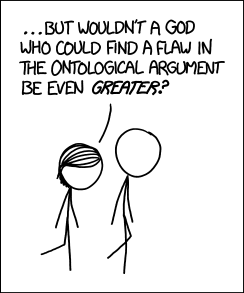
It’s legal to kill babies, but let’s worry about a gay person’s right to cake
by Matt Walsh
MintonTHIS GUY....
Progressivism is indeed a self-inflicted mental disorder, and last week provided us with a stunning illustration of this fact.
First Indiana passed a religious freedom bill giving business owners the right to refuse to do things that might go against their religious beliefs. For instance, as has happened a few times now, a bakery might decide it doesn’t want to bake a cake for a gay wedding.
Well, the idea of gays possibly being deprived of cake and other commodities sent our society into a tizzy. They yelled and screamed and organized boycotts, insisting that allowing businesses to potentially refuse service, in some circumstances, constitutes a dehumanization of gay people.
Meanwhile, in Colorado, Dynal Lane stabbed Michelle Wilkins in the uterus, cut her open, and ripped out her unborn daughter. Wilkins almost bled to death, and her young daughter died.
The Colorado DA announced that no murder charges will be filed against Lane. Sure, there will be dozens of other charges related to, among other things, attempted murder of Wilkins, but there will be nothing on her rap sheet indicating that she killed a person. That’s because, of course, in Colorado and in the rest of the country, an unborn infant doesn’t count as a person. Yes, some states have laws allowing the baby to be a person if she’s killed by someone other than her mother (a dynamic that doesn’t feel any more just, in my eyes) but, still, nationwide unborn children are legally slaughtered every day. 60 million and counting since 1973.
SIXTY MILLION.
Yet most of the people insisting that gays have a right to cake will not argue for, and in fact will viciously oppose, the basic right to life for infant children. The dead bodies of children pile up all around us, and all these clowns can do is whine about their right to pastries.
It’s preposterous. Also, deplorable, barbaric, and evil. We have a right to PRODUCTS but a baby has no right to be free from decapitation and dismemberment?
It makes no sense. None of it makes any sense:
The post It’s legal to kill babies, but let’s worry about a gay person’s right to cake appeared first on The Matt Walsh Blog.
09 Nov 13:52
The Political Sterility of Jon Stewart
by Ed Krayewski
Political satire has a long and honorable history: Aristophanes, William Shakespeare, Jonathan Swift; W.S. Gilbert; George Orwell; Lenny Bruce; Dick Gregory; Tom Lehrer, David Frost, and That Was the Week That Was; George Carlin; Spitting Image, Yes, Minister; the Smothers Brothers; the early Saturday Night Live, Dave Barry, The Onion, South Park, Family Guy, and so many more. Unfortunately, while it would be a slight exaggeration to say that political satire is dead in America, it’s been on the critical list for some time. That’s too bad. We need it more than ever.
Throughout history, satirists have risked their liberty and even their lives using humor to engage in deep commentary about the reigning political system and its exalted political figures—they’re called leaders, though surely better terms are rulers and misleaders. But no satirist risks his life or liberty in America today, which makes the scarcity of good satire so puzzling. Is it fear that keeps it safely limited? Or is it simply that so few people today can see the fundamental flaws in the American political system, which trashes liberty in so many ways?
You tell me.
By now most people who pay attention to these things know that The Daily Show’s host, Jon Stewart, who is probably regarded as America’s premier political satirist, felt it necessary to recant after apparently uttering a heresy according to America’s civic religion: democracy.
In an election-day interview on CNN, Christiane Amanpour asked Stewart if he had voted. He said, “No”—to which Amanpour reacted with (or perhaps feigned) amazement, “No?!”
Stewart continued, “I just moved. I don’t even know where my thing is now.”
That night on his own show, Stewart, after assuring his audience that he has known where “his thing” is since age 13, acknowledged that his answer created “a bit of a story.” So he felt compelled to say,
To set the record straight, I did vote today.… I was being flip, and it kind of took off. I shouldn’t have been flip about that.… It sent a message that I didn’t think voting was important or that I didn’t think it was a big issue. And I do, and I did vote. I was being flip, and I shouldn’t have done that. That was stupid. So, I apologize.
Where to begin?
First off, how did his flip answer create “a bit of a story”? He’s a comedian for heaven’s sake! Several nights a week he makes fun of politicians and government bungling! He does flip for a living! Who got upset with his reply, aside from U.S. Secretary of War Amanpour? Whether one believed Stewart’s answer or not, how in the world was it the stuff of public controversy? Does no one have a sense of humor? Must he say “just kidding” after every sentence?
Maybe one reason political satire is so scarce is that Americans don’t get it. Paul Fussell, who wrote excellent books on how war degrades culture, said that World War II killed Americans’ sense of irony. (See his Wartime.) We have here good evidence for Fussell’s claim.
But even allowing for the irony-impairment of American culture, did Stewart really feel he had to apologize? Did he think he’d lose his audience if he became known as one who is “flip” about the holy rite of voting? I realize that ratings are a matter of life and death, but come on. I doubt that his career was in jeopardy. He might have even picked up a few viewers.
My son, Ben Richman, a fine rock guitarist who also has a keen eye for politics, had a different take on Facebook:
I don’t think he was giving into public pressure, either. I think he genuinely felt that joking about it was wrong. At the end of the day, Stewart loves the system.
I’m inclined to agree. After all, he favors mandatory national “service”:
There should be a draft where every young person has to do one year of something — military, public works — something so that we all feel invested in the same game, because that’s the part that we’ve lost. [Emphasis added.]
Stewart can be funny when he pokes fun at politicians for their gaffes and indiscretions, and occasionally he ventures into a minefield. (He’s done some surprisingly good stuff on Israel.) But if you watch closely, you’ll see that he doesn’t plunge the dagger in too deep. He is a man of the system, a progressive, of course. Thus, he believes government is good, the more active the better. He rarely gets down to fundamentals, and on the rare occasion when he does, he quickly retreats.
Remember when in 2009 he called President Harry Truman a “war criminal” for the atomic bombings of Hiroshima and Nagasaki, which killed or maimed nearly 200,000 Japanese civilians? Now, actually that statement was neither satirical nor ironic. It was the unvarnished truth. Truman’s victims threatened no one, and the war was essentially over. Yet those civilians were subjected to the most ghastly of fates. Some were vaporized on the spot, literally leaving only their shadows behind. And don’t forget that Truman dropped the second bomb three days later. He considered dropping a third, but decided he didn’t want to kill any more children. Reading about what the victims’ experienced will turn your stomach, if you have a scintilla of decency in you.
But, nevertheless, Stewart recanted a couple of days later. On his program he said,
The other night … I may have mentioned during the discussion we were having that Harry Truman was a war criminal. And right after saying it, I thought to myself that was dumb. And it was dumb. Stupid in fact. So I shouldn’t have said that, and I did. So I say right now, no, I don’t believe that to be the case. The atomic bomb, a very complicated decision in the context of a horrific war, and I walk that back because it was in my estimation a stupid thing to say.… Sorry.
Stewart did not bother to explain why the statement was “stupid” (he also called his voting remark stupid) or why Truman’s decision was “complicated”; that’s what every Truman apologist says. But we know what Stewart meant. In America’s civic religion, it is heresy to talk about an American war as though it was a massive series of crimes committed by “our” misleaders. You must not say that. Actually, that’s not it. You must not think that. Two and two is five. Never forget it.
Yes, it is permissible to say the war in Vietnam (never WWII, however) was a blunder, a colossal mistake. But don’t say it was mass murder and a humongous criminal operation. Don’t say the perpetrators should be brought to justice. Noam Chomsky did that and was thenceforth barred from publications that had regularly published him. It is a rare mainstream publication that would let you say that Bush 43, Cheney, Rumsfeld, Powell, Rice, Tenet, Petraeus, McChrystal, et al. should be hauled before the International Criminal Court to stand trial for their wars of aggression against the people of Iraq and Afghanistan. Has Nuremberg been erased from the history books? (Since writing this, I’ve been reminded of Stewart’s obsequiousness before court historians like Doris Kearns Goodwin and ex-political appointees like former Secretary of State Madeleine Albright and Hillary Clinton.)
Getting back to Stewart and voting: his remark was actually pretty lame. All he said was that he couldn’t vote because he didn’t know where the polls were in his new location. He didn’t say he was happy about it. He could have said,
Did I vote? Of course I voted! Would I pass up a critical opportunity to add my one single drop of water to the vast ocean? Why, every vote counts! Had I stayed home, the whole country—heck, the whole world—might be different. You must be crazy to think I’d let that happen.
That would have been satire. But it also would have struck too deep at America’s civic religion, which holds that trudging faithfully to the polls every few years is the be-all and end-all of freedom. (That voting majorities by nature must violate the rights of voting minorities and nonvoters is curiously overlooked.)
What I wouldn’t give to see Americans react to Emma Goldman saying on television, “If voting changed anything, they’d make it illegal.”
Excuse me, but I grew up watching George Carlin. So call me spoiled. Jon Stewart is to George Carlin what Joe Scarborough is to H.L. Mencken.
Here’s how Carlin handled politics:
I don’t vote. On Election Day, I stay home. I firmly believe that if you vote, you have no right to complain. Now, some people like to twist that around. They say, “If you don’t vote, you have no right to complain,” but where’s the logic in that? If you vote, and you elect dishonest, incompetent politicians, and they get into office and screw everything up, you are responsible for what they have done. You voted them in. You caused the problem. You have no right to complain. I, on the other hand, who did not vote—who did not even leave the house on Election Day—am in no way responsible for what these politicians have done and have every right to complain about the mess that you created.
George, we need you.
This article originally appeared at the Future of Freedom Foundation.
16 Sep 14:05



DIY Beard Oil
by Jeremy Anderberg
MintonFor Jones mostly
“Hey Fred, your beard is looking a little scraggly. Have you tried rubbing some beard oil in it? It’ll change your life, brother.”
Just like the mop on top of your head needs to be taken care of, so does the mop on the lower half of your face. This involves regular shampooing, trimming, combing…and an oft-forgotten step: oiling. Beard oil offers a variety of benefits for an unshaven man: it moisturizes the often dry skin underneath, it tames beard frazzle, and it just smells nice.
I’m a recent convert to beard oil, and now I won’t turn back. While I’d seen it on plenty of men’s websites and even in retail shops, I hadn’t ever even tried it before finding some at a farmer’s market and testing it out. I was immediately entranced by the smell, and was hooked by the softness of my beard and the health of my skin underneath it. While I loved the product, it was expensive — as most beard oil is. You’re looking at paying between $10-$20 for a 1-2 oz. bottle (you only use a few drops at a time). While that amount will last awhile, I figured there had to be a way to make it on my own a little more cost effectively. And don’t ya know it, there is! Follow the simple steps below, and you’ll be on your way to having a soft beard that shines and doesn’t itch — a miracle I say!
Ingredients

- 1oz bottles
- Mini measuring cup or shot glass
- Small funnel
- Carrier oils (more on that below) — I used jojoba, sweet almond, and coconut oil
- Essential oils — I used tea tree, peppermint, cinnamon cassia, and orange
The carrier oils and essential oils were bought at my local GNC. Be warned, they aren’t cheap ingredients, but they’ll last a really long time. The essential oils were $5-$10 each and the carrier oils were each about $10 (even though the jojoba oil was 4oz and the sweet almond was 16oz — keep that cost difference in mind when making your own recipes). So while startup costs are higher, your per-bottle cost ends up being just $2-$3 using the recipes below. (Keep this in mind when thinking about Christmas presents for your bearded friends and relatives!)
A Primer On Carrier and Essential Oils

Carrier oils will make up the bulk of your beard oil recipes. They’re a base oil that carries the more potent essential oils and dilutes them to make them more palatable for your skin. When not diluted, essential oils can actually cause irritation and burning. There are a variety of carrier oils out there that provide different benefits, and most have just a faint scent (unlike the potent essential oils). My choices for carrier oils — jojoba, sweet almond, and coconut — were chosen mostly on availability, but they’re also the ones that are most common in beard oil recipes.
A few carrier oils and their benefits:
- Jojoba – is similar to your natural human oils and is easily absorbed by your skin
- Argan – makes skin softer and protects against signs of aging like wrinkles
- Sweet almond – keeps inflammation at bay, which particularly helps prevent in-grown hairs
- Coconut – one of the best natural moisturizing and hydrating products on the planet, great for dry environments
- Hazelnut – helps prevent acne and eczema
- Hemp seed – another moisturizing oil, helps prevent facial hair from becoming brittle

Essential oils are natural compounds found in seeds, stems, flowers — and almost every other part of a plant. When you squeeze an orange peel or lemon peel, for instance, the fragrant residue left behind contains essential oil. Essential oils are extremely potent to the nostrils and provide scent and additional health benefits to your beard oil. They have been used for thousands of years for their medicinal and therapeutic benefits, a few of which are listed below:
- Cedarwood – helps prevent acne
- Eucalyptus – aids again skin irritation
- Lemongrass – invigorates, like a good aftershave
- Peppermint – invigorates and refreshes the skin
- Amla – repairs damaged hair
Other essential oils are used primarily for their scent: sandalwood, clove, sage, rosewood, tea tree, lime, bay rum, vanilla, etc. All told, there are around 100 essential oils available to consumers.
How to Make Beard Oil
It’s really quite simple to make your own beard oil with these ingredients. All you do is mix the various oils and you’re good to go. The key is to simply experiment with various combos and find what you like best based on scent and desired skin and hair benefits. Follow the basic steps below, then create your own recipes! I provide a few sample recipes, but the options are limited only by your imagination.
1. Start With Carrier Oils

The first ingredients in your recipe are your carrier oils. Basically, mix and match your oils to get about 1oz’s worth (you can always do more or less as desired; I have 1oz bottles, so that’s how much I made). In this first recipe I measured out half an ounce each of jojoba oil and sweet almond oil. You could also simply use a single carrier oil rather than mixing. Again, it’s about scent and the health benefits accrued, as well as what feels best on your skin. Experiment with various combinations of carrier oils to find what you like best.
Use the funnel to pour the oil into the bottle. Easy peasy.
2. Add Essential Oils

After you’ve added your base carrier oils you’ll add drops of essential oils for scent. Your essential oils will come in a bottle with a built-in dripper; remember that they’re potent, so you don’t want to add more than 10 or so drops to each 1oz mixture. For the more powerful scents, 3-5 drops is all you need. You can mix and match essential oils to find the scent that you like best.
3. Mix and Enjoy
Making your own beard oil is that easy! After you’ve added your essential oils, put the cap on, shake it up, and enjoy. To use, simply put a small dab on your fingers (a few drops is all that’s necessary) and rub into your beard. The best time to use is after a shower when you’ve washed your beard and your skin is fresh.
A Note on Using Coconut Oil

Coconut oil, being an excellent moisturizing agent, is often used in beard oils. The coconut oil that you buy in the store is most often in solid form, as it has a high melting point of about 76 degrees F. This can obviously make it difficult to work with. To use coconut oil as a base carrier of your beard oil, you’ll have to first melt it so you can mix with your essential oils. I put a large tablespoon of the solid oil into a dish, then set that dish into another that had hot water. The oil liquified in no time and I was able to mix in a few drops of an essential oil. It will then re-solidify, and you end up with more of a beard balm. You simply rub a little on your fingers, and your body heat will melt it, thereby turning it into oil again, ready to use on your facial hair.
A Few Recipe Ideas
After some experimenting, you’ll quickly find your favorite combos. My favorite scents are definitely peppermint and tea tree. As for carrier oils, I enjoy the coconut because the dry Colorado air dries out my skin. The jojoba is also a great base since it closely mimics the natural oil your body creates. Again, refer to the benefits above of the various carrier oils, and figure out what works best for you. Below are a few of my favorite recipes. The names are my own creation, but feel free to steal them.
Coco-mint
- 1 tablespoon melted coconut oil
- 3 drops peppermint oil
Sweet Mint
- 1/2oz jojoba oil
- 1/2oz sweet almond oil
- 5 drops peppermint oil
- 2 drops tea tree oil
- 2 drops orange oil
Forest Haven
- 3/4oz jojoba oil
- 1/4oz sweet almond oil
- 5 drops tea tree oil
- 3 drops peppermint oil
Fall Face Foliage
- 1/4oz jojoba oil
- 3/4oz sweet almond oil
- 2 drops cinnamon cassia oil
- 2 drops orange oil
- 2 drops tea tree oil
Have you made your own beard oil? What’s your favorite recipe?
seanpbird and -1 others like this

20 Mar 16:50
Oscar Wilde
"But what is the difference between literature and journalism?/ ...Journalism is unreadable and literature is not read. That is all."
20 Mar 16:50
Robert Frost
"The brain is a wonderful organ. It starts working the moment you get up in the morning and does not stop until you get into the office."
20 Mar 16:49
Kelvin Throop III
"Isn't it interesting that the same people who laugh at science fiction listen to weather forecasts and economists?"
27 Feb 14:57


History Is Written By The Sober
by Andrew Sullivan
Stanton Peele blames the Temperance movement for expurgating our Founding Fathers’ prolific drinking habits from American history:
It is impossible for Americans to accept the extent to which the Colonial period—including our most sacred political events—was suffused with alcohol. Protestant churches had wine with communion, the standard beverage at meals was beer or cider, and alcohol was served even at political gatherings. Alcohol was consumed at meetings of the Virginian and other state legislatures and, most of all, at the Constitutional Convention.
Indeed, we still have available the list of beverages served at a 1787 farewell party in Philadelphia for George Washington just days before the framers signed off on the Constitution. According to the bill preserved from the evening, the 55 attendees drank 54 bottles of Madeira, 60 bottles of claret, eight of whiskey, 22 of porter, eight of hard cider, 12 of beer, and seven bowls of alcoholic punch.
That’s more than two bottles of fruit of the vine, plus a number of shots and a lot of punch and beer, for every delegate. That seems humanly impossible to modern Americans. But, you see, across the country during the Colonial era, the average American consumed many times as much beverage alcohol as contemporary Americans do. Getting drunk—but not losing control—was simply socially accepted.
11 Feb 17:17


Survive a Fall Through Ice with This Illustrated Guide
by Whitson Gordon
MintonThe beard part is the best.

Falling into a frozen lake is no laughing matter, and getting out isn't as easy as it might seem. The folks over at The Art Of Manliness have put together a great guide to surviving a fall through ice.
    
|
11 Feb 01:54
Ann Coulter: Coca-Cola CEO ‘Should Be Executed For Treason’
by TDC
Conservative commentator Ann Coulter provoked controversy today by calling for the public execution of Coca-Cola's CEO. In an interview with Fox News this morning, the bombastic author claimed that the company's Turkish-American leader Muhtar A. Kent should be hung for treason over Coke's Super Bowl commercial celebrating diversity. The advertisement, which featured the song "America the
11 Feb 01:51


The Ken Ham / Bill Nye Debate: what we can learn to prevent a tragedy like this from happening again…
by tommeltj
MintonI didnt even waste my time. It was three hours. But it felt like 6,000 years. Bazinga.
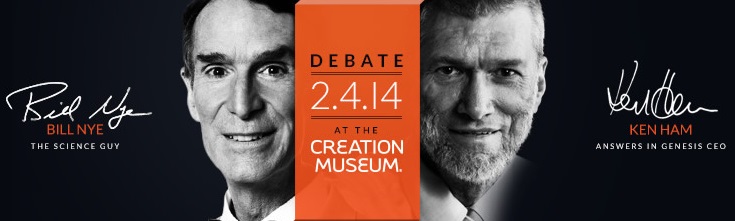 I attended the debate between Bill Nye (“The “Science Guy”) and Ken Ham (of Answers in Genesis (AiG) and the Creation Museum) on Tuesday night (by webcast at a local church, now available here and here), and though I didn’t pull my hair out and found it moderately interesting, I came away disappointed that so little was said. Both sides have claimed victory which is pretty standard for these sorts of affairs. Also standard was that this was enabled by the fact that both sides spent a little over an hour each picking holes in the other’s theory while mostly avoiding confronting any of the problems brought up against their own. By about half way through the second hour (and especially into the question-and-answer), it was clear the debate was really over, with the unfortunate outcome that both sides walked away satisfied in their own strengths and their assessment of the other’s weaknesses.
If you haven’t seen the actual debate, I do recommend it, especially if you’re new to these issues, as both sides presented frankly fairly predictable talking points for their positions. The actual event was nothing near a “Scopes Monkey Trial”, much less a battle between science and religion: the real battle was between Ham’sYoung Earth Creationism (YEC hereafter) and Nye’s populist and vaguely agnostic science. Being neither an agnostic nor a Young Earth Creationist, I didn’t really have a dog in this fight. I wasn’t aware before the introductions that both men have relatively little formal education in their respective fields: Nye has a bachelors in mechanical engineering while Ham has an undergraduate degree in environmental biology and some graduate work in education. Neither has any background in Biblical studies, philosophy or history, and it showed. I was repeatedly frustrated: one comment would be made from either side (more often Ham’s) and I would think, “ah, now we’re getting somewhere”, but the ball would be dropped and they would go back to talking points. This was true even when the comment would’ve been a coup for one side or the other. Though the debate lasted nearly three hours, for all practical purposes it was over after each side made their opening remarks and their 30 minute position statements.
Both sides were adept at poking holes in the other’s theory. To his credit, Nye probably stayed on topic a bit better. The question they were debating was “is creation a viable model of origins in today’s modern scientific era?” Ham’s points largely boiled down to:
- “Evolution” is used equivocally in science education; for a discipline valuing precision and reasoning, these things are often lacking in science education
- It’s perfectly possible to be a YECist and a scientist (he gave several brief interview snippets with such scientists)
- Science has an experimental arm (like chemistry) and a historical arm (like paleontology); this latter is beholden to secularist interpretive paradigms which skew the scientist’s ability to reconstruct history accurately
- AiG prioritizes “the account based on the Bible, taking it literally as Jesus did”, meaning a recent (6000 years ago) creation over 6 24-hour days and a global flood
- The real battle is over authority, i.e. the authority of the Bible or the authority of scientists wedded to secularism
Nye in a sense had the easier job and was better at staying on target, largely restricting his comments to poking holes in Young Earth Creationism while not presenting what (I think) he assumed everyone knew: that science has developed the theory of evolution as a satisfactory and helpful theory of origins. His specific criticisms:
- Multiple lines of evidence point to an old earth: limestone layers, Antarctic ice layers, ancient trees, rates of soil deposition, radiometric dating as well as astronomical evidences
- Creation science has its problems: high rates of speciation after the flood which are not observed now, fossil evidence which is inconsistent with Middle Eastern origins of many animals (e.g. kangaroos), and the lack of observational evidence to support a recent catastrophic global flood.
- He also brought up logistical problems in the story of Noah, and on several occasions questioned the reliability and universal applicability of the Bible (though this was by far his weakest area, creating many cringe-worthy moments for someone who does know something about the Bible)
- A repeated refrain concerned the dangers of YEC: it would weaken science and technology education and possibly imperil America’s leadership in these areas.
A rebuttal period followed these position statements, but it was frankly fairly unproductive. Ham advocated trust in the Bible over trust in the interpretations of scientists, no doubt a good talking-point for Christians but obviously not going to impress any non-Christians. He called into question the results of some radiometric dating, and generally called into question the idea of death existing before the Fall (i.e. death could not have occurred before Adam and Eve existed and sinned). Nye largely responded by insisting that radiometric dating is accurate, that fish shouldn’t be afflicted with death because of human sin (“are fish sinners?” he asked at one point), and accused Ham of “magical thinking” in claiming that rates of speciation have changed over the last few thousand years. The debate was largely over at this point, however, and it tended to degenerate into “your theory is SOOOO dumb…” after this.
There was a question-and-answer session after their presentations and rebuttals, but what was most amazing was each speaker’s unfamiliarity with the other’s ideological community. For instance, one asked Ham (both had a chance to respond to each question), “can you think of anything that would change your mind?” This question is straight from the skeptic manual of How to Talk to Christians, but Ham interpreted it as a call to battle, “here I stand, I can do no other.” His supporters clapped, in other words, while his opponents rolled their eyes. A more nuanced approach to the question (perhaps the subject of a future post) did not occur to him apparently. “How did consciousness arise from matter” and “where did atoms come from”, both clearly weaknesses of materialism were asked of Nye; his response? It’s a “mystery”, which says to Christians that he refuses to accept the truth of the Bible and says to skeptics that he’s humble and a good scientist. “If YEC is untrue, can you still be a Christian?” (I was paying attention now): no, according to Ham, “if you believe in millions of years, you have a problem with the Bible”. And so goes the remainder of my respect for Answers in Genesis, though I’ve no doubt they’re wonderful people.

So what was the end result of all this? My hunch is that YECers will go away affirmed: Nye just doesn’t understand what naturalistic presuppositions he brings to his scientific interpretations, he doesn’t understand the Bible, and he’s obsessed with sex like most evolutionists (he spent about 5 minutes discussing the advantages of sexual reproduction in fish). Likewise, skeptics walked away affirmed: Ham doesn’t understand science, doesn’t understand that most people don’t agree with the Bible, and can never be convinced otherwise no matter what the evidence shows.
There are bigger ways to understand each of these issues and arrive at an intellectually consistent way to look at the Bible, the age of the earth, the nature of the scientific enterprise: these were not discussed. There were tantalizing hints that came and went in a flash during the debate:
- Nye repeatedly referred to YEC as “Ken Ham’s Creationism”; I don’t think this was meant to goad, but to point out that there are other ways to believe in a God who created the universe and the earth without buying the whole YEC meal package. Alas, Nye didn’t bring up any other theories, though his Biblical literacy is poor enough that it’s probably good he didn’t, as I doubt he could articulate it coherently, much less to Ham’s satisfaction.
- Ham mentioned that scientists are working from Christian assumptions, such as belief in an ordered and predictable universe where human effort is both productive and meaningful. “Now we’re getting somewhere interesting,” I thought. But it was not to be: Ham mentioned it once more, but did not pursue it, and I doubt Nye even knew what he was referring to.
- There was some mention of the need to interpret data (whether Biblical or geological or biological or astronomical), but this was also not developed. Both ultimately seemed to agree that some things just didn’t need interpreting: evidence is evidence, they just differed on whether the Bible or radiometric data required more interpretive gymnastics to rely upon. Clearly neither man appreciated that there is no such thing as interpretation-free evidence: nothing just “speaks for itself”. Who knows how many microbiologists threw away contaminated petri dishes before Alexander Fleming said, “say, I wonder if this mold might have some sort of ‘anti-biotic’ property, so to speak?” The reader of the Bible and the classifier of fossils both bring ideological baggage with them; what are we to do with it? Alas, neither speaker went here.
- Nye at a couple points brought up the issue of whether natural law can vary. For instance, YEC says that Noah only brought onto the ark “kinds” (roughly analogous to the “family” level of taxonomy) which then rapidly (over a few hundred years) diversified into the millions of species over the entire earth that we see today. Does natural law change like this? Ham did not directly respond, and it would’ve been interesting for Nye to push the point: does God not only intervene in the miraculous, but change classes of physical laws and constants for periods of history? What would this sort of theology do to scientific inquiry? Did this God of order and truth only make the universe “appear” to be old? Did he make Genesis intentionally debatable, and if not, why didn’t he make it clearer? Why is it clear to Ham, and so unclear to others (including many Christians)? Again, theology is not Nye’s strong point, so he was well not to go here. He did offer a general argument against Christianity generally known as “the argument from pluralism” (there are so many gods, how can you know the right one?), but he neither developed it, nor did Ham point out its difficulties.
In short, Nye spent his time attacking Ham’s estimate of the age of the earth, while Ham spent his time attacking the philosophy of naturalism. Both left their own ideological cities unguarded while they went to attack the other’s city. The end result is two destroyed cities, but little else. A truly neutral observer likely left thinking, “well, I can’t be a young Earther, but the science seems so tentative, and there are a few scientists who buy it; I guess we’ll never know.” Fortunately, people of this mindset probably ignored the whole debate from the beginning. If you pushed me, I would say that Nye “won” the debate in the sense that at least he addressed the actual question (“Is creation a viable model”) more directly. I ultimately think Ham has a sturdier worldview (i.e. Christian theism), but his commitment to a young earth is baggage he’s not willing to leave behind in the race toward the goal, so he’s likely to lose the race.
10 Feb 19:23
Man Who Edited Tea Party Response to SOTU Makes $7.25/hr
by TDC
The man responsible for copy editing the Republicans' response to the State of the Union speech says he supports President Obama's proposal to raise the minimum wage. James Evans Jr., who was responsible for editing Utah Sen. Mike Lee's speech for grammar, spelling and other errors, and then transferring the speech onto a teleprompter, said
10 Feb 19:01


Even The Most Serious of Updates Get Ignored If They Require a Restart
by Jamie Condliffe
MintonTruth

You computer may be at risk. Your privacy may be at risk. Hell, you may be at risk. But if you've got a lot of apps running and that update will require a restart? Forget about it. [XKCD]
|
|