Shared posts

01 Jun 19:12

What is a Copyright Troll?

by Jonathan Bailey

Troll ImageEarlier this month, Ashley Cullins at The Hollywood Reporter Esquire published a piece entitled “Has This Man Sued You? A ‘Copyright Troll’ Takes on Hollywood“.

The story focuses on New York attorney Richard Liebowitz, who has found a niche in helping photographers sue those who use their images without a license.

Liebowitz, a photographer himself, has filed hundreds of lawsuits on behalf of more than 350 photographers. The most common target of those lawsuits is media companies such as CBS, Vice, Yahoo and more.

But, as the headline shows, his aggressively litigious nature has not endeared him to everyone. The “Copyright Troll” part of that headline was taken from Judge Denise Cote, a judge in the United States District Court for the Southern District of New York in a ruling on a motion for fees.

The full quote, according to the original article, is “Plaintiff’s counsel, Richard Liebowitz, is a known copyright ‘troll,’ filing over 500 cases in this district alone in the past twenty-four months.”

But while Liebowitz’ tactics are understandably controversial, is he really a “copyright troll”?

While I’m not a lawyer and certainly not a judge, he doesn’t seem to fit the definition of the word as I know it. Given that judges are using this word as a pejorative and as a basis to make legal decisions, it’s worth taking a moment to think about the question: Who is and is not a copyright troll?

Defining “Copyright Troll”

Troll ImageBack in April 2013, I wrote a post entitle “Why I Don’t Support Copyright ‘Trolls’“. The article looked at why the practice of copyright trolling is bad not just the victims of the practice, but for other creators and rightsholders.

In the article, I established a three-part test of who is or is not a copyright troll based upon Wikipedia’s definition of the term. The three elements were:

  1. Attempting to use litigation (or threats thereof) as a source of profit.
  2. Extremely aggressive with litigation (or threats thereof), targeting large numbers of infringers.
  3. Has limited interest in distributing the work legally and is not the creator of the work.

(Note: For this article I’ve added “and is not the creator of the work” to the third as it better mirrors the Wikipedia definition)

Looking at Liebowitz’ case, there’s no doubt that he meets the second qualification and is an extremely aggressive litigator. Likewise, whether or not the litigation is an attempt at profit is speculation. However, Liebowitz has always maintained that he is doing it for the photographers to push companies into obtaining licenses, not for direct profit.

But even if one does concede the first point, there’s no reasonable way to say Liebowitz meets the third. The photographers he represents are professionals who earn a living licensing their works.

The problem that Liebowitz (and attorneys like him) are attempting to crack isn’t “How to profit from infringement?” but “How to stem the massive amount of infringement taking place?”

For photographers this has been particularly vexing as websites and media companies, including many that could easily afford to pay license fees, often take and use photos without permission. Whether it’s out of error, ignorance, expediency or a desire to cut financial corners, the problem is so widespread that a 2016 survey by Pixsy found that some 64% of professional photographers had discovered their work being stolen.

While there’s certainly a debate to be had about whether mass litigation is the best solution for this problem (the RIAA had to stop its mass-litigation of suspected internet pirates in 2008), it’s not a copyright troll operation. Rather, it’s a cry of desperation from a group of creators that have struggled to fight infringement online with the tools available.

Remembering the Real Trolls

None of this is to say that copyright trolls don’t exist. They certainly do.

However, they haven’t made many headlines in recent years as the two biggest names went under in dramatic fashion over five years ago.

  1. Righthaven: Founded in 2010, Righthaven entered into partnerships with newspapers, most notably the Las Vegas Review-Journal to handle copyright enforcement for them. The company worked by having newspapers transfer the copyrights to their stories and Righthaven would earn its money from the judgments and settlements it collected. However, the way the transfers were executed left Righthaven without standing in court and, as defendants fought back, legal bills and judgments against them mounted. By December 2011, Righthaven was having its name auctioned off to pay some of its former defendants.
  2. Prenda Law: Prenda Law rose to prominence in 2012 for petitioning the court to reveal the identity of suspected downloaders of pornography. With the identities known, they would then send threatening letters to the alleged infringers but agree to settle in private for an amount less than a defense. This brought in an estimated $6 million over the life of the company. However, in 2013, it was discovered that Prenda’s clients were actually shell companies owned by the lawyers themselves and that they had uploaded the pirated content themselves. As more illegal acts rose to the surface, including identity theft, legal bills and court sanctions began to pile up. Prenda became defunct in July 2013, In March 2017, John Steele, Prenda’s lead attorney, pleaded guilty to fraud and money laundering. In May he was disbarred.

Obviously these are just very brief run throughs of their stories but the pattern is clear in both. A company attempts some kind of trickery (legal or otherwise) to target suspected infringers for litigation with the hopes of making a profit directly from the litigation rather than from the work itself. They flame out quickly and, along the way, often generate case law that is potentially dangerous for other rightsholders, such as the fair use ruling against Righthaven that was vacated on appeal.

Liebowitz, as well as the mid-2000s RIAA, don’t fit that mold. They are both representing legitimate rightsholders who have a different primary business. While they can be described as aggressive litigants, copyright trolls they are not.

How to Really End Mass Litigation

But, even if Liebowitz is not a copyright roll, many would argue that his approach carries with it many of the same risks and problems as a copyright troll operation. While litigation in general was never intended to be used en masse, copyright litigation is even less friendly to it.

The reason is that copyright litigation is infamously slow and expensive. That’s because a copyright infringement lawsuit must be filed in a federal court, which is typically slower and more expensive than state court, and requires a large number of hours from a specialized attorney.

Because of this, copyright law not only, in many cases, grants victors attorneys fees but eye-poppingly high damages, up to $150,000 for a single infringement.

Copyright litigation was meant to be used rarely and only in extreme cases. By in large, that’s how it has been used. In 2017 only around 3,500 copyright lawsuits were filed. While that’s down from the previous two years, it’s still a significant increase from the 2,000 in 2010.

But, while that may seem like a lot, it only represents a fraction of a percentage of all of the commercially-harmful infringement that takes place online.

When attorneys or rightsholders such as Liebowitz file hundreds of lawsuits, they aren’t using litigation as it’s intended. However, they are using the only tools that they have available as, right now, litigation and threats of litigation are the only options creators have to recover damages from the massive amounts of relatively low-value infringement taking place.

This has led to a push for a copyright small claims court. Currently such a system is being discussed before Congress in the form of the Copyright Alternative in Small-Claims Enforcement (CASE) Act.

The act would have the U.S. Copyright Office oversee a small claims program (or Small Claims Board). While defendants could opt out of it, doing so would risk exposing them to far more significant damages than the maximum $15,000 that could be heard by the court.

The small claims court would require fewer hours and would avoid travel by having all hearings be held remotely. Also, litigants could either represent themselves or be represented by a law student if they chose. However, even if one does opt to hire a lawyer, the cost would still be greatly reduced.

Earlier this week the House Judiciary Committee completed markup of the Music Modernization Act, a bill aimed at reforming music licensing. The CASE Act is widely expected to be next.

While the CASE Act isn’t perfect, it would give Liebowitz and the people he represents a much better tool for fighting widespread infringement with lower damage amounts. It would also give a legal remedy to creators that have none now, whether it’s because they can’t afford the legal process or because the likely damages are too low.

It’s a rare case where a bill is a win-win for both plaintiffs and defendants and may actually offer a real solution to mass litigation, such as what Liebowitz is doing.

Bottom Line

Liebowitz isn’t a copyright troll. He’s a lawyer representing working clients using the tools available to him in what he feels is the best way. While you can disagree about the approach, to call him a copyright troll is unfair.

That being said, mass litigation doesn’t make anyone happy. It overtaxes the courts resources, is extremely expensive and, even when done legitimately, can feel like extortion.

To prevent or reduce mass litigation, we need to offer practical alternatives to it. Right now, if a photographer or artist wants damanges from their work being infringed, federal court is the only tool available. This escalates low-value infringements into extremely expensive legal battles.

The CASE Act can help fix this and, along the way, open up access to legal recourses to countless creators for whom it simply isn’t practical today.

Liebowitz isn’t the problem, at worst he’s a symptom. But the problem he’s’ a symptom of is one that we have a very good shot at addressing right now.

Want to Republish this Article? Request Permission Here. It's Free.

Have a Plagiarism Problem?

Need an expert witness, plagiarism analyst or content enforcer? Check out our Consulting Website

The post What is a Copyright Troll? appeared first on Plagiarism Today.

01 Jun 19:09

The Monkey Selfie: Why Nothing was Accomplished

by Jonathan Bailey

Monkey Selfie ImageIt was a copyright dispute custom-built to get widespread media attention. Not only did it involve an adorable animal, a viral photo and a quirky copyright question, but it expanded to involve a divisive charity and a push to support animal personhood.

But, between the cute pictures and big-name players, sat an actual copyright question: Who owns the copyright of animal-created images?

Unfortunately for the courts, it wasn’t a very difficult question. The United States Copyright Office spoiled the inevitable end of the case back in 2014 and that decision was based upon years of precedent before it.

The question isn’t “What does this case mean for copyright?” but “How did this case survive for nearly 7 years?”

That comes down not to copyright, but to PETA’s attempt to use copyright for its own ends.

A Brief Background of the Monkey Selfie Case

Wikimedia Commons LogoOn July 4, 2011, photographer David Slater and Naruto, a Celebes crested macaque, leapt into the public consciousness. It was on that day that several publications in the UK featured the story of Naruto and the now-famous “monkey selfie” photo.

According to Slater, he was in Indonesia photographing the endangered animals when one of them, Naruto, managed to get ahold of his camera and start snapping photos. Though most of the photos didn’t turn out, a few did including the “monkey selfie” photo.

With the aid of the internet, the story quickly went viral internationally, getting media attention all over the world.

But, as the photo was getting all of this attention, an editor at Wikimedia Commons, a site that hosts public domain or open-licensed works, uploaded the Daily Mail version of the selfie. Slater requested that Wikimedia Commons remove the image and it initially did. However, after reevaluating the copyright status, the site restored it claiming that it is public domain.

Other sites followed suit and soon the image was being shared openly. The Caters News Agency, which had previously been responsible for licensing the image, demanded the photo’s removal but Wikimedia Commons held firm.

This created something of a war of words between Slater and the site Techdirt, which had also published the image. Slater added details to how the photo was taken, discussing his role in setting up the photograph.

But, though the battle raged for three years, and Slater threatened to file a lawsuit against the Wikimedia Foundation, he never did. Instead, he found himself in the defendant’s chair.

The PETA Lawsuit

Peta LogoIn September 2015 People for the Ethical Treatment of Animals (PETA) filed a lawsuit against Slater and Blurb, a self publishing company that Slater used to distribute a book of images.
PETA said that it was acting in the stead of Naruto, who PETA claimed was the rightful copyright holder in the image. As such, according to PETA, by publishing the images, had committed copyright infringement.

However, in January 2016 the judge dismissed the case saying that the copyright act did not extend to animals. In July 2016, PETA appealed that ruling to the 9th Circuit, which heard the case in July 2017.

But, with a skeptical court and facing a likely ruling against them, PETA settled the lawsuit in September 2017. As part of the arrangement, Slater agreed to donate 25% of all future revenue from the photos to groups that protect crested macaques. However, it’s unlikely that represents much money at all as the photo was (and is) still widely considered to be public domain, meaning few (if any) royalties are paid for it.

Earlier that year Slater had said he had only made £2,000 ($2,800) from the image and felt that he had lost over £10,000 ($14,000) in income from the widespread use of it.

Still, with the case settled the dispute seemed to finally be over.

But then the Ninth Circuit Court of Appeals did something unexpected. Earlier this month, it announced it was not dismissing the case despite the settlement and both sides requesting it. Instead, they announced, they were going to rule on it.

And that ruling came down yesterday with the 9th Circuit affirming that animals do not have standing to sue. The court even took time to chide PETA saying that, if Naruto did have standing to sue, he might opt to sue PETA. After all, PETA took a settlement that was advantageous to them and one where Naruto was not a party. This despite PETA filing as a “friend” of Naruto for the purpose of the lawsuit.

Between this decision and the settlement, the case seems to finally be over. Though there have been rumblings about Slater taking additional legal action, nothing has come of those threats at this time.

It Was Never About Copyright

With the litigation seemingly over, many in copyright circles are breathing a sigh of relief.

PETA’s arguments, though headline-grabbing, were pretty much doomed from the beginning. The U.S. Copyright Office had already stated that animals couldn’t hold copyright, even citing the monkey selfie image as an example, and courts have long held that, unless specifically allowed by the law, animals do not have standing to sue.

Other animal rights groups, such as the Animal Legal Defense Fund have accepted this as legal fact for well over a decade. Since the copyright act does not have a specific clause that gives animals standing, there was no reason to believe Naruto, even with PETA acting as his next friend, could have standing.

The reason for this is the 2004 case Cetacean v Bush, which was also decided by the Ninth Circuit. The case dealt with the Navy’s use of sonar and the harm it may do to marine life. However, the court found that, since the relevant acts did not specifically grant animals standing to sue, the “world’s whales, porpoises and dolphins” didn’t have standing in court.

But, for PETA, this lawsuit was never really about Naruto or copyright. It was an attempt to both further the cause of animal personhood and to gain publicity for both PETA and its cause.

Theoretically, if PETA could get a ruling that Naruto could hold the copyright, it could have been a legal foothold into other areas. But, when the it was clear the courts weren’t going to rule in their favor, PETA quickly sought a settlement to cut its losses and avoid unfavorable precedent, even if that precedent just reaffirmed Cetacean v Bush.

In short, the case answered no new questions about copyright and no new questions about animal personhood. It achieved nothing and, in the end, did a great deal of harm.

The Harm of Litigation

While it might seem that a quirky copyright case with no movement on the law is fairly harmless, it’s done a great deal of harm to Slater.

Slater isn’t a large charity. He is a single person, a freelancer trying to get by. Already dealing with the frustration of being unable to earn revenue from his most famous photograph, the lawsuit has been a significant additional burden on him.

In a July 2017 interview with The Guardian, Slater outlined just how difficult things had gotten. Unable to afford airfare for a court hearing or to replace broken camera equipment, Slater was looking for additional jobs including tennis coaching and dog walking to make ends meet for him and his daughter.

While these struggles are familiar to any freelancer (myself included), PETA has undoubtedly exasperated them.

To make the matter more tragic for Slater is that he considers himself an animal rights activist. His work in Indonesia was about documenting and protecting crested macaques.

For Slater, it wasn’t harmless litigation. it was an attack on his ability to earn a living from an organization he otherwise might have considered an ally.

Bottom Line

No matter what you may think of PETA, its goals or its methods, nothing was accomplished here. No copyright questions were answered nor were any new answers on animal personhood.

All that happened was that a freelance photographer, already struggling enough, had to spend money to fight a protracted legal battle.

But, despite the recent ruling, the case may not be fully over yet. In February 2018, Andres Guadamuz of the World Intellectual Property Organization, which is a self-funding agency of the United Nations, posted an article saying that, while legal issues are resolved in the U.S., Slater may have arguments for copyright ownership in the UK and EU.

The reason is that, under UK and EU law, Slater’s work to set up the photograph may qualify as adequate creative input to grant him a copyright interest in the work, even if he didn’t click the shutter.

However, it’s unclear if Slater desires to pursue those arguments and, if he does, if he’ll be able to.

Still, unlike the PETA lawsuit, that case, if it were to happen, would be addressing some interesting and important areas of copyright law.

Want to Republish this Article? Request Permission Here. It's Free.

Have a Plagiarism Problem?

Need an expert witness, plagiarism analyst or content enforcer? Check out our Consulting Website

The post The Monkey Selfie: Why Nothing was Accomplished appeared first on Plagiarism Today.

08 May 17:37

In just 7 months, the US public domain will get its first infusion since 1998

by Cory Doctorow

In 1998, the US Congress retroactively extended the copyright on US works, placing public domain works back into copyright and forestalling the entry into the public domain of a great mass of works that were soon to become public domain; now, 20 years later with no copyright term extension in sight, the US public domain is about to receive the first of many annual infusions to come, a great mass of works that will be free for all to use. (more…)

08 May 17:36

Congressional candidate Brianna Wu explains Net Neutrality with cookies

by Cory Doctorow

https://www.youtube.com/watch?v=iApE28eq7I4

Frank Wu writes, "Brianna Wu, progressive Democrat and cybersecurity expert, is running for Congress in Massachusetts District 8. She has just released a set of three short videos to explain three complex technical issues." (more…)

08 May 17:34

Right wing snowflakes moaning about Michelle Wolf's hilarious White House Press Corps monologue show us real "PC"

by Cory Doctorow

https://www.youtube.com/watch?v=DDbx1uArVOM

Michelle Wolf delivered the best White House Press Corps monologue since Colbert's amazing 2006 performance, and it has made the right (as well as establishment handwringers) really angry! (more…)

30 Apr 19:01

We calculated how much money trees save for your city

by Theodore Endreny, Professor of Water Resources & Ecological Engineering, State University of New York College of Environmental Science and Forestry
For a megacity, Tokyo is rich in trees. gillyberlin/flickr, CC BY-SA

Megacities are on the rise. There are currently 47 such areas around the globe, each housing more than 10 million residents.

More than half the global population now lives in urban areas, comprising about 3 percent of the Earth. The ecological footprint of this growth is vast and there’s far more that can be done to improve life for urban residents around the world.

When it comes to natural spaces, trees are keystone species in the urban ecosystem, providing a number of services that benefit people. My research team has calculated just how much a tree matters for many urban areas, particularly megacities. Trees clean the air and water, reduce stormwater floods, improve building energy use and mitigate climate change, among other things.

For every dollar invested in planting, cities see an average US$2.25 return on their investment each year.

Measuring trees

Our team, led by Dr. David Nowak of the USDA Forest Service and Scott Maco of Davey Institute, develops the tree benefits software i-Tree Tools.

These tools simulate the relationship between trees and ecosystem services they provide. These services can include food, clean air and water, climate and flood control, pollination, recreation and noise damping. We currently don’t simulate many services, so our calculations actually underestimate the value of urban trees.

Our software can simulate how a tree’s structure – such as height, canopy size and leaf area – affects the services it provides. It can estimate how trees will reduce water flooding; or explore how trees will affect air quality, building energy use and air pollution levels in their community. It can also allow users to inventory trees in their own area.

Our systematic aerial surveys of 35 megacities suggest that 20 percent of the average megacity’s urban core is covered by forest canopy. But this can vary greatly. Trees cover just 1 percent of Lima, Peru, versus 36 percent in New York City.

We wanted to determine how much trees contribute to human well-being in the places where humans are most concentrated, and nature perhaps most distant. In addition, we wanted to calculate how many additional trees could be planted in each megacity to improve the quality of life.

How tree density affects a city

We looked in detail at 10 megacities around the world, including Beijing, Cairo, Mexico City, Los Angeles and London. These megacities are distributed across five continents and represent different natural habitats. Cairo was the smallest, at 1173 square kilometers, while Tokyo measured in at a whopping 18,720.

For most cities, we looked at Google Maps aerial imagery, randomly selecting 500 points and classifying each as tree canopy, grass, shrub and so on.

We calculated that tree cover was linked to significant cost savings. Each square kilometer saved about $0.93 million in air pollution health care costs, $20,000 by capturing water runoff, and $478,000 in building energy heating and cooling savings.

What’s more, the median annual value of carbon dioxide sequestered by megacity tree cover was $7.9 million. That comes out to about $17,000 per square kilometer. The total CO2 stored was valued at $242 million, using a measure called the social cost of carbon.

The sum of all annual services provided by the megacity trees had a median annual value of $505 million. That provides a median value of $967,000 per square kilometer of tree cover.

Trees in your city

An entire urban forest can provide services for a good life.

All of the cities we studied had the potential to add additional trees, with about 18 percent of the metropolitan area on average available. Potential spots included areas with sidewalks, parking lots and plaza areas. The tree’s canopy could extend above the human-occupied area, with the trunk positioned to allow for pedestrian passage or parking.

Want to conserve forests and plant more trees in your area? Everyone can take action. City and regional planners can continue to incorporate the planning for urban forests. Those who are elected to office can continue to share a vision that the urban forest is an important part of the community, and they can advocate and support groups that are looking to increase it.

Individuals who cannot plant a tree might add a potted shrub, which is smaller than a tree but has a leafy canopy that can contribute similar benefits. For the property owner wanting to take charge, our i-Tree software can assist with selecting a tree type and location. A local arborist or urban forester could also help.

The Conversation

Theodore Endreny works for ESF. He receives funding from the USDA Forest Service and NUCFAC.

30 Apr 12:32

The teachers' strikes are spreading

by Cory Doctorow

From Labor Notes, a weekly report-card of teachers' strikes, which are spreading from state to state, with North Carolina -- the laboratory for gerrymander-fueled Republican takeover -- next in line for a wave of school closures. (more…)

30 Apr 12:31

100 US Mayors sign a pledge to boycott ISPs that commit Net Neutrality violations

by Cory Doctorow

As states pass a wave of laws barred non-neutral ISPs from providing services to state agencies, more than 100 US mayors have pledged to disqualify non-neutral ISPs from getting city contracts as well. (more…)

27 Apr 19:22

Buzzfeed guide on how to detect "deepfaked" videos

by Clive Thompson

Get Out director Jordan Peele and Buzzfeed CEO Jonah Peretti got together to make ObamaPeele -- a faked video of Obama, using Peele's voice.

It's a PSA aimed at getting people to be more wary of possibly-faked videos online. They created this one using FakeApp, a relatively easy-to-use iteration of "DeepFakes" technology that lets you swap faces in videos (previously here, here and here). Thus far, it's most infamously been used to put the faces of famous actors into porn videos, but it's painfully easy to see how this will get used in producing political disinfo in the months and years to come, too.

So, in addition to shooting the video, Buzzfeed composed a five-step guide offering pointers on how to spot a deepfaked video. It's a great list, including suggestions like these:

3. Check where else it is (and isn’t) online
Do an online search with the video’s title or other relevant keywords to see if multiple credible news outlets and the person or entity in question have weighed in on it. Again, no need to rush to a conclusion until you can consult multiple courses.

4. Inspect the mouth

Farid said that today’s deepfake videos often have telltale signs. One thing to look closely at is the mouth of the person speaking, because these tools often struggle “to accurately render the teeth, tongue, and mouth interior. So, keep a watchful eye on the mouth for [visual anomalies].”

5. Slow it down

Farid also encourages people to slow down and freeze parts of the video to watch it more closely. “Slowing a video down so that you can clearly see the frame-to-frame transition can sometimes reveal temporal glitches that are introduced in manipulated video,” he said.

27 Apr 19:17

Amazing birdseye photos taken by pigeons a century ago

by David Pescovitz

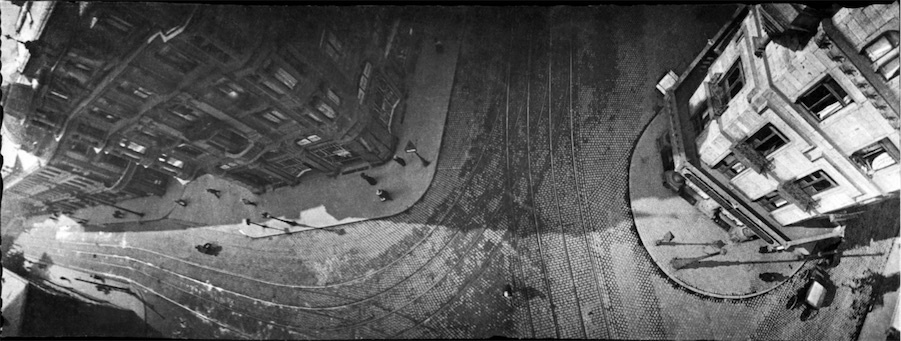
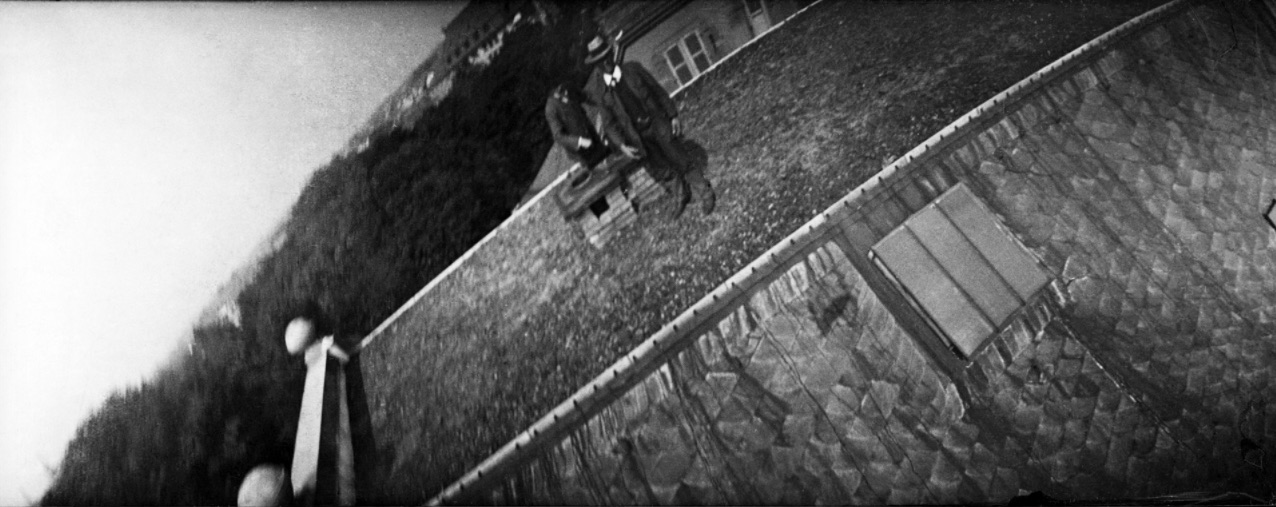
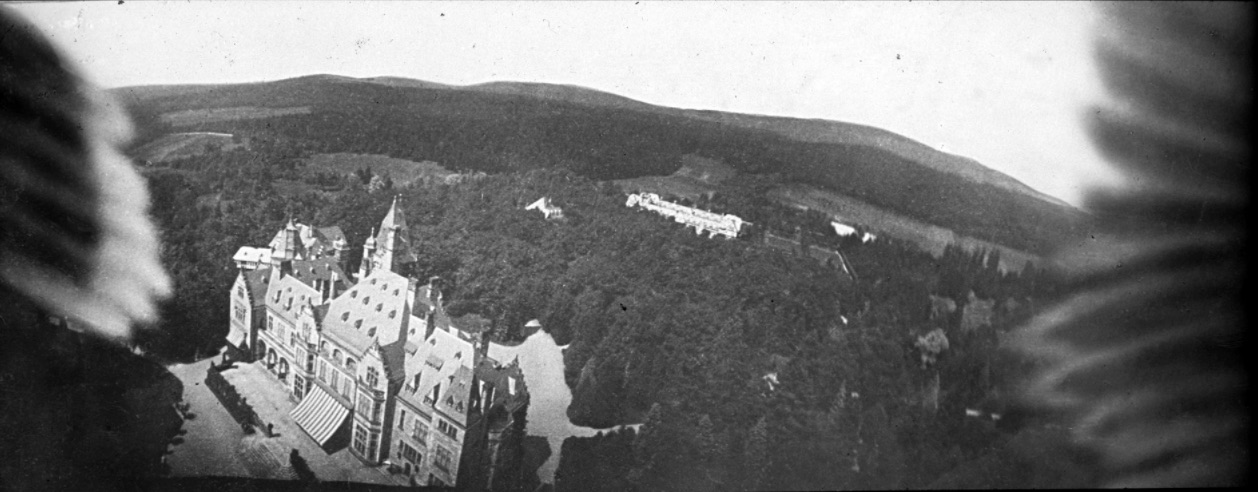
In 1907, pharmacist and photography buff Dr. Julius Neubronner invented the "pigeon camera." Neubronner attached his cameras, with a built-in shutter timer, to his own homing pigeons and let them fly. For most people, the birds' photos provided a previously unseen view on the world. The images are collected in a new book, The Pigeon Photographer. From the New Yorker:

(Neubronner) showed his camera at international expositions, where he also sold postcards taken by the birds. Additionally, he developed a portable, horse-drawn dovecote, with a darkroom attached to it, which could be moved into proximity of whatever object or area the photographer hoped to capture from on high. These inventions represented a breakthrough at the time, allowing for surveillance with speed and range that was previously impossible. (Whether the cameras would actually capture the desired object, however, depended on luck and the whims of the pigeons.) The technology would soon be adapted for use in wartime—the cameras served as very early precursors to drones—although by the time of the First World War, just a few years later, airplanes were allowing people to do things that only pigeons could have done before.

(Thanks, Bob Pescovitz!)

27 Apr 19:15

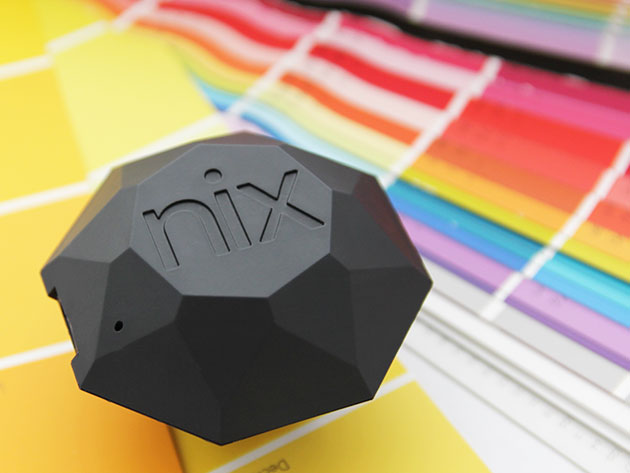
The Nix Pro Color Sensor matches colors with extreme precision

by Boing Boing's Shop

Our world is a colorful one, and when it comes time to repaint the house or create a new design, many of us look to our surroundings for inspiration. However, matching colors from the outside world to our canvas isn't the most precise process when we're just eyeballing it. The Nix Pro Color Sensor removes the guesswork involved, determining an exact match of any color you put it on, and it's on sale for over 25% off in the Boing Boing Store.

The key to the Nix's precision is its ability to block out ambient light when you're matching a surface. Simply scan any color critical surface and save it to your smartphone or tablet, and the Nix will match it to a huge range of existing color libraries. You can match with over 38,000 paint colors and even grab CMYK, HEX, sRGB, CIELAB, LCH, and LRV values. Plus, the Nix lets you discover and save color harmonies to build your creative library.

Now, you can get the Nix Pro Color Sensor on sale today for $249 in the Boing Boing Store.

27 Apr 19:13

"But slavery was so long ago"

by Rob Beschizza

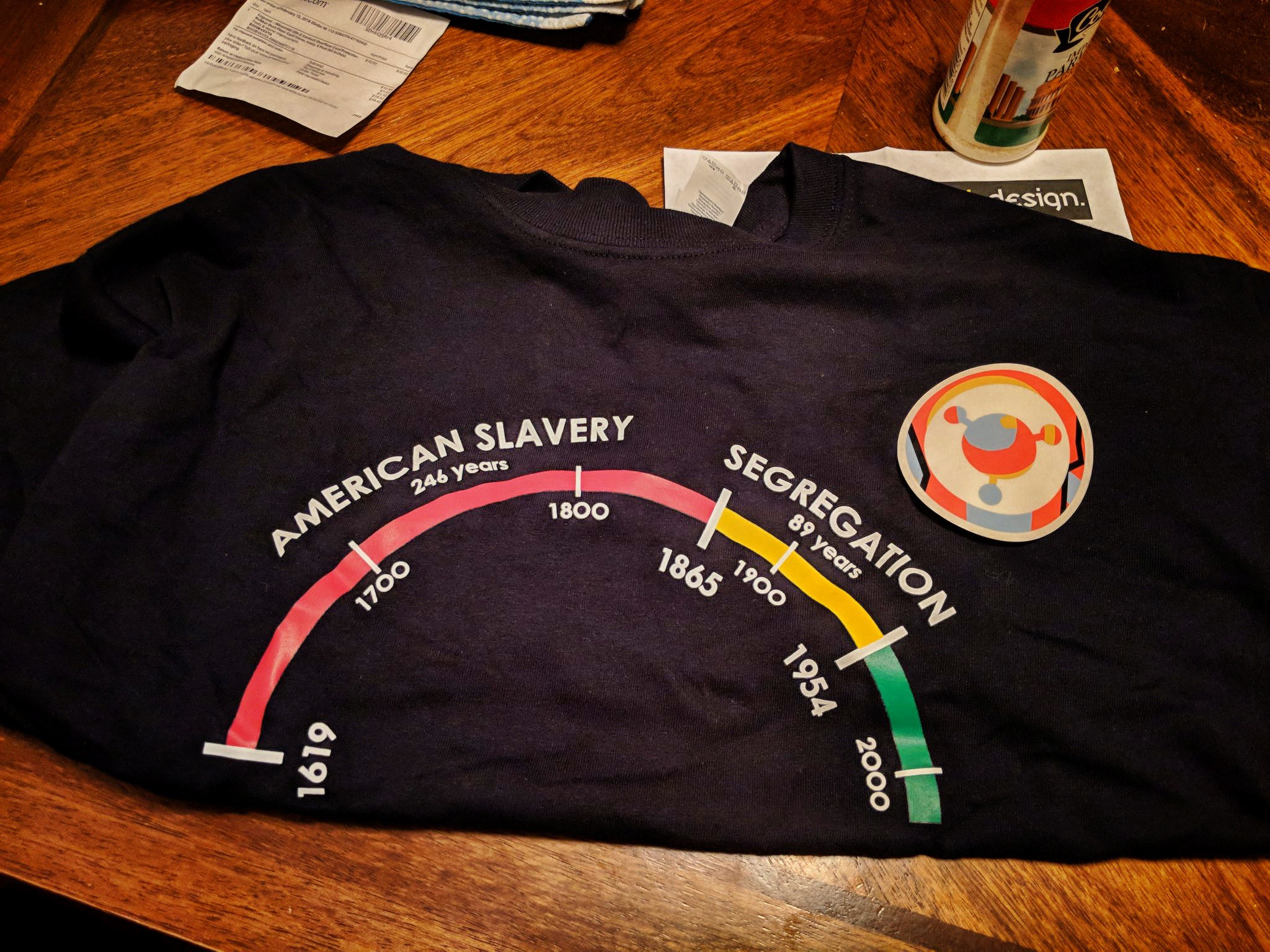
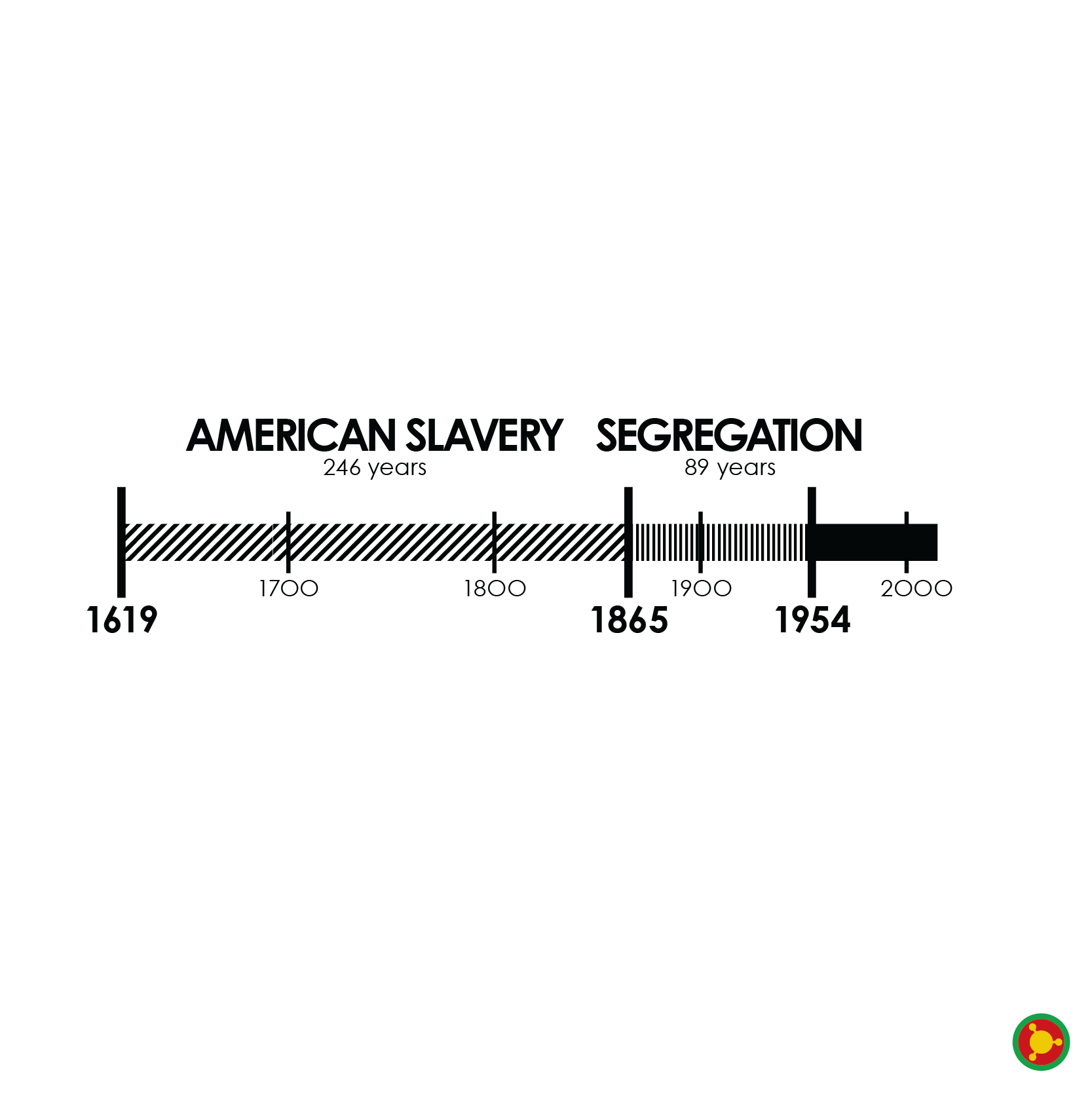
Originally commissioned as a wrist tattoo, the simple and powerful chart showing how recent black freedom is in America is now also a t-shirt.

"...but slavery was sooo long ago."

We've heard this quote over and over throughout the course of modern American history. In an attempt to urge black people to "move on" and to recognize just how good they have it in America, this dismissive and tone deaf statement attempts to transform relatively recent history into ancient history or myth.

However, when looking at this graphic, it is very clear that American slavery and segregation was not so long ago. In fact, it is very possible to have conversations with many African Americans who have vivid memories of Jim Crow South and the racist and subversive practices in the North.

I like this black and white version:

27 Apr 19:05

IoT Inspector: Princeton releases a tool to snoop on home IoT devices and figure out what they're doing

by Cory Doctorow

IoT Inspector is a new tool from Princeton's computer science department; it snoops on the traffic from home IoT devices and performs analysis to determine who they phone home to, whether they use encryption, and what kinds of data they may be leaking. (more…)

27 Apr 18:41

Report: Freedom of the Press in decline around the world

by Seamus Bellamy

While it should come as no surprise to anyone that follows the news or gets depressed by Twitter on a regular basis, freedom of the press – an important check against corruption and the misuse of power in a democracy – is on the decline.

We've been seeing it daily of late: political leaders spewing targeted hate at particular journalists or the outlets they work for. Pundits calling the facts uncovered during deep-dive investigative reporting lies, or alternate versions of the truth, instead of trying to defend their viewpoints or confessing to their bullshit once they've been caught. Hell, Trump went so far as to call journalists "enemies of the people." That's a term that Stalin was fond of.

The assault on the media doesn't stop there, either. With increasing frequency, journalists around the world are facing charges and incarceration for nothing more than doing their jobs. As insane as it is, those are the lucky ones. In some locales, being a journalist can get you killed. It's been common, in recent years, for reporters in Mexico to vanish or to wind up dead – their work to bring the truth to light displeasing to drug cartels and corrupt local officials. And then there's this, from Reporters Without Borders:

The line separating verbal violence from physical violence is dissolving. In the Philippines (down six at 133rd), President Rodrigo Duterte not only constantly insults reporters but has also warned them that they “are not exempted from assassination.” In India (down two at 138th), hate speech targeting journalists is shared and amplified on social networks, often by troll armies in Prime Minister Narendra Modi’s pay. In each of these countries, at least four journalists were gunned down in cold blood in the space of a year.

If you're interested in taking a read of how your country rates on the RSF index of press freedoms, Reporters Without Borders has all the information you need. Head on over to their website, have a stiff drink and gain a better understanding of how, in many countries, the hard-won freedoms we cherish are being pulled out from under us.

Image via Flickr, courtesy of Brent Payne

27 Apr 13:28

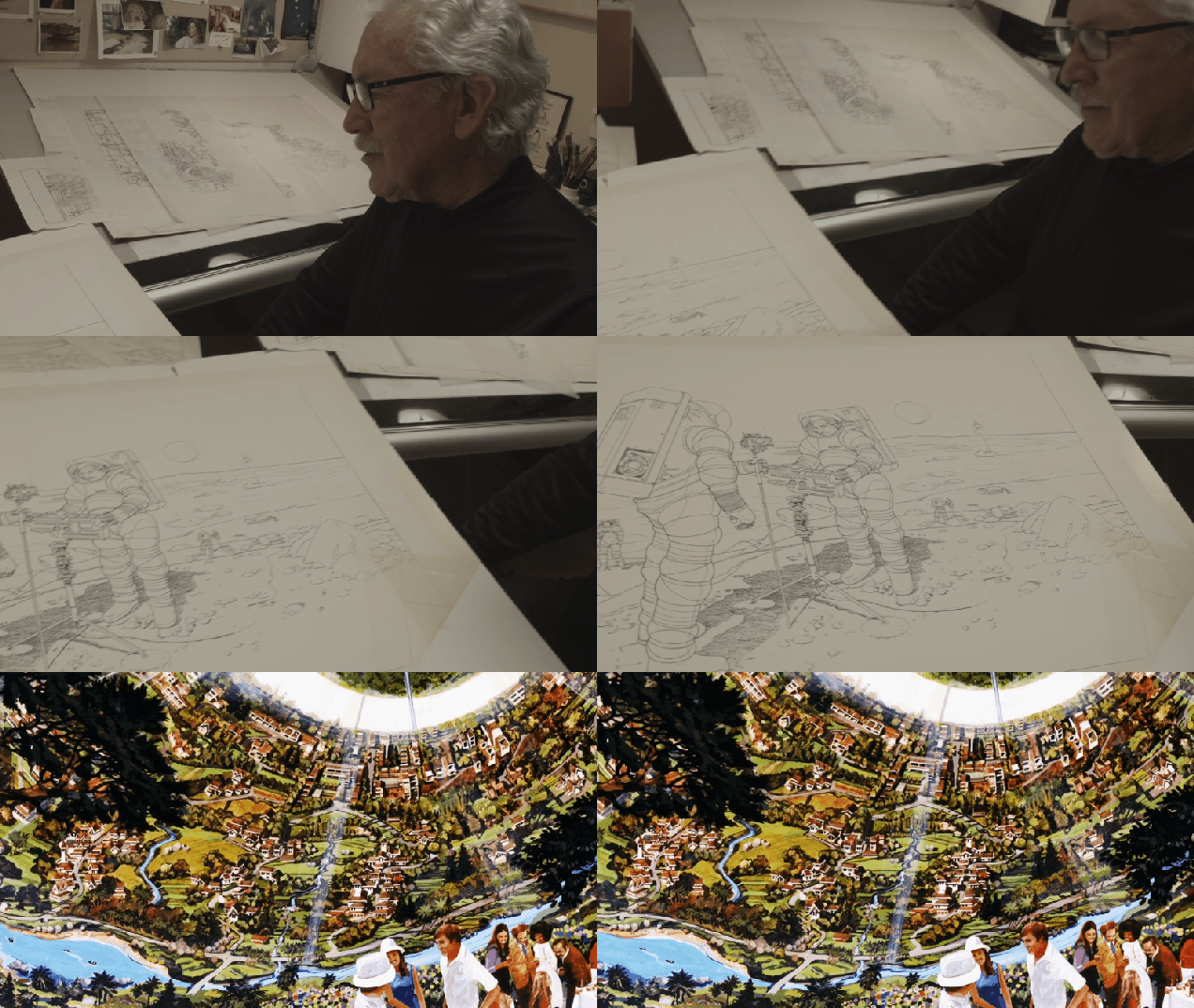
Upcoming Video Series Explores the Retro-Futuristic Space Colonies of NASA Artists

by Matt Novak

There’s a new documentary series in development called Artist Depiction about NASA artists and their visions for the future. Or, in many cases, their past visions of the future. And it all looks incredible.

Read more...

24 Apr 17:30

Thanks to streaming, recording industry revenues are back up to pre-internet levels, but musicians are poorer than ever

by Cory Doctorow

Since the days of Napster, record labels have recruited recording artists as allies in their fight against unauthorized music services, arguing that what was good for capital was also good for labor. (more…)

24 Apr 12:41

Häxan: Witchcraft Through The Ages (1922)

by Adam Green
Curious and groundbreaking mix of documentary and silent horror cinema, written and directed by Benjamin Christensen.
23 Apr 18:57

Misophonia – when certain sounds drive you crazy

by Robin Bailey, Senior Lecturer in Psychological Therapies, University of Central Lancashire
stockfour/Shutterstock.com

What happens when you hear someone do any of the following: smacking their lips while eating, slurping drinks, breathing, yawning, sniffling, humming, tapping their fingers, typing or texting with the keyboard clicks switched on? If you have a strong emotional response and a desire to escape or stop the sound, you may have misophonia.

Literally meaning a “hatred of sound”, misophonia is a neurophysiological condition in which people have a disproportionately negative reaction to specific sounds. People with the condition are aware that they overreact to certain sounds, it’s just that their reaction is not within their control.

The trigger sounds that people with misophonia react to can vary from person to person. However, some categories are more common than others and they tend to be related to the mouth or eating, breathing or nasal sounds and finger or hand sounds. Evidence suggests that this aversion develops in childhood and tends to get worse over time.

People with misophonia find trigger sounds more distressing if they are produced by family members rather than by strangers. This may make family meals particularly problematic for misophonics.

Misophonics nightmare. Monkey Business Images/Shutterstock.com

Misophonic responses tend to be emotional, with anger being the most common response, ranging from mild annoyance to extreme rage. People can also feel other strong emotional responses such as anxiety or disgust. Physiological responses include an increase in blood pressure and heart rate, sweating and muscle contractions.

You might assume that everyone has, to some degree, a negative response to certain sounds, such as a sudden, loud bang or high-pitched squeal. Yet in misophonia, people can react to sounds that are not widely considered unpleasant, such as whispering or soft breathing. Quiet sounds can evoke as much of a reaction in misophonics as loud sounds.

Researchers have investigated whether misophonia is linked to, or caused by, other psychiatric or physical conditions, such as tinnitus, obsessive-compulsive disorder, eating disorders or post-traumatic stress disorder. The evidence suggests that, although some association exists with these conditions, none of these disorders can fully explain misophonic symptoms, suggesting misonphonia is a separate and independent condition in its own right.

Fight or flight

Simply ignoring annoying sounds is not possible for misophonics. It appears that selective attention may be impaired in people with the condition, particularly when exposed to their trigger sounds. So if every time someone is close to their worst sounds, and their attention becomes fixated on it, the only options may be fight or flight.

A study of misophonics found that 29% became verbally aggressive when hearing their trigger noise, with a further 17% directing their aggression towards objects. A small but significant proportion of the sample (14%) reported that they had been physically aggressive towards others on hearing their trigger sound.

Misophonics have also reported that the condition has had such a negative effect on their lives that they have avoided social situations, relationships have broken down, and some have even thought about taking their own life.

Unfortunately, our understanding of the condition is in its infancy and so are treatments, although some evidence suggests that cognitive behavioural therapy may help. But given that the condition was only identified in 2001, we still have a long way to go in understanding it.

The Conversation

Robin Bailey does not work for, consult, own shares in or receive funding from any company or organisation that would benefit from this article, and has disclosed no relevant affiliations beyond their academic appointment.

20 Apr 13:49

Google Books does copyright right

by Cory Doctorow

Steven Melendez discovered some public domain government documents in Google Books that the service wouldn't let him download because they had been misclassified as copyrighted; he filled in an online form and less than a week later, a human had reviewed the documents, agreed that they had been misclassified and removed all restrictions. (more…)

20 Apr 13:47

The Facebook Liberation Army Link List

by Cory Doctorow

The Institute of Network Cultures' Facebook Liberation Army Link List (compiled by Geert Lovink & Patricia de Vries) is a thoroughly useful document: (more…)

20 Apr 13:40

Mystery of The Giant's Causeway in Ireland has been unlocked

by Seamus Bellamy

Time for a bit of folklore.

Benandonner was a giant from Scotland. He was something of a tool and constantly threatened to lay a beating on Ireland.

Fionn mac Cumhaill was a giant too. He resided in Ireland. Fionn wasn't down with Benandonner's wanting to put a hurt on his homeplace. In fact, Fionn was so bent out of shape about it that he decided to rip up chunks of County Atrim and throw them into the sea in order to build a causeway to Scotland. The causeway would make it possible for Fionn to travel and beat Benandonner's ass.

With the Giant's Causeway built, Fionn stomped off to Scotland to get down with his island's adversary. He didn't stay long though: Upon reaching Scottish soil, Fionn discovered that Benandonner was frigging huge – like, giant, even for a giant. Afraid of having his ass handed to him, Fionn hightailed it back to Ireland. When the larger giant heard that Fionn had come to Scotland to fight him, but turned coward at the last moment, he set out for Ireland across the causeway to lay a curb stomping on poor Fionn.

Seeing that her husband was in trouble, again, Fionn's wife, Oonagh, bundled her husband up in swaddling clothes, disguising him as a baby. Benandonner came upon Oonagh and saw the enormous baby. He freaked out: if Fionn's child is that big, even as a toddler, Fionn himself must be HUGE. Benandonner crossed the causeway once more, back to Scotland and safety.

That's the story of how the Giant's Causeway was created, as it was taught to me.

According to The Guardian, a team of volcanologists have declared that they've got another theory on how the Causeway's 40,000 (give or take) hexagonal columns were created:

Yan Lavallée, professor of volcanology at the University of Liverpool and lead author, said: “[This] is a question that has fascinated the world of geology for a very long time. We have been wanting to know whether the temperature of the lava that causes the fractures was hot, warm or cold.”

To answer the question, Lavallée and colleagues recreated the process in the laboratory using basalt cores drilled from the Eyjafjallajökull volcano in Iceland. The 20cm-long cylinders, gripped by a clamp at each end, were heated to more than 1,000C until they began to soften into lava. The samples were fixed at each end in a mechanical grip and cooled to test at what point they snapped.

The basalt magma fractured at between 840-890C, the study found, suggesting that this is the temperature at which the Giant’s Causeway would have formed.

It's not as much fun as the version that involves Fionn mac Cumhaill, but is still pretty fascinating.

For a longer read of the science that Lavallée and his team got up to, check out their findings in the journal, Nature Communications.

Image via pixabay, courtesy of Ben_Kerckx

20 Apr 13:27

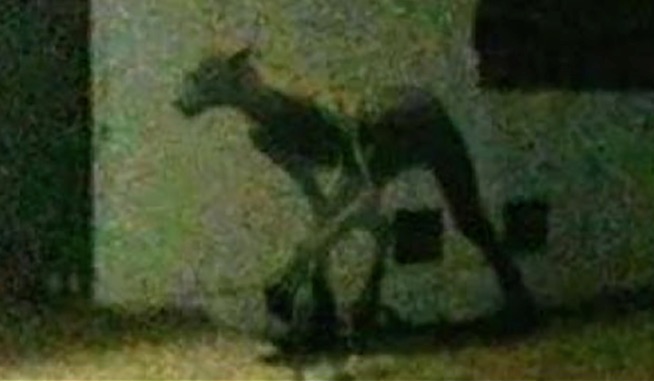
Photo of freaky monster terrorizing Santa Fe, Argentina

by David Pescovitz

A resident of Santa Fe, Argentina snapped this photo of a horrific beast that allegedly is killing dogs in the town. It's said to be 7-feet-tall and resemble a cross between a horse and El Chupacabra. YouTube channel UFOmania reported on the creature so perhaps the most reasonable explanation is that it's an evil extraterrestrial that hates doggos.

(iHeartRadio via Fark)

20 Apr 13:13

Native American Tribe to DHS: Keep your dumb border wall off our land

by Seamus Bellamy

In 1853, the U.S. Government bought a 29,670 square mile chunk of dirt in a deal that, as history buffs will tell you, ended up being called the Gadsden Purchase. It was a dick move: purchasing the land meant bisecting the territory of the area's indigenous Tohono O’odham Nation. This left half of the Tohono O’odham in Mexico and the other half in the United States. Today, the Tohono O’odham are a federally recognized tribe, with somewhere around 34,000 members. This number includes around 2,000 Tohono O’odham who live in Mexico. It's not uncommon for the tribe to cooperate with Homeland Security where protecting the border is concerned. But guess what? A tribe that had their lands split up by the Federal government once isn't crazy about having it done again.

According to Splinter, the Tohono O’odham Nation controls the second largest land base in the United States. This includes a full 75 miles of the U.S./Mexico border. Given that members of their tribe live on both sides of the border, they're less than chuffed with the notion of allowing the National Guard onto their lands to surveil their territory or to allow a border wall to be built on their property. The reasons for their objections are sound: Having a wall thrown up in the middle of their land would keep members of their tribe from easily traveling to participate in culturally important events on their own frigging land.

From Splinter:

Tohono O’odham chairman Edward D. Manuel recently went on a local radio station to tell members of the tribe that no National Guard or military personnel were welcomed on the land, according to a spokesperson for Manuel’s office. The tribe also released a statement announcing the Border Patrol has agreed to not send military personnel to its land. (Border Patrol officials in the Tucson Sector, which covers the area where the tribe lives, did not respond to a request for comment.)

It'll be interesting to see, should the Trump administration ever get its shit together and sort out the funds for a border wall, how things shake out with the Tohono O’odham. I'd love to think that they'd be successful in keeping the Feds off of their soil. But the pessimist in me feels that their desire to freely traverse their own lands could fall by the wayside in favour of the ineffectual security plans of the current Administration.

Image via Wikipedia Commons

20 Apr 13:08

Get a tiny Raspberry Pi Zero with adapters

by Mark Frauenfelder

The Raspberry Pi Zero is a tiny Linux computer. Ever since they were announced last year for $5, they have been hard to get. But if you are willing to spend about $20, you can get one on Amazon. This Raspberry Pi Zero kit from Argon Forty is $18.50, and it also includes a Mini HDMI to HDMI adapter and a Micro USB OTG to USB Adapter, both of which I needed anyway, so it's a good deal. The Raspberry Pi Zero W is $2 more and comes with onboard Wi-Fi. You will also need a Micro SDHC flash memory card (here's a 16GB one for $7) If you are coming to Maker Faire this year, you can see what I made with it, I'll be presenting at 1pm on Sunday.

20 Apr 13:01

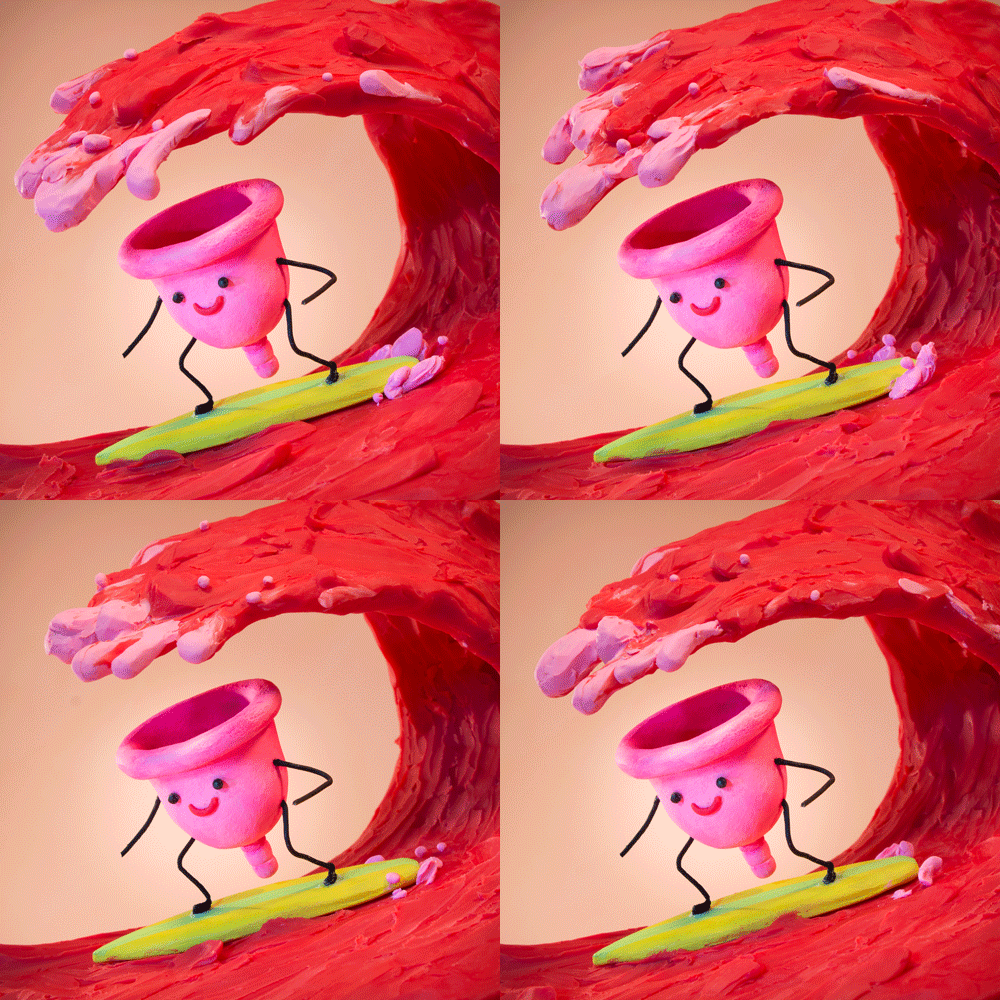
Ovary Actions: menstruation euphemism gifs to smash period taboos

by Rusty Blazenhoff

Oakland, California-based stop motion/GIF artist Headexplodie (aka Annie Wong) thinks that society is overreacting to menstruation, an ordinary biological process that affects half our population. That's why she created "Ovary Actions" (get it...? Overreactions = Ovary Actions), an ongoing series of lovely animated gifs based on period euphemisms. She's hoping they'll take some of the stigma out of "that time of the month."

She writes:

I’m interested in the cultural paradox that exists around menstruation. Although it’s an ordinary and healthy part of life, we treat it as if it were a mysterious thing which leaves us with a confused and silly view of it....

I just think it’d be cool if we could all be more chill and comfortable with talking about this thing that for so long has been painted with a broad brush of negativity.

I personally used to think about my periods as something to be ashamed of, to hide, something that made me feel absolutely gross. But since embarking on this project I’ve opened myself up to various menstrual educators, artists, and entrepreneurs, and seeing their work in my daily feed makes periods seem totally normal. Being able to talk openly about it with my friends has done the same. Normalizing periods is the first step in being able to take better care of our reproductive health.

https://www.instagram.com/p/BhexGD6ldG-/?taken-by=headexplodie https://www.instagram.com/p/BhHY9ZiBxHr/?taken-by=headexplodie https://www.instagram.com/p/BgwTqb_h0IV/?taken-by=headexplodie https://www.instagram.com/p/BgjNNJnl7wn/?taken-by=headexplodie https://www.instagram.com/p/BgOoK7fl9fi/?taken-by=headexplodie

Surfing the Crimson Wave

If you love this project as much as I do, be sure to follow her on Instagram. Also: can we all just agree that "Headexplodie" is the best artist name ever?

20 Apr 12:51

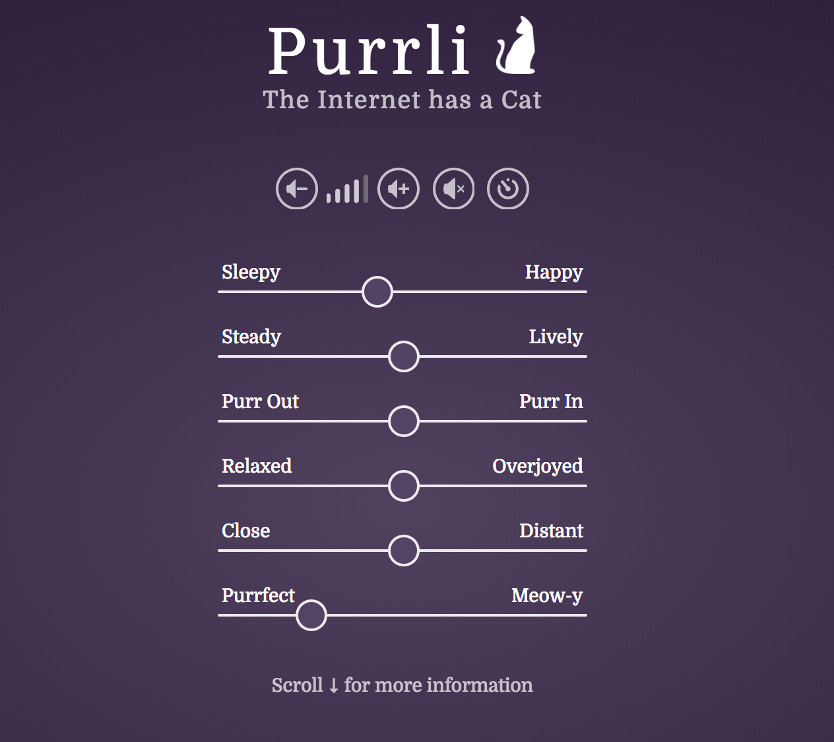
Customizable cat-purr emulator

by Clive Thompson

Stéphane Pigeon has created Purrli, a web site that generates audio of a cat purring.

It's customizable; I found setting it for "sleepy" and "relaxed" produced my particular fave timbre of cat-purr.

As Pigeon notes:

The sound of a purring cat is one of the most comforting sounds available and can help soothe and calm you down when you're feeling stressed. Naturally, it's not just the sound that is important, but it's also the presence of the warm cuddly cat. Purrli tries to recreate both the sound and the presence of your very own virtual cat through a custom sound engine modelled after real purrs.

With a purr that delicately changes over time, Purrli aims at making the experience as real and lively as possible. Just like a real cat, Purrli will call for your attention. Just be careful when adjusting the last slider, if you don't want to be nagged in the middle of your work.

Scroll down the page and read the testimonials -- it's quite interesting to see the varied reasons people enjoy hearing a virtual cat purr, including:

My cat that grew up with me during childhood died two or three years ago, and whenever I was upset, she would come and lay next to me and purr to calm me down. She would nap with me, and her purring would help put me to sleep. I really miss that. This cat purr generator sounds just like her, and it really helps with my anxiety, especially during large projects.

I have fibromyalgia, so I am constantly in pain. This cat purr generator relaxes me and puts me to sleep. When I wake up during the night with pain, it helps me to fall back to sleep. I wish I had this years ago.

I have misophonia and work in an office. The purr generator has been a life saver. Now I can drown out the things like coughs, sniffles, throat clears, etc., that used to drive me nuts! It's comforting and helps me to focus.

13 Apr 15:08

Ultra-fast-growing rhubarb makes incredibly weird sounds

by Clive Thompson

"Forced rhubarb" is rhubarb grown to maturity in complete darkness -- during which it grows so rapidly it produces incredibly cool, weird sounds.

If you listen to that video above you'll get an earful: Rapidfire clicks and pops that sound like somebody irregularly whacking a couple of wet sticks together.

The process of "forced rhubarb" -- a term I am using for my next band name obviously -- is outlined nicely in this story on Atlas Obscura:

The method of growing forced rhubarb dates back to the early 1800s, and continues in much the same way today. Farmers let the rhubarb grow out in the open for two years, as the roots collect and store calories. Then the plants are transplanted to lightless growing sheds around November, where they continue to grow—warm, but out of season and in the dark. The rhubarb grows without photosynthesis, which normally makes the plant tough and fibrous. “You get a lot more tender, less tart rhubarb. There’s not too many strings. Outside rhubarb is quite stringy. When you’re cooking with [forced rhubarb] you use around 40 percent less sugar,” says French. The process also results in deep, red stalks, without the normal green shading.

As the stalks burst up out of their initial buds, they create a distinct popping sound, and as they get larger, the stalks rub together and create squeaks and creaks. “It’s growing over an inch a day. It’s not like your field or garden where things are growing two to three feet apart,” says French. “Every root is right tight to one another.”

(CC-licensed photo above from Timothy Vollmer)

13 Apr 15:06

Turn your shoes into roller skates

by Rusty Blazenhoff

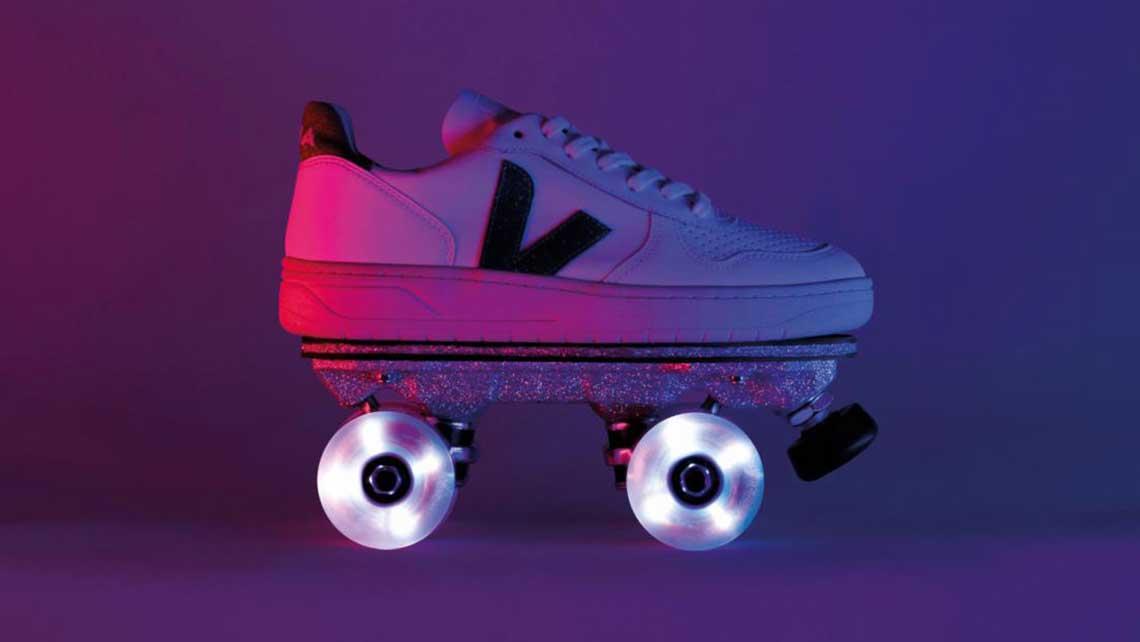
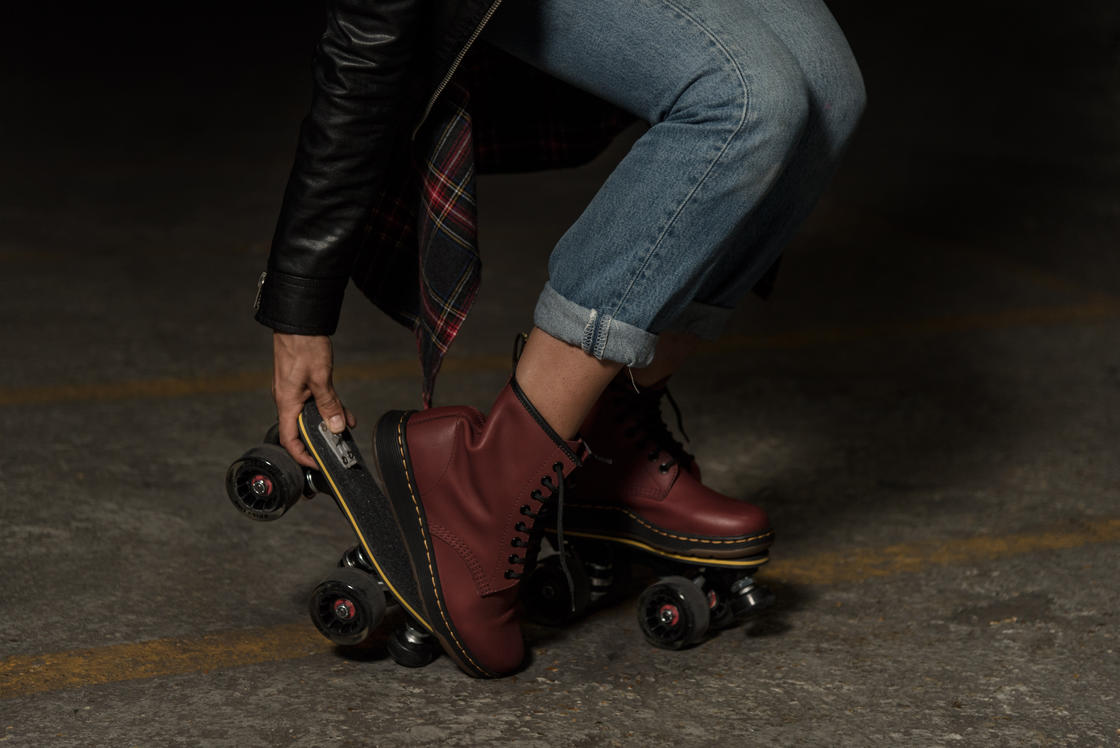
A French company has made it possible to take ordinary kicks and turn them into roller skates. Flaneurz' On Wheelz can put a set of wheels on sneakers (or other shoes like Doc Martens) simply by clicking them on. (Well, that's after you send your shoes to the company to be modified so the wheels can be simply clicked on. Or you can buy one of their pre-modified pairs.) https://youtu.be/z6Q80AbUWE4 Voila! Insta-skates.

Something this cool doesn't come cheap. A set of On Wheelz with modified shoes costs between 380-475 euros (that's about $467-$588).

(Ufunk)

12 Apr 18:04

Trippy infrared flyover of Jupiter's swirling north pole

by Clive Thompson

NASA just released this fascinating and gorgeous video of Jupiter's north pole -- and its wild, swirling storms.

They're not some CGI mockup; these are actual images of the real planet. They were taken by Juno probe that's currently orbiting Jupiter; Juno has an infrared mapping device that's able to probe up to 45 miles below Jupiter's surface, capturing this lush 3D detail.

Jupiter's north pole is dominated by a cluster of cyclones: One large central one, surrounded by eight smaller ones – though on Jupiter, "smaller" means these ones are up to 2,900 miles in size. Jupiter is biiiiig man!

This second video zooms out a bit further and lets you see how the main cyclone and the eight smaller ones are positioned ...

https://www.youtube.com/watch?time_continue=1&v=eG7em_89sig

These videos are so trippy, I could stare at them all day.

Figuring out how Jupiter works means figuring out what's happening beneath the surface, so this new phase of infrared imaging is crucial. The planet is still awfully mysterious, because as NASA notes, we're still not sure why Jupiter's atmosphere is divided the way it is:

The map Connerney's team made of the dynamo source region revealed unexpected irregularities, regions of surprising magnetic field intensity, and that Jupiter's magnetic field is more complex in the northern hemisphere than in the southern hemisphere. About halfway between the equator and the north pole lies an area where the magnetic field is intense and positive. It is flanked by areas that are less intense and negative. In the southern hemisphere, however, the magnetic field is consistently negative, becoming more and more intense from the equator to the pole.

The researchers are still figuring out why they would see these differences in a rotating planet that's generally thought of as more-or-less fluid.

(A tip of the hat to @JoAnnaScience for pointing this one out!)

12 Apr 17:50

A stationary exercise bike that looks like an old school cruiser

by Rusty Blazenhoff

The Schwinn Classic Cruiser may well be the coolest indoor fitness bike out there. It's not only snazzy to look at but it's also Bluetooth-enabled.

For $799, you get the retro red stationary bike along with an app that allows you to "ride through a 1950’s town while delivering newspapers & avoiding obstacles." For another $99, you get the accessory kit which includes: a "'Cruisin' license plate, Schwinntastic red and white streamers, retro bike horn, water bottle and mountable water bottle holder." https://youtu.be/f5Qdtasg7-4

(Pee-wee Herman)