Shared posts

04 Jan 19:38

What really happens on Public Domain Day, 2019

by Kevin Smith

The first of January, as many of you know, is the day on which works whose copyright term expired the previous year officially rise into the public domain. For many years now, however, no published works have entered the PD because of the way the 1976 Copyright Act restructured the term of copyright protection. 2018 was the first year in decades that the term of protection for some works – those published in 1923 – began to expire, so on January 1, 2019, many such published works will, finally, become public property. Lots of research libraries will celebrate by making digital versions of these newly PD works available to all, and the Association of Research Libraries plans a portal page, so folks can find all these newly freed works.

I want to take a moment to try to explain the complicated math that brought us to this situation, and to spell out what is, and is not, so important about this New Year’s Day.

Published works that were still protected by copyright on Jan.1, 1978, when the “new” copyright act of 1976 went into effect, received a 95-year term of protection from the date of first publication. For works that were in their first term of copyright when the law took effect, this was styled (in section 304(a)) as a renewal for a term of 67 years, so that 28 years from when the copyright was originally secured plus the 67 years renewal term equaled 95 years. If a work was in a second, renewed term on Jan 1, 1978, section 304(b) simply altered the full term of protection to 95 years from date of first publication (or, as the law phrases it, when “copyright was first secured”).

So what is special about 1923? Prior to the 1976 act, copyright lasted for 28 years with a potential renewal term of another 28 years. This adds up, of course, to 56 years. Thus, works published in 1923 would be the first batch of copyrighted work that would receive this 95-year term, because they would be the oldest works still in protection when the new act took effect (1923 plus 56 years being equal to 1978). A work published in 1922 would be entering the public domain just as the new act took effect, and those works stayed in the public domain. But those published a year later were still protected in 1978, and they got the benefit of this new, extended term, which ultimately resulted in 37 more years of protection than an author publishing her work in 1923 could have expected. Therefore, everything published from 1923 until 1977 enjoyed an extension, first to 75 years, then, thanks to the Sonny Bono Copyright Term Extension Act, 95 years. Since 2018 is 95 years after 1923, it is those works published in 1923 whose terms expired during 2018, so they officially rise into the public domain on Jan. 1, 2019.

All this math does not mean, however, that everything published in 1923 has been protected up until now. Notice that, in the description above, we distinguish between those works in their first (28-year) term of protection and those in their second term. That is because, under the older law, a book, photograph, song or whatever, had to be renewed in order to continue to have protection past that first 28 years. Many works were not renewed, and the 1976 act only applies the extended 95-year term to those older works that were in their second term of protection when it took effect. So if a work was not renewed, and its copyright had already lapsed, the extended term did not apply. A basic principle is that the 1976 copyright law did not take anything out of the public domain that had already risen into it (although a later amendment did exactly that for certain works that were originally published in other countries).

What is really happening then, is that some 1923 works – those whose copyright term was renewed after 28 years (in 1951) – really do become public domain for the first time. But for a great many works, which were already PD due to a failure to renew, what really happens this week is that we gain certainty about their status. Research suggests that a sizable percentage of works for which renewal was necessary were not, in fact, renewed; estimates range from 45% to 80%. So many of the works we will be celebrating were certainly already public domain; after January 1 we just have certainty about that fact. Finding out if a work was renewed is not easy, given the state of the records. The HathiTrust’s Copyright review program has been working hard at this task for a decade, and they have been able to open over 300,000 works. But it is painstaking, labor-intensive work that mostly establishes a high probability that a work is PD. On Public Domain day, however, we get certainty, which is the real cause for celebration.

Let me illustrate this situation by considering one of the works that the KU Libraries plan to digitize and make openly accessible in celebration of Public Domain Day, 2019. Seventeen Nights with the Irish Story Tellers, by Edmund Murphy, is an interesting collection of poems that is part of our Irish literature collection, one of the real strengths of the Spencer Research Library at KU. It was published in Baltimore in 1923, and OCLC lists holdings for only 15 libraries. It is apparently not held by the HathiTrust, likely because no libraries whose holdings Google scanned owned a copy. But my guess is that it is already in the public domain and has been since the early 1950s. And there is no record of any renewal of its copyright in the database of renewal records maintained by the library at Stanford University. That database only holds renewal records for books, and it contains no indication that Seventeen Nights ever received a second term of protection. So the chances are good that this work, like so many others, has been in the public domain for many years.

There are a great many works published between 1923 and 1963 that simply exist in a state of limbo, probably in the public domain but not (yet) subject to the effort needed to determine whether there has ever been a renewal of the copyright. On Public Domain Day, 2019, we should certainly be delighted by the “new” 1923 works, such as Robert Frost’s Stopping by Woods on a Snowy Evening, that will become PD for the first time. But we also need to recall that many published works from the mid-20th century are already in the public domain. If we want to make the effort to do the needed research, there is lots of opportunity to free up some of these works without waiting for another January 1.

Happy Public Domain Day to all!

20 Dec 20:53

Only weeks remain until America's Public Domain begins to grow again, for the first time in 21 years!

by Cory Doctorow

This New Year's Day, for the first time in 21 years, new works will enter the public domain in America: the Class of 2019 was all creating in 1923, and has been locked in copyright for 96 years.

When Disney successfully lobbied Congress to extend copyright by 20 years in 1998, it stopped the clock on the public domain. 20 years ago, everything from 1922 became public. The next year, and the year after, and every year until 2019, nothing else entered the public domain.

As Glenn Fleishman writes in Smithsonian, the result is a weirdly skewed public perception of the 1920s. 1922 was the year "the world broke in two," in the words of Willa Cather. It was the year of Ulysses, The Wasteland and Harlem Shadows. Those works have been ours to use and change and copy and play with for 20 years. The works from the next year -- Robert Frost's "Stopping By the Woods on a Snowy Evening," Conan Doyle's "Our American Adventure," Willis Richardson's "The Chip Woman’s Fortune," have been locked away and languishing, waiting for Jan 1, 2019.

If this pleases you as much as it does me, and you happen to be near San Francisco on January 25, please join me, Larry Lessig, Creative Commons and the Internet Archive for A Grand Re-Opening of the Public Domain.

Fleishman adds, "I wrote a parody of one of the 1923 works, Frost's "Stopping by Woods on a Snowy Evening," as a side project The bit about "fifty-one" refers to the fact that the poem's copyright may have been improperly renewed in 1951, thus leaving it in the public domain for the last 67 years — even as the Frost estate and publishers have rigorously defended it (as noted in the article), including in Eldred v. Ashcroft."

“Two roads diverged in a wood, and I— / I took the one less traveled by, / And that has made all the difference.” How refreshing it is to quote freely from another iconic Robert Frost poem, “The Road Not Taken,” published in his poetry collection Mountain Interval in 1916. Its copyright expired in 1992 and that has made all the difference. The poem has inspired lyrics from Bruce Hornsby, Melissa Etheridge and George Strait, and its phrases have been used to sell cars, careers, computers and countless dorm room posters that feature the final lines as an exhortation to individualism that the poet likely never intended.

On January 1, HathiTrust will publish Frost’s collection New Hampshire, including “Stopping by Woods on a Snowy Evening,” online and it will finally be available for anyone to adapt. Perhaps no one is more bemused by that prospect than the composer Eric Whitacre. In 1999, believing the poem had already entered the public domain (the last-minute copyright extension prevented that), Whitacre accepted a commission to turn it into a choral piece. After just two performances, Whitacre said, Frost’s publisher and the Frost estate shut him down, refusing to license the work. Whitacre eventually produced a different version of the work, titled “Sleep,” with lyrics written for it by the poet Charles Anthony Silvestri. He is now considering releasing the work in its original form. “All I wanted to do,” Whitacre said, “is illuminate the original poem with music.”

For the First Time in More Than 20 Years, Copyrighted Works Will Enter the Public Domain [Glenn Fleishman/Smithsonian]

STOPPING BY WORDS ON A NEW YEAR’S EVENING

Whose words these are it’s clear to see,
He wrote them back in ’twenty-three.
His reps have never stopped the fight
To limit use by copyright.

James Madison would think it queer
That rights this long could stay so dear,
But courts have let extensions be
Despite the case of Eldred v.

The house of publication shakes
Off questions that renewal breaks
In ’fifty-one, a form not sent—
No one tried to show dissent.

The words are lovely, free and clear,
With oceans more that will appear.
And years to go before release,
And years to go before release.

20 Dec 20:50

Understanding consent with a cup of tea

by Cory Doctorow

Blue Seat Studios' Tea Consent explains the idea of sexual consent through the act of offering someone a cup of tea: it's OK to offer someone a cup of tea, but if they don't want it, then don't try to give it to them. And if they change their mind after you make them a cup of tea? That's annoying, but still, don't try to make them drink it. And unconscious people? They don't need a cup of tea. (via Kottke)

20 Dec 20:45

For the First Time in More Than 20 Years, Copyrighted Works Will Enter the Public Domain

by Blake
Topic: 
At midnight on New Year’s Eve, all works first published in the United States in 1923 will enter the public domain. It has been 21 years since the last mass expiration of copyright in the U.S. That deluge of works includes not just “Stopping by Woods on a Snowy Evening,” which appeared first in the New Republic in 1923, but hundreds of thousands of books, musical compositions, paintings, poems, photographs and films. After January 1, any record label can issue a dubstep version of the 1923 hit “Yes! We Have No Bananas,” any middle school can produce Theodore Pratt’s stage adaptation of The Picture of Dorian Gray, and any historian can publish Winston Churchill’s The World Crisis with her own extensive annotations. Any artist can create and sell a feminist response to Marcel Duchamp’s seminal Dadaist piece, The Large Glass (The Bride Stripped Bare by Her Bachelors, Even) and any filmmaker can remake Cecil B. DeMille’s original The Ten Commandments and post it on YouTube.
From For the First Time in More Than 20 Years, Copyrighted Works Will Enter the Public Domain | Arts & Culture | Smithsonian
17 Dec 19:54

Starrkeisha’s Christmas Carols, an insanely great Holiday music video

by Xeni Jardin

This is my new favorite holiday video, forever.

The wonderful series of “Starrkeisha” videos you'll find on Random Structure TV are the creations of YouTuber and incredibly talented performer Cameron J Henderson.

If you dig that, here's SANTA'S STOMP TEAM, as a VR180 Experience.

[via @yesauntiecris]

17 Dec 17:33

The importance of thoughtful resistance in the age of Trump

by Ajit Pyati, Associate Professor of Information and Media Studies, Western University
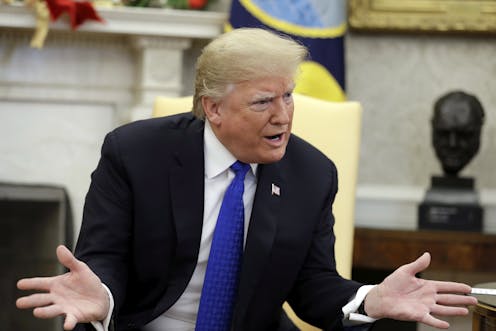
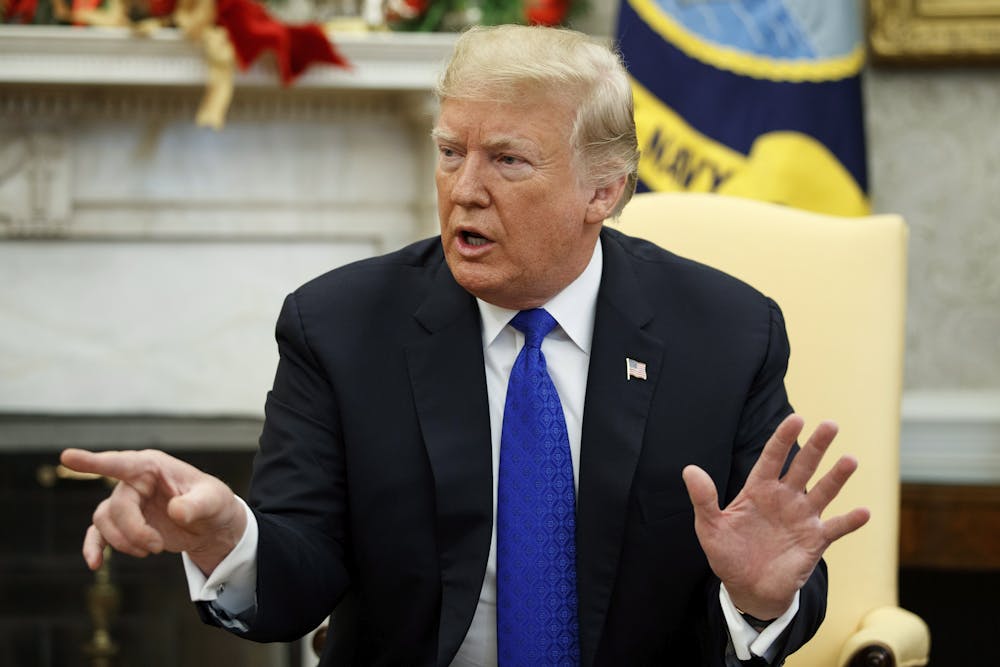
U.S. President Donald Trump is seen here arguing with Senate Minority Leader Chuck Schumer and House Minority Leader Nancy Pelosi in the Oval Office of the White House, who are off-camera. (AP Photo/Evan Vucci)

As resistance to Donald Trump’s presidency continues to dominate American political life, it’s worth asking the question: what exactly is being resisted?

Answers can range from Trump’s reckless and erratic behaviour to his racist and xenophobic views and the outright corruption of his administration, to name just a few.

This means what people resist and also the way they resist can be varied, although outrage is often its dominant emotion.


Read more: Resistance is a long game


Despite the legitimate need for resistance, however, resisting Trump angrily feeds into his victim complex, strengthening his appeal to his base.

Given this reality, those resisting need to be aware of whether their acts of resistance offer real alternatives to Trumpism or rather play into the president’s hands by further amplifying anger and division.

To make resistance more effective, it is important to rediscover contemplative forms of activism. This type of activism has played a prominent role in the history of social change but has been less popular in the age of Trump.

Contemplative activism

What I mean here by “contemplative activism” are forms of social action that emphasize critical, first-person inquiry. In this way, our internal thoughts and emotions are linked to creating positive change in the outer world. Numerous examples exist in human history, such as Mohandas K. Gandhi’s civil disobedience campaign in the Indian independence struggle and Martin Luther King Jr.‘s pacifist approach to civil rights.

In the same vein as Gandhi and King, a lesser-known figure in American contemplative activism is Thomas Merton. Merton, a Trappist monk, prolific writer and social justice advocate, involved himself wholeheartedly in the pressing issues of his time, including civil rights, the Vietnam War and nuclear proliferation.

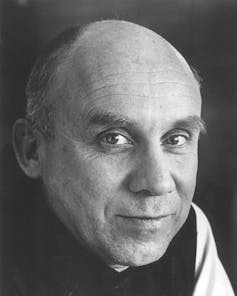
Thomas Merton, who died in 1968, was a social justice advocate. John Howard Griffin/Flickr, CC BY

So significant was Merton’s impact that Pope Francis, during his 2015 address to the U.S. Congress, mentioned Merton as a notable American and source of inspiration for many.

How might the work of Merton and other contemplative activists be relevant in the age of Trump? Specifically, Merton does not shy away from addressing our own individual complicity in the creation of the violence and despair around us.

Delving into the horrors of his own time in the essay “Is the world a problem?”, Merton writes:

“The world is …a complex of responsibilities and options made out of the loves, the hates, the fears, the joys, the hopes, the greed, the cruelty, the kindness, the faith, the trust, the suspicion of all. In the last analysis, if there is a stupid war in Vietnam because nobody trusts anybody, this is in part because I myself am defensive, suspicious, untrusting…”

In addition, the contemplative activism of Merton helps us more clearly see the underlying realities of complex social problems, such as the enduring persistence of fear and greed.

Trump is not an anomaly

This type of contemplative clarity can help us understand how Trump is not an anomaly in American history. While he may behave differently than many modern U.S. presidents, this difference is based more on style than substance.

For instance, Trump’s policies are largely within the Republican mainstream, and he represents some basic and ugly truths about American history (all which far predate him), whether it’s white rage and resentment, delusions about America’s greatness or the savage effects of inequality in a predatory capitalist system.

Trump speaks during a meeting with Democratic leaders in the Oval Office of the White House on Dec. 11, 2018. (AP Photo/Evan Vucci)

In essence, Trump represents the stereotypical “ugly American” that many U.S. citizens have played a role in creating. Trump unmasks the ugliness of the United States and lays it bare for all to see.

With this realization, Americans must reflect on what resistance means when the “enemy” is its own history and its own collective ugliness. Instead of seeing this situation as debilitating, it can be seen as liberating, as it frees people to resist and create alternatives to Trump in a less reactive way.

So while many of Trump’s policies need to be challenged and resisted, Trump is more a symbol and symptom of a larger dysfunction, rather than its root cause.

We are the problem and the solution

This month marks the 50th anniversary of Thomas Merton’s death. His call to fight injustice through a clear-eyed assessment of our collective social condition and critical self-examination is needed now more than ever.

It’s time to move beyond seeing Trump as the defining problem, by both contextualizing his place in the American social fabric and understanding how our actions can either alleviate or worsen toxic political climates in the United States and around the world.

Beyond resistance, it is more powerful to work for an inspiring vision of change. In the effort to defeat Trumpism and movements like it, we can be either part of the problem or the solution.

The Conversation

Ajit Pyati receives funding from Social Sciences and Humanities Research Council of Canada.

13 Dec 18:48

Eclectic Method's latest remix asks 'Is it illegal if you take just one note?"

by Rusty Blazenhoff

Barcelona-based Eclectic Method is most known for his remix songs that are based on pop culture (previously).

Now he's trying something new, an experiment that's a little risky. He writes:

Here's a video remix made from samples no longer than 0.5 seconds from 107 different artists. Madonna won her court case over the use of a 0.23 second horn stab in "Vogue". Sabrina Setlur won her courtcase for unauthorized use of 2 seconds of Kraftwerk. So I have been wondering how long is too long when it comes to sampling. This video remix is to test out the algorithm. Will YouTube's copyright ID system take offence at Taylor Swifts voice appearing for 0.14 seconds and her face occupying 18% of the screen... Who knows?

If you're seeing the video, congrats, it hasn't been shut down yet.

13 Dec 18:43

Canal+ commits copyfraud, gets Banksy's painting-shredding video removed from Youtube

by Cory Doctorow

In October, a delightful prank by the artist Banksy involved a painting of his shredding itself shortly after a Sotheby's bidder committed to spending £1.04m to buy it.

Banksy shot his own video of the stunt and posted it to Youtube. The video was widely reused by news networks in their coverage of the prank, including by the French giant Canal+.

Canal+ didn't just make a fair use of Banksy's video, though: they also fraudulently claimed copyright over his footage with Youtube's ContentID filter, resulting in his video being censored.

Youtube eventually restored the video: Banksy is famous, and the video is famous, so Youtube presumably bumped this dispute to the front of the queue. But Canal+ will face no penalties for committing copyfraud: it will still enjoy the privilege of being able to use Youtube's ContentID system to arbitrarily censor works based on evidence-free claims of copyright.

If you think this is unfair, strap in: tomorrow, we'll learn whether the European Union will proceed with the new Copyright Directive, and with it, Article 13, which will require all platforms to create ContentID-style copyright filters that anyone can add anything to, with impunity, to censor anything on the internet merely by making unsubstantiated copyright claims.

Apparently, the French media giant Canal+ used the material as well. However, they went a step further and have claimed it as their own, asking YouTube to remove the original, which it did.

“Video unavailable This video contains content from Canal Plus, who has blocked it on copyright grounds,” a message now reads instead.

Banksy’s Own Video Shredded By YouTube Following Canal+ Copyright Claim (Update) [Ernesto/TorrentFreak]

13 Dec 18:33

10 Most Memorable Copyright Moments of 2018

by Claudia Lima

From historic midterm elections to royal weddings (yes, there was more than the one), 2018 was packed with major, unforgettable moments. It seemed as if no day went by where the internet wasn’t shocked by something – remember when we thought we lost IHOP to burgers? Or when we did lose Rosanne but then The Connors lived on? It was hard to keep up with it all. And somehow, the world of copyright was moving just as fast. The creative community worked for and witnessed the biggest reform to copyright law in decades, the Supreme Court agreed to hear not one but two copyright cases, and the international community decided to make copyright waves as well. Here are the 10 most memorable copyright moments of 2018:

The Music Modernization Act

A 2018 copyright year-in-review must begin with the Orrin G. Hatch-Bob Goodlatte Music Modernization Act (MMA), perhaps the biggest moment in copyright this year and definitely the biggest reform to copyright law in decades. The MMA was signed into law on October 11, 2018, following unanimous votes in the House and Senate. The Act is the culmination of three bills that ultimately update copyright law to improve music licensing in the era of streaming services and help improve the compensation for the music creative community. To say that this was a huge moment for copyright and the creative community would be an understatement.

Small Claims Court Legislation

Copyright’s momentum did not stop with music modernization. This year also saw progress for the Copyright Alternative in Small-Claims Enforcement (CASE) Act of 2017. The CASE Act would establish an alternative way for small creators, like photographers, songwriters and authors, who cannot afford federal court to resolve their infringement disputes. The House Judiciary Committee held a hearing on the bill on September 27, and garnered numerous additional co-sponsors throughout the year. Following the lead of the MMA, the CASE Act seems to be the next copyright legislation in line to receive significant consideration by Congress.

Copyright in the Supreme Court

It seems that the Supreme Court did not want to let Congress have all of the copyright fun this year. On June 28, the Supreme Court agreed to hear Fourth Estate v. Wall-Street.com, a case addressing what constitutes “registration” of a copyrighted work for filing an infringement lawsuit. This case would end a long-standing debate between supporters of the “application” approach, who argue that ‘registration’ is satisfied upon submitting application materials to the Copyright Office, and supporters of the “certificate” approach, who argue that ‘registration’ is not complete until the Copyright Office acts on those application materials—a significant difference, given that registration pendency currently averages six to nine months for online registrations and 13-20 months for registration by mail.

Then, on September 27, the Supreme Court decided to take on another copyright case. (I told you, a LOT happened this year). The Court agreed to hear Rimini Street v. Oracle, which addresses whether courts are limited in what costs they may award to a prevailing party in a copyright infringement case under §505 of the Copyright Act. Oral arguments for both cases are scheduled for January, so follow along as they are sure to be memorable moments of 2019.

Fair Use Decisions

Fair use was a popular topic in the courts this year. So popular, that it had to be split into two “moments.” Bear with me, it ends on a high note!

Courts’ Poor Analysis of Fair Use

2018 witnessed some poor fair use decisions. In both of the following cases, the District Courts sided with the defendants and their unauthorized uses of photographs by concluding that every fair use factor favored the defendants. On June 11, in Brammer v. Violent Hues Productions, the U.S. District Court for the Eastern District of Virginia decided that the Northern Virginia Film Festival’s unauthorized use of Brammer’s photo on its website was protected by fair use. The court reasoned that the use was transformative, and thus fair, because “Brammer’s purpose in capturing and publishing the photograph was promotional and expressive, [while the defendant’s] purpose in using the photograph was informational: to provide festival attendees with information regarding the local area.” The court also determined that the defendant’s use did not adversely affect the market for the photograph, the fourth fair use factor, because Brammer had licensed the photograph at least two times since the alleged infringement. Brammer is currently on appeal before the U.S. Court of Appeals for the Fourth Circuit.

Then, on October 11, in Bell v. Powell, the U.S. District Court for the Southern District of Indiana concluded that an organization’s use of an unauthorized photograph of the Indianapolis skyline in a brochure promoting its conference was fair. Here, the Court reasoned that (1) the photograph was not a prominent feature of the brochure because it “appeared with two other photographs,” (2) the defendant did not profit from the brochure, and (3) that the “nature of the photograph” was different in the defendant’s use than it was in the plaintiff’s—the defendant used it “to provide a factual depiction of Indianapolis” to show where the conference would be held, whereas the plaintiff’s depicted the skyline in ordered to sell copies of it. Many members of the creative community strongly believe that these rulings are completely erroneous and will cause broader harms to copyright owners.

And a Few Well-Reasoned Decisions

2018 also witnessed some positive fair use analysis. On February 27, in Fox News Network v. TVEyes, the U.S. Court of Appeals for the Second Circuit held that TVEyes’ services, specifically the watch function that provided TVEyes’ customers the ability to view and download ten-minute clips of recorded television broadcasts, were “not justifiable as a fair use.” The Court reasoned that the fourth fair use factor—the effect of the use on the potential market of the work—favored Fox because “TVEyes ha[d] usurped a function for which Fox is entitled to demand compensation under a licensing agreement.” In getting to this conclusion, the court made what you would think everyone would consider a pretty reasonable argument: Fox’s content is obviously of value to TVEyes, so it should be willing to properly pay for it. The Second Circuits reasoning is going to stand because the Supreme Court recently declined to review the case.

And finally, on March 27, the U.S. Court of Appeals for the Federal Circuit decided that Google’s use of Oracle’s Java APIs in the Android platform was not fair use, reversing a previous ruling in the nearly 8-year battle between Oracle and Google. The Court stated that “[t]here is nothing fair about taking a copyrighted work verbatim and using it for the same purpose and function as the original on a competing platform.” The Court then declined to re-hear the case on August 28. Although this decision certainly comes as good news for the copyright community, the battle is not over as Google plans to file a petition for certiorari with the Supreme Court.

ALI Copyright Restatement

The American Law Institute’s Council approved its first set of sections for its Copyright Restatement draft in October, another reminder that not all that has happened in 2018 has been great for copyright law. The ALI’s Copyright Restatement project started in 2015 and drafting has continued despite significant concern from the entire creative community and many in the academic community. The ALI decided to forge ahead with the project in the face of strong criticisms from the U.S. Patent and Trademark Office, U.S. Copyright Office, the ABA IP Section, and several individuals and organizations representing creators, copyright owners and academia. In doing so, the ALI has willingly become a political tool for those who would like to reduce the copyright protections afforded to creators and copyright owners.

Marrakesh Treaty Implementation

The MMA was not the only legislation signed into law this year, on October 10, the President signed the Marrakesh Treaty Implementation Act. This Act aligns U.S. law with the Marrakesh Treaty, which facilitates access to published works for persons who are blind, visually impaired or otherwise print disabled.

EU Copyright Directive

On September 12, the EU Parliament approved an updated version of the EU Copyright Directive. The Directive was first introduced as a means to update copyright laws in the context of digital technologies but has sent Europe into a dramatic fight over the future of copyright and its internet. The approved directive included amendments to its most contentious provisions—Articles 11 and 13. Article 11 would create a neighboring right for news publishers that would allow them to protect their publications against unauthorized uses online.  And Article 13 clarifies liability for user-uploaded content services. The Directive is currently going through a “trilogue” process, but, when formalized, EU member countries would be required to enact laws supporting it.

Cases Dealing with Copyright and the Internet

On February 15, in Goldman v. Breitbart News Network, the U.S. District Court for the Southern District of New York held that websites embedding a tweet that contains a copyrighted photograph is a copyright violation. In its holding, the Court rejected the Ninth Circuit’s “Server Test,” which states that a website publisher can be directly liable for copyright infringement only if they host the copyrighted material on their servers—something the defendants did not do. The U.S. Court of Appeals for the Second Circuit denied an immediate appeal of the District Court’s opinion on July 17, but this case remains something to keep your eye on as it has potentially significant ramifications for website publishers.

In a case you no longer have to keep your eye on, Cox Communications and BMG Rights Management reached a settlement on August 24 to end the litigation between the two companies over Cox’s alleged contributory copyright infringement. Prior to settlement, the Fourth Circuit concluded that Cox could not avoid liability by availing itself of the safe harbors provided in Section 512 of the Copyright Act because it failed to reasonably implement a repeat infringer policy. The Court stated that “[a]t a minimum… an ISP has not ‘reasonably implemented’ a repeat infringer policy if the ISP fails to enforce the terms of its policy in any meaningful fashion” – and here, Cox failed to terminate subscribers who repeatedly violated its policy.

USMCA: The New NAFTA

Last but certainly not least, the U.S.-Mexico-Canada Agreement (USMCA), or the new NAFTA, was agreed to on September 30, 2018. The agreement’s intellectual property chapter, Chapter 20, will set minimum standards of copyright protection that the three countries must provide. The agreement would provide high standards of protection.  Here is the full text of the agreement, which must now be ratified by each of the three countries.


The post 10 Most Memorable Copyright Moments of 2018 appeared first on copyrightalliance.

13 Dec 18:31

New FCC Data Indicates Future Broadband Access for Most Americans Will Be a Monopoly

by Ernesto Falcon

The Federal Communications Commission (FCC) produced its first Communications Marketplace Report, a biannual report recently required by Congress, to comprehensively assess the status of America’s communications and media market. And here’s the good news: if what you want is a choice of slow, outdated Internet, then the United States market looks great.

The major takeaway of this report, which provides policymakers in D.C. and the states a wide-ranging view of available data to see trends in the Internet, is that competition for broadband only looks good at slow speeds while a vast majority of Americans (EFF estimates at least 68 million) are facing monopoly or no access to high-speed broadband. In comparison to our international counterparts, the FCC currently ranks the U.S. in fifth place globally (an improvement from our 11th place showing last year) for fixed broadband speeds and 23rd place for mobile broadband speeds (yet curiously found that we have universal access to 4G LTE networks).

In short, we still do not have an accurate picture of how bad the broadband monopoly problem is. The methodology the FCC relies on for collecting information is flawed. Namely, if one household in a census block has broadband, the data reports that an entire census block has access to the same service. The agency acknowledges that this risks overcounting deployment, but does not describe its plan to improve data collection.

The FCC Has Acknowledged That Fiber to the Home Deployments Have Been Slowing Down in the U.S., Resulting in the Monopoly Problem

The faster the speed you want, the fewer choices are available to you until, like a majority of Americans, you effectively return to monopoly options or no options at all. The cause of this is tucked into the report where the FCC noted that new construction plans for fiber networks “appears to have slowed recently.” We at EFF wholeheartedly agree and submitted comments to the FCC for this report to raise the alarm and push back against AT&T’s and Verizon’s plan to make a bad situation worse.

This slowdown coincides with the complete deregulation of the ISP industry under the “Restoring Internet Freedom Order” and a massive tax cut stimulus from Congress to the tune of billions. We are the only advanced market in the world to take this approach to the broadband industry and the results of dwindling and declining competition for the future comes as no surprise.

EFF has been actively pushing for solutions to this problem such as promoting community broadband and for policymakers to focus on the promotion of fiber to the home construction. We should take stock of what is working well in the EU and advanced Asian markets where FTTH is aggressively being deployed well ahead of the United States. Unfortunately, virtually all of the attention has been spent on promoting 5G wireless, which is aggressively marketed by the wireless industry to help us ignore the cable monopoly issue for nearly 68 million Americans.

To make matters worse, the FCC appears to believe that monopoly doesn’t count if competition exists somewhere else. It thinks “spillover effects” mean that and that “Internet service provider facing competition broadly, if not universally, will tend to treat customers that do not have a competitive choice as if they do.” Notably, this belief—that monopolies can be disciplined without competition—underlies the rationale for the enactment of the Restoring Internet Freedom Order as well.

EFF has found no evidence to support such a claim. Instead, in a handful of markets we have reviewed, we find that the average price consumers pay ranges from 200% to 400% above competitive rates and that cable prices are established surgical precision in order to extract monopoly rents. For example, I myself would have to pay $159.95 for a gigabit service whereas my coworkers would pay $40 for a superior product.

Americans Hurt the Most by the High-Speed Broadband Monopoly Tend to Be Low-Income, Rural, or Both

Apparently, only wealthy neighborhoods within cities, away from low-income Americans and rural Americans, have competitive high-speed markets. In a perverse way, that essentially means Americans most in need of connectivity are more likely either to have no access at all, or to have it at exceedingly high prices. Whereas Americans that do have disposable income are given access to the latest advancements in broadband access speeds at cheap prices.

The FCC’s chart below breaks down the population into four parts, or quartiles, and rates them from most densely populated (like major cities) to least densely populated (very rural areas. The FCC does the same four-way division with income groups so we can distinguish between the upper 25 percent of Americans from the lower 25 percent.

By the numbers, the FCC has found that the most rural 25 percent of Americas have either have no high-speed access or a high-speed monopoly for an overwhelming 91.3 percent of people. The second quartile does not change matters much where that number drops to 77.6 percent of Americans. For low-income Americans, the first quartile 82.8 percent have no choices or a monopoly choice with the second quartile at nearly the same with 81.5 percent. Compare those numbers to the most densely populated areas (fourth quartile) where 40.3 have at least two high-speed options and 39 percent of wealthy Americans two or more high-speed options and you see not just a digital divide, but a next generation access divide.

What Is the FCC’s Plan for Fiber for All Americans?

With several hundred pages detailing the problem the U.S. market faces in obtaining a high-speed competitive market in order to keep pace with the EU and advanced Asian markets, you would think the FCC would begin to investigate how to course correct our current trajectory. However, the Commission, in detailing its response to the problem wrote no more than 4 paragraphs in its 181-page report that mostly reiterates its own faith in its current approach of abandoning oversight over the broadband industry and hoping it works out.

The result of ignoring this problem while the rest of the world rapidly deploys FTTH to their citizens is future Internet applications and services will eventually require more bandwidth than Americans can access or would be forced to go through a monopoly to utilize. Compounding this problem is an exorbitant amount of time regulators and policymakers are spending on 5G wireless that currently does not exist. If these trends continue, it will mean most Americans will be denied the future of broadband access for no other reason than we let it happen.

13 Dec 18:31

The FCC Has Made the Same Mistake for Text Messaging That It Did for Net Neutrality

by Katharine Trendacosta

Almost exactly a year ago, the Federal Communications Commission (FCC) voted to strip net neutrality protections from the Internet and reclassify Internet Service Providers as an “information service” rather than a “common carrier” telecommunications one. This year, the FCC has voted to classify text messaging the same way.

This classification is not just a minor legal technicality. It can have real effects on our ability to use text messaging for political speech and supporting charities. This is why EFF joined 19 other groups in signing a letter urging FCC Chairman Ajit Pai to either classify SMS and short codes as a common carrier or, at the least, wait to make a decision until the effects of classifying text messaging as an information service could be studied under today’s circumstances.

Currently, short-messaging services (SMS) and short codes—the five- or six-digit numbers you often see attached to charity appeals that allow you to donate by text—are not classified under the traditional scheme. Classifying text messages under Title II would require wireless carriers to contribute to the Universal Service Fund, which funds initiatives to, among other things, increase the availability and affordability of phone and Internet services for rural and low-income users.

Title II classification would also prevent wireless companies from interfering with text messaging and operate in a non-discriminatory manner. History shows us that when the wireless carriers exerted discretion over text messaging, it effectively amounted to censorship and hampered the ability of people and groups to organize. In 2007, Verizon blocked text messages from NARAL on the grounds of “controversy.” In 2010, T-Mobile was accused of blocking texts from a medical marijuana service. That same year, Sprint demanded Catholic Relief Services end a texting-based drive to raise money that was started as a response to the earthquake in Haiti. This is a problem that spans wireless companies and issues.

Classifying texting under Title I as an “information service” means no oversight when this keeps happening. It means even less money for people who don't have access to the Internet. It means that political activity over a critical messaging tool will be subject to a gatekeeper rather than open to all on reasonable and just terms. It means that wireless carriers can block text messages whenever they want. It serves wireless company's interests but does little for you, the user.

11 Dec 20:23

Small Massachusetts town decides to spend $1.4m building its own fiber, rather than paying Comcast $500K for shitty broadband

by Cory Doctorow

Comcast offered to get internet service to (96% of) the good people of Charlemont, Mass in exchange for a $462,123 subsidy; instead, the town of 1300 voted to reject the offer and spend $1.4M to build their own super-fast fiber network.

The town will charge $79/month for symmetrical gigabit access with no data-caps, and people can add phone and TV service for an extra payment.

If enough townspeople sign up, there will be no extra taxes levied for the network rollout as they will be able to cover the whole costs through subscription fees.

Go Charlemont! Today, you are the smartest people in America.

An increase in property taxes would cover the construction cost. But the town would also bring in revenue from selling broadband service, and potentially break even, making the project less expensive than Comcast's offer.

"With 59 percent of households taking broadband service, the tax hike would be 29 cents [per $1,000 of assessed home value], similar to that for Comcast," a Recorder article last month said. "But if 72 percent or more of households subscribe to the municipal-owned network, there is no tax impact, because subscriber fees would pay for it."

Comcast rejected by small town—residents vote for municipal fiber instead [Jon Brodkin/Ars Technica]

11 Dec 20:12

This Christmas tell your children the real Santa Claus story

by Lisa Bitel, Professor of History & Religion, University of Southern California – Dornsife College of Letters, Arts and Sciences

Santa Claus will soon be coming to town, bringing gifts to children.

Santa has several aliases, depending on the part of the world you live in. The English call him Father Christmas, the French know him as Père Noël, and Kris Kringle seems be a version of the Christkind, or Christ Child, who leaves treats for good German Lutherans.

In the Netherlands, he arrives in town on a steamboat or horse from Spain. On the night of Dec. 5, Dutch children put their shoes on the hearth – these days near the central heating duct – hoping that he will fill them with sweet rewards rather than a reprimand for poor behavior. The Dutch call him Sinterklaas – which has come into American English as ‘Santa Claus’ – short for Sint Nicolaas or St. Nicholas.

St. Nicholas and Santa Claus are historically the same man. But unlike the jolly figure who purportedly flies on a sleigh from the North Pole, the saint came originally from the balmy Mediterranean coast.

Who was St. Nicholas really?

As a historian of religions who has written books about ancient saints, I caution against reading accounts of saints’ lives as factual history. However, the earliest stories of St. Nicholas seem to correlate with histories and church documents of the period.

According to these early medieval texts, Nicholas was born around 260 A.D. into a Christian family. His birthplace was near the town of Myra, now called Demre, on the southwest coast of modern Turkey. At the time, Christianity was illegal under the Roman empire.

He studied to be a priest and spent time in prison for his beliefs. However, after Emperor Constantine legalized Christianity, Nicholas was elected Bishop of Myra.

During his lifetime, he became famous for defending his people against imperial taxes and other forms of oppression. According to the earliest document about Nicholas, from the fifth century, he prevented three loyal generals from unjust execution for treason.

A ninth-century Greek legend claims he revived three scholars who had been murdered and stashed in a pickling tub. He also saved three girls whose poverty-stricken father wanted to sell them into prostitution.

After his death, people believed that Nicholas continued to work miracles. His burial place, below the floor of his church, became a popular destination for pilgrims who begged Nicholas to relay their petitions to God.

Proof that Nicholas was listening, they believed, was in the “manna”holy oil or water – that dripped from the tomb. Pilgrims took this manna home in little bottles or used rags to sop up the moisture that dripped from the saint’s tomb in its subterranean crypt. This was a common pilgrimage practice at Christian shrines.

Visitors to the coastal town of Myra spread Nicholas’ fame along sea routes across the Mediterranean. From there, word passed to the Latin West, and upriver to Russia. Soon, pilgrims from all over Christendom were journeying to Myra to seek the gifts of protection and healing from the saint, who was said to be especially attentive to children.

Italians steal the body

This pilgrimage was disrupted in the 11th century when Seljuk Turks invaded Anatolia. Christians feared that the Muslims who now governed Demre would disregard the saint’s tomb. So, one crew of pious Italian Christians decided to take action.

In 1087, three ships laden with grain set out from Bari, on Italy’s southeast coast, bound for Antioch. However, according to a monk named Nicephorus who wrote immediately after the event, their real mission was to steal St. Nicholas’ body.

In Antioch they heard a rumor that the Venetians too were planning a similar heist. The Barian sailors hastily sold off their grain and headed for Myra in search of St. Nicholas’ church. Priestly custodians there became suspicious when the sailors asked to see the saint’s body.

The Barians claimed that the pope had a vision directing him to fetch Nicholas to Italy. When the priests refused, they offered gold for the relics, but the offer “was tossed aside like dung.” Done with arguing, the Barians caught and bound the priests. Suddenly, a phial of manna fell to the pavement and broke. It seemed that St. Nicholas spoke to them: “It is my will that I leave here with you.”

So, the Barians broke through marble floor with picks and hammers. A delicious aroma filled the church as they opened the tomb. They found the bones swimming in a small sea of manna. They carefully wrapped the relics in a silk case brought for the purpose.

Nicephorus describes how they fled to their ship, pursued by outraged priests and a howling crowd of citizens demanding that they “give back the father who has by his protection kept us safe from visible foes.”

Yet the crew made it back to the harbor at Bari, where the townsfolk and clergy processed, singing joyous hymns, to greet the saint.

St. Nicholas gets a reputation

A new church was built for Nicholas in the court of the governor of Bari. A few years later, Pope Urban II — the one who would preach the First Crusade – formally enshrined the relics of the saint.

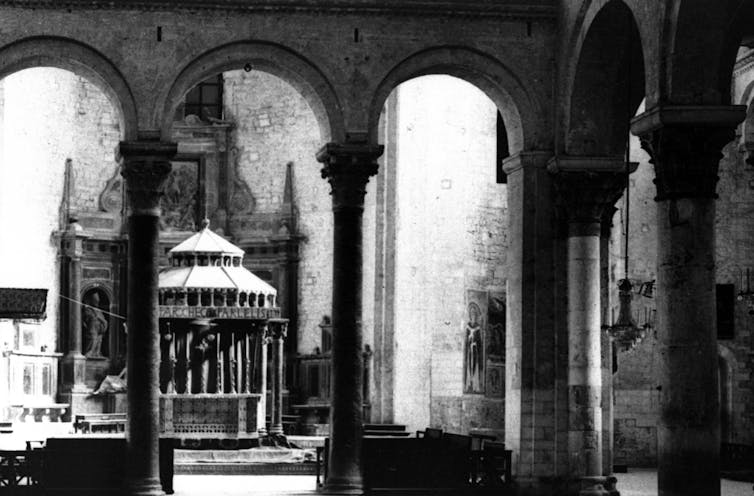
A view of the interior of the church of St. Nicholas, built in the 11th century, at Bari. AP Photo

The Barians believed that manna continued to ooze from Nicholas’ coffin. And going by the claim on the basilica’s website, the belief persists to this day.

Within a decade of the saint’s arrival in 1087, the Basilica di San Nicola was one of Europe’s most popular pilgrimage destinations. May 9 is still celebrated as the day that Nicholas moved shrines or was “translated.”

For at least five centuries, the region, which includes Bari and its saint, was caught in constant wars for possession of southern Italy. In 1500, Bari fell into the hands of King Ferdinand of Aragon, whose marriage to Queen Isabella of Spain created a global naval power.

Because Nicholas was a patron saint of sailors, Spanish sailors and explorers carried stories of the saint wherever they went: Mexico, the Caribbean, Florida and other ports around the world.

St. Nicholas around the world: Russian Orthodox believers line up to kiss the relics of St. Nicholas that were brought from an Italian church where they have lain for 930 years. AP Photo/Alexander Zemlianichenko

Even the Dutch, who rebelled against Catholic Spain and formed a Calvinist republic in 1581, somehow maintained their devotion to Sinterklass. In other parts of Europe, St. Nicholas lost his feast day but his concern for children helped link him to the gift-giving tradition of another December feast day: Christmas.

How true is this story?

In the 1950s, Italian scientists examined the bones enshrined in the Basilica di San Nicola, seeking evidence of authenticity.

They found the skull and incomplete skeleton of a man, dating to around the fourth century. More recent technology has allowed experts to use the bones to reconstruct Nicholas’ face – he looks like an old Greek man with a broad, worn face. He lacks the rosy cheeks and Anglo-Germanic features of modern Christmas decorations, but like the Santa Claus of greeting cards, he was probably bald.

Turkish archaeologists now claim that the Italians stole the wrong body and that Nicholas’ remains never left Demre. They have discovered another sarcophagus dating to the fourth century in the same church, which they claim contains the saint.

Meanwhile, historians have suggested that the story of Nicholas’ translation is a fiction purposely created to advertise a new pilgrimage center in the 11th century. Although relic theft was common in the Middle Ages, grave-robbers often made mistakes or lied about the authenticity and source of their bones. Nothing in the shrine at Bari proves that the bones inside belong to the fourth-century Bishop Nicholas.

Which Santa story will you tell this holiday season? Delta News Hub/Flickr.com, CC BY

Still, this holiday season, when you tell your children about Santa Claus, why not include the tale of Santa’s well-traveled bones? And don’t forget the manna, which is believed to still flow in Bari.

The Conversation

Lisa Bitel does not work for, consult, own shares in or receive funding from any company or organization that would benefit from this article, and has disclosed no relevant affiliations beyond their academic appointment.

11 Dec 14:38

Costa Rica abolished its army in 1949 and thereafter enjoyed the best per-capita GDP growth in the region

by Cory Doctorow

In 1948, Costa Rica weathered a civil war, and in 1949, they abolished their military. Since then, Costa Rica has emerged as the Central American success story, more politically stable and richer than its neighbors.

In a research paper, researchers from the Universidad de Costa Rica Observatorio de Desarrollo deploy "synthetic control estimates" to try to see how much of Costa Rica's growth can be attributed to eliminating military spending: they find that between 1950-2010, annual growth increased from 1.42% to 2.28%, leading to a doubling in per-capita GDP every 30 years instead of every 39, and that this freed up capital for national spending on development goals that have provided long-run advantages to the country and its people.

Some confounding factors to note: Costa Rica received a lot of US aid during the "dirty wars" where the CIA was bent on overthrowing democratically elected socialist governments in the region. Much like West Berlin, Costa Rica was meant to serve as a beacon of the benefits of "free market" systems, and to attain this showroom status, the US government spent lavishly to show how great things were under small government.

Also: while Costa Rica doesn't have an army, it has had rural police forces that wore paramilitary uniforms, carried automatic weapons, slept in barracks, etc -- think "National Guard on high alert." This isn't an army per se, but it's also not what we think of when we think of "police."

This article estimates the causal long-term developmental effects of Costa Rica’s constitutional abolishment of its army in 1949 after the 1948 civil war.

This is done by performing synthetic control estimates and analyzing the political history of Costa Rica in the 1940s and 1950s. We find that upon the abolishment of the army, Costa Rica’s annual average per capita GDP growth increased from 1.42% to 2.28% in the 1950-2010 period relative to a counterfactual Costa Rica that did not abolish its army. This implies that Costa Rica doubled its per capita GDP every 30 years rather than every 49. These estimates are robust to different model specifications and we show that this shock is exclusive to Costa Rica in Latin America. Furthermore, we provide evidence that the positive effects associated with this increase in the per capita GDP growth rates have endured over time; namely because the abolition of the army granted a political and institutional context that allowed the country to devote more resources to public spending, which in turn contributed to its long run development. Our case study findings are evidence that committing to peace and democracy pays off in the long run.

A farewell to arms: The Long run developmental effects of Costa Rica’s army abolishment [Alejandro Abarca and Suráyabi Ramírez/Universidad de Costa Rica]

(Image: Kansas Photo, CC-BY)

11 Dec 14:37

Rhode Island lawsuit argues that the Constitution guarantees a right to sufficient education to be an informed citizen

by Cory Doctorow

In 1973, the Supreme Court ruled that the Constitution does not guarantee Americans "equal" education (which would require similar per-student funding in both rich and poor neighborhoods), merely "adequate" education.

Even that adequacy standard has weakened over the years, as right-wing governments have systematically gutted education budgets, and in 20 states, the state supreme court will not hear challenges to education cuts that argue that these cuts undermine an "adequate" education.

Now, a suit in Rhode Island is asking the state court to rule that underfunded education is unconstitutional because it denies pupils the opportunity to be sufficiently well-educated to be citizens in a democracy, something the framers of the Constitution were very explicit about.

The case just filed in Rhode Island seeks to avoid that trap by doing something completely new. It focuses on the civics knowledge and skills that our democratic form of government demands of citizens – a topic with deep historical roots. My recent research demonstrated that our founders intended public education to be a core aspect of the “republican form of government” that our federal Constitution demands.

Our republican form of government began as an experiment in the idea that everyday citizens could govern themselves. But our founders – people like George Washington, John Adams and Thomas Jefferson – emphasized that public education was necessary for those governments to work. In legislation that would dictate how the western territory would be divided up and later become states, Congress in the Northwest Ordinances of 1785 and 1787 mandated that each township reserve a central lot for public schools and that the states use their public resources to “forever encourage” those schools.

Fight for federal right to education takes a new turn [Derek W. Black/The Conversation]

(via Naked Capitalism)

07 Dec 19:48

Dear Tumblr: Banning "Adult Content" Won't Make Your Site Better But It Will Harm Sex-Positive Communities

by Katharine Trendacosta

Social media platform Tumblr has announced a ban on so-called “adult content,” a move made, it seems, in reaction to Tumblr’s app being removed from the Apple app store. But while making the app more available is in theory good for Tumblr users, in practice what’s about to happen is mass censorship of communities that have made Tumblr a positive experience for so many people in the first place.

On December 3, Tumblr CEO Jeff D’Onofrio posted a lengthy missive about a new policy, titled, apparently unironically, “A better, more positive Tumblr.” Instead of laying out a vision that is better and positive, D’Onofrio’s post lays bare the problems with the ban on so-called “adult content.” First of all, the policy is confusing and broad, leaving users in the lurch about what they can and can’t do on Tumblr. Second, according to D’Onofrio, enforcement of the policy will be reliant on automated tools, the use of which is—and always has been—rife with problems. Third, the people who will end up punished aren’t pornbots or sex traffickers but already-marginalized groups who have built sex- and body-positive communities on Tumblr. And finally, all of these things come together to show just how many ways platforms and tech companies can get in between users and their freedom of expression.

In D’Onofrio’s post, he explains that “in order to continue to fulfill [Tumblr’s] promise and place in culture, especially as it evolves, we must change,” going on to say that as part of that evolution, “adult content” will no longer be allowed on the platform. He further explains:

“We recognize Tumblr is also a place to speak freely about topics like art, sex positivity, your relationships, your sexuality, and your personal journey. We want to make sure that we continue to foster this type of diversity of expression in the community, so our new policy strives to strike a balance.”

On the face of it, this is literally contradictory. Saying adult content is banned, but that “diversity of expression” related to all those listed topics isn't is impossible to parse for the average user. Tumblr’s FAQ “clarifying” the definition of adult content (that is, that which includes “photos, videos, or GIFs that show real-life human genitals or female-presenting nipples, and any content—including photos, videos, GIFs and illustrations—that depicts sex acts”) likewise compounds this problem.

The new policies rule out almost all forms of nudity. “Female-presenting nipples” in particular is a phrase that has come under ridicule, because, among other things, it polices bodies for what they look like, based on a specific conception of gender, and a body part that only some cultures—but certainly not all!—prohibit showing in public.

On the other hand, the very next question has Tumblr claiming that “female-presenting nipples” can be shown in some contexts, that written erotica, “political” nudity, and “art” are permitted. These are all subjective categories that leave a lot of people on uncertain ground. Just look at Facebook, which has similar rules regarding nudity. In the past few years, we’ve seen Copenhagen’s Little Mermaid statue, a famous illustration of a woman licking an ice cream cone, a classic French painting, and a 16th-century statue of the Roman god Neptune taken down by Facebook’s content moderators under the restrictive policy.

Tumblr has also decided that the way to make these subjective calls about what is “art” and what is “adult content” is by using automated tools. D’Onofrio basically admits that these tools don’t work properly, saying in his post that “We’re relying on automated tools to identify adult content and humans to help train and keep our systems in check. We know there will be mistakes”.

That is an understatement. Filters don’t work. We’ve seen this in the copyright context many times. For example, YouTube’s Content ID system works by checking newly uploaded material against a database of copyrighted material and notifying copyright holders if there’s a match. And it resulted in five copyright claims being filed against a video of white noise. Five people claimed they literally owned exclusive rights to static.

And that’s just when it comes to checking for copyrighted material. It’s rather brazen of Tumblr to suggest it has the ability to develop and train a program to determine if something is porn; after all, there is literally a famous Supreme Court quote about the difficulty of defining obscenity! And so far, as any informed observer would have predicted, Tumblr’s system is failing miserably. Among the items flagged are a picture of Pomeranian puppies, selfies of fully-clothed individuals, images of raw chicken, and much much more. And, despite D’Onofrio’s statement that art, discussion of sexuality, and politics wouldn’t violate the terms, all of those categories have been hit.

When we look to groups outside the dominant culture, the problem is especially pernicious. Already, an image of a video game character on a pride flag, a selfie with the word “lesbian,” and someone talking about a family death due to AIDS have all been flagged. Tumblr may think it’s creating a “better” community, but it’s destroying what made it great in the first place.

In his post, D’Onofrio defends the policy by saying that the bottom line is that “there are no shortage of sites on the internet that feature adult content.” Indeed, the Internet is full of porn, the overwhelming majority of which caters to heterosexual men. But on Tumblr, people created sex-positive spaces on Tumblr that don’t exist elsewhere. People created portfolios of their work, all of it, on the platform. Those spaces are going to vanish.

A business decision?

Three paragraphs into his better, more positive manifesto, D’Onofrio states “posting anything that is harmful to minors, including child pornography, is abhorrent and has no place in our community. We’ve always had and always will have a zero tolerance policy for this type of content” and asks that no one confuse that with this new policy. Child exploitation imagery is both vile and illegal, and the fact that Tumblr apparently wasn’t eliminating it shows that it needed to hire people to enforce its existing policy, not outsource the job to algorithms. So why create this new, wholesale ban?

It’s impossible to divorce the new policy from the fact that, just a month prior to the announcement, Tumblr disappeared from the Apple App Store. And that, when asked about it, a Tumblr spokesperson responded with nearly the same words that D’Onofrio also used in his post.

Apple’s App Store has long acted as censor and gatekeeper to the Internet. In 2010, Steve Jobs once said that the iPad offered “freedom from porn” and that there was a “moral responsibility to keep porn off the iPhone.” Apple has consistently enforced draconian rules for app developers, exerting control over how its users get to experience the Internet. The company’s rules have even had the effect of silencing the press, as in 2010 when a large-scale removal of apps containing nudity impacted several mainstream German news publications.

We don’t know if Apple is the sole reason for these new rules. Tumblr also got banned this year in Indonesia because of pornography, for example, and may just want to make itself as non-controversial as possible. And it’s notable that Tumblr’s new policy is largely in line with that of peers Facebook, Microsoft, and YouTube, all of which heavily restrict so-called “adult content.”

The end result, though, is that companies and governments are changing how users get to express themselves on the Internet. The multi-billion dollar corporate porn industry won’t go away; rather, what will are places for people to talk frankly, openly, and safely about sex and sexuality. Groups that are pushed out of mainstream discussions or find themselves attacked in mainstream spaces are once again losing their voices.

07 Dec 12:26

Poetry Plagiarism in the Age of Twitter

by Jonathan Bailey

Just a few weeks ago, Ailey O’Toole seemed like a poet ready to become a breakout star. Her publisher had nominated her poem Gun Metal for a Pushcart Prize and her first collection had been successfully Kickstarted with 73 backers kicking in $1,628 to get Grief and What Comes After into print. 

She had even taken her excitement about her work to an unusual level. Having tattooed two lines from Gun Metal into her arm.

Image originally from O’Toole’s Twitter

However, unlike the tattoo, O’Toole’s success wasn’t meant to last. 

On November 30 another poet, Rachel McKibbens, took to Twitter to vent her frustration at O’Toole.

According to McKibbens, O’Toole contacted her to say that she had “paraphrased” some of McKibbens work (specifically a work from McKibbens’ collection entitled Blud) “too closely for comfort” and wanted to apologize to McKibbens for it. It was an apology that McKibbens flatly refused to accept.

Rachel McKibbens Ashley O’Toole
Hell-spangled girl
spitting teeth into the sink,
I’d trace the broken
landscape of my body
& find God
within myself.
Ramshackle
girl spitting teeth
in the sink. I trace the
foreign topography of
my body, find God
in my skin

The similarities, despite not being word-for-word, were too close for many other people’s comfort as well. It was clear that, even in just six lines, O’Toole had copied images and metaphors and idea. These were (and still are) elements very personal to McKibbens, who described it as “How I language my fucking survival.”

As such, McKibbens took an especially strong issue with O’Toole’s representation of the poem in an interview with The Rumpus.

I think “Gun Metal” is probably the best representation of my collection as a whole; it is the second-to-last poem of Introspection and it’s a really great bridge between Annihilation and Reclamation because it kind of exists in both of those realities. It starts with the image of “Ramshackle / girl spitting teeth / in the sink”

Ailey O’Toole in an interview with The Rumpus

In the interview, nor anywhere else public, does O’Toole make an attempt to attribute or acknowledge McKibbens as the source or even the inspiration for those lines.

While having the opening lines of your best-known and most-loved poem called out for plagiarism is bad enough, it wouldn’t stop there for O’Toole. Other poets began to come forward as well with Wanda Deglane accusing her of “borrowing” work fork from a manuscript she let her read.

Brenna Twohy had a similar story, but one involving verbatim plagiarism of her work. 

McKibbens has been keeping a running total of people that O’Toole (identified as AO) has stolen from. At last count, she was up to 11

As for O’Toole, she has largely disappeared. Her upcoming collection cancelled, she has shut down both her web and social media presences. She has not issued a public apology. Though McKibbens has stated she doesn’t want this to be career-ending for O’Toole, it likely is. 

Even if she does reemerge to write poetry again, it’s unlikely a publisher will take a chance on her. Though publishers say they take a hard line on plagiarism, they’ve given passes to many famous and lucrative authors. However, as someone who was awaiting their first publication, O’Toole likely doesn’t have the cache to get a second chance.

One Tale, Many Stories

O’Toole’s plagiarism touches on a wide variety of subjects and issues including personal nature of poetry, race and the impact of technology on such issues.

On the most basic level, the story highlights how personal poetry is as a medium and how that impacts allegations of plagiarism.

The allegations against O’Toole weren’t just about her use of words or images from other artists, but about coopting their experiences. Poetry is an inherently personal medium where the author is trying to lay bare their most intimate thoughts, feelings and experiences while the audience connects with it on an equally personal level.

This makes what O’Toole did especially egregious. It wasn’t just about stealing words or work, but about stealing experiences and identity. This is both true from the authors she plagiarized from but also her readers, who were connecting with a falsehood.

This theft of identity gets all the more problematic when poets are using the medium to express issues of race, mental illness and personal trauma, as McKibbens, who is Chicana, is doing with her work. This led to allegations that O’Tool, who is white, wasn’t just ethically wrong, but racist and symptomatic of a racist publishing industry

But, for all of the fire and rage, it was a story that played in out in near-real-time over Twitter. Poets and readers alike collaborated to find other examples of plagiarism, alert victims that might be unaware and, in general, understand the full extent of O’Toole’s literary crimes.

While such online collaborations aren’t uncommon, which some even creating wikis for handling such investigations, it’s still rare to see such a large, complicated investigation unfold in an open, public forum.

However, that forum is largely why the situation was resolved as quickly as it was. With only a few days of searching, the people on the Twitter thread were able to accumulate enough evidence definitely doom O’Toole. With a lone investigator or even a small team, it likely would have taken weeks or months, as it did in the case of Pierre DesRuisseaux

The combination of anger and social media was potent and effective, bringing a swift conclusion to a matter that many felt left a stain on the poetry community.

Bottom Line

O’Toole’s story is a cautionary tale. Though plagiarism is always wrong, plagiarizing poetry (or any other similarly personal art form) is going to get an even more strong reaction as you aren’t just copying someone’s work, but their core identity.

As someone who got started in plagiarism because he was a (mediocre) poet facing widespread plagiarism, I remember well the feeling of having my identity stolen and feeling crushingly alone and hopeless in the face of the problem.

The story struck a lot of familiar chords from my past but had a radically different ending. Rather than a takedown notice or a cease and desist letter, O’Toole was brought down by the weight of the evidence, evidence gathered by her peers.

While it’s horrifying to me that people like O’Toole still exist 18 years after my first run in with poetry plagiarism, the resolution gives me hope that, at least in some cases, it’s gotten better about handling them.

Want to Republish this Article? Request Permission Here. It's Free.

Have a Plagiarism Problem?

Need an expert witness, plagiarism analyst or content enforcer? Check out our Consulting Website

The post Poetry Plagiarism in the Age of Twitter appeared first on Plagiarism Today.

06 Dec 20:49

I dig through archives to unearth hidden stories from African-American history

by Jane Landers, Professor of History, Vanderbilt University
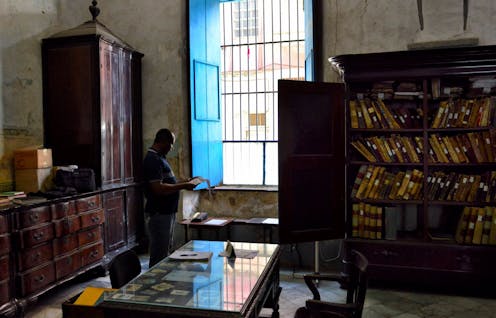
Team member Felix Knight looks through archives at the Church of Espiritu Santo in Havana, Cuba. David LaFevor, CC BY-SA

Many years ago, as a graduate student searching in the archives of Spanish Florida, I discovered the first “underground railroad” of enslaved Africans escaping from Protestant Carolina to find religious sanctuary in Catholic Florida. In 1738, these runaways formed Gracia Real de Santa Teresa de Mose, the first free black settlement in what became the U.S.

The excitement of that discovery encouraged me to keep digging. After doing additional research in Spain, I followed the trail of the Mose villagers to Cuba, where they had emigrated when Great Britain acquired Florida. I found many of them in 18th-century church records in Havana, Matanzas, Regla, Guanabacoa and San Miguel del Padrón.

Today, those records and others live on in the Slave Societies Digital Archive. This archive, which I launched in 2003, now holds approximately 600,000 images dating from the 16th to the 19th centuries. Since its creation, the archive has led to new insights into African populations in the Americas.

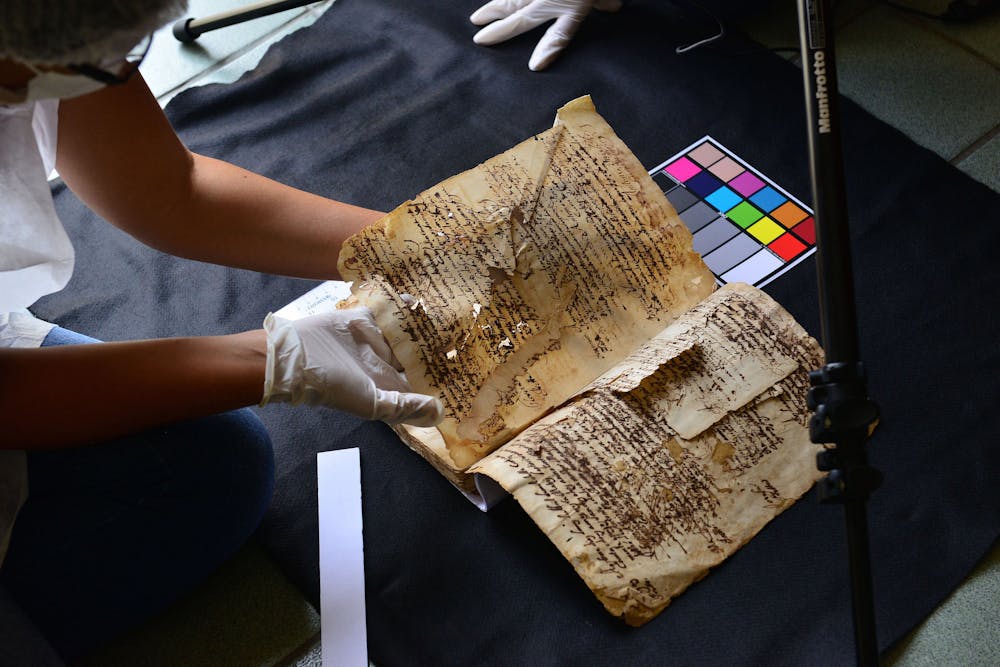
An archivist works with a document from Paraiba, Brazil. David Lafevor, CC BY-SA

What we’ve found

The Slave Societies Digital Archive documents the lives of approximately 6 million free and enslaved Africans, their descendants, and the indigenous, European and Asian people with whom they interacted.

When searching for and preserving archives, our researchers must race against time. These fast-vanishing records are threatened daily by tropical humidity, hurricanes, political instability and neglect.

The work is usually challenging and sometimes risky. Our equipment has been stolen in several locations. Soon after we left the remote community of Quibdó, Colombia, a gun battle erupted in the surrounding jungles between the government military forces and Fuerzas Armadas Revolucionarias de Colombia, better known as FARC. It’s no wonder that one of our team members called what we do “guerrilla preservation.”

This hard work has allowed us to discover more about the lives of slaves in the Americas. For example, the Catholic Church mandated the baptism of enslaved Africans in the 15th century. The baptismal records now preserved in the Slave Societies Digital Archive are the oldest and most uniform serial data available for African-American history.

The cover sheet of Baptisms for St. Augustine, dating from 1716. Slave Societies Digital Archive, CC BY-SA

These unique documents also offer detailed information regarding the diverse ethnic origins of Africans in the Atlantic world. Once baptized, Africans and their descendants were eligible for the sacraments of Christian marriage and burial, adding to their historical record. Through membership in the Catholic Church, families also generated a host of other religious documentation, such as confirmations, petitions to wed, wills and even annulments.

In addition, Africans and their descendants joined church brotherhoods organized along ethnic lines. These groups recorded not only ceremonial and religious aspects of their members’ lives, but also their social, political and economic networks.

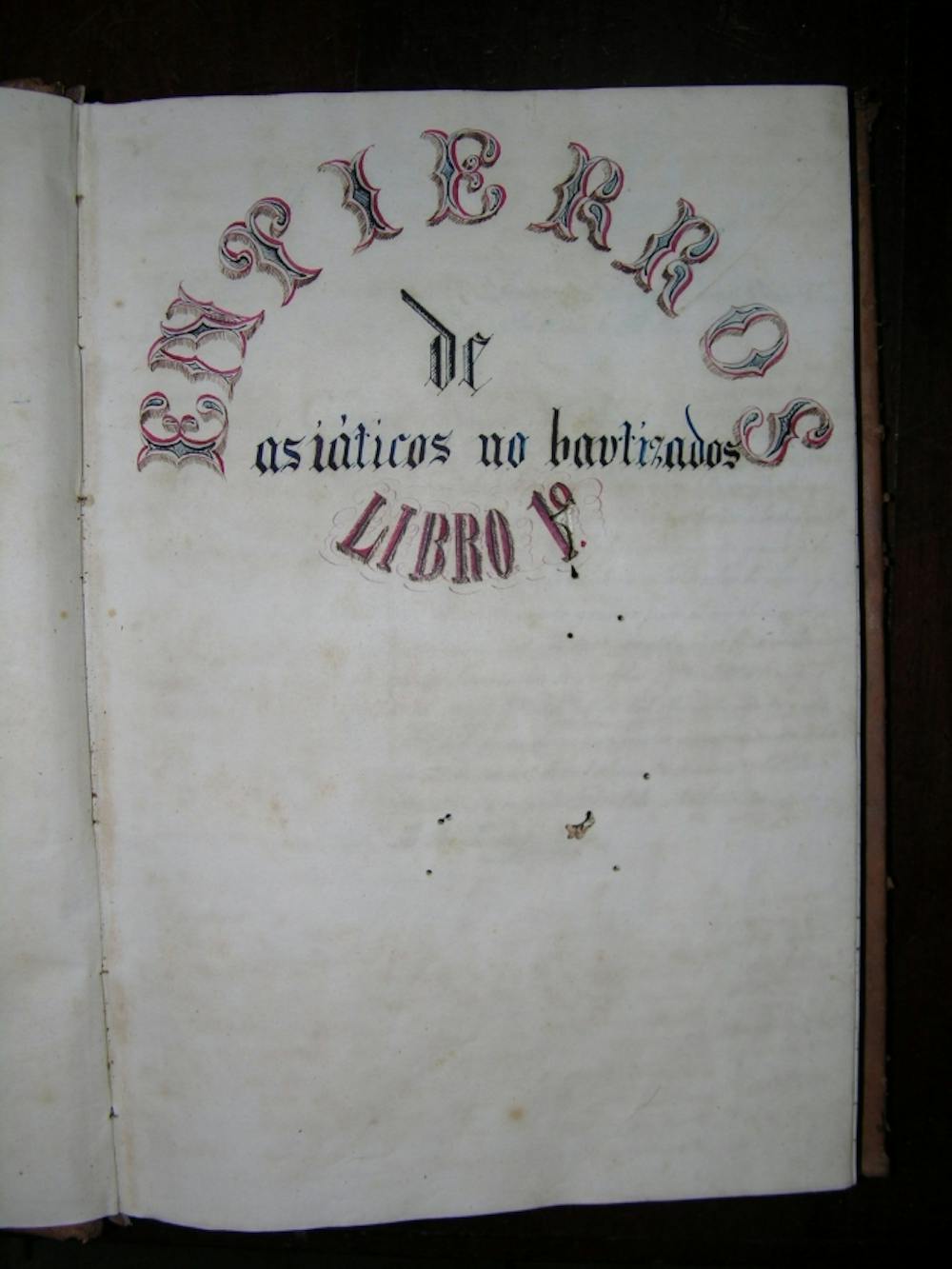
A page of burials of unbaptized ‘Asiaticos’ from the Cathedral of San Carlos de Borromeo in Matanzas, Cuba. Slave Societies Digital Archive, CC BY-SA

Previously unknown church records for Havana’s black Brotherhood of St. Joseph the Carpenter document the membership of Jose Antonio Aponte, executed by Spanish officials in 1812 for leading an alleged slave conspiracy. Our records similarly document the marriage and death of another famed “conspirator” – the mulatto poet Gabriel de la Concepcion Valdes, better known as Placido.

Africans and their descendants also left a documentary trail in municipal and provincial archives, including petitions, property registries and disputes, bills of sale, dowries and letters from owners granting slaves their freedom.

Sharing our discoveries

My work in the rich records in Florida, Spain and Cuba taught me how to track early African history elsewhere. Additional grants have allowed our archival teams to expand to new sites in Brazil, Cuba and Colombia and, finally, to digitize the church records for Spanish Florida.

Thanks to those records, and the excavations of archaeologist Kathleen Deagan, Mose, the settlement that I first studied as a graduate student, is today a National Historical Landmark. It boasts a new museum where the Fort Mose Historical Society organizes historical reenactments and community events.

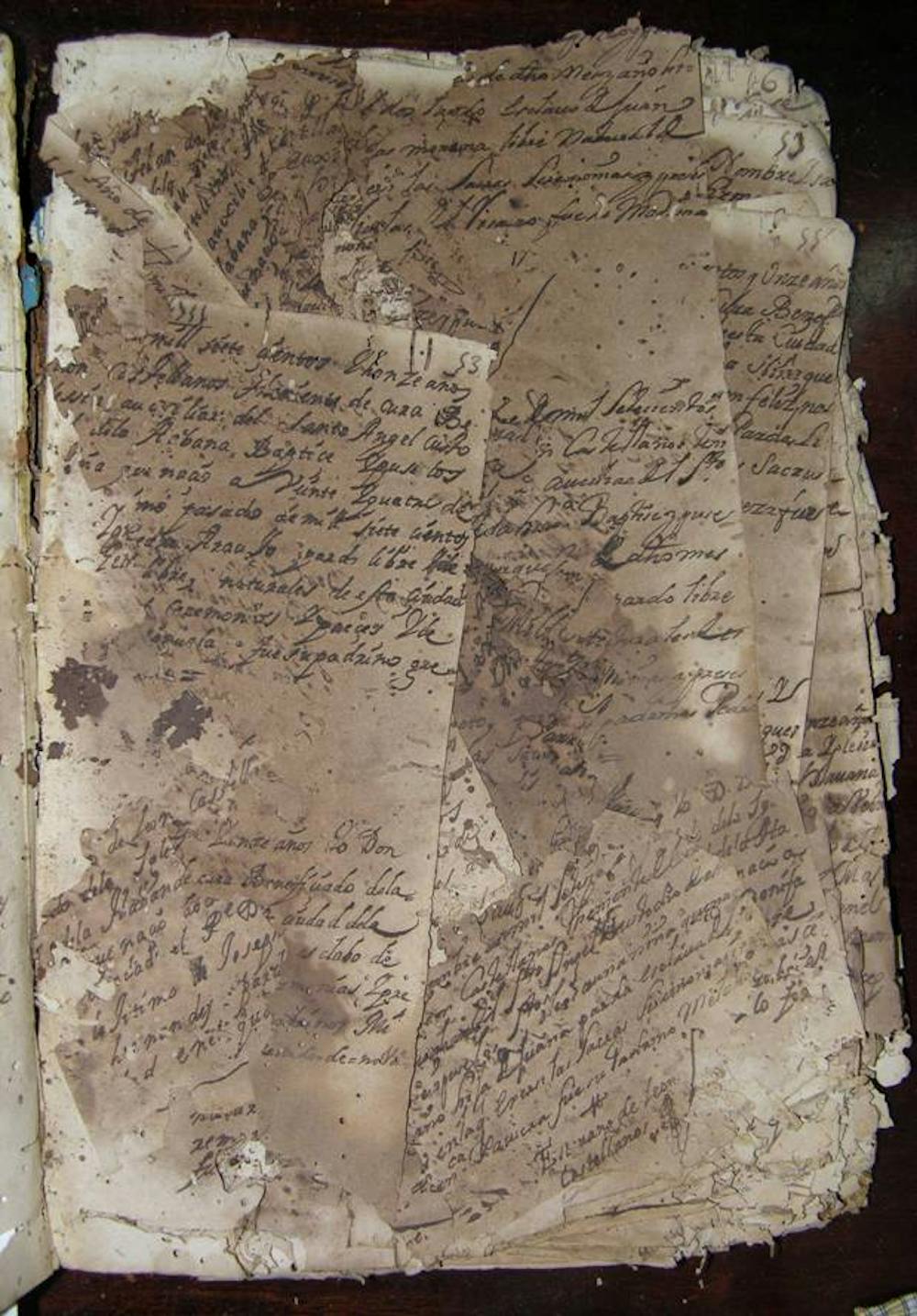
Documents are sometimes found in damaged condition – like these record shards from Matanzas, Cuba. Slave Societies Digital Archive, CC BY-SA

Each of the modern nations whose African history we are tracking still struggles with the legacy of slavery. Both scholars and the public who are interested in African heritage can look at these materials to help define national identities in multicultural societies. For example, the Brazilian Constitution of 1988 granted land rights to self-identified quilombolas, or runaway slaves. One group was able to find their ancestors in church records we preserved for the state of Rio de Janeiro.

Since the archive’s inception, we have worked to ensure that these precious materials are freely available to the interested public. Our teams also provide copies of all digitized records to our host churches and archives, as well as donate cameras and other necessary equipment to allow local teams to continue preserving their own endangered history.

Next, we hope to begin a new project in the Dominican Republic, Spain’s first colony in the New World and my childhood home. It boasts many of Europe’s “firsts” in the Western Hemisphere. The capital of Santo Domingo is a UNESCO World Heritage Site where Spaniards established the first monastery, the first hospital, the first court of appeals, the first university, the first cathedral in the Americas – and a free black town that predates Mose, the site where all this work first started.

Credit: Slave Societies Digital Archive, CC BY-SA

The Conversation

Jane Landers has received funding from The Black Caucus of the Florida Legislature, Latin American Materials Project, National Endowment for the Humanities Collaborative Research Grant, British Library Endangered Archives Programme, the National Endowment for the Humanities, the American Council of Learned Societies, the Diocese of St. Augustine, the Historic St. Augustine Research Institute, the Andrew W. Mellon Foundation, Guggenheim Foundation, the Andrew W. Mellon Foundation, and Vanderbilt University's Jane and Alexander Heard Library.

06 Dec 20:47

White nationalist groups are really street gangs, and law enforcement needs to treat them that way

by Matthew Valasik, Assistant Professor, Louisiana State University

Law enforcement has a classification problem, and it’s making America more dangerous.

For the last two decades, local police and the FBI have categorized the criminal activities of white power groups as isolated incidents or hate-related.

We believe that’s wrong and leads to a lack of understanding of the power of these groups and the direction they are taking. It also leads to the under-policing of these groups.

As criminologists, our research is based on the rationale that “alt-right” groups are no different from conventional street gangs.

A uniform definition for a “gang” does not exist among scholars or law enforcement. However, criminal codes usually define a street gang as an ongoing group, club or association composed of five or more individuals that participate in either a felony, simple assault or destruction of property.

Categorizing alt-right groups as gangs would increase the attention they get from law enforcement and likely stem their violence. When police use traditional crowd control techniques to corral alt-right gangs at public demonstrations, it only reduces the chances of violence and does not address the root cause of white supremacy.

Unless law enforcement changes their approach accordingly, these groups will likely continue to grow and contribute to increases in extremist violence, particularly anti-Semitic attacks.

From tweets to the streets

In spite of public perception, scholars point out that the alt-right is not composed of “lone wolves” or a bunch of “Internet trolls.”

Nor is it a monolith with a unified ideology.

Instead, the alt-right is composed of a variety of factions that oppose multiculturalism, feminism, political correctness, globalism, establishment politics and immigration, and support President Donald Trump. The group’s core, however, is a racist movement revolving around beliefs of white nationalism including anti-Semitism and fear of “white racial genocide.”

Over the last two decades, the white power movement has adapted to thrive with the growth of the internet and social media. Digital communication platforms such as message boards, blogs and social media have provided an cheap way to promote white supremacy ideology, recruit members and maintain social ties between members.

Richard Spencer, a leader in the ‘alt-right’ that mixes racism, white nationalism and populism. AP Photo/David J. Phillip

Even though the alt-right evolved in the digital world, it has manifested in the real world. Alt-right gangs are regularly seen demonstrating and rallying in public, as in Charlottesville, Berkeley and Portland, Oregon. All of those events ended in violence. Recently, in New York alt-right gangs have abandoned the pretense of peaceful gatherings and are now openly participating in street brawls.

Since 2017, the nonprofit Jewish organization, the Anti-Defamation League, has documented 54 far-right extremist protests and demonstrations, particularly in more progressive urban centers across the United States.

In the past year, the ADL has also documented more than 900 incidents of white power propaganda on or near college campuses.

Over the last two years, alt-right groups have also engaged in murder, stockpiled firearms and explosives, and plotted terrorist attacks.

The alt-right’s other activities include assault and harassment and hate-related crimes.

Proud Boys: An alt-right gang

Proud Boys is a self-described “Western chauvinist” men’s club that was founded in 2016 by Gavin McInnes. Like conventional street gangs, many of the characteristics used by scholars and law enforcement to identify a member of Proud Boys are used to identify members of a street gang.

Members are initiated with violent rituals. They routinely gather to socialize in spaces guarded from outsiders. Members are encouraged to engage in criminal acts of violence. Finally, McInnes has publicly called the group a gang – a documented predictor of gang membership.

McInnes claims that Proud Boys have chapters sprouting up all over the globe. There are, however, only about 30 chapters documented in the United States. A half dozen exist in Canada. Even fewer exist across Europe, and McInnes has promised that chapters are “coming soon” to the rest of the globe.

Proud Boys are just one example of three known right-wing groups that are emerging as alt-right gangs.

Rise Above Movement and Atomwaffen Division are two other groups whose members, like Proud Boys, celebrates anti-Semitic violence, stockpiles weapons and regularly participates in violence against counterprotesters.

Responding

Policymakers, law enforcement and analysts have the opportunity to change course and start addressing the lapse in policing of these domestic far-right extremists.

Education and exposure are effective remedies at limiting the racist message of the alt-right. But law enforcement could be more proactive.

A good starting point would be to begin systematically monitoring members of alt-right gangs, particularly individuals that are regularly engaging in street violence. The consistent and responsible collection of information for a gang database can be a tool to effectively target violent crime while also protecting individual civil liberties.

It is equally important for police agencies to be able to easily share such intelligence amongst themselves. This would greatly help police agencies identify those alt-right gang members that are participating in street violence across various jurisdictions.

Next, police agencies could utilize a “focused deterrence” approach that targets problematic groups engaging in violence. Such a strategy concentrates on chronic offenders and sends the message that violence will be met swiftly with enhanced sanctions. It also involves offering opportunities and resources to these individuals, such as vocational training, housing and substance abuse treatment to help end their criminal behavior.

Such approaches have consistently produced significant reductions in gang violence and can be part of the process to limit street violence of alt-right gangs.

The Conversation

The authors do not work for, consult, own shares in or receive funding from any company or organization that would benefit from this article, and have disclosed no relevant affiliations beyond their academic appointment.

06 Dec 20:12

No president should assume office without a 'fitness for duty' exam

by Bandy X. Lee, Assistant Clinical Professor, Yale School of Medicine, Yale University
The current and former presidents at the funeral for George H.W. Bush in Washington AP/Carolyn Kaster

Since the beginning of Donald Trump’s presidency, mental health professionals have come forth in historically unprecedented ways to warn against entrusting the U.S. presidency to someone who exhibits what we have called his “dangerous” signs.

The observed signs have included “grandiosity, impulsivity, hypersensitivity to slights or criticism, and an apparent inability to distinguish between fantasy and reality.”

As a psychiatrist and expert on violence, I worked with my colleagues to put our observations into a book, “The Dangerous Case of Donald Trump: 27 Psychiatrists and Mental Health Experts Assess a President,” responding to the hunger for understanding on the part of the public.

I was never interested in domestic partisan politics until it coincided with my concerns for public safety as a violence scholar. As a scientist and physician, my training leads naturally to making conclusions that are based not on ideology or personal preference, but on research evidence and medical needs.

Now, since the Democratic Party will have the majority in one-half of the legislative branch of government and can provide some oversight of the presidency, it seems a propitious time to begin an important, civilizing conversation about mental health in the presidency.

All American military personnel must pass a fitness for duty exam before they serve. Further, those who handle nuclear weapons undergo an especially rigorous screening process that is updated every year.

That United States commanders-in-chief are not put to the same test before they are allowed to lead the troops or to order the use of nuclear weapons is, I believe, a serious omission.

Trump shakes hands with White House physician Dr. Ronny Jackson after his first medical checkup as president in January 2018. AP/Carolyn Kaster

Assessing fitness for the job

Evaluations of fitness, or capacity, or competence, are specific to the requirements of a task or job. The exam can be suited to any job.

The U.S. Army’s field manual, for example, includes elements that are critical for fit leadership: trust, discipline and self-control, judgment and critical thinking, self-awareness and empathy.

One can deduce, for example, that the minimal requirement for a U.S. president is to have the ability to take in proper information and advice, to process that information and to think about consequences before making sound, reality-based decisions.

Fitness for duty tests also assess an employee’s capacity to work without putting their own or others’ health and safety at risk.

In the case of Trump, there have been numerous, concerning signs that suggest he may lack that capacity.

The potential for violence is best assessed through a past history of violence, including verbal aggression and incitement to violence, and a structured checklist of personal characteristics.

Courts and employers may legally request capacity evaluations, which forensic mental health professionals – who practice at the interface of mental health and the law – usually perform. They are independent of the interested parties and are not engaged in treatment with the person being evaluated.

Ideally, these exams would be given before a person takes the job. They can also be ordered after a worker has shown signs of incompetence.

Incapacity is not the same as mental illness. Mental illness per se does not make a person unfit for duty, just as one can be unfit and yet not have a diagnosis of mental disorder. Abraham Lincoln famously suffered from debilitating depression, which may even have helped him to be a better, more empathic leader.

The House of Representatives, under new Democratic leadership, could begin a discussion of presidential fitness for duty. AP/J. Scott Applewhite

Mental capacity should inform political discussion

Since President Trump took office, news reports have revealed that discussions had been held among GOP members and even high-level government officials about the 25th Amendment. That amendment allows the removal of a president who is unable to discharge the powers and duties of his office.

I have been asked to comment on the applicability of the 25th Amendment to Trump in multiple forums, including to members of Congress.

As a forensic psychiatrist, it is of utmost importance that I make the boundaries of my expertise clear. I should not comment outside my area, but within my expertise, I can speak authoritatively.

The removal of a president because of inability is ultimately a political decision, but politicians and the public would to well to proceed in an informed manner.

Disability, incompetence and unfitness are legal and not mental health concepts. Yet no court of law would consider making these determinations without input from medical experts.

To invoke the 25th Amendment without relevant evidence could also expose the process to endless use and misuse for partisan purposes. Medical expertise can serve as a neutralizing ground. It is based on verifiable clinical observations and uniform standards of practice. A panel of experts could bring forth consensus where there are sufficient, high-quality data.

In the current situation, if the patterns of impulsivity, attraction to violence and detachment from reality we are observing in the president are psychological pathology and not political strategy, it is incumbent on mental health professionals to inform the appropriate authorities, regardless of the context in which they are occurring. Non-experts can then be alerted to the need for more detailed examination.

The 25th Amendment

The proper role of the medical professional regarding the 25th Amendment is to wait for a consultation to be requested and not to interfere in the political process.

However, taking steps to protect the public’s health when there are dangers is very much the health professional’s domain and may entail alerting the public about the need for an urgent evaluation.

Scholars have pointed out at least four instances where the 25th Amendment would have been useful but was not invoked or not available. The most conspicuous example is the case of Ronald Reagan, who may have been suffering from early manifestations of dementia.

Furthermore, White House physicians have covered up presidential impairments in the past.

To avoid this predicament in the future, we can require fitness for duty testing for all presidential and vice-presidential candidates, preferably before they take office and annually thereafter.

In a healthy democracy, it is reasonable for the people to require that their leader meet the minimal mental and physical capacity to serve in the office, and for them to be informed if he or she fails to do so.

Members of the National Coalition of Concerned Mental Health Experts are already in the process of forming a nongovernmental expert panel, based purely on medical criteria, to serve in a rigorous consulting role if called upon or to advise on the need for urgent assessments.

We believe that President Trump’s numerous signs of impairment have long called for an urgent evaluation.

In addition to a capacity evaluation, a thorough neuropsychiatric examination would help us to understand better if the president’s behavior will continue or rapidly grow worse.

Mental pathology can be powerful when severe. Decisions about impeachment or other measures to contain the dangers that Trump – or any other president – could present should not be made without this information.

The Conversation

Bandy X. Lee does not work for, consult, own shares in or receive funding from any company or organization that would benefit from this article, and has disclosed no relevant affiliations beyond their academic appointment.

06 Dec 19:49

Why a 14th-century mystic appeals to today's 'spiritual but not religious' Americans

by Joel Harrington, Centennial Professor of History, Vanderbilt University
A sculpture of Meister Eckhart in Germany. Lothar Spurzem , CC BY-SA

The percentage of Americans who do not identify with any religious tradition continues to rise annually. Not all of them, however, are atheists or agnostics. Many of these people believe in a higher power, if not organized religion, and their numbers too are steadily increasing.

The history of organized religion is full of schisms, heresies and other breakaways. What is different at this time is a seemingly indiscriminate mixing of diverse religious traditions to form a personalized spirituality, often referred to as “cafeteria spirituality.” This involves picking and choosing the religious ideas one likes best.

At the heart of this trend is the general conviction that all world religions share a fundamental, common basis, a belief known as “perennialism.” And this is where the unlikely figure of Meister Eckhart, a 14th-century Dominican friar famous for his popular sermons on the direct experience of God, is finding popular appeal.

Who was Meister Eckhart?

I have studied Meister Eckhart and his ideas of mysticism. The creative power that people address as “God,” he explained, is already present within each individual and is best understood as the very force that infuses all living things.

He believed this divinity to be genderless and completely “other” from humans, accessible not through images or words but through a direct encounter within each person.

A sculpture of Meister Eckhart in Germany. Lothar Spurzem, CC BY-SA

The method of direct access to the divine, according to Eckhart, depended on an individual letting go of all desires and images of God and becoming aware of the “divine spark” present within.

Seven centuries ago, Eckhart embraced meditation and what is now called mindfulness. Although he never questioned any of the doctrines of the Catholic Church, Eckhart’s preaching eventually resulted in an official investigation and papal condemnation.

Significantly, it was not Eckhart’s overall approach to experiencing God that his superiors criticized, but rather his decision to teach his wisdom. His inquisitors believed the “unlearned and simple people” were likely to misunderstand him. Eckhart, on the other hand, insisted that the proper role of a preacher was to preach.

He died before his trial was complete, but his writings were subsequently censured by a papal decree.

The modern rediscovery of Eckhart

Meister Eckhart thereafter remained relatively little known until his rediscovery by German romantics in the 19th century.

Since then, he has attracted many religious and non-religious admirers. Among the latter were the 20th-century philosophers Martin Heidegger and Jean-Paul Sartre, who were inspired by Eckhart’s beliefs about the self as the sole basis for action. More recently, Pope John Paul II and the current Dalai Lama have expressed admiration for Eckhart’s portrayal of the intimate relationship between God and the individual soul.

During the second half of the 20th century, the overlap of his teachings to many Asian practices played an important role in making him popular with Western spiritual seekers. Thomas Merton, a monk from the Trappist monastic order, for example, who began an exploration of Zen Buddhism later in his life, discovered much of the same wisdom in his own Catholic tradition embodied in Eckhart. He called Eckhart “my life raft,” for opening up the wisdom about developing one’s inner life.

Richard Rohr, a friar from the Franciscan order and a contemporary spirituality writer, views Eckhart’s teachings as part of a long and ancient Christian contemplative tradition. Many in the past, not just monks and nuns have sought the internal experience of the divine through contemplation.

Among them, as Rohr notes were the apostle Paul, the fifth-century theologian Augustine, and the 12th-century Benedictine abbess and composer Hildegard of Bingen.

In the tradition of Eckhart, Rohr has popularized the teaching that Jesus’ death and resurrection represents an individual’s movement from a “false self” to a “true self.” In other words, after stripping away all of the constructed ego, Eckhart guides individuals in finding the divine spark, which is their true identity.

Eckhart and contemporary perennials

Novelist Aldous Huxley frequently cited Eckhart, in his book, ‘The Perennialist Philosophy.’ RV1864/Flickr.com, CC BY-NC-ND

This subjective approach to experiencing the divine was also embraced by Aldous Huxley, best known for his 1932 dystopia, “Brave New World,” and for his later embrace of LSD as a path to self-awareness. Meister Eckhart is frequently cited in Huxley’s best-selling 1945 spiritual compendium, “The Perennialist Philosophy.”

More recently, the mega-best-selling New Age celebrity Eckhart Tolle, born Ulrich Tolle in 1948 in Germany and now based in Vancouver, has taken the perennial movement to a much larger audience. Tolle’s books, drawing from an eclectic mix of Western and Eastern philosophical and religious traditions, have sold millions. His teachings encapsulate the insights of his adopted namesake Meister Eckhart.

While many Christian evangelicals are wary of Eckhart Tolle’s non-religious and unchurched approach, the teachings of the medieval mystic Eckhart have nonetheless found support among many contemporary Catholics and Protestants, both in North America and Europe.

Fully understanding a new spiritual icon

The cautionary note, however, is in too simplistic an understanding of Eckhart’s message.

Eckhart, for instance, did not preach an individualistic, isolated kind of personal enlightenment, nor did he reject as much of his own faith tradition as many modern spiritual but not religious are wont to do.

The truly enlightened person, Eckhart argued, naturally lives an active life of neighborly love, not isolation – an important social dimension sometimes lost today.

Meister Eckhart has some important lessons for those of us trapped amid today’s materialism and selfishness, but understanding any spiritual guide – especially one as obscure as Eckhart – requires a deeper understanding of the context.

The Conversation

Joel Harrington does not work for, consult, own shares in or receive funding from any company or organisation that would benefit from this article, and has disclosed no relevant affiliations beyond their academic appointment.

06 Dec 19:26

On January 1, America gets its public domain back: join us at the Internet Archive on Jan 25 to celebrate

by Cory Doctorow

Timothy from Creative Commons writes, "In the US beginning Jan 1, 2019–after a devastating 20 year drought brought on by the infamous 1998 'Mickey Mouse Protection Act.' Creators, commons advocates, librarians, legal activists and others are celebrating in San Francisco at the Internet Archive on January 25, 2019 to mark the 'Grand Re-Opening of the Public Domain.' There will be keynotes (including from Cory Doctorow and Larry Lessig), panels with legal experts like Pam Samuelson and EFF, and lightning talks to showcase the important, weird, and wonderful public domain."

06 Dec 19:13

A Krampus Carol to remind you of why rotten kids should be wary this season

by Seamus Bellamy

Anthony Bourdain left us earlier this year, but the joy he found in the world's many cultures and traditions will always be around for us to savor.

In this quick holiday story, written by Bourdain, North America is given a brief, dark, humorous peek into the mythos surrounding Krampus, a goat-demon who comes during the Christmas holidays to punish children who misbehaved over the last year. A good pal of Santa Claus, Krampus, and the dread he has instilled in rotten kids for generations, most likely pre-dates Christianity.

From Wikipedia:

There seems to be little doubt as to his true identity for, in no other form is the full regalia of the Horned God of the Witches so well preserved. The birch – apart from its phallic significance – may have a connection with the initiation rites of certain witch-covens; rites which entailed binding and scourging as a form of mock-death. The chains could have been introduced in a Christian attempt to 'bind the Devil' but again they could be a remnant of pagan initiation rites.

Merry Krampusnacht!

05 Dec 20:26

Why snacking could be damaging your health

by Jenna Macciochi, Lecturer in Immunology, University of Sussex
shutterstock

Only until relatively recently in human evolution have we eaten three meals plus snacks every day.

Breakfast simply didn’t exist for large parts of history. The Romans, for example, didn’t eat it – usually consuming only one meal around midday – breakfast was actively frowned upon. Regular working hours following the industrial revolution brought structure to mealtimes to sustain labourers. And by the late 18th century the pattern of eating three meals a day in towns and cities emerged.

But these days, people are eating more frequently than they ever have before – and often outside of meal times. New smartphone app data shows that we now have erratic eating patterns. Many of us are continually snacking rather than eating at defined times – which means we spend up to 16 hours a day in a “fed” state.

The issue with inflammation

Your body has two metabolically different states: fasted (without food) and post-fed. The absorptive post-fed state is a metabolically active time for your body. But is also a time of immune system activity. When we eat, we do not just take in nutrients – we also trigger our immune system to produce a transient inflammatory response.

Inflammation is a normal response of the body to infection and injury, which provides protection against stressors. This means that just the act of eating each meal imparts a degree of physiological stress on the immune system. And so for people snacking around the clock, their bodies can often end up in a near constant inflammatory state.


Read more: Should you eat breakfast?


For around four hours after each meal, gut microbes and their components leak into our bloodstream – silently triggering inflammation by the immune system. This process is driven largely by the activation of a critical immune sensor of nutrients called the “inflammasome”, which releases an inflammatory molecule known as “interleukin-1β”.

Inflammation is only ever meant to be a short-term protective assault by our immune system. But inflammation after eating – known as “postprandial inflammation” can be exacerbated by our modern lifestyles. This includes calorie dense meals, frequent eating, excessive fructose and fatty foods – particularly saturated fat.

Modern diets and eating styles mean that our bodies spend up to 16 hours a day in a ‘fed’ state. Shutterstock

Persistent postprandial inflammation is a problem because it inflicts recurrent collateral damage on our body that is extremely detrimental to our health over time. Chronic low-grade inflammation has emerged as an important link to many noninfectious lifestyle-related diseases including heart disease and type 2 diabetes.

Stop the snacking

We still don’t know the cumulative impact on disease risk of healthy adults who spend longer periods of time in a post-fed inflammatory state. But what is clear, is that low-grade inflammation is the most important driver of unhealthy ageing.

Reduced frequency of eating through intermittent fasting or time-restricted eating also highlights the broadly beneficial effects that eating less has on human health. This includes aiding weight loss and lowering the risk of metabolic diseases, such as diabetes. On the basis of available data, the fact that such a fundamental aspect of our dietary habits – the number of meals we eat every day – has not yet been subject to rigorous scientific investigation is remarkable.


Read more: Intermittent fasting is no better than conventional dieting for weight loss, new study finds


But what we do know is that not only does snacking increase your likelihood of elevated inflammatory markers, but eating excessive calories also leads to weight gain. Eating late has also been linked to elevated cholesterol and glucose and can make you more insulin resistant. This leave you feeling more hungry the following day.

So it might be worth consolidating your food into fewer, more satisfying meals. You might also want to reduce your eating window to ten hours day or less, and aim to eat your last meal earlier in the day – your body will thank you for it.

The Conversation

Jenna Macciochi does not work for, consult, own shares in or receive funding from any company or organisation that would benefit from this article, and has disclosed no relevant affiliations beyond their academic appointment.

05 Dec 19:12

Headless Lenin statue remade into writhing rose-headed hydra

by Rob Beschizza

Romanian Artist Costin Ionita transformed a Lenin statue in Bucharest into this enormous writhing rose-headed hydra.

The photo is sadly uncredited by the source, which has many more.

05 Dec 19:10

Obamacare study: 25% decline in home delinquencies among newly insured poor people

by Cory Doctorow

Poor people were not the primary target of Obamacare; as a group, their care is more likely to be "non-compensated" (trips to the emergency room while classed as "indigent" and unable to pay), so insurance shouldn't make a big difference to them, right?

Wrong.

A recently updated study, The Effect of Health Insurance on Home Payment Delinquency: Evidence from ACA Marketplace Subsidies, from finance and business researchers affiliated with both academic business schools and several federal reserve banks, compares the rate of home payment delinquencies (mostly rent payments) among the poorest Americans who received Obamacare through Medicaid expansion with their counterparts in Red States that rejected the expansion and denied coverage to their poor citizens.

The headline finding is that poor people with health-care are 25% less likely to miss rent payments than their uninsured counterparts. That finding is stable year-over-year, too.

The authors argue that the cost of the Medicaid expansion can be offset with savings from evictions, which impose costs in excess of the costs of providing health care.

But of course, those savings are a pittance compared to the national savings we'd realize by eliminating for-profit, private healthcare altogether and replacing it with a national universal healthcare system.

Instead, low-income households may be the most sensitive to healthcare shocks. Her results counter the conventional wisdom that poor people put off healthcare spending; often, they can’t. The study points to an example from Matthew Desmond’s Evicted, which recounts the circumstances of poor renters across Milwaukee. “They had fallen behind [on rent] two months ago, when a neck X-ray and brain scan set Teddy back $507. Teddy’s health problems began a year earlier, when he woke up in the hospital after tumbling down some steps,” his account reads. Shocks were more pronounced for households that reported a history of health problems on the survey.

“Instead of having roughly a one-in-three chance of being delinquent if you are uninsured and have an income near the poverty line, your chances look more like one in five,” Gallagher says, on the difference that subsidized health insurance makes.

For the Poor, Obamacare Can Reduce Late Rent Payments [Kriston Capps/Citylab]

(via Kottke)

05 Dec 19:06

RIP, George HW Bush: a mass-murderer and war-criminal

by Cory Doctorow

They're burying George HW Bush today and even before they planted him, the whitewashing began: we've heard an awful lot about how kind he was to his service dog and his love of colorful socks and a lot less about his role in running an onshore terrorist training camp for Latin America's death squads, his role in toppling democratic governments on two continents, his role in arming and supporting Saddam Hussein, then turning on him and kicking off a genocidal war in Iraq whose goal was to bomb an advanced, heavily populated nation "to the pre-industrial era."

As Jeremy Scahill (previously) puts it in this week's Intercepted podcast (an 84-minute documentary on the humanitarian legacy of Bush I): the US state religion is American Exceptionalism, and today they will saint George Herbert Walker Bush.

The Bush family are not your friends, not even when they're cuddling with Michelle Obama. They are the scions of war profiteers whose fortune grew through helping the Nazis tool up during Hitler's rise to power. They are war-mongers themselves. They have deliberately and coldly planned the murder of civilians: babies, children, women, the elderly.

They killed, and the policies they created were carried on and the antes murderously upped by Clinton, by Obama.

Rest in Peace, St Bush, and may your millions of victims find you in the afterlife.

The United States is now in the midst of a grotesque canonization of one of its imperial saints, George Herbert Walker Bush. This week on Intercepted: an honest memorial service for an unrepentant warmonger who dedicated his life to militarism, war, coups, regime change, and the lies of “American exceptionalism.” Jeremy Scahill details the crimes of Bush, the sick propaganda of the corporate media memorials, and the trail of blood, death, and tears Bush leaves behind. Independent journalist Arun Gupta covers decades of Bush, from his time at the helm of the CIA to the presidency. Gupta discusses Bush’s support for Manuel Noriega and his eventual invasion of Panama, the pardoning of Iran-Contra criminals, the dirty wars in Central America, the support for Saddam Hussein, and the launch of the Gulf War. Acclaimed Iraqi poet and scholar Sinan Antoon describes his life under the U.S.-backed dictatorship of Saddam, the horrors of the Gulf War, and how Bush’s destruction of Iraqi civilian society led to the rise of ISIS.

George H.W. Bush (1924-2018), American War Criminal [Intercepted/The Intercept]

05 Dec 14:43

Understanding Common Knowledge

by Jonathan Bailey
Editing image

When students ask me about plagiarism and citation issues, two questions inevitably come up:

  1. “How do I have to change to not be accused of plagiarism?” (A question I addressed here
  2. “Do I have to cite X?”

Since failure to cite information is not seen as serious as failure to cite text, the first question gets the lion’s share of attention. However, it’s actually the second question that’s often more difficult answer.

That’s because determining what facts and information need citation is not a straightforward one and, very often, the information given to students on the issue isn’t helpful.

The reason is because of one very vague term “Common knowledge.” Though most students and authors know they don’t have to cite common knowledge, there’s little guidance on what exactly what information can be considered “common”

The reason for that is simple: There is no easy answer. Determining what is and is not common knowledge requires looking not just at the information itself, but also the audience it’s intended for. 

The Basics of Common Knowledge

Most students and authors understand that you don’t need to cite work that you created, including ideas and text, and that you don’t need to cite facts and information that are common knowledge.

According to the academic integrity department at the Massachusetts Institute of Technology (MIT), common knowledge can be defined as “information that the average, educated reader would accept as reliable without having to look it up.”

This means that, for a piece of information to be considered common knowledge, it must be two things at the same time:

  1. Understood and known by your average reader
  2. Not controversial, meaning that it is simply accepted as fact

As such, a statement such as “1 Miles = 1.6 Kilometers” is likely to be fine without citation. It is broadly understood and there’s no controversy around it. 

However, once you leave behind the most basic information, it gets more and more difficult to determine what is and is not common knowledge. The date of an obscure battle would likely require citation, unless the work is directed at experts in that time period. Likewise a statement such as “Humans have five senses” would require citation because there is significant controversy as to what does and does not constitute a sense.

This creates a real problem, the author, when determining what is and is not “common knowledge” has to anticipate both their audience’s understanding of the topic and their acceptance of the information being conveyed.

This, unfortunately, changes drastically from classroom to classroom. What is common knowledge in a graduate level history class will not always be as such in an eighth grade history class. Likewise, what’s common knowledge in an English class may not be in a physics class later that day.

There are also cultural, national and regional differences in what is and is not common knowledge. For example. parts of US history that are common knowledge in the states wouldn’t be in the UK and vice versa. 

However, since authors aren’t psychic, they aren’t going to be able to perfectly predict what is and is not common knowledge to the reader. As such, mistakes are going to happen, including information that’s not cited when it should have been and information that is needless attributed.

Of those two, the latter is far less hazardous to one’s work but both can be avoided if possible.

Deciding What is Common Knowledge

When determining what is and is not common knowledge, MIT proposes a three questions to ask yourself:

  • Who is my audience?
  • What can I assume they already know?
  • Will I be asked where I obtained my information?

The first question is the easiest. It’s simply asking ” Who is this paper for?” The answer could be as simple as a teacher, the general public or an audience of relative experts in a field. One doesn’t have to anticipate every possible reader of a work, just the general audience it is for.

The second and third questions, however, are the more difficult. Anticipating what your audience knows and accepts is inherently difficult. However, it’s generally best to assume that your audience is, as MIT put it, educated has a reasonable amount of understanding, if not expertise, on the subject.

As a general rule, you should always cite facts, figures and information that you obtained solely through your research in the paper. Even if it is common knowledge to the person reading it, it wasn’t common knowledge to you when you started work.

Similarly, you generally do not need to cite information that was taught in the classroom you’re presenting the paper. If the instructor taught it, it’s safe to assume that they know it and accept it as fact, as with the other students.

In the end, if you’re unsure about what is or is not common knowledge, the best thing to do is either ask your instructor or, if that isn’t possible, cite the content.

Though excessive and needless citation can hurt a paper, it harms it far less than leaving out citations that should have been included.

Bottom Line

When it comes to missing plagiarism, missing a citation on a piece of information or an idea is generally considered less egregious than plagiarized text. Where one is viewed as a mistake, the other is viewed as cheating. One hurts a grade, one hurts academic careers.

Still, it is best to take make sure you understand the rules that surround citing facts and information. It not only prevents accusations of plagiarism but, if done well, it bolsters your arguments and makes your work much stronger.

To that end, following the rules above can help greatly in determining what is and is not common knowledge though. However, if you still find yourself stuck, your best bet is to either speak with your instructor/editor or, if that’s not possible, cite the source.

When it comes to a choice between over-citing and under-citing, it’s clear which one is preferred.

Want to Republish this Article? Request Permission Here. It's Free.

Have a Plagiarism Problem?

Need an expert witness, plagiarism analyst or content enforcer? Check out our Consulting Website

The post Understanding Common Knowledge appeared first on Plagiarism Today.

04 Dec 12:59

CC Certificate Changes and Improvements for 2019

by Jennryn Wetzler


12/6/18 UPDATE: January 2019 courses have only seven tickets left! 

Background: The CC Certificate provides an-in depth study of Creative Commons licenses and open practices, developing participants’ open licensing proficiency and understanding of the broader context for open advocacy. The course content targets copyright law, CC legal tools, values and recommended practices of working in a global commons. The CC Certificate is a 10-week online course for educators and academic librarians.

CC Certificates2018 was a big year for the Creative Commons Certificate program! We beta-tested the first two CC Certificate courses for educators and academic librarians, updated our course content, licensed it CC BY, and shared it with the world; we launched nine official courses for 225 participants, and have since iterated on almost every aspect of the Certificate based on feedback from the global community. As we approach 2019, we are taking stock of 2018’s learnings and now proudly announce updates for the new year.
Our approach to the CC Certificate is one of iteration based on community needs. Each year, we will evaluate what works and what can be improved, based on participant, instructor, and broader community feedback. Thanks to your input and our own lessons learned in 2018, we are making the following changes and improvements:

1) We’re updating our pricing. Why? First, because this program has to be sustainable – our new price will ensure we cover 100% of CC’s cost of delivery, including paying all community instructors who teach, technology and content maintenance, and program expansion and updates, including reaching new audiences and new languages. CC is a non-profit, and we want this program to thrive.

Second, from our initial launch, we knew that there would be some who couldn’t afford to pay full price for the program. As promised, we are creating a scholarship program so the Certificate can be more inclusive of colleagues with less ability to pay, especially CC’s vibrant communities in the Global South. Our new price allows us to build and replenish an annual scholarship fund, offering subsidized CC Certificates to as many participants as possible. Those who pay full price for the course subsidize those who are less able to do so. We will offer at least 15 scholarships in 2019, and hope to provide more as the program grows.

In 2019 and in years to come we will continue to make the CC Certificate both self-sufficient and financially accessible for our global audience.

2) There is more community demand for the Certificate training than CC can currently accommodate. To address this, we have built and will beta-test a CC Certificate Facilitator Training starting in January 2019. Ensuring there are more well-trained and knowledgeable facilitators will allow us offer more CC Certificate courses in the future.

3) While the Certificate program has hosted participants from every global region, we have drawn more participation from the U.S. and Canada. Because the Certificate program is global, we will continue to engage a more global, diverse community by:

  • Developing a scholarship program to support community members’ enrollment, particularly community members from the Global South (as mentioned above).
  • Supporting translations of Certificate content. Community members have already volunteered to translate the Certificate in multiple languages, from Bahasa to Italian to Arabic. We will support translations in a responsible way, ensuring languages are aligned with course developments and annual updates.
  • Developing more local case studies about copyright law and open licensing in different countries. Thanks to participants’ help, we have several case studies drafted.
  • Launching in-person Certificate trainings, or “bootcamps” specialized for select groups that need CC Certification in a short time-frame.
  • Assisting participants with new ways to learn and share with each other, since there is not one platform that works for everyone. For example, we learned a participant in China could only access our epub OER content (available here) rather than content on our main learning platform, Canvas. While we explore new avenues for learning and collaboration, we celebrate the ways participants are already doing this: hosting workshops and conference sessions, developing OER courses, and creating informational flyers for their institutions.
  • Revising the CC Certificate must balance a global, inclusive, and iterative approach with focused, specialized expertise. While we continue to gather participant recommendations and feedback from the global community, we will also launch a CC Certificate Advisory Board of legal and instructional design experts. The Advisory Board will provide input for annual content updates and engage with participants in online course webinars throughout the year.

We are proud of the Certificate we’ve built together so far. We accept anyone interested in taking the Certificate course; our costs are as low as possible, while still offering a scholarship program and maintaining quality content and services; and the course is supporting learners beyond the certification program — several other programs are freely remixing portions of our CC BY licensed Certificate OER for their own audiences. We couldn’t have done it without the contributions of dozens of experts, CC community leaders, and over 100 beta testers from all over the world. Thank you.

We will continue offering the CC Certificate with the greatest flexibility, openness and affordability we can. As such, it is important to us to keep improving the CC Certificate course with community input.

Opportunities for your engagement

In addition to the developments mentioned above, we will explore other improvements to the program in 2019 — making the CC Certificate more inclusive and globally accessible, while ensuring self-sustainability. Have ideas for us?

  • Share your ideas with #cccert on Twitter.
  • Continue to make notes and recommendations via Hypothes.is.
  • Use our CC BY licensed, downloadable and editable CC Certificate content, then let us know what is most useful to you.
  • Sign up to take a Certificate course and engage with the growing Certificate community of participants, alumni, mentors, facilitators, and content experts. Registration for courses in 2019 is open here.
  • Join us for an online Certificate overview and brainstorm session on January 8, exploring how to better deliver the Certificate and support open communities: 18:00 EST/ 23:00 UTC on https://www.uberconference.com/creativecommons

If you cannot join, please share questions in advance. We look forward to working with you!

The post CC Certificate Changes and Improvements for 2019 appeared first on Creative Commons.

04 Dec 12:57

Tell the Senate Not to Put the Register of Copyrights in the Hands of the President

by Katharine Trendacosta

Update 12/03/2018: The December 4 hearing has been postponed, but it could be rescheduled. Keep telling the Senate to vote "no."

With just a week left for this Congress, one of the weirdest bad copyright bills is back on the calendar. The “Register of Copyrights Selection and Accountability Act” would make the Register of Copyrights a presidential appointee, politicizing a role that should not be made a presidential pawn.

On Tuesday, December 4, the Senate Committee on Rules and Administration is scheduled to vote on S. 1010, the Senate version of the “Register of Copyrights Selection and Accountability Act” already passed by the House of Representatives as H.R. 1695. If it passes out of the committee, the whole Senate will be able to vote on it with only days left in the 2018 session.

Currently, the Register of Copyrights is appointed by the Librarian of Congress, as the Copyright Office is part of the Library. This bill would take the appointment out of the hands of the Librarian and put it in the hands of the President.

The Register of Copyrights does a number of important, nonpartisan, non-political jobs. As the name implies, they register copyrightable material. But they are also charged with providing advice to Congress and “information and assistance” to others in the federal government on copyright. It’s important to note that, except in rare, narrow circumstances, the Register of Copyrights does not make copyright policy. Congress does.

The Register of Copyrights does not do the same things the heads of executive departments and judges do. Picking someone for that job the same way those are picked—appointed by the President and a confirmation process in the Senate—does not make sense for it.

Because the Register is charged with providing advice and information and not with making policy, making the job as apolitical as possible is a good thing. A Presidential appointee, chosen for adherence to the beliefs of the President, is more politicized, not less. A Presidential appointment also means more avenues of influence by special interests, including the major media and entertainment companies that continually seek to expand the scope of copyright for their own benefit, not for individual creators or users. The unusual (and possibly unconstitutional) procedure set out in the bill compounds this problem: the Register would be chosen by the President from a list of people compiled by the leaders of the House and Senate, who themselves may be beholden to the entertainment industry and other special interests.

Copyright affects how we interact with so many things, from the obvious—movies, books, and music—to the less obvious—tractors, cars, and phones. And the Copyright Office has a hand in deciding, for example, what kind of research security experts can do. Why? Because Section 1201 of the DMCA makes it illegal to break access controls on copyrighted material without an exemption from the Copyright Office, and security researchers often need to do just that to determine how safe the devices in our homes really are.

When the Copyright Office wades into policy, we get things like its support of the Stop Online Piracy Act (SOPA) and its allowance of MPAA lobbying to undermine the FCC’s plan to bring competition to the cable box market. An appointee charged with an agenda from the President and nominated by politicians who depend on big-money corporate donors for their re-election can only be worse. The Copyright Office has gotten more political over time, but the solution is not to help it along.

We don’t need a Register that is a Presidential pawn. We don’t need this bill. Tell your Senators to vote against it.

Take Action

Tell the Senate not to make the register of copyrights a presidential pawn