by William Partlett, Associate Professor, The University of Melbourne
Emilio Morenatti/AP
Russia’s invasion of Ukraine has now lasted for one year. As overwhelming victory for either side looks unlikely, many are now calling for a negotiated settlement to the war. For instance, China is promising details of a peace plan imminently.
A critical question underlying any negotiated settlement is: how can the demands on both sides be balanced to achieve a stable, durable peace?
The answer to this question often ignores an indispensable player, the Ukrainian people. For both legal and political reasons, Ukraine’s constitutional democracy requires any peace deal to be ratified by its people. If they are ignored, a stable peace deal is far less likely.
Negotiations hinging on Russia’s annexations
As we enter the second year of the war, bilateral negotiations are hopelessly deadlocked over the control of territory that lies within Ukraine’s internationally recognised borders.
On September 30, 2022, Russia illegally annexed four occupied territories in eastern and southern Ukraine.
In December, Ukrainian President Volodomyr Zelensky proposed a 10-point peace plan that called for Russia to restore Ukraine’s territorial integrity and withdraw all of its armed forces from the country. Zelensky said this was “not up to negotiations”.
Russian President Vladimir Putin suggested he might be willing to negotiate, but the Kremlin later added Ukraine must recognise its annexation of the four Ukrainian regions.
In response, an increasing chorus of both “realist” and anti-war voices have argued that US President Joe Biden or the west more broadly must seek to broker a deal between Ukraine and Russia and stop the violence. This includes encouraging Ukraine to be “flexible” in its negotiations.
China is also putting forward a peace plan to encourage negotiations and end the war. It will reportedly focus on the need to uphold the principles of sovereignty and territorial integrity, but take into account Russia’s security concerns.
This has led many into a moral debate about whether Ukraine should be pushed to negotiate over the status of its sovereign territory.
The forgotten role of the Ukrainian people
The discussion so far misses a critical reality. A stable peace deal cannot just be a diplomatic pact between Ukraine, Russia, China and the west. It also requires the support of the Ukrainian people for both legal and political reasons.
Legally, Ukraine is a constitutional democracy. This means any formal cession of Ukraine’s sovereign territory (including Crimea) would require constitutional change and, therefore, a referendum. In fact, article 156 of Ukraine’s Constitution requires such fundamental changes to be put to an all-Ukrainian referendum.
Politically, any stable peace deal must have broad public support or it will be abandoned by a future leader.
Zelensky knows this. In March 2022, he was willing to promise Russia that Ukraine would never join NATO in return for other security guarantees from the US and Europe. But he said ultimately this decision was not his to make – it had to be ratified by the people.
This makes political sense: an unpopular set of concessions in a peace deal with Russia would end Zelensky’s political career and would likely be overturned by a future president.
The legal and political role of the Ukrainian people should come as no surprise. They were largely ignored in the Minsk agreements drawn up by diplomats in Ukraine, Russia and Europe to try to resolve the conflict that broke out after Russia’s annexation of Crimea and the Russian-backed insurgency in Ukraine’s eastern Donbas region.
Leaders of Russia, Ukraine, France and Germany gathered in Minsk in 2015 to negotiate an end fighting between Russia-backed separatists and Ukrainian forces in eastern Ukraine.
Alexander Zemlianichenko/AP
Most notably, article 11 of the Minsk II agreement required amendments to Ukraine’s Constitution decentralising control over the two regions in Donbas.
This agreement failed, in part, because of a lack of support from the Ukrainian people. The decentralisation reforms were highly controversial, triggering violent protests that ended any chance of reform.
Furthermore, in a 2019 referendum, the Ukrainian people inserted a commitment to “full-fledged membership” in NATO into Ukraine’s Constitution. This further undermined the implementation of the Minsk agreements.
Vast majority of Ukrainians reject giving land to Russia
Those wanting a peace deal, therefore, must accept the reality that a peace deal cannot simply be the result of clever diplomatic bargaining and negotiation. It must also take into account the realities of Ukrainian democracy and the important role the people play in Ukrainian politics.
Ignoring the role of the people would be a significant mistake. In fact, there is strong evidence showing the war is deepening hostility to Russia among the Ukrainian people. Consequently, it is increasingly unlikely that Ukrainians would endorse any Russian annexation of Ukraine’s sovereign territory (even Russia’s 2014 absorption of Crimea).
In fact, polling shows as many as 84% of Ukrainians now reject any territorial concessions to Russia.
Ukrainian popular opinion can certainly change over time, particularly if a peace deal is crafted in a way that will garner support from the Ukrainian people. But the need for popular support will undoubtedly constrain the number of concessions that Ukraine can make and shape the details of any peace deal.
However, if these popular constraints are ignored, it is hard to avoid an even more sobering conclusion: short of major change in the war – such as overwhelming victory for either side or new leadership in Russia – it will be increasingly difficult to get a stable peace deal at all.
William Partlett does not work for, consult, own shares in or receive funding from any company or organisation that would benefit from this article, and has disclosed no relevant affiliations beyond their academic appointment.
by Hugh Breakey, Deputy Director, Institute for Ethics, Governance & Law. President, Australian Association for Professional & Applied Ethics., Griffith University
Lefteris Pitarakis/AP
One of the year’s most anticipated podcasts, The Witch Trials of J.K. Rowling, has just launched. Only two episodes of the audio documentary are currently available, with more to follow in the coming weeks.
Rowling is arguably the world’s most successful fiction author. She reigns over the multibillion-dollar Harry Potter industry, which includes books, theme parks, films and computer games.
But it is the controversy over Rowling’s statements on gender and trans rights that have fuelled the wider public interest in the podcast. These are not the focus of the early episodes, which nevertheless provide some revealing contextualising information about her stance.
What’s all the fuss about?
Even before 2020, when Rowling tweeted her frustration about an article that referred to “people who menstruate”, questions about her stance on trans issues had been building.
In 2019, Rowling came out in support of Maya Forstater, who lost her job for tweets disputing whether transgender women can change their sex. Forstater claimed her employer had unfairly discriminated against her. Last year, an employment tribunal agreed.
There was an immediate groundswell of protest against Rowling’s tweets, with many people – including lifelong Harry Potter fans – calling out her claims as “transphobic”. Several actors in the Harry Potter films distanced themselves from Rowling with strong messages of support for trans people. Stephen King, an idol of Rowling’s, was blocked by her on Twitter after he tweeted: “Trans women are women”.
Rowling then published an essay, explaining that while she sympathised with many trans people’s need for safety, she had concerns about the contemporary trans movement. These included the explosion of young women wishing to transition into men, the safety of women’s spaces being compromised if they were opened to biological males, and the climate of fear that many experience when discussing these issues publicly.
Rowling discussed how her view was shaped by her own challenges with sexuality as a young woman, and being a domestic abuse and sexual assault survivor.
The essay was the subject of immediate controversy. Many asserted it was dangerous and transphobic. Rowling was castigated as a “TERF”: a Trans Exclusionary Radical Feminist. (Many of Rowling’s supporters prefer the term “gender critical”.) Commentators penned detailed arguments that Rowling’s claims were flawed and baseless.
The wider context
One relevant context of Rowling’s position concerns the status, safety and legal protections available to trans people. Another is the state of free speech, the polarisation of public debate, and the implications of disagreement in the contemporary world.
Less than a month after her Twitter controversy, Rowling was a signatory to an open letter published in Harper’s magazine, claiming that “open debate and toleration of differences” were under attack. Rowling’s signature sat alongside those of many other famous authors and scholars, including Margaret Atwood, Gloria Steinem and Noam Chomsky.
Spearheaded and drafted by US author and cultural critic Thomas Chatterton Williams, the letter argued there was increasing censoriousness characterised by:
an intolerance of opposing views, a vogue for public shaming and ostracism, and the tendency to dissolve complex policy issues in a blinding moral certainty.
Almost three years on, the culture wars continue on this issue. What some see as necessary measures to prevent harms and respond to systemic inequality, others see as “cancel culture” – the practice of responding to disagreeable views with efforts to deplatform, disinvite, suppress or punish the speaker. As a culture, we seem to have lost the capacity to disagreeconstructively.
There is little sign such views are abating. Indeed, a 2022 survey of UK university students showed a hardening of positions against free expression, with a third of those polled thinking academics should be fired if they teach material that heavily offends some students.
What now?
The podcast aims to explore this larger context. As the host, Megan Phelps-Roper, explains:
The longer I watched the current controversy unfold, the more I wanted to understand: how did the people in these conflicts view what was happening? How did Rowling understand herself and her critics, past and present – and vice versa? Why had she chosen this hill to die on? And how had the conversation devolved so fully that it didn’t seem possible to have a productive conversation at all?
Behind the documentary is The Free Press, a new media company that is no stranger to reporting on trans issues. It recently published a whistleblower’s harrowing account of practices in a US paediatric gender clinic.
Phelps-Roper has her own intriguing backstory, having been born into the infamous Westboro Baptist Church. In her teens, she protested at funerals of US soldiers, whose deaths the Church saw as punishment for America’s tolerance of homosexuality. When she was put in charge of the Church’s Twitter account, she encountered many angry responses, but also genuine dialogue. When people pointed out contradictions in the Church’s positions, her previously unshakeable faith was shaken.
Ultimately, Phelps-Roper left the Church and married the man who had, via Twitter, helped to change her mind. She remains a believer in the power of conversation.
The first episode, Plotted in Darkness, explores the dark place that was Rowling’s life as a young woman.
It opens with Rowling being asked why she thinks stories about magic are so appealing. She reflects that magic provides agency. It is a secret power, seductive to those who lack control over their lives. Children in particular have little agency, she observes.
Rowling speaks from personal experience. Power over one’s destiny is a thread that weaves in complicated ways through her life story. In her own voice, she describes her life in her late twenties. We hear of the death of her mother, her abusive marriage, the poverty and insecurity she experienced as a single parent on welfare, and her struggles with mental health.
And yet all the while she was working, plotting out and writing the manuscript that would one day be her ticket to financial security and popular acclaim. Rowling’s abusive and controlling husband, we learn, literally held the pages of the Harry Potter manuscript hostage to control her and prevent her from fleeing his violence.
It will be a hard-hearted listener who remains unmoved by Rowling’s extraordinary rags-to-riches life story.
Burn the Witch
Episode two, Burn the Witch, reminds us that the current controversy is not the first time Rowling has been subjected to outraged calls that her work be suppressed.
In the 1990s, those calls came from a very different political standpoint. When Harry Potter became an unprecedented publishing and cultural phenomenon, and the spiritual practice of Wicca began having its own cultural moment, evangelical Christians in the US became alarmed about a children’s book depicting witchcraft positively.
The Harry Potter books were widely available in school libraries and often read aloud in class. Driven in part by a pre-existing sense of persecution, Christian parents on school boards demanded Rowling’s books be banned. The matter wound up in court.
The documentary’s sympathetic interviews with the lawyers on both sides explain the concerns of Christian parents and the broader civil liberties at play. Ultimately, First Amendment arguments prevailed. The court decided children had a right to access age-appropriate books, even when their parents disagreed with the works on religious grounds.
Seen from the present moment, there are rich ironies in these histories. Rowling has twice faced the ire of large movements, although from political positions that could hardly be more opposed. Both times, concerns for the safety of children were invoked as a reason for banning, boycotting or burning her work.
Intriguingly, the very US law cases deciding whether Rowling’s book could be banned by school boards are now precedents helping protect LGBQT literature from contemporary religious efforts to ban it.
The podcast records another irony. The first episode notes that the pen name J.K. Rowling is an invention – Joanne Rowling has no middle name. Worried that boys would not read a book by a female author, her publishers opted for an author name that was gender-neutral.
As Plotted in Darkness moves to its close, the documentary provides the first hints as to why Rowling might have taken the stance that has generated the contemporary controversy.
The Harry Potter books have a curious quality. There is no question they are a classic tale of good triumphing over evil. But at the same time, the characters are flawed and complex. First impressions are often misleading. Nowhere is this truer than with Dumbledore and Snape, who ultimately defy easy categorisation.
When Phelps-Roper asks Rowling about her views on the nature of morality and conscience, Rowling responds that in Harry Potter there is no black and white. Evil-doers are as likely as anyone to be sure of their righteousness.
For Rowling, the voice of conscience is not a loud rush of adrenaline that provides certainty. Rather, it is a quiet voice that urges us to mistrust our initial reactions and to enquire further, to push back against the world that tells us (as the Dursleys’ demand of Harry) to stop asking questions.
Ethical questions
There are a host of ethical questions we can ask about Rowling’s stance on trans issues and the controversy it has generated. Most obviously, we can ask whether we think Rowling is right, or partly right, or entirely wrong, in her views on trans rights. At time of writing, the documentary has not delved into these controversies.
But there is a further set of ethical questions that have been broached by the first two episodes. These concern how Rowling should be treated if she is in the wrong. Does she have the right to speak wrongly? The issue here is ethical, not legal. Just because some speech might be legally protected does not mean it is morally right.
If we think Rowling is wrong, there are several moral judgements we might make. We might decide she is incorrect in her claims, but not morally wrong in voicing them. It is possible to be incorrect without being immoral.
Or we might regard Rowling’s speech as morally wrong. However, we can’t suppress every wrongful speaker. Her act is (we might say) wrong but tolerable.
Or we might decide that Rowling’s speech is morally wrong and she should be (non-violently) punished, socially castigated, and silenced.
Wrong but tolerable?
The view that Rowling’s claims are wrong but should be tolerated might come from thinking about the interpersonal ethics of argument and disagreement. Ethical respect for others requires us to accept that others are entitled to form their own views, free from threat and coercion.
This view might also come from a political perspective that says that, in a democracy, everyone’s views and issues must be in principle open for discussion. Open deliberation is no less necessary than elections in creating genuinely democratic outcomes.
Rowling’s discussion of the quiet voice of conscience, the need for questioning, and her pushback against simplistic black-and-white moralities provides her own argument for the tolerance of opposing views and flawed people. These themes and ideas from her books support her current concerns about free discussion and the climate of fear currently surrounding the discourse on fraught social issues such as trans rights.
In so doing, Rowling positions herself in opposition to those who – as she sees it – picture the world in increasingly black-and-white terms, and who righteously demand that some topics may not be discussed.
At the same time, Rowling has her own “tribe” whom she supports, and who support her. Gender-critical views themselves can seem worryingly black-and-white, and can be held with furious righteousness. Perhaps we can hope future episodes will explore how Rowling stands up for toleration and nuance against her allies as much as her foes (to recall another worthy Harry Potter theme).
Why then might somebody hold the view that Rowling’s views are both wrong and intolerable?
They may think that a person who is immoral and transphobic simply deserves punishment. But often the view will be that – even if some views might be wrong-but-tolerable – Rowling’s are intolerable because they are dangerous and harmful.
Rowling’s critics stress high suicide rates among trans people, and the damaging abuse they suffer. In the effect they have had on vulnerable trans people and aggressive anti-trans people, Rowling’s words might be argued to be literally killing people. The documentary has not yet relayed the voices of trans activists and allies raising these concerns, for which we must await the coming episodes.
Yet there is reason for wariness about making allegations of harm against speakers. (I term such claims “meta-argument allegations”.) The belief that what one’s opponents say is not merely wrong but harmful is not new. It is ancient, perhaps as old as censorship itself. Indeed, it is baked into human psychology. Simply hearing evidence that opposes deeply held beliefs can trigger feelings of being insulted and threatened.
Allegations of harm are easy to make. There are many ways speech might be dangerous. Such allegations are inevitably contested, but the ease of making claims of harm leads to a problem of moral consistency.
Suppose Rowling is responsible for the threats and abuse levelled at trans people, and the subsequent fear they might have about sharing their views, in the wake of her comments? If so, then aren’t activists calling Rowling a transphobe responsible for the threats and misogynist abuse levelled at her and those she supports, and the subsequent fear they might have about sharing their views?
These worries only go so far. Surely at least some harmful speech – such as hate speech or incitement to violence – should be subject to social censure, if not legal constraint.
Rowling’s special status
A final ethical question is whether Rowling specifically shouldn’t be taking an anti-trans position. Countless fans forged a special connection with her work. Young trans readers found deep parallels with their transition and Harry Potter’s journey. Do authors acquire a special responsibility not to betray the fans they have profoundly touched?
Many of us will await the later episodes to make our final judgements on many of the issues Rowling’s books and words have raised. But perhaps on this issue we have heard Rowling’s central line of defence, and it is a powerful one.
In the podcast’s trailer, Rowling observes with some suspicion the pedestal on which she had been placed. To fans who argue she has betrayed her legacy, she says: “You could not have misunderstood me more profoundly.”
The heroes in Rowling’s books are not flawless. They are not worthy of our blind adoration or tribal allegiance. They are at their best when they are listening, searching and doubting, acknowledging the complexity and diversity of the world around them.
Perhaps Rowling could have remained silent, and remained beloved. But, for wrong or right, that is not what her heroes do.
Hugh Breakey does not work for, consult, own shares in or receive funding from any company or organisation that would benefit from this article, and has disclosed no relevant affiliations beyond their academic appointment.
As tractors became more sophisticated over the past two decades, the big manufacturers allowed farmers fewer options for repairs. Rather than hiring independent repair shops, farmers have increasingly had to wait for company-authorized dealers to arrive. Getting repairs could take days, often leading to lost time and high costs.
A new memorandum of understanding between the country’s largest farm equipment maker, John Deere Corp., and the American Farm Bureau Federation is now raising hopes that U.S. farmers will finally regain the right to repair more of their own equipment.
However, supporters of right-to-repair laws suspect a more sinister purpose: to slow the momentum of efforts to secure right-to-repair laws around the country.
Under the agreement, John Deere promises to give farmers and independent repair shops access to manuals, diagnostics and parts. But there’s a catch – the agreement isn’t legally binding, and, as part of the deal, the influential Farm Bureau promised not to support any federal or state right-to-repair legislation.
You can listen to more articles from The Conversation narrated by Noa.
The right-to-repair movement has become the leading edge of a pushback against growing corporate power. Intellectual property protections, whether patents on farm equipment, crops, computers or cellphones, have become more intense in recent decades and cover more territory, giving companies more control over what farmers and other consumers can do with the products they buy.
For farmers, few examples of those corporate constraints are more frustrating than repair restrictions and patent rights that prevent them from saving seeds from their own crops for future planting.
How a few companies became so powerful
The United States’ market economy requires competition to function properly, which is why U.S. antitrust policies were strictly enforced in the post-World War II era.
During the 1970s and 1980s, however, political leaders began following the advice of a group of economists at the University of Chicago and relaxed enforcement of federal antitrust policies. That led to a concentration of economic power in many sectors.
This concentration has become especially pronounced in agriculture, with a few companies consolidating market share in numerous areas, including seeds, pesticides and machinery, as well as commodity processing and meatpacking. One study in 2014 estimated that Monsanto, now owned by Bayer, was responsible for approximately 80% of the corn and 90% of the soybeans grown in the U.S. In farm machinery, John Deere and Kubota account for about a third of the market.
Market power often translates into political power, which means that those large companies can influence regulatory oversight, legal decisions, and legislation that furthers their economic interests – including securing more expansive and stricter intellectual property policies.
Whether the product is an automobile, smartphone or seed, companies can extract more profits if they can force consumers to purchase the company’s replacement parts or use the company’s exclusive dealership to repair the product.
One of the first cases that challenged the right to repair equipment was in 1939, when a company that was reselling refurbished spark plugs was sued by the Champion Spark Plug Co. for violating its patent rights. The Supreme Court agreed that Champion’s trademark had been violated, but it allowed resale of the refurbished spark plugs if “used” or “repaired” was stamped on the product.
Although courts have often sided with the end users in right-to-repair cases, large companies have vast legal and lobbying resources to argue for stricter patent protections. Consumer advocates contend that these protections prevent people from repairing and modifying the products they rightfully purchased.
The ostensible justification for patents, whether for equipment or seeds, is that they provide an incentive for companies to invest time and money in developing products because they know that they will have exclusive rights to sell their inventions once patented.
However, some scholars claim that recent legal and legislative changes to patents are instead limiting innovation and social benefits.
The problem with seed patents
The extension of utility patents to agricultural seeds illustrates how intellectual property policies have expanded and become more restrictive.
Patents have been around since the founding of the U.S., but agricultural crops were initially considered natural processes that couldn’t be patented. That changed in 1980 with the U.S. Supreme Court decision Diamond v. Chakrabarty. The case involved genetically engineered bacteria that could break down crude oil. The court’s ruling allowed inventors to secure patents on living organisms.
Half a decade later, the U.S. Patent Office extended patents to agricultural crops generated through transgenic breeding techniques, which inserts a gene from one species into the genome of another. One prominent example is the insertion of a gene into corn and cotton that enables the plant to produce its own pesticide. In 2001, the Supreme Court included conventionally bred crops in the category eligible for patenting.
Genetically modified seeds, and even conventionally bred crops, can be patented.
Sean Gallup/Getty Images
Historically, farmers would save seeds that their crops generated and replant them the following season. They could also sell those seeds to other farmers. They lost the right to sell their seeds in 1970, when Congress passed the Plant Variety Protection Act. Utility patents, which grant an inventor exclusive right to produce a new or improved product, are even more restrictive.
Under a utility patent, farmers can no longer save seed for replanting on their own farms. University scientists even face restrictions on the kind of research they can perform on patented crops.
Because of the clear changes in intellectual property protections on agricultural crops over the years, researchers are able to evaluate whether those changes correlate with crop innovations – the primary justification used for patents. The short answer is that they do not.
One study revealed that companies have used intellectual property to enhance their market power more than to enhance innovations. In fact, some vegetable crops with few patent protections had more varietal innovations than crops with more patent protections.
How much does this cost farmers?
It can be difficult to estimate how much patented crops cost farmers. For example, farmers might pay more for the seeds but save money on pesticides or labor, and they might have higher yields. If market prices for the crop are high one year, the farmer might come out ahead, but if prices are low, the farmer might lose money. Crop breeders, meanwhile, envision substantial profits.
Similarly, it is difficult to calculate the costs farmers face from not having a right to repair their machinery. A machine breakdown that takes weeks to repair during harvest time could be catastrophic.
The nonprofit U.S. Public Interest Research Group calculated that U.S. consumers could save US$40 billion per year if they could repair electronics and appliances – about $330 per family.
The memorandum of understanding between John Deere and the Farm Bureau may be a step in the right direction, but it is not a substitute for right-to-repair legislation or the enforcement of antitrust policies.
Leland Glenna ne travaille pas, ne conseille pas, ne possède pas de parts, ne reçoit pas de fonds d'une organisation qui pourrait tirer profit de cet article, et n'a déclaré aucune autre affiliation que son organisme de recherche.
This is such a lovely service. Knitters Jennifer Simonic and Masey Kaplan, the founders of Loose Ends, act as matchmakers, connecting volunteers to complete unfinished blankets, sweaters, and other craft projects left behind by deceased, disabled, or ill loved ones. — Read the rest
I learned a ton of kitchen skills when I was a prep cook at a from-scratch restaurant in Providence, Rhode Island. Before entering a commercial kitchen, I’d never broken down a chicken in my life; after my time there, I relished the act (yes, I realize that's a little weird, but it was so satisfying!). Other techniques I learned included how to whip up mayonnaise with an immersion blender, ferment pickles, make hot sauce, and sous vide carrot strips in carrot juice—the works.
But one thing that really struck me was the restaurant's frequent use of a big, boxy dehydrator. While at home most food scraps were destined for the compost bin, at the restaurant, a good bit of what I had always considered future dirt was saved and dehydrated. The sous chef, Benjamin Stroud, would dehydrate leek tops and even mushroom stems, and once they got nice and papery, we’d blitz them in a powerful Vitamix blender to make powders for seasoning all kinds of dishes.
“When I was working as sous chef at Bayberry Beer Hall in Providence, I was tasked with building a pantry for the kitchen to use, and a dehydrator was one of my primary tools for that,” says Stroud, who currently works as the prep cook (and unofficial pastry chef) at the Eddy bar in Providence. “We dehydrated so many things that our spice shelf was overflowing with powders of different colors. Leek tops became a great substitute for onion powder when you wanted something a little more herbaceous. Fennel fronds became a beautiful dust that could go on a plate as a colorful base for steak tartare or be folded into pasta dough. Woody and otherwise unappetizing mushroom stems, instead of going in the compost, became something we could use to up the umami in a dish.”
It was the ultimate form of reducing food waste—and it’s also something you can do at home.
What Is a Food Dehydrator, and How Does It Work?
A dehydrator works by blowing warm, dry air over foods, slowly removing moisture and drying them out.
“A dehydrator is a great tool for any cook, as long as you have some space to dedicate and a little patience,” Stroud says. “Dehydrators can run at temperatures much lower than your oven is able to, and with a constant fan they can dry things without ‘cooking’ them, allowing you to preserve color and flavor.”
They are often made up of multiple trays you can layer with foods and then stack or slide together before you start the machine.
“Dehydrators are typically very easy to use: load the trays with whatever you’re drying, set the temperature, and wait,” Stroud says. For best results, he recommends only dehydrating one type of thing at a time, since different ingredients require varying temperatures (e.g., herbs are better dried at lower temperatures, while meats need higher temperatures for food-safety purposes).
Another reason to separate your leek tops from your potato peels is that, as Stroud explains, “aromas tend to marry.” You don’t want your chives tasting like mushrooms (or maybe, you do).
He also recommends spacing things out on your trays, since cramming them together will impede airflow, and “things might get gross instead of dried.”
How Can A Food Dehydrator Help Me Reduce Food Waste at Home?
Serious Eats / Taylor Murray
While it might seem like a fancy restaurant thing to dehydrate, say, smoked onions to season pastrami carrots (which Stroud has done), dehydrating has its practical, waste-saving (and space-saving) applications at home, too.
“Waste minimization has always been a big part of my cooking career, and dehydrators can help not only reduce waste but also space,” Stroud says. “How often have you bought a bunch of parsley or dill for a recipe and then ended up throwing out the rest? Some people save vegetable scraps in the freezer to throw into stocks, but there are only so many scraps or so much stock a person can store unless you have a massive amount of freezer space.”
So instead of freezing bags upon bags of frozen leek tops, Stroud says to consider the dehydrator.
“You can toss some of those veggie scraps in the dehydrator and then grind them into a powder. The veggie powder can be used to fortify stocks, season meats, add flavor to sauces or dips...the list goes on and on. Best of all, powders take up a fraction of the space in your pantry, freeing up your freezer space for better things (ice cream).”
Have some tomatoes that are looking a bit sad? Save them from the compost bin by creating your very own “sun-dried” tomatoes—minus the sun.
“The best way to do this is to cut them in half and lay them cut side up on the trays, that way you don’t lose any of the juices, and they all get concentrated back into the tomato,” Stroud says. “Keep in mind some tomatoes definitely work better than others; pastier ones like Roma, San Marzano, or, my personal favorite, Canestrino tomatoes, have a lower moisture content so they dry really well.”
What Else Can I Do with a Food Dehydrator?
Serious Eats / Taylor Murray
In addition to helping you reduce food waste, there are a variety of other uses for a dehydrator in a home kitchen—which also, admittedly, reduce waste(!).
“It isn't all just powders,” says Stroud. “You can make your own fruit roll-ups or beef jerky; there's a range of different applications and textures you can achieve. And while not everything is a winner (sometimes you try something and you just get dry trash), sometimes you get something really fun and interesting. For example, dill, garlic, and bay leaves left over from fermenting dill pickles make a funky, herbaceous, and bold spice that you can use on popcorn, potato chips, or you could use to make dill pickle ranch dressing.”
In short, with a dehydrator, the options are truly endless.
Which Food Dehydrator Should You Buy?
Serious Eats / Taylor Murray
In our testing of food dehydrators, our favorites were the Samson "Silent" Dehydrator, and the larger-capacity Excalibur 9-Tray Electric Food Dehydrator, which is the brand Stroud used in the restaurant to make his many powders. You can read more about how we tested food dehydrators and how we picked our winners in our review.
FAQs
How do you clean a food dehydrator?
Many food dehydrators have dishwasher-safe trays—but it’s best to check your user manual before you put anything in the dishwasher. If you find out the trays are not dishwasher-safe, the best course of action is to wash them with warm, soapy water, spray them down (if your sink has a spray nozzle), and make sure they are thoroughly dried before using.
What is a food dehydrator good for?
As we mentioned, a food dehydrator is a great way to mitigate food waste. You can use it to dehydrate all manner of food scraps—leek tops, potato peels, mushroom bottoms, parsley stems—to create seasoning powders for amping up the flavor of your cooking. You can also use a food dehydrator to preserve ingredients that are on their way out (for example, you can make sundried tomatoes) or to make snacks like fruit leather or jerky.
Can you dehydrate food in an air fryer?
Yes, you can dehydrate food in an air fryer. To do so, just set it on the lowest setting (some air fryers also have a dehydrate function) and let it run for a few hours. However, while you can use an air fryer to dehydrate, the results might not be as good as those from a dedicated dehydrator.
Gov. Ron DeSantis is calling for the U.S. Supreme Court to revisit The New York Times Company v. Sullivan case, which has protected journalists accused of spreading misinformation. SPECIAL TO THE ORACLE/PIXABAY
USF mass communications professors and students expressed concerns over the future of the media industry following a proposal by Gov. Ron DeSantis to have TikTok banned on college campuses.
DeSantis said that he would push for state congress members to block access to the social media app on public school and state university internet networks by creating a “digital bill of rights,” according to a Feb. 15 press conference. The proposal might not be limited to just Tiktok, but also other apps from “foreign countries of concern,” according to a news release from DeSantis’ administration.
Among protecting Floridians’ privacy, the governor’s proposal would protect minors from online harm and would eliminate unfair censorship, according to the news release.
Similar restrictions have already been put in place on state-owned equipment by the governor’s administration.
Florida’s legislature is targeting any “China-linked apps” in fear of them tracking data of Floridians through their phones, according to DeSantis during a Feb. 15 press conference. He said the digital bill of rights is supposed to prevent devices or apps from “listening” to conversations and creating an algorithm or specific feed for that person that could potentially only show them one side of the story.
The governor also told the legislature on Feb. 9 that he wants them to implement a measure that would make it easier to sue the press for defamation, according to the Florida Government website.
Mass communications professor Wayne Garcia said that any form of media censorship and what is being proposed by the governor is dangerous. He said the press has long been protected by Times v. Sullivan, a 1964 Supreme Court case that ruled the right to publish all statements under a newspaper publication.
However, if the protections provided under Times v. Sullivan get revisited and changed by DeSantis, Garcia said then what gets shown through media will be controlled.
“It’s a really important fight for people to understand that no matter what you think about political bias or the mission or the role, it’s really indispensable to our democracy. Everything breaks down without information for people to base their decisions on as communities, as states and as a nation,” he said.
Sophomore mass communications major Olivia Driedman said TikTok stands as a popular platform for college-aged students. In fact, nearly 40% of college-aged students, or those composing Generation Z, opt to use TikTok to search for information over other media sites, according to a 2022 Google study.
She said that given its popularity and the ease of navigating alternative wifi sources to connect to TikTok, she doesn’t see how banning it on college campuses will make a change.
“Students can still access the app when they go home if they live off campus, and if they live on campus, they can use a VPN or just their phone data to use the app,” she said.
Other institutions including Auburn University, University of Georgia and the University of Texas have blocked TikTok on school-owned devices, campus networks or both, according to Bloomberg.
Earlier this year in January, the University of Florida sent out a universitywide email discouraging students from using TikTok and suggesting they remove it from their phones, according to the Tampa Bay Times. The university cited security concerns such as the possibility of data collection by foreign governments in the email.
Beginning Reporting professor Vidisha Priyanka said the proposal doesn’t make much sense, because it is already easy to sue the press, and anyone can do it already if they believe there is defamation or if confidential information was released.
“This is a huge infringement on the First Amendment rights of the people. A free press is extremely important; a free and courageous press,” Priyanka said.
Priyanka said she believes the approach the state government is taking is very traditional, not keeping in mind that Florida has lots of young people that want to move forward.
If the bill were to pass in the upcoming legislative session beginning March, Garcia said the community should not only fear its impact on college campuses, but the state of internet freedom nationwide.
“I think this is our canary in the coal mine. If the press goes down, democracy will not be far behind,” Garcia said.
by Michelle Smith, Senior Lecturer in Literary Studies, Monash University
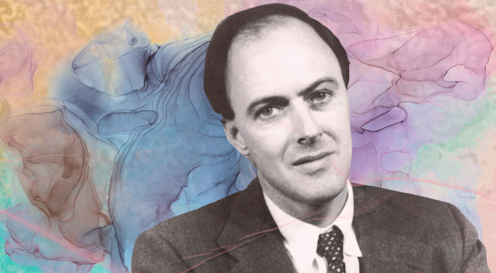
Roald Dahl in 1954. Carl Van Vechten/Wikimedia Commons.
Although several of his best-known children’s books were first published in the 1960s, Roald Dahl is among the most popular authors for young people today. The recent decision by publisher Puffin, in conjunction with The Roald Dahl Story Company, to make several hundred revisions to new editions of his novels has been described as censorship by Salman Rushdie and attracted widespread criticism.
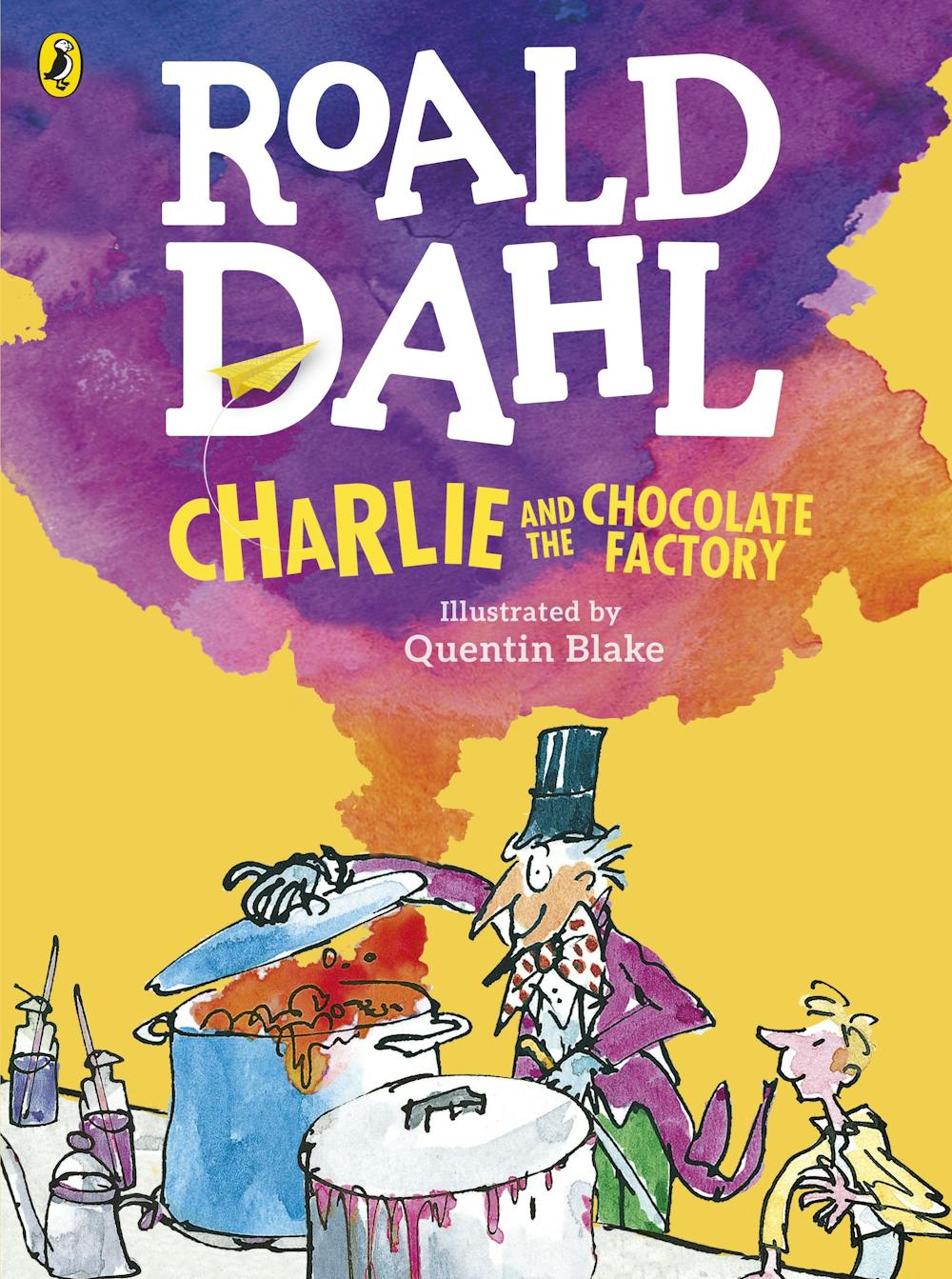
The changes, recommended by sensitivity readers, include removing or replacing words describing the appearance of characters, and adding gender-neutral language in places. For instance, Augustus Gloop in Charlie and the Chocolate Factory is no longer “fat” but “enormous”. Mrs Twit, from The Twits, has become “beastly” rather than “ugly and beastly”. In Matilda, the protagonist no longer reads the works of Rudyard Kipling but Jane Austen.
While the term “cancel culture” has also been used to describe these editorial changes, there is actually a long history of altering books to meet contemporary expectations of what young people should read.
Should we consider children’s literature on a par with adult literature, where altering the author’s original words is roundly condemned? Or do we accept that children’s fiction should be treated differently because it has a role in inducting them into the contemporary world?
Bowdlerising literature
Thomas Bowdler’s The Family Shakespeare was published in 1807 and contained 20 of the author’s plays. It removed “words and expressions … which cannot with propriety be read aloud in a family”, specifically in front of women and children.
“Bowdlerising” has since come to refer to the process of altering literary works on moral grounds, and bowdlerised editions of Shakespeare continued to be used in schools throughout the 20th century.
While Shakespeare’s works were not intended specifically for children, the fiction of Enid Blyton is a more recent example of bowdlerisation of works regarded as classics of children’s literature. There have been several waves of changes made to her books in the past four decades, including to The Faraway Tree and The Famous Five series.
While Blyton’s fiction is often regarded as formulaic and devoid of literary value, attempts to modernise names and remove references to corporal punishment, for example, nevertheless upset adults who were nostalgic for the books and wished to share them with children and grandchildren.
Children’s literature implicitly shapes the minds of child readers by presenting particular social and cultural values as normal and natural. The term we use for this process within the study of children’s literature is “socialisation”.
People do not view literature for adults as directly forming how they think in this way, even if certain books might be seen as obscene or morally repugnant.
While many people are outraged at the overt censorship of Dahl’s novels, there are several layers of covert censorship that impact on the production of all children’s books.
Children’s authors know that certain content and language will prevent their book from being published. Publishers are aware that controversial topics, such as sex and gender identity, may see books excluded from libraries and school curriculums, or targeted for protest. Librarians and teachers may select, or refuse to select, books because of the potential for complaint, or because of their own political beliefs.
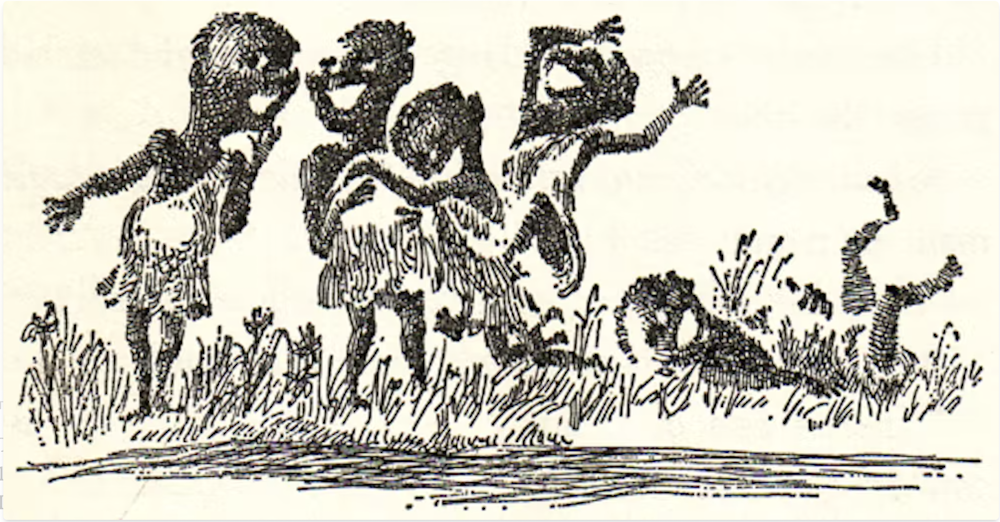
Dahl’s original Oompa Loompas were “a tribe of tiny miniature pygmies” whom Willy Wonka “discovered” and “brought over from Africa” to work in his factory for no payment other than cacao beans.
While Dahl vehemently denied that the novel depicted Black people negatively, he revised the book. The Oompa Loompas then became residents of “Loompaland” with “golden-brown hair” and “rosy-white skin”.
First, we can consider these books as “cultural artefacts” with historical significance, but which we discourage children from reading. This option works as a covert form of censorship, given the power adults hold over what books children can access.
Second, we can permit children only to read bowdlerised versions of these books, like those recently issued by Dahl’s publisher. This undermines the principle that literary works are valuable cultural objects, which must remain unchanged. In addition, revising occasional words will usually not shift the values now regarded as outdated in the text, only make it harder to identify and question them.
Third, we can allow children to read any version of a book, original or bowdlerised. This option allows for the possibility of child readers who might resist the book’s intended meaning.
It also enables discussion of topics such as racism and sexism with parents and educators, more easily achieved if the original language remains intact. While Nel favours this approach, he also acknowledges that refusing to alter texts may still be troubling for segments of the readership (for example, Black children reading editions of Mark Twain’s Huckleberry Finn in which the N-word has not been removed).
Dahl’s novel Matilda emphasises the power of books to enrich and transform the lives of children, while also acknowledging their intelligence as readers.
Although many aspects of the fictional past do not accord with the ideal version of the world we might wish to present to children, as adults we can help them to navigate that history, rather than hoping we can rewrite it.
Michelle Smith does not work for, consult, own shares in or receive funding from any company or organisation that would benefit from this article, and has disclosed no relevant affiliations beyond their academic appointment.
Tampa’s annual River O’Green Festival will return to Curtis Hixon Park on Friday, March 17 from 4pm-8pm. This fun St. Patrick’s Day celebration includes dying the Hillsborough River a brilliant emerald green. The River O’Green Fest is put on by Tampa’s Downtown Partnership with the City of Tampa and takes place along our award winning Riverwalk.
The event was originally scheduled for Saturday, March 18, but the Tampa Downtown Partnership opted to move the event a day early due to inclement weather.
“The safety of all our guests and vendors is of the utmost importance,” said Tampa Downtown Partnership President and CEO Lynda Remund. “With storms in the forecast on Saturday, we decided it was in everyone’s best interest to reschedule. The blessing in disguise is now we get to host the River O’ Green Fest on St. Paddy’s Day! We haven’t had the event on the actual holiday since 2018. It’ll be a great way for families to kick off the weekend and wrap up spring break.”
The Hillsborough River provides a perfect backdrop to the celebration which includes live entertainment, games, kids activities, food trucks, and of course, beer.
“We’re so excited to work with the city and Grow Financial again to bring this Irish-themed celebration to our residents and visitors,” said Tampa Downtown Partnership President and CEO Lynda Remund. “I love seeing the hundreds of people who come downtown, decked out in green gear, for a day full of food and fun. It’s a great way to support our local businesses and bask in the beauty of this incredible city.”
Hillsborough River turns green this March
While there is plenty to enjoy for adults, the River O’Green Fest is totally family-friendly, and your four-legged friends are more than welcome to attend.
“Seeing our Hillsborough River turn emerald green in celebration of St. Patrick’s Day is a great reminder of the excitement and fun that Tampa has to offer,” added Mayor Jane Castor. “I know how much I look forward to this annual tradition and the opportunity it brings to come together and celebrate all that makes our city great.”
For those worried about the river, organizers have assured that the dye used is completely safe. The dye used is safe for the environment, non-toxic, biodegradable, meets all EPA standards and is certified for use by NSF Std 60. In fact, it’s the same dye often used in water systems to trace the flow of drinking water.
Visit the official River O Green Festival event page for more details. After River O’ Green Fest, residents can prepare for the huge Riverfest event arriving in May.
Florida teacher fired over viral video of empty library shelves after DeSantis branded it a “fake narrative” Teachers and librarians have shared images of empty bookshelves...
by Tommy Cooke, Visiting Professor, Department of Geography & Environmental Systems, University of Maryland, Baltimore County
Satellite data isn't collected and treated the same way location data are. (Shutterstock)
When you think about location data on your mobile phone, tablet or laptop, what comes to mind? Mailing addresses? Postal codes? These data indicate where you live, where you work, and the places you visit.
When combined with other types of data over time, companies and governments use them to analyze your consumption patterns, occupation, education, health and financial status.
This was highlighted by German politician Malte Spitz over a decade ago when he sued his cellphone provider, Deutsche Telekom, for any personal data they had about him.
When the case was settled and he eventually received the data, Spitz found 35,000 references to his location. He was able to visually reconstruct his movements over the previous six months, demonstrating the relevance of data protection laws to the public.
But there is more. By using critical code and documentary research methods, we found that raw satellite location measurement data are perpetually created in our devices all the time.
Because satellite data are building blocks used by our phones to determine where we are, they don’t always get turned off — nor are they collected and treated the same way as location data.
The second way involves smartphones interacting with navigation satellites. When satellites pass overhead, they transmit signals to smartphones, which allows smartphones to calculate their own location. This process uses a specialized piece of hardware called the Global Navigation Satellite System (GNSS) chipset. Every smartphone has one.
When these GNSS chipsets calculate navigation satellite signals, they output data in two standardized formats (known as protocols or languages): the GNSS raw measurement protocol and the National Marine Electronics Association protocol (NMEA 0183).
When satellites pass overhead, they transmit signals to smartphones, which enable smartphones to calculate their own location.
(Shutterstock)
GNSS raw measurements include data such as the distance between satellites and cellphones and measurements of the signal itself.
NMEA 0183 contains similar information to GNSS raw measurements, but also includes additional information such as satellite identification numbers, the number of satellites in a constellation, what country owns a satellite, and the position of a satellite.
NMEA 0183 was created and is governed by the NMEA, a not-for-profit lobby group that is also a marine electronics trade organization. The NMEA was formed at the 1957 New York Boat Show when boating equipment manufacturers decided to build stronger relationships within the electronic manufacturing industry.
In the decades since, the NMEA 0183 data standard has improved marine electronics communications and is now found on a wide variety of non-marine communications devices today, including smartphones.
GNSS raw measurements, on the other hand, are a universal standard and can be read by different devices in the same way without a license. In 2016, Google allowed industries to have open access to it to foster innovation around device tracking accuracy, precision, analytics about how we move in real-time, and predictions about our movements in the future.
While automated processes can quietly harvest location data — like when a French-based company extracted location data from Salaat First, a Muslim prayer app — these data don’t need to be taken directly from smartphones to be exploited.
Data can be modelled, experimented with, or emulated in licensed devices in labs for innovation and algorithmic development.
Satellite-driven raw measurements from our devices were used to power global surveillance networks like STRIKE3, a now defunct European-led initiative that monitored and reported perceived threats to navigation satellites.
Data and citizen rights
Our research raises questions about how rights are protected in the midst of these practices. Citizens have little to no access to the data output from NMEA 0183 and GNSS raw measurements. Because of this, people are unable to negotiate the visibility of their data in these datasets.
The data output from NMEA 0183 and GNSS raw measurements flow unrestricted from every smartphone on the planet. Smartphones have unique identifiers — IMEI numbers — that are known to the tech ecosystem. They can be connected to a user’s personal details.
The flow of NMEA 0183 and GNSS data is invisible to the average person, meaning citizens are unsure of how these data are used, or with whom they are shared. Because of this, it’s impossible for people to challenge how their personal data are used.
A U.S. Coast Guard boat in Biscayne Bay, Fla., in June 2022. The National Marine Electronics Association is working on improving search-and-rescue operations by ensuring radio distress signals sent by marines contain GPS information.
(AP Photo/Lynne Sladky)
As interest in the supposed security, entertainment and surveillance value of these protocols continue to grow, these protocols are increasingly susceptible to misuse by third-party developers.
But there is another layer to this: NMEA 0183 and GNSS raw measurements are standards in industries that offer products and services that many of us benefit from. The NMEA has foundations in safe passage at sea, making their data an important part of emergency services operations. GNSS raw measurements are also utilized for safety purposes.
Could solutions restrict the use of these data for life-critical situations only? Is there an oversight body that could assess what impacts industrial usage of these data might have upon smartphone owner rights and liberties? What about an audit led by civil society, who would be appropriately positioned to objectively inspect these issues to determine whether they might harm the public? For example, consider the way the federal privacy commissioner reviews app data activities.
Location data now flows constantly from GNSS chipsets. There is uncertainty about who is using these data, and for what purposes. Until industry and government reassure citizens that personal data are not being exploited and that rights are protected, these remain open questions.
Tommy Cooke has received funding from the Social Sciences and Humanities Research Council of Canada, the Centre for Advanced Internet Studies (Bochum, Germany), and Queen's University's Wicked Ideas Competition.
Benjamin Muller receives funding from SSHRC and King's University College.
Kirstie Ball has received funding from SSHRC, ESRC, EPSRC, EU Framework 7 SSH and Security Programmes, The Leverhulme Trust and The British Academy.
Alicia Sabatino does not work for, consult, own shares in or receive funding from any company or organisation that would benefit from this article, and has disclosed no relevant affiliations beyond their academic appointment.
"I sometimes write fantasy, but I'm not a 'fantasy author', just call me Nnedi Okorafor."
The Nigerian American writer Nnedi Okorafor has announced that DAW Books will publish a new novella trilogy titled She Who Knows. The first in 2024 and then the two others after. — Read the rest
A new exhibit Tampa Bay History Center will showcase the works of a very original local artist. John Costin’s bird etchings are truly one-of-a-kind. They are life size, scientifically accurate, and made using a unique etching process that Costin has honed over the years. These gorgeous works of art will be on display at the Tampa Bay History Museum from March 4 to October 15. Let’s learn more about the process that brings these Florida flyers to life.
What is plate etching?
Plate etching is an artistic process that has been around for centuries. It involves creating a design on a metal plate and then using a corrosive acid to etch the design into the plate. This is the general way to create an etching, however, the type of metal, what material is used to etch into the plates, the type of acid needed all varies from artist to artist.
“After I was exposed to etching, I pursued it. I developed it. Went into greater detail. Sort of like a mad scientist in his laboratory. Experimenting and discovering different techniques,” Costin explains.
4 plate original hand painted etching titled “RADIANT LANDSCAPE”
Costin uses copper plates, some that weight over 20 pounds, in his process. He then uses high-quality asphalt, the same stuff they use to make roads, to etch his drawings onto the plates. After drawing the image into the asphalt, he takes the plate and immerses it in acid, which marks the surface of that plate where he previously exposed the copper. The acid eats a texture into the plate surface which eventually holds the ink.
After the desired effect is achieved, the plate is cleaned and dried, then inked and printed. Plate etchings offer an artist a unique way to create prints with an individual look and feel.
“It takes an incredible amount of time. I’m currently working on a piece that was started in July.” This timeline makes sense as the project he’s working on is a pair of Sand-hill cranes, the largest etching he’s ever made.
A few years ago, the Public Broadcasting System of South Florida spent the entire day in the studio to film a documentary about John and his process. Here is the video explaining it from start to finish.
Costin likens the process to a challenge, like climbing a mountain, as it takes a great deal of commitment and you never really know what you’ll end up with.
“You don’t know exactly what it will look like when you’re finished,” Costin explains. “Things happen in the process that deviate from what you had in mind. It’s a process of evolution full of surprises.”
Capturing birds for his photos
Costin’s creative process actually starts way before etching with photographs. Fittingly, Costin is also a birder. He takes his camera with him wherever he goes, taking thousands of photographs of different birds. After studying the photographs, he puts them away and begins an initial drawing, posing the bird himself and deciding on the landscape. He will do a series of small watercolor studies of the subject. Then a detailed drawing. Then he’ll take the drawing and blow it up to the actual size of the bird. Each step involves a number of edits and adjustments. He doesn’t use computers or photography — it is totally hand drawn.
“You must be an engineer as much as an artist. Every piece created is so intense it is a learning process.”
He also works with from life. Sometimes he’ll go to a bird rehabilitation center and take his watercolors with him. Studying the subject and getting different angles.
Or he’ll take a special trip to get something truly unique. Once went to the Field Museum in Chicago, to see a pair of Ivory-billed woodpeckers. The last recorded sighting of these birds was in the 1930s. Costin was able to use two stuffed species as models to recreate them in etchings.
Ivory-Billed Woodpeckers. Now considered to be extinct; the Ivory-Billed Woodpecker was once the largest woodpecker in North America (second largest in the world).
Costin’s lifelong interest in birds has paid off in his work. Through accuracy and intense study, his etchings are able to capture the different textures and coloring of his subjects. Just don’t ask him to choose a favorite.
“Usually my favorite bird is the one I’m working on.” And when asked about his favorite part in the creating process, Costin chuckled, “The most satisfying is probably when I’m finished.”
Etched Feathers: A History of The Printed Bird
The exhibit at the Tampa Bay History Museum will feature more than just Costin’s work. Costin is also a collector of antique prints of birds and has pieces in his collection that date back to the 1600s. Part of the exhibit focuses on the progression of bird images.
“It’s interesting to see how various different naturalists portrayed birds through time and history,” Costin says.
One of Costin’s antique prints. This one is titled “FLAMINGO,” John Latham, 1785.
If you take a look at the evolution of bird depiction through time, you can see how artists used certain visual solutions to help their more primitive depictions come to life. There is a great evolution from the 1600s up to the 1830s when the images of birds became more refined.
Many of these antique prints come from books and were a form of scientific documentation. This is something that, after years of creating bird etchings, Costin knows a thing or two about. And he thinks we should view these antique etchings, and his etchings, in a different way.
“I look at it as fine art. I want the science right when I do the piece. But I also see it as a fine art form, as opposed to just documentation.”
Etched Feathers: A History of The Printed Bird will be on display at the Tampa Bay History Center from March 4 to October 15 in the Wayne Thomas Gallery. There will also be a members-only reception on March 22 from 6pm to 7:15 pm where Brad Massey, Ph.D., will talk about what he discovered during his research for the new exhibition.
Interested in our Modern Globe weekly newsletter?
Sign up here. *
Select list(s) to subscribe toNewsletter
Example: Yes, I would like to receive emails from ModernGlobe. (You can unsubscribe anytime)
Constant Contact Use. Please leave this field blank.
By submitting this form, you are consenting to receive marketing emails from: ModernGlobe, modernglobe.com, TAMPA, FL, 33605, https://www.modernglobe.com. You can revoke your consent to receive emails at any time by using the SafeUnsubscribe® link, found at the bottom of every email. Emails are serviced by Constant Contact
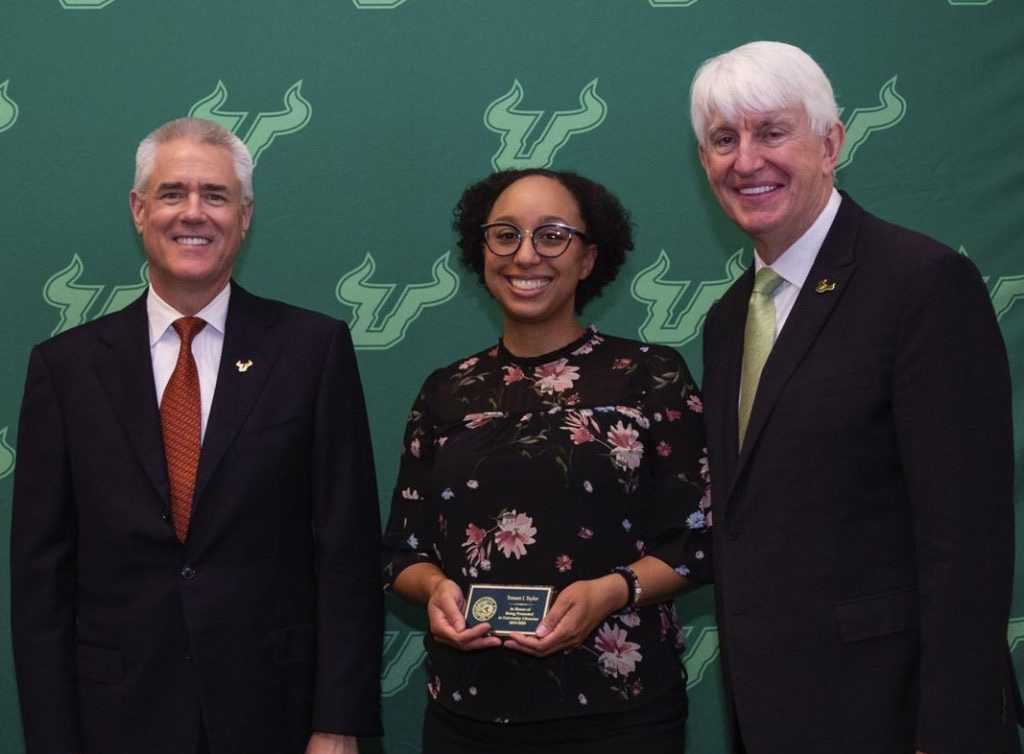
Special Collections Director at USF Library Tomaro Taylor brings unique items of history on campus to be used for research and teaching materials. SPECIAL TO THE ORACLE
Finding a lost piece of Florida history is just another day on the job for Director of Special Collections Tomaro Taylor.
“Our Collection Coordinator Sidney Jordan identified three historic Black newspapers that were either Tampa or Florida based,” she said.
“They were the Black Journal, the newspaper for Black Professionals, the Florida Courier, which was Florida’s only statewide circulated Black weekly, and the Progressive Village Pioneer, which we already had a collection of papers from. They had no other holdings at any other library, which makes them extremely rare.”
As a USF alum, Taylor earned her bachelor’s and master’s in both psychology and American studies. While uncertain about going into the psychology field, she took a class with the late professor Priscilla Brewer. It was in that classroom she found the love that would define her career path.
“I had just gone into the American Studies undergraduate program because when I graduated with my degree in Psychology, I wasn’t sure I wanted to work in that field,” she said.
“I took a couple classes with Dr. Brewer and I just fell in love with our culture and American society. I loved the materiality. The historical record, and whatever format it presents itself in, is just something that really demonstrates the wealth of our culture. I learned so much from her.”
Though she originally took interest in museum studies, Taylor chose to stay at USF to get her master’s in library and information science. While she intended to use her degree to enter the museum education field, she chose to stay within the library field and began as a graduate assistant at the Tampa Library’s reference department. Taylor later took a residency position after completing her degree.
“There was nothing I was interested in outside of the museum, but when I got to the program, I learned everything there was to know about libraries,” Taylor said.
“Working in a library, special collections was the closest thing to having a potential career in a museum. My degree didn’t align with my original professional ideas, so I thought, ‘How can I merge these things together?’ Special Collections was the opportunity for me to do that.”
The Special Collections at USF Library contain materials of importance to various subjects, most to material culture and history. Materials can be all mediums, such as a newspaper, movie, or piece of furniture. The collections are used mainly for research and teaching materials, but all students are able to access the collections online.
Taylor joined the USF Special Collections department as a permanent faculty member in 2004 and has focused on archives ever since. Most of her work occurs behind the scenes, creating grassroots connections with donors and authenticating materials. What she said the department is truly looking for, however, is whether the materials will benefit the education of USF’s students.
“We have people who reach out to us and have materials that fit our specific collecting areas. Then we have to do an evaluation of the material, and what we’re looking for is the inherent value,” Taylor said.
You have to ask, ‘How can it be used by people?’ We want to know if people can use this material for research purposes, what it can support in terms of their education and understanding of the world around them.”
Because of the history of these materials, many are in very fragile condition. This is especially true for the Florida area, as weather conditions can cause further detriment, according to Taylor. That element is taken into consideration when discussing how materials can be used, but she said the introduction of digitizing has revolutionized the way that materials can be accessed by the public.
“There is the element of asking if something can be physically used or if it would require some sort of treatment,” Taylor said. “Sometimes you can give the materials to an expert to do repair work. But when looking at digitizing, a large part of that is building out digital collections online and making them available for public use through the digital commons.”
The Digital Common’s are available online for all USF students to access. These collections range from African American, LGBTQ and Florida’s natural history. For Taylor, being able to give space to the stories of those in American history who may not have been given a chance to be seen is something she finds to be more necessary than ever.
“It’s very important that the resources that we make available through libraries and Special Collections and Archives, speak to the needs of the people who come to use them,” she said.
“We get a very wide range of people who are interested in learning about different topics and see different things in those resources. Whether it be the newspapers or correspondences or AV, regardless of if the formal is a physical or digital manifestation.”
After a COVID infection, whether it’s a first, second, or even a third, many of us wonder how long we might be protected against a reinfection, and whether we’ll be susceptible to new variants. Also, if we do catch COVID again, will the immunity we’ve acquired from this infection reduce the severity of the next one?
A new study published in The Lancet set out to answer these questions, looking at the strength and duration of natural immunity by COVID variant.
The authors collected data from 65 studies across 19 countries, making it the largest review on this topic to date. These studies compared COVID risk among people who had been infected previously and those without a prior infection. Studies looking at natural immunity in combination with vaccination (hybrid immunity) were excluded.
The researchers aimed to assess if infection induced similar protection against reinfection with different variants, and if this waned differently over time.
The analyses spanned studies from the beginning of the pandemic until September 2022, and looked primarily at the alpha, beta, delta and omicron BA.1 variants.
Protection from reinfection
The authors evaluated protection against reinfection, symptomatic disease, and severe disease (defined as hospitalisation or death) separately.
They found previous infection was highly protective against reinfection with alpha, beta and delta variants, but less so against omicron BA.1. A previous infection provided moderate protection from reinfection with omicron BA.1 (45%), compared with stronger protection against pre-omicron variants (82%). This was also the case for symptomatic infection.
Data from long-term studies showed that protection against reinfection for pre-omicron variants dropped to 78.6% over 40 weeks, whereas for omicron BA.1 it dropped more rapidly to 36.1%.
When assessing severe disease, however, all variants showed sustained protection above 88% for 40 weeks. This isn’t to say that protection drops substantially after 40 weeks. Rather, it seems there was limited data available that followed people for long enough for the authors to be able to draw strong conclusions beyond this time frame.
The results also revealed that protection against severe disease after natural infection was comparable to that received from two vaccine doses, for both pre-omicron and omicron BA.1 variants.
A couple of years is a long time for highly contagious respiratory viruses, and SARS-CoV-2 (the virus that causes COVID) has been no different. It has generated sequential variants of concern, with increased transmissibility and capacity to evade our immune responses compared with the ancestral virus.
The study’s observations, which treat protection against pre-omicron variants and omicron BA.1 separately, make sense when we consider how omicron variants differ from their predecessors.
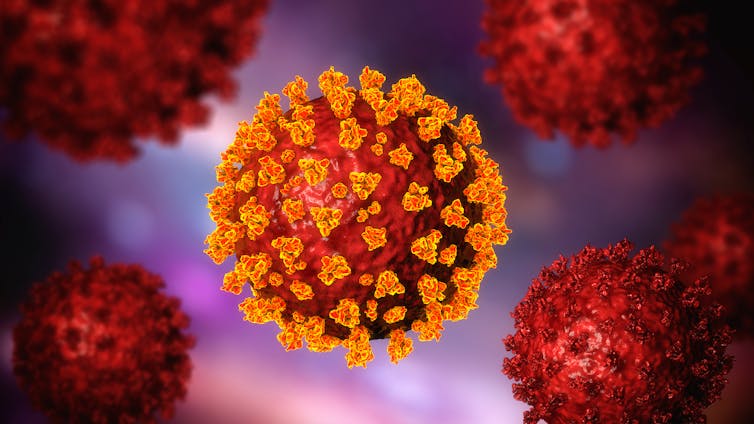
By way of background, neutralising antibodies generated after previous viral infection are important to prevent subsequent virus entry to susceptible cells. These Y-shaped molecules recognise intact proteins of the virus exterior and attach to them, preventing the virus from latching on to the cell receptor necessary for infection.
But to persist, viruses like SARS-CoV-2 introduce random mutations in their genome when they replicate, aiming to continuously alter their proteins to escape immune recognition.
Omicron lineages have enough mutations to differentiate substantially from previous variants, and therefore evade existing antibodies. Evasion from neutralising antibodies explains our failure to control reinfection by omicron variants.
Thankfully, we don’t just rely on antibodies for protection. A type of immune cells called T cells recognise snippets of virus proteins rather than intact proteins. This means it would take many more mutations in the virus genome to completely evade T cell immunity.
Unlike antibodies, T cells don’t seek out viruses. Instead they recognise infected cells and rapidly eliminate them to reduce virus factories in the body. T cells therefore act where neutralising antibodies may have failed, after infection. A robust T cell response to coronaviruses is crucial to prevent severe disease, and fortunately, tougher for omicron to evade.
SARS-CoV-2-specific T cells wane more slowly than antibodies. In fact, people infected with the similar coronavirus SARS in 2003 still had T cells which recognise SARS-CoV-2 17 years after infection.
Infection versus vaccination
While a natural infection may offer equivalent protection to vaccination, this is not to say you should seek to become infected. SARS-CoV-2 remains a dangerous and unpredictable virus which can, in some cases, cause a host of damaging effects that linger long after recovery.
The authors suggest a person’s previous infection status and timing should be considered alongside their booster vaccinations to predict protection. However, this may be difficult to implement as infection surveillance has decreased in most countries compared with earlier in the pandemic. In any case, COVID certificates are used less commonly now.
They also suggest their findings could be used to inform the optimal timing for booster vaccination strategies. That is, there’s probably merit in waiting some time after an infection before getting a booster.
Further high quality, long-term follow up studies will be important to supplement these findings, as the authors acknowledge there are not as many studies on natural infection compared with protection after vaccination. There were also few studies mapping protection against newer omicron sublineages. As the pandemic continues, there remains much to learn about immune protection against this evolving virus.
Zania Stamataki receives funding from the Medical Research Foundation and Innovate UK. She collaborates with AstraZeneca on projects unrelated to topics in this article.
The Supreme Court next week will hear two cases — Gonzalez v. Google on Tuesday, Feb. 21, and Twitter v. Taamneh on Wednesday, Feb. 22 — that could dramatically affect users’ speech rights online.
Nearly everyone who speaks online relies on Section 230, a 1996 law that promotes free speech online. Because users rely on online intermediaries as vehicles for their speech, they can communicate to large audiences without needing financial resources or technical know-how to distribute their own speech. Section 230 plays a critical role in enabling online by speech by generally ensuring that those intermediaries are not legally responsible for what is said by others.
Section 230’s reach is broad: It protects users as well as small blogs and websites, giants like Twitter and Google, and any other service that provides a forum for others to express themselves online. Courts have repeatedly ruled that Section 230 bars lawsuits against users and services for sharing or hosting content created by others, whether by forwarding email, hosting online reviews, or reposting photos or videos that others find objectionable. Section 230 also protects the curation of online speech, giving intermediaries the legal breathing room to decide what type of user expression they will host and to also take steps to moderate content as they see fit.
But if the plaintiffs in these cases convince the Court to narrow the legal interpretation of Section 230 and increase platforms’ legal exposure for generally knowing harmful material is present on their services, the significant protections that Congress envisioned in enacting this law would be drastically eroded. Many online intermediaries would intensively filter and censor user speech, others may simply not host user content at all, and new online forums may not even get off the ground.
Here's some useful background on these extremely important cases:
Gonzalez v. Google
EFF’s amicus brief, joined by the American Library Association, the Association of Research Libraries, the Freedom to Read Foundation, and the Internet Archive
Amicus brief of EFF, Center for Democracy & Technology, American Civil Liberties Union, American Civil Liberties Union Foundation of Northern California, Knight First Amendment Institute at Columbia University, R Street Institute, and Reporters Committee for Freedom of the Press
Erotic magic, Black emancipation, gender fluidity, interplanetary spirit realms — these were but a few of the topics that preoccupied Paschal Beverly Randolph (b. 1825), an occult thinker who believed that his multiracial identity afforded him “peculiar mental power and marvelous versatility”. Lara Langer Cohen considers the neglected politics of Randolph’s esoteric writings alongside the repeated frustration of his activism: how dreams of other worlds, above and below our own, reflect the unfulfilled promises of Emancipation.
Three weeks until the deadline for commenting on an enormous fee hike that the U.S. Citizenship and Immigrations Services (USCIS) wants to impose on genealogy records. If this rule goes through, getting copies of vast numbers of genealogically valuable records will be beyond the financial reach of many researchers, with fees rising by as much as 300%.1
The Legal Genealogist reported on this proposal back in January,2 and — trust me on this one! — will do so again before time runs out.
But the bottom line is this: as individual genealogists and as a genealogical community, we need to speak out on this.
Now… lots of folks are concerned that they aren’t quite sure what to say.
If you’d like to hear more before commenting, and you’re a member of the National Genealogical Society, NGS is hosting an online discussion with the folks who started Records, Not Revenue — Rich Venezia, Marian Smith, and Renée Carl — on February 22 at 8 p.m. EST.3 Check your email for an invitation.4
Remember as well that the comment system for this proposed rule is all online, so you can read the comments posted by others to get more ideas on what to say. Just remember to use the search box to find comments about genealogy — the fee hike proposal affects all USCIS functions, not just the genealogy program, so lots of comments don’t apply to us.
And if you’re concerned that you don’t know how to comment, not to worry about that either. It’s really easy. Start out by writing up what you want to say on your own computer, and have it ready to post to the online system. Be sure to specifically mention that you’re commenting on the fees for the Genealogy Program. Otherwise the comment may be lost in the mass of comments opposing other proposed fee increases.
Then head over to the Federal Register page for this rule here. You’ll see a green box that reads “Submit a Formal Comment.” Click on that and follow the prompts. You can also comment at the Regulations.gov website here using the blue Comment button. The reference number is DHS Docket No. USCIS 2021-0010 — make sure to follow all the instructions to be sure your comment posts.
And, of course, always make sure to send a copy of your comments to the two United States Senators from your state and to the member of the House of Representatives for your district. You can get names and contact information for your Senators at Senate.gov and for your House member at House.gov.
It really is easy to speak out on this.
What will be hard is getting records if we don’t speak out.
So join me — speak out. Do it now.
And remember: the deadline for public comments on the rule is Monday, March 6, 2023, at 11:59 p.m. EST.
Cite/link to this post: Judy G. Russell, “Speak out on USCIS fee hikes!,” The Legal Genealogist (https://www.legalgenealogist.com/blog : posted 13 Feb 2023).
Judy G. Russell, “USCIS proposes BIG fee hike,” The Legal Genealogist, posted 5 Jan 2023 (https://www.legalgenealogist.com/blog : accessed 13 Jan 2023). ↩
The impact of disinformation and misinformation has become impossible to ignore. Whether it is denial about climate change, conspiracy theories about elections, or misinformation about vaccines, the pervasiveness of social media has given “alternative facts” an influence previously not possible.
Bad information isn’t just a practical problem – it’s a philosophical one, too. For one thing, it’s about epistemology, the branch of philosophy that concerns itself with knowledge: how to discern truth, and what it means to “know” something, in the first place.
But what about ethics? People often think about responsibility in terms of actions and their consequences. We seldom discuss whether people are ethically accountable for not just what they do, but what they believe – and how they consume, analyze or ignore information to arrive at their beliefs.
So when someone embraces the idea that mankind has never touched the Moon, or that a mass shooting was a hoax, are they not just incorrect, but ethically wrong?
Know the good, do the good
Some thinkers have argued the answer is yes – arguments I’ve studied in my own work as an ethicist.
Even back in the 5th century B.C., Socrates linked epistemology and ethics implicitly. Socrates is mostly known through his students’ writings, such as Plato’s “Republic,” in which Plato depicts Socrates’ endeavors to uncover the nature of justice and goodness. One of the ideas attributed to Socrates is often summarized with the adage that “to know the good is to do the good.”
The idea, in part, is that everyone seeks to do what they think is best – so no one errs intentionally. To err ethically, in this view, is the result of a mistaken belief about what the good is, rather than an intent to act unjustly.
More recently, in the 19th century, British mathematician and philosopher W.K. Clifford linked the process of belief formation with ethics. In his 1877 essay “The Ethics of Belief,” Clifford made the forceful ethical claim that it is wrong – always, everywhere and for everyone – to believe something without sufficient evidence.
In his view, we all have an ethical duty to test our beliefs, to check our sources and to place more weight in scientific evidence than anecdotal hearsay. In short, we have a duty to cultivate what today might be called “epistemic humility”: the awareness that we ourselves can hold incorrect beliefs, and to act accordingly.
As a philosopher interested in disinformation and its relationship to ethics and public discourse, I think there is a lot to be gained from his essay. In my own research, I have argued that each us has a responsibility to be mindful of how we form our beliefs, insofar as we are fellow citizens with a common stake in our larger society.
Setting sail
Clifford begins his essay with the example of a ship owner who has chartered his vessel to a group of emigrants leaving Europe for the Americas. The owner has reason to doubt the boat is in a seaworthy-enough condition to cross the Atlantic, and considers having the boat thoroughly overhauled to make sure it is safe.
In the end, though, he convinces himself otherwise, suppressing and rationalizing away any doubts. He wishes the passengers well with a light heart. When the ship goes down midsea, and the ship’s passengers with it, he quietly collects the insurance.
Most people would probably say the ship owner was at least somewhat ethically to blame. After all, he neglected his due diligence to make sure the ship was sound before its voyage.
What if the ship had been fit for voyage and made the trip safely? It would be no credit to the owner, Clifford argues, because he had no right to believe it was safe: He’d chosen not to learn whether it was seaworthy.
In other words, it’s not only the owner’s actions – or lack of action – that have ethical implications. His beliefs do, too.
In this example it is easy to see how belief guides actions. Part of Clifford’s larger point, however, is that a person’s beliefs always hold the potential to affect others and their actions.
No man – or idea – is an island
There are two premises that can be found in Clifford’s essay.
The first is that each belief creates the cognitive conditions for related beliefs to follow. In other words, once you hold one belief, it becomes easier to believe in similar ideas.
This is borne out in contemporary cognitive science research. For example, a number of false conspiratorial beliefs – like the belief that NASA faked the Apollo Moon landings – are found to correspond with the likelihood of a person falsely believing that climate change is a hoax.
Clifford’s second premise is that no human beings are so isolated that their beliefs won’t at some point influence other people.
People do not arrive at their beliefs in a vacuum. The influence of family, friends, social circles, media and political leaders on others’ views is well documented. Studies show that mere exposure to misinformation can have a lasting cognitive impact on how we interpret and remember events, even after the information has been corrected. In other words, once accepted, misinformation creates a bias that resists revision.
Taking these points together, Clifford argues that it is always wrong – not just factually, but ethically – to believe something on insufficient evidence. This point does not assume that each person always has the resources to develop an informed belief on each topic. He argues it is acceptable to defer to experts if they exist, or withhold judgment on matters where one has no sound grounding for an informed belief.
That said, as Clifford suggests in his essay, theft is still harmful, even if the thief has never been exposed to the lesson that it is wrong.
An ounce of prevention
Arguing that people are ethically responsible for nonevidential beliefs doesn’t necessarily mean they are blameworthy. As I have argued in other work, Clifford’s premises show the morally relevant nature of belief formation. It is enough to suggest that developing and nurturing critical thinking is an ethical responsibility, without denouncing every person who holds a belief that can’t be supported as inherently immoral.
Ethics is often talked about as if it were merely a matter of identifying and chastising bad behaviors. Yet, as far back as Plato and Socrates, ethics has been about offering guidance for a life well lived in community with others.
That might mean renewing educational institutions’ investment in disciplines that, like philosophy, have historically taught students how to think critically and communicate clearly. Modern society tends to look for technological mechanisms to guard us against misinformation, but the best solution might still be a solid education with generous exposure to the liberal arts – and ensuring all citizens have access to it.
Lawrence Torcello does not work for, consult, own shares in or receive funding from any company or organization that would benefit from this article, and has disclosed no relevant affiliations beyond their academic appointment.
Get ready for something big. ZooTampa, currently nominated as one of the best zoos in the country, will bring tinier creatures to brilliant life. BUGTOPIA is a limited-time family-friendly event that opens on Saturday, February 25. This larger-than-life exhibit is free with Zoo admission or membership and features 13 enormous animatronic bugs that will amaze and educate guests in fun and unique ways. This is giving us very fun Ant-Man meets A Bug’s Life vibes.
BUGTOPIA enables guests to glimpse into the world from a bug’s perspective, delight in their bizarre beauty, and reflect on what we can learn from their brilliant behaviors. Roles will be reversed as guests venture into a bug’s world where they will find themselves looking up into the eyes of a larger-than-life Mexican red knee tarantula or at the tail of a mighty Emperor scorpion looming more than 10 feet in the air.
Giant bugs are coming to ZooTampa
Zoo members can enjoy special previews of BUGTOPIA on Friday, February 24, from 9:30am-5pm, Saturday, February 25, from 9am-12pm, and Sunday, February 26, from 9am-12pm.
“Bugs are fascinating creatures, and we’re proud to be able to share them with guests of all ages in BUGTOPIA,” said Chief Operating Office Scott Rose. “This exhibit is full of enormous animatronic bugs and insects that show what these animals look like close-up and how they’ve perfectly adapted to the world around them—our guests will never look at bugs the same way again.”
In addition to all the buzz from BUGTOPIA, the Zoo kicks off its extended springtime hours! The week of March 11 through March 19, 2023, guests can enjoy the Zoo from 9:30am-7pm. During the months of March and April, the Zoo will stay open until 7pm on Saturdays and Sundays.
ZooTampa is also set to undergo a $125 million renovation that would create a new river connection to the facility from downtown and Tampa Heights.
If the court were to ban affirmative action, the decision would be part of a larger, profound conservative transformation of constitutional law. The court, for example, demonstrated its willingness to reconsider landmark rulings when it overturned the 1973 abortion decision in Roe v. Wade.
Justice Clarence Thomas, a leading Black conservative, is a well-known opponent of affirmative action programs and recent decisions by the U.S. Supreme Court that allow the use of race as a factor in college admissions.
Thomas’ views are in stark contrast with those of the two other justices of color – Sonia Sotomayor, a Latina, and Ketanji Brown Jackson, a Black woman.
In addition to enacting laws, the nation transformed the U.S. Constitution by adopting the Reconstruction Amendments. These amendments included the 13th Amendment, which ended slavery, and the 15th Amendment, which provides that the right to vote may not be denied or abridged on “account of race, color, or previous condition of servitude.”
But it was the the 14th Amendment that addressed discrimination against Black Americans by ensuring that no state may deprive any person “the equal protection of the laws.”
The U.S. Supreme Court, from left in front row, Sonia Sotomayor, Clarence Thomas, Chief Justice John Roberts, Samuel Alito and Elena Kagan, and from left in back row, Amy Coney Barrett, Neil Gorsuch, Brett Kavanaugh and Ketanji Brown Jackson.
Alex Wong/Getty Images
Written in broad, general language, the 14th Amendment’s equal protection clause was designed by the 39th Congress to open the door to different interpretations by future generations. Today’s arguments for and against affirmative action are based on differing interpretations of the meaning of the equal protection clause of the 14th Amendment.
Thomas’ opposition to affirmative action
In their suits against Harvard and UNC, the anti-affirmative action organization Students for Fair Admissions argues that schools’ race-conscious admissions process violates the constitutional guarantee of equal protection and discriminates against high-achieving Asian American students in favor of traditionally underrepresented Black and Hispanic people.
Thomas takes that argument a step further.
He has argued that all racial classifications – regardless of their perceived benefit in remedying inequality – are harmful because they stigmatize minorities.
U.S. Supreme Court Associate Justice Clarence Thomas opposes all race-conscious college admissions policies.
Alex Wong/Getty Images
Race-conscious admissions policies, he wrote in his dissent of the 2003 Grutter v. Bollinger decision, “stamp minorities with a badge of inferiority.”
In addition, Thomas argued that university administrators lack a pressing or compelling reason to divide Americans into racial classes, since African Americans can and will succeed without this help.
“Our Constitution is color-blind, and neither knows nor tolerates classes among citizens,” Thomas concluded.
Thomas made another point in October 2022, during oral arguments in the affirmative action cases currently before the U.S. Supreme Court.
“I may be tone-deaf when it comes to all these other things that happen on campus, about feeling good and all that,” Thomas said to one of the attorneys defending affirmative action. “I’m really interested in a simple thing: What benefits academically are there to your definition or the diversity that you’re asserting?”
Sotomayor’s and Jackson’s support of affirmative action
Justice Sotomayor’s line of questioning during oral arguments in the cases against Harvard and UNC strongly suggest that she believes that diversity is constitutional.
Justice Jackson has not ruled or participated in an affirmative action case as a U.S. Supreme Court justice. She took office in June 2022, and the Harvard and UNC cases are her first opportunity to rule on this issue.
But her line of questioning during oral arguments in the Harvard and UNC cases suggests she also believes that race-based efforts to obtain diversity are constitutional.
Jackson asked attorneys representing Students for Fair Admissions if their client endured harm from an admissions process in which race was one of 40 factors that are considered. Other factors include demonstrated leadership skills, grade point average and resilience.
Ending affirmative action will not end diversity efforts
A 2020 Monmouth University poll found that 76% of Americans surveyed called racism a big problem, up 25% from just five years previously.
Yet, while many Americans think that racism is a problem, a majority of Americans also think that affirmative action is problematic.
A 2022 Pew Research poll found that 73% responded that race or ethnicity should not be considered when making decisions about student admissions.
In our view, regardless of how the Supreme Court rules on affirmative action in these two cases, attempts to achieve a diverse student body or corporate workforce will continue – just in new ways.
But in recent years, the California university system has increased minority enrollment by relying on socioeconomic factors, location and recruitment.
Other state universities have adopted race-neutral programs that promote student diversity.
Texas, for example, enacted a law in 1998 that allows students who graduate in the top 10% of their high school class to automatically gain admission to state universities.
This plan enhanced student diversity by ensuring that students in poor and ethnically diverse districts could gain admission to elite public universities.
Affirmative action and the legacy of Reconstruction
In its 1954 Brown v. Board of Education decision, the Supreme Court conducted exhaustive historical research and pointed out that there was no consensus on whether segregation should be illegal in public schools when the 14th Amendment was adopted.
Disagreements over the equal protection clause are sure to continue, regardless of what the Supreme Court decides in the Harvard and UNC cases – as will the nation’s efforts to construct a just, multiracial democracy.
Erin Lain is affiliated with Polk County Bar Association and the ACLU of Iowa.
Miguel Schor does not work for, consult, own shares in or receive funding from any company or organization that would benefit from this article, and has disclosed no relevant affiliations beyond their academic appointment.
by Jan Grabowski, Professor, Department of History, L’Université d’Ottawa/University of Ottawa
The Monument to the Ghetto Heroes in Warsaw, Poland, commemorating the 1943 Warsaw Ghetto Uprising. History surrounding the Holocaust has become increasingly controversial in Poland in recent years. (AP Photo/Czarek Sokolowski)
In January 2018, the Polish parliament passed a law that imposed prison terms of up to three years of anyone who claimed Poles had any responsibility for or complicity in crimes committed by the Nazis during the Holocaust.
The law was intended to silence historians, and indeed, it has created a chilling atmosphere within academia and beyond.
My research focuses on the relations between Polish Jews and the surrounding non-Jewish population.
In my case, the Polish government (acting directly or through proxies) has decided to use civil litigation. I have been sued for libel and Polish organizations have requested my removal from my position as professor of history at the University of Ottawa.
A memorial to Janusz Korczak, who died in the gas chamber of the Treblinka death camp in 1942, together with the children of the Jewish orphanage that he ran in the Warsaw Ghetto.
(AP Photo/Czarek Sokolowski)
History and nationalism
The notion of wartime complicity by segments of Polish society in the Holocaust has long been considered a taboo subject.
In 2015, the far-right Law and Justice party came to power in Poland. Defending the good name of the nation has become one of the focal elements of its political platform and a sure way to consolidate its electoral base.
As a result, independent historians and educators, myself included, have become targets of vicious hate campaigns in state-owned and state-controlled media.
There is a saying among scholars of the Holocaust: “I did not choose to study the Holocaust, it chose me.”
Trained as a historian of the 17th and 18th centuries, I came to the study of the Holocaust rather unexpectedly, at the turn of the century, while on a trip to Warsaw visiting my ailing father, a Holocaust survivor.
With some time on my hands, I did what most historians do: I went to the local archives. That’s when I stumbled upon thousands of files of the German courts from occupied Warsaw.
What made me curious was the fact that hundreds of files concerned Jews from the Warsaw Ghetto. I found out that the Germans prosecuted them for the breaches of various Nazi regulations: Refusing to wear prescribed armbands with the star of David, for leaving the ghetto without permission, for violating curfews, for buying and smuggling food from the “Aryan” side to the ghetto or for “slandering the good name of the German nation” — which usually meant telling jokes about the occupation.
A memorial in Wojslawice, Poland, to the 60 Jews executed in the town during the Holocaust.
(AP Photo/Czarek Sokolowski)
The Holocaust’s ‘bystanders’
The eminent scholar on the Holocaust, Raul Hilberg, divided the human scenery of the Holocaust into three categories: perpetrators, victims and bystanders. Over the years, we have learned much about the Holocaust’s German perpetrators and Jewish victims, but much less about the ill-defined last category.
Who were the bystanders? Were they people who knew nothing about the ongoing Jewish catastrophe? Or people who were conscious of the event but who chose indifference?
Poland was an epicentre of the Holocaust. It was a place where the Nazis built death camps, and where most of the Jewish population was murdered. In my research, I found that it was simply impossible — I saw that very clearly — for people to remain distant or aloof from the genocide.
Not all the Jewish ghettos (and there were hundreds of ghettos in Poland) were isolated from the outside world. Most of the ghettos were either open (no walls), or with flimsy fences that did not prevent contact between the Jews and other Poles.
Then, in 1942, the liquidation actions began. The Germans, together with local helpers, rounded up the Jews and drove Jewish families towards the nearest railway station, where they were placed on death trains destined for the death camps of Treblinka, Bełżec, Sobibór and Auschwitz.
All of this happened in plain view of the surrounding non-Jewish population. Once the masses of Jews had been deported to their deaths, the emptied ghettos became the sites of massive robbery. Tens of thousands of houses, apartments and furniture were all for the taking.
That is when uncounted thousands of Jews who chose to hide in ingenious hideouts under and inside their houses were detected, pulled out and delivered into the hands of the Germans for immediate execution.
Some Jews fled the ghettos altogether, seeking shelter in the forests, most often, with locals who offered assistance either for a fee or for altruistic reasons.
During this last, final stage of the Holocaust — one which the Germans called Judenjagd or “hunt for the Jews” — the hidden Jews, from the German standpoint, became largely invisible. During this last phase (which continued until the end of the war), it was often one’s non-Jewish neighbours who decided who lived and who died.
It was my research into this stage of the Holocaust that led me to believe that being a bystander in Eastern Europe and, most of all, in Poland, was simply impossible. The whole idea of “bystanding” needed to be re-examined, questioned and perhaps even dismissed.
Night Without End by Jan Grabowski and Barbara Engelking.
(Indiana University Press)
It was within such a political context that Night Without End, a book that I co-wrote and co-edited, was published in 2018. The two-volume, 1,600-page study is a specialized inquiry into the fates of Jews in selected areas of wartime Poland. We looked at the Jewish struggle for survival and German genocidal policies.
We also tried to understand the attitudes of the surrounding Polish society to the Jewish catastrophe. The results were grim: the results of many years of research pointed to the fact that at least two-thirds of Jews who went into hiding had either been murdered or betrayed to the Nazis by their Polish neighbours.
The reaction of the authorities was swift and furious. My co-author and I have been denounced in the press. An unprecedented campaign of hate, followed by civil lawsuits and criminal accusations, ensued.
Attacks on historians and on history itself go hand in hand with attacks on other vital parts of open and democratic society. The defence of history and the struggle to preserve our right to know what has happened are among the foundations of the democratic system.
“Who controls past, controls the future,” George Orwell wrote in Nineteen Eighty-Four. His words have never rang more true.
Jan Grabowski does not work for, consult, own shares in or receive funding from any company or organization that would benefit from this article, and has disclosed no relevant affiliations beyond their academic appointment.
Looking for that perfect picture to illustrate your post? That catchy tune to jazz up your video? Look no further than Openverse, the huge library of free and open stock photos, images, and audio contributed to the public commons by people around the world, now available at its new domain: openverse.org.
Here at CC we use Openverse daily to explore the public commons and find works to reuse in our communications and projects. Powerful tools like Openverse demonstrate how open technologies and communities like WordPress can build on the rich public commons we all help create to support what we call better sharing: sharing that is inclusive, just and equitable — where everyone has wide opportunity to access content, to contribute their own creativity, and to receive recognition and rewards for their contributions.
Finding and using free and open works has never been easier: Just visit Openverse, enter some keywords, and pick your favorite from the results. You can also filter by content type, sources, aspect ratio, size, open license and public domain statuses, and more, like the search for the keywords “art” and “universe” we used to find the image in this post.
Once you’ve picked a work, Openverse provides everything you need to use it: Visit the work in its home collection and copy a well-formed attribution statement to give proper credit for your use.
Openverse was incubated here at CC as “CC Search”, moving to the WordPress community in 2021, and has continued to thrive in its new home, now cataloging over 600 million images and audio tracks, with new collections of open works being added all the time, like the recent addition of more than 15 million images from iNaturalist, the project that enables citizen scientists and researchers to document and understand global biodiversity.
Contributors in the WordPress community continue to add new features and capabilities to Openverse. Coming up next will be new tools to easily use images from Openverse directly in WordPress itself; content safety features that will enable users to blur or opt in/out from specific types of sensitive content; and improvements to search relevancy and the quality of results.
by David Riedman, Ph.D. student in Criminal Justice and Creator of the K-12 School Shooting Database, University of Central Florida
Two mourners embrace at a memorial for those killed in the Parkland, Florida, school shooting in 2018. AP Photo/Gerald Herbert
In the aftermath of the Parkland, Florida, high school shooting on Valentine’s Day 2018, many Americans hoped that, finally, something would be done to address the problem of gun violence in the nation’s schools.
Despite the outpouring of grief and calls for action that followed the shooting at Marjory Stoneman Douglas High School, school shootings continue to occur with alarming frequency. While progress has been made in some areas, such as increased funding for school security and mental health resources, there is still much work to be done to ensure the safety and well-being of students and educators in schools across the country.
On Jan. 6, 2023, in Newport News, Virginia, a 6-year-old student is alleged to have intentionally shot his teacher. He is among the youngest school shooting perpetrators dating back to 1970.
And as criminologists who track any time a gun is fired at a K-12 school, including deliberate attacks, suicides, accidental shootings, gang-related violence and shootings at after-hours school events, we know this case is only the tip of the iceberg.
School shootings got more common, not rarer, after Parkland
Since Parkland, there have been over 900 shootings in K-12 school settings according to our data. Thirty-two were indiscriminate attacks apparently driven by the intent to kill as many people as possible, including mass casualty events at Robb Elementary School in Uvalde, Texas, in May 2022 and at Oxford High School, in Oxford, Michigan, in November 2021.
School gun violence takes many forms. In January 2023, five students were wounded during shootings at high school basketball games in five different states. These shootings at school games are a “quiet phenomenon” that gets little national attention. Based on our data on more than 260 shootings at sports events, most schools do not have a plan for them, such as what an announcer should say or how people can evacuate.
Another emerging challenge for school leaders is the 264 fights in five years that escalated into shootings. Unlike any planned attacks, these cases were simple disputes that turned deadly because students were armed at school.
There were a record 302 shootings on school property in 2022. In April, one month before Uvalde, a sniper fired hundreds of shots during dismissal at the Edmund Burke School in Washington, D.C. Then, in October, at Central Visual Performing Arts High School in south St. Louis, a 19-year-old armed with a semi-automatic rifle and hundreds of rounds of ammunition shot and killed a teacher and a 15-year-old student, and injured seven other people.
Among the 250 shootings at schools in 2021, a 12-year-old girl, who wrote plans to target scores of her Rigby, Idaho, middle school classmates, wounded three students before a heroic teacher disarmed her in the hallway.
Owing to the pandemic and widespread school closures, in 2020 there were no planned attacks at schools for the first time since 1981. But in 2019, a student shot five classmates, killing two, before dying by suicide between classes at Saugus High in Santa Clarita, California. And two students committed a coordinated attack that killed one student and injured eight others at the STEM School in Highland Ranch, Colorado.
In total, since Parkland, 198 people have been killed, including 84 students, teachers and school staff, and another 637 people wounded in school shootings.
A man pays his respects to the victims of the June 2022 school shooting in Uvalde, Texas.
AP Photo/Eric Gay
Equipment is not prevention
Since Parkland, school safety has been a priority for parents and policymakers, but efforts to physically fortify schools to keep intruders at bay often are detached from the reality that most school shooters are current or former students of the schools they target.
Having been trained in lockdown procedures since kindergarten, students know exactly how a school will respond to an active shooter and even plan for it; they navigate security daily. At Uvalde, the shooter was a former student who entered through a back door. The shooter in St. Louis was a former student who broke a side window to open a locked door.
New equipment designed to protect students from shooters can create a false sense of security and make classrooms feel more like prisons than places of learning. Following the attack in Uvalde, Texas legislators approved $110 million for school safety, but nearly half of the money went to new ballistic shields for school police officers. These shields do not prevent school shootings, or aid during one, because police are trained to immediately run to the shooter, not to their office to get a shield.
Just three weeks before Parkland, on Jan. 23, 2018, 20 students were shot, two fatally, in a planned attack at Marshall County High in Benton, Kentucky. Three months after Parkland, on May 18, 2018, 10 people were killed and 13 wounded at Santa Fe High School in Santa Fe, Texas. Despite billions spent on security upgrades, schools are stuck in a perpetual cycle of gun violence. If current trends hold, there will be another 1,000 school shootings over the next five years.
But research shows that school shootings are not inevitable. They are preventable.
Nearly all school shooters exhibit warning signs before pulling the trigger, from changes in their behavior to verbal or written threats. From Parkland to Uvalde, these warnings were not recognized or reported until it was too late. Schools must think beyond metal detectors, security cameras and other high-tech gadgets and gizmos to invest in multidisciplinary behavioral intervention and threat assessment systems to respond to warning signs. There is federal money and resources available to do this thanks to the Bipartisan Safer Communities Act, passed in the wake of Uvalde in the summer of 2022.
Almost all shootings by children and teens can be prevented by safe storage of firearms and accountability for adult gun owners. When a weapon is stored separately from its ammunition, locked and unloaded, it is much more difficult for someone to quickly use it in a violent attack. While the family claims the gun was locked, safe and separate storage could have prevented a 6-year-old from shooting his teacher. It also could have prevented thousands of guns from being stolen and diverted into illegal markets.
Five years after Parkland, school shootings have become more frequent and deadly. The status quo is not working. Instead of accepting that more young lives will be lost and that the best schools and police can do is lock down and rehearse emergency responses, we believe school safety must shift to focus on upstream prevention.
David Riedman receives funding from Everytown for Gun Safety.
James Densley has received funding from the National Institute of Justice and the Joyce Foundation.
Jillian Peterson receives funding from the National Institute of Justice and the Joyce Foundation.
When was the last time you walked into a public space and didn’t hear someone coughing? After three years of flinching at the sound, it can be disarming to hear so many people coughing – and embarrassing if it’s you.
Given how ubiquitous persistent coughing is, you might presume that the medical profession has a long list of treatments that we know work. That, unfortunately, depends on why you are coughing. But a cough following an upper respiratory infection does usually go away, in time.
Allergies, sinus problems, medications, asthma and bronchitis are among the things that can lead to chronic cough.
How a cough works
Doctors have long wondered why the duration of cough varies so much following an upper respiratory viral or bacterial infection. The answer likely lies in differences in people, such as the presence of a condition like asthma or chronic bronchitis. I see this same variability in my office: Some patients develop a long-term cough, while others seem to kick the cough much sooner, with no clear explanation.
Coughing occurs due to a complex process that begins with an electrical impulse between the nerves within the airways, including the nose and throat. There are two types of nerves that can trigger a cough in response to external stimuli: chemical receptors and mechanical ones called mechanoreceptors. Chemical receptors respond to smells and fumes; they’re the reason people sometimes cough after breathing in spicy peppers sizzling on a hot skillet. Mechanoreceptors respond to sensations from irritants such as dust.
When these nerves are activated, the throat closes and pressure in the chest increases. This buildup of pressure leads to a burst of air and mucous into the lungs at around 500 mph – a speed nearly twice as fast as the world’s fastest cars.
But when the acute stage of infection is over and you start to feel better, the body repairs the damages caused by inflammation in your airways and lungs. Through this process, the cough reflex also abates. And the molecular processes that were making you cough and sneeze more frequently settle down and return to a normal state – at least in most cases. Unfortunately, in some people, this process takes longer than in others.
She coughed and coughed and coughed. Then a doctor discovered what was wrong.
Knowing how long is too long to cough
Doctors find it useful to break respiratory symptoms like cough into specific categories.
Postinfectious cough is one variety of sub-acute cough and is the lingering cough that many people have after they get over their respiratory infection. It can last for weeks or months and can progress into chronic cough.
Because postinfectious cough is so common, doctors have long worked to determine how many people have a cough that persists after their other symptoms go away. Those estimates vary among studies. One small study in Japan found that of people who have a sub-acute and chronic cough, 12% resulted from a respiratory tract infection.
When it comes to COVID-19, the best evidence to date shows that only 2.5% of the people who have gotten it have also developed a chronic cough after infection. That number may seem small, but it translates to a lot of people coughing, given that the U.S. has more than 280,000 new cases of COVID-19 per week, as of early February 2023. The actual number, though, is unclear because the studies that look at postinfectious cough are often small and only account for the people who got COVID-19 and showed up in their doctor’s office or in a telehealth visit for evaluation.
No simple fix
The American College of Chest Physicians and the European Respiratory Society have published guidelines to help clinicians navigate these uncertainties and the dearth of data available on the diagnosis and treatment of coughing. Although the U.S. guidelines were published in 2006, they still represent the best evidence available for clinicians and their patients.
In adults, the evidence for the efficacy of various treatments is mixed and limited. In my practice, I often prescribe a non-narcotic cough suppressant called benzonatate, sold under the brand name Tessalon Perles. It works by numbing the nerves in the lungs and airways, calming the cough reflex. Data for treatments in children is equally lacking, and studies have shown that over-the-counter cough suppressants and antihistamines were no more effective than the placebo.
Home remedies can also play an important role for some patients. Many people swear by honey, and there is some limited supporting evidence behind its benefits. One trial showed that honey was more effective at soothing a cough than the placebo over a three-day period.
When in doubt, ask a doctor
Being worried about a persistent cough is understandable – a quick Google search can present plenty of reasons to worry. Though not a very satisfying answer, most coughs really will eventually resolve on their own. However, if you lose weight rapidly, cough up blood, have night sweats or produce lots of sputum, you should talk to your primary care provider. In rare cases, sub-acute and chronic cough can be a sign of lung cancer or various forms of chronic pulmonary disease.
If you are simply nervous about it and want more information and advice, that is reason enough to check in with your doctor. After all, a cough is the reason behind millions of office visits every year.
Kyle B. Enfield receives funding from the National Heart and Lung Institute, Society of Critical Care Medicine - CureID, and the USDA. He is a member of the Society of Critical Care Medicine, the American Thoracic Society, the Society for Health Care Epidemiology of America, and the Wilderness Medicine Society. He is a volunteer with the Boy Scouts of America.
Higher education should not be forced to comply with the state’s political theater. SPECIAL TO THE ORACLE/FLICKR
Gov. Ron DeSantis initiated a forceful takeover of New College on Jan. 31, placing six conservative board of trustee members and appointing close allies to fight against “woke” culture, according to a Friday report by VanityFair.
Higher education is meant to help students develop into mature, responsible and independent adults. The state should not dictate curriculum because of political disagreements.
The students at New College of Florida were caught off guard when DeSantis appointed the new board of trustee members, according to a Jan. 31 Tampa Bay Times report. In a 9-3 vote, the board ousted President Patricia Okker, according to a Jan. 29 The Guardian article. The board immediately voted to appoint interim president Richard Corcoran, a former Republican state House speaker and Florida education secretary.
Corcoran is a close ally to DeSantis, according to the Tampa Bay Times, showcasing the growing attack on freedom of education and expression that Florida has become known for.
Christopher Rufo, one of the newly appointed board members, gave a speech at Hillsdale College April 5, claiming conservatives needed to lay siege to institutions that have been accused of indoctrinating students with left-leaning ideology. Other board members, like Manny Diaz and Charles Kesler, have openly made statements about wanting to turn New College into a right-leaning classical college like Hillsdale, according to Vanity Fair.
Each board member has one common goal – to completely change the environment of New College to one where “woke goes to die,” as infamously said by DeSantis on Nov. 9 during his successful reelection speech.
Legislation proposed by DeSantis would dismantle university programs that are deemed “ideological,” according to a Jan. 31 article by Politico. Students on campus see this takeover as a political stunt to shape education into a more far-right indoctrination effort.
“New College is unique in terms of how quickly and aggressively and brazenly things are moving. But this is very much a part of a broader push against educational freedom,” third-year New College anthropology major Alex Obraud said in a Feb. 8 interview with VICE news. “This school is a test case of how far you can take censorship and push politics in public schools.”
DeSantis has already begun to probe schools for how much state funding went into diversity, equity and inclusion programs, as well as the medical records of people with gender dysphoria and sought treatment, according to a report by WUSF on Feb. 9. USF students held a protest in response, but USF Health complied with the governor’s demands, according to a Feb. 2 Oracle article.
The past few weeks have taken classroom censorship to a dangerous extreme. With the Florida government stepping in, public universities are being forced to comply to control the hiring of faculty, the curriculum or ruling certain subjects out of bounds based on political beliefs.
Policies that aim to restrict education surrounding race and probe colleges that offer a safe environment for LGBTQ students do immense harm to students learning how to understand and analyze society in a more critical lens, according to a Nov. 22 article by the Intercultural Development Research Association (IRDA).
When places like this are funded mostly by the state, it makes it hard for them to reject these programs.
“If funding for particular offices is coming from places other than the state, certain areas may have a little more flexibility during these times, but I’m not sure how long that will last,” special advisor to the College of Arts and Sciences Dean on diversity, equity and inclusion Tangela Serls said in a Sunday statement to The Oracle.
Regardless of the potential harm to college students, DeSantis announced during a live broadcast on Jan. 31 that he plans to get rid of “ideological conformity” in public higher education by eliminating diversity programs, weakening tenure protections for professors and focusing the curriculum on the history and philosophy that has shaped Western civilization. The continued attacks on education do not help better students, but rather leave them worse off.
If DeSantis is worried about education, he should be focusing on accessibility for college students in the state of Florida rather than restricting resources or AP courses that challenge his world view for the chance of a good Presidential campaign in 2024. Florida students deserve better than to be forced under a blindfold by the sunshine state.
Similar legislation targeting diversity, equity and inclusion and critical race theory has been passed in other states including Georgia, Alabama, Texas and Mississippi, according to Education Week. ORACLE PHOTO/JUSTIN SEECHARAN
The potential elimination of diversity, equity and inclusion (DEI) efforts throughout Florida’s public universities could result in losses in students’ success and their ability to excel in a transnational context, according to special advisor to the College of Arts and Sciences Dean on DEI (SADEI) Tangela Serls and Middlebury College vice president for DEI Khuram Hussain.
Gov. Ron DeSantis announced he would defund all DEI and critical race theory (CRT) initiatives in a Jan. 31 press conference, following requests to the state’s public universities to detail their DEI and CRT-related spending.
Hussain said because DEI functions as a primary point of contact between students with disabilities and the university, it ensures that students are able to access accommodations needed for their learning. Removing DEI offices would then have an impact on the positive gains made to support student success, according to Hussain.
“DEI offices are designed to support the capacity of students and professionals to fully participate in what higher education has to offer,” Hussain said. “Why would anyone who really understands what DEI offices aim to do want to curb this affirming work?”
Students won’t be prepared to perform in a global society, according to Serls. She said they will be less informed, less empathetic and less appreciative of differences across humanity.
Serls said faculty will also be affected, however, as they might run the risk of losing funding from national and international grantors who value DEI. Grantors who might think particular projects can no longer be carried out thoroughly due to state policies will cause faculty to lose out on funding, she said. In the long run, she said it might become difficult to recruit and retain talented faculty.
It is still unknown what state policies might mean for DEI practitioners, according to Hussain. A Feb. 7 universitywide email from President Rhea Law announced that the search for a new vice president for DEI had been halted due to the uncertainty surrounding DeSantis’ proposals and investigations regarding DEI efforts.
Serls said those working in DEI won’t have the benefit of having an executive leader now that the search has been canceled. Without a leader’s vision and guidance, it will be more difficult to continue the work, she said.
When it comes to funding, the effects will be felt at different degrees throughout different offices, according to Serls. For example, Student Support Services (SSS) is a federally funded grant program which does not receive state funds and is less likely to be affected, according to SSS Director LaTosha Thomas.
“If funding for particular offices is coming from places other than the state, certain areas may have a little more flexibility during these times, but I’m not sure how long that will last,” Serls said.
USF reported the most DEI and CRT related spending, totaling $8.7 million, in an investigation by DeSantis. The university funded areas such as the Office of Multicultural Affairs (OMA), Upward Bound, SSS, Institute on Black Life and its own DEI office.
However, those working on DEI are collectively experiencing a type of psychological trauma navigating new state policies which can’t be understated or ignored, according to Serls. People might also be scared to speak up, she said.
“I believe people are terrified, and I can’t blame them because our livelihoods are at stake. In fact, I almost passed on the opportunity [to speak with The Oracle], but I decided that I needed to be brave,” Serls said.
The OMA, DEI office and Institute on Black Life declined to comment upon The Oracle’s request.
USF will continue to work with the governor on the state’s higher ed initiatives, according to Director of Media Relations Althea Johnson.
Hussain said those who work in DEI focus on the creation of sustainable solutions to issues of interpersonal harm that arise on campus, and the absence of this could lead to a community that is less safe, respectful and capable of sustaining inclusive learning.
“For generations, we have looked to higher education to revitalize and inform democratic life – to do so, educators and administrators need the space to cultivate independent, broadminded and critical thinking,” he said.
“At its core, DEI aims to advance these principles for all students and education professionals – to understand ourselves and our world in expansive and inclusive ways. If we silence advocates of transformative learning, we ultimately curb earnest and effective efforts to prepare students for democratic life.”
The state of Florida objected to the inclusion of readings from some prominent scholars and activists in the course. TWITTER/@GOVRONDESANTIS
Assistant professor Kyaien Conner said Gov. Ron DeSantis’ initial rejection of Advanced Placement (AP) African American studies course in Florida could be a precursor to restrictions on critical race theory (CRT) classes in the state’s public universities and colleges.
College Board released a revised version of the course on Wednesday, omitting some scholars and figures involved with topics relating to CRT and political activism, according to an article from The Washington Post.
However, College Board released a statement saying the decision was not in response to DeSantis’ concerns about the course, and that these changes were in development before the governor publicly expressed his disapproval.
“We reject any claim that our work either indoctrinates students or, on the other hand, has bowed to political pressure,” Duke University professor Kerry Haynie said in the statement issued by College Board.
The initial rejection of the course from DeSantis was announced Jan. 23 and was soon followed by plans from the governor’s office to curb diversity, equity and inclusion (DEI) and CRT related initiatives in the states’ universities and colleges.
As part of his plan to fight indoctrination in state schools, DeSantis said that the class uses Black history to push a political agenda. The state objected to the readings about African American scholars and activists such as Roderick Ferguson, Kimberlé Crenshaw and Angela Davis. Crenshaw and Davis were omitted from the revised version of the course, according to The Washington Post.
The course is designed to offer high school students an “evidence-based introduction to African American studies,” according to the College Board website. The pilot version of the class is currently being taught in some U.S. schools. It is a disciplinary course reaching into different academic fields such as the arts, humanities, political science, geography and science.
Conner said the language used by the governor’s office is “incredibly clear.” She said legislators believe that DEI and CRT related programs are dividing students and are misinformed on what they actually entail.
“They are pushing a narrative that these kinds of programs and opportunities are a way to create divisions and are a way to be divisive,” Conner said. “We are not indoctrinating students. DEI programs are an attempt to create equity, not to create division.”
Visiting professor Kirsten England said the push back on the course limits students’ options and the diversity within the education system. Taking the course would be a choice that allows students to make themselves a better-educated citizen by showing them history from other perspectives, she said.
Civil rights attorney Ben Crump announced on Jan. 25 that if DeSantis does not stop his attempts to “exterminate Black history,” the state’s Black leaders would sue for violating students’ constitutional rights.
Associate professor Richard Manning said that because the governor and the Republican-led congress of Florida control university funding, none of the state university presidents are in a comfortable position to be the first one to stand up to the governor and his plans for education.
“They don’t want to poke the bear, but sometimes the bear is chewing off your arm and it’s time to poke,” he said.
At a Jan. 18 faculty senate meeting, Manning asked President Rhea Law if she believed in the existence of systemic racism in the United States. Law, however, declined to directly answer the question, Manning said.
“We have the obligation to address all of these things. We have incredible love amongst our groups but we also have hate. If that rises to the level of racism, that is just the case,” Law said at the meeting. “The university stands for bringing knowledge and direction and letting people learn about others and appreciating them. That is what we should be doing.”
Following Manning’s initial question, he told Law that a candid agreement to the existence of systemic racism might be a way to buttress the university’s commitment to faculty.
“I understand what you’re looking for,” Law responded. “I am here to support each of you and I do believe in the fairness and needs for DEI for all of our individuals. We should be teaching those things that support that. But I’m not going to fall into a trap of trying to define a term here or there. You know exactly where I stand and I hope everybody on this call understands [it].
Law then restated her commitment to the university’s strategic plan, which mentions a “diverse and inclusive community for learning” as one of its goals.
Manning said the point of asking the question was to have the president say something that would let at-risk faculty know that she understands and finds value in what they study and teach rather than agreeing with the governor. He said the most likely explanation as to why Law evaded the question is that it is too politically risky.
Law’s office declined to comment on the situation upon The Oracle’s request.
Manning said the contrast between education that the governor and legislature endorse and what they oppose is not a matter of history versus interpretation. He said all history, as opposed to the past, involves interpretation. It is a matter of which interpretations provide more of the facts and a more informative, explanatory story about how we got to where we are today, he said.
Assistant professor David Ponton said what is happening to kids in secondary schools is the riskiest situation among DeSantis’ recent legislations and proposals. He said the students who will not have the chance to take the course to its fullest extent already have an understated understanding of Florida history by the time they arrive at college. They will no longer have the added perspective and research experience that comes with the course, according to Ponton.
“They’re going to miss out on that opportunity in the state of Florida and, when they come to the university level, they’re going to be behind their peers in other states,” he said.
The class would help foster three major skills: applying disciplinary knowledge, source analysis and argumentation, according to the course framework released by College Board. A final project in the course would also allow students to research any topics, theme, issue or development in the African American studies field and integrate evidence from other disciplines such as history or art.
Conner said pushing against DEI and towards colorblindness means erasing critical parts of individuals’ histories. To ignore the existence of systemic racism means placing groups of people at considerable risk for not being able to have the same opportunities as others, according to Conner.
“The idea of saying something that’s colorblind also means that you are erasing a critical aspect of who I am, of who people of color are, who don’t have the opportunity or the ability to walk outside of their door every day and be colorblind to the fact that racism exists,” she said. “Systemic racism exists.”
by Linda J. Bilmes, Daniel Patrick Moynihan Senior Lecturer in Public Policy and Public Finance, Harvard Kennedy School
Bill Clinton, at right, oversaw the first balanced budget since 1969, with some help from a bipartisan deal with Newt Gingrich. AP Photo/Doug Mills
Kevin McCarthy reportedly promised many things to Republican hardliners en route to clinching his job as speaker of the U.S. House of Representatives. One of them was a “balanced budget” in 10 years.
But a look at the numbers – and the history – shows just how difficult balancing the budget will be.
Doing so requires the federal government to generate enough income to pay for all its spending. The U.S. has managed this feat only twice in the past 60 years – and both times involved raising taxes, something Republicans are loath to do. President Lyndon B. Johnson managed to do it in 1969, and President Bill Clinton created a surplus that ran from the fiscal years 1998 to 2001, when he left office.
As a member of the Clinton administration in the Commerce Department from 1997 to 2001, I participated in achieving that rare balanced budget and understand the obstacles to delivering a repeat performance. A quick look back at how we did it, along with how much has changed, shows that Republicans are unlikely to manage a similar performance.
Clinton’s balanced-budget recipe was a mixture of higher revenues and lower spending, with help from a booming economy. In his second term, he also negotiated a bipartisan budget deal with Republicans.
After campaigning on a pledge to cut the deficit, Clinton raised taxes on the wealthy during his first year in office. He introduced higher top personal income tax brackets, raised corporate taxes, increased taxes on Social Security benefits, added 4.3 cents per gallon onto gas taxes and eliminated a number of itemized tax deductions. On the spending side, Clinton took advantage of the “peace dividend” that followed the collapse of the Soviet Union to reduce defense spending from 4.3% of GDP in 1993 to 2.9% by 2000.
These measures helped slash the overall deficit to 1.3% of GDP by the end of Clinton’s first term. That’s the smallest it had been in 22 years.
The higher taxes invited pushback from Republicans, who gained majorities in the House and Senate in 1995. Clinton wrangled continually with then-Republican Speaker Newt Gingrich, who forced a government shutdown that same year.
As part of budget negotiations, Congress eventually passed the Balanced Budget Act of 1997, which retained Clinton’s original tax increases but cut capital gains taxes and reduced spending on Medicare and Medicaid. Meanwhile, the economy, fueled by a tech boom, expanded rapidly during Clinton’s second term.
Higher tax rates on the wealthiest Americans, strong economic growth and continued restraint in government spending produced a budget surplus of US$69 billion in 1998. The surplus peaked in 2000 at $236 billion before falling to $128 billion in 2001. The surplus – which hasn’t been seen since – allowed the U.S. to pay down the national debt by over $450 billion.
Lessons for today
The lesson for Republicans today is that if they are serious about balancing the budget, it will require some very unpalatable choices.
On the spending side, so-called entitlements – mandatory programs such as Social Security, Medicare and veterans benefits – now account for almost two-thirds of the federal budget, compared with less than half when Clinton took office. Funding for these programs is set by formula, making it difficult to change. And the population of Americans 65 or older has grown by 32% since 1993, increasing demand for entitlements.
When Clinton signed the Balanced Budget Act of 1997, it was the first time since 1969 that the U.S. had made ends meet.
Paul Richards/AFP via Getty Images
Defense spending takes up another 14% of taxpayer dollars, greatly exceeding every other item in the so-called discretionary budget, which includes everything else from transportation and energy to airline traffic control and national parks.
The U.S. spends 8% of the budget simply paying interest on the national debt. This percentage hasn’t changed much, but the debt itself has soared from $4.5 trillion in 1993 to $31 trillion todaymainly because of massive tax cuts during the Bush and Trump administrations, costly wars in Iraq and Afghanistan and vast public spending to address the 2008 financial crisis and the COVID-19 pandemic.
Now that historically low interest rates have come to an end, the U.S. will be forced to devote a bigger slice of the pie to paying interest.
The policy nonprofit Committee for a Responsible Federal Budget recently estimated that if spending on defense, veterans, Social Security and Medicare were off the table, Congress would need to reduce all other spending by 85% to get to an overall balance. In other words, simple arithmetic means it is not feasible to achieve anything close to a balanced budget without addressing military spending and entitlement programs.
Reducing military spending is always controversial – and many Republicans (as well as some Democrats) would resist such cuts – but especially so at a time when the U.S. is ramping up military aid to Ukraine and the Pentagon perceives a threat from China. It’s the very opposite of the Clinton-era peace dividend.
Cutting mandatory spending would require significant reforms. The U.S. has one of the youngest minimum retirement thresholds in the world, at age 62, compared with 65 in Canada and 67 in Britain and Germany. Even France may soon have a higher minimum retirement age of 64 – though the current protests there over increasing it from 62 illustrate the political perils of such a change.
Can they do it again?
Certainly, opportunities do exist to close the gap between income and spending.
The Congressional Budget Office has released a report outlining 76 options for reducing the deficit. But many of the ideas require further hard choices, such as rolling back some or all of the last three tax cuts, increasing taxes on the wealthy, ending or curtailing tax deductions and adopting a consumption-based value-added tax or a carbon tax, as well as fundamental reforms to entitlement programs.
Unfortunately, Congress shows limited appetite to tackle such issues.
Back in 1997, after the smoke cleared, both the Clinton administration and the Republicans in Congress were able to claim some political credit for the resulting budget surpluses. But – crucially – both parties recognized that a deal was in the best interest of the country and were able to line up their respective members to get the votes in Congress needed to approve it. The contrast with the current political landscape is stark.
The Republican Study Committee, a bloc of more than 160 conservative lawmakers, released a budget blueprint in June 2022 that promises to balance the budget in seven years. The plan proposes trillions of dollars in spending cuts, many of which would fall hardest on low-income Americans. These include shrinking Medicaid, paring veterans benefits and raising the age for full Social Security retirement benefits from 67 to 70. It also calls for higher military spending and further tax cuts – which would require even more draconian cuts to core safety net programs.
It would also lock in the Trump tax cuts of 2017 – the opposite of what the Congressional Budget Office recommends or what Clinton did in the 1990s to secure a balanced budget.
Without a credible Republican deficit-cutting plan on the table, I believe that the odds favor a protracted stand-off over the debt ceiling, which could tip the precarious U.S. economy into recession.
While Congress seems highly unlikely to allow a debt default, this brawl would waste time and energy that could be better spent on figuring out how to strengthen programs like Social Security and close tax loopholes that drain revenue.
Balancing the budget is not an end in itself. Most economists agree that governments should reduce public debt during periods of prosperity and run deficits to assist people when the economy is weak.
The U.S. was fortunate in the late 1990s to enjoy a buoyant economy that enabled Congress and the president to achieve a fiscal surplus. What the country needs now, in my view, is not more quick fixes but a sustainable pathway to stabilizing the national debt. That requires growing revenues and reducing nonessential spending in a responsible way.
Linda J. Bilmes is the Daniel Patrick Moynihan Senior Lecturer in Public Policy and Public Finance at the Harvard Kennedy School, Harvard University. She is affiliated with the National Academy of Public Administration, where she serves on the Board of Directors, and the United Nations Committee of Experts on Public Administration, where she is the member for the United States. She served as the Senate-confirmed Assistant Secretary and CFO of the US Department of Commerce from 1999-2001, and as Deputy Assistant Secretary of Commerce for Administration and Budget from 1997-1998.
by Meelan Thondoo, Research Associate, University of Cambridge
Amsterdam, Netherlands.
Planting trees in urban areas can reduce the impacts of urban heat islands. Dutch_Photos/Shutterstock
Urban development leads to fewer shaded areas and more heat-absorbing paved surfaces. Cities tend to be warmer than their rural surroundings as a result, a phenomenon known as the urban heat island (UHI) effect. During the summer daytime, cities can be up to 12℃ hotter than rural areas.
UHIs are a major environmental hazard for urban dwellers. Research suggests that for each 1℃ rise in temperature, the risk of death increases by between 1% and 3%. Heat exposure also increases the risk of suffering cardiovascular and respiratory illnesses.
Our research calculated the death rates of urban inhabitants across 93 European cities (57 million people in total) between June and August 2015. We found that 6,700 premature deaths during this period were linked to UHIs.
But the pace of global warming is accelerating and 2–3 billion people are expected to live in cities by 2050. The health impacts of UHIs will likely worsen in the coming years.
Several strategies exist to protect urban residents from the impacts of heat. These include covering roofs and facades in vegetation (green roofs), decorating them in lighter colours, and replacing paved surfaces with areas of vegetation. Our modelling revealed that one-third (2,644) of UHI deaths in Europe could be prevented by increasing tree canopy cover to 30% in every urban neighbourhood.
Urban forests regulate a city’s microclimates effectively. Research found that urban forests cooled the average temperature of 601 European cities by 1.1°C and by as much as 2.9°C.
Leafy neighbourhoods are also linked to improved mental and physical health. In California, a 10% increase in neighbourhood tree cover has been associated with a 19% reduction in rates of obesity and type 2 diabetes.
Surrounding greenness, particularly greenness at schools, can be important in the cognitive development of children. Cognitive testing of schoolchildren in Barcelona revealed a 6% better working memory development in children at schools with the highest levels of greenness compared to those at the least-green schools.
More trees means less heat
We found substantial variation in UHI death rates across European cities. In 2015, Gothenburg in Sweden recorded no premature UHI deaths, while urban heat was responsible for 32 premature deaths per 100,000 people in the Romanian city Cluj-Napoca.
The cities with the highest UHI death rates were in southern and eastern Europe. Most of these cities generally had low tree coverage and recorded the highest UHI effect.
Just 3.3% of Thessaloniki in Greece is covered by trees, resulting in urban temperatures 2.8℃ higher than the surrounding area. By contrast, 27% of Gothenburg is covered by trees, delivering an UHI effect of just 0.4℃.
Overall, southern European cities will benefit most from increasing their tree cover. Our model estimates that Barcelona could reduce its UHI death rate by 60% by meeting the 30% tree coverage target.
But the intensity of the UHI effect depends on multiple factors and is specific to each city. While vegetation cover influences urban temperatures during the day, nighttime temperatures are driven by the height of the urban canyon.
The cooling capacity of a tree canopy also varies. This depends on the type and size of trees, which are themselves contingent on the city’s natural climate and the degree to which trees are maintained.
Drier climates, like Thessaloniki, favour smaller trees that have fewer leaves. By contrast, Gothenburg’s cooler and wetter climate favours larger and leafier trees that provide better protection from daytime heat.
Due to this variation, we built a tool called the Cooling Efforts Index. The index assesses how much cooling can be achieved in each city for every 1% increase in tree cover. We also generated high-resolution maps for each city to identify the areas where tree coverage is needed most urgently.
In some cities, the majority of urban forests will grow on private land. Tree planting programmes must therefore encourage residents to plant trees.
In Victoria, a city on Canada’s western coast, neighbourhoods are offered a CAD$1,000 (£610) grant to plant residential trees. So far, over 78 trees have been planted on private property across the city.
Space can also be a major constraint in compact urban areas. So increasing tree cover to 30% may be challenging for some European cities.
But each city can adapt this target to its local context. For example, a lower tree canopy target can be combined with alternative measures like green roofs in compact urban areas.
Terrace roofs account for 67% of Barcelona’s roof surface area. As the city’s urban population continues to rise, the city council has launched a guide to transform roofs into areas with partial or total plant cover. The guide sets out the social and environmental benefits of green roofs and offers advice for choosing the right kind of terrace roof for the building.
Incorporating urban green infrastructure into cities should make them more resilient to climate change. But planting trees may not be enough. Tree growth is a long processes and around half of newly-planted trees die within two years. Preserving existing trees and complementing tree planting schemes with other measures that reduce the intensity of UHIs, such as reducing car use, are similarly important.
Urban trees provide substantial public health and environmental benefits. Our study suggests that by increasing tree coverage, premature UHI deaths in European cities can be reduced. But for the resilience of cities to increase, it remains important to combine greater tree coverage with other urban green infrastructure.
Mark Nieuwenhuijsen receives funding from European Union Horizon funding
Meelan Thondoo and Tamara Iungman do not work for, consult, own shares in or receive funding from any company or organisation that would benefit from this article, and have disclosed no relevant affiliations beyond their academic appointment.