Transitional agreements are proving to be neither transitional nor transformative. How should libraries and publishers reassess and chart a different course?
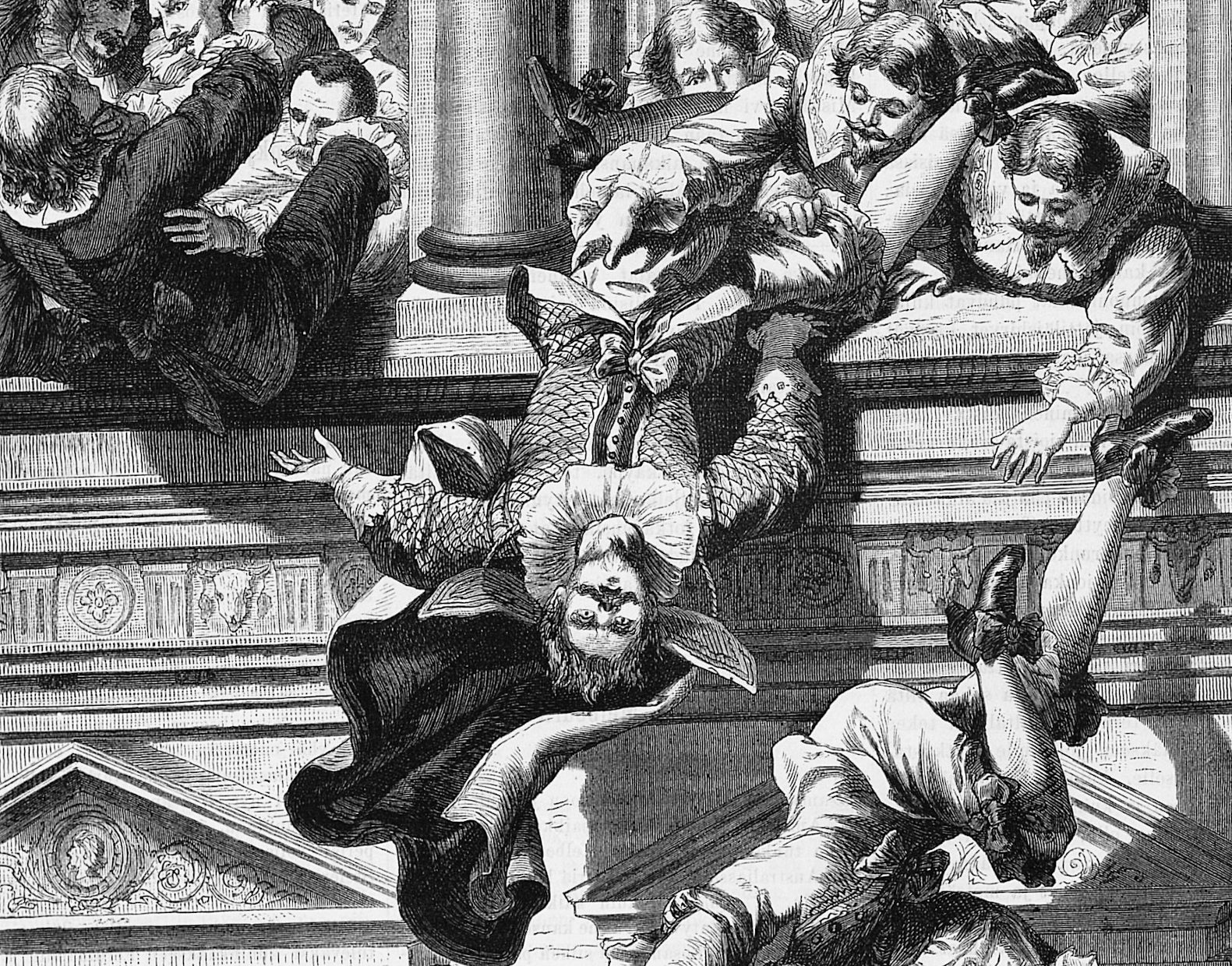
Throwing people out of windows (or defenestrating them, as the Latin has it) is an act imbued with longstanding political significance in Prague. From the Hussite revolt in the late Middle Ages through the Thirty Years’ War to modern instances of “autodefenestration”, Thom Sliwowski finds a national shibboleth imbued with ritual efficacy.
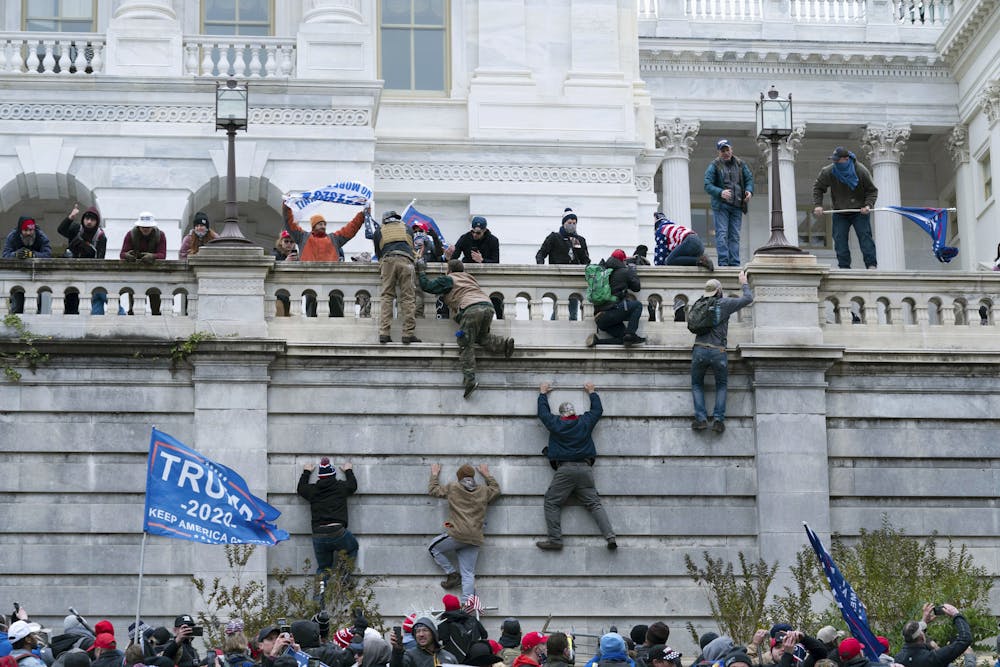
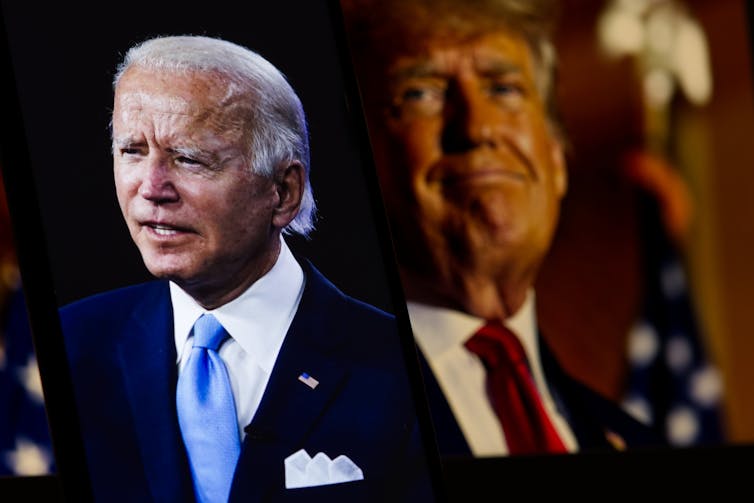
Millions of Americans believe that the 2020 presidential election was stolen. They think Donald Trump won by a landslide in 2020 and lost only because of widespread voter fraud. Some of the people who hold these views are my relatives, neighbors and professional associates. Because I reject these claims, it can be difficult to talk to those who accept them.
Often, we avoid the topic of politics. But as a political science scholar, I expect that as the 2024 election gets closer, conversations about 2020 will become more common, more important and more unavoidable.
So, what does someone like me, who concludes that the last presidential election was legitimately won by Joe Biden, say to those who think that Trump was the actual winner? Here are a few of the questions I raise in my own conversations about 2020.
I usually begin by asking about polls. Polls and pollsters are often wrong about close elections, and many prominent pollsters tilt toward Democrats. They predicted a Hillary Clinton victory in 2016.
But even those polls and pollsters would be unlikely to have missed a 2020 landslide for Trump – or Biden. Unless, of course, as was the case, the landslide did not exist.
Recent political polling has been less accurate than many people expect. And all polls have margins of error: They provide an imperfect picture of public sentiment in a closely divided nation.
That said, even polls with a sizable margin of error should have been able to find a Trump landslide in 2020 – but they didn’t, because there wasn’t one. The last American presidential landslide, Reagan in 1984, was clearly seen in preelection polling.
If millions of fraudulent votes were cast in 2020, reputable pollsters would have discovered a discrepancy between their data and official election results. This would have been particularly true for the pollsters trusted by Republicans.
Trump himself has often praised the Rasmussen polling organization. But just before Election Day 2020, Rasmussen reported that Trump could win a narrow victory in the Electoral College only if he swept all the toss-up states – a daunting task. Rasmussen found no evidence of a forthcoming Trump landslide and projected that Biden would get 51% of the national popular vote. That’s almost exactly the percentage he received in the official count.
Where is the congressional investigation of 2020 voter fraud?
The House Republicans have not convened a special committee to investigate the 2020 election. Such a committee could summon witnesses, hold high-profile hearings and issue a detailed report. It could explain to the American people exactly what happened in the presidential election, how the election was stolen and who was responsible. If the evidence collected justified it, they could make criminal referrals to the Justice Department. The Democrats did all of these things in connection to the events of Jan. 6, 2021.
What could be more important to the American public than a full and fair account of 2020 voter fraud? Donald Trump calls it “one of the greatest crimes in the history of our country.” Yet the Republicans on Capitol Hill have not authorized a major public and professional investigation of those alleged crimes. Perhaps, as former U.S. Rep. Liz Cheney claims, most Republican members of Congress know that Trump’s statements about massive voter fraud are false.
It would be hard, even for Congress, to investigate something that did not happen.
Former U.S. Rep. Liz Cheney says many Republicans in Congress don’t believe Trump’s lies.
When the big lie goes to court
Like Congress, or professional pollsters, the judicial system has ways to expose election fraud. Immediately after the 2020 election, the Trump campaign went to court more than 60 times to challenge voting procedures and results.
Trump’s claim of a win in 2020 – known by its critics as “The Big Lie” – has regularly and repeatedly lost in court. If there were any truth to what Trump and his supporters say about the 2020 election, shouldn’t there be lawyers who present effective evidence and judges who give it credence? So far, there are not.
Donald Trump doesn’t think the U.S. is a democracy.
Democracy in America?
Hard conversations about election integrity often come around to a more fundamental question: Do we still have democracy in America?
I think we do. Our democracy is fragile and under greater stress than at any time since the Civil War. But it is still a democracy. The rule of law may be slow, but it prevails. Harassed and threatened election officials do their jobs with courage and integrity. Joe Biden, the official winner of the 2020 election, sits in the White House.
Supporters of Donald Trump are likely to think that the U.S. is not a democracy. In their beliefs about how America works, millions of illegal votes are cast and counted on a regular basis; news is fake; violence is justified to halt fraudulent government proceedings; and it’s OK for a presidential candidate to want to be a dictator – if only for a day.
In a functioning democracy, everyone has constitutionally protected rights to hold and express their political opinions. But I believe we should all be willing to discuss and evaluate the evidence that supports, or fails to support, those opinions.
There is no verified evidence of widespread voter fraud in 2020. You can’t find it in the polls. You won’t get it from Congress. Claims of election wrongdoing have failed in the courts. I sometimes ask my friends what I am missing. Maybe what’s really missing is a readiness for the hard political conversations that I believe must be had in the 2024 election season.
Robert A. Strong does not work for, consult, own shares in or receive funding from any company or organization that would benefit from this article, and has disclosed no relevant affiliations beyond their academic appointment.
by Marlee Bunch, Staff K-12 Initiatives, Office of the Chancellor, University of Illinois at Urbana-Champaign
Fanny Lou Hamer speaks out against Mississippi's racist voting laws on Aug. 8, 1964. Bettmann/Getty Images
It wasn’t called voter suppression back then, but civil rights activist Fannie Lou Hamer knew exactly how white authorities
in Mississippi felt about Black people voting in the 1960s.
At a rally with Malcolm X in Harlem, New York, on Dec. 20, 1964, Hamer described the brutal beatings she and other Black people endured in Mississippi in their fight for civil and voting rights.
A year earlier, in June 1963, Hamer and several of her friends attended a voter education training workshop in Charleston, South Carolina. On their way back to Mississippi, the bus driver called the police to remove Hamer and her colleagues from the whites-only section of the bus where they had been sitting.
When they stopped in Winona, Mississippi, local police were waiting and promptly arrested them for disorderly conduct.
While in jail, Hamer told the Harlem rally, “I began to hear the sounds of licks and I began to hear screams. I couldn’t see the people, but I could hear them. … They would call her awful names. And I would hear when she would hit the floor again.”
After a while, Hamer said, she saw a friend pass her cell.
“Her clothes had been ripped off from the shoulder down to the waist,” Hamer said. “Her hair was standing up on her head. Her mouth was swollen and bleeding. And one of her eyes looked like blood. … And then three men came to my cell.”
Hamer was beaten, too, and sustained injuries that left her with lifelong injuries to her eyes, kidneys and legs. The experience also left her with little choice but to fight back. And fight she did, until her death at the age of 59 on March 14, 1977.
Challenging the status quo
The rally in Harlem was organized to support the political party that Hamer co-founded in 1964 as part of Freedom Summer, which saw hundreds of college students travel to Mississippi and other Southern states to help register Black people to vote.
The Mississippi Freedom Democratic Party was a racially integrated alternative to the state’s segregationist Democratic Party. Hamer was elected vice-chair of the party and also ran for a seat in the U.S. House of Representatives. In addition to Hamer’s congressional campaign, one of her party’s main goals was to block the seating of the state’s five pro-segregation U.S. congressmen.
In 1964, less than 7% of the state’s Black population in Mississippi was registered to vote, despite the fact that nearly 40% of the state’s population was Black.
LBJ’s Southern problem
Hamer’s challenge of the segregated delegation couldn’t have come at a worse time for President Lyndon Johnson.
Locked at the time in a reelection campaign against right-wing conservative Barry Goldwater, Johnson feared losing Southern Democratic politicians and voters in the upcoming presidential election.
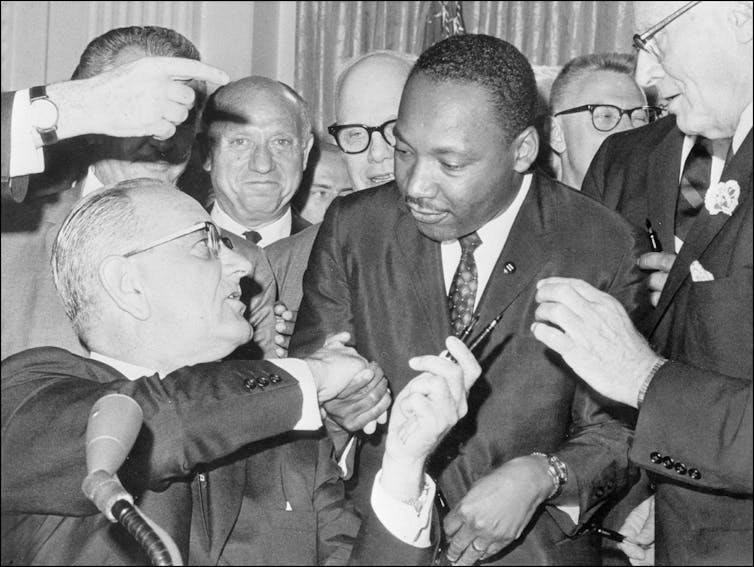
President Lyndon B. Johnson, left, shakes hands with Martin Luther King Jr. after signing the Civil Rights Act on July 3, 1964, at the White House.
AFP via Getty Images
The fight in Mississippi erupted on the national stage when television networks broadcast Hamer’s Aug. 22, 1964, testimony before the Democratic Convention Credentials Committee, which determined who was qualified to serve as a state delegate. In her bid to get the committee to recognize her political party, Hamer talked about the second-class, often violent, treatment afforded Black people.
“All of this is on account of we want to register, to become first-class citizens,” she said.
To prevent further testimony from Hamer that would further incense Southern Democrats, Johnson immediately held an impromptu press conference that would divert network television attention away from Hamer.
Despite Johnson’s tactics, Hamer’s story still spread throughout the nation in part because of a series of rallies held in Northern cities, including the one in Harlem.
“The truth is the only thing going to free us,” Hamer said during the speech in Harlem. “When I was testifying before the Credentials Committee, I was cut off because they hate to see what they been knowing all the time, and that’s the truth.”
Sick and tired
Born on Oct. 6, 1917, in Montgomery County, Mississippi, Hamer was the 20th and last child of sharecroppers Lou Ella and James Townsend. She began picking cotton at the age of 6, and she would be forced to leave school shortly afterward to help her family eke out a living.
“We would work 10 and 11 hours a day for three lousy dollars,” Hamer once said.
In 1961, while undergoing surgery to remove a uterine tumor, Hamer received a hysterectomy by a white doctor without her consent. The forced sterilization was one of the things that prompted Hamer to join the Civil Rights Movement.
In the summer of 1962, Hamer attended her first meeting of the Student Non-Violent Coordinating Committee, a civil rights group of mostly Black college students who organized nonviolent protests against racial segregation and provided voter registration training. On Aug. 31, 1962, Hamer and 17 others decided to put their training to use by trying to register to vote at the Indianola, Mississippi, courthouse.
Of the 18 people, 16 were not allowed to take the test required for voter registration. Only Hamer and one other were allowed to take it – and both failed. These literacy tests consisted of reading and interpreting portions of the state constitution, such as the one on habeas corpus, a constitutional right to protect a person against illegal imprisonment.
Dejected, the group was further harassed when local police stopped their bus and fined them $100 for an overblown charge that the bus was too yellow.
The insults and constant fear of violence were examples of day-to-day life for Black people in Mississippi, a story Hamer argued was tragic, unconstitutional and sadly all too well-known.
“And you can always hear this long sob story,” she said. “For 300 years, we’ve given them time. And I’ve been tired so long, now I am sick and tired of being sick and tired, and we want a change.”
Marlee Bunch does not work for, consult, own shares in or receive funding from any company or organization that would benefit from this article, and has disclosed no relevant affiliations beyond their academic appointment.
by Anna McKay, Leverhulme Trust Early Career Fellow in History, University of Liverpool
An 1862 photo of a prison hulk docked in Ireland Island, Bermuda. Royal Navy
We think of Bermuda as a tiny paradise in the North Atlantic. But long before cruise ships moored up, prison ships carried hundreds of convicts to the island, first docking in 1824 and remaining there for decades.
Islands have long been places to deport, exile and banish criminals. Think of Alcatraz, the infamous penitentiary in San Francisco, or Robben Island in South Africa, which held Nelson Mandela. The French penal colony Devil’s Island was immortalised in the Steve McQueen film Papillon, while Saint Helena in the Atlantic is still remembered for Napoleon’s exile.
You may be familiar with the story of British convict transportation to Australia between 1788 and 1868, but the use of Bermuda as a prison destination is less well known. For 40 years, British prisoners worked backbreaking days labouring in Bermuda’s dockyards and died in their thousands.
I research the lives of prisoners across the British Empire, and have a particular interest in notorious floating prisons known as hulks. I was surprised to discover that in addition to locations across the Thames Estuary, Portsmouth and Plymouth, the British government used these ships as emergency detention centres in colonial outposts across the 19th century, detaining convicts in Bermuda between 1824 and 1863 and Gibraltar between 1842 and 1875.
England has a long history of banishing its criminal population. In the 18th century, criminals were typically sentenced to seven years overseas in America. Many worked as plantation labourers in Maryland and Virginia, but the start of the American Revolution brought this practice to a halt.
Britain believed that the war with America would end quickly and in its favour, but as the war continued, prisons filled with people who had nowhere to go. There was no emphasis on reforming prisoners and releasing them back into society.
Britain found itself with a prison housing crisis, and turned to hulks to cope with rising numbers. Each could hold between 300 and 500 men, and they were nicknamed “floating hells” for their unsanitary and dangerous conditions.
Officials proposed several locations to send convicts, and ultimately settled on Australia. But the government felt that convict labour could be put to use in other colonies, and so began an experiment in 1824 to send men to Bermuda.
Convict workers
Bermuda had been colonised by British settlers since the 17th century, and was governed by various trading companies until 1684 when the Crown took over. Though only 20 miles long, the island was already extremely important to naval strategy. It was used as a refuelling station for British ships travelling to colonial outposts such as Halifax, Nova Scotia and the Caribbean.
But the naval dockyard needed modernisation, and rather than employ local workers, convicts – a cheap and easily mobilised workforce – filled the labour gap.
Bermuda didn’t have a large prison, so men lived on board the ships they had sailed on (seven in total). Local traders, shipbuilders and whalers objected, complaining in newspapers that the government was sending a “swarm of felons” to the island. The government offered a compromise: no convicts would remain on the island at the end of their sentences. Instead, they had to return home, or travel on to Australia.
Work on the island wasn’t without risk. Many were injured in the dockyards, others went blind from the reflected glare of the sun as they quarried white limestone.
Convicts were at the mercy of hurricanes which battered the ships and caused injuries. They were burnt by scorching temperatures and suffered sunstroke, and the island’s humidity caused respiratory problems and spread deadly fevers on board.
Rising tensions over work, religion and alcohol consumption led to fights between prisoners, their overseers and the militias that guarded them. Some attempted escapes by stealing boats and trying to board ships bound for America.
Bermuda also received people convicted in other British colonies, including Canada and the Caribbean. During the years of the great famine in Ireland (1845 to 1852), thousands of Irish convicts arrived on the island, many suffering from malnourishment. This diversity was striking when compared to prisons in England.
The experiment ended after 40 years, in 1863, when dockyard repairs were completed. The remaining hulks were scuttled or broken up for scrap, and convicts were transported to Australia and Tasmania, or home to England with their meagre pay in their pockets.
Prison islands today
Prison islands are naturally isolated and cut off from land – escape is virtually impossible. Then and now, they enable states to lay claim to land, facilitate trade and secure commercial ambitions. Islands have many strategic advantages and are frequently used as military bases. Now, many former prison islands are Unesco world heritage sites, and tourist destinations.
Bermuda’s history as a prison island has been largely forgotten, but this story shares parallels with today. Prisons are suffering from overcrowding, and governments still detain prisoners and others on islands and modified ships.
In Dorset, the Bibby Stockholm ship is housing asylum seekers, while the island of Diego Garcia, used as a UK-US military base is detaining Tamil refugees in the Indian Ocean.
The convicts who lived, worked and died in Bermuda are part of a larger global story of coercion and empire. The product of their labour was imperial strength, but for those sent thousands of miles from home and buried in unmarked graves, the brutalities of their experience should also be remembered.
Anna McKay currently receives funding from the Leverhulme Trust, and has previously received funding from the Irish Research Council and Arts and Humanities Research Council.
It’s hard to be bored in Tampa. This May, Tampa’s huge Riverfest will bring thousands to downtown Tampa to celebrate the Riverwalk, local businesses, art, and our local community. The latest addition to the multi-day festivities is a retro water ski show.
This oh-so-Florida event will take place on May 4 from 5pm-6pm, and is free to watch. The best views will be from the Riverwalk by Water Works Park in Tampa Heights (near Armature Works at 1910 N Ola Ave).
Water Ski performers enchanted onlookers during Tampa’s big 4th of July Boat Parade | Photo via Tampa Riverwalk
The hour-long extravaganza will feature dazzling displays of athleticism paired perfectly with old Florida charm. This festivity has also become a mainstay for Tampa’s big 4th of July Boat Parade.
Riverfest itself takes place on May 3 and 4. It will include two food festivals, a lantern parade, live music, a curated local vendor market, and more community events. See our full Riverfest guide for more information.
Be honest — would you rather be living your best life in Europe year-round or work at a desk until you’re 65 in Tampa? During study breaks, I often find myself scrolling through social media seeing many users romanticize the European lifestyle. With finals season quickly approaching, Bulls need to remember the importance of maintaining […]
The days of walking into a library bathroom to see a basket of complimentary menstrual products are gone. These baskets have been replaced by colorful dispensers made by the brand Femly that will still provide free, organic tampons and pads. These dispensers were installed in seven bathrooms on March 15, according to Lennon Tomaselli, Health […]
by Glen Pyle, Professor, Laboratory of Molecular Cardiology & Women's Heart Health, University of Guelph
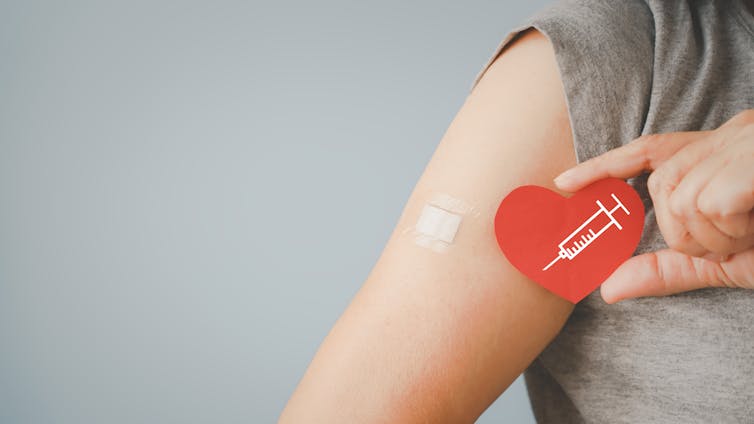
Common cardiovascular complications of COVID-19 — including blood clots, stroke, arrhythmias and heart attacks — were substantially reduced in vaccinated patients. (Shutterstock)
COVID-19 is a respiratory disease. Yet, from the earliest days of the pandemic, the cardiovascular risks associated with SARS-CoV-2 infection were clear: individuals with severe cases of COVID-19 often died from cardiovascular complications, and those with pre-existing cardiovascular disease were more likely to have severe illness or die.
In short, the cardiovascular system has played a central role in COVID-19 since the beginning.
It is not surprising that as debate over COVID-19 and vaccines flared that cardiovascular disease was a central issue. Those opposed to vaccination often make claims of cardiovascular risks that exceed any benefits. But when data on COVID-19, vaccines and cardiovascular health are reviewed, the conclusions are clear: vaccines are safe and effective at reducing the cardiovascular complications that are a hallmark of COVID-19.
Hot off the presses
A new study found that common cardiovascular complications of COVID-19 were substantially reduced in people who were vaccinated, with protective effects lasting up to a year after vaccination.
(Shutterstock)
A new study of 20.5 million people in the United Kingdom, Spain and Estonia used electronic health records to determine how COVID-19 vaccines affect cardiovascular complications following SARS-CoV-2 infection. Roughly the same number of vaccinated and unvaccinated subjects were included, and the vaccinated group consisted of people who received at least one of the AstraZeneca, Pfizer, Moderna or Janssen vaccines.
The study found that common cardiovascular complications of COVID-19 — including blood clots, stroke, arrhythmias and heart attacks — were substantially reduced in the vaccinated group, with protective effects lasting up to a year after vaccination.
Bigger picture
While this most recent study represents one of the most comprehensive investigations into the cardiovascular benefits of COVID-19 vaccination, its findings are consistent with earlier, smaller studies.
A 2022 study of 231,037 people found two doses of COVID-19 vaccines reduced the risk of stroke and heart attack up to four months after a breakthrough infection.
A subsequent study of 1.9 million people found that while two doses of the mRNA vaccines or one dose of the Johnson & Johnson vaccine protected against major cardiovascular events following COVID-19, even a single dose of the mRNA vaccines offered some benefit in reducing the risk of cardiovascular complications.
Health-care decisions require a weighing of the risk and benefits of treatments, and for COVID-19 vaccines the low cardiovascular risks favour vaccination. A study of over four million vaccinated Australians found no increase in sudden cardiac death. Even patients with pre-existing heart failure do not have an increased risk of worsening heart failure, myocarditis, or blood clots following vaccination.
Weighing the risks
Although the safety of COVID-19 vaccines is well-established, it does not mean there are no risks. A review of 99 million individuals in the Global Vaccine Data Network confirmed earlier studies that found an increased risk of myocarditis and pericarditis, which is seen primarily in young males — historically the group most at risk for myocarditis before COVID-19 emerged.
While individuals at higher risk for these complications should consult with their health-care providers in making decisions about vaccination, it should be noted that the risk for myocarditis and pericarditis is generally higher with COVID-19, even in this cohort.
Studies have also found that extending the time between first and second doses of the COVID-19 mRNA vaccines beyond the initially recommended three-week interval decreases the risk of myocarditis. Furthermore, post-vaccine myocarditis tends to be transient with very good recovery and is less severe than that associated with COVID-19.
Studies have found that extending the time between first and second doses of the COVID-19 mRNA vaccines beyond the initially recommended three-week interval decreases the risk of myocarditis.
(CDC)
The risk of myocarditis in young people has led some to claim that the benefits of COVID-19 vaccines are negated when stacked up against the chance of heart inflammation. A statement from the American Heart Association confirms that the risks of cardiovascular complications in young people with more mild cases of COVID-19 (symptoms lasting less than four days) are low, but notes that there are concerning signs for those who experience more severe illness with infection.
Furthermore, other cardiovascular risks associated with infection must be considered in weighing risks and benefits. These include multisystem inflammatory syndrome or “MIS-C” and cardiac arrhythmias — a far more common risk of COVID-19 than myocarditis.
There are individuals whose health conditions preclude COVID-19 vaccination, and others for whom health risks may outweigh the benefits. But, for the vast majority of people — including young and otherwise healthy people — COVID-19 vaccination is not only safe, but the cardiovascular protection it offers could be life-saving.
Glen Pyle receives funding from the Heart and Stroke Foundation of Canada, Canadian Institutes of Health Research, and the Natural Sciences and Engineering Research Council of Canada. He is a on the advisory board of "Royal City Science" and "Science Up First".
by Jaime Kucinskas, Associate Professor of Sociology, Hamilton College
A worker at the National Hurricane Center tracks weather over the Gulf of Mexico. Joe Raedle/Getty Images
It’s common for political candidates to disparage “the government” even as they run for an office in which they would be part of, yes, running the government.
Often, what they’re referring to is what we, as scholars of the inner workings of democracy, call “the administrative state.” At times, these critics use a label of collective distrust and disapproval for government workers that sounds more sinister: “the deep state.”
Most people, however, don’t know what government workers do, why they do it or how the government selects them in the first place.
Our years of research about the people who work in the federal government finds that they care deeply about their work, aiding the public and pursuing the stability and integrity of government.
Most of them are devoted civil servants. Across hundreds of interviews and surveys of people who have made their careers in government, what stands out most to us is their commitment to civic duty without regard to partisan politics.
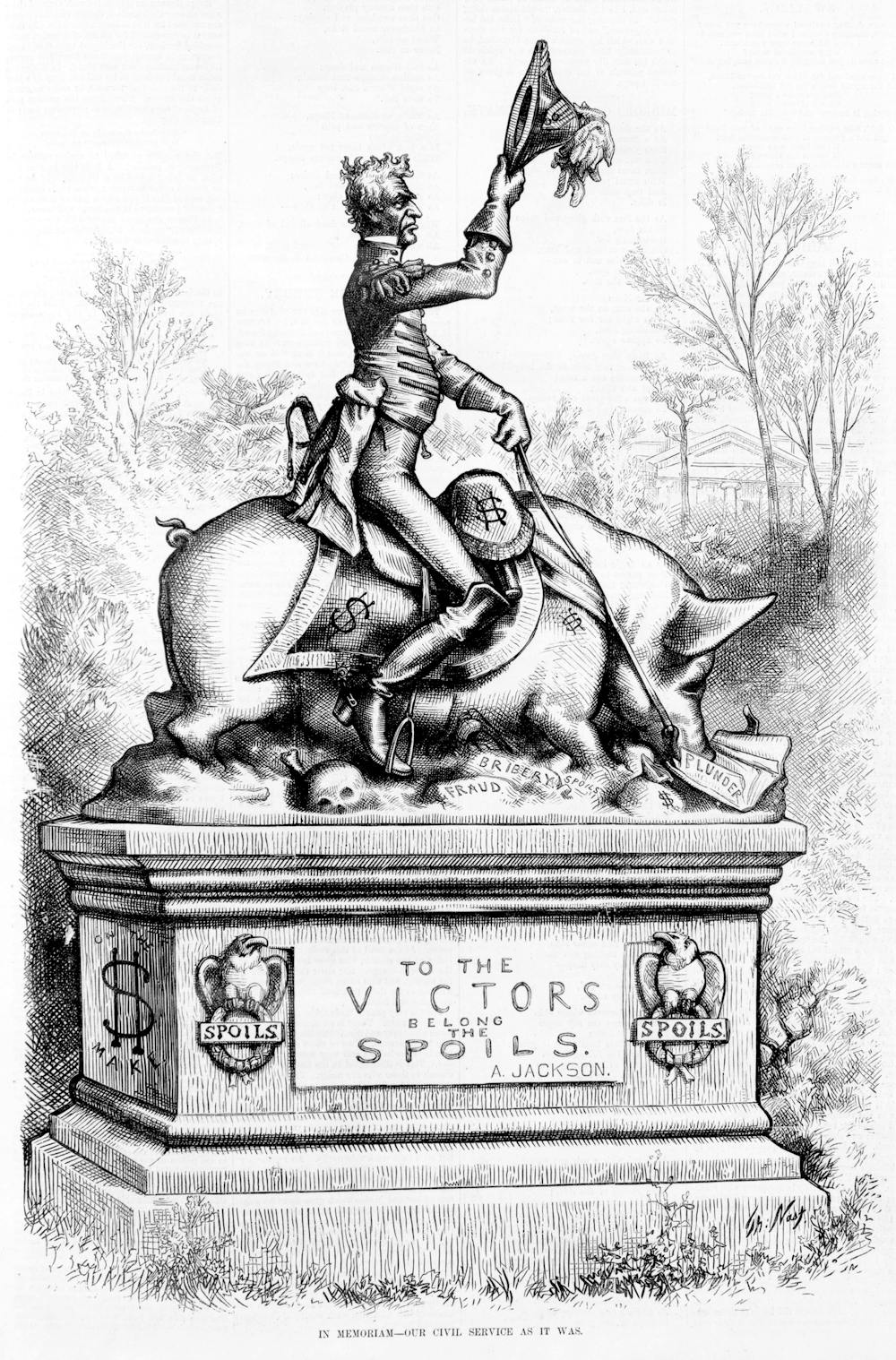
From the country’s founding through 1883, the U.S. federal government relied on what was called a “spoils system” to hire staff. The system got its name from the expression “to the victor goes the spoils.” A newly elected president would distribute government jobs to people who helped him win election.
This system had two primary defects: First, vast numbers of federal jobholders could be displaced every four or eight years; second, many of the new arrivals had no qualifications or experience for the jobs to which they were appointed.
Problems resulting from these defects were smaller than modern Americans might expect, because at that time the federal government was much smaller than it is today and had less to do with Americans’ everyday lives. This method had its defenders, including President Andrew Jackson, who believed that government tasks were relatively simple and anyone could do them.
But even so, the spoils system meant government was not as effective as it could have been – and as the people justifiably expected it to be.
The law brought sweeping change. It introduced for the first time principles of merit in government hiring: Appointment and advancement were tied to workers’ competence, not their political loyalties or connections. To protect civil servants from political interference, they were given job security: Grounds for firing now revolve around poor performance or misconduct, rather than being a supporter of whichever political party lost the last election.
Since 1776, the U.S. population has increased from about 2.5 million people to over 330 million today. With its growing size and with technological advances, the federal government now provides a great many services, including protecting its citizens from complex environmental, health and international threats.
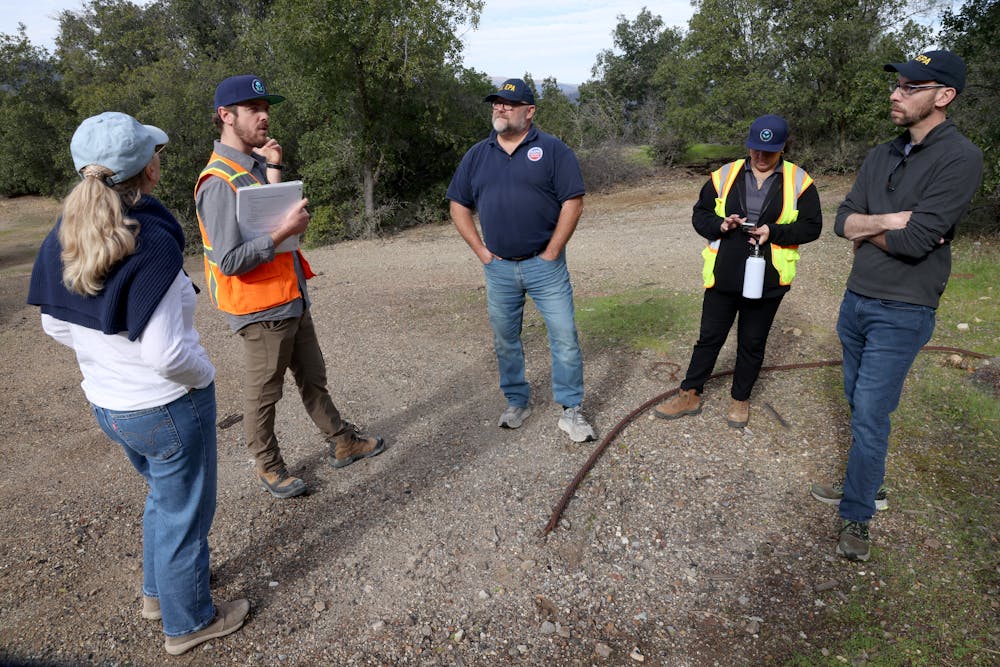
Environmental Protection Agency employees help maintain clean air and water and clean up toxic waste dumps to protect human health. Department of Energy scientists and managers oversee the treatment and disposal of radioactive nuclear waste from our weapons program and power plants. National Park Service staff manage over 85 million acres of public land across all 50 states. The National Oceanic and Atmospheric Administration’s forecasters’ advance detection of potential weather emergencies enable early warnings and evacuations from high-risk areas, which has saved countless lives.
Federal Emergency Management Agency employees aid survivors of natural disasters. That agency also subsidizes flood insurance, making home insurance available in flood-prone areas. The U.S. government additionally provides billions of dollars in subsidies per year to support farmers and maintain food security.
These programs are all administered by government employees: environmental scientists, lawyers, analysts, diplomats, security officers, postal workers, engineers, foresters, doctors and many other specialized career civil servants. Andrew Jackson’s idea of government work no longer applies: You do not want just anyone managing hazardous waste, sending a space shuttle into orbit or managing public lands constituting one-third of the country’s territory.
U.S. Department of Agriculture food safety inspectors examine meat at a processing plant.
AP Photo/Nati Harnik
A dedicated workforce
Research, including our own, shows that these workers are not self-serving elites but rather dedicated and committed public servants.
That’s generally true even of Internal Revenue Service staffers, postal service clerks and other bureaucratic functionaries who may not earn much public respect. Federal employees mirror demographics in the United States and are hired, trained and legally obligated to uphold the Constitution and serve the public interest.
One of us, Jaime Kucinskas, with sociologist and law professor Yvonne Zylan, tracked the experiences of dozens of federal employees across the EPA, Department of Health and Human Services, State Department, Department of Interior, Department of Defense, Department of Homeland Security and various other agencies during the Trump administration. That research found these workers were dedicated to serving the public and the Constitution, upholding the missions of their agencies and democracy, and working to support leadership and the elected president.
Even though 80% of the centrist and Democratic Party-leaning government workers they spoke with did not believe in the ideas behind the Trump presidency, they were careful to follow legal official orders from the administration.
They noted the importance of speaking up while leaders deliberated what to do. After political appointees and supervisors made their decisions, however, even the civil servants who most valued speaking truth to power acknowledged, “Then it’s time to execute,” as one State Department employee told Kucinskas. “As career professionals we have an obligation to carry out lawful instructions, even if we don’t fully agree with it.”
Another international affairs expert told Kucinskas, “People have voted and this is where we’re at. And we’re not going to change things. We don’t do that here.” He said if political appointees “want to do what you consider bad decisions … we do our best to give more information. … And if they still decide to do (it), then we say okay, that’s what we’re going to do.”
He was firm in this loyal and deferential position to the elected president and his administration in 2018 and again in a 2020 follow-up interview. “If you want to be an advocate, you can leave and work in a different sector,” he concluded.
Some decided to do just that: More than a quarter of the upper-level government workers Kucinskas spoke with left their positions during the Trump administration. Although exits typically rise during presidential transitions, they typically remain under 10%, making this degree of high-level exits unusually high.
Even as many Americans express frustration with the president, Congress and the federal government as a whole, however, we believe it is important not to take for granted what federal government workers are doing well. U.S. citizens benefit from effective federal services, thanks in part because the government hires and rewards civil servants because of their merit rather than loyalty.
The authors do not work for, consult, own shares in or receive funding from any company or organization that would benefit from this article, and have disclosed no relevant affiliations beyond their academic appointment.
Policy changes brought on by the Tax Cuts and Jobs Act, which former President Donald Trump signed into law at the end of 2017, appear to have led many small-dollar donors to give less money to colleges and universities – or to stop giving altogether.
Individual donations, whether from graduates or people who didn’t attend those colleges and universities, declined by 4% from US$44.3 billion in the 2017-2018 academic year to $42.6 billion two years later. That’s what my colleague, Sungsil Lee, and I found when we examined a decade of data regarding charitable contributions to 660 colleges and universities and adjusted the totals for inflation.
We also found that the Trump-era tax reforms led to a 7% decline in the number of individual donors, after controlling for other factors such as enrollment size and tuition.
To estimate the impact of the tax changes, we analyzed data that the Council for Advancement and Support of Education, a nonprofit, collected in its annual Voluntary Support of Education Survey.
We analyzed data from 660 public and private colleges and universities from the 2010-2011 to the 2019-2020 academic years – 12-month periods that run from July 1 of a given year through June 30 of the next.
Because we reviewed complete records for the number of donors and the total amount of donations over the decade, we could observe what changes the tax policy reform may have spurred.
Gifts from individuals, rather than organizations or companies, accounted for more than 40% of all the money donated in the 2020 academic year – with much of that money coming from very wealthy people. Most of the $21 billion from individuals donations came in very large sums.
The Trump tax reforms, by sharply increasing the standard deduction, led millions of taxpayers to stop itemizing their tax returns. That means far fewer Americans are deducting charitable donations from their taxable income today.
While more than 43% of all taxpayers with an adjusted gross income between $50,000 and $100,000 filed itemized tax returns for their 2017 earnings, less than 14% itemized in 2018, according to the IRS.
Those who no longer itemize have lost a tax break, and for them, every dollar they give to higher ed or any charity has become more expensive.
We are now researching how colleges and universities are responding to the tax changes and whether their fundraising initiatives and promotional efforts are persuading more individual donors to give – even if they no longer can take advantage of the charitable tax deduction.
The Research Brief is a short take about interesting academic work.
Jin Lee does not work for, consult, own shares in or receive funding from any company or organization that would benefit from this article, and has disclosed no relevant affiliations beyond their academic appointment.
by Kevin Richard Butt, Reader in Ecology, University of Central Lancashire
Darkfoxelixir / shutterstock
The worm moon has risen. The final full moon of winter in the northern hemisphere appeared on March 25 and owes its name to Native Americans who noted winter’s end by the trails of earthworms it illuminated on the newly thawed soil.
Common names of full moons generally come from seasonal animals, colours or crops: wolf moon, pink moon, harvest moon. But the worm moon may be losing its significance, as climate change leads to wetter summers and milder winters in much of the world. I’ve been an earthworm scientist for more than three decades, and, of late, I’m seeing signs of worms at the surface in months when they used to be inactive.
To track how the worm moon might be changing we can look at a particular earthworm species (Lumbricus terrestris, aka the dew worm, nightcrawler or lob worm) which is unusually easy to track. Also sometimes called the common earthworm, if you see a big worm in the garden, it’s likely to be this species.
Do the seasons feel increasingly weird to you? You’re not alone. Climate change is distorting nature’s calendar, causing plants to flower early and animals to emerge at the wrong time.
This article is part of a series, Wild Seasons, on how the seasons are changing – and what they may eventually look like.
Most worms spend most of their lives underground, but the dew worm almost completely leaves its deep burrow, with tail tip left in, as it ventures on to the soil surface every night to feed on dead leaves. These worms also mate on the soil surface. They may be hermaphrodite (both male and female) but still need to exchange sperm with a partner – each fertilising the other.
Such activities usually take place under the cover of darkness to avoid birds and other potential daytime predators. However, the worms are restricted by soil conditions at the top of the burrow. They cannot surface if the soil is baked dry (in summer) or frozen (in winter).
Lumbricus terrestris is a large earthworm found across the world.
D. Kucharski K. Kucharska / shutterstock
In theory, the passing of winter would kickstart the surface activity (and therefore the worm moon). Yet if the winter isn’t that cold, we perhaps need to reconsider which moon should be termed the “worm moon”. Maybe a date earlier in the year would be better, or perhaps the term may cease to have any real meaning.
We can get a sense of how these earthworms can adapt to changing circumstances by looking at the northernmost populations, such as those in Finland, which are exposed to 24 hours of daylight in summer. These “white nights”, when the sky never gets dark, put additional stress on these worms as they cannot use darkness to hide from predators but must still feed and mate at the surface while conditions allow.
Finland v Lancashire v Ohio
A decade ago, colleagues and I set out to see if Finnish worms behaved any differently during the white night period to worms of the same species taken to Finland from lower latitudes. We compared native dew worms from an area in south-west Finland at 60°N, with those from Lancashire in the UK (53°N) and Ohio in the US (40°N, more than 2,000km south of Finland), both of which have dark nights throughout the year.
We put these worms outdoors under ambient (white night) light in soil-filled drainpipes (1m deep) in a large, controlled temperature water bath (an old chest freezer with no lid). We looked at their feeding and mating, and, in parallel, repeated the experiment under darkened conditions at “night”.
In darkness, worms from all three origins were similarly very active in feeding and mating.
Under ambient conditions, the Finnish worms were generally the most active. They emerged earlier in the evening and ceased their activity later in the morning than those from the two more southerly populations. It seems the species had adapted to its conditions, with a normal reluctance to surface during daylight overtaken by a need to feed and mate.
Perhaps with warming soils, earthworms are becoming more active during traditionally colder or drier months. This will increase their effect on the soil – earthworms are ecosystem engineers and generally lead to increased soil fertility – which is generally positive, even if churning up the soil can lead to further decomposition and greenhouse gas emissions.
A worm moon and white nights would never normally appear in the same sentence. However, changes in the activities of worms as the global climate becomes less predictable means we may need to rethink at least one of our terms of reference that has marked time for hundreds or thousands of years. Enjoy the traditional worm moon while it lasts.
Kevin Richard Butt does not work for, consult, own shares in or receive funding from any company or organisation that would benefit from this article, and has disclosed no relevant affiliations beyond their academic appointment.
by Shane O'Rourke, Senior Lecturer in Modern History, University of York
Basking in his wholly expected re-election victory, Russian president, Vladimir Putin, addressed a large crowd in Moscow’s Red Square on March 18 to mark the 10th anniversary of his country’s annexation of Crimea.
The familiar themes of rectifying a historical injustice, the unbreakable unity of the Russian people and the importance of Crimea to Russian identity were trotted out once again. The crowd duly applauded.
Yet compared to ten years ago, when the whole country appeared to be in the grip of collective ecstasy, the celebrations seemed muted. Much has changed in the intervening ten years, not least that Putin’s miscalculations have put the status of Crimea in doubt again.
On the peninsular itself, life has changed profoundly. The “land of milk and honey” promised to the population of Crimea at the time of annexation has not materialised. International sanctions, high prices and increasing uncertainty have left the mainstay of the economy, tourism, in the doldrums. And the democratic freedoms that existed under Ukraine have disappeared, not only for the Ukrainian and Tatar populations, but for the Russians too.
The security of Crimea is also under threat as at no time since 2014. Ukrainian rockets and drones have destroyed about 20% of the Russian Navy’s Black Sea Fleet, including the flagship Moskva. And the Kerch bridge – the symbol of Putin’s triumph – has been subject to repeated attacks.
The Russian navy has been driven ignominiously from its bases in Crimea to the safer haven of Novorossisk in Russia itself. Ships carrying Ukrainian grain can now exit the Black Sea due to defeats inflicted on the Russian fleet.
In one area, however, the Russians have enjoyed success. The Russification of the peninsula is continuing apace.
‘Russian World’
Russification of Crimea is not an ad hoc policy imposed after the occupation. It is rooted in the ideology of Russkii MIr (“Russian World”). This concept, which is espoused by Putin, is itself part of a long historical tradition going back to the annexation of the Crimea by Catherine the Great in 1783.
The Russian World ideology insists that Russia is a supra-national civilisation that extends far beyond the present borders of the Russian Federation to include Ukraine, Belarus, Kazakhstan and other parts of the former Soviet Union. At the same time, the ideology is intolerant of any other expression of identity within its sphere and justifies the elimination of that identity, as is taking place in Crimea.
The Imperial Russian state (1721–1917), the Soviet State (1917–1991) and now the Russian Federation under Putin have at different times all sought to Russify the population of the Crimean peninsular. The Imperial government encouraged the migration of Tatars from the peninsular and Stalin completed the process in 1944 by deporting the entire Tatar population – some 200,000 people.
A partial return took place under Krushchev (premier of of the Soviet Union between 1958 and 1964), which greatly accelerated when the Crimea became part of a democratic Ukraine. Putin has now reversed that policy, seeking the destruction of both the Tatar and Ukrainian identities.
Eradicating non-Russian identity
Putin swore to safeguard the different national traditions that existed in Crimea when he launched the annexation. These promises were broken immediately and have continued to be broken ever since.
Ukrainian and Tatar languages have been suppressed, political activists arrested and any expression of cultural identity other than Russian is forbidden. The national body of the Crimean Tatars, the Mejlis, has been suppressed and all other representative institutions are a sham, as those in Russia itself.
Religious persecution against the Ukrainians and the Tatars, which is actively assisted by the Russian Orthodox Church, is also an essential part of the Russification policies.
What is striking about the Russification of Crimea is its comprehensive nature and the ruthlessness with which it is being carried out. A major instrument of Russification has been the imposition of Russian citizenship on the population of the peninsular. This has been achieved through a combination of incentives and crude threats.
Access to vital services such as health, education, banking, pensions and jobs are dependent on acceptance of Russian citizenship. No passport means that these services are not available. The refusal of Russian citizenship has lead to confiscations of property, expulsion from the peninsular and even threats to take away the children of those retaining Ukrainian citizenship.
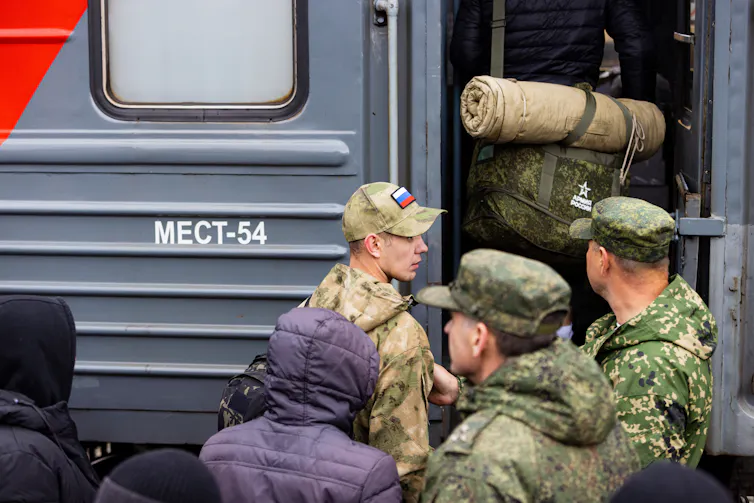
Acceptance of citizenship makes men eligible for military service. And Putin’s government has ruthlessly mobilised men from the Crimea and the Donbas. A new citizenship law in April 2023 extended these practices to the territories occupied since 2022.
These changes have been accompanied by demographic changes that have taken place since the annexation. According to Russian figures, at least 200,000 Russians have migrated to Crimea since 2014. Ukrainian figures suggest that 50,000 Ukrainians and Tatars have left over the same period.
This is a form of ethnic cleansing designed to make the Crimea irrevocably Russian and protect it against any fair referendum that might return the peninsular to Ukraine.
The ten years since the annexation of Crimea has been a dismal exercise in the suppression of a multi-ethnic and multi-cultural society by a ruthless regime that tolerates no identities apart from the one that it prescribes. Russification in Crimea has also provided a model that has been imposed on Ukrainian territory taken since 2022 and is a grim warning to any future lands that fall under Russian occupation.
Shane O'Rourke does not work for, consult, own shares in or receive funding from any company or organisation that would benefit from this article, and has disclosed no relevant affiliations beyond their academic appointment.
How’s that sandwich? If you’re munching on a supermarket meal deal while reading this, well, I probably am too.
Brits in particular are known for their obsession with sandwiches, which they eat alone while continuing to work. This habit amuses but also disgusts our European counterparts. As one French scholar put it: “A sandwich or salad gulped down in front of a computer screen does not pass as a proper meal.”
Only a handful of publications focus on the workday lunch, but studies have almost exclusively used large-scale surveys. While these are valuable in revealing patterns of behaviour and trends in how we eat, they do not help us understand why people eat the way that they do at lunch. For this, rich, in-depth interview data is required.
In my recently published research, I interviewed 21 people about what they ate for the workday lunch (and where and with whom). I found much greater variety in workday lunches than the solitary “al desko” sandwich. But there were shared understandings among my participants about how to lunch at work.
Most participants were willing to admit that the workday lunch was not exactly a premium gastronomic experience. One man described lunch as “my functional eating thing”.
Nevertheless, people greatly anticipated their lunch, seeing it as a reward or treat for a morning’s work, and noting that it was a time to eat what they wanted. One respondent, a teacher, confessed that she chose “carbs with carbs” and a cookie with custard from the canteen.
Unlike the family dinner where everyone tends to eat the same meal and the cook must cater to others’ tastes, the workday lunch was seen as a chance for personal indulgence, despite others’ distaste. Foods considered unacceptable in other circumstances (canned soup or microwave meals, for example) are acceptably convenient for the workday lunch because they are efficient. Couples I interviewed ridiculed each other for their “sad” or “terrible” lunch choices.
Efficient eating
My participants considered walking and waiting for food a waste of time. People reported using work breaks for a leg stretch and to buy lunch but, to minimise time away from work, ate back at their desks. Proximity and speed of service are deciding factors in where to eat out for lunch: you want to “go, eat and leave”.
And while it was not common among participants, the temporally efficient lunch par excellence is bringing food from home – you skip the queue altogether (not literally, Brits don’t like that).
As far as dining companions are concerned, there were mixed feelings among my participants. Eating with colleagues can be a good laugh peppered with lighthearted British banter and discussion of weekend plans. Sometimes though, being a good conversation partner and navigating the blurred line between friendly and professional with colleagues was seen as just more work.
Lunch can be a brief respite of alone time in a busy work day.
Vovatol/Shutterstock
To avoid the emotional effort of eating with others, people would signal to their colleagues they wanted to be left alone by sitting by themselves and scrolling on their phones, hiding behind a computer screen or even retreating to a parked car to eat without disturbance. One woman summarised: “Eating with other people interferes with that kind of pleasure of just looking after yourself”.
Lunch and our working lives
My findings suggest that British lunch habits are not simply a matter of low standards for meals. They are about balancing the pressures of work and the need for efficiency with taking care of oneself and navigating social interactions. Like quiet quitting and the great resignation, putting minimal effort into lunch can be seen as yet another response to a working culture that is getting more demanding.
I conducted these interviews before the COVID pandemic. The rise in hybrid and remote working has, for many people, moved the workday lunch from the office to home. The commercial sandwich trade has been hit hard. But even before the pandemic, participants who worked from home ate at their desks, despite (you might expect) having a more pleasant space to eat. Perhaps the impact of the pandemic on our lunches is not so dramatic after all.
What we eat for lunch every day (and how we eat it) has an impact on our health. Some organisations and countries have recognised the importance of this. France, for example, has a labour regulation that bans workers from eating lunch in the workplace. Long lunches among French workers are linked to better food choices and health.
Improving lunchtime habits, therefore, is not necessarily down to whether you choose a salad or a slice of pizza. Your employer, through lower workload, or even the government, through labour laws, may have an influence on what’s for lunch.
This research was co-funded by the British Academy Postdoctoral Fellowship Scheme and the Sustainable Consumption Research Institute at The University of Manchester.
If a digital file of templates for a living trust, last will and testament, and other common features of an estate planning kit would be of interest to you, then you can download one for free. See below. ESTATE PLANNING KIT CLICK TO DOWNLOAD ZIP FILE Last Updated 2024 March 8 THE DISCLAIMERS: This is …
Remember Richard Liebowitz? The lawyer who was not very good at his job but really dove deep into the world of copyright trolling? He was suspended from practicing law a few years ago, but now he’s finally been officially disbarred. There are many, many Liebowitz stories out there. It’s hard to beat the time he lied about his dead grandfather as an excuse for his bad lawyering. This resulted in him literally having a friend of his parents send the most pathetic “please excuse young Richard, he doesn’t really law well” letter to the court.
The order officially disbarring him has a pretty long list of his fuckups, covering the details of 14 different cases where misconduct occurred, including the “dead grandfather” case. As the order notes, ever since becoming a lawyer and setting up his own firm, Liebowitz’s copyright trolling regime focused on “high-volume litigation practice, mainly representing photographers for copyright infringement of their photographs on a contingency basis.” It becomes clear pretty quickly that filing 2,500 cases in a fairly short period of time meant things… got out of hand for Liebowitz, and rather than recognizing that he just doubled down.
Here are a few of the greatest hits from Liebowitz’s short career:
Rice v NBCUniversal Media, LLC, 19-cv-447(JMF)
The respondent represented the plaintiff in this matter. On January 17, 2019, the Honorable Jesse M. Furman, USDJ, ordered the parties to appear for an initial conference on May 2, 2019, and that the parties conduct a mediation session prior to the initial conference. On April 1, 2019, the mediation referral was closed due to one or both parties’ failure or refusal to participate in the mediation.
On April 25, 2019, the parties filed a joint letter to the District Court, indicating that the defendant had been willing to participate in mediation and had provided available dates, but that the respondent had not indicated his availability. The respondent also failed to respond to the mediation office’s scheduling emails, and thus, no mediation session was held. No relief from the mediation order had been sought or granted prior to the date of the initial conference. At 3:19 p.m. on May 1, 2019, the day before the initial conference was scheduled to take place, the respondent filed a letter motion requesting that the time of the conference be changed from 3:45 p.m. to 10:45 a.m. Judge Furman granted the respondent’s request, but warned that the respondent “should be prepared to explain the timing and reason for the request.” At 11:09 p.m. on May 1, 2019, the respondent filed a stipulation of voluntary dismissal signed by both parties. A few minutes later, at about 11:15 p.m., the respondent filed a letter motion requesting that the initial conference be cancelled.
On May 2, 2019, at 9:29 a.m., Judge Furman denied the request to cancel the conference and ordered that “[c]ounsel (including Mr. Liebowitz himself) shall appear as scheduled, in part so Plaintiff’s counsel can answer for his apparent failure to comply with this Court’s orders and rules, including its orders regarding early mediation.” The respondent did not appear for the initial conference on May 2, 2019. The District Court’s staff inquired about the respondent’s whereabouts, but received conflicting information about whether the respondent was out of town or on his way to the conference.
Judge Furman ordered the respondent to show cause in writing why sanctions should not be imposed pursuant to rules 11 and 16 of the Federal Rules of Civil Procedure and the District Court’s inherent authority. In his responsive papers, the respondent argued that sanctions should not be imposed because his client was unavailable to attend mediation. The respondent also argued that his failure to attend the initial conference was excusable because he believed “the Court lacked jurisdiction to conduct a Rule conference” after the parties signed the stipulation of dismissal. On July 10, 2019, Judge Furman imposed a monetary sanction on the respondent in the sum of $8,745.50 in attorneys’ fees for the respondent’s failure to comply with multiple court orders and to “secure compliance with the Court’s orders and counsel’s professional duties in the future.” On August 8, 2019, Judge Furman denied the respondent’s request for reconsideration.
Rock v Enfants Riches Deprimes, LLC, 17-cv-2618 (ALC)
The respondent represented the plaintiff in this matter. In the complaint, the respondent alleged that the plaintiff was “the author of the Photograph” of musician Lou Reed (hereinafter the Photograph) and he had been the “sole owner of all right, title and interest in and to the Photograph, including the copyright thereto.” The respondent also alleged that the Photograph was registered with the United States Copyright Office (hereinafter Copyright Office) and was given registration number VA 1-766-990. The allegations, however, were false and misleading, and the respondent knew the allegations were false and misleading when he made them. The respondent litigated the case based on a copyright registration certificate he knew, or should have known, did not cover the Photograph because the plaintiff did not hold a valid registration.
The plaintiff admitted in a deposition and in other documents that the Photograph had been previously published on numerous occasions. To prevent the defendants from learning that the plaintiff did not hold a valid registration, the respondent stonewalled the defendants’ requests for documents and information. The respondent also failed to comply with an order by Magistrate Judge Debra Freeman to obtain and produce Copyright Office documents to demonstrate a valid registration. After it came to light that the Photograph was not registered, and despite the record stating otherwise, the respondent argued, without evidence, that the lack of registration was merely a mistake.
On January 29, 2020, the Honorable Andrew L. Carter, Jr., USDJ, granted the defendant’s motion for attorneys’ fees in the sum of $100,008.13 against the plaintiff, and for sanctions against the respondent and respondent’s firm in the sum of $10,000. On May 29, 2020, Judge Carter denied the respondent’s motion for reconsideration.
Craig v UMG Recordings, Inc., 16-cv-5439 (JPO)
The respondent represented the plaintiff in this matter. On December 1, 2017, the respondent filed a motion to disqualify the defendants’ proposed expert witness, Jeffrey Sedlik, based on a claim that the plaintiff had previously disclosed confidential information to Sedlik. In his moving papers, the respondent argued that the plaintiff had “explain[ed] the whole theory of the case to Mr. Sedlik,” and that the plaintiff had also discussed “litigation” and “settlement strategy” with Sedlik. These statements were false and misleading, and the respondent knew that they were false and misleading when he made them. The plaintiff never disclosed any confidential information to Sedlik, but only relayed the basic facts of the case, the plaintiff’s career path, and his licensing history, none of which could be properly categorized as confidential. The Honorable J. Paul Oetken, USDJ, therefore, concluded that “[i]n addition to the utter lack of merit to [the respondent’s] motion to disqualify . . . the motion was made vexatiously and in bad faith.” Judge Oetken granted the defendant’s motion for sanctions against the respondent and LLF, and denied the motion to disqualify, stating:
“[w]ith the full knowledge that [the plaintiff] had not disclosed any confidential information, Liebowitz went ahead and filed this meritless motion. Liebowitz’s bad faith is most evident in the omission of the details of the alleged conversation in the moving papers. Those details were fatal to [the plaintiff’s] motion, and obviously so under a basic understanding of the applicable law.”
Judge Oetken denied the respondent’s motion for reconsideration and awarded the defendant the sum of $98,532.62 in attorneys’ fees and costs.
Those are just three of the fourteen cases discussed. Now, you could argue that 14 cases out of 2,500 maybe isn’t that terrible a track record, but a lawyer isn’t supposed to fuck up in these ways in any cases.
I wish that the era of copyright trolling had ended with the suspensions of Liebowitz (and the guilty pleas of the Prenda crew a few years prior). But problematic copyright trolling is still happening all the time, though not quite as sloppily.
by Rodney Coates, Professor of Critical Race and Ethnic Studies, Miami University
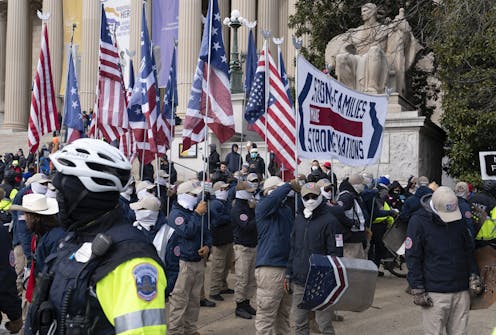
Members of a white supremacist group demonstrate near the National Archives in Washington on Jan. 21, 2022. AP Photo/Jose Luis Magana
The “great replacement theory,” whose origins date back to the late 19th century, argues that Jews and some Western elites are conspiring to replace white Americans and Europeans with people of non-European descent, particularly Asians and Africans.
The conspiracy evolved from a series of false ideas that, over time, stoked the fears of white people: In 1892, British-Australian author and politician Charles Pearson warned that white people would “wake to find ourselves elbowed and hustled, and perhaps even thrust aside by people whom we looked down.” The massive influx of immigrants into Europe at the time fostered some of these fears and resulted in “white extinction anxiety.” In the U.S., it resulted in policies targeting immigration in the late 19th and early 20th century.
In France, journalist Édouard Drumont, leader of an antisemitic movement, wrote articles in the late 19th century imagining how Jews would destroy French culture. In 1909, Filippo Tommaso Marinetti, an Italian poet and supporter of Benito Mussolini, argued that war and fascism were the only cure for the world. Fascism, then and now, worked to ensure white dominance.
This was followed by the eugenics movement, an erroneous and racist theory that supported forced sterilization of Black people, the mentally ill and other marginalized groups, who were all deemed “unfit.”
The 1978 book entitled “The Turner Diaries,” a fictional futuristic account of the overthrow of the United States government, further contributed to white nationalist ideas.
Camus argued that ethnic French and white Europeans were being replaced physically, culturally and politically by nonwhite people. He believed that liberal immigration policies and the dramatic decline in white birth rates were threatening European civilization and traditions.
Why this conspiracy theory matters
These false ideas promulgated the spread of white supremacy, which has contributed to terrorist attacks, state violence and propaganda campaigns in the U.S and parts of Europe.
In less than two decades, the theory has become a major idea, with as many as 60% of the French population believing some aspects of it. According to that survey, they are worried or at least concerned that they might be replaced. In the U.K. and the U.S., close to one-third of those polled believe that white people are systematically being replaced by nonwhite immigrants. Some in the U.S. fear that America might lose its culture and identity as a result.
Being aware of conspiracy theories and standing up to hatred, I argue, can help societies deal with the continuing fallout of extreme xenophobia, racist rants, the rise of white supremacy and the victimization of innocent people.
Rodney Coates does not work for, consult, own shares in or receive funding from any company or organization that would benefit from this article, and has disclosed no relevant affiliations beyond their academic appointment.
by Michelle Cohen, Adjunct Assistant Professor, Department of Family Medicine, Queen's University, Ontario
Health information is increasingly being shared online, and often the borders between legitimate health expertise and pseudoscience aren't clear. (Shutterstock)
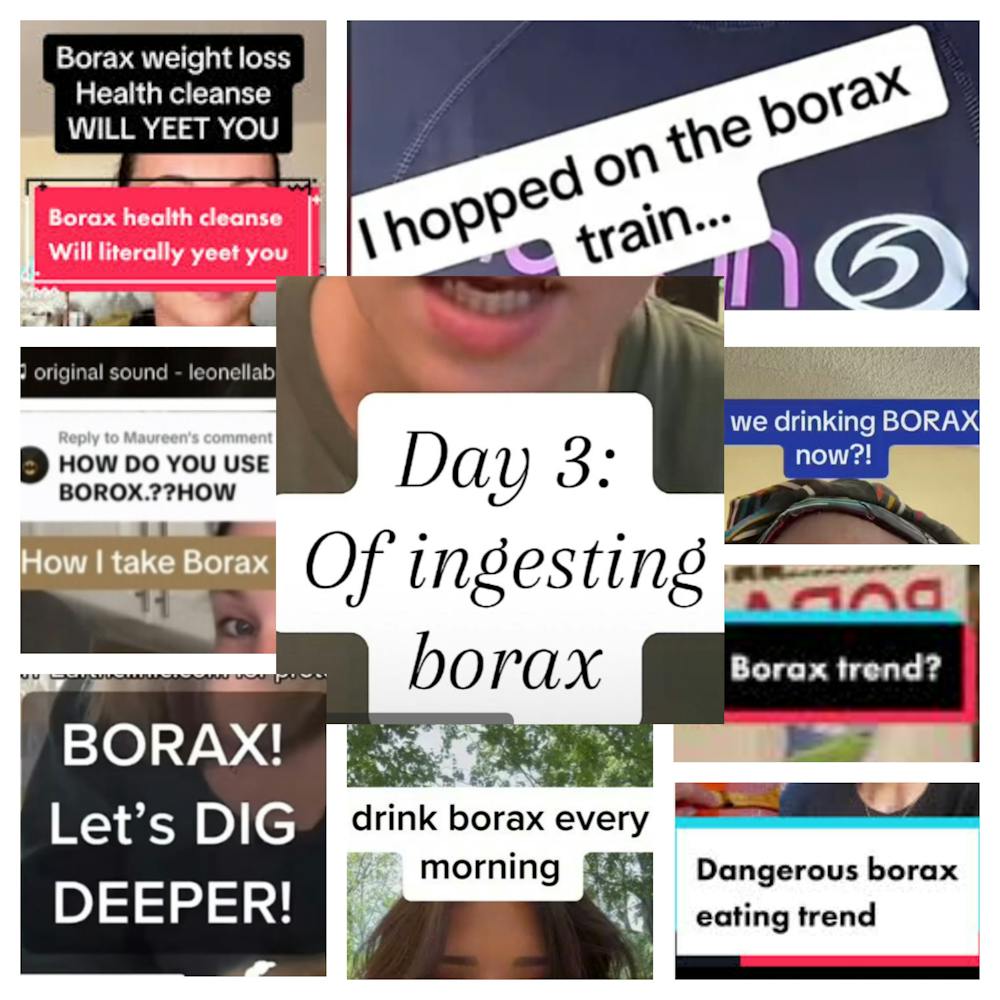
“I drink borax!” proclaims the smiling TikToker. Holding up a box of the laundry additive, she rhymes off a list of its supposed health benefits: “Balances testosterone and estrogen. It’s a powerhouse anti-inflammatory…. It’s amazing for arthritis, osteoporosis…. And obviously it’s great for your gut health.”
Videos like these prompted health authorities to warn the public about the dangers of ingesting this toxic detergent — and away from such viral messaging that promotes unsubstantiated and medically dangerous health claims.
Health information is increasingly being shared online, and often the borders between legitimate health expertise and pseudoscience aren’t clear. While the internet can be a valuable and accessible way to learn about health, it’s also a place rife with disinformation and grift, as unscrupulous influencers exploit people’s fears about their bodies.
Evidence and influencers
Some TikTokers claimed drinking borax had health benefits. In fact, borax is toxic and shouldn’t be ingested.
(Michelle Cohen)
In my medical practice, I can usually track online wellness trends, such as a patient refusing a medication because of online claims — many of which are false — that it lowers testosterone, or the several months when it seemed everyone was taking turmeric for joint pain, or the patients who request an ivermectin prescription in case they catch COVID.
So how does someone who simply wants to learn more about the human body sift through the information? How to separate bad-faith grift from good advice?
Wellness influencers tap into a truth about how we process information: it’s more trustworthy when it comes from a person we feel like we know. That’s why a charismatic personality’s Instagram account that uses intimate stories to promote parasocial attachment — the sense of being part of a community — is more memorable than a website offering dry recitations of evidence.
But as social media has become ubiquitous, health experts have caught on that sharing their personal side alongside reliable advice can be a good use of their platform. At first glance, these two groups may seem similar, but the following tips can help determine if the person posting health advice is actually knowledgeable on the topic:
1) Are they selling something?
Rarely do popular wellness influencers post out of the goodness of their hearts. Almost invariably these accounts are trying to profit from the virality of their content.
Whether it’s a supplement store, a diet book, a subscription to a lifestyle community or a Masterclass series, the end goal is the same: transform social media influence into sales. Gushing over life-changing benefits from something the promoter is selling should always prompt skepticism.
Some legitimate health experts also sell advice, usually in the form of newsletters, books or podcasts, and this is worth keeping in mind. However, there’s a big difference between selling a subscription to a health newsletter that discusses evidence and promoting your own supplement shop, where your financial motives shape how you present the information.
2) What are the boundaries of their expertise?
True expertise in a subject requires years of dedicated study and practice. That’s why people are rarely experts in more than one or two domains, and no one is a pan-expert on everything.
If a wellness influencer promotes themselves as erudite on all health topics, that’s actually an excellent indication of their lack of knowledge. A real health expert knows the limitations of their knowledge and can call on others’ expertise when needed. So the podcast host who opines on every health issue is substantially less worthwhile to listen to than the podcast host who brings on guest experts for topics outside their scope.
3) How do they talk about science?
Science is a process of discovery, not a static philosophy, so scientists emphasize talking about current evidence rather than “truth”, which is more of a faith-based concept.
If someone wants to post about their personal wellness philosophy or their spiritual journey and how it makes them feel, that’s fine. But dropping in biology jargon without explanation or name-checking one or two questionable studies without fulsome discussion isn’t a meaningful way to engage with the evidence on a health topic.
Science-based information should acknowledge where data are uncertain and where more research is needed. Using the pretext of science to lend credence to a personal “truth” is a form of pseudoscience and should raise red flags.
These three principles are a good framework for deciding whether an influencer’s health content is worth consuming or whether they’re simply trying to sell a new supplement or spread viral disinformation about something like borax.
As online health information becomes easier to find (or harder to avoid), this framework can help people quickly scan a wellness influencer’s profile and make a more informed decision about engaging with their content. This is an important type of media literacy that anyone spending time online should cultivate — for the sake of their health.
Michelle Cohen does not work for, consult, own shares in or receive funding from any company or organisation that would benefit from this article, and has disclosed no relevant affiliations beyond their academic appointment.
It’s official. Joe Biden and Donald Trump have secured the necessary delegates to be their parties’ nominees for president in the 2024 election. Barring unforeseen events, the two will be formally nominated at the party conventions this summer and face off at the ballot box on Nov. 5.
It’s a safe bet that, as in recent elections, this one will play out largely online and feature a potent blend of news and disinformation delivered over social media. New this year are powerful generative artificial intelligence tools such as ChatGPT and Sora that make it easier to “flood the zone” with propaganda and disinformation and produce convincing deepfakes: words coming from the mouths of politicians that they did not actually say and events replaying before our eyes that did not actually happen.
The result is an increased likelihood of voters being deceived and, perhaps as worrisome, a growing sense that you can’t trust anything you see online. Trump is already taking advantage of the so-called liar’s dividend, the opportunity to discount your actual words and deeds as deepfakes. Trump implied on his Truth Social platform on March 12, 2024, that real videos of him shown by Democratic House members were produced or altered using artificial intelligence.
The Conversation has been covering the latest developments in artificial intelligence that have the potential to undermine democracy. The following is a roundup of some of those articles from our archive.
1. Fake events
The ability to use AI to make convincing fakes is particularly troublesome for producing false evidence of events that never happened. Rochester Institute of Technology computer security researcher Christopher Schwartz has dubbed these situation deepfakes.
“The basic idea and technology of a situation deepfake are the same as with any other deepfake, but with a bolder ambition: to manipulate a real event or invent one from thin air,” he wrote.
Situation deepfakes could be used to boost or undermine a candidate or suppress voter turnout. If you encounter reports on social media of events that are surprising or extraordinary, try to learn more about them from reliable sources, such as fact-checked news reports, peer-reviewed academic articles or interviews with credentialed experts, Schwartz said. Also, recognize that deepfakes can take advantage of what you are inclined to believe.
From the question of what AI-generated disinformation can do follows the question of who has been wielding it. Today’s AI tools put the capacity to produce disinformation in reach for most people, but of particular concern are nations that are adversaries of the United States and other democracies. In particular, Russia, China and Iran have extensive experience with disinformation campaigns and technology.
“There’s a lot more to running a disinformation campaign than generating content,” wrote security expert and Harvard Kennedy School lecturer Bruce Schneier. “The hard part is distribution. A propagandist needs a series of fake accounts on which to post, and others to boost it into the mainstream where it can go viral.”
Russia and China have a history of testing disinformation campaigns on smaller countries, according to Schneier. “Countering new disinformation campaigns requires being able to recognize them, and recognizing them requires looking for and cataloging them now,” he wrote.
But it doesn’t require the resources of shadowy intelligence services in powerful nations to make headlines, as the New Hampshire fake Biden robocall produced and disseminated by two individuals and aimed at dissuading some voters illustrates. That episode prompted the Federal Communications Commission to ban robocalls that use voices generated by artificial intelligence.
AI-powered disinformation campaigns are difficult to counter because they can be delivered over different channels, including robocalls, social media, email, text message and websites, which complicates the digital forensics of tracking down the sources of the disinformation, wrote Joan Donovan, a media and disinformation scholar at Boston University.
“In many ways, AI-enhanced disinformation such as the New Hampshire robocall poses the same problems as every other form of disinformation,” Donovan wrote. “People who use AI to disrupt elections are likely to do what they can to hide their tracks, which is why it’s necessary for the public to remain skeptical about claims that do not come from verified sources, such as local TV news or social media accounts of reputable news organizations.”
AI-powered disinformation campaigns are also difficult to counter because they can include bots – automated social media accounts that pose as real people – and can include online interactions tailored to individuals, potentially over the course of an election and potentially with millions of people.
Harvard political scientist Archon Fung and legal scholar Lawrence Lessig described these capabilities and laid out a hypothetical scenario of national political campaigns wielding these powerful tools.
Attempts to block these machines could run afoul of the free speech protections of the First Amendment, according to Fung and Lessig. “One constitutionally safer, if smaller, step, already adopted in part by European internet regulators and in California, is to prohibit bots from passing themselves off as people,” they wrote. “For example, regulation might require that campaign messages come with disclaimers when the content they contain is generated by machines rather than humans.”
by Paul Ringel, Professor of U.S. History, High Point University
Andra Day performs 'Lift Every Voice and Sing' prior to Super Bowl LVIII on Feb. 11, 2024. Perry Knotts/Getty Image
On the day of the Super Bowl, Matt Gaetz, a Republican member of Congress from Florida, publicly announced that he would not watch one of the most popular sporting events in America.
The reason for his boycott?
“They’re desecrating America’s national anthem by playing something called the ‘Black national anthem,’” Gaetz explained.
“Lift Every Voice and Sing” was sung at the Super Bowl by Andra Day, after Reba McEntire sang the national anthem.
Whether or not Gaetz’s racist antic was the result of ignorance about the song’s legacy, it is clear that there is a knowledge gap between Black and white students on our nation’s racial history. This gap makes it vital to teach high school and college students more African American history, not less, as Republicans have mandated in many states, including Gaetz’s home state of Florida.
As someone who teaches Black history to mostly white college students, I have seen how learning this subject can create the understanding and empathy needed to bridge America’s racial and political divides.
Who was James Weldon Johnson?
In my Black American Narratives class, we are currently reading James Weldon Johnson’s 1933 autobiography “Along This Way.” Johnson’s life provides a rare example of the opportunities that existed for very few Black Americans after the Civil War and before white Southerners wrested away those possibilities through the creation of Jim Crow laws and social customs that maintained white supremacy.
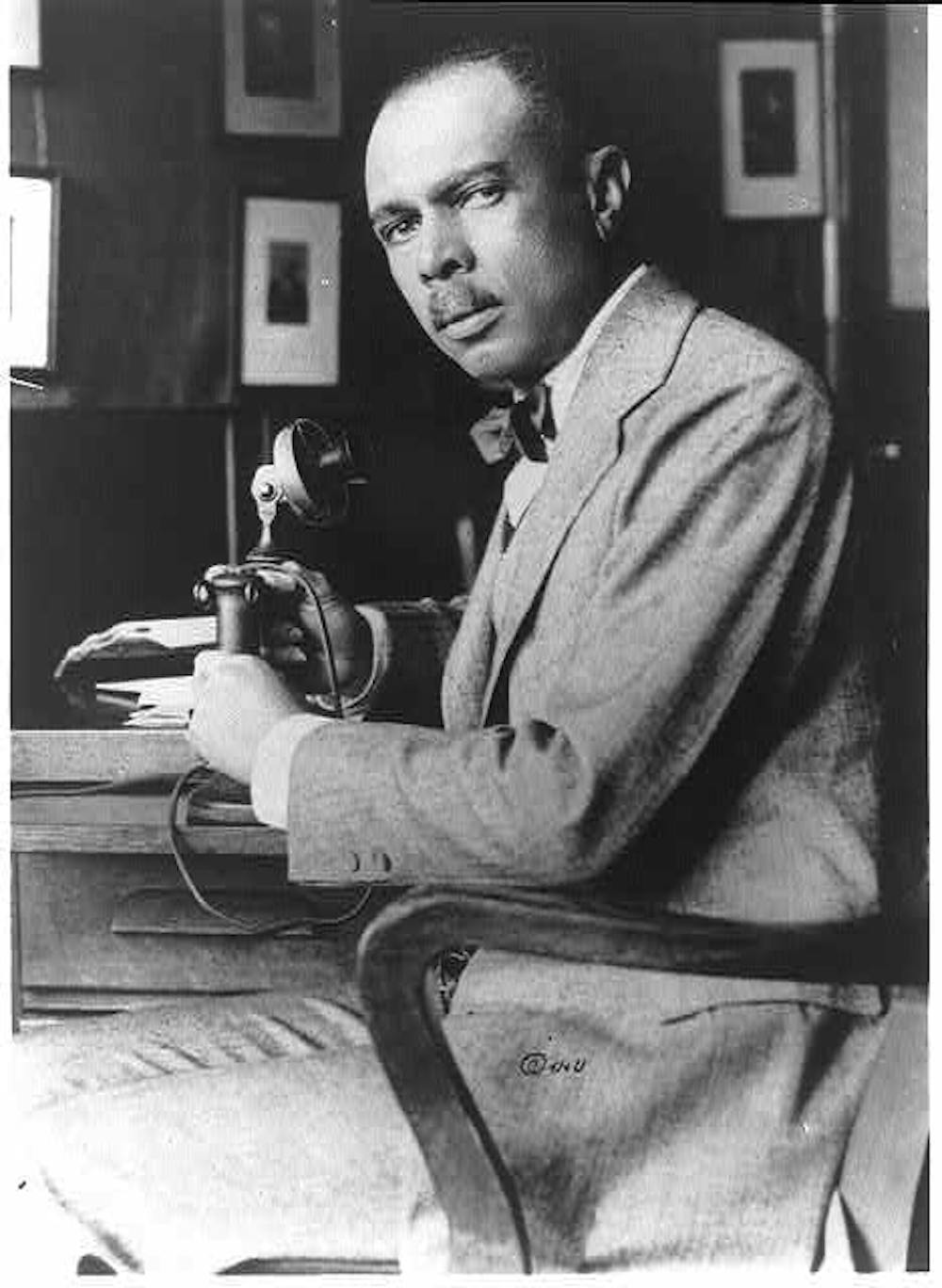
James Weldon Johnson became the first Black American to head the NAACP in 1920.
Library of Congress
Johnson’s parents grew up free – his father in New York and his mother in the Bahamas. Both were literate at a time when 80% of Black Americans were not. These advantages helped them become homeowners when many Southern Black families lacked the money to buy land.
Raised with this rare opportunity, Johnson thrived.
He graduated from Atlanta University in 1894 during an era when only about 2% of 18-to-24-year-olds in the U.S. received any college education. He became a high school principal in his native city of Jacksonville, Florida, the editor of a daily newspaper and the first Black Floridian to pass the state bar exam.
He published poetry and novels, produced musical theater and served as U.S. consul to Venezuela. He was a professor at New York University and Fisk University and the first Black executive secretary of the NAACP. While Johnson’s successes were extraordinary, they illuminate what Black Americans could achieve when provided with even the narrowest avenues for advancement.
Normally, I play “Lift Every Voice and Sing” for the students when we reach the part of Johnson’s autobiography that covers his writing of the song, but the immediate relevance of Andra Day’s version justified playing it a few classes earlier this semester.
When I asked who knew the song, both Black students in my class said they did, but only two of the 24 white students raised their hands. That gap has remained fairly consistent during the four years I have taught Johnson’s autobiography.
We discussed the importance of the song, then turned to that day’s assignment.
In his book, Johnson discusses his experience as a summer school teacher in rural Georgia during the 1890s. He described those months as his “first tryout with social forces” and “the beginning of my knowledge of my own people as a ‘race.’”
We reviewed his first encounters with “White” and “Colored” signs on bathroom doors, and the laws and unspoken traditions of segregation that this young man learned during his time in the rural South.
Students often regard these “social forces” as ancient history, so I explained that these same traditions caused the murder of 14-year-old Emmett Till in 1955 after he spoke to a white woman while buying candy in a Mississippi store. They were startled to hear Till was born the same year as my father, making him about the same age as many of their grandparents.
Then I mentioned that even in 2012, Trayvon Martin was killed for walking through a predominantly white neighborhood at night while wearing a hoodie.
One of the Black students quietly said “Zimmerman.”
These students were only 6 or 7 when Martin died, so not remembering the event is understandable. Not learning about it since then highlights the continuing racial divide in our children’s education.
When students do learn this history, it can literally improve the culture of a campus and a city.
Students from these classes have helped to strengthen the relationship between the Black Student Union and the Jewish student organization Hillel on our campus. They have also conducted interviews with alumni of the local high school who attended classes during the racially segregated days of Jim Crow.
In another example of gaining firsthand knowledge, students have attended Sunday services at a local historically Black church – a first experience for most of them. These students subsequently helped the congregation build a mobile exhibit about the church’s history.
Despite what Republican politicians have claimed, learning this history does not generate guilt or shame among students. It often inspires them how to reach across cultural divides in ways they have never attempted before.
But white students tend to know little about the recent history of racial violence in the U.S. They are familiar with George Floyd and the protests that emerged after his murder by a white police officer, but few other recent victims of this kind of violence.
The problem is not a general lack of historical knowledge but its disparity along racial lines. Black students do know this history, or at least more of it than their white peers.
Bridging this knowledge gap is made more difficult because today’s young Americans of different races do not sit in the same classrooms as a result of segregated schools in segregated communities – nor do they learn the same history.
Its my belief that schools fail all students when they omit the difficult parts of U.S. history. Teaching Black history can create understanding and spark rare discussions on challenging topics across racial lines.
Those of us who actually teach these subjects recognize these benefits – no matter what the politicians say.
Paul Ringel does not work for, consult, own shares in or receive funding from any company or organization that would benefit from this article, and has disclosed no relevant affiliations beyond their academic appointment.
by Michelle Bentley, Reader in International Relations, Royal Holloway University of London
The US Supreme Court has agreed to hear a ground-breaking legal case that promises to rock the 2024 election. The case relates to former president Donald Trump and presidential immunity, and more specifically whether a former US president has to answer to civil and criminal charges against them.
US presidential immunity is a heavily contested issue. It has been argued that presidents should not face at least some types of legal action for the decisions they make in office. But does this mean that a president gets to run under a different law to everyone else? And under what exact circumstances?
For a country that prides itself on equality, these are difficult questions. And the Supreme Court’s answers will not just potentially change constitutional doctrine, but also what happens in this year’s presidential election.
Trump is currently facing four charges that he interfered with the 2020 election, including his alleged involvement in the controversial 2021 Capitol Hill riots. The charges were brought by the US Department of Justice through the Washington DC court system.
The trial was supposed to start on March 4. Yet Trump is trying to have the charges dismissed on the basis of absolute presidential immunity.
The Supreme Court deliberations will delay the other trial, which alleges electoral interference and could potentially remove Trump’s eligibility to run for president.
Absolute immunity is the idea that a president cannot have legal charges brought against them for actions they undertake while in office. This may seem like common sense. Holding a president legally accountable for their job could see them dragged into court for everything they do in running the country – which is simply unworkable.
On the flip side, why should the president be subject to different legal standards than anyone else? There is nothing in the US constitution that explicitly grants full presidential immunity – but there is a lot about people being equal.
If that sounds messy, it is. There’s no consensus as to when and if immunity should apply. Previous US court decisions have upheld immunity in some cases (for instance 1982 Nixon v Fitzgerald) and denied it in others, such as 1994 Clinton v Jones.
These decisions have often come down to what has been called the “outer perimeter” test. Did the events happen within the context of the president carrying out their official duties? If not, the president is still potentially liable it was ruled.
Testing cases
This test is the key issue for Trump and the upcoming case. Trump’s claim to immunity was turned down by an appeal court earlier this year on such grounds. Three judges said immunity did not apply because Trump was a presidential candidate at the time and not a president acting in line with official duties. No dice.
Yet, the ruling also went into deeper issues concerning what it means to apply a different standard of law to the president. The judges said that immunity in this case would mean Trump had “unbounded authority to commit crimes that would neutralise the most fundamental check on executive power – the recognition and implementation of election results”.
The judges highlighted wider concerns that immunity could be used to abuse the very system it was designed to uphold.
We see these same broader issues come to the fore now the issue of immunity has been kicked up to the Supreme Court, three of whose nine judges were appointed by Trump himself.
The Supreme Court is the final arbiter in the US legal system and they have the ability to set legal precedent as such. The judgement will undoubtedly be a landmark as this issue is not just about Trump but US constitutional politics and executive power.
The court has the opportunity to make a major statement about the status of presidential immunity, or at least to establish clear standards for when immunity applies. The decision could decide whether or not presidents and former presidents can be brought to trial in the future.
Whatever the actual decision, it will be controversial. Former speaker Nancy Pelosi said on X (formerly Twitter) that the Supreme Court “is placing itself on trial” by even agreeing to hear the case. She clearly thinks the court should rule against immunity: “It remains to be seen whether the judges will uphold the fundamental American value that no one is above the law – not even a former president.”
Timing is everything
It is not just the content of the ruling that matters, but the timing. The Supreme Court will hear oral arguments in the week of April 22. But they may not announce a decision until this summer.
Every day the Supreme Court does not issue a ruling is another day Trump’s trial does not happen. Even if the justices do rule against the principle of immunity, that trial will not get going again immediately as Trump’s legal team will be given time to prepare.
Trump could also argue that he has a right to campaign in the election without a trial hanging around his neck. The really critical issue here is that Trump’s trial will almost certainly now not happen before the next election.
This delay is not just a way for Trump to protect himself before election day. The Supreme Court case is also a way of keeping himself in the spotlight. What looks to many like negative publicity has only ever bolstered him in the eyes of his supporters. This attention is even greater when associated with a significant constitutional ruling.
The case then is not just a legal landmark, but a major factor in who gets elected president on November 5.
Michelle Bentley does not work for, consult, own shares in or receive funding from any company or organisation that would benefit from this article, and has disclosed no relevant affiliations beyond their academic appointment.
by David Higgins, Research Fellow and Instructor in Pediatrics, University of Colorado Anschutz Medical Campus
Young children, pregnant people and the immunocompromised are among the most vulnerable to measles. CHBD/E+ via Getty Images
“You don’t count your children until the measles has passed.” Dr. Samuel Katz, one of the pioneers of the first measles vaccine in the late 1950s to early 1960s, regularly heard this tragic statement from parents in countries where the measles vaccine was not yet available, because they were so accustomed to losing their children to measles.
The U.S. is no exception. The country is on track to have one of the worst measles years since 2019, when Americans experienced the largest measles outbreak in 30 years. As of mid-February 2024, at least 15 states have reported measles cases and multiple ongoing, uncontained outbreaks.
Measles is on the rise across the U.S. once again, despite being eliminated in 2000.
While this measles crisis unfolds, U.S. measles vaccination rates are at the lowest levels in 10 years. Prominent figures like the Florida surgeon general are responding to local outbreaks in ways that run counter to science and public health recommendations. The spread of misinformation and disinformation from anti-vaccine activists online further promotes misguided ideas that measles is not a serious health threat and measles vaccination is not essential.
However, the evidence is clear: Measles is extremely dangerous for everyone, and especially for young children, pregnant people and people with compromised immune systems. But simple and effective tools are available to prevent it.
Measles is a serious illness
Measles is one of the most deadly infectious diseases in human history. Before a vaccine became available in 1963, around 30 million people were infected with measles and 2.6 million people died from the disease every year worldwide. In the U.S., measles was responsible for an estimated 3 million to 4 million infections. Among reported cases, there were 48,000 hospitalizations, 1,000 cases of encephalitis, or brain swelling, and 500 deaths every year.
Measles is also one of the most contagious infectious diseases. According to the Centers for Disease Control and Prevention, up to 9 out of 10 people exposed to an infected person will become infected if they don’t have protection from vaccines. The measles virus can stay in the air and infect others for up to two hours after a contagious person has left the room. Measles can also hide in an unknowing victim for one to two weeks and sometimes up to 21 days before symptoms begin. Infected people can spread measles for up to four days before they develop its characteristic rash, and up to four days after.
One characteristic measles symptom is a rash that spreads from the face to the rest of the body.
CDC/Heinz F. Eichenwald, MD
The initial symptoms of measles are similar to those of many other common viral illnesses in the U.S.: fever, cough, runny nose and red eyes. Several days after symptoms begin, characteristic tiny white spots develop inside the mouth, and a facial rash spreads to the rest of the body.
While most people’s symptoms improve, 1 in 5 unvaccinated children will be hospitalized, 1 out of every 1,000 will develop brain swelling that can lead to brain damage, and up to 3 of every 1,000 will die. For unvaccinated people who are pregnant, measles infection can lead to miscarriage, stillbirth, premature birth and low birth weight.
The risk of severe complications from measles persists even after a person appears to be fully recovered. In rare cases, people can experience a brain disease called subacute sclerosing panencephalitis that develops seven to 10 years after infection and leads to memory loss, involuntary movements, seizures, blindness and eventually death.
Beyond these individual health effects, the financial cost to society for containing measles outbreaks is significant. For example, a 2019 measles outbreak in Washington state is estimated to have cost US$3.4 million. Necessary efforts to control measles outbreaks pull millions of dollars’ worth of critical resources away from other essential public health functions such as ensuring food safety, preventing injuries and chronic diseases, and responding to disasters.
Vaccines protect against measles
Why put communities at risk and allow these societal costs from measles when effective and safe tools are available to protect everyone?
Measles vaccines have been so effective, providing lifelong protection to over 97% of people who receive two vaccine doses, that they are victims of their own success. Initial widespread measles vaccination had reduced measles cases by 99% compared to before the vaccine was available, and consequently, most people in the U.S. are unaware of the seriousness of this disease.
Despite the success of highly effective vaccination programs in the U.S., anyone can still come into contact with measles in their community. Measles is most often brought into the U.S. by unvaccinated American travelers returning home and sometimes from foreign visitors. For people traveling out of the country, the threat of measles exposure is even greater, with widespread outbreaks occurring in many travel destinations.
Public health leaders who embrace and promote vaccination and follow simple, proven infectious disease containment measures can help prevent measles disease spread. Every single preventable illness, complication, hospitalization or death from measles is one too many.
David Higgins is affiliated with Immunize Colorado, a nonprofit that works to protect Colorado families, schools and communities from vaccine-preventable diseases (volunteer non-paid board of directors member) and American Academy of Pediatrics (volunteer non-paid chapter immunization representative for the Colorado chapter).
Disinformation, sharing false information to deceive and mislead others, can take many forms. From edited “deepfake” videos made on smartphones to vast foreign-led information operations, politics and elections show how varied disinformation can be.
Hailed as “the year of elections”, with the majority of the world’s population going to the polls, 2024 will also be a year of lessons learned, where we will see whether disinformation can truly subvert our political processes or if we are more resilient than we think.
The dissemination of disinformation, as well as misleading content and methods, is not always high-tech. We often think about social networking, manipulated media, and sophisticated espionage in this regard, but sometimes efforts can be very low budget. In 2019, publications with names that sounded like newspapers were posted through letterboxes across the UK. These news publications, however, do not exist.
Bearing headlines such as “90% back remain”, they were imitation newspapers created and disseminated by the UK’s major political parties. These types of publication, which some voters thought were legitimate news publications, led to the Electoral Commission describing this technique as “misleading”.
Research has shown that for some topics, such as politics and civil rights, all figures across the political spectrum are often both attacked and supported, in an attempt to cause confusion and to obfuscate who and what can be believed.
This practice often goes hand-in-hand with something called “zone flooding”, where the information environment is deliberately overloaded with any and all information, just to confuse people. The aim of these broad disinformation campaigns is to make it difficult for people to believe any information, leading to a disengaged and potentially uninformed electorate.
Hostile state information operations and disinformation from abroad will continue to threaten countries such as the UK and US. Adversarial countries such as Russia, China and Iran continuously seek to subvert trust in our institutions and processes with the goal of increasing apathy and resentment.
Just two weeks ago, the US congressional Republicans’ impeachment proceedings against President Joe Biden began to fall apart when it was revealed that a witness was supplied with false information by Russian intelligence officials.
Disinformation is certain to feature in 2024 elections. But are some of the risks overstated?
Below the Sky / Shutterstock
Disinformation can also be found much closer to home. Although it is often uncomfortable for academics and fact checkers to talk about, disinformation can come from the very top, with members of the political elite embracing and promoting false content knowingly. This is further compounded by the reality that fact checks and corrections may not reach the same audience as the original content, causing some disinformation to go unchecked.
AI-fuelled campaigns
Recently, there has been increased focus on the role of artificial intelligence (AI) in spreading disinformation. AI allows computers to carry out tasks that could previously have only been done by humans. So AI and AI-enabled tools can carry out very sophisticated tasks with low effort from humans and at low cost.
Disinformation can be both mediated and enabled by artificial intelligence. Bad actors can use sophisticated algorithms to identify and target swathes of people with disinformation on social media platforms. One key focus, however, has been on generative AI, the use of this technology to produce text and media that seem as if they were created by a human.
This can vary from using tools such as ChatGPT to write social media posts, to using AI-powered image, video and audio generation tools to create media of politicians in embarrassing, but fabricated situations. This encompasses what are known as “deepfakes”, which can vary from poor to convincing in their quality.
While some say that AI will shape the coming elections in ways we can’t yet understand, others think the effects of disinformation are exaggerated. The simple reality is that, at present, we do not know how AI will affect the year of elections.
We could see vast deception at a scale only previously imagined, or this could be a Y2K moment, where our fears simply do not come to fruition. We are at a pivotal moment and the extent to which these elections are affected, or otherwise, will inform our regulatory and policy decisions for years to come.
If 2024 is the year of elections, then 2025 is likely to be the year of reflections. Reflecting on how susceptible our democracies are to disinformation, whether as societies we are vulnerable to sweeping deception and manipulation, and how we can safeguard our future elections.
Whether it’s profoundly consequential or simply something that bubbles under the surface, disinformation will always exist. But the coming year will determine whether it’s top of the agenda for governments, journalists and educators to tackle, or simply something that we learn to live with.
William Dance does not work for, consult, own shares in or receive funding from any company or organisation that would benefit from this article, and has disclosed no relevant affiliations beyond their academic appointment.
In public administrations across Europe, artificial intelligence (AI) and automated decision making (ADM) systems are already being used extensively.
These systems, often built on opaque “black box” algorithms, recognise our faces in public, organise unemployment programmes, and even forecast exam grades. Their task is to predict human behaviour and to make decisions, even in sensitive areas such as welfare, health and social services.
As seen in the USA, where algorithmic policing has been readily adopted, these decisions are inherently influenced by underlying biases and errors. This can have disastrous consequences: in Michigan in June 2020 a black man was arrested, interrogated and detained overnight for a crime he did not commit. He had been mistakenly identified by an AI system.
These systems are trained on pre-existing human-made data, which is flawed by its very nature. This means they can perpetuate existing forms of discrimination and bias, leading to what Virginia Eubanks has called the “automation of inequality”.
Holding AI responsible
The widespread adoption of these systems begs an urgent question: what would it take to hold an algorithm to account for its decisions?
This was tested recently in Canada, when courts ordered an airline to pay compensation to a customer who had acted on bad advice given by their AI-powered chatbot. The airline tried to rebut the claim by stating that the chatbot was “responsible for its own actions”.
This Act aims to regulate large and powerful AI systems, preventing them from posing systemic threats while also protecting citizens from their potential misuse. The Act’s launch has been accompanied by a wide range of preceding direct actions, initiatives and campaigns launched by civil society organisations across EU member states.
As part of The Human Error Project, based at Universität St. Gallen in Switzerland, we have studied the ways in which civil society actors are resisting the rise of automated discrimination in Europe. Our project focuses on AI errors, an umbrella term that encompasses bias, discrimination and un-accountability of algorithms and AI.
Our latest research report is entitled “Civil Society’s Struggle Against Algorithmic Injustice in Europe”. Based on interviews with activists and representatives of civil society organisations, it explores how European digital rights organisations make sense of AI errors, how they question the use of AI systems, and highlights the urgent need for these debates.
Our research revealed a panorama of concern, as most of the individuals we interviewed shared the now widely accepted view put forward by AI scholars: AI can often be racist, discriminatory and reductionist when it comes to making sense of human beings.
Many of our interviewees also pointed out that we should not consider AI errors as a purely technological issue. Rather, they are symptoms of wider systemic social issues that predate recent technological developments.
For European civil society actors, one key problem is a lack of awareness among the public that AI is being used to make decisions in numerous areas of their lives. Even when people are aware, it is often unclear how these systems operate, or who should be held responsible when they make an unfair decision.
This lack of visibility means the struggle for algorithmic justice is not only a political issue, but also a symbolic one: it calls our very ideas of objectivity and accuracy into question.
AI debates are notoriously dominated by media hype and panic, as our first research report showed. Consequently, European civil society organisations are forced to pursue two goals: speaking clearly about the issue, and challenging the view of AI as a panacea for social problems.
The importance of naming the problem is evident in our new report, where interviewees were hesitant to even use phrases like “AI Ethics,” or did not mention “AI” at all. Instead, they used alternative terms such as “advanced statistics,” “Automated Decision Making,” or “ADM systems”.
Reining in big tech
In addition to raising awareness among the general public, one of the main issues is curbing the dominant power of big tech. Several organisations we contacted have been involved in initiatives connected with the EU’s AI Act and have, in some cases, played a direct part in highlighting issues and closing loopholes that tech firms could exploit.
According to some organisations there are elements, such as biometric facial recognition in public spaces, where nothing short of an outright ban will suffice. Others even take a sceptical view of legislation as a whole, believing that regulation alone cannot solve all the issues presented by the continuing spread of algorithmic systems.
Our research shows that, in order to address the power of algorithmic systems, we have to stop seeing AI error as a technological issue, and start seeing it as a political one. What needs fixing is not a technological bug in the system, but the systemic inequalities that these systems perpetuate.
Las personas firmantes no son asalariadas, ni consultoras, ni poseen acciones, ni reciben financiación de ninguna compañía u organización que pueda obtener beneficio de este artículo, y han declarado carecer de vínculos relevantes más allá del cargo académico citado anteriormente.
by Mary Ni Lochlainn, Specialist Registrar in Geriatric and General Internal Medicine, and Post Doctoral Research Fellow, King's College London
In just 12 weeks, a daily fibre supplement improved brain function in twins over the age of 65. Could the microbes in our gut hold the key to preventing cognitive decline in our ageing population?
The study my colleagues and I conducted showed that this simple and cheap food supplement can improve performance in memory tests – tests that are used to spot early signs of Alzheimer’s disease.
As populations age globally, the prevalence of age-related conditions such as declining brain and muscle function is on the rise, so we need innovative ways to slow and prevent this.
The number of gut microbiome studies has increased exponentially over the past 15 years. Researchers are recognising the huge potential of this under-explored facet of human health. We know that the gut microbiome can be influenced and changed from the outside, for example, using a prebiotic supplement.
Prebiotics are simple fibres that encourage healthy bacteria to flourish in the gut. They are already widely available to buy.
With this new study, we sought to understand how targeting the microbiota, the diverse community of microorganisms residing in our guts, using two cheap, commercially available plant fibre supplements, inulin and FOS, could affect both brain function and muscle health.
The study comprised 36 twin pairs, with one twin randomly allocated to receive a placebo and the other randomly allocated to receive a prebiotic fibre supplement. The treatments (prebiotic or placebo) were taken every day for three months and none of the participants knew which they were receiving – in other words, the study was “blinded”.
To improve muscle function, all the participants also did resistance exercises and took a daily protein supplement.
We monitored participants remotely via video calls, online questionnaires, and online tests of memory and thinking.
When we tested participants’ stool samples, we found the fibre supplement led to significant changes in the participants’ gut microbiome composition. In particular, there was an increase in beneficial bacteria, such as Bifidobacterium.
While there was no significant difference in muscle strength between the groups, the group receiving the fibre supplement performed better in tests assessing memory and thinking, including the Paired Associates Learning Test. This test is able to detect early signs of Alzheimer’s disease. Those who received the prebiotic had half the number of errors on this test compared with the group that received a placebo.
Seeing this positive result in just 12 weeks holds huge promise for enhancing brain health and memory in our ageing population.
We hope that further understanding of the gut-brain connections may unlock new approaches for helping people live more healthily for longer. For example, preventing or delaying frailty and ultimately keeping our ageing population independent and well for as long as possible.
Innovative trial
Another novel aspect of the study was its remote design, which showed the feasibility of conducting trials in older adults without the need for extensive travel or hospital visits, which could be delivered in many settings globally.
Such trial designs aim to improve the representation of older people in research. We acknowledge that challenges to this type of study design exist, including access to the internet and computers, and we aim to address these in future large-scale projects. Ultimately, the aim is to enhance the quality of life for ageing populations worldwide.
We estimate the cost of taking this kind of supplement at 15p a day. They are safe and easy to take. They could benefit a large group of people and the research team plan to go on and test whether these results are sustained over longer periods and in larger groups of people.
Our findings show that targeting the gut bacteria with simple interventions can have significant effects on human function. So how else can we target these microbes to enhance wellbeing as the population gets older? We are planning to carry out further trials, exploring the huge potential of this important question.
Mary Ni Lochlainn receives funding from the National Institute of Health Research. This study was supported by King’s Centre for Ageing Resilience in a Changing Environment (CARICE) and by grants from the National Institute of Health Research and Wellcome Trust.
by Carl Rhodes, Professor of Organization Studies, University of Technology Sydney
“Corporate virtue signalling” is a phrase of our time. Bud Light was accused of it when it hired TikTok personality and trans woman Dylan Mulvaney to promote low-cal beer.
Disney was labelled a virtue signaller for its opposition to the US state of Florida outlawing discussions of gender fluidity and sexual orientation in schools.
When multi-trillion-dollar investment company Black Rock promoted environmental, social and governance (ESG) standards, it too was branded a virtue-signaller.
These are only a few of the many high-profile examples of corporations who have made headlines for publicly supporting progressive social and environmental political positions.
Review: Virtue Capitalists: The Rise and Fall of the Professional Class in the Anglophone World – Hannah Forsyth (Cambridge University Press)
The loudest critics of virtue signalling come from the more vocal end of right-wing politics. Many conservative pundits angrily denounce the “woke” for failing to follow what they see as the real purpose of capitalism.
“Go woke, go broke,” they vent, insisting there is no place in the competitive world of market rivalry for taking sides on social and political issues.
Bud Light was accused of ‘virtue signalling’ when it hired trans TikTok personality Dylan Mulvaney.
Anti-woke critics want to make corporations great again: let’s get back to the old days, where making profits was the only thing harried managers had to worry about! Wheeling out Milton Friedman’s hackneyed 1970 dictum, they censure today’s managers for failing to meet “the social responsibility of business […] to increase its profits”.
If you buy into this rhetoric you might believe that, prior to the 2020s, business leaders were unencumbered by ethical or political concerns.
“Woke capitalism” was first called out by conservative columnist Ross Douthat, who coined the phrase in the New York Times in 2018 – a decade after the period Forsyth spans in her book.
But what she uncovers, with all the specificity and detail to be expected from a historian, is a story of “virtue capitalism” that existed long before the concept of “wokeness” became a political weapon of the recalcitrant right.
In one sense, Forsyth’s book will interest those who want to know more about the history of capitalism and the mixed fortunes of the professional and managerial classes.
In another very important sense, it provides the material for something akin to what French philosopher Michel Foucault once called “a history of the present”: it helps us understand our present situation by tracing its genealogy in the past.
Forsyth shows that, contrary to the imaginings of anti-woke crusaders, capitalism has always had a relationship with virtue, and a troubled one at that. This goes back to the very beginning of modern industrial capitalism, well before “virtue signalling” became a catch cry for those yearning for an illusory version of a purely economic capitalism.
The long 20th century
Forsyth covers the “long 20th century”. Her book starts in 1870, when the establishment of the gold standard marked the birth of modern capitalism, and the ascendancy of the professional class. It ends in 2008, just before the global financial crisis exposed the world’s vulnerability to capitalist excess.
The book focuses on the professional classes in Anglophone settler colonies: Australia, Canada, New Zealand and the United States, in particular. In these countries, the process of supposed civilisation was married to economic domination and colonisation, administered by a new professional class of white-collar workers.
With the growth of the new class of professional workers, Forsyth argues, morality became entwined with capitalism. The moral virtues that emerged centred on the value of education and a belief in meritocracy, bolstered by precision, integrity, discipline and efficiency. For workers like nurses, journalists and accountants, professionalism became associated with moral standing, which translated into economic value.
But the Anglophone colonial world and its capitalist economies were, as Forsyth observes, “founded on violent dispossession, where land theft in the settler colonies was the precondition to property ownership”. The so-called morality of the virtue capitalists was used to justify colonialism’s brutal acquisition and racial oppression.
Professional integrity and virtue may have given colonialism a sense of respectability, but it reflected a moral system that at best regarded Indigenous populations as the benefactors of Western civilisation and assimilation in Western culture. At worst they were seen as impending the natural course of progress, and hence dispensible.
The result was the displacement of the Indigenous moral systems that came before the colonisers. White virtue, cultural domination and capital expansion were inseparable companions.
Hannah Forsyth.
Forsyth portrays professional virtue not so much as a self-serving hypocrisy, but as a culturally narcissistic form of self-deception that masked the brutality of colonial self-interest. Indigenous populations were castigated as “savage” and in need of education. White moral authority was established as the colonial order, and it was all proper.
By the end of the second world war, the virtue capitalists reached their peak power. They designed a new world economic order rooted in their own sense of righteousness. The New Deal was established in the United States, focusing on relief for the needy, economic recovery and financial reform. The “welfare state” was established elsewhere. Education and health were provided to the masses, protecting capitalism from the threat of communist revolutions.
Away from home, virtue translated into international development that was intent on “civilising” and “developing” the once-colonial world in the image of the professional classes.
The mid-1970s ushered in an economic and moral crisis. Forsyth argues this triggered the downfall of the professional virtue capitalists after a century on the rise. By the 1980s, a new wave of managerialism was sweeping the business world. Economic management became increasingly divorced from the professions.
In the heyday of early neoliberalism, the conservative professional was displaced in favour of a prototypical manager who was showy, entrepreneurial and hypermasculine. The new focus was on financial and economic success, rather than professional morality. Success at all costs was the neoliberal mantra.
A globalising world economy became ripe for new forms of exploitation and Western wealth accumulation. A new elite discarded the old professional virtues as quaint, starchy and old-fashioned. Forsyth characterises this as “moral deskilling”. The market became the solution to all problems.
Virtue Capitalists ends with the managerial class having reached a crescendo of power, as masters of a new world order where “success is the only virtue”. The book leaves us in a world where traditional professional virtues have been all but dismantled and professional expertise has been discredited in favour of can-do capitalism.
There is no happy ending. With the rise of the managerial class came a new political populism characterised by a distrust of professional expertise, and professed hatred of “the elites”. Think, for example, of anti-vaccination campaigns undermining medical expertise, or climate denialists flouting the findings of climate scientists.
“Virtue was, and is, used for power,” writes Forsyth. That power was deployed in the long 20th century, initially to justify colonial exploitation, then to further ransack the world as it opened up to global trade.
Virtue, by this account, is a cloak of respectability that hides the realities of a global economy geared to produce inequality. Perhaps it hides them so well, even the professional workers crunching the gears cannot see them.
Virtue Capitalists is not without fault. At times, the narrative is disjointed, the argument lacks consistency and ideas are presented without being developed. The references to theorists and theories can, at times, appear superficial and unnecessary. But the strength of the work overcomes these faults. It provides us with a historical account of the tight connections between morality and economics that popular narratives have ignored.
Like the virtue capitalism of the past, today’s “woke” capitalism is an act of power, as much as it is an ethical movement. Where would capitalist legitimacy be if, in the wake of the global financial crisis, the 1980s entrepreneurial “success at all costs” attitude returned unvarnished? Surely capitalism’s legitimacy would have come to an end, at last.
While no such end was reached, there was no change to the inequality driving core of capitalism either – it was just woke-washed. The morality of today’s woke corporations serves to re-legitimise capitalism, while leaving its exploitative nature unaltered. History repeats. Virtue is still a way to increase profits.
This will not make the world great again. It will keep us on the same trajectory of inequality and exploitation. History’s lessons are worth learning, so we might imagine a better future. Forsyth’s book provides a valuable means to do that.
Carl Rhodes does not work for, consult, own shares in or receive funding from any company or organisation that would benefit from this article, and has disclosed no relevant affiliations beyond their academic appointment.
In 2009, an Air France jet crashed into the ocean, leaving no survivors. The plane’s autopilot system shut down and the pilots, having become reliant on their computerised assistant, were unable to correct the situation manually.
In 2015, a bus driver in Europe typed the wrong destination into his GPS device and cheerfully took a group of Belgian tourists on a 1,200 kilometre detour in the wrong direction.
In 2017, in a decision later overturned on appeal, US prosecutors who had agreed to release a teenager on probation abruptly changed their minds because an algorithm ruled the defendant “high risk”.
These are dramatic examples, but they are far from isolated. When we outsource cognitive tasks to technology – such as flying a plane, navigating, or making a judgement – research shows we may lose the ability to perform those tasks ourselves. There is even a term for our tendency to forget information that is available through online search engines: the Google effect.
As new AI technologies promise to automate an increasing range of activities, the risk of “skill erosion” is growing. Our research shows how it can happen – and suggests ways to keep hold of the expertise you need, even when you don’t need it every day.
The company had recently stopped using software that automated much of its fixed-asset accounting service. However, the accountants found themselves unable to carry out the task without it. Years of over-reliance on the software had eroded their expertise, and ultimately, they had to relearn their fixed-asset accounting skills.
While the software was rule-based (it did not use machine learning or “AI”), it was “smart” enough to track depreciation and produce reports for many tax and financial purposes. These are tasks that human accountants found very complex and tedious.
The company only became aware of skill erosion after a client found errors in the accounting team’s manual reports. With its accountants lacking sufficient expertise, the company had to commission the software provider to fix the errors.
How skill erosion happens
We found that a lack of mindfulness about the automation-supported task had led to skill erosion. The old saying, “use it or lose it”, applies to cognitively intense work as much as to anything else.
The accountants were not concerned about outsourcing their thinking to the software, since it operated almost flawlessly. In other words, they fell prey to “automation complacency”: the assumption that “all is well” while ignoring potential risks.
they lost their awareness of what automation was doing
they lost the incentive to maintain and update relevant knowledge (such as tax legislation), because the vendor and software did that for them
as the software was reliable, they no longer bothered to check the outgoing reports for accuracy.
How to maintain your skills
So, how do you prevent complacency while using AI and other automated systems? Here are three tips:
pay attention to what the system is doing – what inputs are used, for what purpose, and what might affect its suggestions
keep your competence up to date (especially if you are legally accountable for the outcomes)
critically assess the results, even if the final outcomes appear satisfactory.
Keeping your skills sharp while using automated systems requires paying close attention.
Shutterstock
What would this look like in practice? Here’s an everyday example: driving with the help of an AI-powered navigation app.
Instead of blindly following the app’s instructions, pay attention to road signs and landmarks, and be aware of what you are doing even when guided by the app.
Study the map and suggested route before driving to increase your “domain knowledge”, or understanding of what is around the route. This helps you relate your specific path to the broader environment, which will be helpful if you get lost or want to find alternative routes.
When you reach your destination, reflect on the route the app suggested: was it fast, was it safe, was it enjoyable? If not, consider taking a different route next time, even if the app suggests otherwise.
Is AI a necessary companion?
The case of the accounting firm also raises a bigger question: what skills are relevant and worth maintaining, and which ones should we relinquish to automation?
There is no universal answer, as professional skills change across time, jurisdictions, industries, cultures and geographical locations. However, it is a question we will have to contend with as AI takes over activities once considered unable to be automated.
Despite the struggles, the accounting manager in our case study believes the automated software is highly beneficial. In his view, his team just got caught off guard by complacency.
In a world focused on efficiency and annual or quarterly targets, organisations favour solutions that improve things in the short term, even if they have negative long-term side effects. This is what happened in the accounting case: efficiency gains overshadowed abstract concerns about expertise, until problems ensued.
This does not mean that we should avoid AI. Organisations cannot afford to miss out on the opportunities it presents. However, they should also be aware of the risk of skill erosion.
Tapani Rinta-Kahila is a recipient of the Australian Research Council Discovery Early Career Researcher Award (project number DE240100269) funded by the Australian Government. His research on this topic has previously been funded by the Jenny and Antti Wihuri Foundation.