Shared posts

18 Mar 01:51

Faber Finds

Looking back through CR Blog, I followed a link to this article about the Faber Finds service by the developers and designers, PostSpectacular. The whole thing is incredibly fascinating and quite exciting - taking its cue from the growth in low-volume self publishing services, the service goes further down the mass-customisation route so that each book is printed only when it’s ordered and with a unique, automatically-generated cover design. The cover designs are the most interesting bit, and while the Post Spectacular article doesn’t say whether Faber actually do generate a new one for each and every book (there are a couple of comments about that), the technology is definitely there to do it.

I actually did mean the latter too, every physical printed copy unique, leaving the era of mass production behind - the software was built for this exact context. Though having said this, I really can’t tell if Faber are following fully through with this plan.Karsten Schmidt

The patterns are based on sketches by Marian Bantjes, with four different types depending on the subject category of the book. The books are assembled on the fly as a web service using Processing, PHP and Java, and apparently while each cover takes only a second to generate, another automatic process weeds out ‘off brand’ ones. I’m often surprised by the almost casual way some really quite remarkable ideas and advances in artificial intelligence are used today - I’ve some knowledge of the subject from many years ago and such things as automatically detecting off brand designs would have been the stuff of futurists and science fiction back then. The description makes it sound simple and straightforward, which perhaps indicates how far things have developed.

Finding appropriate values to these design parameters required a phase of constant experimentation and conversations with Faber’s design team - these collaboratively agreed boundary values then became the encoded art direction within the software.

The typeface used for the covers, B HMMND, was designed specifically for the project by Michael C. Place, and while I can appreciate individual letterforms (some at left that I find rather beautiful) and see that they work well with the Bantjes’ patterns (and the Faber logo), they just don’t read very well all together. Some of the titles end up with extraordinarily uneven colour, with great dark patches of ink at one end of a word while the other end is a sketchy ghost of hair-thin lines. Maybe that ‘kookiness’ was the intention but I find it disappointing - the covers are far less appealing as a result; they just look messy and badly typeset. To my mind this typeface would be very successful as-is when manually typeset, or needs a whole bunch of alternates and Opentype rules to allow for a more readable result when set automatically.

I love the idea and how this service has been implemented (the cover titles aside); we definitely need to see more of this kind of thing so that we can get new copies of any out of print book in future. I know that there’ve been old books I’ve wanted to buy only to find that they’re out of print and that second, third and fourth hand copies are incredibly rare - sometimes impossible to find at all. I didn’t want a special first edition or something to squirrel away in an atmosphere-controlled book collection, I just wanted to read the book. For law-abiding, copyright-respecting people like me what options are there? Perhaps one day the whole idea of ‘out of print’ will fade away to be replaced by the very longest of Long Tail economics. I hope so.

18 Mar 01:51

Mycelium Running

Mushrooms as solution. Fungi as ninja warriors. That's what this spirited, hyperkinetic book offers. Mushrooms as solutions to pollution (mycological remediation), fungi as a soil supplements for vegetables (companion planting), and as a source of human medical nutrition (harvested from inoculated logs, sawdust, cardboard) -- in other words, mushrooms to save the world. It's sort of crazy, far fetched ... but not. There's a lot of original ideas in this thickly illustrated book, with some fantastic visions, but all of it surrounded by deep strands of very practical how-to advice. How to grow fungi in your yard, or in toxic waste dumps, or anywhere. The author claims that the running mycelium of mushrooms were the first internet, and after you see what fungi can really do, you'll believe him. This book is about how to employ fungi to get things done. Mushrooms as overlooked tools.

-- KK

Mycelium Running
Paul Stamets
2005, 339 pages
$24
Available from Amazon

Sample excerpts:

mycelium-running1-sm.jpg
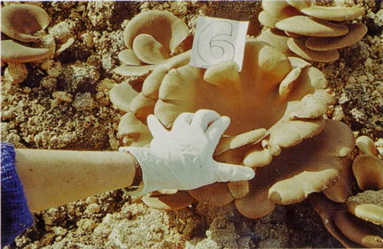
Some of the mushrooms reached mammoth sizes, a testimonial to the nutrition they found in the petrochemicals.

Mycoremediation of Chemical Contaminants: Mushrooms as Molecular Disassemblers
With mycoremediation, brownfields can be reborn as greenfields, turning valueless or even liability-laden wastelands into valuable real estate. Remediation with living organisms addresses several expensive issues. Foremost, bioremediation and mycoremediation eliminate the expense incurred in removing thousands of tons of tainted soil to a remote toxic waste storage site. Current policy prescribes burning, hauling, and/or burying toxic waste. These steps leave a lifeless environment that is ecologically crippled or inert.

*

Spores in Oils
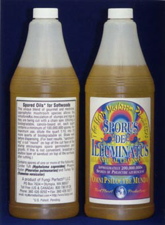
Spores can be immersed in canola, corn, or safflower oil, which can be used as a lubricant for chain saws or other cutting equipment. As trees, brush, or plants are cut, the spore-infused oil distributes spores to the newly cut surfaces, an efficient method of transfer. Another advantage of using oils is that they help the spores stick to the surfaces upon contact and have less chance of being washed or blown away.

mycelium-running2-sm.jpg
One of these spored oils was made especially for Ken Kesey and the Merry Pranksters and contains hundreds of millions of spores of Psilocybe azurescens. See also figure 77, showing a mycelial colony emanating from point of contact with spored oil.

*

Growing Mushrooms on Stumps
Stumps and their root systems can be massive, often weighing hundreds of pounds. Once stumps are inoculated, colonization can occur for years before mushrooms form. Once fruiting.begins, mushrooms can sprout for prolonged periods, sometimes decades, before the stump totally decomposes. Growing mushrooms in wood chips or on logs is far faster. But this apparent disadvantage of using stumps to grow mushrooms also foretells of its advantage: mushroom fruiting can persist on a stump for many years longer than on wood chips and logs. I have seen a stump produce woodlovers, for instance, every October for more than 10 years. Stumps that are interspersed amongst overshadowing stands of trees have the best chance of success.

*

mycelium-running4sm.jpg
Oysters (Pleurotus ostreatus) and honey mushrooms (Armillaria mellea species) fruiting from the same stump. Such events suggest that oyster mushrooms, which are saprophytes, can be good competitors against honey mushrooms, which have a dual nature, first parasitic, killing trees, and then saprophytic, growing upon their dead tissue.

Related Entries:
Let's Grow Mushrooms! Mushrooms Demystified All That the Rain Promises and More...
18 Mar 01:51

Scavenging photography of Miroslav Tichý

Tichys Camera
Tichy Photos

Czech photographer Miroslav Tichý captures images using handmade cameras built from salvaged material - discarded wooden spools, elastics, eyeglass lenses, and cardboard tubing find new life as part of his imaging gear. The resulting work is a testament to the poetic value error, imprecision, and circumstance can add to art.

Miroslav Tichy

When asked about the theory behind his work, Tichy replied -

If you want to be famous, you have to do whatever you're doing worse than anyone else in the whole world.
His notoriety in the art world seems to prove that statement - without all the intensely handmade characteristics, his photographs would likely be overlooked as common pervy voyeurism. - Miroslav Tichý Read more | Permalink | Comments | Read more articles in Arts | Digg this!
18 Mar 01:51

Make Your Own Potato Plastic


It looks like plastic made from a potato is a lot more flexible and clear compared to plastic made from milk. Either one is a nice eco-friendly alternative to the petroleum based variety. Although I think it's actual usefulness may be a bit limited.

In this video we make a batch of potato plastic based on an instructable by Brandon121233. For this project you will need potato starch, white vinegar, baking soda, water, and glycerin (which can be found at most pharmacies). The tools for this project are a stove and saucer pan, in addition you'll need a blender, knife, and peeler if you're making your own starch.

Read more about making Potato Plastic

More:

milk plastic.jpg
Make Plastic from milk Read more | Permalink | Comments | Read more articles in Green | Digg this!
18 Mar 01:50

AKAT-1: A Stunning Retrocomputer

AKAT-1

I so want this for the corner of my office. The base looks like an old metal desk from my primary school, and it definitely belongs on a Constellation class starship. When anybody asks, I'll solemnly explain, "It's the first transistor-based differential equation analyzer, from 1959. And it's Polish." They'll nod in befuddlement and ask if it can play Spacewar, which of course it can't. 

AKAT-1 is an analog computer. Back in the 1960s, this approach offered speed and acceptable accuracy without the complexity of digital logic.The result was a device that could solve relatively complex differential equations in real time, as long as you weren't after precise values. Alas, time has passed it by and it now leads a life of leisure at the Museum of Technology (Muzeum Techniki) in Warsaw, Poland.

It's easy to dismiss analog computing as a dead end on the evolutionary tree of computational science, but countless analog music synthesizers remain sought-after for their warmth and instantaneous response. And, yes, each and every one is a real-time analog computer.

Inspired by Matrixsynth and Marcin Wichary's Muzeum Techniki flickr set

18 Mar 01:50

HOW TO - Mirror finishes

mirrfin.jpg

This tutorial is meant for computer cases, but could be applied to lots of things. Learn to get a mirror finish from the mnpctech website. Via Core77.

Read more | Permalink | Comments | Read more articles in Computers | Digg this!
18 Mar 01:50

Weekend Project: Making Biodiesel

Make your own backyard biodiesel. It's easy to make a small batch that will work in any diesel engine. You won't need any special equipment--an old juice bottle will serve as the "reactor" vessel--and on such a small scale, you can quickly refine your technique and perform further experiments. Thanks go to Rob Elam for the original article in Make Volume 3

To download Making Biodiesel MP4 click here or subscribe in iTunes.

Check out the complete Making Biodiesel article MAKE 03 "Making Biodiesel" & You can see that in our digital edition.

Read more | Permalink | Comments | Read more articles in Weekend Projects | Digg this!
18 Mar 01:50

Weekend Project: Making Biodiesel (PDF)

Biodiesel.jpg
Make your own backyard biodiesel. It's easy to make a small batch that will work in any diesel engine. You won't need any special equipment--an old juice bottle will serve as the "reactor" vessel--and on such a small scale, you can quickly refine your technique and perform further experiments.>br>
Thanks go to Rob Elam for the original article in Make Volume 3
View the PDF

Read more | Permalink | Comments | Read more articles in MAKE PDF | Digg this!
18 Mar 01:50

How To: Build a motorized bicycle


Dave made this informative video on how to attach a "Weed Eater" [string trimmer] motor to a bicycle. Used bicycles and string trimmers are easy to find and very cheap to buy. You could make this project for less than $100, maybe even less than $50. The information on modifying the clutch could be very useful in making robots too!

How To: Build a Weed Eater motorized bicycle

Read more | Permalink | Comments | Read more articles in Bicycles | Digg this!
18 Mar 01:49

Pallet-based compost bin

compostPallet081308.jpg

Here's what you need to know to make a quick, very serviceable compost bin out of four wooden shipping pallets.

Pallet Compost Bin

Read more | Permalink | Comments | Read more articles in Green | Digg this!
18 Mar 01:49

Kings (and Queens) Of Their Own Domains

Josiah Harlan, first American in Afghanistan, Commander-In-Chief of the Afghan Army, Quaker, and Prince of Ghor; the inspiration for Rudyard Kipling's short story "The Man Who Would Be King" (and thus the John Houston film). The title was gained for himself "and his descendants in perpetuity" and never rescinded, making actor Scott Reiniger (Dawn of the Dead), Harlan's great, great, great grandson, technically a prince of Afghanistan. (previously)
Ursula Graham-Bower, an English archeology student who ventured to India in 1939 "to putter about with a few cameras and do a bit of medical work, maybe write a book" and ended up in the jungle on the Burmese border as "Queen of the Nagas", leading headhunting tribes against the advancing Japanese Army. (Real Audio BBC Radio history segment, extended MP4 video interview from 1985, shortly before her death, online archive).
The "White Rajas" of the Kingdom of Sarawak, a dynasty of the Brooke family, who ruled a region of Brunei for over a century; the progenitor of the family, James Brooke, was likely an inspiration for Joseph Conrad's "Lord Jim".
The rule of these "Kings and Queens" was not without controversy, often being characterised by paternalism and attitudes of racial and cultural superiority. However, it is also true that they were fascinated by, and in some cases deeply admired, the culture and history of their subjects, and attempted to shield them from the corruptive influence of colonialism. Josiah Harlan, in particular, appeared prescient in foreseeing the effects of the British invasion of Afghanistan, a move in the Great Game which removed him from power and forced his return to America, and had disastrous results. "To subdue and crush the masses of a nation by military force," he wrote, "is to attempt the imprisonment of a whole people: all such projects must be temporary and transient, and terminate in a catastrophe.".
18 Mar 01:49

HOW TO - Worm composting

wormcomposting0.jpg

Instructables user amyoungs writes:

Worm composting is an easy way to turn your food waste and shredded paper into rich fertilizer for your plants. You can also feel great about keeping your food waste out of the landfill, where it turns into methane, a stinky greenhouse gas. Worm composting, on the other hand, does not stink - don't believe me? Try it yourself!

Read more | Permalink | Comments | Read more articles in Instructables | Digg this!
18 Mar 01:48

My Secret Weapon to Getting Contracts

In my first days of freelance web design, I did all the right things to get business — web-site done, Chamber of Commerce joined, social media networking done. So why wasn’t the phone ringing? I suspect many freelancers feel the same way. The big question remained: where do I get business?

Then I discovered a secret weapon. I wanted local business, as it’s easier to build referrals that way. I went through the local directory looking at businesses without web-sites, or with very old and poor sites and made a list. I made a small brochure, put on some decent clothes, grabbed my business cards and actually physically walked into their offices! I got enough business within two days to keep me busy for months, and had a blast at the same time.

It seems many of us have trouble getting over the fear of actual cold-calling. We will do anything possible to avoid it. We will waste time on catching up on blogs, RSS feeds, Facebook, anything to avoid cold-calling, and still chalk it up as ‘work’. However, once you try this method you will forget all other marketing ideas.

So, if you are new into freelancing, or business is slow, try the GOYAKOD method — Get Off Your Ass and Knock On Doors!

About the author

Hollis Bartlett is a full-time freelance web designer & developer located in Nova Scotia. He loves the freelance lifestyle as it gives him flexible time to spend with his wife, 3 daughters, supports a blacksmithing hobby and still gets the bills paid.

Editor’s note

This post is one of the finalists of our guest author contest. Over three weeks selected top-10-lists and discussion articles will be published. To rate the articles we’ll analyze their popularity, users activity, quality of backlinks, traffic and further data.

How good is the post “My Secret Weapon to Getting Contracts”?
( surveys)

18 Mar 01:48

Top Ten Web Typography Sins

By Steven D.

While many designers have been quick to embrace web standards, it’s surprising how often the basic standards of typography are neglected. Here are ten deadly sins to avoid in your web typography:

1. Using hyphens instead of an em dash

Typography Sins

If you need to interrupt yourself, do it with an em dash (—) instead of a pair of minus signs. This is a top pet peeve for countless editors.

2. Using periods instead of ellipses.

Typography Sins

Most fonts provide a dedicated ellipsis character (…) to keep your type tidy. The ellipsis character fits the three dots into a single letterspace, which is especially beneficial for content that might be printed.

3. Using dumb quotes

Typography Sins

These straight “up and down” quotes used in your markup should stay in your markup. In your content, only use them to indicate a measurement in feet or inches.

4. Double-spacing between sentences.

Typography Sins

The antiquated practice of double-spacing between sentences seemed like it was finally laid to rest thanks to web typography. Just a few short years ago, it required manually inserting a blank ASCII space to commit this font faux pas. Now, some content management systems will actually format the double-spacing for you if you let them. Don’t give them the chance! Only use single spaces between sentences.

5. Improvising a copyright symbol.

Typography Sins

Not only is it ugly and lazy, a copyright symbol hacked together out of a capital C and parenthesis might not even cut the mustard in court. Use the real McCoy (©), and bill your clients extra for the legal advice.

6. Using too much emphasis.

Typography Sins

You can bold text. You can italicize it. You can underline it. You can even use all caps if you really need to hammer home your point. Just don’t use more than one at the same time.

7. Underlining your hypertext links.

Typography Sins

Underlines cut right through the descenders in your typeface, making it harder to read. Instead of text-decoration: underline;, use border-bottom: solid 1px #00f; to draw a line below your text instead of through it.

8. Faking families in Photoshop.

Typography Sins

If your font doesn’t offer (or you couldn’t afford) the bold, italic, or smallcaps branches of the family tree, don’t try to fake it in Photoshop. Sometimes you can get away with it in print, but at web resolutions, it’ll be a mess.

9. Not using accent characters.

Typography Sins

I know how annoying they can be (especially when you’re writing about Ikea furniture), but if somebody’s name includes an exotic character, be polite and include it.

10. Not using CSS for capitalization effects.

Typography Sins

I know it’s CRUISE CONTROL FOR COOL, but if you’re using caps (or lowercase) for decorative reasons, be sure to use the text-transform property. It’ll save a lot of trouble if you ever decide to change things later.

About the author

Steven D. is a web developer so secretive that he won’t even tell you his last name without entering a mutually-binding NDA. In his free time, he enjoys working instead of enjoying his free time.

Editor’s note

This post is one of the finalists of our guest author contest. Over three weeks selected top-10-lists and discussion articles will be published. To rate the articles we’ll analyze their popularity, users activity, quality of backlinks, traffic and further data.

How good is the post “Top Ten Web Typography Sins”?
( polls)

18 Mar 01:48

Radar Theme: Web Ops

[This is part of a series of posts that briefly describe the trends that we're currently tracking here at O'Reilly]

It has been reported that every 100ms of latency costs Amazon 1% of profit. Every company whose web site drives their business is in the same situation, they just don't know it yet. The techniques of web ops are being hoarded by some companies (e.g., Amazon) as competitive advantages yet many of the best tools are open source. This is an emerging field with huge direct bottom line value. Our Velocity Conference tackles web ops head-on.

Watchlist: Jesse Robbins (second blog), Steve Souders, Varnish, memcached/Perlbal/MogileFS, Firebug, Jiffy.

18 Mar 01:48

Build a DIY CO2 reactor

tvreactor.jpg

Here's some info on a custom built "Carbon Dioxide Aquarium Reactor" that combines baking yeast, sugar, water, and tubing. Pretty interesting documentation of the build at the link below.

Homemade DIY CO2 Reactor

Read more | Permalink | Comments | Read more articles in DIY Projects | Digg this!
18 Mar 01:48

Ball that bounces on water...


Interesting background about a ball that bounces on water, and its maker... via Land-o-links.

The Waboba ball, which is about the size of a golf ball, has taken off around the world after videos were posted on YouTube.

Made of a combination of plastics with a lycra coating, it is described as having the consistency of a breast implant.

The ball is about the same density as water and floats when at rest, but bounces high and true when thrown. It continues to bounce until it is caught or runs out of steam.


Read more | Permalink | Comments | Read more articles in Toys and Games | Digg this!
18 Mar 01:47

Bemis Easy-Clean Toilet Seat

This toilet seat's plastic hinges are equipped with seat anchors that allow the seat to be removed for toilet cleaning. A simple twist of two locking knobs and the seat lifts off; reversing the procedure re-locks the seat. It makes an awkward job very simple. My toilet is so much easier to clean completely. The area around the hinges is much cleaner due to easier access. Still one of the best ideas for the bathroom I've ever seen. There are various colors and incarnations on Amazon that cost more than $30. I purchased the cheapest basic style at the local Home Depot for less than $12.

-- Lester Coats

Bemis Easy Clean Toilet Seat
$9 (white)
Available from Amazon

$18 (black)
Also available from Amazon

$20 (blue)
Also available from Amazon

Manufactured by Bemis

NOTE: The manufacturer sells Easy Clean seats under the following brand names: Church, Mayfair and Westport. Also, I think it's worth saying that although we're recommending this product, I'm personally not thrilled with the manufacturer's "what women want" slogan. -- sl


Related items previously reviewed in Cool Tools:

neverscrub-sm2.jpg
NeverScrub Self-Cleaning Toilet System

tototoilet100-sm2.jpg
Toto Washlet Toilet

dualpaperholder-sm2.jpg
Double Paper Holder

18 Mar 01:47

How to: Carve rubber stamps

2671240814_efa585b86f_o.jpg
Carving your own rubber stamp is really easy, and you only need a few tools. I can't say that I am going to make the cupcake stamp, but some kind of DIY rubber stamp is on my list of things to do and I will use this web site as a reference.

How to: Carve rubber stamps [Whip Up]

Read more | Permalink | Comments | Read more articles in DIY Projects | Digg this!
18 Mar 01:47

Revive your lost memories from an electronic wire recorder

Nov06-Wire_Rec-Fig7.jpg

This project details how this maker managed to listen to recordings his grandfather made from a 1940s electronic wire recorder. Lots of really interesting details on this hack at the link below.

Wire Recorder Project
Recovering Family Steel Wire Recording

Read more | Permalink | Comments | Read more articles in DIY Projects | Digg this!
18 Mar 01:47

Модные обложки.Karen Elson.


1


2


3


4


5


6


7


8


9


10


11


12


13


14


15


16


17


18


19


20


21


22


23


18 Mar 01:42

Image transfer

ImageTransfer04.jpgImageTransfer01.jpg

I just found this great tutorial on image transfer - they cover lots of different transfer mediums for use on wood, paper, fabric, and glass. Xylene is a really toxic chemical, I'd stay away from it - the other mediums are pretty benign. I never knew you could use caulk!

An image transfer is, to put it simply, the act of transferring an image from one source to another. Depending upon what material you are wanting to transfer onto will depend on what type of transfer method you want to use. What I love about transfers as opposed to just taking the image itself and gluing it down, is the transparent effects you can get from transfers-- allowing you to layer images or let the surface design show through. i.e. as a patterned fabric or woodgrain.
Read more | Permalink | Comments | Read more articles in Arts | Digg this!
18 Mar 01:42

Citizen Engineer - Phones: SIM card & payphone hacking


Citizen Engineer is an online video series about open source hardware, electronics, art and hacking. The first video debuted at "The Last HOPE" conference today in New York City. Volume 1is about phones: SIM card & payphone hacking.  Learn how a SIM card works (the small card inside GSM cell phones) make a SIM card reader, view deleted messages, phone book entries and clone/crack a SIM card. Modify a "retired" payphone so it can be used as a home telephone and for VoIP (Skype). Then learn how to modify the hacked payphone so it accepts quarters - and lastly, use a Redbox to make "free phone" calls from the modified coin-accepting payphone...

Around the 12 minute mark it gets really exciting.

HD version @ Vimeo for close ups of all the soldering action or view the gallery photos.

More:
Simreader Lrg
Want to build your own SIM card reader? The SIM card reader/writer is available at Adafruit Industries, it is for experimentation and investigation of SIM & Smart cards. Once the kit is built, accompanying software can be used to read and write from the card. Together they can be used to backup stored SIM card data, recover deleted SMS's and phone contacts, examine the last 10 phone numbers dialed, etc. (Despite being called a SIM reader, it can also write to SIM cards). Source, schematics and software included.

Read more | Permalink | Comments | Read more articles in DIY Projects | Digg this!
18 Mar 01:42

Learning Erlang - Erlang Gaining Momentum

You may have noticed that I've been talking a bit about concurrency and Erlang recently. I've started to notice that others are taking notice and giving Erlang another look. I've been a fan of the language for a while, although it is a functional language ala a Haskell, OCaml, F# and so on, it's key strengths doesn't come necessarily from that, but from how it handles concurrency. I'm really fond of the language succinctness and beauty using pattern matching, higher order functions and so on much as I have with F#.
18 Mar 01:42

jQuery Sparklines

del.icio.us/popular (filtered)
18 Mar 01:42

Looking for books about history of technologies

Looking for good books on the history of technologies.

Basically, I'm looking for books like The Making of the Atomic Bomb, but about other modern technologies. Long, technically detailed, well-written, and engaging are all positives. I'm not too picky about what the technology is but I'm interested in "big" technologies from the last 100 years - histories of things like rocketry, nuclear power, integrated circuits, etc. are all good.

Bonus question: if anyone knows of a book on the history of accelerator design, that would be especially interesting.
18 Mar 01:42

They were applying his own paradigms for learning

Papert, who was a professor of mathematics, education, and media technology at MIT, has devoted much of his career to learning: self-learning (he taught himself Russian) and learning about learning. He was one of the early pioneers of artificial intelligence, and he invented the computer language Logo to teach children about computers. Now he must learn something even more challenging - how to be Seymour Papert again.
18 Mar 01:42

Alternative Energy: The Pressure Wheel

100_9253-822x565.jpg
This is an incredibly simple and cheap system for generating power from water. The basic concept is using a turning wheel to generate water pressure at 35psi. That pressurized water is then used to power a turbine. It is completely self-regulating and a great source of green energy. Check out the website for some videos of the pressure wheel in action. Now I have to buy a house with a steam on the property?

Learn how to make your own Pressure Wheel

Read more | Permalink | Comments | Read more articles in Green | Digg this!
18 Mar 01:41

"A valley frozen in time."

In November 1943, the village of Tyneham in Dorset, England, received an unexpected letter from the War Department, informing residents that the area would soon be "cleared of all civilians" to make way for Army weapons training. A month later, the displaced villagers left a note on their church door: Please treat the church and houses with care; we have given up our homes where many of us lived for generations to help win the war to keep men free. We shall return one day and thank you for treating the village kindly. Residents were told they would be allowed to reclaim their homes after the war, but that didn't happen, and Tyneham became a ghost village. Though most of the cottages have been damaged or fallen into disrepair, the church and school have been preserved and restored. Photo galleries 1, 2, 3, 4. Panoramic tour [Java required]. Video: Death of a Village [YouTube, 9 mins.]
18 Mar 01:41

The Wandering Eye (Pleuronectiformes, We Hardly Knew You)