Shared posts

01 Apr 14:52

4 Persona Pitfalls To Avoid

by Tonya Vinas

4 Persona Pitfalls To Avoid image 1PeoplePersona development is a crucial precursor to creating content that converts. No one has a perfect formula for every need—and there might never be one. But these four mistakes are common pitfalls that can undermine persona development.

1. Title Tunnel Vision

We filter targeted buyers by titles early on. This is a good practice, but it also can limit your reach to decision-makers. Ask not only who makes the final decision to buy, but also how decisions are made. In flattened management hierarchies, such Zappos and ZTE, input from multiple people in different functions drives decisions. Also, some companies push decision-making down from the corporate level to the site or unit level, so C titles aren’t involved.

2. Data for Data’s Sake

Not all data is equal. Use the best possible research on roles, industries, customers, companies, etc. Optimally, data comes from the work of professional researchers, has been released in the past 12 months and was gathered using sound research methodology. This doesn’t mean data that doesn’t meet all three benchmarks is bad, but the farther away it gets, the less good it is.

3. Nothing New Here

Don’t build personas based only on what’s already known. Aim to find out something new about personas each time you revisit them. The only constant in business is that that everything changes all the time. Merger and acquisition activity, demand spikes, new technology or advanced technology, global economic shifts, capital market fluctuations, even materials shortages—these factors and others can cause big changes in roles and responsibilities and organizational strategies.

4. Eyes Off The Prize

While it can be helpful to include personal attributes in a persona, it can also be misleading and distracting if taken too far, especially in B2B marketing. Business is about money. Yes, content should be “fun,” but fun in a business context. If you think your personas are too lengthy, review the content for information most directly linked to sales, cash flow and profits. In the business world, these are the three things that either cause pain or alleviate it.

Persona development is an evolving science, but avoiding these four pitfalls is a common-sense way to lay a solid foundation for personas that lead to good results from content marketing.

29 Mar 17:09

B.C. will need to look overseas to fill some of expected one million openings

“Those with a job offer, when a Canadian is not found ... will have an almost automatic claim on our immigration system." B.C.'s Immigration Minister Chris Alexander
29 Mar 17:07

What You Need to Know when Selling to the CTO

by Joey Sargent
Technology buyers know what they need, and they often have a roadmap the stretches one to three years in the future. As a result, they’re looking for solutions to a well-defined set of problems. Here are some insights from an executive roundtable hosted by the Georgia CxO Forum, the Social Executive Council and TAG Social.

read more

29 Mar 17:07

These are the 8 best mobile shopping apps, period

by Kia Kokalitcheva
These are the 8 best mobile shopping apps, period
Image Credit: Flickr

Phones and shopping. No better combination out there, eh?

In honor of the fact that we’ve successfully moved this sometimes-addiction from the desktop to the smartphone, we’ve rounded up a few of our favorite mobile shopping apps.

And because it’s springtime and it reminds us of school, yearbooks, and the funny superlative titles bestowed upon a lucky few, we give thee: Mobile shopping apps, the yearbook edition.

PayPal Wallet: most likely to become President

PayPal’s wallet app has just been killing it in its product category. A year ago, it snagged the title for most recognized mobile wallet; and less than six months ago, it beat out everyone else again in terms of customer trust. Yep, even technology darling Google couldn’t do that.

But beyond fuzzy things like “perception” and “trust” and all that, PayPal’s app combines so many payment aspects and features that it truly deserves the award. Through the app, you can pay at a store’s cash register as well as order ahead and pre-pay before you even get there or even pay at a restaurant’s table. You can also store and manage multiple payment sources and send money to friends.

Google Wallet: most likely to become Vice President

Google Wallet has been putting in some solid effort in its quest to catch up to current president of Walletlandia, PayPal Wallet.

A couple of weeks ago, it added an online order tracking feature that syncs with your Gmail account, enables you to send money to other people’s Gmail accounts, and it even launched on iOS before Apple’s own Passbook.

And of course, Google also has the basic mobile wallet functionalities of letting you “pay with your phone” in brick-and-mortar stores, presenting you with a records of your purchases and transactions, and tracking your loyalty programs.

Amazon: most likely to become a deity

This is Amazon’s online shopping world, and we’re all just living in it.

No, really. The online retailing giant has replaced in-person shopping for an increasing number of people, and now with conveniences such as Amazon Prime and Amazon Fresh, shopping on your phone is beyond tempting.

As for the app itself, Amazon managed to create the perfect mini version of its full-sized version, with all the main functions in the menu bar at the bottom and a clean presentation style for search results and item profiles.

Shopkick: most likely to become the Tooth Fairy

Losing a tooth is part of life. But when your time comes, the Tooth Fairy gives you coins (or dollars if you’re lucky).

Walking into stores is also part of life for most of us, and Shopkick gets you rewards just for doing that. Whether you’ve heard of it or not, Shopkick has been hugely active. It’s the most used real-time shopping app according to Nielsen, and shoppers have earned $25 million and redeemed 7 million gift cards since its launch in 2010. Talk about generosity.

Poshmark: the maverick

Want new fashions and tired of your old ones? No problem, hop on Poshmark, list the items you’re tired of, and pick up some fresh ones from someone else’s pile, often at reduced prices.

Poshmark is not only entirely mobile-based, but it also enables you to easily follow others, quickly snap a picture and post a listing of an item, attend “parties” (limited-time themed sales), communicate with potential sellers and buyers, and browse the available items. It even recently partnered up with USPS to release a universal shipping label for fashion items weighing under 5 pounds to any address in the country. Talk about clever ideas.

Polyvore: most stylish

Previously hailed as the “social network you’ve never heard of [that] drives 20 percent of all social commerce,” Polyvore is a force to be reckoned with. A highly visual site (and app), that appeals to the Pinterest types, the network is a fully functional fashion network, with everything from following other accounts to creating one’s own content (as collages), as well as direct purchases of catalog items and sharing buttons for Pinterest, Tumblr and others. And the app has all of the above in an effortless user interface.

Etsy: most likely to move to San Francisco/Brooklyn/Portland

Crafts, crafts, crafts — if that’s what you’re looking for, Etsy is your shopping destination.

It really feels like you’re at a San Francisco/Brooklyn/Portland flea market, but with a nice user interface instead of dirt and crowds.

With an app design that incorporates both buying and selling, Etsy’s long been in the mobile game. It arrived on Android over a year ago after already having and iPhone and iPad app.

TopHatter: class clown

Can you imagine what this app looks like? It has colorful cartoon avatars and a candy-colored UI, and with auctions only lasting 90 seconds, it serves up spoonfuls of adrenaline. Even TopHatter’s chief executive, Ashvin Kumar, described the app as “an engrossing experience, like a festival” when we spoke to him last summer. The company strongly believes in the social experience over the actual shopping, and the highly interactive and “social-like” experience reflects that.


VentureBeat Mobile SummitOur fourth annual VentureBeat Mobile Summit, April 14-15 at the scenic Cavallo Point Resort in Sausalito, Calif., will gather the top mobile 180 executives to tackle the biggest growth opportunities in the industry today. Request an invitation.


29 Mar 17:07

Y Combinator may be removing VCs from its list of backers

by Christina Farr
Y Combinator may be removing VCs from its list of backers
Image Credit: Al Abut

Major changes may be already underway at Y Combinator, the startup incubator that counts Airbnb, Stripe, and Dropbox among its alumni.

According to a report in Fortune, startups enrolled in the program may soon receive funding from an entirely new source: Traditional limited partners. These LPs tend to be family offices, pension funds, and universities.

For the first time in its nine-year history, YC might ditch the VCs entirely.

The reasons might have to do with eliminating the middlemen — going directly to LPs instead of through VCs — and also with avoiding “signaling risk.”

As Tommy Leep of Rothenberg Ventures explained by phone: If a venture capital firm known for cutting big checks (Khosla, Andreessen Horowitz, and the rest of the YC VC partners) invest early in a YC startup, they are typically in a strong position to make a follow-up investment.

But if that firm opts out of making a follow-on investment, this might give other firms a signal (true or not) that the firm believes the startup won’t succeed.

Leep said founders of early-stage startups are aware of this ‘signaling risk,’ so many choose to take money from a seed-stage investor, not a bigger investor, in order to avoid the signaling risk.

YC’s investment structure has already undergone a few incarnations. Prior to the Winter 2013 class, Russian billionaire Yuri Milner and SV Angel offered a $150,000 convertible note investment. That entity was known as the “Start Fund.” Start Fund was then replaced by a new fund called “YC VC,” with founders receiving $80,000 from Andreessen Horowitz, General Catalyst, Maverick Capital, and more recently, Khosla Ventures (that firm replaced Milner). That reduction in initial capital was a result of founder Paul Graham’s thesis that the cost of software development is decreasing over time.

Paul Graham recently announced a successor to head up YC: Sam Altman, a former YC entrepreneur and longtime advisor to the startups. (For more on Altman, check out this excellent profile in Recode.)

The proposed new structure makes some sense. YC does seem to have a knack for picking winners, so it’s unsurprising that the program is in a position to raise a fund from traditional LPs.

“YC partners do an incredible job of picking strong startups,” said Leep. “But like anyone else, they’re constantly learning and adapting.”

We’ve reached out to YC alumni and representatives from the venture firms behind YC for more information. So far, no spokespeople from these various firms have responded with a confirmation. We’ll update you when we learn more.


VentureBeat and marketing expert Dan Freeman are working on a Marketing Automation buyers report. Help us out by answering the survey, and we'll share the resulting data with you.


29 Mar 17:06

A Social Business Buyer’s Guide [Part One of Two]

by Vanessa DiMauro

A Social Business Buyer’s Guide [Part One of Two] image iStock 000014237780SmallBuyers of online social products and services face a difficult problem – what is it, exactly, they are purchasing? Social initiative sponsors and corporate purchasing agents alike must evaluate market offerings against a backdrop of hyper-speed product and service evolution, hyper-active marketing efforts and, well, just plain hype. It’s a daunting, confusing and uncertain process. With so much variety and rapid evolution, even industry insiders find it tough to make apples-to-apples comparisons, let alone identify the best apple or apple seller to meet a specific business need.

The language used to describe online social concepts, products and services is one aspect of the problem. Descriptions are slippery and ill-defined. There are no set standards for how online social practitioners describe what they do or what the product does. Terms like social business and social media are used interchangeably, leading to a kind of commercial schizophrenia.

So … let’s begin by defining a few concepts to help manage the craziness.

Social Business

Social business is a set of online activities which link stakeholders (prospects, customers, employees, suppliers, partners, professional colleagues, investors) to a sponsoring organization in a business relationship. The activities might include: product and service support, collaboration, problem-solving, best practice development, idea-sharing, innovation, thought-leadership and research. A business relationship is at the center of these interactions – both the stakeholders and the sponsor organization receive value and benefits from the interactions. Some application or platform examples include online communities (both internal and externally facing), social CRM systems and collaboration tools. Given the degree of interaction between the organization and the stakeholders, online social business initiatives are usually operate in a B2B environment.

Social Media

Social media refers to online social activities which communicate messages between organizations and individuals, and between groups of individuals. In the world of business, “social media” is predominantly a marketing activity — social media marketing. Online social tools and techniques are used to create or extend a marketing program to build awareness, engagement and, ultimately induce purchase. Most – but not all – online social media marketing activities involve an organization engaging with individual consumers or groups of consumers, and thus are B2C.

One way to think about the differences between these two styles of online social activity is “inward-facing” and “outward-facing.” Effective online social business initiatives tend to be inward-facing, focused on internal business processes such as better customer service and support, improved operational efficiency, increased collaboration, faster innovation and knowledge creation. Success can be measured by changes within the organization. Conversely, online social media initiatives surface outward to influence audiences outside the firm. A social media initiative distributes the sponsoring organization’s messages via social channels to individuals and audiences to generate awareness and build engagement. Success can be defined by changes in consumer sentiment, awareness and brand engagement.

Based on these two definitions, it’s clear an online social business strategy would differ significantly from an online social media strategy. Understanding which kind of activity your organization wants to pursue will determine the strategic approach, and guide the selection of platforms, products or service providers.

Online Social Platforms

Back in the day, an online community platform was considered a fairly complex and specialized software application – operated in-house or by a service provider – which would serve both business and consumer audiences. However, the enormous global growth of online social activities has transformed the platform universe.
The big three — Facebook, LinkedIN and Twitter – are public collaboration platforms, operated for the benefit of the platforms themselves. Organizations using them for social media and some types of social business initiatives are “renting” space and access to their global membership. Just as with a billboard or a print ad, you get to display a marketing message but you don’t have access to the individual viewer’s information unless the viewer affirmatively shares it with you.

While the big three dominate the online social media marketing arena (and, yes, there are additional players such as Google+) there are also a variety of white-label and custom collaboration platforms available for sustained use in social business initiatives. These include Get Satisfaction, Jive, Zimbra, Lithium, Socious and tibbr. These private label communities support online collaboration with specific – even highly specialized — audiences to gather insights which can then be used to improve business operations. The results might include tapping into trends, specific product feedback or generating new product ideas, among a wide range of other business processes.

29 Mar 17:06

Media Buying: Do Your Customers Really Hear You?

by meridianchiles

Turn up the volume on your messaging. In today's fragmented media landscape, are you cutting through the noise and reaching your target customer with optimal media placement? Professional media buyers have the skills and experience to place your advertising in front of the right consumers. Let's explore the benefits of having an expert media buyer amp up your advertising.
29 Mar 17:05

5 Ways to Hack Company Growth with Mobile Apps

by Pat Owings

How to Get a Slice of the M-Commerce Pie

5 Ways to Hack Company Growth with Mobile Apps image ID 100175313Mobile apps have changed the way we do pretty much everything, from making dinner reservations to killing free time. For a few years after apps became available, only the most successful companies could afford to develop the apps for consumers. As the technology has become more readily available, more new and small businesses have begun to explore the possibilities that apps can provide.

Many companies still question the need for a mobile app, especially if they have already spent the money on responsive design for mobile websites. These sites are easier to read on mobile devices, and they aren’t cheap when done correctly. Still, waiting for a website to load after fumbling through typing the address in a tiny address bar—these are complications that might turn a customer off. An app would solve those problems.

If you’re considering a mobile app for your business, you should be aware that mobile orders are expected to make up nearly 14% of ecommerce purchases in 2014. M-commerce sales in the United States will hit an estimated $108 billion by 2017. So, how can you expect your new mobile app to boost your business? Here are 5 ways.

Immediate Access

After downloading an app, customers never need to wait for that app to load. No other resource for your company will be as convenient as your mobile app. If consumers see your QR code and use it to visit your app, the information will load more quickly than a website. If they use your app to make reservations for your restaurant, they’ll receive real-time notifications instead of waiting for the website to load. Text is easier to read, images easier to see, and choices clearly defined. All of these things make mobile apps more accessible than even mobile designs and inspire greater interaction with your company. Because of this, you can advertise almost anywhere and receive actual results for your investment.

Supreme Convenience

Apps make constant contact easy for your customers. That’s why companies use them to offer reservations, customer service, and answers to questions. When you develop a mobile app, you can be certain your customers would rather use that app than visit your website every time. Use the app to reach out with push notifications, make redeeming coupons and discounts easy through the programming, and be sure everything is updated in real time so as not to bring about confusion. When you can promise these things, your app is ready to use for marketing.

Geo-Targeting

While websites can certainly include geo-targeted information, this technology is much more easily accessed on mobile devices. You can target the customers in your general location instead of wasting money and effort on reaching the world at large. Let your buyers know about special offers, new products, and company expansion through your app. Because they’re only consumers in your area, you’ll receive a higher percentage of responses than you would for a widely available website.

Push Notifications

Building upon geo-targeting, push notifications allow you to reach out to buyers in your area exactly when you need to. As long as app users allow notifications on their smartphones and tablets, they’ll receive real-time information from your company’s app. When you do send out geo-targeted information, buyers will see it right away. Imagine how many more sales you could make if buyers received information about sales at your place of business when they came within a mile of your location.

Time-Sensitive Offers

Push notifications are fantastic for keeping your local customers informed of offers taking place nearby. Without the immediacy inspired by local deals, you need another reason to inspire purchases. Time-sensitive offers are a great way to get buyers to your app ready to make purchases. These work beautifully for any company with a significant ecommerce presence, but they can also be used with businesses that have multiple locations.

Believe it or not, there are programs that will walk you through developing your own app. Of course, if you hope to employ a mobile app with many working parts, finding a professional for a customized and personalized app is the wisest way to go.  Consider focusing on iPhone apps before Android, as 67.5% of iPhone users access apps, while only 43.9% of Android users do. While you’ll need to shell out more money in the beginning, the return on your investment will be well worth the initial cost.

5 Ways to Hack Company Growth with Mobile Apps image 7948443a bc2a 41c4 a287 2fcbaf749be5

freedigitalphotos.net/KROMKRATHOG

29 Mar 17:04

How Inbound Marketing Beats The Whipped Cream On Your Latte

by Katrina Manning

How Inbound Marketing Beats The Whipped Cream On Your Latte image three coffee latte shapes

Inbound marketing involves distributing and coming up with content that benefits your target audience. The goal is to increase your readership and improve your sales and site traffic. Inbound marketing has to appeal to your visitors because you want to convert them from prospects to customers.

Since 2006, inbound marketing has been thought of as one of the most profitable online marketing tools. Where outbound marketing may use methods such as trade shows, print advertising or television commercials, inbound marketing is what experts call “permission-based marketing.” This is where you engage and interact with customers. Furthermore, inbound marketing makes use of content marketing, search marketing, social media, email marketing and video production.

In essence, you are meeting potential clients on their turf and giving them information. You are attempting to convince them to give you some of their time. However, the client doesn’t consider it time because, if you do it well, they enjoy it. In order to fully implement inbound marketing techniques, it helps to have a comprehensive understanding of its benefits.

Develop Credibility

When people use Google to locate answers to their questions, they place a lot more relevance to sites featured on the first page. The reason is because Google is conveying that these are the sites worth trusting. When your site lists on the third or fourth page, or beyond, it has a much lower likelihood of getting viewed. Additionally, consumers will not attach credibility to your site either. Significantly, a recent study found 92% of people only clicked on website results from the first page of Google. One way to increase your trustworthiness is through the use of consistent inbound marketing. With this method, Google starts to recognize your site and push it up the search engine rankings.

Brand Promotion

Your brand is everything to your product or service. When consumers look up reviews or ask friends and associates for buying advice, they are usually discussing brands. You want your brand at the top of mind with your users. When they have your brand in their heads, you can be assured they are talking about you. If your site repeatedly shows up at the top pages of search engine results it means you are augmenting your brand’s awareness.

Help Interaction

The point of inbound marketing is to give your users a platform to offer their ideas, feedback or suggestions. Consumers are weary of feeling controlled by marketing. They shun tactics that appear too aggressive. They ignore ads from companies they have never heard of. On the contrary, inbound marketing makes them feel like the center of attention. You place a point of view on one of your platforms and request interaction. This is the first step to drawing them in. Instead of making them feel like pawns, you give your users a sense of ownership and empowerment.

Steady Traffic Stream

When your clients realize that you have helpful, thoughtful and engaging inbound marketing, they are more likely to visit your site more often. As they spend more time online, they will search for companies that give them the information they want. If your company isn’t doing so, they will look elsewhere. For instance, they can tell if you use inbound marketing just to create traffic and nothing more. On the other hand, if your resources are valuable and challenging, users will come back and bring friends.

Cultivate Your Value

Say you sell coffee. If someone comes to your site, they may find hundreds of varieties of coffee from all parts of the globe. That would be good to have such a large product mix. However, how would a consumer know how to tell them apart? Moreover, how can they distinguish you from another coffee seller who appears to have more expertise? With inbound marketing, you can curate pieces of information to help you stand apart.

More than just selling coffee, consumers might want to know where to find the best grounds. For that illustration, you may write a blog post answering their question. Another inquiry consumers might have is figuring out the best coffees to serve with chocolate or the best to serve for breakfast. So, you can also create informational resources to help give them a better education. Now, they view you are more than a coffee distributor. They want to purchase your product because they find value in your data.

Makes You Feel More Human

The online marketplace has been a boon for business owners and consumers alike. At the same time, it has taken away some of the personality and in-person service that comes along with shopping at a brick-and-mortar store. While many physical retail locations have gone out of business because they did not have a successful online strategy, there are still many companies that will continue to house physical locations.

To illustrate, when you walk into a Starbucks, you smell sweet and inviting scents. The baristas are friendly, the environment is cozy and you have a wide selection of tempting treats and snacks. Furthermore, they offer additional perks such as free Wi-Fi. Also, if the weather is nice, it is a good place to enjoy a drink on the patio and meet friends. All of those items cannot be offered through a strictly online experience.

So, with inbound marketing, you give more personality and warmth to what might feel like a cold and robotic-feeling site. Even if consumers enjoy the convenience provided through online browsing and shopping, they are still emotional beings. They want to meet the wizard behind Oz. They want to see your nature come through your content. This gives them the feeling that they may share something in common or that you understand their needs. As a result, you are not just a robot without individuality.

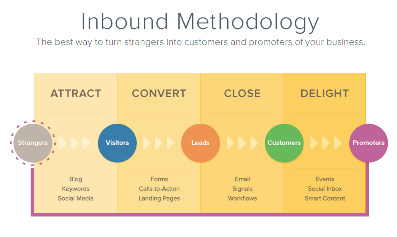
Inbound marketing is used to draw clients places where they want to be, naturally. First they are strangers, then hopefully; they become visitors, leads, customers and promoters. By distributing your content to the world, you epitomize the phrase “sharing is caring.”

Furthermore, consumers are not as intimidated by inbound marketing as they are by outbound marketing. They can ignore an ad, but they might not want to ignore your illuminating article. So, go forth and escalate your inbound marketing strategies. Have you thought about how you plan to do so?

29 Mar 17:04

Content Marketing: A Modern Day Bard

by Max Stinson

All fantasy role-play geeks recognize the bard. And unlike most people, they’re not fooled by that weak looking, poet singing, mandolin carrying traveler. Bards have been known for their wide array of knowledge to survive during medieval times with not only instruments and weapons, but knowledge as well. The historical bard had played a role in sharing not just British, Irish, or Scottish but all of European culture.

How did they do it? Mostly in the same way today’s B2B marketers these days gather and share information all over.

Content Marketing: A Modern Day Bard image BardSee, all Celtic bards share the history of archiving historical documents and telling stories. They travel around for a long time, carrying with them vast knowledge during a time where isolation was still an issue when it came to the spreading of information.

Most of the bards in the past have been acknowledged for their keen memory and quick observational skills. These same skills were used even by the ruling monarchs. Coupled with their charismatic voices and creative storytelling, they made an easy job of approaching the masses with political messages.

B2B marketing is the same minus the political agenda. The history of the bard only goes to show that corporate storytelling isn’t all that new. Using presentations and books to tell a company’s great history is a more widespread practice as opposed to promoting products.

On the other hand, it’s still hard to find brands that do it well enough.

For one thing, it’s technically impossible for marketers to create enough original, quality material for each channel every day. Many rely on content creation to help build brand awareness and generate leads via social media and email marketing.

Yet the convenience of sharing stories had caused floods of content across every type of channel, where marketers are spending a lot of time creating with little return. The wrong content or old news content would most likely just fall on deaf ears due to hasty creation and distribution. It’s those mistakes that are compromising the results of content marketing campaigns.

Fortunately, it’s not like change isn’t happening. Whether its Cisco’s The Network, GE’s GE Reports or Boeing’s site, companies have created dynamic newsrooms that discuss topics on social media, share videos and data, as well as closer collaboration with journalists. As content marketing and brand journalism takes hold, better corporate storytelling examples have emerged, especially in B2B marketing where sales cycles are longer and the need to engage your audience is crucial.

Content Marketing: A Modern Day Bard image KSSF5

29 Mar 17:04

Why Branding is Important for Every Marketing Campaign

by Jonathan Long

Why Branding is Important for Every Marketing Campaign image Why Branding is Important for Every Marketing Campaign

Using an online marketing campaign in order to build a business is crucial these days. In fact, one would be insane to not utilize online marketing because failure would be imminent if the online space was ignored. There are several components that come together to create a successful online marketing campaign and all of them need to focus around building the brand.

The “brand” can be the actual company name or some businesses will brand the face of the company as well as the company name. Every business has different objectives but it will 99% of the time be the company name or the owner/face (expert) and the company name that the campaign focuses on.

In terms of SEO, it is important that a business is well represented across business directories, social platforms, and local listings, just to name a few. The key is consistency, so make sure that the business name, address, and phone number is consistent and in the same format every time it is spread across the internet. Search engines put more weight on a website that is represented in a consistent format across the internet. This isn’t to suggest that you just plug in the business information into software and blast it into any “business directory” that you can find. That is the kind of low quality and spammy search engine optimization can cause penalties and low rankings. Think quality over quantity when it comes to your SEO efforts.

Consistent branding and using popular social sites such as Twitter, Facebook, YouTube, and Google+ also serve to help fill up the first page of the search results with pages that can be developed to help promote the company and engage the end user.

Let’s assume that a company’s website sits in the number one position. When done correctly the entire first page of results will all direct potential customers back to the main page, or at least engage them in some form regardless of what search result they click on. Examples:

Facebook

A business Facebook page is a great way to present special offers, promotions, and interact with the following. When setting up the business Facebook page make sure to fill out ALL of the contact information, including business hours, phone number, etc – because there will be some people that decide to click on this page rather than the actual business website. They allow for complete information to be entered so take full advantage and make the page as complete as possible.

Twitter

Just like with Facebook, a Twitter page can be used to display a message to the visitor and also have a link back to the main company website. Another great thing about Twitter is the marketing space available on the profile page. Creating a custom background with contact details, special offers, or a message for anyone that visits the page is a great way to grab attention. Now, the background seen by mobile users, but it is a great way to interact with the desktop viewers that land on your Twitter page.

YouTube

It is always a great idea to create a YouTube page for the business, simply because they tend to rank high very quickly. Always use the brand name for the URL extension when possible. (That should have mentioned that above – always use the brand name for the URL extension for all social sites) Video marketing works well and YouTube is the second largest search engine behind Google, so people are using it. Make sure your brand is found there as well.

Google+

The business Google+ page is beneficial for the main business website as well. Make sure to fill out the page completely. For example, they allow a maximum number of photos and videos. Make sure to upload the maximum and make it 100% complete. Then link the main business site to the business Google+ page and submit for verification. This plays a huge role in local search and only takes a few minutes to complete.

Now, even once the business and business profiles are all occupying the top search results it doesn’t mean that the branding can stop. This is something that needs to continue month in and month out. Using these social profiles helps to get the brand name and message out to the current people that are attached socially, and it also presents the opportunity to attract new consumers to the brand. To make sure your social media effort is going to be effective make sure to check out these 8 signs your social media strategy needs help.

This is just a very tiny part of an overall online marketing strategy. All of the little pieces, such as the branding campaign all work together in order to achieve the ultimate goal, which is increased conversions (sales, consumer data, leads, etc) and an overall healthy ROI. When done correctly online marketing and advertising produces a much higher ROI than traditional print, radio, and TV do.

If you would like more free online marketing tips, visit HERE and download the eBook entitled, “The Complete A-Z Online Marketing Strategy Guide.”

29 Mar 17:03

3 Ways to Break Through the Noise at a Trade Show

by Janine Popick

You might not exhibit at trade shows regularly. You might not have a huge, flashy booth. But you can still come home a success.

My e-mail marketing company, VerticalResponse, recently attended and exhibited at a retail trade show in Las Vegas. It was a large, multi-day event with over 14,000 attendees and tons of booths on the show floor--a daunting experience if you don't exhibit at trade shows regularly or can't afford a huge, flashy booth.

Here are three ways you and your business can break through the noise at any trade show and make sure you come home a success:

1. Personality counts.

The very nature of trade shows demands that you have personality. From the look and feel of your booth to the people who are working at it--does your booth blend in or stand out? Do you use the same cookie cutter booth for every show, or do you target your booth to the type of show you're attending? Even though it might require more time, energy and money, targeting your booth to the type of show you're at can really help.

For instance, if you're at a show that is about visual merchandising, you're going to want your booth to be visually captivating. If you go with a standard 10-foot-by-10-foot booth with little to no visuals, you might be hurting for leads no matter how compelling your product or service. I wrote about this before when I attended SXSW last year.

You also really want to think about who you send to work in your booth. Often this is delegated to entry-level sales folks or junior members of the team. But I challenge you to think about your end goal. What do you hope to accomplish at the trade show? Do you want more leads? Do you want potential partner deals? Your end goal will help you determine who will best deliver that result.

For example, at the show we just attended there was a locker company directly across from our booth. The guy in the booth asked people as they walked by, "Interested in lockers?" I was dying as I watched it happen, because he was breaking the cardinal rule of sales. He was asking a closed-ended question. Also, he had a pretty specific product, so not every person walking by was going to take his line. But in his defense he said, "You gotta keep trying because eventually, someone says 'yes.'" He earned points for persistence--for sure! On the other side of our booth was a group of guys who designed booths and could manufacture just about anything. Their booth was hoppin' all day long. And their main guy would approach folks who walked up with the question, "What do you do?" He started a conversation, made it about them and was then able to assess how the product would be a fit for the person and quickly tailor his pitch that direction. Guess whose booth got more leads?

2. Be novel.

In the sea of booths at a trade show, a lot can be said for having some novelty to attract folks to your front door. As an attendee, it's easy to get caught in the tangle of people and not want to break away for yet another sales pitch from a desperate and bored exhibitor. Shake things up in your booth with something unexpected, fun and, yes, interactive, to get folks involved and engaged. Ditch the usual swag of free pens and stress balls and give away something memorable. The same booth that had the great staff also had a 7-foot-tall gumball machine right at the front of their booth. When they talked to folks, they encouraged them to turn the crank and out would pop a mini gorilla. People ate it up.

Another example: We recently attended a show that was focused on dogs. (Lots of dog owners have small businesses that need e-mail marketing!) We gave away dog brushes that literally flew off our table. People liked them so much they were offering to buy them. Nostalgia is also effective at eliciting response from a crowd. I've seen booths giveaway popcorn, cotton candy, cupcakes and good ol' booze in this effort. How can you give away something cool, but also something that resonates and relates?

3. Stay engaged.

You never know what will happen even if you're at a show that seems to miss the mark for your company, or that feels slow. Don't fall into the trap of getting bored, starting to do other work and ignoring attendees. It's easy to have happen at a multi-day show when the adrenaline and coffee run out and the people in your booth lose their show mojo. A woman who sells vintage props had a booth next to us and it was super slow for her. She left her booth for a while and guess what? A huge client came to see her! Luckily the client waited for her (This would not usually happen.), and she closed a deal on the spot. She got lucky.

I must admit, our product and service wasn't a great fit for the show attendees, but we quickly realized it was a great fit for the other exhibitors. We talked to lots of them and ended up closing two deals during the show. Lesson? Seize the moment, stick with it and work it with everything you've got. Every show is different, and you never know when that next great lead or deal is going to appear. Will they stop or walk on by? That's up to you, isn't it?

What tips would you add to break through the noise at a trade show? Share them in the comments.

Did you enjoy this post? If so, sign up for the free VR Buzz and check out the VerticalResponse Marketing Blog.


29 Mar 17:03

Is Your Teleservices Department Leaving Money on the Table?

by Jeff Kalter

Is Your Teleservices Department Leaving Money on the Table? image 935dbd09c0a7727e2143877810820513 S

If you’ve put together an in-house team to make and receive phone calls as part of your sales and marketing process, you’re probably wondering if you’re getting your money’s worth. Is the program as cost effective as possible? Are you optimizing lead qualification efforts and maximizing your return on investment?

The answer is: Probably not. Why?

Because an in-house team will likely cost your company more than outsourced teleservices. And more often than not, in-house teams are not as effective. Let’s examine this in greater detail.

The Deception of Direct Costs

When you look at direct costs, you’ll likely see that internal staff cost less per hour than outsourced teleservices. But the hourly cost of agents is just the tip of the iceberg.

Those agents need space that’s comfortably heated or air conditioned. They need workstations, computers, and, of course, phones. Also, to assure remarkable results, you’ll want to support them with the latest marketing automation and customer relationship management systems.

And those agents aren’t just going to materialize. You have to recruit, interview, hire, train, motivate and retain them. It isn’t easy to recruit the right B2B telesales agents—the ones who get results and remain loyal. That’s because when you’re selling a complex product that requires a consultative sale, you need educated agents who know how to listen and solve problems.

In addition, you need someone to manage the department, and set up the processes and systems so it runs like clockwork, generating qualified leads and nurture relationships with clients.

Ramping Up Takes Time and Expertise

It may seem simple to set up a group of people and put them on the phone to call your prospects and clients. But there’s a learning curve to hiring, training, managing, and keeping agents positive even when they face rejection; setting up strategic campaigns; measuring results and refining tactics.

Outsourcing is Quicker and More Profitable

When you outsource your B2B teleservices, and pick the right company as your partner, you get up and running quickly.

By finding a company that specializes in B2B teleservices, you can leverage their knowledge of teleservices and best practices in your industry. They already have educated, intelligent agents who can converse peer-to-peer with business managers. The company’s leadership knows how to train them, and the agents know the right questions to ask to come up to speed quickly on new products and solutions.

The right company will offer you dedicated agents who work only on your company’s campaign. Essentially, they become an extension of your organization. They are so steeped in your offering that it’s easy for them to have free flowing conversations with your prospects and clients.

And because processes and systems are already in place, you’ll get real-time reporting immediately. As your partner works to fulfill the objectives you’ve defined together, you’ll receive real-time reporting that shows you their progress, enables you to ask questions, and oversee their efforts as they refine your campaigns and accelerate your results.

So if you’re not outsourcing your teleservices, you are probably leaving money on the table—in the form of increased costs or lukewarm results. Let the experts do the work—whether it’s lead generation, lead nurturing, lead qualification, appointment setting, response management, win/loss analysis, list development, or something else.

For more information download our FREE e-book: “Bridge the Divide Between Sales and Marketing.”

29 Mar 17:03

Why You Still Need Inbound Marketing (Even If Your Prospects Are Already In Your Database)

by kburke@hubspot.com (Katie Burke)

inbound-methodologyIf you’ve been reading HubSpot content for awhile, you know as well as we do that inbound marketing works magic for lead generation. Indeed, one of the greatest benefits of inbound marketing is that it’s continuous and compounding: By creating ownable assets to generate awareness, traffic, and thought leadership, you benefit from the content you’ve created and promoted even when you’re not in the midst of a significant campaign or push. In fact, roughly 70% of the leads generated by the HubSpot blog are from old blog entries: Try doing THAT with paid advertising, and you’ll be sorely disappointed.

But what if you are a niche company, with a niche product that can only be used by a finite audience? And here’s the kicker -- what if all of the people you’re trying to market to are already in your database.

For example, your business sells machinery to the government and all three purchasing agents are already customers. Or you provide high-end big data solutions for Fortune 50 companies and already have all their CTOs in your cell phone. Surely, with a product and a market like that, you don’t need to boil the ocean to be successful. You need to continue to sell more units more often to contacts you already have.

Marketers operating in highly specialized industries often ask us: Can our business benefit from an inbound approach even if we operate in a niche market? The answer is a resounding “yes.” Below we’ve outlined how inbound marketing can be used to drive business results regardless of whether your target audience is three people or three million people.

Always Be Influencing

Most decision-making processes within organizations are non-linear -- they're heavily influenced by current business conditions, the personalities and business units involved, and the relationships and context everyone involved in the decision bring to bear on the project. As a result, smart marketers use content, social selling, and effective influencer relations to impact the selection process because they recognize that every individual, regardless of seniority or industry, is impacted by current trends, social media, the opinions of their colleagues, and leaders in their respective industries.

By way of example, one of my favorite articles on decision making comes from an interview with Ram Charan in the Harvard Business Review. Ram is a preeminent business advisor to companies like GE and 3M as well as a best-selling author. When asked about executive decision making, Ram is quick to note that the best CEOs in the world have “perceptual acuity -- the ability to sense what is coming before the fog clears” and are “compulsively attuned to the external environment,” noting Ted Turner’s ability to anticipate consumer appetite for the 24-7 news cycle as an example of unparalleled acuity in the media space. Charan goes on to note that “many CEOs do not hesitate to go directly to sources at the scene of the action or to tap informal social networks.”

In other words, the best leaders in the world rarely rely on the past to predict the future, so relying upon your existing relationship with a CTO, CMO, or CEO to win the day is not prudent: You want to always be influencing the process and putting your best foot forward. Anyone can send a client fruit baskets and thank you notes; what sets your business apart long-term is your ability to demonstrate legitimate thought leadership and differentiate yourself from competitors.

Your blog entries should help you nurture existing relationships with prospects and customers, demonstrate thought leadership to influencers in your industry, and ultimately demonstrate to the world that you are the unquestionable experts in your space. The best leaders in the world leverage disparate sources to identify trends and market factors that will impact their business; the best companies in the world leverage this information to influence the process with impactful inbound marketing.

Inbound Helps You Actively Listen

Chances are, you call upon or visit your existing customers on a regular basis. Depending on your line of business, you might check in on your accounts daily, weekly, monthly, or yearly to offer assistance or thank your customers for their business. However, conventional account management often misses proactive upgrade opportunities within companies you already do business with and minor annoyances with existing vendors or systems that you may be able to address with your service or product. Even worse, one of your customers could be tweeting frustrations with your offer that you never respond to, and those minor hiccups could eventually lead to lost accounts and revenue.

Instead of waiting for your next calendar appointment to check in on a customer, take an inbound marketing approach to give you a 360-degree view of how your customers and prospects work on a daily basis. By understanding their pain points and day-to-day tasks, you can delight existing customers with new blog posts, feature updates, or support before they have to go looking for it.

At the end of the day, businesses move and evolve at a rapid pace, so proactively creating lists of your accounts to interact with on social media can help you identify signals in the market that your existing business could be in jeopardy, that there are proactive opportunities to upgrade your agreement, and to keep tabs on new executive arrivals that might influence the company’s decision making moving forward, all of which can generate significant business for your organization.

Your customers, prospects, and leads are telling their networks about their business challenges, needs, and goals on a regular basis. Maybe the CEO him or herself does not post actively on Twitter, but the company’s CMO might, or the company’s LinkedIn Pages showcase hiring patterns that are relevant to your company’s services. Either way, by the time you reach out for a check-in with your customers, they (or a related business unit within their organization) might have already made a business decision without your input or insight. Think about using social media to tune in and stay in the loop.   

Empowering Your Internal Champion

If you are in the considered purchase business, chances are you are lucky to have an internal champion at most of the organizations you do business with on a regular basis. These people understand your product, typically engage with it on a daily basis, and have great rapport with your sales and marketing teams. Your company likely takes great care of this person and team with the likes of fruit baskets at Christmas or VIP treatment at a customer dinner, but what are you doing to empower them on a daily basis in their job?

One of my previous jobs was running marketing for a high-end corporate wellness company. We were fortunate to have some truly marquis clients in the Fortune 500, all accounts that continued to expand as a result of strong internal champions within the organization who went to bat for our approach time after time. Instead of resting and waiting for word from each internal champion for the next account we could compete for, we spent a lot of time and energy creating content to empower them.

For example, we created a video highlighting employee successes with our program and created two versions of the video: one that we could use to pitch additional external business, and one solely focused on helping the influencer make the case for the success of our program internally. We also created and shared content on internal employee social networks to build excitement and enthusiasm for our offering within each organization. Creating and sharing these pieces of content on our blog not only helped us empower our internal champion, but also helped us rank highly in search, resulting in both organic traffic and media coverage for the organization.

This impact not only made the job of internal champions at each company easier, but also served as insurance if and when those champions moved on to different opportunities. People are more apt to jump from job to job today than they were fifteen years ago, so you can no longer plan your business around one individual’s tenure at an organization.

Market Traction

Stitch Fix is a West Coast-based startup that matches women with personal stylists, delivering a monthly “fix” to their door based on an online style profile. Like any great entrepreneur, Katrina Lake identified a target market, assuming her primary audience would be busy 20- and 30-somethings in New York and San Francisco with high interest in fashion but little time to shop due to demanding careers. The company began marketing its offering with inbound tactics, relying heavily upon Twitter and Pinterest to demonstrate thought leadership in the style world, and creating easily accessible (and highly shareable) content based on individual style Fixes.

In spite of her early predictions on the company’s potential market, Lake recently told the New York Times “that concept really resonated with moms and people who were busy with their kids and families.” The company’s success with moms from Minnesota to Montana not only surprised Lake, it also helped convince investors that there was in fact a market for another style delivery player in the marketplace. Inbound marketing tactics not only helped Stitch Fix attract new customers, but also send a strong signal to the market that they could compete and win in an already crowded industry.

Creating and sharing content with inbound marketing creates a captive audience of people who legitimately care about the work you do, the industry you play in, and the problems you’re solving. You can’t just buy a list of those people; you have to earn their trust, loyalty, and respect. Doing so with content and thought leadership is an investment in your business -- not just for today, but for the next decade.

Your Competition Likely Has Your Contacts, Too

Chances are, if you bought a list of industry contacts or met them at industry events, your competitors have those leads in their database, too. To stay ahead of the competition, you can’t run an isolated one-note playbook rooted in in-person meetings and periodic one-off emails. You need a toolbox full of tactics to keep your brand top of mind, whether your leads are asking for a vendor recommendation on LinkedIn, revisiting your website for more information, or perusing your blog for industry insights and updates.

Let’s not forget that if your leads are in your competitor’s database, and your executive decision maker knows both of you well from regular check-ins, he or she might decide at some point to revisit the all-knowing search engines for more information or to check out trends she should be in the loop on for future decisions. The number one company ranking on Google gets roughly 33% of associated organic search traffic, so failing to create and promote remarkable content leaves page views (and thus money) on the table on a weekly basis.

Influencers, decision makers, and executives are incredibly busy. Your job as a vendor is to be the signal that breaks through the noise, and by far the best way to make that happen is creating and promoting exceptional, relevant content across all of your marketing channels, and implementing an integrated system and approach to analyze what works and what doesn’t.

Inbound marketing helps you stay ahead of your competition and on top of the radar for the leads you care about most. Moreover, effective content creation and promotion builds ownable assets that continue to deliver value over time -- so unlike trade shows, paid advertising, and events, there’s no time limit or expiration date associated with the value you can extract from your effort.

Your Leads Are Busy

They may not visit your website every month. They may have been only half-listening when you talked about your latest product roadmap or initiative. They may have met with your competitors more recently than you. Regardless of whether they are in your database, they may not be in your back pocket, and assuming that you're at the top of their list at all times can leave significant business on the table.

With inbound marketing, every blog post is a chance to nurture your leads, every tweet is an invitation to converse, and each keyword you rank for increases the likelihood they’ll come your way the next time they have new business to share. Inbound marketing offers a profound opportunity to connect with and help your leads succeed with your product on their terms, and to diversify your approach to align with how your leads shop and buy on a regular basis.

I'm a big fan of the Patricia Quipp quote: "It's not your customer's job to remember you. It is your obligation and responsibility to ensure that they don't forget you." Inbound marketing is the perfect opportunity to deliver on that responsibility, and one you should start taking advantage of today.

get 100 free inbound marketing stats

subscribe to the hubspot marketing blog

29 Mar 17:03

5 Myths of Email Marketing

by Chris Hoell

5 Myths of Email Marketing image Email MarketingEmail marketing has become one of the most effective ways to drive traffic to your website and boost your sales. Anyone who is looking for tips to improve their practices can turn to the web for helpful advice. Unfortunately, not all advice that people have gathered on email marketing is correct anymore. There are many common myths associated with email marketing that are preventing companies from truly gaining the most from this marketing medium. After speaking with some of our team at BlueHornet, I hope to debunk some of these myths and help you get back on the path to maximizing your email marketing efforts.

Myth 1: Too many emails will irritate your customers.

There seems to be a sentiment amongst people that sending frequent emails to your customers or subscribers is the wrong thing to do. And that by doing this, your subscribers are tuning out your messages. This is not true, to a point. Each business needs to find the right email frequency, which may be tough and a little nerve-racking to do. But there have been studies that show the majority of consumers average less than six branded email messages per day. When crafting your emails, ensure the body content and subject lines are fresh, varied, personalized to the recipient and not spammy. Then pay attention to the opt-out rates of your messages. If you see a jump in the number of people asking to be removed from your emails, you’ll need to make changes…quickly. And remember that an easy way to save subscribers that are considering opting out is to give them an option to reduce the number of emails they receive rather than unsubscribe altogether.

Myth 2: Testing a small percentage of a list will show the effectiveness of a message.

When testing an email message, the statistical sampling must be large enough that the actions from the audience are an accurate portrayal of how the whole list might react. Unfortunately, I can’t just say that testing a set percentage of a list will always produce accurate results – because it won’t. There are simply too many variables unique to each email marketing campaign. But here is a simple rule to keep in mind. The large the test group, the more accurate your results will be. Don’t have a marketing analyst to give you a deep numbers dive? Don’t worry! There are also some great online tools to help you determine how to best size your test sample.

Myth 3: There is no need to clean up an email list. If the address is old or defunct, it’ll just bounce.

Do not fall into this trap! Any inactive addresses from email campaigns should always be filtered out on a regular basis. You don’t need to completely remove them from your database, but you should stop sending email to them. Immediately. Repeatedly sending emails to inactive addresses could cause your ISP to blacklist your domain, and you’ll really be in trouble. Once you’re blacklisted, it can take an extremely long time and a lot of effort to be removed. So keep those lists as clean and updated as possible.

Myth 4: All emails need to be short and to the point.

Not all emails need to be constructed in the same cookie-cutter manner. While some should be short and sweet, it’s ok for some emails to be lengthier. If the product you are featuring in your email is complex, your subscribers may expect you to include a larger amount of content and will be perfectly happy to scroll to learn more or see additional content. Regardless of the length of your email marketing messages, there are common components that every email should contain. For example, include an extremely obvious, clear call to action and always, always, always place it above the fold.

Myth 5: Open rate is an extremely effective metric to monitor

Many email marketers place a lot of credence into the open rates of their messages. These are typically the basis for results of A/B tests and are seen as good indicators of whether or not your email was effective. This is not the case. Open rates can be extremely misleading for a few reasons:

1 – Most email providers indicate a message is opened once the images are downloaded. Any subscriber on your mailing list using Outlook has images blocked by default. Outlook users can also view a message in their preview panes without ever clicking to open the message. In this instance, your email was read, but the open rate doesn’t accurately reflect that.

2 – Recently Google announced that it will automatically display images within Gmail. Prior to this change, image blocking was a very common practice among email providers. We have our images blocked by default so all of the people who message me daily might be thinking that I’m not reading all of their messages.

3 – The standard default for many mobile devices is to display email messages in text format. Again, because images are not downloaded, open rates will reflect a much lower number than is accurate.

Therefore, instead of relying on open rates, consider looking at more concise tracking options like click through rates and number of new leads generated. These more accurately reflect what subscribers are doing with your messages and will give you a better idea both about what was effective and what needs to be changed.

There isn’t a standard template that will ensure every email marketing program is successful. Many of the common “no-no’s” don’t apply to everyone. Thus, it’s crucial to the success of your email marketing campaign to take the time to learn what your subscribers want and how you can reach them most effectively.

Do you know of other myths about email marketing? Let us know in the comments section below!

29 Mar 17:03

3 Ways to Keep Departing Sales Reps from Stealing Your Clients

by Nick Bideshi

3 Ways to Keep Departing Sales Reps from Stealing Your Clients image robberAt Industrial Quality Management, we help small and mid-sized B2B companies grow their revenue and profitability through management consulting and modern marketing processes and technologies. Since we work as our clients’ partners, we are usually deeply involved in helping them solve a wide variety of problems.

We often find that many of our client businesses are facing an enemy within – an enemy that small and mid-sized companies can’t afford to ignore: Each time a salesperson is let go or quits, they take some of their clients with them. This can result in a sales slump that varies depending on how many clients the sales rep takes with them and how large those accounts were.

It’s surprising to learn that, according to Symantec research, half of employees admit to taking corporate data when they leave a job, and 40% intend to use it in a new position. It is estimated that an even higher percentage of salespeople take company and client information when they leave a job. What makes these findings even more shocking is the fact that even when sensitive intellectual property theft occurs and the company finds out, more than half of the time the company takes no action against the former employee.

There are ways to mitigate this loss of prospects, clients and data; it just takes some creative problem solving. Here are three solid strategies to help:

1) Marketing Automation

What could a marketing automation system have to do with keeping your customer lists safe? This may not seem like a direct link at first, but hear me out. As you gain leads, they come into your marketing automation system where all their information is captured. As they interact with you (e.g. visiting a web page, opening an email) those activities are tracked and logged. The marketing team manages the leads, acting on them to gently move them further down the funnel, often using drip marketing programs for education and relationship building. Marketing retains the leads until they are ready for sales, reducing (if not outright eliminating) cold calls, and sending the salesperson information about warm leads only. This means that when a salesperson leaves your company, your marketing team still retains all prospect and client information and behavioral data. Since the salesperson can’t access the marketing database, it’s an extra layer of data protection.

2) Sales Team Structure

The main reason customer relationship management (CRM) systems often don’t work in a small-to-medium business is that salespeople generally hate paperwork and data entry. Not only that, usually they aren’t good at these activities. In some companies structuring a sales team as a Hub-and-Spoke is a practical way to make salespeople happier and yield higher sales. You do this by assigning a full time CRM sales support admin for every five to ten salespeople; the number of salespeople an administrator can support depends on how technical the nature of a sale is. All the salesperson does is close the deal; as soon as it’s closed they inform the client that someone will call them and take the order. Deploying a Hub-and-Spoke structure to your sales team has three main benefits:

  • Firstly, if deployed properly all sales people will get more time on the road or on the phones engaging with clients since they should have much less paperwork.
  • Secondly, the CRM sales support admin does most of the paperwork, but salespeople have to gather the information. With the admin holding salespeople to account for data completeness – there will be no more half-filled information on your CRM!
  • Lastly, since the CRM now holds all the information and part of the relationship is held by the internal CRM admin, even if the salesperson leaves the customer is more likely to stay with the company.

3) Systems integration and security

Marketing automation systems are more effective when integrated with a CRM system, and even more so when the CRM is housed or connected to an ERP system. With this method you not only have cradle-to-grave tracking of all your revenue and marketing functions but you also have incredible levels of intimate knowledge of all your customers. In the event a salesperson leaves your company, all past information remains securely stored and a new salesperson can pick up right where the last one left off.

And in the end…

It all comes down to the execution of any program or system. There are many naysayers that would tell you that a close relationship with a customer trumps any technical information you have on them. The truth is, those two aspects of the relationship are increasingly commingled as more technology comes into play, especially technologies like marketing automation that foster personalization and deeper customer understanding. And while the sales role remains highly specialized and critically important, the customer lifecycle is increasingly managed through marketing and support, making the sales relationship a smaller part of it. If your customer’s total experience with your company has been positive (and especially if you’re doing retention marketing), it’s more likely that their loyalty is to the company, and less likely that it’s to the sales rep. Remember also that buyers know there’s a risk in changing vendors.

Through superior information gathering, data completeness, and delivering value, your company can meet and exceed your client’s needs throughout the entire lifecycle. If you do this and do it well, most if not all of your current clients will stay with your company – even if one of your salespeople tries to take them as they leave.

If there’s a moral to the story it’s this: Keep your friends close – and your customers closer.

Image credit
29 Mar 17:03

Leading and Learning: How to Turn Employees Into Brand Ambassadors

by Holly Paul

Social media has become indispensable for business communications, but all too often brands fail to empower one of the strongest social assets: their employees.

Considering that businesses with high employee engagement get nearly four times the revenue per share than competitors with less employee engagement, failing to create employee ambassadors is akin to telling top salespeople to stay home.

Employees can expand brand footprint through positive engagement, anecdotes and thought leadership. And as they gain a larger social following, it often leads to the acquisition of new customers, organizational talent.

Creating brand ambassadors takes more than giving employees Twitter accounts, especially since only 30 percent of Americans are engaged in their jobs, according to the 2013 State of the American Workplace report.

All hope is not lost, though.

Start from day one

The first day is a fantastic time to get people hooked. They’re excited about the company and their job, and want to make a good impression while learning about where they work.

After day one, you can lose them as they bury their heads in their job and everything else moves to the back burner. Asking them to become a brand ambassador then is piling onto other duties.

Set aside time in orientation to help new hires set up Twitter and LinkedIn profiles and even provide blurbs about the company and their position that they can use.

In addition to making social as easy as cut and paste, standard language across brand ambassador accounts ensures that employee profiles are optimized with the right brand message and keywords. It also helps people build brand associations from employee accounts.

Think it’s impossible? Not quite. When I was at PricewaterhouseCoopers, it had more than 150,000 employees and well more than half had updated profiles that described the professional services firm similarly, providing a clear brand message that resonates and sticks with prospects.

The consistency doesn’t just have to be the words. It can be a look and feel.

Look no further than the Twitter avatars of Carrot Creative, a Brooklyn-based digital media company. All of the employees use a cartoon portrait of themselves over a green background. The ensemble looks similar to the company’s logo and helps promote their brand.

Make sharing a habit

If companies really want to effectively use employees on social, they have to create internal behaviors that employees will use externally.

Encourage social media use by creating forums for employees to interact. As the social habit becomes engrained, they’ll become more likely to use social media as a brand ambassador.

At Vocus, I often receive employee requests about starting a sports team, sponsoring a charity event or any number of ideas. I tell them to put it on Chatter, our internal social network filled with company news. If they can field a team or generate enough volunteers, we’ll happily help them.

Using Chatter does two things: 1. It empowers employees, making them take more pride in the initiative, and 2. Internal posts lead to external sharing.

People are creatures of habit. The more you create social forums for people to interact, the greater the chance they’ll take that behavior outside of the company.

Provide role models

Edelman’s 2013 Trust Barometer showed that people trusted regular employees (50 percent) more than they did CEOs (46 percent). When the employee has technical expertise, the trust level shoots to 67 percent.

That’s great news. You have dozens to hundreds to thousands of trusted ambassadors. But it’s not an excuse to keep the C-suite off of social media.

Zappos CEO Tony Hsieh is a famous example and early adopter of Twitter for customer service. Back in 2008, AdWeek called him a “one-man customer-service machine,” organizing giveaways and resolving customer issues.

Hsieh showed his employees how and when to use social media. Six years later, Zappos has become as famous for unparalleled customer service as shoes.

An additional benefit of C-Suite tweets is that when executives take the time to do social, it shows that everyone can find a few minutes to engage customers and prospects.

Social role models don’t always sit in the boardroom, though. Employees in cubicles motivate their peers, too.

People, especially new hires or recent adopters, don’t respond and behave by a list of rules and policies. They watch people around them to see what’s accepted practice. Play on this. Give accolades and recognition when you see good things happening.

Prepare now for the future

Having a group of brand ambassadors is critical for businesses today, but it will only increase in importance as social becomes more and more entrenched as part of the buying cycle.

By 2018, the 75 million millennials in the U.S. will outspend every other generation, including baby boomers. Of those big-spending millennials, 63 percent use social media to stay updated on brands, making having an online social presence critical.

Empowering employees to become engaged brand ambassadors today will help your business prosper in the current and future sales landscape.

29 Mar 17:02

3 E-Commerce Landing Pages Critiqued Like a Boss

by The Wishpond Blog

3 E Commerce Landing Pages Critiqued Like a Boss image tumblr inline n34a8ghnu21rur54v

How’s your E-commerce landing page doing? Have you optimized it for sales?

Do you know exactly how?

I’ve found one of the best ways to discuss landing page best practices is by showing exactly what I’m talking about. In this article I’ll dissect three landing pages variable by variable, discussing where they’ve done it right and where there’s room for improvement.

Optimizing your landing page for E-commerce checkouts is a never-ending process, but it’s a process worth doing. Optimizing your page so its rate of conversion goes from 15% go 18% can mean thousands of dollars of increased revenue for your E-commerce business.

So let’s do this thing.


DogCollar.ca


DogCollar.ca, somewhat unsurprisingly, sells dog collars online.

Let’s check out their landing page:

3 E Commerce Landing Pages Critiqued Like a Boss image Q7UGIrk5fvRC magZQJlD9iUeR5 ze2c IIQqF5YREZrfiei0sAkDdkI9Y vwaeRVmqShSgoScrGAEg2HrIz6dicOMqnEqcVGvhjvTX8PHurTEzDzuJvexNRF7GC A

What I like


The Tone:

  • I like the rock and roll style of this site. They’ve found a tone that works with them and they’re running with it.
  • Much of E-commerce marketing is about finding your own niche and individuality, and pushing it. DogCollar.ca has done this well.

The Easy Navigation:

  • The top four links (with large images) work really well to draw the eye.
  • They make it clear how to navigate to where you want to go – whether that’s collar selection, leads, or contact details.

The Product Display:

  • Piling their products up and displaying them in a large image is an effective way to grab people’s attention (especially in such a relatively small and short landing page). If someone sees something they like they’re far more likely to click through.


What I’d Change or Test


The Font:

  • Sometimes it’s the smallest things that have the largest affect on your landing page’s conversions.
  • In this case, I’d definitely test a different font – as a few of the words (see “Collars” at the top) are somewhat difficult to read – which could increase the page’s bounce rate.

A Picture of a Dog:

  • DogCollar.ca is missing a serious beat by not including pictures of their collars on actual dogs. I would guess that throwing a cute dog image (or a revolving album) could increase their page conversions by anywhere between 15 and 25%.

The Mid-2000s Design:

  • Anything that dates your landing page (like the red banner at the bottom) will detract from your page’s conversions. I’d recommend a straight matte banner on the bottom with the links standing out a bit more.

A CTA:

  • The revolving album I recommended above would also be perfect for a few specific call-to-actions (CTAs):
  • Showing a picture of a dog with one of their most popular collars would work with the CTA “Check out our bespoke dog collars today”.
  • Showing a picture of a dog and its stylish owner showcasing their most popular lead would work with the CTA “Get 10% off your pup’s accessories now!”
  • Showing a picture of the DogCollar.ca staff with their own pooches would work with a “passion for dogs” quote and a “Contact Us Now” CTA.

Visitors to your landing page may not know exactly what they’re there for. You need to tell them. CTAs (the “Ask” on your page) do this. Landing pages are the face of your E-commerce brand online – make sure that face is saying something.


XEROSHOES


Xeroshoes are an E-commerce company who has developed a shoe (and accessories) based around the recent trend of barefoot running.

Let’s check out their landing page:

3 E Commerce Landing Pages Critiqued Like a Boss image

What I like


The Easy Navigation:

  • Far and away the most visible part of this page is the selection “shop men’s” or “shop women’s”.
  • This makes it easy to quickly and easily navigate to what you’re on the site for, which will decrease bounce rates (there’s nothing worth than not being able to find what you’re looking for on an E-commerce site).

The CTAs:

  • “Shop Men’s” and “Shop Women’s” are actually pretty solid CTA’s.
  • I love the color contrast as well. Yellow on green works very well to grab the eye of the page’s internet traffic.

The Customer Testimonials:

  • Customer testimonials are incredibly valuable on your landing page, especially when you product needs some explanation (like Xeroshoes’ does).
  • People don’t, implicitly, trust your business. They trust your customers far more.
  • I also like including headshots of the customers giving their testimonial. This improves the personable tone of the page.


What I’d Change or Test


A More Focused Page:

  • Below-the-fold (what you can’t see without scrolling down on the page) is a very confusing place on this page.
  • There are a total of 13 different images – which detracts from the appeal of all of them
  • I’d recommend keeping the customer testimonials and “Barefoot Walking”, “Barefoot Running” and “Why Barefoot?” and moving the rest to a product or resources page.

The Bottom Paragraph:

  • The bottom paragraph is a large amount of text – which detracts from the efficiency of the page by trying to do too much.
  • I recommend against paragraphs across-the-board. Nobody is on your landing page to read an essay. Sell them on the value of engaging with your brand and make a conversion easy. Everything else is distraction.

The Color Scheme:

  • The top half of this page is very clean and focused, with a great color scheme that I like.
  • The bottom half, however, is not only unfocused, but also loses the color scheme and becomes less exciting and less visually appealing.
  • I’d recommend they test fewer images (as I mentioned above) and integrating the green and blue back into the below-the-fold.

Another Lead-generating Page:

  • You can have as many landing page as you think are useful – I would recommend that Xeroshoes create another page entirely for their lead generation efforts (“Get Free Tips, Special Offers, and Free 7-Day E-Course” at the bottom)
  • Like I mentioned with DogCollar.ca above, you should focus your page on as few CTAs as possible. You’ll get more conversions on both your main landing page as well as your lead generation page if you separate them.


Reed & Barton


Reed and Barton is a high-end household goods business. They’ve been around since 1824, and have taken to the E-commerce world like a fish to water.

Let’s check out their landing page:

3 E Commerce Landing Pages Critiqued Like a Boss image TX79F3MMolC0qIQGeZXYytc2V9q91y7YV KtJWHvFGrYfAFSmf8zcR30EMKu1 VESIdZ6vnrUv0snpYvf3pE5pws7W1UcPmHGc0lvy1dYV4YNDldav41u1Xw7bsu Q

What I like


Having a USP:

  • Your business’ unique selling point should be one of the main focuses of your page.
  • Whether that’s a unique product line or a unique approach to a well-known product, or (like Reed & Barton) a unique philosophy and perspective.
  • It’s this uniqueness that will encourage people to engage with your brand as much as it is your products themselves.

The USP itself:

  • “A modern approach to home in philosophy as much as style” is perfect for their high-end target audience
  • Your USP should speak to your target audience as individuals – echoing their own desires

The Revolving Photo Album:

  • Reed & Barton’s landing page has four-image/USP combinations.
  • This is incredibly effective for E-commerce, as it shows off your products as well as drills home the uniqueness (with four awesome USPs) of your business.

The Color Scheme:

  • I like the dark blue, dark grey and white color scheme. These colors excellently communicate sophistication and quality.
  • The colors you use are hugely influential on the tone of your page. Consider dark blues and dark greys for elegance and urbanity. Consider green and beige for environmentally friendly, and bright colors (purple, orange and blue) for children and fun.

The CTA:

  • This is the only page of the three I’ve critiqued that has a loud and obvious CTA – something that hugely improves your page’s conversion rates.
  • The color contrast of this page (orange on grey) is awesome at attracting the eye of a landing page visitor. I recommend you test the color of your own CTA’s to see which your market responds to the most (you might be surprised how influential this kind of small change can be).

The Images:

  • I think that three to four images is the optimal number for an E-commerce page.


What I’d Change or Test


The Reed & Barton landing page is close to my ideal landing page for their market and sector. The page’s tone matches their target audience very well. The images are clean and appealing, and there is a limited amount of distractions that might pull a visitor away. I also like the small amount of text, no paragraphs, and exclusives.

The only small thing that I think would improve conversions would be to increase the size of the CTA at the top and repeat it near the bottom.

Apart from that, this page is optimized for conversions. Congratulations to Reed & Barton (to be fair, they’ve had since 1824 to figure it out).


Conclusion


Hopefully seeing these examples and having them taken apart piece by piece and variable by variable has encouraged you to optimize your own pages.

Here’s a hypothetical…

If your page is seeing 1000 visitors a week, currently converting website traffic at 15%, and a conversion is worth (on average) around $35 to your business, your page is making $5,250 a week.

If you implement some of the tests I’ve recommended above, it’s not unlikely that your page will increase conversions by at least 25% – raising your overall conversion rate to 18.75%.

1000 visitors a week converting at 18.75% at a value of $35 equals $6,562 – a weekly revenue increase of more than 1300 dollars.

Would you say no to $1300? Check out a few of the awesome A/B testing pages around the web and test the variables I’ve shown you above. See what sticks. See what makes you money!

By James Scherer

3 E Commerce Landing Pages Critiqued Like a Boss image tumblr inline n34ak9LwBN1rur54v

29 Mar 17:02

Is Cold Calling More Difficult than Closing?

by Craig Ferrara

Is Cold Calling More Difficult than Closing? image perfecting art cold calling resized 600Some would argue that cold calling is more difficult than closing a deal. When you think about it, you get rejected a heck of a lot more than you typically do when trying to bring in that new deal, right? Plus when you’re closing at least you have a captive audience willing to listen to what you have to offer. When you cold call, there is no guarantee what you’re offering is even of remote interest to the prospects you’re trying to get live.

Sure, everyone hates to cold call, but the average hot-shot rep assumes the tales they’re spinning are pure gold. I’ve seen many scenarios when outside sales reps tried picking up the phone and soon found out that the average cold prospect doesn’t give a damn. In fact, based on our research, we see only a 2% increase in the amount of leads converted to forecast brought in by a closing rep versus a less technical member of the inside sales team. Just because you know “more” about the product offering doesn’t mean you’ll automatically produce more leads when you’re prospecting.

I recently came across a nice read from Don Perkins which speaks to the mindset of rep when working a deal: Are You Still Seeking Approval in Sales?

He points out that many reps that are closing generally are “seeking approval” from their prospect. Basically we feel offended and “take it personally” when we aren’t able to close a deal. His stance is that we’re much better off NOT looking for that approval, because we’ll never feel rejected when the deal doesn’t go through.  As an alternative, he suggests “testing for agreement.” You need to think of every sales/discovery call as a test to reveal if a good fit for them…. and more importantly you. If you think of it that way, you’ll never feel rejected.

What I like is that this clearly applies to cold calling as well. Recognizing that 90% of your activity will result in a no, there is never any point in taking it personally. All you should be looking for is a fit. If the fit isn’t there… then that’s just one more person to take off the list and another good prospect to add.

I would say that being resilient is one of the more important characteristics in the sales game. You effectively have to prepare for any scenario. Assume the worst… hope for the best. I think a day of cold calling could be considered a microcosm of what you run into when trying to close a deal except that, as I mentioned above, failure is much more commonplace when you cold call.

From what I’ve seen, success in cold calling is simply about embracing the grind and dedication to consistent follow through. If you’ve got that covered already, then in my opinion you got most of what it takes.

This kind of mindset is especially critical when you cold call. With all the rejection you get each and every day, you’ll go insane if you’re looking for a “yes” every time.

Is Cold Calling More Difficult than Closing? image 49c4943b e150 418f 9be2 fc3bf3fee2a32

28 Mar 15:18

Try a Pattern Interrupt for Better Sales Results

by Jim Lobaito

Problem:  Kim, a ten-year sales veteran, never felt like she was in control of her sales calls.  She felt like her prospects and customers were always one step ahead of her.  She attended many training sessions and they all basically taught her the same thing: always ask for the order, use the same 2-3 foolproof ways to overcome the price objection, lead with, “If I could show you a way to fix that problem, would you buy my product?”  She felt these tactics must be effective since many of the trainers taught the same approaches.  Why weren’t they working for her?

Analysis:  Salespeople tend to be rather predictable and, as a result, buyers generally are in charge.  They recognize the salesperson’s approaches and have developed effective ways to deal with those approaches.  To illustrate this point, have you ever been doing something on “autopilot” such as driving a car?  You get too close to the car in front and you apply the brakes.  In a dangerous situation you honk the horn to warn another driver.  Neither activity requires you to stop and think.  You’re definitely not saying to yourself, “What should I do here?  Oh yeah, let’s honk the horn.  That’s a good idea.”  By then it’s too late anyway.  You just do it.  That’s autopilot.  That’s how we react instinctively to a situation.  Dealing with salespeople is a familiar situation to everyone and we all go on autopilot when we’re face to face with a salesperson.  In effect, salespeople build their own roadblocks by being so predictable.

Solution:  Don’t act like the typical salesperson.  Do the unexpected.  Try a “pattern interrupt” and keep your prospect off autopilot.  Here are a few examples:

  • Ask, “Sounds like I caught you at a bad time?” when you connect by phone.
  • Let your prospect know, “It’s okay to say ‘no’ if we don’t have a fit.”
  • Don’t jump on every “buying signal” you hear and try to close.  Instead, use a well-placed easy exit or takeaway to get the prospect to sell himself. “Really, I had no idea the impact was that significant.  Can you tell me a little more about that?”
  • Do your best Colombo routine, “I’m kind of confused, can you help me understand why that’s so important to the company?”

You get the idea.  Be different.  Your sales results will be different, too.  They’ll be better.

Good Selling!!

28 Mar 15:17

3 Strategies That Will Help You Identify Relevant B2B Blog Topics

by Sarah Greesonbach

3 Strategies That Will Help You Identify Relevant B2B Blog Topics image lightbulbhead

One of the most challenging aspects of the content marketing process is brainstorming ideas for relevant keywords and topics that will appeal to B2B buyers.

Reader engagement and high quality relationships come from insightful, interesting, and original content — not from dipping your toes in for a trial run.

The good news is that you’ve already got all you need to brainstorm and develop such content. You simply need to approach the information you already have in a unique way. Read on for three strategies that will help you find relevant B2B blog topics that readers want to read about and clients want to share.

1. Use Internal Resources for Organic Answers

First, get ready for a delightful surprise: most of the answers you need are right under your nose! The internal resources and knowledge you and your team have collected are a great source for blog post topics and “frequently answered question”-type resources.

Here are a few ways to get at this information:

  • Review your most recent emails about customer concerns and new product developments.
  • Keep notes during your sales meetings to figure out what questions people are asking during the sales process. What recurring themes do you see?
  • What are some hot topics in your industry and what’s your opinion?
  • What answers can you offer through your company blog that will build a relationship with your customer and move the sales process along?

2. Reverse-Engineer Social Media for Insightful Ideas

Social media can also be a helpful brainstorm tool, but not in the way you might think. Reverse-engineer your most popular platforms to develop insightful, helpful content. Here’s how:

  1. Find social media groups and trends in which your readers and prospective clients would be interested. On LinkedIn, that means groups and companies they might be following. On Google Plus, Facebook, and Twitter, that means hashtags and topic tags.
  2. Look at which topics the conversations revolve around and create informational posts to answer those questions.

You can look to your own business’s social media presence, the presence of your competitors, or to tools like Topsy, which allow you to search all of Twitter since 2006. Buried deep in the past you might find a few gems that get your brain working. You can also use a social media monitoring tool to identify blog post topics.

The final flourish for this strategy? Write the post and link to it where you got the idea — give a “hat tip” to the LinkedIn group and let them know you’ve answered their question in the post. Best case scenario you’ve recruited a new customer, worst case scenario you’ve positioned yourself as an authority on the topic for all who see the conversation thread.

3. Spark Your Imagination With Topic-Generating Tools

Organic ideas are always best, so it’s good to avoid the frequent use of content-topic generating tools. That said, they’re a great way to tease your brain into reacting to something new! After you catch up on your RSS feed that covers current trends, click over to a brainstorming tool and see what strikes your fancy.

One tool we love is Portent’s Content Idea Generator. Simply type in your industry keyword or topic and generate interesting, quirky topics that get your own ideas flowing. For a more thorough look at a topic, try Tweak Your Biz’s Title Generator, which will create a list of hundreds of topic ideas around your article or blog post topic.

Successful content development — the kind that can bring a huge lift in traffic – takes hard work. You’ve got to bring your experience, strengths, and insights to the table and share them with your prospective clients. Use these relevant topic brainstorm tips to fill your company blog with content that attracts and converts.

How do you brainstorm blog topics for your company? Are you leveraging internal subject matter experts, social media or topic generation tools?

3 Strategies That Will Help You Identify Relevant B2B Blog Topics image f7474d50 c825 4604 ab74 1f0b02155a3b

photo credit

28 Mar 15:16

B2B Buying Process May Give Edge to Inexperienced Sales Reps

by Rachel Clapp Miller

B2B Buying Process May Give Edge to Inexperienced Sales Reps image guy with iphoneNew research from Forrester shows greener sales reps may have an edge on veteran sales reps thanks to the new B2B buying process. When asked to rank (in order of importance) the five steps to conducting a successful sales meeting, salespeople with less than five years of experience answered nearly as correctly as those with 11+ years of experience, suggesting that the knowledge gap between the two groups is small.
Indeed, it’s true that head knowledge and experiential knowledge are two different things. However, the research suggests that salespeople with less experience often bring an open-mindedness and pliability to the table that allows them to quickly adapt to recent market shifts. Here are three reasons why:

1.  They can be less rigid in their approach and may be able to adopt your sales methods more quickly than their experienced counterparts.

2. They’re often already in touch with the “buyer-first” approach to sales (because they’re more likely to be savvy online buyers themselves).

3. They can easily (and are often eager to) adopt a relational approach to sales.

As Forrester points out, this doesn’t mean you should steer clear of experienced reps. Rather, you need to align your candidate criteria with the needs of your buyer and your sales process.

When looking to add a new team member to your sales force, there are some characteristics you can look for that will tell you far more about a candidate than an impressive number of years on their resume:

  • Calculated risk taking
  • Sociability
  • Capacity for abstract reasoning
  • Creativity
  • Ego drive
  • Sense of urgency
  • Empathy

In fact, according to research published by leading business media outlets*,  the word “experience” often doesn’t even rank among the top ten most important considerations for a sales hire.

The goal is to hire someone who will be able to navigate the terrain of the buyer economy – experienced or otherwise. In the buyer economy, where executives and upper level managers can educate themselves on a product or service with just a few clicks, a salesperson should have one goal in mind: solving business problems.

The list above is a great place to start when considering what to look for in a new hire. It’s important to note that you shouldn’t adopt this list (or any list) of benchmarks as your own without doing a little research first.

The 3 Steps No Hiring Process Should Be Without

No one knows exactly what you need from your sales team more than you do. Here are some things to consider that will help define the traits that are most crucial for your team.

1. Define Your Goals:

How do you know what to look for in a candidate if you haven’t defined what you want? Doing some research and getting clear on your expectations for a new hire is imperative. You’ll onboard a far more valuable (and long lasting) employee if both you and the person you’re hiring are clear on the expected results.

2. Create a Success Profile:

Every department of every company wants to work with people who are smart and motivated. So move beyond generic definitions of success. What is your sales team’s secret sauce? What is it that your team (and only your team) brings to the table? Make a list of the qualities found in your top-performing salespeople. What is it about them that works so well? In addition to traits listed here and elsewhere, it may also be a culture fit or an alignment of values that makes them so valuable. Write these things down, and be specific. Then use this list as a basis for hiring decisions based on cultural alignment.

3. Don’t Rely on the Job Description:

Once you’ve created a Success Profile, you have an incredibly powerful tool in your sales tool kit. Rather than give your new employee a bullet point list of menial tasks, use the definitions from your Success Profile to draft up an agreement between you and your employee. Outline the kind of results (both tangible and intangible) that you expect from them. These Commitments to Action empowers your employees to know exactly what’s expected of them and gives them a sense of responsibility to hold up their end of the deal.

At the end of the day, the amount of experience you decide to look for in a candidate should be based on the unique needs of your organization. As with any hiring decision, it’s not always black and white. There are some experienced salespeople who can quickly adapt to change, and some inexperienced salespeople who can’t. So be sure to look beyond the resume and hire the person who can have the kind of sales conversation you want your sales team to be known for – the kind that wins opportunities.

*Research data gleaned from multiple sources including: Forrester.com, Inc.com, Success.com, and Entrepreneur.com

B2B Buying Process May Give Edge to Inexperienced Sales Reps image d301b482 c88d 41ab ac5f 52f771fd3612

28 Mar 15:16

Are Sales Organizations Ready — Signs are Pointing to NO!

by Jim Keenan

Sales is changing, we’ve been hearing about it for quite some time now. That’s really not anything new. Insides sales is blowing up. Content marketing, combined with inside sales is effectively changing the prospecting landscape. Good, I mean really good, inside sales teams have virtually eradicated cold calling.

Social selling is changing how sales people engage and connect with their clients, prospects and buyers. Social is the next communications platform, and like email before it, the phone before email and the face to face meeting before that, it’s changing how we engage one another and how sales are made.

If that’s not enough, a new sales category has been born and it’s growing like weeds. It’s called sales automation. There are literally hundreds of companies in this space and hundreds more seem to pop up regularly. Check out this graphic by Battery Ventures. It lays out all the players in this burgeoning space.

Sales Automation

The sales world hasn’t seen this much movement and tumult ever. In the past sales was shaken up by new methodologies like Spin Selling, or Consultative Selling, ideas and methodologies that changed the way sales people sell. Today, we still have methodology changes, like The Challenger Sale, but now we have 100′s of new tools, new structures, new communication platforms, new management systems, new prospecting methodologies and more. It’s crazy.

If you stop and think about it for a second, this is the golden age of selling. We should look back and log this time as a renaissance of sorts and we just might.

The challenge is we’re still trying to figure out how to bring it all together. What is the right equation of stuff required to win? What tools combined with what methodologies, combined with what communication platforms are most optimal? Where should sales invest and how much? Figuring out the ideal equation of stuff will define the winners in the future. Sales enablement has a big job in front of it.

If all this change isn’t enough, the traditional sales culture isn’t helping either, sales is notoriously slow.

Here is an example of what I’m talking about. Kitedesk set out to identify the top social selling people in the world. Out of “500″ candidates they created a list of 30. I’m one of the 30 in case you’re wondering. In addition to me there were 29 other social selling “guru’s” of sorts, but what was conspicuously missing was real front-line sales people and their sales executives. How crazy is that? The 30 most social sales people in the world and none of us actually “sell” for a living.  I don’t blame the list, I blame sales people and their leaders. We need to be more nimble and move our asses when is comes to adoption of new stuff.

Look at the names and more importantly the titles on this list. Everyone, with the exception of maybe two people are NOT sales people or sales executives, they are sales consultants, sales trainers, or sales evangelists whose job it is to educate sales people on social media. That needs to change.

We’re (A Sales Guy Inc.) is in the process of capturing the social presence of the heads of sales for the Fortune 500 and are beginning to notice something very peculiar. They aren’t social. We’ve knocked out 20% of the list so far and almost none of the executives have a Twitter account and those that do, rarely use it. More of the sales executives have LinkedIn accounts, but like Twitter, they are used very sparingly and not very well.

The point, sales is changing at light speed and sales not only doesn’t know the winning equation, few have even begun to look.

There are billions of dollars in revenue at stake in the coming years. Companies that solve the equation of stuff and learn how to aggregate all the changes to build powerhouse sales organizations will win.

Figuring out what’s next is no small order. The role of sales enablement/operations has become increasingly more challenging. It’s up to them and sales leadership to figure out the new winning equation. Where should the bets be placed? Just look at all the sales automation companies and tools in the graphic above. No organization can or should have them all, so which do you go with, what is the winning equation?

Like most change, few know what the right move is. Few can predict what the winning equation is, but those paying attention and placing the right bets will figure it out before everyone else does. Billions of revenue dollars are depending on it.

Have you figured it out? What’s the winning equation?


28 Mar 15:13

3 Steps to Becoming a Thought Leader

by Eric V. Holtzclaw

If you are an entrepreneur or business owner, there's a surprisingly simple formula for gaining global authority.

When your customer is in the market for your product or service, they narrow the field by searching for relevant content to inform their decision. They do that long before you have an opportunity to make an overt sale: In the business-to-business space, studies show that 57% of buyers have already made up their mind about which company they will buy from before they even pick up the phone to call a salesperson.

This means you--and your company--can get a lot of advantage out of positioning as a thought leader in your industry.That's easier said than done. With the evolution of media, social media, conferences, webinars, and my new favorite, the "un" conference (yes, that's a thing), the "thought leadership" space has become messier and more crowded than ever. So how can you and your company stand above the crowd?

I saw the reliance on thought leadership emerge to make final decisions emerge in my buyer research as early as 2008. About the same time, I was lucky enough to meet an expert in this area, Lisa Calhoun. She taught me how to navigate this new world. (Her communications firm, Write2Market, has a trademarked methodology called "Triple A Industry Leadership" and delivers it in a software available free as of last month for qualifying companies through Dell's Center for Entrepreneurs.)

Whether you use the software or not, the method is simple. It breaks down "ruling the world" in an industry leadership sense into three areas to track:

Access. Your customers attend conferences, where they look to the presenters as trendsetters who point the way forward. Conference attendees want to know what's coming next and how others are succeeding An industry conference may be one of the last remaining places you can easily have a face-to-face conversation with a prospect, set the agenda in an industry, connect with many of your existing customers, and talk with members of trade media.

For your company, how many relevant conferences are there, representing how many attendees? Now, how many of those people are you in front of? Tracking how much you capture can help you set a mark on your "access authority."

Can't find a conference that fits your industry or company? You can do what PossibleNOW did and create your own. As the space of preference management became a burgeoning new topic, they created the CEM Summit and focused the entire conference around educating current and potential customers on best practices.

Awareness. If your prospects are making the decision about who to buy from before they reach out to your company, then how do you make sure they see you? Which trade journals or blogs do your customers read? Are there key influencer Twitter feeds, or newsletters for insiders?

Knowing the media available to your prospects allows you to set similar "awareness penetration" goals for how much of this audience you're capturing. No surprise--industry leaders capture more "mind share" and that leads to more "market share."

Awards. I agreed with Write2Market's industry leadership methodology until it came to awards. Lisa and I didn't see eye to eye. I will be honest--I wasn't sure my company would be likely to win, and isn't winning the point? Surprise memo: no, it's not. The award event itself allows you to spend the evening with the right people (think potential partners and prospects). Plus, just being "in the running" is social proof to validate your claim to being the best. Winning, if you do, is a cherry on top.

Take the Inc. 5000 list. My company made the list three years in a row, and of the many conferences I attend each year, I can attest that Inc. 5000 conference is one of the best both in quality of attendees and presenters.

So you want to rule your world? It's easier than you might think. Focus on getting the access, awareness and awards that will showcase your thought leadership and expertise.


28 Mar 15:12

Don't Hire That Salesperson... Yet

by Craig Wortmann

If your company's not ready, a professional can make things worse.

Hiring a professional salesperson too early is like pressing Go on a GPS without first entering an address. How can you expect someone to take you to your destination when you're not even sure where you're going yet?

Entrepreneurial selling--conducted by founders themselves--is a very different beast from professional selling, conducted by salespeople. Entrepreneurial selling is wild and wooly, more improv than scripted. The company and the product are so new that buyers can still significantly influence their paths; in essence, selling and product development occur simultaneously. That means entrepreneurs must be constantly vigilant not to pursue customers whose requirements might send the business off in the wrong direction.

The task for professional salespeople, by contrast, is far more defined and clear-cut. They are trained to internalize the features and benefits of a tried and true product and then pursue a specific type of customer whom they know will buy it. Professional salespeople aren't product developers; they're not building anything besides a network of contacts. They do a deal then move to the next deal. They hunt. They don't farm.

Entrepreneurs generally have good reasons for hiring professionals. They don't like to sell themselves. They need time to work on the company. They figure professionals have special secret sales-guy moves. But if the product and the sales strategy are still in flux, a professional can do more harm than good. You cannot usefully deploy someone else to sell your product unless you already know--through personal experience, trial and error--how to sell it yourself.

In a job interview, a high-performing sales person will test that knowledge. He or she will ask:

  • For the next six to twelve months, who is the key buyer for this product, and what is their pain?
  • What are five stories of people who have bought this product and been successful?
  • What are five stories of failure, and what did you change about the product in response?
  • What are your top three sources of leads, and what is the monthly volume of leads?
  • What are the top five qualifying questions you use to determine whether you are talking to the right buyer?
  • What are the six to ten most common objections you get, and what effective responses have you developed?
  • For this product, what is the best starting point for price negotiations with a buyer?
  • What is the lifetime value of a customer for this product?
  • What are the steps of your sales process? How long does it take to convert a lead to a close?
  • What are the most common failure points in the sales process?

You should seriously consider for a sales job any candidate that asks all those questions. Unless you cannot answer the questions. If that's the case, postpone that first sales hire until you can.


28 Mar 15:10

Stop Making These Excuses and Start Creating Content Now

by Jessica Lawlor

Stop Making These Excuses and Start Creating Content Now image stop making content excusesIf you’ve been reading the Scribewise Blog for any period of time or have been following the ever-changing trajectory of the marketing and communications industry, you know that content marketing is a big deal.

“Content creation” has become somewhat of a buzzword in the past year or so. But despite content marketing’s recent jump in popularity, content has been around for years and will continue to be relevant far into the future.

If you haven’t jumped on board with content yet, what are you waiting for? There are so many reasons (ahem, excuses) that brands and companies resist getting started, but don’t let them hold you back.

Here are three common excuses against content marketing and the reasons why you should completely ignore them:

Excuse #1: “It has all been said before. There’s too much content out there, my message will get lost.” You’re totally right. It probably HAS been said before. After all, with millions of blogs in existence all over the Internet, originality is hard to come by. However, that shouldn’t stop you from putting your own creative angle on a story or piece of information. After all, your customers (and potential customers) want to hear the message from YOU. Consider this stat: according to WebDAM Solutions, B2B companies that blog generate 67 percent more leads than those that don’t. How’s that for ROI? Creating content helps build trust; when a company or brand is trusted by consumers, it generally sees an uptick in sales and positive brand awareness.

Excuse #2: “Everyone else is already doing it!” Yes, everyone may be doing it, but not everyone is doing it well. You want to be a trusted resource, spread the word and drive business results. Creating your own content (and doing it well!) is an excellent way to do that. Uncomplicate content marketing by simply striving to be useful to those who come across your work. As Jay Baer says in his popular book, Youtility, “Sell something, and you make a customer. Help someone, and you make a customer for life.” When you follow this simple rule of thumb, you differentiate yourself from everyone else who is doing content marketing poorly.

Excuse #3: “I don’t have time.” Tsk, tsk. Using time as your excuse? Try again. Like all the changes that came in this industry before, communicators need to adapt as the needs of consumers shift and change. Just as you wouldn’t ignore social media in 2014, you also shouldn’t be ignoring content marketing. If time or staffing is an issue, start small! You don’t need to post a new piece of content every single day to be effective. Instead, start with one content piece per week. Set a goal to slowly ramp up your efforts, as content creation and promotion becomes more natural. Engage all members of your team in the content creation process; can those who work in sales provide a different perspective than your PR or marketing team? You bet. Ideas are everywhere; tap into those people who you might not normally think of when creating content to save time and create a better quality piece of work.

What excuses are you guilty of using to avoid jumping on board with content marketing? Share in the comments below!

28 Mar 15:10

Employees Are Your Best Social Media Advocates – Here’s Why #SMMW14

by Emily Bacheller

Jay Baer

What if I told you that you could increase the reach of your social content by a factor of ten by utilizing a resource that you already have?

What resource is this, you ask? Your employees.

Jay Baer, CEO of Convince and Convert explains that when your employees are satisfied with their job, they become your biggest brand advocates. True advocacy is born from culture, not technology or marketing.  Brand advocates, whether they are your customers or employees, appreciate and relate to the culture of your company.

Your employee’s happiness can also have a huge impact on your brand’s social media success. In fact, in 2012, 40 of the top companied to work for were also some of the most successful companies in social media.

If you’re not encouraging your employees to socially promote your brand’s content, you’re missing out on a huge social growth opportunity. Instead of banning your employees from social media sites, accept the fact that your employees are social active and use it to your advantage.

Jay Baer wants you to get your employees amped about social promotion, and here’s why:

  1. The human conduit—Social media is a combination of social and commercial relationships and businesses are only tolerated on social media because it helps keep the site free for other users. In fact, no one other than marketers would be disappointed if brands disappeared from social media. People are more likely to interact with individuals than brands, so your social media success increasingly relies on the engagement of your employees.
  2. The human trust magnet—People are far more likely to take advice from their friends than a brand. In fact, 92% of American trust recommendations from family and friends but only 47% of Americans trust advertising from companies. When it comes to sharing information about your brand, 41% of people believe that employees are more trustworthy than a company’s CEO or PR department. Take advantage of the fact that your employee’s social network by encouraging them to share branded content.
  3. The human amplification engine—Your employees have 10 times more social connections than your brand does. Imagine how many more eyes you could have on your content if it was coming from your employees and not just your brand!

If you want your biggest social media advocates, follow these steps to ensure success:

  1. Only corporate cultures rooted in trust can do employee social advocacy well. Trust your employees to make the right decision and to use social media responsibly. Knowing that they’ll be held accountable for what they post is enough to keep most employees from sharing inappropriate content.
  2. Simple social media guidelines encourage participation instead of squelching it because people are more likely to participate when they know what’s expected of them. Crowdsource social media guidelines from your employees to ensure that they’re reasonable and easy to follow.
  3. Bi-directional content sharing is key to advocate participation. For instance, you company should supply employees with links and content that they can share and employees should be encouraged to share useful content with their colleagues.
  4. Create a measurement narrative for advocacy BEFORE you begin. Determine how you’re going to measure the impact of employee advocacy? You may choose to look for increases in share of voice, social connections, reach, traffic, leads generated or even direct sales. Advocate software like Addvocate can be used to track these metrics.
  5. Roll out your advocacy program gradually. Start by training a core group of employees that are already socially active. They can then train and convince fence-sitters and late adopters.
  6. To remove doubts and boost participation, social media advice and counsel must be available for employee advocates. Identify the social media pros in your organization and see if they are willing act as a social resource for other employees.
  7. Consistently show advocates that their participation matters. Show your employees evidence that what they’re doing is having an impact and is appreciated.

Organizational social media literacy is fast becoming a source of competitive advantage. If fact, many socially successful companies require that their employees are undergo social media training. For instance, social media competency at is now a job requirement at Citrix. 58% of Dell employees in the social media certification program engage in social media weekly on behalf of Dell. The program is successful that employees share 6x more Dell information on their personal accounts than on company accounts.

Social media is the way of the future, so encourage your employees to share company content. Dell and Citrix prove that employees WILL share branded content on their personal accounts if they like the company that they work for and are trained to participate socially.

Do you encourage your employees to share branded content? How has employee advocacy increased the social reach of your social?


Email Newsletter Gain a competitive advantage by subscribing to the
TopRank® Online Marketing Newsletter.

© Online Marketing Blog, 2014. | Employees Are Your Best Social Media Advocates – Here’s Why #SMMW14 | http://www.toprankblog.com

28 Mar 15:01

The Rise of Consultative Sales

by Lauren Licata

Talented sales professionals must wear many hats. Some times they must be the hardball negotiator, and at other times the trusted friend, and all the different roles in between. Each of these different approaches to the sales game are equally valid depending on the customer and the industry.

Sales reps who take the counselor role are pursuing the route of consultative sales. This concept has been growing in popularity over recent decades, and many professionals have added “adviser” to their list of roles. Dan Newman recently wrote about 4 trends dominat5ing customer engagement, centered around the theme of consultative sales. Today’s reps might be well served to work a little bit of psychology into their strategy to best serve today’s changing customer base. Here’s what you need to know about when consultative sales works and why.

Why Be A Consultant

Taking the adviser approach requires that the sales professional establish real trust with the customer. This softer approach may not get to the meat of the sale until the very end of the relationship. The early stages involve getting acquainted with the customer as a peer. You learn about them as more than just a client. You get the full, detailed picture of what problem they face, and only once a good rapport is established do you start presenting solutions.

Despite the unusual sequence of steps, the consultative approach can still yield a shorter sales process that generates more results. You’ll only cover solutions that will be a good match for the customer, so it doesn’t take long to allay any concerns, make any final adjustments, and sign on the dotted line.

Mark Roberge, VP of Sales at Hubspot offers a great lesson in consultative sales.

“Last year I closed a deal with a Fortune 500 company here locally. The VP of Sales sent me an e-mail and said, “Mark, I need to go to lunch you and my VP of Marketing. We need some help.”  And I said, “Great, I’ll be in your office tomorrow.” He said, “Nope, we’ll come to you, don’t worry.” So I said, “Great, pick my favorite lunch place.” I headed over and they spilled to me their whole problem set. Their visitors, leads, trials, conversion rates, where they thought they were off from the industry benchmark, etc. We spent 90 minutes and I shared everything I knew about it –and how we could help solve their problems. We just scribbled it out, worked through the whole process. When the check came, I reached for my wallet and they said: “Thank you very much, this was fantastic, we’ve got this.”

While the deal took 60 days to get the through procurement, it was a huge deal. And they reached out to Mark because he’s a thought leader in the marketing automation space and provides a consultative approach. They trusted him right from the get go. They wanted his input and they wanted to do business as a result.

When Does It Work?

It’s important to note that consultative sales isn’t a perfect match for every situation. To succeed, the audience needs to lend itself to the method. Your potential customers need to be compelled to do some investigation on their own before seeking you out. This often ties in with expense, because people are more likely to research their pricey purchases. Even if the price is not necessarily high, the importance of the purchase probably is.

A great example of this is the medical field. The advent of tools such as WebMD made it easier for patients to learn about different conditions, while online searching lets them investigate treatment options before ever going into a doctor’s office. Plus, drug and device companies can advertise their products on television and in print. All of this means that today’s patients have a huge amount of information at their fingertips, but that doesn’t necessarily mean they have the knowledge to make smart decisions.

That means the doctor’s role has changed in a crucial way. A physician needs to focus the disparate factoids that a patient knows and combine them with the best course of treatment. Especially since the patient doesn’t have the skills to accurately diagnose themselves, he or she might be completely off base with what they think is wrong or what they think is a good therapy.

A more traditional sales-based example is the industry for computers and mobile devices. Since people have such personal and unique relationships with their gadgets, they tend to know some of the key characteristics they want before going in to make the purchase. One customer might want to buy a laptop for playing video games, so they’ll be prioritizing power and graphics, while a customer who wants a computer for occasional web browsing and emailing friends is going to be focused on the price rather than bells and whistles.

Know the Knowledgeable Consumer

One important step in adopting this consultant-style role is understanding the type of information that your customers are able to find. Know what the top blogs, magazines, or talk shows are that cover your beat. Keep tabs on what those sources are saying, because it’s a near-certainty that anybody who comes to you will have researched what they say. If you can stay on top of the popular knowledge, then you’ll be better equipped to fill any gaps in your clients’ understanding of the industry.

Consultative sales also requires the ability to quickly assess what a customers says they want and how that aligns with what they need. A well-informed customer will be able to accurately explain what they need, making the rep’s job easier. But remember that while a customer has done some reading and research about their upcoming purchase, they may not be enough of an expert to make the right choice. That’s where you come in. As the sales pro, you’re the expert who will guide the customer through the information they have to the right purchase.

For instance, in the above example of buying a laptop, you wouldn’t show those two clients any of the same laptops because they want such different things in their computer. The consultative sales rep will zero in on those specific needs right away. For the gamer, you’d find out how heavy their usage is, if they have a preferred GPU brand, and what titles they like most. For the casual user, you’d learn how much battery life they need, which operating system best suits their computing style, and what other device brands they use. The more you learn about each different person, the fewer products will fit their needs. Eventually, you’ll know the perfect laptop for each one, and the sale will be a done deal

Four Things Consultative Sales Pros Do

If you’re interested in working a consultative approach into your inside or inbound sales routine, here are four simple tips to change up your act.

  • Be personal. To make the right decision for your client, you need to know them well. Go beyond a purely business arrangement and get to know the individual behind the purchase. Think of it as mutual research; since the customer has taken the time to investigate your company as a potential partner, you should extend the same courtesy.
  • Listen. In the traditional sales relationship, the rep is the big talker. The consultant will have plenty to say, but you also need to let the customer speak. Since they know with some specifics what they want, be attentive to what they tell you. It’ll make your sales process faster and easier.
  • Educate. Rather than making a pitch, think about the sale as a teaching opportunity. You have an eager student in your potential client. Share your expertise with the customer so that they can make an educated decision. The more they learn from you, the more likely they are to buy from you.
  • Customize. Along with being personal, you’ll want to make the sale personalized. Be willing to go outside your standard catalog and tweak the details so that your customer’s exact needs are met.

These actions are not wildly different from the normal behaviors of inside sales reps. With just a few adjustments, you can be better equipped to serve any customer who seeks your advice.

What do you think? Let us know how you consultative sales has worked for you in the comments section.

This post originally appeared on Baseline.  If you liked this article, subscribe to the Base blog for more like this.

28 Mar 15:01

6 New Salestech Tools You Should Try Right Now

by Bernard Lunn

For awhile, conventional wisdom said the world of CRM was particularly harsh for newcomers. With behemoths like Oracle, Salesforce and Microsoft, there just wasn't much room for startups. But much has changed over the last few years, and the CRM space is now alive and well—and more competitive than ever.

Disruptive technologies in mobile and breakthroughs in big data are finally being applied to major pain points in the world of “salestech,” where tools that weren't necessarily built specifically for sales are being used for sales purposes anyway—because they get the job done.

My earlier posts on CRM examined the challenges LinkedIn brings to this market and the well-funded ventures gaining significant traction in the space. Here, we will look much further down the innovation pipeline to examine early-stage ventures, where one can apply the “barista test” to an array of new tools.

Can I check out this new tool while waiting for my coffee? If it looks interesting, can I start using it while drinking my coffee? This "barista test" eliminates all the enterprise-y systems that that somebody chooses for you or require a backend. It also eliminates the cool-sounding Private Beta tools that you cannot actually try out today. Mobile apps tend to score well on the "barista test," since any actions can be performed with one hand, negating the need to fire up the laptop, but I don't apply that as a mandatory filter because there are still great tools that have not yet translated to the smaller mobile screen.

Here's the real test of greatness: Will you use this tool tomorrow? Can this tool become a habit you use every day?

There are some overlaps between many of the younger salestech ventures—for example, all ventures use email and social in some way—but those companies tend to cluster around four main themes.

Relenta And Streak: For bringing CRM to email

There are only so many hours in the day. If we spend all our time in a CRM system, we have less time in our email inbox, and vice versa. The reality is that when we need to take action—to "follow up" with people—we usually use email. So why not bring CRM into the email? That reasoning led me to use Relenta when I was COO of ReadWrite in 2009, but it had one big flaw: It made me leave Gmail and use Relenta's email system.

Relenta was great for my productivity once I decided to switch, but once I left ReadWrite, I reverted back to Gmail. Now there's Streak, which raised nearly $2 million in VC funding in 2012, which literally brings CRM into Gmail.

Streak is not CRM-specific; its mission is to fix "the frustration of constantly having to switch between their inbox (where they do their work) and separate systems.” So Streak could certainly apply to any executive and any back-end system, but I'm confident it would resonate with salespeople. Mobile email is at a pretty good place right now, so an e-mail centric CRM is automatically mobile-friendly. Streak may work best for those people who do some sales/relationship management but don't necessarily define themselves as "sales professionals" (perhaps 20% of their time is spent selling). Streak is great for those people that don't want to use a CRM system, but would like a bit of CRM functionality in their email.

Nimble And LittleBird: For bringing social to CRM

Self-appointed social media gurus will tell you "how to use social media to drive revenue," but these concrete methodologies usually lead to spam. Social media should be a conversation, and so should selling. The two should be one user experience, and one workflow. Nimble does this elegantly.

Nimble probably won't displace Salesforce or Oracle/Siebel in enterprise accounts, but it may take a big share of the SMB market for CRM that's currently wide open. If sales is what you do for a living and it's up to you, give Nimble a try. You can be up and running in minutes and it could end up saving you a lot of time.

Nimble automates what good salespeople already do manually, which is valuable since time is our most precious asset. However, if you look for something that will give you competitive advantage and put you a step ahead of the average sales guy, try LittleBird. This was built by Marshall Kirkpatrick with investment from Mark Cuban and others. (Disclosure: I worked with Marshall at ReadWrite in 2009 and like him, but no I don't have any financial interest in his venture.)

Marshall built LittleBird from his experience as a journalist where you have to quickly assemble lists of experts and influencers by domain. It's like Klout, but where one's influence measured by their domain. Somebody smart and famous may have a high Klout score, but that's irrelevant if, for example, you are writing about new technology in the cloud stack and you're only interested in connecting with experts in cloud stack technology.

So how does a tool for journalists translate to sales? In the same way journalists seek out influencers and report on their activities, salespeople must also find those domain-specific influencers and influence them to sell others on their technologies.

In both cases, you need to keep track of your influencers, and LittleBird helps you do that. This is particularly useful in sales when you're bringing a horizontal tool into new vertical markets and you need to quickly connect with people that matter in those markets.

DataHug: For bringing business intelligence to your CRM

Mature ventures in this space include InsideView and RelateIQ, which we covered in an earlier story, but there is also DataHug from Ireland, which “analyzes the contacts your company is emailing and scheduling meetings with," allowing teams to "find warm leads into potential customers, partners and recruits.

DataHug hits on a big issue: Our personal LinkedIn connections are good, but it still feels odd to "connect" to new colleagues just to see their connections. A CIO or sales VP might well get indigestion from all that relationship capital leaving the company.

Business intelligence for CRM still has a long way to go. Salespeople live on snippets of intelligence all day long, and the smart ones keep their ears open for opportunity all the time. The big win happens when salespeople can alert users just in time after an event happens that can a) signal opportunity, b) signal the deal is in danger, or c) provide an interesting talking point to connect with a prospect.

This kind of real-time intelligence requires data collection from many sources (e.g. Glassdoor, Google News, LinkedIn, Twitter) and alerts you on your mobile device while you're on the go. Aggregating external sources on companies is important, but since that data is non-proprietary, you can save time by aggregating it automatically. Though it doesn't always generate a competitive advantage, it allows you to also integrate internal, proprietary data in parallel, which is how you achieve the bigger win.

Trello: For aligning resources to your sales projects

If your image of a salesperson is a door-to-door salesman or one of the guys from Glengarry Glen Ross, it would probably look like the salesman is a solo act. This is simply not true in big ticket enterprise sales, where the sales executive is the point person, the orchestrator of resources—such as sales support, maintenance, product management, senior management and outside partners—to get a deal done.

In CRM systems, coordination matters. (Perhaps that's why they're hated by so many salespeople but beloved by so many managers.) But is it possible to have one tool that everyone can agree upon? I have seen one candidate, and that is Trello.

Trello comes from Joel Spolsky's team—no VC money involved at all. ReadWrite uses Trello for tracking the general flow of stories from concepts to finished articles, but Trello's system of "boards" and "cards" can be easily applied to managing a sales pipeline.

Trello feels like it was “born-mobile." The small screen interface works well, and it totally scores high marks on the barista test. It is the one tool on this list that I find myself using regularly. It is also naturally viral; I get invited onto Trello Boards and invite others onto Trello Boards I have created.

Salestech CRM is finally exciting again, with lots of innovative new tools to try out. These are just six examples, so let us know which CRM tools you prefer in the comments section below.

27 Mar 15:02

Demand Generation – It’s Not That Easy

by Carlos Hidalgo

In reading many of the blogs and listening to some of the webinars and speeches that have been given about Demand Generation one would think that the path to Demand Generation is just a few simple steps away.  I once heard at a conference one of the speakers tell a room full of marketers “all you need is the desire to want to make it better, and you will.”  Really?

Is success in today’s ever changing B2B buying environment really just a matter of want to?  Is success on impacting pipeline and generating demand really just a few simple steps away?  Listening to some of the noise that is out there, it seems Demand Generation success can be bought via an infomercial where if you buy now, you will get an extra Shamwow® with your order.

Despite the information that is being peddled by some, all indications would say that what marketers are facing today is a pretty tough climb.  Take a look at the following:

According to the Duke Fuqua School of Business:

  • Only 35.7% of CMOs feel that they can prove the short-term impact of marketing spend quantitatively
  • Even fewer 28.6% – can prove the long-term impact on a quantitative basis

According to IBM:

  • 52% of CMOs state they are unprepared for the expected level of complexity over the next five years

According to Sirius Decisions:

  • 75% of marketing automation adopters claim they’re not receiving full value from it
  • Less than 10% of organizations are deploying marketing automation tools to address programs later in the buying cycle
  • 62% of marketing automation owners state that the use of technology did not equate to an increase in sales.

It is time to come to grips with reality and understand that given the ever-increasing complexity of B2B buyers and the pressures on B2B marketing and sales people, that success will not be achieved in a 7-Step Get Well Plan or a series of half-day workshops.  Success in today’s environment needs a purposeful and balanced approach to organizational transformation.

This kind of needed transformation starts with a “bottoms up approach” that drives effectual change – See Figure 1.  The change begins with an entry point or a pilot program focus on a line of business or specific audience segment.  Defining that audience – understanding the various roles involved in the buying process, the market conditions, their path through the buying process and content consumption patterns – this is just the beginning.  Once you have documented and have these buyer insights, the real work begins:

-          Developing the Content Marketing Architecture that aligns to each step in the buyer’s journey.  This includes developing content that can both educate and qualify

-          Implementing a Lead Management Framework to ensure leads are qualified and routed appropriately

-          Organizing marketing and sales in a way that aligns to the buyers purchase path rather than the siloed approach that exists today in many environments

-          Establishing technology and data governance that will enable the strategy – versus expecting the technology to be the tip of the spear in driving change

-          Establishing KPIs for program measurement and using that analysis to optimize the program

Figure 1:  ANNUITAS Demand Process Architecture
enage nurture convert for 3.27 post

This is the beginning of change, as the results of this program will greatly inform of the other organizational and strategic changes that need to occur.  However, this will supply a methodology and process, which can then be replicated across the business to help drive further change and approaches to Demand Generation.

The world of B2B marketing is hard enough, let’s not make it any harder by sugar coating it and stating that Demand Generation success can be found by following a step-by-step plan.  This kind of transformation is a process that will have success along the way, but does take time, a new approach and a new way of thinking.

Author: Carlos Hidalgo @cahidlago is CEO and Principal, ANNUITAS