Shared posts

15 May 17:13

Book Review: Hire Right, Higher Profits by Lee Salz

by Paul McCord

Book Review: Hire Right, Higher Profits by Lee Salz

ImageShould you only hire salespeople from within your industry?

What are the key qualifications for a salesperson to be successful selling for your company?

Do you spend as much time and effort when hiring a new salesperson as you do when looking at a new investment in a potentially revenue enhancing product or service?

In his newest book, Hire Right, Higher Profits: The Executive’s Guide to Building a World-Class Sales Force (CreateSpace:  2014), Lee Salz addresses these and many other hiring questions head-on—and provides the real world guidance and answers that are so badly needed by hiring executives in today’s marketplace.

Hire Right, Higher Profits is a highly detailed examination of the hiring practices most companies employ.  From the way employment ads are written to the unrealistic qualifications the ads demand the candidate have to the slipshod interview process itself to the inadequate or non-existent onboarding after the hire, Salz unfolds the reasons so many sales hires are a bust.

From his years of practice building sales teams Salz has come to the conclusion that:

“Five percent of all salespeople will Succeed under any circumstances “Five percent of all salespeople will Fail no matter what is done for them “Ninety percent of all salespeople fall into the LIMBO group where success or failure is determined by:

     “The strength of the match between them and their sales roles     
       and     
       The sophistication of the company’s new-hire development program—to help them       
       quicky and effectively use their skills and know-how in a new environment.”

In short, Salz’s formula for sales hire success is:

          “Identify candidates with the potential to succeed in specific sales roles                  
               + Offer skill-development programs to turn potential into reality                                                       
                                                 Higher Profits”

Hire Right, Higher Profits is laser focused on helping executives implement that formula with an emphasis that the hire must be geared to the highly defined specific sales role the salesperson will fill. 

The bulk of the book takes the hiring executive through the complete hiring process from examining and understanding in detail the required and desired attributes of the new sales hire to creating the job ad to the interview process to onboarding the new salesperson.  Salz examines the pros and cons of various sales job titles, whether or not to negotiate the compensation package, the candidate background check, analyzing a resume, and virtually every other aspect of the hiring and post-hiring process. 

Hire Right, Higher Profits is a practical, actionable guide to making quality hiring decisions, decisions that will enhance profitability and dramatically lower hiring costs and mistakes.

If you have any role in the hiring process of salespeople, do yourself and your company a huge favor and pick up a copy of Hire Right, Higher Profits.


04 May 21:35

Steve Blank on the Next 50 Years of Business Innovation

by Steve Blank

In his commencement speech at ESADE, the entrepreneur spoke with the class of 2014 about the future of entrepreneurship and the role new generations play in inciting change.

President Bieto, Dean Sauquet, members of the faculty, distinguished guests, and ladies and gentlemen…Thank you for the kind introduction. I'm honored to be at a university noted for knowledge, and in a city with 2000 years of history--home of Gaudí one of the 20th century's greatest innovators.

I'd like to start with a request.

Everyone, hold your phone up in the air like this.

Now look around. In this sea of phones do you see any Blackberries? How about any Nokia phones?

Okay, you can put your phones down now but let's keep exploring this a bit. Raise your hand if you rented a VHS tape last night? Or if you used a paper map to find your way here?

These questions and your answers lie at the heart of what I'd like to talk about with you today: the changing face of innovation and your role in it.

Let's start with Joseph Schumpeter. I'm sure many of you have heard his name. Schumpeter was an economist who taught at Harvard in the 1930's and 1940's. I like the guy because he's credited with coining the word entrepreneur. But you probably remember him as the one who proposed the theory of creative destruction. According to Schumpeter, capitalism is an evolutionary process where new industries and new companies continually emerge to knock out the old.

Fifty years later another Harvard professor, Clayton Christensen, developed his theory of disruptive innovation, which actually described how creative destruction worked.

Disruptive innovation leads to the creative destruction of businesses that once seemed pre-eminent and secure.

Which brings me back to your mobile phones.

Think about this: seven years ago Nokia owned 50 percent of the handset market. Apple owned zero percent. In fact, it was only seven years ago that Apple shipped its first iPhone and Google introduced its Android operating system.

Fast-forward to today--Apple is the most profitable Smartphone company in the world and in Spain Android commands a market share of more than 90 percent. And Nokia? Its worldwide market share of Smartphones has dwindled to five percent.

You’re witnessing creative destruction and disruptive innovation at work. It's the paradox of progress in a capitalist economy.

So congratulations, graduates--as you move forward in your careers, you'l be face to face with innovation that's relentless.

And that's what I'd like to talk about today--how innovation will shape the business world of the next 50 years and what it means for you.

The Perfect Storm

Your time at ESADE has trained you to become a global business leader but the world you lead will be much different from the one your professors knew or your predecessors managed.

Just look at the disruptive challenges that businesses face today--globalization, China as a manufacturer, China as a consumer, the Internet, and a steady stream of new startups. Today's workforce has radically different expectations, brands are losing their power, physical channels are being destroyed by virtual ones, market share is less important than market creation, and software is eating world.

Industries that we all grew up with, industries that enjoyed decades of market dominance--like newspapers, bookstores, video rentals, personal computers--are being swept away.

The convergence of digital trends along with the rise of China and globalization has upended the rules for almost every business in every corner of the globe. It's worth noting that everything from the Internet, to electric cars, genomic sequencing, mobile apps, and social media--were pioneered by startups, not existing companies.

Perhaps that's because where established companies might see risks or threats, startups see opportunity. As the venture capital business has come roaring back in the last five years, startups are awash in available capital. As a consequence, existing companies confront a tidal wave of competitors 100 times what they saw 25 years ago.

Efficiency over innovation

Yet in the face of all this change, traditional firms continue to embrace a management ethos that values efficiency over innovation. Companies horde cash and squeeze the most revenue and margin from the money they use. Instead of measuring success in dollars of profit, firms focus on measuring capital efficiency. Metrics like Return on Net Assets, Return on Capital and Internal Rate of Return are the guiding stars of the board and CEO.

Cheered on by finance professors, Wall Street analysts, investors and hedge funds, companies have learned how to make metrics like Internal Rate of Return look great by 1. outsourcing everything, 2. getting assets off their balance sheet, and 3. only investing in things that pay off fast.

As Harvard professor Clayton Christensen noted, these efficiency metrics provided wise guidance for times when capital was scarce and raising money was hard. But they have also stacked the deck against investment in long-term innovation.

Since the financial crisis of 2008, policy makers have kept interest rates at near zero, flooding the market with cheap money in an attempt to restart growth. In spite of this, private equity funds have used the rallying cry of efficiency to hijack corporate strategy and loot the profits that historically would have been reinvested into research and development and new products. We legalized robbing the corporate treasury. Today billions of dollars that companies could have invested in innovation are sitting in the hands of private equity funds.

Unfortunately as we've learned from recent experience, using Return on Net Assets and IRR as proxies for efficiency and execution won't save a company when their industry encounters creative disruption. Ask Sony about Samsung, ask any retailer about Amazon, any car company about Tesla, and any newspaper company about the web.

The stock market clearly values companies that can deliver disruptive innovation. Look at the valuations of companies like Tesla, Illumina, and Twitter.

In fact, I predict that over the next few decades, we will see two classes of public companies. The first will be commodity businesses that are valued for their ability to execute their current business model. Their lifetime as a market leader will be measured in years. The second class will be firms with a demonstrated ability to continually innovate and reinvent their business models. The companies that can show "startup-like" growth rates of 50 percent plus per year will get stratospheric market valuations.

So I hope you are thinking--"hey how can I lead a business with startup growth?" At least I hope you're thinking that, rather than "oops I joined the wrong company." The question for all of you is, what will it take to inspire and manage this kind of innovation?

Innovation

Before I answer that question, let's take a minute to establish a common definition of innovation. At its most basic, innovation means to introduce something new. But in a business context, the meaning gets more nuanced. I’d like to describe the four types of innovation you can build inside a corporation:

The first type of corporate innovation is individual initiative. It's exactly as it sounds--you build a corporate culture where anyone can suggest an idea and start a project. Some companies use a suggestion box, others like Google give employees 20 percent of their time to work on their own projects.

The second type of business innovation is called process improvement. This is the kind most of us are familiar with. Car companies introduce new models each year, running shoes grow ever lighter and more flexible, Coca-Cola offers a new version of Coke. Smart companies are always looking to make their current products better--and there are many ways to do this. For example they can reduce component cost, introduce a line extension or create new versions of the existing product. These innovations do not require change in a company's existing business model.

This is what companies typically do to secure and defend their core business.

The third type of business innovation--continuous innovation--is much harder. Continuous innovation builds on a strength of the company's current business model but requires that new elements be created. For example, Coke added snack foods, which could be distributed through its existing distribution channels. The Amazon Kindle played on Amazon's strengths as a distributor of content but required developing expertise in electronics and manufacturing.

Fourth and finally is disruptive innovation. This is the innovation we associate with startups. This type of innovation creates new products or new services that did not exist before. It's the automobile in the 1910's, radio in the 1920's, television in the 1950's, the integrated circuit in the 1960's, the fax machine in the 1970's, personal computers in the 1980's, the Internet in the 1990's, and the Smartphone, human genome sequencing, and even fracking in this decade. These innovations are exactly what Schumpeter and Christensen were talking about. They create new industries and destroy existing ones. And interestingly, in spite of all their resources, large companies are responsible for very, very few disruptive innovations.

The first two types of innovation--individual and process innovation--are what good companies do well. The third type--continuous innovation--is a hallmark of great companies like GE and Procter and Gamble. But the fourth type of innovation--creating disruptive innovation--and doing it on a repeatable basis- is what extraordinary companies do. Apple with the iPod, iPhone and iPad; Amazon with Amazon Web Services and Kindle; Toyota with the Prius… these companies are extraordinary because, like startups, they create entirely new products and services.

ESADE and other great business schools have provided decades of advice and strategy for the first three types of innovation. But leading an existing firm to innovate like a startup is not business as usual.

Building Innovation Internally is Hard

Paradoxically, in spite of the seemingly endless resources, innovation inside of an existing company is much harder than inside a startup. That's because existing companies face a conundrum: Every policy and procedure that makes them efficient execution machines stifles innovation.

Think about this. When it comes to innovation, public companies have two strikes against them. First the markets favor capital efficiency over R&D. And secondly, their sole purpose is to focus resources on the execution of their business model.

As a consequence, companies are optimized for execution over innovation. And to keep executing large organizations hire employees with a range of skills and competencies. To manage these employees companies create metrics to control, measure and reward execution. But remember--in public companies financial metrics take precedence. As a result, staff functions and business units develop their own performance indicators and processes to ensure that every part of the organization marches in lock step to the corporate numbers.

These Key Performance Indicators and processes are what make a company efficient, but they are also the root cause of its inability to be agile and innovative. Every time another execution process is added, corporate innovation dies a little more.

Act Like a Startup

So how does a company act like a startup in search of new business models while still continuing to successfully execute?

First, management must understand that innovation happens not by exception but is integral to all parts of the firm. If they don't, then the management team has simply become caretakers of the founders' legacy. This never ends well.

Second, and maybe the most difficult, is the recognition that innovation is chaotic, messy and uncertain. Not everything will work out, but failure in innovation is not cause for firing but for learning. Managers need radically different tools to control and measure innovation. A company needs innovation policies, innovation processes and innovation incentives, to match those it already has for execution. These will enable firms to embrace innovation by design not by exception.

Third, smart companies manage an innovation portfolio where they can pursue potential disruption in a variety of ways. To build innovation internally companies can adopt the practices of startups and accelerators. To buy innovation companies can buy intellectual property, acquire great teams, buy-out another company's product line or even buy entire companies. And if they’re particularly challenged in a market they can acquire and integrate disruptive innovation. My favorite example is Exxon’s $35 billion purchase of XTO Energy in large part to get their fracking expertise.

Other smart companies are learning how to use Open Innovation pioneered by Henry Chesbrough who teaches here at ESADE. They can partner with suppliers, co-create with consumers, open-source key technologies, open their application programming interfaces, or run open incubators for customer ideas.

Everything I've been talking about smart companies have already figured out. Many firms are creating the new role of Chief Innovation Officer to lead and manage these innovation activities. Ultimately this is not just another staff function. The Chief Innovation Officer is a c-level executive who runs the company's entire innovation portfolio and oversees the integration of innovation metrics and initiatives across the entire organization.

Looking forward, all of you will play a role in the future of business innovation, whether you help to accelerate it or discourage it. How can you kill innovation? Some companies have so lost the DNA for innovation they become "rent seekers." Rent seekers fight to keep the status quo. Instead of offering better products or superior service, rent seekers hire lawyers and lobbyists to influence politicians to pass laws that block competition. The bad news here is that countries where bribes and corruption are the cost of doing business or that are dominated by organized interest groups, tend to be the economic losers. And as rent-seeking becomes more attractive than innovation, the economy falls into decline.

I know that's not the path most of you want to take. Instead I think you want to be part of the innovation team. And if you do you are in luck. Companies need your help.

They need your help in creating new metrics to manage measure disruptive innovation. They need your help in creating new innovation incentive systems that reward creative innovation.

And they need your help as leaders who can run companies that can both executeand innovate.

Finally, remember Innovation won’t come from plans or people outside your company - it will be found in the people you already have inside who understand your company’s strengths and its vulnerabilities.

So in closing, let me leave you with this final thought:

A pessimist sees danger in every opportunity but an optimist.. an optimist sees opportunity in every danger.

In the last 150 years only a few generations have had the opportunity to reshape the nature of business.

Be an optimist.

Congratulations class of 2014: embrace change and lead the way.


09 Apr 14:41

Turn Off LinkedIn's Annoying Endorsements

by Melanie Pinola

Turn Off LinkedIn's Annoying Endorsements

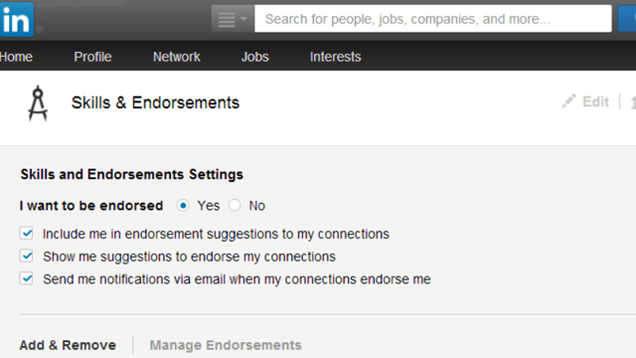
If you use LinkedIn, you've probably acquired a few endorsements from your network for skills you might not actually have. Finally, you can opt out of those irrelevant endorsements and get rid of that big box on LinkedIn telling you about them.

Read more...

09 Apr 14:26

10 Reasons To Rebrand

by Mark Di Somma

Rebrand Strategy

My colleague, Brad VanAuken made this excellent observation about rebrands. “Identity systems are designed to encode and decode brand information to and from people’s brains,” he said. “If you change the system, the associations may be lost and will take a long time to rebuild.”

Always that dichotomy. People like what they know. And we live in a changing world. While brand managers often struggle with the timing and implementation of an identity change, I’m far more interested in the specific motivations behind why brands choose to change how they visually express who they are – because that’s where I believe things can really go askew.

If the motivation is wrong, then the rebranding will be wrong. By way of proof, a great article from Business Insider examines recent rebrands that have hit the wall at speed. Two clear principles emerge:

  • Be clear about who you are and stay true to that. The very essence of identity I would have thought but it’s amazing how many companies still think they can convince people they’re something they’re not by changing their brand identity. No amount of focus-grouping with the youth-set (or anyone else for that matter) is going to make your brand something it just isn’t. Same goes for changing the name to make it more street. If you’re not a street brand, you’ll just ring hollow.
  • Don’t cover up. An identity that seeks to hide the truth isn’t a rebrand, it’s a revisionist attempt to hoodwink investors and consumers. Might have worked before we were all connected and had digital memories. Doesn’t work anywhere near as well now.

So how should brands go about choosing to rework their identities? My cardinal rule: before you make any changes, think about the consumer. Change your branding only if it will make the identity more fascinating and relevant for them (not because the marketing team is bored or a competitor has changed so it’s time to follow suit).

10 reasons why you would change a brand identity:

  1. To make it friendlier
  2. To make it cleaner
  3. To make it simpler
  4. To make it feel more modern and therefore relevant
  5. To better capture who you are (and what customers love you for)
  6. To signal who you are becoming (that customers will love you for being)
  7. To show your business has changed or is changing (in ways that customers will welcome)
  8. To be bolder (and therefore more visible), particularly in busy markets
  9. To highlight an aspect of your character that has been missed
  10. To correct a misconception that is holding you back or putting off the very people you are looking to attract.

Above all – what consumers see must align with how they feel or how you want them to feel not just with what the marketing team or the agency or the senior leadership wants to express. An identity without affinity is just graphics.

Before you sign off on your next identity change, please ask one question: “Why does this  change our buyers’ understanding of our brand for the better?” If you don’t know, neither will they.

Sponsored ByThe Brand Positioning Workshop and The Brand Storytelling Workshop

Where Marketers Evolve: The Un-Conference: 360° of Brand Strategy for a Changing World
May 6th and 7th, 2014 in South Beach, Florida
A unique, competitive-learning workshop limited to 50 participants (Selling Out Quickly)
As in the marketplace — some will win, some will lose, All will learn
~In Partnership with the American Marketing Association and the Miami Marlins~

Branding Strategy Insider is a service of The Blake Project: A strategic brand consultancy specializing in Brand Research, Brand Strategy, Brand Licensing and Brand Education

FREE Publications And Resources For Marketers

09 Apr 14:26

Forecasting closed sales: how you will know when a buyer will close

by info@sharondrewmorgen.com (Sharon Drew Morgen)

PsychicAs a sales manager, do you forecast sales that will close when your sales folks tell you they’ll close?

As a sales professional, do you forecast which sales will close when your contact tells you they’ll be ready? Or when it seems to you they’ll be ready?

How accurate have you been with your predictions?

WHY DO WE THINK SALES WILL CLOSE?

Frequently, sellers believe a sale will close when they

  • hear the prospect asking questions that relate to the use or implementation of the solution;
  • have connected with the prospect over a period of time and are being told that the right people are finally interested and discussing time frames;
  • have had a meeting and presented the solution information and were very well received – lots of questions, requests for call backs;
  • are told that it’s going to happen ‘next month’ or ‘when the CEO is back from holiday and can get the paperwork started’;
  • are assured that the decision is being made by the big-boys ‘soon’ and that ‘everyone likes your solution and is on board.’

In other words, they have no idea. It’s a guess. Sales people hoping to close hear things like:

- “he just got back from holiday and needs a week to catch up before he focuses on this” or

- “we just found out that we have new partners who need to be involved and must wait a month” or

- “one of the other department heads needs to be involvedand he’s finishing up a project now so we need to wait about a month.”

Or something equally plausible.

Whatever it is, it’s out of the seller’s control, and often something they knew nothing about.

CAN WE KNOW WHEN A BUYER WILL BUY?

Unfortunately, using the sales model, it’s quite difficult to predict when a prospect will close. Because the sales model focuses on a solution placement, and the seller has little more knowledge than the specifics of the need and (possibly) a few of the relevant Buying Decision Team members (I’ve never met a sales person who knows the entire Team.), it’s impossible to understand – or influence – the full extent of the buying decision path.

Until or unless everyone who will touch the solution has added their 2 cents to the criteria for solution selection, and an entire change management plan has been developed, a buyer cannot buy. So we take what seem to be ‘buying signals’ and assume we’re going to close. I’m not sure why we do that: the odds have been bad, historically.

USE BUYING FACILITATION® TO FORECAST

Big question: what would you need to consider differently to be willing to add a different skill to your current selling skills? And how would you know that adding a change management model will increase your sales — before you started to learn it?

The Buying Facilitation® model enters early in the decision path and actually enables buyers to navigate through their decision path quickly, leading to the ability to forecast more accurately – not perfectly, given the nature of the change and people issues buyers must align prior to being able to make a purchase.

Buying Facilitation® focuses on the buy-in, the change management issues, the creation of the Buying Decision Team, and the steps the buyer must go through to align all of the systems issues that will touch the new solution and therefore must be managed carefully before they can buy anything. All that stuff we sit and wait for them to do.

As sellers, we are not privvy to this data. As buying facilitators, we are acting as a GPS system and navigating our buyers through their change issues, so we actually help them do all of the activities necessary to ready themselves. As a result, it’s easier to predictand the forecasting is much more precise: we will know who is doing what, when; we will know what activities need to be managed and who is managing them (or not); we will know how our solution will fit with their status quo and be introduced to the old vendor if need be.

There is a difference between selling and having someone buy, between understanding the need and helping manage change, between having the right solution and getting the buy-in from the appropriate people.

Add Buying Facilitation® to your sales skills, and get your forecasting right. Otherwise, you’ll just continue guessing and not knowing who is going to close.


Have Sharon Drew speak on facilitating buying decisions at your next conference. Learn about her topics and see her in action on www.buyingfacilitation.com
Contact her directly at sharondrew@sharondrewmorgen.com

Forecasting closed sales: how you will know when a buyer will close is a post from: SharonDrewMorgen.com

09 Apr 14:25

Goodbye, white papers: ‘Marketing apps’ engage prospects instead of throwing content at them

by John Koetsier
Goodbye, white papers: ‘Marketing apps’ engage prospects instead of throwing content at them

Above: And example "interactive" white paper

Image Credit: John Koetsier

Marketing technology vendor Ion Interactive announced this morning that it is pivoting from providing general marketing tools to helping marketers create interactive experiences the company calls “marketing apps.”

These marketing apps could be calculators or quizzes, contests or configurators, and they’re delivered online.

“Jay Baer, author of Youtility, says marketers need to find a way to help people when they’re in the prospect phase,” Ion Interactive CTO Scott Brinker told VentureBeat yesterday. “Marketing is moving from the business of communication to the business of delivering experiences … not just shoving more content at people.”


VB’s new marketing automation index asked 1,000+ marketers:
what’s the best marketing automation system?


Content marketing has become more popular in the last few years as marketers focus more on inbound marketing: marketing in which prospects find out about a company via search or social, then read more about its products, and then — hopefully — eventually become customers.

But content marketing, Brinker says, is just not enough any more.

An example app built with the platform

Above: An example app built with the platform

Image Credit: John Koetsier

More and more content isn’t the answer, Brinker says, because people want to get entertained or get useful information without having to read a long white paper. And marketers want to deliver a more engaging, more interactive experience.

An example of the solution is a graphically-rich interactive app for fitness guru Jillian Michaels. It starts with a configurator-style quiz that quickly asks your goals and vital stats, and builds into an overall experience that lays out a plan and method for achieving that. It’s all built via Ion Interactive’s software-as-a-service application without the need to ask developers to program a one-off web app.

“It becomes easier for prospects to absorb these messages,” Brinker says. “Clients see much higher engagement rates and much higher conversion rates.”

When I asked for specifics, Brinker, who also runs the popular marketing technology blog ChiefMarTec.com, gave me the example of one customer, a business-to-business email service provider, who was an early beta tester.

“When you’re marketing into a B2B space, typically conversion rates hover around 5-10 percent,” he said. “This client’s 10-page interactive quiz got a 21 percent conversion rate … and that was at the very end of the funnel, people who filled out a content form. 50 percent of people actually engaged with the entire form.”

Other companies doing similar things include SnapApp and Wishpond, Brinker says, as well as companies like Offerpop that offer interactive contests and content via social and web channels. The key is engagement and interactivity in a topic that a prospect cares about, that also helps educate the prospect about what they need to do.

“As marketing takes more and more of the funnel away from sales, it’s almost an opportunity to behave more like sales used to,” Brinker says. “And engage with you in a consultative dialog.”


VentureBeat and marketing expert Dan Freeman are working on a Marketing Automation buyers report. Help us out by answering the survey, and we'll share the resulting data with you.


09 Apr 14:25

The next step for digital ads: Properly measuring campaigns across all devices

by Kamakshi Sivaramakrishnan/Drawbridge
The next step for digital ads: Properly measuring campaigns across all devices
Image Credit: Shutterstock

Connect with leaders from the companies in this story, in real life: Come to the fourth annual VentureBeat Mobile Summit April 14-15 in Sausalito, Calif. Request an invitation.

Kamakshi Sivaramakrishnan is the founder and CEO of Drawbridge.

Soon, we will no longer talk about “cross-device advertising.” All advertising will be across all channels, and marketers will have the ability to build attribution models that work across all digital channels.

The reasons for this imperative are obvious:

First, the shift to multi-channel is occurring at lightning speed. In the first quarter of 2013, global tablet shipments passed laptop shipments for the first time (desktop shipments were exceeded in Q3 2012). This means that, in just three years, tablet volume reached a level that took laptops 15 years to reach. Laptops are considered an example of an explosively growing consumer product, and yet tablet growth zoomed by without a glance in the rearview mirror.

Second, users are not abandoning their old devices. Neal Mohan, Google’s lead for all display advertising products, stated recently that “90% of users begin an action on one device and complete it on another.” Users are now spending a significant portion of our time on mobile devices, yet desktop devices are still superior for the completion of certain tasks.

Take this Google study of cross-device behavior from 2012 that found that the majority (65%) of online shopping begins on a mobile device, but gets continued on a desktop computer (61%). Clearly users are beginning a task on a close-by device (mobile), but need to complete on a device that is optimized for research and purchase (desktop).

This causes a major problem for marketers. How do they reach users in a multi-channel world? And how do they properly attribute credit for a conversion to each channel?

[Kamakshi will be discussing the future of targeted advertising at our Mobile Summit next week. Request an invite here!]

It’s important to take a small detour to discuss why this is difficult. The main issue is one of identity. To an ad server, each new device or web browser looks like a completely different person, and as a result, the marketer has no way of knowing how many ads a unique individual has seen or interacted with across their devices. This is exacerbated by the fact that mobile advertising has a cookie problem: specifically, ads served on the iOS Safari browser or within applications cannot rely on third-party cookies for targeting or attribution.

The Google-Best Buy conundrum

A good example of this phenomenon is a hypothetical story of Best Buy working with Google.

Let’s say that Best Buy purchases search ads through Google that appear in both desktop and mobile search. If someone is interested in buying a new TV, they might pull out their iPhone and search for “HD TVs” on Google. Sure enough, the first “sponsored result” is from bestbuy.com (“Up to 25% Off Select HDTVs, Plus Free Shipping at Best Buy!”). When they click through to Best Buy’s mobile site, they’re shown “1-10 of 507” TVs available, and the user quickly realizes that they don’t actually want to compare 507 televisions on a phone.

drawbridge cross device


So instead, the user switches to a laptop, goes directly to bestbuy.com, uses the filtering tools to narrow down to the TV they want, and buys it.

To Best Buy, it appears that a user conducted a mobile search, clicked on their result (resulting in a bill from Google), but then didn’t convert. Then a different user came directly to their site and bought a TV without any advertising expense. The result should be that Best Buy lowers their bid for Google mobile search.

But both Best Buy and Google are much smarter than this. They both know that this phenomenon occurs: they just don’t know how often. Google has taken a step towards addressing this by adding cross-device analytics to Google Analytics, however, there is a major limitation: user identity is established through log-ins across devices. While all users on Android are logged into Google services automatically, this is not true of iOS. Google just announced “cross-platform single sign-in,” but adoption will take time.

To sum up, all advertising is moving cross-device for the simple reason that consumers are cross-device. Sophisticated marketers all make decisions based on data, and when it is impossible to know which users have seen their ads and which ads were successful, it’s impossible to make rational marketing decisions. Thankfully, help is on the way. Several companies, including Drawbridge, are helping to bridge the identity barrier between devices, which will put a major tool in the digital marketers’ toolbox.

Kamakshi SivaramakrishnanKamakshi Sivaramakrishnan is the founder and CEO of Drawbridge, the industry leading programmatic cross-device advertising platform. Named one of Business Insider’s “Most Powerful Women in Mobile Advertising” two years in a row, as well as one of Ad Age’s “40 Under 40” in 2014, she is an expert on advertiser-buyer connections in today’s mobile environment. Always an innovator, Kamakshi left her role as Lead Scientist at AdMob (acquired by Google in 2009), to solve a digital advertising problem before it was a buzzword: cross-device. 


VentureBeat and marketing expert Dan Freeman are working on a Marketing Automation buyers report. Help us out by answering the survey, and we'll share the resulting data with you.


09 Apr 14:25

8 tips for giving the perfect investor pitch (from someone who’s raised $75M)

by Mitchell Harper, Bigcommerce
8 tips for giving the perfect investor pitch (from someone who’s raised $75M)
Image Credit: AMC

In my last post, I shared eight tips for creating the perfect pitch deck. After such an overwhelming response (tens of thousands of readers, 45 questions via Twitter/email, and almost 5,000 shares via social media) I decided to follow up with a second piece on a topic that’s discussed even less than creating a pitch deck: actually standing in front of potential investors and pitching for capital.

As part of my five-year journey building Bigcommerce, I’ve raised three rounds of venture capital financing: a $15 million series A in 2011 from General Catalyst, a $20 million series B in 2012, also from General Catalyst, and a $40 million series C last year from Steve Case’s Revolution Growth for a total of $75 million.

For each round of financing, we created a pitch deck and went on a road show. For all three rounds, we received term sheets very early in the process and cut our pitching short, allowing us to get the capital and get back to building the business.

Here are eight tips to help you do the same — that is, pitch fewer potential investors, get term sheets faster, and raise capital so you can get back to building your business and executing on your vision.

1) Know the investor and their portfolio in detail

Before you pitch a potential investor, spend a few hours on their website. Get to know who the partners are, whether each of them has any operational experience running a company as founder and/or CEO, whether they took their company public or had it acquired, and what they’re good at.

A lot of partners at venture capital firms blog too, so search for “[partner name] blog,” and read through their posts to learn more about them and their views.

You also want to figure out which other companies they’ve invested in, why, how much, and over how many rounds. You’ll want to avoid any investors who have put money into one of your direct competitors, as that would be an obvious conflict of interest and a waste of time.

2) Don’t pitch on a Monday

This one is short and sweet.

Partners at every venture capital firm meet on Monday mornings to discuss potential deals and vote on investments. If you pitch on a Monday afternoon, you’ll be waiting a whole week to hear back on whether they’re interested in learning more or discussing a term sheet. By then, they’ll have listened to other pitches and may not hold the same level of interest they did on the previous Monday.

3) Find partners whose thesis aligns with your vision

Most investors have investment theses that form the foundation on which they research, analyze, and invest in companies. For example, one of our investors has had a few different theses over the last few years. First it was travel, then e-commerce, then big data.

Inside a single venture capital firm, each partner can have their own investment thesis, and it’s important to make sure at least one investor has a thesis that involves your industry or domain. For example, there’s no point pitching your mobile messaging app if none of the investment partners have formed a thesis that mobile messaging has a huge future.

3) Understand their fund size, life, and stage

Venture capitalists raise money every few years from their LPs (limited partners), such as wealthy families and university endowments. Each time they raise (yes, they have to do a roadshow and pitch, just like us!), they create a new fund. These funds are typically numbered in sequence (such as fund 4 or fund 5) and have an investment life of about 10 years.

The life of a fund is important, because if you take capital from a fund that only has three years left in its life and receive an acquisition offer that you might not want to take, your investor may push you to sell so they can generate a return and attribute it to the same fund from which they invested in your business.

Always ask a potential investor how much capital they have left in their current fund and how many years are left before they raise their next fund. It’s not always possible, but you want to receive capital in the first five years of a fund, which will give you at least five years during which to grow your business before the investor starts thinking about payback and return on the fund.

4) Speak to your strengths and areas of expertise

If your startup has multiple founders, make sure you each stick to discussing what you’re comfortable with and what you’re an expert at.

For example, if you’re a non-technical CEO, then defer to your co-founder and CTO for technical questions about your architecture.

5) Don’t read your pitch deck line-by-line

Never, never, never load up your presentation and just read through it line-by-line. Always focus on one key point for every slide and talk to that point in detail.

Look for queues showing extra interest as you speak as well as body language, and drill into a specific topic if you feel it’s appropriate.

6) Every headline should be phrased as a selling point

Investors, like everyone else, will skim your deck before you pitch and while you’re pitching. Instead of a headline like “We have 100,000 users”, phrase it as a selling point, such as “We signed up 100,000 users in only 45 days”. Remember, you’re essentially selling equity in your business, so focus on benefits.

Here’s the litmus test: If all they did was read the headline on each slide, would they call you in for a meeting? Make the answer a yes.

7) Speak about your competitors honestly and in detail

Have one or more reasons why your product is better than the competition, but never underestimate them.

Study their businesses inside out and clearly articulate (both visually and audibly) how you position against them. List their weaknesses and their strengths and, if appropriate, talk about your plan to turn your weaknesses into strengths against them.

You want to be able to articulate why an incumbent has a huge market share and convincingly convey why you feel you have a shot at winning over their customers.

When we were pitching for our series A in 2011, we clearly identified our four biggest competitors and how we would attack each of them. They were each much, much bigger than we were. Today, two of them are barely alive, one is dead, and we’re close to taking out the final competitor, exactly as we anticipated in our pitch deck back then.

8) You don’t have to know all the answers

Don’t fumble if you can’t answer a question. Just remember the question (ideally, write it down, including who asked), and politely ask if you can email or call the partner with the answer later that day or tomorrow, once you’ve had time to do some research or talk to whomever you need to talk to.

Trust me, it’s better not have an answer than to fumble, get nervous and say the first thing that comes to mind.

The other 99%

There’s a lot more to raising a round of financing than simply creating a pitch deck and nailing its delivery. That’s 1 percent of the battle. The other 99 percentis building the right product, hiring amazing people, building a fantastic culture, and understanding your metrics.

I share the story of how we tackled these topics while building Bigcommerce on my personal blog at BlogMitch.com, if you’d like to learn more.


Mitchell Harper is the co-founder and co-CEO of Bigcommerce, the leading e-commerce platform for small businesses looking to grow their revenues faster. Starting with $20,000 in credit card debt from a rented office above a friend’s phone shop in Sydney, Australia, the company has grown over 100% year-over-year and has raised a total of $75M from US-based General Catalyst, Floodgate, and Revolution. They have offices in Sydney, Austin and San Francisco. Mitchell tweets at @mitchellharper.


VentureBeat and marketing expert Dan Freeman are working on a Marketing Automation buyers report. Help us out by answering the survey, and we'll share the resulting data with you.


09 Apr 14:24

Closely lets you spy on your competitors … and steal a few moves

by Eric Blattberg
Closely lets you spy on your competitors … and steal a few moves

Above: Closely's Perch app.

Image Credit: App image via Closely, illustration by Eric Blattberg / VentureBeat

Closely helps small businesses keep track of the competition with Perch, a social monitoring app for iOS and Android.

Soon it’ll help them sell to each other, too.

Closely has raised $3 million in new funding, which it intends to use to build out its marketplace platform for small to medium businesses, the company announced today.

In addition to enabling companies to see their competitors’ social chatter — posts, reviews, promotions, etc. — Perch also recommends technology products to business owners based on the data it collects about its competitors’ operations.

Closely is building a business-to-business marketplace on top of that recommendation engine. It’s already signed deals with GoDaddy, Constant Contact, and DudaMobile, and it intends to use the new funding to bring more vendors on board, according to “hyperlocal” business publication Street Fight.

“The team at Closely is addressing a universal challenge for marketing tech providers and that is simply that no one is getting the attention of the SMBs,” said Joe Zell, general partner at Closely investor Grotech Ventures, in a statement.

Grotech Ventures led Closely’s funding, which also featured participation from Steadfast Venture Capital and CNF Investments.

Check out the video below for a better look at Closely’s Perch app.


VentureBeat and marketing expert Dan Freeman are working on a Marketing Automation buyers report. Help us out by answering the survey, and we'll share the resulting data with you.


09 Apr 14:23

Choices Make Buying Decisions So Much Easier

by Jonathan Farrington

Many years ago, a very good friend of mine who owned a chain of sports shops and gyms sought my advice: He said that he thought the quality of the entire customer experience could be considerably improved throughout his business, but didn’t really know where to start. Knowing that I would be initially reticent because retail and B2C is not really my “bag” (pun fully intended) he made me an offer that was difficult to refuse – I won’t go into detail, let’s just say it involved free sports gear and gym membership for several years!

It has occurred to me since that perhaps I was one of the first “secret shoppers” because I visited all of the branches and outlets, buying goods and of course observing the staff. One of the most significant insights I gained was to view the whole buyer-seller experience from the other perspective – which as a more frequent seller than buyer was eye-opening: And this formed the basis of my first session with the staff – you can call it empathy, but actually, it was much more than that; I asked them all to look at themselves through their buyers eyes. The results were quite astonishing.

The second most important point I made was that far too frequently, they were failing to offer the customer choices – they were not realizing that the customer did not know what they did not know. They arrived in the store, often with a pre-conceived idea of what they wanted to buy; the brand; the color; the price-range, but actually, it may not have been the ideal choice, and there may well have been a better option. So getting the staff to ask a few simple questions in a gentle non-threatening way often revealed some startling expectation gaps – and inevitably resulted in more satisfied customers. I know that all sounds very obvious, but I suggest that the next time you buy anything from a retail outlet, notice how you are being served and how you are being sold to.

So the next change I was keen to implement, was to get them to understand why people buy – the buying motivators. I suspect that some of you may be thinking, oh that’s easy, it is all determined by price – wrong! Others of you perhaps thought, ah, to avoid pain or to gain pleasure? That’s far too simplistic. According to my chum Jeffrey Gitomer, people buy for the following reasons.

  • To solve a problem
  • They need it
  • They think they need it
  • To get a competitive edge
  • To save money or to be more efficient
  • To eliminate mistakes
  • To feel good
  • To show off
  • To change a mood
  • To solidify a relationship
  • They were talked into it
  • It sounded too good to refuse
  • They got a great deal (or thought they did)

And I agree with most of all that, but it doesn’t get away from the fact that we always think that a buyer is going to choose between a competitor and us. What if they could choose between us and us?

You see, as sellers we often become so convinced that we have the “perfect” solution, we fail to see that solution from our buyer’s perspective, and as a consequence, we only offer one option – and yet we all like choices don’t we? We don’t like to feel that we have accepted the first and only proposal – we like to compare.

Using this simple philosophy, I got the sales staff in the sports shops to start offering options: “OK sir/madam, with the running shoe you are looking at, we actually have four options, the Nike 67 model, the Adidas 78 model, the…” And then I persuaded them to try something even more clever; for the first time, I got them to ask about budget – if you know anything about retail, it is very rare for a shop assistant, particularly in a sports shop to question you about your budget. Of course they didn’t come out with “So, can you tell me what your budget is?” that would have been far too formal, and pretty dumb! Rather I got them to ask “How much are you looking to spend on your running shoes today?” Emphasis on today - just to make sure that the customer knew they were expected to make that purchase before they left the store!

With budget established, choices were presented – and the final “piece de resistance?” Taking the opportunity to “sell up” Having helped the customer try on and try out the four pairs within budget - the obvious choices – I then got them to ask themselves, if the customer had a slightly higher budget, would they have shown them any other choices? If they would have done, then they owe it to the customer to show them what they could buy if they were prepared to stretch the budget – and we have all done that, haven’t we? So the final conversation with the customer would go something like this: “Ok, so those are all the choices in the price range you have given me, and finally, may I just show you these – they are slightly more expensive, but the benefits are … and the additional value they provide is….”

The net result of that very brief coaching exercise – retail therapy? – was that staff became far more customer-aware, which resulted in happier customers who returned more often – and told their friends – so profits increased, as did bonuses to the staff, who were then happier themselves. Now that is a real “win-win” success story isn’t it?

But selling-up is not really the point of this post: The point is if you want your customer or prospect to choose between you and you, give them choices – provide them with options, and be creative! Otherwise it will be between you and the competition and the odds on making the sale suddenly slump to 50-50!

09 Apr 14:21

Why is Inside Sales So Scared of Lead Nurturing?

by Howard J. Sewell

Recent studies tell us while the adoption of marketing automation technology continues to gain momentum, fewer than 20 percent of marketing executives say that they are fully integrating the technology into their current sales and marketing initiatives.

Why is Inside Sales So Scared of Lead Nurturing? image Inside Sales Lead NurturingOne of the reasons for this under-utilization, and the inability of some marketers to deploy, for example, automated lead nurturing at every stage of the selling process, is resistance from the sales organization, and in particular, Inside Sales.

In our work developing lead nurturing programs for B2B companies, we often hear statements like the following:

“We won’t be implementing lead nurturing for new leads because our telesales manager says his team is following up on every lead.”

In a situation like this, it may be that the Inside Sales team feel they have all leads “covered” as it were, but most likely the real issues are 1) Trust and 2) Turf, namely:

1) Trust – Inside Sales doesn’t trust marketing to deploy lead nurturing in a way without fouling up the sales process; and
2) Turf – Inside Sales fears that inserting marketing campaigns into the lead follow-up process will either a) diminish the value of their department or b) assign credit for SQLs elsewhere.

Whatever the motivation, any “push back” from Inside Sales to marketing automation and automated lead nurturing/qualification is misplaced. Time and time again, we see marketing automation improve the productivity, efficiency, and job satisfaction of Inside Sales. Here’s just one example:

Last year, we implemented an automated lead follow-up program on behalf of a small client. The client had only one BDR (Business Development Representative) but was generating a reasonable volume of leads with our help, so the decision was made to automate lead nurturing as a way of ensuring that every lead was responded to effectively and consistently, regardless of the BDR’s bandwidth on a given day.

Rather than reinvent the follow-up process, we sat down with the BDR, documented her standard follow-up procedure (a series of phone calls and emails that stretched over a number of weeks) and automated every step using Marketo, a leading marketing automation platform. The campaign is initiated when a contact is “added” to the campaign via a simple command within the client’s CRM, Salesforce.com. This put the BDR in control of the campaign, eliminating any objection that marketing might be “taking over” the process.

Once initiated, the steps are as follows:

1. Marketo sends first follow-up email
2. Marketo creates task in CRM to remind BDR to call lead 1 week later
3. Wait 2 weeks
4. Marketo sends second follow-up email
5. Marketo creates task in CRM to remind BDR to call lead 4 weeks later
6. Wait 8 weeks
7. Marketo sends third follow-up email
8. Marketo creates task in CRM reminding BDR to call lead 4 weeks later
9. Wait 8 weeks
10. Marketo sends fourth (and final) follow-up email

All of this is preceded by a personalized email (from the BDR) sent automatically by Marketo to all Web leads, even those that the BDR ultimately deemed unworthy of follow-up, three days after any form submission. That email solicits feedback on the downloaded content, encourages social sharing, suggests other resources, and provides the BDR’s contact info in the event of any questions or immediate interest.

We also programmed Marketo to alert the BDR immediately if any prospect responded to any of the follow-up emails – for example, by visiting a high-value page on the client’s Website, or by downloading additional information.

Keeping in mind that neither the basic structure, cadence, or content of the follow-up program was changed from the original sales process, aside from some minor editing of email copy, the results of the program were startling.

In the six months prior to implementing the program, the BDR generated one (1) phone appointment with a qualified sales lead that ultimately led to a sale. In the six months following the program’s implementation, that same rep generated seven (7) appointments that led to deals. Put another way, the number of deals credited to telesales qualification increased 700 percent.

There were other, more intangible benefits.

• the BDR’s contact rate, the rate at which she is able to engage prospects in a live phone conversation, has increased substantially
• she reports receiving emails from prospects, asking for an appointment, in response to emails that she never knew were sent (and likely wouldn’t have had the time or discipline to send herself)
• because qualified appointments and closed deals are a key part of her compensation, her income has received a significant boost.

This is a classic example of lead nurturing, and marketing automation, being a win-win for marketing and sales. It’s also further evidence that, far from supplanting Inside Sales, or interfering with the sales process, lead nurturing increases sales efficiency and productivity in a way that can have a direct impact on a company’s bottom line.

09 Apr 14:21

B2B Marketers Need a Fresh Perspective

by Ardath Albee

B2B Marketers Need a Fresh Perspective image

In response to my last post, Product is Not the Hero of a B2B Company’s Story, Michael Webb asked a great question. I started to answer it and then decided the answer deserved its own post.

Michael asked:

I can’t help wondering what you (and others) think about the “Why-why-why?” of the things you’ve written about?

For example, take the issues you addressed in your last five articles. Why is it so easy for marketers to focus on:

  • Products, rather than the customer as hero? (Product is Not the Hero of a B2B Company’s Story)
  • Shiny objects, rather than the thinking work required to support the outcome? (Shiny New Tech: Content Not Included. Proceed With Caution)
  • Generating “leads,” instead of working with sales and service to help customers solve problems? (Crossing the Chasm: The new Obstacle for B2B Buyers)
  • Creating content and events, instead of orchestrating for momentum? (Is Your B2B Content Just a Pt Stop?)
  • Building campaigns that end, instead of encouraging dialogue (Why B2B Marketers Need a Ping-Pong Plan)

Do you think there might be some sort of common cause underlying these? If so, what might it be?

My gut response is short-termism and a failure for companies to get out of their own way. But that would be too easy. The real issue is that change is hard.

Factors at play include, but are certainly not limited to:

  • Marketers are evaluated on lead generation, not the stuff that I’ve talked about in the posts Michael mentioned. The same is true for sales. They work in short windows of time to meet “numbers” set for them. Marketing is supposed to feed this goal. Until companies can look at both short and longer-term goals based on customers, this perspective will continue to limit potential – especially in complex sales where the buying process takes longer than one quarter.
  • Culture is still very much inside-out, no matter how much lip service is paid to being “customer centric.” Change is hard. And I’m not sure companies really know what to change. They still think they are in control of the process. No matter how much this shouldn’t make sense, given the changes we can plainly see, it is true. Marketers are told to go out and get leads. Sale teams are told to sell more. The pressure to perform is immense. But the tools and skills to do so in today’s environment are lacking.
  • The curse of knowledge is also a factor. We simply know too much about what we sell. We believe in it and we see the value. This causes us to not relate to buyers in parallel with what they need to learn to develop the confidence to buy. Marketers and sellers are often out of sync with the marketplace.
  • We haven’t developed trust. Buyers see vendors as biased in their own favor. They don’t know whether to believe us or not. There are many buyer surveys that basically reflect buyers as saying, don’t call us, we’ll call you; stop pitching us; quit trying to go around my staff to get to me and give us more substance in the information you provide. Marketers and salespeople have got to focus on value delivery, not feeds and speeds, but features and functionality are what they know best, as I stated above.
  • Most vendors are still analog in a dynamic world. Real-time responsiveness is nice to think about, but it takes an immense amount of planning and strategy. An example everyone knows is the Oreo Dunk in the Dark Tweet during the super bowl. But if you read the articles about it, there were teams of people in the room, including the executives who had to approve the Tweet before it could be sent. This needs to change. We need to figure out how to become more agile without all the red tape.
  • Lack of process, at least for marketers. Heck, the majority (66%) of marketers report that they don’t have a strategy in place. Ad hoc campaigns based on meeting this quarter’s numbers are a symptom of short-term, tactical thinking. The same thing happens to sales when they have a few weeks left to close deals to make the “number” and everything except the most promising deals are pushed aside.
  • My favorite: “But we’ve always done it this way.” This is a big one – not only for us, but for our buyers. Why should we expect them to change if we can’t change?It’s perceived as safe to stick with status quo. Many decisions put people’s careers on the line. Sometimes it’s easier not to make them or not to stick with them if it looks like the outcome won’t be there in time. But in all fairness, there are a lot of dependencies. One decision can have a ripple effect that affects other departments and outcomes. Consensus for change is sometimes even harder to get than consensus for a purchase decision.

The factors I’ve stated above are not news. We know this. CMOs admit it. They worry about it. Their biggest fear is becoming irrelevant to the markets they serve rendering them unable to reach customers. They know things have changed. Change has become the elephant in the room that appears too big to tackle.

But we must. We don’t have a choice. Those who take on change will win and those who don’t will flounder. We’ve also seen this. We saw it in NetFlix vs. Blockbuster. We saw it with book stores and Amazon. We’re seeing it now in Telecom and Communications with Over The Top (OTT) providers like Google and Amazon stepping in to take chunks of their business away.

We see it in hardware becoming virtualized and running in the cloud, rather than on premise which is challenging managed services providers to reinvent themselves to stay in the game. IT can spin up a server in minutes instead of spending weeks to order the hardware, install and provision it. We’re even seeing it in space exploration with private corporations replacing NASA programs.

It won’t happen overnight, but change needs to happen. We need to take the time and make the effort to start making the shift. Our teams need new skillsets and processes for continuous improvement. If marketing has changed more in the last two years than in the last 50 years, what do you think the next two will be like?

This is only my opinion. I’d love to know yours. Please chime in!

09 Apr 14:21

70 New (Really) Marketing Automation Stats

by Monique Torres

70 New (Really) Marketing Automation Stats image 320px USA National Museum of Natural History0They’re getting old.

Many of the marketing automation stats we regularly use – to make strategic decisions, craft presentations, prepare for sales calls – are getting a bit long in the tooth.

Case in point: “Companies that excel at lead nurturing generate 50% more sales-ready leads at 33% less cost.”

It’s a great stat that gets a lot of traction; I just found it on 3 different blog posts published within the last week.

It’s also 3 years old. (You can find it in the Q2 2011 Forrester Wave™ report.)

Here’s another popular one: “Companies that blog have 55% more website visitors, 97% more inbound links, and 434% more indexed pages.”

It’s from 2009.

Am I saying that a little age makes data irrelevant?

Not at all.

However, when it comes to digital marketing, more than 2 years (some would argue less) is perceived as being out-dated – the difference between “latest” and “legacy” – even if the stat still holds water.

So we set off to uncover the most recent marketing stats

Our goal was two-fold:

  1. Curate stats that were originally published no earlier than mid-2012
  2. Share only those with specific relevance to the business benefits of marketing automation

The results are below, with full source notation and links.

Note that many of the stats are germane to more than one category, which is testament to the new marketing landscape of blurred lines and interconnectedness. We’ve done our best to put them in their most natural spot.

The Stats

MARKETING AUTOMATION70 New (Really) Marketing Automation Stats image Quote1

  1. 79% of top-performing companies have been using marketing automation for more than 2 years. (Gleanster, Q3 2013 Marketing Automation Benchmark, Aug 2013)
  2. B2B marketers who implement marketing automation increase their sales-pipeline contribution by 10%. (Forrester Research, The Forrester Wave™: Lead-To-Revenue Management Platform Vendors, Q1 2014, Jan 2014)
  3. 58% of top-performing companies (defined as those where marketing contributes more than half of the sales pipeline), have adopted marketing automation. (Forrester Research, Gauging Your Progress and Success, Dec 2013)
  4. 25% of Fortune 500 B2B companies have adopted marketing automation. (ClickZ, Fortune 500 B2B Adoption of Marketing Tools study, Feb 2013)
  5. 63% of companies that are outgrowing their competitors use marketing automation. (The Lenskold and Pedowitz Groups, 2013 Lead Generation Marketing Effectiveness Study, Nov 2013)
  6. B2B marketers cite the #1 benefit of marketing automation as the ability to generate more and better leads. (Pepper Global, Marketing Automation Trends Report 2014, Sep 2013)
  7. CMOs at top-performing companies indicate that their most compelling reason for implementing marketing automation is to increase revenue (79%) and get higher quality leads (76%). (Gleanster, Q3 2013 Gleanster Marketing Automation Benchmark, Aug 2013)
  8. Companies using marketing automation see 53% higher conversion rates (initial response-to-MQL) than non-users, and an annualized revenue growth rate 3.1% higher than non-users. (Aberdeen Group, Marketing Lead Management Report, Jul 2012)
  9. 78% of successful marketers cite marketing automation systems as most responsible for improving revenue contribution. (The Lenskold and Pedowitz Groups, 2013 Lead-Generation Marketing Effectiveness Study, Nov 2013)
  10. B2c marketers who take advantage of automation – which includes everything from cart abandonment programs to birthday emails – have seen conversion rates as high as 50%. (eMarketer, Email Marketing Benchmarks, Feb 2013)
  11. Companies that use marketing automation are 3 times more likely than companies without automation to track and attribute their content-marketing efforts to multiple touchpoints (36% to 11%). (The Lenskold and Pedowitz Groups, 2013 Lead Generation Marketing Effectiveness Study, Nov 2013)
  12. Among CMOs, the most important criteria for a marketing automation system are ease-of-use (92%) and the ability to tie marketing performance to sales (72%). (Gleanster, Q3 2013 Gleanster Marketing Automation Benchmark, Aug 2013)
  13. Among B2B marketing managers, the most important criteria for a marketing automation system are (1) price, (2) product integration (e.g., CRM, social, web, mobile), and (3) ease of use. (Pepper Global, Marketing Automation Trends Report 2014, Sep 2013)
  14. Company size matters. Marketing automation adoption is tied to the number of employees a company has, as itemized below. (Buyer Zone, The State of B2B Lead Generation 2013 Report, Aug 2013)
    • 76% – larger companies (> 100 employees)
    • 26% – mid-sized companies (10-100 employees)
    • 18% – small companies (< 10 employees)
  15. Company revenue matters. Marketing automation adoption is tied to annual revenue, as itemized below. (Raab Associates, Marketing Automation 2014 Industry Overview, Feb 2014)
    • 60% – large companies (> $500M revenue)
    • 10% – mid-sized companies ($20M – $500M revenue)
    • 5% – small companies ($5M – $20M revenue
    • 3% – micro companies (< $5M revenue)
  16. Companies that have adopted marketing automation display notable advantages compared to companies that have not adopted a marketing automation system, as highlighted below. (The Lenskold and Pedowitz Groups, 2013 Lead-Generation Marketing Effectiveness Study, Nov 2013)
    • 45% of companies with marketing automation regularly repurpose content for efficiency, compared with 28% of companies without marketing automation
    • 54% of companies with marketing automation capture intelligence for the sales team, compared to 25% without
    • 49% of companies with marketing automation customize content to the Buyer Journey stages, compared to 21% without
    • 59% of companies with marketing automation are able to use intelligent targeting to trigger content, compared to 17% without
  17. 75% of the companies using marketing automation implemented their platform in less than 6 months. (Pepper Global, Marketing Automation Trends Report 2014, Sep 2013)

CONTENT MARKETING

70 New (Really) Marketing Automation Stats image Quote2

  1. Per dollar spent, content marketing produces 3 times more leads than paid search. Additionally, it costs less than paid search: 31% less for small and mid-sized companies and 41% less for large companies. (Kapost, Content Marketing ROI, Jun 2012)
  2. DIFFERING GOALS: For B2B marketers, the top goal of content marketing is “lead generation” (80%), whereas B2C marketers cite “brand awareness” as the top goal (79%). (Content Marketing Institute, 2014 Trends reports for B2B and B2C, Oct 2013)
  3. Companies that use marketing automation are more likely than companies without automation to re-purpose content for efficiency (45% vs. 28%). (The Lenskold and Pedowitz Groups, 2013 Lead Generation Marketing Effectiveness Study, Nov 2013)
  4. 33% of B2B marketers cite “targeted delivery of content” (i.e., delivering the right content to the right people at the right time) as their biggest challenge. (Forrester Research, The Forrester Wave™: Lead-To-Revenue Management Platform Vendors, Q1 2014, Jan 2014)
  5. Among B2B buyers, only 9% consider vendor content as trustworthy. And just 4.8% of B2B buyers are willing to provide detailed information in return for white papers. (The CMO Council, Better Lead Yield in the Content Marketing Field, Jun 2013)
  6. B2B marketers at small and mid-sized companies rate the following content marketing tools as most effective. (Content Marketing Institute, B2B Content Marketing 2014 Benchmarks, Budgets, & Trends Report, Oct 2013)
    • Case studies (69%)
    • In-person events (67%)
    • Blogs (65%)
    • Email (65%)
    • eBooks (64%)
    • Videos (63%)
    • Webinars (63%)
    • Website articles (59%)
    • Research reports (59%)
    • White papers (58%)

EMAIL MARKETING

  1. Email marketing has an ROI of 4,300%. (Direct Marketing Association, DMA 2013 Statistical Fact Book, 2013)
  2. Email marketing was reported as the #1 most-effective tactic for lead nurturing by top-performing B2B marketers (defined as those who reported exceeding annual revenue goals). (Forrester Research, Gauging Your Progress and Success, Dec 2013)
  3. Email is ranked as the #1 preferred communication channel by consumers for initial introduction to a product/service, learning about a product/service, and post-purchase follow-up about a product/service. (The Economist Intelligence Unit, Mind the Marketing Gap, Mar 2013)
  4. Triggered email messages average 70.5% higher open rates and 152% higher click-through rates than “business as usual” marketing messages. (Epsilon Email Institute, Q4 2012 N. American Email Trends and Benchmarks, Feb 2013 and Q2 2013 N. American Email Trends and Benchmarks, Jul 2013)
  5. Over 75% of email revenue is generated by alternatives to generic one-size-fits-all email campaigns. For example, trigger email campaigns account for 21% of email marketing revenue. (DMA UK, National Client Email Report 2013, Feb 2013)
  6. Triggered email messages are extremely effective for customer engagement and revenue, as exemplified below. (Experian Marketing Services, 2013 Email Market Study, Dec 2013)
    • Second abandon-cart reminders (a follow-up abandon-cart message to an initial email) garner an average 54% lift compared to just sending one abandon-cart message.
    • Browse emails (messages based on categories or products a customer has viewed) achieve a 3.4x increase in revenue compared to other promotional mailings.
    • Thank-you emails achieve a 13x increase in revenue compared to promotional mailings.
  7. Marketers rate the following tactics as easiest for email list growth. (Marketing Sherpa, Email Marketing Benchmark Survey 2013, Feb 2013)
    • Email to a friend (58%)
    • Registration during purchase (50%)
    • Social media sharing buttons in email (49%)

SEGMENTATION, TARGETING, & PERSONALIZATION

  1. 96% of B2B marketers say segmentation is the most valuable method for improving conversion rates. (Econsultancy, Conversion Rate Optimization Report, Oct 2012)
  2. 74% of marketers say targeted personalization increases customer engagement. (Econsultancy, The Realities of Online Personalisation, Apr 2013)
  3. 59% of marketers report not customizing their lead-nurturing efforts to target the sales funnel and/or buyer stages. (BtoB magazine, 2013 Lead Generation: Optimum Techniques for Managing Lead-Gen Campaigns, Nov 2013)
  4. Segmentation, personalization, recommendations, and the inclusion of custom database fields in email copy drive 360% higher conversion than a generic email message with a personalized salutation. These are exactly the types of communications that marketing automation helps make repeatable. (Gleanster, 5 Key Milestones for the First 30 Days with Marketing Automation, Nov 2012)
  5. Personalized emails generate up to 6 times higher revenue per email than do non-personalized emails. (Experian Marketing Services, 2013 Email Market Study, Dec 2013)
  6. 87% of top-performing marketers say targeting campaigns to audience segments and individual consumers is the largest value driver, with 78% listing segmentation as the #1 marketing-automation capability they can’t live without. (Gleanster, 5 Marketing Automation Capabilities Top Performers Can’t Live Without, Sep 2012)

LEAD & RELATIONSHIP MANAGEMENT

  1. 80% of B2B marketers rate “generating quality leads” as the technique with the highest profit potential. Second was “improving sales conversion” at 71%. (BtoB magazine, 2013 Lead Generation: Optimum Techniques for Managing Lead-Gen Campaigns, Nov 2013)
  2. On average, 60% of marketing leads are generated through direct/outbound marketing, and 40% through digital/inbound channels. (Aberdeen Group, Content Marketing in the L2R Cycle, Jul 2013)
  3. Inbound marketing is cheaper than outbound, saving an average of 13% in overall cost per lead and over $14 for every new customer acquired versus the costs from outbound strategies. (HubSpot, 2013 State of Inbound Marketing Report, Feb 2013)
  4. Prospects receive an average of 10 marketing touches from the time they enter the top of the funnel until they’re a closed-won customer. (Aberdeen Group, Marketing Lead Management Report, Jul 2013)
  5. 74% of top-performing companies use automated lead nurturing. Among average- or less-performing companies that use marketing automation, 2/3 fail to leverage the platform’s lead nurturing capabilities. (Gleanster, Nurture Marketing for the Overwhelmed Marketer, Mar 2013)
  6. 68% of successful marketers cite lead scoring based on content and engagement as most responsible for improving revenue contribution. (The Lenskold and Pedowitz Groups, 2013 Lead Generation Marketing Effectiveness Study, Nov 2013)
  7. B2B marketers who have successfully deployed lead nurturing programs average a 20% increase in sales opportunities from nurtured leads versus non-nurtured leads. (DemandGen, Calculating the Real ROI from Lead Nurturing, Aug 2013)
  8. Sales and marketing professionals agree that lead quality is far more important to revenue than lead quantity. (Aberdeen Group, Sales Enablement: Fulfilling the Last Frontier of Marketing-Sales Alignment, Sep 2013)
  9. Industry estimates show that data decays at a rate of 25% to 30% per year. (DemandGen, 12 Steps to Ensure You are Marketing to the Right B2B Prospect Lead Database, May 2013)
  10. Over 50% of leads in the average B2B contact database are obsolete. (IDC, Best Practices Study in B2B Sales Methodologies, Aug 2012)
  11. B2B marketers say product demos are the most effective method for lead marketing, followed by educational webinars. (BtoB magazine, 2013 Lead Generation: Optimum Techniques for Managing Lead-Gen Campaigns, Nov 2013)
  12. According to Bain & Company, a 5% increase in customer retention can generate a 75% increase in profitability. And it’s 6 times more costly to acquire a new customer than to keep an existing one. (Forrester Research, Competitive Strategy in the Age of the Customer, Oct 2013)

SALES & MARKETING ALIGNMENT

  1. 69% of top performing companies cite “cooperation between marketing and sales” as the most critical value driver for maximizing marketing automation ROI. (Gleanster, 5 Key Milestones for the First 30 Days with Marketing Automation, Nov 2012)
  2. Only 23% of sales professionals say marketers consistently deliver sales-ready leads. (BtoB magazine, 2013 Lead Generation: Optimum Techniques for Managing Lead-Gen Campaigns, Nov 2013)
  3. 35% of companies with marketing automation regularly capture intelligence for the sales team (from their content marketing efforts), compared with 19% of companies without marketing automation systems. (The Lenskold and Pedowitz Groups, 2013 Lead Generation Marketing Effectiveness Study, Nov 2013)
  4. Companies that have implemented a marketing automation platform report higher levels of collaboration between sales and marketing, across a number of different dimensions, as itemized below. (Forrester Research, The Forrester Wave™: Lead-To-Revenue Management Platform Vendors, Q1 2014, Jan 2014)
    • A 13% collaboration advantage in defining and executing field programs
    • A 17% collaborative advantage in capturing insight from customers and prospects
    • A 12% collaborative advantage in managing leads and lead pipelines

SEARCH ENGINE OPTIMIZATION (SEO)

  1. Organic search drives the most traffic of all channels, and is responsible for nearly half (47%) of all visits, compared to paid search, which drives only 6% of all visits. (Conductor, 310 Million Visits: Nearly Half of All Web Site Traffic Comes From Natural Search, Jun 2013)
  2. Nearly 4 out of 5 B2B buyers start their product research online at a search engine. Of those, 71.6% use Google. (Salesforce, The State of Demand Generation, Nov 2013)
  3. When it comes to Customer Lifetime Value, the highest-value customers arrive through organic search (54% higher than average-value customers). (Custora, E-Commerce Customer Acquisition Snapshot, Jun 2013)
  4. Leads gained through organic search have a 14.6% rate of close, while leads gained through outbound marketing efforts have a closing rate of only 1.7%. (Top Rank Marketing, War of Words, Jan 2013)
  5. Best-in-class companies are more than twice as likely as other companies to have a process to review website content for SEO (68% vs 28%). (Aberdeen Group, Benchmark: Web Experience Management from Content to Customer, Jun 2012)
  6. For ecommerce, organic search is #1 for acquiring new customers, accounting for nearly 16% of first-time-customer purchases. Social channels lag far behind, with Facebook and Twitter accounting for less than 0.25% of new customer acquisitions. (Custora, E-Commerce Customer Acquisition Snapshot, Jun 2013)

BLOGGING & SOCIAL MEDIA MARKETING

  1. B2B companies that regularly maintain a blog generate, on average, 67% more leads per month than non-blogging companies. (Top Rank Marketing, War of Words, Jan 2013)
  2. 79% of B2B marketers rate blogs as the most effective tactic for driving their top goal (lead generation). For B2C marketers, it’s 74% (brand awareness). (Content Marketing Institute, 2014 Trends reports for B2B and B2C, Oct 2013)
  3. Both B2B and B2C marketers use an average of 6 social media platforms to distribute content. (Content Marketing Institute, 2014 Trends reports for B2B and B2C, Oct 2013)
    • Top B2B platforms: LinkedIn (91%), Twitter (85%), Facebook (81%), YouTube (73%), Google+ (55%), and SlideShare (40%)
    • Top B2C platforms: Facebook (89%), Twitter (80%), YouTube (72%), LinkedIn (71%), Google+ (55%), and Pinterest (53%)
  4. Among leading companies, 70% rate inbound site traffic from social media activity to be “valuable” or “very valuable.” (Aberdeen Group, Navigating the Hidden Sales Cycle: Brand Building and Demand Gen Top Social Relationship Management Strategies, Aug 2013)
  5. By spending as little as 6 hours per week focused on social media marketing, 64% of marketers see lead generation benefits, and nearly half say their marketing expenses have decreased. (Social Media Examiner, 2013 Social Media Marketing Industry Report, May 2013)
  6. 72.6% of sales people using social media outperformed those sales people not using social media. Of the 21.7% of sales people who said they were not using social media, 18.9% said they didn’t see the value and 45% said they didn’t understand it. (A Sales Guy Consulting, Social Media and Sales Quota Attainment, Jan 2013)
  7. Experience matters: Marketers who had 2 or more years’ experience in social media marketing cited the following as directly attributable to social media. (Social Media Examiner, 2013 Social Media Marketing Industry Report, May 2013)
    • Increased exposure for their business (95%)
    • Increased website traffic (81%)
    • Improved sales (53%)
    • Growth of business partnerships (62%)
    • Increased lead generation
    • Improved search rankings (62%)

DATA & ANALYTICS 70 New (Really) Marketing Automation Stats image Quote3

  1. Among mid-sized companies (defined as fewer than 250 employees and up to $100M revenue), 56.1% use marketing automation in conjunction with CRM. However, only 22% are using analytics to manage their marketing campaigns. (Beagle Research Group, 2013 Marketing Automation Study: Data and Analytics: Marketing’s Next Frontier, Jun 2013)
  2. Only 38% of marketers have a single view – including current and historic information – of how customers interact with content across the digital touchpoints. (Forrester Research, The Rise Of The Customer Life-Cycle Marketing Systems, Dec 2013)
  3. Highly effective marketers are more likely than other marketers to measure the following. (The Lenskold and Pedowitz Groups, 2013 Lead Generation Marketing Effectiveness Study, Nov 2013)
    • Sales conversion (73% vs. 56%),
    • ROI of content marketing (51% vs. 19%)
    • Incremental revenue (49% vs. 17%)
  4. 3 in 5 companies say A/B testing is “highly valuable” for improving conversion rates. (Econsultancy, Conversion Rate Optimization Report 2013, Oct 2013)
  5. On an annual list of top technology trends, IT strategists ranked “Customer intelligence and analytics platforms” as #4 in importance and impact in 2013, compared to its ranking at #8 in 2012. (Forrester Research, Top Technology Trends To Watch: 2014 To 2016, Nov 2013)

Intrigued?

Interested in finding out how Act-On can help you meet your sales and marketing goals? Here are some resources to help you take the next steps:

  • New to marketing automation? Bookmark the Act-On Center of Excellence where you can learn the nuts and bolts of digital marketing, from attracting visitors to increasing revenue.
  • Want to receive regular marketing insight? Subscribe to the Marketing Action Blog.
  • Looking for how-to information? Visit our Resources section for tips, tricks, datasheets, videos, and more.
  • Need a short-and-sweet version of the latest stats? Download our Fast Facts compilation.
  • Interested in what marketing automation can do for your organization? Contact us today.

“Hall of Mammals” image by ingfbruno, used under a Creative Commons 3.0 license.

08 Apr 14:38

Livestream app for Google Glass broadcasts from your point of view

by Barry Levine
Livestream app for Google Glass broadcasts from your point of view

Above: Livestream via Glass could mean sports from the helmet out

Image Credit: Livestream

The world has entered the era of live, point-of-view mass broadcasts with Livestream’s new app for Google Glass.

The new app, unveiled at the National Association of Broadcasters conference, complements an existing Glass video streaming app available through Google Hangouts.

“Hangouts is a one-to-one experience, like Skype, and more like a chat,” Livestream co-founder and Chief Product Officer Phil Worthington told VentureBeat, while Livestream’s app “is the first streaming broadcast app on Glass.”

He pointed out that a Livestream from Glass can potentially be seen by “hundreds of thousands of viewers.”

After downloading the installer, you launch the app by voice command, post the stream to an “event” you’ve set up in your Livestream account, and then tap Glass on the side to go live.

You can select the event by looking through Glass at the corresponding QR code on the Livestream website, keeping interaction to a minimum. Anytime you go live, your event followers get a notification.

Real-time chat messages from your event followers can be viewed over part of the video, and your voice replies can be heard in the audio track. Your streams can also be posted to your Facebook account.

In addition to being able to stream yourself eating your breakfast as it happens from your point-of-view to thousands of followers, the points-of-view from fellow Glass-wearing breakfast-eaters can also be streamed as a multi-camera switched production through a Livestream setup. Your POV, then his, then hers, then…

Of course, there’s that privacy thing, but, Worthington pointed out, “It’s the same issues as” video on smartphones.

Worthington, who is also an accomplished digital artist, sketched out some of the expressive possibilities of this Strange Days-like world – new kinds of citizen journalism, POVs from performers on a stage or athletes on a field, or first-person live adventures where someone else’s hang-gliding afternoon streams to your Glass.

Up until now, he said, “It’s been rare that you see the view from someone’s head.”

But get ready to put on a lot of other people’s heads.


VentureBeat and marketing expert Dan Freeman are working on a Marketing Automation buyers report. Help us out by answering the survey, and we'll share the resulting data with you.


08 Apr 14:37

Influencers: Choose Brand Associations With Caution

by Dan Newman

Building influence online and offline is hard work.

At the center of becoming influential, is the ability to earn trust within your community. This trust becomes the catalyst for getting things done.

This trust is displayed by CEOs leading businesses, educators guiding students to higher levels of enlightenment – and is even shown from time to time by political leaders who momentarily remember why they are in office and choose to serve for the betterment of the people.

When it comes to brands looking to drive their marketing through influence, a similar trust is required. For those who have put in the effort to build a meaningful bond with their community, they know how much time and effort the nurturing process can take.

Becoming a Human Billboard

As a brand influencer one of your most valuable assets is your ability to make meaningful connections between a consumer and a brand. However, this ability is rooted in your neutrality and the second you associate yourself with a brand, your position as neutral can turn hazy in light of your relationship with that brand.

From the moment people start to question the intent of your message, the hard-earned trust you built becomes compromised, and when the trust vacates, influence follows.

Every day I see social-media pros using their online influence to hock the next gizmo or gadget. Brands like Nokia , Microsoft and many other popular brands regularly send their new products to “influencers” in exchange for a blog, link or social media post. If you have any of these supposed influencers in your network, you immediately recognize this kind of activity when you see it. The question is, does it make you feel differently about the product or the brand? In my experience, the answer is no.

Real Influence is Advocacy, Align Carefully

To make influence programs work, brands need advocates, not influence, or perhaps better yet they need influencers who are advocates.

In a recent study by Forrester it was found that consumers trust influencers (defined as bloggers, pundits and celebrities) at a rate of only 18%. On the other hand, consumers trust “Brand Advocates” (defined as satisfied customer) at a rate of 92% (Nielsen), which is at the same trust level as a friend or family member.

- A Look At Consumer Trust Via Nielsen

Influencers: Choose Brand Associations With Caution image Nielsen Trust Ratings
This small difference in labeling terminology between influencer and advocate may very well be the difference from an influence campaign that flourishes and one that flounders.

However, as noted above, it goes beyond just terminology as perception moves into the equation.

If people perceive that a person truly loves a brand then they will likely see them as more of an advocate. Conversely, if they believe that the person is working with a product strictly for the financial benefit, the message is weakened by more than five times, as the advocacy shifts back to the less trusted influencer.

While some may believe that you can “fake” advocacy, most often the truth will surface in time. For instance, Alicia Keys would never use a Blackberry by choice, and for the more experienced members of our audience, Michael Jordan most likely didn’t really love his Chevy Blazer.

The Role of Transparency for Paid Advocates and Influencers

For those who seek to use their influence to make financial gains by helping companies grow, it is important that they seek to align with companies they truly believe in. And while to some extent this may limit their potential gains, the maintained integrity will payoff by providing real results for brands, and transparency to their community.

This also means that when you are paid to advocate for a brand, you are open and honest about it.

Most brands will require that hired influencers provide a disclaimer so readers know you are compensated.

Brands that are doing influence marketing well will often provide the disclosure but also seek to allow their influencers to deliver an unfiltered voice, meaning that even though they are paying for a person to associate with the brand, they aren’t dictating what you are sharing, rather they are seeking to do the following:

  • Build reader sentiment through connecting them to quality content (paid).
  • Come to their site (owned).
  • Keep the reader on their site where they convert them to the next level of the buyers journey (earned).

In the end, influencers must seek to connect to brands with the long term in mind. Their goals are to create awareness, build trust and improve their community’s sentiment toward a brand.

The moment a community sees intent as anything other than to educate and support their well being, the hard earned influence that an individual has is weakened which is precisely why influencers need to be very cautious in choosing brands with which to align.

This post was originally featured on Forbes and can be found here.

08 Apr 14:36

5 Tips for Maximizing Your Marketing with Google AdWords

by Martin Laetsch

The answer to your question is “probably yes … and definitely probably.”5 Tips for Maximizing Your Marketing with Google AdWords image 5 Tips for Maximizing Adwords Baby Image

The question: “Should my company use Google AdWords?”

As the interweb’s dominant pay-per-click platform, AdWords is Google’s pretty baby: It’s self-absorbed, incredibly time-consuming, demands constant attention, and costs money … yet most still say it’s worth it.

And for many companies, AdWords definitely IS worth it because it delivers measurable ROI.

The trick, of course, is in the execution. Much more than budget, persistent research and planning and oversight (did I mention constant attention?) are the truer costs of admission. Neglect any of these for too long and you’ll find results plummeting and frustration rising.

Which leads us to the point of this post:

How can you get the most out of AdWords without getting a PhD in PPC?

Here are …

5 tips to improve Google AdWords marketing

1. Narrow your keywords: Using overly broad keywords or generic terms can severely reduce the effectiveness of your AdWords campaign. Effective keyword advertising relies on presenting ads to a targeted audience that’s likely interested in your products and services.

If your search keywords are too general, Google can (and will) serve your ads to a disparate array of people who have no interest in your ad. Trouble is, if they click on it anyway, you lose money.

Here’s an example: Let’s say your company specializes in restoring classic British sports cars. (My first car was a ’73 Triumph 5 Tips for Maximizing Your Marketing with Google AdWords image 73TriumphSpitfireSpitfire. But I digress …) Ok, so you don’t want to choose “cars” as your keyword because it’s too general, too broad. You’d be better served burning your dollars for fuel than paying for all the useless clicks you’ll get.

Instead, use terms that actual humans would use when looking for what you offer.

  • British car restoration
  • 1970s European car restoration
  • Hard to find parts for classic Jensen-Healey

The more specific the better, depending on what page you’re taking them to.

2. Put keywords into themed ad groups: This one is a bit tricky but it’s a key part of PPC marketing because it’s all about organizing your ads to optimize campaign performance; that is, getting more clicks from the right types of prospects.

An ad group contains one or more ads that target a shared set of keywords. Thus, when those keywords are used (i.e., “Googled”), one of your ads can appear on the search engine results page. (Whether it appears, and its position, are dependent on a bunch of factors such as your per-click bid for that keyword, your reputation, and other head-exploding criteria that we’ll not discuss here.)

Here’s an example from Google that illustrates how to structure an ad group for a bakery. Notice how the keywords for related products are put into a single “themed” ad group.

5 Tips for Maximizing Your Marketing with Google AdWords image 5 Tips for Maximizing Adwords Image

Ad groups are important because Google looks at them to determine:

  • Which keywords your ads will show in response to
  • What your ad will say when it runs
  • Where visitors will be taken when they click on your ad

By keeping like things grouped together via ad groups, your ads and keywords are better aligned and you increase the likelihood of quality click-throughs.

3. Direct users carefully: In some cases, it’s ok to send to your homepage those people who click on your PPC ads. But do this sparingly because, more often than not, it can feel like a bait and switch to the visitor who, for example, clicks on an ad for a particular hiking shoe … only to be brought to a homepage that doesn’t even have a picture of shoes on it!

So be very specific and strategic about where each ad will take visitors who click on it. This can mean some sophisticated finagling on your website (e.g., creating targeted landing pages), but it’s worth the time.

4. Use negative keywords: Let’s say you sell Harley Davidson bikes and accessories. Let’s further say you’ve got “hog” on your list of keywords.

5 Tips for Maximizing Your Marketing with Google AdWords image 5 Tips for Maximizing Adwords HarleyHog ImageSo far so good … until an agricultural dude whose looking for pigs (or swine, for that matter) burns your budget by clicking on your ad for the best hogs in the state.

Just as important as keywords you WANT to be found with are keywords you DON’T want to be found with.

Negative keywords is how you accomplish that; you can be very prescriptive about the words you don’t want to trigger your ads.

Avail yourself of this very handy and money-saving option. Negative keywords can also boost your Quality Score.

5. Test, track, review. Everything. Continually.

This can’t be stressed enough.

  • Test your ads (AB tests, multivariate tests)
  • Stay on top of keyword performance (AdWords has a litany of tools for doing this)
  • Change things up when you see diminishing returns
  • Purge ineffective keywords
  • Track conversion (sounds obvious, but you’d be amazed at how many marketers “set it and forget it” – not a recommended strategy)
  • Tie your AdWords to your Google Analytics to analyze keyword performance directly within your Analytics dashboard

Remember, even if you find the idea of PPC marketing anathema, your competition doesn’t. To be sure, AdWords is not the only game in town, but it’s a hefty part of a successful marketing mix for most companies.

PPC is often a game of pennies … and pennies add up.

Unsure what Google AdWords is?

The above tips assume a reasonable knowledge about AdWords and PPC.

But if your eyes glaze over at the mere mention of “AdWords”, you’re not alone. The PPC game is simple in theory but heavily nuanced and complex in practice.

Here’s an excerpt of how Google describes AdWords in an overview video:

“AdWords is Google’s online advertising platform that can help you drive interested people to your website. AdWords allows you to take advantage of the millions of searches conducted on Google each day. You create ads for your business and … then AdWords shows your ads on Google when someone searches for that – or related – words.”

It’s simple … right up to the point that it’s not. Which happens almost immediately in most cases.

To get the 4-1-1 on this effective marketing tool, start by visiting the Advertising on Google AdWords: An Overview page.

And don’t forget about SEO

I’d be remiss not to mention the power of SEO, even if only briefly.

Most marketers perceive organic search as the cornerstone of the “fine art of being found”, with online advertising as a strategic complement. Recent research indicates that almost 80 percent of B2B buyers use search to begin their information discovery process for a business purchase…so It’s critical to expand your visibility, reach, and traffic.

Whether you’re an SEO newbie looking for basic skills or a skilled practitioner looking for the latest thinking, Act-On’s Center of Excellence can help you harness your SEO skills.

Image of “Fat Baby Mirror” by crimfants, used under a Creative Commons 2.0 license. Image of “1973 Triumph Spitfire MkIV” from Internet Movie Cars Database. Image of “Hog visits Cape Hatteras” by Jim Brickett, used under a Creative Commons 2.0 license.

08 Apr 14:36

How to Create and Use Stories to Capture Buyers' Attention—An Interview with Paul Smith

08 Apr 14:36

PayPal CTO on payments, the ‘Uber experience,’ and paying with Fitbit (interview)

by John Koetsier

Connect with leaders from the companies in this story, in real life: Come to the fourth annual VentureBeat Mobile Summit April 14-15 in Sausalito, Calif. Request an invitation.

Paying for your coffee with your smartphone is so old-school. So, like, 2010. Today, PayPal is working on paying with wearable devices like activity trackers, smartwatches, or possibly even smart specs like Google Glass.

That’s in the future, though.

cloud cash Andy Dean photography shutterstockRight now, PayPal is in a dogfight for the future of payments. And it’s a dogfight with the worst of combatants — huge, well-funded, popular companies like Google, Apple, and Square.

Still, PayPal likes its chances.

That’s probably because of its 143 million active users, and the fact that consistently the company has come up in consumer surveys as the leading mobile payments provider, again, and again, and again.

I met up with Paypal CTO James Barrese at the Cloud Factory conference and asked him about the future of mobile payments and his company. He talked about mobile and wearables, POS systems, and phone-based fingerprint sensors in a long, wide-ranging conversation.

VentureBeat: How long have you been CTO of PayPal?

Barrese: I’ve been CTO for two years.

VentureBeat: Talk to me about some of the changes in that time. I mean, PayPal’s gone through some massive changes. In a sense, its roots are very, very mobile — even back to the early Palm Pilot days — but you’ve reinvigorated that. Can you talk to me about that a little?

Barrese: First of all, we’ve brought in a lot of entrepreneurial leaders and we’re going back to our roots … really invigorating via bold moves in mobile, in-store, and on the web. We call it our omni-channel strategy, because if people have a digital wallet, they’re not going to want one wallet for web and another one on mobile devices.

We clearly see that future and we want to make that it’s real, so you have one wallet in the cloud, and it’s available on all the operating systems and all the devices and all the form factors, and in stores.

square cash 2VentureBeat: It’s a hyper-competitive world … everybody wants to be that wallet, be the place where money is disbursed. You’ve got giants like Google, you’ve got sleeping giants, maybe, like Apple who haven’t really jumped in fully … you’ve got others who want to be there. In some sense PayPal seems to be in the lead, at least in consumers’ perspective. Is that true in usage as well?

Barrese: So if you look at our number, we have 143 million active users, and we’re in 193 countries around the world with 26 currencies. And we’ve spent the time with this platform, and drilled into the financial networks in the U.S., Asia, Europe so that pretty much anyone in the network can pay anyone else around the world.

That takes a lot of work … you don’t just pop up and start doing mobile payments. It’s hard. There are regulatory concerns, and there are scalability and availability issues. So that’s where we’ve been really focused. Because of the breadth and because we have that relationship with consumers, we own that experience, and we can reinvent it.

But what you’ll see is there are lots of niche players in pockets on top of the old payment network, but they’re not really reinventing the payment network. We compete with them, we compete with parts of the legacy infrastructure. There are lots of startups, and it looks like they’re all over the place, but PayPal has a huge opportunity because we have those relationships.

VentureBeat: So talk to me about that. You said there are lots of startups “on top” of the payment processing ecosystem. The inference, of course, is that PayPal is right in the payment process. Everybody’s wants to be part of the digital payment process and wallet … everyone’s looking at what can I make off of that and how can I get a few percent or a few cents or a few fractions of a penny off of transactions.

Where do you sit, and how much room is there when you already have players like the credit card companies and everyone else, for people to make money in this space?

credit-cardBarrese: We have an open strategy, so we want to allow people to bring whatever payment instruments they use today into their wallet. So we’re not a one-stop solution, that’s it. Debit cards, credit cards, bank instruments … again, country by country, network by network, it’s different.

And so we actually work very closely with VISA, Mastercard, as well as banks, because at the end of the day, that’s what consumers want to pay with. But we’re doing it in a way where it’s also financially viable and attractive for merchants … and us.

Ultimately, our goal is to make this something that merchants are happier with.

VentureBeat: So what are the actual percentages?

Barrese: For some of our products, it’s really clear. For example, 2.7 percent for things like credit card swipers. And then depending on volume and the offering, there are different fee schedules.

VentureBeat: That 2.7 percent is the total amount taken off?

Barrese: Yes, the total … that covers all of our costs, etc. including what the card companies take.

VentureBeat: So, what’s the story for contactless payment, which is growing? It’s been a very nascent story in the States, but the recent Target hacking will give it a lot more attention and focus, I think.

Barrese: We ultimately are after having a great experience for the consumer. And we think that there are some better experiences actually out there. And so you’ll see us doing some things like iBeacon … you walk into your favorite coffee shop or this restaurant, and if there’s a beacon and you come to this coffee shop every day, it’ll just surface automatically.

iBeacon in action at Timberland

Above: iBeacon in action at Timberland

Image Credit: Swirl

And you can say, “Check me in here,” and then there’s a relationship, and your name can appear on that point-of-sale system. They can recognize you and your loyalty card information is there, and then what’s even better — we’ve been doing this in our own lab — is imagine you say, “Check me in” and then check a checkbox that says, “Check me in every time I come here.”

So now the experience is: I don’t do anything. That’s even better (laughing) than contactless, right?

I walk in, and I’m in control … it’s almost like the Uber experience for everything. Payments go to the background in-store, online.

Contactless is just another form factor. So as volume increases, we can easily enable that.

VentureBeat: Same thing on Android with NFC?

Barrese: Yes, for us it’s about solving a customer experience. We’re not religious about which way it is … we’re after creating a fantastic experience. We just launched 50 restaurants in Toronto where you can actually pay at the table, and it starts opening up the door for order-ahead. You could say, I’ll be at this particular restaurant in 10 minutes, here’s my order, make it available, and you walk in, you skip the line, you grab your stuff, and you walk out.

That’s actually available today.

VentureBeat: So now you’re competing with a whole new set of players in that space … the GrubHubs?

A recent GrubHub subway ad

Above: A recent GrubHub subway ad

Image Credit: GrubHub

Barrese: No, no, we’re enabling them. GrubHub uses our APIs — we want to give SDKs and APIs to GrubHub. They’re using us, we handle the payments and all the technology, and they can create a great experience and focus on that particular industry.

If you think about it, hospitality, it needs something different from restaurants, and they need something different from gas stations, which is different from grocery. And our strategy is to be that payment network that can cover all those different industries.

VentureBeat: Talk to me about critical mass in a market … you have those restaurants, you have Home Depot, but a significant number of purchases people make in their local area are with maybe 15, 25 different retailers. What kind of critical mass do you need to get people to feel they need the PayPal mobile app to pay from their phone?

Barrese: What we call it is “everyday spend,” and it’s broken into two pieces.

What we want to do over the long term is get ubiquity so that you can pay with PayPal everywhere you go …

VentureBeat: Right. So does everyone else (laughing).

Barrese: But, in the meanwhile, what we’re going to do is add value so that it’s worth it to you to use PayPal. For instance in Austin, I was just there, and there’s a coffee shop right next to a baby boutique, and they both accept PayPal.

I was talking to the proprietor, and she said it’s great because people go running, and they bring their phone — they don’t want to bring their wallet or anything — they hit the coffee shop, they pay with PayPal, and then they realize they need to buy a gift and they pop next door to buy a gift.

She’s seeing a measurable amount of volume from PayPal.

So what you’re going to see us do is hit niche areas like that where we actually improve the experience, and people use it, and that becomes a flywheel, and that starts growing. So that’s our strategy, because ubiquity takes time.

We’re after lighthouse experiences, and then it’s more convenient.

VentureBeat: And, as you build a certain number of users, the demand grows from the other side?

Barrese: And we’re seeing that now happening as Beacon launches and we have more POS integrations. We don’t have to have everything.

PaypalAnd there’s a huge demographic shift … consumers are adopting this, they’re looking for solutions, retailers are looking for solutions. We bring the security, we’re investing huge amounts of money in R&D, and our whole idea is to give those merchants SDKs so we can be in their merchant app … we’re going to power it.

Our wallet surfaces there, but they create the experience.

We’re getting great pull from merchants.

VentureBeat: Your story about Austin rings true because I coach ice hockey and baseball, and I take my phone but don’t want a wallet. So I pull a license out, and maybe a credit card, and it would be nice to not have to take either along.

Barrese: And think about when it gets to a wearable device connected to your phone, and then you could just go run, and we’ve got the ability to check you in.

We’re working on those kinds of things.

Like the fingerprint identifier, so if you lose your phone, you’re OK. We just launched with Samsung  — we’re the only wallet out there that lets you authenticate with a fingerprint.

And people are adapting this stuff. We’re in the early adopter phase, but it’s becoming real and it’s getting easier. That’s where we see that next generation of experience, and now’s the time to do that, because people are willing and able to habituate to something new.

VentureBeat: Some have said it’s easier for a Google or an Apple, or maybe a Samsung to come up with a mobile payment solution, because they own a platform. Is it actually a competitive advantage to not own one particular platform?

Barrese: Well, let me ask you: Do you have more than one OS in your digital life?

VentureBeat: Yes.

Barrese: So we want to partner with the platform providers, but we think we need to be everywhere.

Google doesn’t own all the POS systems that are out there. They don’t own Windows. There’s Android and iPhone. There’s web too. So we’re a multi-platform provider.

We’re happy to partner with them. We think we can add a ton of value.

And payments is hard. We wake up every day and we think about payments. And you’ve got to be thinking about regulators and compliance and jurisdictions and anti-money launderer and anti-terrorist funding … it’s a very deep space.

If you’re not living and breathing it every day, you’re just some little wheel in a giant company. I think it’s really hard … if it’s not your corporate DNA.


VentureBeat and marketing expert Dan Freeman are working on a Marketing Automation buyers report. Help us out by answering the survey, and we'll share the resulting data with you.


08 Apr 14:34

7 Sales Management Mistakes You Can’t Afford to Make

by S. Anthony Iannarino

7 Sales Management Mistakes You Can’t Afford to Make is a post from: The Sales Blog | S. Anthony Iannarino

Missed your number? Struggling? Here are seven sales management mistakes. It’s likely that a combination of a few of these are what ails you.

  1. Not building a hunter’s culture. If you are a sales leader, you need to create a healthy culture. That healthy culture needs to celebrate prospecting and opportunity acquisition. It needs to reject order-taking behaviors. You aren’t going to make a difference for people if they don’t know who you are and how you create value. You need more opportunities.
  2. Not inspecting activity at all. You need to measure outcomes. But that doesn’t mean that there is no place for managing activity. Too many sales managers have decided that the long sales cycle, complex sale doesn’t require any measurement of activity. You need more activity.
  3. Not helping your salespeople improve the value they create. Your salespeople don’t come to you with everything they need to succeed. You can’t pretend they do. They need to learn to create greater value, meaning they need more business acumen and situational knowledge. Without it, they will not reach the level of success of which they are capable. You need to create more value.
  4. Not spending time in the field with your reps. I get it. We’re all spread out. We use GoToMeeting. You will never know how to help develop your salespeople if you don’t go and see for yourself how they do with prospects and clients. You need to see for yourself.
  5. Not selling the value of the sales process. Your sales process isn’t perfect. But it’s better than a sharp stick in the eye. Your salespeople skip whole stages of your sales process, and by doing so they don’t create value for your prospects or gain the commitments they need. You need to sell them on the process. Then you need to coach to the process. You need to follow the process.
  6. Spending too much time serving the organization. The organization you serve prevents you from doing the one thing that will serve them more than anything else: spending time with your sales force. If you have to make a trade off, trade time with your people for time in meetings and on conference calls. No one will miss you if you tell them you need to miss a call because you and your rep are in front of your dream client. You need to spend time with your team.
  7. Not providing enough air cover. Your company is going to make some serious blunders in the name of better sales results. If you don’t provide your sales force with air cover by arguing against bad ideas–killing as many as you can–then you are missing a crucial component of your job. You need to protect your team. But once a decision is made, you march with no complaining. You need to protect your team.

Maybe these questions will help you build an action plan.

Questions

What is keeping you from having more success with your team?

Which of the above list are you guilty of? On which are you completely clean?

Which two or three of these, if corrected, would likely get you back on track?

08 Apr 14:34

B2B Websites: How To Generate More Leads

by Douglas Burdett

Worried that your website’s not catching more leads? Don’t be. Lots of companies are in the same boat. Here’s how you can start reeling them in.

B2B Websites: How To Generate More Leads image how to generate leads Fotor resized 600

Breaking News: A lot of B2B companies are not generating leads from their websites. While this may be surprising to many in the B2B marketing world, it’s true.

For many B2B companies, lead generation is still rooted in more traditional methods such as referrals, advertising, direct mail and cold calling. The idea of generating leads from a website is less familiar to an enormous swath of the business-to-business world.

Many companies have had successful business momentum and reputations to carry them along for years. But with the economic downturn of recent years and Internet advancements that have changed the way people buy, many firms are struggling to catch up with how best to use their websites to develop new business.

I recently had lunch with a couple of executives with an industrial manufacturing firm. Their company is successful and has even been doing some strategic planning to explore new areas of growth. But they were not familiar with how to generate leads from their website. And they are worried that they might be missing out on a lot of business opportunities.

An effective lead generation program is important in that it allows sales people to spend more time closing business instead of generating opportunities from scratch. Additionally, a lead generation program can turn leads into revenue faster.

The Way People Buy Has Changed

So what’s wrong with just stepping up your cold calling efforts? Well you can do that, but it’s increasingly less effective. The perils of caller ID aside, the way people buy has changed, thanks to the Internet.

In recent years, lead generation has undergone substantial changes brought on in part by new online and social marketing techniques. Specifically, the explosion of information readily available online has led to the ascent of the “self-directed buyer.”

Instead of finding prospects through outbound, interruptive marketing techniques like advertising and cold calling, companies now must focus on getting found online and building relationships with buyers.

In the past, there was less information available for buyers researching a purchase. That information scarcity forced them to interact with the seller early on in the process. At that point, the seller could educate the buyer and influence the buyer’s research and ultimate purchase.

Now in the era of information abundance, buyers are filtering out unwanted noise they don’t want to hear, and are independently researching what they do want to know.

As a result, buyers are overwhelmingly finding their vendors instead of the other way around. This was affirmed in a MarketingSherpa study:

B2B Websites: How To Generate More Leads image marketing sherpa 2007 study resized 600

This makes your company’s online presence more important than ever. Decision makers and influencers are more likely to find you before you know they are in the market for your product or service.

According to Forrester, buyers can be anywhere from two-thirds to 90% through their purchase before first contacting the seller. That means that buyers can delay talking to sales until they have thoroughly researched their purchase.

So how can a company get themselves inserted into the buyer’s journey long before the buyer wants to speak with them? Here are some the most important tactics:

Use Content Marketing and Blogging

Content is the fuel for all your lead generation efforts. The Content Marketing Institute defines content marketing as “the marketing technique of creating and distributing relevant and valuable content to attract, acquire, and engage a clearly defined and understood target audience—with the objective of driving profitable customer action.”

When properly implemented, content marketing can increase brand awareness and preference, generate social media shares and inbound links, boost search engine optimization (SEO) efforts, and generate quality leads for less than traditional marketing.

But there’s a catch. Your content must demonstrate a deep understanding of your prospects’ and customers’ pain points, and guide them toward solutions. In other words, your content should not be all about you.

The most important ingredient of your content marketing is the strategy. Your content needs to engage prospective buyers. And to do that, you need a plan that reflects your business goals, an understanding of what’s keeping your target audience up at night, content that addresses those concerns, and a content calendar.

Content marketing tip – make your content as visual as possible. Readers are inundated with text. Plus, the human brain processes pictures 60,000 times faster than text.

The centerpiece of your content marketing efforts should be your blog. Each post generates a new ticket in the SEO lottery, enabling you to get found by more prospective customers through organic (non-paid) search.

But remember that blog readers may not want to buy from you right away. Rather than trying to get your blog readers to ask for a product demo, take it slow and try to get them to just subscribe to your blog so you can begin an ongoing relationship.

Arm Your Website

For generating leads, your website is where it all comes together. KISSmetrics, the analytics and testing company says, “Your leads are only as good as the website that produces them.” If prospects are puzzled by your website’s layout, there’s a good chance they will leave, not return and never convert to a lead.

Here are the key website table stakes to play and win at the lead generation game:

  • SEO – Search marketing is about getting found by your prospects through search results and converting them into opportunities. More people will find you if you rank higher in search results.
  • Quality Content – Google’s recent updates like Hummingbird are an example of the search engine’s focus on quality. If you’re continuously creating the kind of content your audience is looking for, you’re on the right track. Don’t try to game the search algorithms. It never ends well for those who do.
  • Keywords – Determine the keywords that you want to rank highly for and then optimize your site for those terms. Remember to focus on terms your prospects would use, which are not necessarily the same as what you use.
  • On-page SEO – Try to optimize each page for one particular keyword. While on-page SEO is less important than it used to be for search rankings, it still accounts for about 20% of your search results.
  • Links – External links to your site are the biggest factor in your search rankings. How do you get external links? Produce remarkable content. Try it – it works! Internal links also help, but less so.
  • Blog Subscriptions – While your blog’s primary mission is to demonstrate thought leadership and expertise to your target audience, it is also one of the best places on your site to generate leads. If you can encourage your readers to subscribe to your blog, it will have a measurable effect on your lead generation.
  • Calls-to-Action (CTAs)– Calls-to-Action are where the rubber meets the road for lead generation. It’s part of your marketing message that should persuade people to act (e.g. subscribe to the blog, download an eBook or sign up for a product demo).
  • Landing Pages – Landing pages are customized pages that your leads are directed to from CTAs, a social media page, an email send, an event invitation, a paid ad, or a search engine result. Your landing page copy should be clear and direct, and should give your prospects a good reason to provide their information. Err on the side of simplicity.
  • Forms – You can’t convert leads unless they fill out a form. And the shorter the form (i.e. fewer fields to complete), the higher the conversion. Ask for the least amount of information that you need to capture the lead and start the relationship.

Use Email Marketing

Email is the ligament of Internet marketing and lead generation. If you can strive to get email addresses of your prospects first and foremost, your lead generation will follow because of the relationship that smart email marketing can foster. Just remember to always offer value to the recipient.

Whether you’re hosting an event, sending out a new piece of content, or promoting a new service offering, email can deliver relationship-building communication at every stage of the funnel, especially to those leads that you already have in your database.

Use Social Media

Social media helps to share your content. Jay Baer says “Content is fire. Social media is gasoline.” And social sharing of your content can help your search engine rankings.

But social media is increasingly being used for lead generation. Not so much as a company-to-buyer model, but toward peer-to-peer influence marketing.

A recent Forrester survey found that only 20% of buyers believe what a brand says about itself, because people view any brand-to-buyer communication as an advertisement. But, 70% of buyers trust the recommendations of their friends and family.

B2B Websites: How To Generate More Leads image 2dd64944 a546 4471 b569 2ea8d152a086

photo credit: Mike Licht, NotionsCapital.com via photopin cc B2B Websites: How To Generate More Leads image

08 Apr 14:34

Goldilocks and The Three Stages of Lead Generation

by Chris Fell

Just like Goldilocks’ quest to find the porridge that’s just right, the challenge for marketers is to get the temperature of their content just right – not too cold and not too hot.

B2B marketers are starting to appreciate that the content they produce needs to change according to the different stages of the decision cycle that their target buyer goes through. In the simplest terms, buyers move through three stages, awareness, consideration and decision. In this blog we argue that the critical phase is the Consideration stage, where your content has to be just right – the Goldilocks zone!

(Many would rightly argue these stages should be broken into sub-categories, especially in the complex world of B2B decision making but then – well, my Goldilocks analogy wouldn’t work!)

Let’s start with the initial awareness stage. Much has been written on this and a few of our blogs have covered the big changes sweeping the marketing function in relation to building awareness with your target audience or buyer personas. Whether B2C or B2B, buyers are self-educating online, grazing on a rich diet of content from YouTube snippets, Tweets, posts on LinkedIn and Facebook to bigger pieces of content such as whitepapers, eBooks or webinars.

The job for marketers is to drive up awareness in the mind of the buyer and to heat up their particular bowl of porridge from cold to at least lukewarm – To a point where buyers are aware of you and understand that you can help them solve their particular business problem or challenge. So the principle aim here is to educate your buyers via relevant, succinct and easy to consume content.

Jumping ahead to the decision stage, when the lead is hot and ready to engage, marketing typically hands over to sales to close the deal. In this phase its important to carefully judge exactly how hot your porridge really is. Once again content consumption is a critical test. Measuring what content a buyer is consuming (say visiting your pricing page, downloading a case study or viewing a testimonial video) and the frequency of their activity (for example a sudden jump in the number of visits to your site) tell you the buyer is active in the lower funnel stages and your sales team needs to reach out to them. If the porridge isn’t hot enough, getting sales involved when the lead isn’t ready is an expensive exercise and your lead acquisition costs will rise.

But its the consideration stage – the middle of the funnel – where marketers need to spend their time getting their content just right – not too hot and not too cold. Here’s why.

Marketers need to step into the middle of funnel ‘chasm’

Research has shown that B2B buyers are completing 60% of their buying journey before they contact sales, in other words, they are well into the middle of funnel consideration stage. It falls to marketing to produce and distribute content that buyers want to consume in this critical consideration phase. Marketers are used to operating at the awareness stage but less so in the midde of the funnel, but with sales being pushed further down the funnel, marketing must step in to fill the gap and keep control of the buying cycle.

The middle of the funnel is the key transition point

A buyer in the consideration phase moves from non-brand-specific education and exploration of the issues they are facing to a point where they have defined what they need and they are searching for an organisation that meets their criteria. The content you produce at this stage is the bridge to your product or solution set. It should build a sense of trust in the mind of the buyer and a recognition that you understand the problem they have. The buyer should be thinking, “these guys get me, they understand our business sector, they have solved this problem for others like me.”

Hitting in the Goldilocks zone

Consider different styles of content that work on building that trust. Often webinars and small-format events are excellent bridging tactics since it brings your leads together with their peers and the experts (you) to discuss the core issues. The opportunity to interact with your organisation and ask questions is key to help your buyers move further in their buying journey.

If you’re unsure what content is suitable for the consideration phase, we often recommend that marketers speak with their sales team to identify the questions customers typically ask in the initial sales engagement. After a few discussions your salespople will often be able to detect core patterns emerging around issues. Let those issues inform the topics for which you should be producing content.

Distribution tactics need to change in the consideration phase too. Email remains the most effective tactic to get your content in front of your buyers, but manual outbound email is being replaced by automated email workflows that respond dynamically to the content your buyer is consuming. Lead scoring – the process that determines the readiness of your lead to speak with sales – is radically improving conversions rates. Ensure you have clear messaging in your calls to action in all pieces of communication. And A/B test different variables to determine what works or doesn’t work.

With some careful planning, creative thinking, and a good distribution plan you can ace the Goldilocks zone where your content ain’t too hot ot too cold…its just right!

Download our eBook, The content marketing revolution to learn more.

Goldilocks and The Three Stages of Lead Generation image f9b6d2b2 4003 4f71 bbc0 4ca3f7d178a6

08 Apr 14:33

The small print: You’re going to have to clean up all that big data

by Stefan Groschupf, Datameer
The small print: You’re going to have to clean up all that big data
Image Credit: meaduva/Flickr

How can big data and smart analytics tools ignite growth for your company? Find out at DataBeat, May 19-20 in San Francisco. There are only 10 tickets left at the lowest rate!

Last year, surveyors checked in with more than 2,000 IT leaders in the U.S. and Canada, and 60 percent believed their organizations lacked accountability for data quality, while more than 50 percent questioned the validity of their data.

Recent reports have also uncovered that much of the data collected by the U.S. Department of Education is riddled with errors and missing information.

As the amount and type of raw data sources increases exponentially, data-quality issues can wreak havoc on an organization if the data isn’t vetted at all points of the analytics workflow, from ingest to final visualization.

Danger: Look out for dirty data

For example, consider the problems bad data can cause for a typical retailer.

Plenty of data problems can crop up as the retailer gathers information, such as missing product IDs or inaccurate product descriptions. When the product data isn’t standardized, different systems will contain inconsistent information, leading to problems with the retailer’s inventory, fulfillment and logistics.

Inconsistent data about product inventory can lead to overproduction — resulting in write-downs — or underproduction, which can cause late deliveries and out-of-stock notices. Bad distribution data can lead to duplicate shipping orders, returns and reshipments. These basic data issues translate to significant wasted time and money for the company.

Because of such risks, organizations need to be smart about how they’re approaching data from the very beginning of the process and each time new data is added.

While companies have been able to monitor the quality of small data sets for some time now, the increasing size and scope of the data organizations deal with on a daily basis has made this task much more complicated. This is where new big data analytics technologies that enable data profiling during every step of the analytics cycle becomes critical in helping organizations to pick out anomalies from enormous data sets from the get-go. This helps them avoid wasting resources due to bad data issues, and also frees up time for businesses to discover additional analytics use cases.

Gauge data quality first

There are plenty of instances of companies using technology to measure the quality of their data early on, ultimately saving resources and reducing problems down the road.

One bank uses a self-service big data analytics tool to identify loans that have high risk and quantify risk exposure. The bank’s analysis identified loans made to borrowers whose credit scores fell below the normal range for the borrower’s zip code (credit scores often correlate closely with zip codes, with more affluent areas tending to have higher-than-average scores). This helped the bank highlight risky loans and better track its loan portfolios’ overall exposure to defaults, which amounted to over $13 million.

A telecommunications company took an entirely different approach to data quality analysis to more accurately plan its spending on new infrastructure. The company analyzed its customer information to find incorrect subscriber data (invalid email addresses, for example) that skewed results on usage in different areas. By correctly correlating subscriber information with network performance data, the company was able to keep up with existing and forecasted demand and by knowing exactly what infrastructure it needed, the company said it was able to avoid wasting an estimated $140 million on unnecessary capital expenditures.

Data quality has become an important, if sometimes overlooked, piece of the big data equation. Until companies rethink their big data analytics workflow and ensure that data quality is considered at every step of the big data analytics process — from integration all the way through to the final visualization — the benefits of big data will only be partly realized.

Stefan Groschupf is the chief executive of Datameer. Groschupf is a big data veteran and serial entrepreneur with strong roots in the open source community. He was one of the very few early contributors to Nutch, the open source project that spun out Hadoop, which, 10 years later, is considered a $20 billion business.


VentureBeat and marketing expert Dan Freeman are working on a Marketing Automation buyers report. Help us out by answering the survey, and we'll share the resulting data with you.


08 Apr 14:29

Top Takeaways for Inbound Follow Up

by Chris Singerman

ChrisSingermanHeader

In an inbound sales role, follow up is absolutely critical.

There’s a fine line between being annoying and productively persistent. A recent article in INC does a great job of explaining follow up. I’d like to share the top eight takeaways with you:

1. Persistence Pays Off

People are busy.

From your perspective, it might seem like a prospect is ignoring you. Don’t take it personally. Everyone is busy, and when you finally get on the phone with a prospect, you might realize they don’t even remember those last four times you tried to contact them.

Keep working until you get through.

2. If You Haven’t Followed Up, You Haven’t Done Your Job

You job as a sales professional is to communicate sincere value to a prospect. Without ever having a conversation, this is impossible.

Structure your outreach to add a personal touch and start a conversation.

3. Follow Up More Than You Think You Should

A good rule of thumb is to follow up two time more than you think you should. In my case that’s four times.

It might sound high, but your job is dependent on earning a conversation, so get to it.

4. Don’t Act Entitled

You have to earn the right to every sales conversation
-Steve Richard

You are not owed anything. No one likes an annoying and pushy cold call where they’re pressured by someone they met over the phone 30 seconds ago.

Your fifth follow up should be just as polite as your first.

5. Use Multiple Channels

You’ve sent three emails. No response.

Try a phone call. Leave a voicemail. Don’t stick to one media if it isn’t working.

The one that many people forget here is social media. Tweeting congratulations about a prospect’s recent achievements or answering a question in a group they belong to can help demonstrate sincerity and set yourself apart.

6. A “No” Can Be Better Than An “I’ll get back to you”

The harsh reality of sales is rejection. The best sales professionals and BDRs use this to their advantage.

The objective is to get an answer either way, either “Yes I’d like a demo,” or “No demo, thanks.”

The quick “No’s” give you time to get out there and prospect more people, rather than wasting your time on dead leads.

7. Always Have a Plan Moving Forward

When you finally get a prospect on the phone, don’t be a deer in the headlights because you expected an answering machine. Have a plan.

Regardless of if the answer is a yes or no, know exactly what you’re going to say next.

8. Always Say “Thank You”

If a prospect was nice enough to give you their time and attention, always say “thank you.” It’s a scarcer commodity than you’d think.

Being polite helps build your reputation and that of your company, regardless of whether or not a prospect is going to buy your product.

-

What are your thoughts on following up?

08 Apr 14:29

5 Tips to Win International Clients Through Social Media

by Steven Van Belleghem

Social networks are by definition global. If you are hoping to expand your business into new international markets, social networks offer opportunities that didn’t exist before. The secret to success is regarding social networks as global channels. Even if you’re operating in a local market you still need to understand its international potential. Still, there is one prerequisite to success: if you are dreaming about international markets, the core language on your social channels should be English.

5 Tips to Win International Clients Through Social Media image socialmedia

1. It’s the network’s network

To grow your international business through social networks you must gain access to your network’s network. Work on the assumption that all your potential international clients are already linked to your existing clients. The content we share online is obviously meant to inspire our current network, but the people and companies that constitute this network are also the gate to a larger, wider audience. Some companies are obsessed with targeting their existing clients and prospects with online content. Don’t get me wrong, staying in touch with your current client base is a good thing, but in the online world it’s smarter to focus on growing your network’s network. The ‘six degrees of separation’ rule applies more than ever.

2. Grow your online reach faster

Too many companies are just ‘waiting’ for their online reach to grow. In the online world, reach is still very important. The more reach, the better. Find ways to actively grow your reach. Quick wins include a modest investment in Facebook’s sponsored stories, increasing your Twitter activity, following more people yourself, using popular #tags or proactively inviting everyone you know to join your LinkedIn network. There are so many cheap and fast ways to grow your online reach. All you need to do is use them wisely. On the next dreary Sunday maybe you can invest some time and money in these quick wins. Their impact will surprise you.

3. Discipline in content creation

Online success comes through online storytelling. Sharing your vision and stories with the world is the key to making an impact. The content should be about your personal adventures, your opinion and your vision and not about you making a sales pitch. Content creation is not a one-time investment. It is an ongoing process of creation and sharing new insights. Most people lack the discipline that ultimately leads to success.

4. Create your own social ecosystem

Try to use social networks intelligently. Boosting the impact of your content requires a channel strategy. Posting your key content on your own site/blog is a smart thing to do. This allows you to increase your SEO impact. While many international clients won’t know you, they should still be able to find you when looking for information on your field of activity. Sharing content only on social networks and not on your site is like fishing without a hook. The content platform is the hook that will help you heighten your impact. Also, Facebook, Twitter and LinkedIn are the perfect sharing channels. Broadcast your content on these channels to start the sharing process and use them to answer any questions and reply to suggestions people may have. It is also a good idea to store your visual content on sites like YouTube, Pinterest and Slideshare. These sites can serve as a visual archive of your thought processes and you can use them for visual thinking. Companies need to develop their visual thinking skills and these sites are great learning platforms.

5. Observe, facilitate and join the conversation

Sharing content is not enough. A successful online company has the ability to listen to others (observe). It knows how to make it easy to share its content (facilitate). And it also understands the importance of joining in the conversation. Companies that merely broadcast content do not have the same impact as those that are part of an online community. Listening to others and reacting to comments strengthens the emotional bond with your audience. They are much more likely to remember you and that’s the ultimate goal: being remembered in order to generate international business.5 Tips to Win International Clients Through Social Media image observe

Oh, and the last thing you need is patience. Don’t give up too soon.

Most people and companies are looking for instant success. The truth is that it takes time and discipline to generate the international success you are aiming for. Most people give up before they have the chance to be successful. Check out this graph and remember it for all time. When you launch this strategy, you will feel you are working hard and investing heavily without any return. It takes a while before you hit the tipping point but once you’re there, the power of this system becomes obvious. How long does it take to reach the tipping point? I guess it took me about two years. It all depends on the quality of your work, the amount of time and money you are willing to invest and your ingenuity in building your network.

5 Tips to Win International Clients Through Social Media image time impact

08 Apr 14:29

New Research For Inside Sale Professionals: B2B Buyer Behavior Study

by Lauren Licata

If you’re in B2B sales, this is a must read. Software Advice recently analyzed data collected from 6,000,000 unique visitors to the Software Advice website to shed light on when B2B buyers perform research on the Web, when they convert on a website and the best time to contact them. The data is compiled in the Online B2B Buyer Behavior IndustryView Report, which you can access here.

In this post, we’re highlighting the key findings in the report that are most relevant to inside sales professionals:

Calling a Lead Within 5 Seconds Significantly Improves Qualification Rates

According to the data, calling a buyer within 5 seconds of converting increases the chance of qualifying that buyer by 150 percent, in comparison to calling within 1 minute. Meanwhile, it only takes 10 minutes for qualification rates to drop below average, and 60 minutes for qualification rates to drop 13 percent below the average qualification rate.

New Research For Inside Sale Professionals: B2B Buyer Behavior Study image 580x257xb2b activity final.001.png.pagespeed.ic .Gre0CgHYMl

“Our report shows that when a buyer contacts us directly for information—requesting a price quote or product demo, for instance—there is a significant benefit to calling that buyer right away,” said Derek Singleton, B2B Sales and Marketing analyst at Software Advice. “It was amazing to see that if we call a buyer within 5 seconds of converting, we qualify that buyer at a rate 30 percent higher than our average qualification rate.”

New Research For Inside Sale Professionals: B2B Buyer Behavior Study image 580x379xb2b activity final.002.png.pagespeed.ic .0cK98ZuYfF

“Of course, it’s also important to understand that not every buyer deserves a call right away. If a buyer contacts you indirectly—by completing a form to download a whitepaper, access video content, or view other gated material—then you should consider nurturing, rather than calling, the lead. As inside sales and marketing professionals continue to compete for the attention of B2B buyers on the Web, understanding their online behavior will be critical to success. Hopefully our data helps provide a fresh perspective for online B2B buyer behavior.”

Tuesday Through Thursday is Best Time of the Week to Reach Buyers

Conversions that come in Tuesday through Thursday qualify at twice the rate of conversions that come in Monday or Friday. This has important implications for capacity planning. With qualification rates above average on these days, it’s essential to make sure you have enough sales reps to cover lead volumes Tuesday through Thursday.

New Research For Inside Sale Professionals: B2B Buyer Behavior Study image 580x344xQualification Rates.png.pagespeed.ic .SuHMxzqRiq

The Week Before Christmas, Traffic and Qualification Rates Are Relatively High

Surprisingly, people are still working the week before Christmas. Traffic is higher than average until two days before Christmas Eve. In aggregate, conversions that come in the week before Christmas qualify at the same rate as the average for business days in the month of December.

New Research For Inside Sale Professionals: B2B Buyer Behavior Study image 580x456xQualification Rates Near Christmas.png.pagespeed.ic .QVpJqEsd5B

Implications for Inside Sales Professionals

As B2B buyers continue to research their purchases on the Web, it’s important for companies to understand their online behavior. Our findings show that calling conversions right away can significantly improve a company’s ability to qualify leads generated online. Moreover, there are certain times of the year, week and day when they need to plan their inside sales team’s capacity to maximize the ability to turn website conversions into qualified leads.

Methodology

This report analyzes Software Advice website traffic and conversion data from January 1, 2008 through August 31, 2013. Unique visitor data was pulled from Google Analytics. Traffic was limited to unique visitors in the United States, and it was limited to commercial landing pages. We also excluded international conversions from the data to limit analysis to domestic buyers. Duplicate conversions were removed to avoid artificially inflating our conversion rates from buyers converting on our site multiple times for the same product or information. Finallythis report focuses on buyers that came to our website in search of information on business software (i.e. B2B software buyers).

This post originally appeared on the Base blog. For more valuable tips, tactics, and strategies to help you improve your sales techniques and up your productivity, you can subscribe to the Base blog.

08 Apr 14:29

Three conversations you need to win every time

by Corporate Visions

Tim-1-closeSirius Decisions asked hundreds of sales managers at B2B companies….what’s the #1 reason why salespeople don’t make quota?

The answer: salespeople fail to articulate value.

It’s not lack of leads, CRM systems, training, products or processes that are keeping your salespeople from selling, it’s their inability to engage customers and have value conversations.

But don’t despair. This webcast will teach you how to enable your salespeople to:

• Motivate buyers to loosen the status quo and differentiate you from the competition,
• Justify the business case and budget to the highest level decision-maker, and
• Maximize deal size and margins.

08 Apr 14:29

How Much Did That Lead Cost You – Honestly?

by Jonathan Farrington

Here’s an interesting question for you: How much is it costing your company to generate one lead?

Here’s another equally interesting question: How many leads does your company need to generate to create one sale?

I have spent the past two weeks asking those two questions of friends, colleagues, fellow sales commentators, clients, prospects, – in fact, everyone with whom I have come into contact. And do you know what? Nobody really knows the answer. Of course there were some pretty wild, finger-in-the-air guesses, but not one rock-solid, convincing response that you would bet your children’s inheritance on.

Don’t you find that somewhat alarming?

I do, particularly when there appears to be such a concentrated focus these days on creating new opportunities. No wonder sales departments are viewed with so much suspicion by the “grey men” in finance; they must be totally convinced that we are completely out of control.

So what’s the answer?

The reality is that there are so many sources of leads that the process of generating leads can sometimes cause sales people to feel overwhelmed when tackling this vital sales activity.

Every organization is unique and can employ a variety of approaches in their quest to attract the attention of their target market. (This will become even clearer once you have created your Ideal Customer Profile). That’s why it is essential to invest some time analyzing which lead generation initiatives worked well in the past; why they worked well and what improvements can be made to optimize their effectiveness.

There are three areas that you must consider that can help evaluate different lead generation initiatives with greater objectivity.

1. Effectiveness: Which lead generation activities produced the most quality leads?

2. Cost: What were the tangible costs for each lead generation initiative?

3. Time: How much time did it take to initiate and follow-up on each initiative?

1. Effectiveness

  • What number of leads were generated?
  • How many of these leads became qualified prospects?
  • What business was generated from these leads?
  • What is the projected probability of business generated from these leads for the next 12 months?

2. Cost

  • How much did this lead generation initiative cost?
  • Using the number of actual leads generated, what was the cost per lead?
  • What profit contribution was made from leads generated over a 12-month period? (Gross margin from sales, minus the cost of the initiative.)

3. Time

  • How much time did salespeople invest in following up on these leads?
  • How much time did they spend on leads that did not become qualified prospects?
  • What was the cost of salespeople’s time spent on this lead generation initiative?

Unless we have an accurate handle on our lead generation activities, our salespeople will continue to be overwhelmed, whilst those grey men will continue to be underwhelmed!

08 Apr 14:28

5 Practical Typography Tips for More Engagement and Conversions

by Arun Sivashankaran

A business philosophy that embraces incremental improvements and continuous testing pays off for months and years down the line.

The conversion rate optimization process is essential to making the most of limited resources and creating a long-term edge over your competitors. Yet those subtle improvements won’t have the effect you want if people don’t stick around to read your content.

Paying a little attention to how you present your content buys you invaluable time and attention to engage visitors and encourage them to become buyers.

Keep reading to discover practical ways how to do it using typography.

5 Practical Typography Tips for More Engagement and Conversions image typography tips

Image Source: arnoKath

Most Businesses Don’t Think about Typography

There’s no shortage of information out there discussing different ways you can optimize your conversion rate.

Do a quick search on Google, and it won’t take you long to come across articles telling you how to use headlines, tweak your calls to actions, and leverage strategic testimonials to turn a higher percentage of visitors into leads and customers.

Improving all of these elements – and getting them all to work together – are crucial to creating a website that converts. Unfortunately, a lot of businesses latch onto just one or two things. They get wrapped up in a series of never-ending tests and lose sight of the big picture.

With so many options to tweak and improve, there’s something subtle, but important, that’s often overlooked: typography.

Why You Can’t Afford to Overlook It

Typography, the art of arranging and presenting text to make it easy to read, goes far beyond aesthetics or personal taste.

You can’t afford to neglect typography in your conversion rate optimization process. The way you present your content has a significant impact on the readability and credibility of your messaging. Visitors won’t convert if they don’t read your content or believe it.

In a 2012 study with over 45,000 participants, The New York Times website found that certain typefaces were more believable than others. Phil Renaud, a college student, tracked his grades on 52 essays he completed in three different typefaces and found that assignments in the “Georgia” typeface averaged over an entire letter grade higher than assignments in “Trebuchet MS.”

Solid typography won’t turn an inferior product into a remarkable one, but it will help you hold visitors’ attention and give you time to showcase what you’re selling.

Sloppy typography can ruin an otherwise sound conversion strategy. People won’t stick around long enough to become leads and buyers if the way you present your content puts them off.

Giving Typography the Attention It Deserves

Now that you know a little more about what typography is and the impact it can have on your conversions, it’s time to give it the attention it deserves.

Making subtle changes and paying attention to the details will attract more customers and separate you from your competitors…

But how do you do it?

What are some practical steps you can take right now to use typography as a tool to boost conversions instead of an obstacle that turns people away?

Here are 5 simple steps to get you started:

1. Choose a Large Font Size

In most cases, using a larger font for website content is more effective.

How large should your font be? B. Nonn argues no less than 16 pixels, and makes a compelling case in an article over at Smashing Magazine. The article makes a good point in that users typically sit farther away from computer screens than when reading printed material. Here’s a picture showing identical text on a computer monitor (16 pixels) next to a printed copy (12 pixels):

5 Practical Typography Tips for More Engagement and Conversions image typography 16 pixels

Image Source: Smashing Magazine

A 2005 Nielsen Group article found that “small font sizes” was far and away the most common user complaint. You don’t have to overhaul your entire website right now, but you could change the font on a single page to 16 pixels and track your conversions.

Then, if you find the larger font size performs better by a statistically significant margin, you could change the font sizes on the rest of your website.

2. Stick to a Basic Typeface Scheme

In the principles of effective typography, simplicity rules the roost.

Typography should draw attention to your content, not the way it’s packaged.

Google Fonts has made it simple to try all kinds of crazy new fonts on your website copy. Resist the temptation; sticking to a basic scheme of 2 to 3 different typefaces is the best way to encourage visitors to read your content.

Choose one typeface for your body text and another for titles and headings. This establishes a clear hierarchy and helps convince all the “scanners” who jump around your content to dive in and explore it further.

Want to create a basic typeface scheme but don’t know where to get started? Check out this excellent article from Creative Bloq for a list of 20 different pairings that work well together.

3. Create Enough Contrast Between Text and Background Color

Effective typography makes it effortless for people to read your content. Anything that makes them work adds friction and decreases the likelihood of them engaging with it.

Although “readability” is a highly controversial topic, the majority position is that using light text on a dark background is a mistake. A lot of businesses do this. It strains visitors’ eyes and probably costs them conversions.

5 Practical Typography Tips for More Engagement and Conversions image typography contrast

Image Source: UX Movement

Your website is the perfect platform to express your business’ personality, but you can do that with your website design, header, and logo.

You don’t have to do it on all of your content, but sticking to dark text on a light background for most of your content is the safest bet. This creates enough contrast to make your content easy to read. When content is readable, relevant, and does a good job of holding people’s interest, they keep reading and become leads and customers.

4. Increase Your Line Height

Most of your visitors (unless you’re selling to fighter pilots) wear either glasses or contact lenses. It’s hard enough for them to read on computer screens as it is, and you don’t want to make it any more difficult.

That’s why it’s important to have an adequate line height. This gives your text room to “breathe” and makes it easy for people to follow along.

5 Practical Typography Tips for More Engagement and Conversions image typography line height

Image Source: Rank Executives

Consider increasing your line height. It sounds like a simple change, but it can create significant results. Rank Executives lowered their bounce rate and increased their average time on site and social shares simply by changing their line height from 1 to 1.5.

Chris Pearson, the creator of the popular Thesis WordPress framework and founder of DIYThemes, created an awesome free tool to help you figure out your ideal line height for the best readability. Just enter your font size and content width, and the tool will calculate a line height for you based on the golden ratio.

5. Remember Web Readability Fundamentals

It doesn’t matter how beautiful your typography is if you surround it in a wall of text. Visitors won’t engage with it because the content looks intimidating and it’s too hard to read.

You can avoid this issue by applying solid content fundamentals:

  • Use short paragraphs
  • Use short words (write like you speak)
  • Scrap filler words and get to the point
  • Break up your content with subheadings, lists, and bullet-points

Jason Fried has it right:

Rule of thumb: Short paragraphs get read, long paragraphs get skimmed, really long paragraphs get skipped.

— Jason Fried (@jasonfried) July 9, 2012

Use all the tools at your disposal to make reading your content easy. Doing that will boost engagement and conversions.

Embracing Typography in Your Optimization Process

Applying these 5 typography tips will help you present your content in a way that encourages visitors to read it and builds your credibility.

After you’ve made the changes suggested above, don’t be afraid to experiment and track your results. What works best for your business and customers might surprise you.

The key is to embrace typography as an important part of the conversion rate optimization process. By all means, keeping testing headlines, calls to action, and other vital conversion elements. But remember the presentation of your content too!

Have you ever tested different typography options on your website? What were your results? Leave a comment below and let us know.

08 Apr 14:07

6 Common Misconceptions About B2B Appointment Setting Services

by Pierre Devaux

Most B2B marketers have seen Google ads touting appointment setting services, and the vast majority have probably resisted the urge to click on them. I suspect that many think that these services are not very effective, or they misunderstand the art and science behind B2B appointment setting, particularly if they have never used such a service.

Alternatively, if marketers have hired an appointment setting service and it did not work well for them, they probably think that all appointment setting services are a waste of money. I completely disagree, because I see it working exceptionally well every day. To set the record straight, here are 6 common misconceptions about B2B appointment setting services:

  1. The appointments are never qualified and never turn into deals – It’s true that unqualified appointments typically do not turn into deals. For this reason, you need to carefully consider which appointment setting service you engage. Some appointment setting services simply get any appointment. If a prospect will take a call, that counts! On the other hand, if you use an appointment setting service that qualifies based on BANT* criteria, those appointments can and do turn into deals. The very best appointment setting firms see, on average, a 60+ percent conversion rate to forecast revenue.
  2. It is easy to schedule a qualified sales appointment – Scheduling a qualified sales appointment is not at all an easy task. It typically takes multiple phone conversations and/or an exchange of multiple emails. In essence, the inside sales person scheduling the appointment is running a 1-to-1 nurturing campaign and it can take several weeks to qualify a prospect.  The very best B2B appointment setters need to contact approximately 10 companies in order to obtain 1 qualified sales appointment.
  3. Our sales people can schedule their own appointments – Yes, they can, but is that the best use of their time? Sales people should focus on closing deals, not finding leads – that is marketing’s job. Time spent looking for leads means hours lost working on qualified opportunities.
  4. It is easy to build my own inside sales team to schedule appointments – It is definitely not easy to build your own inside sales team. In fact, building an effective inside sales team requires time to plan, hire, train, re-train, and manage. It’s tremendously expensive and time-intensive. And if you decide you need an inside sales team, do you want them to spend their time scheduling appointments based on a cold-calling strategy (which is typically what appointment setting services do), or warming up leads that come from marketing campaigns, or managing and closing low-end deals?
  5. Cheap appointments are just as good as appointments that are more expensive – This is a prime example of the old adage, ‘you get what you pay for’. You can get appointments for as little as several hundred dollars each, but what you get is just an appointment. And, while you may consider the dollar cost you pay for the appointment, you need to add in the additional costs associated with qualifying an appointment if the appointment setting company isn’t doing that (and they are not doing that for cheap leads). Before you hire an appointment setting service, download this white paper and use the built-in calculator to determine the true cost of a qualified lead. You will be surprised by the results.
  6. One appointment setting service is just as good as another – There are many appointment setting services available, each offering a different value proposition. If you are looking to engage a service, the first step is to identify your objective and qualification criteria. If you want appointments based on full BANT criteria, do not let the service talk you out of it. Many appointment setting services will accept authority, need, and timeframe (ANT), but shy away from budget (the big B). It is your decision how qualified your appointments should be, but bear in mind that meeting full BANT criteria does take time.

In the end, working with appointment setting services is just like working with any other professional services provider:  Do you research, ask a lot of questions, and choose the firm that’s most responsive to your particular needs.  If you choose wisely, you won’t be disappointed by the outcome.

*BANT stands for Budget, Authority, Need, and Timeframe.  For example, you may be seeking prospects who have a Budget of $60K for your solution; you may want to speak with VPs of Marketing or VPs of Customer Service; you may be looking for prospects who are in need of a better CRM system; and you may want to limit the search to prospects who want to purchase within 6-9 months.
08 Apr 14:05

SOCIAL INSIDER: Twitter Acquires Cover — Instagram To Overtake Twitter — Weibo IPO

by Emily Adler

Social Insider is delivered first thing every morning exclusively to BI Intelligence subscribers.


TWITTER BUYS CUSTOMIZED HOMESCREEN APP: Twitter wants to make a bigger splash on Android, and made its first Android-specific acquisition with homescreen app Cover. The app picks out relevant apps to feature on a user's homescreen after recognizing where the user is. One example is that while at work, your homescreen may show you email and news apps, but at home Facebook or Instagram will be featured. No word yet on how Cover will fit into Twitter's broader Android strategy, but it indicates that the Android Twitter experience may end up being unique. Also, it will be interesting to see whether Twitter prioritizes its own app on users' homescreens. (Wall Street Journal)

INSTAGRAM WILL OVERTAKE TWITTER: This year, Instagram will overtake Twitter for total monthly active users worldwide, according to a report from Cowen & Co. The firm expects Twitter to reach 270 million MAUs at the end of this year, while Instagram will grow to 288 million MAUs. Lately, Twitter has been tweaking its design and user interface to make the service more user-friendly. It has also been rolling out new ad products to boost revenue. Quartz takes an in-depth look at Twitter's battle to turn its prospects around, as it is increasingly seen as a social network used by a devoted few, but ill-suited for the masses. (Quartz)

On a related note, Eric Jackson, founder of Ironfire Capital, points out ( in a tweet)  just how good — and cheap — Instagram's growth makes Facebook's acquisition look: "2 years ago Wednesday, $FB bought Instagram for $1 billion. Later this year, Instagram will pass Twitter in users. $TWTR market cap now $26B." (@ericjackson

FACEBOOK EXPLORES ANONYMITY: Anonymity apps like Whisper and Secret have become all the rage lately — at least in Silicon Valley. Facebook, on the other hand, is the opposite of an anonymity service. It's where users broadcast their activity, viewpoints, and photos to others, no aliases allowed. The company in turn harvests and uses that data to sell advertising to marketers.

But now reports have surfaced that Facebook is interested in a potential partnership with Secret, the app that's become especially popular for sharing Silicon Valley secrets. Facebook has met with Secret to figure out how the companies might work together, perhaps to help Facebook develop its own anonymity app. 

Wired points out that such a partnership might help Facebook get back in with teens, a demographic that has been moving away from the social giant lately. But an anonymity feature on Facebook would need to be more targeted than an anonymous blast to all friends. And even if Facebook were to launch an anonymity feature, it might never earn the company any revenue. Rather, it'd be a way to stem user losses to other services. (WiredRe/Code)

WEIBO IPO TO RAISE $380M: Weibo, the Twitter of China, has filed with the SEC a plan to sell 20 million shares at a price of $17 to $19 a share, to raise a total of $380 million. CNN Money says that means Weibo could be worth $4 billion after its IPO. Recent reports, though, suggest that Weibo faces some challenges from mobile messaging apps, which have become increasingly popular in China. (CNN Money)

GERMAN CARRIER OFFERS UNLIMITED WHATSAPP USAGE: Facebook-owned WhatsApp is now working directly with carriers to make the mobile messaging app easier on people's data plans. German carrier E-Plus will offer a prepaid SIM card that gives users unlimited data usage on WhatsApp. German blog Androidnext thinks the point of the move is actually to help E-Plus pick off users from rival wireless carriers, according to TechCrunch. WhatsApp is already installed on 90%  of smarthpones in Germany, so more market share is not exactly something WhatsApp needs to go after. (TechCrunch)

$1 ON FACEBOOK=4,000 IMPRESSIONS: Preferred Facebook Marketing Developer Moontoast has put together an infographic showing the reach of native social ads. $1 spent on a Facebook ad garners 4,000 impressions, according to the company. Interestingly, Twitter garners far higher click-through rates than Facebook, while Facebook leads for conversions. (Inside Facebook)

Study finds that those who use Twitter often are more likely to experience relationship discord. (Mashable)

Breyer Capital made a "significant investment" in Datalogix, a company that has partnered with brands and Facebook to track how Facebook advertising influences sales. (Re/Code)

Cloud-based video ad-insertion and stitching service Brightcove adds support for two Twitter products, Twitter Amplify and Twitter Video Cards. (Business Wire)

Here's what else BI Intelligence subscribers are reading … 

A Quick Look At Snapchat's Demographics

LINE Passes 400M Registers Users, As It Expands Beyond Asia

Join the conversation about this story »