Shared posts

05 May 14:07

10 Quick Tips to Increase Basket Size

by Rachel Serpa

10 Quick Tips to Increase Basket Size image Basket SizeWhile retailers zero in on driving customer acquisition and celebrate as new orders roll in, they often overlook a goldmine left sitting in the shadows of order confirmation: average transaction value (ATV). ATV may not be a priority KPI for many retailers, but it is a forgotten opportunity to significantly impact revenue goals and maximize business value.

But boosting ATV isn’t easy – driving consumers to make higher volume and value purchases requires retailers to establish more authentic and transparent one-to-one connections with customers. We’ve outlined 10 quick and proven tips to help you increase basket size while building customer trust and lifetime value.

1. Activity Feed

Word-of-mouth is still the most trusted and effective form of marketing (Digital Intelligence Today). Increase ATV by showcasing a real-time feed of valuable customer actions – like favoriting an item, leaving a review or making a purchase – to surface popular items, generate on-site word-of-mouth and boost product discovery.

Bonus Points: Highlight actions taken by members of consumers’ social circles within the activity feed for more compelling and influential consumer connectivity.

2. Event-based Campaigns

Automatically trigger customer outreach based on specific user actions to reach consumers at the most influential moments of the decision making process. For example, if a customer removes an item from her cart during the checkout process, send her an email with a special discount code, or text her a reminder about an item she recently browsed on-site the next time she checks in to your store on Facebook.

10 Quick Tips to Increase Basket Size image Kate Spade Email

3. Mobile Commerce

There is no better channel to influence real-time buying decisions than mobile, and mcommerce is growing at a promising clip. 81% of smartphone purchases are “spur of the moment” (Google), making it the perfect medium to suggest add-ons relevant to users’ spontaneous mobile purchases based on their real-time needs and locations.

Bonus Points: Reduce barrier to mobile entry and checkout by enabling consumers to easily register and login to your mobile site or app using one of their existing social media accounts.

4. Two-way Dialogues

Give users a fast and direct way to pose questions about the items they are considering. Incorporate live chat on your site if possible, or implement and consistently monitor user comments. Developing personal rapports and relationships with customers makes consumers feel more comfortable with their purchase decisions.

5. Ratings & Reviews

Conversion rates are 105% higher for users who interact with ratings and reviews (Prestige Marketing) – that’s probably because consumers trust peer reviews 12x more than manufacturer descriptions (Brick Marketing). Showcase customer feedback across product pages to boost consumer trust and prove that adding those extra items to their carts is worth it!

Bonus Points: Increase effectiveness by personalizing reviews to feature those left by customers’ individual social connections. After all, 81% of people say that posts by friends on social media influence their purchase decisions (Forbes).

10 Quick Tips to Increase Basket Size image PacSun RandR

6. Personalized Coupons

You have to spend to save, and nothing urges consumers to add a little something extra to their shopping carts like an exclusive discount – especially if it saves them money on something they actually want to purchase. Tailor coupons to consumers’ on-site behaviors and social interests, and they’ll be happy to click “add to cart.”

7. Customized Product Recommendations

59% of shoppers believe it’s easier to find more interesting items on personalized retail stores (Get Elastic), which in turn makes them likely to purchase larger volumes of products at greater speeds. Showcase personalized product showcases when consumers login to your site or app, as well as additional recommendations based on users’ current shopping cart items on checkout pages.

8. Transparent Communication

Nothing makes consumers more reluctant to purchase than lack of trust in your brand and their privacy. 77% of online shoppers would trust businesses more if they explained how they use their personal information (Get Elastic), and hidden charges are the number one reason for cart abandonment (Econsultancy). Encourage consumers to trust you with larger dollar amounts and feel comfortable purchasing big ticket items by being completely transparent about shipping fees, data collection processes, and more.

9. Loyalty Programs

Give consumers incentive to become high value, repeat customers by creating a loyalty program that rewards buyers for shopping and interacting with your brand. This strategy works to build ATV over time for a lifetime of overflowing carts.

Bonus Points: Gamify your loyalty program by turning it into a highly interactive experience that keeps consumers engaged and coming back for more. Offer consumers rewards for completing a series of actions that leads to KPIs like bigger basket size. Gamification has been shown to increase valuable site actions by 29% (Gigya).

10 Quick Tips to Increase Basket Size image Loreal

10. Social Commerce

Just because the actual checkout process doesn’t take place on-network, don’t overlook social media as a key channel for increasing basket size. Social networks are highly valuable for driving product awareness and discovery, and are becoming an increasingly influential part of the shopping experience. Need proof? As of Q4 2013, one pin on Pinterest was making brands up to 78 cents – a 25% YOY increase (etouches).

Increasing ATV is a key yet often overlooked opportunity for retailers to significantly improve business performance. Follow these ten tips to start building the types of genuine, personal customer relationships that lead to bountiful basket sizes.

05 May 14:07

Start Loving Those Sales Quotas: Make A PACT With Your Sales Team

by John Fakatselis

Start Loving Those Sales Quotas: Make A PACT With Your Sales Team image 179700402The sales quota. It’s a powerful and often devilish number, sending shockwaves of frenzy and fear across the sales camp. This quantitative incentive does come from a positive place – intended to motivate sales reps, propel performance and keep that revenue line trending up – but the negative vibes it ignites often get in the way.

This is because most sales teams are flailing in the wrong directions: They’re working hard, but not smart.

Inside Sales Productivity & Performance Metrics Report (The Bridge Group, Inc.):

Since 2007, sales quotas have risen nearly 33% – but the percentage of sales reps making those quotas has fallen by 25%

  • 42% of respondents reported less than 50% of their reps at quota
  • Only 4% had greater than 80% of their reps at quota

How do you fix a broken sales team and turn sales quotas into the supportive stimulants they should be? Make a pact with your team to improve four critical areas:

Presentation
Access
Communication
Technology

PACT: The Malfunctions

Most teams face the following challenges when striving to meet sales quotas:

Presentations aren’t pulling their weight.

  • Your clients and prospects have incredibly high expectations, and most sales presentations fall way below the standards.
  • They expect information to be presented to them with sufficient frequency and interactive texture.

Access isn’t up to par.

  • Your clients and prospects expect easy accessibility to a wide range of information, anytime and from anywhere.
  • They want to be able to reach and interact with your sales team at all times.

Communication could use some work.

  • Your clients and prospects demand that sales reps adapt to the modern landscape of dynamic and variable communication.
  • They want multiple ways to contact your company (not just through the phone!), all of them simple and effective.

Technology needs a serious facelift, STAT.

  • Your prospects and clients exist in the business world: a world that lives and breathes in digital communication, virtual access and multimedia presentations.
  • They expect your company to be on their level and your sales team to embrace technology with graceful efficiency. No questions asked.

PACT: The Renovations

Overhaul your sales process and start loving those sales quotas with the following tweaks:

Presentations get powerful.

Access makes things easy.

  • Clients and prospects need that streamlined, single-spot access to all information and interaction with your sales reps.
  • Offer a personalized sales portal that’s secure, engaging, simple to navigate and easy to operate.

Communication keeps buyers happy.

  • Your buyers want more than just a phone number or email address.
  • Amplify sales communication and personalize marketing content by 1) keeping content hyper-relevant to each buyer persona, 2) automating communication via daily, weekly and monthly workflows and 3) tracking engagement results, like downloads and open rates, to gain insight into what’s getting (and holding!) your audience’s attention.

Technology makes it all possible.

… And that’s when you start loving those sales quotas.

Want to show your sales quotas some love? We’ll show you how with the right sales and marketing technology. Get those sales numbers trending up and your sales reps breathing easy.

05 May 14:06

First World Problems: What To Do With Too Many Leads

by Douglas Burdett

Are you getting lots of leads but not enough sales? Lead scoring can help you practice smart B2B sales triage, while boosting conversions and revenues.

First World Problems: What To Do With Too Many Leads image B2B Lead Scoring resized 600

While having too many leads may sound like a nice problem to have, it can actually be worse than not having enough leads.

Wait, Too Many Leads Can Be A Problem?

The reason too many leads can be a problem has to do with separating the wheat from the chaff. Most marketing organizations hand off huge lists of leads and expect sales to call them.

After a few calls, most salespeople give up, deriding the leads as weak. And then the finger pointing begins.

First World Problems: What To Do With Too Many Leads image the leads are weak resized 600

This antiquated approach is counter-productive and creates inefficiencies in an organization’s revenue generation abilities. Sales, in particular, can waste a lot of time and effort in sifting through all the leads. Meanwhile, the strong leads (that have been sitting under a pile of weak ones) may get away because they were not contacted in a timely manner.

“B2B marketers who emphasize lead volume over lead quality reduce sales efficiency, increase campaign costs, and fuel the gap between sales and marketing. To generate qualified demand, marketers need technology and processes that capture lead quality information; validate, score, and classify leads; develop programs to nurture leads that don’t yet warrant sales attention; and define metrics that directly identify marketing’s contribution to the sales pipeline and closed deals.”

Laura Ramos, Forrester Research

Sales Triage for B2B Marketers

Enter lead scoring, an objective ranking of one sales lead against another.

Lead scoring is a process of ranking a lead’s interest level and sales readiness based on a methodology agreed upon by marketing and sales. Companies can score leads in a variety of ways by assigning points and implementing rankings like “hot,” “warm,” or “cold.” Or A, B, C, or D.

Not All Leads Are Created Equal

Throughout the buying process, some customers are more ready to buy than others. And marketing and sales need to agree on the characteristics of a sales ready lead.

It will boil down to a combination of “fit” and “interest.” 

First World Problems: What To Do With Too Many Leads image lead scoring resized 600

If there is a fit but low interest, marketing needs to nurture the lead. If there is a fit and interest, sales needs to follow up quickly.

The actual scoring should incorporate a combination of explicit data and implicit data. Explicit data is information the prospect provides such as title, industry, company, etc. Implicit data is what is revealed by the prospect’s online behavior such as pages visited, and recency or frequency of visits.

First World Problems: What To Do With Too Many Leads image lead scoring sample resized 600

First World Problems: What To Do With Too Many Leads image lead scoring based on content resized 600

Caution: Lead scoring fails approximately 100% of the time if sales is not involved in determining what constitutes a “qualified” lead. Don’t leave this determination entirely up to the marketing people.

And remember, lead scoring is not done only to chase the hot leads and ignore the rest. The goal of lead scoring is to identify which leads can be sent to sales and which leads need further nurturing from marketing so that, to borrow a military expression, “no lead is left behind.”

Does Lead Scoring Work?

In an Eloqua study of 10 B2B companies using lead scoring systems, on average, deal close rates increased by 30 percent; company revenue increased by 18%; and revenue per deal increased by 17%

Companies that get lead scoring right have a 192% higher average lead qualification than those that do not, according to Aberdeen Research. And a 10% improvement in lead quality can result in a 40% improvement in sales productivity, according to Cisco.

Never Stop Tweaking Your Scores

There are two secrets to lead scoring: 1) getting started, and 2) never stop analyzing and tweaking your lead scoring methodology. The more information and time that you have to refine your lead scoring, the more valuable your B2B sales “secret sauce” will become.

A few lead scoring optimization tips:

  • Review the scores of your won and lost opportunities. Were the scores where they should have been?
  • Look at the high scores that did not convert into sales. Is there anything that could have been done to lower the score so that sales could have been more efficient?
  • Check your demographic scoring to see if any of those variables (i.e. stated by the prospect) are throwing off the scoring.
  • Watch their digital body language. What do your best leads’ online behavior look like? Is there something most of them have in common (e.g. a certain page view threshold)?

That which can be measured can be improved! Lead scoring can dramatically improve your sales effectiveness and revenue generation. The most important step to take is getting started. Now, go get ‘em – and leave no lead behind!

First World Problems: What To Do With Too Many Leads image 2dd64944 a546 4471 b569 2ea8d152a086

Photo credit: NOAA FishWatch Chart graphics courtesy of HubSpot and Marketo   First World Problems: What To Do With Too Many Leads image

04 May 21:39

Tinkering With Toys

by Gerald M. Weinberg
Continuing our weekly series of excerpts from Jerry's books, today's post is taken from the Experiential Learning series, book 2, Inventing.

Tinkering with Toys is an exercise we designed to explore the relationships among design criteria, documentation difficulty, and system maintenance. It involves one team building and then documenting a device from Tinkertoys, then passing that documentation to another team that must rebuild the device. To give you an idea of the richness of the exercise, which is described in the book, we'll instead list some of the lessons participants have learned.

Each outcome is different, but over the years certain lessons emerge as common to many of the experiences with this exercise. But some of these lessons are important observations about experiential learning in general, so we’ll start the chapter with the first handful, saving the exercise-specific lessons for the end.

Can learning be fun?
Learning from structured experiences can be great fun–and that’s a problem. Many people believe learning and fun are incompatible. They believe that to learn, you must suffer. Looking at an experiential session with that attitude, you are quite likely to believe that people are wasting time, and learning is not happening.

What follows are four essential lessons people need to learn if they’re to overcome the anti-fun myth, and so can be successful participants in some sort of experiential learning session.

Just because you’re having fun doesn’t mean you aren’t learning.
Someone coming in from outside and seeing you at work with your Tinkertoys might not appreciate that you are, in fact, doing something useful. We tend, in our society, to distinguish between “work” and “play”. Part of this tendency is a kind of envy or nostalgia on the part of managers, who are no longer allowed the style of “play” we call “technical work”. (Of course, managers “play” in executive lunches and other activities which some technical people cannot recognize as useful work).

Just because you’re learning doesn’t mean you feel right about having fun.
Most of us have so internalized the work-play dichotomy that when we’re having fun, we look around to see if someone is watching. And, even if nobody is watching, we feel guilty, somehow, about what we’re doing. If only there were some way to measure what we’re accomplishing, we could free ourselves from these guilt feelings, but many of us oppose being measured, too. (And with good reason, if the measurements are not soundly based).

Just because you’re not having fun doesn’t mean you’re not learning.
When the fun is over in the first part of the Tinkertoy exercise and someone has to “pay” for it by documenting the creative mess, a lot of people think that’s the “lesson.” They’ve seen the “point” of the exercise, so why go on to the bitter end? Well, our exercises–unlike schools but much like “life”–don’t have one single “point.” There’s much to be learned in working through to the “bitter end.” For instance, sometimes we have to learn that the apparent end isn’t the end at all.

Just because you’re having fun or not having fun doesn’t mean you are learning anything.
More than anything else, what you learn from experiences depends upon the attitude with which you approach them. In some situations, we just keep repeating our old behaviors, even though they weren’t very successful in the past. In other situations, we repeat our old behavior because it was fun, not really caring if it was accomplishing anything. That view, at least, has some inner logic: you may not get the job done, but you have a good time.

The other way round has no logic at all. If you find yourself having a miserable time, then turn on your learning faculties full blast so you will learn to avoid the situation in the future. 
04 May 21:24

Using PPC to Attract Customers Throughout the Buying Funnel

by Arun Sivashankaran

Pay-Per-Click (PPC) search marketing is an important part of the online marketing ecosystem. Paid search is a powerful way to attract traffic to your site as you work on building your organic rankings. The alchemy of achieving solid organic rankings requires links, great content and a social presence that takes time to build. Paid search gives you direct access to potential customers qho are looking at keywords related to your products or services. But PPC requires an investment; after all, you’re paying for each of those clicks, so maximizing the number of sales, opt-ins, or other conversions you’re after is the key to a successful PPC campaign. Here are some of my top strategies for helping clients dramatically increase their conversions on paid search campaigns.

Using PPC to Attract Customers Throughout the Buying Funnel image 537773334 3e1b189f86 o

Image source: Flickr/batintherain

Map your paid search strategy and ad groups to your buying funnel

Every business offers customers a buying experience that starts when a prospect determines that they need your product (or one like yours) and culminates in the sale. We’re going to take that perspective for purposes of this paid search discussion, but I do want to acknowledge that repeat sales, managing customer relationships, and conversion strategies to increase your average sale value all matter. For purposes of PPC, it’s easier to think of the funnel in simple terms.

Typically your ads are broken down into groups, with each group having an organized theme. One common approach is around “type” of keyword. Instead, I recommend that clients break down the different ad groups and keyword choices into segments that reflect intent during different stages of the buying journey. These could be creating brand awareness, reaching buyers during the research phase, or those moving in for the buy. What’s helpful here is a plan for understanding how to determine the intent behind types of keywords in your mix.

Research phase: The research phase is likely to target broader keywords, and your ads are going to draw people in by focusing on emotional triggers that get them to take action. For example, terms that could reflect a research intent include:

  • Best small laptop
  • Affordable laptop brands
  • Most reliable laptops for travel

Buying phase: When your prospect is ready to buy, you’re going to want to focus on keywords that show intent. Consider the difference between the motivations of these “best accounting software” and “discount on Intuit accounting package.” Terms often include phrases such as buy, purchase, deal, and discount.

Revise your bidding strategy for conversion optimization

At the beginning of any campaign, you typically target your ad groups to multiple keywords. Over time, you’ll monitor the conversion relationship between the traffic that specific keywords generate. You’ll find that the potential customers that come through for one particular term or ad group buy more often than those that come through others.

You can automatically adjust your bidding strategy over time to concentrate your spend on words that convert more effectively on the page. Dig deep into the relevant data, and understand which PPC terms get you customers that are closer to making your critical conversions. By limiting spending on terms and ads that attract non-converting customers, you’ll manage your spending, increase your overall conversion rates, and achieve a better ROI.

Target and refine your ad copy throughout the cycle

Extensive testing of your ad copy can help you quickly uncover which ads need to be better optimized. So much of the work for good PPC campaigns is technical and foundational – determining your keywords, grouping them in ways that make sense, monitoring the data, and constantly maximizing your bidding strategy for positive results. Yet the truth is, ads are what the prospect sees and reacts to.

Don’t treat writing your PPC ad copy as an afterthought. Apply all the best copywriting practices that you know to write effective ads. If your campaign terms generate sufficient traffic, split test your ads on an ongoing basis. Always be refining which ads display, with a special focus on your highest converting terms. When you treat a paid search campaign as a well-designed system that optimizes for keyword selection, grouping by intention, and targeted copy, your conversions will head in the right direction.

Use search query analysis to develop negative keyword lists

An advanced technique that I highly recommend is leveraging the power of negative keyword lists. Typically when you select PPC terms, you’re targeting either a single term or even a long-tail keyphrase. Let’s say for example that you’re a virtual executive assistant in New York City that’s advertising your services. You might target phrases related to executive assistant and NYC. Imagine in this scenario that your conversions are lower than you would expect.

If you audit the search queries of the individuals that came through your ads, you might determine that a significant portion of the searchers are using phrases like “executive assistant jobs in NYC.” These people aren’t looking to hire you. Implementing a negative keyword list for anyone using the term job or jobs would prevent your ads from being displayed to people using these terms. As a result, you’ll lower your conversion costs, increase your click through rates, and over time improve your quality scores.

Closely align your ad and landing page

When a user clicks on an enticing ad, it’s because there was a tight connection between the expectation expressed in their search and what your ad copy promised. Improving overall conversion rates, versus straight click through rates, requires a closely aligned ad and landing page. This requires a close examination of the relationship between search query, ad copy, and ultimately your landing page. If there’s friction or dissonance at any point, you’re likely to have a high abandon rate or a lack of conversions. Some areas that are helpful to look at include:

  • Continuity of language between search terms, ad copy, and landing page.
  • Level of customization of your landing pages to a specific audience. For example, if you’re running ads for SEO services targeted at lawyers, does your headline speak directly to that audience?
  • Clarity of your landing page: is the page itself optimized to drive the conversion, or do you have distracting elements or on page friction that could you driving your PPC traffic elsewhere?

Paid search can be an expensive endeavor. It’s critical that you work to optimize conversions at every stage of the process in order to prevent wasted spending and a lack of results. By focusing on intent when developing keyword strategy and user groups; optimizing your ad copy; keeping a clear alignment between all phases of the PPC process; and using your buying funnel as your guide, you’re setting yourself up for success.

04 May 21:23

A Field Service Mobile Device Wish List: 16 Features Perfect for Technicians

by Gina Matteucci

Because the perfect field service mobile device for technicians has yet to be discovered, we’ve taken it upon ourselves to “design” one of our own.

A Field Service Mobile Device Wish List: 16 Features Perfect for Technicians  image futuristic device feature 300x213

Many of us would agree that affordability coupled with advanced mobile device capabilities are two of the biggest factors responsible for the growth of mobile apps for field service organizations. Today, the smartphones and tablets that field techs have at their disposal allow them to do more than they ever could before, which makes working with pen and paper seem primeval.

However, this doesn’t mean that the perfect mobile device for field service actually exists today. In fact, we’re not sure if anyone is even working on the perfect mobile device for the service technician, which is why we’ve decided to make a wish list of all the features we think should be considered in the development of the perfect mobile device for field techs.

Follow along as we explain some of our favorite features.

1. Durable: Because field techs often work in rugged areas, it makes sense that they need a rugged device. This means that a field tech’s device should be dust proof, water proof, shatter proof, and easy to repair.

2. Affordable: An affordable mobile device is important for field service organizations because they are responsible for fronting both the initial cost of the device and the cost of replacing the device if it breaks. A low-cost device helps reduce the financial burden of both investments.

3. Easy to Use: In order for field techs to be receptive of a new mobile device, it must be easy to use. The easier a mobile device is the use, the quicker technicians can use it and be more productive in the field. Easy-to-use devices allow for a smooth transition to mobile and happy techs.

4. Fail Safe : Having a device that is fail safe ensures that both your techs and the information stored in the device remains safe. For example, the perfect mobile device will have a function that prevents it from overheating, so if it gets too hot, the device will shut itself off and return to a safe temperature.

5. Hands Free: A hands free, wearable device allows for field techs to approach their jobs in new ways. Wearable devices allow for field techs to access important information completely hands free and right before their eyes.

6. Removable, Long-Lasting Battery: One disadvantage of having a battery operated device is that when the battery dies, the device is useless. This is why the perfect mobile device will have a long- lasting battery that can withstand an entire workday, and then some. The battery should also be removable, so that if it does die, a tech can just pop in an extra charged battery from his van and continue working.

7. Solar Powered: Another option that would prevent a useless battery is a solar powered device. Features like a solar powered screen and/or charger will provide field techs with a constantly charged battery, provided it’s a sunny day.

8. Noise Cancelling: Field techs usually work in loud environments. In order to better optimize capabilities such a Siri, or any other voice recognition programs, the perfect mobile device will be able to cancel out any and all background noise.

9. Outsized Screen: Having a larger screen allows field techs to more clearly see the information they want to access. With this being said, a screen sized at approximately 6 inches provides clear visibility to important information while still being a small enough to maneuver it on the job site.

10. High- Quality Camera: Having a high-quality camera so that field techs can capture accurate pictures of parts that need fixing or replacing is an important feature to have on a mobile device. This will ensure that the right part is always being fixed in the correct way.

11. Audio and Video Capability: While it is awesome to see a picture of a broken part, hearing what the broken part sounds like and seeing how the broken part is functioning serve as a better reference for field techs.

12. Large Storage Capability: On a typical day, technicians are required to record a lot of information. Because of this, having a device with a large storage capability is important in order for a field tech to record all the information he needs all of his job sites.

13. Available on All Networks: Even if the perfect mobile device is created, it is useless if it doesn’t run on every network. The perfect device will be made available by all cell phone providers, so organizations will not have to put up with the hassle of switching providers and the costs associated with it.

14. Bar Code Scanning: A technician’s ability to keep track of inventory is important because it lets him know what inventory the company purchased, where it is, and if it was sold. A mobile device with a bar code scanner will give techs insight to this kind of information.

15.Leading Operating System and App Store: In order for a mobile device to be perfect, it has to run the apps techs need. This means the device will have the capability to run a leading OS and app store.

16. All in One: Finally, the perfect device will be all encompassing. One device will incorporate a mobile phone, a rugged device, a high-quality camera, etc. This will eliminate a field tech’s need to carry multiple devices.

What is on Your Field Techs’ Mobile Wish List?

Like we said before, we’re not sure if the perfect mobile device for field techs is even in the process of being developed, but if it is, these are a few features we think should definitely be included.

Now that we have given you some of our suggestions, what is on your field techs’ wish list?

Think about it.

A Buyer’s Guide to Mobile Field Service Software: 9 Tips for Choosing a Mobile Solution that’s Right for You

A Field Service Mobile Device Wish List: 16 Features Perfect for Technicians  image Buyers Guide to Mobile Thumbnail2215

In the market for a cross-platform or cloud-based mobile app for your field service organization? Learn important tips, guiding questions, and to-dos in our free, educational whitepaper: “A Buyer’s Guide to Mobile Field Service Software.”                                                                            

Get The Guide

04 May 21:23

Embracing the power user

by Seth Godin

Zipf's law applies to more than just the letters in the alphabet. In just about every system and every market, a power law is in force.

Heavy users make markets work. There are a few people who eat out every night, or go to 30 Broadway shows a year, or send 200 greeting cards annually or buy $100,000 worth of jewelry at a shot. There are people who tweet every three minutes, individuals who work to have tens of thousands of Facebook fans or work overtime to be the top of the heap at door-to-door selling.

This is a given. Your power users will account for a disproportionate amount of your usage and attention.

The question is this: Is your project organized so that it benefits from the power users? (And so it benefits them in return?)

In the case of Broadway shows, not at all. Frequent ticket buyers do nothing at all to help the marketing or impact of a typical show. On the other hand, Twitter is designed from the ground up to grow as their power users push it forward. Wikipedia thrives on the work of just 5,000 power editors. eBay grew because just a few thousand home businesses used it as a platform to bring in millions of buyers.

Power users can pay you more or they can build infrastructure, or they can do outreach for you. The challenge is in finding them, embracing them and giving them tools to accomplish their goals as you reach yours.

       
04 May 21:23

New Marketing: Personalize What You Automate

by Jeff Korhan

New Marketing: Personalize What You Automate image 2014.4.28 Personalize e1398724881519

One of the primary responsibilities of every sales and marketing professional is developing warm relationships with customers.

In the days before computers, we made it a habit to learn about the personal lives of our customers, including their families, pets, hobbies, leisure activities, and favorite sports teams. All of this information was either written down or committed to memory, which naturally limited what one person could accomplish.

These days you have the ability to easily collect massive amounts of data that is readily accessible, while also automating how your business connects with customers.

That seems to be where everything often stops – and it shouldn’t.

In this age of automation, it is possible to scale the time-honored practice of getting up close and personal with customers to first earn, and then retain their business.

It only takes recognizing the possibility, and why it is essential for achieving virtually any desirable business outcome.

The Goal is To Honor Every Relationship

What if it were possible to treat every single connection, follower, friend, or member of your tribe as an individual? This is indeed possible if you seek to organize what you automate, and then use that capability to add a human touch.

Businesses tend to organize from their perspective, using categories such as customer, prospect, vendor, etc. Now that you can tag your connections on LinkedIn and most CRM’s, they can be classified with a focus on them, such as their industry, special interests, events where you met, and so on.

This requires putting systems in place, but over time they will prove to be invaluable means for nurturing relationships. For example, social CRM Nimble has a feature that inquires about how frequently you would like to reconnect with a particular connection, thereby sending a notification based upon that desired frequency.

So, let’s say Nimble sends you a notice to reconnect. As one example, you can then link over to his or her LinkedIn profile, which will have a record of your last email conversation if you have activated LinkedIn Contacts.

Opportunity Starts With The First Connection

When you make a new connection, what happens in the days or months that follow is one of two things: The relationship either gets stronger or weaker.

Relationship take work, but if you have the desire and design a plan for connecting and then engaging with prospective buyers, influencers, and potential partners, opportunities will manifest.

Most of us have squandered more opportunities than we can count because we simply were not ready to take the relationship further. This was understandable in the old days, but technology has now erased those physical limitations.

Once you do make that initial connection, you often have just one shot at making it stronger. Here are a few suggested steps for doing so.

#1 – Invite everyone (yes, everyone) you meet to connect on LinkedIn. If they accept the connection, tag the relationship according to what works best for you. This could include where you met or what you have in common.

#2 – Use your social CRM to remind you when to reconnect with people to keep the relationship alive. The frequency will depend upon the relationship and potential opportunities.

#3 – Build a system that remembers personal information, and develop a plan for leveraging that. This is one of the secrets to getting more engagement on Facebook and the other channels – in short, be personal!

04 May 21:23

Episode 35 – Insight Selling with Mike Schultz

by S. Anthony Iannarino

Episode 35 – Insight Selling with Mike Schultz is a post from: The Sales Blog | S. Anthony Iannarino

Insight-based selling is all the rage right now. But it isn’t easy to implement or execute well. Mike Schultz, coauthor with John Doerr, at RAIN Group have just released a new book, Insight Selling: Surprising Research on What Sales Winners Do Differently, and it’s worth picking up. I ask Mike to share some of his research around what fundamentals come before insight, effective value propositions, how to help buyers with risk, whether or not we still need relationships, and understanding the buyer’s needs. Give it a listen, and you will leave with actionable ideas.


Show Notes


Buy the Book This Week (before May 10th) and Get Special Bonuses
 
When you purchase your copy of Insight Selling this week, you’ll receive access to:
  • What It Takes to Succeed in Sales Today, an exclusive expert interview series featuring international marketing and sales experts Jill Konrath, Charlie Green, John Jantsch, Tom Searcy, Mark Roberge, and Andrew Sobel.
  • What It Takes to Become an Insight Seller, a webinar with co-author John Doerr on May 21
  • 5 free lessons from our Insight Selling and RAIN Selling Online training programs.


Plus, they’re donating all royalties earned during launch week to the American Heart Association in support of congenital heart defect research (read why here).
All you need to do is:
 
1.     Purchase Insight Selling from your favorite bookseller:
Amazon  |  Barnes & Noble  |  Books-A-Million  |  800-CEO-Read
2.     Fill out this form to receive your special bonuses
04 May 21:23

3 Ways Sales and Marketing Can Align Towards Sales Enablement

by Allison Tetreault

3 Ways Sales and Marketing Can Align Towards Sales Enablement image enablement resized 600

Sales enablement is a hot topic for sales and marketing agencies in 2014. DemandMetric and SAVO Group recently hosted sales enablement summits. Sirius Decisions produced a sales enablement framework and model. HubSpot is hiring “Sales Enablement Stars.”

Alongside these companies, AG Salesworks is encouraging sales and marketing agencies to seriously consider their sales enablement process. Before now, sales and marketing may have had different understandings of the elusive term “sales enablement.” Our newest guide, “Sales Enablement Explained,” includes worksheets, tips, and advice for organizations to agree on what a successful sales enablement plan means to them, including its definition, role, and effectiveness.

Before delving into the ways both sales and marketing departments can contribute to sales enablement, it’s important to define the term. However, sales enablement is a multi-faceted function, and it’s hard to agree on a single definition. After all, no single definition can encompass every feature of sales enablement for every company. One definition can help make its role in the sales process clear, though. In our guide, we define sales enablement succinctly.

Sales enablement is a function that combines responsibilities of both sales and marketing departments. Therefore, it’s impossible to have an effective sales enablement process in place without aligned sales and marketing departments. Here are three activities sales and marketing can try to open communication regarding sales enablement:

1. Work together on buyer personas.

It’s important that both sales and marketing have a thorough understanding of their buyer. To gain better alignment across the two departments, the buyer persona should be developed and agreed upon by both sales and marketing. After a comprehensive buyer persona is created, including a summary of duties, in-depth responsibilities, pain points and challenges, and messaging to the persona, sales enablement can tailor their work to accommodate and engage these buyers.

2. Organize sales and marketing meet-ups.

Steer clear of the meeting room; instead, combine sales and marketing socially. Whether after work at a local restaurant for appetizers, or at work for a sales and marketing luncheon, create a space where both sales and marketing can catch up on what’s going on in the company and have meaningful conversations outside of the daunting conference rooms. These events will foster camaraderie between both teams, who will learn about sales and marketing needs in a different setting.

3. Create an ideas board.

The ideas board is a safe space for marketing, sales, and sales enablement. Each department can nominate ideas for improving the sales process, and then they can vote on which ones the team should implement. They can also rate which tools are most helpful to them. HubSpot recommends creating a Wiki that allows for comments and editing. Therefore, there is a continuous information flow from the entire company. Plus, executing this idea online will most likely increase engagement, as it’s easier and more accessible for millennial inside sales reps. Closed-loop feedback between sales, marketing, and sales enablement is important, and the Wiki can help facilitate this communication.

Overall, it’s important to always communicate in order to maintain a healthy alignment and shared company goals. Your answers to the questions in the worksheet might change over the years as the company expands and changes. Always meet to ensure that everyone is on the same page and knowledge is shared across the board in order to foster an environment where discussion and recapitulation are the norm.

For more ideas on developing a comprehensive and successful sales enablement plan catered to your company’s individual needs, read our guide, “Sales Enablement Explained.

3 Ways Sales and Marketing Can Align Towards Sales Enablement image 7be7150d 780d 4acb 8d41 21f461e11071

04 May 21:22

How to Turn Customer Stories Into Valuable Content Marketing

by Jennifer King

How to Turn Customer Stories Into Valuable Content Marketing image content ideasAs marketers, we’ve made it our jobs to investigate target audiences, define buyer journeys and develop content and marketing strategies that appeal to our buyer personas.

We don’t have to tell you why you need to develop buyer personas. But many of the clients and marketers we work with struggle to create content that resonates with and meets the needs of their target audiences. Instead, they rely on assumptions about what they think buyers want and how their product or service should meet buyers’ needs.

Here at Kuno, we spend a lot of time talking to our clients’ customers so we can create content that truly “speaks” to buyers. This way, we know exactly what buyers are asking, what they’re searching for when they find our clients and what’s resonating with them throughout the buying process. The findings that stem from those conversations end up informing our messaging strategies and content marketing recommendations.

So rather than rely on assumptions about your target audiences and why they use your products, talk to your customers so you know for sure. Here’s how you can turn those conversations into valuable content for your inbound marketing efforts.

Ask Questions That Inspire Storytelling

Find out how your product fits into your buyers’ lives. Why do they need it? How important is it to their jobs, personal lives and overall happiness? To get to the heart of the purchasing decision, ask questions along the lines of:

  • What are your day-to-day responsibilities?
  • What are you main priorities?
  • What defines success for you in the workplace?

Ask questions that get interviewees to describe the struggles they faced before they found a solution to a specific challenge and stories about the buying process, such as:

  • Tell me about a time when everything was going well for you or for the company. What were the factors that contributed to that success? What changed?
  • If you could change anything about your current situation, what would those changes be?
  • What did your business environment look like before you started using this product or service?
  • What triggered your search for a solution to make those changes?
  • How did you begin searching for a solution? Who was involved in the buying process?

Content Ideas to Listen For

Using these types of questions to guide your conversations will equip you with mounds of storytelling power to embed in your content. For example, if you can uncover the challenging situations that inspired your buyer to search for a solution, you can create content that addresses those pain points directly and offers advice on “how to prepare” for an impending challenge.

As you identify the success factors for the buyer, such as how the buyer defines success and what that looks like in the workplace, ask follow-up questions about how your product or service can help contribute to that success. This insight will help you develop messaging that will show buyers how your product can help rather than just tell them about the benefits.

Listen for stories about the barriers buyers faced when trying to choose a solution. Create content that will address those concerns or questions buyers may have about your product during the consideration stage of the buying process.

Also, as you discover who was involved in the decision-making process, consider all the buyers involved and their concerns. For example, you’re an HR software vendor. Your ideal buyer is a Director of Human Resources but the final decision maker may be a CEO or CFO. Therefore, you will need to create content that appeals to the daily challenges the Director of Human Resources persona to build awareness for your solution. You will also need content that addresses the concerns of the CEO/CFO persona toward the middle and bottom of the sales funnel, such as stories about HR software ROI and case studies that show your solution in action.

Create Valuable Content in Every Way, Shape & Form

Once you have a long list of topics based on your buyers’ success factors, challenges and concerns, you can begin to transform those topics into ideas for blogs, videos and additional types of content. Consider the best format for the topic based on messaging and value the reader will get from consuming it.

Let’s revisit our HR software vendor example. During your interviews, you were able to uncover how your software meets specific challenges not just for the HR department, but also applicants, hiring managers and existing employees. Rather than try to tell that story with words, show prospective buyers with a whiteboard session video that depicts different areas of the organization and its HR obstacles. You can talk through and show, on video, how HR software is the connective tissue that can help the organization meet said challenges.

Or, let’s say you connect with an industry thought leader who can passionately speak about one of your buyers’ biggest concerns or challenges. Ask your contact if she’d be willing to discuss the topic with you further for a piece of content, record the conversation and turn it into a compelling Q&A style blog post.

More of my go-to content ideas include:

  • How-to or step-by-step content
  • Commentary on industry news or studies
  • Customer highlights that show how your product is being used
  • Interviews with experts and thought leaders
  • Q&A series in which you answer common questions from buyers
  • Checklists buyers can use to be more efficient
  • Debates on hot discussion topics

Create & Reuse: Getting the Most Out of Every Piece of Content

There are so many options for blog posts, eBook, videos, webinars and more. And once you’ve completed your interviews, your list of potential content ideas is going to be even longer. That’s great! But also consider how you can repurpose those ideas for various types of content formats and different buyer personas.

For example, HubSpot suggests turning a series of blog posts into an ebook, or repurposing content from a webinar to create a simple infographic. If you want to reuse a piece of content for a different audience, examine your word choice, tone and examples you use in the piece to make sure it would appeal to a different business type.

To see great buyer persona messaging in action, check out this blog post by Stephanie Kapera.

How to Turn Customer Stories Into Valuable Content Marketing image 07d95530 47d2 4975 ad98 07125260daac2

photo credit: GabrielaP93 via photopin cc

04 May 21:22

A Deeper Dive Into the Customer Success Manifesto (Part 2 of 2)

by Kaiser Mulla-Feroze

After taking a moment to digest the first 3 customer success secrets: value over customer management, customer actions over words, real-time sensors over historical snapshots — let’s move on to the final three guiding principles from the Customer Success Manifesto.

Contextual engagement over periodic check-ins

A Deeper Dive Into the Customer Success Manifesto (Part 2 of 2) image Screen Shot 2014 05 01 at 10.58.57 AM

With the rich context that live data streams provide, best-in-class companies also engage with customers in a whole new way. They operate on the customer’s cadence, not theirs. They no longer depend on periodic check-ins and call customers according to their own internal review cycles to inquire if they’re doing fine. Best-in-class companies know when a customer needs attention and why, and they are able to engage with customers intelligently – and in the moment – based on their specific situation.

Unbounce is a company that truly gets the importance of engaging users at the right time with the right message. They apply the principle of contextual engagement to educate their users when they are inside the app, so their outreach has context and is meaningful to customers. In the words of Ryan Engley, Director of Customer Success, this has helped them “build more authentic relationships and better engagement” with their users.

All customers over only high-value customers

A Deeper Dive Into the Customer Success Manifesto (Part 2 of 2) image Screen Shot 2014 05 01 at 10.59.07 AM

As technology disrupts and democratizes industries, today winning companies serve a wide range of customers, from small and mid-size businesses to large enterprises. And with business models such as land-and-expand and freemium, best-in-class companies do not view customer success through a traditional low-touch / high-touch account management lens. They have innovated their customer success processes and invested in technology to make sure that every customer (no matter how big or small) is successful, engaged, and getting the attention they need — in a scalable yet contextual and personalized way.

All users over buyers and decision makers

A Deeper Dive Into the Customer Success Manifesto (Part 2 of 2) image Screen Shot 2014 05 01 at 10.59.14 AM

Today, power has clearly shifted from executive relationships to users. Customer success and loyalty is driven not from the top but by end-users. Leading customer-centric companies clearly recognize this new reality and have deep connections with their customers that go way beyond buyers and decision makers. They focus on creating value for every user. They work hard on building passionate users – the best “lock-in” for a recurring revenue business.

Zendesk is a poster child of these last two principles. According to Sam Boonin, VP of Products, the company was “founded to deliver software to small businesses… to deliver what was normally only available to customers who spend a lot of money and give that to anyone who can find our website and sign up for a trial.” From the beginning, Zendesk has been committed to empowering and driving value for all of their users and they’ve successfully “turned this into a scale business.” In fact, some of Zendesk’s largest customers like Groupon and Airbnb started out with few users that have grown with them over time.

What are your thoughts?

04 May 21:22

How to Master Effective B2B Content

by Michael Bird

Think of your business’ marketing strategy as a megaphone instead of thinking of it as a funnel. With the megaphone, you have the mouthpiece where all the information is. As the sound travels outward, you’re reaching out to more people while disseminating simpler, and more relatable concepts. Your B2B social content megaphone should have four different sections, each with their own unique functions:

  • At the section where you’re still gathering leads or attracting the audience, this is where you’ll be using social media promotion. For instance, you can use targeted Tweets, teasers, and abstracts to hook the audience and get them into your content stream.
  • As you move closer to the heart of your content, you can then create a paragraph or so of content where you’ll express your idea. If the Tweet, for instance, is about a sale, then this is where you can talk about why there’s a sale and what items will be on sale.
  • As the user is getting closer to an actual purchase and arriving at the bottom of the sales funnel, you can then directly address the users as potential buyers with thought-provoking content about the items on sale. For instance, if you’re running a clothing business, you can give them information on how they can wear the items on sale, or why they need those items in their closet.
  • Lastly, you can combine everything from the higher levels of the sales funnel into articles. This is where you’ll be convincing, engaging and interesting enough to be able to persuade the user to buy something.

The examples used above are just simple representations, but the megaphone-style marketing content can work with almost any industry. To further explain how you can effectively master the B2B content of your business, you would need to know about here key concepts: thought leadership, creating teaser content, and analyzing audience feedback to the content you’ve disseminated.

Thought Leadership

Thought leadership entails having an authoritative and idea-rich voice that inspires users to keep coming back to you for business. It includes the very heart of the content from which all the promotional material stems. This includes white papers, bylined articles, press releases and more. To be able to create this material, you need to be able to get into the mind of the customers and know how they act and what their purchasing behaviour is like.

How to Master Effective B2B Content image image0102

Thought leadership has four components that characterize the traits of thought leadership content:

  • It must be expert content in that your ideas are genuine and have real value. It should be based on fact and reason, and not on phony advice just to make your audience feel better, or fake expertise. You have to know what you’re talking about and you have to say it in a way that customers would understand.
  • It must be unique to your brand and must be in line with your brand’s place in the industry. You can’t simply copy the ideas of the top brands because their ideas may not necessarily apply to your business.
  • It must be comprehensive. Thought leadership entails being the source of all the marketing and promotion you’ll be doing for your brand. If your thought leadership content is lacking, then there will be no usable material for the marketing strategy. Ask questions, answer them and create content based on those queries. Cover all the bases before you distribute any information.
  • Being comprehensive is important, but you also have to break the content down into digestible pieces so as not to overwhelm your readers. Don’t over-stuff a piece; instead, break them up into three of four ideas per piece.

Have Easily Digestible “Teaser” Content

Making your audience interested in your content may be tough, but by providing them with easy to understand teasers, you can draw them deeper into the sales funnel. When you’ve gotten the attention of your audience, you can’t stop there. Instead, you have to keep them engaged with meaningful thoughts and ideas. Give them these ideas with a meaningful chunk of information that can get them thinking.

How to Master Effective B2B Content image image0111

Teasers must be based on what the audience would be interested in. Other than having content that is relevant to the audience, it must be packaged in such a way that the audience will find them interesting. For instance, you can lead your audience to white paper content using a short blog post or an infographic. In addition, you must also have a range of delivery options so that you can reach out to a diverse audience. Some audiences may be interested in infographics, others may prefer pictures, and some would rather have how-to articles, and so on.

Analyze the Feedback

Marketing, after all, is an effort to build your brand as well as your relationship with your audience. No matter how well you think you know your audience, you may still be surprised to find different insights and feedback that you hadn’t considered. It’s important to learn how you can digest the feedback so that you can change the way you market your brand for the better.

How to Master Effective B2B Content image image01211

Here are some things you can do in order to use your feedback to create a better strategy:

  • Be aware of your audience’s reactions. By finding out what works and what doesn’t work for the audience, you can mould your future content into something that they would be engaged in. You may notice how some ads get taken off the air for being so laughably bad. That’s all because of audience response.
  • Discussions and comments among users area also a rich source of feedback. People are more likely to be interested in topics that are widely discussed. By opening your content to discussion, you can potentially get more opt-ins and more leads into the sales funnel.
  • Lastly, respond to the feedback. Don’t just read them and ignore them. Take the time to reply to comments and consider what the audience is saying. This is the best material you can use to optimize your content.

B2B marketing can be difficult because it can be difficult trying to gauge what each individual business needs. But like B2C, it is possible for you to tailor your content, and make sure that your content is worth people’s time, and beneficial to their business. By considering what businesses need, and what you can offer them, you will surely be able to market yourself effectively.

04 May 21:21

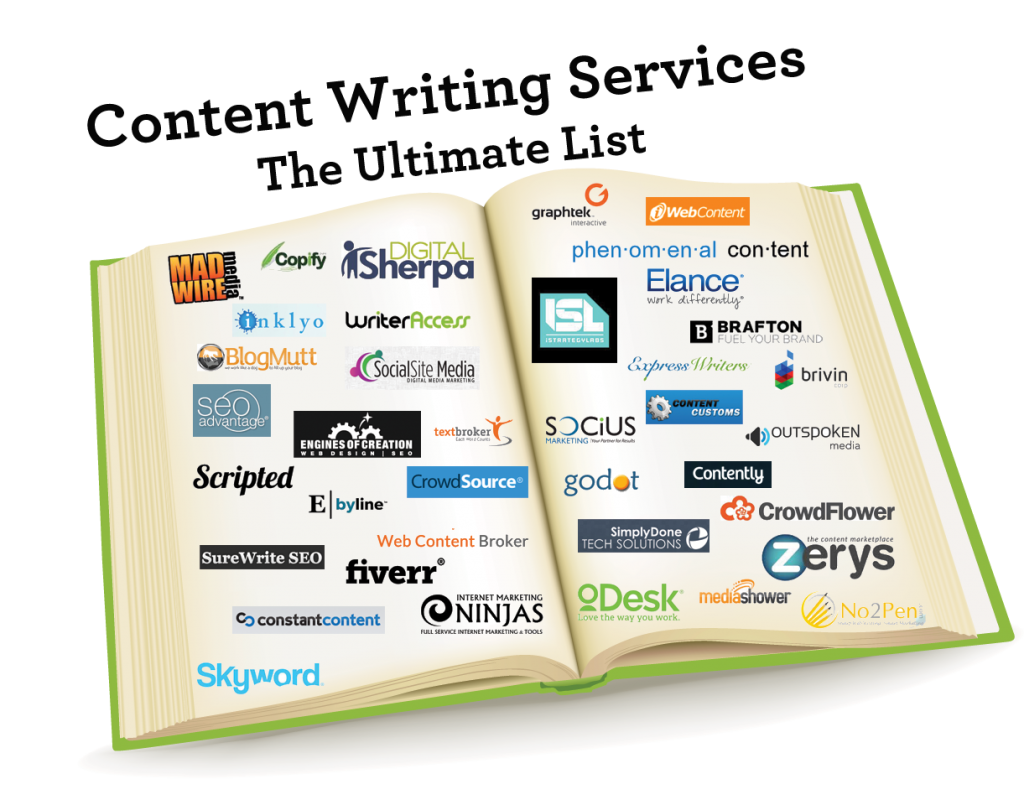
Content Writing Services: The Ultimate List

by Meg Sutton

Content Writing Services: The Ultimate List image contentwritingservices2

One of the top challenges in the world of content marketing is creating enough content to provide value for your audience and keeping readers engaged. Many marketers are turning to curation to support their content strategy, with best-in-class content marketers using a mix of 65 percent created content and 25 percent curated content. Content curation is a great way to publish high quality, relevant content on a consistent basis to support a crucial component of your strategy – creation.

Created content can boost SEO, drive high quality leads and establish you as a thought leader; but in organizations that have a limited staff and budget, content creation often falls by the wayside or in the lap of marketers who already have their plates full. As an enlightened marketer, you know that content marketing is no part-time job and shouldn’t be treated as such. In order to maintain a successful content strategy, you need dedicated content writers to publish consistently and keep your potential buyers and customers engaged.

So what to do if hiring an in-house content team is out of your budget?

Outsourcing to freelancers or agencies for content creation support is a popular option for organizations with limited resources. Our latest research found that 17 percent of marketers are turning to freelance writers for high quality and relevant content. If you’re unable to feed the content beast on your own, a content writing service may be a great option for your marketing team.

Below is a list of content creation services that can help get your content strategy off the ground, drive SEO and improve engagement.

Scripted – Scripted is a digital forum that connects organizations with highly qualified freelancers they can hire to write blogs, articles, and bulk social media posts.

Zerys – Zerys doubles as a marketplace for thousands of freelancers to connect with businesses and also provides a project management tool for content.

Ebyline – Ebyline aims to help brands and publishers find and hire high quality content creators and simplify the freelancer management process.

CrowdFlower – A leader in enterprise crowdsourcing, CrowdFlower offers original, high quality created content in multiple languages from skilled wordsmiths.

WriterAccess – WriterAccess connects businesses with one of their thousands of freelance writers in minutes, with a quick turnover rate.

Textbroker – Textbroker.com is an online forum for custom-made, original written content with over 100,000 U.S.-based freelance writers who can write on various topics.

Skyword – Skyword helps businesses engage their audiences with unique content that is designed to perform in social media and search.

ODesk – oDesk is a large online marketplace for businesses to interact with writers and designers and hire freelancers based on their digital needs.

CrowdSource – A crowd of qualified writers, editors and moderators are managed by CrowdSource to perform large-scale content creation quickly and efficiently.

Elance – Over 2 million freelancers -web developers, mobile programmers, designers, writers and translators – from around the world can be hired on Elance.

Brafton – Brafton is an agency that provides custom content, in various formats, from full-time content writers and designers to increase traffic and conversions.

Outspoken Media – Outspoken Media provides custom content creation in the form of blog posts, authority articles, Linkbait, press releases and optimized content.

Internet Marketing Ninjas – Internet Marketing Ninjas is an online marketing service that provides search engine optimized web content.

iStrategy Labs – Custom content in the form of animation, videography, video editing, copy writing, blogging and crowdsourcing is offered by iStrategy Labs.

Mad Wire Media – Mad Wire Media can help businesses develop their messaging on websites and increase search rank with content created by skilled writers.

Graphtek – Original, engaging website copy that reflects brand messaging and provides value for customers can be provided by Graphtek.

SEO Advantage – Articles written by SEO Advantage can help organizations rank in search for relevant topics as they are written by SEO professionals.

Socius Marketing – Socius Marketing provides researched, custom and well-written articles for businesses looking to extend their digital reach.

Phenomenal Content LLC – The writers at Phenomenal Content provide high quality, original content in the form of copywriting, article writing, blogging and editing.

Digital Sherpa – Digital Sherpa specializes in custom content, no matter what topic, that directly adds value to your brand and for your audience.

Contently – Contently allows brands to connect with freelancers in new ways to boost content creation and to power the next generation of media companies.

Copify – Businesses from around the world are able to source fast, high quality content from approved copywriters with the assistance of Copify.

Engines of Creation – Their goal at Engines of Creation is to provide well written page copy that’s relevant and optimized for search, but avoids keyword stuffing.

SocialSite Media – SocialSite Media repurposes and optimizes existing content, creates new site content and helps with landing page development and editorial calendaring.

Simply Done Tech Solutions – Simply Done Tech Solutions aims to help grow inbound marketing strategies and improve SEO in the form of blogs, case studies, eBooks, etc.

inklyo – Professional journalists, copywriters and bloggers can be found on inklyo to create quality content that provides value for readers and attracts attention.

Godot – Godot provides reliable and quality content writing services for organizations that need to give their content marketing strategy a boost, no matter their audience.

mediashower – Content at mediashower is written by professional journalists and edited by SEO experts to ensure it ranks higher and receives more attention.

fiverr – Fiverr is a worldwide online marketplace that offers content creation services beginning at five dollars per job performed.

SureWriteSEO – As a professional content writing company, SureWriteSEO specializes in high quality, relevant content that is optimized for search.

Express Writers – Express Writers provides professional copywriting services in the form of blogs, articles, resumes, website copy, landing pages and public relations.

No2Pen – No. 2 Pen aims to helps brands tell their story through optimized website content and strategy development so they can establish an online presence.

iWebContent – iWebContent writes, optimizes and designs content for users and businesses looking to boost their content marketing strategy and stand out in search.

Web Content Broker – Web Content Broker is a collaboration between Textbroker and SEMLogic that provides premium SEO-friendly posts using professional writers and SEO software.

Constant Content – On Constant Content, users can commission freelance writers to create custom articles for their sites. Users can also buy pre-written articles.

Brivin Corp – The content creation services provided by Brivin Corp seek to boost engagement and are always original and researched by professionals to ensure quality.

Content Customs – Content Customs allows organizations to converse with content writers and exchange ideas with designers to ensure that their created content meets goals.

Blog Mutt – Blog Mutt aims to be a hassle-free content writing service by using a crowd of experienced writers to produce unique blogs for companies who need consistent content.

Once you get cranking on content creation, content marketing specific tools are a great way to differentiate your organization.

Know of any great content creation services? Let us know in the comments below!

04 May 21:16

This is the Personality Trait That Most Often Predicts Success


Research shows that being conscientious will help you succeed in the long run.

The only major personality trait that consistently leads to success is conscientiousness.

"It's emerging as one of the primary dimensions of successful functioning across the lifespan," Paul Tough writes in How Children Succeed. "It really goes cradle to grave in terms of how people do."

Tough says that people who test high in conscientiousness get better grades in school and college, commit fewer crimes, and stay married longer.

They live longer, too, he says. And not just because they smoke and drink less. They have fewer strokes, lower blood pressure, and a lower incidence of Alzheimer's disease.

There's a staggering amount of research linking conscientiousness with success. A National Institute of Mental Health study found that conscientious men earn higher salaries. The National Institute on Aging also found that conscientiousness is linked to income and job satisfaction. Other studies show that conscientiousness is the most important factor for finding and retaining employment.

How do you know if you're conscientious? Conscientious people tend to be super organized, responsible, and plan ahead. They work hard in the face of challenges and can control their impulses.

Psychologists classify conscientiousness is one of the "Big 5" personality traits, with the others being agreeableness, extroversion, neuroticism, and openness to experience. The other traits can predict certain workplace outcomes--extroversion is a great fit for highly social gigs like sales and openness to experience often leads to creativity--but conscientiousness is remarkable for the way it cuts across roles.

Research shows that arriving on time, doing thorough work, and being thoughtful toward your colleagues helps people regardless of their job function or workplace situation. "Being on top of deadlines is almost universally a good thing," one industrial psychologist told us.

Moreover, within conscientiousness are the narrower traits of self control and "grit," which University of Pennsylvania psychologist Angela Duckworth has found to be more integral to children's scholarly success than IQ.

Why conscientiousness people are so successful

"Highly conscientious employees do a series of things better than the rest of us," says University of Illinois psychologist Brent Roberts, who studies conscientiousness.

To start, they're better at goals: setting them, working toward them, and persisting amid setbacks. If a super ambitious goal can't be realized, they'll switch to a more attainable one rather than getting discouraged and giving up. As a result, they tend to achieve goals that are consistent with what employers want.

Roberts also owes their success to "hygiene" factors. Conscientious people have a tendency to organize their lives well. A disorganized, un-conscientious person might lose 20 or 30 minutes rooting through their files to find the right document, an inefficient experience conscientious folks tend to avoid. Basically, by being conscientious, people sidestep stress they'd otherwise create for themselves.

Being conscientious "is like brushing your teeth," Roberts says. "It prevents problems from arising."

Conscientious people also like to follow rules and norms. You can spot the conscientious kids in the classroom. They sit in their chairs, don't complain, and don't act out--which also, of course, contributes to earning good grades from teachers. While conscientiousness doesn't correlate with high SAT scores, it does predict high GPAs.

To spot conscientious people at work, Roberts says to look for punctuality. If someone shows up on time, that's a great clue toward conscientiousness, since a punctual person has to be organized enough--and care enough--to arrive on time.

The bigger, and less visible, indicator is how people deal with setbacks. Do they give up or redouble their efforts?

"The conscientious person is going to have a plan," Roberts says. "Even if there is a failure, they're going to have a plan to deal with that failure."


04 May 21:15

Quality or Quantity? Strategic Marketing Means Understanding the Buyer

by Jason Snyder

When it comes to most things in life, I’ll take quality over quantity any day. That includes business prospects.

For most businesses today, the website should be a pillar in their marketing strategy and aprimary sales channel. In the day and age of inbound marketing – creating quality content that pulls people toward your company and product – heavy web traffic that includes a high number of unique visitors to your website might look good, but if those visits aren’t from quality leads – people who might actually buy what you’re selling – it’s nothing more than traffic for traffic’s sake.

To get quality leads, you have to know exactly who your ideal client is. By developing buyer

personas for ideal clients, you can better attract quality leads.  Quality or Quantity? Strategic Marketing Means Understanding the Buyer image persona resized 600

Here’s how HubSpot, the world’s leading inbound marketing and sales platform company, defines buyer personas: Buyer personas are holistic ideals of what your customers are really like, inside and out. Personas encompass the goals, challenges, pain points, common objections to products and services, as well as personal and demographic information shared among all members of that particular customer type. Your personas are the people around whom your whole business is built.

Buyer personas are a crucial component of successful inbound marketing and providing valuable information that buyers will find useful. Truly understanding buyers – everything from their demographic information (e.g., Are they married? Into what age range do they generally fit? Are they ambitious fast trackers?) to the pain points your product or service can directly address – takes more than intuition. It takes research.

Although your experience with a particular industry should largely inform your personas, your assumptions about what decision makers in particular industries need from you don’t always jibe with what they actually need. In my experience, companies can also become enamored with their innovation and not see the forest for the trees.

You have to understand the market. It takes experience. It may even take some interviews with those decision makers you are trying to reach. It sounds like marketing 101, but many organizations plow ahead with good, innovative products and services that are potential game changers. Unfortunately, the market to which they’re selling them either isn’t ready for them or doesn’t see it the same way.   So, if you’re speaking in a language that no one understands or is listening to, your efforts are in vain.

So what do you need to know about them? Here are a few key pieces of information.

  • Job level/title, seniority
  • Demographics
  • What does a day in their life look like?
  • Pain points – with what can you help them?
  • What do they value?
  • Where do they get their information?
  • What experience are they looking for with your services?
  • What are their most common objections to your services?

In our experience, there is also more than one “category” of buyer persona per industry. For example, although the CEO is the ultimate decision maker – and a persona you should develop and target – other executives in an organization who aren’t in the C-suite may well have decision-making power, too, so you need to be developing personas for and targeting them as well.

Once you’ve developed your personas, your marketing strategy – from content creation to media relations – should be built around this information. It’s like you’ve gotten into the prospect’s head. Now, it’s time to leverage that inside knowledge.

04 May 21:15

Content Marketing is For Life, Not Just a Campaign

by Jonathan Rose

CONTENT MARKETING IS FOR LIFE

NOT JUST A CAMPAIGN

How many times must a consumer be exposed to your marketing message before it changes his or her behavior?

According to one study, subjects “voiced a greater preference for the product after receiving three ad exposures” compared to those who received “either one or five.” Others contend that a consumer won’t purchase your product or service until they have been a part of your campaign seven times. Still, others say that 20 is the magic number.

This disparity often leads to arguments whether brands should be advertising or doing content marketing to convert consumers. This is further compounded by the continued misunderstanding about the differences between content marketing and advertising.

WHAT IS CONTENT MARKETING?

Content marketing can mean many things to many people and it doesn’t help that it often mischievously refuses to stick to that name. You may have seen it in a variety of guises including “custom publishing,” “branded content” and “corporate media.”

Whatever the moniker, the definition is the same: content marketing is the practice of brands creating engaging and helpful content so as to build a relationship with an audience that may make a purchase in time. Critically, it is non-salesy, preferring to educate, entertain and empower, over the impulse to solely profile product.

Compare this to advertising campaign; which is usually shouty, interruptive, product-focussed and, by virtue of being a campaign, is decidedly short-termist, aiming on achieving attention ‘spikes’ rather than long-term engagement.

To be sure, content marketing is not advertising. The strategy, tactics, and even the goals of content marketing are different. Yet so many companies still treat digital content as an ad campaign — which is detrimental not only to their respective brands, but to the entire content marketing arena as well.

CONTENT MARKETING VS. ADVERTISING

Content marketing and advertising do, however, share some common goals. Both seek to cultivate positive brand associations in the minds of a target audience but only content marketing has the power to develop brand advocates. These are people who trust your brand and understand it; because they’re so passionate about what you do, they take it upon themselves to evangelize.

That kind of clout can’t be measured in numbers of retweets, “likes,” or any of the metrics that traditional advertising chases. Though an ad campaign may yield short-term spikes in sales, a network of brand advocates has lasting power.

It helps to remember that content marketing is not designed to convert immediately – the goal is long-term, continuous engagement. The more time consumers spend interacting with your content, the more educated they become. In the meantime, they begin to see your brand as a credible resource; keeping you ‘top of mind’ and, eventually, they will see something relevant that triggers a response. Content marketing may take longer to convert leads, but over time, it significantly drives down conversion costs.

IT’S A MARATHON NOT A SPRINT

When you’re planning a content marketing initiative, remember: it’s a marathon not a sprint. Any solid initiative needs at several months to yield impact. The day-to-day, however, is important as well. Evaluate and iterate constantly.

Typically, the biggest pain points in launching and sustaining a content marketing initiative are the creation of content itself and the ability to maximize the value of the content. But being prepared for these challenges allows you to invest your resources strategically from the outset.

Establish a content creation pipeline with clear deadlines and a division of labor. Ensure that your social, email marketing, and PR teams all leverage your content to maximize their know-how to repurpose any piece of content you publish and meet their departmental goals. And take a holistic approach to evaluation. Instead of just looking at sales figures, expand your analysis to include SEO, social engagement, brand loyalty, and talent recruitment.

Once it’s up and running, a successful long-term content marketing plan will pay lifelong dividends . If you don’t see those immediately, don’t despair. Just focus on providing your audience with the most engaging content possible.

SOME EXAMPLES

There are many standout examples of content marketing. These include, L’Oreal which has Makeup.com – a site that talks about style and beauty issues without overtly pushing L’Oreal’s own product line; General Mills offers dieting advice and tips at Tablespoon.com; Red Bull has created Red Bulletin – a high-octane magazine for thrill-seekers and sports fanatics; American Express have created OPEN Forum – a portal of helpful articles which cover issues faced by small business owners.

In none of these examples are the brands explicitly saying ‘buy this, buy that, buy now!’ (as an advertisement would). Rather, they are publishing and distributing content that engages and attracts customers and prospects, empowers their lifestyles and – hopefully – builds a relationship.

As a result, user communities have emerged, making both the blog and the forum vibrant and dynamic. And because they’re actively improving people’s lives, brand equity compounds daily.

That’s not something can be said for an advertising campaign.

04 May 21:15

How to Use Excel to Manage Your Task List

by Prialto

As a startup founder, Steve Benson knows that his customers hold the keys to his success. That’s why he prioritizes getting their feedback above everything else.

But there tends to be a lot of “everything else” in his day. So how does he set aside the time to be responsive to his clients? His secret turns out to be surprisingly low-tech: an Excel spreadsheet. Steve uses his spreadsheet as a to-do list and CRM in one, distilled down to the elements of his immediate world and his day.

How to Use Excel to Manage Your Task List image steve benson spreadsheet

*Click on image to enlarge

How it Works
As he interacts with people throughout the day – receives emails, holds meetings or leads pitch meetings – Steve adds everyone to a spreadsheet of contacts. He has columns to track

  • the person’s name;
  • a response deadline; and
  • a priority.

Steve assigns a priority number between 0 and 4 to each every person on the list.

  • 0 = Dead contact
  • 1 = Unqualified Lead
  • 2 = Qualified Lead
  • 3 = Trial Customer
  • 4 = Full Customer

The priorities are what drive Steve’s day. His goal is not to go to bed without hitting all his 3 and 4 priorities. Ranking his priorities ensures that the non-important things never overshadow the important items, even if the non-important items are more urgent.

It also ensures that he knows what needs to be done, and what can wait.

The strategy can be used for managing any process – from a sales region and pipeline to your taxes. The beauty of it, as Steve sees it, is that everything is consolidated into a single space, with easily changeable value points. While it may not be infinitely scalable, it does help to bring one’s own world of work and priorities into sharp focus.

Steven Benson is VP of Sales and Marketing at Badger Mapping. The company has an app that allows sales people to see all of their customers on a map, plan routes to those customers, and find new leads while they’re on the road.

04 May 21:15

Have You Put Your B2B Marketing Program (& Agency) on the Dyno Yet?

by Ed Marsh

Shiny and sounds good

Expertise is a journey.  Early on, superficial attributes get the attention, but as time passes and expertise increases you quickly learn that “what’s under the hood” and later “what’s inside” actually matter more than shiny chrome, buffed paint and a throaty roar.

But how many B2B manufacturing company CEOs/presidents move beyond the sparkling paint and resonating rumble of their marketing?  I know from experience, not many.  I’ve observed two reasons.  First, there’s a disengagement from marketing – what’s important is the product.  “If it’s as great as it is, it will largely sell itself” goes the thinking. Second, the marketing folks themselves can do a heck of a job with their digital Meguiars and pulsating surround sound.  “It’s looks so slick it must be good, and it’s not really my expertise anyway.  Leave that to the marketing experts”, they think – but sometimes the substance isn’t so solid.

And then there’s the question of results.  For so long B2B marketing has been based on vapid ‘metrics’ like impressions, that nobody actually was held accountable to results – was there adequate torque? could the engine sustain extended operation near the red line? were the driver’s intuition and responsiveness adequate? and who ultimately crossed the line in the top ten (or even made it to the line)?

But what’s the drive train made of?

Have You Put Your B2B Marketing Program (& Agency) on the Dyno Yet? image dyno testing a b2b marketing programIn today’s B2B marketing world there are detail shops on every corner…that purport to be performance engine tuners.  The problem is that despite the comfortable waiting room with wifi, an espresso machine (maybe even the kegorator that seems common in current creative culture), nobody there (often not even the owner, much less account managers and reps) has ever rebuilt an engine.  And tuned one?  Forget about it.

Nevertheless the message, delivered with reassuring confidence, is “We’re going to detail your car monthly for a year.  We’re even going to put on new wheels.  And you’re going to win the race.  We’ve never done an engine job before but that’s OK becuase we’ve buffed lots of paint.”

But keep in mind:

  1. design is not marketing (just as detailing isn’t mechanical)
  2. marketing is not lead generation (just as changing oil isn’t building an engine)
  3. lead generation is not business creation (just as an engine rebuild isn’t optimized tuning)

Marketing agencies are generally very good at marketing their marketing services.  That’s not the same as being very good, or even adequate at marketing your B2B products.

You, and more importantly your prospects & customers operate in an entirely different world.  And all the glitzy websites, functionally perfect landing pages and professionally produced content in the world are irrelevant to your business growth if they don’t really, really fit to your company, your products and your prospects business challenges.

Too invert the analogy now, there is simple mechanical execution (which lots of folks can do – and which dominates most inbound marketing conversations) and then there is the real expertise which tends to quickly stratify agencies by areas of expertise.  We find that the B2B industrial space is particularly problematic for marketing agencies.

So before you pick an “agency”, put their capabilities on the dyno and see whether there’s any substantive HP produced or if that shiny website is just matched up with an awesome surround sound system that you felt through the floor.  Is there any dirt under their nails?

Data driven marketing, NASCAR & millenials

As long as we’re talking cars, tuning, industrial marketing and B2B business development, here’s an interesting article on NASCAR’s marketing.

Yes, it’s B2C, but that’s not the critical aspect. Three important and relevant points are embedded.

  • importance of data and ‘surveys’
  • effectiveness of localization
  • approach to millenials

How are these relevant to your marketing as a B2B manufacturer?  Directly.  Here’s how.

First, you probably don’t really know your prospects and customers as well as you think you do.  Sure, you may have a beer with them at trade shows, and you ask them technical questions.  But you don’t know the bigger stuff.  You need to survey them – not through some cheesy SurveyMonkey tool or a focus group, but good questions.  You’ll have to come up with your own, but here are some examples:

  • “There must be something that drives you nuts that I simply don’t seem to understand about your job/company/industry – that if I did I could help you better.  What is it?”
  • “Every product has problems.  What’s the biggest bitch folks have with ours that nobody bothered to tell us about because they figured they were stuck with it?”
  • “Folks I talk to in your position often tell me about how much time they spend working on XXXX, and how necessary but unproductive it is.  What’s your biggest time sink that I should know about?”
  • “What was the best suggestion anyone ever dropped in the suggestion box about XXXX area here that never got acted on?  How come?”
  • “If you were running this department, what’s the first thing you’d change to save money/improve quality/increase output/etc?”
  • “Often customers use our product in creative ways that we never thought of.  What do you do with ours that’s not in our manual?”

And you can use data in other ways too.  For instance, volumes of traffic an leads coming from a couple focused foreign markets might give you some solid indicators of where to start focusing a global expansion/export sales effort.

Second, if your selling B2B, a Hispanic focused program like NASCAR created for their B2C effort may not be relevant.  But certainly industrial conditions vary by region in the US and by industry.  The northeast’s high cost, older buildings environment is different than the southwestern “maquiladoras.”  Should you localize some of your marketing by region?  Or more likely by target vertical market?

Third, and most importantly, millennials.  Not relevant you scoff?  After all you’re B2B right?  Well if your product is sought, researched, bought and used only by middle aged senior executives, then you’re off the hook.  But if young engineers, procurement or maintenance folks are involved somewhere in the process, then you’d better get savvy about how millennials research products, consume content and make decisions.  And you’d better ensure that your marketing takes that into account – including mobile responsiveness and tools for engagement just as NASCAR found.

image – hotrod.com
Have You Put Your B2B Marketing Program (& Agency) on the Dyno Yet? image

04 May 21:15

3 Time-Saving Hacks To Help You Close More Sales

by Daniel Vaczi

3 Time Saving Hacks To Help You Close More Sales image inbound marketing sales funnel

I think we can all agree that a salesperson’s time is their most valuable asset. I’ve been in sales longer than I can remember, so I know very well from experience just how much a salesperson’s effectiveness can suffer by limiting their productivity and misusing their time.

Here are three time-saving tips to help you maximize the use of your time and close more sales in the process.

1. Educate Your Target Market Through Content Marketing

Prospecting can be the most time consuming part of a salesperson’s job. What you need is a mechanism that is sure to attract the right prospects your way. Most of your target market wants to do business with someone that is recognizable and that is great at what they do. They seek out knowledgeable industry leaders that they can trust to solve their problems. Creating blogs, ebook, presentations, videos and other forms of content is a great way to achieve this and showcase your leadership in your respective industry.

If you cringe at the thought of writing, don’t despair; there are other creative ways to achieve the same goal. For instance, you can start a video blog series featuring a tip of the week — something brief and catchy, but more importantly, offers valuable insight that highlights your extensive knowledge in your industry.

Upon creating content, remember to focus on real issues that matter to your target market and how they can overcome them. Don’t be afraid to share real industry knowledge. Don’t worry about losing prospects that will take the information to try to execute it on their own. Trust me when I say, you don’t want to waste your time with them anyway.

Educating your target market will help you attract a qualified prospect that already sees you as an expert. You will have a shortened sales process and you’ll have more time allotted for reaching out to the right prospects, increasing your closing rate significantly along the way.

2. Marketing Automation 

Using a marketing automation tool to help you stay in touch and nurture your leads down the sales funnel. For example, if your prospect downloaded a piece of content like an ebook or white paper, this action could trigger the marketing automation.

Instead of harassing each of the leads with a phone call, you can nurture your leads with valuable emails that position you as a thought leader while building a relationship with them in the process. These emails will be dripped out over time and include call to actions that lead to other content offers and opportunities further down the sales cycle (e.g. schedule an appointment, make a purchase, etc.).

3. Lead Scoring

I think we all can agree that the biggest waste of time for a salesperson is pursuing the wrong lead. Don’t let this happen to you by relying on mere trial and error. Take advantage of lead scoring tools that will allow you to find out which leads are the most engaged with your company’s offering.

A basic lead scoring system will be able track who engages with your emails, if they convert on any offers or downloadable content, if they click through to your website and which specific pages they view. The system will give a score to each based on their engagement. You can then choose to follow up with the most engaged prospects who are most likely to convert into profitable clients.

Employing these three elements will help you attract, convert and follow up with sales opportunities in a more efficient manner. Follow these steps and you will be optimizing your time for peak performance — pursuing the right leads at the right moment, while building relationships with the rest of your prospects.

3 Time Saving Hacks To Help You Close More Sales image c2b920b7 7126 49d2 8f83 d70537ea4e59

04 May 21:15

How to Measure ROI, Even When It Isn’t Obvious

by Brittany Huber

How to Measure ROI, Even When It Isn’t Obvious image measuring

For all that business advances and marketing strategies change and production methods become faster and more high tech, Return on Investment (ROI) is still the name of the game. And really, it has to be! No matter how altruistic and community minded and socially responsible a company may be, the ultimate goal of a business (and not a non-profit or a community organization or a co-op or whatever else) is to make money. Of course the challenge is, as business becomes ever more complex and your resources get spread in more directions, some things aren’t as easy to calculate the value of as a new phone system to increase the speed at which you can take orders or anything that concrete. ROI has to become more flexible, the way we measure it has to adapt to the reality of what we’re really trying to accomplish, and sometimes a clear ROI simply has to be a measure used after the fact and not the price of admission for a new project. So in this brave new world where businesses have to make money, but figuring out what investments are worth it is more complicated, how do we measure ROI?

Know what you’re trying to accomplish

You can’t measure something if you haven’t identified what the thing is in the first place, so the first question has to be “what are we trying to accomplish?” Are you specifically trying to drive sales? If so, of a specific product or service or to a specific market segment? Are you trying to generate leads? From specific markets or specific divisions or employees? Are you trying to build brand awareness? From specific demographics or about particular portions of your offerings? You can’t measure whether something is working until you have a clear and specific idea of what your goal really is. Once you know why you’re doing something, you can start to put together the how and figure out how to know when you’ve done it.

Define specific measurables

Once you know generally speaking what your end goal is, you need to star to whittle it down to a specific, measurable performance. Something like “increase website traffic” isn’t even specific enough, because what if something boosts traffic 2%? That’s not very much, but if it’s the result of something that took a very minimal amount of effort and cost, that may be plenty to generate a return. In contrast, a 10% increase as a result of something that was a resource intensive, time consuming project may not be enough to break even, much less actually show a measurable return. Once you have specific measurables, you can figure out what your break even point on cost for any specific project, marketing campaign, or other effort is and go from there. For example, if you’re working on a social media campaign with a goal of increasing leads, and you know that an average sale is $1000, and generally ten percent of leads become sales, then $100 per lead is your break even point. From there you can figure out, for example, how many ad impressions or how many hours spent crafting social media content it takes to generate one lead, and run your numbers.

Be willing to let those measurables not be about dollars and cents sometimes

I realize I’ve spent a lot of time thus far talking about figuring out how to put dollars and cents to the value of a project, but some things make it very difficult to measure exact return, especially if what you’re trying to accomplish isn’t specifically sales driven. If your goal is something like increasing reported customer satisfaction or speeding up support response time, it may be a challenge to figure out exactly how much value that has, because lots of factors influence customer satisfaction rates and repeat purchase rates and isolating your variable in this situation can sometimes be more work than it’s worth. You still want to be specific about your goals and how you intend to measure them, but sometimes it’s okay to say, for example, that you want to increase reported customer satisfaction by ten percent, set a budget you feel comfortable with for whatever your plan to accomplish that is, and then check back in a reasonable amount of time and see if you’ve met your marks.

Have a realistic sense of how long it may take to generate ROI

Not everything is going to run on the same time table, so it’s important to set your frequency of audits and your ultimate target date specifically for each project with attention paid to what the incubation time for the medium or the set-up time for the new tech is going to be. In marketing, long form content can take a long time to reach the right audience and start showing up regularly on search results, social media traction takes awhile to develop as you cultivate an audience and earn credibility, but a particular advertising campaign can have a much more immediate measure of success. You have to know how long to give something to generate a return before pulling the plug, adjusting course, or ramping up efforts based on your data thus far. It’s also important to not let early data on a long term effort sink motivation or confidence. Personal trainers and doctors tell you not to weigh yourself every single day, because the normal fluctuations can be disheartening if you see yourself gain and lose the same pound over the course of two or three days, and sometimes checking in on your ROI is the same thing. If you’ve decided a project has six months to make significant progress, don’t look at two weeks worth of numbers and let it get you and your team down.

Run customer surveys to back up analytic information

Simply seeing increased sales or a boost in traffic over a specific time period doesn’t always mean that your efforts are working as you planned, especially in a situation where there may be several variables at play. So really, why not go straight to the horse’s mouth, as it were? Click through trackers for email campaigns or PPC or promoted social media update efforts are typically very realistic, but they’re not perfect. If someone reads your email, deletes it or files it away for future reference, and then remembers about it and goes to your website or makes a purchase or does whatever the goal activity was without clicking through the original email, that may not be captured. If someone made a purchase because a competitor is struggling, but not because your efforts to improve customer retention have been successful, just seeing that sales bump may not give you the whole story. Directly asking the question “how did you find out about us?” or “did you take advantage of an email offer from us in the past six months?” or “why did you choose us for this purchase?” can give you secondary data to check what the rest of your data tells you.

What it all really boils down to is an old adage that I’ve heard from at least one of my parents and no fewer than four bosses over the years — “have a plan, work the plan.” If you know what you’re trying to do, and you have a specific plan on how to accomplish it and how to know when you’ve done it, you’ll be successful more often than not. Think of your biggest current goal, and how you would measure your ROI on your efforts to accomplish it, and share with us in the comments. Thanks for reading, as always!

04 May 21:15

Reincarnation of a Salesman

by Valerie Levin

Reincarnation of a Salesman image New SalesmanPhoto: Flickr @Alexandre Norman

With the advent of content marketing, many a thought leader has predicted the demise of the traditional salesman. Life has yet to imitate art, and as of now, we’re not close to nearing Death of a Salesman. If anything, salesmen are much closer to being reincarnated – in the form of a half marketer, half salesman – than dying out completely. As buyers become increasingly empowered, and avoid contacting a salesperson until about 57% of their purchasing process is complete, salespeople must learn to evolve – and fast.

The rise of the self-educating consumer doesn’t signal the end of sales as we know it. Rather, the buyer’s revolution has brought with it the need for a new breed of salespeople who are much more marketing and research oriented than ever before.

In the past, salespeople represented the sole channel through which a prospect could learn about a product or service. They controlled the type and quantity of information that was transferred, based on which people would make their final purchasing decision. Salespeople were the main source of customer engagement, relationship nurturing, and of course closing the deal. Basically, the way it worked back then was if there was no salesperson, there was no sale. The digital world has created a whole new landscape in which buyers research products, entirely on their own, via social networks, websites, online forums, blogs, and other channels. Salespeople no longer hold all of the power, and most of it is now lies in the hands of the buyer.

Beyond the growing presence of the self-educated buyers, salespeople also face another problem – the declining use of promotional language and collateral to drive sales. Given the multiple channels through which we can access “neutral” information, people are no longer willing to put up with traditional sales content, and increasingly connect with brands that offer helpful recommendations and valuable best practices, rather than directly sell to them.

This is where lead nurturing steps in; marketers are now charged with generating a flow of engaging content, in the form of e-mail campaigns, blog posts, case studies, and webinars. This tactic now dominates most funnel stages, many of which were once attributed to sales.

The balance between sales and marketing is shifting, as marketing gradually gains more influence in the buyer’s purchasing decision. In fact, marketing seems to be taking over many responsibilities originally assigned to sales, such as customer engagement and relationship building. The notion of “hard selling” is dying, and as a result, salespeople must adapt to a world where content marketing and social media are taking its place. Does this mean that salespeople will soon be extinct?

No.

Despite the growing overlap between the two, marketing and sales still maintain two distinct goals. Marketing is generally focused on generating content, launching social media campaigns, crafting advertising messages, and engaging with prospects across each channel. The main aim of marketers is still generating leads – rather than directly converting them into sales.

Content marketing can nurture and educate, but more often than not, it can’t “close” a deal in the same way that a salesperson can. Leads can discover a product on their own, and even move through the funnel by means of content marketing, but in many cases, they still need that extra push to actually make the purchase. A personal phone call, email follow-up, live demo, or specialized promotion can make all the difference between a prospect and a sale.

Modern technology enables salespeople to learn about clients in advance, understand their needs before ever speaking to them, and contact them at the most relevant times. For example, a prospect may initially sign up for a product trial as a result of a great blog post written by a marketer, but a salesperson should be the one getting on the phone with them at the end of the trial. The marketer may get the buyer into the top of the funnel, but it’s the salesperson’s responsibility to start the conversation that motivates them to take the next steps, and become an actual paying customer.

04 May 21:14

3 Sure Fire Ways for Campaign Success

by christina.dieckmeyer@salesbenchmarkindex.com (Christina Dieckmeyer)

Do you have enough leads? The marketing team is expected to provide sales with a set number of leads each month. Are you hitting this number? Probably not.  Even if you are, who would turn down more leads?

04 May 21:14

The 7 Best Ways to Build your Email List

by The Wishpond Blog

The 7 Best Ways to Build your Email List image tumblr inline n4wlb0AvSf1rur54v


Your email list is one of the most important business assets you have.

There are currently 3.2 billion email accounts, and 91% of email users check their emails at least once a day. Emails get results.

But you need to be smart about your email list building.

The best email leads are people who are genuinely interested in you, your products, or your business. Once you’ve been able to get someone to voluntarily give you their email, let’s face it, they’re much more likely to want what you’ve got.

Here are 7 of the best ways to build your email list with genuine leads.

1. Use email-gated landing pages


Landing pages are one of the most effective methods of generating authentic leads for your business. A landing page on your website develops familiarity with your visitors.

The more your potential prospect knows who you are and what you do, the more likely they are to be genuinely interested in your business and products, and the more likely they’ll be to give you their contact information.

It’s a win-win. You get qualified leads, and your prospects get to know about a valuable business – yours.

Design landing pages to generate leads by email-gating your offer. That is, ask for an email in exchange for your content, exclusive membership or free demo. (Check out 21 Marketing Ideas to Generate Leads from your Landing Page for effective content and offer ideas for your lead-gen landing pages.)


Here is an example of an email-gated landing page template from Wishpond. Our templates are easy to create and customize.

The 7 Best Ways to Build your Email List image LfNCkCiZYVFXVc4fNmndfMqkuYjLhegn2wyZyE9vvXtzsj4tYGh OJDJQEiT7K90j5Eh0abEq8PKc2Xoj7DfZd6TQqwKgYkOIgUxtdSUtHB5cigAIjcIHk0aVjv9nIqaIQ

You can also integrate your landing pages onto your Facebook page to generate email leads from your awesome Fans.

2. Have multiple landing pages


Host a number of landing pages on your website. As a rule of thumb, most businesses have at least one landing page for each product or service they offer. Companies with 51-100 pages on their site generate 48% more traffic than companies with 1-50 pages.

If you have a variety of customers in different demographic groups, optimize your landing pages by creating product specific pages to market to each segment.

For example, let’s say you have a pizza delivery business. Create two or three online ordering landing pages for specific audiences:

  • For your family segment, create a page to your market with words like “busy schedules” or “Pre-order your pizza at work. We’ll hand deliver it when you get home.”
  • For your college-aged customers, create an email-gated landing page using words like “Cheap Pizza” or “Super large slices only .99c”

You can create even more landing pages to generate softer (but still qualified) leads. Email-gate your content (such as ebooks, newsletter signups, blog feed signups, webinars, how-to guides and more), free trials, free quotes, contests, coupons and more.

3. Offer business related incentives


To get leads that are genuinely interested in your business, offer incentives that are related to your products or services.

For example, let’s say you make a landing page for a sweepstakes you’re running. Make the prize of the sweepstakes related to what you do. If you’re in the business of making and selling candles online, create a sweepstakes with your candles as the prize. Don’t give away an iPad or other enticing prize that’s not relevant to your business as you might attract more entrants but those leads are unlikely to be your customer.

Here’s an example of a sweepstakes landing page, offering the business’ product as its prize.

The 7 Best Ways to Build your Email List image b8aUQHcMkHEn YJauRJJQ0gIE1POvyb9oTTZDOtOYetEKWOyGE6AW5tHCQNnO0mMvjyIFl2rBD1m20OJxokW4lYCAfKsG9p6ogwyV4nQ9OPKHeX69VaAYqjaPvlS2fM2rg

4. Be precise with your Call-to-Action (CTA)


Make it clear what single action you’re asking your visitor to take:

  • Your CTA should be the most prominent feature on your landing page
  • Use contrasting colours to design your CTA buttons
  • Keep your ask short with action-oriented words to invoke an immediate reaction
  • Show the obvious appeal or value exchange in your CTA
  • Make yours an offer they simply can’t refuse

Example of a clear CTA to “Try it Out” on Wishpond’s landing page builder product page.

The 7 Best Ways to Build your Email List image GEqMRD6LdGshNzEBnR32z6QULHhYNCJA6iXN7WqGc8pojnPtkX2ld9LuOD4BJB4f8in5anGvYydDsni MxTTGZeF0OeASwEFIeJDFKmVgVm6q JkfE24UpewYISxyZOYgg

Enhance your CTA by including your competitive advantage. Show how and why your service is better than your competition. Use your unique selling points to convince your demographic to turn into your email lead.

Generate immediate action by creating a sense of urgency, too. Use limited time offers, quick expiry dates, limited numbers of an exclusive product offering and other scarcity tactics.

5. Keep your page simple and organized


The visual design of your landing page is important in beefing up your email leads. Increase your email lists by decreasing the clutter on your landing pages.

In other words, make it easy for your potential leads to see who you are, what you’re offering and what you’re offering in return.

Design an optimized landing page to keep your visitors focused on your CTA:

  • Make your landing page easy to navigate – Avoid conversion drop offs by keeping your written and visual information to a minimum. In general, your CTA and form field should be located on the lower left side and above the fold. (To be sure, A/B test your landing pages to determine what placement gets you the most email leads.)
  • Use bullet points – Most people reading online are skimmers. Write about your benefits and selling points in short concise bullet points.
  • Keep your form fields to a minimum – Though there is debate about how much information you should ask for, I’d suggest that you keep your form fields to the basics. Ask for an email and first name as mandatory info. If you’re offer is really enticing or has a high perceived value, ask for much more contact and demographic data. The less you ask for, the more email leads you’ll get.

Keep your mandatory form fields to a minimum to increase email generation.

The 7 Best Ways to Build your Email List image Pt J5VtLXlfcUxbpkn8y6nFp UnHCzCqnLt5rxJZ1giMuUaa2Q5IM13QkUhRmywheebzKeeJst0eGa5uEwPPnWgtAuYxTcRUvyAnR5lrw7Tqpg6GPr1k0jF0L g3Q0OjQA

  • Use white space – Again, don’t over clutter the visual appeal of your landing page. Leave empty space on your landing page to direct your prospect’s attention to your offer, benefits and Call to Action.
  • Include an image that shows your offer – A picture tells a thousand words. This is particularly true on a conversion landing page. The quicker and more relevant you can show your offer, the more email leads you’ll get.

6. Think like your customer


As a marketer, you always need to be able to think like your customer. What do your consumers want? How can you relate to your prospects on a deeper level? Connecting on a personal level breeds closer ties, trust and ultimately more leads and sales.

Make a list of demographics for your customer personas. Detail out their online behaviours so that you can design a website landing page that immediately bonds.

Here’s a few more tips to deepen your customer connection:

  • Show a face – Studies have shown that the image of a face increases trust – and conversions. In particular the smiling face of a woman tends to invoke a stronger connection. Show the face of you, your staff or your customers with your product or offer.
  • Speak to your customer – Write marketing copy that personalizes your page. I think of a landing page as a place where someone is visiting your store in-person. Use personal pronouns like ‘“you” to tone your relatable copy and increase email leads.
  • Use customer testimonials – There’s really nothing so endorsing as a customer testimonial. Use real customers who’ve had success with your product. Include a quote and the customers name and face. People trust people. Social endorsements go a long way to deepen trust and relationships with future customers.

Use customer testimonials to relate to the needs of your future customers.

The 7 Best Ways to Build your Email List image 2In6X0O9u31j7ADI9cB4WGiE88FvhyFcwRkg4maeM4IgJNx7aqib 1 NNbls3 s9zETsvyJU4n8qGxXX11jerm9sp34AYrccXPBRYbjpLrQbmbjcEEKQzP5MURrYtaSh0g

7. Ask people to share


This is an obvious one, but many marketers still don’t utilize it to its full potential.

Include share buttons prominently displayed on your landing page. The easier you make your page to share, the more it’s going to get shared.

Use social share buttons on your email generating landing pages.

The 7 Best Ways to Build your Email List image RuczmRGwPNczXty2fx3IQqIGgfwvWfp2aWvA8O2kHoFQEhynhYSTBzNwyNfzT0L0gJsSF9AoecJ2HbF32yGg3Xr0e wU6Vyg Kli3R EXpkshqJqEI4tDz67KFdITSxtHg

Additionally, once you’ve started to get emails, set up an email automation campaign to continue to keep in touch with your new leads. Add share buttons in your emails.

Insert a tweetable link that’s super easy to share, and drives more traffic to your email lead generation landing page.

Conclusion


Build your email list with genuinely interested customers. You’ll gain a lot more leads who want what you’ve got. That means more sales for you!

Always A/B test to optimize your email leads. Measure your results and keep improving.

What tactics do you use to increase conversions and gain qualified leads from your landing pages? What’s been successful for you?

Written by Krista Bunskoek @ Wishpond

The 7 Best Ways to Build your Email List image IirIpPUKPoZ53uFA6PP ogEjXusNv0xoG8b5cApz5N54ydK4 AxpJpZ QV4jdMJrcc 5tIDqP38iQqsFDz ep8izlmuIacndJouw3lIrsWUI vU78nfqIrKPpzJNEWL1Dg

04 May 21:14

Checklist for Building a Sales Pipeline

by Ben Pages

Cost is naturally an important consideration for generating B2B leads and building a sales pipeline more effectivelyChecklist for Building a Sales Pipeline image 12221514614 296893354b m. That discussion usually involves a debate on whether to get more qualified leads for sales by internally building and managing a team or outsourcing. What factors would you have to ponder in order to determine the real cost of insourcing vs. outsourcing lead generation? We came up with a check list for you to think about:

  • Construction, augmentation, refinement, and maintenance of databases
  • Inbound inquiry response routing
  • Time required for new hire training and ramp
  • Sales Force Automation tools implementation and use for tracking and management of opportunity
  • Dedicated Account Management
  • Weekly status meetings
  • Expandable staff for events and specialized campaigns
  • Aggregated resources – All assigned resources should carry customer quotas
  • Analytics to provide real time understanding of where you are successful

When you consider doing these activities internally and compare it to having them provided by experts who specialize in driving revenue, with outsourcing, the savings are considerable:

  • You incur no in house database administration burden
  • You do not have to locate, hire, train, manage, equip, and pay for internal staff
  • You extend capabilities and remain flexible

Most organizations need to have an environment which can provide both inbound and outbound support. Whether the team is internal or outsourced through a sales partner, the goal or measurement is clear although sometimes misstated – quickly building a sales pipeline as large as possible.

Rather than having your sales team invest a significant portion of their time on business development, your outsourced sales partner will design and build solutions that support the revenue generation effort by:

  • Prospecting to provide well-qualified prospects – sometimes as support to the outside sales force or channel partners
  • Filtering inbound requests to uncover real prospects
  • Following up on events and marketing campaigns to qualify prospects
  • Selling products and/or services to new or installed base customers

By outsourcing business pipeline development, your sales team can provide maximum results from quality pipeline while taking the burden off of your organization.

In addition, here is a free articleon the qualities you should be looking for when comparing outsourced sales companies.

Photo by Olivier Tacke

04 May 21:14

Sales Process Diagnosis: Curing Your Reps’ Unproductive Manic Panic

by John Fakatselis

Sales Process Diagnosis: Curing Your Reps’ Unproductive Manic Panic image 175861511You’ve got 215 sales days, or 1,720 sales hours, per year. How do you translate those fixed numbers into succulent sales success? Improve sales productivity: the amount of sales-enabling juice your reps extract from each interaction in your sales process – from a simple touch point to that full-blown presentation.

Where Has The Selling Time Gone?

According to the CSO Insights 2013 Sales Performance Optimization survey, sales reps spend only 37% of their available time selling – with selling defined as face-to-face or on-the-phone (i.e., “1:1”) conversations with prospects.

It’s clear that more selling time translates to greater revenues per rep, so why aren’t reps spending more time selling?

The amount of 1:1 selling time has declined from 47% in 1998 to 37% in 2013. (CSO Insights)

While sales and marketing technology has improved with abandon, sales productivity has taken a hit. How did this happen? How is it that over 15 years ago – when all we had were phones, early-stage email, plain-text websites and a slew of docs and brochures – sales reps were more productive than they are today?

We’ve gotten too hyperactive for our own good. We’ve overloaded the sales team with an onslaught of tools, apps, devices, reporting systems and performance analytics. We’ve taken time away from sales enablement and customer engagement, and funneled it into over-engineered processes and red-tape tactics that simply don’t sell:

  • Up to 28 hours of a sales rep’s time is spent searching for and recreating documents. (International Data Corporation)
  • 80% of the average salesperson’s day is spent on non-revenue-generating activities – stemming from 1) not knowing where to find good prospects and 2) not recognizing them when they’re found. (TeleSmart.com)
  • Sales reps only spend 37% of their available time selling, while 20.9% of their time is allotted to lead generation and account research, 16.9% to order processing and account management, 13.8% to meetings and administrative tasks and 11.4% to “other” activities like training and travel. (CSO Insights 2013)

We have become disengaged with the sales process and unaligned with the B2B buyer.

SYNDROME: Sales Mania

Many hindrances to sales productivity derive from some pretty unassuming risk factors, most of which are rampant because they come with being human:

  • Change seems scary.
    Many sales reps and teams have been working with the same platforms, processes, practices and policies for a long time. Learning new things takes time and effort, and wanting to learn new things takes motivation.
  • Technology becomes overwhelming.
    With all the sales enablement tools, marketing technology and automation software out there, it’s intimidating just to think about the process integration and team teaching that lie ahead – not to mention knowing which platforms and apps are right for you.
  • Personalization faces “either-or.”
    Sales reps are forced into a sales fork:
  • The process turns patchy and starts taking precedence.
    It’s tempting to try out and implement all those innovative tools and incredible technology with your sales process, but that’s a sure-fire recipe for distress. When you attempt to patch up a process with so many new and moving parts, you over-complicate your system and confuse your people. This puts a jam in efficiency and sales productivity – despite your intentions to do the opposite. And when the process takes precedence over the people, you’re really in trouble: Time spent integrating tools and technology starts to trum time spent enticing leads and prospects, as well as delighting customers and clients.
  • Opportunities head for the hills.
    New tools and complex processes often make it more difficult and time-consuming to move leads and prospects through the pipeline – at least in the beginning. When that sales pipeline eventually gets clogged, some of your most valuable opportunities are going to send up the white flag and retreat for a more responsive sales team – one that “has their stuff together.”

TREATMENT: Sales Enablement (Extended Release)

Don’t run full force and flailing into sales process reinvention. This ramshackle restructuring is a prescription for unproductive pandemonium. Instead, take a deep breath and a few steps back to strategize your sales enablement. But don’t think you have to do it alone. There’s an emerging class of tools to help you out.

The Sales Enablement Platform streamlines your efforts for a more effective and efficient sales process – without closing the door on differentiating, experience-clinching personalization:

  • Make change approachable.
    Choose the right platform, tools and technology to make your reps’ jobs simpler and streamlined without the need for extensive training. Effective sales process realignment enhances that which your reps are already familiar and comfortable with.
  • Turn down technology overload.
    A comprehensive platform integrates many capabilities of the so-called “point solutions.” What’s the point of implementing a bunch of redundant or moderately helpful tools if one or two comprehensive game changers do the job?
  • Put productivity and personalization on autopilot.
    You need that one-stop, all-inclusive platform. This arsenal of technology covers the full gamut of personalization and productivity with coaching tips, subject matter expertise, collaboration, content organization/recommendations, buyer insight, presentation customization and engagement analytics
  • Keep the pipeline in mind, always.
    The Sales Enablement Platform helps your sales team differentiate prime prospects, dormant leads and unqualified candidates.  With that information, they’re able to execute the best-fit, prioritized strategies: immediately assisting primed prospects, nurturing dormant leads and releasing unqualified candidates back into the wild.
  • Put the person first.
    With a proper sales enablement foundation in place, your team is able to hack away at that 63% of non-selling time. Sales reps are able to plan their strategy, prepare their tactics and engage with buyers more effectively and efficiently than ever.  Easy access to all the resources they need – from presentations, document templates and playbooks to experts and coaching guidance – enables reps to move seamlessly through the sales process.

The increased sales productivity you extract from the right sales enablement platform is what sets the stage for game-changing differentiation, exceptional buyer experiences and sales success.

04 May 21:14

Awareness Marketing: It Doesn’t Always Have To Be About Traffic and Leads

by Laura Hogan

I can’t tell you how many times I hear the “we’ll increase traffic and leads for you” pitch that every inbound marketing agency spits out. And yes, we are culprits as well!

But that’s just how we measure part of the ROI for our clients; it’s not all we do and we certainly don’t put a huge emphasis on it due to the fact that we can offer our clients soooo much more. In fact, in the grand scheme of things, traffic and leads don’t even really matter. (A universal gasp is now spreading across the inbound marketing world).

I can tell you about numerous instances where a decrease in traffic was actually better for the business than increasing traffic. One of my clients wanted more commercial traffic coming to their site but all they were getting was residential. So we switched up the strategy and voila, commercial traffic came and residential traffic stopped coming. It wasn’t really that easy or that quick but for the sake of this blog post let’s roll with it. But because the residential traffic stopped coming, their traffic numbers dipped and that was okay, in fact it’s what we wanted. Eventually we built their traffic back up with just commercial visitors but it took a lot of time and effort.

If you’re looking for an inbound marketing agency, you need to focus on the things that you really want out of any company you work with which is results. Traffic means nothing if it’s the wrong type of traffic. And the right type of traffic means nothing if it’s not converting to leads with awesome premium content. And leads don’t mean anything if they aren’t being nurtured correctly and moved through a sales funnel until they’re qualified to speak to the sales team. And sales qualified leads don’t mean anything if communication isn’t cohesive enough with your marketing team to where sales is being alerted and notified on the type of information marketing is sending them. And cohesive communication doesn’t mean anything… just kidding I can stop there.

Bringing in traffic and generating leads from that traffic is a huge part of what we do but it’s not necessarily all we do. So if an agency is laying it on thick with the traffic and leads bit ask them what else they can do for you past just traffic and leads.

For instance, our process is set up as follows. We create a buyer persona, build a complete strategy around that persona: content, emails, customer acquisition, customer retention, and analysis). So yes we bring traffic to your site and we generate leads from that traffic but that’s the very tip of the iceberg, it’s not even the fun part! For instance I just created a 42 email lead nurturing campaign… we don’t under-commit that’s for sure, our leads are well nurtured. And not just based off one tiny piece of information about them, we ask in-depth questions as they move through the funnel and move them from one lead nurturing group to the next based on the information they provide us.

As far as customer retention goes we provide things like list segmentation, lead scoring, referral programs, etc.

We segment closed customers by service, industry, pain point, software they use, product they purchased, type of offers they’re interested in, etc. Each customer segment receives not only a unique monthly email based on their segment but every interaction with them is customized due to the segmentation.

So really, if someone is telling you that they can increase traffic and leads for your business and gets flustered when you ask what the heck else they can do, then hang up and call me or call anyone here at OverGo or call another agency and see what they can do I don’t care just hang up that phone.

Awareness Marketing: It Doesnt Always Have To Be About Traffic and Leads image 8008280f 53e4 45a4 ad4e d55712d03f611

04 May 21:14

Top Sales People Don’t Just Solve Problems – They Anticipate Them

by Bob Apollo

The fans of conventional “solution selling” thinking would have you believe that the most effective sales people are problem solvers – and it’s certainly true that problem solving is an important sales skill.

Top Sales People Don’t Just Solve Problems   They Anticipate Them image rubiks cube 150wBut your customers expect more: the research that led to the publication of The Challenger Sale proved conclusively that helping customers to solve problems they were already aware of wasn’t enough.

That’s why the top sales performers in complex B2B sales environments are the ones that enable their customers to anticipate and address potentially business-critical issues that the prospect might not yet even be aware of.

Unless you happen to be a systems integrator that could literally solve any problem the customer throws at you (with a budget to match), this requires a completely different mind set from the traditional “what keeps you awake at night” questioning approach…

Why asking “what keeps you up at night” ought to give you nightmares

In fact, for any sales organisation that is trying to promote a replicable value proposition, asking your prospect “what keeps you up at night” (or any variation on the same theme) is one of the worst possible ways of initiating a discovery conversation.

Here are three reasons why this is such a flawed strategy:..

  • You have no way of influencing what their answer might be – it could be something that has no relevance whatsoever to the problems you are best equipped to solve
  • It does nothing to convey your expertise, or to showcase your accumulated experience of the challenges faced by similar people in similar organisations
  • It would jolly well serve you right if the prospect came up with an equally facile response, and good luck digging yourself out of that self-inflicted situation if they do

Assuming that your organisation’s expertise lies in solving a well-defined set of customer problems better than any other option available to them, you’re far better off with an approach that sounds much more like the following:

“When we work with other [NAME THEIR ROLE] in similar [DESCRIBE THEIR ORGANISATION], they often talk about having to deal with [NAME 2-4 ISSUES YOU ADDRESS REALLY WELL], and I’m curious about how these might be affecting your own organisation?”

A no-lose strategy

This is, from my perspective, a no-lose strategy. If you’ve done your research, and chosen the issues well, at least one of them is likely to be on the prospect’s radar. And even if none of them currently are, you’ve earned the right to ask a supplementary that probes for some of the symptoms that they may be aware of but haven’t yet associated with the issue.

And if all else fails, you can still fall back on a more open question that gives them free rein to describe their most pressing issues – but in most cases, you won’t need to because you’ve already established the agenda, and earned the right to share some insights or explore some implications that the prospect may not be aware of or may not have previously thought about in quite the same way.

Avoiding premature elaboration

And all the while, you’re educating them through the experiences of similar people in similar organisations, rather than pitching your product or prematurely elaborating your “solution”.

This targeted exploration is a key element of the Challenger Selling methodology, and it’s one of the reasons the approach is proving so successful. Your are, effectively, teaching the prospect about an issue that leads them towards recognising the need for change and the superiority of your approach to achieving it.

If – like many of our clients – you have a replicable solution and a reasonably clearly defined target audience (expressed as a combination of organisations and stakeholders) then this directional education approach is far more effective than generic “solution seeking”.

Positioning yourself as a truly trusted adviser

It gives you the opportunity to showcase your unique expertise, and to share the learning you have accumulated from working with people and organisations just like them. Even better, it offers the chance to position yourself right from the start of the conversation as a trusted adviser and not yet another tedious feature-function obsessed salesperson.

If you haven’t yet read The Challenger Sale, I suggest you put it at the top of your must-read list. And if you have, and you’ve bought into the thinking, I’d encourage you to ask yourself: is my sales organisation restricing itself to trying to solve problems the customer is already aware of, or are we genuinely creating lasting value by introducing our prospects to issues or implications they may never have previously considered?

04 May 21:14

The Foundations of Digital and Online Marketing

by Patrick Murphy

The Foundations of Digital and Online Marketing image Foundations of digital marketingOnline marketing, advertising and sales are growing so quickly they’re threatening the established media, making it reassess its approaches and fight for its life. “Digital engagement” offers new possibilities, but taking advantage of them “requires a twist to the entire corporate mindset.”

Digital engagement works best in these areas:

  • Building your brand – Your Web site is your primary tool for building your brand online. Make it well-designed, interactive, appropriate and up-to-date so it can work with your print ads to bolster brand loyalty, especially in younger buyers.
  • Creating leads – Use e-mail to reach Web users. You can spam or use more palatable methods, like “search marketing,” “affiliate marketing” and link swapping.
  • Selling – More people are buying online. Selling on the Web is especially useful when you have limited time, or where technology allows you to offer a service – such as travel planning – electronically, and pay less for labor and expertise.
  • Offering customer support – Putting part of your customer service operation online saves money. Often, combining phone and online text-based help works well. Properly handled, customer support can enhance brand building and market research, since you can solicit opinions on what your company should do. Responsiveness is crucial; customers who once were willing to wait a few days for an answer now expect one in 24 hours.
  • Conducting market research – Use online surveys and feedback forms to solicit consumers’ opinions cheaply and directly. Track how people discuss your brand online or data mine your sales figures to detect your customers’ buying patterns.
  • “Generating buzz” – The Internet is a great place to create word-of-mouth publicity. Social networking sites make it easy to chat online about your products.
  • Publishing – The emergence of online publishing has hurt traditional content providers. Newspapers and magazines have been relatively slow to adapt. A host of new models, from Web sites to movies to e-books sold (and paid for) through electronic funds transfers, has made the Internet a lively media battleground. The best way to earn revenue online is not yet clear, but many sites sell ads to accompany free content.

Everything you do online starts with your Web site. Keep it up-to-date. If it is more than a year old, it may need a “makeover.” To modernize your site, prioritize site design and renewal. Innovative tools let you track your site’s performance and offer more choices.

New venues, like smartphones, place fresh demands on your designers. Choose your design well so you can build in strong visuals and facilitate programming. Integrate your visuals across platforms: If you have a Web site and a blog, use linked color schemes.

Preview your site to be sure it works on all screen sizes, down to cellphone size. Give your users options; for example, let them choose between Flash and non-Flash designs. Build shortcuts into your design. Use media, from photos to how-to videos, to help users select products. “Embed trustworthiness” in your site by using Verisign or eTrust (and show their logos). Adjust your tone away from the hard sell and toward friendliness.

Automate whatever functions you can and track how well your site works. Your domain name is an essential part of your Web presence. To make your site easier for searchers to find, create a domain name that is as useful as possible. Register your company’s name early, along with its common abbreviations or misspellings. Establish an array of “pointer pages” to redirect visitors to your core site. Consider registering domain names for your major executives. Move quickly when you register, since “cybersquatters” sometimes “typosquat” misspellings or poach desirable domain names. Focus on major domains ending with “.org,” “.net,” “.edu” or, especially, “.com.” Other domains may seem secondary and not as trustworthy. International domains are the exception. Adding a country-specific domain to your Web sites can lend them an international flavor. Renew your domains regularly, so you don’t lose your URLs!

The Foundations of Digital and Online Marketing image fb2c294e e7e8 4150 b777 7ed113cdafc1

The Foundations of Digital and Online Marketing image

02 May 16:01

3 Best Practices for Creating a Lead-Scoring Matrix

by Janelle Johnson

TOFU. MOFU. BOFU.

3 Best Practices for Creating a Lead Scoring Matrix image NeonMusic

They’re funny-looking acronyms that are fun to say and music to the ears of sales and marketing teams who focus on moving leads through the funnel – top, middle, bottom – and clinching the sale.

Encouraging your leads to take this journey is hugely dependent on knowing where they are in their buying process.

Which means assigning a lead score … which means figuring out how to calculate that score.

Enter the matrix. (The lead-scoring matrix, that is.)

But before I go there, let me back up and briefly discuss lead scoring in general.

What is Lead Scoring?

In terms of definitions, here’s what SiriusDecisions says:

“Lead scoring is a methodology used to rank prospects against a scale that represents the perceived value each lead represents to the organization. The resulting score is used to determine which leads [sales and marketing teams] will engage, in order of priority.”

Written like a true research firm: simultaneously precise and muddy.

In somewhat simpler terms, lead scoring is a way to qualify leads based on (1) who they are and (2) how they engage with your brand.

It uses a points system wherein points are assigned to key criteria, characteristics, and actions such as demographics, website visits, email clickthroughs, webinar attendance, content downloads, form completions, etc. Points accrue over a set amount of time. The sum of these points is the lead score.

Lead scoring helps sales and marketing segment and categorize leads, which makes it much quicker and easier to assess where leads are in the buying cycle, what they’re interested in, and how best to continue a meaningful conversation that keeps the momentum going and closes a sale.

Why should you care?

If the last paragraph didn’t convince you, perhaps this will: Leads get cold fast.

According to a May 2013 DemandGen study, data decays at a rate of 25% to 30% per year. An IDC study from August 2012 concluded that over 50% of leads in the average B2B contact database are obsolete.

Time is of the essence when it comes to lead management. Striking (with precision) when the iron is hot is essential to moving potential buyers down the funnel.

As mentioned, lead scoring is the method.

And a lead-scoring matrix is the foundation. Here’s how to build one.


Building Your Lead Scoring Matrix

Most likely, many of you already have basic lead scoring in place. Creating a lead-scoring matrix takes lead management to a new level by formalizing and honing your processes for optimized customer engagement and, ultimately, increased revenues from new and repeat sales.

Going back to definitions, let’s address the term “matrix”, which has a lot of special meanings depending on whether you’re talking about math, biology, or the Internet (or an awesome movie).

In the case of sales and marketing, a lead-scoring matrix is essentially a table – a graphical way to define, create, visualize, and explain your lead-scoring process. (Jump to some examples below)

It can be assembled in numerous ways; one method or model will not fit all companies. However, there are some best practices to consider.

Here are 3 of them:

1. Determine your scoring criteria

Before you can score your leads, you need to figure out the criteria that will be used to calculate the score. There are three basic types of criteria: explicit, implicit, and negative.

Explicit criteria

Explicit data is information that’s provided intentionally by the person (e.g., via a registration form or survey) and taken at face value, rather than analyzed or interpreted for further meaning.

The following are examples of explicit data you should consider:

  • Company
  • Location
  • Business type/industry
  • Revenue
  • Number of employees
  • Lead source
  • Title/job role
  • Level of responsibility
  • Purchase authority
  • Past purchases

Implicit criteria

Implicit data is information that’s NOT provided intentionally and; thus, can only be derived from analysis of explicit data. For example, the explicit data about a person’s physical address may yield implicit data about which store location they’re likely to visit.

The following are examples of implicit data you should consider:

  • Website visits – Number and type/category of pages visited, frequency/length of visits, referral sites
  • Phone calls – If your automation platform is integrated with your CRM system, custom fields can be created to categories different types of phone calls and assign points to them
  • Content interactions/media downloads – Views and/or downloads of articles, press releases, white papers, videos, podcasts, infographics, etc.
  • Subscriptions – Requests for newsletters, RSS feeds, other digital notifications for ongoing content
  • Webinar attendance – Number of webinars registered for, number of webinars attended, topics
  • Form completions – For demos, contact, surveys, questionnaires
  • Offline/custom events – Trade shows attended, other types of physical events

Negative criteria

Negative criteria serve as the checks-and-balances of your lead-scoring matrix, adjusting your lead score in response to factors that might make a lead less desirable.

The following are examples of negative criteria you should consider:

  • Lack of response to marketing messages
  • Unsubscribing from an email list
  • Requesting to be added to your do-not-contact list
  • No decision-making authority
  • Defined periods of inactivity
  • Visits to certain pages (e.g., your Careers page)

2. Determine your scoring thresholds

To get the best results from lead scoring, you need to determine where the thresholds are for your segments; i.e., the scores that serve as dividing lines to separate sales-ready leads from those that need more nurturing.

Here’s an easy way to get started:

  1. After determining your full list of scoring criteria, assign a score to each. The common scale is 0–10. (Note that negative criteria uses a negative scale: -10–0.)
  2. Add up the highest score someone can get if they do everything you want them to do. (For example, if you’re running a nurture campaign with defined communications and desired actions, add up all of those scores to determine the maximum points possible.)
  3. Since it’s unlikely anyone will get the maximum score, choose a few scenarios of desirable interactions and add up those scores to get a baseline.

Using that approach, let’s say you peg 50 points as the threshold that, when reached, indicates the lead is red-hot and sales-ready. Great! Go to market with that and begin experimenting. Over time you’ll probably adjust the threshold number as you learn more about your audience and what actually contributes to a lead being categorized as “cold”, “warm”, and “hot”.


3. Automate

For most companies, manually managing all of the moving pieces involved with lead scoring is, frankly, not feasible. “Manual” doesn’t scale – there are only so many viable hours in a day and so many resources in a department.

To get the biggest bang for the buck (literally and figuratively), it’s highly recommended that a marketing automation platform be used to manage lead scoring. Here are a few reasons why:

  • Eliminates cold calling by allowing teams to automatically nurture leads (and score them and get alerts when thresholds are met) to a qualified status.
  • Decreases resource time spent on repetitive tasks, allowing sales to spend more time focusing on selling.
  • Helps sales reps know what to say, thanks to customer-intelligence dashboards that uncover what each lead cares about, what content they’ve viewed, what actions they’ve taken, etc.
  • Shortens the sales cycle by effectively nurturing leads with content that resonates with their needs and interests.
  • Integrates with your CRM tools, allowing sales to use what they’re familiar with while having even more information at their fingertips.
  • Aligns sales and marketing, which makes for better targeted and more effective campaigns that close more sales.

When it comes to sales, marketing, and the realities of business competition, efficiency and speed are as essential as targeted accuracy. (Because if leads don’t buy from you, they’ll probably buy from someone else.)

Creating a lead-scoring matrix is an excellent exercise in formalizing your thoughts and honing your strategies, so you can get maximum mileage from your sales and marketing efforts and keep the TOFU, MOFU, AND BOFU humming.

Examples of Lead-Scoring Matrices

Below are two examples that illustrate how lead-scoring matrices are used to define points systems. In marketing automation platforms, lead scoring values are automatically tracked and tallied, allowing you to “set-it-and-forget-it”, letting the automation platform do the work for you and then send alerts when your defined thresholds are reached.

3 Best Practices for Creating a Lead Scoring Matrix image LeadScoringTable

3 Best Practices for Creating a Lead Scoring Matrix image lead scoring 300

“Neon music sign” by Nevit Dilmen, used under a Creative Commons 3.0 license.

Download Act-On’s white paper, Best Practices for Setting Up a Lead Scoring System for a more comprehensive understanding of this valuable methodology.

3 Best Practices for Creating a Lead Scoring Matrix image BP LeadScoringThumb