Shared posts

09 May 14:56

Lawrence Solomon: One-size-suits-all vaccines will soon be replaced by safer, more effective ones

by Lawrence Solomon

Today’s vaccines are failing. Personalized vaccines that reflect an individual’s genetic profile are coming

Vaccines as we know them are on the way out. On the way in are personalized, precision vaccines, created through a new discipline called vaccinomics that promises to protect a higher proportion of the population at far lower cost and without the real and potential harms that mass vaccination programs inflict on some people.

“The old paradigm isn’t working anymore,” Dr. Gregory Poland, head of the Mayo Clinic’s Vaccine Research Group explains matter-of-factly. “It didn’t work with HIV, it doesn’t work with other complex viruses and pathogens.” It didn’t even work with measles, which countries in the west had declared eliminated. Now measles is coming back and it isn’t likely to stop, not until old-school vaccine scientists give up their “cherished dogma,” recognize the many limitations in today’s vaccines and adopt 21st century thinking.

Traditional vaccines work on a century-old model of “Isolate, Inactivate, Inject” — the tried-but-not-always-true method of making a vaccine by isolating a pathogen, stripping it of its potency and then injecting it into us. This crude approach to developing a vaccine, reliant on observation rather than theory, becomes all the cruder by delivering it in one-size-suits-all fashion. As one example, women tend to be much more responsive than men to vaccines, yet women are given the same high dose as men, even though women report far higher rates of adverse effects after vaccination. Are we “over-dosing” women, Dr. Poland asks? Likewise, different ethnic groups, different age groups, and other demographics, though responding differently, are treated indiscriminately.

The cost of determining an individual’s gene sequence, today $1000, within a year will plummet to $100

Vaccinomics — vaccinology informed by genomics — turns the traditional vaccine model on its head by making the individual the starting point, rather than the end point, in the vaccine creation process. Vaccines work — or don’t — on the basis of cumulative interactions in our bodies driven by a host of immune response genes and other factors. Because different gene sequences determine how different vaccines at different doses affect us, vaccines in the ideal should be customized to the individual.

In Dr. Poland’s view, that ideal, once unthinkable, is now within reach. The cost of determining an individual’s gene sequence is today $1000. Within a year, the cost is expected to plummet to $100 or less, making it economically feasible to produce gene sequences for us all. Armed with that information, vaccine doses can one day be sized to an individual’s particular genetic profile, eliminating today’s one-size-suits-all approach that sees some individuals receive doses too weak to offer any protection, others doses several times stronger than needed. These gene sequences can also save lives. Dr. Poland described the case of a young woman who arrived at the Mayo Clinic, her brain destroyed by a rare adverse reaction to the yellow fever vaccine, taken because she planned to be a missionary in Africa. Once gene sequencing is the norm, and science can identify what genes or gene combinations pose dangers in response to which vaccines, such tragedies can be avoided.

For reasons such as this, the vaccine research team at Mayo Clinic — one of the world’s largest, most respected and most prolific — promotes the growing discipline of “adversomics,” which aims to understand the adverse effects that can come of vaccines. The science here is daunting, since the variables that could cause a vaccine to do harm involve “a complex interaction of past exposures and infections, current physical and emotional health, and the individual’s genome and microbiome,” or the countless microorganisms that reside in our bodies. Yet this science is also doable, with some successes already logged.

Adverse reactions to vaccines may be in part “genetically predetermined,” Dr. Poland says, giving examples of different reactions, linked to genes, in various vaccines. “For example, a small percentage of children who get vaccine-induced fever after MMR [measles, mumps and rubella] will develop febrile seizures. I’d like to see predictive tests or preventive therapies that could be administered with the vaccine to prevent these reactions.”

The sciences of vaccinomics and adversomics depend on advances in collecting and analyzing biological data, and here a massive research effort is required, to comprehensively track all the adverse events that occur, and the circumstances surrounding them. This effort could pay off both directly, in the scientific discoveries to be had, and indirectly, in winning over the growing number of people who are now skeptical of vaccine safety, and have helped create the demand for adversomics. These skeptics often come from the elite in society — they tend to be well educated, affluent, and highly motivated — making their buy-in necessary for widespread vaccine use to occur. “The current science doesn’t allow for an informed understanding of an individual’s genetically determined risk for an adverse event due to a vaccine,” Dr. Poland explains. His expectation: Once people have risk information, informed choices will follow.

Dr. Poland has had his detractors — when he first unveiled vaccinomics in 2005 many in his field reacted with hostility. Many still see him as unrealistic. Inertia in the establishment is also working against him. Although he has close working relationships with both the U.S. Centers for Disease Control and major pharmaceutical companies, neither are vaccinomics enthusiasts, both prefer the security of the status quo. Yet vaccinomics is already a force, with the air of inevitability. Scientific American calls it “one of the most innovative scientific concepts of the decade.” The Scientist calls it “one of the hottest omics fields.” The vaccinomics concept is now being proposed to promote vaccine safety by researchers at major institutions in Canada and Europe as well as the United States.

As vaccinomics becomes mainstream, its commercialization will likely come not from the ranks of Big Pharma but from that of the many entrepreneurial pharma upstarts, backed by venture capitalists. Big advances generally come from outside the establishment, notes Dr. Poland, the man who coined the term “vaccinomics” and who will be known as the Father of Vaccinomics.

Lawrence Solomon is research director of Consumer Policy Institute. LawrenceSolomon@nextcity.com

For previous columns in this series on vaccines, see  The untold story of measles and Vaccines can’t prevent measles outbreaks.

09 May 14:44

The Content Marketer’s Guide to Sponsored Social Media Posts

by Jason Konopinski

This article first appeared on Visual.ly.

visually_dark

You’ve worked hard to create an amazing campaign for your brand, combining top-notch content and engaging visuals. Now all you have to do is get that content in front of as many eyes as possible.

Social media offers brands a distribution channel for the promotion and amplification of their content, but it’s also becoming an increasingly noisy place. To stand out above the clamor of the Facebook, LinkedIn and Twitter crowds and train the right eyes onto your content, you need to spend a little scratch to boost the reach of that content. Why? Because it’s just not going to be seen otherwise.

You’re probably thinking, “but social media is supposed to be open and free!” Sorry, that’s no longer the case. (We’ll tell you why below.)

And hand in hand with paid placement comes creating the right images to help boost performance further. Here’s what you need to know about getting your content promoted on each of the leading social networks.

Facebook

As a publicly traded company, Facebook must now demonstrate profitability to shareholders. The result? The well-documented decline of brand pages’ organic reach. For content marketers on both the agency and brand side, this means one thing: Facebook is quickly becoming a pay-to-play network.

Facebook’s self-serve advertising platform makes it easy to hyper-target key audiences, but there are some tips for crafting a relevant and effective ad — one that gets clicked, and more importantly, converts the person on the other side of the click into a fan, lead, or customer.

Relevance, a great call-to-action and a crystal clear value proposition work together to pull the user into your content, but it all comes down to strong visuals and ideal image size.

Facebook Desktop App Ad

On Facebook, the best image size to upload is 1200 x 627px. If you’re placing an ad front and center into the newsfeed, you’re looking at a minimum of 600 x 600 pixels. Jon Loomer wrote an excellent post outlining the optimal image sizes for various Facebook ad products and media type. Keep it handy as you’re optimizing images for the most effective ads possible.

Source: JonLoomer.com

Source: JonLoomer.com

There’s good reason that big, bold visuals capture our attention as we’re doing a quick scroll through a Facebook timeline — they stand out against a wall of text. Newsfeed ads with clear calls-to-action (Install this App, Play this Game!) can be irresistible to eyes bored with text update after text update.

A few key considerations:

  • You’re limited to ninety characters to make your pitch, so keep it simple. Clarity trumps cleverness every time. Reserve about 25 characters for the headline — that’s about five words.
  • Facebook’s guidelines limit the amount of text in images to 20%. Don’t fret. They’ve made it easy to check with this super handy grid tool.
  • Choose the right type of ad for the right result. Promoted posts or Page Post ads are most often used to promote brand Facebook pages, but that doesn’t mean they’re off limits to other types of content. If you’re driving signups for a webinar series or announcing the availability of a new white paper, for instance, a promoted post is the most basic and least expensive option for showcasing visual content.

Twitter

If you think Facebook is getting noisy, get a load of Twitter. According to Twitter’s recent IPO documentation, there are over 500 million tweets sent each day. That’s a lot of noise to rise above and get your content the attention it deserves.

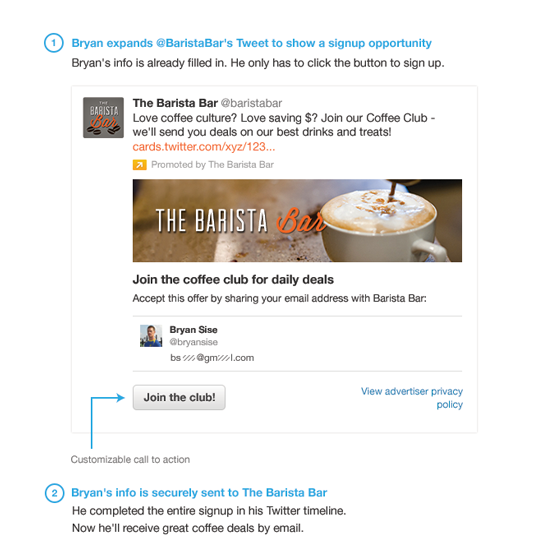
Twitter’s Lead Generation Cards were made available to all advertisers on the micro-blogging platform late last year. They’re like embedded landing pages in the body of a tweet. For your community following your tweets via twitter.com, they’re simple, one-click opt-ins for newsletters, claiming coupons and offers, or registering for your latest webinar.

Here’s what you need to know about Twitter Cards (there are seven types that can be attached to tweets for a beautiful content consumption experience on web or mobile):

  • The minimum required width for your uploaded image is 600px and at least 4:1 aspect ratio.
  • Supported file types are: jpg, jpeg, png and gif.
  • The card title should describe to content of the offer, and it’s a hard stop at 50 characters.
  • Call to action label – Choose short calls to actions that make the benefit obvious. You have 20 characters to work with here, make ‘em count.
  • To make Twitter cards display properly, you have to include a bit of HTML in your site header, but that’s easy to do.

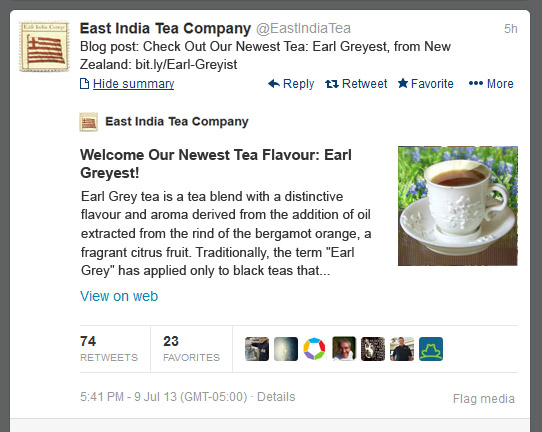
EastIndiaTeaCompany Twitter Card

East India Tea Company used Twitter Cards to promote their blog posts. It’s a great use for online brand development. In this application, the enhanced layout looks very much like a rich snippet you’d find in search engine results and provide context to the content, encouraging more clickthroughs and deeper engagement onsite.

The Barista Bar Twitter Card

LinkedIn

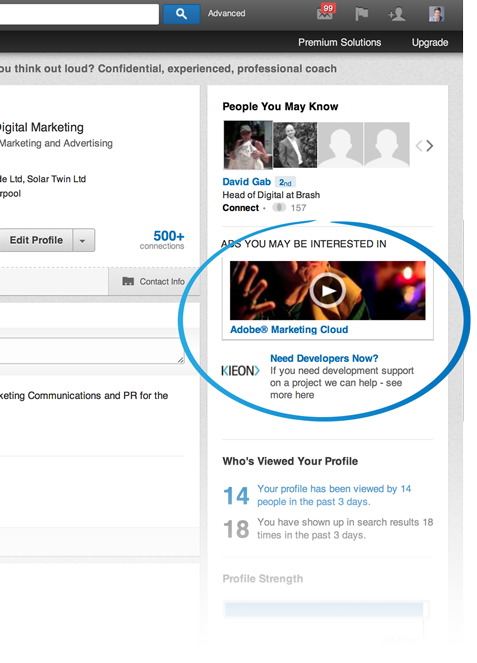
Let’s not forget LinkedIn. It’s all business, all the time on LinkedIn, as it should be. If your brand is targeting other business professionals, LinkedIn advertising offers a number of products to boost conversions and drive traffic. Sponsored posts pull images from the source links, but you have to define images for sidebar ads.

linkedin-ads

LinkedIn supports image uploads for ads (PNG, JPEG, or GIF) with a maximum size of 2MB. Once it’s uploaded, your image will be resized to fix a 50px square. Ads with images perform up to 20% better, according to LinkedIn.

What you need to know:

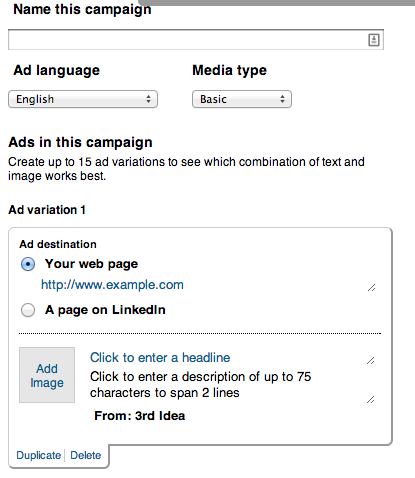
  • Ad headlines are limited to 25 characters.
  • Body descriptions are limited to 75 characters.
  • Test, test, and test some more. The LinkedIn advertising platform will let you launch up to 15 different versions of the same ad to see which one proves most effective. This can help you test different combinations of headline, description, image and landing page to hit paydirt.

LinkedIn Engine

Remember that the social networks are distribution channels and, increasingly, display ad networks, so you have to carve out a little budget to train more qualified eyeballs on your content to meet those important business outcomes.

The Content Strategist is our brand’s story. What’s yours? Let us help you find the answer.

09 May 14:42

Customize Your LinkedIn Home Page

by Lynne Leidy

Next to people’s love-hate relationship with endorsements, we hear from lots of people and clients who say their LinkedIn Home Page makes them crazy. It’s too filled with superfluous “stuff” they are not interested in. Rather than challenging this viewpoint (sometimes I do) it’s better to acknowledge their annoyance and show them how to change it.

We actually have clients who have nothing appearing on their Home Page feed. Hey, maybe that’s crazy too, defeating the purpose of connecting and learning more about someone else.

Regardless, let’s show you how to customize your own Home Page. There are two places where you can customize what you see you on your Home Page.

Privacy and Settings | Go to Settings (upper right corner, under your photo) > Privacy Settings > Account > Customize the updates you see on your home page

You may be asked to log in again — it’s for security purposes. Now you will see the potential choices for updates to your Home Page. Not interested in a new job? Uncheck “Job opportunities.” We had a client who was new to LinkedIn and was in a serious job search, so we took everything off of her home page BUT job opportunities. Uncheck what you do not not want to see and click Save Changes.

Customize Your LinkedIn Home Page image Screen Shot 2014 05 04 at 10.00.27 AM2

Customize Your LinkedIn Home Page image Screen Shot 2014 05 04 at 10.00.58 AM1

Above “Customize the updates you see on your home page,” notice “Show/hide profile photos of other members.” Do you want to see other people’s photos? Well, I’m pretty good with names and I still like to see photos. When you have a good-sized network, it’s often difficult to remember all the names. I’m visual, so photos help me. Not good with names? Well, I’d suggest leaving photos you’d like to see set at “everyone” then. Choose the one that makes sense to you, (we recommend, everyone) and then click Save Changes.

Customize Your LinkedIn Home Page image Screen Shot 2014 05 04 at 11.00.35 AM1

Home Page You can also customize directly from your LinkedIn Home Page | Click on All Updates (above the updates area on your homepage) > Customize > Customize the updates you see on your home page

You may be asked to log in again for security purposes. Check or uncheck the boxes to choose what you will see on your Home Page. Click Save changes.

Customize Your LinkedIn Home Page image Screen Shot 2014 05 04 at 10.25.17 AM1

To end company updates you can stop following the company. Notice from here you can also segment your updates by recent, who’s sharing, who’s connecting, news from Pulse, Companies. I like this better than deselecting because it allows me to view what’s happening in my network from different perspectives. Notice, I even have a Hidden area. You can hide someone’s updates from your Home Page. Even I get crazy annoyed by people who barrage their network with repeated updates. So I don’t want to necessarily disconnect with them but I can Hide them. Just scroll over their name (in blue) and the Hide will appear to the right.

Customize Your LinkedIn Home Page image Screen Shot 2014 05 04 at 10.28.12 AM2

Pretty good, right? It’s important to hone your LinkedIn experience (what you see and what you don’t) to your own level of comfort. An attorney told me once he doesn’t use or like LinkedIn because he couldn’t change and tailor his settings. It was a function of him not knowing he had settings not that LinkedIn didn’t offer them. Remember to try the next button, it makes all the difference.

Now, let me share 10 reasons why we think all this information is valuable to keep on your Home Page. We like to:

  1. See what people are talking about; it keeps us current without working hard at being current and checking a ton of sites and publications every day.
  2. Know who people know; we work almost exclusively from personal referrals and from what we write, it’s good to take a glance to see how others use LinkedIn.
  3. Celebrate people’s success; give them shout-outs (this is becoming more difficult, we have a lot going on in our networks).
  4. Follow companies we work with, would like to work with, respect and think are interesting; see what they are doing on LinkedIn and in general.
  5. Tap into Groups we belong to and see what they are talking about; we might have something valuable to add to the discussion.
  6. Be relevant and take notice when someone has moved positions, added a board position and even updated their photo.
  7. Follow thought leaders who educate and inspire us in our work.
  8. Create and curate thought leadership within our networks.
  9. Understand what’s happening in LinkedIn and beyond, and bring value to our diverse network of students, young professionals, executives, connectors, and fellow thought leaders.
  10. Watch how LinkedIn, as a venue, evolves to further showcase, influence and deliver business results to all of its more than 300 million members worldwide.

Send us your questions about LinkedIn and we will continue to share how to navigate LinkedIn so it works for you.

09 May 14:42

5 Things High Performers Do to Drive Better Results

by Alexandra Levit

5 Things High Performers Do to Drive Better Results image 5 Things High Performers Do to Drive Better ResultsWere you born to succeed? Not necessarily. As it turns out, even if you’re mid-career and feel you’ve never shined in school or work, you can completely transform your ability to contribute.

I recently had the opportunity to meet David Sturt, author of the bookGreat Work: How to Make a Difference People Love. As he describes in his piece for Forbes, last year Sturt’s firm the O.C. Tanner Institute conducted a fascinating study on high performance work. The organization studied 1.7 million people across all industries, positions, and pay-grades and illustrated that high-performance is less an outcome of traits, but more an outcome of activity.

What sets high performers apart isn’t a set of innate traits like perseverance, ambition, or intelligence, although those certainly help. Rather, high performers simply do things differently at work. O.C. Tanner found five specific activities high performers do to drive better results. These are:

Ask the right questions

Instead of adopting prevailing assumptions, high-performers pause and ask provoking questions that open up new lines of thinking. These questions include: “Why does this take so long?” “Why can’t we…” “What if we could…”

See how things work

High performers look at business and work in ways others haven’t. They always want to understand what’s working and what isn’t – and why. High performers enjoy taking a creation apart, searching for clues, and teasing out value.

Have “out of circle” conversations

High performers regularly talk to people outside their “inner circle” of friends and colleagues. They network in unusual ways and thrive on the ideas that result from gathering a variety of perspectives.

Improve something

High performers have a knack for improvement because they don’t see things as fixed or immoveable. They are master experimenters, tinkering and testing until a product or process is fine-tuned to its full potential.

Make a difference

High performers focus on outcomes and specific results. Understanding cause and effect is important to them, and they persevere on a project until they uncover that “why.” High performers are also addicted to the joy of accomplishment – this alone is enough to propel them from one difference-making project to another.

What do the high performers at your organization do? Is it possible to be a high performer without having this mindset of exploration and continuous improvement? I tend to err on the side of supporting the status quo, and to be honest, this attitude often serves me well in terms of promotions and plum assignments. On the other hand, rocking the boat has held me back more than once. What has been your experience?

5 Things High Performers Do to Drive Better Results image 42c1c115 80d5 4ad5 b63c a6598bfadb641

09 May 14:42

Yes, We Still Like Testing; But It’s Really Just the Beginning

by Hillary Wilmoth

Yes, We Still Like Testing; But It’s Really Just the Beginning image shutterstock 83141596Before we start, I’d like to state for the record that Monetate loves testing; we started out 5 years ago with a personalization message focused on testing and site optimization. We clearly see its value, but we also think it’s just the beginning.

I hosted a webinar yesterday on taking the next step, and moving from a testing culture to a customer-centric one. Testing is an important part of the process—it’s the means of optimization—and no personalization program can be complete without it.

But personalization is more about the relationship. It’s the difference between knowing what works best, and knowing who it works best for.

Monetate thinks about personalization programs (at a very high level) in three phases:

1. Understanding & Activity

This is the testing and exploration phase, where you are optimizing the site experience for large and basic customer groups. This could be done by testing elements like the hero image, the number or arrangement of products displayed, or different calls to action.

But what you are really looking for is customer motivation, and how they react to different opportunities while browsing your site.

2. Increased Segmentation

You’re starting to connect more dots, and are addressing more audiences based on their commonalities. You’re scaling your program to more segments with personalized messaging and experiences— maybe even across channels.

In this phase, you not only address more segments, but you also get into more advanced campaign creation. These campaigns are multifaceted, with email-to-site consistency, or targeted based on current circumstances, like the weather or proximity to a location, to make the message even more relevant. What your customer sees is more relevant communications.

3. Customer Focused Experiences

By this point, you’ve collected even more data about your customers, and can leverage that information to embark on more one-to-one communications.

At this phase, you can identify brand or purchase affinities based on historical data, and change site elements to highlight the most shopped category (in my case its the Petites section) or offer the preferred payment method automatically. This behavior shows you know your customer, and can tailor a site to their preferences in real-time.

We have a lot of great resources about how our customers are progressing through this cycle, but I’d recommend a recent case study, “National Geographic Goes Wild for Targeting and Testing,” which takes a look how the publishing brand leveraged Monetate to boost subscriptions, target content, and improve website engagement.

09 May 14:42

7 Great Reasons to Disqualify a Prospective Client

by S. Anthony Iannarino

7 Great Reasons to Disqualify a Prospective Client is a post from: The Sales Blog | S. Anthony Iannarino

You always try to be everything to everyone. - Everclear

You aren’t everything to everyone. And they aren’t everything to you either.

  1. You have limited time: You don’t have enough time to call on–or win–every prospective client you might serve. You have to ruthlessly prioritize your time if you are going to generate the results you are capable of. Time spent with some prospects means time denied to other prospects. You have to make decisions.
  2. You have limited resources: You don’t only have limited time; you also have limited resources. If you need your technical team, your operations team, or some other overlay group’s help, you have to make tough decisions as to where to apply those resources. Apply them where they can make a difference and where it makes sense.
  3. You aren’t the right choice: There is no reason to pretend you are something you are not. There are some prospective clients who really should be doing business with someone else. The sooner you make the decision to let them have each other the sooner you can focus on your dream clients.
  4. Some prospects don’t perceive your value: There are some people who not perceive the value that you create. You’re better than your competitor. You can help this prospect produce better results. They don’t care, and they don’t value those greater results right now. Move on and sell to prospects who do perceive the value you create.
  5. Some prospects won’t pay for your value: A Rolls Royce is a better car than most other cars. But you likely don’t perceive enough value to pay just over $400,000 for a Rolls. The price difference between you and your competitors isn’t this great, but there are some people who will never believe it’s worth paying more–even when you can show them the ROI. Go back to number 1, you have limited time.
  6. Bad cultural fit: Sometimes you just don’t fit. Sometimes a company’s values clash with yours. Sometimes their management or leadership styles make it difficult to gain any traction internally.
  7. Energy vampires: Some clients are abusive to their “suppliers.” They don’t see you as a peer or a partner. Instead, they see you as a necessary evil, someone to be bullied, or someone who is disposable. These are nightmare clients. You discover this in the sales process, if you are open to seeing the evidence. Disqualify energy vampires and work with grown ups.

Questions

Who are you presently pursuing that falls into one or more of these categories?

What do you need to do to upgrade to a better prospective client, a dream client?

09 May 14:42

Instagram Marketing Tips

by Justin Wilson

Instagram Marketing Tips image instagram marketing tips

Instagram is not only responsible for people adding filters to images of their car park space / view from the office / colleagues / lunch, but it is also a very cool platform to engage audiences on.

There are more than 130 million active users on Instagram every month, so it’s likely that at least some of your audience is spending time on Instagram. But unlocking the business opportunity takes a bit of creativity, so here are my top 10 tips for Instagram marketing success:

1) Integrate your content: It is likely that you already have a presence (and an audience) on Facebook, so integrate your content with that of Facebook. You can easily add a tab within your Facebook page which populates with your Instagram images. A quick and easy way to get your Facebook audience to engage with you on Instagram.

2) Hashtags: Like in Twitter, hashtags are a great way of connecting to new people and new content. You should use them, but like Twitter, you should also use them in moderation.

3) Engage your audience: Appreciate that this is an obvious one and it’s easier to say than to do, but competitions are a great way of building engagement on Instagram. Asking your audience to take photos of them creatively using your product is an excellent way of opening the door to interaction with your customers.

4) Share your follower’s content: You should show your appreciation for your followers by liking or commenting on relevant posts on Instagram, but you can also embed a post onto a website. So why not create a page on your site that contains the best of Instagram from this month.

5) Use @mentions to drive engagement: This is a really nice feature on Instagram, you can use @mentions to direct people to your posts. This is a powerful tool, so use it wisely, you don’t want to be accused of spamming.

6) Think outside the box: I know, a cliché, but the more creative you can get, the more likely your image will stand out – and no, that doesn’t mean awful stock images. Think of different ways that consumer use your product, and have a play with the filters, they are there so utilise them!

7) Show off your brand values: A big chunk of the benefit that you will get on Instagram is in brand awareness and brand value, so your content should very clearly illustrate your brand and the values that your company stands for.

8) Use video: Instagram is not just for images – you can upload up to 15 seconds of video into your Instagram feed, so you can use your Vine content here too!

9) Geo-tag your posts to tag where the image is: Tagging your posts geographically is a great tool regardless of the type of business that you have – it’s useful for large scale businesses for engaging locally, or very local businesses as it makes them very relevant locally.

10) Keep testing: This is a social network, so you should always be testing – post different styles of content, post at different times, use new features, and track your results – it’s the only way you will get better.

Image via slashgear.com

09 May 14:42

Why Content Strategy, Content Marketing and SEO Are The Future For Small Businesses

by Matteo Duo

Why Content Strategy, Content Marketing and SEO Are The Future For Small Businesses image content as future investing

Content Marketing is the new form of advertising for small businesses in 2014. Rather than creating ads that are shoved in the faces of consumers during commercial breaks, companies are now seeking to create value-added content that informs, entertains and drives traffic to their web presence. They call it branded content. Why businesses are focusing on such activities? Because they work. Specifically, there are a wealth of tactics that work for small businesses with limited budgets all related to content such as blogs, ebooks, podcasts, infographics and (viral) videos. Problem is how to get the most out of them, especially if this is your first time kicking-off a strategy for your online contents.

The 3 Pillars You Ought Master To Start Any Strategy

There is often too much information out there around what is the best solution for your business – making it overwhelming and difficult to know where exactly you should start. No matter what others write or tell, it all comes to 3 main ideas, thus business areas upon which any strategy aimed at your content creation, development and maintenance is up to:

  • Content Strategy: “the big picture” and covers the planning, goals, type of contents, publishing schedule, and governance
  • Content Marketing Strategy: the active result of your planning and take into consideration the creation of the content to achieve your business goals
  • Content SEO: the metrics upon which test and evaluate your strategy and efforts

These three core concepts should be employed to create successful online content. Having an intimate knowledge of the keywords that work for your business, the most effective types of content and having the systems in place to track your results are the first steps in positioning your web content to rank better, generate more leads and grow your sales. That being said, I’ve taken this information and broken it down into 3 simple steps that ANY business can follow to begin creating a strategy that works.

Step 1: Lay The Foundation

Before diving right into content creation, it is important to take a step back from your business and have a firm understanding of the “space” you operate in. You have to know what exactly your audience wants, the keywords that will connect them with your content and which systems to implement in order to track that information.

Fortunately, there are plenty of great (and free) tools that can help get you there. Google Analytics is a great tracking tool (available as WordPress plugin as well) that gives you the ability to view your website traffic volume as a whole, traffic on a specific page or see some of the keywords that drive traffic to your website.

The Google Adwords Keyword Planner is another great tool which can give you a sense of the total volume of traffic a specific keyword generates and an estimate for what it would cost to run a paid campaigns based off that keyword (and a way to generate new your editorial ideas). Lastly, SEOMoz has great tools for doing research, one of which is their Open Site Explorer. Here, you can compare your website with up to five competitors and see a breakdown of which website is most effective when it comes to domain authority (which translates directly into better search ranking).

Step 2: Decide On A Strategy

Now that you’re getting your hands dirty with “content” it’s about time to plan your future activities to get results. I’d say start from the first (and immediate) data you already have: keywords. If you have learned that a specific keyword generates decent web traffic volume or leads, be sure to plan your content with the optimization of that keyword in mind. Become eager of knowing who really are the people you’re talking to through preferred channels (blogs, ebooks, videos, etc.) and create specific characters toward the conversation is aimed (build your personas).

At this point, ask yourself this question which is critical to a successful (or failed) execution of your strategy:

Do I have all that’s needed to bring my content strategy to life?

For example: if you want to create videos, can you count on in-house technology and team that knows how to make them? If not, do you have the budget to hire in a third-party video maker? How about writers? Who’s going to be in charge of developing the core message? It is critical to have a basic understanding what a strategy will be in terms of goals and efforts.

Step 3: Get To Work

Once you’ve done your homework and implemented it, the final step is to execute. Don’t know where to begin? Start by writing 2 blog post, the first on your top keyword and one useful, which is sharing an idea on how to use better your product/service. Want another idea? Pull out your camera and prove your prospects with an insider view of your workplace. Then use Social Media or Email Marketing to share your content with your audience and start growing a following that wants to know more about the information you’re making available – which, again, is the ultimate goal of Content Marketing.

While there is no “one-size fits all” Marketing Strategy that will work, through the tactics I outlined, you’ll have a leg-up against your competition and will be better-suited to gain traffic, visibility and exposure for your content across the Web.

[Image: Chris Potter]

09 May 14:41

Would Writing a Book Help You and Your Business?

by Christopher Ryan

Would Writing a Book Help You and Your Business? image winning b2b marketing ebook sample CoverI just published my fifth book, Winning B2B Marketing. Being a glutton for punishment, I seem to get the urge to do this every five years or so. Fortunately, each book project gets easier because you learn to write faster and you can leverage material from previous books.

I’ve been asked by colleagues and clients about the book writing process and whether or not it is worth it. So let’s start with the reasons why you may not want to write a book:

  1. It takes a lot of time. However much time you think it will take to bring your book to fruition, double that. There is no getting around the fact that book writing and production is huge time sink.
  2. There is an opportunity cost. Whatever time you devote to the book endeavor is time that you can’t spend on something else.
  3. You don’t have enough to say. As I often talk about in regard to branding and positioning, with a book, you must be different and you must be compelling. People want to learn a new perspective, not just a regurgitated list of general principles. So if you are going to write a general treatise on what your target readership already knows, please don’t bother.
  4. You won’t make money. If you take the amount of royalties earned by the average non-fiction author and divide it by the number of hours he or she worked on the book, the hourly rate would shock you. There are exceptions, of course, but generally speaking, book writing is a poorly paid profession.
  5. You don’t have discipline to complete the project. Before you start, you need to take a gut check on this issue. For every published author, there are others who started to write and never completed their book. The trick is to make a good plan and meet your early deadlines. Once the writing habit takes hold, the project takes on a life of its own and the sailing gets smoother.

You’ve heard the bad news – reasons not to write the book. So what are some of the reasons you should consider launching a book initiative?

  1. It gives you “street cred” in your industry and among your peer group. This can lead to not only greater awareness and credibility for your personal brand, but also speaking and writing opportunities.
  2. You will generate lots of material that you can use for other purposes. A book can give you a large amount of source material for your social media initiatives. For example, you can find many of the ideas from Winning B2B Marketing repurposed for my white papers, blogs and articles.
  3. It can increase your value in the marketplace. This can lead to economic benefits, not just from the sale of the book, but also in terms of job promotions, new clients, and so forth.
  4. It’s a great way to hone your expertise. Some people have 10 years of experience in their field, while others have one year of experience repeated 10 times because they basically keep repeating what they learned and did in the first year. Assuming that you want to be seen as a thought leader, writing a book forces you to stay up on the newest aspects of your profession/business.
  5. Psychic benefits. Despite the challenges and hard work, there is a great deal of satisfaction to be gained from seeing your book in printed (or eBook) format. From that moment you have earned the title “author” to go along with your other professional accomplishments.

On balance, five times I have decided that the pros outweigh the cons. Whether I will stop here or keep writing remains to be seen – but I am glad that each of my book projects has come to fruition. If you think that your pros outweigh the cons, and feel that you want to proceed, please contact me if I can assist you in fulfilling your authorship dream.

09 May 14:41

Always Assume Success, but Learn to Accept Failure

by Guzman Diaz

Editor’s Note: Earlier this year, we announced an exciting milestone in the UK of 15 million members. Students and recent graduates emerged as our fastest growing group, so we decided to leverage LinkedIn data to uncover 15 ‘Ones to Watch’ – UK students or recent graduates who truly understand the value of LinkedIn and the power of networking. This inspiring group includes five women and ten men from a variety of backgrounds, including a sprinkling of budding entrepreneurs, a few bloggers and good number of volunteers! To celebrate their successes, we invited these members to an inspirational event hosted by Lean In author Sheryl Sandberg. This is what one of the attendees Guzmán Díaz Solana had to say about the experience:

During the last two years, I have lived in three countries, garnering experience in various high-growth venture-backed tech companies, working in both marketing and finance roles.

A few weeks ago, LinkedIn let me know that I am on their list of top 15 “Ones to Watch” graduates in the UK. As a Spaniard, my prospects when graduating university, even when attending one of the top institutions in the country, were not particularly good, so you could say I am very lucky to have ended up where I am right now.

However, while I’m thankful for the opportunities I’ve been given, in my opinion there is no such thing as luck. Luck is where preparation meets opportunity.

I recently attended one of Sheryl Sandberg’s Lean In for Graduates events, which was incredibly insightful and got me wanting to share some thoughts for those who, like me, faced the challenge of finding a good job upon graduation.

This is not a very comprehensive list, and not everything will be true for everyone, as this is based in my own, limited experience:

Keep learning. Education doesn’t finish after university. In fact that’s the point at which it starts. As mechanical tasks are increasingly replaced with automated technology, your best chance to stay ahead of the curve is to constantly update your knowledge and be creative on how you apply it.

Travel abroad. Don’t be a tourist, go where locals go. Whether that means taking a gap year, going on exchange, volunteering or interning abroad, having an international experience and additional languages will not only boost your employability, but also give you amazing memories that will last for life.

Work Out. Have an active lifestyle, go to the gym, play team sports, lift. The Romans had it clear: “Mens sana in corpore sano”. You don’t need to become a bodybuilder, you’d be surprised by how much running a couple of times a week helps.

Exploit your strengths. Find what is it you are good at. Use it to your advantage. It may be sports, math, creativity, writing or socialising. Everyone is good at something, it doesn’t necessarily have to be something impressive.

Be yourself. Chances are your skills are easily replicable. In this case, whether someone can endure 8+ hours a day next to you or not is a major factor influencing the outcome of your interviews, so they should like you for who you are.

Assume success. Always tackle things with a positive mentality. It will force you to try things you would be shy to otherwise. It may go wrong sometimes, but it will go right others. Fail, learn, iterate.

Accept failure. When things go wrong, don’t let them overcome you. Sh*t happens. To everyone. Sometimes you will be the best person for that role, but the people interviewing you won’t like you, and that is fine, it’s their loss. Again: fail, learn, iterate.

Do what you enjoy. Pursue a career in something you truly enjoy. If you do what you like, you will be good at it, and if you are good, money will follow. It’s true it’s easier to get a well paid job as a software engineer than, say, as a musician, but that just means you’ll have to work harder to achieve your goals.

Work hard. As hard as you can, you are expected to. Don’t limit yourself to your job description, try to go beyond and find ways to add value to both what you do and what everyone else does. However, don’t overwork for the sake of overworking.

Party harder. Ultimately, life is about people, so go meet people and have fun. You deserve it. The larger your network is, the better opportunities you will have in your future. Sometimes it’s better to hit the pub than to work on your cover letter.

I believe we stress too much. And it’s understandable, being a graduate these days is very stressful. The expectations people (and ourselves) have of us are very high, and the competition is very stiff. However this stress often hinders our ability to succeed.

Don’t obsess about anything. Remember that the most important thing is…

love

Lean In for Graduates is an enhanced edition of Sheryl Sandberg’s bestselling business book. The revised version features a passionate letter from Sandberg encouraging graduates to find and commit to work they love and a combination of inspiration and practical advice. Lean In for Graduates by Sheryl Sandberg is out now in hardback and ebook.

Check out our 15 “Ones to Watch” in the UK

  1. Atul Agarwal
  2. David Kutas
  3. Dhunsyam Daji
  4. Felicity McGrath
  5. Guzmán Díaz Solana
  6. Ifrah Mahmood
  7. Izam Ryan Bahrin
  8. Jake Tipper
  9. Julie Caceres
  10. Lina Fassi Fihri
  11. Maen Aloquili  
  12. Miriam Kerbache
  13. Nicholas Fearn
  14. Peter Bailey
  15. Santiago Manzi
09 May 14:41

Resist the Temptations of New Social Media Content Channels

by Tom Fishburne

snapchat cartoonMarketers are watching the explosive growth of the latest social networking phenomenon, Snapchat — the social app now shares more than 350 million photos every day. But because the one-to-one messaging and pictures self-destruct after just a few seconds, it hasn’t been obvious how brands can use Snapchat. 

It’s only a matter of time before marketers rush in to leverage this social media content trend. Early Snapchat experiments have included Lynx in the United Kingdom and Taco Bell; Snapchat introduced “Snapchat Stories” in October 2013 as another step in that direction.

The marketing chatter on Snapchat resembles the marketing chatter in other social networks that have come along: Initial ridicule is eventually followed by a marketing stampede.

So how should content marketers respond to the emergence of new social media networks like Snapchat?

The first temptation for marketers is to leap into every social network that shows scale. Instead, marketers must first decide if the audience they’re trying to reach uses that social media content channel. It is better to invest heavily in the few social networks that a brand’s audience really cares about than to spread content marketing thinly across all of them.

A second temptation is to treat every social network the same and push the same content into every channel. Each social network operates by a unique set of rules. People use Twitter, Facebook, Pinterest, LinkedIn, Instagram, Snapchat, and other social networks for different reasons, and in different ways. Trying to engage audiences the same way in each network is a missed opportunity. One size fits none.

When Twitter launched Vine, some marketers responded by trying to cram the same old messaging into a smaller container. Home improvement retailer Lowe’s took a different tack. It launched a series of six-second home improvement videos, called Fix in Six. The stop-motion Vines showed how to use a rubber band to get out a stripped screw, or how to use a hair dryer to peel off a sticker. Helping the audience came first. The content then embraced the medium.

vine images

When we first started developing content marketing campaigns with cartoons, we used the same cartoon images everywhere. But over time, we discovered that content followed different rules in different social networks. Some of this was appearance (e.g., Facebook has limitations on the amount and placement of text inside an image). In many cases, the type of content is different (e.g., we found that what thrives in Instagram are photos of original art or 15-second animations). The goal is to create content that feels native to the network.

Snapchat and Twitter Vine — and whatever comes next — won’t be a good fit for every brand. But brands ultimately want to be where their consumers are spending time. When they join the conversation, they need to remember to bring value to that conversation, wherever that conversation lives.

This article originally appeared in the April 2014 issue of Chief Content Officer. Sign up to receive your free subscription to our quarterly magazine. 

09 May 14:41

I Need to Create an Effective Business Marketing Video

by Richard DePaso

Why Create a Business Marketing Video?

The average internet user watches up to 200 videos per month. This may include anything from news, entertainment clips, personal videos, advertising videos, and of course business marketing video and advertisements.

It is a fact that video engages people in a way that photos and text could never do on their own. For business owners large and small, using video as a marketing tactic puts faces and personalities to your brand image, while also demonstrating your authenticity. To top that, applying video to social media networks is said to be able to boost conversation rates by as much as fifty percent. There are other statistics that show the value of video:

  • Video is 6 times more cost effective when compared to print or mailings
  • With proper optimization, video increases the chance of first page Google results by 53 times

I Need to Create an Effective Business Marketing Video image video for business client testimonials

Video in these times is an effective tool that any business, large or small, should use to enhance their marketing efforts on any channel. A video doesn’t necessarily have to be a big Hollywood production to be engaging and effective. What it has to do (and this is very important) is that it has to show how you can solve a viewers pain on a problem they have, or give them something they want. Basically, it has to show them “what’s in it for them”. You can make the fanciest, most expensive video you can conceive of , but if it doesn’t address these needs, it is a waste of time and money.

Types of Business Marketing Videos

If you’re not sure what you’d want to produce a video about, here’s a few effective tips that can help you come up with ideas to create an effective business marketing video that is not only informative, but will also help reveal your business’s “personality” and bring you closer to your clients.

  • Take Advantage of Customer Testimonials
    Your company or brands’ best fans can explain how your products or services solved a problem or improved their lives. This will help prospects envision themselves in the stories of real people.

  • Introduce Your Staff
    This simple method can help show your dedication, passion, and commitment to customer satisfaction. It can also create a greater connection with customers by showing them the faces and personalities of your employees and making them comfortable with working with your staff.
  • Demonstrate New Products or Service
    Don’t just tell customers about how a specific product or service works, bring your demonstration to life so that they have a clear understanding of what and how you’re offering something

  • Offer a Video Tour of Your Office or Locations
    Add some excitement and uniqueness to your website by providing a first person perspective, possibly on your “About Us” page. This can show that you have the resources that they are looking for and again produce a level of comfort with your company.

These and many other types of business marketing videos have a great success rate of gaining business exposure. Producing business marketing videos is not a daunting process. Here are a few things to keep in mind that should help make your video shoots simple, smooth and effective:

  • Again, remember it most include “what’s in it for them,” and solve a problem or give them something they want for their business.
  • Incorporate a call to action. Be sure to add interactivity within your video, such as contact information.
  • Don’t make it too complicated. The topic can be very simple and remain effective.
  • Keep it Brief. Remember that the final video will only be a couple minutes long.

Remember, video is more fun and entertaining than reading, and is an effective marketing tool that can make your message accessible to just about anyone all over the world. Even if you’re on a budget you can have an effective video solve your problems.

Click here to view business marketing and corporate video samples.

09 May 14:41

10 interesting digital marketing stats we've seen this week

by David Moth

It's that time again when we round up the most interesting digital marketing and ecommerce stats weve seen in the past seven days or so.

This week it includes Google Adwords, online video shares, live chat, Channel 4's earnings, mobile ads, and email marketing.

And for more delicious stats, download Econsultancy's Internet Statistics Compendium.

Celebs do not equal shares

  • According to a new study from Unruly, celebrities alone do not drive online ad sharing
  • For example, none of the top three most shared ads from Super Bowl 2014 featured celebrities. And only three of the top 12 Super Bowl ads and one of the top five Super Bowl ads include celebrities.
  • Other big campaigns starring Ellen Degeneres (Beats - #36), U2 (Bank of America - #20), Bob Dylan (Chrysler - #15), David Beckham (H&M - #22) and Stephen Colbert (Wonderful Pistachios - #33) failed to make it into the top 12.

36% of people still don't realise that Google Adwords are ads

  • Research from UX firm Bunnyfoot shows that 36% of people still do not realise that Google Adwords are ads.
  • Furthermore, about a quarter of people don’t know that Google had any advertising at all.
  • To find out the full results, read Graham Charlton's write up of the research.

Consumers open to mobile vouchers

  • Savvy Marketing has published a report on the digital shopper landscape in which it surveys 1,000 consumers on their ecommerce habits.
  • It found that 71% of UK shoppers currently own a smartphone and 78% say that they will own one by the end of 2014.
  • In terms of what shoppers find the most appealing, 65% find the idea of receiving targeted vouchers to their phones attractive.
  • 64% of shoppers would also find the concept of receiving vouchers while they are actually shopping in-store appealing.

91% of companies are distributing more digital content than last year

  • MSLGROUP has published a survey entitled Curing the Content Headache in which 100 communications professionals from complex global organisations were asked about the current state of their content marketing strategies.
  • The majority of companies surveyed are producing original content specifically for digital channels rather than repurposing existing content made for TV, print or other media.
  • When asked which digital channels are they using to distribute and share content, 93% use their own website for corporate communications and 73% for consumer communications.

Live chat seen as most satisfactory customer service channel

  • Live chat has been rated by consumers as the customer service touch point that requires the least effort, according to a report by eDigitalResearch.
  • Of the 2,000 consumers surveyed, a quarter (26%) have used live chat to contact a company in the last year – 73% of whom said they were ‘satisfied’ or ‘extremely satisfied’ with the service they received. 
  • One third (30%) of those surveyed now expect to be able to use live chat to contact a brand.

Mobile leads in-store revolution

  • One in four Brits (25%) won't consider using in-store technologies while out shopping according to a survey of more than 2,000 British adults by VoucherCodes.
  • However the Future of Online Retail Report found that 51% of consumers use their smartphone while out shopping, and half of these (50%) use their device in-store.
  • More than a third of shoppers (38%) claim they would like to receive targeted offers to their phone whilst shopping in-store.
  • In contrast, only 16% of Brits say they would make use of virtual reality fitting rooms on the high street and 12% claim they’d engage with digital in-store marketing services, such as NFC and QR codes.

Channel 4's earnings

  • Channel 4 recorded a loss of £15m in 2013, though it claims it will break even in 2014.
  • Total revenue fell from £925m in 2012 to £908m in 2013, and TV advertising and sponsorship revenues fell by £8m to £825m.
  • However its digital services continued to grow, with non-linear revenues increasing by 15% year-on-year to £61m. 
  • Nearly a third (29.5%) of all video on demand views came from logged-in, registered users and the number of registered users rose by 4m to 10m.

European millennials place more value on privacy than US counterparts

  • A global study released today by SDL shows higher sensitivity among European millennials (aged 18–36) about sharing personal data with brands compared to those in the US.
  • More than half (52%) of respondents in the US have no issue with brands using their information to benefit customer experience. This is compared to 37% in the UK, 28% in Germany, 23% in Norway and only 13% in the Netherlands.
  • Millennial customers are more likely to consider a brand’s offer if they’ve done business with them in the past. This is true of 89% of consumers in the US, 81% in the UK, 71% in Germany and 78% in the Netherlands.

Mobile ads in apps more prominent in UK than rest of world

  • UK mobile users are twice as likely to view advertising in apps as on the mobile web compared to the rest of the world, according to data from Opera Mediaworks.
  • 72% of mobile ad impressions in the UK coming from apps, compared to just 31% globally. 
  • UK mobile advertising features video far more prominently than the global average, with 30% of rich media mobile ads including video, compared to 2.5% worldwide.
  • The data is based on an analysis of mobile advertising traffic across Opera Mediaworks’ global platform and is based on 65bn impressions it receives from 14,000 mobile websites and apps.

Consumers prefer email

  • The DMA's Customer Acquisition Barometer 2014 report has found that at least three-quarters of all UK adult internet users prefer to be contacted by brands via email.
  • This rose to 83% of respondents aged 18 to 24. This age group also differed from older generations by being more open to receiving messages via mobile, text and social media.
  • Around 20% said they were content to be contacted on their mobile compared to 8% of 35- to 44-year-olds and just 3% of those aged 65+.
  • Here's an infographic with more of the findings...

09 May 14:40

B2B Marketing Tips – Telling Your Own War Stories

by Max Stinson

What’s the essence of a war story? Is it the victory or the violence? Is it the old soldier telling it or is it the lessons war itself teaches?

It doesn’t have to be all that deep actually. The essence of a war story is experience. And like veterans, sometimes just telling your own experience can score you a lot of points in B2B marketing.

The value in B2B products and services are arguably more based on experienced compared to B2C. The success of a vendor can mean the difference between folks keeping their jobs or losing them. (That’s just one example by the way.)

B2B Marketing Tips – Telling Your Own War Stories image War StoriesThere’s only so much a customer can bet on based on just logic and theory alone. Today’s industry leaders are what they are today because they didn’t just count on that. They wagered on their own personal experience in their own field.

But of course, sometimes your own experience can be just that: Your own experience. It may not be the same with other organizations. So to make your stories more convincing, here’s what you should do:

  • Get solid proof – This is obvious but can be easier said than done. That’s why even when you’re focused on providing the service/product, find some ways to record the experience. That way you’ll have solid proof of what you’re saying. Try including videos or pictures with your content whenever you tell a story.
  • The story should answer a question – What’s the purpose of telling the tale? You don’t need a marketer to tell you that nobody likes stories just for the sake of promotion. The first (and perhaps only thing) prospects want out of your stories is information. Did a particular marketing tactic work in your experience? Was it better to use this type of communication or target this particular niche for a product? These are just some questions that hard experience could prove a persuasive answer.
  • Have other marks of credibility – This can range from customer testimonials that are in agreement with your own accounts to the number of years in service. Don’t hesitate to post your credentials as well. All of these can make it just a little harder to dismiss the experiences you retell.

The dichotomy between knowledge and experience isn’t just a problem for philosophers. Marketers have their own way of tackling it. It can be the difference between a tall tale or a seasoned veteran’s experience.

09 May 14:40

Why Did Your Nice, New Website Destroy Your Search Rankings?

by Bill Treloar

Why Did Your Nice, New Website Destroy Your Search Rankings? image seo failIt’s sad to say, but we see this all too often. An old website gets a facelift, and the new site looks great. But it’s not long before the website owner notices that they’re no longer getting any business from people finding them on the web. What happened?

We’ve written before about why good SEO consultants make lousy web designers, and vice versa, and there are just some SEO techniques that great web designers don’t really think much about.

The two mistakes that kill your online visibility

There are two main factors that govern where you rank in the search engines: Relevance and Reputation. A significant problem with either one of them will cost you rankings in the search engines.

Why Did Your Nice, New Website Destroy Your Search Rankings? image searchRelevance

During the website redesign, the text copy on your pages may be updated. Certainly the HTML code behind the pages is changed. It’s not at all uncommon for the new copy to fail to use some of your essential keyword phrases or for them not to be included appropriately in the code. This makes it difficult for search engines to recognize that your page is an appropriate match for those keyword phrases.

The solution to this is to go back to your original optimization recommendations and re-apply them to your webpages. (You do have optimization recommendations to reapply, don’t you?)

Reputation

This accounts for 40-50% of where you rank in Google. It’s important in other search engines as well, but Google weighs it more heavily than the rest of them. Your reputation (sometimes called “authority”) is measured by your link popularity:” the number and quality of other websites that link to yours. Over time, the pages on your website have earned significant link popularity, helping them to rank well in the search engines.

Why Did Your Nice, New Website Destroy Your Search Rankings? image canonicalization

Unfortunately, most website redesign projects result in new URLs for the pages on your website. Without explicit action, all the link popularity earned by you or previous page URLs is simply lost. This is related to the issue of canonicalization we discuss in the SEO portion of our website, as well as in our blog.

The solution is to do the proper kind of “redirect” from the old URL to the new URL so that the new URL can inherit the link popularity and reputation earned by your previous version of the page. There are multiple kinds of redirects that will ensure that anyone who tries to go to your old page will be sent to the new one. But only one kind, the 301 permanent redirect, will also redirect the link popularity value from the old URL to the new one.

Don’t Panic

Why Did Your Nice, New Website Destroy Your Search Rankings? image dont panic

Obviously, if this happens to you you need to jump on it as quickly as possible and get things fixed. Better still would be to anticipate this potential disaster and deal with it before your redesigned website even goes live.

09 May 14:40

20 Power Words That Get Your Audience Clicking

by Jessica Mehring

20 Power Words That Get Your Audience Clicking image comic group1

“My task, which I am trying to achieve is, by the power of the written word, to make you hear, to make you feel – it is, before all, to make you see.” – Joseph Conrad in Lord Jim

Let’s face it. No matter how fantastic the web design is, if you have wimpy – or worse, deterring – copy, no one is going to click beyond the page they land on. No one is going to click to find out more.

Words have power. They can move, persuade and inspire – or they can detract, aggravate and make people run in the other direction. Your vocabulary is a power-tool in your tool belt.

When you are creating a website, it is doubly important to use the right wording on buttons and calls to action. If you want people to click, you have to convince them to take action.

Cheat Sheet

Persuasive copy and strong design are a powerful combination. Commercial websites, especially, benefit from this one-two punch as visitors are driven down the sales pipeline from initial entry to purchase.

In an ideal world, a designer will always have a skilled and experienced copywriter on each project. But sometimes you’re stuck writing your own copy for website buttons and calls to action. Below is a little cheat sheet of 20 words that will get attention and get clicked on.

Some might call these trigger words or action words – but I call them power words, because they have a powerful impact on your audience.

  1. Discover
  2. Guaranteed
  3. Easy
  4. Money
  5. Value
  6. Security
  7. Advantage
  8. Proven
  9. New
  10. Critical
  11. Free
  12. Improved
  13. Instant
  14. Personalized
  15. Private
  16. Result
  17. Shocking
  18. Save
  19. Solution
  20. Unlimited

Of course, there is more to effective copy than memorizing a few power words. Understanding your audience is absolutely the number one top priority with any website – whether you’re working on a client’s site or your own.

Start With Your Purpose in Mind

What, specifically, do you want your audience to do? Call a phone number? Fill out a contact form? Buy online? Sign up for a webinar?

All of your calls-to-action should drive to this end goal.

What is your audience’s pain point?

Consider your audience’s desired outcome and what the website will help them achieve. How are they seeking to change their lives or make things easier?

Is your audience on the website to find a product to solve a problem? Are they there to get to know more about what the business or non-profit does and how they do it? Are they there to find a location or see a menu?

Hold the Audience’s Hand

With a button or a call to action, you have extremely limited space to convince your audience to click. Tell them exactly why clicking will benefit them. “Click here” just doesn’t cut it.

For example…

Wimpy copy: Click here for a report20 Power Words That Get Your Audience Clicking image superhero sm

Power copy: Download your free, personalized report instantly

Wimpy copy: Why you should buy from us

Power copy: Learn about our guaranteed results

Wimpy copy: Click here to purchase

Power copy: Get our proven solution

Prompt Your Readers

In this HubSpot post, the author shares compelling evidence that verbs move more people to action than any other part of speech. In fact, it’s worth noting here that verbs generate more shares on Twitter, too.

Use verbs generously to improve your website’s click-through rate.

Words to Stay Away From

One of the tenets of sales is “people do more to avoid pain than to gain pleasure.” And it’s true that if you use pain-based words in headlines, it can convince an audience to read on. They want to discover how to avoid that fate.

Throw this rule out the window when you are writing copy for website buttons and calls to action.

When people are confused or scared, they say no. All calls-to-action should be pleasure-based. You are enticing – not scaring.

Avoid words like:

  1. Bad
  2. Sell
  3. Difficult
  4. Fail
  5. Basic
  6. Objections
  7. Cheap
  8. Lose (unless losing is a positive – like weight or worry!)

Match Made in Heaven

When strong design and compelling copy are combined, magic happens. Design is made more effective, copy is brought to life and the audience responds.

Use power words in your website buttons and calls to action. Avoid pain-based or wimpy wording. Use copy to your advantage and you will convince your audience to take action.

09 May 14:40

Why You Need a Resilience Strategy Now

by Andrew Winston

This past winter was a rough one for big swaths of the United States, with both unusual cold snaps and disruptive snowstorms. General Mills’ CEO recently blamed the winter for less-than-expected earnings, saying that “severe winter weather…disrupted plant operations and logistics…We lost 62 days of production…which hasn’t happened in decades. That would be the result of people not being able to get into work safely or not having inputs arrive.”

It wasn’t just one company, though; the whole economy was slowed by the extremes and volatility we faced.

The disruption to operations and supply chains is real and costly, and all signs point to increasing threats as weather gets more volatile, driven in large part by climate change. The science is getting clearer that we’ll see more extreme hurricanes, droughts, floods, and even snowstorms – more moisture in the atmosphere means bigger downfalls of all kinds.

The latest report to confirm these issues are not some theoretical model to debate, but reality today, came on Tuesday from the quadrennial U.S. National Climate Assessment. The 840-page tome did not bury the lede and declared in the first sentence, “Climate change, once considered an issue for a distant future, has moved firmly into the present.”

Of course, all weather isn’t necessarily tied directly to climate change – like with the recent tornadoes that swept through the American Midwest – but no matter what you believe the cause, extreme weather will play an increasing role in our lives and economies. Nobody can predict exactly what might go wrong, but we can say with near 100% confidence that something will.

So let’s consider what a company can do in a world that’s volatile, uncertain, complex, and ambiguous – that’s “VUCA” for short, a military term that’s been adopted by business. Here’s a review of the five core components of resilient systems, which I pulled together for my new book, The Big Pivot, based in part on two other important works: Nassim Taleb’s Antifragile: Things That Gain from Disorder and Resilience: Why Things Bounce Back, by Andrew Zolli and Ann Marie Healy.

1. Diversity. A company is clearly more at risk if it has just one major product, service, technology, key supplier, or other core element. In the 2011 Thailand floods, both hard drive makers and auto giants realized that having a sole key component made in one place made for a fragile system (Toyota took a $1.5 billion hit to earnings). While companies don’t often share the details of their supply chain strategy publicly, you can bet these companies have built more diverse options for sourcing key inputs.

2. Redundancy and buffers. Taleb uses the natural world as a model for this principle: “Layers of redundancy are the central risk management property of natural systems,” he writes, pointing out how many of our biological systems have doubles (like lungs) or backups. Our business systems need leeway for extremes as well. A few days ago, for example, the Obama Administration announced a plan to stockpile a million barrels of gasoline in the northeast specifically to avoid the shortages that plagued New England after Hurricane Sandy.

This is all smart strategy, but the challenge for business specifically is that companies don’t like keeping two of anything – that’s not lean or (seemingly) efficient. It’s a fine line for sure, but having multiple pathways to get key inputs, for example, might have saved General Mills –  and the hard drive and car companies –  lots of money. It might have actually generated increased revenue as well, if it meant operating while competitors couldn’t. As Taleb says, “redundancy seems like a waste if nothing unusual happens. Except that something unusual happens – usually.”

3. A love/hate relationship with risk. It’s a paradoxical idea, but one way to build resilience, or antifragility, is to keep the vast majority of the business as safe as possible, but then take big risks – ones that may pay off 10-fold or more – with a smaller part of the business.

Think of the famous idea from Clayton Christensen of trying to disrupt or cannibalize your own business before someone else does. Imagine setting up a skunk works to identify major risks to the business stemming from resource constraints or climate change – and then lean into those risks and come up with products and services that avoid them and challenge the core business (for example, a car company investing in car sharing programs which consumers use to save money, but also reduce material and energy use dramatically).

4. Fast feedback and failure. If you’re going to take some risks to, ironically, make us less risky, you need to drop what isn’t working quickly. To be more responsive, companies need better data on resource use and climate risks up and down the value chain. So invest in capturing information and building real-time systems.

5. Modular and distributed design. If some part of a system fails, it would be great if it didn’t bring down the rest of it. A tree branch hit a power line in Ohio in August 2003, causing cascading failures across a highly connected U.S. grid, and 50 million people in the northeast lost power (including me, my wife, and our 11 day-old child in Connecticut – we were not in a resilient mood).

These principles alone may not make for resilience in a hotter, scarcer, more open world, but they go a long way. And they point toward one key pathway for managing – and even thriving – in a VUCA world: renewables.

Companies (and homes) that generate their own onsite energy will be able to literally weather storms better than competitors. Not all the technologies we need to do this well are in place – like building-scale energy storage at a reasonable cost – but we’re getting there. And during the day, companies with their own solar panels can operate after the storm has passed, even if the grid is down.

Nobody can prepare for every possible outcome. Randomness, of course, is a prime element of our new business reality. But we can build systems that are better prepared than they are now. And, sure, it’s a challenge to value resilience: How much is your business damaged by a breakdown in your supply chain, or a threat to your ability to operate? How much will it cost all of us if we let the drivers of deep volatility, like climate change, go unchecked?

It’s not easy to say, but let’s avoid finding out.

09 May 14:39

I Fired A Customer This Week

by Dave Brock

Like any sales/business professional, our customers are very dear to us. We spend a lot of time prospecting to find them. We work to identify how we can help them solve their problems, grow, address new opportunities, or improve. We try to create great value, and, in turn develop highly profitable relationships.

But every once in a while, those relationships may no longer make sense. Something that may have been great in the past, just no longer works. There comes a time to part ways.

It’s tough to recognize this. Momentum and pride may tend to blind us, it certainly has blinded me in this situation.

We’ve had the relationship for years. It started great, we were aligned. Our company was helping them, having a great impact. But as time went on, I noticed some things. Each piece of business became harder, they started taking us for granted. We continued to produce great results, but somehow they didn’t seem to value it. Maybe we weren’t doing the right job of reminding them of the value we created, maybe they just didn’t give us credit where they should have.

Things came to a head over the past couple of weeks. They had a critical initiative, they really needed our help, it was right within our wheelhouse–and they recognized it. We quickly identified the outcomes and the impact on their business. We identified the consequences of not going forward with the project. We were agreed on the importance and impact. We developed a plan, presented a proposal and a price.

The customer agreed—-well sort of—-well really not (at least in the wisdom that hindsight provides). The customer agreed, started scheduling people and resources. But started to make some changes. Could we reduce the price, could we change the scope, could we do more at the same price. As much as I reminded them about the business outcomes and the inability to achieve them without our help–which the readily agreed to, it kept coming back to price. One thing I’m absolutely stubborn on is price. I know we create great value and I won’t discount it. I will change scope to hit a price, but I won’t discount.

I noticed things were just not “feeling right.” I was spending too much time thinking about the problems with this deal—you know the stuff that lurks in the back of your mind while you are doing other stuff. I started thinking about, “If we are having so much time aligning now, what’s it going to be like when we are actually delivering? How will we meet their ever changing expectations.”

The more I thought about it, I reflected on what we’d done over the past year. The projects we’d engaged in were more difficult, not in big ways, but in lots of small ways. The sheer momentum of moving forward, deal by deal, project by project, had blinded us to an eroding relationship, our value creation being taken for granted. I realized over the past year, we’d been “muscling” our way through projects.

It finally came to a head with this project, but it was a difficult decision. We’d come to a tacit agreement on price/deliverables. The good news was we were going to get the contract. The bad news was we were going to get the contract.

In the middle of a sleepless night, it finally came to me. This just wasn’t working. Yes, we could continue getting revenue. We could muscle our way through projects. We could create great value–in fact to some degree, this project had to do with their future survival. But for whatever reasons, they really didn’t value it. Maybe we weren’t communicating it correctly, maybe they didn’t really understand their situations, maybe they didn’t buy into the value. Undoubtedly, there were errors on both sides.

But in the middle of a sleepless night, it came to me. We couldn’t change it. We were where we were. Yes, we could get revenue, but it wasn’t rewarding–to us, or to the customer–since they didn’t value it. But more than the hours we put in on the project, the sheer hassle factor, the mental baggage was distracting us from more important things. I got up in the middle of the night, drafted an email to the customer. I expressed my concern over our lack of alignment and whether we could really achieve what we were trying to do. I ended by declining the business. The customer was gracious. The decision-maker expressed some relief, saying he was uncomfortable with the way things were going as well.

It’s tough to do this. We sometimes get blinded by revenue. We lose track of things, getting caught up in sheer momentum of the day to day relationship and doing things. Our egos and pride blind us–we can fix anything, we don’t want to recognize that sometimes things just grow apart. Perhaps through no fault on anyone’s part, but just differing directions and priorities. It’s hard to recognize “they really need help, but we’re not the right people to help them.”

Recognizing this, mustering up the courage to fire the customer was tough. But now a few days later, it’s been tremendously freeing. I hadn’t realized how much and how long this situation had been weighing on me. Perhaps it had been building for months, just brought to a head with this latest deal. It had been distracting me from other things, other customers, other opportunities. Not in big ways, but in insidious little ways, which in aggregate became huge. It’s as though a weight has been lifted off all of us involved in supporting this customer. In just a few days, I see myself and our people focusing on the right things. In just a few days, we’ve recovered the anticipated lost revenue for the next 18 months.

We’re not alone in this problem. It’s not a problem just for people in the services business, it happens to all of us. Sometimes the best thing we can do for ourselves and our customer is to fire them.

09 May 14:35

How To Add Customer Value Throughout The Sales Funnel

by Michael Webb

A reader asked: 

  • How do you add customer value throughout the entire sales funnel?

You already know value is in the eye of the beholder: It is what your prospect is interested in, what gets their attention, what they will pay for with their time, cooperation, and ultimately their money, and their testimonials and referrals.

The Buyer-Seller Disconnect

The Buyer-Seller Disconnect

 Nobody wants to have to deal with a pushy, self-interested salesperson. The diagram to the left is a bit of a simplification, but you get the idea (click to expand).

Think back to a time when you had to solve a business problem that involved depending on an outside company. You probably knew what a hassle and a risk it could be.

You may not have consciously identified the things you were looking for, but chances are they included such things as:

  • Useful information about the problem and it’s causes (some was likely provided by one of the companies you ultimately considered).

  • Clear, simple evaluation of alternative approaches of solving the problem

  • Honest pros and cons related to your specific situation

  • Assistance communicating issues relevant to other stakeholders in your organization

  • The right amount of information about what would be required to achieve your objectives

  • Credibility of being a solid supplier who will be around to help in the future.

Everything that happens between buyers and sellers depends on the context. Sellers who understand the buyer’s point of view have an advantage, if they use that knowledge effectively. Anything the buyer perceives, from your positioning, your product, you salesperson, your offer or guarantees, anything is fair game for improving the value perceived by the buyer. Here is an example from ASEPCO, a manufacturer of sanitary valves: 

Lifetime Free Replacement of Any Broken ASEPCO Tank Value – No Matter Who Broke It!
Top Quality Product or It’s Free!
Performance as Promised, or We Pay You!

As another example, I had a client that competed in the market for medical respirators, the machines hospitals use to help critically ill patients who cannot breathe on their own. Rather than employing professional salespeople in its sales force, they exclusively hired experienced clinicians and taught them how to be salespeople. As a result, their customers perceived a greater value in dealing with them.

The keys are finding underserved markets, using words and phrases that are already going on within a prospect’s head, and matching their need with your message, and delivering on the promises. Whether this takes place through advertising and promotion, trained and disciplined distribution channels or salespeople, the Internet, or even service and support, the issue is the same. If you can get more of the right people to take the steps of their customer journey with you, you will win more business. And the way to do that is to do what they perceive as value. The measurement is whether or not they take the actions you’d like them to take.

So, that is one way to answer your question. Let me know what you think. 

Michael

09 May 14:34

How to Unlock Your B2B Client Needs – The GAIM Plan!

by Ian Dainty

How to Unlock Your B2B Client Needs – The GAIM Plan! image GAIM PLANThe GAIM Plan came about as I watched so many sales people and account managers struggle with the different ways they tried to break into new accounts, and to find ways to talk to senior executives.

Most sales and marketing people, and even senior account managers, start talking about what they did for their last account, and the account before that, ad nauseam. It’s like saying, “I’ll tell you what I can do, stop me when you hear something that might interest you.”

If you are like most sales people and account managers, you struggle about how to sell your products, once you get in front of your prospect. There are so many so called sales trainers, many who have never sold anything, trying to teach people how to sell. They have cheesy techniques for talking to people, how to open a cold call, how to close. They are all ridiculous, and they never worked anyway.

The only way, to really close, is to let the buyer decide. Sales people don’t really sell – buyers buy. In any sales, however, you can lead the buyer to buy from you versus your competitor. That is what the GAIM Plan will allow you to do.

The GAIM Plan will give you the process you need to execute a flawless game plan, and to derive complete understanding of the goals and issues your prospects and clients are facing, and also the impact your solution will have on him and his company.

The GAIM Plan will also teach you how to stop talking, and to ask the key questions you need to ask, in order to understand how you can help your prospect or client further.

It will also teach you how to better qualify your prospects, so you don’t spend a lot of time chasing someone who has no desire to buy. Most sales people spend far too much time spinning their wheels and dialing their phones, trying to get at people who cannot say yes to your proposal. I want to teach you how to get away from that useless activity.

As a B2B marketer, and all B2B people are B2B marketers, you probably have a sales cycle that can stretch into several months, or even years. But if you really want to succeed in sales, you need to find a way to qualify people very early in your sales cycle.

The real key in moving any sales situation forward is qualifying. Closing the sale becomes second nature, when you qualify properly. You don’t need stupid closing techniques when you qualify well. Why? Because the prospect will close himself.

You will guide him along a path that will either lead him to close, or realize that your product is not the right one for him. In fact, you will know this long before the prospect does, and you will then stop wasting your time trying to “sell” him anymore.

And the most important thing you need to know and understand in sales is this – Get to NO as fast as you can.

Why do you want to get to NO first and fast?

You want to eliminate people that are going to waste your time, and are not going to buy from you, either because they are just tire kicking, or you do not have the product or service they need. As an account manager or relationship manager, you want to work only with prospects you believe you can help, and you can build a good business relationship with.

So, let’s exam The GAIM Plan and see how it can make your company a winner.

The GAIM Plan is an acronym for:

G-oals
A-fflictions
I-mpact
M-eaning

It is important to understand each of these very important words and the impact and meaning they will have on your own sales performance.

Goals

The first thing you should be asking people, in any B2B sales situation, is what their goals are. Now you don’t have to ask it in those exact words. There are easier ways to ask this question. However, sometimes, just asking what their goals are will give some astonishing insight into their business plans.

The idea behind The GAIM Plan is to get your prospect/client talking and telling you what he wants to do, and what is holding him back. Many people feel that just asking about his problems and issues is the way to start.

Of course getting to the issues – or Afflictions – is very important and mandatory. But people like talking about their goals and dreams. And by understanding what a person’s goals and dreams are, you get a better perspective of that person, his company, and whether there will be a fit for your products or not.

You could ask, “Why are you doing this now?” If you know the marketplace you are in, and generally why people buy your products and services, you probably already know the answer. But this will give you an insight into why this particular prospect wants to buy.

Remember, in any sales call, or in fact in any communication, learn to understand before being understood. Therefore, it is mandatory for you to get into the reasons why someone is buying.

You will find by asking simple questions like these that your prospect will want to share his goals and even his dreams with you. Don’t be shy about asking him these questions.

Once you have unearthed his goals, then you move on to the issues that may be stopping him from attaining his goals.

Afflictions

An affliction is a term that covers all of the issues, problems, concerns, etc. that your prospect is facing in moving forward with his new initiative. What you want to do, for all of your sales, is uncover the issues, problems, obstacles, etc. that your prospect is encountering, or will face, as he moves toward his goal.

The simplest way to uncover these afflictions is simply to ask your prospect. Ask him, “What issues or obstacles do you see that you need to overcome in order for you to reach your goals?”

You will probably get a myriad of issues. And many times, your prospect won’t even know what the issues are. Here is where you can help him to discover some of these roadblocks. So, you have to lead them down that path.

Because you know your products well, and the issues that your clients faced before they could use your products and services, you can help lead your prospect down the right path. However, most of the time he will know what his obstacles are, and will elaborate them well to you.

It is imperative that you unearth as many issues as you can here. Remember, you are qualifying the prospect here, to ensure that he is a fit for your products.

Then you must prioritize his goals and issues. Only work on the top three, of his major goals and issues, in your first meeting, as you will get too bogged down if you try and work on any more. And you must ask him what his top three are, do not make any assumptions here.

Once you believe you have uncovered the most important of these issues, then you move onto finding the impact these issues will have on his goals.

Impact

This is an area that most people omit when they are qualifying a prospect. They omit it because it can touch on some very sensitive issues for the prospect. But if you do omit this factor, then you are going to find that you will end up wasting a lot of your time chasing prospects who are not going to buy from you.

Here is a good example of a sales rep who didn’t ask this question.

It is the story of a sales rep who sold software for tracking trucks, ensuring they went to the right destinations. As the sales rep was questioning the prospect, who owned a bunch of “Dollar Stores”, the owner acknowledged that many times his trucks didn’t end up at the right store.

So instead of asking the impact this had on the prospect’s business, the sales rep thanked the business owner, and hustled back to his office to write a lengthy proposal about how his company’s software could solve this problem for the business owner.

Once the business owner received the proposal, he contacted the sales rep, to tell him that he didn’t need his software. The sales rep was totally perplexed, and then finally asked why not. The owner told him that although the trucks went to the wrong stores numerous times, it had no impact on his business. Why, because the store managers simply emptied the trucks and sold the merchandise anyway.

You have to ask what the impact will be, if that particular problem is not resolved. And you need to ask this about all of the issues your prospect brings up.

There is another benefit you will probably get by asking this question about each of the issues you are discussing with your prospect. You will probably discover some of the personal wins your prospect will get by resolving these issues.

And don’t forget, that these issues are much more important to your prospect than the business problems. The business problems are important, but the personal issues are much more important.

As you can see, you need to uncover the impact your solution will have, not only on your prospect’s company, but more importantly, what impact it will have on him personally.

Meaning

Here is where you can give your presentation on your products, because now you know your prospects goals, his afflictions, and the impact all of these things will have on him and his company, whether he commits to his goals, and solves his issues or not. And you also know what order everything will occur.

So how do you do this?

You have to pick the features of your products and services that relate to each of his top three goals and issues. But, do not dwell on the features of your product or services, ensure you show how these features relate to his goals and issues. Relate the features by talking about the benefits he will receive from these features.

And I cannot emphasize this enough. Only talk about the features and benefits that relate to his goals and issues, and how he will get to his goals and resolve his issues, with your products and services.

Show him the VALUE your products and services will bring him.

There is an old saying that I like. Keep your product (and service) behind your back. Remember that your prospect really doesn’t care how many awards you have won, he only cares about how you can help him realize his goals, and solve his problems.

So, always, always keep this in mind when you are presenting your products.

09 May 14:34

Facebook hopes marketers like Audience Insights

by Richard Byrne Reilly
Facebook hopes marketers like Audience Insights

Marketer’s have another reason to like Facebook, and it’s called Audience Insights.

In keeping with its staggering release of new tools and upgrades to existing programs over the last three months, and with chief Mark Zuckerberg swearing his loyalty to the mobile space, Facebook today has launched a new program that enables marketers to gain invaluable intel on their audiences.

Think “geography, demographics, purchase behavior, and more,” according to Facebook’s blog post announcing the launch.

Facebook is letting the post speak for itself. A spokesperson told VentureBeat that the network wasn’t issuing statements on Audience Insights. So, we’ve got little insight from the social media kingpins on this one. At least from a talking head.

And Facebook made it clear it has built Audience Insights with privacy in mind. This is logical since it’s one of the world’s biggest repositories of user data, anyway. It is this data, of course, that Facebook is building into the program to help marketers better see who to target.

According to Facebook:

“Say you want to raise awareness for your women’s luxury fashion brand, and you sell your products in-store. You’d want to know how many people on Facebook live near your stores, as well as their interests, their past purchase behavior and how they tend to shop (online vs. in-store). Using Audience Insights, you can get aggregate and anonymous information such as:

Demographics: Age and gender, lifestyle, education, relationship status, job role and household size

Page likes: The top Pages people like in different categories, like women’s apparel or sport

Location and language: Where do people live, and what languages do they speak

Facebook usage: How frequently are people in your target audience logging onto Facebook and what device(s) they are using when they log on

Purchases activity: Past purchase behavior (i.e., heavy buyers of women’s apparel) and purchase methods (i.e., in-store, online)”

Personal data is what marketers want in order to tailor ad campaigns down to the color of your finger polish and what kind of hamburger meat you prefer: processed or free range?

Audience Insights is available now in conjunction with the company’s Ads Manager program. Facebook said it’s releasing a version available to marketers in the States first and then globally over the next few months.

In its blog post, Facebook stressed that information available to marketers using Audience Insights focuses on groups of people, not individuals. As Facebook said:

“This allows marketers to view aggregate and anonymous insights while keeping people’s personal information private.”

With over 1 billion users, it is, quite simply, a marketer’s dream.


Mobile developer or publisher? VentureBeat is studying mobile user acquisition. Fill out our 5-minute survey, and we'll share the data with you.


Facebook is the world’s largest social network, with over 1.15 billion monthly active users. Facebook was founded by Mark Zuckerberg in February 2004, initially as an exclusive network for Harvard students. It was a huge hit: in 2 w... read more »


09 May 14:34

How to Find Buyers and Suppliers From Your Industry Through B2B Marketplace

by BusinessVibes

The Business to business (B2B) marketplace is an online community where manufacturers, suppliers, buyers, partners etc from all over the world gather together to communicate, collaborate and conduct business transactions. As today’s digital trend has been changing the way we do business, more and more companies have started to realize the importance of online exposure and new transaction channels, thus the B2B marketplace has fulfilled their needs by providing more business opportunities with more profitability through the E-commerce platform on internet.

Benefits for using B2B marketplace:

The global B2B marketplace provides more business opportunities in an easier way. No matter which country or time zone you are in, your service and product on the B2B marketplace can be seen by specific targeted audiences from all over the world. Meanwhile, if you want to browse companies from different countries or industries, you can do in just a matter of seconds. E-commerce on a B2B marketplace is helpful for operational efficiency and reducing costs. The digitalized B2B platform is able to make some processes which required manual and labour intensive before much easier now, such as strengthening customer relationships, communicating with others, approving buyer registration, delivering service or product information, RFP etc. Sophisticated webpages on a B2B marketplace platform are able to display comprehensive product and service features which helps buyers to make a faster purchasing decision. The B2B marketplace can shorten sales and transaction cycle with its ability of electronic procurement. B2B marketplace also works as business community where you can get insightful updates about your industry and latest information about business deals, networking events and industry tradeshows across the globe. It helps to build a strong customer relationship. The mission for B2B marketplace is to enhance the customer experience during the purchase process, and this can be achieved by improving the design for company profiles to provide rich page displays, targeted dynamic content and convenient search capabilities. While instant messaging service or help and guide function is also important.

Here are some great tips for about how to make the most out of your B2B marketplace

Make it speedy to market you new products by launching the product catalogues online, rather than doing the offline product roll-out. Take the online advantages to market products to new geographies or industries, because E-commerce helps to reduce risks and costs for entering new markets while having a strong presence in the targeted market. Determine what kind of services and products appeal to which market and what kind of customers while using cross-selling or up-selling techniques to direct buyers to additional products. Choose the right approaching channel on B2B marketplace to engage with customers. For example many customers may not want to speak to sales people, then companies should conduct multichannel approach, such as newsfeed, email, newsletter or instant message etc to see which one the costumers prefer.

How to find buyers and suppliers in your industry on B2B marketplace:

Most of the global B2B marketplace site is designed for buyers and suppliers easily searching and networking with each other, thus they all have very simple and clear search function and page navigation. For example on BusinessVibes, after you register and create your company profile, you can search for global companies, associations and events by industry or countries all according to your preference.

After register, you can edit your company profile to make sure while you are searching for others, other companies can find yours. Browse the list of industries to see how many industries are covered on this B2B marketplace, and how they are categorized, then choose the most accurate industry description you wish to see. You can also browse companies either by industry, country or popularity; click on the company you wish to network with, then you will get a comprehensive set of information about this company on its profile, including the contact details. Or you can just search for buyers or suppliers on Search Bar, and narrow your search results by choosing industry, country category or keywords Once you find the company you are searching for, than you can connect with that company via their profile for more instant and exclusive activities, such as message exchange, RFP, purchase, sale, news/feed tracking, documents share etc. Stay connected, and enjoy your business growth.

Take a look at our User Help Guide for more usage information; you will have more fun of doing business on BusinessVibes!

09 May 14:32

Marketing vs. Sales: Why Marketing is Just as Important As Sales

by Sara MacQueen

Marketing vs. Sales: Why Marketing is Just as Important As Sales image superheroes6Marketing is as important as sales because marketing is sales, and marketing supports sales.

Let me explain.

There’s a saying that sometimes goes around in companies that have both a sales team and a marketing department…

When times get lean the marketing people will be the first to go, and the sales people will be the last.

On the surface it makes sense, without sales (i.e. without customers) your business will die.

There is one big problem with this rationale:


1. We’re assuming that sales reps are the only path to the sale.

Don’t get me wrong, I’m not suggesting that we don’t need sales people – actually, I believe that hiring an excellent sales person is one of the best ways to grow your business.

But, we can’t treat marketing as that thing, over there that we don’t have time for….because we’re too busy in sales meetings.

Marketing and sales are so tightly intertwined that it’s sometimes hard to tell the two apart.

Case in point, here are two real-world examples…

Mini Case Study: River Pools

Marketing vs. Sales: Why Marketing is Just as Important As Sales image riverpools6

It’s 2008 in the United States and the economy has crashed; right along with it went luxury spending. By January of 2009, River Pools, a swimming pool manufacturer in Virginia, is on the verge of bankruptcy.

In a last ditch effort to save their company the owners decided to do something that no one else in their industry had done. They set up a blog on their website and used it to write articles that answer all the questions prospective buyers ask them about swimming pools.

They aimed to be the Wikipedia of fiberglass swimming pools.

Well you know what happened…their website started popping up in the search results of buyers looking for information to help them make their decision.

River Pools became, and still is, the most trafficked swimming pool website in the world. They’ve completely recovered financially, and now have revenue that exceeds their pre-2007 numbers.

To give you an example of the numbers…just one of their blog posts has generated over 2 million dollars in revenue; another single post on their site has generated more than 1.7 million dollars in revenue.

As you can see, the lines between sales and marketing are very blurred. Are River Pools’ blog posts “selling”, or “marketing”, or “both”?

—————————

Mini Case Study: Effing Oyster

This is a story about an oyster farm in Effingham Inlet…a remote area on Vancouver Island.

It’s 2011 and sales were flat. So General Manager, Rob Tryon, decided to try something different. He signed on to Twitter and chose a catchy handle that would become his brand: @EffingOyster.

By using Twitter to connect with food bloggers, top chefs and restaurants, Rob grew his sales by more than 30% in a year!


River Pools and “Effing Oyster” weren’t saved with traditional sales and advertising…instead they did something completely different and created new paths to the sale. This allowed them to reach new markets, and new types of markets that hadn’t responded (or even known of their existence) before.

That is one reason why marketing is just as important as sales.

Here are 5 more…

1. Your Sales People Can’t Reach Everyone

Who needs marketing when you already have a team of sales reps on the ground? Answer: Every company.

Let’s face it, no matter how fantastic your sales reps, they won’t be able to reach and connect with every potential ideal customer for your business. Are we in agreement on that?

Marketing allows you to reach exponentially more people…and, if your sales region isn’t bound to your local community, marketing will give you a big boost because it allows you to reach anyone, anywhere in the world.

Even if your sales reps could “reach” everyone,

2. Not Everyone Wants to Talk to a Sales Rep

You know the saying “Don’t put all your eggs in one basket”? That’s how I feel about sales and marketing. Yes, some people love talking to sales reps…others run in the opposite direction, screen their calls and delete their emails.

If engaging with a sales person is about the only way clients can do business with you, or learn about your products/services, you’re missing out on a big piece of the pie.

Here are three reasons why marketing supports sales,

3. Marketing Creates Warm Leads

Ah, warm leads, aren’t they great? Someone calls up, they’ve already researched your company online or got to know you through Twitter and now they want to buy, or at least talk about buying.

If you have a website, packed with lots of great information, that website will be creating leads even when your office is closed. Not that a website is the only place to generate warm leads – perhaps it was an informative newsletter, sponsored event, free ebook, YouTube video or social media post.

4. Marketing Nurtures Your Leads

Unfortunately the timing isn’t always right. They might not need your help, products or services right now…but they probably will at some point in the future.

Under a traditional sales model, your sales rep would probably make a note in his or her calendar to call this “prospect” back in two months, or six. With marketing there’s a better way.

For example, a savvy real estate agent doesn’t just leave behind their business card and magnetic calendar. A savvy real estate agent uses helpful and timely content to stay in touch, inform and help.  Such as a quarterly  e-digest with extremely helpful information for anyone who owns a home.

savvy insurance company uses social media, video and their website to answer questions (the good and bad) people often have about buying insurance.

5. Marketing Helps You Close More Leads

Simple as that.

I can’t put it any better than in the words of Marcus Sheridan, partner at the previously mentioned River Pools:

“If somebody reads 30 pages of my River Pools Web site, and we go on a sales appointment, they buy 80 percent of the time. The industry average for sales appointments is 10 percent. So, our whole marketing campaign revolves around getting people to stick around and read our stuff, because the longer they stay on our site, the greater the chance they’re going to fall in love with our company.” (Source: NY Times)

To reiterate, marketing is as important as sales because marketing is sales, and marketing supports sales.  :)

Marketing vs Sales | Why Marketing is Just as Important As Sales” was originally published on Big Fish Media’s Marketing Advice Blog, reprinted with permission.

Photo Source: Christopher Johnson

09 May 14:31

The Ultimate Guide to Email Marketing Segmentation

by Sarah Greesonbach

The Ultimate Guide to Email Marketing Segmentation image email segmentation forkinroad

You’ve read and read about how you can make the most out of the subscribers you have with email marketing segmentation. But have you actually done it yet?

Probably not… and we understand.

The truth is that most email marketing campaigns aren’t performing as well as they can, and the evidence is clear that segmentation will help solve that problem. But many B2B marketers find it hard to sink their teeth into the process because there’s so many ways to get started.

Rather than give you a run down of the sheer number of possibilities, here’s your guide to segmenting your email lists three clear three steps.

1. Identify creative email marketing segments

We’ve already taken a look at segments like email activity and open rates, geography and time zone, and purchase history. But perhaps you have a unique business proposition for your clients or you’re looking for a more creative way to speak to prospective customers.

The good news is that your subscribers are always giving you new information. Here are five creative ways you can segment your B2B audience for more effective email marketing:

  1. Survey questions. When you gather information through a survey service like SurveyMonkey or PollDaddy, it pays off twice: first when you analyze the results of the survey, and second when you track the respondent’s survey answers as a marketing segment. When you send out a company survey, include two or three divisive questions that will tell you more about your clients. Save users who select the same answer to a question into a new list and send an email blast referencing their selection.
  2. Link clickers. You can also gather information about your email subscribers based on which links they have clicked in previous email campaigns. If they clicked on one or two, be sure to give them more of what they like! For the group that opened your email but did not click on any links, try a different approach that’s off the beaten path to hook them.
  3. Persona. One of our favorite ways to segment an email list is by persona. If you have personas for your ideal customers or existing customers, you can send them different types of messages with content relevant to them.
  4. Lifecycle stage. You have the opportunity to send different information to current customers than target companies. You may focus on sending prospects educational content, while you might send existing customers new information on your products that help them get the most out of the product.
  5. Twitter engagement. The future is here! Depending on your industry, you might find it valuable to segment your audience by social media outlet, like MailChimp’s Twitter Tailored audiences for select Twitter partners. You can also encourage more newsletter referrals with Twitter’s Lead Generation Cards, which allow users to subscribe within the platform with one click.
  6. Generational preferences. Even more specific than age, segmenting by the four main generations can give you a lot to go on. The Millennial, Generation X, Baby Boomer, and Mature generations all have different communication styles, interests, and preferences. Segment and write to them, from your salutation (“Greetings,” or “Hey,”) to your closing (“Sincerely,” or “Caio”) to speak their language and earn their trust.

2. Create your email marketing segments

Your willingness to segment is there, but the technical expertise is lacking. Fortunately, today’s email marketing applications are making it easier and easier to segment and organize email lists.

It may take some initial tweaking, but once you have your lists set up you’ll find it’s worth the time! Here are links to each major email marketing software’s guide to segmenting within its platform:

3. Brainstorm creative content ideas for email segments

When it comes to email content, one size does not fit all. Now that you’ve identified and set up your segments, it’s time to tailor your lead nurturing content to each. However, unless you’re a seasoned copywriter, you might be stuck with how to do it. Here are four ways to find new things to write about:

  1. Write about the unknown need. An unknown need is a problem a client may not know they have, but that you know is coming based on your experience (after all — it’s your experience they’re paying for!).
  2. Write about individual interests. Using questions you get during the sales process, customer personas or lead profiles, write content to match your segment’s interest. Is there a hot topic in certain segments of your industry? Do several customers face the same issue? These are fair game for email topics.
  3. Cover the same topic in different formats. If you’ve covered a topic on your blog or as a guide, you can use it for email lead nurturing or in newsletters to a list segment, too. Here are formats you can and should cover for every topic and promote to different email marketing segments based on generation or self-described survey preference:Video
    Podcast/Audio Interview
    Slideshare
    Webinar
    Blog Post
    Tweet, Google+, LinkedIn, or Facebook Update
    Image/Infographic

Your email marketing list is a powerful tool to build trust and interest in your prospective clients and delight your existing customers. Make the most of it by identifying effective segments for your business, creating the segments in your email marketing software, and writing content that speaks to them directly.

The Ultimate Guide to Email Marketing Segmentation image f7474d50 c825 4604 ab74 1f0b02155a3b

09 May 14:31

eCommerce Website Optimization: Getting Found and Converting More Customers

by Alex Giebel

eCommerce Website Optimization: Getting Found and Converting More Customers image Stream Blog Graphics Optimize Website MulitLocation 4 28

The tough part about optimizing an ecommerce site with multiple retail locations is trying to find a streamlined yet unique approach that can mimic the cohesiveness of the in-store experience yet still provide the original content that the web craves. This is far from a simple, straightforward process, and takes a lot of strategic and thoughtful planning at both a high and granular- level to achieve.

One of the critical elements of this type of initiative is to understand the audience itself and what type of content appeals to and motivates them. This can take careful research, planning, and patience but have large payoffs for the business. After all, trust is something that we all deem crucial to our personal relationships and brands face should work to develop similar values.

This sets us up for the first step in optimizing an ecommerce site with multiple locations- building multiple pages to reflect each location. Many digital marketers would argue that this is as important as building the physical locations themselves. By creating content that is intrinsic to the store’s location, bots and users alike can get the relevance they need from a source they can trust. Frankly, this is almost always achieved by truly taking into consideration the buying process and path to purchase.

Start by segmenting audiences and extrapolating their needs, wants, expectations, and questions. Then, build personas to test your hypothetical tactics. If the content could appeal to your audience’s persona, it should appeal to the segment as a whole. To this end, a national shoe retailer may have stores in many different geographic locations and it is likely safe to assume that these customers are asking decidedly different questions regarding their potential purchases. For instance, a shoe store in Miami may get more questions about sandals and open-toed shoes than their counterpart in Chicago, so each respective location page should be positioned towards those opportunities.

The next step to optimizing an ecommerce site with multiple retail locations would be to make sure that the location pages are being built with the same kind of planning and cohesiveness with which the physical locations were constructed. These thoughtful strategies should form the backbone of content organization projects, utilizing a good mix of ‘ole fashioned marketing and sales techniques to provide palatability and motivation for consumers.

As for structure, the “Hub and Spoke” approach, as it is often called, is usually the best way to go. In this process, experts recommend using keyword topics and ideas to shape the flow of information across your site. Taking into consideration the user experience, pages should be built to answer the most frequent questions and expectations while also guiding the visitor to site KPIs.

For example, if the main KPI of a given site is to generate hard leads for follow-up sales, it makes sense that the user’s path to purchase online would end with a form submission as the ultimate goal. However, if you are providing too many tangents and extraneous resources, the customer may never make it to that conversion point.

At the end of the day, it’s important for multi-location business owners and marketers to think about the web experience in a similar fashion as the physical brand experience. Asking and answering age-old questions like: Who is your audience? Where do they live and shop? And what can your brand provide that others cannot?

These are questions business owners and marketers have asked across all types of channels and initiatives for years. Applying these same principles to emerging marketing processes, like optimizing an ecommerce site with multiple retail locations, is just one critically overlooked step in our ever changing world.

eCommerce Website Optimization: Getting Found and Converting More Customers image 27mostcommon 728x90

09 May 14:31

7 Tips and Tools To Get Out Of Your Sales Slump

by Miles Austin

Sales SlumpIt happens to everyone throughout his or her career. Opportunities that have been identified turn out to be dead ends. Or the number of leads to pursue simply is not enough to hit the sales quota for the year. Sales slumps are inevitable. How you act is up to you.

Here are 7 tools and tips that can help you get out of your sales slump and hit your numbers by the end of the year.

1.  Automate competitive research.

Sometimes the cause of a sales slump is being caused by a competitor. A new product that directly competes with your solution for the first time. Or possibly they have become more sophisticated in their marketing efforts. You can enjoy deep understanding of your competitor’s social media progress and engagement by using a tool like Rival IQ. Are they growing their Twitter audience faster than you? Have they created a LinkedIn Company Page that is really taking off?  Maybe their Facebook engagement jumped 300% in the last week. RivalIQ provides you with a powerful dashboard view of your social media activity but also that of your significant competitors. Noticing significant changes in your competitor’s strategy and success can provide an early warning flag that you might need to make some changes in your approach and in your efforts.

2.  Keep an eye on your sales funnel.

Many times sales slumps come from previous success. When you are delivering one sale after another it takes time to make sure that everything goes smoothly. This can take the focus away from what got you those opportunities in the first place – leads and business development activity. Depending on your industry, sales cycles can run from a few weeks to many months. When you place your focus on closing the current deals, you are not spending time on prospecting and moving fresh leads further into your sales funnel. This is possible by taking advantage of a tool like the Sales Funnel Analysis Report available in the popular Base CRM solution.

By identifying the overall funnel activity of the sales team, you are able to identify potential slowdowns and put actions in place to improve your processes. It is this type of focused, deep-dive information that can make the difference between identifying problems early and alleviating them or identifying them too late and missing your sales goals for the year.

3.  Qualify and/or re-qualify your prospects.

Social media and marketing can be driving an increased number of “leads” into your sales funnel. That is a good thing.

Many of these same leads have not been rigorously qualified, leading to wasted sales time on those that are not yet ready to buy. Because they registered to download one of your companies eBooks, or attended one of your webinars does not automatically translate to a prospect worthy of your time.

Are you sure that your forecasted opportunities have been qualified? Has someone asked questions about time frame, budget, decision-making authority, current solution and competition? Use a tool like Enkata to uncover risks in your forecast.

Review your qualification methods and update where it is needed. By allowing these unqualified prospects to enter your forecast, you will notice dramatic increases in sales closures and a drop in the percentage of sales to leads.

4.  Use social media strategically, be mindful of busy work.

Some sales slumps are caused because of too much activity in unproductive or unconnected ways. Social selling is getting lots of ink and talk for good reason, but if you jump into everything that social selling coaches suggest, you can find yourself overwhelmed and unproductive. Selecting tools that can help organize and automate several areas of your selling activities can be a big help in getting you out of a slump quickly.

Tools like Hootsuite or Buffer are designed to organize your social media efforts to be more effective and more efficient. By allowing you to interact on many social platforms at once you are able to free up significant time blocks during your day. The ability to schedule when your posts go out, and to which social platforms will provide significant productivity boosts.

Hootsuite provides the additional benefit of allowing you to monitor who is responding to your social posts and who is sharing and mentioning you, your company, your customers and even your competitors. Having this information can be a big help in prioritizing your sales activity for more productive results.

If you are not taking advantage of tools like these, the odds are good that you will not be doing as much as you know you should because you are too “busy” jumping from activity to activity in a chaotic whirlwind. Nothing good comes from this environment long term.

5.  Boost your confidence on sales calls.

Customer call preparation, when done properly can be time-consuming. Checking their website for late breaking news, their LinkedIn Profile for common connections and interests, and their social media posts for any recent posts that let you know what they are currently working on and even struggling with takes time.

Using a tool like Refresh to gather this information and deliver it to you on your smartphone hours before your scheduled meeting, will not only save you significant time, but also provide the confidence that you have everything available about your customer in your possession. Then after the call, the ability to make notes concerning your meeting can provide a big help in increasing focus and clarity for follow-up.

6.  Automate repetitive tasks and event sequences.

Each of these tools and tips above will help you improve your productivity and focus.  The real power comes when you deploy each tool individually and then connect them to a powerful series of inter-locked actions that trigger the next action without your involvement.

Tools like Zapier or IFTTT give you the opportunity to connect activity on disparate tools and platforms to match your specific sales process and personal work habits. For example, the ability to send an email to a new LinkedIn connection, which then adds them as a contact to your CRM system and automatically sets a reminder to send a meeting request two weeks in the future. Automating things like this ensures that you are doing the things that you know you should be doing. As long as you customize the set of triggers to match your own personal style and workflow, the results will visible quickly and in a dramatic way.

7.  Time for a vacation?

It might seem to be counter-intuitive, but this might be the best time to unplug and get away from your work entirely. When was the last time that you got away from work?

Sales is a tough, demanding job. It can grind on you and impact your perception and skills. Escaping it all with a vacation or simply a few days away from customers can be a big help. I use Trip Advisor to get ideas for a vacation.

Being in a sales slump is bound to happen. What you do to keep them as short and infrequent as possible is up to you. You are no longer left to rub a rabbit foot or wish upon a falling star to change your situation. Step into it and take control of your slowdown.

I originally published a version of this post on the GetBase.com Blog which you can read here.

Original article: 7 Tips and Tools To Get Out Of Your Sales Slump

©2014 Fill the Funnel. All Rights Reserved.

09 May 14:31

Death of a B2B Salesman – At Least Obsolescence or Evolution

by Ed Marsh

Attention must be paid!

I don’t say he’s a great man. Willie Loman never made a lot of money. His name was never in the paper. He’s not the finest character that ever lived. But he’s a human being, and a terrible thing is happening to him. So attention must be paid. He’s not to be allowed to fall in his grave like an old dog. Attention, attention must finally be paid to such a person.” Linda, speaking of Willy Loman, Act 1, Death of a Salesman

B2B salespeople used to control business.  Seriously.  At least the good ones.

It was never the buyer, because the buyer was unable to perform even the most rudimentary steps of the buying process absent the sales person.  Information about products, the problems they solved, costs and implications were all channeled through the B2B sales rep.

What’s funny, tragic or inexplicable (I guess that selection depends on your perspective) is that while we all recognize this has changed, many fail to connect the logical dots and take the required steps.

So let’s put the dots real close together.

  1. the internet
  2. resource pressures (time & money)

The research is clear, consistent & unequivocal.  B2B buyers are now, on average, 70% complete with their buying process before they are willing to speak to a sales rep.  Today a ‘traditional’ rep, rather than a conduit to information, is a barrier to information.  B2B buying research is conducted by the internet.  Period.

There’s no newsflash there.

And yet the owners and VPs of Sales of most of the B2B manufacturing companies with whom I speak are still locked into a biz dev model built on data sheets, brochure websites and direct sales.

As their business stagnates they continue to demand that “Attention must be paid!”  They continue to make cold calls that are ignored with caller ID and persist with what used to be good business – the traditional blocking & tackling of B2B sales.

And business stagnates further……

The dissonance between active new product R&D and ossified B2B business development

Death of a B2B Salesman   At Least Obsolescence or Evolution image evolving b2b sales and marketingThere’s a striking contrast in most B2B industrial companies.  New products are continuously under development and testing.  Even the most staid companies understand the role of product innovation in their business’ viability.

And yet sales is based on cold calls.

I recently had a conversation with a company which had hired staff to boost the number of outgoing cold calls…to help sell a sophisticated manufacturing service to high level buyers at F1000 companies.  And doubling down on this strategy, management was requiring field sales reps to commit to certain numbers of dials/week in parallel to internal resources.

When I asked management the last time they had bought something as the result of a cold call the answers varied from “Never” to “I don’t remember.  It was years ago.”

We don’t buy through cold calls, we just sell (try to) through them

Are you shaking your head yet?  But there’s more.  They also recently spent many tens of thousands of dollars (and substantial management time) redesigning a website which has limited traffic.  And the redesign reflected essentially none of the current best practices for attracting appropriate traffic and converting visitors to leads.

We spoke, over the course of several meetings, at length about how they buy, who their real target buyers are, how the buyers buy, what moves the needle for them, etc.  We explored how inbound marketing would fit naturally and powerfully with their sophisticated, complex sell cycle product/service; with their buyers expectations; with the company’s particularly strong position of expertise; and with the company’s stated management philosophy.

Then we lowered the bar to adoption by mapping out exactly how to minimize the impact on senior management time – to inculcate an inbound marketing culture and shared responsibility without impinging on other tasks.

And we finished with a commitment to decide “yes” or “no” within a week – not to squander each other’s time with “think about its.”

The answer came back promptly “yes” – we need to do this.  And six weeks later, you can probably guess where the project stands….that’s right, lots of silence interspersed with “juggling priorities” excuses….and no progress.

This may be a commentary on their hesitancy, or my sales ability, or both.  But it’s a common scenario among B2B manufacturing companies wondering how to regain their growth mojo.

Fear of acknowledging ineptitude

The problem is that breakout growth happens based on certain fundamental steps.  These include a very detailed exploration of who buyers are (have been traditionally and should be going forward) based on extensive relevant business experience.  It then requires a well crafted design for biz dev, extensive preparation and meticulous execution.

And through this process it often becomes painfully apparent that many of the recent “initiatives” and “investments” were well intentioned but without justification.

That’s an uncomfortable position for an owner to find themselves in, and one acutely so for VPs of Sales / Marketing.

But is the answer to simply pretend otherwise?

After all the highways, and the trains, and the appointments, and the years, you end up worth more dead than alive.” Willy Loman, Act II, Death of a Salesman

There’s really a simple choice.  Moan and lament how things have changed…or understand the change, find folks who understand the universe in which you and your prospects/customers operate AND are facile with the strategies / tactics which are required for success.  Becuase sales and B2B sales reps aren’t going away, but the outlook, skills, attributes, strategies and tactics are changing rapidly.  A few will manage the transition individually and as businesses.

Want to fade away, bitter and despondent like Willy?  I’m sorry.  But hang in there.  Maybe it will be OK.  After all, you’re the “New England Man” as the saying goes.

Want more insight into how things have changed and how you should adapt your B2B Sales approaches?  Check out our free book.

Death of a B2B Salesman   At Least Obsolescence or Evolution image 267ae2d9 7f5a 42b1 ac38 53b8d506a290

image – mbird

09 May 14:31

Lead Generation Tips – Joining Your Buyer’s Journey

by Max Stinson

As more information becomes available online, buyers are growing more and more firm when making their buying decisions. This has led to a strong yet quiet movement among B2B and B2C markets alike towards respect for those decisions.

Both Hubspot and Marketing interactions have confirmed the growing power of the buyer way before they even walk through the lead generation process. But when your influence is reduced to that of a casual observer, what other role can you play in your buyer’s journey? Is it truly just the buyer calling the shots or do you have a choice yourself?

Lead Generation Tips – Joining Your Buyer’s Journey image Journey to the Center of the Earth by Édouard Riou 51Sometimes, when you observe buyer behavior, it seems just easier to let them go through your one funnel one phase at a time. They either give you the sale or you don’t. But as already demonstrated, buyers demand the freedom for more choices. They don’t want it all black-and-white. A lack of choice is just as bad as being overwhelmed by numerous ones.

And for that matter, neither do you! Sure, you have a specific target market but stick too much to a narrow niche and your sales growth may not go anywhere. Diversifying can add more targets, can bring more leads, and result in a bigger company.

So perhaps, instead of some divine observer, you used to be one but got a bit divine demotion. (Kind of like what happened to Thor in his own movie.) Yet with that little demotion comes a little revelation of your own. You get to make choices of your own. Your prospect gets their freedom to choose and whatever choice they make shouldn’t cripple you but rather give you your own set of responses.

  • Study their choices – A basic step towards diversifying is actually marketing more than one type of product. Or even if it is just one kind of product, it should have a level of customization. And each time they give their own spin, be mindful because it will tell you what they’re looking for without you presuming.
  • Predict more than one outcome – Don’t just have one contingency plan in case they say no. Sometimes one rejection differs from the other. Multiple responses of your own give you multiple options in case one doesn’t change a prospect’s mind right away.
  • Communicate constantly – Finally, constant communication is healthy in any sort of journey. That includes the journey of a buyer as they talk to you about your offer. For each choice you make when qualifying, they also get more choices and they cycle goes back and forth.

The rise in buyer’s decision power has also called businesses to create more personal, one-on-one connections with their prospects. Perhaps it’s high time businesses looked beyond simply watching and selling and realize they’re just as much on a journey as their prospects.

09 May 14:30

How to Convert Raw Leads into Best Friends Forever

by Jason Thibeault
best friends hands

Author: Jason Thibeault

Filling the pipeline with leads? Good for you. But how many of those leads – which you worked so hard to generate – get lost in the ether of the digital world?

Forget that. Let’s use digital to turn those leads into buyers instead. Or even better, let’s get them applauding for our products… Why settle for buyers when you could have best friends?

Instead of letting those leads evaporate (or, on the other end of the spectrum, scaring them with aggressive conversion tactics), let’s use digital channels to cultivate and develop them into powerful relationships that lead to bigger purchases, more sales, and greater advocacy.

Sound good? Here are my three secrets to help you form and deepen relationships online, effectively converting raw leads into your new best friends.

1. Stop Dehumanizing Your Marketing

Today’s organizations are focused on sales metrics – things that you can count. Leads. Prospects. Opportunities. In fact, the entire culture of sales and marketing in the digital world dehumanizes the conversations you’re trying to nurture.

The problem is that we don’t sell to numbers – we sell to people.

Digital marketing should be anything but dehumanizing. Ultimately, people want to connect with one another, and digital empowers the entire human race to do so.  Our brains have evolved to be social and form relationships; digital just feeds that need.

So while pipeline is important, don’t forget what powers that pipeline – people. Use digital to humanize your marketing, whether that means reaching out to potential buyers directly, initiating conversations on social channels, showing off your amazing sense of humor, sharing emotionally compelling customer stories, or using your company blog to let your employees express themselves in a human way.

2. Score Your Relationships, Not Your Targets

Everyone in your pipeline has a different relationship type, relationship need, and relationship potential.

That means that every interaction you have with someone, whether it’s direct or indirect, through a page on your website or a Facebook conversation, contributes to those relationships – whether you’re starting a new one, or building another one out. You may already score and segment your database based on title, company, industry, or product interest – why not “segment” them by relationship progression as well?

relationship pyramid

This is what I refer to as a “relationship pyramid.” People move up and down the pyramid based on the depth, frequency, and sentiment of each interaction they have with your organization. The higher a person is on the pyramid, the more valuable the relationship and proclivity to purchase, or more importantly, recommend you to others.

Once you’ve determined the relationship level of people in your pipeline, you need to start moving them up the pyramid. Provide information, converse on a topic of interest, help solve their problem, offer a suggestion. Appeal to the different kinds of relationships that people want to have with you.

4 relationship types

Adjust your content to map to relationship need. Who wants an email? Who would prefer to live chat? Some people love social media, some don’t “get” Twitter. Don’t force a single message in a single format on the entire pipeline.

3. Build on Relationships

I like to talk about all human relationships as composed of nine elements – need, history, curation, faces, stories, authenticity, consistency, credibility, and helpfulness. These elements have a place in our physical relationships and our digital relationships

Need. Everyone needs something. When you meet someone’s needs, or they meet yours (whether it’s a need for advice or a need for a product), a positive relationship is formed. In the digital marketing world, creating buyer personas is a great way for marketers to understand audience pain points, challenges, and needs.

History. At the heart of any deep relationship is history – a repeatable pattern of interactions and engagements. Even when a deep relationship is negative, it’s defined by its history. In digital marketing, a shared history is established through lead nurturing and personalization. By presenting content that is responsive to past behavior, you demonstrate your awareness of each lead’s history with your company.

Curation. A good relationship between an organization and its audience has to involve curation. We go to Home Depot to because they can offer so many products in one place, and because we trust their selections. In the digital world, curation means giving our audience a single destination for the content (whether it’s an ebook, a slide deck, a data sheet, or an explainer video) that they need. This might take the form of your company blog, a “resources” section, a newsletter, or all three.

Faces. We are wired to look at faces. Good relationships are formed based on face-to-face interaction because it helps us gauge reactions and emotions. In digital marketing, we use video to show our faces. There’s nothing like video to mimic a face-to-face interaction. This is also why so many companies include an employee page with photographs of their team members.

Stories. Stories allow us to imagine ourselves in someone else’s shoes, bringing us closer to one another. In digital marketing, we tell stories about our customers, because they allow potential customers to imagine their own problems being solved with our products.

Authenticity. Nobody likes a fake, or to feel like a person/organization doesn’t genuinely believe in their own story. Social media provides a digital way to show your human side, earn your audience’s trust, and make it clear that your company is the “real deal.” This goes back to the idea of humanizing your marketing.

Consistency. How hard is it to have a relationship with someone who acts differently each time you interact? In digital marketing, prove that you’re consistent by serving your audience a seamless experience across every device – all of your content should be responsive and optimized for consumption on any web browser, as well as on smartphones and tablets.

Credibility. We tend to form relationships with people and organizations who demonstrate expertise in something, whether it’s installing software or providing relationship advice. Content marketing is the best way to demonstrate expertise and credibility.

Helpfulness. People want relationships with people who are helpful. It’s tough to form strong relationships when the other party isn’t doing anything to benefit you (whether it’s providing great content to help you solve your problems, or giving you a piece of gum when your breath smells bad). Be helpful by developing a strong inbound marketing strategy. Use content marketing and social marketing to help your company be found.

Stop Converting and Start Cultivating

Take a look at the diagram below – ideally, if you’re tapping into those nine elements, you’re also creating a cycle of interactions that moves people towards intimacy, promoting them up the relationship pyramid and through each phase of your relationship.

relationship cycle

Relationships are the new currency of the digital world, and they are the ultimate competitive differentiator. You can’t steal them. You can’t fake them. You can’t copy them. That’s why marketers should stop focusing on conversion, and start focusing on relationships – conversions will follow. You can’t convince someone to buy, but you can cultivate a relationship over time. When someone converts from a lead to an opportunity to a customer, it’s because positive interactions beget more positive interactions.

For more ideas about becoming best friends with your audience, check out Jason Thibeault and Kirby Wadsworth’s new book, Recommend This! Delivering Digital Experiences that People Want. Marketo is pleased to feature Recommend This on our Marketing Nation Book Club for the month of May. You can also check out co-author Kirby Wadsworth’s appearance on the Marketing Nation Podcast


How to Convert Raw Leads into Best Friends Forever was posted at Marketo Marketing Blog - Best Practices and Thought Leadership. | http://blog.marketo.com

09 May 14:30

How To Write Killer Copy For Social Media (Which Gets People to Click and Convert)

by Danny Wong

As much as we complain about clickbait, we absolutely cannot resist some of the more eye-catching post titles and descriptions such as “This Woman Filmed A Fake Audition To Highlight A Very Real Problem In Hollywood” and “Churches, Organized Crime, And The NFL Are Pretty Similar When It Comes To One Thing.” I mean, what harm does it really do to simply click the link?

Smart social media marketers know how to do this well, such that readers almost feel compelled to learn more. Fortunately, there’s no shame in it and, in fact, if you want to be successful at social media, you may even need to mimic some of these tactics in order to craft shareworthy posts to publish on social media.

For a bit of guidance, we turned to entrepreneurs and proud members of the Young Entrepreneur Council (YEC), who provided 12 responses to the following query:

What strategies does your marketing team use to write social media copy that gets people to click and convert?

How To Write Killer Copy For Social Media (Which Gets People to Click and Convert) image Selling at the right time

1. Selling at the Right Time

“Conversion is tough on social media not only due to peer influence, but also because a person must transition from one level of exertion to another,” notes George Bousis, co-founder of gift card marketplace Raise.

Bousis continues, ”It can be hard to move from the ‘thinking about it’ phase to the ‘I’m buying this now’ phase. Know what your users want, and capture them in the transition to build trust and a need for your product. And, of course, test everything.”

2. Being Genuine

Kelcy Pegler, Jr. knows authenticity is key. As the founder of Roof Diagnostics, Pegler uses a more casual tone with clients.

“Take the wall down and speak directly to your customers without any fluff. It’s important to let your customers know what your doing and why your doing it. Remember that customers are smart and they want to engage honestly.”

3. Posting With Purpose

Just make sure you’re not posting blindly. ”It starts with having a purpose beyond pushing your brand,” says Marcos Cordero, CEO of GradSave, LLC.

Cordero adds, “Remember why people are on social media in the first place. It may be to take a break, connect with others or discover fun, interesting or useful content. If you give people something they want, it’s a lot easier to get them to engage.”

How To Write Killer Copy For Social Media (Which Gets People to Click and Convert) image Going for goal

4. Starting With a Goal

Adam Root, CTO of social media marketing technology firm Hiplogiq, takes a more strategic approach to engaging an audience. Root recommends you, “First, determine your call to action. Then,think about the network you are posting on. Twitter is more current than most networks and works well with timely messages. Facebook is better for long-form content. Create different headlines and posts for different networks during different times of the day. Analyze the results, and apply those key learnings to future posts.”

5. Writing for the Reader

The first thing Brewster Stanislaw of Inside Social asks himself is, “Would I click on this?”

An important question indeed. Stanislaw then suggests you, “Try to actually be the reader for the moment. What motivates him or her? If you can successfully understand what delights and excites the reader, then craft copy that feels authentic to those desires. By writing copy the reader identifies with, you maximize the chance of conversion.”

6. Writing Strong Headlines

Laura Pepper Wu, author of The Write Life Magazine, knows the secret is still in the headline.

“Start with strong, attention-grabbing headlines that evoke curiosity, a strong emotion, a counterintuitive reaction or simply make someone laugh! If your headline is weak, it doesn’t matter how good the rest of the copy is because no one is going to click through. People often add headlines and titles as afterthoughts, but a headline should get as much thought as the rest of the piece.”

How To Write Killer Copy For Social Media (Which Gets People to Click and Convert) image valuable original content

7. Focusing on Content

“The cardinal sin of content marketing is focusing too much on marketing and not enough on content,” warns Jared Reitzin of MobileStorm Inc. ”Create objective social media posts,blogs, infographics and white papers that raise the level of informed discourse in your industry — even if it means levying warranted praise upon a competitor from time to time. The value of your content will increase exponentially.”

8. Writing for Easy Reading

Leah Neaderthal of Start Somewhere is sensible enough to share, “Most people don’t read social media copy; they skim it. Write succinctly, and make sure key points come through easily.”

9. Adding Shared Content

Just remember you don’t have to do it all alone.

“We enlist awesome posts and ideas from our network of agents who are very social media savvy. Including their content makes it more meaningful for them to share with their audiences and networks and gives us a fresh supply of great content,” says Kuba Jewgieniew of Realty ONE Group.

“We also try to keep it fun and seasonal. For example, we turned the shape of our avatar logo into a heart for February, and [it was a shamrock in March].”

How To Write Killer Copy For Social Media (Which Gets People to Click and Convert) image Make the reader curious

10. Building Curiosity

When it comes to clickworthy descriptions, you have to really make readers want to learn more.

“The basics can be learned from companies that do it well, including BuzzFeed and Business Insider,” believes Ashish Rangnekar of Bench Prep. ”Some tips include posing a question in the title, building curiosity and adding keywords that match current news trends. Marry the structural learnings with your specific industry’s vocabulary to cater to your audience.”

11. Including a Call to Action

Bobby Grajewski of Edison Nation Medical reveals his go-to strategy, ”We always look for a call to action to spark thought, contemplation and eventual action. To that end, we have posed rhetorical questions and problems, run searches and asked the community for their ideas to improve healthcare.”

12. Keeping a Consistent Voice

If you ask Andrew Howlett, CEO of digital agency Rain, his big secret is keeping a consistent voice.

“Customers get to know a company’s personality through social media. It’s important for the company’s personality or voice to be consistent. The familiarity of the interaction will encourage customers to engage more than they would with a stranger.”

What are your best strategies for crafting irresistible social media marketing copy that drives visits, leads and sales?

Image source: 1, 2, 3, 4