Shared posts

21 May 14:29

These are the challenges a company’s first data scientist faces

by Eric Blattberg
These are the challenges a company’s first data scientist faces

Above: Mindjet data scientist Anna Gordon at VentureBeat's DataBeat conference (center), sitting between Intel Capital managing director Dharmesh Thakker (left) and Looker CEO Frank Bien (right).

Image Credit: Michael O'Donnell / VentureBeat

SAN FRANCISCO — Anna Gordon was Mindjet’s first data scientist.

Gordon graduated from George Washington University with a Ph.D in statistics and joined Mindjet, a 15-year-old work-management software company that had just changed its focus to the cloud. When she arrived, Gordon found mountains of data — from Mindjet’s products, Netsuite, Salesforce, and elsewhere — stored all over the place. Her challenge: to bring all of this data together, make sense of it, and use it to boost the company’s performance.

So Gordon brought all of that data into a Microsoft SQL server, where she could look at it in a single place. She could write queries that spanned all of the company’s data — but it’s one that proved to be a manual, time-consuming process. For the amount of data she was working with, Microsoft SQL alone was proving insufficient.

“I spent an entire day every week just building a simple weekly report for the sales managers,” Gordon said onstage at VentureBeat’s DataBeat conference today.

Gordon wanted a tool that sat on top of this SQL database, one that would automate that report and permit others at Mindjet perform their own data research.

“The more [reports] I produced, the more they wanted, so it made sense for them to have their own tool they could use to dig down into the data themselves.”

The tool also had to sit inside Mindjet’s firewall, because she worked with a lot of sensitive data that Mindjet didn’t want to pipe out to a cloud-infrastructure provider.

After weighing several options, Gordon choose Looker, a two-year-old startup that makes business intelligence software. Its “data exploration platform” is like an app layer that sits on top of a database, enabling data pros and amateurs alike to access, organize, and analyze data inside their organization. This data interface enabled Gordon to automate that weekly data report, freeing up her time to focus on more substantial analysis.

Mindjet’s been getting immense value from Looker, she said. For example, Looker analysts built a plugin for R, a statistics-centric programming language Gordon’s intimately familiar with from her grad school days. She was able to pump data from Looker into R and ran a logistic regression analysis on trial users’ activity data.

She used that analysis to develop a model that predicts the propensity of a Mindjet trial user to purchase the company’s software — which the sales team now uses to rank leads. Today, for Mindjet, five times more leads convert to paying customers than before she developed that model.

It wasn’t the simplest road for Gordon, but with a little help from third-party software, she was able to turn previously inaccessible data into major revenue.


We're studying B2B mobile marketing with Tim Rhodes, former director of market intelligence for Eloqua. Help us out by answering a few questions, and we'll help share the data.


Looker is a Business Intelligence software company that focuses on the intersection of economics and engineering, helping customers use data to achieve success. Looker is enabling true discovery-driven businesses, one customer at a tim... read more »

Mindjet helps you work smarter, faster, and better. Our powerful apps help you brainstorm, plan, and manage any project, anytime, anywhere. And 82 of the global Fortune 100 companies depend on Mindjet to get work done. With Mindjet... read more »


20 May 15:34

Study: Top Execs Want to See More Use of Analytics

by Jean Spencer

Study: Top Execs Want to See More Use of Analytics image 3jqfwrlujxnx3eew89o7u34fvdvytlll7a8ytzc73fjc2hgvlpc2qjlllhhflbr0v7jjqrad8yeigcmfly8ehoc0gwjijhxlz9nyh9gve4ogvvqvh3kka8fh09hjfbdrzq 600x330

Photo credit: Marketing Charts

New research suggests six in 10 professionals are getting pressure from management to be more data-driven, with marketing departments feeling the majority of the heat.

A vast majority of respondents to an MIT Sloan Management Review survey of 2,037 business professionals said that their organization needs to step their use of analytics to make better decisions.

It’s evidence that supports a growing trend: marketers are now accountable for new business, and are being held to quantifiable benchmarks to vouch for their performance. CMOs and CEOs aren’t satisfied with qualitative evidence that marketing is working, they want numbers—and so do their boards.

And CMOs are having to adjust fast. Some 29% of marketing leaders rank analytical orientation as one of the top three skills CMOs are expected to possess today, versus 21% ranking creativity among their top-three.

Gone are the days of unquantifiable success generated from a sentimental TV ad spot, or ridiculously creative magazine spread that doesn’t deliver. In its place will be creative content marketing that certainly aims to entertain, but will be measured for success.

Data is the new black. Which means more and more, marketers will turn to performance metrics (projections, actuals, lead generation, and traffic volume) to verify the success of their department.

Study: Top Execs Want to See More Use of Analytics image data is the new black

For some people, this is a relief.

“This is great news for marketing organizations,” said Akamia Technologies‘ Corporate Product Marketing Manager, Jonathan Singer who is helping lead their marketing strategy. “You already knew you were doing well, but now you can prove it. And when you tie your efforts more directly to revenue, suddenly it becomes a lot easier to get that extra budget you wanted.”

But data isn’t an easy thing to grasp. There aren’t solid answers for how much a tweet is worth, or the value of a social media “impression.”

Understandably, only 27% of B2B marketers say they are effectively tracking content utilization metrics. The good news is a larger majority feel that data and analytics are becoming more available. Things like content scoring, marketing automation software, lead scoring, and the ability to attribute leads across an organization augment the marketing sphere—and empower marketers with tools necessary do these analytical jobs.

Roughly three-quarters of survey respondents from today’s published research agree that their access to useful data has at least somewhat increased over the last year.

These tools cost money, but it’s an investment businesses are willing to make. Spending on marketing analytics is expected to increase 60% by 2015.

What’s The Takeaway?

Expect to see the tools and ecosystem around marketing data and analytics continually improve, especially as executives open the door for more budget. As a marketing strategists, consider integrating more analytics into your process. You’ll be more desirable as an employee, and your business will thank you.

20 May 15:34

You Can Only Get so Many B2B Leads With Online Advice

by Ava Myers

The world of financial management and services has been with us since the medieval period and beyond. But like many age-old business industries, it’s hastening to adapt technological trends like online marketing and lead generation.

Getting B2B leads from online queries is now a norm among organizations both inside and outside the financial services industry. Thought leadership and customer service are considered the new forms of marketing.

But as many prospects are finding these trends convenient, it also leads some to overestimate the value of online conversation in solving a prospect’s and setting an appointment.

You Can Only Get so Many B2B Leads With Online Advice image tumblr inline mjiuop4ZLj1qz4rgp 300x214The video here is a hilarious take on the online help desk after giving it the medieval makeover. But jokes aside, it also demonstrates a lot of things online communication lacks. Notice how the guy actually helps the good brother ‘operate’ the book. He’s there. He’s present. The monk actually sees for himself how it’s supposed to be done.

Can you really say the same when you hand over financial advice over the internet?

Maybe giving a few helpful tips can already help plenty of those just starting to grasp the basics of financial management. But if you want real financial advisor leads, wouldn’t it better if you went beyond online and try to be a real part of your prospect’s buyer experience?

You might say that this is the very point of setting sales appointments and phone conferences. You’d be right. The question is, how much of blogging, chatting, and forum participation actually accomplishes the following?

  • Participating in the situation – You see a call for help on your favorite niche forum and step in to comment. The prospect tries and tries to explain their situation but you just can’t understand why they’re refusing your advice. You sense a lot of emotion involved. What you’d do to actually drop by this person’s business right?
  • Delivering a solution – Suppose they call you at the help desk. You give them advice and they say they’ll give it a shot. A few days they come back, saying things were better but they still had trouble. Imagine the medieval help desk only this time the inquirer is taking days of your time when you might as well head on over and fix things up in one fell swoop.
  • Gets you paid – Finally, you have the age-old question of ROI. What’s the point of all this free advice? It’s already useless when you’re still detached from a prospect/customer’s experience. It takes weeks before you realize they might need more hands-on help. What have you gained? Where are the sales?

It’s pretty easy to see that the limits of online conversation can only do so much to provide value to your prospects compared to actually getting yourself involved with a prospect’s situation. That’s what you’re in the business of right? Leads for financial advisors are generated with the exception of getting an actual advisor at the door. You’ll need a heavier tech investment if you really want to go through that door online.]

20 May 15:33

The Essential Ebook Creation Methodology for New Inbound Marketers

by ceridon@hubspot.com (Corey Eridon)

typewriterWhen your inbound machine has been chugging along for a while, the prospect of creating the content you need to keep feeding that machine isn't so scary. For people new to executing the inbound marketing methodology, however, there are resource constraints that make the idea of content creation seem out of reach.

No time is this more common than when businesses set out to create their first lead generation ebook. Sure, you've got some blog content published, and you have a nice arrangement with your team and/or some freelance writers that you're confident will yield you a few blog posts a week. But to turn that blog traffic into leads, you need an ebook to use for the end-of-post call-to-action. And you need it now.

This methodology will help you get that much-needed ebook created quickly. When your machine is chugging along more smoothly and you start to see results, you can repeat this process and even amp it up with other resource investments. But if you're just getting started, focus on shipping something good.

Not perfect. Good. Remember: Perfection is the enemy of done. 

The Methodology That'll Get You Your First Lead Generation Ebook

Step 1: Establish the topic of your ebook and curate existing content around it.

The topic should be whatever you have the most content already written for on your website. For instance, we have far less content on our website about advertising than we have about, say, social media -- so it'd be wise for me to select social media as the topic of my next ebook, since that provides me the most existing content from which to draw.

To find the existing content that will help you create your ebook, perform a Google site:search of your website and/or blog, and see what content exists around the topic you've selected. (A site:search is a way of searching your entire website for content about a certain keyword; if you don't know how to do this, read this instructional blog post.)

When you find content on your website that looks like it might contribute to a good paragraph or chapter of an ebook, copy and paste it into a Word doc. Don't worry if it's a mess with no cohesive storyline yet -- it's supposed to be. This is just the curation stage. We'll make sense of it all once you're done rounding up the content.

Tip: Don't have enough blog content already written to repurpose it into an ebook? Set out to write blog content with the aim to repurpose it into an ebook later on. By way of example, if I knew I had to create an ebook about how to generate leads from social media, the next 5 blog posts I'd write would be:

  • How to Generate Leads From Facebook
  • How to Generate Leads From Pinterest
  • How to Generate Leads From LinkedIn
  • How to Generate Leads From Google+
  • How to Generate Leads From Twitter

Step 2: Look for trends in the content you've curated from your site.

Now that you have a Word doc full of random paragraphs (maybe even entire blog posts) about niche subject matters, it's time to start looking for trends. Think of it like a game of "What in Here Is Like the Others."

You'll start to group together some paragraphs that can all work together to become an ebook about a certain topic -- and as you identify those groups that work together, you'll inherently find paragraphs that don't really belong. Cut those. They're outliers that don't fit into the storyline you're developing with the other content.

Step 3: Move content around to create a cohesive story.

Once you've figured out which content you want to keep to create one cohesive ebook, organize it into a Table of Contents. Let's use that hypothetical ebook we talked about earlier, How to Generate Leads From Social Media, as an example. If I had curated a bunch of existing site content about how to generate leads from Twitter, Facebook, Google+, Pinterest, and LinkedIn ... well, that's a pretty darn good Table of Contents. I'd probably add on an introduction to that ToC, and then call this a 6-chapter ebook, with each social network making up their own chapter.

Once you have your Table of Contents built out, it's easy to move the content around in your Word doc to fill out the ebook. Find the most general content, and turn that into an introduction. Find the more specific content, and move those to other sections. As you move content around, you’ll see a Table of Contents become more solidified.

Continuing with our social media lead generation ebook example, if I was organizing the story for that ebook, I'd start by moving all the paragraphs I'd found about generating leads on Twitter. I'd take the paragraph from the blog post about Twitter cards and move it under the "Twitter" section. And then take that other blurb I'd copied and pasted from the blog post about what types of content performs well for lead gen on Twitter, and copy that under the "Twitter" chapter, too. And so on and so forth, until all your content is organized under the right sections in your Table of Contents.

Step 4: Edit, add, and rewrite where necessary.

Now that your ebook is built out, you need to do some fine-tuning. First, identify areas that are too weak to stand on their own, and either beef up that chapter or section with more information or details ... or cut it. For instance, if I only had a couple sentences in the section on Pinterest lead generation, I'd either write a little bit more on the subject, or decide to cut it entirely because the ebook is still valuable enough without its inclusion.

You should also be reading through the ebook copy you've just laid out and organized to make sure the paragraph transitions are natural, and that everything makes contextual sense. When you're Frankensteining together an ebook through a bunch of different authors, posts, etc., it's really easy to have different lingo, tones, even references that only make sense in their original publishing environment.

Audit for these things, and made edits to give your ebook a good, natural flow. 

Step 5: Lay out the content in PowerPoint and convert it into a PDF.

Once you've given a final readthrough and copyedit to your ebook, lay it out to make it a little more visually appealing than a simple Word doc -- PowerPoint is my program of choice, but if you have a designer on staff (or you pride yourself on your own design chops), feel free to get your groove on in InDesign or another program.

If you're looking to give your ebook a simple, professional layout, download these PowerPoint ebook templates. They make it ridiculously easy to copy over your content from the Word doc into a layout that's pretty plug-and-play.

If you want to customize the templates, you can. I'd recommend doing it by adjusting the colors and fonts used in the PowerPoint template to align with your brand colors. If you want to customize the cover a bit, you can insert a transparent company logo so the ebook is more clearly branded. 

When you've laid out the copy in the PowerPoint ebook template, simply link your social media accounts (these templates have social media icons in them already) and convert your PowerPoint file into a PDF if you're using a PC. If you're on a Mac, follow these directions to make your PDF have clickable links.

There's no quick fix for content. But there are shortcuts. If you use this methodology to create your first few ebooks, you'll find two things happen: 1) It gets easier and easier to create ebooks that get better and better the more often you create them; 2) You have ebooks! That you can use to generate leads!

Those are both really, really good things.

download 5 free ebook templates

subscribe to the hubspot marketing blog

20 May 15:33

Never Generated Leads From Your Website Before? Here's How to Start

by lazer@contently.com (Joe Lazauskas)

website-lead-genAn entire book could be written on optimizing your website for lead generation. In fact, many have, and for good reason. Optimizing for lead generation is the most important responsibility for modern marketers; for many, it pretty much serves as their job description.

There's no end to the things you can do to optimize lead generation, but sometimes, companies aren't even getting the basics right. And I think it's because they're not even sure where to start. So, to get you going with lead generation for your website, I wanted to share are a few strategies that have been really helpful to our team at Contently, the company where I serve as Editor in Chief, over the past few months.

1) Create gated premium content and associated landing pages.

In addition to our three daily stories on The Content Strategist, we also create an in-depth, premium content every 1-2 weeks, such as our State of Content Marketing series. (Note: You don't necessarily have to create premium content that often -- start with one or two premium content assets and create more over time.) We essentially paywall this content with a download form that lives on a landing page. The price? An email address.

cta-contently

The key here is creating content that is actually worth your readers "paying" the minor inconvenience of filling out a lead form. It needs to be a mutually beneficial transaction. But if you're creating high-quality, in-depth content, "paywalling" it -- creating a landing page with a form behind which that content lives -- can be an extremely effective way to increase your lead gen.

2) Add calls-to-action (CTAs) to the end of blog posts.

In recent months, our team at Contently has seen The Content Strategist's audience grow to over 100,000 monthly readers; we're big believers in brands being transparent and proudly telling readers who created the content they're reading. That's in part because it just makes good business sense. One way we do this is by putting a quick, explanatory CTA in italics at the end of each of the three stories we publish each day. The Content Strategist was already our primary lead driver, but this simple tactic made it an even more lead-gen powerful channel.

See below. The key here is to be quick, straight-forward, and to the point. You can also make these calls-to-action more visual -- creating actual buttons (like the one you'll see at the bottom of this very blog post) that lead to a landing page. If you need help creating visual call-to-action buttons, download these free PowerPoint templates that will get you started.

contentstrategistctascreenshot

3) Make your gated content shareable.

Oh share buttons, how I love you so. They turn the rest of the internet into a volunteer street team for your premium content. By including social media sharing buttons on your landing pages, you may see an increase in lead generation from those landing pages because your site visitors share that content with their social networks. (Just be sure to only include those buttons on landing pages -- not thank-you pages, or you'll be giving away that gated content for free!)

We usually see our paywalled content shared at least a couple hundred times, and hey, we'll take that.

4) Feature your gated content prominently.

You want as many people as possible to come into contact with your gated content -- that means featuring it prominently. For example, we always feature our gated ebooks and reports in our email to our large weekly mailing list, and we also give them a home on the right rail of the Content Strategist homepage.

homepagecta

5) Make your lead forms fun.

Okay, this isn't a requirement -- but once you've created your first few landing pages, it would be a fantastic initial A/B test to see if you can improve conversions by making the process of filling out forms more delightful.

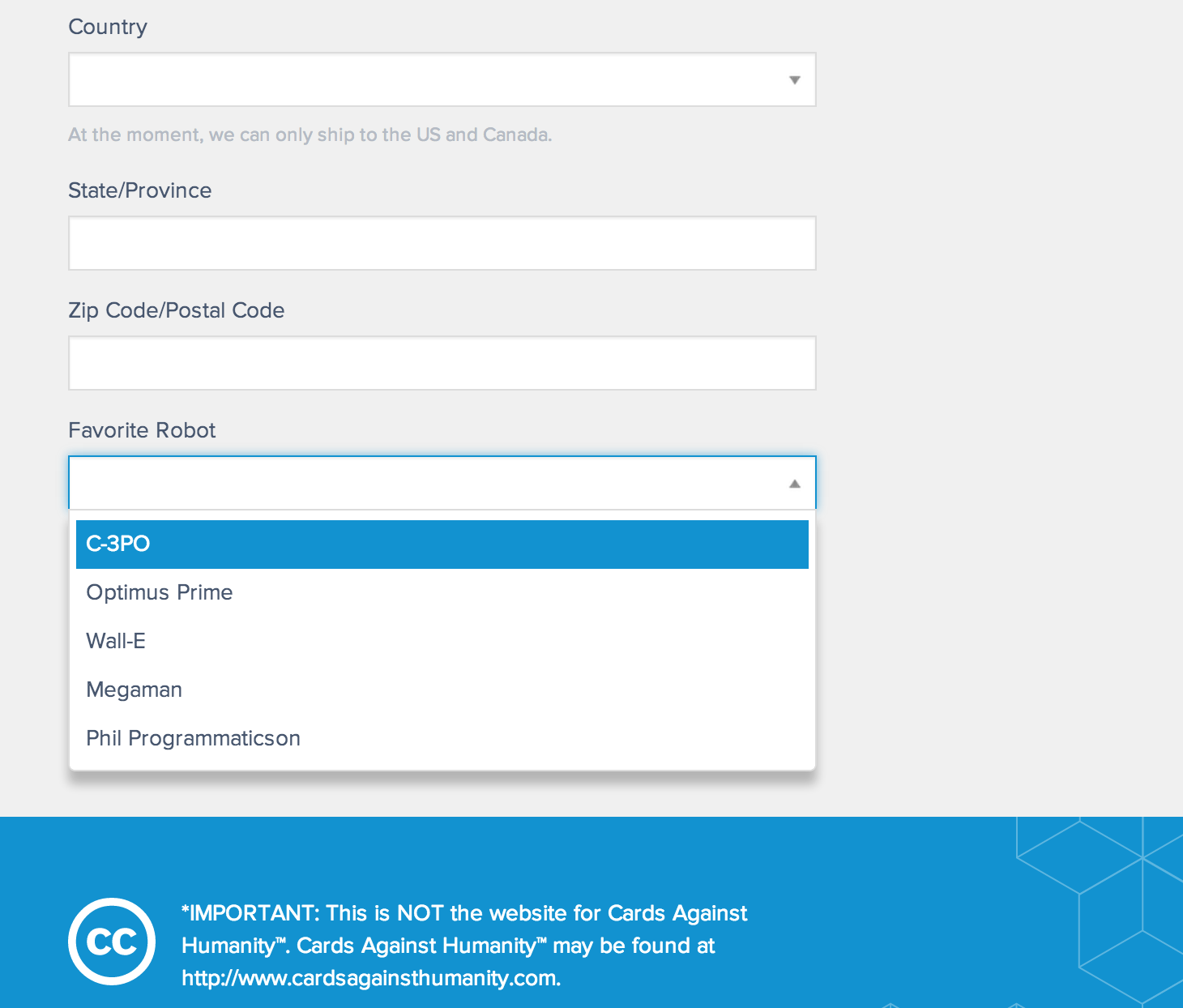
Making our lead forms fun isn't actually something we've done yet at Contently, but it's something we want to do. Our friends at Chango do a great job of this. For example, when you fill out a lead form to get their Cards Against Marketing party game, it asks you to choose your favorite robot. It made me smile. It may sound hippie dippie, but I firmly believe that making people smile is important for lead generation.

form-field

You better believe that we have a list of Wizards going on our marketing wall in the office right now.

6) Perform A/B tests.

Should the first thing people see when they visit your site be your gated content? Or should it be a product video? While it may be tempting to slap lead generation calls-to-action all over your site, we must practice some restraint, because a lot of factors go into deciding whether that's a smart idea. The best way to settle that debate is through data -- and A/B tests can provide that. 

You should take that same decision-making process to your landing pages themselves, especially when you're just getting started. If you haven't decided on what an optimized landing page looks like for your business yet, use the early days to try out several different layouts so you can learn what yields the most leads possible.

7) Invest in an SEO audit.

When you work at a small, fast-moving company, things get built fast. And in those lean, early days, things don't get made as perfectly as you would like. One of the smartest investments we've made the past few months is an SEO audit by an independent specialist of Contently.com and our magazine, The Content Strategist. Social traffic may be all the rage, but search visitors remain incredibly valuable; after all, their visit is driven by intent.

The audit yielded tons of things we could be doing better. We weren't able to tackle everything immediately, but there were a dozen quick wins we were able to implement right away. (And if quick wins aren't music to your ears, just wait til you see how they make you look when you report them to your boss.) This doesn't have to be an expensive, exhaustive audit -- you want to ensure that your site is set up properly so search engines can crawl it, your blog is set up on the right domain, you're targeting good keywords, that sort of thing.

What advice would you give to someone just starting out generating leads from their website? Share your tips in the comments.

download lead generation ebook

subscribe to the hubspot marketing blog

20 May 14:57

Increase Your Revenue by Applying 1 Psychological Trigger

by Talia Wolf

A typical conversation I have with clients on a weekly basis:

Me: “These are your landing pages (checkout pages or pricing pages or mobile pages etc.), the emotional triggers we used are…”

Client: “Hold on, where are all our features? Why don’t you have all our propositions and options showing? How will the customer know everything we have to offer?”

They won’t, and that’s a good thing. In fact endless features on your landing page can be a conversion killer.

Increase Your Revenue by Applying 1 Psychological Trigger image Depositphotos 44595313 xsThe reason: ‘Analysis Paralysis’ – a psychological trigger (one of many) that helps us in making decisions, or in this case, the exact opposite.

Analysis Paralysis is the state of over-analyzing (or over-thinking) a situation so that a decision or action is never taken, and actually paralyzing the outcome. This basically means that when we’re presented with too many options, we prefer not to make a choice.

Similar to loss aversion, the “pain” of making a decision with multiple options exceeds the gain and benefits of making a decision. So for example if your pricing page has too many offers, the majority of the customers would choose not to pay.

Have you ever sat at a restaurant with a huge menu that goes on and on with dozens of amazing choices and had no idea what to order? This is how analysis paralysis works. It’s the same with cable TV, so many channels to watch and nothing interesting? A new study by Nielsen shows that although we have over 190 channels to choose form, the majority of Americans watch 17 on average (apparently Americans like to zap through channels, I for one stick to about 5).

Sometimes an overload of information can only paralyze us or just disturb us.

Giving users information about your product or service is important, but the trick is knowing where to place it. When you want a user to perform an action, you want to give them a simple, clear & cut option to do so without paralyzing them. Those who are interested in additional information will scroll for it.

The majority of our landing pages hold a lot of information, but they’re placed in the right area. Long landing pages don’t mean lots of copy or distracting options. Use the length of your landing page to save your customer’s time and present the data easily with images (why images?).

The example below is of a landing page we designed for a cloud storage company. As you can see the top part of the page (also known as the ‘above the fold’ area) has no features or long explanations. A simple call to action that allows you to download the product and get started quickly (A case study on the psychological trigger used on this page will be published soon).

The top part of the page:

Increase Your Revenue by Applying 1 Psychological Trigger image landing page 1 600x286

The bottom part of the page offers additional information and has a loud call to action button. Giving just the amount of info people may need and still directing them to the download area (this in only part of the landing page).

Increase Your Revenue by Applying 1 Psychological Trigger image landing page 2 600x295

Apart from having no actual call to action button, the amount of information on the page below makes it hard to decide what to choose and know what to do on the site. There are many links leading out of the page, a lot of text and no actual way to redeem your 20% discount.

Increase Your Revenue by Applying 1 Psychological Trigger image analysis paralysis 600x524

Avoiding Analysis Paralysis:

Get people to make one easy choice first, to get them in the funnel. Once they’re in allow users to change their mind or explore.

  • Not sure which step to start with? This is a great time to start an AB test. Test out what your customers are looking for and what information they need to make it to the next part of the funnel.
  • Don’t forget to be honest, don’t try and hide important information. Place it in the right place.
  • Usually we’re too invested in our own products and find it hard to see which part is harder or problematic than the rest, a cool way to change this is to sit down with someone who hasn’t tried your funnel out yet and see what they go through while completing the funnel.

A great example is the email I received from Booking.com the other day asking me about my stay in Berlin. Getting people to fill out forms is extremely hard and by allowing me to start the process with one click within the email I was much more eager to complete the funnel.

Increase Your Revenue by Applying 1 Psychological Trigger image booking.com  600x312

Remember, helping your customers complete your funnel is an important part of your conversion optimization. There are many different psychological triggersthat have an impact on our customers decisions and the more we know & learn about our clients the better we can help them choose our product.

Do you have any examples of analysis paralysis you’ve experienced on the web?

20 May 14:54

Predictive marketing startup 6Sense launches with $12M in funding

by Derrick Harris

6Sense, a startup using machine learning to help companies predict who’ll buy their products, launched on Monday along with $12 million in venture capital from Battery Ventures and Venrock. The company claims it uses behavioral data to predict when customers are in the market to buy, and it focuses on each part of the sales cycle. Sales and marketing have become major use cases for machine learning, with a growing numbers of startups trying to help business know which customers to target, when and how.

Related research and analysis from Gigaom Research:
Subscriber content. Sign up for a free trial.

20 May 14:53

5 Things You Saw In 'Mad Men' That Turned Out To Be Hugely Important

by Harrison Jacobs

mad men season 7 don draper

For "Mad Men" viewers, one of the most satisfying aspects of the show is the way Matthew Weiner and his team of writers fold the watershed events of the 1960s into the narrative.

The political events of the '60s have been a part of the show since Season 1, when the ad agency Sterling Cooper threw an all-night party against the backdrop of the Kennedy/Nixon election. More recently, Martin Luther King Jr.'s assassination was announced during an advertising awards ceremony on the show. (This actually happened.)

Some people don't realize the show depicts landmark developments in the advertising industry with equal precision. We spoke with real-life 1960s "Mad Man" Mel Abert, former art director at renowned ad agency Chiat/Day. Abert let us in on the developments in the show that ended up being huge for the industry.

Volkswagen's "Think Small" And "Lemon" Ads

think smallVolkswagen’s humorous ads turned heads when they debuted in 1959, and Ad Age later ranked it as the best advertising campaign of the 20th century. In the third episode of "Mad Men," Don Draper and his team discuss the ads at length to figure out why they work. Those in the industry have some theories on why the "Think Small" campaign was effective.

"It was self-deprecating. It was the first post-modern ad," Bob Garfield, an advertising industry consultant and former columnist for Advertising Age, told the BBC. “… That ad ushered in a whole era of humor, wit, and irony in advertising."

volkswagen_lemon_hires1

William Bernbach of the then-nascent agency Doyle, Dane, Bernbach created the ad, which was his answer to a relatively small advertising budget and a car brand that Americans were predisposed to hate because it was German. (Remember, this was a post-World War II America.)

The ads took seeming faults about the car — its unique design, small size, and low horsepower — and turned them into selling points with humor and irony. 

The Creative Revolution And Agencies Driven By Creatives

Many people in advertising see the '60s as a golden age for the industry — and not just because of the three-martini lunches. Advertising during this creative revolution turned the old way of doing things on its head. Agencies ditched long paragraphs of copy for powerful visuals, snappy slogans, and humor.

Boisterous creatives of the era like Jay Chiat, Julian Koenig, and Mary Wells Lawrence led the industry with daring campaigns that many still remember today. Campaigns like Avis' "We Try Harder," the Pillsbury Doughboy, and Ronald McDonald all began in the 1960s.

The Importance Of Television And The Rise Of Media Buyers

Americans had heard of television by the 1930s, but it became “the national campfire” by the 1960s when people were watching an average of 5 hours of TV a day.

TV advertising initially came in the form of sponsorships of entire programs like the U.S. Steel Hour, but then networks began selling multiple 30-second spots to advertisers. The change gave rise to one of the most enduring aspects of advertising: the media buyer. 

Media buyers negotiate and buy prime TV advertising space for their clients using notoriously complicated contracts. The best buyers can get special rates or advertising spots based on their relationship with the network and the amount of space they buy.

In the early 1960s, media buying departments were just forming, as demonstrated by Harry Crane’s nervous pitch to Roger Sterling in Season 2. By 1968, these departments were the most talked-about phenomenon on the advertising scene, the New York Times reported at the time.

Media buyers typically netted a 15% commission on ad buys for the agency, and they quickly gained power in agencies since TV deals were so expensive. In Season 6 of "Mad Men," Harry Crane bursts into a board meeting and demands to be made a partner. He’s denied, but his demand for more recognition is a clear sign of the times.

"Media agencies are the ATM of the big advertising companies, they throw off a lot of cash," advertising veteran Nick Manning told The Guardian "The big groups make a lot more money out of media buying than they do out of anything else."

In the late 1990s, the biggest advertising conglomerates, including Omnicon and WPP Group, began consolidating the media departments of numerous agencies into stand-alone companies. The resulting companies — GroupM and OmnicomMediaGroup — are two of the most powerful media companies in the world.

The Rise Of The Computer

360 91 panelIn the current season of "Mad Men," Sterling Cooper & Partners installs a massive computer that takes the place of the creative lounge.

While Abert says "Mad Men" was right about how important the computer would become, he says the show jumped the gun on the dates. The prohibitively high cost of an IBM System/360 computer prevented all but the largest of agencies from having them that early, he says.

The New York Times noted in 1968 that early adopter agencies began moving computers into the office in the early 1960s, but most agencies including Abert's firm Chiat/Day paid for subscriptions to computer services that provided the same data.

The computer paranoia of the "Mad Men" creative team ended up being well-founded, though. According to Abert, the introduction of the Apple Lisa in the early 80s “changed the advertising industry overnight.” Because the computer made creating graphics far easier, many companies took their marketing in-house. Advertising had to quickly adapt to the new world.

“There were creatives who were steeped in the old ways of doing things that didn't want to change," Abert said. "They were quickly doing nothing. Those that embraced the computer are still working."

The Los Angeles Advertising Scene 

Miracle_Mile_1960s_PostcardAt the end of Season 6 of "Mad Men," important characters jockey to go to California to start a Los Angeles office of Sterling Cooper. A tiny California office would have been a demotion in earlier seasons, but by the late '60s, L.A. represented a chance for creativity and freedom.

While New York remained the sophisticated hub of the industry, L.A. was rising up as a disruptive upstart, full of unconventional independents and new outposts from the Madison Avenue's biggest agencies. The rise in prestige of L.A. was due in large part to the success of agencies like Chiat/Day, which became known for its inventive, risk-taking ads and unconventional approach to clients.

One of Chiat/Day's more provocative ads was for Western Harness Racing, Inc., which wanted to promote night-time races at its Hollywood Park track. Believing the people they had to reach were bettors, Chiat/Day ran print ads with the headline, "How To Tell The Difference Between A Pacer and A Trotter." The punchline: the difference between the two was illustrated not with horses, but with a cigar-smoking man on all fours.

Chiat/Day's work may have led the pack, but they were far from the only risk-taking creatives in L.A. Advertising virtuoso Stan Freberg, who ran Freberg LTD in Los Angeles, was known for pioneering the use of humor in ads. He was responsible for this iconic 1960s Sunsweet Prunes ad, featuring science-fiction author Ray Bradbury:

Join the conversation about this story »

20 May 14:49

SlideShare: The Undisputed Heavyweight Champion of B2B Social Media Marketing

by Chad Pollitt

If you’re a B2B marketer who hasn’t been bitten by the SlideShare bug yet, let me help infect you. Many thought leaders have written posts to sing its praises over the years, including this gem from Jay Baer, which contemplates the emergence of a blog post/presentation hybrid.

I’ll save you the standard sales pitch about its audience, ease of use and features and get straight to the skinny: SlideShare out-converts all other social media websites on the planet. And the competition isn’t even close.

SlideShare: The Undisputed Heavyweight Champion of B2B Social Media Marketing image Undisputed Heavyweight Champion of Social Media1

Unfortunately, many B2B marketers tend to prioritize budgets and attention to the lower-performing channels on the chart below and not SlideShare. The chart below shows that over the last 18 months, one out of every four visitors referred by SlideShare to our website converted on a landing page. That stands in stark contrast to every other social channel.

SlideShare: The Undisputed Heavyweight Champion of B2B Social Media Marketing image SlideShare Conversion Rate

How to drive copious amounts of leads using SlideShare’s free account

When creating calls-to-action (CTAs) on SlideShare that are effective at driving converting website traffic, you must consider seven important factors. Not all CTAs are effective at driving traffic and conversions, but the ones that have the greatest chance at being effective incorporate the below.

7 Examples of SlideShare CTAs that Actually Convert! from Chad Pollitt

1. Design – This is important for obvious reasons, as well as a not-so-obvious reason. Good design gets the attention of the audience and the staff at SlideShare. The audience is much more likely to share the deck, like it, download it and click on the CTA if the design is appealing and impactful.

Good design also increases the likelihood that SlideShare will feature the deck on its homepage or in an industry category. If this happens, the deck can be exposed to thousands of people in a short amount of time.

2. Proper Funnel Expectations – When deciding which offer you want to use to entice CTA engagement, consider the marketing funnel and where your offers reside.

Top of the funnel offers like ebooks, guides and whitepapers have a much higher probability of receiving click-throughs and conversions. Middle of the funnel offers like case studies and webinars will have less engagement. Bottom of the funnel offers like free assessments and demos will have the least amount of engagement.

3. Short Tracking URL – To truly understand the engagement metrics around a SlideShare CTA, always include a shortened tracking URL like a bit.ly. The reason is simple: slide decks aren’t consumed solely online. If you or someone in your industry is giving a presentation with your deck in-person or on a webinar, an easy-to-remember URL is ideal. Besides, a certain percentage of people prefer to engage with URLs over CTA buttons.

4. Value Proposition and Relevancy – Ideally, your CTA’s value proposition will align closely with the message of the deck. It should flow naturally with the presentation and be relevant to it. If the deck is about content marketing, having a content marketing guide or ebook as a CTA will increase the likelihood of engagement.

5. Tangibility – Whenever possible, make an intangible offer appear to be tangible. If you’re hawking an ebook, a graphical representation of an actual book helps make the offer appear to be more tangible, which can impact click-through rates.

6. Button – Having a single button that stands out from the rest of the slide visually communicates a “click me” message, and helps optimize engagement. Ultimately, however, A/B testing various messages on the button over time will help further optimize engagement.

7. To QR code or not to QR code – Admittedly, I’m a little torn on this one. Adoption and use of QR scanners is all over the map in terms of numbers. Some Millennials react poorly simply to seeing them. Are they useful and current, or have they run their course? You’ll need to take a hard look at the audience you’re targeting and decide that for yourself.

QR codes have not definitively shown to have a positive or negative impact on engagement metrics on our decks. Negative reaction has only been verbal and anecdotal to date.

Did this post convince you? Have you been bitten by the SlideShare bug yet? Prioritize this channel higher in your marketing mix, and it could have a positive impact if the above is considered and executed on. If you have any positive SlideShare stories please share in the comments section below.

20 May 14:49

Identifying And Writing Content That Will Engage Your Audience

by Juan Pablo Castro

Identifying And Writing Content That Will Engage Your Audience image main1912

In the business world today, content marketing is a hot topic. It seems like everyone, especially in the B2B arena, is jumping on the content marketing bandwagon. Indeed, content marketing – done correctly, can be a very effective way to attract new leads.

It can help you win clients. But a lot of marketing content does not have the intended effect its creators had hoped for – far from it! A lot of content adds to the very problem it was intended to solve. What problem is that? Noise!

Before content marketing became such a popular concept, our culture was drowning in a sea of advertising and marketing. Content marketing was hailed as a solution to this vexing problem. What happened was that much of this flood of content became dismissively viewed as noise.

And the problem is growing worse as more and more companies produce more and more content, especially when they don’t understand how to produce content that will engage their target audience.

Today, let’s talk about how you can identify the content topics most likely to resonate with your audience, that is, your potential customers. Let’s talk about why this is so important to your content marketing success. Let’s discuss some tools you can leverage to help you become a more successful content marketer.

We’ll also talk about writing more compelling, persuasive, engaging content once you’ve identified the topics you want to write about and share with your audience.

First Things First

Doesn’t it make sense that before you can identify the content topics that will resonate with your potential customer, you need to understand him in detail? Of course it does! How can you write a white paper, an email marketing message or produce a webinar that will make prospects sit up and take notice if you don’t first understand their fears, frustrations, goals, dreams and so on?

Before you write the first piece of content, get a minute, detailed accurate understanding of whom you are writing to. Keep this customer profile in the forefront of your mind as you produce your content. Use the details of it to write in such a way that your messages will speak powerfully to your readers, in a way they view as relevant to their wants and needs.

Once you have your detailed customer profile, use it to help you write engaging content that will grab and keep your readers’ attention and make them want to learn more about how you can help them. Write content that will, especially if your are a B2B marketer, make them want more of your content.

Here’s how you can ratchet up the persuasiveness and engagement factor of your content even more: find out from your target audience what they want you to write about. For example, let’s say you are writing content on physical fitness training, and you have a large email list that you regularly stay in contact with.

Want To Find Out? Ask!

Identifying And Writing Content That Will Engage Your Audience image image012611

You want to keep them happy with the information you offer them. You want to keep them interested and engaged. You want to keep them involved in your virtual community. And you want to sell more of your products and services to them. So what can you do? It’s simple: Ask them what they would like you to write about.

Send out an email with a link to a brief online survey you’ve put together. In it, ask them what specific topics they want to get your input on. Make a list of the top several items from the survey, and write informative, engaging, persuasive content about them.

Surveys can be very useful; they can help you identify the content topics your audience wants to read about. You can conduct them with a web-based survey tool like Survey Monkey.

Take a look at what your competitors are writing about. Also, determine what they are not writing about. After studying your detailed customer profile, brainstorm on ideas you are confident your audience wants to hear about, ideas that your competitors aren’t addressing, and write about them.

“Hang Out” With Your Audience

Spend time with your target audience, in person if possible, but more likely online. Visit their social media profiles, read their blogs, join the discussion forums and LinkedIn groups they are members of. Monitor their discussions and social media posts to get a sense of what’s on their minds related to your niche. Write informative, problem-solving, even entertaining content that will address these issues.

Always judge content ideas by your customer profile. There are certain topics likely to resonate with your readers in a big way and others that will cause them to yawn and lose interest. Using the example of physical fitness and exercise again, if your audience is a dedicated group of hardcore strength trainers whose goal is to see how much weight they can lift and is passionate about growing big muscles, chances are they will have little or no interest in an article on marathon running or triathlon training.

Give Them What They Want!

Don’t try to force feed content ideas to your audience just because they are popular in other circles. Don’t try to persuade a 280 lb. elite weightlifter to be interested in the same content that a 140 lb. triathlete would devour. Don’t tell him or imply that he should be interested in reading about long distance racing. Give the weightlifter what he wants – useful information that will help him get stronger.

Writing That Helps You Produce More Persuasive, Engaging Content

Identifying And Writing Content That Will Engage Your Audience image image021711

Congratulations! You’ve taken the time and effort to painstakingly assemble your ideal customer profile. You done the detective work to find out what topics will likely be a content home run with your audience. But don’t rest easy yet. Your work is only partially done. You can still lose your audience to your competitors.

How? By writing content that bores them. By writing content that focuses on your company, products and industry awards rather than on them, their needs, their wants, their problems and your solutions.

We’ve already talked extensively in this blog about how to write persuasive sales copy. This article, will give you a primer on the basics of effective copywriting. Today, we’ve focused so far on content more than copywriting. But, at some point, content, in order to be an effective marketing tool, needs to persuade. It needs to include some of the same elements that make first-rate sales copy so powerful.

“…if all you do is give away free content, you are not going to close many sales.” Bob Bly

Bob Bly is one of the world’s most well-respected direct response copywriters. He’s also a very accomplished and successful content marketer. He contends that content marketing needs to do more than just educate; he says it needs to also persuade the reader to  choose the company’s product over other alternatives, including the alternative of doing nothing.

This blog has other articles that talk about effective copywriting and give tips that can make your content much more engaging, so we won’t go into detail here. But keep in mind that contrary to what some content marketers mistakenly believe, content marketing needs to do more than just educate  and inform. It needs to persuade. It needs the boost that only solid copywriting can give it.

An Important Content Marketing Tool

In your online marketing, as you attempt to “nudge” prospects forward in their buying journey, especially in the B2B world, you need to continue offering them relevant content that educates and informs them, content that engages them, and content with strong copywriting that ultimately persuades them. Whether the final sale will be made by the copy online, or by a sales rep on the phone or in person, you need persuasive written words to help you make your case.

And you need landing pages. Are you a B2B content marketer? You need landing pages to help you “sell” website visitors on your content offerings. Do you run an online E-Commerce store? You need to leverage the power and effectiveness of great landing pages as you attempt that often tricky process of persuading your potential customer to “make the leap” from shopper to buyer.

But whether you are a B2B marketer, or you are running an E-Commerce store, you’re busy, maybe even overwhelmed, trying to keep up with the demands of your day-to-day schedule. You do not want to try and set up a landing page “the old fashioned way”! You don’t want the hassle and frustration of learning and messing with programming code or struggling to understand an outdated landing page program that burdens you with a lousy user experience.

You want a turnkey, “out-of-the-box” landing page platform that’s easy to set up and manage. You want a landing page platform that’s engineered to help you increase your conversion rates – one that helps you gain more followers for the content you’ve worked so hard to produce. You want landing pages that help you win more customers.

Happy Marketing!

19 May 16:59

Do You Have the Capacity to Innovate?

by Jeff DeGraff

Do You Have the Capacity to Innovate? image innovation11The same thing happens to me once every three months. I’m productive and prolific and then, all of a sudden, I feel overwhelmed. I realize that I’ve taken on too much. When it comes to saying yes to interesting new innovative projects I’m easy. I wear the scarlet I. The truth is this: I want it all even though I know I can’t have it all. When I hit this period of oversaturation, I get my staff together and we push some things off my plate and other things off the table entirely. I call this rebalancing.

Innovation is time and resource intensive. It requires the capacity to tinker and tune and test until the novel solution presents itself. Rebalancing is crucial because you can never get to the new thing you want to do if you can’t let go of the old things. Everything costs something in terms of your valuable time. It’s a simple truth: you just can’t keep adding new things. You’ve got to ask yourself this question: what are you willing to stop doing to free up the time and resources necessary to do what you want to do?

I was on a plane returning home the other day, and the woman sitting next to me told me about an idea she had for a novel. She’s had this idea for 20 years. During those two decades, if she had written half a page a day, she would’ve finished a draft of this novel in less than two years. She told me she couldn’t even write half a page a day because she’s a consultant who travels all the time and goes to the gym every morning. I asked her this: “What three things are you willing to get rid of to make time to write your novel?” And she said, “I can’t get rid of any of them.” I broke the news to her: “Then you’ll never write the novel. You have control over all these constraints, but you’re not willing to let any of them go.”

Everyone you know is busy, stressed, overworked, and overtired. The result of this do-it-all mentality is mediocrity. Spread yourself too thin and everything you do becomes middle-of-the-road. The only way to produce excellence is to give yourself the space to achieve it. This is where rebalancing comes in. Performing a capacity review is easy. Diagnose and make a list of three kinds of activities:

1. Creating capacity (best if done first)

     a. the things you need to do less of

     b. the things you need to stop doing

2. Maintaining your essentials

     a. the things you need to keep doing

3. Pulling yourself forward (best if done last)

     a. the things you need to do more of

     b. the things you need to start doing

Think of managing your capacity like managing a portfolio of stocks. You can buy, sell or hold them but each represents a conscious decision you make about the allocation of your time and resources.

You can always make room for something that you want. Innovators are people who make time for experimentation and risk-taking in their everyday routines. I’m not asking you to change your schedules or priorities entirely. It’s merely a matter of making minor but game-changing modifications to your daily habits.

I have to be realistic about the challenge of time in my own life. When I’m starting a new book, I have to rebalance my work and personal pressures in order to find the time to do it. It may mean teaching one less class or taking one less client in my consulting practice, but I have to give up some things. If you want to produce quality, you first need to free up the capacity to do it. What are you willing to give up that will create the capacity for you to innovate?

19 May 16:58

Eliminate Cold Calling — Use LinkedIn Introductions

by Lindsey Stemann

Eliminate Cold Calling — Use LinkedIn Introductions image cold callingI have not made a cold call in over half a decade. Not one. I use LinkedIn as my connector to take the cold out of a call and make it warm. One way I have managed to eliminate cold calls from my business development process is by using LinkedIn introductions. LinkedIn introductions allow you contact other LinkedIn members who are in your 2nd-degree network or 3rd-degree network.

Let’s take Shane Cobb as an example. Before I use a LinkedIn introduction, I always scan an individual’s profile to see if I have anything in common with them, based on what they are sharing in their LinkedIn profile. If there is something I can connect with them on, it sometimes makes sense for me to reach out to them directly by way of a connection request or an InMail. In this case, I am going to use an introduction.

Beside the “Send Shane InMail” button is a small drop down arrow. When I hover over it, a menu appears and gives me the option to “Get Introduced.”

Eliminate Cold Calling — Use LinkedIn Introductions image Google Chrome 3 600x390

Since Shane is in my 2nd degree network I know we have mutual LinkedIn connections. When I click Get Introduced, I can see that Shane and I share 12 common connections.

Eliminate Cold Calling — Use LinkedIn Introductions image LittleSnapper 300x159

When I scroll through the list of mutual connections, I determine that I would like to request this introduction through my friend, Brett. Notice when I click on Brett’s picture, LinkedIn pulls his picture where the question mark used to be. While LinkedIn prompts us, here are a few things to note:

  • Tell your introducer why you’d like to meet the new person.
  • Be cognizant of what you say in this message because LinkedIn is going to give your introducer the option to forward your message directly to the person you want to meet.
  • Always give your introducer an out; you have no idea how well your introducer knows the person you want to meet.
  • Include your phone number in your message so your introducer can call you if he or she has any questions regarding your request.

Eliminate Cold Calling — Use LinkedIn Introductions image Google Chrome 4

I have had tremendous success with this feature of LinkedIn. When one of my connections vouches for my company and me, it adds instant credibility and increases the that I will have that conversation with a new professional. In fact, it is one of the reasons I was able to set 38 in-person meetings that were initiated on LinkedIn in six weeks. That is almost seven meetings per week. And guess what? Not a single cold call was made.

What should you do when you request LinkedIn introductions and nothing happens?

You have a few options:

  • Call your introducer to see if they received your request. People are busy, so it may have fallen off his or her radar.
  • Check to see if your introducer knows what to do with your request: He can forward your message and include you on the message. Or he can compose a new LinkedIn message to send to you both.
  • Withdraw your request to use on someone else you want to meet.
  • Wait six months and if the introducer still does not respond, your introduction request will expire and be credited back to you.
  • Give your introducer a heads up before sending your request so they anticipate it and will more likely act on it.

What happens if you run out of LinkedIn introductions? We have a work-around on this question. Let us know if you are interested in learning an alternative way to request introductions.

Cold calling is dead, because of LinkedIn. Do you agree?

19 May 16:57

5 Brands That Delight Users in Unexpected Ways

by Shane Snow

My favorite part of Arianna Huffington’s new book, Thrive: The Third Metric To Redefining Success, is when Ms. Huffington talks about eulogies.

“It’s easy to miss the real point of our lives even as we’re living them,” she writes. “And it’s very telling what we don’t hear in eulogies.” Those things include making senior vice president, sacrificing kids’ little league games to go over those numbers one more time, or my personal favorite: “she dealt with every email in her in-box every night.”

“You never hear, ‘George increased market share by 30 percent,’” Huffington said at a recent event at SoHo House in New York City. What you do hear in eulogies, she says, are stories of “small kindnesses.”

It’s well-known that details make good art great. Small flourishes define superlative architecture. Tiny considerations make products world-class (“Jobs spent days agonizing over just how rounded the corners should be,” writes Walter Issacson in Steve Jobs.). Subtle word choices separate great poets from amateurs.

I think the same can be said of the way we work. Tiny considerations in poems and products are all about the users, and how the creator can delight them; in a sense, this kind of mentality is what Wharton professor Adam Grant talks about in his research on corporate “givers” versus “takers.” In various research studies now famous in his book Give and Take, Grant has shown that the most successful people in the workplace tend to be the ones who give selflessly to others without expectation of returned favors.

In Thrive, Huffington argues that power and money have too long been life’s main yardsticks of success, and that we should measure it instead by four new metrics: Wisdom, Wonder, Well-being, and Giving. If the eulogy test is an indication, Giving is likely the most memorable of the four.

“It’s tempting to reserve the giver label for larger-than-life heroes such as Mother Teresa or Mhatma Gandhi, but being a giver doesn’t require extraordinary acts of sacrifice,” Grant writes in Give and Take. “It just involves a focus on acting in the interests of others, such as by giving help, providing mentoring, sharing credit, or making connections for others.”

As my company has started thinking more and more about the little things we can do to give our customers delightful experiences, I’ve started documenting the tiny kindnesses I’ve observed in business I’ve patronized lately. Here are a few of my favorite little niceties of late:

Website error pages that defuse frustration by making you smile. Here’s ZocDoc‘s:

27528ea

It’s no surprise, based on this image alone, that ZocDoc has been repeatedly voted one of the best places to work in New York, and that its users routinely email its customer support team to say, “This is the best website I’ve ever used.” Sick people (ZocDoc’s primary users) can be the crankiest customers, but ZocDoc manages to keep them happy through a habit of small kindnesses, of which this is just one example. And even though it’s a silly message, it works.

Uber cab treats. I love when black car services offer bottled water to passengers; it’s a tiny expense that goes a long way toward customer comfort. But Uber recently upped the ante for me when I recently got into one of its cars in San Francisco. The driver had placed fancy jars of candies in the console for passengers. It was a small thing, but somehow made me feel like the most important customer in the world. I gave the driver five stars.

Terms of service that don’t make you feel like an idiot. Only the perverse people love website Terms of Service. Tumblr knows this, and did everyone a kindness by putting their terms in plain English, adding a bit of humor and lots of colloquialism to make them more pleasant.

2cb7e71

Personal attention from company owners. One of my favorite tech startups right now is TrackMaven. The main reason (aside from being a great product) is that my account manager over there acts like my personal assistant. She’s willing to do anything to make my life easier (even sometimes giving advice on things that have nothing to do with their product). And if I ever have a problem, the CEO of the company gives me a phone call. It’s a tiny gesture, but means a ton to me.

Similarly, I love how 37Signals talks to its visitors and users like real guests. Most of the communication on the site comes directly from the founder in heartfelt, personal notes. This page about the company’s story is a great example of what 37Signals does throughout its products: humanizes itself. It doesn’t take much longer to write real, human copy than it does jargony marketing copy, but the tiny kindness makes a huge a difference.

Brevity. Speaking of copy, you know what’s the worst thing in the world? People who talk forever and don’t get to the point. The second worst? Enterprise software. Unsurprisingly, the first thing is my main beef with the second. Of all the jargony, salesy, ambiguous and self-aggrandizing companies in the world, for some reason enterprise companies take the cake. (I know, because I run one of them!) Regardless of who we are, though, most of us tend to talk too much instead of giving the users what they want: a tl;dr of what we can actually do for them.

On the other hand, the most unselfish thing a company can do, in my opinion, is say what it does clearly and quickly, then get out of the way so you can do what you want to do.Dropbox is an amazing example of exactly this, managing to say what it does in three words.33496f5

Since I’m a tech entrepreneur, you’ll notice that my examples come from mostly tech companies. But it’s obvious enough how we can apply tiny kindnesses to offline businesses and in our personal lives. (Here’s a whole blog dedicated to helpful design considerations created by designers with “giver” mentality.)

These things are easy to do; we just get so caught up in me, me, us, us, that we often forget the need for (and power of) social grace. I myself often need the reminder that at the end of the day, business is always about people.

I’m in Huffington’s camp when she says that the number of dollars we make is secondary to the number of people that we can give to. Here’s to hoping it doesn’t take a funeral for the message to fully sink in.

Image via Associated Press

What’s the deal with the Content Strategist? At Contently, storytelling is the only marketing we do, and it works wonders. It could for you, too. Learn more.

19 May 16:57

Don’t Let Your Written Proposal Torpedo Your Deal

by Dario Priolo

Don’t Let Your Written Proposal Torpedo Your Deal

What I am about to say may be an example of life being unfair. Obviously, a poorly prepared written proposal could cost you a deal. However, the most expertly prepared, well-written, catchy-reading proposal brings no guarantee of winning. To make things worse yet, an overly slick proposal might be a turn off.

Let me give an example of the third possibility, because I know that calling something “too good” sounds illogical. Take, for example, the redevelopment of a low-income housing project. Residents of the project will be represented on the committee making project decisions. Is an expensively produced proposal likely to impress them? Or, will it more likely send a message that you can’t related to them? Someone who kept in mind the human element could be more likely to win.

The reasoning behind my “unfair” opening, and the example, is simple. Despite the almost geometrical expansion of technology in the past decade or two, people like to be able to relate to the people with whom they do business. They want to know that you can do the job. They want to know that you can provide the quality product, service, or solution they need. However, with the good chance that someone else can also do so, relating to the potential client and making them want to work with you may well make the difference between making the sale and getting a polite rejection.

However, a good quality and appropriately targeted written proposal can be vital. In a complex sale with many decision makers, your proposal will be one of the key reference documents that outlines your qualifications and approach to delivering your solution. It provides strong backup evidence of your company’s ability to do the job. It also provides structure to organize your thoughts, a kind of written report of the careful research and analysis you have done on the company. In most cases, the client will be reading the formal proposal after the meeting. A well-prepared proposal can reinforce the impression you left with your good presentation. A good proposal will be a lasting document the client uses to help inform their decision. The proposal needs to be able to stand on its own even though it will likely not be used on its own. A badly prepared proposal will add a jarring element, likely convincing the client that all you can really do is put on a good presentation.

So, what do you put in the written proposal?

  • Introductory sections or what book publishers call “front of the book.” This includes a cover and/or title page, depending on proposal length. The title page mentions your company and the name of the target client. If possible, include logos for both. Include a brief executive summary but without giving a price. Include a table of contents, which can also serve as a written agenda for the presentation. Use page numbers, or section tabs, or both. Page numbers can be eliminated, or numbered in each section, if you feel it likely or valuable to insert last-minute information.
  • State the client’s objectives. What do they want to achieve, and how do they want to do this? Use their words, which the client should be happy to provide you.
  • State how you can meet the client’s objectives.
  • Describe your idea. Go into more detail on how you will meet their objectives.
  • Present your financial analysis and cost justification. Tell how your ideas will benefit the client financially. Use tables and graphs, when appropriate. This is a summary section, so include any more detailed information in an appendix. Do not include your price at this point.
  • Reinforce your company’s “value-add.” Why should the client work with your company over competitor companies?
  • Provide your pricing structure. Tie your price to the value provided.
  • Summarize your proposal in three or four key points.
  • Include an appendix, if appropriate.

Your idea is to convince the client that you can respond to their needs. So, if they call for a set format different from the one above, follow their format.

At the risk of stating the obvious, take some care in how the proposal looks. Professionally bound proposals can have the same content as something e-mailed, but spending some effort on making the proposal look nice gets you off to a good start. Be aware of how your client might use the proposal. For example, he or she might print the proposal on a black and white printer. So, at the very least, think of how your copies will look in black and white.

Bring copies for each person expected to attend, plus a few extras. Try not to distribute it when the meeting starts because people will be inclined to at least glance through it. Good or bad, the proposal will be a distraction from what you are saying.

If you find it appropriate to give out the proposal during the meeting, walk the audience through it. Don’t read from it. Use attractive visuals, easy enough to do with a laptop, for anything you have to show the audience. Keep in mind that PowerPoint slides are not intended to be a teleprompter. Discuss details not on the slides. (Also, be careful not to accidently project something personal verbally or on the screen.) Find out beforehand audience preferences for charts and tables, and follow them while creating the materials. Use the same professionalism you did with the written proposal in preparing any visuals.

Bring copies of the visuals to have something to leave with the audience in case you need to revise the proposal — or in case technology is not available to project your presentation. Prepare for all possible scenarios! I might also suggest “just in case” free-standing copies of the executive proposal to leave the audience something if you want to rewrite parts of the proposal.

To summarize:

  • The written proposal is a valuable tool that sells on your behalf.
  • Know your audience, and prepare it as well and as professionally as necessary.
  • Be mindful of how you incorporate your proposal into your overall sales presentation.


Richardson and SAVO have partnered together to bring you  SAVO Sales Process Pro Richardson Edition™, an CRM-enabled application that allows sales and marketing leaders to reinforce training and execute best practices through coaching at each stage of the sales cycle. To learn more, click on the link above or the image below.

savo-launch-proposal-blog

The post Don’t Let Your Written Proposal Torpedo Your Deal appeared first on The Richardson Sales Excellence Review™.

19 May 16:24

Sales Productivity – It’s the Time, Stupid

by Richard Ruff
Sales Productivity – It’s the Time, Stupid image iStock 000002734685 ExtraSmall

Increasing sales productivity

In 1992 James Carville casually noted – “It’s the economy, stupid.” At that moment he coined a phase that became a de facto slogan for the Clinton campaign and subsequently went on to foster a number of like expressions that are now part of our political culture. We thought that Mr. Carville would not mind just one more variation on his theme.

Senior sales leadership spends a great deal of time thinking about how to improve sales productivity. They invest in sales training . They change compensation systems and territorial designs. They purchase CRM systems and commit time to working with Marketing to achieve better coordination.

We suggest there is one additional often under used yet effective and affordable strategy – get serious about freeing up the sales team so they have more time for selling.

This idea was recently reinforced in an article from McKinsey. The authors noted that top performing sales companies have about the same number of people in sales roles as low performing companies. However, the striking difference is they have “30% more sales staff in support roles.”

The idea is to free up the sales team to do what they do best and uniquely – selling. The problem is salespeople are doing a bunch of stuff that isn’t what they do best and others can do. The authors share a case in a leading high technology firm where the sales team spent 28% of their time in low value administrative activities. After some coaching they found they move some things around and substantially increase the sales reps’ time for selling.

So if there is something that can be done that is effective and affordable for improving sales productivity then examining some ways for making it happen seems like an okay idea. Five ideas for increasing the time sales reps have available for selling are:

  • Staffing. Add additional staff to a variety of sales support functions. This might include adding technical experts to the sales team or establishing an inside sales group to handle lead identification or augmenting the administrative sales support.
  • Adding Channels. Increasingly companies are moving to multiple channels. In some cases it can make sense to consider value-added resellers or outsourced agents. In others it might mean considering the aforementioned idea of an inside sales group or investigating the merit of a major account group. Although this idea will probably lead to more over all sales people, each group is spending time on what they do best.
  • Becoming a Filter not a Funnel. Too often sales managers are a funnel not a filter when it comes to handling administrative requests. In most companies some of these request can be handle by someone else, some can be cut in half, and maybe some can just be ignored.
  • Sales Training. Sales Training can help sales reps both become more effective and more efficient. For example, how much time does your sales team waste chasing bad business – that is an identifiable number that needs to be known. And, learning how to better qualify accounts is an identifiable and learnable skill.
  • Implementing Technology. Over the last several years a fair amount of money has been spent on sales technology – for example investments in CRM systems. One of the reasons that CRM systems have gotten a bit of a bad rap is the time reps have to spend interfacing with the system doing things they dislike, aren’t particularly good at and reduce their selling time. There has got to be a better way because some people are getting this right.

Best suggestion – find the time to reduce the time your sales team spends not selling. Over time it will make a difference that matters.

19 May 16:21

The Critical Role Of Emotions In B2B Purchasing

by Dan Newman

If I were to tell you that the reasons why we buy things are based more on emotion than logic or reasoning you probably wouldn’t doubt me, would you?

Deep down I think we all know that we do this, especially with personal purchases. Perhaps summed up best by the old adage about how we buy things we don’t need, with money we don’t have to impress people who don’t care. Now this isn’t all of us, but I think deep down many of us have been guilty of this before. So what about B2B purchasing, do personal emotions infiltrate our business buying behaviors? If so, what do we need to know about this in order to better position our brands?

In a recent study performed by the CEB, which examined the impact of personal emotions on B2B purchases, it was found that 71% of buyers who see a personal value in a B2B purchase will end up buying the product or service. In fact, personal value had two times the impact on the buyer than business impact did. In short, the survey found that without question personal value, perhaps better read emotional value overwhelmingly outweighed logic and reason in driving purchase decisions.

The Critical Role Of Emotions In B2B Purchasing image photo 11 600x524
(Image courtesy of Kapost)

The data in this study shouldn’t come as a surprise to anybody, but what it should do is come as an important reminder to people that the reasons that people buy are usually attached much closer to their emotional center than their rational thinking. And while buyers will often push hard for specifications, data sheets and statistics in order to help them justify a buying decision, more often than not these requests are really their way of telling you that they are not yet seeing the personal value in the product being sold to them.

When you boil it all down, ultimately corporate buyers are people and that is probably the most significant driver of this bleeding of personal emotion into the B2B purchase. No matter how much as individuals we try to put our “Company” hat on and tow the company line, we allow our personal feelings to enter the buyer’s journey and influence the way we make purchases.

For brands this means it is more important than ever to focus on telling a story that resonates with the buyer on a personal level. When brands connect to people that way their impact goes further and it is much more likely to lead to a sale.

So leave the spec sheets and the charts in your brief case and start refocusing your sales and marketing efforts on connecting with people on an emotional level. Apparently this is more than just a feeling, but a true reflection on the way people buy and consume goods and services.

19 May 16:19

3 Brilliant Buyer Persona Lessons from Industrial Designers

by Riley Gibson

3 Brilliant Buyer Persona Lessons from Industrial Designers image personas1Personas are an important ingredient to any content marketing strategy. They represent our audience and provide a true north for anyone creating content. Personas ensure that, even in complex organizations, you have a consistent, targeted, and relevant message.

While personas are a critical element of content strategy, organizations often struggle with them.

They’re created then buried in PowerPoint. They don’t seem like a high priority. Personas get so complex and long that no one can absorb them. Or, they speak purely to a company’s value proposition and how we should sell our products.

All of these issues are commonplace when developing a persona framework, so where can we look for inspiration to get out of this persona rut? Think like an industrial designer and take a page out of “Human-Centered Design” methodologies.

What Is Human-Centered Design?

Personas ensure that—even in complex organizations—you have a consistent, targeted and relevant message

Human-centered design was largely coined by design firm IDEO, and represents a process for designing products, experiences, and communications that are targeted at needs. While human-centered design is mostly applicable to creating products and experiences that delight users, it holds many lessons for B2B marketers thinking about how they can create better personas.

Here are three key lessons to steal from industrial designers:

1. Approach Personas from the Lens of Empathy vs. Sales

Empathy is a critical component of human-centered design and an ingredient that is often missing when considering buyer-personas. Design firms like IDEO put the user at the center of every decision by getting in their shoes and researching their experiences through detailed observation.

For example, when developing solutions for healthcare, IDEO sent their designers to hospitals with cameras on their heads to be a patient for a day. Researching people through the lens of empathy vs. existing value propositions is key to creating outside-in personas that reflect the true needs and interests of buyers.

One technique for incorporating empathy into your personas is leveraging Empathy Mapping techniques. Stanford Design School teaches empathy mapping as a tool to create more actionable personas.

2. Think Visually to Create Personas with Impact

Personas are only as valuable as how frequently they are used to make decisions and guide content choices. If they’re pages of text in PowerPoint decks, they won’t be effective at guiding strategy and ensuring that your content is buyer-centric.

Design firms faced this same problem, so have become more and more visual in their approaches to communicating personas. Some design firms will create short videos, magazines, or even posters that reflect the key attributes of buyers. MailChimp leveraged this more visual approach to create its own personas and make them a part of their office, so no one can lose sight of who they are building the company for.

3. Keep It Simple and Iterate Fast

Another key aspect of human-centered design is prototyping and experimentation. When designing new products, design firms will create very simple prototypes and get them in front of customers as soon as possible. The same approach can be leveraged to create great buyer-personas.

Instead of investing a year into creating complex personas, leverage up-front research to create simplified forms of personas. Then, test and iterate to improve them quickly.

Personas cannot be developed in a corporate vacuum. Start simple, get feedback early, iterate quickly

Do they represent the concerns and interest of that customer? Human-centered design teaches us to get things in front of users as early in the process as possible. Personas cannot be developed in a corporate vacuum, so start simple, get feedback early, and iterate quickly.

Human-centered design process is simple at its core. It is about becoming buyer obsessed, and putting their needs and interests at the center of everything. As you think about developing or improving your buyer personas, take a page from industrial designers and think about how you can build them from a more empathetic lens, how you can make them more visual and omnipresent to maximize impact and how you can start simple and get them in front of buyers as quickly as possible.

19 May 16:19

Company President Says to Sales Manager: What’d You Sell Lately?

by Corey Weiner

Company President Says to Sales Manager: Whatd You Sell Lately? image football playbookA subtle fault line exists in organizations between senior management and their sales personnel.

I was sitting outside at Starbucks in the popular galleria area of Houston and could not help overhearing a man next to me with two phones and a tablet talking to what would appear one of his sales manager.

Lots of business people grab breaks there or after lunch coffee. Since Houston is home to the most Fortune 500 companies next to New York, and this particular Starbucks location is in the city’s prime business district, it’s common to see people working on computers or doing job interviews or what not.

So let’s hear it . . . what did you sell for me? He asked whomever was on the phone.

And here is the case study to observe:

Too many times, you have a discord between “offense” and “defense” metaphorically as in with sports.

Operations, finance, accounting, strategic management, et cetera. And then marketing and field sales.

It’s the business equivalent of a receiver scoring touchdowns saying to the defensive captain, “Come on. What are you doing for us lately?”

The smartest, most enduring senior leadership at a company know that someone has to be out on the field blocking and tackling in order for that receiver to score a touchdown. This is why you commonly see teams pursuing linemen within the first five rounds of the NFL draft.

Offense and defense get teams into playoffs.

Now relate this to the above scenario with the owner or senior level manager belittling that sales person. The company might have the best product line (awesome playbook), command market share (pack stadiums with paying ticket buyers) and have nice revenues (drive down field and score).

But if you act like a smart-Alec with the defense asking rhetorical questions—your team is not getting to the playoffs.

You cannot have one without the other.

Too many organizations, especially the bigger they are, “offense” and “defense.” It takes little to offend one another and, before long, the organization suffers from internal chaos.

External challenges are plentiful, just like on the football field. You have good teams, talented players, 300-pound defensive ends looking to light up your QB, bad weather conditions affecting your strategy.

No one needs internal disarray.

Treat the sales producers as well as any integral player on the metaphoric team and you will get more loyalty and production out of them.

On top of that, really smart sales producers can usually sell from behind a computer or on the phone with their minds as opposed to going on calls constantly. It’s efficient this way.

19 May 16:18

Jill Konrath’s Agile Selling – Sales eXecution 252

by Tibor Shanto

By Tibor Shanto - tibor.shanto@sellbetter.ca

Agile Selling

When it comes to sales and selling, I would agree with those who say: “The wheel has been invented, success comes down to how you spin it.” Now Jill Konrath, of SNAP SELLING fame, has delivered a book, “Agile Selling: Get Up to Speed Quickly in Today’s Ever-Changing Sales World”, which sets out challenge the view of both the wheels we spin, and how sales people spin them. It presents an AGILE view of sales and selling and how you may spin the wheel better. At its core, that is what this book is about, how you can spin things in a way that will help you succeed in changing and challenging time for sellers and buyers.

An enjoyable read, Jill sets out challenges the reader from the outset to be what the book is about, agile. Presenting agility as a competitive advantage, she then dares the reader by presenting success as a choice, one they need to make. The premise from there is that once they have made the choice, they can use the book as their guide.

Our customers are reinventing themselves, and if we don’t keep up, reinvent ourselves, our selling, and help in that development, we will be left behind.

We learn to take the buyer’s perspective, wheels our buyers deal with, and how we need to spin things their way, not ours; with new orientation, new opportunities are presented. Markets and opportunities will continue to evolve, and our job is to do exactly that. While many pundits sell you on routine and the risk of deviating from them, Jill presents a case for abandoning routine as the path to success.

The focus is on preparedness, why and how it allows you to be agile, anticipate and respond, unencumbered by methodology. A focus on tactics allows you to maximize approaches rather than be limited by their dogma. Death of the ugliest statement in sales “We always did it that way”.

In light of the fact that we are all given the same finite time to sell, success will come to those who make the most of that, and agility is a key factor in that. The refreshing thing about the book is that it accepts that great selling is a cerebral discipline, supported by exemplary execution, I have found few others who share this view, willing to make sales a thinking man’s game, good to have another author, and now her readers in the ranks.

I find sales books fall into two general camps, those that encourage you to work harder, “it’s a numbers game”; those that encourage you to work smarter while others resort to working harder. Agile Selling falls into the latter.

What’s in Your Pipeline?
Tibor Shanto 

19 May 16:17

A Guide to Getting Started on LinkedIn, Instagram and YouTube

by Evan LePage

The following is an excerpt from A Guide to Getting Started on Social Networks by HootSuite University. The guide teaches businesses how to leverage nine popular social networks to better connect with customers and prospects. Part 2 of this series covers LinkedIn, Instagram and YouTube.

With a growing number of social networks, it can be difficult to determine where businesses should put their attention and resources. As as each social network is different, they each require their own content and engagement strategies for their unique audiences.

While LinkedIn has cemented itself as “The Business Social Network,” and most people understand its professional value, Instagram and YouTube are still a mystery to many businesses. The visual appeal of these two networks, which transform photos and videos into powerful business tools, cannot be understated. Take a look:

LinkedIn

LinkedIn is the world’s largest professional network, with over 250 million members. Individual professionals can leverage LinkedIn to grow their network and explore career opportunities, while brands and businesses can expand their online presence through LinkedIn Company Pages. Individuals can follow LinkedIn Company Pages to stay up to date with new developments from companies, compare products and services, and explore potential business opportunities. While LinkedIn provides a recognized channel for employment opportunities, it has also become a widely used content marketing platform.

When using LinkedIn, consider the following:

  • A LinkedIn Profile serves as an individual’s online resume that showcases professional expertise, experience, and education.
  • LinkedIn Company Pages provide businesses with immense opportunities to connect with the largest online network of job seekers, employees, potential customers, and partners.
  • Individuals and businesses can share relevant tips, best practices and industry insights that their connections can share to their respective networks.
  • Sales teams can utilize LinkedIn’s powerful search capabilities to identify new leads and connect with industry thought leaders and influencers.

Use case

Similar to Twitter, HR teams can leverage LinkedIn’s vast network of professionals to promote their company’s job opportunities on their Company Page. This allows job seekers to share these job postings and provides opportunities for interested candidates to reach out to someone in your company directly. Additionally, HR teams can save time by using LinkedIn in the screening process to verify potential candidates by reviewing profiles.

Instagram

Instagram has over 55 million photos shared per day. Designed as a mobile social network, users can easily take a picture or video on their smartphone, choose a filter to fit the scene or mood, and then share it with other Instagram users. As a result, Instagram provides businesses with an invaluable opportunity to connect with millions of users in a simple, visual and effective way. By using Instagram, businesses of all sizes can connect with their community to promote their brand, but also share their company personality and culture.

When using Instagram, consider the following:

  • Instagram users can follow businesses to get a unique, behind-the-scenes look at their brand and culture
  • Instagram is a medium for previewing or highlighting new products, services and trends, or for promoting the latest digital campaign.
  • Because Instagram encourages user-generated content, it is an effective platform to host fan photo or video contests.
  • Users can post their Instagram content to Facebook, Twitter, Tumblr and Foursquare which extends the reach of each post.

Use case

Frank and Oak, an online clothing retailer, recently used Instagram to host a contest for their fans. Fans were encouraged to take a picture of their workspace, tag Frank and Oak’s Instagram profile in the photos description, and then post it to their Instagram. This in turn increased awareness about Frank and Oak in Instagram as well as any other social networks that the Instagram photos were shared to.

YouTube

YouTube is the world’s largest video-sharing social network with videos being seen by over 1 billion unique visitors each month. Users can watch videos, like, comment, favourite and share them with their friends. Because of this interaction, people are drawn to YouTube for its unique content and two-way dialogue. It also attracts followers because of its unique interaction and engagement capabilities, not available with traditional television. All of this makes YouTube an extremely effective platform for brands to connect and engage with their customers or clients.

When using YouTube, consider the following:

  • YouTube is free and easy to use, making it a valuable promotional tool, particularly for small businesses.
  • Businesses can create a branded YouTube channel which then becomes an effective marketing tool
  • Sales and marketing teams can use YouTube to educate users about products, services and upcoming releases.

Use case

Roland, an instrument manufacturer, recently launched a new series of musical instruments. Their campaign was primarily done through YouTube, where they launched a series of videos explaining and demonstrating each product. These videos were shared not only as promotional material, but served as valuable, educational content for their audience as well.

To learn more about today’s top social networks, and discover what you need to know for your business to get started and excel with social media, download the Guide to Getting Started on Social Networks today.

19 May 16:16

Why Lead Generation Comes After Marketing

by Patrick Murphy

Why Lead Generation Comes After Marketing image Lead Generation comes after MarketingWorking the phones or slogging through cold-call prospecting are no longer the best ways to make a sale. Traveling salesmen’s techniques simply won’t work for the complex sale in today’s world of business-to-business (B2B) selling. That’s why you need a thoroughly researched lead generation program, managed to produce high profits.

Selling complex products and services is harder than ever because:

  • Margins are shrinking.
  • Salespeople lack training, expertise and time to nurture relationships.
  • Customers have many more choices.
  • The sales cycle has become longer.
  • Many complex purchasing decisions require a consensus at the customer’s company.
  • Decision makers hide behind more bureaucratic layers.
  • Face-to-face meetings are no longer necessary early in the process because customers find information readily on the Internet.

Your Marketing and Sales Partnership

Ultimately, your marketing department should strive to supply your sales department with high-quality leads that salespeople can convert into valuable relationships, resulting in increased revenue. One role of marketing is to help salespeople make sales. When your company’s marketing and sales departments approach lead generation as partners, your bottom line will improve. Unfortunately, in many companies, marketing and sales don’t work together. When you integrate sales and marketing, expenses decrease, ROI increases and you shorten the sales cycle.

Lead Generation Strategy

When developing a lead generation strategy for marketing and sales you need to:

  • Consolidate your lead qualification procedures.
  • Develop a measurable lead generation plan.
  • Hold salespeople accountable for following up on leads.
  • Maintain an open, ongoing dialogue to encourage feedback.
  • Ask questions such as, “Was this helpful?” and “What else should we be doing?”
  • Set revenue goals.
  • Meet regularly to discuss new developments.
  • Develop a corporate culture that supports the lead generation program.

The Perfect Customer for your Business

The first step in developing your lead generation strategy is to define a sales-ready lead. First, hold a joint marketing and sales brainstorming session to create a profile of your perfect customer. Identify the key attributes that your best and worst clients share. Narrow this list of traits to the top five or ten. You now have a profile of your ideal customer. Use this customer profile as a standard to define your total target universe.

What Is a Good Lead?

Remember, an inquiry is not a lead. A lead is a potential buyer who seeks an answer to a problem and who thinks you might be able to help. When a former lead gets ready to buy, the individual becomes a “qualified sales lead.” The marketing team must learn how to qualify all sales leads. The BANT formula provides one set of qualifications:

• “Budget – Does the prospect affordably mirror your ideal customer profile?”

• “Authority – Does it involve the key people in the purchasing decision process?”

• “Need – Has a clear initiative or need been acknowledged? Are they motivated?”

• “Time frame – Has it been determined when the purchase decision will take place?”

The Goal is a Lead Generation Database

A complex sale involves several people, so recording all of your company’s information about a prospect in a single, easily accessible place is crucial. Marketing, sales, customer service, accounts receivable and other departments need a well-designed, well-maintained company-wide database. Your ideal customer profile and your definition of a sales-ready lead should govern the design of your database. Maintaining and verifying database information should become an ongoing process. Most databases need to include fields for “company name, address, telephone and fax numbers, contact names and titles, Web site URL, e-mail addresses, division/subsidiary/parent company relationship and a unique identification number.” Depending on your ideal client profile, consider fields for revenue, location, budget, size and time frame. Status fields allow you to track the lead through the sales process.

Why Lead Generation Comes After Marketing image 87f5f98e b397 42e7 849b d77e9e259d8c

19 May 16:16

How to Generate Leads From Competitors (Via Social Media Monitoring)

by Sanjay Shetty

How to Generate Leads From Competitors (Via Social Media Monitoring) image Get leads via Social Media Competitive intelligence thumbI’m beyond frustrated, I will never use your product again – There it is, those are the golden words which can be wonderful triggers for new business. Social media has enabled customers to communicate their likes, dislikes, preferences and more. This provides an opportunity to generate leads via competitors monitoring through social media.

Intent to Switch – Legally steal your competitors’ customers

One of the key indicators of a potential customer is when customers are frustrated and complaining about a service or product. Traditionally it was very difficult to observe and know when your competitors customers are intending to switch. Most customers would typically vent by calling into customer service via a phone call, making it impossible for you to know if they are facing issues.

The Social Media Advantage

Social media has turned the tables in your favour completely. Social media networks are common grounds where customers can directly speak their minds out about a product or service issue. It also enables you to connect with the customer directly.

So is this really possible? Do companies do this, especially enterprise companies?

Nokia versus Samsung

A classic example of this is the case where a Samsung Blogger was complaining about an activity done by Samsung. Nokia jumped in publicly contacted the blogger and offered to help him. What do you think the blogger did?

The bigger advantage

Not only did Nokia show the agility which is needed, it also created a large amount of positive buzz for itself.

Is it really this simple?

In order to generate potential lead from your competition you need to be monitoring them. Social media makes it simple to monitor however, the challenge often is that the volume of conversations on social media channels can be overwhelming. Especially when you monitor multiple competitors.

The problem is further multiplied if you’re an enterprise organization with multiple lines of products and services.

There is another challenge

Don’t run off to open your competitors social media pages and handles right away hoping to find possible leads. You’re most likely going to be disappointed as you won’t find customers necessarily complaining at the moment in time when you visit there. It might be a longish wait.

Lead generation monitoring approach

Without a lead generation monitoring approach you’re going to get frustrated pretty soon. An effective lead generation monitoring and execution approach needs to take into account a number of external and internal factors in order to be successful.

CCC KIT

  1. Competition – Who all are you going to be monitoring, and across which social channels.
  2. Conversation topics – What topics aligned with products/services
  3. Contact and engagement rules – How to approach the potential lead.
  4. Keywords – What are keywords which can trigger intent.
  5. Integration with sales and other teams– A work flow to ensure the appropriate teams are flagged and assigned tasks.
  6. Tagging – A system for recording opportunity area and probability.

Though the above are stated as single line items, you need to give considerable thought to each. (I’ll cover these in another article)

Other advantages

There are some other advantages of monitoring your competition.

E.g. Customers speaking about the competitors product problems can be turned into showcases of your product strengths.They can be brilliant testimonials.

E.g. Customers speaking about things they like about their products can be used to enhance your products and be valid direct feedback to your product teams.

What are the common points of failure?

1. Wrong keyword selection is often the first point of failure. For e.g. if you search for I want a new xyz product or service name. It’s quite unlikely that people express this. People are often talking about a challenge or issue they are facing with a product, not so much as expressing a desire for a product. So keyword selection for monitoring involves first looking thru the kind of conversations people are having and then deciding probable keywords. Keyword selection is a continuous process and not a one time process as different people express their desires, frustrations in different ways.

2. How to connect with the customer: So you see a customer complaint about your competitor, how do you approach the person, do you make a direct contact and sales pitch? The risks being a) the competition does the same back to you, b) the customer getting irritated. You need to work out a clear approach plan, based on the context, and need to have different types of conversation starters to avoid a backlash.

Summary

Social media has enabled one to legally view your competitors and their customer interactions. The potential of lead generation via your competitors is huge. You need to clearly define your CCC KIT for lead generation and be aware of the points of failure.

19 May 16:16

B2B Lead Generation Tips – Signs that You’re Offering Too Much/Little

by Max Stinson

Freedom means choice. And the more choices we have, the more specific we can get with our preferences. This applies whether you’re choosing the best way to generate B2B sales leads or presenting a selection for your own prospects to choose from.

But what if not everyone is always so picky? Having so many choices can be just as restrictive as having none! Some of your customers might even be happier if you just simply gave them less. Finding that right, magical number really depends upon how well you know your customer base and your industry.

The biggest factor is the weight of lost opportunities. Making one choice means also giving up another one and possibly losing out on the opportunities they would’ve provided you. The more choices available mean the higher amount of opportunity to be lost. But on the other hand, not all opportunities are recognized as such so maybe there was never much of a loss to begin with.

How does this help you identify the symptoms of a poor selection?

B2B Lead Generation Tips – Signs that You’re Offering Too Much/Little image imageMore Loss than Gain.

This is an easily recognizable symptom. A product might look pretty good on its own but weight it against a group selection and its value drops quit considerably. Minor deficiencies become major. When your product is alone against the combined value of other choices, it will serve to outweigh its benefits.

This usually happens when you place too much faith in being a unique, ‘standalone’ product. If this is your angle, it’s important that you don’t market your products in a highly competitive space to begin with.

You’re Behind the Competition

What happens when your prospect has run through all your options? Obviously they just look somewhere else. If your selection pales in comparison to your competitors, expect prospects to burn through it fast (no matter how ‘wide’ it may seem).

You could have five products/services but if a competitor has one that beats all five, you lose. You could have a jack-of-all-trades package but can’t specialize in your rival’s niche, you lose.

There’s more to beating your competitor’s selection than just size. But unless you take that as a first step, you’re going to be sitting clue-less as to why none of your choices are being, well, chosen.

More or less, Your Ignore Your Target Market

As stated above, what exactly informs you when you present your selection? Is any of that supplemented by your knowledge of your target market?

If your answer is no, then you now know why giving the right number of choices is still a riddle. It’s possible that your audience likely includes all sorts: people who want more, people who want less, people who want this specific number etc.

What do you do? What else? Break them down into segments. Create buyer profiles. Do more market research!

The problem of not knowing how many choices to present is really, in of itself, another symptom. It’s a symptom of not knowing your target market well enough in the first place!

19 May 16:16

Don’t “Blast Email” Your List – Here Are Two Healthy Alternatives

by Daniel Faggella

The term “blast” implies just the kind of marketing you don’t want to do. A broadcast email sent to every one of yuor contacts comes across like marketing with a shotgun: loud, irrelevant, even offensive.

Instead of hurting your long term relationships with blast emails, use these two strategies to continuously deepen relationships, drive meaningful conversions, and make your subscribers eager to stay connected.

1) Set a Database Marketing Regimen

I know of a number of relatively successful online business who focus meticulously on squeeze / sales page optimization, and also have carefully written email marketing campaigns, but when the campaigns end – the leads are dropped into a vacuum… often falling victim to the very “blast” emails we’ve all come to hate.

All this fancy marketing, all those dollars on design, all that time in copywriting, and then empty space, possibly interrupted by monthly newsletters if they’re lucky, or random and uncalibrated “blast” offers.

Having all the attention on the front-end makes sense, and especially as a business is getting started, it needs to focus on the only leads it has, NEW ones! In it’s first few months of business, it makes sense that older prospects would be neglected – because the scramble for new prospects is such a high priority.

Newer companies often focus all the action up front, there is no “old clients” or “old leads” – it’s all about converting what’s coming in the front door (I’ve written about this pervasive email marketing issue with startups here  at Direct Marketing News).

However, after years of business, the company’s marketing efforts often stay on the newly acquired leads, neglecting the massive list of previous customers and unconverted prospects (read: the “blast” list).

This is awfully wasteful. Ideally, a calibrated and steadfast regimen should be applied to database marketing. Just like and serious video marketer has a regimen for content production and content quality – and a serious blogger has a regimen for articles written / what those articles are about – someone with an entire database of leads should be focusing on a regiment on never losing track of a single back-end lead, no matter how old – so long as they’re still accepting contact from you.

In our early success with an online martial arts business, the database marketing efforts included the following:

  • 2 content-rich emails to the entire list, including either direct offers, indirect offers, or links to determine prospect preferences and interests
  • 2 mini-campaigns (usually of 2-3 email each), targeting a specific subsegment of the email list (IE: prospects over 40 years old, prospects interested in fitness but who were not buyers, customers who’d spent $200 in the last 3 months, etc…)
  • 1 targeted email weekly, just for the instructors and martial arts academy owners, with content or indirect offers targeted specifically for their needs and goals

Of course this was combined with a number of other marketing and operational to-dos that we went through on a weekly basis, but database marketing was never forgotten. Our rough estimate is that over 70% of our total revenue came from communicating with the list and always finding new, interesting, sub-targeted offers to specific groups of people. In a given quarter, nearly every “category” of lead / prospect / customer was communicated with and presented with materials / unique offers just for them.

Do you have to email your entire list twice a week? Certainly not, and in many businesses, this is a bas idea. However, you should have a weekly, monthly, or quarterly regimen to target specific types of prospects / customers and look to engage / sell strategically. Sitting down to determine a tentative broadcast regimen for your business often takes only 20 minutes, but yields immediate results in terms of increased relevance and ROI from broadcast marketing efforts.

2) Skyrocket Open and Click-Through with Subject Line “Flagging”

Database marketing should not be about creating ten times as much marketing content. Businesses are too busy to re-create the wheel for each and every marketing message that’s sent.

At times, it may be appropriate to create many completely different messages it individual database segments, but often small “tweaks” will suffice. On many occasions, we’ve been able to take the same marketing message and explode the open and click-through rates by changing only two sentences.

For example, lets look at what an email message might look like to a general list of people interested in marketing software, and then we’ll look at the same message broken up by the actual goal that the prospect had identified as most important for them.

In case that one slipped past you, that’s more than twice the number of clicks to your offer or content. Not only that, your prospects like you more for sending content they like.

Not only that, but they may be even more eager to purchase or share (or whatever other desired result you choose) because they’re seeing something of real and particular interest to them. Not only that, but you spend 1.1 times the effort of the “single blast” messaging method, and yielded more like 2.2 the results – try to find that kind of time-to-money ROI ratio elsewhere in your marketing efforts.

Over an entire year, if you were able to get twice as many people to open and click links (IE: twice the number of eyeballs on offers for your product / service / app / content), do you think you’d see higher revenue?

The good news is, all you had to do was change the subject line and the first sentence, everything else in the email (including the link and the page that the link drives the prospect to) would remain identical. For example, flagging a subject line with “Past Customers: —–” or “Cleantech Entrepreneurs: —-”, when used sparingly, will yield massively higher email engagement when targeted to those particular groups.

That’s kind of an ROI boost is exceedingly hard to find in most marketing channels.

19 May 16:15

Five important lessons on the economics of social media

by Mark

economics of social media

I would like to tell you a short story today about my friend Stanford Smith. If you hang with me through this little tale, I promise you’ll see five important lessons about the economics of social media unfold. And then we’ll discuss how you can make this work for you and your business.

A story at the heart of the economics of social media

Some time in early 2011, I started to see an increasing amount of activity on my Twitter stream that mentioned @pushingsocial. Intrigued, I clicked and discovered Stanford.

I watched his Twitter account and soon began to read his blog. I was blown away. This guy was one of the best writers I had seen on the web. He was also an original thinker who was effectively connecting the dots between an agency, clients and content. I wanted to get to know this man!

So, I called him up.

We hit it off immediately and I think we talked for two hours. He was more than a mysterious Twitter connection now. We were beginning to be friends.

At this point I was hiring my first regular bloggers to contribute to {grow}. Stan agreed to be one of my first contributors and penned dozens of posts that became some of the finest work on this blog. He blogged on {grow} for almost two years, the second-longest tenured blogger behind Mars Dorian.

The exposure Stan received through my blog helped pump up his presence and reputation. He was becoming a social media star!

One of Stan’s dreams was to write a book. As I was working on Return On Influence, I got stuck on the difficult research about the history of influence marketing and thought of Stan. I wondered if he would want to help me on the project. He jumped at the chance and he got his first mention and credit in a published book in 2012.

The benefits grow

Stanford SmithAbout this time, my publisher McGraw-Hill wanted a follow-up to the mega-hit book Tao of Twitter Could I write a similar small, helpful book on blogging? Stan had mentioned to me that he was thinking about writing a book on blogging but wasn’t connected to a publisher. This seemed like a match made in heaven and we decided to write Born to Blog together.

The process of writing the book with Stan was one of the most pleasurable creative experiences of my career. Our working styles fit like a hand in a glove. We didn’t always agree and we exposed our divergent views in the book, making it richer, honest, and human. It is now the best-selling book on blogging in the market.

As I was planning the 2012 Social Slam event, I knew I needed to have Stan on the stage. He volunteered his time for a chance to speak and appear on a panel. He was a huge hit — his first professional speaking appearance.

After our book came out, Stan decided to leave his agency and start his own business. I was able to funnel leads to him that turned into paying customers. I felt great that I was able to help him get some business traction in some small way.

This week Stan had me on his new podcast and we reminisced about how far we have come together in a short period of time. Here was a deep personal connection on display, two people who would support each other over a lifetime.

The business lessons of the economics of social media

This is more than a feel-good story about friendship and collaboration. It also illustrates important lessons about the dynamics of the social web, the economics of social media, and the measurement of social media success. Let’s dig a little deeper.

1. The essential role of “rich content” 

Sure, content is king on the web but not all content is created equal. Could this connection have formed through only a tweet, a Facebook post, or a LinkedIn update? Probably not. It was Stan’s blogging that got my attention.

Through his blog I was able to learn about him as a man and as a business professional. I could see his powerful writing skills on display and gain insight into his values and experience.

To have the best opportunity for massive exposure and real connection (for an individual or a business), you need to generate at least one source of “rich content” — generally a blog, video series, or podcast. This becomes the fuel for the rest of your social media platforms.

Content is the catalyst to creating business benefits on the web.

2. The truth about weak links

One of the most misunderstood ideas on the web is that your audience equals power. It doesn’t.

I have 90,000 real followers on Twitter. If I ask them to buy my new book through a tweet, how many will open up their wallets and do it? Probably none.

That’s because most social media connections are “weak links.” They are merely opportunities — doors to be opened — not real relationships ready to take action.

The true business benefits are created by doing the work to convert weak links into strong ones. I recently published a social influence case study where I raised $6,000 for a charity entirely over the social web. But nearly everyone who donated was somebody I had actually met in real life!

3. Networking as a human

The turning point in this story was my first phone call with Stan. Does it seem bold to you that I actually called one of my weak link connections? But making that human connection is the way business has been done for centuries. We conduct business with those who we know and trust and that is not likely to occur if we rely on Twitter alone!

So many businesses I see have created a digital divide between themselves and their customers. We need to remember that behind that avatar is a person who has the potential to have a deep and loyal connection to us. If you don’t do the work and reach out, you may never discover that.

4. Beyond ROI, the economics of social media presence

Let’s quickly list some of the business benefits mentioned in this short story.

  • Exposure for Stanford
  • Original content for my blog
  • A publishing credit in Return On Influence for Stan.
  • Research help on the book.
  • A collaboration that led to Born to Blog.
  • An opportunity for Stan to start his speaking career.
  • A high-quality presentation for the Social Slam event.
  • Customers for Stan.
  • Exposure for my new book on Stan’s podcast.

… And I could go on. Now look at this list and answer this question: How many of these important, tangible business benefits could neatly fit on a spreadsheet or pie chart? Not many.

My point is that benefits like “exposure,” “new content,” or “collaboration” are qualitative, not quantitative. I’m not saying don’t measure, or don’t drive toward ROI if you can. What I am saying is that if you don’t also recognize the real qualitative benefits of the web, you could be missing important value!

5. Expectations and helpfulness

Another characteristic of this case study is that the business benefits accrued over years, not weeks or months.

This is such a huge problem for most businesses today — we manage toward quarterly goals. An economic platform built on relationships doesn’t fit cleanly into that model, so somehow we need to adjust our expectations to fully grasp the opportunities.

One last point. I have had a long career in corporate sales and marketing. I had been conditioned to ALWAYS be selling and I’ve had to adjust toward adopting the mindset of authentic helpfulness. If Stanford sensed in our first phone call that I was “selling” something, would we have become friends?

For somebody who has grown up in a traditional sales role, it is pretty unnerving to stop selling and start helping. And you can’t fake authenticity. You need to make that shift to “If I generously help people, the business benefits will follow.”

Putting it to work

I realize this post has been on the “long” side so thanks for making it this far!

It is important for me to acknowledge that there are many, many economic benefits of company social media applications in customer service, sales, HR, research, compliance, purchasing and more. We have covered just one small sliver of social media economics today and yet, I think MOST businesses and individuals can benefit from the networking aspects of the social web.

I passionately believe that if you understand some of these economic drivers you can make these social media networking opportunities work for you and your business too.

Are you with me?

Illustration courtesy of Flicker CC and Geraint Rowland


The post Five important lessons on the economics of social media appeared first on Schaefer Marketing Solutions: We Help Businesses {grow}.

19 May 16:15

Survey Reveals 11% Increase in Marketers’ Ability to Measure Social Media ROI

by Nichole Kelly

It will likely come as no surprise that marketers still haven’t figured out social media ROI. Social Media Examiner has released their annual Social Media Marketing Industry Report which is chock full of stats on how marketers are using social media.

Let’s start with ROI since it’s a subject near and dear to my heart.

Social Media ROIThere was an 11% increase in marketers’ ability to measure ROI

Of the respondents, 37% agreed that they were able to measure the ROI of their social media activities. This was up from 26% in 2013. Fortunately, we are seeing some improvement with an 11% increase year over year, but it simply isn’t enough and it isn’t fast enough.

What’s really interesting is the increase in the impact on sales with this increase in measurement.

50% of marketers see improved sales from social media

As ROI has become more important there is a clear line to measuring sales impact. This number increased from 43% last year, which makes sense with an increase in measurement. There were several correlations to the ability to attribute sales impact.

“More than half of marketers who’ve been using social media for at least 3 years report it has helped them improve sales. More than half who spend 6 or more hours per week find the same results and 74% of those who spend 40+ hours earn new business through their efforts. Conversely, 50% of all marketers taking this survey report social media has not helped them improve sales. This may be because they lack the needed tools to track sales.”

As little as 6 hours on social media per week can result in an increase in leads

The first stage to generating sales is to increase leads. The good news is that it looks like at least 6 hours per week is the magic number to start seeing results. For companies of any size this seems like a palatable number.

“By spending as little as 6 hours per week, 66%+ of marketers see lead generation benefits with social media.”

88% of marketers want to know how to measure the ROI from social media

In 2013 87% of marketers wanted to figure this out. This has been one of the top 5 questions for marketers in this report four years so even while we see the number of marketers who can measure ROI increasing and clear ties to leads and sales, it’s clear there is still a lot of room to expand measurement. The largest area for improvement is likely in getting beyond last touch attribution models.

The good news is that marketers are getting better at measuring social media ROI. I’d really like to see this number improve even faster so we can just check this off and move on to optimization.

The report had other interesting findings beyond social media ROI

  • 83% of marketers say they have integrated social media into traditional marketing up from 79%.
  • 43% of marketers now have a mobile optimized blog up from 28%.
  • 94% of marketers are using Facebook.
  • Only 43% of marketers feel like their Facebook marketing is working. Most don’t know or feel that Facebook isn’t working.
  • Facebook is the most important platform for B2C marketers (68%) while LinkedIn is the most important for B2B marketers (33%).
  • 68% of marketers plan to increase their use of blogging. The first time since 2010 that blogging has topped the charts.
  • 85% of marketers have NO plans to use Snapchat. (Thank goodness!)
  • 90% of marketers who use paid social media buy ads on Facebook.

There are some really interesting stats that give you a clear perspective of where marketer’s heads are when it comes to social. It also includes break downs of the differences for B2C and B2B marketers, which helps to align it to your company’s plans based on your audience. Be sure to check it out and share some thoughts in the comments.

Is there anything surprising in here for you? Any stats that make you shake your head? Feel free to leave your thoughts in the comments. 


Related Stories

19 May 16:15

7 Examples of the Power of Guest Blogging

by John Jantsch

7 Examples of the Power of Guest Blogging written by John Jantsch read more at Small Business Marketing Blog from Duct Tape Marketing

Guest blogging is a powerful tool.

Duct Tape Selling

Photo courtesy of Sally Hogshead

Being invited to contribute content to an established blog is an opportunity to be introduced to someone’s network. When you share useful information and demonstrate command of a subject in this environment, it is a chance to create referrals and even clients.

But more than anything else, writing guest content and inviting others to do the same for you is one of the most potent forms of digital networking available today. Despite Google’s recent moves to crack down on “junk guest posting,” done organically it is the best way to generate valuable links and social signals. It is how you begin to develop strategic content and traffic partners that often lead to co-marketing and joint venture opportunities. It’s how you turn content into an authority building asset.

There’s nothing easy about it, you have to produce content people find valuable, you have to establish relationships with people who want to publish your content and you have to work equally hard at building a reputation for sharing and promoting other people’s content. But the payoff, over time, is substantial.

Below are seven examples of guest posts that members of my “network” ran in support of my book launch last week. This is small demonstration of how the power of networking online pays substantial dividends.

5 Reliable Ways to Use Content as a Referral Tool

I’m guessing you do great work. You add value everywhere you can, and people want to refer you on their own. Clients who get what they expected and have a great experience in the process want to tell their friends, neighbors, and colleagues about us. It’s a behavior that many people are simply wired to do. But, let’s be honest: we’re all busy. Read the rest at Copyblogger

The Sales Hourglass: The new way to approach selling

The Sales Hourglass is about taking customers and prospects on a journey they weren’t aware they were going to travel. I’m talking about a dramatic shift in the sales process. It’s not about tricking the customer or wasting their time; quite the opposite. It’s about making sure they arrive at the most helpful destination of all. If we look at our job like we are going on a journey with our customer, instead of simply leading them, it can really make the entire sales process quite a remarkable one. Read the rest at Freshbooks

Guiding the Customer Journey

Just a few years short years ago marketers were still heavily focused on broadcasting their message to create demand for their products and services. Today, a kinder, gentler form of marketing called inbound marketing relies primarily on the creation and distribution of content in an effort to “be found.” The foundation of the inbound approach is based to use heaps of content to draw people into you marketing funnel. And, while this has proven effective, many marketers simply interpret this to mean you create more demand by creating more content. Read the rest at Brian Solis

5 Ways to Generate the Right Kinds of Leads

Instead of sitting back and waiting for just any lead to “request more information,” you can significantly increase your chances of growing your business with the right customers when you understand how to define and attract ideal leads. By narrowly defining what makes a prospect an ideal lead, you can create processes for finding and attracting more of those. Read the rest at SuccessNet by BNI

Building Your Content Tool Box

Content is one of the most important (if not the most important) tools for marketing and sales pros today. Essentially, from a marketer’s point of view, content is about writing for the purpose of turning interest into purchase. There are many forms of content that must come into play to accomplish this. Content that creates awareness, trust, education, engagement, and conversion. Read the rest at Convince and Convert

Projecting a Great Customer Experience a Half Year Ahead

The hunt for new customers often starts with an attempt to make the phone ring or generate a click on a website. Yet the best way to generate calls is to focus on making an existing customer thrilled. What if your first thought in designing a new marketing campaign were to be about what you want the customer to think, say and feel about the product 180 days after purchase. Read the rest at Entrepreneur

How Salespeople Can Build a Superstar Online Reputation

If we’re being honest, we all prefer to do business with people we know, like, and trust. In today’s online world, however, trust building means something very different than it once did. Reputation and trust building used to be controlled by marketing. Now the Internet and social media give customers a bigger say in the creation and communication of how a company is viewed by the rest of the world. Read the rest at Salesforce

Related posts:

  1. Follow-up Is the Momentum Building Power Tool Woody Allen was attributed with the quote – “eighty percent...
  2. Stop Defending Blogging and Just Go Blog Every couple of weeks or so a journalist or, heaven...
  3. Two Fine Referral Examples There are a handful of referral offers that are based...
19 May 16:15

Create Unforgettable Marketing Campaigns with Multi-Touch Marketing

by Mahak Vasudev

Your marketing campaigns’ success does not depend alone on the lead generation activities by your team. A large percentage of leads are abandoned by sales simply because the prospect did not respond to a few contact attempts either through phone or email. As a marketer, we realize that high conversion rates are not possible by relying on a single channel to communicate with our customers. With an explosion of multiple online channels like social media, rich media content, there are new ways to engage your leads.

To realize marketing goals, you need to create multi-channel marketing campaigns that connects with your leads all the time. Moreover, for better ROI, low customer churn rate and high customer satisfaction, your efforts should focus on creating ‘Unforgettable Marketing Campaigns’.

If you are using the traditional marketing model that involves single customer touch points, chances are, you cannot do the above. However, with marketing automation, creating multi-touch campaigns is easy and simple.

Create Unforgettable Marketing Campaigns with Multi Touch Marketing image Kids12 600x434

Why Multi-Touch Marketing Works?

In 2013, Mashable reported that 72% of consumers prefer an integrated marketing approach, yet some businesses are still hesitant to dive into cross-channel marketing. Traditional marketers rely on qualifying leads using a single channel and then assign a sales rep to a lead. But now, TIMES HAVE CHANGED.

A typical customer would have accessed as many as 23 touch points before he is even ready to talk to your sales rep. You have to reach out to your customers on every platform that they are using. Additionally, you should have capabilities to tie back all the interactions via those touch points to figure out what cinched the deal.

With multi-touch marketing, you can:

  • Improve campaign performance
  • Plan and forecast Marketing expenditure
  • Accelerate velocity of sales cycle
  • Achieve your marketing goals
  • Streamline your marketing strategy

Think about it: the post that your prospect just liked on Facebook, that webinar you hosted a week back, the whitepaper he downloaded a month back or a cold call your sales rep made 2 weeks back. All these touch points bring your prospect closer to becoming a customer.

How to Create Multi-Touch Campaigns

As a marketer, you need to understand the influence of every campaign that you execute. Your customers are everywhere and you need to be there, even before your customers. Nevertheless, being consistent during this exercise is hard. Integrated multi-touch marketing campaigns can change this.

To get started, you should start with choosing the channels that are going to create maximum impact, follow a checklist for each channel, execute the campaigns and then tie back the cinched deal with the touch point in the campaign.

Create Unforgettable Marketing Campaigns with Multi Touch Marketing image Multi touch points12
Channels:

  • Direct mail
  • Phone call
  • Tradeshows
  • EBook
  • Emails
  • Landing pages
  • Webinars
  • Website
  • Scripts
  • Mobile
  • Online Advertising

Before you plan to get started with multi-touch marketing campaigns, you should:

  • De-silo your channels: With so many marketing channels and unclear understanding of the impact of each channel on the customer journey, success of the campaign can dilute. For successful multi-touch marketing campaigns, build consensus on an action plan based on individual knowledge, shared learning, team collaboration, and a deep understanding of the consumer journey.
  • Use A/B and Multi variate testing: For successful marketing campaigns, you need to test each channel. When you identify the winners, you can easily incorporate them to improve your campaign performance.
  • Know your personas: Get clarity on which channels your target audience frequently visit and how do they interact within and with those channels.

Marketing automation software like Marketo helps you to do all of the above with simple clicks. It enables you to deliver end-to-end programs with ways to measure ROI. Why we chose Marketo? We are ardent fans!

Multi-Touch Attribution with Marketo

With Marketo, build multiple touch points with a lead nurture plan. Here is an example for a multi-touch nurture program.

Create Unforgettable Marketing Campaigns with Multi Touch Marketing image opportunity influence analyzer112

Now, after you create a multi-touch campaign, you can use Marketo’s Opportunity Influence Analyzer to identify programs, email campaigns, events that created an impact on converting your lead into a customer. After you execute a stream of campaigns for lead nurturing, it is critical to identify the best way to measure the performance of all the multi-touch campaigns.

  • By Time: You can weigh the touches based on when they happened during the sales cycle. This approach works best when you tie up the behaviour with something that happened recently. For e.g. your prospect became a lead after last week’s webinar and the whitepaper they downloaded three months back has less to do with it.
  • By Role: You may give more weight to programs that touched the key decision maker than those affecting other influencers. Just be sure your weighting matches your business realities – a CEO should not be weighted more heavily than a Manager if he or she has little impact on the deal.
  • By Program Type: You can also weight based on the level of engagement. For example, attending a two-hour seminar may have more impact than a simple website visit. However, be careful not to give more weight to more expensive programs just because they cost more.

Create Unforgettable Marketing Campaigns with Multi Touch Marketing image opportunity influence analyzer22

With clear picture of performance of your campaigns, you can identify the channels that you can optimize to increase your marketing ROI.?

Conclusion

Times have changed. Multi touch marketing is the only way to engage your leads, make better marketing campaigns, and boost marketing ROI. However, to measure the effectiveness of these campaigns easily, you should deploy marketing automation software like Marketo.

About Grazitti’s Marketo Services

Grazitti’s Marketo certified professionals implement, deploy, and manage Marketo solutions to leverage Marketo’s robust platform for highly focused marketing solutions. Companies like Tidemark, Appcelerator, Cloudwords and many others trust us for their Marketo needs. We offer:

  • Setup
  • Integration
  • Development
  • Design
  • Lead Management
  • Lead Engagement
  • Lead Nurturing
  • Reporting

This post was originally published at blog.grazitti.com

19 May 16:15

Optimize Your Landing Page With These 11 Tips

by Jonathan Long

It is important to properly optimize your landing page because there are so many components of a successful landing page that need to work together to accomplish the objective, which is turning your website visitors into leads and sales. There is a very good chance that your online marketing campaign will require multiple landing pages and you will constantly be testing different layouts and concepts, so wouldn’t it be handy if you had a quick landing page optimization list to use when it comes time to create new landing pages? (or to use in order to audit your current landing page or pages)

Well, we have put together a list of eleven key points that you need to make sure you have optimized in order to create an effective landing pages that produces results. These tips cover all the key components that you need to make sure are optimized in your landing page. This is just a guide, and some landing pages will have additional requirements, but these tips are a great starting point.

Optimize Your Landing Page With These 11 Tips image Optimize Your Landing Page With These 11 Tips 600x290

1. SEO Optimized Title, URL and Meta Description

Now, even if you are going to begin to drive traffic to your landing page through paid search marketing and PPC, it is still a great idea to optimize your landing page for organic search traffic. In the event that you work towards organic traffic in the future having your landing page title, URL, and meta description optimized will greatly benefit your efforts. Your title and URL should include your target keyword in order to attract clicks in the search results. The meta description will not impact organic rankings, but it can be used to help attract clicks, so make sure that your message is portrayed in that description to attract clicks.

2. Headings Need to Entice Action

The headings of your landing page should entice your visitors to perform the desired action on the page. This can be anything from completing an email submit lead form to making a purchase. Imagine if a health and nutrition website was offering their visitors a free eBook with diet tips. Would the heading “Diet Tips eBook” or “Free Diet Tips: 10 Tips to Help You Drop 5 Pounds This Week” entice you more to fill out the form? Make sure that your heading is designed to create actions.

3. Keep Your Landing Page Content Consistent With Your Ad Copy

You will want to make sure that the content on your landing page is consistent with the ad copy that brought the visitor to your website. Your headline along with the copy throughout the landing page should be the same language and subject that was featured in your ad because something within the ad enticed the consumer to click through. Keeping it consistent will greatly increase the conversion rate. If there isn’t a consistent feel the visitor is more likely to bounce off the landing page without completing an action.

4. Sub Heading Should Explain Your Offer

While your heading needs to entice action, your sub heading needs to explain the offer to the visitor. A landing page that is properly optimized will have a heading that immediately entices the visitor and the sub heading will explain the offer to them immediately, pushing them to convert. When we explained the heading above we used the following as an example of a good heading: “Free Diet Tips: 10 Tips to Help You Drop 5 Pounds This Week” – staying with this example, an effective sub heading would be, “Learn how you can make simple changes that will shed 5 pound in just one week.”

5. Collect Proper Information Specific to Your Goal

You will notice that some landing pages ask for a long list of information from the user while some offers simply ask for a name and email address. The amount of information you ask for will depend on your offer. Something along the lines of a financial offer will require more detailed information, while something like a free eBook may only require a name and email address. You will get more submissions with a short form, but you can increase the quality of the prospect by including more fields. Don’t worry about the length of your form; instead make sure that you are collecting the information that is required to meet the goal of your landing page.

6. Avoid Generic Submit Buttons

Make sure that you create a custom submit button that matches the look and feel of your landing page. Avoid using the common submit buttons that are seem on many websites. Visitors are becoming very computer savvy and many will automatically associate your landing page with one of lower quality if you use submit buttons that are often used on gimmicky landing pages. Not only will they blend into your design better, but also you can customize them a bit more. Instead of generic “Submit” text on the button you can have something like “Get Your FREE eBook Now!”

7. Your Images Should Include the End Result of Completing the Offer

The most successful landing pages use images that give the visitor an idea of what they can expect if they complete the offer. So, if your offer is an eBook then make sure that you include a high quality image of the actual product. Avoid using random images that do not reflect what the visitor is going to receive.

8. The 5 Second Test

You need to be able to look at your landing page for five seconds and completely understand what the page is about, what the offer is, and how to get that offer. If it takes you more than five seconds to figure out the answers to those three questions then you need to make changes. Keep making changes until it passes the five second test.

9. Eliminate Navigation to Keep Visitors Glued to Your Landing Page

A menu and easy navigation is a very important part of a successful website, but a landing page is different. You are specifically driving traffic to that page, so you want to keep the user focused on the specific landing page by eliminating the menu navigation. Like mentioned above, you need your visitors to understand the landing page offer and the benefit within five seconds. If they have a navigation menu to distract them it can result in them losing focus.

10. Your Landing Page Must be Responsive

Your goal is to generate leads, conversions, and sales, regardless of what kind of device your visitor is using. If your website is responsive and easy to navigate on all devices it will greatly increase your conversion rates. mobile and tablet users are increasing daily, so make sure your landing page can convert users on all types of devices.

11. Thank You Page and Confirmation Email

Once a visitor completes your offer make sure that they are sent to a thank you page that provides them with further instructions. If your email list requires them to opt in make sure that you tell them to check their email and confirm the email. If they will be sent an email with download instructions for the offer make sure that they know that as well. Along with a detailed thank you page make sure that you set up and autoresponder email message that thanks them for taking advantage of your offer. Little things like this will help you to maintain a strong list and not lose subscribers.

Your landing page is such an important online marketing tool, so make sure that you take advantage of this little checklist of optimization tips. If you would like more optimization tips for your website make sure you check out our definitive on-page optimization guide and let us know if we can help you improve your online marketing campaign in any way.

19 May 16:14

This lead-prediction startup pings you when a potential customer enters your market

by Kia Kokalitcheva
This lead-prediction startup pings you when a potential customer enters your market
Image Credit: 6Sense

Predictive lead scoring — ranking sales leads based on likelihood to buy — is nothing new, and companies such as Infer, Lattice Engines, and Salesfusion have been offering tools for this for some time now.

But what about finding customers that haven’t even contacted you yet?

That’s what 6Sense is working to do for its customers, and today at VentureBeat’s DataBeat conference the company is coming out of stealth with $12 million in a first round of institutional funding. Battery Ventures and Venrock led the round, with additional participation from Silicon Valley Bank. Moreover, Battery Ventures general partner Roger Lee and Venrock partner Brian Ascher are joining the company’s board.

“Amazon knows what you want to purchase before you even know you want to buy it, and that’s what we’re doing for sales,” said cofounder and chief executive Kahlow in an interview with VentureBeat.

Here’s what 6Sense claims it can do for a customer:

Suppose you sell routers. Now suppose the IT manager of some company out there has been browsing your product webpages — or has been downloading information about routers from some other source. Or has recently been purchasing router accessories.

6Sense not only has a relationship with these sources and can therefore know that this company has been looking into routers, but 6Sense also knows that companies of that size typically start prospecting new routers at a certain time ahead of when they actually put in an order. It also knows what kinds of routers it’s very likely to purchase and how many.

All you have to do is get in touch and get that sale going.

6Sense’s product is designed for high-consideration purchases, not impulse buys, Kahlow said. And it can “predict for anything as long as there’s a digital footprint.”

6Sense says it can predict leads with up to 80 percent accuracy, and one unnamed beta customer has reported closing $300 million in new business and 450 times more marketing to sales conversions due to using 6Sense’s product.

Among the current customers the company does name:  NetApp, Cisco, CBS Interactive, Xactly, Blue Jeans, Pure Storage, and CSC. Moreover, Cisco has said that 6Sense’s product helps it predict when accounts are about to close over 80 percent of the time, and its conversions have increased tenfold.

“Big data is upending almost every industry, and 6Sense is offering customers extremely insightful data very early in the sales cycle, when it’s potentially the most valuable,” said Battery Ventures general partner Roger Lee, in an official statement.

“This makes companies using that data smarter and could allow 6Sense to insert itself as a valuable new player in the sales funnel. We are thrilled to be partnering with the company.”

Of course, there is still the question of how 6Sense truly compares to products like Infer, which scores leads that have interacted with a vendor, and what it could do to help companies selling products that are somewhere between a high-consideration purchase and an impulse buy.

6Sense’s proprietary relationships with partners and publishers on which it seems to base a fair chunk of its leads are being kept a bit of a mystery, although that’s understandable as the company doesn’t want to reveal its “special sauce.”

6Sense was founded in 2013 by Kahlow, Dustin Chang, Viral Bajaria, Premal Shah, and Shane Moriah. The company is located in San Francsico.


We're studying B2B mobile marketing with Tim Rhodes, former director of market intelligence for Eloqua. Help us out by answering a few questions, and we'll help share the data.


Venrock is a leading venture capital firm with offices in Palo Alto, CA; New York, NY; and Cambridge, MA. Originally established as the venture capital arm of the Rockefeller family in 1969, Venrock continues an eight-decade tradition ... read more »

A multi-stage investment firm focused on technology and innovation worldwide. The firm partners with entrepreneurs and management teams across technology sectors, geographies and stages of a company’s life, from seed and start-up fin... read more »

Silicon Valley Bank is the premier commercial bank for companies in the technology, life science, venture capital, private equity and premium wine industries. SVB provides a comprehensive suite of financing solutions, treasury manageme... read more »

6Sense is a predictive intelligence engine that helps companies measurably grow their business by optimizing all marketing and sales activities. We leverage time-sensitive, behavioral data to identify new prospects that are highly like... read more »