Shared posts

09 Jun 14:11

Should I do Digital?

by Justin Wilson

Should I do Digital? image fifteen reasons digital marketing works for us and not for you

When people ask what I do for a living, my answer is normally followed by ‘so what is digital and why do people do it?’ Good question eh? So, what if you own a business that does not sell their product or service online – do you need to invest in a digital presence?

Let’s take a company where you would traditionally think that no digital presence was required. What about a company that makes specialist parts for aeroplanes and sells business to business on a face-to-face level. Why should they invest in digital and what should they do?

The conversation needs to be moved away from price: Many companies fall into the trap of leading conversations with price – I have worked with some culprits of this, and when you are the cheapest product, this works great. However, you are training the customer to shop by price, so when you are not the cheapest offering, the customer will buy elsewhere.

Building up the value proposition and moving away from price (a race to the bottom) is not easy, but discussing the value of your products and why you should be the first choice are sections that should be on your website. And these should be the messages that you take out to your audience.

Your reach will grow and (fairly) cheaply: If you think that your audience does not spend time online, there is a 95% chance of you being wrong. That’s not to say that they are easy to find. Maybe LinkedIn would be a good starting point for a specialist B2B product. A simple search for groups linked to the airplane industry shows hundreds of results – or try LinkedIn advertising for a very specific message to an audience that you can segment yourself. The cost of this sort of advertising is very low considering the audience. Or run some small scale advertising on an industry website where your audience spent their time learning about the market place. Or send a communication out to the industry website subscribers?

Differentiate: There are a number of ways in which digital allows you to differentiate your company from the competition. Your tone of voice on your website; running some interesting content of the website which is not just B2B facing, as B2B buyers are consumers too (e.g. videos of planes using your parts); writing about the issues that your customers are facing (e.g. our specialist parts are 20% lighter than they were two years ago, which drives fuel efficiency).

You can tell if it’s working: Traditional methods of reaching out to audiences like these has been a little hit and miss – a mail drop here, attending a conference there, etc. All of these are really hard to measure. But digital is on the whole very transparent – if you have spent money, you will be able to see how many people have viewed that communication, and even if this has resulted in enquiries.

Now, I must confess that I am bias…..I think that digital should play a role in whatever type of marketing your are planning – and don’t let the industry that you operate in be a limiting factor – you may just have to think a little further outside the box.

Image via thesocialmediamonthly.com

09 Jun 14:11

Insight Selling. Surprising Research on what sales winners do differently. Mike Schutz & John Doerr

by Reg Nordman

sale

Insight Selling. Surprising Research on what sales winners do differently. Mike Schultz & John Doerr. 2014 . From the experts at RAIN Selling comes a book that is timely, current and essential. It is the result of asking a simple question. “In a world were some sellers are successful and many are not, what do the successful ones do better? ” The genius lay in who the questions were directed to?  Not sellers but the buyers. Not surprisingly, the answers can differ from many of the “sales books” previously written by successful sales people .  This puts  Shultz and Doerr againin the forefront of effective sales thinking and training. Reading this immediately after Jill Konrath‘s “Agile Selling ‘ and Linda Richardson’s “Changing the Sales Conversation” made this a perfect trifecta of innovative sales books.  Its simple – Sales leader sell insight  into the buyers business. The sales conversation and the sales person are often the deal maker , not the product.  Buyers appreciate salespeople who:

  1. Educate me with new ideas and perspectives
  2. Collaborate with me
  3. Persuade me we would achieve results
  4. Listened to me
  5. Understood my needs
  6. Helped me avoid potential pitfalls
  7. Crafted a compelling solution
  8. Depicted purchasing process accurately
  9. Connected with me personally
  10. Overall value from company is superior to other options.

This is a book for sales leaders and high performing sales people to buy read and take to heart.  No pages are wasted so this makes a good coast to coast air flight read

09 Jun 14:10

The Business Owner’s Guide to an Effective Lead Generation Engine

by Varuna Vaswani

Unless you’ve been hiding under a rock these past few years, you know that lead generation is now more than just buying lists and cold calling. Inbound marketing and new technology have breathed new life into lead generation, giving us access to a variety of tools at our fingertips. Despite this, success in generating qualified leads is not dependent on using these tools.

This blog discusses the main components of an effective lead generation engine.

The Business Owner’s Guide to an Effective Lead Generation Engine image Get Results resized 600

1. Lead generation map

The foundation of every lead generation engine is a lead generation map. This map is the document that details the progression of a lead with your organisation from start to finish. It is essentially the document that translates your inbound marketing strategy to action.

A lead generation map must be grounded upon your buyer persona for it to generate results. It must capture your buyer persona’s preferences, the problem they’re facing and their needs. It must also take into account the journey that your buyers go through to solve the problem they face.

2. Website

The key component of this phase is your website. Your website represents your company in the online world, even more so than your social media profiles. The website must be appealing, easy to navigate and targeted to your buyers to effectively generate leads.

Most importantly, your website is the one place where you can most influence your buyers through a variety of content.

3. Blog

As a platform to voice your opinions out to the world, a blog is a very effective component of your lead generation engine. Use your blog to put forward opinions, thoughts, ideas and advice to your target audience by targeting exactly the topics that interest them. Discuss the problem they face and give them advice on how to solve them.

It is easy to get sucked into traditional marketing practices and promote your product / brand heavily, but keep in mind that new visitors are still early in their buying journey and will much prefer to read about topics that are relevant to them.

It is absolutely crucial that your blog is hosted on your website, as the key to a well-oiled lead generation engine is continuity. With your blog and articles on your site, you could then direct visitors to another page on your website where you could obtain more details about the visitor.

4. Landing pages

It is important that readers who finish reading your blog don’t divert from your site. So, you must offer them options for progression, either to read more blogs or a specific article; or to read a core content offer, such as whitepaper or an eBook.

If your lead has chosen to read a whitepaper or an eBook, it means they are interested to learn more. You can use this to your advantage by first directing them to a landing page that describes the piece briefly and asks them for their contact details in exchange for the document. This is how you convert website visitors into contacts that you can nurture until they are ready to buy.

5. Search Engine Optimisation

The greatest websites will not accomplish much if it’s not found by the right people. It is important that you draw from your knowledge of your buyer persona and the problem they face, to have a list of keywords that your website can be optimised for.

With Google’s advanced mechanisms you not only need to use specific keywords on your website, your content must also be tailored to those keywords for it to rank highly on search results.

6. Social Media

Social networking is another means to get found online. You can use your Twitter, LinkedIn and Facebook profiles to put forward your blog articles, core content pieces and generally direct visitors to your site.

Instead of writing general tweets or LinkedIn posts that might not be read by anyone, have a targeted approach to social networking. Identify the LinkedIn groups, Twitter hashtags and Facebook groups your buyer persona uses and use them in your social media strategy.

You could also interact with influencers i.e., top personalities in target buyers’ industry to further increase your exposure.

7. Measurement

Once you have the above elements in place, you have a lead generation engine. But how do you know if it’s performing well? This is where measurement comes in. You must have the ability to track and measure the relevant metrics to gauge the effectiveness of your lead generation engine.

Track the most important metrics, including the amount of time visitors spend on your website, the bounce rate, your blog views, comments and clicks, landing page conversions, your keyword rankings and social media generated contacts. An analysis of these numbers will help you identify how you can improve your results.

The key to building an effective lead generation engine is the path you create for your target audience. Each tactic must be connected to another, i.e., no piece of content should leave the buyer wondering what to do next. It all boils down to having a well thought out inbound marketing strategy and lead generation map that addresses your buyers at each stage of their buying journey and leads them further.

To get further insight into lead generation, download our free ebook on How to Win the Race for Quality Leads. Or to learn more about lead generation in general, refer to our blog article on the challenges in lead generation.

The Business Owner’s Guide to an Effective Lead Generation Engine image 8d51129d f21f 41fc 84ef 51d72b1d39de

(image source: http://manunicareersblog.files.wordpress.com/2012/09/istock_000017343609large-make-things-happen4.jpg) The Business Owner’s Guide to an Effective Lead Generation Engine image

06 Jun 14:55

Fasting for three days renews entire immune system, protects cancer patients, ‘remarkable’ new study finds

by Sarah Knapton, The Daily Telegraph, National Post Wire Services

Fasting for three days can regenerate the entire immune system, even in the elderly, scientists have found in a breakthrough described as “remarkable.”

Although fasting diets have been criticized by nutritionists, research suggests that starving the body kick-starts stem cells into producing more white blood cells, which fight off infection.

Scientists at the University of Southern California (USC) say the discovery could be particularly beneficial for those suffering from damaged immune systems, such as cancer patients on chemotherapy. It could also help the elderly whose immune systems become less effective.

The researchers say fasting “flips a regenerative switch” that prompts stem cells to create white blood cells, essentially restoring the immune system.

“It gives the OK for stem cells to go ahead and begin proliferating and rebuild the entire system,” said Valter Longo, professor of gerontology and biological sciences at the university.

“And the good news is that the body got rid of the parts of the system that might be damaged or old, the inefficient parts, during the fasting. Now, if you start with a system heavily damaged by chemotherapy or aging, fasting cycles can generate, literally, a new immune system.”

‘Fasting cycles can generate, literally, a new immune system’

Prolonged fasting forces the body to use stores of glucose and fat but also breaks down a significant portion of white blood cells. During each cycle of fasting, this depletion induces changes that trigger stem cell-based regeneration of immune system cells.

In trials, volunteers were asked to fast regularly for between two and four days over a six-month period. Scientists found that prolonged fasting also reduced the enzyme PKA, which is linked to aging and a hormone which increases cancer risk and tumour growth.

“We could not predict that prolonged fasting would have such a remarkable effect in promoting stem cell-based regeneration of the hematopoietic [formation of stem cells] system,” added Longo. “When you starve, the system tries to save energy, and one of the things it can do to save energy is to recycle a lot of the immune cells that are not needed, especially those that may be damaged.

‘There is no evidence at all that fasting would be dangerous while there is strong evidence that it is beneficial’

“What we started noticing in both our human work and animal work is that the white blood cell count goes down with prolonged fasting. Then when you re-feed, the blood cells come back.”

Fasting for 72 hours also protected cancer patients against the toxic impact of chemotherapy.

“The results of this study suggest that fasting may mitigate some of the harmful effects of chemotherapy,” said co-author Tanya Dorff, assistant professor of clinical medicine at the USC Norris Comprehensive Cancer Center and Hospital.

Referring to the 72-hour fasting period, Chris Mason, professor of regenerative medicine at University College London, said: “That could be potentially useful because that is not such a long time that it would be terribly harmful to someone with cancer. But I think the most sensible way forward would be to synthesize this effect with drugs. I am not sure fasting is the best idea. People are better eating on a regular basis.”

Longo added: “There is no evidence at all that fasting would be dangerous while there is strong evidence that it is beneficial.”

06 Jun 14:50

Should you have a right to sell your ebooks and digital music?

by Jeff John Roberts

People can be surprised to discover that they don’t actually own the digital books and songs they buy, but that they instead rent them from large companies like Amazon and Apple. In response, Congress is asking whether copyright law should be changed to ensure people can resell or lend out their digital goods.

This week, the House Judiciary Committee heard testimony from publishing and technology executives as well as public interest groups over whether the government needs to update a long-standing rule known as “first sale” that lets people do what they want with works they lawfully purchased.

The short answer, based on this week’s hearing, appears to be no as members of Congress and those testifying appeared skeptical that people should have the same property rights in digital goods as they do in physical ones. But some suggested that it might be time for companies to do a better job of explaining to consumers about what they are allowed to do with the books and music they “buy.”

A centuries-old property right declines with digital

The “first sale doctrine” is a technical term, but all of us know what it is in practice. It is the right to sell, lend or give away used things without getting the permission of the copyright holder. First sale is what lets libraries distribute a paperback copy of The Hunger Games to hundreds of patrons, or people to sell used records or DVDs at a garage sale.

The rule, which basically ensures that there can be a legal market for secondhand goods, works by saying that copyright owners can’t control distribution of a work after it has already been sold. Part of English law for centuries, the U.S. Supreme Court affirmed it in a 1908 case involving a publisher that had put a sticker on its books saying “The price of this book at retail is $1 net. No dealer is licensed to sell it at a lower price” (the sticker trick didn’t work).

Despite its long pedigree, the power of the first sale rule has shrank dramatically in the digital age. The reason is that copyright owners, wary of how easy it is to copy and share works online, have found a way to make sure that no one technically buys a book, music album or video in the first place.

Rather than selling the books or songs outright, publishers are instead giving consumers a license to use the work. This means that there is no “sale” in the legal sense of the word, and so the first sale rule doesn’t apply.

While this licensing system gives publishers more control, it also means consumers can’t do many of the things they have always done with physical property: sell it, or lend it to friend or leave it to loved ones in a will.

A digital first sale right?

The House Judiciary Committee, which is in the process of reviewing U.S. copyright law, held a field hearing in New York on Monday to get the views of publisher John Wiley, the New York Public Library, and tech CEO John Ossenmacher among others as to whether Congress should require a digital resale right.

For practical purposes, a change in the law could mean giving consumers the right to sell their iTunes library, or to lend ebooks bought on Barnes & Noble to a friend.

The mood at the committee hearing, chaired by Rep. Bob Goodlatte (R-Va), was skeptical, however. Several of the witnesses pointed out that requiring first sale for digital media, which is so easy to exchange and reproduce, would likely bring major harm to the primary market for books and music. Others noted that second hand digital files don’t really become “used” or become deteriorated like books and records.

The only one to argue forcefully for a digital first sale right was Ossenmacher, who once offered a digital locker service called ReDigi that allowed people to sell songs to one another. A federal judge shuttered the service for copyright infringement last year, rejecting ReDigi’s argument that its technology, which checks to make sure the original owner hasn’t kept a copy of what he or she is selling, made it eligible for the first sale rule.

Ossenmacher claimed at the hearing that technology like ReDigi’s makes it possible to create online equivalents of book and record stores. Although the members of Congress and other witnesses didn’t appear to agree, some did express concern that the current licensing system is too harsh on consumers.

Meanwhile, attorney Sherwin Siy of Public Knowledge, a consumer advocacy group, warned that publishers have started trying to get around the first sale doctrine in the physical world too. Siy pointed to the example of a legal textbook publisher who tried to impose a software-style license on its books, requiring students to return the books rather than resell them.

Overall, though, the most popular solution to the problem of diminished property rights appears to be better licenses.

licenses screenshot

Buy, rent or lease?

Companies that sell digital media often place a big “BUY” buttons to encourage people to make a purchase — even though consumers aren’t really buying anything, just obtaining a temporary right to use it.

This is a problem, according to UCLA Professor John Villasenor. At the hearing, he argued that the emergence of a “license-based ecosystem” for digital goods means that the first sale doctrine is largely irrelevant in the online world, but that the licenses in question are hopelessly complicated.

“I believe that content providers have at least an ethical obligation — and quiet possibly a legal obligation under consumer protection laws — to clearly structure their offerings so that consumers are informed about restrictions accompanying their purchases of digital copies of copyrighted works,” he testified.

In Villasenor’s view, market forces may eventually lead companies like Amazon and Apple to compete with one another on the basis of their license terms — with companies trying to stand out by offering simpler and more advantageous offerings.

In practice, this might lead companies to place a “lease” button next to a more expensive “buy” option. In the “buy” scenario case, the company would provide tools to treat the digital good like an ordinary piece of property, letting the consumer resell it or give it away or bequeath it in a will (see also “3 ways to deal with digital music when you die“).

Indeed, such a future might not be that far off since Amazon already offer lending options to some Kindle customers. What’s more, both Apple and Amazon have obtained patents describing a used marketplace for digital goods. Here’s an image from Amazon’s US Patent no. 8,364,595.

patent for used amazon books

The “parade of horribles” after the Kirtsaeng case

The New York hearing also provided an opportunity for publishers to ask Congress to rewrite first sale rules in the wake of a well-publicized 2013 Supreme Court decision called Kirtsaeng.

The case, brought by publisher John Wiley, challenged the right of so-called “gray market” importers to buy books overseas and then import them back into the U.S. for resale.

The case attracted widespread attention in part because libraries feared that a change in the rule would make it illegal to lend a large portion of their collections, and because some feared that a change in the law would let copyright owners exert control over backyard garage sales. Citing this “parade of horribles,” the Supreme Court ruled against Wiley.

In response, Wiley CEO Stephen Smith told the hearing that Congress should amend copyright law to say that unauthorized importing is forbidden, but that domestic distribution is not — a situation that he claims would not harm libraries and used bookstores.

Greg Cram, Associate Director of Copyright at the New York Public Library, testified, however, that Congress should not disturb the Kirtsaeng ruling. According to the NYPL, the right path for Congress is: “Protect first sale for physical items and monitor evolving digital business models.”

The Bottom Line

When it comes to digital goods, there appears to be little hope of using traditional property rights to protect consumers purchases and to ensure a second-hand market. As a result, many of today’s consumers will have far weaker rights in their libraries and digital music collections than previous generations, and the right of “first sale” will become less familiar.

This isn’t necessarily a bad thing, given how cheap and easy it is to find and distribute digital media. The problem for now, however, is that consumers’ control of the the media they purchase depends largely on the whims of large companies who use contracts to tell people what they can and can’t do with media they lawfully bought.

In a perfect world, these companies will soon compete with each other to give consumers more rights and to be more transparent in their licenses. If they don’t Congress will have to rewrite copyright and consumer protection laws to substitute for property rights lost in a digital world.

Related research and analysis from Gigaom Research:
Subscriber content. Sign up for a free trial.

06 Jun 14:50

Engaging Your Sales Organization in Collaborative Innovation

by Doug Collins

As a practice leader at Mindjet, I get to see the many creative, thoughtful ways in which clients apply their practice of collaborative innovation with their stakeholders.

Here, I share with you a compelling scenario on which I engaged a client. You may find their approach useful as a way to extend your own practice to new stakeholders within your organization: the sales team (figure 1).

Figure 1: expanding your practice to the sales team

Engaging Your Sales Organization in Collaborative Innovation image Engaging Sales Team D Collins fig1 600dpi 600x399

The Back Story

To explain, a long-time user of Mindjet’s SpigitEngage manages a national network of retailers. Each retailer maintains a storefront in their local community. They employ sales people to serve the consumer. The client sponsors events for their retail network a couple times a year. The retailers convene to share practices and industry news.

Ahead of each event, the practice leaders at the client sponsor a collaborative innovation challenge. The challenge relates to the topics that the attendees will address when they meet. For one event, for example, the client sponsored a series of challenges by using SpigitEngage to explore how they might best close business with the consumer on the showroom floor in specific scenarios.

The practice leaders invite the retailers to share their ideas on how they might address and overcome objections to a set of common selling scenarios. They create personas based on the primary customer segments they serve (e.g., “Luxurious Lucy,” “Price Conscious Pam,” etc.), and develop stories around each scenario.

The client uses the collaboration and the ideas that result to (a) inform the scenario-based training they offer the retailers; and (b) drive the event agenda, as relative to the topics they cover as a group (e.g., organize the time by scenario). Figure 2 shows the concept.

Figure 2: inviting the sales team to co-create the agenda

Engaging Your Sales Organization in Collaborative Innovation image Engaging Sales Team D Collins fig2 600dpi 600x387

Beyond PowerPoint

This approach impresses me. The client has found a way to apply the practice of collaborative innovation to broaden and leaven an important conversation with their retail network. How might we convert more encounters with the consumer in the showroom to sales?

Two aspects to their approach warrant highlighting:

(1) The challenges enable the client to pursue “training” as an exercise in collaborative problem solving — the client’s training department develops scenario-based modules based on the challenge results.
(2) The challenges enable the client to build interest in, and engagement around, the agenda — together, their retailers and they themselves co-create the topics they explore when they meet in person, based on the ideas the retailers perceive as having the greatest potential to increase sales (a refreshing change from PowerPoint).

In sum, the client is being very savvy in how they weave together the virtual and in-person forms of collaborative innovation. Good stuff.

Reflection for You as a Fellow Practitioner

Some important questions to ask:

  1. Does your organization host sales meetings, either internally or externally?
  2. Do you, as a practice leader, see an opportunity to explore with your meeting sponsors the possibility of incorporating the practice into their approach, so that attendees become active participants and contributors to the agenda?
  3. How might your sales training group incorporate the outcomes of such a challenge into their work and deliverables?
  4. Intrigued? Please drop me a line in the comments section.
06 Jun 14:49

One Blockbuster Drug Explains A Lot About Our Out-Of-Control Healthcare Costs

by Katie Jennings

Eyeball

Medicare, the federal health insurance program for Americans 65 and older, could save $18 billion over the next 10 years if doctors switch to a less expensive drug to treat blindness. The switch could also save patients $5 billion in insurance copayments, according to a new study in Health Affairs.

Ranibizumab, more commonly known by its brand name Lucentis, is delivered as an injection to the eye and runs about $2,023 per dose. Many patients require up to 12 injections per year. That's why some doctors choose to prescribe the much cheaper drug Avastin (bevacizumab) instead, which costs around $55 per dose.

While Avastin is designed to treat cancer, not blindness, many doctors say it works just as well as Lucentis — with significant potential cost savings to patients, insurers, and the government.

Battle of the Eye Drugs: Lucentis v. Avastin

Both drugs were developed by Genentech, a division of the Swiss biotech giant Roche Group. Opthamalogists prescribe both Lucentis and Avastin to treat two of the leading causes of blindness in the U.S. — neovascular age-related macular degeneration and diabetic macular edema. While the names are complicated, both diseases affect the macula, the part of the retina that helps you see objects straight ahead.

Here's the catch: Lucentis has approval from the U.S. Food and Drug Administration (FDA) to treat eye disorders and Avastin doesn't. Avastin was originally manufactured to treat certain cancers, but it is used by many doctors in an "off-label" capacity — meaning not approved by the FDA to treat eye diseases.

It is legal for doctors to prescribe drugs for off-label uses. According to Consumer Reports, about one in five prescriptions are written off-label. However, drug companies are prohibited from promoting off-label uses of their drugs.

"Lucentis and Avastin are not the same medicine and should not be treated as if they are the same," a Genentech spokesperson said in an email. "Avastin is not manufactured or approved for use in the eye. Genentech does not promote the off-label use of Avastin for disorders of the eye."

Yet according to Medicare data, more than two-thirds of Medicare patients who have macular eye disorders are being treated for those disorders with Avastin, even though it is considered an off-label use. Doctors who use the much more expensive Lucentis are actually in the minority. 

"Lucentis is Avastin — it's the same damn molecule with a few cosmetic changes," J. Gregory Rosenthal, a Toledo ophthalmologist and co-founder of Physicians for Clinical Responsibility, told The Washington Post. "Yet Americans are paying a billion dollars every year for no good reason — unless you count making Genentech rich."

In April of this year, the Centers for Medicare and Medicaid Services released billing data for physician services. And, as we reported, the highest biller, Dr. Salomon Melgen, a South Florida ophthalmologist, received nearly $21 million in Medicare payments in 2012. Melgen billed for more than 37,000 doses of Lucentis.

More Expensive Drugs Make More Money

So why doesn't Genentech just get approval from the FDA to use Avastin to treat eye disorders?

Genentech said that findings from randomized clinical trials suggest "the risk of systemic serious adverse events may be higher when injecting Avastin into a person's eye compared to Lucentis." And since Avastin must be repurposed as an eye injection, generally at a compounding pharmacy, there is an additional risk, however small, of contamination.

To be sure, doctors who choose Lucentis over Avastin may do so because they believe it is safer or because the reimbursement rates are higher. For its part, though, Genentech has been accused of promoting Lucentis to make money.

In fact, Bloomberg reports, "Italy is seeking $1.6 billion in damages over allegations that Roche and Novartis AG, which both sell Lucentis, are colluding in directing patients toward more expensive medicines."

Genentech can make even more money from Lucentis in the United States.

In the U.S., the average retail price for Lucentis is more than $2,000. In the United Kingdom, it retails for about $1,100 per dose, according to The Washington Post. One of the main reasons that Lucentis costs more in the United States has to do with the way drug prices are negotiated.

By law, Medicare cannot negotiate drug prices directly with the drug companies. Instead, prices are negotiated between drug companies and health insurers. This basically means that the Centers for Medicare and Medicaid Services, the single largest health insurer in the country, can't negotiate prices. In countries like the U.K., the government health programs directly negotiate prices with drug companies.

When doctors use a drug to treat a Medicare patient, they are directly reimbursed by Medicare for the average sales price of the drug, plus an additional 6%.

That means that when doctors prescribe Lucentis, their profit is $95 per dose. For each dose of Avastin they prescribe, the profit is only $29, according to a report from the Department of Health and Human Services. So there is an economic incentive for doctors to prescribe the more expensive drug. If a patient gets 12 eye injections in a year, the doctor will make $650 more per patient if they use Lucentis over Avastin.

Similarly, there is no financial incentive for Genentech to sell less Lucentis and more Avastin. When Avastin is used to treat cancer patients, it is often delivered at more than 100 times the dose needed for an eye injection, and a full course of Avastin treatment for cancer can cost up to $50,000 per patient. But when doctors use Avastin to treat eye disorders, they buy 100-400 mg vials and then divide them into the 1.25 mg dose needed for the eye injection. That's why a drug that's still under patent ends up seeming like such a bargain — it was never priced to be used in such small doses.

In November 2010, The New York Times reported that Genentech was offering secret rebates to eye doctors to encourage them to use Lucentis.

Under the program [...] medical practices can earn up to tens of thousands of dollars in rebates each quarter if they use a lot of Lucentis and if their usage increases from the previous quarter, according to a confidential document outlining the program that was obtained by The New York Times.

In a response to the Times, Genentech said: "Rebate and discount programs are a common business practice across the industry, including in the field of ophthalmology."

Bottom Line

In 2010, the combined cost of using Avastin and Lucentis to treat eye disorders was around $2 billion — or about one-sixth of the entire Medicare Part B drug budget. Because the number of people eligible for Medicare is exploding as our population ages, if prescribing patterns stay the same, that number would increase to $20 billion over the next 10 years, according to the new Health Affairs study.

Phasing out Lucentis and using Avastin instead may be the fastest way to reign in those ballooning costs.

The Health Affairs researchers, led by David Hutton, assistant professor of Health Management and Policy at the University of Michigan, developed a mathematical model to determine the lowest and highest possible spending levels over a 10-year-period if doctors changed their prescribing patterns.

  • If all patients switched to Avastin to treat neovascular age-related macular degeneration and diabetic macular edema, Medicare would only spend $2 billion over the next 10 years, compared to the projected $20 billion.
  • If all patients switched to Lucentis to treat the same eye disorders, Medicare would spend $47 billion over the next 10 years, an increase of $27 billion from current spending rates.

Given that total spending for all the Medicare program combined was more than $570 billion in 2012, a projected $20 billion may seem like a meager sum. But the amount of money spent on Lucentis and Avastin to treat eye disorders is clearly disproportionate to the rest of Medicare Part B drug spending.

Here is a full statement from Genentech:

We believe doctors should have the ability to prescribe the medicine they think is right for their patients.

However, Lucentis and Avastin are not the same medicine and should not be treated as if they are the same. Lucentis and Avastin were designed for different purposes and may have different safety profiles when used in the eye. We specifically designed Lucentis for use in the eye and to clear quickly from the bloodstream to minimize side effects.

Avastin is not manufactured or approved for use in the eye.  Genentech does not promote the off-label use of Avastin for disorders of the eye.  Avastin is only approved by health authorities for the treatment of certain forms of cancer and is manufactured, formulated and packaged specifically for administration by intravenous infusion to people with cancer.  Patient safety is our primary concern.

Safety findings from prospective randomized clinical trials and large observational studies comparing Lucentis and Avastin intravitreal treatment in wet AMD patients suggest the risk of systemic serious adverse events may be higher when injecting Avastin into a person’s eye compared to Lucentis.  Therefore, uncertainty remains about the safety of Avastin for the treatment of off-label indications in the eye.

Lucentis is FDA-approved for wet age-related macular degeneration (AMD), macular edema after retinal vein occlusion (RVO) and diabetic macular edema (DME). The medicine has prevented blindness and improved vision in countless people who have been diagnosed with these potentially blinding diseases. Lucentis has made a tremendous impact in the lives of patients since its introduction in 2006.

SEE ALSO: Here's The Controversial Doctor Who Got A Whopping $21 Million From Medicare

DON'T MISS: This $55,000 Bill Is The Perfect Example Of Our Broken Hospital System

Join the conversation about this story »

06 Jun 14:42

How to Prospect Using Twitter Hashtags

by Trent Dyrsmid

How to Prospect Using Twitter Hashtags image Prospecting using twitter hashtags

Hashtags made their worldwide debut on Twitter and are being used on just about every social media platform these days. Do you know how to use them to have meaningful engagements with prospects on Twitter? Do you want a better way to find quality prospects and increase your Twitter ROI?

Simply having a presence on Twitter isn’t enough. With Twitter’s massive size comes a great deal of noise that you’ll have to sift through. An efficient part of the prospecting process on Twitter is using hashtags the right way.

Why Should You Use Hashtags for Prospecting?

By using Twitter hashtags effectively you can harness one of the biggest social networking tools on the planet to listen in on conversations that customers are having about your business and topics related to your business.

Twitter is full of noise. Due to the fact that there are approximately 10,000 tweets sent every second, finding the right people on Twitter can always be something of a challenge. How do you connect and engage with the right people?

Hashtags have been an important part of Twitter since the beginning. Hashtags are a tool that is used to filter conversations based on:

  • Topics
  • Brands
  • Products

If you establish the right Twitter hashtag early on for your business, you can use them to monitor the feedback that your customers are trying to give you and to find quality leads.

Read on to learn 5 ways you can make the most of Twitter hashtags for your business.

1) Find Relevant Topics

Learn which hashtags you should be monitoring. One of the things that you can do is spend time talking to the members of your team who work directly with your customers. They know your customers better than anyone, and will be able to tell you about the types of challenges that your customers are facing or about the types of questions that they’re asking.

Once you’re armed with the right type of information, you can use that data to find hashtags related to those concerns. You don’t necessarily have to create your own hashtags. Instead, monitor ones that already exist.

Using the “Search” tool on Twitter, you can find keywords relating to the types of conversations that your customers are having or the types of questions that they’re trying to find answers to. Join in the conversation along with other industry leaders and start answering questions and providing links to quality content.

For example, here we searched ‘#hashtag’ to find conversations that are taking place around Twitter hashtags. Here are our results:

How to Prospect Using Twitter Hashtags image searching twitter hashtags e1401405155313

2) Monitor Relevant Hashtags

Get into the habit of monitoring relevant Twitter hashtags on a regular basis. If you spend time every day paying close attention to the conversations that your customers are having, you’ll have an easier time adding to the discussion and creating the type of organic relationship that most marketers strive for.

Social media is the first true listening platform, not speaking platform. Yes, you can speak on it. Many will, and many do so successfully, but on the flip side, riding the wave of hashtags instead of creating them is a defining part of my thesis on social media. You’ll get much more success if you pay attention to what is trending on Twitter, try to reverse engineer the nature of the hashtag, and then try to bring value to the conversation. – Gary Vaynerchuk

Paying attention to what real people are saying on a site like Twitter allows you to react in the right way, at the right time. Potential customers will notice you when you continually provide value and respond to your customers questions and comments right away.

3) Add Value to the Conversation

One lesson that many people don’t learn until it’s far too late is that you have to add value to a conversation if you’re going to get anything in return. If you try to jump into a conversation that your customers are already having and dictate its direction based your desire to sell to them, you’re only setting yourself up for disaster. Provide information based on the types of discussions that your customers are passionate about.

A prime example of providing value is to participate in scheduled Twitter chats. A Twitter chat is a structured session that is created to provide informative or educational content. You can utilize a hashtag discovery tool to find a hashtag that is branded to your business or chat topic and not already in use.

Right now hundreds or organized twitter chats are taking place every week thanks to hashtags. Tweet chats bring together many people who are tweeting simultaneously using a common hashtag. You can use tools like Twubs.com to manage and moderate your tweet chats.

Here’s an example of a tweet chat that is hosted monthly by Gary Loper.

How to Prospect Using Twitter Hashtags image twitter chat e1401407143193

4) Use the Same Hashtag For All Your Posts

Select a handful of hashtags that pertain to your business and then establish guidelines for when to use each particular one. Here are some examples:

  • Links to blog posts.
  • Links to podcasts.
  • Event promotion.
  • Q&A
How to Prospect Using Twitter Hashtags image using twitter hashtags in the twitter feed e1401403648585

Groove Digital Marketing uses #contentmarketing to organize all our blog posts.


5) Start a Twitter Contest

Want a fun way to generate more leads? Hold a contest on Twitter with a hashtag.

Use a free contest app to select random winners. Make sure the prize is relevant to your industry to make sure you are attractive qualified leads!

Your contests can include:

  • A creative answer contest.
  • Retweet to win.
  • Photo contest.
  • Question & Answer.

Do You Plan to Start Using Twitter Hashtags?

We’re convinced that using Twitter hashtags is an excellent way to find out what real people are saying and what they expect from you as a company. As a prospecting tool hashtags will improve the overall quality of your user engagements and allow you to increase the return on investment of your social media efforts across the board. You can take the valuable lessons that you’re learning from Twitter and apply them to other social media channels with great results.

What’s your opinion? Will Twitter hashtags help you prospect and generate more leads?

How to Prospect Using Twitter Hashtags image 7b71edba fdf8 4663 8636 64908c3ddba72

06 Jun 14:41

B.C. mining industry climbing out of dark hole

While B.C. miners face an uncertain future, it pales in comparison with the challenges of the global industry, which saw its profits crushed in 2013, according to a new report from accounting and consulting firm PwC. The world’s top 40 mining companies lost $280 billion in capital value on stock markets last year and profits, at $20 billion, down 72 per cent, representing the lowest level in a decade, the report states.
06 Jun 14:40

Experimental Evidence Confirms That D-Wave Systems' Quantum Computers Are Truly 'Quantum'

by Dylan Love

Colin Williams 2

"The important thing to realize is that we're demonstrating quantum entanglement in an operational computer, not some lab experiment," said Colin Williams. "It's a computer running software you'd be familiar with."

Williams is Director of Business Development at quantum computing company D-Wave Systems, as well as an author, researcher, and noted thinker in the field in his own right.

There's been a fair bit of quibbling among physics professionals as to whether D-Wave's computers are truly "quantum," but experimental evidence discussed in a new paper seals the deal: D-Wave's computers are so quantum that they display "entanglement," a weird characteristic of the subatomic world in which pairs of particles become "related" to each other — changing one of them instantly changes the other, even though they're separated by some distance.

"For the longest time people said entanglement was the gold standard — 'Until you show this, you don't have a quantum computer.' So this is a major step for the field as a whole," said Williams. "I like to describe it in the context of the memory register of a [classical] computer. Whatever operation you perform doesn't have a side effect on the bits you don't touch, but quantum bits affect each other even though you didn't touch them."

Quantum computers are those that draw their computational power from the quirks of the quantum world. Rather than using classical computer bits, which represent either a one or a zero and enable every single thing your computer does today, they use quantum bits (called qubits) that can represent a one, zero, or any value in between, all at once. This key difference grants quantum computers staggering capabilities to solve some of the stupid-hardest problems that would stump other computers.

d-wave chipA qubit's ability to represent multiple values at the same time sounds counterintuitive, but it's completely scientific. The subatomic world plays by rules that are totally alien to us — particles disappear and reappear in different places, the same particle might exist in multiple places simultaneously, and it's hypothesized that quantum entanglement might soon have us sending and receiving information instantaneously across any distance. A qubit's curious properties are simply an extension of these quantum quirks.

Quantum computers will prove themselves most useful in the arena of optimization. The go-to example of an optimization problem is that of a hypothetical traveling salesman who needs to visit several cities while traveling as short a distance as possible. Classical non-quantum computers can solve this quite inefficiently by way of brute force, chugging away for the optimal solution by manually checking every possible route configuration, then returning the shortest one. But a quantum computer can solve this problem as operationally as you might solve a basic addition problem — some speculate that the reason for this computational ease is because quantum computers are running calculations in alternate universes (!!!).

Many fields need new ways of solving optimization problems. In pharmacology, researchers need to find drugs that can best bond with a complex molecule. With regard to artificial intelligence, a robot planning its path around a room is simply engaging in an optimization problem.

As Williams puts it, D-Wave is "tapping into the fabric of reality to use quantum physical effects to computer in new ways." Now that the company's computers exhibit entanglement, it dramatically shortens the amount of time needed before quantum computing makes an impact on our lives.

Join the conversation about this story »

06 Jun 14:40

Stephen Colbert. vs. Amazon

by The Associated Press

NEW YORK — On one side of a major publishing feud is Amazon.com, the industry’s biggest book seller.

On the other side is a leading New York publisher few readers have heard of, Hachette Book Group, and some Hachette authors virtually all readers have heard of: J.K. Rowling, James Patterson, Malcolm Gladwell and, most recently, Stephen Colbert.

Saying that he’s not just mad at Amazon, but “mad prime,” Colbert assailed the online retailer on his Comedy Central program Wednesday night. Amazon is in a contract dispute with Hachette Book Group and has been delaying shipments for some Hachette books, including for Colbert’s “America Again,” and removing the pre-order option for Rowling’s “The Silkworm” (written under her pen name Robert Galbraith) and other upcoming works. Colbert twice flipped his middle finger at Amazon during the show and brought on Sherman Alexie, a Hachette author who recommended a debut novel that Amazon currently will not sell: Edan Lepucki’s “California.”

Colbert, anxious to prove that he could “sell more books than Amazon,” urged viewers to buy “California” from Powell’s Books in Portland, Oregon, one of the country’s leading independent booksellers. He also unveiled a sticker, “I didn’t buy it from Amazon,” that could be downloaded from his website thecolbertreport.cc.com.

Throughout the day Thursday, “California” was No. 1 on www.powellsbooks.com. The book will be published in July.

“I feel extremely grateful to Sherman Alexie for going to bat for me and for so many other authors,” Lepucki told The Associated Press on Thursday, adding that she believed Colbert had broadened the discussion beyond the publishing industry.

“I had friends who emailed me and said, ‘Hey, I wanted to get your book on Amazon and it was unavailable.’ They had no idea about the dispute, so it’s great that it’s opened up to people who didn’t know otherwise.”

Hachette publicist Carrie Neill said that the demand for “California” was growing at an “astonishing pace” and that the publisher would likely need to have more copies printed. Amazon.com declined comment.

Amazon and Hachette are reportedly negotiating terms for e-book sales, which publishers say comprise around 30 per cent of the overall market. Patterson has warned that Amazon wants a “monopoly” of the book business, while John Green, published by Penguin Random House, told The Associated Press earlier this week that he worried Amazon “would bully publishers into eventual nonexistence.”

The negotiations follow a 2012 government lawsuit against Hachette and four other publishers, alleging that they conspired with Apple to fix e-book prices. The publishers all settled out of court and a federal judge ruled against Apple last year. Before the lawsuit, Hachette and others had sold e-books on Amazon and other retailers through an “agency” system that allowed publishers to set the price. Publishers had worried that Amazon’s deep discounts, notably charging just $9.99 for a top-selling e-book, was driving away competitors and lowering the value of all books.

Amazon has said little beyond a statement on its website advising that a resolution was unlikely to happen soon and recommending that customers look elsewhere for affected books. In a tweet Wednesday, Rowling reminded fans that there were “lots of ways” to buy “The Silkworm,” as “Amazon kindly suggest(s).”

Other retailers have been trying to benefit from the standoff. Barnes & Noble.com has been spotlighting Hachette books; its “featured author” for Thursday was Hachette’s David Baldacci. Walmart.com announced Thursday that overall book sales increased 70 per cent last week after it offered a 40 per cent discount on Hachette books, with top sellers including “The Silkworm” and T.D. Jakes’ “Instinct.”

The post Stephen Colbert. vs. Amazon appeared first on Macleans.ca.

06 Jun 14:39

10 Year Anniversary Promotion

by Jonathan Lewis

In a previous article, we discussed ways in which you can promote a business anniversary. Recently, one of our clients celebrated their 10th year in business. To celebrate, we did three things. We created an eBook to highlight the changes in the industry over 10 years and where the next 10 years may take them, a timeline to show the company’s milestone achievements and a classic anniversary sale.

What must be remembered is that an anniversary is not just a giveaway to thank your customers/fans. It’s also a great opportunity to get closer to your customers, generate more sales and build your future audience.


The eBook

The eBook was created to give readers a summary of the major changes in the industry in the past decade as experienced by influential individuals within the industry. The changes were analysed by 10 expert individuals who are heavily involved in the industry but all play a different role. This provided an interesting range of insights, each focussing on a different area of the industry.

The eBook was promoted predominantly on Social Media and on their blog. A large portion of the social media audience and website visitors are not on the mailing list – and ultimately, the purpose of the eBook was to generate newsletter signups.

To download the eBook, customers had to enter their email address whereby they would be both sent the eBook instantly as well as added to the mailing list if they weren’t already on it. This was achieved using an autoresponder. In the email with the eBook, we also mentioned the anniversary sale and gave them the discount code.


The Sale

10 years in business, 10% off everything – hence the discount code “10years10%”. In the previous article, we mentioned that there were a variety of sale options to choose from (historical pricing, free shipping, free gift per $10 spent). We chose to utilise a simple 10% off by process of elimination. The products our client now sells are very different to the ones they sold 10 years ago so a historical pricing promotion (where the prices would be what they were 10 years ago) wouldn’t be nearly as effective. As the value of the products is quite high, but the products are generally small, free shipping is not a big incentive as it usually equates to a minimal discount. The free gift per $ spent option was ignored for a similar reason; no one wants 100 caps with every order.

The code was promoted front and centre on the client’s homepage, on their social media accounts, those who downloaded the eBook and to their existing mailing list.

The 10% discount code was enabled for 10 weeks, which not only tied in to the 10-year theme but also allowed enough time for anyone who was going to use it, to use it. We also left the coupon open for unlimited uses – if someone wanted to buy something then use the same code again a couple of weeks later, they could.


Timeline

A timeline is a nice, visually attractive way of showing progression. Although they can be complicated and contain too much information, simply picking 10 most important events to highlight is a simple way of avoiding clutter and confusion. We therefore chose to feature just the big product redesigns, new releases, and company milestones (such as the 5000 unit produced) during their 3652 days in business.

To make a timeline easily which can be featured on your website, I’d recommend TimelineJS. TimelineJS is a free, opensource tool, which enables you to build interactive timelines from a Google Spreadsheet. The great thing about TimelineJS is it can be embedded into any website.


The results

Our client’s mailing list increased (ironically) by 10%. The number of downloads for the eBook however was considerably more than those that were newly signed up. This is because those already signed up to the mailing list were sent links to the eBook directly for download – they didn’t have to re-fill in their details unnecessarily.

The client received a number of sales utilising the 10% off discount. Surprisingly though, even though the code featured largely on the homepage, social media and in the text to those who received the eBook, there were still a handful of people who paid full price.

06 Jun 14:38

Why Tumblr is the new unexpected social platform for first direct

by Lisa Wood

When you think of Tumblr, you probably think of edgy creative images and striking visuals. You probably don’t think about your bank. 

But at first direct, we’re just about to launch a new Tumblr channel to showcase ourselves in a slightly different space, a space which is not particularly a ‘bank space’, a space which is unexpected.

An ever evolving social media presence 

Our relationship with social media began almost six years ago (we dived into Twitter in 2009) and we’ve used it ever since to tell the story of who we are and what we value. 

first direct first tweet 

Social media has become an essential tool for shaping our relationship with customers and we use it in a way that feels natural to them.

After all, if they are willing to give up their time to listen to our story, it seems only fair that we bring it to them in a medium that suits them best. 

For instance, we were one of the first brands to use Twitter as an exclusive social media channel for our customer service, rather than use it just as a marketing tool. Meanwhile our Facebook page gives us as an opportunity to illustrate to customers what we stand for beyond just banking.

first direct help first tweet 

We’ve even run research programmes to help us understand the different types of social media users, and how they digest and consume different platforms. 

And we were the first bank to launch a social media newsroom, a digital tool to make news releases easily digestible for modern journalists, with accompanying videos, photos and social media links.

We were telling our story in such a way that journalists were happy to listen. Very few, if any, businesses were doing that in 2009 when we launched that platform.

first direct newsroom

In summary, we’re constantly evaluating where our social future lies and we have decided to take that step once more, adding a Tumblr channel to our repertoire. 

Giving back to our home city

Just over a year ago we decided to sponsor the new arena in Leeds (something else nobody expected!), simply because we wanted to give back to our home city that had given us so much over the years. 

The arena was a way for us to say thank you, and in a way that’s what our Tumblr platform was born from, a desire to communicate our passions and inspiration as a brand to our customers. Tumblr allows us to do just that, in a very visual way. 

We will officially launch the channel with a competition to redesign the bar within the first direct arena, with the channel becoming an online mood board to provide inspiration for those who want to take part.

We’ll post unexpected images, show unexpected things, things which are a bit different and visual. And we’ll ask people to upload their own images of Leeds and the things that inspire them about our city.

After using it for the redesign competition, we’ll use Tumblr as a platform to share things that inspire and really showcase our unexpected story. We’ll highlight the things that makes us different, and create a window into our business. 

We have a lot of fun at first direct, it makes us better so we can help our customers, and it’s that side you’ll see through our Tumblr channel. 

Believe it or not, we aren’t the only financial services brand to have ventured into the realm of Tumblr. 

Other brands that Tumblr rather well

Instagram

Instagram Business Tumblr

Instagram’s corporate blog is hosted through Tumblr. The blog features interesting Instagram projects, such as the Weekend Hashtag Project, competitions, and news from around the world told in images.

Instagram is not only king of its own content, the company has truly mastered the art of Tumblr.   

Yahoo

Yahoo Finance Tumblr

You can understand Yahoo being on Tumblr on one hand (the search engine bought it in May 2013 and has since boosted its users by 22%), however it’s a move that could drive traffic away from its own finance site.

That being said, Yahoo updates Tumblr constantly with its latest news stories portrayed in a very visual and digestible way. 

IBM Smarter planet

IBM Smarter planet Tumblr

IBM’s Smarter Planet Tumblr is full of content that shows readers how technology and innovation can, simply put, change the world. Fun facts, videos, graphics…

A great example of how businesses can use the Tumblr platform to inspire change.  

The Economist

Economist Tumblr

The Economist uses Tumblr to promote and tease upcoming editions. All content on the publication’s Tumblr is short, snappy and shareable (think charts, videos, cartoons, covers and quotes).  

So, as you can see, we can't take credit for being the first financial service brand on Tumblr, as many have been there before us, but we felt that right now was the right time for us to tell this 'unexpected' part of our story. 

06 Jun 14:38

How Groupon Integrates Social Media and Customer Experience

by Jay Baer

Tweetable Moments

Any platform that we activate on, we will measure the living daylights out of it.

PaulMatsonTweet This

One Playbook for All

Groupon started as a local company that became global almost overnight, and this is baked right in to the culture. The question for Paul and his team then becomes, “How do we operate on the global level while still remaining as relevant as possible at a hyper-local level?”

Paul structures his team carefully to ensure Groupon is able to engage on a local level as a global company. His community managers are in charge of optimizing content and pushing it out to various channels, while a whole editorial staff creates content. He calls his employees who are in charge of strategy City Planners. They are the ones who have an intimate knowledge of local areas around the world and what deals might be appropriate for that locality; they’re tuned in to the culture so they can guide the content developers.

Globally, about 100 Groupon employees have a hand in social, but only a dozen of them are dedicated to social full-time.

When Eric Lefkofsky stepped in as the new CEO of Groupon, his first initiative was to create the “one playbook” plan. The idea was to make sure that Groupon, across all markets, was operating on the same set of principles and strategy.

“The other side of that coin,” Paul says, “is still to leave enough wiggle room to give each international country enough autonomy that they can develop their own relevant content.”

Using this strategy, Paul’s team is able to create relevant content for individual localities, using the local flavor of those places, and still maintain a consistent global voice.

Paul’s team uses Sprinklr to manage their social content across platforms and across countries. They send out between 2,500 and 3,000 posts per week and have 174 Twitter handles for specific localities. He credits a “very understanding legal team” who gives them the flexibility they need to succeed at such a high volume of content.

The recent launch of their integrated POS and marketing system, Gnome by Groupon, shows that Groupon will keep pushing the boundaries to deliver their customers – both individuals and businesses – the best they can offer.

Holy Social

Sony has created a new social network, and it’s dedicated entirely to football (well, soccer). One Stadium Live seeks to unify all the social buzz about soccer, and specifically the FIFA World Cup, into one unified platform.

onestadiumlive 428x240 How Groupon Integrates Social Media and Customer ExperienceNick says, “It’s truly connecting the world in a social space all tied back to this one event.” And the platform takes advantage of Twitter’s most up-to-date language filtering technology to make it even more user-friendly.

Sony is also aggregating information in the app about the different teams and other relevant tidbits related to the World Cup. It’s a one-stop shop for everything a World Cup fan needs.

Nick points out that using Twitter’s API to build an intuitive experience for the user is not necessarily straightforward and gives props to Sony for creating such a usable app.

The Big Two:

Paul Matson

What’s your one tip for becoming a social pro?

Paul has two pieces of advice that social pros need to keep in mind. One is to regularly ask yourself, “When I create something, what value am I bringing to the consumer?” The other is, “Learn analytics.”

If you could do a Skype call with any living person, who would it be?

Author and scientist Ray Kurzweil.

See you next week!

06 Jun 14:38

When You Listen to Customers, Do You Hear What They Say?

by Gregory Yankelovich

The assumption that you already know how customers feel about your products or service is the first step on the path of destruction of your brand’s equity. At first, this assumption will make you subconsciously filter any information about your customers, accepting only that which supports your beliefs.

Confirmation bias (also called confirmatory bias or myside bias) is a tendency for people to favor information that confirms their preconceptions or hypotheses regardless of whether the information is true. 
Source: Princeton

The marketplace changes very quickly, and if people are afraid to bring executives any new intelligence that challenges their bias, the gap between customer expectations and the experience the brand delivers can open very fast. The longer this change is ignored, the wider the gap becomes. Here are some examples:

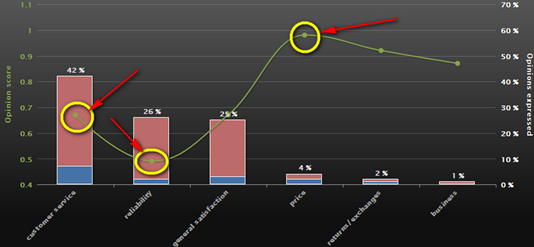
Many brick & mortar retail executives are convinced that their problem is price competition from online retailers. Meanwhile, the customers say that customer service is the most important attribute of customer experience they hope to find when they shop at brick & mortar stores – and they don’t get it there. Below is an example of Best Buy customer feedback analysis.

When You Listen to Customers, Do You Hear What They Say? image Gregory1

As US retail executives continue to hold on to their assumptions and refuse to hear what customers really want, their stores’ traffic keeps declining, and profit margins follow the trend. The latest news is about Radio Shack closing 1,100 stores inva cost-cutting move, but they are not alone. The gap keeps widening as the ill-conceived cost-cutting measures are reducing in-store product inventories and floor personnel training. That perpetuates the self-fulfilling prophecy of losing more and more customers to online retailers who provide a better experience at the same (not lower) price levels.

Whenever company executives ask which model of their brand the customers like most, they always expect to hear that their customers love their flagship product. When customer experience research points to a “lesser” model as a customers’ favorite, most executives dismiss the findings outright, without any attempt to examine the data. The chart below illustrates the middle range Nokia Lumia 925 (NPS=73) outscores the Nokia flagship 1020 (NPS=28) in customer popularity. In our estimation, it also outsells Lumia 1020 by at least a 2:1 margin.

When You Listen to Customers, Do You Hear What They Say? image Gregory2

Data set = 2,871 customers’ feedback (unsolicited)A deeper look shows that the barely-acceptable reliability, touch screen, and web browsing experiences Lumia 1020 customers reported are the causes of the much lower Net Promoter Score.

When You Listen to Customers, Do You Hear What They Say? image Gregory3

Positioning of a product based solely on features, functions, and tech specifications – without regard for the realities of the market – reduces the value of the brand. Designation of a weaker model as the flagship product sends a signal to consumers that the company does not value the experiences of its customers. The irony is that these customers are the ones who create a value of the brand.

When I think I know enough about a subject, I stop learning. Yet, the world continues to evolve without me. – @briansolis

There is no more expensive mistake than the rejection of new findings without the critical examination of methods and data used. Continually spending money for research that confirms what you already know is a pointless exercise.

06 Jun 14:38

The Most Critical Element to Effective Coaching

by Rick Willis

The Most Critical Element to Effective Coaching image 96225496 BLOG

Many organizations understand the value of creating a coaching culture. Who wouldn’t want to be a part of a culture where everyone is open to share and receive feedback and guidance from others? No one, that’s who. Creating this culture involves training employees in the coaching skills and techniques, and then encouraging them to go out and coach others. The problem is, many struggle with the questions, “How do I get started?” and “How do I make it natural?”

More than once, I’ve found myself at the brunt of a hot-off-the-press coach’s clumsy first attempt when they sidled up and asked, “Mind if I give you a little coaching?”, as if they read the question right off a script, after practicing in front of the mirror for weeks. My lips say, “Of course! When can we start?”, but my mind is screaming, “Go away, you painfully awkward person! What in the world could you possibly tell me that could add even an ounce of value to my life?” Nonetheless – though very reluctantly – a “coaching session” occurs, and wouldn’t you know that nothing good in the slightest gets accomplished (surprise, surprise…).

The most critical element to effective coaching is the connection between the coach and the student. I have often witnessed the tight bond between an athlete or performer and their coach; they personify what Zig Ziglar says: “People don’t care what you know until they know that you care”.

So to get started with coaching, you must first take the time to connect, to understand, and to build trust and respect with the other person. Once this is established, the door swings wide open with coaching opportunities. Ori and Rom Brafman have written a great book called “Click”, which discusses the magic of connecting with others and how to intentionally create these bonds. They tell us to take time to actually be physically with the person, and when you are, be attentive to them and to building a relationship. Work to discover shared interests or experiences – the likelihood of bonding goes up exponentially when just one similarity is apparent. And then move beyond transactional discussions toward “peak” communication, where neither of you are afraid to be vulnerable.

So rather than focusing on coaching, focus on connecting.

06 Jun 14:37

How 15 Cents Worth of Stamps Bought a Customer for Life

by Brett Bair

How 15 Cents Worth of Stamps Bought a Customer for Life image shutterstock 173997134A couple years ago, author and digital strategist Jay Deragon coined the phrase “Youtility.” His idea was simple: marketers need to focus more on “being able to add more and more value to consumers.”

Last year, social media pro Jay Baer turned that phrase—and idea—into a book. It quickly hit the New York Times bestseller list.

I mention this phrase, and the background on it, to illustrate the fact that marketers are doing a lot to figure out how they can create relationships with their customers by helping them. Because, now, companies that are relying on broadcast discounts to drive business aren’t just giving away margin on orders. They’re missing opportunities to create loyal customers.

In trying to find an example that really hit home, I again reached out to some of our customers through our Monetate Customer Champions program and posed this question: Have you had any “winning” experiences as a customer?

Chad Fillion, web/digital project specialist at Garnet Hill, sent me this:

In January 2001, I received a small, unsolicited envelope from an online book store. In the envelope was a single page letter thanking me for being a customer of theirs in the past. The letter stated that my time was important to them and there are only a few opportunities a company can be given to thank loyal customers. This letter and “gift” was one of those ways.

Postage had just increased at the time (back then, from $0.33 to $0.34) and the company figured, I would be in need of one centers to make all my letters “valid.” Accompanying the letter was a sheet of 1-cent stamps. They wanted to save me the time and hassle of having to run to the post office and buy a sheet of these penny stamps in order to “upgrade” my current .33 cent stamps.

That 15 cents meant more to me on a human level than any 40, 50, or even 75% off sale ever could have. The bookstore was Amazon, and I have not purchased an online book from any other retailer since.

Amazon, obviously, was onto something back then. And it’s probably worth noting that they’re still pretty darn good at this kind of thing, as evidenced by this blog post from Bruce Ernst, our VP, Product Management.

Here’s the thing, though: Amazon isn’t any better suited to be successful at this than the rest of us.

As daunting as big data seems to be, finding a segment of your customers that is unique or more potentially valuable is worth the effort. One of my more memorable experiences as a customer was when a small retailer of HVAC filters sent me an email reminding me to change my filter. That email included a link to the exact filter I bought last time.

And you know what? The company had no where near the financial means of an Amazon. It simply recognized the needs of a particular set of customers and acted on it.

Even if you only did this type of promotion to a limited group of customers, you’re creating a helpful experience that your customers will appreciate. And that usually means they’ll share their story with friends and even via social media channels. The level of loyalty it creates—and the level of advocacy it creates—means you’ll get a lot more mileage out of this type of effort than you would any monetary discount.

It’s time, then, to start getting creative with your marketing. Find something unique you can do for your customers and consider, again, that last line of Chad’s note: he’s never bought a book from a different online retailer.

How could you turn down that level of loyalty?

Stamp image courtesy of Shutterstock.

06 Jun 14:37

#FF, QR Codes, & Like-Gating: 6 Outdated Internet Trends We Should Leave Behind

by lkolowich@hubspot.com (Lindsay Kolowich)

qr_codes_copySometimes, when I think back to internet trends that came and went, it can put a big smile across my face. Remember the hours you or your friends spent playing Farmville and typing all Facebook statuses in the third person? Sweet memories, right? 

But then there are the trends that have kind of faded into the background, only to pop up in your thoughts when you're in the shower or in the middle of devising a new marketing campaign. You think, "Does anyone actually do that anymore?" Googling it doesn't really help -- all the articles are from five years ago, and they all seem to think that trend is all the rage. There's nothing explicitly telling you that this trend is really not that cool anymore.

Well, we figured we'd help you set the record straight. Let's take a moment to look back at six internet marketing trends of the last five years that are really not a thing anymore, and give you alternatives to take advantage of now.

1) #FollowFriday

Follow Friday was very, very popular on Twitter back in 2009. Here's how it worked: Every Friday, you'd send a tweet to your followers recommending a Twitter handle you thought was super interesting and others might want to follow. You'd accompany these tweets with the hashtags #FollowFriday or #ff.

Here's what a #FollowFriday tweet was supposed to look like:

FollowFridayTweet5

It's descriptive, helpful, and personalized. But here's what #FollowFriday tweets actually ended up looking like -- ALL OF THEM:

FollowFridayTweet2

FollowFridayTweet3

You can imagine how cluttered your news feed looked when everyone you followed was posting tweets like that at the same time. (Oatmeal said it best.)

Follow Friday started with a single tweet by entrepreneur Micah Baldwin:
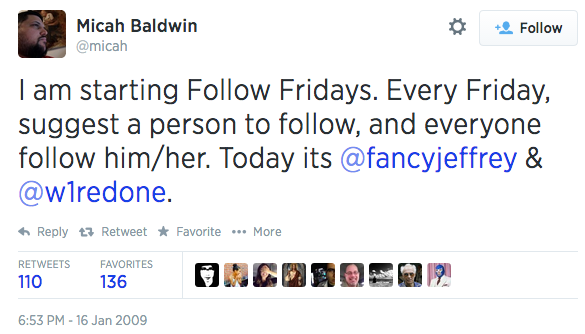
Screen_Shot_2014-06-05_at_1.09.36_PM

One of his followers responded by suggesting the #followfriday hashtag. A few more friends hopped on board, and boom: At the peak of the first ever Follow Friday, the #FollowFriday hashtag saw two tweets per second.

Why did it catch on so fast? Because it was easy, people felt like they were spreading goodwill, and anyone with a free Twitter account could participate. There were great intentions behind its creation and adoption in 2009. If you think someone's tweets are great, why not share that greatness with your followers? But when Twitter feeds became incomprehensible streams of hashtags and Twitter handle recommendations, Follow Friday got old reeeal quick.

It's not clear when Follow Friday started dying, but it's gone. This is what the majority of the #followfriday feed looks like today:
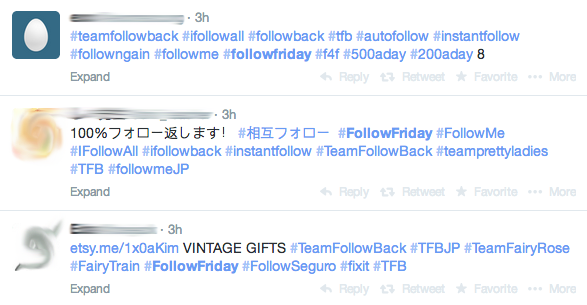
FollowFridayTweet4

Good riddance! Your Twitter followers want to read tweets that are clearly helpful and provide value, not ones that look meaningless at first glance.

2) Like-Gating

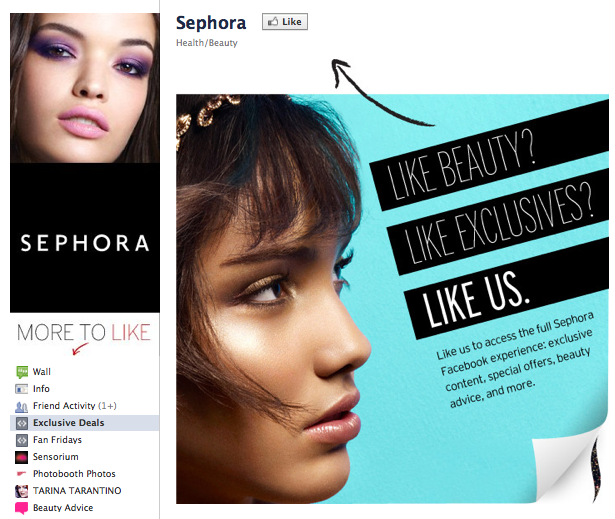
Have you ever been offered something for free from a brand in exchange for "Liking" their Facebook page? That's called Like-gating, a trend that got really hot in 2011. Here's an example of Like-gating from Sephora:
like-gating-sephora

If you've ever Liked a company's Facebook page so you could get free stuff, think back to how that exchange made you feel about the brand. Did their offer make you feel more loyal to them, or did you suspect they'd spam you in the future?

Most of you would probably say the latter. Offering free stuff for Liking your page is a plea for quantity, not quality, of Facebook Likes. But don't you want the people who Like you on Facebook to have done so without dangling a carrot on a stick? Plus, consumers have been able to "unlike" a company page with the click of a button since 2010.

If your goal is to gain a lot Facebook Likes in a short amount of time, like-gating can be a tempting short-term solution. But ask yourself the business value of all those low-quality Facebook Likes. Is it worth the investment?

For Like-gating to be effective at all, the real work would need to start after a consumer Likes your page. You'd need to convince them to stick around by being helpful, valuable, and providing great content. If you really want more Facebook fans, then you need to make sure you follow up and continue building a strong relationship with consumers long after the Like. (Want to learn how? Check out this post.)

But it's far better in the long term to earn those Facebook likes by providing helpful, engaging content from your website. Before people Like your page, they've probably given it a once-over to see if anything there would interest them. So when people end up Liking your page by choice, they're more likely to want to engage with your website content -- which is your ultimate goal, anyway.

3) LinkedIn Events

The idea behind the LinkedIn Events application, which was shut down in 2012, makes total sense: Professionals want to know where other professionals are networking and what conferences they're going to. Plus, you wouldn't want professional events muddled in with your best friend's housewarming party on Facebook Events -- and at that point, how many of you were connected on Facebook with all of your professional mentors and influencers, anyway?

LinkedIn's Events application let users browse events the people in their networks were organizing or attending. You could see the attendee lists, mark down whether you were attending yourself, and even see a list of "attendees you may want to meet" based on connections, interests, and industry. Here's what it looked like:
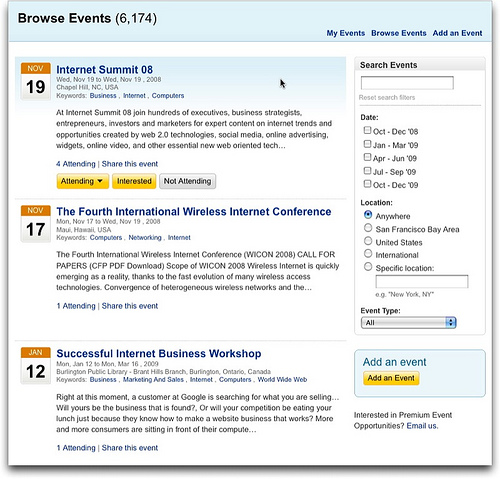
linkedin-events-2

When LinkedIn announced they would be shutting down the application, my first reaction was, "LinkedIn had an events application?" Apparently I wasn't alone. LinkedIn's official message said they shut it down because they wanted to invest more time and money in building out other parts of the product. It's unclear whether this meant that too many LinkedIn users didn't use the Events application, or it just didn't support LinkedIn's overall strategy.

Either way, if you're feeling lost without it, try finding and promoting events on Facebook, Eventbrite, or on MeetUp.com. (The first is much more acceptable than it used to be.)

4) QR Codes

Remember when it seemed like QR Codes were everywhere? They were on store windows, napkin holders, walls, in magazines. In short, QR Codes (Quick Response codes) are matrix barcodes that can be read by QR barcode readers, which people could choose to install on their smartphones. Marketers thought of them as a way to bridge offline and online marketing -- kind of like links you could "click on" in real life. 

Check out the example from Boston Photobooth Rental below to see what I mean:
photo-booth-business-card

If you passed this advertisement and wanted to see their website or read reviews, you could get to those websites by scanning those QR codes with your smartphone. There was a lot of potential for business value in QR Codes, and marketers found a lot of uses for them: linking to landing pages from physical locations, adding a QR Code to promotional materials, putting them in trade show materials, or on their business cards.

But there was just one problem: The trend never really broke out of the tech-savvy crowd. Although both Apple and Android have QR readers built in to their systems (Apple's is built into Passbook, not the camera itself), that isn't very widely known.

If you're looking for a way to connect the physical and digital world, it's simple: Place URLs in places you want consumers to see them. They can type them in manually. Just make sure the URL is logical to type -- not a random jumble of letters.

5) EdgeRank

Facebook's News Feed algorithm has kept marketers on their toes by evolving numerous times since it launched in September 2006. In 2006, users first saw personalized lists of their friends' posts that updated throughout the day. To figure out what content users wanted to see on their news feeds, Facebook used a pretty unsophisticated algorithm: the pre-cursor to EdgeRank.

In 2007, at the same time Facebook launched Ads and Pages for companies to use, they released a new News Feed algorithm, named "EdgeRank," that determined exactly which Facebook posts would go into other people's News Feeds. For companies, EdgeRank provided statistics of the engagement on your company page so you could analyze your activities.

But the EdgeRank algorithm couldn't keep up with the rapidly increasing number of people using Facebook, now more than a billion people per month, accessing Facebook on all different devices. In August 2013, Facebook announced changes to the algorithm that could accommodate its huge user base.

Since then, the name EdgeRank has been declared dead, but Facebook's algorithm has continued to evolve and improve. The new algorithm has almost 100,000 weight factors to determine which of your friends' posts you see on your feed. With all of these changes that've cropped up, your survival strategy should be simple: continue creating content your fans, leads, and customers enjoy.

6) Facebook Polls

In June 2013, Facebook announced a plan to streamline the number of ad units by cutting out redundancies they found in their advertising platform. This would include the Questions product for Pages (sometimes referred to as "Facebook Polls"), which many marketers used to engage fans in a way other than just posting to their page's wall.

But it turns out that Facebook Questions, originally predicted to be a big threat to Quora, actually never really caught on. Facebook even repackaged and relaunched a more social, watered-down version of the product in 2011 that allowed you to only poll people you were directly connected to on Facebook, rather than the whole Facebook community.

Questions was quietly shut down in July 2013 under the premise that marketers could get the same information from fans by simply asking a question in new post and looking at the comments. LinkedIn also used to have a Group Polling feature, which we wrote about at its 2011 launch -- but they too shut it down in May 2014.
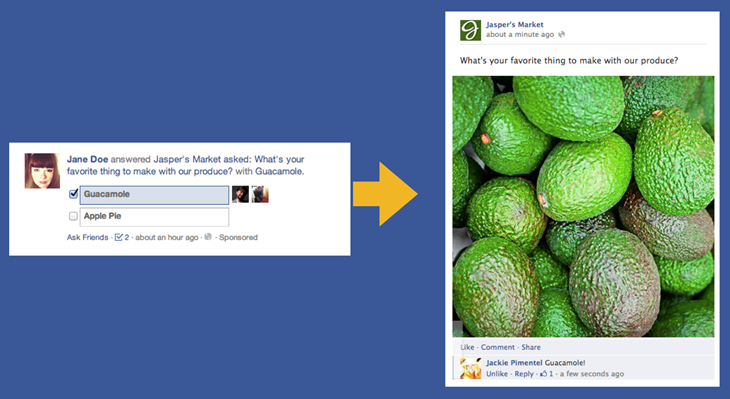
facebookads

At this point, if you want to poll your audience on social media, you'll have to stick with asking questions in regular posts and looking at answers in the comments. And even that tactic is kind of outdated -- Facebook's made some algorithm changes to cut down on "engagementbait" in the News Feed, and that tactic could end up easily falling into that category. So you should probably steer clear of Facebook polling altogether, unless you're posting a link to a survey or poll you're running on your website. 

Do you or did you follow any of these trends? What did you find good and bad about them?

Image Credit: LinkedIn, Facebook 

free guide: 2014 social media updates

subscribe to the hubspot marketing blog

06 Jun 14:36

How to Negotiate with Someone More Powerful than You

by Carolyn O'Hara

Going into a negotiation with someone who holds more power than you do can be a daunting prospect.  Whether you are asking your boss for a new assignment or attempting to land a major business deal with a client, your approach to the negotiation can dramatically affect your chances of success. How can you make the best case for what you want?

What the Experts Say
“There is often strength in weakness,” says Margaret Neale, the Adams Distinguished Professor of Management at Stanford Graduate School of Business. Having power typically reduces a person’s ability to understand how others think, see, and feel, so being in the less powerful position actually gives you a better vantage to accurately assess what the other party wants and how you can best deliver it. And when you do your homework, you’ll often find you’ve “underestimated your own power, and overestimated theirs,” says Jeff Weiss, a partner at Vantage Partners, a Boston-based consultancy specializing in corporate negotiations and relationship management, and author of the forthcoming HBR Guide to NegotiatingHere’s how to negotiate for success.

Buck yourself up
“Often we get fearful of the threat of competition,”says Weiss. We worry there are five other candidates being interviewed for a job, or six other vendors who can land a contract, and we lower our demands as a result. Do some hard investigation of whether those concerns are real, and consider what skills and expertise you bring to the table that other candidates do not. The other side is negotiating with you for a reason, says Neale. “Your power and influence come from the unique properties you bring to the equation.”

Understand your goals and theirs
Make a list of what you want from the negotiation, and why. This exercise will help you determine what would cause you to walk away, so that you build your strategy within acceptable terms. Equally if not more crucial is to “understand what’s important to the other side,” says Neale. By studying your counterpart’s motivations, obstacles, and goals, you can frame your aims not as things they are giving up to you, but “as solutions to a problem that they have.”

Prepare, prepare, prepare
“The most important thing is to be well prepared,” says Weiss. That involves brainstorming in advance creative solutions that will work for both parties. For example, if the other side won’t budge from their price point, one of your proposals could be a longer-term contract that gives them the price they want but guarantees you revenue for a longer period of time. You also want to have data or past precedents at your disposal to help you make your case. If a potential client says they will pay you X for a job, having done your research allows you to counter with, “But the last three people you contracted with similar experience were paid Y.” Preparation gives you the information you need to “to get more of what you want,” says Neale.

Listen and ask questions
Two of the most powerful strategies you can deploy are to listen well, which builds trust, and pose questions that encourage the other party to defend their positions. “If they can’t defend it, you’ve shifted the power a bit,” says Weiss. If your boss says he doesn’t think you are the right addition to a new project, for instance, ask, “What would that person look like?” Armed with that added information, says Neale, “you can then show him that you have those attributes or have the potential to be that person.”

Keep your cool
One of the biggest mistakes a less powerful person can do in a negotiation is get reactive or take the other person’s negative tone personally. “Don’t mimic bad behavior,” says Weiss. If the other side makes a threat, and you retaliate with a threat, “you’re done.” Keep your side of the discussion focused on results, and resist the temptation to confuse yourself with the issue at hand, even if the negotiations involve assigning value to you or your product. “Know what your goals are and direct your strategy to that and not the other person’s behavior. You have to play the negotiation your way,” Weiss says.

Stay flexible
The best negotiators have prepared enough that they understand the “whole terrain rather than a single path through the woods,” says Weiss. That means you won’t be limited to a single strategy of gives and gets, but multiple maneuvers as the negotiation progresses. If the other party makes a demand, ask them to explain their rationale. Suggest taking a few minutes to brainstorm additional solutions, or inquire if they’ve ever been granted the terms they are demanding. Maintaining flexibility in your moves means you can better shape a solution that’s not only good for you, says Neale, but also makes them “feel like they’ve won.”

Principles to Remember

Do:

  • Put yourself in their shoes — it’s crucial to understand what’s important to the other side
  • Remember your own value — you are at the table for a reason
  • Ask questions — you’ll get valuable insight into their motivations and interests

Don’t:

  • Wing it — nothing beats good preparation
  • Depend on a single strategy — develop a range of responses to push the negotiation in your favor
  • Copy aggressive behavior — if they make threats or demands, stick to your goals

Case Study #1: Do your homework
Ben Koeneker knew the odds were stacked against him. Then the head of business development for a midsize Midwest telecom company, he was trying to convince Siemens, the multibillion-dollar electronics conglomerate, to give his firm an exclusive distribution contract for a new business communications product.  At the time, his $28 million company was known more for refurbishing than distribution. “We were tiny,” he says. “We were the ant shouting at the elephant.”

Koeneker did copious amounts of research prior to sitting down at the table. He researched Siemens products and why their current channels of distribution weren’t working well. He also made sure he knew that his own company could deliver on every level, preparing counterarguments for any doubts that might arise. “I knew we couldn’t pretend we could do something we couldn’t do,” he says.

When the negotiations began, he emphasized the pros of his company’s distribution model, rather than the cons he felt currently existed in Siemens’ current method. “If you spend too much time talking about the negatives, you’re basically telling them that they’re doing their business wrong.” He also pointed out that signing with his firm would free up money to devote to marketing, which he knew from his research was something that Siemens wanted.

A turning point came when a senior Siemens executive said that while he was impressed with the proposal, he wondered if Koeneker’s company could scale effectively if the product line took off. Two rivals to Koeneker’s firm, the executive said, were bigger and could more easily handle growth. “I turned to him and said, ‘Are those two companies interested in distributing your product at this time?’” Koeneker says. “I already knew the answer from my research that those companies had turned them down.” He followed up by adding that while his firm was small, it was better thought of as “boutique,” with the unique ability to focus completely on the Siemens brand.

Shortly after, they inked the contract.

Case Study #2: Know your value
Management coach Ginger Jenks didn’t want to lose her client. Michael* had asked her to work on a side consulting project, but balked at her proposed fee. Though he had been paying her usual rate for several years, he went into “hard negotiation mode” for the extra work, Jenks says. “He told me he could get someone else for less than a third of my price.”

Jenks valued Michael’s continued business, but she knew she wasn’t willing to lower her rate. “I was fairly confident that he wanted me to do the work,” she says, “and I was certain that I did not want to feel ‘nickel and dimed’ on the project.” She decided her strongest strategy was not to take it personally that he was acting so insulted by her price. “I knew it was just a negotiating tactic on his end.”

When they met again to discuss terms, Jenks held fast to her initial proposal. She knew from hearing him relate stories of past negotiations that he respected strength and tenacity. She also knew that he valued good work above all else, and likely didn’t want the hassle of finding someone new.

At the table, Jenks stressed their great track record together, suggesting that if he could find someone who could do as good a job as he knew she would do, he should go elsewhere. Throughout, Jenks reminded herself that negotiating “is a little like dating,” she says. “If you are too interested, you lose power. But if you can remain calmly interested but still detached, that creates power.”

Michael thought it over for a few days, and then accepted Jenks’s original proposal. “It’s critical to remember that you have something the other person wants also,” she says. “Even if you aren’t in the power position, you have something to offer.”

*not his real name

Focus On: Negotiating
06 Jun 14:35

The Twitter Mute Button: Another Way to Experience Twitter

by Louisa McSpedden

The Twitter Mute Button: Another Way to Experience Twitter image 22 600x184

Social networking has always been like a multi-lane road, but with the new Twitter mute button, how do you know whether you’re in the fast lane or falling behind?

Most major social sites offer functions that allow individuals to characterise their media platforms and avoid unwanted information by selectively ‘hiding’ the content from their timelines. Thankfully, these features don’t alert users that they’ve been muted by others, which could greatly affect online relations. So with millions of conversations happening every second on social media, what are the implications of these options for businesses and individuals?

The Twitter Mute Button: Another Way to Experience Twitter image 16 600x59

The aim of this new Twitter mute button is to temporarily hide users on your feed so that you can’t see the tweets and retweets of a muted user. However, they are still able to see all your activities. Serving as an alternative to blocking and unfollowing, this is a particularly handy application for consumers to control what they see in their feeds without completely cutting off the relationship with a brand. Users can now tune out companies that avidly live tweet during events, discuss topics that aren’t of interest or post spoilers during live sporting events or TV programs.

For brands however, this new option is more unsettling. Material produced and amplified by businesses through their Twitter account is facing the potential to be eliminated from user feeds as a result of this new button, affecting the accuracy of ratings, impressions and reach of brand viewership numbers. This means that brands need to create a space for the exchange of valuable information by generating quality ideas that cut through all the superfluous information.

The Twitter Mute Button: Another Way to Experience Twitter image 24 600x59

‘Unfollowing’ (previously known as ‘hiding’) a friend or page on Facebook excludes all their updates from your feed, and is particularly useful for decluttering your homepage. To maintain visibility, brands should therefore only post meaningful and relevant messages to their pages, as ‘spammy,’ over-promoted material can now be easily wiped out and make followers difficult to recover once they’ve silenced your page.

The Twitter Mute Button: Another Way to Experience Twitter image 33 600x59

The ‘hide’ feature on LinkedIn allows users to eliminate all status updates from a connection without completely removing them from their network. This function can be utilised to block the noise that results from individuals or businesses who link their Twitter account with LinkedIn and regularly posts statuses to only leave the high-quality content.

The Twitter Mute Button: Another Way to Experience Twitter image 42 600x59

  • Maintain your identity: Have a defined, consistent identity on all social media profiles.
  • Be yourself: Be authentic and honest in all posts.
  • Use visuals: Posts that incorporate a visual element tend to been seen, liked and shared more frequently than those that only contain text.
  • Have a specific idea you are posting about: Emphasise the main point of the post concisely without being vague.
  • Let your followers know before you have a big tweeting spree: Alerting your followers to the start and end of a live-tweeting period allows them to tune in and out as they wish without having the need to mute you forever.
  • Stay away from anything that seems like spam: Over-promoting a topic and posting too many updates at once clogs up a follower’s activity feed and only encourages them to silence you.

These customisable updates are intended to personalise your social media profiles by clearing out the white noise on your networks and inspiring audience participation. Although they are reversible, brands still need to be aware of the social value of their published messages – once muted, it’s difficult to get users to change their stance.

By Claire O’Dowd and Joanna Yu

06 Jun 14:29

10 Essentials for YOUR Website

by Penny

Is your website ready for business? When I ask this question at speaking events I do, often very few hands go up. Most people aren’t really sure, either way, if their website is working or not. The main goal of your site is to sell your book or product, and no matter what you’re selling, there are some basic things you must do and key elements your website needs to have.

The button for purchases on the keyboard. Online shop.This checklist will help you determine if your website is working as well as it should:

1. Make it user friendly: Don’t use tiny or difficult to read fonts. Make your page easy to scan – people don’t read. And, please, proofread your copy! There’s no quicker way to lose a sale than to present readers with typos and other needless gaffes. Your website is your 24/7 sales and marketing tool and you want to create a stellar first impression.

2. Invest in professional design: A quality site leaves a good impression on visitors and keeps them there. You’ve seen a bad site before, surely. Did you buy their product? Probably not. In fact, you probably didn’t even stick around long enough to find out how to purchase the item.

You don’t have to break the bank, but definitely consider hiring a professional to design your website. Designers understand layout, color, calls to action, and web surfing habits better than anyone. A good designer will not only produce a nice-looking site, but one that’s focused, with a clear call to action that will turn your site’s surfers into buyers.

3. Go Mobile: With mobile now such a huge part of our world, your site should be mobile-ready. Don’t make people zoom in and out or scroll left and right. Visitors are impatient, and won’t wait for content to load. Many sites like WordPress have simple plug ins, also check out Dudamobile which has a free platform to help you turn your desktop site into something that’s mobile friendly.

4. Make it sociable and shareable: Social widgets make it easy for others to share content, whether it’s your latest blog post, book synopsis, or events
calendar. All of the major social media sites have widgets you can add to your site. When you make it easy to share content you’ll get results. 10 essentials

5. Let visitors contact you: Make sure your site offers a way for people to get in touch with you. Don’t make visitors hunt for that phone number, email, or contact form – they won’t. They’ll just leave your site and they won’t come back.

6. Be media ready: Have a media room with downloadable materials ready to go. This includes a photo, bio, book synopsis and book cover. Offer the downloads in small files, people will appreciate that. In addition, your media room can have a Q&A, book reviews, book group questions, events calendar, and more. Make your media room the one stop source for easy to obtain information.

7. Have a call to action: Make sure your site is clear and concise. Cut the nonessentials. Remember, people don’t sit down to read web pages, they scan, so a home page of 200 to 250 words is ideal. Direct visitors to a specific action.

8. Make it easy for visitors to buy your book: Remember that call to action? Was yours for the visitor to buy your book? While it’s a good idea to have your products available at a number of e-tailers, you should have a spot on your site dedicated to sales – even if you direct people to Amazon.com or another site for the actual purchase. Make it easy otherwise you’ll lose the sale.

9. Keep your content fresh and engaging: Having a blog ensures you have regularly updated content (try to update once or twice a week) on your site as well as a page on your site where visitors can participate. Google will reward your site with a higher search ranking if it has fresh content. That ranking will help with search because you’ll be listed before your competition. If you’re using social media, make it easy for visitors to your site to click through and follow you wherever you are: Twitter, Facebook, LinkedIn, Google+, etc.

10. Check your traffic: You can see who visits your site, where they come from, and much more. Google Analytics is free and easy to use. You want to review the reports regularly so you understand who visits your site, how they find you, and what they do once they’re on your site. Then you’ll learn what works (and what doesn’t).

Best of luck! And remember, many changes, though subtle make a large impact from the consumer’s point of view!

Mobile Shopping

Share this article with these tweetables:


10 essentials for your website!
Click To Tweet - Powered By CoSchedule


@bookgal shares the 10 things your website MUST have to be successful!
Click To Tweet - Powered By CoSchedule


Is your website ready for business? Use the checklist from @bookgal to find out!
Click To Tweet - Powered By CoSchedule


06 Jun 14:29

3 Types of Videos That Can Influence a Sale

by Bonnie Gibson

A recent Forbes Insight survey revealed that 75% of business executives watch work-related video weekly and that this percentage is higher among younger executives. Importantly, when presented with the same information via text or video, 60% of the survey respondents said that they preferred video over the text-based content.

With buyers wanting to consume video, how do you prioritize and triage what type of video to put in front of them to compel them to action (i.e., buy from you)? Below we outline three types of video that can help influence a sale:

1.)    Testimonials – In a recent study by Dimensional Research, 90% of the participants were impacted by seeing positive customer reviews. Showing how others used your product to add value and their company can offer a great use case as well as a powerful product/service review and credibility builder. Check out this customer testimonial from our partner, Akamai:

2.)    Product Demos – A product demo is a great way to illustrate how your product works in practice and helps the prospect envision how it could work for them. According to IT Business Edge, more than 70% of B2B buyers view video product demonstrations before making a purchase.

3.)    Company Overview – For example, imagine you work for ViralGains and you are asked on the spot, “What is ViralGains?”. You could briefly answer, “A marketing platform to drive YouTube views.” Or you could say, “Let me show you.” and either queue up this:

Or this

Now you see what the product does and the people behind the company.

If a picture is worth a thousand words, the just imagine how many opportunities a video is worth.

06 Jun 14:27

5 Landing Page Conversion Killers

by The Wishpond Blog

5 Landing Page Conversion Killers image 7wZLTwydeq0vXhY HrZ0Nke6s91C4mZKGXFbdgEvDc0j9y9Xr9 a5QqikCPfBfmEo59M3VJ5SVCUfYs02oanvzAVBdCEMoTu9hFIDwJNJt2liEictQ7QNTntkDGHxZ609Q

Do you have a sneaking suspicion that there might be something wrong with your landing page? Are your bounce rates just straight up surprising you?

You’re not alone. There’s often a single variable that can throw an otherwise optimized landing page a-kilter.

In this article I’ll be taking a look at five of the often overlooked reasons your awesome landing page might be struggling for success.

1. Entry Form Misplacement and Unbalance


Your page’s entry form is an incredibly important part that is often ignored and put to the side (literally!). Why is this? I mean, we’re usually talking about a page designed for lead generation. Why isn’t the part of the page that actually generates the leads more important?

Optimizing your entry form for conversion means putting time into testing it. One of the chief causes of a lead bouncing off your lead generating landing page is that the ratio of risk vs reward is too high. In other words, you’re not providing enough value to your possible lead that they feel it’s worth them submitting all their details.

The hierarchy works like this:

  1. Registration for a conference or event: Worth every detail you can get as well as an entry fee. Don’t skint with this one.
  2. Sign up for free demo or a call: Worth email, name, job title, size of business and company name.
  3. Case studies and industry reports: Worth email, name, job title and (perhaps) a zip code.
  4. Ebooks, webinars, podcasts and whitepapers: Worth email and name. Don’t push this one too far.

Intelligently balancing the amount of information you’re asking for with the amount of information you’re offering is how you optimize your entry form for conversions.

Also important is the placement of your entry form.

People read landing pages (and every website) in an “F” shape. They start at the top left (which should be your headline/USP) and travel to the right. Then they drop down and start at the left about halfway down the top fold. After that it’s straight down the left side until they have to start scrolling.

What does this mean for entry form placement?

It means your entry form needs to be on the bottom right of your top fold. Why? Because if a person on your landing page sees your entry form before they see your USP and short benefit list they’re likely to bounce.

Basically placing your entry form on the left totally screws up your risk vs reward ratio. You’re “asking” for a conversion before you’ve convinced somebody it’s worth it. Even if you only have a single box (email address), you’re still asking too much because you haven’t communicated any value yet.


2. Above-the-Fold Confusion


This can be a difficult one to measure, and as a result I recommend running your landing page through CrazyEgg’s heat-mapping at least once. What this will do is show you, in concrete terms, what people are focusing on on your page (or where their scroll is stopping).

Your highest value variables need to be above the fold. In other words, they need to be visible before a possible customer scrolls. This means that (depending on your tests) the top of your page needs to have your USP, 3-5 benefits, an image and your customer testimonials as well as your entry form.

Here’s what I recommend for non-lead gen pages:

5 Landing Page Conversion Killers image 492KRgkDYGROED9nFF38sqQdIqe5128mWYtRJjo1ySABSvNKpjDdkCrEvQHLaBba0qNtCFlYHxKcVFnUMWgsU7KxHDlEaho3OAvpWmmqTknRc2oEl10BDW3g196H62TOcg

A/B test for yourself if customer testimonials generate higher conversions than big brand names at the bottom of your top fold. Also test if more benefits outweigh the size of your image.

And here’s what I recommend for lead gen pages:

5 Landing Page Conversion Killers image 0PmR1dn27pMS D8IYiF9osU3KxMMud2x39JZjIH nC JOvCaIQ38Hz nDX9R7sy0d8vNF7m1tFCEBQnd2HHURmL0sLYjdJwpO2oZLx38 QcHXrXpxMZNcQ1 V ZlbpIehg

3. Unbelievable Customer Testimonials


Customer testimonials are a powerful tool when used correctly, as they communicate trustworthiness better than any other variable on your landing page. Trust equals sales down the road, and that’s a fact that’s getting more and more true each day.

People need to know that you’ve worked with someone before, that person has found success with you, and that (overall) they’re not about to be swindled.

Customer testimonials can also ruin your business’ trust levels when used badly or dishonestly.

If you’re citing a 800% ROI (through a customer testimonial) without stating how it works, people will be skeptical. In fact, if you cite anything that sounds remotely less than savory, your conversion rates will suffer.

Here’s what I recommend:

  • Undersell: If you have, legitimately, been providing an ROI of 87% on average, quote 72. You want to be sure that you can actually deliver on what your landing page is spouting.
  • Get specific: An ROI of 87% of an environmentally friendly diaper (or whatever you guys sell in ecommerce) that uses 94% recycled materials is far more believable than an saying it’s a round 100% (this sounds made up).
  • Play modest: Customer testimonials that aren’t 100% favorable can actually increase conversion rates as they sound more believable. Try something like “I was initially skeptical of AcmeSaaS’ quoted ROI. But, after working with their awesome customer success lead Alex, we actually beat the quote!”
  • Feature faces and full names: Your customer testimonials will be worth far more when your landing page traffic knows they’re coming from real people. Communicate “real” with an actual headshot next to the testimonial and a full name beneath it.


4. Failure to Stand Out


Something you need to remember is that your business is not the only business seen by your traffic that day. No matter your business (B2B, Ecommerce, whatever), your possible customers are shopping around. They’re on your competitor’s websites before and after they’re on yours.

You need to be sure yours stands out, and this is more challenging than it sounds.

Does your landing page have any of the following?

  • A top, large font headline with the words “advanced”, “better” or “customer”?
  • An image of a person working in professional dress working or smiling at the office?
  • An image of technology like an ipad, computer or smartphone?
  • Three or four icons of the same color with corresponding benefit sentences?
  • A “brands we work with” section with eight business logos?

So does everyone else.

The issue with this is that all five of these things are best practices, and the Wishpond blog has been telling you that you need to incorporate these variables for months now.

I’m not going to stop now. All these variables are important to your landing page’s success.

Using them in different ways, however, is how you stand out from your competitors.

Here are a few recommendations to test:

  • Throw up an eye-catching color scheme that your competitors aren’t using
  • Come up with a new, different, and creative USP
  • Use a customer testimonial and corresponding photo for your main image instead of the stock-like one you’re using now
  • Make your brand logos black and white to show a little more modesty than competitors
  • Change up your benefit list’s bullet-points with playful icons that stand out.


5. Multiple Calls-to-Action


This issue is one I see most commonly, especially among people new to landing page optimization. Multiple calls-to-action is when your landing page has a couple different ‘asks” on the same page.

It’s easy to fall into the trap of pushing a final conversion at every step of your sales funnel. After all, it’s the real-world sell that actually puts food on your table, not the lead.

The issue with this is that it’s not always worth putting a “dollar CTA” (or a final conversion link) on your lead gen landing pages. While this may generate a few real-world conversions every once in a while, it will also be increasing that page’s bounce rate.

This is because people are intimidated by too many “asks”. They’re trepidant to begin with, and forcing the issue too early will often cause them to balk and bounce.

Here’s an example of what I see far too often:

5 Landing Page Conversion Killers image qb3wioLMyLS4ifBQiL3dqUW e48NT1a ARRTYVmY7lfFnP0QcWpe9NQFuZMv6RPJaaR670hQxYcJ9hlIccs7H094 NsLHPZafgsFix5sMognMjnCYqm5xigYvZ06w Lv Q 600x503

Let’s say this landing page had a corresponding online advertisement (Facebook, Google, etc). The ad would have been promoting the value of your ebook, not the value of your business’ service.

Because of your intelligent sales funnel, you recognize that not very many people who visit your page are coming from within your business’ website. They’re coming from other sources. Pushing your free trial or “how to buy” links will simply scare them away and reduce overall conversion rates.

However, I recommend you test this for yourself. You may be finding that the increase in overall bounce rates is worth it when you consider the value of a free trial.


Conclusion


Hopefully that’s given you a few insights into the mistakes that can be hurting your conversion rates without you even knowing it.

If you’ve been multivariate testing your landing pages, remember that even if you’ve found an improvement in your conversion rates, that page may still not be optimized. Often when testing three or four variables at the same time you’ll see a conversion increase but won’t know exactly what’s causing it. One of your variables may actually be dragging your conversions down, but not enough for the test to result in an overall drop.

This is why I recommend split testing instead. Results come faster and you can be more confident of those results.

If you have any questions about landing page optimization, don’t hesitate to let me know and we’ll see if we can figure it all out!

By James Scherer

5 Landing Page Conversion Killers image 925acPJNMWQX0gzNlhz8u5BvNqWuvPNkgmMDM 8AZexyE2t5w26R8VSQ Vw8XGJmc WmNU5yeoWyiCdUceSn H5wdoBkNsHSu82I33B6FzszTUCJs26bTdU5s2r3Jds1sQ

06 Jun 14:27

Using Content To Influence Your Customer’s Buying Process

by Sarah D'Andrea

Using Content To Influence Your Customer’s Buying Process image Stream Blog Graphics Shape Content 6 14

Most of us can probably admit we’re pretty overwhelmed with the amount of content we find when browsing the internet, visiting our social media pages and clicking through our inboxes.

Content really is everywhere, and it’s become almost exhausting when attempting to find a reliable source that serves you the content you’re actually interested in, when you’re interested.

So, with so much content, you’re probably wondering if it’s losing its impact. The short answer: no (if you’re doing it right, that is).

Content marketing can be an extremely powerful tool for businesses, especially when it comes to strategizing its role in your customer’s purchasing process.

Here is how to use content more effectively to influence your customers’ buying process.

First, Throw Away Your Sales Process.

I know, I know – this seems drastic. But let’s be honest with ourselves: we’re no longer in control of the sales process, our customers are.

So, instead of your sales process, think about your customers’ buying process – use their process to directly influence yours, and how you communicate with prospects and leads.

Where many businesses struggle is effectively transitioning a potential customer to the next phase of the sales process while keeping the customer comfortable and engaged. Consider a car dealer, for example. Many have plenty of quality leads, but opportunities are consistently lost somewhere in the process – whether it’s after the lead comes in for a test drive, after they receive a price, or even after submitting an inquiry through the dealer’s website.

One way or another, most businesses can relate to this scenario. So what’s the remedy? Well, this is where content comes in.

Integrating Content Into Your Sales Process

Particularly for businesses with a slightly longer sales process, there is much more of an opportunity for a lead to reconsider their need for your product or service, or question their confidence that your business can offer them a solution to their pain or problem.

To maintain their trust in your business and keep them engaged, we need to create the right content that’s going to continue building their assurance in your business, strengthen your relationship with the lead and position you as the clear choice to do business with. We also need to ensure we’re delivering this content at the right time during their buying process.

To begin, break down your customers’ typical buying process into main phases, as awareness, research, consideration and evaluation. For each phase begin mapping out the key pains your buyer experiences. What’s a common hesitation, problem or question they’re experiencing during this specific phase in the buying cycle?

Once you have your customers’ most common pains listed for each stage, start thinking about how you can help respond to these questions or problems with content that they’ll find supportive and useful.

For example, consider a lead in the very early stages of the buying process. They’re probably still conducting research to learn more about what they need. So, why not be the source that’s providing that information such as blog posts, whitepapers, eBooks or tipsheets?

Or, think about a lead who is now at the evaluation phase – they’ve heard your pitch and they’re getting close to the point of making a buying decision. This type of lead requires very different information than a new lead still in the researching phase. This is where validation content is critical, such as testimonials and case studies, offering the facts and material they need to feel confident in their decision.

No matter the phase your prospective buyer is in, if your content offers a solution and resource for a lead’s questions and pains, you’re not only building trust with this lead, but you’re also decreasing the chance they’ll reach out to your competition. Furthermore, you’re now gaining back some control in the sales process by offering content that is helpful and educational, yet tailored the actual products or services your business offers.

Feel like your content marketing strategy could use an overhaul? Download our Content Marketing eBook to learn the key benefits of content marketing and the four selling situations where content is most effective.

Using Content To Influence Your Customer’s Buying Process image 7cee2b54 c812 4e30 93f3 19bc26b4914b

06 Jun 14:26

3 Ways Salespeople Can Generate Leads via Social Media (And Still Have Time to Sell)

by Rachel Africh

If you have a social media account, you have a gateway to an influx of high-quality, opt-in leads. The key is knowing how to find and obtain them without precious wasting time. Social media can, unfortunately, take a lot of time and effort, so it’s important, especially as a salesperson, to start your campaign with a mission and not stray from it.

So, you are a salesperson looking to generate leads via social media. Where do you start?

3 Ways Salespeople Can Generate Leads via Social Media (And Still Have Time to Sell) image 2014 06 03 11.53.01

1. Use your social media accounts to build relationships with your target customers.

This is the most straight-forward approach to generating leads. Add people on Facebook, LinkedIn, Twitter and Google+ who fit in your target demographic. Use social tools like SocialBro to connect with only those individuals that match your target customer. Filter by location, job title, specific companies you are targeting, etc. Avoid following or friending anyone and everyone; you are better served by having a narrow focus than blasting your entire network with information that does not help them.

Connect with the power-players or target customers on LinkedIn. Follow potential customers on Twitter. When you have spare time, reach out to these people to start a conversation. Seek to provide them with new information as opposed to pitching your product/service right away. These connections can grow into working relationships, as long as you remain humble and helpful.

Time Saving Tip: Building relationships on social media doesn’t have to take a long time. You probably already spend time on your personal social media. While you’re talking to your aunt on Facebook, posting pictures of your food on Instagram, tweeting about the football game, or sprucing up your LinkedIn profile, you could take some time to expand your business relationships.

If you don’t already spend time on your social pages, devote one hour a week to social media relationship building. (Establish a consistent hour every week, put it on your calendar, and don’t stray from it.) Also, talking on a social platform isn’t all encompassing. You can follow people on Twitter while you’re making a sales call. You can connect with people on LinkedIn on your smartphone during a lunch break. Make the time in your day when it makes sense for you.

2. Join Groups, Communities, and Chats.

On Facebook and LinkedIn, join groups that are related to your industry, because they will be full of people within or interested in your industry. You could also join groups that are centered around your city or within the vicinity of the services you offer. Join communities on Google+ and relevant chats on Twitter. Use these forums to grow brand awareness and expand your reach.

HINT: You should not use these platforms to promote your business right away; instead, use them to connect with potential customers. Become a top contributor, answer questions, and promote if it’s called for, because this will make you an authority in your field, and potential customers wouldn’t think twice about working with you. Once you interact with someone, collect necessary information for those individuals that are interested in learning more about what you are selling. If you take these interactions away from social media and into your inbox, be sure to write emails that actually capture your prosepcts’ attention. Groups, communities, and chats are a great way to generate leads.

Time Saving Tip: You don’t have to be super involved in groups to have an effect. Visit your groups and communities once a week, see what’s happening, and post advice or join conversations. Oftentimes, simply answering a question can lead to an interesting conversation or meeting in the future. (Quora is also a great way to connect and be helpful. Just be sure you’re answering questions that relate to your company.)

3. Use Social Networks That Make Sense for YOU

There are literally thousands of social media networks in every corner of the internet. The massive players right now are Facebook, Twitter, Linkedin and Google+. However, there are other networks that you can use to enhance your lead generation efforts. Play around with these different social medias and only spend your time on ones that benefit you. For instance, Pinterest isn’t a practical way to spend your time if you are a B2B salesman, but B2C salespeople can connect with influencers & potential customers this way. Instagram is a phenomenal resource if your target demographic is younger; however, Instagram has yet to really grow significantly into the 30+ demographic. Utilize social medias that cater to your target consumer base.

  • YouTube – Create videos that highlight your products and put your phone number or email at the end.
  • Pinterest – Create a board that links to your company’s website or products. Then, when your followers want to know more information, you are there to inform and sell them on it!
  • Instagram – Post photos of your products, or pictures of you with happy customers. It opens the doorway for your followers to ask questions.

DON’T FORGET! Use these important tips when using social media to generate leads:

  • Images are powerful. They entice people to take action. When you post information about your company, remember to use images when you can!
  • Social media is a long game. You aren’t going to see results overnight, so persevere. (A seemingly small touch to a potential customer can grow into a larger relationship as long as you remain consistent.)
  • Don’t be too aggressive. You don’t want to annoy your friends and family, and you also don’t want to be too pushy on potential customers. If you’re uncomfortable with using your personal social media accounts for business, create separate profiles. Inject some personality into your posts when it’s appropriate. We all want to connect with a human, afterall.

Social media is powerful lead generating tool. More leads means more potential sales. You don’t have to spend hours a day to have an effective social media. You just have to strategically plan in order to spend time on building your network.

Questions:

Leave a comment below if one of these questions makes you think!

  • Have you successfully used social media to grow your network and generate leads? Do you have a direct return on your time investment?
  • What struggles do you have with social selling?
  • Do you think social selling is an effective method for your company?
  • What social networking tools do you use most often? Which one(s) would you recommend to others?
06 Jun 14:26

3 Simple Things That Are Holding Your Sales Team Back

by Olivia Cole

3 Simple Things That Are Holding Your Sales Team Back image sales obstacleAny salesperson will tell you that while the challenges of doing their job are many, sometimes it’s the little things that hold them back from success. Sometimes it’s not the actual closing of the deal that’s hard: it’s the details along the way that make them less efficient. Here are five simple things that might be holding your sales team back, and what you can do to fix them.

Problem: Inbound calls are “cold.”

Cold calling is many a saleperson’s worse nightmare. Calling a person or company that they know very little about isn’t very conducive to a sale, and sometimes it takes time to even figure out what the customer even needs. But what about when the calls that are coming to your agent’s phone are the same way? Your sales team sometimes takes dozens of calls a day, but just because those calls are coming to them doesn’t mean they have the information they need to successfully close a sale.

Solution

Call tracking is sometimes understood at too basic of a level. The benefits of tracking the effectiveness of marketing spend is obvious, but the next layer is what else can be done with the data generated from call tracking. Using sophisticated call distributor technology, you can effectively “whisper” important information to the rep taking a call; providing them with details such as the web page a customer was viewing when they picked up the phone to call. Having that information on deck to handle a customer’s call can mean the difference between a wasted time and a closed deal.

Problem: Long Hold Times

One common complaint from sales teams is classic: “there’s not enough leads.” While there are many reasons for low lead volume, one is that hold times are driving customers away. In fact, studies show that 15% of callers tend to hang up right around 40 seconds of holding—that means 15% of calls that could have been turning into business are slipping through the cracks.

Solution

Implementing new ways to manage your call volume is imperative to ensuring that phone leads are reaching agents and converting as efficiently as possible. To ward off those long hold times, implement a call routing system that routes specific calls directly to the agent, department, or location that will most benefit that caller and waste less time getting them to the correct person who can close the deal.

Problem: Unintentional Multitasking

One of the most annoying things that sales reps have to deal with is so common that it often just becomes “part of the job,” but it ends up wasting precious time that could have been used talking to customers and closing deals: answering calls that weren’t meant for them. Sales teams need to focus on sales: taking calls about hours and location, queries and complaints from existing customers, and more aren’t calls that need to be routed to them. It wastes time and takes sales out of the rhythm of selling.

Solution

A strategically executed IVR menu can solve the problem of erroneous phone calls and free agents up for the really important calls. A menu set up with efficiency in mind can route calls to the exact department that the caller requires, plus provide information (like hours and location, etc.) that the caller doesn’t need to talk to a person to obtain. Any amount of time you can save your agents from taking these calls is more time they can spend on the phone selling.

The sooner you can remove the obstacles that are keeping your sales team from reaching their full potential, the sooner you can see the results that you want. Want to learn more? Download this free eBook, How Sales Teams Are Using Integrated Virtual Call Centers to Close More Business.

06 Jun 14:26

How to Get 300% More Responses with Cold Emails

by TaeWoo Kim

Let me share a little story on cold email.

When I had my entrepreneurial itch and my motivation was at an all time high, I took the leap of faith and quit my job.

I wanted to keep my burn rate LOW. I needed to find a way to live on $1k/mo. or less in Silicon Valley, where “cheap” homes cost $500k.

Of course, living alone wasn’t a likely option as the studios and 1 bedrooms were renting out for well over $1500 at the time. So I did what most scrappy entrepreneurs would do: look for a place to share with others.

I hit up craigslist and find something that looks good for me. What’s even better is that in the email, it said that the two existing roommates are stable with jobs and are looking for stable 3rd roommate.

GREAT. Last thing I wanted was 2 slobs to live with.

How to Get 300% More Responses with Cold Emails image roommate notes

I met the guys, saw the place, liked the place, and moved in within 24 hours of seeing the place.

There’s two guys: one BIG guy who resembled a blonde Shrek and another guy, who I couldn’t tell why he was crying so damn much (turned out he was high on weed most of the time), who was never home, drunk, or out partying.

Now obviously, as someone trying to make stuff happen on the internet, I was home most of the time on my computer. At nights, this Shrek-y guy Mike would come home and we’d chat. Trying to be the friendly, I would chat him up.. but he would NEVER tell me what he did for living.

Now, that got me suspicious.

After living with these guys for about 2 weeks, I would see him come home often like he got into a fight. And oddly enough, he’s always dressed formally (shirt & tie).

One night, I was drinking wine with him to wind down for the weekend. He got tipsy, and he blurted out: “I’m a debt collector for a pay day loan company”. (Yes, there are lots of slimy companies online and offline.)

Turns out his job is to basically SHAME people at their jobs in front of their coworkers & bosses into paying this company’s ridiculous 1,250% annual interest (annualized). Modern day loan shark, except the CEO of this loan sharking company makes HUGE political campaign contributions and lives among the wealthy with his yacht.

How to Get 300% More Responses with Cold Emails image mr burns 1 percent rich population

Mike was the foot soldier that did the dirty work: often getting pushed, doors slammed in the face, and even threatened … which was why I found out his job badge said “Steve”.

And the even more strange story about this ? He’s a Mormon.

But wait.. it gets better.

He was commissioned: meaning he collects commission ONLY on loans that are paid back, even if he does ALL that work shaming people into submission and their check bounce (which, to him, happens regularly).


He was a young father who made some pretty shitty mistakes – getting a girl pregnant in high school and now on the hook for insane child support and spouse support payment worth thousands of dollars a month (yes each and every month), and now had to face the consequences.

Yeah, I felt bad. He was genuinely a nice guy (he would get up at 6:00 AM to pray and read the bible for an HOUR) with just shitty situation.

I told him: “Mike, if your company doesn’t care how you collect the money, why don’t you use their EMAILS to do what you do? At least you can save some time instead of driving, wasting gas & time.”

Of course, when I said that, he looked like a deer in headlight. Like I asked him to fly to the moon.

His office routinely gave him a spreadsheet of the ‘deadbeats’ information: name, address, work, and of course, email.

What did he do? He cold emailed his “victims” into fear submission.

Of course, emails are not scary in nature. You can easily delete and move on.

Over a course of a month (actually I moved out because they had insane flea infestation problem) but i kept helping him.

We tweaked and tweaked…

Result?

  • His collection ratio TRIPLED
  • His driving time went down from 4 hours a day to 4 hours a week (talk about about Four Hour Work Day success story)
  • His commission skyrocketed, and managed to quit his second job as a bouncer (surprised?)

The funny thing is.. I used that strategy to get to some of the biggest clients I’ve ever had: including one of the top 10 solar manufacturers in the WORLD and 3 of the top 25 solar installers in California (which is how I got started in solar lead generation company).

So what was it?

Experiment with Subject Lines.

Close.io has a good writeup on this

  • Use their name in the subject line when it makes sense
  • Make the subject line as specific as possible – the more personal the subject line, the higher the open rate
  • If you wonder if it sounds too much like a ‘marketing email’ then it does sound too much like a marketing email :)
  • Experiment with questions in subject lines
  • Always deliver in your email what you promise in your subject line ( if the disconnect is too big you’re going to get good open rates but bad responses)

Here are 4 cold email subject lines that get open rates of +35%

  1. “Introduction: {Name}” or “Introduction {your name/company} {their name/company}
  2. “quick request”
  3. “Trying to connect”
  4. “{name of their company}”

Be personable

“Hi I like your last blog post” isn’t as personal as “Hey John. Your last post on XYZ topic was fascinating. Who woulda thunk … blah blah”. See what I mean? Personal in addressing WHO, WHAT, WHEN, HOW, and WHY. I wrote up a post on this great cold email opener

In the case for Mike, not only was he personable, he actually had to sound “nice” to build rapport with them because the payday loan company would use him ONLY as a last resort with their own “threat” system.

Luckily for him, he can play good cop/bad cop with them, and ultimately build rapport with them. So in fact, their crappy tactic was actually HELPING Mike. But, of course, if all else failed, he had to drop the ultimate threat bomb.

CTA

Call -to – action.

Give them a REASON to respond. If you write about how GREAT you are, it’s completely one sided.

Instead, turn it into a ping-pong match. You hit, they hit, you hit, etc etc.

Some examples?

  • No one is going to take any action on 1 single cold email. If it’s something that involves more human interaction, try to setup a skype conference, phone call, or in-person meeting.
  • End with a SPECIFIC question, not some rhetorical one. “How do you feel about X?” isn’t as concrete as “Can I interview you on how you feel about X in a 15 min phone interview?”

Just like online dating, you don’t leave the other person “hanging” at the end of the date. Give them a reason to hit that ping pong back to you.

FOLLOW UP

Ain’t NO amount of trickery, copywriting, and some crazy “tactic” you read off the web is going to be as effective as FOLLOWING up.

Response rate for cold emails without following up is quite dismal: if you get 1-3% response rate, consider yourself above average.

With the follow up? Usually as low as 5% to as high as 30%.

Back then, the only way to follow up was to MANUALLY do it. But now there are plenty of tools that basically automate this FOR you.

Here are some tools that automate this for you

  • Boomerang Mail
  • FollowUp Then
  • ReBump
  • FollowUp
  • MxHero
  • MailFred

(I’m a bit hesitant to link to them just because I am not sure what their privacy policies are, and they require integration to your gmail/browsers… which means they have not only access to your data, but ability to send emails on your behalf. So I suggest your read their privacy policies first).

06 Jun 14:24

Why Allocate a Portion of Your Marketing Dollars to Warm Up Leads?

by Emma Vas

According to a Forrester study conducted jointly with the Business Marketing Association (BMA), B2B marketers expect to see budgets rise an average of 6% in 2014. With the influx of investment looming, businesses are wondering how to spend their marketing dollars. Should a portion of this be allocated to warm up leads?

Why Allocate a Portion of Your Marketing Dollars to Warm Up Leads? image chopped up 100 dollar bill

Consider that, 73% of all B2B leads are not sales ready. This puts the weight of warming up leads for the sales funnel on the shoulders of the marketing department.

With the goal of marketing to assist the sales process – the ultimate goal being to close the deal – investing in your marketing capabilities to warm leads should be a critical budget allocation choice.

How can marketing get this done? The answer: Sales Outsourcing. Consider these advantages of investing in your marketing department’s ability to outsource their lead generation and nurturing process:

Strengthened partnership between marketing and sales

With a proficient marketing process in place, leads are generated, nurtured, and followed up on till the sale is eminent. The hand-off process from marketing to sales closes the deal, providing credibility to the lead and strengthening the marketing/sales partnership.

Results in Less Time

It can take as little as 3 months of lead generation outsourcing to garner results once a program is up and running. When outsourcing lead generation you skip the step of having to hire and train professionals about your business. Instead you are provided lead generation specialists who cut down the sales ramp required internally to get actionable leads fast.

Multi-channel = Multi-Returns

Considering that always-on marketing is the future, by using a lead generation partner company you can maintain a constant presence using a blend of what works: networking, online and off-line communication, and any social groups your prospects frequent.

There are undeniable benefits for having your marketing department warm up leads for your sales funnel. These benefits are multiplied when you consider outsourcing your lead generation and nurturing process to a qualified metrics-based firm that specializes in the field. The most likely line items in your marketing budget are content development, website improvements, events and corporate memberships. The key ROI metric that matters in the end from all this investment is pipeline impact from these programs. We advocate that you make lead development externally a strategic line item to help you show that ROI.

Interested in finding out about the ROI you could see by investing your marketing budget externally? Check out these resources for Lead Generation and Lead Nurturing.

Photo Credit: TaxCredits.net

06 Jun 14:24

Benefits vs. Features: Sell the Hole, Not the Drill

by Martin Schneck

Benefits vs. Features: Sell the Hole, Not the Drill image Dha29AYg 820x326 600x238

Everyone loves buying things. At least, I know I do. Just last week I bought a sweet new camera.

When I showed my best friend and partner in crime, the first thing he asked was “Why would you buy that one?”

Well…because the camera fit all of my needs.

Camera shopping is extremely confusing for someone like me. I’m content with Instagramming my artisan bread and Snapchatting my duck faces to people I haven’t seen in months. I had no clue which camera is best, I just wanted a fancy new camera so my artisan bread would look just a little tastier on Instagram.

Most of the cameras I found online focused on their high megapixel count, low shutter speed, sharp screen, and variety of new and exciting features. They all sounded professional, but I’m not a professional. They just confused me.

My online search led me to a promotional video for Samsung, highlighting their new camera’s ability to take perfect, crisp selfies, with a screen that turns around so you can see what you capture. It showcased stylish amateur photographers easily carrying their compact, hipster camera. I could also share it with my phone and easily upload to Instagram or Facebook immediately after taking the picture. Perfect!

While the video listed a few features of the camera, the focus was on the user experience, and how those features could be used to benefit the people using the camera. This artsy camera will make my next trip or friendly outing complete.

Their tactic worked; I went with this camera. Other models focused on what the camera could do, rather than what it could do for me. Sure the other cameras “reduce image noise,” but I just wanted to share my delicious food with all my friends, and look cool doing it.

I wanted what the camera could give me, rather than the camera itself.

This situation shows why emphasizing the benefits of a product is infinitely more important that blatantly listing its features.

What’s In It For Me?

People buy things because they solve a problem. I bought a camera because I wanted higher quality selfies and food Instagrams. This is such a stupid problem, I’ll be the first to admit that, but it’s still a problem. I did not buy a camera because it had xx megapixels and xx shutter speed. That means nothing to me. I bought this camera because it lets me feel like a hipster photographer with an arsenal of fancy selfies and food pictures. I bought the camera for that reason.

This is the importance of marketing the benefits of a product, rather than the features. Features are unique to a product – they define what it is and what it does. Benefits are how those features help you or me – what does the camera do for us?

Features are still an important way for people to measure your product against the competition, but they have their place outside of marketing. When marketing your product, consider what benefit the feature provides to the buyer.

Here are examples of product hooks that are feature-based, alongside their benefit-oriented counterparts:

Benefits vs. Features: Sell the Hole, Not the Drill image XI0igkD4 615x375 600x365

As you can see, the features are great ways to define what a product is, but the benefits speak right to the people buying your product, and communicate how the product makes their lives better. These are all very simple and concrete examples, but people are still making these mistakes.

Do You Want the Drill or the Hole?

One of the most famous quotes in marketing comes from Harvard Business School professor Theodore Levitt: “People don’t want to buy a quarter-inch drill, they want to buy a quarter-inch hole!”

Benefits vs. Features: Sell the Hole, Not the Drill image 6c7c88iT 820x800 600x585

You don’t buy a drill for the drill, you buy it for the hole it drills. Kinda confusing, but not really. You buy the drill because it makes the hole you need, not because it’s a drill.

This can be extended even further! Do you really want the hole? Perhaps you drill the hole while you’re making a deck for your backyard. So you buy the drill for the deck. But why are you building the deck? Maybe you’re excited to have large family gatherings in your backyard this summer. Ultimately, you are buying the drill because it helps you make the perfect deck for memorable parties over the summer.

So the benefit of the drill is that it leads to fun family time.

You can even see examples of this in commercials. Cheerios commercials have a grandmother bonding with a baby while eating Cheerios. Rice Krispies have similar scenarios, making fun Easter eggs with your children. Next time you watch TV, take note of what commercials are illustrating. Every detail is there for a reason, mostly to make you feel.

Ultimately you are marketing the benefits of your product, and those include the end experiences associated with your product. So yes, people want the hole, not the drill. But they also want so much more than that. And you want to show them all that your product can give them.

So Keep It Simple

People like simple decisions. Rather than naming off features of your product using buzzwords and jargon, emphasize its benefits and illustrate the experience a customer can gain from purchasing your camera, or yogurt, or cereal. Never assume the benefits are implied, because you never want to confuse people.

Even if you have to say “this camera completes your perfect vacation,” do it. It’s probably better to paint the picture though, literally.

So remember, be sure to connect your product to the final experience, or to what the person is looking to gain by buying it. I’m not looking to buy a camera for the sake of buying a camera. I want those great memories and experiences saved. I want top notch pictures of food for my Instagram, and gorgeous selfies for my Facebook. Figure out what your target consumer wants, and give them that. It’s a win-win for everybody.

06 Jun 14:24

Events – A Source of Sales Leads and Economy Fertilizer

by Max Stinson

Most people in the B2B marketing scene see events as opportunities to generate more sales leads outside the usual activities of lead nurturing, telemarketing, and data mining. It’s also a good excuse to get out and enjoy the summer.

Though while all of that is true. Don’t overlook the fact that the event you’re participating in could also be a sort of fertilizer to an even greater economy.

Events – A Source of Sales Leads and Economy Fertilizer image 1SIAL Group en  SIAL 0913 1 300x217Just on a practical level, it’s something worth reflecting on because the idea can also appeal to your potential customers:

  • It makes you both part of a bigger picture.
  • It shows support for good causes.
  • It’s another way to succeed in the long term.

For example, take the biggest food innovation observatory: SIAL (a.k.a the Global Food Marketplace). Two editions of these industry events are scheduled to take place in the Philippines and then Brazil. You can see how such large conventions are great opportunities for the B2B sector in the food industry (including manufacturing, processing, as well as restaurant management). But as you can see, for the host countries, it can mean more than that:

  • It tied up with local events and industries – Both the Brazil and Philippine editions are also hosted alongside other nationwide events in the local food markets. In other words, the event provides opportunities for the local players as much as international ones.
  • It’s a global gateway – And by involving the local businesses, it in turn opens them to global market. In this case, it will allow suppliers and other producers to showcase themselves to global food production industry.
  • Global gateways bring in investors – It only then follows that a gateway will bring in more investment, the very thing that could get any country’s economy growing. For developing nations like Brazil and the Philippines, it’s nothing short of God-sent.

So as you pack up to attend your next industry convention or tradeshow, think of the bigger picture. Or if you’re the organizer, think of how that big picture gives a bigger reason to invite and attend. It’s not just a big stunt to attract sales leads. It’s a stunt that can grow a big economy.