Shared posts

28 Jul 15:12

Hey, what’s that book you’re not reading?

by JSE

bookfreshpressIn the Wall Street Journal this weekend I define a new metric aimed at identifying books people are buying but not reading.

How can we find today’s greatest non-reads? Amazon’s “Popular Highlights” feature provides one quick and dirty measure. Every book’s Kindle page lists the five passages most highlighted by readers. If every reader is getting to the end, those highlights could be scattered throughout the length of the book. If nobody has made it past the introduction, the popular highlights will be clustered at the beginning.

Thus, the Hawking Index (HI): Take the page numbers of a book’s five top highlights, average them, and divide by the number of pages in the whole book. The higher the number, the more of the book we’re guessing most people are likely to have read. (Disclaimer: This is not remotely scientific and is for entertainment purposes only!)

At the end I suggest we call this number the Piketty Index instead, because Piketty’s unlikely megahit Capital in the Twenty-First Century comes in with an index of 2.4%, the lowest in my sample.

But it’s not the winner anymore!  Hillary Clinton’s Hard Choices scores an amazing 1.9%.  But somehow I feel like HRC’s book is in a different category entirely; unlike Piketty, I’m not sure I believe it’s a book people even pretend to intend to read.

The piece got lots of press, including a nice writeup at Gizmodo today.  So I thought I’d add a few more comments here, to go past what I could do in an 800-word story.

  • Lots of people asked:  what about Infinite Jest?  In fact, that book was in the original piece but got cut for length.  Here’s the paragraph:

    Infinite Jest, by David Foster Wallace.  HI 6.4%.  There was a time, children, when you couldn’t ride the 1/9 without seeing a dozen recent graduates straining under the weight of Wallace’s big shambling masterpiece.  Apparently it was too heavy for most.  Yes, I included the endnotes in the page count.  This is another one whose most famous line – “I am in here” – doesn’t crack the Kindle top five.

  • Other books I computed that didn’t make it into the WSJ:  Stephen King’s new novel Mr. Mercedes scores 22.5%.  How To Win Friends and Influence People gets 8.8%.  And How Not To Be Wrong comes in at 7.7%.  In fact, the original idea for the piece came from my dismay that all the popular highlights in my book were from the first three chapters.  But actually that puts How Not To Be Wrong in the middle of the nonfiction pack!
  • Important:  I highly doubt the Piketty Index of the book is actually a good estimate for the median proportion completed.  And I think different categories of books can’t be directly compared.  All nonfiction books scored lower than all novels (except Infinite Jest!)  I don’t think that’s because nobody finishes nonfiction; I think it’s because nonfiction books usually have introductions, which contain lots of direct assertions and thesis statements, exactly the kind of thing Kindle readers seem to like highlighting.
  • Challenges:  can you find a book other than The Goldfinch whose index is greater than 50%?  Can you find a nonfiction book which beats 20%?  Can you find a book of any kind that scores lower than Hillary Clinton’s Hard Choices?


15 Jul 16:20

How Your HR Department Can Help Drive Sales Success

by Jennifer McFarlane

HR and SalesFor high powered sales vice presidents and sales managers, there is often not enough time in the day. They are busy developing strategies and implementing tactics to drive their companies to the next level, and sometimes the necessary minutiae of managing their staffs can come in second. But there is help, and it is close by in your company’s human resources department.  Yet, many sales vice presidents do not want interference from HR, and only look to them for tactical, not strategic, support.

Take the time to teach HR what your department really does.  Consider taking one or more key members of the HR department along for a sales call or two, so they can see up close and personal just what it takes to succeed in sales at your company. Give them a solid understanding of the duties performed by people in different sales roles. With this knowledge, HR can provide a great deal of time and money-saving support, as well as provide invaluable advice in critical decision making.

Here are some areas where a strategic partnership with HR can pay off:

Employment Law: Hiring, staff management, compensation plans and terminations are all legal minefields. Even some of the top sales gurus have been known to unwittingly recommend practices of questionable legality. Sit down with your HR Department and get a firm hold on what you can and cannot do legally. Give them your list of interview questions to review. Discuss compensation, incentive and bonus plans with them. And, of course, if you are even considering terminating an employee, your first stop is the HR Department.

Recruitment: Once HR understands the structure of the sales department, what it is selling and to whom, HR can help to recruit for those roles. Here’s how.

Job Descriptions: Although no doubt sales leaders have a good idea what they want in a candidate, HR can take the job description you give them and put it in standard company format and check to be sure it is within the law. They can also search for similar job descriptions from other companies to show you additional responsibilities and metrics to consider incorporating into your plan.

Sourcing Candidates: HR can reach out to likely passive candidates from other companies or on online sources such as LinkedIn. They can also manage the relationship with sales recruiters.

Diversity: There are ethical reasons for building a diverse sales force, but it is also very good for business, particularly where customers are made up of both men and woman and are of varied racial and ethnic backgrounds. But when is it legal to proactively seek people of a particular gender, race or ethnicity? And if a company does not do that, is it open to legal action if its work force ends up comprised quite predominantly of white males? This is an area where Sales needs to seek the strategic advice of HR.

Screening Candidates: With the direction of Sales, HR can help provide structure (processes, scorecards and scripts) which helps to weed out unlikely candidates and preinterview more likely ones. HR can also give valuable insights into the candidates they pass on to Sales for further interviews.  HR can also provide scheduling support and arrange travel which allows the sales team to focus its time on selling.

Personality Testing: This is one of the most important ways HR can help Sales. HR can arrange for personality testing that will help Sales decide who to hire and give insights on the best role for each candidate. For example, a candidate who shows a very healthy ego but low empathy may be a top performer in new account acquisition, but may not have the patience required for nurturing existing accounts. This is a critical aspect in order to hire the right sales person for your company and that is why we utilize industry leading psychometric testing in our recruiting process.

References and Background Checks: When sales managers are on the fence about who to hire, they will probably want to call key references themselves. But for those calls that are meant to check the veracity of resume and interview claims, including previous income, HR can be a great help. Of course, HR can also do background checks that go far beyond the resume.

Compensation Packages. Sales leaders will have their own ideas about how to compensate their staffs, but HR can help them to align sales goals with the broader goals of the company. Sales vice presidents should also familiarize themselves with all benefits offered, and discuss them with HR if they do not come up to the benefits packages offered by the competition. The compensation plan is how to motivate the sales force and influence them to support business goals; its importance cannot be underestimated.

Onboarding: It’s no secret that the first days can be critical to a salesperson’s ultimate success and their impression of a company. HR will should not be responsible for sales and product training, but they can help make onboarding a lot less painless. For example, they could mail all those tedious forms in advance, so your new hire can minimize time on the job filling out w-9s and contemplating health care options. HR may also be able to help you coordinate the logistics, if not the content, of training events. This may not be all that strategic, but this source of support should not be overlooked.

Termination:  Before terminating an employee, sales management must follow a structured plan. It bears repeating that sales vice presidents and managers should sit down with HR well before there is a need to terminate in order to get a good understanding of legal issues, then sit down with HR again if it is necessary to terminate. Here are some ways HR can help:

  • Review plans for goals and metrics salespeople must meet in order to remain employed with the company
  • Review sales management’s termination decision, so if termination is necessary, it can never be claimed it was a personal vendetta
  • Advise on how to document the employee’s activities and performance, and compare them to the job description, the expected numbers and other written expectations
  • Advise what the sales manager should do in the form of warnings and written instructions so the problem employee can attempt corrective action
  • Be present as a witness at termination meetings
  • Conduct an exit interview to inform the person of the details of any packages or benefits they will receive

Exit Interviews: Of course many employees leave of their own volition. For all employees leaving the company, HR should conduct exit interviews which may give valuable insights into how the culture of the company can be improved and how to retain more sales staff in the future.

The key take away: Don’t overlook the value that your HR department can bring to your sales recruitment and talent management plans.

Like what you’ve read? Get more exclusive sales recruiting and hiring  insights delivered right to your inbox via the @Peak Executive Email Series.


Sources

Closing the Credibility Chasm between Sales and Human Resources, Sales Benchmark Index

Sales and human resources — a perfect collaboration, Philadelphia Business Journal

How to Fire an Employee Without Being Sued, INC.

How to Set Up a Sales Compensation Plan, Elizabeth Wasserman

Who Makes for the “Best” Hire?, Allan Schweyer

Image courtesy of Stuart Miles | freedigitalimages.net

The post How Your HR Department Can Help Drive Sales Success appeared first on Peak Sales Recruiting | Sales Recruiter.

08 Jul 14:54

Here's Another Obvious Sign Of Inflation Coming...

by Joe Weisenthal

Yesterday we explained why it increasingly looks like the US is finally going to get some inflation after a long stretch of weak pricing growth and disinflation.

Excess capacity or "slack" in the labor market and the industrial system is diminishing as the economy kicks into higher gear, and this looks likely to lead to higher prices (shortages = price increases).

Now here's another big area to watch, from the real estate world.

The apartment market just had its best quarter since 2001.

From Axiometrics:

Effective rent growth was 2.4% on a quarterly basis nationwide in April-June 2014, the highest quarter-to-quarter rate since the 2.9% of July-September 2000. Occupancy in the second quarter of 2014 was 95.0%, the strongest since the 95.6% of January-March 2001.

Both rent growth and occupancy exceeded expectations.

Effective rent growth was soft in January and February, perhaps because of the major winter storms and bitter cold temperatures that gripped much of the nation during the early part of this year. But March, April and May was one of the strongest three-month stretches we’ve seen in the 19 years Axiometrics has been tracking apartments.

Here's the chart showing rising occupancy rates and surging rent prices.

apartment rent

SEE ALSO: These three charts show inflation is coming...

Join the conversation about this story »

07 Jul 19:34

How to Go Beyond Business Cards and Get Into Anyone's Contacts List

by Mihir Patkar

How to Go Beyond Business Cards and Get Into Anyone's Contacts List

Handing someone your business card does not mean you will be added to their contacts. After all, digital contacts are available on every device, which makes it easy for others to get in touch with you. Here's how to go beyond paper cards and get into someone's real contacts list.

Read more...

07 Jul 19:04

Improving the odds: Why the shale revolution really is revolutionary

by By John Kemp, Reuters

Comment

LONDON — Exploring for oil and gas is like gambling: it’s all about playing probabilities, and using technology and skill to improve the odds.

Until a well is bored into the ground – possibly thousands of feet below the surface, at a cost of millions or even tens of millions of dollars – it is impossible to know for sure whether it will find hydrocarbons in commercially producible quantities.

Some exploratory wells prove to be “dry holes” or “dusters”. Others find some useful oil or gas but often in only modest amounts. Only a few turn out to be “elephants”. Success in the exploration business depends on maximising the number of profitable elephants while minimising the number of costly dusters.

Exploration companies spend a fortune on seismic, gravity and magnetic surveys, as well as acquiring old well records and employing massive computers to crunch all the resulting data to improve their odds of finding large accumulations of oil or gas, a process known in the industry as “de-risking”.

Even with the best preparation in the world, there remains a large element of luck

Some of the world’s fastest supercomputers are owned and operated by companies such as ENI, Total, BP and Saudi Aramco to help search for oil and gas, and are run by some of the world’s brightest mathematicians and scientists.

Oilfield services companies such as Schlumberger, Halliburton and Baker Hughes offer incredible data interpretation and visualisation software to help other firms decide where to drill.

In the end, though, the only way to prove the oil or gas is really there is to hire a drilling rig and wait nervously until it reaches the target depth. With the best preparation in the world, there remains a large element of luck.

But the shale revolution has considerably improved the odds. Conventional production targeted small, discrete and hard-to-find accumulations. Shale production, by contrast, targets formations which stretch continuously over tens of thousands of square kilometres.

Hydrocarbons occur naturally over large parts of the planet’s surface. But finding them in sufficient concentrations to make them worth producing is far harder.

Oil and gas are the remains of long-dead organisms, which have been buried and transformed into hydrocarbons through the action of bacteria and heat.

Most organic material is broken down on the surface of the planet in the presence of air by bacteria and returned to the atmosphere in the form of carbon dioxide.

But a small proportion, perhaps no more than 1-2%, is buried before it can decompose fully. The buried material is broken down by specialised bacteria without oxygen into a rich chemical stew.

As the material is buried deeper and deeper, it is gently cooked by heat in the earth’s crust – most of which comes from the natural decay of uranium and other radioactive materials below the surface.

The deeper the chemical broth is buried, the hotter it gets. At about 60 degrees Celsius, it starts to be converted into heavy oil. As burial depth increases and temperature continues to rise, the larger oil molecules are cracked and only light oils and natural gas (methane) are produced. Beyond 170 degrees Celsius, only gas is formed. Beyond 225 degrees, gas formation stops and only graphite (solid carbon) is found.

Oil and gas are both less dense than water, so, unless stopped for some reason, they tend to migrate upwards to the surface, where they evaporate. Most of the oil and gas that has ever been produced has been lost in this way.

Small amounts of oil and gas from surface seeps in the Middle East and China have been used for almost 3,000 years. Only in the last 150 years, however, have petroleum producers drilled below ground to locate pockets of oil and gas that got trapped and bring them to the surface.

Geologists refer to the process by which petroleum is produced and migrates below ground as a “total petroleum system”. Understanding the petroleum system, coupled with improvements in seismic surveying and computer technology, has made finding oil and gas much more scientific.

But it still remains hard. To appreciate how hard, think of the conditions that must be fulfilled to find a large pool of concentrated oil or gas. For anyone with a mathematical mind, multiply up the probabilities.

Until the shale revolution, oil and gas could not be produced directly from shale

First the organic matter must have been buried quickly before it can decompose fully. The most favourable environment is on the floor of an ancient sea, lake, river or estuary – where oxygen levels tend to be low and there is lots of silting so dead animals and plants are buried swiftly.

Second the organic material, once covered, must be buried to a sufficient depth and temperature for conversion to oil and gas to begin, but not too deep, or the oil and gas will be lost.

The most favourable environment is one of the planet’s giant sedimentary basins, where the basement rocks are covered by thousands, sometimes tens of thousands, of metres of thick sediments laid down over thousands of years.

Sedimentary basins cover about 70% of the planet’s surface, and all are potentially prospective for oil and gas to some extent. But the best source rocks for oil and gas are marine and lacustrine shales formed on the bottom of ancient seas and lakes.

Until the shale revolution, oil and gas could not be produced directly from shale. The pores in the rock were too small and too poorly connected with one another to allow the oil and gas to flow through the shale to a well.

That leads to the third set of conditions. Exploration companies needed to find areas where the oil and gas had produced in a source rock, such as shale, then migrated to a porous reservoir rock, before becoming trapped by another layer of dense rock or a naturally occurring fault so it did not seep to the surface and evaporate.

Critically, the source rock, migration pathway, reservoir rock, and trap, must be found together and in the correct geological sequence. This combination of circumstances is extremely rare.

But shale is both the source of the petroleum and the trap (because it is so impermeable). Rather than hunting for small pools of oil and gas trapped by faults or rock seals, shale producers can go straight to the source.

David McNew/Getty Images
David McNew/Getty ImagesProducing oil and gas is not just a case of finding a sedimentary basin with a layer or marine or lacustrine shale, drilling to depth and then turning on the high-pressure pumps.

Finding oil and gas in shale formations is easier than conventional exploration, but it is still not easy to produce.

Some shales have been buried too shallow or too deep. In others, the organic content is too low. Some are too clayey and do not fracture well. Or the fractures extend in the wrong direction and allow the oil and gas to escape away from the well.

Shale formations can be quite variable even over quite small distances of a few hundred metres or a kilometre.

Producing oil and gas is not just a case of finding a sedimentary basin with a layer or marine or lacustrine shale, drilling to depth and then turning on the high-pressure pumps.

Successful exploration and production companies increasingly rely on seismic surveys and oil field visualisation software, as well as experience, to identify the areas which are likely to be most productive and cost effective (known as “sweetspots”).

Conventional and unconventional oil and gas are often found in the same areas. Shale formations in North Dakota and Texas were the source of much of the conventional petroleum produced in both states over the last 80 years.

In general, however, shale oil and gas should be differently and more broadly distributed than conventional fields. The prospect of finding, and producing, oil and gas in areas which have not previously been put into commercial production is what makes shale technology truly revolutionary.

The combination of horizontal drilling and hydraulic fracturing mean that oil and gas can be produced from many more formations than before, in many more areas.

Not all these formations will prove technically and economically feasible. Shale formations must compete with one another, and with conventional oil and gas fields, in terms of the cost of production. Some shales will prove too expensive to produce.

But the shale revolution has dramatically increased the range of production possibilities, and will broaden the petroleum industry to include new companies and new countries, and that’s what makes shale such a revolutionary and disruptive force.

© Thomson Reuters 2014

07 Jul 19:00

7 Excellent Ways To Start A Presentation

by Jacquelyn Smith

speech"The beginning is the most important part of the work."
—Plato

When we speak, we have about 60 seconds to capture our audience's attention, establish credibility, orient them to our topic, and motivate them to listen, says Darlene Price, president of Well Said, Inc., and author of "Well Said! Presentations and Conversations That Get Results."

If you waste those precious opening seconds with a joke, an agenda, an apology, housekeeping details, a string of thank-yous, or a rambling pointless paragraph littered with "ums" and "uhs," your audience's minds are likely to drift, and you may not get them back. "You, your message, and your audience deserve much more," Price says. "You need to put the art in the start, the most important part of the work."

That's a tall order for any speaker — and it requires us to develop and rehearse a well-crafted attention-getting opener. Price offers seven options.

1. Tell a captivating story.

"Of all the starters in your toolkit, storytelling is among the most powerful and consistently successful," Price says. "As humans, we're hard-wired to enjoy and learn from stories. From bedtime stories and campfires, to Broadway theaters and boardrooms — heroes, villains, conflict, plots, dialogue, and lessons learned draw us in, remind us of our own lives, and hold our attention." 

The story can be about you personally, which tells the audience first-hand why you're invested in and passionate about the topic. Or you can tell a story about another person who the audience can learn from. "Another option: tell a fable, wisdom tale, historic event, or anecdote," Price says. "The idea is, start with a brief 60- to 90-second narrative that launches your speech and captivates your listeners, and make sure the story encapsulates the key point of your message."

She suggests you consider these questions as you craft your version of "Once upon a time": What challenges have you (or another) faced in relation to your topic? How did you (or another) overcome them? Who or what helped you or harmed you? What lessons were learned? What do you want your audience to gain, feel, or do as a result of the story? 


2. Ask a rhetorical thought-provoking question.

As Shakespeare wrote in "The Merchant of Venice," "If you prick us, do we not bleed? If you tickle us, do we not laugh? If you poison us, do we not die? And if you wrong us, shall we not revenge?"

"As a speaker, you ask rhetorical questions for persuasive effect; you don't expect the audience to answer aloud, rather silently to themselves," Price explains. When crafted and delivered well, rhetorical questions influence an audience to believe in the position of the speaker. "Clearly, Shakespeare's character Shylock is leading his listeners to think 'yes' four times in order to justify revenge against Antonio. What do you want your audience to say 'yes' or 'no' to?" 

In addition to yes or no questions, you can also arouse curiosity and motivate your audience to think about the answer, she says.


3. State a shocking statistic or headline.

Price says the vice president of sales for America's leading healthcare IT company successfully sells software solutions to hospitals by starting her presentations with the following:

"According to a new study in the Journal of Patient Safety, medical errors leading to patient death are much higher than previously thought. Preventable adverse events, known as PAEs, cause up to 400,000 deaths per year for patients who seek care at a hospital. That means medical errors are the third leading cause of death behind heart disease and cancer. Our vision is to create a world free of medical errors, and we need your help."

"The statistic, bold claim, or headline needs to be directly related to the main purpose of your presentation," Price explains. "Its impact ideally persuades the audience to listen and respond positively to your recommendation and next steps." 


See the rest of the story at Business Insider
07 Jul 18:41

Diversity in the Workplace

by Danny Ashton

Diversity in the Workplace image Diversity in the Workplace CS5

Diversity may not be helping in curing ailing banks in problematic economies, but it sure is helping work environments embrace a culture of definitively varied values and virtues. Diversity has helped U.S. economies in more ways than the amount of money countries have spent for bailing failed companies out. Diversity makes the workforce of the America even more appealing to brand new ideas fresh from the overseas talents that want to drive their point down in the land of the free. A more diverse workplace means an embrace of a more open-minded management in terms of dealing with solutions and problems plaguing an organization for more time than is allowed or expected for a company to still survive. In short, diversity drives the economy up to the top.

This infographics is nothing but in full agreement with the importance of diversity set upon by the activists enlivened by this value and enriched by its tested benefits. Diversity, indeed, provides benefits to a company that would never have been possible with a non-diverse work environment. Right now the leadership roles have still been concentrated on Caucasian CEOs but that’s all got to change now that everything has been shown to be in full embrace of diversity in any kind of job sector. Learn more about the statistics of diversity in this infographic.

Source

07 Jul 18:40

Social Media Requires Being Human

by Ian Altman

Social Media Requires Being Human image 06302014 SocialMedia

While on a trip to California to speak at an event last month, I took the opportunity to see how hospitality and travel companies respond (or don’t respond) using Twitter. I hope you enjoy the lessons I learned from my interaction with the various companies. If you have not already figured it out, Twitter is another channel your clients and partners can use to communicate with you. For those who think of it as just 140 characters, realize that Twitter allows for instant communication to address and resolve issues with your customers quickly and efficiently. If done properly, you can create great experience for your customers. If you miss the boat and think of it as just a toy, then you can have the opposite effect.

Interaction with two major hotel groups

During my trip, I stayed at Hilton and Marriott branded properties. Prior to arrival at each, I sent a Tweet saying I would be at their property that week. Almost instantly, each company responded saying that they looked forward to my visit. One of the Marriott properties sent a message from the Twitter handle for the specific property. Before I even had stayed there, they formed a personal relationship with me. They asked if I had any special requests. Marriott figured out how to use Twitter to engage with guests prior to arrival, and they made me feel welcome.

The Hilton property I stayed at was a Doubletree Suites in downtown Los Angeles. When I arrived, they didn’t have the room type I was expecting. I sent a Twitter message noting that I was not thrilled. Almost instantly, Hilton responded that someone would be in touch. Moments later, the phone rang in my room. It was the assistant general manager from the property. He offered many things that were above and beyond the call of duty. In short, Hilton and Marriot both used Twitter and social media as a channel to listen to, engage with, and directly connect customers to people who can resolve issues promptly. This type of activity breeds loyalty, and demonstrates a willingness to communicate with customers using their preferred channel. In each interaction with Marriott and Hilton, their communication was what Chris Brogan would call “human.” They did not copy and paste a pre-written piece of text. Rather, they took the time to connect person-to-person. It made a positive impression.

Then there is the airline

On my flight from Washington, DC to Los Angeles, my flight experience was less than stellar. Part of the seat was broken, service was lacking, and the flight sat at LAX on arrival for an hour without explanation before arriving at the gate two hours later than scheduled.

I sent a Twitter direct message to United Airlines about the issues. After several messages, there was still no response. I received a generic response 16 hours later asking how they could be of assistance. I responded quickly, and two hours later, United responded asking for information I had already provided. Hours later, the social media team said “Please share details w/ our Customer Care Team.” They provided a URL to a form requesting the same information I had already provided twice via Twitter. I complied, and received an automated response:

“…Thank you for contacting United Airlines. Our Customer Care team is currently responding to most inquiries within 14-21 business days…”

Keep in mind that this is an airline I have held every status including their highest level, Global Services. I have flown the better part of 1 million miles, and many of my tickets are the high-value tickets that are critical to their success. For them to say it would take 14-21 business days to respond to my inquiry — are you kidding me? Nobody reached out personally. In fact, it has been two weeks, and I have still not heard from anyone at United Airlines. The irony is that I would prefer to like the airline, but their lack of human response to serious service issues leaves me and many others with a complete lack of brand loyalty. The hotels, on the other hand, did a stellar job.

Financial Results Speak Volumes

In the first quarter of 2014, United Airlines was the only carrier to post losses. In fact, they lost over $600 million while the competition thrived with huge profits. In this Bloomberg Businessweek article, Jeff Smisek, United’s CEO reportedly said, “Our customer service historically since the merger has not been as good as it should be.” But, talk is cheap. What are they doing about it?

What Lessons Can You Learn?

Hilton, Marriott, and United Airlines each employ wonderful, caring professionals. However, actions speak volumes. Here are lessons any business can learn from my experiences:

  • Respond or Get Out: If you provide a means for customers to contact you via Twitter or other social media, then be sure to respond in a timely manner. If you cannot, then provide an autoresponder message that explains you don’t serve customers in that channel. By providing Twitter access to your customers and not responding, you can make matters worse.
  • One Size Does Not Fit All: Prioritize customer service based on loyalty and customer value. An issue or inquiry from a loyal customer with high-value business warrants a response within one day if not within an hour.
  • Be Human: Hilton and Marriott demonstrated how providing a human connection helped to form a relationship with their company before I even arrived. Of course, the total spent for all hotel nights was less than the price of the airfare. Focus on the human connection, and customer loyalty will follow.

It’s Your Turn

What are the shining stars and horrible failures you have seen in your travels?

07 Jul 18:13

Commercial Intent: How to Find Your Most Valuable Keywords

by Dan Shewan

High commercial intent keywords are like invitations from prospective customers. They beg you to tempt them with your wares. They tell you, loud and clear, that they have money in their hands (or burning holes in their pockets), and they want what you’re selling right now.

The intent of the keyword should affect how you target it. For example, if someone is clearly in the “early research” phase of shopping, the keywords they use will have less intent – maybe something like “do I need a lawyer?” You can target that keyword with a content piece like a checklist. Content marketing is all about getting in front of the customer early and making a good impression. Maybe later on, he’ll come back when he needs you.

However, if someone definitely does need a lawyer, they might use a high commercial intent keyword like “workers compensation lawyer san diego.” That guy is more likely to be a hot lead, and this is a perfect use case for PPC, because you can be sure your targeted ad is right at the top of the search results, and you’re willing to pay to make sure you get the lead.

Commercial Intent: How to Find Your Most Valuable Keywords image commercial intent keywords futurama meme 600x335

In today’s post, we’re going to look at what high commercial intent keywords are, why they’re so important, and how you can identify them for your individual business.

What Are Commercial Intent Keywords?

There are three basic types of search query:

  • Informational – searches performed to answer questions or learn something
  • Navigational – searches performed to locate a specific website
  • Transactional – searches performed to buy something

Obviously, commercial intent keywords are only relevant to transactional searches. If you think of keywords as signals from prospective customers, keywords with commercial intent are the most promising. Just like Fry above, prospects searching using commercial intent keywords are just waiting for you to shut up and take their money. But what kinds of keywords can be considered to have high commercial intent?

Examples of Commercial Intent Keywords

Although there are many commercial intent keywords, some are “stronger” than others.

Firstly, there are two main categories of keywords with high commercial intent: “buy now” keywords and “product” keywords. Let’s take a look at what this means and how they differ.

‘Buy Now’ Commercial Intent Keywords

This category of keywords signals that the prospect, as the name implies, is ready to buy something right now. They’ve made up their mind to buy, and they’re looking for an attractive offer that meets their expectations.

Commercial Intent: How to Find Your Most Valuable Keywords image commercial intent keywords buy now 600x337

“Buy now” keywords include terms like:

  • Buy
  • Discount(s)
  • Deal(s)
  • Coupon(s)
  • Free shipping

Each of these keywords signifies that the prospect has already made their decision to purchase, and is just looking for offers to sweeten the deal.

The first keyword, “buy”, is the strongest, as this is a prospect’s pure declaration of intent to part ways with their cash in exchange for whatever you’re selling. The others are also strong buying signals, but also indicate that the prospect wants or expects you to differentiate yourself from your competition in the form of incentives.

‘Product’ Commercial Intent Keywords

The next most valuable commercial intent keywords are “product” keywords. Although these keywords typically convert highly, prospects may be more hesitant to purchase immediately than those using “buy now” keywords.

Commercial Intent: How to Find Your Most Valuable Keywords image commercial intent keywords product keywords 600x199

“Product” keywords include:

  • Branded searches (brand-name goods)
  • Specific products (“iPhone 5c” etc.)
  • Product categories (“summer dresses”, “insect repellant”, “beach accessories” etc.)
  • Affordable
  • Best
  • Cheapest
  • Comparison
  • Review
  • Top

Some of these keywords will be more valuable than others, depending on the nature of your business. For example, branded and product-specific keywords are savagely competitive, but convert very well. Although “comparison” and “review” keywords may not seem as strong as some of the others, these keywords can still convert highly as the intent to purchase is still there – the prospect might just make you work harder for the conversion.

When creating a list of product keywords, it’s important to note the distinction between lead and product searches. For example, in the lawyer example above, the prospect isn’t looking to “buy” a lawyer, but hire one. This means that although the prospect is considered a hot lead, the potential customer probably still needs to call the business to discuss their situation further. For these reasons, “best” might be considered the strongest product keyword for a service-based businesses like a workman’s comp attorney (as well as “free consultation”). Product searches, on the other hand, can be completed entirely online and focus solely on a specific product, so product keywords such as “affordable” and “cheapest” are likely to be the most effective (and highly competitive).

Why Are Commercial Intent Keywords More Valuable Than High Search Volume Keywords?

Some businesses spend thousands of dollars to maximize their visibility. This is all well and good, and high traffic is always a good thing, but if the vast majority of your visitors aren’t buying what you’re selling, it might be time to reconsider your approach.

Commercial Intent: How to Find Your Most Valuable Keywords image commercial intent keywords high traffic 600x406

Unless you’re one of those ad-supported click-hole sites like BuzzFeed, high traffic keywords aren’t worth much unless they’re driving conversions. This isn’t to say you shouldn’t go after big keywords with less commercial intent, but it makes more sense to target these keywords with organic content that is higher up in the purchasing funnel.

On the other hand, high commercial intent keywords are best suited to paid search campaigns, for a few reasons:

  • Paid search ads get you placement at the very top of the page
  • You can make tweaks and adjustments to optimize for cost per click, cost per lead, cost per conversion and other metrics
  • Ad types like Shopping Ads are highly attractive to searchers with commercial intent, and and tend to get the clicks from people who are ready to buy

One Size Does Not Fit All

Now, you might have looked at the list of “typical” high commercial intent keywords above and thought, “None of those apply to my business.” If this is the case, it’s time to sit down and think about your business and your desired conversion outcomes.

If you operate a service-based business, “rent” or “hourly rate” might be among your highest commercial intent keywords. In addition, it’s worth considering what action you want your ideal customer to perform after clicking on your ads. Are you running campaigns primarily for the purpose of lead generation? If so, “free trial” might be a high commercial intent keyword for your business.

When it comes to keywords with strong commercial intent, one size definitely doesn’t fit all, but how do you go about identifying these keywords in the first place?

How Do I Identify High Commercial Intent Keywords For My Business?

There are several ways you can begin to identify high commercial intent keywords, regardless of what kind of business you run or your desired conversion outcomes. Let’s take a look at a couple of them.

AdWords Keyword Planner

Unsurprisingly, the AdWords Keyword Planner is one of the best ways to identify commercial intent keywords.

First, log into your AdWords account and access the Keyword Planner from the “Tools” tab. Then, select “Search for new keyword and ad group ideas” from the list.

Commercial Intent: How to Find Your Most Valuable Keywords image commercial intent keywords adwords keyword planner 600x288

Now, enter your product or service in the search field. For this example, I used “iPhone”, a fiercely competitive product-specific keyword. After a moment, you’ll be presented with a graph of search volume trends (notice the spike in September last year when the iPhone 5c and 5s were announced), but you’re looking for the “Keyword ideas” tab.

Commercial Intent: How to Find Your Most Valuable Keywords image commercial intent keywords iphone ideas 600x321

This is where you’ll be presented with a list of suggested keywords – and where you can identify the high commercial intent keywords you’re interested in.

In the following figure, notice how “buy iphone” has by far the highest suggested bid? This is because it’s a very high commercial intent keyword, and competition for it is intense.

Commercial Intent: How to Find Your Most Valuable Keywords image commercial intent keywords planner iphone suggestions 600x302

The other highlighted suggestions are all high commercial intent keywords. The keyword “cheap iphone” has almost twice the average monthly search volume of “buy iphone”, yet the suggested bid is significantly lower. (Though someone using this keyword has intent to buy, the click is going to be worth less since they’re looking for a bargain.) Also notice the ratio of average monthly searches to suggested bid of other high commercial intent keywords such as “iphone for sale” and “cheap iphone 4”.

Google Analytics

Another way you can determine which keywords are driving conversions is by using Google Analytics.

First, access Google Analytics and open the “AdWords Keywords” report from within the “Acquisition” section (Acquisition > AdWords > AdWords Keywords).

The resulting table will show you your top-performing keywords, and how they relate to your conversion goals. Let’s take a look.

Commercial Intent: How to Find Your Most Valuable Keywords image commercial intent analytics keyword analysis 600x224

  • Your top 10 (by default) keywords are displayed in the far-left column
  • The goal you wish to measure against can be changed via the drop-down menu circled in the figure above
  • The three columns beneath the goal you’re currently viewing correspond to the percentage of visits that converted (column one), the total number of conversions (column two) and the monetary value of those conversions (column three)

Note that if you do not have monetary values assigned to your goals, all values in column three will be zero.

Commercial Intent: How to Find Your Most Valuable Keywords image commercial intent keywords jackie chan

So, what does all this mean? Well, first of all, your top-performing keyword might not necessarily be the one that resulted in the most conversions. In the figure above, the first keyword in the list drove the most traffic (by a considerable margin), but the third keyword actually had the highest percentage of sessions that resulted in a conversion.

Now that you’ve figured out how your keywords impact actual conversions, ask yourself – how many high commercial intent keywords are in your top 10? If you don’t see any, it might be time to start adding some of these keywords in your AdWords account. Even if your top-performers are doing well, how much better could your conversion rate be if you targeted high commercial intent keywords as well? Of course, this will likely have an impact on your budget – as we saw in the “iphone” example above, high commercial intent keywords often have a significantly higher suggested bid and CPC, so be sure to bear this in mind if you choose to throw your hat in the ring.

Show Me The Money

Commercial Intent: How to Find Your Most Valuable Keywords image commercial intent keywords jerry maguire

Targeting high commercial intent keywords can result in dramatic improvements to your click-through rates and offer you an excellent opportunity to focus on what really matters – conversions. Add some high commercial intent keywords to your AdWords account and get ready to shut up and take their money.

07 Jul 18:13

Telemarketing Tips – Boston Tea and Tax Rights

by Ava Myers

Telemarketing Tips – Boston Tea and Tax Rights image Boston Tea Party Currier colored

The Boston Tea Party is the most iconic turning point at the start of the American Revolution. But while most people remember folks dressing up as Indians and dumping tea crates, let’s not forget the real reason why they did that: Taxation without representation.

Whether you’re telemarketing for accountants, financial advisers, or tax consultants, the 4th of July is a good occasion to celebrate rights regarding taxation. Regardless of politics, discussing those rights can improve rapport between yourselves and your prospects as well as share your expertise.

Of course, this carries the risk of opening a really huge can of worms. There are just so many hot-button issues regarding taxation today and you don’t want your town hall of customers and prospects getting out of hand. That’s why you need to list down your primary objectives for opening such discussions and stay focused on them:

  • Make it one-on-one – Keeping it between yourself and your individual prospect can keep tensions down. Not all prospects think alike and this can lead to differing attitudes regarding taxes. Direct, one-on-one telemarketing conversations keep these attitudes from clashing.
  • Give them a voice – You may or may not agree but your objective is to give them a voice on the matter. Letting them express their views on taxation can also be an indirect way of finding out any problems they have with their own financial management.
  • Be a strong informant – If a prospect has any questions, know that the core value of your business is being tested. If you’re marketing any financial service, you obviously have to show you know what you’re talking about.
  • Talk a bit about history – Also, you can’t have the 4th of July without making people think about American history. If a certain law or policy prompts a history discussion, don’t hesitate to take part! It’s another way to show how much you and your prospects understand the issue.
  • Set a timeframe –To give everyone a voice, it’s necessary to give everyone an equal amount of time to express their views. Make sure your conversations are neither rushed nor do they drag. You might have a lot of prospects to interview after all.

Finally, don’t forget to ask permission from your prospects and give them good reasons for asking.

07 Jul 18:13

Battling the 57% – Part2: Flanking to Win

by Donal Daly

I have written before about the statistic that is out there ‘buyers have progressed 57% through their buying process before they engage a salesperson’ – is in fact an average and that how you act before and after ‘the 57%’ is a matter of choice, not a function of averages. It really comes down to whether you engage first with the buyer, or react to their engagement with you. In this post I will set out some guidelines on how you might react ‘after the 57% point’ if you find yourself in that situation.

Let’s first consider the whole spectrum of engagement – the Sales & Marketing Continuum.

Battling the 57% – Part2: Flanking to Win image 57 2 smc620

For any purchase, the customer goes through a number of phases, beginning with Awareness. At this point, they learn that you and your product exist. This is followed by Interest where they care about what you (and others) have. The next phase is the critical one. This is where they establish Preference for a given solution or supplier.

When you overlay the 57 percent point on the Sales and Marketing Continuum, you can see that it lies at the critical juncture between Interest and Preference: If they’re already 57 percent through the decision process before they engage you, there’s a high probability that they’ve already established a preference.

Battling the 57% – Part2: Flanking to Win image 57 2 smc2 620

Consider what happens if you’re late to the game. If that is the case, you’re probably chasing a sale that will be hard to win. In this case how you respond is really important. At this point your competitor is probably in the lead and has been established as the preferred supplier. You need to shift the focus of the customer’s buying criteria to a new or additional issue — one that your solution will uniquely deliver. This is called a Flanking Strategy and can reset the conditions of the sale in your favor.

Battling the 57% – Part2: Flanking to Win image 57 2 flanking620

There are four things to consider:

  1. Don’t follow the rules. (Your competitor is already winning under the current rules.)
  2. You need to have internal executive support. (You’re changing the game, and someone powerful must help.)
  3. Make your move last.
  4. Don’t open the door to alternative solutions.

However you can’t just arbitrarily adopt a Flanking strategy, you must also have the right conditions in place.

  1. A flanking strategy requires that you offer a solution with unique business value informed by genuine insight about the customer’s needs.
  2. The proposed solution must also favor your unique strengths.
  3. You are devising a specific benefit or value for the customer that your competitor can’t match.

Let’s look at some examples:

Battling the 57% – Part2: Flanking to Win image 3ed6073

In the 1990s, Oracle and Siebel dominated the CRM market. In 1999, salesforce.com entered the field. Rather than asserting, “We’ve got a better CRM,” Salesforce focused attention on a new perceived value by stating that their approach of delivering enterprise software from the cloud would yield a 10X easier deployment cycle. They didn’t sell based on CRM features. Their proposition was that Salesforce was easier to use and easier to deploy – a benefit against which the others couldn’t compete: a unique business value that the customer cared about. Over the last fifteen years Salesforce used a flanking strategy flawlessly and changed the rules in a big way.

Battling the 57% – Part2: Flanking to Win image 2f2bfd9

In our own case at The TAS Group, we also adopted a flanking strategy to introduce our solutions. We examined the business of sales training, methodology and effectiveness tools: $10 billion of expenditure every year. But research showed that on average 87 percent of that training was ineffective after thirty days: $8.7 billion wasted. Clearly, traditional approaches weren’t the most effective investment for improving sales team productivity. Our solution, Dealmaker – embedded decades of sales methodology in a smart, easy-to-use software application – uniquely helps companies to operationalize their sales effectiveness initiatives – for true, sustained sales transformation. Our flanking strategy was born of this insight and helped us establish a new market category: “How do you operationalize your sales effectiveness? What do you do when the sales trainer leaves?”

While customers have an ever-increasing opportunity to research their own solution before they engage with a supplier you have an opportunity to shape the subsequent interaction by helping them to learn what you want them to know.

Feel free to download The TAS Group’s latest publication, Battling the 57%: Deconstructing the Buyer Seller Dance or for a more detailed treatment of how to add value to your customers, check out the #1 Amazon Bestseller Account Planning in Salesforce.

07 Jul 18:13

2014 Small Business Summer Reading List

by Ryan Pinkham

2014 Small Business Summer Reading List image SMB Summer Reading

Summer is here.

And while you may not be able to spend your days sitting on the beach, it’s still a great time to learn something new to improve your marketing, and help you do more business.

In addition to the great resources we have available here on the blog, we’re always on the lookout for new resources from marketing experts, entrepreneurs, and other people who share our passion for helping small businesses succeed.

If you’re looking to pick up a new book this summer, here are a few we highly recommend:

Jab, Jab, Jab, Right Hook: How to Tell Your Story in a Noisy Social World — By Gary Vaynerchuk

Gary Vaynerchuk is well-known for using his experience as an entrepreneur to inspire and educate others to help them reach their goals.

In his latest book, Jab, Jab, Jab, Right Hook, Gary provides a hands-on look at some of today’s top social networks, focusing on how you can successfully tell your brand’s story in the context of each platform.

In addition to sharing valuable insights based on his experience, the book also includes a ton of easy-to-follow case studies so that you can learn from the success of other brands — both large and small.

Epic Content Marketing: How to Tell a Different Story, Break through the Clutter, and Win More Customers by Marketing Less — By Joe Pulizzi

By now, most small businesses are familiar with the term, “content marketing.”

You’ve probably even received the advice that the best way to engage your fans on Facebook or to get people to open and read your emails is to simply create great content.

But as you’ve probably found, creating the right content isn’t always as easy as it looks.

In Joe Pulizzi’s latest book, Epic Content Marketing, he presents a new way of thinking about content marketing that starts with telling a different story through the content you create. Full of actionable advice and helpful examples, Epic Content Marketing has plenty to offer marketers of all levels.

Show Your Work! 10 Ways to Share Your Creativity and Get Discovered — By Austin Kleon

You know you need to get yourself out there, but you don’t want promoting your work to take away from what you do.

Sound familiar? This is a dilemma Austin Kleon tackles in his latest book, Show Your Work.

In the book, Austin outlines 10 ways to share your creativity and get discovered, and introduces a new philosophy of marketing that can be summed up in three simple words: show your work.

Become Your Own Boss in 12 Months: A Month-by-Month Guide to a Business that Works — By Melinda Emerson

If you haven’t started your business already, but want this summer to be your jumping-off point, Melinda Emerson’s book, Become Your Own Boss in 12 Months can help.

Melinda is the founder of The Quintessence Group and consults Fortune 500 companies and small businesses on social media strategy and content development.

Her book provides a month-to-month roadmap to help get your business off the ground.

Blogging the Smart Way: How to create and market a killer blog with social media — By Jeff Bullas

If starting or growing a blog for your business is on your to-do list this year, Jeff Bullas’s Blogging the Smart Way can help. In his book, Bullas shares his experience, as someone who has built a blog that now receives more than 4 million visits per year, and offers practical advice for taking your blog to the next level by leveraging the power of social media to get more readers.

If you want some insight into the type of marketing expertise Jeff Bullas is known for, make sure to check out his blog to learn more.

The New Relationship Marketing: How To Build A Large, Loyal, Profitable Network Using The Social Web — By Mari Smith

For small businesses, relationships are one of the biggest advantages you have over your largest competitors. By focusing on building strong relationships, you’ll keep customers coming back, and have more opportunities to reach new customers through the power of word-of-mouth.

In Mari Smith’s book, The New Relationship Marketing, she provides a new perspective on the value of relationships for your business, and provides guidance for how to use the social web to build a large, loyal, and profitable network.

She also provides a valuable introduction to “online etiquette,” so that you can avoid potential pitfalls of marketing your business online.

The Secrets to Writing a Successful Business Plan: A Pro Shares a Step-by-Step Guide to Creating A Plan that Gets Results — By Hal Shelton

For nearly a decade, Hal Shelton has dedicated his life to helping small businesses succeed.

As a SCORE small business mentor, he has worked with more than 1,000 small business owners and has learned firsthand the importance of having an effective business plan.

In his new book, The Secrets to Writing a Successful Business Plan, Hal shares many of the lessons he’s learned from working with these business owners, and offers an easy-to-follow guide to writing your first business plan.

Hal is also a regular contributor on the Constant Contact Blog.

Facebook Marketing For Dummies — By John Haydon

Whether you’re someone who’s just getting started on Facebook, or you’re looking to learn more about the tools Facebook has to offer — John Haydon’s Facebook Marketing for Dummies can help.

With his best-selling book, John Haydon has created a manual for small businesses to use to set themselves up on Facebook, start building an audience, and start turning social engagements into real results for your business.

In addition to Facebook Marketing for Dummies, John has a ton of valuable Facebook resources on his website that you can take advantage of.

What the Plus! Google+ for the Rest of Us — By Guy Kawasaki

If there’s one social network that has left many business owners scratching their head in the last few years, it’s Google+. Despite its rapid growth in size and engagement, there still seem to be some questions about how this platform works, and whether or not it’s worth investing your time in it.

In his book, What the Plus! Google+ for the Rest of Us, Guy Kawasaki provides an insightful introduction to Google+, and shares his thoughts on why he believes this is one of the most exciting platforms out there. If you’ve been on the fence about Google+, give this book a shot.

Additional resources for building your summer reading list

As you can see, we’re always excited to find great resources to help small businesses and hopeful entrepreneurs succeed!

In addition to our recommendations for summer books, we thought we’d share some of our other favorite resources for small business advice:

  • THE Small Business Expert Blog: Small business expert, Susan Solovic, is a constant source of helpful resources to help market, run, and grow your business.
  • KimGarst.com: Kim Garst’s award-winning blog offers helpful advice for all of the top social media networks.
  • RebekahRadice.com: Get the advice you need to build a successful social media marketing strategy, and much more.
  • PegFitzpatrick.com: From visual marketing to blogging, LinkedIn, Twitter, and Pinterest — Peg Fitzpatrick keeps you updated on the latest online marketing trends and provides easy-to-follow advice to help you try something new.
  • Top Dog Social Media: Melonie Dodaro, founder of Top Dog Social Media, has been recognized as Canada’s #1 LinkedIn expert. In addition to great tips for using LinkedIn, Top Dog Social Media offers helpful advice for building a successful social media plan.
  • J Campbell Social Marketing: Julia Campbell uses her experience as a digital marketing strategist to help nonprofits succeed with today’s online marketing tools.
  • Small Business Bonfire: When you need actionable advice to help spark change in your business, make sure to check out Small Business Bonfire.
  • OhSoPinteresting: Read expert advice, or listen to Cynthia Sanchez’s Pinterest podcast, Oh So Pinteresting, to learn more about how to use Pinterest to effectively market your business.
  • Duct Tape Marketing: From blog posts to eBooks to podcasts, and plenty of other marketing resources, Duct Tape Marketing has a wealth of helpful content to support you in building a remarkable brand.

What are you reading this summer? Let us know your recommendations in the comments below!

07 Jul 18:10

What You Need to Know About Your Stats if You Want to Work With Brands on Your Blog

by Stacey Roberts

This is a guest contribution from Louisa Claire of Brand Meets Blog, a blogger outreach agency marrying brands with the bloggers who want to work with them. If you’re feeling a little overwhelmed by last week’s Partnering with Brands theme week, this might give you just the inspiration you need…

When bloggers start working with brands they tend to be full of excitement about the opportunities that come with it. 

One of the biggest challenges for businesses is how to determine the ROI (return on investment) with bloggers. For every dollar they spend on marketing their business, they are looking for a corresponding return. Sometimes this comes in awareness and they will measure it based on reach only, other times they are tying it to sales. To work out the ROI they look at how many people they reached through blogging and compare that number and the cost involved with how many people they would have reached through traditional advertising or PR activity. We are also increasingly seeing agencies also compare potential blogger reach with how many people they could reach via targeted Facebook advertising. 

The whole way it works is complicated and, to be honest, a bit nonsensical because unlike with traditional media where you can know how many people bought the publication but not how many people actually read the bit about your business, you can measure exactly how many people clicked on a link about your post, how long they spent reading that post and what they did after they read it (comments, clicked away, clicked on a link to the business etc…). And of course, with bloggers brands are not just getting eyeballs on them, but a personal introduction through a trusted voice.

Unfortunately many bloggers have bought into this idea that what matters most is the number of hits your blog gets. The holy grail of blogging is more people looking at your site today, than yesterday and seeing that number going up and up and up.

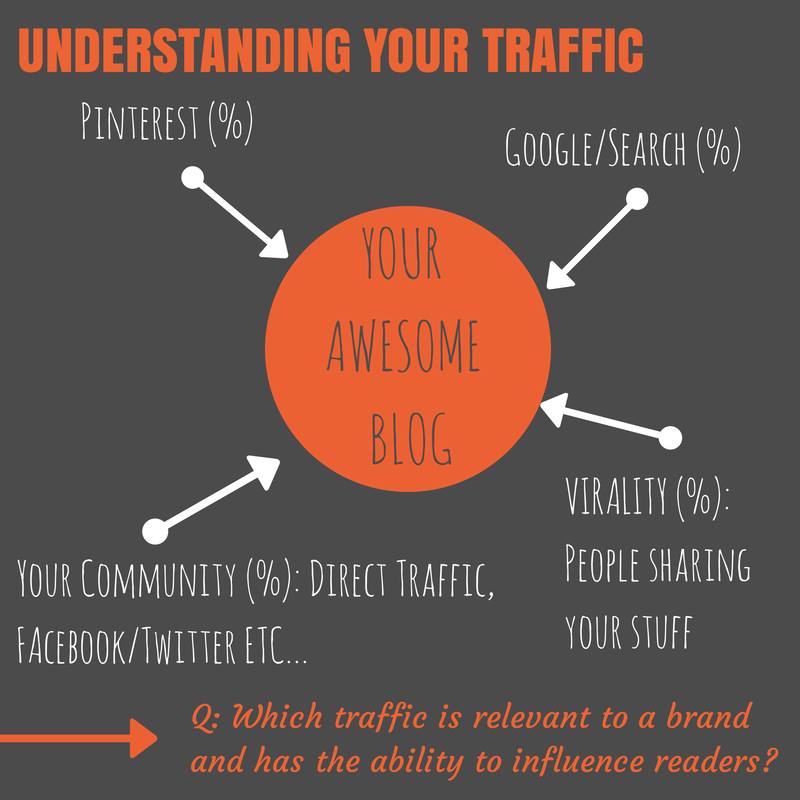
What I would like to suggest is that bloggers who want to experience success working with brands and earn a solid income from it, need to focus not on having the most people visiting their site, but the most relevant and interested people reading. If you can begin to understand where your readers and visitors come from, what they do when they come to their site and what that means about their interests then you can ensure you work with brands that fit not only with your own interests, but with those of your readers. Of course, having this information isn’t just useful when working with brands, it actually gives you great insight into what is and isn’t resonating with your readership generally – golden!

10516968_10154398195340691_195744646_n

The impact of search

The amount of search traffic your blog gets from places like Google and Pinterest has the potential to significantly impact how you understand the nature of your blog readership and the influence your blog has. I think this is a big one given the recent rise of highly searchable industries like health and wellness, and of course, Pinterest. 

If you blog regularly about things such as a meal planning, recipes, birthday party ideas,  fitness, beauty etc… then you are most likely going to generate a solid amount of search traffic. Some bloggers might even find that a large percentage of their traffic is going to one specific post every day. 

Let’s look at some numbers to understand this: Let’s say your blog has 50,000 users per month but 25% of your traffic goes to the amazing recipe you wrote about pumpkin and lentil soup. A further 25% of your traffic is coming to other posts you’ve previously written meaning that though you have 50,000 users a month only 25,000 are truly likely to see the latest post that you have written – that post you wrote for a brand, for example.

Now let’s consider where those users are coming from – are they local to you or global? If you’re trying to appeal to brands and advertisers in your country then the geographic location of those users will be really important. 

Can you see how if you told a brand that you had 50,000 users that you might create a situation where the brand was disappointed by the results that came from working with you? If you had told them that you had 50,000 users overall but 20,000 that were relevant to them as a brand then they would have been able to go into the working relationship with you with appropriate expectations and likely have been delighted by the results.

There are a couple of other things you can take notice of that will give you the edge when working with brands.

Take the time to understand your Uniques vs Pageviews (or Users and Pageviews as they are now called in Google Analytics)

I think that bloggers are sometimes afraid of their stats – that they aren’t “good enough” or need to be presented in the best possible light in order to be appealing. It’s true that stats matter to brands, but it’s equally true that many brands understand that a bloggers true value is in the personal connection they have with their readers and they are open, even eager, to understand how working with bloggers can help them.

The key point to understand when looking at your stats is that if you look at your pageviews in isolation you will get a skewed (but probably attractive) picture of your blog traffic and if you look at the uniques you will get an equally skewed (and what might feel like a less exciting) picture. The truth is that these two numbers hold a lot of information in them when you look at them together.

I’ve previously written a more comprehensive overview on the issue of Unique Visitors vs Total Pageviews which will help anyone struggling to understand the significance of these two numbers being view together.

10514787_10154398121225691_751049739_n

Bounce Rates and Pages per Session

Bounces rates relate to how many people leave your site from the same page they landed on (ie they only look at the one post) and Pages per Session shows you the average number of pages that your readers look at when they visit your blog.

My experience tells me that bloggers with strong communities and influence have a high ratio of pageviews to users and sessions. That is people who visit their blog tend to look at a lot of posts while they are there – giving them a lower bounce rate and a higher page per sessions figure. If you’re not getting at least 2-3 pages per session on your blog right now then my suggestion would be to stop focussing on increasing your pageviews and start putting some energy into increasing this number – not just because you want to work with brands but because you want to form deeper relationships with your readers.

If you’ve spent the time getting a good understanding of how your uniques and total views per month work and what your bounce rate is then you’ll be able to give helpful information to brands that demonstrates your influence and value to them and I can tell you this, it will give you a great advantage when you start talking to potential brand partners. 

Originally at: Blog Tips at ProBlogger
Build a Better Blog in 31 Days

What You Need to Know About Your Stats if You Want to Work With Brands on Your Blog

07 Jul 18:09

3 Factors that Connect Value Prop to Prospects

by info@meclabs.com

There is one question at the heart of lead generation that your marketing efforts should clearly answer.

“If I am you ideal prospect, why should I buy from you rather than your competitors?”

To put this into perspective, take a few moments and ask yourself, “Do I clearly and succinctly state the core value proposition of the product or service that I am marketing?”

In other words, what’s the elevator pitch for what you offer in the marketplace?

Take a moment to write it down.

Here are a few examples of poor value propositions from the MECLABS Value Proposition Development Course to help you identify value claims that may need a little work:

  • “We empower you software decisions.”
  • “I don’t sell products and services; I sell results — my guarantee.”
  • “We help companies find their passion and purpose.”
  • “We are the world’s leading [our jargon goes here] provider.”
  • “We have the solution your company is looking for.”

Now, let’s be honest as we’re among friends here.

If your answer was close to any of these, then you’re not offering value.

What you are actually offering is hype, bland-vertising and the creature comforts of company jargon that only you understand. I would also suggest that your marketing is likely underperforming as a result and could use a little work on value proposition development.

In this B2B Lead Roundtable Blog post, we’ll look at three factors you should consider when crafting value propositions that you can use to aid your lead generation efforts.

It’s all about connecting prospects to the right value

value-proposition-spectrum

Before we go further, let’s put some context around digging a little deeper into value prop using the illustration of value proposition spectrum above.

When you answer the question of why customers should buy from you rather than anyone else, it’s a great starting point for really understanding the overall value your organization delivers.

However, the move from broad brush understanding of a company’s value proposition to the granular level of value prospects are looking for is where many marketers become lost.

connect-value-prospects

Think of it this way:

A primary value proposition is why you buy from Apple or Microsoft.

For example, the prospect level value is why a CEO would choose a laptop with business class specs over a standard model.

Essentially, it’s where you take the big idea of value proposition and laser focus it to help you deliver the right message to the right people.

Here a few factors to consider that will help you do that using the three prospects in the example above.

Factor #1. Objective

The objective in your value proposition is where you move from finding purpose to finding focus.

To help you do that, you have to think about a prospect’s main goals and desired outcomes.

For a CEO, their objective is, perhaps, “I must increase the financial performance of my organization.”

This translates to new pressures for the business manager who “must achieve X amount of revenue by the end of the year.

This is also where understanding how your product or service addresses existing pain points and deficiencies will really pay off.

Factor #2. Motivation

Motivation is tough to nail down and really differs at an individual level.

So a good place to start is by asking, “What are the core motivations that drive this prospect’s actions?”

I told you this would not be easy.

But here a hint: A little research on your existing customers will also help you understand some common prospect motivations for your offerings, and you may even discover a few patterns you never knew existed.

Factor #3. Experience

What are the past experiences of the prospect?

A prospect’s prior experiences will factor into their decision-making process.

Considering your prospect’s previous experiences when crafting your messaging can help your lead nurturing efforts by addressing how perceptions can impact choice.

Value proposition is the gateway to trust

All of these factors are helpful in building (or reworking) your value proposition, but they are still just a means to an end.

The value in your claims is only a gateway to building trust with prospects.

You still have to deliver on those claims, and more importantly, you have to recognize they are now more than claims.

They are a promise exchanged for trust and made payable to customers who will look to you to make good on those promises – or to your competitors if you don’t.

You may also like

Digital Marketing: How to craft a value proposition in 5 simple steps [More from the blogs]

Lead Generation Check list – Part 4: Clear and Universal Lead Definition [More from the blogs]

Lead Generation: The power of copy [More from the blogs]

Email Marketing: Do you test your legacy marketing? [More from the blogs]

07 Jul 18:09

How Your HR Department Can Help Drive Sales Success

by Jennifer McFarlane

HR and SalesFor high powered sales vice presidents and sales managers, there is often not enough time in the day. They are busy developing strategies and implementing tactics to drive their companies to the next level, and sometimes the necessary minutiae of managing their staffs can come in second. But there is help, and it is close by in your company’s human resources department.  Yet, many sales vice presidents do not want interference from HR, and only look to them for tactical, not strategic, support.

Take the time to teach HR what your department really does.  Consider taking one or more key members of the HR department along for a sales call or two, so they can see up close and personal just what it takes to succeed in sales at your company. Give them a solid understanding of the duties performed by people in different sales roles. With this knowledge, HR can provide a great deal of time and money-saving support, as well as provide invaluable advice in critical decision making.

Here are some areas where a strategic partnership with HR can pay off:

Employment Law: Hiring, staff management, compensation plans and terminations are all legal minefields. Even some of the top sales gurus have been known to unwittingly recommend practices of questionable legality. Sit down with your HR Department and get a firm hold on what you can and cannot do legally. Give them your list of interview questions to review. Discuss compensation, incentive and bonus plans with them. And, of course, if you are even considering terminating an employee, your first stop is the HR Department.

Recruitment: Once HR understands the structure of the sales department, what it is selling and to whom, HR can help to recruit for those roles. Here’s how.

Job Descriptions: Although no doubt sales leaders have a good idea what they want in a candidate, HR can take the job description you give them and put it in standard company format and check to be sure it is within the law. They can also search for similar job descriptions from other companies to show you additional responsibilities and metrics to consider incorporating into your plan.

Sourcing Candidates: HR can reach out to likely passive candidates from other companies or on online sources such as LinkedIn. They can also manage the relationship with sales recruiters.

Diversity: There are ethical reasons for building a diverse sales force, but it is also very good for business, particularly where customers are made up of both men and woman and are of varied racial and ethnic backgrounds. But when is it legal to proactively seek people of a particular gender, race or ethnicity? And if a company does not do that, is it open to legal action if its work force ends up comprised quite predominantly of white males? This is an area where Sales needs to seek the strategic advice of HR.

Screening Candidates: With the direction of Sales, HR can help provide structure (processes, scorecards and scripts) which helps to weed out unlikely candidates and preinterview more likely ones. HR can also give valuable insights into the candidates they pass on to Sales for further interviews.  HR can also provide scheduling support and arrange travel which allows the sales team to focus its time on selling.

Personality Testing: This is one of the most important ways HR can help Sales. HR can arrange for personality testing that will help Sales decide who to hire and give insights on the best role for each candidate. For example, a candidate who shows a very healthy ego but low empathy may be a top performer in new account acquisition, but may not have the patience required for nurturing existing accounts. This is a critical aspect in order to hire the right sales person for your company and that is why we utilize industry leading psychometric testing in our recruiting process.

References and Background Checks: When sales managers are on the fence about who to hire, they will probably want to call key references themselves. But for those calls that are meant to check the veracity of resume and interview claims, including previous income, HR can be a great help. Of course, HR can also do background checks that go far beyond the resume.

Compensation Packages. Sales leaders will have their own ideas about how to compensate their staffs, but HR can help them to align sales goals with the broader goals of the company. Sales vice presidents should also familiarize themselves with all benefits offered, and discuss them with HR if they do not come up to the benefits packages offered by the competition. The compensation plan is how to motivate the sales force and influence them to support business goals; its importance cannot be underestimated.

Onboarding: It’s no secret that the first days can be critical to a salesperson’s ultimate success and their impression of a company. HR will should not be responsible for sales and product training, but they can help make onboarding a lot less painless. For example, they could mail all those tedious forms in advance, so your new hire can minimize time on the job filling out w-9s and contemplating health care options. HR may also be able to help you coordinate the logistics, if not the content, of training events. This may not be all that strategic, but this source of support should not be overlooked.

Termination:  Before terminating an employee, sales management must follow a structured plan. It bears repeating that sales vice presidents and managers should sit down with HR well before there is a need to terminate in order to get a good understanding of legal issues, then sit down with HR again if it is necessary to terminate. Here are some ways HR can help:

  • Review plans for goals and metrics salespeople must meet in order to remain employed with the company
  • Review sales management’s termination decision, so if termination is necessary, it can never be claimed it was a personal vendetta
  • Advise on how to document the employee’s activities and performance, and compare them to the job description, the expected numbers and other written expectations
  • Advise what the sales manager should do in the form of warnings and written instructions so the problem employee can attempt corrective action
  • Be present as a witness at termination meetings
  • Conduct an exit interview to inform the person of the details of any packages or benefits they will receive

Exit Interviews: Of course many employees leave of their own volition. For all employees leaving the company, HR should conduct exit interviews which may give valuable insights into how the culture of the company can be improved and how to retain more sales staff in the future.

The key take away: Don’t overlook the value that your HR department can bring to your sales recruitment and talent management plans.

Like what you’ve read? Get more exclusive sales recruiting and hiring  insights delivered right to your inbox via the @Peak Executive Email Series.


Sources

Closing the Credibility Chasm between Sales and Human Resources, Sales Benchmark Index

Sales and human resources — a perfect collaboration, Philadelphia Business Journal

How to Fire an Employee Without Being Sued, INC.

How to Set Up a Sales Compensation Plan, Elizabeth Wasserman

Who Makes for the “Best” Hire?, Allan Schweyer

Image courtesy of Stuart Miles | freedigitalimages.net

The post How Your HR Department Can Help Drive Sales Success appeared first on Peak Sales Recruiting | Sales Recruiter.

07 Jul 18:09

The seven traits of an effective digital enterprise

by Mark

mck 2

I really enjoy the free content provided by McKinsey & Company’s Insights. If you haven’t already signed up for their free newsletter, go do it — it is one of the sources of business and leadership inspiration I never miss. It is a wonderful example of establishing thought leadership through content. And just to be clear, I have no business connection to McKinsey, I authentically admire their work and recommend it.

A recent post, The sevent traits of an effective digital enterprise by Londoners ’Tunde Olanrewaju, Kate Smaje, and Paul Willmott was particularly thought-provoking. I thought I would summarize the main points and add my own two cents to the discussion. You might like to chime in with your own observations in the comment section.

1. Be unreasonably aspirational

mck 1Leadership teams must be prepared to think quite differently about how a digital business operates. Digital leaders set aspirations that, on the surface, seem unreasonable. Being “unreasonable” is a way to jar an organization into seeing digital as a business that creates value, not as a channel that drives activities.

Some companies frame their targets by measures such as growth or market share through digital channels. Others set targets for cost reduction based on the cost structures of new digital competitors. Either way, if your targets aren’t making the majority of your company feel nervous, you probably aren’t aiming high enough.

Schaefer view: I agree, assuming a digital competency is already established. However, if this is entirely new, stretch goals can kill momentum and provide ammunition to the critics. If you are early in your digital journey, build “quick wins” into your initiative to create an initiative that grows.

2. Acquire new capabilities

mck 2The skills required for digital transformation probably can’t be groomed entirely from within. Leadership teams must be realistic about the collective ability of their existing workforce. Leading companies frequently look to other industries to attract digital talent, because they understand that emphasizing skills over experience when hiring new talent is vital to success, at least in the early stages of transformation. The best people in digital product management or user-experience design may not work in your industry. Hire them anyway.

Schaefer view: I completely agree. Most companies can’t afford the time to groom or re-train talent. Bring in established leaders and give them room to perform.

3. ‘Ring fence’ and cultivate talent

mck 3A bank or retailer that acquires a five-person mobile-development firm and places it in the middle of its existing web operations is more likely to lose the team than to assimilate it. Digital talent must be nurtured differently, with its own working patterns, sandbox, and tools.

After a few false starts, Wal-Mart Stores learned that “ring fencing” its digital talent was the only way to ensure rapid improvements. Four years ago, the retail giant’s online business was lagging. It was late to the e-commerce market as executives protected their booming physical-retail business. It eventually established @WalmartLabs, an “idea incubator,” as part of its growing e-commerce division in Silicon Valley—far removed from the company’s Bentonville, Arkansas, headquarters.

Schaefer view: The Wal-Mart approach worked (increasing revenues 30 percent in 2013) but it is also extreme and risks turning digital into a silo, or even worse, disconnecting it from the business entirely. There is something to be said for giving a digital team “space” and some autonomy in an established company as long as you can also create integrated marketing efforts. 

4. Challenge everything

mck 4The leaders of incumbent companies must aggressively challenge the status quo rather than accepting historical norms. Look at how everything is done, including the products and services you offer and the market segments you address, and ask “Why?” Assume there is an unknown start-up asking the exact same question as it plots to disrupt your business. Digital leaders examine all aspects of their business—both customer-facing and back-office systems and processes, up and down the supply chain—for digitally driven innovation.

In 2007, car-rental company Hertz started to deploy self-service kiosks similar to those used by airlines for flight check-in. In 2011, it leapfrogged airlines by moving to dual-screen kiosks—one screen to select rental options via touch screen, a second screen at eye level to communicate with a customer agent using real-time video.

Schaefer view: This is a timely point that connects to the “Is Being Disruptive a Strategy” podcast Tom Webster and I recently published. Was the Hertz example a true disruption, a new business model, or a logical improvement on the kiosks and competencies they already had?

I agree that companies must be in a constant state of re-invention but realistically, how many companies can strategcially disrupt themselves? Practically speaking, most managers just want to hold on to their jobs and get a bonus. There are very few examples of successful disruptions that were internally-induced. More likely, companies can counter-attack or buy the disruptor.

5. Be quick and data driven

mck 5Rapid decision making is critical in a dynamic digital environment. Twelve-month product-release cycles are a relic. Organizations need to move to a cycle of continuous delivery and improvement, adopting methods such as agile development and “live beta,” supported by big data analytics, to increase the pace of innovation. Continuous improvement requires continuous experimentation, along with a process for quickly responding to bits of information.

Integrating data sources into a single system that is accessible to everyone in the organization will improve the “clock speed” for innovation. P&G, for example, created a single analytics portal, called the Decision Cockpit, which provides up-to-date sales data across brands, products, and regions to more than 50,000 employees globally. The portal, which emphasizes projections over historical data, lets teams quickly identify issues, such as declining market share, and take steps to address the problems.

Schaefer view: Amen.

6. Follow the money

mck6Many organizations focus their digital investments on customer-facing solutions. But they can extract just as much value, if not more, from investing in back-office functions that drive operational efficiencies. A digital transformation is more than just finding new revenue streams; it’s also about creating value by reducing the costs of doing business.

Often, great value is found in optimizing back-office functions. At Starbucks, one of the leaders in customer-experience innovation, just 35 of 100 active IT projects in 2013 were focused on customer- or partner-facing initiatives. One-third of these projects were devoted to improving efficiency and productivity away from the retail stores, and one-third focused on improving resilience and security.

Schaefer view: I think this is an excellent point and one I wish would be recognized by more businesses. A different McKinsey research report in 2012 said that MOST of the money is in cost savings, particularly in applying social technologies to areas like Procurement and the Supply Chain. In a research project I worked on last year for the US Air Force, my team found almost no evidence that these technologies are being embraced this way.

7. Be obsessed with the customer

mck 7Rising customer expectations continue to push businesses to improve the customer experience across all channels. Excellence in one channel is no longer sufficient; customers expect the same frictionless experience in a retail store as they do when shopping online, and vice versa. Moreover, they are less accepting of bad experiences; one survey found that 89 percent of consumers began doing business with a competitor following a poor customer experience. On the flip side, 86 percent said they were willing to pay more for a better customer experience.

This customer obsession is what enables companies to go beyond what’s normal and into the extraordinary. If online retailer Zappos is out of stock on a product, it will help you find the item from a competitor. Little wonder that 75 percent of its orders come from repeat customers.

Schaefer view: Can’t argue with that. Still, if I read about Zappos one more time in a case study I will gouge my eyes out. 

Now it’s your turn. What’s your take?

The illustrations in this article were also featured in the original post. So not only does McKinsey have great content, they also present it in a beautiful way. A lesson to be learned there. 

The post The seven traits of an effective digital enterprise appeared first on Schaefer Marketing Solutions: We Help Businesses {grow}.

07 Jul 18:09

How to Make the Second Half of Your Sales Year Better than the First

by Bob Apollo

How to Make the Second Half of Your Sales Year Better than the First image Keep Calm and Nail the Second HalfWe’ve reached the halfway point in the sales year, and this is a particularly a good time to take stock. Early indications are that a number of sales organisations have some room for improvement, and that as many as 60-70% are currently behind plan.
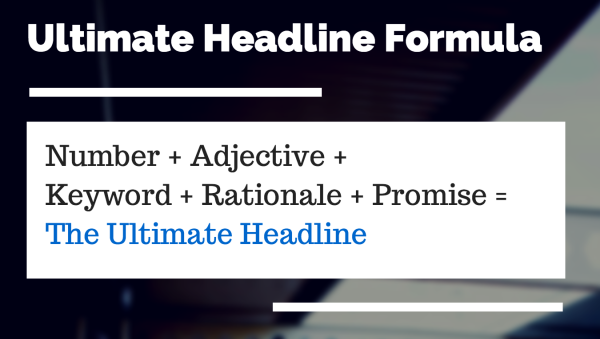
For many, the shortfall is recoverable and there’s still time to catch up – but probably not if they simply carry on what they have been doing since January. And even if you’re currently ahead of plan, business as usual probably can’t be guaranteed to keep you there.

That’s why a mid-year review of your customer acquisition process ought to be top of your task list for July – and the sooner the better…

The often-troublesome third quarter

We’re heading into an often-troublesome quarter. Decision-makers are often away on holiday, and apparently smoothly running sales processes can be derailed by unanticipated absences.

That’s why I’m going to suggest that your first priority must be to identify all the opportunities that are expected to close in the 3rd quarter, and carefully double-check both the prospect’s motivation to act quickly, and the precise details of the decision-making process.

Let’s assume that the indicators are promising. Even if it looks as if you have a solid ROI case, it’s always worth making sure that the consequences of inaction are clear to your prospect. What would happen if they simply let the status quo prevail for a little longer?

How would your sponsor be affected by the delay? Equally important, who else would be affected? What would the consequences be for their personal and departmental Key Performance Indicators and for the business as a whole?

The sticky lure of the status quo

If you don’t know, and even more importantly if your sponsor doesn’t know (or if there are no consequences associated with delaying taking action), there’s an uncomfortably large chance that they will end up sticking with the status quo.

In a nutshell, until you’ve sold the need to solve the problem, and solve it now rather than later, your chances of successfully selling your solution are significantly compromised. And don’t imagine that a solid ROI will offer any form of miracle cure – unless you’re aware of all the other investments your prospect might be considering, and you’re confident that they believe the likely return on your project is better than most or all of the alternatives.

And even if all the signals from your sponsor are positive, are you absolutely convinced that they have the power and authority to mobilise their colleagues to agree to take action? Even if they say they understand the approval process, how can you test that they do?

The simple fact is that many apparently suitable sponsors actually don’t understand how their organisations go about making and approving buying decisions – or how those decisions get “up on the system” so that an order can be placed. You need to check, and check again.

Learning from every significant decision

But what about the broader lessons learned from the first half-year? I strongly recommend that you carefully analyse your wins, losses and the opportunities that ended with a decision to do nothing. What patterns can you recognise?

For your most significant wins, losses and no decisions, you need to identify the common factors – and you need to pay attention to the whole marketing and sales cycle, and not just the final stages of the sales process.

Just as most sales wins are set up at the start of your engagement with the prospect, most losses and no decisions are not down to a failure in closing techniques, but in the fact that poor decisions were made early on in the process.

What factors – often more obvious at the end of the process – should your sales people have focused on at the start of the sales dialogue? What could you have done to qualify a bad deal out earlier on in the sales process?

If you’re going to lose, you had better lose early…

This ability to identify and eliminate poorly qualified opportunities early is one of the defining differences between high and low performing sales people. Top performers often seem to do it instinctively – but you’ve got to work out how they do it, and insist that all your sales people adopt it.

Equally, deals get delayed for a variety of reasons. Some are unpredictable and/or unavoidable. But all too often, something the vendor does or does not do contributes to the delay. Where are the bottlenecks in your customer acquisition process, and what are you going to do to eliminate them?

Here’s my checklist for a half-year review:

  • Review your perfect customer profile and make sure that you’re targeting the right organisations, sponsors and stakeholders
  • Be clear about your prospect’s action drivers and your own unique value position – is it really distinctive enough?
  • Reassess your opportunity qualification criteria – and the questions your sales people should be asking
  • Make sure that your business case embraces the consequences of inaction as well as the return on investment
  • Make sure that your sales pipeline management stages reflect your prospect’s buying decision journey
  • Focus on identifying and eliminating the most common bottlenecks and causes of delay in your prospect’s buying decision process
  • Capture the winning habits of your top sales performers and share the learning across your whole sales organisation

If you’ve got anything to add, please share your ideas below – and good luck in exceeding your revenue targets for the rest of 2014 and beyond.

07 Jul 18:08

Reboot your Business. Reboot yourself!

by Dave Chaffey

A Review of CTRL ALT Delete by Mitch Joel

As we work from day-to-day, week-to-week and month-to-month it’s easy to miss the extent of the changes that digital media and technology have made to our businesses and careers.

I will be discussing how to manage these changes, both at a business level and a personal level in our upcoming webinar on July 10th with Mitch Joel, the author of CTRL ALT Delete and Six Pixels of Separation, who is President of Twist Image – one of the largest independent Digital Marketing agencies in North America, but sold to WPP earlier this year.

It’s a free webcast and if you register now you can watch live or playback.


In this post I preview some of the thinking in his latest book which we will discuss in the webinar. I will also be giving some examples of tools we have developed at Smart Insights and feature in our latest guide to Digital Transformation.

In CTRL ALT Delete Mitch Joel gives us a sharp wake up call to show that “Business-As-Usual” is a risky strategic approach for businesses AND can be a risk for personal career development too. He makes this point forcefully when he explains:

“The challenge is that most businesses don’t know how to adapt, and most of the people who are working for these companies don’t know how to change their old ways.

Technology hasn’t just transformed how we connect socially. Technology has sent business through a rapid state of genetic mutation and we’re still in the middle of this evolution. I call this moment time the following: Purgatory. We’re not in hell… but this certainly isn’t heaven either.

Ctrol-Alt-Delete

While Digital Transformation has been a prominent issue amongst consultants working with large businesses throughout 2013 and into 2014, this often focuses just on business transformation. I like the way Mitch Joel’s book also looks at the personal dimension of how these technology changes can affect and individual’s career too. The book is in two parts, to show how he stresses the need for individuals to change, the first is Reboot: Business, the second, Reboot: You.

Throughout his book, Mitch Joel covers  many specific calls-to-action which will can help businesses transform. Here are the ones that resonated with me:

  • 1. Truly understand your consumers and their landscape. Understand how people relevant to your products and services are using active media today and whether your brand is truly active or strictly passive meaning that you are simply broadcasting messages on social media. The picture is changing continuously, so this shouldn’t be an occasional activity. We have described some techniques to understand this in our post on marketplace mapping and our persona toolkit.
  • 2. Put effort into mining and applying insight. Close to our hearts too, Mitch Joel says that his experience is that regardless of size, many businesses are struggling with data and consumer intelligence. He advises to start small and build relevant dashboards, invest in social media monitoring tools to become more active and responsive.
  • 3. Brands need to develop closer direct-to-consumer relationships. Hands-off, at-a-distance relationships aren’t relationships… So companies need to actively use their presence across paid-owned-earned media to get closer to, to interact with their customers.
  • 4. Deliver value first. This follows-on from the previous point. When we wrote the first edition of Emarketing Excellence in 2001, I was keen to stress the need for companies to develop an “Internet value Proposition” which would add value to their brands by offering consumers new ways to inform, entertain and sell. It’s an idea that many brands have adopted now, with budget invested to highlight these new forms of value. Jay Baer has even written an entire book, “Youtility” showing examples of this in practice
  • 5. Focus on true fans. A practical tip here, Mitch advises “turning to the fanatical”, to find and nurture your true fans to encourage advocacy.
  • 6.Ride on the backs of giants. This highlights the importance of Digital Agility. To be able to monitor what people are excited about TODAY. Since interests change so fast. He gives examples of how businesses have taken advantage of early enthusiasm for Pinterest or Instagram for instance.
  • 7. Remove friction. Re-engineer processes and customer contact to make buying easier from customers. He gives the example of how the Nationwide Insurance company in Canada uses a mobile app to simplify the process.
  • 8. The Ultimate Question? Do you know the ultimate question? It’s the would ““you recommend us to friends or family” question popularised by Fred Reichheld and increasingly featured in Net Promoter Score programmes. Joel suggests this is a way to review the effectiveness of whether you are re-inventing successfully.

So looking back at Joel’s purgatory analogy I mentioned at the start of this review, he advises us to grasp the opportunity. He says:

“Purgatory is a moment of transition, but one that we can’t necessarily define by time… Do we sit idly by and wait for it to pass? That would be a massive mistake…

Moments of purgatory are moments of power as well. Appreciate it. Instead of shaking your head and wondering what happened, stop and realise that you can now have amazing direct relationships with your consumers: indeed the opportunity is right in front of you to provide them with true tools of utility foster long-lasting connections”.

07 Jul 17:42

How To Create Compelling Content That Converts

by Summer Luu

I recently read an insightful blog post by Jean of Kapost suggesting that “a laissez-faire approach to creating content won’t cut it anymore”. New research from Demand Metric shows that formats that used to work for marketers are not working anymore. Meaning: they don’t pull audience interest like they once did.

It seems that the revolution of content marketing is producing content clutter which in turn results in content fatigue. To combat this, marketers must innovate and delight their audience with new forms of content.

So how do we push through the clutter and create content to stimulate engagement with our target audience?

Below, I’ve compiled some helpful tactics that prove effectiveness in keeping our audiences engaged, each of them backed with recent and impressive stats.

1) Nothing Matters More Than Your Headlines in Blog Posts

When you’re writing your blog post, spend a big chunk of time on perfecting your headline because it is the most important element in an article. You will find that there are countless title tips on the web, but if you don’t have time to sift through every recommendation (at last count, Google pulls up more than 18 million search results) then may I suggest using our plugin? It will tell you if your headline is optimized for engagement in a flash!

Or you can use one of my favorite headline formulas by Lenka Istvanova. It works like a charm! Check out the ultimate headline formula presented below:

How To Create Compelling Content That Converts image Screen Shot 2014 05 27 at 1.34.44 PM 600x339

2) Post the Most Engaging Content for Facebook

It’s a challenge (especially for brands) to get engagement and interaction on Facebook. So what’s the secret? A study by Socialbakers proves that photos posted on Facebook receive the most engagement and interaction. Want to know how much more? A whopping 75%! Keep in mind, as with anything you post online, make sure you share high quality photos in order to see a high response rate.

How To Create Compelling Content That Converts image FB graph

3) Tweet Click-Worthy Content

Research by Twitter shows that multimedia increases engagement. And by this, they mean that tweets including a photo or video receive 3 to 4 times more engagement (retweets, replies, etc.) versus those that don’t. As you can see here, visual content is essential when you’re sharing content on Twitter. The display of images in Twitter’s busy timelines will help you grab your audience’s attention and get them clicking through the link.

4) Here’s the Most Liked Pins on Pinterest

Here are some Pinteresting stats on images that perform well on the visual discovery tool. If your content fits into one of these categories, take advantage of what Pinterest found to be popular on each day of the week.

Monday: the week starts with good intentions in fitness

Tuesday: next up, gadgets are all the rage in technology

Wednesday: need a little something to get through the week —- inspirational quotes

Thursday: threads lead Thursday with fashion

Friday: GIFs bring some comic relief to the end of the week with humor

Saturday: summer vacations are top of mind with travel

Sunday: the week closes with food and craft ideas

How To Create Compelling Content That Converts image pin 600x399

5) You Must Post Your B2B Content on SlideShare

Why? Because the site averaged 60 million unique visitors a month and 215 million page views. That’s why. SlideShare is content marketing’s “sleeping giant” and there is no denying that. If you have a B2B audience, I highly recommend that you post your content on SlideShare. It drives 500 percent more traffic from business owners than Facebook, Twitter, YouTube, and LinkedIn. This is a great platform for infographics, documents, one-pagers and presentations.

Check out more mind-blowing stats about SlideShare here.

Your Turn

What tactics do you use when you’re sharing content online? What gets your audience engaged? Tell us in the comments section!

07 Jul 17:42

Why Understanding the ’57%’ Buying Process Will Help You Sell Better

by Donal Daly

I have written before about the statistic that is out there that buyers have, on average, progressed 57% through their buying process before they engage a salesperson. That “average” piece seems to have been lost, and a commonly held-belief now is that this 57% is a fact in all cases.

How you act before and after “the 57%” is a matter of choice, not a function of averages. Buyers buy different things, and sellers sell differently. You get to choose. But first, let’s explore the differences.

How buyers buy and sellers sell

As we researched this topic, we spoke to many of our great customers to see what they had observed. Here’s their buyer’s point of view:

  • Xerox sells many things, including copier paper. Copier paper is a commodity. As a buyer I don’t need a lot of advice. I’m going to buy frequently and only care that the price/quality is reasonable.
  • Hewlett-Packard provides most things an IT buyer might that are a little more complex than my copier paper.
  • If I wanted a temperature control system in our building, Honeywell is the place to go. It’s a more specialized purchase than a laptop. I am probably going to need guidance and advice.
  • Harmonic sells media controller systems that manage video workflows in some of the world’s largest and most demanding video environments. That’s not something I want to buy on my own. I’ll need some consultative advice.
  • Box provides enterprise online data sharing and large-scale content management services. Buyers want to engage strategically when determining their enterprise content strategy. It’s a big commitment.
  • If you are choosing Salesforce as your CRM, it is likely to have significant impact on your business. You know it is important to get some serious advice.

As evident from these examples, there is a lot of variability in how buyers need to engage before buy, so let’s look about how you might deconstruct that.

How to drive customer engagement

If you engage early with the buyers in their buying cycle you will be more successful. Being a buyer isn’t as easy as it might seem. Understanding and articulating their own needs and then finding the best solution can be a stressful exercise. The greater the organizational impact, the more stressful it gets. Buyers need help.

Why Understanding the ’57%’ Buying Process Will Help You Sell Better image 32afe7d
The two axes on this graph are cost and intellectual property (IP) intensity. As they increase, so does organizational impact. Buyers then need help in establishing criteria, evaluating options, and choosing a solution. The engaged salesperson can create value for their customer and gain more control of the deal.

There are also two other factors that matter: risk and frequency. Organizational risk is higher when choosing a CRM system than it is when buying copier paper. The buyer performs greater diligence and needs more guidance. Also, greater frequency translates to greater familiarity and less need for help. I buy copier paper more often than I buy a temperature control system so I know how to make the copier paper purchase on my own.

Why Understanding the ’57%’ Buying Process Will Help You Sell Better image 39eedd0

In the second chart here you can see in the top right quadrant, our buyer is more likely to engage the supplier early, because a business process infrastructure project is usually high cost, contains a lot of IP value and a bad decision carries significant risk.

Conversely, there is less IP value in purchasing utilities (e.g. electricity). The difference when buying office equipment is even more striking; cost, IP. and risk are typically low and frequency is high, so buyers are less likely to need a seller to guide them.

Here’s the thing: If your solutions don’t fit into the bottom left quadrant, your buyers likely want to engage with you (or your your competitor) much earlier in their process, and there are many things you can do to influence the outcome.

Feel free to download The TAS Group’s latest publication, Battling the 57%: Deconstructing the Buyer Seller Dance or for a more detailed treatment of how to add value to your customers, check out the #1 Amazon Bestseller Account Planning in Salesforce.

07 Jul 17:41

“Customer Engagement” Peaks as Google Trend – 5 Quick Wins to Improve Your Strategy

by Dan Bond

“Customer engagement” is the latest concept to take the marketing world by storm – so use these five tips to maximize your engagement strategy.

“Customer Engagement” Peaks as Google Trend – 5 Quick Wins to Improve Your Strategy image Customer engagement11 600x293

“Customer engagement” is a hot topic. According to Google Trends, the term has seen a substantial climb in relevance since 2007, which looks set to continue.

But why?

Marketing is moving away from the traditional funnel and replacing it with the “customer’s journey”.

According to Forrester’s report, Rethink Marketing In The Buyer’s Context, customers are no longer waiting to be contacted and told what they need to solve their business pains. Instead, they are empowering themselves first by researching a product/service intensively using their peers and online resources.

The potential of this “customer-centric” approach is now being exploited by marketers – but questions remain about how best to engage with potential clients during their purchasing journey.

How to exploit

You need to adapt your strategy so it:

  • maps each key stage of the buyer’s journey.
  • offers relevant, engaging content for each stage so you can snare the buyer’s attention wherever they are in their journey – and help accelerate their purchasing decision.
  • provides unified and consistent messaging throughout the buyer’s journey.

70% of buyers stated that “consistent and relevant communications” from both sales and marketing departments were paramount in their final purchasing decision.

Five quick wins

To give your customer engagement plans a boost, deploy the following five strategies:

1. Personas personified

At the heart of successful customer engagement lies knowledge of who the customer actually is. Inevitably, there are a host of different stakeholders involved in any purchasing decision, so your customer engagement strategy must reflect this.

First, identify who your main type of buyer is – what their job role is, what their business pains are, and how they make decisions (whether cost- or data-driven). Analyze what it is about your product that fits their needs.

From there, create a persona, detailing the information with a name and full personality profile. Do the same for other stakeholders, drawing up personas for all those who may be involved in the purchasing decision. Now use these personas to generate specifically-targeted content addressing each stakeholder’s exact needs.

Hone your personas via sales calls, data analysis, customer interviews, and survey results.

2. Increase your IQ

Don’t underestimate the importance of customer intelligence and analytics – to opitimise your data analysis, consider creating a dedicated in-house team. This group can be brought together as and when it is needed and should ideally feature staff who have the skills necessary to be able to extract vital information from reams of data. Best of all, hire in data-focused staff members who can then be trained in marketing techniques, offering you the best of both worlds.

Their research of your customer intelligence sources – such as primary research and win/loss reviews – will unearth further insights into your potential customers and their journey, increasing your chances of engaging with them.

3. Generate content that connects

Customers are experts in their field, so you need an expert in house to ensure your content engages, educates and resonates with potential clients, whether it be via consideration documents or blogs.

Hire a journalist to review all your content and offer suggestions on how you can hone your content strategy further so it engages fully with your personas – and, more importantly, identify what key content elements might be missing from key stages. Plug those knowledge gaps.

95% of purchasers stated that the vendor they ended up choosing offered them “ample content to help navigate through each stage of the buying process”.

4. Share, share, share

Create “bite-sized” content that can be used to snare a customer’s attention – even if they are only at the beginning of their purchasing journey; the sooner you reach out to them, the better.

Using short, punchy videos, surveys or assessments, create content that can be posted to targeted forums on social media networks such as LinkedIn. This dramatically increases the chance of your buyers coming across your content when they begin investigating product/services – and can trigger the engagement process right from the off.

Consider using personalized rewards for existing customers who are willing to share their recommendations and reviews of your products/services in the online space.

5. Eight seconds and falling . . .

Research has shown that our average attention span was just eight seconds in 2013, down from 12 seconds in 2000. Just to put that into context, a goldfish has an average attention span of nine seconds. So what does this mean? That people’s attention is limited – so engage them by using content that leaps off the screen.

As well as using traditional blogs, also deploy visual media messaging such as VideoScribesinfographics and magazine-style PDFs such as Uberflip – these can snare the customer’s attention far quicker than text and are more likely to be shared.

60,000 times – how much faster the human brain processes visuals than text.

Remember:

  • Identify your main stakeholders, create a persona for each and generate specifically-targeted content for each one.
  • Consider creating a dedicated in-house team to boost your customer data analysis skills.
  • Consider hiring a journalist to ensure that your content engages, educates and resonates with potential clients.
  • Create “bite-sized” content to snare a customer’s attention on social media and trigger the engagement process.
  • Exploit innovative kinds of visual media to grab and hold the customer’s attention and encourage sharing.

For more information about the customer’s new hold over marketing, download the free eGuide: CMO’s quick reference: how to map the consumer buying process

07 Jul 17:41

The Best Time To Cold Call? – Sales eXecution 258

by Tibor Shanto

By Tibor Shanto - tibor.shanto@sellbetter.ca 

TV Head

Buyer beware!

It seems over the last few months there is more and more advice coming from many sources on the merits of cold calling, (ya I know), and some so called “Rules and Best Practices”. But consider the source of expertise before you jump in. As with many things in sales, especially cold calling, for lasting success, you’re better off looking to your buyers than people jumping on bandwagons.

Here is an example why:

Hey, if you liked what you saw here, invite me to speak at your next meeting!

What’s in Your Pipeline?
Tibor Shanto 

07 Jul 17:33

How to avoid false signals from automated lead scoring

by bob@inflexion-point.com (Bob Apollo)

Two years ago, I chaired a discussion group at a digital marketing conference on the subject of lead scoring and nurturing - and emerged thoroughly depressed (if unsurprised) by what I heard.

The participants were all apparently experienced B2B marketers, but their implementation of lead scoring had been almost universally unsatisfactory. I’m not convinced that things have improved very much in the meantime.

blue_ticksHere’s the fundamental problem: in many of the complex B2B sales environments I get involved in, the correlation between the ways leads are scored and subsequent sales success at converting lead to close is weak at best.

As a result, most sales people have learned to distrust the lead score figure and choose to ignore it. Needless to say, this does nothing for the relationship between marketing and sales - or for the success of either organisation.

You can't score leads without involving sales

There are a number of reasons why this situation seems so prevalent, and they can all be addressed given enough determination, common sense and goodwill. The most inexcusable reason is that the sales team haven’t been involved in jointly developing and agreeing the quality criteria upon which lead scoring is based.

I’m a hardliner about this: any lead scoring scheme in complex B2B sales environments that hasn't been carefully, thoughtfully and jointly developed between sales and marketing might as well be abandoned for all the good it is doing. I have a similar perspective on any lead scoring scheme that hasn’t been jointly reviewed and if necessary tuned in the past 3 months.

The review must include an analysis of the correlation between the lead score and the subsequent sales outcome. Put simply, if there is not a strong correlation, you’re doing it wrong, and discrediting the idea of generating a lead score in the first place.

Where else does lead scoring go wrong (and by the way, these factors are usually flushed out by a regular evaluation of correlation anyway)?

The risk of raw activity metrics

Giving exaggerated importance to activity levels is the most common factor. Here’s why: in complex, high value B2B environments, your decision makers are typically too busy to make multiple repeat visits to your website, browse the entire site, download every piece of collateral or watch every video.

Anyone with that amount of time on his or her hands is either a student, a competitor, or a hapless junior employee who has been sent on a research mission without any clear idea of context or the underlying need. In fact, beyond a certain point, activity level starts to become an increasingly strong contra-indicator of lead quality.

A careful analysis of your sales success will typically reveal that certain value pieces and other materials are disproportionately important to the buying decision process in winning sales situations. If you aren’t uncovering this in your win loss analyses, you should be. And if you’re not conducting systematic win loss analyses on a regular basis, looking at the end-to-end customer journey, and acting upon the lessons learned, you’re travelling blind and you should not be surprised if you hit a wall or fall into a ditch.

So - what your prospects do is far more important than how often they do it. Activity has a place in lead scoring, but only if it prioritises quality over quantity of interaction.

Profiling your contact

Much more important is what you know about the contact. What organisation do they work for? Is that organisation on your target prospect list? What about their role? Is it one of the roles you have chosen to target? And what about their interests or needs? Do they reflect the action drivers you are really good at addressing?

Please don’t use the excuse that asking for that information will put people off from filling in the form. If you have a high-value, B2B-focused solution, you want to engage with people who are serious about learning. In my experience, those people will not be dissuaded from answering a few intelligently chosen questions that seem relevant to their mission.

The power of progressive profiling

And anyway, you can use progressive profiling to incrementally capture new pieces of information every time your prospect interacts with you (if you’re not using progressive profiling today, you should - it’s an invaluable tool).

I’d also recommend that you seriously consider implementing a phone-and-web-research-based layer of qualification to add to what you can capture automatically before you pass a lead over as being “marketing qualified” to an expensive sales team. You don’t need a big team - depending on your volumes, you can start with just one resource.

Keep the outcome clearly in mind

This additional layer of intelligent human qualification can make a remarkable difference to the percentage of “Marketing Qualified Leads” that end up being accepted by sales and converting into customers. In fact, in most cases, it’s worth diverting money from running campaigns to the qualification layer.

That, of course, assumes that your marketing team are incentivised not by activity levels, but by revenue-based outcomes. And if they are not being measured, motivated and incentivised based on outcomes, how can they credibly call themselves modern B2B marketers?

Crossing the Chasm

07 Jul 17:33

7 Sources of Email Marketing Content

by Jonathan Long

Email marketing can be a very effective marketing tool, and we have recently discussed the mistakes responsible for poor email marketing performance, how to create an effective email subject line, and even what annoying things to eliminate from your email newsletter, in an attempt to help you with your email marketing efforts. While these tips can really help improve your email marketing, what do you do if you are having trouble coming up with content? If your email marketing is starting to sound repetitive or if you are struggling to come up with fresh ideas we are going to help spark some simple creativity.

Often times you can find great content for your emails at the tips of your fingers. Before you just throw together content you need to step back and think about what your ultimate goal is. What do you want to accomplish through your email marketing? Are you looking to just build brand awareness and share success stories or are you trying to generate leads? If you are just trying to spread brand awareness then your content doesn’t necessarily need to link back to your site, but if you are trying to generate prospects you will want to link back to an offer that requires a form submission to access.

Here are eight sources of email marketing content that you can tap into for your next campaign.

7 Sources of Email Marketing Content image 7 Sources of Email Marketing Content 600x365

1. Hot Industry Topics

You should be monitoring the news within your industry and be ready to react when breaking news hits. If there is big news that would be of interest to your targeted list then send out an email with the scoop. You can touch on the subject and also provide your own insight.

Your audience will want to hear the news and if you are the one to deliver it to them they will view you and your brand as a trusted source of information. This is a great way to build brand awareness and trust.

2. Social Media Activity

Take a look at your Facebook and Twitter pages and see what your followers and customers are asking. Do you notice a trend or a specific question that is being asked on a regular basis? If you see the same question asked multiple times there is a very good chance that a large percentage of your target audience will have the same questions. You will want to answer their questions on social media, but you can also address frequently asked questions in your email marketing newsletter as well.

3. Your Most Popular Website Content

You should already be tracking the success of your content, so identifying your most successful pieces shouldn’t take long at all. You need to determine what kind of content your website visitors respond the best to. What generates the most social shares? What kind of content keeps your visitors on your website for the longest period of time? Taking what works and transferring that over to your email marketing effort is a recipe for success.

If you aren’t actively tracking all of your content performance then jump into your analytics account and see what pages on your site have received the most traffic over a specific period of time. It is a good idea to use the traffic results over the past 30 days in order to really understand what your audience is responding well to at the current moment.

4. Blog Comment Discussion

Just like the second point above, your blog’s comment section can be a hotbed for email content suggestions. Now, not all blogs will enable the commenting option, but if you allow them you can usually quickly identify some great email marketing topics by reading through the comment discussion.

5. FAQ’s

Speak to your sales force and ask them to identify the most frequent questions they are asked by potential customers. Your sales team is in direct contact with your target audience. Identify the common questions they are asking and address them via your email marketing. If you can answer a consumers potential question without them having to ask it will greatly increase your conversion rate.

6. Top Content on Industry Blogs

You will want to mix in some emails that are not promotional, and just provide information that your audience will appreciate and enjoy. Identify the top blogs and websites within your industry and read them on a regular basis. If you see good pieces of content that you believe your audience would benefit from then take note of the URL. Keep a collection of great content pieces and when you are struggling to think of an email marketing topic to send out or if you need more content for an email you can link to these pieces. You can also add in one or two “recommended industry readings” to each email. This will help to dilute the email if it is overly promotional.

7. Happy Customers & Success Stories

Use your satisfied customers as examples and discuss their success that was a result of your product or service. A general explanation as well as some testimonial quotes from the individual can do a great job of helping you build trust with your audience. Make sure that they come across as genuine and don’t read like an advertisement.

Use these tips to make sure that you always have email marketing content ready to send and adhere to a schedule. If you slack off and even skip one week you can lose the interest of your audience.

07 Jul 17:33

How to Identify Successful Content & Increase Your ROI

by Jonathan Long

Content marketing has become such an important part of online marketing strategies, but many companies are still finding challenges as they attempt to incorporate it into their marketing effort.

How to Identify Successful Content & Increase Your ROI image content marketing 600x96

The three most common hurdles organizations face are:

Small Staff

Companies operating with a limited staff can’t necessarily pull their employees away from their regular tasks to focus on creating content. Many employees are already wearing many hats as it is, so giving them additional work will just add to their already full plates.

Small Budget

It is easy to say, “Just hire a dedicated content creator,” but if a company is already operating with a thin staff, then it is unlikely another full-time employee is in the budget. Hiring a firm to create the content might not be in the budget either, and some businesses will have no choice other than producing their content in-house when time permits.

Small Amount of Content Being Created

It is no secret that a company will only be able to create a small amount of content if small staffs and budgets limit them. There is nothing wrong with starting small and building up over time, and many companies don’t have any other choice. It is important to always focus on creating quality content in the beginning instead of worrying about the quantity. Many companies faced with staffing and budget limitations outsource their content creating overseas for pennies on the dollar, resulting in poor content that screams, “Outsourced crap!”

Once the content creation plan is figured out there are additional struggles, as most companies concentrate all of their effort into the creation of the content and ignore the distribution and measurement of the content they are creating. The creation, distribution, and measurement are all equally important segments of content marketing.

When you know what content is best received by your audience resulting in more engagement, you are able to eliminate the poorly performing content and turn your attention to creating high-performing content. This helps you develop a plan that improves the ROI of your content marketing.

There is absolutely no doubt that content marketing works well. It helps to build brands through engagement, is a major component of a successful SEO strategy, drives high-quality website traffic, and can eventually start to drive conversion numbers north when executed correctly. There will be some content that fails miserably, but there will also be content that is a home run and delivers a nice ROI for the company.

How to Identify Successful Content & Increase Your ROI image How to Identify Successful Content Increase Your ROI 600x387

Incorporate the following in order to properly identify successful content:

Give Your Audience What They Want

When a content strategy is being developed, it should always be based around what the target audience wants. For example, if a company is using content marketing to drive the audience to a specific web page in order to convert that visitor into an email submit, then the content should be developed in a way that pre-answers any question the individual might have prior to being added to the email list and entering the sales funnel.

Answering frequently asked questions before they are asked results in a much more successful funnel. Gathering feedback from website visitors, leads, and customers is a great way to help fine tune content and make it perform better.

Brand Exposure Measurement

Create content that is so good and informative that the audience feels compelled to share it. When the content is created specifically for the target and it is done so correctly it will result in natural social sharing. Determine what platforms are the best means to deliver the content in front of the target audience. This will usually be via social media, email marketing, blogging, and paid media distribution. Some ways to determine the brand exposure the content is providing includes:

  • Social Shares – look at the number of shares each piece of content is receiving along with any blog posts or pages linked within the content. Content with the most social shares were obviously found to be more beneficial, so adjust the content strategy and include more of what the audience is sharing the most.
  • Website Traffic – see how much traffic the content is driving back to the company’s website. The content that is pushing the most traffic back is creating the most engagement so work on expanding to continually increase the traffic.
  • Email Open Rate – dive into the open rate and click-through-rate of every email that is sent to the marketing list. Determine what titles and messages are receiving the most opens and clicks in order to fine-tune the email marketing to keep increasing those rates.

Become a Valuable Source of Information

If a company continually produces high-quality content, the audience will view them as a valuable source of information and continue to turn to them for information. The company will also gain additional exposure when social sharing comes into play, as a result of the readers sharing the content they feel is useful.

Companies should provide the audience with content on topics they are familiar with, but if the audience desires additional information that the company is not familiar with they need to source that content from experts on the additional topics that will help engage the audience.

Increase Content ROI With These 3 Simple Tips:

Stay Consistent With Delivery

Once a content strategy is mapped out, it is important to stick to the schedule. If the audience gets used to multiple updates and then all of a sudden there isn’t new content for a week it could cause you to lose those valuable readers you worked so hard to get.

Don’t Ignore Old Content

Don’t forget about the content that was created the other day, the previous week, or even the month before. Cross-promote content by referencing previous content and driving readers to the older content via the newer content.

Another way to recycle older content is to include it within email marketing efforts, driving the audience to engage with it for the first time, or to engage with it again in the event that they have seen it previously in the past. In some situations it will take multiple encounters to obtain that desired engagement.

Don’t waste all that time and money you spend creating great content! Don’t just use it once and throw it to the side only focusing on new content creation. Devote some time to re-marketing the older content as well, especially if the content budget is small. This is a great way to stretch every marketing dollar.

Create Content With SEO in Mind

When done correctly, developing a successful content marketing plan can benefit the SEO effort as well, but only when the quality of the content isn’t compromised for SEO benefit. Creating content that is both highly engaging and also optimized for the search engines can help to attract organic visitors to the content as well.

The extra effort is well worth it on many levels, and can be extremely helpful for those companies working with a very tight marketing budget. Create content with the end-user in mind first and then fine-tune it for SEO benefits as long as it doesn’t impact the value of the content.

While some companies can roll their content marketing costs into larger expenses, the majority of companies need to see a visible ROI directly from their content marketing effort. Knowing how to identify your most beneficial content and increase the return of your content marketing efforts can go a long way in the overall success of your online marketing campaign.

07 Jul 17:33

Without a Sales Strategy, Your Reps Are Lost

by Peter Helmer

Without a Sales Strategy, Your Reps Are Lost image Sales Rep Searching for a Sales Strategy

Tom is a sales pro. He is smart. He is organized. He is proactive. He’s great with prospects.

But Tom has a problem. His company does not have a clear sales strategy. He’s not sure which opportunities to pursue or how best to explain his company’s offerings.

He’s lost.

Without a clear sales strategy, sales reps have to figure it all out by themselves. That means they may be saying the wrong things to the wrong people. That also means they are wasting a lot of time—and missing a lot of opportunities.

It’s not a sales rep’s job to determine sales strategy. It’s management’s job.

The CEO must develop the vision. The marketing and sales leaders must convert the vision into a strategy. Then, the sales leader must make sure the sales reps understand it and embrace it.

A clear sales strategy is your #1 sales tool. Don’t send your troops into battle unarmed.

What’s in a Sales Strategy?

An effective sales strategy addresses three questions:

1. What? (Company offering – products or services)
2. Who? (Target market)
3. Why? (How the company offering benefits the target market)

If Tom, the sales rep, doesn’t have the answers etched into his brain, he is like the guy in the picture. He will be trying to figure out whom to call and what to say.

Question #1 – What

This question should be pretty easy to answer. But often it isn’t.

Sales reps love to prattle on about all the features of their products and services. They spend less time (or none) explaining how the offering solves problems.

The sales strategy (with a big assist from the marketing department) should enable the reps to effectively explain the benefits of the offering. That logically leads to the next question—“Who needs what we’re selling?”

Question #2 – Who

The “Who” question has two parts: demographic and psychographic.

The demographics include:

  • Industry segment (heavy manufacturing, pharmaceuticals, CPG etc.).
  • Company size (measured by sales or number of employees).
  • Location (do you do business with companies all over the world or only in your hometown?).
  • Title of decision-maker (CEO, CMO, CFO, HR Dir. etc.).

The psychographic part focuses on the prospect’s mindset. .What does the prospect want? What problems does he or she face?

For instance, two companies with identical demographics may have very different goals.

An industry leader is not in the same position as an industry laggard. An industry laggard might want revenue growth. But an industry leader may want higher profits.

Part of the sales strategy is to decide whether industry laggards or industry leaders are better prospects.

Question #3 – Why

“Why” brings “What” and “Who” together. How does the company’s offerings help its target market?

This should drive your marketing effort and the sales reps’ message. It’s your brand.

Marketing plays a key role here in developing the brand, the message, and the appropriate sales materials. Armed with the right ammo, the sales team can begin to sell effectively.

Turning the Sales Strategy into Action

When your sales reps are clear on the “What,” the “Who”, and the “Why”, they can develop an action plan.

Tom the sales rep should not be calling on just any old company in his territory. He should be targeting prospects that meet his company’s criteria. That makes Tom a lot more efficient and increases the likelihood of his success.

It also makes it a lot easier for Tom to get meetings. He knows something about his prospects’ problems and he has something they might actually need.

07 Jul 17:33

Three changes that make linking your content to conversions easier

by Jonathan Rose

Three changes that make linking your content to conversions easier

If you were to take stock of all the literature out on content marketing, you’d be forgiven for thinking that content marketing’s sole purpose in life is to increase “engagement”.

Case study after case study trumpets the efficacy of using content to engage customers and prospects or “increase awareness”, but little ink is spilt on how content is impacting brands’ bottom line.

Curiously, content marketers and publishers – the very people who stand to benefit from being able to better link their activities to wider business goals – continue to shy away from talk of measuring conversions and, by extension, the thorny issue of content marketing ROI.

LINKING YOUR CONTENT MARKETING TO CONVERSIONS

The shift to linking your content marketing to conversions requires a change in three things: will, metrics and technology:

  • The mindset you have

As anyone who has ever been part of (or tried to carry out) a ‘change management’ operation will know: you’re working on people as much as you’re working on a business.

Many people say that they want to do something, but when it comes to the crunch the will is not there.

In the context of content marketing, my suspicion is that the will is simply not there amongst content marketers to make that extra leap to understand how their work impacts revenue generation in businesses.

Why not?

Firstly, it’s easier to measure content marketing solely using engagement metrics. There are a litany of tried-and-tested metrics available, including: pageview counts, unique visitor counts, followers, shares, comments counts, time spent on page, linkbacks and so forth.

Secondly, fear of responsibility. If content marketing is ultimately tied to a business metric, it will most likely also mean a new level of accountability and oversight from CFO and CRO-types.

  • The metrics you measure against

Once you are committed to measuring your content marketing‘s effect on the bottom line, you will need to know what metrics to use.

At this point, it might be helpful to state that a “conversion” does not have to be a purely (initially?) financial. Any conclusive action as a result of interacting with a piece of brand content that can be closely tied to a purchase decision should legitimately be considered a ‘conversion’. This might include direct responses such as a requests for a demo or trial.

Other conversion metrics you might also wish to examine is your content marketing’s effect on the number and rate of marketing qualified leads, sales qualified leads, deals closed or average order value.

  • The technology you use

Undergirding all of this is the need for content marketers to keep abreast of the latest content marketing technologies.

To track and follow an individual’s journey from initial contact with a piece of brand content to becoming a customer is no small technical feat; requiring a mix of web analytics, content intelligence platforms and marketing automation tools.

CONTENT MARKETERS NEED TO ADOPT A PUBLISHER’S COMMERCIALISM

To be clear, I’m not for a moment suggesting we disregard measuring engagement – engagement is a critical piece of the customer journey.

But it’s just that – a piece.

Content marketing is an incredibly effective way to engage and convert customers and prospects. So, we need to have a measurement will, metric and technology that encapsulates both uses.

Fundamentally, brands exist to make money and whilst engagement may make your marketing team feel warm and fuzzy inside, it counts for nought if your content marketing cannot be shown to demonstrably ‘move the needle’.

If brands are serious about becoming publishers – they need to adopt a publisher’s commercialism. Publishers and media outlets have lived and died on the strength of their content generating sales – not engagement – and it’s time brands followed suit as well.

07 Jul 17:33

4 Ways To Tell If Your B2B Sales Lead Partner Knows What It’s Doing

by Emma Vas

Working with an outside partner for lead generation services or B2B sales is occasionally a complicated relationship. Since they’re handling all of your new leads and setting up new appointments for your inside sales team, you want to be sure you can track metrics to showcase success.

4 Ways To Tell If Your B2B Sales Lead Partner Knows What It’s Doing image 179693091 e1404140998839

Naturally, many business leaders fear for their revenue and sales pipeline when they outsource their lead management (or their entire inside sales team) to an external B2B sales lead partner. So now that you’ve handed off part of your sales process to an outside partner, how do you know if you’ve made the right choice?

They Co-Create Your Definition Of Success

At the beginning of your engagement, your sales lead partner should work with you to define what success looks like for your business, your sales pipeline and your revenue goals. Pay attention to what input or advice they bring to the table during this definition phase.

A less reliable B2B sales partner allows you to define your own level of success without providing specific expertise or thought leadership relevant to your business situation, a confident sales lead partner co-creates your definition of success, drawing upon years of experience and insight in the sales industry.

They Invest In Their Team For The Long-Term

Another easy way to measure the reliability of an outsourced sales partner is to look at their track record with their own team members. Investigate their employee turnover – is it higher than you’d expect it to be? How do they manage turnover so that it does not affect your prospects’ sales experience and your business outcomes ?

Also look at their sales training and retention programs. Do they have a structured professional development program that helps them manage their people for success? The sales industry is constantly evolving, and a reliable B2B sales lead partner consistently develops their team – giving you the industry-leading edge in sales and lead generation services.

They Understand Your Industry – And Your Competitors

Every business and industry has unique needs for its sales cycle and pipeline. Everything from closing rates, established norms and sales process timing are industry-dependent, and your business deserves to have a sales lead partner that understands those nuances with your company’s selling space.

A trustworthy outsourced sales partner also keeps an eye on your competition. In many cases, understanding how your competitors sell to potential prospects helps your sales team go one step further – ensuring you capture more leads and finalize more deals. The right B2B sales lead partner continually researches the marketplace and advises you on new competitive sales approaches.

Their Lead Generation Services Drive Results

While all the other measurements and considerations mentioned are important for finding a trustworthy sales lead provider for your business, the most important metric to examine is how effectively their lead generation services produce results for your bottom line.

A reliable outsourced sales partner should be warming up and handing off leads that convert and close once those leads are connected with your inside sales team. In addition, their top-of-the-funnel salespeople should be giving you additional insight and comments to help you close the lead more effectively. Finally, the best metric for determining a quality B2B sales lead partner is to measure whether the provider identifies more opportunities than what you originally asked for.

If you’ve been doubting the expertise or experience of your sales lead partner, it’s time to test them against these four factors and determine if they measure up. The best outsourced sales partners not only meet but exceed these measures in helping drive new revenue for your business.

07 Jul 17:31

The One Change Facebook Made that Led to $1 Billion

by Joe Pulizzi

official line judge-measuringI’ve spent a lot of time recently with this Fast Company article on the future of Facebook (I highly recommend the read in its entirety). But there is one particularly critical part of this article that, if followed, could make all the difference for your content marketing plan.

After Facebook’s IPO in 2012, the stock dipped by over 50 percent, down to less than 20 dollars per share. Since that point, Facebook’s value has quadrupled. The major reason, according to the article, is a revision Facebook made to its management and performance structure.

Prior to this period, Facebook’s ad team had been responsible for revenue, while the product team was focused on user engagement. After months of lackluster results, and a clear lack of a unified team effort, Facebook decided to reward all its employees on their performance against a single metric: revenue. It was argued that, “the enterprise would get a whole lot more ideas, and they would be better, more creative, more diverse.”

And boy did this change work. In November of that year, App Ads came out, representing a true collaboration between the ad team and the product team. It was a game changer and, according to Fast Company, added over $1 billion in revenue.

Goal-driven measurement vs. the content marketing plan

One of the top challenges enterprise organizations experience in developing successful content marketing programs is a lack of alignment around employee goals. Take this example: Just recently, one of our clients put in months of work creating a new blog for one of its key audiences. It was a great effort, but then they discovered they couldn’t get any promotion for the blog on the company’s own website. Why? The web team’s performance was measured on page traffic only. Since the blog wouldn’t help in that initiative, the request for blog promotion fell on deaf ears.

You’d be surprised how often this shortsightedness happens in large companies.

We can all dream of increasing revenues from our content by billions of dollars, but let’s be realistic here. What do we know for sure about a content marketing program? It needs to drive revenue in some way. It either needs to create new revenue opportunities or it needs to drive more revenue from current customers. It’s that simple.

Most likely, this is easier for Facebook to do than your company. Facebook is trying to drive ad revenue through every change it makes, but your indicators-to-revenue equation may be a bit different, depending on your business and your goals. For example, if measuring direct sales (a primary metric) is a challenge with your content marketing initiatives, you may be better served by looking at some secondary indicators, such as:

  • An increase in lead quality
  • An increase in lead quantity
  • Customer turnover rates
  • Changes in the spending patterns of customers who consume your content
  • Shorter sales cycles

pyramid-content marketing indicators

When you are putting a plan together to figure out which goals make the most sense to pursue, the best way to start is to clearly run through questions that lead to our most reliable indicators of content marketing success:

  • What is the goal of the content initiative (a primary indicator, a sales metric, a cost-savings metric, etc.)?
  • What are the user indicators (i.e., web traffic or SEO rankings) that will drive secondary indicators (i.e., leads, shorter sales cycles)?
  • How can we develop a unified metric that will help us hit our goals and drive all team members to excel?

While there is no silver-bullet metric, since all content programs behave differently, the majority of our larger enterprise clients seem to rely on subscriber analysis; basically, they look to answer the question:

What is the difference between people who subscribe and engage in our content and those who don’t?

From there, you have many options on how to create a singular focus. You may want to compensate your team based on increasing net subscriber rates, or perhaps on net qualified leads. Or perhaps your goal should be to increase the number of subscribers who take an agreed-upon secondary action (like signing up to receive an additional piece of content, like a weekly newsletter, or a white paper).

It comes down to this: If compensation for your content team is based on different goals than those of other teams in your enterprise, you’ll never be as successful as you can or should be.  It may not be easy to bring everyone’s goals into alignment, but it’s absolutely essential. Take a page from Facebook: Finding the right metrics for gauging content success is just as important as any other business decision you will ever make.

For more great ideas, insights, and examples for advancing your content marketing, read Epic Content Marketing, by Joe Pulizzi.

Cover image by Peter Griffin via PublicDomainPictures.net

07 Jul 17:30

Why is Content Marketing Important for B2B Marketers? Part 1

by Vignesh Subramanyan
Why is Content Marketing Important for B2B Marketers? Part 1 image Content Marketing 300x230

Source: Social Media Today


In this series, I’ll be examining Content Marketing and the benefits it provides for B2B marketers. Content Marketing is a fairly established and versatile form of marketing, but understanding the role it plays in the B2B space can be challenging. Throughout this series I hope to not only explain what Content Marketing is, but also how content can be leveraged in your marketing efforts.

Introduction

There is a lot of buzz around Content Marketing and rightfully so because it’s become an important tool for companies who wish to establish their online presence. Companies create a relationship with their customers / users by sharing content that is relevant to them, and as they nurture these relationships they improve the likelihood of a customer buying their products or services.

This is an important trend especially in the B2B space as the traditional marketing funnel is dying out. As highlighted in this post by NextPrinciples, the brand-customer relationship is no longer based on one-way communication, but rather focuses on “non-linear brand engagement that evolves with emerging social enterprises.”

Although B2B companies focus on enterprise-level transactions, it is people that ultimately make the decision to purchase these products and services. These people are also the individuals who reach out to their peers and get insights or try to gather advice on which brand to buy from. A major resource for such interaction is social channels, which also offer B2B marketers a variety of opportunities to identify new leads and engage with potential customers. A great way for B2B marketers to gather these leads and insights is by focusing on integrating content into their marketing efforts.

This is why it’s important to examine the role of content marketing for B2B marketers, and how they can benefit from this phenomenon?

What is Content Marketing?

In order to understand the importance of content marketing, we need to first understand what content marketing is.

Content marketing is a marketing technique of creating and distributing relevant and valuable content to attract, acquire, and engage a clearly defined and understood target audience – with the objective of driving profitable customer action.” – Content Marketing Institute (CMI)

Based on the CMI definition above, we can identify three main components that make up content marketing:

  • Ability of a business to communicate effectively with existing and potential customers in a meaningful way
  • Helps drive trust in a brand
  • Creates a connection

But why is it important for a marketer to gain a customer’s trust and build connections?

Importance of the Content-Focused Marketing Approach

For this we must examine the difference between a traditional customer approach and a content-focused approach, and compare the benefits of leveraging content in the latter choice. Social Media Today offers a great representation of this difference in the following hypothetical example of a company that sells boxes and shipping supplies:

Traditional Approach

A traditional customer encounter might go something like this:

Why is Content Marketing Important for B2B Marketers? Part 1 image CM Traditional Approach 300x106


Content-Focused Approach

An alternative, more content-focused encounter may go more like this:

Why is Content Marketing Important for B2B Marketers? Part 1 image CM Content focused approach 600x88


The difference between these two approaches is that the content-focused approach shares more information with the customer, builds trust in the brand, and ultimately converts more leads into sales.  When a marketer shares content, they open a path for subsequent communication between the brand and the customer. As they nurture this relationship by sharing content, answering questions and offering insights, the marketer gains the customer’s trust and helps them connect with the brand. Having trust and feeling connected to a brand makes a customer more receptive to any subsequent marketing messages, making them more likely to react positively.

Customer-focused companies benefit when it comes to content marketing because they are easily able to curate content that is relevant, and engaging for the customer. However, B2B companies tend to struggle in this aspect because their products or services may not be particularly interesting.

In Part 2 of this series, I will be highlighting how B2B marketers use content marketing to reach out to their customers, and some of the pros & cons associated with adopting a Content Marketing strategy.

For more content on this topic you can follow the series on Twitter at #CMforB2B. Please feel free to share your comments on this post or the series below.