Shared posts

10 Jul 16:56

How Starbucks, “Paying it Forward,” and Shifting Financial Models are Contributing to the American Dream

by Megan Maher

How Starbucks, Paying it Forward, and Shifting Financial Models are Contributing to the American Dream image SB1

College tuition prices have increased by 80% across the past ten years at twice the inflation rate of gas, housing, and even healthcare. This rising cost of higher education, insurmountable volumes of  student debt, and widespread loss of educational opportunities have led Starbucks to develop a new business model to expand access to education.

The Starbucks College Achievement Plan states that company employees will be reimbursed for the successful completion of college credits through Arizona State University’s ASU Online program.

This program promotes successful undergraduate degree completion by providing employees with tuition subsidies as well as a dedicated enrollment coach, financial aid counselor and academic advisor. By assisting students with the many work/life balance and financial hurdles that often derail degree completion, the Starbucks program aims to enhance retention and success for traditionally at-risk students.

Though there is no requirement that employees must continue their employment with Starbucks upon completion of their degree, Howard Schultz, chairman and chief executive of Starbucks, states that this program is an extension of the company’s culture and values, is expected to lower attrition and attract new employees, and is a demonstration of the role and responsibility that a public company should play in key national needs, such as education.

One reason that this partnership has gained so much press this week is due to the national interest in the growing connections between higher education and businesses. Will other businesses follow this model, or rather, can they even afford to? With cost estimates ranging between $50 million and over $250 million, this tuition model may be attractive yet unachievable for many smaller corporations and institutions.

While forging business partnerships to expand access to higher education is one strategy institutions employ to counteract these barriers to persistence, the buck does not stop with Starbucks. According to an Inside Higher Ed survey of private university business officers, 46% of higher education administrators believe that reducing their institution’s tuition discount rate is a crucial strategy to increase revenue growth at their institution. These growing concerns are forcing institutions to get creative to determine an optimal price point that is sustainable, scalable, and attractive enough to meet enrollment targets.

Tuition discounting research has been used to demonstrate that higher prices dissuade students from attending college. Tuition pricing strategies and college affordability measures, often utilized at private higher education institutions, such as tuition freezes, tuition reduction, tuition elimination, fixed tuition guarantee, public university price matching, fast-track degree programs, job guarantees, and four year graduate guarantees, are gaining momentum in the field.

Some institutions are even adopting new financial models to combat the woes of college affordability. For example, the Pay it Forward approach allows students to pay no upfront tuition or fees, but instead requires them to contribute a small, fixed-percentage of their income to retroactively cover these costs. However, this model is challenging to adopt due to high upfront transition costs. Cooper Union recently decided to start charging tuition after a long and storied history of offering a free education. Economic and social pressures are pushing institutions to react to the market, yet many don’t have the available funds to effectively and proactively make these transitions.

We know that higher education institutions are exploring ways to reduce the financial barriers to degree completion, and businesses view these education connections as beneficial to both the company and society-at-large, but what will the future hold? Though only time will tell, our research leads us to believe that tuition reduction strategies and partnerships between higher education institutions and businesses will only continue to expand. When implemented, these discounting strategies will benefit communities, employees, business, and higher education institutions around the country by expanding access to what Starbucks dubbed part of the American dream: an education.

10 Jul 16:55

Volvo's New SUV Is More Powerful Than A Muscle Car And As Clean As A Prius

by Benjamin Zhang

2015 Volvo XC90

Volvo just released information about the engine it will install in its new SUV, and both extremely powerful and clean.

The XC90, set to debut in 2015, is the company's first major major redesign of the SUV in over a decade. Its top-of-the-line T8 model will have a four-cylinder engine that produces 400 horsepower and 472 lb./ft. of torque, Volvo announced this week. 

At 400 horsepower, the XC90's tiny two-litre inline four-cylinder engine outpowers sportscars like Dodge's Hemi powered Challenger (375 hp) and even Porsche's legendary 911 (350 hp). The technical wizards at Volvo managed to squeeze all of this power out of the pint-size engine by installing a supercharger and a turbocharger along with an 80 horsepower electric motor in a system the company calls "twin engine."

In the T8 plug-in hybrid, the twin engine will function by having the gasoline engine send power to the front wheels while the electric motor powers the rear. Volvo XC90 Twin Engine Hybrid The "twin engine" system is also clean. Volvo's plug-in hybrid technology emits only 60 g/km of carbon dioxide, putting the SUV squarely in Toyota Prius territory. (Normal hybrid models produce 94 g/km and plug-in Priuses pump out just 49 g/km of CO2.) The difference is even more stark when you compare the Volvo to its likely competitors, the Mercedes ML350 BlueTec diesel and BMW X5 xDrive 50i, which emit 179 and 292 g/km of carbon dioxide, respectively.

Those looking for a less ambitious powertrain in their XC90 can opt for a T6 model, which will by powered by a two-litre 316 hp four-cylinder; the same engine found in Volvo's S60 T6 sedan. The XC90 will also be available with a series of diesel engine options, but Volvo has not yet released further details. 

The engine announcement is part of Volvo's scaled reveal of the XC90. The SUV's interior design was released in May, and a final reveal with exterior styling and pricing is scheduled for next month in Sweden. 

SEE ALSO: Cuba's New Auto Sales Policy Is A Total Flop

Join the conversation about this story »

09 Jul 17:33

Email Marketing: Falling at the Last Hurdle

by John W Hayes

I had one of the most amazing retail experiences on Friday morning.

I noticed on my cycle commute to work that I needed a new back tire, so I swerved into a new cycle store in town with the intention of picking one up and fitting it on my lunch break.

I wasn’t sure what size of tire I needed since I couldn’t quite make out the marking on the old one, so the sales associate stepped outside to take a look.

The store had a suitable replacement in stock and because they weren’t busy, asked if I wanted it fitted straight away (no charge), saving me from a pair of oily hands and, quite possibly, bruised knuckles as I fought the old tire from the rim.

While the tire was speedily fitted, we chatted about the challenges of opening a new store, local cycle routes and the perils of cycling in London (where you really do take your own life in your hands at times).

As I paid for the tire, the sales associate took my name and postal address and I set off on my way to work, arriving on time despite the excursion to the bike store.

As I cycled away, was I thinking about the great service, the friendly staff or the price (which was competitive)? Nope, none of them.

I was thinking, why didn’t they ask me for my email address?

They fell at the last hurdle, which is a real shame. As a new business, they clearly had a passion for what they were doing, had a lot of great stories to tell, and could probably have enticed me back to their store more often, outside of the occasional service and tire change, had they taken my email address.

Are you missing out on more repeat business because you are not being proactive enough in collecting email data?

This post first appeared on the iContact Email Marketing Blog.

09 Jul 17:32

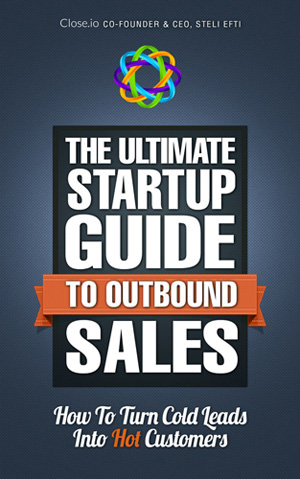
Launching: The Ultimate Startup Guide To Outbound Sales!

by steli@close.io (Steli Efti)

I'm super-excited to announce the launch of our first book:

cover

If you’re a long-time reader of our blog, and a subscriber of our (free) startup sales course, there’s nothing new in this book. This is simply a curated collection of posts, structured in a way that will make it easy for you to set up and optimize an outbound sales process for your startup.

You can read everything that’s in this book (and more) here on this blog. So why would you want to buy the book? Because it’ll save you hours of time trying to put the pieces together in the right sequence.

Is your time worth more than $19 an hour? Then buying the book is probably a sensible investment for you ;-)

And, since you're a regular around here, jot down this offercode: awesomesauce

That way you get the whole book for half the price ;-)

Read more here...

09 Jul 17:19

Why Your Company Has Trouble Getting Press Coverage

by James Gerber

Why Your Company Has Trouble Getting Press Coverage image angrywomanFar too often, companies believe that they are entitled to media coverage. Even when no message seems to be resonating, executives often try to find undeniable reasons why they should be receiving regular pieces of coverage in the highest tier outlets – places like the Wall Street Journal, Bloomberg TV or even new school outlets like Mashable.

Maybe your company makes a supremely cool product. After all, if your product is innovative and has features that the market hasn’t seen before, the media will surely be interested, right? Maybe you regularly speak in front of audiences in the hundreds or perhaps even thousands. That would seem to be worthy of being covered in the press. Your products or business could have won prestigious awards. You may have had a great piece of press coverage early on or you have $X million (or billion) in revenues. So why is it so hard now?

At our agency, we’ve heard all of these questions before. There is a tendency for executives’ myopic views on their businesses and products to cloud objective reasoning. They get stuck in the “Executive Echo Chamber”, where all of the praise and recognition they’ve received becomes a self-reinforcing loop that ultimately makes them believe they deserve the very best coverage without the tremendous amount of effort it takes to achieve it.

The truth is that media recognition is always earned… and it’s getting harder than ever to earn it.

Escaping the Echo Chamber

Reality check time: in the U.S., there are roughly six million businesses. Not all of those businesses are competing directly with yours for media coverage. Many might not even have PR functions or agencies helping them engage with external audiences. But you can bet that all are striving to gain mindshare. Thousands of people in an industry may follow a certain executive closely and turn up to see them speak, but journalists are jaded and nearly every company that they would consider covering can tell a similar story.

Let’s take a closer look at the gatekeepers. Currently, there are 57,000 full-time journalists employed in the U.S. Simple math shows that there are over 100 companies per journalist. That doesn’t sound so insurmountable, until you consider that the highest value targets for many companies, top tier business media outlets, only number in the dozens and employ perhaps several hundred journalists. Several hundred journalists who receive hundreds of pitches each day.

Even the most interesting announcements face an uphill battle to reach mainstream audiences. The truth is that even the developments that would normally pique the interest of top tier outlets may not garner coverage. Perhaps a reporter covered a similar story a couple of days before, or maybe there was breaking news that took precedence. Timing is everything.

Are Your Pitches Selfies?

Timing isn’t something you can always control, but being audience-centric, on the other hand, is. At SiriusDecisions Summit 2014, Marisa Kopec spoke about the need for brands to stop producing “selfie-style content”. I’d argue this applies to PR too.

Although every announcement or pitch will in some way revolve around a business or its products, whenever a company or a PR agency is reaching out to a journalist, it’s important to think about who that journalist’s audience is and how the news benefits them.

When a company and its representatives start focusing on an outlet’s specific audience and tailor the message to focus on the benefits the audience will get out of hearing a company or spokesperson’s news and views, they have a significantly higher chance of success. For a particular story, if there are no benefits for a given audience, take the story elsewhere and find the right audience. It may not be the business press, but the groundswell of coverage that your company achieves by taking this approach may just carry you there.

09 Jul 17:18

Five unusual podcasting tips from the trenches

by Mark

The Marketing Companion

Tom Webster and I have just completed our one-year anniversary of The Marketing Companion podcast. This has defintely been a “learn by doing” exercise for both of us so I thought with 12 months under our belt it would be appropriate to reflect on five unusual podcasting tips and lessons learned.

Limit complexity

One of the unusual aspects of our podcast is that we have had no guests. One of the benefits of this strategy is that we have limited complexity — our show doesn’t fall through if the guest gets sick, for example. Tom and I are busy so to keep this a joyful activity we keep the podcast creation as simple as possible, in every way.

Entertainment value

On every show we try to insert something that is off the wall and entertaining. If you are going to spend 30 minutes with us, yes, you will learn something … but you will laugh too. I think entertainment value is a huge idea as you think about standing out amid growing content density.

Generating conversational ideas

I think a key to our success so far has been developing conversational topics ahead of time. That gives us time to think, prepare and maybe add some quirky entertainment along the lines of the discussion. Nothing we record is rehearsed but we do think about the topics ahead of time. This has been a key to the successful conversations but I still wonder about this next one …

Do we worry about shelf life?

One amazing thing I have learned is that every month, new listeners go back and listen to earlier podcasts. I mean hundreds of people listen to those old shows. I did not expect that. The canon of podcasts we have created still means something, still generates downloads months after they have been recorded.

So an issue we struggle with is coming up with long-lasting topics. It’s easy to do “ripped from the headlines” commentary but we are aiming for something a little deeper and more profound in the podcast. Or should we even worry about that? I think we are still evolving and learning in this regard.

Promotion and the lack of it!

Our listenership is growing month by month — far exceeding expectations — despite the fact the sorry fact that we do nothing to promote it. With the exception of an introductory blog post, we do literally zero to ignite our work. Neither Tom nor I are rah-rah types so we recognize that self-promotion is a weakness for both of us. We TALK about promotion but haven’t done much about it.

The lesson? We must be creating something great because we’re sure not winning fans with our marketing skills! We are NOT a best practice to follow in that regard. We need to figure this out because we’re certainly sub-optimizing the great work we’re creating.

We are both craving feedback on the podcast. What can we be doing to create a better experience for you?

If you are just discovering our podcast, here is a handy Marketing Companion Episode Guide.

Other ways to listen to the podcast:

The funny graphic comes from my friend Ralph Cipolla. In addition to being a media and numbers wizard, he rules PhotoShop!

The post Five unusual podcasting tips from the trenches appeared first on Schaefer Marketing Solutions: We Help Businesses {grow}.

09 Jul 17:18

Tip for Busy Executives To Get the Most Out Of Sales Calls

by Miles Austin

Insist on a Video Meeting.

Insisting that sales calls be done via video meeting brings many benefits to the busy executive including shorter meetings, more control of the meeting, and the ability to size up the sales person’s value to your organization without having to deal with meeting logistics.

Video meetings can be extremely effective for all participants in this type of meeting:

  • It is easier to view a demo on your own screen vs. that from the laptop or tablet of the salesperson.
  • Finding a place to have the meeting is never a problem, whether in your office or on the road from your hotel.
  • No travel time for either side to get to the meeting.
  • Video meetings can accommodate multiple people more easily, and adding additional members of your team is easily accomplished no matter what location they are in.
  • You will eliminate many of those unproductive first calls because sales people are simply not prepared to conduct a video call.

Not sure what I am suggesting is valid? Try this for one week and judge for yourself. I am confident you will be surprised by your results.

Before you do, you need to make sure that you are able to participate in a video call yourself. Here is a checklist to prepare:

  1. Webcam is available and ready to go. Most current laptops and tablets have a webcam built-in. If you do not have a webcam, I recommend purchasing a Logitech C920 HD Webcam ($68 on Amazon).
  2. Microphone is available and ready to go. Same as above, if you have a built-in webcam you will have a microphone built-in as well. If not, I recommend a USB microphone for most people using a desktop or laptop. If not available, I recommend the Blue Snowflake USB microphone (Amazon $41) for most applications. There are more expensive options to consider if you will be using a microphone for other purposes like podcasts and internet calling applications in addition to video.
  3. Use headphones or earbuds. This will provide clear sound and prevent the interference from the speaker sounds being picked up by your microphone.
  4. Check the bandwidth of your internet connection. It is important to check not only download speed for the information coming in to you, but also the upload speed for the info you are sending back. I recommend a connection speed of at least 1.5 MB download and upload if possible and more if available. Use this link to check your connection speed.
  5. Check with your IT team to learn if any specific video calling/conference services are being blocked by your company. That will eliminate any surprises at the time of the meeting.

There are numerous video calling/meeting services that are available. Some are free and some require payment from the person initiating the call. In order to test out your video meeting capabilities once you have reviewed the checklist try one or more of these services:

  • Google Hangout
  • Skype
  • GoToMeeting
  • Fuse

Try one or more of these out by calling a colleague, or having them call you. This will allow you to become comfortable with the environment, the camera angle and how the microphone sounds.

TIP:  Here is a little tip I discovered that helps me have a more enjoyable experience as well as that of my guest. Draw a circle on a blank piece of paper (about 3-4 inches Webcam Smileyacross).Draw some eyelashes, eyes, nose in the circle. Then cut out an area larger than your webcam lens so that the lens will be unobstructed. Cut out the circle and tape to your monitor or webcam with the lens showing through. Here is what mine looks like.

This helps me to talk to the “head” if you will. Otherwise I found that I was looking all over the screen, rather than at the person that I was meeting with. Another tip that I have found useful is to shrink the window size during the conversation fairly small and then move the screen to the top and directly under the webcam if possible. This also helped keep my focused on the face. I have been known to actually turn off my screen if I am having trouble staying focused on the person I am meeting with online.

Give video meetings a try, even for just a week and then come back and share your experience. If you are already using video meetings I hope you will share your recommendations and experiences in the comments area as well.

If you want to try this out, send me an invitation for a video call on Google Hangouts.

Original article: Tip for Busy Executives To Get the Most Out Of Sales Calls

©2014 Fill the Funnel. All Rights Reserved.

09 Jul 17:18

Great Marketing Content Always Requires Trade-Offs

by David Dodd

In a landmark article for the Harvard Business Review, Michael E. Porter wrote that the essence of business strategy is choosing to perform business activities differently – or to perform different activities – than competitors. Porter also argued that a powerful strategy always involves trade-offs. If you design and arrange your activities to excel a delivering a specific value proposition, you will be less able to effectively and efficiently deliver other types of value. Therefore, strategy is about deciding both what to do and what not to do.

A variation of Porter’s principle applies to content marketing. To be highly effective, each content resource you develop must be designed to address the concerns and interests of a specific target audience. And when a content resource is truly designed for a specific target audience, that resource will inevitably be less appealing to other audiences, some of which may be important to your company. It can be tempting to design content resources that will appeal to multiple audiences, but this is usually a mistake. The title of a recent blog post by Joe Pulizzi makes the point clearly:  “If Your Content Marketing is for Everybody, It’s for Nobody.”

Whenever I talk with prospective clients about starting a content marketing program, one of the first questions they ask is:  “Why can’t we create one content resource, say a white paper or an e-book, that tells the whole story? It could include a description of the problems we can solve and the benefits our solution can provide, and we could include a couple of customer success stories to demonstrate that we can deliver what we promise.”

At this point in the conversation, the image of a Swiss army knife always flashes in my mind. As you probably know, a Swiss army knife is a tool that’s about the size of a large pocket knife. In addition to regular knife blades, it has several other attachments, such as a bottle opener, a can opener, a screwdriver, and a file. So, a Swill army knife is a real multi-tasking tool and a handy thing to have on a camping trip or a hike.

Some B2B marketers believe they can create one content resource that will appeal to all of their target audiences and fill all (or most) of their content needs. In essence, they want to create the content marketing equivalent of a Swill army knife. Unfortunately, however, the Swiss army knife approach to content marketing doesn’t work well. Here are two of the primary reasons.

Diluted Relevance – When you create a content resource that’s designed for multiple audiences, it will inevitably include information that’s not very relevant or interesting to some of those audiences. Suppose, for example, that you offer a technology product that must be sold to plant managers, IT directors, and CFO’s. Each of these buyer types will have distinct concerns and priorities. If you create one content resource for all of these buyer types, you are essentially asking each potential buyer to wade through material that doesn’t particularly interest him or her in order to find the information that addresses his or her primary concerns.

Excessive Length – Even if the relevance problem didn’t exist, when you try to “cover all the bases” in one content resource, you are likely to end up with a very long resource. The problem with long content resources is that most potential buyers now have short attention spans. They usually prefer to consume content in small doses, especially when they are in the early stages of the buying process. Most early-stage buyers simply won’t be willing to invest the time it takes to read a 50-page white paper or e-book.

The bottom line is that developing good marketing content always requires you to make trade-offs. When you develop a content resource for a specific target audience, it probably won’t be appropriate of other audiences. For an effective content marketing program, you’ll need distinct resources for most of your primary audiences.

09 Jul 17:17

The 12 Most Popular Free Online Courses For Professionals

by Maggie Zhang

computerWant to gain an edge in your working life? Learning new skills online doesn't cost you anything but time.

Based on data from online education platform Coursera, we compiled a list of the 12 most popular, free online classes for working professionals.

Here they are, ranked by popularity:

1. Wesleyan University's "Social Psychology"

Coursera's most popular course offers an introduction to classic and contemporary social psychology, covering topics such as decision making, persuasion, group behavior, personal attraction, and factors that promote health and well-being.

Starts July 14

2. University of Maryland's "Programming Mobile Applications for Android Handheld Systems"

This is an introduction to the design and implementation of applications for handheld systems, such as smartphones and tablets, running the Android platform. It is part of a larger sequence of specialization courses called Mobile Cloud Computing with Android.

Starts September 26

3. Duke University's "Think Again: How to Reason and Argue"

This course will teach you how to reason well. You will learn how to understand and assess arguments by other people and how to construct persuasive arguments of your own.

Starts August 25

4. Duke University's "A Beginner's Guide to Irrational Behavior"

In this course, you will learn why we don't always behave rationally, and how we might overcome our shortcomings. You'll also learn about cases where our irrationalities work in our favor, and how we can harness these human tendencies to make better decisions.

Start date TBD

5. University of Toronto's "Learn to Program: The Fundamentals"

This course introduces the fundamental building blocks of programming and teaches you how to write fun and useful programs using the Python language.

Start date TBD

6. Stanford University's "Startup Engineering"

This course will help you bridge the gap between academic computer science and production software engineering. It's a fast-paced introduction to key tools and techniques, featuring guest appearances by senior engineers from successful startups and large-scale academic projects.

Start date TBD

7. Yale University's "Financial Markets"

You'll gain an understanding of the theory of finance and its relation to the history, strengths, and imperfections of banking, insurance, securities, futures, and other derivatives markets, as well as the future of these institutions over the next century.

Start date TBD

8. The University of Pennsylvania Wharton School's "An Introduction to Financial Accounting"

This course will improve your fluency in financial accounting. You will learn how to read, understand, and analyze most of the information provided by companies in their financial statements. 

Starts September 5

9. University of Washington's "Introduction to Public Speaking"

In this class, you will study the principles of public speaking and critically examine your own and others' speeches through interactive practice. By the end, you'll understand the process of writing, practicing, and presenting a clear and engaging speech.

Start date TBD

10. University of Michigan's "Introduction to Finance"

This course primarily focuses on the fundamental principles of valuation and how to apply the concepts of the time value of money and risk to understand the major determinants of value creation.

Starts October 6

11. The University of Pennsylvania Wharton School's "An Introduction to Marketing"

This course will teach the fundamentals of marketing by getting to the root of customer decision making. It will focus on branding strategies, customer centricity, and new market entry.

Start date TBD

12. Johns Hopkins Bloomberg School of Public Health's "Data Analysis"

Through this applied statistics course, you will learn about the most effective data analysis methods to solve problems and achieve insight. You will cover some of the most popular and widely used statistical methods like linear regression, principal components analysis, cross-validation, and p-values. 

Start date TBD

SEE ALSO: 17 Web Resources That Will Improve Your Productivity

Join the conversation about this story »

09 Jul 17:17

The Alliance at LinkedIn: LinkedIn Speaker Series with Reid Hoffman and Jeff Weiner

by Ben Casnocha

Reid and Jeff Speaker Series

Last week, I had the pleasure of chatting with LinkedIn co-founder and executive chairman Reid Hoffman and CEO Jeff Weiner for the LinkedIn Speaker Series about our new book The Alliance: Managing Talent in the Networked Age.

The premise of the book is that the employer-employee relationship is broken. Managers face a seemingly impossible dilemma: You can’t afford to offer lifetime employment. But you can’t build a lasting, innovative business when everyone acts like a free agent. The solution? Stop thinking of employees as family or free agents, and start thinking of them as allies on a tour of duty.

Inspired and informed by LinkedIn’s founding, and filled with stories and lessons from companies throughout Silicon Valley and beyond, The Alliance teaches managers how to recruit, manage, and retain today’s entrepreneurial employees.

We touched on all these themes and more in the lively conversation. Here were some of the highlights from the chat:

Both company and employee should add value to each other. As Reid described it, think of employment as an alliance: a mutually beneficial deal, with explicit terms, between independent players. In an alliance, employer and employee develop a relationship based on how they can add value to each other. Companies need to tell their employees, “Help make our company more valuable, and we’ll makeyoumore valuable.” Employees need to tell their companies, “Help me transform my career, and I’ll transform the company’s trajectory.”

Build trust and loyalty with honest conversations. Jeff emphasized that the Alliance is all about trust and relationships. And trust is built in the conversations that occur between managers and employees. He said, “One of the things I’m so excited by in the Alliance is that it shines a light on a fundamental conversation that all of us should be having.” In particular, he said that when an employee and manager cannot speak openly about career goals and time horizons, it breeds distrust. “The distrust is not really explicit,” he said. “It’s not ‘I don’t trust my manager.’ It manifests more with questions like, ‘Should I really be talking about this? Should I let my manager know that I may not be here in X number of years?’”

Everyone should be on a tour of duty, and there are different kinds of tours. A tour of duty represents a commitment by employer and employee to a specific, mutually-beneficial mission over a realistic period of time. Of course, there are different types of employees and different roles. Jeff named the three sub-types. Rotational tours are programmatic “on-ramps,” such as a 2-year analyst program. Transformational tours are highly personalized missions that promise career transformation for employee, and company transformation for the company. Foundational tours are for employees who cannot envision working anywhere else; who have become part of the emotional fabric of the company, and vice versa.

Institutionalize network intelligence. Jeff and I both referred to Reid as one of the best in the world at using his network to gather intelligence on what’s happening in the industry. Managers should encourage employees to do the same: look outward, tap their network, gather intelligence on industry happenings, and share what they learn with their colleagues at LinkedIn. Of course, LinkedIn is quite helpful for doing this. What’s more, encouraging employees to leverage their networks also helps them be better networked in their career later on—which exemplifies the spirit of alliance.

Lifetime employment may be over, but a lifetime relationship can endure. Reid described the creation of the LinkedIn Alumni Network and how the company aspires to invest in a lifelong relationship with its former employees. Fittingly, there were 10 LinkedIn alumni who joined us at the event.

Watch the video, visit the Amazon page for The Alliance to learn more about the book, and join the LinkedIn Group for The Alliance to join the conversation.

09 Jul 16:38

Everything You Need to Know About Designing Valuable Customer Surveys

by Ott Niggulis

Everything You Need to Know About Designing Valuable Customer Surveys image wpid Featured Picture39 e1404228557361 600x212

Conversions are mostly about being relevant to your customers. If what you offer and the way you present it is relevant to your visitors they will convert to buying customers.

Then again if you don’t understand who your customer is or worse it’s “everybody” then you have very little change of being successful at it.

So you better know your customers, and know them well. This is where qualitative research comes into play – it enables you to learn who your customers are, what they want, what language they use and more. So it’s safe to say that all this qualitative stuff is important.

Qualitative, Quantitative, Whatever -tative… What’s The Difference?

Everything You Need to Know About Designing Valuable Customer Surveys image Audience Overview Google Analytics 1 e1404209009959 600x80

Before we go any further let’s make sure we’re on the same page.

Quantitative data deals with numbers & absolute measurements, it’s data that can easily be measured.

Mostly in CRO we’re dealing with this kind of data. Your conversion rate, a/b testing results, scroll depth, heat maps etc – they all give you concrete numbers and facts.

Everything You Need to Know About Designing Valuable Customer Surveys image mouse move heatmap medium 1

Qualitative data at the same time deals with descriptions and not with numbers directly. That makes it harder to analyse as you first must understand the data, then interpret and analyse it.

Everything You Need to Know About Designing Valuable Customer Surveys image qualaroo survey voice of customer 1

They are both very valuable, just what you get from each is different.

So in short, quantitative data (numbers) tells us that something is wrong, while qualitative data answers the question WHY it’s wrong. In the rest of this article we’re going to be concentrating on qualitative data, more specifically getting it through qualitative surveys

Seems Like A Lot Of Work, Does This Stuff Really Work?

What do you do when you have a new product coming out, you know the product is good because people who have used say so. You send out email launch campaign to highly targeted list of 30 000 people and only 30 people sign up?

You go and run a qualitative survey on those people who clicked through but didn’t buy the product of course! That is what Noah Kagan did when he launched “How To Make a $1,000 a Month Business.”

Everything You Need to Know About Designing Valuable Customer Surveys image business type appsumo e1404209029148 600x222

The survey had 4 simple questions:

  1. Were you at least interested in buying? YES or NO
  2. Be specific about the answer
  3. What’s holding you back from starting your business?
  4. Should we make our support sumo do a dance video?

Armed with data and doing analysis on it they completely redesigned the landing page using the customer’s language & “business type” to provide answers to most pressing fears and concerns.

How they addressed this is a direct result of who they surveyed, but more on that later.

Where To Start With Qualitative Surveys?

The goal with any kind of survey is to learn something that you didn’t know before. I see it all the time where the business will “do surveys” but never end up with anything that can actually use.

Everything You Need to Know About Designing Valuable Customer Surveys image Please Rate The Following Conversations

With qualitative surveys it’s more specific – you’re looking to collect both the negative & positive feedback that can lead to real outcomes in the future.

For example, if you wanted to use qualitative feedback to improve hiring practices, asking someone to rate the “Friendliness of Staff” on a scale of 1-5 wouldn’t tell you much about the personality attributes that lead to a positive customer experience.

Instead, questions like “Was there an employee that made your experience enjoyable?” & “What was it about them that made them stand out?” could reveal top performers as well as favorable personality traits that align with your company values.

Another benefit is that you’ll get insights into how your users are describing you, which in return you can use to refine your value proposition and come up with ways on why you are better and/or more unique than your competitors a.k.a the magic sauce.

Who Should I Survey?

Who you survey will be largely be dependent on the outcome you’re looking for & the customer segments you’ve set up.

If you want to improve your buying process, survey brand new buyers (and the people who didn’t buy). If you want to start a loyalty program to improve customer retention, survey frequent buyers. If you want to start a VIP program for top spenders, survey customers who spend a lot of money with you.

This may seem pretty straight-forward, yet, data from The Relevancy Group’s 2010 survey suggest that the majority of marketers are still primarily focused on Demographic & Geographic customer data.

Everything You Need to Know About Designing Valuable Customer Surveys image email segments e1404209072375 600x370

And this isn’t just because this study is 4 years old that segments still aren’t set up properly. Research from the CMO Council & Penton Media in Q4 of 2013 found that only half of the companies surveyed felt they had good transactional, behavioral & customer support data.

Everything You Need to Know About Designing Valuable Customer Surveys image emarketer data analysis 1

Some ideas for customer segments are:

  • Big Spenders
  • Frequent Buyers
  • In-frequent Buyers
  • Longtime Customers
  • Registered Non-Buyers
  • Demographic
  • Interests
  • On-Site Browsing History

There are several articles out there on segmenting your customer data, you can find some of my favorites here, here & here.

Low Hanging Fruit – People Who Opened, Clicked, But Didn’t Buy

Everything You Need to Know About Designing Valuable Customer Surveys image how to make a 1000 a month business 1 e1404210768955 600x254

screenshot of Monthly1k.com

Remember how Noah asked the people who had clicked through but had not purchased the product?

Using his own qualitative survey, he learned that the reason people didn’t buy was because they were:

  1. Afraid
  2. Didn’t know if it would work in their country
  3. Were unsure if the program would work for them
  4. Had failed before & didn’t know how this time would be different

Afraid:
Everything You Need to Know About Designing Valuable Customer Surveys image Validating Ideas

Works in my country:
Everything You Need to Know About Designing Valuable Customer Surveys image works around the globe 1 e1404209180302 600x256

Works for me:
Everything You Need to Know About Designing Valuable Customer Surveys image Money Problems 1 e1404209118610 600x230
Failed before, what’s different:
Everything You Need to Know About Designing Valuable Customer Surveys image Weve got your back 1 e1404209164587 600x217

While Noah didn’t disclose the exact lift in conversions or revenue this process brought about, he did say it “literally changed the product overnight.”

Read the full story here.

The moral of the story is, don’t disregard people who don’t buy right away. By opening, clicking & not buying, they’ve shown interest, so go and figure out what is stopping them from buying.

… And How Many People Should You Survey?

Everything You Need to Know About Designing Valuable Customer Surveys image sample size e1404209139310 600x94

We aim for a total between 100 – 200 responses for all our customer surveys. If we get more than a 200 responders, we randomly choose 200 and analyse those.

Once we get over 200 responses the answers tend to repeat and thus don’t offer any new insights. If we get less than 100 then some especially loud and negative voices can skew the results.

Then again if you only have 100 people who have recently bought from you, you have to make do with you have. 20 is still better than nothing, you just have to be more careful with your analyses.

Getting People To Respond To Surveys

From our experience, the best way to get your customers to take action and fill out the survey is to offer some kind of an reward. It can be a gift card, coupon code, free shipping etc.

Everything You Need to Know About Designing Valuable Customer Surveys image Help us out for a chance to win a 500 gift certificate tommyisastrategist gmail.com Gmail e1404209102831 600x111

Tommy pointed out to me that while you could choose a prize arbitrarily based on the size of your company or the amount of people you expect to respond- the more data-driven approach would be to offer a prize that somehow reflects the lifetime value of the customer segment you’re trying to acquire or retain.

In the ThinkGeek example above, they offered Tommy a chance at a $500 gift certificate in exchange for feedback.

Out of context, that’s a lot of money, but according to Tommy, he’s spent at least 4-5 times that in the last year. If ThinkGeek were to use that qualitative data to acquire (or develop) just 4 customers like Tommy, they’d make an extra $10k/ year.

That’s A LOT of Useless Box Kits:
Everything You Need to Know About Designing Valuable Customer Surveys image useless box kit anim

But Won’t People Only Respond Because Of The Gift & Skew The Results?

Yes. That risk is always there, but in our experience it’s well worth it – the advantages from having this data far outweigh potential risks. Plus, we have yet to see a case where “clever” people are skewing results in a major way.

There are always some smart asses, but in reality if we take 100 responders then the most we have seen is around 5 people who only do it for the gift. And they didn’t really skew any results as they simply wrote one word answers to all the questions and so were excluded in the analysing phase.

Tips And Tricks

When sending invitations for the survey, keep the email as short and simple as possible. Mention how long approximately the survey will take. (alternatively use number of questions – “It’s only 5 short questions”)

Use fairly short deadlines (up to a week) and send reminder emails before the deadline. The reality is that the majority (around 80% in our testing) of answers will come within the first 24 hours of sending the email.

The Email Template We Use

We use a generic template when sending out email surveys which we tweak for every client based on their needs.

Here’s the template:

***START OF LETTER***

Hey guys,

We’re constantly trying to provide a better service for you – and we

need your help. Help us understand your perspectives.

Please take 5 minutes to fill out this quick survey: http://link

It’s only a handful of questions, but will really help us learn.

Please fill it out in the next 2-3 days.

Again, this is the link: http://link

We know your time is valuable, so every respondent gets rewarded.

You can choose between $25 amazon gift card, $25 starbucks gift

card, $25 donation to united way or free shipping on your next

order. We’ll contact you after you fill out the response.

Thanks so much.

*** END OF LETTER ***

You can use the same or use this as a basis for your own creation – have fun.

Specific Questions You Could Ask

What you want to achieve with your questions is try and get into the heads of your customers and understand how they think, why they buy, how they buy, any frictions points etc.

For that we typically ask the following questions to get the best insight:

  • What can you tell us about yourself? -> to spot trends of where the majority of our customers come from. If B2B try to get information about industry and position in the company. If demographics matter, ask- If they don’t, don’t bother.
  • What are you using [product] for? -> What problem does it solve for the customer?
  • How is your life better thanks to it? -> end benefit of your product in the words of your customers, great for value proposition.
  • What made you sign-up/buy our product? -> what’s working for you in your current website + advantages.
  • Did you consider any alternatives to our product / buying from us? If so, which ones / how many? -> how much they comparison shop?Critical into to make a better case of why buy from you.
  • Which doubts and hesitations did you have before completing the purchase? Identify main sources of friction, and address them (or fix them if they’re usability problems).
  • What’s the one thing that nearly stopped you from buying from us? This is about identifying friction again, coming from a different angle.
  • Which questions did you have, but couldn’t find answers to on the website? 50% of the purchases are not completed due to insufficient information. This helps you identify some of the missing information your customers want.
  • What was your biggest challenge, frustration or problem in finding the right product? This helps you learn about the way people would like to buy.
  • Anything else you would like to tell us? Leave room for feedback you don’t know to ask.

Don’t take this as gospel, if you have questions that are specific to your business than include them.

And make sure that whatever you are asking, that the information is actionable – don’t ask something just because you’re curious.

Analyzing Survey Responses

This is where the fun begins! What happens next is all about manual labor. The process we use is the following:

    1. We go through the data to get an initial sense of what’s going on
    2. We “code” the data – to organize it into some kind of readable and manageable form
    3. Interpret the data
    4. Write a summary report about your findings

Depending on how many responses you have, it can take anything from a couple of hours to a couple of days – be prepared for that.

Step 1 – Going Through Data

In this step you go in and look at responses question by question. What you’re trying to do is to identify trends and patterns that you can write down to review later.

Everything You Need to Know About Designing Valuable Customer Surveys image ConversionXL auto survey Responses e1404209043200 600x219

Beware of your biases – it’s human to look at the data and spot a view trends right away (at least something that looks like a trend), and then start looking for info that “proves” that trend while leaving out the rest.

This will happen. If needed, take a break and come back later with a clear head.

Step 2 – Coding The Data

Once you have gone through the data, you should have an idea forming in your head already on who the people who buy from this side generally are. You can attach code names to those people.

So let’s say our client is WordPress theme shop. By reading through the data we’ll get an initial set of code names for responders:

  • A blogger who is starting out and looking for his/her first WP theme (Blogger)
  • Professional web designers purchasing themes for clients website (Designer)
  • Small business looking to upgrade their current site (Small-Biz)

As you go through the answers you can create more codes and modify them – this will give you a much better overview of who you’re dealing with. Plus it gives you an idea of how to organize sales copy on the sales page -> the biggest group first etc.

Another thing is to codify the answers, so if we’re WP theme shop then the question of “Why did you purchase a theme from us” answers could be codified like this:
Everything You Need to Know About Designing Valuable Customer Surveys image wp theme e1404209241247 600x238

And then it’s just a matter of putting either a “1” or “0” in the column and move on. The codes you use depend solely on the answers that responders give you, that’s why you need the initial reading to grasp what you’re dealing with.

Step 3 – Interpret The Data

What patterns are you seeing? Write those down. By now you have enough to come up with hypothetical personas that can be used to further target your messaging.

When Meg Hayne, the president of clothing brand Free People was asked about their ideal customer, she answered:

Everything You Need to Know About Designing Valuable Customer Surveys image Meg Hayne 1

“She is independent yet loves being with her friends, her family, and her mate. She travels every spring to festivals, Coachella and Wanderlust being her favorite. She runs and practices yoga to stay fit and balanced. She is influenced by fashion but yet seeks inspiration from all over the world to put together a look that is her own. She is a mix of sweet, cool, and boho and everything in between. We target age 26…”

Now could this all be made up? Sure. But where Free People, and parent company Urban Outfitters are more lifestyle brands than fashion retailers, guessing about how their ideal customers leaves more room for error which would result in total brand messaging that completely misses the mark.

A glimpse at the home-page & it’s easy to see how their model reflects the ideals of their core customer:

Everything You Need to Know About Designing Valuable Customer Surveys image Free People Homepage 1 e1404209093651 600x230

By coding each individual question in step 2, you can easily put together an amalgamation of your ideal customer, or the problem that is holding them back from buying.

In this case study about web app Photoshelter, their customer surveys found that offering the “limited” version of the app for free was preventing the company from doubling sales.

“Our surveys revealed that PhotoShelter’s visitors were anxious to try out the product. PhotoShelter already had a free version, but it had limited features, and an analysis of the business data revealed that it wasn’t particularly effective at persuading users to upgrade to the paid versions.”

In response, they tested offering users a $1 trial offer to try the full app for 14 days:
Everything You Need to Know About Designing Valuable Customer Surveys image Offer to try for 1 1

This, along with surveying other segments & a handful of other tests ultimately lead to doubling the revenue for Photoshelter.

When analyzed thoroughly, these surveys will help you to test what matters most, prioritize issues, add features, and discover what your customers and prospects care about the most.

Step 4 – Summary Report

Summary report is where you bring all the learnings you had together into a readable format with all the personas you did, prioritized issues and general findings and patterns:

Everything You Need to Know About Designing Valuable Customer Surveys image persona 1

Once you have this report ready, you go on into taking that data and the issues you found from that and putting them against findings from your own user testing, heatmaps, exit-surveys and the like. This is quite in-depth, and we will be covering this in future articles.

So now we have we shown you why qualitative survey’s are needed, how to run them, what to ask and how to analyze it all. But what we haven’t done is taken a look at software options that actually make it all possible, so let’s do that now.

Tools To Use For Conducting Surveys

When it comes to tools, then the first thing that comes to mind is Google Drive Forms – they are simple and free but look, well, plain and simple.

In addition we use Typeform, which has also got an very capable free version. With that it’s super easy to create the most beautiful surveys you have ever seen.

As an added benefit their surveys are responsive and are usable with all kind of different devices.

You might think that that is not important, take a look here:
Everything You Need to Know About Designing Valuable Customer Surveys image device for taking survey e1404209056561 600x258

A large percentage of responses came from smartphones. The above data is from one of our clients through Typeform – it gives you way more specific data than others which can be important. Another good one is SurveyGizmo, give them a try.

Conclusion

Customer surveys, when done well, aren’t just an exercise for businesses to pay lip-service to how much they “care about their customer” or to pat themselves on the back about how well they’re doing.

Instead, they are a way of having an open dialog with prospects, existing customers & former customers that can help you to troubleshoot real issues & unlock your companies growth.

09 Jul 16:38

3 Reasons Why Inbound is More Lovable Than Traditional Marketing

by Liz Pate

3 Reasons Why Inbound is More Lovable Than Traditional Marketing image love is in the air.preview 600x222

I recently attended one of HubSpot’s Inbound Marketing events, where hoards of inbounders talked shop and listened to some insightful presentations. Dan Tyre, HubSpot’s sales director, opened the floor by discussing various aspects of inbound marketing, and though his entire presentation was great, one statement stood out to me—“Marketing has a lovability problem.”

I’m sure most of you have heard that quip before, but it never hurts to reinforce the fact that marketing is not the same.

Just two weeks ago, Richard Edelman, president and CEO of one of the world’s largest public relations firms, declared traditional marketing is broken. In this Contently blog post, Edelman insists the only way to break through the clutter and reach today’s self-educated buyers is to share relevant content with them before the sales pitch—everything else will eventually connect if it’s done well.

But, despite the fact we know traditional marketing isn’t working like it used to, many marketers have failed to change their ways. I’m sure you’ve recently muttered the phrase “Stop trying to sell me your product” or “Stop emailing things I didn’t ask for.” I receive countless marketing messages every day. It can be annoying to receive things you don’t want. And that little annoyance—it’s what I like to call old school marketing—and it’s not effective.

The good news is, this is not how inbound marketing works, which is why it’s winning the battle these days. Not sure whose side you’re on yet? Keep reading as I explain why inbound is in fact more lovable than traditional marketing.

The Customer is in Control

Repeat after me: “THE CUSTOMER IS IN CONTROL.” You don’t find them anymore, they find you. And inbound marketing gladly accepts this fact.

Not only are buyers in control, but they’re self-educated. By the time they are ready to purchase, they know what they need, they just don’t know who they’re going to buy it from yet. This is why inbound marketing stands the greatest chance at reeling in quality buyers. How? Because we are armed and ready with the information our customers are looking for.

Traditional marketing or “old outbound” as Dan called it just yesterday in his blog post, is pushy and—surprise—it pushed the vast majority of its potential buyers away. Meanwhile, inbound marketers are waiting patiently to serve up the content buyers want.

Inbound is Personal

Beyond just creating quality content, inbound marketers take a lot of time up front getting to know their potential customers. We know content is only as good as it is relevant. If our buyers need product A and we come prepared to talk about Product B, we’ve failed the mission—it’s that simple.

But how does one go about getting to know their buyers? Two words—buyer personas. Here, marketers invest their time understanding the buyer’s journey. To really master personas though, you need to know buyer pain points, too. And more importantly, your content must speak to the specific buyer pain points.

If marketing in general wants to redeem itself, it must stop trying to sell and start educating. It’s time to stop pushing messages on buyers and start pulling them in with quality content that’s specific to their needs. After all, it is about them, so the solutions you offer should be about them.

Inbound has all the Tools and the Best Teams

Inbound marketing is a healthy mix of art and science. For art, think content marketing. For science, think marketing automation.

But what’s even better than the fact we have all the tools we need, we also have powerful teams. Today’s content marketing, which fuels inbound marketing, is often created by trained journalists, public relations savants and marketing gurus—all of which are here to serve their audiences. We even throw a little advertising in there for good measure. We also have marketing technologists galore backed by experience with almost every platform you’ve heard of.

Basically, we do it all. But we do it to empower the buyer to make the best decision for their needs—not just to sell our product. That is what sets inbound marketing apart from traditional marketing. And it’s what makes inbound more lovable.

Still doing it the old school way? You know you can do better. Get our free guide, “Inbound Marketing: Buy-Ins, Budgets and Best Practices” to start your journey to lovable marketing.

3 Reasons Why Inbound is More Lovable Than Traditional Marketing image 7dd02b1c c0ae 49fb 867c 790a990eaf0d1 600x124

photo credit: createwebquest.com

09 Jul 16:38

5 Smart Social Community Strategies That Boost Sales

by Ernan Roman Direct Marketing
Business 2 Community
By Ernan Roman
Reprinted from: Business 2 Community


The Challenge: Social media has evolved into more than just another advertising channel, with communities transcending traditional social media channels. To make the most of these new opportunities, marketers need to learn what it takes to drive sales through relevant and targeted conversations.
Strategy One: Be authentic to your brand… and to customers
Online CommunityEvery brand that succeeds on social media does so by achieving a consistent voice that’s authentic to its core message. By connecting with a responsive social audience through communities, meaningful conversations become building blocks for achieving sales objectives. For example, CLIF Bar in keeping with its message of fitness has joined the People For Bikes initiative, which is consistent with its brand message, and provides a way to directly interact with their proven customers.
Per Eric Nystrom, Director, Social Media Services Group at Dell, “In today’s world people are not interested in talking to brand spokespeople or marketers. They are interested in connecting with empowered employees and subject matter experts. Social is about relationship building”.
Strategy Two: Connect through communities
Social communities resonate with customers and let brands connect on a deeper level via viral conversations which can far surpass the reach of a singular post on a social wall. As a matter of fact, social interactions now go beyond traditional social media into mobile experiences, television events, webinars, chats, and more. Two-way interactions enable customers to become part of the brand because they can gain answers to questions, address objections, and understand brand value. Coca Cola took advantage of the recent World Cup with the goal of creating the most inclusive FIFA World CupTM Coca-Cola campaign… ever. Emmanuel Seuge, Vice President Global Alliances & Ventures stated that, “…we set out to create the most inclusive and participatory FIFA World Cup™ ever. … we gave fans from all around the world the unprecedented opportunity to be a part of the greatest soccer stage of all… “
Strategy Three: Really understand how your customers connect
Turns out the way people interact on social media is similar to that of real life. In a joint study by the University of Georgia, Pew Research Center, and Social Media Foundation it was discovered that when people interact in social media they create patterns of social interaction. Identifying the specific groups of people talking about you, lets you understand who they are, what they are saying, and what connects them to your brand.
Strategy Four: Know where to find your customers and how they communicate
Additionally, the same study found that when marketers, target key meaningful communities they also zero in on key conversations, key words, and hashtags being used about the brand.
Gatorade reached out to its core customers with a “Beat the Heat” campaign that let them connect with their key groups of customers with a message of safety and health.
Strategy Five: Understand what information customers need
Sears has created Shop Your Way Rewards which gives customers a place to find product information, ask salespeople questions, and share recommendations.
According to Eric Jaffe, Senior VP “In the grand scheme of things, social media is …about building engagement and promoting conversations… around our brand…. We are focusing around the members, and building relationships with them that go beyond what they purchase from us…. Groups, especially social communities, are the most valuable to retailers….Highly engaged members end up spending more and — more importantly — shop more frequently.”
5 Takeaways that boost sales through social communities
1. Engage consistently in a manner that that reinforces your core brand message. Make sure that every channel delivers a reinforcing statement that helps customers move towards a purchase.
2. Understand which groups are the most valuable to your sales objectives. Not all consumers or social audiences have a purchase intent. Understand what social avenues best address buyers’ needs for actual purchase information.
3. Do what it takes to address consumer needs. Put in place strategies that let actual staff members interact with potential buyers so that they have access to the brand and have the resources necessary to move forward with a purchase.
4. Empower consumers to strengthen their voice. By giving your customers a platform you are empowering and respecting their voice.
5. Deliver the latest information, news and trends about your brand. If customers do not fully understand why they need to buy, they won’t go down the purchase journey with your brand. Social communities let existing customers and potential buyers understand what you are offering and your brand’s value proposition.
09 Jul 16:37

A Purchase Is Not An Isolated Event

by info@sharondrewmorgen.com (Sharon Drew Morgen)

goal-250x187Why does the sales model merely focus on placing solutions when it’s last step buyers take during the buying decision process?
Would you ever jump up out of bed and say, “Geesh! I think I’ll just go out and buy a new car today! Maybe I’ll go to that dealership around the corner and see if there’s a pretty one!”
Would you ever come into work and announce:
“Guess what! I had an inspiration last night and bought all 1500 of us new CRM software from an ad I saw! They’re installing it next week! Hope you tech guys and users like it!”

If you were going to buy a new car, you’d get agreement from your buddies, do research, test drive some cars, peruse your budget, see about selling your current car. If you were going to buy your company software, you’d collaborate with the techies on whether now might be a good time to make changes, see how the new features overlap with existing software to handle implementation, and get buy-in and requirements from users.
The very last thing you’d do was make the purchase.

FACILITATE THE CHANGE FIRST
Pushing costs you sales and wastes time. You swoop in trying to be there the moment buyers are ready to finalize a choice. You try to get appointments with people who haven’t gone through their change management path yet. You waste time seeking the low hanging fruit.
Buyers must go down their decision path with you or without you. They start at the beginning, managing the full change process, not at the end where your solution comes in.
Let me teach you Buying Facilitation® and stop spending so much time, effort, and resource pushing information on the very last thing a buyer needs. Facilitate their buying journey. No, it’s not sales. But would you rather sit and wait for a few of them to show up? How’s that working for you?
This article is a scold: for goodness sakes, stop wasting so much of your time focusing on the very last piece of the buyer’s journey. Facilitate change first. Teach folks on cold calls how to think about systemic change. Then you can sell.

Buying Facilitation® works with sales to first facilitate change and then place solutions. Let me teach you the model. Sharondrew@sharondrewmorgen.com

A Purchase Is Not An Isolated Event is a post from: SharonDrewMorgen.com

09 Jul 16:33

Use Small Wins to Build Trust Between Partner Companies

by Andrew Shipilov

Douro Boys is a group of five independent wineries in the Douro River Valley in Portugal that built an alliance network after realizing that they could not compete on their own. The partners act almost as a single firm, sharing knowledge about wine making and markets. Their wines, such as “Quinta do Vallado” or “Niepoort” now routinely get over 90 points by the Wine Spectator and sales have doubled over the last ten years.

But as Joao Ribeiro, CEO of a partner winery, likes to repeat, Portuguese business people tend to be staunchly independent. So it was very difficult to get five companies to work towards the same long-term goals. The partners had to make small steps to establish trust.

They achieved this through an unusual exercise: the CEOs of the five companies decided to pool a small amount of their best wine to make 500 bottles of a one-off premium wine they called the “Douro Boys Cuvee”. They auctioned the bottles off at Christie’s at an average price of 300 euros, a price that put the Portuguese wine on par with high-end Bordeaux. The success of this small joint project instilled a strong sense of collective achievement among the member companies, which helped them to work on other projects much more effectively.

Douro Boys solved the problem of trust building among alliance partners by achieving a small win, an initiative (or a small number of initiatives) that partners can accomplish within a maximum of twelve (or even six) months after starting collaboration. We are not talking about conquering a new geographical market or investing millions of dollars in joint R&D. A small win can be as simple as winning a new client together or modifying an existing product to serve a small new customer segment.

When I started working on my book Network Advantage: How to Unlock Value from Your Alliances and Partnerships, I was often struck by how little attention alliance partners pay to the importance of small wins.  They tend to focus instead on mobilizing their stakeholders around big, audacious goals.

Setting such goals is important, of course, but you first need to develop trust. Otherwise, a partner will not share their knowledge or resources with you. And the small win is the shortest way towards developing trust: it helps partners to learn about one another and develop informal rules of collaboration. This leads to familiarity, familiarity leads to trust, and trust leads to improved information and/or resource sharing.

Here’s another example. N2build is a startup that wants to disrupt the construction industry by using new composite materials. For example, some of the innovative fuselage material in a Boeing Dreamliner could also be used to make wall panels or roofs for houses. The new composites have higher insulation properties, are more resistant to the elements and, after substantial R&D, can cost much less to manufacture than conventional building materials.

N2Build has a large network of R&D alliances: it collaborates with researchers at the Fraunhofer Institute in Germany, Massachusetts Institute of Technology, and INEGI (National Institute of Mechanical Engineering and Industrial Management), the eminent Portuguese research institute.

But researchers are often not the best collaborators: they tend to prefer to work on solving problems within their academic disciplines without engaging in cross-department collaboration. What’s more, institutions like these are accustomed to working with multinational corporations or space agencies rather than startups. INEGI in particular was skeptical of N2build’s ambitious goals.

The small, yet decisive win for N2Build was to organize seminars within INEGI that brought together scientists from INEGI’s different departments to discuss the idea of how composite materials can disrupt the construction industry. The researchers later commented that it was extremely unusual — as a matter of fact, a first in INEGI’s 25 years history — to have people from all around the institute together in the same room brainstorming towards a common goal. The event was a turning point for INEGI.  It is now an integral part of N2build’s R&D activities and has opened doors to other scientific collaborations.

Correos, the Spanish postal service operator, uses the same strategy to build partnerships in the e-commerce domain. It collaborated with Luis Krug, a Spanish Internet entrepreneur and now the CEO of Pixmania, to build an e-commerce platform Comandia.com. The goal is to become one of the largest online marketplaces in Spain to connect companies of any kind, including small or very large retailers, to their customers. But before the two companies joined forces to work on Comandia, they started with a small win: collaboration over the Oooferton.com website. This was a discount webshop started by Luis Krug in 2009 on which Correos worked as a logistics partner and had to adapt its logistics chain in order to handle a wide variety of products. The two partners learned a lot about each other and developed trust, which then lead to Comandia, a much more ambitious project in terms of the number of potential sellers and customers.

If your company is planning a strategic alliance, aim for a small win first — this strategy works just as well with customers, suppliers, and competitors.

09 Jul 16:33

The Future of Big Data in Marketing Looks Bright

by Mary Velan

The Future of Big Data in Marketing Looks Bright image big data 1Big Data: the term on everybody’s lips the last few years. It can be described as the latest technologies generating massive volumes of information to provide deeper insight into market activity and audience behavior. Big Data has applications in several industries, but let’s stick to its impact on sales and marketing today and in the future.

Don’t Be Scared of Big Data

Back in the day, Big Data’s rise coincided with the Internet going mainstream. Companies suddenly found themselves able to collect massive volumes of information pertaining to customers and their needs and behaviors. While the actionable insights were valuable to sales and marketing teams, the information was often buried within these data pools, difficult to extract or find actionable insights. This ended up intimidating many marketing teams and executives, all unsure of the best way to collect, analyze, and optimize available data.

Those days, however, are vanishing. Big Data is becoming less scary to the average marketing team as more companies invest in CRM systems and marketing automation and analytics to collect specific information and report on the findings in real time. The marketing teams that have embraced Big Data and experimented with various reporting and analytics techniques have been able to adjust their marketing practices in line with evolving customer behaviors and increased competitive pressures.

Leaders of the Pack

According to McKinsey & Company, marketing professionals that use Big Data and marketing analytics effectively report productivity rates and profits 5% to 6% higher than their peers. Furthermore:

  • A reported 15% to 20% improvement in marketing ROI is achieved when sales and marketing decisions are data-driven
  • 65% of marketing industry leaders use tangible measurement and data to make regular marketing decisions
  • Marketing top performers are 2.3x more likely to rely on benchmark metrics to inform their marketing team and strategy

So with all signs pointing to Big Data, what does a more statistic-centric approach to decision making mean to your marketing team?

Future Must-Haves

To stay abreast of the latest Big Data optimization trends and not fall behind more data-centric competitors, marketers must focus on three best practices:

  • Automated Engagement
    Marketing teams are not only expected to engage customers, but utilize all available data pools to pinpoint specific activities that aid in nurturing strong relationships and result in long-term conversions. Data pools not only show when a lead becomes a sale, but also when customers respond more positively to specific marketing messages as part of a nurturing campaign.Therefore, consider the value of voice-based marketing automation tools to not only track where leads are coming from, but collect information throughout the sales cycle and analyze the results in the context of a broader, multichannel campaign. See where customer engagement occurs, how best to maintain the relationship, and where messaging is missing the mark.
  • Actionable Analytics
    Modern marketers in the age of Big Data should keep an open and creative mind to marketing reports and analytics. There are many marketing automation tools available that target specific information or channels.While it is important to break down marketing activity and customer responses channel-by-channel, it is equally valuable to access real-time multi-dimensional reports and analytics. Marketers should be able to view a variety of customized reports and drill down to key data points to extract vital insights. For example, call tracking technology is valuable in the initial steps of reporting, but then these data sets should be integrated with other marketing tools for a more complete picture of ROI.
  • Growth Hackers
    Finally, marketing teams should acknowledge the value of Big Data by bringing on a data specialist who can focus on marketing measurement and modify reports to find specific answers to important questions. These growth hackers, as they are called, bridge the gap between technology experts and marketing professionals. They are able to use available marketing automation and analytics to measure campaign performance and use the data results to create scalable, technology-driven growth.

As data continues to play a bigger role in marketing campaigns, it is important for companies to identify the measurements most important to their ROI and growth. Check out our on-demand webinar “From Click to Call to Conversion: Using Big Data to Optimize PPC” to see how marketers are gaining valuable insight from metrics.

08 Jul 23:18

5 Google Drive Add-ons You Need To Use

by Ryan Dube
google-drive-addons

Long ago, productivity enthusiasts were relegated to using desktop software for writing documents or organizing with spreadsheets. Thanks to the advance of the Internet and cloud computing, there are now wonderful products like Google Drive to enhance daily productivity. What makes services like Google Drive so great? Mostly it’s just the sheer number of purposes the products found there can have. You can develop some really impressive money management tools, collect your research and ideas, and also automate with your other services like Gmail. They key here is to put things like Google Spreadsheet and Google Docs to good use...

Read the full article: 5 Google Drive Add-ons You Need To Use

08 Jul 14:55

Nine Nuggets of Career Advice I'd Give to My Younger Self

by Kayleen Schaefer

Nine Nuggets of Career Advice I'd Give to My Younger Self

Ever wished you could go back and talk to your younger self when you were just starting your career? While you can't go back in a time, you can pay it forward. Hindsight is 20/20—and some of the best insights come from past experiences.

Read more...

08 Jul 14:53

Sixty years after birth, it’s time for solar cells to get serious

by Katie Fehrenbacher

If solar panels were people, they could start signing up for AARP memberships. This year the commercial solar photovoltaic industry is celebrating its 60th birthday, after having been kicked off in 1954 by Bell Labs.

The birthday celebration was an oft-mentioned topic during the first day of one of the largest solar conferences in the U.S. on Monday in San Francisco. It’s the seventh year of the Intersolar North America conference, and this year the event is expected to bring in 27,000 attendees and exhibitors. On the opening night, California Governor Jerry Brown pointed out how far the solar industry has come since he first became Governor close to forty years ago, but also noted how far the industry still has to go to deliver enough clean energy to start to mitigate climate change.

Austin's 's Pecan Street Project. Photo courtesy of Pecan Street Inc.

Austin’s Pecan Street Project. Photo courtesy of Pecan Street Inc.

It’s one of the brightest years for solar in U.S. history, as well as in some regions globally, as solar manufacturers have started to stabilize and thrive following massive price drop of previous years. As the Mayor of San Francisco, Ed Lee, noted Monday night, the price of solar cells has dropped by 80 percent over the last five years and close to 150,000 people in the U.S. are now employed by the solar industry (significantly more than coal-mining jobs). That includes 50,000 in California and 21,000 in the Bay Area.

And that trajectory is not just because of how cheap solar panels have become. Companies that launched new solar financing service business models can take much of the credit. Companies like SolarCity, SunEdison, Sungevity and Clean Power Finance have developed ways for solar customers to get deals for solar power, where they don’t have to pay upfront fees, but can pay for the electricity over a couple decades. That has opened up solar panels to a new wave of customers.

But now that solar makers have come through the pricing crunch and solar financiers have thrived, the industry is maturing and will begin to go through all those incremental upgrades and tiny tweaks that commodity industries face. The CTO of thin film solar leader First Solar, Raffi Garabedian, said in a talk Monday morning that he thinks the massive price drop (and margin erosion) of the past five years isn’t sustainable going forward, and the downward trend of solar pricing will flatten considerably.

First Solar's Agua Caliente Plant, image courtesy of First Solar.

First Solar’s Agua Caliente Plant, image courtesy of First Solar.

Why? Because the access to ultra low cost capital, much of it provided by the Chinese government, for solar manufacturers won’t likely happen again any time soon. Now it’s time for incremental tech innovations to continue to lower the price of solar so that it becomes more competitive with fossil fuel power.

Some of those incremental innovations, which IHS analyst Jon Campos noted in a talk on Monday morning: solar wafer manufacturers are adopting diamond wire saws to cut wafers instead of steel wire saws. Diamond wires can slice wafers much more thinly, which means less material is used and wasted. Solar makers are also starting to adopt a newer type of solar base material, called n-type silicon, which lasts longer than the standard “p-type silicon.”

Applied Materials, which makes factory equipment for solar makers, is focused on making tools that can eek out efficiency from solar cells. With ultra low prices making the industry fiercely competitive, efficiency remains king for all those companies not focused on bottom-of-the-barrel pricing.

Apple's solar farm next to its data center in Maiden, North Carolina, image courtesy of Katie Fehrenbacher Gigaom

Apple’s solar farm next to its data center in Maiden, North Carolina. Image courtesy of Katie Fehrenbacher, Gigaom

Applied also provides computer diagnostics for solar makers, which means it makes devices that can detect faulty solar wafers before they get used in a solar line. Which brings us to the area which doesn’t have to do with physics and chemistry, but largely with Moore’s Law.

IT computing systems — better diagnostics tools, better ways to reach customers directly, better customer control systems and big data algorithms that can make solar deployment easier — will continue to help solar inch down this cost curve and up the efficiency curve. IT will be one of the main drivers to reduce the so-called “soft costs of solar” — everything that doesn’t have to do with the hardware. Soft costs can make up more than half of the cost of a solar panel system.

At the same time that the huge price drop in solar is set to flatten out a bit, the need for clean energy to help fight climate change is becoming ever more prominent. The U.S. is finally setting some of its most aggressive policies to date, with the EPA set to regulate power plant emissions for existing and new plants. Japan is looking to solar to help solve its rising carbon emissions after taking its nuclear plants offline. And India wants to meet its national high solar targets.

Solar has emerged as the most promising clean energy technology, at a time when it’s never been needed more. But as Governor Brown noted, solar has a long way to go before it makes a major dent in the world’s electricity makeup. So now we need all the scientists, researchers, engineers and business and policy folks to brainstorm the tiny, incremental improvements that together can make solar a meaningful and massive industry.

Related research and analysis from Gigaom Research:
Subscriber content. Sign up for a free trial.

08 Jul 14:52

How to Take Control of Your Customer Data

by Rachel Serpa

How to Take Control of Your Customer Data image Data Control 600x600

Not too long ago, social networks were a wild west where brands could engage in unbridled conversation with their followers. Millions of users and a couple IPOs later, the number of organic brand and consumer interactions is shrinking as networks shift newsfeed real estate to make room for more paid placements.

With this shift comes a new dilemma for marketers – not only have consumers come to expect direct connections with brands, but brand survival now depends on the insights gleaned from these interactions. Marketers are quickly losing control of customer data and relationships, finding themselves dependent on a growing number of digital channels and shelling out more dollars in attempt to reach and engage their own customers.

Leading brands are beginning to take ownership of their customer information and relationships by enabling consumer connectivity beyond social networks and directly within their websites and mobile apps.

Ownership Starts with Identity

Social networks contain a goldmine of information about consumers’ individual interests and lifestyles, including their locations, relationships, favorite brands, top TV shows, hobbies and much more. Rather than exporting social data reports or relying on inaccurate third-party cookies, smart brands are now focused on collecting first-party insights using social login.

By authenticating their identities using a preferred social network account, consumers grant your brand permission-based access to specific data points housed within their social graphs. This data is then seamlessly passed to your own user database, effectively removing 3rd party networks as the “middle-man” and giving your brand complete control over the customer data you collect and manage.

How to Take Control of Your Customer Data image Lancome SL 600x308

Moving Consumer Interaction On-Site

Social login also opens the door to moving valuable, insightful engagements off-network and onto your site or app. Socially logged in users have the ability to share content and products directly to their preferred social networks without leaving your site experience, giving your brand first-party insight around consumer preferences and opinions.

Adding comments and reviews to your web properties is another way to reclaim valuable user-generated content (UGC) that may otherwise get trapped in users’ Facebook timelines and Twitter feeds. Giving consumers an open forum for sharing feedback and experiences around your brand builds an interactive, highly engaged community of customers. Not only can UGC help you optimize your products, content and services according to consumer thoughts and opinions, but it also improves SEO performance and keyword discovery.

Turning First-Party Customer Data into Revenue

By taking control of customer relationships and owning the data generated by these interactions, your brand can more effectively optimize user experiences across channels to drive desired behaviors. Capturing and housing these insights in your own database enables you to see social data and behaviors in the context of meaningful on-site actions, like shopping cart conversions and abandons.

How to Take Control of Your Customer Data image Consumer Insights Comments

For example, do customers that leave reviews have a higher ATV? What are the common interests between consumers that abandon cart? Who are the customers driving the most referral traffic back to your site? Being able to answer these types of questions lays the foundation for proving ROI. Not to mention, this level of insight also enables you to more strategically segment your audience to personalize campaigns in ways that grow loyalty and lifetime value.

Social networks have undoubtedly changed the nature of brand/consumer relationships, but brands that continue to confine consumer data and interactions to their Facebook timelines are missing out on creating truly meaningful customer connections. It’s time for businesses to take ownership of their customer data – and start reaping the benefits.

For more information about responsibly collecting and applying 1st party insights, download our free white paper: Making Sense of Consumer Data.

08 Jul 14:52

Emerging markets showing ‘new signs of life’

by David Pett

Economic output in emerging markets in June grew at its fastest pace in more than 14 months, promising a long-awaited recovery in the developing world may finally be taking hold.

The HSBC Emerging Markets Index (EMI), a monthly indicator derived from the PMI surveys of 17 countries across Asia, Latin America, Europe, Africa and the Middle East, increased to 52.3 last month from 50.6 in May.

It was the reading’s sharpest growth rate since March 2013, but it still remains below its long-term average of 53.8.

“Emerging markets showed new signs of life in June after stagnating in prior months, enjoying the strongest upturn in business activity since the end of the first quarter of last year,” said Chris Williamson, chief economist at Markit, a global financial data provider.

“The improvement in the survey data is welcome news, and suggests that the emerging economies are joining in the global upturn that has been led by the developed world.”

Slower growth in the developing world has been a persistent source of worry for investors during the past few years, leading to large losses on emerging equity markets. EM stocks more recently, however, have rebounded, and are among the best performers of the past few months.

The MSCI emerging markets index, for instance, is up 14.6% since early February, compared to 13.4% by the S&P 500 and 12.3% by the S&P/TSX composite, an emerging market proxy in many people’s eyes.

Strategists at Citigroup Global Markets continue to recommend investors overweight the EM group. Despite the recent run, they see good value in the developing world and believe economic growth in all-important China has stabilized after several months of depreciation.

That said, they remain concerned about negative earnings revisions in Latin America as well as countries that have current account deficits and remain susceptible to rising U.S. interest rates down the road.

“China’s growth rate seems to be stabilizing in Q2,” Citigroup said, forecasting real GDP growth of 4.5% in 2014 and 5% in 2015 for emerging markets overall. “However, vulnerabilities to the EM outlook remain.”

Mr. Williamson agrees, saying momentum in the emerging markets remains meagre, while growth continues to lag developed economies by a large margin.

But if the recent strength continues to build in the coming months, the impact of the developing world on global growth could be noteworthy in the second half of 2014.

“At present, the  developed world is driving global economic growth, but the emerging markets are now at least showing signs of exerting less of a drag,” he said

In particular, HSBC’s EMI survey showed the pick-up in output growth last month was reflected in both manufacturing and services, with three of the four largest emerging-market countries contributing to the faster overall rise in output.

China posted its sharpest increase in output in 15 months, the survey said, while India had the steepest expansion since February 2013.

Russia’s private-sector output stabilized after falling at the highest rate in five years during the previous month, but Brazil’s activity continued to flatten out.

“June data indicated that business conditions in the Brazilian manufacturing sector deteriorated further,” the HSBC survey said. “Output dipped at the quickest rate in over two-and-a-half years, reflecting an ongoing weakness in domestic demand.”

08 Jul 14:52

3 Things That Being a Decathlete Has Taught Me About Business

by Wade Brantley

As a life-long athlete I continually draw upon my on-field experiences and apply them to my daily life. This is most obvious when I am offering advice to new business owners and new graduates. Here are a few of the ones that always seem to come up.

Flexibility

Being flexible in athletics is as much about the ability of your body to adapt to many situations as it is about being agile enough in thought to plan for your next move. As a decathlete, every competition is a series of events. If I come up short in one event there is still a chance that I can turn around the competition by really bringing it during the other nine.

In business, there is a tendency to look at one major product release as the golden ticket for the company. Instead, apply your skills to many different areas and increase your opportunities for success. Versatility is a lesson that is always a winner.

Willingness to be Coached

Even the best, most successful athletes know the value of a good coach. The highest earners are never without a mentor. However, in business, many are unwilling to seek or apply advice. Opting instead to go it alone and unassisted. It is not a sign of weakness, in fact quite the opposite, to ask for advice and to then apply that advice to your endeavors.

Big Picture

Owning a business is a long-term venture. Don’t burn all of your resources in a single shot. Success in business, much like success on the field, is about pacing yourself. This will allow you to respond to market changes and capitalize on the most lucrative possibilities.

As any athlete will attest, the skills and behaviors that contribute to success on the field can be applied to many aspects of life, especially to business.

08 Jul 14:51

The Secret Weapon to Superior Calls to Action

by Anne Murphy

The Secret Weapon to Superior Calls to Action image superior call to action 600x430

Great content marketing campaigns engage your target audience and build trust and authority online by educating that audience.

But for the data-driven marketer, the real goal of content marketing is generating leads, qualified opportunities, and revenue dollars. And to drive these quantifiable results, you need to compel people in your pipeline to take actions that will move them through the funnel.

Without a strong call to action, you’re not giving your content a fair chance to convert unique visitors into leads in your database. And that, my friends, is a problem. Especially if you’re fighting for budget, or need to justify the spend on a content-centric marketing strategy. This post explains 3 ways to make your CTAs powerful lead and revenue drivers for your organization.

Start with Goals

One of my main responsibilities at Kapost is managing our content marketing blog, the Content Marketeer. The blog is the hub of our efforts. We want to drive our target audience there, engage them with content that’s relevant to them, and get them into our sales and marketing funnel.

Since I oversee the Content Marketeer, its success is important to me—which means conversions are important to me. If our content doesn’t deliver leads, qualified opportunities, and ultimately revenue, then I’m not doing my job.

Getting the right CTAs starts with knowing exactly what we need to do. How many leads do we need to drive this month, this quarter? What percent of our leads (based on historical data) come from our blog? We use this information to set goals. This holds me and our entire content marketing team accountable for how well our content drives conversions.

Once you know the goals you’re measured on, the value of a call to action becomes much more quantifiable. If there are ways to increase the number of people who click-through to a landing page and become leads, or more importantly, qualified leads that result in opportunities—you better be doing it.

Conduct Analysis

Another important piece of the call to action puzzle is understanding the language that gets people to convert. Dig into your data, and use A/B tests to determine what actually drives your users to act.

For example, each month I track how our CTAs are performing on the Content Marketeer. One of the reports focuses on the calls to action at the end of our blog posts. Here’s an example:

The Secret Weapon to Superior Calls to Action image CTA Content Chaos 600x150

This is one of our top three calls to action, with a click-through rate of 8.18%. First, I look at the top performing calls to action. Which have the most click-throughs? How about conversion rates? Is there something different about these calls to action? How about the posts they’re associated with?

In my most recent analysis, we found three main takeaways for calls to action on our blog. We track through two methods: (1) by pulling data from Kapost, including clicks to landing pages and custom fields that help us understand what, exactly, is working on our blog posts, for example, CTA language, word count, etc. and (2) setting up “events” in Google Analytics to get a broader picture of how users come to and then interact with our owned domains.

1. Use the Word “Get”

Of the top 15 calls to action, the word “get” was in 10 of them. That’s more than 66% of our highest performing calls to action. Also, the word “your” was used in 9 of them. Given this information, it shouldn’t come as a surprise that “Get your” was our most effective word combination.

2. Use Visuals

I was curious to find out if anything in the blog posts themselves correlated with action. First of all, we always align our CTAs with a campaign or theme, so it’s always relevant to the text in the blog posts (more on that below). But another key discovery was that blog posts containing large visuals consistently show up as top performers. In fact, 73% of the top blog posts (in terms of click-throughs on our CTAs) contained either a large custom image, infographic, or embedded SlideShare presentation.

3. Word Count Doesn’t Matter

On the Content Marketeer, we play around with the length of our blog posts. We publish short, lighter pieces as well as in-depth, long-form posts. As part of my analysis, I wanted to know if length affects whether or not people take that next step. Turns out, it doesn’t. Of our top performing posts, word count ranged from 95 to 1,590 words, with the average at 508 words.

Our Secret Weapon: The Call to Action Flowchart

I think of the CTA as the threshold: will your reader cross it into the next stage of their journey? As content marketers, we want to make that transition as seamless and fluid as possible. With that in mind, we always make sure that we have a relevant call to action, leading to a relevant larger asset, at the end of each blog post.

To help get readers over that threshold, my colleague Jean Spencer created a nifty little tool called a Call to Action Flowchart. It helps us determine relevant calls to action for each asset we produce.

Internally, it’s best practice for us to create content that fits into at least one of these two categories: (1) A larger content campaign and (2) a content theme. Because content that’s part of a content pillar campaign always has a gated asset associated with it, the flowchart is most useful for option two.

The Secret Weapon to Superior Calls to Action image Kapost Call to Action Flowchart

The goal is twofold: to link to a relevant, gated asset and to use the most effective language to drive action. We create a new flowchart every quarter, updating it with all new assets that have been produced. To create your own, get your template here. (See what I did there?)

Set goals for your content. Dig into the data. Present your readers with relevant, effective calls to action. By understanding the kinds of calls to action that deliver and when they’re most effective, you’ll be able to quickly and easily optimize your content to drive more click-throughs and conversions.

Get going today—and find out exactly what drives your audience to take those valuable actions.

The Secret Weapon to Superior Calls to Action image Screen Shot 2014 07 01 at 6.34.15 PM 600x153

08 Jul 14:51

The Changing Landscape for Project Management Life-Cycle Phases

by Dr. Harold Kerzner

INTRODUCTION:

For the past two decades, companies have embarked upon continuous improvement efforts in all areas of project management.  Most of the changes were small, even just cosmetic, and usually involved the forms, guidelines, templates and checklists we use for project management execution. The projects in most companies were regarded as operational rather than strategic projects. All of this is about to change.

Project management has now spread to the senior-most levels of management and even to the corporate boardroom. Project managers are expected to make both project-related and business-related decisions whereas in the past it was only a project-based decision. Today’s project managers are viewed as managing part of a business instead of merely a project.

The marriage of project management with business analyst activities has elevated project management to the corporate level. Project management is now seen as a strategic competency. Project managers no longer report to just a project sponsor. Instead, they report to a senior governance committee, an oversight committee or the senior-most levels of management. Project sponsorship is now committee governance rather than oversight by a single individual. This is because of the risks and complexities of today’s projects

Project management has undergone numerous changes. However, perhaps the most significant change is that the traditional project life-cycle may become obsolete and replaced with an investment life-cycle.

THE NEED FOR A PORTFOLIO PMO:

Not all companies maintain a PMO dedicated to portfolio management activities. Some companies may have a single PMO that includes the activities that might be assigned to specialized activities. Even if just one PMO exists, there can be dashboard displays that are unique to specific activities assigned to the PMO. Today, it is becoming more common to have a PMO dedicated to the management of the portfolio of projects. This can lead to changes in the role of the project manager, the metrics used, the dashboard displays and stakeholder relations management.

There are three important questions that must be addressed by the portfolio PMO:

  • Are we working on the right projects? (i.e., Do the projects support strategic initiatives and are they aligned with strategic objectives?)
  • Are we working on enough of the right projects? (i.e., Does the portfolio have the right mix of projects to maximize investment value? Shareholder value?)
  • Are we doing the right projects right? (i.e., When will we finish and at what cost?)

In all three questions, we address the word “right.” Today, this word has a value meaning or at least implies value. Simply stated, why select a project as part of the portfolio if the intent is not to create business value? And if the project is completed within time and cost, is it a success if business value was not created? In the future, you can expect “value” to become increasingly important. Consider the following definitions which illustrate this. The first two are the present and future definitions of a project:

  • PMBOK® Guide definition of a project: A temporary endeavor undertaken to create a unique product, service or result. (PMBOK® Guide - 5th edition glossary)
  • Future definition: A collection of sustainable business value scheduled for realization.

The next two are the present and future definitions of project success:

  • Traditional definition: Completion of the project within the triple constraints of time, cost and scope or within the competing constraints.
  • Future definition: Achieving the desired business value within the competing constraints.

The importance of value should now be clear. Success must be defined in terms of the value that was expected to be delivered. Business cases define the benefits to be achieved. Value is what the benefits are actually worth to the business at the completion of the project. Metrics must be designed to reflect this value. Project managers must now track business value and report the results to the PMO and possibly the board room.

As shown in Exhibit #1, projects can be selected as part of the portfolio based upon the type of value they are expected to deliver. The quadrants in Exhibit #1 are generic and each company can have their own categories of value based upon how they perform strategic planning.

The Changing Landscape for Project Management Life Cycle Phases image 21 600x454

Exhibit #1 Portfolio Value Categories for Projects

Defining success on a project has never been an easy task.  The focus has always been the triple constraint.  Today we believe that there are four cornerstones for success, where success is defined in terms of value that is expected:


  • Internal value: These projects are designed to improve the efficiency and effectiveness of the firm. The value obtained from these projects could be lowering costs, reducing waste and shortening the time to market for new products. These projects can also be to improve the enterprise project management methodology, in which case people with process skills would be needed.
  • Financial value: Companies need cash flow to survive. These projects could be to find better ways to market and sell the firm’s products and services, in which case people with marketing and sales knowledge would be beneficial.
  • Customer-related value: The near-term value in these projects is that they improve customer relations. It is not uncommon for near-term projects to drain cash rather than generate cash. The long-term value comes from future contracts to support cash flow. Resources needed on these projects are generally people who know the customer or may have worked on projects for the customer previously.
  • Future value: These projects are designed to create future value through new products and services. In most companies, the best technically-oriented people are assigned to these projects based upon the subcategories. These projects may be heavily oriented around R&D. Typical subcategories might be radical breakthrough, next generation, addition to the family or add-ons and enhancements. Future value projects may require project managers with technical skills as well as business skills, and a good understanding of business risk management.

Exhibit 2 identifies the four broad categories from Exhibit 1 and the accompanying tracking metrics. There are numerous benefits and metrics that can be used for each category. Only a few appear here as examples. 

Exhibit 2 Typical Categories of Value and Tracking Metrics


       Category Benefits/Value Value Tracking Metrics
Internal value
  • Adherence to constraints
  • Repetitive delivery
  • Control of scope changes
  • Control of action items
  • Reduction in waste
  • Efficiency
  • Time
  • Cost
  • Scope
  • Quality
  • Number of scope changes
  • Duration of open action items
  • Number of resources
  • Amount of waste
  • Efficiency
Financial value
  • Improvements in ROI, NPV, IRR and payback period
  • Cash flow
  • Improvements in operating margins
  • ROI calculators
  • Financial metrics
  • Operating margins
Future value
  • Reducing time-to-market
  • Image/reputation
  • Technical superiority
  • Creation of new technology or products
  • Time
  • Surveys on image and reputation
  • Number of new products
  • Number of patents
  • Number of retained customers
  • Number of new customers
Customer-related value
  • Customer loyalty
  • Number of customers allowing you to use their name as a reference
  • Improvements in customer delivery
  • Customer satisfaction ratings
  • Loyalty/customer satisfaction surveys
  • Time-to-market
  • Quality


The value tracking metrics identified in Exhibit 2 are designed to track individual projects in each of the categories. These metrics are referred to as micro metrics. There are specific metrics that can be used to measure the overall effectiveness of a portfolio management PMO. Exhibit 3 shows the metrics that can be used to measure the overall value of project management, a traditional PMO and a portfolio PMO. The metrics listed under project management and many of the metrics under the traditional PMO are considered as micro metrics focusing on tactical objectives. The metrics listed under the portfolio PMO are macro level metrics and measure the relationship between projects and strategic business objectives. Both the traditional and portfolio PMOs are generally considered as overhead and subject to possible downsizing unless the PMOs can show through metrics how the organization benefits by their existence. 

Exhibit 3 Comparison of Project Management and PMO Metrics


Project Management(Micro Metrics) Traditional PMO(Macro Metrics) Portfolio PMO(Macro Metrics)
  • Adherence to schedule baselines
  • Adherence to cost baselines
  • Adherence to scope baselines
  • Adherence to quality requirements
  • Effective utilization of resources
  • Customer satisfaction levels
  • Project performance
  • Total number of deliverables produced
  • Growth in customer satisfaction
  • Number of projects at risk
  • Conformance to the methodology
  • Ways to reduce the number of scope changes
  • Growth in the yearly throughput of work
  • Validation of timing and funding
  • Ability to reduce project closure rates
  • Business portfolio profitability or ROI
  • Portfolio health
  • Percentage of successful portfolio projects
  • Percentage of projects that failed to deliver
  • Percentage of projects that were stopped
  • Percentage of benefits realized
  • Portfolio value achieved
  • Portfolio selection and mix of projects
  • Resource availability
  • Capacity available for the portfolio
  • Utilization of people for portfolio projects
  • Hours per portfolio project
  • Staff shortage
  • Percent with strategic alignment
  • Business performance enhancements
  • Business opportunities
  • Business outcomes
  • Portfolio budget versus actual
  • Portfolio deadline versus actual
  • ROI met and forecasted
  • Portfolio risk levels
  • Percent of projects to run the business
  • Percent of projects to grow the business
  • Percent of projects requiring innovation
  • Percent of projects that are long, medium, and short-term

VALUE MANAGEMENT AND BENEFITS REALIZATION:

Organizations in both the public and private sectors have been struggling with the creation of a portfolio of projects that would provide sustainable business value. All too often, companies would add all project requests to the queue for delivery without proper evaluation and with little regard if the project were aligned with business objectives or provided benefits and value upon successful completion. Projects were often submitted without any accompanying business cases. Many projects had accompanying business cases that were based upon highly exaggerated expectations and unrealistic benefits. Other “pet” projects were created because of the whims of management and the order in which the projects were completed was based upon the rank or title of the requestor. Simply because an executive says “Get It Done” does not mean it will happen. The result was often project failure and a waste of precious resources. In some highly visible and well-publicized cases, business value was eroded or destroyed rather than created.

With the growth of metrics and KPIs, especially value-reflective metrics as discussed in earlier chapters, it is highly beneficial to have the project managers participate in portfolio management activities. The project manager will have a better understanding of the value that is expected and the value attributes that are important to the executives. The project manager can also discuss with the executives how they wish to have the value-reflective metrics displayed. These discussions will mandate involvement by the project manager during the portfolio selection process.

PORTFOLIO INVESTMENT LIFE-CYCLE PHASES:

Typical project life-cycle phases begin once the project is approved and end after the deliverables have been created. However, when value management and benefits realization become important, there are additional life-cycle phases that must be included as shown in Exhibit 4. Exhibit 4 is more representative of an investment life-cycle than a project life-cycle. The project life-cycle is contained within the investment life-cycle. If value is to be created, then the benefits must be managed over the complete investment life-cycle. This mandates that the future project managers must participate in the entire investment life-cycle. More than six life-cycle phases could have been identified in the investment life-cycle, but only these six will be considered here for simplicity. Each of the life-cycle phases can and will have metrics specific to that phase. For most project managers, the metrics outside of the traditional project life-cycle will be new.

The Changing Landscape for Project Management Life Cycle Phases image Capture2


Exhibit 4 The Investment Life-Cycle

The Idea Generation Phase is where the idea for the project originates. The idea can originate in the client’s organization, within the senior level or lower levels of management in the parent company or the client, or within the organization funding the project. The output of the Idea Generation Phase is usually the creation of a business case that may include:

  • Opportunities such as improved efficiency, effectiveness, waste reduction, cost savings, new business, etc…
  • Benefits defined in both business and financial terms
  • A benefit realization plan if necessary
  • Project costs
  • Recommended metrics for tracking the benefits
  • Risks
  • Resource requirements
  • Schedules and milestones
  • Complexity
  • Assumptions and constraints
  • Technology requirements; new or existing technology
  • New business opportunities
  • Exit strategies if the project must be terminated

Although the idea originator may have a clear picture of the ultimate value of the project, the business case is defined in terms of expected benefits rather than value. Value is determined near the end of the project based upon the benefits that are actually achieved and quantified. The benefits actually achieved may be significantly different from the expected benefits defined at project initiation.

Not all projects require the creation of a business case. Examples might include projects that are mandatory for regulatory agency compliance or simply to allow the business to continue.

Once the business case is prepared, a request is sent to the Portfolio Project Management Office (PMO) for project approval. Companies today are establishing a portfolio PMO to control the Project Approval Phase and to monitor the performance of the portfolio of projects during delivery.

The PMO must make decisions for what is in the best interest of the entire company. A project that is considered as extremely important to one business unit may be a low priority when compared to all of the other corporate projects in the queue. The PMO must maximize the benefits through proper balancing of critical resources and proper prioritization of projects.

The third life-cycle phase is the Project Planning Phase. This phase includes preliminary planning, detailed planning, and benefits realization planning. Although the business case may include assumptions and constraints, there may be additional assumptions and constraints provided by the PMO related to overall business objectives and the impact that enterprise environmental factors may have on the project. The benefits realization plan that may have been created as part of the business case may undergo significant changes in this phase based upon the project manager’s ability to predict risks in project execution.

The benefits realization plan is not the same as the project plan but must be integrated with the project plan. The benefits realization plan may undergo continuous change as the project progresses based upon changing business conditions. Items that may be unique to the benefits realization plan include:

  • A description of the benefits
  • Identification of each benefit as tangible or intangible
  • Identification of the recipient of each benefit
  • How the benefits will be realized
  • How the benefits will be measured
  • The realization date for each benefit
  • The handover activities to another group that may be responsible for converting the project’s deliverables into benefits realization

The fourth life-cycle phase is the Delivery Phase. This phase is most commonly based upon the PMBOK® Guide standards or any other project management standards. Traditional project management methodologies are used. In this phase, the project manager works closely with the PMO and the steering/governance committee to maximize the realization of the benefits.

Performance reporting must be made available to the portfolio PMO as well as to the appropriate stakeholders. If the alignment of the project with business objectives has changed during delivery, the PMO may recommend that the project be redirected or even cancelled such that the resources will then be assigned to other projects that can provide a maximization of benefits.

There are numerous factors which may lead to project cancellation. Some of these include:

  • During project delivery, neglecting to recognize changes in the enterprise environmental factors and how they influence the benefits expected as well as senior management’s vision of the future
  • Unfavorable changes in the assumptions and constraints
  • Inadequate communications throughout the organization
  • Exaggerated or unrealistic benefits and value established during project approval
  • Poorly defined or ill-defined benefits
  • Poorly documented business case resulting in the approval of the wrong project
  • Failing to get executive and stakeholder buy-in right from the start
  • Poor executive governance resulting in lack of support and poor decision making
  • Constantly changing the membership of the governance team resulting in a constant change of project direction
  • Over-estimating resource competencies needed for project delivery
  • Poor capacity planning efforts resulting in an understaffed project or a project staffed with resources lacking the necessary skills
  • Functional managers refusing to commit the proper resources for the duration of the project
  • Failing to get employee commitment to the project and the expected benefits
  • Failing to explain the project well to the project delivery team
  • Failing to understand the magnitude of the organizational change needed for the benefits and value to be achieved
  • Unable to manage change effectively
  • Failing to consider the impact of changes in technology during the delivery of the project
  • Poor estimating of time and cost
  • Having an execution team that is unable to work with ill-defined or constantly changing requirement
  • Poor integration of the project across the entire organization


The last two life-cycle phases in Exhibit 4 are the Benefits Realization Phase and the Value Analysis Phase. The benefits realization plan, regardless in which life-cycle phase it is prepared, must identify the metrics that will be used to track the benefits and accompanying value. Benefits and value metrics are the weak links in benefits realization planning. Much has been written on the components of the plan but very little appears on the metrics to be used.

Metrics serves as early warning signs of possible problems. Some examples might be:

  • Metrics on the number of scope changes identify the possibly of a schedule slippage and cost overrun
  • Metrics on the number of people removed to put out fires elsewhere also indicate the possibility of a schedule slippage and cost overrun
  • Metrics on excessive overtime could indicate serious issues
  • Metrics on missed deadlines indicate that the time-to-market may slip and opportunities may be lost

It is important to understand that some of the micro metrics we use for tracking benefits may have a different meaning for the customer. As an example, let us assume that you are managing a project for an external client. The deliverable is a component that your customer will use in a product he/she is selling to their customers (i.e. your customer’s customers or consumers). Exhibit 5 shows how each of the metrics may be interpreted. It is important to realize that benefits and value are like beauty; they are in the eyes of the beholder. Customers and contractors can have a different perception of the meaning of benefits and value.

Exhibit 5 Interpretation of the Metrics

BenefitMetric Project Manager’s Interpretation Customer’s Interpretation Consumer’s Interpretation
Time Project duration Time-to-market Delivery date
Cost Project cost Selling price Purchasing price
Quality Performance Functionality Usability
Technology and scope Meeting specifications Strategic alignment Safe buy and reliable
Satisfaction Customer satisfaction Consumer satisfaction Esteem in ownership
Risks No future business from this client Loss of profits and market share Need for support and risk of obsolescence


Conclusions:

The role of the project manager will be changing significantly. The investment life-cycle will replace the traditional project management life-cycle. Project managers will be expected to have much greater understanding of business and strategy. Project managers may end up reporting directly to the corporate board room on some critical projects. The project managers will be involved at the beginning of the project, perhaps even during the idea generation stage, in order to understand the rationalization, assumptions, constraints and risks associated with the potential project. Now, most companies should understand why project management have evolved into a strategic competency rather than just another career path position.

08 Jul 14:51

Marc Andreessen: Here's How To Destroy A High-Growth Startup And Hurt Silicon Valley In The Process

by Jay Yarow

Marc Andreessen, founder of venture capital firm Andreessen Horowitz, and inventor of the modern web browser, went on a tweet storm this morning about how to kill your startup, and damage Silicon Valley in the process. 

Here are the tweets:

0/Ten + one ways to grievously damage your high-growth tech startup, and Silicon Valley in the process:

— Marc Andreessen (@pmarca) July 8, 2014

1/Only hire, and only train/motivate/incent your managers to hire -- don't optimize efficiency, don't do performance management, don't fire.

— Marc Andreessen (@pmarca) July 8, 2014

2/Founders, sell too much of your own personal stock too quickly, alienating your employees and questioning your long-term commitment.

— Marc Andreessen (@pmarca) July 8, 2014

3/Let private stock sales by employees get out of hand: create hit-and-run culture and take on burdens of being public before going public.

— Marc Andreessen (@pmarca) July 8, 2014

4/Dilute the s*** out of cap table: be sloppy & undisciplined w/stock grants to early employees, plant morale land mine for later employees.

— Marc Andreessen (@pmarca) July 8, 2014

5/Maximize absolute valuation of each growth round: make later rounds harder and harder to achieve, until you trigger disastrous down round.

— Marc Andreessen (@pmarca) July 8, 2014

6/Let non-SV investors suck you into terrible structural terms on growth rounds: guarantee massive trauma if anything goes slightly wrong.

— Marc Andreessen (@pmarca) July 8, 2014

7/Go public too soon, before you're a fortress, before you can withstand all the assaults: ending in stock price death spiral & train wreck.

— Marc Andreessen (@pmarca) July 8, 2014

9/Confuse conference circuit & party scene with actual work. Encourage alcohol & drugs, party culture in company, value ballers over nerds.

— Marc Andreessen (@pmarca) July 8, 2014

10/Refuse to take HR seriously: allow terrible internal manager & employee behavior to catalyze into catastrophic ethical & legal crisis.

— Marc Andreessen (@pmarca) July 8, 2014

11/And the one that will actually kill you: Assume more cash is always available at higher & higher valuations, forever.

— Marc Andreessen (@pmarca) July 8, 2014

Join the conversation about this story »

08 Jul 14:50

'Be the Best Answer': Four Steps to Developing Winning Content

If you can constantly create content that adds value to the lives of your audience, then prospects and customers alike will see you as their first--and best--resource. Read the full article at MarketingProfs
08 Jul 14:50

How To Use Twitter’s “Buy Now” Button Even Before Its Release

by Jawad Khan

Twitter recently caused a lot of buzz in the social media and ecommerce circles by testing a new feature in its mobile app. Twitter users were surprised when they saw a “Buy Now” button with some of the tweets on their timelines.

Although nothing happened when users clicked the button, it did signal a more aggressive ecommerce integration in Twitter over the coming days. With this option, ecommerce websites and online businesses would start focusing on Twitter as a direct sales channel.

The “Buy Now” button was briefly visible to users of Twitter’s mobile app only.

How To Use Twitter’s “Buy Now” Button Even Before Its Release image twitter12 600x536

However, while it’s still unclear if Twitter intends to launch this feature for all users, there are a couple of well-known ecommerce services that already allow almost the same functionality as the “Buy Now” button.

How To Use Twitter’s “Buy Now” Button Even Before Its Release image selz1

How To Use Twitter’s “Buy Now” Button Even Before Its Release image gumroad12

Both Gumroad and Selz, digital selling services, allow users to directly display their product prices and preview images on Twitter along with a direct link to the product check out page.

How To Use Twitter’s “Buy Now” Button Even Before Its Release image selz 12 402x600

This essentially fulfills the same objective as the “Buy Now” button that Twitter tested earlier. The minimum number of steps involved in the overall selling process increases the buying probability significantly.

What makes both these services even more suitable for quick selling on Twitter, is the wide range of payment options that they offer. Buyers can pay using Master Card, Visa, PayPal and many other options.

At the same time, you can integrate email auto responder services like MailChimp and AWeber with your Gumroad or Selz accounts to add all the buyer email addresses directly to your email list.

How To Use Twitter’s “Buy Now” Button Even Before Its Release image gumroad2 600x564

If Twitter does eventually add the “Buy Now” button to its public features, it will give businesses another quick and highly effective sales channel. But while that feature is still in its beta version, you can use Selz or Gumroad to enjoy the same functionality.

08 Jul 14:49

The History Of Sales Development

by Greg Klingshirn

HoSD

Sales development isn’t a new strategy. But it is one of the biggest shifts in how successful technology businesses are approaching sales.

Since its inception over 30 years ago, sales development has evolved along with technology and processes. While its roots are still centered around the role of prospecting, today’s reps use different techniques for success more than ever.

Let’s take a look at how sales development has evolved over the past three decades:

1980

The first example of sales development that we could find, came from the comments section of David Cumming’s recent blog post. It’s basis was a lengthy exploration of sales development, written by one of our favorite thought leaders, Craig Rosenberg.

Craig mentions that his mentor, Stu Silverman, founded a business around the sales development process in 1984.

And it wasn’t the only business to incorporate this strategy.

Oracle implemented a sales development team in the early 1980’s, and were one of the first companies to use it to fuel a billion dollar business. And before founding Salesforce.com, Marc Benioff got his start at Oracle working under Anneke Seley.

Calling

In the beginning, the strategy was simple – hammer the phones.

Reps would build lists of prospects, call as many as possible, and try to track their calls in CRM.

Businesses recognized the challenges of taking time to punch in phone numbers by hand, so they automated the process, giving rise to power dialers.

Live conversations were the name of the game and any way to improve the consistency of getting a prospect on the phone was gold. Predictive dialers allowed reps to reach out to multiple prospects at once and be put in touch with those that answered their calls.

Technology increased efficiency, but the premise was always the same: get prospects on the phone.

ARandPredictableRevenue

Aaron Ross implemented a sales development team at Salesforce.com that wasn’t centered around calling. He wrote about his “email first” strategy in the book Predictable Revenue, which immediately took off.

The premise was simple – salespeople shouldn’t waste their time prospecting.

Instead, SDRs would focus on using a combination of email and phone to engage prospects.

Ross mainstreamed the idea of having teams focused specifically on prospecting new business before passing it on to closers. This specialization would in turn let salespeople focus entirely on closing business interested prospects, making the entire sales process more efficient.

Aaron is currently coupling with Jason Lemkin on the Predictable Revenue Guide To Tripling Your Sales, that includes specific tools and case studies around sales development.

SDRToday

Companies have adopted the “email first” strategy.

SDRs use a heavy blend of email and phone, combined with detailed cadences defining when and how to reach out to prospects. The balance of phone vs. email differs on a company basis, depending on their ideal customer. But the idea is the same – use both phone and email to connect with more prospects.

Sales development is also picking up steam on the executive level.

Just look at Acquia.

They’re one of the fastest growing private software companies in North America, growing their new business pipeline by 75% in the first year after implementing a sales development team.

By putting resources and attention into these teams from the top down, businesses hire outstanding reps who can punch above their weight class and set qualified appointments and demos.

Process

With the shift to specialization comes the need for better tools.

Technology that includes accurate information and has the ability to target specific companies and locations is gaining popularity, because sales development teams need a steady stream of prospects to engage.

Companies like the Bridge Group Inc, whose reports drive best practices, are helping support fine-tuned process by delivering data on how to improve the strategy.

Teams can now test whether to send emails at 1 p.m. vs. 2 p.m. or determine when to leave voicemails. By having access to data, they can make their outreach strategy even more effective.

-

The bottom line? Sales development isn’t new, but the “email first” sales development process has helped spark mainstream popularity.

Visit SalesLoft.com to learn more about sales development and how to find accurate and targeted lists of leads.

08 Jul 14:48

How Clean Data Leads to Sales Success

by Hunter Swift

How Clean Data Leads to Sales Success image mp0JrPG

There has been much talk about Big Data which, to me, only emphasizes the importance of clean data. According to Kurt Bollacker, “Data that is loved tends to survive.” Having clean data is necessary to extract revenue from your most precious resource: your customer and prospect database. Clean data increases opportunities, saves money, and helps you maintain a positive reputation with satisfied customers.

Luckily, there are tools available that can help keep data clean and updated with the NCOA, CASS, DNC, Phone/Email Validation and Phone/Email Append. Increased opportunities come when you send your direct mail piece to the contact’s correct address. Your mailer arrives at the proper address because your data has been updated with the National Change of Address (NCOA). Your mailer is received prior to the event, not after, because your data has gone through the CASS Standardization process with the USPS.

Data Leads to Success

Your salespeople can set appointments instead of throwing away the lead due to lack of phone numbers. Ensure you have appended cell numbers and landlines that are incorrect or missing in your database. You are able to append/add email addresses to customer records, helping your next email marketing campaign be successful.

Money Is Saved

You recently sent a mailer; a few weeks later, you don’t have a huge pile of returned mail sitting on your desk because your data was scrubbed against the NCOA. Your BDC or Call Center is not wasting time calling bad numbers because your database has had the phone numbers validated. You can now send an email to your customer/prospect instead of a letter due to the appended email addresses you now have because of email appends.

Your Reputation is Maintained

Your mailers are making it directly to their intended recipient, rather than being forwarded from their previous address, or thrown away by the new homeowner at the old address. Your Sales or BDC Team is not calling on customers and prospects that are on the “Do Not Call List.” Invalid email addresses are eliminated, effectively reducing the number of “hard bounces” on transmission. The email validation process helps protect the broadcasting IP from domain-level filtration and IP “blacklisting.”

If hundreds of thousands, even millions of dollars, are spent annually to market to prospects and get them in your database, shouldn’t a fraction of that money be budgeted to show your data the love?

Learn more sales tips with the free ebook below.

How Clean Data Leads to Sales Success image 590 x 156 Blog 2

08 Jul 14:48

5 Powerful Reasons to Join a Mastermind Group

by Tara Alemany

5 Powerful Reasons to Join a Mastermind Group image 7K0A0597 600x400

As of today, we’re half-way through 2014. Have you accomplished at least 50% of the goals you started out the year with? I know I haven’t!

I knew at the time I set my goals that they were aggressive, and it was going to take a lot of time, effort and focus to achieve them. But I chose to stretch myself instead of staying in my comfort zone, and I tied each goal to specific monthly milestones in my Sales and Marketing Plan so that I could assess my progress along the way.

Thankfully, even when we find ourselves a bit behind where we want to be, there are ways to surge ahead.

In my experience, participating in a mastermind group is key! I have never met an extremely successful person who hasn’t had a mastermind group to help them accomplish their goals.

My Mastermind Group Experience

Personally, I’ve participated in one group each year for the past four years, trying out new ones with different focuses and formats along the way.

Mastermind groups can take all different forms. The first one I participated in was a virtual mastermind group called the Lead Change Round Table. We met regularly using a video conference platform, which was kind of cool because it was back in 2010, when that wasn’t quite as common as it is now.

The next group I participated in met in person quarterly, alternating between the East Coast and the West Coast. There were supposed to be teleconferences in between, but that only happened once or twice.

The third group was based in California and we met in person once, and then had a weekly phone call.

The group I’m in now is a small, local group that meets once a month in person.

The group sizes for the ones I’ve participated in have varied, ranging from 4 people to 20. And, while some of the groups have been free, membership in others has cost significantly more (like thousands of dollars).

Is It Worth the Investment?

So, why did I invest the time and money to participate in them? Because the benefits of a mastermind group are enormous! Here are the top 5 things I like most about mastermind groups.

1. You get to form deep and lasting connections with some incredible people.

This may sound like a “fluff” benefit, but it’s actually more than that. I co-authored a book with individuals from one mastermind group and I’ve given and received business from lots of other people I’ve masterminded with.

Many of the Featured Authors I’ve interviewed on this site are people I met in or through mastermind groups.

There is a trust that comes with familiarity, and in a mastermind group, we’re each invested in helping the other succeed. It goes beyond simply extending leads to each other. We get to the point where we help each other conquer fears, overcome obstacles, and achieve our dreams.

The relationships formed in a mastermind setting often last well beyond the time the group is together. I can honestly say that I’m still in contact with more than half of the people I’ve met in mastermind settings, and in regular contact with at least a quarter of them (meaning we speak at least once a month).

2. You receive input and feedback from successful individuals on how to solve your most pressing business issues.

One of my favorite mastermind elements is what my friend, Arvee Robinson, calls “the Hot Seat.”

Each member of the group has a time that is dedicated to them. They present an issue they are wrestling with, whether it’s how to market a specific service, how to optimize their sales funnel, how to book more speaking engagements, etc. They provide as much detail as they are comfortable with sharing.

When they’re done presenting the problem, what they’ve tried thus far, what’s working and what’s not, the rest of the group brainstorms solutions to the problem.

By bringing many minds together to solve the problem, the business owner is given a shortcut to finding and implementing a solution. They get to hear what’s worked for others who have faced the same issue, and what’s not.

In business, acting fast is key. This one element of a mastermind group can help you act faster than you ever could on your own because a roadmap is created specifically for you that takes into consideration what others know to work and to be rabbit trails. It also shifts us out of Analysis Paralysis, that sense that we have to figure it all out on our own, where the “figuring out” part starts to overshadow the “getting it done” part.

3. You are held accountable for accomplishing what you set out to achieve.

A common element of a mastermind group is to let people know what you did with the insights that were given to you last time, and how they turned out. So, there’s a degree of accountability that goes along with participating in a group.

It’s easy to let business and life sidetrack us. But knowing that your group is going to want to hear what you did the next time you meet helps keep you focused and engaged.

There’s also something energizing about knowing that you’re not in it alone. I have often viewed members of my mastermind groups as my own personal Board of Advisers.

As business owners, we can often feel isolated and even as if the weight of the world is on our shoulders. Participating in a mastermind frees us from this feeling because there are others who are emotionally invested in our success as well.

4. You are introduced to ideas, tools, processes and individuals that can mean the difference for you between success and failure.

Many people contributing suggestions for solutions to a problem is one thing. However, there are often times when I’m simply introduced to a new idea, tool, process or person whose benefit may not always be immediately apparent to me. Yet, down the line, their significance takes shape.

My network has grown immensely because of individuals I’ve been introduced to by fellow masterminders. I’ve discovered new tools that have increased my productivity or simplified my work.

The great thing about being in a mastermind is, people rarely approach it with the thought of “What’s in it for me?” They know their turn will come. So, they give you their all, with the understanding that you’ll do the same for them.

It may take time for that to translate into actual dollars and cents, but that’s all dependent on what you do with what you’ve been introduced to.

5. You get the satisfaction of helping others achieve their business goals as well.

We’re each at different stages in our development, and we each have different strengths and weaknesses. Helping others succeed by sharing from my strengths is hugely rewarding personally. But that often translates into them helping me cover or address my weaknesses by sharing with me from their strengths.

It’s a win-win situation that helps me stretch myself, reach for me, and ultimately achieve my goals much more quickly than I ever could alone.

Some of my best business ideas have come about as a result of brainstorming sessions in a mastermind group. The whole concept for The Bite-Sized Marketer was developed during one mastermind session. And while it took me a little while to implement it due to resource constraints, I could immediately see the value of it because it leveraged my greatest skills, teaching and training, in a reproducible way.

The fun part of it has been that once it was launched, the individual who pushed me the most to create it became my first affiliate for it. So, the support continues beyond just the brainstorming stage. We really become invested in each other’s success!