Shared posts

06 Nov 23:00

How To Get The Most Out Of The Questions You Ask

by John Morgan

It has been said that there are no stupid questions. Whoever originally said that has never watched a movie with my mother. There are stupid questions and that’s okay.

What’s not okay is the fear of asking questions you are afraid will make you look bad.

Sure, everyone wants to put their best foot forward. We all love to make a good impression. But you’re doing a lot of harm to yourself by trying to ask what you think are ‘the right’ questions.


Quality questions create a quality life. Successful people ask better questions, and as a result, they get better answers.” – Tony Robbins


You may ask surface level questions, but by not admitting your true struggles, you hold back on getting the answers you need the most.

Why does this happen?

People don’t ask the questions they most need the answers to because of ego. No one wants to look like they don’t know what they’re doing. Your pride gets in the way of getting the help you need.

Even if you have a coach or mentor (and you should) you may not be getting the most out of them. You’re allowing your ego to keep you from being vulnerable.

Recently I was having coffee with Jason Elkins and this subject came up. I mentioned that he always asks great questions and is honest about whatever he has going on at that time. His response took me by surprise.

He said he was vulnerable on purpose. He knows not to let his ego get in the way of him getting the answers he needs to move forward. That impresses me more than those who act like they’ve always got it together.

But there’s a bigger picture here I want to share with you.

Certain questions will only get you so far. When you see someone achieving what you’d like to achieve, you ask questions about the actions they’ve taken to get there. That’s important, but not nearly as important as the thoughts behind those actions.

And there lies the key to you reaching your goals.

Copying actions does not guarantee the same results.

You must know the thoughts and habits behind those actions. That’s the kind of questions to ask. Don’t model someone’s product or service, model their behavior.

I’ve witnessed people ask successful authors about which publisher they work with, which book cover is their favorite, and even which font size they recommend.

The answers to these questions isn’t going to make that person a great author. Instead they should be asking about the thought process behind that authors writing. What are their routines and habits for writing? How do they get past writers-block, self-doubt, and other things that stand in the way of producing great work.

So next time you have a chance to speak with someone who is where you want to be, ask them questions about their habits, thoughts, and behaviors. Don’t be afraid to be honest and upfront about where you are currently.

The answers to those questions will help you far more than you realize.

The post How To Get The Most Out Of The Questions You Ask appeared first on John Morgan.

16 Jul 16:41

American Construction Workers Have Vanished (ITB, XHB)

by Mamta Badkar

beveridge curve housing

Homebuilders have had a difficult time finding labor.

This might sound odd considering that 1.5 million construction workers lost their jobs during the recession and only about 80,000 construction jobs have been added back since the recovery began, says Bank of America's Michelle Meyer. 

To get a better sense of the health of the construction labor market, Meyer plots a Beveridge Curve, which looks at the relationship between the unemployment rate and job openings rate, for construction workers.

As you can see by the progression of the dotted red line, the unemployment rate for construction workers has been falling even as job openings have trended higher.

The chart suggests a "less efficient labor market and hence a skill mismatch," and it also shows tightness in the labor market. From Meyer:

“The two should be negatively correlated — an increase in job openings means a tighter labor market and, therefore, a lower unemployment rate. The slope is important, but so is the placement of the curve. When the curve shifts out, it suggests a less efficient labor market and, hence, skill mismatch. We construct the curve using data from the JOLTS survey back to 2001, marking the different business cycles by color. The data are clearly noisy, but it shows that the curve has shifted in this expansion. As of May, the rate of job openings has jumped to 2.1% while the unemployment rate among construction workers was at 8.6%. The market for construction workers has tightened.”

So, if there were so many jobs lost, and so few gained back, why aren't there more construction workers out job hunting?

The reasons are varied. Many of these unemployed construction workers went to other sectors like manufacturing. Many found themselves moving to the oil and gas states where the energy industry has been booming. At least some have just left the labor force.

Meyer argues that many others became self-employed working as renovators or in land scaling. 

“These are two sectors which are often part of the “underground” economy (cash payments), and therefore not captured in the official statistics,” she writes.

historical wage growth for construction workersAnother major problem keeping workers away from construction is the lack of attractive wages in homebuilding. Average hourly earnings are still growing very slowly compared to historical levels. They are up 2.2% year-over-year, up from 0.1% YoY in early 2012, but much lower than 2006 peak of 5% growth. Really wage growth has been under 1%.

“Builders are still seemingly worried about profit margins, sacrificing volume for pricing and resisting more expensive labor. We don’t think this is a sustainable model,” writes Meyer.

So it really isn't much of a mystery. After the housing bubble burst, unemployed construction workers just moved on to better things.

SEE ALSO: Americans Aren't Moving

Join the conversation about this story »

15 Jul 17:12

Pete McMartin: B.C.’s long and spectacular road (with video)

ALONG B.C. HIGHWAY 37 — At Kitwanga, where the highway starts, there is not much more than a gas station and restaurant, and on any given day during the tourist season its lot is filled with bus-like RVs and car campers and motorcyclists whose bikes are laden with panniers and bed rolls. Everybody is gassing up before heading north. All the guidebooks on Highway 37 offer the same advice: Gas up whenever and wherever you can. You don’t want to be caught running on empty out there.
15 Jul 17:04

The Interview: Roméo Dallaire on peace, child soldiers and retirement

by John Geddes
Blair Gable

Blair Gable

Roméo Dallaire came to world attention as commander of a tragically under-resourced United Nations mission in Rwanda when genocidal violence broke out there in 1994. Since then, Dallaire has devoted himself to causes related to violent conflict, especially in Africa. He was appointed to the Senate as a Liberal in 2005, and retired this past May.

Q: In your final speech in the Senate you spoke of how, for people like you, news of war in far-off places always brings back vivid memories. “We still smell it,” you said. And you admonished, “What goes on in these conflict zones is not foreign and should never be foreign to a great nation like ours.” But isn’t it inevitable that most Canadians feel Syria, say, or the Central African Republic are foreign, distant, and not much connected with life here?

A: You’re articulating exactly the natural reaction. You do that when another town has a problem. A company town closes down, your company is still there, and you say, “That’s life.” The question is: Is that the depth of Canadians—your own self-preservation? You carry on, and to hell with them? In this nation, over 150 years, we’ve been able to move that argument higher. We’ve been moved beyond our borders because we’ve bled beyond our borders. It is easy to have people think beyond self-preservation because the essence of a Canadian is there. It’s a matter of reminding them and providing some leadership.

Q: You’ve urged Canada and other countries to be more ready to try to bring peace in places torn apart by conflicts. Doesn’t history give us grounds to be cautious about that?

A: I think caution is being responsible. Leaders have to be cautious about assessing risk. But caution isn’t the excuse for sitting on your ass and doing nothing. Inaction is an action. [It] is a deliberate decision.

Q: You argue that Canada, as a middle power, has a role to play, especially in developing countries where the former colonial powers carry a lot of negative baggage. You also argue we need to be backed by real military strength.

A: Lester B. Pearson argued that you needed a robust military capability to back up the diplomatic capabilities and, ultimately, economic ones. It was never just: “We’re going to be peacekeepers, we’re going to be good guys.” He believed you needed a solid military, because in extremis you will have to use them.

Q: You’re concerned these days about the Central African Republic, where bloodshed involving Christian militias and Muslim rebel groups has been horrific. The UN Security Council has established a peacekeeping operation that is to be up and running there in mid-September. What role would you see for Canada?

A: Canada should have a battle group of about 1,600 with a helicopter capability to be able to move at least a company at a time. It should have engineering capability and extensive logistics and command-and-control capability. We can be the backbone of that UN force.

Q: But nothing like that is going to happen, right? I assume that’s a reaction to what has been experienced in Rwanda, Somalia …

A: There was, running through the Department of National Defence headquarters, [the idea that] “We don’t want to do a ‘Dallaire’ anymore.” But not wanting to do a “Dallaire”meant not sending a general with a couple of staff officers into a mission where we should have sent a general with a battalion, which I asked for and never got. So there is a firm belief that if we’re going in anywhere we must put our capability on the ground. And I totally agree. There’s also still nurtured in National Defence this NATO-itis: “Oh, we don’t like how the UN builds mandates and builds its force and command-and-control and strategic planning. But we do like NATO. So if NATO’s called in, we’ll look at it.”

Q: It’s interesting to hear you putting so much emphasis on the troops. We’ve come to think of you as a humanitarian figure.

A: I believe the security side has got to be handled. My involvement with child soldiers is not because I believe it’s a social and economic problem. My interest is because it is a security problem. This is a weapons system that is being used massively. My aim is to neutralize that system.

Q: And by “weapons system,” you mean 12-year-old boys?

A: Twelve-year-old boys and girls—40 per cent are girls. Child soldiers don’t just include the boys standing there with the AK-47s and machetes. It includes those in the camps preparing food. It includes sex slaves and bush wives. For example, we’re seeing abductions in Nigeria. They’re doing forcible recruitment, indoctrinating and drugging up those kids, and they are going to be using them.

Q: You’ve spearheaded a program.

A: It’s called the Roméo Dallaire Child Soldier Initiative, based at Dalhousie University. We do research and training for military and police forces on how they can neutralize the use of children. How do you prevent them from being recruited? We’re with military and police in the field showing them how to make children a liability to the adults who want to use them. We’ve got a program with Sierra Leone. We’ve already trained contingents going into Somalia. We’re involved with Uganda, we’re in the Congo. The Mali force commander has asked us to go into his country. We’ve been in Botswana.

Q: What else do you have on the go now that you’re leaving the Senate?

A: My wife is expecting that response, too.

Q: We’re glad to forward this interview to her.

A: She’d appreciate that. While I was a senator, I averaged four days a month at home.

Q: Where is home?

A: Quebec City. My father-in-law commanded the garrison there, my father served in the garrison there, my son serves in the garrison there. I’m a romantic and I like the history of the fortress city. In any case, my primary work will be out of Dalhousie. We’ve been asked by police forces in Canada to look at how they handle ethnic-based gangs. I’m on the advisory board to the UN secretary-general on genocide prevention. The high commissioner for human rights out of Geneva has asked me to be prepared to deploy.

Q: They want you to go into conflict zones to assess possible crimes against humanity.

A: Yeah. So investigate or participate in whatever resolution is possible. You can see all that’s linked together. My research on a new conceptual framework of conflict resolution has been long in the making. And the veterans files—I’m still continuing [work on] strategic issues. Reforming the New Veterans Charter. Reforming care for the severely injured. Creating a covenant between the people of Canada and the veterans.

Q: You’ve talked openly about how you cope daily with post-traumatic stress disorder. Will you be able to do all the stuff you’ve talked about?

A: I take my pills every day and I still do therapy, because I do get, at times, overwhelmed, for a variety of reasons. Fatigue is one. Not being able to sleep because of intrusions still. PTSD can be terminal, so I gotta watch it, I gotta take care of it. That’s what it is. It’s an injury I’m living with.

Q: You’re also working on a book.

A: It’s a memoir. All kinds of people want to write my biography and I didn’t want anybody [doing that]. So my editor and I, we sat down and I said, “Why don’t I write a memoir of 20 years with PTSD.” It won’t be a cry-in-your-beer kind of thing. It’ll be about how you manoeuvre. I think it will be useful.

Q: Coming back to your conviction that Canada should be more active in peacekeeping in the world’s hot spots, if I’m a Canadian who thinks, “The general has his heart in the right place, but I don’t want Canadian troops dying in a jungle or a desert somewhere,” what do you say to that?

A: How long have [UN peacekeepers] been in Cyprus? Sixty years. They are not killing each other there anymore. We’re still patrolling this line in between them, and the way it’s going, it might take another generation, another 20 years. What’s 70 years in the life of a nation—if they are not killing each other, they’re building a future. So Afghanistan, the former Yugoslavia, Rwanda, Sierra Leone—nations that are in tumultuous scenarios—you need to invest in giving them the ability to nurture their future. Those of us who have the capacity should be [helping] economically, development-wise, but we should also be willing to do it security-wise.

Q: You’re saying that we should make very long commitments in these places.

A: It’s dangerous, complex, ambiguous—civil war is hard to define. We went into Afghanistan for 10 years. Who said the mission was going to take 10 years? That bull is still around, particularly here on Parliament Hill: “We need very clear end-dates, very clear objectives, and we want to avoid casualties.” Well, you might as well stay home. Afghanistan needs 40, 50, 60, 70 years of assisting them. You may not have to fight. You’ve got to wear it down. You’ve got to work with them to bring in human rights, gender equality, a bureaucracy, rule of law. I believe we go in, yes, to assist them, where there will be at times a requirement for security. And, just like in this country, where there’s a need for security, there are risks. The day our police in Canada don’t need weapons will be the day we can go help people somewhere and we won’t need soldiers. That means we will spill some blood. But that’s part of building the construct of humanity. I believe that nations that have capabilities will be held accountable in history for not doing it.

The post The Interview: Roméo Dallaire on peace, child soldiers and retirement appeared first on Macleans.ca.

15 Jul 17:04

Why we can’t just ignore the Senate and hope it goes away

by Emmett Macfarlane
Pawel Dwulit/Toronto Star/Getty Images

Pawel Dwulit/Toronto Star/Getty Images

A very bad idea is spreading among the Canadian political class, and it’s a case of constitutional folly that has suddenly earned bi-partisan support. Held by NDP leader Thomas Mulcair and now supported by Saskatchewan Premier Brad Wall and other commentators, this is the idea that the Senate can be abolished (or its abolition instigated) if the prime minister simply stops making Senate appointments.

There are a number of reasons why the prime minister simply refusing to make Senate appointments over the long-term is, in fact, unconstitutional. The first is that it is clearly contrary to constitutional convention. Conventions are the unwritten, binding rules of practice that ensure our system of government operates. Our entire democracy depends on trust that political actors adhere to long-standing customs of practice, and a long-term refusal to maintain membership of the upper house would obviously contradict that tenet.

Indeed, one would hope a prime minister who so flagrantly violated convention in this manner would lose the confidence of members of the House of Commons, but in a majority government scenario where the PM enjoys the support of his or her caucus, that is far from assured. Further, there is nothing courts can do to enforce unwritten conventions; as important as they are, they are generally regarded as a non-justiciable form of constitutional law.

Second, the text of the Constitution itself implies that Senate appointments are not just a discretionary power but are, rather, a duty. Section 24 states that “The Governor General shall from Time to Time, in the Queen’s Name, by Instrument under the Great Seal of Canada, summon qualified Persons to the Senate…”. Formally, the governor general appoints senators, in practice it is the prime minister’s decision (those pesky conventions cropping up again). From a textual perspective the “shall” is important, and it suggests this something the governor general (again, in practice, the prime minster) is required to do, at least from “time to time”.

But what would the Supreme Court do if faced with such a challenge? Interpreting the “shall” in section 24 would likely be unnecessary, because the Court’s ruling in the Senate reference decision from three months ago suggests that killing the Senate by neglect is likely impermissible. There, the justices ruled that any fundamental change to the Senate’s operation or powers requires provincial consent under Part V of the Constitution Act, 1982. This plainly suggests that a long-term refusal to appoint senators would stand as an unconstitutional attempt to change or abolish the Senate.

The irony of all of this is that killing the Senate by simple attrition of its membership is a tactic favoured by people who want the upper house gone, but recognize, in large part due to last April’s Supreme Court reference opinion, that Parliament can’t institute major reform or abolition by itself. On that basis, one would have thought these folks would have read what the justices said a little more carefully. (Full disclosure: I was consulted by the Liberals before Justin Trudeau announced his own plan for Senate reform.)

The justices were clear that any change to “the Senate’s fundamental nature and role as a complementary legislative body of sober second thought” is implicated by the amending formula. They found that an attempt to impose term limits on senators would have this effect, because an attempt to reduce the term in office of senators “might impair the functioning of the Senate” (para. 79). There is little question that, if appointments ceased, at some point the upper house would not be able to function in its role as “a complementary legislative body of sober second thought.”

And I would argue we would hit this point well before the Senate was reduced to the 15 members it requires for quorum; the Senate’s deliberative capacity, even the effective functioning of its committee system, are fundamental to its role as described by the Court. Notably, if we ever did reach the point at which the Senate membership fell below quorum, Parliament itself would no longer be able to pass any laws. In an operative sense, then, at a certain point this tactic of killing the Senate by attrition is constitutionally suicidal.

Some have asked what would happen if the Supreme Court ordered the prime minister to make Senate appointments and he or she refused? The answer is the same as if the PM flatly refused to adhere to any constitutional decision by the Court: we would have a constitutional crisis on our hands. Frankly, we should hope it never gets to that point.

It is lamentable enough that so many seem so eager to flout the Constitution with what they perceive as a clever loophole or tactic to abolish the Senate. It is unprincipled, crass opportunism—an attempt to exploit the unpopularity of the upper house among the public by playing dangerous games with—indeed, flat out ignoring—our constitutional rules. It is also hypocritical: Mulcair has accused Stephen Harper of “doing an end-run around the rules” in other contexts, but seems quite willing to attempt the same here.

Worst of all, this speaks of an enduring immaturity about the Constitution generally among our political class. After years of failed attempts at reform, after the scandals that have plagued the Senate, after watching the government enter into a petty public relations spat with the Chief Justice over appointments to the Court itself, and after finally getting some clarity over the requirements of major constitutional amendment in this country, when are we going to grow up?

Emmett Macfarlane is an assistant professor of political science at the University of Waterloo. His book, Governing from the Bench: The Supreme Court of Canada and the Judicial Role was published last year by UBC Press.

The post Why we can’t just ignore the Senate and hope it goes away appeared first on Macleans.ca.

15 Jul 17:04

Soccer vs. hockey: Who plays what in Canada

by Amanda Shendruk
Jonathan Hayward/CP

Jonathan Hayward/CP

Hockey is as essential to the Canadian identity as beer, maple syrup, politeness and Tim Hortons. Yet, new numbers suggest the beautiful game is challenging that status. Perhaps our bid for the 2026 World Cup isn’t so crazy after all:

Cups: The World vs. Stanley?

Canadians bought more than 29,000 tickets to this year’s World Cup matches, according to FIFA. We outranked all other nations that didn’t qualify, and were behind only 10 nations that did.

Although we’ve yet to see numbers, it’s likely more Canadians watched Germany play Argentina than watched the Stanley Cup final. Consider this: An estimated 3.1 million Canadians tuned in July 9 to CBC’s English-language broadcast of the Argentina-Netherlands semifinal—just 200,000 short of the 3.3 million who watched the final game between the Rangers and Kings.

Canada ranks ninth in the world when it comes to registered athletes in soccer. According to a 2006 FIFA census, one in 39 Canadians is enrolled in the sport at some level. By comparison, one in 40 Italians plays. In the United States, it’s one in 72. Germany ranked the highest with one soccer athlete for every 14 people.

Championed by young and new Canadians

Since at least 1998, soccer has ranked as the No. 1 sport for children between five and 14. At that time, 32 per cent of boys and girls participating in sports were playing soccer. In 2010, the number had jumped to 42 per cent.

MacBlog_Soccer_new

The Institute of Canadian Citizenship just released a national study exploring how new citizens participate in Canada’s sporting culture. The most popular team sport for new citizens is soccer—18 per cent report playing the game in their new country. The pastime follows running, swimming and biking. By comparison, only six per cent of new citizens have enrolled their children in hockey or baseball.

The high cost of sports:

One of many likely reasons the sport is so popular is that all you really need to play is a ball. A CIBC report released this month suggests the financial burden associated with sports can be a significant barrier to participation. Nine in 10 Canadians think sports are too expensive, and 82 per cent know a child who cannot participate due for that reason.

The post Soccer vs. hockey: Who plays what in Canada appeared first on Macleans.ca.

15 Jul 17:00

Why you should prepare your portfolio for a world of 2% growth

by John Shmuel

Global economic growth continues to disappoint six years after the financial crisis, leading analysts at J.P. Morgan to say it is time investors start accepting the disappointment.

Until recently, many economists were forecasting this year’s global growth would top 3%, boosted by a resurgent U.S. economy. But data from the first half shows that global growth trended at a disappointing 1.6%, creating doubt the 3% target can be reached.

Jan Loeys, managing director at J.P. Morgan, notes that economists being too rosy about growth is a common theme of the past few years. What separates 2014 from the rest, however, is that there are few excuses this time around.

“Each year, we keep forecasting that growth will rise to a 3% handle, but have been steadily disappointed,” he said. “Until last year, we had at least clear explanations for this, largely from fiscal tightening in Europe and the U.S. and fading productivity growth in emerging markets. This year, though, growth has collapsed even more, to a 1.6% pace in the first half, with even fewer explanations aside from the Japanese tax hike.”

As a result, Mr. Loeys said investors should entertain the idea that global economic growth under 3% is the new normal.

“We need to investigate the risk scenario that we may instead be in a, say, 2% growth world,” he said. “The trending behaviour of forecast revisions, and thus surprises, would suggest there is more down than upside risk on growth assumptions, even as surveys do not confirm this.”

If growth remains under 3% this year, Mr. Loeys said portfolios need to change. Many analysts have been recommending growth stocks that benefit from a stronger global economy, but Mr. Loeys said investors should stay away from such stocks if the 2% world-growth scenario is true.

“We see two broad drivers of weak growth — weak demand and/or weak supply — and both have similar market implications: they favor income over growth assets,” he said.

Mr. Loeys said emerging-market equities would also be a good pick in such a scenario. He points out that EM stocks have better valuations than those in developed markets and that many EM countries now have better growth prospects than the U.S.

15 Jul 16:55

B.C. sets sights on becoming Asia’s financial hub in the West

by CB Staff

VANCOUVER – In a bid to lure more Chinese investment into the province, British Columbia Premier Christy Clark has billed Vancouver “the most Asian city outside of Asia.”

Clark told an elite trade delegation Monday that the province is ramping up efforts to make trade deals with Asian nations, in part by charting a route to build the first international trading centre for the Chinese currency.

“Most of the world thinks of Asia still, or calls Asia the Far East. We call Asia the West,” she told about 80 senior business executives with the APEC China Business Council to Canada, which represents some of the largest private and state-owned enterprises in China.

In fact, Clark told the invite-only forum her staff reoriented a massive map outside her Vancouver office, and now one side shows western Canada, while the other side displays eastern Asia.

“Which is now, we believe, the centre of the world,” she said. “The decision to build relationships was eminently obvious for us.”

The goal is to establish Vancouver as the first offshore settlement centre for the Chinese currency renminbi — also known as RMB or yuan — in North America, Clark said. The government also wants to persuade five Asian head offices to set up in B.C. from any business sector by 2020, which would be aided by the currency arrangement.

Fifteen global investors are already doing big business in B.C., and the government will introduce legislation in the fall to help convince new, major investors from China to come on the board, Clark added. She outlined a list of reasons why the room should view B.C. as a safe harbour for investment, explaining the government looked to Asia after its biggest trade partner in the U.S. reeled during the economic crisis of 2008.

She was asked later about what the government is doing to regulate or vet investors to ensure the money filtering into the province is legitimate.

“We don’t regulate the private sector from that perspective in British Columbia,” she told reporters, “but we regulate to ensure that we are looking after the environmental and social needs of the province.”

Clark said Vancouver is “actively lobbying” for the RMB centre and believes it makes the better argument over its Toronto competitor. Regardless of which city potentially wins its bid, Clark said the federal government will be instrumental by making the connection between the Bank of Canada and People’s Bank of China.

She said the government hopes to win a decision within a year and believes achieving the RMB settlement status would encourage international banks to locate in Vancouver.

A survey released last week by global banking firm HSBC found that even as the Chinese currency increasingly gains clout around the world, many businesses investing in the country have yet to embrace it.

“Strikingly, around two-thirds of businesses in mainland China and Hong Kong think that foreign firms that do business in RMB benefit financially and build stronger trading relationships,” wrote Simon Cooper, CEO of Global Commercial Banking with HSBC.

“Overseas companies do not all share this view, with awareness of the RMB’s potential advantages varying significantly around the world.”

Clark has led five international trade missions to Asia. The government has built four trade and investment offices throughout China, has doubled their staff, and set up former cabinet minister Ben Stewart as a new, permanent special representative who is based in Beijing.

Last fall, the B.C. government also became the first foreign government to issue bonds into the Chinese RMB market, issuing a one-year-term bond that raised about $428 million Canadian.

About one-quarter of the province’s population is of Asian descent.

Follow @TamsynBurgmann on Twitter

The post B.C. sets sights on becoming Asia’s financial hub in the West appeared first on Canadian Business.

15 Jul 16:49

Leveraging Psychological Pricing to Boost Sales

by natalieschochwp

Psychological pricing is a strategy that retailers can take advantage of, whether they operate online, offline, or in multiple channels. When retailers tap into these pricing tactics, they are able to effectively boost sales and conversions. There are a variety of pricing tricks and tips to entice shoppers to buy, so price intelligently to benefit from this phenomenon. This infographic will get you up to speed on all the top psychological pricing strategies.
15 Jul 16:48

Amazon Plans to Pull the Rug Out From Under Box, Zocalo Secure Enterprise Storage Service

Zocalo must be giving the jitters to Box, Dropbox and Huddle. It is Amazon’s new baby on the block, offering Secure Enterprise Storage Service in direct competition with established majors Dropbox and Box. Preview is on for those interested. As always Amazon is aggressive on pricing, offering 200GB storage at only $ 5 per user […]
15 Jul 16:48

Six experiments in decision theory that show how marketers can use psychology

by Ben Davis

Digital psychology is increasingly influencing digital strategy.

I'm not going to define what digital psychology means here, though there is an academic discipline of cyber psychology.

But let's take a look at some experiements in decision theory that can be applied to marketing online.

These examples are taken from Peter Ayton, Associate Dean Research at City University London, an expert in decision theory, or why we make the choices we do. You can see the whole presentation on SlideShare.

Peter was speaking at a Reading Room event discussing the role of Digital Psychology.

Determination of value is contextual

People don’t know what they want if you ask them. They decide what they want after reviewing context. Comparative evaluation is easier.

How would you feel if you were given this ice cream? A bit disappointed?

What about this ice cream? Happier?

Below you can see the prices people said they would pay for each ice cream, both in isolation and in tandem.

Christopher Hsee is the Theodore O. Yntema Professor of Behavioral Science and Marketing at the University of Chicago Booth School of Business.

---

Willingness to pay (WTP) can also be shown to differ depending on context in the experiment below using dictionaries.

The slightly torn dictionary with 20,000 entries was valued $7 higher when offered with the smaller tome.

Chris Hsee who conducted the study comments thus:

To say that an attribute is hard to evaluate…means that people do not know whether a given value on that attribute is good or bad…

See more about pricing models on the Econsultancy blog.

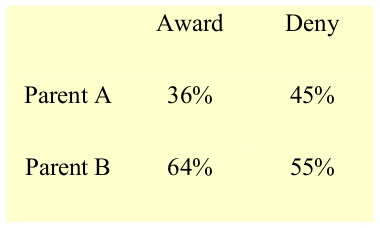
How you pose a question makes a difference

Shafir conducted an experiment in 1993 where he asked people:

Imagine that you serve on a jury of an only-child sole-custody case following a messy divorce. To which parent would you award sole custody of the child?

Parent A

  • Average income
  • Average health
  • Average working hours
  • Reasonable rapport with the child
  • Relatively stable social life

Parent B

  • Above average income
  • Very close relationship with the child
  • Extremely active social life
  • Lots of work-related travel
  • Minor health problems

The question is then rephrased and asked to another sample set, this time:

To which parent would you deny sole custody of the child?

Shafir determined that people are looking for preferences they can justify.

The compromise effect

This is quite a well known phenomenon. Simonson in 1989 said that:

Items can gain market share when new options are added to the market when they become the compromise or middle option in the choice set.

This is the classic idea that diners will not order the cheapest or most expensive bottle of wine.

Attraction effect

Introducing an inferior or decoy item will make a second option seem superior.

In this example from the Economist, the print subscription is the decoy. It’s more scientifically known as asymmetric dominance.

Values are influenced by reference points.

Beliefs are constructed

How happy are you with your life in general?

How many dates did you go have last month?

The answers to these questions differ, depending on the order you ask them. Ask the dating question first and the answers to the two questions are more strongly correlative (0.66 compared to 0.12) i.e. many dates, very happy.

15 Jul 16:46

New Annual Pricing for AWS Marketplace Products

I'm writing today to tell you about an important new feature for AWS Marketplace. As you may know, the AWS Marketplace lets you find, buy, and immediately start using a wide variety of software for developers and enterprises — 26 categories that span infrastructure, developer tools, and business applications.

You can now purchase AWS Marketplace products on an annual subscription basis. You will make a single upfront payment by selecting the annual option and an Amazon Elastic Compute Cloud instance type and have unlimited use of the software for that EC2 instance for the next 12 months.

Annual subscriptions are be available for more than 90 software products from ISVs such as Alert Logic, Barracuda, Citrix, Fortinet, MicroStrategy, Progress Software, Riverbed, Sophos, Tenable, and Vormetric.

You can purchase an annual subscription with a couple of clicks:

  • Find the desired product, note the annual subscription price, and click Continue.
  • Specify the number of subscriptions that you would like to buy.
  • Click Accept Terms & Launch.

Benefits of Annual Pricing
This new option provides you with several important benefits:

  • Predictability - The annual pricing model will allow you to make more accurate forecasts of your software expenses when you are running steady-state workloads.
  • Cost Savings - You can reduce your software costs by 10% to 40% or more when you purchase an annual subscription for select software products on AWS Marketplace. You can continue to pay for usage on an hourly basis in situations where your workload is bursty.
  • Flexibility - You can run the software in any Availability Zone of any AWS Region in which the software is offered. The purchase is, however, specific to a particular EC2 instance type.
  • Ease of Use - You can change your software pricing model without restarting any instances or re-launching any applications.
  • Uniformity - As is the case with hourly pricing, all annual subscription charges will appear on your AWS bill. You don't have to set up any new accounts or share the payment information with a third party.

The Details
If you are currently paying for a product on an hourly basis, you can convert to an annual subscription pricing by simply buying annual subscription(s) as needed. You do not need to restart the instance or re-launch the application.

Let's walk through the process of purchasing a product through AWS Marketplace. The first step is to search for the product you are interested in. In this case I am lookingfor the Sophos UTM 9 security gateway:

Then I review the pricing details:

And make the purchase:

There will be a short wait while we spin up the EC2 instance, deploy the software and purchase your annual subscription:

Once the software is running, you can click the Usage Instructions button to check on the next steps. If you want to add, cancel or change a subscription you can always go to the Your Software Subscriptions page to manage your software:

If you are an ISV and your software is already in AWS Marketplace, you can offer an annual subscription by submitting annual prices for your product.

Available Now
As I mentioned earlier, annual pricing is available in AWS Marketplace now!

-- Jeff;

15 Jul 16:46

Managed Cloud: A New Way To Stay Fast And Lean

Today, we define a new industry category - managed cloud. We’re targeting businesses and developers who want to tap the power of the cloud without the pain of running everything themselves — and the expense of recruiting or contracting with experts in dozens of complex technologies. To do that, we're launching two enhanced service levels for public cloud customers, restructuring our pricing model, creating a developer+ program and updating our SLAs.
15 Jul 16:45

ClearlyContacts.ca founder Roger Hardy places his next big bet on online shoe-shopping

by Murad Hemmadi

Coastal Contacts founder Roger HardyRoger Hardy knows a thing or two about online retail. The Canadian entrepreneur just made a bundle on ClearlyContacts.ca, an e-commerce eyewear business he recently sold to French lens giant Essilor for a cool $430 million. But he’s diving straight back into the world of Internet shopping with the acquisition of two upstart online shoe retailers, announced today.

READ: An Eyewear Entrepreneur’s Vision for Expansion »

ShoeMe.ca was founded by Sean Clark, a one-time employee of Clearly parent company Coastal Contacts. Hardy is combining the Vancouver company, in which he was a seed investor, with Seattle-based OnlineShoes.com, one of the first brands to enter the Internet shoe marketplace. The combined company would have annual revenues of $200 million, with Hardy serving as chairman and CEO.

The PROFIT change agent and sometime PROFITguide.com columnist discussed his latest venture from Seattle.


Canadian Business: Why ShoeMe.ca?

Roger Hardy: I think Canadians have been underserved, and that’s what ShoeMe’s trying to correct — it’s trying to bring better service and savings to customers in Canada, and that’s always a business plan that I get excited about.

You’ve also acquired OnlineShoes.com. What kind of consolidation are you planning?

They have a similar value proposition in the US, but it’s a more developed business. They started in 1996—they were the first online seller of shoes in the U.S. and have been steadily growing for 20 years. We think there’s a great synergy between what’s been built in Seattle [and Vancouver], the strong technology platform and relationships with the brands, and leveraging what’s here and offering some of that to Canadians.

Our plan is to keep both brands operating. We’re really looking to leverage the 300-plus different shoe brands that exist here at OnlineShoes in Seattle. ShoeMe still has about a 100 brands but still has a long way to go, so that would be one of the big synergies, those relationships with those brands, many of which aren’t even in Canada.

There’s a clear giant in online shoe retail, and that’s Zappos. How are you planning to take on that big competitor?

Zappos has been a competitor of OnlineShoes here in the United States for a long time, and despite that OnlineShoes has steadily grown, [and] is arguably more profitable. [OnlineShoes] has a unique service mantra — customers here are very loyal, they come back on a regular basis. In Canada ShoeMe has been very successful in the three years it’s been around, it’s grown very quickly — 200–300% a year growth. It’s still very early, but I don’t think the competitor you mentioned operates in Canada; ShoeMe is really the de-facto online shoe retailer in Canada for those who don’t want to drive down to the border to pick up their goods. I think we’ll do just fine.

Why get back into the game so fast after Coastal Contacts?

I think ClearlyContacts has been its own unique experience, and we’ve done something that nobody else had done there before. The difference here is that everybody loves shoes—there’s just a much bigger opportunity. Contact lenses is one in 10 people, but the shoe market is everybody, and the consumption is monstrously higher. The average consumer will buy six pairs of shoes a year; people were buying contact lenses once every two or three years. In Canada e-commerce is 1–1.5%, and here in the States it’s 6 or 7% online. So Canada still has a long way to go, and we think that we’re one of the businesses that will start to close that gap.

The post ClearlyContacts.ca founder Roger Hardy places his next big bet on online shoe-shopping appeared first on Canadian Business.

15 Jul 16:44

How Valuable Are Your Customers?

by Amy Gallo

Not all customers are created equal. If you’ve ever run a business (or even just been a customer yourself), then you know that some customers provide more revenue (and incur fewer costs) than others. Figuring out which to focus on and invest in is critical if you want to maximize your profit.

Many companies use a calculation called customer lifetime value (CLV) to determine how much a customer is worth in comparison with others. Even if you don’t have to calculate CLV yourself (there are lots of tools that will do the math for you), it’s important to understand the concept so you can decide whether to use it when making marketing and sales decisions.

So what exactly is CLV? Here’s a basic definition: The amount of profit your company can expect to generate from a customer, for the time the person (or company) remains a customer (e.g., x number of years). At its core, CLV is the present value of all future streams of profits that an individual customer generates over the life of his or her business with the firm.

This is a useful number to have. By comparing the CLV across customers, you can determine which are more or less profitable to you, thus segmenting your customer base. Knowing each customer’s profitability is the first step to managing them. You can then decide on where to focus your marketing, product development, customer acquisition, and retention efforts.

The math behind CLV is not something you can do on a cocktail napkin, but the interactive illustration below can calculate it for you — and help you understand how the various elements of the calculation influence the final number. (Note: There are multiple ways to calculate CLV. This interactive illustration shows you one way.)

To use the interactive, adjust the sliders on the left hand side to see how each factor influences the CLV over five years and expected customer contribution margin for each year. 

Now imagine you own a print shop and you’d like to figure out which set of your customers are more valuable to you: small businesses that buy from you semi-regularly or larger businesses that only use you a few times a year for significant purchases. Start by figuring out the CLV for the first group.

On average these smaller businesses purchase from you 10 times a year and spend $200 on each order. Set the average number of purchases per year slider to 10 and the average spend per purchase one to $200.

Your average gross margin on these orders is 41% (set the slider accordingly). Now the question is how much do you spend marketing to your customers and how effective are your efforts? Your total marketing budget is $10,000 for the year and you have a total of 500 customers, so your direct marketing costs per customer per year are $20. You send out postcards to local businesses to acquire new customers and you find that for every 100 cards you send, you get two new customers. So set the acquisition response rate slider to 2%.

You’ve done a nice job retaining customers over the years, so you have an 80% retention rate for this type of small customer. (Set the average customer retention rate slider to 80%.)

Now the last thing you need to determine is your discount rate. When you calculate a CLV, you assume an average annual revenue from a customer for a certain number of years. But the revenue you receive in the future is less valuable than it is today. The discount rate in the CLV equation calculates the present value of that future revenue and is tied to the current cost of money. Different companies will use a different rate, but let’s say you feel optimistic about where the economy is headed so you choose a 10% rate.

You can see that for this set of customers the CLV over five years is $699.

To compare that with your larger customers, adjust a few things in the interactive illustration:

  1. These businesses only purchase printing from you once a year, so move the average number of purchases per year slider to 3.
  2. But they spend almost twice as much, so adjust the average spend per purchase to $400.
  3. Your margin on their orders is slightly better so move the average gross margin slider to 50%.
  4. Your mailings to these businesses yield a higher response rate so adjust the acquisition response rate to 4%.
  5. Direct marketing costs per customer per year, average discount rate, and average customer retention rate all stay the same.

Now the CLV is $732, slightly better than the other group. This may mean you want to spend more time focusing on these large customers, perhaps setting up a customer loyalty program or making other efforts to retain even more of them.

And perhaps more importantly you can use the interactive before to see how you might influence the CLV by doing things like increasing the number of purchases per year (just one additional purchase yields a CLV of $1,157!), decreasing marketing costs, or improving your acquisition response rate.

This post adapted and reprinted material from Core Reading: Customer Management, HBP. No. 8162, by Sunil Gupta, which is part of Harvard Business Publishing’s Core Curriculum in Marketing.  Copyright © 2014 by the Harvard Business School Publishing Corporation; all rights reserved.

15 Jul 16:44

The Most Important Ingredients To Take Your Blog To The Top (Study)

by Jonathan Payne

Starting a blog is perhaps the easiest way to get started with content marketing, so it’s no surprise that businesses continue to jump into the blogging game.

The question is…

What are you trying to accomplish with a blog?

Assuming you have a strategy and didn’t dive into blogging just because “everyone else is doing it”, the goals of your business blog are likely along the lines of conveying your expertise in your industry, helping customers solve problems, and, ultimately, attracting and retaining more customers.

The Most Important Ingredients To Take Your Blog To The Top (Study) image The Most Important Ingredients to Take Your Blog to the Top Study 600x600

How do you accomplish the goals mentioned and what does it take to push your blog to the top of your industry?

The team at Orbital Media Studios recently surveyed over 1,000 bloggers across the globe about their blogging habits and discovered some interesting trends. Below is a brief outline of Orbital’s findings that will help you understand the key ingredients to take your blog to the top!

Getting to the Top is a Time Investment

Based on the study, the majority of bloggers (54%) spend no more than two hours on a single blog post and only about 13% spend more than four hours per post.

How long does it take to write a typical post?

The Most Important Ingredients To Take Your Blog To The Top (Study) image Typical Time Spend on Blog Posts 600x332

When an inexperienced blogger is tasked with writing a post, one of their first questions is usually, “How many words should it be?”

The truth of the matter is word count shouldn’t be the focus — nobody reads a 300 word blog post because it’s 300 words or a 900 word blog post because it’s 900 words. People read blog posts that deliver genuine value, regardless of their length.

With that said, however, much of the data suggests that longer posts perform better than shorter posts. This is likely due to longer posts being more well-researched and thorough, which equates to being more helpful and more value delivered.

It should go without saying that those who invest more time into their blog posts tend to see greater returns on their efforts. This makes good sense when you observe the blogosphere, where the majority of content producers are operating on a principle of quantity over quality, rather than quality over quantity.

Key Takeaway: If you want to break through the noise of the millions of new blog posts published daily, be willing to invest the time to write high-quality, well-researched, thorough posts that focus on helping people solve problems.

More Often Isn’t Necessarily the Key to Success

The majority of bloggers (54%) in the study stated they post at least on a weekly basis and a significant portion (28%) responded that they post multiple times per week.

How frequently do you publish a new post?

The Most Important Ingredients To Take Your Blog To The Top (Study) image Blogging Frequency 600x417It’s no surprise that bloggers who spend more time writing each post tend to publish less frequently.

There’s a common idea that posting more frequently means your blog will rise to the top more quickly. This is true, but only with a couple caveats:

  • The frequency of your posts is irrelevant if your posts are mediocre. Higher quality + less frequent always beats lower quality + more frequent.
  • You need to have a sizable audience of loyal readers before you start focusing on frequency.

The challenge most new blogs run into is an “If you build it, they will come” mentality. Instead of focusing on writing a few extremely high-quality posts and promoting them heavily, most blogs start by publishing far too much (usually mediocre) content with little promotion.

As a result, these bloggers typically get burned out very quickly, because their posts aren’t getting read and their blog isn’t growing.

Personally, I’m a fan of the 80/20 rule, which is a staple strategy of many of the most successful business bloggers out there. The 80/20 rule in this context simply means you spend 20% of your time writing great new content and 80% of your time promoting that content.

This principle is important when you launch your blog, because it allows you to start actively building an audience rather than just hoping they’ll show up. Most importantly, if you’re focusing less on frequency, more on quality, and more on promotion, more people will visit your blog and will be immediately impressed with the value being delivered.

These are your future email subscribers — your most loyal readers and biggest fans.

Key Takeaway: The majority of bloggers are publishing new content frequently. However, a large portion of this content is unlikely to be high-quality, well-researched, or thorough. Posting more often isn’t necessarily the best strategy, unless you can ensure no loss of quality and you already have a strong audience.

The Promotion is Happening, but Where?

It seems most bloggers are going the “free” route when it comes to blog promotion — social media and search engines being the two most prominent promotion channels.

How are you driving traffic to posts?

The Most Important Ingredients To Take Your Blog To The Top (Study) image Blog Post Promotion Methods 600x572Somewhat surprising is the relatively low usage of email marketing to promote blog content. As I’ve discussed before, your email list is significantly more important than your social media presence, as your social media presence is subject to the terms of that particular social network.

As we saw with Facebook algorithm changes over the past year, your audience on social media doesn’t belong to you by any stretch of the imagination. Your email list, on the other hand, is something that can’t be taken away against your will, provided you don’t break commercial email marketing laws or etiquette. Your email list is pure gold in the digital marketing arena.

Key Takeaway: Social media is certainly a promotional channel worth investing time into, but it’s also clear these channels are flooded with content. The competition for eyeballs, much less clickthroughs and extended attention, is steep. If you’re not building an email list, start today! The faster you can grow your list, the faster your blog will grow and the more loyal blog readers you’ll have.

Knowing the Numbers Makes a Difference

According to the study, 22% of bloggers rarely or never check their analytics and 27% only “occasionally” do so.

How often do you check analytics?

The Most Important Ingredients To Take Your Blog To The Top (Study) image Blogging Analytics 600x290If you’re following the 80/20 rule discussed above, having access to blog analytics is crucial.

As you’re promoting your posts, you need to monitor where the best traffic is coming from to get a better idea of how to reach your target reader. After all, there’s no reason to invest time into using a promotional channel that doesn’t deliver results.

Beyond knowing where to focus your promotional efforts, analytics will also provide a clear picture of which posts are most popular. You can use this information to think of future content ideas and optimize your most popular past posts to serve as evergreen content.

Analytics are your best pal when it comes to blogging efficiently and effectively, but I will add a word of warning that you shouldn’t obsess over analytics, especially when you first launch your blog. Don’t check your analytics every five minutes or even every day. It’s not only wasted time, but also discouraging to see the results of the small picture rather than long-term positive trends.

Key Takeaway: Knowing the numbers behind your blog will help you understand what content your readers are looking for, but don’t obsess over the numbers. Focus on long-term positive trends instead of short-term peaks. If you’re not monitoring analytics, take 10-15 minutes to set up Google Analytics for free on your website.

Suggestions for Blogging Success

The survey results discussed above only scratch the surface. If you want to see the details of Orbital’s full study, check out their recent blog post.

Based on the data above, taking your blog to the top is largely dependent on a few ingredients:

  • Invest the time to write incredible content. Nobody reads boring, mediocre content, regardless of how short or long the post.
  • Publish content at a frequency that makes sense in the context of your blog’s history. Consistency, quality, and promotion combined will always conquer frequency alone. Focus on building a loyal reader base before concerning yourself with frequency.
  • Promote intelligently! Having a strong social media presence goes a long way, but don’t let it become your only channel for promotion. Start building an email list immediately and nurture it will for long term success.
  • Keep an eye on the numbers to get the most out of your time investment. Analytics will help you steer the ship without relying on guesses about who your readers are and what content they want.
15 Jul 16:37

4 Ways to More Targeted B2B Demand Generation Online

by Sarah Greesonbach

4 Ways to More Targeted B2B Demand Generation Online image 6861256042 0b37739bcd z 300x225There’s no beating around the bush: B2B demand generation is how your business stays in business.

Given that it’s such an important process, even businesses that are doing it well are always wondering how they can do it better — how to get more eyes on their website, more leads in their pipeline, and more sales on their books without draining other buckets of their budget.

If you’re doing well with B2B demand generation… this post is still for you. But it’s also a great resource for teams that are wondering if they can generate more demand using the web.

Here are four tips for even more targeted B2B demand generation:

1. Nail your website

Step one is to make sure your website is information-rich and fully optimized.

  • Are you getting over half of your website visits from search engines?
  • Do half of your web leads come from search engines?
  • Do you have a plan to convert leads that are “just looking” or kicking tires?

If you aren’t excited about your answer to these questions, your website needs some work.

First off, your website needs to be strategic and very easy to navigate. Second, you need to provide customer-focused information that lets them do their own in-depth research.

Forrester research says that B2B buyers are already as much as 90% of the way through their process before they talk to you. Guess where they are doing their research?

Spend some time making your website more helpful and a consistent flow of leads will follow.

2. Target buyer intent with advanced SEO

Once you’re confident that your website can convert the customers you send to it, you need to focus on getting as many qualified eyes on it as possible.

We’ve already covered basic SEO strategies and approaching SEO as an ongoing project, so build on that.

For a more advanced approach to SEO strategy, target long-tail keywords, or phrases that are several words long. This allows you to be even more specific with your content when writing page titles, meta descriptions, and blog posts.

Genuine, long-tail content will give you an increased SEO punch as well as a higher authority ranking. Authority for your website will grow as the number of helpful, informative web pages grows.

3. Nurture with email marketing

The farthest-reaching weapon in your B2B demand generation arsenal is your email marketing list.

Each email you send to this list allows you to follow up on your prospective customer’s activity with relevant content and calls to action.

Tip: Your email list needs to be carefully segmented and customized just for your readers so that you can qualify according to each segment’s need.

If you’re sending one-size-fits-all messages, you’re going to be surprised by the increased response you’ll get when you segment it further.

Part of moving buyers along in the process is consistent follow-up. Did you know that you can automate emails to your best prospects?

Email nurturing strengthens your relationships over the long haul — much more than your e-blasts to your entire list. The more you understand your audience, the more you seek to provide educational, entertaining, or influential updates — whatever kind you know they need.

4. Consider thought leadership opportunities

Who doesn’t want to work with a specialist? But are you considered a specialist in your industry? A leader?

There are, of course, lots of ways to become a recognized leader using networking, trade shows, conferences, etc. But you can expand your reach by doing this online, too. Here are some ideas:

  • Start a blog and discuss recent trends in your industry.
  • Contribute to a LinkedIn Group where your potential customers are.
  • Use Twitter and LinkedIn to distribute your blog posts.
  • Doing a “brown bag” seminar for a group of prospects? Film it and use the video on your website and on YouTube.
  • Hold a webinar, record it and archive it on your website.
  • Find a blog in your target industry and submit a guest post.

Your web presence can reach hundreds or thousands of people every day. Develop your own brand of digital influence and widen your net to generate more demand for your B2B business online.

4 Ways to More Targeted B2B Demand Generation Online image c58c52d7 f7e3 40ca 9cc1 49a1ff3ffc57

photo credit

15 Jul 16:37

Quick Tip: Start the Value Discussion Early in the Sales Process

by Dan Zamudio

Research shows that best-in-class companies – top-performing firms in terms of quota attainment, average growth, and deal size – consistently implement value-based selling practices at a far higher rate than average. Although the economy is improving, B2B buyers have become conditioned to be more austere. Plus, the buying process has gotten increasingly complex with more people involved in evaluating and making purchase decisions. With almost every deal getting closely scrutinized by the CFO office, value selling has evolved as a critical skill. To optimize the impact of value selling, it’s essential that your salespeople establish the basis for it very early in the sales process.

Here’s how we do it. Our salespeople are trained to on the second call with a qualified prospect to conduct a discussion around KPI’s that drive growth by sharing ones we’re seeing other sales leaders track and then asking the prospect questions like:

  • Which metrics are you MOST trying to improve to drive achievement of quota/growth targets?
  • Which of these are you tracking on your dashboards?
  • Are you bonused on any of these?
  • Which does your CEO most care about?
  • Have you established targets for any of these that you can share?

Once we understand these, we try to learn what’s getting in the way of where they are versus where they want to be for a given metric. We then ask what they have done or are doing to try to improve performance for that metric. In other words, what initiatives are underway or planned to drive improvement for the target metric. We dig a little deeper to get a sense for which stages of the sales process prove most challenging based on which stage-to-next-stage conversion rates are below expectation. Inevitably, we uncover an important opportunity for improvement we can impact.

Here’s how we ensure we do this consistently. We provide a coaching tip in our sales playbook app that puts the metric-related questions front and center at the Discover stage to make it easy for our salespeople to (consistently) conduct intelligent KPI discussions. We also make it easy for the salesperson to capture the prospect’s responses in our app to make sure metric questions are not just asked, but that responses are also captured, so the salesperson can refer to them throughout the sales process and set up the basis for a discussion regarding financial justification. Documenting the key metrics the prospect most cares about and making it a core topic during deal reviews also sets up sales management to be able to coach their salespeople on how to best advance the opportunity. Another important benefit of having a discussion around metrics early on is that it helps you better gauge the prospect’s motivation to change. If they have not yet given consideration to the potential economic impact of implementing your solution category, then, in all likelihood, a buying decision is not imminent.

Value selling is an important, but potentially difficult, skill to master. It doesn’t have to be. With a little training, consistent reinforcement, the right tools, and by making it an integral part of your sales process and deal reviews, your salespeople, including new-hires, can more successfully understand the value outcomes their prospects seek and demonstrate how your solution can get them there.  The sooner you start helping your reps conduct KPI improvement conversations and the sooner in the sales process they start doing so, the better for everyone concerned, including your prospects.

What are you doing to institutionalize value selling in your sales organization?

15 Jul 16:37

Happy Endings in Cold Calling – Sales eXecution 259

by Tibor Shanto

By Tibor Shanto - tibor.shanto@sellbetter.ca 

The end

It’s not that people don’t like cold calling, mostly they don’t like the outcome, which often is very little, leading to disappointed, and anemic pipelines. Frustrated, they seek expert advice on how to get more buyer engagement while avoiding the dreaded cold call. Much of the advice is more feel good than do good, especially when measured in real engagement, real pipeline opportunities, and resulting revenues. Much like the ab machines which promise a swimsuit figures in just five minutes a day.

A large part of the problem is that a lot of the advice is focused on how to avoid the unpleasant aspects of the exercise, most specifically the objection/rejection. While there may be ways to get around initial rejection here and there, for the most part these are temporary fixes, or can only be applied to small segments of buyers, leaving you in search of the next miracle cure or silver bullet. (I am the Zomby Woof)

For those who can’t survive through referrals only, or whose target market is not as active on social media, especially for business, (a large number of SMB’s) the phone remains a vital component of their prospecting effort/success. Part of that effort is the reality of interrupting prospects, making it more crucial that we engage that buyer as quickly as possible.

Most people start the call talking about their company, expertise, including some ambiguity about how they do things, followed by a barrage of buzzwords like: productivity, efficiency, work-flow, peace of mind, reliability, and the crowd favourite, “customer responsive”. Things the prospect has heard 30 times this week already, and it’s only Wednesday, and none of which was he or she thinking about when they answered the phone: bam – rejected.

Why not start with positive and measurable outcomes they will realize as a result using your product/service. Not many people care about how you do it (so long as it’s legal), fewer care about you or your company, they will as they get closer to committing, but that’s down the road, the object at hand now is getting them to engage. So instead of inflicting them to something like:

“We deliver sustainable improvements in financial performance to forward-thinking manufacturers by implementing custom productivity solutions. We offer a broad spectrum of work-flow efficiencies that can be configured to support our clients’ overall business strategies and best leverage their resources.

I am hoping to set up a time to discuss what we do and how it may help you like it has some of our clients. Is there a convenient time we may do that?”

Ya, like never.

I mean really, “hoping, discuss, may help, some of our clients?

Tell them exactly what will happen after they implement: “Increased profits each and every quarter since implemented 18 months ago”; “Improved forecast accuracy by 11%”; “Reduced wait time by 10%”, “Decreased abandoned carts by 22% over the last year”. This is more likely what was on the mind of the buyer when they answered the phone or responded to your voice mail, and what is likely to capture and get them to listen.

Unlike a book, take them right to the last page right away, and then work back from there when you meet. To improve your prospecting results, give them the happy ending right up front.

What’s in Your Pipeline?
Tibor Shanto
 

15 Jul 16:36

3 Steps to Reframe Prospect’s Thinking

by Gust Blog by Jeff Michaels

Note from the Editors: Jeff’s tip about depleting the “status quo fund” of your prospect is brilliant. He explains how to do that in a three step Corporate Executive Board (CEB) process.


Capturing the attention of a prospect has become increasingly more difficult. We’ve all heard the numbers:

  • 100 billion business emails were sent and received per day in 2013 – Radicati Group
  • 86% of sales rep’s messages have no commercial value to buyers – CEB
  • 67% of the buyer’s journey is now done digitally – Sirius-decisions
15 Jul 16:36

Profit Builders Named Top 20 Sales Training & Coaching Company for 4th Consecutive Year

by Keith Rosen
Top20SalesTraining2014

Selling Power Features Keith Rosen’s company, Profit Builders on the 2014 Top 20 Sales Training Companies List.

Top20SalesTraining2014
Profit Builders is honored to announce that on June 18, 2014 they were included on the 2014 list of the Top 20 Sales Training Companies that excel in helping sales leaders improve the performance of their sales teams.

The list appears in the July issue of Selling Power magazine, which is now available to subscribers.

At least two considerations about the current state of business-to-business (B2B) selling influenced the selection process for the 2014 Top 20 Sales Training Companies list.

1) B2B buyers start their purchasing journey, not by contacting companies, but by going online to research products, watch demos, and get pricing information. In fact, some B2B sales and marketing experts estimate that 92 percent of B2B buyers begin the purchasing journey by first conducting online research.

2) Buyers tend to trust their peers on social networks more than they trust brands. As buyers move to social media for referrals and feedback, sales organizations are left out of the loop.

According to IDG Connect, 86 percent of B2B IT buyers are currently using social networks as part of their purchasing-decision process. The dual influences of online research and social networks have created various challenges for sales teams.

According to Selling Power publisher and founder Gerhard Gschwandtner, sales training is a vital component in adapting to these changes in buyer behavior. “A great sales-training program continues to be a staple of success for sales organizations,” says Gschwandtner. “Now more than ever, sales leaders must make sure that salespeople are properly prepared to meet the expectations of today’s socially and digitally connected buyer. Our list of the 2014 Top 20 Sales Training Companies serves as a guidepost for sales leaders who are looking for the training program that best fits their needs.”

Each sales-training company featured on this year’s list offers sales organizations the following benefits.

  • Provides a consultative experience.
  • Quantifies results with metrics.
  • Offers customization and post-training support.
  • Has a documented track record of ROI and customer satisfaction.

Four main criteria Selling Power considered when selecting the top sales-training companies.

  1. Depth and breadth of training offered
  2. Innovative and new offerings (specific training courses or methodology) or delivery methods
  3. Ability to customize offerings
  4. Strength of client satisfaction

Selling Power editors say the firms included on the 2014 Top 20 Sales Training Companies list have “demonstrated an excellent awareness of the skills and tools required to succeed and remain competitive in today’s selling environment.”

About Selling Power
Selling Power magazine is the leading periodical for sales managers and sales VPs since 1981. For more information, visit sellingpower.com or call Selling Power headquarters at (540) 752-7000.

About Profit Builders
Sales training doesn’t develop champions. Managers do. Founded by Keith Rosen, pioneer of management coach training and author of the number one, best-selling sales management book Coaching Salespeople into Sales Champions, Profit Builders helps companies create their new competitive edge by transforming managers into world-class coaches. Through their proven sales-coaching methodology and framework, they help salespeople and managers achieve their business objectives faster, increase sales, improve forecast accuracy, turn around underperformers, and develop and retain top talent. As global leaders in coaching and developing high-performance teams, Profit Builders has delivered a measurable return on investment for thousands of top sales organizations on five continents and in more than 50 countries, including 25 percent of Fortune 1000 companies. www.KeithRosen.com | Tel: 516/771-1444 | info@profitbuilders.com

15 Jul 16:36

12 Tips To Smart Social Selling

by Eric T. Tung

12 Tips To Smart Social Selling image SOCIAL SELLING 178% of salespeople on social media outperform their not social counterparts, according to Forbes. It’s no doubt that social selling is important, but you need to do it right.

While social media does help supplement the selling process, you have to be weary of overstepping and being too salesy in your approach. Here are the social selling steps to make sure you’re smart at social selling, and not a dirty salesperson on social media.

1. Avoid being self-promotional

These are self-promotional messages: “Check out our product!” and “Here are five reasons our product is great!” If you don’t put yourself in the shoes of your prospect or customer, then you neglect their point of view and how they’d be receptive to your messages. Your customer doesn’t want to know 10 reasons why your product is better than everyone else’s.  They’d rather have an ebook on ten ways they can do their own job better.

2. Share third party content

50 to 80% of the content that you provide through your social networks should not be about your company at all. Find relevant, credible websites and blogs and share their content more frequently than your own. This demonstrates that you’re helpful, builds relationships and proves that you’re doing more than trying to sell.

Social selling is about building relationships, offering good content, engaging, and providing yourself as the resource. In doing so, when someone is ready to purchase, you’ll be the first person they turn to.

3. Create fresh content

You want to put your content out there, not necessarily promotional content, but content that you create that helps your audience boost their own job performance. This approach promotes you and your company as thought leaders in your industry.

Anytime you write a blog post, it shows Google that you have authority on a certain topic. It also adds keywords to your website, and gives you more material to share through your social channels.

4. Create product groups on LinkedIn

In addition to your LinkedIn company page, create a group around your product or products as well.  If you have something to sell, you want customers to have a place to talk about it. Product groups enable your product users to engage with each other and share best practices. As long as you have the resources to manage it, consider creating a LinkedIn group for each product so you can be more focused.

5. Launch targeted ads

LinkedIn is great for B2B companies because it’s a common space for business buyers and influencers to congregate. It’s often easier to reach this audience on LinkedIn versus Facebook or Twitter.

LinkedIn is also one of the better platforms for targeting your audience with paid ads because you can segment by direct contacts, locations, job titles, company name, etc. There are many options from a B2B perspective that enable you to hone in and get really targeted.

6. Create and share real-time content on Twitter

Today, you can’t be at a conference and not be on Twitter because there are conversations happening all around you. Twitter is like background buzz where you can talk about your products, share best practices, or put content out there. Whether you’re at a conference or not, it’s a place to always find a conversation around any products and topics.

7. Get visual

Graphics and visuals stand out on social media, and custom design is a great way to drive engagement around your social posts. On certain social platforms, such as Twitter, visuals automatically expand and will show your audience a lot more about your content versus just sharing text or a link.

8. Engage at the point of need

My good friend, Mike O’Connor, used to call it, “Engaging at the point of need.” If there is an opportunity on social media, such as a request for a product or service similar to yours, you can jump in and help them. This is an opportunity to guide the user toward purchasing your product or service. Do this carefully and slowly. You don’t want to scare them away.

9. Create events on Facebook

With Facebook focusing more on company pages vs individual pages when it comes to selling, event pages are a great way to stand out. Create an event to bridge the gap between personal and professional lines by inviting friends to your event. They can do so without liking your company page, if they choose.

10. Share direct Facebook links

With Facebook pushing their paid solutions and reducing the exposure of organic content, work with your fellow team members to share your Facebook posts for those extra organic views. Do this by clicking on the timestamp on any Facebook post and get a permanent link addressed to that particular post. You can then direct people to Facebook posts with exciting company news or behind the scenes photos or an awesome thought leadership piece. Ask your friends to share this with their friends. By providing the direct link, all they have to do is click on it and share it.

11. Explore other social channels

Depending on the culture of your organization, consider the power of other social networks. For instance, if your product is highly visual, you might benefit from a Pinterest board or Instagram feed.  IBM has a Tumblr account showcasing their innovative culture. Google+ is highly visual with a technical, geeky display. Even some old school Yahoo Groups still exist. Some musicians are still on MySpace. It all depends on where you best fit and where your customers and employees engage with your information.

12. Hone in and focus

With all the social channels out there, be mindful of your time and resources. It’s hard to keep up with ten different social networks at a same time. Therefore, it’s important to focus where it counts. Start by taking your sales cycle, whether it’s four to eight or more steps from opportunity to sale. Then, matrix that information with your different personas. For instance, if your audience is in IT, you might target a user, an IT manager, a CIO or a CEO. Draw your sales cycle across the top, and put your personas across the side. Now you have a matrix of every single person that might be involved in the purchasing decision for your organization and also each step of the sales process.

15 Jul 16:28

The Difference Between Informational Content and Decision Making Content

by Trent Dyrsmid

The Difference Between Informational Content and Decision Making Content image customer decision making process

Are you familiar with the customer decision making process for your company? Did you know that customers will be looking for either informational content, or decision making content depending on their place in the decision process?

If you want to market effectively to both information seekers, and those ready to make a buying decision, you need to publish a combination of both types of content. Read on so that you fully understand the difference and can create a content strategy that incorporates both types of content.

Informational Content

Informational content usually has one clear goal in mind: to provide an overview of a topic, brand, product or service which you offer. When people are in the early stages of the buying process, they aren’t necessarily looking for recommendations.

Instead, they are looking for general information about the topic at hand. If they are a complete beginner to the subject, this is the point of the customer decision making process where they often feel overwhelmed.

With the right type of informational content, you can nurture your potential customer, help ease those fears, and guide the reader into the next part of the process. Informational content does a few key things:

  • Answers the initial questions that people ask when they are looking for the type of product or service that you are offering. The Difference Between Informational Content and Decision Making Content image General Icons 23
  • Helps prioritize information that your target buyers need to know to make an educated decision.
  • Clears up any misconceptions that there may be about your product, service, or brand.

According to the preliminary results of the ANNUITAS Enterprise Demand Generation Survey, only 29% of organizations align their content to the various stages of the buyer’s journey and only 38% develop content specifically for nurturing. This means marketers are using general content for a specific purpose. Unfortunately, with content relevance being so relevant today, this generic approach will simply will not work. – Carlos Hildago, CEO of Annuitas

Once you’ve added informational content to your website, you can switch over to decision making content to help turn those readers into true buyers.

Decision Making Content

Decision making content tends to go in more depth than informational content, which is helpful when influencing the customer decision making process. The information that you put into this content is specifically designed to guide the customer farther down the “sales funnel” towards making a decision, which will ultimately lead to making a purchase.

There are a few key elements that will help make your decision-making content valuable.

  • Show the potential buyer why they should choose your product or service versus one of a competitor.
    • Highlight the unique features that your brand offers that sets you apart from your competitors.
    • Provide customer testimonials for third party credibility.
  • Provide an easy way for potential customers to contact you for more information.
  • Consider offering a free trial if is appropriate for your product or service.The Difference Between Informational Content and Decision Making Content image General Icons 26
  • Include all information that is needed to make the buying decision.

The Combination

The key to successful content marketing involves having the right type of content available for the customer at every stage of the buyer’s journey. When you understand the buyer’s decision making process, your content needs become significantly clearer.

Mixing decision making content and informational content will help you:

  • Increase awareness of your brand
  • Build credibility and trust
  • Establish your and your company as a thought leader in your industry
  • Generate leads
  • Increase customer acquisition and retention.


A solid combination of informational content and decision making content will help guide potential customers through your sales funnel. Give readers the information that they need to learn more about the product or service and then tell them exactly why your particular product or service is better than the one being offered by anyone else.

The successful combination of these two types of content will not only lead to increased readers, but increased sales at the same time.

How to you combine informational content and decision making content on your website?

The Difference Between Informational Content and Decision Making Content image 7b71edba fdf8 4663 8636 64908c3ddba712

15 Jul 16:27

What is the Best Sales Process for Increasing Sales?

by Dave Kurlan
Understanding the Sales Force by Dave Kurlan

sales process

If you were on vacation the past two weeks, this is what we were discussing:

June 30: The Top 10 Reasons Your Great New Salesperson Could Fail 
July 1: The One Sales Question I've Been Wrong About for Years 
July 2: The One Thing Missing from the New Way of Selling Part 2 
July 7: Leads are Making Salespeople Lazier Than Old Golden Retrievers 
July 8: Top 21 Keys to Making Your Sales Force Dominate Today 
July 10: The New 21 Core Sales Competencies for Modern Selling   

The following article first appeared in the July Issue of TopSales Magazine.

I’m a baseball lover, die-hard Red Sox fan, and proud father of a 12-year-old baseball star.  Having founded Kurlan & Associates in 1985 and Objective Management Group in 1990, the only surprise should be that it took so long to combine the two passions and write Baseline Selling – How to Become a Sales Superstar by Using What You Already Know about the Game of Baseball, in 2005.

Baseline Selling

Companies have terrific results when they implement Baseline Selling, and last week a well-known expert asked, “What is the big secret that makes Baseline Selling so powerful?"  He thought it would make for a great article discussion, so let’s attempt to answer that question by starting with a few questions of my own.

Is it the sales process that makes it so powerful?  The big difference between the sales process in Baseline Selling and other sales processes is that rather than having outcome-based steps, time-based steps or task-oriented steps, it has customizable milestone-centric steps.  You might think that a step is a step, but there are huge differences.  With time-based steps, you may have achieved a certain number of calls or meetings, but you may not have actually achieved the desired outcomes.  With task-oriented steps, you may have completed the tasks, but you may not know whether you are any closer to having a new customer or client.  With outcome-based steps, you may have achieved the desired outcomes, but as with time and task-based steps, you may not know what will actually happen next.  With a milestone-centric process, the sequence of steps is extremely important because the steps build off of each other, and as each milestone is achieved, a salesperson gains more evidence, thus leverage and confidence that they are closer to the sale.

Sales Process Grader

Is it the methodology that makes it so powerful?  Nothing is more important in today’s selling than the conversation that takes place between the salesperson and the prospect.  While other methodologies are based on relationship-building, strategy or tactics, the Baseline Selling methodology is based on the conversation that continues across each stage.  Milestones are known only to the salesperson, achieved within the conversation, and invisible to prospects.  The methodology then, is consistent with the conversation that moves the process from step to step and stage to stage.

Is it because of uncovering compelling reasons to buy?  Unlike needs-based, buyer-journey, or pain-based approaches, the compelling reasons as to why a prospect would move their business to you, or buy this product, service or program in the first place, provides the salesperson with leverage.  It allows the salesperson to build a case using the prospect’s reasons, and helps the salesperson to position the solution in such a way that resonates with what is most important to the prospect.  On the other hand, a need may not be reason enough to change.  The buyer journey includes the salesperson at a point where it is difficult to move backward to gather the necessary information, and pain only works when there is a known problem and a desire to fix it.  While pain could be the source of a compelling reason, the desire to take advantage of an opportunity could just as often be compelling enough for a prospect.  In that scenario, the salesperson seeking to find pain would conclude that in the absence of pain, the prospect should be disqualified.

Is it the concept of SOB Quality?  Before we can discuss SOB Quality, you really need to know how that concept was developed, what it refers to in baseball, and how it translates to selling.  Watch this impromptu 3-minute video for my complete explanation of SOB Quality. 

Now you should understand just how accomplishing SOB allows salespeople to differentiate themselves from their competitors, internal adversaries, and become trusted advisors.  SOB does not exist in other processes, methodologies, sales strategies or tactics.  The closest anyone has come, since this was introduced in 2005, is The Challenger Sale; however, that describes a certain type of salesperson, whereas in Baseline Selling, achieving SOB Quality is simply a milestone that any type of salesperson can achieve.

So what is the big secret that powers Baseline Selling?  While all four of these concepts are important to Baseline Selling, SOB brings selling to a whole new level.  It causes prospects to think, “We need to work with Dave.  He gets it better than anyone else, he asked great questions, he got us on the right track, he helped us realize that we were approaching this the wrong way and we’ve never had a conversation like before that with anyone else!”

There are hundreds of experts offering dozens of processes, methodologies, approaches, strategies, styles and advice.  It’s all good.  All you have to do is choose one that meets the following 10 criteria: 

  1. It resonates with you.
  2. It’s easy to understand, teach and learn.
  3. It’s easy to customize and apply.
  4. It works today and will work tomorrow.
  5. It’s time-tested and proven.
  6. The methodology was designed for the process.
  7. The process is intended to be integrated into your CRM or pipeline management application.
  8. The process and methodology are rich enough to offer layered or stepped learning and application.
  9. The trainer has lived and breathed the process and methodology.
  10. The trainer understands your goto market strategy.

 Most of the executives, who reach out to us for help, tend to incorrectly believe two things:

  1. They already have a sales process - They have some steps, but steps don't make an effective sales process.  It's effective when it's predictive of outcomes, every salesperson follows it, and every sales manager coaches to it.
  2. They have good salespeople, but just need some tips - They may have some good salespeople and some of them can be coached up.  A company has good salespeople when they all overachieve stretch goals.
Image Copyright: sirikul / 123RF Stock Photo(c) Copyright 2014 Dave Kurlan
15 Jul 16:27

7 Things About Landing Pages Your Boss Wants To Know

by Avi Kaye

I was working with a startup company a few years ago, when they wanted to test advertising with Google Adwords. They hadn’t actually done any advertising beforehand, as all the traffic was coming in through word-of-mouth, but they felt that they needed a boost in sales and the number of users.

We discussed matters with an advertising company who did all the relevant research into the company’s selling points and unique features, studied our target audience, came up with a list of keywords – you know, doing all the preparation necessary for a good advertising campaign.

Then they asked us if we want them to create the specific landing pages, or if we were going to do. Now, I know why you need message-relevant and channel specific landing pages, and that good landing pages increase conversions (and awesome landing pages REALLY increase conversion rates), but unfortunately, my boss didn’t. He was adamant that the one landing page that we did have would do the job quite nicely, and that there was no reason what so ever to create more.

I won’t bore you with the outcome of our advertising campaigns (they weren’t very successful), but I will try to help you avoid my fate. This post will help you help explain to your boss, client, or anyone else who isn’t sure, exactly why landing pages are not just nice to have, but vital, and how they can increase a company’s bottom line.

Do you really need to create so many of them?

Yes, I do. Each marketing message and advertising channel brings in different users. Each user expects to see different things on the page. A different price, a different highlighted feature, or even a different call to action.

7 Things About Landing Pages Your Boss Wants To Know image Traffic Conversion

Let’s say that we own a car dealership. John comes in, looking for a Renault Clio 2013 model. Sam, our best salesman, takes him, and shows him every single car in the dealership. Every time John tries to explain that he already knows what he wants, Sam shows him a completely different car. How long do you think John will stay before he leaves, and goes to find a dealership that will actually listen to him?

Advertising and landing pages are much the same. We know what the user is looking for. After all, he clicked the ad with ‘Best Customer Service’ on it, not the one with ‘Free Shipping’. It is far better to send him to a landing page with a huge ‘Best Customer Service’ banner on it, than to show him feature after feature that he wasn’t interested in in the first place.

But it looks like the company website!

Yes, it does. Landing pages are supposed to be designed with the company look and feel in mind. Don’t forget that our ads are appearing all over the place. People know the name of our company, which is why they click the ads that appear on the Facebook page, or in their email inbox, or in their search results.

As you can probably imagine, if people land in a page that looks nothing like our company, or even remotely associated with our company, they will be suspicious. And when you want people to leave us their personal details, the last thing that you want them to be is suspicious.

Are you even tracking the results?

Of course I am. Why do we create landing pages? For one reason only. To increase conversion rates. And we don’t know if we are increasing our conversion rates if we aren’t tracking the results. That’s why we needed to implement Google Analytics into each landing page.

Yes, I know that we can see how many leads the landing page generates. We can see that from the one hundred people who clicked the ad, only five people completed the whole signup process. But that doesn’t tell us the other half of the story. How many people actually arrive on the page? It might take 40 seconds to load, so they close the page before they even see the amazing marketing message we crafted. Or maybe fifty people click the button, but there’s a technical problem, and only five managed to sign up.

So yes, we are tracking the results. And just look at those at those conversion rates!

What? What conversion rates?

Landing pages are all about conversion rates. But it isn’t enough just to say ‘people are converting’. We need to understand two things. One, what are our goals? Ten conversions per day? 100? 1,000? Two, what exactly IS a conversion? Is it a signed up user? Someone who clicked the CTA button on the landing page? A paid user?

7 Things About Landing Pages Your Boss Wants To Know image Businessman

These two things have to be agreed on before you start the landing page marketing campaign. Of course, you can make certain adjustments as the campaigns progress. For instance, I had this client who was looking for conversions – people signing up to use his service. We did the research, looked at the competition and at the target audience, and decided that 90 signups a month was going to be our goal. When we reached a goal of 140 the first month, we decided to revise our goals, as we were obviously going to overshoot them.

So again, make sure that you know what your goals are, and monitor them daily, to ensure that you meet them.

Why are you changing the pages again?

Tracking the pages analytics isn’t just about looking at the numbers. As I explained before, sometimes the data that we look at can indicate a different problem. For instance, we see that while thousands of people are clicking the ads, no one is actually converting. This can mean that while the marketing message in the ad itself is super awesome, the landing page itself isn’t delivering the message properly. Looking at the analytics more closely might tell us why.

Once we realize why, or at least, take an educated guess, we start changing landing pages. Actually, we start duplicating them. If you want to change the button to a bright pink on the landing page and see if it has any effect, leave the original landing page as a control group, so that you can see the difference in conversions between the two. Why? Well, maybe no one clicked the previous landing page not because the button’s color, but because it was a holiday, and they were all conserving money. Or because of the World Cup, and they didn’t want to jinx their team. You never know. Leave a control group, and you’ll be able to make far more informed decisions.

Why don’t you add the SandBlaster 2000 as well?

Because the landing page isn’t a marketing platform. We don’t need to announce our new products or latest versions on it. The landing page has one object – to deliver a single message to our targeted audience, and convert them into leads.

We might change the order of the features, or the headline, of course. Those are part of the changes that may be required after we take a look at the page analytics. But we certainly don’t need to announce our latest product as part of the landing page. That will be in a separate campaign with its very own landing page.

But is the landing page actually working?

Remember the goals we defined at the beginning of the campaign? Bottom line is, we want to increase the company sales. If the leads that are coming in via the landing page just as good (if not better) than leads coming on through other channels, then yes, the landing page isn’t just working, it’s doing an awesome job.

So check up with the sales people, track users all the way until they actually pay money, and keep adjusting the landing page until you get the best possible conversion rate, and see sales start to increase.

7 Things About Landing Pages Your Boss Wants To Know image banners04 600 2504

15 Jul 16:27

Struggling With Blog Content? Use These 10 Ideas

by Jonathan Long

Creating a blog for your business provides several benefits. It can provide a great search engine optimization benefit and increase your organic search engine traffic, help build brand awareness, provide insight about your products and or services, and help convert your prospects into customers.

We keep our blog updated daily, but we always have more than enough topics in the pipeline. Not every business has this luxury and will eventually struggle to come up with new blog content. Here are some ideas that you can use to get the creative juices flowing.

Struggling With Blog Content? Use These 10 Ideas image Struggling With Blog Content Use These 10 Ideas

1. Current Industry News

Writing about your industry is a great way to target your users that are in different stages of your industry’s purchase cycle. There is really no ceiling when it comes to writing about your industry, as you can discuss past, present, and future trends or recap current events happening within your industry. Turning to your industry is the fastest way to get blog content ideas.

2. Community Involvement

Your business blog doesn’t always have to be filled with blog posts related to the products or services you sell. If your business is involved with any community events take the time to write a blog post about it. This is a great way to get additional press, and it also shows your potential customers that your business is involved with the local community.

3. Industry Blog Recap

There are probably some large industry blogs that you follow and read daily (if you don’t you are missing out!) that can give you great content to talk about. You can create a blog post that highlights some good blog posts that you have read recently. Write a short recap paragraph for each and make sure to link to the original blog posts.

4. Company New & Promotions

If there is big news within your organization it can give you an opportunity for a piece of blog content. Instead of writing it like a press release, use this as an opportunity to highlight some of your company culture. When consumers feel like they are connected to your brand it build trust and that leads to conversions, sales, and revenue.

5. Product or Service Insight

Don’t confuse this with product or service reviews. Your blog readers don’t want to read glorified advertisements, but they would be interested in any kind of insight related to production or behind the scenes information about what you sell. Your consumers are curious, so use that as leverage to educate them about what you offer in an interesting way.

6. Sponsorship Announcements

Your business blog is a great place to announce sponsorship of causes or events. This is another great way to show your potential customers that your brand is involved with different organizations and events, and not solely focused on just collecting revenue. No sponsorship is too small to mention. Sponsor a local Little League team? Mention it in a blog post!

7. Infographics

Your blog content doesn’t necessarily have to be text based in order for it to be successful. Using infographics is a great way to present your blog readers with data. Since infographics present information in a visual manner, more readers will actually “read” the data instead of skimming over it, which is likely if it was presented in a block of text. Also, with so many people really loving infographics it leads to a lot of social sharing. With so many blogs using infographics it is important to make sure yours stand out. Put the time and effort into the content and design and you will see excellent results.

8. Podcasts & Video

As mentioned above, your blog content doesn’t have to be strictly text bases. Podcasts and videos are a great way to deliver messages to your audience, and since not every blog is utilizing this type of content you will usually see a high engagement rate. This is also a great way to get your visitors to keep returning to your blog, as they know you have a variety of content formats.

9. Testimonials

If you have received feedback from past customers that showcase your products or services then why not tell your potential customers about it? Again, avoid writing it in an overly promotional way, and if you can use content written by the customer it gives it an even more authentic feel.

10. List Posts

List posts are great. Blog titles like “Top 10 reasons…” or “5 ways to…” do a great job of attracting clicks. Take a look at the title of this post. This is a classic example of a simple list post.

When done correctly, your blog can be a very powerful marketing tool, so make sure to focus on creating high quality blog posts that provide value to your reader. Informative blog posts convert prospects into conversions and revenue for your business.

15 Jul 16:26

Marketing Tips: How to Prepare for Database Segmentation

by Josh Hill

Marketing Tips: How to Prepare for Database Segmentation image dart 106307 640In today’s world of email inbox overload, targeted messages are the best way to break through. Marketing automation and database segmentation lets you target your audience more effectively. Here’s how to get started.

Understanding Segmentation

Segmentation of your database and personalization of automated messages is one of the key benefits of using a marketing automation solution. This is why you should start thinking about how your data is organized and categorized before you implement a marketing automation platform.

One very common type of segmentation in marketing is segmenting by job title.  You may wish to send one message to VPs of Marketing and a different message to sales operations; to accomplish this, you’ll need to be able to segment your database.

The problem is, unless you’ve been extremely meticulous with each record that you have stored in your database(s), there are dozens of ways to account for each of these titles.  We know that VP of Mktg. and Vice President of Marketing mean the same thing, but our software applications don’t know that. To account for all of these different values, we can start to associate each individual value with one “bucket” value.

Preparation Approach

To start preparing for efficient segmentation, create a new pick list field, which we’ll call Title Bucket.  This field should account for all of the different types of messages that you want to send.  If you want to send one message to marketers are the VP/Director level, a separate message to the CMO and a separate message to the rest of the marketing department, you need a specific value in your Title Bucket picklist for each one.

Consider having a free text ‘Job Title’ field where leads provide their real title – the one that makes them feel good. Then ask for a ‘Role’ or ‘Seniority’ field which is your main bucket. If you really want to take the burden off the lead, run data management flows to map this data automatically.

Remember that marketing automation is a journey, not a destination. You will always find ways to improve what you’ve built.

15 Jul 16:26

6 Rules To Rock LinkedIn For Lead Generation

by Angela Hausman, PhD
6 Rules To Rock LinkedIn For Lead Generation image linkedin

Top 5% of LinkedIn

Mark Lerner, from Octopost, sent me this infographic a few weeks ago and I promised to share it with you because I live the value of LinkedIn for lead generation.

And, I guess I’m not doing so badly — looking at the message I got from LinkedIn recently.

Today, I thought I’d share some strategies I find work best when using LinkedIn for lead generation.

LinkedIn for lead generation

LinkedIn suffers because it’s just not as sexy as Facebook or Twitter — you don’t sit on it all day sharing angry cat memes or trashing celebrities and athletes. No, LinkedIn is decidedly stodgy by comparison; resulting in far fewer users than other social networks.

Overlooking LinkedIn is a major mistake; however. That’s because LinkedIn is where business happens online. Recruiters love the job search tools on LinkedIn that allow them to track candidates and find talent, according to Bloomberg. Job listings account for some $138 Million of 2012 revenue for LinkedIn.

LinkedIn’s major strength is its ability to help generate and cultivate leads.

In preparing this post, as I always do, I searched published posts and news articles related to using LinkedIn for lead generation. What I found was particularly thin, compared to the vast array of articles available on using Facebook and Twitter. I did find interesting lists of LinkedIN actions on Social Media Examiner, Small Biz Trends, and Hubspot.

Here’s my strategy for using Linked for lead generation:

Profile:

Obviously, you need a profile, but you need a profile supporting your lead generation efforts, not just any profile.

  1. make sure you complete the entire profile — yes I know this is a lot more time-consuming than on other social networks. You can import your resume (on vitae, in my case) to reduce the time necessary.
  2. ensure you make good use of the section below your name by using keywords. Notice mine doesn’t tout my position (which has its own place), but is loaded with keywords and my services. If you’re searching for someone to do social media analytics, you’re more likely to find me this way than if I listed my agency name, Hausman & Associates, here. My employment is now listed as current and previous.
  3. fill out your summary and employment sections using active words (and keywords) and highlighting accomplishments, not positions. Remember, online users are very visual, so include powerpoint presentations, videos, and other elements to create visual interest.
  4. Connect to Box or other cloud storage app to automatically bring in white papers or presentations loaded there.
  5. Unless you’re a major business leader, I recommend keeping your LinkedIn profile pretty open. Remember, you’re using LinkedIn for lead generation, so the more folks who can connect with you, the better.

6 Rules To Rock LinkedIn For Lead Generation image linkedin profile 600x254

Join groups

Notice on the infographic below, groups convert at higher rates than other places on LinkedIn. But, that’s not the only reason for joining groups.

  • Groups give you opportunities to connect with leaders and potential customers in your industry
  • Groups provide discussions that keep you up-to-date on what’s happening in your industry and allow you to emerge as a leader
  • Many groups are now open which means they can turn up in a Google search
  • You can form your own group and invite leaders and prospects to join in a discussion about your industry
  • Groups enhance your online networking. If you can’t connect with someone directly, likely someone in your group can get you an introduction

Post content

Content is the key to any social media strategy and LinkedIn is no exception. And, just like other social networks, refrain from being salesy in the content posted.

Instead, post content your prospects find valuable — how to’s, news, trends, research. Creating posts that ask questions then sharing the results is a great tool for engaging folks on LinkedIn.

Connect your blog to automatically update on LinkedIn each time you post.

Build your social network

Building your social network is critical for success in using LinkedIn for lead generation. No one “hears” you unless they’re connected (or search for your keywords).

A word of warning, however. Don’t accept LinkedIn’s default invitation. Use hand-crafted LinkedIn invitations that remind the invitee of how you’re connected. For instance,

It was really great meeting you last night at the XYZ meetup. I found you’re insights valuable. Please join my LinkedIn network so we can continue our conversations.

  • The first step in building your social network is to invite your email contacts to join your network.
  • Next, spend some time going through LinkedIn’s suggestions for appropriate connections. I usually spend a few minutes each day working to expand my LinkedIn network.
  • When someone joins your network, you get a list of their connections in the confirmation. I use my connections to further build my network as many are in the same industry and need my services.
  • As you meet folks at events, ask them to join your LinkedIn network.
  • Ask folks you meet in group discussions to join you.
  • Sign up for LinkedIn premium. Premium allows you to send invitations to users you’re not already connected with — either through offline networking, group membership, or existing connections. My admin goes through a list of folks based on desired keywords, positions, location, and company size and sends invitation requests.

Influencers

Using LinkedIn for lead generation also involves engaging influencers. Just because someone joined your network, doesn’t mean you have the right to spam them, which is a growing problem on LinkedIn. Some users refrain from accepting any invitations coming from someone with “sales” in their profile. As complaints grow, expect LinkedIn to strongly enforce its terms of service that prohibit spam. Act proactively by avoiding spam or your account may be suspended.

When you find good prospects, invite them to connect then share great content with them. If it’s a good fit, they should come to YOU, rather than you having to go to them.

Rule #1: Don’t look stupid

If you decide to approach them, be sure to do your homework. Read about the prospect and his/ her company — what’s their business philosophy? What problems do they face? How can you help them with their problems? It always amazes me when I get an email offering to help with my social media or SEO — really? That’s what I do. Why would I hire YOU?

Rule #2: Provide value

Solve their problem. And, be specific about how you solve their problem.

Rule #3: Include an ask

Be sure to include instructions about the response you expect. Should the prospect call a sales rep? Should they sign up for your newsletter? Should they accept an appointment.

Rule #4: Soft close

I’m a big fan of the soft close, but I think it’s particularly appropriate when contacting someone on LinkedIn. Pushy sales tactics just don’t work on social networks.

Rule #5: Don’t become a pest

Continued emails (inmail in LinkedIn parlance) are annoying. Before you contact a prospect, figure out the strongest approach strategy (see Rule #1). Likely you can only expect 1 ask, so make it count. That may mean spending some time cultivating the relationship before making the approach. A good strategy might involve joining groups the prospect actively uses. Post valuable content to these groups or engage in discussions on the content posted by the prospect rather than continuing to email the prospect.

Rule #6: Flattery gets you everywhere

Maybe this is just a corollary to Rule #5, but everyone loves flattery and few get offended when you praise their efforts. Keep up with what your prospects are doing and send them a congratulations when they have a birthday, get a promotion or new job, or have a work anniversary (LinkedIn actually helps by sending you emails about these events). Go beyond this to read press about your prospects and send a quick email when they do something worthwhile.

Need Help?

Whether you need a complete content marketing strategy or some consulting to help you use LinkedIn for lead generation, we can fill your digital marketing funnel or developing a content marketing strategy that matches your needs. We can help you do your own social media marketing better or do it for you with our community managers, strategists, and account executives. You can request a FREE introductory meeting or sign up for my email newsletter to learn more about social media marketing.

6 Rules To Rock LinkedIn For Lead Generation image okto infographic enizpy

15 Jul 16:26

The Top 5 Metrics Sales VPs Should Have on Their Mobile Dashboards

by Mary Miller

The Top 5 Metrics Sales VPs Should Have on Their Mobile Dashboards image card2 iPad3 left L wWe spend a lot of time talking about why it’s so important to use mobile dashboards to understand your numbers anytime and anywhere. But what about the actual metrics you should be monitoring? In addition to the biggest sales metric around -  your actual sales figures for a given time period – here are five of the most essential metrics Sales VPs should have on their mobile dashboards.

1.) Open Opportunities vs Closed Opportunities

What it is: The number of open opportunities your team is working on at any point in time vs the number of opportunities your team has ruled as closed.

How to track it: Track both open and closed opportunities by total number (not volume) across your entire organization and for each rep individually. Closed opportunities should include both closed-won and closed-lost.

The details: The number will also be affected by your process for determining what an opportunity is. For example, if you encourage sales reps to claim that a deal is an opportunity after just a few calls, your ratio will be much higher than if your reps wait until a deal is thoroughly vetted to claim it as an opportunity.

2.) Win/loss Rate

What it is: Your win/loss rate is very simple: the number of deals won vs the number of deals lost.

How to track it: While tracking a win/loss rate is incredibly simple, really using this metric to your advantage will require that you embed win/loss analysis into your sales culture. Effective win/loss analysis helps your team, marketing and support departments understand what they’re doing right and what they’re doing wrong.

The details: In order to glean even more insight, be sure to note the difference in your win/loss ratio given the source of the lead. For example, do you see an increase in your win rate when using a specific marketing tool/ qualification process? Or do you win more deals when your leads come from a referral?

3.) Sales Process Velocity

What it is: Use this metric to measure how quickly your deals are moving through the sales funnel stages to close.

How to track it: You’ll need to track the length of time it takes your reps to move each of their deals from one stage through to another. Track this number on average across your entire team and by each individual rep to see who is under- or over-performing.

The details: Use this metric to establish a baseline for sales cycle length. Then you can start targeting stages of the cycle where your reps get stuck and coach them through it.

4.) Average Deal Size

What it is: Your total new deal volume/# of new deals.

How to track it: Track this number across your entire sales team.

The details: Use this metric as a baseline that reps can hit. You can also review deals that are outliers to determine if there’s any behavior you can replicate.

5.) Customer Acquisition Cost

What it is: Also known as Cost to Acquire Customer or CAC, this metric tells you the average number of dollars spent trying to gain each new customer.

How to track it: David Skok of forentrepreneurs.com gives a handy guide to calculate this metric:

Take your entire cost of sales and marketing over a given period, including salaries and other headcount related expenses, and divide it by the number of customers that you acquired in that period.

The details: Use this metric in tandem with your Average Deal Size. If your CAC is greater, you’ve got a problem. It’s also important to remember that CAC doesn’t account for man hours spent acquiring new deals.

Ready to learn more about the ways you can save time and increase revenue with a mobile dashboard solution? Download our eBook below to find out.

The Top 5 Metrics Sales VPs Should Have on Their Mobile Dashboards image 5b341b16 f8f2 410a bf15 48d37ccde32a

15 Jul 16:26

The 10 Commandments of Getting Content Marketing Buy-In Every Time

by Marcus Sheridan
I’ll admit it—I’m on a content marketing buy-in kick. But you can’t blame me, really. The #1 email I get here at The Sales Lion comes from wildly frustrated and often depressed (no, not kidding) marketers who are trying to get management and employees to buy-in to this thing we all call content marketing. Furthermore, [...]