Shared posts

24 Jul 14:11

Look for Potential in the Next Generation of Sales Hires

by Dave Kurlan
Understanding the Sales Force by Dave Kurlan

potentialThe Harvard Business Review finally published a relevant article that I agreed with!  Yeah HBR.  Much too frequently, their articles on selling are written by out-of-touch researchers with little field experience and lots of theories.

21st Century Talent Spotting points to coming talent shortage and the importance of hiring for potential.  The article also instructs readers to evaluate using a predictive tool.  

Resumes tell you where a candidate has been, how long they stayed, and what they did.  References verify that information.  Interviews spotlight the candidate's presence, show their ability to make first impressions, present, and answer questions.  Track records represent their past performance.  With all of that information about their past, how can you possibly gauge potential when hiring for your sales force?

Objective Management Group (OMG) has three candidate assessments that provide companies with exactly that for sales, sales management, and sales leadership (VP/Sales Director).

While personality and behavioral styles tests tell you about a candidate's make-up, OMG's assessments tell you about their Sales DNA, Sales Competencies, Will to Sell (Desire, Commitment, Motivation), and Potential.  Yes, potential.  Make-up is nice to have.  DNA, Competencies, Will to Sell and Potential are must-haves.  OMG is uniquely able to determine and accurately predict whether or not a candidate's combination of will, competencies, and DNA will allow them to succeed in a particular sales role, in your business and industry, selling to your ideal decision-maker, against your competition, with your pricing, sales cycle and challenges.  It's all about potential.

Samples Button2

Findings Related to Potential 

There are eight findings that point to potential:

  1. Growth Potential - how much improvement we can expect from this point forward.
  2. Trainable - whether or not the candidate has the incentive to change and adapt.
  3. Coachable - whether or not the candidate is open to constructive criticism and believes there is room for improvement.
  4. Competency Scores - 8 scores, competencies and tables show both the gaps in each competency as well as the skills that must be developed.
  5. Sales DNA - 6 scores and findings show the gap for each element of Sales DNA and pave the way for improvement.
  6. FIOF - the Figure it Out factor shows how quickly a particular candidate will ramp up and begin selling consistently.
  7. Compatibility - this shows how compatible a candidate is with your selling environment.  The more compatible, the shorter the learning curve.
  8. Longevity - this predicts the likelihood of the candidate still being with you at the point in time where they produce a 5X Return on your investment in them.
  9. Recommendation - this finding predicts whether or not the candidate will succeed in this role.  It's predictive, accurate and lets you know which candidates are worthy of your time throughout the rest of the sales recruiting process.

We believe that hiring for potential is smart hiring.  But beware, the greater the potential, the longer the wait for results.

If you're looking for a candidate to have an immediate impact, you'll want to select a recommended candidate with a lower score on Growth Potential.


Image Copyright: iqoncept / 123RF Stock Photo(c) Copyright 2014 Dave Kurlan
24 Jul 14:10

How The ‘Attention Web’ Is Changing Content Marketing Metrics

by Dan Shewan

Long gone are the days when clickthroughs and time-on-page were the most important content marketing metrics. Today, many publishers are changing their approach to shifts in audience behavior to focus on attention and engagement as the defining measurements of success.

How The ‘Attention Web’ Is Changing Content Marketing Metrics image content marketing metrics pay attention 600x399

Although pageviews and unique visitors are still relatively valuable metrics to marketers, they don’t paint a complete picture of how people are interacting with your content.

In today’s post, we’re going to examine the trend of analyzing how visitors are engaging with your site, not just how many, and look at some examples of this shift and how you can start measuring audience attention.

What is the Attention Web?

Firstly, while the so-called “attention web” is a genuine shift in how marketers and publishers assess the success of their content, the term itself is far from definitive. First coined by Chartbeat CEO Tony Haile, “the attention web” refers to changing attitudes in the online publishing industry and a growing focus on how people actually engage with content, rather than merely measuring pageviews or clicks.

Various publishers refer to their attention and engagement metrics differently. Upworthy, for example, refers to one of its most important metrics as “attention minutes.” This is calculated by analyzing two separate metrics – total views within a given period, and the total amount of time a user actually reads or watches the content. As you can see in the figure below, the difference between attention minutes and pageviews is considerable.

How The ‘Attention Web’ Is Changing Content Marketing Metrics image content marketing metrics pageviews vs attention minutes 600x361

Similarly, blog platform Medium has what it calls “the only metric that matters,” which is Total Time Reading. While Upworthy tends to utilize clickbait to not only attract but sustain audience interest, Medium utilizes metrics such as scroll depth and word count to gauge how long a piece of content takes to read, and then serves it up to its audience. This not only serves as a reliable indicator of audience engagement, but it also makes it easier for readers to choose articles that match their available time or attention span.

How The ‘Attention Web’ Is Changing Content Marketing Metrics image content marketing metrics medium read time 513x600

Audience Attention and the Future of Content Marketing Metrics

If publishers are so concerned about how to measure the success of their content, what does that mean for advertisers? Well, content marketers aren’t the only ones making the transition from clicks to engagement. Major publications are moving gradually toward new pricing models for advertising inventory based on audience attention, including the Financial Times.

How The ‘Attention Web’ Is Changing Content Marketing Metrics image content marketing metrics financial times building 600x450

Earlier this year, The Drum recently reported that bosses at the FT decided to move away from the traditional CPM advertising model and focus on selling ads based on audience engagement.

“We can now report back to a client and say ‘we served you a thousand ads, and of those, 500 were seen for one second, 250 were seen for 10 seconds and 250 were seen for 30 seconds,” said Jon Slade, commercial director of digital advertising at the FT. “The next obvious step is to sell blocks of time.”

Although adoption of these advertising and content marketing metrics is still in its nascent stages, the FT remains confident that in time, many publishers will transition to this model. Based on its own research data, the FT claims that 40% of advertisers who had trialed the system gave it “a double thumbs-up,” and that 90% of media buyers expect that viewability and attention metrics will soon become the currency of the online advertising space – at least for display ads.

How The ‘Attention Web’ Is Changing Content Marketing Metrics image content marketing metrics thumbs up 600x315

The FT isn’t the only publisher that thinks attention metrics could be the future of online advertising. Upworthy is also mulling the idea of incorporating audience attention into its advertising packages. Ed Urgola, head of marketing at Upworthy, told Mashable that while the site doesn’t currently charge advertisers based on time viewed, it may do so in the future if advertisers embrace the idea.

How to Focus on Attention in Content Marketing Metrics

So, now that we’ve established that attention and engagement are the content marketing metrics you should be focusing on, how do you go about it?

Measuring Engagement in Google Analytics

Before we dive into the specifics of measuring audience engagement in Google Analytics, let’s take a moment for a quick refresher on how Analytics calculates time measurements.

There are five types of what Google refers to as “engagement hits” (courtesy of Justin Cutroni):

  • Ecommerce transaction hits
  • Ecommerce transaction item hits
  • Interactive event hits
  • Pageview hits
  • Social plugin hits

As we covered in a previous blog post about dwell time, content marketing metrics such as Time on Page are calculated based on user actions, like second clicks or multiple pageviews. This is represented in the figure below:

How The ‘Attention Web’ Is Changing Content Marketing Metrics image content marketing metrics time on page diagram

Image credit: Justin Cutroni

However, as we can see, calculating the Time on Page for the third pageview is impossible, as there is no second action to provide Google Analytics with both the first and last actions to calculate the Time on Page accurately. This is why measuring audience engagement in pageviews alone can be problematic. An alternative approach is to measure engagement hits on single pages, as shown in the figure below.

How The ‘Attention Web’ Is Changing Content Marketing Metrics image content marketing metrics engagement hits 600x412

Image credit: Justin Cutroni

As you can see, this technique provides greater insight into how people are interacting with the content on a page, but it still isn’t ideal, as there is no way to accurately determine the point at which the visitor exits the page. So what can you do?

Advanced Content Tracking in Google Analytics

Advanced Content Tracking, or ACT, reports on actions taken by the user when certain events are triggered. This data can then be viewed in Google Analytics, providing you with the invaluable insight into user behavior we’ve been talking about.

ACT can be used to measure the following actions:

  • How many users scroll through a page
  • When a user starts to scroll
  • When a user reaches the end of a post (not the end of the page)
  • When a user reaches the bottom of a page
  • How quickly a user is scrolling (useful data that can ascertain whether someone is really reading or just scanning an article)

Using ACT, you can specify certain variables depending on the type of content you typically produce. For example, you can state that if a user scrolls through a page at a certain speed, then they are most likely scanning the post rather than reading it.

Setting Up ACT in Google Analytics

First, your site will need jQuery. This can be done by linking to Google’s servers, and embedding the jQuery source in the tags of your site’s pages. The code looks like this:

Next, you’ll need to copy the ACT JavaScript code from JSFiddle, and copy this into your tags, too. If you’re not sure how to do this, be sure to ask your site administrator!

Once you’ve got ACT set up and running correctly, you’ll notice that it will impact both your bounce rate and average time on site. This is because ACT will classify readers who spend a specified period of time on the page as “engaged,” which will disqualify them as bouncing visitors. You’ll also notice that the average time on site will probably increase as a result of this flow.

The technical details of implementing and manipulating this code are way beyond the scope of this post, but for a detailed write-up on what the code does, check out this post by Google’s Justin Cutroni.

Pay Attention

Pageviews are still a useful content marketing metric, but as publishers find themselves competing in an increasingly crowded space, it will become even more important to truly understand how your visitors are engaging with your content. How the attention web will impact the world of paid search remains to be seen, but for now, there is little doubt that engagement is definitely shaping the world of content marketing.

23 Jul 15:08

Money: Bad for Ideas

by Harvey Wade

Money motivates. People tend to like it and usually want more of it. However, is it helpful in encouraging and getting innovation?

I want ideas; I’ll pay for them. It’s almost crude in it’s approach. Nobody likes to think that they can be bought for a certain price. However, when it comes to innovation, it is often the default.

Innovation is Not Invention

Let me lay my cards on the table here; I believe using money as a motivator can be immensely destructive!

Innovation is not invention; innovation is a team activity. Having an idea is one thing, but to make it better needs others to get involved. And to get it implemented, that takes more people. Innovation is about implementing ideas and to achieve it, you have to share, work with others and give credit. I have to let go of my idea as mine and mine alone, otherwise that is all it will remain, just an idea.

So to this team sport of innovation, we introduce an individual monetary reward. This begins to create an interesting dynamic. Where we needed collaboration, we have just forced someone to share his or her potential winnings. Who likes doing that? I’m happy to help you, but what’s my cut? Before the financial reward, there wasn’t a problem, but now things have just got complicated.

Innovation history is littered with programmes that have been damaged by monetary rewards.

I personally experienced the effect of unhelpful financial rewards. It seemed like such a great idea at the time, but oh, how little we knew! Let’s give the idea giver that comes up with the most valuable implemented idea in the year 10% of it’s first year value.

It sounded exciting, enticing and engaging. And it was, to those that won it, but those who didn’t, and there were a few, started to grumble. The person with the second most valuable idea was not recognised in the same way.

Idea values started to be inflated, idea givers would question the value assigned. It wasn’t pretty. It certainly wasn’t easy. We managed our way through it, some folks were very happy, but the 10% reward bought the engagement that we hoped for when it was first announced.

At least we didn’t offer to give a financial payment to every successfully implemented ideas. I’ve heard of companies that did this, and there are whole teams and departments dedicated to valuing ideas and making the required payments. What an efficient innovation programme…not!

Examples and Application

From experience, I have found out that if you think creatively, there are rewards that are highly valued by employees, but that can cost relatively little. I know of a large supermarket, whose HQ building was designed for 900 people. It had grown to house over 2000 people. Nobody had an office, not even the CEO. It was squashed. However, the biggest nightmare was parking.

The building had very few parking spaces outside the office building, if you were late; you were in the public multi-storey car park like everyone else. The reward that everyone in that building wanted was the Golden Cone. The Golden Cone gave the holder a parking space outside the building’s entrance. People fought hard for that prize!

You may not have a parking issue, but there will be incentives that you can provide that are highly sought after. The corner office for a week, the best chair, development opportunities, conferences, sabbaticals, job swaps; you know what they are.

So if you are designing or redesigning your incentives around innovation, here are some pointers to help shape your thinking.

1. Think intrinsic rewards, not just extrinsic. I wrote a previous post dedicated to intrinsic rewards, but your reward program must aim at motivations and engagement. It will require some creative thinking on your part, but it will be worth it.
2. Get leadership skin in the game. Innovation is risky, and if you want your people to take risks, the leadership team need to give of themselves. The leadership team need to demonstrate how much they value innovation from their people, and the rewards will do this. It is “easy” to give the company’s money. The book “Ideas are Free” gives an example of a CEO offering to clean a idea giver’s car at lunchtime; an extremely powerful statement!
3. Recognise all innovation roles. Don’t just reward the idea givers, but ensure that innovation rewards provide recognition for everyone who has helped to bring that idea from concept to reality. Remember, it’s innovation is a team sport, so reward the team.
4. Measure the effects. Measure and test the effects of the rewards that you offer. Check they still motivate, and if they don’t, change them. Don’t be afraid to innovate your innovation program!
5. Reward for BAU. Ultimately, the intention of most innovation programmes is to embed innovative behaviour into the organisation, making innovation business as usual. Ultimately, you need to ensure that innovation rewards link with the corporate reward structure.

I am really interested to hear what rewards have worked to encourage innovation in your organisation — please do share them with me!

23 Jul 15:08

Why Your Lowest-Paid Hires Can Matter The Most

by Paul Petrone
Why Your Lowest Paid Hires Can Matter The Most image McDonalds Worker 300x201

Credit: Ethan

There are two coffee shops in my neighborhood: a Tim Hortons and a Dunkin’ Donuts.

The prices at both are pretty much the same. The food is different – if anything I prefer Dunkin’ Donuts. And yet, I got to the Tim Hortons every morning.

Why? It isn’t the advertising or the price or the food or any of the “big picture” decisions that CEOs or the marketers make. It is because the Tim Hortons’ staff is incredibly friendly and always gets the order right, while the Dunkin’ Donuts’ staff is both forgetful and, while not rude, certainly not particularly engaging.

The difference between the two stores is not how they market, how good their food is or their location, but the $9-an-hour employees who work there. And the truth is, at many of America’s businesses, low-paid, hourly employees are literally the face of them, i.e. the people that the customers primarily interact with.

Attract Great Workers At All Levels

If any company wants to truly differentiate itself, it needs to make all hires a priority. And that means having both a strong magnet to attract strong candidates and a standardized hiring practice that ensures good results.

First, the magnet. What are these low-paid workers looking for? A recent study by Business Insider found that younger employees, i.e. most of the people who are applying to these jobs, still value money over everything else. So paying a dollar or two more an hour is still the best way to become more desirable.

Along those lines, it is crucial to have some sort of management-training session available to these workers, so they can move up. The Wall Street Journal reports that promoting from within is far preferred by CEOs and cheaper than hiring someone from the outside and it provides a desirable carrot to workers. A program like that can also greatly reduce turnover.

That sounds good, but for many companies, they are looking at bottom line costs and wondering how they can afford a dollar or two more an hour or a management-training program. Well, Society of Human Resources Management (SHRM) also reports that replacing just one $8-an-hour employee costs $3,500 alone, so an investment that will improve employee retention is well worth it.

Also, improving customer service – which most of these hourly jobs involve – directly increases customer retention, and just a 2 percent increase in customer retention has the same effect as cutting costs by 10 percent, according to Emmett Murphy’s book Leading on the Edge of Chaos. And finally, better employees mean less employee theft, a $50 billion problem in the US, according to statisticbrain.com.

The Most Important Step

Okay, so you’ve increased what you are paying your hourly workers. That will help get more applicants, both good and bad. So how do you make sure you hire just the best ones?

Well, we look at Google, which is probably the leader in having a data-driven hiring process (their story is outlined here). But for an example of hiring hourly workers, just look at K&N Management, which runs eight fast food restaurants in Austin, Texas.

K&N advertises on its website an $11-an-hour salary for its workers, very high for the generally low-paying south. But they also make the same investment into HR technology to screen through its 3,400 resumes it gets each year for roughly 200 positions, according to SHRM.

The screening tools allow K&N to centrally manage its hiring process at all of its restaurants. Its screening software also quickly identifies the best people, so those relatively-high salaries are well spent, according to SHRM.

“We can see at a quick glance if the person is a good fit for the position, and it also makes the onboarding side much easier,” K&N Hiring Manager Danielle Robinson told SHRM.

Donna Desilets, the vice president of Gregg Appliances Inc, agrees. Desilets also uses candidate-screening software to centralize hiring at her organization, as she was responsible for hiring roughly 5,000 hourly workers last year at 200 hhgregg appliance and electronics stores, according to SHRM.

“Because HR is centralized and the business is decentralized, it is helpful to have that tool for the hiring manager,” Desilets told SHRM. “There is a consistency factor, since everyone is taking the same assessment. Combined with the interview guides, it gives hiring managers a greater level of confidence that they are selecting the best employees.”

23 Jul 15:08

The Changing Structure of the VC Industry

by Mark Suster

There has been much discussion in the past few years of the changing structure of the venture capital industry.

On the surface the narratives have been

  • The rise of “micro VCs” or seed-stage funds
  • The rise of alternative sources of capital (crowd funding and the like)
  • The poor performance of the asset class (this analysis has largely been wrong as I pointed out here –> most analyses were clumsy rear-view mirror looks at the data)
  • We are in a bubble (with so many private $1bn+ valuations)

15 years ago we were at the peak of Internet hype with the launch of many over-capitalized businesses with a market size & opportunity was limited.

Where are we today?

  • 50x more Internet users (2.4 billion)
  • Online connections that are 180x faster (10.5 Mbps)
  • Always-on connectivity of mobile (164m US smartphone users)
  • We’re all socially connected (so great businesses spread faster)
  • We all have one-click purchase power (Apple, Google, Amazon, eBay)
  • The VC market has right-sized (returned back to mid 90′s levels & less competition)
  • Lower costs to start a business (95% reduction), many more companies created & funded by angels / seed
  • But it still takes VC to scale a business (thus large capital into industry winners like Uber, Airbnb, SnapChat, etc)

It doesn’t take a huge leap to see how well the VC industry is positioned for the immediate future. Limited Partners or LPs (the people who invest into VC funds) have taken notice as 2014 is by all accounts the busiest year for LPs since the Great Recession began.

You can read the narrative I’ve outlined below. If you want to watch a quick 9 minute video in stead I’m now including the video version of my presentation which was shot at the PreMoney conference

[Note the full presentation deck with additional slides can be found on SlideShare here or you can simply scroll through it at the bottom of this post.]

slide1

Just 3 years ago there was talk of institutional investors “not being able to write small enough checks.” The new narrative is “will my seed funds be able to fund the prorata of their winners?”

Stated simply – if you seed funded Uber at $4.5m pre-money valuation you certainly would want to exercise your right to continue investing if you had prorata rights.

Seed funds now represent 67% of all funds being created now, which is up 100% from 6 years ago. And while it only represents 6% of the total capital of the VC industry – this is a meaningful shift in structure.

slide2

At the other end of the spectrum large funds have gotten even larger in the past few years which has massively increased the amount of consolidation in our industry as 66% of  LP money into venture is now concentrated in late-stage or full-cycle VCs.

Why is this?

  • Many pension funds are simply too large to write small checks and favor the ability to write $50-100 million checks to funds. If you don’t want to be more than 10% of a fund that implies fund sizes in the $500 million – $1 billion range.
  • Fund of funds (who take money from large pensions, sovereign wealth funds, etc. and break it into smaller sizes) often sell “access.” What they’re really saying is that they have the relationships to be able to invest in Sequoia, Benchmark, Greylock, Kleiner Perkins, Accel, etc. and the bigger funds can’t get in directly.

Of course it’s much harder to identify “emerging managers” who it turns out have been some of the best performers over the past 5-7 years such as Union Square Ventures, Spark Capital, First Round Capital, True Ventures, Greycroft, Foundry Group, Thrive and Upfront Ventures. The challenge is that if you don’t get into the first 1-2 funds you don’t get in at all because they, too, become “over subscribed.”

The pioneering fund of funds realize that their source of differentiation is much more about the latter than the former.

Initially I had worried about the data that showed “Traditional VC” – funds in the $100 – $500 million size – seemed to be shrinking since the Great Recession in both numbers of VCs getting funded and in terms of total dollars in this class of VC and this seemed to fly in the face of the rise of successful emerging funds.

slide3

The more data I collected and the more conversation I had with GPs and LPs the more I realized that there was another major factor at play in the concentration of capital in larger funds – many traditional VC firms were now setting up “opportunity funds” or “growth funds.” The data ends up looking skewed towards larger funds when it actually involves traditional VC funds now geared up to take capture more of the value in private funds before they went public. This is a structural shift in our industry few have talked about publicly.

When you think about the trends of faster-growing startups due to social networking, credit card enabled and mobile first consumers – the reality is that many startups are becoming very large financially before needing to go public. In reality many of them could be profitable if they chose to.

But markets value high growth over short-term profitability. And as long as private-market capital is available these companies would rather remain private for longer before going public.

slide4

Thus the amount of money that companies have raised before going public had doubled since the Great Recession. The overall trends in our industry have breathed a new life into the venture capital industry. From a period of veering off target with the laziness & riches of the dot com era our industry has greatly righted itself.

But the biggest changes in our industry have been driven by technical changes themselves to which we are just observers and fortunate beneficiaries. I highlighted how these tectonic technical shifts have altered the VC industry in this post: How Open-Source & Horizontal Computing Spawned the Micro VC Market.

2007 was the watershed year. Facebook went mainstream after the F8 conference and its big push beyond college campuses. Twitter spread through the tech crowds at SxSW and raised its first venture capital round led by Fred Wilson. The iPhone was released.

The seeds of cheap cloud computing, social networking & mobile were planted and then the 2008 financial crisis brought a hurricane that swept much of the old, dead brush from the venture capital industry and ushered in a new phase perhaps best punctuated by Sequoia’s famous and now ironic presentation “RIP Good Times.”

The “big boom” in startup financing started around March 2009 — more than 5 years ago — and hasn’t abated.

Cheap, mobile, social, global, massive, always-on, one-click-purchase has led to the most successful companies of our era hitting unprecedented scale early in their development and has massively shifted the value captured from post-IPO investors to pre-IPO investors as is demonstrated in the chart above.

This has led to the rapid rise of: DropBox, Airbnb, Pinterest, Maker Studios, Uber, Lyft, SnapChat, Tinder, Waze, KickStarter and so many more great standouts that have gone from inception to massive in an unprecedented timeframe.


slide5

From a technology perspective our journey is nowhere near over. Even the most somber of industry analysts must acknowledge that the shift from computers being devices controlled by humans to smart devices that are all computers connected to an Internet cloud – the so called “Internet of Things” – is breeding massive new opportunities. Just see the growth of Dropcam, GoPro and Nest for the tip of the iceberg in what is to come.

Of course strongest industry players don’t stand still.

Early-stage VCs have realized that they need to capitalize on this trend, which is why many traditional VCs have set up “opportunity” funds that sit alongside their core funds as a means of capturing more private-market (pre IPO) value. Opportunity funds typically have better economics for the LPs who invest in them.

Traditional VC isn’t being gutted – it’s being supplemented.

Many prominent LPs have also recognized the “prorata opportunity” and have set up “direct investment vehicles” themselves to take prorata stakes in their managers portfolio companies.

The biggest response to the public-turned-private value capture, however, has been the push for public market investors to move into the private sphere.

slide6


Public-company tech investors creates competition in late-stage financings and these investors can afford to be less price sensitive if they choose.

The value capture in the private markets has also led some hedge funds and other major non-private-market investors to become late-stage VCs. Many of these investors lack the skills, focus, experience and temperament to make great, patient, long-term, private-market investors. Trying to shoe-horn hedge-fund mentality into venture capital markets cannot portend a happy outcome.

Marc Andreessen captured some of this sentiment in his recent “10 Ways to Damage Your High-Growth Tech Startup” Tweetstorm.

When the tech markets goes through its next inevitable bear cycle every public market investor will return to their day jobs and abandon the hard work of rebuilding and restructuring the remaining companies who are over-capitalized. We saw this movie already after the dot-com collapse and the sequel will be no different. Publics sold many of their positions to secondary investors. It’s hard to work out the cap table with your peers when one of them has no real intent in fixing the problem.

Why do VCs stick around and fix problems in a massively changing financial market? Because this is all VCs do and if we intend to work with all of our fellow VCs and entrepreneurs when the rain ends and the sun shines again our reputations matter greatly.

This “game theory” of mutual interests in collaboration even as we occasionally compete fiercely is what forces much better behavior in our industry than otherwise might exist.

The result of these new market trends of Prorata Takers, Corporate Investors & Public Market Entrant has led to a sharp spike in the valuations of late-stage financings. While this might not matter for the industries best companies, the definition of what is “best” will clearly be stretched as people compete to get in on perceived great deals.

slide7

Venture capital valuations are up across every segment of the industry as can be expected by our 5-years of growth markets but they are up most pronounced in the late-stage financings where the median valuation has risen from $66 million in 2010 to $155 million in 2014 (a 24% CAGR).

But about that “bubble” we always hear about?

It certainly doesn’t yet seem to be the case regarding private tech market companies going public. Not only are they going public later when they are larger & stronger but the valuations upon their debuts are significantly more rational than the public dot com bubble.

slide8

Summary:

Cheap, mobile, social, global, always-on, one-click-purchase =

Unprecedented revenue growth + companies staying private longer =

More opportunities than ever in history for venture capital firms =

Lots of new entrants moving to capture this value =

Amazing opportunities + Risks + Uncertainties for the coming decade.

I look forward to the ringside seat to see how this all plays out.

*********

Very special thank you to Glenn Poppe at Upfront Ventures for all of his research, number crunching, fact checking and calls to VCs & LPs to confirm our theses. And to Pitchbook for making its data available to us.

Here is the SlideShare deck

23 Jul 14:56

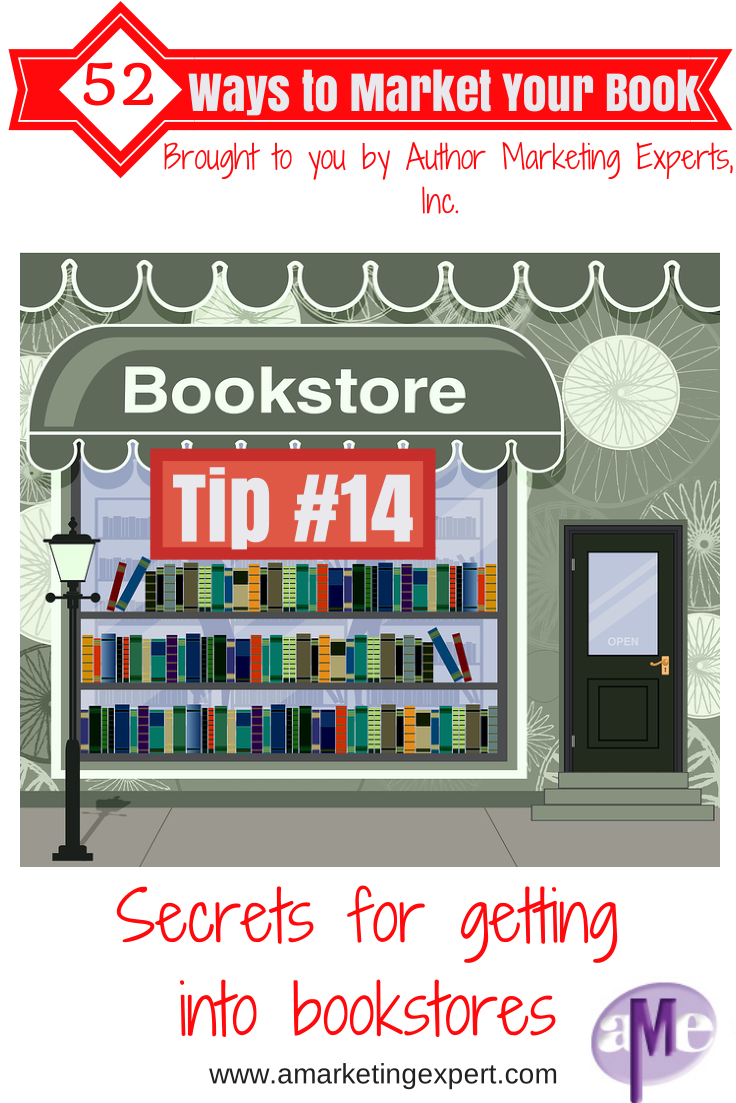
Secrets of Getting Into Bookstores: Tip #14 of 52 Ways to Market Your Book

by Penny

Welcome to Tip #14 of our 52 Ways to Market Your Book! I hope you’re enjoying these tips and they are helping you sell more books.  So, ready? Here we go!

Secrets for Getting into Bookstores

Let’s face it, regardless of the odds we authors still want to get into bookstores. But if you’ve been having a hard time with this, take heart. It’s getting harder and harder to get into stores, but not impossible. We’re going to look at some of the possibilities here.

First, it’s important to understand the pressure stores are under right now. With the increased focus on publishers to get their authors out there, bookstores are being given most of their marching orders by their corporate office. Bookstore shelf space is bought and paid for by the New York publishers, making getting on the shelves or display racks a bit tricky – if not impossible. So here’s a game plan for those of you trying to survive outside of the traditional market.

141. Get to know your local store: I know this might sound obvious, but you’d be surprised how many authors don’t really know the people in their local store. The thing is, if you know them, they know you. Then, when you’re ready to promote your book they might be more open to having you in their store if you have taken the time to get to know them.

2. Events: One way to get into a bookstore is by doing an event. Sometimes when you do an event the store may stock the book before and after you’ve done your program. Start to follow the types of events they do at the store. Get an events calendar or get on their email list. You’ll start to see trends emerge. For example, they might have an independent author night you could participate in. Also be cautious for big releases, like the recent Stephanie Meyer events many stores had planned. If you are trying to capture the attention of a store when they’re in the middle of a major book launch, you’re likely to be ignored.

a) Book signings are boring; offer to do an event instead. Events are a draw; book signings aren’t unless you’re a celebrity. Plan to do a talk, educate, entertain, or enlighten. This will be a more attractive pitch to the bookstore and will draw more people to your talk.

b) Get to know the local authors in your area and then offer to plan events for them. Here’s how this works: Bookstores are inundated with local authors asking for a time slot, but what if you went to the bookstore manager and said that you’d be willing to coordinate a once a month event featuring all the local authors? The bookstore could just refer all local independently published authors to you, you could coordinate this – and guess what? Not only are you helping the store, but guess who’s getting a monthly showcase in their store? You. You can do this with more than one store if you have the time, but keep in mind that with cutbacks often one store manager will oversee a few locations so you might only have to go through one person.

c) If they won’t let you coordinate a monthly event, suggest that they have an Independent author night if they haven’t already started this. If they have an Independent author night you should definitely participate, it’s a great way to gain exposure, not to mention network with some local people.

3. Local marketing: Don’t forget any marketing you do locally, whether it’s speaking in venues outside of the bookstores, television, radio, or print. All of this can drive traffic into the bookstores. Market locally and when you do, let the stores know you’re going to have a feature or appearance so they can stock the book, if they want to. It’s always a great idea to get to know the managers or buyers for your local stores so you can alert them to media or an event you’re doing. This not only keeps you and your book on their radar screen, but it’s a nice courtesy to offer them. Most managers are stretched pretty thin and appreciate the buying tip, whenever they can get it. Even if they choose not to stock your book the first or second time, keep alerting them to your promotion. Eventually they just might.

4. Funnel your buyers: Try as best you can to funnel everyone to one store to purchase your book. If you’re having a tough time getting shelf space (and aren’t we all?), funneling folks to one store might prompt that store to keep a few copies of your book on hand. Whenever you do local speaking or media, let them know by name and address where they can get your book. Stores have been known to take in books that they’re getting lots of requests for, regardless of how they are published.  If you’re sending people to one store – instead of fragmenting them to a bunch of different ones – you could start building an ongoing interest in reorders, and sometimes all it takes is one store to stock it before the neighboring stores will follow suit.

Getting into bookstores isn’t impossible, but it does require a dash of creativity. Keep in mind that if bookstores still aren’t receptive after you’ve tried the tips in this article then maybe you’re sitting in a tight market. Areas like Los Angeles, New York and Chicago might be tough areas to get noticed, because these are often the first stops traditional publishers seek when planning author tours and getting stocked on the shelves. If you’re near those areas, try looking outside of the city for alternatives that are often overlooked by New York. If that doesn’t work for you, then consider non-bookstore shelf space and events. If you’re not sure how to do this, check out my other article on events outside of the normal bookstore market, http://huff.to/cx05E2.

Over the years we’ve planned events for our authors in all sorts of non-bookstore venues such as: video stores, electronics stores, gyms and even grocery stores. If events are your focus, keep an open mind and remember: often the biggest piece of getting your book into a bookstore is the relationship you build with them.

Share this article with these tweetables:


Want to get into bookstores? Of course you do! @bookgal tells you how.
Click To Tweet - Powered By CoSchedule


@bookgal brings us Tip 14 in a series of 52 Ways to Market Your Book
Click To Tweet - Powered By CoSchedule


Tips on how you can get your book into bookstores!
Click To Tweet - Powered By CoSchedule


23 Jul 14:55

4 Ways a Longer Consumer Buying Cycle Can Work FOR You

by Maggie Jones

4 Ways a Longer Consumer Buying Cycle Can Work FOR You image deliver more purchase ready consumers feature image

Marketing consumer products with a long buying cycle can be a blessing and curse. On one hand, there’s a bigger lag between your marketing efforts and an actual purchase – if you’re marketing a car, for example, it might take weeks for a buyer to make her decision. It’s difficult to tell which of your past marketing efforts affected the sale, or to prove that your current efforts are worth the investment.

But on the other hand, a lengthy buying cycle means you’ll have more opportunities to communicate. And as we explore in our new ebook, Deliver More Purchase-Ready Consumers with Marketing Automation, more opportunities to communicate = more opportunities to convince your potential customers to buy.

Intrigued? Here are 4 ways to use a longer buying cycle to your marketing advantage:

1) Score Your Buyers

Buyers don’t always follow a linear path — especially when you’re dealing with a lengthy buying cycle. Scoring the readiness of potential buyers (based on their demographic data and/or behavior) helps marketers keep consumers on the right track.

Sophisticated marketing automation solutions allow marketers to assign values to certain attributes and actions, and to trigger marketing campaigns when a certain score is reached. For example, let’s say Rita is interested a home security system from your company. The first time she visits your website and fills out a request for information, your solution notices this and assigns 10 points to her score.

You also happen to know that your best buyers are between the ages of 30 and 50, so when Rita indicates that she’s 35, your solution adds 10 more points to her score. Since you’ve set a 20-point threshold to define buyers who are “Ready to Buy”, Rita’s total score of 20 tells your marketing automation software to advance her to the “Ready to Buy” stage — potentially triggering an action, such as a call from your sales team.

2) Dynamically Deliver Content

If you’re using marketing automation, you can personalize the content you show buyers (whether it’s text, images, or video) based on their behaviors and demographics. Real-time personalization allows you to display the most relevant web content to each visitor to your site.

For example, a university system might display information about different education programs, depending on the materials a potential student has shown an interest in. The home security system company in our previous example might show one system to visitors who have indicated in their mailing address that they live in apartments, and other to those who live in houses.

This kind of dynamic delivery actually benefits marketers in two ways – not only are you able to show website visitors the most relevant content, but you’re also able to learn more about each segment of your audience, depending on how they interact with that content. You can dynamically adjust your offerings to each segments, continuously.

3) Nurture Potential Buyers

Measuring (and adjusting for) results along the way is what turns good marketing into great marketing. Your “nurture strategy” is the way you create and maintain relationships with consumers over time – a must-have, if you hope to maintain interest in your company throughout a prolonged buying cycle. Once you’ve figured out how to score potential buyers and present content based on demographics/behaviors, nurture campaigns will keep your marketing relevant, two-way, and moving in the right direction.

Imagine that your marketing automation solution notices that Rita, in our original example, has been spending a lot time examining a particular home security system. As a result, she’s then placed in a “nurture track,” which delivers videos, testimonials, and reviews about that system. Your marketing automation notices each time Rita opens an email or downloads a piece of content, and responds accordingly. If Rita continues to download the content, she’s sent progressively more product-specific material. She’s never shown the same thing twice — even if, for example, she watches a video from an email, she won’t be shown that same video on your website.

4) Get the Right Metrics

Throughout a long buying cycle, you need to be sure that you’re continually putting your investments in the right place. That’s why marketers need access to the analytics that matter. Here are some of the questions you’ll want your metrics to answer:

  • How should I segment my customers? What patterns can I find in their behavior/demographic data?
  • Which of my programs are most efficient and effective?
  • How should I spend my marketing budget?

Of course, there is such a thing as too much information – along with the hard data, you’ll need the insight to narrow the numbers down. That’s where “analyzer” dashboards, which can visually display program performance, effectiveness, and marketing’s overall impact on revenue, come in.

To learn more about how marketing automation can deliver purchase-ready consumers, download our new ebook: Deliver More Purchase-Ready Consumers with Marketing Automation.

4 Ways a Longer Consumer Buying Cycle Can Work FOR You image Deliver More Purchase Ready Consumers with Marketing Automation 600x462

23 Jul 14:55

Sales Benchmark Index lists its competitors on its new site

by David Meerman Scott

Sales benchmark index competitorsSales Benchmark Index, a sales and marketing consultancy focused on helping B2B companies make the number, recently updated their site.

Besides going with an interesting black and white design, they also created a page that lists their competitors, including McKinsey, Bain, Accenture, and others. The page also includes links to the competitors sites.

Interesting move!

Sharing the names of your competitors with your buyers

I’m friends with Greg Alexander, CEO of Sales Benchmark Index. We served on the Eloqua advisory board together. @GregAlexander is very active in social media and is someone who understands that in today’s world of wide information availability, the nature of a marketplace and the players in it is no longer a secret.

I asked Greg about listing competitors.

“My buyers told me during many interviews that finding quality sales consultancies was hard,” Greg says. “We are a fragmented industry. Others told me they delayed hiring my firm because late in the decision process they could not find comparable firms, or it took too much time.”

Based on this information from his buyers, Greg and his team moved forward with the new page. “I provide a list of the firms we compete against almost every time,” he says. “I figure the upside is greater than the downside because when we don't get an engagement it is usually due to no decision vs. hiring a competitor.”

What about your market?

Listing competitors like this is a bold form of web content. Has anyone else done this? What do you think about this approach?

Sales Benchmark Index has enjoyed terrific success in recent years. In 2012, I published a 3-part series on Sales Benchmark Index. Here are links to those posts:

Professional Services Firm Grows 50% through Switch from Outbound to Inbound Marketing

How to Target Buyer Personas with the Right Content Created Especially for Them

Metrics to Show How a Content Marketing Editorial Calendar Drives New Business

23 Jul 14:55

Paid Media: Adding YouTube to Your Social Media Ad Spends

by Meredith Levine

Every social network has its pros and cons to working with them. Facebook can give you audiences at scale. LinkedIn can target specific occupations. Twitter, Instagram, Vine, they all achieve targeting goals for marketers and advertisers. Why then, leave YouTube out? YouTube is an ecosystem with not just demographics, but with rich behavioral pattern details ripe for hyper-targeting.

Video is the future of social media, and it is important for brands to understand how to advertise against it. How are people currently buying ads on YouTube? The following are typical ways that brands and agencies buy advertisements on YouTube.

Paid Media Via MCNs

Multi-Channel Networks formed to aggregate channels to advertise against as a way to generate revenue at scale to compensate for the support services that the MCNs provide to channels. MCNs sell ad units against the channels signed to their networks. Some networks are vertical specific, like StyleHaul and Tastemade, so advertisers would be paying for their ads to run against beauty and lifestyle, or food, respectively. Larger MCNs like Maker and Fullscreen have sub-networks that bundle together channels based on interest groups and can sell based on audiences of their channels.

Paid Media Via Google AdWords

Brands can buy ads against keywords. Google will figure out where to serve the ads and how to optimize them. Ads through Google are bought at Auction or on Reserve. Reserve ads are premium spaces where as ads at auction are a good way to maximize impressions at cost and scale. When you buy ads on auction, buyers are limited by ad format. Auction limits video ads to 15 second non-skippable and TrueView. 30 second ads are only sold on reserve. When dealing with ads at this level there are also a variety of differentiations and options adjacent to this like Ad Exchanges and DSPs.

Paid Media Via YouTube’s Google Preferred

This is the ad inventory from the top performers on YouTube in each of YouTube’s designated categories. Their ad inventory is available for pre-sale because of the proven performance of the channels. These are the top 1% and 5% of channels in groupings by type. These channels are only accessable to buyers with upfront agremeents.

Paid Media via a Channel Directly

In this case, the transactions get a bit more complicated for the channel owners because they end up writing a check to Google, instead of Google sending a check to them. YouTube will bill the channel for 45% of the ad revenue. In order to be able to sell ads on your channel this way, there are high subscriber and view minimums, thus making this option available to only a handful of channels and major media companies.

Paid Media via ZEFR

ZEFR sells ads against inventory that is contextually relevant to brands on a video level. AdWords was built for google search. Targeting through ZEFR compliments AdWords and Google Preferred because the technology was built for video and designed to differentiate content by context. ZEFR advertises against the most efficient videos for interests and then extrapolates for related relevant things, while making sure that ads don’t run against unsafe or irrelevant videos. ZEFR targeting, because it is on the video level, does not waste views. Every video aligns with a brand’s campaign goals, interests, or the interests of their desired audiences.

Paid Media via Digital Agencies

Clients will hire agencies and the agencies are grouped by holding companies. Most major brands work with digital agencies. Agencies place media buys on behalf of the brand. Agencies typically have fees on top of the price of ad inventory by added value on the price of the media, or by a flat fee on top of the purchase. Outside vendors typically, but not always, use one or more of the above methods. They add the ability to optimize ad spends and navigate the complex world of advertising on YouTube. Digital agencies use all of the other methods to optimize advertising for clients.

Paid Media: Adding YouTube to Your Social Media Ad Spends image brand integration ebook13

23 Jul 14:54

A Hitchhiker’s Guide To A Content Journey

by Jennifer Voisard

A Hitchhiker’s Guide To A Content Journey image HitchHikersGuideToAContentJourney Img42Forgive the marketing speak for a minute, but I want to talk about the purchase decision process and why content journeys are so important for brands embarking on or executing their content strategy. Now, obviously real people do not consider themselves to be on a decision journey, moving through a funnel or serving as a post-purchase channel. They are just real people taking their time and carefully conducting their due diligence before investing money. They Google search, ask their friends and colleagues, read reviews, weigh comparable options and ultimately decide which brand choice is the best fit for them. To make things even more complex, B2B purchase decisions are made by an entire team of people. In Technology, for example, the buying center has grown from an average of 7 decision-makers to 12, each with different roles and perspectives, according to UBM Tech’s CIO Study.

I am a content journey believer and evangelist for many reasons. For one, PEOPLE are always at the heart of our journey analyses: be it advocates, influencers, employees or customers, we always advise an “outside in” approach. Content journeys are guided by a person or the people our clients want to reach (AKA customer personas). With their perspectives firmly in mind, a journey highlights what they are looking for, when and where. Many critical avenues they explore are those outside the brand’s direct control. In B2B, for instance, third-party sources of information and peer opinion hold more sway than a brand. Not that a brand’s content isn’t important. We wouldn’t be in this business if it wasn’t. But credibility wise, brands need that outside POV that reinforces its own to be highly visible in the places their target buyers go for information.

Many large organizations aren’t aware of how many detours their customers face on their journeys. In fact, many are perpetuated by the brands themselves, albeit unintentionally. Straight UX design and testing doesn’t often account for the fact that journeys aren’t linear in nature. As prospects move from exploration to creating a short list, they move on-and-off your channels and seek other sources of information on their quest.

In our experience, the top 10 issues that plague most brands are related to:

10. Inconsistent taxonomy across owned assets.

9. Content is hard to find/access via internal/external search or navigation (see #10).

8. Bait and switch headlines or labels that don’t reflect the actual content.

7. Formatting is too singularly focused (e.g., all text with no graphics or all videos with no text).

6. Broken links and the dreaded “404”.

5. Length not appropriate to the channel, asset type or buyers’ attention span.

4. Dated content (something that governance and a great CMS should improve).

3. Limited presence on key third-party sites.

2. Little VOC or advocacy on-and-off property.

And the top issue is (wait for it)….

1. Relevance – and that can be audience, topic and/or point in the decision journey.

The journey issues that are faced by a single product or solution area point to more systemic content issues for the organization at large. A common reaction to the journey analysis we get is that “this was created by another workstream” or “we don’t own that.” So another key benefit of a content journey is that it gets the right people on the same page internally. This is the “inside out” piece of the puzzle. Many groups can touch the content experience from a digital, social and mobile perspective and are often not aligned. This directly impacts the user experience. Many of the common issues above can be put on a punch list and corrected. Just mark where you need to place those orange cones. Addressing the low-hanging fruit is key to keeping your customers engaged in what is clearly a self-serve content world. When your targets run into too many of the above experiences, they could quickly abandon their pursuit, taking the nearest exit. Provide onramps, not detours.

A Hitchhiker’s Guide To A Content Journey image DetoursNotOnramps

Thinking about embarking on a content journey? You can hitch a ride from this list of related reading from other ComBlu experts:

  • Great post from Cheryl Treleaven that outlines our step-by-step process and then download our customer journey case study presentation on SlideShare to see what a large tech brand learned from different types of customer journeys
  • If you are looking for insights into the Technology + Marketing’s new buying center read my post here
  • If you are exploring a content strategy for customer support Kathy Baughman’s post has some insights from her recent research

ComBlu has also written two helpful eBooks to help operationalize a content framework on content supply chain management and content pain points which you can access here.

If you have any thoughts, insights or recommended reading post a comment, follow us @comblu or tweet me @jennymakeswaves . Safe travels!

23 Jul 14:54

IBM 240 | How to Create and Sell Your First Ebook

by Jeremy Frandsen

30Days-V2-titlepage2-230

The first time you make a sale online, you’ll notice your confidence soar. You’ll have proven that you can do it. If you can do it once, you can do it 100 times. You can do it 1000 times.

In this episode we talk about how to reach this “Money Milestone” by selling a low-priced ebook. This is a process that you can get results from in the next thirty days.

Right-click here to download the MP3

In This Episode

  • The simple, fast way to create an ebook (even if you hate writing)
  • 4 Types of Ebook Titles that are proven to attract buyers
  • 3 things your ebook must do in order to attract consistent income

Get Your Action Guide Here:

IBM icons.cdr

The Ultimate Guide to Writing and Selling Your First eBook - in 30 Days Or Less! - our new guide that shows you how to launch an ebook and make your first sale and beyond

Items of Interest

  • Mindmeister - free mindmapping tool for outlining your ebook
  • Special thanks to Scott and Brendo for the open and close music on the episode

Breakthrough

breakthrough240I just finished my first video course. 'Get off Auto' for beginner DSLR users. It's taken 6 months, but would have been 6 years if I hadn't joined IBM and learned about progress not perfection. I'm going to get my next one done in 6 weeks.



Emma Davies

PhotographyForBlogs.com

LoveYourPics.co.uk

Action Guide

Click here to get instant access to the new 30 Days to Online Income action guide.

What do you think?

What was your biggest insight from this episode? Share in the comments below.

23 Jul 14:53

How SalesLoft Got Their Inbound Marketing Machine Growing

by Aaron Ross

The following is an excerpt from The Predictable Revenue Guide To Tripling Your Sales:

salesloftSalesLoft was founded in the fall of 2011. They’re a company who isn’t falling victim to marketing mistakes.

Here’s how effective they are with inbound:

Read more on How SalesLoft Got Their Inbound Marketing Machine Growing…

The post How SalesLoft Got Their Inbound Marketing Machine Growing appeared first on Predictable Revenue.

23 Jul 14:53

5 Best Practices To Improve Your Sales Funnel

by Justin Phillips

Filling your sales funnel is a 24/7 imperative. Without a steady stream of leads in the pipeline, your sales cycle is inconsistent and unreliable. Optimizing your sales pipeline mitigates the risk of having lulls in new business. With consistency, your firm is better positioned for efficient and sustainable growth.

5 Best Practices To Improve Your Sales Funnel image 467113687

Improving your sales funnel isn’t simply a matter of flooding it with prospects. Be scientific and strategic in your sales approach. Implement these five best practices to increase the flow of qualified leads and grow your funnel.

  1. Segment Your Customers
    Identify your average and best customers. Thoroughly understand who they are, what they need from you and what you provide to them. But, more important than determining who your customers are today, identify who you want your average and best customers to be tomorrow. In order to appropriately qualify leads, you have to know what those leads (and eventual customers) look like.
  2. Assess Your Offerings To Your Customers
    Along the same line of thinking as the first best practice, you must revisit your points of product and service differentiation. Ask why your customers continue to choose you over your competition. If you’re not speaking to these differences in your sales process, quality leads might not make it down your sales funnel.
  3. Apply What You Learn To Lead Qualification
    What triggers within your pool of prospects have you identified? What set of questions comprehensively identifies your next sale? What set of questions disqualifies poor prospects within your sales pipeline? The better you’re able to qualify and disqualify your leads, the more efficiently your sales funnel flows.
  4. Be Ready To Adjust
    The only way to maximize the effectiveness of your sales efforts is to constantly adjust to your prospects’ and customers’ needs. This doesn’t necessarily mean that you need to make drastic changes. As any scientist knows, the difference between a good experiment and a great one is often a simple tweak to the hypothesis.
  5. Take Advantage Of The Power Of Sales Metrics
    If there’s only one best practice you remember, it should be that your sales metrics are critical to your efforts. Generating a substantial return on your investment in your pipeline requires a specialized approach. Only your sales database and CRM tells you what’s going on with your prospects – and boils it down to an exact science. As much as conversations with customers and prospects inform you about your efforts, only your data tells you the real truth about what is and isn’t working.

Of course, there are important metrics and indicators that you should be tracking and analyzing on a consistent basis. These include:

  • Total number of contacts currently available
  • Number of contacts needed now and in the future, based on the absorption rate of your contact list
  • Average length of your current sales cycle versus your desired cycle
  • Frequency of desired communication (including type of correspondence)

Current and desired close rate in converting prospects to leads, and leads to customers

With these best practices, your strategy has more direction and a calculated approach. It is the formula to improving your sales funnel and generating more consistent leads and sales.

Interested in learning more ways to improve your sales pipeline, lead generation or overall sales efforts? Click below for a free consultation from a Sales Scientist at Invenio Solutions and discover how to position your lead generation process for better sales cycle ROI.

5 Best Practices To Improve Your Sales Funnel image webinar button1

22 Jul 16:52

With glamour of smoking all but gone, why is Big Tobacco still so profitable?

by Claire Brownell

Many of its customers are gone, it has lost the glamorous image and the still loyal users run the risk of developing health problems. Yet it’s still among the most profitable industries.

Big Tobacco proved this week it’s still a big player. Reynolds American Inc.’s proposed $25-billion acquisition of Newport cigarette maker Lorillard Inc. is designed to position the company to compete with the Marlboro brand in the growing market for menthol cigarettes.

Despite decades of negative factors that would likely spell the end of any other industry, international tobacco companies are raking in cash and staking their territory in the battle for market share.

In Canada, smoking rates have plateaued at about 16% of the adult population, a huge drop from the late ‘60s when about half of Canadian adults smoked. Only 5% of adult Canadian smokers use menthols, but about one-third of Canadian youth who pick up the habit are choosing the milder, minty cigarettes – a trend the tobacco industry is watching closely.

“We could be seeing the beginning of a real bulge in that trend,” said David Hammond, a co-author of the University of Waterloo’s annual Tobacco Use in Canada report. “It really is a trend and a growth area for the international industry.”

The cigarette business in Canada is dominated by three multinational companies – British American Tobacco PLC, Philip Morris International and Japan Tobacco International. It’s easy to see why smoking is still big business – Canada’s 4.6-million smokers have about 15 cigarettes per day statistics show, adding up to trillions of cigarettes sold every year.

British American’s wholly owned subsidiary Imperial Tobacco Canada controls about half the Canadian market, with brands including du Maurier, Player’s and Peter Jackson. British American has a major stake in the proposed Reynolds-Lorillard merger as Reynolds’ largest shareholder, agreeing to pay $4.7-billion to maintain its 42% stake under the terms of the deal.

Philip Gorham, an analyst with Morningstar who covers Philip Morris and British American Tobacco, said cigarette companies have an advantage  allowing them to continue to profit despite a shrinking customer base and strict regulations. Economists call that advantage low price elasticity – or in layman’s terms, the fact that people addicted to smoking will keep buying cigarettes even if companies jack up the price.

They still have scale, they still have pricing power and they’re still highly profitable

“People tend to focus on the decline in consumption, which is fair, but what offsets that in terms of profits is their ability to raise prices,” Mr. Gorham said. Big international tobacco firms have 40% earnings before interest and tax margins, Mr. Gorham said, “which is huge, quite rare across the consumer space. They still have scale, they still have pricing power and they’re still highly profitable.”

Chris Goodney/Bloomberg
Chris Goodney/BloombergThe cigarette business in Canada is dominated by three multinational companies – British American Tobacco PLC, Philip Morris International and Japan Tobacco International.

Mr. Gorham said government restrictions on tobacco marketing and packaging have some unintended positive effects for the industry. In countries like Canada where tobacco companies are all but completely banned from advertising, they can lock in their customers without worrying about other brands poaching them through advertising.

“It stabilizes market share,” Mr. Gorham said. “And, by the way, saves them a few bucks on advertising as well.”

E-cigarettes and proposed bans on flavoured tobacco remain threats to the industry’s profitability. Alberta’s legislature has passed a law banning all flavoured tobacco, although it’s subject to amendments that could exempt menthol.

Evie Eshpeter, a public policy analyst in Alberta with the Canadian Cancer Society, said her organization is watching the menthol trend among youth closely. She said the Canadian Cancer Society has been pushing for the Alberta bill because she thinks it has the potential to have a serious impact on smoking rates.

“Some of those youth smokers will just transfer to regular tobacco, for sure,” Ms. Eshpeter said. “But I think a significant proportion of youth will not pick up tobacco and a significant portion will quit because they don’t have that option any longer.”

With the acquisition of Lorillard, Reynolds is betting against similar proposed menthol restrictions in the U.S. Mr. Gorham, from Morningstar, thinks such a ban is unlikely in the U.S. or elsewhere because it would risk a backlash from key voter demographics who are more likely to smoke menthols – particularly black Americans.

“When it’s concentrated in a certain demographic like that, be it colour or age or gender or whatever it is, you risk alienating a certain electoral block,” Mr. Gorham said. “That makes it more complicated.”

22 Jul 16:50

Insidious Pricing Messages

by Dale Furtwengler

I have to admit I wasn’t paying a lot of attention when the ad for GM trucks first appeared.  My interest piqued when I heard these price discounts “$8,100; $9,100 if you’re a non-GM owner.”

If you were a GM owner how would you feel?  My reaction was “What?  If I’m an existing customer I’m worth less to you than a new customer?”  If I were a GM owner I’d feel, at best, taken for granted; at worst, betrayed.  I can’t imagine a better incentive for GM owners to look at Ford, Dodge or Toyota for their next truck than this discount policy.

At the dealership

Can you imagine being a salesperson at a GM dealer trying to explain to a GM truck owner why he should pay a thousand dollars more for the same truck than a non-GM owner?  

How often do you think the sales manager is going to have to cave on this differential to get the sale?  Indeed, might savvy negotiators demand and get even greater discounts than the one being offered to new customers?  Will caving to existing owners’ demands expel the bitter taste they’re experiencing from having to fight for the additional discount?  

Long-term impact

How long will the memory of this experience last?  A year?  Two years?  10 years?  You know from personal experience that instances of ill-treatment are every bit as vivid decades later as they were when they occurred.  Previously loyal GM customers aren’t likely to forget the shabby treatment they’re getting.

The problem

So what led to this fiasco?  It doesn’t take much imagination to extrapolate from this discount policy that GM wants more customers.  Therein lies the problem–GM is focused on what it wants instead of what the customer wants.  When we place our needs ahead of our customers’ needs we compound our problems.  We establish ridiculous policies like the discount GM created and, in the process, antagonize our customers.

Your message

What message is your pricing sending to your customers?  Do your customers feel that they are valued?  Do they feel that they’re getting a fair deal?  Do they have doubts about your quality or service because the price seems too low?  Do they feel that you’re gouging them?  If it’s not the message you want them to receive, change it!

22 Jul 16:49

Redefining friction in a mobile-first world

by -

SPONSORED POST

Redefining friction in a mobile-first world
Image Credit: kevy

This sponsored post is produced by Jim Patterson, Co-Founder & CEO, Cotap.

“Faster and easier” has long been the “new and improved” of technology marketing. When reducing friction for users meant switching from a desktop computer to a laptop, the validity of that phrase wasn’t just obvious, it was inarguable. But what about now, when reducing friction means going from two taps in an app to just one? Yo and TapTalk are two recent examples of how reducing the number of taps can be powerful yet panned.

There’s no question that cloud and mobile technologies have infiltrated and expedited nearly every aspect of our personal lives. We pay bills and shop online, stream movies and music from the cloud, order takeout, taxis and get our laundry done through apps. Many of the barriers to getting work done have also eroded. Massive amounts of data can easily be stored, computed and analyzed. Enterprise teams collaborate in the cloud on documents, in enterprise social networks and project management apps. Our smartphones give us access to some core tools for work while on-the-go.

Because of this, it’s getting tough to make the argument that work can still get faster and easier, and that there’s still room for workers to be even more productive. Especially when it comes to marketing new, mobile-first communication and collaboration tools, the idea of friction is increasingly nuanced.

But the way we work can still get faster and easier. Increasing productivity has the potential to give back time and flexibility to employees in a way that makes their lives at work and outside of work more fulfilling. But to effectively innovate, market and sell new services, we have to do an impeccable job of showing users the value of saving what used to be hours, and is now mere seconds.

Giving meaning to “mobile-first” and “user-centric”

One key to making this happen is giving clarity and meaning to the terms that will define this generation of innovation. Mobile-first. User centric. Synchronicity. As the next generation of enterprise productivity and communication apps begin to resonate with users, these concepts run the risk of becoming meaningless buzzwords. Remember cloud first, big data, real-time, Web 2.0, etc.? Those terms became diluted when the intention behind their definitions were complicated by the reality of products that latched on to them.

The definition of mobile-first that our team lives by is keeping the user’s needs, intention and experience on a smartphone at the heart of every design, development and product decision we make. Unfortunately, legacy enterprise companies who focus on hardware, and even cloud-based software, will also make this claim. They’ll say mobile-first, when they simply mean mobile. In order to maintain the integrity of these terms, we have to be vigilant in explaining how a truly mobile-first experience impacts the user.

One example is how often users are forced to default back to a desktop experience in order to finish a task they start on mobile. Another example is poor synchronicity that users experience with many enterprise apps that they also use on the desktop. You shouldn’t have to clear notifications twice. A truly mobile-first product is something people can use standing up, with just one hand, to fully complete a task. These may sound insignificant to the average person who simply needs to finish a project, but given the fast-pace of business today, seconds matter.

How mobile-first innovators reduce friction

For users to get all parts of a project or task done on their smartphones, innovation has to remain centered around the highest-friction areas of mobile engagement. A few that come to mind:

Keyboards

New innovations around the keyboard offer a lot of promise for satisfying our competing needs for speed and comprehensive communication. Consider the built-in “thumbs up” in Cotap, the two-tap location share in WhatsApp, and the two-tap sticker-sharing functionality in Facebook Messenger. These iterations all offer near-instant ways to share meaning without the friction of typing actual words.

Authentication

Aside from improving the security of applications, innovating better authentication mechanisms for users also reduces friction. In a mobile-first product, users rarely need to log in to an app after their first time, so asking them to create and remember a password is unnecessary. Instead, we can use systems that mirror the experience a user has when they simply forget their password, such as sending a link to their email.

One-Handed Workflows

When determining the value of adding a feature to the app, product and engineering teams must be able to see a person using the feature with one hand, even while standing up. We have to think outside of the desktop experience, and imagine our users in line at the coffee shop, on the train, or in an elevator, seamlessly weaving in and out of a project when mobile moments arise.

What “faster and easier” means to the workforce of the future

For a lot of workers today, the value of a mobile-first enterprise app might not be immediately obvious when compared to the mobile companion of a desktop app. That’s because they likely work in what we consider to be purely knowledge worker environments – places where employees sit at a desk all day and get work done on a laptop or desktop computer. However, as these workers become increasingly mobile and experience the need to get work done while in line for coffee, in the elevator or during their morning commutes, the difference between a companion app and a mobile-first app will become obvious and undeniable.

For teams that include a mix of remote workers, field workers, factory workers or frequent travelers, in industries like hospitality, retail, and manufacturing, the benefits of mobile-first apps are immediately apparent. These are people who are constantly on the move and spend very few hours at a desk. In fact, they may not have had access to company software at all in the past for this reason. Yet with the ability to use their mobile device to share information with coworkers quickly, get answers to questions in seconds not hours and access critical data from any location, these teams will be more productive and efficient — and in the process, actually allow them more time and freedom to enjoy their lives away from work. And isn’t that what we’re all looking for from our technology?


22 Jul 16:48

Understand The Power of Social Sales

by Lori Richardson

research the power of social salesMidmarket companies and larger SMBs seem to fall into three camps: the ones who understand the power of social sales and actively work to build a plan of action, the ones who are coming around to this idea but not doing much yet, and those who are turning a blind eye and are missing a great window of opportunity.

When Google launched in 1998 none of us in professional selling had any idea how it might change the way the world of business-to-business selling worked.  I can remember the first day I heard about the search engine – it was early 1999 and it seemed like a nice, helpful tool – not a world game-changer as it has become. The search engine changed everything, and so has the company.

Buyers now have such an advantage to learn about your products and services on their own time in their own ways. Buyers can get exhaustive research done and have the upper hand now in communication with sellers like us.

But before you get too depressed about the state of the power of buyers, think again – sellers have as much of a chance at research as our buyers do. Many of us just need to get a lot smarter about it.

How Many Sales Research Tools Are There?

There have never been more tools to allow you to search for insight about the contacts you’re speaking with and their company. Certainly in the hundreds, there are dozens of helpful tools for free and for fee which can teach you about the important things you need to know.

Learn about the company your prospective buyer works for.

What challenges and successes are there?

Currently what is the state of the company?

Are there any new executives? (new executives often equal opportunity)

Understand the industry your buyer is in, and who their customers are.

What is important to your buyer (both the person you are talking with and their company)

Next, learn insight to see if and how your products or services can help your buyer.

If you are convinced that they can, shared that with them. Find ways that differentiate you from others in your industry and sell against the dreaded state of “status quo”.  Your “sales pitch” will be a value-added approach to helping solve a buyer issue.

Keep Track of Your Buyers

Create a list of prospective customers and track what they are talking about on LinkedIn, Twitter, and on their website. Use a social monitoring tool for efficiency. As you notice trends or learn more about them, you can be of more help to them.

Also set up alerts for key words in your industry, region, or sector. If I have prospects and customers in the banking industry, I’m going to track banks by name and if I have a geographic territory, by location.

Set up alerts for when executives leave your target companies and customer companies. Track where they go, and who took their place.

If you can set up a process and methodology to track these changes with potential buyers and existing clients, you are miles ahead of many in mid-sized companies. Initially it takes discipline but once it is set up you’ll see how great it works to give you an ongoing supply of prospects and topics to discuss with them.

IBMThis post was written as part of the IBM for Midsize Business program, which provides midsize businesses with the tools, expertise and solutions they need to become engines of a smarter planet. I’ve been compensated to contribute to this program, but the opinions expressed in this post are my own and don’t necessarily represent IBM’s positions, strategies or opinions.

Lori Richardson - Score More SalesLori Richardson is recognized on Forbes as one of the “Top 30 Social Sales Influencers” worldwide. Lori speaks, writes, trains, and consults with inside sales teams in mid-sized companies. Subscribe to the award-winning blog and the “Sales Ideas In A Minute” newsletter for sales strategies, tactics, and tips. Increase Opportunities. Expand Your Pipeline. Close More Deals.

email lori@scoremoresales.com | View My LinkedIn Profile | twitter |Visit us on google+

The post Understand The Power of Social Sales appeared first on Score More Sales.

22 Jul 16:47

How Picky Can you Be With Software Leads?

by Lawrence Anderson

Defining software leads has to be the most ancient struggle between sales and marketers inside the industry (and outside it for that matter). While marketers struggle to hit quotas, their lack of consideration for the sales perspective is a common complaint. Meanwhile, another common complaint is that salespeople are too picky and too dismissive of leads coming from their marketing department.

You’ve heard this story before but when trying to get both sides to get along, exactly how have you defined picky when it came to qualified software leads?

As much as I hate hearing the phrase ‘beggars can’t be choosers,’ there are times when it really applies. But there’s no doubt, there could be a lot of sales professionals who would take greater offense at it than I would. Why is that? What is the psychology of being picky? Particularly, being a picky sales rep?

  • How Picky Can you Be With Software Leads? image pickyA sense of experience – Generally speaking, salespeople have more up close experience with prospects. They’re the ones conducting the actual meetings. They’re the ones having a longer conversation than your telemarketers and emailers combined. It makes sense that they feel more like the experienced expert. (And if SEO is any indication, everyone loves an expert.) That in turn, makes them doubt people who haven’t really connected as much.
  • A sense of difficulty – This part is really the trickiest and it’s really important for you to discern. Are your salespeople simply picking leads that give them all the answers or do you think you’re giving them a hard time with too little information? This should be one main topic of discussion between marketers and sales when it comes to defining software leads.
  • A sense of connection – By connection, I mean connection with both your company and that of your prospects.’ Elements like good call scripts are built on telling the story of your company. Yet why do some marketers presume that this is more of a sales responsibility? Connecting with a prospect should be everyone’s task no matter where they are in the process.
  • A sense of pride – Now nobody roll their eyes just yet. Giving credit to a lead and a sale is also another common cause of conflict. More importantly though, it shows that everyone should be given credit where it’s due. Neither salespeople nor marketers want leads if the process doesn’t give them any credit for contribution.

Sales reps end up looking other lead sources when they feel like marketers aren’t giving them much of a choice. For marketers to really work closely with them, they need to understand what can really compete with the sales reps standards for good software leads.

22 Jul 16:47

Marketing & Sales Misalignment – the Impact

by Jennifer Harmel

It’s as as inevitable as death and taxes…marketing and sales misalignment. More often than not, each department is operating in their own world, chasing their own goals, and measuring themselves on completely different criteria. In fact, it’s not uncommon for marketing personnel to have never even met one of their sales representatives, much less had a conversation regarding common goals and beliefs. The issue goes much deeper than conflicting goals, and has far greater impact on a company’s bottom line than you may suspect.

Marketing & Sales Misalignment   the Impact image shutterstock 100022270If your company’s sales and marketing organizations are not in alignment today, here a few of the consequences.

  1. Content is ineffective

If the marketing organization is producing lovely, glossy, well-written white papers and collateral without talking to the sales organization, how does marketing know whether or not the content is actually assisting sales or converting prospects to customers? It doesn’t.

While it’s certainly true that content created for the early stages (Engage stage) of the buying process doesn’t need an eagle-eye review by a sales rep, it is critical that content meant for later stages (Convert stage) meets sales’ needs. For example, are the product brochures conveying the messages that are resonating with buyers? Are product brochures even the format that sales reps want when they’re out in the field, meeting with prospects and trying to close deals? Who better to know what is resonating with buyers than the sales people who speak with them each and every day. Marketing should be exploiting sales’ knowledge of their buyers to helping to produce content that convert prospects to loyal customers.

Furthermore, we all know that content isn’t cheap to produce, especially if it’s produced externally. In reality, everything from hiring the writers to printing eats away at the marketing budget.

Driving alignment between marketing and sales to ensure the right message and format is incorporated in marketing content will not only improve sales conversions, but also improve the bottom line.

  1. “Leads” are rejected

It’s the most obvious of symptoms and yet still so common. Marketing sits in its own world patting itself on the back for all the “qualified leads” they’ve passed over to sales. Meanwhile sales rejects the bulk of these leads or, worse yet, doesn’t even bother to open any marketing-generated leads based on a mentality, driven by history, that marketing never delivers anything of value. Marketing continues to spend time and money generating these so-called leads for sales and because marketing is measured simply on the number of leads, versus the quality of them, never realizing there is a serious lead conversion problem. Again, wasted time, effort and money.

Luckily, the solution isn’t that complicated, but it does take hard work and a commitment to defining a solid closed-loop process. First, start with a conversation between marketing and sales. Agree on what the definition of a “qualified lead” is. Once that is decided, marketing should be measured more by the quality of leads generated than the quantity. Additionally, sales in turn should be required to provide feedback on marketing-generated leads (via CRM processes).

  1. Lack of respect

Issues #1 and #2 above only serve to perpetuate a lack of respect many sales organizations have for marketing. And so, even if or when marketing does change the way it produces content or the means by which it qualifies a lead, the efforts are ignored by sales. It’s often an uphill battle for marketing to gain back the respect it deserves. And it requires ongoing efforts until walls are broken down and old perceptions are forgotten. However, one of the things that marketing can use to showcase their results is data. Sitting down with sales on a quarterly basis to review what’s working, what’s not, what’s converting or what’s not…..even if neither side like the answers…will help drive alignment. Not to mention, that much needed respect. Data doesn’t lie – it enables an honest assessment of the marketing and sales process and a discussion on ways to improve upon it.

  1. Unhealthy brand or poor user experience

When sales and marketing aren’t speaking the same language, it presents itself in everything from product brochures, your website, to face-to-face visits. If sales can’t find the content they need, they’ll create their own. And odds are, it will be completely off- brand. And who can blame them? They’re simply trying to close deals and make money. Sales reps don’t have the time to search for usable marketing content and frankly speaking, they shouldn’t be spending their time searching for it, much less creating it. It’s marketing’s job to ensure the brand is protected at all times. That means the look, feel, messaging and tone must be consistent across all prospect and customer communications…whether it comes from sales OR marketing.

Driving alignment between the sales and marketing organizations can truly start with a conversation. In today’s global and largely virtual organizations, it can be hard to get people together in-person, but open communication is key.With consistent conversations, good listening and honest feedback , both marketing and sales can get what they want. They can each stop wasting time and money, and most importantly, be better equipped to meet the bottom-line revenue goals of the company. Marketing and sales misalignment doesn’t have to be inevitable like death and taxes…it can and should be a great combination, more like peanut butter and jelly.

22 Jul 10:17

Insulin-secreting cells of the pancreas protected by autophagy

Diabetes affects almost 400 million people worldwide. One of the hallmarks of this disease is a loss of pancreatic β cells, which secrete insulin.
22 Jul 10:03

The Top 25 Companies For Work-From-Home Jobs

by Jacquelyn Smith

telecommute, work from homeAre you looking for a more flexible work schedule? Are you constantly distracted in the office? Do you despise your daily commute?


If so, it might be time to start working from home.

But while 50% of the workforce currently has jobs that can be done remotely, according to Global Workplace Analytics, not all employers are open to the idea.

"If your boss isn't willing to offer you a more flexible schedule, it may be time for you to find a new job at a more telecommute-friendly company," says Sara Sutton Fell, CEO of FlexJobs, an online service for professionals seeking telecommuting, flexible schedule, part-time, and freelance jobs.

FlexJobs has identified the 25 employers with the greatest number of work-from-home job opportunities right now. To compile the list, it looked at job listings between from over 25,000 companies between June 5 and July 5.

Major companies including IBM, Xerox, and Apple make the list, proving that working from home is no longer a fantasy but an increasing reality for many workers, says Sutton Fell. "But the really interesting thing is that there are so many small and mid-sized companies offering work-from-home jobs," she says. "Job seekers who need more work flexibility, or whose commutes are too long, or who want better work-life balance should see a list like this and think about their expanding possibilities."

Together, these 25 companies had an estimated 4,000 job listings between June 5 and July 5 that allow you to work from home all or some of the time:

1. Kaplan 
Open jobs include: student services coordinator, operations assistant, and SAT instructor

2. IBM 
Open jobs include: technical sales specialist, software developer, and solution representative

3. US-Reports 
Open jobs include: insurance loss control surveyor and insurance premium auditor 

4. First Data 
Open jobs include: sales director, business consultant, and account executive

5. About.com 
Open jobs include: financial planning guide, child care guide, and theater guide

6. Connections Academy 
Open jobs include: middle school art curriculum writer, manager of school leadership, and parent mentor

7. SAP 
Open jobs include: principal retail solution architect, account executive, and partner sales senior manager

8. Xerox 
Open jobs include: project manager, customer service representative, and transaction processor

9. Dell 
Open jobs include: project program management consultant, partner systems integration consultant, and storage services advisor

10. Apple 
Open jobs include: at-home team manager, quality program manager, and technical support advisor

11. PAREXEL 
Open jobs include: associate medical writer, patient education advocate, and senior medical writer

12. Forest Laboratories 
Open jobs include: pharmaceutical sales representative, regional account manager, and institutional sales representative

13. UnitedHealth Group 
Open jobs include: case advocate, registered nurse case manager, and revenue integrity director

14. VMware 
Open jobs include: associate systems engineer, solutions consultant, and business solution strategist

15. K12 
Open jobs include: high school music teacher, high school science teacher, and high school culinary arts teacher

16. Aetna 
Open jobs include: senior director of pharmacy operations, business intelligence manager, and senior actuarial consultant

17. Overland Solutions, Inc. 
Open jobs include: insurance inspector, premium auditor, and high value insurance appraiser

18. Salesforce.com 
Open jobs include: program architect, platform solution engineer, and systems engineer

19. Infor 
Open jobs include: senior account executive, project manager, and solution consultant

20. ADP 
Open jobs include: HR subject matter expert, lead payroll specialist, and sales learning consultant

21. Red Hat   
Open jobs include: technical writer, partner solutions architect, and software engineer

22. BroadSpire  
Open jobs include: medical case manager and nurse case manager

23. U.S. Department of the Interior   
Open jobs include: ecologist, civil engineer, and research geographer

24. Covance         
Open jobs include: project manager, medical writer, and start-up specialist

25. Aon 
Open jobs include: candidate solution associate, program test manager, and workday optimization consultant

"People want to work from home because it changes them from simply being busy into actually being productive," says Sutton Fell. "Fewer distractions and interruptions during the workday, more control over your work environment, zero time wasted commuting to and from work, fewer sick days taken, and more satisfaction with your job — that's why people want the option to work from home."

According to a new survey organized by London Business School and Deloitte, a global audience of executives, entrepreneurs and business academics believe that at least half the workforce will work remotely by 2020. 

"As more people work this way, even for part of their workweeks, more people are exposed to the idea that working from home is a possibility for all professionals, not just for the self-employed or the technology industry," Sutton Fell adds.

And employers are starting to recognize the benefits of working from home, including cost savings, reduced turnover, and increased productivity and employee satisfaction. "Instead of worrying that people who work from home will slack off, they're seeing other companies who have successful at-home teams and giving it a try in their own companies," she concludes. 

SEE ALSO: Here's Why You Should Leave Work Earlier Every Day

Join the conversation about this story »

22 Jul 10:03

The Right Way to Present Your Business Case

by Carolyn O'Hara

You’ve already put a great deal of work into preparing a solid business case for your project or idea. But when it comes to the critical presentation phase, how do you earn the support of decision makers in the room? How do you present your case so that it’s clear and straightforward while also persuasive?

What the Experts Say
Without a winning delivery, even the best-laid business plans are at a disadvantage. “The idea may be great, but if it’s not communicated well, it won’t get any traction,” says Nancy Duarte, the author of the HBR Guide to Persuasive Presentations and CEO of Duarte, Inc., a company specializing in presentations and corporate messaging workshops. A memorable presentation transforms “numbers on a page” into something more tangible, says Raymond Sheen, author of the HBR Guide to Building Your Business Case. “It becomes a business opportunity that we’re grasping, a problem we’re resolving, a step forward for the company.” Here’s how to create a persuasive pitch.

Craft an emotional story
You may be tempted to stick to facts and figures to do the persuading for you, but great presenters know that the best way to hook an audience is through a story. This ‘story’ can be as simple as outlining the need, impact, and solution; the key is to present what’s at stake through a clear arc. But the more you can inject an emotional appeal or human connection into your narrative, the stronger and more memorable your case will be. That could mean illustrating the effects of a proposed customer management system with testimonials from actual customers, or describing how the data-sharing project you want to expand helped keep employees connected during a major outage. “With a business case, odds are that you’re trying to insert change,” says Duarte. “The first reaction to that change is typically fear,” and the only real way to get your audience to overcome their reluctance is to “appeal to the heart and not the mind.”

Lead with the need
In order to grab the attention of your audience from the outset, immediately identify the business need you are trying to address. Begin by asking yourself, “What is the message that I’m trying to get across?” says Sheen. Is there a market opportunity the company is overlooking? Does the firm need a new IT system? Clearly articulate this need as soon as you begin, because no matter how well researched or innovative your solution, you won’t get support if the need isn’t apparent or convincing. “Make sure you also show how that the need aligns with corporate goals and strategies,” Sheen says. “Just because you see an opportunity doesn’t mean that the business will want to pursue it.”

Address your audience’s concerns
Addressing the individuals concerns of stakeholders in the room will go a long way toward winning you allies. “If the finance person frets about keeping expenses under control, discuss expense numbers,” says Sheen. “If you have someone who is interested in growth in Asia, show how your project helps the company grow in the region.” Research past presentations and the outcomes to make sure you have your bases covered. If there are “issues that other projects have had, you should have an answer for those,” says Sheen. You might also consider giving decision makers a preview of your presentation ahead of time, and asking for their input. You can then salt their recommendations into your presentation, which will increase their investment in your success. “When you let people feel like they co-created your content, then they’ll not only support you but then they’ll feel empowered as ambassadors,” says Duarte. “They’ll feel like they’re representing their own idea.”

Find the right medium for your message
Well-presented data can do wonders for persuading an audience. But overwhelming slides with needless detail or trotting out tired visuals will also quickly lose you favor. Think carefully about the message you want to convey. Does a bar graph, table, or pie chart more effectively present your position? Are you able to circulate documents ahead of time, which might affect the data you want to emphasize in the actual presentation? Or will a unique, more entertaining route be more persuasive? “You have to know the best medium for the information,” says Duarte.

Don’t forget to connect
But above all, make sure you avoid “relying so much on your slides that you forget to make that human connection,” says Duarte. It might also be worthwhile to use colorful metaphors, videos, or other multimedia to make your point stand out. But sometimes simpler can be better, says Duarte. One of her clients convinced his CEO to fund a multimillion project by relying on basic graphics he drew on a whiteboard. The real power of his presentation, she says, was in the strength of his narrative.

Have an elevator pitch ready
No matter how much time you’re allotted to present, you won’t know until you walk into the room whether you’ll actually have 5 minutes — or 50. It’s critical to have a short elevator pitch ready in the event your time is short. “Know which one or two slides you’re going to pull out, the ones that can tell the story,” says Sheen. By the same token, you may be asked to do a deeper dive into one facet of your case in the middle of the presentation. That’s when having some appendix slides can be helpful, so that you can expand on certain elements of your case. You don’t need to have every data point memorized, Sheen says, but if someone asks, ‘What happens if we expand into Eastern Europe?’ you need to know what the general effect might be. It’s critical to “plan for short,” says Sheen, “and be prepared to go long.”

Principles to Remember

Do:

• Tell a story — it will make your case more persuasive and memorable
• Spell out the business need — it gives the audience a reason to listen
• Have both a short and long version ready — you never know how much time you will have

Don’t:

• Overlook stakeholders’ pet concerns — address them directly to win allies in the room
• Overwhelm your audience with needless detail
• Read directly from your slides — no one wants to attend a boring read-along

Case study #1: Build buy-in ahead of time
Erik Mason, the marketing communications manager for an aesthetic skin laser company in the Northeast, felt the firm needed a new image. “Other companies with slicker marketing were gaining market share even though they had inferior technology,” Mason says.

Mason decided to pitch a total rebranding — a new logo, new tagline, and new copy and photography for ads and communications — to the new executive team brought in to prep the company for an IPO. The price tag? An 8-fold increase in the marketing budget. “Marketing was a bit of a nebulous concept for the executive team,” he says. “They knew they needed to do it,” but they weren’t sure why or what tangible effect a new marketing strategy might have.

To build support for his case, Mason approached executive team members individually to ask them what they thought competitors were doing right, and how that compared with their own company’s strategy. Those conversations “gave me a roadmap of sorts for how I needed to present the recommendations to them,” Mason says, “so it felt tailored to them based on their input.”

He crafted the presentation as a story of each of the company’s primary competitors, showcasing their branding and visuals side-by-side with their marketing spending and earnings. That analysis not only showed those with the most compelling brands and integrated marketing support had impressive revenues, but also the most positive performances on Wall Street, a helpful fact given the company’s IPO aspirations. “The cases showed how a marketing investment pays ahead, especially when it comes to shareholder value,” says Mason, now the head of his own marketing firm.

Not long after, the executive team approved a full funding of Mason’s initiative. And in short order, the company achieved consistent double-digit sales growth — and a successful IPO.

Case study #2: Impress with unique visuals
When the 2008 financial crisis necessitated painful cuts at a Silicon Valley insurance company, chief information officer Jag Randhawa knew he needed a creative solution to boost morale and keep employees engaged. He decided to try to launch a bottom-up innovation program, which would allow IT employees to submit ideas to improve customer service, business processes, and products. But first, he needed the approval of management.

Randhawa didn’t yet have data to illustrate how the program might work, only anecdotal evidence from companies in other industries. He knew that if he wanted to persuade management, he would have to make an emotional appeal.

When it came time to present, Randhawa began by asking his audience to do a selective attention exercise, also known as the “invisible gorilla” exercise. The task involves watching a video and counting how many basketball passes are made between players wearing white jerseys. Most viewers are so focused on counting the passes that they completely overlook the man dressed as a gorilla who walks through the frame. Randhawa’s audience was no different.

Not only did the video lighten the mood, “it was also very relevant to my core message,” says Randhawa. “It demonstrated the need to have extra sets of eyes on a problem and the importance of diverse perspectives that employees can offer.” As the management team asked questions about how the program might work, it was clear that Randhawa’s hook had worked. There was already a “clear sense of collective ownership,” he says. In the end, he received an overwhelming “yes” to implement the program.

For more on how to build a business case from scratch, see the HBR Guide to Building a Business Case Ebook + Tools.

22 Jul 10:00

When Your Retention Problem is Internal

by Tobin Lehman

If you’re reading this post, you may already be familiar with that sinking feeling that comes when your product or service has a glaring flaw that is ushering your customers out the door. It’s even worse if no one is really engaged in fixing the problem. Your first reaction might be to jump ship or you may be tempted to join the ranks and ignore the problem. But don’t give up hope. Here are three ways to address the internal retention problem.

Build a Case

The failure in case presentation is two parts, the case, and who you are presenting it to. Your case should contain specific statistics and measures in dollars of how this issue is affecting revenue. We’ve helped build many cases for clients, and we always make sure that every department understands the impact of the issue. If you hand your case to anyone, they should be able to read it and make the same conclusion as you. Second, if you are not getting the right feedback or acknowledgement, try a different audience. Your boss might have too much invested to look at your issue objectively. If he does not want to move on your case, ask him if you can present the case to someone else. Someone in your company will understand the value of this issue. You just need the right advocate to proceed.

Make Small Changes

If you have the power to create change in your organization, yet can’t simply change the entire billing, or shipping process, start small. Locate where the highest value of return would be invested for your customer, and focus there. Any improvement is just that, an improvement. You might even want to chart out all the small changes so you can see the whole plan for yourself and move from one to the next as they finish.

Jump Ship

Yes, that is what I said. If your organization can not put the focus on the customer and prevent itself from a slow self destruction, start looking for a new job. The great companies of the world have customers who love their products and services. Your retention issue is standing in the way of your company becoming a great player. If no one in the organization wants to face up to that issue, move to another organization that values the client, and embraces change and growth. Life and work are too short to waste away on a slow death.

22 Jul 10:00

Utilizing Push Notifications as a Mobile Marketing Strategy

by ANTVibes

Utilizing Push Notifications as a Mobile Marketing StrategyUtilizing Push Notifications as a Mobile Marketing Strategy image mobile app2

I really think that push notifications have gotten a bad rap in the past. Ever have an app send you a push notification when you were waiting impatiently for an important text or call? I have, and it can be frustrating. However, I, and likely most other consumers, welcome push notifications that contain useful information. Thus, these notifications can be used as a successful part of a mobile marketing campaign.

Push notifications have come a long way lately. In fact, this article from Entreprenuer.com shows that 76 percent of consumers in the 18-36 age bracket have enabled push notifications on their phone. Push notifications are not platform-specific, Apple and Android phones both allow this type of notification. Here are a few ways that businesses can use push notifications to their advantage:

  • Make sure that you are keeping your notifications relevant and are not sending to often as to become bothersome. Push notifications are a great marketing tool, as research shows that people open push notifications almost twice as often as they do emails.
  • Use push notifications for a variety of information. Usually when we think of these types of notifications, we think about sales or special offers. But they can also be used to share relevant news stories and other updates that your customers may be interested in – basically anything that will offer your customer more value.
  • Be certain that your customers know which app the notification is coming from. Identifying yourself/your company is important so that people know what app is giving them the interesting information that they are seeking.
  • Target certain demographics with your notifications. A general rule, and one that might seem a bit counter-intuitive, is to send the message to as few people as you can. That means that your targeting is down to a science – you are only pushing a message to people who that specific message pertains to.
  • Timing is everything, as with most things in life. No one wants to get a notification about an offer at 3am. See what times of day your website traffic peaks and consider aiming your push notifications around that time frame. Or think about when you would like to get a notification – first thing in the morning so you have the day to plan, or maybe during the afternoon slump? Also think about how many you send – the right amount of marketing communication is key for push notification success.

Push notifications can be a great resource for mobile marketers. Making the most of them can add a needed boost to your mobile marketing strategy.

(Photo Source)

Author: Megan Totka

22 Jul 09:59

The One Thing You Have to Do When Creating a Buyer Persona

by Jessie Coan

It’s a tough world out there for organizations; increased competition for attention and higher expectations from buyers mean that marketing messages need to be targeted and relevant. Savvy marketers use buyer personas to help them hone those messages, but just because you’re creating personas doesn’t mean that you’re using them correctly. If your personas don’t truly reflect the values and attributes of the intended buyer, then you won’t be able to effectively reach your audiences.

The One Thing You Have to Do When Creating a Buyer Persona image bigstock One Way 6475492The best way to create an authentic, accurate buyer persona is to conduct a buyer interview with a current consumer to take a pulse on the characteristics and motivations of your current – or ideal – audience. However, many organizations fail to hold meaningful interviews, or fail to conduct them at all.
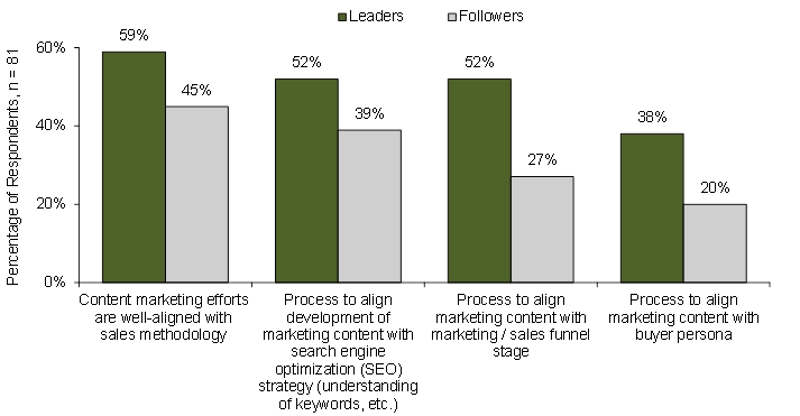
According to Adele Revella, president of Buyer Persona Institute, some marketers are “taking their existing knowledge of the buyer, and they’re putting it into a template.” Calling that creation the buyer persona is wrong. Marketers need a deep insight into their buyer’s wants, needs, and desires around the product. A real buyer persona begins with interviewing customers.

Many marketers, Revella says, treat buyer interviews as yet another production activity to mark off their to-do list. This flippant attitude leads to a shallow or inaccurate buyer persona. Instead, follow this golden rule when conducting your buyer interviews:

Don’t rely too heavily on a script. You won’t learn anything new from this interview if you create a script; your questions will be focused on your product’s features or services, instead of identifying actual consumer pain points. Scripting the interview too much will create a “confirmation bias,” where you’ll only be reaffirming your own assumptions about the product.

The scripted approach may not reveal what’s truly important to the buyer or even any of the meaningful attributes that can be addressed in your marketing. A scripted interview only means that, according to Revella, you can check off the fact you talked to a buyer.

Instead, hold an organic, free-flowing conversation with your subject. This buyer-driven conversation will give you new insights into what your customers actually need – which allows you to create marketing initiatives that provide that element to them.

“Doing a buyer interview right takes time and a willingness to hear both the good and bad news about your product and company,” says Maribeth Ross, Chief Content Officer of Aberdeen Group. In her roles as a marketer over the last 10 years, Ross has conducted many interviews with business-to-business (B2B) buyers to help better position products, identify the nurture preferences
of prospects, and learn key sales enablement insights.

On the whole, Revella doesn’t blame marketers for the skills gap around buyer interviews. Sales teams, she says, have the permission and the training to influence one buyer at a time. Marketers, on the other hand, are used to influencing an entire marketplace of buyers all at once. They have to learn the skills to conduct a one-on-one discussion that elicits real insights about the buyer.

“It’s harder to persuade a market of buyers than it is to persuade one person a time,” Revella says, which is precisely why having a persona is so critical.

Buyer personas are particularly important in content marketing. Aberdeen Group research conducted for the Alchemy of Intent: Content Marketing in the Lead-to-Revenue Cycle report revealed that 38% of Leaders aligned their content marketing with buyer persona (figure below).

The One Thing You Have to Do When Creating a Buyer Persona image for Mat Delman Buyer Persona 600x312

Source: Aberdeen Group, May 2013

This makes the Leaders a full 90% more likely to align content to buyer persona than all other respondents, which clearly equates this practice to top-flight results.

Don’t imagine that the buyer interview is a once-a-year practice, either. Revella cautions that creating and maintaining accurate buyer personas is going to require a cultural shift at many companies; you have to be committed to how buyers make decisions and invest significantly in persona development.

“We really want this to be an ongoing investment that the company is making,” Revella says. Her goal when training marketers through her buyer persona workshops is to develop buyer-expert marketers that conduct one buyer interview per month for their entire career after the initial push of eight to 10 interviews.

“The point is that this is not alignment for alignment’s sake,” writes Trip Kucera, VP of Client Success at Aberdeen Group in a recent content marketing report, “but rather about getting marketing content right: right content, at the right stage of the funnel, for the right persona.”

So now that you know how to start creating a buyer persona, what type of information should go into your creation? Learn what a detailed buyer persona looks like from this post.

22 Jul 09:58

Steps Along the Buying Decision Path

by info@sharondrewmorgen.com (Sharon Drew Morgen)

build-a-better-solution

As sellers we are taught to find prospects with a need that matches our solution and then find creative, professional ways to pitch, present, entice, push, market, or somehow introduce our solution to enable them to understand how our solutions will fix their problem.

Unfortunately, we fail to close over 90% of the time (from first contact) regardless of how well their need matches our solution. And it’s not because of our solutions, our presentations/pitches, or our professionalism. It’s because the sales model does not include the skills to facilitate the largest component of buying decisions – those systemic, idiosyncratic, behind-the-scenes, change-management decisions that comprise their Pre-Sales processes, exclude outsiders, and have absolutely nothing whatsoever to do with buying anything.

Until they go through this process and walk through each stage of managing their unique change management
issues, until everyone who touches the final solution agrees to a change, until the entire team is assembled and lends their voice to ideas, problems, solutions, and fallout, they cannot buy regardless of how much they may need our solution. They must do this – with us, or without us. It takes much longer without us, hence a protracted buying decision and closed sale.Without appropriate change management, they cannot buy. And the sales model doesn’t address this, causing sellers to spend most of their time finding ways to get in – and missing the route in because of their focus on solution placement. The route is change management.

SELLING DOESN’T CAUSE BUYING

An expression I always use: Selling doesn’t cause buying.
I’ve spent the last few decades coding and designing new tools to promote buyer readiness and help sellers facilitate buyers through their Pre-Sales decision path that buyers go through without us and is not focused on buying/solution choice. My model, called Buying Facilitation®, gives sellers the tools to be Facilitation/Change Consultants to get onto their Buying Decision Team, facilitate their change-management decisions, lessen the time between decision making/close, and differentiate from the competition. It’s a model that works with sales, but focused on enabling our buyers to congruently manage their systemic change, which has always been done outside of our purview until now.

Here’s the question to ask yourself: do you want to sell? Or have someone buy? They are two different activities, necessitating two distinct skill sets. Sales merely handles one of them. Buying Facilitation® works with sales to first help buyers manage their consensus and change issues to ready them to buy.

Using Buying Facilitation® first, then sales, will immediately enlist those who can buy, and immediately get rid of those who will never buy. After all, we all know too well that when buyers buy there doesn’t seem to be a direct line between their need or the relevance of our solution: it’s about their ability to manage their environment to make the necessary decisions that will lead them to congruent change and to their best possible outcome – which may, or may not, be to buy anything.When we speak with prospects to discuss need, we have no idea if the information we’re being given is the takeaway from all assembled voices, if the group has already agreed to buy anything, or what stage of the decision path they’re on. Are they merely gathering data for options? To bring back to the team? To compare with competitors?​

Here are the steps I’ve discovered that buyers – all change – must address. As you read them, note that facilitating change is not sales, and includes some unique skill sets, goals, and outcomes.

1.     Idea stage. Someone has an idea that something needs to change and discusses his idea with colleagues.
2.    Assembly stage. Colleagues meet and discuss the problem, bring ideas from online research, consider who to include, possible fixes, and fallout. Groups formed.
3.     Consideration stage. Group meets to discuss findings: how to fix the problem with known resources, whether to create a workaround using internal fixes or seek an external solution. Discuss the type/amount of fallout from each.
4.     Organization stage. Organizer apportions responsibilities, or hands over to others.
5.     Change Management stage. Meeting to discuss options and fallout. Determine

a. if more research is necessary (and who will do it),
b. if all appropriate people are involved (and who to include),
c. if all elements of the problem and solution are included (and what to add),
d. the level of disruption and change to address depending on type of solution chosen (and how to manage change),
e. the pros/cons of external solution vs current vendor vs workaround.
f. possible workaround and if they are sufficient.

6.   Addition stage. Add needs, ideas, issues of new members; incorporate change considerations.
7.    Research and change stage. Everyone researches their portion of the solution fix (online research—webinars, etc., call current vendors or new vendors etc.). Discussions include managing resultant change.
8.   Consensus stage. Buying Decision Team members meet to share research and determine the type of solution, fallout, possibilities, problems, considerations in re management, policies, job descriptions, HR issues, etc. Buy-in and consensus necessary.
9.   Choice stage. Action responsibilities apportioned including discussions/meetings with people, companies, teams who might provide solutions.
10.  Meet to discuss choices and the fallout/ benefits of each. Discuss different solutions and vendors.
11. Vendor/solution selection. Meet with possible vendors.
12.  New solution chosen. Change management issues incorporated with solution choice.
13.  New solution implemented.

The sales model handles steps 10-13. Marketing, marketing automation, and social marketing may be involved in steps 3 and 8, although it’s not clear then if the decision to choose an external solution has been made, the full fact pattern of ‘needs’ has been determined, what the marketing content is being used for, or if the appropriate decision makers and influencers are included. Buyers muddle through this but we can enter earlier and help them transition through their steps, so long as we stick to our initial roles as facilitators and not try to sell or manipulate.

BUYING FACILITATION® IN ACTION

I started up a tech company in London 1983-89 and developed Buying Facilitation® to teach my sales folks to navigate buyers through their decision path, change management, and buy-in BEFORE they began selling. We increased sales 5x within a month. I’ve been teaching this model in sales and coaching to global corporations since 1989 with similar results.

My book Dirty Little Secrets: why buyers can’t buy and sellers can’t sell discusses these steps and how Buying Facilitation® can work with sales and marketing to enter the buy path earlier, and to help coaches, leaders, and negotiators facilitate congruent change. It’s truly a change management skill that makes a seller a real consultant and uses entirely unique change facilitation skills: Facilitative Questions, Listening for Systems, and Choice. Remember, needs/solutions are irrelevant until buyers understand how any change will affect their status quo. The sales model isn’t designed to handle this Pre-Sales change management function. Read the book :)

_______________

Sharon Drew Morgen is the NYTimes Business Bestselling author of Selling with Integrity and 7 books on how buyers buy, including Dirty Little Secrets – a book on the 13 buying decision stages all buyers go through. As the developer of Buying Facilitation® she trains sellers to help buyers facilitate their change management, Pre-Sales buying decision issues. She is a sales visionary who coined the terms Helping Buyers Buy, Buy Cycle, Buying Decision Patterns, Buy Path in 1985, and has been working with sales/marketing for 30 years to influence buying decisions.

More recently, Morgen is the author of What? Did you really say what I think I heard? in which she has coded how we can hear others without bias or misunderstanding, and why there is a gap between what’s said and what’s heard. She is a trainer, consultant, speaker, and inventor, interested in integrity in all business communication. www.didihearyou.com.
She can be reached at sharondrew@sharondrewmorgen.com  512 771 1117  www.dirtylittlesecrets.comwww.sharondrewmorgen.com

Steps Along the Buying Decision Path is a post from: SharonDrewMorgen.com

22 Jul 09:57

13 Signs It’s Time to Leave a Trade Show

by Mike Thimmesch

You invest a lot in the trade shows that you exhibit at. How much? At 36% of the average trade show budget, booth space costs are your single largest expense. Plus, your choice of shows affects the rest of your entire trade show budget.

So which trade shows are worth your marketing investment?

13 Signs Its Time to Leave a Trade Show image leave trade show4

Here are 13 signs it’s time to stop exhibiting at a trade show and ply your business down different carpeted aisles:

1. The Wrong Attendees: If your buyers are not walking a show, then why exhibit there? The top reason exhibitors back out of a show, or take a smaller booth size, is because they don’t find high quality attendees. The highest quality attendee looks like your best buyers – so figure out what your buyers look like, and then ask show owners to prove that their attendees match your buyers.

2. Low R.O.I: If you have a slate of trade shows that provide a range of R.O.I, then drop the shows at the lower end of the range, unless they achieve other key objectives besides Return On Investment.

3. Decreasing Qualified Attendance: Perhaps your target audience is at that show … just fewer and fewer of them over the years. If there are other shows that keep delivering, then shift more dollars to those.

4. Rapidly Rising Exhibiting Costs: Trade shows provide a great value – they bring to B2B marketers a parade of potential buyers that allow exhibitors to meet more people face-to-face than they can from months of cold calling. But shows that try to squeeze every penny of profit from that advantage risk killing the golden goose. Booth space and drayage costs that increase multiple times faster than inflation? Not good. Not good at all.

5. Not Responding To Industry Changes: Change is inevitable, but a show that lags behind those changes is no longer an attractive destination to hear the latest news. A laggard show will not bring the right speakers, themes, and educational sessions, which eventually will dampen attendance.

6. No Excitement: Is the prospect of attending the show getting you jazzed? It should. You should be excited about the networking, the potential business, the industry buzz. If it’s going to be boring, then it may be time to leave.

7. Lack of Promotion: It’s harder to succeed if the trade show doesn’t go all out to get attendees into the show hall. It’s also a deterrent if the show makes it hard for you to access attendee lists to promote your presence directly.

8. Lack of Social Media Marketing: If a trade show hasn’t learned how to fully integrate social media into their marketing, they are missing out on a sizable portion of their potential audience that ignores traditional media – especially younger attendees that help determine the future of the show.

9. Poor Welcome For Newcomers: The best shows know that new attendees and new exhibitors are what make the show grow, and they treat them with care. If shows ignore newcomers and just take them for granted, vote with your feet.

10. No Exhibitor Advisory Committee: Good shows appoint exhibitors to an advisory committee to get feedback about what changes the show can make to improve their exhibitors’ satisfaction. If the show doesn’t have an Exhibitor Advisory Committee, and won’t start one when you ask, they don’t really care about your business.

11. An Ignored Exhibitor Advisory Committee: Almost as bad is a show that asks for feedback, but then ignores everything exhibitors tell them, nor provides good business reasons for not implementing exhibitor suggestions.

12. Little New Blood: If every attendee is gray haired and already knows each other, then the show is not going to be sustainable in the long run. (See Sign #8, about Social Media)

13. Unbalanced Focus On Attendees: We get it — without attendees, exhibitors would not have a reason to exhibit. So shows tend to focus more on the attendees, thinking that will be enough to satisfy exhibitors. Not anymore. Exhibitors are also important, and need care and feeding, too, or they will take their marketing dollars elsewhere.

If there are shows on your show schedule that do too many of these things, then consider dropping those shows. Take those budget dollars and expand in trade shows that are doing well by you, and also consider adding new shows to your program. Want help finding new shows? Here’s a great article that helps you find new trade shows to exhibit at.

I don’t want to sound all doom and gloom here — there are innovative, healthy shows that do the opposite of these 13 signs. Grow with these responsive shows, and you will grow your business.

13 Signs Its Time to Leave a Trade Show image WWE2In the What’s Working In Exhibiting White Paper, “selecting shows” was the only tactic that exhibitors said both increased their results and stretched their budgets. Find out more by getting your own free copy by clicking here.

22 Jul 09:56

Here’s Why a Booming Tech Market May Fool You into Thinking You’re Successful

by Mark Suster

Since 2009 we’ve been in an unequivocal bull market. Venture capitalists have raised increasing amounts of money from their investors (LPs) every year. An impressive number of new VCs have been created – most of them with new seed funds. We’ve had an explosion of alternate sources of financing from crowd-sourcing, angels, accelerators, incubators, corporates, corporate incubators.  And importantly we’ve had revenue. Consumers buying through smart phones, travelers using the new, shared economy and businesses replacing old software with modern cloud-based solutions.

It has been a good run.

But it won’t last forever. It could last 6 more months or 6 more years for all I know. But the economy grows in cycles and always has: Expansion & contraction. For what ever reason we’re wired to have amnesia during the run up and prescient memories of how we ‘knew it all along’ as soon as the slide begins. I do believe that we are in structural change where technology will increasingly play a bigger role in all facets of life so the long run up for tech is promising through all of these cycles. Once you understand both sides of the cycle you start to recognize signs of behavior during each phase.

I’d like to do a few posts on what life looks like on the way up and perhaps how to keep your head on straight and avoid drinking your own Kool Aid because as I often advise entrepreneurs on irrational exuberance, “In a strong wind even turkeys can fly.” It helps to have seen the way down twice before to know many of the signs. And as I always assert,

“Great companies are built in downturns. It’s where the truly innovative separate themselves from the pack. It’s when the game slows. It’s when the noise stops and you can actually get customer attention, press articles and VC meetings. It’s when you separate the wheat from the chaff. And it’s when mediocre companies get pulverized.”

The Lessons of Shelfware

In the software industry we’ve always had a term that’s a bit of an anachronism called “shelfware.” We used the term to describe software that was purchased with great enthusiasm only to be stored on the shelf and seldom used. Of course back then it literally was sold in a package and stored on a shelf!

You’d imagine that companies selling tons of shelfware would quickly meet their deserved fate in the market, yet the spin around a category of software can fool buyers into thinking they “must have this product to compete.” Case studies get done with ebullient CEO’s espousing the benefits of said software even though their organization was barely using the product. ROI studies were published. People attending marquee conferences with rock bands, prominent speakers, Gartner Group prognosticators and lots of other happy customers. Surely there must be some benefit here??

I remember, for example, when business intelligence swept through companies globally. Every consultant was pitching a process for reinventing your organization through BI. And while it’s true that BI implemented properly can truly give executives insights – in and of itself the software was just software. Poorly implemented this category was the definition of shelfware.

Growth markets have a way of fooling us all. When markets start to turn shelfware companies are the quickest to die. There isn’t anything mission critical to bind the organization to keep using the product, there aren’t strong internal champions and projects quickly get shut down. The problem with shelfware is that if you have great sales people, you have raised tons of VC money from prominent investors, you have some marquee clients and you thus likely have some great press about you it can be hard to tell true success from that which is ephemeral.

One thing I thought was super cheesy about Salesforce.com when I was there was their tagline “Success, Not Software” but on reflection I have to admit that it does have nice way of focusing one on the right priorities

I have had a version of this conversation with nearly every startup with whom I’m involved. When I start to see revenue figures I always want to know the details behind the revenue:

  • Who championed the project?
  • For what purpose are they using your software?
  • Who is the executive sponsor?
  • Are they integrating it with other solutions?
  • Have they done a business case on the expected benefits?
  • Did they do a major training program?
  • Do we know how many users are logging in? How frequently they’re using the product? What their initial feedback has been?

I’m always paranoid about shelfware. I’m paranoid about the evaporation of revenue. The pattern has appeared many times in my career: PR success, customer pilots, unclear benefits, the selling company scales up sales & market org quickly to meet demand, revenue takes off through brute force and reaches cruising altitude for a couple of years then the market slows, revenue goes into an absolute nosedive and sales & marketing cuts come way too slowly as the organization thinks it can execute its way out of the freefall.

And what’s worse is that when you have shelfware you often gear your organization around selling the same shit at scale and your innovation pipeline slows down leaving you doubly vulnerable.

What to do to Avoid Shelfware?

1. Have an in-house professional services team that implements your software. It will bring down your overall margins but will produce profitable revenue. Most importantly in ensures long-term success. I wrote about The Importance of Professional Services here. I know, I know. Your favorite investor told you this was a bad idea. Trust me – you’ll thank me a few years from now if you control your own destiny and improve quality through services. If your investor worked inside of a SaaS company for years and disagrees with me then listen to them. If they’re a spreadsheet jockey then on this particular issue I promise you they are FOS. Spreadsheet quant does not equal success, properly implemented software does.

2. Work with customers on business cases (for internal use) and ask for case studies (for you to publish in marketing)

3. Create company measures for success that go beyond financial metrics. You manage what you measure so be careful about having too narrowly defined of performance metrics

4. Have sales bonus plans based on more than just sales targets. Perhaps having renewal rates with a good bonus spiff, have a component of MBO tied to usage performance metrics or spiff certain milestones like business plans. These can’t be the main event – sales are sales after all – but can help shape good behavior.

5. Make sure your board challenges you enough about long-term vision & innovation. Not continuing to challenge yourself on product strategy will lead you down long-term ratholes. And I can tell you from 20 years of experience that if your revenue figures are strong very few boards will challenge you beyond your short-term financial successes and 12-month plan. Run board meetings that force strategic discussions rather than cheering sessions focused on financial metrics.

6. Most importantly – YOU need to care. You need to be focused beyond your immediate two quarters. Let’s face it – that trajectory is already set. But no truly great business has ever been built by focusing the overwhelming majority of senior executive time on the here and now. That’s management by fire. You own making sure your company has good behavior. Your VP sales can’t and won’t save you – s/he’s too busy ringing the cash register. Your board likely won’t unless you have visionaries who are also egg breakers. Marketing won’t likely challenge you enough on this issue as they’re feeding the beast with more pipeline. You need to listen to your product team, watch your competition and work hard on determining whether you’re truly providing value to your customers.

22 Jul 09:56

How to Turn Business Cards into Email Subscribers

by Brad McCarty

How to Turn Business Cards into Email Subscribers image IMG 9563There’s no doubt that email is still one of the best forms of communication when it comes to closing a sale. But bridging the gap between face-to-face networking and the email follow-up is something that very few of us do well.


So how can we get better at networking — the kind that actually leads to more email subscribers (and more sales)? Turns out, it’s not all that hard. We just need to do a better job of segmenting and using the data we’ve collected.

Invite New Contacts to Join Your List

When collecting business cards, make sure it’s clear to folks that you’d like to add them to your email list. This way, you get the chance to tell them about the useful info you’ll be sending, and they’ll know to expect your emails.

Segment Everything

I’ll start here because it’s the area where I’ve failed the hardest. I used to travel for work a lot. I’d find myself going from a trade show on Monday to an entrepreneurship conference on Wednesday and finally to a startup accelerator demo on Friday. By the time I got home, I had a pile of new contacts … and no idea where I actually met them.

Maybe your way of keeping track of who you meet is to write them down in a Moleskine. That’s fine, but dedicate a page (or an entire notebook) to each type of event that you’re attending. If you’re collecting business cards, keep each event in a separate envelope until you’re ready to put them into your CRM.

Speak To Your Audience

It’s all too easy to fall into the rut of sending out one type of email to every type of customer. This is probably one of the areas where segmentation can help you most. By addressing the specific concerns of one person within a segment, you’re going to speak to them all.

Building a better email list doesn’t just include a high subscriber count. You want great open rates and click-through rates as well. When your subject matter actually hits home for a certain group, increased rates are the organic byproduct.

Get Organized

You’ve been collecting cards or keeping names in separate groups. You’ve spent the time to customize your content. So now what? Now it’s time to put that networking into action.
Start with your business cards.

FullContact Card Reader lets you take a picture of a business card and have real people transcribe the information for you. But before you send that card off to be transcribed, assign a tag to it. That tag will stay with the card when the information comes back to you, allowing you to easily segment a huge stack of contacts by where you met them, the industry they’re in, etc.

How to Turn Business Cards into Email Subscribers image FC CARD SCAN

Taking things a step further, Card Reader also lets you scan your business cards directly into your Mad Mimi audiences by using Zapier. You’ll need a free Zapier account to set this up, but it’s a simple process. You’ll want to set up an integration that looks like this:

How to Turn Business Cards into Email Subscribers image ZAP

Now that you have those transcribed cards back in hand and the contacts entered into your Mad Mimi audience, back up that data where it’s most useful to you. Maybe it’s an Excel spreadsheet, or your company’s CRM. The destination doesn’t matter, just make sure that the data ends up somewhere that you can readily access it.

Reap the Benefits

Offline networking doesn’t have to be a dead-end street. Whether it’s a business card or a note scrawled onto the back of a napkin, it’s a chance to connect with a potential customer online. You just have to bridge the gap.

22 Jul 09:56

Create an Email Newsletter That Produces Results

by Jonathan Long

An email newsletter is a very effective way to keep your core audience engaged. We are not talking about an autoresponder that fires off a pre-written sequence of emails to every subscriber on your list that continues to hammer the subscriber until they either make a purchase or opt-out. We are talking about an email newsletter designed to provide your list with useful information on a regular basis, keeping them interested in and engaged with your brand.

An email newsletter requires a lot of work in order to make it successful. Many individuals focus all of their attention on building their newsletter subscribers but fail to deliver when it comes to the actual newsletter. If you want to hit a home run with your email newsletter then you need to write amazing copy with subtle yet effective call-to-actions and attention grabbing subject lines. You also need to make sure your newsletter is hitting your recipient’s inboxes while staying CAN-SPAM compliant.

Create an Email Newsletter That Produces Results image Create an Email Newsletter That Produces Results

This information can benefit you if you already have a newsletter or you are thinking of starting one. Let’s dive right in…

1. Determine what you want to accomplish with your newsletter

It is important that you have a clearly defined goal of your newsletter before you start building your list and sending off emails. Many individuals will deploy a newsletter and look at the open rate and the click rate, which are important numbers, but a newsletter needs to have a more specific goal than just receiving opens and clicks. Some examples include:

  • Generate leads
  • Generate sales
  • Direct traffic to your website
  • Direct traffic to other pieces of content around the web

Instead of thinking of an email newsletter as a stand-alone marketing segment, include it in your overall content marketing strategy. This helps identify goals and analyze the effectiveness of the email marketing.

2. Establish a frequency schedule for your newsletter

Once you have the goal of the newsletter figured out you need to determine how frequently the newsletter will be sent to your list. This has a lot to do with what you determined from step one, as each business will have different needs.

Some businesses need to touch their list multiple times a week, while some can accomplish their goals with a monthly or weekly newsletter. One the frequency is determined it is important that the delivery remains consistent. Failing to deliver on time can result in many subscribers opting out and losing interest in your brand.

3. Create a newsletter template

Your newsletter should be branded in some way, allowing it to stand out from the rest of the “plain” emails your recipients will also receive. Before you send your first email it is a good idea to determine a layout that you will use for your newsletter.

Think of the “readability” when designing the newsletter layout. You want your readers to be able to quickly scan the newsletter in order to identify points of interest, and then easily read and engage with that specific area of interest. Do not worry about making it flashy or fancy; instead worry about making it easy to read, especially on mobile devices. With over 5 billion mobile users there is a very good chance a large percentage of your list will be accessing your newsletter on their mobile devices.

4. Create your newsletter content

Since you don’t want to just send out prewritten messages you will need to create the content for each newsletter before you send it. Don’t create the newsletter too far in advance because you want to keep it as current and fresh as possible.

Every “issue” of your newsletter should provide the recipient with information of value while leveraging that in order to accomplish your goals of the newsletter. You can introduce brand new content to your newsletter or recap content that was produced since the last newsletter and provide them with brief overviews and links to that content.

Keep in mind that you want your list to open each newsletter and see value. The way you present them with that value has a lot to do with the unsubscribe rate of the newsletter. Providing a value gives the list incentive to remain subscribed, allowing you to continue to market to them.

5. Proof read your newsletter and visually enhance

Make sure that your newsletter has a “personal” feel to it rather than something that reads like an overly promotional advertisement. Your list will interact with the newsletter more if they feel like it truly is intended to benefit them and not just sell them something.

The same way content is important for successful SEO, the content within your email body as well as the content that you share via your newsletter helps to brand you and your business. Take the time to make sure that it is error free. A simple spelling mistake or grammar error can show that you did not take the extra few minutes to proof read it before sending.

You don’t need flashy graphics or images, but take the time to style the email body in a way that makes it easy to digest. Establish the call-to-action(s) and make them easy to access and identify.

6. Create your subject line

While it is just one line of text, your subject line can be the difference of a high open rate and a very low open rate for your emails. There is no “one size fits all” solution when it comes to effective subject lines. It will vary greatly depending on the business.

You will want to split test different subject lines for each newsletter. Over time you will see what your list responds to better and you can continue to optimize and test until you reach the desired open rate.

Try very descriptive subject lines, subject lines that reference your brand, and even very simple subject lines such as, “Open me.”

7. Make sure your email marketing is compliant

Before you start sending any emails you need to make sure your email marketing is CAN-SPAM compliant. You need to make sure that you are only emailing recipients that gave you permission to email them and that you include an unsubscribe link at the bottom of the email communication that includes your address.

Using an email service such as AWeber, mailchimp, or constant contact is a good way to make sure that your email newsletter and subscriber list remains compliant.

8. Send

Once you have crafted the perfect newsletter email it is time for the moment of truth. Send it out!

9. Review your email data and goal conversions

You want to wait a few days or even a week to really dive into your email newsletter data. It can take a few days for some people to get to their emails and some may glance over it on their mobile device and then go back to it on their computer days later.

You will want to see what your open rate was for the overall newsletter and then see what content received the most interaction. All of this data can be used to pan the next newsletter.

Craft your next subject lines towards the subject line that had the highest open rate and include content related to the content that received the most clicks and engagement from the previous newsletter.

A newsletter is a great way to nurture your list and provide them with a value and benefit to stay connected with your brand. When you leverage it correctly it can really help you to build your brand.