Shared posts

08 Aug 17:05

Air Canada shares fall most in four weeks despite posting most profitable quarter in its history

by Canadian Press

Air Canada fell the most in almost four weeks after the country’s biggest carrier said yields would continue to decline this year as it packs fuller planes.

The shares fell as much as 7.1% in Toronto, their biggest intraday drop since June 12. They were trading at $8.92 at 10:48 a.m., paring a 25% gain this year through yesterday.

Yield, or average fare per mile, declined 2.1% in the second quarter, the company said today. Chief Executive Officer Calin Rovinescu said yields will continue to fall this year as the airline adds more economy class seats and operates longer flights with a view to boosting profit.

“We are purposely looking at having a lower yield,” Rovinescu said on a conference call. “That is part of the strategy here as we look to have a greater bottom line.”

The average length of flights increased 2.5% in the second quarter from the same period a year earlier, reducing yield by 1.5 percentage point, Air Canada said in its earnings statement.

Air Canada’s yields in the second quarter were lower than Fadi Chamoun, an analyst at BMO Capital Markets in Toronto, had estimated, “implying a weaker-than-expected June month” particularly in U.S. transborder yields, he said in a note to clients.

Air Canada also boosted its 2014 cost-cutting target this year. Rovinescu is working to increase profit by about 15% over five years by expanding the company’s Rouge low- cost unit after deploying five Boeing Co. 777 aircraft with 31% more seats than the plane’s standard version. Air Canada said in May it was planning to refurbish another 12 of its 777s by adding more seats starting next year.

The Montreal-based company reported the most profitable quarter in the airline’s history, crediting a demand in all markets, the contribution of its low-cost Rouge subsidiary and falling costs.

Air Canada said net income grew to $223 million, or 75 cents per share for the period ended June 30. That compared to a loss of $23 million, or nine cents per share, a year ago.

It benefited from a $41-million tax gain, which partially offset higher fuel costs and the impact of lower foreign currency.

Adjusting for one-time items, its profit soared 21% to $139 million or 47 cents per share. That compared to $115 million or 41 cents per share a year earlier.

Revenues increased 8.1% to $3.3 billion on an 8.5% increase in capacity. However, yield or pricing line declined 2.1%.

Air Canada was expected to earn 51 cents in adjusted profits on $3.3 billion of revenues, according to analysts polled by Thomson Reuters.

“These financial results highlight the significant and incremental progress being achieved through our various value-enhancing strategies,” Rovinescu said during the conference call.

He said investments into providing seamless transfers at Canada’s major hubs is starting to show results.

Rovinescu added that Rouge, which has carried two million passengers to leisure routes at lower cost, is exceeding financial expectations.

“From a financial point of view, the performance of these routes since the transfer clearly validates our decision.”

He also told analysts that the subsidiary is doing a better job of communicating the changes in service levels to premium customers, some of whom have complained.

Although it is adding new routes, Air Canada said Rouge will end the year with 28 aircraft — eight Boeing 767s and 20 Airbus 319s — down from its prior forecast of 33. The reduction is being driven to ensure the mainline fleet has enough capacity because 20 Embraer E190 planes are ending service later than planned.

David Tyerman of Canaccord Genuity said the results were “up nicely” and in line with expectations.

“Overall, the second-quarter results and 2014 guidance might have a positive implication for our outlook,” he wrote in a report.

Compiled with files from Bloomberg.com, The Canadian Press

08 Aug 16:58

Top 10 Signs You’ve Hired The Wrong Candidate

by Amy Edwards

Picture the scene: you’ve advertised for a new employee, conducted the interviews and selected who you think is the ideal candidate. Their first week of work rolls around and it goes without saying that you’ve got high hopes for what your sparkling new employee can and will achieve at your company.

At first all seems to be going well, but then as the first week rolls into the second and so on you start to get the feeling that something isn’t quite right. You can’t quite put your finger on what it is – but something’s nagging in the back of your mind and telling you you’ve made the wrong decision.

Hiring the wrong employee isn’t uncommon – and it’s probably happened to majority of businesses at least once. Why? Because unfortunately quite often the person you met in the interview isn’t the person who turns up for work in that first week.

That said; there are a few major telltale signs that the employee you’ve taken on isn’t going to last at your business. Here are the top 10 things you need to watch out for.

1. Asking For Special Treatment: The standard working hours for your business are 9-5.30 with an hour for lunch. Everyone works the same hours and it’s in everyone’s contract – but that doesn’t stop your new employee from asking if they can change their working hours to suit their needs. Now, while this might not be an issue for some employees, and the new flexible working ruling means it is something that will need to be considered, it could suggest that the employee feels like they might be entitled to special treatment… And this could just be the start…

2. Not Listening & Making The Same Mistakes: OK, so it’s going to take a while for things to sink in and for your new employee to ‘get’ stuff – but if they’ve claimed to be a ‘quick learner’ and they keep making major mistakes, such as getting your company name wrong when making a sales call, you could be in big trouble…

3. Late/Ill In The First Week: Sometimes things happen which are out of our control, but if an employee turns up late for work or phones in sick in the first week alarm bells could start to ring. Why? Because it could suggest they’re not organised and/or willing to let you down at the first opportunity…

Top 10 Signs You’ve Hired The Wrong Candidate image new employee4. Moaning About Tasks Given: The worst thing a new employee could do is moan about the work that has been given to them. Why? Because it gives off the impression that they think they’re too good for tasks – and if they’re unhappy about the work that has been given to them in their first week – what are they going to be like in a few months when they’re no longer classed as ‘new’ and the work really ramps up? Which leads me nicely onto my next point…

5. Saying ‘That’s Not My Job’: Uh-oh! If an employee thinks they can stick to their job description in the first week you’re going to have major issues. The problem with this one is that a lot of the time things come up that don’t really fall under anyone’s job description but that need to be done – and someone needs to do them. A good employee will happily take on any work you give them and be a real ‘team player’… and if they don’t do this in the first week, there’s no suggestion they’re likely to do it further down the line.

6. Doing The ‘Bare Minimum’: A new employee should be keen to impress you in their first week and go above and beyond… this might mean doing more than is expected of them or even starting work early or staying late. If an employee is clocking in at 9 and clocking out at 5.30 on the dot and only doing what you ask, it could be a sign that they’re not really fussed about impressing you and/or staying put at your business.

7. Going Out To Make Calls All The Time: OK, so everyone needs to make personal calls in working hours sometimes, but definitely not in their first week! Making personal calls in their first week is pretty cheeky (particularly if they’ve not got the ‘OK’ from you) and again, could suggest they’re just not taking the job seriously.

8. Causing Conflict With Other Employees: In their first week a new employee should try their best to fit in with their new colleagues and bond… not start a war! While you don’t want an employee who will let themselves be walked all over, you don’t want one who will start a fight over a stolen post-it note either. Keep your eyes peeled for any unnecessary arguments involving your new employee and be ready to act.

9. Rush To Claim The Glory: If your new employee has been working on a project with a few colleagues and they then rush to claim the glory, you’ve got an issue. Why? Because your new employee isn’t being a team player – and their actions are bound to upset the rest of existing workforce… disrupting the harmony you’ve worked so hard to build up!

10. Searching For Other Jobs In Working Hours: Surely an employee wouldn’t be as stupid as to search for new jobs while they’re working for you? They might – and if they do, you know what you need to do…

As ever I’m keen to hear what you think. Do you have any other telltale signs that employees need to look for from their new employee? Or do you think some of the points above are a bit unfair? Leave me a comment below.

07 Aug 15:00

Before-And-After GIFs Show Utter Devastation Of Gaza After Israel's Offensive

by Michael B Kelley
Rnordman

Israel should be on the hook to pay for re building.

Screen Shot 2014 08 07 at 8.34.33 AM

REUTERS

The U.N. has released satellite photos showing areas in the Gaza Strip before and after Israel's Operation Protective Edge. 

The 29-day offensive destroyed most (if not all) of the tunnels built by Hamas under the strip, as well as much of the infrastructure.

Haaretz reports that "Palestinian Labor Minister estimated this week the cost of rebuilding Gaza's destroyed structures – not including damage to private property – at $5 billion."

As many as 10,000 housing units were completely destroyed and about 30,000 were partially damaged.

A 72-hour ceasefire is into its last day as Hamas, which is considereed a terrorist group by the U.S. and EU, refused to prolong the agreement until an Israeli-Egyptian blockade of Gaza is lifted and prisoners held by Israel are freed.

Here's a look at some of the neighborhoods (via Haaretz):

al-Atatra:

gaza1

UN/Haaretz

Beit Hanoun:

gaza2

UN/Haaretz

Beit Lahia:

gaza6

UN/Haaretz

Central Gaza City: 

gaza4

UN/Haaretz

Screen Shot 2014 08 07 at 8.34.08 AM

REUTERS

And another showing Central Gaza City: 

gaza5

UN/Haaretz

Nuseirat refugee camp:

gaza3

UN/Haaretz

Here's a breakdown of the death toll.

It's unclear how many killed in Gaza were civilians, but there were a considerable number of women and children. Hamas actively uses the civilian population as human shields, according to a captured "urban warfare" manual.

Screen Shot 2014 08 07 at 8.34.18 AM

REUTERS

Join the conversation about this story »

07 Aug 14:58

Having Your Team Aligned Make It All About Strategy Execution

by Paul Keijzer

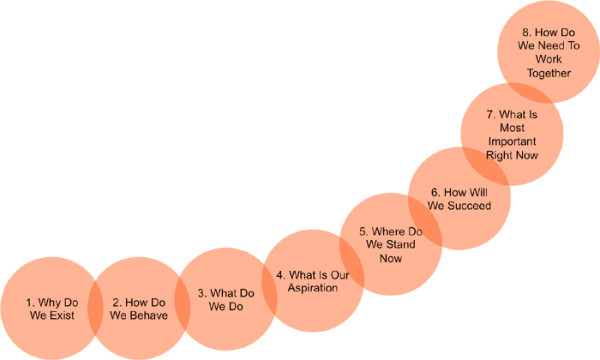
You have done it! Over the past 7 weeks we have talked about the 8 questions that need to be answered to align and emotionally commit your team rationally behind a jointly created future.

Having Your Team Aligned Make It All About Strategy Execution image 8 Questions 600x360

8 Questions

By this time, you have:

  • Jointly articulated a purpose that is meaningful, inspires and is important for the organization (for inspiration look at AirBnB’s beautiful new purpose)
  • Identified what values should guide them
  • How you will differentiate yourself
  • Identified an exciting aspiration,
  • Defined what your current reality is
  • Captured your strategy on a one page dashboard
  • Have discussed how you are going to tell your strategic story to the rest of the company.

Problems with Executing Your Strategy

“Without Strategy Execution is Aimless, Without Execution Strategy is Useless”

- Morris Chang, CEO of Taiwan Semiconductor Manufacturing Company

As Morris Change quote indicates, your beautifully aligned team is of course worthless if you are unable to execute your strategy. And this is where I see a lot of companies struggle. When we have our two day sessions on strategy and team alignment, I feel tremendous vibes in the room, however I still see many companies fail to make the best use of the momentum they have created.

In my experience, this is caused by the ‘back-to-the-office’ trap. Coming back to the office the day or weekend after and being caught into the email backlog and day to day firefighting scenarios. It could be a big customer complaint that happened whilst you were away or other operational issues that suck the air out of your strategy plan.

The How’s of Successful Strategy Execution

The key for a successful transition from strategy to execution is to plan ahead. To know even before you start your strategy session:

  • How you’re going to keep your strategy alive
  • How you will follow up
  • How you will keep team members accountable for implementation
  • How you will communicate the results over time and keep your staff and stakeholders engaged.

In general how you will implement your strategy.

These are all questions that ideally you’ll have answered before you even start your strategy session but certainly agree with your team at the end of the session. I always advise team to have monthly strategy score card sessions and quarterly ‘feet on the table’ review sessions to check whether

1. You’re still on track

2. Whether things have changed in your environment

3. You have to adapt your plan

4. What trends you’re spotting that might affect the strategy in the next 24 months

Even more important is to realize that you have to create new disciplines in yourself, your team and your organization. You might need to change your meeting structure and the top team agenda in order to ensure follow up on the strategic plan. You and your team have to learn how to hold each other accountable. They’ll be more on this in my upcoming series on building high performing top teams.

A book that might help you translate your strategy in producing extraordinary results is Chris McChesney, Sean Covey and Jim Huling book called: The 4 Disciplines of Execution. In this they identify 4 disciplines for companies to improve their ability to execute:

Discipline 1: Focus on the Wildly Important

Discipline 2: Act on the Lead Measures

Discipline 3: Keep a Compelling Scoreboard

Discipline 4: Create a Cadence of Accountability

So of course your strategy is only the beginning. A brilliant strategy doesn’t promise brilliant results. It first of all needs to be a strategy that is bought by all stakeholders, secondly it needs to be executed and finally it needs to be adapted to changing circumstances. Easier said than done, but with the right mindset and focus it’s not impossible.

And as Naveen Jain the founder of InfoSpace says:

“Success doesn’t necessarily come from breakthrough innovation but from flawless execution. A great strategy alone won’t win a game or a battle; the win comes from basic blocking and tackling”.

Photo Credits: Marcin Wichary via Photopin cc

07 Aug 14:57

The 7 Worst Mistakes People Make In Their 30s

by Richard Feloni

young couple walking

Your 30s are typically a time for settling down after using your 20s to take risks and find yourself.

Many 30-somethings are busy raising a family and rising through the hierarchy at work.

Those who have already been through that decade say that as their responsibilities accumulated, it became easier to neglect relationships and ignore opportunities that they would never get again.

Quora users discussed lessons they learned in the thread: "What is the biggest mistake you made in your 30s and what did you learn from it?"

We've collected some of the best responses:

They abandon their loftier aspirations.

Twenty-somethings are often willing to settle for a job they are not passionate about, but before they know it, that job turns into their career. An anonymous poster writes that his or her biggest mistake of his or her 30s was to become "addicted to a monthly salary," in the sense that he or she settled for job security over career satisfaction.

If you've ever wanted to start a business or pursue a side project, it will only get more difficult as your responsibilities increase.

They put their career ahead of family and friends.

"Don't just work. Make memories. The older you get, the harder it is to make meaningful relationships. Foster those while you're young," writes Microsoft product designer Michael Dorian Bach, who is now in his late 30s.

They neglect their health.

Bach writes that the pursuit of a career can also be a drain on one's health. "Be healthy. That is priority 1. Don't get into your 30s being slow and tired all the time. It sucks," he says. Develop an exercise routine, and enjoy your mobility while you're still young.

They miss the chance to have kids.

CEO coach Alison Whitmire shares a personal story about how she took getting pregnant for granted in her 30s and chose to pursue a new career opportunity instead of trying to have a child. Years later, after a failed pregnancy and then a failed marriage, she remarried and had a baby at 43. She realizes now that no one is ever adequately prepared to have a child, and if you want one, it's best to do so before it's too late.

They don't spend enough time with their aging parents.

Entrepreneur and blogger James Altucher, who is now 46, writes about a particularly difficult memory for him: "When I was 34 I hung up the phone on my dad in an argument and never returned his calls. Six months later he had a stroke and died. A week before that he had emailed me to say hello but I didn't return the email. I'm sorry, Dad."

It can be easy to forget that your parents grow older as you do. Don't take them for granted.

They don't set up a financial foundation for the future.

Altucher writes about the many times in his 30s he bet practically all of his money on a business venture and then lost all of it. Altucher is doing well now, but he looks back on his failures as the result of recklessness. 

As your responsibilities grow, it can seem like what you put into savings won't amount to much come retirement, but it will only become harder to start saving in your 40s.

They stop having fun.

Just because you're not in your 20s anymore doesn't mean you need to give up enjoying life. Bach says he spent the early half of his adult life chasing money, and it only made him unhappy and more cynical about life.

Go on dates with your significant other. Take your kids on trips. Go to concerts with your best friends. Just don't forget that the money you work to make is useless if you're miserable.

NOW WATCH: 15 Things You Should Do Before You Turn 30 

Please enable Javascript to watch this video


SEE ALSO: 33 Things Everyone Should Stop Doing In Their 30s

Join the conversation about this story »


07 Aug 14:57

Wildly Popular Messaging Apps Are Becoming Immersive Mobile Platforms In Their Own Right

by Emily Adler

Messaging_MAUs

Messaging apps like WhatsApp and WeChat are huge and getting bigger. 

BI Intelligence's data shows that WeChat, LINE, WhatsApp, and Snapchat are all growing their user numbers in 2014 at a quarterly rate of 15% or higher.

Like social networks before them, these apps are becoming the hubs for everything global smartphone audiences do on mobile. Messaging apps help people connect with one another, share photos, video chat, and increasingly engage in activities that earn significant revenue for the apps, including playing games, buying digital goods, and even shopping offline.

User sessions for messaging and social apps increased 203% in 2013, according to Flurry. That's about twice as fast as the increase in sessions for all types of apps, which was 115% for the year.

A recent report from BI Intelligence takes a deep dive into the messaging wars. The report contains our exclusive estimates for monthly active users for all the top global messaging platforms — including some like Snapchat and LINE, which do not release MAU numbers. In the report, we describe the similarities and differences between 15 messaging apps and include a case study of Japan-based LINE as an example of how this category can monetize and drive hundreds of millions of dollars in revenue. 

Access The Full Report And Data By Signing Up For A Free Trial Today>>

Here are some of the top insights on the mobile messaging wars: 

The report is full of charts and data that can be easily downloaded and put to use. 

In full, the report: 

For full access to all BI Intelligence's charts, analysis, and daily briefings on the digital media industry, get started with a free trial.

Join the conversation about this story »

07 Aug 14:56

Email marketing should be much more than a newsletter

by Susanne Colwyn

Are you using all the options for email marketing?

For smaller business without a full-fledged email programme, it’s not always obvious that email marketing needn’t just be limited to the good old newsletter. To help you review all the other different email options, we’ll go through the ‘usual suspects’ available from email marketing that can help you as a marketer, achieve many different goals.

Best practices for encouraging opt-in to email marketing

In the wake of the recent prosecution and fine of John Lewis, the department store chain, for sending of unsolicited spam emails, we need to take a second look at communications we sent out. In almost types of emails, but not all, subscribers should be able to opt-out. To help avoid any legal issues, bear in mind it is best practice for email subscription to:

  • Leave the email opt-in box blank on the sign-up form. I.e. do NOT pre-populate it with a tick.
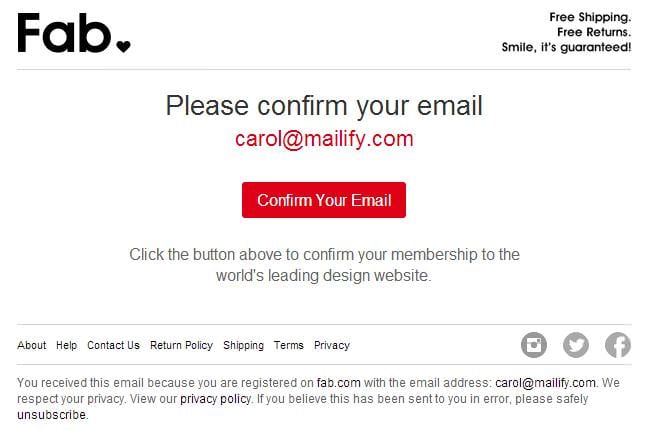
  • Operate a double opt-in procedure with your subscribers. First of all they sign up, for example on your website, and then following this, they receive a mail asking them to confirm their email address and activate their subscription [Editor's note: we would disagree this is essential for brands when consent is clear at signup, but is good practice for publishers or to avoid the John Lewis scenario]
  • Include an opt-out link in almost all email communications sent (detailed below)

email opt ins Emails can be divided into 2 main types/categories:

  • Group Emails: if the email is sent as a ‘blast’ to all or a segment of the database (one to many).
  • Individual Emails: if the email sent by the company to an individual (one to one).

Group Emails

group emails

 1. Classic Newsletters

This email keeps your company top of mind and keeps your subscribers engaged.  These newsletters can be shared by email or on social networks; this viral effect will increase your brand’s reach.  Generally they are sent out at a regular frequency, time and day, so the subscriber knows to expect them.  They require an opt-out! There are two main subtypes:

  • Informational: these allow you inform and also to recycle and highlight content from elsewhere, such as in the press, on your blog etc.
  • Promotional: here the goal is to get the person to buy, often with product reviews, images, description, links, limited-time offers and calls to action (often leading to specific landing page).

Informational_vs_promotional

2. Exceptional Newsletters

These are used to make one-off announcements to your database. By their nature, they are irregular in their timing, contrary to the classic newsletter.  They require an opt-out! Examples of content to include in this type of enewsletter include:

  • press release
  • product launch
  • new product features
  • store opening
  • training day or webinar
  • survey
  • competition

Moosejaw Survey thing

Individual Emails

3. Transactional Emails

transactional mail This email supports the purchase process and should be fully expected by the recipient.  For example, a customer purchase online can lead to:

  • Email Order confirmation
  • Dispatch confirmation
  • Estimated delivery date
  • Order Cancellation confirmation

They are not scheduled, like classic newsletters, but occur in real-time, depending on the actions of the buyer and the seller.  This is the communication Amazon that has become famous for. NB: they’re the only type of email that doesn’t require an opt-out link!

amazon_despatch_order

4. Triggered Emails

As the name suggests these are triggered by an event, but may not be expected by the recipient.  They require an opt-out!

  • Welcome message
  • Win-back ‘sleeping’ subscriber
  • Abandoned cart
  • Birthday offer
  • Yearly subscription renewal
  • Product feedback request following purchase.

grazeemails


Thanks to Carol Stott  for sharing her advice and opinions in this post.  Carol is an International Product Manager at Mailify. A creative strangely attracted to the geek side of things and 10 year career slasher.  You can connect on LinkedIn, follow on Twitter @mailify_en, or read Malify’s blog.
07 Aug 14:55

How Mobile Marketing is Changing the Face of Events

by Guest Post

How Mobile Marketing is Changing the Face of Events written by Guest Post read more at Small Business Marketing Blog from Duct Tape Marketing

It’s guest post day here at Duct Tape Marketing and today’s post comes from Adam Hope.

‘Mobile marketing’ Image Credit: Osman Kalkavan

‘Mobile marketing’ Image Credit: Osman Kalkavan

In today’s increasingly mobile world, more and more marketers are focusing their activity primarily at mobile users. According to research from mobiThinking, there are over 2 billion people using a 3G or 4G mobile phone network. That means nearly 30% of the world’s population has access to high-speed mobile internet – and this percentage increases dramatically among business users and those living in developed nations. Data from eMarketer predicts that by 2017, 50% of the world’s mobile phone users will be using a smartphone with access to the internet and mobile apps.

Keeping up with the mobile trend

Mobile marketing is nothing new, businesses have been creating mobile friendly websites and using social media to reach their on-the-go audience for years. However, as with all technology, the industry is constantly evolving as new hardware and software are developed. These developments are aimed at enhancing the mobile experience for the user and are giving mobile marketers an increasing number of channels through which to reach their customers.

Mobile marketing at events

One key area of growth in the mobile marketing world, is the use of targeted activities to connect with customers at events. Whether it’s creating a pre-event buzz, managing the duration of the event or keeping in touch afterwards, mobile technology offers countless possibilities for customer engagement. Event marketing is rarely a fixed location affair, with businesses travelling to meet their target customers’ locational convenience and, as such, mobile marketing and event marketing make a well suited pair.

Creating a social buzz

The event marketer’s job starts long before the actual date of the event and mobile marketing is a great channel through which to build pre-event hype. Social media and mobile friendly email campaigns are a fantastic way to reach your pre-existing audience, giving them an early introduction to an upcoming event.

In order to have a wider mobile reach and grow your audience prior to the event, research influential local retweeters and sharers alongside complementary businesses in the location of your upcoming event. Get them to share your event information by building a relationship with these people and asking them to share information which may be of interest to their followers.

During the event

There has been an emerging trend in the creation of custom event apps. Businesses are either creating an app specifically for an event or expanding their pre-existing mobile app to include the event. This offers the ultimate convenience to the customer – putting all of the essential event information in their fingertips. Apps also provide great brand exposure as your business’ branding is installed on the customer’s phone, keeping your message fresh in their mind, as they use their mobile device.

Make it as easy as possible for your audience to access further information on your business, product or service at your event. Direct customers to your social media accounts by including information on how to find you online in your printed display materials. The use of QR codes has had a varying success rate, allowing mobile users to scan a code with their smartphones camera which takes them directly to your site. The more mobile channels through which your target audience can access further information, the better.

The use of geotagging at events is extremely valuable to businesses as it shares your attendees’ location with their friends, having a visible knock-on effect on social media. Ensure your event’s social pages are set up in a way which allows attendees to ‘check-in’ to your location.

The post-event social sweep up

The success of an event is generally measured by examining post-event data, whether it’s the number of leads generated or the level of attendee engagement. Social media is a great way to follow up your event and give attendees a specific #hashtag that they can use when sharing images or comments socially, during or after your event. This makes it easy for businesses to track any mentions and gather a general overview of the event’s success.

Industry trends predict clear growth in the use of smartphones as people’s primary access to the internet. It is clear that successful event marketers will need to shift their focus to ensure that their events are fully integrated with mobile communications in order to ensure future success.

Adam HopeAdam Hope is a blogger for The Events Structure – the UK’s largest single source provider of road show exhibition trailers and mobile event marketing vehicles. We provide versatile event venues for exhibitions, one off events and marketing roadshows. These range from inflatable pop-up structures to fully customizable exhibition trailers. We work with a variety of large and small businesses to promote their products at events around the UK. Our self-drive promotional vehicles offer the ideal economical solution for small businesses looking to make a big impact.


Related posts:

  1. Mobile Awareness Is Changing the Marketing Game The entire category of mobile marketing has been a hot...
  2. 8 Ways to Amplify Your Content on Mobile It’s guest post day here at Duct Tape Marketing and...
  3. Add and find marketing and small business events This free service allows you to list your small business...
07 Aug 14:55

5 Things Every Reddit Newbie Needs To Know

by Armand Valdes
Reddit
Feed-twFeed-fb

Reddit recently released a beginner's guide to their popular website, which gave newbies a thorough guide on ... well, on how to Reddit.

It's a great read if you're new-ish browser to the site. But what if you've never even been on Reddit?

We've got your back. Check out our handy TL;DR guide to the five most basic factors that make up the "Front Page of the Internet."

1. Voting

Reddit Voting

At its most basic, Reddit is a message board where users submit links — photos, videos, articles or text. Other Reddit users who find these posts valuable can give them an upvote; those deemed unworthy are downvoted. The number of upvotes minus the number of downvotes determines a post's score. The most upvoted content eventually makes its way to the coveted Front Page (cue the "oohs" and "ahhs".) Read more...

More about Reddit, Mashable Video, Social Media, Videos, and Conversations
07 Aug 14:54

The Lowest Common Technology Denominator

by Traci Curran

The Lowest Common Technology Denominator

Are You Using Excel for Sales Planning?

For those of you that are as old as me and have bee out of school for a while, you may recall the lowest common denominator as an algebraic foundation; the premise of which is to find the smallest number that every fraction had in common.

During a call this week, I was listening in on a conversation around sales planning when one of the participants mentioned using Excel for information sharing because it was “the lowest common technology denominator.” Meaning, everyone has Excel, so information sharing and collaboration should be easy. However, in math, the lowest common denominator’s sole purpose is to simplify math problems– and I have never seen Excel simplify account planning.

As a matter of fact, when Excel is used for sales planning, what often happens is that multiple versions of the truth begin to reside everywhere from local machines to intranet portals. The Excel sheets are manipulated and changed to fit a unique user’s purpose; the result is always the same – organized chaos.The Lowest Common Technology Denominator image APwithExcel1

So what can you do if you’re doing sales planning in Excel?

If excel is your only option, make sure you’re using the tools at your disposal. Excel offers password protection, encryption options, and most importantly worksheet protection. If collaboration is important (as it should be!), enable your worksheets to only allow changes to certain cells. You can also make workbooks read-only. Of course these aren’t bullet proof, but they’re helpful. If you’re storing workbooks centrally, be sure to use a repository with version control.

Leverage your CRM to help. There are some cautions here, as CRM can be clunky and you need to consider resources not only for building, but also maintaining your CRM changes. Still, CRM is a very viable way to get your sales plans into a central repository where they can be visible and controlled by your sales teams. Consider your CRM adoption today before you make future investments – there’s no sense in throwing good money away if your reps already hate your CRM.

Look for a tool designed for sale planning and management. There’s no denying that a purpose-built technology is going to be your best bet for truly enabling your account teams to succeed. Often times these technologies can quickly uncover revenue potential that will more than pay for the investment (make sure that you’re asking this question of your potential vendors) in the first year.

And finally, consider effectiveness and not just efficiency. Penny-wise often means pound-foolish. Simply getting rid of the Excel sheets is a step in the right direction, but it can be cheaper to make an investment in a content portal (better organized chaos) or a generic planning tool (Visio, MSProject). If you’re going to make an investment in technology for sales, make sure that you’re asking the important question, “Will this help make my reps more effective, or just help them be more efficient at failing?”

07 Aug 14:48

52-Minute Work, 17-Minute Break is the Ideal Productivity Schedule

by Mihir Patkar

52-Minute Work, 17-Minute Break is the Ideal Productivity Schedule

Productivity techniques like the Pomodoro method have long said that bursts of work and relaxation are the best way to do your job. But what's the ideal time of those bursts? The Daily Muse reckons it's 52 minutes of work followed by a 17 minute break.

Read more...

07 Aug 14:07

How the Web is Transforming the Lottery Industry

by Marv Dumon

For decades, the global lottery industry worked with thousands of traditional retailers to sell tickets and scratch off games.  Outlets such as groceries, convenience stores, and gas stations  benefitted from selling lotteries and scratch offs because, as studies show, most people who buy tickets also purchase consumer products (such as milk, snacks, and alcohol) when they visit a store.

Thus, the distribution arrangement increases sales for both parties.

Evolution of Lotto Sales

Internet-based sales is transforming a centuries-old industry: by changing the distribution model (most lotteries have no control over messenger companies that sell online), and by removing geographic barriers that previously gave these state-sanctioned organizations a local monopoly.

The history of lottery goes back to ancient China, around 200 BC.  Some historians believe some of the gambling proceeds helped to fund the Great Wall of China.  Today, governments and local states use lotteries to collect revenue.  In the United States, most of the money helped to fund state education programs.

How the Web is Transforming the Lottery Industry image Powerball Tickets 600x338

Credit: Commons/Flickr

The Internet is making a localized game into an increasingly global one.  In the U.S., sales are typically restricted to within state boundaries.  A non-resident or tourist can play so long as they purchase tickets within the state.

“The Web is proliferating with online retailers,” according to a spokesperson for Lottosend.com, an online messenger company.  “It’s creating an international market for players in a once-restrictive environment.”

Global Game

A Canadian player, through his Web browser, can simply play U.S.-based, or European games, or many other lottery draws outside of North America.  A local player can bypass geographical restrictions by using a messenger service, which acts an agent who makes purchases on the player’s behalf.

There’s another different between traditional and online retailers.  Brick-and-mortar stores have to abide by certain rules, such as pricing, brand displays, and promotions.

Online retailers can be more creative, by offering new games (such as combining jackpots of one or more lotteries in a single game, changing the odds and payout), alternative pricing, and unique promotions, such as volume discounts.

“So far, there hasn’t been too much resistance from lotteries against online sellers,” says the spokesperson for Lottosend.  “Perhaps that’s because the Internet is creating new sales channels and revenue streams for their organizations.”

Lottery Marketplace

As barriers are removed, a kind of lottery marketplace — where consumers have more options — is taking place.  With Web-based purchases, people can shop for the highest payouts, or the greatest odds of winning.

Not all games are created equal — or played equally.

When certain lotteries are scandalized through corruption or cheating (such as some located in the Caribbean, Africa, or Asia), players can simply bypass local games in favor of foreign draws.  (As quasi-state organizations, prize pools can be hijacked by unscrupulous politicians or administrators.)

Additionally, paper-based tickets are becoming digitized, potentially reducing instances of fraud, theft, lost tickets, and cases where unaware winners don’t claim their prize.

It appears that the global lottery industry may become more competitive.  In the future, localized lotteries could compete with foreign games because of the Internet.

07 Aug 14:07

If You Ignore Owned Media, You Might End Up Serving Burgers

by Joe Lazauskas

Yes, you want people to read as much of your content as possible.

But it also matters where they read it.

I liken the day-to-day production of content to throwing a barbecue. If you like to grill and have lots of friends, barbecues are easy to host on a daily basis. I threw at least 15 during my final month of college. People will mosey over since you’re known for throwing good barbecues and the headline on the Facebook invite is enticing—something like: “Burgers, Beer, and Bocce: This BBQ Is Probably Better Than Whatever the Hell You’re Doing Right Now!”

And they’ll stay if the burgers are done right, the tunes aren’t annoying, and the beer isn’t Keystone Light. It’s about understanding what your audience wants and putting in the effort to deliver. If you do a good job, they’ll probably come back. Producing high-quality content on a day-to-day basis works the same way—people will keep coming back. If you’re a publisher—and particularly a brand publisher—building a reserve of reliability over time is the ultimate goal of the content game.

Yet, instead of consistently throwing content barbecues that keep people coming back, a lot of brands seem eager to just pay for the right to hand out burgers to random people in the mall. You may delight someone by handing them free meat, but you’re only going to see them again if they bother to seek you out, and they don’t even know where you live.

Your chances of building relationships with them would’ve been much greater if they came to your barbecue.

This is the difference between owned and earned/paid media. Fueled by the misconception that every interaction with branded content counts the same, brands are willing to ditch the arduous work of building an owned audience for just buying as many content impressions as possible. A few brands—American Express, Coca-Cola, Red Bull, BarkBox—have succeeded by getting millions of people each month to come read content on their sites. But most are just willing to pay six figures to sponsor content on publisher sites, popping up in the mall of BuzzFeed, content burger in hand. (“17 Burger Toppings You Never Expected From a Brand!”—I’m committed to pushing this metaphor to its limit.)

(Full disclosure: American Express and Coca-Cola are Contently clients.)

This isn’t to say there’s no value in people reading your content outside your owned site. Such a strategy can work, especially if you use that content to drive people back to your publication. By all means, pay for the ability to give someone a free burger, but only as long as you remember to tell them to check out the bacon, mushrooms, and Swiss bad boys being grilled up at your owned spot.

BBQ metaphors aside—because, quite honestly, I’m getting hungry—there are many reasons a reader on your owned media site is more valuable than a reader on an external site. Just consider these three:

1. The branding

If I read a HubSpot article on the HubSpot blog, I’m very aware I’m reading an awesome piece of content from HubSpot. If I read it on Relevance.com and there’s just a line of text at the bottom of the article that says, This article originally appeared on HubSpot.com, that’s much less likely to register.

2. Relationship building

If you’re a brand, the goal isn’t to drive pageviews so you can sell ads; it’s to build relationships with readers. If a reader is consuming a piece of content on your site, there’s a much better chance of building that relationship. They may simply come back to the owned site for more content. Or they may choose to sign up for an email, or click the button that allows them to follow you on Twitter and LinkedIn. Or they may just consume more content and spend more time on your site, which will strengthen that relationship. And you can track and measure any actions they take—now and in the future.

3. The possibility of conversion

If readers are consuming content on an owned site, there’s always a chance they’ll check out what else you offer as a company, and, heck, maybe even buy something. Content marketers dream about conversions the way grillers dream about hearing their burgers are the best burgers people have ever eaten.

So the next time someone tells you owned media doesn’t really matter, hand them a Grimace costume and a tray of burgers. It may be that person’s job in a few years anyway.

Contently arms brands with the tools and talent to become great content creators. Learn more.

07 Aug 14:04

How 5-minute phone calls could make you rich

by Libby Kane

talking on phone stadium

Most of us haven't made a personal phone call in a while.

Why would we, when we could text or email and deal with our friends and families at our convenience (it got lost in my inbox!)?

Well, finds Thomas Corley, maybe we should do it because it could make us rich.

Corley, the author of "Rich Habits: The Daily Success Habits Of Wealthy Individuals," spent five years studying the lives of both rich people (defined as having an annual income of $160,000 or more and a liquid net worth of $3.2 million or more) and poor people (defined as having an annual income of $35,000 or less and a liquid net worth of $5,000 or less).

He managed to segment out what he calls "rich habits" and "poverty habits," meaning the tendencies of those who fit in each group.

One of those rich habits is simply making phone calls.

According to his research, 80% of wealthy people make birthday calls, hello calls, and life event calls, compared to 11%, 26%, and 3% of poor people, respectively. 

These numbers are in line with one of Corley's larger findings: Wealthy people value their relationships, and think those connections helped them get where they are. In fact, 88% of rich people agree with the statement, "Relationships are critical to financial success," and 68% of them say they love meeting new people.

Corley himself even credits a windfall of $60,000 to getting into the habit of making a few simple phone calls, after these check-ins secured him the job of rolling over a wealthy new client's 401(k) funds in his accounting business.

Does calling your friends on their birthdays guarantee an influx of cash? Of course not. But on the other hand, it certainly couldn't hurt.

SEE ALSO: 9 Things Rich People Do Differently Every Day

Join the conversation about this story »

NOW WATCH: 14 things you didn't know your iPhone headphones could do


07 Aug 14:02

3 Components Every Value Proposition Must Have

by jillkonrath@jillkonrath.com (Jill Konrath)

What's a value proposition – and why is it important? It's a clear statement of the tangible business value that companies get from using your product or service. It's the outcome of using your offering – not what your offering is.

For example, I do training. No one cares about training. But, when I work with my clients, I help them with new client acquisition and faster sales cycles. That's what they get from my training programs – and that's the ONLY reason people hire me.

So, your challenge is to figure out what your outcomes are. Here's a tip. Every value proposition has three components:

07 Aug 14:00

How to Measure the Value of What You're Doing

by Isra Garcia
I've discovered that there are things a lot more valuable than social media, blogs, digital marketing or the Web. I've stopped worrying about the number of followers I have, my bounce rate, the number of views on my websites or even the amount of "retweets" and "likes" I get.
07 Aug 14:00

How to Build a Super Tribe using Google+

by Grow Community

google+ audience
By Martin Shervington, {grow} Community Member

I’ve been a Seth Godin fan ever since I read Permission Marketing in 2001. It is his book Tribes, however, that’s been on my mind lately, and I believe Google+ is the place where people can come together like never before to create those critical communities.

So, here is a step-by-step guide for you to build your tribe and help people fall in love with your brand along the way.

1. Get Started

I’ll keep it simple:

If you are a person then set up a Google+ profile.
If you are a business then set up a Google+ Page.
If you are social, set up both.
Note: if you are a Local business, or have a location on the map, make sure you choose that option.

People relate to people before they relate to brands they don’t know. Once people get to know YOU then you can introduce your brand via your Profile (i.e. share your brand’s content from your Profile).

2. Have Some Decent Content

If Twitter enabled coffee shop conversations, then Google+ is the new town square. As such, it is very hard for people to know, like, and trust you unless there is something around which to come together. You need to put out your stall and stock it with content so you’re ready for action.

3. Don’t set up a community until you have a tribe forming around you

This may seem odd, but here is why: if you rush and create a community called “My Business is Awesome” (i.e. all about you) instead of “How We’ll Help You Become Awesome” (i.e. about them) then at 500 members you cannot change the name on Google+. You can, however, change the subtitle.

Trust me on this. Relax and build a tribe/community around your Profile or Page first and then move that attention into a Google+ community once you see how people respond to you and your content. Allow yourself to be shaped by the network, by your tribe.

4. Engage if you want engagement

On Google+, every +1, every comment, every share, can all make demands upon your attention. Used wisely you can build relationships with the people whom you most want to connect. Once you receive engagement yourself, use Google Circles to ensure you know who is engaging the most. You can then give them some time, attention, and love, too.

For a more detailed description of this process, check out my post at Social Media Examiner.

5. Be Helpful

This is one in which Mark Schaefer and Jay Baer lead the way. I follow their example and give like crazy; in fact, I give so much time, attention, content and energy that people feel they’ve entered a new paradigm. In fact, they have. In order to build a tribe, you will need to prove your worth as a leader, whether you are a brand or just one person. Free has the least friction. Free with huge value has legs.

Which leads me on…

6. Give a face, or faces, to your brand

You will not find it easy to build a tribe when wearing a brand mask. People like people. So, connect with them as people in the following ways:

  1. when posting as a brand page, say (posted by….) to help people join the dots
  2. create Hangout-on-Air events which enable people to see the faces behind the posting and the brand
  3. create general meet and greet hangouts (not recorded) where people can just pop by and say “hi” – you can even create these in Google+ communities and they will invite all members – that is one heck of a list you could be inviting!
  4. you may consider adding a personal touch to your brand page cover photo by featuring the key staff members involved in Page management.

7. Look to make core tribe members feel special

Once your tribe is getting established you can deepen the conversation by moving it into a “private” Google+ community. Here you can create special events and connect in a deeper, more intimate manner. You can even look to have paid communities for these people as well. We do this. It works really well.

8. Create a process of community management

“Pin” daily posts into the community, create conversation topics, +mention the members that are engaging the most – all of these things can bring people into the community and let them know that you are there to listen. You need to be there to nurture relationships, one +1/comment/share/hangout at a time.

9. Reach out beyond the “base” of your tribe.

If you can guest blog, write. If you can be interviewed, talk. If you can attend conferences, go!

Amplification is the name of the game at this stage. You want people to see you are creating a movement, and bring people towards you. To do this you need to leave the safe confines of your tribe’s basecamp and head out to meet other friendly leaders in your niche.

Build relationships and you will spread the word. I’ve spent six months doing this and now the Plus Your Business brand is known by thousands more people than if we had limited our engagement to Google+ only.

10. Enable people to belong and to contribute

Look to feature community members and their work and they will feel part of the movement. I watch Chris Brogan publicly support people in this way, and it is seriously heartwarming when it happens to you. People like feeling included, and they love feeling special.

So, for instance, what about creating a “featured member of the day/week/month”? Or sharing people’s posts and giving them a shoutout? Or running a campaign and asking people to get involved, creating and sharing content?

For more info on this, check out my post at Convince and Convert.

Finally…
Put away the spreadsheet

Here is the crazy thing. The core of your tribe will be 100 people. These are the ones that will die for your brand, if you know what I mean. They belong.

Once you have this, they will spread the word — supported by you, your content and your own enthusiasm for what you do. So why put away the spreadsheet? This is more to do with art than science. You are a surfer and they are the wave you have created.

Now you have the foundations you need to build a tribe!

martin shervingtonMartin Shervington  is founding and community manager for Plus Your Life and Plus Your Business on Google+. Both communities have over 12,000 members. He did his post grad in Organizational Psychology and has launched The Academy to support individuals and businesses on their Google+ journey.

Illustration courtesy Flickr CC and HothBricks

Book references are affiliate links.


The post How to Build a Super Tribe using Google+ appeared first on Schaefer Marketing Solutions: We Help Businesses {grow}.

07 Aug 14:00

10 Twitter Tactics to Increase Your Engagement

by Neil Patel

Do your tweets get noticed? Are you getting enough engagement on Twitter? Twitter’s true value is in its engagement. Unless people are engaging with you on Twitter, you’re wasting your time. In this article I’ll share 10 tweeting techniques that lead to better engagement. #1: Keep Tweets Under 110 Characters  Twitter’s legendary character restriction seems [...]

This post 10 Twitter Tactics to Increase Your Engagement first appeared on Social Media Examiner.
Social Media Examiner - Your Guide to the Social Media Jungle

07 Aug 14:00

7 Ways Limitations Can Boost Your Content Creation Productivity

by Roger C. Parker

hand with pen-writing pad-laptopMore is always better, right? It would only make sense. More space permits you to share more information. More time permits you to write better. And more options permit you to share your message with greater impact.

Unfortunately, it doesn’t always work out that way, especially in today’s fast-moving content marketing world. Effective content marketing requires getting your message out in a timely and consistent manner. Success requires ongoing productivity — not just isolated moments of brilliance.

The key to boosting your content marketing productivity involves leveraging the Paradox of Limits. Although “more” is usually viewed as an advantage, there are times when “less” is better, achieved by reframing or rescheduling a project or reducing your options.

Just like the supermarket shoppers who, when faced with too many choices end up not buying anything, giving your content marketing team too much freedom can torpedo even the best content marketing ideas and intentions. This is why it’s essential to set limitations on your conte­­nt creation, to keep you focused on your top priorities — and keep you from getting burned out.

Here, are seven ways to strategically place limitations that can boost your content creation efforts and overall content marketing productivity.

1. Limit the scope of the project 

illustration-line balanced on triangle

Avoid trying to cover too many ideas or providing too much information about each idea: Trying to write when you haven’t identified the proper balance between the ideas you plan to share and the amount of detail you aim to provide will almost certainly result in indecision and procrastination — if not outright frustration — on the part of a content creator.

Once you identify the right number of ideas and amount of detail you need to get your points across, content creation will appear more manageable and easier to start.

Here are three ways to reduce the scope of a project:

  • Offer readers an overview: Instead of covering a lot of points in great detail, view your project as an introduction, or overview. The more ideas you include, the less your readers will expect you to write about each one. For example, a post like 10-Question Content Curation Scorecard Every Content Curator Needs to Measure Success is easy to start because it focuses on one component of curation: measuring its success. Once you identify the topics your questions should focus on, it becomes relatively easy to write a brief description explaining each one. A topic like How to Get Started in Content Marketing, however, presents more of a challenge because there’s less of a structure — virtually anything having to do with content marketing would be fair game in a post like this.
  • Write from a selective point of view: Another approach for reducing the scope of your content creation project is to focus on only a few carefully-selected points and describe them in greater detail — a technique used in the post, 3 Tips for Enhancing Your Content Productivity. Your criteria for selecting the topics could be best, cheapest, closest, easiest, or most important, etc.
  • Target a narrow niche: Another way to select a perspective is to target your project to different experience levels or focus on a specific goal or task. Take the post, 11 Ways to Use SlideShare for Content Marketing Success. By narrowing the focus to considerations that directly pertain to content marketers (vs. all marketers), it’s easier to identify what information needs to be included, and what can be left out.

View each content creation project as a balancing act, where you let your marketing goals determine how you will ultimately choose between content that briefly discusses a lot of important points, or content that homes in on a few key points but addresses them in greater detail.

2. Limit the length or size of the project 

trade show marketing-newsletter example

The bigger the project, the easier it is to put off starting it: This usually results in the exquisite stress of procrastination, which gets worse and worse as deadlines approach. Using less space (i.e., reducing the word count or the length of an audio or video) reduces the intimidation factor caused by worrying about the number of words you have to write to meet expectations.

For example, about 10 years ago, I frequently created one-page print newsletters for ­­my clients, limiting each month’s newsletter to the front and back of a single sheet of paper, (approximately 650 formatted words).

Limiting the word counts in this manner can also pay another important dividend: It helps content creators improve their writing because limited space encourages you to be as concise in communicating ideas as possible.

One of the reasons that blogging a book works so well is that instead of thinking of your project as a 25,000-word document, you view it as a year’s worth of 500-word blog posts or podcasts.

3. Limit the decision-making process 

list example-red-no last minute changes

Reducing the number of decisions needing to be made when starting a new project can play an important role in boosting your content marketing productivity. There are two ways you can do this:

  1. Create an editorial calendar and stick to it: This involves making decisions in advance, so you don’t need to remake them each and every time you create content.
  2. Use a content template as a writing guide: This helps you maintain a single standard of quality and gives your content a reliable format — and no one has to “reinvent the wheel” each time you need to create new content.

A lot has been written about monthly and weekly editorial calendars, but I only recently discovered the importance of sticking to previously-created calendars.

For example, I write a short (250- to 300-word) weekly content marketing article for a client’s newsletter. Because it’s a short project, I enjoy the challenge, and often use it as a “warm-up” writing exercise.

About 6 months ago, however, I made a simple change that resulted in a huge productivity improvement: Previously, I would select the topic for each week’s article by choosing from a short list of randomly assembled topic ideas for the coming month. Choosing the best of the three or four titles would typically spark an inner debate on which topic would be easiest to complete. Now, I just immediately start writing about the topic at the top of the list. Eliminating the need to make a new decision and avoiding the temptation to second-guess myself removed a time-wasting obstacle and made it easier to start writing. 

example-content template

A content template can boost your productivity by guiding you through the writing process. It doesn’t have to be complex — and it doesn’t even have to be digital: In fact, I’ve created a simple three-step content template that can be filled in by hand. You can download it here and print it if you want to give it a try.

The key is to fill in the template as quickly as possible, in the spaces provided. Start by entering the title of your project in the center, and the current date. Then: 

  1. Set the stage by describing the problem you’re addressing, the solution you’re recommending, and how readers will benefit.
  2. Support your recommendation by identifying three main ideas, examples, or steps, as well as a few pertinent details for each idea.
  3. Conclude by re-emphasizing the benefits of your approach and including a call to action where readers can learn more.

Like me, you may find that occasionally writing ideas out by hand offers a refreshing change of pace that makes it easy to generate new ideas and make new connections.

4. Limit the time you make available for working on each project

Buck Howe, a friend of mine from the University of New Hampshire’s Business School, gives the best explanation of this limitation: “Humans are always deadline-driven!” He continued:

  • It’s inevitable that the more time you have available to do something, the more likely you’ll put it off until the last minute.
  • Limiting the amount of time you have available, however, encourages you to make the most of your time.

You can rethink your approach to content creation by looking for ways to break projects down into small tasks you can complete in short writing sessions, and by trying to get as much done during each session.

Let’s say you have to write a blog post by the end of next week, which typically takes you two hours to do. Instead of trying to schedule a single two-hour writing session, try scheduling three half-hour writing sessions, like this: 

  • Day 1: When the time comes, start writing as soon as possible and write as quickly as you can. See how much you can write in 30 minutes. Aim to get the bulk of your idea written by the end of the first session.
  • Day 2: Review your draft, filling in any holes and checking the sequence of your ideas to make sure they have a logical flow. Look for ideas and words you can delete, or long words you can replace with short words. Then, review the title and look for ways you can better target your intended reader and concisely communicate the value of what you’ve written.
  • Day 3: Review the text and title one more time, focusing on clarity, conciseness, and SEO relevance. Each time you return to your project from a fresh perspective, you’ll likely notice new and easily implemented edits.

What you’ve done is replace a big task with three simpler and less-demanding tasks, each with its own action-stimulating “mini-deadline.” More important, at the end of each session, you’ll enjoy a sense of accomplishment that encourages you to continue creating content. Your times may vary but, over time, the benefits of short deadlines, writing to “beat the clock,” and feelings of accomplishment, will soon add up.

5. Limit options and resources 

Limited options and resources can be a powerful productivity builder. It encourages you to start working with what you have available, rather than wasting time trying to figure out which tool or option makes the best sense.

I was not aware of the power of limited resources until I encountered the following paragraph in Twyla Tharp’s The Creative Habit: Learn It and Use It For Life: 

I used to bask in the notion that all my obstacles to creative efficiency would vanish if I only had exactly the right resources: my own studio, my own dancers, my own theater; and enough money to pay the dancers all year long and to hire the best collaborators. But I’ve learned that the opposite is true: Limits are a secret blessing, and bounty can be a curse.

Her quote resonated with me because I never could understand why the majority of my best photographs were taken with my camera’s normal (i.e., 50mm) lens even though I was carrying a bagful of wide-angle and telephoto lenses. I realized that limiting my choice of lens immediately engaged me with the scene, encouraging me to make the most of what I had available, rather than interrupting my concentration and switching lenses.

Like Twyla Tharp, I got more done, with less stress, by focusing on what I could do, rather than getting distracted by stressful “what if” decisions.

So, look for other ways to limit your options. Focus on what you can do right now — maximizing the effectiveness of every idea and every word — rather than wishing you had Malcolm Gladwell’s team of researchers or an unlimited web design and programming budget.

More important, save something for later! Resist the urge to add unnecessary complexity, which delays the appearance of your project. On-time delivery of your message may require less research, fewer examples, fewer graphics, and fewer quotations. Focusing on what you do have available can pave the way for spending more time developing your ideas and making the most out of every word.

6. Limit distractions and interruptions 

Today, multitasking is an accepted (and often expected) work habit. However, experts like Daniel Goleman, a leading neuroscientist and bestselling author, refer to multitasking as “the bane of efficiency.” In his latest book, Focus: The Hidden Driver of Excellence, Goleman describes how multitasking involves switching the working part of your brain from your primary task to the interruption. His research into how the brain works reminds us that, after an interruption, “It can take 10 to 15 minutes to regain full focus.”

There are several ways you can reduce distractions and interruptions:

  • Establish boundaries: This involves informing your co-workers (or even your family, if you work at home) that you will be unavailable during certain periods of time (except for emergencies, of course). Enlist support by sharing the importance of your project to all involved, and — perhaps — promise to put work aside when they need your full attention.
  • Find a time and a place to write: Identify the times when you’re least likely to be interrupted. If necessary, step into a conference room or break away to a coffee shop for an interruption-free writing session.
  • Clear your desk and working area: You will concentrate better in the absence of competing stimuli. In addition, straightening up your working area can become a habit, or ritual, that helps you prepare for fully engaging with your project.

These days, no one has enough time. However, with a little effort, you should be able to carve out the distraction-free time necessary to boost your content marketing productivity.

7. Limit your expectations

The more you inflate the importance of a single article, blog post, or white paper, the harder it often becomes to start and complete the content creation process. Performance anxiety based on unreasonably high expectations can torpedo productivity before a project even starts.

The cure for unreasonably high expectations is to view each content marketing project as a step in the right direction, rather than a “silver bullet” to annihilate the competition and lead to a brighter future.

You don’t have to be perfect the first time — there will always be opportunities to expand on your first development of an idea, to readdress and restate your ideas, and to repurpose or reformat them for different audiences and types of learners. For example, Al Ries and Jack Trout didn’t start by writing The Positioning Era. They started with an article, adapted it into a speech, and built their business from there.

View every project as part of a process, rather than an all-or-nothing event. This eliminates the potential to become paralyzed in pursuit of perfection, freeing you to move forward and explore the possibilities.

How do you leverage the power of limits?

Do any of these ideas sound familiar, or resonate with you? How could you use these ideas to enhance your content marketing productivity? Share your experiences, questions, and suggestions below, as comments!

Our agenda for Content Marketing World 2014 is bursting at the seams with great insights and processes that will help you create content more successfully and productively. Register today!

Cover image by Alejandro Escamilla via Unsplash

07 Aug 14:00

How a Great E-book Can Bring in Great Customers

by Amy Power

How a Great E book Can Bring in Great Customers image ebook 300x225If you want to get new customers, write an e-book!
You don’t have to publish it on Amazon (although you can). All you truly need to do is write it on a topic of interest to your prospects and customers and give it away for free.

Why and how does doing this bring you new customers? Oh, let us just count the reasons why and the tips on how!

      1. You’ll be seen as an expert and experts are highly sought after for their expertise. No matter if you’re an attorney, a chef or restaurant owner, a masseuse, a hairdresser, baker, plumber, accountant, marketer, doctor, owner of a Laundromat franchise – no matter what product or service you offer, someone – many someones – want to learn about and read what you have to say.
      2. Write an e-book and your reader will come to trust that you know what you’re talking about – that you’re an expert at what you do. As they come to trust you, they’ll become more likely to buy your product, purchase your service and/or recommend your services/products to their friends.
      3. You don’t need to worry about being the best writer in the world. You don’t have to worry that the subject that you plan to write about has been written about before. All you need to do is add something of value to the conversation – and that value more than likely will be your own take on the subject.
      4. Short or long, it doesn’t matter. Just make sure you provide the information you feel is critical on the topic you want to share
      5. Let’s say you’re a plumber so you figure you could write an e-book on simple DIY plumbing fixes. You may worry that if you give people this information they then will do the jobs themselves, and so writing the book actually means you could lose business. Don’t worry! If your book on fixing a leaky faucet helped them fix their own leaky faucet, you can bet that they’ll call you when their sewage pipes back up! Why you? Because the book helped them fix their leak. They now trust that you know what you’re doing. They have confidence in you. You’re now their go-to plumber
      6. You don’t even have to write your e-book all at once. If you blog on your website, take some of the blog posts already written and make them into an e-book. Or, write “each chapter” as a blog post. In just weeks, you’ll have a short report you can use to grow your business.

An e-book is an inexpensive yet extremely powerful branding and marketing tool. Any business owner can write one – and every business owner should.

07 Aug 14:00

Preparing for the Future of Content Marketing

by Mike Juba

Preparing content marketing for the future of lifetime users

Preparing for the Future of Content Marketing image shutterstock 177132158 300x236

Now that the children of the 90’s are growing up and have a full life of using the internet, it’s no surprise to see that they want, and are used to getting, free content. As a content marketer we need to be aware of this, and not see them as freeloaders, but instead seeing it as a norm for great content online.

When you produce non-promotional content online that you can give away there is more value in adding a life-long fan or customer that can give you repeat business over the years, than a one-time purchase if the content was not free. If it wasn’t free, it would be a lot harder to get people to read it, download it, share it, and to get your brand recognized.

Content producers can get plenty of value through providing free content and resources.

Giving away e-books, weekly video tips, tutorials, how-to’s, whitepapers, and many more with the use of a lead generation form is a win-win for both the content reader as well as content producer. The user gets free and useable content, while the producer just earned a highly targeted and relevant lead. These can be used to grow an e-mail list for newsletters, discounts, and more.

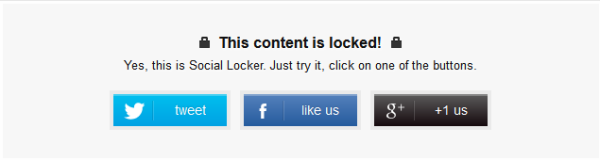
You can use social unlock plug-ins so that premium content can only be unlocked if the user shares it on a social media platform (whichever is best for your audience).

Preparing for the Future of Content Marketing image Social Locker for Wordpress CodeCanyon Previewer 2014 08 06 12 36 371 600x160

Preparing for the Future of Content Marketing image shutterstock 144227464 300x300It is also a lot more common to have Google, Facebook or Twitter log-ins to sign-in to a site vs. the old way of having to create another username and password that you won’t remember in a few weeks. This makes getting to premium content even easier, and gives the content producers a better idea of their customer persona.

Content could even be given away in the form of volunteer donations. Years ago, Radiohead released an album online that anyone could download and pay what they wanted (nothing if they desired). The results from this show that if the content is good enough and will help people’s lives or entertain them, then they are willing to pay for it voluntarily. It resulted in a shift in the music industry where we didn’t need to pay for a one-size fits all price, and today you can now purchase songs individually.

What content producers and marketers need to know

Visuals are playing the biggest part in producing quality content. With the unlimited amount of content that is out there, everyone, especially the younger generation, wants to be able to skim through content, look at visuals, watch videos and move onto the next one.

If it’s just a long, drawn out article of all text (which will remind them of research papers), then you can bet they will bounce right off and find something else that is more appealing, even if what you have to say is better.

Sharing valuable and non-promotional content is a way of getting your brand recognized, gaining trust within your industry, and is great for increasing your traffic and rankings. The hard part about producing great content is the initial idea that has not been done before in the industry (unless its outdated and needs refreshing), and making it so amazing that people will naturally want to link to it without anyone begging them to do so.

Don’t look at the instant ROI of a content campaign as failure because a bunch of people downloaded your content, but your sales didn’t increase right off the bat. The ROI of content is a long-term investment, so don’t expect the world right away. It’s all about creating valuable content that answers questions in your industry that is evergreen.

Changes in the content and marketing it to gear towards the younger generation as they age

Gear your content to an audience that has had the advantage of having the internet their entire lives. For the most part, the younger generation wants to easily digest content with visuals that they can find online, whether it is for research papers, comparing products or just for personal interest.

Preparing for the Future of Content Marketing image Google Trends Web Search interest free ebook buy ebook Worldwide 2004 present 2014 08 06 12 42 07 600x342

Look at the trends and see what they are searching. Do Google suggest searches without hitting enter to see what users are searching for in your industry and become the authority in that niche by answering those questions.

Personalized, targeted and interactive content is the way to go in the future. People love to see numbers and stats, so why not show them live interactive stats on an interesting topic in your industry that will get users to engage.

To recap, create amazing, interactive and unique content with plenty of visuals that is a resource in your industry, make use of social unlockers or log-ins as well as lead generation forms, and share it socially as well as outreach to industry influencers in hopes they will do the same.

07 Aug 14:00

Using Self-Parody to Generate Software Leads

by Lawrence Anderson

When I first heard about Sharknado, the name itself told me it was dumb. So imagine my surprise when I read about how it’s becoming a cult hit.

That surprise didn’t last though the moment my eyes ran across the only reason something this dumb could’ve been this big: “So bad, it’s good.” This isn’t new but it still works and apparently, this Sharknado trend is using it as a winning marketing formula. The first Sharknado created such a storm on Twitter last year that lead actor Ian Ziering has warned Twitter of a second wave once the movie’s sequel is released.

Now can this formula work in the context of B2B enterprise? You’d think not. Software leads are generated when you present your technology perfectly aligning with the needs of a prospect. You don’t present it in a way that’s typical, so cliché, so B-movieish, that you wouldn’t dream of pitching it like they did Sharknado.

Thinking like that though could explain why you’re not seeing the charm. Making something ‘so bad, it’s good’ is actually the very essence of self-parody. And yes, there’s a lot of situations where you can use it in your own B2B marketing campaign:

Negative publicity can be like shark fin.

Using Self Parody to Generate Software Leads image sharknado posterIt’s like a bad pun but really, hear this analogy out. You see, by itself, shark fin has no taste as an ingredient but when made into shark fin soup it’s a high-class (if not, forbidden) delicacy. That says a lot about it given that it’s only notable quality is its texture.

Likewise, negative publicity does nothing by itself save for a raw capacity to attract as much attention as good publicity (sometimes even more). Combined with the right ingredients though and you can draw some real value out of it. Like the soup itself, self-parody is the resulting delicacy.

Other ingredients.

The next question would be is: what are these other ingredients? What are the other elements of a successful self-parody?

  • Problem-highlighting – Self-parody often highlights the problems with the product being sold (or goes further to the industry selling it). Films like Sharknado emphasized everything that was wrong with B-Movies to a hilariously serious degree. Likewise, try coming up with some creative ways to really highlight common, if not clichéd, problems when using tools like ERP and CRM software (e.g. bugs, user bungles, or even the dumbest, hard-to-believe misclicks).
  • Problem-solving – Think of a self-parody as another kind of tutorial. It may not explicitly tell you how to solve the problem. It does though show you how to NOT solve it. One look at Sharknado’s posters and I already knew this was a film I would enjoy taking shots at than actually appreciating. But on further reflection, it can lead to a simple explanation on what makes a bad film.

Opportunity creation – Highlighted problem? Check. Implying solution? Done. All that’s left really is to actually seize the opportunity to take action. I have to thank the creators of Sharknado for their public service message on bad story-telling. No all I have to do is strive for the opposite. B2B marketers should use self-parodies in the same way. Treat them like modern day fables used to encourage good software practices and user habits.

07 Aug 13:58

PR Metrics Deconfuzzled.

by Carrie Morgan

PR Metrics Deconfuzzled. image PR metrics deconfuzzled

For many people, PR metrics leave them completely confuzzled. Bamboozled. Too confused to see straight. Giving up before they even begin.

But it doesn’t have to be that way.

The trick is to focus on metrics at THE BEGINNING of your campaign, project or initiative – not the end.

What end goal do you want to accomplish? What action do you want the reader or viewer to take? Think it through and track that.

Create your content or campaign with your end goal in mind and figure out a metric that works.

Integrating metrics doesn’t have to be done at a complicated, cross-departmental, c-suite level. (Well, unless you are a CMO, of course…) It is okay to either work with a supervisor to define goals and critical metrics and/or use a level of metrics that commensurates with your scope of work and skill level.

PR Metrics Deconfuzzled. image youve got this 600x600

It can be as simple as pointing a SlideShare document, guest blog post or byline article to a specific website page, then monitoring traffic to that page. Or creating content that points to a “subscribe now” button, then looking at how many new subscribers you end up with. Or looking at the percentage of website referral traffic coming from specific social media platforms or editorial placements using Google Analytics. Or launching content and conversations tied to a specific hashtag. These are all great places to begin.

What IT CAN’T BE, is determined after the fact. It’s a thousand times more difficult. Successfully implementing metrics that deliver value long-term require discussion and strategic thinking from the very beginning.

Plus – my favorite part – it puts you on another playing field with your client or employer from those who don’t.

Your value is higher and your chance of eventually landing in the c-suite yourself is much more likely.

I’m not an expert. Like most, I give it my best shot and am willing to shift and change along the way, based on my successes and failures. But one thing I do know is that if pre-planning is an issue within your department, organization or agency, there is an even larger problem to address… because it typically signifies a reactive culture, instead of proactive. It shows the team doesn’t have time to think before they act.

Ouch.

If you don’t have the ability to be strategic and create metrics around your desired end goal – outcomes – you are limited to measuring more nebulous things, such as mentions, reach, engagement and awareness. Even AVEs (advertising equivalencies). In an ideal world, these are taking into account, yes, but as a stepping stone to something stronger. Taking it to the next level of measuring RESULTS – specific outcomes such as revenue impact, new subscribers, website traffic and more. This is a level of metrics that many simply don’t do.

Metrics With Shonali Burke

During the June #PRprochat Twitter chat (first Thursdays at 3pm EST – mark your calendar!), we were fortunate to have Shonali Burke join us as our special guest. Well-known for her passion for metrics, Shonali is a PR consultant in Washington D.C. and an adjunct professor at Johns Hopkins University. She also blogs at Waxing Unlyrical and hosts the #MeasurePR Twitter chat (first Tuesdays at noon EST).

Here are a few great snippets she had to share with us. (Read the full chat transcript here)

Q: One of the biggest changes in PR metrics is the shift from AVE’s to measuring outcomes. What do you think is driving this?

SB: I wouldn’t say it’s a complete shift, not yet. More people are starting to pay attention to *good* metrics and, while AVEs have been railed against forEVER, now more folks are doing so. But lots are still using AVEs.

I think the reason folks are now thinking more about outcomes is because of the digital age. So much CAN be measured so the age-old PR metrics question of “so what?” now has analytics at its back, which is great.

It’s important to remember “So what?” isn’t a *new* question. It’s one all *good* pros have always asked.

A1. Attaining and exceeding goals is measurement nirvana. #prprochat

— Gerard F. Corbett (@gerardcorbett) July 10, 2014

And important to understand not only *what* to measure, but *why*. #prprochat

— IABC St. Louis (@IABCstl) July 10, 2014

Q: You often talk about measuring outputs, outtakes & outcomes as PR metrics. Can you explain what this is?

SB: Outputs, outtakes & outcomes are the 3 “classic” categories of PR metrics. Outputs are what you’re creating (e.g. releases, content, etc.). Outtakes are what your audience “takes away” from your efforts (perception, understanding, awareness). Outcomes are the actual actions or behavior changes that result – the motherlode!

The outcomes you measure need to be unique to your situation and individual needs. For integrated campaigns, measurement needs to be holistic.

Sally Falkow was a #measurePR guest in December & wrote a great post on the topic here (Carrie: yes, I did notify Sally about her security certificate issue, but she didn’t respond to me).

When clients/employers hear the metric discussion first, it puts you on another level from those who don’t. Higher value. #epic #PRprochat

— Carrie Morgan (@morgancarrie) July 10, 2014

The idea isn’t to track for the sake of tracking, it’s to learn what’s working or not. That’s the point of measurement.

CM: One more thought from me – never use a template approach to measuring outcomes! They must be customized after understanding client goals, needs and gaps. Starting with one is fine, but you must be willing to have the required discussions and customize it so that your metrics are effective.

Q. When it comes to measuring the results of our PR, what is the difference between GOOD goals or outcomes and BAD ones?

SB: I hesitate to call any goal or outcome a good or bad one, as each company or organization has different ones. What is MOST important to do at the start is begin at the end. I know that sounds contradictory, but we need to know what we’re trying to achieve and oftentimes we don’t. So we need to figure that out first.

The other thing I’d say about setting goals, is to not think you have to have a gazillion of them. A few solid ones are fine.

Q. How can we align our PR metrics with the needs of other departments and the c-suite?

SB: Ultimately, all business efforts tie back to increasing revenue, lowering costs or improving customer satisfaction – so those are the business outcomes an organization looks for. We need to outline PR goals that support one or more of those areas. The best question you can ask yourself, when identifying desired goals/outcomes is, “So what?” Ask, “How will this help my biz increase revenue, lower costs, or improve customer service?”

It’s not always a direct line, but if you work hard and WITH your departments, you may find correlation. Talk to them. Once other departments realize you’re trying to help them succeed, they’ll give you the tools YOU need to do so!

Kickstart The Discussion

Even for those with substantial experience in the industry, creating a solid metrics program isn’t easy. Sometimes the effort takes you across departments, even places most fear to tread (into customer service, IT or a call center, for example).

It requires courageous dialog for those willing to accept what isn’t working, at the risk of looking less than stellar to their client or employer, and willing to be agile.

After all, if you’ve identified something isn’t working – wouldn’t you want to change it until it IS working?

Sometimes you’ll lose… and lose hard. It means putting your work front and center, risking that you might be wrong or completely ineffective. Your failures are right there in the report for everyone to see.

But when you win, it’s a beautiful thing. It gives you something to build on. It’s a career-maker. And when you are brave enough to have the discussion and push for something that works? You are far, FAR ahead of most. It’s worth it.

Start the discussion. Even that single step makes a difference and small changes can lead to big results.

Still confuzzled and looking for more answers? Check out this Ketchum whitepaper called “The Principles of PR Measurement.” It has some great information on it.

You can also post your questions here for the community. That’s why we’re here.

07 Aug 13:58

Cross-selling Effectively into the Crosswinds of Financial Services

by Michael Dalis

Cross-selling Effectively into the Crosswinds of Financial Services

It is said that oak trees grow strong in contrary winds. In the crosswinds of deregulation and re-regulation, financial institutions have gotten bigger, more complex, and more attuned to risk. As they turn up the pressure to drive revenue, cross-selling effectively takes on new levels of urgency and complexity. So, how does a client-facing professional stay grounded in these crosswinds while still advocating for his or her clients?

Let’s start with the issues.  

As financial institutions continue to grow their fee-based businesses, they have pushed into an increasing number of product lines, and leaders are seeking cross-sell production across these product lines. This makes it more difficult for the client-facing financial professional to stay current on a wider scope of client needs, keep pace with a broader range of capabilities, and to build trust, skill, and alignment with a new and changing group of partners.

What’s changed with clients and internal partners? Attractive clients are exercising their buying power and are increasing demand for customized services and pricing. At the same time, there is growing pressure to standardize as financial institutions seek to reduce risk and increase profit margins. Historically, client-facing professionals felt the advantage in these discussions, always able to invoke “the client” to push through an unusual structure or fee arrangement. However the balance of power has shifted, as influence has grown among risk, legal, compliance, and finance professionals. This has created unusually high tension with what used to be considered “support” groups, and makes it increasingly difficult to deliver on client demands. As a leader, have you noticed the rising intensity of these competing pressures as you get pulled into heated client and internal discussions?

Five Best Practices for Cross-selling Effectiveness

So with all these crosswinds swirling around you and your team, how can you, your team, and your business get stronger? Here are five best practices that we see among leaders of winning teams to hit cross-selling targets in the midst of all the competing pressures mentioned above:

  1. Team preparation: As your team increasingly works alongside partners from business units with whom they have little or no track record, this increases the importance of sharpening your team’s ability to lead or contribute to an effective pre-call meeting. This can include:
    1. Modeling, and reinforcing among your team, the importance of creating rapport with new partners;
    2. Checking in before significant client meetings or pitches to be sure that client knowledge is being effectively transferred among team members, that the team is setting clear and unified meeting objectives, and that roles and responsibilities for the meeting are being clearly carved out; and
    3. Requiring, and playing a role in, team practice sessions.
  2. Team execution: Conducting an effective one-on-one sales meeting is challenge enough; adding teammates, especially unfamiliar ones, makes it far tougher. Without effective team preparation, it is extremely tough for a selling or account team to convey or gain alignment during a meeting. Leaders at effective cross-selling organizations ensure their account or pitch teams have sorted and practiced the following:
    1. How the team’s leader will set the stage
    2. Sequencing and delivery of introductions
    3. Key questioning areas and who on the team will take the lead into each
    4. Flow of capabilities or solution discussion
    5. Who will close and what it sounds like
  3. Team follow-up: We find that crisp and thorough follow-up is more the exception than the rule. Team follow-through tends to be more disjointed among teams unfamiliar with one other. There can be such a wide range of perceptions and expectations — on both your team’s side of the table and the client’s. So, it is essential for teams to debrief as soon as possible after the client, prospect, or center of influence meeting to compare notes and agree on accountabilities. Leaders play a key role in insisting on and participating in formal post-mortems.
  4. Realign with internal partners: There has always been a healthy tension between revenue-producing and non-revenue groups. Today, many would use an adjective other than “healthy” to describe this tension. To facilitate more productive interactions with those whose charge it is to mitigate risk, consider asking your team to apply the same rigor to discussions with internal partners as they do with clients, employing best practices in engagement processes and skills. Helpful reminders include:
    1. Taking time to create and build authentic rapport with internal partners;
    2. Approaching significant discussions – such as those where an unusual structure, provision or a client requirement for non-standard reporting is being presented – by setting a clear objective and agenda;
    3. Practicing with others and testing, for feedback, key parts of the discussion;
    4. Doing less talking — and more questioning and listening — facilitates partnership, collaboration and agreement;
    5. Following through on agreements and next steps builds productive relationships among colleagues.
  5. Sharpen your value prop: Increasingly, there can be a gap between what the client is demanding and what your organization is willing or able to deliver. If this gap is large, well understood, and real, this opportunity may not be qualified. We find that there are many situations in which teams react to what gets voiced by the client as a demand, with less than a full understanding of the client’s interests. In these cases, there is a coaching opportunity for you and a chance for the team to do more discovery. This can result in a win when the team is able to persuasively link capabilities to the client’s needs in such a way that makes the solution feel custom-made for this client.

Use your team meetings, one-on-ones, and down time between joint calls to leverage these five best practices. This will position you and your team to get stronger — like the oak tree in the face of contrary winds — and to boost cross-selling effectiveness with partners and clients.

———————————————

To learn more about Richardson specialized sales training for Financial Services companies, please click here.

Download our newest E-book A Financial Services Leader Guide for Sales Success.     

Leaders-guide-team-cross-selling-effectively


The post Cross-selling Effectively into the Crosswinds of Financial Services appeared first on The Richardson Sales Excellence Review™.

07 Aug 13:58

What to Do If Your Team Is in a Rut

by Rebecca Knight

Another brainstorming session, another slew of tired ideas. Your team is in a rut, but what can you do about it? How can you push everyone to be more creative? Where should you seek inspiration? What’s the best way to bring in new perspectives? And finally: how do you prevent the group from getting stuck again?

What the Experts Say
Teams get stale from time to time for all sorts of reasons. After all, everyone is “seeing the same data, interacting with the same people, and having the same conversations, so it’s no surprise that the ideas coming out feel as though they’ve all been done before,” says Scott Anthony, the managing partner of Innosight and the author of The First Mile. But you can get your people back into the groove with a little work, says Thomas Wedell-Wedellsborg, a partner at The Innovation Architects, the advisory firm, and the coauthor of Innovation as Usual.  “Sometimes you need to rethink what you’re doing.” Here are some ways to get your team’s creative juices flowing.

Diagnose and fix any obvious problems
The first step is to “take a step back and diagnose the problem,” suggests Wedell-Wedellsborg. “Observe what’s going on and ask other people’s opinions.” Think about when, where, and how your team has been most innovative in the past. Can you recreate that environment or group dynamic? “Figure out how people share ideas, and how open others are to those ideas,” he says. Also look at ideas that were generated in the past and see if any are worth resuscitating. “Maybe it was a good idea before its time or maybe it was an idea that was not managed well,” says Anthony. “You’re not looking for the perfect idea, it’s what you do with the idea that matters.”

Focus your team’s attention
Open brainstorming sessions with lofty goals like generating “500 New Ideas” are fine in theory, but in practice they are often ineffective and inefficient. “You end up with a lot of stuff that’s not relevant,” says Wedell-Wedellsborg. Instead, direct your team’s attention toward solving a narrow problem — for example, ways to fix a specific customer issue or to generate 2% cost savings in your division. “Define the task so your team is very clear on what it is trying to accomplish,” says Anthony. Management literature tends to associate chaos with creativity but in fact “constraints are the greatest enablers of creativity,” he adds.

Bring in different points of view
Most of us tend to live in filtered worlds — we read the same papers and magazines, listen to the same newscasts, get our daily updates from the same RSS and Twitter feeds, and have lunch with the same people. “But great ideas come from people who are immersed in more worlds than just their own,” says Wedell-Wedellsborg. Create opportunities to expose your team to different perspectives and points of view. Anthony suggests touring the offices of companies in different industries or inviting employees from other parts of your business to regularly present ideas to your team. The point is “to touch and interact with people who are thinking differently,” he says. “The magic happens when different skills and mindsets collide.”

Share relatable examples of success
The Steve Jobs-Mark Zuckerberg-Richard Branson “genius” innovation narrative is omnipresent in business blogs, books, and magazines. But to most work-a-day folks, those figures are “not as inspirational as you might think,” according to Wedell-Wedellsborg. “If you have a normal job — like most of us do — these examples can seem terribly ambitious and too remote.” For relatable inspiration, offer success stories that are closer to home. “Shine a spotlight on innovative things that have already been done in your organization,” says Anthony. The message is: “This is something we can do; your peers have done it.”

Conquer your team’s fear of failure
One of the most common reasons for stagnation is not your team’s lack of ideas but their fear that the ones they have aren’t any good. This fear of failure is so pervasive that many employees choose not to voice or champion their opinions, which, of course, hinders innovation. Leaders must therefore “manage the politics” around brainstorming, says Wedell-Wedellsborg. “Make sure there’s room for people to share ideas in a way that’s under the corporate radar.” Anthony agrees. You have to cultivate a “safe environment that is as tolerable to learning as possible,” he explains.

Create avenues for ideas to have an impact
Ideas only matter if you act on them. “People get cynical fast after they have a fun and empowering brainstorming session and then nothing happens,” says Anthony. As a manager, you need to commit to moving innovation forward. He suggests setting aside a small budget to create rough prototypes and simulations, or relieving workers of some  duties to free up their time for new projects. Wedell-Wedellsborg also recommends testing ideas on a small scale. “Force people to come up with practical experiments so they then get honest feedback about what works and what doesn’t,” he says.

Avoid using the word “innovation”
In some organizations, you can still talk about an “innovation initiative’ and create excitement, but in most companies, the term is overused and has “been talked to death,” says Wedell-Wedellsborg. “If you say it, people will look at you with a vague stare.” Instead of the i-word, encourage your team in language that’s meaningful to them. “Don’t frame it to your team as coming up with ideas for an ‘Employee Retention Innovation Plan.’ Frame it as a ‘Making Your Company a Better Place to Work Strategy.’ That’s something most people can get on board with.”

Principles to Remember

Do:

  • Create regular opportunities to expose your team members to new ideas and perspectives
  • Cultivate a culture where your team feels confident sharing their rough ideas without fear of failure
  • Develop a plan for action by setting aside a modest budget for experimenting with new ideas

Don’t:

  • Host vague brainstorming sessions with grandiose goals; rather, focus your team’s attention toward solving a particular problem
  • Hold up unattainable examples of innovation success; find models that are relatable
  • Persist in using tired business-speak; frame ideas using language that will resonate with your team

Case study #1: Acknowledge risks and empower team members to speak up
In October 2012, Patti Pao, the founder and CEO of Restorsea, the luxury beauty brand, and her team were at a crossroads. Restorsea had raised a little over $10 million in funding and was the top selling skincare brand at the Lab at Bergdorf Goodman. But because of the costs associated with maintaining a presence in the brick-and-mortar department store — including commission for salespeople, samples, and advertising in catalogs and mailers — the company was losing money there. Meanwhile, Restorsea’s website was selling 12-15 times more than it sold at Bergdorf’s. “My team and I decided the internet needed to be our primary channel of distribution,” Patti says.

In an industry where buying decisions are made based on shoppers feeling, smelling, and experiencing products, it was “a big risk.” But she trusted in the group’s ability to figure out how to best execute the new strategy. Her first step was to make the group feel supported and encouraged by acknowledging that they were embarking on a scary challenge together. “I fostered an environment where people were okay about holding hands and jumping off a cliff,” she explains. ” I didn’t want my team to be afraid to fail; I wanted people to be more afraid of not moving swiftly.”

The team came up with several successful ideas and initiatives such as a Living Social partnership to build awareness of the brand, a blogger affiliate initiative to generate PR and editorial support, and a “Share the Love” program, where loyal customers are invited to send full-size day cream and eye cream to three of their friends and family members. Since the shift toward ecommerce, Restorsea has raised an additional $45 million in funding and is “tremendously more profitable,” she says.

Case study #2: Cultivate a culture of confidence and recognition for a job well done
Carl Galioto, the managing principal of the New York office of HOK, the design, architecture, engineering, and planning firm, says he takes a “very personal approach” to promoting creativity on his team. “I manage architects so in some ways I have an unfair advantage — they are generally creative and team-oriented people,” says Carl, who helped design One and Seven World Trade Center as well as JFK International Airport and Harlem Hospital Center.

At the same time, he works hard to “cultivate a culture of confidence” by recognizing each employee for what he or she has accomplished and achieved. “I talk with each member of the group one-on-one [and] tell them how much I value their opinion and what they’ve done before — even small things like process improvements,” he explains. “I say: ‘Remember when you figured out a better way to X?’ Then I try to push them to be even bolder.”

A few years ago, Carl and his team set out to develop HOK’s platform for digital design tools, building SMART, which leverages 3D modeling. To maximize creativity and excitement, Carl articulated a vision with a series of goals and then empowered his team to “propose an organization, a refinement of goals, and a destination” over a defined three-year period.

“They had creative freedom and the responsibility for achieving the goals on time and on budget,” he explains. They succeeded, and were fully credited and acknowledged for their efforts.

07 Aug 13:54

Colors and marketing what you are missing

by albertpalacci

An overview of colors and how they affect clients and their decisions as buyers.
07 Aug 13:52

Content Marketing Interview with Brian Kardon CMO of Lattice Engines – Strategy to ROI

by Lee Odden

Brian Kardon interview

What if you could tap the mind of a CMO who’s led marketing organizations at companies like Eloqua and Forrester Research to capture insights about content marketing strategy and ROI? That’s a big “what if”.

Well my marketing friends, today is your content marketing birthday because today we have with us Brian Kardon, CMO at Lattice Engines. Brian was formerly CMO at both Eloqua and Forrester Research as well as SVP of Marketing at Reed Business Information – one heck of a marketing pedigree.

As part of our series of #CMWorld Content Marketing Interviews, we’re talking with a few select speakers from Content Marketing World about content marketing strategy, audience development, the role of visual content, content ROI and of course, marketing lessons learned from favorite childhood stories.

Let’s dig in:

How important is it for a company to have a content marketing strategy defined before asking internally for budget or engaging an outside consultant? Can experimentation lead to strategy or is a hybrid approach more practical?

Waiting for a fully developed “strategy” — including the blessing and funding from management  –  is incredibly common.  And a really bad idea. You need to begin writing and connecting now.

Search engines and readers don’t care that you have a well-documented strategy @bkardon

Many start-ups, for example, start blogging and producing content long before they have sold their first product.  Search engines and readers don’t care that you have a well-documented strategy.  Success will generate it’s own approvals and budgets.  Don’t be sidelined.  Start doing.  No one needs a 20-page business plan to create and share helpful content.  What you do need is a strong understanding of your audience and their needs.   More often than not, a successful strategy will emerge from 6-12 months of doing and understanding what is working and what is not.  Be iterative.  Start now and make adjustments along the way as you learn

What are some ways you can use audience insights to inform your content planning and promotion?

Insights into your audience’s challenges, opportunities, preferences and interests should be used in creating your content plan and distribution strategy.  There are plenty of excellent resources on persona research, but in simple terms, think about these four questions when getting started with content planning and promotion.

  1. What keeps my audience up at night?
  2. What are their goals/motivations?
  3. Where do they turn to for information or help?
  4. Do they have any preferences around format?

The answers to these questions help ensure that you are creating content that speaks to, engages and gets in front of your target buyers. For example, the insights may lead you to create a series of how-to videos or guides that explain how to improve (insert critical pain point here).  You also may learn about your audience’s watering holes (where they look to for information online) or influencers.  These channels could be perfect targets for your content distribution plan.  Lastly, your insights may indicate that your audience is too busy to read a 30-page “definitive guide” and that they prefer shorter, more visual content.

Visuals in content marketing are increasingly popular but how important are they really? Is this the beginning of the end of text or just a phase?

From our experience, everyone has preferred ways of interacting with different forms of content.  There is no single “best” format for every consumer.  We still see high reader engagement with longer forms of written content if the information is valuable.   But that is not for everyone.  Me?  I love video — for learning cooking recipes, doing home repair projects, and getting tips on jazz improvisation.  Everyone is different.

You wouldn’t put wine in a beer glass or eat hummus through a straw.  So don’t try to explain digital marketing strategy in a tweet @bkardon

You need to showcase the content in the form best suited to it.  You wouldn’t put wine in a beer glass or eat hummus through a straw.  So don’t try to explain digital marketing strategy in a tweet.   However, there is also something bigger going on.  There is more, way more, competition for our attention. In a world of scarce information, your content will get more engagement.  But in today’s world of abundant information, you need to stand out with content that engages faster with instant appeal. Visuals can help to do that.   I don’t think the end of text is at hand.  You just need to do it better to stand out amongst the noise.

Is Content Marketing ROI really that hard? What are you doing to measure content marketing performance?

Marketers are doing a better job than ever at measuring their content.  It all began with “vanity metrics”: followers, tweets, retweets, downloads, number of comments, likes, etc.  Many marketers are still stuck in vanity land (sometimes called “consumption” metrics).  They are easy to collect and, frankly, easy to manipulate.

More enlightened marketers are measuring “revenue attribution.”  Revenue attribution looks at the sales that were generated for a company and identifies the content that was engaged in the course of the buyers’ journey.  Each piece of content that was engaged in the journey is attributed to that sale.  For simplicity sake, if a deal was won for $10,000 and the buyer engaged with five pieces of content, each piece of content is attributed with $2,000 of revenue.  Marketers now have marketing automation systems that can generally track this if the process is properly designed.  By looking at revenue attribution, marketers can judge the value that each piece of content has to the ultimate business objective — revenue growth.

Alice Content Marketing Party

In the spirit of the Content Marketing in Wonderland (Alice) theme of the #CMWorld eBook series, what was your favorite story from childhood? Any lessons in it for business or marketing today?

I actually have three favorites that have an important message for marketers:

Mary Poppins. At a point in the story, Mary and the kids are facing the task of cleaning up an incredibly messy house.  There’s this great lyric from “A Spoonful of Sugar”:  “In every job that must be done, there is an element of fun. You find the fun, and the job’s a game.” I think this rings true for marketers. We are all about learning about new tactics, experimenting with new technologies and playing to find what works. So let go and remember to have a little fun.

Jack and the Beanstalk. All too often we are just like Jack — looking for the magic beans to solve a problem and help us achieve our goals. The lesson for marketers is that there is no silver bullet. Success comes from experimenting and learning from those experiences.

Curious George. I really relate to this little monkey.  It pays to be curious. Curious about your market. Curious about your product. Curious about your customers. Keep asking questions.

Great advice Brian, thank you!

Content Marketing Wonderland eBooks

You can get even more of Brian’s content marketing wisdom from the #CMWorld eBook - Content Marketing in Wonderland: Building a Content Marketing Strategy.

In fact, if you would like to tap into a entire army of content marketing experts, then be sure to check out the Content Marketing World conference coming up Sept 8-11 in Cleveland. If you use the discount code, TopRank, you’ll save $100 off main event and all-access registrations.

A big thank you goes to the eBooks’ sponsor, Curata (content curation and content marketing solution). All of us at TopRank Online Marketing, CMI and the broader content marketing industry benefits from their support of this eBook program!


Email Newsletter Gain a competitive advantage by subscribing to the
TopRank® Online Marketing Newsletter.

© Online Marketing Blog - TopRank®, 2014. | Content Marketing Interview with Brian Kardon CMO of Lattice Engines – Strategy to ROI | http://www.toprankblog.com

07 Aug 13:52

Don't Try to Be All Things to All Buyers

Jack of All Trades"Jack of all trades, master of none."

It's never a good thing to be considered that, especially when trying to bring in new clients. Buyers don't want Jacks; they want masters. For when you're a master, you offer the expertise, comfort, and trustworthiness that makes people want to work with you.

Although you might have many skills and the ability to offer many services to various types of businesses, you need to narrow your focus—in your marketing, in your presentations, and in your conversations with prospects.

Resist the urge to be all things to all of your buyers, says Joe Pulizzi, founder of the Content Marketing Institute. For your content marketing to succeed, you must focus on a smaller portion of your overall audience, he says in his podcast interview 3 Areas in Content Marketing Where Service Firms Go Wrong.

"I think that’s where service firms go wrong because [they] try to cover all of [their] customers and say, 'How can we get the most bang for our buck out of content marketing,'" Pulizzi says. "Unfortunately it doesn’t work that way. So, we want to focus on the smallest niche audience that we feel we can make the most impact with."

07 Aug 13:50

Lead Generation Tips – The Mutating Blur Between B2C and B2B

by Matt Ford

B2C and B2B marketing have always looked at each other from opposite ends. Indeed, like two sides of a coin, these two forms of marketing are often looked at by companies and/or researchers and compared to one another.

That was then, but what about now? It’s like the Teenage Mutant Ninja Turtles. One moment you left the line as it was. Things seemed normal. Yet by the time of your next lead generation campaign, the line’s mutated into an unrecognizable blur!

Lead Generation Tips – The Mutating Blur Between B2C and B2B image teenage mutant ninja turtles header new look.jpgTo recap, B2B refers to “Business to Business” marketing. The whole point of B2B is to market to buyers (preferably the corporate kind) who need your services or products to do specific functions in their job or organization.

B2C, on the other hand, refers to “Business to Consumer”. If that description doesn’t make it obvious, the main point of business to consumer marketing is to market your services or products to buyers who need them for non-corporate activity.

Both types of marketing use different resources and different techniques. B2B marketing is commonly thought of as marketing to professionals using detailed information on how their client can benefit from their service, direct sales pitches, and technical terminologies.

B2C marketing usually delves into ads that catch people’s attention (which can include gimmicks of sorts), introducing, as well as reinforcing positive thoughts and/or impressions on a specific product or service to their targeted audience.

Based on the description above, one could think that both B2B and B2C marketing are very different from each other, but lately, that boundary has started to break. Through the use of social media, B2B is slowly starting to adapt some of the principles of B2C marketing, and of course, vice-versa.

For quite some time now, B2B marketers are focus on generating positive emotion from their clients and throwing in catchy phrases in their ads to catch people’s attention, while B2C marketers now include detailed tutorials on how and when to use their products, as well as other useful tips and tricks for the benefit of their would-be customers.

Indeed, the lines separating the two are so blurred now, that even marketing mediums used by one are now being favored by the other. An example of this is that traditional B2B marketers generally favor LinkedIn as their site of choice to generate leads and sales, while traditional B2C marketers generally favor Facebook. Now, B2B marketers are starting to use Facebook more often while B2C marketers are tapping into LinkedIn.

B2B and B2C are now in a stage where one can use the techniques of the other. If this goes on, we may one day no longer need to separate the two and use one term to refer to this practice.

07 Aug 13:48

5 Ways to Redefine and Retell your Brand’s Story

by Michael Bird
your brand story feature image

Author: Michael Bird

Imagine this scenario: you’ve designed a solid online marketing campaign that incorporates your brand’s message and mission, while also accurately targeting your demographic. For a while, business is thriving. Sales are up, and new leads are coming through your website regularly.

Then one day, you notice that the number of visitors to your site has decreased, your bounce rate has increased, and there are barely any new subscribers to your newsletters. With leads drying up and fewer new ones coming in, you ask your marketing team: how can we stop this?

It’s time to redefine and retell your brand’s story. Here’s how:

1. Redesign your Website

new website

Having a fresh website design can attract new customers and remind past ones why they choose your company over others. Start with the design and layout of your website. Do you still have background music playing? Do videos begin playing automatically? These and other website faux pas can chase away visitors and send your bounce rate through the roof.

Look at the content on all of your pages. Good content should be over 300 words to comply with Google’s search algorithm and should have a few good keywords laced throughout the text. This will ensure Google that you’re not a spam website. Your keywords will pull you further up the top search results page.

Now take a look at the layout of the site. Is it easy to navigate? Many sites have confusing layouts and are littered with dead links. If a buyer can’t figure out how to get through the check-out process, they’ll just go somewhere else. Even minor frustrations in design or navigation can lose you a customer.

Finally, pull out your smartphone and search for your website on a browser and Google’s app. How does the site look? If you’re having trouble reading your site’s content and navigating the pages, it’s time to give your site a responsive design. This type of website design optimizes your site for media devices such as tablets and smartphones, so users can easily access your website from any device.

Don’t forget, Google prioritizes responsive website design sites in its search results. You’ll be just one step ahead of your competition right out of the gate!

2. Get Re-Socialized

resocialize

Instead of tackling every social media platform, focus your efforts on three platforms. Choose the ones where your demographic is most active. A boutique might target Pinterest, Instagram and Facebook users while a computer repair service might target Facebook, Twitter and LinkedIn users.

That’s not to say that you have to ignore all other forms of social media, but stretching yourself too thin across platforms means none of your accounts will be as engaging as they could be. Focus your efforts on a few sites and build a following.

Though you want to engage with new customers, your past clients are just as important. Reach out to your existing followers and reconnect with them. Ask for feedback, both positive and negative. Clients respond better to companies who take their feedback seriously. Your customers will feel appreciated and be more likely to return to you for future services.

3. Embrace Content Marketing

subject matter expertise

Content marketing consists of articles, photos, videos and graphics that work together to engage your audience. With a blog, you can establish yourself as an expert in your industry and give consumers a good reason to return to your website frequently. The goal is not to promote your product, but rather promote your authority.

Your articles should be about relevant topics to your industry, and you should be posting a variety of articles, photos, videos and infographics. A plumber might post “How to fix a leaky faucet” or “Why you should install a water saver in your toilet” to teach his readers a new skill or about a product they may not be familiar with.

Like website content, Google also rewards websites that update several times a week by pushing them higher in search results. Articles that range from 500 to 1,000 words usually get good recognition from Google.

4. Be Precise

precise analytics

With all of these changes and new social media accounts, how can you tell whether or not they’re actually doing you any good? There are many great programs that will help you build stronger websites and track your social media activity.

Here are a few of our favorite free services:

  • Quicksprout: Gives a full analysis of your website, allowing you to see what is and is not working for visitors. The tool gives recommendations for improving the site.
  • Google Analytics: Lets you see an in-depth breakdown of your website’s visitors’ locations. Also allows you to track sales and utilise Google Adwords.
  • Pingdom: Plug in your URL and see your page’s size and response time almost instantly. It’s easy to use and also gives site recommendations.

5. Get Fresh

make something new

After you’ve revitalized your website and social media accounts and added a blog, it’s time to combine everything into an online marketing campaign that announces your changes to your clients.

With your list of email subscribers, launch an email marketing campaign that introduces yourself to clients once more. Add a catchy subject line that will pique your readers’ interests. Keep your message short. Announce any new updates and provide links to your latest blog articles.

If possible, incorporate questions or comments you’ve received through social media into the text of your email. Your clients will be happy knowing that you’re listening to them. Be sure your email has buttons that link directly to your social media accounts. This makes it easy for the receivers to add you to their accounts.

Redesigning a digital marketing strategy is a daunting task, but it’s inevitable for most companies. Is McDonald’s marketing strategy the same as it was ten, five or even one year ago? Of course not! As markets change, businesses must change their strategies to attract new customers and keep past ones coming back for more. Where could a new marketing strategy take you?


5 Ways to Redefine and Retell your Brand’s Story was posted at Marketo Marketing Blog - Best Practices and Thought Leadership. | http://blog.marketo.com