Shared posts

28 Nov 17:42

Making the Sale: How to Sell More on Your Website: Tip #32 of 52 Ways to Market Your Book

by Penny

If there’s one thing I’ve learned in my years of marketing, it’s that no matter how much authors love what Amazon can do for them, they’d rather sell books on their own site than share a cut with the giant online e-tailer. Doing this, however, can be tricky.

It seems that every time we turn around, some big chain is admitting that they were hacked. If you were one of the millions who shopped there, your information could be in the hands of God-knows-who. With so much attention on shopper security, it’s leaving a lot of shoppers even more hesitant to shop online.

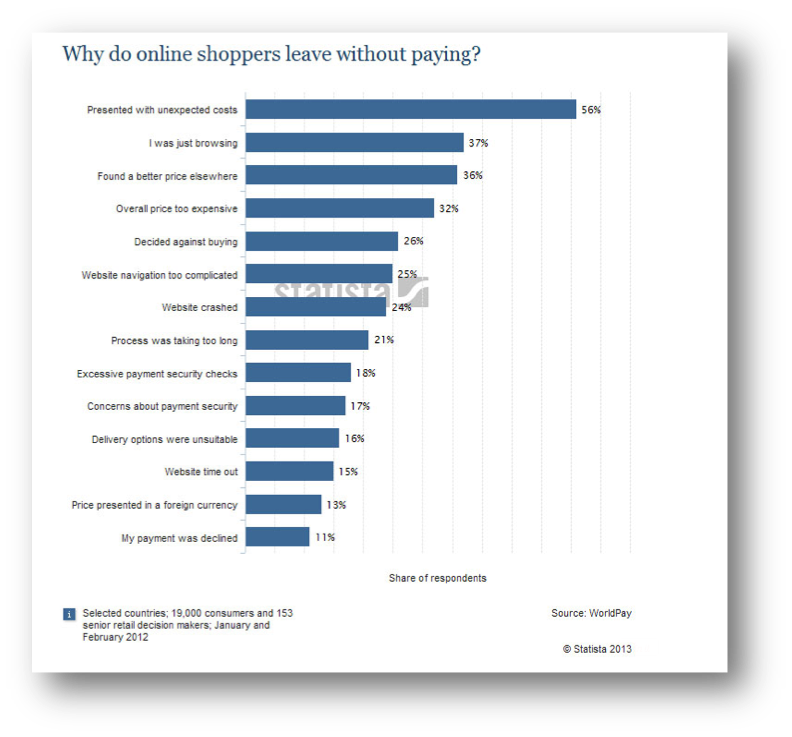
Last year, Baymard Institute released a staggering statistic: 67.89% of shoppers abandon their carts before completing the purchase. That translates to around $1.79 trillion dollars in product or services purchased online. Why does this happen? Well, there are a lot of theories on this. According to Shopify and the image shown below, this is a list of the top reasons that people abandon their purchase with you:
post1

Though I don’t disagree with this per se, I would take this a step further, because not only are security concerns at an all-time high, there are a variety of additional reasons you may be losing people. Also, how to get shoppers and keep them varies by industry so let’s look at the ones that will matter to authors and publishers:

Tip 321)   Overall Look of Site: There’s a high trust factor with a site that looks professional. I don’t want to buy from a site that looks sketchy. Would you? If you want to sell from your site, you’ll need to have one that’s professionally designed. I would say that this goes even before we start the shopping cart discussion because you won’t get anyone to even entertain buying off of your site if it doesn’t look like a place they’d want to shop.

2)   Checkout Process: I see a lot of authors (and even business owners) who make the shopping process difficult. I’m not sure why they do this or why their web designers recommend this. Every click you make someone do can cost you 5% of your traffic, meaning that if you require several clicks just to get an item into their shopping cart, you’ve now lost 20% of your traffic. Make the buying process easy. Put “Shop” or “Store” or (if you have one product) “Buy Now” on the home page so folks immediately know where to click. Visitors won’t take the time to figure it out. If they can’t find it on your site, they’ll go elsewhere and in the age of Amazon they’re likely to just default back there.

3)   Site security: Showing shoppers that their purchase is secure is also very important. Buyers want to know you’re taking care of their personal details so showing security messages – even things like “Secure checkout” make all the difference. In fact, according to a recent Entrepreneur Magazine article, adding security messages can increase a buy by 16%.

4)   Sign in/Sign up: I don’t know about you, but the minute someone wants me to create an account before buying an item, I’m usually gone. If you want folks to sign up on your site, have them do it after they’ve made a purchase. Studies show that conversion rates can increase by 45% if you allow buyers to shop as “guests” throughout their visit.

 post2

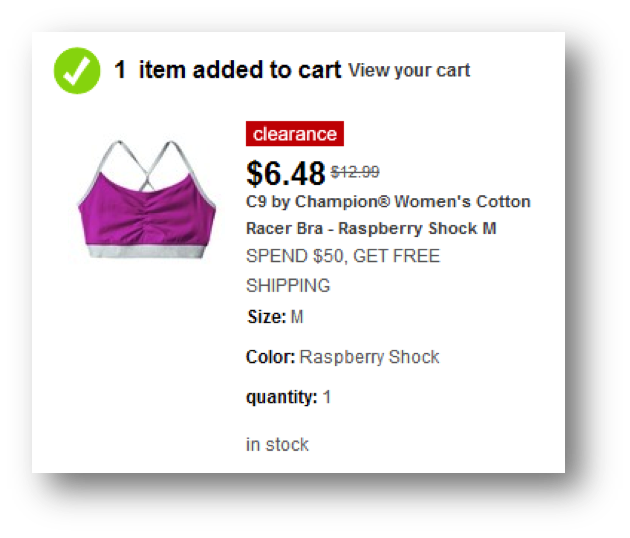
5)   Unexpected Costs:  We all know that Amazon has pretty much ruined us for shipping costs. Thanks to things like Amazon Prime, and other free shipping opportunities, most of us abhor these added costs. If you feel charging for shipping is something you have to do, consider offering free shipping as an incentive instead of a guarantee. Staples, for instance, offers free shipping when you buy a certain dollar amount. Other e-tailers have free shipping days, or, if you want to further incentivize site sign-up, you could offer free shipping to members only which would encourage them to join your site so you could remarket to them later.
post3


6)   Cart abandonment: Window shopping happens, even online. SeeWhy did a study last year and found that 99% of people won’t buy on their first visit to your website. This is why having an email newsletter, or some other benefit-driven giveaway, is not only important, but mandatory if you want to make the sale. Email newsletters allow you to remarket to your visitor. No, they may not buy on the first try, but a helpful, content-rich newsletter will remind them who you are and encourage a buy for later. It is a lot of work, yes, but so is building a store on your site that no one buys from. Alternatively, you could also consider pop-ups or sidebar messages that show up during the purchase process, offering customers 5% off.

7)   eCommerce options: I know many folks who have extensive eCommerce options which are great but also costly. Being able to take credit cards, especially if you are small, is an added cost you may not want to incur but, you may not need to. When we switched from our extensive pay system to just offering PayPal, we found that our shopper conversion almost doubled. Also, PayPal no longer requires users to register with their system so you can give your shoppers the peace of mind of using a secure system, without having to register.

 post4

8)   Love the Love: People like what other people like, which is why for most (if not all) retailers, you’ll see reviews and customer feedback right on the page. Most authors don’t have the bandwidth, time, or money to create a sales system that’s quite that elaborate, so adding reviews to the sales pages is very helpful. Adding reviews with a picture adds even more credibility to the page. Remember that your customer can, with one click, meander over to Amazon and buy the book there so give them a reason to stay.

9)   Pricing: If you’re going to keep shoppers on your site, you’d better up the ante on your pricing. We already know you need to ship for free (at least on certain days or with minimum orders) now let’s consider your “offer.” Maybe you just wanted to offer the book. Sure, that’s fine, albeit a tad boring. Sorry, but they can get the book on Amazon, too. If you really want to lure folks to your site and make the sale, you’ll need to give them a slam-dunk deal they can’t resist. As an example, when we changed the offer on our store page from 3 books for $20 to four, sales doubled. Keep in mind that there is only one print book that’s mailed, the rest are digital and delivered as soon as payment is taken so there’s nothing else for me to do. Digital product is easy to add on because there are no hard costs with it, beyond the initial creation of the product. So what else can you add onto your book to help entice shoppers? What about offering the eBook with the print book so they can have one for their Kindle and a print book in hand (something a lot of readers still enjoy)? Maybe you could pair your book with someone else’s e-product. When you take some time to brainstorm, the possibilities are endless.

In the end, what you really need to do is think of your website as a brick and mortar store. If you created any of these roadblocks at Macy’s, or a Barnes & Noble, you’d really hurt your sales process. Authors often assume that a website store is different. It’s not. We want easy, we want fast, and we want the best price. If you can bring all of these elements into your website store, you’ll increase sales considerably.

Share this article with these tweetables:


@bookgal shares tip 32 in a series of 52 ways to market your book
Click To Tweet


How to sell more on your website!
Click To Tweet


#Tips for making the sale from @bookgal
Click To Tweet


28 Nov 17:41

To Personalize or Not to Personalize

by Sylvia Jensen

Personalisation isn’t all-or-nothing. Between mass appeal and one-to-one customisation, there’s a profitable middle way.

To Personalize or Not to Personalize image 620x4901 300x237

To personalise or not? No question: for almost all one-to-one communication, you should personalise. But there are differences in degree. Imagine the resources involved in reaching these levels of personalisation:

  • Turning Dear Sir into Dear Mr Smith.
  • Starting a letter to Robert with Hi, Bob!
  • Using the headline Oil hits $67.31 in a landing page.
  • Using a price chart to decide between Hedge for the downswing! or Lock in your future contracts! as your subhead.
  • Using financial results from annual reports to generate content like You’re 5% ahead on margins but 4th in growth in your sector – personalised to each individual’s company.

The first takes little effort – indeed, it’s been done for decades. But the last takes big data, expert knowledge and a critical eye. That’s the first clue to deciding your approach: balance expected ROI with the resources you have to deliver it.

Mass customisation: plenty of personalisation for little effort

Mass customisation – the first level – is deaf and blind. Knowing a customer’s name and title tells you nothing about their hopes, fears and dreams. But other things being equal, Dear Mr Smith works better than Dear Marketing Manager. (It’s what built a global business for direct marketing pioneer American Express.)It’s cost effective, accurate, and it helps. Use mass customisation if your audience is broad, if you’re selling products and services with mass appeal, or if your profit-per-sale is low.

Extreme personalisation: taking it up a notch

Today we can take it up a level to extreme personalisation, where what you say depends on the recipient’s detailed buyer persona. For instance, if you’ve got ten industry sectors to engage with, you might substitute a case study in your content with a choice of different ones. Which one your reader sees depends on the company’s SIC code. It makes your content feel closer to home, meaning readership increases. Small touches like these increase response rates at the cost of a moderate increase in resource. (You’ll have to create 3-8 times as much content, but it can turn one piece of core content into 100.) Use extreme personalisation if you’re marketing a high-value product or service to a relatively small and targeted audience.

Dynamic content: getting inside your audience’s heads

The highest level of personalisation (like the last two bullets on our list above) might be termed dynamic content. It’s where content isn’t just merged in, but is created according to outside criteria chosen for ultimate engagement potential – such as news events pertinent to the reader’s business. Truly dynamic content is complex to plan and hard to orchestrate (imagine making any ten paragraphs from a set of a hundred fit together smoothly and readably)! Only expert marketers can do it. If you’re selling a high-value product to a limited audience – say, your sales plan needs 20 sales a year and there are only 200 companies in your universe – it’s worth the extra resource.

Go for extreme personalisation for the biggest bang-per-buck

Most marketers should choose extreme personalisation to provide the customer experience. You create a single piece of content, but the “pointy bits” – case studies, facts and figures, heads and subheads – are personalised for each buyer persona from a small set of content choices.

Remember:

  • Mass customisation adds basic personalisation at low cost.
  • Extreme personalisation replaces some sections of the core content with content specific to the reader’s sector or situation.
  • Dynamic content makes every communication deeply individual, but takes a lot of resource.
  • Most marketers should go for extreme personalisation for the best bang-per-buck.


Discover more marketing tips in the Modern Marketing Essentials Guide to Content Marketing.

This article first appeared on the Oracle Marketing Cloud Blog

26 Nov 21:55

How to Create a Sense of Urgency in Digital Marketing

by Ishita Ganguly

“Fear of loss is greater than the desire for gain.”

For any business, customers are the focal point. The faster you convert your potential customers, the sooner you grow. But to convert a possible customer into a real one, there lies the main task. You also can call it an art and you need to master it as a digital marketer.

The challenge is creating the genuine lead out of a prospective. And when it comes to customer conversion, nothing works better than an urgent sales situation. You can call it ‘creating a sense of urgency’ in digital marketing. Interested to dig deeper?

There are 2 major weak-points of a customer: Greed and Fear. You just need to identify them and create your content accordingly.

The bottom line is, don’t wait for a customer to feel the requirement, rather create it.

Here are some factors to consider:

Using urgent Calls-to-Action: Call-to-Action is the most important aspect of any marketing message. Choose the right words and keep it clutter free. Use words that suggest immediacy or emergency. Some of the best calls-to-action are “Call Now”, “Sign up today”, “Book now”, “Subscribe now”, “Hurry, offer ends in 2 days” and the list is on.

Make the offer scarce: If you tell your future customers that the product is available for unlimited period, they will not feel the push to buy it now. Remember, most of the purchase decisions are made on the spot. If you let your customers think for too long, they may not end up buying anything. There should always be a fear of losing.

How to Create a Sense of Urgency in Digital Marketing image neilpatel
Only 1 spot is available! Anyone would fall for it, even if he is the cunningest of all.

Use colors to bring the emergency in: While creating your marketing content, make sure to use bold colors that would invoke a feeling of urgency. According to a Hubspot study, changing a green CTA button to a red one increased a website’s conversion rate by 21%. So, red is a good color for CTA. Other good colors for creating emergency are orange and yellow.

How to Create a Sense of Urgency in Digital Marketing image crazyegg orange cta button
Look at CrazyEgg’s CTA button. It’s orange!

Making it user-friendly: As you build a sense of urgency, you want your customers to act faster. So, your webpages should work according. Mase sure there is no technical hitch on the way from the landing page to the final conversion page. Make the journey as shorter as possible; as easier as possible.

Play with human psychology: It’s seen that when brands reduce their price, sales go higher. You also can play a reverse psychology. Suppose, you have increased your products’ prices recently. Now create a campaign with the old price for a one-day sale. People will be interested to buy at the lower price, even if they don’t have any requirement, just to make sure they don’t miss the offer.

Another way to do it is, show your customers how much they are going to save if they opt for the deal right now. One superb example is Neil Patel’s “83% off” offer.

How to Create a Sense of Urgency in Digital Marketing image niel patel offer 900x134

83% discount is really high and when you get Neil Patel’s service at that discounted price, you surely will not want to miss it.

Making the offer exclusive: Sometimes you need to make your customers feel privileged so much so that they feel the offer is just for them. The moment you do it, make sure you also specify a limited time brachet with the offer.

Follow the above-mentioned example. The discount is valid till midnight. So, why would you wait?

Don’t miss any occasion: Occasions sell well all the time. And digital media is no exception. Find as many festivals and special occasions as possible over a year. Online transactions reach the zenith during these times of year, as there is always a limited stock and limited time associated.

Offer best deals on delivery: “If you buy today, we will deliver by tomorrow” or “Buy a product today and the delivery will be free”. This is something that would allure many eyes at once. People love fast delivery so cash it on.

Offer for everyone: When you will run an offer, make sure you have something for each of your customers. You can experiment with multiple CTA buttons, so that your customers can choose from different options.

How to Create a Sense of Urgency in Digital Marketing image harvest pricing 900x518
Harvest is a time-tracking and invoicing software. They have multiple plans including a free version. The idea is not to lose any of their customers, even if they are using their service for free. And don’t miss their green CTA button.

Conclusion – Work on the urgency and scarcity factors of your marketing campaigns. Remember a thumb rule. If they fail to excite you, it will fail to excite your customers as well.

26 Nov 21:40

What Most Sales People Do In The Demo That Loses The Deal

by Keenan

In the world of SaaS and cloud solutions, the demo is everything. As the demo goes, so goes the sale. Give a shitty demo, and you’re not gonna get the sale. Give a good demo, and you’ve just increased the chances closing the deal. Give a killer demo and get ready to cash your fat commission check and prepare for Presidents Club.

With the demo carrying so much weight in the sale, treating them as a way to highlight every feature your product or solution has is stupid, annoying, unnecessary, boring, and unsophisticated. That is how too may sales people treat them. And, managers take note, how too many managers and sales organizations teach sales people to do them.

Here’s the ONLY way to do a demo. Pay VERY close attention. This isn’t a suggestion. This isn’t an ideology. This isn’t one person’s thoughts. This is the concrete, irrefutable, only way to do demos and if you’re not doing it this way, you’re doing it WRONG!!!

Listen up;

When doing a demo, every feature you show must be tied to a specific business goal, operational process, work-flow, execution issue or opportunity that specific customer has — PERIOD!

In other words; if you’re showing a feature and are saying; “If you email your clients for meetings then this feature will . . .” or “If you have two systems for doing reports, this reporting feature will . . . ” Or worse, if you just whipping features around like they are cars on a car showroom floor by saying “And the next thing I want to show you is.” You are doing it wrong — very wrong!

There is no room for “if” in your demos. There is no excuse to show a feature that isn’t germane to the specific the business and highly targeted to the operational or executional needs of the buyer. Demos should not be used to demonstrate your product, but rather to show how your product can affect your buyer’s business. Demos need to be used to give the buyer a vision of how your product will change their current environment for the better. Demos should be used to show the client how what they are doing today can be done differently with your product. The buyer should feel silly, outmoded and inefficient as you seamlessly execute a process they are currently doing poorly. They should bubble with joy as you demonstrate how your product can execute brilliantly on a process they can’t currently do, something they have wanted to do for a long time. Your demo should be enveloping them in the power of your product changing their specific and unique environment for the better, not in features and functions that may or may not be relevant to them.

This is how a demo should go.

“You stated you use three systems for reporting, let me show you how reporting is done with our product and how it would create reports in your environment in a tenth of the time.”

“I know that being able to track email response is important to you, let me show you how you will be able to track responses faster with our solution and how you will also be able to . . . ”

“Understanding that you’re trying to increase revenue by 15% this year through your existing client base, let me show you how we can make that happen with the. . . feature”

“I recall you were saying you’re struggling with getting (insert customer problem), let me show you this feature. It is designed to do exactly what you said you were looking to do as well as. . . ”

The key to a successful demo is to make sure every feature, every function you demonstrate is attached to your buyer’s unique problems and challenges. If it’s not, your not giving a good demo. You’re wasting everyone’s time.

Demos are not meant to be product highlights or product showcases. Good demos demonstrate how problems will be solved and how opportunities will be leveraged. Good demos temporarily and virtually insert the seller’s product into the buyer’s world. They are like digital or virtual changing rooms where the buyer can see how everything fits.

Good demos let the buyer try on your product for fit. Like a changing room, the buyer wants to see how your product fits their unique body type, curves, and all.

Give your buyers a virtual changing room. Structure and deliver your demos like changing rooms where they can see themselves in your product. Attach every feature and function you demonstrate to their unique environment so they can see how it fits. Don’t show features that you can’t attach to their business. Don’t ever, ever, ever say, “If you. . . then this feature will. . . ” There is no room for “if then” statements in demos. Don’t show a feature unless you know exactly how and why it is germane to your buyer.

Demos are not spectator events or shows where the buyer is a participant on the sideline. They are meant to be interactive, virtual tours that put the buyer in the product, allowing them to see how it fits on them. Anything else is a waste of everyone’s time.

Stop wasting time!

26 Nov 21:39

So Much For The Tablet Market — The iPad Has Hit The Wall (AAPL, GOOG, MSFT)

by Matt Rosoff

tim cook ipad

The tablet market has hit a wall. 

We already knew the iPad was in trouble — in Apple's last three earnings reports, iPad sales have been down from the previous year.

Now, research firm IDC predicts that 2014 will be the first full year that iPad sales will decline. They're expecting total sales to be down 12% from last year, with no major bounceback or recovery in the holiday quarter.

But the picture is even bleaker if you look out four years.

In 2018, IDC predicts that overall iPad sales will be only 70 million, barely ahead of 2014's predicted sales of 65 million.

Worse, IDC thinks the overall tablet market will show a compound annual growth rate of only 5.4% between now and 2018. Android tablets will be hit a similar slowdown, growing at a compound rate of about 6% per year, to about 183 million.

About the only winner will be Microsoft, as sales of Windows tablets are expected to triple by 2018 to just over 30 million. That's still third place.

Predictions four years into the future are notoriously difficult to get right and often look silly later on.

But these look reasonable based on current buying patterns, as it seems like people are holding on to their tablets a lot longer than they are with their smartphones. 

The only way Apple and other tablet makers can turn that around is by giving customers reasons to buy a tablet instead of a PC. The overall PC market is still huge, with more than 300 million shipping per year. All those PC buyers are potential tablet switchers.

That's especially true in businesses, where PCs are still how employees do a lot of work. Some of those PCs — say for mobile salespeople or retail floor workers — seem like they could easily be swapped for a tablet.

But it's pretty clear that growth isn't going to come from getting tablet buyers to throw out their two- or three-year model and pick up a new model with additional bells and whistles.

Join the conversation about this story »

26 Nov 21:39

6 Tips to Turn Your Sales Presentations from Pathetic to Powerful

by Mike
Businessman sleeping at the presentation

I’ve never held back making my feelings known about the word “presentation” – particularly when pronounced by excited salespeople with the long e –  preezentation. Last week I shared about the boardroom disaster that was the most painful (and formative) lesson in my sales career.  If you haven’t had a chance to hear me telling the story to Paul Smith, I’d encourage you to link over and let my pain be your gain when it comes to sales presentations. That particular podcast has been downloaded more in its first week than any Paul has recorded, so plenty of people are clearly being entertained and educated by my horrific experience.

This week, I’d like to offer up six practical tips to help turn the typical pathetic sales presentation into one that’s incredibly more powerful and effective:

1.  Stop Calling it a Presentation -  The very word puts you in the wrong mindset and messes with how you prepare. When you think you’re going in to do a “capabilities overview” or the dreaded “dog and pony show,” you’re screwed before you even begin. I offer some blunt perspective on this point in Part Two of my conversation with Paul Smith (you can link to it below).

2.  Stop Presenting so Early in the Sales Process - Just because a prospect asks you to come make a presentation, that doesn’t mean it’s the right thing to do. By sales law, an initial meeting shall never be billed as a presentation, and if you do make a presentation without being able to specifically tie your solution to the prospect’s issues that you’ve uncovered, then you are committing sales malpractice.

3.  Turn Your Presentation into a Dialogue – No where is it written that a sales presentation must be a monologue. One of my strongest recommendations to salespeople is to create a slide very early in the presentation with bullet points outlining your understanding of the prospect’s situation (pains, challenges, opportunities, desired outcomes). It’s often the most powerful slide in the deck because it’s all about them while showing off the great discovery work you’ve done up to that point. Linger on that slide and engage the prospect in a dialogue. Ask their people to verify your discovery work, to edit your list, and to prioritize the issues. I promise you’ll be blown away by what this accomplishes for you.

4.  Change the Focus to the Customer/Prospect’s Issues (instead of your company and its solutions) – When you do what I suggest in the previous point well, it changes the entire dynamic of the meeting. Instead of cynical buyers sitting there with arms crossed trying hard to resist your “pitch,” they begin to see you as value-creators and consultants who understand their business. And that’s something that can’t be achieved doing a capabilities overview and running through self-focused slide after self-focused slide about how great your company is.

5.  Delete the Slides with Pictures of Your Buildings – It’s hard to believe I even have to mention this (again)! But you’d be amazed how many companies (big and small) and salespeople (old and young) continue to put slides with beautiful pictures of their buildings into presentations. It’s not worth the space to make the argument again here. Just stop it, please. You can hear more about this in podcast mentioned above, or read about how I lost my cool in a client’s sales team meeting when one veteran wanted to argue with me about this point.

6.  Remove the Awkward Physical Tension by Sitting with the Customer instead of Opposed to Them – There’s this odd dynamic and awkward tension created by how we usually sit down at the conference room table. It’s always bothered me that the sellers seat themselves, all together, on one side of the table, opposite the customer. Why do we do that? It creates this terrible feeling that we’re opposed to the people to whom we’re trying to sell. Wouldn’t it be better to physically communicate that we’re there to work with the prospect instead of pitching at them? Next time, get to the room early and spread your team around the table so you are sitting interspersed with the prospect’s people. Try it; you’ll like it.

There is nothing remotely difficult about any of these six tips. I’d love to hear which of these you’ve tried yourself and how they worked for you. And if you’ve got a presentation tip you’d like to share with me, please do. Just a reminder, because we’ve turned off the comments on my blog posts (you can read why here), I invite you to share your comments/thoughts on your favorite social media platform, and we can continue the conversation there. Feel free to use the buttons below to share this post with others.

And last but definitely not least, let me invite you to listen to Part II of my conversation with Paul Smith. It’s barely eight minutes long as I answer two pointed questions and expand on these presentation tips listed above.  CLICK HERE to get to that podcast interview.

26 Nov 21:39

The Power of the B2B Buyer's Perspective

by ArdathAlbee

455690757

I keep seeing that statistic - you know - the one that talks about how far through the buying process prospects are before they talk to salespeople. It's flawed.

Here are a few reasons why:

  • Prospects don't care if they're interacting with marketing or sales, they care about the quality of the conversation or interaction and that it's giving them what they need.
  • Salespeople are perfectly capable of using the tools available today to engage with prospects across all stages of the buying process. And they should be competent at all of those conversations.
  • Marketers can facilitate interactions by sharing the strategic problem-to-solution story across the continuum of the buying process to support both buyers and salespeople in having more relevant conversations.

For some reason, we haven't embraced these realities collaboratively.

Here's the question that we need to answer:

What would happen if both marketers and salespeople were so damn relevant that there was no distinction between the disciplines?

In other words - if every interaction with a buyer is based on context and relevance, does it really matter if it's initiated or extended by marketing or by sales?

Both functions are essentially focused on the same end goal - to drive revenues.

But, most of the time, we act like we're on two different planets.

I know that marketers may be thinking, hey, wait a minute...marketing doesn't close sales for complex products. That's not our job!

Or, if you're on the sales side, you could be thinking - there's no way I'm creating marketing content and running campaigns. SO not my job!

Got it. But you're in the weeds. You're not looking at the coordination and collaboration that can end this artificial line in the sand that we've made up to divide the two sides of the B2B buying process.

It's not about the work flows, it's about the interactions.

Consider the Value of Creating a Continuum Experience

Marketing and Sales need to jointly take responsibilty for the buying process. There's no wall in the middle - or even two thirds of the way through. We need to start looking at the buying process as a continuous experience that sometimes plays to the strengths of marketing and other times to those of the sales team.

Consistency of messaging and story across all channels and cross-functionally must become our foundation. When we're all on the same page, it truly makes the label of marketing or sales irrelevant. Even better, it enables growth by building credibility. And that results in trust that earns more conversations.

When a buyer is working to solve a problem or meet an objective, he or she needs to gather enough information that they are confident about making a decision that will not adversely impact their careers. They need a level of certainty that the solution will do what it promises and that it's necessary to go outside the company to get it. They need the ammunition to build the case, gain consensus from the others involved with consideration to each unique perspective and the ability to secure budget.

We, as marketers and salespeople, must help them do all of this. And it won't happen when marketers push out content "How-to" articles that are too tactical for buyers to learn what they need to know or when sales calls after a white paper download to try to pitch a demo.

Find Your Story

Every company has a story that distills the distinct value they provide that sets them apart from competitors. Why aren't more of us finding it and making it the foundational pivot point for increasing our relevance to and engagement with buyers and influencers?

Rather than marketing programs or sales processes, we should be focused on buyer initiatives first and make them the drivers for what we do.

When we can take this approach, then we're prepared to interact competently with buyers regardless of where they are in the buying process. But, we'll also be able to identify that place and help to address the unmet needs that help them decide to embrace change and trust you to help them. That's because whether we're marketers or salespeople, we'll be able to see the big picture from the buyer's perspective.


26 Nov 21:38

Attribution Modelling – What, Why and How?

by Expert commentator

An introduction to Attribution Modelling

Dashboard_KPI
In a bid to connect web users with great content (and generally make the world a better place) Google is constantly tweaking its algorithm and filling SEO managers with dread.

Updates like Penguin and Panda have altered the fabric of search entirely. The things that used to take your website to Page 1 simply don’t work anymore. But don’t believe the harbingers of doom just yet: SEO isn’t dead… it’s different.

There are plenty of ways to understand your SEO effectiveness and so boost your rankings and improve the visibility of your site. An important part of the process is attribution modelling,

What is Attribution Modelling?

Attribution modelling is a system which can help you get the most from your marketing mix.

Modern web users are smart and they don’t always purchase the first thing they see online. Often, they don’t buy something until they’ve visited the site a number of times.

While they’re doing this, they might arrive by a different channel every time. An attribution model is the rule, or combination of rules, which decides the value of each channel.

Types of Interaction

The ways a user could get to your site are known as interactions and there are four major kinds:

  • 1. Direct – A user types the URL into their browser and visits the site without interacting with the marketing mix.
  • 2. Organic – A user searches for your company, or a relevant subject/industry, and the search engine provides them with a series of links to sites. These are known as organic search links. SEO is all about making sure the user chooses your link.
  • 3. Paid Advertising – PPC links drive traffic to the site on a cost per click basis. The more successful they are the more they cost. Product listing ads work in the same way but appear on popular shopping websites. Social networks like Facebook and Twitter do paid ads too.
  • 4. Referral – Most non-direct traffic comes from search engines but it can also arrive by referral. Any link to your site from a website or online article is known as a referral link.

Types of Attribution Model

Now that you know how a user could land on your site, you can decide which interaction works best for you.

An attribution model will help but there is more than one model to choose from.

Conversion Path in attribution models

There are 5 common attribution models and I will illustrate them all using a simple 4 step conversion path: organic, referral, paid advertising and direct.

lastinteractionattributionmodelling

Last Interaction – The default Analytics setting. This method assigns 100% of the value of the conversion to the last way a user arrived at the site. This is the simplest way to establish value, but it doesn’t give credit to any other touch point in the decision making process.

firstinteractionattributionmodelling

First Interaction – 100% of the credit goes to the start of the journey, because without this paid ad or link it is unlikely that a user would find the site in the first place. Many online marketers prefer to credit the first touch point on the conversion path; others go for even more detail…

linearattributionmodelling

Linear – Here, equal value is given to each interaction.  So if a user visits a site four times, through organic, referral, paid advertising and direct, then each get 25% of the credit. Conversion paths can range from 1 to 12+ interactions. All you have to do is divide the value by the number of steps.

positionbasedattributionmodelling

Position Based – This popular method assigns some value to every touch point but gives greater value to first and last. The most common way, known as the bathtub model, divides 80% of the conversion value between the first and last interaction; with 20% for everything in between.

timedecayattributionmodelling

Time Decay – Another school of thought gives increasing value to every step on the journey. It’s known as the staircase model (since the value steps up) and it’s mostly used for short term campaigns and promotions where the purpose is to gain a conversion as quickly as possible.

Why is Attribution Modelling Important?

Put simply, it tells you which marketing channels work and which don’t.

Without attribution, your conversion data is probably dominated by direct traffic. This might lead you to believe that other channels are less valuable. But dig a little deeper and it’s likely that other channels play a much bigger part in the conversion process.

A customer might have converted on a direct visit but discovered your brand through a banner, PPC ad or SEO link. These channels are especially important if your business does not get a lot of return visits. New visitors who aren’t familiar with your brand won’t arrive direct.

Of course, attracting new visitors is what marketing spend is predominantly for. But attribution modelling is important for telling you which other channels are doing all the work; even if direct is taking the credit.

Introducers

PPC is an excellent introducer because it helps you capture visibility in an area that you’re not well known. Nowadays, there are a number of paid traffic sources and you can use attribution data to choose the right ones. You can even optimise each ad group within a paid advertising campaign.

In the past five years a variety of cost-per-click traffic sources have been introduced, including social media advertising and product listing ads, all of which are e-retail gold.

With attribution theory you can trial new paid search methods and close them off if they don’t perform.

The important thing to remember is that an ad group or product listing might not convert directly but could be part of a profitable conversion funnel by introducing customers to the site.

Often, nailing down the conversion can take time.

The Long Game

Since people don’t buy right away, time is a factor in every conversion process.

The number of sleeps that the average customer takes to consider your services will tell you a lot about your business and the way that you should spend your marketing budget.

We recently carried out some research on an existing client which proved that 50% of conversions were completed on the first day that a user came to the site. That’s a considerable amount, but just as much came through afterward; a lot of it up to three months after the first touch.

With attribution modelling we can track multi-touch conversion paths for up to 90 days. Customers are still visiting your site and considering a purchase until then. In the case of our client, 10% of conversions, and roughly 10% of total conversion value, came in between 61 and 90 days after the first interaction.

Fortunately, you have more tools and more information than ever before to capture impulse buyers and cautious types alike.

How do I use Attribution?

With a little insight you can get more from Analytics than ever before. Use Analytics to look up revenue/goals, and you’ll find that the system is set to last click.

But if a user converts through PPC after visiting several times through SEO, you should devote as much time and effort as possible to boosting your organic rankings, because this is an important part of the conversion path.

Google’s latest updates like useful, original content. So it’s over to your content team to draft help guides, FAQ’s and must-read blogs; plus other useful, creative stuff.

If analytics shows that one gateway into the site is frequently recorded as the last click, it is important to focus this channel on a strong call to action and ensure that these landing pages are optimised for conversion.

Tracking

Goal and conversion tracking will help you to monitor the performance of your campaign and make strategic decisions based on data; not guesswork. There are two kinds of goals that can be tracked: micro goals and macro goals.

  • A micro goal is a conversion on site which does not directly generate money (newsletter sign ups, catalogue requests or contact page views). These actions matter to the success of the campaign but they don’t directly boost the bottom line.
  • Anything that generates funds is known as a macro goal (direct sales and enquiries).

If you’re getting a lot of micro goal completions, but nowhere near the number of macros, then part of your campaign is probably flawed. Lots of newsletter sign ups but no sales? Then it’s time to improve your newsletter, incorporate more incentives or make your products more enticing.

You can also track users once they leave your site with retargeting.

Cookies are placed on key pages and follow users on their journey around the web. Next, you can display ads on relevant sites, to encourage them back and complete their purchase. With dynamic retargeting, you can even generate banners which feature images of products you know the users have looked at.

It’s an incredible development and one that e-commerce sites shouldn’t ignore.

According to retargeting software specialists Adroll, only 2% of online shoppers convert on the first visit to a site. Retargeting can help us to capture the other 98% and learn more about our customers in the process.

Attribution theory gives you the tools to do your homework. The rest is up to you.  No online marketing campaign is going to be perfect from day one but attribution modelling allows you to monitor it and make it better over time. It’s never truly finished but that’s all part of the fun. It’s a marriage of technology, hard work and creativity, and it gets the most from an e-business site.

Thanks to Lewis Moulds for sharing his advice and opinions in this post. Lewis is Content Strategist at Hit Search. He worked in the media industry, before turning his attention to PR and social media. He is an avid writer, whether at work, or home, or anywhere else. If you found this useful you can download a more in depth guide on attribution modelling. You can connect with Lewis on LinkedIn or Twitter @LewisMMarketing
26 Nov 21:35

Black Friday And The Rise Of Retail Prostitution

by Rohit

Imagine we lived in a world where love didn’t exist.

Every day would be filled with people moving from interaction to interaction – only investing in each one out of convenience or necessity. In this lonely existence, any relationship would be a short term diversion. People would detach themselves and their emotions from one another. Without love, loyalty wouldn’t be possible.

Thankfully, none of us live in that world. We have love and relationships and family and humanity. Except on Black Friday.

black friday 2That one day of the year when retailers and brands slash their prices and try every promotional tactic imaginable has become a day of desperation. Stores open at 5pm on Thanksgiving day and announce blowout sales. This year the marketing has extended to an entire week, as retailers aim to entice deal seekers to buy more stuff across more days.

The entire situation has become a little bit like retail prostitution. Brands selling the promise of short term gratification without the messy inconvenience of emotions, relationships or loyalty. It is the ultimate example of encouraging customers to pay for pleasure.

black friday 5Unfortunately, when you focus on pleasure through offering one-time-only-too-good-to-be-true deals, one predictable thing gets left behind: brand loyalty. With every new promotion encouraging customers to switch mobile phone carriers or upgrade their television – the underlying message is clear. Leave the old behind, forget your brand loyalty and just go with the best deal.

Even though not every customer will go for it, the sad fact is marketers are making it far too easy to be tempted.

I have written before about the fact that the value of customer satisfaction is overrated because it rarely leads to customer loyalty. A satisfied customer is just one who doesn’t happen to be complaining right now. As soon as something better comes along, though, that customer will switch without thinking twice.

Which leads to the real problem with Black Friday and other desperate spike-based sales promotions. Brands completely forget about existing customers. Where are the promotional deals enticing a customer to remain a customer or simply thanking them for being one? Where are the retention based Black Friday promotions? Do brands even have a retention strategy for a time when their competitors are trying every possible tactic to lure their customers away? Unfortunately, many don’t.

If the relationship between brands and customers were really like love, we wouldn’t give them up so easily. Brands would try harder to change for us. They would ask us what’s wrong, try to listen, and actually fix it. They would stop focusing all their attention on starting new relationships with other customers.

black friday 4Of course, we don’t live in that world. Instead, Black Friday has become a celebration of a love-free retail environment where any customer can be tempted away from any brand with the right enticing offer.

So how can brands fight back? And how can they hold onto customers in a season when competitors are willing to engage in retail prostitution to steal customers away?

3 Ways To Inspire Brand Loyalty On Black Friday

  1. Create a retention promotion. This is the simplest yet least used strategy of the holiday season. So many brands spend months and month planning promotions to lure in new customers, and very little time creating a promotion designed to retain existing customers. If teams could allocate more time to developing creative ideas and campaigns for keeping existing customers, the resulting business value from those activities could far eclipse those of new customer acquisition during the event.
  2. Fight back with content. In many situations where customers are considering making a switch from one brand to another, they may do some online research first. They may seek out online reviews or visit your product site for more information. The more you can fill those information seeking moments with content that helps to answer questions, the more you can remind your customers why they chose you in the first place … and why they should stick with you.
  3. Offer theatrical reminders. Using the goal of surprising and delighting your customers, imagine new ways to illustrate the value that you are bringing to them. This could be through offering a year end recap, or some type of special retention offer. The ultimate aim of this is to find a breakthrough way to remind your customers why they chose you in the first place, and ideally to do it before they start actively considering switching to one of your competitors.

The bottom line is, they key to a successful brand marketing and retail strategy this holiday season will take more than a few great promotions. Instead, the real strategy question will come down to which brands have the smartest approach to keep the customers they already have and then go out and get new ones.  In other words, brands need to develop the right strategy to help customers choose brand love over the temptations of retail prostitution.

Rohit Bhargava is a best selling author and brand consultant. He has worked with dozens of retail brands to develop new strategies for reaching and influencing customers. To learn more about how he works with brands and marketing agencies through his Innovation Day and Retail Strategy workshops, please visit www.rohitbhargava.com/workshops.

26 Nov 21:35

3 Problems that Every Marketer Is Facing with Marketing Automation Platforms: How to Solve the Riddle?

by Tahir Akbar

Studies indicate that in the last five years, marketing automation has seen robust growth in all CRM-related areas. Have a look at some interesting statistics:

  • Using the basic “Google Keyword Planning Tool” we can see an increase of 25% in searches for ‘marketing automation’ in the past one year.
  • According to Forbes, 63% companies that are outgrowing their competitors use one or more automation tool.
  • 78% of high-performing marketers indicate that automation tools have helped them increase revenue.
  • As of December 2013, 25% B2B Fortune 500 companies were using some marketing automation tool like: HubSpot, Makesbridge or Marketo.
  • Number of jobs in marketing automation industry has increased by as much as 25%.

You can read some more interesting statistics in a report by Capterra.

In the same report, we find another version of the story; a bit of discouraging sign: “85% of B2B marketing professionals with an active marketing automation platform feel that they’re not using them to their full potential.”

This statement indicates a key problem that modern day marketers are facing. In the following, we are sharing three key problems that marketers are facing despite having some reliable automation tool.

1: Below Potential Utilization:

The number one issue is inability of a marketer to effectively utilize the platform. There are two primary reasons for this: first, many platforms are unable to provide the desired training to subscribers (free of cost) and secondly, marketers cannot take out time (owing to other engagements) to learn the product in depth and rely on basics.

The only solution to this problem is to take out some time and gain knowledge for superior performance because it is the only lasting competitive advantage. Secondly, many providers have video tutorials and features-specific blog posts/case studies; use them to your advantage. Getting out of comfort zone might be a disturbing thing initially but it can be terrific in terms of output quality and long-term gains.

2: Shortage of the Desired Content:

Content marketing is like fuel to marketing automation. If you do not have quality and customized content, what do you expect to send people? What will generate revenue by engaging people? What do you mean to use for leads or prospect nurturing? Yes, shortage of quality content is one of the prime concerns of marketers in 2014, but what’s the way forward?

Content; the king of digital marketing revolves around two key things; persona and needs. Write few but decent posts, send less but quality emails that have people-specific content. Other than hiring qualified bloggers and content creators, marketer should also grasp writing skills to improve his ability to pick up the right quantity and quality of content. While using my marketing automation platform, I addressed the very challenge with a monthly editorial calendar. This small planning exercise can help meet your monthly content needs and achieve goals.

3: Complexities of Process Integration:

Marketing and sales are integrated processes that go side by side. In many cases, marketers find themselves unable to integrate their campaigns with the sales efforts. With a marketing automation tool, you might have the key to funnel leads to the sales team but that requires a decent process that is integrated. SiriusDecisions study has found companies with marketing automation adoption without any process in place have negative return on their investment.

What’s the remedy?

The solution is simple rules of business: people and processes matter far ahead of any additional tool. Before you employ an additional tool, do strategize a friendlier approach to process optimization and integration.

As few final words, I would recommend to change the typical perspective of selling. Change your focus from selling to nurturing. People do not buy unless they are convinced of value. Nurture leads by sending some useful information, guides, case studies, or useful content of their choice. This is always a better and more effective tool to build lasting business relationship.

26 Nov 21:34

5 Steps to a Successful Referral Program

by Kristen Tepper

5 Steps to a Successful Referral Program

Word of mouth marketing is a force to be reckoned with, especially in today’s consumer sharing universe. The way we discover and share information has changed. With 1 click, we can share, pin, tumble, yelp, and tweet our opinions, likes and dislikes. This change has given us an opportunity to harness the power of our most effective salesforce, our customers and why wouldn’t we? Consumers trust their friends over us, an astounding 92% of customers trust recommendations from their friends (Nielsen) and according to the New York Times, 65% of new business comes from referrals.

Companies are now realizing the importance of utilizing their customers to grow their business but a referral program is a tricky project to undertake. You have to incentivize correctly, promote, ensure the program is user-friendly,  monitor your program, and assess. A referral program must be built as an end-to-end marketing system.

1.) Incentivize

5 Steps to a Successful Referral Program image oh i like that
Creating an offer that attracts your customers attention is crucial because it gives your current customers a reason to share and encourage their friends and family to use your services and buy your products. Once you have an offer that attracts your current customers, be sure to entice your new leads to become a customers, by offering unique rewards for them, such as a percentage off their first purchase. Be aware of all the different types of incentives that you can offer: money, coupons, loyalty points, store credit, free timed usage, donations, content, special events and many more. Optimize your reward strategy by testing different incentives to find what your customers find most valuable.

2.) Promote

5 Steps to a Successful Referral Program image sign spinner 111

If you aren’t going to drive awareness for your program who will and how will it thrive? How can you expect your customers to know about it and realize the potential to earn rewards for referring if you aren’t driving awareness? Referral programs are not something that you can just “create”, sit back, and watch as your sales magically grow. Promoting your program through all of your available hot spots is crucial to getting the most coverage, which in turn gets you the most participation. Promoting your program through your top hot spots: social media, emails, in-store, post-purchase and website help you gain visibility at all the places where you interact most with your customer base.

3.) User-Friendly Tools

5 Steps to a Successful Referral Program image when im reviewing for a major exam1
Understanding your customer base is crucial for understanding what “user-friendly” really means. I like to think that if my sweet, sweet grandmother could not figure out to refer one of her gal pals, then it’s too complicated. Because hey, my grandma has tons of people that she would love to tell about the fantastic tattoo parlor that did her eyebrows. User-friendly means giving all of your customers the ability to share through whichever channel they find most efficient: email, social media, a simple link, as well the tools to input their referrals information, landing pages, pop-ups, a smartphone application or just a simple phone call. Our new favorite tool? Smartphone applications.  According to Nielsen, we (people aged 18-55+) are using an average of an AVERAGE of 26.92 apps a month. So why not incorporate a referral structure into your application? Give your customers even more reason to have your app on their phone, to earn rewards while they help their friends to unique offers as well.

4.) Monitor your Program

5 Steps to a Successful Referral Program image watching you gif1
Monitoring your program is an ongoing initiative that will be the driving force behind your programs success.
Monitor the content: Are you sharing the same picture each week with the same deal? Spice it up! Run a quick campaign with an extra bonus incentive if someone refers that week.

Monitor the visibility: Is you program reaching your audience at all your hot spots?

Monitor your team: Do you have a sales team? Are they getting the word out to all of their clients, friends and family? Have your sales team write personalized thank you’s, emails, or give a quick call to your customers to let them know about the program and the offer that will incentivize them to start sharing.

5.) Assess your Success

5 Steps to a Successful Referral Program image kid dancing
Once you are able to assess your program, you will be able to tell which hot spots capture the most participation, visibility and conversion. Which incentive offers drove the most referrals. Which promotion strategies work best and which tools your customers prefer to use for sharing and referring.  Observing these items gives you the insight needed to test and adjust to garner the best results possible.

Take – Away?
Word of mouth marketing has existed since the cavemen wandered this earth and told each other where to find the best sticks for fire and it has proven itself time and time again to be the most powerful form of marketing, yet so few embrace it. Which means, having a referral program is the type of competitive edge that breeds success. Having a referral program will continue to be crucial to a brand’s success as online sharing power grows and our friends continue to be our most trusted advertising source.

25 Nov 17:19

4 Habits Marketers Must Adopt in 2015

by Bob Hutchins

4 Habits Marketers Must Adopt in 2015 image digital marketing predictions 2015 300x199.jpgThe very first blog post I wrote this year covered 46 social media truths from 2013. Over the last 11 months, the social media landscape has undergone significant transformations. Digital marketing in 2015 will only continue to change.

Marketing is a fluid landscape. Marketers must constantly adapt to stay current.

Here are a few trends and behaviors I see on the horizon that every digital marketing expert must know in 2015.

#1 Transparency Is Everything

Forbes contributor Avi Dan writes, “Transparency will become the most important tool of marketing.” And I couldn’t agree more. I’ve written many posts about the critical role of transparency in today’s Social Age. Over the last year, we’ve seen countless brands who advocate transparency continue to soar in popularity, while non-transparent companies like Uber are taking a beating that may finally do them in this coming year.

#2 Greater Divide In Curation & Publication Quality

“Content is King,” right? As more brands get behind this mantra in 2015, I think we’ll start to see an even greater divide between quality content curators/producers and the “me-too” crowd.

In other words, brands who really “get” the power of content will start buying agency-level creativity, curation/publication tools, native advertising, and other products and services that really take their content to the next level. The we-can-do-that-too crowd is going to get left behind with out-of-touch, half-hearted, or cheap/DIY approaches.

#3 Social Media Tools Will Become More Affordable

This digital marketing prediction is largely based in classic supply and demand pricing laws. More brands will want and need social media in 2015 than ever before. As online communication tools improve and the competition becomes tighter between services, we’ll see features improve and prices drop. As prices lower, more brands will likely begin utilizing these tools. However, access to tools doesn’t necessarily correlate with aptitude and results.

I think increased usage of social media tools will be one of the driving factors in separating the experts from the novices (to reinforce my last digital marketing prediction).

#4 Mobile SEO Is About to Take Off

Danny Sullivan, writing for Search Engine Land, recently reported on Google’s announcement to focus in on mobile SEO. This article was picked up in a digital marketing 2015/prediction article on JeffBullas.com, which I would strongly recommend reading. At the risk of overstating the importance of mobile for next year, I’m including it here on my 2015 prediction list, too. Mobile-friendly sites built with responsive design are no longer “nice to have” or “forward-thinking…” they’re essential.

Google’s mobile SEO push might be the final piece in forcing marketers to think and act “mobile.”

What are your digital marketing predictions for 2015? What will marketers be forced into doing in order to stay current?

25 Nov 17:18

10 Smart Things to Do When Writing and Updating Your Business Plan

by Hal Shelton

10 Smart Things to Do When Writing and Updating Your Business Plan image 10 smart things to do when writing a business plan 150x150.png

Over the last few months, I’ve discussed a number of different ways you can set yourself up for success when writing a business plan. I’ve also looked at some of the common business plan mistakes, and how you can avoid them.

In today’s post, I’d like to take a deeper look at 10 smart things you can do when writing, and rewriting, your business plan.

1. Write a clear two-page executive summary.

Your goal in the executive summary is to energize the reader to read the whole plan. Make a persuasive case upfront for why the business will be successful and why you are the right person at the right time to lead this business to success. Be sure to include clear statements explaining your value proposition and competitive advantages.

2. Emphasize the customer need or problem you are satisfying.

Your business plan should be about the products and services you are providing to satisfy a customer need or fix a customer problem. Show how you can drive demand: Provide evidence of the size and acuteness of the problem and how you are uniquely satisfying/solving it.

3. Understand your own strengths, skills, and time available.

Often start-ups consist of one employee — you, the founder. What are your skills, what do you like to do and not do? How much time do you have available? These are important questions to calibrate your expectations and determine where you will need support.

4. Spell out the business model.

For yourself and for a lender/investor demonstrate how you are going to generate revenue. How are you going to get paid? And for what will you get paid? Who are your customers, and in what sales channels do you find them?

5. Include a believable sales forecast.

The sales forecast must be supported with detailed action plans encompassing your marketing and sales process; including lead-generation strategies, open-for-business campaigns, demos, and overall messaging. Using industry benchmarks will provide credibility for your sales forecast.

6. Request funding consistent with the needs shown in the forecasted financial statements.

The funding request that’s made in the executive summary needs to be supported by the forecasted financial statements, which are usually for a minimum of three years.

7. Tell a banker or angel investor how you will use the funds they provide.

This is called “Use of Funds.” Investors want their funding to go to company activities that will generate future revenues and grow the business. The Use of Funds section doesn’t need to go into much detail, but it must cover all the funds requested.

8. Revisit and refine your first draft.

Write a draft, put it down, think about it, do more research and experiment; then write a second draft and repeat the process. As part of the research, learn from others, get differing opinions, and seek advice from similar businesses in other markets. It is unlikely that any one person will know it all. While entrepreneurs are usually strong willed, they also need to be good listeners and learn from others’ mistakes and accomplishments.

This will take time, but the quality of the plan will significantly increase as you come back with more information and insight with each draft.

If you already have a business plan, you many think you’ve done all you need to.

However, even the best business plans can benefit from revision. Here are a couple tips for updating your business plan:

9. Keep up with changing markets.

Just as your market will change over time, so should your business plan. While your initial business plan might rely on some assumptions about your target audience and what they need, once your business is up and running, you may discover new factors you hadn’t originally considered, including competitor reaction to your business entering the market. Be sure to incorporate this new insight into your updated plan.

10. Update your financial forecast.

Use the results of the past year as a base in developing financial forecasts for the coming year. As a small business, focus on cash flow. Use your business plan as a segue to an annual goal setting and budget process.

Key Lessons

  • A well-thought-out business plan occurs over time, including a lot of interaction with others to learn about your business and market.
  • A focused and up-to-date business plan is the path to good decisions regarding your business idea.
  • A well-presented business plan will facilitate reaching potential customers and funders.

Have any questions about business planning we didn’t cover? Let us know in the comments.

25 Nov 17:18

5 Keys to Retaining your Customers

by Paul Chilensky

Customer Retention is and will always be a key concern with any SaaS company and implementing best practices will become pillars for a successful organization.

I have listed 5 key areas I believe will provide a solid footprint as you start to form your own best practices. As you implement, keep in mind the saying “walk the talk don’t just talk the talk”. You must continuously execute around your best practices to be successful.

Expectations – Proper setting of customer expectations becomes the starting point for retention. This usually starts in the sales process so ensure your Customer Success organization works closely with the sales group to set proper expectations. Eventually the Customer Success team will be managing the customer’s success criteria so early engagement is critical.

Success – It has been said many times a happy customer is not the end all and be all. You must ensure the customer is successful with your product and achieving the expectations that have been set. Success will come in many forms however keep an eye on the service you are providing and product benefits they are receiving.

Feedback – Don’t allow your customer to be on an island. Solicit feedback on a regular basis and most importantly ensure you are following up with your customers. The biggest turn off is when a customer takes the time to provide feedback and they never hear back. The voice of the customer is priceless and brings value across all internal departments.

Relationship – You must instill the human element with your customer interactions. Today there are many technologies available to support and monitor your customer base however don’t assume you can get away without a personal relationship. The challenge is how to achieve this with limited staff or budget. I suggest your large enterprise accounts are visited on a frequent basis and managing your smaller accounts via other forms of personal engagement such as emails or virtual meetings, where you still have a human touch with the customer.

Churn Reviews – Customers who have cancelled their subscription should be reviewed on a regular basis. Consider creating churn buckets for collection and categorizing. Key areas to watch closely are around product benefits, service quality and cost vs value. There are many good articles on churn so take the time to investigate what will work best for your organization.

This is a starting point. It’s important to recognize that each of these areas will be expanded and refined as your business and Customer Success organization matures. But as it does mature, don’t lose sight of them – keep them at the forefront to continually build around your best practices.

25 Nov 17:18

5 Basics for Prospecting Fortune 1000 Companies

by Monika D'Agostino

In a consultative sales environment, companies that target Fortune 1000 prospects all struggle to stand out from the crowd. How will my sales people get the attention from these prospects? That’s really the big question that keeps all sales managers awake at night.

Some companies think that hiring as many sales people as possible, having them hit the phones and “dialing for dollars” will be the answer. At times they end up hiring “telemarketing” people or sales people who only work on a commission basis to play the numbers game.

But honestly, in today’s ever more competitive environment, do you want your sales efforts to be all about quantity? If you’re looking to stand out and embrace a consultative approach, you’ll agree with me that it’s really all about quality. Once you know who to target and what your unique positioning is, then you can ramp up the call/e-mail volume. But first you need to know how you can serve your prospects best and who your target is.

Be Consultative, Mindful and Relevant

A consultative sales approach starts with understanding what you want to say to your prospects.  Did you develop a message that will resonate with your audiences? Remember, in order for people to buy, your solution has to help them make money, save money or time, maximize their potential and achieve their goals or elevate their company’s or their own reputation.

Focus on Value, not Features and Benefits

Therefore a message focusing on the greatness of your product or service will most likely not be as effective. Put yourself in your prospect’s shoes and try to find out why you would buy your service. Your message needs to focus on the value to your decision maker. Most sales people lead with features or benefits and forget that their counterparts do the same. For example, good customer service is essential but hardly unique and certainly not a differentiator. Good customer service is also something that people take for granted. Every company with a service offering will claim to have good customer service, they certainly wouldn’t mention it if it sucked, would they?

A global presence on the other hand can be a differentiator, as long as it is important to your prospects.

In the End – People Buy from People

The next step is to develop a message or script that you as the sales person can own. If sales people don’t believe in the message they are communicating, they will come across as inauthentic. Prospects will feel that they being “sold to” rather than advised. As soon as a sales person sounds scripted, people will most likely lose interest. Even when you prospect Fortune 1000 companies you shouldn’t forget that it is people who are making decisions. People don’t like to be sold to, but they appreciate help. If you can offer something of value to them, it will help you build rapport and trust. Trust is essential in building relationships, on a personal and on a business level. Remember the old adage? Know – Like – Trust. Never forget that it is people you are targeting.

Who Are the Decision-Makers?

And then comes the really, really hard part. Who within the organization should you call on? In using a consultative sales approach, it is essential to be clear about and establish who the final decision-maker is or, more likely, who the decision-makers are.

In prospecting Fortune 1000 companies you will need to approach and build relationships with multiple decision-makers, or perhaps a committee making the decisions together. There will be different levels of decision-makers or buyer influencers. And if you want to stand out from the crowd, you’ll work to understand what is of value and relevance to each of these different influencers. Will they actually be using your solution? Will they be passing on recommendations to use your solution? Or, will they be making the final decision? – In other words, can they say “no”, when all others say yes?

Do Your Research & Be Relevant

A CFO will most likely respond to a message that will help him save money. A COO will be interested in optimizing workflow and a CTO will want to hear about the latest and best technology solutions. A CMO on the other hand will want to hear about the benefits that a technology solution will bring to optimizing marketing efforts and not the benefits of the technology itself.

Knowing who your decision maker is will help you customize your message and it will enable you to speak directly to their needs and the industry challenges. That is why research is essential when it comes to good prospecting.

We have documented time and again when applying a consultative sales approach, how important it is to be relevant (mention industry challenges) mindful (remember, it’s people we are targeting) and to do your research so you come across as a knowledgeable and professional advisor – not as some unqualified sales person trying to sell something.

25 Nov 17:18

Content Marketing’s 3rd Era: When Guessing Isn’t Good Enough

by Larry Levy

Are we entering a new era of content marketing? The question may seem absurd at first thought – after all, “content marketing” is the buzzword du jour; how can it already be time for a third era of something so new?

But the truth is, content marketing isn’t new; as long as there has been marketing there has been the content that powers it. Beyond that, savvy brands have been doing content-specific marketing for more than 100 years. Today, what was once something only the smartest companies did has become a must-have for any brand hoping to keep its head above water.

The last few years have seen exactly that; as brands have recognized that buyers are doing up to 90% of their research before even contacting their companies, they’ve poured resources into content marketing to try to win back mindshare. But unfortunately, many companies have been marketing mindlessly; they’re “doing content” but they don’t know why they’re doing it, and the disastrous results speak for themselves – in fact, according to Sirius Decisions, some 70 percent of branded content produced by B2B companies goes unused.

Fortunately, in this third era of content marketing, B2B brands can finally get smart about content, and learn from their mistakes. And they’re going to do it using big data. But to understand why, we need to start with a little recap of content marketing’s lifecycle thus far.

The Primordial Era: A Time Before “Content Marketing”

Content Marketing’s 3rd Era: When Guessing Isn’t Good Enough image the locomotive oldest content marketing.jpg 232x300

Photo by CMI

This first era occurred before anyone had thought to give content marketing a name. But just as some early “heretics” always knew that the world wasn’t flat, savvy brands have been telling stories that inform and entertain their audiences for 150 years.

While today many people associate marquee content efforts with consumer brands like Red Bull and Coca-Cola, the truth is that the earliest brand newsrooms were fully B2B focused. The world’s first piece of “sponsored content” was in fact geared towards railroad companies, when the Hartford Steam Boiler Inspection and Insurance Company began publishing The Locomotive, their magazine geared towards helping railroad equipment owners and operators solve common issues and mitigate risks. In fact, The Locomotive is still around today; long live content!

30 years later, John Deere started their own publishing efforts, with the launch of The Furrow, which is still going strong, offering farmers advice in over 14 languages, while occasionally helping sell a John Deere tractor or two. As the 20th century progressed, a few other savvy companies jumped in – giving us everything from Michelin Guides to Lego Magazine, but most companies were content to keep using traditional sales methods.

The 2000s: Companies Jump All In, But Results Decidedly Mixed

This brings us up to the turn of the century, where the spread of the Internet started to rapidly change the marketing and sales model. What started as a trickle has become a torrential river, as consumers now are always-on: they could be researching your marketplace on their phone at 3 AM, or someone could be talking about your brand on social media without you ever knowing it.

B2B marketers fought back, embracing content as a way to maintain some control over the dialogue, while showcasing the value of one’s brand and building relationships with potential customers. But for every high profile success like Amex or Cisco, there are countless more floundering along: not necessarily abject failures, but definitely not successes either.

The numbers speak for themselves on this issue: while 86 percent of B2B companies are using content marketing, most are seriously struggling with methodology and results. As CMI documented, only 38 percent of marketers think their content is effective. The vast majority doesn’t have a documented strategy behind their initiatives, nor can they track any ROI from their work, and yet organizations are continuing to invest in content marketing regardless. In fact, even among the companies that rate themselves as “least effective” at content marketing, 58 percent are creating more content and spending more money on it than they did the year before.

While this may have been a passable strategy at first, this is clearly not sustainable in the long run. Marketers need to get smart about their content, and the only way to do that is to actually understand what your audience cares about. Traditionally, many marketers have tried telling stories that their companies care about, without considering whether or not that’s what their audience is actually looking for. Or maybe they did some “research” by scrolling through countless RSS feeds, newsletters, and Twitter updates to see what’s trending.

The unfortunate result is a world with a million un-read blog posts, countless branded Youtube videos that are neither funny nor informative, and billions of meaningless tweets that nobody asked for.

Modern Content: Data-Driven Storytelling

So if 70 percent of branded content never generates a reaction, what’s the solution? The problem is that storytelling (which is what content creation really is) is an art. And art alone won’t make you and your brand money. Many brands seem to have forgotten this when they merged storytelling into their marketing operations and now they need to reintroduce science to make their marketing work again.

There’s a science to understanding what your audience craves, what sort of stories they’re looking for and will make a connection with them; it’s the science of big data and semantic analysis. By analyzing the existing conversations taking place across all mediums – offline & online news, blogs, social media – you can see what people are talking about, what’s influential and resonating and which of those themes are influencing your audience of buyers.

You need to create content your audience wants, not guess haphazardly and hope for a one-in-a-million viral hit. Leave that for your personal blog.

Smart marketers recognize this, and that’s why they’re turning to next-generation tools to better understand their marketplaces. At Appinions, we’ve built our technology off of a decade’s worth of semantic analysis research out of Cornell and we process tens of millions of documents a day to precisely understand what influential people are talking about across any given topic. We extract top themes, influential publications, and see exactly what is moving a market.

We’re not the only one; the ecosystem of smart tools to help a marketing organization understand the world they operate in is growing stronger every day. You can turn to Tableau to visualize your geographic presence or opportunities, Splunk for insights into your customer behavior, or Flurry to understand how your users interact with your app. The world is clearly embracing business intelligence on a massive scale, and it’s time that content marketers realize it’s just as applicable to them.

Remember: Content marketing without data is just content. Data allows marketers to create a repeatable, predictable strategy that’s transformative and guarantees you a voice in your buyer’s journey.

To read more about big data for content marketing, check out Appinions’ latest whitepaper, “Data-Driven Content Marketing.

25 Nov 17:17

The New Marketing Value Chain: Issues and Imperatives

by Brian Davies

Since marketing’s inception at the beginning of the 20th century, marketers have been unable to predict its effects with a great degree of accuracy. As a result, a certain amount of waste has been an accepted part of marketing investment. The industry at large has been acutely aware of this problem for a long time.

The extent to which we can foresee the impact of our marketing programs negates inefficiency and the costs associated with it. It makes it possible to accurately tie marketing with revenue contribution so that it can be looked upon as an investment, not a cost. We believe there is a new marketing value chain in which predictability will be the driver of success. Before we describe this new chain, however, it’s important to take a step back and understand the old one.

Rules And Tools

For most of its history, marketing has proved its value through practitioners who master a two-link chain consisting of the application of what we call “Rules and Tools.” In 1923, Claude Hopkins argued that there were rules of advertising that would make success both attainable and repeatable. Similar claims are being made today by various players who provide guidance around things like demand generation or multichannel marketing. Mastery of marketing tools can also be traced to the beginning of the 20th century. Today, many companies focus on mastery of technology tools like marketing automation and channels like social media.

Employing a “rules and tools” based value chain can help make marketing more effective, but it falls short of making it more predictable due to two limitations:

  1. Strict adherence to a rule does not acknowledge that marketing conditions are not constant. In marketing today, many conditions are dynamic and outside the control of marketers.
  2. Even the best analytics software in use today is just the best current option. Evolving technology can unseat even the most entrenched tools.

The more dynamic the environment, the greater the likelihood of waste occurring in a “rules and tools” based value chain. Luckily, “rules and tools” can be replaced with something far more effective.

Data As A Disrupter

Shifts in technology and customer behavior have produced an almost infinite amount of data online. Mastery of data will enable companies to predict marketing performance as never before. The accessibility of this data that will allow for a new marketing value chain. 

Data allows for the value chain to be re-forged into three links:

  1. Data-driven insight. This reveals “why” marketing works. It discerns patterns in the numbers that improve the decisionmaking process. Intelligence derived from data helps to find your most profitable customers, identify new opportunities, and more.
  2. Strategy, enlightened by insight. Smarter decision-making will enable businesses to minimize or eliminate waste from their programs. Guesswork strategies of old will be replaced with ones born of confidence and precision.
  3. “Rules and tools.” More than ever will marketers need to identify and capitalize on the best technologies and channels available, but data will make these things much more accountable than in the past.

Reinvention Required

As data-driven strategies take center stage, they will become an important part of competitive differentiation. The organizations that leverage the new value chain will increasingly become the leaders of the field–a movement that is already happening.

A recent study of more than 10,000 marketing executives concerning the use of data found that respondents who said that their organization leveraged data and analytics to improve marketing effectiveness grew significantly faster than those that did not. 

Putting these skills into practice has not kept pace with aspirations to do so. Marketers cannot simply flip a switch and become analytically proficient. Analytics reports today are often just compilations of data readily available. Multiple data sources will be needed to provide significant insight. Additionally, there will be a need to build sophisticated analytics models for predicting outcomes.

Our recommendation?

The marketing function must serve as a change agent, leading the charge to employ advanced analytics that will lead to smarter decision-making. The important thing is to actually start taking the concrete steps necessary to turn marketing into science. Only then will the new marketing value chain discussed here deliver real value for your organization.

Photo credit: Barbara Willi via Flickr Creative Commons

25 Nov 17:17

The Emerging Architecture Of Internet Applications

by Fred Wilson

The bitcoin blockchain is not just going to change the way money works on the Internet (and off). It’s going to change the way Internet applications are built. We have been working hard to understand how things are going to look in five to ten years and Joel Monegro has been providing much of that thought leadership inside our firm.

Since we are not into keeping our insights to ourselves, we have encouraged Joel to publish all of our work in this area (and every area). And today Joel has posted something that is really important and needs to be understood by every Internet/mobile entrepreneur, investor, developer, employee, and analyst. It is the blockchain stack and it looks like this.

blockchain stack

The most important things to understand about this blockchain stack are the overlay networks (most of which are still emerging), and the shared data layer and the shared protocol layer. Please read Joel’s post which describes each of these in some detail.

What is most important about this emerging stack is, in Joel’s words,

This imposes a very interesting set of challenges for developers, entrepreneurs, and investors as so much of the value in the current Internet stack will be commoditized by this architecture.

Differentiation and defensibility and network effects will be much harder to obtain with this architecture. Most things will work like email. Take your keys from one app to another and all your data and relationships come with it.

Fun times are ahead. Time to put your seat belt on.

25 Nov 17:17

The 5 Killers of Good Email Design

by BusinessVibes

Your email campaign can go wrong for all sorts of reasons. Some of these might be due to a lack of proper market analysis and others causes of failures might revolve around something as simple as making mistakes in how you set the email system and design up.

Now while the marketing success part of a successful email campaign is something that has a lot to do with how well you get to know your market and learn to sell to them, here we’re going to focus on helping you get rid of some of the biggest non-marketing related email campaign killers that can bring your email promotion down.

Go through this list, make sure you don’t suffer from the damage any of these killers do and you can put a lot more focus into the marketing part of email marketing.

Also, before we begin the “hit list”, you should know about this excellent video from the email marketing company Reachmail that complements this post. If you don’t like reading too much, it offers a great visual guide to the same thing we’re about to cover.

Now, here they are, the top five killers of email campaigns that you should scour for.

1. Loud Colors.

Loud colors in your emails are the visual equivalent of hiring a clown to attend a sales meeting with serious customers. Even if you have an important and valuable sales proposition to make, the sheer outlandishness of how you present it will distract from your message.

In other words, when you’re setting up an email promotion campaign, focus the brunt of your efforts on the message itself and don’t let email or landing page design elements distract from it. Stick to more muted, professional tones such as some of those listed here. They may not be as “exciting” as fluorescent letters against a magenta background but they won’t distract from what you’re trying to say, and you’ll look a lot more serious about your business as well.

2. Distortions.

Distortions are the kinds of things your email campaign can seriously suffer from if you’re not careful about testing out your design features across all possible viewing platforms before you start on the bulk mailing.

In other words, not all email servers, browsers and viewing platforms (mobile devices vs. desktop machines) are created equal when it comes to displaying a certain type of email design or landing page layout.

For all of your campaigns, test out the emails themselves on dummy accounts in all major kinds of mail servers and in all common browser types. And do the same for both email and landing pages on all browser types and on mobile device screens of different sizes because at least some of your readers will definitely be checking out your content from their smart phones and tablets.

3. The Evil Red X

The nefarious problem of the Red X is what happens when you do two things: the first of these is depending too much on images for your email campaigns and the second is using those images without realizing that at least some of your readers will have image display disabled on their mail servers (a common practice). You can’t do much about readers who do this but you can at least just avoid depending on images to convey what you want to say in your bulk mails.

Keep the focus on nicely universal text and if you absolutely need to have images, be sure to include nicely descriptive ALT tags for them, describing what your image was about.

4. Pixels

Pixels, blurry oversized or over-compressed pixels are what happens when your landing page and email messages themselves use images that don’t scale up or down too well when viewed on larger or smaller screens.

Like we already said, your best bet is to simply avoid using images period and keep your bulk mail campaigns simple and text focused. But if you absolutely need an image or two, then pick images with a resolution that sits nicely in the middle and can shrink or expand without loss of clarity.

5. Wordiness

Finally, we get down to the most easily fixable and easy to detect problem an email campaign can have. We’re talking about talking too much.

Your readers will only give you a few seconds to convince them of the value in your bulk mail so don’t waste their time. Get to the point and down to your value proposition as fast as you can without being too scant on important information.

25 Nov 17:16

Work Horse Vs. Show Horse — Is Email Marketing Being Undermined by the Lure of Social Media?

by Louis Foong

Work Horse Vs. Show Horse — Is Email Marketing Being Undermined by the Lure of Social Media? image social media vs email marketing 300x222.jpgAbout a year ago, we sparked a heated discussion over email marketing vs. social media. It remains one of the top posts on my blog. I think it’s a good idea to revisit this discussion now. The biggest draw of social media was a recognition that we are moving more and more towards a need for sales and marketing to be conducted one-on-one, person to person. Prospects, especially in the B2B area, are demanding that messaging be highly relevant and that it must add significant value or it will be ignored, rejected and shut off. The same is also true in the B2C area but B2B is particularly plagued by a ton of noise. The only way for organizations and brands to break through is by delivering meaningful, useful, contextual and valuable content. That’s when you earn the right to be heard. That’s when the cycle of engagement begins and steadily gains momentum.

As B2B demand generation practitioners, we saw social media as the Mecca—the place where everyone will gather—so here was a channel to talk to all of our prospects at once. What’s even better? It’s free! Most of the time—at least free to play—not free to use once you add up all the resources required to engage. Plus, we all thought we could push a button, send out a bunch of automated messages and voila, prospects will come beating their way to our doorsteps. Haven’t you thought of it like that and don’t you still wish it actually did happen? The dream of automation in social media marketing is not dead. It’s one that most of us still harbour, whether secretly or out loud. What we didn’t realize was that the social web is extremely demanding—it demands transparency, it is quick to identify “robots”, it craves humans. And soon we realized that social media is so freaking hard!

The tried and tested work horse of B2B marketing, i.e. email, got sidelined to make place for the shiny, new show horse, social media. The dream may have been to replace email and phone calls with social media but it didn’t work that way, did it? So do you think that social media is overrated? Here is one point of view, although I don’t entirely agree with it. There certainly is evidence to show that social media marketers do have reason to feel good. A study by Harris Poll last month showed that 84% of respondents believe in the power of social media marketing to help enhance relationships with existing customers and engage with key influencers such as the media. More details and statistics are available in this eMarketer article: Are Social Media Marketers Losing Confidence? The problem lies in a lack of alignment as far as an organizational social media strategy is concerned.

So, Who Wins? Email Marketing or Social Media?

Especially over this past year, email has been brought more into focus with savvy B2B marketers realizing the importance of the role it plays. The Direct Marketing Association finds that email marketing delivers an ROI of 4300%. According to this CMO.com article, Forrester Research states that for every dollar spent on email marketing, the average return is over $44. Yet another study says email marketing will become a $6.5 billion market by 2018. Here’s a graph comparing different channels and their effectiveness in customer acquisition:

Work Horse Vs. Show Horse — Is Email Marketing Being Undermined by the Lure of Social Media? image customer acquitsition growth by channel.jpg

Source: Custora.com

But is ROI the ultimate test for the effectiveness of any tool? Does it mean you can reject one over the other? Or can they both play together in the same sandbox? Does one uplift the other? Does email marketing stand on the shoulders of social media because it is one of the best ways to increase your email list? It’s time to accept the fact that email and social media are not competitors. Yes, one is a work horse while the other is more of a show horse, but you need them both. The key is INTEGRATION of social media and email marketing—as shown in this Infographic.

25 Nov 17:15

The Gap Between Big Data and Big Insights: Turning data into engaging stories

by Brian Solis

article-0-1C9E9A5A00000578-418_634x387

Have you seen the popular HTC One TV commercial featuring Gary Oldman? It’s quite brilliant really. A highly celebrated A-list actor is paid millions to say little more than “blah blah blah” throughout the entire commercial. I’m reminded of it because that’s the reaction I tend to have these days when I hear the words “big data.” It’s almost as if I’m transported to the classroom in a Peanuts episode listening to the muted voice of the teacher muttering incomprehensible monotone words.

It’s not that big data isn’t important. Believe me, it’s the foundation for the future of business.  It’s just that every time I hear about big data, it’s either in the context of social media, The Internet of Things, data technology, Nate Silver, or a combination of all of the above. What I don’t hear enough is the human side of data, the questions asked, the insights that are drawn, and the ways that insights are then executed against at every level that matters (internally and externally).

The problem with big data is we think that by saying “big,” we automatically convey importance and urgency up, down, and across our organization.

Nope.

It’s not unlike saying social media, mobile, real-time, wearables, etc. They’re just buzz words. It’s what we do with them that counts. Big data,  activity, behavior, the importance of each is in how we set out to learn and more importantly, apply learning toward adaption or innovation…everywhere.  The greatest promise about big data isn’t access to it; it’s the ability to excavate intellectual gems in a mountain of commodity information. Big data takes a personal touch. I call this the human algorithm. It’s the ability for someone with vision, intention, and ambition to find data that leads to hypotheses, testing, and intentional actions and outcomes. It’s as much about inklings and insights as it is about evangelizing revelations everywhere from R&D and marketing to sales and support to loyalty and back again. It’s taking seeking specific data because you’re looking for something not reacting to it. It’s pouring through 1s and 0s (Tweets, comments, posts, personalized user data, visits, connections, purchases, location data, etc…) and making them matter to you and the people around you.

In a real-time world, big data can inform the next steps of those who are looking to compete for the moment and for the future…right now. Everything starts though with an intention of doing something purposeful and then using data to support instinct or ideation. Univision, for example, is one company that is using social data specifically to think globally but is also acting locally around programming engagement.

Univision’s Uni Approach to Social TV

Before leaving to start his new social TV advisory BRaVe Ventures, along with industry veterans Jesse Redniss and Gary Vaynerchuk, I caught up with David Beck, former SVP and General Manager of Social Media at Univision to share his experience. Beck work in social media at Univision is widely regarded and I wanted to better understand how his team tuned into the elusive signal over the oh so common noise to make data actionable. Beck had the unique challenge of delivering dynamic and engaging social content to a hugely passionate, multilingual, multicultural Hispanic audience living in the US across the Univision network.

For example, content for the Mexican audience won’t necessarily resonate with the Colombian audience, as with the Venezuelan audience and so forth. It’s up to Beck and his team of content producers to be both data scientists and creative community managers – collaborating on themes and topics across news, entertainment TV, original series’, lifestyle content, sports, and more – and delivering on exciting, relevant content in real-time across dozens of social platforms. No easy task, and not one possible without an organization structure centered on data, with proper tools of which to make use, and a team with cross-functional, data-centered expertise.

To help, Dave once turned to Expion, a content marketing optimization platform to localize and manage their social marketing efforts. In finding the right technology solution, Beck then had to think about expertise and capabilities to support his vision.

“When you sign on with an enterprise system, you have to ask yourself, ‘Did I buy the Formula 1 but I don’t have the pit crew?,’” Beck asked. “Before we even made the decision, we had to ask ourselves if we’re staffed to extract value. We ended up investing early in making sure we had the people and skillsets that could handle the analytics and transform data into actionable insights.”

The Univision team is now able to pick up very quickly on what’s catching fire – digital, TV, or social – and have an enterprise toolset with immediate utility. More importantly, the team can look at the data and surface cultural nuances to quickly identify what’s working right now and how much content inventory they have to create and deploy. This reduces the amount of sifting, allows them to do more analysis, and to be able to articulate to all the other groups very quickly on what’s working, and why.

Translating Data into Value

With market-relevant insights comes the ability to develop market-relevant content and engagement strategies. At Univision, the social team is realizing significant spikes in activity linked to TV shows (particularly with a moving story line and series) can have huge implications to the marketing of the show, the story-line development, and even advertiser value. For instance, during Univision’s reality beauty competition show Nuestra Belleza Latina (“NBL”), his team noticed spikes in activity when the contestants talked about their home country — in turn they created content and calls to action on TV, social, and digital to leverage country pride to spark conversation. NBL maintained the highest engagement (Tweets per unique) of any TV show this season, according to NielsenSocial.

Dave’s story takes the “blah blah blah” out of the mix by honing in on understanding what, why or how information is specifically valuable to the people involved in deploying, managing and extracting value. Technology is only one part of the equation. The other piece is human. Univision is just one of many companies turning big data into big and actionable insights. And I guess that’s what this is all about. It’s about taking something that really doesn’t in of itself provide strategic direction and, by asking the right questions aligned with the best intentions, turn data into not only actionable insights, but also engaging stories that matter to people…their way.

Connect with me…
Twitter | LinkedIn | Facebook | Google+ |Youtube | Instagram | Pinterest

25 Nov 17:11

A Sales Story for Our Time

by Donal Daly

frustrated-manWhen Matt finished the meeting, he was angry. His biggest customer just told him that she had placed a big order with a new supplier.

“You know it’s not you. I like working with you Matt. How long are we working together? It’s been a long time.” Said Joanne, the EVP Operations at DeepEarth Oil, “But Mandy Adamson at Innopartners – she blew us away. I know they are a little more expensive than you, but Mandy agreed to share her vision with the whole executive team as well at our next exec QBR. She helped me think about this company – this industry really – in a whole new way.“

Matt knew Innopartners. He beat them in most competitive situations – even with brand new customers. His solution was superior to theirs, and he certainly did not expect them to unseat him. This was deeply aggravating. Mandy Adamson? Matt thought he knew most of the sales team there, but he had not come across the name Mandy Adamson before.

And yes, he was angry too; angry at himself for listening to Jack, the Chief Marketing Officer at JKHiggs Global. “Just present Dynamix14 this way and focus on the energy saving. That’s our key differentiator.” he said, “And be sure the customer knows that we’ve been in this market longer than anyone else.” He was going to have a reality check conversation with Jack as soon as he got back to the office.

When Matt checked his phone, he was glad to see a message from his friend Tom. Before Tom left to start his own business, he and Matt had been in the trenches together for seven years and had become good friends. Now that Tom was building his new business he had little time to socialize.

Turning the corner as he walked towards his car, the sky darkened and Matt was buffeted by a chill wind. Under grey skies, he looked for something to brighten the day. Dialing Tom, hoping he’d be free for lunch or a coffee, he wondered what Tom would think about what he planned to say to his CMO Jack later.

“Has your chandelier popped a bulb? Is your brain past its ‘Best Before’ date?” Tom’s colorful speech always amused Matt, and he always enjoyed spending time with him, but this time, sitting in the Starbucks across from his ‘starter-upper-sorry-we-don’t-have-a-coffee-maker’ office, he was disappointed in his reaction to his suggestion.

“Look, Jack has been following the same path now for far too long. But the world has changed. Customers know more about our business than we do about theirs and introducing a new product with just a datasheet and a Features & Benefit list isn’t working. This approach is costing us business, and Jack is costing me money. Someone needs to put his lack of market understanding in front of the Executive Management team meeting.”

Tom took off his glasses, and rubbed his eyes slowly. This was getting tense, and Matt had that I-don’t-care-what-anyone-says look. Time to diffuse things a little. “Ok, so what you’re saying is that Jack is about as useful as an ashtray on a motorbike. But even if that is true, is this the best way to solve things? Do you really want to lead a witch-hunt against Jack. This is not a Jack issue, it is a strategic company issue. ”

“Tom, I thought you’d understand,” Matt responded. “Jack, and the rest of the marketing team think that just because they’ve spoken to the analysts and done some market research, that they can tell us how it works in the field. But they rarely get in front of customers, and meeting with customers everyday is what we do. I’ve been successful selling ever since I came to JKHiggs, but now, I am losing to competition when I should win.”

“Ok”, Tom interrupted, “let’s look at this calmly. From what I heard, the marketing team is delivering more sales collateral than ever before, and built a really cool micro-site for Dynamix14. You can’t criticize their work-rate. What exactly are you saying?”

Matt took a long sip from his Americano, and sat back in the soft leather chair. “Ok, I admit I’m getting some leads; that’s not my problem, and I know marketing is investing heavily in brand awareness. There are more marketing materials than we have ever had in the past – but even if I could find the piece I need, I am still going to get my butt kicked if the competition is helping the customer to … how did Joanne at DeepEarth put it? – ‘help me think about my business in a whole new way’. We don’t know how to do that. We have not figured out how to connect our solutions to the customer’s business, and you know what, that’s actually the issue here. We have spent all of this time on our ‘Sales and Marketing Alignment Project’, when in fact we should have been thinking about the customer first. Henry in Engineering gets this stuff. Customers love him – he knows more about the impact we can have better than anyone on the planet. If we can get him in front of more customers, then maybe that will help. That’s what I need. That’s the answer.”

“Look Dude, you’ve nailed the problem – but not the solution. Henry doesn’t scale across 400 reps. If you think the marketing department at JKHiggs is going to help you solve this, then I’d like some of what you’re smoking. Your job is to sell. Do the research yourself. Use Google. Buy Henry lunch. If Jack is filling the top of the funnel, that’s just as much as you can expect. I wish I had someone hand me leads. Now, my dear friend, don’t be a whiner. Accept that your meeting today wasn’t great, but dust yourself off. Learn more about your customer’s industry and get back in the saddle.”

“I don’t know Tom” Matt sighed, “ I hear what you’re saying and I know you have my interests at heart, but customers are getting smarter and more knowledgeable all of the time. They are using social media to educate themselves on everything that’s going on; not just with us, but with our competitors, their industry and other companies like them. It’s not my pipeline volume I’m worried about; it’s my sales conversion rate and the pipeline velocity. If JKHiggs doesn’t sort this out, we will lose our position in the market and that will make my job harder. Marketing is investing in the wrong place, and something needs to be done about it. I think Jack needs a good dose of reality.”

Tom stood up and dropped his empty coffee cup in the trash. “Listen, I’ve got to get back to the day job. But ask some of the other guys what they think before you take on Jack, or maybe call the guys over at Innopartners and see if they have any openings. They seem to have figured it out.”

… and that’s where it ends.

(Depending on your input below we can find our what happens in the meeting between Matt and Jack.)

-o-

According to a recent Forrester Research report, only 36% of executives believe that sellers can have a valuable conversation with them about their business. The reality is that communicating value is no longer the job of the sales person. Buyers can learn all they need to know online. Winning sellers are those who can create value for their customers by helping them learn about the business issues they should be caring about.

Buyers value sellers who can offer a unique valuable perspective on the market, use their experience with other similar companies to help then to avoid potential land mines, and educate them on new issues that they should consider.

This is not just a sales issue. It is not just a marketing issue. It is not just a sales and marketing alignment issue. It is truly a customer alignment issue that can be easily solved with a little bit of strategic thinking. Most companies already have in-house the knowledge they need to describe the customer’s business, their typical goals, pressures and problems that they are trying to solve – and why they built their products in the first place. But those tools are rarely in a format that’s easy accessible and readily consumable by sales. (Here’s something to consider.)

What do you think? Do you think Matt is right? What about Tom’s perspective? Does Matt’s situation sound familiar to you?

Remember, we have not heard Jack’s side of the story yet.


25 Nov 17:10

4 Questions CEOs Wish Marketing Could Answer – Without Having to Ask

by Mark Yeager
4 Questions CEOs Wish Marketing Could Answer – Without Having to Ask

Image via BigStockPhoto.com

There are few marketers in the industry who haven’t felt the pains of working with a CEO who isn’t behind the marketing strategy. A study by The Fournaise Group revealed that 80 percent of CEOs don’t trust – and aren’t very impressed by – the work done by marketers.

In other words, CEOs oftentimes aren’t on the same page with the people who spread the word about their company. Sound effective? Not by a long shot.

While not every CEO needs to be a marketing expert, it’s imperative that CEOs have a clear understanding of marketing’s role within their business and how to measure its effectiveness. I recently polled my network of CEOs to find out their top marketing questions.

Here’s what they asked:

1. What is marketing’s real role and how does it fit into the company’s vision?

This question usually means their marketing team’s efforts are either not clearly defined or out of alignment with the company. A train works as an analogy: the destination is the vision and direction of the company. Marketing represents the engine, and the boxcars contain the supporting marketing tactics. Each car carries a different aspect of marketing payload – brand initiatives, product marketing, and other marketing functions.

If any part of the train is not aligned with the rest, it is perceived as a runaway and/or extraneous weight.

The CEO wants to know what is going to be part of the train and its value. KPIs and benchmarks are what he uses to measure the value of the load, so the marketing team needs to have those in place before (and during) the ride.

Remember that good marketing doesn’t just fit in; it is purpose-built to move the company toward the vision. Everything else is fluff.

2. How can we measure the effectiveness of marketing?

Because so many marketers poorly communicate measurement, CEOs often feel there isn’t a clear way to gauge success. Anything that costs time or money can be measured in some way– and if it can’t, you are wasting both.

Set up well-defined goals from the beginning and show the analytics of how your efforts are working to impact the KPIs that CEOs care about. It’s easy to simply run a report and send it to the CEO, but good marketers resist this.

Instead, they have a regular review session with stakeholders including the CEO to discuss progress and corrective action on these goals. Marketers: the chances of a CEO reading those reports on their own are slim. Stick to the agreed upon measurements and report on them – end of story.

CEOs: If your marketing team can’t provide clear analytics based on goals that drive your business, you need to find someone who can.

3. What about social media? Does it really pay off?

Almost every client says, “Do we need a Facebook page?” Or even more frequently, they demand one. Marketers: Hold your ground – the answer isn’t always yes.

If you spend your entire marketing budget chasing trends, you will fail. Identify which, if any, social media outlets impact your buyers’ decision path. The right use of social media is powerful; the wrong use is an exercise in connecting with people who don’t care about buying from you. Developing a consistent and relevant brand story is key, and not every marketing trend will work to tell it.

4. What can we do differently to stand apart from the competition?

History proves that innovation which is used to meet demand fuels company growth and differentiation. The secret is to find the “demand” because it usually isn’t obvious – especially in competitive markets.

If the company feels like a “me-too” participant among the competition, it’s time to change the game. Look for the unresolved issues that your buyers struggle with and position your product as the solution. Remember that companies look to marketing for creativity.

CEOs can and will expect you to not only think outside of the box, but also to create an entirely new type of box to think outside of. Don’t be afraid to be different. Be sure that you and the CEO know what buyers want and need before they do. If you can tap into an emotional need that buyers care about, marketing will have an easier job in telling a different and more relevant story than the rest of the pack.

CEOs need to not only be on board with our plans, but they should also be part of the process. If you align strategies and tactics with the overall vision, the whole business will operate with a clearer sense of direction. In addition to benefiting from a cohesive team, you never know when it’ll pay off to have the CEO in your corner.

       
25 Nov 17:10

Why Do Marketers Struggle with Content Marketing Effectiveness?

by Erika Goldwater

Sometimes an answer or solution is so obvious, it is hard to see. Think about the “can’t see the forest through the trees” scenario that mystifies us. Is that the reason why the vast majority of content that is produced today does not help marketers connect with their buyers?

forest

According to the recent B2B Enterprise Demand Generation Study conducted by ANNUITAS, only 44.3 percent of enterprise marketers utilize buyer personas when planning Demand Generation programs and activities. If less than half of marketers use buyer personas when planning…no wonder marketers feel their programs and efforts are ineffective in Demand Generation.

What will make your content stand out? What will help you connect with your buyer? Knowing your buyer and understanding what drives your buyer is the only thing that matters. Amazing creative might work in the short term, catchy titles are great clickbait, but only content that your buyer wants and needs to hear will ensure effectiveness in the long run to generate revenue.

Take the time to learn about your buyer, understand who he, she or they are before you develop any programs, write a piece of content or plan demand generation. Don’t know where to begin? Start with asking a few basic questions to gain insights in what drives them and then build on those answers and dig deeper:

  • What are your biggest challenges?
  • Where do you go to learn about solving business issues?
  • Do you use social media? If so, which properties are most valuable?
  • Who makes up your buying committee?
  • What was it that put you in a buying cycle?

To understand your buyer, ask them about themselves. Interview customers, prospects, team members, and even those prospects that got away. Gather relevant information to build those buyer personas and deep buyer insights and don’t think about developing content without it.

Author: Erika Goldwater, CIPP/US @erikawg is Vice President, Marketing, ANNUITAS


25 Nov 17:10

Content Marketing vs. Brand Journalism: the Outcomes Define Differences

by Sarah Skerik

Content Marketing vs. Brand Journalism: the Outcomes Define Differences image bj vs cm 900x580

Today’s fragmented media landscape and information-loaded digital world offers brands new opportunities to communicate directly with their audiences; building visibility, affinity and even search traction along the way. However, success in the uppermost reaches of the funnel requires organizations to put corporate agenda in the back seat, and instead adopt a more journalistic approach to crafting and publishing their stories.

Enter brand journalism.

Not to be confused with content marketing, brand journalism is an upper funnel tactic that delivers more than ‘awareness.” Telling the brand’s stories in a compelling, audience-focused way can create affinity, earn media, build brand credibility and (when coupled with search and social strategies) deliver long-lasting online visibility.

The differences between brand journalism and content marketing

There are distinct and important differences between brand journalism and content marketing, and they’re best expressed not in terms of content output but in terms of intended outcomes. I think we all agree that content marketing and brand journalism both have deliver information that is useful and interesting to audiences. So let’s look at the intended goals of brand journalism and content marketing, respectively.
Content Marketing vs. Brand Journalism: the Outcomes Define Differences image sEfxrH5T 3930 27519.jpg9 300x223

Starbucks’ newsroom is loaded with brand stories that masterfully create affinity and position the brand.

Brand journalism goal: Finding and telling brand stories in order to convey a comprehensive image of the brand and build brand awareness and affinity.

  • Case in point: The story on the Starbucks newsroom about the art on a holiday mug is an example of telling the story of an employee’s journey within the company. Is this story selling coffee? No. It’s conveying specific information about the brand image. I wouldn’t call this content marketing. To me, this is brand journalism.

Content marketing goal: Influence audience behavior by publishing useful content that supports the customer journey, encourages loyalty and enables amplifications.

  • Case in point: Marcus Sheridan, the “pool guy” who has presented at Content Marketing World several times, showed how great content that speaks directly to buyer interests can fuel sales, describing content as “a sales tool.”  (Related: CMW interview w/ Sheridan)

“Marketing is the enemy of brand journalism,” noted Ragan Communications CEO Mark Ragan, speaking at one of the company’s Brand Journalism for Corporate Communicators workshops in Chicago earlier in November. “Brands need to master telling their stories indirectly. It’s about the brand, but the focus is always about the audience.”

Brand journalism couples the brand perspective with a journalistic approach, telling stories to create utility for the audience and context for the brand. Many stories published within brand journalism programs make no reference to the brand doing the publishing. Nonetheless, the brand’s expertise is on display when a story provides an insider’s look at an industry that a legitimate media outlet could have produced.

Content needs to be designed and deployed with deliberate and measurable goals in mind. If Starbucks was publishing a bunch of employee stories and expecting to see a corresponding lift in store traffic, they would probably be disappointed – and the content budget might suffer in the future as a result.

Content marketing and brand journalism are not mutually exclusive. They can (and should!) exist together – and furthermore, they should be aligned, in order to position the brand and acquire audience likely to value (and act upon) the other content the brand publishes. Integration of brand content across multiple communications channels is a crucial component of driving content discovery.

Sam Huston of iProspect said it well in a blog post earlier this year:  “I want to believe that great creative will always find it’s way, but it’s difficult in today’s congested and segmented marketplace. Brands are realizing that even the best content can fail to convert consumers and deliver on business objectives. The way of the future, and the game-changer for brands, is in the strategic amplification of a campaign via holistic digital performance marketing.”

The intended outcomes underscore the important difference between brand journalism and content marketing, and their relationships to the company’s overall strategy – are details marketing teams need to pay attention to. Failing to do so can stymie a brand’s content programs, rendering them un-measurable.

We know that measurement and gauging ROI continues to be a challenge for content marketers. I believe that a primary cause of measurement-related problems stems from content that is published with no clear goal in mind.

Benefits of a brand journalism program

The most profound benefit brands derive from a strong and focused brand journalism strategy is the development of a relevant and engaged audience. Twenty years ago, the only way to reach broad audiences was through advertising or a mention in a news story. Today, brands communicate directly with their core constituents, and the audiences they build become important assets. Additionally, branded content creates important context for more targeted and actionable brand messages, developing affinity very early in the buyers’ journey.

On a more tactical level, the stories the organization publishes as part of a brand journalism program deliver other important benefits to the enterprise, including:

  • Internal communications:Stories provide a big picture that data doesn’t, lending important context to brand messaging. Additionally, stories are memorable. Taken together, these two factors help employees more fully understand and participate in the company’s strategy.
  • Sales enablement: Brand storytelling can also be an important sales and customer service training tool, delivering memorable content that is ideally packaged for relay to customers and prospects.
  • Media relations:PR pros who believe that media won’t cover a story that the company develops are missing the point, Ragan noted. Story-driven pitches can help journalists grasp nuance and see different potential story angles. Bonus: Artful keyword use can generate valuable implied links that bolster search results when the stories run on key media sites.
  • Crisis communications:An organization that has developed an internal news desk function is at a distinct advantage when faced with a crisis, having honed storytelling skills, streamlined publishing process and – most crucially – built an audience. “Don’t get scooped by your own crisis,” Ragan advised. “If you have a crisis, you should cover it first.”

Storytelling is the flavor of the day in marketing circles, for several reasons. As mentioned previously, stories are sticky. They linger in memories and influence behavior. Brand stories also help put human faces on company messages, increasing likability and brand affinity. These factors can trigger additional amplification, as people tend to share content they like with their social networks. Taking the time to build the brand journalism practice within an organization’s communications teams is no small effort, however, the benefits to the enterprise in terms of developing relevant awareness and affinity will be seen in lead flow and quality, audience growth and search visibility, more than offsetting the investment.

(This post originally appeared on Sarah Skerik’s personal blog)

25 Nov 17:10

Winning Service Wins Clients

by Susan Poirier

Winning Service Wins Clients image Win with distinguishable service 600x337.jpg

Earning a new client takes hard work, effort, and a real understanding of their needs and desires. A couple of posts or knowing your own value isn’t enough. You need to actually demonstrate your expertise, gain trust and validate your ability to solve their most pressing problems.

SERVICE versus SERVICES

Your service, not services is one of the key factors that can be your unique selling proposition. Your competitor may sell the same widgets, but it’s YOU who has the opportunity to capture your audience and offer something exceptional and distinctive.

Be compelling.

Putting an end to their troubles is what they want most. This is your real product. It is you, your service and your ability to meet the customer/prospect needs that will drive your business. Their greatest pains are your selling features; how you’ll add to their lives like the genie in the magic lamp.

You’ll never have a product or price advantage again. They can be easily duplicated, but a strong customer service culture can’t be copied. Jerry Fritz

As a Virtual Assistant, a few key areas where my clients struggle are:

  1. Not enough time to contribute to their day to day business operations
  2. Social media management
  3. Productivity
  4. Work life balance
  5. Understanding the digital environment
  6. Focus and staying on task
  7. Project management
  8. Business development

These all essentially relate back to time; something they don’t have enough of, nor do most solo-preneurs. Let’s just say I can create a highly sought after commodity. Now if I could snap my fingers to solve “world peace” we’d all be better off.

Being in business isn’t just about the sale; it is about fulfilling needs, valuing your customer and providing impeccable service. Remember, if you aren’t making love to your clients, prospects or associates, someone else will.

Serve and deliver to generate not only happy customers, but brand advocates; the foundation of your success. Shape your organizational culture around real pledges, results, and solutions to encourage the trust of your buyers and potential customers. Your business can’t survive online without it.

Your network is always looking for confirmation to ensure that a potential partnership or connection is dependable, trustworthy, and “real.”

  • Warrant the trust and loyalty of your audience; your community.
  • Cultivate your relationships through trustworthy communications and reliability.
  • Remove the feeling of vulnerability and risk of doing business with someone in the digital world.

“When you try to get close to people you build trust. Staying consistent with that strategy will not only build your influence and authority, but it will also help you make true connections! In order to create a personality that people will trust online, you have to learn how to make time to be personal.” Wade Harman

You are the architect of your business growth.

Establish trust and comfort to build the foundation for a long-term partnership. Make it evident that you genuinely care about your clients and their goals. Your paycheck comes second to their ultimate satisfaction because without them, there is no business. No success. Just a sign that says “Open.” You can’t eat that.

According to the report by Customers 2020: “The customer of 2020 will be more informed and in charge of the experience they receive. They will expect companies to know their individual needs and personalize the experience. Immediate resolution will not be fast enough as customers will expect companies to proactively address their current and future needs.”

Don’t be a statistic. Understand and acknowledge the inherent value of creating an impeccable customer experience. Innovate and be intuitive to stay at least one step ahead. Simple everyday measures to honor and respect your clients/prospects will far exceed any type of product you sell. It is the behind the scenes sincerity of thought that generates the win-win.

SERVE up some hearty unsurpassed service.

What dining options do you provide?

25 Nov 17:09

How to Build a Content Framework for the Enterprise

by Anne Murphy

Scaling a content operation within a company can feel like a hard, steep climb—particularly for enterprise marketers.

And the fact of the matter is, you can’t do it alone.

To establish an enterprise content marketing framework, you need support from across your organization. Otherwise, your efforts will not drive the results or company-wide involvement you need to sustain and grow a content-focused, buyer-centric marketing strategy.

At Kapost, our customer success team has worked with hundreds of customers to scale their content operations. They’ve watched marketing drive 4X the leads and 3X the closed deals with content. But on the other hand, they’ve also watched content teams get dissolved into other marketing groups or cut altogether.

This team knows—from firsthand experience—why some content operations thrive where others fail.

To get insight into the problems and solutions facing enterprise marketers, we interviewed Riley Gibson, Todd Cameron, Rupal Patel, and Grace Boyle—four members of Kapost’s customer success team—and published our findings in the eBook, Content at Scale: Building a Content Marketing Framework for the Enterprise.

What we found, when it comes to scaling a content operation in the enterprise, is it always comes down to 3 crucial steps to overcome organizational barriers.

1. Leave the Content Island Behind

How to Build a Content Framework for the Enterprise image content team island quote.jpg

In many enterprise companies, the content team is disconnected from the rest of marketing, sales, and services. They have no insight into the content these teams need nor the types of content that actually work across channels and buying stages. This makes it both difficult for marketers to both deliver high-quality assets that get used by the organization and get the metrics they need to prove the value of their efforts.

Content teams must leave the content island behind. Marketing must establish an integrated, collaborative process for sharing content ideas and needs, and for getting the rest of the organization excited about content.

2. Establish Visibility and Flexibility

How to Build a Content Framework for the Enterprise image content visibility quote.jpg

It happens all the time. A marketing plan is painstakingly mapped out for the upcoming quarter or year, but is left untouched as the quarter or year progresses. It sits in PowerPoint, rarely revisited for optimization opportunities and evaluation.

Only a few people in marketing have visibility into this document or, worse, into how content initiatives contribute to larger business objectives. Also, there’s little room to capitalize on timely and unforeseen opportunities, or to incorporate key lessons learned during the quarter or year.

Marketing teams need to create a living, breathing strategy that takes into account feedback from internal stakeholders, broader access to business goals and objectives, and the evolution of buyer persona research.

3. Create Your First Content Pillar

How to Build a Content Framework for the Enterprise image content pillar quote.jpg

It’s a lot of work to ramp up to a point when you have enough consistent content to fuel all of your marketing channels. The content pillar approach is the best way to do it.

A“content pillar” is a substantive piece of content on a specific topic or theme which can be broken into many derivative assets. These smaller pieces then drive traffic back to the main asset, which people can download in exchange for their contact information. When done well, it’s a win-win: Marketing generates leads, and the buyer gets valuable and useful information.

It may seem like a lot of work to create a content pillar—and it is. But don’t start from scratch for your first pillar campaign. Instead, pull from what you already have.

The Benefits of Overcoming These Barriers

There are two huge reasons that establishing a content-focused marketing framework in the enterprise will help your company drive real return.

1. A Better Experience for Your Buyer

How to Build a Content Framework for the Enterprise image one content voice quote.jpg

Many marketing departments are narrowly focused on channels. Siloed teams focused on either social, marketing automation, sales enablement, and internal communications, with little to no visibility into what the other is doing. Each of these channels department are responsible for creating their own content for that channel. This leads to a disjointed, inconsistent buyer experience as buyers engage with your brand across channels and buying stages.

2. Buy-In for Content Across the Organization

How to Build a Content Framework for the Enterprise image marketing metrics quote1.jpg

If you don’t have buy-in from your organization, your content operation will not succeed. As you start implementing your content strategy, be sure to share metrics and key wins with the organization—particularly the internal stakeholders contributing to your content efforts and strategy. Not only will this get people in the enterprise interested and excited about content, but they’ll start to see how marketing is an important contributor to revenue.

25 Nov 17:08

6 Ways to Measure Webinar ROI

by Shelby Britton

15240808766_14c8fbeeb9_oEffective measurement of ROI for webinars is often elusive for content marketers. What do you do about ROI for thought-leadership or customer-education webinars? What about product-demo webinars that occur near the bottom of the funnel but are not always the last touch in the buyer’s journey? Or how about training webinar series that are promoted and produced to ensure that new customers use the product and buy more (or renew) later? While the number of closed deals represents the ultimate goal for ROI measurement, there is more than one way to tackle webinar ROI.

The bottom line (pun intended) is that content marketers need to change the narrative regarding their webinar program to tell a bigger story by tracking and reporting on KPIs that support:

  • Increasing webinar participation
  • Enhancing customer engagement
  • Accelerating buyers through the journey
  • Identifying shoppers early
  • Furthering brand awareness
  • Adding to the bottom line

1. Webinar participation

Without participation in your program, you cannot begin to hope for ROI. Healthy outcomes here set you up for success by identifying areas for improvement to help you course correct and improve your program from start to finish.

KPI: Conversion from page views to registrations

Why: It is important to understand how many people viewed your webinar microsite (you need to devote separate page[s] for your webinar program on your site to properly track), how many of those people clicked through to the registration form, and how many completed registrations. If you analyze this information you can improve your registration experience.

How to leverage: If conversion from landing page view to registration form is low, your promotional efforts and event description on the landing page may be misaligned. Make sure that your event description is relevant to your advertisements of the event.

If your conversion rate from registration form to completed registration is low, seriously think about reducing the number of registration questions (use polling during the live event to collect more information) or rethink the type of information you require.

KPI: Registrations

Why: The total number of registrations is the obvious KPI to include in any webinar program report. You need enough registrations to generate those highly prized sales.

How to leverage: Registration numbers start with the promotional effort so if your numbers are low here, I recommend analyzing and revisiting your topics, target audience, and promotional effort. Usually, poor results here stem from one of those three areas.

KPI: Attendance

Why: Live attendance is just as important as the number of registrations. These folks actually schedule and consume the content you offer in real time.

How to leverage: Tracking the average duration of a participant’s attendance may help you better your content delivery because you know at what point in the presentation the average participant logs out. You also can adjust the length of your webinar if the tracking indicates time is a drop-off factor.

Average live attendance rate also will reveal if your post-registration process needs some fine tuning. If attendance rates are low (industry average is 30 to 40%), rethink your confirmation landing page, confirmation email, reminder emails, and their timing, as well as how easy it is to access the webinar.

2. Enhancing customer engagement

KPI: Engagement scoring

Why: Engagement scores (provided by some webinar platforms) will give you an idea of how engaging your topics and speakers are as well as which audience segments tend to be more actively engaged during webinar content delivery.

How to leverage: Track engagement scores across your program. You might consider averaging engagement scores across similar webinars (perhaps a repeating series), similar audiences or the same speaker.

You may also want to consider including engagement scoring in your lead-scoring algorithm if you’re running lead-generation webinars.

KPI: Recording views

Why: Recording your webinar and providing the recording link to all your registrants immediately following the live event is extremely important. It’s also important to track the views of the recording.

How to leverage: If a webinar registrant consumes the content via the webinar recording, this is important information to pass to sales and important to include in any lead scoring you may do.

It’s a good idea to track recording viewership overall to understand how many webinar registrants are truly interested in your content, but unable to attend live. As an example, in a recent study of an Adobe webinar program (over 20 webinars a quarter), we found that 50-60% of webinar registrants watched the recording. When added to the 30-40% live-attendance rate that’s nearly 100% content consumption. In reporting on webinar ROI, I strongly suggest showing a combined content consumption total for each webinar as well as for the program overall, in addition to the attendance and recording views numbers, to provide a more complete picture.

3. Accelerating buyers through the buyer’s journey

KPI: Post-webinar next step (path takers)

Why: Meticulously track which of your webinar attendees take the next step that you offer so that you can present this data as part of the webinar ROI story as a percent of registrants who accelerate through the buying cycle.

How to leverage: Every webinar you produce should have a clear call-to-action at the end guiding viewers to the next step in the customer buying journey. You can present a slide at the end of the webinar or during the Q&A session with information on the next step (perhaps it’s to sign up for a trial with a link to the sign-up form).

Ensure that you reiterate the call-to-action in a post-webinar follow-up email (the one that includes the link to the webinar recording).

4. Identifying shoppers early

KPI: Content consumed live

Why: Strategically providing further content for webinar attendees to self-consume during a live event will give you information on the audience’s level of interest in particular areas.

How to leverage: For instance, if you make a product-solution brief available for download during the live event via file share, the results may tell you which attendees are shopping and considering your product.

If an attendee downloads an eBook on best practices related to your product, that might indicate that she is the right person in her organization to talk to, but she may not be shopping yet. Offering product briefs, even in a thought-leadership webinar, allows prospects to accelerate themselves through the buying cycle.

If you provide similar files across your webinar program, you can start to track which files are of more interest and which audiences are gravitating to certain content. Use this information to share how many prospects entering your program demonstrate shopping behavior. This approach will also help you identify sales-ready leads and therefore send the best quality leads to sales.

5. Furthering brand awareness

KPI: Social shares

Why: Social promotion should be included in your webinar promotion plan.

How to leverage: You will want to track the number of retweets and shares your promotion generates on each social site used to promote your webinar. Use links to your event in your social shares that include campaign information to track which social site is driving the most registrations.

Ensure that your event landing page/registration microsite has social sharing functionality to generate more registrants and track tweets, “likes,” and shares.

KPI: Thought-leadership advancement

Why: A successful thought-leadership webinar series is well known and respected – thus strengthening your brand.

How to leverage: If thought-leadership webinars are part of the marketing mix at your organization, in addition to webinars at other stages of the marketing funnel, you will want to develop a webinar ROI narrative specifically for this series – calling out the KPIs separately (i.e., total registration, attendance and recording views).

For a broader story, you may want to track overall impressions from your promotional efforts for this particular series, thus measuring the exposure of your thought-leadership efforts. Partnering with other organizations or key industry associations and thought leaders on the series will help to maximize the exposure of your brand.

After you have done the work to generate registrants and engage with them during the live event, find ways to nurture the relationships you’ve begun to establish with prospects during the webinar to grow and thrive long after the event. Consider driving registrants to a thought-leadership blog series or your Twitter account. Not only will this help you measure your traction through views and followers, but it will allow your company to solidify its reputation as a thought leader by keeping the conversation around best practices going continually, rather than periodically during one-time events.

A final tip on thought-leadership ROI measurement: Consider setting up a subscription to your thought-leadership series and concentrate on tracking subscription and interest.

6. Adding to the bottom line

KPI: Closed deals

Why: Last, but most certainly not least, is the golden child of ROI – the closed deal. Not only will you want to report on sales resulting directly from your webinars, but also on the contribution of your webinar program to the bottom line. By contribution, I mean how many closed deals were touched by your webinar program, even if the webinar program was not the last touch before the purchase.

How to leverage: For contribution you need to track webinar registrants (or attendees and recording viewers) from customers who purchased recently (you need to define what recent is for your company and product) and the total revenue of those purchases. I like both methods of reporting. I get an idea of whether any of my webinars are the last touch before purchase (perhaps a demo webinar). I also find out how much impact the entire webinar program has on the bottom line (including the thought-leadership webinars at the top of the marketing funnel).

CMI partners with industry thought leaders to present webinars twice a month. You can view past webinars or see what’s coming up to help you better your content marketing.

Cover image by kelseyannvere via pixabay.com

The post 6 Ways to Measure Webinar ROI appeared first on Content Marketing Institute.

25 Nov 17:08

5 Ways to Hire the Wrong SEO Company

by Catherine Brock

Do a quick search for “SEO statistics” and you’ll see some compelling evidence that anyone with a website should be concerned with SEO.

According to Search Engine Journal (April, 2012), SEO leads have a 14.6% close rate, but the close rate for traditional print and direct mail advertising is closer to 2%.

Business 2 Community (September, 2013) says that pages in the top three ranking positions get roughly 60% of the clicks for that search.

ComScore reports that in one month (January, 2011), 67 million search clicks were driven by “what is” queries such as “what is refinancing?”

Being concerned about SEO can lead you to a few different courses of action, including:

Doing your own research and practicing DIY SEO.

Asking another vendor (such as a traditional ad agency) to do your SEO for you.

Getting advice from your brother-in-law who has his own website and seems to know about SEO.

Hiring an SEO company.

There are pros and cons to all of these actions, but let’s talk about the last one: hiring an SEO company. If you are a marketer or business owner who doesn’t know much about SEO, this may be the most intimidating route. But you can get past that easily enough—if you can avoid picking the wrong SEO partner. Read on to learn what not do when hiring an SEO company.

5 Ways to Hire the Wrong SEO Company  image IF blog seo 5 ways to hire

#1 Pay for Performance

Pay for performance in SEO means your SEO vendor doesn’t get paid until some specific goals have been achieved. Usually the goal involves ranking in a top three position for a specific keyword. That sounds pretty good, right? Well, it’s not.

The problem with pay-for-performance SEO is that it always involves bad practices. Bad practices can get quick results, but they are risky. These are the tactics that Google actively penalizes. Your SEO company may achieve the rankings you want and maintain them just long enough to get paid. You are left with the risk of future Google penalties, which can be very difficult to clear up. If you do get penalized, you’ll have to invest more cash to undo those SEO actions that got you the rankings in the first place.

You may be tempted to sign a pay-for-performance SEO agreement with lengthy terms — because if Google doesn’t penalize the site right away, then you’re safe, right? Nope. I have seen sites penalized years after the bad-practice SEO tactics were implemented.

Takeaway

Pay-for-performance SEO only works if your website is a short-term play and you intend to make money and then get out fast. Pick those keywords carefully!

#2 Focus on Rankings

It is a mistake by you and your SEO company to be focused on keyword rankings only. Keyword ranking improvements are a waste of resources if they don’t lead to increased sales or leads. And there are two main scenarios in which strong keyword ranking improvements do not lead to increased sales or leads:

The volume of the targeted keyword is very low.

The people searching that keyword don’t want what you have.

Both of these are strategic errors on the part of the SEO company. If they sell you on the idea that keyword rankings determine success, then they’re not being held responsible for a sound SEO strategy.

Takeaway

Rankings are a leading indicator, rather than a direct measure of success. They only tell us when we’re moving in the right direction. Success isn’t achieved until the website gets more visitors and those visitors become leads or customers.

#3 Make an Independent Decision

You can also have problems with your new SEO company if you make the hiring decision in a vacuum. SEO is not a discipline that’s practiced in isolation. The golden road to SEO success involves collaboration among your social media manager, online reputation manager, content producers and website design manager. Your product folks and leadership team may need to participate too.

Takeaway

Involve your key players in the decision process, so they’re not blindsided by the requests and needs of the new SEO company. The last thing you need is division among your digital marketing professionals.

#4 Take the Hands-free Option

For the same reasons as above, it’s a red flag if an SEO pro says she can work alone. At a minimum, you’ll need to support your SEO provider with clear communication of your business goals, who your customer is, what your product is, etc.

The best SEO results come from creativity that’s built on a thorough understanding of your customer at all stages of the buying cycle. Your SEO company needs to get that information from you to be successful. And, if you don’t have it, your SEO company should either guide you through the process of getting it or refer you to someone who can.

Takeaway

Your SEO company needs some support from you and your team. Without it, they may not be aligned with your business goals and customer needs.

#5 Accept that You Don’t Understand

You don’t need to understand what alt tags are, but you do need to understand the strategy. When you accept ignorance, you stop asking questions. That’s why the biggest mistake you can make when hiring an SEO company is accepting that you don’t understand.

Don’t ever feel dumb asking SEO questions. Reputable SEOs expect you to ask tons of questions. They know their field is misunderstood, and they want you to be comfortable. They need your support after all, and they’re more likely to get it if you are 100% onboard with the strategy.

Takeaway

You can pick a reliable SEO partner even if you know little about the field. Rely on your business instincts and trust radar, and don’t believe anything that sounds too good to be true.

This article originally appeared on the Speak digital marketing blog and has been republished with permission.

Sources:

http://www.business2community.com/seo/seo-worth-effort-expense-0629051

http://www.searchenginejournal.com/24-eye-popping-seo-statistics/42665/

http://www.comscore.com/Insights/Blog/Q-amp-A-Search-Who-What-Where-When-Why-amp-How

25 Nov 17:08

The Science of Emotion in Sales: How Our Brains Decide Who To Trust

by Ross Simmonds

Whether or not you consider yourself to be an emotional person, each day we experience a multitude of emotions ranging from ecstasy to boredom. The difference we feel depends on the physical situation and environment we find ourselves.

While some days you might feel as though you’re riding a rollercoaster of emotions (or more likely the people around you are on the rollercoaster and you’re happily eating an ice cream on the park bench), one study suggests that in fact, we’re really only capable of four “basic” emotions: happy, sad, afraid/surprised, and angry/disgusted.

Robert Plutchik, psychologist and professor emeritus at the Albert Einstein College of Medicine, established a highly regarded classification approach for general emotional responses. His famous “wheel of emotions” shows just some of the well-known emotional layers human beings drift through.

The Science of Emotion in Sales: How Our Brains Decide Who To Trust image WheelOfEmotions2.png2

The best sales professionals have been tapping into this insight for years in effort to build stronger relationships with clients and ultimately to sell more. How do they do it? They leverage specific personality traits, behaviours and techniques that evoke emotional responses that lead to trust and action in customers.

Let’s explore some of these emotional techniques and their desired outcomes:

Happiness and Personal Magnetism

Charisma is a personality trait that attracts people; it makes you likable, shiny, and draws people into your energy. It makes people want to be around you and evokes trust in those you engage with. Charismatic people make others happy and can inspire action in those around them. It’s this ability to inspire that is something that the best sales professionals understand and embrace.

Similar to the research that suggests happiness as an effective driver for social media sharing, joy can easily be translated into a driver of sales. Simply put, happiness is a driver of action. If someone is excited about the possibilities of success that you can bring them or their company; they’ll be more likely to vouch for you and bring you on board as a supplier or partner.

Sadness, Empathy, and Neurochemicals

While one might think of happiness and sadness as opposites, they have more in common that we might initially think. In fact, happiness lights up many of the same regions as the brain as sadness.

The Science of Emotion in Sales: How Our Brains Decide Who To Trust image HappySadBrain2.png2

Paul Zak a respected economist and pioneer in the field of neuroeconomics conducted a series of experiments that demonstrated the effects sadness can have on human behavior. In Zak’s experiments, people were asked to watch a short sad story about a father and son. After the story was over, people who produced the most oxytocin, a neurochemical produced in the brain, were more likely to give money to others they couldn’t see.

Zak concluded:

“Our results show why puppies and babies are in toilet paper commercials. This research suggests that advertisers use images that cause our brains to release oxytocin to build trust in a product or brand, and hence increase sales.”

In order to capitalize on this insight, sales professionals need to empathize with customers; that is to understand customer needs and wants. It’s important to consider all of these different emotions and what stories influence them. More than anything, it’s important to understand how to connect with your prospects and customers on an emotional level in your content marketing efforts and in person conversations.   Empathy allows sales professionals to view the situation through the perspective of the customer. Most importantly, empathy builds trust – which we all know is the cornerstone to lasting business relationships.

Interpersonal Bonds

Emotions allow people to connect with one another and help people bond over shared experiences, values, interests, or activities.  Developing interpersonal bonds with customers can not only increase sales but also improve customer perception of you and your brand. When you have a complete understanding of your customers’ needs and wants, what makes them happy and sad, and what emotions drive their action to buy, you can create a sales strategy that connects with them and develop a meaningful relationship.

So what does all this mean?

The human brain feels first and thinks later. Sales professionals need to establish emotional connection in their potential prospects and leads to build trust, enhance relationships, and secure more sales.