Shared posts

12 Dec 21:49

6 Guerilla Project Management Tips to Let SMBs Take Control

by GetApp

6 Guerilla Project Management Tips to Let SMBs Take Control image PM guerilla 490x350.jpg 300x214Project management might have started years ago with large construction companies and big IT developments. Now however, it’s available to any enterprise, whatever its size. Project management software lets SMBs in on the act too. The difference is in the approach. Large corporations can afford dedicated project and program managers, and a team for running their dedicated project management offices. SMBs on the other hand may well find it difficult to allocate even one person fulltime to project management activities. Compared to the project management armies of the Fortune 500 companies, SMBs may do better with some good guerilla tactics.

The Basics of Guerilla Project Management

Guerillas operate on a minimum of resources and are prepared to duck in or duck out of action at a moment’s notice, depending on requirements. The same ideas apply to guerilla project management. You want your project management to be:

  • Low cost, with as little overhead as possible
  • Action-oriented and aiming for projects to be done on time and on budget.
  • Flexible to allow you to combine project management with other tasks, and leave it alone or pick it up the next day after you’ve attended to other priorities.

Project Management Apps for SMBs

Vendors have figured out that small companies have as much need of good project management as their bigger brethren. So they have come out with apps that:

  • Offer pay-as-you-go pricing to avoid any large initial investments
  • Run in the cloud (web-based access) so that as an SMB you don’t have to fork out for your own IT server resources
  • Facilitate partnering between you and your subcontractors when handling customer projects
  • Have social project management tools to make PM easier and more intuitive for the whole team to use and contribute
  • Link to other popular applications that SMBs often use.

6 Guerilla Tactics for Getting Through the Project Management Jungle

Bigger companies have battalions. Smaller ones rely on small teams of foot soldiers. But all of them have to navigate their way to the desired project outcome. In the project management jungle, sometimes it’s the guerilla PM tactics that work best to get you to your project objectives and profitability fastest.

  1. Work with a one-page project timeline. Keep it simple, stupid! The KISS principle is a priority for successful project management in SMBs so that people can see at a glance what has to be done for when. Wrike, Mavenlink and AtTask offer intuitive graphics and timelines, as do other PM apps in the GetApp catalog. Clarizen has budget and time tracking too.
  2. Link your project activities directly to your billable hours. When it comes to projects for customers, if you can’t bill for an activity, then should you really be doing it? Mavenlink lets you create invoices directly and also roll up multiple projects into one invoice. ProWorkflow lets you link initial quotes to project activity as well as work done to invoicing.
  3. Use mobile project management. SMBs usually don’t have the luxury of a dedicated project team all working in the same office space. Instead, team members are out and about, getting things done at customer sites and traveling from one task to the next. ProWorkflow, Zoho Projects and LiquidPlanner are some of the PM apps offering iPhone and Android-compatible apps keep distributed project teams in sync.
  4. Keep records of decisions easily available for your team. If you need to rejig a schedule, horse-trade deliverables or tighten the purse strings, checking your notes about why decisions were made can give you valuable information about which choices to make. They also help anybody else working on the project understand priorities and urgencies. JIRA and Clarizen facilitate storage and retrieval of project notes and accompanying info, for instance.
  5. Do your PM via applications that people know and love. Using email like Wrike does as a user-friendly interface to assign tasks and update projects takes the mystery out of PM.
  6. Let team members decide what they want to do. This is perhaps the most ‘guerilla’ tactic of all. People are often the most productive when they do tasks they feel confident in doing and that appeal to them. AtTask in particular helps boost productivity by letting teams function successfully in this way.

What Happens if Your Projects Get Bigger?

Interestingly, larger companies now see the benefit of using smaller, more agile project teams. They can get things done faster and keep pace better with changing market conditions. However, some projects can’t help but grow and may need additional project management tools to bring them to a successful conclusion. The good news is that project management apps that keep you nimble when you’re smaller can grow with you as you tackle larger and larger projects.

  • Project templates for example from AtTask can help you avoid reinventing the wheel every time a new project must be started. Similarly, its workflow rules engine can put order and efficiency into more complex projects.
  • A developer API (Projectplace for instance) lets you integrate your PM app in with other IT systems you use for increased and improved project process management.
  • Specific project management apps for different departments. While there’s a lot to be said for standardizing on one good PM app, vendors also offer different strengths for businesses. JIRA for instance has tools optimized for running IT projects, while Insightly and WorkflowMax build on customer relationship management.
  • Portfolio management for multiple projects with overall risk management and optimization of total profitability for your company, offered by Clarizen, AtTask and Projectplace, among others.

Take your first step today. Make the most of the trial versions of project management apps available via GetApp and try out some guerilla PM tactics for yourself. We’ve listed some examples above, but you can also use the full listing of project management apps and the GetApp PM software comparison pages to help you pick the one that’s just right for your business.

12 Dec 21:48

Dimensional Marketing: Get More from Your Corporate Marketing Budget

by John Booth

Dimensional Marketing: Get More from Your Corporate Marketing Budget image 20140403 UP Bracelet.png 449x600

There are many ways to spend your marketing dollars. Direct mail is one of the most widely used tools that businesses employ for generating new leads and attracting customers, however response rates vary greatly. Results are influenced by who you send the mailing to, what your message says, whether or not you are reaching the right person, and when the mailing arrives.

Typical direct mail programs are considered successful if they yield a 1 to 2 percent response rate. Did you know that your business can dramatically improve upon these results through the use of dimensional marketing?

What is dimensional Marketing?

A dimensional marketing campaign is centered around the creative use of a promotional product in direct mail. Our recently published slideshare features dozens of dimensional mailing campaigns created for clients. Many of these marketing campaigns had response rates over 10% even when sent to an audience with no existing relationship.

When to use dimensional marketing

At Quintain Marketing, we design dimensional marketing programs that reduce the cost of acquiring new customers and increase your return on investment.Despite these outcomes, dimensional mailing campaigns aren’t the right solution for everyone. They have a higher per-unit cost than flat mail and are best used when the target audience is small and well defined.

We often suggest a dimensional mailing as a pre trade show activity, to launch the start of a contest, or to mark an important milestone. For example, one client’s campaign kicked off with the start of the 2014 Major League Baseball season.

You can read how one company’s campaign chieved a 23% response rate in our dimensional mailing case study.

Dimensional mailings are rarely discarded or opened by screeners (the gate keepers of the corporate world) and therefore are a great way to get your message directly to your target audience. The key to a great campaign is to identify distinctive products that will get you noticed and create packaging that entices your recipient to respond. To keep costs in check and increase your return on investment, make sure to pre-qualify your list and craft your message so it reaches the desired audience.

Increasing your response rate with dimensional mail is an effective first step to measuring our prospect’s level of engagement. The better you score the value of your leads, the better you can target your marketing to their specific needs. All this can result in a shorter sales cycle and more effective use of your marketing budget.

12 Dec 21:48

Maximizing Your Sales Team’s Performance

by pdradmin

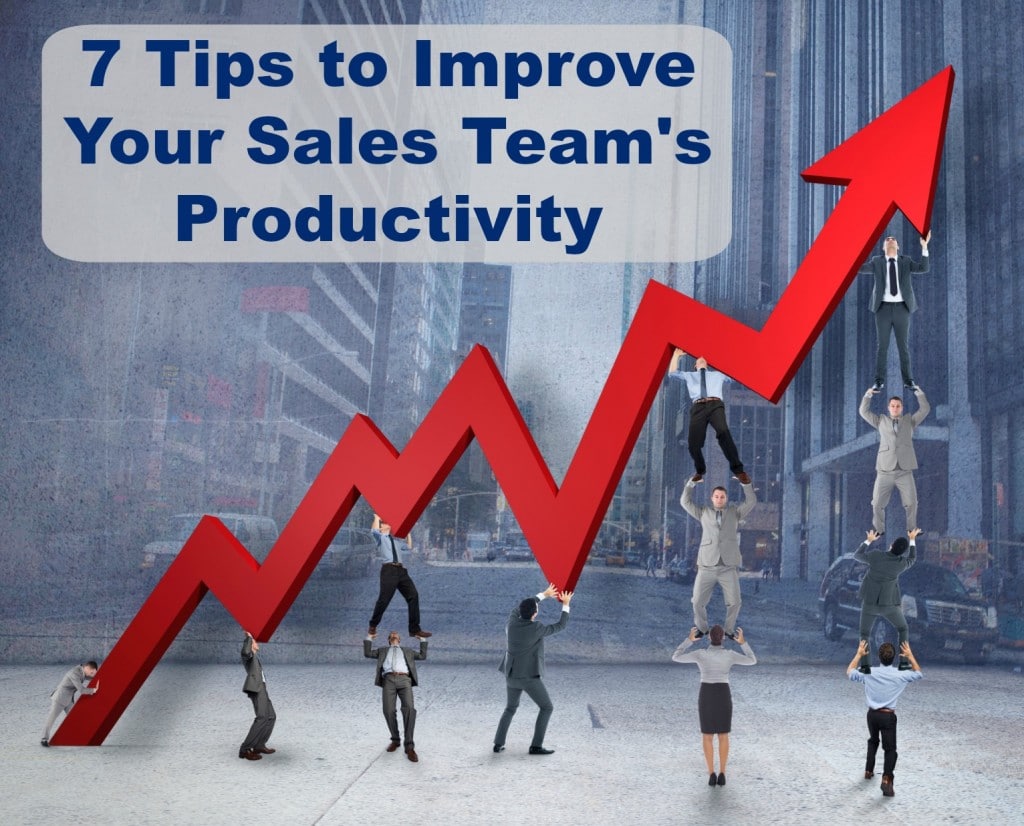
7 Tips to Improve Sales Productivity

7-tips-improve-sales-team-productivity-1The backbone to any successful company starts at the base with its salespeople.

Hiring the right people for the job is a huge part of ensuring the sales team is doing its best, but there is more to it than that.

It is really about the communication between management and team members, as well as the upkeep of the team’s mentality that really helps your sales team flourish.

By actively working on a holistic approach to management, your sales team’s performance is sure to really take off.

So, how do you maximize the potential of each person on your sales team individually and as part of a group? Here are some tips on how to get the most out of your salespeople and keep your company happy and healthy.

The Importance of Sales, the Value of Leadership

Successful sales reps are arguably the most important part of a company. Strategic hiring, however, isn’t all it takes to have a productive team. Working with a top recruiter can do a lot of good for a business, but without effective leadership, an employee’s abilities will only go so far.

Whether it’s encouraging productivity, incorporating effective training, or setting and assessing sales goals and performance, situations will arise when your enterprise relies on its strong leaders.

While employees with a flair for sales will flourish on a sales team, they cannot be hired and then ignored. People work best and give it their all with the proper motivation.

It stands to reason that by working closely with your salespeople, motivating them appropriately, and initiating these following tactics, you will see a substantial increase in the performance and productivity of your sales team.


How to Start Improving Your Sales Team’s Productivity

As much as we wish it were possible, honing your sales team’s productivity won’t happen overnight. There are two integral phases that should be followed to see the largest improvements to your sales team’s performance and, accordingly, an increase in your profits.

The first step to improving sales and realizing your goals includes getting to know your team and working through basic issues to clear the way for success.

  1. Target Your Trainingsales-target         

This may seem obvious, but it is often forgotten beyond the initial post-hire on-boarding phase. Sales training that specifically relates to your company/industry is one of the most supportive actions you can offer your sales reps to maintain and improve their productivity.

Someone may have years of experience in sales, but that does not mean he or she has experience in your type of sales. No matter the experience-level of each team member, be sure to engage him or her in the proper training program immediately.

  1. Set Goalsimprove-sale-goals

With a more seasoned team, it is best to evaluate all of the sales reps and figure out exactly where they are and how they are helping the company. Do this by setting clear goals for each team member, outlining where each individual should progress to by a certain time.

This invaluable progress-tracking tool can help managers assess their sales situation. At the same time, a high pressure situation could help motivate those who seem to be under-performing.

  1. Remove Negativityfriendly-sales-workplace

Once you have begun to understand the sales team a little better by evaluating progress, work with the team to do away with any negativity that has possibly surfaced over time.

You can start to remove the negativity in your office with some of the following actions:

  • Evaluating company culture
  • Setting realistic incentives and goals
  • Communicate with your team
  • Maintain a presence of leadership
  • Establish an environment that encourages positivity and a sense of community

Sales positions tend to be high-stress and high-risk, both of which provide ample breeding ground for hurt feelings or anger. Without the proper working environment, sales reps may become apathetic about their work or even resentful toward management.

  1. Assess the Strengths and Weaknesses of Individual Sales Repsweighing-strengths-weakness-of-sales-person

As you are well aware, there are a number of facets involved in completing a sale, including the initial outreach and nurturing phase to the actual sale, as well as any additional post-sale support that the client may reach out for.

Not every sales person is going to be a wiz in each phase of the sales process. Implement a sales personality test to start assessing the specific strengths of each individual team member.

You may find that when you pair strong “hunters,” or closers, with team members that are better at lead generation and nurturing, or “farmers,” your sales team operates more efficiently and closes more sales.


With these first four tips for maximizing your sales performance, you and your team will be well prepared to start working together to increase productivity and income.


Where to Go After Laying the New Foundation

After the first part of the process has been completed, all of the sales reps should be well-trained, aware of their goals and working in a positive environment. You have now set up the sales team to move forward into maximizing performance.

5. Change Incentivessales-incentive

In an attempt to be fair, many sales managers make the mistake of giving each employee the same commission or bonus package.This can actually make it difficult for those with smaller sales areas or who have been with the company a long time to make as much as others.

In turn, feelings of resentment may arise when it comes time for bonus pay to be handed out. It can be helpful to create incentive packages that are tailored to each sales rep.

This way, you promote the idea that everyone can have the same chance to do well and make money.

6. Incentivize Certain Salessales-rep-benefits

As you know, different kinds of sales bring different benefits to the company. A new sale is often more rewarding than a sale to a consistent customer because an incoming customer will help grow the business by increasing income, while the loyal customer is simply helping to maintain the sales level.

By making it rewarding for the sales team to actively search out new clients, rather than sticking to the same key players, you will encourage them to earn more by increasing company growth and revenue.

7. Provide the Proper Tools sales-tools

A great way to give all sales reps the best chance to succeed is to ensure they have the proper equipment to get the job done well and efficiently.

Keep up with the top tools in your industry, and survey your sales team from time-to-time to see which tools they feel would be the most helpful in completing their sales.

Their answers may surprise you – sometimes access to market and client information or additional sales training may be the key to achieving the next sales phase. Sometimes, the simplest of provisions can be the most helpful.


Solidify Your Sales with The Production Builder©

At SalesDrive, we understand you need to make sure your salespeople are doing the best they can, every time they go out. High-Drive people make the best sales reps, but sometimes even they need a little help to reach their full potential. Following the tips above, as well as using the best tools available, can get them the boost they need.


For more tips on how to boost your sales team, as well as access to our high-quality sales personality tests, contact us today.


The post Maximizing Your Sales Team’s Performance appeared first on SalesDrive LLC.

12 Dec 21:48

Attitude And It’s Impact On Your Success

by Miles Austin

Good Vs Bad Attitude Toggle Switch Choose Positive OutlookAttitude impacts every aspect of your life. Most people agree with that statement and yet your attitude can be limiting the possibilities, opportunities and results you achieve.

In the last week, I have had two conversations that highlight the upside and downside of attitude and it’s impact on our activity.

I wrote earlier this week about a tool that I called a “game-changer” called Authority Spy. I also shared it with my subscribers in my monthly Web Tools update. Many people have jumped on the special offer and grabbed a great value. Most are in sales but many are small business owners, speakers and entrepreneurs.

Here are the two conversations, paraphrased to protect identities.

Conversation #1: I don’t get this tool, is it even working? I entered in several keywords that I am an expert in and I am not showing up at all in results! I have more Twitter followers than many others that are showing up but I am not showing up. I am an expert and this thing just doesn’t work. I have a blog! I am recognized as an expert. I know more about what makes an expert than this does. I want a refund!”

Conversation #2: “This thing is awesome! I bought Authority Spy and it blew me away. We looked up several keywords that are important in our sales efforts, and wow were we surprised. Plenty of people that we know and are working with. Many that are already on our prospect list. What is the big surprise is how many people listed we had never thought of connecting with. Relationships are critical to our success and it is challenging to identify all of the players that influence our prospects and customers. I showed it to our inside team and they all wanted it. Everyone was arguing over who got to try it next – you should have seen them. I have upgraded and ordered 20 additional (outsourcer) licenses so that our inside team each gets their own copy. This is going to make a huge difference for us. Big thanks to you!”

After the first conversation I was discouraged a bit. Then the next day I had the second conversation and it brought back my smile. How can the same product create such different reactions? That question was bouncing around in my head all afternoon and into the evening.

My answer: ATTITUDE!

Conversation #1 was all focused on a pre-determined belief that she is an expert in her field. How did she come to this conclusion? She said it was so.  When Authority Spy told her that she was not as good as she thought she was, based on the facts she denied it. She is an expert damn it! What an opportunity missed. What has her attitude cost her? Instead of denying the facts, she could have looked at those that were showing in the results and explore what they were doing that she was not. By keeping an open-mind she would have realized that much of her work online is not connected. Twitter account, Facebook, Google+ are all there but not connecting back to her universally. She blogs but her blog was not showing up either – because she has ignored all the behind the scenes work that must be done to have an effective online presence. Things like Google’s Webmaster Tools that help authenticate who you are and what belongs to you. Understanding what is really happening on your website by using heat maps, and Google Analytics so that you are confident that your visitors are seeing what you want them to see.

Conversation #2 was focused on “what can we learn”. He was seeking to learn what he didn’t yet know. An open-mind made all the difference in the results. Finding out what he didn’t know was exciting to him. He embraced the data and understood how it can be used for positive results. Attitude made all the difference in the world.

My hope with this post is that it will provide a reminder to check your attitude frequently. Don’t make statements without the courage to check the facts. Our schedules and responsibilities can wear us down. It happens. Don’t shy away from considering new ideas and new approaches. Negative results can contain positive information. Maintain an open mind and keep that attitude up. Enjoy the results!

Original article: Attitude And It’s Impact On Your Success

©2015 Fill the Funnel. All Rights Reserved.

The post Attitude And It’s Impact On Your Success appeared first on Fill the Funnel.

12 Dec 21:47

Are Your Corporate and Sales Strategies Aligned?

by joel.mccabe@salesbenchmarkindex.com (Joel McCabe)

SBI found that organizations grew shareholder value by 28% when corporate and sales strategies were aligned.  Conversely, companies that failed to align their strategies only grew by 19%. Over the past few months, we’ve covered misalignment on a limited basis.  I’d like to cover it more in depth today.

12 Dec 00:56

LinkedIn Training for B2B Social Selling

by Miles Austin

LinkedIn training -LearnAboutLinkedInExcited to announce the public launch of LearnAboutLinked.com and the best LinkedIn training focused on B2B sales and marketing professionals that understand the power behind social selling.

I have been involved with LinkedIn training for over eight years and have trained and spoken at sales conferences across North America on the topic. I have crossed paths with many others that position themselves as the expert on this topic, most of which flame out and move on to the next “hot topic” of the day.LinkedIn Training - Viveka von Rosen

I am a believer in having mentors, those that I can go to when I am stumped, confused or sometimes just in need of a different perspective. When I need to dig deep into a LinkedIn question, the one I look to, my mentor, is Viveka von Rosen. She IS my LinkedIn trainer! I have known Viveka for many years now, and have come to respect her talents and her values.

Over the last year I realized that I cannot serve all of my requests for individual, group or corporate training on LinkedIn for sales, while maintaining my speaking and writing goals without a new approach. The something new that I am excited to announce today is the official launch of an online training program for the exact people I serve every day – sales people.   Meet LearnAbout LinkedIn.com!

LinkedIn Training - LearnAboutLinkedIn LogoHaving the opportunity to partner with Viveka to bring this training to the market is a blessing. I am very proud to have my name tied to this program and to be partnered with Viveka and the team at MLT Creative with such a high-quality offering.

Our LinkedIn Training Contains Five Stages:

  1. INcrease Visibility - Your LinkedIn profile is your launchpad for success. It is the foundation on which your marketing strategy is built, making it one of the most important tools in your arsenal. In this training series, you’ll learn how to create a professional profile and optimize it so that search engines find it easily. You’ll also find out about some special features in LinkedIn that will help you gain an edge on your competition.
  2. INcrease Engagement – Now that your foundation is complete, you need to build your network. Step 2 training will cover the best practices and steps you need to take in order to make connections and grow your network. Take advantage of all that LinkedIn has to offer by increasing your engagement, which will help you find the most relevant and mutually beneficial business.
  3. INcrease Leads and Connections – Stage 3 training will guide you through all the LinkedIn features that B2B companies use every day to attract more leads and grow their business. Armed with the many tools that LinkedIn has to offer, you’ll be able to develop the strategies you need to drive business success.
  4. INcrease Company Page Performance – Step 4 training will show you how you can create a better B2B branded company page to attract the business following you need. By optimizing your content and creating dynamic links to your business’s website, you can engage your employees, delight your customers and attract more prospects.
  5. INs and outs of LinkedIn Groups – Learn about the many benefits of LinkedIn Groups. From finding the best groups to join to making the most out of your membership, Step 5 training will show you how groups can be a dynamic part of your LinkedIn experience. You’ll also learn how to launch your own LinkedIn Group that will help you increase your audience and grow your business!LinkedIn Training - Learn abut LinkedIn

When you join, you will learn the ins and outs of today’s most powerful social network. We are able to accomodate both the individual learner who is committed to a program of personal development and growth as well as the VP of Sales who wants to get her entire sales force on the same page and with the same understanding of how to get the most out of LinkedIn.

If you are tired of wasting time with the pretenders in LinkedIn training, click over to LearnAboutLinkedIn.com and get started. There are many free resources including a free LinkedIn LaunchPad eBook, a video of some helpful lead-gen tips  and more.

I hope to see you in the program soon. I can always pick out LearnAboutLinkedIn graduates – they are the ones nailing it on LinkedIn!

The post LinkedIn Training for B2B Social Selling appeared first on Fill the Funnel.

12 Dec 00:41

Correction: Tech Diversity-Making It Happen-Catalysts For Change story

by CB Staff

SANTA CLARA, Calif. – In a story Dec. 10 about people trying to diversify the technology industry, The Associated Press misspelled the name of the computer coding camp co-founded by Gregorio Rojas and Liliana Monge. The correct spelling is Sabio.la, not Sabia.la.

A corrected version of the story is below:

People working to change the face of the tech industry

Entrepreneurs, nonprofits such as Sabio.la, Code2040 are eager to help tech firms diversify

By MICHAEL LIEDTKE

AP Technology Writer

Despite all their wealth and brainpower, technology companies realize they need help identifying and recruiting more women, blacks and Latinos who can write computer code, design websites and build mobile applications.

Some of the entrepreneurs and activists eager to assist them showed up Wednesday at a diversity summit organized by longtime civil rights leader Jesse Jackson and his Rainbow Push organization. They want to build on the momentum Jackson created this year when he got Silicon Valley leaders such as Google, Facebook and Apple to acknowledge that they haven’t been doing enough to make their workforces look more like the overall population.

Here’s a look at a few catalysts for change:

TECHNOLOGY DRILL SERGEANTS

When Gregorio Rojas was interviewing people for engineering jobs at TMZ.com in Los Angeles, he was shocked and disappointed that there weren’t more applications from women, Latinos and blacks. It didn’t make sense to him or his wife, Liliana Monge, given that the jobs were located in a diverse city. They decided to do something about it 14 months ago by starting Sabio.la, a “boot camp” for computer coding. It was a cause easy for the couple to embrace because both of them immigrated to the U.S. when they were children. Rojas, now 39, came from Colombia and Monge, now 37, from Mexico.

Sabio.la holds intensive training sessions over 20 weekends to make it easier for mothers raising children and other people with jobs during the week to attend. As of Dec. 19, 22 students will have made it through a grueling curriculum that requires about 700 hours of computer code. Half of Sabio’s graduates so far have been minorities, according to Monge. At $9,450, Sabio’s tuition isn’t cheap, but the money has generated solid returns so far. All of Sabio’s graduates have gotten full-time jobs or internships at technology companies.

“In a city like Los Angeles, it’s not hard to find people who realize the opportunities that technology can afford them,” Monge said. “Now, it’s incumbent on all of us to keep the pressure on technology companies and make sure improvement happens.”

TAPPING THE COLLEGE PIPELINE

After graduating from Harvard University, Laura Weidman Powers decided to get her graduate degree at Stanford University. There she realized that Silicon Valley had a diversity problem. As an African-American, she was struck by how few blacks and Latinos attended technology industry networking events. That’s the main reason she is co-founder and now CEO of Code2040, a non-profit that lines up summer internships at technology companies for black and Latino college students from across the country.

In the past three summers, Code2040 has placed 50 students in internships at companies such as Facebook, LinkedIn and SurveyMonkey. Each internship must pay a minimum of $1,000 per week. Virtually all of Code2040′s internships have led to full-time jobs so far, Powers said.

Code2040′s name refers to the year that most of the U.S. population is projected to be comprised of minorities. Powers is trying to ensure it’s not 2040 by the time major technology companies are employing workforces that better reflect the general population.

MAKING CONNECTIONS

After selling a location-sharing application that he created for mobile devices, Wayne Sutton decided he wanted to help other African-American entrepreneurs succeed in technology. He moved from his native North Carolina to San Francisco two years ago and is now raising money for a $5 million fund at Buildup.vc. He is earmarking the money to invest in early-stage startups run by minorities beginning next year. Besides bankrolling good ideas, Sutton also intends to provide advice and connect the entrepreneurs with other key players in Silicon Valley.

“To succeed in tech, you need three things: access, education and wealth,” Sutton said.

A RAY OF HOPE

It’s tough growing up in East Palo Alto, California, a city with much higher crime rates and much lower household incomes than neighbouring communities such as Mountain View, the home of Internet search leader Google and Menlo Park, where social networking leader Facebook is headquartered. With StreetCode Academy, Olatunde Sobomehin is trying to build a road to a better life for teenagers and young adults living in East Palo Alto.

Since the summer, the program has been teaching computer coding and other technology training to East Palo residents between the ages 14 and 24. About 150 people, mostly black, Latino and Polynesian, have enrolled so far.

“No matter where these kids look — whether it’s to the east, west, north or south, they are seeing people all around who have it better than they do,” Sobomehin said. “We want to change that.”

The post Correction: Tech Diversity-Making It Happen-Catalysts For Change story appeared first on Canadian Business.

12 Dec 00:39

How to Discount Without Cannibalizing Sales: 4 Hurdles to Overcome

by Business.com

How to Discount Without Cannibalizing Sales: 4 Hurdles to Overcome image hero 0035 iStock 000003427450 Large.280by280.png

Discounts are a great way to motivate price-sensitive customers into making a purchase; getting them off the sidelines and into your store.

The problem is that when discounts are applied automatically for all customers the reduced profit on sales that would have been made anyway offsets the extra profit from additional sales. The goal is to discount only when necessary to get the sale, and not discount to anyone prepared to pay full price.

Hurdles are a pricing tactic that allow you to discount selectively. By forcing customers to jump over a figurative “hurdle” to earn a discount you can be reasonably sure that you are only discounting to those customers that are truly motivated by the savings. Those that are prepared to pay full price continue to do so, and you don’t cannibalize full price sales.

Here are some examples of well constructed hurdles, often with ancillary benefits such as good publicity, that you may be able to use in your business.

Early Bird Specials

One common example of a pricing hurdle is the “early bird” special often seen at restaurants. The restaurant knows that they would get more business if they promote a discount of 15%, but between 6 and 10 PM they are already at capacity. They don’t want to discount to those customers who are willing to pay full price to eat during those hours.

The early bird special selectively targets those customers who will jump the hurdle of eating at a much less desirable time. Lower matinee prices are a slightly different take on this. In both cases this hurdle also helps make more efficient use of capacity and help get more people into the movie theater or restaurant during off-peak periods.

Cheap Tuesdays

Some movie theaters offer lower admission prices on Tuesdays. Most people would rather go to the movies on the weekend but to get a discounted price they have to go on a less desirable night.

This promotion is very popular with teenagers who talk and text throughout movies. This makes the hurdle even more daunting to adults that are more readily able to pay full price, and the theater gets to sell them a full price ticket on the weekend.

Container Recycling

Some florists allow customers to bring in an old vase that the florist will fill with a discounted arrangement. The hurdle is that the customer has to bring in the vase and wait while the florist prepares the arrangement – enough to ensure that only customers who are serious about saving money participate.

It is a beautifully contrasted hurdle for a number of reasons.

  • There is a genuine saving for the florist in that they don’t have to supply a new vase.
  • It targets a different – but highly sought after – flower buyer. Most flowers are given as a gift, but this promotion targets the person buying their own flowers. This customer is likely to spend less (making the discount essential to their purchase) but buy more often.
  • It is easy and inexpensive to promote. Florists almost always have contact information for recipients in their POS systems, allowing them to contact the person a few weeks after delivery and suggest that they bring their vase in for a discounted refill.
  • It’s also a great public relations opportunity. The florist can promote this “green” special as evidence of their commitment to the environment.

Food Banks

In this promotion customers who bring in a non-perishable food item (that the business owner will then donate to a food drive) are rewarded with a discount on purchases made during that visit. The customer has to jump the hurdle, in this case bringing the non-perishable item, again ensuring that only customers who are serious about saving money get to take advantage of the discount. It also gives the business owner a chance to generate some good publicity – local newspapers will often feature this kind of story.

12 Dec 00:39

35 ways to look at the economy on budget day

by Jason Kirby

At the end of 2014, Maclean’s asked 35 of Canada’s leading economists, analysts, investors and financial bloggers to send us what they thought would be the most important chart for the country, as we headed into this election year. The result was the following 35 charts, first published in December, that touch on everything from household and government finances and oil prices to the job market and exports.

With the federal budget due to be released on Tuesday, April 21, these charts are as important as ever. Click on each one to open in a new window and enjoy.

  • 1. Shrinking federal revenues to keep spending in check
    Stephen Gordon, Université Laval
    Gordon federal revenues
  • This is a chart of federal government revenues, expressed as a fraction of total economic activity. Before Prime Minister Stephen Harper came to power, this ratio had been above 15 per cent since before the Second World War. Federal revenues have now been below 15 per cent of GDP for the last six years, and are projected to stay below this threshold for the next five years. Neither the federal Liberals nor the federal NDP has indicated they are willing to take steps to significantly increase revenues. So, regardless of who wins the next election, the outlook for federal spending will closely resemble the Conservatives’ projection.

  • 2. There’s more to the youth unemployment story
    Derek Burleton, TD Economics
    TD-youth unemployment
  • There were many headlines in 2014 about the challenges of Canada’s youth in the job market. Typically, commentators refer to the 15-24 age category, where unemployment continues to hover at an unacceptably high 13 per cent, which is about twice the national average rate. Yet, average statistics can hide the true picture. As the chart shows, a good part of the problem is concentrated in the high school age groups of 15-19 and, in particular, the 15- to 16-year olds. (Many Canadians in those young age cohorts tend to be loosely attached to the job market.) In contrast, the jobless rate for the 20-24 age group, which comprises a share of new post-secondary education grads, has fallen into the lower end of its long-term range. This is not to say that job conditions are great for any age slice within the 15-24 category. For example, if one uses the pre-crisis lows as a benchmark, unemployment rates are still on the high side, even for 20- to 24-year olds. However, the point here is that one must be careful in painting the entire 15-24 age group with one brush.

  • 3. Canada’s economy remains unbalanced
    David Wolf, Fidelity Investments
    Wolf - exports vs debt
  • Canada’s economy has relied excessively on debt-fuelled consumer spending and housing investment in recent years. But exports can only pick up the slack ahead if Canadian competitiveness improves, which we expect will require a weaker Canadian dollar. Among other things, this should provide a tailwind to returns on foreign investments ahead.

  • 4. Canada runs on immigrants
    Sal Guatieri, BMO Capital Markets
    Guatieri - immigration
  • This is a chart showing international immigration to Canada. I believe immigration is crucial to Canada’s economic vitality. If not for the 250,000 international migrants who arrive in Canada each year, our population would grow only one-third as fast, the economy would be weaker and less dynamic, and many skilled positions would go unfilled, hurting competitiveness.

  • 5. Canada’s underperforming economy
    Derek Holt, Scotiabank Economics
    Holt - GDP
  • Our long-held view that U.S. economic growth would outperform Canadian growth has come to fruition and is likely to continue. Canada bolted from the post-crisis starting gates, but now, resource investment and the household sector are becoming more growth-challenged, just as the U.S. unleashes pent-up demand via improved hiring and confidence. The consequences will continue to reshape Canadian financial markets via less growth in foreign-investor appetite relative to the U.S.

  • 6. Canada’s housing bubble tops America’s
    David Madani, Capital Economics
    Madani - house price
  • House prices for Canada relative to income per capita have deviated from their long-term historical average, to the same degree that occurred at the peak of America’s housing bubble. In the chart, the long-term historical average is set to equal the value 100. The data range covers 1981Q1 to 2014Q2.

  • 7. Canada’s unhealthy reliance on energy exports
    Jim Stanford, economist at Unifor
    Stanford - trade balance
  • Until the turn of the century, Canada had a diversified and successful portfolio of export products. Yes, we exported significant amounts of natural resources (including energy). But we also exported many other goods and services, including generating trade surpluses in several technologically sophisticated value-added products (such as automotive, aerospace and telecommunications equipment). Around the turn of the century, however, the composition of our international trade began to change dramatically. Resource exports soared while other export industries declined. The end result? Our export portfolio became dangerously concentrated in energy (especially petroleum). Imagine what will happen if oil prices fall substantially (as they are now doing), and/or the rest of the world stops demanding oil in large quantities (as is likely to occur, for both economic and environmental reasons). Putting all our national export eggs in that one basket may prove to be a big mistake. Canada no longer relies on exports of beaver pelts to pay our way in international trade . . . and it’s not because we ran out of beavers.

  • 8. Foreign investors still drawn to Canada
    David Rosenberg, Gluskin Sheff and Associates
    Rosenberg - foreign investors
  • You would think that, based on all the negative press about the resource sector, the housing market and the consumer, that the Canadian economy was some sort of struggling emerging-market basket case. But, for all the downbeat narrative, the foreign investor is voting with his pocketbook in the opposite direction: Over the past year, net inflows to equities from abroad have exceeded $40 billion, and there has not been one month of net redemption since August of last year. So put that in your pipe and smoke it!

  • 9. The fall of oil and the loonie
    Doug Porter, BMO Capital Markets
    Porter - oil
  • The deep dive in oil prices in late 2014 was probably the single-most important development for the Canadian economic outlook, and it has implications for the Canadian dollar, stock prices, GDP growth, government finances and the regional outlook. The sag in oil prices, if sustained, is a clear-cut negative for the Canadian dollar. However, we believe that the loonie actually led the way in 2014, dropping heavily at the start of the year, and that it is actually close to fair value at just below US90 cents. The dual drop of the Canadian dollar and oil prices has massive regional implications: After handily topping the provincial growth tables for a decade, Alberta will probably come back to the pack (if not lower). On the flipside, it’s tough to write a better external script for Ontario: a firming U.S. economy, a softening loonie and falling oil prices.

  • 10. The danger of high fees to investors
    Preet Banerjee, personal finance expert
    Banerjee - fees
  • Few people truly understand the importance of keeping an eye on portfolio costs. This chart shows how a seemingly innocuous annual cost of 2.25 per cent can add up to more than $350,000 in lifetime costs. You might be wondering if this is just a wealthy person with a large portfolio, hence the large costs. Nope. This scenario assumed the following: starting income of $25,000, which increased by four per cent per year until age 65; the savings rate was 10 per cent of gross income, and the portfolio grew at seven per cent per year. He spent down his portfolio to $0 by age 90. Adjusting for inflation, the lifetime costs in today’s dollars would be just over $160,000. All other things being equal, reducing costs can bolster your retirement income. But don’t fall into the trap of thinking that cutting out the cost of financial advice will translate into a larger portfolio for everyone. What you save in costs there might pale in comparison to what you lose by making mistakes with your portfolio. Start by having a conversation with your adviser about cheaper products first before doing anything drastic. (For a calculator that lets you play with your own income, inflation, growth and fee assumptions, click here.)

  • 11. Longer life expectancy requires a rethink
    Kevin Milligan, University of British Columbia
    Milligan-life expectancy
  • Life expectancy continues to increase in Canada. This is very positive news—but we can’t keep our work and pension expectations fixed in the face of such rapid expansion in life expectancy.

  • 12. Fewer workers for the future
    Glen Hodgson, Conference Board of Canada
    Hodgson - labour force
  • Canadian organizations are already adapting to slower growth in the supply of labour but, for many, the current weakness in the economy is masking the extent of the issue. Divergent economic conditions aside, very soon, employers will only be able to grow their payrolls at one-third the pace we’ve seen in the past. Are Canadian companies ready for the challenge?

  • 13. Alberta-bound
    Todd Hirsch, ATB Financial
    Hirsch - migration
  • Jobs have been scarce in many parts of the country lately. But the ability of Canadians to take work in other regions has helped to correct these labour market imbalances. Alberta’s strong job market has been particularly attractive for job seekers. Over the last three years ending July 1, 2014, Alberta has welcomed thousands of them—a net increase of 105,000.

  • 14. Younger workers will be scarred
    Miles Corak, University of Ottawa
    Corak - young workers
  • The economic recovery has yet to come for the young. Their employment levels haven’t grown at all, in spite of the fact that more than five years have passed since the recession ended. Some have stayed in school longer, many have made do with low-paying jobs, while others have given up looking for a job altogether. This isn’t a temporary blemish. It’s likely to leave a permanent scar, as many young people, through no fault of their own, will eventually be shunted down career paths offering a future of lower wages than they ever expected.

  • 15. Canada’s energy sector on the rise
    Peter Tertzakian, ARC Financial Corp.
    Tertzakian - oil and gas
  • From meager beginnings in 1858, Canada’s oil and gas industry has grown to be the fourth-largest in the world by production volume. In dollar terms, the revenue of upstream products—oil sands (black), conventional oil and liquids (green), natural gas (red)—topped $155 billion in 2014. That’s four times the size of any other resource industry in our country, including mining, agriculture and forestry.

  • 16. Canada’s impressive employment rate
    Will Dunning, Canadian Association of Accredited Mortgage Professionals
    Dunning - job
  • Having a job gives us a lot of freedoms. The percentage of us who have jobs is lower than before the recession, but still pretty high, historically. For me, this is the most important economic statistic there is.

  • 17. Canada’s greying population
    Barry Schwartz, Baskin Wealth Management
    Schwartz - aging
  • About the only thing economists are able to predict with any accuracy is demographics. The chart shows the percentage of people in Canada, age 65 years and over and projected. The first Baby Boomers turned 65 in 2010 and the sharp upward projection shows the unprecedented number of new retirees in the future. For the first time ever, by 2016, there will be more Canadians over 65 than there are under 14. As people live longer, the percentage of non-participants in the labour force will grow. There will be extreme pressure on the health care system, pension plans and other social spending platforms. Those preparing to enter the workforce should take note of the risks and opportunities when choosing their careers.

  • 18. The success of B.C.’s carbon pricing policy
    Chris Ragan, McGill University
    Ragan - carbon tax
  • The relationship between our economy and the environment has been one of the most important and prominent discussions of the past year, globally and here in Canada. We are approaching a turning point in that discussion—a realization that it is both necessary and possible to build a strong economy underpinned by the health of our land, air and water. We have a real opportunity in the year ahead to focus on practical solutions for achieving that goal. As an economist, I believe that opportunity lies in redesigning our provincial and municipal fiscal structures to encourage the positive economic activities we want (innovation, investment and better jobs) while discouraging the harmful ones we don’t want (pollution and escalating greenhouse gas emissions). B.C.’s revenue-neutral carbon pricing policy is a textbook example of how this can work successfully. As the chart below illustrates, in the five years since the introduction of the policy, B.C.’s fuel use (the main source of greenhouse gas emissions) has dropped 16.1 per cent; over the same period without carbon pricing in the rest of Canada, fuel use has risen. Of course, the chart does not establish a strict causal effect of B.C.’s policy, but it is very suggestive. In addition, the chart does not show that, over the same period, B.C.’s GDP kept pace with that in the rest of Canada. Nor does it show that, as a result of personal and corporate income-tax cuts enshrined in the policy, B.C. now has among the lowest personal and corporate income tax rates in the country. Most Canadians agree that we should not have to sacrifice our economy for our environment, or vice versa. Examples like this show we don’t have to.

  • 19. A potential rough patch for oil
    Andrew Leach, Alberta School of Business, University of Alberta
    leach - oil
  • Without a doubt, the story of the second half of the year is the drop in global oil prices, and the way it’s hit Canada. Initially, through July and August, world oil prices dropped, but Canadian producers were sheltered by a weaker Canadian dollar. Even into September, the long-run view in the market was that oil prices would recover. That started to change in mid-October, and now the story seems to get worse every week. If the future prices follow the expectations of the market today, it could be a long few years in Canada’s oil patch.

  • 20. The shift to temporary foreign workers
    Armine Yalnizyan, Canadian Centre for Policy Alternatives
    Yalnizyan - TFWs
  • Every passing year creates more pressure to articulate a national strategy that will deal with replacing an aging labour force. It seems one has snuck up on us, with the de facto preference of temporary foreign workers over permanent economic immigrants. Growing public concern about how this program is being used (and abused, in some cases) is appropriate. Migrant workers can plug labour shortages and help the economy grow, but distribution of the gains from growth will become ever more lopsided. This is a radically new policy thrust in Canada, one that dramatically shifts bargaining power away from workers, reduces opportunity, and increases inequality by design. It redefines the future of Canada, a nation built by immigrants who had a stake in how their families helped communities, markets and politics to evolve. It cheapens us all to view migrant labour as the fix to growing labour shortages: good enough to work here, but not good enough to stay and build their lives.

  • 21. Students delay entering the workforce
    Jennifer Robson, Carleton University
    Robson - students
  • This chart shows the change in youth transitions from school to work. It shows the percentage of Canadian youth (aged 15 to 29) who were primarily “students” and primary “workers” (not in school anymore) by age. The point where those diagonal lines intersect is what the Organization for Economic Co-ordination and Development calls the transition age—the age when more youth are working than studying. The chart below compares that transition point for 1995-96 (the earliest year available) and 2012-13 (the most recent year available). The key thing is that the transition age went up by more than a year in that time period. The longer and later school-to-work transition is real. This may not be a problem in the strictest terms; maybe delayed transitions in youth pay off over the long run in higher lifetime earnings. I don’t think we know. In the meantime, pretending this isn’t happening is probably unwise. Do governments need to make any policy changes (to education planning and finance) to be responsive?

  • 22. Canadian household debt looks disturbingly familiar
    Ben Rabidoux, North Cove Advisors
    Rabidoux - household debt
  • It’s hard to miss the parallels between U.S. credit growth leading up to their crisis and the Canadian profile today. Also noteworthy is the unprecedented gap between Canadian and U.S. household leverage. Despite overall stronger underwriting by Canadian lenders, households remain very vulnerable to a downturn in employment or a rise in interest rates.

  • 23. Oil and the loonie
    Martin Pelletier, TriVest Wealth Counsel
    Pelletier - WTI and CAD
  • Of all the statistics to follow, we believe two stand out in importance: the value of the Canadian dollar relative to the U.S., and oil prices. Canada and the U.S. currently have the largest trade relationship in the world, with energy being a significant component of our cross-border commerce. A weakening Canadian dollar should have a material impact on our economy by stimulating trade, in addition to softening the impact of weakening oil prices.

  • 24. No fiscal room to manoeuvre
    Stephen Tapp, Institute for Research on Public Policy
    Tapp - budget
  • This figure provides important context for the 2015 federal election, where the government’s fiscal approach is clear: lower taxes (e.g., income-splitting), continued spending restraint, and a plan to introduce balanced-budget legislation. The blue bars in the figure show the status quo fiscal path before this year’s new measures and contingencies. The grey bars show what remains after recent policy announcements and contingencies. This demonstrates how the government has enjoyed “first-mover advantage” in allocating anticipated federal surpluses. Since there is considerably less fiscal room available—down from roughly $74 to $28 billion, summed over this and the next five fiscal years—opposition parties face the challenge of undoing recent moves and/or providing distinct policy approaches that emphasize a larger role for the federal government in Canada.

  • 25. Canada is underexposed to growing emerging markets
    Ailish Campbell, Canadian Council of Chief Executives
    Campbell - emerging markets
  • Canada’s economic success will always be linked to U.S. demand. But, over my lifetime, and that of my children, demand in emerging markets such as Mexico, China and India will boom due to a growing middle class. This chart shows how under-exposed Canada is to these growth markets relative to our competitors. Increased exports to emerging markets, and growing the presence of Canadian firms in these countries, are critical to Canada’s future well-being.

  • 26. The world wants Canada’s services
    Danielle Goldfarb, Conference Board of Canada
    Goldfarb - service exports
  • With constant news coverage of Keystone XL, combined with the iconic image of trucks crossing the Canada-U.S. border, Canadians might reasonably think this country only sells resources and manufactured products. But services (such as financial, IT, and business services) are quietly accounting for some of Canada’s strongest trade growth and, by extension, growing their contribution to Canadian living standards. The world not only needs Canadian resources and products, but also our less visible expertise and services.

  • 27. Canada’s productivity is weakening
    Mike Veall, McMaster University
    Veall - growth
  • The mild recovery does not disguise the long-term trend to lower growth in output per person. That is slowing the rise of Canada’s standard of living and making it difficult for governments. As Paul Krugman has written, “Productivity isn’t everything, but, in the long run, it is almost everything.”

  • 28. An export recovery will help Ontario
    Mike Moffatt, Ivey Business School, Western University
    Moffatt-exports
  • Exports have finally started to recover in 2014, but are still well off the levels of a decade ago. While it is true that exports are a cost (as Stephen Gordon is fond of saying), they are necessary to obtain imported goods, machinery and equipment. If exports could return to the 35 per cent of GDP levels of the mid-2000s, this would mean an extra $50 billion per year in sales for export-intensive regions such as southwestern Ontario. The recovery of these regions is dependent on an export recovery, so watch the trade data closely in 2015.

  • 29. Canada tops OPEC as a supplier to the U.S.
    David Watt, HSBC
    Watt - US oil imports
  • A critical and historic crossover looms. Canada has long been the largest single-country source of oil imported by the U.S. Canada is now poised, for the first time, to overtake all of OPEC as a source of oil imported by the U.S. While U.S. oil production has soared, and imports have declined, the U.S. has continued to take increasing volumes of Canadian oil. We don’t expect that to change. This upswing in U.S. imports of oil from Canada has unfolded, despite the ongoing delays affecting the Keystone XL pipeline, and will continue, even as Keystone XL is delayed further. The recent upswing in Canadian oil exports, and the increases to come, will largely be carried by rail.

  • 30. The outlook is good for high-end manufacturing
    Philip Cross, Macdonald-Laurier Institute
    Cross - manufacturing
  • This chart shows that manufacturing in Canada has a bright future. In 1997, two-thirds of manufacturing jobs were low-paying (less than $20 an hour, with a good number less than $12). These jobs were the ones ravaged by global competition, the rising loonie and the recession. By 2013, what has emerged is that two-thirds of manufacturing jobs are high-paying (more than $20 an hour). These jobs survived the same challenges that destroyed low-paying jobs. (The ones over $30 did not even fall during the recession).

  • 31. Businesses are well-positioned to invest
    Craig Wright, Royal Bank of Canada
    Wright - liquidity
  • We expect Canadian economic growth to accelerate from an expected 2.3 per cent this year to 2.7 per cent in 2015. As consumer spending slows, any acceleration in overall activity will depend on exports and investment activity rising. Exports have risen sharply on the heels of a stronger U.S. economy and a more competitive currency. We expect investment to accelerate in 2015, as demand improves and uncertainty eases. Corporate balance sheets are well-positioned to support investment in future, as liquidity has risen at the fastest pace within the G7 and currently sits at the highest levels on record relative to GDP. As we move forward, this liquidity will be put to work in the form of increased dividends, share buy-backs, mergers and acquisition activity and investment. The expected pick-up in investment is good news for short-term growth prospects and bodes well for a long-awaited rise in productivity.

  • 32. Health expenditures are falling, but for how long?
    Livio Di Matteo, Lakehead University
    Di Matteo - health spending
  • This chart, from this year’s CIHI 2014 National Health Expenditure Report, shows per-capita provincial-territorial expenditure spending in 1997 dollars from 1975 to the present. It is important for two reasons. First, it shows that per-capita provincial government health expenditures are going down, which suggests that governments are succeeding in bending the health-care-cost curve. Second, we have seen this before, from 1991 to 1996, when real per capita spending also declined. The 1991-96 period of decline was followed by years of consecutive increases. If the past is an indicator of the future, it suggests that, despite the current period of decline, a decade from now, we will likely be spending more.

  • 33. Private- versus public-sector borrowing
    Hilliard MacBeth, Richardson GMP
    Macbeth - debt
  • Canadian private sector debt, which includes household debt and non-financial corporate debt, has received little attention so far. When the housing bubble bursts, Canadian households will save more of their income, and the federal government will have to increase its borrowing substantially or there will be a severe recession.

  • 34. The need for export growth
    Larry Macdonald, independent economist
    Macdonald - exports
  • We need to find sources of export-led growth to take over from the domestic sources of growth that have carried the economy in recent years. As highlighted by historical highs in the proportion of residential construction to GDP, these domestic sources are reaching their limits, and there is a need to pass the baton to export-led growth. Failure to do so could bring severe downward adjustments in jobs, incomes and house prices in some regions.

  • 35. Canada’s consumer-debt crunch
    Tom Bradley, Steadyhand funds
    Bradley - debt
  • Canadian consumers are the most indebted in the world. Lines of credit, home-equity loans, car leases, credit cards, high-ratio mortgages—they’re well-versed in them all. The level of consumer debt will make it difficult to attain the growth and employment levels of previous cycles; past purchases were borrowed from the future. Extensive use of leverage will also make Canadian families and the overall economy vulnerable in the next economic slowdown.

The post 35 ways to look at the economy on budget day appeared first on Macleans.ca.

12 Dec 00:36

Need More Strategy in the Complex Sale

by Michael Nick

Need more strategy in the complex sale

We can all agree selling a complex solution is not like selling a commodity. Your prospects have a uniqueness about them that requires you to be more thorough in your upfront preparation and more detailed in your presentation.

Prospects in a complex sale typically take a team approach to their research and purchase. No one person is going to take responsibility for a major strategic decision. They are more organized by task, and deliverable. For example, a team may include IT, business user and a person from finance. Economic buyer, end user and technical buyer. Each with their own responsibility in the purchase process.

This separation of duty makes is more difficult for a sales professional. You need to include a team from your side as well. You need to be able to sell broad and deep into an organization. Which means your business case needs to be more complex and more complete.

As you know many companies have changed their buying patterns by:

  • involving finance from the beginning of the process through the close
  • performing extensive research on the market, your company, and your competitors
  • expecting you to do your homework on the prospect
  • putting out more comprehensive RFQ’s
  • requiring you to present preliminary pricing for a value hypothesis
  • involving not only the CFO but other C-Suite members in the final decision making process

Our research indicates that elongated sales cycles from delayed decisions are forcing vendors to discount heavily to move deals along. Lack of quality sales tools like an ROI, Business Case or TCO, contribute to the delays in making buying decisions. Your prospects simply don’t have the information they require to make an intelligent strategic buy. The key words here are “strategic buy.” Decisions in a complex sale involve the economic impact on the entire organization, not just the department you are dealing with.

Vendors today are not taking the time to research their impact on the corporation’s issues, goals and often times, financials. In many cases they don’t know how or don’t have the tools to make the effort. The result is delayed decisions, lost opportunities to competition and many more losses to no-decision.

It is a key factor in any complex sale to gain a better understanding of the cost of status quo and threshold for pain (tipping point). These two calculations will guide you (the sales professional) to the conversation that will end with your understanding and agreement with a prospect over why they want to make a change and at what point (tipping point) they will actually make that change. This information will help you forecast more accurately, lose less to no decision and give you the opportunity to accurately calculate your economic impact on the department and the organization as a whole.

Remember as a consultative sales professional selling complex solutions you need to thoroughly understand a prospects issues, pains and goals and the impact they will have on the entire organization. You need to focus on their threshold for pain and work with them to calculate the economic impact of your solution.

Selling complex goods and services requires a lot more effort on your part. You need to:

  • use sales tools for discovery (Including ROI, TCO, and a Value Hypothesis)
  • learn the language of the C-Suite to effectively communicate your value
  • do your homework on every deal using tools like LinkedIn advance search or InsideView
  • develop a high quality Business Case

Remember, selling a complex solution is not like selling a commodity. You need to have and use high quality sales tools to succeed.

The post Need More Strategy in the Complex Sale appeared first on ROI4Sales.com.

12 Dec 00:35

Doing The Right Thing

by Suzanne Bates

Doing The Right Thing image Executive Presence Model Grid WB 1.jpg

I was leading an executive presence seminar and asked a young leader to come to the front to share a story he’d told in his breakout session about boss he admired. A couple of years earlier, this young leader had been assigned the task of analyzing the competitive landscape for launching into a brand new market after a recent acquisition. The company had estimated it could leverage the resources of this new company to quickly produce a new product and, within a year or two, become number one or two.

However, when the young leader ran the numbers, they didn’t support that assumption. The competition was way ahead and pricing was already competitive. It was clear they could not invest enough to compete. He now had to go upstairs to the senior leadership team to tell them what they most certainly didn’t want to hear.

After the SLT verified the analysis, they made a decision within a week or so to exit the business, though it had cost them a pretty penny to acquire and there would be an up front cost to sell. That’s where the story gets interesting.

It would be months before the M&A team would be able put together a deal and find a buyer. The SLT could have kept quiet about it in the meantime, not signaling to anyone until they were ready that they’d made a mistake.  But this young man’s boss’s boss’s boss didn’t think that was right. He decided to go to the employees of the acquired company right away, to give them heads up that things looked uncertain, at best.

At the All Hands meeting, he openly admitted the company wasn’t sure what was going to happen, or when, but said he had decided to meet with them and share the news, because he didn’t want them to go out to buy expensive new cars or take out big mortgages. While I’m sure it wasn’t a pleasant meeting, you have to admire such character and courage. Conventional wisdom might have counseled him to wait and say nothing. But he lived by a higher principle, to do right by people.

Why did it have such an impact on the young leader standing there telling this story? He was amazed that a top leader in his company was wiling to risk so much to live by his values. We talked in the group setting about how it isn’t enough to think of yourself as a person with integrity. You have to live by those principles, if you want to build trust.

In our research on leadership presence we have noticed a fascinating correlation between qualities of leadership such as integrity, which matter most to winning trust and promoting goodwill, and qualities which are more about the way we communicate, qualities such as inclusiveness and interactivity. (See the Bates Executive Presence Model above.)

If you locate integrity, defined as “acting in accordance with ones values,” take a pencil and draw a straight line over to interactivity, defined as “a timely exchange of information to coordinate action,” and inclusiveness, defined as “broadening the circle, involving others and empowering initiative,” you start to see the connection. The quality and frequency with which we interact with others enables them to see and experience our character. And when they experience this often enough, when we have to deliver bad news, they are more like to respect us, or give us the benefit of the doubt.

It struck me that day in the classroom that this young leader would not have even had the temerity to get up in front of his peers if he hadn’t been moved emotionally by the experience. It stuck with him, that his boss’s boss’s boss, a leader they all know, had made that choice. He talked openly about how it had changed him and informed the way he treats his own people. As he moves up through the organization, that’s a lesson he will never forget and it will be contagious, permeating every team he leads.

By the way, that story also got a big ovation.

12 Dec 00:35

Do’s and Don’ts for a Successful Customer Survey

by Business.com

Dos and Donts for a Successful Customer Survey image hero 0021 iStock 000018032875 Large.280by280.png

When a customer survey is done well, it can be a great insight into the minds of your customers, and has great potential to help your business. When not done well, it may be nothing more than a waste of time and money. Here are some do’s and don’ts to help you prepare, conduct and review a great customer survey.

Do: Share your motives

If your customer has made it to your survey, don’t be afraid to be frank and honest with them. Tell them the truth; that the survey was created to gain insight, and to ultimately improve the product they use. They’ll appreciate your honesty!

Do: Incentivize

You’re going to see more responses if there’s something in it for your customers—that’s a no-brainer—but think about offering a guaranteed benefit rather than just a “chance to win.” Our most successful survey offered each respondent a month’s free access on their schedule, just for taking part.

Do: Make it quick and Do: Keep it simple

Even with incentives, your customer’s time is important to them, so don’t risk losing their attention with long-winded questions. According to Survey Monkey participants are more likely to give up if their survey takes longer than seven minutes.

To speed things up, try using multiple choice, rating scales and yes/no answers. While free text answers are good, they can be time-consuming to complete and normally require a human to read and interpret the results.

Don’t: Be inconsistent

Consistency throughout the survey will improve response rates and will stop your participants from dropping off. Try to structure all of your questions in a similar way, through language and design. Both are going to help participants to move through the questions quickly and without confusion.

Do: Ask the right questions

Knowing what to ask can be tricky, but try to resist the temptation to copy other surveys. Think about what your customers can specifically tell you to help your business do better. Do they have an opinion on your latest pricing plans? Do they need more support from your team?

Don’t: Be afraid to take it offline

For most online businesses an online survey will suffice, but if you often engage with customers face-to-face or on the phone, you might want to think about conducting your survey in the same fashion. Of course, this may change the way you collate and analyze the responses, but you’re likely to get better results.

Don’t: Be afraid of yes and no questions

Not only are yes/no questions the easiest to answer, they’re also the easiest to collate and analyze. Customers can whizz through yes/no questions so they are less likely to quit out of frustration.

Do: Allow for extra feedback

When we asked our customers what they loved most about our employee scheduler, we gave them some multiple choice answers and a free text entry. To our surprise, almost every respondent used the free text entry to expand on the multiple-choice answers we’d suggested, giving us a ton of insight into what our customers really valued.

Feeling inspired to create your next customer survey?

12 Dec 00:34

The Last Group Of Box Investors Drove A Hard Bargain

by Matt Rosoff

Aaron Levie Box CEOIt looks like Box was backed up against a wall this summer after its delayed IPO.

The last round of investors in Box demanded some very strict terms that will give them a guaranteed minimum return if Box goes public after July 7, 2015. That return increases the longer Box delays.

Here's the background: In July, Box announced that it had raised $150 million from a new round of investors, including hedge fund Coatue Management and private equity firm TPG Growth. The round was unusual because Box had filed for an IPO in March, but was forced to delay that IPO after market conditions soured for public tech companies who sell subscriptions — called software-as-a-service (SaaS) companies — like Workday and Salesforce. 

The terms of that Series F round were first published in a July filing, but were more clearly explained in the latest amended S1, filed yesterday.

Basically, if Box goes public before July 7 of next year, these investors can convert their shares into normal shares at a minimum price of $20 per share (with some pretty standard downside protection).

But if Box delays its IPO past that date, these investors' shares will be worth a minimum of $23 per share. Every quarter after that, the minimum value goes up another $0.75. In other words, the investors get a guaranteed minimum return, starting at 15% the first year, and slightly less each year after that.

The special preferences for these investors mean that the longer Box delays its IPO, the more diluted earlier investors — and the founders and employees who hold early shares — will be.

This won't be a problem if Box prices its IPO higher than $23 per share after July 7 next year. But based on the company's own internal valuations, that's looking unlikely. In March, when Box first filed to go public, it valued its shares at $17.85 to calculate stock-based compensation expenses. In October, it valued its shares at only $13.05.

Here are the relevant passages from the latest filing (emphasis ours):

In connection with any conversion of the Series F Preferred, if we consummate an initial public offering on or prior to July 7, 2015, each share of Series F redeemable convertible preferred stock will convert into shares of Class A common stock equal to $20.00 divided by the lesser of 90% of the price per share of Class A common stock or $20.00.

If we consummate an initial public offering after July 7, 2015, holders of Series F redeemable convertible preferred stock will receive shares of Class A common stock with a value equal to the Series F Return (see definition in the “Liquidation” section below).

From slightly later, here's the definition of "Series F Return": 

In the event of any liquidation, dissolution, or winding up of Box, Inc., whether voluntary or involuntary, the holders of the Series F Preferred shall be entitled to receive, prior and in preference to any distribution of any of the assets of the company to the holders of any other series of Preferred Stock and Common Stock, (i) an amount equal to $20.00 (as adjusted for any stock dividends, combinations, splits, or recapitalizations), plus (ii) an additional amount equal to $3.00 per year, which additional amount shall accrue quarterly following the original issue date for the Series F Preferred on the basis of a 360 day year with no compounding (the sum of (i) and (ii), the “Series F Return”), per share of Series F Preferred, plus (iii) all accrued or declared but unpaid dividends on such shares.


SEE ALSO: Box Is Slowing Down

Join the conversation about this story »

12 Dec 00:33

Overcoming Common Email Marketing Obstacles

by Monica Montesa

If you’re having more trouble with email marketing than you anticipated, that’s okay. You’re not the only one. From difficulty growing your email subscriber list to not having enough time to create an engaging follow up series, the challenges are abundant.

To help you get over some of the most common email marketing obstacles, here are some tips to keep in mind:

When you have no time:

If you’re a one-person show or the ringleader of a small troupe, prioritizing your responsibilities and managing your time is essential to success. But make sure email marketing is at the top of your (or an employee’s) agenda.

However you plan your email campaign, just make sure you include it as part of the day’s tasks — even if you aren’t planning to send an email every day. Use this time to create new content for your emails or brainstorm fun ways to engage subscribers.

Content ideas that are perfect for the busy small business owner include curating relevant content, repurposing content, and creating a quick checklist or group of tips for your readers.

If you’re spread too thin, consider bringing on a new team member or virtual assistant who can dedicate this important time to your email marketing.

When you don’t know what to write about:

Think about what you want to achieve through email. Do you want to inform subscribers about company updates and featured products? Or are you hoping to give them advice they can use in their daily lives?

Consider the value you hope to bring to your subscribers and be sure to communicate that with them. When a person signs up to receive your emails, the confirmation email should tell them what kind of content they should expect to receive from you.

Other content ideas include news related to your industry, helpful tips, discount codes, and suggested products based on past purchases. Whatever you choose to focus on, strive to remain consistent.

When you’re unorganized:

The more opportunities and campaigns you create to collect new email subscribers, the more difficult it can become to keep your list under control. Stay organized with segmented lists and targeted emails that deliver the type of content people expect from you when signing up.

For example, a trendy clothing boutique might have two email lists: one for those who’d like to receive blog updates and another for those who want an emailed version of their weekly ad. They might also choose to create additional segmented lists based on how they obtain email addresses — if sign ups were collected at a local event, they might create a specific segment and send targeted emails based on their known interests.

By maintaining these lists in your account instead of a pen and paper or grouping them altogether, you’ll be able to send the right emails to the right recipients.

When your deliverability stinks:

If your emails aren’t making it into your subscribers’ inboxes (perhaps bounce rates are high), there are a few ways to improve your deliverability.

Make sure you’re asking subscribers to confirm that they’d like to receive your emails (those who confirm emails are more likely to open them). Additionally, clearly communicate to subscribers what they’ll receive in your emails (e.g. coupons, new product information, customer stories). If they know what to expect in your emails, they’ll be more encouraged to open them and not flag them as spam.

Next, stop using a free email address in the “From” section of your emails. Email services such as Gmail and Yahoo perceive email addresses as spammy if they aren’t tied to a business account. While there is a cost associated with getting a domain-based email account, it’s worth it if it means getting your emails delivered to more inboxes.

Finally, make it easier for people to unsubscribe. Say what?! Although this seems counterintuitive, it can actually help improve your deliverability. Why? Because without it, those who don’t want to receive your emails are more likely to mark you as spam if they can’t unsubscribe. And the more spam complaints you have, the worse your deliverability will get.

When you have inactive subscribers:

Have a growing list of inactive subscribers (i.e. people who haven’t opened up your emails in months)? It’s time to do something about it.

A reactivation campaign is a great way to determine if they want to continue receiving emails from you and who is worth scrubbing off your list.

To do so, send a targeted email to this segment of subscribers and ask if they’re still interested in getting your emails. Let them know that they should contact you within a certain period of time if they want to remain on your email list. Be sure to also remind them of the value of your emails to sway those who may be on the fence.

If people respond positively, that’s great. Keep ‘em and hopefully you’ll see an uptick in open rates.

If they decide they’d rather say goodbye, let them unsubscribe or scrub them off your list. While you may see a drop in your total subscribers, it’s for the best. You’ll have more quality subscribers and better open rates in the long run.

When you’re not sure to grow your email list:

As with any relationship, maintaining the passion can grow weary over time. Things become routine. You lose a little enthusiasm. It happens.

But don’t let your subscriber list go stagnant. Make signing up easy with appealing web sign up forms and take advantage of various opportunities to collect new emails.

This includes leveraging social media to convert followers into email subscribers, as well as asking for email sign ups at local events or in your store after customers make a purchase. (You can even use AWeber’s Atom app to easily collect emails on the go!).

When you aren’t sure what you’re doing:

Confused by the whole email marketing thing? That’s okay too. There are plenty of resources available for beginners:

Take the time now to discover what the experts have to say and implement it.

Are you facing any challenges with your email marketing? If so, tell us about them in the comments below!

12 Dec 00:32

63% of Executive-Level Buyers Willing to Reveal Their Decision Processes [Research]

by ryan.sorley@doublecheckresearch.com (Ryan Sorley)

This post originally appeared on LinkedIn Pulse, and is reprinted here with permission.

As Seth Godin, best-selling author and world-renowned marketing guru says, “The thing about information is that information is more valuable when people know it.”

12 Dec 00:32

Americans Aren’t The World’s Best Closers And What This Means For You

by Timo Rein

*Editors Note: Timo Rein is the Co-Founder and CEO of Pipedrive. Pipedrive is a CRM System to drive sales and track progress for Sales Teams. This article was previously posted on the Pipedrive Blog and is being republished with their permission.*

With customers in more than 150 countries, you really start wondering:

“How different is sales work around the world?”

With some data and time on our hands, we started looking into it and went on a quest to find the best sales nation in the world.

What we discovered was that we can’t trust stereotypes. For example, Americans simply aren’t the world’s best closers. But that’s not the whole story – we realized that some numbers in isolation can be misleading.

We pulled anonymized meta-data generated by Pipedrive users all across the world about # of deals that were added and closed; # of activities that were initiated and marked complete, and so on – and put it in a really large database. We sliced up the data by country and removed all outliers. What we got was a clean view about the differences in conversion, length of the sales cycle, and levels of activity around the world.

Now come and see how people sell all around the world.

The world’s best closers are South Africans (but it’s not the whole story)

Conversion rate is one of the best indicators of sales skills. And if you only look at conversion rates, a clear winner emerges – South Africa. Runners up include Brazil, Chile, Denmark and Sweden – a surprising combo of fast growing emerging economies and the conservative Nordics.

Sales Conversion in different countries

Worst closers, based on conversion rate? Sales people in Switzerland, Poland, Canada, Russia and… the United States. That’s right, Americans who invented selling as we know it are at the bottom of the conversion list.

Could it be possible? The numbers don’t lie, but we realized that the conversion numbers don’t tell the whole story. To understand what was going on we decided to look whether similar trends would emerge under other metrics as well.

Brazilians Get to “YES” Quickest

Time is money, which is why we included the average time of closing as one of the proxies for identifying the best sales nation.

Sales Velocity in different countries

Brazilians get to hear “yes” quickest – i.e. they take the least time to close a deal. Runner up positions are taken up by South-Africa and Chile, who were in top 3 positions also in the conversion table. It’s mostly the developing world who follow the top 3, including Mexico, Russia, Colombia and India.

On the other end of the spectrum – countries that are slowest to close – we find mostly European countries with Australia and Canada thrown in the mix. And the Dutch – the great traders throughout history – are the slowest of the slow.

So far, all of our preconceived ideas about who’s great and who’s not seem to be wrong.

Salespeople in Spain Have the Magic Touch

Finally, some sales managers argue that the best indicator of sales skills is efficiency. The more time you spend with one prospect, the less you have for others. So we looked at the average number of activities (calls, emails, meetings, etc.) per each won deal.

Number of sales activities per sale

A salesperson in Spain needs 3.8 activities per closing – whether they be calls, meetings or emails, with salespeople in Denmark, Netherlands, Estonia, Sweden and South Africa not too far away. On the other end of the scale, we found that a Russian salesman needs 6.11 activities per every closed deal, with Great Britain, Germany, Colombia and United States also all in need of relatively many touches to get to a YES.

Again, we find the hardcore salespeople of Great Britain and the US at the very end of the scale with little context to explain it. However, it’s possible that there is more competition for attention in developed nations so those sales cycles are expected to be more protracted; buyers have more options and have more sales teams competing for their attention.

What Does All of This Mean?

What we found was that… any sales success indicator in isolation is probably misleading.

It would be a mistake to declare South Africans, Brazilians or Spaniards the best at sales and call it a day. As you probably saw, interesting correlations emerged in the different rankings. Countries that were among the best in one dimension tended to fare well across other dimensions as well.

The countries that were quickest also converted highest (with the exception of Russia).

Overall we found a correlation:

Countries with high conversion rates close deals faster.

Low conversion tends to correlate with lots of activities per deal, and vice versa. Combining three variables, it becomes clear that countries with the highest conversion rates also enjoy the fastest sales cycles and fewest activities needed to complete each deal.

Sales Conversion vs Speed

Is this a signal of cultural differences, or is the mix of businesses using Pipedrive just very different from country to country (expensive vs. cheap items, enterprise vs B2C sales, and so on)?

Truth be told, it’s probably a bit of both. The correlations are not so clear that you could explain them simply with big differences in the business mix.

The Big Reveal – How Tough is The Life of Salespeople Around The World?

Salespeople in South Africa, Brazil and Chile seem to have it easiest – well.. at least for Pipedrive users there. USA, Canada, and to an extent the UK, Australia and France, have the toughest conditions – slow, low conversion, and lots of activities per deal.

How tough sales work is around the world

What This Means – Generally, For You, and For Your Team

And this reveals us what we’ve been looking for the entire postthere is no best sales nation. And there’s two sides to this.

The first is to do with the cultural and historical background and differences that have created this situation.

The second is perhaps more important. Admittedly for many of you this will be repeating the ABC, but for others it is something that will make a big-big difference in their day-to-day sales work.

  • For the 10% (and growing) of salespeople who sell globally – be aware of the sales culture of the country you’re selling to. When you’re selling to the people in US, it’s likely that you’re going to get more NOs and you’re going to have to do a lot of sales activities for the deals you are able to close than in some other countries. If you are one of the people who can adjust really well to different circumstances, try changing your rhythm a bit, and maybe you’ll be more successful.

  • Don’t judge your own work, nor the work of other salespeople by looking solely at the conversion rate. It differs, surprise-surprise, from industry to industry and from product line to product line. Though it’s general advice and been repeated over and over again, it keeps on staying relevant – look at sales with a more holistic view and you’ll have better chances to improve.

Three tips on how this can benefit you:

  1. Try improving your conversion rate as much as you can. Usually, it starts from improving a critical stage-to-stage conversion a little. If you hit the ceiling, look elsewhere to other metrics.
  2. Measure the length of your sales cycle. Compare it with others, compare it with the data presented here about your region. Try shortening this cycle, chat with people in your business who close faster. Find out how long they take to move from one step familiar to you to another. If there are people around you who are more successful and have longer cycles, study their work habits, slow down a bit, and see how this works for you.
  3. Calculate your number of activities per an average deal that you win. Compare it with the best producers in your company. Are they doing more things with prospects? Are they doing less? Again, try adjusting your work flow, and monitor the results.


The post Americans Aren’t The World’s Best Closers And What This Means For You appeared first on Sales Hacker.

12 Dec 00:31

Mapping Quality Content to Different Audiences in Your Funnel

by Summer Luu

In order to be an effective marketer in lead nurturing, you must know how to educate and inform your prospects through the buying cycle. 79% of marketing leads never convert into sales due to a lack of lead nurturing (MarketingSherpa). This is the common cause of poor performance but it doesn’t have to be that way. In this article, you’ll learn the basics of lead nurturing and how to map strategic content to different buying stages in your sales funnel.

Buyer Personas

The first step is to identify who your target audience and segment is. Understand who they are, what they want, what they need, etc. Interview your customers – as well as those who didn’t buy from you – to create your buyer profile(s). Take the time to research and survey your customers and prospects. Here’s a small sample list of questions to answer:

  • What are your customers’ pain points?
  • What purchase paths do they follow?
  • Why should they care about your product?
  • What motivates your buyers?
  • What are their roles? (job title)

Check out this article on identifying buyer personas here.

Buyer Lifecycle

The buyer lifecycle is composed of the stages customers go through before they become a paying client. Here is a simple way of looking at the stages by David Skok:

Mapping Quality Content to Different Audiences in Your Funnel image buyingstages 300x39.png

Understanding the three stages will help you create targeted content for your prospects. Here is David’s definition:

  1. Awareness – when a customer first becomes aware of your product. Or could also refer to the point where a customer first becomes aware of a need that they want to fulfill.
  2. Consideration – when a customer starts evaluating solutions to their need
  3. Purchase

Mapping Out The Content

Mapping Quality Content to Different Audiences in Your Funnel image pardot 300x178.png

When you have identified who your target audience is and understand the path they take before they become a customer, you can now map out the content to send to them at the right time, in the right place. Leads nurtured with targeted content produce an increase in sales opportunities of more than 20%. Check out this guide by Pardot on how to map out content to the buyer’s journey. It contains worksheets to guide you through it all!

Here’s something else to think about: map the content out to your buyer personas, based on their knowledge level. So for example, when you’re selecting which content is going to the people in the awareness stage, think about how much they know about the topic. Probably not a whole lot because they are just learning about it. One could say that they probably have a general knowledge level on the topic.

Now, for people in the stage after that – consideration stage – they’ve probably educated themselves enough to know a thing or two but are not quite an expert yet. You could say that they have a working knowledge on the subject. As prospects move further along the funnel, they’re knowledge level on the topic becomes more in-depth.

So it only makes sense that you provide the right content to your target audience, based on their knowledge level. If you’re wondering what tool can help you with that, look no further. Atomic Reach is just the platform for you.

Overall, there are still many companies overlooking the practice of lead nurturing. The truth is, it’s one of the most important functions of sales and marketing. Don’t ever lose a lead again and make sure that you put a lead nurturing program in place today!

12 Dec 00:31

Four Keys Areas Where the CMO Must Lead

by Carlos Hidalgo

I have been to many conferences and read many marketing articles about having marketing get a seat at the table. Of course this is in reference to CMOs being a part of the executive conversations that occur in the boardroom with the other members of the C-Suite…something that is not always accepted nor expected.

shutterstock_110638919
I do believe that many CMOs are making great strides in advancing their leadership positions within their organizations. However, I believe there is still some work to do to ensure they are seen as leaders in their organizations and will then obtain that seemingly elusive leadership seat at the table.

In working with many clients and speaking with  marketing decision makers, here are some of the most important areas I believe CMOs need to show stronger leadership in:

  1. Leading Change in Their Organizations

I have written many times about the need for change management in marketing organizations in order to adapt to the rapid shifts that are occurring with B2B buyers. Yet, in many organizations there is a lack of leadership regarding the need for change. In speaking with one CMO of an enterprise company the response was “I see the value in taking a new approach and believe it is needed, but it seems like a formidable challenge, so we will just keep going with things as they are.”  At the same time, the marketing team underneath him was pushing for the needed transformation and growing increasingly frustrated with the lack of movement which was a result in poor leadership.

  1. Alignment With Their Peers

There has been a lot written about the need for marketing and sales alignment and while many organizations are making strides in collaboration between the two groups, CMOs need to show better leadership in aligning with the rest of the organization.  Recent studies show that the CMOs alignment with CEOs, CFOs and CIOs is still an issue:

  • According to an Accenture study on CIO-CMO alignment, on 23% of marketers think the level of collaboration between CMOs and CIOs is either at or approaching the right level
  • According to Active International, while 77% of CMOs and 76% of CFOs agree alignment is critical, only 12% of CFOs say their CMO is excellent at connecting marketing projects to ROI.
  • According to the Fournaise Group, 80% of surveyed CEOs have stated they have lost faith in their CMOs

The need for CMOs to demonstrate leadership across the various areas of the organization in order to provide value to their buyers and customers is now more vital than ever. However, there continues to be issues that will take strong leadership to fix.

  1. Skill Training

In the Enterprise B2B Demand Generation Study that was published ANNUITAS, more than 55% of B2B Marketers stated there was a skills gap and that they did not have the necessary skills to do their jobs. Forrester released a report this year that showed that 96% of CMOs either agree or strongly agree that “the breadth of skills needed to succeed in marketing has increased dramatically”.  However, CMOs are not making the necessary investments in their people to help close this skills gap.

A study conducted by Focus and the Marketing Automation Institute uncovered that over 70% of marketers receive no training or are self-taught and more than 60% of organizations spend less than $1,000 annually on training their personnel.

If CMOs do not have the right staff, with the right skills that can execute and perform in a growing complex and sophisticated environment, how do they expect to provide greater value to the organization?  CMOs need to lead their teams and ensure they are appropriating the right amount of budget to skills development and education.  Building a strong team and investing in people is one of the trademarks of a good leader.

  1. Investing Wisely

According to the most recent Content Marketing Institute Benchmark Study, 55% of those surveyed said they would increase spending on content in the coming year.  However, the same study shows that only 35% of organizations have a defined content marketing strategy and only 8% say they are very effective with their content marketing.

Investing more money into 8% effectiveness and into an area that has no strategy is not just a lack of leadership, it is foolish! CMOs need to be better stewards of their budgets and begin to make wise investments that have a high return to the organization. In doing so, they will effectively demonstrate their own business value to their peers.

The need for leadership from the CMO role is more crucial than ever and still many are not fulfilling this obligation.  These four areas, while not the only areas, are a good place to start and will go a long way to bringing much needed transformation to marketing organizations.

Author: Carlos Hidalgo @cahidalo CEO/Principal, ANNUITAS

12 Dec 00:30

Quit Dropping the Ball: How to Easily & Effectively Follow Up with Prospects You’ve Met

by Rebekah Richards

Quit Dropping the Ball: How to Easily & Effectively Follow Up with Prospects You’ve Met image dropped ball.png

It’s the frustration of most business owners I meet: You prospect, network, and mingle to generate leads and then… radio silence. Those people you worked so hard to turn into clients are not moving forward.

What are you doing wrong?

You meet so many quality leads that selling should be easy, right? Not quite.

Consider this: You need to contact your prospects at least 6 times, according to a study by Leads360. When you do that, you’ll have a 96% chance of getting through to your prospects.

Contacting each lead multiple times is a draining process. You need to stay organized, stay on top of your contact schedule, and churn out email after email just to stay relevant. It’s exhausting, but it doesn’t have to be that way.

Here’s a breakdown of how you can easily and effectively follow up with prospects in a way that’ll drive sales.

Where to Start

Now that you know you need to make multiple contacts with your prospects, you’re ready to jump right in, right? Not so fast.

Starting with thousands of potential clients might sound ideal but it can get quickly overwhelming. In turn, you dilute your effectiveness and lose opportunity.

Start with a handful of target contacts.

There are a few ways you can capture the contact information for the decision makers at the companies you’re trying to reach.

  1. You can use the business cards that you received at networking events.
  2. Or, you can use the online networking resource, LinkedIn, to find the top players at your target companies.

Get in the Minds of Your Prospects

With the contacts in place, think carefully about each person in your initial contact group.

  • What problems do they have?
  • What stresses them out?
  • What keeps them up at night?
  • What could you solve for them that would make their life a little bit better?

The answers to these questions should guide all of your communications with this group of leads. Write your own blog posts answering your target customers needs and guide your audience to your blog for the answer. Or, you can send your prospects to another reputable blog with helpful information.

The goal with this initial contact is to be helpful.

Today’s world is all about sell, sell, sell. Your leads and prospects have become deaf to your pitch.

To break through the noise they hear every day, you need to offer tips and guidance that’ll help them accomplish something in their business. This is how you earn their trust and how you establish your credibility in the market.

When you send your prospects to your blog posts you can end with a call-to-action. Guide your reader to take a next step with your business by enticing them with something valuable. What’s ideal?

  • Free reports
  • Whitepapers
  • Videos

You can also guide your reader to call you or contact you in some way. The goal is to have a meaningful call-to-action that your audience is likely to take. This is how you turn prospects into customers.

Automate Your Connections

Prospecting without follow up is a waste of time. Without it, your business doesn’t get in front of the people interested in what you have to offer. It’s a time consuming but necessary evil.

Following up consistently is one of the most productive marketing activities there is, but it won’t work if you don’t do it. – C.J. Hayden, Get Clients Now!

Now, technology has made it possible to automate this time draining process.

There are a few ways to connect and reconnect with your audience over email. Quickmail and Infusionsoft are two platforms we highly recommend because they are intuitive and they provide you the type of feedback needed to know what’s working and what’s falling flat.

Recommended Solution #1: Quickmail

Quickmail is not your typical email service.

Like most email marketing providers, you can pre-schedule emails in an auto-responder type format. Where Quickmail goes a step further is by letting you pre-schedule these emails directly from your company’s Gmail account.

Create your sequence of emails (remember, we suggest at least 6 points of contact) and choose when they will go out.

If a prospect replies, you don’t have to worry about manually stopping the correspondence. Quickmail does that for you.

Quit Dropping the Ball: How to Easily & Effectively Follow Up with Prospects You’ve Met image quickmail page e1417027080590.png

Recommended Solution #2: Infusionsoft

Infusionsoft CRM uses a similar approach.

With Infusionsoft, you create “campaigns,” which are essentially a series of emails to your prospects. Throughout each campaign you can design “what if” scenarios. What happens if a client replies to your email? What happens if they don’t?

You design the entire funnel just like you would like to see it play out. You no longer have to rely on your memory. Instead, you can go into ‘set it and forget it’ mode, which will help you get back to focusing on what you do best.

Quit Dropping the Ball: How to Easily & Effectively Follow Up with Prospects You’ve Met image infusionsoft crm1 e1417026820993.jpg

What Happens Next?

You’ve sent your emails, so now what?

It’s inevitable that after 6 contacts, you won’t hear from some people. Maybe someone clicked on your links but they never reached out.

When your series of emails is complete, Quickmail or Infusionsoft will tell you what’s happening with your contact. It’ll keep track of the people who have not responded or engaged with your company, giving you the opportunity to swoop in and make the connection.

Document everything in your CRM or email so that you can quickly reference times and dates of contact. This will make your communications look more personal and professional, giving you the upper-hand.

Quick Recap

Stop missing opportunities because you have the wrong setup! Here’s a quick recap of what we covered to help you get started following up easily and effectively with each person you’ve met.

  1. Think about their needs. What problems can you help them solve?
  2. Send them content that’s helpful. This is the best way to generate trust and prove valuable to your prospect.
  3. Use a mail solution that’ll make it easy to automate and adjust your communication funnel. You’ll also want something that gives you analytics to show what’s working and what isn’t.
  4. As you’re sending content, guide your prospect to take the next step with you. That can be through a phone call, sign up, or email.
  5. Document all of your contacts, even after the sequences of emails stop. This way you can continue to nurture and grow your prospect relationships in a personal and meaningful way.

This sales cycle is simple AND it’s enormously effective. Your business stays top of mind, you establish yourself as a credible resource, and when your prospect is ready to buy, you’re their first call.

Your Turn

Now that you know how to follow up with prospects, it’s time to go out and do the work to fill your funnel. The best place to start online? LinkedIn.

If you’ve never maximized LinkedIn to generate leads, we’ve got you covered. Download your copy of The Complete Guide to Leveraging LinkedIn for B2B Lead Generation. In it, we reveal how you can position yourself as an expert in your field and sit back while a flood of new leads and prospects come your way.

12 Dec 00:30

5 (Cheap) Marketing Tactics You Might Not Have Tried

by Jason Dea

5 (Cheap) Marketing Tactics You Might Not Have Tried image megaphone man

There’s one piece of advice that my parents gave me when I was younger that I get reminded of almost on a daily basis – You get what you pay for.

Dollar store toy breaks in half after playing with it for a day – You get what you pay for son…

$500 used car breaks down and leaves you stranded on the highway – You get what you pay for son…

99-cent sandwich seafood special gives you food poisoning – You get what you pay for son…

This lesson holds particularly true in the world of business; Especially in the hyper-competitive world of ecommerce and online retail. If you’re not willing to invest in your own business with the best tools, training, and support, then ultimately you’re not putting your business in the best position for success.

BUT every once in a while, if you do a little research you might not have to pay that much to still get a lot in return. The is true for the marketing tactics you use for your ecommerce business as well.

The great thing about marketing is there are a million different tactics you can try. Of those tactics, some are complex, some are simple, some are expensive, and surprisingly quite a few can be downright cheap.

Here are 5 low cost marketing tactics you may not have considered for your online business:


1. Link Exchange

When it comes to getting noticed by search engines like Google, nothing holds more weight than the number of links you have to your site. That is the number of “other” websites that link to your site in an organic fashion. Even after all of the algorithm updates that Google has released over the years to change how they rate websites, the number of and the quality of the link you have back to your site is still the main factor.

If you want a completely soup to nuts overview of all of the tactics you can employ to enhance your estore’s link profile, I highly recommend taking the time to read through this link building guide from Quicksprout

However if you’re looking for a simple way to get a handful of new links to your site, you can try a simple link exchange.

Do some research into what other websites are out there catering to your audience or talking about the same types of products and see if you can negotiate the exchange of some simple links like blogrolls, promotional posts, or banner ad exchanges. These days everyone’s budgets are tight, and many companies are more open to swapping website real estate and links than ever.


2. Pinterest

Did you know that Pinterest is growing faster than both Twitter and Facebook? The folks at ShareThis did some research earlier this year and saw that the network to really keep an eye on is the new social scrapbook

Not only is Pinterest becoming increasingly important in the social media landscape, it is becoming increasingly important for retailers as well. You could even make an argument that online retail is perfect for Pinterest. Most, if not all ecommerce businesses sell visually dynamic products that are part and parcel of their unique selling proposition. If you fall in this boat, get more mileage out of your professionally done product photos by sharing them on Pinterest and having an active presence on the social network.


3. Contests and Giveaways

Here is an old school tactic that translates particularly well to new school channels. People love free stuff. It’s a fact. Why not use this to your advantage, and run a contest or giveaway to get more leads to your store AND put some of your products in the hands of new users at the same time.

There are a number of online widgets and apps that make running a contest and promoting your contest or giveaway online easier than ever before. Here’s an example of one done by the KingSumo folks, but there are others as well


4. Refer a friend program

There may not be a single easier way to get more value out of your existing customers than to run a refer a friend program through them. Wouldn’t you love to turn every happy customer your online store gets into 2, 3 or 4 others? That’s what refer a friend and customer referral programs are designed to do. The process is simple.

  • A customer buys something from your store
  • You ask them to refer their friends to your business through Facebook or email (you can even offer them and their friends a reward to do so)
  • Their friends discover your store and get a discount on their first purchase
  • Everybody wins


5. Affiliate program

Affiliate network programs allow you to tap into a vast network of professional bloggers and advocates that can help sell and promote your business. A company like Shareasale or Commission Junction will allow you to easily create and monitor a revenue sharing program for your ecommerce site.

With affiliate programs typically all that’s required on your end is to upload promotional assets like banner ads or product feeds that bloggers and other sites can use to promote your brand. If the traffic they send you creates a sale, you give them a commission.

The set up fees for these networks are typically quite reasonable, and their networks will get you access to thousands of publishers who can help you market your site. The best part is that because affiliate programs are setup with commission type payment structures to you only pay for success as bloggers only get paid on completed sales.


So there you have it, 5 more marketing tactics you can consider to help bring more traffic and sales to your ecommerce business. Most of them are pretty cheap too!

This post originally appeared on the Forewards Ecommerce Blog

12 Dec 00:30

Sales Management: 6 Top Tools to Create More Effective Sales Teams

by Tibor Shanto
Dec-14

The Pipeline Guest Post - Diana Doherty

Want to increase productivity without stressing out your employees? Data can help you improve your process – and your workforce ROI.
Think you have the best possible toolkit for your sales team? Think again. The best sales tools now are all about integration and automation. If you’re using clunky apps or programs that don’t integrate, you’re wasting time. The best tools for your team make more sales, less work.

Clari
How can you give your team instant access to all the relationship data they need with immediate communication to managers? A mobile sales productivity app. Clari pulls information from sources like Salesforce and translates it into usable sales information. Clari’s goal is to give your team all the benefits of data without wasting their time on data entry. Use the management side of Clari to direct your sales team in real time. Clari is much more than an alternative to customer relationship management (CRM).

Salesforce
CRM software can be tough to choose, but it is imperative to your team’s success. Salesforce is one of the most popular options and for good reason. It’s a powerful CRM that focuses on customization, scalability, and integration. With so many options available, one of the most important features to consider is integration. The Salesforce AppExchange boasts hundreds of apps, plus the ability to create a custom-built app. The best part is the apps integrate with programs you’re already using, such as Evernote, DocuSign, Google Drive, and Hoopla.

DataHero
This service connects to many of the best business apps, such as MailChimp, Stripe, GitHub, and Dropbox, to collect and analyze all your data. It finds patterns and creates shareable, interactive charts to represent that data. It features drag-and-drop chart creation, so you don’t need a specialist to analyze your data. Charts can even be set to automatically update when your data is updated, such as sales tracking spreadsheets. One more perk: DataHero works with Salesforce. You can combine Salesforce reports with Pardot or MailChimp reports to see your sales data from various services in a comprehensive, easy to understand format. No more exporting data to Excel and struggling to make sense of it.

Act-On
Generate leads for your team backed with information they can use to convert. Act-On automates your social media and email marketing efforts, measures customer interaction, performs A/B testing, scores leads, and integrates with your CRM. It lets you create and manage email campaigns with webforms and attachments. It provides metrics and data analysis. Act-On is robust marketing automation software that delivers the customer information you need without drowning you in data.

Membrain
Uniquely designed with B2B in mind, this sales pipeline service aims to optimize your sales process and lead your team to success. It has CRM tools built in, but focuses entirely on the sales perspective. Salespeople can see opportunities and where they are in the buying process. Membrain even analyzes and visualizes data for you, creating metrics for defined categories. Most impressive, though, is the drag-and-drop customization of the interface you can design to match your sales process exactly.

Perenso
If your sales team travels, Perenso could be an invaluable tool. The iPad app allows your team access to pertinent client data, and competitor information. It prioritizes clients based on their history, minimizes data entry, handles orders, and encourages upselling. Your team can even create and share presentations in Perenso. Team data is updated instantly, letting you keep tabs in real time. You set cycle priority and Perenso schedules visits and calls in the most efficient order, saving on drive time and money.

The best sales tools address needs you have now with the integration flexibility to address needs that may arise in the future. Remember, when you choose tools for your team, it’s all about empowering them to do their best and saving them time. Anything that clutters up the sales process isn’t the best tool for your business.

About Diana Doherty

Diana Doherty is a freelance writer specializing in SEO content, and is a contributor to ChamberofCommerce.com. She loves all things tech, photography, craft, military family life, and business. She earned her BA in English Writing Arts from SUNY Oswego.

12 Dec 00:30

Predictive sales and marketing startup Infer comes up with $25M

by Jordan Novet
An Infer event in San Francisco in 2014.

Think of Infer as a supercharger for marketers and salespeople — it ranks leads based on how likely they are to spend money. Fast-growing companies are all over Infer’s software, and now Infer has picked up $25 million to develop itself further.

The money will help Infer transform its web-based software into a true self-service tool, which should help Infer close considerably more business for itself, cofounder and chief executive Vik Singh told VentureBeat in an email. But that’s not all.

“Then we have some secret work we’re working on that will end up being the main play for us,” Singh wrote.

But even in its current state, Infer has picked up considerable traction. The startup’s revenue bookings have doubled every quarter for nearly a year and a half. The customer list includes companies like Atlassian, Cloudera, New Relic, Tableau, and Zendesk. And other startups, like 6Sense, Fliptop, and Lattice, have been making inroads with predictive lead scoring, suggesting there’s good value to be mined with this sort of technology.

Meanwhile in recent months Infer has launched applications beyond just predictive lead scoring, such as a way to see which Google AdWords campaigns are yielding the best results.

Infer can integrate with Salesforce.com sales lead tracking software, as well as marketing-automation tools from Salesforce, Marketo, and Oracle. Looking out, Singh wants to integrate Infer’s software with more tools like data analytics applications.

Redpoint Ventures led the new round in Infer. To date the startup has raised $35 million.

Infer started in 2010 and is based in Palo Alto, Calif. Nearly 40 people work for the startup. “Soon a new hire per week,” Singh wrote.


12 Dec 00:30

Top-Notch Outsourced Sales Partners: Out with the Old and In with the New

by Emma Vas

Top Notch Outsourced Sales Partners: Out with the Old and In with the New image oldnew.jpg

When searching for an outsourced sales partner, there are certain characteristics that distinguish the top-notch providers from the run-of-the-mill ones. While the attributes of an accomplished outsourced sales provider are plenty, there are some that are imperative when making the final decision on which provider is right for your business.

It is essential that the provider you partner with has an experienced and passionate workforce built through an innovative hiring process and enhanced with ongoing training programs. In addition, the organization should be led by an experienced executive team who utilizes a consistent and effective management style to foster an internal corporate culture focused on sales success for clients.

These qualities and more make for a successful partnership built upon solid ground. To secure an outsourced sales provider that will maximize your success, here are four key qualities to look for:

  1. A Partner-Focused Executive Team

From the onset of the relationship, the outsourced sales provider’s executive team should be focused on building long-term relationships with clients. The executive team should work with you to define what success looks like for your business, your sales pipeline and your revenue goals – while providing specific industry insight as applicable to your business situation. Ultimately, the executive team should foster a relationship that goes beyond the client-vendor model and instead forms a true partnership between parties.

  1. A Thorough Hiring Process Designed to Appoint Top Sales Talent

Taking a scientific hiring approach by analyzing and screening each applicant thoroughly, identifies top talent with the passion and expertise to drive results in a sales environment. The hiring process should also extend beyond traditional interviews and incorporate multiple qualitative and quantitative evaluations to gain an in-depth look into an applicant’s potential for success. When outsourced sales providers implement a metrics-based hiring process, partner companies can be assured that they bring on only the best applicants as part of their sales process.

  1. A Customized and Methodical On-Going Training Program

A reliable outsourced sales partner consistently and methodically develops their team – giving you the industry-leading edge in sales and lead generation services. Beyond hiring the most qualified sales person, continuous training based on performance analytics is an important aspect that contributes to both an individual’s and the company’s success. In addition to general skills trainings, it’s also imperative that the sales partner offer training programs unique to each client. This customized approach to training ensures that employees have an in depth understanding of the products, services and processes specific to each client.

  1. A Results-Driven Lead Generation Approach

Perhaps the most important metric to focus on when considering an outsourced sales provider is how effectively their lead generation services produce results for your bottom line. A top tier sales partner warms up and hands off leads that convert and close once those leads are connected with your inside sales team. In addition, their top-of-the-funnel salespeople should be giving you additional insight and comments to help you close the lead more effectively. Finally, the best metric for determining a quality outsourced sales partner is to measure whether the provider identifies more opportunities than what you originally asked for.

Ensuring your outsourced sales partner exhibits these key qualities will set your business up for success and ensure exceptional results, far exceeding the results you can expect to find from a company where these qualities are not present. Choose wisely.

12 Dec 00:29

How to Win Buyers and Influence Sales Through Email Marketing

by Susan Tucker

Did you know that email marketing continues to produce the highest ROI of just about any other digital marketing tactic? But, If you are still using old school spray-and-pray email marketing methods, you are doing it all wrong. Email is a super powerful way to nurture leads and increase sales, when done correctly.

How to Win Buyers and Influence Sales Through Email Marketing image email marketing1.jpg1

Get ready to win buyers and influence sales through email marketing. Here’s what you need to do:

Clean Up Your List

If you’ve been holding on to your same email list (trust me, I understand) for the past several years, it may be time to do a serious purge. If your list is mostly defunct, your email marketing efforts will be as well. The average list decays at a rate of about 25% per year and bounce rates, un-opens, and other factors related to defunct emails affect deliverability to quality addresses.

To clean up your email list list:

  • Go through and delete defunct addresses.
  • Reconfirm inactive subscribers by sending them a note with a new sign up link.
  • Consider an outside source to clean and validate your email list. Email provider MailChimp suggests the following 3rd party services: BriteVerify, Data Validation, LeadSpend, or Kickbox

Get to Know Your Subscribers

The more you understand who your subscribers are, the higher quality content you will deliver to them. As you are going through and cleaning up your list, start to divide your contacts into natural segments such as customers, vendors, partners, etc. You can also segment by geography, position in company, type of company and/or their buyer persona.

Once you have put in a natural segmentation on existing subscribers, take the steps to start segmenting new leads by setting up preference options at sign up.

If you want to dig even deeper (and you should!), consider these tactics:

  • Split test your messages and analyze how subscribers respond.
  • Monitor comments that customers are making on review sites, social channels, on your website and in your inbox.
  • Send out a survey to your entire subscriber list, but be sure to keep it less than 10 questions. Ask them what they are most interested in receiving from you, and how valuable they find your content. You may consider incentivizing them to respond.

Incorporate Email into a Larger Inbound Strategy

Here is where you get down to the nitty-gritty of email marketing… when you incorporate it into an overall inbound marketing strategy. Email is most powerful when it’s integrated with the rest of your marketing. Afterall, you have a lot of marketing channels and assets – make sure you use them together for best results!

Here’s how:

  • Integrate email with social by adding share buttons to every send.
  • Email based on social media insights – you’ll see who has shared your email, trigger a follow up email (see below) to this highly engaged audience.
  • Add a call-to-action to your social media posts for email subscription.
  • Enable an HTML version of your email (where folks can see it online) and that may also help in SEO.
  • Dive into email insights and use it to drive other digital initiatives (did folks click but not buy, for example? This is valuable information!)

Workflows, Triggered Sends and Contextualization

Here are some pretty fancy marketing words that you may be hearing more of down the road. Basically, these terms represent “email of the future”; personalizing the subscriber experience and being relevant.

Here is a breakdown:

  1. Workflows are series of automated actions that you can trigger to occur based on a person’s behaviors or contact information. For example, a workflow can be triggered once they download a marketing offer, then you send a follow-up email 1 week later, with a piece of content that is related to the topic of the individual’s first conversion. Next you follow up with a second conversion opportunity, this time for an offer that is more focused on what your company provides. Convert into a sale. Voila!
  2. Triggered sends are similar to workflows in the sense that a once an event happens, an email is triggered. What makes them different is that these emails are triggered based on specific event such as a birthday, a clicked link or an abandoned shopping cart. These are more timely tactics.
  3. Contextualized emails are in context to location, timing, device, weather and social. Email content is relevant to your customers surroundings at the time of open. So, how can you figure that out? When you start capturing information (see above) about your subscribers, you can use that information in your email sends. Some examples of contextual emails include autofilling their first name in the intro, their business name in the body, their social media activity, a reference to their segment and a solution to a potential problem you’ve gathered by tracking their clicks. Creepy? Yes. But, when done tastefully it can be utterly effective.

Plan for the Future

In 2015, more changes are going to take place and the world of marketing solutions and it will continue to evolve. If you’re going to nurture leads, you might as well make sure that you do it for the long run rather than just for a moment and that you’re approaching it from the standpoint of being truly helpful and with transparency. People want buy from brands they trust.

What are your tips for successful email marketing? I’d love to know!

How to Win Buyers and Influence Sales Through Email Marketing image Charts CTA.jpg

12 Dec 00:29

Tradeshows and Events Drive Highest Quality Leads

by Lisa Cannon

Tradeshows and Events Drive Highest Quality Leads image Dollarphotoclub 7891602 250x167.jpgGoing to trade shows and in-person events can be an expensive proposition. Flights, hotels, ground transportation, and registration fees add up fast – and that’s just for attendees. Companies creating a presence at these events have the extra costs of designing, creating, and shipping booths and signage as well. When you add in the missed office time and reduced productivity for attendees, presenters, and staff, it can start to seem like a lot of hassle for a small payoff. After all, do any of those meetings and exchanged business cards actually lead to new business?

According to the results of a recent survey from Software Advice, the answer is a resounding yes. In their annual B2B Demand Generation Benchmark report, they surveyed 200 B2B marketing professionals in order to understand which channels, offers, content types, and technologies are driving results for their demand generation programs. As it turns out, the good old-fashioned in-person event comes out on top.

Quality, Quantity, and Cost

When B2B marketers were asked to rate the relative quantity and quality of leads generated through a range of channels, trade shows and events were cited as generating both the most leads as well as the best quality leads. In fact, 77% of marketers said they generated a “somewhat high” or “very high” quantity of leads, and 82% said they generated leads of “good” or “excellent” quality.

Tradeshows and Events Drive Highest Quality Leads image Events 1.pngAccording to Michele Linn, content development director at the Content Marketing Institute, this isn’t surprising at all. As she put it, “In the digital age, where so much stuff is online, there’s something exceptionally powerful about doing in-person events – if done well.”

However, while many marketers said trade shows produced a high volume of excellent leads, 83% of marketers also described these events as having a “somewhat high” or “very high” cost-per-lead. In fact, every other channel marketers are using had a lower cost-per-lead. And of course, that’s not too shocking, given the high cost of putting on a big production (or even a small one) at trade shows, not to mention the tons of tchotchkes used to attract people and get them to listen to you.

So, which channels are the cheapest? Social media, in-house email marketing and organic search were cited as having a “somewhat low” or “very low” cost-per-lead. However, whether expensive or affordable, the vast majority of marketers reported that they used all 15 of the demand generation channels listed.

Tradeshows and Events Drive Highest Quality Leads image Events 2.pngWhat About Next Year?

Clearly, marketers understand that events produce the most high-quality leads. They also realize that these leads don’t come cheap. However, it’s obvious that the ROI must be significant, because marketers plan to keep betting on events in the coming year.

When asked to break down their plans for future demand generation investment by channel, most marketers plan to spend the same or more in 2015 than they did this year on tradeshows and events:

  • Nearly 10% said they’d spend “much more”
  • About 25% said they’d spend “somewhat more”
  • 46% indicated that they would spend the same amount

The only channels that will see more spending than trade shows and events are search engine advertising and social media marketing, (i.e., campaigns and programs outside of social media ads).

Calls to Action

The personal touch really seems to make a difference in today’s digital age. In addition to ranking marketing channels, Software Advice asked respondents to rank the demand- and lead-generation effectiveness of various types of content, offers and calls-to-action (CTAs). The best one? According to the survey respondents, live demos with sales reps are top-notch when it comes to generating “excellent” (45%) or “good” (42%) quality leads.

Like trade shows, live demos can deliver a more personalized experience, and that interactivity really resonates with customers. Because these scheduled events are put on by a real person, in real time, B2B prospects often assume that they’ll need to provide detailed contact information. And that kind of in-depth data results in higher quality leads. And since live demos usually occur near the end of the sales funnel, the prospects attending them are generally readier to buy.

Speaking of B2B marketing, Software Advice has created a handy chart called the B2B Channel Effectiveness Quadrant, which shows a wide-angle view of the relative effectiveness of B2B demand and lead generation channels. As you can see, trade shows and events deliver the highest quantity and quality of leads, with referral and in-house marketing following next.

Tradeshows and Events Drive Highest Quality Leads image Events 3.pngClearly, events are a critical part of any B2B marketing plan. Whether you’re planning in-person events such as conferences and trade shows, or online experiences such as webinars or group chats, they can be an excellent way to reach your customers and prospects in meaningful ways. But it pays to have the right strategy in place before diving in – or increasing your investments.

Want to learn more about what the future holds for marketers? Read the Software Advice B2B Demand Generation Benchmark survey report to see more predictions for demand generation strategy and spending in 2015.

Making Events More Valuable

If you’re ready to put the lead-generating power of in-person and online events to work for you, here are eight ways to maximize the value of webinars, tradeshows, executive meetings and more.

  1. Establish your event marketing goals. Whether you’re planning a webinar for 500 attendees or an executive dinner for a dozen, you need to start with a clear picture of what you’d like to accomplish at the end of the process.
  2. Decide how, where, and when to distribute invitations. The nature of your event, the time frame for the event, and your target audience will all play a role in the invitation process.
  3. Automate and manage the registration process. Most event registrations take place online – and those that don’t probably should.
  4. Establish your lead capture process. Event registrations and on-site activity (such as scanning business cards or badges) can be a source of robust and accurate lead data.
  5. Be prepared to score and prioritize the registrants from each event. It’s important to have a system in place that can evaluate leads based on key business criteria (job title, company name, industry, indicated interests) and prioritize them for follow up.
  6. Plan a nurturing strategy for the contacts you connect with during events. Leads generated at online or in-person live events should be nurtured with appropriate content and well-timed touches.
  7. Select your metrics and analyze your results: Establishing your event marketing goals in the first step makes it easier to choose useful metrics.
  8. Gather feedback from your attendees. Always look for new ways to gather comments, questions, and criticisms from anyone who has attended one of your events.

Download the 8 Ways to Maximize the Value of Online and in-Person Events white paper to learn more, and get a step-by-step approach for using tradeshows and events to make lasting – and profitable – connections with prospects and customers.

12 Dec 00:29

Get it in Writing: The Benefits of a Sales and Marketing SLA

by Sam Boush

Get it in Writing: The Benefits of a Sales and Marketing SLA image Dollarphotoclub 52072109 700x464.jpg 300x198Service level agreements (SLAs) between sales and marketing are a critical part of ensuring the efficient creation, development, and flow of leads. However, establishing and enforcing SLAs can be a huge challenge for many organizations. We recently spoke with Sam Boush, the founder of Lead Lizard, to learn about the benefits of a strong SLA for lead management, and to get best practices for creating SLAs that get results. Sam is an expert in marketing automation as well as lead management – in addition to his role at Lead Lizard, he has worked as a consultant for more than a dozen leading companies. Read on to learn about the risks and rewards of a sales and marketing SLA, and find out how to create an agreement of your own.

Act-On: First of all, what exactly is an SLA, and why is it so important?

Sam Boush: An SLA is a set of promises between two parties, put in writing, that certain actions will be undertaken, usually within a certain timeframe. The first formalized service level agreements were between service providers and customers, and they generally focused on the quality and type of service the customer could expect. For example, telecoms and ISPs provided SLAs to their corporate clients specifying the terms of their business transactions. But over the years, the use of SLAs expanded to internal departments within organizations as well. Businesses across multiple industries have found that the internal use of SLAs can improve efficiency and increase collaboration.

These days, SLAs between sales and marketing departments are extremely important. Occasionally, marketing and sales like to play the blame game with each other to explain revenue shortcomings. Sales usually claims it needs more qualified leads and marketing often feels like sales doesn’t adequately follow up with the leads it provides. SLAs hold both sides accountable. The end goal is better alignment between sales and marketing and an optimized process that accelerates your revenue cycle.

Act-On: What business areas and topics should an SLA cover?

Sam Boush: SLAs can apply in almost all business areas, but between sales and marketing there are a few key processes that SLAs should cover. SLAs for marketing generally focus on lead generation and can include:

  • Number of leads
  • Number of qualified leads
  • Total contribution to revenue pipeline

SLAs for the sales team focus on lead and opportunity management. These SLAs can include:

  • A time frame for dispositioning leads
  • Qualifying leads
  • Converting leads
  • Creating opportunities
  • Following up on leads and opportunities

To disposition leads, sales generally reaches out to the prospect for qualifying, disqualifies them as an inappropriate prospect, or sends them back to marketing for nurturing. One example of a popular element in an SLA is that new leads must be dispositioned in a certain way (for example, a status change must take place in the CRM) within a specific number of hours or days from when the sales rep first received the lead. This ensures prompt follow-up on leads.

Get it in Writing: The Benefits of a Sales and Marketing SLA image Dollarphotoclub 64007094 700x466.jpg 300x199Act-On: How do you make an SLA happen?

Sam Boush: From the beginning of discussions about SLAs, you should involve key stakeholders from sales and marketing. Both sides must have a voice in the process. Collaboration is key, but be wary of trying to please everyone with too many exceptions or variations. SLAs that are clear and concise increase the likelihood that they will be followed. Utilize existing marketing and sales data and goals to calculate the SLAs.

Once SLAs are agreed upon and put into place, the next step is to train everyone who will be expected to follow the SLAs. Make sure that all team members understand the SLAs and the processes they need to perform in order to meet them. For sales reps, you can also set reminders in your CRM with open tasks or email notifications to encourage them to take action before the SLA deadline.

Managers should monitor SLA compliance with reports and dashboards so they can identify where teams or individuals are falling short of compliance. The final step is to evaluate and refine SLAs at regular intervals. Use closed loop reporting to make adjustments based on data.

Act-On: What are some of the common issues organizations face when creating an SLA?

Sam Boush: Widespread adoption of SLAs can be a big challenge. There are two approaches for handling this. Enforcement, or the “stick” approach, where there are consequences for not complying with the SLA. Consequences depend on your organization, but should be outlined in clear steps so they don’t come as a surprise. The alternative is the “carrot” approach, where you provide incentives to those who follow the SLAs. Gamification can be used for motivation when incentives are on the line.

The Gamification of Sales and Marketing Processes

Sales reps traditionally thrive on recognition, and businesses have long relied on everything from “seller of the month” plaques to sales performance incentive funds (SPIFs) and trips to Tahiti to motivate top sellers. Many organizations also reward the reps who follow processes correctly, like taking online training within a certain time period.

Gamification is a way of turning a process into its own reward by awarding points or badges for participation, displaying leaderboard scores to drive competition, and awarding prizes to participants for completing certain tasks.

So for example, your organization could gamify the SLA process by awarding points for each service level that’s met or exceeded on a monthly basis, and recognizing the teams with the highest total points every quarter, with a bonus for each win.

Act-On: Do you have any tips on what not to do?

Sam Boush: One mistake is to create SLAs when you don’t already have a solid lead management process in place. There should be a well-defined process for marketing passing leads to sales. The sales team should also be using the CRM in a consistent way. Both teams should agree on definitions for leads, marketing qualified leads, sales accepted leads, and any other lead statuses. Without these processes in place, it’s hard for SLAs to be effective.

Create Your Own SLA

Ready to get started with a service level agreement that gets results? Download this Act-On-SLA Form with step-by-step instructions for creating an SLA that fits the unique needs of your organization. (Open the file in Adobe Acrobat Reader – if you don’t have it, you can get it free from Adobe.) And if you’re just getting started, be sure to get this toolkit to learn all about lead nurturing essentials. Find out about the lead marketing lifecycle, get tips for segmentation, discover automated email strategies, and much more.

12 Dec 00:29

Lean sales: How to get people's attention to validate your idea?

by steli@close.io (Steli Efti)

I just spoke at Eric Ries’ Lean Startup Conference, and I can tell you it was a great event with lots of amazing people. If you’re familiar with the Lean Startup framework, or with Steve Blank’s customer development, you know that validated learnings are a crucial element of their method to building a successful startup.

One problem that many founders struggle with when trying to practice lean methodologies is to get first feedback from the market on their startup idea.

What’s the best way to get initial validation for a business idea?

Talk to prospective customers for the solution you want to offer them! (I've written about this lean sales approach before).

But how do you get them to actually talk with you? Especially if you reached out to potential prospects and didn’t get a response? What if they aren’t even telling you that your idea isn’t a good one, but they don’t even take the time to listen to your idea in the first place?

Let’s say you’re sending cold emails to people whom you want to sell to, and ask them for a few minutes of their time to discuss an idea. And nobody is willing to do this. What do you do then?

Tap into your network first

I suggest you first try to tap into your own network. Try to get an introduction to somebody who is a member of the group you want to sell to.

Even if you think there’s nobody in your network - spend some time exploring second or third degree connections. Somebody you know that knows somebody that knows somebody:

  • a friend
  • an acqaintance
  • a family member
  • a co-worker
  • an ex-colleague
  • a former class-mate
  • a former employer …

Reach out to people in your network and tell them:

“Hey, I’m working on this business idea I have, and I’d like to speak with someone in the XYZ industry about this. All I need is 10 minutes of their time on the phone. Do you know somebody who works in that industry? Or somebody who could know somebody?”

If you do this with some persistence, you’ll often find that there are indeed people just two or three degrees away from you that are working in the market you want to sell into.

But if you’ve completely exhausted your network and there’s absolutely nobody, there’s still something else you can do...

Send cold emails (the right way)

Start sending out cold emails to people working in industry XYZ. However, a lot of people are too generic in their cold email approach.

It’s important that you get the message just right: specific and succinct.

Let’s look at this email:

Hi Steli,

I see you're working in the sales industry, and I have a great idea for a product that could be very valuable to companies in this field. 

When would be a good time to do a 10-minute call to talk about this?

Ben

Now what I like about this email is that it’s succinct. What I don’t like about it is that it’s too broad, too generic; I don’t have any idea what this is about and whether it’ll be worth my time.

I don’t even know whether you’re an entrepreneur who wants advice. Looking at that email, you could be an sales rep for a PR agency trying to play some BS game to get me on a sales call.

So what’s missing in this email?

A clear, specific value proposition. Tell me exactly: what’s in it for me?

A better way to convey value would be:

Hi Steli, 

I noticed you're doing a lot of content marketing to drive leads into your sales funnel for Close.io. 

I have some ideas on how to take content marketing and promote it in a much more powerful way and I think that your content would be awesome for that.

Can you take five minutes to bounce off these ideas and validate whether what I have in mind could be really valuable to you and your business?

Ben

Now that addresses more clearly what this is about. It’s still succinct, but it’s also specific enough for me to decide whether I want to respond or not.

Problem-focused cold email

Another approach for an email could be to focus on a specific problem and basically offer people an opportunity to vent their grievances.

Nobody likes problems, but most people like to talk about their problems and get something off their chest.

Hi Steli,

I’m working on fixing Problem X, and I’d like to talk five minutes with you about the causes and effects of this, and how to best solve it. 

Could we talk about this Wednesday or Thursday 11am pacific?

Ben

If you’ve actually identified a valid problem, a lot of people will actually respond to an email like this.

But let’s say even this doesn’t get you responses. What’s the next thing you can try?

Have them participate in a survey

Another approach that often works is to frame this differently. Tell them you’re conducting a survey or creating a whitepaper on their particular industry, or for people in their particular position. 

So it could be “The 2015 B2B Sales Development Reps’ Guide to LinkedIn Prospecting” - and every participant will receive a free copy of this $150 whitepaper.

It’ll contain valuable industry insights, and you’ll gain a better understanding of what’s working well for others in the same position or industry, and what problems they have.

whitepaper

This is a true value exchange - you now have something intrinsically desirable to offer them, instead of just asking them to pick their brains for a business idea of yours.

I’ve seen this approach succeed for quite a few people to validate their ideas and learn more about the market.

Cold call until your phone gets hot

If you’re not getting responses to your cold emails and you’ve already experimented with different messaging approaches, it’s time to pick up the phone.

I’m not going to share a lot of advice on cold calling here - you can browse the blog archive and there are a ton of posts on that topic.

But what I do want to point out here is: depending upon who you want to reach, different media will be more effective. 

Selling to enterprise? Cold emails are probably the way to go. 

But selling to restaurant owners? Good luck getting their attention with emails… 

So you want to find out what the best medium for your market is: email, phone or even showing up in person at their workplace. Heck, there are even markets where direct mail or fax work best.

But in general, it’s best to get started with emails and phone calls.

No responses?

If you’ve tried different approaches to email people, call them and show up at their door… and they’re still not willing to take the time to really engage in a 10 minute conversation with you. Maybe that’s all you need to know about that market.

Your idea is probably not as valuable to them as you imagined it to be. It can be a painful realization, but the faster you get the insight the better. It’s time to close that chapter and move on to the next thing.

If you do get positive feedback though, then it's time to climb on top of the validation pyramid and ask for their money...

A photo posted by Close.io (@startuphustler) on Dec 12, 2014 at 7:27pm PST

12 Dec 00:28

2015 Marketing Trends You Probably Haven’t Heard

by Dan Rosenberg

2015 Marketing Trends You Probably Havent Heard image monitor 449370 1280 300x212

In this day and age companies are going at great lengths to make their products and brands persist in the public eye. The once typical newspaper, magazine and television ads of yesteryear are no longer sufficient; companies are more informed and more creative in their attempts to communicate their product to the populace. While you might think you would know of the best Marketing trends, some of the up and coming techniques are not well known. Here are some 2015 Marketing trends you probably haven’t heard of yet:

  1. Marketing automation will be integrated into video content

Marketing automation systems (MAS), or the use of computer software to more effectively market on online platforms, have become increasingly popular. In fact, up to 58% of top-performing companies utilize them in their businesses to channel marketing prospects into sales-ready leads. Utilizing MAS in videos however is not yet on the mainstream but will likely become much more common in 2015. Doing so will surely lead to an improved understanding of who is watching the videos, allowing companies to better understand their target audience and acquire more leads.

  1. Google will (continue) to make way for Twitter and Facebook

Most people don’t associate Google with online marketing as they do with Twitter and Facebook, but Google would like to think they are. Well, they used to anyway. In 2014 Google ended its Google+ Authorship program which encouraged webmasters to post authorship and to include them in their search results. Additionally, they will stop tracking content tied to each author’s profile. This leaves a void for competitor’s to fill, and further adds credence to the belief that Google+ may be on the way out.

  1. Agility marketing will reign supreme

It appears that your average consumer has a far lower attention span than those of prior generations. Blame smartphones, social media or what have you, but we all seem to have adopted more short-term thinking when it comes to products. Marketing now is less about the next quarter, but the next day: getting more likes or shares on Facebook, more tweets or followers on Twitter and so-on. Thus, companies that are able to stay on top of consumers’ daily behaviors will be the most successful.

  1. Marketing through augmented reality will become more prevalent

For a term that has only recently become colloquial, augmented reality has made great strides in recent years. We expect companies to step up their use augmented reality as consumer interest in this technology progresses. The possibilities of this technology being used in marketing are clear, but what becomes popular usage is still not known. With the beta release of Google Glass behind us, we anxiously await the release of the consumer version to better determine augmented reality’s impact on marketing. A high adoption rate for the consumer version could mean an increased emphasis on AR for 2015.

  1. Vintage Marketing

How do you differentiate yourself from the electronic, online, app crazy marketing masses? Go old-school. Some companies, such as airbnb and their print magazine Pineapple, are still utilizing physical media to convey their message and this niche will persist into 2015. This may seem like a step in reverse for marketing but it could help some companies stand out.

11 Dec 00:32

Instagram Now Bigger Than Twitter, Still Far Behind Facebook

by Anthony Jones

Instagram Now Bigger Than Twitter, Still Far Behind Facebook image twitter instagram edit3.jpg3

Instagram is bigger than Twitter, reaching more than 300 million active users, according to CEO Kevin Systrom. He announced the news today on a blog post, comparing their numbers with Twitter’s 284 million users.

Instagram members are now uploading more than 70 million videos and photos every day.

But compared to Facebook, the social media platform is still far behind. Facebook has 1.3 billion users, over three times as many as Instagram.

But the video and photo sharing site is growing very quick. Since last fall, Instagram has doubled the amount of active monthly users. Twitter, on the other hand, is moving a lot slower. In December of 2012, Twitter had 200 million active monthly users.

Twitter’s slow growth these past several years gained attention on Wall Street. Investors worried that the social media site could never reach Facebook with the rate they were going.

The company responded last month, unveiling new features including tweaks to instant messaging, new apps beyond vine, and more. Anthony Noto, their chief financial officer, suggested that Twitter could reach $14 billion in the next decade, catching up with Amazon and passing up Facebook.

Hours after the announcement, Twitter shares rose 7%.

Now that Instagram is bigger than Twitter, Systrom wants to focus on reworking the platform’s focus on authenticity when it comes to spam accounts, which has been a problem recently.

“Keeping Instagram authentic is critical,” Systrom wrote. “It’s a place where real people share real moments.”

The company already has a solution, which will launch very soon. They will offer verification badges for celebrities, athletes, and brands, which is just a step to fixing the problem. Last month, the company added a ‘People’ search tab in the Explore section.

Even though Instagram is bigger than Twitter, the race may not be over. Twitter’s unveiled plans are still in the work, and just this week, their ‘buy’ button attracted Hachette, a major book publisher, to sell novels through the site. Twitter may have a chance to catch up with Instagram.

10 Dec 23:46

How new U.S. regulations could rattle your portfolio

by John Shmuel

The Financial Post takes a weekly look at the tools and strategies that will help make your investment decisions. This week: How the Volcker rule could rattle your portfolio.

Sharp market declines such as the one triggered last week on the S&P/TSX composite index by U.S. investment bank Goldman Sachs putting in a large sell order of its Canadian stocks could become more common due to new financial safety regulations down south, say traders.

Som Seif, founder and chief executive of Purpose Investments Inc. in Toronto, said the Volcker Rule which went into effect April 1, although banks have until July 21, 2015 to be fully compliant, mean banks no longer have the same ability to act as shock absorbers if markets get riled up when big investment players exit their positions in companies or even countries.

“We’ll likely continue to see this environment where big trades get put in and it results in market volatility,” Mr. Seif said.

The TSX composite last Thursday dropped 284.1 points, or 1.93% in what was one of its biggest declines of the year prior to this week. The index had been down about 1% for most of the day, but sharply dropped around 3 p.m. when the Bank of Montreal said the Goldman Sachs order was put in.

The Volcker rule is meant to make banks more resilient by separating riskier trading from commercial banking. But traders point out that it has also shut down the banks’ proprietary trading desks and forced banks to sell their shares in hedge funds. That, in turn, has decreased their ability to step in during big selloffs and act as buyers, essentially providing liquidity.

“Banks used to act as intermediaries, but not anymore,” Mr. Seif said.

Traders have blamed the Volcker rule, as well as new Basel III capital rules that make holding assets less profitable, for some of the more volatile market selloffs this year.

One instance is the corporate bond selloff in August, where prices dropped sharply and traders raised concerns about low liquidity.

That selloff eventually reversed itself, but corporate bonds continue to remain a source of concern as companies have been issuing a record amount of debt to investors, who have shown an insatiable demand for corporate notes this year.

Traders also blamed the new rules for a sharp spike in U.S. Treasury prices in October, saying that few sellers were available as investors shifted from riskier assets into safe havens during that month’s stock market correction.

Mr. Seif said that selloffs such as the Goldman Sachs dump last week won’t necessarily become everyday occurrences, but when they do happen, the drops will be sharper than before since the banks have less ability to inject liquidity.

He said that in such instances, it is important for investors to remain calm, since selling on a drop when liquidity tightens is a dangerous move.

“This won’t necessarily trigger a new wave of volatility, but we can expect that markets will just be a little more inefficient at times than they have been in the past,” he said.