Shared posts

18 Dec 19:25

Here are 30 stocks to own in 2015

by Jonathan Ratner

RBC Capital Markets has released its top 30 global equity ideas for 2015 and a handful of Canadian companies made the cut.

The firm continues to expect the strong U.S. economy to support equity markets and risk assets, and believe the recovery will be led by a stronger U.S. consumer, improved balance sheets and higher wages.

RBC’s top ideas list only includes names that are levered to a steady global economic recovery, specifically the resilient consumer, resource bargain hunting, higher interest rates and financials.

Dollarama Inc. and Magna International Inc. are the Canadian names tied to the consumer theme joining Amazon.com Inc., H & M Hennes & Mauritz AB, Yum Brands! Inc., CBS Corp., Amphenol Corp. and Marvell Technology Group Ltd.

“Whether directly exposed to the consumer through a retail recovery, or indirectly through their relationship to the content/advertising, tech and/or auto end markets, [these stocks] all stand to benefit from a strengthening consumer spending environment,” RBC said.

In the resource space, Suncor Energy Inc. and Agrium Inc. were highlighted as the top Canadian picks, with Marathon Petroleum Corp., Bunge Ltd. and Glencore PLC rounding out the list.

“In light of the broad resource equity weakness in the back half of 2014, we see opportunity in high quality energy and material companies,” RBC said, noting that its top picks look better positioned than their peers to withstand near-term commodity volatility.

Among financials, Toronto-Dominion Bank joined PNC Financial and UBS AG as names that should benefit from a normalization of interest policies in the U.S. and Canada next year, leading to a long-awaited improvement in net interest margins.

The other Canadian names that made RBC’s list were Canadian National Railway Co. and CGI Group Inc.

The rest of the list includes: Actavis PLC, Air Lease Corp., Assicurazioni Generali SpA, Aurizon Holdings Ltd., BG Group PLC, Boston Properties Inc., Brookdale Senior Living Inc., Reynolds American Inc., Ryder Systems Inc., Safran SA, ServiceNow Inc., Telecom Italia SpA and United Rentals Inc.

18 Dec 19:24

Cuban market presents ‘attractive’ long-term opportunities, RBC CEO says

by Doug Alexander, Bloomberg News

Royal Bank of Canada Chief Executive Officer David McKay said U.S. moves to normalize relations with Cuba present an opportunity for the lender to return to the Caribbean nation.

“We see a very attractive, long-term marketplace in Cuba,” McKay, 51, said today in an interview at the bank’s Toronto headquarters.

U.S. President Barack Obama and Cuban President Raul Castro said yesterday they’d begin normalizing relations between the two nations, a deal brokered by Pope Francis and aided by the generational shift in Florida’s Cuban-American community. The action would involve lifting some of the restrictions that have limited travel and commerce for more than five decades.

“We’ve been anticipating this for quite some time,” McKay said. “It’s not a surprise, and it’s played into some of our recent strategic moves.”

Royal Bank, Canada’s second-largest lender by assets, first opened an office in Cuba in 1899. The lender shut its retail banking operations on the island in 1960 and five years later closed its representative office there, according to the company website. While the bank no longer operates in Cuba, McKay said there’s still a building in Havana bearing the Royal Bank of Canada name.

Cuba is the third-most visited country for Canadians after the U.S. and Mexico. About 1.1 million Canadians traveled to the island in 2012, staying an average of eight nights and spending a total of $748 million, according to Statistics Canada figures for that year, the most recent available. By contrast, Canadians spent $17.5 billion in the U.S. and $1.6 billion in Mexico in 2012, the data show.

Royal Bank, which has operations in about 18 Caribbean nations, spent about 18 months reorganizing its Caribbean retail banking business by cutting jobs, streamlining head-office operations, combining branches and selling its Jamaica unit for a loss in June. A stronger U.S. dollar, lower oil prices and improved U.S. economy may help revive tourism in the Caribbean, and thawing American-Cuban relations may play a key role in the region’s future.

“Part of our thought process around exiting Jamaica was not only did we not have scale and market presence and the capability to compete in the market, but we saw Cuba presenting a long-term competition for the U.S. tourist dollar to Jamaica,” McKay said.

–With assistance from Frederic Tomesco in Montreal.

18 Dec 19:14

How To Love And Use Google Plus Local For More Business And Higher Quality Clients

by Richard Barker

When websites started, the simple idea of creating a website was enough for most small businesses to be found. With little competition, you would create a website, tell your friends about it, and traffic would come streaming in the door.

As the internet increased in popularity, search engines developed to help consumers find the best website for their needs. Over the last few years, search engines like Google have expanded their role significantly to help people find the businesses that match their needs.

Enter Google Plus Local.

A Short History Of Google Plus Local

In 2005, Google Maps changed the world. While Mapquest had existed for several years prior, it did not compare to the magnitude and depth of Google Maps. From road times to street maps and views around the world, Google search now could help you find the nearest veterinarian, electronics store, and even the local restaurant hotspots.

As they developed the program, Google saw that having the owners of the businesses manage their individual pages would do a better job than Google could possibly do on their own. So, they crowd sourced this activity into Google Places.

Google Places dashboard helped business owners manage their location on Google, track traffic, and create ad campaigns in one location.

This was augmented in May of 2012 when Google officially included Google Places into Google Plus Local. Now, people could review your page and interact with your business on Google+ as well as find your store.

Ever since that change, Google’s model has shifted more and more towards displaying their own Google Plus Local listings for local businesses on their search engine. Compared to previously when they were more active in displaying businesses websites.

How to Use Google Plus Local

Setting up a Google Plus Local account is crucial if a company wants to use this tool for their business. To do this follow the steps below. Setting up an account, aside from the verification process, should take no longer than 5 minutes.

First, you need to sign up for Google Plus Local for businesses. To do that, go onto Google and enter a search for your business. If you own a restaurant or retail outlet there is a good chance your location is already on Google.

How To Love And Use Google Plus Local For More Business And Higher Quality Clients image Google Plus Business Page.png

If not, then get your Google Plus Local page on Google Plus Local For Business.

How To Love And Use Google Plus Local For More Business And Higher Quality Clients image Google Plus Sign Up.png

Second, claim your business. Assuming you find your business on Google Plus, you will want to claim your business. To do this, make sure you are logged into your Google+ account that you want associated with your Google+ Local page.

In Google+, click to pages then do a search for your business. If the business does not exist you will need to create it. If the business does exist, you will need to verify you are the manager of the business.

How To Love And Use Google Plus Local For More Business And Higher Quality Clients image Google Plus.png

A screen similar to the one below will appear that will show you how to verify your business by the phone number or address Google already associates with your business.

How To Love And Use Google Plus Local For More Business And Higher Quality Clients image Google Plus Verification.png

Follow the simple steps. Note: If you are using postcard, please give Google 1-2 weeks for delivery. The postcard will look similar to the one below.

How To Love And Use Google Plus Local For More Business And Higher Quality Clients image Google Plus Verification Postcard.png

Managing Your Google Plus Local Account

Once you have access to your Google Plus local account, you will want to do the following in order.

First, update and add appropriate information to your Google Plus Local Page as necessary. Make sure you have a good cover photo that provides prospects with a great idea of what your business should represent to them.

Also, include your hours of operation, a basic bio, website, phone number, address, and other relevant information for your business.

Second, get your custom Google+ url. This URL will make it easier for you to share your page with clients, prospects, and vendors.

This should take only a minute or two, and is well worth it if you plan on putting the URL on brochures and other print media.

Third, start posting on your page. Keep clients up to date on pertinent topics, fun ideas, and images that amaze them. Creating content on your Google Plus page is great when people arrive at your page, so they can get a feel for your business right away.

Also, constantly updating content is good for additional search traffic. Remember how much Google loves good content. Key word here is good.

Treat this is part branding, and part traffic generation strategy.

Fourth, connect with past and current clients. Ask them for reviews. Then with each new customer ask them to review you on Google+ as well. Consistent, quality reviews of your company are huge.

Couple points to keep in mind:

  • Do not bribe clients for business. Good way to get booted from Google and also illegal
  • For every 10 people you ask, 1 will say yes. This is a numbers game.
  • More reviews does not 100% equal better Google placement.
  • Do not ask everyone to just give you a 5 star review.

Fifth, use Google Plus Local’s dashboard to track your progress.

The benefit of using the dashboard is that it can tie into your Google Analytics, along with tell you the number of visitors you have through Google search.

Your Google Insights will tell you more about your followers, so you can engage with them properly.

Sixth, to advertise or not to advertise. That is the question.

For some businesses, advertising on Google is definitely recommended to break through the competition. However, Google Advertising can get expensive. Solicitors and Financial Professionals have seen ads go for as high as £100 per click. Small stores cannot compete on that level of pricing.

Final Thoughts

Google Plus Local is a great source for location based businesses to get Google traffic. With all the changes on Google over the past year, you will find it harder and harder to get Google traffic if you do not include Google Plus Local into your marketing mix.

The key is consistency. Updating your page with photos and text, while continually getting positive reviews from clients. As long as you can do that, then you will increase the opportunity of being found on more local Google searches. Doing this in conjunction with an SEO and/or PPC campaign will greatly improve leads and website conversions.

18 Dec 19:14

5 Steps to Revising Your Content Marketing Strategy to Attract and Retain Future Customers

by Joe Pulizzi

Authority Rainmaker 2015 speaker Joe Pulizzi

This is not a how-to post; this is a how-to-think post.

What troubles me about the majority of current content creation activities from companies is the sheer lack of strategy and purpose.

I see a lot of activities — tweets, posts, articles, infographics, and more — that don’t support a real business goal.

Content Marketing Institute’s latest research even found that only 38 percent of all marketers believe they are effective at content marketing.

Your business goal that drives your particular content creation strategy should be to build an audience.

With a loyal audience you can sell, well, practically anything you want.

An upside-down model

I believe most businesses are doing it wrong. Today, the majority of businesses put their hearts and souls into developing some amazing product, and then scratch like heck to get people to pay attention to it.

Wow, that seems like a lot of work. Why not just build the audience first and then develop the product once you truly understand the needs of the audience?

I believe this is the go-to-market strategy for businesses in the future — so much so that my next book is about this exact topic.

Don’t believe me? I’m amazed by the amount of contemporary businesses that have had success with this method; build the audience first and then create the product later.

Your own Brian Clark, founder of Copyblogger Media, created content for 19 months without offering a product. Over that time, he worked to build a loyal audience (and succeeded).

Today, Copyblogger Media is one of the fastest growing SaaS (software as a service) companies on the planet.

For me, personally, I launched a blog on April 26, 2007. For 14 months all we did was build an audience. Then, we launched our first product in June of 2008.

Today, the Content Marketing Institute has been named to the Inc. 500 list of fastest growing private companies three years in a row.

Social Media Examiner, Moz, Smosh TV, and Lauren Luke have all done the same; they built multi-million-dollar businesses by doing one simple thing — building an audience. Product development and sales came later.

Rethinking the model

Billy Beane, as General Manager of the Oakland A’s, had none of the resources of a large-market team for putting a championship baseball team together.

But by focusing on a rarely used statistic, the On-Base Percentage (OBP), he restructured his team. That year, Oakland broke the American League record for most consecutive wins (20) with one of the lowest payrolls in Major League Baseball.

Today, the majority of MLB teams leverage the components of Beane’s philosophy.

Paul Westhead, the basketball coach for Loyola Marymount from 1988–1990, threw out the traditional basketball playbook and focused on shooting as many times as humanly possible during a game.

He held the simple belief that having significantly more shooting attempts than the competition would tip the scales in Loyola’s favor.

Over those three years, Loyola led the country in scoring, with an amazing 122.4 points per game in 1990 (the all-time NCAA record).

Better yet, this small program nearly went all the way to the Final Four that year (losing to UNLV).

In 2013, Chip Kelly left college football powerhouse Oregon to coach in the National Football League (NFL) for the Philadelphia Eagles.

Kelly espoused the theory that a faster-moving offense, which eliminates the amount of seconds between plays, would create a competitive advantage and keep defenses without the ability to substitute.

Through this philosophy, Kelly turned the Eagles program around, and now, into one of the most successful franchises in football. Kelly’s offensive strategy has redefined the league, with many teams converting to his system.

Why did I just tell you these three stories?

Because each of the three make an incredible amount of sense, but at the time, they were “different” than what others did.

In the future, thousands of businesses from around the globe will leverage the power of building an audience as go-to-market strategy.

Why? Not just because you are first and foremost building a loyal audience directly, but also because having a singular focus on audience gives you the best understanding of the most beneficial products to sell.

Whether you already have a product or are just getting started, here are five steps you need to take now to attract and retain future customers of your product or service.

Step 1. Choose the right content niche

Select a content niche where you have at least a chance of being the leading informational provider in your industry.

Your content should be the very best in your industry — better than all your competitors’ and better than that of the media and publishers in your space.

How can you be the leading, trusted expert in your industry if it is not? The key to that happening is choosing a focused niche where that goal is not out of your reach.

Step 2. Focus all your efforts on building an opt-in email list

Your content should have one call to action, and that is to sign up for your email list. The goal of any content you produce is to get and keep a subscriber.

Remove other calls to action in your content. Fans and followers are great, but you don’t own them.

I can’t remember a time when email marketing has been more critical or important.

Step 3. Produce content consistently

Content delivery on a regular schedule is a promise to your reader. Don’t break your promise.

A blog post should be published at the same time each day or each week, depending on your schedule. Your email newsletter should be sent regularly without fail.

To become the “must see TV” of your industry, your subscribers need to know when to tune in.

Step 4. Add “outcomes” to your editorial calendar

To implement this step, you need to add an extra section to your editorial calendar.

An “outcome” is the problem you solve for the reader, and a central focus for your editorial team.

How are you making your readers’ lives better? If your content doesn’t answer that question, try again.

Step 5. Prepare the three-legged stool model

The greatest media companies in the world don’t only focus on digital content. Look at ESPN, the New York Times, or the Huffington Post.

If you want to become the leading media company in your industry, plan to dominate multiple content channels, including digital, print, and events.

It all begins with the audience

No matter what your ultimate revenue source is, whether you sell advertising, paid content, consulting services, or a manufactured product, you’ll achieve your goals with more ease if you focus your content creation energy on building a loyal audience.

Now is the time.


Want to take your content marketing to the next level?

Joe Pulizzi is among the powerhouse lineup of speakers who will be presenting at Authority Rainmaker May 13–15, 2015 in Denver, Colorado. It’s live content marketing training and networking for real-world results.

Super Early Bird pricing is now in effect, which saves you $500 off the full price. The price goes up on January 16, so don’t wait and pay more.

About the Author: Joe Pulizzi is founder of Content Marketing Institute, which puts on the largest in-person content marketing event in the world: Content Marketing World. You can find Joe on Twitter @JoePulizzi. If you ever see Joe in person, he’ll be wearing orange.

The post 5 Steps to Revising Your Content Marketing Strategy to Attract and Retain Future Customers appeared first on Copyblogger.

18 Dec 19:13

Powering Awareness, Trust and Sales [Video]

by Shelly Kramer

Powering Awareness, Trust and Sales [Video] image Video Powering AwarenessTrust and Sales 300x1961.jpg1Video is quickly becoming one of the most powerful sales tools there is. Video is quick and easy for people to access, it’s great for building brand awareness and trust and it’s equally important when it comes to sales. According to a recent report from Animoto, some 73% of U.S. adults say they’re more likely to buy something after watching a video that explains how it works. Well that’s pretty convincing, isn’t it?

Consider the classic “Will It Blend?” series from Blendtec, an early example that’s seen everything from an iPhone to an Elf on the Shelf spun into dust. After 131 episodes and hundreds of millions of views, viewers have been introduced to Tom Dickson, Blendtec’s CEO and founder, and had fun making their own suggestions.

Plus, there’s no question it can handle your morning smoothie.

In the past week alone, 94 percent of consumers watched a video online. Creating videos that help, motivate or inspire emotion is a great way to increase awareness of your brand.

More than half of consumers see companies that produce videos as more trustworthy than companies that don’t. Video can put a face on your business and be the beginning of a human-to-human connection; blenders don’t have personality, but Dickson does — and people respond to it. Making that connection helps bring a level of transparency to your brand that snazzy packaging or aggressive pricing won’t.

Consumers don’t trust advertising. They want to see what you’re selling in action so they know they’re making the right decision.  Sharing expertise and information through video helps build trust and helps to develop a reputation for your brand as a leader in the industry. This can be an awesome competitive advantage, especially if you’re a small company.

What makes an awesome, shareable video?

People like to be moved, amused or informed — or all three! They don’t want to be obviously pitched or sold. If producing great video was easy, everyone would be doing it, but once you understand your customer’s buying process and where video can augment what you’re already doing, it can be awesome.. Whether you use it to build awareness or understanding, video is part of your sales funnel; it’s not the whole funnel.

How many 10-minute videos have you watched today? Long videos are a commitment that many of us don’t have the time or attention for — your customers included. Keep videos to five minutes or less (I prefer under two!) and use interesting visuals that will keep people engaged. Generic is boring – don’t waste time (or viewers’ time) creating content that you wouldn’t watch yourself — use that as your barometer.

Pay attention to what your customers want, then do something about it. Consumers see companies that have videos online as being more engaged. Don’t prove them wrong! Demand for video is on the rise in any number of consumer categories, including electronics, restaurants, events and conferences, exercise and fitness, automotive, and travel. When people see something worth talking about, they do; make sure you’re listening. This is where you can use monitoring and social insights to fuel your efforts and produce videos that people want to see.

Whether dropping someone from space or celebrating moms everywhere, brands are doing interesting things with video.

Here’s the infographic produced as a result of the Animoto study that does a nice job of laying out a convincing case for your business – large or small, to get busy with video as part of your integrated marketing mix today.

Powering Awareness, Trust and Sales [Video] image small business video infographic1.png1

photo credit: JeepersMedia via photopin cc

18 Dec 19:12

The online price of a sweater can change dozens of times a day, leaving shoppers confused

by CB Staff

NEW YORK, N.Y. – Online shopping has become as volatile as stock market trading. Wild, minute-by-minute price swings on everything from clothes to TVs have made it difficult for holiday shoppers to “buy low.”

A growing number of retailers are using software that changes online prices based on demand, competition, inventory and other factors. The main goal is to undercut rivals when necessary, and raise prices when demand is high and there’s no competitive pressure.

But the new online tools can change the price on a single item — say, a sweater — dozens of times throughout the day. And that can leave shoppers confused about when they can get the best deal.

Take Aishia Senior, who recently watched the price on a coat she wanted rise and fall several times between $110 and $139 in a span of six hours on Amazon.com. She was so frustrated by the price fluctuations that she ended up not buying the coat on the site at all.

“It’s definitely annoying,” said Senior, who lives in New Haven, Connecticut. “What exactly is making it go up and down?”

The rapidly changing prices come as retailers struggle to achieve conflicting goals this holiday season. They want to appease deal-hungry shoppers with the ever-lower prices they’ve come to expect since the recession. But they also want to protect their bottom line, which is difficult to do because lower prices cut into profits.

Retailers used to check prices of their rivals’ websites and then manually change the prices online. But that was a tedious task and many stores made price changes only once day.

The idea of minute-by-minute monitoring of online prices started with Amazon.com, which for years has used its own software to do so. Scott Stanzel, an Amazon spokesman, said: “We have a cost structure that allows us to adjust our pricing quickly.”

After years of losing customers to Amazon because of its ability to offer deep discounts, Wal-Mart and others have started following the online retailer’s lead. Eric Best, CEO of Mercent Corp., a software company that changes prices on two million products every hour, said the majority of his clients that include Office Depot, Guess and HSN Inc. make minute-by-minute pricing changes.

For instance, on a recent Monday, the price of Beats Studio headphones fluctuated between $269.95 and $199.95 with four price drops and five price increases on Amazon.com. Likewise, the price of a Meyer’s 15-Piece Cookware Set went between $138.95 and $80.99 with three price drops and three price increases, according to Mercent.

Best said prices during this holiday season were more volatile than usual because retailers were focused on preserving margins during a period in which they can earn an average of about 30 per cent of their annual profits. The result, he said, is that prices on a dress can change several times in an hour. “All of this conspires to look like hotels and airline tickets,” he said.

Wal-Mart Stores Inc. built its online price monitoring tool two years ago. And since overhauling its e-commerce business last summer, the world’s largest retailer now can make price changes in a few minutes for what used to take up to 24 hours. “We have the ability to make thousands of changes on any given day,” said Ravi Jariwala, a Wal-Mart spokesman.

Abt, a consumer electronics retailer in Chicago, started using online pricing software from a company called Market Track that tracks all of its products. It said over the four-day Thanksgiving weekend it changed prices on several hundred items each day. “This is the most efficient tool we have to gauge competition and adjust pricing,” said Jon Abt, the retailer’s president.

All the price changing has made it difficult for shoppers to predict when they can get the lowest prices, said William Poundstone, author of “Priceless: The Myth of Fair Value.” After all, he said retailers don’t know themselves. “It’s like high speed trading,” Poundstone said. “Sometimes, you lower the price. Then, you may raise it back up. The average consumer doesn’t understand it.”

There are some predictable pricing patterns, though. Jenn Markey, vice-president of marketing at 360pi, a price tracking company, says some stores time online price changes to reflect the behaviour of customers. For example, some change prices on videogames in the evenings instead of during the day.

Shoppers may also recognize pricing patterns of specific retailers. Wal-Mart and Amazon tend to spread prices changes uniformly throughout the week, Markey said. Conversely, the majority of Sears online price changes happen on Tuesday, Thursday and Saturday. Meanwhile, Costco makes a majority of its online price changes on Saturday and Sunday.

Sears spokesman Brian Hanover said: “As with any retailer, pricing decisions are made based on a number of factors, including our continued goal of bringing the best values to our customers.”

___________

Follow Anne D’Innocenzio at — http://www.Twitter.com/adinnocenzio

The post The online price of a sweater can change dozens of times a day, leaving shoppers confused appeared first on Canadian Business.

18 Dec 19:12

The 'Ad Viewability' Uproar: How The Digital Media Industry Is Attacking The Problem Of Unseen Online Ads

by Mark Hoelzel

AdViewabilityByPlatform

Marketers are spending more than ever on digital advertising, but there are growing concerns over whether digital audiences actually see many of these ads.

Users are often served an ad that appears in an inactive web window or an out-of-view part of their screen. 

Viewability is particularly challenging for online video ads, since these ads are meant to be seen, heard, and played-through. Automated platforms for buying and selling online ads also tend to aggravate the viewability platform. 

In a new report from BI Intelligence we look at how industry groups, advertisers, and ad tech vendors are defining and fixing the viewability problem.

Access The Full Report And Its Downloadable Charts By Signing Up For A Risk-Free Trial >>

The report is full of charts and data that can easily be downloaded and put to use.

Join the conversation about this story »

18 Dec 19:11

4 Tool Types to Track Your Social Media ROI in 2015

by Ben Harper

I know what you’re thinking, not another article on social media ROI! But instead of getting into the tiring debate as to whether social media generates ROI in a general sense, in this article we’re going to examine a few tool types that can help you analyze each step of the process.

Engagement Tracking

If you’re focusing on social media, then engagement tracking is a must have. Whilst engagement doesn’t necessarily count as a true ROI metric, it’s a great indication of the value of your social media work, and it’s a great way of comparing to competitors.

There’s a number of ways to track engagement, but one that we use a great deal for this is Socialbakers. Socialbakers allows you to track engagement rates for your pages over time and versus competitors as shown below on an example of two UK brands:

4 Tool Types to Track Your Social Media ROI in 2015 image Screen Shot 2014 12 12 at 10.37.442.png2

As you can see, the identification of peaks and troughs in engagement give a great indication in terms of performance over time. You’re also able to pull out engagement rate in terms of interactions types and so on – meaning that you have all of the information that you need to know in order to assess your engagement performance.

Content Performance

Content performance is tied to engagement tracking, but is useful at a more specific level. If you understand the performance of each post in terms of clickthrough rate, engagement rate, and clicks on the post – you’re able to analyse much more closely what’s working and what’s contributing to your ROI.

Tools like bit.ly allow you to track the clickthrough rate of posts in a quick and easy (and free) way. Don’t undervalue Facebook Insights here either. Facebook insights allows you to quickly see whether your posts are performing as you want and to sort so that you can see your best performing posts. Whilst this doesn’t give ROI, it again points you in the right direction so you can see which posts are contributing to your business generating a return. 

Website Analytics

Website analytics are hugely important in calculating your social ROI, particularly if you’re an online or ecommerce business. Free tools like Google Analytics allow you to track your sales by source acquisition channel – meaning that you can track socials direct impact on your sales, from either advertising or social content.

This means that you can precisely see your return on investment from social. One important area to check out is the Top Conversion Paths report. This report allows you to see socials value in terms of attribution to conversions where the last click is from another channel.

4 Tool Types to Track Your Social Media ROI in 2015 image Screen Shot 2014 12 12 at 11.45.171.png1 900x219

Offline Tracking

If you’re a business that regularly takes calls, then call tracking solutions like Calltracks, Call Tracking Metrics, or  Call Rail are an absolute essential. Knowing your engagement rate, your clickthrough rate, and how you’re doing in terms of online sales or contact forms through the other channels is great – but knowing how many phone calls to your business that social media is responsible for is great. Set up campaign numbers and track and record calls to allow you to know the exact value that your social media generates. With call tracking solutions, a piece of simple code on your site can change the number that users see depending on where they’ve come from, meaning that you’ll know exactly how many calls have come from your social media campaign.

Summary 

Tracking social ROI is hard, especially without an expensive enterprise solution. However, using engagement tracking, content performance, web analytics, and offline tracking tools can allow you to piece the picture together and get the key data you need to assess your performance and determine where to continue to invest in 2015 and beyond.

18 Dec 19:11

Turning Customer Privacy Into a Brand Positive

by Bryan Pearson

Turning Customer Privacy Into a Brand Positive image 12 16 2014 1 58 25 PM 300x214Recently, the Canadian Marketing Association hosted its Regulatory Conference and while I was not in attendance, a summary of the key takeaways by Anna Duckworth, who covered the event for the CMA, caught my attention.

The highlights included a speech by Ontario’s former Privacy Commissioner Dr. Ann Cavoukian. While she has moved on from her role as a regulator, Dr. Cavoukian is now the executive director of the Privacy and Big Data Institute at Ryerson University and I believe that she will continue to be an advocate for what she calls “Privacy by Design.” This framework, devised as a way to embed privacy as a foundational element of a business practice, is now published in 37 languages and has been recommended as one of three practices for protecting online privacy by the U.S. Federal Trade Commission.

In Dr. Cavoukian’s talk, she summarized her top 10 takeaways as follows:

1. Privacy is not about secrecy; it’s about control.
2. Many believe you can either have privacy or security, but security and privacy can co-exist.
3. Six out of 10 Americans are distrustful of their government.
4. Zero-sum thinking will only hold you back. Embrace doubly enabling systems: marketing and privacy.
5. Focus on integrating data planning as an upstream design discipline.
6. Evolve from fine print to more transparent disclosure strategies.
7. Make privacy a positive part of the brand experience.
8. Increase consumer trust right out of the gates. Privacy can be your competitive advantage.
9. Be deliberate and proactive: lead with Privacy by Design rather than privacy by chance.
10. Privacy is good for business.

While there are nuggets of wisdom and insights in each of these items, two statements in particular captured my imagination, especially when used in combination. The idea of making privacy “a positive part of the brand experience” along with the notion of increasing trust out of the gates so marketers can make privacy “part of your competitive advantage” resonated with many of the ideals we have embraced over the years at LoyaltyOne and our coalition loyalty program, AIR MILES.

We know from research that consumers are increasingly mistrustful of brands as they continue to ignore the personal information they accumulate. Less than 50% of Americans (48%) trust businesses with their personal information, according to a LoyaltyOne survey conducted in August. Sixty-seven percent do not feel they receive a benefit for sharing their personal information.

So what would happen if we turned the entire equation on its head, in essence transforming what can be perceived as a critical weakness and fear (privacy) into a positive part of the entire customer experience?

By bringing the notion of protecting customer information and respecting its use to the forefront, can we change the way consumers perceive their interactions with brands from the outset? I mean more than simply adding a customer checkbox that invites the brand to send  more information, but constructing the entire information exchange process as a critical part of the customer’s value proposition. In doing so, brands would be clear from the beginning on what they plan to collect and equally clear on how they plan to use that shared information to enhance how customers interact with the brands.

In our company, we use a concept called “link and label” as part of how we manage our employee activities. Every year we conduct an employee survey and then we act on that feedback. However, the key to the initiative’s success is not simply acting on the feedback, we actually call it out: “As an associate base, you told us the following … and we have now made this great change to address the feedback.”

By linking and labeling the work that gets done, our associates are assured we are acting on their comments about their customer experiences at LoyaltyOne. Perhaps there is a lesson between Dr. Cavoukian’s insights and our approach to feedback. Perhaps if we took a more considered approach to committing to add value to the customer experience and then calling out when we actually act on that information, the customer would see that opting in to share information results in events that add value to the shopping experience.

Maybe that would begin to reverse the downward spiral of consumer sentiment toward organizations that do not use their information to create value. Just smaybe we would start to see privacy in a different light – as a way to build customer trust and ultimately engagement.

18 Dec 19:10

5 Killer Social Tools for Shaping Up Landing Page Conversion

by Rakesh Soni

Marketers, are you still wondering whether adding social tools to your landing page will increase your conversion rates? With more than half of all new users abandoning your site once they’re asked to register, you may want to think about it, and fast.

5 Killer Social Tools for Shaping Up Landing Page Conversion image Social Tools LoginRadius.png

A great landing page is crucial for any marketing strategy. This is where your target users “land” first after they’ve been redirected from your email, social or advertising campaign. And now that your leads are landing you don’t want them to take off.

If you have previously searched for landing page optimization tips I am sure you have seen many basic suggestions such as:

1. Have a Strong Headline

A well-written headline is crucial and your leads may not read past this point if they don’t know the who, what, when, where, how and, most importantly, why this is important to them. This goes with basically anything online. You have to attract them, end of story.

2. Write Killer Content

Think the four C’s: clean, clear, concise, cohesive. You only have a few seconds to grab your users’ attention. Make the page easy to read and skim. Plain English is a must as is ample white space, short paragraphs, bullet points and no distracting images or icons.

3. Have a Clear Call to Action

People respond to deadlines, so incorporating a sense urgency into the CTA is key here. It will both cut the users’ decision-making time and nudge them into taking action sooner.

4. Use Strong Value Propositions

Don’t bury the message your customer will find most important. Give your users a crystal clear reason why they should use the product/service and why going with you is the right choice for them.

5. Always Include a Lead Form

The most critical element of any landing page is the lead form. This is where your leads submit their contact information so you can send them offers and work on building a relationship with them.

But these are all things you’ve seen or heard before and I’m not writing this to just rehash the same old tips you’re already familiar with. I’m writing to tell you how to bring your optimization to the next level with a few great social tools. Not only will they increase conversion but they’ll stop your potential business from walking away.

If you want basic tips on boosting landing page conversion rates, check out this article. Now if you’d like to go beyond the basics and learn what’s next, read on!

Five Easy, Cost-Effective Social Tools to Increase Landing Page Conversion

1. Add Social Login

Instead of asking your leads to fill out another form, ask them to register for your product, service, or webinar with just one simple click. Allow them to sign in through a social platform of their choice by utilizing social login. This is one of the most effective social tools out there when it comes to conversion and produces amazing results with the growing problem of password fatigue.

5 Killer Social Tools for Shaping Up Landing Page Conversion image social login beyond rack e1418162036474.png 900x391

Here’s how it would look on your landing page. While your users still have the option to fill out a registration form, they can also just click the Facebook tab. In one click they’re registered. It’s really that simple. If you’re not convinced, read more about the conversion benefits of social login or check out a comprehensive SlideShare on social login.

2. Social Sharing Widgets

Sharing is caring. With more than 22 billion shares viewed daily on the web, social sharing should not be overlooked when it comes to landing pages. People are passionate about what they like and what they don’t like. Content sharing through social sharing is one of the easiest ways to increase referral traffic to your landing page.

5 Killer Social Tools for Shaping Up Landing Page Conversion image social share movember.png 900x571

Not only are social sharing widgets inexpensive, but also they’re incredibly effective. This small social tool gives your users the power to share what they want with who they want. When a friend, family member or colleague shares something on Facebook, Twitter or LinkedIn, it is seen as more credible and as a personal recommendation. Take a look at the Movember example above or learn more about the psychology behind this here.

3. Social Proof

Show me the proof! When a new user hits your landing page, show them quickly what others are saying about your product or service and why they chose you. While there are many ways to incorporate social proof on your page, here are four of the most effective:

1. Embedded Facebook and Twitter posts

Not only does this put a real face to the name, but it’s also interactive. So long static content!

5 Killer Social Tools for Shaping Up Landing Page Conversion image customer testimonials cogostar loginradius.png2. Customer Testimonials

Show an example of how your product or service helped your user. Customers stating the results that they have seen and their positive experience with your product will encourage others to buy!

3. Link to Case Studies and White Papers

Create a great image with a short intro for users to read more. Case studies provide users with a wealth of well-researched content in a digestible format.

4. Social Count

If hundreds of people like this page, there must be some real value, right?

According to Pamela Vaughan, “people will conform to the actions of others under the assumption that those actions are reflective of the correct behavior. In other words, it’s the mentality that, if other people are doing it, and I trust those people, that’s validation that I should also be doing it.”

5 Killer Social Tools for Shaping Up Landing Page Conversion image social count.png

Adding buttons such as number of followers, likes, subscribers and shares may boost credibility and increase the chance that users will proceed past the login page.

4. Social Invite

Social invite is really nothing more than good old-fashioned word-of-mouth advertising in the shiny new world of social tools.

Similar to social sharing widgets as mentioned above, a Friend Invite feature allows your visitors to invite selected people through their social networks to check out your product or try out one of your services. This is done in a private, customized message giving it a more personal touch than sharing generic content on public feeds.

Friend invite is a particularly great tool for users who may not want to broadcast their recommendations publicly or who prefer to customize their messages before they send out a recommendation.

5 Killer Social Tools for Shaping Up Landing Page Conversion image sharing movember e1418162186952.png 900x177

The best part? Word-of-mouth recommendations are free! This means your customers are spreading the word about your business on their own time. Voila: instant brand ambassadors.

5. Follow Bar

All users have a preferred social channel for learning about products and services. Twitter is great for sifting through lots of content, while Facebook and Instagram are more image heavy and allow users to flip through content quickly. Everyone has their preference.

Because the landing page can only hold so much information, adding widgets that showcase your company’s social media offerings (known as the follow bar) gives your visitors more opportunity to connect with your business and interact via the channel of their choice.

5 Killer Social Tools for Shaping Up Landing Page Conversion image custom share icons.png

The follow bar is just one of many social tools that allow you to connect with your visitors on social. Even if users leave your landing page without logging into their social account, there’s a good chance they may check you out on social before making a purchase decision. Having a follow bar makes it that much easier for them to do so.

To Conclude

Landing pages can be the easiest way of generating solid quality leads. But if more than half of your visitors are leaving because of cumbersome registration fields, then all your work creating a reader-friendly landing page has been wasted. Make it easy for your visitors to recognize your value proposition by using embedded posts, social share widgets, a follow bar, and any of the other social tools covered above. If you haven’t revisited the elements of your landing pages in a while, I highly recommend doing so and adding some social tools to help you with your conversion boosting efforts.

Has social helped drive a higher ROI on your landing pages? If yes, which social tools are your favourite? Share your thoughts in the comments below.

5 Killer Social Tools for Shaping Up Landing Page Conversion image 5d980cac b2e7 48d9 b55e e186cafc2cea2.png2

18 Dec 19:09

How To Create A Solid Content Marketing Strategy For Sales And SEO

by Catalin Zorzini

I have to admit, the feeling of achievement that you get once your content strategy begins to bring in free and organic traffic is beyond words. It’s beautiful to realize that all that hard work is finally starting to pay off, and perhaps even enabling you to celebrate in a few ways.

eCommerce stores are not very different from a typical blog website that would publish articles – content marketing – on regular basis. Thinking about it, eCommerce stores provide more variety and opportunities for promoting; both your knowledge, and writing. By which I mean, you can have informational product pages populated by unique content, as well as a blog dedicated to more insightful content.

The type of products you’re selling and offering through your business brand is going to play a major role in what kind of content you should produce, and how often you should do it. But, in best practices – the more content you publish, the quicker you begin to notice results. It can take up to two months for some pieces of content to begin receiving the traffic they deserve.

Finding The Right Keywords

In the field of organic traffic, everything is about keywords; their placement, how often they appear, and how much they relate to what the person is trying to learn more about. Trying to nail all three is not an easy achievement, and takes a lot of practice and experience to get right.

Finding keywords should begin by using the Google Keyword Planner, the most easy to use (yet most accurate) keyword tool you’ll find on the web, at free of charge. On top of that, it is incredibly easy to use and provides a lot of options to find the exact keywords you need.

How To Create A Solid Content Marketing Strategy For Sales And SEO image google keyword planner.png

You can select any of the following options:

  • Search for new keyword and ad group ideas
  • Get search volume for a list of keywords or group them into ad groups
  • Get traffic estimates for a list of keywords
  • Multiply keyword lists to get new keyword ideas

Right away, pick the first option and begin listing some of the keywords that you’re interested in. You can also submit a competitor page to see the keywords that they’re using, and how big of a demand there is for those keywords. Play around with it, it’s a good tool to master.

How To Create A Solid Content Marketing Strategy For Sales And SEO image google keyword planner results.png


In the above photo you can see that I have been searching for banana ice cream, ice cream cones, and ice cream machine. As a result, I’ve got nice and easy to understand results page – which also offers me to analyze my keywords in greater depth, or even adjust the settings on the left hand side panel.

You’ll then know what kind of keywords people are searching for, what the competition for these keywords is, and even get the bidding prices – all from within a single web page. Don’t settle for keywords that only have thousands of monthly searches, sometimes the lesser known ones can bring the most sales, as there is greater interest in finding a specific product.

Putting Keywords In Your Content & Titles

The title element of a web page is meant to be an accurate and concise description of a page’s content. This element is critical to both user experience and search engine optimization. It creates value in three specific areas: relevancy, browsing, and in the search engine results pages.

Google typically displays the first 50-60 characters of a title tag, or as many characters as will fit into a 512-pixel display. If you keep your titles under 55 characters, you can expect at least 95% of your titles to display properly. Keep in mind that search engines may choose to display a different title than what you provide in your HTML. Titles in search results may be rewritten to match your brand, the user query, or other considerations.

How To Create A Solid Content Marketing Strategy For Sales And SEO image seo title example.png

Over the years, the lesson I learned about titles in general is that you should write them for people, not search engines. At the end of the day, the person looking for that which you can provide an answer for, might actually use a lot of long-tail keywords and phrases that might not fit to use as a content title.

The same applies for the content itself, try not to use one keyword more than 3-4 times per article. It will only create unnecessary repetition and people (customers) will quickly notice that you’re writing for search engines, not them.

Begin To Publish Content

Now that we know how it works and how it all comes together, we can begin publishing content. You’ve got the right keywords, the information you need when it comes to creating solid content titles, and also how often to use a keyword within the content itself. Everything else comes down to what you know, and what you feel comfortable writing about.

If you do sell things related to ice cream, begin by sharing your favorite ice creams and why do you think they’re so good, and how you would improve them if you could. After that, begin to share more technical and insightful content as you progress. You’ll always find someone curious enough to read your content, especially if it does provide a real value.

[Photo Credit: James Cipriano]

18 Dec 19:07

Unlocking Your Competitive Edge with the Power of LinkedIn Premium

by Gyanda Sachdeva

Editor’s Note: This is part of an ongoing Q&A series called the Inside Story where we sit down to learn more from the people behind the products at LinkedIn.

Q. As the product lead behind LinkedIn’s Subscriptions, can you tell us why someone should upgrade to a Premium membership?

Funny enough, when I tell people I work at LinkedIn, one of the first questions I always get is “What is the difference between a free and Premium membership?” This is before I’ve even mentioned my role on this specific team, so it’s something we are definitely working on to help our members better understand.

My “in a nutshell” answer is that a Premium membership aims to accelerate results by unlocking our most powerful features for our members. Whether it’s landing your next job, growing your network, securing a lead, or making a new hire for your business, we help you achieve these outcomes more quickly and efficiently.

GyandaFull[1]

Q. What are some examples of these “advanced features”?

I categorize Premium features into three buckets: tools, insights, and branding.

Our networking tools help you find and contact the right people – for example, InMail and additional search filters. Premium insights arm members with competitive intel like who is viewing your profile or how a particular company’s hiring is trending and how you rank among fellow job applicants. Lastly, branding refers to the features that help Premium members stand out and get found such as a 2x larger listing in search results and Suggested Keywords, which increase your chances of appearing in search results by providing keyword suggestions for the Summary section of your profile.

Overall, these features give you a more powerful LinkedIn experience and a competitive edge to achieve your goals.

Q. What is in store next year for premium users?

Simplification is a big focus for us. We know members have been overwhelmed by the many different Premium offerings we’ve had in the past, so we have spent the past few months really focused on streamlining our portfolio. This means, today we offer just four Premium membership options that are aligned to specific objectives, such as job seeking, professional networking, sales, and recruiting. We want members to have a crystal clear understanding of the packages available to them and the value they get for each. This is something we will continue to focus on into the new year and will be spending time to evaluate the new ways we can add even more value to the Premium experience.

We will also continue to build on the features our Premium members have come to rely on. For example, we recently enhanced the jobs related insights we provide such as Applicant Insights and Company Insights to give insider access to information that can help you focus on the right opportunities, perfect your job search strategy, and ultimately land your dream job faster. You can expect to see more insights that give our members even deeper intel about companies they’re interested in, how they stack up against other job applicants, etc.

Q. What is your favorite LinkedIn tip that you would like to share with members?

One tip I always try to share with members is to make the most of the Who’s Viewed Your Profile tool. Yes, it’s fun to see the people who are checking you out, but it can also be a powerful networking vehicle. If you see that someone has viewed your profile, it gives you an easy “in” for reaching out to them. For example, if you notice a recruiter of a company you’re interested in has visited your profile, you have a warm lead to reach out to them and follow up on possible opportunities. The same idea applies for customer acquisition or hiring candidates.

Also, if you look at the full list of who’s viewed your profile in the past 90 days (my plug for a Premium account), you can get a very good sense of how you’re being perceived in the ecosystem. You’ll notice trends in the types of people that are viewing your profile and you can make changes to your profile if you realize you’re not catching the attention of your desired audience.

Q. What’s not on your LinkedIn profile?

Something a lot of people don’t know about me is that my name was not actually Gyanda for the first few years of my life. I was originally named Kanishka, but, as a toddler, I fell very ill and, during that time, a commercial airliner named Kanishka crashed. My grandparents thought this combination of events was a bad omen and decided to change my name. It was quite confusing as a young child to suddenly be called a completely new name!

18 Dec 19:07

You can’t fake a good back story, but you can buy one

by Bruce Philp
Interior of Ma(i)sonry winery

The interior at Ma(i)sonry in the Napa Valley. Restoration Hardware recently bought it and is busily spreading its aesthetic throughout the chain. (Ma(i)sonry)

In the heart of California’s Napa Valley, in the town of Yountville, you’ll find a painstakingly restored stone house called Ma(i)sonry. There, you’ll relax into artfully patinated furniture, surrounded by art and bathed in quietly groovy music, and sip from a personalized flight of wines from the valley’s most independent-spirited producers, each one with a story to match. Ma(i)sonry’s creator envisioned the place as a cathedral to what he calls “a life aesthetic,” and being there is so immersive that you start to believe—even if only for an hour or two—that you could have such a life. Which is, no doubt, why Restoration Hardware bought the place. The furniture chain knows a little something about artful patina, most particularly that without a story, patina is just another word for threadbare.

There is no commodity more valued in branding these days than authenticity. As with most reliable trends in popular culture, this one has deeper roots than we might realize. The word was starting to make the rounds in marketing land as far back as the early ’90s, when a young Generation X was rejecting corporatism and the failed plastic culture of the preceding decade. Authenticity continued to gather energy as an antidote to globalization and then to conspicuous consumption, and it now rests comfortably at the heart of hipster consumerism, where any product worth buying has to have its terroir. And whether you’re selling Triumph motorcycles or cat beds on Etsy, the surest way to move it is with a story.

It’s not as flaky as it sounds. For consumers, a brand’s story is an efficient shortcut to understanding what motivates a company and its employees. It sets expectations, and expectations make companies accountable. People are almost unerringly instinctual about this. They can somehow sense, for example, Google’s idealistic origins in contrast to the opportunistic “hot or not” genesis of Facebook. It’s surely part of the reason the latter is among the world’s most disliked brands and the former among its most loved. A good story is to a brand what an alibi is to the accused: license to believe.

For marketers, the benefits are more tangible, because a good story generates value that goes straight to the bottom line. Ever since Joshua Glenn and Rob Walker’s notorious 2007 Significant Objects experiment, in which the value of a bunch of thrift-store junk sold on eBay was increased 28-fold by ascribing a story to each item, marketers with good narratives have guarded them like crown jewels. That’s because they make a product distinctive, even if it isn’t functionally unique. More than this, stories are powerful internal motivators. Nobody wants to work 60 hours a week to serve a business model, but everybody wants to be part of an epic tale. Stories give companies purpose, a quality the best ones all share.

MORE BY BRUCE PHILP:

That is, of course, as long as those stories are true. Consumers know a fairy tale when they hear one. I’ve spent more hours than I care to think about in the company of suits questing for a genesis myth like tin men for hearts, and it never ends well. Invented stories make brands come across like stilted parvenus, which only makes people more wary. We all know Walmart wasn’t born out of an epiphany about helping people “live better,” just as we know there’s no such thing as a Keebler Elf. Even if it means buying one, authenticity has to have a wellspring.

And when it does, it can be magic. When Restoration Hardware—now rather awkwardly calling itself RH—opened its flagship store in Boston’s tony Back Bay, a well-stocked Ma(i)sonry wine bar featured prominently. Besides the obvious charm of sipping wine as you contemplate your $1,800 distressed leather armchair, it didn’t hurt to have such a bourgeois fantasyland grounded in something—someplace—real. There’s more to marketing than having a kick-ass product, no matter what last year’s keynote speaker told you. Any company can give customers a place to sit down. The art of branding is in giving them a story to tell when they do.

The post You can’t fake a good back story, but you can buy one appeared first on Canadian Business.

18 Dec 19:07

Marketing Automation Follows The 80/20 Rule, What About Your Business?

by Patrick Murphy

Marketing Automation Follows The 80/20 Rule, What About Your Business? image 8020Rule.png

Inbound marketing and marketing automation is about doing more for less and the follows the same principle discovered by Pareto.  Vilfredo Pareto uncovered a powerful secret hidden in economic statistics: Cause and effect are not in balance. A minority of causes – usually around 20 percent – produces 80 percent of results. The pattern he discerned, now known as “the Pareto Law,” occurs in every area of business: A fifth of your customers accounts for four-fifths of your “dollar sales value.” And a few superstar employees, say 20 percent, are responsible for the majority of your firm’s productivity and value. The “80/20 Principle” proves pervasive outside of business, as well. Twenty percent of drivers are responsible for 80 percent of car accidents. And 20 percent of criminals commit 80 percent of crimes.

So you should take advantage of this principle to improve your company’s marketing but your business performance and your personal effectiveness and happiness. Focus on your most-productive actions and multiply their effects, rather than wasting time and money on unproductive activities. You’ll create more value with less effort.

What are the patterns of the 80/20 rule?

To exploit the 80/20 Principle fully, identify your most-productive actions and resources by using. two complementary techniques: “80/20 Analysis” and “80/20 Thinking.” Make an 80/20 Analysis by gathering data that enable you to measure your ratio of input to output more precisely. Compile sales statistics on various product groups or chart certain customers’ spending. Most likely, you’ll find that specific groups of customers and products produce more than their share of value. Act on these findings two ways:

  1. Magnify the contributions of the 20 percent – Focus your sales efforts on the most profitable 20 percent of your products. Or, strive to keep your top 20 percent of customers happy instead of diluting your efforts by treating all your customers equally.
  2. Improve the less valuable 80 percent – Cut costs or raise prices on underperforming products. Introduce products with wider appeal or target sales to underserved customer groups. For instance, women account for most of the sales in shopping malls. Reach more men by installing stores targeted to them. Trying to improve the lagging 80 percent is more difficult, less efficient and generally provides smaller returns than concentrating on the 20 percent.

How do you use it to your advantage?

Use the 80/20 Principle to improve your firm’s profitability. First, compile an accurate picture of where your company is making and losing money. Inspecting overall sales averages won’t help. Instead, compare the profitability of individual product lines or, even better, the profitability of your company’s “competitive segments” – the portions of your business that face different competitors. In most firms, 20 percent of these segments will bring in 80 percent of the profits. The other 80 percent will consist of less-profitable segments and possibly some losers.

Make the most-profitable segments your top priority. Redeploy management and sales staff from lower-performing areas to the 20 percent segments. Strive to sell more to your existing customers in that segment and to attract new customers. Because your margins are high in this area, you may boost your competitive position by cutting prices or offering more services.

Now to nurture your best customers

Apply the 80/20 Principle to your customer relations. You earn most of your profits by selling to a small group of your top customers, so focus your efforts on them. Figure out how to sell them more. Lavish so much attention on them that they become customers for life. These four steps help you “lock in” your best customers:

1. Find your top 20 percent consumers – Before you can give something extra to your best clients or “channels of distribution,” you have to identify them.

2. Provide “outrageous service” – Don’t just meet their needs; exceed their expectations and astonish them. You can’t afford to give this kind of TLC to all your customers, so reserve it for your best.

3. Innovate for your best customers – The most efficient way to gain market share is to sell more to current customers. Anticipate their needs, and design new products and services specifically for them. Involve them in product development.

4. Win their loyalty – Long-term customers drive profitability. Efforts to keep them may increase costs in the short term, but will boost long-term profits.

18 Dec 19:07

Leadership At The Speed Of A Facebook Like

by Ryan Jenkins

There is a dormant super power inside every leader that leads Millennials. It’s the power to save time whiling unleashing productivity across your team. This isn’t an ancient power reserved for a select few but rather a power within the grasp of those bold enough to seize it.

Leadership At The Speed Of A Facebook Like image Leadership At The Speed Of A Facebook Like1.jpg

Instant gratification is rampant in our culture. Most of us won’t even wait more than 3 seconds for a webpage to load before we go elsewhere on the web. The Millennials are especially notorious for instant gratification due to the hyper-responsive digital environments they grew up in.

Millennials post a video and immediately anticipate views, post a status update and immediately anticipate comments, post a picture and immediately anticipate likes, and post tweets and immediately anticipate retweets.

The social web has made Millennials hungry for instant and consistent feedback. And they now carry this same behavior and expectation into the workplace. But this instant feedback loop is only a reality in the digital world and would not work in today’s work environment. Or…would it?

Baby Boomers know all is well at work when their leaders aren’t interacting with them, however, Millennials will be looking for a new job on LinkedIn by lunchtime if their leaders aren’t interacting with them on a consistent basis. This new feedback perspective isn’t right or wrong…just different.

When I begin sharing this idea of instant and consistent feedback with my live audiences, the first objection I get is: “Ryan, I don’t have time to pat every Millennial on the back every day.”

I get it. However, I don’t think it’s your time constraint that is limiting you but rather your traditional thinking about feedback.

Traditional thinking tells us that feedback is reserved only for the quarterly 30-60 minute performance reviews. If you continue to subscribe to this infrequent feedback structure, your monthly Millennial churn rate will make you wish you practiced instant and consistent feedback.

The feedback that will get Millennials hustling harder than you ever thought possible should take the form of quick direction or correction. Your feedback can be as concise as the 10 seconds it takes to read a Facebook post, hover your cursor of the Like button, and click.

The feedback can be as simple as: “Hey Ryan, great job on the XYZ project. That kind of attention to detail is what adds the most value to our clients. Keep it up.” Cue the dopamine squirt inside your Millennial employee’s brain followed by more focused and hard work. You may not even have to stop walking as you pass their desk and offer that affirmation and direction.

Here is a real life example of leadership at the speed of a Facebook Like…

An audience member once shared with me his best practice for giving Millennials instant and consistent feedback. At the end of the work day while in his car before commuting home, he would take 30 seconds to text his Millennial team members and provide positive direction and/or correction. He continued to share with me his surprise and delight when the Millennials would begin working again later that evening after they received the simple text.

That’s the time saving, productivity increasing power of instant and consistent feedback.

Today’s leaders have a choice, grumble about Millennial’s incessant need for feedback OR leverage their desire for feedback as your competitive advantage.

18 Dec 19:06

Hacking Selling

by Dave Brock

Every day I get emails and messages from sales people trying to “hack selling.” They ask me, “Is there an easy way to catch the attention of a customer and get a meeting?” “Is there a killer tool I can use that makes selling faster and easier?” “Is there a shortcut that accelerates the selling process?” “Is there a killer presentation technique, a way of asking questions, a closing technique?” All of these are focused on, “How do I get the order faster and with less work?”

When I speak or meet with groups of sales people, I can see they get frustrated when I talk about the importance of having a disciplined process, researching, preparing, creating value. While they are mostly too polite to say anything, I know they’re thinking, “We’re too busy to do all that, what’s the short cut?”

Ultimately, all of it is a quest to find the technique, approach, manipulation, or tool to get the customer to immediately say, “Do you have a pen, I need to issue a PO!”

It’s really interesting, because all the questions focus on ways to present products in a more compelling manner, ways to talk about how wonderful we are, that get the customer to buy. The questions seldom focus on the customer and what’s happening with them, what’s keeping them up at night—or should be keeping them up at night (I know that’s an unfashionable question, but I still like it.).

So, perhaps out of frustration, I’ve decided to start addressing “Hacking Selling,” what are the things we can do that provide huge shortcuts to the process? What can we do to accelerate getting the PO?

Somehow sales people don’t tend to like my favorite approach, but it’s always been successful and accelerates the buying process. Most of the time, it results in an order to me—not a competitor—because usually, I’m the only person that does this.

Drum roll, please….

My favorite hack is, “I can help you make more money—or save money…..”

Now, many of you are thinking, “Dave, you aren’t going to go over all that business justification stuff again. It’s just too difficult to build a business case. How’s that a shortcut?”

Yes, it may be difficult to build a rigorous business case, but most of the time you don’t need one. Here’s an example:

The other day, I was talking to a sales person about a deal he had. He had the customer pretty convinced about his solution, but their budget wasn’t nearly enough to cover the investment. His deal had been stalled for a very long time.

The solution was something retailers used in the stores. He came up with dozens of reasons a retailer should be craving the solution. Most of what he talked about were the features, functions, feeds, speeds, and capabilities of the solution.

After listening, I asked, “Do stores lose revenue because they don’t have this solutions?” He replied, “Absolutely, and started going on about how the systems connected to the POS devices, and started going on and on and on….”

I interrupted him, “I don’t really care about that. Is it reasonable that a store might lose 100 Euro a day in sales (I happen to be in Europe, you can do the currency translation if you want)?” He replied, “Oh, it’s easily much more. It could be thousands……” (Each store typically did thousands a day.)

I replied, “Well, let’s just start with 100 Euro. Do you think you could get a number of the store managers to agree to that?” He emphatically replied, “Absolutely, that’s a piece of cake! But 100 Euro isn’t a lot of justification, the all in price of this solution is 500K Euro!” (Some of you can see where I’m headed.)

I said, “Well that’s okay, let’s just think of 100 Euro a day. How many stores do they have? How many days are the stores open for business?”

He replied, “They have 600 stores, and they are open about 300 days a year.”

So math wizard that I am, I said, “So that means they are losing at least 60K Euro a day, or 18M Euro a year. So tell me why they can’t find the 500K to get that revenue?”

I went on, “Even if we’ve dramatically overestimated—let’s say it’s only 10 Euro per store per day, that’s still 1.8M Euro, payback is around three months. Why can’t they find the money to do that?”

It’s really quite simple. We can’t hack selling with methods, tools, techniques, killer presentations, or any kind of sales wizardry.

We hack selling by hacking the customer’s business. We hack selling by presenting how they can make money, save money, reduce loses, improve customer loyalty, and so forth. Sometimes it isn’t as easy as this case. But usually, it’s not that hard. Often, we don’t have to do a rigorous analysis, it can only be a couple of assumptions about the business that the customer can easily agree to.

Years ago, I had a case justified by saving two seconds on processing a transaction, I helped build a multi billion software business out of helping engineers save 0.2 seconds in each design transaction (those of you familiar with CAD/CAM/CAE/etc will know), not long ago, I closed a multi-million dollar deal when I told the EVP of sales, “Every week you delay on this decision, you are losing $1.5 M.”

So my favorite sales hack isn’t a sales hack at all. It’s a very simple customer hack, “Here’s how much money I can help you make, here’s how much money I can help you save, here’s how I can help you acquire/retain customers.” You don’t need to cover everything, you just need to find enough that they would be foolish not to buy immediately.

18 Dec 19:04

Getting Weird With Robots: 6 Twitter Bots To Remix Your Images

by Marcus Beard

Dig around in strange parts of Twitter long enough, and you’ll be bound to stumble across accounts that aren’t quite human.

Twitter robots are unmanned accounts that compose tweets with the help of clever programming. The bot behind @everyword completed its seven year task in June, tweeting every word in the English language.

Pictures are more powerful than words. Recently, coders have been programming bots to crunch pixels instead of letters. We decided our logo could with an overhaul, but rather than design it ourselves or (gasp!) outsource it, we thought we’d give the job to a robot.

Here are six of the best. Enjoy.


@wordpadbot

Despite that name, Word Pad Bot doesn’t have much business with words. It reformats images in a wavy, stripy style.

The phrases that accompany each image make the account seem less robotic and more human.

@marcusbeard Hahahaha! Haha. pic.twitter.com/GvsPDmu2bX

— WordPad (@WordPadBot) December 17, 2014


@imgshredder

This will tear your image to shreds. Hashtags augment the shredding, allowing for a chunky scramble or a total annihilation of your original image. For more customizability, the creator has provided a comprehensive how-to guide.

@marcusbeard Shredded #noredact #horizontal pic.twitter.com/PgJNASTgew

— Img Shredder (@imgshredder) December 18, 2014


@quiltbot

Quilts made by robots aren’t very cosy. They’re pretty, though. Quilt has also succeeded in find the most obscure ascii character of all time.

@marcusbeard pic.twitter.com/gwJdoQRWhq

— Quilt Bot (@a_quilt_bot) December 18, 2014


@pixelsorter

Sorting pixels according to their bit value, this is a much more organized way to view your images. A host of presets can make getting appealing results easier.

.@marcusbeard: hi pic.twitter.com/hxgph2dY6y

— Pixel Sorter (@pixelsorter) December 18, 2014


@badpng

Imperfections should be celebrated. When .png pictures go wrong, they can also go so, so right. It’s mesmerizing in its terribleness.

@marcusbeard pic.twitter.com/Ivh4uxSPwO

— badpng bot (@badpng) December 17, 2014


@ClipArtBot

We all mourn the demise of Clip Art. You’d struggle to find a piece of art that isn’t improved by pictures of shaking hands or a business man jumping for joy.

With a single tweet, you can relive the glory.

@marcusbeard pic.twitter.com/8JaCmGSweV

— Clip Art Bot (@ClipArtBot) December 18, 2014


We can add ‘surreal image manipulation’ to the list of use cases for Twitter. That list is growing longer and stranger by the minute. We make it our priority to listen to where the conversation is moving, no matter how strange and confusing it might become.

18 Dec 19:04

When Should Your Small Business Use An Employment Contract?

by Margaret Jacoby

When Should Your Small Business Use An Employment Contract? image december2 contracts 300x197.jpgEmployment contracts are binding agreements between an employer and employee. They spell out every detail, including how long the contract period will last, what the compensation will be, and other employment issues. While you may think that employment contracts are only for large companies, you may want to think again. They can benefit even the smallest business, especially if you have valuable trade secrets you need to protect.

Why Should You Use An Employment Contract?

  • They protect trade secrets: Many small businesses have trade secrets. Whether it’s a recipe for your signature bagels or a production method, it must be protected. An employment contract can have a non-disclosure agreement, which prohibits employees from sharing trade secret information during and after their contract period is over.
  • Non-compete: Don’t want your employee to work for a competitor or start his own business just down the street? You can include non-compete agreements within your contracts to prevent current and past employees from doing just that. (In California, where non-competes are unenforceable for the most part, employers can use non-solicitation agreements and nondisclosure agreements to protect their trade secrets, client lists, and employees when an employee leaves.)
  • Ensures steady employment: With an employment contract, you have a promise from an employee that you will have access to their skills as long as you provide work for a specified period. While the at-will employee can quit whenever he or she wishes, employees with contracts are less likely to resign because of the benefits and guaranteed work and risk of breaching the contract.
  • Better talent acquisition: An employment contract may attract better talent to your company. A good employee will value the benefits of a contract, and if you can offer them a worthwhile opportunity, you may lock in the best talent long-term.

When Should You Use An Employment Contract?

If you are not sure when to use an employment contract, these are a few situations that call for them:

  • You have extensively trained an employee and you want him or her to work for you for a specified amount of time before being allowed to resign. That way you don’t waste resources and time training them.
  • You will be exposing that employee to trade secrets that could easily help a competitor if they were shared.
  • You can commit to a timeframe and supply enough work to that employee so that you don’t breach the contract.

What To Include In An Employment Contract

Employment contracts don’t just benefit your small business—they benefit the employee, too. Certain things that you should include:

  • The term (how long the employee will work with you)
  • Benefits provided to the employee during the contract period
  • Reasons you could terminate the employee before the contract ends
  • Vacation and/or sick days that are allowed
  • Covenants
  • Nondisclosure agreements. – California employers can use non-solicitation agreements and nondisclosure agreements to protect their trade secrets, client lists, and employees when an employee leaves.

It can be difficult to identify when employment contracts should be used and when they shouldn’t. Because contracts are binding, you could be contractually obligated to an employee for a year that you will not need six months from now. Therefore, contracts must be used with caution.

Using employment contracts are very effective ways to reduce employee turnover, but only if they’re used properly. As a small business owner, there may come a time when you need to protect your investment or reduce turnover, and an employment contract can do just that.

18 Dec 19:04

What I Learned In My First Year of Content Marketing

by Annie Zelm

What I Learned In My First Year of Content Marketing image Content.Marketing.Lessons.jpg 900x363

Just one year ago, as I was contemplating my next career move, I never imagined I would be writing a blog post like this one—or getting paid to blog at all, for that matter. I never thought I’d be working in content marketing, mainly because I only had a vague idea of what that was and what it entailed.

In some ways, I’m amazed at how quickly the time has passed. It really does fly when you’re having fun. On the other hand, sometimes it feels like I’ve been at this much longer. I say that because I’ve had the privilege of working on so many unique projects—projects that challenged me, caused me to rethink things I thought I knew, and ultimately taught me valuable lessons.

I wish someone had told me some of these things when I first started, so I’m taking the time to share them with you, especially if you’re new to this. Content marketing is new territory for a lot of people, and it’s changing so fast that I may very well have a new list next year.

Until then, here are five things I’ve learned in my first year as a content marketer.

Write for Your Readers, Not Yourself

This is admittedly one of the hardest lessons for me, and it’s actually taken years to learn. I’m one of those people who knew I wanted to be a writer from the time I was about 8. I just always loved to write, so I poured my heart and soul into what I did because it made me happy. That’s great when you’re journaling, but when you’re writing for an audience, you need to spend more time listening than writing. Start by interviewing your readers or potential readers before you write anything.

Don’t just talk to them once and assume you’re done. Getting to know your readers should be a continual dialogue, and you should update your findings regularly. It’s the only way you’ll know what they’re looking for, what questions they have and how you can speak to them like someone who really understands them. Think about what’s going to be most useful to them. It might not always meet your definition of high-quality content. It might be a basic checklist or a how-to blog post. But if it’s something they’re looking for, it is high quality content.

People Don’t Read

This sounds terribly discouraging for anyone who makes a living as a writer, but it’s the new reality. We’re all suffering from information overload. There are 500 million Tweets sent out on average each day and hundreds of thousands of stories, blogs and ads bombarding us, as well. Here’s another reality check: eight out of 10 people will read your headline, but only two out of 10 will read the rest. Yes, it’s frustrating, but the sooner you accept it, the more you’ll be able to use it to your advantage.

People don’t always read, but they do skim. That’s why writing great headlines and using reader-friendly formatting is so important. It’s something I rarely thought about when I worked for a newspaper and it was someone else’s job to give my story a headline and make it look nice.

Now I spend a lot more time thinking about headlines, breaking things into short paragraphs with subheads and using bullet points whenever possible. I’ve learned to be more creative about the way I present information, too. I’ve discovered infographics and Slideshares tend to perform better in many cases than a lot of the blogs I spent so much time writing.

Don’t be Intimidated By Numbers

When I first started in this business, I felt like a content machine spitting out new pieces each day and then moving on to the next ones. In those first few months, I rarely took the time to look at HubSpot analytics to see what my most popular posts had been or how many people were actually downloading my eBooks compared to the number of people who considered them and then opted not to provide their information to get them.

That’s a big rookie mistake.

You may have gotten into writing to avoid numbers at all costs, but you can’t afford to ignore them if you want to be a successful content marketer. Set aside a few minutes each week, or at least once a month, to look at the following:

  • Your most popular posts and how many people viewed them
  • How many people arrived at your website through organic traffic, meaning they found it by typing something into a search engine, and whether that number has increased or decreased from the previous month. (This is a good way to gauge whether you’re writing the kind of content your target audience is actually searching for. If not, you need to make some adjustments as soon as possible.)
  • Email open rates and click-through rates, a good indicator of whether the messages you’re sending are resonating with potential customers. Average open rates vary by industry, but a good range to aim for is between 13-30 percent. A good click-through rate is generally 3-5 percent.
  • The conversion rates on your premium pieces of content, such as eBooks, guides and other offers you put behind a form. Aim for a conversion rate of at least 30 percent. If you notice this rate is too low, you’ll want to take another look at the landing page that’s hosting your premium piece and how well you’ve communicated the value of the offer.

Paying attention to how your content is performing allows you to make adjustments as you go and set goals for yourself. It’s the only way you’ll improve as a content marketer.

Don’t Underestimate the Importance of SEO

You’ve probably heard the saying that you should write for your readers first, search engines second. If you’re new to content marketing—especially if you’re coming in without a strong marketing background—you’re probably focusing a lot of your attention on writing strong content that will capture your readers’ attention. That’s important, but you also need to have a keyword strategy behind that content.

A keyword strategy isn’t finding a few “magic” words you want to rank on and then jamming them into your writing as often as possible or paying for a list of words. It starts by talking to your readers to find out what information they need most and how they’re searching for that information. From there, you should be creating a list of long-tail keywords you can naturally incorporate into your content. This is something our EVP, John McTigue, does really well. If you want a good overview of the latest in SEO and how to incorporate it into your content marketing strategy, check out his post.

You Won’t Survive Without Setting Priorities

When you’re new to content marketing, it can be overwhelming to think about all the pieces you need to create to build a robust online presence, increase your credibility and be found through search engines. It’s recommended you should be blogging as often as you want to get found, which could be once a week, twice a week or even every day. Combine that with writing emails, downloads and social media posts, and it all adds up to a ton of work.

If you try to tackle everything at once, you’ll just dilute your efforts and end up drowning in a sea of content.

Determine what’s most important to focus on first and how your content can help you achieve that goal. Is it attracting more people to your website? Getting those website visitors to subscribe to a blog or be added to a monthly email list so you can provide them more information over time? Building a strong following on social media?

Next, brainstorm all the topics you could possibly cover in the next few months and decide which ones will resonate most with your readers, based on what you know about them. Think about all the email campaigns you could possibly send and rank them in order of importance, as well.

Above all, remember that content marketing is a marathon, not a sprint.

If you try to dash to the finish line, you’ll just end up out of breath and sitting on the sidelines while your competition stays in the race.

Pace yourself. Make a rule to take yourself offline after a certain hour each evening, and turn off your smartphone, too. Enjoy your weekends and take some vacation time so you come back refreshed, with plenty of great ideas.

Don’t take yourself too seriously. At Kuno, we recently started a tradition of taking time out to have a glass of wine on Wednesday afternoons so we remember to relax in the middle of a busy week. Have fun and remember you’re doing something a lot of people have only ever dreamed about doing. You’re getting paid to be creative!

What lessons have you learned about content marketing, or what do you wish you would have known when you first started? I’d love to hear your thoughts in the comments below!

What I Learned In My First Year of Content Marketing image 4947be1b d2cc 4d92 9654 85f7d9f0f8ef.png

18 Dec 19:03

Grab the Low-Hanging Fruit: How Best-in-Class Companies Leverage a 360-Degree Customer View

by Peter Ostrow

Grab the Low Hanging Fruit: How Best in Class Companies Leverage a 360 Degree Customer View image bigstock group of business people in a 47705701 300x200.jpgIn the pursuit of new business and repeatable customer revenue, nothing is more frustrating than struggling with the inefficiencies of inaccurate customer data. New research provides both sales and technical leaders with a clear roadmap of the most effective tools and best practices that will enable their enterprises to maintain their customer relationships for longer, more profitable opportunity windows.

If there are a couple of reliable truths in today’s enterprise customer management environment, they include these two: it is now a buyer-centric world, in which the potential purchaser of goods or services is usually more in control of the sales cycle than the actual seller; and it is far easier to keep a current customer happy than to expend the effort to replace them with a new account. Many under-performing companies, however, neither adopt the core competencies nor deploy the technologies that will empower them to satisfy these elemental must-haves in a competitive business environment. As a result, too many of these organizations’ customers are subjected to something other than an “A” experience. These customers represent a lost opportunity to become a public advocate of their supplier, and are not up-sold or cross-sold to their fullest potential by the originator of the goods or services they are acquiring.

Learning from the Best-in-Class: Getting Customer Data under Control and Fully Leveraged

Figure 1: Best Practices for High-Performing Customer Relationship Managers

Grab the Low Hanging Fruit: How Best in Class Companies Leverage a 360 Degree Customer View image Customer Relationship Manager Performance.jpg

In Figure 1, we begin to uncover best practices that top sales performers adopt more frequently than less successful firms. For starters, the Best-in-Class are 66% more likely than All Others (63% vs. 38%) to integrate all their customer-facing CRM, marketing automation, contact center, help desk) with the vital back-office processes and platforms such as order management and ERP. They recognize the simple fact that customers don’t care which database or application their information resides in; they just want their problem solved, their product shipped, or their information delivered. In order to optimize the customer experience, the strongest performers are far more likely to ensure that the technology doesn’t get in the way of service excellence. In fact, we see in Figure 2 a 22% advantage (73% vs. 60%) in customer retention among companies who report that they integrate their desktop and enterprise applications, compared with organizations that do not.

Figure 2: Advantages of Integrating Key Enterprise and Desktop Applications

Grab the Low Hanging Fruit: How Best in Class Companies Leverage a 360 Degree Customer View image Desktop Application Integration Advantages.jpg

Adopters of this best practice also see more of their front-line sellers meeting or beating the all-important sales quota number. Considering that the average cost of replacing a B2B sales rep is $29,060, and it takes over seven months to recruit and onboard them (see Beyond the Quota: Best-in-Class Deployments of Sales Performance Management, the value of every single individual contributor’s ability to meet their goal is crucial. Sales operations leaders should, therefore, constantly search for technology options that will maximize this KPI.

The second item from Figure 2 reveals the ways Best-in-Class companies are far more in touch with the complexities of 21st-century customer data management, compared with Industry Average and Laggard firms. They understand that it is overly simplistic to assume that each customer account represents a single company, buyer, or record. Rather, today’s complex business relationships often create multiple layers, and a great deal of potential confusion, around the simple question of, “who is my customer?” The globalization of contemporary commercial relationships, by itself, creates a whole host of linguistic, currency, and tax complications for business interactions that cross even one international border. Add to the mix the highly de-centralized nature of many enterprises that sell through external channel partners, and the parent-child relationships between holding companies and their subsidiaries, and it is suddenly more difficult to answer such a basic query.

The technology solution supporting the ability to “uniquely define the relationships between customers and other parties” can often be found in a Master Data Management or Customer Data Integration platform. These are a sort of super-smart layer of intelligence that finds, connects, rationalizes, and presents the elusive “single version of the truth” and 360 degree customer view. This in turn better enables marketers, sellers, and servicers to expend their energy doing what they do best while minimizing time chasing down an accurate customer record.

Read the full report here.

18 Dec 19:03

10 Perfect Gift Ideas for Your B2B Content Audiences

by Becky Tumidolsky

10 Perfect Gift Ideas for Your B2B Content Audiences image 10 Perfect Gift Ideas final2.jpg

Are you a B2B marketer who’d like to say “thank you” to the busy, distracted, time-starved professionals who somehow manage to consume your content?

Would you like to show them how much they mean to you, and how much you care?

For starters, aim higher. Give them the quality content they deserve.

As a consumer of B2B content myself, I take time out of each workday to read and curate fresh insights, anecdotes, wit, and debate—the kind of content I not only want to share, but can’t wait to share. Finding that one-in-a-million surprise—be it informative, quirky, or scintillating —is a real joy, because it momentarily lifts me out of my stressful daily routine.

That’s how your prospects should feel when they read your article, paper, infographic, social media post, or blog post. You’d like to think they do, because you’re creating content just for them in a spirit of selfless service. (Right?)

Regardless of your content past, ’tis the season to commit to giving the gift of great content in 2015 and beyond. Here are 10 items you’ll most likely find on your audiences’ wish lists.

1. Don’t try to impress. Be humble and helpful.

Are you creating content just to seem smart or relevant? If so, please stop.

Crowing about your next-generation, industry-leading awesomeness will only leave your audience feeling like a third wheel next to you and your ego.

Ditch the ego, and let your audiences decide your worth. Share knowledge and ideas freely—with your prospects at the center of your subject-matter universe—and you’ll demonstrate your passion for helping people expand their knowledge and improve their game.

2. Be transparent.

I understand the temptation to hurry your prospects through the sales funnel by promoting your brand in your content. Everyone wants to see a return on the content they produce. But here’s the thing: B2B content is a crummy vehicle for sales.

Most business professionals are slow and deliberate about making purchasing decisions, they recoil from aggressive marketing, and they have a keen nose for B.S. The last thing they want is bait-and-switch content (a sleek headline, the promise of useful or entertaining information without strings, and a sales pitch at the end).

If you want to earn your audiences’ respect and trust, don’t try to close the deal too early. If you do, it will backfire on your brand.

3. Communicate clearly and error free.

Writers like me aren’t the only sticklers when it comes to grammar, spelling, syntax, punctuation, and sentence structure. Your prospects are a nitpicky bunch, too. They see silly mistakes, confusing verbiage, and disorganized thought as a sign of carelessness and/or incompetence. They’ll make the unfortunate association with your brand. In an instant, the damage will be done.

“Write drunk and edit sober,” that famous line frequently attributed to Ernest Hemingway, is about the best (and most succinct) advice you’ll ever read. You’ll want to write without fear or shame, but you’ll need your feet firmly planted when you edit. And you’ll need to edit on multiple levels—everything from spelling and readability to organization and visual presentation. You can’t afford not to.

4. Serve ice cream, not whipped cream.

Your audiences want to digest something that’s hearty and satisfying—something that sticks with them for a while. Weightless and fluffy won’t do the job. It’s useless and forgettable.

Do anything you can to avoid rehashing well-worn topics. If you do, offer readers a unique perspective. Don’t just regurgitate facts; take a position. Provide credible support to shore up your material.

If you invest a little more thought and effort, you may wind up creating less content. But your content quality—the bigger concern anyway—will no doubt improve.

5. Make your content a two-way street.

Content writing isn’t copywriting. It’s conversation. Think of it as a running dialogue rather than a static presentation.

Make sure you’re speaking directly to your buyer personas in an easygoing, relatable way, as though there’s no one else in the room. Invoke shared knowledge and experiences. Ask for feedback and perspectives. Convey your desire to learn from your audiences, too. And mean it.

6. Take an intellectual risk.

The rest of your industry may be thinking or doing X, but you’re tired of seeing X. You’re bursting to do Y.

So do it.

Show what makes you a leader: confidence, expertise, and the courage of your convictions. Boldly go where others in your industry won’t. Welcome resistance and debate. Field questions and counter challenges like the happy warrior you are. Your audiences will appreciate it.

7. Take a creative risk.

Your prospects are getting buried in a growing heap of boring, uninspired, conformist content. The risk-averse B2B marketers creating it feel bound by current industry practices or perceived standards and expectations.

The best gifts, however, are the ones we least expect.

Give your audiences a happy surprise: an off-the-wall graphic, an intriguing hook, or a dash of self-deprecating humor. Trade in your corporate voice, your stuffy suit, and your torturous heels for passion, empathy, and authenticity—you know, the stuff that makes people laugh and nod in agreement and start to think of you as a trusted friend.

8. Emphasize good design.

Your content needs to be as user friendly and aesthetically pleasing as it is well written.

  • Choose your image(s) wisely—no stock photos, unless you can haul them into picmonkey.com and add your own distinct touches.
  • Pay close attention to colors, fonts, and white space.
  • Be on guard for potential distractions, and eliminate them.
  • Make your content easy to scan and easily digestible by breaking up monolithic paragraphs and using subheads and bullets.

9. Provide real value—every time.

Content that serves as a handy, useful reference has a good chance of easing your prospects into a closer relationship with you. If done and marketed well, an eBook or white paper may just be the incentive they need to trust you with their contact information.

When your prospects do sign up, continue to treat them with respect. Don’t flood their in-boxes. Only send them emails that are worth their time and attention. Your continuing purpose should be to lead your prospects down the path to improving their own lives.

10. Be your audiences’ biggest champion.

Work hard to understand your prospects. Be empathetic. Respect their feelings, concerns, and reservations—particularly when it comes to making leaps of trust (i.e., reaching out to do business with you) with their brand reputation and career aspirations hanging in the balance.

Ultimately, your content success depends on whether your audiences feel valued. If you show them the best side of your brand and make clear they are your raison d’être, they may just become ambassadors or clients. And these are the gifts that keep on giving.

18 Dec 19:03

How to Analyze Your A/B Test Results with Google Analytics

by Peep Laja

How to Analyze Your A/B Test Results with Google Analytics image ga052.jpg 900x326

A/B testing tools like Optimizely or VWO make testing easy, and that’s about it. They’re tools to run tests, and not exactly designed for post-test analysis. Most testing tools have gotten better at it over the years, but still lack what you can do with Google Analytics – which is like everything.

When you run a test until you’ve reached validity (not the same as significance), you have to do post-test analysis to decide on the way forward.

Looking at a summary screen like this is not enough:

How to Analyze Your A/B Test Results with Google Analytics image winornot1.jpg

Use these at-a-glace views for a quick check to see what the overall status is. But you need to go beyond once the test is “cooked”.

Your test can really only end in 3 different ways:

  1. Control wins
  2. No difference
  3. Treatment(s) win(s)

Even when our testing tool tells us that that’s the final outcome, that’s not where our job ends. You need to conduct post-test analysis. And in most cases you need to do that OUTSIDE of the testing tool. Sure – Optimizely enables you to see the results across pre-defined segments, but that’s not enough either.

You need to integrate each test with Google Analytics

Both VWO and Optimizely come with built-in Google Analytics integrations, and data for each test should be sent to Google Analytics. It’s not only to enhance your analysis capabilities, but also to be more confident in the data. Your testing tool might be recording the data incorrectly, and if you have no other source for your test data, you can never be sure whether to trust it or not. Create multiple sources of data.

In Optimizely setting up the integration is under Project Settings:

How to Analyze Your A/B Test Results with Google Analytics image ga int opt 1024x434.jpg 900x381

You definitely want to use Universal Analytics instead of Classic Google Analytics. If you haven’t switched your GA tracker over yet, do it as soon as you can.

Not only will you be able to take advantage of new GA features, you can have up to 20 concurrent A/B tests sending data to Google Analytics. With Classic it’s only 5.

And once this is done on a global level, you need to pick a slot for each test:

How to Analyze Your A/B Test Results with Google Analytics image optinte.jpg

Make sure that there aren’t multiple tests that use the same Custom Dimension (or Custom Variable for Classic) slot in GA – they will overwrite each others data, and you can’t trust it anymore. One test per slot.

Optimizely’s manual has a step-by-step instruction for this integration as well, including how to set up custom dimensions.

Once done, you’re able to look at any test result in Google Analytics using Custom Reports. You can make the report show you ANY data you want:

How to Analyze Your A/B Test Results with Google Analytics image ga05.jpg 900x326

Some variation has more revenue per user? Why is that – well let’s look at average cart value or average quantity – those metrics can shed some light here.

Use whatever metrics that are useful in your particular case. Swipe the custom report used in the example here.

Note that Google Analytics won’t tell you anything about statistical significance (p-values), power levels, error margins and so on. You’d need to pull that data into an Excel / Google spreadsheet or something where you auto-calculate that. Don’t start the analysis in GA before the data is cooked. Make sure the needed sample size and significance + power levels are there.

Send variations as events to use advanced segments

Built-in Google Analytics integration is not foolproof. Sometimes the data is not passed on, there’s a 20% to 50% discrepancy – somewhere somehow part of the data gets lost. There could be numerous reasons for that, anything from how the scripts are loaded, in which order to script timeouts and other issues. I’ve dealt with a lot of different problems over the years.

My good friend Ton Wesseling taught me this “trick” that I now use for every test: sending an event to Google Analytics each time a variation is loaded.

All you need to do is add one line to the test Global Javascript (executed for all variations), plus a line of event tracking code as the last line for each test variation.

So this is the line you should add in the Global Experiment Javascript console:

window.ga=window.ga||function(){(window.ga.q=window.ga.q||[]).push(arguments);};window.ga.l=+new Date();

This makes sure that the GA tracker gets all the information once it loads.

Here’s where you do it in Optimizely. First open up the Settings while editing a test:

How to Analyze Your A/B Test Results with Google Analytics image 12.jpg2

And now choose Experiment Javascript. Add the code there:

How to Analyze Your A/B Test Results with Google Analytics image global.jpg

And now you need to add a line of event tracking code at the end of each variation (including Original). You need to just change the Experiment ID number and the name of the Variation:

window.ga(‘send’, ‘event’, ‘Optimizely’, ‘exp-2207684569′, ‘Variation1′, {‘nonInteraction': 1});

So what the code does is send an event to GA where the event category is Optimizely, action is Experiment ID (you can get that from your URL while editing a test) and label is Variation1 (can also be Original, Variation 2 etc). Non-interaction means that no engagement is recorded. Otherwise your bounce rate for experiment pages would be 0%.

Here’s where you add the code in Optimizely:

How to Analyze Your A/B Test Results with Google Analytics image cxl test 1024x593.jpg 900x521

Now you’re able to create segments in Google Analytics for each of the variations.

Segment setup:

How to Analyze Your A/B Test Results with Google Analytics image originalopt.jpg

Create separate segments for each variation, and apply them onto any report that you want. So you could see something like this:

How to Analyze Your A/B Test Results with Google Analytics image test33 1024x365.jpg 900x320

Illustrative data only.

Same thing can be of course done with Custom Dimensions. Just make sure data consistency is there – compare thank you page visits, revenue numbers etc between your Optimizely result panel and GA custom dimension or event based report”.

No difference between test variations. Now what?

Let’s say the overall outcome is ‘no significant difference’ between variations. Move on to something else? Not so fast. Keep these 2 things in mind:

1. Your test hypothesis might have been right, but the implementation sucked

Let’s say your qualitative research says that concern about security is an issue. How many ways do we have to beef up the perception of security? Unlimited.

You might be on to something – just the way you did something sucked. If you have data that supports your hypothesis, try a few more iterations.

2. Just because there was no difference overall, the treatment might have beat control in a segment or two.

If you got a lift in returning visitors and mobile visitors, but a drop for new visitors and desktop users – those segments might cancel each other out, and it seems like it’s a case of “no difference”. Analyze your test across key segments to see this.

Look at the test results at least across these segments (make sure each segment has adequate sample size):

  • Desktop vs Tablet/Mobile
  • New vs Returning
  • Traffic that lands directly on the page you’re testing vs came via internal link

If your treatment performed well for a specific segment, it’s time to consider a personalized approach for that particular segment.

There’s no difference, but you like B better than A

We’re human beings, and we have personal preferences. So if your test says that there’s no significant difference between variations, but you like B better – there’s really no reason for not going with B.

If B is a usability improvement or represents your brand image better, go for it. But those are not good reasons to go with B if B performs worse in a test.

Conclusion

Don’t rely on a single source of data, and go deeper with your analysis than just looking at overall outcomes. You’ll find more wins and have better data to make decisions. Integrating your testing tool with Google Analytics is an excellent way to go about it.

18 Dec 19:01

Why subscription business models will transform every industry

by Tom Cheredar
Monthly Subscription
GUEST:

“In short, software is eating the world.” — Marc Andreessen, 2011

What Marc said then is even truer now. Three years later and you can see the results of the software transformation across essentially every industry. Look at what technology has done for (or to, depending on your perspective) the publishing industry, for example. We’ve moved from reading hardcover books and daily newspapers to consuming bestsellers and today’s headlines on apps and e-readers. And that’s just a slice of this. A tiny one. It can’t be disputed — software’s eaten the world, and as such, so has the software business model. Software used to be packaged up in a box and shipped out to buyers, or purchased on a disc and loaded onto a computer. Now software is sold on a subscription basis and the term “SaaS” is in just about everyone’s vocabulary.

SaaS companies are literally always selling, because they have to keep the customer from hitting the cancel button each month. That means they always have to provide value for their customers, which is a huge departure from traditional vendors that will just stay on-premises until they’re ripped out. That focus on quality, driven by the underlying business model, is part of why software has had the strongest growth rate of any IT category.

That said, the subscription-based business model has so thoroughly eaten software that it’s ludicrous to sell software in any other way now.

Beyond software to commerce

Subscription is at least as powerful in commerce as it is in software. It significantly improves the customer experience and completely revolutionizes the merchant’s business. For consumers, subscription connects them with the best brands, products and services they love and need over a certain period of time. Those brands have to truly resonate with consumers, which is why they’re willing to commit to a recurring payment. The product quality and experience improves because consumers run the show. If they don’t like the product, they can cancel the subscription at any point — game over. Consumers love the subscription model because it means an easy and efficient experience for them.

On the other side of this, subscription enables merchants to build a better business from the ground up. Subscription businesses are based on retention versus conversion, which means a better ROI on customer acquisition. They can better forecast the demand for raw materials, essentially solving the inventory problem. As a result, revenue is more predictable. In the end, businesses are smarter and faster.

But here’s the real trick — I think that subscription is actually better in commerce than it is in software. E-commerce has this huge problem that software doesn’t have — inventory management. Managing inventory is so hard that managing inventory mistakes has spawned an entire industry of businesses. Flash sales are designed to help offload excess inventory that exists due to mistaken estimations of demand. Subscription businesses don’t have this problem. If you’ve got 1,000 subscribers you can pretty accurately calculate how much product to order for those 1,000 subscribers. No more guessing at the seasonal fluctuations.

Making subscription accessible

Let me take a quick step back. When I went to Y Combinator I was aware of subscription commerce as a business model because my wife subscribed to Birchbox and we both subscribed to Barkbox. While there I met a few subscription commerce founders who were doing quite well but had significant and persistent technology problems.  I thought, “there’s a need here” — a need for someone or something to build a back-end specifically for subscription businesses. My friend (and now co-founder) Alex and I decided to look into it. We spoke to 196 merchants who were interested in starting or had already started a subscription service and asked about issues and barriers to entry. The need wasn’t just in my head, it was real.

Fast forward to now. We launched Cratejoy in public beta a few weeks ago and we have over 4,000 merchants on our waiting list. We can see how subscription commerce is growing strongly in areas like cosmetics, apparel and food and beverage. (In fact, 22 percent of subscriptions started on Cratejoy are somehow food-related.) And I did some guerilla math, tracking the revenue growth of a dozen or so early to market subscription businesses, and can see 150 percent growth (at a minimum) in subscription commerce across the industry since 2011. According to Fortune, various subscription commerce companies are growing at an impressive amount. Since launching in 2011, Quarterly.co has doubled in size every six months. NatureBox (launched in 2012) grows by 50-100 percent every month and BarkBox’s subscribers grew from 1,500 to 55,000 between 2012 and 2013.

But that’s just the beginning. Subscription isn’t a viable option in some verticals, yet. Not because it wouldn’t work. The real reason is more that the technology needed to start and run a subscription business is still inaccessible to the people who know product in these other verticals. The product experts in other verticals simply don’t have the access to experiment with subscription models. That gets us back to why we started Cratejoy. Merchants want to start a subscription business, but building out the service isn’t easy.

I would say subscription commerce is about as accessible as e-commerce was in 1999, so basically not at all. According to the U.S. Census, in 1999, U.S. retail e-commerce sales were $15 billion, accounting for 0.5 percent of all retail sales. A later 2009 report shows that U.S. retail e-commerce sales totaled $145 billion equaling 4 percent of retail sales. That’s tremendous growth in ten years and it’s what I see happening for subscription down the road.

For the same powerful reasons that subscription ate software, subscription is going to eat e-commerce.

Amir Elaguizy is CEO and cofounder of subscription-as-a-service startup Cratejoy as well as Cratejoy-powered subscription reference site Subscription School.


We're studying conversion rate optimization. Take our quick survey and we'll share the results with you.


18 Dec 19:01

Five Signs Of Hope In Marketing Land

by Elizabeth Williams

Some people think Spring is the season of hope. I think it’s the season of mud and discovering, as the snow melts, that your neighbour’s large dog has added more fibre to its diet. The true season of hope for marketers is now: as the year winds down and a new budget, however inadequate, throws a come-hither look and invites us to have our way with it. Hope, while never a strategy, is at least a raw ingredient.

Of Dogs and Big Data
We have discussed the uncomfortable fact that our clients and prospects are not always truthful in their survey responses. This marvelous post from Mark Schaefer’s {Grow} blog takes this a step further with some great lessons for those of us staring at mountains of data without a clue what it all means. Also there are amusing photos of dressed-up dogs. By the way, if you don’t subscribe to {Grow}, you should.

Fun with BankersFive Signs Of Hope In Marketing Land image 20130331 200739 resized e1418847005899.jpg
Those of us who labour away in Canada , held a muted celebration of our country’s 147th birthday last July, as it brought with it the long-dreaded anti-spam legislation that effectively silenced our little Eloqua engines. Yours truly headed back to the world of lumpy mail, but didn’t come up with anything nearly as clever as this campaign targeting senior bank execs from the always interesting minds at Earnest. Well done!

The Problem with Sales is it’s So Salesy
If 2015 is going to be a year of selling complicated stuff to small businesses, do yourself a giant favour and read this Marketing Sherpa post before you finalize your go-to-market plan. It confirms what you probably already know, which is that sales people are not actually as helpful as they could be in educating prospects and helping them make good decisions. Bring the chart to your next meeting with sales. Make a few copies.

Put This on Your Sucky Website To Do List
You doubtless have a long, long, long list of things you need to get done on your sucky website. I’m sure sales and that helpful lady in accounting have been quietly sending you all sorts of great ideas, broken links and videos they found on Facebook. But I would say a great place to start is where the money is: your ecommerce. This post on B2B Marketing is a great overview of the Accenture study that tells us B2B buyers want a B2C experience when they purchase online. Go give them that in 2015.

Just Between Us Girls…
One of the dirtier secrets in B2B marketing is the glacial adoption of digital and the general lack of skill most of us have in the realm of pixel dust and optimization. I don’t know a lot of B2B marketers who aren’t quietly trying to figure this stuff out on the fly without tipping anyone off that they are actually not entirely sure what they’re doing. If that is you, go pour a big mug of cocoa, check out the infographic below (if you click you go to a much better version) and then download The Noob Guide to Online Marketing from Unbounce. It’s been around for a while, and you need to Tweet to get it, but it’s one of the best primers I’ve seen and I go back to it often, particularly when I’m trying to explain all that digital tosh to a Corporate Overlord. The little wheely thing quite blows their minds.

Five Signs Of Hope In Marketing Land image noob guide to marketing infographic 600.png

18 Dec 19:00

Content Marketing vs. Stuff Marketing: Do You Really Know What You’re Doing?

by Andrew Moravick

Content Marketing vs. Stuff Marketing: Do You Really Know What You’re Doing? image bigstock Tangled up Kitty 14862485 300x200.jpgMost content marketing research suggests that the adoption rate among marketers – both B2B and B2C – is around 90% or above. Pretty much, everyone in marketing is doing content these days… or are they? Aberdeen’s content marketing research, for example, does confirm that 92% of marketers report that creating high-quality content is either valuable or very valuable to their organizations, but only 52% of those marketers rate their execution as “effective” or “very effective.” This, of course, begs the question, if a large percentage of marketers aren’t actually effective at content marketing, can we really call what they’re doing “content marketing?”

This is an important distinction because if these marketers aren’t actually doing content marketing, but simply executing on a misinformed imitation, they’ll never be able to effectively achieve their desired results. Take how humans achieved flight, for example. We didn’t accept that people who jumped in the air and flapped their arms like wings were, in fact, flying, but just really ineffective at it – that would be bird imitation, not true aviation. Similarly, in content marketing, simply producing a mass of marketing materials or other basic “stuff” can’t really be dismissed as ineffective content marketing because it’s not content marketing at all.

Substance: The Difference between Content Marketing & Stuff Marketing

Content marketing research shows that marketers who align their content to the specific buying stages of their prospects achieve 73% higher conversion rates, on average, than their peers who don’t use this tactic. For general context, that’s about the difference in speed between an elite professional runner who can clock a 4 minute mile (15 mph), and an average athlete who runs a 7 minute mile (8.7 mph). In both instances, though, the two parties are seemingly worlds apart. In content marketing, that’s because aligning content to buyer criteria hinges on the primary thing that separates content marketing from stuff marketing: substance.

For buyers, true content has substance. It matters. It carries weight. It may even have some utility. In the content marketing vocabulary, “content” is synonymous with “asset” – in that it is an object with distinct value. In stuff marketing, though, content is just another word for an object – something that’s been produced for the sake of production. When content marketers align their marketing materials to address the needs and interests of their buyers, they’re working to produce substantial assets – content with content, so to speak –for their audience. Naturally, that’s why we see such elevated conversion rates among these marketers; because their content is worth the conversions for their buyers.

Why Stuff Marketing Doesn’t Work:

Content marketing works. With website conversion rates nearly six times higher for content marketing practitioners vs. non-practitioners, and more than six times the annual growth in marketing’s contribution to revenue among leading content marketing organizations vs. their peers, you have only two of the countless business cases for why content marketing works. Stuff marketing, however, doesn’t work. In the simplest explanation, stuff marketing fails on the “if you build it, they will come” fallacy – that all you need to do is produce marketing materials, and prospects will find you and convert throughout your funnel. Stuff marketing, after all, is only about producing stuff, while content marketing has a bit more content to it. Specifically, what makes content marketing an effective marketing strategy, and stuff marketing… well, not so much, includes:

  • An Institution for Distribution: Content marketing requires an active two-way communication network, not only for pushing out content, but for pulling in audience insights. Marketers who listen to their customers through engagement analytics , for example, average a 14.6% annual increase in positive social media mentions, which can help to further distribute their organization’s content. Stuff marketing, however, operates on one-to-many, one-way communications. Stuff marketing ignores the conversational and educational opportunities in engaging communities, and just aims to pump out brand messaging and push products. At best, it’s unsophisticated and haphazard, and at worst, it’s a means to alienate or offend prospects.
  • Avenues for External Validation: Content marketing isn’t only about creating assets; it also entails collecting, curating, and collaborating with other sources of value for buyers. Whether it’s establishing trust by incorporating third party research, highlighting savvy customers through their own success stories, or welcoming contributed content from industry peers, content marketing builds trust among buyers by creating avenues for validation. Stuff marketing, using marketing materials only created in-house and focusing only on the brand, or its products or services, has no external avenues for validation, and is rarely trusted by buyers.
  • Opportunities to Repurpose and Recycle: As content marketing is about producing quality assets, not just high quantities of materials, it affords marketers the luxury of being able to reuse, repurpose, or refresh effective content to meet any increased demands. Just like reruns of great TV shows, good content continues to inform, engage or entertain target audiences, even when it’s not hot off the presses, so it offers a relatively stable supply. Stuff marketing doesn’t have quality as a hedge, however, so it requires marketers to continually produce more and more marketing materials that often become obsolete soon after their release.

By now, I hope it doesn’t seem like pulling hairs in drawing this distinction between content marketing and stuff marketing. In fact, I hope you have your own insights to add on what is and isn’t content marketing. Even if you completely disagree with the value of this distinction, though, please feel free to share your thoughts in the comments below…

18 Dec 19:00

The Holidays Are Here! The Psychology of Impulse Buying [Infographic]

by Dayna Rothman

As the holidays are rapidly approaching, we are all scrambling to get last minute gifts for friends and family. But what is a holiday shopping trip without getting a little something for yourself? Impulse buying is not only about sales and marketing, it is also about buyers’ personality traits, emotions, self-identity, and self control. As marketers we understand how these facets of the human psyche affect shopping habits—especially over the holidays. But what are the cold hard facts behind shopping? How are buyers influenced and what compels them to make an on-the-spot purchases? And finally, are you as a marketer leveraging these facts in your own holiday marketing?

Take a look at our new infographic to learn about the statistics behind the psychology of the impulse buy.

The Holidays Are Here! The Psychology of Impulse Buying [Infographic] image Infographic The Psychology of The Holiday Impulse Buy.png

18 Dec 18:58

3 Tried And True Ways To Fill Your Blog Publishing Calendar

by Emily Faget

What would you do to gain more leads than 40 percent of your competitors?

The answer is much simpler than you might think: build a business blog.

According to Hubspot, 60 percent of businesses who blog acquire more customers. Considering blogging is free, unlimited and has a practically eternal lifetime value, it should be a no-brainer, right?

Well, not quite. They key to building a good business blog is doing it consistently. Whether you publish once per week or daily, you must commit to maintaining that schedule in order to see real results.

This unfortunately means answering one of the most intimidating questions each and every time you sit down to write: What in the heck should I write about?

Luckily, with a little planning, you shouldn’t have to generate a brand new idea on a daily basis. Here are three ways to create a wealth of blog ideas that you can turn to each and every time you blog.

Thought Leader Insight

First and foremost, become a voracious reader. Not only will this keep you up to date with the latest news in your industry, you’ll gain valuable insight into which topics are trending right now.

Quite frankly, this is the easiest way to come up with blog ideas. Simply subscribe to industry newsletters, read competitor blogs and set up an RSS feed to start. Make it a point to read for an hour per day and in just a few weeks, you’ll be more blog-ready than ever.

Here’s how to create ideas with this method: When reading industry and competitor blogs, look for common themes. For example, is there a new product release or big news that you haven’t covered yet? If so, blog on that topic right away.

If it’s a slower news week, look at the types of advice and topics coming from your competitors and larger industry. See if you can find a fresh take hidden in the topic at hand.

For example, we loved CoSchedule’s blog about five audience assumptions that can harm your content marketing strategy. We decided to take a similar topic (audience assumptions) and show the opposite angle: the audience assumptions you must make in order to be successful.

Note: make sure you credit the original, even if you’re spinning off the blog into a completely new topic.

Keep a Blog Log

Heard a quote at a conference that really made you think? Write it down. Read a report that shines an interesting light on your target demographic? Log it.

For our blog, we have over 100 ideas stored at any given time. Some of these will never see the light of day, but some will become great go-to topics for slower news weeks to come.

Keep in mind that your ideas don’t have to be fully baked when you log them. Just throw them in the hopper with a brief description, a possible author and the source. If you have an idea of when the blog would be most timely, include that, as well.

3 Tried And True Ways To Fill Your Blog Publishing Calendar image Blog Topics spreadsheet.png 600x191


Develop a Blog Type

What if you have a tiny kernel of an idea but don’t know how to develop it further? Maybe you have the opposite: an incredibly broad topic like “content marketing sales funnel.”

Either way, figure out a general blog type. This often results in a fully fleshed out topic (or even two). Let’s run through the different types:

1. Thought leader blog

This is an advice-oriented piece that offers history, explanations and above all, personal experience. This is a great option for framing an anecdote you want to tell, personal lessons, etc…

2. Opinion piece

These blogs are a great option for taking a stance and starting a conversation or debate.

3. Instructional How To

Arguably the most common blog type, this is a fairly simple way to capitalize on your own or other authors’ expertise. It is a how-to piece that lays out all of the steps and tips needed to accomplish a task. Chances are, you know way more about the topic at hand than you suspect, making this an obvious option for broad topics or narrow niches in which you are a true expert.

4. Timely Coverage

While most of the other blog types take one or two weeks to be written, edited, formatted and published, timely coverage needs a much shorter timeline – maybe two or three days. These are more difficult to turn around quickly, but they are very important to establishing yourself in the current conversation.

Once you’ve got the ideas flowing, you can begin to set up an editorial calendar that will help you stay accountable to deadlines. This will also make it easier to create themes, series ideas and visual elements as you get your blog underway in earnest.

Just make sure that consistency is still top of mind. After all, readers will only become customers if they can depend on your blog as much as your product or service.

Still having trouble coming up with ideas? Check out our post on creating seasonal content, or look to our quick guide on determining the best format for your blog posts. Be sure to subscribe for even more ideas on building your business through powerful content marketing.

18 Dec 18:58

B2B Marketing Leaders: 3 Things That Can Hurt You (And Your Company) In 2015

by Christopher Ryan

B2B Marketing Leaders: 3 Things That Can Hurt You (And Your Company) In 2015 image 2015 b2b marketing 300x198.pngThe transition to a new year can be a perilous time for B2B marketing organizations. Sales managers, finance people and CEOs are gathered in rooms or on conference calls having tough conversations about priorities and funding for the new year. The output of these meetings can wreak havoc on the unsuspecting marketing department, especially when these types of statements are made:

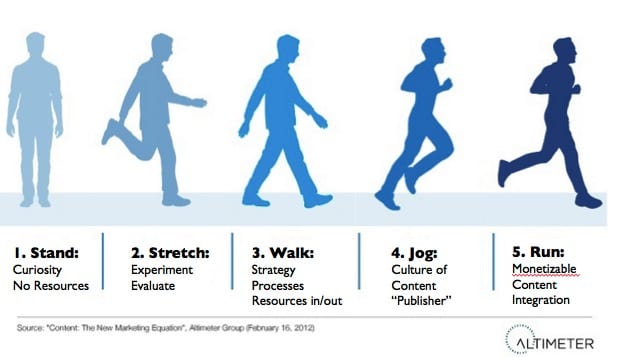
“Marketing underperformed last year. Why don’t we cut the marketing budget by 20 percent?”

“The sales team thinks it can out-market the marketing team. Why don’t we let the marketing department report to the sales VP?”

“We need to cut marketing staff to afford more sales reps.”

“What’s up with all this social media? Are we really paying people to Tweet and play on Facebook?’

“The website is awful and our leads our worthless. Why don’t we just outsource our marketing?”

“What does marketing do with all that money we give them? Do we really need another $30,000 trade show? How does any of it convert to revenue?”

And the cruelest statement of all: “Do we really need marketing?”

All of these statements and outcomes are driven by three basic problems:

Problem 1: Misalignment between sales and marketing. This gap occurs if your sales leader and marketing leader don’t see eye to eye on objectives, branding, sales support needs, etc. Because the sales department is closer to revenue, this gap will usually work against the interests of the marketing department. Marketing VPs have been fired because of the failure to achieve alignment. My recent post on how to align sales and marketing plans will help you in this area.

Problem 2: Lack of accountability. Metrics drive the modern B2B marketing organization. Ideally, you have a sales level agreement (SLA) that specifies what your department is expected to directly produce in terms of awareness, inquiries (raw leads) and qualified leads – and also how you will influence metrics like the number of qualified leads, opportunities and even revenue. A lack of accountability can produce issues like that reported by John Staples in his blog post titled Why Don’t We Just Cut the Marketing Budget?: “Lead Generation does not produce quality leads – marketing continues to take the blame for a lack of evolution in many sales forces. “It’s not me, it was a bad lead.” All of us who have been in B2B marketing for any length of time have heard such pronouncements, and regardless of whether they are true, it is often perception more than reality that can sink your marketing ship.

Problem 3: Unachievable objectives. We marketers tend to be optimistic by nature but too much optimism can get us in trouble, especially when it comes to making promises. The sales VP says, “We need 150 qualified leads a month to hit our numbers.” Instead of a thoughtful response like “Let me run the numbers and get back to you,” you blurt out, “Of course. No problem. We’ll get your 150 qualified leads per month.” Like the coach who promises to win the Super Bowl and only wins a division title, even though you have a good year, your well-intentioned promise will come back to haunt you. For B2B marketing leaders, it is always better to slightly under-promise and over-deliver.

Address these three potential problems early in the year and you will have a more successful 2015 and beyond.

18 Dec 18:57

Nurture Content Failure

by Jason Stewart

In the recent ANNUITAS B2B Enterprise Demand Generation Study, only 20.9% of the respondents indicated that they are confident that have been effective in their use of marketing automation — which isn’t exactly a new insight, as there has been a lot of coverage of the challenges associated with effective use of marketing automation solutions (MAS).

jason's blog image

A successful MAS instance has a lot of moving parts to consider – from the process-oriented questions of lead management and the handoff to sales, data quality and data management questions associated with new lead records (and old ones), CRM integration, and more – so it not surprising that most Enterprises struggle with marketing automation. What got me thinking, however, was the connection between content, our buyers, and the automated nurture programs which marketing automation makes possible.

The specific question that triggered my interest was this one: When developing your content do you create content for each stage of the buyer’s purchase journey? Only 28% of respondents said yes, while 26% said no and 45% gave a very ambiguous “sometimes” as their response.

jasons blog 2

Since content — and specifically content related to each stage of the buyer’s journey — is intrinsic to the success of a nurture program (which is, in turn, the backbone of marketing automation), there is clearly a correlation between low scores for effectiveness and a clear gap in creating content that serves the buyer.

Let me know if this scenario sounds familiar…you have just implemented your brand new MAS platform and you are beginning to plot out your first nurture campaign. In selecting the content that you will use to try and engage your prospects so that they become “qualified leads” you go to the well of content you have already created and select the jewels in the crown. You pick the ten best pieces of content that you have created over the past few years (as proven by the number of views and downloads) and place those as the pieces in a ten-step nurture program. You turn on the program and you start generating hot leads to send to sales – only sales keeps throwing them back to you saying that they are not qualified and they are nowhere near being ready to buy.

Sales isn’t wrong.

Mistake number one: relying exclusively on existing content to populate your nurture.

It can be very tempting to begin your search for nurture content by looking first at what you already have. The logic here is to get your program up and running, so that you can make use of content that you spent a lot of money to create, so that you can validate the choices you made when you decided to build that content in the first place. The problem is that you can’t trust responses to that content to be indicative of a prospect’s desire to engage with sales.

Mistake number two: trusting that responses to that content are indicative of a desire to buy

Good nurture content is designed to both guide a prospect through the buying journey and also indicate that a prospect is ready to buy. A good story sets the mood and creates an understanding of the “why” – why the protagonist makes the choices they make along the way, why they pull the trigger when it comes time to make the decisions that impact their fate and (ultimately) set up the conclusion of the story. Nurture content needs to be set up like a good story, helping a prospect better understand the problems they face and the implications of those problems – and then finally empower them to make the choices they need to make to solve the problem. Responses to your content program’s “greatest hits” aren’t the same as signaling they are ready to buy. A gradual movement from trying to identify the issues they face, to understanding the impact those problems are having on their situations, to finally exploring potential solutions for those problems is the definition of a true buyer’s journey and is the true indication that a lead is qualified.

Mistake number three: lead scoring needs to match up with the journey

ANNUITAS has covered this topic extensively in our blog (The Single Most Common Lead Scoring Failure: Not All Content is Created Equal), but it is so important we need to reiterate the point in context of the nurture program content strategy. High-level educational content should not be scored as highly as later-stage content that would only be interesting to a prospect that was considering solutions to their problems. Your scoring strategy for leads in your nurture programs should be weighted so that only prospects that have progressively moved forward through the buyer’s journey are sent to sales. Not all white papers are created equal, so they should not be weighted in your scoring program as if they are.

You need to decide what a prospect might be interested in learning about at each stage of the journey, and then decide what you should share with them to help them move forward. Sometimes you will have content that fits the bill, but often you won’t. Understanding what the buyer might be interested in as they make their journey needs to be the foundation of your new content strategy.

Author: Jason Stewart @jstewart_1 is VP Strategy, ANNUITAS


18 Dec 18:57

Content Marketing Trends 2015

by Gavin Llewellyn

Recommendations on the top tips, techniques and tools to reach content marketing excellence in 2015

2014 has certainly been a busy year for content marketing and something that wasn’t a surprise given the research and buzz evident at the start of the year which showed that content marketing was the highest rated marketing priority for marketers. The more recent 2015 marketing trends poll on Smart Insights showed that content marketing is still the top marketing priority for 2015.

But as the year has gone on, what have we really learnt about content marketing and the lessons we need to follow in order to execute this particular area of digital marketing effectively?

In this post I’ve grouped together some key content marketing themes from 2014 and links to recommended best practice articles and resources from Smart Insights and other sites.

Key areas of focus

Understanding content marketing

Before embarking on content marketing for your business, it’s worth really exploring what content marketing really entails and the benefits it can drive. As with any type of marketing activity, there will be an opportunity cost between one approach and another.

Neil Patel’s Advanced Guide to Content Marketing is a detailed, in-depth yet easy to follow tutorial covering content marketing across ten chapters, ranging from building a strong foundation to advice on how to plan and execute content marketing effectively.

Read: The Quicksprout guide to Advanced Content Marketing

Content strategy

Everything should start with a clear vision and strategy. Content plays a key role in nearly all digital marketing activity – paid, owned and earned media and so a well-defined content strategy will give you the platform and framework from which you can begin to create and distribute content.

Read: Smart Insights on Content Marketing Strategy


Altimeter content capability

Organising for content marketing

Once you have an idea about how you’ll ideally be using content marketing for business, the next step is to consider the key elements that lead to successful content marketing. An understanding of how format, platform, content type and metrics come together will help you with the content strategy and planning processes.

Econsultancy’s Periodic Table of Content Marketing provides a simple yet effective visualisation of the many constituent parts that make for successful content marketing:

econsultancy the_perdiodic_table_of_content_marketing-blog-full

Content planning

Once a strategy has been devised, the next step is the plan. Developing a plan is crucial to the future success of your content marketing efforts. Research suggests that the majority of businesses don’t have a content marketing plan so it’s therefore more important than ever to gain an advantage by developing one of your own by following a clear process:

  • Review current use of content marketing
  • Define content marketing objectives and KPIs
  • Conduct a content Gap analysis
  • Create a content plan timeline

Competitor analysis

Part of the content marketing planning process will involve the benchmarking of your efforts against those of your key competitors.

contentmarketingbenchmarking

This is an important part of the process as it enables you to not only evaluate the performance of your competitors’ efforts but also build a picture of the type of content activity, strategies and tactics that are working for others in your industry.

Read: Comparing content marketing competitor tools

Content creation

The content creation process is where the real fun begins – although it’s by no means a simple process. To create truly compelling, ‘killer’ content, you need to blend art with science and become a storyteller to hook your audience.
Storyboarding is a great way to set out a structure for content that can be used individually or as part of a series.

Some of the key ingredients to help you storyboard ideas include:

  • 1. Discover your ideal audience
  • 2. Inform your hunch
  • 3. Compile
  • 4. Create a narrative
  • 5. Find the hook

Read: Copyblogger Master Story Telling

Tools and techniques

There is a plethora of tools and techniques available to manage your content marketing efforts. The key is to choose and select the tool (or range of tools) that you’ll really need based on what you’ll be measuring and tracking (which should be outlined upfront in your digital marketing/ content strategy).

In September, Dave Chaffey outlined ten key digital marketing technologies to use in 2015, including those that will assist with:

  • Content distribution
  • Content curation
  • Integrating SEO, social media and content
  • Ecommerce and digital channel sales optimisation
  • Analytics

Read: Digital Marketing Technologies for 2015

Content distribution/promotion

There are a multitude of different paid, owned and earned media opportunities to promote and/or distribute content.

Smart Insights’ new Content Distribution Matrix helps marketers to review the best options for promoting content by identifying the most effective means of distributing their content in generating site visits, leads or sales compared to the level of investment.

Content Distribution Matrix large

To use The Content Distribution Matrix, there are three steps to follow:

  • Step 1. Mark up the current or past use of media for content distribution
  • Step 2. Review promotion gap against competitor or sector use of content distribution techniques
  • Step 3. Select and prioritise new methods of content promotion

Read: Content Marketing Promotion Matrix

Integrating content with SEO

Content marketing and SEO are very closely entwined, so much so that some would even argue that a large part of SEO and content marketing overlap. Nevertheless, content marketing and SEO are often managed separately and as a result you should consider the organic search benefits great content can bring if executed correctly.

As search engines have continued to refine their algorithms and methodologies, the practice of SEO has also changed. There are a lot of out-dated techniques and myths that should be considered when optimising your content for search engines. Be aware of these to ensure you make the most of what you have from an SEO perspective.

Read: Smart Insights integrating SEO and content marketing and Hubspot’s excellent 17 SEO myths to leave behind in 2015.

Analysis

As outlined in the strategy and planning sections above, the goals and objectives behind your content marketing activity should be stated early on in the process as knowing upfront why and how you’ll be using content marketing will give you focus.

In his post from January this year, Danyl Bosomworth provided a table that breaks content marketing KPIs into three clear groups:

danylpostmanagereachactonvertengageDanyl also provided five questions to help set, manage and review your content marketing effectiveness and to ensure that you use actionable metrics:

  • Q1. Which keyphrases related to content are most effective at driving visits and outcomes?
  • Q2. Which referring partner sites or social networks have helped with link generation and measurement (for SEO) and the driving of traffic, referenced above as a part of SMO
  • Q3. How does content viewed on click-paths or journeys affect marketing outcomes
  • Q4. Are we increasing the % of engaged users?
  • Q5. What are the satisfaction ratings for our content?

Read: Smart Insights Measuring content marketing and Content Marketing ROI guide