Shared posts

11 Feb 20:06

What to Do When a Lead Isn't a Good Fit

by apowell@hubspot.com (Ali Powell)

dandelion

Selling HubSpot's software is fun, and it makes me feel good when I sell to a company who really needs the product. However, I have no interest in selling to a company that is a bad fit. Trying to make someone a good fit for my own benefit will only result in unhappy customers. I want to help the right people because I care. 

When I sell HubSpot to an organization, I know from my qualification that the software is going to help them to do better. If I ever feel like something is off, I tell them. 

Tell your leads up front that you want to help them find the right product for their needs, and if that happens to not be the one you sell, you will explain why. Here are three tips I use to ensure my lead gets the right product for their needs -- whether it's mine or not.

1) Understand your prospect's situation as well as you can to qualify them in or out.

Let your prospect know from the start that your job is to understand their situation really, really well. From there you will take that information and explain why they are a fit for your offering or not. If you are honest from moment one, they will respect your opinions and advice.

Most people appreciate me explaining why they are not a fit and (gently) dismissing them from the sales process. But sometimes they don't agree with me. Remember that as a salesperson, you have the right to let people go. You know your offering, and therefore you are familiar with who it will work for and who it won't. 

2) Know your competitors and how your offering is different.

All salespeople should know what type of prospect is a good fit for their product vs. the competition's. I will tell prospects that they are a better fit for a competitor if I truly feel that way, and how I came to that conclusion.

This might seem counterintuitive, but if everyone did that in the space you are selling into, then all vendors would have more happy customers. Understand what your competitors do; understand their product and use case. Know why and when a buyer is a better fit for a competitors, and be okay with telling a prospect so. 

3) If your product does not do something the prospect wants, tell them why.

There will always be things that your product doesn't do that your prospect will ask about. Have a solid reason or at least an opinion as to why your company doesn't do it, or fulfills the need differently. If you can articulate why your company does things the way it does from a product level, you will show your knowledge of the space, and you might even sway their way of thinking to your perspective. And if not? Figure out what will work for them, and wave goodbye.

Editor's note: This post originally appeared on Womenpreneurs, and is reprinted here with permission.

11 Feb 20:06

Which Smarketing metrics should your digital marketing team really be focusing on?

by Expert commentator

 Sales metrics should not be alien to digital marketing teams

As digital marketers, it is our job to drive sales for our business, correct? Wait, but isn’t that the job of the sales department..? As it turns out, with Smarketing we have many of the same goals and objectives so it makes sense that we would work together to form a more united team and focus on the same measurements to close our deals.

hubspotmarketing

Source: HubSpot

I realize this is easier said than done, but if you look at the statistics: according to an Aberdeen report, companies that were successful in aligning their sales and marketing teams were able to increase revenue by 20%. This is in stark comparison to those who weren’t able to align the two departments and saw a 4% decline.

Yes, it might be difficult at first but once you’ve agreed upon the metrics you all need to be measuring you’re one step closer to full alignment, increased efficiency and increased revenue.

Download Expert Member resource – Sales and Marketing Integration Guide

This guide will give you practical recommendations, based on real-world examples, showing how to get your sales and marketing teams working together more effectively. It covers best practices for processes, systems and cultural issues that you need to manage, with a focus on business-to-business organizations. .

Access the Sales and Marketing Integration Guide

Funnel metrics for better alignment

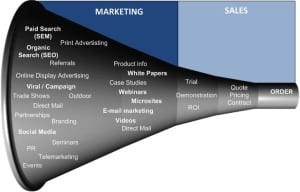
Your conversion funnel is an essential part of your marketing plan, however your marketing efforts alone can only go so far on their own to get customers through the funnel. In the funnel process, marketing is responsible for generating many responses from their campaign, making use of a marketing automation platform (MAP), while sales are responsible for converting this traffic deeper into the funnel using a customer relation management platform (CRM).

magicbrad

Source: magicbrad

If the two teams aren’t fully in-sync knowing what’s going on both sides of the fence, you’re in for a huge mess of miscommunication, bogus metrics, and misplaced blames. To begin to sync up to one another’s cycles it’s important to measure a few metrics side by side. When viewing all of this data in one place, it helps your decision-making in both parts, and a more united demand generation strategy.

Before I dive into which metrics you should be measuring, it’s important your team is utilizing a platform that allows you to view all of these metrics clearly and provides clear communication amongst all team members.

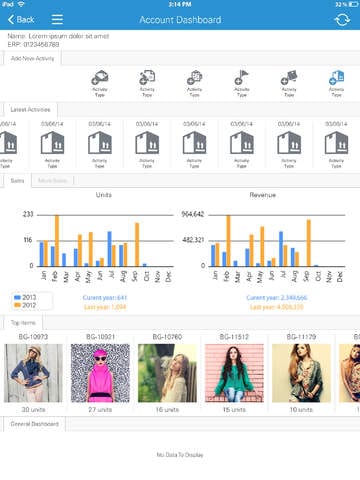
Pepperi is an example of a system which provides all sales team members with an integrated sales solution including a CRM, and it’s compatible with all existing ERP systems. The iPad solution displays a clear aesthetic dashboard to see all of your analytics in standard reports.

pepperiautomation

Source: Pepperi

Integrated tools save you time by setting up your desired metrics once, so you can constantly check back on what’s important to you and your team. By allowing you to skim all of the results seamlessly you can visibly see your success, or if there’s an issue, you can work simultaneously to resolve it. Once you’ve implemented technology to help your teams more connected, these are the metrics you should be measuring on your dashboard:

Lead funnel velocity

Velocity is the speed at which your consumers are traveling through your funnel. You can utilize this information to optimize your lead nurturing campaigns, and effectively place your time and effort on the right prospects.

In order to take full advantage of this metric, implement date fields in your integrated solution to keep both sides up to date on major events in the timeline.

For instance, marketing will take note of the date the lead becomes marketing qualified, and pass it on to the sales reps to be converted. This is a great way to track your lead all the way through your funnel, and to learn where there may be holes in your alignment that need fixing.

There are 4 important metrics that actually make up your lead funnel velocity. The formula is as follows:

pipeline velocity

Source: inboundsales.net

Although your analytic tool will output the data for you, it’s still important to know how they’re coming up with these numbers. Once you understand what parts of your formula can increase or decrease your overall lead funnel velocity you can improve specific segments such as the length of your sales cycle and improve the entire metric.

Sales campaign success

Just as you can pull up any data on your digital marketing campaigns to see any metrics you need, it’s also essential you have the same ability to review sales campaigns. These campaigns be it, outbound calling, email lists, etc. are essential to marketing efforts to measure and pull any of this data for their own campaigns. Once you have taken a complete look at all of the campaigns then you can make better, more informed data-driven decisions for your marketing campaigns.

Click on the image to watch more about SMetrics: http://app.emaze.com/@AOCZRQIR/smartinsights

sales metrics - emaze

Powered by Emaze.com

The golden metric for Smarketers?

To ensure successful sales and marketing alignment, your golden metric is going to be your lead-to-customer percentage. This is the final metric in your funnel that tells you in one single number how effective your sales and marketing funnel is.

While the other metrics will work to tell you which stages need more work, this metric will tell you how everything is coming together.

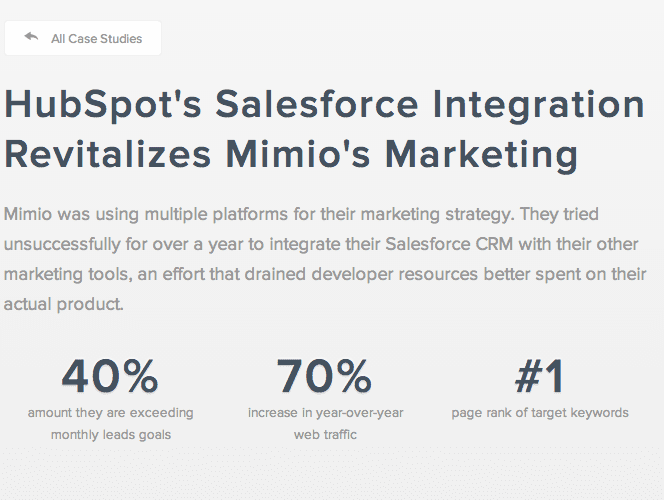
Mimio is a company that designs and develops interactive educational products for students. They employ international leader HubSpot to help with their marketing automation and to generate more qualified leads in the field. HubSpot utilize their platform and their SalesForce integration to consolidate their resources and align their sales and marketing tasks and tools.

hubspot salesforce mimio marketing

Source: HubSpot

The straightforward integration led them from four different software technology platforms, to one integrated streamlined system that’s easy for team members to visualize and make decisions from.

Aligning your sales and marketing operations about what metrics to measure, allows everyone to feel more connected and on the same page along with ensuring more data to all. This is becoming an essential process in many companies to ensure your digital marketing team is supported by sales and vice versa. Once everyone begins playing for the same team, even though you’re focusing on different ends of the funnel you’ll find everything will just fall into place.

Thanks to Robert Nachum for sharing his advice and opinions in this post. Robert is a growth and marketing manager at Ranky. He loves start-ups, technology and music on a vinyl. You can connect on LinkedIn or Twitter.

11 Feb 20:06

How to Keep Your Sales Pipeline Filled with Qualified Leads

by Heather Morgan

*Editors Note: Guest Post by Heather Morgan, Copywriter and Founder of Salesfolk. Salesfolk helps B2B companies refine their sales messaging to attract more customers.

Are you generating enough qualified leads with outbound email to keep your pipeline full?

If you’re not it’s probably because you’re either:

  1. spending too much time developing personalized message for prospects one at a time
  2. blasting out mass, impersonal emails to an untargeted list.

Neither one of these approaches is effective or scalable.

We recently helped Y-Combinator startup Ambition (they specialize in sales productivity through gamification) with a 6 week cold email campaign. Our cold email campaigns generated 73 response from the 578 leads collected by Ambition. The campaign targeted 2 of Ambition’s optimal customer personas: “VP/Director of Sales” and “VP/Director of Sales Operations,”

Let’s check out the process and our stats in detail:

Ambition Campaign
VP Sales 1 + B Ops Ambition Case StudyVP Sales 1A & B --Ambition Case Study

Our engagement netted Ambition 73 leads, and revealed several valuable lessons that taught Ambition how to make their outbound efforts even more effective in the future. These same lessons can be applied to any SaaS company hoping to improve their outbound email campaigns.

Here are the major takeaways from the case study:

Are Your Cold Email Messages Adding Value?

The first major lesson from our engagement is the importance of value messaging. Before beginning any email campaign, think critically about the prospects on your list. How well do you understand your audience? What are their pain points and how can your product/service fix them?

Many cold email campaigns are unsuccessful because the message is often too self-focused. The results of Ambition’s campaign show that prospects respond the most to emails that offer add value to the customer’s business. During this recent campaign, Ambition decided to try a different approach. Each email contained a unique value message, focusing on a different pain point, highlighted a different feature, or offered a unique value add of Ambition

Let’s take a closer look at one of the top performing emails from the campaign, to see why it was so successful.

Director/VP Sales—Email #2A (value add)(some social engineering)
SUBJECT: idea to gamify {!Company}’s sales team

Hi {!First},

I’d like to share a quick idea with you that has helped [Clients] gamify their sales team and exceed their revenue goals.

The concept is fairly simple, and leverages the game mechanics of competitions like Fantasy Football, and has powerful results.

When can we have a quick call so I can explain?

Thanks,

How Failure Can Help You Learn and Improve Your Sales Processes

Email 2A had an open rate of 45% and received 6 responses. This email connected with prospects well because, instead of listing all the product’s bells and whistles, the copy engaged the prospects by targeting a specific pain point facing the VP/Director of Sales persona. By tapping into the need to find new ways to motivate their sales teams, Ambition was able to pique the interest of their prospects by offering a solution to one of their major problems.

Cold emails campaigns aren’t only about generating leads, but also about figuring out which aspect of your message prospects respond to the most.

Though email 2B performed quite well, email 5A only elicited one response.

Email #5a VP/Director of Sales
SUBJECT: {!Company}’s most important sales KPI

Hi {!First},

Do you know what changes you need to make with your sales team to ensure your {!Company} meets its quota for Q1 2015?

Tracking profit-per-sale doesn’t tell you enough. Companies like [Client example] realize improving sales performance requires knowing KPIs like profit-per call, email reply rate, etc. Our software shows them their sales teams’ stats in real time and plots trends so they can see what drives peak sales performance.

I’d like to share some important sales KPIs with you that {!Company} should be tracking. When can we do a quick call?

Thanks,

While this email didn’t resonate as well with prospects, there are still important lessons to be learned by it’s performance. Ambition now knows that its value propositions about “KPIs” don’t resonate as well with its prospects. The wins and fails of this outbound campaign signal to Ambition which messages they should and should not include in the future, making their email campaigns much more successful.

Why the One and Done Cold Email Approach isn’t Working

Many companies are still only sending the prospects on their list 1-2 emails and giving up after they don’t get any responses. While you don’t want to be an obnoxious spammer and turn off clients, only sending 4 emails or less means you’re missing out on opportunities with qualified leads.

ambition case study response rate

Combining the data from both personas, the chart above, shows that 24 positive responses came from touches 6-8. Had Ambition taken the traditional approach, they would have never been able to capitalize on these 24 prospects.

The results also show that email 8 received 8 responses, 2 more than email 1.

The key lesson from these observations is that persistence is an essential element to any cold email campaign. Your prospects are busy people. There are many reasons why they aren’t responding to your initial touches. It could be the time of day, the day of the week, or that a certain message isn’t resonating with that particular persona. If you can target the right people with the right message, you’re going to get responses.

Running an effective cold email campaign take time. It’s tempting to cut a few corners by creating a generic message that can be sent to all your prospects at the same time. The less personalized your message is, the less likely your prospects will relate to it.

Spend time crafting a quality message that adds value to each individual persona you’re reaching out to. Test your message so you can target your prospect with a message that will make them respond. If your campaign fails to generate responses in the beginning, make adjustments but don’t give up!


How Salespeople Should Be Thinking About Emails

How Personal is too Personal?

When is it Ok to start using exclamation points and smiley faces? Use social cues to feel out when it’s OK to use a more or less personality your sales emails.

Learn The Cues :)

The post How to Keep Your Sales Pipeline Filled with Qualified Leads appeared first on Sales Hacker.

06 Feb 22:26

The A to Z of the oil crash

by Jason Kirby

OIL_Banner

It wasn’t supposed to happen like this. In the months and years immediately after the end of the Great Recession, Canada’s economy was the envy of the world. Our banks were safer. Our house prices were higher (and rising!). Global investors couldn’t get enough of Canadian stocks. And people were lined up at Canadian job fairs across Europe and the U.S., hoping for a chance to come and experience Canada’s economic exceptionalism for themselves. Good times.

Good times, it’s now clear, that were too good to last. The speed with which the cracks in Canada’s economy have spread and broken apart is remarkable. Economists have been left scrambling to downgrade their forecasts for GDP growth, the job market has showed troubling signs of deterioration, and exports have continued to slide. When the Bank of Canada cut its overnight lending rate by 25 basis points to 0.75 per cent last week, a move that stunned markets, it was a tacit admission of how bad the outlook for Canada’s economy has become.

There are many reasons why this is happening now, but the key factor that has set everything else in motion is the stunning 60 per cent plunge in the price of oil in just seven months. The oil crash is—to borrow a phrase from Bank of Canada governor Stephen Poloz, which may become a signature of his tenure—“unambiguously negative” for the Canadian economy.

True, there are benefits for certain segments of the economy. Ontario exports are smiling, as are drivers at the gas pumps. But oil’s wild ride has exposed fissures that have been deepening for years, such as Canada’s overreliance on household debt and real estate for growth, as well as imbalances in trade and the labour market.

The factors driving down the price of oil are complex, as are the repercussions, some of which are being felt now. Some may only take recognizable shape years from now.

Because there really is no beginning or end to a story like oil, we have taken a different approach to telling it here. Starting below you will find an A to Z encyclopedia of the oil crash and what it means to the economy—from real estate, the job market and stocks to government finances and the 2015 federal election.

We explore the root causes of the oil collapse, including booming U.S. shale production and Saudi Arabia’s decision to sell cheap oil rather than slash its output. There are stories of real people who have headed west for a better life, and the apprehension they now face about their future. And there’s analysis of key turning points in the development of the oil sands, crucial to understanding what is unfolding in Alberta. Because Alberta’s oil—the world’s third-largest crude reserve—is what sets it apart within Canada. And it makes the province the only place to start this alphabetized survey. Read through from A to Z to discover why Alberta’s fear must now be Canada’s, too.

BEGIN:

  • OIL_8
    A is for Alberta, Ali Al-Naimi
  • OIL_10
    B is for: Bakken, banks, barrels, bitumen, boom, Brent crude
  • OIL_12
    C is for: Costs, carbon, celebrity commentary


The post The A to Z of the oil crash appeared first on Macleans.ca.

06 Feb 22:05

The Marketing Team You Can’t Be Without: 5 Quick-Fire Profiles

by Lucy Hardaker

Lead Forensics The Rise Of The 5

Over half of all marketers report to having responsibilities in 7 out of 10 other areas of marketing. Our time and resource is a precious commodity and we can’t wear every hat in the marketing box (although we definitely try!).

To take the lead in 2015 and deliver those all-important results, you’re going to need a well-rounded team of super-star marketers to get you there. Take a look at these quick-fire profiles inspired by the IDM B2B Barometer to wet your marketing appetite.

Profile 1 – The Data Analyst

Who They Are: A data-driven whizz to dive head first into your online, email, conversion analytics…you name it, they’ll analyse it.

What They Do: Whether it’s at channel or strategic level, this team player is ALL about getting stuck into those numbers. Give them a huge pile of data, an hour on excel and send them off to analyse…they’ll be happy as Larry (and you’ll have that well-needed data insight you always need to increase performance).

Why You Need Them: On average, companies collect customer and prospect data from three or more marketing channels at any one time. You need your Data Analyst to pull meaningful insight at the drop of a hat, and feedback those results so that your team can pro-actively assess their activity and make effective changes.

Profile 2 – The Technologist

Who They Are:  A tech-savvy time bomb that keeps your team up to date with the latest marketing solutions available and knows how to put them into practice.

What They Do: Your Technologist will be able to close any gaps or leaks in your sales pipeline and nurture prospects to sale. They’ll know your Salesforce from your Unbounce and will be able to utilise these tools to drive top-notch results.

Why You Need Them: Businesses that use marketing automation and digital tools to nurture prospects experience a 451% increase in qualified leads. To plan more integrated and aligned campaigns, you’re going to need a thorough understanding of the tools and automation systems available and how they will deliver results for your business.

Profile 3 – The Creative

Who They Are: Even though 2015 is quickly becoming the year of the analytical marketer, you definitely need a strong creative-mind to help you bring a growing database to life in new creative ways.

What They Do: New digital media, Photoshop, video marketing, blogging… your super-hands on Creative is the forward-thinking mind that brings your inbound marketing to life.

Why You Need Them: Nothing fazes the creative when it comes to trying new things, and by teaming them up with your Data Analyst and Technologist, you’ll be on the straight and narrow to delivering content that converts.

Profile 4 – The Customer Champion

Who They Are:  A Customer Champion brings balance to the force by being at the forefront of your retention marketing activity.

What They Do: Retention, retention…and more retention! Your Customer Champion ensures you’re creating and innovating for your customers and builds a loyal base of fans to reduce churn rates and supercharge customer lifetime value.

Why You Need Them: Referral business! Increasing customer retention rates by as little as 5% can grow a company’s profits by as much as 95%. And that’s not to mention the value of turning customers into business advocates.

Profile 5 – The Publisher

Who They Are:  The publishing mogul is the one who puts your awesome new content marketing campaigns right under the nose of your prospects via the most relevant and engaging channels.

What They Do: Your kick-ass Publisher chooses and tests networks wisely to generate those leads and boost that all-important ROI. Whether it’s paid advertising, social media or PR they’ll know where your prospects digital hang-outs are, which channel to test and how to drive results.

Why You Need Them: Social media, paid advertising and PR will make a powerful content distribution mix in 2015, and being present across the right channels for your buyers is essential if you’re going to provide kick-ass value and generate leads.

Your 5 key profiles (whether that’s 5 people, 5 teams or just you!) will need to work in harmony if you’re going to drive those all-important results throughout the complete sales funnel this year.

By identifying or creating these 5 key roles, you’ll be more than ready for whatever the year and changeable marketing industry can throw at you.

Want to find out how each of the 5 profiles will help you smash your marketing strategy? Download the full guide – The Rise Of The 5: The B2B Marketing Team you can’t be without.

06 Feb 22:04

Crossing The Chasm, Selling And Buying Process

by Dave Brock

First, apologies to Geoffrey Moore and his seminal book Crossing The Chasm.

Several of my recent posts have stimulated discussions about the chasm between our Selling Process and our s’ Buying Processes. I’ve gotten a lot of questions about, ‘Shouldn’t we be focusing on their buying process,” “How do we bridge the selling and buying processes, ” “How do we manage to two processes simultaneously,” and a number of others.

These are great and difficult issues.

I think the best way to start bridging the gap is to focus on where do we start in designing the process?

Usually, when we think about our selling process, the design starting point is our company, our strategies, our products, services, etc. We review our best experiences of how we have won in the past—who did we call on, what did we do, how did we maintain velocity through the process, and so forth. We try to design the process by answering the question “How should we sell?”

We can actually design a pretty good process doing this, but there will always be a gap between our process and the customer buying process. We have to constantly be attentive to bridging this gap–and it’s tough, inefficient.

So what if we change the design starting point?

What is we started designing our sales process by posing the question, “How do our customers buy?” (This should actually be the starting point for all sales and marketing strategies.)

Starting there forces us to start talking with and engaging our customers with interesting questions like:

  1. How do you determine that you need to change, that what you are doing right now is no longer acceptable and you need to change?
  2. How do you determine who is a stakeholder in that effort and engage them in the problem solving process?
  3. What is your problem solving process?
  4. How to you organize everyone to align priorities and buy?
  5. How do you educate and inform yourself about new ways of doing things, about alternative solutions?
  6. How do you get management buy-in to invest and implement?

I could go on with the list, but you get the idea. However, if you need help, don’t hesitate to call ;-)

We need to talk to a number of customers, learning from them, using their input to understand how they buy.

The answers to these questions inform the activities we need to undertake to design our sales process. They enable us to define how we best facilitate their buying process, creating value through every stage.

So what we are doing is actually embedding the customer buying process into our selling process.

That probably gets us 85% there.

There are some things that we have to do independently of the customer and their buying process. For example, we may need to get and align resources from our company or partners as par of the process. We may have some internal business or design reviews. There may be things customers do in their process that are irrelevant to us.

This allows us to tune the process, combining how our customer buy with other activities critical to our shared success.

Finally, we need to test this against our past experience of wins and losses. Have we captured everything, can we simplify it?

This gets us 97.2576% of the way there (through careful scientific research).

Finally, we test it, we get people to execute the process over the next 3-6 months, we learn, adjust and tune the process based on our experience in executing the process.

This gets us 99.675% of the way there—we never get 100% of the way there. Our customers change, we change, nothing ever stands still. But too often we forget we need to tune and update–or sometimes completely redesign our sales process. We need to periodically, usually annually unless there are huge disruptions in our markets, customers, or our business.

Using this approach, starting with “How do our customers buy,” eliminates the need to constantly think “What’s our sales process, what’s our customers’ buying process, how do we make sure we are aligned” What we’ve done is embedded the buying process into the sales process, we’ve unified them into one process–so we never get out of alignment.

The strategies we adopt for each deal will vary–the sales process is our starting point, and our strategies focus us to the specifics of the customer buying process–this customer, this deal, at this time. But since our process starts with “How do our customer buy,” we are already well aligned in synchronized with the customer.

06 Feb 22:01

Chapter 4: Cloud Pricing Taboos

Cloud Computing looks to be making the transition from a development and test option to a primary considerations for many businesses, but many are finding the pricing models and options overwhelming and complicated to figure out. In the fall of 2014, 451 Research released a report at their Hosting & Cloud Transformation Summit that included […]

The post Chapter 4: Cloud Pricing Taboos appeared first on RISC Networks.

06 Feb 22:01

The Secret to Overcoming the Price Objection

Ok. This is false advertising. There is no secret to "overcoming” the price objection. The truth is that the price objection cannot be overcome. That is because it isn’t intended to be overcome. It is meant to be resolved through thought facilitation by a sales person. The sales person’s role is to help the prospect work through the price concern as opposed to attempting to overcome it.
First, can we agree that it isn’t really an objection? It is a concern. I know that many sales books call it an objection, but it is not. It is an attempt by the prospect to resolve financial questions in their mind. People want to feel good about decisions they make and that is why concerns are brought up.
The mistake many sales people make is that they think they understand the prospect’s concern when the price issue is initially raised. A fatal flaw, indeed! The truth is that the cause for this concern isn’t initially known. A myriad of possibilities could be causing this to come up now such as:
Is it a question of how much use they will get of the product?
Is it whether or not they can afford it?
Is it that they saw a similar product at a cheaper price?
Or is it a sales person being hyper-sensitive to the mere mention of price?
 
There are others, but you get the point. The bottom line is that without knowing what is causing the price concern, you can’t possibly help the prospect work it through. To share a personal example, I live in Minnesota where owning a boat is commonplace. To me, however, it is expensive. It isn’t the price of the boat, or the cost of maintenance, or even the price of the slip. It is the fact that the season for boating is so short that I don’t feel I would get enough usage out of it to make it worth the financial investment.
On the other hand, I bought Peg Perego, motorized cars for my three kids. Each one had a $300 price tag on it. Expensive to some, but cheap to me. Why? Because I’m rich? Hardly. No, it is because my kids use them, a lot! From my perspective, it’s worth every penny! If I get significant utility out of something, I can justify the price in my mind. At the other end of the spectrum, like most parents, I have also bought tons of toys in the $20 price range that have been used once, maybe twice. After that, the toys are never touched again. To me, that is expensive.
Some other price concerns center on whether or not the prospect can financially afford the product. A good sales person will facilitate the conversation that helps the prospect to recognize the options available to them for financing the purchase.
In other scenarios, the prospect has seen the same product, or a similar one, at a lower price. The human mind tries to make everything into an easy to understand commodity. When I worked in employment background screening, prospects would compare a $9.95 database search with a comprehensive courthouse search. The comparison of the two was apples and oranges. The strong salespeople were able to explain the difference in a way that led prospects to see that they needed the comprehensive search. The $9.95 search can be perceived as very expensive since you rarely catch any bad guys with it.
The worst case is when the salesperson does not believe that his product is worth its price tag. If this hits home for you, I highly encourage you to look to be somewhere else. If you don’t believe in your price, I guarantee you that no one else will either. If you believe that all sales ultimately come down to price, help me to understand this:
Why doesn’t everyone buy generic drugs?
Why do people buy bottled water when they can get it for free from the tap?
Why doesn’t everyone drive a Yugo?
Why are people buying satellite radio when there are plenty of good stations available for free?
How come most people have cable or satellite television when they can get a dozen tv stations for free?
Why isn’t everyone shaving with a single-blade disposable razor?
Why isn’t everyone drinking generic coffee?
Why isn’t everyone fighting to sit in the last row at the ballgame?
Why do people even go to a ballgame when they can watch it comfortably for free in their living room?
How did your company get any clients at all...unless you are the low price provider?
I think you get my point. Thus, you really do believe that someone will pay more if they feel the purchase is worth the price. Maybe you can’t afford the product you are selling. That is a completely different issue. There is a great expression that goes along with that. "Don’t spend the prospect’s money.” You don’t belong in their shoes, so don’t put yourself there. You never truly know a person’s financial situation.
Look, no one wants to get ripped off. And everyone wants to brag that they got a good deal. So, if you can master the discussion around the pricing concern, you will inherently have more sales.

Ok. This is false advertising. There is no secret to "overcoming” the price objection. The truth is that the price objection cannot be overcome. That is because it isn’t intended to be overcome. It is meant to be resolved through thought facilitation by a sales person. The sales person’s role is to help the prospect work through the price concern as opposed to attempting to overcome it.

First, can we agree that it isn’t really an objection? It is a concern. I know that many sales books call it an objection, but it is not. It is an attempt by the prospect to resolve financial questions in their mind. People want to feel good about decisions they make and that is why concerns are brought up.

The mistake many sales people make is that they think they understand the prospect’s concern when the price issue is initially raised. A fatal flaw, indeed! The truth is that the cause for this concern isn’t initially known. A myriad of possibilities could be causing this to come up now such as:

  • Is it a question of how much use they will get of the product?
  • Is it whether or not they can afford it?
  • Is it that they saw a similar product at a cheaper price?
  • Or is it a sales person being hyper-sensitive to the mere mention of price?

There are others, but you get the point. The bottom line is that without knowing what is causing the price concern, you can’t possibly help the prospect work it through. To share a personal example, I live in Minnesota where owning a boat is commonplace. To me, however, it is expensive. It isn’t the price of the boat, or the cost of maintenance, or even the price of the slip. It is the fact that the season for boating is so short that I don’t feel I would get enough usage out of it to make it worth the financial investment.

On the other hand, I bought Peg Perego, motorized cars for my three kids. Each one had a $300 price tag on it. Expensive to some, but cheap to me. Why? Because I’m rich? Hardly. No, it is because my kids use them, a lot! From my perspective, it’s worth every penny! If I get significant utility out of something, I can justify the price in my mind. At the other end of the spectrum, like most parents, I have also bought tons of toys in the $20 price range that have been used once, maybe twice. After that, the toys are never touched again. To me, that is expensive.

Some other price concerns center on whether or not the prospect can financially afford the product. A good sales person will facilitate the conversation that helps the prospect to recognize the options available to them for financing the purchase.

In other scenarios, the prospect has seen the same product, or a similar one, at a lower price. The human mind tries to make everything into an easy to understand commodity. When I worked in employment background screening, prospects would compare a $9.95 database search with a comprehensive courthouse search. The comparison of the two was apples and oranges. The strong salespeople were able to explain the difference in a way that led prospects to see that they needed the comprehensive search. The $9.95 search can be perceived as very expensive since you rarely catch any bad guys with it.

The worst case is when the salesperson does not believe that his product is worth its price tag. If this hits home for you, I highly encourage you to look to be somewhere else. If you don’t believe in your price, I guarantee you that no one else will either. If you believe that all sales ultimately come down to price, help me to understand this:

Why doesn’t everyone buy generic drugs?

Why do people buy bottled water when they can get it for free from the tap?

Why doesn’t everyone drive a Yugo?

Why are people buying satellite radio when there are plenty of good stations available for free?

How come most people have cable or satellite television when they can get a dozen tv stations for free?

Why isn’t everyone shaving with a single-blade disposable razor?

Why isn’t everyone drinking generic coffee?

Why isn’t everyone fighting to sit in the last row at the ballgame?

Why do people even go to a ballgame when they can watch it comfortably for free in their living room?

How did your company get any clients at all...unless you are the low price provider?

I think you get my point. Thus, you really do believe that someone will pay more if they feel the purchase is worth the price. Maybe you can’t afford the product you are selling. That is a completely different issue. There is a great expression that goes along with that. "Don’t spend the prospect’s money.” You don’t belong in their shoes, so don’t put yourself there. You never truly know a person’s financial situation.

Look, no one wants to get ripped off. And everyone wants to brag that they got a good deal. So, if you can master the discussion around the pricing concern, you will inherently have more sales.


06 Feb 22:01

5 Ways Hot Startups Will Sell in 2015

by Mohit Garg

thermometer_hot

The startup scene is red hot again, with nearly $50 billion flowing into high-growth companies worldwide last year alone. However, unlike the first boom of the dotcom era, today’s startups are very different animals. They span a variety of industries from clean energy to healthcare to retail. And while Silicon Valley is still the number one location for headquarters, today’s startups are far more decentralized, with hubs from Boston to Bangalore to Berlin.

But despite these diverse markets and geographies, there is one unifying trait -- the way startup sales teams sell is undergoing a radical transformation. At high-growth companies the rapid pace of innovation, shortened product cycles, and other trends are driving a shift within the sales department. Here are five of the most significant changes.

1) Shorter Business Cycles

The cloud-based SaaS technology model has shrunk the product lifecycle. New features and updates are now coming every few weeks instead of every few months.

What does that mean for the sales teams that sell these products? They need a way to stay informed on product capabilities and features as they evolve. Too often sales teams continue selling an old value proposition of their product for weeks or months after its new iteration has been released.

Whether teams use cloud-based training systems or less formal communication funnels like email and wikis, they should adopt a way to keep pace with fast-evolving product roadmaps. That means keeping both new hires and more seasoned team members in the loop 24/7. Ideally, all essential tools like case studies, video tutorials, product collateral, and so on should be pushed to sales in real time. And teams with the ability to socialize the materials internally often see a dramatically improved attention (and retention) rate to this critical information.

2) Transformed Buying Process

Technology purchasing decisions are shifting from the CIO towards individual lines of business and department owners. Especially with trial-and-buy options, the business unit managers are inherently best positioned to evaluate new systems.

In fact, a recent Bain & Company survey of marketing, customer service, and supply chain functions found that nearly one-third of technology purchasing power has moved to executives outside of IT. And in some situations, business line managers now control the decision-making process from beginning to end, with little to no involvement from the CIO and/or IT.

It is not enough to fit the IT blueprint. Startup sales teams need to create new entry points and open doors into the business functions likely to be the biggest beneficiaries or most active users of their offering. This means revising messaging, value propositions, and marketing channels for those users and influencers. The sales organizations that have not only recognized but also addressed this change are light years ahead of the competition. 

3) Inside Sales Is In

Because more and more product companies are serving a global market, they’re increasingly deploying an inside sales model versus the feet on street approach of direct sales. Where once we relied on relationship-building golf outings and fine dining to close (and keep) deals, sales reps must increasingly understand buyers’ needs, educate them on the value proposition, and provide consultative experiences.

Part of the reason is cost. Road warriors can be expensive and when deals don’t close, their ROI becomes harder to justify. Geography is a key consideration as well, as more and more companies sell to a flattened marketplace. You can’t have a field rep everywhere, whereas you can easily have online reps who sell to anywhere. 

But perhaps more importantly, sales is shifting in response to new marketing models. Digital marketing puts the purchasing power in the consumer’s hand. They can navigate the early stages of the sales cycle without a sales rep's assistance. In addition, social networks, online forums, and search allow potential customers to evaluate options before engaging with a salesperson. 

And when they finally do, they’re much further ahead in the consultation phase and might already be ready to buy. No one needs to schmooze you to sign on the dotted line. In an increasingly inbound sales model, inside sales is naturally a better fit.

4) Transparent Pricing

So what does the above trend mean for pricing? Not surprisingly, the RFP is less common these days, especially in the mid-market. With purchasers evaluating features and pricing trade-offs online, prospects' selection processes are well underway before they pick up the phone or submit an inquiry. 

So to be a contender in the consideration set, technology startups have no choice but to provide transparent pricing on their website or early on in the evaluation process.

Successful sales teams are able to distance the dialogue away from pricing to a broader value equation. It is not enough to have ROI calculators. Listening carefully is key. Identify which benefits and capabilities are most important to the prospect. Proactively educate your buyer on which factors they should consider when evaluating their options.

And every salesperson should be able to quickly identify the “trump card” -- the one thing the buyer values above all else. Perhaps it’s a feature or add-on that differentiates your offering from the competition. For example, in certain product categories, after-sales service and reliability may trump most other buying criteria. Whatever it is, a trump card effectively makes the pricing consideration secondary -- if not irrelevant entirely.

5) Competitive Pressure

Industries are moving at warp speed and competition is no longer deterministic. Think of WhatsApp disrupting text messaging revenues for telco, Airbnb shaking up the hospitality industry and Uber changing the car rental and taxi sectors -- all in the past three years alone. It’s critical for sales teams to aggressively keep abreast of the competitive landscape.

10 years ago, it would have been adequate for a sales rep to be equipped with the battle cards for the top three competitors. These days, new competitor names pop up in customer conversations daily and can blindside you if you’re not vigilant. While the sales professional is inherently a rugged, adaptable species, those that will not just survive but thrive will look at competition as categories versus individual brands.

There are a few different types of competitors to keep in mind. First, you've got the large incumbents -- wooly mammoths that can be outdone with product superiority and responsiveness to customer needs. Your direct, apple-to-apple competitors can be bested with the right targeting. Most markets have space for more than one niche leader, so winning is usually about identifying the segment of the market where your solution has superiority. For the new entrants that are the most unpredictable, the trick is to showcase your credibility and stability. Leverage the sales discipline via collateral, case studies and success stories. 

Ultimately, you don't have to outdo your competition on everything. Buyers will complete their evaluations within a finite window of time, so get strategic on only the dimensions that matter to them. This approach is not just relevant for 2015 -- it's timeless.

What trends do you see affecting startup sales? Please share your thoughts in the comments. 

sign up for the free hubspot crm


06 Feb 22:00

How To Create An Effective Pricing Strategy That Doesn't Kill Your Profits

by aaron.bartels@salesbenchmarkindex.com (Aaron Bartels)

When it comes to boosting short-term sales, discounting works like magic. Reps love it; customers respond to it. Most of your deals depend on it.

As CFO, you know how deeply discounting is embedded in your sales culture. Reps don’t want to hold out for premium pricing and risk losing a sale. They’d rather close now and move on to the next transaction.

Here’s the unpleasant truth: Their short-term gain is your company’s long-term pain.

06 Feb 21:58

Industry Q&A: Exploring a Game-Changer for Sales and Marketing

by Jennifer Dignum

Micheline-NijmehYears of experience as a senior marketing executive within the sales industry have given LiveHive CMO Micheline Nijmeh unique insight into the relationship that exists between sales and marketing organizations. First at sales behemoth Salesforce.com and now at sales engagement leader LiveHive, Micheline has seen first-hand the challenges facing marketing and sales teams – from understanding what content resonates the best to acquire a lead, to tailoring follow-up to close the deal.

Following LiveHive’s partnership with Act-On Software last week, I spoke with Micheline about how this partnership will increase alignment between sales and marketing, and its benefits.

Q: What made LiveHive want to build this partnership?

A: Marketing teams have great insight into how prospects engage with content on the web. But the moment marketing hands over a ‘marketing-qualified lead’ for sales follow-up, visibility into how prospects engage with content breaks down. And yet, marketing continues to ‘nurture’ these prospects with messages based on their previous web behavior – but not based on how they are now engaging with sales reps. We partnered with Act-On to remove this misalignment between marketing and sales. By integrating marketing automation with our real-time sales engagement analytics, we allow marketing messages to be aligned with sales, and also give marketing specific feedback about what content resonates the most.

Q: How can marketing teams benefit from the joint Act-On and LiveHive offering?

A: Marketing plays a role in the whole buying process. With this partnership, marketing can now refine messages and content based on customer behaviors throughout the whole buying process – versus just at the beginning. This insight allows marketing to provide more value to sales, as they will be better aligned and able to provide more consistent messages.

Also, with LiveHive integration, marketing can acquire new leads through sales. As soon as sales documents are re-shared by a prospect, new leads become pushed into Act-On’s marketing list. All of this data is automatically synchronized with salesforce.com, providing marketing and sales a unified, real-time view.

Q: How can sales teams benefit from LiveHive’s deeper insights?

A: Marketing has had digital insights for years showing how visitors on the web engage with their content. But, the moment sales takes over and begins engaging with the prospect, this visibility vanishes. Sales reps have been in the dark in terms of knowing how prospects interact with their content or how their messages resonate. Is the prospect opening my presentation or proposal? How much time is a prospect spending on a particular page or feature description? By giving them real-time digital insight, they have the visibility they need to shorten their sales cycle, and improve their forecasting with tailored messages based on how a prospect is engaging with their content.

Q: How can LiveHive help with simplifying a complex sale that reaches multiple departments?

A: A complex sale usually involves many decision makers. Sales professionals can leverage LiveHive’s advanced digital listening capabilities to see when email content is viewed; what pages are looked at and for how long; and get profile information for recipients of forwarded documents. By understanding how sales content is being shared across the organization, sales people can quickly identify decision makers involved, their interest level, and how far along they are in the buying process. Empowered with these real-time insights, sales reps can better forecast and qualify leads.

To learn more about LiveHive’s integration with Act-On Software, read the press release here.

06 Feb 21:58

9 Instagram Marketing Tips From The Best Brands

by Alex Ditty

Follow these best practices for successful Instagram marketing

instagram_marketerAre you trying to use Instagram for your social media marketing? Are you finding it difficult to grow the channel to promote your brand? You’re not alone. Finding success with Instagram marketing is an excited process but it can feel like an uphill battle. To help you conquer your Instagram marketing goals we’ve outlined the habits of the best Instagram marketers that your should be following too.

1. Follow the top trends

The best social media marketers are constantly aware of the top trends active on Instagram and when the fit is right for the brand they’re participating in those conversations to increase their exposure. Monitoring the post popular trends and hashtags on Instagram is a great way to grow your brand’s awareness and by staying on top of the trends specific to your community you can also increase your interactions with those fans.

When it comes to getting your brand involved in popular trends there may not be any better than Dunkin’ Donuts. Whether it’s a major sporting event or a national holiday, Dunkin’ Donuts is known for sharing content that brings their brand and lifestyle into the conversation. They do this best with events that are relevant to their fan base and incorporate their brand in fun and playful ways that isn’t overly sales-focused. Consider the events and trending topics that you can get your brand involved in to grow your exposure.

From our family to yours – #HappyThanksgiving!

A photo posted by dunkindonuts (@dunkindonuts) on Nov 27, 2014 at 6:15am PST

2. Engage your community

Instagram isn’t a one way channel for promoting your brand. If you’re goal is for your community to engage and interact with you then you need to be doing the same with them. Interacting with the posts your fans are sharing helps strengthening your relationship with them and also increases your visibility to their network. Reciprocate your fans’ passion for your brand by engaging their posts and the results will pay dividends.

Popular beauty retailer Bath & Body Works exemplifies positive, fan interaction on Instagram with their engagement on posts their community shares with the brand’s hashtags. Simple comments on content being shared with your contests helps validate that fan’s participation by growing their excitement and leads to further participation from their followers. Grow participation with your Instagram marketing initiatives by engaging your community.

Bath_Body_Works_instagram

3. Know what your community likes

Get involved with your community by listening to the interests they’re visually sharing. Monitoring the content your community likes and the hashtags they’re using in association with your brand can give you a picture of their interests and what they like about your brand. Use this learning to guide your content strategy to determine what you should be sharing and also to guide your engagement with those fans.

Track the metrics relevant to your brand with SEEN Insights

Learn what your community is sharing with SEEN Insights

4. Use the right hashtags

Knowing the interests of your community and the tags they’re using should influence the hashtags you’re using on your own posts. Hashtags are an effective and necessary tactic to leverage for your Instagram marketing. Knowing how to create the best hashtag for your contests is critical to finding success with those programs. By learning which hashtags are the best to get discovered by your target demographic you can more easily get involved with those communities. But know how to choose the right hashtag and don’t be a victim of #hashtagabuse

Fashion retailer, Topshop, shares highlighted outfits and accessories with relevant hashtags to help expose their items to a larger community. To help increase the content available to share and engage their community, @Topshop also encourages their community to share their street style pose and fav Topshop look with the hashtag #Topshopstyle. Creating this tag gives the brand more content to share in their feed as well as builds a stronger relationship with their community by engaging them and highlighting their posts. Use hashtags on your posts as an opportunity to grow your content exposure and connect with your community.

Want to see yourself on Topshop? Share a street style pose in your fav Topshop look like Personal Shopper @Monikh using #topshopstyle. Item numbers: 30C01HKHA, 23K01GCRM, 19R10GGRY #personalshopper #style #selfie #streetstyle #khaki #coat #jacket #scarf #grey #cosy #warm #winter #knit #heels

A photo posted by Topshop (@topshop) on Jan 27, 2015 at 9:35am PST

5. Post quality content

Don’t forget the importance of posting relevant quality content. You’ll never build a quality following on Instagram if there’s no content being shared from your brand’s account. Look for opportunities to share visual content for your fans to interact with. Measuring what your community likes and how they’re engaging you is great but only if you’re using that learning to drive your Instagram strategy.

Starbucks has become one of the most followed brands on Instagram because they continue to post quality photos and videos which are relevant to their community and the lifestyle they’re promoting. Often these posts will actually feature their cups or products but the visuals always tell a bigger story than a purely self-promotional post would. @Starbucks will often incorporate multiple hand drawn posts that link together in their feed which their community responds positively to. When determining the best way for your brand to share quality visual content, don’t be afraid to share posts about your brand but you should always do so in a way that your community will appreciate.

Regram from @rachelryle: @Starbucks sent me a note & asked “#whatwouldyoudo if you won #StarbucksForLife”? Piece of cake, I would have a Caramel Macchiato & Cake Pop Party…with extra whipped cream! #ad #regram #stopmotion #animation #starbucks #coffee #caramel #latte #caramelmacchiato #cakepop #cakepops #whippedcream #celebration #confetti #balloons #party

A video posted by Starbucks Coffee ☕ (@starbucks) on Jan 2, 2015 at 7:57am PST

6. Post authentic content

The content that you’re sharing needs to be authentic and representative of your brand’s lifestyle. Your followers will love seeing this true visual content from your account and will respond positively. Use Instagram as a network for showcasing your lifestyle and inspiring your community rather than another channel to place your ads because nothing will cause you to lose followers faster than bombarding your feed with un-engaging sales promotional posts.

GoPro cameras capture incredibly exhilarating and inspiring moments which provides great content for their Instagram account to share. @GoPro shares the experiences of their community showcasing their product’s capabilities and the lifestyle it supports in an authentic way. When planning the content for your accounts to share, consider what’s best about your product or service the moment’s you’re enabling your community to experience.

It’s always sunny in Walter’s world.

A video posted by gopro (@gopro) on Jan 14, 2015 at 3:52pm PST

7. Run engaging contests

One of the best ways to engage your community is by running Instagram photo contests. Contests on Instagram are designed to incentivize your community to share content promoting your brand with the use of prizes and giveaways. Designing the campaign theme around what you know your community is sharing is an effective way to build participation. This participation in the contest shows you the most passionate and involved fans and the content they’re sharing gives you an invaluable form of promotion on the visual network. There are tons of examples of contest best practices for your brand to follow on your next activation.

Plan your next contest with the Instagram Campaign Planning Guide

Instagram Campaign Planning Guide

8. Let your fans do the sharing

For effective Instagram marketing, you can’t be afraid to have your community tell your story and promote your brand. You want to encourage this behavior and have your community share content about your brand and lifestyle. Facilitating this content creation with targeted visual influencers on Instagram can increase your community’s sharing exponentially. Influencers can create awareness for your brand to their followers encouraging them to participate in the sharing as well.

Promote your campaigns with vetted Instagram Influencers

Amplify your Instagram Marketing with Snapfluence

9. Highlight your fans’ user-generated content

After you get your fans to share about your brand your job isn’t done yet. Showcase the content they’re sharing to increase it’s reach and encourage more to share. UGC is found to be more engaging than posts from brand accounts so you want to continue to build this practice with your fans and build an army of ambassadors promoting your brand. By displaying the content on other properties like your website you’re also showing a more authentic perspective of your brand. Learn the best practices to properly display visual content from Instagram & Twitter and take full advantage of the incredible content your community is sharing.

The Empire State Building is one of the most iconic structures in the New York City skyline with one of the best views of the city. But rather than just tell you that, the Empire State team has built the Share ESB site to show the skyscraper and the views in an authentic light from their community’s perspective. Highlighting this content from their fans gives them the ability to not only tell you how great their experience is but actually show you with endorsements from their community.

These tips are sure to help you find success with your Instagram marketing. What other tactics are working for you on Instagram? Follow us on Twitter and let us know!

06 Feb 21:58

6 Marketing Strategies to Speed Up a Longer Sales Cycle

by Margot daCunha

Have you ever purchased a car? Or a home? Personally, I rent and over-utilize Uber, but I can imagine that the typical consumer of these valuable items does not simply hop on Google, type in “new car,” and hit “buy now.”

Along with real estate and automotive, there are a plethora of other industries known for their longer sales cycles, such as most industries within the B2B space, software, consulting services, insurance, finance, and the list goes on. Basically, anything that costs a heavy penny and/or has a contract tied to it typically falls into the longer sales cycle category.

Marketers are continuously trying to create engaging content, generate buzz, and nurture leads, in an effort to shorten the sales cycle and push more people through it, but with the longer decision-making process the challenges are much higher. Yes, products and services with longer sales cycles typically cost more and lead to more revenue, but marketers need to make sure that they’re not spending more of their budget to gain the sale then the sale itself is actually worth (cough, cough, ROI is critical).

sales cycle speeding car image

Image from Flickr

Hold up, what is a sales cycle?

“A sales cycle is the series of predictable phases required to sell a product or a service. Sales cycles can vary greatly among organizations, products and services, and no one sale will be exactly the same.”piperdrive

Most definitions speak of the sales cycle being the time between making the first touch point and closing the deal. The sales cycle encompasses marketing efforts to generate and maintain interest, along with the selling process to engage and convert into customers. For this article we’ll be diving into the marketing side of the cycle. So what period of time signifies a sales cycle as long as opposed to short? There’s no official time period to mark this, but I would argue that any sale that typically takes several touch points (for example, paid search, display, email marketing, organic, white paper download etc.), and spans over several weeks to months is typically considered a longer sales cycle.

If you’re a marketer then you are likely familiar with the concept of the marketing or purchase funnel, a model that dates back to 1898 that maps out the customer journey starting at the wide opening of the funnel and spiraling down until engrossed into the customer phase. The stages vary per business, but typically include awareness, interest, desire, and action. Several marketing scientists have come up with various theories suggesting the funnel should be revamped into a pyramid or circle. “Consumers are now more informed, connected, and empowered than ever. Does the funnel still work in a digital, social, mobile age?” pondered a study published in the Harvard Business Review. Asking companies such as Google, Sephora, Twitter, and Visa, researchers found that: “the primary problem with the funnel is the buying process is no longer linear. Prospects don’t just enter at the top of the funnel; instead, they come in at any stage, jump stages, stay in a stage indefinitely, or move back and forth between them.” The study goes on to explain McKinsey’s Customer Decision Journey model, which is circular rather than linear.

sales cycle mckinsey's customer decision model

Whether your funnel is linear, circular, or fluorescently rainbow patterned, the bottom line is that a significant quantity of qualified leads need to be moving through your sales cycle to earn you money and grow your business. So what can be done to battle against a longer sales cycle and keep your leads engaged and moving? After extensive research and in-depth conversations with experienced marketing professionals across B2B industries, I’ve discovered these 6 marketing tactics that will help not only cut down the length of your sales cycle, but also push a larger audience through the cycle.

#1: Implement a “Top of the Funnel” Paid Search Strategy

Take a moment to reflect on the last time you made an expensive purchase. One of the first things you likely did is conducted some research on Google to see what your options were, did some comparison shopping, and just got a general sense of what companies and offerings were in the space. I do this all the time even with smaller purchases, like a massage appointment or new piece of clothing, but with larger purchases that are more of a financial commitment, the chances of that being the first and last action you take are slim to none. This needs to be kept in mind when implementing your paid search strategy (which is absolutely necessary!).

If you’re doubting why you need to pay for ads on Google, then banish these thoughts from your mind and start using the more logical side of your brain. Longer sales cycles go hand in hand with extensive research, and guess where your leads likely start? Google! If you’re not appearing in the SERPs then you are losing the huge audience that is conducting research to eventually make a purchase; if you are showing up in the top positions then you’re presented with the opportunity to gain site visitors that you can then nurture and eventually convert into loyal, paying customers.

So how do you distinguish your offers as “top of the funnel?” Well, you need to conduct thorough keyword research and avoid terms like “buy now,” “apply now,” or “signup today” – you get the gist. If your call-to-actions are too aggressive and low-down in the funnel, then the searchers are going to feel like you’re proposing on the first date. Take a step back and get into the mind-set of the searcher. Instead cater your paid search experience to…

  • Target keywords for people conducting research. For instance if you are selling marketing software, target “marketing automation help” or “marketing management solution.”
  • Present an ad that highlights why you’re better than your competitors. You’re most likely going to be appearing right alongside them (hopefully in front) so your ad copy needs to highlight some compelling offers. Do you have free shipping or a money back guarantee policy that your top competitor doesn’t offer? Then create ad extensions, such as sitelinks and callout extensions, to highlight these benefits. Check out the example below from Marketo. This ad is great because it highlights several benefits of their software, and gives it validation with social proof from their followers on Google+. It’s also not overly aggressive with language that hints at making a purchase; rather the links all direct to educational offers, which brings me to my next point…

sales cycle marketo ad displaying on the serps

  • Create landing pages that cater to educational content such as a white paper download or e-book rather than presenting your product or offering off the bat. Remember, these people are top of the funnel. If they already knew about your service they probably wouldn’t be searching. Direct them to a page that provides educational content, continue to nurture them, and push them closer to commitment.

#2: Align Content and Offerings with Progressions within the Sales Cycle

Have you ever received an offering prompting you to opt into a newsletter or sign up for a demo when you weren’t even familiar with the company’s brand? You look cross-eyed at the email and hit your trash icon while simultaneously rolling your eyes. Pushing too hard before the lead is ready will blow up in your face. But how do you ensure potential leads don’t slip through the cracks?

  • Provide on-going thought-leadership. Do not serve up your offerings right away, but rather establish brand awareness and credibility with quality content. “We like to stay top of mind from a marketing perspective by providing ongoing thought leadership,” says Laura Taylor, WordStream’s Vice President of Acquisition and Experience Design. “Part of a robust marketing strategy is to make sure you have educational content all along the funnel.”

sales cycle lock image showing thought leadership core value

  • When the time is right, integrate your thought-leadership content with promotional offerings. There needs to be a strategized balance between education content and offers that showcase your product. “If all you have is thought leadership, but nothing to evaluate your product and position it as a solution to solve a problem then leads become stuck,” says Laura. “Another pitfall would be offering all product promotional materials like buying guides and demos. There needs to be a balance and flow, where your content is being offered along the cycle and leads don’t consistently feel like you’re trying to back them into a corner.”
  • Look at the first action taken and prescribe from there. WordStream’s Lead Nurturing Manager, Callahan McGuinness, explained to me how important the first action taken is because it shows where the lead is within the funnel. For example if they sign up for a trial then the assumption can be made that they’re a bit more knowledgeable because they took the action to sign up and actually explore the software. “That first action helps you know what to put in front of them and how often,” says Callahan.
  • Scale back on marketing emails once a lead becomes an SQL (sales qualified lead): If a lead is getting closer and closer to converting and now assigned to a sales representative to guide them through the final stages, then marketing messages need to tone it down a notch. “Not only is an SQL getting marketing emails, but also emails from sales so once the lead turns into an SQL we scale back significantly so they can build that personal relationship with the rep,” says Callahan. The SQL is then also taken out of new content downloads and webinar invites which are for those in the earlier stages in the funnel.

#3: Drive Action by Making the Experience Personalized & Relating with Each Prospect

I’d assume your inbox is often swamped with marketing emails that you have to scroll to the bottom to find that tiny “unsubscribe” option. Have you ever called a business in hopes of speaking to (gasp) a real-live, breathing human-being, but instead are directed from one automated operator to another? We’re all constantly swamped with marketing messages the second we wake up and scroll through our social feeds. People are becoming pretty excellent at dismissing them so how do you make your touch-points during the sales cycle more effective?

Well, how about personalizing the experience? When a company is outrageously promotional, slapping their brand in front of your face, it’s an instant turn-off. In contrast, when the company connects on a more personalized level and gains an actual understanding of your interests, then your engagement level increases. But first you need to gain the trust from your leads so that they’re willing to reveal more information about themselves. As Laura explains, “Within a system like Pandora or Spotify you can say ‘I’m interested in country or rock music’ and you can do a level of granularity, but when someone distinguishes that they like Taylor Swift’s ‘Blank Spaces’ song, but not Carrie Underwood’s ‘Something in the Water,’ at that point you’re able to nurture much more granularly.”

How can this be done? Start off with these strategies:

  • Put a face to your brand: You need employees that act as brand promoters and represent the face of your company, whether that be your founder or a respected higher-up. “Having a person or group of people that are the voice of the brand helps people connect more with the company; it’s not just I’m working with WordStream, but rather I’m working with Larry or Elisa, making the experience much more personal,” saysEverTrue uses a similar strategy. I recently spoke with Jesse Weiss, Manager of Demand Generation, at the Boston-based SaaS startup, EverTrue, which offers donor software solutions to help higher education and non-profits expand their donor network and work towards their fundraising goals. He explained how their CEO & Founder, Brent Grinna, is constantly used to promote and add value to their brand. “He’s all over the place. He recently went to Brown and Harvard Business School to volunteer for fundraising,” Weiss explained. Even browsing around EverTrue’s site you can see that Brent is used to tell the “EverTrue story” and his picture as well as other members of the leadership team are highlighted on their “About Us” page.

sales cycle screen shot of evertrue's leadership team with images of their faces

  • Personalize touch points: Every marketing message should relate to that lead and be personalized at some level. For example an email blast should direct each customer by name. It also helps to have emails sent from an actual person or the “face of your brand” rather than a company email alias, but Callahan advises using the strategy sparingly. “Emails sent from Larry (WordStream’s founder and CTO) prove to be much more powerful, but we try not to overuse this strategy because then it won’t be as effective when needed. For example the first touch point once a lead signs up for a trial is a good opportunity to leverage this strategy and get the lead excited about our software.”Weiss spoke candidly with me about tactics used to engage targeted prospects during their longer sales cycle, which typically spans across six months. He is a huge advocate of personalizing touch points to engage leads, for instance, he often uses strategies such as tagging universities in posts via Twitter or Facebook. “People love seeing photos they’re tagged in,” stated Weiss. “I’m constantly collaborating internally to create content that caters exclusively to our target prospects.” Another strategy Weiss and his team have implemented is publishing blog posts that cover a list of universities they’re targeting to convert. “We’ll force rank universities at certain stages in the funnel and promote the posts through email, LinkedIn sponsored posts, or even having the BDR (business development rep) use that as a way to engage with them.” See the content below that EverTrue promoted on their blog to engage with the listed Universities.

sales cycle evertrue blog post screen shot

  • Use relatable language in all of your messaging: I was reading a blog post the other day and legitimately fell asleep with my MacBook on my lap. It was likely because the writing sucked. We know quality content is critical, but what makes content engaging during a sales cycle? At WordStream we’ve found that writing with personality and catering our messaging to relate to our audience is the way to go. “We always try to sound more conversational so we can seem more relatable as a brand,” says Callahan. “Having a message that’s thought-provoking and avoiding the urge to sound sales-y, but more solution based. We use softer sales tactics, subtle calls-to-action, and relate to them by saying things like ‘we feel your pain, we can help you.’”EverTrue uses a similar strategy when it comes to their language usage. “We try to make our marketing messaging as candid as possible. We’ve always been very open when it comes to product innovation, and we try to spur conversations by tagging schools in our social posts,” says Weiss. “Our main goal is to stimulate a warm conversation between a lead and a BDR, and if we’ve done that then we’ve done our jobs.”
  • Create a strategic remarketing strategy: There are so many ways to remarket to those who have already visited you site, and the amount of granularity you can use to target a specific audience is incredible. Dig into your options and implement a strategy to cater to specific behaviors, for example you would want to remarket to an audience that that visited a trial or demo page in a different manner then those who simply read a blog post or visited your homepage.

#4: Study Common Behaviors and Make Changes Accordingly

A/B test, A/B test, A/B test!!! This is something that all marketers are constantly preaching, but if you’re always testing then when will you actually arrive on an outcome? The lesson to learn is to test one element at a time, and not over test. If something is working then let it work! Don’t throw a road block in front of it because it could result in a fatal accident. Instead start by gaining insight into common behaviors. To constantly be improving the pace and effectiveness of the sales cycle you need to:

  • Prioritize data analysis: “Data should affect all of your decision making,” Callahan says. “We look at targets each month, break it out by channel and program, and ask what is and what isn’t working? How many SQL’s did we gain? Which pieces of content resonated?”Data analysis can also be extremely time consuming and challenging, which is why Laura advises to not become paralyzed by the data, but rather make a hypothesis and test. “In our space it’s not as if visitors come to our website and make an e-commerce conversion. There are so many in-between’s that it’s difficult to know how conversions occur,” says Laura. “They might finally convert on a phone call, but every webinar, tweet, and blog that’s layered along the path might be tied to them.”
  • Make adjustments based on your analysis: One of our main free offerings at WordStream are the WordStream Graders. These tools enable you to connect your AdWords or Bing accounts to have our algorithms scrape through your account performance and give you a grade. After doing some data analysis our marketing team found that a chunk of people who start the grader abandon mid-process. To combat this abandonment a survey was set up to pop up and email the lead who abandoned their Grader to find out why. It was found that security is a huge concern and the prime reason for abandonment. Therefore the Grader landing pages were adjusted in design to use language like “secure” with an image of a lock, and emails were sent out with impressive statistics showing how many advertisers and agencies have graded their accounts. This is just one example of how spending time to conduct studies and analyze data can make a huge impact on the effectiveness of your sales cycle.

sales cycle lock image and security note on the landing page grader

#5: Invest in a Marketing Automation Platform or Team to Nurture Leads

Utilizing marketing automation software to score leads and trigger communications is an absolute must if you want to scale and grow your leads as well as speed up your sales cycle. “Pay attention to activities your leads take. If they downloaded information about quality score, then we’ll target them for a quality score webinar,” says Laura, who is a huge proponent of marketing automation. “Use marketing automation to set up triggers and program responses. Utilize lead scoring and treat it as a living, breathing model that you tweak over time and learn from because you’ll learn that maybe you’ve handed leads off too soon. Even if they’re showing signs of being qualified behaviorally, they might not be at that stage yet. It would be great if they could magically design triggers to signify a lead is ready to move from one stage to another, but they don’t always raise their hand. It requires data mining.”

This is why having a person or team dedicated to nurturing and analysis is critical. Laura describes how data integrity is a huge challenge: “Businesses start and close, people move from one business to another, people try things with one email address and then use another later on. Since nurturing is data based, it’s much more science then creativity. As much as every marketing software will claim to be able to visualize the flow of the database of leads, it’s still flawed in hygiene.” This is why you need people behind the automation to be able to take a huge mass of data, learn from it, and act on it.

At WordStream, Callahan owns nurturing, and is constantly working on the automated and point-in-time campaigns and using the database to help inform her on how to build the triggers.

As a startup employee, Weiss has found this to be a challenge at EverTrue. On a team of only three other marketers, his bandwidth is stretched very thin. While they do use the marketing software from HubSpot, his focus on customization and experimentation with the software has been limited, but is on his list of future endeavors. “Over the last few months we’ve created a huge volume of content, but now we need to figure out how to fit that into a more automated lead nurturing program,” he says. “If people get into our system they’ll receive a slew of emails, but they’re older, poorly branded, with little insight into how they’re progressing into any nurture queue.”

#6: Maintain a Close and Transparent Relationship with Your Sales Team

Laura, Callahan, and Weiss all agreed that maintaining a positive, open, and transparent relationship with sales is absolutely critical to improve the flow of the sales cycle. Why? The answer is obvious: sales and marketing are like cheese and crackers, one is not complete without the other. To create a fluid, clear, and efficient sales cycle the lines of communication need to be wide open.

“Being aligned with sales is absolutely crucial in order for there to actually be sales,” Callahan says. “Communication, working together, listening to pain points, and not making rash decisions…It can be challenging because they have one goal and we have another, but it’s important to find the balance, and it’s rewarding when both teams can.”

So how can you ensure a positive and open relationship is maintained? Conduct regular meeting with sales managers, send emails seeking feedback, collaborate on content that goes to leads later in the sales process, fill sales in on content that’s being released, and be patient, open, and listen, learn, and adjust as needed.

What marketing strategies have you found to speed up the sales cycle?

06 Feb 21:57

Is inside sales the key to better response rates?

by Hugh Macfarlane
Business often employ Inside Sales as a cheaper sales resource for smaller sales, or less-strategic accounts. Others use Inside Sales as a kind of Sales Co-Ordination resource tasked with everything from appointment setting to admin - in other words, everything necessary to keep the sales guys on the street. I want to give you a third reason: increasing your sales conversion rate by 6000% (60 times!) We work really hard on improving response rates from online leads: better lead bait compelling copy A/B testing landing page layouts and terms And we're often happy with 10% or 20% improvements at any stage in the process. But in this blog, we're going to show you how you can improve response rates as much as 60 times (6000%) with one small change.

read more

06 Feb 21:57

The Weakest Link of Your Sales Process and How Content Can Fix It

by Matt Kamp

weakest_link

Savvy salespeople know that the “always be closing” approach is a thing of the past. Consumers now call the shots, and pushy salespeople can no longer dupe this hyper-connected audience. 

Still, many marketers haven’t fully graduated from the ABC mentality and continue to push their solutions on potential clients. But this solutions-oriented approach puts pressure on prospects and overlooks the most important phase of the sales cycle: discovery.

Prospects need the right education to understand overarching industry trends before they can recognize a problem or even realize that they need a solution. Failing to nurture leads through the initial discovery phase is a sales team’s most costly mistake.

Fortunately, you can use content to build mutually beneficial, relationship-based sales opportunities (no pushiness required). By starting meaningful conversations, building trust, and educating your audience, you can put yesterday’s stale sales tactics to rest and start closing more nurtured leads.

Refocus Your Sales Process Around Discovery

Prospects engage with a brand at least eight times before making a sale, though some studies suggest more. You have ample opportunities to teach prospects and help them understand their needs before offering your service as the solution. Content that speaks to your prospects’ needs guides them through the consideration stage and ultimately leads them to choose your company come purchase time.

Here’s how you can use content to put the emphasis back on discovery:

1) Educate yourself first.

In the mad dash to differentiate yourself, it’s common to focus on your solutions, your products or services, and your strengths. But the sales process isn’t about you; it’s about your customers. Step one of the sales process is discovery, and your dialogue needs to begin from a place of education. Ask questions in sales calls, and allow prospects to educate you before you educate them.

2) Uncover what prospects need to know.

Review your prospects’ FAQs, and map out potential articles that could answer their questions and supplement various stages of the sales cycle. Whether it’s about competitive products or services, ROI, or your process, think about and plan for these potential hurdles. This will yield a wealth of content topics your internal content team or an external agency can tackle. Even a small arsenal of 10 to 15 articles will arm you with the persuasive content you need to educate prospects and shorten the sales cycle.

3) Collaborate with Marketing.

Before you can leverage content in the sales cycle, you need to listen to prospects and let the marketing team in on their objections. Use inbound marketing software to learn what blog content your prospects have and have not seen. Selling is an interactive and collaborative process. If you understand your prospects’ individual situations and levels of knowledge, you can speak to them. 

For example, at Influence & Co., some prospects ask for short-term engagement with us. But thought leadership isn’t a quick fix and requires a long-term strategy. To set effective expectations, we developed content that explains how content creation elevates brand perception, adds value, and positions them as thought leaders over time as a result of consistent content placement. If we don’t help prospects understand the underlying strategy around what we do, they’ll never become satisfied customers. A successful inbound campaign takes time, and we illustrate the “why” through content that’s rich in statistics and examples.

4) Adopt the drip campaign mindset.

In this automation-heavy marketing world, some inbound leads are mistakenly enrolled into generic email campaigns that simply promote the solution. But inbound software can now customize workflows based on visitors’ behavior. Salespeople need to adopt this line of thinking, too.

Effective drip campaigns focus on listening, discovery, and education. Referencing the right content at the right time on a call can boost conversions and shrink the sales cycle. Customer-oriented content isn’t just a lead nurturing asset reserved for marketing automation; it should support your outbound sales efforts, too.

5) House your content on a public portfolio.

Sales reps don’t have the time required to sift through blog posts, find the perfect articles, and walk prospects through every step of their journey to purchase. To make content more accessible for your whole sales team, you need to organize it in a public portfolio such as Pocket or Google Docs. Add tags with keywords so reps can locate content relevant to their prospects’ questions in an instant.

Getting your marketing and sales teams to use this approach may take some encouragement. Explain how content can simplify the sales process and arm the sales team to overcome potential objections and breed understanding.

The more truly relevant content you share with prospects, the more informed and comfortable they’ll be to make a purchase. You need content to support each step of the sales process so your sales team can tackle objections and guide prospects to the right solution. By delivering the right information that educates rather than sells your solution, you can start forging more meaningful and lucrative relationships.

06 Feb 21:56

The Long Tail Of Sales Leads

by CJ Gallopo

It’s time to do a quick marketing self-evaluation: Take a look at your sales leads from the past six months. How many resulted in a sale? Now take a look at all of the leads that ran cold. Do you have a strategy in place to ensure effective follow up?

A Garden Of Future Customers

Many salespeople focus efforts on the here and now, perfecting the art of concise, effective persuasion when they have prospects’ immediate attention. However, sales leads can be like flowers: some blossom immediately, while others require thoughtful engagement over time to flourish. If you neglect the ones who require some nurturing, you could be missing out on a garden of future customers.

The strategy of nurturing a lead comes down to the right balance of engagement over time. Just enough can build a relationship with your prospect, while too much can turn that person off of your brand.

Working Mom, Future Student

One real-world example of this strategy comes from the experience of many adults who consider seeking a college degree. From a consumer standpoint, this demographic is motivated by a desire for self-improvement.

However, this desire could be fueled by circumstances that make commitment difficult; dissatisfaction with a current career or financial struggles lead to a late-night Internet search and a promise to research higher education options, but in the morning this same prospect is getting the kids off to school before heading to an unfulfilling job. A working mom may request information from a college’s website, but might not yet be in a position to make a drastic career move.

No Such Thing As A Dead Lead?

From a marketing perspective, this is not a dead lead for the college or university – rather, this is a lead that needs to be appropriately engaged over time. The same pressures will continue to affect the prospect and keep the dream of higher education alive, and continued engagement from the college will ensure that when the time comes for the prospect, the opportunity with a good long-term engagement strategy will be top of mind.

Adapting a long-term engagement strategy to your brand’s marketing needs will take careful consideration, but will almost certainly result in a higher conversion rate from your sales pipeline. Remember that list of dead leads from your self-evaluation? They are more valuable than you may think – some of those prospects could be the type that needs a little bit of nurturing before buying into your brand.

06 Feb 21:56

Best Marketing Leads For Increased Sales

by Dave Hubbard

If we’re all actively listening to our customers, why is lead quality so low?  Why is it so difficult to get Sales fully committed to helping us improve lead quality?  How can Marketing improve lead quality without Sales follow-up and feedback?

Maybe if we provided Sales with the type of Buyer insight that they could immediately use in their selling process, we could increase lead quality and earn increased Sales participation. 

When A Good Marketing Campaign Goes Bad

Let me start by sharing a recent Sales experience. Late one evening I discovered and downloaded a research study on high performance sales teams.

Creating The Best Marketing Leads ImageI immediately received an email from a sales rep.

The next morning he followed up again with another email, and then he tried to call the bogus number I had left in their website download form, and then he went to our website to leave a voicemail for me on our main number, and then he sent another email saying he was trying to contact me by phone.

This was all within 12 hours of me downloading the study; now that’s Sales persistence with a sense of urgency!

I felt badly that this hard working sales rep was wasting his time chasing a bad lead, so I reached out and explained that I was glad to learn of their company’s product details from his email, but I wasn’t a potential lead.  He very much appreciated receiving a response.

Then I started wondering, how many other poor quality leads were generated by this campaign? How many other Sales Reps would be spinning their wheels on bad leads as a result of this particular marketing campaign? How many of these Reps would be resistant to quickly jumping on leads from the next Marketing campaign?

Isolating The Root Cause Of Poor Quality Marketing Leads

Marketing spent a chunk of money to generate a professional study, actively promoted the study online, and immediately thanked me via email for downloading the study.  The company mobilized their sales force to support the campaign; a sales rep jumped on the Marketing lead immediately and professionally persisted via email and phone.

Buyer Purchasing Process Image

So what went wrong?

Why did they think I was a Marketing Qualified Lead, ready to work one-on-one with a Sales rep? Hopefully it wasn’t because I persevered through their 11 field download form!

The opening line of the automated thank you message offered a clue: “Not sure what lead you to the study, but if ….”.  I’ll discuss a quick fix for this marketing campaign at the end of this post.  First, let’s look at our current Marketing process for lead generation.

Aligning Our Lead Generation Process To The Buyer

B2B buyers can complete 50%- 70% of their purchasing process by self-educating online.

Unlike Consumer customer journeys which can become very unpredictable, B2B Customer journeys are generally pretty straight forward: Buyers are not likely to purchase $20,000+ “solutions” for their employer on impulse, nor are they likely to spend time learning about a “solution” that is not somehow related to their business need.

Lead Generation Not Aligned To Buyer

The typical Marketing Lead Generation Process currently has 3 stages:  Attract, Engage/Nurture, and Decision/MQL.

The Marketing stages are focused on what Marketing does, and not what the Buyer does.

With today’s self-educating B2B Buyer, Marketing has an opportunity to go beyond just engagement and nurturing.

If we align our marketing process with the Buyer process and actions, we can influence the buyer journey and give Sales higher quality information about the Marketing lead.

Designing The Best Lead Generation Campaigns

If we are listening closely to our customer, we will be able to help the self-educating customer become a self-qualifying lead:

  • Provide the Attracted visitor with self-qualifying content choices. Are they more interested in Product A, Product B or Service C content? More interested in a solution for 10 person company or a 10,000 person company?
  • Provide the prospect with content specifically designed for their purchase stage. For example, if they download content discussing the various marketplace approaches for revenue acceleration they are probably in the Awareness stage, if they download content related to sales rep performance software they are probably in the Problem/Opportunity stage, and if they download content related to CRMs they are probably in the Solutions/Options stage.
  • Provide the prospect with content specifically designed to facilitate and shorten their purchasing journey. Is the prospect more interested in technical information (like Persona A) or more interested in business information (like Persona B)?

Delivering The Best Marketing Leads For Increased

A buyer-qualified lead with detailed qualification information is the best Marketing lead for Sales.

The best lead is based upon the information that the buyer is telling us in the context of their purchasing journey, not what we are doing in Marketing or Sales.

Here’s a simple email-only campaign to illustrate the power of the above approach for any size of company.  It can scale from small firms using manual methods, medium companies using inexpensive email auto-responder service, to larger firms using feature-rich Marketing automation,

Crowe Horwath, a consulting and accounting firm, implemented their first lead nurturing program and achieved 133% ROI in 7 months. A detailed case study was published by MarketingSherpa.

Here’s how they generated high quality, Buyer self-qualified leads.

  • Set a narrow, target market segment for the initial campaign: C-suite executives at financial institutions with at least $1 billion in assets.
  • Offered buyers insight to a choice of 4 different industry challenges that the target market cares about: e.g. Dodd-Frank regulation impact, Anti-money laundering regulation impact, Process Improvement, or Core Systems
  • Buyer self-qualified themselves by choosing content for the topic they were most interested: e.g. Dodd-Frank.
  • Buyer further self-qualified themselves by the subsequent type of content they downloaded regarding the topic. Each of the 4 topic areas had 12 separate pieces of purpose-built content that the buyer could consume to help the buyer move from Awareness, to Problem/Opportunity, to Solution Options.
    • Awareness stage – Buyer downloads content to better understand the industry challenge and benefits to them of solving it.
    • Problem/Opportunity stage – Buyer downloads content to better understand available approaches or considerations for solving the problem.
    • Solution Options – Buyer learns about Crowe Horath services for the first time within the campaign and how they are the right solution provider for addressing Dodd-Frank challenges.
  • Progressive Profiling techniques helped further qualify the buyers. Rather than filling out a lengthy download form, each time the buyer downloaded content, the buyer just had to answer a single question that was designed to help both Sales and Marketing judge the quality of the lead. The more content the buyer consumed, the richer the buyer qualification profile became.

Improving The Lead Quality From Existing Marketing Campaigns

With the benefit of the above knowledge, let’s revisit the campaign that I referenced at the start of this article.  Although the research study that I had downloaded was somewhat related to the company’s market, it was not directly related to the conclusions from the study.  By downloading the study, I signaled that I was in the Awareness stage, but definitely not a sales ready lead for their products.

One download without context is generally not enough buyer insight to commit the company’s limited Sales resources.  To quickly improve this particular campaign, after the research study is downloaded, they should offer a choice of content that will help the buyer self-qualify, or in my case, help me self-disqualify as a sales-ready lead.

Demonstrating Marketing Leadership

By listening more carefully to our customers, we will accomplish the following:

  • dramatically improve lead quality,
  • offer Sales some exciting and highly valuable insight into the buyer that they will use,
  • take Marketing and Sales teamwork up a few notches, and
  • generate significant revenue for the company.

It’s within our control; we don’t have to wait for additional Sales input to start aligning our lead generation efforts to our buyer’s purchasing journey.

You can start today by bringing in a Marketing leader, who also has functional Sales experience, to help you evolve your Lead Generation process. 

Was this helpful? Then please share it with your colleagues.

06 Feb 21:56

Building a Search Marketing Funnel

by Expert commentator

Advanced Keyword Research using Search Engine Marketing funnels

Since search is the main source of new sales and leads for many businesses who get it right, the competitive landscape has become even more aggressive. Search terms, both organic and paid, are becoming increasingly difficult to target. This is due in large part to the following factors:

  1. Paid search traffic is getting more expensive as an increasing number of companies compete to bid for top 3 positioning.
  2. Organic search algorithms have evolved and become more difficult to 'game'. Companies can no longer expect heaps of organic traffic just because their SEO firm has built-out a sophisticated backlink profile.

Because traffic acquisition has become such a competitive (and costly) activity, web marketers will need to place more emphasis on converting the traffic they already have. Additionally, marketers will need to start intercepting potential customers earlier in the buying process if they want to remain competitive.

These two objectives can be accomplished by building a search marketing funnel with highly targeted touchpoints that guide the customer through the buying process. Each touchpoint can also serve as a landing page where search traffic can be poured in at every step.

Understanding the buying process

Most purchases are made because someone has a problem. A problem can be obvious, such as a broken water heater, or the problem may be more subtle, as may be the case for purchasing the latest iGadget.

Whatever the case may be, consumers work through different stages or steps when evaluating a purchase:

  • 1. Identify a problem
  • 2. Search for solutions to the problem
  • 3. Compare different solutions
  • 4. Take action by purchasing the solution they feel is best

In order to target consumers effectively, a unique conversation should be crafted that appeals to each customer segment and their unique needs (problems) at any point in the buying process. We want to make the customer believe that we know exactly how to solve their specific problem – that our product or service was created just for them.

Building the funnel

  • 1. Define the customer. Try to understand their needs and uses for the product or service you are offering. The most effective method involves a post-purchase survey that will help to reveal the need(s) your product or service fulfilled.
  • 2. Create a 'conversation matrix' that maps the advancement through different stages of the buying process for each customer’s unique need / problem.
  • 3. For each box in the matrix, conduct keyword research to discover the most popular search queries that customers use to navigate to the next step in the buying process.
  • 4. Develop targeted landing pages based on the keyword research that are optimized for both organic and paid search. Each landing page should include a call to action inviting the user to move forward to the next step in the funnel or buying process.

The Conversation Matrix

Conversation matrix using buying process steps and consumer needs.

Each box within the matrix represents an intersection of a customer’s problem or need with a stage in the buying process. These combinations will be used to drive the exact language or conversation used in each touchpoint / landing page within the funnel. This creates a highly targeted conversation that speaks to the customer’s precise needs, making the page more relevant and leading to higher conversions.

Now that the concept has been outlined, the following will demonstrate how to build a funnel using a fictional setup.

Fictional set-up for a search marketing funnel

The Air Buster filtration system has been the leading HEPA-based air filtration unit on the market. Unfortunately, the manufacturer forgot to trademark the name, and a competitor has come out with a competing model called the 'Air Buster Buster', which includes an additional UV light to remove bacteria, viruses and mould from the air.

You have decided to sell the new Air Buster in your ecommerce store. Online competition for this product is fierce, and you need to intercept potential customers before they reach a competitor’s product detail page.

Based on market research, you have identified 3 primary customer needs that the 'Air Buster Buster' can satisfy: allergies, asthma and mould.

Here’s what your matrix could look like:

Search funnel conversation matrix

Visualizing the funnel

The following illustration provides a visual representation of the search funnel built from the preceding matrix. Search engine users can enter the funnel at any stage in the buying process and progress through the funnel steps you build.

(Click the image below to see a larger version)

Search marketing and conversion funnel

Using a set-up like this will allow you to target customers at any stage in the buying process via SEO or PPC – not just customers that are only ready to buy a specific product. This provides an opportunity to intercept customers earlier in the buying process, which means they’re more likely to buy from you instead of the competition. Additionally, if you catch the customer early, you can control the process and tilt it to your advantage.

To sum up our Search Marketing Funnel

The above example only demonstrates three uses for our fictional product. To drive even more traffic and sales you can dream up as many uses and landing pages as you’d like. Just be mindful to include as much unique and useful content on the landing pages as possible. If the pages are too similar they are likely to be devalued by the search engines, so it is important to prioritize your customer’s needs and select the ideas likely to generate the most traffic.

Also, keep in mind that these landing pages / steps in the funnel do not have to be hosted on your website. In fact, the process may appear more credible if some steps are hosted elsewhere.

Thanks to Paul Coulter for sharing his advice and opinions in this post. Paul is a digital marketing expert in Toronto, Canada with over 15 years experience helping businesses acquire customers online. As an agency manager, Paul develops and executes search marketing strategy for some of North America's largest brands. You can follow him on Google+ , Twitter or connect on LinkedIn.

06 Feb 18:38

5 Killer Questions to Woo Prospective Customers

by Jack Vincent
5 Killer Questions to Woo Prospective Customers

Image via BigStockPhoto.com

It’s hard to trace a sale back to any single action—your online submission form, your social media activity, a face-to-face meeting, a video conference. Every component of marketing and sales comes together somehow, and then we convert prospects into happy customers.

How do you pull ideal customers or qualified leads into your marketing and sales funnel? Create intrigue, then ask killer questions. And to do both of these things, I recommend the following:

Keep It Simple in Marketing, Go Deeper in Sales

Most psychologists believe that attraction and curiosity are emotions. They are spontaneous. Humans are not aware of that spark, that moment when our jaws drop open and we lean forward with interest.

Emotions are only sparked with simplicity. Something strikes us in the heart, even more than the head, and we become curious… desirous.

Bang! The hook has been set. Your prospective customer is convinced, at least initially, and wants to learn more.

Keep it simple in marketing. Go deeper in sales. —@jackvincent (Tweet This)

But to Convert

…we usually have to then address other issues. By nature, most sales become more complex in the middle and latter stages, so one simple message does not a deal maketh.

Probably the most underrated trust-builder in life and the most persuasive skill in sales is listening, especially in the middle stages. The most persuasive way to listen is to ask killer questions!

You must be prepared to open a first engagement with a prospective customer. You shouldn’t, however, open with the purpose of presenting more material, but to confirm in the prospect’s mind that her time is well-spent by having a helpful conversation with you.

The purpose of opening a first meeting, therefore, is to earn the right to ask questions.

I’ve developed a five-step questioning model for asking the right questions at the right time and for pulling the buyer through their purchase.

S.C.O.R.E© Conversion Questioning

SCOPE/SITUATIONAL:

The answers to SCOPE Questions are fact-based, and are easy for the customer:

How many people did your last campaign bring into your funnel?or How long have you been using social media?

The benefit of SCOPE Questions is that they get the conversation going. The danger is that they can alienate the buyer.

Did we bring this guy in for a Harvard education?

Use SCOPE Questions economically. Plan them judiciously.

CHALLENGE:

With CHALLENGE Questions, you’re not challenging the customer, but you’re asking them about their challenges… in areas where you can add value, of course.

CHALLENGES can be problems that need to be solved. They can be opportunities that should be exploited, but exploiting them effectively could be the customer’s challenges:

What keeps you and the CEO up at night?or Are your channel partners concerned about this? Why?

CHALLENGE Questions are the raw materials from which sales are made. They uncover the diamond in the rough. Spend time here. Actively listen and go deeper. Resist the temptation to offer a solution the moment you hear the Challenge. Show the love, and go deeper.

OUTCOME:

There’s a lot of talk about “buyer pain.” But customers may not take immediate action if the pain grows a little every day. It doesn’t feel acute.

OUTCOME Questions, therefore, are not focused on the OUTCOMES customers want to achieve—that comes next! Instead, they focus on the outcomes of the customer doing it wrong or of not addressing this issue:

Where will you be a year from now if you do nothing?

This makes buyer pain more acute, which often prompts them to take action. Timing is important, here, so use an OUTCOME Question only after you’ve really listened and understood their Challenges, and only ask this OUTCOME-type Question once or twice, and then…

RETURN:

With RETURN Questions, you focus the customer on the positive Returns of working with you, or perhaps going to the next step.

Essentially, by answering this, the buyer will present you with your value proposition, which you can use in your proposal.

How would it help if we?or How about if we prepare (this and that), and then we re-group next Tuesday to see how to move forward?

You know your business. You know your value-add for your ideal customers, so you can fill in the rest of the RETURN Questions above.

EXECUTION:

This is essentially the “close” question. Closing should feel as natural to you as it as it does to the buyer. It should never feel like pressure, because that is the ultimate trust-killer. Again, timing is important. With EXECUTION Questions, you’re simply asking the customer how they’d like to move forward:

It seems like weve covered everything, Theresa. How would you like to proceed?

Customers want to feel in control, too. The EXECUTION Question leaves them in control, but prompts them to move forward. The customer may say:

“Let’s do this. How do you normally proceed from here?”

Great! (Be ready to answer that!) If they’re not ready to move forward, they’ll tell you why, and you can move into handling objections (subject for another post). But often, objections are usually great buyer signals. They just need to see a bit more light and feel a bit more love!

The beauty of questions is that the answers come out of the customer’s mouth. They will believe them! You telling them is simply less persuasive… and it’s pushy.

Pull your customers through the middle and latter stages of their purchasing cycle.

Pull them into your funnel with simple, compelling messages. Then go deeper in sales with killer questions.

What killer questions did you wish you asked your last customer? What type of questions have you found work best on your social properties vs. in person?

       
06 Feb 18:37

Building Target Account Lists

by Mark Birch

*Editors Note: Mark Birch is the Chief Revenue Officer at Enhatch, an enterprise mobile platform that allows business people to build and deploy visually compelling apps that bridge the engagement gap between sales, marketing and customers involved in complex B2B selling environments. This article was first published on LinkedIn and has been republished with the author’s consent.*

So if you are just starting out in a new company with a greenfield territory, where does one start prospecting? What if you have an unproven product with only a few reference customers, how do you get things going when you are starting out from such a small base?

Obviously when it comes to building out your territory, there are a wide range of situations from the mildly difficult to the seemingly impossible. But it all entails the same deal; you are starting out from scratch.

One important area of context to consider in sales organizations is the maturity of the company. When I look at growth stage enterprise tech companies, I see four distinct phases of maturity:

  • Pre-product stage – generally one or two customers using a working prototype
  • Product-market fit stage – a handful of customers with an early, market verified product
  • Pre-scale stage – well-defined product and business model, more customers but still early
  • Scaling stage – significant market gains, clear understanding of cost of acquiring customers

In the later stages, the company generally has a pretty well established understanding of their value proposition and target markets. They are busy executing to rapidly gain market share, so they create dedicated groups to help generate inbound and outbound leads to process through a highly mechanized sales machine. They are not the companies having questions about who to sell to and how.

What I am discussing here is for the early stage companies or new groups in larger companies that are exploring new lines of business. In both cases, the market is wide open and you are trying to find the right slice to get a hook into. By the same token, the company has to at least have a real product and a few customers before going through the effort of targeting, so we are really talking about the product market fit stage companies or groups.

1. Focus, focus, focus. I cannot stress how important this is in the early going. Do not fall into the trap of thinking everyone is your customer. Let’s face it, you do not have the money, time, or resources to market and sell to “everyone”. So narrow the focus.

2. Ask yourself where your product is being used today? You would be wise to find other similar companies that are in the same industry. Sometimes this is easy because the product is built for a specific industry like construction or fashion. But for horizontal products this is not as easy, so look at the use cases of those early customers and determine how it would fit in other areas.

I need more leads and I need them to convert fast

3. Another thing to consider is the ability to network into a particular industry or focus area. Do you have an existing network or access to tap into those networks through your professional connections? That can greatly help in quickly validating the product for the industry and use case. The best way to find people to contact is to leverage LinkedIn and start mine for relevant contacts that are 1st and 2nd degrees away. One note is that you may not want to sell head on immediately, but to ask for advice on how your solution might work for the industry and use case.

If you have the areas you are going to focus on and a network of contacts to reach out to, you have a good start. What you may find though is that the network quickly dries up after a few deals are closed. You now need to generate leads outside of that early network, and you need to get a lot of leads. While it is true there is ever more noise and distractions, the means to reach people has never been both more numerous and easier.

In a post from last year, I dived into the ways of acquiring leads and various sources to collect leads. The point is that there are numerous ways to find people. Your job is to find the most effective and least costly options and to be flexible in experimenting with different methods. For example, you may find that industry specific trade shows are valuable whereas paid online acquisition is not. Or you may find that generating lists from sources like LinkedIn and setting up an outbound process is the best method. The choice is really a matter of the value and quality the acquisition method yields.

Sales Hacker Series - New York City

There’s More Where This Came From

If you’re going to be in NYC on February 18th join Mark and other Sales Leaders at Sales Hacker Series on Scaling Sales Development.

Check Out the Lineup

The post Building Target Account Lists appeared first on Sales Hacker.

06 Feb 18:37

Effective Lead Generation Concepts and Methods

by Susan Gilbert

Fire Up Your Business with New Leads

Effective Lead Generation Concepts and MethodsNo matter what the method is utilized, lead generation is the fuel that fires the engine of any business. If we aren’t bringing new leads (prospective customers) into our marketing funnel, then you are only hoping for sales and increased business.

Wikipedia describes it as: “In marketing, lead generation is the generation of consumer interest or inquiry into products or services of a business. Leads can be created for purposes such as list building, e-newsletter list acquisition or for sales leads.”

Today, there are two basic approaches to filling the funnel that brings you new leads and customers. You can outbound market or you can inbound market. Outbound marketing is the old school method of sending a mass message (like a television ad) in hopes that the right person will see it and respond. Inbound marketing is the opposite, and it about attracting a person to your product or services through a series of steps or dialogues. Both methods are still utilized and after reading this you can decide which is best for your business.

Now that we’ve taken a look at some of the main concepts involved in developing an understanding of leads and how they are generated, it’s time to dive into the specifics of innovative lead generation. These powerful methods have been proven to generate high quality leads, the type of leads your business needs to have in order to stay in the business of making money. Let’s get started.

Lead Generation via Interview Method

Nothing spells success more than a warm lead. This method is a way for you to generate quality business to business leads that are, warm, trusting and, most importantly, will convert into sales. Business to business leads are extremely valuable because business clients, whether online or offline, tend to be loyal, long term and lead to referrals. When a business owner is satisfied with the performance of your company’s product or service, they are much more likely to recommend you to other business owners they know.

This method works because it eliminates the need for cold calling. No one likes cold calls, neither the person doing them nor the person on the receiving end. Cold calls set up negative dynamic and makes turning a lead into a sale an uphill battle from the beginning.

With the interview method, you invite a business owner to your existing website so that they can promote and showcase what they do to your audience. This sets up a warm, positive dynamic, because it provides the lead with an obvious benefit from engaging with your offer. The free publicity gained from the interview helps develop trust between you and the business owner. Because of this trust, the owner is much more likely to respond positively to your offer when the proper time comes.

Now that you know why this method works so well to generate warm leads, let’s take a look at the specific steps you’ll need to take in order to have it work for you and your business.

Select a Domain

The first thing you need to do in order to implement this strategy is find a good domain name. One of the best places to this is at Dynadot.com. Just remember to choose a domain name that describes what your site does and is localized to the region or area where the businesses you’re targeting are located. For example, if you are providing services locally, yourtownbizblog.com, yourtownbiznews.com or yourtownlocalbusinessinfo.com conveys locality and purpose to the audience and your leads. If you are a fiction author, wanting to connect with best selling fiction authors and their readers, you could choose something like: fictionreadersinsider.com. See how this attracts fiction readers – your market?

Build an Attractive Website

Once you’ve got an eye grabbing domain, your next step is to build an attractive interview website. You want to makes sure that the site is designed to make it as easy as possible for you to add and update content. The best and smartest way to accomplish this is to use WordPress.

If you’ve never used or installed a WordPress site, don’t worry. It’s very easy to do and there is a lot of free information out there to help you get the job done. You can simply Google “WordPress setup and installation” or if you rather hire someone, there are companies who can help.

Once you’ve got your WordPress site installed, you want to make sure that you keep it looking clean, sharp and attractive. Remember, when it comes to a website, less is very often more. Keep the look of your site as focused as your domain name. All you really need is a logo and a few simple graphics that support the purpose of your site and refer to the locality that you are targeting.

The next thing you’ll need is a WordPress theme. The theme is the “look” of your site. There are a lot of very good free themes out there. Again, just Google “free WordPress themes” and find one you like or take a look at a site like WooThemes. Once you’ve chosen a theme, download it and install it on your site as the active theme. If you don’t know exactly how to do this, remember Google is your best friend.

You’re going to need a nice clean banner logo for your site. Unless you’re an expert graphic designer, the only, and best, way to get this done is to hire a designer you know and trust.

Content is King

Now that your website is up and running and looking sharp, you’ll need to fill it with some content. Content is any media you use on your site to engage and connect with the visitors to the site. If the website is your “store”, the content is the furnishings in that store that gives it ambiance. You want your site to be as warm and inviting as possible because you want people to stay longer on the site and return to the site again. This “traffic” is what will make your site valuable to the business owners you plan on interviewing.

The easiest type of content to produce is five to ten short informational articles. These articles can be about anything, as long as they are related to the locality you are targeting and the businesses in that locality. Don’t get hung up on the subject, as long as it is well written and engaging. You might have an article about the history of the locality, or trivia, or little known facts. You can also do a preliminary article about the businesses that the owners you plan on targeting run. If you do, remember to send a copy of the article, or a link to the article, to the owner. This makes an excellent icebreaker and helps start the trust dialogue we discussed earlier.

Line up Interviews

Once you’ve got quality content on your site, it’s time to start contacting business owners in order to begin generating the leads that will help you make money.

The first thing to do is to make up a short list of the specific business owners you are planning on targeting. It’s a good practice to keep this initial list short, no more than five businesses to begin with. The exact businesses you do target largely depend on the nature of the product or service you plan on, eventually, offering to them.

Once you have your list compiled, send an introductory e-mail to the owner, or give them a call. (Remember those articles you produced as content for your site? If one of them was about any of the businesses on your list, sending along a copy of the article is a great way to introduce yourself to the owner in question.) At this point, it is important to remember that you are not selling anything. You are simply bringing a great opportunity for free publicity to the business owner.

Once you’ve broken the ice by contacting the business owners on your list, and you’ve started to get responses back from them, it is extremely important to get a date for the interview scheduled, get the interview conducted and get the interview out for broadcast on your website. There’s no time like the present when it comes to this step. Be willing to work around the owner’s schedule, but maintain a strong sense of urgency. If you act like you want to get the interview done, then the odds are interviewee will pick up on your urgency.

Follow Up with Your Offer

Once you’ve completed the interview and posted it on your site, make sure to send the business owner a follow-up e-mail thanking them for participating and asking them to share the URL for your site with their contacts. After all, the buzz generated from the interview benefits them, as well as you.

Now that you’ve built a relationship and established trust, the time has come to make your offer to the business owner. Remember, the nature of this offer can be almost anything, but should reflect the specific products or services you are able to offer. The important thing is to remain flexible. Your offer should be tailored to their specific needs as well.

Takeaways for The Interview Method

  • Interview Method is a powerful lead generator because:
    • It eliminates the need for cold calling potential leads;
    • It establishes trust between you and the lead;
    • This trust creates the opportunity for a sale.
  • In order to create a website to host the interviews you conduct you need to:
    • Select an appropriate domain name;
    • Build an attractive website;
    • Fill this website with quality content.
  • Once your website is finished, you need to line up interviews by:
    • Creating a short list of potential interviewees;
    • Sending these potential interviewees an introductory e-mail or phone call;
    • Schedule the interview and get it out on your site.
  • Once the interview is broadcast, you need to:
    • Follow-up with a thank you e-mail to the interviewee;
    • Make you offer to them based on your abilities and their needs.

In my next post, I’ll cover another Interview method that can work just as well, just a bit differently.

06 Feb 18:37

13 Time Management Hacks for Sales Reps

by aquinn@hubspot.com (Andrew Quinn)

Time Management Skills for Sales Professionals

  1. Eliminate administrative tasks
  2. Be prepared to pivot
  3. Stick with the task you're on
  4. Swallow the frog
  5. Keep going
  6. Structure your day around your buyer
  7. Streamline repeatable tasks
  8. Have a concise value proposition
  9. Create email templates
  10. Reduce distractions
  11. Create your to-do list the night before
  12. Chunk your time
  13. Take breaks

We’ve all heard the saying “time is money.” This is especially true for salespeople. Allotting time to one prospect over another could be the difference between closing a million dollar deal and having the door closed on you. Spending a certain amount of time on one group of activities could set a rep up for record week, while concentrating on something else might launch you down the path to a slump.

Time management is one of the most challenging disciplines for salespeople to master. Reps always have several important tasks competing for their attention at once. How do they prioritize and maximize their time?

Short of adding more hours to the day, a few solid time management hacks can help reps boost their productivity. Here are 13 of my favorites.

1. Eliminate administrative tasks

To maximize your selling time, look for administrative tasks you can automate. Saving a few minutes here and there will quickly add up -- and as an added benefit, you can direct more energy toward activities that are actually challenging, like giving demos or answering tough questions.

Here are a few examples:

  • PandaDoc, which integrates with HubSpot, is a good tool for reps who send sales collateral and quotes. It automatically pulls in data from your CRM so you don't have to tediously copy and paste key details. You can send an error-free, personalized, professional-looking proposal in a few clicks.
  • Route planning software can help you figure out the most efficient way to travel to your prospects' offices, meaning you'll never have to manually plan your route again.
  • HubSpot Meetings lets buyer book open slots on your calendar instantly. Say goodbye to long email chains of "What about X time?" "Sorry, I'm busy .... What about Y?"
  • Todoist, a to-do list app, uses AI to learn your personal productivity habits and schedule your overdue tasks accordingly. In other words, the app will figure out the optimal time for you to get everything done.

The best tools will depend on your industry, daily tasks, and specific role, so this is by no means a comprehensive list. The gist is: Automate as much of your non-selling activities as possible.

2. Be prepared to pivot

When I was in outside sales, I would organize my leads by location and always have the date of my last contact for each lead noted. If I got stood up for an appointment, I could quickly regroup and connect with other nearby prospects to secure a new meeting rather than drive back to the office or cool my heels in a coffee shop until the next appointment.

This tactic also applies to inside sales. Prospects cancel all the time, so salespeople should always be prepared to pivot into other profitable activities. The trick is to not shift gears on those activities. Say you’re prepared to have an exploratory call scheduled to run an hour and the prospects flakes on you. Since you’re already in the mindset of the exploratory call, spend that reclaimed hour prepping for other exploratory calls you have booked that week. Your mind is already focused on the exploratory process. Keep it there.

I’m sure some of you are saying to yourselves, that’s foolish advice -- you should use that time to prospect or make follow-up calls. But here’s the thing. Unless you have your leads at the ready and you’re fully prepped to prospect, the odds are you’ll waste time getting ready to make those calls.

From my point of view, prospecting is an activity that tends to be more effective when it is deliberate, planned, and scheduled. This brings us to the next point.

3. Stick with the task you're on

Multitasking is a myth. Studies have clearly shown that people cannot actually do two things at once; they’re really just quickly switching between tasks. And that switching dilutes focus and slows people down because their brains have to adjust to each task. Here are two great books about the subject if you’re interested: "Your Brain at Work" by David Rock and "Focus" by Daniel Goleman.

From a sales perspective, different tasks engage different mental muscles. For instance, giving demos requires a much different mindset and focus than pre-call prep or pipeline management. Sales reps can gain efficiency by grouping similar activities.

Take prospecting, for instance. Let’s say your organization advocates using voicemail and email as critical components to prospecting, and you’ve got two hours planned to make prospecting calls. One approach is to dial the phone, get the prospect’s voicemail, leave a message, write a follow-up email, send the email, document the activity in the CRM, set a new activity to try and reach the prospect again, and then move on to the next prospect on your call list and keep repeating this cycle for two hours.

This approach can chew up a ton of time because of all the activity switching. There are a lot of ways to streamline it. One way is to group activities:

  • Figure out how many prospects you can reasonably call in the two hours if all you did was dial the phone and leave voicemail messages. Research that many prospects before your planned and scheduled prospecting time.
  • When it’s time for your two hours of prospecting, pull up the list of researched prospects you want to call.
  • Call each prospect and leave personalized voicemails based on your pre-call research.
  • Log just the call activity in the CRM and quickly move onto the next prospect on the list. Repeat.
  • Later in the day during scheduled administrative time, revisit the set of prospects you called to send out the follow-up emails and set the times you want to reach out again in the CRM.

This simple move to grouping activities will yield a much higher volume of calls, which improves the odds of actually talking to someone on the phone about what you’re selling. And that's what it's all about, right?

4. Swallow the frog

Every rep has at least one task in particular that they simply can’t stand. Prospecting, logging activity, writing follow-up emails, etc. I’ve got mine. I’m sure you’ve got yours.

The funny thing is we can all find plenty of ways to appear productive and avoid those important tasks we dread the most. But by overinvesting in one area to avoid doing work in another, time gets away from you. And behavior like that always catches up to you in the end.

The bottom line: Just do the thing you're uncomfortable with and get it over with. In fact, do it first if you can.

5. Keep going

When a rep experiences success or reaches an activity goal, they often take a break to pat themselves on the back. While I’m not against a quick coffee run, the best time to make a call or book an appointment is … right after you had a great call or booked an important appointment. So if you’ve allotted a certain amount of time to an activity -- say, two hours for prospecting -- don’t stop before the time is up even if you have some success right out of the gate.

Momentum is a powerful thing. Once you’ve got it, don’t squander it. You’ll have even more to pat yourself on the back for if you just keep going.

6. Structure your day around your buyer

According to experts, the best time to connect with prospects is in the afternoon, the very early morning, the evening, the late-mid early morning, or on weekends. I think that about covers it.

As you probably know, there is no perfect time to connect with your target buyers. It really depends on that particular buyer’s behavior and the way they allocate time to get their jobs done. If a salesperson is selling to contractors, calling at 10:00 a.m. isn’t going to work because they’re already busy on the job site. Calling on a restaurant with a thriving lunch and dinner business any time after noon is probably not going to yield a favorable conversation. Strive to structure your day around your target buyer’s schedule to avoid wasted time and unanswered calls.

7. Streamline repeatable tasks

I’m not a fan of sales scripts, but the fact remains that if your company targets a certain type of buyer, many of your prospects will be similar to each other. So instead of formulating a brand new list of questions each time you talk to a prospect, develop a core set you can work from and customize.

Developing a framework you use to research prospects is another smart idea. Look at previous deals you won and look for details that came in handy again and again. For instance, maybe you incorporated the knowledge you found on Crunchbase in seven of the last 10 deals you closed. Once you know which data sources are the most valuable, you can immediately go to those sources when researching new opportunities.

8. Have a concise value proposition

Another area where salespeople can waste time is during introductory conversations. At some point in every sales engagement, your prospect will ask some form of the question, “So what do you do, anyway?” If you have crisp, concise answers to the common questions you get asked every day, you'll have more time to discuss the things that really matter to your prospects and to gain an understanding of how you can help them. Having a clear, well-articulated value proposition at the ready lessens the possibility that you stumble through the explanation. And the more articulate you are with the buyer, the faster your sale will progress.

9. Create email templates

It's vastly inefficient to write a brand-new email every time you contact a prospect. While you should tailor each message to the individual and their situation, you'll save a huge amount of time if you start with a template rather than a blank slate.

Look through your "Sent" folder to find the emails you send repeatedly. That doesn't just include outreach emails -- you should also make templates for following up, scheduling meetings, recapping calls, and so forth.

10. Reduce distractions

It can be hard to stay focused when your favorite time-wasting site is just a click away. To ensure you stay focused, ruthlessly get rid of every distraction. If you don't use a website for your job, block it using the Chrome extension Blocksite or by following these instructions for restricting sites on Safari.

Reps should also stow their cell phones out of sight. It's all too tempting to check social media or your texts if you can see or hear notifications come up.

11. Create your to-do list the night before

Instead of wasting your productive mornings organizing your day, do it right before you leave for the night. That way, you can get right to work when you come into the office the next day. Save tasks like these for when your burned out in the evenings, and make the most of the time you have.

12. Chunk your time

The Pomodoro Technique encourages people to work in 25-minute chunks to maximize productivity. There are similar techniques that share the benefits of working in 90-minute increments. Chunking your time allows you to find a flow and squeeze the most productivity out of every day.

13. Take breaks

The Pomodoro Technique I mentioned above also recommends taking a five-minute break between each time chunk. Get up, move around, go for a quick walk, or grab some water -- but give your brain a chance to rest, recoup, and stay fresh.

These are just a few tricks I have found help sales reps gain more control over their time and their results. What clever hacks have you come up with to save time and be more productive on the sales floor and out in the field? Share your ideas in the comments.

HubSpot CRM

06 Feb 18:37

50 Great Marketing Statistics You Don’t Want to Miss

by Larisa Bedgood

We’ve compiled a list of 50 of the best marketing statistics that every marketing professional or business executive will want to know. So if you are a marketing data geek or maybe just curious to see where your marketing strategies compare, read on!

CONTENT MARKETING

  1. A whopping 93% of B2B organizations rely on content marketing for brand building and demand generation. (Content Marketing Institute)
  2. 78% of CMOs think custom content (articles, white papers, blogs, etc.) is the future of marketing. (Webdamsolutions.com)
  3. 63% of readers are more likely to be influenced by blogs than magazines when deciding on a purchase.  (Marketing Query)
  4. B2B Companies that blog generate 67% more leads than those that don’t.(Webdamsolutions.com)
  5. Out of all organizations leveraging content marketing programs, 48% say their efforts are resulting in engagement with customers and prospective clients, and 41% are seeing an increase in brand awareness. (Marketing Land)
  6. Blogs convert readers into buyers. In fact, 42% of consumers look to blogs for information about potential purchases; 52% say blogs have impacted their purchase decisions; and 57% of marketers have acquired new customers with their blogs. (LeadersWest Digital Marketing Journal)
  7. 87% of buyers say online content has a major or moderate impact on vendor preference and selection; but 43% say “blatantly self-promotional” content is a major turn off. (B2B Marketing Insider)
  8. Companies with more than 200 blog articles have 5x the leads than those with 10 or fewer. (Adestra)

MARKETING DATA QUALITY

  1. On average, every 30 minutes 120 business addresses change, 75 phone numbers change, 20 CEOs leave their jobs, and 30 new businesses are formed.
    (D&B The Sales and Marketing Institute)
  2. Data decays at an average rate of 2 percent per month, which means you can expect 25 to 30 percent of your organization’s contact data to go bad each year under normal circumstances. (NetProspex)
  3. Inaccurate data has a direct impact on the bottom line of 88% of companies, with the average company losing 12% of its revenue. (Experian)
  4. 53% of organizations surveyed consider a single view of the customer a priority. The biggest challenges to developing this 360-degree view are difficulties with keeping track of data among multiple systems, data redundancies and silos. On average, organizations use 36 different data-gathering systems and vendors for marketing efforts. (Forbes Insights)
  5. Only a quarter (24%) of all respondents feel that customer communications and data gathering systems are fully integrated, while 13% report no level of integration at all. (Forbes Insights)
  6. Half (49%) of all respondents indicate marketing and data teams are siloed. (Forbes Insights)
  7. Dirty data, or poor data quality, costs U.S. businesses $600 billion annually. (Fathom)
  8. Companies that put data at the center of the marketing decisions improve their marketing return on investment (MROI) by 20%. That adds up to $150 – $200 billion of additional value based on global annual marketing spend of an estimated $1 trillion. (McKinsey)
  9.  A lack of analytics tools and repressive data silos lead companies to ignore 88% of their customer data. (Forrester)

EMAIL MARKETING

  1. 247 billion emails are sent every day. This equates to one email every 0.00000035 seconds. (Email Marketing Reports)
  2. For every $1 spent on email marketing, the average return is $44.25. (emailexpert)
  3. When marketed through email, consumers spend 138% more than people who don’t receive email offers. (Convince and Convert)
  4. There are 897 million mobile email users worldwide, including both business and consumer users. (The Radicati Group)
  5. 48% of emails are opened on a mobile device. (Litmus)
  6. 91% of consumers use email at least once a day. (ExactTarget)
  7. On a daily basis, US consumers interact with about 11 brands through email, compared to ~9 brands via Facebook, and ~8 brands via Twitter.(EmailStatCenter.com)
  8. A recent study concluded that email is almost 40 times better at acquiring new customers than Facebook and Twitter. (McKinsey & Company)
  9. 44% of consumers made at least one purchase last year based on a promotional email they received. (Convince and Convert)
  10. When asked which medium consumers would like to receive updates from, 90% preferred an email newsletter, while only 10% chose Facebook. (Nielsen Norman Group)
  11. 60% of marketers say that email marketing is producing an ROI for their organization. (MarketingSherpa)
  12. 72% of consumers sign up for emails because they want to get discounts, but only 8.2% sign up because they love the brand. (BlueHornet)
  13. Email conversion rates are three times higher than social media, with a 17% higher value in the conversion. (McKinsey & Company)
  14. 48% of consumers say that they prefer to communicate with brands via email. (Direct Marketing News)

LOYALTY MARKETING

  1. A company’s most loyal customers spend 10 times more than new ones.(FiveStars)
  2. VIP and loyalty program members are 70% more likely to spread the word about your business. (FiveStars)
  3. The probability of making an additional sale or upselling to loyal customers is 60-70%. (FiveStars)
  4. 50.4% of companies cannot identify their most loyal customers. (Acxiom)
  5. 54% of respondents would consider increasing the amount of business they do with a company for a loyalty reward, and 46 % said they already have. (ClickFox)

CUSTOMER EXPERIENCE

  1. By 2020, customer experience will overtake price and product as the key brand differentiator. (Customers 2020 Report)
  2. 90% of customer experience decision makers say that a good experience is critical to their success; 63% think the importance of the customer experience has risen.(Forrester Research)
  3. In a poll of enterprise contact centers by Deloitte, 82% view the customer experience as a competitive differentiator, and view accuracy and quality of information provided (82%), as well as ease of interaction (73%), as the most important attributes of a quality customer experience. – (Deloitte’s 2013 Global Contact Center Survey Report)
  4. 82% of consumers say the number one factor that leads to a great customer service experience is having their issues resolved quickly.
    (LivePerson)
  5. Reducing your customer defection rate by 5% can increase your profitability by 25 to 125%. (Leading on the Edge of Chaos, Emmet Murphy and Mark Murphy)
  6. 83% of consumers require some degree of customer support while making an online purchase. (eConsultancy)
  7. A 2% increase in customer retention has the same effect as decreasing costs by 10%. (Leading on the Edge of Chaos, Emmet Murphy and Mark Murphy)
  8. Customers are increasingly frustrated with the level of services they experience: 91% because they have to contact a company multiple times for the same reason, 90% by being put on hold for a long time, and 89% by having to repeat their issue to multiple representatives. (Accenture Global Consumer Pulse Survey)

SOCIAL MEDIA MARKETING

  1. The top three social networks used by B2B markers are: LinkedIn (91%), Twitter (85%), Facebook (81%) (FlipCreator)
  2. 92% of all marketers indicated that their social media efforts have generated more exposure for their businesses. (Social Media Examiner)
  3. By spending as little as 6 hours per week, over 66% of marketers see lead generation benefits with social media. (Social Media Examiner)
  4. 74% of marketers who spend 40+ hours using social media per week earn new business through their efforts. (Social Media Examiner)
  5. 64% of visits from social media sites to corporate websites come from LinkedIn. (eConsultancy)
  6. 77% of brand posts read on Facebook are photos. (iMedia Conection)

Click here to read the original post on DataMentors blog.

06 Feb 18:37

Are You Guilty Of These Common Sales Management Missteps?

by Gretchen Gordon

I hear from sales managers all the time that wish they had known certain things way back when they first started managing salespeople. Some of the common misconceptions I hear are these:

  • The top salespeople just need to be left alone.
  • It isn’t my job to motivate the salespeople. I am not going to babysit them.
  • It isn’t my place to “micro-manage” them. I don’t need to know what they do every day as long as they are producing the results.
  • I can’t get my senior salespeople to use the CRM but that’s okay, they do a good job.
  • My people work as hard as I did when I was a salesperson.

These are just a few among many items that tend to derail novice sales managers. I am in the process of writing a sales management book designed for the first time sales manager. Please share with me the miscues or misperceptions you had when you first started so that I can help new sales managers avoid those pitfalls. In the meantime, read our round up of additional sales management missteps below and click through to the linked content for additional details and tips.

By the way, we are starting two Fast Track Sales Leadership Programs in April. One is designed for first time sales managers and one is designed for CEOs and business owners who also manage the sales team. If you are interested or know of someone who could benefit please contact Karen Brown and pass this information along.

More Common Sales Management Pitfalls

  • Hiring the wrong people and keeping them in place.
  • Failing to have a consistent, repeatable sales process.
  • Not caring what motivates your sales team.
  • Paying attention only to revenue or business closed.
  • Not spending enough time coaching salespeople.
  • Spending too much time focusing on lowest performers vs. middle performers.
  • Making non-strategic sales hires out of desperation.
  • Using a non-strategic sales compensation plan.
  • Mistaking activity for productivity.
  • Engaging in activities that undermine trust.
  • Treating all territories the same.
  • Requiring unnecessary paperwork or reporting.
  • Spending significant time doing crisis management without addressing the underlying issues.

Sources: Inc.com, BraveheartSales.com

More Common Pitfalls For First Time Sales Managers

  • Relying on instinct and personal sales experience to make management decisions.
  • Projecting their own motivations and experience onto others rather than understanding them.
  • Devoting inadequate attention to the major gear shift between sales star and star sales manager.
  • Undertaking sweeping changes right off the bat instead of first thoroughly understanding the sales team and customers through observation and communication.
  • Talking more than listening.
  • Being a friend instead of a coach.

More Sales Management Mistakes Of CEOs & Business Owners

  • Inadequate product training.
  • Unrealistic quotas.
  • Unequal distribution of leads.
  • Managing by control or intimidation.
  • Lack of accountability.
  • Not taking responsibility for lead generation.
  • Managing salespeople the same way you manage other employees (vs. actively coaching).
  • Failing to train salespeople to engage in a way consistent with how you want your customers to be treated (i.e., allowing aggressive or argumentative behavior).

Sources: Marketo.com (pdf), About.com, BraveheartSales.com

Do you have a good sales management mishap story, or advice that someone else could learn from? Let us know in the comments.

06 Feb 18:36

Are your prospects postponing the purchase? Do this!

by steli@close.io (Steli Efti)

Do you know these prospects that are great fit for your offer, yet they don't buy?

They're engaged during the sales process. There are no insuperable objections in the way of closing the deal. Yet, they postpone their buying decision until next quarter... again and again.

How can you get these people to sign up?

Most sales reps who frequently struggle with prospects delaying decisions have a one-size-fits-all sales pitch, a cookie-cutter value proposition.

Like a tape-recorder, they repeat the same benefits to all of their prospects.

"What's wrong with this prospect", our tape-recorder sales rep wonders, "when I said the same thing to Acme Inc., they signed up right away!"

What he fails to realize is that Acme Inc. wanted to increase revenue, whereas this prospect only cares about saving costs. He should customize his pitch and sell how his prospect wants to buy, not how he feels comfortable selling.

The needs of the prospect, rather than the sales rep's preference, ought to dictate how the pitch is delivered.

If you match your value proposition to the prospect's needs, buying your product/service will become a priority for them. Thus, first find out what their priorities are!

Questions to elicit your prospects' priorities:

  • What's most urgent and important to you right now?
  • What's on top of your mind during this quarter?
  • What are your current priorities?
  • What are the KPIs you need to accomplish?
  • How are you going to accomplish this?
  • What tools/services are you using? Why?

Ask these questions on three levels: on the company level, on the team/department level, and on the individual level.

Customize your pitch so that it fits your prospects' priorities.

Once you know their most important immediate goals, ask yourself:

How can our solution help them to accomplish these things? How can I align the features/functions/benefits of our solution with this prospects' priorities?

If you show the prospect how your solution can support their priorities, then buying from you will become a priority to them.

Once they see your offer as an opportunity to achieve their most important goals/solve their most urgent problems, they'll want to utilize it as quickly as possible. They view your solution not as some nice-to-have extra seasoning anymore, but as a quintessential ingredient.

This changes the dynamic of the interaction. You no longer need to push, pull, coerce, beg and romance the prospect to move the deal forward. No longer are you chasing your prospect, it's now he who's chasing you.

Related sales hacks:

Sales objection: "It's not a priority right now"
You've had a great sales conversation, ask for the close... and your prospective buyer tells you: "Sounds good, but it's not a priority right now." How to respond?

How to qualify prospects & leads
Before you sell to a prospect, you need to understand his wants and needs first. You need to know what he cares about so you can use that to close.

The dangers of pitching prematurely
Want to know how to customize the perfect sales pitch for every prospect you talk to? You'll know exactly which buttons to push to make them buy, if you...

SaaS sales: How to create urgency to close deals NOW
How can you accelerate a sale when a prospect is delaying the purchasing decision? Three SaaS sales strategies + 4 tactics to close the deal sooner.

06 Feb 18:36

Can Sales Leads Self-Replicate?

by Matt Ford

It sounds like a snake oil salesman’s dream, customers who somehow create more customers without them doing a lick of real work.

Lazy as it sounds though, that’s still quite similar to how referral marketing works. Instead of your own marketers generating the sales leads, you rely on the good will of your own customers to do all the pitching.

One really uncommon way to look at it though is that you’re actually helping customers with helping each other.

Even grouches cooperate at some point.

Helping customers as part of your lead generation strategy is hardly a new concept. Look at how T-Mobile creates business models that are friendlier to customers with poor credit. It’s practically common sense applied in business. Although, not much is said about how there are plenty businesses who encourage customers to help each other.

Think about this for a second and go back to how referral marketing works.

You don’t just simply ask a customer to tell your friends. Your customer has to have a pretty good reason to talk about your products/services. That’s common sense too. And obviously, the best reason to have is that a customer knows someone else with the same problems your company can solve.

The first marketing obstacle to this would be the fact that they’re not always aware. Just screaming, “Tell your friends!” can get really old, really cliché, and gets less motivating over time. Try doing the following in addition and see how your leads really replicate themselves:

  • Establish a community – Being social isn’t just a human thing, it’s a customer thing too. You need a space for your customers to convene. Oftentimes, tactics like creating a forum or a focus group is only seen as a means to generate feedback. What you don’t realize is that this same space can be used as a sort of hub for customers to talk amongst themselves and potentially offer experienced buyer assistance to newcomers.
  • Help them share – Empower your customers with a means to share the value of your products. Not all customers are equal but many businesses already think that it’s more profitable to fix these inequalities. A good start would be by making it easier for customers to connect with each other as much as your own business. It’s not enough to have your own customer service. You’ll actually save more when you give your own customers the same capacity to assist.
  • Focus on who needs help more – Finally, this doesn’t completely remove you out of the process. It’s true that the best customers are the ones you don’t often assist but you’re now also free to help those who haven’t quite reached that level.

All in all, it’s important to bridge the gap between your best, oldest, and most experienced customers with those who are new to doing business with you. Getting leads to replicate themselves needs more than just your casual referral. It requires you to help others to help each other.

02 Feb 21:25

Driving a bus in Syria: Possibly the most terrifying public transit job in history

by Ruth Sherlock, The Telegraph

BEIRUT — The windscreen of Mohammed’s coach was so cracked that it was held together with adhesive tape. Bullet holes had pierced the side. Fans and reading lights above the passenger seats had been ripped out to prevent smuggled weapons being hidden in the vent behind them.

Mohammed – a slender man in his mid-forties with a nervous twitch – is a bus driver in Syria, which may now be the most dangerous job in the world.

Even in the throes of civil war, the country’s public transport has not stopped. But the journeys involve crossing front lines, accelerating through armed clashes and running the gauntlet of kidnap by pro-regime gunmen and jihadists alike.

“A lot of times my bus was shot at,” said Mohammed. “I have driven through live clashes between the armed groups and the regime.”

The Coordination Committee of Khalidiya Neighborhood in Homs
The Coordination Committee of Khalidiya Neighborhood in HomsIn this Wednesday, May 7, 2014 photo provided by the anti-government activist group Coordination Committee of Khalidiya Neighborhood in Homs, which has been authenticated based on its contents and other AP reporting, Free Syrian Army fighters board a bus leaving Homs, Syria.

Every few days Mohammed, who spoke under a pseudonym, drives from Beirut in Lebanon to Aleppo in northern Syria, a journey across the devastated country.

He bore a thick scar above his left eye – a shrapnel wound incurred during one his journeys.

“I was on the highway and suddenly we were in a full battle,” he said. “I opened the driver’s door and started running, but a shell exploded nearby. The shrapnel cut my face and broke my arm.”

Mohammed’s journeys had improved in recent months when the regime began allowing public transport buses onto a military road through the regime’s heartland province of Latakia. But the buses are still the prey of militia groups, who line their pockets with money taken from the driver and passengers.

Close to Mohammed’s coach, another driver, Abed, sat behind the wheel of an equally battered vehicle. Much of his face was covered in a thick but patchy beard. On the journey it can make the difference between life and death. “If I don’t have a beard, then at best the jihadists won’t let me enter their area,” he said.

Abed regularly drives from Beirut in Lebanon to Raqqa in northeast Syria, the “de facto capital” of terrain controlled by the Islamic State of Iraq and Al-Sham (ISIS).

“It’s a very hard situation,” he said. “Every time you leave your house you wonder if you will ever return.”

On his journeys to Raqqa, Abed stops the bus at the last checkpoint in regime-held territory to let his female passengers put on their black burkas and niqab face coverings. This is mandatory dress for women in the ISIS areas.

STR / AFP / Getty Images
STR / AFP / Getty ImagesA section of the Damascus-Homs highway is seen after Syrian government forces took control of it on December 9, 2013 around the town of Nabak, near the border with Lebanon in the Qalamoun region.

Leaving Raqqa, most of his passengers are either families with children, or the elderly. ISIS does not allow men out of the city in a move to prevent them from going and fighting with the regime.

Recently militiamen forced all Abed’s passengers from the coach. “They demanded everyone’s mobile phones,” he said.

“When one person put up resistance they shot directly around their feet to scare them. Other times they have just killed people on the spot.”

For all the dangers, though, in Syria’s depressed economy neither Abed nor Mohammed can afford to give up work.

“How would I feed my family,” asked Abed. “It’s my only choice.”

02 Feb 21:13

Lesson for Canada? Croatia just canceled the debts of its poorest citizens

by Rick Noack, Washington Post

WASHINGTON — Starting Monday, thousands of Croatia’s poorest citizens will benefit from an unusual gift: They will have their debts wiped out. Named “fresh start,” the government scheme aims to help some of the 317,000 Croatians whose bank accounts have been blocked due to their debts.

Given that Croatia is a relatively small Mediterranean country of only 4.4 million inhabitants, the number of indebted citizens is significant and has become a major economic burden for the country. After six years of recession, growth predictions for Croatia’s economy remain low for this year.

“We assess that this measure will be applicable to some 60,000 citizens,” Deputy Prime Minister Milanka Opacic was quoted as saying by Reuters. “Thus they will be given a chance for a new start without a burden of debt,” Opacic said earlier this month.

To be eligible, Croats need to fulfill certain criteria: Their debt must be lower than 35,000 kuna ($5,100), and their monthly income should not be higher than 1,250 kuna ($138). Those applying for the scheme are not allowed to own any property or have any savings.

Among economists, the scheme is regarded as unprecedented and exceptional. “I can’t think of anything comparable,” Dean Baker, co-director of the Washington-based Center for Economic and Policy Research, told The Washington Post.

Although the program is expected to cost between 210 million and 2.1 billion Croatian kuna ($31 million and $300 million), according to conflicting reports by Austrian press agency APA and Reuters, the Croatian government expects economic long-term benefits that will outweigh the short-term investment. Prime Minister Zoran Milanovic has convinced multiple cities, public and private companies, the country’s major telecommunications providers, as well as nine banks to clear some of their citizens of their debt. The government will not refund the companies for their losses.

Overall, the debt of all Croats amounts to $4.11 billion — and the debt that is about to be wiped out accounts for about 1 to 7 percent of that. However, for those who are eligible the agreement will make a significant difference by enabling them to gain access to their bank accounts. By reducing debt by less than 10 percent, Croatia frees nearly 20 percent of the country’s debtors from their obligations.

Some economists, among them Baker, are skeptical whether the scheme will succeed: “I am not sure that this is the best way to help low-income people. If lenders think this can happen again they will charge very high interest rates to low-income borrowers,” Baker said.

01 Feb 02:24

East Vancouver high school robotics program goes beyond the textbook

A new school program in east Vancouver has students building machines ranging from cranes and catapults to mock Mars rovers.
31 Jan 23:17

The ruble goes for a dip

by Katherine Dunn
Rnordman

Wow !

MORNING-PLAYBOOK-STORY

Hello and welcome to the end of the week! Tech Week wrapped up yesterday as Google and Amazon reported their earnings, alongside companies from Ford to Visa to Shell.

Across the Atlantic, the ruble is crashing this morning as the Russian Central Bank suddenly slashed their interest rate by more than two per cent, amidst a spike in political tensions. In Europe, new details are out as eurozone deflation deepens, but the effect on consumers so far appears to be mixed.

In Canada, U.S. growth and the oil rout have continued to push the loonie down – yesterday, the dollar lost more than half a cent, remaining below 80 cents. Today, details are out on GDP by industry, and to the south, we’ll see details on the U.S. GDP for the fourth quarter.

The loonie keeps sinking. The 50 cent drop yesterday followed a 0.75 cent* drop on Wednesday, pushing the Loonie below 80 cents for the first time since 2009. Oil prices continue to falter, and WTI is just under $45 this morning. Stats Canada also provided a deeper look at the job market yesterday, estimating job loss at 33,000 in November, which was above the estimate provided in the revised Labour Force Survey. Ouch. However, overall weekly earnings stayed mostly unchanged. Today, numbers for GDP by industry for November, which might show a change in gains by oil and gas commodities: the two previous months showed consecutive gains in the industry. Of course, the big details to watch for today are how the U.S. economy fared in the final quarter of 2014.

A bad day for the ruble. This morning, the country’s central bank very unexpectedly cut its rate by two per cent, to 15 per cent. While a rate cut may not be surprising in itself, the timing and the extent of the cut immediately shocked the market: the ruble seemed to be stabilizing this morning after hitting record lows against the U.S. dollar yesterday.  The currency immediately slumped by three per cent, coming after an emergency rate hike last month pushed rates to 17 per cent. It’s also a tense day politically: yesterday, two Russian bombers were intercepted over the English channel by Britain’s air force.

How low can European prices go? This morning, further evidence of deflation in Europe, as inflation numbers fell in January to negative 0.6 per cent from 0.2 per cent, a day after Germany also announced prices in the country were falling. But so far, the impact of deflation seems to be mixed: German unemployment is at record lows, and strong retail numbers there and in France seem to suggest lower prices could be getting consumers out and spending. Spain is an unexpected bright spot this morning, as a higher than expected rate of growth (0.7 per cent) has spurred some cheer on European markets.

Disappointments, surprises from Amazon and Google. Yesterday, Amazon surprised investors with an unexpected profit, as Google underwhelmed with news that competition with Facebook for mobile ads is stiff. Google’s growth in revenue was 15 per cent, below expectations, while the cost per advertisement, or “cost per click” has declined by three per cent in the last year. Meanwhile, Amazon delighted – because they weren’t expected to make much of a profit at all. The company made $214 million in sales in the last quarter, but nonetheless, as the e-retailer’s costs increased, 2014 saw a slump: it was the first annual loss in 12 years.

How much does streaming pay? For Spotify: a lot. The Swedish music streaming service has apparently signed up with Goldman Sachs to raise half a billion in a private round of financing. The service’s value was estimated as coming in at $8 billion, months after a high-profile dispute with Taylor Swift over payment for artists on the site. But Spotify is undeniably growing: the company arrived in Canada in September, and the last two months of 2014 saw 10 million new users and 2.5 million new paying subscribers. The funds will probably mean they delay an IPO, but competition is heating up from Apple, and another Swedish rival, Wimp – which, incidentally, was just bought by Jay Z for an estimated $56 million.

Need to know: 
TSX: 14, 635.96 (+33.08), Thursday
Loonie: 79.30 (-0.57 cents), Thursday
Oil (WTI): $44.97, Friday morning

* Correction: A reader pointed out that the Loonie dropped 0.75 cents on Wednesday – NOT 75 per cent, as I accidentally wrote. Whoops. Had the Loonie dropped that much, we would all really be in trouble. This has now been corrected!

The post The ruble goes for a dip appeared first on Macleans.ca.