Shared posts

31 Jan 17:36

Customer Engagement Solutions for the Customer-Centered Economy

by Mia Jacobs

Your customers should be your greatest obsession.

The digital transformation of business has created a customer-centered economy built on subscriptions, personalized services, and new definitions of customer loyalty. No longer can we be content with a traditional account management relationship that consists of monthly calls and simple questions of, “Is everything okay?”

Today, you need to understand what is going on behind your customer’s doors. You need to employ customer engagement solutions that let you know how your product is being consumed on a day-to-day basis.

To get that level of detail, you need to become obsessive about your customers and fanatical about gathering and analyzing data on their product engagement. You need to adopt a company-wide strategy and prioritize your customer approach based on actual customer data in order to reduce churn and capitalize on upsell opportunities.

Defining Your Customer

The word “obsession” represents the new standard in customer success best practices. Every piece of data you collect on your customers tells you something about where they are on their customer journey. Put simply, customer obsession is a way to center and align your business around your customers.

Customer engagement starts with implementing a few key ways of working:

  1. Connecting customer data streams
  2. Creating a customer health score
  3. Making data actionable

Once you understand your customer’s precise stage within their customer journey, you can explore new ways of engagement and boost your lifetime customer value.

Connecting Customer Data Streams

There’s a wealth of data at your disposal. If you can connect key points of interaction, you can accurately measure customer health status. These points include:

  • Direct feedback via survey and satisfaction scores
  • Helpdesk and support interactions
  • Product usage rates
  • Logged information of contact with anyone in your organization
  • Transactional data from tools such as Salesforce

Shareable, centralized data resources should be accessible by all so they can inform every customer interaction.

Creating a Customer Health Score

It’s one thing to gather customer data; it’s another to present it in an accessible, visual format. There are software solutions that go beyond the traditional CRM and help you organize your customer data into a modular, hierarchical, real-time snapshot of where every customer lies within their journey. You can make this information shareable across your company to optimize your customer operations by providing a universally understood customer status distilled into an overall health score.

The visual prioritization of your critical accounts can help you better focus your campaigns and engagement strategies. A customer health score combines multiple customer data metrics so you can accurately predict how likely a customer is to renew their subscription well in advance of their anniversary date. Viewed across accounts, it can help you decide where your customer engagement resources are most needed and where they’ll be most effective.

Making Data Actionable

Simply having all the data isn’t going to drive business results. Your team has to take actions on the data and the insights the data provide. Knowing the status of every customer on their journey can help you create personalized messaging around renewal and upselling, identify what aspects of your product customers are undervaluing, and nurture customer growth.

Customer Engagement Solutions

Having the capacity to accurately monitor how customers and team members are engaging with your product makes it easier to increase customer satisfaction. Each customer is made up of individuals performing specific functions and roles. As such, each team member will have a different relationship to your product.

So, be proactive. Identify ways to increase your customer’s product usage. Below, we’ve put together a list of some real-world actions you can employ to productively engage your customers.

Personalized Messaging

If your data is telling you that a customer has yet to adopt a particular feature of your product, send them an email or social media message describing its benefits. Keep things friendly and provide a practical demonstration.

Listen to Your Customers

The rise of subscription services has made it easy for customers to make short-term decisions and switch vendors without consequence. As such, you’ve got to pay attention to everything they tell you. A good onboarding pathway will make your customers successful in using your product, but until that happens, consider every helpdesk or account message to be a vital opportunity to demonstrate your unique solutions.

Design End-to-End Customer Experiences

Lay out your customer’s expected journey and growth in a visual fashion. Provide landmarks and milestones that celebrate your achievements and offer the promise of continued success.

The Customer-Centered Approach to Customer Engagement

Our notions of customer loyalty have to change to focus on what the customer wants out of the product and how they actively use it. It begins with gaining a detailed, real-time understanding of where your customer is within their journey and then ultimately hinges on how you use this data to proactively service your customers.

As with any obsession, you should be fascinated by your customers, eager to find out all you can about them and how their business works. It’s the best way to engage them in meaningful conversations that will generate mutually beneficial solutions.

31 Jan 17:35

How Machine Learning Can Prevent Email Fatigue

by James Glover

You see them in plenty of emails: the creatives that haven’t changed since last year.

What drives companies to keep displaying the same creative?

While time and money might be the easy answers, my hunch is there’s more to it than that. Over the years, these creatives have driven so many sales that marketers keep insisting they “just work.”

Why spend the money and take the risk of swapping in a new creative when the old creative has already proven its worth?

The answer, of course, is that audiences get bored! A few repetitions can help reinforce your message, sure — but beyond that, you’ll soon hit a point of diminishing returns, where repetitive messaging is noise that’s easy to tune out. So what do you do?

A huge content library of creative assets won’t save you from the risk of repetition, if you don’t know how to leverage it effectively. A customer segmentation strategy won’t solve the problem either.

Why not? Because without automation and machine learning both rely on a limited number of creative assets. To eliminate repetition burnout and email fatigue, you’ve got to address this issue at its core. And to do that, you’ve got to solve the problem behind the problem.

A diverse content library isn’t enough if you can’t leverage its full range.

If you’ve assembled a wide range of email templates, messages, and creatives, you’ve already taken the first step toward cutting down on repetition. The more creatives you have in your library, the more new material you can potentially show your subscribers.

However, even a diverse range of content can be of limited use if you keep relying on the same content over and over. Sending a historically high performing email promoting sundresses to a customer who’s already bought sundresses for her summer wardrobe means you not only wasted that email, but you also lost the chance to show her a different product she might be interested in.

Segmentation helps cut down on repetition — but it isn’t a cure.

Many marketers now recognize the limitations of the one-size-fits-all approach and have taken the next logical step: sending different sets of emails to different customer segments. This can certainly reduce the likelihood of sending irrelevant emails, by matching groups of subscribers with the email series they’re most likely to respond to.

But although segmentation appears to solve one problem — now you’re showing customers content you think they’ll like based on their past behavior — it still leaves you with exposing a limited number of creative assets. When manually choosing which assets to send to each segment, marketers often keep relying on the top-performing creatives, sending them again and again. And just as before, customers will get bored and could unsubscribe.

Machine-learning personalization solves the repetition problem at its core.

The only way to make sure your customers never get bored and stay engaged is to learn the value of each creative, and how each customer reacts to it. To achieve this, you’ll need to adopt a solution that continuously tests and learns from all interactions with your customers.

Driven by this data, your machine learning software can automatically generate an unending supply of never-before-seen emails that show every individual subscriber the exact combination of products and messaging that’s most likely to click with them at that moment.

For example, say you’ve got a new spring wardrobe to showcase, and you’ve got a 50-percent-off sale on last year’s winter coats. Here’s how the marketing situation would play out with the three levels of personalization:

  • With the traditional one-size-fits-all approach, you’d send every customer the same email about the spring clothes, then send them all the same email about the winter sale. The result? Many subscribers will receive emails they’re not interested in — plus, in the future you’ll find yourself over-relying on whichever of those emails performs best.
  • With segmentation, you’d send the spring wardrobe email to one customer segment, and the winter sale email to another segment. Although this may increase engagement for both emails, you’ve still got the problem of relying on top-performing creatives, because you’re never sure exactly what each customer wants to see.
  • With machine-learning personalization, your software will design a unique email for every customer, containing the combination of creative assets they’ll be most likely to respond to. And it’ll keep generating fresh emails, recycling those assets in novel combinations — so no subscriber on your list ever gets bored.

In short, machine-learning personalization doesn’t just address the problem of sending irrelevant offers — it solves the problem behind the problem, by making sure your customers never see a repeat of an offer they didn’t respond to in the past.

As your machine-learning solution learns and adapts to your customers’ ever-evolving desires, you’ll do far more than just cut down on unsubscribes. You’ll expose customers to new areas of your catalog over time — all while building rapport and trust that’ll drive repeat business, in each customer’s favorite categories, and in new ones, too.

31 Jan 17:34

Are Your Competitors Still Sending Bulk Emails in 2019?

by Lane Harbin

Email marketing has drastically evolved since brands realized its value in the 1990s. For a long time, bulk emails were your only option. The technology to segment your subscriber list and track behavior didn’t exist yet.

But as technology has progressed to give marketers the capability to send relevant and targeted emails with ease, not all digital marketers evolved with it and many of them still send bulk emails today. Including your competitors.

But as artificial intelligence takes off and you have more data than ever at your fingertips, it’s foolish to send the same email to thousands of people—unless it’s actually relevant to thousands of people. Your email marketing has a great chance to stand out when you stop sending bulk emails and start sending unique, relevant content.

Read on to learn what we mean when we say bulk email and offer more than a few ways you can transition to sending better, more targeted emails.

Bulk email: A definition (and why it’s outdated)

Bulk email, otherwise known as “mass email,” refers to the practice of sending one generic email to your entire subscriber list or a large segment of your subscribers. To be frank, it’s an outdated method that produces little in the way of results.

Even when you want to send similar content to every person on your subscriber list—like offering a hefty 40% off discount—you should still personalize the message so it resonates with specific subscribers. They’re far more likely to use the discount and convert this way.

In most cases, sending bulk emails can actually do more harm than good.

It’s important for marketers to consider their goals when sending any email campaign:

  • Who are you trying to reach?
  • What problem does your audience face that you want to solve?
  • How can this email help your subscribers solve a specific problem?

In most cases, a bulk email won’t knock out all three key factors.

77% of people across all demographics prefer email marketing over other permission-based advertising. This is likely because email campaigns deliver relevant content.

It’s nearly impossible to create relevant content for thousands of people. Instead, you need to narrow that list down.

What’s wrong with bulk email?

If you send bulk emails in 2019, you’re playing a risky game.

Let’s take a look at some of mass email’s major flaws and how you can adjust your tactics to produce the best results for your brands and deliver the best content to your subscribers.

1. Bulk emails increase your risk of getting flagged as spam.

Google has a long list of tips for ensuring your bulk email doesn’t get flagged by their spam filters. You can also take additional steps to send relevant emails and avoid the dreaded spam bin.

There are a few reasons you should do everything in your power to avoid setting off spam filters:

  • You don’t want to damage the reputation of your email service provider.
  • You don’t want to damage the reputation of every sender sharing your IP address.
  • You want subscribers to see your content.

If you’re lucky enough to take every precaution and get your email through spam filters, that still might not be enough.

Subscribers themselves also have the power to flag emails—and senders—as spam. These days, people are likely to mark your email as spam for not removing them from your list quickly enough or for sending too many irrelevant emails.

As more and more companies take advantage of segmentation and personalization, the brands clinging to mass email will look out of place. People expect relevant content from the brands that contact them through bulk email.

Meaning, if your email isn’t 100% relevant, your subscribers might mark it as spam.

What should you do instead?

Make sure you follow every step to make your emails as relevant and interesting as possible. Use customizable templates and high-quality graphics to deliver something beautiful directly to your subscriber’s inbox.

Try to stick with a topic that’s sure to resonate with most people on your list like a simple “40% off until midnight” subject line.

2. Bulk emails aren’t as relevant as segmented emails.

As of 2018, the average email open rate was just over 18%. That’s already much better than Facebook which delivers click-through rates of just 0.5% to 1.5%. Ouch.

While 18% is good, segmenting your subscriber lists can boost that figure even higher. In fact, according to research from Campaign Monitor, segmentation can result in a whopping 760% increase in revenue.

Each one of your subscribers is a unique person. You have plenty of options for segmenting your list based on each subscriber’s location, age, income bracket, interests, gender, behavior, and much more.

While you can’t craft and send a unique email for each person on your subscriber list, utilizing automation and segmentation allows you to be acutely specific while saving you time and energy. Your subscribers will appreciate it.

Bulk email, by definition, does not allow for any type of segmentation.

What should you do instead?

Find an email service provider that allows you to break your subscriber list into different groups or segments. Try to think beyond age, gender, and location to include data that will help you deliver relevant and interesting content to each subscriber. When in doubt, allow your subscribers to self-segment by telling you the kind of content they want to receive through the preference center.

Develop unique email campaigns that are relevant to each segment.

3. Bulk emails leave less room for personalization.

Bulk email may allow you to personalize a subject line—which in itself can boost your open rates—but that’s about as far as you can go.

That means you can’t personalized emails based on your subscriber’s behavior, past purchases, interests, or anything else.

The truth is, people have come to expect personalized emails with products, deals, and information that is hyper-relevant to them.

If your message doesn’t resonate with their needs or peak interests, they aren’t going to open it.

What should you do instead?

Use various data sources to create hyper-relevant email campaigns for either individuals or groups of subscribers. Always personalize your email subject lines and body copy as much as possible. Try to have a one-on-one conversation with your subscribers rather than talking at them.

The email below from Spotify is super personalized based on the subscriber’s listening history.

Spotify email that isnt a bulk email

Source: Really Good Emails

4. Bulk emails don’t allow you to incorporate triggered emails.

If you’ve signed up to any email lists lately (and as an email marketer, we know you have), you’ve probably noticed that you received emails based on triggered events. Welcome emails and thank you messages like these are excellent ways to develop a rapport with your new subscribers.

Welcome emails give you an awesome opportunity to ask your subscribers questions about problems they may have, things they’d like to learn, and what they expect from you (including email frequency).

You can also send specific re-engagement emails to subscribers who haven’t opened your campaigns in a while. This will help you clean up your list and, again, avoid spam filters.

What should you do instead?

Plan automated email campaigns based on triggered events to develop a real relationship with each subscriber. This will allow you to meet your subscribers exactly where they are without forcing you to send individual emails to every single person on your subscriber list.

This email from Journelle was automated to go out for the subscriber’s birthday. Who doesn’t appreciate some birthday love?

Journelle email that isnt a bulk email

Source: Pinterest

5. Bulk emails are more difficult to optimize for different devices and email clients.

People spend the equivalent of an entire day on their smartphones every week. To top it off, they check email during various activities throughout their entire day.

While this is good news for email marketers, it also means you can’t send standard bulk emails to every subscriber because they won’t look right on every device.

Cutting edge email service providers allow you to break up your campaigns based on devices and email clients when you design your message. Most will allow you to test your emails as well, so you can be sure your emails render beautifully.

Next time you get ready to hit send, you can rest easy knowing your email will look just as you intended on every device.

What should you do instead?

Always optimize your email campaigns for mobile devices. Consider that subscribers might open your email twice: once on a mobile device and later on a desktop browser.

This email from Native will look great on any mobile device as well as on mobile. It’ll also be easy for subscribers to click through regardless of where your subscribers open your email:

Native email that isnt a bulk email.

6. Bulk emails won’t teach you how to use your data.

A lot of your competitors sending bulk emails probably aren’t aware of just how much data they have in front of their faces. Google Analytics, brand apps, social media—the list goes on. You’d be foolish not to integrate that data to your advantage.

If you’re just sending bulk email, all that lovely information about your subscribers goes to waste.

Why is data so important? It helps you develop relevant emails that drive revenue and build customer loyalty.

Not only that, but what’s the point in tracking your open rate if you only send bulk emails? You’d have nothing to compare that data to.

By segmenting your list, you can track which groups open which emails, which emails lead to conversions, what kind of content and use this information to continue providing them with useful content.

What should you do instead?

Integrate data from multiple sources to create relevant and useful email campaigns for different segments or individuals.

This email from Chewy incorporates data from multiple sources to deliver super relevant content.

Chew email that isnt a bulk email

Source: Really Good Emails

Wrap up

Bulk email, by definition, refers to sending the same email to a large subscriber list. As a marketer, you want to provide your subscribers with the most relevant and useful content possible. In almost all cases, it’s nearly impossible to send relevant content to thousands of people.

Not only that, but spam filters have evolved to filter out most bulk emails. This means your subscribers may never even see the emails you send (in a best-case scenario).

With so much technology available for segmenting your email list, tracking behavioral patterns, and customizing email campaigns, marketers really have no use for bulk emails.

31 Jan 17:34

Predicting the outcome of price changes

by Steven Forth
190131.png

Many of our clients want to know what the outcome of any price change will be in advance. That is understandable. Pricing is a critical part of any business and any changes to pricing and bundling can be nerve wracking.

How will the change impact sales?

Will we be able to bring our existing customers along with us and convert them to the new pricing?

How will our competitors react?

Any one of these questions can be difficult to answer. The future is by its nature undecided and for every major decision a range of outcomes is possible. What makes pricing predictions especially difficult is the interactions between the different factors.

To take a simple example, an increase in prices cascades through to results in a number of ways. Below is a simplified causal diagram (we have started to use causal diagrams in our pricing work and will be writing more on this in the future, meanwhile, if you are interested, see Judea Pearl’s work in this area - which is quite technical but very important).

Simple model of a price increase

The price increase changes the reference price (which frames value perceptions) and may well provoke a competitive response, which will also impact the reference price. The competitive response could be that the competitor also increase their prices, or they could hold, or they could even reduce prices in response to your price increase. Any of these will change the reference price and therefore the perceived value.

It is this perceived value that impacts revenue, and it can do this in two different ways. It can change the customer’s buying process, which often impacts pipeline velocity. For example, when a price exceeds a certain threshold, procurement processes can become more stringent (in a complete model this would be made explicit). The change in perceived value can also impact conversion rates along the sales process. Reframing perceived value at a higher level could actually improve conversions in certain cases. We frequently see cases where higher prices lead to higher unit sales (What does that tell you about the price elasticity of demand?).

It is the Interactions between the different causal vectors that makes prediction so difficult. But fortunately there are advanced statistical techniques emerging to tease these out (for a good introduction see Causal Diagrams and Causal Models by Eliezer Yudkowsky). A lot of our work these days is teasing out these pricing interactions and working out how to model them.

Note that in the above diagram we have drawn a box around value. Understanding how value is created, understood, delivered and measured for different market segments is at the heart of the Ibbaka approach. In the coming months we will be sharing more of our work in this area.

I described this as a simple model, and it is , but ‘simple’ is not a bad thing. All models are a lot simpler than the reality they are meant to reflect and predict. They have to be. A good model abstracts out the most important factors that influence outcomes, especially those there is some control over.

A line in a diagram is not enough to get to prediction. In fact, each of the lines above gets represented as a set of equations. In pricing, the outcomes are never certain. The approach we are taking at Ibbaka uses Monte Carlo simulations to evaluate our models.

Monte Carlo approaches were invented by the scientists working on nuclear weapons at Los Alamos in the late 1940s. The basic idea is pretty simple.

  1. Define a set of decision rules (we take these from the causal diagrams)

  2. Estimate a range of possible outcomes

  3. Estimate a range of confidence in these outcomes

  4. Apply the decision rules to a randomized set of inputs

  5. Generate a range of outcomes at different levels of confidence (the higher the confidence the wider the range)

What does a decision rule look like? We write these out in natural language and then translate them into code.

Given engagement levels at -1 standard deviation, there is a 20% to 30% probability that the customer will accept the price increase.

Given engagement levels at +1 standard deviation, there is a 25% to 50% probability that the customer will accept the price increase.

Given engagement levels at -2 standard deviation, there is a 0% to 20% probability that the customer will accept the price increase.

Given engagement levels at +2 standard deviation, there is a 45% to 80% probability that the customer will accept the price increase.

and so on …

Our models can include anywhere from three to twenty such statements. We code these and run the Monte Carlo to get the range of outcomes. We found it easier to code on our own application than to use one of the more general solutions (though if you want to do this yourself try Solver). It is important to test the models against the actual results so that you can constantly improve your models. Judea Pearl’s approach, as set out in Causal Inference in Statistics, provides a way to untangle the web of causality. The main thing is to:

  • Show your assumptions in a causal model and investigate the range of outcomes in a Monte Carlo model

  • Test the model against outcomes and evolve it

  • Identify the critical risk factors and the outcomes they impact

  • Devise a plan to manage the risks

The parameters in the models can differ from segment to segment. We apply our customer segmenting technology to find the different segments. In a recent project we helped a customer understand how to bring its current customers over into a new pricing model. We began by analyzing data about the size of the price change for each customer, usage patterns, when the original contracts were signed and so on. We identified three different segments from this data (legacy customer who are resistant to change, engaged customers who are likely to change and marginal customers who are very price sensitive). We then used different parameters for each segment in the Monte Carlo model. This gave a lot more insight on how to carry these customers across to the new pricing model and the probability of success. It allowed us to provide very granular advice on how to proceed.

To see another way to use causal diagrams, check out our post on OpenView Labs, Should you raise your prices when your costs go up?

Concerned about how your price change will impact revenues, what the critical risk factors are, and how to optimize for success? Contact us at info@ibbaka.com. We can help you to understand the probability of success and to manage the risks.

Permalink

31 Jan 17:33

Transactional Versus Complex Selling

by Dave Brock

We glibly toss around phrases like “We have a transactional selling process,” or, “Ours is a complex selling process.” Often, there is some preening around those making the latter statement, thinking “Real sales people do complex deals!”

Recently, I lurked in a conversation, suddenly realizing, while we glibly talk about these types of selling processes, there’s a lot of misunderstanding of them.

There are probably a lot of valid definitions, but I’ll try to toss out my perspective with some thoughts.

Too often we try to distinguish transactional and complex by average deal size, thinking transactional deals are much smaller than complex deals. That’s probably one of the worst distinctions I’ve seen. Every year, I see companies with transactional processes where the average deal size is $100’s of thousands to $Millions. Likewise, I see some complex deals with average deal sizes under $100K.

For example, there are 1000’s of transactional deals done every year in ordering embedded products, for example semiconductors/electronic components. These transactions may be $Millions each. (The design win that created this opportunity may be a complex sale–more later.)

Often, people try to make the distinction based on product type. For example, “commoditized” products are transactional sales, versus complex industrial/technology products are complex sales. Generally, I don’t find that a good distinction. For example, you can’t get any more commoditized than selling commodities like basic chemicals, oil, water, etc.

The best sellers of these commodities realize the sale is less about the products themselves but more about a larger offering, for example supply chain management, risk management, what the total solution enables the customer to do. In short, they have a different view of what the customer is buying or needs to buy, as a result they de-commoditize the offering, and typically the process becomes complex.

For example, I have a very large client that sells basic chemicals. They approach the process very differently from their competition, as a result command much higher margins and much greater customer loyalty. Rather than quoting a price on a truckload basis, they work the the customer to understand, perhaps there is a different formulation that improves the results they get from the product, it might be packaged or delivered differently to make the product easier to use, they might manage the supply chain/logistics to minimize inventory and supply chain management costs/risk. Their competition is selling fundamentally the exact same product, but my client is approaching the customer with and entirely different way of looking at the purchase, creating a highly differentiated value proposition.

This gets us to the most important point, the real issue is less about our selling process and more about the customer buying process–is it a transactional or complex buying process?

Usually we think of transactional buying as having these characteristics: The customer is very familiar with products/solutions in the category, they have bought frequently and know how to buy, the number of people involved in the decision is very low, perhaps one or two, and, most importantly, the risk if they make a bad decision is very low.

Conversely, complex buying is, well, complex. The customer may not be familiar with the solutions, there may be many different approaches to solving the problem, they don’t know how to buy or tend to make these buying decisions very infrequently. Typically, there are very high fiancial and business risks to the company and individuals if a bad decision is made, as a result, these tend to be more consensus driven, with a large number of people involved in the decision-making process (10.2 based on the latest Gartner data.)

In transactional processes, customers tend to know how to buy, their buying process tends to be more linear and more predictable. In complex buying processes, the customer doesn’t know how to buy and the process can be characterized as chaotic, often with No Decision Made as the outcome.

In both cases, sales people create huge value with the customer by making the buying process easier.

It’s useful not to think of the buying process as binary, either transactional or complex. In reality you might think of a continuum, with pure transactional buying at one end and pure complex buying at the other. In reality buying processes fit somewhere in between either ends of the spectrum. The picture below shows an example:

For example, we might have a Complicated buying process. It may look a lot like a transactional process, for example, the customer may have bought these products frequently, but there are some things the buyer needs to do with each purchase—perhaps some sort of qualification, validation, verification, testing, or something else. For example, any shift in components in medical devices requires qualification and validation processes that can be long and complicated–not complex.

We can have buying processes that may initially be very Complex, but later become more Transactional. For example, in the semiconductor reference above, the design win might be Complex, but the subsequent manufacturing orders (each of which has to be sold because manufacturing typically multi-sources and you want dominant share.).

We, also, can have some solutions that can be either Transactional or Complex, depending on who the customer is and how they buy. For example, many SaaS products are sold to individuals or small groups, may be more Transactional. For example, I can buy a single license of a SaaS based CRM system. I’m the only person involved, I’ve used lots of CRM systems, so I’m very familiar with them, and if I make a bad decision, I’m only out a couple of hundred dollars a month. It won’t have an adverse impact on the business (though it may be a hassle for me). The buying process in these situations can be highly predictable and highly repeatable (Qualify, Understand Requirement, Demo/Propose, Close).

Alternatively, if I want to look at the same system for my entire company, it becomes much more complex. The financial and business impact of making a bad decision is huge. I want more of the users involved, I want IT involved because they are going to have to interface to other systems, and so forth. These become Complex buying processes even though it is exactly the same solution. This is further exacerbated by the fact the buying process for each enterprise looking at the solution will be very different.

It’s really important to understand how the customer views their buying process, aligning how we sell to their buying process. It’s critical to understand, regardless of the process, how we create the greatest differentiated value with the customer–delivering not only great solutions, but helping them make their buying journey easier.

31 Jan 17:32

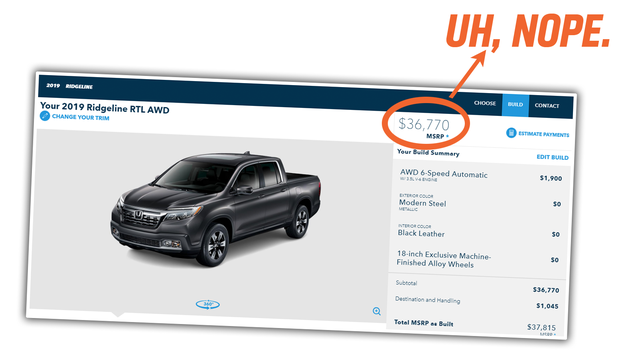
Automakers Need to Stop Doing This Sneaky Pricing Trick on Their Websites

by Tom McParland on Jalopnik, shared by Virginia K. Smith to Lifehacker

When it comes to deciding on a new car, price isn’t everything. But it’s a big one. Almost everyone researches car online and even use an automaker’s website to configure a car with the options and features they want before going into the dealer. The problem is that some brands are a little bit sneaky about posting…

Read more...

31 Jan 17:29

How You Can Make a Calendar That Works to Make You Better

by Deanna Ritchie

Pexels / Pixabay

Thanks to your smartphone, you can easily set and be reminded of the doctor’s appointments, your kids’ school play, and conferences. Even minor tasks like picking-up milk or responding to an email are better with a quick reminder. It’s so much more effective than relying on managing multiple paper calendars throughout your home and office. Even too many digital calendars get in the way, but you can make a schedule that works to make you better.

While there’s no denying that digital calendar can help make your life much more comfortable, are you getting the most out of your calendar? I believe we add an event or task to our calendars and forget all about it until the last minute. However, if you’ll create and maintain your calendar, you’ll become better at time management and productivity. You’ll also be seen as a reliable and trustworthy individual who never forgets and always shows-up on-time.

If that’s the person you want to become, here’s how you can successfully make a calendar that works to make you better and more successful.

1. Book your priorities.

To schedule or book your priorities may sound excessive. Getting yourself and the kids ready for the day and commuting to and from work takes a large chunk out of your day. Add all of your meetings, phone calls, and your actual work — the average day is hectic. Throw in speaking engagements, traveling, and exercising and it can get even more chaotic, and overwhelming.

Does booking everything you need to get done in a day magically add hours to your day? No. But, it will make your days a bit smoother. It absolutely will help you.

When you schedule everything from eating breakfast, hitting the gym, meetings, to your commute, it ensures that you don’t forget or neglect your priorities. That may sound ridiculous. I have known colleagues who always work through lunch. As a result, they crash before everyone else, because they didn’t fuel-up for the rest of the day.

Additionally, when you add events and tasks to your calendar, it keeps you focused and on-track. If you have a meeting with a client scheduled at two p.m., then you know that you can’t add any other events or tasks to your calendar during that block of time.

Most importantly, booking everything you need to accomplish in your calendar gives you a better idea of how you’re spending you’re time. This way you know when you’re “busy” and “unavailable.” It also gives you a chance to find open slots of time. For example, if your daily commute is a 20-minute train ride, then you can use that time to respond to emails or read the latest industry news.

2. Protect your personal time.

We tend to use our calendars solely for work purposes. But, calendars can also create and protect our personal time.

Let’s say that you want to be home for dinner every night or not miss out on essential things like recitals, soccer games, or birthdays. You need to add these personal items to your calendar. If you don’t, then it’s much easier for work to spill over into your own life or conflicts like over-committing to social events to arise.

By adding essential things in your life to your calendar, you’re committing to make them a priority.

3. Buffer time between appointments.

It’s not uncommon to book multiple appointments in one day.

Time management experts prefer to schedule all appointments on just one or two days a week. Bundling the same types of activities allows the time to focus on other priorities, like marketing my business, during the rest of the week. Regardless of how many days per week you book appointments, it’s tempting to schedule them back-to-back. If you go from one meeting to the next, you can cram in more appointments.

You believe this could lead to more leads and sales. Unfortunately, this isn’t the way to go.

You want to add buffer time between appointments in your calendar. Scheduling extra time gives you a chance to decompress from the previous meeting, think about what you did at the conference and what you committed to — then you prepare on move on to the next one. It also prevents you from running late if you’re meeting the other party somewhere else outside of your office.

4. Schedule nothing.

Remember the recommendation that you schedule everything you need to do throughout the day in your calendar? At the same time, you should also block out specific times where nothing is planned.

Jeff Weiner, CEO of LinkedIn, schedules between 90 minutes and two hours of these types of buffers, daily. Weiner usually records these in 30 or 60-minute blocks. Instead of only booking appointments, Weiner schedules a time to do nothing. During these blocks of time he thinks about the future, catches-up on industry news, goes for a walk or catches his breath.

Richard Branson uses a similar methodology. “Open your calendar and schedule time — just to dream. Put it in your diary like you would a meeting,” Branson wrote in a 2017 blog post. “Far too many people get weighed down in doing, and never take the time to think and feel. Take five minutes, an hour, a day, or even a holiday. If you free up some time to think freely, you’ll be able to see the bigger picture much easier.”

Another successful person who leaves their calendar blank is Warren Buffett. It was so effective that Bill Gates took the idea. “You know, I had every minute packed, and I thought that was the only way you could do things,” Gates said during a 2017 conversation with Buffett. Thanks to Buffett, Gates realized that he needed to add blank space to his calendar.

“You control your time,” says Gates. “Sitting and thinking may be a much higher priority than a normal CEO, where’s there all these demands and you feel like you need to go and see all these people. It’s not a proxy of your seriousness that you fill every minute in your schedule.”

Research has even found that you can spark creativity when you’re mind is unfocused and relaxed. A free mind and spirit explore why you have those “aha” moments when in the shower or going for a walk. As a result, you can think of new ways to get things done.

5. Establish good habits and track your goals.

As Charles Duhigg explained in his book, The Power of Habit, there’s something called a habit cycle. The thought means that in the habit cycle there’s a cue, response, and reward. For example, every morning you automatically brush your teeth because your breath triggers this response. The prize is the minty fresh breathe you have after brushing your teeth.

Unfortunately, as best-selling time management and productivity author Laura Vanderkam, points out, “good habits–such as meditating or journaling — lack an obvious trigger, at least in the beginning.”

However, you can use a calendar alert as a cue. Use your calendar for blocking out your meditating or other self-care helps that will carry you to success.

“When you see the note on your phone, you know it’s time to start writing,” explains Vanderkam. “Or better yet, if you stay up too late checking email, arrange for an email alert to show up in your inbox reminding you that it’s bedtime.”

Vanderkam also says that your calendar can be used to stay on track with your goals.

“There are two ways to do this. You could send yourself a recurring email with your annual or quarterly goals every week, timed to show up as you’re planning the next seven days.” With set reminders, you’ll know that if “you intend to run a half-marathon this year, you’ll remember to schedule in a few runs for the coming week.”

The other way is by using “a calendar alert as a prompt to check in about how life is going.”

For example, once a week you could answer questions like: “What’s working right now? What do you want to change?” Continually having questions on your schedule that you ask yourself gives you a chance to reflect and refocus if need-be.

6. Don’t have meetings unless decision-makers are on the call.

In the U.S. and U.K. alone, people spend 163 billion minutes on conference calls. The number is more than impressive since the average conference call last 38 minutes. At the same time, 15 minutes of these calls are wasted due to distractions, technical issues, and keeping the call on-track.

Sometimes this can be an easy fix, such as testing out the conferencing technology before the call and creating an agenda. You can also reduce the hours wasted on calls by only inviting key stakeholders and confirming the call in advance. By limiting the number of invitees, you’re lowering distractions since there aren’t too many voices clamoring to be heard.

For example, when you set a date and time for the call in your calendar, the other participant will receive an email asking if they’ll be attending the call or not. If not, then you can reschedule the call so that you’re not sitting there waiting for them to call. Now, when someone cancels or reschedules your calendar will be updated in real-time.

7. Share your calendar with others.

Whether or not you share your calendar with your spouse, business partner, or virtual assistant, make sure that your calendar can be shared with others. This way everyone knows when you’re in a meeting, traveling, or have the availability to talk.

Here’s another perk of sharing your calendar. Let’s say that you’ve invited to a dinner party with your spouse. Merely add the event to the shared calendar. Now you don’t need to call, text, or email them. They’ll receive a calendar notification giving them the details of the party, as well as an option to accept or decline.

8. Set reminders to look at the calendar the night before.

Finally, most calendar tools come equipped with reminders. For instance, if you’ve booked a flight, hotel, or appointment, you’ll receive a reminder the day before so that you won’t forget.

You should also set reminders to view your calendar the night before. This lets you see what’s on your calendar tomorrow so that you can visualize your day and prepare. If something appears off or doesn’t fit together, then you can address it before it becomes an issue.

31 Jan 17:29

What’s The Most Pressing Part Of The Sales Process Today?

by David Brock

Recently, I was having a conversation with a good friend and colleague. He asked me the question, “Dave, what to you think is the biggest problem area for B2B sales people in generating business today?”

I’m a little slow, I asked, “George, what do you mean?”

He responded, “Well if you look at much of the press and social media, it’s prospecting or top of the pipeline, lead to opportunity conversion…..”

“But,” he went on, “some say it’s the inability to navigate the selling/buying process on qualified deals….”

“Others say it’s the inability to articulate and defend a differentiated value proposition…..”

He continued, “Some think it’s all about ABM, account planning and development….”

“Which of those do you think is the single most important thing to drive huge improvements in sales results?”

After I thought about it, I responded, “George, the real issue is you have to do all of them, all the time! Anytime your focus becomes unbalanced, for example you spend a disproportionate amount of time on the top of the pipeline, it will ripple through and impact performance across everything.”

George, pushed back on me, “Dave, you are really out of alignment with most of the thinking out there. Look at all these ‘sales experts’ saying tope of the pipeline prospecting is the single most important thing for sales right now?”

I don’t disagree with George. Many friend and colleagues focus most of their effort on the top of the pipeline. Most of the pipelines I look at are anemic, people need more opportunities, so prospecting seems to be in need of a lot of attention.

But then, one must ask the question, “Why are our pipelines so anemic?” It may be that we have lousy deal win rates, let’s say 10%. That means, if we need to close 50 deals to make our number, our pipeline has to have 500 deals. That’s a lot deals, trying to fill the pipeline, knowing you may have to prospect 10 potentials, to qualify 1 means you have to prospect 5000 potentials.

You have to have really good prospecting skills and devote a huge amount of time to prospecting to try to keep that pipeline filled–then you wonder if you have enough time to work those 500 deals in the pipeline. Prospecting is a huge issue, in this case. And it’s something that you have to continue doing every day, every month, every quarter, every year.

But what if we looked at it differently, what if we chose to solve a different problem rather than prospecting to keep the pipeline filled. What if we focused on win rates? What if by some magic, we could get win rates up to 50%. That means we only need 100 deals in our pipeline, and we would only need to prospect 1000 potentials. Prospecting is still important, but we don’t have to go for the numbers, we are likely to do a higher quality job of prospecting, making more out of each opportunity we qualify.

Or if we could defend value more effectively, reducing our discounting, improving our win rates. Then by being better at deal execution, I need a smaller pipeline, and don’t need as much prospecting to keep a balanced funnel.

Or let’s go back to the original case, where I have a 10% win rate. Think of the opportunities we are squandering and the opportunity cost to our companies because the win rate is so low. And one might surmise, if you are that bad at managing qualified deals, then you probably will suck at prospecting as well.

See, the problem with much of this thinking is that it addresses the obvious issue, with the obvious solution. For example, anemic pipelines need more prospecting. But it treats these issues in isolation, and that leads to flawed diagnosis and thinking.

Sales is not a job where I can do part of it some days or just the parts I like. If I’m to be successful, I have to do the whole job, all the time.

In selling, everything we do is connected with everything else. One cannot isolate one area, saying this is the most important thing to focus on. We have to constantly look at all aspects, of the job, trying to figure out how best to tilt the numbers in our favor.

Sorry I couldn’t do better George, but it’s all important.

Afterword: To better understand how all the pieces/parts of selling fit together, email me for a free copy of our Sales Execution Framework.

31 Jan 17:28

Measure for Success: 7 Secrets of Actionable Content Marketing Dashboards

by Tiffani Allen

Elements of an Actionable Content Marketing Dashboard

Elements of an Actionable Content Marketing Dashboard Hey, content marketers. Imagine this: You’re sitting in a marketing meeting and you hear the following:
  • Our conversions are up 50% year-over-year!
  • Our blog traffic is down.
  • We saw a big spike in traffic this month to our primary service page!
  • Our bounce rate is all over the place.
  • This blog post about “X” had 2,000 page views last month!
What are the first thoughts that come to mind? For many, the first thought would likely be: Why? Followed by a: Is that good or bad? And then finally: What do we need to do next? If you’ve ever experienced a similar scenario, you’ve come face-to-face with insight famine. The statements above simply relay data points and lack the insight needed to take any sort of action. And this is why an actionable content marketing dashboard is so incredibly important. When properly set up, an actionable dashboard marries data and insight, helping you quickly see how you’re performing against your benchmarks, goals, and key performance indicators (KPIs), and where you have opportunities to improve results or need to dig deeper. What makes a dashboard actionable? What key data and insight elements should be included? Let’s dig in.

What Makes a Marketing Dashboard Actionable?

For a content marketing dashboard to be actionable, it has to answer two simple questions:
  • Is what we’re doing working?
  • Why is it (or is it not) working?
In order to answer those questions, there are specific metrics to include based on your overall objectives. For example, if your objective is to drive qualified leads for your sales team, you might measure the amount of inquiries that resulted from a piece of content, how many of those inquiries turned into MQLs, then SQLs, then ultimately customers. If you apply those metrics to each piece of content, you’ll quickly see which content is hitting the mark, and what needs to be adjusted. And if your objective varies by topic cluster or funnel stage, you’ll need different sets of KPIs for each.

7 Essential Elements of an Actionable Marketing Dashboard

So, how do we answer those two simple questions posed above? There are several key components to consider including in your dashboard:

#1 - Content Benchmarks

Benchmarks are essential for understanding how different types of content have performed on average over a specific period of time. Your benchmarks can and should be different based on the content type and its objective. For example, a top-of-funnel blog post meant to drive traffic will have a different benchmark than a middle-funnel infographic meant to engage. By keeping these front-and center in your marketing dashboard, you can compare at-a-glance.

#2 - Goals

More than likely your goals are to beat your benchmarks every single time. But it’s important to document your goals so you can gauge success. By adding your goals to your marketing dashboard, you can quickly determine whether you’re on pace to hit your goal and if you’ve been able to surpass it. And ultimately, keeping that data within your dashboard will help you course-correct where needed and celebrate wins as they occur.

#3 - Real-Time KPI Monitoring

Depending on your objective for the content you’re creating, there could be any number of KPIs to watch. Automating those reports in a dashboard will help you report to your internal team and leadership in an easily consumable way. For example, if your KPIs are pageviews and asset downloads for a specific campaign, pull those into an executive summary that’s easy to digest with an option to drill down into more specific sources of traffic and conversions.

#4 - Traffic Trends

While measuring specific pieces of content is helpful to enhance performance, it’s important to keep your eyes on overall performance as well. Knowing whether overall website or blog traffic is trending up or down versus the previous year or month will help you inform the types of content you need to create next. For example, if you notice your organic traffic is trending down month-over-month, you will want to dig into your content report to determine why that is and what needs to be done to repair the situation on a more granular level.

#5 - Performance by Topic and Persona

If you’re trying to reach a specific persona, or increase visibility around an important topic, segmenting your data within a dashboard can be hugely valuable. You’ll be able to tell if your content is more or less visible for your target, or if your content marketing strategy needs to shift to meet a different type of demand for that topic.

#6 - Engagement Metrics

All of the traffic in the world won’t mean a thing if would-be customers are bouncing off your site immediately. Make sure you’re monitoring your bounce rate and time-on-page for each post to determine if the content is resonating and adjust as needed. While these are often bucketed as vanity metrics, that doesn’t mean they can’t provide meaningful insight or should be forgotten.

#7 - Proof of ROI

To be fully actionable, integrate your sales team’s data sources into your dashboard. With the right analytics strategy, you can pull in performance by page or post from visit to sale. This will help you prove the value of your content, and understand which kind of content converts the prospects you’re looking for. As a bonus, your sales team will be able to share that kind of converting content as a follow-up from an initial meeting or as a pre-meeting email with their prospects.

Take Action to Spur Action

An actionable content marketing dashboard is a pivotal piece to a data-informed content marketing strategy. If your data is accurate and your dashboard is actionable, you’re in the right place to start creating and marketing incredible content that has proven ROI and helps your sales team meet their goals. Talk about a win-win! And before I go, I’d like to leave you with a few rules for measurement mastery:
  • Setting up a custom and integrated dashboard takes time and patience. You may set it up in one way and realize that the KPIs and metrics you have aren’t the ones you need, and that’s okay. Looking at the data in different ways can tell you different parts of the same story. Edits aren’t rework, they’re character development.
  • Don’t be afraid to spend some quality time with your data. As you create the dashboard, it’s important to dig in and manipulate data from different sources to understand how it’s best pulled in to complement the rest of your data set. Sometimes this means changing the way you have forms or tags set up. The more time you spend digging into data up front and understanding the finer points, the better equipped you’ll be to answer questions and provide insights into remaining questions.
  • If you find yourself asking why, look deeper. Sometimes you’ll put all the data together expecting answers, and you’ll encounter more questions. Questions are good, it means the data is telling you something you need to investigate. Don’t be afraid to dig deep, and ask other departments or SMEs for their perspective.
  • Always, always, always annotate. Did you run a really great campaign that showed a spike in traffic or conversions? Make an annotation. Did you lose tracking for a little while? Make an annotation. Did you implement some major website changes, or do a migration? Make an annotation. Those kinds of anomalies in the data seem major at the time, but easily get lost in the day-to-day management of your world. Annotations will save you from having to dig into your notes, emails or previous campaign data every time it pops up in a report.
Don’t forget: You can’t achieve goals you don’t set. And you can’t optimize performance without measurement. Your content marketing dashboard can hold you accountable to both and more. Are data challenges holding your content marketing dashboard or other initiatives back? Check out our post covering the five top marketing data and analytics challenges, complete with tips to start solving them.

The post Measure for Success: 7 Secrets of Actionable Content Marketing Dashboards appeared first on Online Marketing Blog - TopRank®.

31 Jan 17:28

How to Use Personalized Content to Qualify Leads at Every Stage of the Funnel

by Elizabeth Rivelli

Finding quality leads is often easier said than done. Gone are the days of making a few phone calls and sending an email blast to catch the attention of interested—and high paying—prospects. Both sales and marketing want their pipelines to be overflowing with leads at all times, and more importantly, they want the right leads that are most likely to convert into revenue-generating customers.

Recently on the blog, we’ve been talking a lot about the quality vs. quantity debate around leads. And if you’ve been keeping up, you’ll know that more leads are not necessarily better: Better leads are better. That can be a tough concept to wrap your brain around, especially because marketers are often very numbers-driven. We like to see volume in our pipeline, but sometimes, we fail to look closer and examine how much of that pipeline is really worth your sales team’s time.

To add a layer of difficulty, marketing is only getting more crowded. Nearly every B2B marketer is competing for the attention of the same prospects. And prospects are feeling the pressure too. B2B buyers today have seemingly endless choices at their fingertips, and they also get overwhelmed by the number of marketers vying for their attention.

The Power of Personalization

So, how can your brand break through the noise and bring in those quality leads that sales wants? It’s simple: By focusing on personalization throughout the buyer journey. In fact, research shows that over 90 percent of buyers are more likely to make a purchase from an organization that provides personalized offerings and recommendations. Putting curated content in front of leads at every stage of the funnel allows you to learn more about their unique challenges, needs, and goals, and helps you understand where exactly they are in their journey.

For marketers, that means two things. On the one hand, personalization can dramatically improve your pipeline and conversion rates when you invest in the right prospects. In fact, one study found that nearly 80 percent of companies that utilize personalization exceed their revenue goals. But, it also means that a one-size-fits-all content strategy won’t cut it. Your prospects want that unique experience when they interact with your content, otherwise they’re more likely to turn away from your offering and take their business somewhere else.

[source]

Now, I know what you’re thinking. The term “personalization” means creating more assets, for each persona, at every stage of the funnel, right? Not so fast—it’s actually just the opposite, and it’s made possible by adding interactive, qualifying questions to your content.

To start, dust off your archives of static (and perhaps outdated) PDFs, ebooks, case studies, and similar assets. Use that information to create an assessment or a short quiz that allows your readers to test their knowledge of a certain subject area. Drop in lead-qualifying questions to gather information, uncover buyer intent and determine where that prospect is in the funnel. Once you have that information, you can decide which leads are worth sending to sales, and which ones just wanted to download your white paper for the compelling stats.

Ready to find out how you can use content to provide a personalized experience for prospects at every stage of the sales funnel? Let’s get started.

[source]

Top of the Funnel

According to 2019 data from HubSpot, more than 40 percent of salespeople feel that prospecting is the most challenging part of the sales process. So to reach those early stage prospects that are just testing the waters, you should be using content to support your demand generation efforts. By driving brand awareness and capturing the attention of potential customers, marketers can find more of the top of the funnel prospects they need, and qualify them faster.

A readiness assessment that focuses on a specific topic is the perfect way to put your brand in front of potential buyers and help drive faster lead nurturing. The assessment will reveal to the customer their own level of need in a certain area, and provide a personalized output that helps them decide whether or not your solution is right for them. An assessment allows marketers to learn more about potential buyers, while customers learn about your company’s offerings.

Middle of the Funnel

Prospects spend a lot of time hanging around the middle of the funnel. They understand how a product or service can solve their challenges, maybe they’ve had a discovery call with sales, and they seem convinced to move forward. But for some reason, they’re still on the fence.

Reaching those leads that are lingering in the middle of the funnel is all about nurturing, and a big piece of that is customer experience. Offering a personalized CX shows your prospects that your organization takes the time to understand and address their needs. So send them case studies that help them see how similar companies have excelled since adopting your product. Or maybe invite them to your next live webinar. CX often gets overlooked by marketers, but it’s really important in the buying journey. Research shows that customers are 5.2 times more likely to purchase from companies with great customer service.

Bottom of the Funnel

When that prospect you’ve been nurturing for the past six months finally becomes a valued SQL, you might think your job as a marketer is done. But even though that prospect is now in the hands of your sales team, there’s still more you can do to help get that prospect over the finish line. Remember: Almost 80 percent of MQLs never convert into sales, and it’s usually because the prospect isn’t properly nurtured.

The bottom of the funnel is where interactive content really shines and proves its value. Every interactive quiz your prospect took, every white paper they downloaded, and every survey they completed holds valuable insights for your sales team. When they know about the prospect’s organizational challenges, business goals, budget, subject matter knowledge, existing technology stacks, and so on, they can personalize every touch point and use the right tactics to push them through the funnel and onto their roster of active customers.

Closing Thoughts

Finding high quality leads doesn’t have to be hard, but it does require a bit of work on your end to provide a personalized experience that makes prospects want to complete the sales cycle. Using interactive content allows you to do just that, by creating more engaging experiences that are customized to your target audience. Not only do your prospects appreciate it, but so does your sales team. And with the right tools, it’s easy to start seeing your pipeline fill up with quality leads that are eager to become customers.

30 Jan 17:04

Shortlist Qualifications for Sales Enablement Solutions

by Matt Ellis

The sales enablement industry has reached the point where there are many different vendors that offer some unique tools and features. It can be difficult to sort through all the vendors and determine what’s the best fit for your organization. This task is made even more difficult when you realize that investing in a sales enablement solution is a huge step for any organization. It will impact many different stakeholders, reallocate resources, and upend traditional processes.

As you go through the rigorous process of deciding what platform is best for your organization, you will run across features that you realize are must-haves. Non-negotiables will begin to pile-up and you will begin to whittle away vendors that don’t meet your needs. Getting to a shortlist of potential vendors is an exciting step. It means you will soon begin taking meetings and diving deeper into exactly what your organization hopes to get out of a sales enablement platform.

So what are the qualifications and features you should be looking at for when you are trying to shortlist vendors? The author over at the Sales Enablement Market Size and Vendor List blog has come up with some qualifications. The author tracks the overall state of the industry and the major trends.

Below is a quote of some of the qualifications we wanted to highlight, we’ll discuss why these are important and some that were missed after:

  • Will they integrate content from existing repositories or upload copies (of what you have in your repositories) into the cloud? You’ll want one single source of truth!
  • How does the solution integrate with the given CRM system?
  • Are there social features that allow feedback from sales to marketing (ratings/comments) & uploading/sharing of content?
  • Can documents be auto-generated to be highly customized for the specific sales situation – yet look polished?
  • Is content intelligence (As in BI for Content Lifecycle) available? (Where in its life cycle is my content? What gets bad ratings? What needs to be retired? What is not being used? What is missing?)

All of the above qualifications are crucial for determining what sales enablement solution is perfect for your organization. They include ensuring data and content can flow seamlessly through the platform, integrating with a CRM, allowing Sales & Marketing to collaborate easily, create customizable content efficiently, and utilize artificial intelligence & machine learning to improve Sales & Marketing activities.

One area that the author is missing is a sales enablement platform’s capability for analytics. One of the hallmarks of any solution worth its weight is the ability for sellers and marketers to have insights into how content works and moves buyers along their journey.

Marketers need the ability to track how sellers use content across various stages of a deal. With that information they can ultimately begin tracking the ROI of their content efforts, a holy grail for all marketers. Additionally, sellers need to have insights into how buyers engage with content and what sections they find most interesting. When they have that data, they can begin understanding the buyer’s motivations and pain points.

Searching for a sales enablement solution is an exciting time. You have so many options with many different features. But it also requires due diligence because you want to ensure that you make the right choice for such a large investment. When creating a shortlist of vendors make sure they check all the boxes.

30 Jan 17:03

The Top Five Strategies to Drive Sales Productivity

by Ellie Wilkinson

Editor’s Note: This article first appeared on Highspot’s blog here

Prospecting, pitching, tracking engagement — there’s no question that modern technology solutions have made it easier for sellers to complete these essential tasks. But even as the tools have improved, selling has become more complicated as buyers’ expectations have risen. With increased access to information, buyers today do more of their research independently and invite more internal stakeholders into buying decisions. To capture and win buyers’ attention, sellers must now research and present insightful solutions tailored to multiple decision makers’ needs. The result is that reps end up spending more time trying to keep up with increasingly complex sales processes, impacting overall sales productivity.

Sales Productivity Definition

Sales productivity is calculated as the ratio of effectiveness (outputs) versus efficiency (inputs) and is a baseline factor in the success and health of a company. Put another way, optimal sales productivity means maximizing sales results while minimizing resources expended (such as time, money or effort).

As our State of Sales Enablement report shows, nearly 70% of respondents report their company’s sales processes are becoming more complex, and 55% say that increasing complexity negatively impacts their sales performance. In the face of this challenge, it’s important to have a plan in place to safeguard sales productivity and keep reps focused doing what they do best. Use the following five strategies to provide your sales team with the sales training, guidance, and technology they need to sell effectively and efficiently.

  1. Provide efficient sales onboarding and ongoing coaching
  2. Leverage AI-powered sales guidance
  3. Implement interactive and integrated sales playbooks
  4. Optimize using engagement analytics
  5. Centralize everything in a single system of truth

Provide Efficient Sales Onboarding and Ongoing Coaching

Start new sales reps off on the right foot with sales onboarding that teaches good sales productivity habits from the get-go and evolves with sellers’ needs. The tips you teach will differ depending on your sales processes, but it’s important to get the delivery of the training right. The first step is to move beyond thinking of sales onboarding as a “one-and-done” task. So many new employee onboarding programs rely on one-time presentations to train sellers, but research has shown that sellers forget 87% of content within one month of training. Plus, the sales environment is constantly shifting, and sellers’ individual needs change, too.

Training on best practices, buyer personas, and products will help sellers stay up-to-date as information changes over time. Instead of expecting sellers to attend and remember one-off training sessions, provide them with in-context virtual training and guidance that they can access any time to stay on top of the latest best practices. With a proactive, ongoing sales onboarding and coaching strategy, your reps are sure to stay productive and prepared to sell effectively.

Leverage AI-Powered Sales Guidance

Strong sales training goes hand-in-hand with sales guidance, which boosts sales productivity by saving sellers time and providing dynamic assistance. Guided selling tools surface critical templates, scripts, data and content when and where reps need it. They also cut down on the number of tasks that sellers must remember by providing timely recommendations on who to call, when to call and what content to provide in order to achieve optimal sales results.

The best sales guidance solutions use artificial intelligence to predict, learn and serve the best information to sellers for any given selling scenario. Like sales training, it’s important to implement sales guidance that can meet sellers’ shifting needs. After all, no buyer or conversation will be the same, and sellers will need tools that can help them navigate unexpected sales interactions, shifts in stages and new stakeholders. An effective guided selling tool will provide the map that sellers need to locate and share the right information at the right time.

Integrating guidance into sales workflows saves sellers time and energy by providing the relevant content, training, and tools they need to have effective sales conversations.


How can you get the most productivity out of your sales team? @Highspot's @ebwilkin explains the 5 best strategies to get the most out of your team:
Click To Tweet


Implement Interactive and Integrated Sales Playbooks

Sales playbooks lie at the foundation of any guided selling strategy and boost sales productivity by laying out the steps of sales plays and aligning sales methodology with steps of the buyer’s journey. With sales playbooks, sellers spend less time and energy figuring out what to do and when to do it and can instead focus on putting their plays in motion.

These five steps describe the process of creating modern sales playbooks:

  1. Define your sales methodology
  2. Map your sales process to your buyer’s buying process
  3. Design clearly defined plays, making it straightforward for the seller to take effective action in a given specific scenario
  4. Emulate your “A” players and harness their knowledge within the playbook
  5. Keep it succinct and don’t make the seller have to sift through and consider which content is most pertinent

Reps shouldn’t have to think about where to find the sales playbooks that best fit their situation. Rather, sales plays and guidance work best when integrated seamlessly into sellers’ workflows. Sales enablement platforms make it easy to design and share interactive playbooks that are integrated with sales reps’ everyday workflows. With practical, easy to use, and adaptive sales playbooks, sellers will have what they need to work productively within the context of their everyday workflows.

Optimize Using Engagement Analytics

You won’t be able to improve your sales team’s productivity without a way to measure it. Analytics provide the data you and your reps need to investigate trends and gain valuable insights into sales rep activity and performance. Start by determining which metrics are most important, such as:

      • Call rate
      • Win rate
      • Sales cycle length
      • Pipeline conversion rate
      • Average number of touches

Then, build dashboards to track and display the data you need to figure out what makes top performers successful and what is holding back the under-performers. With the engagement analytics available in sales enablement tools, you and your sellers will also be able to see how sales content is performing, which decision-making buyers are active and what content engages buyers the best. This real-time data can then form best practices for the rest of the team, increasing sales productivity at scale.

Centralize Everything in a Single System of Truth

Email, social media, chat, customer relationship management platforms, and more: with so many tools to manage, it’s no wonder that sales productivity can suffer if reps don’t have a single system of truth to enable their selling.

Take a look at your sellers’ workflows. If they are consistently forced to sift through multiple systems and databases to find the sales content and support they need, it’s time to look into solutions that will help consolidate and streamline their sales processes.

Sales enablement platforms like Highspot can provide a single system of truth to store, update, and track sales content so that sellers know exactly where to go to find the right guidance and content at the right time.

As sales processes continue to grow in complexity, your sales strategy will need to evolve to help reps overcome new challenges that impact their ability to sell. No training, guidance, playbook, or plan can stay stagnant; they must remain flexible enough to adapt and respond to changes in buyer and seller needs. With these five steps, you’ll have the building blocks you need to support sellers and continually discover new opportunities to optimize sales productivity.

The post The Top Five Strategies to Drive Sales Productivity appeared first on OpenView Labs.

30 Jan 17:03

Value Surveys for Pricing Excellence

by Rashaqa Rahman
190129.png

At Ibbaka, we begin our pricing work by understanding the value of your product or service from the perspective of your customer. Our approach is to research, validate and quantify the economic (monetary) and emotional value your offer creates for the market (customers and non-customers). By understanding your differentiation relative to the customer’s next best competitive alternative, we can design a pricing model built that communicates and even amplifies your differentiation.

Our data-driven approach to understanding Value to the Customer (V2C), allows you to focus your marketing and sales efforts by positioning your offer for the most attractive target customers. These are the customers where you have a high V2C that will support the greatest long-term value or Customer Lifetime Value (LTV) at a reasonable Cost to Serve. It is these customers on which you can build a compelling and sustainable business.

Data-driven market segmentation research is foundational to our pricing work and it starts with crafting value surveys.

Probing value through surveys

Our value surveys are crafted to look for patterns in sentiment and buying behaviour. The focus of these surveys is to uncover economic and emotional value drivers, and the potential for creating a differentiated offer. At this stage, we are not looking to validate the existing features and functionality of an offer. We are finding out how customers see value.

Once we have collected data, through design thinking seminars, interviews, surveys and by parsing data from the CRM including win/loss reports, we apply our  proprietary data clustering algorithms. These discover the nuanced patterns within the data that would otherwise be easy to miss. We apply multiple algorithms to the data to bring the differentiation into focus and understand:

  • How customer sentiments are meaningfully distinct

  • How customer sentiments are meaningfully similar

  • The difference between correlation and causation within the data

We validate the analysis with in-depth customer interviews to deepen understanding of the distinct customer segments. A meaningful segment is one that derives value from your offer in the same way and that can be marketed and sold to the same way.

Segmentation and risk

Once we have identified distinct customer segments for your offer, we fortify that understanding with further analysis of firmographic data (company size, location, industry, business model and so on) that can help determine segment scale and to sort companies into segments.

At Ibbaka, we understand that the decision to change prices is not to be taken lightly and has far-reaching implications within an organization. That is why we strive to ensure our data-driven insights and pricing recommendations are actionable and take into account the inherent risks associated with any price change. We are now complementing our approach with sophisticated risk management tools including Monte Carlo modelling. More on this in our next post.

Starting our pricing work with value surveys is not only value added for our clients. We make sure that it is value added for our client’s customers. A well-crafted value survey can help the survey participant understand their own business needs better and is often the first opportunity they are given to articulate how they experience value or any unmet needs. We cast a wide net and survey participants are a mix of your current customers, lost prospects/customers and a wider audience that is unaware of your brand or offer. This provides a well-rounded understanding of value to the customer (V2C) as well as mitigating any confirmation bias specific to existing customers. In our endeavours to capture the voice of the market through value surveys to inform pricing strategy, we also create a market presence for your offer, establish value for your offer within the market and even generate leads for you.

If you would like to learn more about the Ibbaka pricing process and how we can help you reach your strategic goals through pricing, please visit our website at www.ibbaka.com.  


Permalink

30 Jan 17:03

Truths 11-20: Your Prospecting Plan

by Mark Hunter

Quit thinking prospecting is someone else’s job. It’s your job, and that means you need to have a plan. You don’t have to overcomplicate things. Trust me, it’s easy to screw up a two-car funeral pretty quick with some of the sales plans I’ve seen people try to execute.

Sales is about connecting with people but not just random people. It’s going to require some planning for you to connect with the people that you need to. To help you do this, I would like to give you my next 10 sales truths as part of “50 Prospecting Truths”. I’ve titled this list: “Your Prospecting Plan.”

If you missed last week’s post with sales truths 1-10, check it out and stay tuned for sales truths 21-30 next week! I’ll talk about social media, email and prospecting with truths 31-40 the week after that.

Part 1 of Your Prospecting Plan:

11. Divide your prospecting pipeline into three parts: top, middle and bottom. Place more value on the bottom than on the top.

12. Establish an accountability process.

13. Remember that tomorrow begins today. Never end a day without knowing exactly who you will prospect tomorrow and what your objectives are for each call.

14. Break your day into five, 90-minute segments. Dedicate at least one segment to prospecting. Keep in mind that new salespeople will probably need to dedicate up to three of those segments to prospecting each day.

15. At the start of each prospecting segment, know what your overall goal is and how you will measure it. The best person to hold you accountable for your activity is you.

16. Spend 5 minutes after each prospecting segment to congratulate yourself and evaluate your performance.

17. When prospecting, know what your cadence is for follow-up messages, process, etc.

18. Leverage your systems including the basics when it comes to keeping scripts, questions, etc. that you can use daily.

19. Prospect by industry or segment type to allow for more effective use of your time and help build confidence.

20. Focus and discipline in executing your prospecting plan is the key to successful prospecting.

Just like last week, you owe it to yourself to begin thinking about how you can apply these to make your process more effective. Do these truths hold the answer? No. They are simply designed to steer you in the right direction. If you’re looking for more guidance, check out my coaching program. This program is a worthwhile investment for anybody wanting to gain more prospects and improve sales.

Don’t forget: A coach can help you excel in your sales career. Invest in yourself by checking out my coaching program today!

Copyright 2019, Mark Hunter “The Sales Hunter.” Sales Motivation Blog. Mark Hunter is the author of High-Profit Prospecting: Powerful Strategies to Find the Best Leads and Drive Breakthrough Sales Results

30 Jan 17:03

Deep and Active Listening Skills for Sales

by Suzlewis

One of the most common questions we’re asked is “How do I become a better listener?” There are countless books, and articles on things like active listening, focused listening, passive listening etc. Besides putting down the distractions, and focusing on the conversation you’re having, there are a few tactical things we can all do to become better listeners.

Episode 81 of the Make It Happen Mondays podcast featured an expert in deep listening, Oscar Trimboli. He’s on a mission to create 100M listeners throughout his sales career. One thing he noticed was that your listening skills are directly related to your close ratio.

While I hate hacks and tricks, something Oscar said toward the end of the interview really resonated. The best way to become more effective and efficient is to become a better listener.

Here are the highlights, key takeaways, and some tactical tips to help you sell better.

125-400 Rule

Ever notice how when you’re in a meeting, on a call, or in a classroom, your mind starts wandering. That’s because you can listen much faster than people can speak. Most people speak between 125-150 words per minute, but we listen at 400 words per minute. This means while you’re speaking, your prospect is filling up the other 300 words per minute. Furthermore, as a speaker, you’re thinking at 900 words per minute.

This means that as your prospect is telling you something, they’re only able to communicate about 11% of what they’re thinking.

Listening To Words That Aren’t Spoken

One of the things that many of us do, myself included is paraphrasing. This is when we do things like repeat back what we heard for confirmation. For example, “So, it does sound like sales training is something you’ll be investing in this year?” This is a productive question, but it mostly benefits us, not our customer or prospect.

Instead of paraphrasing what you heard, ask the person you’re speaking with how they would summarize what you just said. For example, “How would you explain our solution to your CFO?”

Tactical Tips to Listen Better

  • Put your cell phone away. It’s one of the biggest distractions there is.
  • Have a clear mind. You can’t listen if you’ve got the last call or your next meeting in your head.
  • Clear your head with box breathing. The deeper you breathe the deeper you listen. Breathe in for five seconds, hold it for five seconds, exhale for five seconds.
  • Be specific with high yield questions. They typically happen later in the sales call, and rarely on the first one. Overdoing them can undo your rapport.
  • One of the best things you can do is be respectful of your prospect’s time.
  • Be ready to listen, and listen to yourself first.

Other Items We Discussed

Going for a no, rather than a yes. In his book, Never Split the Difference, former FBI negotiator Chris Voss, has a chapter on listening where one of the goals is to get a no rather than a yes. Too many yeses can lead to happy ears and false positives.
Neuro Linguistic Programming (NLP). Specifically, we talked about how much NLP is enough to help you as a sales rep.
We’re born to listen. We can listen before we can speak or walk, and listening is often the last of your senses to go.

The Five Levels of Listening

We rounded out the interview, by going speed dating with the five levels of listening. Over three years and after observing a panel of 1410 people, Oscar found that 86% struggle with level one listening – listening to themselves. The biggest barrier to people listening is the noise and distraction in their heads.

  1. Listening to yourself
  2. Listening to the content
  3. Listening to the context
  4. Listening to what’s unsaid
  5. Listening for meaning

—–

Interview Transcript

The following is a transcript of the interview with Oscar Trimboli. It was created using humans and computers and may not be 100% accurate. The Make It Happen Mondays podcast is meant to be listened to as a conversation, but we post the transcript for those who prefer reading.

John Barrows: Good morning everybody this is John Barrows, Make It Happen Monday. Thanks for joining us. Hopefully you all had fantastic weekends. I am here with a very interesting guest. He’s actually joining us from Sydney, Oscar Trimboli. You want to say hi to everybody Oscar, and tell them where you’re coming from?

Oscar Trimboli: Yeah, good day John, on a beautiful Friday morning after a huge summer thunderstorm in Sydney last night that knocked out a lot of power and probably lots of trees. I’ve completely obsessed about the commercial implications of not listening, and that shows up the most when it comes to selling scenarios, so really excited to be speaking to you John, and more importantly you who are listening.

John Barrows: Yeah, and I appreciate that. You actually authored a book, it’s called Deep Listening right? It’s impact beyond words, and then the 125 400 rule, because I want to dive into that, because I’m very curious when I was doing a little bit of prep for this what that rule is. So you want to talk a little bit about why first of all you’re so fascinated with listening and what the output has been for you?

Oscar Trimboli: Yeah, I mean listening has been a journey through my whole life, that wasn’t a one lightning bolt moment, or lightening strike moment after last night to think about why I went on this quest to create 100 million deep listeners in the world. Through my career I’ve always been in B2B, and occasionally B2C selling, marketing, and technology and telecommunications organizations. With Vodafone and Microsoft. What I learnt was consistently what I was finding the difference between good and great sellers was those who were listening beyond the words, those who were listening to the fact that although you might have won with the proposal you made, great sellers were helping not only to sell the proposal to the team they were working with, but to all the other stakeholders in the business, because sometimes you’re competing against a procurement teams that’s buying paper towels for the restrooms in the building. If Kimberly Clark can come up with a better offer than what you’re selling at, and then not even in your market, you may lose or worse still have an opportunity delayed in the pipeline.

Oscar Trimboli: So I started to pick what does listening really mean. Through that journey, five years ago I took a complete gamble, went out on my own and started to talk to the world about the commercial impact of not listening. Worked with a lot of sales organizations, do a lot of sales kick offs, and try to get people to understand that the ninja move is not about where the listening literature is. You’ll hear these phrases that I’m really frustrated by, active listening and paraphrasing and using really deliberate a-has, and non verbal confirmations with them, and you’re literally faking listening and they can tell. So if you understand the 125, 400 rule, you speak at about 125 to 150 words a minute, but you can listen to 400 words a minute. Neurologically you are programmed to be completely distracted. You fill in the gap with 300 words in your head while they’re catching up to you. What’s worse, for the speaker, they can speak at 125 to 150 words per minute, but they got 900 words a minute in their head, and can think at 900 words a minute.

Oscar Trimboli: I don’t know about you John, but if you had an 11% chance that a surgery would be successful, you’d probably ask for another opinion, yet most of us don’t listen for the other 900 words that people are thinking about, and that’s where opportunities lost in sales.

John Barrows: All right, so let’s dig into that. How do you listen to those other 900 words that aren’t being spoken. You mentioned a bunch of things, the deliberate act of listening things, of yes, and a-has, I never really bought into those, but for instance, paraphrasing or summarizing back to me has always been pretty effective for me, to be like, “Hold on, let me make sure I heard you correctly, is this what you said?” That’s always been a little bit of a … And I don’t do that to show you that I’m active listening, I do that to genuinely understand, I was maybe a little unclear of what you said right there. When you’re talking about those other 900 words, I’d like to dig into first of all why do you think that paraphrasing is not an effective way of doing it, and second of all, if that isn’t an effective way how do you genuinely listen to the other 900 words that aren’t being spoken?

Oscar Trimboli: Yeah, so your paraphrase about is this what I heard is a really good example of a productive question, but not a high yield or powerful question. The orientation of the question is from you, and not from them. Your role to pick the other 800 words sitting in their head is to help them, it’s not to help you. High yield question in that context is, “Hey Mr. Prospect, hey Mrs. Prospect, if you were to explain what we’ve just talked about to the finance leader in your organization what would you say to them?” And then you can hear how they would say it to somebody else, and they will say it different, and your understanding of that will expand as well why it’s a high yield question is it’s a question that goes into the process of buying rather than you confirming what you actually heard. It doesn’t matter what you hear, what you need to do is get the other 900 words out. That is your role in that process.

Oscar Trimboli: So too many of us are stuck in our script, we’re stuck in ourselves, we’re worried that we can’t move this out forward. Level one listening, when we think about the five levels of listening all the listening literature says listen to the speaker, that’s useful, but it’s not productive. The most important person you need to listen to is you. If you’ve got the last sales call in your head, if you’ve got the next pipeline scrub with your manager in your head while you’re trying to have a conversation with these people, you will fail in listening to what’s said, and also more importantly to what’s not said. Make sure that you’re ready for the call. You can’t listen to anybody if you’ve got a whole bunch of jibber jabber in your head about something else other than what’s on this call.

Oscar Trimboli: And a really simple technique for that, the deeper you breathe, the deeper you listen, the more oxygen you can get to the brain the more productive it will be, but if there was one thing I’d love you all to do, switch off the cell phone. If you’re on the call, just be focused on that call. The cell phones been designed by the slot machine industry to distract you. All the software learnings from the slot machine industry in Los Vegas is all being taken over to the mobile phone to distract you and fry your brain. Switch it off, just get in the moment with that person you’re talking to.

Oscar Trimboli: So back to the paraphrasing John, make sure when you ask that kind of question, ask them to explain it how somebody else would hear it. It might be finance, it might be human resources, might be the owner of the business, but we want to get them to create a different perspective in their mind, and then they bring out 200 more words, 600 more words, 800 more words. Not all questions and all context, if you’re going to spend all that time in every question doing that, prospect is going to be really frustrated with you, and you’re probably not going to create the rapport to be known, liked, and trust to be bought from. Be really specific when you use those high yield questions.

Oscar Trimboli: It’s typically going to be in the second part of the discovery call rather than right up front as an example, when you’re trying to un peek what the pain is for an organization.

John Barrows: Yeah, it’s funny, I went through early in my career I went through Sandler, and they have the reverse question where it’s effectively the layering question tell me more about that, explain to me whatever. And I remember going through a role play with one of the Sandler guys and I was the customer. He asked me a question, or I asked him a question and he reversed it on me, I was like okay and I kind of played along. And then I asked the question again in a different way, and he reversed it again on me, and then I asked the question again and he reversed it, and I was like, “Answer my fucking question.” If you don’t answer my question I’m going to get annoyed, so I think there is a certain point there you’re doing it just to do it, and I guess to your point in the moment I love to be in the moment.

John Barrows: We had talked before we went live here about the prep that you do to get into a meeting, so for instance for this conversation, I didn’t do a ton of prep, I didn’t read your book. I looked at the highlights, I looked at your LinkedIn profile and I came up with things, and we have a general theme, and I’m a genuinely curious person about stuff. In the moment here, I’m picking up on what you’re saying, and I’m trying to jot down a few points so that I can circle back on those. From the sales rep standpoint, I have two questions, one is pre and one is during. How much preparation should you do when you’re walking into a customer so that you can be in the moment? Because there’s one thing about being super open and saying, “Hey, let’s talk.” But that leads to stupid stuff like, “Tell me about your business. Why don’t you tell me your background?” Which I think is just personally insulting. If you don’t do some homework on me before we have this conversation, and you don’t come with some preparation I actually find that insulting.

John Barrows: What is your recommendation for a rep to walk into a situation? What preparation should they do to a client as far as questions they should think about or what they need to do to be in the moment I guess is what I’m getting at?

Oscar Trimboli: Yeah, so in my work with executives, I work buy side and sell side in my day to day consulting. If you understand the biggest currency that people trade in is their time, that is the thing if you can show them respect, around time and I’ll show you quickly how you can make meetings shorter, and actually get out of there quicker, so that they can go, “Wow, that was a really good use of my time.” If you don’t know the top three issues, the top three problems in their industry, you don’t even have the right to be in that room. Don’t turn up without knowing that. That’s useful, but let’s talk about productive. Productive is knowing the top three issues that they’re trying to solve for their customers. If you would do any prep, try and understand what they’re trying to do for their customers. That’s potent. That’s powerful.

Oscar Trimboli: To be in the moment, and I’ll talk about this through a physical meeting and then we’ll talk about it as a phone call. For a physical meeting I always talk to my clients about from the moment you walk in the lobby of that building, to the time you announce yourself into reception or sign into reception, you need to switch off your phone, and you need to get into a state and set an intention, and the intention I always set is it’s not about me, it’s not about them, it’s about those that they serve.

Oscar Trimboli: So for most people, that’s their customer, but in public sector it might be about the citizen, the voter, the department head or something like that. I want to make sure that my intention is how can I help them discover what matters more than our transaction. What matters more than this business case, and ultimately, why the heck are we doing what we’re doing. Because we ain’t going through this meeting to transact. There’s always a higher context for that conversation, and the best starting place is the customer’s customer.

Oscar Trimboli: So from the time I walk in the building, to the time I get into reception and sign in, I become very well of my breathing, and I just hold my breathing a little longer. There’s a technique called box breathing. It’s no secret, because it’s used by the Navy SEALS it’s used by snipers, it’s used by opera singers, it’s used by rock stars, it’s used by Olympic athletes. You’ll see at the start line of any race, whether they’re swimmers or whether they’re runners, or whether they’re doing a high jump, they have this very specific breathing technique that’s down for five seconds, across for five seconds, and up for five seconds. In breathing we just get more oxygen to the brain. I don’t want anybody to become a Zen monk before they go into a meeting and breathing that way. It’s impractical and impossible, but if we can just practice box breathing, five seconds down, five seconds across, and five seconds up, and we do that five times your state is completely on them, and you’ve cleared out everything in your head. So if you want to sell like a Navy SEAL breathe like a Navy SEAL.

John Barrows: Pardon my ignorance, down, across, up-

Oscar Trimboli: Yeah, so let’s just do it now John.

John Barrows: Yeah.

Oscar Trimboli: Breathe in, hold for five. Hold again going across.

John Barrows: When you say go across what do you mean?

Oscar Trimboli: Just visualize the breath in your stomach going across.

John Barrows: Oh okay.

Oscar Trimboli: But you’re holding your breath, and then let it out. Breathe out deliberately for five seconds. Now you do that five times, you can do that in the lift, no one’s going to notice. And you’re ready.

John Barrows: So you visualize it going across. You visualize your breath going across your body.

Oscar Trimboli: Yeah.

John Barrows: Okay.

Oscar Trimboli: And you can Google box breathing on YouTube and you’ll get some really really good examples of that, but you’ll also see some great examples of how people are doing it pre-race. I haven’t been able to get an example of a sniper doing it, I guess they don’t let us publish those recordings.

John Barrows: Cool, I want to back up for a second and talk to you about … so we talked about the prep. I like the idea of knowing what those challenges are. When you ask somebody, instead of paraphrasing, when you say explain to me how you’re going to explain this to … my experience doing that, and let’s just realistically a lot of reps talk to decision makers. They talk to people who are below the power line, and obviously want to get above the power line, and I think we get obviously much better answers from people above the power line, but when you’re talking to somebody below the power line, and you ask them those types of questions, how are you going to … usually you get really vague answers. Or very basic answers. “Oh well, I’ll just tell him this is how we’re going to do this.”

John Barrows: What’s your approach to somebody who when you ask that how would you present this or how are you going to explain this to or justify this to so and so and they give you something basic? Because there’s two things there, one is that’s a red flag that that’s probably going to end bad, two is that’s a red flag that they’re probably just blowing you off and going through the motions with you. First of all, how do you identify that? And second of all what do you do in both of those scenarios?

Oscar Trimboli: Yeah, so imagine we get the vague answer. You know, “It will be approved that the monthly whatever.” And my follow-up to that will be, “When other projects like this have been approved, what steps have other people gone through to get there?”

John Barrows: Okay.

Oscar Trimboli: So all of a sudden they go, “Oh okay.” And they can be honest and they go, “I have no idea.” And that’s great. I just put that in a little box on the side, and I go great, so we’ve got some work to do around that. They’re not going to get us any further, other than to say come back to the first scenario where they go “Yeah that’s going to be approved at the monthly meeting.” “Oh great, so in the monthly meeting, what do you need to present and who needs to approve it?” That’s all I’m going to ask at that stage. It’s not my job to drill down on understanding the buyer’s journey. Another one of my pet hates about selling is everybody talks about it’s no more about selling it’s now about the buyer’s journey. The buyer doesn’t know they’re on a journey. Nobody’s teaching them. I don’t know any buyers who go and buy journey training. I don’t know any buyer’s journeys that have been the same. So help them understand what happens in that meeting.

Oscar Trimboli: The biggest insight you can provide in that case is they don’t know, and they’re going to go and find out maybe. If they don’t know, that’s okay. Now you know they don’t know. But you want to know who’s in that meeting that’s a monthly meeting to go and approve these kinds of things. So that’s A and B. A who’s in the meeting, what needs to be presented, or B hey when other things like this have been approved, what’s happened?

John Barrows: I have, staying on a similar vain, talking to people who are non decision makers, one of the things that I’ve always said, my favorite way, I think one of the hardest things to do in sales in general is to go over somebody’s head without pissing them off. You have a relationship with somebody, you know you have to get here, but how do you do that without insulting them? My favorite way, I always tell reps is to ask them questions that they don’t know the answers to. And again, not to insult you, but to genuinely understand and it kind of ties to what you had said earlier about the preparation, if you don’t know what the priorities of the challenge is, of their customers and their industry are, you’re going to have a hard time showing value and being relevant in that conversation.

John Barrows: I tell reps, “If you cannot tie to my priorities …” When your CEO genuinely stood up in the beginning of the year and said these are the three things that we got to focus on this year to be successful, if I can’t tie my solution to one or two of those, good luck selling anything of significance. I tend to ask questions that are related to the challenges their customer face, the priorities of the industry, and some of the trends there, because usually people below the power line don’t have that insights, and I tell them, “The reason I’m asking you that question is because if we can’t make that connection.”

John Barrows: Your experience, is that an effective way to open up the conversation to get other people engaged here, or what are some other areas that you could give some guidance on to help figure out how to get other people involved that are above the person we’re talking to?

Oscar Trimboli: Your approach is effective for sure. Some other approaches you may want to explore with them as well is asking really powerful questions about what’s unsaid and understanding the context. The context is always asking “Have projects like this failed before in the past?” Or “Have projects like this succeeded in the past?” And then you can ask a series of who questions that intersect with that.

Oscar Trimboli: Sometimes, depending on how new they are to the organization they don’t know, and then I simply say, “So if I was in the kitchen with you right now at work who would we turn to and ask this question?” All of a sudden they go, “Oh well we’ll talk to Mary. She’s kind of the historical keeper of all the secrets in the organization.” Or “We talk to John, he’s the expert in all the failures that have been done before.” And then you just simply play it back. “What do you think Mary and John would say right now about this?” And they go either A, “Gee, I have to ask them.” Or B, “You know what, these are the questions, they’d be asking right now.” You’re helping them to tap into what’s unsaid. They’re tapping into the context. It’s well beyond the 400, 900 words you’re listening to. It’s helping them listen to the organization and the culture of the organization and the way the organization gets something done, because it’s always in failure, always in the negative you can find more.

Oscar Trimboli: I had the opportunity to interview Chris Voss, former FBI hostage negotiator. And one of the things he-
John Barrows: Is that his book Never Split the Difference? Is that him?

Oscar Trimboli: That’s Never Split the Difference, yeah, it’s a great book. He’s got a whole chapter on listening and does a really good job of picking up with some great stories, but he says, “Too often in selling scenarios you try and always go for the yes, yes, yes. The NLP approach is how do we move people forward and get them into a neurological sequence of saying yes to everything.” Chris has the exact opposite approach and says, “If you can talk to them about the negatives, about the failures, you’re gonna see where the hidden landmines in his language are. To the buying process and the selling process.” For a lot of us, we don’t ask that because we’re too quick to want to get to the purchase order.

Oscar Trimboli: In exploring the negatives, not only can you get to the purchase order faster, you can get to the purchase order with a larger number of zeros on it, because you probably end up solving bigger problems for them. So being comfortable in going to those places that are uncomfortable about the negatives. Where projects like this failed before is a really potent question, and then who can tell us about those projects, or who would worry about a failure going forward on a project like this as well. I’m not sure if you come from the positive or negative orientation to selling here John, but I think in Chris’s wisdom there, there’s an ability to think about both. A bit of salt and bit of pepper on that steak rather than just one or the other.

John Barrows: Yeah, I talk a lot about pain and pleasure questioning. I actually think in sales, yes it’s weird because we get told we want to get a lot of yes’s, but yet we dig for pain. Sales reps are dig for pain, dig for pain, dig for pain, and then when we find pain we get all excited about it, and I always look at above and below the power line. Below the power line, people are focused on today or yesterday, which is usually pain, above the power line is focused on tomorrow, which is usually pleasure.

John Barrows: So I tend to frame my questions into opportunities versus challenges. I personally like to start with pleasure, to see opportunities, and see if I can get the conversation going to effectively raise your temperature level up so it gets you talking about something you like talking about, because that is where I tend to get people elaborating on certain things they want to do so I can help them tie it to that vision, and then go to pain to say, “Okay what would prevent that from happening?” Because now that I painted that picture I want to figure out okay to your point, all the things that could get in the way of doing that. That tends to be my approach in general, but you shouldn’t focus on one or the other, you got to focus on both.

Oscar Trimboli: Yeah.

John Barrows: But I can do all of that and getting a bunch of yes’s and all of a sudden-

Oscar Trimboli: Yeah, what happens with a bunch of yes’s is you have a really big pipeline that doesn’t move. That’s even more frustrating.

John Barrows: Well, because then you get happy ears. I call them happy ears. Yeah, they said yes. Do you buy into that, the NLP stuff? There’s one thing about getting people in the right mindset, but then there’s the other thing about NLP of the different personas. So you have visual, auditories and kinesthetics. In that book, I don’t know if you read it, it’s called Selling with NLP! Unfair Advantage, which is if I can figure out what type of communicator you are, and adjust my style towards yours, you’re going to feel a lot more comfortable with me. Do you buy into that type of stuff, or have you experienced that type?

Oscar Trimboli: Yeah, I’ve seen it done really well, and I’ve seen it done really poorly. Really poorly it looks fake, it looks transparent and you kind of go, “I know what you’re doing. Stop doing that. Come on. We’re all grown ups here.”

John Barrows: Like the mirroring where you’re like, “Oh.” That type of thing, yeah.

Oscar Trimboli: Yeah. And without any training, the person who knows you’re fake hasn’t gone on NLP training, but they’re human and they’ve got a detector that smells that stuff really fast. I think where it’s useful is as a primary orientation all of us will have one of those lenses as a communication style. What you got to be deliberate about is telling stories, building pictures, having frameworks, as well as data sequence and logic, so that no matter who you’re talking to, because more buying scenarios are group scenarios now, people will be able to access it.

Oscar Trimboli: So I think A, being conscious of your own style, but two having flexibility to be able to tell a story about that, not just to say, the ROI on this is we’re going to save you $25 per widget.

Oscar Trimboli: The opposite is true though too. People buy you. They buy your conviction. So if you’re molding yourself into some caricature that’s the opposite or a mirror image of them they don’t like that. They want to buy you. The genuine you. And I know, I remember one of my largest sales that I ever did, I walked in the room, I had lost nearly five kilos in the previous week. I had eaten something really bad, and I had a meeting on a Friday at nine a.m. I can still visualize the room I was in, and I was just not in the state of mind to be anything other than myself. I run marathons in OSA you know who you’re running with at the 20 mile mark. There is no place to hide, and the same was for me. All my defenses were down, and I walked in, CEO, head of human resources, head of finance, and I went, “Blah, blah, blah, blah.” And it was the standard shtick. We’re looking to transform our organization through a cultural change and duh, duh, duh.

Oscar Trimboli: I said, “Look, we can do this the easy way or the hard way, but I know if I open your email …” to the CEO I said this. “If I open your email, and look at every email you sent your entire organization, I can tell you everything about you and your leadership and the problems you’ve got. So let’s cut to the chase. Let’s open up your email, and show me the last three emails you sent to your site.” He went, “What?” I said, “Look, you’ve spoken about change that hasn’t happened for five years, why don’t I give you five minutes to chat about if you want to work with someone like me or not, but I reckon if we do that, you guys are going to have a breakthrough.”

Oscar Trimboli: So they asked me to wait outside the room. For 10 minutes, it felt like an eternity for me, they obviously had a chat amongst each other, the CEO came out, and said, “Well Oscar, we’ve come to a decision. Could you come back into the room?” And I went, “Oh okay.” We went through the emails, and sure enough I could tell him what was working, what wasn’t and he just went, “Wow, how did you just do that?” I said, “I didn’t do anything. I just listened to your emails and the way you communicate to your staff.” I got the assignment, I did a debrief with them a month later and said, “What happened when I wasn’t in the room?” They said, “They don’t know what I’m selling, but they want to buy what I created in that room when I challenged the CEO.”

Oscar Trimboli: I know they were looking at a big four consulting organization and some very large national consulting companies, and I was column fodder. I was put in there as a cheap alternative to bid down the price of the two big consulting companies. If I would have turned up trying to pretend to be like them, I wouldn’t have won the business. Being you matters. And a lot of us hide behind our company sometimes, because we get the script, but be you. I reckon that’s the most important thing you can do to access your listening, is listen to yourself so they can listen to themselves.

Oscar Trimboli: Back to the NLP question. If you’re doing it in a really smarmy way, people smell it, don’t do it. Do it productively. Do it in a way that’s helpful for them rather than just helping you. Anyway, if that book was so awesome, everyone would be doing it.

John Barrows: I always say, “You can go get NLP certified if you want to, I think that’s going overboard. Just make sure you hit all three.” Right to your point. I recognize yours, and then when you’re doing your presentations, make sure you have visual, auditory, and kinesthetic things in your presentation so you can hit on all three. And then blatantly obvious that somebody’s like, “Slow down there, I need some facts and figures, and show me some and walk me through this.” Okay, then slow down, sit down next to them, but to your point don’t be the fake, I’m going to mirror your body language I’m going to say the exact same words you say so I can all of a sudden control the conversation. That’s weird.

John Barrows: One last question, actually two last questions. One is, could you explain to me what the five levels of listening are? Because you scratched the surface on that, and I think the listeners it would be really helpful to understand what the five layers are.

Oscar Trimboli: Yeah, so let’s go on a speed date with the five levels of listening. Level one, listening to yourself, level two, listening to the content, level three listening to the context, level four listening for what’s unsaid, the ultimate ninja move of listening, the Yoda move of listening, listening for what’s unsaid, and level five listening for meaning.

Oscar Trimboli: John, I’ve done research on 1410 people. It’s a panel that I’m working with over three years, and 86% of people struggle with level one listening. The biggest barrier to people listening is the noise in their head. The distractions that they have, and all of them struggle with attention, distraction, and staying focused. They’re the three most common words that 1410 people use to describe what gets in their way when it comes to listening. No matter what the modern listening literature says about focus on the speaker and paraphrase and actively listen, 86% of us aren’t even ready to listen. Level one, listen to yourself is the most critical thing you can do.

John Barrows: I like it. And then the last thing is, before we went live here you had said something, we are born listeners. We listen, we don’t talk, as soon as we come out we hear stuff. We can’t verbalize it, so we learn to talk later, but it gets beaten out of us.

Oscar Trimboli: Yeah, and it happens even sooner. At 20 weeks in your mother’s womb, you can distinguish your mother’s voice from any other sound outside the womb. You are genetically programmed to be an awesome listener, because it helps you survive. That’s where you get fed. At 32 weeks, you can distinguish Bon Jovi from Beethoven in your womb, and the minute we’re born, we come into the world kicking, screaming, and wanting to be noticed.

Oscar Trimboli: For the 20th century, we have been trained by a huge industry of people in how to listen. Sorry, in how to speak. And the 21st century we need to know that a seller is spending up to 70% of their day listening. The average person is spending 55% of their day listening. And an executive is spending 86% of their day listening. If you want the productivity hack of the 21st century, if you want to be faster than your competition you’ve got to learn how to listen, because meetings are quicker, you hear the most important things, and you can be focused on not repeating yourself over and over again. Ironically John, the last thing you lose in your senses when you die is listening.

John Barrows: There we go. I think that’s a good way to end it. Perfect. Oscar, it’s been a pleasure. We can talk and listen for quite a while now. Tell the audience where they can learn more about you, how they can get in touch with you, what’s the best way to get exposed to what you’re doing these days?

Oscar Trimboli: Yeah, great, the simplest thing to do is type oscartrimboli.com into Google, that’s the easiest way to get in touch. There’s only one of me. That will land you on the website, which will give you access to books and podcasts and things like that. If you want to be part of the future research panel as well to understand what you’re listening barriers are, that’s another opportunity you can interact with us as well. John, thanks for helping on the quest for 100 million deep listeners in the world. This podcast is a really exciting opportunity for that.

John Barrows: Yeah, no, I appreciate you coming on and some of the insights that you shared there. Hopefully some people pick up on that. I think you’re spot on, the distractions, at the very least this little thing right here has prevented us from listening to each other more than almost anything else. Put the iPhone away, shut the email off when you’re talking to people, and just be authentic and genuinely curious, I think that’s the big takeaway here. Appreciate everything you’re doing Oscar and thank you so much for coming on. All right.

Oscar Trimboli: Thanks for listening.

John Barrows: Yup, everybody have a great week. Go out there, make somebody happy. Put a small on somebody’s faces, we need more of that in this world today. And listen to people, because you know what at the end of the day when you really listen to people you make them happy if they feel hurt. Make it a great day everybody, thank you all very much. Brilliant. All right.

The post Deep and Active Listening Skills for Sales appeared first on JBarrows.

29 Jan 17:50

Email Marketing: Steps To Building An Effective Campaign

by Brooke Bayer

Developing an email marketing plan is a great tool to not only nurture your customers through the customer journey and to stay top of mind, but also a great tool for maximizing sales and customer loyalty. This tactic is used to build on that existing relationship and providing valuable information. Email marketing also allows you to target a specific audience, which is known as segmentation, based on your customer personas. The audience segments allow you to send the right content, at the right time, to the right people.

Why You Should Use Email Marketing (HubSpot, 2018):

  • Build Relationships – email marketing is a great way to build connections while delivering personalized content
  • Brand Awareness – When people receive an email from you, you will be top of mind and will be the first call they make when they are ready to move forward
  • Content promotion – people spend hours in their emails on a daily basis, which makes this a great outlet to share your most recent blogs, webinars, podcasts, etc.
  • Lead Generation – offering valuable content on your website will entice prospects to provide their information in exchange for the value add
  • Product Marketing – email marketing is a great way (and easy way) to promote your products and services right to your prospects
  • Lead nurturing – emails allow you the opportunity to nurture your contacts through the customer journey as you provide them with the right content, at the right time

However, a solid email marketing plan is not just segmenting lists and sending out a monthly newsletter – there is more to it than just that.

Any good marketing strategy has a set goal in mind, and email marketing is no different. Before sending the ‘welcome email’, you must have a goal.

Start high level, and then break it down to a more granular level and set a SMART goal for the email marketing campaign. A SMART goal is something that is specific, measurable, achievable, relevant and timely.

Once you decide on your goals, make sure you have a content calendar, like a blog, on when you are planning to send the emails – and how often. Will you be sending weekly emails? Bi-weekly, or monthly?

Odds are you received your email list from prospects signing up from your website, handing you a business card/signing up at a trade show or speaker event. Breaking it down further, there are two ways to capture contact information, and according to HubSpot, these are the two ways: lead magnets and opt-in forms. Lead magnets are some form of an offer that attracts people to sign up, examples of this would include: free ebook, whitepaper, infographic, template, webinar, etc. The opt-in form is when prospects choose to sign up for your email campaign on their own because they are legitimately interested in learning more about you and reading your content. When creating an opt-in form, make sure you only ask for the information you need, and remember, keep it short!

However you collect emails, it is important to segment your large email list into subcategory lists based on unique characteristics – interests, demographics, location, etc. Again, this will ensure you send the right content, to the right people, at the right time.

Once you have decided your campaign goals, created a content calendar, and have developed your audience lists, now is the time to decide what type of emails you will be sending, and what their individual goals are. To begin, it is best practice to send a ‘Welcome Email’ within an hour of prospects signing up for your emails. It is critical to making sure these emails are personalized – include the prospects name, and provide them with information on what they can expect in your upcoming emails.

Sending a monthly newsletter also needs a strategic plan behind it. The email needs to be personalized because these emails are powerful enough to build relationships with your customers, and works to increase customer retention and loyalty. Keep these emails short and to the point. Most company newsletters focus on company updates, including, latest blogs, webinars, podcasts, events coming up, and so on.

Email marketing is also a great tool for sending product and service updates. However, these emails can be seen as spammy – after all, these emails are intended to sell something. The goal here is to make sure the content is relevant and targeting the audience who is at the point in the customer journey and ready to make a purchase.

People like free stuff (and discounts, too!). Adding value-add emails into your email campaign is a great way to keep your audience engaged and happy – building trust and loyalty.

Before you begin your campaign, it is to your best interest in setting up email automation – this will save you time, and keep the emails highly targeted to your segmented lists. You can set up a smaller email drip campaign, which triggers automated emails to people who have completed a certain action.

Metrics

Sending out emails is great and all, but measuring how they do is just as important. Setting up key metrics to measure is key! See how your efforts are doing. Define your KPIs (key performance indicators) on what you want to measure. Typically, the KPIs you should be interested in is deliverability, open rate, click through rate, and unsubscribes.

Keeping your metrics in a report is a great (and organized) way to keep track of how you are doing. You can compare and contrast how you are doing over the course of 6 months a year or 2 years. On the report, best practices are to keep track of the KPI metrics, data (what was the subject line and images used? What was the offer and CTA?), and include a few sentences of what you would like to improve on.

Let’s Break It Down:

All campaigns must have a plan, a goal, and an action item. Ask yourself, “what do I want to accomplish with this email drip?”, “how often will I send emails?”, “what do I want the audience to do?”. Developing answers to these questions will help to better define the goal of the email marketing campaign, and help you dive into the 5 W’s: who is the email for, what is the goal of the email, when is the best time to send the email, where is audience located, and why should they open the email? After answering the 5 W’s, ask yourself, how do I want the audience to convert? What is the CTA?

A Few Best Practices:

  • Email subject line should be relevant, compelling, and personalized
  • Make sure you have a sleek design and eye-catching images!
  • Have an appropriate CTA that stands out
  • The message of the email should be consistent with your brand voice
  • Make sure the email is optimized for both desktop and mobile
29 Jan 17:44

The Best Microsoft Store Apps for Windows 10

by Dan Price
windows-best-apps

The selection of universal apps in the Microsoft Store is better than ever. Their design and usability have dramatically improved, and Microsoft has largely got the problem of fake and imposter apps under control.

We’ve rounded up some of the best Microsoft Store apps. Make sure you let us know what we missed in the comments at the end.

Jump Ahead: Cloud Storage | Food and Drink | Image and Photo Editors | Music Players | News and Sport | Productivity | Reading | Shopping | Social Networking and Communication | Utilities | Video Players

Cloud Storage

Dropbox and OneDrive have official apps for Windows 10, and there’s also an unofficial Google Drive client you should check out.

Dropbox

dropbox app windows 10

The Dropbox app lets you access your photos, documents, and videos from any device. It also supports file sharing, collaboration, and automatic syncing of Microsoft Office files.

OneDrive

onedrive app windows 10

OneDrive is Microsoft’s flagship cloud storage service. For people who don’t want to deal with the somewhat fiddly desktop folder, the app is a great alternative.

G Drive

gdrive app windows

Google has not made an official app for its Drive service. Instead, you’ll have to use a third-party app. We like G Drive; it provides most of the functionality of the official web app.

Food and Drink

Cooking isn’t for everyone, but if you have an interest in getting to grips with one of life’s most vital skills, having a computer on hand is particularly useful. Touchscreen devices like Windows tablets are of considerable use in the kitchen, along with these apps.

Recipe+ Nutrition Profiler ($8)

recipe and nutrition profile windows 10 app

Designed to display nutrition information for existing recipes or ones you create. It works offline and features a database of over 12,000 food types. It is a great way to find out just what foods in your diet are healthy and where you can make improvements.

Recipe Keeper

recipe keeper app windows 10

Recipe Keeper is a recipe organizer, shopping list manager, and meal planner. You can add and organize your own creations and import recipes from external sites. You can also add ingredients to a shopping list directly from your recipes with a single click.

Image and Photo Editors

Whether you’re editing photos or creating a work of digital art from scratch, Windows 10 has on offer several great tools, free and paid, to help you achieve your finished piece.

Fotor

fotor app windows 10

Fotor is an all-in-one photo editor. It’s a worthy replacement if you don’t like Adobe Photoshop.

Alongside basic editing tools, it also offers visual effects, quick enhance, RAW file conversion, and even a collage creator. Furthermore, it’s recently been upgraded has now has improved support for EXIF data.

Adobe Photoshop Express

photoshop express windows 10 app

Not everyone needs the expensive full-featured version of Photoshop, but there are lots of times you’ll need something more powerful than MS Paint.

A great option is Adobe Photoshop Express. It’s designed to be an on-the-go photo editor. Features include basic alternations like crop, straighten, rotate, and flip, one-touch adjustments for brightness, exposure, and shadows, and slider controls for exposure, contrast, clarity, and vibrancy.

If you have an Adobe ID, you can download additional plugins.

Fhotoroom

fhoto

Fhotoroom is an excellent photo app that was migrated from Windows Phone. It has a collection of basic editing tools and over 70 styles, frames, filters, and light leaks.

Fresh Paint

freshpaint windows 10 app

Fresh Paint is an easy to use painting/art Windows 10 app with an simple learning curve. As such it’s ideal for kids and adults, all you need is a desire to paint!

If you’re using a tablet with a stylus, such as on the Surface Pro, this app suddenly becomes all the more powerful.

Gallery HD

gallery hd windows 10 app

This apps lets you find photos and videos on your computer, network, or external storage and enjoy them in stunning slideshows with fade and zoom effects.

Music Players

Rock out with your Windows 10 computer thanks to this collection of MP3 players and audio streaming apps.

TuneIn Radio

tune in radio windows 10

Does it get better than free internet radio? The popular mobile radio streaming app is available as a Windows app. You can listen to almost any channel in the world, saving you the hassle of finding the right stream in your browser.

VEVO

vevo windows 10 app

This app provides access to the amazing free VEVO service, where videos, live concerts, and new artists await. You might need to pay for some popular live events.

The app has a continuous play mode for when you need some permanent background music.

Musixmatch

First and foremost, Musixmatch is a leading music recognition app. Like Soundhound and Shaazam, you let the app listen to a snippet of a track on the TV or radio and it will search its huge database for a match.

It also doubles as a music player; import your library and Musixmatch can add lyrics, album artwork, and other important metadata.

News and Sport

With so much going on in the world, it’s vital to stay abreast of current events. And if the daily news ever becomes too much to handle, at least you check the latest happenings at your favorite sports team!

News 360

news 360 app windows

News 360 is one of the best news aggregators. It pulls stories from multiple sources to give you a live feed of things you’re interested in.

The more you use the app, the better it gets. It will learn which subjects and topics you like the most and tailor your feed accordingly. If you give it permission, it can even use data from your Facebook and Twitter account to help it improve.

Google News Viewer

google news viewer windows

Google News Viewer is not an official Google product, but don’t let that put you off. It looks beautiful and makes reading your news a breeze.

Newsstand

newsstand windows app

Newsstand is the third news aggregator on the list but it offers a couple of features that warrant its inclusion.

Firstly, you can add any site to the app using the Additions form. Secondly, you can create a Favorites list of your preferred sources, and finally, it has a built-in list of the most popular sites for easy navigation.

Newsflow

newsflow windows app

Newsflow is an RSS reader which is designed with the news in mind. Its key features are breaking news notifications, pinnable live titles for specific topics or sources, and searchable keywords.

It can also play YouTube videos and GIFs in-app, thus making it a one-stop shop for all your news needs.

MSN Sports

msn sports app

MSN Sports is the default Microsoft sports app. It comes pre-installed on your system, but if you deleted it years ago then forgot all about it, you should give it a second chance.

You can add teams and leagues, read the latest stories across hundreds of sports from countless services, and even enable notifications for live scores and breaking news. If you’re especially interested in sports from a certain country, you can change the region within the app.

Eurosport

eurosport app

Eurosport publishes more than 150 articles a day on a wide variety of sports. Whether you want news or long-form featured content, you will find it in this app.

There’s also a huge amount of video content, so if you prefer to watch rather than read, this is a must-have.

Productivity

Like any computer platform, Windows 10 is designed for productivity as well as entertainment. Here are some of the best apps for using while you’re working.

Copy Space

copy space windows 10 app

Copying and pasting are incredibly useful and simple. If you have to move a lot of content, however, constantly bouncing back and forth between apps can quickly become frustrating.

Try using Copy Space instead. It’s a universal clipboard that can store several items at once. All your copies are sorted into categories, and it can sync between all your devices.

Drawboard PDF ($8)

drawboard pdf app windows 10

One of the PDF’s biggest annoyances is the lack of editing options. Although Drawboard PDF doesn’t let you edit text, you can draw all over PDF files to annotate them. The aim is to reduce the number of times you will need to print a sheet to make notes on it.

It also includes some other useful tools, including the ability to merge and reorder documents, measure lengths and angles, and overlay grids and other templates.

Xodo PDF Reader and Editor

xodo windows 10 app

The free Xodo PDF Reader and Editor is an impressively full-featured PDF app. You can write on documents, annotate in real-time with other users, and make notes on blank documents so you can print them later. There is even a night mode so you can work at night without straining your eyes.

Bing Translator

translator app windows 10

Google Translate isn’t the only show in town. There are lots of great translation apps out there. One of the best is Microsoft’s product.

The translation quality of Microsoft’s tool is just as good as Google Translate, it works offline, and it’ll sit happily in your taskbar for easy access.

OneNote

onenote store app windows 10

Microsoft no longer releases the OneNote app as a standalone desktop app; you will need to install the Microsoft Store version.

Luckily, it’s just as full-featured as its predecessor—long-time OneNote users shouldn’t notice much difference.

Money Lover—Money Manager

money lover windows 10 app

There are lots of family budgeting desktop apps trying to grab your attention. If you’re feeling adventurous, you could even try making your own budgeting spreadsheet in Excel.

Or, you could consider Money Lover—Money Manager.

You can track your money across long time periods, it comes with a financial calendar that’ll send you alerts and notifications, it includes lots of useful (and free) graphs and charts, and it works in multiple currencies.

Code Writer

code writer windows 10 app

Are you looking for easy-to-use code editor apps? Code Writer has you covered.

It’s been around since the early days of Windows 8 and has built a loyal following of fans. It comes with active syntax highlighting, supports more than 20 file types, and has a live tile that displays both the names and save states of your open documents.

Interestingly, it also supports several cloud storage services, so you can take your project with you wherever you go.

Reading

Whether you’re using a tablet computer, a desktop, laptop, or hybrid, reading apps are vital to digesting information from the latest bestsellers to reports in PDF format.

Overdrive

overdrive windows 10 app

Overdrive has a global network of more than 34,000 libraries which you can use to borrow eBooks, audiobooks, and videos.

Anything you borrow will automatically sync across all your devices and the library is open 24/7. The app also doubles as an eReader, so you can do your borrowing and reading through the same interface.

Best of all titles are automatically returned at the end of their loan period—you’ll never have to pay a late fee again!

(Note: You need to be a member of your local library to access the app)

Book Bazaar Reader

book bazaar windows 10 app

Why do you need to pay for eBooks when apps like Book Bazaar Reader are out there? It scrapes lots of sources of free publications (including Guttenberg, Flibusta, FeedBooks, FreeBooks, and ManyBooks), then presents all the results to you in one easy-to-use interface.

The app supports EPUB, MOBI, FB2, PDF, and TXT formats, and has cool additional features like annotating and highlighting.

Freda

freda windows 10 app

If you don’t like the interface of Bazar Book Reader, check out Freda. The principle of the app is the same; it gives you 50,000 free titles you can download and read. It supports EPUB, FB2, HTML, and TXT files and you can even import your own DRM-free books to use in the eReader.

Kindle

kindle

This app gives you access to over one million books on the Kindle Store. All the titles can sync across all your devices. What are you waiting for? Get reading!

Audible

audible windows 10 app

Who’s got time to read books these days? Between commuting to work, updating Facebook statuses, and feeding the dog, most of us don’t have a spare minute in our days.

That’s why audiobooks have grown in popularity over the last few years. They let you drive, update Facebook, and feed the dog at the same time, all while still managing to give your brain a fix of quality literature.

The Audible app has all the features you’d expect. They also recently added streaming, so you don’t need to download a book to listen to it.

News Live Tiles

news live tiles app windows 10

The Microsoft News app is a nice idea. The app is constantly being improved; if you haven’t used it for a while, you should give it another chance.

Unfortunately, the live tile isn’t so useful; it cannot display all the information you care about. The reality is, it’s impossible for the app to display all those headlines in such a small box.

The solution is to download News Live Tiles. It’s a glorified RSS reader that allows you to create feeds for any site you want. The headlines from those sites are then displayed in the live titles. You can have as many tiles as you want.

Nextgen Reader ($6)

Originally designed as a Google Reader Windows 10 app, this tool now offers support for many other RSS feed reading services and has grown beyond its initial purpose into an extremely usable reader, complete with sharing options.

Shopping

Your Windows 10 computer is a hub for the online marketplace. You can connect to the likes of Amazon or eBay and make your purchases, directly from within a dedicated app. Who needs a browser?

Newegg

newegg windows 10 app

Are you looking for cheap deals and bargain prices on electronics and tech? You need Newegg. The online-only retailer has 10.5 million products and will deliver to your door.

Amazon

amazon windows 10 app

Using this Amazon Windows 10 app is faster than using the website. Search is fast and processing purchases is efficient—try it!

CPlus for Craigslist

cplus windows 10 app

Whether you’re looking for something for sale, somewhere to live, or even somewhere to work, this remarkable Windows 10 app lets you win at using Craigslist. Previously known as Craigslist+.

Social Networking and Communication

Do you chat online? Enjoy Facebook and Twitter? Perhaps you socialize on Reddit? Check out these awesome options.

Facebook

facebook windows 10 app

This app offers a superior Facebook experience that arguably exceeds the web version of the popular social networking site.

Messenger

messenger windows 10 app

Ever since Microsoft made changes to universal apps and allowed them to be operated from the taskbar, they’ve become a lot more useful. Even then, however, some apps just don’t work very well as universal apps. One exception is Facebook Messenger.

If you’re the type of person who’s always using the service to chat with friends, having a dedicated taskbar icon can be really handy. Unlike the universal Skype app, which is shockingly stripped of features, the Messenger app retains the functionality you’re used to from its website counterpart.

Baconit

bacon it windows 10 app

Baconit is the highest rated Reddit app in the store. It offers everything you’d expect from a Reddit app, including comment flairs, support for multiple user accounts, and extensive search parameters.

Twitter

twitter windows 10 app

Though the app is a touch limited compared to some of the alternatives, the offocial Twitter client nevertheless offers everything you would expect as well as the Discover tool to find trends and follow suggestions.

Tweeten

tweeten windows 10 app

Twitter power users will be well aware of TweetDeck. It’s the only reliable web app for managing multiple Twitter accounts from one place.

In terms of functionality, Tweeten is almost identical—but it’s designed specifically for Windows 10. It supports lists, notifications, direct messages, and the Activity Feed. There’s even a way to search for and save GIFs.

Utilities

Windows 10 is a virtual toolbox. It can be your search tool, your calculator, and even your digital nightstand.

Network Speed Test

network speed test windows 10 app

We’ve all lived in a place with a dodgy internet connection at some point in our lives. Perhaps the speed fluctuates wildly or your connection is prone to dropping out. Sadly, internet service providers rarely have much inclination to do anything about it—they’re getting your money and they’re happy.

It’s frustrating to try and build up a body of evidence to present to them. Speed test websites are full of adverts and they don’t log your historical results.

Network Speed Test rectifies the problem. It’s got a clean interface, it’s lightning fast, and it logs past network performance history in easy-to-understand charts.

Speed Test by Ookla

speedtest windows 10 app

If you’re looking for a simpler version of Network Speed Test, check out Speed Test by Ookla. The company’s website is one of the best ways to find out the speed of your internet connection, and the web app is no different.

The app will test your ping, upload, and download speeds, and display all the data in beautifully presented real-time graphs. It’ll even keep a log of previous tests so you can track how your speed varies over time.

Advanced Password Generator

password generator windows 10 app

By now, everyone should know about the importance of using strong passwords. As password hacks become more common, failure to do so have genuinely catastrophic real-world consequences.

But making strong passwords isn’t always easy; there are so many facets of password creation you need to remember. Instead, why not let the Advanced Password Generator do it for you?

It can use a combination of uppercase, lowercase, numbers, and punctuation to make your password as secure as possible.

Video Players

Do you like watching TV and movies? How about streaming content from popular subscription services? You need these apps.

Plex

plex windows 10 app

Plex and Kodi are the two biggest names in the home theater world. Kodi doesn’t have a Windows Store app, but Plex does.

It will let you access any videos, photos, and music that you have on your server via your Windows PC. To supercharge your experience, you should install some of the best unofficial Plex channels.

Netflix

netflix windows 10 app

Enjoy TV episodes, movies, and original content from the world’s leading streaming subscription service. This Netflix app is comparable with the browser interface, and in some ways better. You can watch in 4K if you have a suitable monitor.

Hulu

hulu windows 10 app

Hulu offers a mix of on-demand series and movies and live TV. If you want live TV, your subscription will cost you more money.

VLC

vlc windows 10 app

The Swiss army knife of media players has been a long-time favorite of users. Unfortunately, it can be a bit aggressive on your battery life.

The Windows Store app is lighter and less resource-heavy. It supports video, audio, MKV, and FLAC playback, and lets you manage your media library.

Tubecast for YouTube

As more and more people cut the cord, YouTube has emerged as a popular way for users to get their entertainment fix.

Sadly, you won’t find an official YouTube app in the Windows Store, but Tubecast is the next best thing. It acts as a YouTube client and can stream content to smart TVs, Chromecasts, Amazon Fire TVs, Rokus, PlayStations, Xboxes, and any DLNA-enabled gadget.

What Are Your Favorite Microsoft Store Apps?

Have you found an app that you’d like to recommend to your fellow readers? Have we missed your favorite app off the list? Or do all the offerings still leave you unconvinced? Let us know your thoughts, opinions, and recommendations in the comments below.

And if you’d like to learn more about Windows 10 apps, read our list of neglected software that you should check out.

Read the full article: The Best Microsoft Store Apps for Windows 10

29 Jan 17:43

40 Amazing Places to Learn Something New Every Day

by Larry Kim

A few decades ago, when you wanted to learn something new it typically meant spending a couple of evenings a week at a local school, taking a photography or bookkeeping class from a bored night school instructor.

Today, the worlds of learning and personal or professional development are literally at your fingertips. The open learning movement has made the opportunity to get smarter in your spare time completely accessible to anyone with an internet connection, and it’s exploded in recent years. On one of the more popular online learning sites, Udemy, there are over 30,000 courses available…and that’s just on one site!

So here’s what I want you to do: Challenge yourself to learn something new every day. It can benefit your career, your personal life, and your mental well-being, making you a happier and more productive person overall.

To help you get started, here are 40 amazing places to learn something new:

1. Lynda.com: Where over 4 million people have already taken courses.

2. Your favorite publications: Make time to read and learn something new every day from your favorite blogs and online magazines.

3. CreativeLive.com: Get smarter and boost your creativity with free online classes.

4. Hackaday: Learn new skills and facts with bite-sized hacks delivered daily.

5. MindTools.com: A place to learn leadership skills (see more great places to learn leadership skills online here).

6. Codecademy: Learn Java, PHP, Python, and more from this reputable online coding school.

7. EdX: Find tons of MOOCs, including programming courses.

8. Platzi: Get smarter in marketing, coding, app development, and design.

9. Big Think: Read articles and watch videos featuring expert “Big Thinkers.”

10. Craftsy: Learn a fun, new skill from expert instructors in cooking, knitting, sewing, cake decorating, and more.

11. Guides.co: A massive collection of online guides on just about every topic imaginable.

12. LitLovers: Practice your love of literature with free online lit courses.

13. Lifehacker: One of my personal favorites!

14. Udacity: Learn coding at the free online university developed by Sebastien Thrun.

15. Zidbits: Subscribe to this huge collection of fun facts, weird news, and articles on a variety of topics.

16. TED Ed: The iconic TED brand brings you lessons worth sharing.

17. Scitable: Teach yourself about genetics and the study of evolution.

18. ITunes U: Yale, Harvard, and other top universities share lecture podcasts.

19. Livemocha: Connect with other learners in over 190 countries to practice a new language.

20. MIT open courseware: To learn introductory coding skills; plus, check out these other places to learn coding for free.

21. WonderHowTo: New videos daily to teach you how to do any number of different things.

22. FutureLearn: Join over 3 million others taking courses in everything from health and history to nature and more.

23. One Month: Commit to learning a new skill over a period of one month with daily work.

24. Khan Academy: One of the biggest and best-known gamified online learning platforms.

25. Yousician: Who said when you learn something new it has to be work-related?

26. Duolingo: A completely free, gamified language learning site (find more language learning sites here).

27. Squareknot: Get creative with other creatives.

28. Highbrow: A subscription service that delivers five-minute courses to your email daily.

29. Spreeder: How cool would it be to be able to speed read?

30. Memrise: Get smarter and expand your vocabulary.

31. HTML5 Rocks: Google pro contributors bring you the latest updates, resource guides, and slide decks for all things HTML5.

32. Wikipedia’s Daily Article List: Get Wikipedia’s daily featured article delivered right to your inbox.

33. DataMonkey: The ability to work with data is indispensable. Learn SQL and Excel.

34. Saylor Academy: Offers a great public speaking course you can take online, and see more free public speaking courses here.

35. Cook Smarts: Learn basic to advanced food prep and cooking techniques.

36. The Happiness Project: Why not just learn how to be happy? I’d give five minutes a day to that!

37. Learni.st: Expertly curated courses with the option of premium content.

38. Surface Languages: A good choice if you just need to learn a few phrases for travel.

39. Academic Earth: Offering top quality university-level courses since 2009.

40. Make: Learn how to do that DIY project you’ve had your eye on.

There’s no reason you can’t learn something new every day, whether it’s a work skill or a fun new hobby or even a language! Do you have a favorite place to learn something new? Share yours in the comments.

This article was originally published on Inc

29 Jan 17:43

Is Intent Data Intelligent Enough to Power ABM?

by Amy Koski

Account-based marketing (ABM) and artificial intelligence (AI) are two powerful technologies wielded by B2B organizations across the world.

In a blog post titled, “Alexa, Who is In-Market for My Product Today?”, 6sense’s Minal Awasthi explores the ubiquity and confluence of ABM and AI. In a world in which, as she posits, 80% of her blog readers own a consumer-grade AI-powered gizmo. Certainly, there is a compelling case for AI-powered ABM.

ABM Alone Isn’t Enough

ABM is a veritable game-changer for Marketing and Sales organizations. However, there are limitations to its potential value. According to Awasthi, the key to successful ABM is the ability to capture buyer intent data across the entirety of a target account. That means all touch points, all contacts, and all channels.

The ability to hyper-target B2B marketing strategies is critical to Marketing and Sales performance. But odds are low that human intelligence can leverage the staggering amount of intent data to accurately calculate the best times to engage those target accounts.

Consistently, accurately engaging target accounts at the right time, every time, requires the predictive capabilities of AI. Using ABM, Sales and Marketing teams take signals of buyer intent to determine the right time to engage a prospect. However, AI and predictive analytics can take that intent data and contextual data, and compute where a prospect is in their buyer’s journey. As a result, Sales and Marketing will know the right time to send the right engagement.

The actionable insights produced by predictive AI can enhance ABM programs, bolster and fortify the quality of prospects in all stages of the sales funnel, and consequently lead to more closed deals.

Alexa, Parse my B2B Intent Data

AI is indeed a powerful and necessary component to any modern – and successful – ABM strategy. It’s no secret, but it’s not necessarily an easy pill to swallow. Companies like 6sense and Aberdeen are hip to that reality; as Awasthi explains, the limitations of ABM are why 6sense developed and offers an AI-powered ABM engine.

When it comes to Aberdeen’s huge sets of B2B purchasing intent data, there is no match for the processing power of artificial intelligence. Our market intelligence is powered by natural language processing (NLP), which translates buyer intent signals, and predictive output from machine learning of buyer journeys. Empowering clients to transform into intent-driven Marketing and Sales organizations requires more than a smart team with earnest motivation. Luckily, the confluence of AI and intent-qualified opportunities allows Aberdeen to turn buyer intent signals into market intelligence on segmentation, consideration, content consumption and marketing, and opportunity monitoring.

Alexa, please tell my ABM provider that intent alone isn’t enough; I need the impact of AI.


Do you know which specific companies are currently in-market to buy your product?

Wouldn’t it be easier to sell to them if you already knew who they were, what they thought of you, and what they thought of your competitors?

Good news – It is now possible to know this, with up to 91% accuracy. Check out Aberdeen’s comprehensive report Demystifying B2B Purchase Intent Data to learn more.

29 Jan 17:43

Your Enterprise Client Has Just Asked for Financial Compensation. What Could You Do?

by Simon Cooper

At some point during your career working for a SaaS business, you will unfortunately come across a situation where the client wants a financial compensation. The reasons for this can come from a number of places, but often come from failure in the technology that has caused financial stress to the client. Perhaps online advertising campaigns could not be launched, or a key feature of the software has been deprecated, or an API outage has created a mess and a huge backlog of work. Regardless of what it is, no-one wants to be writing credit notes back to the client.

Aside from the pure financial reimbursement, compensation shows a level of goodwill and understanding to your client, and provides an admission that “yeah, we messed up”. That said, what does anyone really get from this financial credit? For a large Enterprise client, the monetary value of the credit is probably tiny, it won’t benefit the individuals involved, and it’s unlikely to make a difference to any operational functions.

So if you don’t want to write a cheque, what other options does a Customer Success leader have as a show of goodwill?

Off-Site Immersion

One option that has worked exceedingly well for me personally in the past, was to offer the client a trip to our overseas HQ to spend time with our C-Suite, Product and Technical teams. We created a 2.5 day agenda that allowed the client to go into depth around some of the challenges they face at the present time, but also what they see coming up in the future. We were able to present our long-term development ambitions back to them, and identified a number of areas of overlap. To many of you, that might just sound like a typical roadmap session, but the difference here was:

  1. We had significantly more time to really talk and explore challenges and opportunities, and
  2. As we had Developers and not just Product in the room, the conversation could go into some granularity around potential solutions.

Couple this with some fantastic hospitality and social events and you really have a great offsite.

If you are based in the same city as your client, think about hosting it in a remote location which allows for both the working meetings, but also great hospitality and social opportunities. “Segways down the beachfront anyone?”

Crisis is now an Opportunity

What was originally a crisis that had the attention of your Senior Management team, has now become a fantastic opportunity to build a much deeper relationship with your client. Whilst Developers will get to learn of clients general challenges, this is mostly via the Product team which can become filtered or slightly misunderstood. Developers typically don’t always understand some of the nuances of particular verticals either; so being able to spend a good number of hours in the room with a client is highly valuable. This can help create development ideas that may never have come to the surface, or just as importantly, remove ideas that weren’t that well aligned in the first place.

Extras

Other options you have is to give something for free. Nobody likes the word ‘free’ at a SaaS company but remember this is instead of offering a pure financial credit which your CFO definitely won’t like. Do you have a ‘premium’ version of your platform you can upgrade your client on to? Can you add more seat licenses into their existing package? Can you invite them onto a Proof of Concept feature early, or bring them into your Client Advisory Board?

Whilst some of these options are basically discounts, they get more users into your platform. More platform users can lead to a number of advantages; more product feedback, future expansions, opening new territories etc. If you do take this route, be sure to maximise those opportunities that come from it.

Learn

It also goes without saying you need to learn from the event that caused the initial issue. If the problem was internal, don’t point fingers, instead take time to understand what the challenges were and what steps you need to take to prevent it happening again. If the issue was external re-assess your risk mitigation process and adapt as necessary.

In summary, giving compensation is never a great scenario to be in, but try to get the best out of it you can and support your client as appropriate. If your client is a true ‘partner’, they will be more understanding than you think, just make sure you build on the relationship and minimize the chances of the same issue happening again.

29 Jan 17:42

The Buyer’s Journey, One Step At A Time

by David Brock

Most sales people focus on the outcome of the deal. They want to get to the close and an order as fast as possible. Managers constantly reinforce this rush to completion in their “coaching conversations,” by asking, “When are we going to get this deal?” or “We need this to close this quarter!”

Everything we do is focused on jumping to the end of the buying process. We start pitching our solution before we even understand what the customer is trying to achieve. We try to present the value the customer might get, before we understand what the customer values.

We do what we do almost independently of the customer’s buying journey, as a result, too often we get out of step with the customer. We want the customer to be in one place of their buying journey (making a decision), inevitably the customer is at a completely different place in their journey.

The more we are out of step with the customer, the greater the chasm we create between the customer and us. As a result, our probability of success plummets.

Simplistically, if we look at a classic buying stage model, for every stage of misalignment, our probability of winning reduces by 20-25%. For example, in a 3 stage process, if the customer is in stage 1 (problem determination, needs identification) and we are in stage 3 (presenting our solution), our probability of winning is reduced by 20-50%!

The customer has to go through all the steps. In fact, they will wander, they will need to go back, retracing their steps. They will get lost, perhaps not knowing what the next step is.

We create the greatest value with the customer when we are aligned with them. When we are in lock-step with them, helping them move through their buying journey–step by step.

They need to go through all the steps, even though we want them to skip to the end. It’s part of their learning process, it’s how they align themselves around what they want to achieve, how to do it, why they are doing it in the first place.

The more steps they skip (and they may be tempted to skip steps), the greater risk they create for themselves–either in making a decision or in implementing a solution.

It’s the buyer’s journey, we have to be prepared to navigate it with them. If we are to be successful, if we are to create the greatest value at every step of their journey, we have to be helping them at each step, we have to help them navigate these steps as effectively as they can, we have to help them move from step to step as rapidly as they are capable.

Too often, we focus on our journey and are not prepared to accompany the customer on theirs.

29 Jan 17:41

100 Powerful Marketing Words to Boost Your Brand (and 75 More to Avoid Like the Plague)

by James Scherer

100 Powerful Marketing Words to Boost Your Brand (and 75 More to Avoid Like the Plague)

Are you looking for guide to communicating with your online audience?

How can you grow online through the right marketing words, and which should you avoid?

This resource gives you 175 of the most impactful marketing words (good and bad), organized into ten categories for easy reading.

If you want to download this list as a PDF, you can do that right here:

Use this table of contents to see the best (and worst) words to use in your online marketing campaigns:

Marketing Words to Use

Marketing Words to Avoid

Marketing Words to Use

Marketing Words That Tap into Emotion

Emotion drives most purchases we make, if you actually get down to it.

  • Why did you buy a gift for your partner? — You love them and want them to be happy.
  • Why did you buy jeans when your old ones got worn out? — You want to look good, and impress people. And you’re scared what people will think if they see you in worn out jeans.

Here are the marketing words which can motivate your prospective customers to feel something which just might result in a purchase:

  1. Obsession
  2. Surging
  3. Pioneering
  4. Unsurpassed
  5. Confidential
  6. Bold
  7. Tempting
  8. Unconventional
  9. Astonishing
  10. Epic
  11. Explosive
  12. Secret
  13. Unusual
  14. Daring
  15. Imagine
  16. Discover
  17. Create
  18. Polarizing
  19. Inspire

Marketing Words That Tap into Fear

Fear is a powerful motivator:

The fear of missing out, the fear of making a mistake, the fear of costing your business money they don’t have, or rushing something which should be done carefully.

Here are the marketing words which incite fear in your prospective customer, and drive them to protect themselves by engaging with your brand:

  1. Fooled
  2. Beware
  3. Blinded
  4. Alarming
  5. Devastating
  6. Heartbreaking
  7. Hoax
  8. Prison
  9. Revenge
  10. Risky
  11. Avoid
  12. Scary
  13. Backlash
  14. Costly
  15. Assault
  16. Frantic
  17. Hazardous
  18. Untested

Marketing Words That Make People Feel Safe

Trust is everything when it comes to laying money on the line.

If you haven’t communicated that your product and your business is legit, why should anybody get their credit card out of their wallet?

Use these marketing words to ensure your prospective customers feel safe to engage with you:

  1. Authentic
  2. No-Strings Attached
  3. Secure
  4. Privacy
  5. Backed
  6. Lifetime
  7. Tested
  8. No-Obligation
  9. Forever
  10. Proven
  11. Moneyback
  12. Protected
  13. Verified
  14. No Questions
  15. Endorsed
  16. Certified
  17. Anonymous

Marketing Words That Imply Urgency

People are more incentivized to engage with your brand if they think they’ll miss out otherwise.

Use these marketing words to imply urgency to your offer, promotion, or content:

  1. Now
  2. Exclusive
  3. Scarce
  4. Rare
  5. Immediately
  6. Instantly
  7. Hurry
  8. Only
  9. Limited
  10. Limited-time
  11. Limited-edition
  12. Temporary

Marketing Words That Show Value

Communicating why a prospective customer should engage with your business is the first step to getting them to do so.

Unless you show the value of engaging, they’re not going to. It’s as simple as that.

Here are the essential marketing words which can be used to show value:

  1. Free
  2. Proven
  3. Lucrative
  4. Unbelievable
  5. Bargain
  6. Double
  7. Affordable
  8. Convert
  9. Essential
  10. Detailed
  11. Better
  12. New
  13. Remarkable
  14. Professional
  15. Best-Selling
  16. Guaranteed
  17. Unique
  18. Improved
  19. Tested
  20. Immediately
  21. Bonus
  22. Easy
  23. Advanced
  24. Results
  25. Effective
  26. Massive
  27. Impactful
  28. Increase
  29. Expert
  30. Lifetime
  31. Highest
  32. Lowest
  33. % Signs
  34. $ Signs

Marketing Words to Avoid in your Marketing Strategy

Now that we have a good idea of the words which will have the greatest impact on your social media post engagement, landing page conversion and product page purchases, let’s look at the words you should be avoiding.

Marketing Words That Make You Sound Ancient

You’re a business. Even if your business’ tone is a casual, fun one, there’s still a line you shouldn’t cross.

Here are a couple cringeworthy examples:

100 Powerful Marketing Words to Boost Your Brand (and 75 More to Avoid Like the Plague)

100 Powerful Marketing Words to Boost Your Brand (and 75 More to Avoid Like the Plague)

Here are the most cringeworthy “youth” slang marketing words your business needs to avoid:

  1. I can’t even
  2. On fleek
  3. Lit
  4. Turnt
  5. AF (“As F*ck”)
  6. Dab
  7. Chill
  8. GOAT (greatest of all time)
  9. Gucci
  10. Fo’ real
  11. Peng
  12. Totes
  13. Fam
  14. LOL
  15. Salty
  16. YEET
  17. Bae

If you’re ever wondering if a word or idea may come across as “trying too hard” with the kids, check out the subreddit “/r/fellowkids.”

Marketing Words That Nobody Will Believe

Whether you sell marketing software or gluten-free cake, your audience will put up their noses at your pitch that your product is going to change their lives or is the first time anybody thought to put flour and sugar together.

Instead, focus on what it can actually do. Avoid superlatives and keep your brand on solid ground.

Here are the “nobody will believe you” marketing words to avoid:

  1. Groundbreaking
  2. Once-in-a-lifetime
  3. Revolutionary
  4. Perfect
  5. Impossible
  6. Miracle
  7. Once-only
  8. Visionary
  9. Transformative
  10. Jaw-Dropping
  11. Spell-binding
  12. Game-changer
  13. Armageddon
  14. Always
  15. Apocalypse

Marketing Words That Sound Salesy

Are you a used-car salesman from the 80s, or a modern-day marketer?

Thought so.

So why are you still trying to shill your prospective customers like you use too much hair gel and have a Madmen-era respect for the world around you?

Here are the “salesy” marketing words you should avoid unless you want to lose all trust from your audience:

  1. Outside the box
  2. Synergy
  3. Optimize
  4. Promise
  5. Satisfaction Guaranteed
  6. Cutting-edge
  7. Profit
  8. Commission
  9. Hidden gem
  10. Bandwidth
  11. Connect (as in, “when’s a good time to connect?)
  12. Programmatic
  13. Quota
  14. Pitch
  15. Leverage
  16. Win-Win
  17. Opportunity

Marketing Words That Have Been Overused

These words may have been the bee’s knees in years gone by. But those years are gone by.

Now, they just sound like you’re a broken robot, repeating the same words over and over again like every other faceless corporate hack.

These are the most overused marketing words out there:

  1. Actionable
  2. Learnings
  3. Viral
  4. Disruption
  5. Holistic
  6. Innovative
  7. Seamless
  8. Robust
  9. Granular
  10. Snackable
  11. Paradigm
  12. Customer-oriented

Marketing Words That Make You Look Lazy

You’re a creative marketer. So there’s no need to fall back on those words we learned in third grade.

Be better. Be more unique. Be more charismatic.

And whatever you do, avoid these lazy words at all costs.

  1. Click here
  2. Submit
  3. Buy
  4. Buy now
  5. Great
  6. Very
  7. Stuff
  8. Things
  9. Amazing
  10. Huge
  11. Awesome
  12. Deal
  13. Special
  14. Best

Final Thoughts

I hope this resource has clarified for you which marketing words are winners and which may have a detrimental effect on your audience’s desire to engage.

Few are “hard-and-fast” rules, of course. So use your best judgment and creativity both.

Do you have any strong feelings for or against any of these words? Get the conversation started in the comment section below!

29 Jan 17:37

How to Get Customer Testimonials: 7 Actionable Steps

by Fiona Adler

That’s why social proof like customer testimonials are so important. In fact, customer testimonials and case studies are considered the most effective content marketing tactics.

You see them on all the best websites, but how do you actually collect customer testimonials?

Here, we have a 7-step method for collecting powerful customer testimonials. It’s easy to do yourself, and the resulting testimonials will convince even the most skeptical of prospects.

Why collect customer testimonials?

Alongside customer reviews, customer testimonials are one of the most under-utilized marketing techniques available to practically any business.

I’m always amazed when I see marketing professionals that have not bothered to do anything about collecting customer testimonials or attracting reviews. I previously founded a customer reviews website, and I can tell you that so many businesses confessed it was a real game-changer for them with many attributing more than 50% of their customer acquisition to customer reviews.

Of course, your own marketing messages are important, but what really makes an impact is what your customers say. Plus, customer testimonials can also help in other ways — e.g. SEO, staff appreciation, customer loyalty and more.

So how do you go about collecting strong customer testimonials? Luckily, it’s much easier than most people think…

7 Steps to collect customer testimonials

1 Phone your customer

There’s no need to overcomplicate things. Simply choose a customer that you think might be a good candidate and give them a call. Ask if they can talk for a few minutes. If they’re too busy now, make arrangements for a more suitable time to talk later.

It helps if you and your team can keep a list of customers that you believe are very happy with your business and you think might be good for a testimonial.

2 Gauge your customer’s feedback

Once you get your customer talking, ask how everything is going and whether they’re happy with the product or service your business has provided for them. (If you discover they’re not so happy, change the goal of this call and figure out what you and your team can do to make them happy!)

If they tell you they’re happy, let them know that you’re looking for customer feedback, and also potentially some quotes from customers to use in your marketing materials. (If this is a business customer, let them know that their participation would also be great exposure for them as you’d be highlighting their brand, and maybe linking to their site.)

Ask your customer if they’d be happy to be involved and spend a few minutes talking with you on the phone. Let them know that you could either do it now or arrange a more convenient time for later.

3 Conduct the customer testimonial interview

Once your customer has agreed to go ahead, thank them for being involved and assure them you won’t take too much of their time. Also, explain that you’ll ask them some questions and let them know you’ll be taking notes as you go. After the interview, you’ll write up a summary of what they’ve said and email it to them to see if it’s accurate.

Ok, so what do you actually ask them? Even though your goal is to get only one or two glorious sentences as the customer testimonial, it’s best to ask quite a few questions to help you capture their most powerful comments.

Use these questions to collect your customer testimonial;

  • “Prior to using our business / purchasing our product, what was your situation like? What motivated you to purchase our product/service?”
  • “What was it that convinced you to try our business?”, or
    “Can you describe what your experience was like using our product/service?”
  • “If you knew others in the same position as you, would you recommend our business? What would you say to other people/businesses?”
  • “After using our product/service, what sort of results have you experienced?”
  • “Can you give me some idea of the numbers around that? Even rough numbers can help a lot.” (Strongly encourage your customer to quantify their results, as these are often the most powerful statements. Think percentage improvements, time saved, cost savings, etc.)
  • “What would you say has been the best thing about working with our company?”
  • “Is there anything you would like us to change in the future?” (This question is more for your own customer insight purposes.)

As you go through the questions, make detailed notes and try to capture the actual words your customer says. Another option is to record the conversation – but if you do this, make sure you get their permission first.

Either way, after you finish your questions, let the customer know that you’ll write up your notes and condense their comments and then you’ll email them to make sure that you’ve got it right.

4 Write the customer testimonial

Read over your notes and find the juiciest phrases from your customer — these parts need to end up in your testimonial. Feel free to change the order of their comments and add context so that it makes sense. Even though you’re doing some re-writing, ensure it truly sounds like it’s their words, and not yours.

The testimonial doesn’t need to be 100% positive though. Don’t be afraid to include some aspects that could sound slightly negative – these parts make your testimonial sound much more believable. For example, a testimonial that starts with a hesitation is very strong;

“We were initially hesitant to start xxx as we’d had bad experiences elsewhere, but since starting, we haven’t looked back. XXX has totally changed the way we…”

Likewise, a testimonial that includes one of the negatives aspects of your business can also be very strong. For example;

“Although XXX is quite expensive, we are thrilled with our new xxx. We use it every day and constantly get comments from friends and neighbors.”

Or, as another example;

“I waited 3 weeks for an appointment but wow, it was worth it! Since then, I’ve been back every 6 weeks and I absolutely love….”

Your customer testimonial should be no longer than 2 or 3 sentences and depending on your situation, you may want it to be even shorter. When you’re collecting several testimonials, you should also make sure that they’re each quite different from each other – remember, each one should reflect the voice of that particular customer.

5 Get approval from your customer

Once you’re satisfied with your customer testimonial, you need to get approval from your customer. Again, don’t overthink this part! Just write them an email thanking them for their time and kind words. Explain that you’ve now paraphrased and condensed their comments, but you’re happy to change anything they like. Also let them know that you plan to use this in your marketing materials.

The copy for an actual email I’ve used successfully many times is as follows;

Hi <Customer Name>,

It was great to speak with you yesterday and I was so pleased to hear that everything is going well! I’ve now drafted up your comments and have included these below. Hopefully, I’ve captured the essence of what you said, but if you’d like anything changed, please just let me know (or make any edits below).

<Include your draft of the actual customer testimonial here. Make sure you include the customer name and/or business so that you can be sure you’ve got these details correct too.>

Once you’re happy with this, we’d like to promote it in our emails, website, Facebook page, and maybe other marketing collateral.

Thanks so much for your help with this – it’s very much appreciated!

All the best,

Fiona

6 If possible, include a photograph

Depending on how you intend to use your testimonials, a photograph will add even more strength to your customer testimonial.

My suggestion is that you shouldn’t mention this until the end of the interview, as sometimes this can be a stumbling block. (Lots of people are quite shy about the idea of their photo being displayed, but once they’re part way through the process they’re more likely to concede!)

If you want a photograph, simply ask for this in the email above. (Or, you can offer to photograph the customer yourself.)

7 And voila! Your customer testimonial is ready

Once you receive a positive reply from your customer, that’s it! You now have a powerful customer testimonial!

Leverage your customer testimonials

With your testimonials in hand, now time to promote them and get them in front of as many prospective customers as possible. Consider including your customer testimonials in the following places;

  • Scattered through your website — especially near call to action prompts. This is a great article with examples of how to put testimonials on your website.
  • On the homepage of your website — front and center where no-one can miss it
  • On the pricing or order page of your website
  • In your quotations or sales proposals
  • In your brochures or other printed marketing collateral
  • On the back of your business cards
  • As Facebook, Instagram, Twitter or other social media posts (e.g. “just received these lovely words from a customer…”). Make them into an attractive image.
  • In your email signature
  • As part of your drip email sequence
  • You can even print them up large or frame them and put them on your office walls

Another reason to collect customer testimonials

Customer testimonials definitely supercharge your marketing messages, but there’s another reason that you should collect them…. the feel-good factor for you! Whenever you’re feeling a bit demotivated (or downright negative!) about your business, read through your collection of customer testimonials and you’ll be sure to find some inspiration again!

Helping customers solve a problem is the main motivation for continuing to work on our businesses. Your testimonials can form part of a “brag book” or a folder on your computer where you keep all of your positive feedback. Read these over any time you doubt yourself or have forgotten why you’re in business!

29 Jan 17:18

This Week’s Big Deal: Powering Up Sales Leads with Intent Data

by Alex Rynne
Trees

With buyers becoming more and more self-guided in the purchase process, we as salespeople must find new ways to connect, engage, and provide value. It would be nice if we could read their minds and predict their needs, wouldn’t it?

Of course, that’s impossible. But through intent data, we can arm ourselves with more robust and actionable information about a prospect’s specific focus and objectives. Andrew Briney, SVP of Products at TechTarget, says that applying intent data will be a key avenue for sales and marketing growth this year.

Let’s dig into the what, why, and how for this emerging frontier.

What is Intent Data?

Justin Withers of DiscoverOrg defines intent data as “online behavior-based activity across the internet that links buyers and accounts to a solution, idea, or related topic.” This can range from content they’ve consumed to websites they’ve visited to info they’ve requested and much more.

According to TOPO’s 2018 Account-Based Technology Report, only 28% of account-based organizations were using an intent data solution as of last year, but it was expected to be the second-fastest growing category.

By making use of quality intent data, sales pros can deliver customized, situational messaging that resonates with buyers. Imagine if you were shopping in a store, lost in a moment of confusion, and one of the reps walked up to you, pointing you to exactly what you were looking for before you even had to say a word. (As opposed to the ones that hover around asking “Can I help you with anything?” every 30 seconds.)



At a time where customers seek personalized and contextual experiences, intent data gives us the chance to deliver. So how can we make it happen?

Using Intent Data to Engage B2B Sales Leads

“Getting sales to be data-driven is as much about changing old habits as it is about new data types or systems integration,” writes Briney. “Let’s face it, it’s just easier to call inbound leads, which is why sales always asks for more of them. But 2018 taught us that sales teams that break those old habits and embrace a new way of selling—using intent signals beyond direct engagement—put themselves in a much better position to win.”

How might sales managers put their reps in position to identify and activate these signals? A few suggestions…

Get on the Same Page with Marketing

Without question, this is another key opportunity for sales and marketing orchestration. Many of today’s marketing teams are growing more sophisticated in tracking intent data across various channels, and this information can be highly useful for sellers. Every small detail you gather helps paint a picture of what a particular user is trying to accomplish.

As Ed Marsh wrote last year at IMPACT, “Buyer intent data provides a common tool over which marketing and sales can collaborate directly (interpreting and planning an approach for types of contacts).”

Marketing automation platforms and other solutions are often set up to gather and document intent data. As one example, marketers can use LinkedIn Website Demographics to understand how people are interacting with their company’s site. Although this data is anonymous and aggregated to protect the privacy of members, we can still form solid conclusions based on which accounts, job titles, seniority levels, and so forth are engaging with various pages on the site. (For example, if senior-level employees from the financial industry are being drawn to a particular product page, that might be a good focal point for selling to that segment).

Use Social Media Cues and Timing Triggers

Intent data signals can come in many forms, sometimes very subtle. Teams using Sales Navigator are able to save leads and accounts so they can keep an eye on the content they produce and share on LinkedIn. What topics and trends are these individuals or brands openly discussing? How can this help shape our outreach?

Certain actions tend to serve as timing triggers for selling. Keep an eye out for those especially, and the intent behind them.  

Public-facing intent data like this is ideal, because you can transparently tell someone how you came across it. When you reach out saying “I know you’re interested in productivity software” with no context, it might make the prospect uncomfortable. When you say “I saw you talking about distractions and inefficiencies on Linkedin, and I know your company has been blogging about that recently,” that’s not so alarming. It just means you’re paying attention.

Collect Data in a Centrally Accessible Location

Different reps might come across different intent data pertaining to a particular individual or account. To make sure it’s actionable for the whole team, you’ll want to store this information in a place where everyone can find it.

Sales Navigator Deals offers a shared view of the pipeline, allowing sellers to add notes and log a prospect’s activity trail or past interactions. This contextual info is hugely valuable for another rep who might pick up the opportunity and run with it.

Be a Sales Enabler, Not a Sales Inflictor

Peter Ostrow had a great post on the SiriusDecisions blog earlier this month discussing the distinction between sales enablement and sales inflictment. Basically, it’s the difference between assisting and burdening your sellers, and sometimes it comes down to a matter of perception.

As managers, we can more effectively introduce and implement new ideas by minimizing pain, focusing on practicality, and breaking unfamiliar approaches down into granular steps.  

“Intent data” might sound like an intimidating new concept, but in reality it’s not too complicated. If you want to activate it on your sales team, focus on communicating benefits and simplicity.

Win with Intent

Intent data is one of those handy tools we have at our fingertips today, and organizations that put it to good use with B2B sales leads are gaining an advantage.

As Matt Amundson of EverString notes, intent signals help us determine if prospects are the right fit. This, in turn, “means that you can quickly move people through the funnel, make selling easier, and focus the efforts of your sales team on the next relationship.”

Aligning your approach with intent data just makes good sense. No mind-reading required.

Subscribe to the LinkedIn Sales Blog so you never miss out on the latest big deal in B2B sales.

29 Jan 17:01

How to Raise Prices for Existing Customers

by Derek Gleason

Your current customers will never be excited about paying more. But that’s not why raising prices is so difficult.

Instead, poor planning is to blame: Companies neglect to plan a price increase until there’s a financial squeeze or, for the thirtieth time, a customer confides that, “You know, you really ought to charge more.”

What typically follows is a hasty price bump that’s detached from product value and communicated incoherently. To raise prices effectively, you need a strategy that limits risks—and maximizes rewards—of a price increase.

What’s at stake: The exponential impact of a price increase

Many focus on the risks of a price increase: What if you lose customers? What if it’s harder to close sales or generate leads? But the risks of not increasing prices may be equally large—or larger.

As Price Intelligently shows, static pricing gradually widens the gap between price and value, for you and your customers:

gap between price and value With static pricing, product value outpaces the cost to consumers. (Image source)

A fixed pricing structure not only reduces potential revenue—and, therefore, the money available to invest back into the product—but also impacts perception: Increasingly, customers will see your product as the “cheap” option.

Over time, the potential gain (or loss) in revenue can have an exponential impact. An oft-cited McKinsey report on the S&P 1500 suggests that a 1% increase in price can yield an 8% increase in profits:

mckinsey increase price and profits

A 1% increase in price can yield an 8% increase in profits, according to McKinsey. (Image source)

That impact outpaces other business changes:

Pricing right is the fastest and most effective way for managers to increase profits [. . .] a price rise of 1 percent, if volumes remained stable, would generate an 8 percent increase in operating profits (Exhibit 1)—an impact nearly 50 percent greater than that of a 1 percent fall in variable costs [. . .] and more than three times greater than the impact of a 1 percent increase in volume.

Some have challenged the universal applicability of that study, but other studies reinforce the outsized impact that a price increase has on profitability:

impact of price increase on profits

(Image source)

A third study shows the potential impact of more aggressive price increases: A 5% price rise increased profitability by 22%, more than equivalent changes to other “tools of operational management”:

impact of price increase on profits

(Image source)

If a 1% price rise can increase profits by 8–11% and a 5% rise increase profits by 20%, what about a 10% increase? Or 20%? When do returns diminish?

How much can you expect to increase prices?

The answer, of course, depends on your product and buyer (including which buyer among your many). Research comparing price increases to consumer happiness shows an unsurprising trend: the greater the price increase, the greater the impact on customer happiness.

price change vs consumer happiness (Image source)

The lesson, as Price Intelligently points out, is not that price increases are bad but that incremental rises—thoughtfully planned, effectively communicated—reduce the risk that you’ll upset loyal customers.

One reason companies mistakenly make a big jump? A low historical price.

The starting point for every price increase

Every proposed price increase is relative to the old one. The contrast between the two impacts consumer perception. Applied more broadly, this principle is known as anchoring.

Anchoring is often used in pricing pages that pitch several options, with the highest option serving as an “anchor” to make the others seem more reasonable:

price page anchoring

For price increases, the anchor is the past price. And a low starting price limits your ability to raise it—even if you charge far less than your competitors.

As Price Intelligently explains:

If you anchor people at a low price and raise it later, then no one will see it as getting new value. They’ll see it as gouging.

You will lose the customers you win when you try to raise prices because they will have been acquired on faulty premises.

You can catch up with competitors who charge more, but you may need to do so over time. The challenge is most acute for companies with a freemium model: Users expect to pay $0, and starting to charge them—even a nominal amount—requires clearing a high psychological hurdle.

In addition to below-market pricing, there are other signs that it may be time to increase your rates.

5 signs that it’s time to raise prices

1. Six months have passed.

Price Intelligently recommends one to two price changes each year:

The companies we’ve seen with the most success with revenue and adoption are reviewing pricing at least once per quarter and making tweaks or changes every 6 to 9 months.

Not every “pricing” change involves a straightforward increase: You can expand or remove pricing tiers, reduce or eliminate discounts, or make other changes, as detailed later.

2. You’ve added new features that consumers value.

New features should increase the perceived value of your product. As you roll out new features—and, in turn, more value—your pricing should keep pace.

As OpenView’s Kyle Poyar explains:

When you invest in creating new features and driving more usage of your product, it creates an opportunity to extract some of that added value in the form of higher prices.

Feature value should be determined based on consumer usage and feedback, not a company’s perception (or how much they’ve sunk into development). Customers pay more to get more value, not to increase your profits.

3. Everyone signs up.

New customers can help determine whether current customers would tolerate a price increase.

As Justin Gray writes, a 100% close rate isn’t cause for celebration—it means you’re not charging enough, especially if there’s no pushback or negotiation on pricing throughout the sales process.

If customers are surprised—even embarrassed—by how little you charge, you should charge more. For his consulting work, Karl Sakas targets a 60% close rate. He’s used price increases to bring that rate down from 80%:

During coaching sales calls, I’m seeing a somewhat lower close rate than before—in line with my 60% target, and less than the 80% I was seeing before. This confirms that I was under-charging. (If the close rate fell below 50%, I’d have over-reached on the price increase.)

4. You create ROI well beyond what you charge.

Successful price increases depend on matching cost and value. If you know, for instance, that your software saves a company hundreds of hours of technical labor—but costs just $49 per month—you can make a strong case for a price increase.

OpenView suggests that SaaS companies can capture 10–20% of their economic value, a baseline figure of what you may be able to charge if you can demonstrate ROI clearly.

5. You need the revenue.

This is the worst-case scenario: You need to reverse-engineer a consumer benefit to meet business goals. It’s also one of the most common scenarios.

Because the starting point is inverted—you’re making changes based on a company need not a consumer benefit—be exceedingly cautious with the scope of the price increase and how you communicate it.

Transparency is often the best policy—such as when Rad Power Bikes announced a price increase due to a 25% rise in import tariffs—but consumers are less interested in your problems than those you solve for them.

Ultimately, price increases have a broad impact, not just for consumers but throughout your company.

The company-wide impact—and unexpected benefits—of raising prices

Even within your company, higher prices can be a stressor. They may:

  • Reduce close rates for sales staff, even if those reduced rates are desirable.
  • Make it harder for marketing teams to hit lead targets.
  • Temporarily reduce revenue, which small companies may not survive.

Yet an announcement of forthcoming price increases can have unexpected benefits:

  • Existing customers are motivated to upgrade or expand their relationship before the change takes place—higher prices add urgency to subscription upgrades and renewals.
  • Current leads are motivated to purchase now.

Regular, well-communicated price increases can serve as a slow burn of urgency—every price has a half-life, and the product will always be cheaper this year than the next. (Some companies, Salesforce included, build annual price increases into their service-level agreements, often in the range of 5–7%.)

For agencies or consultants with limited hours to sell, a price increase can replace older customers with new ones who are happy to pay a higher rate. That’s exactly what Sakas experienced:

As year-end approached, I created a special offer for current clients: If they pre-paid for coaching in 2018 before the end of 2017, they’d keep the old rate (dating back to late 2015) for those pre-paid months in 2018, and then they’d pay the higher monthly price after that.

Nearly everyone opted to pre-pay at least a couple months, and a couple pre-paid an entire year.

The clients who didn’t pre-pay were typically ones who weren’t maximizing their coaching support. During the process, I’d recommended they switch to on-demand support (albeit at a less-responsive SLA, since they weren’t making the same commitment).

This dropoff created slots for new coaching clients at the higher price point, which I’ve since filled.

Sakas also noted that, for some clients, spending the extra money in the current calendar year allowed them to claim a tax deduction that effectively discounted the new price by 45–60%.

Whatever you do, don’t be Netflix.

Case study: Netflix’s “lost year” and a shot at redemption

In 2011, Netflix screwed up. Their well-chronicled debacle briefly split their nascent streaming service from the “cash cow” of DVD delivery. The separation of services effectively raised prices for consumers by 60%.

That poorly planned price increase cost Netflix 800,000 subscribers and plunged their stock price by 77% over four months. The failure resulted from several mistakes:

  • CEO Reed Hastings ignored others’ advice.
  • Netflix mistook a consumer preference for streaming content for a willingness to eliminate a DVD-based option.
  • The changes—and subsequent clarifications—were poorly communicated.

Netflix has since increased prices to far less outrage on several occasions, including last week. Every price change still makes headlines, but the narrative has shifted.

Instead of price increases being reported as cash-grabs or attempts to shove consumers into the future, they’re explained as necessary investments in the consumer experience.

Take, for example, Netflix’s statement about their most recent increase:

We change pricing from time to time as we continue investing in great entertainment and improving the overall Netflix experience for the benefit of our members.

Media outlets have covered the price increase exactly as Netflix wants. The write-ups are pseudo-advertisements, showcasing the most popular programs and reinforcing Netflix’s commitment to consumers:

washington post netflix price increase netflix price increase commentary

netflix price increase 2019

cnn netflix price increase

The lesson was hard-learned but learned nonetheless. Here’s how to skip the painful part and get it right the first time.

The process of raising prices for existing customers

A solid process for increasing prices limits risk. If you own the project, and someone should, ”your job is to hedge as much risk as you possibly can going into a live test.”

Price Intelligently’s process for changing prices spans several weeks:

price increase strategy Price Intelligently notes that most companies fall short during the middle phase. (Image source)

Below, we’ve combined their process with others that support well-planned, well-executed price increases.

1. Conduct initial research

Research your past price increases. What happened when you did? How many subscribers or repeat buyers did you lose? If lifetime value rose and customer acquisition costs decreased, Jeanne Hopkins argues, you probably got it right.

Historical research suggests what to repeat or avoid, and helps you gauge consumer expectations—years of single-digit prices increases followed by a double-digit rise, for example, may not go over well.

Compare yourself to competitors. Will a price increase move you into a new tier? Are you a mid-range provider that’s trying to get into the high-end market? You’ll need to adjust your value proposition and communicate that shift appropriately. (See Step 4.)

On the flip side: Are you the value option? A price increase may motivate consumers to consider newly price-competitive alternatives.

Ask the right questions. Dan Turchin, a VP of Growth Strategy at BigPanda, takes an open-ended approach to consumer research when preparing for a price increase:

We’re trying to have enough conversations with customers to get feedback on how they associate value with BigPanda and how to translate that into the most simple, transparent, logical way to consume the value.

Those conversations may come from product advocates in Slack groups or via customer surveys. In addition to open-ended responses, you can conduct quantitative research on price sensitivity.

Determine the price sensitivity. Price sensitivity is

a measure of the impact of price points on consumer purchasing behaviors, or in other words, it’s the percentage of sales you will lose or gain at any particular price point.

Because consumers are poor judges of how much they’re willing to pay—as they’re poor estimators of why they make decisions— there are two primary ways to gauge price sensitivity:

1. Price Laddering. On a scale from 1 to 10, customers rate their willingness to buy a product at a particular price. If they answer below a 7 or 8, the price is lowered, and they’re asked the same question again.

While the process can identify a price point at which consumers say they’re likely to buy, it can also introduce errors: Respondents may view the exercise as negotiation and suggest they’re willing to pay less than they actually are.

2. Van Westendorp Price Sensitivity Meter. Respondents are asked to price a product, with each answer having one of four implications:

1. At what price would you consider the product to be so expensive that you would not consider buying it? (Too expensive)

2. At what price would you consider the product to be priced so low that you would feel the quality couldn’t be very good? (Too cheap)

3. At what price would you consider the product starting to get expensive, so that it is not out of the question, but you would have to give some thought to buying it? (Expensive/High Side)

4. At what price would you consider the product to be a bargain—a great buy for the money? (Cheap/Good Value)

The resulting data charts potential price points:

van westendorp price meter chart (Image source)

The Vanwestendorp Price Meter, unlike laddering, also reveals the price point at which consumers may view your product as cheap—where brand equity begins to erode.

Whichever method you choose, gather price sensitivity data for different cohorts—your enterprise SaaS clients may have a lower sensitivity to changes than your small business clients, or the structure of your changes (e.g. user limit) may affect one group significantly more than another.

Once you’ve done the research, you can work on your strategy.

2. Develop a strategy

Your pricing strategy identifies which pricing levers you plan to pull and by how much. Initial research— on the product features consumers value most and what they’re willing to pay for them— should help guide the conversation.

If you’re simply increasing the sticker price, the guiding principle is to match value to cost. Finding that balance is easier if you have data on the ROI from your services; failing that, use qualitative responses and price sensitivity research.

As detailed earlier, however, there are other, indirect ways to raise prices:

  • Increase restrictions on a freemium or free-trial version. The New York Times has reduced the monthly number of free articles available to consumers from 20 to 10 to 5, essentially creating a new paid tier for readers of more than 5 articles.
  • Shift benefits from one tier to another. Removing benefits from existing subscribers (by shifting them to a higher-priced tier) is risky but, nonetheless, an option. It may be easier to do if an entry-level tier has an exceptionally low price point or a feature gets a massive upgrade.
  • Use a new feature to create a new tier. Just created an API? That benefit alone may be strong enough to create a premium tier that offers unlimited access.
  • Reduce or remove discounts. There’s often a gap between the list price, invoice price, and pocket price. Reducing or removing discounts that are costly but not influential can passively increase prices.

pocket price waterfall

A pocket price waterfall shows all the discounts that occur between a list price and the final “pocket price” a consumer pays. Reducing or eliminating those with little influence in the sales process can passively increase prices. (Image source)

The most common strategy for managing price increases for current customers is grandfathering. It was the choice of nearly half of SaaS companies surveyed by Price Intelligently:

ways to handle price increases for existing customers

(Image source)

Still, it represents a “common practice” more than a “best practice.” Too often, grandfathering is the preferred solution because it solves an internal problem—a failure to plan and communicate a price change effectively.

Better alternatives involve an element of grandfathering but, over time, align price and value:

  • Limited access. Grandfathered customers don’t get access to new features. This strategy has a shelf life—without access to product upgrades, you won’t be able to add value.
  • Discounted upgrade. Current customers get a discount if they upgrade. The discount may apply for a matter of months or indefinitely. The latter option has the same shortcomings as standard grandfathering (while reducing revenue loss somewhat).
  • Delayed upgrade. Current customers avoid a price increase for a period of time. For companies with annual contracts, this makes sense—consumers keep the current price for the life of their contract, and the renewal aligns them with the new pricing.

Rather than settling on a single option, you can also provide customers a choice:

For instance, they could stay at their current plan at a higher rate, or choose to downgrade plans and keep the rate they’re paying today, or if they commit within 30 days they could get 10% off a better plan than they have now. This takes some of the sting off and puts the customer in the driver’s seat.

(The value of choice—even between two imperfect options—is not insignificant. A choice of meal options was essential to morale during polar expeditions.)

3. Get qualitative and quantitative feedback

Once you’ve settled on your strategy—which aspects you’ll change, by how much, and how you’ll manage current customers—you can estimate its potential impact by running the numbers and floating the plan with a group of consumer advisors.

Run the numbers. Finding out how the changes will affect your customers, Zendesk learned, is tricky if you have usage-based pricing.

In 2010, Zendesk rolled out a price increase that tripled costs for some clients. But cost wasn’t the only concern: The change in plan structure left clients feeling coerced into annual (rather than monthly or quarterly) billing plans. That suspicion compounded difficulties.

When commenting on the fallout to TechCrunch, Zendesk CEO Mikkel Svane cited reasons that could’ve been persuasive as an advance rationale but appeared defensive as an ex-post-facto justification:

This is the first time EVER that we have increased pricing. But we have added new functionality to the service for every week for the last two and a half years.

And today we’re launching a lot more functionality for knowledge base and community support [. . .] Zendesk is investing heavily in new features and our customers will continue to experience great things with Zendesk.

We will deliver on our promise. Are we the cheapest show in town? No. But we do think that we have an excellent offering for almost every budget starting at $9 per agent seat. And we do offer to grandfather our existing customers for one additional year at their current price point with all of their current functionality grandfathered indefinitely.

Consider how edge cases may affect perceptions of fairness: If an increase won’t kick in until an annual contract renewal comes due, what about those whose contracts renew next month?

That’s one reason to announce price increases before they take effect: An announcement that renewal fees will go up in six months gives everyone time to budget accordingly.

Talk with your insiders. Run the new pricing plans by your customers to assess their reaction. Price Intelligently, which recommends talking with at least 20 current customers, emphasizes the importance of asking the right questions:

Remember that this is a sanity check, as customers individually will have an incentive to say prices are too high. In that light, don’t ask open ended questions like, “what do you think?” Ask questions that get to a point about your most worrisome issues (does this make sense, what questions do you have, etc.)

If you’ve gotten something terribly wrong, they’ll tell you—and you’ll be able to fix it before it’s too late. You may also learn which aspects of the price increase are the most persuasive or important to communicate.

4. Create a communication plan

This was a common refrain: Be transparent about why the price is going up. If you feel compelled to obscure the reason—or if it takes thousand-word essays and charts to justify it—that’s a sign you don’t have a strong case.

Still, focusing on key points can help justify an increase:

  • The length of time since the last price increase;
  • The value you’ve added to your product or service during that time;
  • If you have service limitations (e.g. consulting hours), the increase in demand.

“Prepare to overcommunicate,” Sakas cautioned. “I gave current coaching clients ~5 months’ notice [. . .] My goal was to honor existing commitments and reward loyalty—but also so current clients wouldn’t be surprised later.”

Be clear about how the changes will affect current customers, especially if you plan to grandfather some in.

5. Gather and adjust based on post-launch feedback

Finally, ask for feedback. If you’ve failed to consider a customer segment or are likely to face backlash, the sooner you can learn about it—and devise a solution—the better.

One way to measure feedback is to monitor consumer behavior. A decrease in time-to-purchase or onboarding flows, Turchin explained, signals a successful price increase:

We measure sentiment on pricing mostly by the adoption cycle – how quickly a customer gets into production and how quickly the deployment grows. We’re definitely seeing onboarding times and time to incremental purchase go down.

After you complete a price-increase cycle, keep going. Review your pricing every couple of months. Not every review of pricing will mandate an increase, but every review will help keep your prices aligned with your value. The longer you ignore it, the harder it becomes to realign the two.

Conclusion

“Anyone can raise prices,” writes Patrick Campbell. “But raising prices and customer satisfaction requires a strong understanding of your customers’ valued features and willingness to pay, which you get from your research.”

Increasing prices is terrifying if you don’t know what your consumers value most or how much they value it.

But ignoring pricing isn’t an option. The longer you delay a justified price increase, the worse your options become—it will take longer to align product price and consumer value, or you’ll take greater risk to try to do so more quickly.

Even if you face an urgent need to raise prices, remember: Thorough research and clear communication are equally essential.

29 Jan 17:01

Want to Grow Your Business? Focus On Your Current Customers, Research Says

by Sarah Voigtman

nattanan23 / Pixabay

In content marketing, we talk a lot about the importance of reaching new customers and expanding our markets to achieve business success. However, we often neglect to talk about the importance of focusing on current customers. In fact, research suggests that current customer outreach is just as, if not more, important to achieving business growth. Harvard Business Review likens reaching new leads without effective current account management to pouring water into a bucket without a bottom. In other words, you can keep pouring all your efforts into new prospects, but without a way to hold them in, it won’t amount to much.

Retaining your current customers is just as important as gaining new prospects. recent research from AskForensics Knowledgebase identified a series of gaps that businesses may need to address with regard to customer retention and peak performance. Using qualitative interviews with Fortune 1000 company decision makers, they found that the following best practices can improve customer retention and satisfaction:

1. Improve Your Training For Your Staff On The Front Lines

Employees who work with customers daily, such as sales staff, are most likely to leave a lasting impression on customers, even more so than the sales time. Your front-line workers play a vital role in customer retention and satisfaction. Inclusive training that reviews client interaction protocol and procedures can go a long way in improving your company image and reputation. Conduct comprehensive training initiatives and make sure everyone is on the same page.

2. Be Timely

Surprisingly, one area where businesses commonly fall short is in providing timely responses for existing customer inquiries. Since this is one of the loudest indicators of a business’s interest in a customer’s business, make sure your responses are timely. If communication with a customer is inefficient, then they might question your commitment to them. This applies to all levels of your company and all departments, not just the front lines or sales teams. Ensure smooth communication channels through your departments to create speedy resolutions to existing customer inquiries.

3. Be Proactive With Your Existing Customers

Your customers likely come to you because they view you as an expert in something, or at least able to provide a product or service they cannot produce themselves. This creates a unique opportunity for you to be proactive in your approach to retaining current customers. By keeping your customers informed through emails, blog topics, or direct marketing tactics, you can help establish value and remind customers of why they chose you in the first place.

4. Understand Your Customer’s Needs

This seems like basic business acumen, but it remains an area where some companies fall short. Customers may fall through the cracks when they think your business does not adequately understand their wants, even if they’re not immediately recognizable.

This highlights the need for effective market research. By continually surveying your customers, you can actively foster a relationship by understanding their wants and needs. This will ultimately lead to repeat business and foster brand loyalty.

Why Care About Customer Retention?

A recent survey found that 68% of customers leave a company because they perceive that the company no longer cares about them. While every business needs and benefits from new customers, the existing ones who know and use your product or service as just as important. If you’re wondering why you should care about investing in your relationship with your existing customers, here are a few compelling reasons:

  • They’ll Boost Your Conversion Rates

An existing customer has already made a purchase from you once, so they are more likely to do so again. You already have trust and confidence on your side, so it’s easier to identify their needs and deliver solutions that work each time.

  • You Won’t Have to Invest as Much in Marketing

Small and medium sized businesses have notoriously strict or limited budgets, and retention requires a much smaller investment than gaining a new customer. Additionally, your existing customers serve as a valuable source of information for your existing performance. How did you do? How can you improve your performance or address potential gaps in the future? Use this to continually assess and improve your process.

  • Increase Your Profits

Businesses often have to entice new customers with an introductory offer or special one-time discounts. With an existing customer, on the other hand, you might not have to offer a discount at all – and if you do, it likely won’t be as steep. Your existing customers may also be interested in your products or services through cross-selling or upselling.

Your company might have a new customer focus, and that can be a good way to grow your business. On the other hand, don’t neglect your current customers – they’re often the key to establishing brand loyalty and improving your bottom line.

29 Jan 17:01

Unify Your B2B Messaging and Branding Strategy After a Merger or Acquisition

by Carlos Gil

unify b2b messaging and branding

When multiple organizations come together via merger or acquisition, each entity brings with it different levels of brand equity, awareness, recognition and attachment. The challenges that arise in enabling success in these instances are numerous, and many are deeply personal to the companies’ employees and customers. A taxing challenge for marketing leaders is then knowing how to effectively evolve their messaging and branding in a way that reflects a positively changed and stronger whole.

The pitfalls of brand and message evolution are plenty. Examples include the creation of customer and market confusion, heightened employee anxiety and increased adoption hesitancy. The right approach, however, will minimize your likelihood of falling into these traps. So, if you’re anticipating a merger or acquisition, or you’re already in the thick of one, consider the following to unify your B2B messaging and branding.

Be Driven by Data

Our work with organizations that are changing as part of a merger or acquisition or those simply recalibrating their go-to-market messaging always begins with focused research. The goal of this research is to identify stakeholder and market perceptions, needs, challenges and expectations and use the findings from this work to shape the brand and message evolution. Our primary means of capturing this information lies in creating engaging surveys that elicit candid and authentic responses.

There are three groups that you should typically reach out to – current customers, prospective customers and individuals attached to recently lost deals. All possess an unbiased outside-in perspective of your company that your internal teams wouldn’t be able to provide.

Current customers generally have well-formed thoughts of what they do/don’t like about various aspects of your organization and where they’d like to see you go next. Prospects (or leads in the early stages of your sales pipeline) illuminate the criteria they apply in evaluating service or solution providers. Stakeholders that were part of recently lost deals shed light on the tipping points that made them go in another direction. IMPORTANT: To avoid bias and ensure objectivity, this research should be conducted by an outside party or company.

Questions to ask your survey participants might include:

  • What attributes of a brand do you look when evaluating a service/solution/product provider?
  • What do you like most about the current approach and offerings of XYZ company?
  • What major or minor improvements would you like to see from XYZ company?
  • What wants or needs do you think XYZ company aims to addresses?

The findings that come from this data will help you identify themes to both emphasize and embody as well as areas that you should avoid.

Engage and Involve Employees

Employee anxieties and hesitancy in adopting brand shifts are natural. Questions of “what does this mean for me” and “how will this affect our company” are always going to arise. Leaders must address these points head on and not just hope that there going to subside over time. That means proactive and thorough communication and engagement with every department and individual within your company.

A formal communication plan as part of a broader change management strategy is an integral part of any brand and messaging evolution. Employees want to be heard and to share in the belief that this new organizational entity is a positive step.

As changes to messaging and branding are implemented or discussed, avoid making employees feel that they are not part of the process or that they’re not being given enough information on what’s changing and why.

Form a Firm Foundation

Many leaders mistakenly reduce branding to the “visuals” of the company – the logo, color scheme, font choice and the “way we say what we do.” Those elements are indeed important, but one’s brand is projected in every single interaction with customers, prospects, employees, markets and communities. It extends beyond what people see to what they experience, and ultimately feel, when it comes to your organization.

While visuals and the “way we say what we do” are commonly cited as important brand elements, these elements are not often given the level of attention and care they require. If you haven’t done so already, create and formalize a corporate style guide to articulate your B2B messaging and describe what your company’s “because” is. Items it should contain include:

  • Visual and written content elements (e.g. icons, boilerplate messaging, etc.)
  • Logo usage (e.g. positioning, variations allowed/prohibited, sizing)
  • Color usage (e.g. color values, spectrums, combinations)
  • Rules associated with brand items (e.g. how taglines are to be used, co-logo policy)
  • Process steps for resolving branding questions

Your corporate style guide should also echo and reflect key brand promises. These are the core values that your organization strives to uphold in all interactions. Core values should be discussed, reviewed and agreed upon by everyone at the executive level of your company and evangelized and embodied in every interaction. Your best brand ambassadors are already employed within your organization, but they must be enabled and empowered for success.

Proceed at the Right Pace

There are many aspects of brand and message evolution that go unnoticed (or undecided) in the calamity that’s common with mergers and acquisitions. Addressing these ‘unnoticed’ details head on can distinguish a successful merger from merely a completed one.

Refrain from moving fast for the sake of moving fast. Hasty decisions based on feelings and not wedded with objective data and aligned decision making can have lasting and dire effects. It’s wise to move deliberately and to find quick wins to elicit engagement and positivity, but don’t become beholden to arbitrary or self-induced timelines or milestones that can ultimately create unneeded chaos.

Questions executives should ask themselves before, during and after a merger or acquisition:

  • What is our shared vision for our customers and market space?
  • What are our key brand promises? Are we enabling and empowering their delivery?
  • Does our brand identity (colors, messaging, feel) reflect who we are and want to be?
  • Are our leaders and employees embodying and effectively adopting our brand?

Expect and Own Mistakes

Remember that brands are built by humans and that hiccups are bound to happen along the way. That’s okay so long as you remain committed to addressing the issues as they arise and embrace them as opportunities to improve. Your brand should always be evolving and may need to shift if the needs of your customers demand it.

It’s also important not to wait for mistakes or undesired perceptions to present themselves. Actively seek feedback from your teams and employees to get their thoughts on how your new brand and messaging is being perceived both internally and externally. Engage with customers directly to determine whether they are experiencing the changes in a positive way or if they have concerns. In short, continue to communicate.

Get Back to Business

While the items above are by no means ALL the pain points you’ll need to identify and address when part of a merger or acquisition, they do provide you a solid place to start. And as always, the best medicine for curing branding confusion is continuing to steadfastly concentrate on solving challenges and delivering value for your customers.

29 Jan 17:00

PLG and Sales – A Powerful, One-two Punch

by Brianne Kimmel

Product led growth is the new norm. Series A investors and top-tier firms investing in B2B SaaS applications are actively looking for companies that are successfully implementing this bottoms-up growth strategy. A term coined by OpenView, product led growth (PLG) describes a go-to-market strategy that puts the product front and center at every stage in the customer journey – making product usage the primary driver of user acquisition, retention, and expansion.

PLG has played a transformative role in the growth of many of the biggest names in enterprise software: Slack, HubSpot, Intercom, Lucidchart, Mixmax, Typeform, and ZipRecruiter, just to name a few. PLG also plays a central role at Zendesk, where I lead growth programs through multiple iterations of our go-to-market organization including self-serve, up-market, and account-based marketing.

It’s easy to see why PLG is so attractive to both tech company CEOs and investors. PLG jump starts revenue through low-cost channels, run a wide variety of experiments, and predict outcomes and revenue more accurately than many traditional go-to-market motions. In addition, even though PLG is operationally light, it has proven to be an effective way to gain traction quickly, even in competitive markets.

Another appealing attribute of companies who are able to use a product led strategy is their maniacal focus on selling directly to the end user of the product and a strong understanding of an entry point to land and then expand within an organization. This is critical information for any company, but especially for those in the fast-moving world of SaaS products.

The opportunity some product led companies miss, however, is integrating a sales team to get the most out of their PLG strategy. It may seem counterintuitive at first, but PLG and Sales are not mutually exclusive. In fact, together, they make a very powerful combination.


Product led growth and sales are not mutually exclusive. @briannekimmel explains that together, they actually make a powerful combination. Read here:
Click To Tweet


PLG and Sales – Not an Either/Or Proposition

PLG is a very effective way to unlock early revenue growth, but it does have its limitations. There are certain challenges that face any company relying heavily on self-serve users. For one thing, self-serve users typically churn at a much higher rate than users who have the support of a customer success team or inbound SDRs. A lack of focused support and/or sales guidance also leads to self-serve users tending to have a really low expansion rate. On average, only 15 to 20 percent of freemium users will convert on their own to paying customers.

Despite these facts, companies with technical founders or a naturally more product led culture may find it difficult to layer in the sales function. Even before such a company starts tackling the tasks of finding the right kind of salespeople and sorting out who owns which responsibilities, there are other, more basic hurdles to clear. For example, teams that have seen their initial PLG strategy take them extremely far may not feel any sense of urgency to rock the boat by introducing a new element.

It’s easy to get addicted to self-serve growth once you’ve found a strategy that works, it’s predictable and fairly low-touch. But often times, focusing strictly on PLG puts a company at risk of overlooking the potential value of expansion revenue, and that’s where you really start to see meaningful traction with SaaS companies.

I tend to think about sales as a support system or a kind of superpower. Looking at Sales through this lens can be especially helpful for people who are coming from a product background and who may lack a full understanding of the capabilities and functions of a sales team.

A Different Kind of Sales Team – Product-minded Sales

Product teams tend to have grand visions for their products. Even as they are just starting to see traction with their initial hero use case, they are already thinking ahead about how to evolve that product into a platform. Sales teams, on the other hand, make sure no one is leaving money on the table. They add value by mining for opportunities to layer additional revenue on top of the initial product’s success and create a plan that allows the company to drive expansion revenue and product development in parallel.

As an example, when I joined Zendesk, we built out an entire product suite including everything from live chat to a robust analytics offering. Over a fairly short period of time, we essentially went from offering one product to offering seven. We discovered that while most of our early customers understood how to use Zendesk for customer support, they weren’t able to fully utilize the entire suite of new products on their own. We recognized the opportunity to educate our existing customer base and took advantage of it by bringing in Sales to focus on expansion revenue.

SaaS businesses have a unique opportunity to engage in what I call “product-minded sales.” This approach of adding a consultative layer into the sales motion allows you to become an in-house expert and thought leader for your customers. It involves spending quality time with early customers so that you have the knowledge to perform deep account optimization, layering in new features and premium functionality that will educate your customer and ultimately influence their core KPIs.

Because product-minded reps require ongoing training and serve as the gatekeeper between product teams and customers, it’s important to be aware of other influencing factors:

      • Product Complexity: To successfully consult with customers, a salesperson has to have broad and deep knowledge about the product. The more technically complex a product is, the more technically savvy a salesperson needs to be. SaaS companies that sell directly to developers, for instance, need sales people who deeply understand how to engage with developers and drive a more technical discussion.
      • Sales Associate Motivations: Traditional salespeople get excited about hitting quotas. Product-minded salespeople get excited about becoming technology experts. They aren’t just hungry for the sale; they want to understand the product in a deep and meaningful way.
      • Internal Training Capabilities: Once you’ve found salespeople who are excited about becoming experts, you need to make sure you have the resources to properly train them. There are a number of companies (Lessonly, for one) who do this at scale.

At Zendesk, one area we focused on was layering in competitive analysis as a key component of new sales rep training. This was invaluable to reps as they got into conversations about how Zendesk compared to the new competitors who were entering the market at the time. We also gave our reps technographic data to identify which internal tools a prospect was already using so that they could have rich discussions on current pain points, ways to improve existing workflows, and ultimately add value from the first conversation.

Team Structure – The Right Set Up

In addition to how to find and train the right kind of salespeople, another question that frequently comes up is how to structure PLG and sales teams within a company. There are a number of models to consider.

In some cases, an independent pod structure that combines a product manager, engineers, and marketers makes sense. Other companies prefer to start out with the growth team reporting to a VP of Product, someone who owns the entire product experience.

Sometimes, teams are organized around different parts of the funnel—one team owns acquisition while another team owns engagement and retention and so forth. This model gives teams clear ownership and a unique ability to specialize.

At Zendesk, we started out with an online business unit, which was essentially a PLG team that included our web engineers, data science and marketing. This team handled paid acquisition, homepage optimizations and in-product experiments.

While an online business unit is highly effective for acquiring self-serve users, a sales-assisted growth team focused on inbound and outbound sales can be a powerful tool to drive more high-touch activities, for example, converting free trial users to paid users.

Many startups today start with a product led growth motion, which starts by building a product experience where the end-user can easily try, buy and use the product with little to no human touch. Calendly, a viral calendar application with over 2 millions users, allows you to try the product for free (simply enter your email address on their homepage). After your two-week free trial ends, you will automatically be downgraded to the free version unless you decide to enter your credit card information to upgrade to a premium subscription. There is no contact with a salesperson at any point during the buying process.

With every product led growth strategy, it’s critical to establish clear tracking and attribution across the marketing and sales funnel. As your startup starts to scale, you’ll need to watch for blind spots and make sure every lead is tracked and nurtured accordingly by automated nurture campaigns and sales check-ins.

PLG (and Sales) – Here to Stay

PLG is more than just a cost effective go-to-market motion for startups, it’s also a strategy that aligns well with how consumers want to buy software today. The bottoms-up nature of PLG gives more power to the functional experts within a company, which means each team can choose best of breed tools without additional layers of approval.

In addition, a PLG strategy eliminates the need for big, multi-year contracts, which can be constricting both for the buyer and for the technology solution. Many buyers don’t want to get locked into an annual contract. And what many SaaS companies discover is that a bottoms-up approach allows for a more collaborative customer relationship that ultimately translates into greater flexibility around product development.

Interestingly, it’s not only early-stage companies that are taking advantage of PLG. There are a growing number of big players, including companies like Salesforce and HubSpot, that are currently implementing small internal motions to add self-serve experiences to different parts of their products. I expect we’ll see more acquisitions of highly viral SaaS products that deeply understand technology integrations and how to sell using a bottom-up motion, rather than a top-down sale.

While it’s clear that PLG is here to stay, my advice to startups is don’t rely on PLG alone. Even the most viral SaaS products ultimately add a sales team. Continue to invest in your self-serve product experience, while you build your army of product-minded sales reps.

The post PLG and Sales – A Powerful, One-two Punch appeared first on OpenView Labs.

29 Jan 17:00

How to Incorporate Marketing Automation Into Your Existing Strategy

by John Jantsch

How to Incorporate Marketing Automation Into Your Existing Strategy written by John Jantsch read more at Duct Tape Marketing

When you started your business, you had a smaller customer base and it was easier to keep in touch with everyone. However, as your business has expanded, customer base has grown, and prospect pool has widened, you have more and more people that you’re hoping to reach with personalized messaging.

Fortunately, marketing automation tools can help you get all of that done. Many of the marketing tasks that you do now can be automated in a way that allows you to be targeted in your messaging and frees up time in your day to get other work done.

But if you haven’t used a marketing automation tool in the past, you might be overwhelmed by your options or not quite sure where to start. Today, we’re going to take a look at how to incorporate marketing automation into your existing strategy to ensure that you get the best results out of the tool.

Understand Where You Need Help

There are a lot of marketing automation tools out there on the market. Some are comprehensive, offering features for email, social media, and websites. Others are more niche and are focused on only one or two channels.

The first step to settling on the right tool for you is understanding the gaps in your current approach. This means turning back to your existing strategy. If you had big plans for your social media marketing but are consistently struggling to keep up with a regular posting schedule, that’s a sign that automation of scheduling and publishing to your social feeds might be useful for you.

If you’re having trouble growing your newsletter mailing list, then that might indicate that your lead capturing approach on your website could use some help. If you find that lead conversion is not as strong as you would like, an automated email follow up campaign might help you to keep pace with incoming requests from prospects.

Focus on the Tools that Work for You

Once you have a handle on where the weak points are in your marketing approach, you can then start to hone in on the tools that make the most sense for you. This will also, of course, be dependent on your budget and team’s level of tech-savvy.

If you’re looking for a tool that solves a narrow part of the marketing automation issue, it’s possible to find a low- or no-cost option. If strengthening your social media approach is a goal, a tool like Buffer or Hootsuite can help you to manage your social media post schedule and better engage with your audience.

If you want to improve your email marketing approach, a tool like MailChimp offers all of the basic features you could look for in managing a mailing list.

However, if you’re looking for a more comprehensive tool that brings together site tracking, email automation, sales and CRM, plus other features like SMS messaging, you’ll want to consider a platform like ActiveCampaign, Ontraport, or InfusionSoft.

These all-encompassing tools have manageable subscription fees for small businesses, and if you have the budget and bandwidth to implement a full-scale automated system now, it might save you from having to migrate from individual tools to something larger in the future.

Prepare Your Data for the Switch

If you’ve been managing your customer list in a spreadsheet or sending out your newsletter through your Gmail account, chances are your data is not in its most organized state.

Part of the power of marketing automation is its ability to communicate with specific subsets of your population based on their attributes or actions. However, in order to take full advantage of email segmentation, you need to teach your marketing automation tool how you want it to communicate with your audience.

As you prepare to migrate your data into a marketing automation tool, begin thinking about how you want to slice and dice your list. This exercise should be driven by how you define your ideal customer. Are there certain features your ideal customer has like age, gender, location, or job title?

You’ll want to be sure that you have all of the relevant data on your existing customers that will make it easy for you to implement an effective segmentation approach. So take the time before you implement the system to scrub your data: get rid of stale contacts, fill gaps in relevant information, and make sure you’re starting your new system with a clean data set.

Once you get your marketing automation tool up and running, you’ll be able to undertake behavior lead scoring to understand the actions that typically lead to conversions, which will allow you to create an even more detailed profile of your dream customer.

Define Your Goals for the New System

Whenever you implement a new tool, you want to be sure you’re getting the most out of it. The best way to do that is to set concrete goals for what you intend to accomplish with your newly automated approach.

When defining those goals, be specific. Rather than, “I hope we’ll get some more interest in our mailing list,” try for something like, “I want to increase our open rate by 5 percent.” This kind of specificity will help you to understand what you need to do to give your automation approach its greatest shot at success.

Help Your Team Get Up and Running

If your sales and marketing teams are used to the old way of doing things, getting used to a new marketing automation system will take a little bit of time. And while a marketing automation tool can take a lot of work off your team’s plate in the long run, it’s only able to do that if it’s being used correctly.

You can help to ease the transition by first clearly communicating the changes. Give your team a head’s up about your intention to implement a new system. If you have employees who have used a marketing automation tool elsewhere in their career, get their advice before you make your final selection. Getting buy-in early on is one of the keys to successful implementation.

Once the new tool has been selected, clearly communicate your goals for the new tool, and make it clear how these goals align with your existing strategy. How will email follow up campaigns help you to increase sales? What will site tracking do for the way you behavior score your leads?

Finally, once you’ve shared your goals and approach, you want to provide adequate training and support during the transition process. Check in regularly with the teams who use the tool to see if they have any feedback or issues, and work to address concerns that might pose a problem in implementing your strategy.

When you’re used to running your marketing efforts without the help of a marketing automation tool, the thought of making the switch can be daunting. But when you’re thoughtful about selecting a tool that complements your existing strategy, you can set you and your team up for even greater success with less busy work.

If you liked this post, check out our Small Business Guide to Marketing Automation.

29 Jan 17:00

Landing Pages Best Practices! How to Solve the Labyrinth of Converting Landing Pages

by Lorraine Pavel

“Never judge a book by its cover” is a well-known cliché, but the cover is the detail that sells a book, the cover and the several paragraphs description on the back. Landing pages are pretty much the same and have the same mission. An optimized high converting landing page is the “wonder tool” that direct prospects to your sales funnel.

The aim of a landing page is to convince the user to complete a certain action, like signing up for your newsletter or register for a webinar etc. First impression matters, and you have some fractions of a second to convince your visitor to take the action you want. Optimizing your landing pages improves the user experience and is an effective manner of driving conversions.

Being the hub for leads generation, your landing pages are the realm where prospects decide to step towards becoming customers. Thus, you have to do your best to have the odds in your favor.

What makes a landing page convert well? How can one demystify this process to have the best converting chance? Which are the landing page best practices to achieve this desideratum? And what is a high converting landing page, after all?

Keep reading and you’ll find out.

To be honest there are some dozens of elements and landing pages best practices to be taken into consideration, a mix of psychology melt with prospect’s expectations that rule in the background.

To define in more precise terms what do that a good conversion rate is, WordStream conducted a research and found out that a median conversion rate based on search traffic is 2.35%. This is a starting point, but there are important fluctuations depending on industry and acquisition channel. A real estate broker selling high class properties will have lower conversion rates than an e-commerce store selling handcrafted jewellery.

Search Conversion Rate Distribution. Source: WordStream

Search Conversion Rate Distribution. Source: WordStream

For more in depths details for each industry check the Unbounce Conversion Benchmark Report.

There is no Holy Grail or one-fits-all procedure that can be applied because there are different factors that imply like industry, audience, goals, products, services to name just a few.

But there are some characteristics that successful landing pages have in common.

Here are the essential landing page best practices that you have to keep in mind when crafting a compelling and high converting landing page:

Principal Landing Page Best Practices to Consider

Attention Grabbing Headline

The focal point of a landing page is the headline. With the headline starts and ends everything.

An effective headline should take into consideration the following:

· Keep it short – the ideal is around ten words of length

· Capture instantly the attention of the reader, ensure it stands out visually

· Clearly and accurately explains the service/ product and enhances the value of your proposal, don’t expect the user to dig in order to find out what you are trying to say, you’ll lose him for sure

· Should be in resonance with the landing page design

Check out the landing page example below and its headline – states exactly what’s the aim and what problem it solves.

Product launch landing page example. Source: Elite Blog Academy

Product launch landing page example. Source: Elite Blog Academy

CoSchedule landing page clearly states what one should expect from this page, prominent headline, supplementary info with subheadline, elegant design, very visible call to action. Well done!

Landing Page example. Source: CoSchedule

Landing Page example. Source: CoSchedule

Optimize the headline of your landing page for conversion. Experiment with very specific headlines, chances of conversion rise when readers know in a second what they obtain. Test the tone of the headline message. Underline benefits against loss or a question and identify which converts better.

Strong Call to Action

The Call to Action is the out-most important element of a landing page. It defines the action that you want your readers to take.

Compulsory elements of a call to action:

· Make it prominent, large, attention grabbing

· Use visual elements to draw attention to the CTA like people in an image looking in that direction

· Conceive a convincing copy that instigates to action. Be aware that this is the most important piece of copy on your landing page

· It should be a button, this a general expectation

· Make it stand out with a contrasting color, it should immediately draw the attention while on the landing page

· If there are several CTAs on a page stress on the primary one, if it’s long form landing page repeat it

The ultimate aim of the CTA is to drive conversions, all the design, content and flow should direct to a click on CTA. Code.org a nonprofit succeeded the exploit of increasing conversions with 12 million just by modifying the CTA.

Leverage your CTA, make it eye catching, like this large, contrasting colored from Teachable.

Source: Teachable

Source: Teachable

Source: Briefcase

Source: Briefcase

Test your CTA to check which combination converts better:

· Try different designs for the CTA button, choose the one that is most eye catching

· Test the CTA copy

· Optimize the CTA button placement on the page

The purpose of most landing pages is to collect information through a form. Facility and design are important features of a form. If readers can easily identify the form and complete their information without headaches and losing too much time, that’s a huge advantage. The form and its complexity or simplicity are the game changer.

Check out a landing page example from DoubleYourFreelancing, simple prominent form that grabs attention and you’re done. Not to mention the highly emotional headline.

A very inspiring landing page indeed! A new proof of how less is more.

Simple Landing Page sample. Source: DoubleYourFreelancing

Simple Landing Page sample. Source: DoubleYourFreelancing

The lead generation form that you plan to use should be optimized and tested:

* Experiment with various visuals, see which gets a better response

* Test on the size of the form fields, larger fields may be more attention grabbing

* Make it simple, use just the essential fields

* State exactly what information you want to collect, for accuracy reasons

Convincing Subheadline

The headline has the mission to catch the attention of a visitor and the subheadline has the mission to convince, by providing additional elements to the puzzle. It is the second detail that fires the strength of a landing page.

The subheadline is supposed to extent the concept defined by the headline, support it and bring to attention key points into its favor. Should be eloquent and a bit more detailed.

Clipman’s landing page makes use of subheadings we have one above the headline and one below and the extra info under the video. The first is emphasized in different color and brings in straight clarification “NEW sales generation secret weapon…” to explain the bold purpose of the headline “Video Ads That Turbo-Charge Your Sales, Customers & Conversions”. The explanatory part is meant also to convince and attract “Buckle in…because you’re just minutes away from pumping out jaw-dropping Facebook, Instagram & YouTube video ads that will make you stand out… And DOMINATE your niche! “ and stresses on an irresistible benefit.

Sub-headline landing page example. Source: Clipman

Sub-headline landing page example. Source: Clipman

Elegant and Appealing Visuals

An image makes more than 1000 words is an old dictum. Consequently, your images or whatever visuals you choose for your landing page will impact heavily and instantly on your visitors.

When choosing the visuals for your landing page be attentive that they:

* are high quality, without any exception, and are original, not common free stock photos

* are large format

* are relevant for the content and design of the page and to your product/service, having the mission to support your message

* are matching the message of the page and its purpose

Landing page design considerations:

* less is more, keep it simple and clean, allow visitors to focus on the call to action

* don’t use too many visual elements to spread attention

* use bullets or small blocks of text that are easy to scan

* large fonts ease readability and visitors grasp quicker the aim of your site

* use videos if appropriate, they seem to trigger a higher conversion rate

* loading speed is important, as quicker pages attract higher response rate, so, strive to have a responsive design

Styledstocksociety sells stylish photos so it’s natural to have a landing page that breath elegance and finesse with a simple layout, a centered visible headline and noticeable call to action.

Elegant design. Landing Page Inspiration. Source: Styledstocksociety

Elegant design. Landing Page Inspiration. Source: Styledstocksociety

Dior and the supreme elegance. A world-famous brand, a world-famous product and a landing page up to the exigencies, clean, impactful, distinctive and the ultimate grace. A great landing page example and a great inspiration for landing pages.

Famous brand Landing Page design. Source: Dior

Famous brand Landing Page design. Source: Dior

Extra Info

It’s compulsory that your visitor gets the whole picture of your product/service right away, otherwise chances are that you lose him. Thus, an explanation, some supplementary information is necessary.

· Use less words, but be strait to the point

· Extra information may be integrated with the headline and the subheadline or separate

· The supplementary information as a whole may contain headline, subheadline, layout, image and/or separate paragraph(s)

· Extra information should be presented from the user point of view and focus on benefits. What’s in it for the user?

The following example presents the Extra info in the form of a list of benefits provided by the free webinar.

Long form Landing Page sample. Source: Growyouremailliststrategy

Long form Landing Page sample. Source: Growyouremailliststrategy

Valuable Offer

The offer refers to what receives the visitor in exchange to doing what you ask him to, like giving his email address and receiving a free ebook on a certain subject. The offer contains the benefits from the user point of view. It may comprise a price reduction, coupons or discounts, free trails, free consultation, free version of a product, etc. It’s decisive to be very easy to depict at a glance the benefits and value of your offer.

Some examples:

Landing page with a vague offer:

“Register for our webinar series now”

Landing page with obvious, clear offer:

Register for our biweekly webinar series! And you will:

* Learn how to use technical indicators

* Find out how to elaborate trading strategies

* Learn from top traders in financial markets

* Access exclusive invitations to live events and conferences in your area

The first example is very unprecise and provides no information on the value of the webinars. The second one instead clearly states how often the webinars will be held (biweekly) and lists the benefits that a visitor might be interested in.

The aim of the offer is to direct the users to the conversion funnel. If possible, insert a deadline to induct some emergency factors in order to drive an answer.

Use A/B testing with different versions of messages to see which converts better, as different benefits will attract different types of audience. Test also with your offer as headline and check on conversions, if you judge it appropriate.

Sample of landing page with offer included in the subheadline:

Example of high converting Landing Page. Source: Successfullblogging

Example of high converting Landing Page. Source: Successfullblogging

A list of benefits is included to show what the course will feature. Landing page example from PinterestVA.

Benefits list in Landing Page. Source: PinterestVA

Benefits list in Landing Page. Source: PinterestVA

Logical Match of Text and Design

The design and content of a landing page should be consistent and match logically. In order for the visitors to follow the logical designed path and convert, they should engage with the landing page.

A proved persuasive structure of a landing page is the following: explanation, benefits, testimonials and CTA.

The CTA is the most important element of a landing page and its position and design are critical. Several CTAs might be used on a landing page, but it should be structured in logical sections and a CTA placed at the end of each section.

If the landing page has several sections than the design should clearly mark them, the visual coherence should support the logical flow.

Pay attention to the persuasive elements, they should be present in every section. Also, the length of a page counts, statistically the longer landing pages are more effective.

Long form complex Landing Page Example. Source: Unbounce

Long form complex Landing Page Example. Source: Unbounce

Unbounce has a long type landing page with multiple CTAs and sections. This one has 4 and a logical structure of sections.

Hence in most cases you should focus on the “1-1-1 Rule”: one offer, one message, one CTA on one landing page.

Standing out Call to Action in a Landing Page. Source: GetSOS

Standing out Call to Action in a Landing Page. Source: GetSOS

Leverage Psychological Elements

Psychological elements like pain or pleasure, play sometimes a decisive role when we make decisions. In conversions, they also have a role to play.

In general, we as human beings are pain adverse. Each product or service in some way relieves a pain. People perceive the loss more intense than an equivalent gain and usually we do all we can to avoid pain and loss. Include pain elements that were solved into real human testimonials. Offer the solution and the answer to the pain.

If we are looking to avoid pain at all costs, we are looking to obtain pleasure with every effort. Pleasure is a high motivator for humans. Each and every product/ service can be presented in such manner that it brings pleasure. Count on emotional need to create impact.

Instapage’s landing page counts on emotions, it asks the user: “Want to get it right on your first try? Welcome to Instapage.” Who doesn’t? So, they made a winning bet appealing to an emotional need.

Emotional elements in Landing Page example. Source: Instapage

Emotional elements in Landing Page example. Source: Instapage

Trusting Social Proof

The evidence that you have a trusted brand is a powerful instrument. There are higher chances of conversion if other persons or brands did the same previously. Thus, build trust by emphasizing the social proof on your landing pages. Best landing pages reveal impressive social proof.

Social proof can embrace various forms, this is an example from Melyssa Griffin’s subscription to her library free resources “Join over 200,000 others and get access to my library of free resources for online entrepreneurs.”. That’s quite a number!

Social Proof in Landing Page example. Source: MelyssaGriffin

Social Proof in Landing Page example. Source: MelyssaGriffin

Social proof is increasing leads generation, there is no doubt on that, so ask for quotes from your customers, influencers if possible, or list the brands you have worked with.

Take a look at HubSpot’s social proof:

Solid Social Proof inserted in Landing Page. Source: HubSpot

Solid Social Proof inserted in Landing Page. Source: HubSpot

In general, successful landing pages, that respect religiously landing page best practices, include one of the following type of social proof:

· Customer testimonials

· Customer logos selection

· Number of Facebook, Twitter, Pinterest followers

· Number of subscribers or attendees

· Celebrities or influencers testimonials

· Press and media mentions

Speaking about testimonials, the most convincing belong to real clients, buyer personas relevant to your audience, users of your products that relate about very specific features of your offer. Their testimony needs to be accompanied by their photo or logo. This is particularly important for developing trust and confidence.

Real clients testimonials with names, photos and sites, and notable logos of press mentions:

Testimonials inserted in Landing Page. Source: OptinMonster

Testimonials inserted in Landing Page. Source: OptinMonster

Ways of getting in touch

The ease of getting in contact is a helpful element to stress on trust and if it’s possible to receive a pertinent answer in real time, that’s already an edge.

Some of the most impressive landing pages display several methods of getting in contact, like phone number, contact form, email address, physical address or even live chat. Live chats and phone numbers are important for large companies, with large number of products/services and customers.

HubSpot, an integrated marketing platform, uses a landing page with a pop-up chat function if you need to get in touch.

Contact details included in Landing Page example. Source: HubSpot

Contact details included in Landing Page example. Source: HubSpot

Insert Guarantee

Another important feature that emphasizes trust and improves conversions is the guarantee. It reassures potential leads and offers them peace of mind.

The point is to have a guarantee and to inform the potential client about it, something like money back, 100% satisfaction guarantee, or simply 100% no spam. The position of the guarantee should be in the neighborhood of the CTA, to provide the final reassurance.

Here is an example:

Guarantee provided in Landing Page.

Guarantee provided in Landing Page.

Landing pages are the gates to monetization, one way or another. Creating a landing page is an ever-evolving process, you should always search for new landing page best practices, new ways to improve, test and implement. Taking care of including and testing all the above essentials will drive you to the path of high conversions and higher income finally.

Which are is your opinion the essentials of a highly effective landing page? Maybe you have some adds-on for this list.