Shared posts

29 May 16:44

8 Attention-Grabbing Prospecting Phrases That Buck Conventional Wisdom, According to Hoffman's Founder

by jeff@mjhoffman.com (Jeff Hoffman)

Welcome to "The Pipeline" — a weekly column from HubSpot, featuring actionable advice and insight from real sales leaders.

Most sales trainers and experts agree that the best sales reps prospect fearlessly, but being fearless doesn't mean plowing past a prospect's objections and desperately trying to turn their "no" into a "yes." Instead, true fearlessness is accepting the "no's" with just as much grace as the "yes's. If a buyer doesn't want to talk to you for a half hour, you can't and shouldn't make them.

Any time you lock in on one prospect, you're taking your attention away from all the others — and sometimes, the time you spend trying to get one jaded or reluctant prospect to agree to a meeting could be used to find five new prospects who would readily welcome your invitation.

Once you have the right conception of "fearless" prospecting, use the following one-liners to grab your prospects' attention and entice them to take another call with you. Some buck conventional sales wisdom, but I guarantee you'll blaze through your call list with increased speed and effectiveness if you give them a try.

Download Now: Free Sales Prospecting Guide + Templates

Opening Phrases

1. "We haven't met before."

Prospects often perceive a sales rep's friendliness as familiarity, and this can confuse them. Have they met you before? Do they know you from somewhere? They'll likely spend the first minute of your conversation wondering if and how you know each other. But when it becomes evident that this is a sales call and the rep is a stranger, they can feel tricked and frustrated.

Take the guesswork out of your intention by stating up front, "We haven't met before," or "I don't know you." This sets the prospect's expectations and ensures they don't feel like you might be bamboozling them. In the long run, being straightforward and honest is always better than relying on cheap tricks to generate buyer interest.

2. "This call will take three minutes."

During prospecting calls, many reps say something along the lines of, "This call will only take a few minutes." But that lack of specificity can be a red flag to prospects. They know that "a few minutes" doesn't actually mean a few minutes — it means however long they're willing to listen to you talk.

Set a clear finish line so the prospect isn't desperately trying to think of a way out of the conversation while you're talking. A time limit allows the prospect to concentrate on the content of your speech because they know they won't be on the phone long.

This phrase also keeps the conversation brief. Shorter, more frequent touches are always better than longer and less frequent contacts in sales.

Starting the Conversation

3.. "I'm lost. Can you help me?"

Use this phrase to start a conversation with the prospect. Or say something like, "This is my first call to your organization, and I'm not sure where to start."

Not only does this disarm the prospect, but it also sets the expectation that you need their help. You let them decide whether to help you or not. If they don't, it lets you know you should spend your time prospecting elsewhere.

Words like "help," "lost," and "start" are easy expressions to understand and connect with. It's likely your prospect has needed help, was lost, or had trouble getting started with something — this is a great way to connect with them.

4. "I don't know much about your company..."

Sales reps should research their prospect's organization before a call and demonstrate that knowledge while on the phone. So why would you tell your prospect "I don't know much about your company?"

The answer is simple — prospects respond more positively to curiosity than credibility. Every sales rep strives to portray themselves as an expert, but not many take on the role of a curious student. And the latter approach is often more appealing to buyers.

Just make sure to follow this statement up with an insight that shows off your knowledge. For example:

"Now, I don't know much about your company, but I noticed that you just launched your third software release this year. What have the results been like?"

Sell the prospect on your curiosity first, and then demonstrate your credibility. This will earn you more interest than the other way around.

Developing Connection

5. "Our companies have spoken in the past, but I haven't reached out before. I'm trying to decipher the notes from the previous account manager who spoke with you."

This comes in handy when you've inherited an account from someone else and you're not sure where to start — and it can be used if your company has had a prior relationship with a prospect's business.

Similar to the previous phrase, you're relying on the customer to help you out. Frame it in a way where you're seeking assistance from them and express your genuine interest in learning more about the company.

6. "I'm looking to get more detail or background about your executive and what they like or don't like about sales calls."

If you're talking to an executive assistant, ask them about what their executive is expecting from a sales call. You could even add something along the lines of, "I'm doing my prep to understand exactly what they're looking for."

Not only will you build a connection with the assistant, but you'll have an idea of what you should include or avoid when speaking with the executive in a future sales call.

Demonstrating Interest

7. "How does your company do X?"

This question puts some distance between you and the sales process. You don't want to jump into a pitch right away — that often turns a prospect off of what you might have to say.

At the same time, you want to command their attention and get them to focus on you. The best way to do this is to ask a question or make an observation that's independent of you. You don't want to come out and say something like, "I saw your company does X. That's great to hear because I have experience with X and can help you with that process."

Instead, you should ask them something they're qualified and excited to answer. Give them space to explain how their company operates. Start a conversation that you can ultimately direct toward your sales efforts — not one specifically about them, straight off the bat.

8."I just read your article on X topic. Could you expand upon Y point?"

With this approach, you can show your prospect that you have an active interest in their space and company — but also room to grow and learn. You're giving them the chance to help you through that process. By referencing a prospect's content and questions that come with it, you're setting the stage for a productive conversation.

This kind of question doesn't necessarily have to be about the company itself. Businesses often produce thought leadership content for interested readers — writing about specific, relevant subjects because they care about and understand them.

If you allow them to explain topics, problems, and processes, you can get them invested enough to ultimately hear what you're trying to say.

Ultimately, grabbing a prospect's attention isn't a matter of bragging about what your company can do for them and immediately getting into the meat of your sales pitch.

You need to reel them in with genuine investment and curiosity. Demonstrate sincere interest before demonstrating your comparative value, capabilities, or fit for their needs. That will put you in the best position to capture and retain their attention.

New Call-to-action

29 May 16:27

10 Tips for Sales and Marketing Content Alignment

by Dan Burtan

When organizations think of sales and marketing alignment, they often focus on demand generation. As content continues to grow as a critical component in successful selling, organizations must now take steps to align around content as well. Because buyers are savvier and more educated, they expect salespeople to present them with content that is relevant to them in their buying journey. A recent study of B2B buyers found that 95% of buyers chose a solution provider that “provided them with ample content to help navigate through each stage of the buying process.”

Sales and marketing must work together to deliver on the promise of alignment. Marketing must agree to move beyond demand generation content and build content designed to be used in the sales process. Sales must agree to use the content and provide feedback on what is working or not working. Sound familiar? It’s the same ground rules for demand generation alignment except we filled in the words “content” for “leads”.

Like demand generation, content won’t be successful without alignment. This post outlines the process for sales and marketing content alignment.

1. Co-develop buyer personas

The most important factor in content selling is to understand what content your buyer values most. Both sales and marketing must develop personas together and agree on them. Actually, it’s the first step to ALL sales and marketing alignment: Agreement on the target buyer and their challenges.

Persona building is not just a matter of “who is the decision maker, influencer, and recommender” exercise. Your goal is to build a deep understanding of each critical stakeholder in the buying process. This exercise will not only inform content but also provide invaluable data for messaging and sales plays. Each persona should explore the following:

  • Who the buyer is from a demographic perspective
  • The role that the buyer plays in the organization
  • What the buyer’s objectives, priorities, and challenges are
  • What a day in the life of the buyer looks like
  • How the buyer makes purchasing decisions
  • What content they value in their capacity as a buyer

2. Map the buying experience

Step one is to develop buyer personas, then you need to map their preferred buying experience, which is how these make purchases. A buying experience map follows each step your buyer(s) take from status quo to purchase. For content selling, you will want to understand their content preferences for each step along their journey. The critical information needed to build the buying experience map should come from your target buyers and from sales.

For each step in the buying experience you want to understand the following details:

  • Their key activities, pain-points, and challenges
  • How they consume content and where
  • How they communicate internally and externally
  • What they need to get to the next step
  • The roadblocks that prevent them from advancing in the process

3. Map and create content strategy

Now that you agreed on the buying experience for your buyers, map content that you will deliver across each buying step. The goal is to provide content that help the buyer move from one step to the next. For example, when faced with a buyer who is still happy at status quo, sales should be equipped with content that helps the buyer ask the right questions about their current situation and help them identify they have a problem or that they could be doing things better. Like everything else, the content map should be built collaboratively.

Examples of Content Types

  • Buyer Persona Documents
  • Product Documents
  • Case Studies
  • Sales playbooks, scripts, and competitive battlecards

4. Have a dedicated resource

If you are going to commit to delivering content to sales, then commit resources. Companies will often say their going to deliver content to sales, but it only part of a list of a million things for marketing to do. For content selling to be successful, there needs to be a content organization of one or more dedicated people who are committed to delivering and optimizing content for sales. This resource is usually the sales enablement role or closely tied to a dedicated content manager or writer.

5. Collaboratively prioritize content

Even with a dedicated resource, you will not be able to create all the assets you need immediately. There are three important things to remember when trying to overcome this challenge:

  • Crowdsource from other sources – Many organizations feel like all the content needs to be created internally which is simply not the case. The goal is to move buyers from one step to the next with content and there might be material already created by others such as third party thought leaders, analysts, or partners that provide the information buyers need.
  • Repurpose content – When you are deciding what content to produce, audit your current content assets first. You will often find the raw material necessary to complete your content mission. In some cases, you can just use the content asset as is or you might need to take the raw material and re-package it.
  • Ask sales to stack-rank their content needs – Marketing should be very clear with sales how much content they can create and the amount of time they need in order to create it. Marketing should then ask sales to stack-rank the content they want created based on urgency or need. Organizations typically suffer from one of two problems: Marketing creates the content they want without sales’ influence or marketing always agree to one-off requests for content and there is no agreement on the trade-offs.

The goal of this exercise is to create an editorial calendar with an expectation for sales of what they will get and when.

6. Train sales

Most organizations create content, send it over in email, and then assume sales will use it correctly or at all. For sales to be effective using content, then organizations should invest in training sales on:

  • What content to use
  • Who to send it to
  • When and how to deliver it
  • How to track engagement and its impact on sales

Many marketers are surprised at the level of engagement from sales during these training sessions. What they realize in these training sessions is how eager sales is to have great content at their disposal. In many organizations, training is the real problem. Marketing has created incredible content that goes unused. The issue was sales didn’t’ know how to use it or even where to find it. A sales enablement platform like Seismic is the perfect content management solution to organize the marketing materials and sales collateral that sellers use every day.

7. Develop a new content handoff process

This is a very short bullet but is often a major problem for organizations. When you realize new content, have a process for letting sales know the new content has been released and allot 15 minutes training them on the “who, what, when, and how.” You don’t know how many times I have heard: “I emailed them the pdf” and then seen nothing happen. Remember, sales wants content but has to understand what to do with it.

8. Provide content selling tools and automation

One of the simplest problems that organizations need to solve is how to keep content in a single, easy-to-access repository. Content should be easily accessed from their CRM application. Great content selling tools can even recommend content based on the type of buyer or their current stage in the buying experience. Seismic was recently named a leader in Sales Enablement Automation Platforms by Forrester Research.

Another critical feature in content automation is the ability to track what content is being delivered and the effectiveness of this content. An example of how organizations use tracking is to determine what content should be emphasized, optimized, or archived. Sometimes tracking will just help you identify how to help sales. For example, if sales is struggling in current stages in the buying experience, you might see what content they are using if they are using content at all and guide them to the more relevant assets or replace them with new ones.

9. Measure marketing content’s impact on sales

It’s important to have regular meetings to review metrics (analytics and engagement insights) and to allow sales to provide anecdotal feedback, go over the editorial calendar, and make suggestions for new content pieces.

When you can see which pieces of content impacting sales opportunities and conversations you can invest more in the kinds of assets that improve your sales performance. And you can eliminate or tweak the content that doesn’t positively impact your opportunities.

The key elements that need to be tracked are:

  • Which content was shared and by who?
  • What was the sales context in which it was shared? E.g. what is the industry, sales stage, persona, geography (or whatever segmentation matters to you)
  • How successful was the content? (Did prospects view or download the content? Is it correlated with advancing leads or closed deals?)

The good news is that Seismic does all of this tracking and provides sales content analytics. It connects content usage back to the sales context in which it was used. And it measures the performance of that material.

10. Optimize

The final step in sales-and-marketing content alignment is to optimize the program based on metrics and feedback. It’s that simple. If sales is seeing new trends in the buying experience that requires new sets of content to help close business, then the editorial calendar must change. If a piece of content isn’t working, then find out why. The process of creating a successful sales content program takes time and there will be challenges along the way. If both sides are committed to making the program more effective, then you will see a continued lift in results which ultimately leads to more revenue.

Interested in learning more? Download the 8 Challenges of Sales and Marketing Alignment Guide.

29 May 16:27

How to Build a Sales Pipeline (And Why You Should)

by Josh Bean

Most of us have relied on a maps app on our phones to help us navigate a new city or find a new destination. We trust it to show us where we are and to tell us what we need to do next — “In 1.5 miles, prepare to turn right,” it might say.

A well-constructed sales pipeline is like a GPS for your sales team. It provides a visual representation of where your prospects are in the buying process, and in doing so, it dictates the next steps that will most efficiently close the deal.

The most effective pipelines are not generic. They are customized to fully leverage the knowledge your team has about the way your customers buy your product. Learn how to build a sales pipeline that matches your company’s sales process. With a customized pipeline, you can introduce the nuances and subtleties needed to help you forecast better and close more deals.

Why sales pipelines matter

If you don’t have a good idea of where you stand, it’s hard to know the best way forward. The best pipeline acts as a series of guideposts that your team can follow as they nurture leads through the sales process; it provides insights into what your reps should be paying attention to each day, helping them determine the next step to take to move a deal through the funnel; and it gives them perspective on how far they’ve come and where they are going, which is important for high-level planning.

While most companies will use roughly the same approach, tweaking the pipeline to fit your product(s) and the needs of your potential clients increases your chances of closing a deal.

How to build a sales pipeline

The optimal approach will be different for every company, but most sales pipelines follow a similar framework.

Prospecting

This is an accounting of all your leads, and it builds the base of your sales funnel.

  • Tip: Track both inbound and outbound leads so that you can hone your marketing strategy based on the data.

Qualified

Your reps have defined the needs of these leads and ensured that your product or service meets them. (Leads who won’t benefit from your offerings are designated as unqualified.)

  • Tip: Always be selling. Your reps should be showing value at this stage, not just qualifying. They should be prepared to introduce case studies and back up their assertions with stats. If you address pain points early, the close will be easier.

Quote

This stage is also often designated as “proposal made.” You’ve talked details with the prospect and feel confident you can gain their business.

  • Tip: Send a well-crafted proposal that can be edited in real time. Make sure to set a follow-up call after giving a quote. Time kills all deals, so make it as easy as possible to get the documents edited and signed.

Closure

This is when negotiations start. Knowing that a deal is in this stage indicates your team needs to be prepping its closing strategy.

  • Tip: If you hit a snag during closure, get a C-suite member to step in to smooth over an issue. Team-based selling is a great antidote for stuck deals.

Won/Lost

You must track outcomes, win or lose.

  • Tip: Note why you won or lost so you can track what works and update your processes.

While this basic setup is often adequate, the optimal order of your pipeline stages, as well as the categories you choose to track, will depend on your business.

How to customize your sales pipeline

customize your sales pipeline

The key to building a sales pipeline is to align your pipeline stages with your sales process.

Do you offer a free trial to most prospects before going in for the close? Do you get most of your leads through social media marketing? Do you schedule a lot of in-person meetings before closing?

Use the answers to those questions to inform the way you build your pipeline.

  • SaaS companies will likely have a stage called “Demo.” This gives you a chance to explain how complex software works and how it will help your lead’s bottom line.
  • A real estate company will have sections for “Property Evaluated” and “Property Listed.”
  • A financial services company will want to track “Underwriting” and “Application Approved”
  • A consulting firm will have a stage for “In-person Meetings.”

You don’t want to include so many stages that you lose the ability to understand the health of your funnel at a glance, but there’s no reason you can’t build a funnel that is perfectly suited to your needs.

How to manage your sales pipeline

Visibility into your pipeline is important, but how you keep deals moving is just as crucial.

Know the exit criteria for each stage.

Hard-and-fast rules are helpful for keeping your team on the same page. For instance, prospects might have to meet the following criteria to trigger a proposal: they gave a verbal go-ahead to a rep on the phone to indicate they were interested in a proposal, and they have confirmed that their company has the budget to buy your product.

Create a sales process to complete each stage.

This might be a series of questions you ask every prospect while qualifying them, or an email drip that is triggered if a buyer has had the proposal for over a week but has not been responsive. A well-defined process keeps deals moving because your reps don’t have to make judgment calls about when to update a prospect’s status in their CRM.

Use a CRM to measure progress and collect data.

You can’t improve what you don’t measure. With a CRM you can track your deals at a granular level and figure out exactly what is causing bottlenecks in your funnel. Maybe you discover that it’s almost impossible to qualify leads that come in through a certain advertising channel, so you divert funds away from that strategy.

Beat quota through clarity and consistency

Follow the tips above to learn how to build a sales pipeline perfect for your sales team. A well-designed sales pipeline is a tool that helps get your team on the same page and following the same process. This reduces mistakes, boosts efficiency, and makes it easier to ramp up new team members.

When your entire organization knows exactly where each deal stands and what they need to do to move it along, their quotas will fall like dominoes.

29 May 16:27

B2B Content Not Making an Impact? Try These 7 Underutilized Promotion Channels

by Nick Nelson

Creating great content requires considerable investment, in terms of time, effort, and money. Knowing this, it’s crazy how often I see marketers and brands fail to follow through by promoting their content to the fullest and maximizing its targeted exposure. It literally makes me sad. I’m tearing up as I write this. One moment… Talk amongst yourselves. via GIPHY Ahem. So the scourge of unseen quality content is one we must conquer. The path to doing so, I’m afraid, isn’t as simple as scheduling a bunch of links across the same old social feeds. This isn't to say social media isn't important, but this formulaic, reflexive approach is fast losing its luster. The latest Content Trends Report from BuzzSumo found that social shares have dropped by 50% since 2015, owing to several different factors: increased competition for eyeballs, changes to Facebook’s algorithm, shifts in discovery habits for users. All of this means fewer referrals, less engagement, and less impact for content promoted solely through these channels. How can we counteract this troubling decline? The first step in treating Invisible Content Syndrome is acknowledging it’s a problem, and developing a concrete plan to address it. To this end, our CEO Lee Odden created a list of 50 content promotion tactics that can be implemented during the planning stages of your next initiative. His suggestions will provide plenty of guidance for a broader and more robust promotion mix. Once you’ve committed to giving your content the continuing attention it deserves post-publication, it’s time to start differentiating. [bctt tweet="Once you’ve committed to giving your content the continuing attention it deserves post-publication, it’s time to start differentiating. @NickNelsonMN #B2BContentMarketing #ContentPromotion" username="toprank"] This will be our focus for today: zeroing in on some of the underutilized channels capable of providing a competitive advantage. Instead of exclusively trying to compete with ephemeral Twitter feeds or mercurial Facebook algos, diversify with these seven B2B content promotion techniques that can help your best stuff stand out and get noticed by the people who truly matter to your brand.

7 Underutilized B2B Content Promotion Channels

Volume is about vanity. It really is that simple, I’m afraid. Unless your company profits directly from pageviews (via ads), there is no practical value in piling up impressions. It might feel nice to see a higher number of visitors, but if you aren’t driving action with the right people, you’re bound to end up feeling verklempt. With an eye on quality and resonance, here are seven channels worth considering for your B2B content promotion mix. Because they are generally underutilized, there’s a good chance your competitors aren’t tapping them (yet) or using them to their full potential.

#1 - Influencers

Of course we’re going to start here. While influencer marketing in the B2B realm is on the rise, research shows that an incredibly small percentage (11%) of B2B brands are engaging in ongoing influencer programs. Strategic influencers are vital conduits for connecting your content with key audiences. If you’ve done your due dilligence to identify individuals who align with your brand from a topical and cultural perspective, then their networks are likely highly qualified, and most importantly, your association with them can infuse near-instant credibility in the eyes of their followers. [bctt tweet="#Influencers connect with a much more targeted audience than banner ads have in quite some time. @martinjonesaz #B2BInfluencerMarketing" username="toprank"] Influencers themselves aren’t a channel, but rather a powerful entry point to several different channels. Once you’ve developed strong relationships with influential partners, you can work with them to co-create and share content that your mutual audiences will find value in. Depending on the type of relationship you cultivate, you could also encourage them to share prioritized content from their social accounts, on their blogs, in their newsletters, etc. Cross-mentions on platforms such as LinkedIn can also help your articles gain more visibility in feeds. Remember: when you incorporate these influencers into co-creation campaigns, they’ll be more motivated to share, and their audiences will be more likely to take notice.

#2 - Employees

As Michael Brenner wrote recently at Marketing Insiders Group, engaged employees can be some of your brand’s most authentic and influential advocates. “Who better to sing the praises of your organization than an employee who truly believes in the value of what you’re trying to achieve?” he asks. [bctt tweet="Who better to sing the praises of your organization than an employee who truly believes in the value of what you’re trying to achieve? @BrennerMichael #ContentPromotion" username="toprank"] The operative word here is “engaged.” When employees are dutifully copy-pasting article links into their social accounts, the results will reflect the effort and enthusiasm. However, when they feel truly invested in the content and its success, this also tends to manifest. Find ways to make internal content sharing more aspiration than obligation. We can do this by involving employees in the creation of content itself, gamifying the promotion process (“Free pizza if we hit XX% referrals from this platform!”), or conveying the benefits of personal brand-building on social. Employee advocacy programs can provide structure and ease for implementing such initiatives. The Marketing Advisory Network’s 2017 Employee Advocacy Impact Study can shed some light here, highlighting barriers that keep employees from sharing company-related posts on social and so much more.

#3 - Customers

Much like employees and industry influencers, your customers provide an extra element of credibility when amplifying your brand’s content — both offline and online. Their networks likely include professionals within the same niche, so the audiences are inherently more qualified. Obviously it’s great when a satisfied buyer is willing to participate in and promote persuasive lower-funnel pieces like success stories and testimonials, but that’s a relatively heavy ask. Conversely, providing them with practical content that’s useful to their followers will carry more appeal, especially if you tailor your message (i.e., “I think your customers will really like this article because…”).

#4 - Topical Forums

Message boards, subreddits, social media groups, and other focused online communities can be highly valuable for brands. Forums contain tribes of engaged, knowledgeable, connected people with an intrinsic desire to learn and grow. However, these established communities tend to be skeptical of unfamiliar outsiders — especially those who enter with a blatantly self-promotional motive. In order to leverage these channels properly, you should build a long-term strategy around them. Create a functional presence in groups and forums long before you start sharing your own content there. Encourage your employees to participate in boards that interest them specifically. Ensure there is a clear match between the respective audiences and what you’re trying to accomplish. One reason forums make our list of underutilized tactics is because they can often be used in the wrong way. As a general rule, it’s best to repurpose your content within these forums, rather than just linking out in the traditional sense. The primary goals should be establishing thought leadership, and generating meaningful conversations, rather than simply driving people to your website.

#5 - Industry Associations/Publications

Much like online forums, industry outlets have the advantage of pre-existing audiences organized around specific subjects or verticals. Whether it’s an online resource or still in print, people still trust the information from their favorite niche publications. Magazine readership remains high. Trade associations are filled with pros who are adamant about their crafts. Once again, the key here is relationship-building. It can be really tough to pitch stories or earn coverage out of the blue. Consider connecting with publication editors or association leaders long before you start working the content promotion angle.

#6 - Email Segments

I’m not talking about blasting out content digests to your entire email list, or indiscriminately sending automated RSS links devoid of context. These methods are already widely in use, and the results are only worsening as people grow tired of inbox irrelevance. But email remains an effective channel for direct engagement, when used as such. Rather than falling back on the spray-and-pray approach, try divvying your email list into segments based on interest, specialty, or function. The more granular you can get, the better. Then, share content via email with the segments for which it is most acutely suited. Customize your messaging accordingly. You could even consider composing individual emails and sending them along with a personal note to people you really feel would benefit from (and maybe share) a particular piece. Remember: one pertinent reader/viewer who can take action is far more valuable than 10 who can’t. [bctt tweet="Rather than falling back on the spray-and-pray approach, try divvying your email list into segments based on interest, specialty, or function. The more granular you can get, the better. @NickNelsonMN #ContentPromotion" username="toprank"]

#7 - Direct Mail

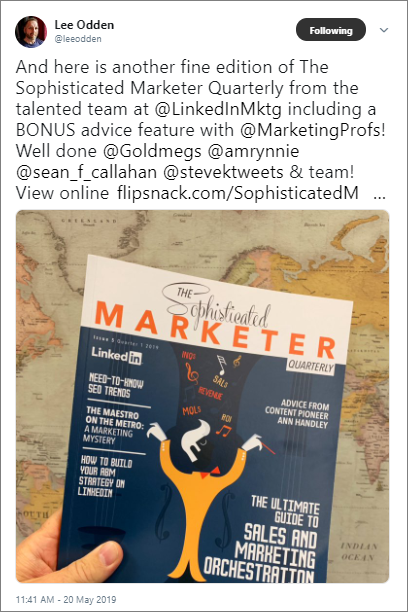
It’s one of those classic mainstays that has largely gone out of style. How often do you receive a piece of mail at work that is actually tailored to you personally, and worth your time? Would such an item stand out to you? Physical mail doesn’t have a place in most digitally-based strategies, which is exactly why it may offer a unique opportunity to reach important contacts. Tracking down someone’s office mailing address is often easier than tracking down their email address. This method isn’t necessarily cheap or scalable, but in cases where you really want to get your content in front of a particular account, sending a printed version (or just a note encouraging them to check it out online) can be a sneaky winner. One B2B-centric example is *LinkedIn’s Sophisticated Marketer Quarterly, which stands out as a glossy, colorful product you can hold in your hands. It’s a great place for B2B practitioners to be featured. Sophisticated Marketers Guide Quarterly

Find New Audiences for Your Best B2B Content

One of the most valuable objectives for B2B brands is also one of the most challenging: generating awareness and influence with new audiences and prospects. Continuing to push the same cookie-cutter social promotion tactics won’t do the trick. In the era of content saturation, we must remain vigilant in finding new ways to reach and engage the right people. [bctt tweet="Content promotion can’t be effective if it’s an afterthought. @leeodden #B2BContentMarketing #ContentPromotion" username="toprank"] Whether embracing the channels above or identifying others that make sense for your brand, I encourage you to think outside the box when it comes to promotion. And whatever you do, don’t make this essential marketing an afterthought. Because that leads to lonely content and general sadness. Ahhh here I go again, I’d better log off... via GIPHY Want more guidance to B2B content marketing success that’ll turn your frown upside-down? Check out Annie Leuman’s recent write-up on powering through the summer slump. *Disclosure: LinkedIn is a TopRank Marketing client.

The post B2B Content Not Making an Impact? Try These 7 Underutilized Promotion Channels appeared first on Online Marketing Blog - TopRank®.

29 May 16:26

Why Are You Selling Dog Food To Cat People?

by Brian Basilico

I have a question for you today. And that question is: Why are you selling dog food to cat people? Now, I know you are probably not selling dog food, and you probably don’t sell to cat people. But chances are, your business may be doing just that. Let me explain.

Advertising Mindset

So I was talking with a prospect who was interested in learning more about social media. But really, what he was looking for was a replacement for advertising. He tells me, “I used to spend $3,500 a month on Yellow Page ads, and now I’ve got to spend $500 to do something online. I don’t get it.”

Okay. So the $3,500 made sense, but the online spending of $500 doesn’t. The Yellow Pages was something that was around for a long, long time, and it made something happen. It made the phone ring. So when your phone rang, it gave you feedback. It said, “Hey, this is working. This is worth the time and investment. I can see ROI.”

But digitally, it’s a lot harder. It’s harder because you don’t hear clicks. You don’t see visits. You don’t get reports on engagement, unless you go look for it. And that’s one of the biggest problems: what are they looking for? What are you looking for? What are you spending your money on? And what are you getting in return for that investment?

Follow The Money?

Now, he kept saying that he wanted to work with consumers, but there was a lot more money in corporate. The reason he wanted the consumers is because it’s an easy sale. It’s something that immediately happens, where the other one is a longterm game. It takes time to build up corporate clients. Selling dog food to cat people basically is this: If you say that somebody has a pet, which means they’re into pets because they have a cat, maybe eventually they’ll get a dog.

Let’s say I go into Constant Contact and I create an email. I say, “Okay, here’s some information about cats. And here’s some information about dogs. And here’s some information about hamsters, and maybe bunnies and rabbits and birds, and whatever. You’re into pets, right?” Well, unfortunately, that’s the way a lot of people treat their marketing. “Everybody uses water, right? So as long as I talk about water, everybody’s got to drink it. Pets drink it. People drink it, everything. It runs down the middle of the street when it rains. Who deals with water but a plumber? Okay, a plumber. Everybody uses water right?”

The Riches Are In The Niches

Well, consumers have a different need. Do they need repairs? Do they need remodeling? Do they have other concerns? Maybe their water is hard, or something along that line. Businesses, yeah, they have the same things. They have water fountains, they have bathrooms. But maybe they use water in production, which is different. Maybe they need to prep a space for a lease. Maybe they’re moving in and they want to move the bathroom from one side to the other. It’s a different need. It’s a different audience.

Now, break it down even further. Some consumers have homes. Some don’t. Fight? So the ones that need repairs who have homes, they’re your clients. The ones who need repairs who live in apartments aren’t, because it’s the superintendent or the property manager that has to deal with that. So even though there’s a consumer involved, it’s a different audience. It’s a different message. And it’s a different value.

Same thing with businesses. Some businesses own their own buildings while others are renting. So are you talking to the business owner who owns the building and is maintaining it, or are you talking to the leasing company or the property management company? They have different needs and different concerns. Yeah, of course, they all want the cheapest price, but are they willing to sacrifice their livelihoods on it?

Communicating The Value Difference

There’s a big difference between a company that’s been established, that’s been around for a long time — that has experience, that has training, that has certificates — than something called “two chucks in a truck,” right? Two guys who just happened to lose their jobs put a sticker on the side and drive around looking for business.

The question is: Is your audience being fed the right information? Now, advertising is a mindset. And that mindset is, if you put out an ad, enough people will see it, sooner or later they will kind of pare it down and say, “This is important to me.” Now, in the old days, you could put an advertisement in the Yellow Pages or a newspaper, and people would self-categorize. They would say, “Okay, yeah, there’s an ad for women’s clothes and men’s clothes and homeowners and plumbing and whatever.” They would narrow down and find the ad that was appropriate to them. But we live in a short-attention-span world. And if you send somebody an email with cat food and dog food and rabbit food and bird food, they’re going to look at it and say, “I’m confused. I have a cat. Why am I getting all of this other stuff?”`

Countering The Advertising Mindset

That’s the difference between the advertising mindset, which is very transactional, and the relationship building mindset, which is something that takes time. If you’re sending out an email or any kind of marketing message on social media or anything, here are five steps that you need to take:

  1. First and foremost, pare down your audience. Know who you’re speaking to.
  2. Number two, customize your message. Make sure that message is geared towards them and their problem at this specific time.
  3. The next thing is to include only one message per email. You don’t want to make them choose, because they’ll get confused.
  4. Next, put one link in that email. And put it in up to three times. Again, too many choices leads to confusion.
  5. And then finally, be consistent. If you’re going to email an audience, do it every single week. The more consistent you are, the more people will appreciate it. And they’ll start to say, “I’m looking forward to that.”

Objections

Now, when I suggest this to customers, I get usually the same batch of objections.

  1. First, “I don’t have time to break out all of those emails and do all of that stuff.” But let me tell you, your audience doesn’t have time to do the work for you. So if you don’t do it for them, they won’t repay you with their attention, their clicks, and their business.
  2. The next thing is, “I need sales now.” Well, yeah, but the problem is: Is your message matched up with what your clients need now? And do they understand the value that you provide, that you’re not just two chucks in a truck?
  3. And then finally, “But if I don’t sell to every audience, I’m missing opportunities.” Well, you can sell to every audience, you just have to do it one at a time.

Final Thoughts

Let me break that down. The bottom line is, the riches are in niches. A niche has an itch, and they’re asking for your help to scratch it. The more you categorize your information, and deliver it to the right people at the right time, the better the response rate. So yeah, you may not get 1,000 people to respond, but what if you got 10 really interested people at one time? How would that change your business?

I would love to hear your thoughts on this. Comment below and share your thoughts, ideas or questions about showing the concepts presented. Have you had to overcome any of the presented concepts? What worked and what did not live up to expectations? Do you have any ideas or advice you could share?

28 May 16:51

How to Make Your Boring Industry Really Interesting

by Amanda Clark

At Grammar Chic, Inc., we truly believe that content marketing can deliver meaningful results for any company, in any industry.

But some may have to work a little bit harder for it than others.

Simply put, some industries more naturally lend themselves to fresh, exciting, compelling content. But what happens if you sell annuities? What happens if you prepare tax returns? What happens if you’re an estate planning lawyer? We’re not saying these things are unimportant! We’re just saying they may not seem as flashy or as exciting to the average reader.

It may cause you to wonder what can be done to turn your “boring” line of work into really rich, persuasive content—content that people will actually want to read.

Here’s our advice.

Always Be Helpful

A good rule of thumb: If your content is helpful, someone out there’s going to find it interesting.

Take our example of an estate planning attorney. You may write a blog post about how to draft a will; when a living trust is necessary; or how to choose guardians for your children.

Those topics may not jump off the page, and sure, some may say they’re unglamorous. But people want to know those things. They need to know those things. And if you can provide that information in a clear and actionable way, there will be readers who find great value in it—

period.

Maybe the best advice here is to change your way of thinking: If you can’t make your content exciting, just make sure that it helps someone.

Write Without Jargon

One thing that can stand between you and an engaged readership is reliance on industry jargon.

We see this a lot when working with insurance companies, who trot out a bunch of words and phrases that may be foreign to the layperson. Of course, that’s the quickest way to get eyes to glaze over!

Don’t think (or write) in terms of industry buzzwords. Instead, come at it from the customer’s point of view. What are their pain points? What answers do they seek? And how can your company benefit from them? Focus on those things, with as much clarity as you can.

Inject Some Personality

Your business may be boring—or at least, that may be how people perceive it.

But you’re not boring!

Feel free to inject some personality, even humor, into your content. Sometimes, that’s all it takes to make your content come alive.

This might mean throwing in some personal anecdotes, some gentle self-deprecation, or even some specific examples from past clients (ensuring you keep things anonymous, of course).

Another strategy is to draw connections to shows, movies, or other pop culture reference points that might mean something to you. Remember our posts invoking Mad Men and The Walking Dead?

Get Help from the Pros

It’s frustrating to feel like your industry is just a dead space for compelling content—but we honestly believe that any field can be made enticing, or at the very least valuable, to the reader.

28 May 16:51

How To Improve Supply Chains With Machine Learning: 10 Proven Ways

by Louis Columbus

Bottom line: Enterprises are attaining double-digit improvements in forecast error rates, demand planning productivity, cost reductions and on-time shipments using machine learning today, revolutionizing supply chain management in the process.

Machine learning algorithms and the models they’re based on excel at finding anomalies, patterns and predictive insights in large data sets. Many supply chain challenges are time, cost and resource constraint-based, making machine learning an ideal technology to solve them. From Amazon’s Kiva robotics relying on machine learning to improve accuracy, speed and scale to DHL relying on AI and machine learning to power their Predictive Network Management system that analyzes 58 different parameters of internal data to identify the top factors influencing shipment delays, machine learning is defining the next generation of supply chain management. Gartner predicts that by 2020, 95% of Supply Chain Planning (SCP) vendors will be relying on supervised and unsupervised machine learning in their solutions. Gartner is also predicting by 2023 intelligent algorithms, and AI techniques will be an embedded or augmented component across 25% of all supply chain technology solutions.

The ten ways that machine learning is revolutionizing supply chain management include:

  • Machine learning-based algorithms are the foundation of the next generation of logistics technologies, with the most significant gains being made with advanced resource scheduling systems. Machine learning and AI-based techniques are the foundation of a broad spectrum of next-generation logistics and supply chain technologies now under development. The most significant gains are being made where machine learning can contribute to solving complex constraint, cost and delivery problems companies face today. McKinsey predicts machine learning’s most significant contributions will be in providing supply chain operators with more significant insights into how supply chain performance can be improved, anticipating anomalies in logistics costs and performance before they occur. Machine learning is also providing insights into where automation can deliver the most significant scale advantages. Source: McKinsey & Company, Automation in logistics: Big opportunity, bigger uncertainty, April 2019. By Ashutosh Dekhne, Greg Hastings, John Murnane, and Florian Neuhaus

  • The wide variation in data sets generated from the Internet of Things (IoT) sensors, telematics, intelligent transport systems, and traffic data have the potential to deliver the most value to improving supply chains by using machine learning. Applying machine learning algorithms and techniques to improve supply chains starts with data sets that have the greatest variety and variability in them. The most challenging issues supply chains face are often found in optimizing logistics, so materials needed to complete a production run arrive on time. Source: KPMG, Supply Chain Big Data Series Part 1

  • Machine learning shows the potential to reduce logistics costs by finding patterns in track-and-trace data captured using IoT-enabled sensors, contributing to $6M in annual savings. BCG recently looked at how a decentralized supply chain using track-and-trace applications could improve performance and reduce costs. They found that in a 30-node configuration when blockchain is used to share data in real-time across a supplier network, combined with better analytics insight, cost savings of $6M a year is achievable. Source: Boston Consulting Group, Pairing Blockchain with IoT to Cut Supply Chain Costs, December 18, 2018, by Zia Yusuf, Akash Bhatia, Usama Gill, Maciej Kranz, Michelle Fleury, and Anoop Nannra

  • Reducing forecast errors up to 50% is achievable using machine learning-based techniques. Lost sales due to products not being available are being reduced up to 65% through the use of machine learning-based planning and optimization techniques. Inventory reductions of 20 to 50% are also being achieved today when machine learning-based supply chain management systems are used. Source: Digital/McKinsey, Smartening up with Artificial Intelligence (AI) – What’s in it for Germany and its Industrial Sector? (PDF, 52 pp., no opt-in).

  • DHL Research is finding that machine learning enables logistics and supply chain operations to optimize capacity utilization, improve customer experience, reduce risk, and create new business models. DHL’s research team continually tracks and evaluates the impact of emerging technologies on logistics and supply chain performance. They’re also predicting that AI will enable back-office automation, predictive operations, intelligent logistics assets, and new customer experience models. Source: DHL Trend Research, Logistics Trend Radar, Version 2018/2019 (PDF, 55 pp., no opt-in)

  • Detecting and acting on inconsistent supplier quality levels and deliveries using machine learning-based applications is an area manufacturers are investing in today. Based on conversations with North American-based mid-tier manufacturers, the second most significant growth barrier they’re facing today is suppliers’ lack of consistent quality and delivery performance. The greatest growth barrier is the lack of skilled labor available. Using machine learning and advanced analytics manufacturers can discover quickly who their best and worst suppliers are, and which production centers are most accurate in catching errors. Manufacturers are using dashboards much like the one below for applying machine learning to supplier quality, delivery and consistency challenges. Source: Microsoft, Supplier Quality Analysis sample for Power BI: Take a tour, 2018

  • Reducing risk and the potential for fraud, while improving the product and process quality based on insights gained from machine learning is forcing inspection’s inflection point across supply chains today. When inspections are automated using mobile technologies and results are uploaded in real-time to a secure cloud-based platform, machine learning algorithms can deliver insights that immediately reduce risks and the potential for fraud. Inspectorio is a machine learning startup to watch in this area. They’re tackling the many problems that a lack of inspection and supply chain visibility creates, focusing on how they can solve them immediately for brands and retailers. The graphic below explains their platform. Source: Forbes, How Machine Learning Improves Manufacturing Inspections, Product Quality & Supply Chain Visibility, January 23, 2019

  • Machine learning is making rapid gains in end-to-end supply chain visibility possible, providing predictive and prescriptive insights that are helping companies react faster than before. Combining multi-enterprise commerce networks for global trade and supply chain management with AI and machine learning platforms are revolutionizing supply chain end-to-end visibility. One of the early leaders in this area is Infor’s Control Center. Control Center combines data from the Infor GT Nexus Commerce Network, acquired by the company in September 2015, with Infor’s Coleman Artificial Intelligence (AI) Infor chose to name their AI platform after the inspiring physicist and mathematician Katherine Coleman Johnson, whose trail-blazing work helped NASA land on the moon. Be sure to pick up a copy of the book and see the movie Hidden Figures if you haven’t already to appreciate her and many other brilliant women mathematicians’ many contributions to space exploration. ChainLink Research provides an overview of Control Center in their article, How Infor is Helping to Realize Human Potential, and two screens from Control Center are shown below.

  • Machine learning is proving to be foundational for thwarting privileged credential abuse which is the leading cause of security breaches across global supply chains. By taking a least privilege access approach, organizations can minimize attack surfaces, improve audit and compliance visibility, and reduce risk, complexity, and the costs of operating a modern, hybrid enterprise. CIOs are solving the paradox of privileged credential abuse in their supply chains by knowing that even if a privileged user has entered the right credentials but the request comes in with risky context, then stronger verification is needed to permit access. Zero Trust Privilege is emerging as a proven framework for thwarting privileged credential abuse by verifying who is requesting access, the context of the request, and the risk of the access environment. Centrify is a leader in this area, with globally-recognized suppliers including Cisco, Intel, Microsoft, and Salesforce being current customers. Source: Forbes, High-Tech’s Greatest Challenge Will Be Securing Supply Chains In 2019, November 28, 2018.
  • Capitalizing on machine learning to predict preventative maintenance for freight and logistics machinery based on IoT data is improving asset utilization and reducing operating costs. McKinsey found that predictive maintenance enhanced by machine learning allows for better prediction and avoidance of machine failure by combining data from the advanced Internet of Things (IoT) sensors and maintenance logs as well as external sources. Asset productivity increases of up to 20% are possible and overall maintenance costs may be reduced by up to 10%. Source: Digital/McKinsey, Smartening up with Artificial Intelligence (AI) – What’s in it for Germany and its Industrial Sector? (PDF, 52 pp., no opt-in).

References

Accenture, Reinventing The Supply Chain With AI, 20 pp., PDF, no opt-in.

Bendoly, E. (2016). Fit, Bias, and Enacted Sensemaking in Data Visualization: Frameworks for Continuous Development in Operations and Supply Chain Management Analytics. Journal Of Business Logistics, 37(1), 6-17.

Boston Consulting Group, Pairing Blockchain with IoT to Cut Supply Chain Costs, December 18, 2018, by Zia Yusuf, Akash Bhatia, Usama Gill, Maciej Kranz, Michelle Fleury, and Anoop Nannra

28 May 16:50

A former Y Combinator partner says a founder's answer to this one question on the tech accelerator's application strongly predicts their startup success

by Shana Lebowitz

Harj Taggar

  • Harj Taggar is a former partner at Y Combinator, the tech accelerator that launched a number of successful startups including Airbnb, Dropbox, and Instacart. He's currently the cofounder and CEO of Triplebyte.
  • Taggar said he and his YC partners placed a high value on learning what applicants did in their spare time.
  • The YC application still includes the prompt: "Please tell us about an interesting project, preferably outside of class or work, that two or more of you created together."
  • The YC partners looked specifically for people who had created projects or explored new ideas beyond the requirements of work or school.
  • Visit Business Insider's homepage for more stories.

When he joined Y Combinator as a venture partner in 2010, Harj Taggar was the first full-time employee at the startup accelerator. He and his partners were constantly refining their selection process.

As they watched accepted entrepreneurs build their businesses, the partners came to one glaring realization: The most successful founders didn't always look so good on paper.

Taggar, who is currently the cofounder and CEO of Triplebyte, told Business Insider: "Often, we'd fund people that had been promoted and risen up the ranks at really top quality companies like Google. But they'd work at a startup and they couldn't handle the ambiguity. It wasn't a good fit for them."

On the other hand, Taggar said, they'd see people "who had an unusual background, an eclectic mix of things that they'd done, and actually turn out to be really great at [entrepreneurship]."

He and his partners became obsessed with figuring out the best ways to identify top talent, without relying on résumés.

At some point, they realized that one of the best predictors of a founder's success was what the founders did in their spare time.

"What projects did they work on, and in particular when did they work on projects out of personal interest, because they thought that they would learn something or they were just curious about something?" Taggar said. In other words, he was less interested in projects they did because it was required for school or for work.

The Y Combinator partners started looking more closely at founders' responses to a prompt that's still on the application today: "Please tell us about an interesting project, preferably outside of class or work, that two or more of you created together."

Read more: Read the application form that got the 'Spotify for meditation' into the selective startup accelerator that launched Airbnb and Dropbox

Y Combinator looks for curiosity and the willingness to test new ideas

In the last decade, Y Combinator has launched a number of successful startups, including Airbnb, Dropbox, and Instacart.

Some startups that have applied to Y Combinator have publicly posted their initial applications, so you can see how they responded to that particular prompt.

When The Muse cofounders applied in 2011, they mentioned a "10-year strategic review for Sesame Workshop (aka Sesame Street)'s South African production, Takalani Sesame." Drew Houston, the founder of Dropbox, applied in 2007 and mentioned an online SAT prep company he'd previously launched.

And when the cofounders of Buffer applied in 2011, they wrote simply, "There are no shared projects before Buffer." Interestingly, they were rejected — although they've now raised $3.9 million.

Taggar recalled the application submitted by Brian Armstrong, cofounder of Coinbase. At the time, Taggar said, "it wasn't clear that [Bitcoin] was going to be anything particularly popular. But [Armstrong] had already spent a bunch of time building tools for it and making it easier to buy Bitcoin." Taggar said it was evident that Armstrong was simply interested in this "cool new thing."

Armstrong's interest in building cryptocurrency tools on the side is a prime example of what Y Combinator is looking for, Taggar said. "We found that a predictor of 'would we want to fund someone' is: Is this someone that's got a curiosity about the world and likes getting ideas off the ground to see what happens?"

SEE ALSO: Companies like IKEA and Accenture are following in Google's footsteps to stay ahead of the curve

Join the conversation about this story »

NOW WATCH: Warren Buffett, the third-richest person in the world, is also one of the most frugal billionaires. Here's how he makes and spends his fortune.

28 May 16:50

The Top 4 Causes of Customer Churn and How to Address Them

by Mia Jacobs

In the customer-centric economy, retaining current customers is a top priority. Not only are new customers expensive to win over, but loyal customers are more valuable in the long run. They trust your brand and are more likely to spread word-of-mouth advertising or accept an upsell. Plus, retaining a following of customers gives you a good brand image, as it shows that your company is capable of inspiring loyalty.

So, instead of always seeking new customers, focus on keeping existing customers happy and preventing churn. In order to do this, you need to communicate with your customers, listen to their feedback, and constantly be on the lookout for new ways to provide value.

Customers can churn for a variety of reasons, and it’s not always clear why they are leaving. Fortunately, there are strategies that will help you discover the causes of customer churn so that you can take steps to mitigate them.

The Most Common Causes of Customer Churn

To pinpoint why your customers may be churning, begin with data. Analyze the characteristics of customers who churn and those who don’t. By uncovering commonalities within these customer groups, you should be able to discover your company’s pain points. Then, you can address the sources of churn throughout your organization or product line.While every organization is unique, these are some of the most common reasons for customer churn:

#1: Value Isn’t Apparent

If customers are churning, it may be because they don’t see the value of your brand or product. This is especially true during onboarding. When you don’t properly support customers who are new to your product or service, they won’t learn how to use all its features. As a result, they’re likely to stop engaging because they aren’t seeing the benefits they signed up for.

To prevent this, show customers the value of their investment, beginning with onboarding and throughout the adoption phase. Establish goals and the metrics needed to measure them early on within the customer journey. Show customers how to unlock the full value of the product or service, and nurture them along the journey whenever needed. Monitor their progress and take notice if a customer is neglecting to use a key feature. This may mean they need further education or support. When new features become available, make sure current customers are aware of how these additions can provide even more value.

#2: It Takes Too Long to Get Going

Customers want a product that’s intuitive and self-explanatory. If implementation is slow, there’s a greater chance that the customer will run into roadblocks, and that sets the stage for early abandonment.

So, make sure customers experience a speedy and efficient onboarding phase. Give them support by ensuring customer success teams are only a message or phone call away. Help them establish the goals they wish to achieve with the product and aim to get them using the product independently in a reasonable timeframe. As a result, customers won’t grow impatient and will be able to start reaping the benefits of your product quickly.

#3: Complaints Aren’t Resolved Satisfactorily

If customers have complaints that your team is not responding to, you could be alienating them and missing an opportunity to strengthen the customer relationship. No product or organization is perfect, but when customers find themselves reporting the same problems again and again or not having their complaints resolved, they’ll quickly become frustrated with your lack of responsiveness. And frustration easily grows into churn.

Give your team the ability to internally escalate problems to development teams, as well as the information they need to give out correct updates. When customers escalate an issue, respond quickly and aim to resolve the issue as soon as possible. By handling escalations in an efficient manner, you not only deal with the problem but you also demonstrate that you care about your customers. In that way, escalations can actually help you form a deeper bond with your customers. Plus, you can take the feedback gathered during escalations to make your product or workflow even better.

#4: Poor Customer Engagement

Customer engagement in the customer-centric economy should be an ongoing process. You don’t want new customers to feel lost, left behind with a new product or subscription they don’t know how to operate. And as time goes on, you don’t want to lose contact with them. In order to retain lifelong customers, you need to educate and engage them on a regular basis.

Monitor customer usage and behavior, then tailor every communication to the individual customer. Try using a customer success platform to send them automated emails if their usage falls below a certain critical threshold. Watch their frequency of use, which features they do and do not use, and check in to see how they are doing with your product. You could send customers offers or discounts to mark occasions, such as their service anniversary or birthday, to remind them that they are valued. Most of all, be sure you are continually checking in and nurturing the relationship with positive, proactive engagements.

Reduce Churn Using a Customer Success Platform

Your customers are invaluable, so it’s vital that you demonstrate why renewing with you is better than seeking out your competitors. But if you’re having trouble identifying and engaging customers who are in danger of churning, try using a customer success platform.

A customer success platform allows you to gather information from various systems into one central location, making it easy to see how a customer is engaging, or not engaging, with your team. It can also be configured to trigger automated tasks based on customer actions, ensuring that at-risk customers are flagged. That way, your team can quickly take the action needed to prevent churn. Such a platform can also automatically assign tasks to customer success teams, hold recurring account reviews, or reach out to customers who have completed the onboarding period.

In short, a quality customer success platform can help you prevent churn by making it easier to provide your customers the care and attention they require. By being attentive and proactive, you can retain and nurture current customers which is, after all, the secret to success in today’s customer-centered economy.

28 May 16:49

Pricing Strategies & Models: An In-Depth Look at How to Price Your Products Effectively

by adecker@hubspot.com (Allie Decker)

Before I make a purchase, I do my homework. How many companies are selling what I want, and at what price? My goal is to balance cost and quality — if a brand offers the best of both worlds, I’m sold.

But how do companies find the sweet spot for sales? With more than 80% of consumers now comparing prices, you’ve got to get it right. Set prices too high, and you risk losing sales. Set them too low, and you lose out on revenue.

While there’s no hard-and-fast rule to find optimal price points, the process doesn’t have to be a gamble. To help your business navigate evolving customer expectations, I’ve created the ultimate guide to pricing strategies and models. Let’s dive in.

Download Now: Free Sales Pricing Strategy Calculator

Table of Contents

Key components of pricing strategies include:

  • Revenue goals
  • Marketing objectives
  • Target audience
  • Brand positioning
  • Product attribute.

Strategies are also influenced by external factors like consumer demand, competitor pricing, and overall market trends.

Before I talk about pricing strategies, let’s review an important pricing concept that will apply regardless of what strategies you use.

Price Elasticity of Demand

Price elasticity of demand determines how a change in price affects consumer demand.

If consumers still purchase a product despite a price increase, its demand is inelastic. Fuel is a good example. I rely on my car to get me from point A to point B, and my car needs fuel to run. Even when gas gets more expensive, I pay the price.

If price changes significantly impact purchasing decisions, demand is elastic. Consider streaming TV and movie services — more than half of consumers say they’ve canceled a streaming service due to price hikes.

Unitary elastic demand occurs when the percentage change in quantity demanded is exactly equal to the percentage change in price.

You can calculate price elasticity using this formula:

% Change in Quantity ÷ % Change in Price = Price Elasticity of Demand

The concept of price elasticity helps you understand whether your product or service is sensitive to price fluctuations and to what degree.

You typically conduct a pricing analysis when considering new product ideas, developing your positioning strategy, or running marketing tests. I’d also recommend running a price analysis once every year to evaluate your pricing against market competitors and consumer expectations.

How to Conduct a Pricing Analysis

Here’s a step-by-step guide to help you through the price analysis process.

1. Determine the true cost of your product or service.

To calculate the true cost of a product or service, first calculate all your expenses, including fixed and variable costs. Rental or lease payments, insurance, and property taxes are examples of fixed costs. Variable costs include materials, labor, and logistics.

Once you’ve determined these costs, subtract them from the price of your product or service.

True cost = Sales price – (fixed + variable costs)

For example, if the sales price of your product is $10, your fixed costs are $5, and your variable costs are (currently) $3, your total cost is $2. This means you make $2 for every product sold. If, however, your fixed costs are $7 and your variable costs are $4, you’re losing a dollar on every sale.

2. Understand how your target market and customer base.

In my experience, surveys, focus groups, or questionnaires can help determine how the market responds to your pricing model. You get a glimpse into what your target customers value and how much they’re willing to pay for the value your product or service provides.

3. Analyze competitor prices.

There are two types of competitors to consider when conducting a pricing analysis: direct and indirect.

Direct competitors sell the exact same product that you sell. These types of competitors are likely to compete on price, so they should be a priority to review in your pricing analysis.

Indirect competitors are those who sell alternative products that are comparable to what you sell. If a customer is looking for your product but it’s out of stock or out of their price range, they may go to an indirect competitor to get a similar product.

I suggest creating a competitive analysis chart to visualize how your pricing compares to competitors and identify any gaps or opportunities.

4. Review any legal or ethical constraints to cost and price.

There’s a fine line between competing on price and falling into legal and ethical trouble. For example, you need to understand price-fixing and predatory pricing.

Pricing fixing happens when multiple companies collaborate to set the price of identical items, in turn eliminating competition. Predatory pricing occurs when one company sets unrealistically low price points for products to corner the market. Both practices violate American antitrust laws.

Cost, Margin, & Markup in Pricing

Understanding the role of cost, margin, and markup is also essential when choosing a pricing strategy, especially if you want your pricing to be cost-based.

Cost

Cost refers to the fees you incur from manufacturing, sourcing, or creating the product you sell. They include materials, the cost of labor, fees paid to suppliers, and any losses incurred. Cost does not include overhead and operational expenses such as marketing, advertising, maintenance, or bills.

Margin

Margin, also called profit margin, is the difference between the selling price of a product and its cost, expressed as a percentage of the selling price. It shows you the profitability of your product.

There are two types of margins:

  • Gross margin. This is calculated as (Sales Price – Cost of Goods Sold) / Sales Price x 100. It reflects the profitability before accounting for operating expenses.
  • Net margin. This is calculated as (Net Profit / Sales Price) x 100. It includes all expenses, providing a more comprehensive view of profitability.

Consider a product sold for $120 that costs $70 to produce:

Gross Margin = (120 − 70​) / 120 x 100 = 41.6%

To calculate net profit, subtract any additional expenses from your gross profit, such as operating costs or taxes. In the example above, our gross profit is $50 (120 - 70). If operating costs are $20 and taxes are $10, our net profit is $40. (70 - 20 -10). Now, we can calculate our net margin.

Net Margin = (40 / 120) x 100 = 33.3%

Markup

Markup refers to the additional amount you charge for your product over the production and manufacturing fees. It allows you to set prices that align with market expectations and your business goals.

For example, if a product costs $70 to produce and you sell it for $100, the markup is $30, or approximately 42.9% of the cost price.

Now, I’ll walk you through some common pricing strategies. It’’s important to note that these aren’t necessarily standalone strategies — many can be combined when setting prices for your products and services.

1. Competition-Based Pricing Strategy

Competition-based pricing is also known as competitive pricing or competitor-based pricing. This pricing strategy focuses on a company‘s product or service’s existing market rate (or going rate). It doesn’t consider the cost of its product or consumer demand.

Instead, a competition-based pricing strategy uses the competitors’ prices as a benchmark. Businesses that compete in a highly saturated space may choose this strategy since a slight price difference may be the deciding factor for customers.

With competition-based pricing, you can price your products slightly below your competition, the same as your competition, or slightly above your competition.
competition-based pricing strategy, image of a tug-of-war

For example, if I sell marketing automation software, and my competitors’ prices range from $19.99 per month to $29.99 per month, I could set my price at $18.99 on the low end, $30.99 on the high end, or $24.99 if I want to stay in the middle.

I think a great example of a competitive pricing model is Amazon. The company uses automated repricing tools that constantly monitor competitor prices and adjust their prices accordingly. This strategy ensures Amazon’s prices are always competitive, often making them the lowest-priced option in the market.

When to use: Use competition-based strategies to capture consumer attention in saturated markets.

Competition-Based Pricing Strategy in Marketing

The approach has helped Amazon attract price-sensitive customers and maintain its ecommerce dominance. Consumers seek the best value, which isn’t always the lowest price. Competitive pricing can help your brand attract customers, especially if your marketing teams can offer something unique like exceptional customer service, a generous return policy, or exclusive loyalty benefits.

Advantages

Disadvantages

  • Easy to implement.
  • Ensures prices are competitive.
  • Can be adjusted quickly in response to competitors' price changes.
  • May lead to a lack of unique value proposition.
  • Can result in continuous undercutting and affect profitability.
  • Focuses solely on competitors' prices, potentially ignoring production costs and customer value perception.

2. Cost-Plus Pricing Strategy

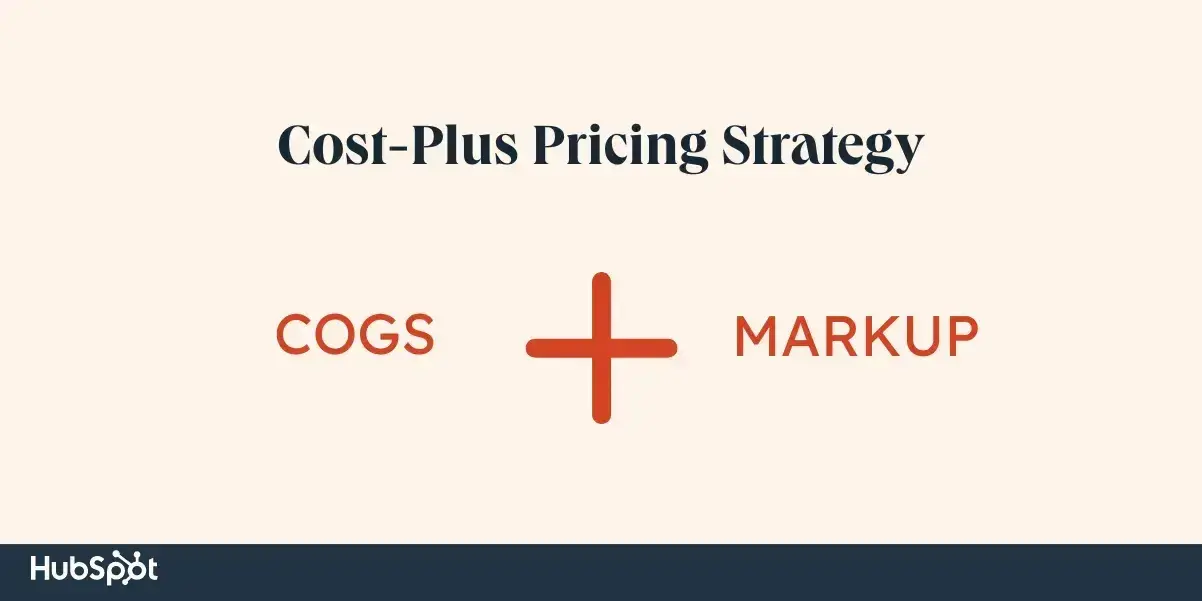
cost-plus pricing strategy, image of cogs + markup

A cost-plus pricing strategy (also known as markup pricing) focuses solely on the cost of producing your product or service or your cost of goods sold (COGS).

To apply the cost-plus method, you add a fixed percentage to your product production cost.

The formula is:

Selling Price = Cost Price x (Cost Price + Markup Percentage)

For example, let’s say you sell shoes. The total cost to produce one pair of shoes is $55. If you want to apply a 50% markup, the calculation would be:

Selling Price = $55 × (1 + 0.50) = $55 × 1.50 = $82.50

Cost-plus pricing is typically used by retailers who sell physical products. This strategy isn’t the best fit for service-based or SaaS companies as their products typically offer far greater value than the cost to create them.

When to use: Use cost-plus pricing when your competition is using the same model.

Cost-Plus Pricing Strategy in Marketing

If you’re using a cost-plus approach, focus on marketing the value of your goods compared to competitors, not the price. For example, your product might include features or add-ons that other brands do not.

Advantages

Disadvantages

  • Easy to calculate and implement.
  • Justifies price changes to customers based on changes in production costs.
  • Ensures all costs are covered.
  • Ignores market conditions and demand.
  • Inflexible to changes in cost or market.
  • May lead to inefficiencies within the company.

3. Dynamic Pricing Strategy

Dynamic pricing strategy is also known as surge pricing, demand pricing, or time-based pricing. It involves adjusting prices in real time based on factors such as market demand, competitor prices, and other external conditions.

In my experience, this flexible approach helps maximize revenue and maintain competitiveness.
dynamic pricing strategy, image of a bar graph with descending bar heights

Hotels, airlines, event venues, and utility companies use dynamic pricing by applying algorithms that consider competitor pricing, demand, and other relevant factors. These algorithms allow companies to shift prices to match what the customer is willing to pay at the exact moment they’re ready to make a purchase.

There is no single formula for dynamic pricing as it involves complex algorithms, but a basic version can be represented as:

Selling Price = Base Price + (Demand Factor × Base Price)

Let’s say your product costs $20. Research shows that consumer demand is up 30%.

Selling Price = 20 + (0.30 x 20) = 20 + 6 = $26.

A great example of a company that uses a dynamic pricing model is Uber. During peak hours or high-demand situations (e.g., Friday nights, bad weather), Uber’s algorithms monitor the number of ride requests, and if the demand exceeds the supply of available drivers, it temporarily increases the ride prices.

When to use: Use dynamic pricing when your product or service is in high demand, and when there aren’t many viable competitors operating in the same space.

Dynamic Pricing Strategy in Marketing

Dynamic pricing can help keep your marketing plans on track. Your team can plan for promotions in advance and configure the pricing algorithm you use to launch the promotion price at the perfect time. You can even A/B test dynamic pricing in real time to maximize your profits.

Advantages

Disadvantages

  • Allows you to capitalize on high-demand periods.
  • Real-time pricing adjustments help you stay competitive.
  • Helps in managing inventory by adjusting prices to influence demand.
  • Frequent price changes can confuse or frustrate customers.
  • Requires sophisticated technology and data analytics.
  • Competitors may also adopt dynamic pricing, leading to potential price wars.

4. High-Low Pricing Strategy

A high-low pricing strategy starts with high product sales prices that fall when the product loses novelty or relevance.

Discounts, clearance sections, and year-end sales are examples of high-low pricing in action, which is why this strategy may also be called a discount pricing strategy.

This approach aims to capture different segments of the market, starting with customers willing to pay a premium and later attracting more price-sensitive shoppers as the price drops.
high-low pricing strategy, image of a gift box and the words black friday sale

High-low pricing is commonly used by retail firms that sell seasonal items or products that change often, such as clothing, decor, and furniture.

For example, in 2023, Nike used the high-low pricing strategy for its Court Legacy sneaker. Initially, the shoe was sold at a high price to attract customers eager for the latest release.

As demand decreased and new models came out, Nike lowered the price through promotions and discounts. This strategy helped Nike manage inventory and attract a broader customer base, including price-sensitive shoppers who waited for discounts. Now, the shoe is no longer sold by Nike directly but can be found on reseller websites for a lower price.

When to use: Use high-low pricing for products with high initial demand, such as special editions or limited-time offers. As demand falls, lower the price accordingly.

High-Low Pricing Strategy in Marketing

If you want to keep the foot traffic steady in your stores year-round, a high-low pricing strategy can help. By evaluating the popularity of your products during particular periods throughout the year, you can leverage low pricing to increase sales during traditionally slow months.

Advantages

Disadvantages

  • Helps clear out excess inventory.
  • Attracts different customer segments over time.
  • Allows for varied marketing campaigns, such as “limited-time offers” or “clearance sales,” to drive customer interest.
  • Lower prices reduce profit margins.
  • Shoppers may delay purchases, waiting for discounts.
  • Frequent discounts may lead customers to perceive the product as lower quality.

5. Penetration Pricing Strategy

Penetration pricing strategy involves setting a low initial price for a new product to attract customers and gain market share quickly. Once the product gains traction, the price is gradually increased.

In my experience, this pricing method works best for brand-new businesses looking for customers or for businesses that are breaking into an existing, competitive market. The goal is to entice customers away from competitors and build a substantial customer base, with the expectation that customers will remain loyal even after prices are increased.

However, penetration pricing isn’t sustainable in the long run. It’s typically applied for a short time.

For example, when Disney+ launched its streaming service, it offered subscriptions at a lower price compared to competitors like Netflix and Amazon Prime. This initial low price attracted millions of subscribers quickly.

After building a strong subscriber base, Disney+ began increasing its subscription price in 2022. By early 2023, subscriber numbers began to drop, and have remained reliability stable since.

When to use: Use penetration pricing when your brand is just getting started. Conduct customer research to determine when you should raise prices and by how much.

Penetration Pricing Strategy in Marketing

Penetration pricing, like freemium pricing, means you won't make money immediately. However, with a valuable product or service, you can increase prices over time and grow your business. Focus on marketing the value of your products, making price a secondary consideration.

Advantages

Disadvantages

  • Helps in quickly gaining market share.
  • Attracts price-sensitive customers and encourages them to switch from competitors.
  • Creates buzz and increases brand visibility.
  • Initial low prices mean lower profit margins.
  • Customers may expect low prices to continue.
  • Requires significant financial resources to sustain low prices until market share is gained.

6. Skimming Pricing Strategy

A skimming pricing strategy involves setting a high initial price for a new or innovative product to maximize revenue from early adopters. Over time, the price is gradually lowered to attract more price-sensitive customers.

Skimming is different from high-low pricing in that prices are gradually lowered over time.
skimming pricing strategy, image of a bar graph with decreasing bar heights

Apple uses the skimming pricing strategy effectively. When they launch a new iPhone, it is priced at a premium to target customers willing to pay more for the latest technology and features.

As newer models are introduced and initial demand decreases, Apple gradually reduces the price of the previous model. This approach helps them maximize revenue from early adopters and then attract more price-sensitive customers over time.

A skimming pricing strategy helps recover sunk costs and sell products well beyond their novelty. It’s worth noting, however, that this strategy can also annoy consumers who bought at full price and attract competitors who recognize the “fake” pricing margin as prices are lowered.

When to use: Use skimming when you have high demand for a product and when the type of product you are selling has proven value retention over time.

Skimming Pricing Strategy in Marketing

Skimming pricing works well for products with different life cycle lengths. For products with a short life cycle, you can quickly maximize profits at the start. For those with longer life cycles, you can maintain higher prices for a longer period. This strategy allows you to manage marketing efforts effectively without constantly adjusting prices.

Advantages

Disadvantages

  • Captures high profits from early adopters.
  • Helps recover research and development costs quickly.
  • Targets different customer segments over time.
  • Competitors may enter the market with lower prices.
  • Early buyers may feel alienated when prices drop.
  • Initial high prices may limit the number of early adopters.

7. Value-Based Pricing Strategy

Value-based pricing is a strategy where prices are set based on the perceived value of the product or service to the customer rather than on the cost of production or historical prices.

This approach aims to maximize revenue by aligning the price with the value customers place on the offering.
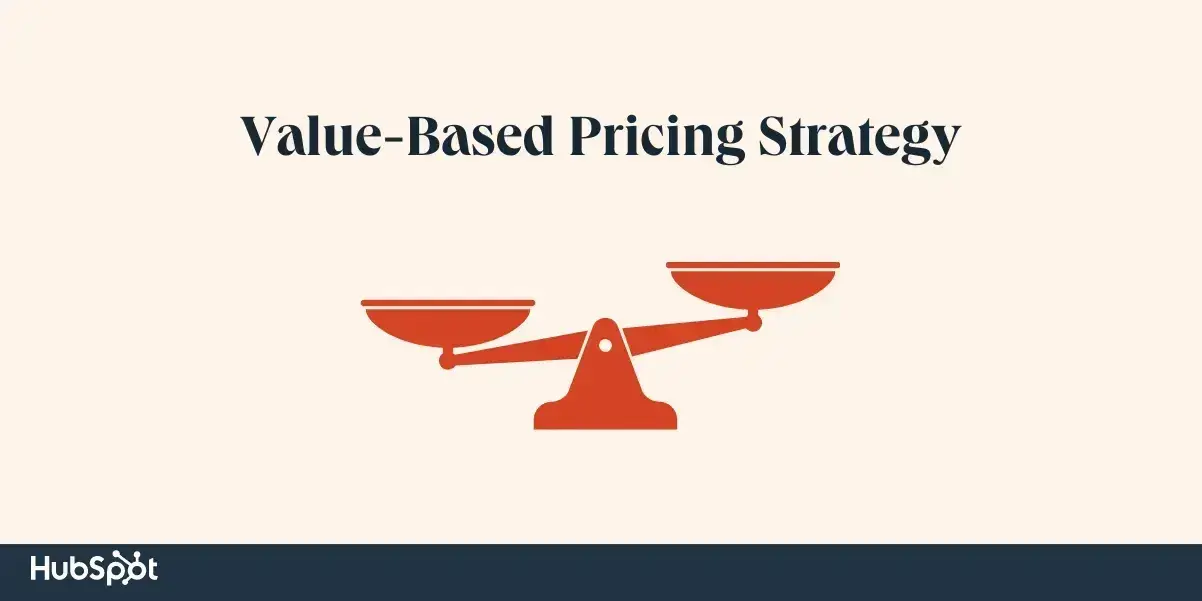
value-based pricing strategy, image of a scale

If used accurately, value-based pricing can boost your customer sentiment and loyalty. I think it can also help you prioritize your customers in other facets of your business, like marketing and service.

Tesla uses a value-based pricing strategy for its electric vehicles (EVs). This pricing reflects the perceived value of their innovative technology, sustainability, and brand prestige.

For example, the Tesla Model S is priced higher than many other EVs and luxury cars due to its high performance and advanced features. Customers are willing to pay a premium for Tesla‘s cutting-edge technology and the brand’s reputation for innovation and environmental responsibility.

When to use: Use a value-based pricing strategy when you can clearly articulate what sets your product or service apart from the competition.

Value-Based Pricing Strategy in Marketing

When marketing to customers, I recommend focusing on value to strengthen demand for your products and services. Ensure your pricing reflects what different audiences are willing to pay without using criteria that could cause issues.

Advantages

Disadvantages

  • Builds stronger customer relationships.
  • Can command higher prices if the product is perceived to offer significant value.
  • Helps differentiate the product from competitors based on value rather than price.
  • Incorrectly assessing the perceived value can lead to pricing too high or too low.
  • Prices may need frequent adjustments based on changing customer perceptions.
  • Requires extensive market research and understanding of customer perceptions.

8. Psychological Pricing Strategy

Psychological pricing is what it sounds like — it targets human psychology to boost your sales.

Consider the 9-digit effect. While a product that costs $99.99 is essentially $100, the one-cent change tricks our brains into thinking the price is significantly cheaper.
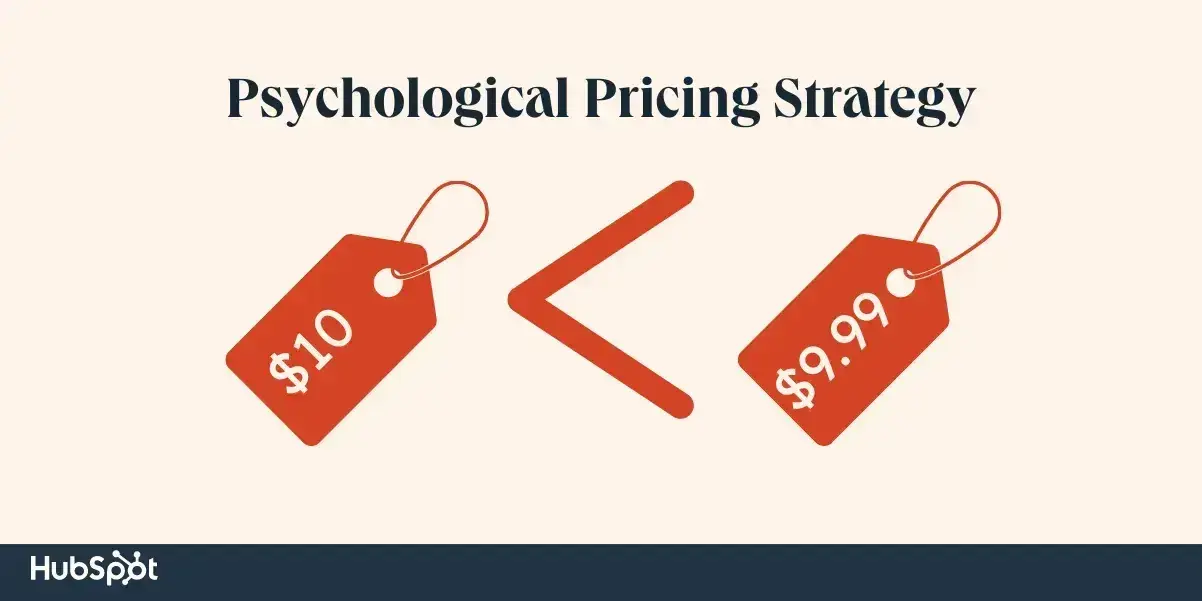
psychological pricing strategy, image of a $10 and $9.99 tag

Another way to use psychological pricing would be to place a more expensive item directly next to (either in-store or online) the one you're most focused on selling. Or offer a “buy one, get one 50% off (or free)” deal that makes customers feel the circumstances are too good to pass up.

One of my favorite methods is also the simplest: Changing the font, size, or color of product pricing information can help boost sales.

Psychological Pricing Strategy in Marketing

Psychological pricing requires a deep understanding of your target market to be effective. If your customers value discounts and coupons, emphasize these in your marketing to meet their desire to save money.

On the other hand, if quality is more important to your audience, the lowest price might not attract them. Your pricing and marketing should align with what motivates your customers to pay a certain price for a product.

When to use: Use this strategy in conjunction with any other strategy to improve overall sales.

Advantages

Disadvantages

  • Makes products appear more affordable.
  • Helps consumers make quicker decisions by presenting prices that seem lower.
  • Differentiates products in a crowded market.
  • If overused, consumers may feel manipulated.
  • May not be effective in all markets or with all customer segments.

9. Geographic Pricing Strategy

Geographic pricing strategy involves setting different prices for products or services based on the geographic location of the customer.

This strategy may be used if a customer from another country is making a purchase or if there are disparities in factors like the economy or wages.

geographic pricing strategy, image of a globe

For example, Netflix uses geographic pricing to adjust subscription fees based on the region. A standard Netflix subscription costs $17.99 per month in the United States but ₹ $499 per month (about $5.71) in India to account for differences in purchasing power and local market competition.

When to use: Use this strategy when you sell the same product or service in multiple geographic markets.

Geographic Pricing Strategy in Marketing

Marketing a geographically priced product is easy with paid social media ads. You can target specific zip codes, cities, or regions at a low cost with precise results. Even if customers travel or move, your pricing model stays consistent, helping you manage marketing costs.

Advantages

Disadvantages

  • Allows businesses to tailor prices to local market conditions.
  • Helps cover additional costs such as shipping and local taxes.
  • Can enhance the perceived value of products in certain regions.
  • Must comply with local laws and regulations.
  • Customers may perceive price differences as unfair.
  • Managing different prices for different regions can complicate accounting and bookkeeping.

Pricing models can be hard to visualize. Below, we’ve pulled together a list of examples of pricing strategies as they’ve been applied to everyday situations or businesses.

1. Dynamic Pricing Strategy: Chicago Cubs
chicago cubs game schedule

Source

Finding tickets to a Cubs game is interesting because every time I check prices, they’ve fluctuated a bit from the last time. Purchasing tickets six weeks in advance is always a different process than purchasing them six days prior — and even more box pricing at the gate.

This is an example of dynamic pricing — pricing that varies based on market and customer demand. Prices for Cubs games are always more expensive on holidays, too, when more people are visiting the city and are likely to go to a game.

Best for: Time-sensitive events, sales, or promotions are great opportunities for implementing dynamic pricing.

2. Freemium Pricing Strategy: HubSpot
hubspot crm landing page

Source

HubSpot is an example of freemium pricing at work. We offer a free version of the CRM for scaling businesses as well as paid plans for businesses using the CRM platform that need a wider range of features.

Moreover, within those marketing tools, HubSpot provides limited access to specific features. This type of pricing strategy allows customers to acquaint themselves with HubSpot and for HubSpot to establish trust with customers before asking them to pay for additional access.

What I like: Freemium pricing works super well for digital products because it gives customers a taste of the value you offer before committing.

3. Penetration Pricing Strategy: Netflix
netflix home page

Source

Netflix is a classic example of penetration pricing: entering the market at a low price (remember when it was $7.99?) and increasing prices over time. Since I joined a couple of years ago, I’ve seen a few price increase notices come through my inbox.

Despite their increases, Netflix continues to retain — and gain — customers. Sure, Netflix only increases their subscription fee by $1 or $2 each time, but they do so consistently. Who knows what the fees will be in five or ten years?

Pro tip: If you go with penetration pricing, be sure to be transparent about when the lower pricing changes so customers don’t churn as soon as you up the price on them. Also, be sure the value you provide is worth the higher price to customers.

4. Premium Pricing: AWAY

away luggage product page

Source

There are lots of examples of premium pricing strategies … Rolex, Tesla, Nike — you name it. One that I thought of immediately was AWAY luggage.

Does luggage need to be almost $500? I’d say no, especially since I recently purchased a two-piece Samsonite set for one-third the cost. However, AWAY has still been very successful even though they charge a high price for their luggage. This is because when you purchase AWAY, you’re purchasing an experience. The unique branding and the image AWAY portrays for customers make the value of the luggage match the purchase price.

Best for: Premium pricing is best for premium products or services, so be sure your value suits your price.

5. Competitive Pricing Strategy: Shopify
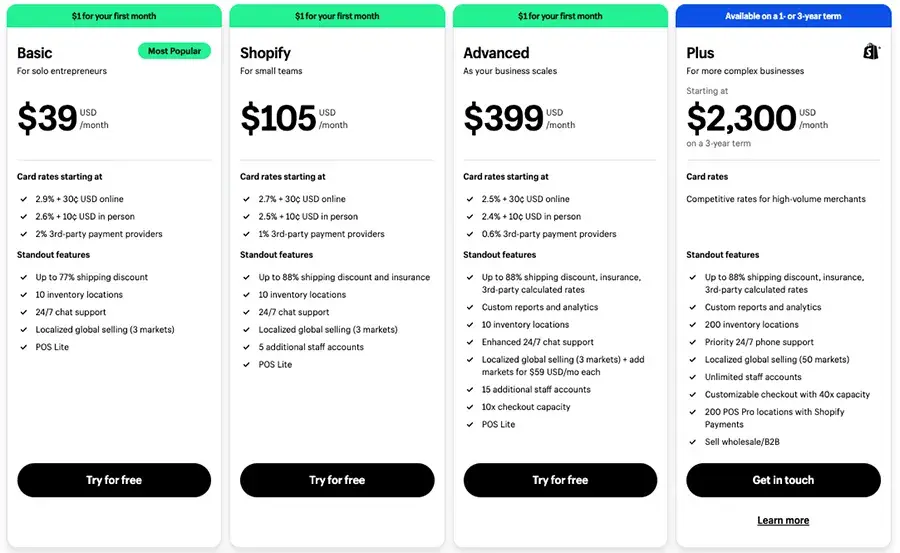
pricing plans for shopify

Source

Shopify is an ecommerce platform that helps businesses manage their stores and sell their products online. Shopify — which integrates with HubSpot — has a competitive pricing strategy.

Shopify offers four versions of its product for customers to choose from, and it offers customizable and flexible features.

What I like: With these extensive options tailored to any ecommerce business's needs, the cost of Shopify is highly competitive and is often the same as or lower than other ecommerce platforms on the market today.

6. Project-Based Pricing Strategy: White Label Agency

Anyone who's been involved in building a website knows how complex and costly it can be. When I needed a new website for my business, I found that the project-based fees offered by White Label Agency were the easiest to manage.
while label agency home page

Source

This approach focuses on the value of the outcome (e.g., a fully functional, custom-designed website) rather than the time spent on individual tasks.

What I like: Project-based pricing allows White Label Agency to provide clear, upfront pricing to their clients, ensuring transparency and trust. This strategy helps them manage project scope effectively, focus on delivering high-quality work, and maintain profitability.

7. Value-Based Pricing Strategy: INBOUND
inbound general admission and vip pass page

Source

While INBOUND doesn't leave the ultimate ticket price up to its attendees, it does provide a range of tickets from which customers can choose. This allows you to choose what experience you want to have based on how they value the event.

INBOUND tickets change with time, however, meaning this pricing strategy could also be considered dynamic (like the Cubs example above). As the INBOUND event gets closer, tickets tend to rise in price.

What I like: The two ticket options — general admission and VIP — allow customers to choose the experience they are willing to pay for.
8. Bundle Pricing: Adobe Creative Cloud

adobe creative cloud pricing page

Source

I like bundle pricing, especially for big projects. When building my website, I found Adobe Creative Cloud’s bundle pricing perfect. This strategy offers a suite of tools at a single price, making it more manageable and cost-effective.

Adobe Creative Cloud effectively combines multiple services into one package to enhance its value proposition and simplify purchasing decisions.

Best for: Businesses that offer a variety of related products/services can benefit from bundling to upsell and cross-sell their customers.

9. Geographic Pricing: Gasoline

Gasoline is notorious for having a wide range of prices around the world, but even within the United States, prices can vary by several dollars depending on the state you live in.

In California, for example, gas costs around $4.50 per gallon. Gas prices in Indiana, meanwhile, are just under $3.00 per gallon. State laws, environmental factors, and production costs all influence the price of gasoline, which causes this geographic disparity in price.

Pro tip: If you sell in multiple regions, be mindful of different factors that could affect the local markets and modify your prices accordingly.

How to Create a Pricing Strategy

Step 1: Evaluate pricing potential.

To create a pricing strategy, you need to understand your product’s unique selling points (USPs).

These are the features or benefits that make your product stand out from competitors. Identifying and articulating these USPs helps in justifying a higher price point.

Next, gauge customer perception of your USPs. Conduct surveys, focus groups, or interviews to learn how potential customers perceive the value of your product or service.

Understand what features they value the most and how much they are willing to pay for them. This information is crucial in setting a price that aligns with customer expectations.

Finally, assess market demand. I recommend using market research tools to analyze the demand for your product. Look at trends, market size, and growth potential. High demand can often support higher pricing, while lower demand might require competitive pricing to attract customers.

Step 2: Research your target market.

Understanding your target market is essential for setting the right price. Research potential customers’ age, gender, income level, and other relevant characteristics. Understanding these characteristics helps tailor your pricing to their financial capabilities and preferences.

In my experience, knowing what motivates your customers and their buying behaviors can provide insights into how much they are willing to spend and what they value most in a product or service.

Once you have enough data, divide your market into segments based on demographics, psychographics, and behaviors. This will help you tailor your pricing strategy to your market needs.

Step 3: Research competitor pricing.

Understanding how competitors price their products helps you make informed decisions to enhance competitiveness and profitability.

You’ll have to decide between two main choices when you see the price difference for the same product or service:

  • Beat your competitors’ prices. If a competitor is charging more for the same offering as your brand, then make the price more affordable.
  • Beat your competitors’ value. Also known as value-based pricing, you can potentially price your offering higher than your competitors if the value provided to the customer is greater.

To see the competition’s full product or service offering, conduct a full competitive analysis. Collect data on their pricing structures, including base prices, discounts, and special offers. Analyze the value they provide at these prices, such as product quality, customer service, and additional features.

Compare this with your offerings to understand your position. This will help you to identify gaps or opportunities to differentiate your pricing.

Step 4: Analyze historical data.

Analyzing historical data provides insights into past performance and helps predict future trends.

Start by reviewing your sales data to identify patterns, such as peak selling periods and successful price points.

Also, assess how market changes, like economic shifts or new competitors, have impacted sales. This historical perspective allows you to make data-driven decisions, anticipate customer reactions, and adjust prices strategically.

Step 5: Strike a balance between value and business goals.

A winning pricing strategy is all about balance. Focus too much on customer expectations and you may under-price your products or services. Go all-in on making a profit and you may miss the mark on keeping customers happy.

The ideal pricing strategy should help you achieve at least two of these objectives simultaneously:

  • Increased profitability.
  • Improved cash flow.
  • Enhanced market penetration.
  • Expanded market share.
  • Increased lead conversion.

Step 6: Choose a pricing strategy.

After carefully considering all the factors discussed, it's time to select the optimal pricing model for your business. The ideal strategy should:

  • Accurately reflect the value you deliver to customers.
  • Help you achieve your revenue goals.
  • Maintain competitiveness in the market.
  • Align with your overall business strategy and positioning.
  • Support your long-term objectives.

Remember that pricing is not a one-time decision. Stay flexible and be prepared to make adjustments as market conditions shift and customer perceptions change over time.

Step 7: Test and refine.

Your pricing strategy should be flexible. I recommend regularly reviewing and refining it through continuous experimentation and A/B testing.

For instance, you can test different price points over a set period to evaluate their impact on sales and profitability. This way, you can make data-driven adjustments to optimize your pricing strategy.

This will ensure it remains effective and aligned with both market conditions and customer expectations.

Pricing Models

While your company’s pricing strategy may determine how you set prices for offerings overall, pricing models help you implement the broader strategy.

Below, I will take you through some popular pricing models:

1. Freemium Pricing

A combination of the words “free” and “premium,” freemium pricing is when companies offer a basic version of their product, hoping that users will eventually pay to upgrade or access more features.

Freemium pricing is commonly used by SaaS and other software companies. They choose this model because free trials and limited memberships offer a peek into a software’s full functionality — and also build trust with a potential customer before purchase.
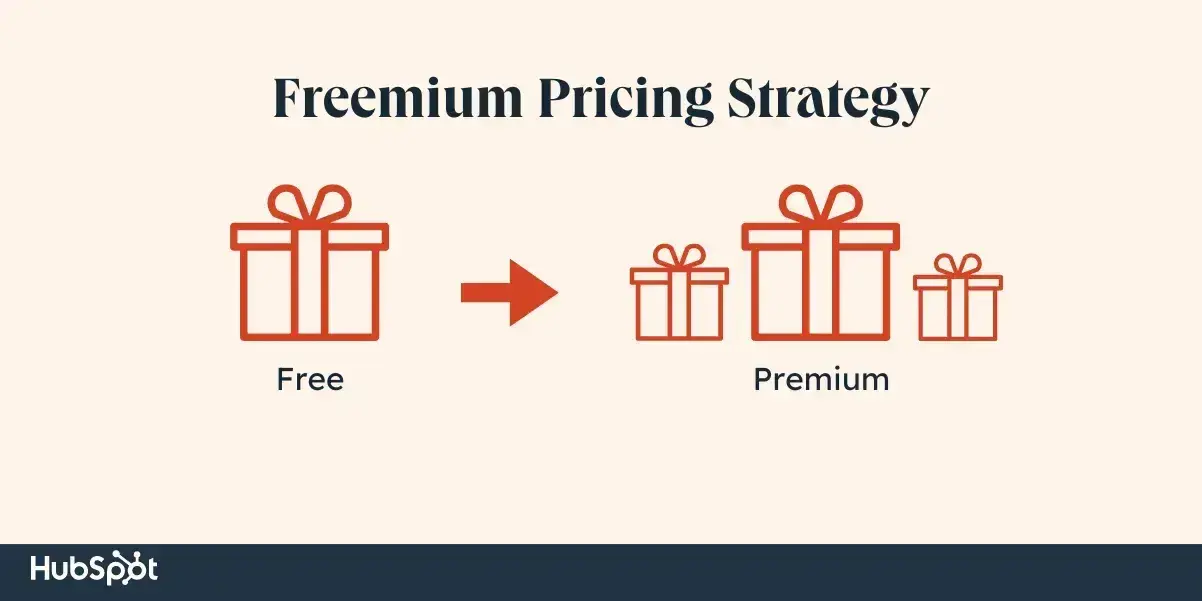
freemium pricing strategy, image of one gift and many gifts

With freemium, a company’s prices must be a function of the perceived value of their products.

For example, companies that offer a free version of their software can’t ask users to pay $100 to transition to the paid version. Prices must present a low barrier to entry and grow incrementally as customers are offered more features and benefits.

An example of a brand using this model is Dropbox. It attracts a large user base and builds brand awareness through its robust free tier. As users grow increasingly reliant on the service and need additional storage or features, their likelihood of upgrading to paid plans increases.

When to use: Use freemium pricing for services or as-a-service products that benefit from a “try before you buy” approach to creating customer interest.

Freemium Pricing in Marketing

Freemium pricing may not make your business a lot of money on the initial acquisition of a customer, but it gives you access to the customer, which is just as valuable. With access to their email inboxes, phone numbers, and any other contact information you gather in exchange for the free product, you can nurture the customer into a brand-loyal advocate with a worthwhile LTV.

2. Premium Pricing

Premium pricing, also known as prestige pricing or luxury pricing, is a strategy where a product is priced higher than competitors to create an impression of superior quality and exclusivity.

This model leverages the perception that higher prices signify better quality, drawing in consumers who are willing to pay more for what they see as a premium product or service. The strategy involves marketing the product as having limited availability or unique features that competitors cannot easily replicate.
premium pricing strategy, image of a diamond

Prestige pricing is a direct function of brand awareness and brand perception. Brands that apply this pricing method are known for providing value and status through their products — which is why they’re priced higher than other competitors.

For example, Rolex sets its prices much higher than other watchmakers. It relies on a strong reputation for exceptional craftsmanship and exclusivity. Rolex’s brand image and perceived quality attract customers who value prestige and superior workmanship.

When to use: Use a premium pricing model when you have the brand perception to back it up. In practice, this means carrying out in-depth consumer research before raising prices — if you miss the mark on customers’ perception of your brand, your higher prices will fall flat.

Premium Pricing in Marketing

Premium pricing is quite dependent upon the perception of your product within the market. There are a few ways to market your product in order to influence a premium perception of it including using influencers, controlling supply, and driving up demand.

3. Hourly Pricing

Hourly pricing, also known as rate-based pricing, is commonly used by consultants, freelancers, contractors, and other individuals or laborers who provide business services.

Hourly pricing is essentially trading time for money. Some clients are hesitant to honor this pricing strategy as it can reward labor instead of efficiency.
hourly pricing strategy, image of a clock

When to use: Use hourly pricing if you regularly take on short-term projects that let customers access your services on-demand.

Hourly Pricing in Marketing

For businesses that handle quick, high-volume projects, hourly pricing can incentivize customers to choose your services. Breaking down prices into hourly chunks allows customers to decide based on a lower price point, rather than needing to allocate a larger budget for an expensive project-based commitment.

4. Bundle Pricing

Bundle pricing is when you offer (or “bundle”) two or more complementary products or services together and sell them for a single price. You may choose to sell your bundled products or services only as part of a bundle or sell them as both components of bundles and individual products.
bundle pricing strategy, image of two boxes farther away and then closer together

For example, Amazon frequently offers bundle deals where customers can buy related items together at a discount. Customers might buy a camera with accessories like lenses, tripods, and memory cards at a bundled price.

When to use: Use bundle pricing if you sell products that are naturally used in tandem or by pairing products with additional services, such as warranties on electronic devices.

Bundle Pricing in Marketing

In my experience, marketing bundle deals can help you sell more products than you would otherwise sell individually. It’s a smart way to upsell and cross-sell your offerings in a way that is beneficial for the customer and your revenue goals.

5. Project-Based Pricing

Project-based pricing is the opposite of hourly pricing — this approach charges a flat fee per project instead of a direct exchange of money for time. It is also used by consultants, freelancers, contractors, and other individuals or laborers who provide business services.
project-based pricing strategy, image of three people standing side-by-side

Project-based pricing may be estimated based on the value of the project deliverables. Those who choose this pricing model may also create a flat fee from the estimated time of the project.

When to use: Use project-based pricing to help onboard customers who have fixed budgets but are unsure of total costs. The caveat? Make sure you have a clear scope of work before getting started.

Project-Based Pricing in Marketing

Highlighting the benefits of working with your business can make project-based pricing more attractive. Although the cost may be high, the one-time investment is worthwhile. Clients will appreciate knowing they can work with you until the project is completed, rather than being limited by a set number of hours.

6. Subscription Pricing

Subscription pricing is a common pricing model at SaaS companies, online retailers, and even agencies that offer subscription packages for their services.

Whether you offer flat-rate subscriptions or tiered subscriptions, the benefits of this model are endless. For one, you have all but guaranteed monthly recurring revenue (MRR) and yearly recurring revenue. That makes it simpler to calculate your profits on a monthly basis. It also often leads to higher customer lifetime values.

The one thing to be wary of when it comes to subscription pricing is the high potential for customer churn. People cancel subscriptions all the time, so it's essential to have a customer retention strategy in place to ensure clients keep their subscriptions active.

When to use: Use subscription pricing if you sell services that are billed month-to-month or for products that customers need delivered on a recurring schedule.

Subscription Pricing in Marketing

When marketing your subscription products, I suggest you create buyer personas for each tier. That way, you know which features to include and what will appeal to each buyer. A general subscription that appeals to everyone won't pull in anyone.

Even Amazon, which offers flat-rate pricing for its Prime subscription, includes a membership for students. That allows them to market the original Prime more effectively by creating a sense of differentiation.

Now that we’ve gone over how to create a pricing strategy and explored some of the most common pricing models, let’s discuss applying these steps to different businesses and industries.

Pricing Models Based on Industry or Business

Not every pricing strategy is applicable to every business. Some strategies are better suited for physical products, whereas others work best for SaaS companies. Here are examples of some common pricing models based on industry and business.

Product Pricing Model

Unlike digital products or services, physical products incur hard costs (like shipping, production, and storage) that can influence pricing. A product pricing strategy should consider these costs and set a price that maximizes profit, supports research and development, and stands up against competitors.

Pro tip: I recommend using these pricing strategies when pricing physical products: cost-plus pricing, competitive pricing, prestige pricing, and value-based pricing.

Digital Product Pricing Model

Digital products, like software, online courses, and digital books, require a different approach to pricing because there’s no tangible offering or unit economics (production cost) involved. Instead, prices should reflect your brand, industry, and overall value of your product.

Pro tip: I recommend using these pricing strategies when pricing digital products: competition-based pricing, freemium pricing, and value-based pricing.

Restaurant Pricing Model

Restaurant pricing is unique in that physical costs, overhead costs, and service costs are all involved. You must also consider your customer base, overall market trends for your location and cuisine, and the cost of food — as all of these can fluctuate.

Pro tip: I recommend using these pricing strategies when pricing at restaurants: cost-plus pricing, premium pricing, and value-based pricing.

Event Pricing Model

Events can’t be accurately measured by production cost. Instead, event value is determined by the cost of marketing and organizing the event, along with the speakers, entertainers, networking, and the overall experience. As a result, the ticket prices should reflect all these factors.

Pro tip: I recommend using these pricing strategies when pricing live events: competition-based pricing, dynamic pricing, and value-based pricing.

Services Pricing Model

Business services can be hard to price due to their intangibility and lack of direct production cost. Much of the service value comes from the service provider’s ability to deliver and the assumed caliber of their work. Freelancers and contractors, in particular, must adhere to a services pricing strategy.

Pro tip: I recommend using these pricing strategies when pricing services: hourly pricing, project-based pricing, and value-based pricing.

Nonprofit Pricing Model

Nonprofits need pricing strategies, too — a pricing strategy can help nonprofits optimize all processes so they’re successful over an extended period.

A nonprofit pricing strategy should consider current spending and expenses, the breakeven number for their operation, the ideal profit margin, and how the strategy will be communicated to volunteers, licensees, and anyone else who needs to be informed. A nonprofit pricing strategy is unique because it often calls for a combination of elements that come from a few pricing strategies.

Pro tip: I recommend using these pricing strategies when pricing for nonprofits: competitive pricing, cost-plus pricing, demand pricing, and hourly pricing.

Education Pricing Model

Education encompasses a wide range of costs that are important to consider depending on the level of education, private or public education, and education program/discipline.

Specific costs to consider in an education pricing strategy are tuition, scholarships, and additional fees (labs, books, housing, meals, etc.). Other important factors to note are competition among similar schools, demand (number of student applications), number and costs of professors/ teachers, and attendance rates.

Pro tip: I recommend using these pricing strategies when pricing education: competitive pricing, cost-based pricing, and premium pricing.

Real Estate Pricing Model

Real estate encompasses home value estimates, market competition, housing demand, and cost of living. There are other factors that play a role in real estate pricing models including potential bidding wars, housing estimates and benchmarks (which are available through real estate agents but also through free online resources like Zillow), and seasonal shifts in the real estate market.

Pro tip: I recommend using these pricing strategies when pricing real estate: competitive pricing, dynamic pricing, premium pricing, and value-based pricing.

Agency Pricing Model

Agency pricing models impact your profitability, retention rates, customer happiness, and how you market and sell your agency. When developing and evolving your agency’s pricing model, it’s important to take into consideration different ways to optimize it so you can determine the best way to boost the business's profits.

Pro tip: I recommend using these pricing strategies when pricing agencies: hourly pricing, project-based pricing, and value-based pricing.

Manufacturing Pricing Model

The manufacturing industry is complex — there are several moving parts, and your manufacturing pricing model is no different. Consider product evolution, demand, production cost, sale price, unit sales volume, and any other costs related to your process and product.

Pro tip: I recommend using these pricing strategies when pricing manufacturing: competitive pricing, cost-plus pricing, and value-based pricing.

Ecommerce Pricing Model

Ecommerce pricing models are how you determine the price at which you’ll sell your online products and what it’ll cost you to do so. This means that you must think about what your customers are willing to pay for your online products and what those products cost you to purchase and/or create.

You might also factor in your online campaigns to promote these products, as well as how easy it is for your customers to find products similar to yours on the ecommerce sites of your competitors.

Pro tip: I recommend using these pricing strategies for ecommerce: competitive pricing, cost-based pricing, dynamic pricing, freemium pricing, penetration pricing, and value-based pricing.

Get Your Pricing Strategy Right

It’s easy to get overwhelmed by the sheer number of pricing strategy factors and components. From competitors to production costs, customer demand to industry needs, profit margins to making a profit, the list is endless. Thankfully, you don’t have to master everything all at once.

Instead, start small. Calculate your COGS, determine your ideal profit margin, carry out some customer research, and determine what’s most important for your business. Equipped with this information, you can find a pricing strategy that makes sense and drives revenue.

If there’s one thing I hope you take away from this piece, it’s that creating an effective pricing strategy is an iterative process. You probably won’t find the ideal price point right away. It might take a couple of tries (and lots of research), and that’s OK — slow and steady, not fast and reckless, takes the prize in pricing strategy.


28 May 16:48

Your Best Options for Email Marketing

by Ashley Hill

Creating an effective email marketing workflow is tough. Where do you start? And what’s the best way to get emails read, click-throughs optimized, email lists managed, and professional looking emails full of great content and lots of personalization drafted? While email has been around for years, there are new innovations in email marketing that are making it a fresh, accessible way to promote your brand.

If done correctly, email marketing has a great return on investment. For every $1 spent, email marketing averages a return of around $38. Additionally, a whopping 99% of email users check their email daily— that means there are lots of opportunities for you to reach your audience and grow your business with every email you send.

There are so many email marketing platforms available now. But which ones are the best match for your company’s needs, delivering the highest return on investment? Check out these top picks for email marketing platforms. Each one is customizable, easy to use, and field-tested for great results.

Hubspot

hubspot email marketingOne really effective email marketing platforms that can be seamlessly implemented into your website and your business is Hubspot. Hubspot readily acknowledges that a lot of marketing campaigns go unnoticed or unopened by their intended audiences. They actively work to combat that with personalized emails and attention to detail. With Hubspot, you aren’t just throwing an email out to your email list, you’re emailing each individual person on your email list, and the difference to your recipients is noticeable.

Another way Hubspot really knocks it out of the park is with their lead generation. If you’re looking to expand your contact list, Hubspot has lots of helpful hints and tools to get you more leads so you can reach more people on a regular basis.

When you use Hubspot, it’s easy to draft and send emails yourself that look professionally designed and put-together, with templates and drag-and-drop features so your emails aren’t just beautiful, they’re beautifully easy to create as well. Emails are personalized for each recipient, which dramatically increases the chance for click-throughs. Also, you receive up-to-date analytics to learn exactly who is engaging with your emails so you can better understand what works and what doesn’t.

With Hubspot’s ease, strong design, and available analytics, it’s a can’t-lose option for email marketing.

Mailchimp

Mailchimp is another email marketing platform that focuses on personalization and tailoring information to each recipient. You can divide your email list into detailed segments and groups to create campaigns that are always relevant to the reader, which makes for better results. One of Mailchimp’s biggest strengths lie in its segments and groups features.

Want to expand beyond available templates and forms for your emails? If you’re a bit more skilled than the Average Joe, you have the option to code your own HTML templates (and review their how-to guides) so you can perfectly match your emails to your existing brand.

One of the most attractive things about using Mailchimp for all your email marketing needs? There’s a permanently free plan you can use. Your business may eventually outgrow the free plan, but it’s a great place to start as you develop your company and fine-tune your email marketing.

Not so tech-savvy? Perhaps you think you might need help along the way? Mailchimp offers 24/7 free online support for your first month, and ongoing support is always available for an additional $10 every month, so whether you have a question about formatting or have hit a roadblock in writing an email you can get some extra advice from the pros at Mailchimp.

Even with a free account, there are step-by-step instructional guides and lots of information on how all of their features work. There’s even a “field guide” to email marketing you can check out to get a crash course in best practices. Because of how easy it is to use, it’s a great way to get started with email marketing.

Constant Contact

constant contact email marketingWhen you use Constant Contact, you are using an email marketing tool that truly works with all of your public platforms. Gather emails from your website, mobile devices, and even from Facebook, so all your addresses are in the same place and you are able to reach more people than ever before. You can manage your Facebook ads and your marketing calendars all in the same place, and with their Email Plus account you can create automated emails, interactive polls, coupons, and much more – their list of features goes on for days.

Constant Contact has scores of attractive templates to choose from, each being mobile-responsive and easy to customize. See results for each campaign appear in real-time, so you can analyze and learn from each project, even as you begin the next one.

Constant Contact is ideal for small businesses. The price is right and, with lots of built-in support, you’ll never feel like you’re in over your head when it comes to managing lists or composing and designing eye-catching emails. Integrate your Shopify account with your Constant Contact platform to reach even more people and simplify your life.

For the price and the seemingly unending list of features, Constant Contact is a top contender for email marketing.

If you haven’t already, now is the time to jump into the email marketing game. It’s not just a good investment of your marketing dollars— it’s a great way to regularly reach your client base with new innovations debuting constantly to connect, promote, and personalize your brand.

28 May 16:47

Not Getting the Right Response? Maybe You’re Asking the Wrong Questions

by Julie Thomas
Ask The Right Questions

Editor’s Note: This guest post was contributed by Julie Thomas, CEO of VauleSelling Associates.

No sales professional forgets a cringeworthy conversation. Whether riddled with radio silence or endless awkwardness, these clumsy chats speak to a disconnect that oftentimes is avoidable. Maybe you weren’t well prepared or maybe the busy executive who took your call was distracted. Regardless, there is a way to reduce the risks of either scenario.

Top sales performers know how to engage and to demonstrate empathy with someone’s burdensome business issue. This is crucial to moving a sales deal forward and comes from asking the right questions at the right time.

Here are some simple steps to raise the quality of your conversations and advance more quickly from salutations to contract signatures.

Show What You Know

We say it often, but it begs repeating: Do your homework, so you can go beyond generic questions—and get to the point quickly; most busy buyers don’t have time for long warmups. Stay current on a targeted executive and her company, as well as the industry. As a bonus, you’ll be prepared for both scheduled calls and chance encounters.

Prepare A Variety Of Questions In Advance

There are three main kinds of questions to ask, depending on the subject and situation. Each has a purpose and can be developed with assistance from sales management software such as the cloud-based eValuePrompter®.

Open-ended questions are designed to obtain the prospect’s view of current conditions. They elicit fuller responses well beyond “yes” and “no.” Instead of starting a question with “Do you...?” — think of those that begin with “How would you...?” The latter requires someone to go into more detail.

Probing questions, as the name suggests, go deeper. Based on someone’s response, you want to expand on the prospect’s view of a business problem or bring other issues to the surface. What’s important here is that you lead the person to self-discovery, rather than make such statements yourself. This deepens the level of engagement and shows you can identify with what someone’s going through—just by telling a story of a previous customer in a similar situation before adopting your solution.

The final type of question clarifies what you’ve heard to ensure a shared understanding. With such confirming questions, a “yes” or “no” response is appropriate. Your main aim here is to show you’ve been listening intently and to clear up any misperceptions before going forward.

Go With The Flow

With practice and genuine interest, you’ll become the consummate conversationalist and leave a positive lasting impression with a busy decision-maker. Be sure to jot down key questions around areas you must cover on the call or meeting. Then see where answers take you. If it’s in a different direction than expected, gracefully shift gears while maintaining your focus on ensuring the qualified buyer is interested in your goods or services.

A primary objective with any conversation is to gain knowledge and understanding. This comes from receiving information more than relaying it—at least during initial talks. If a conversation goes well, you too will be asked questions that allow you to discuss your product offerings without it appearing like a pitch. Always remember: It’s about helping someone else, not just you.
 

To keep pace with the latest thinking in sales, subscribe to the LinkedIn Sales Blog today.


28 May 16:47

How to Build Your Professional Brand in Sales

by Laura Hall

Guest post by Sahil Mansuri, CEO and Co-founder of Bravado.

Why does a buyer talk to a sales professional?

  • To get pricing?
  • Take a demo?
  • Compare features and capabilities?

Historically, submitting your info to get pricing, a piece of content, a free trial… anything at all… was seen as a bear trap set by vendors to coerce buyers into a miserable sales process.

But thanks to G2 Crowd, Capterra, TrustRadius, Quora, Reddit, Twitter, LinkedIn, the Internet… buyers do NOT need to talk to a sales professional in order to get answers to their questions.

So let’s ask the question differently.

In 2019, why does a buyer talk to a sales professional?

  • Consultation.
  • Expertise.
  • Deep industry knowledge.

In other words, buyers no longer need to talk to you. Instead, you must convince them to choose to work with you. This is why building your personal brand is necessary to succeed in 2019. Otherwise, how will buyers know that you are a consultative expert in your field?

Welcome to the modern sales process: powered by human connection in an otherwise digitized world.

Okay. How do I build my personal brand?

Great question! The good news is, whether you realize it or not, you already have one! No need to start from scratch; just need to do a little self-discovery.

Shelley Zalis wrote for Forbes, “Personal branding isn’t about coming up with a complicated strategy. Rather, it’s about knowing who you are and what you stand for, and then finding ways to make that visible.”

Shelley Zalis on personal branding

The most trusted brands have:

  • Clarity – it’s clear what it is they stand for
  • Consistency – they deliver on what they promise
  • Constancy – they’re visible; they build and nurture relationships regularly

You may be asking yourself right now: What am I trying to be clear on? How can I be consistent if I’m not clear?

It’s totally normal to be unaware of what your strengths are. They come easily to you, so you’re not thinking about it! You have to recognize that the things that come easily to you do not come easily to other people.

You may feel like building your brand around your strengths is self-promoting. In fact, it’s the opposite. It is your duty to promote your strengths! You never know who can benefit from what you have to offer the world.

Building your personal brand

Side note: If you’re comfortable selling the features and benefits of your product, you should be comfortable selling the benefits of working with you. Whether you intend for it or not, customers aren’t just evaluating a product. They are buying the experience of being your client, too.

Self-Discovery

The best way to gain visibility into your strengths and find out what unique magic you have to offer is to do a little self-reflection. Understanding and discovering your personal brand is really understanding and discovering yourself.

Ask yourself:

  • How do you connect with others?
  • How do others respond to you?
  • How do others perceive you?
  • What are your personal core values?
  • What do people seem to always ask you about?
  • What makes you uniquely good at sales?

To dig even deeper into this self-discovery, ask your friends and colleagues how they’d answer these questions about you. How would they describe you? If there are areas of misalignment, take the opportunity to reflect and iterate on your self-perception. Then, pick the descriptions that resonate strongly with you. Focus on cultivating and amplifying them.

After you’ve got a good sense of these answers, it’s time to start putting it all to work.

Amplification

Below is a simple, three-step framework that we teach at Bravado for personal brand building. The steps are Curate, Annotate, Create.

Curate

It’s intimidating to just start publishing content or making videos, right? It’s totally reasonable to ease into it.

Remember the skills you wrote down earlier? That’s your secret sauce.

Find a few articles that talk about these qualities in a way that speaks to you. Maybe you’re passionate about being organized and efficient. Find a few articles that discuss how to maximize productivity and post them on LinkedIn with your top takeaway. You don’t need to do anything more than reshare 1-2 articles per week that fit your personal narrative and passions. Use hashtags to help relevant folks find your content.

Pro Tip: Set up Google Alerts, so you have a steady stream of fresh content coming in the door.

Annotate

Now you’ve started posting content that is relevant to your interests and helps the world see what matters to you. Next, it’s time to start annotating that content. Start by jotting down a few comments on the article that brings to light your personal knowledge of the space. For example: “This article discusses how to eliminate clutter. The 3rd tip around watching Marie Kondo videos is one I find especially useful.”

Maybe you agree, maybe you disagree, maybe you have something to add. Just have a point of view. Post your next piece of content with your thoughts. You’re essentially annotating and going a little deeper on each piece. Think Rap Genius, but on your LinkedIn feed!

Pro Tip: Do this regularly. Find a cadence you can stick to. Remember, Constancy is a foundational pillar of building a brand!

Create

After a few weeks, you’re will have read and thought about productivity and clutter on a regular basis. Now you’ve got enough references and opinions to write a Medium post or create a video. Choose the method you feel most comfortable with.

It can start simple: “5 Tips for Marie Kondo-ing Your Life.” Pick your 5 favorite tips from the articles you posted and combine them, along with adding a few personal notes. Boom, you’re an author!

Think of it as preheating the oven for content creation. It’s the easiest way for you to get started with creating content. You never know who is going to connect with something you wrote. Stay with it and give it time to build momentum.

Jeremey Donovan’s ‘Hey Salespeople’ posts on LinkedIn are a great example. He started with just a handful of people liking his posts. After just a couple months of daily posts, he’s earned more than 350 likes and 175 comments.

Don’t be afraid of putting yourself out there. Take the first step, and take another, and the momentum will drown out your fears quickly.

“If you have a voice inside your head that says you cannot paint, then by all means paint, and that voice will be silenced.” – Vincent Van Gogh

“If you have a voice inside your head that says you cannot paint, then by all means paint, and that voice will be silenced.” - Vincent Van Gogh

Pro Tip: If you have any questions or want to learn more about how to build your personal brand, or why it is necessary to succeed in the modern sales environment, please connect with me on Bravado.


Want to learn more about ways top sales performers find success? Download research on the Best Practices of Top Performing Sales Reps here!Best Practices of Top Performing Sales Reps

28 May 16:43

In Search of the Perfect Sales Technology: What’s Working Today

by Kathryn Aragon


Did you know the average sales rep spends 65 percent of their time on tasks other than selling?

That means if the average sales rep makes $100,000 a year, the company likely spends $65,000 per rep on time that doesn’t generate any revenue.

Where does all that time (and money) go?

A good portion of it goes to administrative tasks like updating spreadsheets, adding prospects to the CRM, performing research that could be automated, and – let’s be honest – probably scrolling on Insta.

The good news is there are dozens of tools that speed up the sales cycle without turning your reps into robots.

The solution? Build a robust sales tech stack and ensure your team knows how to use them.

What is a sales tech stack?

A sales tech stack is a collection of tools that enable sales teams to spend less time on administrative tasks and more time selling by streamlining, organizing, and automating the sales process.

The number of tools can vary based on industry, the size of your sales team, and other factors, such as your target audience.

When done right, a sales tech stack helps your team find sales-qualified leads, automate tedious tasks, and track the most effective sales strategies so they can spend more time on revenue-generating tasks.

Basically, a sales tech stack lets your sales reps focus on selling instead of pushing papers.

What tools should be in your sales stack?

No two companies will have the same sales stack. The tools you use should solve the specific issues your sales team faces.

For example, a B2B company with a solid lead generation process might not need a tool to find more leads, but their team might need help nurturing leads due to the longer sales process. On the other hand, a SaaS platform might have its lead nurturing process down, but struggle to track the most effective demo process, resulting in sales reps closing fewer deals.

Sales tech stacks are unique to each company based on their goals, challenges, and the customers they target. So where do you start building your sales tech stack? You’ll need a sales engagement platform or another outbound tool, but what about everything else?

Below, we’ll cover the top types of sales tech stack tools, explore what types of companies need them, and list a few examples of each. Keep in mind that many sales stack tools do more than one thing. For example, HubSpot is a popular CRM, but it also offers real-time reporting tools.

Here are seven types of tools to consider adding to your sales stack.

1. Customer relationship management (CRM)

Can’t remember the last time you contacted a lead? Or find yourself digging through emails to remember if a lead already had a demo or just downloaded a whitepaper? You need a CRM.

A CRM serves as a single source of customer and lead information to keep your team organized and on task. It tracks new leads, old leads, and current customers so you can see who they spoke to last and where they are in the sales funnel all in one place.

Some popular CRMs for sales teams include:

  • HubSpot offers automation, data organization, contact management, deal pipelines, and more.
  • Zoho One provides sales teams with a comprehensive sales toolset to stay organized across channels and build a repeatable sales process.
  • Salesforce helps companies grow their sales through a powerful suite of tools, including a CRM, productivity tools, and intelligent data gathering.
  • Pipedrive is designed with sales in mind. Features include lead management, communication tracking, sales automation, and detailed analytics and reporting.

2. Prospecting and lead generation

When it comes to leads, more isn’t always better. Focusing on quality over quantity allows reps to spend more time nurturing leads that are most likely to convert.

Prospecting and lead generation tools help streamline the prospecting process and provide data to help teams uncover those high-quality leads and contact them. Some tools even help automate parts of the nurturing process so you can build relationships without spending hours sending LinkedIn messages.

Prospecting and lead generation tools to consider include:

  • Leadfeeder, a website tracking tool that tracks anonymous website visitors, qualifies them as leads, and provides contact information.
  • LinkedIn Sales Navigator, a paid LinkedIn tool that helps you find and connect with leads.
  • Leadpages, a full-service tool that enables small businesses to build websites, collect leads, deliver files, and split test parts of the lead generation process.

Several CRM tools have some lead generation features built-in, but these standalone tools often offer access to more data, better leads, and can help qualify leads more effectively.

3. Sales automation

Automation helps sales teams do more in less time by automatically nurturing leads, delivering files, and reminding sales reps to follow up on hot leads.

It doesn’t just make sales reps more effective, it makes businesses more profitable. In fact, 61 percent of businesses using automation exceeded their revenue targets in 2020.

The good news is most sales tools today offer some level of automation. For instance, HubSpot also automates email marketing, social media posting, and ad campaigns. Still, there are other sales automation tools to consider.

Here are a few other sales automation tools to help sales reps work more efficiently:

  • ClickFunnels, a sales funnel and landing page builder.
  • Slack might not be a sales tool, but its workflow automation feature lands it a spot on this list. Create workflows to automate updates, crowdsource new ideas, and onboard. It also integrates with most other sales tools, including Leadfeeder, Hubspot, and Leadpages.
  • Zoominfo provides a 360-degree view of customers, prospects, and lead opportunities. It also integrates into workflows and CRMs to streamline the overall sales process.
  • Ambition is a performance management tool that streamlines goal tracking, coaching, scorecards, and automates sales alerts and insights. It’s a powerful tool for sales teams looking to increase efficiency and accountability.

4. Learning management systems (LMS)

Sales training is a key indicator of sales rep success, yet 26 percent of sales reps report their sales training is generally ineffective, while 28 percent report it is just “usually” effective – which means there’s a ton of room for improvement.

Learning management systems ensure sales reps have the knowledge they need to deliver sales results by streamlining product training, onboarding, standards training, and updating training materials.

Some LMS solutions to consider:

  • iSpring features a built-in course builder, an easy-to-use platform, and integrations with Zoom for webinars.
  • SkyPrep is an integrated online training software for onboarding, compliance training, and more. Features include virtual classrooms, course selling, and customer training support.

In some cases, you might not need a separate tool to manage training and learning. Salesforce and Zoho both support learning management through their platforms.

5. Project management

The best project management tools offer features like project tracking, task lists, file sharing, and scheduling tools to keep teams focused and on track to reach their goals. But sales teams need a powerful solution that helps track leads, manage tasks, and integrate with other sales tools.

Some of these features might be built into your CRM, but there are several standalone platforms as well, including:

  • Basecamp, which brings all your information into one place with features like project tracking, group chats, to-do lists, message boards, and check-ins.
  • Zoho Projects, a straightforward project management tool that works well with Zoho’s other features, including their CRM. Features include task management, collaboration, document management, and reporting tools.
  • Workfront is an enterprise-level project management tool from Adobe that helps large companies plan, execute, and deliver projects.

6. Sales demo tools

Demos can make or break the sales process. Nail your demo, and leads turn into customers; get it wrong, and you end up with a leaky funnel that doesn’t convert. The right demo tools for sales allow reps to deliver high-quality video and audio, share their screen, and integrate with other sales tools, like your scheduling tools.

  • Zoom is a popular video meeting tool that allows sales reps to meet, share their screen, record demos, and share recordings later.
  • GoToMeeting is a video conferencing tool with high-powered video, screen sharing capabilities, recording features, and the ability to fine-tune lighting, contrast, and saturation.
  • Tanida DemoBuilder makes it easier to create recorded demos with features like screen recording, bubbles, 3D effects, multi-track timelines, and a live Zoom feature.

7. Sales reporting and management

Reporting and data management solutions help sales managers and reps track what works and what doesn’t in the sales process. For example, do you know what leads are most likely to convert? Can your sales managers see which reps are likely to hit their goals this month in real-time?

Sales and reporting tools provide all that data and much more. Some tools, like CRMs and automation, often have built-in reporting. But if you have several platforms in your sales stack, getting all that data into one place can be a challenge, which is when a standalone reporting tool comes in handy.

Sales reporting tools to consider include:

  • Salesforce is more than just a CRM and workflow management tool; it also provides robust reporting tools.
  • HubSpot also offers robust data about how contacts move through the sales funnel, which sales reps are killing it, and which outreach method is most effective.
  • Aviso is an integrated sales revenue platform that helps sales teams with forecasting, guide deals, opportunity management, and collaboration tools.

What tools do top sales teams use?

Having good tools in your stack isn’t enough. Your tools need to play well with one another and adapt to your team’s sales process. So what do other companies have in their stacks? Here are the tools eight top sales teams use to drive their business forward.

Ambition

Ambition is an enterprise performance management tool designed to drive accountability with real-time insights. Their sales stack includes zoom info, LinkedIn’s Sales Navigator, and Outreach.

sales stack ambition

Why is this included in your tech stack?

This stack is very practical for a team of SDRs + AEs.

Chorus (recently acquired by ZoomInfo)

Chorus is a speech recognition tool for sales teams. As a sales tech tool themselves, they understand the power of investing in a solid tech stack.

Why is this included in your tech stack?

Our sales team embraces a wide variety of technologies, especially as new sales tools become available. Our tech stack is built this way to strengthen the B2B sales and marketing process. Using smart tools allows us to operate with more insight, and help our customers and clients be better at what they do best.

Clari

Clari is a pipeline management tool designed to make the revenue process easier from start to finish. Their tech stack includes their own tool as well as Sales Navigator, Gong, DiscoverOrg, and Salesforce.

Why is this included in your tech stack?

Our sales tech stack is unique because it’s connected.

Engagement with prospects in Outreach, call recordings from Gong, content shared via Highspot, chat conversation via Intercom – these are all automatically captured and presented in Clari, providing complete visibility into all the various interactions between reps and prospects throughout the sales cycle.

So the secret sauce is not just to get great, best-of-breed tools for engagement, enablement, forecasting, pipeline management, analytics, etc., but to integrate them in a way that allows our go-to-market team to proactively manage the pipeline, identify risk, and forecast the business more accurately.

DocSend

DocSend is more than just a document sharing tool, it also offers engagement analytics, collaboration tools, and advanced document tracking. Here’s what their tech stack looks like:

sales stack docsend

Why is this included in your tech stack?

The goal with this stack was to keep it lightweight and simple. There is a cost to every tool (beyond money) that you add to a stack, so we’re careful about piling them on. Our stack is amazing because it is simple, clean, and works!

We focus heavily on DocSend for three reasons:

  1. It allows us to organize documents so it’s easy to find the right content at the right time.
  2. We get deep insights into how people interact with the content we send.
  3. We eat our own dog food.

Intercom

There’s a good chance you’ve heard of Intercom. It is a business messaging system that helps brands like Microsoft, Amazon, and Facebook connect with customers and prospects.

Here’s a peek at their tech stack:

sales stack intercom

Why is this included in your tech stack?

At Intercom, we believe sales tools should support and improve our sales process, not replace our ability to perform mission-critical tasks like training a new sales rep or closing a tough deal. In our eyes, just adding technology doesn’t equate to progress.

Our sales stack is designed with this mind. Each tool is chosen to enable a simpler, more efficient workflow for our sales motion and our sales reps. For a new tool to be incorporated into our stack, it must do at least one of these things:


  • Automate repetitive tasks
  • Accelerate our sales cycle
  • Assist our sales reps in the buying process
  • Eliminate low-value work

Our own product, Intercom, helps sales teams do all four of these things. Our sales reps use our live chat to proactively engage, qualify, and convert high-value leads in real time, shortening the time-to-close and enabling greater productivity.

We also use Custom Bots, our chatbots for sales, to automate the repetitive parts of the sales process, such as asking for demographic information, assessing initial intent, and scheduling follow-up meetings. Ultimately, we like to think of our sales stack as a growth stack – a system of tools that unlocks new ways of selling and better customer relationships.

Leadfeeder

Leadfeeder is a website tracking tool that helps B2B businesses see what companies visit their website and what actions they take when they get there.

Our sales tech stack consists of:

  • Intelligence: Pipedrive, Intercom, Google Analytics
  • Enablement: Intercom, Pipedrive, Leadfeeder
  • Engagement: Outreach, Pipedrive
  • Communication: Slack, Leadfeeder, MailChimp, Zoom, Calendly
  • Pipeline, Analytics, Measurement: Leadfeeder, Pipedrive
  • CRM: Salesforce

Why is this included in your tech stack?

Our sales stack covers three key categories: CRM, prospecting and learning about leads, and communication. Each tool we use plays a specific and vital role in helping our sales activities move quickly and smoothly.

We prioritize tools based on how easily we can get started and how well they can fit into our existing stack. The easier a tool is to implement and onboard the rest of the team, the less you have to lose when giving it a try, and the faster your team will reap the benefits.

Most of our tools play double (sometimes triple) duty, which reduces overhead and means fewer tools our team has to learn, while still providing us with the crucial data we need to drive conversions.

Nutshell

Nutshell is an all-in-one CRM and email marketing platform designed for small businesses. Let’s see what they use to help turn leads into customers:

nutshell sales stack

Why is this included in your tech stack?

The sales stack at Nutshell accomplishes three critical goals.

  • We’re evangelists for our own product, so Nutshell plays a central role in our stack across all our teams, and using it heavily helps our entire team better service our customers.
  • Each aspect of our sales stack has been chosen to help support our sales teams’ ability to deliver unique and customized experiences for each potential customer. That means tracking and understanding their behavior and bubbling that information up through our CRM, so each Nutshell expert can quickly understand and support our customers’ individual needs and objectives.
  • Last but not least, our stack is designed to keep us focused on the North star metrics that drive our growth. We track everything, but the tools we use distill that information into actionable insights we leverage every day to make improvements to the overall strategy and tactics across our funnel.

Tip: Learn how to define the difference between a sales pipeline vs. a sales funnel.

The best part about the tech stack, as opposed to the single-point solution, is the flexibility it gives your team to adapt and evolve as needed.

Outreach

Outreach is a powerful sales tool in its own right, but even they need a little help from their friends. Here’s a look at the tools Outreach uses to drive sales:

outreach.io sales stack

Why is this included in your tech stack?

Each element of our stack addresses a specific need, and it changes frequently. We regularly audit all technologies to check for redundancy, utilization, and value. As we’ve grown, we have phased into and out of certain elements of our stack and have adjusted accordingly.

How to build your sales tech stack

With so many sales tech stack tools, you’re probably wondering where to start. That’s fair. Building the right sales tech stack from scratch can feel overwhelming, but so can finding ways to add on to your current stack.

Before you start signing up for new sales tech tools, here’s how to figure out what tools you need and what tools are nice-to-haves.

  • Evaluate your current tools. What sales tools do you currently use and are they working well for you? For example, if you have a CRM, does it help or hinder your sales team? If it works well, you’ll want to make sure any additions to your sales tech stack integrate with your current CRM.
  • Evaluate your tech stack needs. Is your current sales process hitting roadblocks? What issues are you facing, and what tools will help solve them? For example, if you struggle to find actionable data, then a sales and reporting tool should be first on your list. If sales reps are constantly dropping leads or spending too much time managing their inbox, look for a CRM.
  • Consider integrations. What tools does your company currently use (and plan to continue using)? Make sure new tools integrate with your current email, chat, video conferencing, and lead generation tools. Some tools might not integrate natively, so check to see if integration tools like Zapier can help.
  • Consider future growth. A tool that works well for a small team might not work well for a larger team, so consider your company’s long-term growth goals. Switching platforms can be a pain, so look for a sales solution that will work in the future.
  • Does the tool offer training? Even the best sales tools won’t improve the sales process if no one knows how to use them. Ensure any new tools you’re considering offer robust onboarding and training tools to make the most of your investment.

Your sales process is unique – your sales tech stack should be, too

Building the right sales stack can help your team streamline the sales process and plug leaks in your sales funnel. Luckily, there is a tool for nearly any challenge your team faces. Start by finding the right CRM solution, then choose sales tools that solve additional issues.

Just remember that not all the bright and shiny tools are going to be the right fit for your business. Be intentional, look at what is working for other sales teams, and realize you’ll need to experiment.

Don’t be afraid to test new products and integrations to see if they fit your needs, and don’t be afraid to ditch tools that don’t work for your team. Take the time to implement a training program to improve adoption rates and help your team close more deals.

The post In Search of the Perfect Sales Technology: What’s Working Today appeared first on Sales Hacker.

28 May 16:43

This Week’s Big Deal: Gaining an Edge with Customer Experience

by Sean Callahan
Customer Experience

The journey is more important than the destination.

This classic adage speaks to one of the biggest shifts taking place in the world of commerce. For many companies, it’s no longer about simply selling a product or service; it’s about delivering a memorable experience along the way that delights customers.

The trend is unmistakable: customer experience is gaining a larger share of our collective consciousness. As Google Trends illustrates, this term has consistently risen in prominence over the past 15 years:

For the most part, customer experience has fallen under the purview of marketing. But if that’s your organization’s stance, it might be time to reconsider.

Why Sales Teams Should Be Focusing on Customer Experience

We define customer experience as “the combination of every interaction each customer has with your business – and how they perceive those interactions.” In many cases, sales has more direct interactions with customers on the path to purchase than any other department.

Data continues to make clear the sizable bottom-line impact of CX. An article last week from Airship’s Michael Stone offered up some eye-catching customer experience statistics:

  • Customers of brands that lead in CX have a seven times higher purchase intent than those of other companies.
  • 32% of consumers say they’ll walk away from a brand after just one bad experience.
  • A one-point increase in CX scores can translate into an increase of $10-$100m in annual revenue.

Not only do excellent customer experiences lead to more converted deals, but also greater brand loyalty, affinity, and advocacy.

So, how can the sales team play its part in this crucial initiative? Here are a few tips to guide reps and managers toward CX success.

4 Ways Salespeople Can Positively Impact the Customer Experience  

As we all know, today’s buyers are more self-driven than ever. They tend to research and analyze options on their own, meaning that touchpoints with sales are fleeting. Therefore, we need to take full advantage of every opportunity to impress. There are four key areas where sales can make a substantial impact:

Keep a Positive Attitude

Everyone falls into bad moods sometimes. But of course, a negative mindstate can easily manifest in customer interactions — often in ways we don’t intend or even notice. With this in mind, it’s best to minimize friction and discontent on the sales team as much as possible.

At CustomerThink last week, Colleen Stanley wrote that effective sales management is emotion management. She suggests that managers can lessen clashes and conflict by taking an empathetic, inquisitive approach; try to see through the other person’s eyes and understand their perspective. On a similar note, last week in this column we outlined ways to manage stress on the sales team.

When reps are happy and in sync with one another, it projects outwardly onto the customer experience.

Make Prospecting More Relevant

Here at LinkedIn, we often highlight the benefits of informed, insight-driven prospecting practices for sellers — this approach reduces time waste and helps us move deals along more quickly and effectively. But it’s also a major factor in the customer experience. When someone is approached by a rep that doesn’t know who they are or what they do, it makes a poor impression. When the offer is completely irrelevant to them, even worse.

Conversely, reps that reach out to prospects with customized messaging and immediate value are setting the stage for a great experience. LinkedIn’s Sales Navigator platform is built to enable this kind of intelligent outreach, and last week we unveiled some new enhancements to help teams get even more out of the tool.

Eliminate Gaps

Managing the customer experience needs to be holistic. In a world of heightened expectations, we can’t afford to overlook a single element of the customer’s interface with our brands. One missing link can break the CX chain.

Ryan Stoner writes at Forbes that ensuring we have zero gaps in understanding our audiences is a critical aspect of situating B2B sales and marketing strategies around customer value. “Make sure your business’s solutions and services match up to your audiences’ needs,” he urges. “If they don’t align, re-architect your solution offerings around your audience’s needs so that your solutions feel targeted and highly applicable to them. Remember, prospects want to feel involved in their individual buying experience.”

Work with marketing to develop a comprehensive, 360-degree view of your customers, and eliminate any problematic blind spots. This requires earnest effort and continual attention, because the buyer journey is no longer linear or predictable, but it’s worth it.

Steamline with Technology

The less time sales reps are spending on tasks that can be automated, the more time they can spend on the manual groundwork necessary for outstanding customer experiences. This is the most promising frontier for technologies like predictive analytics and artificial intelligence.

“By eliminating and streamlining tiresome tasks, AI gives time back to both marketing and sales, putting quality leads in the hands of reps far faster, while eliminating the finger-pointing between marketing and sales about lead qualification and handoff,” writes Brian Kardon at MarTech Advisor. “With that extra time, marketing can focus on strategies to support sales, and reps can focus on crafting engaging messages and preparing for calls and meetings backed by insights so they can fill the consultative role for buyers.”

Sales Experiences that Surpass Expectations

That final bit from Kardon — filling a consultative role for buyers — is such a vital imperative for salespeople. By providing real value, we can differentiate ourselves and leave a lasting impression.

Instead of focusing solely on the destination of a completed sale, think about ways you can enrich the customer’s journey and deliver an experience that speaks for itself.

Subscribe to the LinkedIn Sales Blog and never miss out on the latest big deal in B2B sales.

28 May 16:43

Own Your Time

by Tibor Shanto

By Tibor Shanto

Time is a truly critical element of sales success, yet too many take a very passive approach to their time.  If not careful, time can be stolen by or wasted on the wrong opportunities.  The most successful sellers will tell you to guard and own your time, not letting others waste it.  To succeed in prospecting, in fact, in any element of sales, you need to own your time. People, important people, will be tugging on your time every which way they can, but you need to be vigilant and own your time. Dole it out in ways and to people who can give you a return on the time you give or invest in them.

Own your time like you own your numbers!Click To Tweet

Time Is The Currency Of Sales

Time is a finite resource. Daily, we are issued 24 hours, and how we utilize those 24 units, determines our success. Not vis-à-vis others or quota, but a simpler view, “did I use the units to deliver maximum progress and results based on my goals?” This view allows us to focus on results versus intentions. Too many sales organizations measure lagging indicators rather than actionable leading indicators. They should lead with the leading indicators.

Optimizing and maximizing how we utilize this finite resource is a must to surviving in business today. More than ever, time is THE currency of sales. There are many views, there are even more truths, but time marches on without change — an opportunity for those who spend it productively, most return on units. As we can’t change the time side of the equation, our only option is to work on our use of it.

For a complete approach to time utilization for B2B sales professionals, download The Top Sales World White Paper: Sales Happen In Time

Return On Time

As alluded to above, all humans fall into this 24-unit paradigm, including prospects and clients. Like you and I, they will spend and invest their time in those things that bring them the best return on their time. This provides a couple of specific ways sellers can use the time to improve buying and selling.

Lend or Stretch

Buyers look at the time invested in a sale a couple of ways. “How much time is this buy going to suck out of my life and days over the next three months?” Before we jump into the answer to the above, it is essential to remember that it will be more than three months. Studies show that buyers are finding that the buying cycle is taking twice as long as they anticipated.

There is no reason to believe that smart buyers are similar to smart sellers. Which means they will have allocated a certain amount of time to buying. The time I tell salespeople to allocate prospecting, is time buyers allocate to “Scoping or Exploring Option.” You can add value and deliver insights based on your experience in similar cycles. Not ideas about the product or solution landscape, but what they are likely to face through their buying cycle. Specifics can help them better utilize their time and get more done, and better. Leverage your experience by focusing your time with the prospect, on examples given them more units than the 24 they started with that day.

Measures

It is vital to be cognizant of how long an opportunity should be in each stage of your sale. Like any product, there is a “good till” date, then it will start to rot. If your typical deal is in discovery an average of six weeks, you have to ask what’s gonna change week nine? Wouldn’t it be more honest to take it out of Opportunity, put it back to Lead, and examine? Maybe it can be revived, never resuscitated. Let’s be real; if it were that grapefruit back of the fridge, you wouldn’t eat it.

It’s just a fuzzy ball of hope you hang on to so you can have something to hope for. Take it out, get hungry, get scared, get going.

Maybe the time is not right, you can waste more time confirming it, or you can invest your time in a new opportunity — time to prospect.

Remember that leads are recyclable, that buyer that went sideways can be re-visited next year. The time you took to read this piece – thank you! – is spent forever; the only thing left is the value it added. And I hope it did for you.

Own your time, and you will rule your success.

The post Own Your Time appeared first on TiborShanto.com.

28 May 16:43

Why I Wrote the Book On Product Led Growth

by Wes Bush

Editor’s Note: This article covers one chapter from the book on “Product-Led Growth: How to Build a Product That Sells Itself” written by Wes Bush, founder of Product-Led Institute.

History tells us that “how” you sell is just as important as “what” you sell. Just like Blockbuster couldn’t compete with Netflix by selling the same digital content, you need to decide “when,” not “if,” you’ll need to innovate on the way you sell.

One of the main reasons I decided to write the book on product led growth was because I witnessed first-hand the power of Product Led Growth. It all started in a cold, gusty winter in Waterloo, Ontario (a.k.a. the tech capital of Canada). In one cozy loft, over 50 hard workers plugged away on their laptops side-by-side on long plywood tables. Everyone was passionate about video.

Inside this startup, it was common for everyone to use video to communicate with their family, friends, co-workers, customers and even prospects. At the time, this behavior was considered a bit weird, but video was quickly becoming a thing for businesses around the world—it was an exciting time. As a result, smart investors wanted to pour money into video companies to accelerate their growth and ride the wave of demand.

Since gaining access to capital wasn’t an issue for this software company, the team was “blessed” with the opportunity to put some serious marketing firepower into promoting its new video hosting technology to the masses.

I was one of those marketers. I spent a small fortune on countless acquisition channels. I was laser-focused on generating leads. But after spending a stupid amount of cash, I began asking some hard “whys” about customer acquisition—like why did I invest $300,000 promoting a whitepaper?

Obviously, the outcome was to generate leads for a hungry sales team. But why a whitepaper in the first place? We were using the same-old marketing playbook that everyone else did: create content; use landing pages to capture leads; and nurture those leads with automated emails until, one day, they converted into paying customers (or unsubscribed). Sound familiar?

It wasn’t until I helped launch a freemium product that soared to over 100,000 users in less than a year that I realized something was wrong with the old marketing playbook. By making it easy for people to experience the value of our product, we transformed it into a powerful customer acquisition model.

This one experience reinforced something I have long believed: Truly great software companies are built to be product-led. You don’t have to be a genius to come to this conclusion. In our day-to-day lives, we expect to try products before we buy them. Whether you’re contemplating perfume, a new shirt, or even a pair of sunglasses—you want to try it before you buy.

Trying a product is and always will be an essential part of the buying process. When it comes to software, consumers demand the same experience. Companies that embrace product led growth align their business model with an undeniable consumer trend that is not going anywhere.

As the SaaS industry evolves, I believe there will be two types of companies:

  1. Sales-led companies represent the old way. It’s complex, unnecessary, expensive, and all about telling consumers how the product will benefit them. These companies want to take you from Point A to Point B in their sales cycle.
  2. Product-led companies flip the traditional sales model on its head. Instead of helping buyers go through a long, drawn-out sales cycle, they give the buyer the “keys” to their product. The company, in turn, focuses on helping the buyer improve their life. Upgrading to a paid plan becomes a no-brainer.

Today, a strong brand and social proof are no longer enough to build trust with the modern buyer. You need to let people try before they buy. Product led growth is how you turn that approach into an executable business strategy.

To sell to the modern buyer, you need to decide: Are you going to be product-led? Or will you be disrupted?

If you’d like to learn more about how to build a product-led business, make sure to check out the book on Product-Led Growth.

The post Why I Wrote the Book On Product Led Growth appeared first on OpenView.

28 May 16:42

7 Guidelines for Creating a High-Performing Lead Generation Team

by Aaron Biefeni

7 Guidelines for Creating a High-Performing Lead Generation Team

As a manager, your results depend on your team’s ability to perform to their full potential. You can enable them with processes and high-tech tools, but to eke out the best performance day-in and day-out you need to focus on engaging your team in their work and developing them to be the best they can be.

Here are seven tips for doing just that.

1.Communicate Openly

New team members start their positions energized and curious. If you can channel that enthusiasm, they’ll quickly be able to gain valuable ground-level insight into the work they are performing. You can maintain their engagement by creating an environment for open two-way communication between your team members and management. Let them know what factors into your decisions, solicit their feedback and benefit from the “wisdom of crowds.”

Of course, projects don’t always follow a straight trajectory. You learn as you go. Budgets shrink and expand, deadlines move, and priorities shift. Keep your team informed of the twists and turns — not just what’s happening, but why and how it impacts their work. When your team understands the decisions affecting their work, they are more likely to feel valued and keep a high level of engagement with the project.

2.Provide a Sense of Purpose

If an employee doesn’t think the role they play makes a difference to the project’s success, they are unlikely to find meaning in what they do. You don’t want them to put in the hours just because it helps pay the rent and puts food on the table. Since work must offer intrinsic rewards, you need to ensure that everyone understands how his or her efforts contribute to the success of the project and the business. In one-to-one meetings, show them not only their target achievements but also the impact their work is having on the goals and vision of the project or company as a whole.

3.Check-in Frequently

Generating leads isn’t an easy job — the tasks involved can be repetitive and tedious, requiring persistence and positivity. To keep team members motivated, check-in with them, give them a pep talk when you see their motivation waning and create a sense of shared accountability. Don’t just talk business. Your reps are human beings. Find out who your people are in their lives beyond the office walls. Discover what makes them tick and where they want to go next in their careers.

Employees who feel cared about will reciprocate — they will care more about the goals of the company, and the potential customers they engage with. More positive interactions with prospects will yield higher level conversations and ultimately better outcomes.

4.Grant Autonomy When Deserved

Your team members want you to show them the way, but they also yearn for some room to be creative and use their instincts to do their job well. Your team comprises diverse personalities with varied experiences; each works best in different ways and has something unique to contribute. Processes are important to organize work and keep it consistent, though too much structure creates monotony and inhibits creativity. Once you feel confident in an employee’s abilities and knowledge, give them some autonomy to do it their way and develop greater ownership for the process.

5.Celebrate Success

It takes a lot of legwork, energy, and perseverance to succeed at lead generation. Given that, your reps live for the reward that comes from developing leads that are ripe and ready to turn into sales opportunities. When that happens, celebrate. You can offer incentives, but it’s just as important to provide recognition. A kind word or a pat on the back goes a long way. Doing this will ensure your reps understand what success looks like beyond just the numbers, and will reinforce positive behavior that’s aligned with company goals. They need to know they’ve done a good job and that their hard work is being noticed.

6.Develop Your People

You need a consistent level of skills among your team, which goes far beyond simply offering on-boarding training. Even the most experienced reps will develop gaps in their knowledge as markets shift. You need to monitor changes in the competitive landscape, new legislation, product innovations, and sociocultural shifts, to name a few factors, and your team needs to know how these issues impact their work. This means training is not a one-and-done thing. A regular schedule of training sessions will help employees advance their skills and business expertise. Beyond overall market knowledge, you need to develop skills through coaching sessions. Do practice calls and offer constructive criticism.

Let reps know how their performance metrics stack up. How many calls are they making compared to other reps and what they’ve previously achieved? What are their results and what behaviors are contributing to those outcomes? When they’re doing well, celebrate and approach weaknesses as opportunities for improvement. Provide some tips on how they can up their game.

It’s also a good idea to assign a mentor to new hires to help them learn the lay of the land. For new hires, the amount of knowledge and skills needed to be successful can seem daunting — having a peer they can turn to for support will help guide them along the learning curve without getting discouraged.

7. Make it a Team Effort

A little competition is healthy, but it’s essential to foster a cohesive and supportive team atmosphere. Make sure you provide opportunities for them to learn from each other. If one member is achieving outstanding results, find out what they are doing and ask them to share it with others. By providing training and insights to their co-workers, they’ll reinforce their skills and enjoy the recognition. And, of course, the other team members benefit from discovering a successful new approach to a shared challenge.

In addition to improving each other’s performance, creating opportunities for team members to build solidarity and trust will mean a more enjoyable work environment. The result? Higher engagement, increased cooperation, less turnover, and better results.

There are many ways to improve the performance of your team, but you can’t tackle them all at once. Start with one or two ideas from this list. Focus on them first and measure the results. Once you’ve mastered these techniques and instilled them into your way of doing business, add a couple more. You’re sure to improve your team’s performance and your business success.

27 May 17:07

Why sales pipeline metrics are meaningless—when numbers mislead salespeople

by steli@close.io (Steli Efti)
sales-pipeline-metrics-meaningless

“We increased year-over-year sales by 150%!”

“Our newsletter averages a 75% open rate!”

“I doubled the monthly views on our blog!”

“This marketing bot boosts engagement over 17x!”

I hear breathless claims like this all the time. You probably do, too. When it comes to sales funnels and sales reporting, people like to share big numbers. They think it makes them look successful.

Don’t buy it.

Let me put that differently. Don’t buy it until you’ve gotten the full context for the claim.

Numbers like this can be misleading. In some cases, they’re completely meaningless. And it’s impossible to know until you get the whole story.

Want more tips on making your sales metrics matter? Download a free copy of The Sales Hiring Formula, which includes chapters on metrics-driven sales team management!

But let’s take a step back. Let’s talk about the real problem with metrics like these.

Context matters (a lot) in sales metrics

If I told you that I doubled my company’s product sales in the past two months, that would sound pretty impressive, right?

What if I then told you that I started with 10 sales, and I’m now up to 20? That doesn’t sound nearly as good. That’s why sharing numbers without context is problematic.

You see it in marketing, too. “We have an 80% open rate on our emails!” That’s great. But it doesn’t tell me anything about why you have an 80% open rate. If your subject lines say “I have your parents in my basement with a gun to their heads,” you’re going to get a lot of opens. But you’re going to get zero sales.

Even if you aren’t using an intentionally misleading (and alarming) subject line, I need more information to make a judgment about whether your email marketing is working.

Let’s take a look at another sales example: “We’ve doubled the closing rate since I took over the sales team.” Seems like a claim that’s hard to argue with—an increase in closing rate is always good, isn’t it?

Again, you need more context.

What did you do to double the close rate? Did you double the discounts that you give out? Use short-term pressure tactics that result in unhappy customers? Close shitty deals and double churn?

Or was there another factor? Maybe marketing is generating better leads. Or the product team released a new version of your product that’s notably better. There are lots of reasons why your close rate could have gone up. If you want me to be impressed, you need to show me the context that proves your actions caused the increase.

And that means you need to give me more information.

The information you need to assess sales numbers

assess-sales-numbers

If any sales metric can be misleading, what are you to do? Not trust anyone?

You should be skeptical—but not so cynical that you don’t believe any numbers you hear. Instead, understand the information you need to properly assess the metrics you’ve been told.

Valuable insight into your sales process comes from understanding three sales metrics:

  • Activity
  • Quality
  • Conversions

This is called the AQC framework.

Let’s look at an example. Let’s go back to when I told you that I doubled my company’s product sales in the past two months. We’ll break it down using the AQC framework:

  • Activity: In January, the team made 2,000 sales calls. By the end of March, I increased that to 5,000.
  • Conversions: In January, the team converted 500 (25%) prospects to customers. In March, they converted 1,000 (20%).

Using those two facts, we can see that the quality of the prospects (or the sales calls) has decreased. While the number of conversions doubled, the conversion rate actually went down.

Now you see the whole story. On one hand, sales doubled. And that’s good. On the other, the conversion rate went down by a fifth. That’s not so good, and it warrants some investigation. If you can find a way to get the conversion rate back up, this sales team would be doing even better.

As you can see, it’s not always a matter of numbers being true or false, good or bad. There’s a lot of gray area in between. But more information is always better.

That information might come from sales funnel metrics, activity reports, sales reports, or any other sources that give you insight into your sales process. Those pieces of information tell you whether the growth being reported is sustainable and healthy.

In the example above, it’s probably not. You’d need to figure out why the closing rate has gone down.

But this skepticism isn’t only important when other people bring you numbers. It’s important when you’re looking at your own numbers, too.

Use the AQC framework to check yourself

You hear claims about sales and marketing all the time. And if you do any hiring, you probably hear them from candidates, too. (We request further information from job seekers all the time, and we usually find that they were trying to make themselves look better.)

Using this framework helps you get the most useful information out of those claims. But there’s another important place to use this information: in your own claims.

When you see that you’ve made a big improvement in a KPI, you might get excited and decide that your campaign has been a success. But you need more context. Maybe you significantly shortened your sales cycle. That’s a victory, right?

In most cases, yes. But if you had to decrease the quality of your pitches or reduce your conversion rate, you’re making a tradeoff that might not be worth it.

It’s easy to see a big gain and skip over the rest of the work you should be doing. We all want to post great numbers. But those numbers aren’t as important as getting the real story about what you’ve accomplished.

Whether you’re a front-line rep, a manager, or a sales executive, you need to use context and the AQC framework to measure your success. Falling back on meaningless vanity metrics isn’t going to help you, and it’s not going to help your company.

The one question to remember when you’re talking about metrics

sales-metrics-question

Want a shortcut that will help you figure out if a metric actually has meaning?

Whenever you hear a number related to sales, ask yourself this: “Does that metric drive revenue?”

If the answer is “yes,” you’re golden. You’ve learned something useful.

But you’ll often find that the answer is “I don’t know.” Do increased blog views actually drive more revenue? There’s no way to tell without more information. Does a higher calling volume translate to more sales? There’s no inherent connection.

It’s not always easy to remember that. Many times a higher calling volume will be correlated with increased sales. But it’s crucial to remember that making more calls is only one part of the AQC framework: that’s the action your team has taken. You still need to find out about quality and conversions.

This goes for your CRM, too

Unfortunately, misleading sales numbers come from many sources. Including CRMs. It’s not really the CRM’s fault—we don’t (yet) have artificially intelligent CRMs that can provide you with all the context you need.

But some CRMs don’t try to hide useful information from you. We built Close to provide you with as much context as possible. You’ll still see single metrics, but it’s easy to dig deeper to find the related numbers you need to see what’s really happening.

close-sales-crm-activity-overview

Then you can turn that information into increased productivity. If your current CRM doesn’t make it easy to get this information, it’s time to make the switch.

So let's say Gob at The Bluth Company said that we doubled our opportunities created in Q1 of 2019 and announced it to the whole company as a huge success.

But his CEO finds that surprising, based on the work he’s seen from the sales team recently. Here’s how he can put these claims to the test with Close:

Step 1: Go to Activity comparison reports and select opportunities created by the sales team

Step 2: Dive deeper and see the number of opportunities closed in Q1 of 2019 and compare the two in different time periods

He might see that in Q1 2019, total opportunities created were 1000 and opportunities closed were 20 and Q1 2018, total opportunities created were 500 and opportunities closed were 50. While Gob’s team really had created a lot more opportunities, it’s now obvious that this wasn’t a successful quarter. The more meaningful number would have been that they closed 30 less opportunities in Q1 2019.

activity-comparison-report-bluth-company-example

Or the CEO might be surprised to find that Gob’s claim holds up. And the doubling of opportunities is mostly because of this one sales rep’s hard work—James. Now James gets acknowledged for his great work. Maybe he can share some of his own tips that enabled him to create these great results, and those can be implemented into the sales team’s documentation. This will lift the performance of the entire sales team.

The fact that all the sales data flows through Close and the reports allow us to see the full story, makes it easier to show the real impact of the sales team on a team level and on an individual sales person level.

Curious about how this could work for your sales team? Try out Close for free today!

Think carefully about metrics

Most people don’t share metrics with the intent to mislead you. In most cases, they just forget to give you the context or don’t have it themselves.

But whether they’re purposely leaving out information or not, you need to be aware of it. Keep an eye out for metrics that could be misleading, and you’ll soon find that they’re all over the place. Don’t be mislead by them.

And be sure to check out our guide to the five metrics B2B need to focus on to scale from 100 to 1,000 customers. These are the kinds of metrics you should be paying attention to!

Want more tips on making your sales metrics matter? Download a free copy of The Sales Hiring Formula, which includes chapters on metrics-driven sales team management!

Yes, I want the book for free

27 May 16:50

Of Course Selling Is About Relationships

by Anthony Iannarino

If selling is not about relationships, why then does your existing client call you to bring you in to help them when they take a new role at a new company? Is trust not a part of commercial relationships?

What underlies your ability to get access to your contacts that they universally deny other salespeople? Why do they give you time and deprive others?

If relationships are not a factor, why do you lose some deals to the incumbent supplier, even though you have a better offering? Why is it so difficult to displace an existing supplier, and why do so many of their contacts defend them—even when they perform poorly? What accounts for a contact’s desire to protect their under-performing supplier?

When you receive the call from your existing client to provide you the details of your competitor’s bid and to ask you to make the necessary adjustments to your offering, is this somehow evidence of the absence of a relationship? Is it an absence of a strong preference to work with you?

When your existing client refers you to a peer in another division or another company, was that done without any thought about you and your relationship? Are they recommending you because they don’t care about you? Are they suggesting the person they refer will find you to be adequate or acceptable?

Your client hands you a giant stack of your competitor’s sales collateral, their proposals, and the pricing. Why is it that they want you to have this competitive intelligence? Why wasn’t your collateral and proposal handed over with all but the one competitor’s content they prefer?

Be Careful and Think

You have to be very careful when you read ideas that propose that certain attributes, skills, or approaches are mutually exclusive.

The danger here as it pertains to relationships falls into two areas. First, in a world that is increasingly being pulled in two directions, super-transactional and super-relational, deciding to have a super-transactional approach when that is not your overarching business strategy is a dangerous game. If you need to be consultative, super-relational is a better choice.

Second, you can fall into the trap of believing that being smart means you don’t have to have all the other attributes, skills, and character traits that would cause people to prefer to work with you than with your competitor. You also have to deal with the definition of words.

If relationship means that I like you and you like me without also providing other value (economic, strategic, etc.), then what you are describing is a conflict-averse, order-taker, not commercial relationships, per se. By definition, the word “relationship” means “the way two things are connected. If relationship means that I know you, I like you, I trust you, and you create value for me beyond our enjoying each other’s company, then you might be getting closer to a modern commercial relationship.

Essential Reading!

Get my 2nd book: The Lost Art of Closing

"In The Lost Art of Closing, Anthony proves that the final commitment can actually be one of the easiest parts of the sales process—if you’ve set it up properly with other commitments that have to happen long before the close. The key is to lead customers through a series of necessary steps designed to prevent a purchase stall."

Buy Now

The post Of Course Selling Is About Relationships appeared first on The Sales Blog.

27 May 16:50

Why Is Versioning so Important to an Effective B2B Pricing Strategy?

by Gregg Blatt
If you are a CFO or a PE Firm thinking about buying a company whose product has a low fixed and high variable cost (i.e., software),  this is important to you.  Why, because when you are looking at investments, price
27 May 16:48

This is one smart device that every urban home could use

by Natasha Lomas

Living in a dense urban environment brings many startup-fuelled conveniences, be it near instant delivery of food — or pretty much whatever else you fancy — to a whole range of wheels that can be hopped on (or into) to whisk you around at the tap of an app.

But the biggest problem afflicting city dwellers is not some minor inconvenience. It’s bad, poor, terrible, horrible, unhealthy air. And there’s no app to fix that.

Nor can hardware solve this problem. But smart hardware can at least help.

For about a month I’ve been road-testing a wi-fi connected air purifier made by Swedish company, Blueair. It uses an Hepa filtration system combined with integrated air quality sensors to provide real-time in-app feedback which can be reassuring or alert you to unseen problems.

Flip to the bottom of this article for a speed take or continue reading for the full review of the Blueair Classic 480i with dual filters to reduce dust, smoke and pollen   

Review

If you’re even vaguely environmentally aware it’s fascinating and not a little horrifying to see how variable the air quality is inside your home. Everyday stuff like cooking, cleaning and changing the sheets can cause drastic swings in PM 2.5 and tVOC levels. Aka very small particles such as fine dust, smoke, odours and mite feces; and total volatile organic compounds, which refers to hundreds of different gases emitted by certain solids and liquids — including stuff humans breathe out by also harmful VOCs like formaldehyde.

What you learn from smart hardware can be not just informative but instructive. For instance I’ve switched to a less dusty cat litter after seeing how quickly the machine’s fan stepped up a gear after clearing the litter tray. I also have a new depth of understanding of quite how much pollution finds its way into my apartment when the upstairs neighbour is having a rooftop BBQ. Which makes it doubly offensive I wasn’t invited.

Though, I must admit, I’ve yet to figure out a diplomatic way to convince him to rethink his regular cook-out sessions. Again, some problems can’t be fixed by apps. Meanwhile city life means we’re all, to a greater or lesser degree, adding to the collectively polluted atmosphere. Changing that requires new politics.

You cannot hermetically seal your home against outdoor air pollution. It wouldn’t make for a healthy environment either. Indoor spaces must be properly ventilated. Adequate ventilation is also of course necessary to control moisture levels to prevent other nasty issues like mould. And using this device I’ve watched as opening a window almost instantly reduced tVOC levels.

Pretty much every city resident is affected by air pollution, to some degree. And it’s a heck of a lot harder to switch your home than change your brand of cat litter. But even on that far less fixable front, having an air quality sensor indoors can be really useful — to help you figure out the best (and worst) times to air out the house. I certainly won’t be opening the balcony doors on a busy Saturday afternoon any time soon, for example.

Blueair sells a range of air purifiers. The model I’ve been testing, the Blueair Classic 480i, is large enough to filter a room of up to 40m2. It includes filters capable of filtering both particulate matter and traffic fumes (aka its “SmokeStop” filter). The latter was important for me, given I live near a pretty busy road. But the model can be bought with just a particle filter if you prefer. The dual filtration model I’m testing is priced at €725 for EU buyers.

Point number one is that if you’re serious about improving indoor air quality the size of an air purifier really does matter. You need a device with a fan that’s powerful enough to cycle all the air in the room in a reasonable timeframe. (Blueair promises five air changes per hour for this model, per the correct room size).

So while smaller air filter devices might look cute, if a desktop is all the space you can stretch to you’d probably be better off getting a few pot plants.

Blueair’s hardware also has software in the mix too, of course. The companion Blueair Friend app serves up the real-time feedback on both indoor air quality and out. The latter via a third party service whose provider can vary depending on your location. Where I live in Europe it’s powered by BreezoMeter.

This is a handy addition for getting the bigger picture. If you find you have stubbornly bad air quality levels indoors and really can’t figure out why, most often a quick tab switch will confirm local pollution levels are indeed awful right now. It’s likely not just you but the whole neighbourhood suffering.

Dirty cities 

From Asia to America the burning of fossil fuels has consequences for air quality and health that are usually especially pronounced in dense urban environments where humans increasingly live. More than half the world’s population now lives in urban areas — with the UN predicting this will grow to around 70% by 2050.

In Europe, this is already true for more than 70% of the population which makes air pollution a major concern in many regional cities.

Growing awareness of the problem is beginning to lead to policy interventions — such as London’s ultra low emission charging zone and car free Sundays one day a month in Paris’ city center. But EU citizens are still, all too often, stuck sucking in unhealthy air.


Last year six EU nations, including the UK, France and Germany, were referred to the highest court in Europe for failing to tackle air pollution — including illegally high levels of nitrogen dioxide produced by diesel-powered vehicles.

Around one in eight EU citizens who live in an urban area is exposed to air pollutant levels that exceed one or more of the region’s air quality standards, according to a briefing note published by the European Environment Agency (EEA) last year.

It also said up to 96% of EU urban citizens are exposed to levels of one or more air pollutants deemed damaging to health when measured against the World Health Organization’s more stringent guidelines.

There are multiple and sometimes interlinked factors impacting air quality in urban environments. Traffic fumes is a very big one. But changes in meteorological conditions due to climate change are also expected to increase certain concentrations of air pollutants. While emissions from wildfires is another problem exacerbated by drought conditions which are linked to climate change that can also degrade air quality in nearby cities.

Action to tackle climate change continues to lag far behind what’s needed to put a check on global warming. Even as far too little is still being done in most urban regions to reduce vehicular emissions at a local level.

In short, this problem isn’t going away anytime soon — and all too often air quality is still getting worse.

At the same time health risks from air pollution are omnipresent and can be especially dangerous for children. A landmark global study of the impact of traffic fumes on childhood asthma, published recently in the Lancet, estimates that four million children develop the condition every year primarily as a result of nitrogen dioxide air pollution emitted by vehicles.

The majority (64%) of these new cases were found to occur in urban centres — increasing to 90% when factoring in surrounding suburban areas.

The study also found that damage caused by air pollution is not limited to the most highly polluted cities in China and India. “Many high-income countries have high NO2 exposures, especially those in North America, western Europe, and Asia Pacific,” it notes.

The long and short of all this is that cities the world over are going to need to get radically great at managing air quality — especially traffic emissions — and fast. But, in the meanwhile, city dwellers who can’t or don’t want to quit the bright lights are stuck breathing dirty air. So it’s easy to imagine consumer demand growing for in-home devices that can sense and filter pollutants as urbanities try to find ways to balance living in a city with reducing their exposure to the bad stuff.

Cleaner air

That’s not to say that any commercial air purifier will be able to provide a complete fix. The overarching problem of air pollution is far too big and bad for that. A true fix would demand radical policy interventions, such as removing all polluting vehicles from urban living spaces. (And there’s precious little sign of anything so radical on the horizon.)

But at least at an individual home level, a large air purifier with decent filtration technology should reduce your exposure to pollution in the place you likely spend the most time.

If, as the Blueair Classic 480i model does, the filtration device also includes embedded sensors to give real-time feedback on air quality it can further help you manage pollution risk — by providing data so you can better understand the risks in and around your home and make better decisions about, for instance, when to open a window.

“Air quality does always change,” admits Blueair’s chief product officer, Jonas Holst, when we chat. “We cannot promise to our consumers that you will always have super, super, clean air. But we can promise to consumers that you will always have a lot cleaner air by having our product — because it depends on what happens around you. In the outdoor, by your neighbours, if you’re cooking, what your cat does or something. All of those things impact air quality.

“But by having high speeds, thanks to the HepaSilent technology that we use, we can make sure that we always constantly fight that bombardment of pollutants.”

On the technology front, Blueair is using established filtration technology — Hepa and active carbon filters to remove particular matter and gaseous pollutants — but with an ionizing twist (which it brands ‘HepaSilent’).

This involves applying mechanical and electrostatic filtration in combination to enhance performance of the air purifier without boosting noise levels or requiring large amounts of energy to run. Holst dubs it one of the “core strengths” of the Blueair product line.

“Mechanical filtration just means a filter [plus a fan to draw the air through it]. We have a filter but by using the ionization chamber we have inside the product we can boost the performance of the filter without making it very, very dense. And by doing that we can let more air through the product and simply then clean more air faster,” he explains.

“It’s also something that is constantly being developed,” he adds of the firm’s Hepa + ionizing technology, which it’s been developing in its products for some 20 years. “We have had many developments of this technology since but the base technical structure is there in the combination between a mechanical and electrostatical filtration. That is what allows us to have less noise and less energy because the fan doesn’t work as hard.”

On top of that, in the model I’m testing, Blueair has embedded air quality sensors — which connect via wi-fi to the companion app where the curious user can see real-time plots of things like PM 2.5 and tVOC levels, and start to join the dots between what’s going on in their home and what the machine is sniffing out.

The sensors mean the unit can step up and down the fan speed and filtration level automatically in response to pollution spikes (you can choose it to trigger on particulate matter only, or PM 2.5 and tVOC gaseous compounds, or turn automation off altogether). So if you’re really not at all curious that’s okay too. You can just plug it in, hook it to the wi-fi and let it work.

Sound, energy and sensing smarts in a big package

To give a ballpark of energy consumption for this model, Holst says the Blueair Classic 480i consumes “approximately” the same amount of energy as running a lightbulb — assuming it’s running mostly on lower fan speeds.

[gallery ids="1832416,1832420,1832418,1832422,1832423"]

As and when the fan steps up in response to a spike in levels of potential pollutants he admits it will consume “a little bit more” energy.

The official specs list the model’s energy consumption at between 15-90 watts.

On the noise front it’s extremely quiet when on the lowest fan setting. To the point of being barely noticeable. You can sleep in the same room and certainly won’t be kept awake.

You will notice when the fan switches up to the second or, especially, the third (max) speed — where it can hit 52 dB(A)). The latter’s rushing air sounds are discernible from a distance, even in another room. But you hopefully won’t be stuck listening to level 3 fan noise for too long, unless you live in a really polluted place. Or, well, unless you run into an algorithmic malfunction (more on that below).

As noted earlier, the unit’s smart sensing capabilities mean fan speed can be set to automatically adjust in response to changing pollution levels — which is obviously the most useful mode to use since you won’t need to keep checking in to see whether or not the air is clean.

You can manually override the automation and fix/switch the fan at a speed of your choice via the app. And as I found there are scenarios where an override is essential. Which we’ll get to shortly.

The unit I was testing, a model that’s around two years old, arrived with instructions to let it run for a week without unplugging so that the machine learning algorithms could configure to local conditions and offer a more accurate read on gases and particles. Holst told us that the U.S. version of the 480i is  “slightly updated” — and, as such, this learning process has been eliminated. So you should be able to just plug it in and get the most accurate reads right away. 

The company recommends changing the filters every six months to “ensure performance”, or more if you live in a very polluted area. The companion app tracks days (estimated) remaining running time in the form of a days left countdown.

Looks wise, there’s no getting around the Blueair Classic 480i is a big device. Think ‘bedside table’ big.

You’re not going to miss it in your room and it does need a bigger footprint of free space around it so as not to block the air intake and outlet. Something in the region of ~80x60cm. Its lozenge shape helps by ensuring no awkward corners and with finding somewhere it can be parked parallel but not too close to a wall.

There’s not much more to say about the design of this particular model except that it’s thoughtful. The unit has a minimalist look which avoids coming across too much like a piece of ugly office furniture. While its white and gun metal grey hues plus curved flanks help it blend into the background. I haven’t found it to be an eyesore.

A neat flip up lid hides a set of basic physical controls. But once you’ve done the wi-fi set-up and linked it to the companion app you may never need to use these buttons as everything can be controlled in the app.

Real-time pollution levels at your fingertips

Warning: This app can be addictive! For weeks after installing the unit it was almost impossible to resist constantly checking the pollution levels. Mostly because it was fascinating to watch how domestic activity could send one or other level spiking or falling.

As well as PM 2.5 and tVOC pollutants this model tracks temperature and humidity levels. It offers day, week and monthly plots for everything it tracks.

The day view is definitely the most addictive — as it’s where you see instant changes and can try to understand what’s triggering what. So you can literally join the dots between, for example, hearing a street sweeper below your window and watching a rise in PM 2.5 levels in the app right after. Erk!

Though don’t expect a more detailed breakdown of the two pollutant categories; it’s an aggregated mix in both cases. (And some of the gases that make up the tVOC mix aren’t harmful.)

The month tab gives a longer overview which can be handy to spot regular pollution patterns (though the view is a little cramped on less phablet-y smartphone screens).

While week view offers a more recent snapshot if you’re trying to get a sense of your average pollution exposure over a shorter time frame.

That was one feature I thought the app could have calculated for you. But, equally, more granular quantification might risk over-egging the pudding. It would also risk being mislead if the sensor accuracy fails on you. The overarching problem with pollution exposure is that, sadly, there’s only so much an individual can do to reduce it. So it probably makes sense not to calculate your pollution exposure score.

The app could certainly provide more detail than it does but Holst told us the aim is to offer enough info to people who are interested without it being overwhelming. He also said many customers just want to plug it in and let it work, not be checking out daily charts. (Though if you’re geeky you will of course want the data.)

It’s clear there is lots of simplification going, as you’d expect with this being a consumer device, not a scientific instrument. I found the Blueair app satisfied my surface curiosity while seeing ways its utility could be extended with more features. But in the end I get that it’s designed to be an air-suck, not a time-suck, so I do think they’ve got the balance there pretty much right.

There are enough real-time signals to be able to link specific activities/events with changes in air quality. So you can literally watch as the tVOC level drops when you open a window. (Or rises if your neighbor is BBQing… ). And I very quickly learnt that opening a window will (usually) lower tVOC but send PM 2.5 rising — at least where I live in a dusty, polluted city. So, again, cleaner air is all you should expect.

Using the app you can try and figure out, for instance, optimal ventilation timings. I also found having the real-time info gave me a new appreciation for heavy rain — which seemed to be really great for clearing dust out of the air, frequently translating into “excellent” levels of PM 2.5 in the app for a while after.

Here are a few examples of how the sensors reacted to different events — and what the reaction suggests…

Cleaning products can temporarily spike tVOC levels:


Changing bed sheets can also look pretty disturbing…   


An evening BBQ on a nearby roof terrace appears much, much worse though:


And opening the balcony door to the street on a busy Saturday afternoon is just… insane… 


Uh-oh, algorithm malfunction…

After a few minutes of leaving the balcony door open one fateful Saturday afternoon, which almost instantly sent the unit into max fan speed overdrive, I was surprised to find the fan still blasting away an hour later, and then three hours later, and at bedtime, and in the morning. By which point I thought something really didn’t seem right.

The read from the app showed the pollution level had dropped down from the very high spike but it was still being rated as ‘polluted’ — a level which keeps the fan at the top speed. So I started to suspect something had misfired.

This is where being able to switch to manual is essential — meaning I could override the algorithm’s conviction that the air was really bad and dial the fan down to a lower setting.

That override provided a temporary ‘fix’ but the unnaturally elevated ‘pollution’ read continued for the best part of a week. This made it look like the whole sensing capacity had broken. And without the ability to automatically adapt to changing pollution levels the smart air purifier was now suddenly dumb…


It turned out Blueair has a fix for this sort of algorithmic malfunction. Though it’s not quick.

After explaining the issue to the company, laying out my suspicion that the sensors weren’t reading correctly, it told me the algorithms are programmed to respond to this type of situation by reseting around seven days after the event, assuming the read accuracy hasn’t already corrected itself by then.

Sure enough, almost a week later that’s exactly what happened. Though I couldn’t find anything to explain this might happen in the user manual, so it would be helpful if they include it in a troubleshooting section.

Here’s the month view showing the crazy PM 2.5 spike; the elevated extended (false) reading; then the correction; followed finally by (relatively) normal service…


For a while after this incident the algorithms also seemed overly sensitive — and I had to step in again several times to override the top gear setting as its read on pollution levels was back into the yellow without an obvious reason why.

When the level reads ‘polluted’ it automatically triggers the highest fan speed. Paradoxically, this sometimes seems to have the self-defeating effect of appearing to draw dust up into the air — thereby keeping the PM 2.5 level elevated. So at times manually lowering the fan when it’s only slightly polluted can reduce pollution levels quicker than just letting it blast away. Which is one product niggle.

When viewed in the app the sustained elevated pollution level did look pretty obviously wrong — to the human brain at least. So, like every ‘smart’ device, this one also benefits from having human logic involved to complete the loop.

Concluding thoughts after a month’s use

A few weeks on from the first algorithm malfunction the unit’s sensing capacity at first appeared to have stabilized — in that it was back to the not-so-hair-trigger-sensitivity that had been the case prior to balcony-door-gate.

For a while it seemed less prone to have a sustained freak out over relatively minor domestic activities like lifting clean sheets out of the cupboard, as if it had clicked into a smoother operating grove. Though I remained wary of trying the full bore Saturday balcony door.

I thought this period of relative tranquility might signal improved measurement accuracy, the learning algos having been through not just an initial training cycle but a major malfunction plus correction. Though of course there was no way to be sure.

It’s possible there had also been a genuine improvement in indoor air quality — i.e. as a consequence of, for example, better ventilation habits and avoiding key pollution triggers because I now have real-time air quality feedback to act on so can be smarter about when to open windows, where to shake sheets, which type of cat litter to buy and so on.

It’s a reassuring idea. Though one that requires putting your faith in algorithms that are demonstrably far from perfect. Even when they’re functioning they’re a simplification and approximation of what’s really going on. And when they fail, well, they are clearly getting it totally wrong.

Almost bang on the month mark of testing there was suddenly another crazy high PM 2.5 spike.

One rainy afternoon the read surged from ‘good’ to ‘highly polluted’ without any real explanation. I had opened a patio on the other side of the apartment but it does not open onto a street. This time the reading stuck at 400 even with the fan going full blast. So it looked like an even more major algorithm crash…

Really clean air is impossible to mistake. Take a walk in the mountains far from civilization and your lungs will thank you. But cleaner air is harder for humans to quantify. Yet, increasingly, we do need to know how clean or otherwise the stuff we’re breathing is, as more of us are packed into cities exposed to each others’ fumes — and because the harmful health impacts of pollution are increasingly clear.

Without radical policy interventions we’re fast accelerating towards a place where we could be forced to trust sensing algorithms to tell us whether what we’re breathing is harmful or not.

Machines whose algorithms are fallible and might be making rough guestimates, and/or prone to sensing malfunctions. And machines that also won’t be able to promise to make the air entirely safe to breathe. Frankly it’s pretty scary to contemplate.

So while I can’t now imagine doing without some form of in-home air purifier to help manage my urban pollution risk — I’d definitely prefer that this kind of smart hardware wasn’t necessary at all.

In Blueair’s case, the company clearly still has work to do to improve the robustness of its sensing algorithms. Operating conditions for this sort of product will obviously vary widely, so there’s loads of parameters for its algorithms to balance.

With all that stuff to juggle it just seems a bit too easy for the sensing function to spin out of control.

10-second take

The good

Easy to set up, thoughtful product design, including relatively clear in-app controls and content which lets you understand pollution triggers to manage risk. Embedded air quality sensors greatly extend the product’s utility by enabling autonomous response to changes in pollution levels. Quiet operation during regular conditions. Choice of automated or manual fan speed settings. Filtration is powerful and since using the device indoor air quality does seem cleaner.

The bad

Sensing accuracy is not always reliable. The algorithms appear prone to being confused by air pressure changes indoors, such as a large window being opened which can trigger unbelievably high pollution readings that lead to an extended period of inaccurate readings when you can’t rely on the automation to work at all. I also found the feedback in the app can sometimes lag. App content/features are on the minimalist side so you may want more detail. When the pollution level is marginal an elevated fan speed can sometimes appear to challenge the efficacy of the filtration as if it’s holding pollution levels in place rather than reducing them.

Bottom line

If you’re looking for a smart air purifier the Blueair Classic 480i does have a lot to recommend it. Quiet operation, ease of use and a tangible improvement in air quality, thanks to powerful filtration. However the accuracy of the sensing algorithms does pose a dilemma. For me this problem has recurred twice in a month. That’s clearly not ideal when it takes a full week to reset. If it were not for this reliability issue I would not hesitate to recommend the product, as — when not going crazy — the real-time feedback it provides really helps you manage a variety of pollution risks in and around your home. Hopefully the company will work on improving the stability of the algorithms. Or at least offer an option in the app so you can manually reset it if/when it does go wrong.

27 May 16:44

Trump's tariffs are inflicting pain and uncertainty across the market. Comments from very different American companies show how.

by Rebecca Ungarino

U.S. President Donald Trump takes part in a welcoming ceremony with China's President Xi Jinping on November 9, 2017 in Beijing, China. Trump is on a 10-day trip to Asia.

  • The US-China trade war has taken a toll on multinational companies' bottom lines and has injected an element of uncertainty into business planning.
  • An analysis of executives' comments from quarterly conference calls, conversations with investors and analysts, and a recent open letter to President Trump highlight the sheer breadth of the trade war's impact.
  • Visit Markets Insider's homepage for more stories.

The impact of the trade war between the US and China can be summarized by a comment last week from Stanley Black & Decker CEO James Loree.

"So it's been a great 20 years of shareholder value creation," he said in a presentation with analysts at an industry conference. "But last year, not so great."

The industrial-tools-and-hardware company took a $370 million hit from US-imposed tariffs, foreign-exchange headwinds, and cost inflation in 2018, Loree said. The stock dropped 29%.

Stanley Black & Decker's CFO said during the company's first-quarter conference call that its tools and storage segment was hit from a similar mix of currency headwinds, tariffs, and commodity inflation.

And in an interview with The Wall Street Journal earlier this month, Stanley Black & Decker said it planned to move production of its Craftsman wrenches back to the US from China as tariffs have raised the cost of imports.

"If we knew that the tariffs were going to be permanent, we would make sweeping changes to the supply chain," Loree told the outlet.

The company's experience in managing the US-China trade war is emblematic of a broader set of difficulties companies across sectors — from retail to technology — face as retaliatory rhetoric has ratcheted up this month. 

Trade talks between Beijing and Washington have all but stalled. The US government's Huawei ban exacerbated tensions and sparked worries of an all-out technology "cold war."

Read more: It's been more than a year since the US-China trade war started. Here's a timeline of everything that's happened so far.

Corporate management teams are increasingly assessing the financial impact of tariffs, with some changing the way they do business as a result of the newly imposed duties, according to an analysis from Yardeni Research.

Some are trimming their profit outlooks, or searching for new suppliers, the firm's broad analysis found.

"Some companies are hoping their suppliers will absorb the cost of tariffs," Ed Yardeni, the firm's president, said in a May 23 note to clients. "And when all else fails, a few companies are reducing their full-year forecasts."

And while the first-quarter earnings season proved strong by several measures, the threat of further tariffs "is a huge wild card," John Lynch, the chief investment strategist at LPL Financial, said in a report out this week.

Below is a selection of commentary from companies in the retail, technology, and industrial sectors about how they are being impacted by the trade war — and the impact on their customers, too:

Macy's

Macy's is working closely with suppliers "on the potential impact to our shared customers," CEO Jeff Gennette said during the company's first-quarter earnings call. 

"We feel like we're going to be able to come up with solutions that work best for us and our brand partners," he said.

But Yardeni Research isn't convinced Macy's can fully mitigate the impact of tariffs this year, particularly with its China exposure.

"Reading between the lines, it sounds like Macy's is hoping some of its suppliers will eat at least part of the expected price increases due to tariffs, some of the price increase will be borne by Macy's, and prices paid by consumers may rise on certain non-commodity items," the firm said. 


Kohl's

Michelle Gass, the company's CEO, said earlier this week on the company's first-quarter earnings call that it is "planning the year more conservatively" due to the "soft" start.

The company cut its full-year earnings forecast, partly due to the recently hiked tariffs on its China-sourced home and accessories products, Yardeni Research pointed out.

"Our team is working hard to mitigate the impact of the tariffs while we seek to remain competitive by putting our customers first," Gass said.


Foot Locker

"A significant portion of the products that we purchase, including the portion purchased from domestic suppliers, as well as most of our private brand merchandise, is manufactured abroad," Foot Locker said in its 2018 annual report released in April.

"We may be affected by potential changes in international trade agreements or tariffs, such as new tariffs imposed on certain Chinese-made goods imported into the US," the company said, before suggesting China or other countries may then retaliate with their own measures.

Earlier this week, Foot Locker and other shoe companies like Crocs, Nike, and Adidas wrote a letter to President Donald Trump, urging him to consider the "catastrophic" impact that tariffs on Chinese goods would have on American customers.

Read more: Nike, Adidas, and more than 170 other shoe companies warned of the trade war's 'catastrophic' impact on Americans in a scathing letter to Trump


Deere

Sales in the US and Canada are expected to be flat to up 5% for this year, Cory Reed, the president of Deere's worldwide agriculture and turf division, said on the company's second-quarter earnings call last week.

"However, as near-term fundamentals have weakened, we anticipate large ag industry sales ton be on the lower end of that range, with Canadian demand turning negative due to adverse weather and currency fluctuations and further complicated by tariffs on certain crops such as canola and lentils," he added.


Nvidia

Nvidia is one of several chipmakers that has said its business has seen minimal impact from the US-China trade war.

"There is relatively little direct impact on us from the tariffs on China imports," CEO Jensen Huang said during the company's annual shareholder meeting earlier this week.

Still, he noted that "most" of the company's partners have moved — or are moving — their impacted assembly work to regions like Taiwan and Mexico.

"But the tariff war is obviously not good for anybody, and we hope the US and Chinese governments look for solutions that is wise and leads to fair trades, which is important to all of us," he said.


Apple

"I think my own view is that China and the US have this unavoidable mutuality where China only wins if the US wins and the US only wins if China wins, and the world only wins if China and the US win," CEO Tim Cook said during the company's second-quarter earnings call earlier this month.

Cook added: "I'm a big believer that the two countries together can both win and grow the pie, not just allocate it differently. And so that's our focus, and I'm optimistic that — I don't know every play by play that will happen, but over time, I think that view will prevail."

Read more: Apple sounds the alarm on a slowdown in China


SEE ALSO:

Tesla just snapped a losing streak that wiped out nearly $7 billion in investor wealth. 5 striking stats put its plunge into perspective.


27 May 16:44

Side-Stepping the Summer Slump: 5 Tips for B2B Content Marketers

by Anne Leuman

Marekting Tips for Avoiding the Summer Slump

Marekting Tips for Avoiding the Summer Slump Summer is coming. For months we’ve been dreaming about barbecues, sun-filled vacations, long weekends at the lake, and the glorious start of summer office hours. It’s so close. via GIPHY But for B2B marketers, summertime often means distracted or out-of-office target audiences, prospects, and customers. We marketers may even sneak out of the office for a few days. And from dips in organic website traffic and social engagement to being short on internal resources while the sales team begs for more leads, the “summer slump” sets in. The good news is that summer opportunities do exist for entertaining, nurturing, and strengthening connections with your audiences throughout the funnel, as well as help you test and refine your approach to finish out the year strong. Here are some tips worthy of consideration.

Tip #1 – Revisit and fine-tune your B2B content marketing strategy.

Keeping a pulse on results and taking steps to optimize performance are par for the B2B marketer’s course. And with summer marking the mid-year point, it’s the perfect time to take a deep dive into year-to-date performance—not just the last 30, 60, or 90 days—and compare to years past. This gives you a more holistic look at how your content marketing strategy is moving the needle, if you’re making consistent progress, and if you’re on track to hit this year’s goals. If you don’t have a documented content marketing strategy, stop here and make that your summer priority. Your strategy is your roadmap; your single source of truth that everyone has access to. If your strategy is documented and your results review has indicated that you’re losing some ground, put additional efforts behind what is working. In addition, consider testing something new such as interactive content or piloting an influencer marketing project—or try to break out of your stuffy B2B mold to make a summer splash. Here’s a little something that combines all three—an asset that has been affectionately named “Laser Bear.”
Click Here to see the Break Free from Boring B2B Guide in Full Screen Mode If you don’t have the internal resources or expertise to test something new, partner with an experienced B2B content marketing agency. If you’re looking to partake in some summer relaxation, an agency partner can take the pressure off and reduce your stress level.

Tip #2 – Reconnect with your sales team to gain new insight and provide extra support.

Generating leads is one of your primary objectives. But as the volume of incoming leads slow down or the trajectory of some prospective deal closures comes to a crawl in the summer months, there’s no better time for you to check in with your sales team. It’s not only worth diving into challenges, opportunities, or key insights for the year thus far, but also working to identify specific summer buyer behavior trends and the types of conversations sales reps are having with prospects. This may help you identify opportunities to refine and optimize your larger strategy for the year or personalize content to target specific summer buyer needs. Also, if sales team members have upcoming events or conferences they’ll be attending, this is a great time to realign on objectives and refine any existing marketing strategy. From organic and paid social campaigns surrounding the event to constructing personalized nurturing campaigns for leads captured at the event, there’s likely an opportunity to help their presence at an event generate more ROI.

Tip #3 - Experiment with social engagement and content promotion.

Content promotion on social platforms is an integral part of your marketing strategy—and it could be ripe for a summer shake up. Depending on how your current tactics are performing, now may be the perfect time to experiment with new methods of promotion and engagement to nurture your audience through the summer months. For example, consider repurposing some of your existing blog or website content into longer-form content on your social media channels to serve as inspiration and foster conversation. This could be customer profiles, tales from the trenches, company culture snapshots, and the list goes on. You could also create original content around trends, providing some thoughtful commentary and encouraging discussion. Or, if you haven’t tried them yet, consider conducting polls or experimenting with 3D photos that can help you increase your engagement over social media.

Tip #4 – Create convenient content experiences.

In the summer, your target buyers are pressed for time. So, make it easy for them to consume and engage. Investing more in content curation can help. For example, you could start a weekly news post in which you curate information from the top news articles in your industry. Then, you can break those articles down for your audience providing key takeaways and learnings. This saves your audience the time of having to read and analyze each article— instead, you’re doing the work for them. Read: Content Curation Inspiration: Types, Examples, & Use Cases for B2B Marketers

Tip #5 – Double-down on showcasing who your company is.

Your target buyers desire human connection. And you’ve likely taken some steps to humanize your brand to become less stuffy and more credible in your target buyers’ eyes. Summer can be a great time to take that human element to new heights. One option is to create a blog series focused on company culture and how that fosters the service you provide. Or consider a weekly #TBT post  featuring photos and mini stories from team members. Better yet, sit down with select members of your team for an in-depth Q&A video. This not only helps you put faces with your company name and mission, but you’re also highlighting subject matter experts who can provide insight and thought leadership your audience will connect with. Injecting some thoughtful humor is another testing consideration if you feel it makes sense for your brand and audience. “Comedy is the most powerful way to humanize a brand because it demonstrates empathy,” seasoned B2B marketer and comedian Tim Washer told us not long ago. “Let’s face it, a lot of true comedy comes from pain. So, when we can come out and touch on a customer pain point, we show them that we understand their point of view. When we do something that is self-deprecating, when we look vulnerable, and when we let our guard down a little bit that’s when we make a connection.” Read our full interview with Tim for more tips on how to create unique, memorable experiences for your audience.

Hot Fun in the Summertime

Summer is a busy time for everyone—and your marketing results can take a hit as a result. But you can still stay engaged with your target buyers if you tweak your content strategy to include new content types and tactics to entertain, engage, and nurture your audience. *Cue the music* [embed]https://youtu.be/32inwlWSRpY[/embed] Looking for a little summer reading to help improve your approach to B2B content writing? Check out this post on cutting content bloat to create better audience connections. *Disclosure: LinkedIn is a TopRank Marketing client.

The post Side-Stepping the Summer Slump: 5 Tips for B2B Content Marketers appeared first on Online Marketing Blog - TopRank®.

27 May 16:44

Referral Partners: Your Secret Weapon Against Churn

by Josh Swenson

reduce churn

In today’s world, customers have more choice than ever. This has completely changed the way that they approach shopping and brand loyalty. Because they know that they have choices, many will walk away without a second thought if they think they can get a better deal elsewhere. This is called “churn,” or turnover.

Many businesses are taking steps to either minimize or mitigate the damages that churn does to their bottom line. But many aren’t taking advantage of one of the most powerful weapons against churn that there is: referral partners.

Referral partners can completely change the way that you approach lead generation and customer relations in general. Here are just some of the ways that referral partner leads can help you decrease churn and improve your revenue growth.

Leads from Referral Partners Are More Qualified.

It’s just a fact that referral partner leads are one of the highest quality partner leads. This is especially true when referral partner programs facilitate one-on-one interactions, like verbal referrals. By doing this, businesses can ensure that the leads that they bring on are ready to buy and understand what they can do for them.

What does this sort of method do for churn? For one thing, it makes sure that you aren’t just bringing in a bunch of leads for the sake of it. Methods like cold calling have a high turnover rate because they bring in leads that would never even consider using your product or service, or maybe they aren’t even in the market for it. Referral partners only reach out to people who have a vested interest in what you do.

Perhaps even more impressively, verbal referrals put a face to your brand. This makes the relationship feel far more personal, and makes them more loyal. This can be the difference between losing a client and keeping them.

The Sales Cycle Goes Faster.

There are multiple statistics that prove that referral partners speed up the sales cycle. This means that leads are coming in faster, and because we’ve already proven that referral partner leads are more qualified, that means more of them are turning into deals faster.

This does wonders for the churn rate. Because even though referral partner leads are less likely to leave when given a verbal referral, some still will. By shortening the sales cycle and bringing more leads in faster, those leads that do leave will get replaced more quickly. This helps businesses ensure that they’re bringing in more leads than they’re losing.

In addition, because the sales cycle is shortened, sales people will have more time to spend on new leads. This improves morale and only continues to positively affect your bottom line.

Referral Partners Improve Customer Experience.

This is one of the more unexpected perks of a referral partner model. But a referral partner model can improve the customer experience by putting the company in charge of their journey. This allows them to meet client needs and expectations early, giving them an exceptional experience overall.

Customers are loyal to businesses that give them a positive experience. A referral partner model can help your business achieve this, especially if you have referral partners who give verbal referrals.

This works because it makes the experience personalized. Suddenly, prospects aren’t just numbers or pixels on a screen. They’re treated as people and their problems are treated as important. This really makes a difference for their overall experience.

Automation Makes Referral Partner Channels Easier to Manage.

Now, all of this probably sounds difficult. As a business owner, you probably don’t have the time or the budget to keep track of things like verbal referrals, or sales cycles. But this doesn’t mean that you can’t leverage the power of referral partners to work for you.

Software like Amplifinity makes it easier than ever for your business to run, track and scale referral partner programs for increased revenue growth. By keeping all of these things running smoothly through automation, you can make sure that customers have a good experience, reducing churn and improving your bottom line.

25 May 16:11

How to Build a High-Performing Sales Team: 5 Steps

by ken@acumenmgmt.com (Ken Thoreson)

"If you can find good people, they can always change the product/service. Nearly every mistake I've made has been in picking the wrong people, not the wrong idea." - Arthur Rock

Selecting sales personnel is one of the biggest, if not the biggest, challenge for any organization. Failure to achieve revenue targets, manage customer relations, and deliver service can be traced directly to hiring salespeople unequipped to carry out their assigned roles.

Recruiting is a commitment; it should consume about a fifth of the sales leader's time, and the process should be as well organized as the company's sales methodology and forecasting systems. The following mini tutorial is taken from my online video training program for sales managers. Follow these steps to recruit the best possible team that can bring about the best possible results.

How to Build a Sales Team

1. Define the Ideal Profile

The key to building a winning sales organization is understanding whom you want to hire. Why? Because thorough development and analysis of the ideal sales representative profile heightens your chances of recruiting the right person.

Here's how to start:

  • Make your own list of essential salesperson characteristics. As the hiring manager, start by writing down your definition of a great sales representative.
  • Ask company leaders to make a list. Ask management and members of the sales team to identify desirable sales traits.
  • Test your top sales representatives. Ask your company's most successful sales representatives to complete a personality profile or psychological test administered by a third party. Record the data and look for common denominators among your top salespeople.

2. Think About Behavioral Types

Reviewing the basic personality types often encountered in sales can provide additional insight into hiring effective sales representatives. Understanding an applicant's most typical behavioral style when interacting with others can reveal how that person solves problems and makes decisions. And you can learn how flexible the applicant is in dealing with contrasting personality styles.

The four types:

  1. Dominant: A dominant individual loves a challenge and is always ready to take on the competition. Dominant people are direct, positive, and straightforward. They continuously seek new horizons and like to make decisions quickly. Some consider dominants restless, because they become impatient and dissatisfied with the status quo. They are generally resourceful and adapt readily to new situations.
  2. Cautious: Cautious people are humble, loyal, and non-aggressive. They are usually conservative, slow to make decisions until they have absorbed all available information, and sticklers for detail. Cautious individuals want to be appreciated and will go to extreme lengths to avoid stepping on someone's toes. They strive for a stable, ordered life, and tend to be more task- than people-oriented.
  3. Interactive: These individuals are outgoing, persuasive, gregarious, and generally optimistic. Interested in people, they're poised in social situations; at an initial meeting they may greet you warmly by your first name, as if you've been friends for life. Interactive types may act on emotional impulse, making decisions based on a cursory analysis.
  4. Steady: Usually amiable, supportive, and relaxed, steady individuals appear contented and laid back. Patience and deliberateness are their defining characteristics. People high in steadiness strive to maintain the status quo and avoid rocking the boat. They value relationships that they have worked hard to establish, and operate well in a team environment.

Matching the salesperson's personality to the job -- or even to the type of client he or she interacts with -- makes sense. But remember that people often display characteristics of two or more personality profiles.

3. Measure the Profile

Once you've compiled all your information on the sales position and the applicant's desired personality profile, boil it all down to five or seven objective, measurable characteristics. Why so few? Because you need to focus on key responsibility areas that drive success.

For example:

  • 100% percent quota achievement for a minimum of five years
  • Articulate
  • Experience with opening new territories
  • Regional sales experience
  • Specific industry expertise

Create a measurement scale for each characteristic, like this:

[Ineffective] -5, -4, -3, -2, -1, N/A, 1, 2, 3, 4, 5 [Effective]

and use it to rate each candidate during the interview session.

Don't be fooled by the profile's simplicity, or the fact that it measures only five characteristics. This is the distillation of sound input from numerous sources, as well as benchmark data based on the personalities and performance of your top sales representatives. Focusing your work in an easy to understand, simple format places the emphasis on implementation and results.

It's important to make this profile document available to everyone involved in the interviewing process, including recruiting firms.

4. Refine the Profile

To derive the most benefit from your new recruiting tool, interview a minimum of three candidates for each position, and make sure that every interviewer in the process rates each candidate from -5 to +5. Continue to refine the profile by gathering input from both internal and external sources.

Studies show that successful sales managers spend 15 to 20% of their time on recruiting. Whether or not there's an opening in your sales ranks, take the time to meet new candidates or reacquaint yourself with candidates whom you have been courting. When you least expect it, your top candidate may become available.

5. Strive for Consistency

Now that you have a plan to fill the pipeline with quality candidates, the next step is to systemize the process for choosing and winning the right candidate time after time. Communicating an established process to all involved parties not only saves time, but sends a clear, unified message to candidates that this company has its act together, increasing their desire to join the sales team.

The following model has worked in the past. Consider it as a foundation for your sales recruitment process.

  1. Identify and document each stage in the interview process, and who (at least three people) in your company will participate.
  2. Perform personality testing on your top sales reps. This provides a benchmark for evaluating candidates in one-on-one interviews.
  3. Distribute to all participants an outline of the interview process, the ideal sales candidate profile, the interviewing scorecard, a list of base questions to ask every candidate, and the candidate's resume.

It takes effort to build a recruiting process, and even more to ensure that everyone follows the plan. But the result -- the creation of a winning sales team -- is guaranteed to make life less stressful for any sales leader.

To learn more, check out these hiring practice recommendations next.

25 May 16:01

How to Decide Which Online Sales Channel to Sell Your Products On

by Michael Ugino

Whether you want to sell handcrafted soaps or the latest tech gadgets online, there’s no shortage of sales channels to choose from. From Amazon to WooCommerce, each ecommmerce platform comes with its own set of unique features to help you manage your business well.

There’s only one problem: Some online sales channels offer design templates and fulfillment outsourcing while others offer product auctions and multiple pricing options.

When you’re looking for the right platform, there’s a lot of information to wade through, so we’ve put together this guide to help make your decision process a little easier. You don’t have to settle on a platform because that’s where the masses choose to sell their wares. Instead, you can choose a platform based on your specific needs.

To help you get started, let’s look at how to figure out what you need from an online sales channel and then at how to choose a platform based on these needs.

Create clear objectives to focus your search

Instead of settling for a popular platform, figure out what type of support you need and how you plan to use the platform. For example, some channels use templates to make design simple and to make sure all listings, regardless of the seller, look the same.

online sales channel

These watches are sold by different Amazon sellers, but the listings all look similar. This is based on listing templates that all Amazon sellers have to use.

This might work for you if you want the benefits of having your products listed on a reputable, high-traffic site. But if you want more flexibility to showcase your brand’s unique style, a channel that lets you customize your online store might be a better fit.

online sales channel

[Source] 49th Parallel Coffee uses Shopify to list its products and has the flexibility to use branding to showcase its coffee.

Figuring out your specific, individual needs means your search for an online sales channel is more focused. You’re more likely to find a platform with the right mix of features and support to help you manage your business exactly how you want. For example, if customization is important to you, look for platforms that offer the most design flexibility.

To help you figure out what you need from an online sales channel, here are five key criteria to consider. Each of these will help you compare platforms to find the one that works for you:

  • Platform features. Think about what features are important to you. Do you want to manage listings, reporting, and fulfillment in one place, or are you OK with connecting external apps to your store?
  • Design flexibility and usability. Think about your skill level and how much energy you want to put toward building and maintaining your store. Are you OK with rolling up your sleeves and building from scratch, or would you rather have a simple drag-and-drop tool?
  • Fulfillment options. Think about what types of fulfillment options you need. Depending on the size of your store, do you want to package and mail orders on your own, or do you want to outsource those tasks?
  • Competitive landscape. Think about the types of products you’re going to sell. Keep in mind that not all products sell well on all platforms. You want to use a platform that will give you exposure to your target audience.
  • Price. Consider how much you want to spend on an online sales channel. Some platforms have monthly subscription fees but give you access to premium features. Other platforms are free, but a lot of brands compete on it.

Based on these needs and any new ones you add, use your answers to compare the platforms you’re interested in. Here are a few examples of how to use this list to compare some of the most popular online sales channels: Amazon, eBay, Shopify, WooCommerce, and social media.

online sales channel

Amazon: The trusted ecommerce leader

Amazon is a platform that lets third-party vendors sell a wide range of products on the platform. It’s seen tremendous growth over the years, becoming the leading online sales channel. Millions of brands use Amazon to sell their products, and in 2018, 19% of professional sellers made more than $1 million is sales. Amazon has become the go-to place for both new and established brands to flock to. This makes sense, considering Amazon had 2.63 billion visits by shoppers in January 2019.

online sales channel

[Source]

But selling on Amazon isn’t all a bed of roses. If you’re just starting out, chances are you aren’t banking millions in revenue — unless you’re selling the next must-have product. For this reason, Amazon is better suited for larger, more established brands that have a strong marketing strategy and lots of traffic to their products.

Does Amazon meet your needs?

  • Platform features. Amazon makes selling easy for sellers. For example, if you sell products throughout North America and South America, Amazon lets you select which products customers have access to, based on demographics. With the platform, you can also customize your shipping rates based on where you ship to and can sell products based on their condition — for instance, new, used, refurbished, or collectible.
  • Design flexibility and usability. There are strict guidelines for how sellers post their products. All product pages have the same look and feel to create a uniformity across the platform. Even as a third-party seller, your products don’t look any different from Amazon products. If you’re still growing your brand, this feature adds credibility to your products.
  • Fulfillment options. You have two options: You can ship orders yourself or take advantage of the Fulfilled by Amazon (FBA) program and have packaging and shipping outsourced. This is helpful if you have a lot of inventory and products sold frequently. FBA also controls quality, so it doesn’t matter how many customers you have — they all have the same experience. FBA also helps you scale your business; some sellers experience a 30-50% increase in sales.
  • Competitive landscape. From baby products to electronics to pet supplies, there are 21 product categories to choose from. This means that there’s a wide range of sellers and competition on the platform. Using keywords and high-quality images is the first step in making it easier to find your products.
  • Price. There are two plans to choose from, depending on how many products you want to list and sell. Keep in mind that referral fees and variable closing fees apply to both of these plans:
    • The Individual plan doesn’t have a monthly fee which is good is you only plan on listing a few products to begin with. There is, however, a selling fee of $0.99 for every item you sell.
    • The Professional plan has a monthly subscription price of $39.99 that lets you list as many products as you want a month.

The verdict

While small and medium-sized businesses (SMBs) can benefit from the exposure Amazon offers, with more than 20 product categories and 12 million products listed, there’s a lot of competition on the platform. It’s possible your target audience won’t even see your products when they research their purchase.

eBay: The auction-style choice for unique products

Unlike other online sales channels, eBay uses a traditional list-and-sell format as well as an auction-style approach to sell products. To auction your products, create a listing and add a reserve price or opening bid. Set the price low to get interest and views so that you increase your chances of attracting higher bids compared with selling products at a set price.

online sales channel

eBay is great for sellers who want the benefits of a marketplace but also want the flexibility to run their stores the way they want. eBay lets sellers manage their own shipping rates, delivery and tracking, and return policy.

Does ebay meet your needs?

  • Platform features. eBay offers several features to make sure you build a store that meets your needs. For example, sellers can get up to 50 free listings per month, enhanced mobile browsing, and seller protection. What’s also great about eBay is that it regularly shares feature and fee updates. That way, you’re always aware of what options are available for you to try.
  • Design flexibility and usability. eBay gives you the flexibility to manage your store however you want, but there are guidelines for how to post and list your products. Listing requires only a few steps, but the guidelines make sure your listing follows eBay’s standards.
  • Fulfillment options. It’s your responsibility to manage your shipping options and the fulfillment afterward. For example, you decide if you’ll use flat-rate shipping; shipping based on destination, package size, and weight; or pickup for local customers. eBay even lets you print your own shipping labels and ship through USPS or FedEx.
  • Competitive landscape. There are nine main categories and multiple subcategories. As of March 2019, there were 1.2 billion listings available and 180 million active buyers. To get noticed, your products and messaging have to cater to specific niches. There’s a lot to compete with, but eBay lets customer filter their searches so they can find exactly what they’re looking for.
  • Price. When you list products, there are multiple listing fees to account for. For example, there’s an insertion fee that ranges from free to $20, depending on what types of products you list. There are also final-value fees that are based on the price of your products. This can range from 2% to 10% of the total sales amount, with maximum caps from $300 to $750.

The verdict

This online sales channel is ideal for sellers with in-demand products like vintage goods, collectibles, and other unique products that sell well based on the auction-style approach.

Shopify: The one-stop shop for sellers

Whether you’re selling sporting equipment or jewelry, Shopify makes it easy for you to get everything you need on one site. Shopify lets you

  • create a brand style and logo;
  • access more than 70 themes to build your website;
  • buy a custom domain;
  • access free stock images to personalize your store;
  • list and sell products;
  • run ads to draw traffic to your store; and
  • manage payments and fulfillment.

It’s a one-stop shop for sellers who want to simplify their ecommerce experience with a tool that’s robust enough to let them customize their store, but simple enough to manage.

online sales channel

[Source]

Plus, Shopify continues to evolve to make it easier for sellers to grow their businesses over time. For example, Shopify offers sellers free tools, such as a gift-card template, an invoice generator, and shipping labels that can be integrated into any site.

Does Shopify meet your needs?

  • Platform features. The exact features you have access to depends on the plan you purchase. For example, larger plans give you access to gift-card creation and management, a custom report-builder tool, and an SSL certificate. Shopify caters to businesses of all sizes by offering more general features, such as the following:
    • Unlimited listings
    • Fraud analysis
    • Discount codes
    • Unique integrations
    • Drop-shipping services
  • Design flexibility and usability. Like many of the options on this list, Shopify gives you the option to design your store to look the way you want it to. There’s also a drag-and-drop builder to make customization quick and easy. You can also set up your dashboard to help you do anything from calculating shipping rates to printing shipping labels to running revenue analysis without having to leave the site.
  • Fulfillment options. You have the option to fulfill your orders by yourself or use FBA. The option you choose depends on how many products you’re shipping per month. The more you ship, the more it makes sense to use FBA so that you can focus on other parts of your business where you can add value. For example, if you manufacture your own products, this might mean spending more time with product development and testing.
  • Competitive landscape. As of February 2019, Shopify was hosting over 800,000 sellers on its platform. Just like Amazon, there are many different product categories, and thousands of sellers within each one. Stand out by building a strong brand reputation and customer support, build a unique website that gets people sharing and talking about it, and speak to the pain points your niche audience experiences.
  • Price. There are three plans to choose from, and what you choose depends on your needs because features differ between plans. The Advanced Shopify Plan gives you the most features, but it also gives you bigger savings on shipping rates:
    • Basic Shopify Lite Plan: $29/mo.
    • Shopify Plan: $79/mo.
    • Advanced Shopify Plan: $299/mo.

The verdict

Shopify is great for new brands that don’t want to bother with connecting multiple platforms to make their store run. Use Shopify if you want a platform that’s easy to use and has the ability to support you as you grow.

WooCommerce: The “Do It Yourself” option

WooCommerce is a plugin designed to work with WordPress. The plugin gives sellers maximum flexibility to build their store their way. Simply choose from one of thousands of WordPress templates, based on the look and feel you’re going for, and use WooCommerce to customize anything from how your products are displayed to where you ship to.

online sales channel

[Source]

WooCommerce works for small and large businesses alike. Whether you sell handmade products or own a growing subscription-based business, WooCommerce can handle it all with its product-listing features. For example, you can list products individually, group together similar products to sell variations of the same product, or set up subscription billing for customers.

The main drawback with using WooCommerce on WordPress is the initial setup. Because of the amount of flexibility WooCommere gives you, there are lots of settings to update. For example, there are lots of subcategories in tax and shipping settings. The good news is, once you’ve set up your store, there isn’t much for you to do, other than update your listings and process orders.

Does WooCommerce meet your needs?

  • Platform features. WooCommerce is very robust and can be customized to meet very specific needs, like setting the currency in the country you’re located in. To meet the needs of small to large businesses, the WooCommerce plugin comes with features like
    • preinstalled payment gateways, such as PayPal and Stripe;
    • geo-location-enabled taxes;
    • discount coupon and code options;
    • automatic tax calculation; and
    • customizable cart notices to keep customers informed during the checkout process.
  • Design flexibility and usability. There’s 100% flexibility to design a store based on your specific needs. For example, if you want to establish social proof, you can add the option for customers to add reviews to each of your products. Depending on what additional features you want your store to display, like a contact page, some additional free plugins and simple short code is required on the back end. Because not all sellers are also tech developers, WooCommerce also offers a massive video and resource library to help you troubleshoot and learn more about the platform.
  • Fulfillment options. You or your team is responsible for order fulfillment, but WooCommerce helps by letting you integrate apps into your store, such as ShipStation for mailing. If you have an existing ShipStation account, you can connect it to your WooCommerce store. Then, every time a new order comes in, ShipStation automatically updates with customer details so that all you have to do is print the shipping label. It’s a real time-saver.
  • Competitive landscape. As of January 2019, estimates put the total number of websites using WooCommerce at over 2.9 million. It accounts for 22% of the top 1 million ecommerce sites. Since stores powered by WooCommerce are custom made vs. on a marketplace like Amazon, you’re not necessarily guaranteed a steady stream of traffic and income. You’re simply competing against other stores in your niche. To get your products noticed, you need advertising, a strong content marketing strategy, and a good social media presence.
  • Price. The WooCommerce plugin is free to use, but to customize your site, you’ll have to buy additional products. For example:
    • WooCommerce Pre-Orders lets your customers order products before they’re released: $129.
    • WooCommerce Subscriptions lets you offer subscription products: $199.
    • Product Bundles lets you offer custom product bundles to customers: $49.

The verdict

WooCommerce is a great option for sellers who already have a WordPress site and want the flexibility to build their store from scratch to meet their unique needs and specifications.

Social media: The evolution of online selling

As more people spend time on social media, these platforms are making it easier to shop and buy in one place. For example, sellers on Pinterest can use Shop the Look Pins to promote products to users. Instagram recently introduced Product Tags that let users buy products they discover on the platform. Facebook Marketplace lets small, early-stage sellers post and sell their products.

online sales channel

[Source]

Social media has become a contender in the online sales channel space because it caters to where audiences spend a lot of time. There’s no need to disrupt their browsing experience when they’re on social media. With a few taps, your audience gets what they need.

Depending on your audience, if they engage with you on social media through comments, shares, and likes and by posting user-generated content (UGC) in response to your campaigns, focus your efforts on making their shopping experience easier.

Does social media meet your needs?

  • Platform features. This depends on the platform, but, in general, Facebook Ads Manager lets you create ads on Facebook and Instagram at the same time, and Pinterest lets you create boards that focus on customer interests to gain followers and traffic back to your Shopify or WooCommerce site. You can engage with followers in real time; they don’t have to wait for a text or email from you.
  • Design flexibility and usability. You can use social media to draw traffic back to your website. What’s great about social is you can create custom messaging, images, and pins to attract attention. For example, for a new product release, you can add a series of product images to Instagram, add shoppable product tags, and close the sale. You can even use tools like Hootsuite and Buffer to automatically schedule your posts.
  • Fulfillment options. Payments are processed through the social media sites with the help of tools like Stripe. You receive a payment and then send the ordered products the way you normally would.
  • Competitive landscape. This depends on the products you sell and on your audience. For example, Pinterest reaches 83% of its female users between the ages of 25-54, and many of the products on the site are home decor and fashion items. Other brands that cater to this audience with a similar product mix pose a real threat only if they’re also actively using social media to target the same audience. Use ads and search engine optimization (SEO) tactics to stand out and get noticed.
  • Price. The best part of using social media as an online sales channel is that these platforms are free to use. Simply set up a business account on each one to get access to ecommerce features.

The verdict

Social media is a solid online sales channel for sellers with a large social media following. Making it easier for your audience to buy your products makes it easier for you to make more sales.

Choosing the right online sale channel

Choosing the right channel to sell on helps growth happen naturally over time. You get comfortable using it and take advantage of more features. This is opposed to choosing an online sale channel that isn’t a good fit and leaves you feeling frustrated.

Since each platform has perks and benefits, and sellers integrate completely with them, choosing a platform to sell on isn’t something to take lightly. Take the time to figure out what you need in order to grow and thrive, and then look for platforms that support that.

24 May 17:35

How Not to Use LinkedIn for Sales

by Anthony Iannarino

The image below is from an InMail I received today. The person sending it is inquiring about my need for help with sales. He believes he can help me “increase revenue and reduce my turnover with his award-winning sales optimization.” “The best part,” according to the sender, is that “over the past 25 years,” they’ve “helped hundreds of company turn their sales teams performance around.”

As is customary from the innumerable LinkedIn spammers clogging up the inbox you never requested, the sender has included a link for me to schedule a meeting with him directly, as if somehow this pitch should cause an irresistible urge to add myself to his calendar.  His pitch promises nothing of value in trade for my time, is devoid of any insight that might pique my curiosity, and offers me nothing more than a chance for him to pitch me, under the tenuous disguise of “see how I can help.”

The oblivious sender also demonstrates an unawareness of the fundamental that is doing the minimal viable research before sending an InMail or making a call. Worse still, the idea that this is the right prospecting approach in the 21st Century is an indication that the sender is so out of touch with sales as it is practiced today as to believe that spamming people on LinkedIn is a growth strategy. A glance at his calendar is an indication it is not, as there are plenty of times available, all of them are grouped tightly together without an intervening appointment, indicating no one has scheduled a meeting on the days he is available.

Within an hour of receiving the first time-waster’s poorly conceived pitch for a meeting, a person with the title VP of Sales decided to steal my time (and likely hundreds more) by telling me how many qualified leads he created for “businesses like” mine, even though it is clear he has no idea what I do. If he had any awareness of what I do, he would not have written that one of his “clients got 131 clients in the first 5 months,” a clear indication he is looking for people who need help with transactional sales. Or, more likely, anyone who might be gullible enough to pay him for the experience in the picture below, which I suspect might be the CEO in the first image.

Using the same lame line as time-waster number one, he writes: “The best part . . . If we don’t deliver, you don’t pay!” However, there is no best part.

This is not prospecting. It is spam. It isn’t how you should use LinkedIn, and it isn’t how you promise to create enough value to compel your targeted dream client to trade you their time.

Essential Reading!

Get my first book: The Only Sale Guide You'll Ever Need

"The USA Today bestseller by the star sales speaker and author of The Sales Blog that reveals how all salespeople can attain huge sales success through strategies backed by extensive research and experience."

Buy Now

The post How Not to Use LinkedIn for Sales appeared first on The Sales Blog.

24 May 17:18

5 Essential Tips for Developing a Sales and Marketing Alignment Plan

by Ryan Ruud

If that sounds like a win to you, let’s get down to business on how you can develop a sales and marketing alignment plan in your organization.

1 Ensure you have the right infrastructure in place to support alignment

Before you build out a killer sales and marketing alignment plan, take a step back. Do a review of all of the software and processes that each of your teams is currently using. How many disparate systems are being used? Are there any points where both teams are using the same software to accomplish different goals?

This may not necessarily require an overhaul of the systems you’ve invested in; although, if you are using many disjointed systems and there is a lot of manual labor involved in tracking and managing everything, you may want to see how you can combine or integrate solutions to simplify adoption and tracking.

When it comes to tools of the trade, there are some core essentials. These are the basics you’ll want to have in order to set your teams up for success with aligned sales and marketing goals.

CRM

Using a combined Customer Relationship Management (CRM) system will provide a more complete picture of the entire, combined process and allow for quicker and simpler tracking and reporting. It will enable easier handoff by allowing for clear definitions of handoff points and eliminating accidentally duplicating efforts.

Having everything in one place can also help identify any gaps in the strategy or areas that could be improved. This includes the potential for increasing lead quality and velocity and finding opportunities to upsell to current customers.

Collaboration/communication software

Having a communication or collaboration tool in place can help your teams find success through their ability to simply just talk to each other. A messenger app like Slack can be a great way to open up communication between teams. This especially holds true when you have teams that are new to working with each other. In this scenario, calling might feel awkward. And email may be overkill. Being able to quickly send an IM creates a system of fast responses (critical when you have a lead on the line) and facilitates teamwork.

An additional benefit to having a collaboration tool is that you’ll have a record of conversations to refer back on. This can come in handy for those forgetful folks and in he-said-she-said situations.

Beyond the basics, there are some other tools that can be helpful in keeping everyone on the same page.

Dashboards

Getting everyone aligned around goals on paper is great. We’ll touch on how you can define those goals and document them in tip 4. But days get busy. And people can forget what we’re working towards. That’s when dashboards come in handy. Whether it’s a spreadsheet that acts as a scorecard with your key measurables that get emailed daily. Or an online dashboard that feeds a monitor in the office in realtime.

Takeaway: Make sure before you get started, you have the right tools and technology to be successful implementing and maintaining alignment.

2 Define the teams’ responsibilities

No doubt your sales and marketing teams know their respective roles inside and out. But how about when it comes to understanding the inner workings of the other side? Could your sales team articulate the primary function and responsibility to marketing? What does marketing know about sales daily challenges?

It’s critical here to make sure not only the leaders of each function are well aware of the other, but that the rank and file within each organization understand each others world. Even more important, that they respect the role each department plays in driving revenue.

Takeaway: when building an alignment plan, make sure both teams aren’t just aware of each other. Make sure they are aware of the role they play in supporting the goals of the other side and the organization at whole. A rising tide as they say.

3 Define the smarketing internal champions

Once roles and responsibilities are defined across the teams, it’s time to decide how to best align them into one common mission.

Combined or aligned leadership

Who’s in charge? Especially if smarketing is a new initiative, it’s critical to have somebody named as the champion- someone to be held accountable. Aligning two separate teams can be a big process and it requires focus, cooperation, drive, and enthusiasm.

  • Aligned management: The leadership from both teams will come together, create an aligned strategy, and work together to execute. This is the most common method and the easiest to rally behind.
  • Combined management: Leadership from each team will be combined into one team with shared goals. This will at the least require a restructuring and is by no means, however, necessary to achieve success.

However your team decides to manage the process, it’s necessary to gain complete buy-in from all management so they will be able to properly encourage and motivate the employees day-to-day in the trenches.

Takeaway: No one likes too many cooks in the kitchen. Make sure you define how your alignment plan will be managed.

4 Align your smarketing to the sales funnel

The buyer’s journey should be the common thread that helps bind your sales and marketing teams together. Whether they call it a sales funnel or the buyer’s journey, it’s similar in that the customer is moving from the awareness stage to consideration, and ultimately to the decision-making stage where they are making a purchase (hopefully from you).

Sales and marketing alignment requires everyone to be working from the common understanding of who the ideal customer is and what that journey looks like in your specific buying process. Are you driving customers to a demo? Or a free trial?

Define MQL & SQL

The MQL definition is the backbone of sales and marketing alignment and aside from defining who is leading the initiative, this is the next most important step. For a full breakdown on this topic, you can reference Marketing Qualified Lead (MQL) vs. Sales Qualified Lead (SQL). But in a nutshell, here’s how LeadFuze defines MQL & SQL:

  • Marketing Qualified Lead: A lead judged more likely to become a customer compared to other leads based on lead intelligence, often informed by closed-loop analytics.
  • Sales Qualified Lead: A prospective customer that has been researched and vetted — first by an organization’s marketing department and then by its sales team – and is deemed ready for the next stage in the sales process.

MQL is not only a definition that will be outlined in your plan, but it’s also a critical metric to track. Marketing can take a look at quarter over quarter, what is the percentage of MQLs? And from there, what is the conversion rate from MQL to SQL? And even one step further, how many of those SQLs made it to customers? Businesses are of course coin-operated and that last metric is where you can really start to measure the cha-ching.

sales and marketing alignment

So with all of that, define MQL and SQL, thoughtfully and purposefully. The reality is, a lot of times sales has one definition, and marketing has another and that’s why when the two get together – they end up pointing fingers if they don’t have a unified definition.

Handoff process

Once MQL and SQL are defined, you need to spell out the handoff between the two teams. Is it an email? A CRM notification? What’s the follow up like? Does sales try once or two times?

One of the biggest points of contention between misaligned marketing and sales teams is the handoff. If not carefully defined, the blame game and finger pointing can ensue when numbers are down. Marketing has been handing over unqualified leads that aren’t ready yet, sales has been taking hot leads and not reaching out quickly enough.

It’s vital that the handoff points and next step responsibilities from each of those points be clearly defined and understood by everyone involved in the smarketing process.

Another important part of this process will be pinpointing when and how leads can be handed back (including feedback) from sales to marketing when they are found to need more nurturing.

Here are a few questions to consider:

  • How will sales be notified when a lead reaches MQL status?
  • When will sales follow up?
  • How will sales communicate lead quality to marketing?

Takeaway: Agree on your goals, how those goals are defined and the responsibilities of both parties at various stages of the goal lifecycle.

5 Reduce, reuse, & repurpose all marketing & sales materials

Chances are, if you haven’t officially declared smarketing a thing at your company, your teams might be working off two different understandings of buyer personas and the buyer’s journey. For example, was sales focusing on big-ticket enterprise while marketing was driving small business owners to free trials?

The language, metrics, and materials they’ve used to understand and communicate with prospects and customers may have been varied up to this point and both teams need to be speaking the same language.

Content Audit

Now is the time to do a little organizing and potentially clean-house. Our go-to method is creating a content audit workbook. The content audit begins by marketing taking inventory of all existing content. Think blogs, ebooks, guides, etc. Include the document tile and hyperlink to its location at a minimum. If you want to be super helpful and win the A++ award, add in which persona the asset is targeted towards and a quick summary of the topic. This should be a living, breathing document going forward that sales has access to.

In fact, if you have been doing your content right, sales should feel like they hit the jackpot with a plethora of content to aid them in their sales process.

sales and marketing alignment

No jackpot alarms going off in your office? Wait, sales doesn’t use everything that the marketing team worked so hard to create? All too often, salespeople aren’t aware of or can’t find marketing materials. These materials support their customers in the moment which leads to them creating their own assets.

If you find this to be true with your teams, use it as a learning experience.

Content wish list

Now that the lines of communication between sales and marketing are open, gone are the days when sales is off creating random. Sales can now pass content ideas to marketing. Is there a question that always comes up with prospects near the end of the buyer’s journey? Write a blog post about it or work it into nurture sequences.

If you go with the content audit workbook we mentioned, sales can add their content wish list items right in the doc.

This is also where you should ensure that everyone is speaking the same language. The message, tone, style, and focus should match up across teams and individuals.

Takeaway: Bring sales and marketing together on marketing production discussions. No, this isn’t a blank check for sales to lob requests over to marketing. But marketing also doesn’t get to just create content in a vacuum. Working together on what works at various stages of the funnel will grease the wheels along the whole journey

Conclusion

Everything is better when sales and marketing are vibing as a team and working towards common goals. But remember, it’s a process and Rome wasn’t built in a day.

Any steps you take towards opening the lines of communication and breaking down the age-old sales and marketing battle is a step in the right direction.

24 May 17:17

10 Eye-Opening Statistics on Lead Nurturing in 2019

by Rajat Chauhan

For a successful campaign, lead generation isn’t entirely enough. It is equally important to convert those leads into revenue-generating customers. The process of transforming a lead into a paying customer goes through the phenomenon of lead nurturing.

More specifically, lead nurturing is a relationship-building tactic with prospects who are interested in a product or service but aren’t convinced enough to buy something. They might avail services or buy the products at a future stage. Lead nurturing aims at educating the prospects about a product or service, making them aware of your product/company with an intention to influence their buying decisions in your favour.

With the dynamic consumption cycles and increasingly complex purchase decisions, brands and businesses are trying to invest more and more towards lead generation and lead nurturing. They aren’t just focusing on creating the best lead forms but are more concerned about a holistic CRO strategy that can guide prospects further into the sales funnel. If you are interested in how businesses are taking on the lead generation and nurturing challenge, here are some facts and statistics to help you with your research.

1. 65% of businesses consider traffic and lead generation as their biggest marketing challenge.

According to HubSpot, generating quality traffic and leads is one of the biggest challenges for business marketers around the globe. It has been haunting marketers for years and still gives them jitters. Just the nature of the challenge has evolved. With the introduction of social media and several other digital platforms, the number of touch points between marketers and customers has increased. This gives businesses the power to command the type of lead they want to generate and nurture.

MARKETING-CHALLENGES

2. 93% of B2B businesses believe content marketing to be more effective at generating more leads than traditional marketing tactics.

Independent researches by Marketo & Forbes, reveal that the majority of B2B businesses have started believing in the power of content marketing. If a business is able to produce quality content on a consistent basis, it is able to generate more leads and effectively nurture them to convert into paying customers.

3. 74% of global companies prioritise lead nurturing and conversion

HubSpot reveals that 74% of companies consider lead nurturing to be their top priority. Companies understand that every lead doesn’t convert, and lead generation can be a cost-intensive exercise. This has influenced them to focus more on lead nurturing for greater benefits.

TOP-MARKETING-PRIORITY

4. 93% buying decisions start with an online search when it comes to B2B domain.

As per Pinpoint Market Research, 93% purchase decisions begin with an online search. While you might be wondering why such a statistic found a place here, it is important to note that the process of lead nurturing begins with persuading visitors to convert into customers. So, this insight gives us a broad perspective on how to use content marketing efforts for ranking well in organic search for discovery.

5. 96% of website visitors don’t come to a website with an intention to buy

Almost everyone who comes to your website is just there for research instead of making a purchase, as revealed by a market study. This reinstates the significance of lead nurturing. You need to invest diligently towards influencing your visitors through a focused lead nurturing strategy. Lead generation alone would mean nothing if your marketing team is clueless about conversion rate optimisation.

6. 68% B2B businesses will use landing pages for lead nurturing and conversions in the future

In a world of low attention spans, consumers need a crisp and to-the-point message. The statistic doing rounds online was revealed by Marketing Sherpa and rings a death knell for the future of homepages and websites as we know them. Consumers are looking for specific message catered to their needs which a landing page with personalised lead form can effectively provide.

7. Just 29% of the businesses invest in nurturing their existing customer base

According to Demand Gen, majority of businesses (as high as 81%) have strategies to attract and nurture early-stage leads but only 29% of businesses make it an effort to target existing customers after they make a purchase. Every customer is a potential gold mine and has more chances of buying from you again. So, instead of spending more time on attracting, focusing on up-selling, cross-selling and retention can enhance the ROI.

8. 53% of businesses confess that most of their leads take a long time to convert.

A study by Ascend2 reveals that most businesses believe that their leads require long cycles of nurturing involving several influencers. People with low buying intent have to be convinced again and again in order to make them buy something. Without adequate effort, prospects can slip away to rivals and competitors.

Sales-cycle

9. 50% of marketers say increasing lead-to-customer conversions is their biggest challenge & top priority.

The same study by Ascend2 offers some important insights about lead generation and nurturing. Marketers believe that the most important objective of their strategy is increasing the lead-to-customer conversion ratio. Further, improving lead quality, increasing the number of leads and reducing acquisition costs are some important aspects. But lead nurturing remains their top focus as everyone wants more conversions.

lead-generation-challenges

10. Aligning content with a prospect’s stage in the buyer’s journey can boost conversion rates by 72%

If you are serious about conversion rate optimisation (CRO), you need to craft your content according to the needs of the prospects. For your lead nurturing efforts to succeed, you need to focus on relevance. It is important to know your prospect’s position in the buyer’s journey and provide content that suits their requirements. This strategy has a better impact on the overall conversion rate.

Lead nurturing to boost your conversions can help you in the long term. If you are really serious about making your marketing efforts more fruitful, you should invest more time, effort and resources in perfecting your lead nurturing strategy. Define your goals and start creating good landing pages to capture more leads.