Shared posts

02 Feb 18:02

Are you selling "me-too" or "breakthrough"?

by bob@inflexion-point.com (Bob Apollo)

Differentiation2Have you ever wondered why so many apparently promising B2B sales opportunities end with the prospect deciding to either stick with the status quo or choose the cheapest from a set of apparently similar options? Or why even if they do have a preference, the customer is often only willing to pay a very modest premium for what they see as no more than a "slightly better" solution?

This is essentially a problem of differentiation - or the lack of it. When every vendor appears to be addressing apparently similar needs with apparently similar solutions, it's no wonder that prospective customers behave in a confused or risk-averse way.

Adopting a more professional sales approach can help a little - it can potentially increase your win rates and sometimes it can help you earn relatively modest additional margins.

But if that's not enough for you - if you expect your sales organisation to do much better than that - you've got to take the discovery process far beyond what your prospective customer thinks they may currently need and equip your sales people to systematically uncover unrecognised or undervalued problems or opportunities that your solution is uniquely capable of addressing.

We call this approach "selling in the breakthrough zone" and it starts by establishing the widest possible value gap by contrasting (1) your prospect’s current situation and the future destination they need to reach and (2) the common features they can expect from any alternative solution and the unique capabilities that only your organisation can credibly claim to deliver.

ESTABLISHING THE VALUE GAP

The Value GapWhen contrasting the value gap between our prospect's current situation and their future destination, we need to help our customers to recognise all of the uncomfortable costs, consequences and implications of sticking with the status quo. We need to encourage them to acknowledge that the longer they continue on their current trajectory the less likely it is that they will achieve their critical future objectives.

We need to elevate their current pain, as well as amplifying their future gain. Decision makers are twice as likely to spend money on eliminating a current problem than they are to invest in the potential of a future upside.

There is solid science behind this: Daniel Kahneman, the Nobel Prize winning behavioural economist identified both the "status quo bias" and the "loss aversion effect" as having a significant and pervasive influence on organisational buying decisions.

And having helped the prospect to recognise and acknowledge the full costs, consequences and implications of the problems and opportunities they are faced with and the risks associated with ignoring them, we then need to stretch the other value axis and show how our unique capabilities can drive far better outcomes compared with all the other options they are likely to be considering.

AVOIDING THE VENEER OF "ADDED VALUE"

We have no chance of achieving this if we focus on the same topics, use the same language and buzz words and project similar results as our competitors. And even adopting a veneer of "added value" is still likely to leave us firmly anchored in the "me-too" zone. When customers see all their options as being broadly similar, they either tend to do nothing or to choose the cheapest option.

The Breakthrough ZoneIt’s only through establishing the uniquely relevant value of our offering that we can create clear and compelling differentiation between our approach and that of all the other options our prospect is likely to be considering. And of course, when customers see little meaningful differentiation they are unlikely to be prepared to pay any significant premium for our or any other solution.

The consequences of selling in the "me-too" zone instead of the "breakthrough zone" are painful: close dates and win probabilities tend to be unpredictable, sales cycles tend to be longer than they could be, win rates tend to be lower than they should be, and the discounts we have to give away tend to be higher than they have any reason to be.

And let’s recognise that slapping a little value-added lipstick on what is fundamentally still a commodity pig is unlikely to fool many of our customers, or to materially increase our chances of winning their business at a higher margin.

STRETCHING THE VALUE GAP BOTH WAYS

By the way, capturing and characterising the value gap is one of the key elements of our Value Selling System® Powered by Membrain - our fresh perspective on transforming CRM from merely a sales administration tool into an highly effective and performance-enhancing sales support system for complex B2B sales environments. You can check it out here

It’s only by stretching our prospective customer’s value gap as far as it can go in both directions - both the full impact of the problem and the unique value of our solution - that we give ourselves the opportunity to create, capture and confirm our unique value to our customers and maximise the profitable return we can legitimately earn from our efforts.

So what has led me to the opinion that this happens far less often than it ought to? Here are some of the most common reasons - you may have others:

  • Our sales people lack the knowledge, confidence or skill to have meaningful conversations about the true cost, consequences and implications of our prospective customer’s problems
  • Our sales people are so desperate to move the sale forwards that they fail to complete a proper in-depth discovery process before rushing to propose a solution
  • Our sales people lack the detailed knowledge necessary to differentiate our solution from their prospect’s other options in a way that is meaningful to their audience
  • We are competing in a commodity market that is fundamentally undifferentiable, so all we can hope to do is to sell on price and availability - and that means being the cheapest

If you agreed with the last reason, then you’re probably not really the audience I was writing this blog for, but if you’re in a complex B2B sales environment then let’s all agree that the first three reasons, whilst occasionally understandable are surely never either excusable or acceptable.

So - how can you help your sales people to establish the widest possible value gap in their conversations with their prospective customers? And if they are not already doing this, how many winnable deals might they be losing, and how much profit might they be giving away in the deals they do end up winning? It's a sobering thought, isn't it?


IF YOU LIKED THIS, YOU'LL PROBABLY ALSO APPRECIATE:

BLOG: Situational awareness - a critical factor in B2B sales

BLOG: Decoding your prospect's buying decision mode

BLOG: Self-awareness and self-honesty in complex B2B sales

BLOG: We need to collectively develop sales competencies

BLOG: Where is your prospect in their buying journey?

WEBINAR: Selling in the Breakthrough Zone

DOWNLOAD: Our Guide to the Value Selling System

DOWNLOAD: 12-Point Value Selling Self-Assessment


ABOUT THE AUTHOR

Apollo_3_white_background_250_square.jpgBob Apollo is a Fellow of the Association of Professional Sales and the founder of UK-based Inflexion-Point Strategy Partners, home of the Value Selling System®. Following a successful career spanning start-ups, scale-ups and corporates, Bob now works with a growing client base of tech-based B2B-focused high-growth businesses, enabling them to progressively create, capture and confirm their unique value in every customer interaction.
02 Feb 18:00

Motorola to buy Canadian security camera maker Avigilon for $1.2 billion cash

by Reuters

Walkie-talkie maker Motorola Solutions Inc said on Thursday it would buy Canadian security camera maker Avigilon Corp for $1.2 billion cash.

Motorola’s offer of $27 per Avigilon share represents a premium of 18.3 per cent to Avigilon’s Thursday closing price on the Toronto Stock Exchange.

The acquisition would help expand Motorola’s portfolio with new products for commercial customers, as more cameras feed into public safety workflows, Motorola Chief Executive Greg Brown said.

Motorola also said it had sufficient resources, including cash and commercial credit facilities, to buy the Vancouver-based video surveillance and analytics company.

Motorola shares were up about 1 per cent at US$100.49 after the bell.

Motorola said the deal was valued at US$1 billion including debt. The value of $1.2 billion is based on Reuters calculations.

© Thomson Reuters 2018

02 Feb 17:43

Janesville – A Story About the Rest of America

by steveblank

I just read book – Janesville – that reminded me again of life outside the bubble.

Janesville, tells the story of laid-off factory workers of a General Motors factory that’s never going to reopen. It’s a story about a Midwest town and the type of people I knew and worked alongside.

When I got out of the Air Force after Vietnam, I lived in Michigan and I installed process control systems in automobile assembly plants and steel mills across the industrial heart of the Midwest. I got to see the peak of America’s manufacturing prowess in the 1970s, when we actually made things – before we shipped the factories and jobs overseas. I hung out with the guys who worked there, went bowling and shooting with them, complained about the same things, wives, girlfriends, jobs, the union and bosses, and shared their same concerns. Janesville is their story.

On the surface the book is an incredibly well written narrative over the course of five years, from 2008 to 2013, that connects the laid off auto workers, job center retraining, union organizers, community and business leaders, and politicians. Five stars for the reporting.

But what makes the book great is that the story is deeper than just the people it follows. On closer reading it busts the shared delusions about our economic system that requires our faith in order for it to survive.

First, America was built on workers who believed that their hard work would allow their children to have opportunities to do better. The hard truth is that part of the Janesville story is about a generation of blue collar workers who grew up thinking that a factory job wasn’t just an entry into the economy, but instead was a multi-generational entitlement. They believed the posters that said, “Our employees are our greatest asset” and assumed it meant forever – instead of reading the fine print which said, “Until we can reduce our labor costs by moving your jobs overseas.”

To be clear it doesn’t mean they didn’t work hard or that they deserved what happened to them. Far from it. But it does mean, that even as evidence was piling up around them that this couldn’t last, they took for granted that a high-paying factory job was a never ending economic cornucopia. The grim reality is that the 50 years of post WWII factory work in GM and other places was a golden age of blue collar jobs – in the U.S. – it’s gone and not coming back. 

Second, the jobs aren’t coming back because while our economy has continued to grow, in the name of corporate efficiency and profitability we’ve closed the shipyards and factories and moved those jobs overseas. In board rooms across the country we traded jobs for short-term corporate profits – while selling out the very people who believed they had a social contract with their company – and their country. And while we gave those policies polite names like globalization and outsourcing, the consequences have wreaked havoc on towns like Janesville. Oh, and the jobs we moved overseas, or never even attempted to build here, (think iPhones)? They helped build the blue collar working class in China and India.

And with campaign donations spread equally, both parties supported this exodus and no one in the government stood in their way – in fact, they encouraged it. The result was that the bulk of those corporate profits have ended up in the pockets of the very affluent. The contrast is pretty bitter in towns like Janesville where income inequality stares you in the face. When towns do recover, the new jobs are most often at a fraction of the salary the closed factories once offered. The level of despair and anger of the workers the companies and politicians and the rest of the country abandoned is high. The Janesville’s across the U.S. really didn’t care about Hacker News, TechCrunch, etc, Hollywood gossip in Variety, or the latest financial moves in the Wall Street Journal. They wanted to hear people talking to them about how to get their lives back. They voted their interests in 2016. 

Third, when those jobs moved in the name of maximizing profits, no one (other than unions) pointed out that all the supporting jobs would disappear as well. Not only the obvious ones like machine tool makers, direct suppliers, etc. but that the supporting service jobs would also disappear in the community. Restaurants, movie theaters, real estate agents, etc.

Fourth, this was the story of just one town and one factory. If we believe any of the predictions of autonomous vehicles and disruption in the trucking business, and machine learning disrupting other industries, Janesville is just the harbinger of much larger economic upheavals to come.

Fifth, and a critical insight that I almost missed, because it was buried in Appendix 2, (and a real surprise to me) was that, “laid-off workers who went back to school were less likely to have a job after they retrained than those who did not go to school.” Wow. Talk about burying the lead. Skill retraining is a core belief of any economic recovery plan. Yet the data the author and her associated researchers gathered shows that it’s not true. People who went through skills retraining were worse off than those who went out on their own.

Sixth, this means that in spite of their well-meaning efforts, both the jobs training people and the local boosters of “Janesville will rise again” were actually doing the laid-off workers a massive disservice. The very things they were advocating were not going to help this generation of laid-off workers. I wonder if they’ve come to grips with that.

Seventh, This raises the question of what kind of skills training, if any, should be given to laid-off workers when the factory shuts down in a one-company town. My conclusion from the narrative that followed the families is that they would have been better served by basic training in the reality of their new economic context, financial management and new life skills. For example, teaching a few days of, “Lessons learned from families in other one-industry cities” and “the mortgage meltdown – how to get out from underneath an underwater mortgage,” and practical job search tips outside their community, along with organized trips to other cities and paid-for car pools for they gypsy workers commuting to far off GM plants. In addition, skills training in resilience, agility, etc. would have provided these workers with an education and relevant tools for surviving in the new economy.

A great book that made me sad, angry and make me think long about the consequences of not having a national industrial policy. And why by using the fig leaf of “maximize shareholder value” corporations and financial institutions have set it by default.

It truly feels like a return to the Gilded Age.

Worth a read.

02 Feb 17:25

How to Build A Winning Support Team

by Abby Armada

Like many other tech companies, Clubhouse started with a support team of none. Our engineers wrote the software, deployed it, and fixed any bugs created in the process after they were reported by a small group of users. As time went on and our user base expanded, it was clear that we needed to build a dedicated support team that would not just respond to bug reports but also take in product feedback and help new teams get on board.

Whether you’re starting from scratch or adding to your current roster, here are a few things to keep in mind to build and retain a strong, winning support team.

Define your core support values

Before you consider hiring for your team, make sure to define your fundamental support values. This is especially important when you’re still small, these values set your team up to deliver what you define as great service and part of your brand’s journey. Ask yourself, “What do we want to be known for? What’s the thing we want people to come away with after our interactions?”

At Zapier, their #1 value is “Default to Action”, and at FullStory is “Empathy at Scale”. At Clubhouse support, we value:

  • Empathy
  • Curiosity
  • Gratitude
  • Communication

These four values guide not only our customer interactions, but we make sure that every decision the team makes aligns with them too.

Getting to great

Finding the right person to add to your support team is tough. There is a core set of customer support skills one needs: problem-solving, a strong sense of empathy and writing skills. But what else makes a great support teammate?

Excellent problem solvers

A great problem solver tries to correctly diagnose a user’s issue and ensure it’s resolved in the best (and in some cases, unexpected) manner. They also proactively solutions to problems the customer didn’t even realize they had or even offer simple advice about your product.

Emotionally intelligent

You’ll want to find a person who is sincerely empathetic to your customers and makes them feel heard and satisfied. One could argue that it’s more important to take care of a customer’s emotional needs (how the customer wants to feel) than their rational needs (what they want done). This is a careful balancing act. By listening and asking the right questions at the right time, your team can take the opportunity to help, support and educate your customers.

Strong written and verbal communication skills

Your support team interacts with your customers on a daily basis through different channels, especially email and chat. They’re on the frontlines, and need to tease out ideas and problems over text. On top of using proper grammar and complete sentences, your team should strive to be friendly, positive, honest, and able to meet your customers where they are.

Another thing to keep in mind is that there’s often a language gap between your users, so excellent, clear communication helps bridge that. It’s also important when you’re writing documentation!

Independent and resourceful

You want someone who’s confident making decisions on their own for the good of the customer and can act without much regulation (at least, in terms of problem-solving.) At Clubhouse, we also value someone who learns quickly and independently, since many on our team are remote.

Tech-savvy

It’s important to build your team with those who understand the tech company world and your specific space. For example, we’re an Agile-based project management tool, so anyone who has experience working with other tools like Trello or Asana, or is well-versed in Agile methodology is a major boon to our team. Not only do they understand your customers better, they also can legitimately empathize with their frustrations.

So what are you missing?

Finding people who are interested in projects that add to your support team’s strengths is a surefire way to make you more successful. Are there gaps where you might be lacking?

New people also bring a fresh perspective to problems — review candidates’ experience and interests.

Here at Clubhouse, we wanted to overhaul our Help Center and documentation, but knew we lacked the time and manpower to do it in the right way. Then Stephanie came along. During her interview, Stephanie mentioned that she was passionate about writing and maintaining documentation, both internally and customer-facing. Besides being a great culture add, those skills help better our support offering (and look for more doc improvements in the coming months.)

Leveraging networks

“But how do I find these people?” As with building out any team, it can be hard. Don’t reinvent the wheel; using your existing networks is the best way to find the perfect people. Reach out to your investors for recommendations within their portfolio. Ping other co-founders you know to see if they know anyone you can chat with about rounding out your support team.

At Clubhouse support, we’ve found a great pool of candidates within Support Driven, which is a Slack-based support professional community. Besides being a place of sanity for support professionals, it’s been a big win for growing our team.

What does winning mean?

Building a winning support team is definitely hard work but 100% worth the effort. Being known for good support is great outside your own industry (see: Zappos, Warby Parker, etc.) As you strengthen your team, you’ll build a rapport and intimacy with your customers that can help you gather feedback moves your product forward and shapes your roadmap. Overall, though, you’ll be delivering on your support values and your customers will be happier.

Have you built a great tech support team at your company? We’d love to hear more about how you did it and what tips you have to share in the comments below.

02 Feb 17:23

Free Small Business Software: 34 Powerful Tools to Try

by Benjamin Brandall

The average business’ software spend has been on the rise for years now, with small and medium businesses spending a higher percentage of revenue on software than enterprises.

The average midsized company spends $13,100 per employee on IT. With some smart alternatives (and not relying on the same vendors as always), companies can cut this cost massively. In fact, in a 2017 post about the minimum viable software stack for a 10 person startup, I calculated an option that cost just $260/user/year.

That post touched on just some of the free tools small businesses need, but here I aim to cover the topic much more widely, and look at:

  • Office suites
  • Workflow tools
  • Internal email tools
  • Project management tools
  • Marketing automation tools
  • Team communication tools
  • Accounting software
  • Payroll tools
  • Cloud storage
  • CRMs
  • Database management tools
  • Software development tools

Let’s go!

Free office suites

At the heart of every business toolkit is an office suite. Documents, spreadsheets and presentations are everyday necessities, so you’d better make sure you have the right tools to handle this in your business. Don’t worry, there are many great options for free.

G Suite

Key features

Collecting Google Docs, Slides, Sheets, and a number of key business tools like email and cloud storage, G Suite is the most comprehensive cloud-based office toolkit on the internet.

Why G Suite?

Nothing beats it on features, and the suite’s success has spawned a huge amount of add-ons and support documentation.

Quip

Key features

Quip is a free team document management tool with a beautiful distraction-free, markdown-supported writing environment. As well as document files, Quip allows users to open and edit Excel files and CSVs, so any content teams that work with keywords or data will get use out of that, too.

Why Quip?

With comments, members, and a prominent activity feed keeping all members in the loop, Quip is great for content teams, technical documentation writers, and writing teams of any size. The free plan is quite generous.

LibreOffice

Unlike the other office solutions in this list, LibreOffice isn’t cloud-based. It’s locally installed software, like Microsoft Office. Unlike Microsoft Office, it’s free and open source. It includes a word processor, spreadsheets, presentation tool, database tool, a formula editor, and a whole host of free extensions.

Why LibreOffice?

Many organizations prefer the culture and transparency of open source software, but all small businesses will appreciate that LibreOffice is free. It’s not a good choice if you’re doing a lot of work in the cloud, but for solo document creation, it’s just as good as Microsoft’s offering.

Dropbox Paper

Key features

Dropbox Paper is a simple Medium-like platform for creating and managing collaborative documents. Combined with Dropbox cloud storage, you can manage and collaboratively edit version-controlled documents.

Why Dropbox Paper?

Its simplicity, design, and better support for code blocks and rich media than Google Docs.

Free workflow tools

Creating workflow diagrams, automations, and watertight business systems is possible without spending a dollar. With these three free workflow tools, there’s no excuse for not systemizing your business this year.

Process Street

Key features

Process Street makes it easy for teams to create, track and optimize systems by using recurring checklists. Systemize employee onboarding, blog post production, graphic design approval, and more.

Why Process Street?

Process Street lets you document and track your business processes, and manage your personal tasks in one place. It also has a Zapier integration which links it to 1,000 apps including popular CRMs, document creation tools, and HR software.

Zapier

Key features

Use Zapier to connect over 1,000 apps (like Evernote, Gmail, Microsoft Word, and Google Drive) with simple rules that make it possible to automate practically any workflow. Read our full guide to setting up custom workflows with Zapier here.

Why Zapier?

Zapier’s alternatives — apart from IFTTT, which is more for consumer software — haven’t been around as long, so can’t boast the sheer number of app connections that Zapier can.

Draw.io

Key features

Need a visual representation of your processes? Draw.io is a free tool for creating and collaborating over flow chart maps. It supports BPMN, which is the globally recognized standard for business process notation.

Why Draw.io?

Draw.io is simple, but it is a handy tool for quickly visualizing your business processes so you can distribute and optimize them.

Free business email tools

On a business scale, it can be a pain to manage internal and external emails with your everyday, vanilla email tools. Staying at inbox zero is a strong preference, but it’s also vital to be organizing emails as they come in to make this process easier. Here are our recommended free email management tools:

Inbox by Gmail

Key features

Inbox is Google’s material design version of Gmail which aims to make managing our ever-increasing pile of emails easier. Users can bundle promotional, social, and low priority emails into one easy-to-archive package and hit inbox zero faster by using Inbox’s smart bundling.

Why Inbox?

Inbox makes processing email on your phone super fast. However, the UI can be slower and more limiting than Gmail on desktop.

Boomerang

Key features

Email is a fantastic invention, but it is missing a few key features out of the box. For example: the ability to send emails later, if you don’t get a response. And notifications on which emails are awaiting your reply. Boomerang helps emails flow in and out of your inbox more easily, preventing the dreaded buildup of drafts, unreads and messages you’re “just saving for later” instead of archiving them.

Why Boomerang?

Boomerang doesn’t just enhance Gmail, it adds missing features. With its free suite of tools and the way it’s baked into your existing workflow, there are few competitive free alternatives.

Streak

Key features

Streak is a CRM that lives inside your inbox. If you’re a marketer managing multiple conversations on guest post pitches, you can use Streak’s CRM functionality to get a visualization of conversation status so you know what to follow up on, and what to leave.

Why Streak?

Streak is halfway between a personal email management tool and a fully-fledged CRM — if you don’t have the budget to invest in a CRM, get started with Streak first.

Free project management tools

Here’s a disarming stat: only 2.5% of companies finish every project they start. A Gartner report reveals that only 5% of companies use just one project management tool. This indicates a need for an “all-in-one” solution that helps employees reduce the amount of time they spend switching between apps. Here are three great solutions to get you started.

Trello

Key features

Trello gives teams a visual way to collaborate over tasks, projects, approval flows, or the next big idea. It is based on one of the most efficient methodologies ever conceived — Lean. Lean and kanban (lean’s visual project management system) was used by Toyota manufacturers to manage projects as early as the 1960s. Trello is totally free for as many cards, lists and comments as you like.

Why Trello?

For a free kanban board with a ton of addons and functionality, Trello is the clear winner. Bigger businesses might start to find limitations with the free plan with regard to attachment size and permissions, but for small companies it’s perfect for free.

MeisterTask

Collaborate around tasks with your team, with projects, comments, and assignments. MeisterTask is visually similar to Trello, but supports a native integration to MindMeister for fast and easy mind mapping. Its integrations with Dropbox, GitHub, Zendesk, Box, Bitbucket, and Google Drive allow you to map tasks to one another and keep you from entering data in the same place twice.

Why MeisterTask?

The customizable dashboard is a big draw, as are its native integrations and linked tasks. However, the workflow automation features are only available on the premium plan.

Avaza

Key features

Avaza is a project management tool for client-focused teams. It puts emphasis on securely sharing project updates with clients, while giving employees full visibility over outstanding tasks and progress. Since it’s focused on client services businesses, it comes ready with invoicing, time-tracking, and expense management.

Why Avaza?

Avaza is a hybrid between a project management tool and accounts software. This makes it perfect for creating links between client work, tasks, projects, and invoices, and reducing the number of separate apps needed to get a single job done.

Free email marketing tools

An oft-quoted quip — presumably from a famous copywriter — is “I could lose my business tomorrow but as long as I had my email list, I’d be fine”. An engaged email list is one of the most valuable assets a marketing team can have, but you will need a reliable tool to store the list, send messages, and track engagement.

MailChimp

Key features

MailChimp is a fully-featured email marketing tool for everyone from solopreneurs and freelancers to SMBs and enterprises. It features free marketing automation, templates, reporting, and sign-up forms for 2,000 users and 12,000 monthly emails, for free.

Why MailChimp?

MailChimp offers automated email workflows for free, which is a rare feature amongst email providers. It is one of the most fully featured free platforms.

Revue

Key features

Assemble links, tweets, images, and quotes into a simple newsletter with Revue, a drag-and-drop email marketing/content curation tool. Add your site and social profiles as content sources, and then quickly make ‘best of’ roundup newsletters. This is a simpler way to create emails, although it is more limiting.

Why Revue?

It’s perfect for startups or small businesses planning to expand their email marketing newsletters in the future. It can import subscribers from a plain text list, or capture up to 50 leads on your website with the free plan.

Free team communication tools

A customer’s email inbox might be the ideal place to engage your audience, but when it comes to internal emails, there’s a better way. Over the past few years, a remarkable number of teams have chosen to kill internal emails in favor of chat tools with cloud features. Here are three stand-outs:

Slack

Key features

Slack is the original email killer — a cloud-based team chat tool with exceptional search and document sharing features. Add policy documents to channels, create group chats, and keep important information to hand. Slack works great for real-time conversations and as an asynchronous communication tool. Like email, but better.

Why Slack?

Slack was the first success of its sort, so it has left a big impact in the industry. Many, many Slack apps exist so it’s likely you can both add new features to Slack and integrate your favorite business tools natively.

Ryver

Key features

Ryver‘s core product — a Slack-style team app — is completely free. It features a powerful search, private groups, public channels, and integrations with 1,000+ apps through Zapier.

Why Ryver?

As a Slack competitor, Ryver’s free version does everything Slack does without charging $8/user/month. However, it is a newer product so doesn’t have as many native apps, which can make integrations limiting.

Samepage

Key features

Samepage offers real-time document collaboration (which can occur on the same screen as a video chat), diagram creation, code snippet sharing, team chat, and more. Its free plan limitations effect chat history, team member count, and storage space.

Why Samepage?

Samepage is the top-rated team collaboration tool on GetApp. The main design of Samepage is aimed at teams that want to literally get their team on the same page, and stop them from switching between email, video conferencing, calendars, chat, and spreadsheets. Samepage does it all, improving team productivity.

Free accounting software

Banish those messy spreadsheets and towering stacks of invoices with these free accounting software options. There’s no need to manage reams of paper and total up receipts on a recurring basis, just hand the job over to software.

ZipBooks

Key features

Generate custom invoices and quotes, handle your tax calculations automatically, and track your income and expenses with ZipBooks‘ free plan. ZipBooks lets you accept payment over PayPal or credit card, making it equally suited for freelancers and larger businesses.

Why ZipBooks?

ZipBooks is a beautifully simple app in an industry that has long been in need of the same focus on usability that comes with something like a CRM or email tool. For a fresh, simple feel and a product that scales with your business size, ZipBooks is the one to go for.

Wave

Key features

Wave isn’t just an accounting tool. Its services cover payment processing and payroll as paid add-ons in case you need these systems to stay compliant in your state or country. Wave offers reporting, income and expense tracking, tax calculations and invoicing — all for free.

Why Wave?

Unlike ZipBooks, Wave is completely free for accounting services. It makes its money with payroll and payment processing add-ons, which is great if you need that too.

Pandle

Key features

Pandle was created for UK-based small businesses, so unlike Zipbooks and Wave, it complies with UK-specific laws and regulations. It features invoicing, VAT management, banking, and comes equipped with a full suite of accounting tools.

Why Pandle?

Businesses that need to obey UK tax laws should go with Pandle to ensure compliance.

Free payroll tools

Manage your company payroll, benefits, and tax compliance with these two free tools. Since different countries have different compliance laws, I have included options for both the U.S. and the U.K.

Payroll4Free

Key features

For U.S-based businesses that pay under 25 employees, Payroll4Free is completely free of charge. It lets you pay employees and contractors, set up tax calculations and forms, track vacation time, and let you generate detailed reports.

Why Payroll4Free?

Small businesses in the U.S. with fewer than 25 employees get payroll managed for them, absolutely free, with this tool.

HMRC’s Basic PAYE Tools

Key features

This tool for U.K businesses from HMRC allows users to execute the majority of payroll tasks, including tax calculations and National Insurance. Its features include sending Employer Paymeny Summaries (EPS), Earlier Year Updates (EYU) and National Insurance Number checks.

Why PAYE Tools?

HMRC’s PAYE tools are specifically for U.K businesses, so in order to comply with national regulations this software (or a paid equivalent) will be necessary.

Free cloud storage

Without cloud storage, businesses will be passing files around on USB sticks and emailing soon-to-be-out of date files manually. Cut out these slow, unreliable systems by having all of your business’ files available on cloud storage with managed permissions, real-time collaboration, and versioning.

Google Drive

Key features

If you rely on G Suite as an alternative to Microsoft Office, Drive is the smart choice because it seamlessly integrates with these other products. Everything both uploaded from an external source and created with G Suite is indexed and searchable from the same toolbar, making it easy to always find what you need. For free users, Google Drive offers 10GB of space.

Why Google Drive?

Google Drive offers 8GB more storage on the free plan than Dropbox, and integrates directly with Google Docs, Sheets, and Slides.

Dropbox

Key features

On the free plan, Dropbox features shared links and folders, comments, document scanning, and the ability for users to access their files on any internet-connected device.

Why Dropbox?

Dropbox offers significantly (4x) less storage for free, but does integrate with Dropbox Paper free of charge. Store your collaborative documents in one, easy-to-use place.

pCloud

Key features

While pCloud isn’t as well-suited to business use on the free plan as the other two on this list, it does come with a sizable amount of storage for free. It features search, filter, shared folders, member permissions and automatic synchronization between your connected devices and cloud storage.

Why pCloud?

There might not be a compelling reason to choose pCloud for general business use, but the 20GB of free storage is very appealing for personal or short-term use — and 2x that of Google Drive.

Free CRMs

Considering the fact that your CRM will be where your sales team spends most of its time, you want to be sure you get a good one. The three options below all offer a free plan, but each has its own limitations — especially with regard to the amount of users and leads. Consider carefully.

Agile CRM

Key features

This Zapier-integrated CRM offers sales, marketing automation, and support. But, even without the full feature set on the free plan, it’s still a powerful sales CRM. Agile has space for 50,000 contacts and companies, lead scoring, custom fields, appointment scheduling, tasks, and — while it’s everything you’d expect from a CRM, it’s free.

Why Agile CRM?

Agile CRM offers a remarkable amount of features and flexibility on its free plan, and offers a wide range of integrations.

HubSpot

Key features

Teams of any size can manage up to 1,000,000 leads with this free sales CRM from HubSpot. Automatically log sales activity, get a visual representation of your sales pipeline, and get deep insights into contact profiles.

Why HubSpot?

If you’re planning on expanding your business with the help of more HubSpot tools in the future, it’d be useful to start with their free CRM to easily migrate data between their other tools.

Capsule

Key features

Manage relationships with contacts, leads, customers, and vendors with Capsule. This online CRM pulls everything you know about a company or contact into one place, and gives easy access to everyone who needs it. Sales, marketing and customer success teams can easily see what their team has been doing, centralizing data and avoiding double-emailing or manual checks.

Why Capsule?

For a small business’ needs, Capsule offers 2 users, 250 contacts, and unlimited opportunities and cases for free. This is great for small agencies with a high-touch outreach approach.

Free database management tools

Take a step up from Google Sheets or Excel by moving your data over to a real database. In the past, databases have been the reserve of the IT team, but with tools like Airtable and Fieldbook, non-technical teams can easily get the power of relational databases to create their own tools and systems.

Airtable

Key features

There’s no clean way to pigeonhole Airtable. It is technically a database, but can be used for data visualization, project management, task management, calendars, and planning. All of these tasks work better in Airtable if you store your data (customers, email subscribers, financial metrics) there, because any tasks, projects or events can be linked to assets.

Why Airtable?

Airtable is a fully-fledged relational database that is even easier to use than a spreadsheet. Its clear UI and blocks feature make it one of the most powerful business tools that can still retain simplicity and usability.

Fieldbook

Key features

This lightweight relational database tool combines the ease of a spreadsheet with powerful database features, like advanced filters, formulas, integrations, and custom views. With Fieldbook, you can “roll your own” solutions for CRM, inventory management, and scheduling alternatives.

Why Fieldbook?

Spreadsheet veterans will feel at home with Fieldbook, which was designed specifically to make the transition easy.

Free software development tools

Whether or not you’re a software company, if you want to do website work in house or develop internal software, you’ll need the right tools. Here, we look at tools to write, version control, and deploy your code in the cloud.

Brackets

Key features

Brackets is a free web development tool from Adobe that lets you instantly preview and test in a browser window — without going through the hours of setup that might come with XAMPP or your own servers.

Why Brackets?

Brackets is awesome for web developers, but limiting for other applications. It features inline CSS editing, live preview, autocomplete, and custom themes.

Heroku

Key features

Heroku provides fully managed runtime environments for your applications, so you can deploy your apps to the cloud and get them online without messing around with your own servers. Backed by the reliability of Salesforce’s Fort Knox-esque architecture, you can be sure your apps are running smoothly.

Why Heroku?

There’s no faster way to get an app up and running in the cloud. The Heroku toolbelt command line tool is as easy for developers to use as git.

GitHub

Key features

GitHub helps software developers collaborate over code without getting in each other’s way. Before code is run on the live server, it can be reviewed and version-controlled to make sure your software is always running with as few bugs as possible.

Why GitHub?

GitHub’s major competitor is Bitbucket, an Atlassian product that has deep integrations with JIRA, Confluence, and Trello. For up to 10 users, Bitbucket is cheaper. When you hit 10+, it’s more expensive but may work out as cheaper for large enterprises. Also, if your company is looking to spark interest in the open source community, there’s no bigger audience than GitHub’s.

Which free tools do you use in your business? Have you found any more worthy replacements for the big, expensive alternatives? Let me know in the comments.

02 Feb 17:23

Hot or Not? Find Out How These 4 Lead Capturing Tactics Measure Up

by Nicole Blanckenberg

Is it just me who is starting to feel like I am being punched in the face by offers and information? With some 30% of all online users now reported to be using ad blockers to help limit this bombardment, I have a sneaky suspicion that I am indeed not the only one!

But for us online store owners, lead capturing can make and break our business. In the eCommerce game by lead capturing we mean popups… And boy are there lead capturing galore out there. So how do we get through the noise?

For lead capturing strategies to work, they should:

  • Not be annoying such as a repeat popup that comes up multiple times on the same page despite the user having minimized it.
  • Should offer the online shopper something in return: a VIP discount, valuable content, a promotion code.
  • Not all be in one place. You can have the best lead capturing strategies on your page, but if the user is bombarded by all of them at once, on the same page, it’s easy for them to be put off your site altogether.
  • Adhere to Google’s rules to ensure you’re not damaging your SEO at the same time. This comes down to design and timing, which we will discuss later in the post.

We know that when used correctly, popups are a key lead tool for online stores to make content and build lead that can increase your average monthly sales by 33% and grow your follower base by 25%.

In the post, we will look at 4 popular lead capturing tactics and rate them either hot, or not.

Hot or Not? Do these 4 Lead Capturing Tactics Actually Work?

Hot: Social Follow Lead Capturing

We know that when used correctly, popups are a key lead tool for online stores to make content and build leads. Social follow popups, that offer additional discounts are a big lead capturing hit right now. Why? Because online shoppers who are reluctant about giving out their email, may find social follow a lot less invasive.

social media capturing popup for ecommerce

Social media has become more than a marketing tool, but it is now used by many brands as a customer service tool too. A report found that a whopping 71% of consumers who have had a good social media service experience with a brand are likely to recommend it to others, you can easily see the benefit of turning web traffic into social followers.

Pro Tip: Find out the best timing of your lead capturing to ensure it is appearing at a time when it is:

  • Not as disturbing
  • At a time when your visitor is more likely to click

You can do this by analyzing your traffic to see their behavior: Things such as where they are spending the most time on the site and for how long. This will help you time your lead capturing popups perfectly for max result.

Not: Invite-a-Friend Lead Capturing

It’s true that word of mouth advertising is a coveted goal for any business. It’s also true that ‘tell a friend’ or ‘invite other’ reward and loyalty programs work well for apps. But when it comes to eCommerce specifically, “invite a friend’ lead capturing popups are not your most successful choice. Instead, offer share bonuses to promote UGC content on social where you give users who share your content an extra discount or invest your time and money in influencer marketing.

Hot: Freebie and Giveaway Lead Capturing

good example of ecommerce lead capturing

Who doesn’t love free stuff? Giveaways and freebie tactics do work and make our ‘hot’ list. The key to any lead capturing strategy success is what you’re giving customers in return which is why giveaways and freebies are so successful. This tactic is particularly worth testing when you’re in the digital product game, with many eCommerce entrepreneurs gaining momentum by offering free online courses in their niche.

Pro Tip: Time your popups for better results. For instance, an Exit Pop once someone has spent some time on your store and has become emotionally invested could help boost your results.

Not: Newsletter Email Lead Capturing

Yes, I said it: Plain old no incentive email address capturing is not hot. You know the kind, that prompt you within 2 seconds of being on the store to sign up to a newsletter. As I mentioned, people are less and less inclined to share their email address. For me, the only time I hand over my email address is when I actually buy something from a site and need to give my details, or if they make it very worthwhile for me to do so and more often than not the fear of being spammed by ‘newsletters’ by a store I haven’t even browsed yet is not a good incentive. But, you can make it hot by adding a reward as shown in the above and below examples. Giving the online shopper something in reward and/or VIP status for handing over their precious email address.

good ways to capture emails for ecommerce business

Not: Newsletter Email Lead Capturing

Yes, I said it: Plain old no incentive email address capturing is not hot. You know the kind, that prompt you within 2 seconds of being on the store to sign up to a newsletter. As I mentioned, people are less and less inclined to share their email address. For me, the only time I hand over my email address is when I actually buy something from a site and need to give my details, or if they make it very worthwhile for me to do so and more often than not the fear of being spammed by ‘newsletters’ by a store I haven’t even browsed yet is not a good incentive. But, you can make it hot by adding a reward as shown in the above and below examples. Giving the online shopper something in reward and/or VIP status for handing over their precious email address.

Lead Capturing Strategy Best Practices

We can have the best strategy but if not executed correctly your lead capturing tactic can go from hot to not, and actually do your business harm. Here are 3 must-do tips to ensure your lead capturing tactic is actually working.

1. SEO Musts

Having spammy popups, or interstitials, can hurt all that SEO work you’ve been doing. These are those mobile site popups that cover page content or standalone pages or blocks that need to be closed before the shopper can view the page content they came to see. Here’s a visual from Search Engine Land.

The above examples are of popups that you will be penalized for by Google and below are your best practices that will not negatively affect your SERP results.

2. Design Musts

Besides the design implications that affect SEO as mentioned above, the visuals of your popup and how it is designed can make-or-break the success of your lead capturing tactic. You want to use a well-designed, visually appealing popup. You can do this easily be ensuring you’re using a good popup builder such as Coupon Pop.

3. Copy Musts

A good lead capturing popup should have clear, to the point copy that tells the online browser what they will be getting in return for giving them a share, a follow or an email address. Like all good marketing copy you need: An enticing title, a short (because less is more with popups) description and a call-to-action button.

There you have it, lead capturing tactics that actually work. It’s important when laying out your strategy to not only plan the objective and design as outlines, but in timings. Put yourself in your shoppers’ shoes.

Have some questions? Post them in the comments below.

02 Feb 17:23

The 10 Best B2B Demand Generation Secrets Revealed

by Triniti Burton

The success of a demand generation marketer is no longer measured in just the quantity of news leads generated.

Rachel Rosin, Group Manager, Marketing Operations at Glassdoor says

“A successful [demand generation] program is measured by the quality of those leads, what you’re able to convert to revenue, and the ability to prove your contribution to your company’s bottom line.”

B2B marketers are facing increased pressure to successfully orchestrate demand generation across multiple channels, generate new qualified leads that convert to opportunities, and attribute new revenue to marketing actions. While effective demand generation requires marketers to maintain a full-funnel mindset, knowing the specific actions and tactics to use isn’t always simple.

Simple or not. Top B2B marketers must figure out ways to keep their funnel full of qualified leads.

10 B2B Demand Generation Secrets

There are a number of demand generation tactics you can adopt that are found in the playbooks of some of the best B2B demand marketers. When applied, they’ll help your team execute qualified lead generation at scale, convert leads to opportunities and measure the demand gen metrics that matter so you can constantly get smarter about your programs.

1. Become an Industry Insider

Offering high-value industry insights through your blog, social media channels, third-party media outlets and more helps you position your company (and yourself) as an industry thought leader leadership and build an audience through your owned media channels, while generating demand for your product or solutions.

Peter Isaacson, Chief Marketing Officer at DemandBase, says

“Stop talking about your products! Almost all B2B sales now are consultative. [The best marketers] know how the market is evolving, what competitors are doing, or best practices for their industry.”

2. Create a Free Tool

Michael Patterson, Digital Marketing Manager at PowerReviews says “one way to exponentially increase the demand for your core product or service is to create a free tool that compliments it.”

In Michael’s former role at Sprout Social, the team was inspired by one of their best-performing blog posts written about images sizes for social media. So they created an interactive image sizing tool. Michael acredited the tool with driving over 100,000 site visits and increasing [product] trials.

Tools don’t need to involve custom code to generate demand for your product. They need to complement your core offerings, and most importantly, offer value to your audience.

Take a page from Patterson’s playbook and let your best-performing content assets provide insight into the types of workbooks, tools, apps or spreadsheets that could serve your audience.

3. Minimize Rework

Some of the most effective B2B marketers may not necessarily work faster than you. In many cases, they’ve learned some brilliant hacks for reusing their work when appropriate.

Charles Eichenbaum, Director of Marketing Technologies and Applied Artificial Intelligence at Microsoft, is a part of a team tasked with “thousands of marketing tactics every year – across over 10 different brands (Office, Azure, PowerBI, etc.).”

The Microsoft team has gained efficiency and the ability to scale marketing actions across Microsoft’s products by creating templates. Charles says that “one of the biggest time savers we’ve found is tokenizing everything in our [marketing automation] programs, from emails to landing pages.”

When you’re presented with an opportunity to work smarter, whether it’s through reusing landing page templates or automating lead processing, it’s wise to take it.

4. Improve Audience Insights with Paid Social Advertising

Andrew Nguyen, Senior Content Marketing Manager at Bizible, advocates using paid LinkedIn advertising as a tool for smarter content targeting, data-informed distribution and gaining new audience insights.

Andrew recommends “testing click-through rates for different audience segments” in order to improve the targeting of your content assets and gain deeper insights into your audiences.

By actively measuring the results of your paid social advertising, you can discover job function-level targeting that not only improves conversions but also helps you achieve a lower cost per lead.

5. Know Sales Alignment Isn’t a One-and-Done Effort

If you think your marketing team will one day finally achieve alignment with sales and customer success and experience harmonious syncrhonicity from there, prepare to be disappointed.

Organizational alignment requires ongoing effort. The best B2B demand marketers continually work to fine-tune the ways they collaborate with sales and customer success to deliver better customer experiences.

Adam New-Waterson, VP Demand Generation at RevJet, writes that “true alignment” with sales has made the biggest difference for his marketing team.

“We discuss ideas with our sales team before we create campaigns so we’re working in lockstep prior to launching any initiative.” In Adam’s previous role as CMO at LeanData he referred to alignment as a “continual conversation [that has] improved every aspect of the revenue organization.”

6. Step Outside Your Comfort Zone

Alex Shipillo, Growth Marketer at Clio says “when you’re marketing to marketers, I feel like the bar to impress is high. You’ve got to be unique.”

In Alex’s former role as Director of Demand Generation at Influitive, his team achieved success by blurring lines, including using “edgy subject lines, wacky trade show booth themes and unique ABM campaigns.”

Not every B2B brand can take an edgy stance, like Influitive. Not every B2B buyer persona is impressed by creativity and uniqueness, either. However, Alex’s message to stand out from the rest and take safe risks is one for everyone.

If your audience loves wacky content themes, run with it. If what it’s going to take to really impress is the most in-depth research project anyone in your industry has ever done, go for it. Set out to impress.

7. Make Room for Mistakes

If you use the same campaigns, content assets and 3rd-party syndication partnerships each quarter, can you expect wildly improved results? Generally, no.

Game-changing B2B marketers rely on tried-and-true demand generation channels such as their company blog and in-person events, but they also make room to test new channels and tactics.

Nick Ezzo, Vice President of Demand Generation at Sage Intacct, says his signature marketing secret is a commitment to “measure everything and continue to tweak. Don’t be afraid to experiment on stuff you don’t know will work.”

8. Create Unbiased Decision Guides

For busy B2B decision makers at the bottom of the sales funnel, the best content gets straight to the point.

Christopher Antonopoulos, Founder & CEO at Measured Results Marketing recommends creating a product comparison guide for the bottom of the sales funnel. He encourages marketers to define “what makes you stand out among your competitors? Price? Quality? Results? Be clear and straightforward.”

9. Remember, You’re Human

There are things, like lead data verification, that should definitely be automated. There are other things, however, that should not.

You can’t scale the human aspects of marketing, which is ultimately what attracts your prospects into the sales funnel.

Beki Scarbrough, VP Marketing at ForgeRock says,

“I use the ‘Give a Damn’ test. I ask myself would I give a damn if I saw this ad, received this email, opened this direct mail box? If the answer is no, then I don’t do it.”

Automation is an invaluable tool for creating efficiency, but it’s not a platform to pump up the speed and frequency of your spam blasts. Remember, you’re creating demand and opportunity for a conversation between your brand and people. If executed well, that conversation may lead to a relationship.

10. Don’t Become Unreasonably Attached to Tech

Technology isn’t everything. That’s a rather bold statement, especially from a software company, in today’s MarTech environment. But it’s true.

Your technology can’t fix a broken process or troubled culture. It can’t generate demand for you, but it can automate manual work allowing you to have more time left for strategy.

Technology is critical to generating demand, but it’s not everything.

Kenan Frager, Head of Marketing at ZenProspect, says his demand generation secret is to understand MarTech for what it is – a tool. Kenan writes,

“I’m incredibly platform/vendor/partner agnostic when it comes to driving top of funnel leads. Whatever channel can drive the most MQLs efficiently becomes the channel we use the most.”

By understanding the ways your current technologies are and are not working for you can enable your team to get more value from your demand gen tools in the year to come. It may be time to identify the tools that are no longer serving you and implement technologies to better solve your demand generation challenges.

Adopting These Demand Generation Secrets

There’s no single demand generation tool, tactic or channel guaranteed to drive results for your B2B organization in 2018. Today’s most effective demand gen marketers are learning new ways to continually measure, gain efficiency and improve their strategy. Inspired by these bold B2B marketing heroes, prepare to step outside your comfort zone for remarkable results.

Want more demand generation secrets from some of the most effective B2B marketers? Discover the tools, tactics and philosophies working today in the eBook 155 Tips & Tactics from Demand Marketing’s Top 40 Game Changers.

02 Feb 17:22

How to Use Email Remarketing to Achieve Inbox Domination

by Allen Finn

I love email remarketing, using hyper-targeted nurture funnels to gently float prospects away from open-minded indifference and towards becoming paying customers. As such, I’ve long mourned the fact that AdWords’ lone inbox placement, Gmail ads (formerly “Gmail Sponsored Promotions”), were not eligible for use in remarketing campaigns.

email remarketing for gmail ads mobile example

I thought to myself, those expanding nuggets of copy perched atop the social and promotions tab would be the perfect complement to existing Search/Display remarketing and email campaigns alike. Retargeted emails are a perfect complement to any email marketing strategy, an effective way to engage prospects and existing customers in a familiar setting that’s (relatively) ad-free. Woe is me.

Well, that all changed in November of 2017, when Google decided to greenlight Gmail remarketing. And now that it exists, it’s about time you all started to use it. Today, I’m going to walk you through how you can expand your remarketing efforts into your prospects’ inboxes. You’ll learn:

  • How Gmail remarketing differs from your run-of-mill remarketing campaigns
  • Step-by-step instructions on how to implement Gmail remarketing in your AdWords account
  • Gmail ad best practices

But first, a primer.

What is Remarketing?

At its most basic level, remarketing is a catch-all term that refers to the process of serving ads to people who have previously visited your site, used your mobile app, or engaged in some offline activity. Pretty broad set of actions if you ask me.

By allowing you to customize not only intent (inferred by search query) but actual actions, too, remarketing is one of the most effective weapons in a marketer’s arsenal. It doesn’t matter if you’re an ecommerce site, a local lead gen outfit, a complex SaaS startup, or a multinational conglomerate attempting to imprint on the brains of every internet user within two thousand miles of Minneapolis: remarketing can considerably amplify your PPC performance.

how does google remarketing work

Google allows advertisers to drive sales, capture lost leads, and increase brand awareness using a variety of methods, including:

  • Standard Ads – Display Network banner ads that appear as your prospects check out other sites.
  • Dynamic Ads – Standard ads on steroids. Dynamic remarketing allows you to show site visitors ads that spotlight the exact products they looked at.
  • RLSA – Remarketing Lists for Search Ads allow you to augment bids on the Search Network for searchers who have previously taken a specific on-site action.
  • Video – Precede or interrupt a prospect’s viewing experience with a friendly reminder.

And now, Gmail as well!

Too abstract? Here’s a brief aside detailing how remarketing works.

Remarketing: A love story

The following is purely fictional. In no way does it reflect my actual work habits.

I, an unsuspecting twentysomething slogging through the workday doldrums, have decided to spend my morning looking at sneakers. I head over to the New Balance website, to the obscenely cool “Made in the USA” page, where I spot the following. Behold:

site visit before remarketing event

For the sake of this hypothetical, I wear a size 8.5 sneaker.

Now, after admiring these for many minutes and adding them to my cart, I decide to get down to brass tacks (*cough* Read Deadspin *cough*). I am, after all, a mature adult, with no need for such frivolous kicks.

After watching half a dozen videos in which Vikings fans lose their minds after an unbelievable 61-yard touchdown to advance to the NFC Championship, I spy the words “New” and “Balance” in red. My eyes dart up; I see those exquisite sneakers and suddenly my mind’s racing…

display network remarketing ad

“Gosh those sneakers look familiar.”

“$399 isn’t even that much.”

“They’re basically an investment.”

“Where’s my credit card?”

And that, my friends, is the power of remarketing.

How is Gmail Remarketing Different?

On the Display Network, there are enough ads that your creative can get lost in the white noise (or fall victim to awful real estate on a shady site); video remarketing, though effective, can be seen as an annoyance. Gmail remarketing turns two sections of the Gmail inbox—the Social and Promotions tabs— into placements for your remarketing ads.

email remarketing with gmail ads

If your product or service has an elongated sales process, you’re probably using some kind of email nurture program; in the event your messages are hitting one of these ancillary tabs, they might be going unread. Gmail remarketing allows you to push your message above the fray, into a special segment of the inbox. It’s a very exclusive placement (there are only two spots) that can be used to capture net-new leads or, for our purposes, convince existing prospects to pull the trigger.

Anatomy of a Gmail ad

Gmail ads are unique among AdWords creative formats in that they have two distinct forms, each of which is made up of multiple customizable components.

A collapsed Gmail ad can consist of:

  • Your logo
  • The name of your business
  • Subject line
  • Brief, 100-character description
  • Display URL

They look a little something like this:

collapsed gmail ad for email remarketing

Where remarketing is concerned, you’re going to want to ensure that your subject line and description relate to a) a prospect’s familiarity with your brand and b) the next action you’d like them to take. The degree of subtlety is totally up to you. If you’ve remarketed elsewhere, this is nothing new (think back to that New Balance banner ad).

Now for the good stuff.

The expanded Gmail ad is far more aesthetically appealing than its collapsed counterpart. Think of it as an opportunity to introduce bigger, better Display creative into your remarketing funnel:

expanded gmail ad for email remarketing

There are a few other formats available (single or multi-product promos, catalogue creative) but, by and large, when you see a Gmail ad its expanded creative will come in the form of a single, static image. Expanded Gmail ads are comprised of:

  • Headline
  • Description
  • Business Name
  • Image
  • Call-to-action button

With so many customizable components, crafting Gmail ad creative can be a bit of an undertaking. This was, to some extent, what kept many smaller businesses from adopting Gmail ads as part of their PPC strategy. The ability to take remarketing to the inbox, however, has turned that sentiment on its head. There’s no excuse not to give it a shot.

With that, it’s time to talk shop.

Email Remarketing with Gmail Ads: A Step-by-Step Guide

First thing’s first: to remarket using Gmail ads, you’ll need to use the new AdWords interface. This is because remarketing is not available for Gmail ads in the old UI.

use new adwords ui for gmail remarketing

Alas.

Once you’ve logged into AdWords, navigate to the campaign page and hit the large blue plus sign:

add gmail remarketing campaign

Then select “New Campaign”:

gmail ad email remarketing campiagn

From here, you’ll be given the option to choose one of five campaign types. Since Gmail inboxes are “technically” part of the Display Network, you’re going to want to select that second option:

display network remarketing gmail campaign

Here’s the first place where you’ve got a decision to make.

Once you’ve clicked “Display Network,” you’ll be presented with a set of campaign goals to choose from (you’ll also be given the option to not choose one). The available goals are sales, leads, website traffic, brand consideration, and reach.

Only sales, leads, website traffic, and the goalless options are compatible with Gmail ads.

goals for gmail ad sales leads traffic

After you select the campaign that makes the most sense in the context of your business and remarketing program, use the subsequent radio buttons to select “Gmail campaign” as your campaign subtype and add your website’s URL to advance to the next step in Gmail remarketing campaign creation:

adwords campaign subtype gmail ads for email remarketing

Everything you see above the fold here should be familiar: it’s the exact same setting interface you’d see while creating any other type of AdWords campaign. Enter your budget, bids, scheduling, etc. and then scroll down to the ad group creation menu. This is where things get a little different.

In an ideal world, you’ve got lists on lists on lists cooked up and ready to be remarketed to; if this isn’t the case, build our your remarketing lists, ensuring that you’ve got separate lists for each valuable activity on your website. While an “all site visitors” list isn’t useless, it doesn’t hold a candle to more granular alternatives (like, for example, creating unique lists for people who visit your /blog page and /pricing page; this will allow you to target your offer more effectively).

use gmail ads for email remarketing in adwords

Currently, you can use Gmail ads to remarket to:

  • Combined Audiences
  • Website Visitors
  • Customer Lists

Select the remarketing list you’d like to use for a given ad set and then press “Done.”

remarketing lists for email in adwords

If your list is particularly large, you should strongly consider splitting it up among multiple ad groups.

target demographics for email remarketing in adwords

While this sounds like a massive pain in the ass, leveraging the ability to drill into target demographics will allow you to test copy and creative based on gender, age, parental status, or household income; if you know what makes your prospects tick, this can be an invaluable feature.

One last step before we get into ad creation: you need to adjust the automated targeting feature. As its name suggests, automated targeting (framed as a positive feature) helps you find new customers by inexplicably expanding your targeting. For our purposes (you know, remarketing), this is not helpful.

email remarketing gmail ads remove automated targeting

As such, you’ll want to choose “No automated targeting” before moving on to create your Gmail remarketing ad.

Gmail Remarketing Ad Creation

For the purposes of this exercise, we’re an artisanal pancake mix and syrup outfit from the craggy foothills surrounding Mount Washington. We’re going to use remarketing ads to cross-sell syrupy goodness to those who’ve already purchased our ancient grain-imbued pancake mix.

First, click the “+ New Ad” button to bring up your Gmail ad creation options:

create new gmail ads

You’re going to see a ton of blank fields; for now, skip over them and head down to the “More Options” button. Check “Custom teaser” and “Call to action.”

gmail ad custom teaser for email marketing

Doing so will allow you to use separate copy in your collapsed and expanded Gmail ads, and customize your CTA button copy. Valuable stuff.

In the new “Custom teaser” fields, enter subject and description lines for your collapsed Gmail remarketing ad. These should be enticing enough to convince a prospect to click into your visually stimulating expanded ad. Something like, say…

email remarketing subject line

Nailed it.

Scroll back up to the top of the ad creation interface and enter the requisite information about your business as well as your expanded ad copy.

new gmail ad business information

Business name and final URL are easy enough, but the headline and description take some serious thought. You’ve done the work of getting your prospect to click into the ad creative: now you need to get them to pull the trigger and visit your website. Offer something enticing (like a discount code, free download, account audit) to reengage your prospect. You don’t need to use space in the description line for a CTA since you’ll be writing corresponding button copy momentarily.

Now it’s time to upload your ad assets. Click the small grey pencil icon.

email remarketing visual assets

Here, you can scan your website for visual assets to use, upload new images, or lean on stock photos. Regardless of your option, you’re going to want to upload at least two images: one company logo and one “marketing image,” the star of the show.

gmail ad remarketing image upload

Once uploaded and cropped accordingly, simply write your CTA button copy:

cta button gmail remarketing ad

And your Gmail remarketing ad is set.

You can use the preview feature to see what the ad will look like collapsed and expanded on either a mobile or desktop device. Here’s what we put together for those pancake-buyers we’re looking to sell syrup to…

gmail ad mobile preview collapsed

And…

gmail ad expanded

If you’re satisfied with your ad creative, all you need to do is click “Create Campaign” and your inbox remarketing efforts are ready to rock!

In Conclusion

You already know the value of remarketing: Gmail ads allow you to bring a powerful new presence into the inboxes of prospects and existing customers, providing you with yet another channel through which to earn a sale and build your brand.

Use what you’ve picked up in this guide to create assets that complement your existing AdWords and email nurture funnels by leveraging the power of Gmail ad remarketing.

02 Feb 17:21

Trending This Week: Key Sales and Marketing Alignment Trends for 2018

by Sean Callahan
What's Trending in Sales

What does the future hold for sales and marketing alignment? In a new infographic, InsideView incorporated insights from more than 500 innovators to forge five predictions for this critical frontier.

The trendlines laid out in this forecast are ones that every B2B seller and executive should keep in mind moving forward. The term “future-proof” has become hackneyed from overuse, but adhering to these principles, which will assuredly drive business forward in 2018 and beyond, can ensure you are a step ahead in a rapidly changing environment.

Let’s break down InsideView’s five sales and marketing alignment predictions, with a focus on key takeaways for today’s sales professionals.

5 Sales and Marketing Trends That B2B Sellers Must Recognize

1. The Rise of the Consultative Seller

Late last year, we released our Future of Sales eBook with the subtitle, “Rise of the Strategic Seller.” The first prediction from InsideView is a slight variation of the same basic assertion: salespeople who can address a customer’s acute needs and offer legitimate, meaningful value will outpace the pack.

In the Future of Sales, we broke down data showing a gradual shift in demand from the traditional, transactional sales style to a more consultative and strategic approach. As the purchasing cycle becomes more self-driven, buyers are looking for reps who can expertly assist and enlighten them along the way without being pushy or promotional.

This visualization from the infographic helps put the ongoing progression in perspective:

The following traits define a consultative seller, according to InsideView:

  • Emphatic partner
  • Digital adeptness
  • Operational mindset
  • Storytelling mastery
  • Advocacy focus
  • Flexible and adaptive behavior

Does this list reflect your skill set? Which of these attributes could you stand to develop further?

2. Focus on the Best Customers and Prospects

Quality over quantity. This should be the guiding mantra for B2B sales going forward. An overly wide prospecting scope leads to wasted time, energy, and money (plus a lot of rejection).

Who are your best existing customers? Which ones buy more, renew at a higher rate, and refer others? How can you make them even happier? More importantly, how can you turn them into a prototype for your ideal customer profile?

Account-based marketing is structured around these fundamentals, and requires an aligned sales and marketing strategy to succeed. Invest in the research and data analysis to narrow your prospect field, and then jointly determine the best methods for pursuing those high-value accounts.

3. AI and Machine Learning Fuel Decisions on Best Target Markets

Technology should play a significant role in the customer segmentation process. There is unmistakable value in gathering input from reps and marketers, whose experiences give them unique insight into the people and accounts they serve, but artificial intelligence and machine learning bring dimensions of efficiency and objectivity that humans cannot match.

According to Gartner, by the year 2020, 30% of all B2B companies will employ AI to augment at least one of their primary sales processes. The key word there is “augment.” In the Future of Sales eBook we used the same terminology in suggesting that “using technology to augment human effort” will be a cornerstone going forward.

Augment is defined as making something greater by adding to it. Sales technology is here to improve, not to replace. Those who shun its arrival will invariably fall behind.

4. Millenials Have a Major Impact in B2B Buying and Selling

This sort of goes without saying, but it’s definitely a trend that organizations everywhere need to account for. The millennial cohort continues to carve out a larger stake in buying committees everywhere, and the demographic carries its own set of preferences.

Among those called out in InsideView’s infographic: millennials tend to communicate with vendors through email, heavily weigh the opinions of friends or family before making purchase decisions, and will post positive feedback on social media when they are satisfied customers.

The takeaway? “Successful companies will start adapting to a digital, social, mobile-first sales and marketing approach to attract business from this generation’s best talent.” Hard to argue.

5. Marketing and Sales Operations Merge into One Revenue Operations Team

This lines up with another striking insight from the Future of Sales eBook: Over the past three years, we’ve seen a 73% increase in Chief Revenue Officer titles on LinkedIn. The emergence of this role speaks to an increasingly agnostic view that businesses are taking when it comes to generating revenue. As long as we’re making money, who cares about delineating its sources, or feeding into superficial divisions of the sales funnel?

The natural evolution of sales and marketing alignment has always pointed toward a convergence into one unified ops team. We’re now moving closer to that point, which raises its own set of questions. How will these departments be structured in a way that maintains autonomy for both disciplines? Should sales and marketing share a budget? How can business leaders encourage buy-in from skeptics on either side?

These aren’t necessarily easy questions to answer, but it is important for organizations and pros on both sides to be thinking about them — along with the other outcomes predicted by InsideView — as they plan ahead.

Are you aligned with the future of sales and marketing? Subscribe to the LinkedIn Sales blog to stay plugged in.

02 Feb 17:21

Three Metrics to Measure Sales and Marketing Alignment & Improve Organizational Transparency

by Christine Crandell

Editor’s Note: This article first appeared on Forbes here.

Getting sales and marketing to effectively team is the lament of just about every CEO. Achieving alignment goes beyond just getting these two groups to get along; growth depends on them working productively together. If sales and marketing are at odds it impacts the whole business, most notably revenue, customer satisfaction and company productivity. Add to that the reality that discord between these two groups damages the company’s culture, it’s easy to see why alignment is on the top of every CEO’s agenda.

But why is alignment such a persistent challenge? Part of the reason lies with the CEO. While they are experts in measuring the effectiveness of sales, these same leaders are at a disadvantage with it comes to evaluating alignment. Most are unclear as to what the right questions are to ask in order to understand how well marketing and sales are aligned. Without that knowledge, it is hard to know which metrics are the right ones to focus on or how to isolate the root cause of misalignment. With this backdrop, it’s easy to see why measuring sales and marketing alignment can be an overwhelming task – and why CEOs fall back to the pipeline and lead generation metrics they’ve relied on in the past.

Moving to Metrics

What CEOs really want is visibility into, and confidence, in revenue cycle data. They want to understand the productivity of each stage, status of key activities, and the emerging issues they need to worry about. In managing the revenue cycle, and by default sales and marketing alignment, visibility is critical to helping them temper their instinctive response to the deluge of daily email, phone calls and meetings.

The best way to gain that visibility is with tools the CEO and Board are already familiar with, namely KPIs. With the right set of metrics, CEOs can better understand marketing’s effectiveness as well as the impact alignment has on the top- and bottom-line. While there are literally hundreds of sales and marketing metrics that can be used; it comes down to three that measure alignment and frame that all-too critical joint conversation with sales and marketing about what’s working and what isn’t. Done right, metrics-based management can move a company toward alignment as well as help institutionalize cross-organizational transparency.

There are three key metrics that CEOs should start using to achieve this:

  1. End-to-End Conversion
  2. Revenue Diversity
  3. Outcome Profitability

End-to-End Conversion Metric measures the conversion ratio for the full revenue cycle well as for each of the major stages – from market attraction through sales close and customer lifetime value. Benchmarked over time this metric highlights leakages and inefficiencies between stages, sales and marketing, and enables more accurate forecasting and target performance setting. Aligned organizations tend to have stable conversion ratios and use this metric to discuss how to improve the ratios between the stages and overall. A significant change up or down in conversion from one stage to another is a flag that warrants investigation.

Revenue Diversity Metric measures the productivity of lead generation. There are hundreds of lead sources like the web, direct mail, physical and virtual events, email, cold calls, eCommerce, other distribution channels, etc. This metric provides visibility into how broadly and efficiently marketing reaches target prospects, which lead sources are most productive and how effective sales converts them into revenue. Aligned organizations manage their revenue sources using portfolio management techniques to balance the diversity of lead channels. The key is to invest eighty percent of resources into high productive lead generation sources. The remaining twenty percent should be consistently invested in a wide and ever changing range of new channels.

Outcome Profitability Metric is applicable to companies that sell complex products or solutions. Since not every sale can have four walls and a roof where the buyer only cares about comparing product features; complex solutions need to link the buyer’s desired outcome, which is often role-based. Used in conjunction with customer-centric methodologies, this metric measures profit attributable to each specific business problem or “outcome” sold to. While this approach is counter to how revenue is typically analyzed, which is by product lines, it gives the CEO great visibility into how well sales and marketing understand the buyers, their business problems and how effective they are in pursuing those opportunities. Aligned companies should see consistent profitability trends for a handful of role-based outcomes and see the profitability track the outcome’s maturity curve.

These three metrics are starting points for CEOs looking to gain visibility into how aligned their organizations are. Reporting on these metrics will require some heavy lifting by sales and marketing as they are not standard reports in Salesforce.com or Marketo. But that is part of the value because through the learning process to calculate these metrics, sales and marketing will have to work together and will jointly discover where gaps exist, systems aren’t integrated or conflict, and where they can no longer assume popular held beliefs.

The learning process is more often more valuable than the metrics themselves. It forces sales and marketing to the table and forces the CEO to get involved and pay attention. The metrics shed visibility into alignment and empower CEOs to ask the right questions and lead the company to the next stage of alignment.

The post Three Metrics to Measure Sales and Marketing Alignment & Improve Organizational Transparency appeared first on OpenView Labs.

01 Feb 17:50

Uncovering the Buyer’s Decision-Making Process

by Richardson Sales Training

Information is more available today than ever before. However, if this is the case, why are sales professionals experiencing increasing difficulty when it comes to uncovering the buyer’s decision-making process.

Here’s the answer:

Increasingly complex business needs are outpacing the sales professional’s capacity for determining decision processes. These multifaceted problems involve a growing number of stakeholders. Moreover, these challenges change fast as competitive pressures rise. This “enterprise entropy” is characterized by a central challenge that becomes diffused across an organization as more people weigh in on how to move forward.

The result: the decision-making process has changed from a picture to a panorama.

In our 2018 Selling Challenges Study we found that the most commonly anticipated challenge for sales professionals this year is “uncovering complete information regarding the decision-making process.”

The finding suggests that numerous stakeholders must commit to a solution before the sale can reach a close. When a buying decision occurs at the group level, it is difficult for sales professionals to acquire all the pieces much less arrange them into a complete picture.  Here, we look at three ways to navigate this challenge.

Ask the Right Questions

When the decision-making process is dispersed so is the information needed to understand how it works. Simply put, more stakeholders create complexity for the sales professional. This problem escalates with larger contracts that demand more people to sign off.

Therefore, sales professionals need to ask a series of questions designed to reveal the decision-making tree. These are sensitive questions. Therefore, sales professionals can use careful phrasing like “what are the key milestones in the decision-making process?” Or, “when the stakeholders think about the decision before them, what factors are most important to the group?” Questions like these help uncover information about constraints, reporting relationships, and selection criteria.

It’s important to remember how relationships play into these questions. The more established the relationship is between the sales professional and the buyer, the more freely information will flow. The buyer is likely to recoil from direct questions about the decision-making process if they come before the sales professional has prepared some groundwork. Take steps early and often to foster trust, so these questions generate answers.

Create a Relationship Map

The decision-making process is dynamic, and most sales professionals assume that they know or have been told about all the stakeholders involved.  What they do not realize is that this information changes throughout the sales process.

How can you prevent this from happening? Instead of taking one snapshot, constantly monitor stakeholders who are either newly added to or no longer involved in the decision-making process.  One of the best ways to do this is through a relationship map.

A relationship map is a visual representation of both the reporting relationships between the stakeholders and the political landscape surrounding an opportunity. The relationship map consists of two parts, the relationship map shows:

  1. The reporting relationship between the stakeholders
  2. The power structure among these people

The reporting relationships are the organization chart of the stakeholders involved in the decision-making process.  It is all about who reports to whom. The power structure is about which stakeholders are favorably inclined to you, which are favorable to one or more of your competitors, and which of the stakeholders are neutral at this point.

Start by listing all the known stakeholders and the corresponding reporting relationships. Next, overlay the power structure onto this list. The completed map should look like a pyramid rising to the top-level executive.

Don’t Short-Cut the Process

Determining the decision-making process is difficult. If it were easy, every sales person would do it. However, quotas loom large. As a result, many sales professionals may try to rush or short-cut the process. In doing so, they may attempt to jump to the top of the relationship map.

Be warned, engaging in a dialogue at the executive level is a high-stakes proposition. A setback here will not slow the process; it will stop it entirely. This approach risks missing critical details behind the customer’s needs. This information is crucial when positioning a solution. Additionally, while the final decision may rest with a C-level executive, this person often depends on the judgment of others in the organization. Bypassing this group will hinder the buying organization’s protocol.

Remember, a conversation at the executive level is a “one-shot” deal. Effective selling cannot unfold in that kind of environment because regular dialogue drives results.

Conclusion

Even if you have a highly effective solution, the power structure is going to have a major influence on whether you win or lose. By learning the decision-making process, the sales professional gets the opportunity to understand the thinking of each stakeholder. This insight is valuable. With each stakeholder comes a unique set of motivators. The strongest sales professionals engage this nuance and close.

sales challenges 2018

The post Uncovering the Buyer’s Decision-Making Process appeared first on Welcome to the Richardson Sales Blog.

01 Feb 17:37

How to Uncover Three Levels of Pain in Every Discovery Call

by Greg Klingshirn

You may have heard it said that you never get a second chance to make a first impression. In the 21st century, this dogma extends beyond face-to-face conversations and into the virtual communication that comprises inside sales.

As such, successful modern sellers are able to kick off relationships with productive, valuable conversations, setting the tone for an entire deal. Most commonly, that first impression is the discovery call. The first date of a sale, it gives your potential buyer the chance to feel out so much more than just your product. They’ll look for cues to see how much research you did, how much you’re willing to listen, and ultimately, how genuine you are.

All this said – it’s not a call to take lightly. On the flip side, adeptly uncovering a prospect’s pain points on a business, financial, and personal level is a nuanced skill that A+ reps excel at. Today, we’re joined by Milena Flament to discuss how you can level up your discovery calls and uncover pain successfully:


Hey, it’s Milena Flament here at SalesLoft. I’m one of the sales managers here. Today I want to talk to you about the importance of discovery calls for the sales team, particularly as the discovery pertains to pain. This is one of the most valuable lessons I learned from one of our sales leaders here, Kyle Martin, so Kyle, thank you so much and I hope everybody out there gets as much value as I did from this. The discovery call is a crucial part of a sales rep’s repertoire because it opens up the business relationship, right? It also helps to understand whether there might be a fit between what your company offers and the challenges that your potential client is suffering from. So today, I want to share three focal points of the discovery call that will help you uncover the prospect’s pain and jump-start a great relationship with a prospect that’s not going to be founded on the weather, but rather how you’re going to help them solve their business challenges. The first level of pain that we like to talk about, which is typically the easiest thing to talk about, are the general business challenges that your prospect might be suffering from. Generally speaking, these actually can be just a symptom of the problem, rather than the root of the problem. For example, one of the common challenges that SalesLoft helps to solve is when reps are overwhelmed by manual tasks. Manual tasks can be a symptom of the inability to hit quota. By gathering a sense of what their general business challenges are, you’ll be very well set up to understand specifics later. I have seen the most successful reps actually show a list of the most common challenges that their business helps to solve for most of their clients. And then the buyer then has to look at that list, and think about which of those challenges resonate the most with him or her. Other great questions to ask in this part of the discovery include, hey can you please share some examples of that? Or even something as simple as, how so? Now that we’ve established the business challenges, it’s critical that we quantify these problems by understanding what their Level Two, or financial pain is. This is not impossible to get, although it’s a little bit harder then getting the business pain. One thing you can do is to highlight how expensive the status quo is and what it’s costing them today. The other thing that you can do is ask the prospect, hey, if we could help solve challenges A, B, C, from what you learned earlier on in the business challenges, how could that impact their expenses, or how could that impact their sales? How can we minimize those expenses or maximize those sales? Some of the questions you can use to uncover the Level Two financial pain include, so what do you think that’s costing you, or what would you think the impact would be if we did X to Y? Or finally, what is your average sales price? If we could help you close one more deal, the solution especially pays for itself. Questions like these put a price tag on the business challenges, and help to justify the investment in your solution earlier on. So you now have a much better understanding of what the business pains are, as well as what the financial pains are. The last step in truly getting a full picture of the pain, and I would argue this is the hardest thing to ask for, is the Level Three pain, which is that personal pain. The personal pain is where you take a stab at understanding how buying or not buying your solution is going to impact the buyer as a person, not the company that he or she works for. It will give you a sense of how much skin they have in the game and how serious they are about truly evaluating your solution. So if you decide to advance a conversation or part as friends, you’ll feel confident in either decision. I hope this video was helpful for you to help uncover the three levels of pain that we just discussed, so you can help your buyer get to a decision that they’re excited about as quickly as possible, so that ultimately you can get to your quota regularly, each month, each quarter, and each year. So guys, thank you so much for watching. If you have any questions or comments, please feel free to drop them below.

Want to learn more about the intricacies and keys to success of each and every discovery call? Download the full Discovery Call Benchmark Report for free:

The post How to Uncover Three Levels of Pain in Every Discovery Call appeared first on SalesLoft.

01 Feb 17:36

10 Ways to Stay Ahead of the Competition As a Business Leader

by Matthew Foster

If you want to dominate the market and win, one of the most vital things to do is to tangibly define your distinctive business proposition.

Make sure that you give your customers good reasons to come to you rather than your competitors. Your unique selling proposition should be obvious – no one should have to ask.

However, where little distinguishes your product or service from your competition, as a business leader you need to make sure that your core processes and strategy set you apart from the rest.

What other ways can you stay ahead of the competition?

  1. Know your competition

Unless you take time to really study and monitor your competitors you don’t know what your differentiators are – what makes a customer choose you and not your competitor? (or vice versa!)

Knowing your competition inside out helps you:

  • Understand what your competitive advantages are
  • Understand and therefore target the marketplace
  • Design your strategy accordingly
  1. Test and experiment

Beat your competitors to it. While they are spending time and money, get out into the marketplace and do it. Take action and test the water and monitor the results. It’s important to calculate before making a huge decision but just don’t let guesswork create procrastination and stop you from being productive.

  1. Assess your daily routine

Keep on top of analysing your results as a routine, so that you can better predict possible future trends, be aware of tiny changes and ripples and be ahead of the competition. Vivek Chadha of Nine Group, who owns and operates hotels in London and in major cities around the UK with phenomenal success, says:

‘Before I eat my breakfast, I know exactly how each and every hotel in the group performed the previous night from its average daily rate to total occupancy. I also look at weekly and monthly forecasts to ensure we are on track to hit our annual budgets. I review the progress of our new developments every day to ensure we will open our hotels on time.’

Have a clear idea of where you want your business to be in the future. If you plan for growth you will be more successful than those that are happy treading water. Have weekly meetings where you discuss new technology and the latest developments in your sector.

  1. Don’t become predictable

It is important to ring the changes to keep your competition on their toes. If you repeat the same old techniques and marketing ploys, your competitor will predict your moves and you will become and easy target. Forget about ‘what is’ and focus on ‘what could be’. Regular mix-ups are part of business success.

  1. Look for repetitive behaviour in your competitors

Study your competitors moves and get there first. Concentrate certain actions within your business plan with the aim of ruffling their feathers. Understanding how your competitors will react to your actions should also be an important part of strategic decision making. Make sure that you ask these questions:

  • Will the competitor react?
  • What alternatives will the competitor see?
  • Which option will the competitor choose?

  1. Fringe competitors

Focus all your energy on your main competitor at your peril! Keep a watch on the fringe competitors too. Pay particular attention to small startups which are growing rapidly. Startups often have the technical edge and are often utilising new technology, creativity and innovation. Make sure that you think out of the box too.

  1. Become a disruptor

Don’t be afraid to uproot and ‘disrupt’ the way you do business sometimes. A lack of change can make a business become stagnant and lethargic. Continually look for ways to do something more efficiently. Set time and money aside to innovate within your business.

  1. Customer feedback isn’t always useful

Customers aren’t good at communicating why they are going to a competitor – they just go. They often aren’t able to articulate what they want. You can however guarantee that customers will want your product or service quicker, faster and cheaper.

  1. Don’t cost cut

While cost cutting can sometimes be necessary – avoid if if you can. It makes your business weaker and your competitors can take that opportunity to steal your customer. Cost cutting can give the impression of lower perceived value and untrustworthiness. Instead, focus on value, show confidence and prove what you are selling works.

  1. Ask for advice from a different perspective

Outside advice will see your business from a different angle – one that isn’t influenced with bias. An open minded business leader has a network outside the company from which to ask advice.

01 Feb 17:35

Powerful Internet Marketing Strategies You Can Implement Immediately

by John Hawthorne

You’ve probably heard the phrase “internet marketing”. If you own a business, you probably know that you need some type of internet marketing. Heck, you may have even decided that this year was going to be the year you doubled down on it.

But here’s a more important question: do you even know what internet marketing is?

Most people have a vague, generic idea that involves ads on websites and random pop-ups. But when push comes to shove, they really have no clue what’s involved. If you’re trying to implement internet marketing or looking to hire an internet marketing company, this is a problem.

Consider this post your intro to internet marketing. We’re going to introduce you to some of the most effective internet marketing techniques that you use immediately.

Email Marketing

Email Marketing Strategy

Shutterstock

Ah, good old email marketing. You’ve probably heard people say that email is dead. That social media is all the rage these days. That the best businesses are using Facebook Live and Snapchat.

And while there’s certainly some truth to that, email marketing remains one of the most powerful marketing tools out there.

Direct Access To Consumers

With social media platforms, things change all the time. Algorithms evolve, policies are updated, and people don’t see all of your content. In fact, Facebook has recently been making huge changes to their algorithm so that posts from business pages get very little exposure.

But email gives you direct access to your followers. You can target exactly whom you need to and know how many people see your content. You know that you have their attention, even if it’s just for a second, when they see your email in their inbox. If your subject line is catchy and you can get them to open the email, you’ve got even more of their attention.

Stay Front and Center

A general business maxim is that people need to see something at least seven times before they’ll take action on it. In terms of your business, it means they need constant exposure to you in order to stay connected to your company and continue purchasing your products.

When it comes to social media, there’s a really good chance your customers might not see your message for weeks.

Email, however, lets you keep your business front and center in the minds of customers. Every email they receive is a reminder of who you are, what you do, and why they should purchase from you.

Email Data Is Your Friend

As you probably know, data is crucial to the success of your business. And the data you can collect through email marketing is clear and measurable. You get delivery rates, open rates, click-through rates, and even revenue stats.

As you monitor the links they click, what emails drive revenue, and which emails get the most traction, you can begin to develop a robust idea of who your customers are, what they like, and what will generate the most sales.

The ROI Is Huge

It’s estimated that for every $1 you spend on email marketing, you get a $44 return. That is a massive ROI. And the great news is that email marketing is cheap. It costs very little to get into if you use services like MailChimp, meaning you can get up and running fast.

Create SEO Friendly Website Content

SEO Strategy

Stock photo

Assuming you have a website (and you should), one really simple way to attract new customers is to create content that will rank high in Google searches. Optimizing the content you create for search engines is called, appropriately, “Search Engine Optimization” (SEO).

Here’s why this matters. When a person finds your website through a search, they are much more likely purchase from you than if they click through from an online ad. Why? Because they’re actively searching for an answer to a problem, and your business can be that answer.

By simply creating SEO friendly blog posts and web pages, you can get much more organic traffic coming your way.

How To Optimize Your Website For Search Engines

Here are some simple suggestions for how you can start optimizing your existing content and creating new SEO-friendly content immediately.

Use Keywords Appropriately

Keywords are words that occur throughout a piece of web content that let Google know that content is about. For example, if the word “Pekingese Terrier” shows up on a page multiple times, Google will assume that’s what the page is about.

To help Google know exactly what your page or post is all about, use the most important keyword multiple times in the body (without overdoing it), at least once in one of the headers, and in the meta description.

One thing to note. If you’re trying to rank a page for a hugely searched term, like coffee, it’s going to be almost impossible unless you can throw millions of dollars at it. Why? Because you’ll be competing against companies like Starbucks to own that term. Instead, focus on more specific terms, like “shade grown cold brew coffee”. You have a much better chance of getting search traffic that way.

Make Your Content User-Friendly

More and more, Google is concerned about giving searchers exactly what they want. They want to be sure that the content is appropriate and that it’s user-friendly and easy to read. If Google sees people clicking on your site, glancing at a page for less than 10 seconds, and then clicking away, they’re going to know that your site shouldn’t be promoted.

To avoid this, be sure that both your site and your content are user-friendly. It should be easy to read both on desktop and mobile, and should feature plenty of headers, subheaders, bullet points, etc. It needs to be easy on the eye.

Google is smart, and they know when people don’t like your content.

Create In-Depth Content

Because Google wants to give searchers the most valuable information, they are increasingly favoring lengthy, in-depth content. Short, fluffy articles that contain little information of value are unlikely to show up in Google searches.

On the other hand, if you create a fantastic piece of content that gives a searcher everything they need to know, there’s a much better chance of Google favoring it.

Additionally, longer content tends to get shared more. Moz recently reported that though 85% of content online is less than 1,000 words, pieces that are longer than 1,000 words consistently get shared more, which in turn generates more traffic for the site.

Bottom line: create great content.

Utilize Social Media

Photo-Mix / Pixabay

Social media is one of the best ways to engage with your audience and draw them back to your website. If social media isn’t in your internet marketing strategies toolbox then it needs to be … ASAP.

But where to start. So many platforms, so many options, so many things being changed. Here are some tips on how to use the top social media platforms to market your business.

Facebook:

  • Facebook Live – Facebook loves anything that keeps people on their site. Which is one reason it loves videos, especially Facebook Live videos. Facebook shows your Live video — while you’re filming it and after you’ve saved it — to more people the more viewers it has and the longer it runs.And if you create engaging and creative Live videos that attract eyeballs, that means more people may visit your Facebook Page and, in turn, your website. Facebook Live videos have a 4.3% engagement rate compared to non-live videos, which have a 2.2% engagement rate.
  • Facebook Analytics – With your business page, you can get a huge amount stats on what type of people looked at your posts, when they typically see your posts, how engaging your posts are, and so on. You should be looking at your business’ Facebook Analytics every day and adjusting as needed.For example, if you see that the majority of engagement on your posts comes from men aged 25-30, you should shape your content so that it appeals even more to that demographic.

Twitter:

  • Keep it short — Even though Twitter recently changed the character limit of a tweet from 140 characters to 280 characters, that doesn’t mean you always have to use all 280 spaces. The shorter, the better. According to Twitter, “Tweets below 100 characters are more attention-grabbing and engaging.”
  • Use images — Internet people are drawn to eye-catching images, so it’s a good idea to use them in your tweets.
  • Polls — Run a poll, see what people think about a topic related to your business. Engage with your followers. Once the results come through, talk about them on Twitter and answer questions from your followers. Ask them why voted the way they did and then respond appropriately.
  • Show some love — Retweet, reply, follow back — all things that can boost your customer engagement and your overall brand.

Instagram:

  • Hashtags — Although both Facebook and Twitter have hashtags, Instagram’s hashtag underworld has taken off with more strength. Find the most popular hashtags related to your industry and use them on every post. At the same time, you can use more specific but less popular hashtags to bring in a more targeted audience.
  • Use stories — In an effort to topple Snapchat, Instagram introduced their “Stories” feature, which is a clone of the feature Snapchat invented. Nevertheless, Instagram Stories have become a monster hit, with millions being created each day. In fact, within one year, the number of Instagram Stories surpassed the number of Snapchat ones.

Online Advertising

FirmBee / Pixabay

Online advertising, in the form of Facebook, Google, and banner ads is a powerful way to connect with a very targeted audience.

For good and bad, Facebook, Google, and other sites have thousands of pieces of data about each of their users. When you advertise on Facebook, you target your ads based on age, gender, interests, location, other pages they’ve liked, and dozens of other options.

In other words, you can target exactly who you want, ensuring that they see your ad and are exposed to your brand.

Conclusion

Now that you know the strategies you can use, it’s time to put them into action. It’s time to start marketing your business to the masses.

Unlike the old days, when your marketing options were limited to things like newspapers and billboards, now you can target very specific audiences using a variety of online tools. They’re cost-effective, highly engaging, and allow you to connect with your customers in a one-on-one fashion.

If you’re not implementing these strategies, it’s time to get started.

01 Feb 17:34

4 Ways You Can Hire Future Leaders Today

by Paul Keijzer

Free-Photos / Pixabay

Hiring is easy! You simply design a job profile and description, advertise, screen in accordance with the criteria you’ve set and select an individual from a pool of candidates. Simple right? Well that would be the case if you’re hiring to fulfill today’s need or hiring to just fill a vacancy in your organizational chart. However, it’s altogether a different story if you’re really looking to hire future leaders.

Hiring future leaders is a complex and important aspect of running an organization. As a great leader you know better than to simply hire to meet today’s needs. You’re a visionary, and hence, the employees you bring to your organization should be in line with that vision of the future. Even if you’re not hiring to fill leadership positions today, everyone you bring onboard should have the potential to be leaders.

So, how do you hire future leaders, today? Here are 4 ways you can revamp your hiring process to screen out the rest and ensure you’re only bringing in the best – the leaders of tomorrow.

1. Only The Best Can Hire

If you’re putting your managers on interview panels then you’re guaranteed to hire future managers. It’s no secret that if you let your B-players conduct interviews you’ll hire C-players. However, if you’re A-players are screening, you’ll be hiring A-players. Your interview panel should consist of your best employees, the A-players and those who are destined to be future leaders. These are the talent that’ll attract and screen those who have similar potential. They’ll raise the bar and keep it raised in terms of who gets in. This way you’ll have a better chance of keeping mediocrity out and hiring future leaders. Also, the best candidates will want to join am organization that already has the best and brightest talent. Hence, your best will also be acting as brand ambassadors.

2. Dynamic Interview Process

The candidates you interview are usually unique in personality, experience and who they are. Your interview process, in the same manner, should be unique and dynamic to cater to different candidates. Hiring for the sake of it, is easy – build a good process, run it every time for every candidate and you’ll be guaranteed to get similar results, every time. That’s when you’re not hiring future leaders, but instead employees who’ll fulfill routine tasks. If you’re keen to hire leaders you’ll need a dynamic hiring process that allows you to extract all the necessary information that’ll facilitate your decision making. Make the process less structured and standardized. Focus more on learning about the candidates’ personalities, their drivers, motivators and passion. Build on their past, but don’t dwell on it too long. Your objective should be to find out where they’re headed and how their skills and capabilities can benefit your organization.

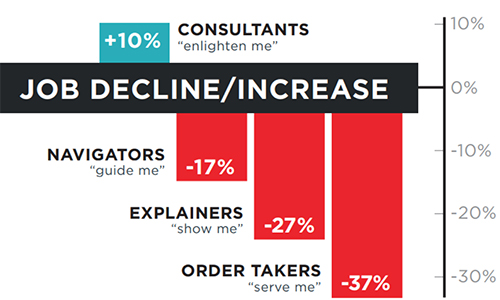
3. Gauge Motivational Fit

When hiring for critical positions you’re most likely going to meet plenty of talented individuals. They’ll be highly skilled, high achievers and downright intelligent. However, all that flash doesn’t necessarily spell out the right candidate for you. If you highly regard your organization’s values, culture, purpose and ethos you’ll find it harder to find candidates that really fit with your organization. Often this is an overlooked step in the hiring process, though it’s quite vital. Ensuring that the candidates you bring onboard are a cultural, ideological and motivational fit is pivotal in guaranteeing success, for your organization and the candidate. Knowing what motivates them, the purposes they value and what drives them will help you assess whether or not they are aligned with your organization.

4. Simulate Leadership Instances

We often ask candidates to detail situations where they displayed leadership traits. These provide candidates an opportunity to showcase their muscle, However, all that is in the past and not related to the challenges or environment they’re going to face in your organization. Instead, try creating realistic job environments that are more representative of your organization and the challenges they’re likely to face working for you. You may even ask them to interact with potential colleagues and work together in teams to resolve matters. This’ll allow you to assess their behavior and gauge whether they possess leadership skills that’s relevant and applicable to your organization.

Hiring future leaders is a vital and critical aspect of ensuring your business succeeds. Taking this process lightly can be detrimental as you’ll likely find your succession line to be bleak and depleted. Having future leaders at all levels of your organization is a sign of great strength. Even if your business struggles today, you’ll be setting yourself up for a prosperous future simply on the shoulders of the talent you bring in today.

01 Feb 17:34

This Is How You Hold Your Customers Accountable

by Irit Eizips

This Is How You Keep Your Customers Accountable

If you are a Customer Success Manager, you already know that ensuring the success of your clients is one of your key objectives. There are many ways one can go about achieving that success. You reach out to your client frequently, discuss current issues, and follow up on their concerns, you even invest the time to train your client. However, there comes a time when all of this is not enough and your customer doesn’t collaborate with you enough in order to achieve their desired outcomes.

This often happens when your client doesn’t understand their end of the bargain in the equation called “Customer Success”. For this to happen, you must consider whether you have the right tools in place to establish a joint accountability with your client. In this blog, I am going to share a couple of proven playbooks and tools that my clients apply successfully to achieve this goal.

Why keep your customers accountable?

When clients purchase your product or service, they rely on you to solve their problem. However, the dependence they typically develop on you, the Customer Success Manager, is too great. The more a customer is dependent on their Customer Success Manager, the lower their chance to maximize the value gained from your solution.

Lincoln Murphy once used a powerful analogy to demonstrate the importance of joint accountability by comparing the engagement of a client with their Customer Success Manager to one with a personal trainer. Here’s how the analogy enfolds: The average time a client spends with their personal trainer each week is around 3-4 hours. The rest of the time the client is on their own, exposed to temptations and unhealthy eating habits. Research shows that clients who are asked to keep a food diary have a higher chance achieving their desired results.

The key takeaway here is that often, your customers don’t understand what they need to do to be successful. When things don’t work out, they focus on the symptoms, such as lack of adoption or missing features, and they blame you. To prevent this, you need to educate and empower them to take responsibility for their part of the success journey.

What can be done?

Before we dive into initiatives that can be implemented to promote joint accountability, it is important to address the customer-vendor relationship. In order to start holding customer accountable for their success, you have to build a strong relationship based on trust and mutual understanding. The conversation about the customer’s contribution to their own success might not be one you are used to having. However, it is vital that you know your customers well enough to predict their reactions and adjust your actions accordingly.

Roles and responsibilities

  1. One way you can make sure that your customers understand their part in achieving their own success is by drawing up clear roles and responsibilities. For example, when you discuss a plan of action with your client, a readiness plan should be established that clearly outlines what needs to be done prior to beginning the project.
  2. Areas of responsibilities should be divided clearly by your Customer Success team and the customer’s key stakeholders. In other words, the plan would clarify that there should be a team in your customer’s organization that is as dedicated to the project as your Customer Success team. Ideally, this team would consist of a project sponsor (someone who initially requested the project), a project lead (someone who is in touch with you at all times), and a system administrator (someone who takes care of technical implementation). The plan should also highlight whether data and systems are in place, whether the data is clean, the mapping is available, etc.

Maturity

  1. When adoption is lacking, your customer might not always understand what the source of the problem is. Often, a lack of adoption is an issue because the key stakeholders are not as involved with the project as your best customers are. In such cases, there are a few diagnostic tools you can develop to help them clearly see the problem. One of them is called a Maturity model. You can build a Maturity model that illustrates the level of involvement your client is showing versus other more successful clients.
  2. Use a Maturity model to score your clients and visually demonstrate how to achieve a high level of success. You can fill out the maturity model with your client or independently prior to your meeting with them.

It can be frustrating to see that the other party does not pull their share of the work, despite your best effort to clearly articulate it.

Remember to approach the whole situation without judgment and disappointment. Reach out to various stakeholders. A healthy conversation increases the chances of a win-win outcome. If you feel that the relationship with the customer still has value and potential for growth, you can try to escalate your effort by scheduling a call between your client executive sponsor and their executive peer in your organization (or ideally, your CEO). By taking the issue up with upper management, they can realize that there is additional value yet to be achieved.

Key takeaways

  • To keep customers accountable for their own success, to make sure they understand exactly what being “responsible” entails.

  • A Maturity model is a great tool you can develop yourself. Use it to visually encourage the right client behavior.

  • Drawing up clear areas of responsibility will help your client establish the best team to work with you in accomplishing their desired outcome.

  • If expectations are not met, try to engage your client in a conversation without judgment or disappointment.

Next steps

There are many ways to promote responsibility with clients. If you tried any of these or other tools to promote joint accountability, please share lessons learned with the other readers in the comments below. On January 31st, I’ll be co-hosting the webinar “QBR Playbooks That Drive Customer Accountability”, if you want to learn more, be sure to save your seat!

01 Feb 17:33

The 52 Percent Subject Matter Expert

by Anthony Iannarino

I am full hot on this idea right now. If you are a salesperson, this is what you should spend your time working on now. If you are a sales manager, this is what you should be building. If you are a sales leader, this is what separates you from the results you want.

More and more, salespeople work with overlay teams. They have technical subject matter experts to help them do discovery and solution deals, leveraging their expertise to create value for the client. They have subject matter experts that specialize in products, bringing their knowledge and experience to bear on the client’s challenges. The salesperson is left sitting at a conference room table with nothing to say, other than introducing the people who can actually speak to the client. This is a detrimental reliance on a Subject Matter Expert.

The remedy isn’t easy, but it is necessary. You can’t be a trusted advisor without the advice. More still, if the only value you provide is inviting a SME to a meeting, you are going to have a tough time developing a preference to work with you—even though subject matter experts are necessary, and even though there is nothing wrong with this model if you do your part.

You don’t need to know 100 percent of what your technical or product SME knows. You also can’t know 4 percent of what they know, either. There is some amount of knowledge that you must possess that is somewhere between these two poles. I am using the number 52 percent because it is just over half of what a SME knows. That means you know what discovery questions to ask and what the likely answers might be. You know what your client is going ask in their preliminary questions, and you know the answers to those questions. The objective here is an asymmetry in information in your favor, a lack of parity on the client’s part, with you still occupying the space of trusted advisor.

To do this, you need to start with the intention of learning a good bit of what your SME knows, a notebook in which to write down the questions they ask and the questions that are asked of them, as well as the responses to each. You also need a few minutes after a sales call to ask your SME to bring you up to speed on the first couple levels deep on the common questions.

Maybe you need to be a 36 percent SME. Or maybe, with a little work, you can be a 47 percent SME. Whatever that number is, you can’t be a 3 percent SME and create value for your client when they know more than you.

The post The 52 Percent Subject Matter Expert appeared first on The Sales Blog.

01 Feb 17:31

10 Biggest Surprises in 2017 Business — And What They Mean for 2018

by Baruch Labunski

From fading retail establishments to the surging stock market, 2017 is sure to be a year remembered for both shattering molds and vanishing institutions.

The curtain of silence that long obscured sexual harassment in the workplace fell with a stupendous roar. Newfound currencies tore through benchmarks considered insurmountable not long ago. A new tax plan promised to save business bundles, and a new administration vowed to unshackle businesses from the constraints of heavy regulation.

Oh, and there’s Amazon. What would 2017 have been without Amazon’s continued domination of pretty much everything?

This year, the biggest business surprises included unprecedented feats, previously unreported allegations and plenty of unbelievable scandals. But take pause, because those same headlines can offer a sneak peak of what to expect in the coming new year.

Take a dive into our time capsule highlighting the top 10 business surprises of 2017:

  1. Deregulation Surpassed Promise

Even before he took office in January, President Trump vowed to reduce federal regulations to 1960 levels, relieving American business from the burden of countless restrictions.

“We’re here today for one single reason: to cut the red tape of regulation,” Trump said, explaining “the never-ending growth of red tape in America has come to a sudden, screeching and beautiful halt.”

By amending and removing regulations that are ineffective, repetitive and obsolete, Trump plans to promote economic growth and innovation. Fulfilling promises to review and assess existing regulations, the administration’s agenda includes the withdrawal and reconsideration of numerous regulatory actions, plus new deregulatory actions. And Trump wasted no time getting the task done.

Trump promised to eliminate two regulations for every one added, but he shocked even his strongest supporters by removing more than 22 times as many regulations from the books as were added. The administration eliminated 67 regulations and proposed just three new rules between the time Trump took the oath of office and the end of fiscal 2017, according to the White House’s Unified Agenda of Regulatory and Deregulatory Actions.

Much of the deregulation dealt specifically with rules designed to protect and preserve natural resources. Trump even kept a major campaign promise when he pulled the United States out of the 2015 Paris climate accord. While the official withdrawal won’t take place until 2020, the policy shift affirmed the administration’s “America First” agenda.

While the deregulation was a campaign promise in 2016, few expected the speed and volume the actions would take place. American businesses can expect much of the same in 2018. Federal agencies still plan to finalize three deregulatory actions for every new regulatory action in 2018’s fiscal year. Plus, 2018 is likely to see another heavy push to repeal as many regulations as possible before midterm elections roll around.

  1. We Are Still In

As part of his move toward business deregulation, Trump pulled the U.S. out of the Paris climate accord, the hard-won global agreement to tackle the greatest threat to humanity and the economy, becoming the only country in the world on the sidelines. That was expected, but many were surprised at just how quickly American business fought back. Major companies across the economy began urging the administration to keep the United States in the Paris Agreement on climate change for the good of the U.S. economy.

And while the president claims his action are to support U.S. business interests, on the day his announcement about the Paris climate accord, 25 multinational companies — including conglomerates such as Apple, Facebook, Google, HPE, Ingersoll Rand, Intel, Microsoft, PG&E, Tiffany, and Unilever — ran a full page ad in the Wall Street Journal requesting Trump’s continued commitment to the agreement. By that weekend, dozens of big companies declared, We Are Still In.

In fact, during May and June, full-page advertisements in The New York Times, The Wall Street Journal, and New York Post, where companies told the president continued U.S. participation in the agreement will help manage rising climate risks and compete in growing global clean energy markets. Can we expect the policy to change in 2018? Based on the administration’s response, no.

  1. TransPacific Partnership Survival

Trump formally withdrew the United States from the Trans-Pacific Partnership trade deal on his first day in office, weakening important ties between America and its Asian allies amidst China’s rising influence around the Pacific rim. Twelve countries that border the Pacific Ocean – representing about 40 percent of the world’s economic output — signed up to the TPP in February 2016.

Trump’s withdrawal from the pact was no surprise, but what happened later certainly was. Against all odds, Japan managed in 2017 to keep the Trans-Pacific Partnership alive after the withdrawal of the United States. Tokyo convinced the 10 other nations to rejoin the pact. But Canada issued a last-minute request to revise the treaty. It’s still possible Japan and the nine other members could continue without Canada in 2018. Either way we haven’t yet witnessed the demise of the TPP.

  1. Stock Market’s Record-Breaking Climb

The stock markets surged all year without any true setbacks. Trump predicted the stock victory upon his election, but the longevity of the climbs exceeded expectations.

The S&P 500 hasn’t even suffered a 3 percent pullback since prior to 2016’s presidential election – its longest stretch on record. The S&P 500 Index has risen 20 percent over the course of the year, and the Dow Jones Industrial Average is up 25 percent – its best annual performance since 2013.

Meanwhile, the Nasdaq outperformed both, with surge of almost 30 percent – even more evidence of investors’ excitement over the strengthening economy and record corporate profits bolstered by the GOP’s successful plan to slash corporate taxes.

While investors enjoyed “exceptional returns” in 2017, Morgan Stanley warned in a recently reported that “such calm is likely to wane in 2018” as earnings growth reaches its peak. The firm even warned the United States has reached a “late cycle environment” that will “eventually turn into a recession.” Will adding a stimulus to an already-healthy economy hold unintended consequences in 2018? The answer will prove pivotal in the years to come.

  1. Electric Vehicles Turned a Corner

Industry insiders are calling 2017 the year the electric car finally arrived in a realistic capacity. Major auto players from around the world announced plans to replace internal combustion engines with all-electric and hybrid systems, finally beginning down the path to a world filled with battery-powered cars and their lower emissions.

Tesla’s highly-anticipated Model 3 garnered the most attention as Elon Musk’s all-electric automaker finally brought a relatively affordable sedan to market. Meanwhile the Chevy Bolt outsold all of Tesla’s models domestically in October.

In 2018, electric cars will finally become a viable option for America’s families, turning a vital corner toward the total electrification of America’s roads. Electric cars might only account for less than 2 percent of all U.S. auto sales, but in 2018 the important numbers to watch are price, driving range and availability – features that will determine the future of the market.

  1. Amazon Quakes Retail

If any one company dominated 2017, it was retail-giant Amazon. The company’s annual sales now exceed $100 billion, and its stock price is up more than 300 percent over the past five years. It’s already entered into nearly every retail-related sphere, and a bold move in 2017 only further catapulted Amazon into the corporate stratosphere. With its $13.7 billion acquisition of Whole Foods, Amazon has finally cemented its footprint in the grocery industry and become an even bigger competitor to Walmart.

The purchase didn’t end Amazon’s landmark year, either. The company also announced it was seeking proposals for where to build a second headquarters, and what seemed like every American city scrambled to make the winning proposal, offering land, tax breaks, free sandwiches — even naming rights to an entire city.

Amazon’s impact has been felt heavily in the retail industry. In January, the nonprofit Institute for Local Self-Reliance conducted a survey of nearly 3,000 independent businesses, half of them retailers, asking them to cite their biggest threats. Competition from Amazon ranked far above more modest concerns such as competition from chains and big-box stores, health care, finding employees, and rising rents. And those concerns are not without merit. By some counts, 8,000 stores run by national chains closed their doors in 2017. But Amazon isn’t out to shutter brick-and-mortar stores.

The online giant is now partnering with a number of brands, including Kohl’s, which is testing handling Amazon returns at 82 stores, and Nike has started selling a small assortment of its merchandise directly via Amazon. Even Calvin Klein decided to bypass department stores and go straight to Amazon for some of its new merchandise this year. Consumers can expect more from Amazon in 2018, as well as even more competitors looking for ways to partner.

  1. Equifax Hacks Endangered Americans

One hack after another was revealed in 2017, each seemingly worse than the previous. Cybercriminals breached Equifax, one of the nation’s three largest credit bureaus, and stole the personal data of 145 million people. Considered one of the worst data breaches of all time, the company only revealed the hack two months after it took place. But because of the sensitive – and useful – nature of the stolen data, the hack’s impact is likely to be felt for years to come.

According to the New York Times, the Equifax breach involved the names, Social Security numbers, birthdates and addresses as many as 145.5 million people, more than 200,000 credit-card numbers and “some smaller number of driver’s license numbers.”

The Equifax hack may ultimately change consumer behavior, proving once and for all that Social Security numbers and birthdays might not be the best form of secure identification. Lawmakers are also proposing legislation to combat similar data breaches. In the meantime, businesses and people are finally adequately aware of their digital security risks, even if they never themselves access the Internet.

  1. Sexual Harassment Finally Addressed

In October, the world was shocked when the New York Times published allegations of sexual harassment and assault against Hollywood producer Harvey Weinstein. And since then, more than 40 high-profile men in media, politics and other industries have faced allegations ranging from inappropriate behavior to rape. The controversy has sparked the biggest national conversation on sexual harassment since the Anita Hill-Clarence Thomas hearings televised in the early ’90s. And that conversation has left its impression on the year, from companies taking a second look at their sexual harassment policies to the tide of #MeToo stories flooding social media.

At long last, in 2017 a majority of Americans – 64 percent, in fact – say sexual harassment is a serious problem, up from 47 percent in 2011, according to a recent Washington Post-ABC News poll. And for the first time, men are being ousted from their jobs by women choosing to bypass the legal system and – armed with screenshots, diary entries and the testimony of friends and family – aim instead for the court of public opinion. The American workplace is finally starting to seriously deal with the longstanding issue of sexual harassment, and the trend is bound to only accelerate in 2018.

  1. Bitcoin Took a Roller Coaster Ride

What some have called a meteoric rise, Bitcoin’s 2017 value was more akin to a roller-coaster ride. The initial price of bitcoin, set in 2010, was less than 1 cent. In January it was just over $900, and by December it reached a record high above $19,800 before again collapsing, losing a third of its value in a single day and sinking to below $11,000 before regaining some of the ground it lost. It jumped to almost $16,000 before falling again to just over $14,000, according to Coinbase.

The 2017 price surge may be a bubble. It could also be a sign that cryptocurrency is finally ready to go mainstream as the number of cryptocurrencies and tokens multiply into the thousands. And while cryptocurrency entrepreneur Julian Hosp says bitcoin’s meteoric climb isn’t yet done, he sees a longer roller-coaster ride ahead.

“I think we’re going to see bitcoin hitting the $60,000 mark, but I also think we’re going to see bitcoin hitting the $5,000 mark,” Hosp, co-founder and president of TenX, told CNBC.

  1. Corporate Tax Cuts Exceeded Expectations

Congress passed a major overhaul of U.S. tax law in 2017. Under the law, aimed at providing relief to big business and further stimulate the economy, corporations will get a permanent tax cut of 14 percentage points, its lowest level since 1939.

On December 22, Trump signed the Tax Cuts and Jobs Act, which reduced the corporate tax rate from 35 percent to 21 percent beginning in 2018. The act also raises the standard deduction for pass-through businesses – including sole proprietorships, partnerships, limited liability companies, and S corporations – to 20 percent.

The new tax law also promotes a transition from the current “worldwide” tax system to a “territorial” system. Under the worldwide system, multinationals are taxed on foreign earned income, so they don’t actually pay the tax until they bring the profits home. Many corporations, therefore, leave their accounts overseas.

Under the territorial system, businesses aren’t taxed on that foreign profit, so they are more likely to reinvest it in the United States. Under the act, companies can repatriate $2.6 trillion held in foreign cash stockpiles and only pay a one-time tax rate of 15.5 percent on cash and 8 percent on equipment.

Will the tax incentives push more companies to hire more Americans? Stay tuned in 2018 to find out.

01 Feb 17:30

Improve Customer Service With A Planned Approach To Machine Learning

by Paul Selby
cranium-2099083

Image source: Pixabay.com

These days, it’s hard not to run across a story in the news about machine learning (ML) or artificial intelligence (AI) announcing some new feat or potential use. (And it’s easy to be confused by the two.)

As technology races to develop ML and AI, companies across industries are standing by to adopt these new solutions to increase speed and efficiency of work throughout all aspects of their business.

Customer service is one such area seeing an influx of potential applications.

Two recent pieces of research–an Accenture report and a survey–illustrate some of the challenges facing customer service today, how ML can benefit it, and the planned adoption rate of ML and AI by CIOs. Both are recommended reading, but to summarize just a few points drawn from the report:

  • 27% of customer service environments have more than 100 possible assignment groups for new customer cases
  • 15% reported having over 100 categories to choose from when attempting to classify cases
  • As a result of these many choices, is it a surprise customer support functions spend approximately 12% of their time categorizing, prioritizing, and assigning cases?

The bottom line is that customer service is spending a lot of manual time reviewing and sorting through cases, time that could be spent on other higher-value work, such as working directly with customers. But what is necessary to start up, enjoy, and succeed with ML or AI in customer service?

Identify Automation Opportunities

The Accenture report demonstrates the business value of ML and AI is there, but potentially only in certain circumstances–so choose wisely.

Per the report, one recommendation is that unstructured, redundant, and mundane tasks are the work patterns that typically benefit from automation. For example, following the central study points of the report, consider focusing on the classification and routing of customer service cases. This high-volume, arduous activity can be slow and fraught with errors. Unlike humans, machines can handle tens of records just as quickly as thousands. As such, ML and AI can not only improve the speed and accuracy of categorization, prioritization, and assignment of customer cases, but it can have a positive impact on customer satisfaction by preventing such delays to resolution. The increases in productivity and time savings then allow customer service agents to focus on other important work.

There’s an additional benefit to moving this type of work from humans to machines. Employees are less stressed, bored, and exhausted by performing this monotonous task, aiding in retention as well as reducing the error rate.

Adoption And Ongoing Use

ML and AI have become more mainstream and significantly easier to adopt. The challenges of getting started with and maintaining ML and AI capabilities are simply no longer present. It’s not necessary to find and employ an army of data scientists and others with highly specialized skills.

One key reason this has occurred is that ML and AI have become a standard offering with modern customer service management solutions. This allows companies to create the initial data models themselves. From there, ongoing adjustments and updates with new data are just as easily performed.

High-Quality Data Required

Data is the basis upon which ML is initially founded and will empower or limit its capabilities, notably in terms of accuracy. That being the case, what is possible through the automation of tasks like case categorization, prioritization, and assignment and initial success will be highly dependent upon data quality.

Companies must evaluate the quality of data prior to turning it over to ML to build its own logic. They may also need to determine if their processes have been digitized to the extent they have been capturing the correct data to feed their ML algorithms. Modern customer service management solutions have guidance to assist here. It is also worth investigating if there is third-party data obtainable that could further enhance the quality of ML efforts.

Measure And Report

It is critical to continuously measure outcomes to reinforce the value ML and AI brings to customer service. The same metrics for volume, productivity, and efficiency of cases categorized, prioritized, and assigned are initially useful to compare just how much faster and cost-effective ML and AI are in comparison to human efforts, but other metrics are necessary for true improvement.

ML can process tens of thousands of records, but starting out accuracy rates may be low. Despite the best efforts, algorithms and data models will not perfectly sort all cases in the beginning and cases may need to be manually addressed when errors occur. Just as with humans performing the work, monitor the accuracy rates. When errors occur, use the opportunity to teach the machine why it was wrong so it doesn’t occur next time. Accuracy rates will improve.

Empowering Customer Service With ML and AI

As ML and AI continue to evolve and improve, the limits of what’s possible will further erode. Simultaneously, it will also become easier for companies to adopt and expand automation throughout their business. Customer service is one such area benefiting from this trend. The latest and greatest customer service management platforms are removing the mundane, daily work for customer service agents thanks to ML and AI that doesn’t rely on data scientists so that agent skills can be utilized elsewhere.

Companies that fail to take advantage of ML and AI will not only continue to struggle to keep up with customer service work, but they might also be at a competitive disadvantage as a result of slower, less responsive customer service. The path forward is clear: it’s getting easier and easier to adopt ML and AI in customer service, and doing so means not only will employees welcome the reprieve from monotonous work, but customers will benefit from the faster resolution of their problems.

01 Feb 17:27

Sales Incentives that Motivate Modern Sales Pros

by Steve Kearns
Incentives

A recent Harvard Business Review article questions whether the proliferation of digital channels and changes in buying behavior have made the traditional sales incentive model obsolete. This isn’t an argument against financial motivators. However, it is a rallying cry to reconsider the exact behaviors your sales reps are being incented to do, and sometimes more importantly, the winning behaviors they’re not currently incented to do.  

In a world where sales professionals no longer “own” relationships with prospects, companies need to motivate their reps to focus on the activities that can impact buying decisions. How can sales leaders adapt to incent their teams and drive results?

Reward New Metrics

Assuming you and your sales team have embraced social selling, it’s only fitting that you adjust your performance measures accordingly. Of course, it’s about closed deals at the end of the day, but it’s time to expand your revenue-based incentive plan and reward your reps for all the actions they’re taking to help usher buyers to the finish line. KPIs will vary from one company to the next. The important thing is to reward the leading indicators of closed sales at your company. For example, you may find that the number of connections at the target account correlates with wins, and you’ll want to reward behaviors that align with reps mapping and connecting with the buying committee.

Focus on Team-based Incentives

Most companies incent each sales rep individually. Yet it takes a team effort to close a deal – especially where consultative selling reigns supreme. Simply put, selling is easier when you are paired with a team of experts, all with practical knowledge of industry trends, buyer challenges and goals, and solution possibilities to fully address a prospect’s concerns.

As buyers look to reduce uncertainty and validate their decision, they often seek input from multiple people in your company. In addition to technical specialists like pre-sales engineers, they might even want to engage with more than one sales rep in your group. This approach allows them to benefit from the perspectives of salespeople with different – and complementary – specialties, interests, and backgrounds.

At the same time, as your sales reps seek to make inroads with a target account, they are likely calling upon their fellow sales reps to make warm introductions to strategic stakeholders. So, it only makes sense to incent your team to work collaboratively to drive sales. In his book Drive, Daniel Pink profiled a large technology company that replaced individual incentive plans with team-based ones. The result was much higher levels of collaboration and revenues.

Highlight Social Status

It’s natural to wonder how you’re going to get your sales reps to work more collaboratively. After all, most sales environments are designed to motivate individual performance and competition. But that approach doesn’t mesh well with the modern social selling culture that is increasingly taking hold across organizations. That’s where the concept of social status comes into play.

Think of how your top performers appreciate recognition. At the same time, that leader board can set a fire under your average performers and laggards because it’s embarrassing when their less-than-optimal performance is made public. Drawing on this tactic, you can complement monetary bonuses with social recognition that rewards a team approach to selling. The idea is to celebrate successes while reinforcing the value of working collaboratively to drive sales using social selling.

By adapting your incentive model in these ways, you can encourage the sales activities and behaviors that matter most in today’s modern world. That means your sales team will be rewarded for embracing social selling and your company will be rewarded with more sales.

For more ideas on how to fully harness the power of social selling, download The Sales Manager's Guide to Driving Adoption and Revenue.

01 Feb 17:27

21 Ways to Find Out What B2B Buyers Want

by Rachel Foster

It’s challenging to create content that motivates B2B buyers to respond. Here are 21 ways to get to know your customers, so you can create content that engages them and brings you results.

21 Ways to Find Out What B2B Buyers Want

As a B2B marketer, you know that good content boosts customer engagement and increases sales.

In fact, more than 85% of top-performing marketers make content an integral part of their marketing strategy.

But creating engaging content isn’t always easy.

One of the biggest content marketing challenges is relevancy. If B2B buyers don’t relate to your content, they won’t read it.

That’s why you need a clear understanding of your audience, their pain points, and their goals. The more you know about your customers, the more likely they will view your content and respond to your offers.

Here are 21 ways to get to know your B2B customers, so you can create content that motivates them to take action:

1. Read your case studies.

You can learn a lot about your customers when you read their stories.

For example, you’ll learn about their challenges and the goals that they wanted to achieve before they started working with you.

You can also gain insights into your customers’ buying processes and why they chose you over your competitors. This knowledge can help you create content that speaks to your customers’ needs, so you stand out from the pack.

If you don’t collect case studies on a regular basis, you’re missing out on a goldmine of insights that can help you get more value from all of your content investments.

2. Review your competitors’ case studies.

Do you want to find out why B2B buyers chose your competitors over you?

Check out your competitors’ case studies. Researching how competitors engage their customers will help you better understand how to engage your own.

If you are in the technology space, you can find your competitors’ case studies on Featured Customers.com. Or you can visit each competitor’s website separately to review their case studies and testimonials.

3. Subscribe to publications that B2B buyers read.

Most industries have trade journals and professional magazines that address your customers’ top issues. Mining these publications will give you ideas for topics that resonate with your target audience.

Check out your industry association’s website to see if they have a blog or print publication. You can also find lists of industry publications at your local library or on Webwire.

4. Check out Amazon book reviews.

If you’re in the B2B space, you might not think of engaging with your customers on Amazon.

But Amazon’s book reviews can give you a wealth of information about your audience.

Find books that your target audience is reading and check out what they say in the reviews. Doing this will help you learn their thoughts on the subject matter. Reviews can also give you insights into your customers’ problems and the types of solutions that they want.

5. Sign up for Buzzsumo.

When you enter keywords in Buzzsumo, the site will show you the most popular content for each phrase. You’ll see the number of social shares and what sites link back to the content. Here’s an example of a Buzzsumo search for “content marketing:”

Example search for "content marketing" in BuzzSumo

Using Buzzsumo is particularly helpful when you need ideas for blog post topics and headlines that will boost your shares.

6. Enter your keywords in Answer The Public.

Answer The Public leverages the power of Google’s autocomplete function and displays the results in easy-to-read graphics. Simply enter your keywords, and Answer the Public will show you the most-searched questions, prepositions, and alphabetical listings for each phrase:

Here are the results for questions about “content marketing:”

Example of "content marketing" search in Answer the Public

You can use these results to find out what your customers search for on Google. Then, you can create content that answers their questions and improves your SEO.

7. Use SEMRush for competitive research.

SemRush is a great tool for researching your competitors. Enter their domain, and you’ll see what keywords they rank for and who links back to their site. When you use the page report, you’ll see what content performs the best on their site. Then, you can create something even better for your own site.

8. Show your professional side on Facebook.

If you use your Facebook profile professionally, you can connect with trusted customers and interact with them in an informal setting.

Join the same groups that B2B buyers are active in. Follow their discussions and see what types of content they share.

If you post on a company page, use Facebook Insights to see data on your views, likes, and shares. This data will show you what works and what doesn’t work, so you can improve your content in the future.

9. Stay up-to-date on Twitter.

Connect with members of your target audience on Twitter and pay attention to their tweets. Be sure to segment your customers into lists, so you can keep up with their activity.

10. Invest in LinkedIn.

LinkedIn is the top social network for business professionals.

If you’re in B2B, most of your social media efforts should focus on LinkedIn. Your sales team may also want to consider a Sales Navigator subscription, as a paid plan makes it easier for reps to find and connect with potential customers.

11. Register for conferences that B2B buyers attend.

conference image with B2B buyers

Attending a conference is a great way to get out of your office, learn what’s happening in your industry, and network with prospects.

Find out what the most popular sessions are and try to get a seat. Also be sure to stay through the Q&A, as you’ll learn what questions your customers are asking. Then, you can answer these questions later in your own content.

12. Join industry associations.

Industry associations are great places to interact with your target audience.

These groups have forums, social communities, and publications where your customers and peers discuss their top issues. They may even have live events, where you can meet potential customers in person.

13. Use Google Keyword Planner.

Google Keywords Planner allows you to enter keywords and find out which ones have the highest search volume. You can use the tool to get a general idea of what your customers search for.

14. Try UberSuggest.

UberSuggest is a tool that allows you to quickly find keywords that aren’t available in Google’s Keyword Planner. It shows you search volume, seasonal trends, and cost-per-click data.

The best part? It’s free.

15. Find your customers’ questions on BloomBerry.

BloomBerry shows you the top questions that people ask online. It mines popular sites, such as Quora and Reddit, so you won’t need to look at them individually to find out what questions your customers are asking.

16. Speak with your sales team.

Having an open dialogue with your sales team is essential if you want to learn more about your customers.

Your reps can tell you what buyers are asking and what they think about your product. This information will help you address customer concerns in your marketing materials.

17. Survey and segment your customers.

Surveys can provide you with valuable data about your prospects and customers.

But it’s hard to get someone to complete a survey.

If your surveys fall flat, start by asking your audience to answer a single question. For example, when someone joins your list, send them an email that asks them to segment themselves.

If your list consists of IT professionals, you can say something like:

To send you the best and most relevant content, we need to know a little more about you. Please click the option that best describes you.

  • I’m a CIO who wants to lead my company’s digital transformation.
  • I am an IT security pro who wants to better protect my company’s data.
  • I’m a network engineer who wants to improve our network’s performance.

Segmenting your audience is critical for improving your open and response rates.

18. Host a webinar.

webinar image

Webinars allow you to get face time with your customers. Make your webinars as interactive as possible, so you can chat with customers and answer their questions.

19. Check your Google analytics.

When you review your Google Analytics, you can see which keywords people use to find your web pages. You can also learn which pages get the most views.

However, a large number of views doesn’t necessarily translate into an engaged audience. Also look at how much time people spend on each page. You may need to use other analytics tools to determine how your audience interacts with your content. For example, what are your opt-in rates for your premium content?

20. Read your blog comments.

Your blog can give you insights into your target audience. Which posts get the most shares and comments? What questions do people ask in the comments section? Should you answer any of these questions in future blog posts?

21. Review your customer personas.

Are your customer personas up-to-date?

If not, you may need to research your buyers and revise your personas. Make sure that everyone on your content team has copies of your personas, so they can refer to them when they create content for you.

Customers Are All Around

Love Actually

This list covers just a fraction of the places where you can connect with customers.

As they might say in a marketing version of Love, Actually, “Customers are all around!”

The more you interact with customers, the more you can tailor your content to meet their needs. Ultimately, this will lead to increased sales and revenue.

What will you do to engage with more customers?

01 Feb 17:26

Peer to Peer Relationships: Inside Sales and Field Sales

by Nima Abtahi

When we talk about modern-day sales cycles, we hear a lot of challenges. Just about every sales rep will tell you that the sales cycle is getting increasingly complex. With the continuous advent of new technology, leadership teams have more visibility and insight into how effective their current business operations are. Because of this, there are now multiple stakeholders, all of whom want a voice in why and how to improve their current processes.

So, what does this mean for sales organizations? As an account development representative, I talk every day with people who are experiencing these kinds of challenges—and I also am part of a team that is selling into this increasingly complex world. Let’s take a closer look at how peer-to-peer relationships within sales organizations can make a tremendous, positive impact on modern sales cycles.

A Long and Winding Road

For starters, the modern sales cycle is longer and more complex than it ever was before. It demands more investment in developing relationships with an entire team of buyers. This has led companies to develop large sales organizations, with various positions based on unique responsibilities, tasks, and levels of involvement throughout the sales cycle.

But why is this required? Why can’t one sales professional work side-by-side with their lead through the entire buyer’s journey? Well, for one thing, that’s just downright difficult to do. A fully ramped sales representative already has enough on his or her plate simply working to find new business opportunities.

More important, different stages of the sales cycle require distinct skill sets and daily duties. Inside sales reps like me are held responsible for prospecting, developing the first levels of engagement, and qualifying new business opportunities; field sales reps nurture the engagement, meet with decision-makers, and close deals. As you can tell, these roles are very different.

We haven’t even mentioned the economical benefits of segmenting sales roles:

  1. When inside sales and field sales are separate, it is easier to define responsibilities and identify needs for certain sales positions
  2. Time and cost savings for hiring, training, developing, and compensating sales employees. This allows for a better allocation of resources, as well as developing specific processes to maximize efficiency for each position type.
  3. You can increase in retention rates for current employees, as well as establish a path for career development.

It is important for companies to hire for a multitude of sales roles to ensure that teams provide a smooth evaluation process for prospects. But as companies grow, they face a problem: how to build peer-to-peer relationships within the roles of the sales organization to ensure a transparent hand-off for prospects? We’re talking about going beyond the simple ice-breaker events and happy hours to allow sales professionals to meet and mingle with each other. I have found that strong peer-to-peer relationships are essential to providing a seamless experience for the prospect.

Keeping the Way Smooth and Clear

To make a great experience for buyers, companies need to clearly define their roles, responsibilities, and proper forms of conduct when performing customer-facing activities, as well develop an environment that encourages open collaboration. There are three easy steps companies can take to ensure a smooth handoff:

  1. It begins with providing transparency in regards to each sales professional’s specific duties, based on their position within the organization. This means clearly defining of processes and visibility of the metrics, KPIs, and performance dashboards developed for sales teams.
  2. Next, there needs to be open communication and accurate, thorough reporting in a CRM (if you don’t know what that is, probably shouldn’t be in sales). This helps teams easily log and track conversations and engagement tactics, as well as keep track of their prospects.
  3. Last, but definitely not least, is letting the prospect know about the handoff. A prospect should be fully aware that the sales rep with whom they had their initial conversation will not being showing them the demonstration and walking them through pricing options. It is vital to ensure that a prospect is kept up to date on who their point of contact is within a company. This helps develop trust with the prospect, and ensures their questions are being addressed by the correct individual.

Arriving at Your Destination: Closed-Won

By providing a smooth experience throughout the entire evaluation process, my field sales colleagues and I are able to keep track of all prospects and decision-makers, helping not only improve the relationships, but also to improve the efficiency and effectiveness of the sales organization. This also helps created closed-loop feedback within the sales organization—field sales reps can provide their inside sales reps with actionable insights into which strategies and outreach efforts are performing, and those that aren’t. As a result, sales teams can improve the probability of their success over time, and generate directly applicable best practices to help move deals faster through the pipeline.

The benefits extend beyond the sales organization as well. A well-functioning sales organization can more easily collaborate and strategize with marketing organizations to create a more effective business development strategy. We use an account-based strategy to capitalize on this alignment. You’ve likely heard it referred to as Account-Based Marketing or Account-Based Sales Development. With an account-based strategy, marketing teams provide sales reps with higher quality and quantity leads, confident that they will be quickly acted upon. With this alignment, marketing teams can also develop more effective content and collateral aligned to common characteristics shared by accounts, allowing both sales and marketing teams to engage with their prospects. Learn more about account-based marketing in our eBook, “Content: Your Ticket to High-Performing ABM.”

01 Feb 17:26

Sales and Marketing Alignment: Why You Need to Figure it Out

by Stacey Danheiser

In today’s omnichannel world where potential buyers get lots of product and company information online, it is crucial that sales and marketing are aligned to customer needs. CEB research showed that B2B buyers tend to be over 60% of the way through the sales process before they contact a salesperson.

Effective alignment generates more revenue for your company and prevents millions of dollars being wasted on ineffective content and stalled deals. Did you know that misalignment between marketing and sales costs companies $1 trillion a year in lost productivity and leads? While their aligned counterparts achieve 20% annual revenue growth.

What sets the best organizations apart?

Shake Marketing and Huthwaite International recently conducted a global survey amongst marketing and sales leaders to assess what the best companies are doing to align these two functions. The survey looked at 26 different factors including the nature of the relationship between sales and marketing, how the two functions work together, the contributions of both sales and marketing and the use of technology.

Based on the results, here are the key factors that were most important in distinguishing highly performing sales and marketing teams:

  1. The collaborative nature of the relationship, which is open, trusting and respectful
    Both parties respect one another and equally accept responsibility for poor results without blaming one another.
  2. The ability to influence upwards in the organisation
    Marketing and Sales team collaborate on presenting their plans to the Board or Executive leadership.
  3. The collection and sharing of intelligent information on customers and the market
    Marketing provides insights from data/ analytics that help sellers position themselves as thought leaders and deepen relationships with customers.
  4. Achieving consistency and integration
    Marketing and sales share a common language. They are seen as an integrated team with clear roles and responsibilities and they communicate consistently with each other and with customers.

Diagnosing the problem in your organization

There are two key areas to assess: how aligned your marketing and sales teams are with each other, and how aligned these two functions are to customers.

First — let’s look at internal alignment. Do you have shared goals? What about a shared scorecard? Often, the marketing department may be measuring one set of activities – such as website visitors, email newsletter subscribers, leads captured, and marketing qualified leads, while the sales team is looking at # of opportunities created and # of deals closed. When these two scorecards are misaligned – for example, if marketing’s metrics are all “green”, while sales metrics are all “red”, this leads to a “tension point” with finger pointing as to which department is dropping the ball.

Next, are you speaking the same language? This may seem so simple that it’s not worth mentioning. But we’ve found that organizations usually do not have agreed upon internal definitions for common questions such as:

  • Who is our ideal customer target?
  • What do we mean when we say the “value” of our product/ service?
  • What is our value proposition?
  • What is a “campaign”?
  • What qualifies as a “lead”?

Another critical area to look at is how aligned with the customer these two teams are. It’s great if your marketing and sales teams get along, but if they are disconnected from the customer, we call this the “road to nowhere”. Remember that the best marketing organizations feed their sales team insights and intelligence that helps them position their solution in a superior way. This means the marketing team must spend the time to truly understand what the customer really wants or needs before creating marketing materials and messages.

How often do marketing and sales collaborate on creating new content and messaging? This is a great opportunity to discuss what the customer values and determine the best strategy to communicate your company’s differentiators.

What roles do marketing and sales play?

There is often confusion about what is a marketing function vs a sales function. The truth is that marketing and sales are trying to achieve the same thing: happy customers, and more of them. However, they each have a different role to play in that journey.

  1. Marketing thinks broad. Sales thinks specific.
    First and foremost, Marketing is responsible for defining the market opportunity and the ideal customer segment. They should be setting the strategy and plan for how to increase awareness and demand amongst the list of prospective buyers. With the exception of account-based marketing (ABM), marketing content and programs are more generic in nature, meaning they target the buyer in a “broad” sense, vs. addressing an individual buyer.Sales, on the other hand, deals with an account or a set of accounts. They seek to build 1:1 relationships and sees the customer as a specific person, for example “Jim, in Accounting” and work to tailor their value proposition and solution to each company and individual.
  1. Marketing is long-term focused. Sales is short-term focused.
    Marketing should set the big picture strategy – how does your company solve a pain point/ need, what products should you lead with, what makes your solution so unique compared to the competition, and how can you generate awareness/ demand at scale. Sales is short-term focused. Yes they want to build long-term relationships, but they also want to close the next deal, and may be inclined to take on clients that aren’t “ideal” for your business to hit their number. Sales can influence how to make your product or service better/ easier/ more valuable for your customers, but they don’t own making it happen.
  2. Skillsets and traits are different.
    As a broad generalization – Marketers are usually creative and detail oriented, collaborative, good project managers, with varying levels of strategic, analytical and technical skills. Salespeople are generally competitive, charismatic, resilient, social, great communicators and relationship builders. Celebrate these complimentary skillsets and take advantage of having different points of view on your team.

It’s time for sales and marketing to work together to truly understand their customers’ needs, wants, motivations and pain points so that they can offer compelling value.

Want to see how aligned your company is? Take the Alignment-o-meter

31 Jan 18:03

The State of Sales Training ROI

by Mark Magnacca

kalhh / Pixabay

It’s no secret that sales training practices have undergone a massive shift in recent years, with many organizations recognizing the value that modern technologies such as mobile and video can bring. However, justifying the additional spend required to implement new training regimes can be a hard sell – especially because sales training ROI can be hard to quantify. Anecdotally, we know the value is there, but how do track and measure it?

With the State of the Union address scheduled for this week, it brought to mind some questions about the current state of sales training, and how business are measuring ROI. As a sales trainer, I’ve recognized a few standard metrics that can help sales trainers champion the benefits of new tools and training techniques. Keep reading to discover the ROI insights we’ve gathered that deliver the most bang for the buck when it comes to more thoroughly capturing and measuring the business impact of sales learning investments

The New Standard in Sales Training ROI

Teams looking to implement new training programs have the potential to revolutionize the way they measure ROI – but it’s all about getting the right systems in place so employee feedback and performance can be easily tracked.

Increased revenue comes from faster proficiency with new sales content, boosting sellers’ competency, and providing better, faster access to relevant content. To put a dollar value on this, sales organizations can capture specific deal impact, before and after metrics upon implementing a new tool, and use A/B testing and control groups to measure against different regions or sales groups.

For the financial industry, where a single deal can bring in millions of dollars, tracking the impact of new training techniques on a specific deal can demonstrate ROI. This can be done by putting a robust win reporting program in place, where teams can more easily capture how that deal was won and identify the knowledge and training that went into it, such as how a specific objection was handled. Concrete examples such as this, when collected on a large scale, can paint a picture of true ROI for a specific training tool or practice.

Another way to track ROI is to identify a specific metric and then track improvements to that metric over time – called lift. Focusing on improvements among low to mid-level performers before and after a specific tool or technique is implemented can be especially telling. For example, a medical device company we work with looked at quota attainment before and after a new training tool was introduced. Region by region, they divided reps into high, mid-level, and low performers and, year-over-year, looked at performance after changes were made to their training programs for insight into how their new training program was performing. Other metrics to measure lift on include pipeline growth, sales productivity, win rate growth and ability to hit quota.

To further confirm that these year-over-year metrics are not inflated by an external influence (for example, industry changes or the closing of a competitor company), a new training tool can be rolled out to a specific group while training in a control group remains the same. This type of ROI tracking is the gold standard for measuring lift and can provide sales organizations with the most conclusive evidence that a training program is (or isn’t) effective. These metrics demonstrate improvement because a certain action was taken, a more meaningful metric than simply tracking anecdotal deal closings or quota attainment.

Conclusion

Hard cost savings provide the most concrete and easy to quantify ROI for sales learning technology. But we hire sales reps to bring home the bacon, not save on the beans! By more rigorously assessing the business value that sales training creates, sales trainers can separate what works from what doesn’t, prove their team’s impact, be a more effective champion for initiatives and win additional resources.

Additionally, when teams sell successfully, they feel more fulfilled and engaged – and having happier, more engaged sellers lowers costs and further boosts revenue. In fact, higher employee engagement within sales, or any other organization, spells greater productivity and better retention – studies show that engaged reps are up to 87% less likely to leave the organization.

Clearly pointing to positive impact lets training and enablement teams more effectively advocate for the tools that will make a real difference. And upon a closer examination, teams may realize they’re delivering even more ROI than they thought!

31 Jan 17:46

Sales Tactics That Work: Confidence + Ennoblement

by deb.calvert@peoplefirstps.com (Deb Calvert)

Buyers really do prefer to work with sellers who are confident. Confidence is not only among the sales tactics that work best, it's also a way to inspire buyers to be confident, too.

31 Jan 17:46

The implications are not tiny

by Drew McLellan

tinyUnless you’ve been under a rock for the past couple years, you are aware of the tiny house movement that is taking the country by craze.

In case you’re one of the folks who is not familiar with this concept, tiny houses are exactly what they sound like: super small houses, usually under 300 square feet, that are designed in such a way to maximize space, while using virtually no space at all. They can be stationary on the ground but in many cases, they’re built on a trailer so they’re mobile.

The movement began way back at the beginning of the century but lately, it has exploded thanks to this new generation of consumers and the media. There are all kinds of TV shows focusing on tiny homes like Tiny House Hunters on HGTV. If you Google tiny house you’ll find a very vibrant community where owners exchange information and offer advice on living in small space.

Here’s a look at the typical tiny housebuyer:

  • They have an average income of $42,038 ($478 higher than the average American)
  • 89% of tiny house owners have less credit card debt than the average American
  • 65% of tiny house owners have no credit card debt
  • 55% of tiny house owners have more savings than the average American
  • 68% of tiny house owners have no mortgage (compared to 29.3% of all US homeowners)
  • 2 out of 5 tiny house owners are over 50 years of age

While all of this is fascinating just on the surface, when we dig deeper – I think this movement is a huge wake-up call to marketers. There are some pretty significant clues in this phenomenon as to where consumers are heading and that’s going to impact us all.

Here are some of the trends I see buried in the tiny house movement:

Independence as a core theme: Imagine all the levels of freedom you’d have if your house could be moved anywhere you wanted it to be, you didn’t have a mortgage and your housing costs were power, water, Internet, and insurance.

A return to a simpler life: Tiny home buyers want to owe less, so they have more choices in terms of spending time with their family, work less and have a lot less to maintain. By default – if you live in 350 square feet, you can’t have a lot of stuff. Simpler by default.

A different definition of success: For these consumers, success isn’t a big house with a big screen TV and a beautifully manicured lawn. It’s no debt and no strings. This frees the homeowners up to spend more time traveling and being out and about.

Mobility: By default, if your house is on wheels – you don’t plan on setting down permanent roots. Even if you stay in the same community, you’re not tied down.

Eco-friendly: These homes are very eco-friendly with composting toilets, very little energy usage, solar panels and multi-use furniture. The footprint created by one of these homes is minuscule compared to a traditional home.

A new relationship with money: These consumers are not willing to owe anyone anything. They want the economic freedom to do what they want when they want. But that doesn’t mean they don’t like nice things. Many tiny homes have very high-end appliances and finishes like cherry-wood floors and stained glass windows. When you’ve got less than 500 square feet, those kinds of upgrades are very affordable.

This consumer group is growing at an amazing rate. Even if someone doesn’t opt for a tiny home, it’s safe to assume these consumer attitudes are emerging among the more traditional homeowner as well.

These attitudes and buying patterns are going to trickle into every category. I think it’s important that you begin to think about how this is going to translate to your business. Because if it hasn’t already – it’s coming.


The post The implications are not tiny appeared first on McLellan Marketing Group.

31 Jan 17:46

Whose Job Is It To Understand The Buyers?

by Dave Brock

geralt / Pixabay

George Bronten just published a fascinating post, “Your Sales Enablement Will Fail Without These 5 Things.”

I agree with him on at least 3 of the 5, and kind of sorta, but not quite agree on the 2 remaining items. But his first critical success factor really struck me, Understand Your Buyers. I absolutely agree with this–but thought, is this sufficient?

In some sense, sales is like the tail wagging the dog. We need to understand our buyers intimately, in order to engage them, and sell our solutions. But the issue of understanding the customer really has to go back much more deeply in the organization.

Understanding our customers, is at the core of the company’s business strategies and purpose. The company, not sales, must say, “who do we serve, how do we want to serve them, what do we need to have in place to serve them, how does what we do create value and demand from them?” The company, not sales, must say, “what problems are we the best in the world at solving, and who has those problems?”

This cascades into Product Development, Product Management, Product Marketing. They develop the solutions we sell. They have to be deeply embedded in understanding the customer, how and why they buy, what value we create both in using the solutions, but in engaging them with discussions about the solution. They have to make sure they are solving problems that our customers want solved, and there are enough customers that may want them solved to support our business goals and strategies.

This ripples through to customer service/customer experience. Their job isn’t just to help the customer use the product or solve problems they may be having. They have to make sure the customer is getting the most value from the product, will continue to buy, will continue to grow the relationship, and will continue to refer the product and our company to others.

I could go on, but you get the point, understanding our buyers, being able to walk in their shoes, understanding how the problems we solve helps them more effectively achieve their goals, understanding the dynamics of their customers/competitors, markets and the impact on their own strategies, understanding what might drive them to need to change, how they look at changing, how they look at buying, how they use and realize the value they expected touches virtually every part of our company.

But here’s the issue/opportunity.

Too often, the rest of the organization, yes even product development/product management, do a terrible job at doing this–at understanding the customer, at understanding the issues George poses in his blog post. Too often, they are caught in the conundrum of developing the next new product which is an evolution of the previous product or doing nominal research on what they customer does (so they can design the product), but few really focus deeply on the customer/buyer/user.

Too often, the customer has become too abstract, they don’t really understand the customer, what drives them, their dreams, fears, goals. Often, when speaking to product managers and developers, I ask, “How many customers have you visited in the last year? How many people have you talked to? How many customers have you watched working, so you understand their problems?

Sadly, too many give poor answers. They read reports, they attend conferences, they get input (from who?), and so on. They seem to be more focused on competitors, watching them, copying them, or staying one feature or function ahead of them.

But, they don’t have an intimate understanding of the “customer.” They don’t understand the worlds our customer live in, what drives them to change, or what causes them to search/learn, or what causes them to buy. The customer is an abstraction, and sadly, secondary to their jobs of developing then next new version of the products they have always been developing.

Other parts of the company need to be as intimately knowledgeable of our customers and why/how they buy as sales and marketing. And if they are, they become very powerful in helping marketing and sales, through sales enablement, to better understand them, and the value we could create with/through them.

Unfortunately, I don’t see this happening, at least to the degree it needs to happen.

I’m not sure it’s sales enablement or sales operations, but perhaps one of the greatest values we can create, in addition to “enabling” sales people to understand the buyer, is to enable the rest of the company to understand the buyer.

Perhaps sales enablement/sales operations has an important a mission of enabling our own organization to become more customer/buyer focused. In doing this, perhaps enable these organizations to help us better equip and enable our sales teams, and by the way, our customers to succeed.

I think one of the most critical missions of the sales organization–whether we charter sales ops, sales enablement, or someone else to do this, is to sell and advocate internally. We need to make sure everyone else understands the customer and why/how they buy as intimately as we do. We need to drive an understanding of the customer, their challenges, and what we must do to engage them, and create value with them, through all parts of their problem solving, change management, buying, utilization journey.

If everyone in the organization has the same intimate understanding of our customers, and why/how they buy, we can all be much more impactful and effective.

Doing this well helps our customers succeed, as well as each of us.

31 Jan 17:44

5 steps to close a sale (quicker) and get better deals in 2018

by Ryan Robinson
How to close a sale ari gold closeio

In theory, learning how to close a sale is actually pretty simple—show up prepared, make your pitch, answer your prospect’s objections, ask for the sale, and if need be follow up until you get a definitive answer.

In practice however, selling is a bit more nuanced than that; a hard fact I’ve come to learn through countless hours of closing (and attempting to close sales throughout my career).

Now, while there is an underlying formula behind the process of closing a sale, it’s as much an art as it is scientific. Because the two are inextricably intertwined together, we’re going to examine both the art and science of how to close a sale.

Want Free Access to Our Ultimate Startup Sales Library?

GET ACCESS NOW


The science behind how to close a sale

Let’s start with a surprisingly insightful sales statistic…

A whopping 92% of salespeople report giving up on a prospect after hearing four “no’s.” Conversely, 80% of prospects report saying “no” four times before they get to a “yes.”

Did you get that?

An overwhelming majority of people (80%) give a salesperson at least four “no’s” before they eventually change their minds and decide to give a new solution a try. Yet at the same time, virtually all salespeople (92%) don’t ever make it that far.

And this doesn’t even take into account how many salespeople and founders linger in the dangerous maybe zone forever, without ever getting a definitive answer from their prospects. 

Now, this statistic doesn’t mean every lead is just four “no’s” away from turning into a “yes,” but the clear takeaway is that sales is often a long game and the majority of leads aren’t going to close right there on your first call.

By the simple act of committing to follow up, build a relationship, and stay in touch with your best prospects (that stand to benefit most from your solution), you’re going to rise above the vast majority of the competition. Luckily, we’ve got tools to help you do this.

That being said, all of the tools in the world can’t help you close a sale if you don’t have a step-by-step formula to follow and fall back upon—one that’s been tweaked and perfected over time for your specific solution.

Let’s talk about building and modifying that formula for your business.

5 steps to close a sale quickly and effectively

As a salesperson (or founder driving sales), your sole purpose is to create clear outcomes.

Yes or no—but never a maybe. Follow these steps to get your prospects to a definitive outcome as quickly as possible.

1. Accurately qualify your prospects

Much of the real work in closing a sale is actually done in preliminary research and early conversations where you qualify whether or not your prospect stands to benefit from your solution. 

If your prospect doesn’t fit your ideal customer profile, then you shouldn’t even waste your time picking up the phone or queueing up an email outreach campaign.

Before even reaching out to a potential prospect, make sure you (or someone on your team) starts by answering crucial qualifying questions like: 

  • How well do they match your ideal customer profile?
  • How big is their company?
  • Which industry are they in?
  • Where is this company located?
  • What’s the ideal use case?
  • Which tools have they used in the past?
  • What kind of ecosystem are they playing in?

If the answers to these questions support what you know about your ideal customer profile, then they’re a qualified lead that could likely benefit from using your solution. 

That’s internal qualification—the steps you personally take to research the prospect and make your best guess about whether or not they’re an ideal customer.

You’ll still need to take the qualification process a step further and verify your assumptions with the actual prospect if you hope to close them as a happy customer. But first, you need to make sure you’re talking to the right person within your organization.

2. Identify the decision-maker and start a conversation

Qualifying is all about asking the right questions and getting insightful information from your prospect—to verify beyond a reasonable doubt that they’d be successful after purchasing your solution.

Therefore, the quality of information you get from your prospect is extremely important in helping them make the decision to buy (or not to buy).

In order to effectively gather that right information, you need to be speaking with the right person—a decision-maker. Let’s walk through an example.

If you’re selling a tool for content marketers and experience tells you that the ultimate decision-maker on purchasing new tools like yours goes to a Head of Content Marketing or Director of Marketing, it does you no good spending time talking to an entry-level marketing person, copywriter, assistant, or member of another team entirely.

If I wanted to reach out to a decision-maker in content marketing at the digital agency Web Profits, I’d choose to start my outreach with Catherine (and not Diesel) based on the job title of my ideal decision-maker.

Close a sale content marketing lead.jpg

Is Catherine guaranteed to be my decision-maker that has unilateral authority to make the purchase of my tool? No, there are no guarantees, but experience gives me reasonable confidence—and that’s enough information to go off of at this stage.

When you start your conversation with the person who’s most likely to be a decision-maker over your solution within your prospect’s organization, your chances of making meaningful progress towards closing the sale increase significantly. 

Starting the conversation

If you have a formalized sales process for your organization, then you’ll know which communication medium tends to be most effective for actually reaching your decision-maker and starting the conversation about your product with them. 

Should you start with sending a cold email asking to book an exploratory call, or go directly to calling the company and asking for your decision-maker?

While 75% (or more) of adults in countries like the U.S. and U.K. own a smartphone, over a quarter of them report rarely using it for making—or receiving phone calls. This trend of preferring digital communication that’s less interruptive, especially with those not closest to them, is only picking up pace with Millennials.

Depending upon who your decision-maker is, reaching them the way they want to be reached, is half of the battle. 

For most sales reps today, this means leaning on email as the initial communication medium, with the typical goal of scheduling a phone (or video) call to discuss the solution in more depth if there’s interest.

Next, you’ll need to quickly find (and verify) your decision-maker’s email address using a tool like LinkedIn’s Sales Navigator Lite, Rocket Reach, or Hunter, so that you know you’re sending your cold email to a real human. Like so:

Close a sale cold email example.jpg

Once you’ve confirmed the right email address for your decision-maker, it’s time to write a very short, straight to the point, cold email that has one very clear call-to-action in it: usually booking a call to discuss your solution in more depth.

Here’s a cold email template you can use (and here are 4 more stand-out examples we use).

Hey [first name],

I hope this email finds you well! I wanted to reach out because [explain how we got their contact information and how we relate to them: talked to a colleague, saw your company online, etc.].

[Name of company] has a new platform that will help (your team at) [organization name]. [One sentence pitch of benefits].

I know that [our product] will be able to help [name of your company] [insert high level benefit here].

Are you available for a quick call [time and date]?

Your Name

Notice how the emphasis of this email is on getting your prospect to either book a call or reply back with a clear yes or no to the question of, “are you available for a quick call on this day, at this time?” 

The last thing you want to do is ask your prospect multiple questions within your first email—leaving them open to the possibility of decision paralysis, where they feel overwhelmed or unable to answer multiple questions (and thus write off ever replying to you in the first place).

For most SaaS products before you can hope to close a sale with a prospect, you have to get them on the phone and sell them on the benefits of the solution beyond just what’s possible over email.

Keep your eye on the next goal right in front of you (booking a call), not the one three steps ahead. Once you’ve booked them for a call or a demo, it’s time to prepare your pitch.

3. Pitch your solution (not just the product)

Good salespeople know their product inside and out.

Great salespeople transcend just their understanding of the product, and intimately comprehend all the ways it’ll have a positive impact on both their prospect’s business, and in their daily lives.

When you’re trying to sell your prospect on the basis of features, you’re telling (not selling) and you’re most certainly not speaking their language.

Never forget that your prospects care about real tangible results, and how your product will create a solution to a problem their business has. That’s selling, and should be the focal point of your pitch.

Here’s an example of telling vs selling.

Telling: "Our platform measures over 100 different metrics, charts, and graphs for your website including this, this, and this. Let me explain how each one works!"

Selling: "We have over 100 different metrics, charts, and graphs for your website on our platform. Which types of metrics are most important to you? What do you want to see?" 

The difference between these two approaches is astounding, and more than anything will signal to your prospect what you care about—helping them solve their unique challenges or just signing up another customer to hit your quota.

Solving your prospect’s most pressing problems (as related to your product) requires a partnership that goes far beyond just a transactional conversation.

4. Meet their objections

Along the path to closing any sale, you’re going to field difficult questions, objections to certain features, push back on pricing, and any number of other sales objections.

Here are some of the most common objections you’ll face:

  • I don’t have the time
  • I don’t have the money
  • Your product is too expensive
  • Please just email me more information
  • We don’t need this at the moment
  • [Industry-specific challenges/questions]

You need solid answers to these objections before getting on a sales call.

Anticipating and dealing with these objections is a natural part of your journey to close a sale, but it requires adequate preparation ahead of time—otherwise you’re leaving your deal up to chance. 

When you improvise and try to answer your prospect’s objections on-the-spot without a clear foundation, the quality of your answer will depend heavily upon your mental state in the moment. Plus, you run a serious risk of appearing like you don’t know what you’re talking about; not a good situation to be in as a salesperson. 

If you’re on a sales call with a prospect, and they’re clearly expressing interest in your product, but when you get to pricing, they tell you it’s too expensive, you could respond with any of these answers: 

  • “I understand. You know what, I actually had two other customers like you recently who were unsure about the price at first. But what they found was… ”
  • "Oh really? If you don’t mind me asking, how are you coming to the conclusion that the product is too expensive?"
  • "Is the price point a cash flow issue, or a budget issue?"
  • “Let’s explore some creative strategies for fitting this into your budget.”
  • "Ok, I understand. Is there a part of the product you don't need?"

All of these answers to the general pricing objection will probe at different underlying reasons for that objection bubbling up to the surface.

To prepare yourself for every major sales objection in your space, start by building a list of all the most common objections you’re facing.

Write down concise answers to them, get feedback from others on your team until they feel strong enough to walk into any conversation with, and rehearse until you know them by heart.

5. Ask for the sale

Perfecting how (and when) you ask the question, “are you ready to buy?” is at the core of how to close a sale. And yes, you’ll need to get comfortable asking it.

As Steli often shares when delivering talks and sales trainings around the world, “The biggest mistake salespeople and founders can make, is not asking for the sale.” 

On the surface this sounds obvious, right?

Well, if you’re not a naturally gifted salesperson—and haven’t been through the right sales training to equip yourself for success in this field, it’s easy to think your prospects will come knocking your door down to hand over their credit cards after seeing all the benefits and features you have to offer. 

But this is a common misconception of sales rookies, and to those who’ve ever closed a sale, you know this is rarely (if ever) the case.

Even salespeople who’ve been actively selling, often wait too long to ask for the sale. And for that reason, they miss out on opportunities to close more sales every day. 

How much do you love rejection? Not very much, I’m guessing.

It’s tempting to want to avoid the possibility of rejection, and in fact we’re hard-wired to fear rejection—but in a selling context, this often translates into waiting until we feel there’s a guaranteed yes, before we propose the question of whether they’re ready to buy. 

Instead, the default for many people is to provide more information and reasons to buy, assuming that they’re eventually going to close themselves. 

So, when is the right time to ask for the sale?

Before you think they’re ready.

If you’ve done your job qualifying your prospect, delivering your pitch, and still believe they’d be a good fit for using your product, ask for the sale.

Expect an initial no from most prospects, but build this into your selling process—because you’ll often catch a prospect off guard and they won’t immediately have an ultra clear reason not to buy when you’re both on the same page about the value they’re getting. 

Say something like, “Hey, it seems like you guys are a great fit. I’ve shown you how we’re going to solve your problems effectively. Are you ready to buy?”

Like we said, at this point they’re probably going to say no. But be okay with that.

Immediately follow up their no with the question, “What’s the process we need to go through in order to get you ready to buy?”

This shows your prospect that you don’t fear rejection, it exudes confidence, and illustrates that you have a willingness to work with them to get to a place where saying yes makes sense. Remember, closing a sale is always a two-way conversation. 

Plus, any objections they were harboring will immediately come to the surface. 

10 more ways to ask for the sale

  • “What are all the steps we have to take to help make this deal happen?”
  • “Are there any obstacles that could prevent this deal from happening?”
  • “Based on what we’ve discussed, do you think our solution is a good fit for your needs? Why?”
  • “When do you want to make a decision and begin implementing a solution?”
  • “When is the best date and time to schedule our next meeting?”
  • "Is there any reason that you wouldn't do business with us at this point?”
  • "If we could find a way to deal with (objection), would you be ready to make this deal happen next week?”
  • “Taking everything into consideration, I think one of these two plans would work best for you. Would you like to go with (X) or (Y)?”
  • “Do you feel ready to move forward? I can send over the contract right now.”
  • “Unless you have any more questions or concerns, I think we're ready to get started.”

After asking for the sale, there are only three possible outcomes—yes, no or maybe.

If you get a yes, great! Keep the ball rolling until you get the contract signed; following up often until it’s complete and you can start onboarding them.

If they’re not quite ready, why not? You qualified them as a great potential customer, so keep probing your prospect for objections until you get to a definitive no.

Accepting a maybe will be the death of your startup, so it’s crucial to get a clear answer either way—in sales, you need to live in absolutes.

But  remember, a no today doesn’t mean no forever.

Keep in touch with your prospect as their business grows and evolves over the coming months, following up every now and then to check in and see how things are going. Strive to build long-term relationships that extend beyond just the transaction.

Final thoughts on how to close a sale

Everything from your interaction style, to tone of voice, and how well you can perceive what your prospect’s thinking, will play into your ability to close a sale quickly and effectively.

If you waste time droning on about product features your prospect clearly couldn’t care less about, or spend ten minutes talking about the weather, you’re wasting their time—and that’s the fast-track to never hearing back again after an initial call.

One of the most underappreciated, often subconscious, aspects of sales, is carefully choosing your interaction style with your prospects. Let’s talk through a few of them.

Hostile + Strong: Reminiscent of the movie, The Wolf of Wall Street, this strong-armed selling style is all about doing and saying whatever you need to, just to get a prospect to buy your product—regardless of whether or not they’d stand to actually benefit.

Friendly + Strong: This is your sweet spot. Be on your prospect’s team, and take the mentality that you’re here to help them with the best possible solution to their problems. When you believe your product is that best solution, you’ll hold steady on your recommendation—and don’t cave into throwing out discounts right and left, but if your product isn’t the best fit, you’ll help guide them in the right direction.

Choosing to embrace a Friendly + Strong selling style will help you build stronger connections with your prospects in the long run.

Hostile + Weak: The worst selling style that combines a negative energy and mentality, with the willingness to go in whichever direction the wind is blowing that day. Suffice it to say, this isn’t the approach you want to take when you’re trying to close a sale.

Friendly + Weak: With this selling style, you’ll get a couple of points for being friendly, but at the end of the day, you’ll run the risk of being thought of as too nice (even a pushover). Have the conviction to confidently ask for the sale when it’s time, and don’t make major sacrifices just to take on a customer that may be proving to be a little abusive.

Friendly and Strong.png

Live in the friendly & strong zone and your energy will be infectious, (yes, even through video demos and on phone calls with prospects—hoorah inside sales).

Your prospects will be able to feel your confidence, which when it’s coupled with being friendly (not overly confident), builds their trust in you. 

And like in any relationship, nothing is sexier than trust and confidence.

Want Free Access to Our Ultimate Startup Sales Library?

GET ACCESS NOW

31 Jan 17:36

8 Tips to Drive Better Sales Pipeline Health and Results

by Kylee Lessard
Regular steel pipes connote the sales pipeline

Sales pipeline management is a popular topic for good reason: A study of B2B companies found that 44% of executives think their organizations are ineffective at managing their sales pipeline, underscoring the direct tie between effective pipeline management and strong revenue growth. To help you excel at sales pipeline management, we’ve searched far and wide for insider tips from the most successful sales pros.

8 Tips for Better Sales Pipeline Management

1. Stick with the Process

Your company came up with a prescribed set of sales steps and explicit definitions of pipeline stages for a reason. This is not the place to unleash your inner maverick and try to carve out your own path. Here’s why: According to a study by Harvard Business Review (HBR), companies with a formal sales process generate higher revenues. Make it your aim to familiarize yourself with your company’s sales process and follow it. If you’re unclear about any definition or expectation, ask for clarification.

2. Be Transparent and Honest

We know it’s not fun to defend low pipeline numbers. But you’re not doing yourself any favors by glossing over the truth. That approach just leads to spinning your wheels, focusing your daily priorities on the wrong areas. Plus, you might initially impress your manager with an overflowing pipeline, but when the months go by and deals fall out or get stuck in certain stages, your boss goes from impressed to frustrated because her projections look bad, too.

Establish a solid foundation by committing to complete transparency and accuracy in your pipeline numbers. Accurate pipeline data helps pinpoint what to work on and where you need help. For instance, if your pipeline is low or full of mainly early-stage opportunities, you might need help with discovery and qualification.

Resist the temptation to falsely inflate your pipeline. Instead, be transparent and get the help you need. You’ll be better off in the long run.

3. Cozy Up to Marketing

Sales reps who pursue B2B prospects – especially as part of a complex buying process – are smart to work closely with their marketing counterparts. In fact, top reps proactively collaborate with marketing to come up with a plan and the right content topics and cadence aligned with buyer personas and the buying process. That way they know the story being told by their company’s content and can pick up the thread when the time comes to interact directly with a prospective buyer. They also share with their prospects the content the marketing team has developed to address every scenario and pipeline stage.

4. Backburner Slow Deals

Top sales reps don’t waste time trying to push a prospect over the finish line prematurely. Start with an ideal buyer profile and only pursue leads that fit your definition. Once you’re engaged with these leads, pay close attention to buying signals. If you’re not sensing any, put those leads aside to concentrate on the ones more likely to buy. 

We know it can feel counterintuitive to walk away from leads, but it can certainly be in your best interests. What’s more important: A fluffed-up pipeline or your ability to focus on what really matters, based on what’s actually happening?

5. Show Preferential Treatment

It doesn’t make sense to treat all leads the same, so don’t. It starts by being highly selective about who makes it into your pipeline. Successful sales pros are better at only allowing high-probability deals into their pipeline so that there’s a smaller gap between what’s in the pipe and what closes. Zero in on the prospects who are most likely to buy but also most valuable to your business. When you scrutinize who makes it into your pipeline, you’re able to focus more of your attention on the deals that matter most.

6. Understand Which Deals Are Likely Closers

To spend your time productively, you need to focus on the most promising prospects. You do this by monitoring the close ratio of certain attributes like lead source (i.e. referral, organic, marketing-generated, company type, deal size, solution, etc.). If you have a handle on which attributes make a deal more likely to close and which are most likely to contribute to your goals (i.e. bigger deal size), you can more confidently budget your time.

7. Flush the Pipeline Periodically

It’s easy to think of a full pipeline as a healthy one. But the reality is that a pipeline stuffed full of prospects is clogged. You can only concentrate quality prospecting and sales activities on a certain number of prospects. Spread yourself too thin and you won’t pay enough attention to the most promising prospects while you waste your time on low-quality ones. Fortunately, it’s not that difficult to figure out which prospects need to go. If the prospect has been in the pipeline longer than your typical sales cycle lasts, flush them. Go through this exercise once or twice a month to keep your pipeline healthy.

8. Face Your Fears

It’s easy to focus on the activities you enjoy doing. But to succeed, you need to handle many activities, some of which you are bound to dread. Consistently tackle these fears head on and they’ll soon lose their power over you. Better yet, by identifying your weaknesses and getting the help you need, you will naturally become more effective, from your first outreach message all the way to asking for the sale.

As a sales pro, you live and die by your pipeline, so it pays to manage it well. The better you manage that pipeline, the more time you can spend closing big deals and cashing in bigger commission checks.

For ideas on how to fill the pipeline with quality leads, download our eBook: The LinkedIn Selling Tactical Plan.

31 Jan 17:36

3 Signs Your Channel Program Needs A PRM Community

by Alisha Fonseka

Channel management best practices

How do you know when it’s time to further develop your partner program?

You’ve already set up a solid program for indirect channel partners with product and sales training, access to technical support and lead distribution, but your channel revenue, partner engagement, and lead registration processes aren’t satisfying you or your stakeholders. Now what?

From our previous blog posts, you might have gleaned how a PRM community can increase your channel program revenue and productivity but is it time for YOU to invest in PRM software?

Here are 3 tell-tale signs that your channel program is ready to take the next step by implementing an online PRM community.

Tracking Down Collateral Takes Forever

Channel Sales Collateral

Spending the majority of your day searching for and sharing sales resources? An outdated system may be at fault impacting your productivity and ability to quickly push new deals through the funnel. Are your partners waiting on collateral (case studies, battle cards, data sheets etc.) from your channel managers? Having a powerful, on-demand information repository will allow all your partners to be less reliant on your channel managers for resources and collateral. Instead, you can utilize your channel managers’ expertise in the “trenches” alongside your partners which will increase the productivity and effectiveness of your team on both ends.

If your organization is wasting time tracking down collateral, chasing partners to follow up on qualified leads or to manage deals, it is a sure sign it’s time to implement a PRM community.

With a PRM community, sharing collateral easy and you can completely consolidate your workflow processes with automated lead conversion tools. A PRM community will keep your partners in the loop while you monitor and support them in real-time to close that hard-earned deal.

Lead Registration Is Becoming A Problem

Problematic lead registration

Another sign that your channel program is ready for a PRM community is your channel team getting fed up with using ancient spreadsheets that slow down your lead conversion process. This problem can get problematic when leads begin ending up cold or dead due to delay or human error. Using a partner relationship management system will help shorten delays between lead registration and conversion from your indirect sales channels and reduce barriers to closed deals caused by outdated software.

If you’re not streamlining lead registration and distribution already, you are limiting the success of your indirect sales channels. As mentioned in a previous blog post, with a PRM community, you can quickly distribute your leads to your Channel Managers and help increase partner sales. While spreadsheets are familiar and comfortable to use, they are both time-consuming and tedious to maintain. Spreadsheets are limited in their ability to scale making them increasingly muddled as you grow. If you want to boost your sales and revenue in your channel sales operations, you should consider using a PRM community.

International Partner Opportunities

International channel partners

With the rise of the digital workplace the world is shrinking, it is much easier to expand your organization outside of your physical vicinity. With new locales come new requirements i.e. currency, time-zones, and language. Prospective international partners may be hesitant to join your channel program if international relationships are not properly supported. Having partners outside your locale is a clear sign that you are ready for a PRM community.

A centralized PRM solution will help you to easily connect and communicate with your diverse partners. A PRM community that has multilingual support can be customized to suit a partner’s location while still retaining your organization’s native functions. Furthermore, a PRM community can help you keep international partners updated on your organization’s sales program through locale-specific content and announcements. A centralized PRM system is not only a consistent communication and engagement platform with your international partners – it is a channel management software. In addition to deal registration software and analytics, you can further support your global partners with programs such as Market Development Funds software. Self-service PRM resources are accessible for channel partner onboarding and will give confidence to both your prospective and existing international partners in your channel program. By meeting your partner’s accessibility needs, you ensure a secured foothold in the international market.

A PRM solution makes channel programs more effective and easier to navigate by supporting processes, enabling communication, and encouraging collaboration. As your company continues expanding and gaining new partners a central, secure location where partners can access the resources they need (which includes your channel management team) becomes vital to the health of your indirect sales channel. A PRM community can eliminate a patchwork of legacy software, it can connect international members of your team and enable self-service for your partners.