Shared posts

22 Jan 00:47

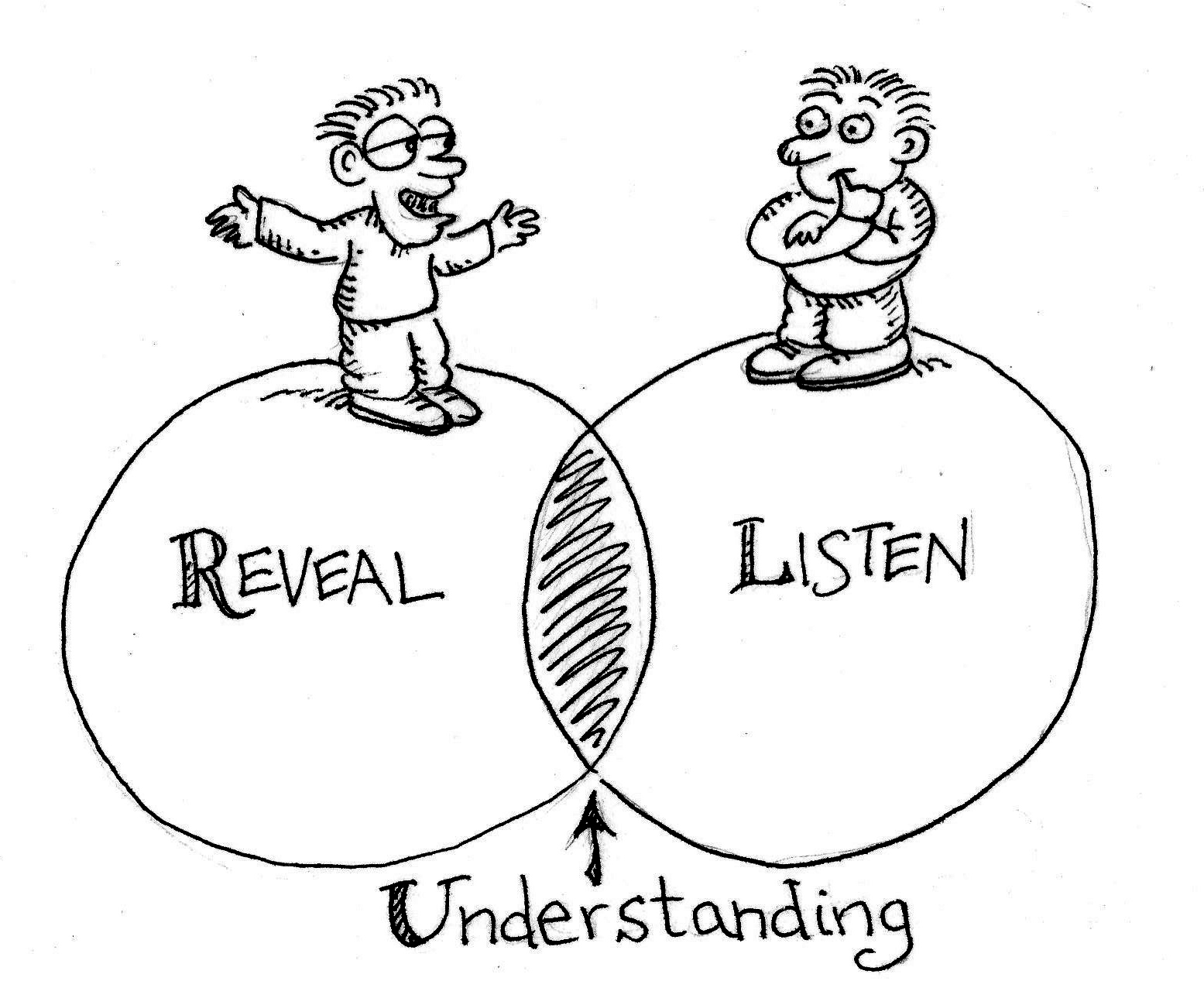
Best Sales Advice Ever: Seek First to Understand, Then to be Understood

by Dan Zamudio

This maxim from Stephen Covey’s “7 Habits of Highly Effective People” is probably the single most important lesson a salesperson needs to learn. The key point Covey makes is that most people listen with the intent to reply, rather than to understand. A salesperson typically chomps at the bit to find the first opportunity in the conversation to start talking about their solution.  In order for buyers to feel understood and valued, salespeople need to follow Covey’s principle. We’ve all heard that we need to speak less and listen more, but the real key is to listen better.

This starts with intent. To the extent that you make your focus caring about what the buyer cares about, namely their business and results, the higher the likelihood you’ll be able to engage in meaningful dialog. The buyer will decide how much and what information they are willing to divulge in large part on their perception of your intent. If they get the sense that you are there to try to understand and further their cause and have the capacity to do so, it will only take a few, well-thought-out questions to get them to open up and share their challenges and aspirations.

But intent is not enough. You can be the best-intentioned person on the planet, yet the buyer might still be reticent to reveal too much information. Preparation and technique matter. If you show up without a hypothesis, based on your research, of the  goals and issues that SHOULD matter to them and lack the skill set and framework to ask effective questions that demonstrate your intent and expertise, you’ll have very short one-time conversations. Maybe they’ll think you’re a nice guy or gal, but you won’t get invited back.

So how do you demonstrate your intent to help the buyer succeed and obtain the information that will help you help them succeed? The answer lies in your questions. Show your buyer you care by your degree of preparation and the quality of your questions and they’ll work with you to co-develop a business case and solution set that will exactly meet their definition of success. Seek first to understand what the customer cares about, then you’ll know what it will take for you and your solution to be understood, valued and, eventually, adopted.

17 Jul 17:04

A symphony of separate instruments: Cross-channel and online sales

by John-Michael Maas
On January 10, 2012, Free Mobile—a digital-only operator—entered the French mobile market. It successfully attracted 700,000 customers in the first week and 4 percent of the country’s mobile market in less than a quarter. It also shook up the market’s competitive dynamics: existing no-frills price points plummeted almost 50 percent. While aggressive pricing certainly played [...]
17 Jul 15:50

How to Motivate Millennials to Have Strong Call Momentum

by Josiane Feigon

man sitting Sales momentum. How do you get it? how do you know it’s there? how do you keep it going? what do you do when it’s lost? In my Smart Sales Management training program, I usually play a video of one of their reps in full outbound prospecting mode. Then I freeze the frame.

Freeze frame: Rep is sitting at their desk, everything around is super neat and tidy, they don’t have any tools open, the phone almost out of reach, there’s nothing to write notes on, and there’s nothing to drink nearby.

When I ask the managers how they think their rep’s momentum looks, they shake their heads. They’ve seen this before and they’re not sure how to reverse the trend. Maybe it will just happen?

You don’t wake up one day and miraculously have momentum. Here are 5 tips on helping reps create strong call momentum:

1. Environment: Environment has a lot to do with creating call momentum. If you don’t have everything you need at hand, your momentum is doomed from the start. Get organized before you even sit down.

2. Longevity: Momentum must also be sustained over a certain period of time. You cannot establish real momentum if you spend less than one hour calling, which means you must sit for at least 60 minutes and focus on your call.

3. Focus: Focus means saying “no” to distractions and getting “in the zone” when making calls. This commitment that will get greater results. It’s not always easy, but they can do it — especially if you encourage them and make it a priority. You may have to fight your own office space, because workplace distractions are at an all-time high. The open-space selling environment in particular creates more distractions and less privacy. In fact, there has been a notable decrease in office productivity since 2008. Not surprisingly, the Cubicle is Making a Comeback.

4. Seeking Comfort: Sitting for hours in one place requires that space to be comfortable. Make sure your reps’ desk and chair are are ergonomic, the phone is within reach, the monitor is the right height, double monitors are well set up. Food fuel is super important, so they should have snacks and drinks nearby, not down the hall. 

5. Superhero Role Model: Get your seating chart out and make sure you look at where your team member is sitting. Ideally, you want them sitting next to your sales superhero — the one whose sales buzz is viral, vast, and potent. Success is inspiring!


The post How to Motivate Millennials to Have Strong Call Momentum appeared first on TeleSmart Communications.

09 Jul 15:03

How 6 Companies Are Driving Sales Using Coupons on Their Website (And You Can Too)

by The Wishpond Blog

How 6 Companies Are Driving Sales Using Coupons on Their Website (And You Can Too) image tumblr inline mph52hqAao1qz4rgp

How can you convince new customers to buy your products? Past buyers to come back? Stimulate a higher frequency of purchases? And most of all, combat website visitor drop-off?

Add highly-visible coupons to your website.

Coupons have a built-in visual appeal and an innate call to action. A coupon with a limited time offer adds a sense of urgency in a customer’s mind. They immediately start thinking more seriously about how much they want your product for two reasons:

1. If they are going to buy it, they want to get it for the best possible price – this works especially well when you sell a product that is widely available.

2. It might not be there if they come back later- it might be sold out.

Coupon offers can be the difference between a customer browsing your site and a customer making an immediate purchase. First we’ll take a look at 6 examples of companies who are using coupons to increase their sales. And then I’ll give you a detailed step-by-step guide showing you how you can do it too.

1. Diamond Candles

Diamond Candles retails candles with a twist. Each candle has a ring embedded inside, worth $10, $100, $1000 or $5000. Each candle is 100% soy and eco-friendly. They are solely an e-tailer, with no physical retail location.

How 6 Companies Are Driving Sales Using Coupons on Their Website (And You Can Too) image zGmbeDgyAUVOSxz5WE8LUjI JLf0UkTMs7eGfbSDJ bllYzQOYTo IqZ15cls Y ZaQ3w2oiycgEcqKH4eVFf7EtlSSAd1LvxVMoJ8Ss xfodpAtwCIDE3Gy

The above is a screen capture of Diamond Candles homepage. As you can see, they have mixed their coupon alongside other clickables in the center of the page. Their coupon reads “Limited time only! Free Standard Shipping for Any Order Above $45 Use Coupon Code: SHIPDEAL-45” As all of their candles retail for $24.95 each, a customer must purchase a minimum of two candles to qualify for their free standard shipping offer. As shipping can cost nearly half the price of one candle, this is a strong enticement to purchase two candles instead of only one. This is a smart way for Diamond Candles to increase the volume of each sale.

2. Evo

How 6 Companies Are Driving Sales Using Coupons on Their Website (And You Can Too) image BWXCu93p2SMsgDoNs8Nr5CZYUtJgIftnM4mkVhReuW7PcIL8hDfLxXt6HwH5o04mg q VbQrXpaDWn hIM7pbV8yI4k6pdn5i vB6dELFqey gvmZPI0IjYA

Evo is an e-tailer turned retailer with one location in Seattle, Washington. They offer a variety of coupons for their products as pictured above. As you can see, they don’t require codes for their shipping promotion, reducing hassle for their customers. This also ensures no customers will be left out of the deal, as checkout totals that are eligible are automatically discounted at the checkout. Many become irate when they find they missed out on a promotional offer they were eligible for and have to go through a refunds process to obtain the discount. That does not bode well for customer retention and loyalty. Evo is pro-actively making sure that doesn’t happen.

They display their main coupon offer on the header of their website, which reads “Free Shipping on Orders over $50”. This offer is meant to appeal to all segments of customers which is why it receives first rate billing at the top of the page. After this, varied coupon offers are used to appeal to specific segments of Evo customers such as the offer displayed near the top of the homepage reading “Extra 15% Off All Outlet Use Code: Icecream”. Clicking on the ‘details’ button on this coupon leads to their current offers page, shown below:

How 6 Companies Are Driving Sales Using Coupons on Their Website (And You Can Too) image C7Hu3hA1QaP7m9dwu4p8r 8AavQS4ndXg Ekb47yO3e869LfCJkkv1mWs8MMcoOBWJ 0Vhb08PCbsIrmprLLUu8U7qsQe5 ZL3Jk1v3yD8PMxGeadLBANRFT

Some of their current offers include “Free Shipping on All Casual Footwear!”, “Save up to 50% on Winter 2013 gear! New Markdowns on this season’s gear. No Promo Code Needed- Just the Lowest Price! We guarantee it” and a “Lowest Price Guarantee” claiming that if their price is not already lower than a competitor, they will beat the competitor’s price by 5%.

They invite consumers to sign-up for their e-mails to “Be the first to know about special offers, promo codes, first product to market and (if you’re local to Seattle) parties and events.”

It would appear that special offers are their specialty promotional tool and their competitive advantage as a retailer of brands and products that are available nearly anywhere. Having diverse coupon offers is a good strategy for retailers with a broad array of product, to ensure that all segments of customers are being included in the promotions.

3. Clearly Contacts

How 6 Companies Are Driving Sales Using Coupons on Their Website (And You Can Too) image VUd2ood1rJlT3BxA9aaYgr1ztT9vDA veH1eroe265g9sB4Ya9SBbB4fppgZn15qvRI M4dVBFokWcqfkMomgzRfP6oA53ubauHiZj8NHEHD0iDpyf9KyKWZ

Clearly Contacts is a highly successful e-tailer of glasses, contacts and sunglasses that recently opened their first store on Robson St. in Vancouver, B.C.. They run a variety of popular promotions using coupon offers on their website. They are well-known for their “First Pair Free” promotion that runs a few times per year, where customers are given a wide selection of glasses to choose from that are free except for the shipping costs and add-ons such as anti-glare.

At the moment they are running a promotion with the Coupon Code “CANADASUN” where customers can receive 30% off of sunglasses. This offer (pictured above) is displayed on a banner in the middle of their site. The banner switches between this promotion and their two other ongoing promotions. For those who use contacts, they offer “Free Shipping on Orders Over $149”. Eyeglasses are advertised to be currently discounted at up to 50% off.

Coupon offers are a major driver of traffic to their website. Besides stimulating sales of existing stock (a great way to clear out seasonal inventory!), these offers are a fantastic way to cross-sell to customers. Most people wear sunglasses in the summer, and many people who wear glasses sometimes wear contacts and vice versa. Having coupon offers for all three product segments entices customers to make a purchase of more than one type of product.

Clearly Contacts is uniquely positioned to up-sell to its customers as well as they sell all of their products for a significantly lower mark-up than their competitors. So, while the coupon offer draws customers in, they may be easily tempted to purchase a brand of glasses/sunglasses/contacts that is not a part of the promotion as it is still less expensive than found elsewhere.

4. Dr. Jays

Dr. Jays is a successful retailer of urban fashion that has 19 stores in the New York Metro area. They also sell an extensive amount of product online, under a separate ownership and operation. Dr. Jay’s is well-known for running concurrent promotions to appeal to their wide demographic with targeted offers.

Their current deals reflect the season, with “50% off Summer Blowout Use Code 50DEAL” and “25% Off On Any Order Use Code 25HEAT” advertised both on the header of all their pages and on a large banner within the product mix displayed on their homepage.

How 6 Companies Are Driving Sales Using Coupons on Their Website (And You Can Too) image SW7VJ030CW8gqg42P1y irCWjgzt oH0Z5CN4IDhXdTswxCu2zFuc33JgjVpexRi7DP45VwPBZe61y8IHew7 keUGRIxjvlG3xZUGksZVLwrIP2 6UP iIJW

Using a coupon code makes it easy to track the success of each separate coupon offer. Dr. Jay’s ensures that their offers are both seen and not forgotten by their website visitors by displaying the offer noticeably on their front page and then following this up with a header display on all of their website’s pages.

5. Banana Republic

Banana Republic is a fashion retailer geared towards professionals. They are part of the Gap. Inc group which also operates Gap and Old Navy.

How 6 Companies Are Driving Sales Using Coupons on Their Website (And You Can Too) image vO7hTM 6FCmfjMoqLoNoLSZcLJSpstcM8kpIIe130YoA0EiQwTomA0fYfqibNdkOLsKfiwE8gVQFrUh7eK7TncDNsbs QO2rd B1Z0mfDxlJQMUS0vO8PFJP

They show their coupons on the top navigation bar of their website, as you can see above. Their current coupon offers free shipping on all orders over $50 and right beside this offer they promote free returns on all orders. This is a way of reducing purchase anxiety. When customers know that they can bring it back with no problem (if they need to), they feel less pressured and are further persuaded to make a purchase.

Banana Republic diversifies their coupon offers, with a recent coupon shown on the header of their website (pictured below) offering 30% off of sale items using coupon code BREXTRA30. This coupon in conjunction with the free shipping on all orders over $50 offer is a great way to combine coupons for a stronger appeal. Here, Banana Republic is encouraging a larger order volume per order, as a percentage discount encourage customers to spend more/buy more to receive a greater discount and the free shipping offer clearly encourages purchases over a minimum of $50.

How 6 Companies Are Driving Sales Using Coupons on Their Website (And You Can Too) image HxONpWlgIhuaJKkLdjVBtG8G2 gDgevwI PvaHs0mKorGwTp HxxIuWC8UKrxdw35ApFpptabQhxD3MzgVij0tlEw4PdYue7lJNviIoYzCndJSfH8Vis1IJh

Banana Republic changes their coupon offers often enough that customers do not become discount reliant. Also, it keeps their offers new and interesting and instills a sense of urgency while not being offered for too limited a time to capitalize on interest customers. Displaying a coupon offer for a week at a time, a couple of times a month is a great way to encourage purchases, especially from new buyers.

6. H&M

H&M is a fashion retailer with stores worldwide. H&M recently used their website coupon strategy to drive sales to their store. This is a good strategy for H&M because their numerous locations are in highly accessible areas. H&M recently advertised “Save On Style! Get a $5 Coupon When You Make A Purchase of $30 Or More! Offer Valid in Canada Only.“ with a button inviting customers to “Find Your Nearest Store”. Their goal with this coupon was clear- to drive traffic into stores and to encourage repeat purchase.

How 6 Companies Are Driving Sales Using Coupons on Their Website (And You Can Too) image W9fcke0xIxjB7zRjZ  Ys7DnIOzpz Ro1EQnHm5ybqY2ezw6UdtmqvneJ3eiHyY4ASeoVc7xuDBd93t2QP5Mu GHgh F3SMGAf2jm6vUB33W3T2x3Ftr7g9F

This strategy is good for a ubiquitous retailer like H&M but not as effective with smaller retailers. By encouraging traffic into store, you poach your online sales which is risky, as many customers may fail to follow through and then traffic into store is not gained but a website purchase is lost.

How You Can Drive Sales Using Coupons On Your Website

Set goals with your coupons. Do you want to entice first time buyers? Do you want to increase purchase volume? Are you hoping to drive traffic into stores?

When appealing to new customers, an open return policy is a way to alleviate customers concerns about making a purchase. This is especially strong online as many customers have concerns about items turning out the same way they appear online and as they are advertised. It suggests that your company is credible and believes in the quality of their products.

A free shipping offer with a minimum purchase can be used to entice any website visitor to make a purchase online right away. Shipping costs are a big deterrent for many customers. According to a recent Forrester study, 44% of online customers abandon their shopping carts because of high shipping costs. (Source:http://blog.crazyegg.com/2012/08/14/decrease-shopping-cart-abandonment/).

While offers that don’t require a code to be inputted save customers hassle, not all systems are able to process these orders and it can make it difficult to track how successful the offer was. When creating a coupon code, the best thing to do is to keep the code simple. If it can just be one word such as “CANADASUN” used by Clearly Contacts for their sunglasses offer or as simple as Dr. Jay’s “50DEAL“ for their 50% offer if both letters and numbers are needed for the code to work, this is best. The shorter, the better and avoid nonsensical strings of numbers and letters that will be difficult for customers to remember and correctly input.

You can use coupons to cross-sell by suggesting a product to pair with their purchase, offered at a discount such as “Buy One Get One Free, Buy One Get One 50%” “Buy Two Get the Second Pair For $9”, etc. You can recuperate the cost of these discounts by stimulating higher spending.

Place your coupons where your customer’s eyes will find them right away. The header of your website is particularly eye-catching, like where Evo, Dr. Jays and Banana Republic place theirs or in the product mix like Diamond Candles or H&M. Another option is on a banner, as Clearly Contacts chose to place their coupons. Banner displays work particularly well when there are many offers at one time. It’s a stronger appeal when product photos are mixed in with the coupon offers, with buttons that are clickable to the product segment page directly.

How 6 Companies Are Driving Sales Using Coupons on Their Website (And You Can Too) image 36Fp pG0dnK5YEHEg09AaZHjl4VWOBG6 IYKl0FhvoCCPRx7dbg QwRfl85wKsZCjRgsnp5QOeMZxyt1gcaT46npyDOXJTnBwZgpBvmrISpi6cFad PcwjjQ

See how Clearly Contacts banner displays the product, the coupon offer and invites customers to “Shop WOMEN” or “Shop MEN”.

It is great to prominently display a coupon on your homepage and header, especially if it is a universally appealing promotion such as free shipping or a set discount on all orders. However, if you retail a wide variety of products, it is strategic to display different offers that will attract different customers. An option is to have a Coupon Codes/Current Offers page such as Evo does.

How 6 Companies Are Driving Sales Using Coupons on Their Website (And You Can Too) image xHvsD rGgs8qTkF8IAUcU06tYB90cI7afHtvY6N8EcOS1L t94qHsEuZZvqpoz31Bw9Z3tWMtWrTfvX0Jlg0Womhx7es7iJO3maN IBqaXqrg1vL136J0KNJ

This is a good place to centrally place all of your offers. Create interest in these coupons by displaying the appropriate offer on the product’s page. Earlier you saw that Dr.Jays displays their latest coupons on their website header and center page of their homepage. However, when you click on products, other offers are shown. As pictured below, when shopping the men’s clothing, an offer for 60% off of outlet clothing is displayed.

How 6 Companies Are Driving Sales Using Coupons on Their Website (And You Can Too) image 0DdfFcenAuXH5Xqhqzj Pfiz89 MnSaV1oolIKREAVmC87HGXBrhvG7h3J4okExfxzZ UOIhZoGvY3PFi7qAkXUKYXJDRu6Wf0ohcsiUaXx7Xwln55qnBtzJ

Promote your Coupons on Couponing Websites

Since Extreme Couponing aired on TLC, websites that aggregate coupon deals for customers have been more popular than ever. A couponing website will promote your promotional deal to a wide audience that has an existing buyer’s mindset. This promotion will get your brand’s name out and drive traffic to your website and store.

Couponing sites offer unique benefits such as tracking codes so you can track the success of your promotion and see where the traffic you received was originating from. Using a couponing website to target local customers can drive traffic to store whereas targeting other segments of buyers can encourage purchases, whether the focus is on a first purchase or an increase in purchase volume (or both!).

There are numerous such websites available to promote your coupons on, such ashttp://www.couponcraze.com/

Coupon Offers Contingent on E-mail Sign Up

How 6 Companies Are Driving Sales Using Coupons on Their Website (And You Can Too) image bWse9vL14TTw dJNRVxt6n1aLIwEbV9JGHUM90g9gkk6X1P2LBV6Duyl02vUi5FqgKRIG fLX kMvAfDMaWVKlLxotDuhlcGQG1aCMquDM11X7EO0FUXmu9I

Capturing the e-mails of those that visit your website mean that you can send coupon offers tailored to past buyer’s buying preferences in the future, straight to their inbox. This will make your coupon offers more effective as they will be more specified to your customer’s taste. It also supports your e-mail marketing strategy by growing your e-mail list.

PishPosh Baby offers $10 off to customers who sign up with their e-mails. Offering an enticement to give an e-mail will increase the likelihood that customers will agree to give you their e-mail address and sign up for e-mail communications. It also gives new visitors to your site an incentive to make their first purchase with their coupon.

Conclusion

Adding coupons to your website is a great way to drive sales. Promoting these coupons by correct placement on your website and using a third-party such as a couponing website will help ensure that your offer gets seen. The best part about coupons is that they are visual and therefore highly shareable on all of your company’s social media accounts. If you want to encourage purchases, start displaying coupons on your website!

As discussed, you can vary these offers greatly to meet different goals- entice e-mail sign-ups, promote the quick sale of inventory, encourage a minimum purchase amount and create a sense of urgency in your shopper’s mind. Best of all, everyone loves to think they are getting a deal, so a small offer can go a long way in customer satisfaction.

Written by Shaylee Perez

How 6 Companies Are Driving Sales Using Coupons on Their Website (And You Can Too) image tumblr inline mph55keGJh1qz4rgp

09 Jul 15:02

What B2B Buyers Really Want

by Robert Minskoff

What B2B Buyers Really Want image
I have sold to and solicited thousands of businesses in my almost two decade long sales career. Have things changed? Absolutely! Has the the buying process changed? Of course! Has social media changed the landscape? Yes! Does your buyer at that major manufacturer or mid sized accounting firm care about what you tweeted yesterday? More then likely not. Do they care if you have a blog? Probably not. Do they care what you post on your Facebook page. Not really.

The cold hard truth in today’s B2B environment is that buyers and prospective buyers want more for less to continually improve their bottom line. They want reliability and vendor/partners they can count on.

So here is a short list of what I have found over the years as to what B2B buyers really want from their vendors and suppliers.

1. A relationship that embraces trust and reliability. Without those two components the buyer-seller relationship is doomed. And that means they will NOT be your customer.

2. Recourse. We all know that in life and in business things can and do go wrong. When they do, how you and your company handle it, is the difference between keeping that customer and your competition acquiring that customer.

3. Your product and or service performance. You might have the best machine for making croissants, but if it breaks and you do not show up for 4 days. You will lose. Make a great product and have great service and you are more then half way there.

4. Availability. When they need you, can they find you? How responsive you are to their calls and emails will dictate your entire relationship. If you or your sales manager has the attitude of “just get the deal done”. I am here to tell you that buyers can smell that a mile away. They want service after the sale. They want assurances that you will be responsive to their needs.

Now can you blog, tweet, and post how you and your company may do this and have done it in the past? Of course. But the key is to demonstrate to your buyer how you have accomplished these tasks in the past, and how you will meet his or her needs in the future.

Don’t get me wrong, selling in today’s world does not live in a vacuum. Social Media is still a powerful way to get your message out to the world. Buyers, like most people, do utilize today’s technology. But making informed buying decisions still requires a competent, polished, sales professional to convey the message(s) that buyers need to hear that can otherwise get lost in a sea of information.

Now, some of you may be asking yourself why are you writing in a blog about why buyers don’t read or care about blogs. Well, good question. The simple answer is that I write for my own self-improvement and enjoyment. I also write to help other sales professionals be better sale people. If a bi-product happens to be a new client or customer, then great. But that is NOT my intention for writing.

So go ahead blog, tweet, and post. But be very aware that there is still a large segment of the B2B buying population that places very little importance on that type of content. Selling is a human interaction. Be human.

Good Luck and Good Selling!

08 Jul 15:35

Google Logic: Why Google Does the Things it Does

by Michael Mace
“What does Google want?”

A favorite pastime among people who watch the tech industry is trying to figure out why Google does things. The Verge was downright plaintive about it the other day (link), and I get the question frequently from financial analysts and reporters. But the topic also comes up regularly in conversations with my Silicon Valley friends.

It’s a puzzle because Google doesn’t seem to respond to the rules and logic used by the rest of the business world. It passes up what look like obvious opportunities, invests heavily in things that look like black holes, and proudly announces product cancellations that the rest of us would view as an embarrassment. Google’s behavior drives customers and partners nuts, but is especially troubling to financial analysts who have to tell people whether or not to buy Google’s stock. Every time Google has a less than stellar quarter, the issue surges up again.

As I wrote recently when discussing Dell (link), it’s a mistake to assume there’s a logical reason for everything a company does. Sometimes managers act out of fear or ignorance or just plain stupidity, and trying to retrofit logic onto their actions is as pointless as a primitive shaman using goat entrails to explain a volcano.

But in Google’s case, I think its actions do make sense – even the deeply weird stuff like the purchase of Motorola. The issue, I believe, is that Google follows a different set of rules than most other companies. Apple uses “Think Different” as its slogan, but in many ways Google is the company that truly thinks differently. It’s not just marching to a different drummer; sometimes I think it hears an entirely different orchestra.

Google’s orchestra is unique because of three factors: corporate culture, governance, and personal politics. Let’s start with the culture.


Google culture: You are what you do

The strategic thinking of most companies is shaped by the way they do business. For example, a farmer thinks in terms of annual seasons and crops; everything revolves around that yearly cycle. Manufacturing companies, the traditional foundation of a 20th century economy, plan in terms of big projects that take a long time to implement and require a lot of preparation. If you’re building a car or a plane or even a smartphone, you have to plan its features well in advance, drive hardware and software to completion at the same time, and arrange manufacturing and distribution long before you actually build anything. The companies that build complex physical things naturally plan their products in terms of lifecycles lasting at least 12 to 24 months, and sometimes much longer.

That long planning cycle dominated big companies in the 20th century, and was driven into all our heads through generations of business books and business school classes. It’s how most of our brains were formatted.

An internet company, like Google, works at a fundamentally different pace. Web software changes continuously. You don’t plan it rigidly; you evolve it day by day in response to the behavior of customers. The faster and more flexibly you evolve, the more successful your products will be.

This evolutionary approach, and the Agile design processes that support it, is built into the fiber and psyche of web companies. They don’t think in terms of long-term detailed plans; they think in terms of stimulus and response.

This is a dramatic change in the history of business. In the past, the nimble companies were always the little ones. The larger your company, the more it valued planning and the long-term view. Google is one of the first very large tech companies ever to pride itself on rapid response rather than rigid planning.

On top of this quick-turn bias there’s the cultural training of Google’s senior management. Most big companies end up being run by professional managers who came up through business school or finance, where they get trained in the rhythms and personality of traditional big business. They learn a shared vocabulary and set of values that are very familiar and comfortable to investors. By contrast, Google is completely controlled by engineering PhDs. They speak the language of science rather than business, and they’re contemptuous of the vague directional platitudes and reassuring noises made by modern finance and marketing.

I think most reporters and analysts don’t understand how fundamentally different the engineering mindset is from traditional business thinking. It’s a very distinct paradigm, unfamiliar to most people who haven’t studied science (link).

One key element of the engineering mindset is the use of scientific method: you encourage a Darwinian marketplace of ideas, you test those ideas through controlled experiments, and you make decisions based on experimental data.

In its behavior and vocabulary, Google oozes scientific method. A couple of times recently I’ve heard Google executives say in public, “if you can’t measure it, you can’t improve it” (link). It's an old quote, dating back at least to Lord Kelvin in the 1800s. It's also a subtle twist on the traditional mantra used in web design: “that which you measure, you can improve.” The web design version says you should measure everything you can; the Google executive version implies that nothing really matters unless you can measure it.

That’s a very scientific, rational point of view, but I couldn’t help thinking that if you had said something like that to Steve Jobs, he would have taken your head off with a dull knife. The whole idea of vision at a place like Apple is that you pursue things you can’t fully quantify or measure; that great product design is an art, and the most important changes are the ones you intuit rather than prove in advance.

But engineers are trained not to act on intuition. You are allowed to have intuition, of course, but you use it to make hypotheses, which you then test. You act on the results of those tests.

There have been other big companies run by engineers, of course. HP in its glory days was a great example. But those companies were almost always wedded to traditional long-term planning cycles. What makes Google unusual is its combination of an engineer’s love of scientific method with the web’s rapid iterative development. Put those two characteristics together, and Google often behaves like a big bundle of short-term science experiments.

Why did you kill my favorite product? Take Google’s bizarre practice of publicly killing products. To most companies, killing a product is a shameful thing. It disappoints customers, and it hurts your own ego because it’s an admission that you failed. Most companies hide their product cancellations: they try to disguise them as a “reallocation” or “new focus” or some other doublespeak.

Google does the exact opposite – a couple of times a year it trumpets to the world that it’s terminating products and services that millions of people love and rely on. Google isn’t merely up front about these cancellations; it’s downright cheerful, as if turning off Google Reader or Google Desktop is an accomplishment to be proud of.

And to Google, maybe it is. If you look at the world through the eyes of the scientific method, every Google project is an experiment, and experiments must be periodically reviewed. When an experiment is completed, you either choose to follow up on it, or you terminate it and move on to something else. A scientist doesn’t get emotional about this; it’s the way the system works, and everyone knows that it’s all for the best.

By announcing its terminated experiments, I think Google isn’t admitting failure, it’s proudly demonstrating that scientific principles are in use. I think Google’s management views the cancellations as proof that it’s being focused and logical.


Google management: Who’s in charge here?


The second unusual aspect of Google is its ownership structure. Never forget: Google is not really a public company. Sure, it has stock and all the other attributes of a normal public company, but 56.7% of Google’s voting shares are held by cofounders Sergey Brin and Larry Page (link). As long as they remain friends, they can do whatever they want with the company, and they cannot be fired.

I don’t have a problem with that. Google has always been up front about it, and besides I’ve seen many large public companies manage themselves into ruin in pursuit of quarterly returns. It’s refreshing to see a big company that doesn’t enslave itself to the quarterly report. As Page put it in 2004, “by investing in Google, you are placing an unusual long term bet on the team, especially Sergey and me” (link).

How long term is that bet? I’m not sure Google’s senior management even thinks in terms of annual returns, let alone quarterly. Brin and Page are both about 40 years old as of 2013. They have a life expectancy of about 38 more years, to about 2050, and I have no reason to think that they plan to work anywhere else in their lives. So I think Google’s planning horizon goes to at least the year 2050. Page himself likes to talk about his 50-year planning horizon, so he may well be thinking out to the 2060s.

To put that in context, some scientists predict that we’ll achieve superhuman machine intelligence well before 2050 (link). I’m not endorsing that timeline, by the way; I think it may be optimistic. But my point is, Google could be planning almost anything.

Combine the first two unique things about Google and you get an interesting picture. Most companies have a long, detailed planning cycle in pursuit of quarterly goals. That often makes them very predictable. It also makes it hard for them to get anything done – when your planning cycle is longer than your goal cycle, you’ll often change goals faster than you can achieve any of them.

Google does just the opposite. It has a short, unpredictable planning cycle in pursuit of very long-term objectives. It’s likely to pursue those objectives relentlessly, but its near term actions will look random, because they’re just Darwinian experiments along the way.

In other words, there is probably a method to Google’s madness, but they’re not going to tell you what it is.

But there’s one more factor about Google that we need to consider: it’s run by human beings. Larry Page is not Spock. No matter how logical and dispassionate he tries to be, he and the rest of Google’s managers have psychological needs and reactions that they cannot transcend. That means Google has corporate politics.


Google politics: The coming-out party of Larry Page

I don’t think you can fully explain Google’s behavior over the last several years without looking at the relationship between its CEOs during that time, Eric Schmidt and Larry Page. Google’s first CEO, in its very early days, was Page. Investors convinced Page and Brin that they needed to bring in professional management to organize the company. Reluctantly they agreed, and supposedly Steve Jobs was at the top of their wish list. That raises some fascinating what-if scenarios, but Jobs was already occupied, and eventually they settled on Eric Schmidt, formerly of Sun.

A video of Page from 2000 gives an interesting insight into his thinking at the time. It was recorded a year before Schmidt joined Google. A nonprofit called the Academy of Achievement recorded video interviews with Page and Brin. The videos are a fascinating window into the early thinking of both men. In one clip, Page is asked about the challenges of being a CEO at age 27 (link). He replies:
"If you manage people for 20 years, or something like that, you pick up things. So I certainly lack experience there, and that's an issue. But I sort of make up for that, I think, in terms of understanding where things are going to go, having a vision about the future, and really understanding the industry I am in, and what the company does."

So Page acknowledged his need for tutoring in management, but at the same time he went out of his way to call himself a visionary. I haven’t met Larry Page, but there’s one thing I know for sure: anyone who calls himself a visionary at age 27 does not lack for confidence.

Schmidt arrived soon after, and for the next ten years Page served a kind of management apprenticeship under him. I don’t want to overstate Schmidt’s role; even then, Page and Brin had control of the company, and could have ousted Schmidt if they really wanted to. But even if Page agreed that working for Schmidt was necessary, it can’t have been easy.
   
Early in Schmidt’s tenure, he and Page appeared together to address students at Stanford. The session was recorded on video, and Stanford posted it online here (link). The whole video is worth watching, but the segment I’ve embedded below is especially interesting because it shows the sometimes awkward interaction between Schmidt and Page.


Schmidt is the more articulate of the two. He interrupts to preface things before Page can make a comment, and sometimes comes back afterward to put a different spin on something Page said. In this clip, watch Page’s face when Schmidt interrupts him to deliver the punchline at the end. You should judge it for yourself, but to me Schmidt and Page look like one of those married couples who value each other but also get on each-other’s nerves.

No matter how much Page appreciated Schmidt’s wisdom, no matter how fruitful their collaboration, it can’t have been easy for Page to be mentored like this for ten years. If I were in his shoes, I’d have compiled a long list of things I wanted to change as soon as I was in charge.

That time came in 2011, when Page returned as CEO and Schmidt was kicked upstairs to be Google’s Chairman and chief explainer (link).

Page acted quickly, reorganizing the company and accelerating the termination of projects (link). I think that helped reinforce the use of the scientific method. It also helped Page assert his authority.

Then Page bought Motorola Mobility for over $12 billion. I don’t think you can understand the Motorola deal without taking into account the management change at Google. It was Page’s first major business deal as CEO, a chance to finally spread his wings and put his distinctive stamp on the company. Any human being with Page’s experience and ego would want to do something like that. So I believe ego played a role in the Motorola deal. But I don’t think that was the only motivation.


My take on why Google bought Motorola

Remember Google’s business situation in 2011. It still had huge economic resources, but it was no longer the dynamic new kid in the industry. That crown had fallen to Facebook, which was growing like a weed and which was not Google’s friend. At the time, Google was kicking itself for failing to recognize the threat earlier, and for responding to it so ineptly. I’m sure Page was adamant that he didn’t want to repeat that mistake.

Like social networking, mobile was a critical growth area for Google. The threat in mobile was Apple, which was doing a great job of integrating hardware and software to produce superior products. Many people at the time felt Google was destined to play second fiddle to Apple in mobile forever.

Then the opportunity came along to buy Motorola. Here’s how I think that parsed to Google:

—If people are right about Apple’s power in system design, we may need to move much more aggressively into mobile hardware than we have to date. If that happens, owning Motorola gives us a head start.
—Even if we don’t end up needing Motorola’s hardware business, we’ll learn an enormous amount from managing the company. Those skills and insights will help us manage our other hardware licensees.
—We’re going to pay a bunch of money for the patents anyway, so why not buy the whole thing? We might end up writing off most of the purchase, but who cares about annual returns? It’s better to have a bad year than take the risk of being blind-sided the way we were by Facebook.
   
I think the Motorola deal wasn’t just about the patents or about making a profit in device sales. It was about buying insurance against a surprise from mobile device manufacturers, especially Apple. If you think of Google as a company that sets long-term objectives and then runs experiments in pursuit of them, the Motorola deal is just an unusually large experiment along the road to mobile.

Add to that chain of logic Page’s natural desire to exercise his new powers, and the Motorola deal starts to look very understandable to me.

So was the deal worth the money? It’s too early to tell, but I doubt Larry Page is even asking that question. As long as Google learns from the purchase and doesn’t get blindsided in hardware, the deal served its purpose.
   

What happens next?

If you’re an investor, you should expect more off-the-wall acquisitions and product cancellations from Google. They’re built into the system. But I think Google’s unusual culture and management structure give it some other fairly predictable weaknesses. Those are potential opportunities for competitors, vulnerabilities for Google to guard against, and issues for investors to consider.

Weakness #1: Wandering vision. Google’s iterative development approach is very effective for pursuing a long-term goal when the company has a clear idea of its destination. The company’s development of self-driving cars is a good example: by relentlessly testing and tweaking the design, they’ve made much more progress than I believed was possible. Like most people in Silicon Valley, I’ve had the experience of driving on the freeway alongside those Google cars, and it’s very impressive (except for the fact that they adhere rigidly to the speed limit, but that’s a subject for a different post).

Google is much less effective when its original goal in a market changes. Because of its quick-reaction nature, Google frequently launches projects that seem very important at the time, but later turn out to be not so critical after all. The market evolves, priorities change, maybe a competitor becomes less prominent. When that happens, the Google projects are in danger of cancellation, and nobody likes working on a canceled project. So the teams frequently start iterating on their goals the same way they would on their features. Usually they end up chasing the latest trendy issue in search of a revenue stream and continued existence.

That’s usually the road to hell. Once a project starts changing goals, it’s almost impossible to diagnose the cause of any problems it has with market acceptance. Did we choose the wrong goal, or did we execute poorly?  It’s usually impossible to tell.

To put it in scientific terms, it’s like running an experiment in which you have several independent variables. Good luck interpreting your results.

Google Docs is a great example. It was launched to undercut Microsoft’s Office franchise. Over time as Microsoft became weaker, that was no longer a compelling reason for existence, and Docs was merged into Drive and repurposed as a competitor to the newly-trendy Dropbox. Feature evolution in the core applications moved at a crawl.

Now there are two new challenges to Drive/Docs: Apple is turning iWork into a cross-platform web app, and Flickr has upped the stakes in the free storage race to a terabyte (yes, I know Flickr is photos only, but you don’t really think Yahoo will stop there, do you?) Which threat will the Drive team respond to? I don’t know, but because of the way they’ve been wandering there’s a very good chance they’ll end up below critical mass against all of their chosen competitors.

Weakness #2: Poor external communication. Scientists aren’t generally knows as great public communicators, and there’s a reason for that. PR is the art of telling a story in a way that people are open to hearing. To the scientific mindset, that comes across like dishonesty and manipulation. A scientist wants people to believe things because they make logical sense, not because their emotions are engaged.

Adding to that challenge, Google is very bad at anticipating how people and companies will react to its initiatives. Time and again, Google has taken actions that it tried earnestly to explain logically, and been surprised and hurt when people didn’t understand. I think Google views itself as a highly principled company pursuing the good of humanity; it expects people to give it the benefit of the doubt when there’s confusion, and to understand the good intent behind its actions.  Google’s management doesn’t seem to understand that a hyper-rich company whose founders have private jumbo jets is automatically an object of jealousy and suspicion. Or if they do understand it, they aren’t willing to take the steps necessary to counter it.
   
One prominent example of Google’s communication problem was book digitization. Google was trying to make out-of-print books more available to the public, a noble goal by almost anyone’s standards. But Google handled the process so clumsily and arrogantly that it frightened authors into allying with publishers, an outcome equivalent to getting wild cats and dogs to sit down together for tea.

A second example was the backlash from the purchase of Motorola. It’s hard to overstate what a profound shock the Motorola deal was to Google’s Android licensees. Before the deal, the handset companies and operators viewed Google as a benign giant who could be trusted to champion mobile data without preying on its licensees. After the deal, they viewed Google as a villain little different from Microsoft.

The irony of the deal is that the threat from Apple has receded somewhat, so the Motorola experiment probably wasn’t needed. The rising challenge to Google now is that an increasingly feisty Samsung has too much market power in the Android space, and there’s a rising Amazon-inspired movement to fork Android and take control of it away from Google. The Motorola acquisition made companies like Samsung much more likely to cooperate with a non-Google OS. In trying to prevent a Facebook-style breakout in mobile, Google actually weakened its position in the mobile market.

Even casual public comments can create trouble for Google. In response to a question at the Google IO conference in 2013, Larry Page said of Oracle: “We’ve had a difficult relationship with Oracle.... money is probably more important to them than having any kind of collaboration.” (link)

There are several problems with this statement. First, if you want a cooperative relationship with Oracle, calling them a bunch of greedy bastards isn’t the way to get it. Second, public companies are supposed to put making money ahead of collaboration. That’s what their shareholders expect. This is a good example of how Google’s thinking is out of step with typical corporate governance.

The third problem is that Page’s comments came across to some people as hypocrisy:

Om Malik: “I think Larry (and all other technology industry leaders) should actually practice what they preach.” (link)

Slate: “Page criticized Microsoft for treating Google as a rival, blasted Oracle for caring too much about money, and then whined about everyone being so negative. Heck, if it weren’t for those other companies standing in the way, Google would have probably already solved world hunger. Well, except for all the laws and bureaucrats and journalists who are also standing in the way.” (link)

John Gruber: “Google is a hyper-competitive company, and they repeatedly enter markets that already exist and crush competitors. Nothing wrong with that. That’s how capitalism is supposed to work, and Google’s successes are admirable. But there’s nothing stupid about seeing Google being pitted “versus” other companies. They want everything; their ambition is boundless.” (link)

Gruber’s comments show the trouble that Google gets itself into when poor communication combines with its wandering product goals. Google doesn’t see itself as a predator eating tech startups, but when its internal projects start iterating on their goals, they inevitably target successful startups because that seems like the logical thing to do. The behavior is a natural outcome of the way the company works. Larry Page says he’s all about cooperation and I think he means it, but his product teams relentlessly stalk the latest hot startup. The result is a company that talks like a charitable foundation but acts like a pack of wolves.

No wonder he gets labeled a hypocrite.

Google’s trouble communicating its own intentions, and the mismatch between its words and behavior, becomes a serious problem whenever the company has to deal with big political or PR battles. Google’s competitors are often better at courting public opinion, and that opinion often drives the outcome of political processes. If you want an example, watch Google struggle with European Union regulators.

Weakness #3: Science vs. art in product management. Google’s strength in science and quick response makes it very fast at incrementally improving the performance and reliability of its products. But that same process makes it almost impossible for Google to lead in features or product ideas that can’t be proved or verified through research. That’s why Google struggles in user experience, creating new product categories, and fitting its products to the latent needs of users: all of those are intuition-led activities in which it’s very hard to prove ahead of time what’s right or wrong. Even if there are people within Google who have extraordinary taste and vision, it’s very hard for them to drive action because their ideas can’t pass the science-style review process that Google uses for decision-making.

That puts Google at a disadvantage when competing with vision-led companies. The most obvious example of this is Google vs. Apple. When Apple is implementing its strategy properly, it comes up with new product categories faster than Google can co-opt them, and executes them with more taste and usability. As long as Apple can keep moving the bar, Google is forced to play catch-up to Apple’s leadership.

(The big question post-Steve is whether Apple can continue to move the bar. But that’s another topic for a separate article.)

The exception to normal Google decision-making is the special projects run by Sergey Brin. In those projects, Google chooses a few long-term product goals that can’t necessarily be justified logically, but that look possible and would have a big impact if they succeeded. It’s a logical way for an analytical company to try to inject some vision into its business.

What we don’t know yet about those special projects is whether Google can apply the smaller dashes of intuition that are needed throughout the development process to pioneer a new product category. The iPod wasn’t just a good idea, it was a long series of clever decisions that Apple made in the design of the device, software, store, and ecosystem. They all fit together to make a great music management system. Can Google make a similar series of great, coordinated decisions to create a compelling user need for Glass, or will its glasses just be a technophile toy? I don’t think we’ve seen the answer yet. Until we do, there’s a strong danger that Google is just doing the advanced R&D that some other company will use to make a successful wearable computing device.


Should Google try to change?

Every successful company has weaknesses. The strengths that make it powerful always create corresponding blind spots and vulnerabilities. Google’s strengths are unusually well suited to its core business of search advertising. The Internet is so big that you have to use some sort of algorithmic process to organize it, and it takes a vast series of logical experiments to gradually tune search results and the delivery of advertising around them.

The question for investors is if or when Google will run out of room to grow in the search advertising market. At that time, to maintain its growth (and stock value), it’ll need other substantial sources of profit. Can Google find other businesses in which its analytical, experimental culture will produce winners? Or can it adapt its culture to the needs of other markets?

So far, the signs aren’t promising. Google is very good at giving away technology (Android, for example), but not very effective at making large amounts of money from it. Google’s product experiments have produced many failures and a few popular services, but very little in terms of major incremental profit. In fact, some financial analysts refer to two Googles – the search engine company that makes all the profit, and the other Google that sucks away some of that profit.

It’s easy for someone like me to say that Google should change its culture to give it a better chance of success in other markets, but in the real world those culture-changing experiments often fail catastrophically. You end up destroying the source of your previous success, without successfully transitioning to a new winning culture. In that vein, I worry that even the Motorola deal is a risk for Google, as it brought into the company a huge number of employees trained in a very different, famously dysfunctional culture.

For now, the search business is so strong that I don’t think Google is likely to make major changes in the way it works. Companies rarely change until they have to. Until and unless that happens, Google is likely to continue its scientific management, and competitors are likely to continue countering it through vision, public communication, and product management.

If you’re a Google investor, I think the situation is still the same as it was at Google's IPO: You’ve made an unusual long-term bet on Page and Brin and their scientific approach to running a tech company. It’s quirky and it’s different from the way most other companies operate, but it does make its own logical sense, if you look at the world through the eyes of an engineer.
Copyright 2013 Michael Mace.
08 Jul 15:30

Improve Effectiveness: A Content Strategy Model Aligned to Buyer Personas and the Persona Buying Cycle

by Tony Zambito
Improve Effectiveness: A Content Strategy Model Aligned to Buyer Personas and the Persona Buying Cycle image 2595497078 4f6d5367bc m

information hydrant (Photo credit: Will Lion)

Do you know what your buyers think about? How they explore options? What conversations are important for them to have with sales? What type of information needs they have?

For both marketing and sales, getting answers to these questions is becoming critical just to get in the game. While these types of questions have existed throughout the last several decades, they take on new dimensions in the digital age. To answer them requires new perspectives and new skills. Today’s buyers are also changing their own means of getting answers to their questions.

Guiding Principles

For Chief Marketing Officers, an important charter of their expanding role is to implement new operational models adaptive to new market and buyer dynamics. Trying to figure out an operational model for content creation and strategy has been one of the toughest. As made evident by recent reports highlighting the struggle with effectiveness.

In this article, I suggest B2B marketers implement a new model for content effectiveness. It is based on these 4 guiding principles:

1. Driven by deep and profound buyer insights

2. A holistic view of the entire buying cycle and customer lifecycle

3. Buyer persona-based platform for internal and external communications

4. Content engagement is mapped to buyer goals, issues, challenges, and buying behaviors

By focusing on these key principles, you can begin to focus on what buyers really think and care about. Thinking holistically and aligning with the Persona Buying Cycle™ recognizes buyer goals, issues, challenges, and behaviors change throughout the entire buying cycle and customer lifecycle.

Buyer Persona Content Model™

What I advocate is a buyer persona-based content strategy model. A model which serves as a framework for aligning content themes and topics with what buyers are most concerned with – their goals and challenges.

Improve Effectiveness: A Content Strategy Model Aligned to Buyer Personas and the Persona Buying Cycle image buyer persona content model

Buyer Persona Content Model: Available via link at end of article

The Buyer Persona Content Model™ consist of the following components to help you align:

Persona Buying Cycle: This buying cycle view focuses on the behaviors buyers engage in from being an audience member not in the market to a brand loyalist serving as a testimonial. This view asks of you to take on a buyer’s perspective for each stage in the buying cycle.

Market Segment: Specifically for content, it is best to understand specific segments to target. The reason as it relates to content is segments can have their own language and terminology about goals and challenges, which will resonate with buyers. When possible to segment, you want to speak in the language buyers are accustomed to.

Buying POP/Committee: This element helps you to understand where the buyer POP (Point of Purchase)is usually found within your segments. For large enterprises and complex purchasing, the buyer POP is typically evident but understanding the make-up of formal and informal buying committees becomes paramount.

Target Buyer Persona: Depending on the segment and industry, different research-based personas can come in and out of the buying cycle and lifecycle. They can be delegated researchers, option generators, key influencers, executive sponsors, or the key decision-maker. The key buyer persona principle operating in this element is the understanding of the goals of your buyer personas, which shape their mindsets and behaviors.

Buyer Goals: Goals are what drives buyer persona-based models. Content today must resonate with buyer goals whether they exist at conscious or subconscious levels. Goals also help you know how many buyer personas are needed and how to prioritize buyer personas throughout the buying cycle and customer lifecycle.

Primary Challenge/Objective: speaking to primary problems and challenges or objectives connects to the day-to-day top of mind buyer concerns. It is important to distinguish here between the research-based goals of buyers and the factual buyer intelligence around challenges, objectives, and initiatives.

Top Level Buying Behavior/Activity: understanding the behavioral activity buyer’s undertake throughout the buying cycle and customer lifecycle helps you to determine how to build interaction into your content. Activity-based understanding of your buyer personas gives you insight into the steps and actions buyers take during the buying cycle.

Topic Themes: this element addresses the need for the overarching theme in each stage of the Persona Buying Cycle. For example, when a potential buyer is in the Audience behavior stage, “not in the market”, what are the important themes? Is it to keep abreast of technology? Follow your company’s position in the market? Get the latest research?

Topic List: This should flow naturally from your Topic Themes. Your topic should align to buyer goals and the issues as well as challenges they face. The list of subjects can vary but they should map back to what is on the minds of buyers at their specific stage of the Persona Buying Cycle.

Content Preference: this is an important component. What you may have to say can resonate with your target buyer personas. However, if it is a content type they do not prefer, then it will not be read or heard. So through qualitative buyer research, it is important to understand the uniqueness in content preference, which can exists for each segment, buying group, and target buyer personas.

This model represents a best-in-class approach to aligning with buyers. Several organizations I have worked with have first conducted qualitative buyer research. Through on-site interviews and other insight gathering methods, they were able to learn of the information needs of their buyers. Developing buyer personas, which serve as the communications platform to build a content strategy model, truly aligned to the goals, challenges, and preferences of their buyers. Following such a model has enabled them to reach operational effectiveness. Setting them apart from those struggling with ineffectiveness.

As I have previously written about, I believe credibility will be an emerging issue. The ineffectiveness of content strategies is becoming more visible as the volume of content rises unabated. Today, I believe it is less about relevancy and more about becoming a credible source buyers can rely on.

(This content strategy model is available here for you: Buyer Persona Content Model™. I welcome further conversations where I can help your organization to improve content effectiveness via this model. Please share widely – this will help your peers and colleagues to get the right content to the right buyers.)

08 Jul 15:30

Why Focusing on Only One Buyer Will Lose You Sales

This is part of a series that describes a sales methodology for technology companies or frankly many other types of companies, too. We developed this at our first company and called it PUCCKA – the overall methodology is described here. Pain. Unique Selling Proposition. Champion. Compelling Event. This post talks about the “K” or Key Players involved in a [...]

CloudAve is sponsored by Salesforce.com and Workday.

08 Jul 15:29

3 Techniques Inside Sales Reps Can Learn from Journalists

by Allison Tetreault

3 Techniques Inside Sales Reps Can Learn from Journalists image journalism2 resized 600The office is teeming with people moving between desks, rushing to write information down or share something with a co-worker. Phone conversations can be heard from every corner of the office, and the voices mingle to produce one low drone, a din heard throughout. In one corner of the office, a man hangs up the phone and emits an exasperated sigh. In the other corner of the office, a woman jumps up for joy, pumping her fists in the air. There’s an air of excitement in the office: success could happen for anyone; anyone can make a difference. It’s a wild house of ambitious thrill-seekers; it’s a jungle in there.

This kind of excitement is felt in many different offices across many different industries. Two businesses that share similar qualities, and can actually learn from each other, are journalism and inside sales.

Last summer, I worked at a local newspaper in Rhode Island with hard-hitting journalists who reveled in interviewing interesting characters, investigating key players in a scandal and persuading people to answer questions honestly. In my time there, my coworkers and editors taught me the tricks of the trade. While this summer I’m working at a desk instead of running from some event to another, I’ve noticed there are a lot of similarities between the inside sales reps surrounding me and the journalists I knew last summer. Conversations in cubicles around me sound vaguely like conversations a journalist would have at the computer next to me. “Did you hear back from them yet?” “Can you refer me to the right person to speak to?” and “I’m calling to ask about…” are phrases I heard all the time. Inside sales and journalism aren’t that different. There are even some techniques inside sales reps can learn from seasoned journalists.

Interviewing Techniques

Inside sales reps can learn how to ask prospects for more information by studying how journalists ask contacts for more information. Here are some tips I culled in my experience, applied to an inside sales arena:

  • Use an opening line that limits awkward small talk and instead gets right to the point, giving you more time to get the information you really need. Something like, “I don’t want to take up too much of your time, so shall we dive right in?” would work.

  • Prepare beforehand. Write down questions and any other notes, and anticipate what the prospect will say. Keep taking notes during the talk, even if it’s being recorded.

  • Don’t ask closed questions that can only be answered with a “Yes,” or “No.” Instead, ask short questions that are open-ended, allowing more time for the prospect to voice their worries.

  • Wait a few seconds after the prospect answers instead of automatically interrupting their thought process with your next question. Let their answer sit for a bit; they may decide to add to it or even change it. Revel in the awkward pauses.

  • Work on your conversational flow. Listen actively, thinking about how you can transition what the prospect is saying into your next question.

  • Always empower your interviewee. Asking a question such as, “What is your opinion on this?” for stories would always generate interesting responses. For an inside sales rep, a question like “What is your ideal solution?” would allow your prospect to have control over the conversation’s direction.

Investigative Techniques

Every time inside sales reps research new prospects, they’re creating a dossier for that person, or a collection of everything about them. They’re being investigative journalists. In order to be successful detectives, they should take a leaf out of the journalists’ book and:

  • Ensure correct spelling of both first and last names. Look for a picture that shows their age so you can relate to them better.

  • Find their online presence. Research them not only on their company website, but on social networks, seeing what they’ve written and what they do.

  • Make friends with every person you talk to. Learn the name of the person who refers you to the next person to contact. You may run into them later, and if you do, you can act as though you remember everything about them.

  • If you get a new phone number, write it down right away in a collection of numbers important to your work. This also applies for when a number or extension is changed.

Persuasive Techniques

There are many ways journalists have learned to be persuasive over the years, developing key techniques for prying information out of sources by using certain words and phrases in certain ways. Here are some persuasive techniques inside sales reps can learn from journalists:

  • A little flattery goes a long way. Complimenting a congressman on his perseverance can be the same as complimenting a CEO on the success of his company. A great way for inside sales reps to flatter their prospects is to say things like, “I’d like to discuss the way your company runs; I think it’s very interesting.” Most likely, who you’re talking to will be delighted to be the one talking for once, and might actually give you important information.

  • Repeat what you’re saying more than once so you ensure that your listener understand what you’re saying. Make your point in several different ways, not in the exact same words. Use an example, tell a story, quote someone within the company, explain a case study or cite a testimonial to repeat your point in several different ways. It’s also important to repeat the prospects’ name more than once, as it’s been proven that people respond positively to hearing their name.

  • In the journalism world, we use the term “polite harassment” to indicate how we treat sources we’re chasing for quotes. At AG Salesworks, the term is “polite persistence.” Show your perseverance: you’re not going to give up until you get the information you need.

  • The word “because” is very powerful because it indicates a cause-and-effect relationship. “This product is great because” and “Do you think this is because…?” may give your prospect a glimpse into the future, or what life could be like if they took your solution.

  • And lastly, don’t forget to persuade your prospect with a call-to-action at the end of a discussion. If you don’t need any more information from them, thank them for all the help they’ve already given you.

All in all, journalists and inside sales reps are not that different, except for the fact that journalists write stories and inside sales reps pass leads. However, both employees use the same techniques to garner success in their career. While both industries at first seem very different, inside sales reps can actually learn tips from journalists, and vice versa. Hopefully these techniques will help your reps learn how to investigate, question and persuade prospects for information like a journalist does with sources.

What experiences do you have in journalism that can relate to the inside sales industry?

3 Techniques Inside Sales Reps Can Learn from Journalists image 49c4943b e150 418f 9be2 fc3bf3fee2a37

3 Techniques Inside Sales Reps Can Learn from Journalists image 07f0bf66 1dcb 40ea acd9 7c4ff5605ab017

08 Jul 15:27

When Sales Leads Are Jumpstarted By Something Else

by Matt Ford
When Sales Leads Are Jumpstarted By Something Else image 2472899811 3467698fb2 o

A jumpstarted car is one that is forced without a key.

Sales Leads That Come From Fee Increases

An example could be the recent action by the city of Berkeley (as reported by FoxBusiness). A surge of sales leads for money-related services like accounting could rise when businesses suddenly find themselves in need of keeping tighter track of how much they are spending:

“For tattoo artists, annual registration fees will jump from $44 to $85. And home chefs will incur new yearly fees ranging from $170 to $425.”

In this case, it is likely that leads for accounting services will be detailing these numbers often when you are looking up your prospect information and what it is that most worries them. Of course, while this seems to be a natural reaction, you have to understand why that is exactly the reason you have to qualify these sales with caution instead of excitement:

  • They really would not rather pay – Clearly, no business owner wants to pay something that is too costly for comfort. When you are qualifying sales leads like this, you might notice your prospect feels pained and compelled. Avoid constantly bringing up the necessity of paying these fees. It is either they already know it or would rather find ways not to. Regardless, neither of them are good mental conditions for decision making.
  • They could be highly inquisitive about the fees – Some of them might even ask for your opinion on the matter. That is actually a good start as answering questions is part of qualifying accounting sales leads, like bookkeeping leadsand tax sales leads. You do not necessarily have to side with anyone either. The main focus should be using your expertise and giving a simply intelligent guess as to why fee increases like this occur in general.
  • They could be looking for someone who sympathizes – That person should be you, ideally. You cannot generate sales leads without some level of compassion towards helping your prospects with their problems. Offer anything in your accounting services that can help (even just slightly).

No matter how many sales leads you need at any given time, understand that potential customers are never always happy to be one at the start. Such is the case when your B2B appointment setting prospects start including those who have just had a fee increase slapped in their faces. Understand their hesitation, their suspicion, and be of any assistance that you can muster.

When Sales Leads Are Jumpstarted By Something Else image 121DM

08 Jul 15:27

3 Ways Social Media Is Revolutionizing The Sales Process

by Jeff Korhan

3 Ways Social Media Is Revolutionizing The Sales Process image 2013.7.5 Men Suits

There are many people like me who are not shoppers – we’re buyers.

When buyers find what they like we buy it – no selling is necessary. This often keeps us loyal to the same vendors and stores for a long time, and certainly explains the success of Amazon Prime for everyday purchases.

However, when buying decisions are heavily influenced by factors such as style, comfort, and fit, then buying necessarily leads to shopping, and that means the counsel of a skilled sales professional is also an influential factor.

If your products and services are sold, rather than bought, then it may be time to consider how social media is dramatically changing the shopping experience, and therefore, what your business needs to do to adapt its sales process.

Let’s take a look at three.

#1 – It’s Making People Differentiators

Old-school selling was a game of trading secrets. Since everyone was reluctant to show their hand, the process of coming to agreement was agonizingly slow.

In today’s business environment, it’s amusing when a business suggests they have a secret that makes their product better, because if there are product differences (advantages and flaws), they are soon known by everyone.

We all know that most people cannot keep a secret, and digital technologies such as social media make their sharing that much faster and easier. Thus, these days there are no secrets, and implying that there are is incongruent with how people expect to be sold.

Many buyers today know more than salespeople, because they have abundant access to information resources, including the wisdom of the digitally connected friends. This is why smart businesses treat their buyers as collaborators.

The true differentiator these days is nearly always people – not products. So, stop selling and start collaborating. It’s one of the ways that social marketing works, and it naturally transcends to the selling process too.

#2 – It’s Making Transparency a Differentiator

While recently shopping for new business suits at a store that was new to me, I was almost, but not quite sold.

What I learned there we discussed at another store where I have been previously happy, but whose prices I was told were substantially higher – and they are. However, the reasons for that were later substantiated.

What impressed me was the salesperson knew his competitors products just as well as his own.

When you pull back the curtain to show it all – good and bad – you earn trust.

After discussing product features, I was shared advance information about an upcoming sale, with those prices being still higher than I wanted to pay. However, other factors such as free alterations made a significant difference in my decision.

It’s interesting that I was just about ready to buy at the first store until I learned of the significant cost of alterations, and only at the very last minute. That small detail proved just enough to make me undecided.

Transparency means sharing it all. You may not be able to put a price to everything until your process goes the full distance, but the buyer should generally know what is coming so there are no surprises.

This may be the cardinal rule of selling in this connected environment where the choices are abundant. Compromising trust is like playing with fire.

Now that consumers know nearly as much as the business, they should be treated as equals, as partners.

Engaging buyers is a collaborative process and a means of differentiation, especially when other businesses are not doing so.

#3 – It’s Making Ideas Differentiators

The day of selling products and services is over. These days sales success is about selling ideas that reveal the true desires and fears buyers have – provided they are being honest.

When sales professionals ask good questions, they open doors for sharing ideas that earn the trust of their buyers. Make this part of your sales process.

Refuse to progress to the next step in your sales process until your’ve asked the questions that ensure you are aligned with your potential buyer.

If your price is higher than your competitors, you absolutely have to ask questions that allow you to sell the idea that paying a higher price is smart. Here are some suggestions for doing that.

  1. Discuss hidden variables that contribute to quality, but are often left out to reduce cost
  2. Be sure your buyer understands the risk of failure is often more than the cost of doing it again. It also includes the cost of removing or living with the fallout of the first result
  3. Sell your process for ensuring alignment with your buyer: before, during, and after the sale.
  4. Then encourage your buyer to ask for the process of any other company they are considering before making a final decision

Most small business do not have a reliable sales process, one that is written down, and readily available to everyone – including and especially the customer.

That process is more than a series of steps, it is a tangible structure that brings together the subtleties of people, transparency, and the ideas that align your business with its ideal buyers.

If you want to learn more about building your sales process, check out Chapter 9 of Built-In Social. Now available (and on sale) in audiobook by Audible.

Photo Credit
08 Jul 15:27

VIDEO SALES TIP: Your Eye Contact and Delivering Your Price

by TheSalesHunter

It’s not enough to have a great presentation if you waver when you deliver the price.

Too many salespeople do not maintain good eye contact when discussing the price of their product or service.  It’s really quite unfortunate, because your level of confidence going into a sale will determine the level of profit coming out of the sale.

If you can’t state your price and maintain solid eye contact, your customer will see right through your lack of confidence. And they will know they can talk you into a lower price.

It doesn’t have to be this way!

Check out the below video to see what I mean:

Copyright 2013, Mark Hunter “The Sales Hunter.” Sales Motivation Blog. 

button receive a free9 300x51 VIDEO SALES TIP: Your Eye Contact and Delivering Your Price photo

08 Jul 15:27

Sales Prepping Through Content

by Heidi Anspaugh

Sales Prepping Through Content image shutterstock 65599660

New realities for today’s sales professionals are raising some big questions. Sales teams often consider how to win over new potential clients with an appeal to value in an age where many industries have become more competitive and reliant on “quick facts.” New media like the Internet also makes a difference. As the business world moves toward an always-connected, data-centric, and digital model, sales teams also need to evolve and change with the times.

One of the ways that sales professionals are adapting and getting a competitive edge is by taking advantage of existing marketing content generated in-house and maintained online or in print materials. In sophisticated marketing campaigns, marketing content sometimes takes a variety of forms: some will be explicitly sales-oriented, while other items, like white papers and other technical writing, may be more informative. Some of these materials won’t address customers directly, but they can still be useful in a sales context.

Strategies for “Content Prepping”

The idea of content prepping is essentially that sales professionals can use existing content in numerous ways. One example is a case where a potential client may have already read an interesting article on the Internet, where a sales professional can follow up by explaining something in greater detail. Another common strategy is in some ways the reverse, where salespeople will send potential clients internal content, or links to this content, in order to get them interested.

This kind of synergy between marketing content and sales is often key to generating market share and reaching out to new clients. MarketingProfs goes into specifics on how salespeople can use different kinds of internal content to help potential clients to engage early in the sales process, and to get them educated about the value of an employer’s products or services. Reports like these also show how a multi-step sales process usually works: according to this article, the majority of businesses finalize their decisions before engaging with the salesperson, and also tend to buy from vendors that they encounter in early research. Marketing analysts report that maintaining a consistent “bridge” between sales and marketing can be the single most important component in landing certain types of new clients and contracts.

While lots of sales pros may find that this approach makes sense intuitively, for some, the idea might not “click” until it is implemented. Many of those who take the time to talk with potential clients every day may find that their job just got a lot easier, where instead of guiding someone through complicated industry concepts, a sales leader can simply make a quick reference and allow some of that important conversation around a brand to go on through the written page. That’s the power of “information-based” marketing: this approach doesn’t seek to hit people over the head with a proposal; it allows potential clients valuable breathing room to meet a vendor or seller on their own terms.

Recommendations for Content Synergy

The aforementioned article makes various good recommendations for how to set up your sales teams for success. One tip is to create a “content inventory” that makes it easy to find the best resources for client education anywhere in the sales process (This is often done with a well-designed Content Management System or CMS interface that can be sent to remote devices like smartphones.). Another tip is to provide diverse kinds of content and different kinds of input that will reinforce what a potential client has already seen. There’s also the idea of creating interactive forums for ongoing communications.

All of this is in aid of a substantial new philosophy in sales; namely, that salespeople don’t have to operate in a vacuum, that they can use part of the online infrastructure of a business and work with it to offer new potential customers an experience that seems validated and backed up by research, rather than something that’s presented as a single individual’s professional viewpoint. Proactive sellers or any of those involved in business leadership should think carefully about how to create these kinds of opportunities, to keep control in a changing market context.

08 Jul 15:27

What’s Hot In CRM 2013: Strong Interest In Mobile For Streamlining Sales And Service

by Louis Columbus

What’s Hot In CRM 2013: Strong Interest In Mobile For Streamlining Sales And Service image whats hot in crm 2013 imageGartner published the report What’s Hot in CRM Applications in 2013, by Ed Thompson on June 20, 2013. The report covers areas of interest by clients in the four areas of marketing, sales, customer service and e-commerce.

The report states that “the 2013 What’s Hot list was compiled after examining Gartner inquiry volumes by topic. It was then supplemented by asking all Gartner CRM analysts to offer their opinions on what has been generating the most interest during all the client inquiries they have taken since the end of 2012 and in the beginning of 2013.”

Big data, cloud, social, mobile and the Internet of Things are the five catalysts that are driving inquiries in the hottest areas of interest. Gartner’s Ed Thompson, author of the report, states that “this is where our clients’ interests lie, although not their current CRM spending.” Technologies highlighted in red are the hottest in terms of interest, shown in the following table Highest CRM Application Priorities for 2013.

What’s Hot In CRM 2013: Strong Interest In Mobile For Streamlining Sales And Service image Hot in CRM 2013

What This Says About the Future of CRM

Mobility is just one part of delivering an excellent customer experience.

  • It is surprising that Gartner clients aren’t looking to create a more unified strategy to customer experience across all channels at all times. As the report states, “The refreshing of an aging agent desktop with a new, more intelligent and unifying user interface has shot to the top of the heat charts once more.” The findings of this Gartner analysis make the highly promoted claims of usability by many CRM vendors look overly hyped. I think usability is the fastest path to greater system adoption of any CRM system, and that has to include mobile. It is surprising that a related technology in this area didn’t rise farther in the rankings.
  • Second, mobile sales on smartphones and tablets dominate, followed immediately by Social – Internal Collaboration and Social – Integration with Social Data. What is fascinating about this group of four top items in Sales is the indication that the behavior of how sales teams work individually and together is changing fast. Collaboration is a strong catalyst for Return on Investment (ROI) from social technologies and the sequence of these priorities in Sales underscores that.
  • Third, the vision of the mobile-enabled support representative able to be autonomous yet fully supported to solve customer problems is rapidly approaching. Of all patterns emerging from this data, this is one shows the greatest profit potential. Service Lifecycle Management (SLM) and the many forms of service management all have very significant profitability associated with them for manufacturers. The quicker this area of mobility moves, the faster SLM and Maintenance, Repair and Overhaul (MRO) strategies will grow – giving manufacturers and service providers the ability to mine their installed bases for more profits.
  • Fourth, predictive analytics and big data are reordering how marketing strategies are designed, implemented and managed. Given the increasing complexity of marketing automation systems and the strategies they support, predictive analytics and big data are starting to dominate the conversations I’ve personally had with Chief Marketing Officers (CMOs) and many demand generation professionals. I expect the predictive analytics aspects of marketing, combined with big data, to accelerate quickly over the next year.
  • Fifth, the rapid adoption of mobile-based platforms including the Apple iPad in the Configure, Price, Quote (CPQ) continues throughout the professional services, discrete and process manufacturing companies I often visit. One manufacturer I often work with on their CPQ strategies has the ability today to present a completed 3D model of the proposed product, embed it in a quote and e-mail it to the prospect all from an iPad. The future of CPQ is going to be dominated by mobility and enterprise support for key order management, pricing and product configuration options.

Gartner does not endorse any vendor, product or service depicted in its research publications, and does not advise technology users to select only those vendors with the highest ratings. Gartner research publications consist of the opinions of Gartner’s research organization and should not be construed as statements of fact. Gartner disclaims all warranties, expressed or implied, with respect to this research, including any warranties of merchantability or fitness for a particular purpose.

08 Jul 15:26

Using SlideShare to Generate Leads

by Carolyn Cohn

Using SlideShare to Generate Leads image slideshare 200x50Visual content marketing is motivating marketers to rethink their overall marketing strategy. Previously, written content was enough to make the marketing strategy of many business work effectively. However, it isn’t enough anymore. Now, it takes more than that to get the message to existing and prospective clients.

The current tools

It has become increasingly more important to use a visual element in all marketing strategies. SlideShare is an extremely important part of all marketing strategies and its impact should not be underestimated. There are many visual elements from which to choose, such as videos, graphics or presentations. Many people think of SlideShare as a repository where they can upload slides but it is so much more than that. SlideShare is an exciting, effective social community that has millions of visitors each month. It is very important to understand how to use SlideShare to generate leads for your business.

  • Choose a topic on which you are an expert: The objective, when it comes to your content, is to position yourself as a subject matter expert (SME). SlideShare has the ability to present you in that manner by using visual elements that will get a great deal of attention from your target audience. In order to accomplish that, you need to create SlideShare content that truly fits the wants and needs of your target audience. Of course, when doing so, it is important for you to be as creative and compelling as possible. You need to push the boundaries in an effective way. If you are successful at choosing topics that highlight your expertise, you will succeed at expanding your reach (through your content) and thus attracting additional prospects. The reason that those people will be interested in what you are offering is because you will be conveying to them that you have the ability to solve their problems. (You will be demonstrating the WIIFM, “What’s In It For Me?” concept.)

  • Consider your title slide as your headline: You are probably aware that you only have a few seconds to grab the attention of your audience when they first start reading your content and you do that with your title. In the case with SlideShare, your slide title will act just like any other title. If you are not able to grab their attention in a few seconds, they won’t continue reading and you won’t be able to build a relationship with them. In many ways, your first slide will set the precedent for your success entirely. With that in mind, your first slide should be very easy to read and designed well. The result will be that you will be able to express your viewpoint very effectively and that viewpoint will be well received.

  • Don’t forget about SEO: As important as your content is (regarding how well written it is, how clear and concise it is, etc), it is also critical that you present content that is properly optimized for the search engines. It will be well worth the effort to spend some time and effort on your titles and lead (or teaser) paragraphs. The search engines will thank you. The easier your presentation will be to find on the search engines, the better your chances of getting people to share it with other people and to get those people to come to you directly.

  • Consider multiple channels: SlideShare can easily be integrated into other social media channels, including a blog, Twitter, a landing page, etc, which will hold the attention of your target audience without their having to go anywhere else. That is a very positive attribute. That one presentation can be a very powerful jumping off point and you will get a great deal of mileage from it.

  • Make a strong first impression: Your first impression will stay with your target audience indefinitely. It is not always easy to make a solid first impression and there are a few things that you should do to guarantee that your ideas are received in the manner that you want them to be received. First, it is very important that you have your marketing strategy in place before you upload any content. Another important move is to determine how much you can use your strategy and exactly where you should put it for the maximum effect. Part of your strategy must be getting people to “like” and follow your content.

  • Recycle your content, when appropriate: There is no doubt that you have a great deal of valuable content that you can use more than once. It is probably easy enough to take your written content and turn it (at least some of it) into a SlideShare presentation. If you do that, you will be allowing your target audience to choose how they want to view the information. It is a great way to recycle your old content and to present it in a new and exciting way.

  • Pay attention to the numbers: Analytics are essential to your business’s success. Getting ahold of the statistics after you have completed your presentation will help you to improve what you have already created. The next time around, you will be presenting a more sophisticated version. Some of the statistics that you will want to pay attention to are demographics, key metrics, etc.

  • Use the “Forms” feature: You can embed lead generation at the end of your SlideShare presentation. SlideShare gives you the option of having a form appear after your presentation is complete. Your audience members can then enter information to be able to download your presentation as well as learning about your business and eventually interacting with you.

  • Show off a little: LinkedIn owns SlideShare, which makes it very easy for your to integrate some of the features of the two tools. You can easily embed your presentation directly into your LinkedIn profile so that more people are able to access them and so that you give your credibility a valuable boost.

Conclusion

SlideShare is a wonderfully effective tool and you must take advantage of it for your business. Adding the visual element to your content is a very smart thing to do and you will see positive results before you know it. If you present your information effectively, there is no limit to how far you can go with your online interactions. If your strategy is well planned and you follow your script, you will succeed.

We are pleased to provide you with the insightful comments contained herein. For a complimentary assessment of your online presence, let’s have coffee .

Using SlideShare to Generate Leads image cofee2

08 Jul 14:47

How to Get Leads With Content Marketing

by Michael Brenner

How to Get Leads With Content Marketing image 61056391 31343afdc6 o 300x225In marketing, we are always challenged with the question: how to generate more leads for the business.

When you ask marketing leaders about their biggest challenges, demand generation is almost always at the top of the list.

But did you know that more than 60% of the business decision making process is complete before buyers reach out to a vendor or visit a vendor website? And, did you also know that 90% of c-level decision makers are not answering cold-call email and phone calls?

So how do we generate leads with content marketing?

The answer is more simple than you think: stop selling and start helping.

It’s a basic human instinct. We want people to like us and so we talk about ourselves. We want customers to buy from us, so we talk about our companies. And our products. And how great they are. And how smart we are. (Yawn!)

In this hyper-connected, information-saturated world, our customers are tuning out the self-promotion and taking control of their information gathering. They are doing their research on their own and are coming to us only when they need a contract and a price.

The only answer to this problem is to start helping our customers when they are in the early stages of a buying process or even before.

There are 2 simple steps to get leads with content marketing:

  1. Create helpful content that attracts an audience
  2. Convert that traffic to leads

Yes. It’s that simple. But here’s where it gets tricky…

First, you have to make sure the content is actually helpful and answers customer questions. It’s too easy to publish content that attempts to back-door customers into buying from you. I call this “insidious attempts at self-promotion.” So hold your editorial process to strict standards of non-promotion.

Next, you have to convert that traffic with “appropriate” conversion opportunities. You cannot expect your customers to take the leap from the early-stages of the buying process to the later stages. So provide deep, registration-worthy offers as the potential next step. Offers such as webinars, white papers and ebooks that address additional early-stage content needs can all be tested.

Too simple? Too basic? Then why is it so hard? Let me know what you think in the comments below.

Photo Source

05 Jul 16:56

Tale Of A Top-10 App, Part 1: Idea And Design

by Jeremy Olson


My name is Jeremy Olson. I’m a senior in college, living in Charlotte, North Carolina, and this is the story of how my little app beat Angry Birds.

IMG_0712
Large view.

I’m writing this because I believe we learn much more from success than from failure. It took Edison thousands of failed attempts to invent the electric light bulb, and it would be foolish for us to reinvent it based on trial and error, now that we have a working model.

We have many shining lights in the app industry. While I would love to claim that my success stems from my own genius, nothing could be further from the truth. By studying independent developers who have succeeded in the App Store again and again, I was able to learn the basic principles that I needed to succeed, and I hope this story will help others do the same.

A Big Idea

My first app, Grades, had everything going for it. The press loved it, users loved it, and Apple loved it. There was only one problem: It didn’t make any money. Sure, it generated a little cash, but despite all of the buzz, Grades was always limited by the tiny niche it served: college students who cared enough about their grades to faithfully track them throughout the semester.

Our first app, Grades, was a success for our reputation but not for our bank account.
Our first app, Grades, was a success for our reputation, not for our bank account. Large view.

If we were to continue making cheap apps, our next one had to be big. It had to appeal to almost anyone.

The solution came when Alex Marktl, founder of Sonico Mobile, approached us about partnering on an offline translation app. It was a proven market. Sonico’s app iTranslate had over 30 million users, and the market had an immense gap for an affordable translation app that worked without an Internet connection.

After seeing some user feedback for Sonico’s popular iTranslate app and researching the competition, we were pretty sure the market opportunity was huge. In addition, my four-person team is really passionate about education and language. The market was there, the opportunity was there, and the passion was there — a perfect fit.

A few Skype calls later, we had hashed out agreements and were ready to roll.

(Spoiler: It turns out that ideas matter a lot. Languages attracted a similar amount of press and buzz as Grades, but it made more money in one day than Grades made in two years!)

Defining The Dictionary

Although I was tempted to jump right into wireframing, we did some research up front to help us define the problems we were trying to solve.

Competitive Landscape

Competitors
Large view.

The App Store is great because it is one of the few markets in the world where you can so easily find valuable information about your potential competitors. They are just a search away. Looking at reviews, sales rankings and marketing materials of competing apps can give you great insight into the market. It is a great way to see the market for your app, how much people are willing to pay for it, what features to include, and a slew of other insights. Websites such as App Annie even enable you to analyze your competitors’ rankings over time.

We took about a dozen of the best competing apps and analyzed their strengths and weaknesses and how we could beat them. We found that, while a number of offline translation apps existed, they were poorly designed and cost a fortune. We knew we could do better.

User Experience Mapping

In defining the app, we focused on solving a few problems that people actually experience in their daily life, rather than just coming up with a list of cool features. To this end, we went through a little exercise that we call user experience mapping. This exercise generally takes a day or three. In it, we did the following:

  • Analyze users’ daily experience without the app — i.e. identify the problems they currently face.
  • Brainstorm ways that an ideal app could solve those problems.
  • Choose which problems to focus on, and decide which features were feasible for the first release.

Step 1: Define Personas

As designers, we need to thoroughly empathize with our users and understand their current experiences and thought processes as much as possible. Going out and talking to people can yield a lot of great insight, but in this case we were were pretty familiar with the translation experience, so we didn’t feel the need to talk to potential users at this stage.

Characteristics
Large view.

Instead, we went ahead and started brainstorming potential characteristics of our users.

We then chose characteristics of users who we really wanted to focus on, and turned them into personas.

Personas

A persona is a fictitious person who embodies the characteristics of the target demographic. While personas aren’t real, they should be based on reality and should make the abstract idea of a “user” much more concrete. Without a human face, mapping out the user’s experience is hard.

So, Emily is a 21-year-old college student studying French at Emory University. She is not naturally gifted in language, but really likes French and tries to read French literature. She is looking forward to doing a study-abroad program in France.

We created three personas that encapsulate most of the key characteristics of our target market: Emily, the student; Johann, the European business traveler (it turns out that we nailed this: 70% of our sales ended up being from outside the US); and Paul, the IT guy who learns new languages as a hobby.

Step 2: Map the Personas’ Experience Without the App

UX Map
Large view.

To map out users’ current predicament, we started by picking three key experiences related to translation — in this case, solo translation, social translation, and translation during travel.

We then brainstormed the activities and issues involved in these experiences that each persona might face. For example, in the solo category, Johann writes emails to clients in various languages and looks up the words he is not sure of.

Perform this exercise with people in the room who are similar to your personas. They will validate your insights and add to the brainstorming. If you don’t have that luxury, simply brainstorming and thinking through their possible experience is still a helpful exercise.

Step 3: Brainstorm the Ideal Assistance

After picturing our users’ lives, we brainstormed how the ideal app could solve their problems. We didn’t worry about viability, budget or timeline here; it’s all about coming up with really creative ideas to solve our users’ problems.

Step 4: Kill the Baby

Kill Baby
Large view.

This part is brutal. Having come up with a ton of cool ideas for features, we had to obliterate most of them. Good design is more about subtraction than addition. It’s all about finding the essential problems you want to solve and removing the features that are unrelated, inessential or unrealistic for the first version.

Polishing an app takes a ridiculous amount of time. So, if you start out with too broad a feature set, your app will lack focus and you will have no way to polish those features adequately.

Features
Large view.

Mission accomplished. Now we had a tentative 1.0 definition. Now we knew what this app would be about. You can read more about our user experience mapping exercise on our blog.

The Definition

Based on the last exercise, we crafted a statement that defines the essence of the app:

“An offline translation dictionary that gives instant access to words and definitions at 99¢ for multiple language pairs.”

This statement helped to focus our development process. It became a litmus test for any cool feature idea we came up with during development. If the feature didn’t support this statement, it didn’t belong in 1.0.

Sketching The Interactions

It was time to get down and dirty and start to shape our abstract ideas into a blueprint.

We started by sketching general ideas on how the various screens could flow together. These days, I mostly stick to sketches, and I use tools such as POP to share ideas with remote team members and clients. At the time, however, we were using OmniGraffle to create a rough prototype of the interactions.

Don’t Make Me Think

Our goal at this stage was to solve our users’ problems with an intuitive and easy to use interface. In essence, our job was to free users from having to think about the interface and instead to focus on the content.

This is a huge topic and Steve Krug literally wrote the book on it, so if you haven’t read Don’t Make Me Think, do so now. Seriously, it’s a great book.

Don’t Make Me Work

OmniGraffle
Large view.

People don’t like to work, so I am always looking for ways to save them from unnecessary keystrokes, taps and irrelevant information. The OmniGraffle wireframe above illustrates how we tried to serve that goal. We wanted our word lookup to be the fastest available; so, instead of providing on-the-fly search suggestions like most apps, we provide on-the-fly translations to those suggestions. We also found a way to solve the language-switching problem of most apps by enabling users to type in either language and displaying the results for one language on the left and the other language on the right.

Think Like a Human

Shelf
We wanted our dictionaries to feel physical. Large view.

Because this is an offline translation app, we wanted to give users the strong impression that the dictionaries are on their phones. We wanted the dictionaries to feel not like some abstract database in the cloud, but rather like physical dictionaries that they can access anytime, anywhere. We used the metaphor of a shelf with books to quickly communicate this to users.

While touch interfaces have matured, and users no longer need interfaces to look like physical objects in order to relate to them, sometimes physical metaphors can set expectations and convey feelings that purely digital interfaces cannot.

Relentless Exploration

Note that these wireframes are ugly on purpose. This stage has nothing to do with visual design. We don’t jump right into Photoshop, because the ugly sketches help us to focus on the interaction problems and enable us to quickly explore hundreds of ideas.

Because sketching a rough idea takes only a few seconds, we go really crazy at this stage. The more ideas, the better. Leave no stone unturned to find the ideas worth pursuing.

Sometimes your first idea turns out to be the best, but the only way to prove that is to test all of the other ways of looking at the problem. I’ve gotten to meet the designers of some of my favorite apps, and one of the main commonalities among them is this: The secret to their amazing designs is a lot less about genius than about relentless exploration. They don’t stop once they’ve found a good solution. They keep going until they’ve exhausted the possibilities.

Of Photoshop And Xcode

Photoshop
Large view.

This is when things get really exciting. It’s when ideas start to become reality. This is the point when we design and code the actual elements that our users will touch.

Some people think this stage is just about making pretty graphics, but that mindset leads to mediocrity. This stage is all about polish on all levels: interaction, usability and visual. This is when a good app becomes great.

While we hoped that our sketches and wireframes would provide a good outline, upon seeing things visually and playing with an actual coded prototype, we realized that we sometimes got it all wrong. Also, when we are merely sketching, it is difficult to imagine the creative details that will take our app beyond being usable and into the realm of fun. Once we start working with visual metaphors, colors and textures, dreaming up fun details becomes much easier.

So, this is all about polish, polish, polish, and it is by far the most rewarding and time-consuming stage of app development.

Establishing the Theme

Some people hate skeuomorphism, probably because mimicking elements from the real world in our digital interfaces can easily lead to overdesigned visuals and inconsistent interactions. However, skeuomorphism can be useful, fun and powerful if wielded carefully and deliberately. In fact, every app that contains buttons has skeuomorphism because buttons are borrowed straight from the real world. When used correctly, skeuomorphism provides much needed affordances that help users instantly understand how an app works.

With that in mind, we knew from the outset that we wanted to use the metaphor of physical books to reinforce the concept that these dictionaries are stored on the phone itself.

When working on the theme for the app, we generally iterated like crazy on two or three of the main screens until we were convinced that a certain look would work really well for the whole app.

Book-like theme
Large view.

Given that we were working towards a book-like theme, we explored an elegant earth-toned theme that let the content and typography shine. We continued to refine the theme along the way.

Side note: While the next version of iOS — iOS 7 — will rid itself of Corinthian leather and other such ornamental UI, and the industry is certainly shifting away from realistic interfaces at the moment, the best designers don’t just follow trends. Trends are important, but we should consider all styles and techniques as tools in our toolbox and use them where they make sense. Granted, realistic UIs will probably look quite dated by the time iOS 7 arrives, but within a year or so, diversity in design styles will intensify as the novelty of iOS 7’s minimal aesthetic begins to wear off.

Delight Is in the Details

As we continued to flesh out all of the different screens, we looked for opportunities to delight our users with details that would make the app enjoyable to use. Part of this is just about making the app look nice, but you can also delight users by adding a fun transition, or make them laugh with some quirky copy, or save them work in surprising ways.

Take search:

Swipe to search
Large view.

The user can start searching by tapping the search bar. But reaching for that bar with a thumb can be a hassle, so we added the ability to swipe anywhere on the screen to unfold the search interface.

Search
Large view.

As the user types, the interface populates with suggested results and translations, highlighting the matching letters like a spotlight.

Swipe to clear
Large view.

Folks who translate speech or passages of literature will look up a lot of words in rapid succession. We found that having to clear a search term by tapping the tiny “x” in the search field broke the flow and was physically strenuous, especially on the iPhone 5’s taller screen. So, we decided to let users swipe right to quickly clear a term — thus, allowing them to type a few letters, get the translation, and then swipe to begin typing another word all in a matter of seconds.

These kinds of details made all the difference when we were testing the app in the wild.

Designer and Programmer: Constant Collaboration

Collaboration
Large view.

Please, please, do not hand a programmer your design assets and expect a job well done. Not only do designers need to continually stay involved to ensure that their designs are implemented well, but using coded prototypes and testing them on users will inform the design in ways you can’t imagine. I don’t care what kind of genius designer you are: There is no substitute for testing a design and iterating on it.

Testing coded software exposes blatant weaknesses in the design that you may have never considered and shines light on areas where details could be added to make the experience more enjoyable. Because of this, I ended up doing even more design iterations after we had a coded prototype than I did before.

Changes at this stage are costly but extremely necessary.

Magnify
Large view.

Programmers with a good design sense can also have great ideas. We wanted to make a better index. My mental model was some kind of magnifying glass. But Richard, Sonico’s programmer, had a better idea: Magnify the letters themselves around your finger as you move your finger.

Gesture Experiments

As we started to code our first prototype, Impending and Realmac Software launched an app named Clear. No buttons, just gestures. Love it or hate it, it made a statement. I had never seen such an exercise in minimalism in my life.

It was a beautiful thing, and it inspired me to find ways to use gestures to improve Languages.

My first experiment was extreme: to create a fully gesture-based interface.

Gestures
Large view.

We replaced buttons with gestures. Swipe one way to search, and the other way to view the index.

As much as we loved the minimalism, we realized that we needed to teach our users about the gestures.

Gestures
Large view.

We tried a number of approaches. But after doing a lot of usability testing, we realized that all of them had one major problem: Search, our most important feature, just wasn’t blatantly obvious.

Dictionary
Large view.

So, we bit the bullet and used buttons and affordances where they make sense, but we retained a lot of the gestures and minimalism that we had gained through the experiments. The result was an app that is super-intuitive and simple for beginners, but full of gestures that make life easier for power users.

Testing

We made sure to get input on all aspects: usability, beauty, robustness. This included carrying out the following tasks:

  • We observed friends, family and various strangers use the app. The key thing here is to propose tasks and ask questions about what they are thinking, but never to answer their questions. Probe into why they are confused about something, and let them figure it out for themselves. Watch for body language that indicates confusion or frustration, and note not only whether they were able to accomplish a task, but how effortless and enjoyable their experience was.
  • We sought expert design reviews from top Apple designers, leading usability experts and fellow developers at conferences such as SxSW and WWDC.
  • We posted screenshots to Dribbble to get feedback on visuals from leading designers around the world.
  • We tested the app ourselves in real-world contexts using TestFlight.
  • Finally, we thoroughly tested functionality and searched hundreds of words to catch bugs and ensure robustness and accuracy.

Icon

We tried a lot of ideas before settling on the icon to the far right
We tried a lot of ideas before settling on the icon on the far right. Large view.

An app’s icon means a lot. It is the first impression most users will get of an app, and we hope users will want to have it on their precious home screen.

The first iteration of the Languages icon (the royal “L”) was simple but didn’t communicate much.

After a lot of brainstorming, we incorporated the idea of physical dictionaries on a shelf, since that was a major theme of the app. The icon was beautiful, but we couldn’t make it work well enough at small sizes. Additionally, a top designer at Apple recommended that we not use books because the app isn’t about reading.

Nuts. We really liked that icon, but we had to go back to the drawing board to find an instantly recognizable symbol that communicated the idea of translation and that wasn’t overused. A globe works pretty well, but we ultimately chose the “a” with an accent mark because it is unique and definitely communicates the idea of a foreign language. We lived with it on our home screens for a while, and it grew on us. Having aced the test of time, the icon proved to be the winner.

Next Step: Launch

Languages on iPhone
Large view.

We’ve come along way and learned a few things.

After a year of blood, sweat and tears, the product was finally where we wanted it to be. It didn’t have every feature that we intended to put in 1.0, but the features it did have were super-polished and ready for primetime. It was time to launch. I’ll cover our marketing and launch in my next post, so stay tuned.

(al)


© Jeremy Olson for Smashing Magazine, 2013.

05 Jul 16:54

5 Steps to Collaborate with Buyers in the Selling Process


When buyers buy something, one of two things must be true:
1. They are required to buy.
2. They want to buy.
In the former, they have no choice. Get sued, hire a lawyer. Buying = required. The lawyer doesn’t need to convince the buyer why to buy legal services in general, only why to buy them from them.
In the latter, the buyer has a choice. Buying = desired. They don’t need to buy, but if they want it badly enough, and have the money and authority to buy, they buy.
Since the buyer isn’t required to buy when sellers drive demand, sellers must be able to take their priority of making a sale happen, and make it the buyer’s priority to make a purchase happen.
It’s not that easy, though, because you’re nowhere near the buyer’s priority list when you start.
The key to moving up on a buyer’s priority list are desire and ownership:
Desire: They really need to want what you can do for them.
 
Ownership: You need to take something that wasn’t even on their radar screen and get them to believe deeply, “I need to do something about this!”
Perhaps the most overlooked strategy for creating buyer desire and ownership is getting them involved in the selling process by inviting their collaboration.
Sellers who win the most sales collaborate with buyers almost three times as often as the sellers that come in second place. In almost every sales situation, collaboration helps.
 
How to Collaborate in the Selling Process
Here are 5 steps to engage buyers through collaboration:
Prepare buyers to collaborate: Set a meeting that opens the door for collaboration. For example, you can set the meeting with the stated premise of sharing some ideas you think may be worthwhile to a buyer, but the ideas aren’t finished and you need their help to think them through. This opens the door for their involvement in the process.
Then kick off the meeting with the right introduction and expectations, including asking them to dive in with thoughts and questions at any time.
When you engage buyers, the idea is to invite them to be an active participant in a process, not someone who listens to a pitch and then decides “up or down” on buying what you’re selling.
Wonder with the buyer: When sellers create their own opportunities, they often err on the side of over-pitching. The seller pitches, hoping to inspire the buyer. The buyer sits there disengaged, even when the ROI seems huge.
The problem is often not in the impact the product or service can have on the buyer, it’s the psychological effect of not being involved enough in the discussion. Early on, ask the buyer to wonder with you about possibilities. For example, you might say:
So it’s happened like this at our other two client sites. Given what we discussed so far, imagine for a minute you implemented something similar, and it’s 6 months from now. What effects do you think you might see? What would the impact be?
 
You mentioned that A and B are not issues for you, but C and D are. Imagine for a minute that C and D disappeared as problems. What effects do you think you might see? What would the impact be?
 
This is why we think it’s possible that you could increase revenue 20% by getting your marketing engine firing on all thrusters. We realize, however, that as much as most company leaders would want this kind of revenue increase, they’d be skeptical that it would actually happen. Why wouldn’t this work here? What would the roadblocks be?
Some sellers ask, when they hear us give this advice, “Doesn’t this introduce barriers to the sale?” It doesn’t. Odds are the company would want the improvements you say are possible, but they think the risks are too high.
Get them talking about the roadblocks in their way and you can address them. Allow roadblocks to remain hidden and skepticism to fester, and the sale dies. You just won’t know why.
When buyers answer your questions, you can share stories of how the problems they see have been solved at other places. You can also ask them, “Let’s look at that last roadblock. How could we fix that?” Many buyers talk themselves out of the problems as they start wonder about the solutions.
Ask incisive questions: If you created the opportunity and asked for the meeting, it’s up to you to set the table, set the tone, and define the platform and agenda for the discussion with advocacy.
But that doesn’t mean you don’t ask meaningful questions early in the selling process that force the buyer to think, that make the buyer uncomfortable, and get to the heart of issues. Examples:
Is inaction on the issue hurting your productivity and morale?
 
If you know that you need to do something about it, why haven’t you all taken action yet?
 
You took action and it failed in the past, but it seems like you’re considering doing something similar again. Why is it going to turn out differently this time?
 
When I’ve seen similar issues like yours, such as A, B, and C, it’s usually a recipe for big problems like X, Y, and Z to eventually crop up. But you don’t seem terribly concerned. Could you make the case for me that X, Y, and Z won’t happen here?
These questions are not puffball variety. They’re edgy. They’ll probably make the buyer uncomfortable. Good. If the buyer has great answers to your tough questions, answers that make you think, “Okay, you don’t need any help,” then good for you. Now you can move on to other opportunities. And good for them as you’ve helped them see why they’re in great shape already.
If they can’t knock your tough questions out of the park, you help the buyer see that the status quo isn’t good enough. This means action is necessary.
Shape the path forward together: Most of us don’t only sell one offering. Many sellers have flexibility in the service or product package, delivery, and mix they eventually craft.
When the buyer has a hand in shaping the solution, they feel a sense of pride in ownership, and their commitment to seeing it come alive grows.
You might say, “Given what we talked about, I think it would work well to do A, B, and C here, but I think we have open questions about some of the details. You mentioned before that X might get in the way of implementation. How do you think we could get A, B, and C done so that X doesn’t get in the way?”
The buyer might respond with, “Well, it’s a sticky one. In my experience, the best thing to do is…”
Note, however, don’t just ask the buyer how to move forward without defining parameters, “What do you think we should do from here?” is too open-ended. They might not have a concept of what to do, and they might pick something that isn’t the best choice for them. It’s usually best if you give them a vision of what you think is the best path, and then allow them to shape it with you.
Give the buyer ownership of the idea: Take, for example, the last point. The buyer might say, “The best thing to do is this…” You might already know that, but don’t say, “Yes, I’ve been thinking that for much of the meeting.” Do this, and you snatch the idea away from them and claim it as your own.
Instead say “I think that’s a good idea. In fact, I bet it will work.” This way you allow them to keep ownership of the idea. When they own the concept, it increases their desire to see it through.
Collaborate with your buyers in the selling process. Not only will you get on their priority lists and shape their agendas for action, but the likelihood they’ll take that action with you will skyrocket

When buyers buy something, one of two things must be true:

  1. They are required to buy.
  2. They want to buy.

In the former, they have no choice. Get sued, hire a lawyer. Buying = required. The lawyer doesn’t need to convince the buyer why to buy legal services in general, only why to buy them from them.

In the latter, the buyer has a choice. Buying = desired. They don’t need to buy, but if they want it badly enough, and have the money and authority to buy, they buy.

Since the buyer isn’t required to buy when sellers drive demand, sellers must be able to take their priority of making a sale happen, and make it the buyer’s priority to make a purchase happen.

It’s not that easy, though, because you’re nowhere near the buyer’s priority list when you start.

The key to moving up on a buyer’s priority list are desire and ownership:

  • Desire: They really need to want what you can do for them.
  • Ownership: You need to take something that wasn’t even on their radar screen and get them to believe deeply, “I need to do something about this!”

Perhaps the most overlooked strategy for creating buyer desire and ownership is getting them involved in the selling process by inviting their collaboration.

Sellers who win the most sales collaborate with buyers almost three times as often as the sellers that come in second place. In almost every sales situation, collaboration helps.

 How to Collaborate in the Selling Process

Here are 5 steps to engage buyers through collaboration:

Prepare buyers to collaborate: Set a meeting that opens the door for collaboration. For example, you can set the meeting with the stated premise of sharing some ideas you think may be worthwhile to a buyer, but the ideas aren’t finished and you need their help to think them through. This opens the door for their involvement in the process.

Then kick off the meeting with the right introduction and expectations, including asking them to dive in with thoughts and questions at any time.

When you engage buyers, the idea is to invite them to be an active participant in a process, not someone who listens to a pitch and then decides “up or down” on buying what you’re selling.

Wonder with the buyer: When sellers create their own opportunities, they often err on the side of over-pitching. The seller pitches, hoping to inspire the buyer. The buyer sits there disengaged, even when the ROI seems huge.

The problem is often not in the impact the product or service can have on the buyer, it’s the psychological effect of not being involved enough in the discussion. Early on, ask the buyer to wonder with you about possibilities. For example, you might say:

  • So it’s happened like this at our other two client sites. Given what we discussed so far, imagine for a minute you implemented something similar, and it’s 6 months from now. What effects do you think you might see? What would the impact be?
  • You mentioned that A and B are not issues for you, but C and D are. Imagine for a minute that C and D disappeared as problems. What effects do you think you might see? What would the impact be?
  • This is why we think it’s possible that you could increase revenue 20% by getting your marketing engine firing on all thrusters. We realize, however, that as much as most company leaders would want this kind of revenue increase, they’d be skeptical that it would actually happen. Why wouldn’t this work here? What would the roadblocks be?

Some sellers ask, when they hear us give this advice, “Doesn’t this introduce barriers to the sale?” It doesn’t. Odds are the company would want the improvements you say are possible, but they think the risks are too high.

Get them talking about the roadblocks in their way and you can address them. Allow roadblocks to remain hidden and skepticism to fester, and the sale dies. You just won’t know why.

When buyers answer your questions, you can share stories of how the problems they see have been solved at other places. You can also ask them, “Let’s look at that last roadblock. How could we fix that?” Many buyers talk themselves out of the problems as they start wonder about the solutions.

Ask incisive questions: If you created the opportunity and asked for the meeting, it’s up to you to set the table, set the tone, and define the platform and agenda for the discussion with advocacy.

But that doesn’t mean you don’t ask meaningful questions early in the selling process that force the buyer to think, that make the buyer uncomfortable, and get to the heart of issues. Examples:

Is inaction on the issue hurting your productivity and morale?

If you know that you need to do something about it, why haven’t you all taken action yet?

You took action and it failed in the past, but it seems like you’re considering doing something similar again. Why is it going to turn out differently this time?

When I’ve seen similar issues like yours, such as A, B, and C, it’s usually a recipe for big problems like X, Y, and Z to eventually crop up. But you don’t seem terribly concerned. Could you make the case for me that X, Y, and Z won’t happen here?

These questions are not puffball variety. They’re edgy. They’ll probably make the buyer uncomfortable. Good. If the buyer has great answers to your tough questions, answers that make you think, “Okay, you don’t need any help,” then good for you. Now you can move on to other opportunities. And good for them as you’ve helped them see why they’re in great shape already.

If they can’t knock your tough questions out of the park, you help the buyer see that the status quo isn’t good enough. This means action is necessary.

Shape the path forward together: Most of us don’t only sell one offering. Many sellers have flexibility in the service or product package, delivery, and mix they eventually craft.

When the buyer has a hand in shaping the solution, they feel a sense of pride in ownership, and their commitment to seeing it come alive grows.

You might say, “Given what we talked about, I think it would work well to do A, B, and C here, but I think we have open questions about some of the details. You mentioned before that X might get in the way of implementation. How do you think we could get A, B, and C done so that X doesn’t get in the way?”

The buyer might respond with, “Well, it’s a sticky one. In my experience, the best thing to do is…”

Note, however, don’t just ask the buyer how to move forward without defining parameters, “What do you think we should do from here?” is too open-ended. They might not have a concept of what to do, and they might pick something that isn’t the best choice for them. It’s usually best if you give them a vision of what you think is the best path, and then allow them to shape it with you.

Give the buyer ownership of the idea: Take, for example, the last point. The buyer might say, “The best thing to do is this…” You might already know that, but don’t say, “Yes, I’ve been thinking that for much of the meeting.” Do this, and you snatch the idea away from them and claim it as your own.

Instead say “I think that’s a good idea. In fact, I bet it will work.” This way you allow them to keep ownership of the idea. When they own the concept, it increases their desire to see it through.

Collaborate with your buyers in the selling process. Not only will you get on their priority lists and shape their agendas for action, but the likelihood they’ll take that action with you will skyrocket.

05 Jul 16:54

The B2B Buying Process Takes on a New Look

Take whatever you learned about the B2B buying process and throw it away. The traditional approach of focusing on generating leads and throwing them over the wall to sales is over. It's well past time for marketing and sales to work together and adjust their approaches to how customers now enter and work their way through the sales cycle.

"Real success comes from knocking down the wall between marketing and sales and focusing on the customers," writes Troy Burk in his article It’s Official: The Marketing Funnel Is Dead.

05 Jul 16:53

The Social Media Manager’s Guide to Summer Safety: 10 Ways to be Safer

by Christopher Budd

It’s July which means the start of summer here in the Pacific Northwest. When the switch is flipped and summer starts here, people pack up and head off to enjoy vacations. Vacations are a good thing, but when you’re taking your smartphones, tablets, and laptops on travel with you, you’re exposing them to a host … Continue Reading

The Social Media Manager’s Guide to Summer Safety: 10 Ways to be Safer by Christopher Budd - Maximize Social Business - Maximize Social Business - Your Social Media for Business Resource ... Featuring Contributions from Global Thinkers . This copyrighted content was originally published on Maximize Social Business and may not be republished on any other website or in any other format without explicit permission from the publisher.


Related Stories

05 Jul 16:46

Sales Training Article: Why You Should Love Failure

by Customer Centric Selling

Sales Training Article: Reasons to Love Failure

By Geoffrey James, INC - Sales Source

sales training workshopsLong term, you get more out of life from your failures than from your successes.

Success is wonderful, but there are substantial benefits to failure as well. The list below is based upon a conversation with one of the world's top motivational speakers, Art Mortell author of The Courage to Fail:

  1. Failure teaches you more than success, especially about yourself.
  2. Failure renews your humility and sharpens your objectivity.
  3. Failure creates the perfect opportunity to try out new ideas.
  4. Failure helps you make corrections so that you stay on target.
  5. Failure makes you more mature and more resilient.
  6. Failure reminds you to be kinder to yourself and those around you.
  7. Failure is a "badge of courage" because you dared to take the risk.
  8. Failure develops the all-important emotion of patience.
  9. Failure warns you to not take things so personally (or so seriously).
  10. Failure grounds your self-esteem on who you are, not what you do.

sales training companyNeed some help with your sales performance? Take a look at the sales training workshops available to you and improve sales performance.

Read more sales training articles from CustomerCentric Selling® - The Sales Training Company.

05 Jul 16:45

More Sales Leads by Tomorrow

by John Kearney

The top of your funnel is weak.  The VP of Sales realizes this but won’t act.  Creating a high volume of qualified leads is a heavy lift.  It would require input from multiple functions.  There would be months of planning and designing the program.  We would need to dedicate serious resources to operationalizing and reinforcement. 

Prospecting Email

The VP has 3 requirements of any lead generation effort: 

  • This will make us better tomorrow
  • This will utilize the resources and processes that are working
  • This won’t minimize the importance of reps generating their own inquiries

LinkedIn gives you the ability to deliver this.  These Quick Tips for LinkedIn Prospecting will allow your reps to drive results tomorrow. 15 minutes of each reps’ time will give your organization:

  1. A much larger network of prospects and influencers
  2. The ability to get reps generating their own qualified leads
  3. Insight into what your buyers care most about

These benefits all positively impact revenue.  They can all be executed on from both the top-down and bottom-up.  Here’s how:

Network of Prospects

Why: Who you know is more important than what you know.  Each of your 200 reps has a network of connections.  It’s currently impossible to gauge the strength of those networks.  There are potential customers hidden in the clutter of 500+ connections.  Ask each rep to identify one prospect from their existing network.  Your funnel will grow overnight.

How:  Go through your connections and categorize them into buckets.  If your organization has done buyer persona work, bucketing by persona is effective. The LinkedIn Tagging feature allows you to create these categories.  Chances are there are hundreds of connections from college friends and family.  Tagging cuts through the noise and identifies titles and roles to target.

Use Case:  Carl has been a Senior Account Executive for 12 years.  3 years ago he ran into Melissa who was a Procurement Assistant.  She couldn’t buy a pencil.  You forgot all about her.  Now she’s a manager and is responsible for a budget of $10M.

Campaign Execution

Why:  Reps can’t be waiting around for qualified leads.  They are proactive creatures.  They want to sell, so they start working the long shots.  LinkedIn provides the ability to send out targeted messaging to your key buyers.  Reps don’t have to leave the office or pick up the phone.  They quickly nurture prospects on the most professional virtual platform.

How:  Take your bucket of buyers.  Send the entire bucket a message.  The message should be no longer than 3 sentences.  Lead with an offer and its benefits.  The offer can be as simple as enrolling for a webinar or downloading a whitepaper.  Prove your credibility as an authority on the subject.  Circle back to the offer.

Use Case:  Every Tuesday morning Jack jumps on LI. In one message, he sends every Procurement Manager he knows a targeted offer.  The offer focuses on buyer benefits and sees a high click through rate.  By next Tuesday Jack will have 4 new leads trusting him as an authority.

Buyer Insight

Why: The buyer is out there promoting themselves.  10 years ago buyers kept their interests and aspirations guarded.  You had complicated tactics for unearthing needs.  Now, buyers are announcing their goals, objectives and experience for the world to see.  LinkedIn has made many probing/discovering tools ancient artifacts. 

How:  Buyers are on LinkedIn, Youtube and Slideshare looking for help to solve their problems.  When they find the solution, they often share it with their network.  Makes them look like an authority.  Gives them credibility with their customers.  Listen to the buyers through the News Feed.  Follow what’s trending in your network through LinkedIn Signal.  Engage in buyers’ discussions; offer them a different take on a similar subject.  Note what articles are trending and keep the pulse of the market.

Use Case:  Deb lost her top client last year.  Tony had moved to the competitor because Deb’s unbeatable price no longer mattered.  Tony was more interested in scaling for the road out of recession.  Deb saw Tony shared an article on preparing software applications for the future.   It spoke a lot about system integration and compatibility.  Deb’s marketing team recently produced a How To guide for Seamless Integration.  Deb comments on his post and offers him content with solutions.

These are low hanging fruit.  We have not yet begun to build out our networks.  With 15 minutes of effort per day, each rep can begin to generate qualified leads.  The VP of Sales will see the impact in the funnel.  Your forecasts will be more accurate and your goals more attainable.  When top executives see positive outcomes they will support larger efforts.  Quick results will lead to long term strategic shifts.

Author: John Kearney

If you enjoyed this post, never miss one again by subscribing your Email Here and/or subscribing to the RSS Here.

05 Jul 16:45

Kendra Lee #Sales tip: Start writing, Take 20 minutes a week to write and build a following for yourself as an expert to your target market.

Kendra Lee #Sales tip: Start writing, Take 20 minutes a week to write and build a following for yourself as an expert to your target market.
05 Jul 16:45

10 Ways to Increase Software Sales

by Zsolt Bicskey

10 Ways to Increase Software Sales image increase software sales 300x196Contrary to popular opinion, even the best software does not sell itself. If you doubt it, simply look to the huge volumes of marketing dollars that Apple puts into its products; the same goes for Microsoft, and even Google. The bottom line is that, if you wish to increase software sales, it is going to require a savvy marketing plan. Below are some specific tips for companies seeking to increase software sales.

#1 Landing Pages Sell Software

One tip for those seeking to increase software sales is to remember that the more landing pages you have, the more products you will sell—period. However many landing pages you think you need, multiply it by at least three, and that’s probably a good starting point. Each landing page should address different market segments or illuminate different features of the software. Drive traffic to your landing pages via social media accounts, blogs, and so forth.

#2 Tracking and Monitoring

A second consideration for those seeking to increase software sales: Which of your marketing endeavors are getting results, and which are only costing you time and money? The only way to know for sure is to track and analyze your tactics. If you’re not regularly consulting analytic reports, you’ve already lost the same, and just don’t know it yet.

#3 Affiliate Marketing Works

Also consider enlisting an affiliate marketing professional. Affiliate marketers are only paid for sales that they close, so this represents one of the most cost-effective ways to generate sales.

#4 Start a Joint Venture

A great way to boost your marketing clout is to engage a business partner in the form of a joint venture. This is especially useful when you work with another company that develops complimentary (not competitive) software programs. Working together essentially doubles the marketing pull that both companies have.

#5 Create a Devoted Community

Another way to increase software sales is to create and sustain a community of consumers who are interested in the program. This can be done by fostering a blog or social media community, long before your software suite ever officially launches. Regularly feeding your clients and leads helpful, informational content can help you maintain buzz for your brand.

#6 Try Google AdWords

Google AdWords is not necessarily as effective as organic content marketing, but it is not without its virtues. The trick is to find keywords that generate traffic but are not too competitive. Also note the importance of using your Google ads to drive traffic back to your landing pages, not just to your company home page.

#7 Do Some Guest Blogging

Here’s an example of how guest blogging can help you increase software sales. Say that you have developed a program that is used for retirement planning. You can pitch a blog topic to any financial planning or general lifestyle blog, offering helpful and non-promotional information about how computer programs can expedite the retirement planning process. Even if the guest post includes just one backlink to your landing page, that’s still a great source of traffic.

#8 Give it Away

Of course, you won’t increase software sales if you simply give away the entire program—but consider giving away a trial or demo version of the product. Another idea is to give away a “lite” version, but ask clients to pay for the fully-featured version.

#9 Don’t Neglect Video Marketing

Video marketing is an exceptional way to create interest in your software. One of the biggest concerns that consumers have, when looking into a new software program, is that it will not be intuitive or easy to use, or that its features may not be as good as advertised. A product demo can be a great way of alleviating these fears.

#10 Create White Papers

Want to prove to consumers that your graphic design software is unique on the market, and that your company’s industry expertise is unparalleled? A good way to cultivate this kind of trust is to create an engaging article or white paper, discussing issues related to graphic design (or whatever field you’re in) and then giving it away to your website users. Ultimately, anything you can do to share value—and prove your expertise—is going to help in your efforts to increase software sales.

Need More Help To Increase Software Sales?

10 Ways to Increase Software Sales image 60b1a3b0 f6a6 4dd1 86a4 caaaf5218efa2

Photo by: Idaho National Laboratory

05 Jul 16:44

NPD preparing to track digital sales this year (James Brightman/GamesIndustry ...)

James Brightman / GamesIndustry International:
NPD preparing to track digital sales this year  —  Nine publishers are on board so far, and the goal is to launch a global digital sales tracking service “quickly due to the pending console launches”  —  Digital sales are growing every year in the games business.

05 Jul 16:44

Dell considers move into wearable tech amid PC sales slump

by Trevor Mogg

Like many tech companies on the hunt for new revenue streams, a Dell executive said in an interview this week that his company was "exploring ideas" in the area of wearable technology.

The post Dell considers move into wearable tech amid PC sales slump appeared first on Digital Trends.

04 Jul 16:56

Why does LinkedIn want to be a media company? It’s all about the data

by Eliza Kern

In the past few weeks, I’ve found myself clicking on the headlines of business stories and expecting to head to a traditional media outlet’s website, only to find myself landing somewhere fairly new and unexpected: to the career-oriented pages of LinkedIn.

We’ve written a great deal about LinkedIn over the past few years: How it’s become a engineering powerhouse built around data, how more than half of its revenue comes from its corporate recruiting product, and how it’s building algorithims to get you considering jobs that you never knew you wanted.

So in a sense, it seems like an odd fit that in the past few months, we’ve been writing more about LinkedIn becoming a media company. Between the acqusition of the new reader Pulse, the growth of LinkedIn Today (the company’s news feed on its homepage), and the launch of LinkedIn Influencers (the blogging platform for select users), there’s no doubt that it’s emerged as a serious place to go for your business news.

For a company that didn’t start out in the media business, it’s a funny direction to take. But with more than half of its business coming from the corporate recruiting product it sells to companies, a growing media business brings eyeballs and attention to the site, which in turn fuels data to the recruting side.

“We want to be the place you go in the morning to get the news and insight before you start your day, or the place you check in when you’re betweeen meetings,” said Ryan Roslansky, who is the head of content products for LinkedIn. And LinkedIn is making progress in that direction.

LinkedIn Today, which provides you with a stream of news updates, has been around since 2011. But LinkedIn has only had Influencers, the select group of bloggers including Bill Gates and Richard Branson, writing for the site since October (a feature it launched in just six weeks, as they explained at our Structure conference). A company spokesperson said the blog posts have helped drive an eight-fold increase in traffic on LinkedIn Today over the past year, and each posts get, on average, more than 100 comments, and some of the top posts garner more than 100,000 pageviews.

LinkedIn Influencer page

It’s worth asking, why exactly does LinkedIn want to become a media company? As we’ve written here at paidContent repeatedly, the state of online advertising is not a thriving business right now. While different companies are experimenting with things like targeted or sponsored advertising to support content, it’s still an uncertain future for digital publishers. AdAge wrote recently that LinkedIn is pitching companies on “sponsored updates,” or native advertising in its feed, as part of its growing media presence.

But still, revenue from advertising only made up 23 percent of LinkedIn’s total revevenue in the first quarter — the other 77 percent comes from subscriptions to LinkedIn’s premium product (20 percent of overall revenue), and Talent Solutions, the corporate recruiting products that companies purchase (a whopping 57 percent of total revenue.)

So even if LinkedIn is successful at introducing sponsored content within the news feed, it’s clear that Talent Solutions is the biggest money-maker for the company. The section brought in $184.3 million last quarter, an increase of 80 percent compared to the first quarter of 2012. And the key to Talent Solutions is generating data on the site.

paidContent Live 2013 Daniel Roth LinkedIn

Daniel Roth, Executive Editor at LinkedIn who oversees content on products like LinkedIn Today, speaks at paidContent Live 2013 in New York in April 2013. Albert Chau / itsmebert.com

As I’ve written previously, the company takes the information that consumers upload to their digital resumes and uses it to provide companies with suggestions and tools for hiring. These tools include allowing corporate recruiters and human resources employeees to post job ads, search for relevant candidates, track responses, and monitor candidates they’d want to hire.

But with only 225 million registered users on Linkedin, the company needs to bring more attention to the site if consumers are going to keep fueling the data needed for recruiting. That user base is small compared to Facebook’s 1.11 billion monthly active users or Twitter’s 200 million monthly active users. And the company understands that professional business news that people can read at work or on their phones is a great way to do that — certainly much better than spamming them with endorsements from mothers-in-law.

“Content is a frequent use case. Members do check professional content to stay abreast of what’s going on in their industry,” Roslansky told me. “People come back to LinkedIn for the value proposition we offer, and the more frequently they come back, the more likely they are to subscribe to one or our premium services, or the more likely they are to update their profile.”


Related research and analysis from GigaOM Pro:
Subscriber content. Sign up for a free trial.

04 Jul 16:54

Beer Is Saving Neighborhoods Across America

by Tali Arbel, AP

craft brew

NEW YORK (AP) — To see how a small business can transform a neighborhood, just follow the barrels.

About 30 years ago, beer lovers wanting to create their own drinks started taking over abandoned old buildings in rundown city districts, refitted them with tanks, kettles and casks, and started churning out beer. The byproduct was a boom in craft beer drinkers: Barrels shipped have more than doubled in the past decade, according to trade publication Beer Marketer's Insights. Craft beer now makes up nearly 7 percent of the slow-growing U.S. beer market.

But beer drinkers weren't the only beneficiaries. The arrival of a craft brewery was also often one of the first signs that a neighborhood was changing. From New England to the West Coast, new businesses bubbled up around breweries, drawing young people and creating a vibrant community where families could plant roots and small businesses could thrive.

It happened in Cleveland. Once an industrial powerhouse, the Rust Belt city has been losing residents since the 1950s. Manufacturing jobs disappeared. The city nearly went bankrupt in 1978.

Marred by abandoned buildings and boarded-up stores after several hard decades, the downtown Ohio City neighborhood, just west of the Cuyahoga River, which divides Cleveland, was "perceived as dangerous and blighted" into the 1980s, says Eric Wobser. He works for Ohio City Inc., a nonprofit that promotes residential and commercial development while trying to preserve the neighborhood's older buildings.

Enter Great Lakes Brewing, which opened in 1988. Over the years, it's built a brewery and a brewpub from structures that once housed a feed store, a saloon and a livery stable.

"We resurrected all of them," says Pat Conway, who founded Great Lakes with his brother, Daniel. "We've beautified the neighborhood, provided a stunning restoration."

Other breweries and businesses — a pasta maker, a bike shop, a tortilla factory, as well as restaurants and bars — followed. Newcomers are flocking to the neighborhood, even though Cleveland's overall population is still declining. The city repaved the quiet street next to the brewery, Market Ave., with cobblestones, and poured millions into renovating the West Side Market, whose origins date back to the 19th century. Today, more than 100 vendors sell produce, meat, cheese and other foods there.

What's going on in Cleveland is happening across the country. Trendy small businesses like breweries and younger residents have been returning to downtown neighborhoods in many cities across the U.S. The biggest cities are growing faster than the suburbs around them, according to Census data.

Another benefit of the brewery boom: Manufacturers like brewers typically pay workers more than service businesses like restaurants or shops do. That's good for local economies.

But for some, the bubbles are bursting. In Brooklyn, N.Y., breweries are feeling the heat from rising real estate costs.

When Brooklyn Brewery opened in the Williamsburg section of the borough in 1996, its neighbors were mostly deserted warehouses and factories. Today, Brooklyn Brewery is surrounded by modern apartment buildings, trendy bars, shops and restaurants. There's still some graffiti, but that hasn't deterred the influx of new residents willing to spend a lot of money to live there. In the past decade, home values in the Brewery's neighborhood have more than doubled — up 145 percent, according to real estate appraiser Miller Samuel.

Rising prices might force Brooklyn Brewery to exit the trendy scene it jump-started. It has two buildings in Williamsburg, the brewery and a building across the street where it stores and ages its beer. Leases are up in 2025, and Brooklyn Brewery's co-founder and president, Steve Hindy, is already worried that the company will get kicked out of its warehouse. Once an iron foundry, the building, built in 1896, has been bought by developers who Hindy says won't renew the lease. He suspects that they want to convert the space into apartments.

The landlord, Solomon Jacobs, says he doesn't yet know what's going to happen with the lease.

But Hindy is already scouting other, cheaper neighborhoods in Brooklyn.

"We sowed the seeds of our own demise here," Hindy says.

Gentrification is pressuring at least one other nearby brewer. Kelly Taylor, who owns Kelso, is looking for new space in Brooklyn or the Bronx because he thinks his landlord won't renew the lease in 2017. In Kelso's neighborhood, the Clinton Hill section of Brooklyn, home prices have almost doubled over the past 10 years, according to Miller Samuel data.

"He'll tear down and build something more lucrative," Taylor says speculatively of his landlord.

However, the building's manager, Fred Sanders, says the lease was just renewed last year for five more years, and he hasn't had any conversations with Kelso about the future.

Even if the brewery owners don't have confirmation that they'll be forced to move, history shows they have reason to be concerned. Winifred Curran, a geography professor at DePaul University in Chicago, studies how gentrification changes cities. She wrote her graduate-school dissertation on how gentrification in Brooklyn's Williamsburg neighborhood affected small manufacturers. Small businesses struggled to stay put while developers converted factories and warehouses into lucrative lofts and swarms of wealthy new residents drove up prices, she says. She warns that the appeal of revitalized neighborhoods can decimate small businesses, both old and new.

"You can try to use the establishment of manufacturing businesses to be the wedge that allows gentrification to happen, but then you need to protect those businesses," Curran says. Otherwise "the market creates this demand for industrial space and then kills the goose that laid the golden egg."

Outside of New York, costs are lower, and many brewery owners in other cities say they haven't felt similar pressures from developers. But New York flashes a warning sign for what can happen when neighborhoods become popular.

One brewery, in Boston, is relatively protected. Harpoon Brewery opened on the South Boston waterfront in 1986, when it was surrounded by auto body shops and little else. Now the brewery draws more than 85,000 people a year from tours and tastings. These days, the city is focused on redeveloping the area. New apartment and office buildings, restaurants and a convention center sit nearby. Harpoon recently negotiated a 50-year lease with the city. The rent will rise over time, but generally, long leases provide protection from spikes that can happen when an area becomes so popular that property values skyrocket.

On the country's other coast, the tech boom has made one brewpub's growth plans more complicated. The 21st Amendment brewery, in San Francisco, is two blocks from the Giants' baseball stadium, which opened in 2000 and, along with the bustling technology sector, transformed the city's SoMa neighborhood from abandoned warehouses to hot spot. Now the company wants to build an 80,000-square-foot brewery — but that's not possible in SoMa.

"The manufacturing element of the business has been priced out," says 21st Amendment's founder, Nico Freccia. The company has opened offices in the East Bay, and he's scouting space there for the brewery, hoping to "help anchor the revitalization" of an Oakland neighborhood.

Similar dreams are fueling a new beer company in New York. Bronx Brewery is setting up shop in the Mott Haven section, next to a lumberyard, a manufacturer and the plant that prints the New York Post.

"We really want to be in the Bronx, be a part of a south Bronx community that's growing like crazy," says Chris Gallant, co-founder of the brewery, which will have a space for visitors. "We hope to get as many people there as possible — it'll definitely serve as marketing," he says.

About 29 percent of Bronx residents live in poverty, compared with 15 percent for all of New York state, according to Census data.

"I think that entire area is going to increase in value," Gallant says. "That's great for the south Bronx. But it could put us in a tough spot 10 years from now."

Copyright (2013) Associated Press. All rights reserved. This material may not be published, broadcast, rewritten, or redistributed.

Join the conversation about this story »


04 Jul 16:49

3 Ways Online Content Marketing Can Do More to Enable Sales

by Brendan Cournoyer

3 Ways Online Content Marketing Can Do More to Enable Sales image online content marketing sales enough 230x230During a recent content marketing event in Boston, a panel member posed the following question to the audience: “How many of you believe revenue is the ultimate goal of marketing?”

While a number of hands flew up immediately, I was shocked by how many in the crowd remained motionless in their chairs (and as it turned out, so were the panelists). After all, if your marketing isn’t primarily geared toward increasing sales for your company, then what’s the point, right?

Obviously, this extends to online content marketing as well. While different content marketing strategies may vary in purpose (lead generation, brand awareness, website traffic, etc.), the end goal should always be the same — to increase revenue and drive more business.

The question is, are online content marketing practitioners doing enough to achieve this goal? I’ve written before that the value of a content strategy extends far beyond the concept of inbound marketing alone, even if many people still view the two terms as interchangeable. (Not that any of these labels are all that important anyway.) The point is, conversions are great, but what happens next?

Quality content provides more than just a great way for marketers to connect with new audiences; it also helps sales reps sell better. With the right content, reps can:

  • Be better prepared for their sales conversations
  • Gain access to selling tools to engage more effectively
  • Learn more about their audiences through analytics

It’s surprising how many marketers don’t consider this other side of the content coin, and I think it’s worth taking a look at some of the different ways marketing with content enables salespeople to do their jobs more effectively.

1. Content can be used as a preparation tool

By now, most marketers have seen statistics on how B2B customers make their way through the majority of the sales cycle on their own, before ever speaking to an actual sales rep. (SiriusDecisions estimated it at about 70 percent a few years back, and since then, that stat has been used by practically anyone with a vested interest in content or inbound marketing.) The crux of this point is that organizations need to create quality content to guide these individuals further down the funnel.

This, in turn, allows customers to make more informed buying decisions — which is great! But guess what? If customers are more educated and informed by the time they connect with a salesperson, it means reps need to be more educated and informed, as well.

Content marketers generate resources around industry trends, business challenges, use cases, best practices, and so on. One of the goals, of course, is to help position their brands as trusted sources of information in their markets — but that position should also extend to the conversations prospects and customers have with sales reps.

For salespeople to become better prepared and authoritative in meetings, they need access to the same resources that are generated for potential customers. Don’t just assume your sales reps are reading your blog and downloading your eBooks (in fact, never assume anything about what sales reps are doing).

Send out emails about your latest content. Start conversations on your internal social networks. Set up a content portal for reps to access content whenever they need it.

The more reps know, the better enabled they’ll be to close the deal.

2. Content can be used as a selling tool

Here’s another stat for you: According to the CMO Council, salespeople spend 40 percent of their time looking for or preparing content for customer communications. That’s a lot of wasted time, wouldn’t you say? It can also lead to problems like inconsistent messaging, inaccurate information, and even legal or compliance issues in some highly regulated industries.

Ask yourself this: Is your content team creating marketing tools, or selling tools? If you ask me, a great strategy does both. Think about all the ways salespeople rely on content to sell:

  • Via prospecting emails
  • During live meetings and sales calls (hello PowerPoint!)
  • As part of post-meeting follow-ups
  • With updates for existing customers to encourage renewals

So where is the majority of this content coming from? Ideally, it’s the marketing team. One problem is that too many people still equate content marketing with being strictly “non-promotional.” It’s true that thought leadership content like this is great for attracting new audiences — but really? That’s all you’re going to use content for?

If your online content marketing only focuses on top-of-the-funnel interactions, then you’re likely missing out on a slew of other opportunities to drive more business. Think about resources like customer examples, testimonials, product or service demos, data sheets, white papers, and even company-approved PowerPoint presentations — it’s all content, right?

By recognizing the value these assets have when used later in the sales cycle, marketers can provide more valuable selling tools for reps, and help reduce that 40 percent time-suck rate to enable them to spend more time doing what they do best.

3. Content can be used as an analytics tool

Another benefit of content is that it provides analytics to help you learn more about your audience. Most marketers already use this data to identify which topics and resources are resonating most (in terms of traffic, conversions, etc.), but this data can also help reps better understand the needs and challenges of potential customers (especially when the content is geared toward unique industries and personas).

Content analytics can also be valuable for lead scoring and prioritization. One format that works especially well here is video. (Full disclosure: I work for Brainshark, which provides a cloud-based solution for creating, sharing, and tracking online video presentations).

For example, when integrated with your marketing automation system of choice, text-based content will tell you that an individual clicked on your link… and that’s basically it. In contrast, the right video analytics tools can tell you how long they watched for, how many times they watched, and even if there were parts of your video they viewed more than once. Details like these can help sales reps home in on prospects who are truly interested, thus wasting less time reaching out to colder leads.

There are lots of other examples of how content can enable sales reps — I mean, we didn’t even touch on areas like social selling, more timely follow-ups, and the like. But the point is this: Marketing is all about increasing sales, and to that end, there’s more than one way for a well-executed content strategy to help.

So what do you think, fellow content enthusiasts? Are marketers taking full advantage of the role content plays in the selling process? Sound off in the comments — I’d be interested to hear your take.

For more tips on increasing the benefit of your online content marketing efforts, read “Managing Content Marketing,” by Robert Rose and Joe Pulizzi.

Cover image via Bigstock

04 Jul 16:49

Why Focusing on Only One Buyer Will Lose You Sales

by Mark Suster

This is part of a series that describes a sales methodology for technology companies or frankly many other types of companies, too.

Screen Shot 2013-07-04 at 8.32.07 AMWe developed this at our first company and called it PUCCKA – the overall methodology is described here.

PainUnique Selling PropositionChampionCompelling Event.

This post talks about the “K” or Key Players involved in a buying decision.

The first key player I talked about in the previous post was the Champion, who is a person that is rooting for you or helping you through the process and has both influence and authority – IA. (as opposed to a NINA).

Mostly you need Champions who are “egg breakers.”

But many people get secure in their sales process with just meeting / talking to the people who are the nicest to you. This is one of the most common mistakes untrained people make in a sales process because the nice guy you’re talking to tells you not to worry about the others, that he has you covered.

Or else you avoid meeting others because they are clearly less friendly or sometimes even hostile toward you.

This is a mistake because if you don’t meet a wide variety of people who may have a role in the decision you could be totally blind-sided by a parallel process happening in the buying organization of which you aren’t aware.

Here are some of the other key players you’ll meet on your sales journey:

Enemy – This one is pretty self-evident. The enemy is against you. This might be because he or she doesn’t believe the company should spend money on a solution, doesn’t believe they have a problem or because they prefer not to change at all. Often it’s the latter.

Also know that sometimes your enemy is against you because of a personal vendetta against your champion. If you think that large organizations aren’t political minefields filled with resources competing against each other’s interests you’re kidding yourself. It’s human nature.

The most dangerous enemy is the person who is championing your competitor. If you’re competitors are competent this will happen often so expect it and come to peace with the fact that enemies aren’t always evil – sometimes your competitor just befriended them first.

You should start by seeking knowledge as to why the enemy is against you or perhaps against any solution.

If you have a champion you can learn a lot of this in advance.

But by hearing it directly from the enemy (ask them where they stand on you winning the business! ask them if they have a preferred solution to yours!) two important things happen.

First, you get to hear in their words what their objections are and that gives you a chance to try and overcome them directly. Otherwise you’re relying solely upon your champion to sell in your messages to the enemy.

Second, it’s really easy to vilify somebody you’ve never met. So if they’re in favor of your competitor then you become the big, bad bogey man at a company they are simply against no particular reason. This is often driven by the propaganda of your competitor whom they support.

Like all forms of prejudice, by meeting your enemy it makes them harder to hate you. So if you can’t win them over, at least you need to neutralize them so when your champion slams her fist on the table to advocate for you, your enemy doesn’t feel as bad about saying, “OK, fine.”

She knows you. And after all, even though she doesn’t want to select you, you’re not such a bad guy after all.

Sage – Most organizations are filled with “sages” who have been there for a long period of time and know the organization and its systems inside and out. Sometimes these people never rose up the leadership ranks so you can’t find them by looking at the top people on an org chart.

I used to meet sages by walking the halls and talking to people randomly. I also would ask my champion to tell me who had been around along time, who was really friendly and who was full of long-term corporate knowledge.

The sage is important in helping you to understand the systems, people and processes of the company. They know “why things are the way they are.”

Sages often lack authority. So they can’t really be your Champion.

But they can be a valuable source of information that will also come in handy if you win the business and need to lead an implementation.

Expert – Often decision makers have an “expert” in the organization that they turn to as the “expert witness” on a decision they’re trying to make. This person may be a direct report to the decision maker but often they are not.

It is not uncommon in tech decisions that the expert is a young person many rungs down the corporate ladder.

Often you’ll find a “technical expert” involved in a decision process where the business is making a systems decision. Sometimes it will be a process expert like a CFO or a head of sales operations if you’re selling CEM, for example.

The classic definition of an expert is somebody that DOES have influence but does not have authority. They are a recommender, not a decider.

And an obvious thing to talk with the champion about when you’re trying to understand a key decision maker is to say, “Who does Bob turn to for advice on this kind of decision? Or does he tend to just decide himself.”

It’s funny to me how many people don’t ask the basic questions to help them better sell. If you have a champion and you don’t ask … you don’t get! Ask.

Influencer – An influencer is very similar to an expert but they don’t bring specific domain knowledge to the group decision.

Just as with experience, sometimes the influencer is a direct report of the key decision maker and sometimes they are not.

So best policy is to find polite and respectful ways of asking your champion who influences whom. You might say something like, “When Bob has to make tough decisions, are there 1 or 2 people he tends to reach out to for debate?” or something similar.

We all have people we call when we are weighing tough decisions. Sometimes these people are even outside of the organization.

Find out who influences your buyers.

Sponsor – The Sponsor or “Executive Sponsor” is often a very senior person who holds the budget for the decision you’re trying to get reached. They may not have any involvement other than a simple yes/no when the budget request comes in fro approval.

But ignore them at your risk. Often a key decision-maker can control their sponsor’s decision particularly if they’re worked together for years. You want to find a decision-maker who is good at “managing up” so they don’t get cut off when they ask for approval.

But two points for you:

1. At a minimum you want to know that your champion or decision-maker has one more step in their process (getting final approval from a sponsor). You can find this out by asking, “If you did decide to go ahead with our project – and obviously I’m hoping that you will – is there anybody else up the chain that would still need to sign off on it? Even if it’s just procedurally?”

2. If possible wouldn’t you love to get a short audience with that person if you could. Even a 15-minute meeting could give your decision maker just the extra amount of air cover they need to get a decision pushed through.

As with enemies, when a sponsor has met you (and likes you) it’s 100x easier to get approval to work with you.

Blockers – Finally, it’s worth mentioning the leg breakers that are often involved in a sales process. These are the people who can either unwind a deal you’ve won or at least make your life much more miserable.

1. Technology / Tech Ops & or / Security – This is especially true if you sell SaaS software to a business unit. Often companies will require you to go through a tech audit before signing your contract.

Bringing in tech early in the process isn’t a terrible idea – it can lead to less heartache down the road.

2. Procurement – In a big company you usually have to go through procurement before you finalize your deal. The exact job of procurement is to break your legs! That’s why you need a strong business champion. Procurement will not respond to your pleas to be fair – that’s not their job. But they will respond to the business unit advocating on your behalf.

3. Legal – The other big roadblock in sales is the legal department. They aren’t set up to be your enemy – they are set up to protect the interests of the company by negotiating hard on things that the business buyer often doesn’t think about like indemnities or source-code deposits.

As with procurement, having a strong business champion will pay huge dividends when you go up against legal.

Summary

So there you have it – the key players involved in a sales process. It’s your job to track who these people are and make sure you know how each will be involved in your decision.

And speaking of decisions, the final post will be on just that – an Aligned Purchasing Process.

Without an aligned purchasing process, no amount of passion on behalf of a champion is going to lead to a sale this quarter. Knowing whether you are aligned on timing could mean all the difference between hitting your quarterly quota or not.

And if you aren’t aligned you can spend more of your scarce resources on other campaigns that might close this quarter (while marketing nurtures this lead until they are closer to a purchase).