Shared posts

25 Oct 16:35

Uvex Sexes Up Protective Gear

0uvexeyewear-001.jpg

When did protective eyewear get so sexy? I haven't purchased a pair in fifteen years; now in the market for a new pair of safety glasses, I stumbled across Uvex's Pheos, above. The things practically look like they were designed by Oakley; I wonder if they took they step of bonding the one-piece lens to the hinges because it confers some structural benefit, or simply because it looks cool.

0uvexeyewear-002.jpg

On a more functional front, Uvex recently released their AcoustiMaxx model, which features stereo Bluetooth earbuds. For shop guys that need to constantly field phone calls, I guess this is the hands-free way to go. I'm not sure how good the system is at filtering out machine noise, but the company claims to deliver "crystal clear, acoustically-isolated in-ear voice communication through its dual microphone technology."

0uvexeyewear-003.jpg

0uvexeyewear-004.jpg

(more...)
25 Oct 16:30

The Advice For Salesmen Regarding Company Stages

by The Leads Explorer

1. The start-up stage

In most cases the company consists of the founder or founders and a few employees with revenue generated by projects.

Sales: The founder is also the salesman.
This is the small tribe in the big world seeking to survive.

2. The innovator stage

Through the experience from several projects the founders have created a product or solution that is innovative in the business.

Sales: The founder remains the main salesman but has hired his first salesman.
The tribe has settled into a small village with a well for water but is still very vulnerable.

3. The pirate stage

In order to generate sales the product or solution is being offered at any customer at lower than average market prices as the company has no significant overhead compared to its’ competitors. The founder is getting overwhelmed by the amount of work from managing, R&D, maintenance, marketing, sales and managing sales. This which results in hiring a Sales- & Marketing manager as the number of salesmen has increased. In only a few cases the first hired salesman will be promoted to Sales- & Marketing manager.

Sales: As a salesman these are still good times to join the company, especially if you are the hunter type.
Operating from the village the villagers strike into other territories using short and quick attacks for gathering food, money and power.

4. The adult stage

Meanwhile the company has become respected in the market and sales have grown significantly in both products and geography.
As the company grows so does the staff: sales, marketing, R&D, development, administration which increases the overhead. More overhead results in higher pricing in order to have sufficient margin.

Sales: The hunter type of salesman will still be required, but most salesmen will be account managers.
The tribe has now evolved into a small kingdom consisting of some conquered territories.

5. The imperial stage

The company has become important in the industry or market and is well respected for the quality or quantity of goods or services.
The overhead increases with additional staff functions like product managers, product marketing managers, CRM manager, Business Unit managers, etc.

Sales: Most – if not all – salesmen are Account managers. A new type of sales comes into the company as Business Development Director and Partnership Director. The real sales hunters are no longer required.
The kingdom has grown into an empire with different regions each separately managed by a local ruler.

6. The protection stage

As the company has created or gathered a wealth of assets which needs to be protected for they generate revenue or prohibit competitors to generate money, the company has hired one or more attorneys for different functions: Intellectual Property, NDA, legal cases, liability issues, …

Sales: As the legal department has become important for protecting the assets, the salesmen have become secondary. Even for Account managers the company has become less interesting as the focus is on the data in the CRM for sales reports.
The empire builds a wall around his territory in order to protect.

7. The downfall stage

As the last real salesman has left the company in the previous stage, the same companies have been milked by the Account managers for years and the Legal department is ruling over the sales department, the inevitable downfall has started.
Sales: the salesmen have become administrators.
The downfall of the empire has begun

In what stage is your company and what is your position or function ?

25 Oct 16:29

Tesla hires Apple’s chief Mac engineer to develop new vehicles

by CB Staff

DETROIT – Electric car maker Tesla Motors has hired Apple Inc.’s chief Mac engineer to lead new vehicle development.

Doug Field led the development of new products in his five years at Apple, including the MacBook Air, MacBook Pro and iMac. Field began his career as an engineer at Ford Motor Co. and also spent nine years at Segway, where he was the vice-president of design and engineering.

Tesla CEO Elon Musk said in a statement that Field’s experience in consumer electronics and automotive engineering makes him an ideal fit. Field will be Tesla’s vice-president of vehicle programs, which is a new position.

Tesla currently sells the Model S sedan. It’s developing a small SUV, the Model X, which is due out next year.

The post Tesla hires Apple’s chief Mac engineer to develop new vehicles appeared first on Canadian Business.

25 Oct 16:23

Moving your business from digital grief to social media enlightenment

by Mark

social media gold rush

I’m sure may of you can remember a time not so long ago when we didn’t have websites.

In the late 1980s there was an absolute frenzy to get on the web … and figure out how to make money from it. As we moved from methods of communication based on printed materials to digital materials, many of us went through the New Technology Stages of Grief:

Denial — “This whole internet thing will blow over.”

Anger — “What do you mean go digital? Do you know how much money we make from these print catalogs?”

Bargaining — “OK, maybe we can live in both worlds?”

Depression — “You mean I have to shut down the print design department?”

Acceptance — “OK, I get it now. Let’s move with this new website!”

If you were around in those days, you’ll probably recognize those same stages occurring in your organization with the social media wave today.

But the dawn of acceptance portends a new problem — the gold rush. Once companies decided to go all-in on the Internet, it created a frenzy that led to irrational decisions driven by a fear of being left behind. Maybe that sounds familiar now, too?

In the 1990s, the transition from gold rush to strategic success only began to occur when companies started to break this new technology down into “success components” that enabled their strategic direction. For a website, this might mean:

  • Better customer service through 24 x 7 online access
  • eCommerce that provided convenience and access to vast new audiences
  • A repository of information to answer questions and cut service costs

Today, many companies are still struggling to see where social media fits strategically because they are in the gold rush phase instead of considering the possibilities created by these new, unique “success components:”

  • An opportunity to create small, consistent interactions through content that lead to awareness, engagement, connection, and loyalty
  • A mechanism to re-gain direct ownership of a customer relationship
  • An effective channel for customer service
  • An opportunity to “tune-in” to customer sentiment, feedback, and competitive intelligence.

Instead of thinking narrowly about the “need to put up a Facebook page,” perhaps it is time to evolve in our thinking and consider how the success components embedded in these platforms can align with our specific business objectives. At that point, we will be moving out of social media depression and on to a path of business success!

How do these ideas land on you? Let me know what you think in the comment section!

This post was written as part of the IBM for Midsize Business program, which provides midsize businesses with the tools, expertise and solutions they need to become engines of a smarter planet. I’ve been compensated to contribute to this program, but the opinions expressed in this post are my own and don’t necessarily represent IBM’s positions, strategies or opinions.

Photo courtesy BigStock.com
hits counter

The post Moving your business from digital grief to social media enlightenment appeared first on Schaefer Marketing Solutions: We Help Businesses {grow}.


Related Stories

 
25 Oct 16:22

The Complete Guide to Advertising on Reddit

by Jesse Aaron

Before getting into the meat and potatoes of this article, please take a moment to digest the following statement from Reddit co-founder, Alexis Ohanian; “Honest discussions from honest people about products and services now spread. Those are the things that tend to shape people’s opinions.” There are at least two layers of comprehending this quote … Continue Reading

The Complete Guide to Advertising on Reddit by Jesse Aaron - Maximize Social Business - Maximize Social Business - Your Social Media for Business Resource ... Featuring Contributions from Global Thinkers . This copyrighted content was originally published on Maximize Social Business and may not be republished on any other website or in any other format without explicit permission from the publisher.


Comments

Related Stories

25 Oct 15:57

73 Is the New Retirement Age for Today's College Grads

by Melanie Pinola

73 Is the New Retirement Age for Today's College Grads

Thanks to the skyrocketing costs of college and the great burden of student debt, most of today's college grads won't be able to retire until the age of 73. Even worse, they'll only have about 11 years to enjoy retirement.

Read more...

25 Oct 15:42

The 4 Small Business Technology Buyers

by julielynnf

According to the 2013 Infusionsoft research study, there are four distinct types of small business technology buyers, depending on their attitudes and behavior. Understanding the motivations of each segment can help you tailor your sales approach to different small businesses.
25 Oct 15:41

Three Ways Marketers Can Help Sales With Hot Leads

by Alexandra Burnett

The B2B sales cycle has undergone a complete change, and recent statistics revealed that the length of the B2B sales cycle process is shrinking as prospects engage later after doing their own research.

With the move online, marketers have an even more important role to play in capturing prospects’ attention as they do their research to generate, nurture, and deliver more sales-ready leads. That means taking a new approach to how leads are managed, scored, and measured and what steps are taken to move prospects along the sales funnel.

The latest thinking and approaches from leading marketing organizations shows that combining automated lead management with content marketing strategies and closer sales and marketing alignment can deliver more Sales-ready leads.

Here is what marketers should do to achieve exactly that.

1. Think Micro

Today’s marketers have to provide significant amounts of content to pull prospects in and keep them engaged. While content such as case studies, white papers, and blogs on your company website plays a crucial part in this, developing a “micro-content” strategy is also key.

“Micro content” refers to the comments that you post on social media and on other people’s blogs. With a strategic approach, micro content can help drive inbound marketing leads into your sales funnel that you can then score and nurture until they are sales ready.

It’s not just about written content either, as today’s web-savvy audiences expect interactivity, images, and videos. Your overall content strategy has to include everything from the look and feel of your site(s) and tone of voice.

Getting your content and micro content strategy right can drive engagement levels and position you as a thought leader in your field, so that when people want what you sell, your company will be the first that comes to mind.

2.  Measure Everything

“Everything” may be a slight overstatement—but the marketing automation solutions available today mean that the data available can give much deeper insights into buyer behavior.
By establishing a lead scoring process based on the digital behavior your prospects exhibit you can ensure that the qualification process is robust enough to improve the quality of the leads that you deliver to the sales team.

Research by Aberdeen Group has shown that best-in-class businesses using marketing automation to score and nurture leads have 40% of the sales pipeline coming directly for marketing generated leads. Combining the functionality of marketing automation with these B2B Lead Management 6 Best Practices will see the number of leads accepted by the sales team improve significantly.

3. Work Together

One of the biggest problems businesses face in taking advantage of the opportunities that the digital world brings is that their sales and marketing teams don’t work together.

In the best-performing organizations, sales and marketing are closely aligned and meet 69% more frequently than in other companies, resulting in 31.6% year-on-year annual growth, compared to the industry average 18.2% growth.

The latest version of the SiriusDecisions Demand Waterfall, which was released in summer 2012, shows how the sales and marketing teams should be brought together to increase the efficiency and effectiveness of the lead management process instead of wasting time, money and resources working independently to achieve the same goals.

To be successful  both sales and marketing need to recognize their specific accountabilities and understand how they are related. The following are some of the questions that need to be asked throughout the process.

  • Marketing: How many enquiries can be generated?
  • Sales: How much is needed at the top of the pipeline?
  • Marketing: What are the lead conversion rates?
  • Sales: Are all marketing-qualified leads being tracked throughout the pipeline?
  • Sales: What is the win rate per lead source?

By combining closer sales and marketing alignment with marketing automation solutions, inbound marketing, and well-defined content strategies to manage and nurture leads, businesses have been shown to generate 50% more sales ready leads at 33% lower cost.

25 Oct 15:38

How to Hit Your Sales Goal No Matter What

by Josh Zielinski

How to Hit Your Sales Goal No Matter What image sales goal 300x225 resized 600Let’s get excited. Why is hitting sales goals important now and in the future?

  • You can make the most amount of money possible at this time.

  • You set yourself up for future career success by building a strong resume with which to sell yourself.

  • Hitting your goal increases motivation for future successes.

Despite popular belief amongst some sales professionals, you can almost always meet or exceed your sales quotas. Yes, there are some extenuating circumstances that will prevent you from reaching your goals. Some of these include poor client/sales organization communication resulting in bad lists or too few contacts to call on. Perhaps you are targeting the wrong market? Maybe you got sick or had a life issue that affected your attitude? Or, and I hope this is never the case- the product you represent is just no good! However, before we become negative and start blaming our problems on something outside of ourselves, take a look at these tactics to ensure you hit that goal, every time!

Come in Early and Stay Late:

I’m serious. Although, this is not an ideal situation, sometimes you have to go that extra hour to hit a tough goal. Coming in early allows you to get organized, read emails and plan out your day better. Staying late helps by getting a few extra calls in per day. Sales is very much a numbers game; the more people you call, the more people you will talk to and the more interested people you will find. Let’s say for example you have to make four sales to meet your goal and there is one week left. You make 500 calls per week and you average 3-4 sales per week. This can’t be the week you only get 3 sales and you miss your quota! By staying late, you’re able to  make an extra 20 calls per day and boom, you find that last sale by making an extra 100 calls on the week.

Get a Good Night’s Sleep and Take Care of Yourself:

To be a top performer in anything you have to be a finely tuned machine. Get a good night’s sleep and if you’re into having a casual drink with friends at night, save it for the weekend. No prospect wants to buy from someone who sounds like they might fall asleep at any moment. If you don’t have the energy to be excited about your product, the prospect certainly won’t either. Also, regular exercise and a healthy diet will do wonders for your energy levels and mood. Combine a good night’s sleep and regular exercise and you’ll notice the difference.  Ultimately, you will feel better and more energized and that will certainly transmit through your sales calls!

Evaluate Progress Constantly:

It’s three days into the month, how are you doing? What about at two weeks, any improvement? It is important to continuously ask the question of “how am I doing and am I on track to meet or exceed my goal?” If the answer is no, then don’t wait around for your luck to change because you have to make your own luck. Find out what is holding you back and fix the issue before it becomes a problem that will prevent you from hitting your goal. You should have a good line of communication with your manager so don’t hesitate to speak up in order to hit your goal, and make both of you happier.

Block out Distractions:

Friends and friendly co-worker relationships are great, but missing your goal because you were spending too much time socializing is not. Learn to balance social time and work time. If you are behind on your goal, you should probably glue yourself to the phone and only take the amount of time it takes to actually eat your lunch for a lunch break. Cutting down on distractions will allow you more time to hit that goal.

So when the clock runs down and you need to hit your goal, employ these tactics and be like Tom “the bomb” Brady with a 1:08 and 70 yards to cover or Big Papi in the bottom of the 8th inning. Thrive under pressure, tap into your raw competitive drive, and hit your goal like it’s the only thing that matters in the world at that moment.

How are you hitting your sales goal no matter what?

How to Hit Your Sales Goal No Matter What image b0ddad19 d31c 4f64 9abf 2b5bca6bd32d3

How to Hit Your Sales Goal No Matter What image 07f0bf66 1dcb 40ea acd9 7c4ff5605ab012

25 Oct 15:37

3 Tips To Help Content Marketers Understand Sales Cycles

by Helen Nesterenko
3 Tips To Help Content Marketers Understand Sales Cycles image 300px Monket Calendar

Photo credit: Wikipedia

Content marketing takes time and effort. When marketers don’t see results, determining the return on investment isn’t easy. If you’re constantly struggling with your business blog and exasperated with the lack of qualified leads, you may be missing key points in your content strategy. Simply posting a blog per day won’t amount to anything if you’re not taking your customers’ sales cycles into account and adjusting your marketing strategy accordingly. What’s a sales cycle, you ask?

Understanding Sales Cycles

Before you can create content for your buyers, you must understand the sales cycle for each buyer type. Whether you sell software or commercial cleaning services, other businesses likely comprise your client base. These businesses can be broken down into smaller segments, such as:

  • Sole proprietor/small business
  • Mid-market
  • Enterprise

Once your buyers are segmented, you can then assign various sales cycles. Of course, nothing is ever set in stone, but general rules will always apply. For instance, sole proprietors and small businesses don’t have the same money to spend as an enterprise-level company. Therefore, the sales cycle will be much longer. You’ll need to adjust your content marketing strategy to work each and every lead through all points of your sales funnel before any will convert to sales. Most marketing and sales professionals agree this cycle could take up to one year, which can be frustrating.

Planning Your Content Strategy

Once you understand the sales cycles for your potential customers, you must then create content to reach them at every crucial point. In the simplest of terms, you must create a sales funnel. As the name suggests, your goal is to filter each and every prospect through from the top of the funnel to the bottom, where they will then be converted into sales.

As simple as it sounds, you must keep the buying cycles in mind for various buyer types. If enterprise leads convert early on in the cycle, your top-of-the-funnel content should be as compelling as possible. Without excellent middle-of-the-funnel offers, you’ll lose out on many of your mid-market customers and nearly all of your small business leads. Finally, your bottom-of-the-funnel content must be hard-hitting if you hope to bring in the resistant sole proprietors.

If you’re not sure what the content strategy for each point in the sales funnel might be, consider the following:

Top of the Funnel

This level creates awareness of your product or service. You can do so with the following content:

  • General information blogs
  • How-to videos
  • Endorsement
  • Press releases
  • White papers
  • Social media

Key measures: new fans and followers, visits to website, inbound links, time on site, shares and comments.

Middle of the Funnel

This level creates understanding and measures interest in your product or service. The following content can be used:

  • Ebooks
  • Case studies
  • Demonstration videos
  • Subscriptions
  • Email marketing
  • Webinars

Key measures: leads, high email open rate, requests for demonstrations, webinar registration, subscriptions

Bottom of the Funnel

This level is where leads are converted to sales. Calls-to-action should lead to the following content:

  • Live demonstrations
  • Free trials
  • Discounts for service
  • Proposals

Key measures: requests for quotes, orders, purchases, referrals

How do you handle the stages of the funnel for your sales cycle? Do you have content marketing tips to pass along? Let us know in the comments.

25 Oct 15:37

Bridge the Aspiration Gap – Win the Sales Presentation

by Janet Spirer
Bridge the Aspiration Gap – Win the Sales Presentation image stock footage female businesswomen presenting business plan to banking executives for consideration 150x150

Winning sales presentations

A good sales presentation that fails to win the business is not good enough. Sales presentations must persuade customers to make a decision in your favor. Yet, whether presenting to a buying committee or making a sales presentation in response to a request for a proposal (RFP) or participating in a competitive shoot out, presenting to a group of people is never easy.

A winning presentation is not a “product pitch” either. Unless you have a comprehensive understanding of the customer, you do not have the foundation for crafting a winning presentation.

So how do you present your solution in an engaging and compelling way? How do you persuade the customer that the status quo is not good enough? Why should the customer select your ideas vs. what your competitors are proposing? Here are some ideas …

First, get on the customer’s side of the table. Since there are no generic customers, there are no generic sales presentations. At least there are no winning generic sales presentations. If you want to differentiate yourself from others, then every sales presentation must be customized to the customer.

Companies provide salespeople with some great PowerPoint slide decks. There is, however, a dramatic difference between a slide deck and a presentation. When building a customer presentation the talk track must be developed for that specific customer. This means talking about the customer’s specific concerns and the sales challenges.

Second, know who is attending. Half the battle for an effective sales presentation is knowing the unique concerns and issues of the audience. If you cannot prepare based on knowing who is coming, it is likely that the presentation will fall flat, no matter how glossy the supportive materials nor how eloquent your words. Why? It is a pretty, polished presentation – but it does not address the audience’s concerns and issues.

So, in addition to the knowing the overall customer’s concerns and issues, it is important to learn:

  • Know who is attending the presentation
  • Know what is important to each of them

Third, bridge the Aspiration Gap. In a winning sales presentation the customer must see with great clarity how your solution can help them move from where they are – to where they want to be. To achieve this, you must help the customer bridge the Aspiration Gap. Think about how you might do this when putting your presentation together.

One effective way is to begin a presentation by briefly describing the situation as the audience is experiencing it. This allows them to nod in recognition as you speak because you are telling them what they already understand. It creates a bond between you and them.

Notice – emphasis is placed on the word briefly. You do not want to spend most of your presentation time repeating what the customer already knows. This is a time waster for them and a disaster for you. Rather, keep it brief.

With the bond established, you can describe what you have learned about the customer’s vision for the future. Finally show them how you, better than anyone else, can help them to make the leap from where they are – to where the want to be.

Fourth, sequence your presentation content based on importance. It is a good idea to sequence the order of the information presented relative to its importance – first things first. “Saving the best for last” is an excellent way to never get to talk about the best at all – salespeople often find their allotted time shortened during the actual presentation.

If you found this post helpful, you might want to join the conversation and subscribe to the Sales Training Connection.

24 Oct 14:34

LinkedIn offers feature that shows details about people’s careers in emails read on iPhone

by CB Staff

SAN FRANCISCO – LinkedIn just gave its users another reason to ensure their resumes are up to date. The online professional network has introduced a mobile feature that shows information about people’s careers in emails being read on iPhones.

The tool, called Intro, pulls details from the profiles of LinkedIn’s more than 238 million users so the recipient of an email can learn more about the sender.

The information will be limited to what the email senders already allow anyone to be seen on their LinkedIn accounts, unless they already have granted the recipient broader access through a connection on the service.

The feature released Wednesday works with Gmail, Yahoo Mail, AOL Mail and Apple Inc.’s iCloud when any of them are plugged into the iPhone’s built-in email app. LinkedIn Corp. plans to update the feature so it also works with Microsoft Corp.’s Outlook.com and Exchange email. It’s available at https://intro.linkedin.com/ .

Intro also works on Apple Inc.’s iPad, although the feature isn’t tailored for that device. LinkedIn eventually will release a version of Intro designed especially for the tablet format.

LinkedIn imported the technology powering the Intro feature from its acquisition last year of Rapportive, a startup that had already been mining online social networks to include personal information in correspondence sent to Gmail accounts.

Intro is part of LinkedIn’s push to make its network indispensable on mobile devices as more people manage their personal and professional lives on smartphones and tablets.

LinkedIn says about 38 per cent of the traffic to it networking services now comes through mobile devices, up from just 8 per cent in early 2011. LinkedIn CEO Jeff Weiner predicted Wednesday that mobile devices would be reeling in more than half the service’s traffic at some point next year.

As part of its effort to make its network more alluring on mobile, LinkedIn also released a new version of its service’s app for the iPad.

LinkedIn’s strategy has been paying off since the company went public nearly two-and-half years ago. The Mountain View, Calif. company has consistently been delivering earnings that exceed analyst projections, helping to lift its stock by more than five-fold from its initial public offering price of $45.

The shares shed $3.60 to $241.35 in Wednesday afternoon trading, as the broader markets ticked down..

The post LinkedIn offers feature that shows details about people’s careers in emails read on iPhone appeared first on Canadian Business.

24 Oct 14:32

How to Leverage Power Words for Social Media Writing Impact

by Courtney Ramirez

Words, words, words. Sometimes I feel like my whole life as a writer is wrapped up in words. My home life is too – helping with a struggling eight year old recently diagnosed with dyslexia. Our work with our daughter is focused on helping her decode words in ways that she can understand. Once she … Continue Reading

How to Leverage Power Words for Social Media Writing Impact by Courtney Ramirez - Maximize Social Business - Maximize Social Business - Your Social Media for Business Resource ... Featuring Contributions from Global Thinkers . This copyrighted content was originally published on Maximize Social Business and may not be republished on any other website or in any other format without explicit permission from the publisher.


Comments

Related Stories

24 Oct 14:32

The Ultimate LinkedIn Profile Tips Summary [Infographic] + 8 Stats

by Neal Schaffer

  It’s been a few months since I wrote my popular Professional LinkedIn Profile Tips: A Checklist of 17 Must-Have Items post, and since we have all seen the growing importance of visual social media, I wanted to offer the Maximize Social Business readers an easy way to compare their own profile with what I call … Continue Reading

The Ultimate LinkedIn Profile Tips Summary [Infographic] + 8 Stats by Neal Schaffer - Maximize Social Business - Maximize Social Business - Your Social Media for Business Resource ... Featuring Contributions from Global Thinkers . This copyrighted content was originally published on Maximize Social Business and may not be republished on any other website or in any other format without explicit permission from the publisher.


Comments

Related Stories

24 Oct 14:23

PowerMinute: [Video] Learn How Fewer Leads Can Drive Higher Sales

by Dan McDade
Lead Wave

Are your sales reps rejecting your marketing leads?

Far too many companies evaluate marketing’s success by the number of leads they hand over to sales. Many of the same companies fail to hold sales accountable for closing the good leads and reporting back results that feed the marketing and sales model. The overall result is often wasted marketing dollars and wasted sales time.

Learn how to sell more and meet your revenue goals in the latest PowerMinute. Watch the one minute video now and start increasing your ROI.


PowerMinute™ is a series of 1 minute videos produced to give you helpful tips to energize your lead generation results.
 

By Dan McDade

24 Oct 14:23

How My VP, Sales Doubled Our Sales in 90 Days. And No, It Wasn’t Magic.

Recently I was fortunate enough to give the final talk at the inaugural Sales Hacker Conference, entitled How to Hire a Great VP Sales (And Not Screw It Up). The Sales Hacker Conference was terrific, with several hundred sales process afficionados in attendance, and speakers including VP, Sales from Hubspot, Box, RelateIQ, and other leaders, […]

CloudAve is sponsored by Salesforce.com and Workday.

24 Oct 14:22

Use M-Commerce To Boost Holiday Sales In 2013 [Infographic]

by Jesse Woods

The 2013 holiday shopping season is only weeks away, and if you haven’t already prepared your online shop for an influx of holiday shoppers, you should definitely get started. Thanksgiving, Cyber Monday, and the Day-After-Christmas are all huge opportunities to boost online sales that you don’t want to miss out on.

The more obvious things you should do to get ready for the holiday shopping season are making sure your website is running smoothly, products get shipped on time, and support team members can manage more than the usual amount of inquiries from customers. But you must not stop there with your preparations. In addition to making sure your online shop functions properly amidst a higher volume of holiday traffic, you should make sure that your store actually increases holiday sales in 2013. To ensure that your online store is ready for the holidays, Shopgate, an m-commerce solutions provider, has released a free eBook: “2013 Holiday Guide for Online Retailers: Top 10 Practices & Monthly Checklist.” The eBook offers in-depth strategies and tips on increasing your online holiday sales this year.

One way the eBook suggests you can dramatically increase holiday sales is by optimizing your online store for mobile devices.  This year, a significant number of people are doing their online shopping from their tablets and smartphones. Mobile commerce sales are actually expected to make up 16% of all e-commerce sales in 2013, surpassing $40 billion. Therefore, if you are looking to make more money for your online shop this holiday season, you should strongly consider going mobile with your online store.

Here is an interesting infographic illustrating the high expectations for m-commerce holiday sales in 2013:

Use M Commerce To Boost Holiday Sales In 2013 [Infographic] image holiday ecommerce infographic

24 Oct 14:22

3 Ways to Drive Holiday Sales with Pinterest

by Azure Collier

3 Ways to Drive Holiday Sales with Pinterest image Pinterest Image1 600x410

If you want to get your products in front of shoppers this holiday season on social media, you should be using Pinterest.

The social network is a huge influence for holiday shoppers, in fact, 47.7 percent of shoppers say that Pinterest content has inspired holiday gift purchases.

But how can you tap into the shopping mindset of Pinterest users?

Use your content to drive them to your store or website to purchase the perfect gift. Here’s how:

1. Create “gift idea” boards

Everyone has at least one person on their list that’s hard to shop for, and shoppers are turning to the Internet for ideas. Do the work for them by creating boards with gift ideas based on gender, age, and interests. T-shirt retailer Sharp Shirter has a few of these Pinterest boards that they created for men and women.

3 Ways to Drive Holiday Sales with Pinterest image Sharp Shirter Pinterest Board 600x457

2. Show pinners how others are using your products

Another way to help shoppers is to inspire their creativity by showing them what other customers are doing with your products. M&M Wintergreens, a wholesale greenery company, shows off the creativity of their landscaper and garden center clients with their “Creations shared by Customers” board.

3 Ways to Drive Holiday Sales with Pinterest image MM Wintergreens Customers 600x349

3. Use rich pins to share pricing and availability

Did you know that Pinterest can automatically post details like prices and product availability for an item that’s pinned? This is called a rich pin.

3 Ways to Drive Holiday Sales with Pinterest image Pinterest Rich Pin Necklaces 506x600

There are four types of rich pins:

  • Product pins, which include prices, product availability, and where you can purchase a product.
  • Article pins, which display a headline, byline, and story description of an article or blog post.
  • Recipe pins, which show ingredients and cooking instructions.
  • Movie pins, which post ratings, cast members, and reviews.

If you’re selling products, rich pins are a must for the holiday season because they give Pinterest users all the information they need. And, if there’s a price change for an item that a Pinterest user pinned to their boards, the pinner will get an email that tells them the item is on sale.

3 Ways to Drive Holiday Sales with Pinterest image Pinterest Price Change Email 600x467

To start using rich pins, you’ll need to follow Pinterest’s instructions, and add some coding on your website.

Need more help with holiday marketing?

Attend our “Holiday Promotions Planning and Design” webinar to learn more about creating holiday promotions for social media and email marketing.

24 Oct 14:22

3 Ways to Manage a Sales Team, by Mateo Sluder, Guayaki

by Joshua Zerkel

This is a contributed post by Mateo Sluder from Guayaki, makers of organic yerba mate drinks. Guayaki uses Evernote Business to manage sales efforts for their rapidly growing brand.

Mate is one of the six commonly consumed caffeinated plants, traditional to South America. In addition to caffeine, mate contains the mood elevating and relaxing compound found in chocolate. Through our Market Driven Restoration business model, Guayaki is helping to protect and restore the Atlantic rain forest, as well as empower its native inhabitants. We use Evernote Business to help empower our sales team and keep everyone updated.

Keeping up with accounts

Our nationwide sales team uses Shared Notebooks that are set up by each market and sales rep, divided into two parts: a primary toolbox, and a secondary toolbox. The primary contains tools used on a daily basis, like sell sheets. The secondary one holds common reference material, point-of-sale tools, logos, and other backup information that’s useful for our reps.

We also have notebooks for distributors, brokers, cities, and so on, where reps can track all of their account visits. They then can utilize Reminders for follow-up meetings and important dates and events. Everything is at a glance and they easily stay on track.

Getting an insight into sales

With Evernote Business, I can be anywhere and have the sales information I need in an instant, from reports to a visual snapshot of each account in a given area. As a supervisor, it gives me a first-hand glimpse into the accounts our sales reps are visiting, so feedback and direction can be offered without having to actually be there, which is a huge savings in terms of time and travel costs.

Training sales reps

All new reps are first immersed in training to be a cebador(a), learning the subtleties of being responsible for the sales and service of mate in their area. They then are trained on how to track and organize all of their activity using Evernote. This initial kickoff only takes two weeks, which means we can get them up and running quickly and efficiently, and fine-tune training on a ongoing basis via Evernote Business.

Get Evernote Business >

Are you in sales? What are your tips for managing your workflow with Evernote?

The post 3 Ways to Manage a Sales Team, by Mateo Sluder, Guayaki appeared first on Evernote Blog.

24 Oct 14:21

Simple Way to Differentiate Yourself in Sales

by Greg Klingshirn

DifferentiateHeader-01

Last month, our friend Scott Britton shared one of the most powerfully simple tips you’re probably not using. Here’s his suggestion:

Keep a document of every question people ask you.

This practice can revolutionize communication and be hugely rewarding. It’s one of the most simple things you can do to make your business that much better. Let’s explore what exactly you can do to turn questions into improvements.

Find Patterns

People ask you questions. Face to face, via email, during calls and demos, sales will always entail questions.

If you document every single one of these questions (regardless of whether or not you think they’re good), you’ll be able to figure out what questions people ask most often. In turn, you can apply this to everything else you do. Even identify areas that are obvious to you, but which you might not be explaining well to your prospects, buyers and users.

Refine Demos and Pitches

If prospects consistently ask you the same questions, they’re identifying an opportunity.

Once you’ve identified this pattern, you can move towards addressing the issues before questions are asked. Being proactive and weaving the answers into your pitch makes each demo come of better.

You can even consider making a rebuttal document to stop questions from catching you off guard.

Create Meaningful FAQs

Rather than having to address the same question over and over, you can refer prospects to view your FAQ to become familiar with issues that are closely related to your business.

It’s easier for both parties to be able to use an FAQ page to avoid wasting precious time on such common questions, which helps you dive more into important issues specific to particular businesses.

-

In addition to simply recording the question, you should also keep record of who asked the question and a way to contact them. This way, you can share your blogs, answers, and best practices with the people who matter the most- the ones that asked the questions originally.

Some easy ways to do this:

    • Keep an Excel spreadsheet on your desktop and open it and record questions as soon as your receive them. Copy and paste from emails and keep it open while you’re on calls.

You can start a template like this to get started:

Screen Shot 2013-10-21 at 1.59.29 PM

  • Another quick and easy way is to use a google doc and favorite your document in Google Chrome. This way, you can easily pull up the spreadsheet whenever a question arises.

In order to get questions, make sure and ask people if they have questions at the end of pitches and presentations. It’s important to reach out and let your prospects and users be heard.

24 Oct 14:21

Why You Can't Fill Your Open Sales Manager Positions

by Steve Loftness

A post for Sales and HR Leaders to find root causes of Sales Manager (SM) vacancies.  The Sales Manager position is the fulcrum between sales leadership strategy and sales force execution. Make sure you know why there are vacancies so that you can keep them filled.  Teams without effective sales managers lack morale and discipline. Sales forces that consistently lose (or fail to keep) sales managers are losing money. In either case, hiring/training distractions chew up valuable time better used for selling.

Sales Manager vacancy? Check for the root cause.

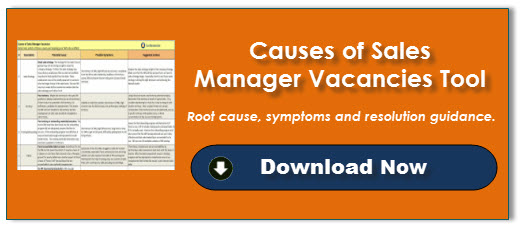
To assist you further, sign-up for SBI’s Sales & Marketing Research Review here. At no cost, an expert from SBI will present the full research findings. You will have access to guides, templates and tools. Included in this you will receive the Causes of Sales Manager Vacancies tool. 

Figure Out Why SM Vacancies Exist

I’m assuming you’ve already uncovered a pattern with Sales Manager vacancies. One golden opportunity to find root causes is to consistently perform SM exit interviews. Here are three possible causes of continual SM vacancies.  Each one lists the possible root cause and manifest symptoms. Also, some guidance on how to resolve the root cause. Bear in mind that multiple causes may be at play. 

Hiring profile not right. Without a relevant SM hiring profile, you will not attract qualified candidates. Time will be wasted and costs will be incurred. You spend multiple dollars and effort during the hiring process only to have the SM leave.

Symptoms: High attrition; low performance; sales leaders that begrudgingly accept candidates (because the quantity available is so few); SMs with methods that don't work for your business; SMs that haven't evolved with the buyer evolution.

Guidance: Update the hiring profile. Include your defined SM competencies within the profile to filter responding candidates. If you don't have SM competencies defined, contact SBI to help you write them.

Sourcing/hiring processes ineffective. The hiring profile may be correct, but steps in the hiring process are suspect.  Multiple candidates are brought through the process but one of two things happen: 1) the hired choice does not work out; 2) the perfect candidate doesn't get hired.

Symptoms: High attrition and low performance again may point to a troubled hiring process; Difficulties in choosing the right candidate (meaning disagreements on who should be chosen); Candidates bow out of the hiring process; Low quantity or quality of candidates.

Guidance: First, ensure the hiring profile is correct.  Then, ensure you are sourcing candidates from sources that would match the profile. Review the hiring process to make sure it is outward-in: from the candidate's perspective. The hiring process needs guidance on interviewing, testing, and communicating with the candidate.

Poor compensation. This may seem to be a common root cause.  However, people leave a job because of their boss more so than the pay. Part of the poor compensation may be the inability/difficulty to achieve incentives. This might not be known during the hiring process.

Symptoms: Few candidates apply; low-quality candidates apply; short tenure of new hire SMs; Comp below Market Reference Points; filled by mostly internal candidates only.

Guidance: Understand market pay rates for SMs. Assess sales compensation plans to check comp vs. desired behaviors. Change the comp plan and associated quotas if need be, but only after sufficient analysis.

Other potential causes include the below.  Download the Causes of Sales Manager Vacancies tool for more detail around each of these causes.  The root cause, symptoms and resolution guidance are in the tool for each one. 

  • Weak sales strategy
  • Poor territory
  • Poor training or onboarding materials and execution
  • Poor/un-coachable talent on team
  • No SFE improvement/evolution
  • Lack of development opportunities
  • SM not enabled with sufficient technology
  • Overcomplicated expectations of processes/procedures
  • A bad boss
Causes of Sales Manager Vacancies Tool

Steps to Resolve the Root Cause


  1. Download the tool and determine the likely cause(s) of open SM roles
  2. For each open SM position, decide if it can be eliminated
  3. For vacancies that must be filled, try some new methods. Base the new methods on your root cause identification.  For example, maybe it’s the SM profile not attracting top talent.  Then redefine what the ideal candidate looks like. Review the competencies currently being used to see if they should be updated. 

Author: Steve Loftness

sbi on linkedin

Follow @SteveLoftness

Follow @MakingTheNumber

If you enjoyed this post, get free updates by subscribing by Email or RSS.

24 Oct 14:20

Make The Leap: Social Media To Social Sales

by Shannon Johnson

Make The Leap: Social Media To Social Sales image Make the Leap 1

My hero is Jon Bishop and he has been my hero since we became friends in 1st grade. We both idolized Indiana Jones, and celebrated his adventures throughout our lives. 32 years later, while I am glued to my desk, pounding away on the phones and sending never-to-be read correspondences, Jon is off saving lives at Jackson Hole Resort. When he’s not doing that, he is leading his team of firemen through the Teton Mountain Range. The last time I saw Jon, I was at the altar of my wedding in 2009 and he was standing next to me as one of my groomsmen. You would think with the five devices I have around me at all times that I could easily connect with him, but life has its priorities and complications. Last December, I lived vicariously through him as he lowered people down to the ground from a broken lift at the resort. I was able to do so because I follow Jon on Facebook. While I do not see him as much as best friends should see each other in person, Facebook has provided a means by which we can stay connected and our relationship remains solidified.

I am challenged everyday by VPs of Sales and Marketing on the capability of social sites to adequately serve as a means of staying connected with their future customers. I sit at my desk and scratch my head, asking myself how this is not abundantly clear to everyone using social in any capacity. Why does this hurdle exist? Do these people not have a hero, a best friend, or any person that they stay in touch with through social media? If they do, why is it so hard for them to see a social site like LinkedIn for its potential to help their sales people cultivate stronger relationships with their buyers and refine existing sales tactics? Ironically, it is my clients’ objections to the very concept that have helped me develop a better case for social sales. Here are a couple recent ones that I thought I would share with you:

Make The Leap: Social Media To Social Sales image Make the leap 2

OBJECTION #1: Yesterday, I was asked about using social sites for sales globally. “When will the rest of the world start using social?” The company had reps in several different locations and was considering social sales enablement training. They wanted to make sure that the sales organization would have a consistent voice when it comes to social sites such as LinkedIn, Twitter, Google+, etc. etc.

ANSWER: Brian Featherstone, CEO and Chairmen of OgilvyOne published a study on “The Future of Sales” in 2010, which touched on social for selling. The United States is actually the last one to adopt social selling, while emerging markets like China are already using social 73% of the time for sales. My response was a logical one: “Essentially, we have some catching up to do.”Make The Leap: Social Media To Social Sales image Make the Leadp 3

OBJECTION #2:“The use of social will not work for our sales people because they sell top-down, and members of the C-suite are not on social right now.” I see this one a lot, and it really comes more from management then the seller. In most cases, if you approach your own sales team and ask them if they are connecting with their prospects on social sites, they are going to say yes.

ANSWER: Paul Dunay, Global Vice President of Marketing at Maxymiser, posted a list of over 100 C-Level executives your company could have been talking to in December of 2008, proving this objection to be one without substance.

Norbert Kriebal, Principal Analyst serving Sales Enablement Professionals at Forrester, published “Executive Buyers Prefer Email And Phone” on July 26th, 2013. In his research, he surveyed C-level executives regarding their buying preferences. His findings showed LinkedIn to be in the top five most-preferred methods of interaction between the sales professional and the executive buyer.

You can argue that a relationship with a lifelong friend and that of one with a business prospect are far different, and I completely agree. My point here is that social possesses the versatility to assist not only in keeping us in touch with close friends who we haven’t seen in a while, but also in keeping us in front of and in tune to what is going on with our prospective buyers. As sellers, we know that there is a large part of our contact database that may not be buying today. We also know that they will evaluate in the near future and with this knowledge, why would you not want to stay connected to the prospect in the lead nurture phase on social sites?

24 Oct 14:20

Three Ways Marketers Can Help Sales With Hot Leads

by Alexandra Burnett

The B2B sales cycle has undergone a complete change, and recent statistics revealed that the length of the B2B sales cycle process is shrinking as prospects engage later after doing their own research.

With the move online, marketers have an even more important role to play in capturing prospects’ attention as they do their research to generate, nurture, and deliver more sales-ready leads. That means taking a new approach to how leads are managed, scored, and measured and what steps are taken to move prospects along the sales funnel.

The latest thinking and approaches from leading marketing organizations shows that combining automated lead management with content marketing strategies and closer sales and marketing alignment can deliver more Sales-ready leads.

Here is what marketers should do to achieve exactly that.

1. Think Micro

Today’s marketers have to provide significant amounts of content to pull prospects in and keep them engaged. While content such as case studies, white papers, and blogs on your company website plays a crucial part in this, developing a “micro-content” strategy is also key.

“Micro content” refers to the comments that you post on social media and on other people’s blogs. With a strategic approach, micro content can help drive inbound marketing leads into your sales funnel that you can then score and nurture until they are sales ready.

It’s not just about written content either, as today’s web-savvy audiences expect interactivity, images, and videos. Your overall content strategy has to include everything from the look and feel of your site(s) and tone of voice.

Getting your content and micro content strategy right can drive engagement levels and position you as a thought leader in your field, so that when people want what you sell, your company will be the first that comes to mind.

2.  Measure Everything

“Everything” may be a slight overstatement—but the marketing automation solutions available today mean that the data available can give much deeper insights into buyer behavior.
By establishing a lead scoring process based on the digital behavior your prospects exhibit you can ensure that the qualification process is robust enough to improve the quality of the leads that you deliver to the sales team.

Research by Aberdeen Group has shown that best-in-class businesses using marketing automation to score and nurture leads have 40% of the sales pipeline coming directly for marketing generated leads. Combining the functionality of marketing automation with these B2B Lead Management 6 Best Practices will see the number of leads accepted by the sales team improve significantly.

3. Work Together

One of the biggest problems businesses face in taking advantage of the opportunities that the digital world brings is that their sales and marketing teams don’t work together.

In the best-performing organizations, sales and marketing are closely aligned and meet 69% more frequently than in other companies, resulting in 31.6% year-on-year annual growth, compared to the industry average 18.2% growth.

The latest version of the SiriusDecisions Demand Waterfall, which was released in summer 2012, shows how the sales and marketing teams should be brought together to increase the efficiency and effectiveness of the lead management process instead of wasting time, money and resources working independently to achieve the same goals.

To be successful  both sales and marketing need to recognize their specific accountabilities and understand how they are related. The following are some of the questions that need to be asked throughout the process.

  • Marketing: How many enquiries can be generated?
  • Sales: How much is needed at the top of the pipeline?
  • Marketing: What are the lead conversion rates?
  • Sales: Are all marketing-qualified leads being tracked throughout the pipeline?
  • Sales: What is the win rate per lead source?

By combining closer sales and marketing alignment with marketing automation solutions, inbound marketing, and well-defined content strategies to manage and nurture leads, businesses have been shown to generate 50% more sales ready leads at 33% lower cost.

23 Oct 16:44

The Six-Word Story: A B2B Forum Recap in Pictures #mpb2b

by Kerry O'Shea Gorgone

With 42 sessions at this year’s B2B Marketing Forum in Boston, you can bet there was a lot to love, but one of the sessions that really got the audience talking was Larry Smith’s Keynote: The Story of the Six-Word Memoir Project: The Power of Choosing One Simple Idea

So, along those lines, here are some six-word stories that capture the spirit of this year’s event. Hope to hear your story at the next one!

“Tell your story in 6 words.”

What’s your six-word memoir? Constraint doesn’t kill creativity: it fuels it. @LarrySmith @marketingprofs #mpb2b pic.twitter.com/OggiZfJoCL

— Kerry O’Shea Gorgone (@KerryGorgone) October 11, 2013

Kathy B listens to six-word memoirs at @marketingprofs #mpb2b. “Proving my sixth-grade teacher wrong.” @samfiorella pic.twitter.com/uwn05bNQBa

— Kerry O’Shea Gorgone (@KerryGorgone) October 11, 2013

“The best events start with parties.”

Wish you were here! #mpb2b @ The B2B Marketing Forum Brought To You By MarketingProfs http://t.co/eZ3cZkkNGy — Kerry O’Shea Gorgone (@KerryGorgone) October 9, 2013

“Brought B2B smarts and some surprises!”

Missed the #mpb2b flashmob kickoff? It’s here in part, thanks to @KerryGorgone! https://t.co/mg9b0JMkPk

— Ann Handley (@MarketingProfs) October 10, 2013

“Laughing and learning together in Boston.”

Is your morning meeting this much fun? @timwasher brings the funny to @MProfsWire #mpb2b! @jillfosterhttp://t.co/Y38J7xI6zP — Kerry O’Shea Gorgone (@KerryGorgone) October 11, 2013

“There’s always time for a selfie.”

Genius. RT @KerryGorgone: “Take selfies here” sticker in the bathroom at #mpb2b. LOL pic.twitter.com/vULaT0ivPL

— Jody Mask (@jodymask) October 10, 2013

“Seeing people in person still matters.”

One of my fav pics from @MarketingProfs #mpb2b: @annhandley sneaking up on @NickWestergaard. pic.twitter.com/uyYVWVKVvB

— Kerry O’Shea Gorgone (@KerryGorgone) October 17, 2013

“At Profstoberfest, party in your lederhosen.”

If you missed #mpb2b, you missed this: @MarketingProfs in lederhosen! #profstoberfest pic.twitter.com/VXmaNi1fyf

— Kerry O’Shea Gorgone (@KerryGorgone) October 17, 2013

“Run toward things that scare you.”

“Follow the fear. Run down that path. Fear keeps us from our calling.” @timwasher @marketingprofs #mpb2b pic.twitter.com/PeIhNvXvVc

— Kerry O’Shea Gorgone (@KerryGorgone) October 11, 2013

“Be brave: use the right words.”

Love -> rt @KerryGorgone: “Don’t shun the best words in favor of safe words.” @redheadwriting @marketingprofs #mpb2b pic.twitter.com/uSEI1fsHjm — Aimee Pilz (@awakeningaimee) October 13, 2013

“Don’t miss next year’s B2B Forum!”

#mpb2b stars! @annhandley @jonmiller @TheSalesLion @RedheadWriting @tamadear @DavidBThomas @timwasher pic.twitter.com/L7vMho9X7s

— Kerry O’Shea Gorgone (@KerryGorgone) October 17, 2013

23 Oct 16:43

T-Mobile offering free data service for tablets to broaden base beyond cellphones

by CB Staff
Rnordman

We want this in Canada!

SAN FRANCISCO – T-Mobile will give owners of iPads and other tablet computers free data service for life as part of an effort to broaden its customer base beyond phones.

The free service would be limited to 200 megabytes of high-speed data per month —enough to upload about 800 Instagram photos or listen to more than three hours of streaming music, the company said.

T-Mobile US Inc. said the free service comes with no obligations, but the company expects people will want to buy plans for additional data once they grow accustomed to having it.

People typically buy tablet computers that access the Internet using Wi-Fi only. Models with 4G LTE cellular access typically cost $100 to $130 more, but T-Mobile marketing chief Mike Sievert said many people are reluctant to purchase cellular-enabled tablets for fear they would be stuck with monthly data service costs.

By guaranteeing free data service, he said, T-Mobile is hoping to encourage people to buy LTE tablets.

The latest offer, announced Wednesday, comes as the company tries to shatter longstanding industry practices and brand itself as the Un-Carrier.

In March, the company dropped conventional two-year service contracts in favour of selling phones with installment plans. In July, it introduced a program that lets people upgrade phones more frequently — up to twice a year. This month, the company eliminated data and texting fees in more than 100 countries and capped charges for international voice calls.

There are signs the efforts are working. In the April-June quarter, T-Mobile gained long-term, good-credit customers for the first time in at least two and a half years. T-Mobile added a net 688,000 such customers in the quarter, compared with a loss of 557,000 in the same period a year earlier.

The net increase includes 3,000, or less than 0.5 per cent, for non-phone service such as tablets. T-Mobile officials believe there’s room for further growth.

All tablet computers, including Apple’s iPad, Google’s Nexus 7 and Amazon’s Kindle Fire, are eligible for the offer as long as they work on T-Mobile’s network. Sievert said most tablets do.

The new iPads announced Tuesday are universal models, meaning they will work on various LTE networks around the world. Previously, Apple sold separate models compatible with a subset of networks.

Tablet owners will need to buy a SIM card that costs about $10.

T-Mobile said it will sell iPads under installment plans, but people who buy tablets elsewhere will qualify as well.

The free access is limited to the United States.

For $10 a month, T-Mobile phone customers can buy an additional 500 megabytes of high-speed data in the U.S. and unlimited data at slower speeds. That plan also comes with unlimited data at the slower speeds in more than 100 countries. Non-phone customers can pay $20 a month for the same plan. There’s no contract, so people can sign up for a month at a time. There are also daily and weekly options.

At rival AT&T, monthly plans start at $15 for 250 megabytes. The company recently introduced $5 day passes, which it says is ideal for travellers looking for an alternative to Wi-Fi hotspots. That’s good for 250 megabytes. AT&T also has a new $25 plan offering 1 gigabyte over a three-month period.

The post T-Mobile offering free data service for tablets to broaden base beyond cellphones appeared first on Canadian Business.

23 Oct 16:32

7 Tips To Raise Eyebrows With Perfectly Constructed Google+ Posts

by Kapil Jekishan

There’s so much buzz these days about Google authorship, the hummingbird update, social media, SEO and the like. Google is growing and offering more and more ways for people to establish themselves and their platforms online. Formatting plays a huge role.

Formatting is a secret weapon of mass domination, because it increases perceived authority, reader-experience, readership and traffic generation. This article provides several tips on how to maximize exposure, Google+ etiquette and audience engagement.

Let’s dive in.

7 Google+ Post Construction Tips

This article is going to go in-depth into what it takes to format your Google+ posts to impress. It’s about generating discussion, engaging readers and coming across as a seasoned and skilled content producer.

Tip #1: Aesthetic Static Imagery

Why does the image sit ahead of the title? Simple, visual marketing is the preferred method especially in a market where time is precious. We are seeing larger screens on smartphones and home theatre sets plus social media platforms such as Pinterest, Google+ and Facebook users love web imagery. Each and every blog post should include one, and in an ideal world each one would be original and geo-tagged especially to you. In fact, at Social Media Marketing World 2013, Guy Kawasaki specifically mentioned how he deletes the auto thumbnail image from a link and instead uses a larger, visually compelling image to attract more attention and increase engagement.

  • Bigger isn’t always better, and neither is going over the top in terms or artistic license.
  • Make the picture relevant. If you’re blogging about indoor gardening, don’t sport some picture with a care in it…
  • Images drastically increase not only the likelihood of people giving the post a chance, but also sharing it on their own networks.

Check out +Peg Fitzpatrick’s image she uses below. The coffee cup and large text naturally raises the appeal factor.

7 Tips To Raise Eyebrows With Perfectly Constructed Google+ Posts image Perfectly constructed google posts peg fitzpatrick

Tip #2: Title Mastery: The Keys to the Kingdom

This is the second step, and typically the second thing people or potential readers see. A few things to keep in mind here:

  • Your titles should include a keyword/phrase, but also state a clear USP.
  • They should have personality as well, and not sound scripted or unnatural
  • Longer more complex (2 ideas/concepts for example) titles are completely fine now, but don’t overdo it.

Who’s done this well?

+Stephan Hovnanian used a powerful and creative title (shown below) by including the terms ‘fishing’ and social media strategy. Would it have had the same appeal if the title read ‘How to determine the right social media posting strategy?” – probably not.

7 Tips To Raise Eyebrows With Perfectly Constructed Google+ Posts image Perfectly constructed google posts stephen hovnanian

Tip #3: That first sentence

If you’re not a regular on Google+, it is important to note that only the first three sentences are displayed before the “Read More” link appears. So you’ve really got to grab the reader’s attention with the first sentence.

Include a concise and to the point introduction for not only readers, but SEO purposes as well. What will your snippets say on social media platforms? What will the snippet read in Google search results?

  • Include a keyword or phrase, but make sure people understand what the article is about.
  • No sales copy, or lead-ins that sound artificial.
  • Ask a question in the beginning, or mention that answers you intend to provide.

Eric Enge’s first sentence is a cracker stating that G+ hashtags are being found on Google Search. If you’re an SEO enthusiast or web marketer, there’s a good chance you would be tempted to read on.

7 Tips To Raise Eyebrows With Perfectly Constructed Google+ Posts image google plus eric enge

Tip #4: Pay Homage Where Homage is Due

Like in the real world, we’re known by the cyber-company we keep and mention in our posts. When appropriate pay homage to relevant and incredibly visible thought leaders. Mention what you learned from other people that your readers may or may not already know.

  • When you mention people, or call them out (not in a bad way), it’s more likely to draw their attention!
  • Acknowledgments and showing thanks to other thought leaders adds to perceived authority and overall professionalism.

Here is a great example from +Mike Allton:

7 Tips To Raise Eyebrows With Perfectly Constructed Google+ Posts image google plus mike allton

Tip #5: The Body

Think of your Google+ post as a mini blog post. Unlike Twitter where you’re restricted to 140 characters, Google+ users are accustomed to and respect those who offer a preview when posting an article. This gives you credibility as a content creator and also allows the reader to decide whether it’s something they are interested in reading.

There are also specific formatting options on Google+ you can take advantage of:

Bold: Apply asterisks around the phrase/word to bold it e.g. *SEO* would be SEO.

Italics: By using underscores before and after a word, that word will then italicize e.g. _SEO_ would show as SEO.

Strikeout: If you want to run a line through a word or sentence (strikethrough) you can do so by applying hyphens before and after the word/sentence e.g. This is –cool-would show as This is cool.

Tip #6: Sharing Strategically

Don’t just share everything with everyone. In a general sense it’s bad form. Stick to sharing your posts, or trying to, with the most relevant and interested audience possible. Group people into categorical circles, and take advantage of the more advanced opt-in list capabilities that Google+ offers. Be strategic, rather than implementing the age-old shotgun technique. Demian Farnworth refers to the concept of circling as ‘segmenting’ your audience to deliver more appropriate content.

7 Tips To Raise Eyebrows With Perfectly Constructed Google+ Posts image google plus sharing

Tip #7: Comment Responses

Treat each and every comment (until you become a Google+ rock star) like it’s a piece of digital treasure. When you no longer have the time to reply to thousands of comments, fine, until then take every opportunity to engage your audience.

  • Mind what you say and keep it up-beat.
  • Remain professional and do not get sucked into arguments.
  • Remember that Google is compiling a dossier on you, and everything sticks!

Over to you

So that’s an overview of how to construct great content on Google+. If you are thinking this is too hard, it really isn’t. Social media expert, Rebekah Radice calls Google+ the platform to post your original content for SEO benefits and build relationships with those who will enjoy and share your content.

Once you’ve constructed a well-written G+ post 2-3 times, it becomes second nature and the results start to show whether it be +1’s, shares or comments.

Don’t forget you also need to encourage people to share your content on their own G+ accounts, so make sure you take the necessary steps to make it easy for them, start by adding social media buttons – if your blog is using WordPress, here are a few to get you started.

A quick final tip before I sign off is to not use Google+ as a platform to solely promote your own material and make it just about yourself.

Good luck!

Do you have any tips to add? We would love to hear in the comments!

Photo Credit: yukop via Compfight cc

23 Oct 16:27

Is Google+ The Key to Building Links with Guest Posts after Penguin 2.0?

by Jason Brooks

I reckon Google author verification through G+ (Google Plus) is going to play a huge part in the next year. Sorry I know that’s not exactly visionary thinking right now but I want to explore the idea some more.

Google have been on a mission to sort and rank the content on the web without the help of SEO practitioners since day one; if anyone is going to optimise search engine results then it’s going to be them!

G+ is a part of the answer to this problem for Google and here’s why I think this is so in a slightly big nutshell.

Are you dancing to the G+ tune?

Is Google+ The Key to Building Links with Guest Posts after Penguin 2.0? image google plus verification starwars

Google are looking to verify relatively unknown or upcoming authors by looking at their G+ profiles (authority writers are easy to spot already suing other crawlable data). As an author to get verified you either sign up to G+ and show them the blogs that you write for in the ‘contributor to’ section of your profile – or you hide from Google and you get ignored (Eric Schmidt said as much and I’ll mention it again later).

If you do the former and sign up for G+ and fill in the necessary details then you run the risk of your links being devalued if you post on multiple blogs. Why you ask? Because through your G+ profile Google can easily work out that you are an employee – either a paid freelance writer or an in house marketing executive and then take action.

Once Google knows you are on the payroll your days of passing PageRank juice from your guest posts are probably numbered. In its simplicity the Google Algorithm being partly powered by PageRank counts links as votes so why would they assign value to all of your links/votes from your guest posts? You work for your company so you are clearly going to be biased so why would Google value every link you create?

Ultimately that isn’t the end of the World if the posts are on niche specific sites and pass referral traffic to your business. This is why links are supposed to be placed in content isn’t it? As Eric Ward once said “ask yourself if you would still want that link if Google did not exist”. If you are guest posting on behalf of a business following this mantra then it is still an excellent way to get traffic; just remember that the links will have a lesser SEO benefit once you confess to Google who you are writing for i.e. your company.

The other scenario is where you are a ‘hired gun’ with a G+ verified account working for an SEO agency or client producing guest blog posts for multiple sites on multiple topics. In this case if you have listed these sites in your ‘contributor to’ list your topical profile is going to look suspicious being littered with posts on websites for office machines, legal services, artists supplies and light fittings.

These sites you’ve posted on will include links from your content to a range of sites that appear frequently. This footprint tells Google that you are clearly a writer hired by a ‘guest posting company’ and whoring out your G+ authority – ouch. Google will also be able to collect and sort the sites you are doing paid guest posting for and penalise them too…it’s getting worse now isn’t it!

How about going under the radar?

The alternative would be for authors to hide their associations with blogs they guest post on from Google but as already mentioned G+ is being used as a threat to those that try to avoid being tracked. Eric Schmidt has openly said in so many words that authors that don’t use verification won’t get a look in – although I think this is a little arrogant.

I expect the exclusion to this rule will be if the authors are well known in an industry through other means such as being published or a speaker, lecturer or whatever else can be found online that validates them as an authority within a particular niche.

Of course this whole set up relies on Google getting an awful lot of people on G+ and then identifying their ‘contributor to’ list of blogs. Google’s trump card is that the threat of anonymity in the search engine results is in the open and will get more publicity as the marketing industry spreads the importance of G+ author verification word to their clients. If Penguin 2.0 includes updates that encourage G+ verification then Google will be laughing all the way to the G+ bank (update: having analysed our links we see no indication that G+ author verified links carry more weight than non verified links).

In the meantime until they get everyone on board they can just pull the plug on author bio links that are found on low quality blogs. That alone should help build the momentum for G+ sign ups from authors who perceive that they are being unfairly targeted! (Update: we see no indication that this has happened in Penguin 2.0 and in reality a sweep like this could cause massive collateral damage to the SERPs).

Conclusions about the G+ thing and how it might affect guest posting

The G+ author verification strategy is partly I believe a sophisticated trap designed to catch any company wishing to employ writers to post any old content anywhere they can in order to get a link. It just makes vetting content and outing guest post link networks really easy for them too so it makes sense.

So what you will have is a situation where Google gets everyone publishing quality content for its search engine but has the visibility through G+ to see who is spamming in the form of random topic articles all over the place on random blogs; and who is just honestly promoting a company in a specific niche by guest blogging.

Either way the links from both scenarios get devalued but for different reasons and both of them valid.

The only scenario I see guest post links working well as an SEO tactic if this G+ verification of content and links kicks in, is when the link profile includes links from content written by individual G+ verified authors that operate in specific and relevant niches and are not connected with the companies being linked to from the guest posts. Tough to game indeed but also a long way off from being implemented if at all.

If you haven’t already, I’d suggest taking a look at my article on post penguin link building that I published recently.

Where do you think Google will go with author verification and how will it affect link building? We’d love to hear your thoughts.

23 Oct 16:27

How Google is Keeping People from Clicking on Your Site, and What You Can Do About It

by Ken Mueller

Google is now doing something that could prevent people from clicking through to your website, thereby diminishing some of your much coveted traffic. But there is something you can do about it.

If you haven’t noticed, sometimes when you search for something very specific, Google brings you more than just the normal search engine results page (SERP). For instance, go now and do a search for something sports score related, such as “Who won last night’s baseball game?,” and you’ll get the scores right on the SERP. No need to click through to MLB.com or ESPN. You can do the same with topics like the weather, conversion rates for measures and currency, or directions to a local destination. In fact, I’m sure there are a lot of other things that Google is now doing for you, so that you don’t need to actually go to any websites.

But now do a Google search for your business or any other local business, and see what happens. In most cases, you’ll get a nice little (or in some cases, big) box on the right hand side that provides a lot of information about the business including location, hours, reviews, images, and some links. Think about it: a lot of the information you put online as a way of drawing traffic to your site is now available in certain SERPs so that users no longer need to click through, thereby robbing you of some traffic.

And we all want traffic, right?

I’m also guessing that as Google continues to refine its algorithm and make the SERP more user friendly, we’ll see more and more of this happening. More of the information we want will be right there on that first page without the need to click on anything else. This feature is part of what Google calls its Knowledge Graph, and it’s actually been around for more than a year, but it is getting smarter each day, as it taps into semantic search, and how we seek information. There are a number of other components to the Knowledge Graph, but this box on the right seems to be the most prominent for most searches.

How Google is Keeping People from Clicking on Your Site, and What You Can Do About It image Google listing

So what can you do? On the one hand, it’s kind of nice to have that information there. And there’s not much you can do to fight The Almighty Google. So your best bet is to play the game and take advantage of the situation. Here are a few things you can do to make sure this fairly new practice from Google will help you and not hurt you.

Get Listed

Make sure you have a strong online presence. Of particular importance are Google + and Google Local, but Foursquare, and review sites like Yelp or Urban Spoon are also important. Sites like GetListed can help you with this task. Find out which sites you are on, claim them all, and create listings on directory platforms that might be beneficial. The added value of getting listed is that when someone Googles your competitors, your listing might show up at the bottom of the Knowledge Graph in the “People also search for” section.

Optimize

No matter what platforms you’re on, optimize them. By this, I mean that you should have as much complete information as possible. Add images, hours, contact information. And make sure all of that information is correct across all channels. Google often pulls information from Wikipedia, so if you are listed there, make sure the information is correct. If Google is going to pull and highlight your information, make sure it is the correct information.

Get Reviews

For many businesses, Google will pull reviews from its own internal properties as well as other listing sites. These will show up prominently in the Knowledge Graph, so you need to encourage your customers to write reviews for you. More reviews, and more good reviews, can really stand out in this box.

Connect Everything

You might have 5 or 10 online properties, but they don’t exist independently. All of them should be linked to your website and other properties. Cross-pollinate across listings and networks to make sure that everything fits together nicely.

Blog

In some cases, like my own, the Knowledge Graph pulls my most recent blog posts that I have linked to Google +, and creates something that is a bit more inviting to clicks from viewers. In this way, your titles are very important.

Make Your Content Count

In addition to your blog, make sure your website is filled with great content that draws people in. If they aren’t going to come to your site for hours and directions and more basic information, give them a reason to click. Think added value; what can you add to your site that is indispensable to your customers? What sorts of information and content do they want that Google can’t give them in the Knowledge Graph.

How do you feel about the Knowledge Graph excerpts, and what are you doing to get more click-throughs?

23 Oct 16:26

A Fisherman’s Guide to Content Marketing

by Matt Todd

I recently returned from an extended trout fishing trip in the streams of Missouri. As I stood waist-deep in the chilly, crystal clear, spring-fed waters, I was hit with the realization that content marketing and fishing really aren’t that different.

Sure, the end goal is different: you’re looking for customers and conversions in digital marketing. An angler is hoping to have a tasty meal. That being said, the process of achieving the end goal is very similar. So, here’s the Fisherman’s Guide to Content Marketing in four easy steps. A Fisherman’s Guide to Content Marketing image fishing content marketing

Location

You’ve heard it said that real estate is about location, location, location. The same is true here. You aren’t going to catch any fish if you aren’t fishing in the right spot. While this can involve some research, it certainly requires keen observation. A difference of two feet can mean feast or famine while fishing. You can’t expect the fish to just magically flock to where you are because you tossed a line into the water. You have to find the fish and go where they are.

In order to effectively reach your target audience, you have to know where they are in digital space. Where do they get their news? Are they reading customer reviews? Which social media platforms do they use, if any? Discover where your audience is and take your message to them. This isn’t Field of Dreams. People aren’t just magically going to show up because you tossed a piece of content onto the Internet. You have to go where the people are.

Lure

The fish are hungry for food, and it’s your job to give them something they want if you want to catch them. There’s a variety of different lures that can attract fish. The most successful from my weekend fishing trip were the gold Super Duper and a black and yellow Marabou jig. The lures (or bait) you choose to use should appear to satisfy one of the most basic cravings of all animals: food.

In the digital world, content continues to be King. It’s what keeps people coming back to your site. The content you create should be in response to some type of craving your audience has. The cravings you should address depend on who you are trying to reach. And that’s why embracing digital personas is so important. They can help you determine what your customers are looking for so you can address their needs by giving them exactly what they’re looking for with the amazing content you’ve created.

Presentation

Once you’ve chosen the lure and the location, you need to know how to present your lure to the fish. Is it supposed to look like an insect that had landed on the surface? Should it be sitting downstream, upstream, or at the bottom of the stream? Should it be stationary or moving quickly or slowly? Knowing how the fish see your lure is almost as important as what type of lure to use in the first place.

The same is true with your content. Is your audience made up of no-nonsense people looking for just the facts? Then, give them the facts. Just the facts. And nothing but the facts. Are they looking for articles with technical terms and phrases? Then don’t be afraid to use technical terms. Are they creative and looking for a good story? Then your content should be creative, engaging and shareable. Be sure to remember who your audience is. It isn’t Google or any other search engine—it’s people. You should shape your content with them in mind, not an algorithm.

Finish the deal

When a fish is in the right location and encounters the right lure with the right presentation and goes in for a bite, you need to have a pretty good idea of what you’re going to do with that fish. How are you going to set the hook? Are you going to keep the fish or throw it back? You have to be prepared for when the fish start biting. If you aren’t, you’re going to lose your fish.

Clearly, you aren’t trying to capture people with your content—but you are trying to drive conversions. To be successful in driving conversions, you have to have a plan. How are you going to define success? What do you want your audience to do after consuming your content? Is their path well-defined? You have to be prepared. If you aren’t, you’ll lose your lead.

No matter what you do, there are some days where the fish just won’t bite. There could also some days where your content just won’t generate conversions. Don’t give up. Keep following these four simple steps. With the right location, lure, and presentation, you should be able to find yourself able to finish the deal in the digital world. And you might find yourself a few keepers along the way.

Image credit: Bill Gracey

23 Oct 16:05

The Essential Best Practices to Successfully Prospect Inbound Leads

by mroberge@hubspot.com (Mark Roberge)
Rnordman

Work the company not the contact- so true

sales-call-best-practicesThis post originally appeared on Inbound Sales, a new section of Inbound Hub. You can view the original article here

"Another cold call? Really?"

This is something I say daily. I typically get 25 cold calls a day. In the span of a few weeks, a single sales rep will contact me four or five times. Surprisingly, they always leave the same exact voicemail message.

It essentially sounds like this: "Hey, Mark. This is John from XYZ Company. We help companies streamline their sales process and decrease sales cycles by a factor of 40%. Are you free at 1:00 p.m. tomorrow?"

I get this message over and over again. It’s painful. I cringe at the thought of the armies of salespeople out there who are trained to contact leads this way. Newsflash, guys: Old-school cold calls and elevator pitches do not work! Instead of cold calling, start an inbound sales approach by prospecting your inbound leads.

4 Keys to Successful Inbound Lead Prospecting

I’d like to share four tactics we use at HubSpot to successfully prospect inbound leads, because these leads present a big opportunity. If you contact an inbound lead with an old, scripted cold call, you're throwing your advantage out the window. Inbound leads are further down the sales funnel. The buyer’s specific interests and context is the right starting point -- not the generic elevator pitch.

1) Do Your Research

Before you contact an inbound lead, a few additional cycles of investment in researching a lead upfront is well worth your time. Most salespeople are pretty good about reviewing a lead's website to learn about their company’s value proposition, news, and leadership team. However, many salespeople overlook two important areas:

Social Media

Social channels give you better context about who your contact is and what's going on right now in their life and in their company.

What is your contact’s role? How long have they been at the company? Did they come up through marketing? Product? Finance? Who is their boss? Who is their VP? Do they know anyone at your company? Do they know your cousin?

Follow your lead and their company on Twitter. Subscribe to the company blog. Track what your contact is talking about on social media (and what their company is talking about).

Lead Intelligence

Knowing a lot about your prospect gives you detailed context about their interest in your company. How did the lead get to your website? Did they find you from a Google search? If so, what did they search for? Did they find you from another website, an email, or a tweet?

It's also important to know what content they engaged with on your site, what pages on the site they view, and if they checked out content and pricing information.

2) Use Monitoring Technology

If you're about to engage in a number of prospecting cycles with a lead, it's mission-critical to make sure you know if and when a lead actually engages with your prospecting.

Just because they're not calling or emailing you back does not mean you're not piquing their interest. Your prospecting monitoring tools should:

  • Notify you the moment a lead engages with a prospecting email you sent them (I personally use the Signals notification tool).
  • Notify you the moment a lead revisits your website.
  • Notify you the moment a lead mentions you, your competitor, or an industry keyword on social media. 

3) Work the Company, Not Just the Contact

Many salespeople make the mistake of only calling the contact on the lead. The problem with this is the contact is often not the decision-maker. However, someone -- usually a decision-maker -- instructed this contact to do the research.

This inbound lead signals to us that something is going on strategically at the company that is aligned with your value proposition. In some cases, many people may be involved in this research. Here's what a sample engagement strategy may look like.

Contact Lead's Boss First

If your lead is an associate, look up the VP for that department and place a call. Let the executive know that people in their department have been making inquiries with your company on topic XYZ.

Call Prospect With Their Context, Not Your Elevator Pitch

Use lead intelligence and offer specific ways to help. This builds trust and fosters a trusted advisor relationship. It might sound like this: "Hey, Joe. I saw you downloaded HubSpot’s “How to Master Facebook Marketing" ebook. I visited your company’s Facebook profile and have two tips on how you can improve it. I will email them to you now. Let me know if you would like to discuss."

Build on Prospecting Calls With Each Attempt

When you reach out to the lead for a second time, build off of your last attempt. Just because they are not calling you back does not mean they are not listening. Every message is an opportunity to add value for them.

A good follow-up from the soundbite above may be: "Hey, Joe. This is Mark from HubSpot again. I actually found a customer of ours in your industry that succeeded with Facebook marketing. I will send a summary of their strategy and results. Let me know if you want to discuss.”

Use "Always-Be-Helping" Approach

Answer their questions. Don’t hold back information. Once you have their trust, don’t qualify them unless they're a decision-maker. Instead, ask them who requested that they conduct this research and why. Also, ask what is on their executives’ minds. If you truly have your contact's trust, they will help you help them.

Let Lead Know You Contacted VP

Ask them if it's okay to keep the VP in the loop. As you nurture the relationship with the influencer, this gives you the opportunity to keep the decision maker updated and invite them to join.

4) Add Science to Your Prospecting Calls

Whether your sales team is 2,000 people or just 2, you will eventually amass a number of prospecting attempts -- some that succeed and some that don't. Track these attempts. Analyze the results. Iterate your strategy based on this data. Every buyer context is different. Set yourself up to master your own.

What are some of your best practices when it comes to prospecting? Let us know some of your tips and tricks in the comments below!

get free sales tips

subscribe to inbound sales