I thought it would be instructive for me to publish an email I received from Jonathan London, who runs The Improved Performance Group. Jonathan was selected by an ESR client to deliver critical sales training last month to a group of (non-sales) relationship managers who would soon be responsible for cross-selling a brand new product to their existing customers.
Many of you know ESR for providing objective and strategic decision support for sales training buyers in large companies. This particular assignment was for a large company, but they were seeking a point solution for an immediate business challenge. We decided that a small firm, or even a sole proprietor, would be the best choice.
Here’s the email from Jonathan, published, of course, with his permission.
Hi Dave,
Let me again thank you for sending me the RFI, and ultimately the opportunity to do some training for ___.
I thought it would be valuable to follow-up the recent work, from RFI through delivery and reinforcement of the program at ___.
The RFI
I responded to the RFI for several reasons, including:
It was clear that there was a good fit for many reasons including their requirements, the size and make-up of the audience, the environment it would be held and the promise of more business. It was also a profitable deal for IPG.
It was in an industry I had no experience with but felt the experience I did have would be very relevant for them
How well it was written including a clear definition of their requirements (as well as what they didn’t need)
The ease of responding due to the layout of the RFI so it wouldn’t take forever to fill out in relation to the opportunity
The access to the client to best respond to them
The dates of the training were open for me and it was in Florida so there was a chance to get out of the cold
The Finalist presentation
Once I was chosen as a finalist, I liked the format of presenting via webconferencing/video to all those involved in their decision. It was a unique situation given they were asking for sales training to an audience of service people who have never sold anything, and potentially were opposed and threatened by the idea. The format allowed for me to put together a presentation that fairly and accurately presented my services, what made us unique, different and better for the client. We were also given ample time to prepare and present our services. They were very involved during the presentation , which was important since it helped to further uncover and discuss their needs and expectations. I liked that you attended to keep everything straight and answer questions they were unable to.
Working with the client to develop the program
After IPG was chosen, the client was very involved and accessible. As always, I informed them that we could have as many or few checkpoints in developing the program as they liked. Thankfully, they chose to be very involved without interfering with the development process. I was given access to the key people I needed to speak with as well as information about their new offering, product managers and outside companies also working with them and more. At IPG we always ask for this but many clients aren’t willing to get this involved. The end result was a program that gave them the information and the tools they needed.
Delivering the program
The program was delivered as part of a 4-day kickoff, in 2 parts (each approximately 2.5 hours) on two days. Because of the research and development, the program was finely tuned to their situation and the temperament of the audience. Since this was “sales training” for a “service” audience, and because they are from the Midwest and much nicer than us northeasterners a great deal of attention had to be paid to delivering the program in a softer manner as to not offend the people who were undertaking sales as part of their responsibility.
The key executives were also there and involved the whole time, which we all know, is critical to a program’s success. I am glad to say that the program went off flawlessly.
We did a lot of exercises that kept them involved, and also fostered a lot of relevant discussions, observations and insights that were as valuable as the training itself. One of the highlights of the training was the use of the DiSC™ model that gave them insights into their own behavior style. As importantly, if not more so, we showed them how they could adjust their style when necessary to be even better at servicing and “selling” their clients. We discussed and modeled ways they could “sell” the new offering in a softer or more organic way. Use of their resources, team selling, asking the right questions and handling objections/resistance were all covered so they left feeling empowered, competent and secure with their new role.
Thanks once again Dave for considering IPG for this opportunity.
Jonathan
ESR received very positive feedback regarding the training Jonathan delivered. It’s too soon to determine what sales results were actually driven from this training initiative, but from ESR’s perspective, this was a textbook case of selecting the right sales training provider based on the customer’s specific requirements.
As sales professionals we come across these types of people all the time. But knowing how to tell the difference between a so-called “Tire Kicker” and a “Window Shopper” is critical and will better help you to eliminate wasted effort.
A Tire Kicker is typically someone who thinks they want to buy something, when in reality they most likely will not, mainly because they can’t afford to make the purchase. They usually spend their time finding things wrong with the product or service and will poke holes wherever they can. I’m sure the phrase had come to fruition through frustrated car salesmen who knew all about these types. It’s the self proclaimed “buyer” who’s bored and has some free time on his hands, so now he wants to look at every Corvette, Porsche and Mercedes on the lot. But in reality his funds are tied up in all these other areas: his kid’s college, his stainless steel kitchen, his retirement portfolio. “Interest is the counterfeit of need.” The Tire Kicker will never make a move, and I don’t blame him. When reason takes its course he’ll understand there’s no real compelling event or real urgency to drop that kind of money.
On the other side of the coin, we have our share of Window Shoppers, and to be honest, I like them. Why? Because I respect how mindful they are at being “thorough.” They are at least realistically thinking about buying what you’re selling. Maybe not right this second, but with some strategically landed nudges, they could be ready. They are the ones who like their process to be smart and well thought out; they gather all the information they need before making any sort of promises or commitments. They most likely will not just evaluate your company, but several. This way, they know they’re making the right choice when it comes time to buy and won’t risk the chance of getting reprimanded by their superiors for implementing a product that doesn’t fulfill their needs. So don’t drop the ball on these types of people, keep the lines of communication active. After all, they are a fan of what you offer and with time they very well may become active buyers.
Wasting Time or Keeping Your Pipeline Warm?
If you’re unsure if you’re wasting time or nurturing your prospects until the time is ready, ask yourself this:
What is compelling them to buy what I offer?
If you can’t answer this, then chances are you haven’t truly identified your prospects’ needs. Try getting that prospect back on the phone and then reengage in a conversation that will dig a little deeper so you can accurately determine if they’re the tire kicker or the window shopper. So take a second look at your pipeline and redefine who is worth spending extra time on and who is not. Discard the folks who remind you of the person who looks at every sports car on the dealership’s lot and moves on. Managing your time properly will only help you in attaining and surpassing goals that you’ve set or your company has set.
“Death of a Salesman,” 1962 (Photo credit: Digital Collections at the University of Maryland)
CEO’s and their C-Suite teams are mired in quantitative data analysis. Trying to make sense out of dollars and cents. Uncertainty reigns on how to shape future company strategic direction. Frustration exists with research consisting of surveys and data analytics only providing a snapshot of customer and market realities. Recent customer profiling efforts only telling senior executives what they already know.
Sound familiar?
Given the amount of technological changes impacting buyer behaviors in the past decade, this is the likely state of affairs in many B2B corporate environments.
Frustration
Many executives today in marketing, sales, strategy, and operations are frustrated with the lack of fruitful research and insights. Seeking to outline their company’s future strategic direction, they are finding themselves continuing to be not as informed as they believe they should be. Lacking in the type of insights, which results in new strategies connected to a changed world.
In my recent conversations helping executives discuss this dilemma, there is a sense of detachment from market and customer realities. What they are typically provided with for strategic planning are:
Segmentation Data
Purchasing History
Lead and Opportunity Analytics
Website Analytics
CRM Profiling Data
Survey Results
While all of the above provide important information relative to how an organization is performing, they offer little help with the dilemma of detachment and understanding customers. What they all have in common is they are rooted in quantitative analysis. With the ever-increasing complexities of B2B businesses, these forms of research and data can amount to a giant jigsaw puzzle. Causing confusion. Adding to this dilemma are ill-fated attempts at buyer profiling masked as buyer personas. Leading to disappointments in attaining much needed rich insights.
Understanding The Buyer’s World
Speaking as a former head of marketing as well as sales, it takes tremendous effort to fight detachment. The constant pull of internal meetings and the business of operating a department is a very real challenge to overcome. Leaving little time to experience the world of customers and prospects at the level needed. Yet, executives today need to engage in the world of buyers and customers more than ever in order to set the strategic direction of their companies on the right course. How can they do this?
One such way is through insights-based as well as ethnographic-based buyer stories. Buyer stories can engage executives in the world of customers and buyers, which can be hard to come by. Offering rich insights into the challenging situations facing businesses and buyers. Such insights can prove to be vital for deciding future strategic direction and strategies.
Insight Into Behavior And Experience
The essence of buyer stories is the ability to convey to executives the behaviors and experiences of buyers. These behaviors and experiences can be difficult to understand through quantitative data and analytics alone. For example, in buyer insights research and buyer persona development work done for HP in the healthcare market, it was uncovered health system IT Directors develop an emotional as well as experiential attachment to hospital care and Hippocratic oath values. This ethnographic-based insight, amongst several others, contributed to a restructuring of the strategic approach towards health systems.
What executives need today are the story of their buyers and the situations they face. Buyer stories also challenges as well as validates assumptions organizations and executives can hold about markets and customers. As in the case of HP, what proved to be pivotal were stories related to how healthcare information technology was changing the face of health systems and affecting behaviors, not data center footprint as an example.
Obtaining Rich Insightful Buyer Stories
Acquiring rich insights into buyer stories does require a shifting of resources towards deeper understanding of buyers based on the following:
Attain immersive understanding of buyers. Companies today will need to seek understanding through immersive understanding of their customer’s situations and environments. Meaning they must be observable.
Make use of qualitative research expertise. It complex markets, using qualitative expertise in ethnographic research principles will be required to understand and distill stories. For example, Intel makes regular use of external and internal ethnographers to understand both consumer and business technology challenges.
Focus on behaviors, attitudes, and experiences. Good stories usually evoke emotions in us. The same applies here. Solid use of qualitative and ethnographic expertise can capture the emotions and values buyers experience and serve as the plot for helping organizations and executives build empathy with buyers.
Use buyer personas to help tell stories. One of the primary purposes of buyer personas is to help tell the story of buyers. Providing the rich characterization and insights needed to do so. They serve as the medium to tell a good story – a story serving as an archetypal representation of real world realities. Allowing executives and the organization to engage in the visualization to make buyer stories three-dimensional.
Changing Strategies
One of the challenges for B2B organizations today is how to recast strategies to meet changing market dynamics underway. Confronting the need to transform while still growing annually. Delivering rich buyer insights will require commitment to researching and crafting buyer stories. Moving well beyond traditional, and in some cases, out-dated buyer profiling towards immersive understanding of buyers.
Organizations and the C-Suite need to engage in the world of buyers and customers. Overcoming detachment. Buyer stories comprised of rich details about the emotional values and experiences of buyers will help develop much needed executive and organizational empathetic understanding and to recast strategies.
And, in the end, the organization may come to understand itself like it has never been able to before.
“And, lo, the buyer moved online and every marketer scrambled to reach him but they needed these 6 things to get there.” -Anonymous B2B Marketer
Talking about your buyers moving online has become such a cliché that it is no longer mentioned. The Internet has become a veritable marketplace where rapid searching and tabbed browsing allows buyers to easily research diverse topics and skilfully navigate the overflow of information. Through the constant hum of company blogs, videos, tweets and Facebook updates you must somehow make a meaningful connection with your future buyers.
This blog details 6 things you need to connect with your buyers and generate leads online.
1. Automation
The bizarre irony of automation processes is that by using impersonal digital automation software you can reach your buyer’s in a more personal way. Automatic workflows allow you to create a marketing plan for every stage of the buyer’s cycle. With an automated system that delivers an action based personalised response, your customers get the information they need for their buying decisions, when they need it. Current trends in website design are allowing companies to customise their site content to different categories of visitors. A marketing automation system is essentially a 24/7 employee that delivers content to buyers on demand.
2. Content
You have probably heard about Content Marketing and its new throne, indeed its supremacy is currently being stressed by most marketing firms across Australia and abroad.
You think, “Isn’t everything content?” Technically yes it is. Every piece of visual and audio material is content. The term ‘content marketing’ has in some ways simply given a name to a process that has been around for a long time. However, the meaning of ‘content’ in content marketing is different to its original one – it refers to the concept of buyer-focused material.
Marketers will tell you content needs to tell a story, be intelligent, informative, and relevant, it must educate, entertain and even be beautiful. Everyone has their own view of what it should be but the general agreement is that ‘content’, in the marketing sense, should be focused on the user experience. It somewhat plays the influencer role online for your buyers. And because of this, content marketing strategy is a vital part of the greater marketing plan.
3. Social Media Strategy
There is a single statistic that you should consider when thinking of your social media strategy.
92% of people trust friends and family over all other forms of marketing.
Social media is the channel where your buyers share what they think, what they’ve done, what their interests are and even what they need. Through these channels, you can identify their peers and more importantly, influencers.
Not only should you listen to your buyers and engage with them, you should actively put forward content that engages with the influencers. The greatest success you can achieve in social media is to have your social media channels filled with your brand advocates.
4. SEO Strategy
This field continues to become more difficult and technical but that is not a reason to give up or not try at all. Rather it should encourage you to strive forward and stay in front of your struggling competitors.You can also take heart in a recent interview with Search Engine Optimisation (SEO) expert Jonathan Gebauer who recently stated that, “Good SEO is natural SEO.” Forget keyword stuffing or link buying, the best SEO strategy is one that is naturally a part of your strategy – content that is relevant to your buyers’ needs.
Google echoes this and stresses the importance of natural SEO. Their latest updates seem to be taking Google towards more of a knowledge engine that answers visitors questions and attempts to assess the quality of content rather than simply listing search results. The recent success of long-tail keyword combinations shows a focus on more detailed and accurate results and possibly groundwork for the future of voice-activated search.
5. Knowledge About the Buyer’s Journey
This should underpin your efforts in all the other areas. You have to know what your buyer wants and needs to be able to meet their demands. The more you know about your buyer the more you will be equipped to create content they find interesting, optimise your site for search terms, create a successful social media channel and an automation process that meets your buyer on every step of the buyer’s journey.
6. Time
The final element that completes your online lead generation process is time. All of the above processes can be put in place reasonably quickly, but they take time to produce lasting results and constant dedication to keep them coming.
We find with a lot of our clients that time is one of the most difficult things to negotiate. Campaigns can easily stall waiting for approval from a busy business leader. If you are planning on setting up a successful online lead generation process then you need to be prepared to create a blueprint that allows you to meet all the time demands it involves and makes everyone involved aware of the requirements on them.
Those are six key points every online lead generation process should address. If you would like to read more about lead generation and inbound marketing please download our free eBook by clicking on the link below.
Buyer Personas are written characterizations of the real buyers who influence or make decisions about the products, services or solutions you market. They are a tool that builds confidence in strategies to persuade buyers to choose you rather than a competitor or the status quo.
Buyer Personas are extremely useful for developing and evaluating messaging, content and offers that differentiate your brand from competitors. They are a foundation for any business that relies on customer acquisition, conversion and retention which, of course, is every business.
The best personas are created from real surveys and interviews – not from ballpark guesses, conjecture or assumptions. To get you started on creating Buyer Personas for your brand, HubSpot offers a free template: Marketer’s Guide to Creating Buyer Personas.
To convince you it’s worthwhile, here are 31 business building benefits of Buyer Personas.
TARGETING AND POSITIONING
Gives you a target for all prospects and customers
Can’t effectively market a product or service if you don’t know who you are trying to communicate with
Positions your products as relevant and worthy of consideration
Provides valuable insights for prospecting, performing market research, targeting advertising, website design, usability testing and keywords for SEO
Gives a deeper understanding and models buying behaviors of buyers and customers
Creates higher quality lead generation
Avoids wasting time on those less of a fit
MESSAGING AND MEDIA
Gives you the information and perspective you need to make objective decisions about how to craft your marketing messages
Focuses marketing and advertising efforts
Creates compelling content and offers
Helps determine the platforms and media you use
Enables content to be created to meet the targeted needs of each profile and speaks directly to the needs of each persona.
Gives a framework to have informed discussions about who your customers are, how they behave, and what they want
Helps make better connections through a common, focused understanding of an ideal customer’s common attributes, motivations, challenges and concerns
Helps to speak to buyers and customers in their language
Helps to be smarter at interpreting the digital behavior of our buyers and customers
PURCHASE MOTIVATIONS IN THE BUYING PROCESS
Gets a grasp of your prospect’s buying behavior
Enables you to details each step in the buying process
Are the blueprint for resources required to make a purchase decision
Gives insight into how to foster interaction
Relates to understanding how buying takes place and what is their critical buying path-to-purchase
Allows you to truly tailor your marketing messages so you can get the best possible response at every touch point in the buying cycle
Puts everyone in the company on the same page with respect to messaging and communications
Won’t get the best return on your investment unless you conduct the fundamental research that tells you which customers are most likely to make a purchase and what you can say or do to increase the likelihood of a sale
Allows you to develop the most cost-effective marketing strategy based on how potential customers are most likely to act
Develops a deep awareness of their day-to-day routine, challenges, goals and other insights into the type of person they are
COMPANY ALIGNMENT
Helps the marketing team better assess their segmentation, messaging and program strategies
Aligns your sales process and communicate with prospects on a more meaningful level
Improves the quality and quantity of conversations with your customers
Are critical for the creation of any marketing content and campaigns that deliver conversations, especially for use with marketing automation tools and their industry-specific buying tracks
HUMAN FACE FOR SALES AND MARKETING
Gives a human face to a collection of abstract data
In my experience, 3 to 4 Buyer Personas usually account for 90%+ of a company’s sales.
Do you know the Buyer Personas for your brand? Do you think it’s worth knowing them? I’d love to hear how you are using this tool.
When developing a B2B marketing budget, the smart money is on revenue goals and related lead generation rather than past budgets or competitors.
One of the most emotional topics in the world of B2B marketing is budgets. How much to spend, how to allocate the budget line items.
And the topic is growing more heated as the new marketing options arise and continue to evolve. It can be overwhelming and is never resolved to everyone’s satisfaction.
In fact, in a B2B marketing study, MarketingSherpa confirmed that the greatest barrier to marketing success is “lack of resources in staffing, budgeting or time.”
There are a number of approaches that have been used over the years to help marketers and management determine how much to allocate:
Percentage of Sales Method
This is probably the most popular approach due to its simplicity. Using this method, marketers allocate a percentage of their sales (not their profits) to their marketing budget. Percentages are fairly consistent within different categories, but this tends to work better in more stable categories.
Unit of Sales
Based on a company’s experience with their own sales and how much marketing it takes to sell each unit, some companies assign a fixed amount for each unit to be sold. For instance if past experience indicates that it takes $10 of marketing costs to sell one widget, and a widget manufacturer needs to move 10,000 units, $100,000 will be budgeted.
Objective and Task Method
This is probably the most effective but least used method because it ties the marketing directly to the achievement of specific business goals. Once concrete business objectives are determined (e.g. “expansion of area market share by 10 percent within a year”), the marketing is then estimated to determine the cost. Of course, financial reality still has to play a part if the business objectives are not realistic.
Purchasing Stream
This approach is based on expected income from a new customer and the cost to obtain that customer. Software as a service companies use this approach. For instance, when they estimate that a potential new customer will spend $300/month on an average contract lifetime of say, five years, they know that that customer will generate $18,000 for the life of the contract. From that $18,000 they estimate the gross profit, what they’re willing to spend to get the customer and how many customers they want to attract.
Competitive Parity Method
The idea here is that if a business is aware of how much its competitors are spending on marketing, it can use that as a benchmark from which to stay competitive, spend more or less. The problem with this approach is that competitors often have different marketing objectives and tactics, and examining only the amount spent on marketing can be delusory.
Market Share Method
This is similar to the competitive parity method above, but it is based on external market trends and also requires a method of measuring your market share, which not all marketers can easily do. Another drawback is that this does not incorporate market share growth goals.
Affordable Funds Method
Here companies base their budgets on what they can afford. This approach is simple and dangerous because some firms can afford more marketing budget than they really need, while others with limited funds should invest more to build their business.
Focus on Lead Generation Goals
What is most important to remember when budgeting for B2B marketing however, is what themarketing needs to accomplish more than anything else: lead generation.
In the same marketing benchmark study, MarketingSherpa confirmed that five of the top six B2B marketing priorities for companies are related to leads:
Lead generation
Converting leads into paying customers
Lead nurturing
Lead qualification and scoring
Lead hand-off and management
The fastest way to develop a meaningful marketing budget is to tie marketing’s lead generation activities directly to revenue goals.
To start the process, marketing should do some math and work backward from sales:
1. What is your company or division’s revenue goal?
2. What is your average deal size (current revenue/current customers)?
3. How many customers do you need? (revenue goal/average deal size)?
4. What is your lead to conversion rate (current customers/current leads)?
5. Calculate the number of leads needed (customers needed/average lead to customer)
With these calculations in hand, not only can you start to dial up or down your marketing budget, but marketing and sales can also be better aligned.
2014 is off to a flying start, and we’ve been seeing marketing predictions abound! Some we agree with whole-heartedly; others leave us more skeptical. Something all marketing professionals can agree on, however, is that the landscape is always changing. The marketing industry is exiting and dynamic, and given the array of new demand generation solutions and communication platforms now available, we can certainly look forward to what promises to be an eventful year ahead.
Like all aspects of marketing, channel marketing has seen its fair share of recent changes. Driven by global competition and technology innovation, marketing across the channel and demand generation through partners is becoming a greater focus for execs. And with marketing budgets forecasted to increase in 2014, we can anticipate impending changes in terms of budget allocation and focus. As we look forward, here is some of what we expect to see in the world of channel marketing.
More Focus to the Channel:
In the coming months, we will see more organizations investing in channel marketing to provide their partner community with the content and campaigns they need to generate leads and close sales as efficiently as possible. Partner networks will become even more critical to driving revenue, and marketing executives will invest more energy and budget into ensuring that their channels are properly managed and that partners are receiving up-to-date, accurate marketing materials.
The Rise of Demand Generation:
Organizations will realize that good content is meaningless if it isn’t effectively distributed and connected to the right demand generation programs. By syndicating content across multiple channels and partner sites, CMOs and their channel marketing teams will maximize lead generation opportunities and accelerate indirect sales efforts. With budgets expanding, more marketing executives will invest in solutions that ensure the accurate and timely distribution of content, campaigns and tools across partner websites and social channels, which will help them reach their growing sales and marketing goals in the coming year.
Big Data Analytics will Play a Key Role:
Armed with a growing ability to capture data, CMOs will have clearer insight into whether campaigns are resonating with customers and how they can be improved. In today’s environment, it’s common for channel marketers to conduct their campaigns in a silo, focusing solely on results for one given promotion or program. But with the massive amount of data being produced and the advanced reporting analytics now available, marketers will be able to uncover distinct trends in their channel campaigns and partner relationships to help them hone and improve campaigns moving forward. Channel marketing is becoming more intelligent, and marketers will need to take advantage of today’s big data analytics tools to optimize and plan demand generation programs.
Indeed, the future holds great promise and potential for the channel marketing community. The focus on the partner channel combined with the evolution of technology makes it an exciting time to be in the industry. Do you have any channel marketing predictions for the coming year? We’d love to hear from you in the comment section below or on Twitter at @TIEKinetix
For years, sales and marketing teams have had tense relationships. Many studies have delved into the causes and potential cures. With Content Marketing and Content Selling rapidly taking the forefront at most organizations, there’s a lot of recent attention on aligning the teams through shared goals and strategies on content.
Some of the team vs. team challenges were discovered in a KnowledgeTreesurvey, finding that one third of sales teams reporting that marketing fails to provide the collateral that support a sales process, and 44% say they’re stuck with old, ineffective materials. In these circumstances, divided sales and marketing teams can put a major dent in revenue.
In a recent blog on Scripted.com, titled “How Content Helps Sales Teams Accelerate Deals & Build a Pipeline,” the author notes, “Content helps strengthen the relationship between sales and marketing.” He adds, “One of the biggest lines of contention between traditional marketing and sales teams is leads. When these teams work together, they can achieve great results, but they can also have conflicting goals. The best solution is to bring these teams closer together so their goals begin to overlap.”
The solution may lie in evaluating leads in a different way.
Because communication is the lifeblood of any sales process, management is always seeking more efficient ways to communicate with prospects and clients. With all the possibilities for quick and easy communication methods brought forth by the digital age—social media, search engine optimization, email marketing, and more—the telephone has been sidelined by many sales and marketing departments.
And that simple fact could give you a competitive edge, but only if you decide to stand out from the crowd and add telemarketing services to your sales and marketing tactics. That’s because for all the strengths of digital marketing, it cannot replace a two-way phone conversation where people get to the root of complex business problems and find solutions together.
So where should you be using the phone to increase revenues?
Generate Targeted Leads
Whether you’re pursuing a new market segment, or striving to increase share in an existing one, you know the types of companies in your target market, and the positions of the decision makers. Wouldn’t it be amazing if they were part of your database of leads?
You could, of course, sit back and wait for these people to stumble across your white paper, download it, and leave you their contact information. But they may not find it. They may not even have time to look because they’re busy fighting the exact problem you could help them solve.
So be proactive. Put a team of inside sales people together to call hundreds of people in your new target market every day. They can ask a few questions, engage in a conversation, and determine interest. It’s a simple process that will uncover just the type of leads you’re seeking.
Qualify Leads
Does it drive you crazy when your sales force doesn’t follow up on the leads you took so long to generate? According the American Marketing Association sales people only follow up on a mere 30% of the leads they receive. That’s because their definition of a lead tends to be more stringent than the marketing department’s definition. They want leads that have the budget, authority to buy, need for your solution, and urgency to make a decision.
Why eat up your sales people’s time calling leads to qualify them, when you can put people on the phone to do the qualification work for them? Let your sales people do what they do best. Sell!
Disheveled Database? Clean it Up
Databases don’t do well with a set it and forget it mentality. Every lead, prospect, and client in your database is a live human being. And live human beings get laid off, change jobs, and even shut down or move their businesses.
And, of course, there are also humans who enter the data who make human errors. Finally, there are all those processes for aggregating data which never seem to work quite the way they should. In this way a valuable treasure trove of golden leads can easily morph into a quagmire of incomplete and flawed information.
A solution to this problem is to put staff on the phone, or hire a company that offers telemarketing services, to call your contacts. They can ferret out the correct information and update your database.
Learn how a world leader in enterprise software used the phone to expand into new market segments and generated 17,000 qualified leads. Read the case study. Also, for information about how 3D2B can help you call +1 718-709-0900 or +39 06 978 446 60 (EMEA).
Explainer videos come in many forms: animated, live action, Taiwanese , etc. Choosing the right format often rests upon understanding which one best aligns with your needs and objectives. Previously, I had written about choosing between live action and animated videos. Screencasts are another type of explainer video growing in popularity that might be the right choice for your company if you fall into one (or more) of the four categories below.
1) You’re looking to educate customers or employees
A screencast is a recording or rendering of the output of a digital screen (tablet, desktop monitor, smartphone – you name it), showing the changes over time that you would see if you were watching the screen itself. Toss in some audio narration, and screencasts become an effective instructional tool, placing your audience directly in front of the information you want to convey. Because screencast videos are viewer centric, they are a great way to engage visual and auditory learners.
The educational benefits of screencast videos apply to marketing and training initiatives. Screencast videos can be an effective choice if you are looking to demonstrate new product features to your customers or employees.
2) You are looking to compliment your current marketing content
Let’s say you’ve built a great awareness campaign for your product, crafting the perfect content to get your target customer interested. You are swimming in great leads that want to learn more about your product, and you want to give them the information they need to convert interest into sales. But you’re worried about fiddling with your current campaign because its working so well, and anyways, you read somewhere that the best marketing videos have one clearly defined objective .
Take a lesson from Jean-Claude Van Damme and split your marketing content with your marketing objectives. Support your great awareness campaign with an educational screencast video that prepares your customer to purchase. If it’s good enough for JCVD, it’s good enough for your company.
3)You build mobile apps or software as a service (SaaS)
Having a screencast video to support your existing explainer video is especially important if you build mobile apps or SaaS, where the proper education of your feature set can help lock-in current customers. A screencast video is perfect for demonstrating complex features without a lot of explanation, or proving just how intuitive your product is compared to your competitors. If it really only takes two clicks, show, don’t tell. Providing your customers with the right information will make them happier to use your product, and empower them to advocate for it on your behalf.
4) Your customer support needs support
Sometimes a demonstration is the easiest way to help your customers solve a problem. A screencast video can help you deliver the attention your customers deserve at a scale that won’t cripple your customer support team. If you are aching from a high volume of support requests for the same issue, your prescription is a screencast video that is on call, 24/7.
While screencast videos are generally cheaper to produce than fully animated or live action videos, that doesn’t mean you can skimp on quality. A low res screencast video done with free software might be okay when you are surfing YouTube for some Excel tips, but it’s not good enough to represent your product or brand. If your video isn’t engaging, it will have a hard time edutaining. The right screencast video, with enhanced visuals and professional voice over work, can turn a simple website demo into this:
I am SO excited for our first-ever interview series on managing up for the modern marketer. Two leading female marketers took the time to share their thoughts on the challenges young content marketers face in the workplace today, and they’ve got some great tips.
Today’s post features thoughts from Tinu Abayomi-Paul, the co-founder of Leveraged Promotion and its partner site, FreeTrafficTip.com. Known as the “expert’s expert”, she specializes in helping business owners build and maintain an online presence that promotes leads, sales and customer service. Tinu is a published author and has been featured on many websites, including Site Reference, Web Pro News and Amazon. You can find out more about her here.
Many Generation Y marketers have challenges convincing their bosses to implement newer types of marketing (non-branded, social, mobile, etc.) What are some ways these lower-level employees can “manage up” to drive change within their organizations?
While it is tempting to look at some of the factors that were big splashes (such as viral videos or more famous brand successes such as the first Old Spice social campaign) setting a goal to emulate huge successes without a matching budget or network puts you in the position of being expected to produce the same results. Instead, look to present some of the reasons that are more universal and have a long-term place in the overall marketing plan.
To start with, look at where the company is having problems and present social as part of the solution. The website traffic to the site is down? Show evidence from similar companies or even competitors that produces the double benefit – increasing short-term social traffic can also help with customer retention.
What will be the most important content marketing tool in 2014?
You’ll say that I’m crazy, but I’ll go completely out on a limb and say voice recognition.
There are two main issues with content marketing. First, not being able to create content quickly enough. Second, not creating content that is engaging.
The recent push forward in voice recognition’s accuracy and ease of use in just the past two or three years has made it more of an everyday accessory. And while visual content such as infographics and videos are certainly going to be the frontrunners for content marketing items, infographics have to be planned, and videos still need to be scripted.
All of this gets faster the sooner we get comfortable using our voices to type, which produces twice as fast as a speed typist.
What are some ways you’ve found to help convince organizations of the importance of content marketing?
I like to tie it to something they already need to do, then propose a test. Results are hard to ignore. It helps if it is aligned with goals the organization already has as well.
Content marketing can be used to assist with SEO, Reputation management, traffic generation, demand generation, corporate blogging, publicity – all these things need some sort of content. It’s not as hard to sell content marketing when it doubles the number of buyers who originate from search.
What specific advice would you give to young content marketers?
1. Read the content you create aloud, even the text on your infographic. Grammar and spelling errors are easier to catch when read out loud. It seems like it takes more time, but because you tend to catch mistakes read aloud in one pass, versus several reading silently, that’s not necessarily true.
But there’s another reason.
People sub-vocalize when they read unless they’ve been taught to speed-read. So if it sounds natural, compelling and useful in your head, it will in your reader’s/viewers mind as well.
2. Study the culture and history of the company you work with on content marketing as much as you can. If the company has great stories or attracts a certain type of employee that aligns well with the customers they want, highlight that in the content.
3. Do your research thoroughly. What appeals to you or the CEO might not appeal to your customers, but you can’t know that without research. Forget going viral and go delightful. Even the best viral campaign often means a lot of attention from people who would never buy your product or service. Those same resources can be shifted to a more modest content marketing project. While it’s likely to bring fewer people, it will result in more buyers if executed well.
4. Don’t ever target something for mass appeal. Your market is not now, and never will be, the whole world. It’s a basic tenet of marketing, one could even argue that the reason it exists is to attract the ideal customer to a company, not just any person. Those ideal clients will bring others with them, and can become return business.
Focus on being wildly successful with your core users.
Check back on Friday to see Gini Dietrich’s thoughts on managing up in the marketing industry.
In the organizational structure of most businesses, there’s a marketing department and a sales department. While this separation of activities may be necessary for reporting reasons, it often leads to confusion and tension between the two.
Marketing has a broad agenda in its responsibility to the business. This agenda includes:
Branding
Advertising
Lead Generation
Web content
Market research
New product development
Social media
Sales, on the other hand, has a specific focus. Salespeople are charged with cultivating customer leads, qualifying those leads, managing a sales pipeline, and remaining focused on the key touch-points that move a general inquiry to a qualified lead to a buying customer.
Regardless of the difference in scope, both sales and marketing share the same objectives: satisfying customers and growing revenue for the business. So it’s essential for businesses to close the gap between the two departments – enabling them to work more efficiently toward these common goals.
Here are tips for bridging the gap between marketing and sales:
Start speaking the same language. In your organization, is there common agreement on what constitutes a “lead”? More importantly, does everyone agree on the definition of a “qualified lead”? Make sure a consensus exists on these critical terms, then focus your marketing activities on developing comprehensive target customer profiles and gathering information on key decision-makers within the target audience. If sales pursue individuals who lack the power to buy, their efforts are wasted and they end up distrusting the marketing team that sent them down the wrong path in the first place.
Create a jointly developed plan. Amazingly, many companies spend vast amounts of time and effort creating a strategic plan but never get input from their sales departments. Who else has more intimate knowledge and front-line experience of the customer than your sales team? A more effective approach involves sales and marketing creating a sales funnel plan that lays out every step of their customers’ buying process and details the best ways to reach out and influence those customers.
Measure activities and results. Encourage sales and marketing to revamp their analytics and to develop agreed-upon metrics that accurately measure the outcomes of the marketing and sales process.
Invite marketing staff to “walk a mile” in the sales team’s shoes. Often, tensions between sales and marketing arise from a simple misunderstanding of how a salesperson operates. One solution to this problem is to have members of the marketing team (from the top executive on down) spend a day or week with sales reps. See how they make contact with customers, develop leads, follow up on calls, etc. There’s probably no better way to learn just what information salespeople require as they work to influence the buying process.
It’s worth emphasizing the depth of customer knowledge a good sales rep has. They know what works with targeted customer and what falls flat. Within your organization, it should be made easy for sales to share this vital information with marketing and, armed with this knowledge, for marketing to give sales every tool possible to succeed in the field.
On the surface, a DJ spinning records for throngs of intoxicated partiers and a content marketer figuring out how to best drive traffic online seem to have nothing in common. One sparks imagery of booze and young people. The other, coffee and spreadsheet reports. But what if I told you that the two jobs are beginning to share more similarities than you might think?
If you want to be a successful content marketer, embrace quality content curation: approach your job more like a DJ!
An important part to a successful content marketing strategy is high quality content creation. Original articles, videos and/or photos go a long way in both SEO and organic social growth. However, finding relevant content from other sources (like a DJ downloading music produced by other artists) is equally important in growing your authority.
Practice Content Curation, Not Content Stitching
Don’t get this confused with content stitching, or the act of copying content from other sites and putting it all together to make “new” content. The point of being a content DJ is to add new value and fresh perspective to a topic, not cut and paste the thoughts of someone else without also providing your own take on the issue.
The internet is rife with spammy content and Google is doing what they can to penalize those sites. With spammy guest blogging receiving bigger penalties from Google now than before, social will continue to gain weight in SEO. So it makes sense that if you’re sharing valuable content on social networks (even if the content is not yours) and earning interactions, that your online authority will be rewarded.
Finding relevant content from other sources (like a DJ downloading music produced by other artists) is equally important in growing your authority.
Don’t just be a “Content Creator”, be a “Content DJ”
With so much content being created and published online daily, one of the biggest challenges on the internet is sorting through all of it and finding the right content that fits the need at that moment. The right content needs to be surfaced. That’s why the next big movement in inbound marketing will thus see an added emphasis on content CURATION in addition to creation.
Note: creating original content will NEVER be a bad idea, so keep doing it if you are and if you aren’t, start already!
In the new age of inbound marketing, marketers must move from content creators to content DJs.
Here are 3 ways in which marketers should practice content curation like content DJs.
1. Balance between hits and originals.
In addition to having a tremendous music library, some DJs also create their own original songs. These original tracks are part of their show rotation but they also regularly rely on “the hits.” You know, the songs that are time-tested to get people dancing/singing. Think “Don’t Stop Believin’” or “Sexy Back.”
As content marketers, we need to also find a healthy balance of original and curated content. Create original content to add your own perspective to a hot issue or curate a high-quality video, article or infographic when content you agree with already exists… or you just don’t have time. There’s no shame in not owning the byline! As long as you’ve helped your followers find useful content and progressed the conversation, your marketing plan is working. Which leads us to…
2. Keep people talking by feeling out the room.
Or in this case, the internet. A truly skilled DJ can read a room, feel out the vibes and play the tunes a crowd needs to hear before the crowd even knows they need to hear them! Content curation works the same way.
If Twitter is ablaze with SEOs talking about how to move forward with SEO after the death of guest blogging, you could craft an article about the SEO techniques that have worked for you outside of guest blogging or share an infographic on guest blogging the right way. The key takeaway here is that any content that contributes new perspectives to a hot issue or relevant calls to action will do more for your followers than continual self-promotion of your blog content.
Any content that contributes new perspectives to a hot issue or relevant calls to action will do more for your followers than continual self-promotion of your blog content.
3. Perfect a small handful of tools to do your job.
DJs are intimately familiar with the equipment they use. Whether it be turntables, CDJs, or whatever… a DJ is a master of his/her tools. Content marketers should also be intimately familiar with the tools they use.
For exploring the blogosphere for example, I know I can rely on Bloglovin’. For curating social media content, I turn to HootSuite. And for scheduling my content DJing, I use Buffer. Find tools and practice until you’re so comfortable with them that they become second nature.
Last year, Canadian astronaut Chris Hadfield took the internet by storm with videos of what life is like in space and even a music video, “Space Oddity”! Commander Hadfield’s son, Evan, was the content DJ and brains behind the successful content marketing strategy.
One of the tools Evan used to market his dad’s very unique content was HootSuite. Evan Hadfield on the HootSuite blog: “It [HootSuite] allows me to simultaneously check responses to Dad while updating answers on my account… it has provided me with a lot of time-saving capacities I would be at a loss without.”
It’s easy to get frustrated or overwhelmed by a content marketing strategy. However, good content DJs know they can relieve their stress and achieve a campaigns full potential with the right tools.
So, now that we understand what it means to spin content curation like a content DJ, what does it actually look like? Let’s take a look at a few brands that exemplify the qualities of a content DJ.
Examples of Content DJs in Action
GoPro:
When it comes to content marketing, few companies have got it down quite like GoPro. Content shared across GoPro social media get reshared hundreds of times by followers. The kicker is that the content is almost completely curated from customers.
Check out this photo shared from the GoPro Twitter account:
This photo was taken by a regular GoPro customer with a GoPro camera. Once curated and shared with their following, GoPro reached 327 retweets, almost 500 favorites and a handful of replies. Massive exposure from a free picture that GoPro found and shared. Simple.
If GoPro had a blog, they could use the curated content to create their own “original” articles and really drive traffic, similar to BuzzFeed. For example, GoPro could curate a handful of pictures taken underwater with their equipment and craft a blog post that would be sure to get reshared across social, similar to BuzzFeed (discussed below).
Amtrak:
Train travel isn’t dead. In fact, it’s doing quite well! In the 2013 fiscal year, Amtrak recorded the highest number of riders since it started carrying passengers in the 70s. How did they manage to do this?
A large part of Amtrak’s recent success has to do with their content marketing strategy. Amtrak heavily relies on writers, photographers and videographers to document their train travels and share the beauties of traveling via Amtrak with their respective followings. Over the course of 2013 Amtrak sponsored a handful of blogger trips from which they will continue to curate content from.
Check out this photo taken from a blogger’s Amtrak-sponsored trip along the west coast and curated for the Amtrak Facebook page.
The photo reached over 1,000 likes and was shared over 100 times. Consider the fact that this photo was posted over 6 months after the trip was taken, and it’s clear to see the long term value of content curation.
Unlike GoPro, Amtrak regularly uses curated content on their blog with links to relevant train and ticketing pages, thus driving sales directly from content. Being a content DJ means keeping your fans intrigued with high-quality content but you also have a responsibility to drive sales whenever possible! A great content DJ can use original and curated content to progress company revenue goals.
A great content DJ can use original and curated content to progress company revenue goals.
BuzzFeed:
If it weren’t for content created by other people, BuzzFeed would not exist. What the regularly viral site essentially does is curate content that fits a post topic then they optimize the headline to maximize social shares.
In this post titled “30 Catastrophic Russian Wedding Photos,” no picture featured was taken by BuzzFeed staff. Instead, Russian wedding photos were curated from across the web and shared under a descriptive and intriguing headline with source attributes throughout. With over 730,000 Twitter followers as of this post, BuzzFeed is easily one of the best content DJs around!
In what other ways do you see content marketing starting to resemble being a DJ? Share your thoughts on content curation below!
I‘ve been in sales for 20 years, and I can say for certain that new sales leads are vital to a company’s continued existence. However, once marketing gets those leads flowing, it soon becomes apparent that there’s more to success than just pure volume.
Leads are not all created equally – some are likely to purchase much sooner than others. If those not-quite-ready leads are passed to sales, the result is: We wind up burning precious time on the wrong leads. And there is an attendant opportunity cost of not paying attention to the leads that are readier to close.
Sales leaders like it when marketing incorporates lead scoring into the company’s lead generation programs. The most effective lead scoring schemes are joint endeavors; sales and marketing together identify critical factors and assign values to them. When scores are applied, the marketer can more easily identify which potential customers are closest to making a purchase – and which will require more effort to convert. Or to become sales ready.
Lead scoring is effective, but it’s also manual and time-consuming. In order for it to scale at all, you’ll want to integrate your lead scoring process into a robust marketing automation platform. This gives your sales and marketing teams a powerful tool for effectively managing leads, nurturing relationships, shortening conversion timeframes, sharing intelligence, and increasing sales.
What Is Lead Scoring?
Lead scoring is the process of assigning a value to the leads your sales and marketing efforts have generated. You can score by such categories as industry and title; if your best customers are mostly in one particular industry, for example, you’d give leads in it a higher score when you first begin to take notice of them. You can score by behaviors. If you know that a lead’s visit to the pricing page on your web site is a buying signal, then you score that above less-important behaviors.
When leads are acquired, they fall into a particular place in the sales funnel. While most may enter at the top of the funnel, not all will. As an example, leads that you see first as webinar attendees (as opposed to those who just open an email) are usually more interested in your offerings and closer to making a purchase than those behaving more passively. You would give those webinar attendees a higher score. This helps the lead enter the lead funnel at a more appropriate place.
Basic Techniques of Lead Scoring
Lead scoring involves gathering relevant information on leads and, based on that information, assigning a score. When defining their scoring scheme, sales and marketing teams should include the definitions and actions that indicate a lead’s sales readiness or level of interest, as well as the factors that increase and decrease a lead’s score.
Types of Information to Gather
The two main types of information are demographic and behavioral.
Demographic information is about who they are. For example, job title and responsibilities, company size, company revenue, industry, types of products and services, competitors and partners, and geographic area served. This is usually explicit information that you could gather in a form, interview, survey, or direct interactions.
Behavioral data is about what they do. Examples include website visits, online activities and content clicked on/accessed, participation in online communities and surveys, and levels of interaction in social media. Real-world participation in events such as trade shows and seminars can also be part of this data. This is usually information you gather implicitly, through website visitor tracking and other kinds of reports.
You can apply negative scores; you don’t want someone who visits your careers page four times a day to look like a prospect, and negative scoring will accomplish that.
Time is also a factor. Five visits in two days is far more promising than five visits in five months.
Linking Lead Scoring With Marketing Automation Tools
Lead scoring is a highly manual process unless it’s managed by a marketing automation system. In this instance, the information scoring data provides adds value to lead and contact activity histories.
Here are four immediate benefits of incorporating lead scoring into marketing automation:
1. Automated tracking of demographic and behavioral factors: By integrating lead scoring with your marketing automation platform tools – e.g., email, website tracking, and CRM systems – sales can easily keep the pulse on each lead’s demographic information and online behavior. This capability gives sales a wealth of information at their fingertips, allowing reps to more efficiently and effectively nurture the right leads.
2. Automated scoring: This takes the manual management out of lead scoring, automating the process of moving leads along your scoring scheme based on the criteria you established. Subjective interpretations are eliminated and lead quality and consistency are improved.
3. Lead prioritization. Lead scores indicate which leads should be focused on first. Some marketing automation systems generate daily lists of hot leads prioritized by lead score, and send these directly to the sales rep, who can focus on the most likely to close first.
4. Real-time alerts when relevant lead scores are achieved: Automated alerts and daily scoring reports prompt sales reps to focus on leads that have the highest chance for conversion. This not only optimizes sales’ time and improves resource efficiency, it increases closing rates and revenue streams.
Lead scoring has turned out to be one of marketing automation’s great wins. A very valuable but very manual process becomes a strategic tool that runs 24/7, and proactively shares information. The need for sales and marketing to work together to develop scoring schema and parameters also brings the two teams closer to achieving parity and attaining a mutual goal: Leads delivered to sales at the right time, ready for contact.
Want to learn more? Visit the Act-On Center of Excellence to find white papers, on-demand webinars and other resources.
An introduction to the benefits of exhibiting if you haven’t taken the plunge yet
From visibility to credibility, exhibiting at a trade show has hundreds of benefits for your business. Establishing a presence, whether big or small, for your company at a trade show gives you a powerful platform for meeting new customers, reaching out to your existing clientèle, and building a more established and reliable brand.
One of the largest exhibitions – CES Las Vegas. Image credit – AskDaveTaylor.
A lot of businesses are put off exhibiting at a trade show because of the cost. It’s true – developing a great trade show exhibit, training your staff members, and travelling to the event itself isn’t a very cheap process. However, like most forms of marketing, with the right strategy, a trade show can be a very profitable choice.
In this run-down, we discuss the four core benefits of exhibiting at a trade show.
Generate lucrative, highly targeted business leads
With the right strategy, every trade show you attend is an opportunity to drastically expand your company’s customer base. The people who attend trade shows tend to be motivated, interested in the products or services your company offers, and often ready to commit to a deal on the spot.
In short, they’re much more worthwhile leads than names and numbers picked out of a business directory.
Make your sales goals clear to your team before your next trade show and ask them to generate as many leads as possible. A good show could keep your sales team busy for months connecting with prospects and closing deals.
Establish key sales goals before the event to give your team an objective
Interact with all visitors to your exhibit, as they could turn into customers
Keep notes of your interactions so that you can follow up after the event
Learn what’s working (and what isn’t)
Trade shows are great opportunities to learn which direction your industry is (and isn’t) going in. During a slow period, leave your booth and walk around the floor on a fact-finding mission searching for what your competitors are doing right, and what they’re doing wrong.
Look at the type of giveaways that people remember, and take note of the type they forget. Pose as a customer and ask your competitors for price lists and information about their latest products. After a couple of hours on the sales floor, you’ll be able to piece together the sales strategies and marketing tactics of your competitors.
See which booths are attracting the most attendees and learn from their tactics
Keep notes of prices and special deals offered by your competitors to see how competitive your offers are
Pose as a customer and see how other salespeople interact with you, and what their objectives are
Develop and strengthen your brand
Branding is a huge aspect of business success, especially in industries that depend on trust and reputation. Exhibiting at a trade show is a wonderful way to tell your industry that your company is serious, reliable, and large enough to afford its own presence at leading events and conferences.
By using your exhibit strategically, you can even position your company as being part of a niche within your market. Positioning your booth next to your industry’s ‘blue chip’ companies creates a powerful psychological image that can help your company move from ‘startup’ to ‘established brand’ in the eyes of your customers.
With the right strategy, even a small startup can strengthen its brand by exhibiting at a trade show. Display Wizard advises startups and small companies to choose a modular display system, as these are far easier to customise and adjust to suit any type of space than static display stands.
Position your exhibit close to your industry’s blue chip’ companies to enhance your brand
Use eye-catching, recognisable display banners to make your exhibit easy for customers and prospects to notice
Include your social media information on your exhibit so event attendees can connect with you online
Close sales without causing resentment
Not all prospects respond well to telesales or direct mail. Some see direct marketing as an intrusion into their lives, while others are annoyed by sales calls, regardless of how much value they might offer.
Exhibiting at a trade show gives your company’s sales team an unprecedented level of access to important prospects, all without the resentment and apprehension that characterises traditional direct sales. Typical objections disappear as customers are in a buying (or research-focused) mood.
Capitalise on this opportunity. Prospects rarely give up their time; at a trade show, they do so enthusiastically. View every interaction with a prospect as a chance to close the deal and you’ll exit the trade show with a folder full of ready-to-buy sales leads.
Whenever possible, try to close deals on the spot to capitalise on the buying mood of the event
Take a direct approach to sales, as most attendees are already interested in your company’s products or services
If you can’t close deals during the event, try to set up appointments with key prospects for the week after the trade show
Thinking of exhibiting? Make sure you choose the right show
The four benefits listed above are some of the most lucrative trade shows have to offer, but they’re certainly not the only ones. Trade shows can be used to generate buzz for a new product, for competitive research, and even for expanding your own professional network.
All of this depends on you choosing the right trade show for your company. Patrick Hull, an entrepreneur and trade show expert, recommends asking competitors and peers for their trade show recommendations. Attending the wrong trade show can cost your business far more than it produces in sales income.
Have you researched trade shows to find the best choice for your company? Do you have an experienced, capable sales team? If so, exhibiting at a trade show is a great way to transform your business from a small startup into a talked-about, profitable, and highly effective enterprise.
Peter Symonds is a trade show marketing expert from Display Wizard. He’ll be posting more tips about how to make the most of your trade show experience over the coming months. Meanwhile, if you’re considering marketing your business at a trade show, visit DisplayWizard.co.uk to browse the range of promotional material and contact the team for a quote.
TORONTO – The Canadian dollar was higher Tuesday amid data showing that foreign investors reduced their holdings in securities in December, mainly in Canadian dollar-denominated bonds.
The commodity-sensitive loonie was up 0.26 of a cent to 91.31 cents US from Friday’s close amid rising prices for oil and metals. Canadian banks and North American stock markets were closed Monday for holidays.
Statistics Canada reported that foreign investors cut their holdings of Canadian securities by $4.3 billion in December — a month when the Canadian dollar depreciated against its U.S. counterpart and hit its lowest level since August 2010.
The agency also noted that “the differential between Canadian long- and short-term interest rates continued to widen, as long-term rates were up further while short-term rates eased.”
Traders also took in data that illustrated how the U.S. economy is being impacted by severe winter weather.
The Empire State Manufacturing Index for February — a snapshot of manufacturing activity in the U.S. Northeast — declined to a worse than expected reading of 4.48 in February, down from 12.5 in January.
And the National Association of Home Builders’ housing market index tumbled 10 points to 46. Economists had expected a flat showing. But the NAHB also reported that its buyer traffic index fell nine points to 31 as fewer prospective buyers felt like braving severe winter conditions in many parts of the U.S. The index had drifted slightly lower in recent months because of a sharp rise in mortgage rates.
Traders also looked to new stimulus measures from the Japanese government and awaited U.S. manufacturing and housing data.
The Bank of Japan plans to top up its monetary stimulus by doubling the size of its fund to support bank lending and its fund to support economic growth. The funds, which were due to expire shortly, were extended for another year after fourth quarter economic growth fell short of forecasts despite massive fiscal and monetary stimulus intended to engineer a recovery.
Commodity markets racked up gains as the March crude contract on the New York Mercantile Exchange gained $1.21 to US$101.51 a barrel.
March copper was up two cents to US$3.29 a pound while April bullion rose $3.70 to US$1,322.30 an ounce.
The 2014 Winter Olympic Games began last week in Sochi, Russia, and I’ve already watched some of the curling competition. I’m not really sure why I watch curling, because it’s definitely not an exciting sport. If you’re not familiar with curling, it’s a little like shuffleboard. The big difference is that curling is played on ice and involves sliding a polished granite stone weighing about 40 pounds toward a target painted on the ice. The playing surface is prepared by spraying water droplets (called “pebble”) onto the ice. Because of friction between the stone and the pebble, the moving stone will turn or “curl” to one side or the other.
After one team member “throws” the stone toward the target, two other team members accompany the stone as it moves down the ice and guide it toward the desired position on the target. The catch is, these players are not allowed to touch the moving stone. Instead, they use brooms to sweep the ice in front of the stone. Sweeping temporarily melts the top of the ice and thus reduce the friction between the stone and the ice. By reducing the friction, sweeping changes both the speed and the direction of the stone. So, knowing when and how much to sweep is a critical skill in curling.
In some ways, curling is a good metaphor for the job confronting today’s B2B marketers and salespeople, particularly those involved in selling complex or expensive products or services. As I’ve written before, B2B buyers are now firmly in control of the buying process. They determine when and how they will access information to learn about business issues and possible solutions and when and how they will interact with potential suppliers. They also decide how quickly they will move through the buying process.
In these circumstances, the first job of a marketer is to persuade a potential buyer to begin an active evaluation process that may lead to a purchase. Through a combination of inbound and outbound marketing tactics, your objective is to convince the potential buyer to focus his or her attention on the business issue, challenge, or problem that your products or services can address. The execution of these marketing programs is the equivalent of “throwing” the stone in curling.
Once you’ve gained the attention of potential buyers, your most important job is to provide them the information they need when they need it. Like the sweepers in a curling match, your primary job is to reduce the friction that slows prospects down and causes them to veer off course. You would like to be able to directly lead your prospects through the buying process, but that would be the equivalent in curling of touching the stone, and that’s against the rules. In today’s B2B buying environment, attempting to push your prospects through the buying process toward your desired objective on your schedule just doesn’t work – at least not very often.
The friction gremlins live everywhere in the buying process, and some of the causes of friction are beyond your control. For example, a change in the prospect’s business or financial condition, or a change in the composition of the prospect’s senior management team can delay or stall the buying process.
The good news is, you can address many causes of friction with the right marketing content and selling skills. If you consistently provide potential buyers useful and valuable information that is appropriate to where they are in the buying process, you can help them move more easily and quickly through the process and, even more importantly, make better buying decisions.
Photo Credit: kbmaloney via Flickr. Used by permission under a Creative Commons license.
Now, that failure may not always be recognized. Perversely, the bar is so low, that often mediocre results are trumpeted as extraordinary.
Senior executives at most B2B manufacturers are skeptical of digital marketing. And they are right to be so…but not for the reasons they cite.
The standard justifications include blanket statements such as:
we tried that and it didn’t work
we already have a website
people in our business don’t use social media
that’s not how people buy XXXXX product
we have an intern working on that and will put resources into it if we see progress
But the real reason for frequent failure is that B2B marketing and manufacturing excellence are skills that simply don’t coexist. So a B2B company that undertakes a DiY marketing effort (no matter how brilliant and technically astute the founder is) will achieve little of the potential. Similarly a marketing agency that applies standard tactics to reach a B2B manufacturer’s buyers will often execute perfectly…with little return.
The issue isn’t whether marketing can/will work, it’s really about empathy & experiences
At a slightly deeper level is the question of real, visceral grasp of fundamental business drivers. Most marketing folks have pursued a marketing career path. In that role they’ve had a variety of positions…in marketing. They’ve likely never worried about supply chain management, borrowing base, AR risks or enterprise valuation. They haven’t felt the churn in the gut that B2B owners know well. So their context for imagining an ROI is a hypothetical construct.
And then at a fundamental level, it really breaks down. I have never met a marketer who:
wandered a factory floor during 3rd shift
felt the tension of a line disruption and looming penalties for late delivery to mass retailers
stood on a loading dock in the upper Midwest in January
keeps a hairnet | ear plugs | safety glasses in their briefcase
understands interlocked e-stops
One the one hand that’s to be expected and entirely normal. On the other hand that absolutely guarantees the mediocrity and futility of the marketing strategy they implement. If you simply have no understanding of the real pains and challenges of potential buyers, you can’t possibly market effectively. At best you might find a marketer in an agency who was in a marketing role at a B2B manufacturing company – and still captive to the marketing silo perspective. (Managers in marketing firms do buy software, computers, printing services, accounting & legal assistance and cleaning & payroll services – and they have a much easier time producing effective marketing for companies in those B2B industries. There’s authenticity in their work. But there’s an enormous chasm when it comes to most manufactured products, particularly in the industrial sector.)
“No problem” you might say. After all the marketer’s job is to help the client, and ultimately the client needs to understand their buyer. That’s true to a point – but by extrapolation, then, an “agency” is irrelevant. What they provide is labor for specific execution steps – so it saves the time of going to Elance to contract for each email to be sent. ”NO!” you insist, “You don’t understand the value an agency brings!” Hmmm, is it really me that doesn’t understand?
The perfect combination doesn’t exist
That’s probably true. A marketing agency staffed entirely with energetic, passionate folks working at reasonable rates who have all had P&L responsibility in B2B manufacturing roles is a B2B marketing unicorn. It’s obviously fanciful.
And buyers of B2B marketing who ask for references of similar companies are missing the point. The reference request should be for clients who have similar buyers – and who manage every aspect of their business for continuous improvement! That is the acid test for marketing effectiveness – effectively engaging, converting and helping to close the same types of buyers – and doing it dramatically better out of the gate and incrementally better every month.
Is all for naught? Fortunately not. There is a solution to be found in specific collaboration. I’m one of a small group that has assembled a unique and ‘killer’ collaboration of complimentary skills. We all:
have substantial experience marketing industrial products for B2B manufacturers
are business owners and have spent our own money and others on business investments
are passionate yet clear eyed about the potential and challenges of inbound marketing for B2B manufacturers
Collectively (through individual expertise) we have:
bruises, bumps and scars from years of B2B industrial business
sold in / to all phases of industrial sales channel
owned P&L responsibility for industrial companies
built B2B sales channel around the globe and understand localization intuitively
expert, energetic & scalable execution teams to efficiently implement tactics supporting collaboratively created strategies
For this team, sales & marketing of industrial products isn’t some kind of abstract exercise which we can approximate by overlaying other models onto this matrix. Rather, it’s intuitive and we provide a single resource for growth from clarification of strategy and target markets through execution of marketing automation and detailed, iterative steps.
We’re excited to create a new model for genuinely effective marketing of B2B manufactured products in the industrial sector. Interested in learning how we might collaborate in support of your companies growth objectives? Call me and let’s chat. (978) 238-9898.
The two main reasons behind losing subscribers are:
They change their email address.
Your content is no longer relevant to them, so they stop opening your email or they unsubscribe.
The first case is just your bad luck. Perhaps the subscriber was using their work address and got a new job, or they got bored with their username and got a new one. Not much you can do about that.
But, you do have control over email engagement & how relevant your content is.
Cassie Lancellotti-Young – VP of Client Optimization for Email service provider SailThru.com – says their data shows email engagement is mission critical in the first 30 days. That’s when subscribers learn if your email strategy aligns with their expectations & decide if you’re really worth their time.
Because of this, SailThru recommends developing a compelling customer onboarding series within those first 30 days, and aim keep unsubscribes under 3%.
In this article, we’ll discuss a 3-step framework and 5 strategies to help you keep email engagement up in those first 30 days and beyond.
Along the way, we’ll explore research and relevant case studies to help you get those hard-earned leads back into your marketing funnel.
Let’s get started.
Step 1 – Simplify Your Entire Email Messaging
Let’s start by considering this Princeton study titled “Decision Making and Avoidance of Cognitive Demand” that confirms people are inherently lazy: we have a tendency to choose the action that requires the least energy.
How does this relate to your emails?
Nowadays, the inbox is a very crowded place. In a “limited & biased toward gMail” study on PandoDaily an analysis of 38,000 inboxes found that 30% of people have between 10k – 21k emails in their inboxes.
That requires a lot of attention to manage. So know that when your reader opens your email, they’re already suffering from some degree of email fatigue.
Simpler emails are more suited to the smaller screen sizes of mobile devices. You can no longer assume that everyone is using a desktop computer.
Sidenote: Research from Litmus also shows that 97% of people read emails only once & on a single device.
If 2/3rds of people are opening on mobile & your email strategy is grounded in people reading free content (like this article) wouldn’t that mean the phone isn’t necessarily the best device for article consumption?
Increase the chances of your mobile email openers to return to your content by including a “read later” icon like Instapaper or Pocket.
Recalling that people are inherently lazy, simplify your emails by reducing everything down to the absolute essentials – including an easy way to come back to the content later if they want to.
Step 2 – Create Targeted Segments Around Individual Experiences
A few years ago, CRM enjoyed a brief moment in the spotlight when a father revealed that Target knew his daughter was pregnant before he did:
Let’s put the alarmist tone aside for a moment and put on our marketing hats: this is Target putting segmentation to work.
Let’s also view it from the customers’ perspective: imagine yourself as someone who is newly pregnant.
You need pregnancy products. Target sends you a package with coupons for the pregnancy products that you need. Is that relevant? Does it align with your interests? Do you open the package?
People have different expectations based on the relationship they have with your product, so when your list is big enough, you should tailor your communications accordingly. Some ideas:
Send exclusive content to big spenders
Send offers related to previous purchase history
Send discounts and coupons to people who haven’t purchased anything (but actively browse the site)
Send demographic-appropriate content
Create segment for inactive subscribers
While it can be time-consuming to set up segments, doing it successfully means that you’ll enjoy a metrics boost across the board:
Every email list is different, so be wary of using other peoples’ data to plot your strategy. You can, however, use your own data to make educated decisions about when to send.
Take this graph of “open times” for example. It’s fairly obvious that 4pm, 9am and 8pm are prime times for emailing people on this list.
This is why it always comes back to knowing your customers. Let’s say you run site that caters to business women with young children.
Instead of saying “Send to them all at 9am because studies show that’s the best time to mail!”, you’d say:
“This segment is mostly American working mothers who have 2 school-age kids, so their mornings are probably spent driving their kids to school then hurriedly getting to the office.
They already have high stress levels when they get into the office and have work emails to attend to. However, they’ve got a few minutes to themselves after lunch. I’ll test sending my email at 1230pm EST.”
In a “send time” experiment by MECLABS last year, they A/B tested which time of day would get the most response from a finance client’s email list.
They hypothesized that sending at 3:00am would be effective because it was taking advantage of being first in the inbox whereas sending at 3:00pm subscribers would be deep in the “work” mindset.
Everything about the AM & PM emails for each day, except the time of day they were sent. What they found was that the 3:00pm email consistently outperformed the early morning email.
For more in-depth detail on this experiment, go here.
Here are a few more strategies to consider when creating segments to keep your lists active.
1. Test Sending Immediately After They Subscribe
Lumosity observed their conversion rates as they tested two email cases: the first, where they sent an email on the same day as registration; the second, where they scheduled the emails for Tuesdays or Thursdays – days commonly tagged as the best days to send emails.
This “I want it now” behavior is reflected in a lead contact by phone analysis done by InsideSales that found response time to phone calls drops dramatically between the 5-10 minute mark.
Could it be that when someone signs up by email, they’re signaling they want something right away?
If we promise & deliver instant gratification on our email optins, might we also see a boost in responsiveness? The data seems to indicate “yes”
2. Personalize Content Based On Usage History
If you’re a ConversionXL reader, I imagine you’re probably already using at least some of the basic email segmentation tactics we’ve already talked about (big spenders, unengaged, etc)
“(The study) also found that product personalization, in which customers are directed to products that their past purchasing patterns suggest they will like, triggered positive responses in 98 percent of customers.”
Spotify, for example, does this whenever someone adds music to a playlist you follow, or when an artist you like adds new music to the service.
Modcloth does this by letting you know items in your abandoned cart are nearly out of stock.
3. Separate Work Emails From Personal Emails & Experiment With Send Times
Do This: Segment your list into corporate and personal domains (Gmail, Yahoo, etc).
Now, experiment with sending to the corporate domains during business hours and personal domains on weekends and non-work hours.
Pacific Shaving Company tried this stagger strategy for their Christmas and Valentines campaigns and saw tremendous results in their conversion rates: 87% and 58%, respectively.
This can be extremely effective if you’re respecting the environment your subscriber is in when they receive the message.
Moreover, separating your “business” clients from your “consumer” clients can help you to identify even more profitable segments (or partnerships) further down the road.
Imagine how much more effective an email like the one below could be if it were sent only to branded email addresses.
4. “Re-activate” Inactive Email Subscribers Then Clear Out Non-Responders
Earlier, we talked about SwayChic’s reactivation campaign and how it contributed to 40% increase in overall opens, but what impact does reactivation have on revenue?
They also found that the costs associated with re-activating customers were significantly lower than acquiring new ones, making the margins on a reactivation significantly higher.
What about the customers who don’t reactivate?
Ask them to unsubscribe. Though it may seem counter-intuitive, your open rates will be higher, you click through rates will be higher & your marketing metrics will be more reflective of your efforts. Not to mention you won’t be paying for people who won’t actually convert to buyers.
5. Consider Switching Your Email Marketing Provider
Choosing a vendor that’s a good fit allows you to focus more on your content, resulting in higher-quality emails that drive results.
How do you know it’s time to consider switching?
You spend too much time trying to use it
You need functions they don’t offer, or it’s a pain to use the functions you need. For example, scheduling and staggering emails is incredibly easy for some vendors, and incredibly difficult in others.
You have outgrown “standard” email marketing solutions
Your segments are getting out of control, or you have the problem of having “too many” leads. In this case, you’ll want to look into marketing automation software like Hubspot, Infusionsoft, Eloqua or Marketo.
Don’t be complacent, always look at the best fit for your needs.
Conclusion -To Keep Your List From Shrinking, Always Be Testing
The inbox is becoming a very competitive place, so it’s critical that you’re making the most out of those few precious seconds your readers see your email.
How do you keep your list from shrinking?
As we’ve seen from the above examples, successful companies take the time to deeply understand their customers’ behavior. Armed with that knowledge, they then constantly run experiments to improve their email metrics.
Always test and get your own data. It’s useful to use frameworks such as these and look at results from other companies, but treat them as a general guideline. Your list will have its own unique characteristics that you can use to your advantage.
After a quick stroll through the Aria Resort & Casino’s brilliant collage of metal, glass and escalators, my journey to reach MarketingSherpa Email Summit 2014 is complete.
As luck would have it, I’ve arrived just in time for the Email Messaging (overview of the online version of the course at that link) Workshop on “Writing Effective Email Copy,” led by Dr. Flint McGlaughlin, Managing Director, MECLABS.
During the session, Flint offered an interesting perspective on the relationship between email copy and the value proposition you deliver to prospects in your email marketing.
According to Flint, optimizing your email copy is a big key to tipping the value and cost force exchange fulcrum with your prospects.
“Copywriting is fraught with claims, and the job of a marketer is not to craft claims, but craft a conclusion,” Flint said.
In sum, good copywriting is about recognizing perceived costs in the mind of a prospect and delivering enough value to overcome those costs.
So in today’s post, I wanted to share three copywriting tactics for increasing perceived value that you can use to aid your email marketing efforts.
Use personalization to “arrest attention” from prospects
Here’s a screenshot of the letter-style email Flint used as an example to begin walking through how email copy can be optimized to communicate value to your prospects.
One thing to keep in mind here is although the example is drawn from B2C marketing, the ideas are easily transferable and ultimately advantageous to any email program that realizes how rapidly B2B and B2C marketing segments are eroding.
A few things he pointed out in this example were:
Personal – The email initially engages the recipient with a personal greeting
Tone – Copy is written in relational language that is easy to understand
Connect your offer to a prospect’s behavior
The technology tools available to email marketers these days are amazingly sophisticated.
Marketers can segment, automate and personalize like never before.
But unless you can connect your offer to a prospect’s position in the purchase cycle based on behavior, you’re going to have a tough go of making a meaningful connection.
Flint’s illustration emphasizes that point by highlighting a known behavior about the prospect.
“Look at how the first sentence begins to connect the offer of the email to the specific behavior of the recipient, Flint explained, “This email is going to give the customers just enough to move forward in the conversation and it’s also reminding you why you’re receiving this.”
Build interest before the “ask”
Delivering value is all about building interest.
Copy that clearly answers the question, “What do I get out of this?” for a prospect while resisting the temptation to sell is key to doing this effectively, or as Flint simply puts it, “Clarity trumps persuasion.”
An email is just a vessel
One big takeaway from this session is essentially thinking not just about copywriting, but ultimately, thinking about email itself.
If you strip away all of the copy, images and expectations, emails are an empty vessel waiting to be filled.
They can be filled with valuable content, perceived as useful and delightful to the recipient.
Or they can be filled with another sales pitch thrown at the list with the hopes that a few a stick and click.
How we choose to fill those vessels for our prospects is truly how we are serving them.
Conferences, symposiums, summits, trade shows, roundtables and world expos. From intimate, invitation-only events to sprawling Las Vegas-style exhibit halls, most of us have attended at least one industry-specific event.
While the business value has been debated off and on over the years, and it was predicted that webinars and other digital forms of online training would eventually replace live events, there is just no substitute for face time when you want to establish rapport with people who share your interests and business goals.
As content marketing strategy continues to gain momentum, an interesting phenomenon is occurring – real-world, in-person events are starting to edge out trendier content tactics, like video. In fact, according to Content Marketing Institute, in-person events have been ranked as the most effective content marketing tactic over the past four years by B2B marketers.
This should come as no surprise when you consider all the pre- and post-event marketing opportunities.
The ability to deliver information in a variety of formats makes real-world events a content marketer’s dream. All it takes is some planning and an understanding of your target audiences preferred consumption patterns.
Content marketing channels around an industry conference or trade show abound, from pre-event storytelling through interviews and articles written by speakers in advance and from live blogging to creating social media advocates during and afterward.
Optimize and Amplify: Stealing a Page From Lee Odden’s Playbook:
Regular readers of this blog know how generous Lee is with sharing his online marketing expertise. Often, he takes this one step further with a play-by-play of tactics he employs to get the most ROI from many content marketing tactics.
Last year, preceding Content Marketing World’s annual conference, he laid it all out for readers, whether you were attending, speaking or sponsoring. We’ve republished his tips here:
Before the event:
Write headlines, descriptions, tags and make trackable short URLs.
Pre-write tweets, updates and decide on a hashtag.
Submit your session to event listing sites; create events on Facebook and LinkedIn.
Create a contest or buzz around your presentation to inspire others to tell their networks.
Issue an optimized press release.
Schedule interviews with media attending the event and/or local media.
Connect with other speakers in advance.
Create a teaser for your presentation.
Announce your event attendance through email and your social channels.
When you meet people before your presentation, don’t be shy about sharing when you are speaking.
Create a check-in notice on Foursquare inviting people to attend your session.
During the event:
Create content the audience can participate with. I like to take photos of the audience and post. to our Facebook page so they can tag themselves.
Use tweetable, shareable content in your presentation.
Give something away to motivate desired behaviors like asking questions.
Always include a report or fulfillment piece in your thank you page.
Have someone on your team monitoring tweets and buzz during your presentation. Interact as appropriate.
After the event:
Curate buzz about the presentation into a blog post and/or newsroom post.
Follow up on questions asked and fulfillment deliverables.
Connect with new contacts through appropriate social channels.
Thank the conference for having you.
If you were on a panel, thank the panelists and moderator.
Thank any live bloggers that covered your session.
Use media coverage from the event in your newsroom, corporate email and other communications.
May garner attention of mainstream media and industry bloggers
Cons of Real-World Events:
There are costs involved: travel, event attendance fees
Time to plan and/or attend may be make it hard to justify ROI
Perceived as a sales tactic and not part of an overall content marketing strategy
What the Marketing Experts Are Saying:
“As event marketing naysayers continue raising this channel’s disadvantages, more than 4 out of every 10 B2B marketers are tapping into the opportunities from event-based prospecting.” Business 2 Community
“92 percent agreed that experiential marketing builds brand awareness and brand relationships.” Destination CRM
“A total of 84 percent of the event marketing executives surveyed believe events and experiential marketing are either ‘very important/critical’ or ‘important’ to their organizations—and driving this perception are sales and revenue.” Expo Web
“When asked to list the top three marketing elements for accelerating and deepening relationships, event marketing led at 64 percent, followed by social marketing at 55 percent and Web marketing at 54 percent.” Event Marketing Institute
Real-World Event Content Marketing Examples:
Ted Talks
Ted Talks grasped the power of content from the start, as evidenced by its mantra: “ideas worth spreading.”
They have developed and executed one of the most highly integrated content platforms around
Not only does each Tedx showcase their brand, it also establishes its equity and delivers on its brand promise
At 150 million and growing, they’ve attracted one of the largest army of brand evangelists in the world. See this infographic.
Apple
Apple is another early advocate of face-to-face events, understanding how the tactic would showcase their content.
Seen as the lynchpin of their marketing efforts, eagerly anticipated by management and experienced by every employee in a standing-room-only cafeteria
It’s not just an event but also a golden marketing opportunity to engage and sustain his target audience
Steve Jobs personally oversaw the content strategy, content creation and integrated marketing efforts to forge deeper, more sustained connections with an audience of both consumers and employees.
Guidelines for Content Marketing With Real-World Events:
Even if you’re not as big a brand as Apple, you can create powerful content marketing from your organization’s own events or from those you attend. Here’s how:
Record the speaker’s presentation at the event. Most conference organizers are set up for audio, but, as a backup, travel with your own microphone that you can connect to your own digital recorder. Content marketing output: white papers, articles, blog posts, podcasts
Tip: Post the original text transcript along with the audio files, so that the keywords appearing in the content is discoverable through search engines.
Capture the presentation on video. Break down the video into its most relevant highlights. Content marketing output: Create a demo reel and post on website or blog.
Send it to relevant industry thought leaders and journalists. Post on YouTube. Take a still screen shot and use it on your social media profiles establishing yourself as a thought leader and letting your connections know you’re on the speaking circuit.
Tip: A wireless microphone synched to a pickup on the camera will produce a better sound than the camera’s microphone.
Create a graphic representation of the talk. Repurpose the slide deck as a stand-alone, such as a SlideShare presentation which can also be posted to your LinkedIn profile to demonstrate your expertise.
Tip: Include diagrams, photographs or other images that will add clarity to the presentation, since information shared outside of the original context may be confusing. Graphics can also help break up long blocks of text.
Create engaging emails about the event. Whether it’s your company owned event or one you are speaking at, giving event details a prominent spot in your email content will help drive attendance and engagement.
Tip: Plan for event-related content after the conference, such as follow up posts, news mentions, satisfaction ratings or pictures of attendees to generate excitement for your next event.
Treat your speaking calendar as content. Posting event listings where you will be speaking either in an online calendar or as a graphic on your website gives prospective attendees an idea of the content you will be delivering at the event. At the same time, you can show clients or prospects the rich variety and robust quantity of events listed, further establishing your expertise.
Tip: Treat event listings as you would any other piece of content: optimize them for search and announce them across multiple platforms. Include structured data on your events listing page to leverage rich snippets in Google.
The power of attending or hosting real-world events transcends their content marketing value. Meeting people in person adds richness to your online relationships, exposes you to new clients and can lend itself to establishing new alliances.
All businesses have the opportunity to create a content platform and use events to extend and deepen customer engagement. This is the real value and ROI of events.
What have you taken away from the last conference or trade show you attended or sponsored?
It’s every Sales Manager’s struggle. You’ve had an open territory for some time. Getting quality candidates through the interview process has been slow going. You finally found an A-player. HR is done with the new-hire training. Now you need them in the field producing… and fast.
So how do you get your new rep to produce quicker? In some organization, reps can take up to a year to fully ramp. That’s way too long. In this blog, I will cover five ways to accelerate the onboarding of new talent. At the end, you'll be able to download our 30-Day Guide to Getting Reps Productive Fast.
Before we jump into the five steps, let’s review the goals of a successful onboarding process
Minimize Ramp Time. The #1 goal of onboarding is to get new reps to goal more quickly.
Repeat Success. Each time you onboard new hires, look for gaps in the process. Iterate where necessary.
Attract A-Players. Top reps want to be part of great teams. A great onboarding program will make your firm more attractive to quality candidates.
Set new hire expectations. A thorough onboarding program will clearly define expectations for new reps. A clear road map leads to quicker results.
The five steps to successfully onboarding new talent:
DEFINE SUCCESS METRIC
This may seem obvious, but the first step is defining what good looks like. Most sales managers do not identify the key metric for onboarding success. The key metric is Ramp Time to Full Productivity.
Ramp Time to Full Productivity: The time it takes for a new employee to retire quota at a rate that exceeds 100% of their goal (usually measured in months)
Once defined, it can be tracked. If it’s tracked, it can be improved.
FOCUS ON THE RIGHT ACTIVITIES
Most onboarding programs focus on a mixture of internal processes and product training. All necessary, but alone, incomplete. A sales manager should define a set of onboarding activities that drive the right selling behavior. These activities provide an experiential foundation for the role.
Why are the activities important?
Demonstrate the new hire has learned and retained the necessary skills and knowledge
Impart skills from real‐life situations
Ensure that the onboarding process is not a passive exercise that can be shirked
Provide a checklist for managers to confirm new hires are performing during ramp time
LEARNING REQUIREMENTS
Best in class onboarding programs combine activities with learning requirements. These provide a knowledge foundation necessary for success. It ensures your new hire acquires the correct role knowledge.
It’s important to develop a framework that is conducive to learning. Best practice is to follow the collegiate system of 101, 201, 301 and 401. Each learning module builds on the previous and grows with complexity. You should work with HR and/or your sales training department to produce the necessary materials. But it’s your role to provide input into essential content. Here are 7 categories to get you started:
Internal Systems and Admin
Product Knowledge
Marketing / Demand Generation Campaigns / Lead Management
Buyer Personas & Buying Process Maps
Customer Engagement Process (Prospecting & Opportunity Management)
Competition / Differentiation
Technology and Tools
MENTORING PROGRAM
The best sales managers set up a Fast‐Start Mentoring Program. Basically, you pair up your new hire with a tenured, successful rep. Your new hire shadows him/her for 3 months. Nothing beats learning through direct observation. The mentor then serves as a sounding board for the remaining ramp period. Usually, the mentor is someone you are grooming for sales leadership.
HOLD YOURSELF ACCOUNTABLE
The best sales managers hold themselves accountable for new hire ramp performance. It’s a matter of pride, but also productivity. Your number is tied to your team’s number. Focusing on new hire success will impact your number. It’s worth the investment. Here are three ways to invest yourself:
Proactively track new hire Ramp Time
Contribute in onboarding Activities
Participate in Learning Requirements (example: give training course)
CALL TO ACTION: Are you struggling to get your new hires productive? Get focused on successful onboarding. Don’t pawn it off on HR or Sales Training. You own it; you drive it. Download this tool & follow the five steps above to get your new reps productive… and fast.
Imagine for a minute that it is the 1920s and you have been doing the washing by hand your entire life. You have had to fetch water eight to ten times a day from a pump, well or spring to do your washing. Your mother did her washing by hand and so did her parents and everyone before them. Recently you’ve heard about machines in commercial plants that can do a lot of washing automatically and you know people are now buying these machines for their homes. You also, after some contemplation and discussion with friends and family, decide to buy one. What do you do?
You go to the dealer and ask for one. They advise you about their model(s), you ask several questions, there maybe a short demo on how it works and then you purchase it.
The Revolution with Resolution
Now imagine you are sitting in the seat you are in right now and you want to buy a washing machine. What would your first step be?
Double click - you’ve opened your search engine of choice, probably Google. And then what? You start typing.
What is the best value washing machine?
Buy new Washing Machine
What washing machine should I get?
Second-hand Washing Machines
Washing Machine Gumtree
Ebay washing machine
Or maybe your search term is just washing machine. Either way the search engine completes your request in .25 seconds and you have 58 million results. Now the real journey begins. You consider prices, sizes, colours and maybe even noise through a myriad of promotional material, ads, data sheets, opinions, pictures and perhaps videos. Now you’ve completed your initial search and you stop thinking about it. Maybe you go back to your work and put washing machines in the back of your mind for now.
You have another look at washing machines during lunchtime, maybe just before you go home as well. You get home and discuss getting a new washing machine over dinner. Maybe your partner does some research too, or maybe they’ve entrusted it to you. Then once you have done most of your research and you are pretty sure you know what you want, you start looking for the best way to get it. You begin a second round of search for the closest outlet or websites that sell it online.
Then comes a point where you may go into a shop or put a bid in online, i.e., your first point of contact with the vendor. By this point, you are reasonably well versed in what you want. You still need to clarify a few things and the shop assistant or the online vendor will answer those questions for you. You complete your journey, buy your washing machine, somehow get it home, read the first few pages of the manual, plug it in, ignore the warranty and begin using it. It’s beautiful, so smooth, so quiet, so pink.
What was the difference between the two other than obvious advances in technology?
An empowered customer.
Customer Centricity
Advances in technology and communication coupled with access to an unparalleled amount of information and data has created a world of empowered customers. Even though I’ve given a B2C example, the notion of the empowered customer transcends all boundaries and applies to the B2B world. Even in the complex B2B buying environment, your customers have access to enough information to get to the point of sale without you.
As a marketer the more you know about the journey your target customer takes the more capable you are of meeting them along the way. This doesn’t mean sending them a set of brochures after they have downloaded one of your white papers. This means finding out among other things what they were searching, what they want to know, what is most difficult for them and why they started the process. Once you have answers to these questions, then you can begin to create buyer personas and a strategy that is centered around your buyers.
Understanding what your buyer needs to solve their problems and the journey they take to solve these problems are the keys to customer centricity. Your process of understanding your buyers should be based on constant research and analytics.
Breadcrumbs for Your Buyer
Technological advancements have allowed current marketers to track their buyers to an increasingly high level of precision, which when combined with automation and planning, enables the supply of useful information to your buyer at each step of their journey. You are essentially leaving the breadcrumbs at the right places to nurture your leads through the maze of online information.
Recent research from a B2B Marketing and Ernst & Young collaboration showed that while around 73% of B2B marketers understand the importance of customer centricity, only 28% of them believed that their colleagues understood their customer’s need – a figure which dropped to 15% when it was a prospect’s need in question. There are two things marketers should focus on when working on their customer centricity.
1. How are they doing it?
A strong customer-centric plan will focus on how the customer conducts their journey. According to Aaron Bean of EY “Customers like choice (but not too much) and to do business on their own terms.” You need to encompass this concept of the empowered customer into your process. You also need to identify the channels your customers, both present and future, populate. This will largely dictate which channel you will allocate your resources and budget to.
Ericsson has recently predicted that by 2020 there will be 50 billion connected devices in the world and the large majority of Internet use will be on mobile devices. These are statistics you need to consider. Your customers will be increasingly found online and on a mobile device. This will dictate the types and format of content you produce for them. Obviously your campaingn will encompass more than just that but it is a starting point.
2. What do they want?
This is the most important message of this blog. Customer centricity is about what the customer wants, not what you want. As your customer takes ownership of an bigger portion of the sales and marketing funnel they become more educated and increasingly wary of a sales pitch. Marketers should be venturing further along the sales funnel and providing the customer with information relevant to each stage of their journey.
They should also be collaborating with sales to exchange information about the customer. This process has been made much easier with developments in marketing automation and analytics. These tools allow you to measure and refine your process continuously, to maximise your campaigns’ success.
If you would like read more about customer centricity and how it applies to the buyer’s journey have a look at last week’s blog about understanding the 5 stages a customer goes through in their buyer’s journey.
The web has changed the way we do business. The power has been taken from the company (where the sales person used to be the “gatekeeper” of information), and put it squarely in the hands of the customer. You might be surprised to know how much information people online can find about your services, products, and the way buying is done in your industry.
Website content — meaning blogs, articles, video, guides, etc. — is an underutilized way to really grab your B2B prospect’s attention.
There are a couple of things that we know about the business to business sales process in this “new economy,” and specifically about the buyer.
The B2B Buyer Has Risk
Because budgets for B2B purchases are typically a lot higher than a consumer purchase, there’s often pressure on the decision maker to make the right decision for the company.
When a C-level executive delegates a task to purchase for the company, that executive will expect a recommendation, some reasoning behind the decision, and perhaps even a “plan B.” To assemble all of this information, buyers turn to the web to gather data and mitigate that risk.
The B2B Buyer’s Decision Affects More People
When a company makes a capital expenditure or hires a service company to do work for them, the stakes are high. Money spent can’t be recovered unless there’s a return on the investment, so it’s important that the purchase “work out” well for the company.
Because budgets are on the line, it’s important that there’s enough research behind a decision to make a sound choice. Buyers will talk to peers, post to social media industry groups, search the web for product/service comparisons, etc. to become better informed.
Why Web Content?
High consideration purchases, like capital expenditures, require research, thought and confidence. Using the web to do early-stage research helps the B2B buyer understand different aspects of a purchase. They can justify a purchase to their manager when they’ve looked at alternatives and done their research.
If your company is able to address criticisms of your product or service, compare your solution with others, share success stories (and perhaps a failure of two and what you learned from it), then your company will be positioned for success during the buying process because there are fewer “unknowns.”
As much as 60% of a purchase decision is made before a B2B buyer calls a sales person. The sales person is no longer the gatekeeper of information.
There is a lot of debate in the world of sales about cold calling. Many think it is a relic of the last century and has no place in the modern, social world of today’s sales professionals. Many feel that cold calling is still a viable tool to increase the quantity of leads and the acquisition of new business.
Those that are anti-cold calling feel the biggest reason it does not work and should be banished to trash heap of sales models is that it is an interruption of the person they are calling, visiting, or emailing. It is rude and unprofessional to interrupt someone while they are trying to work.
Lets first define what a cold call is. I define a cold call as; a prospect that you are reaching out to that does not know you or has never heard of you or your company. They are not expecting your call, email, LinkedIn message, tweet, or letter. Or any other method of communication for that matter. Thus almost ALL sales solicitations can be classified as a cold call.
I always find it quite amusing when I hear people say that they do not take calls or read any “cold” emails because it is just an interruption of their work day. Well, what if that sales person that called you or emailed you was trying to schedule an appointment? Or find out the best way to send some pertinent information? There is no selling or soliciting involved, just one individual reaching out to another to find the best way to open a dialogue. And if it is not a good fit, the sales person can quickly cross that prospect off their list and go on to the next. In prospecting and lead generation; disqualifying is as important as qualifying.
The point of all this is that life is full of interruptions. Whether it is at work or at home, people and events will intrude at anytime of any day. If the fear of interrupting someone is holding you back from calling your best prospect, then get over it. Create an interesting opening that will peak their interest and create a desire to continue the conversation at a time of their convenience, when it will not be an interruption.
So be polite, creative, respectful, and have a healthy dose of humor the next time you call or email someone. You will be pleasantly surprised to learn that in most instances the organization that you are contacting is full of sales people doing the exact same thing you are doing.
The amazing thing about business-to-business (B2B) telemarketing is that it pretty much opens up a world of opportunities for professional telemarketers to explore different types of people and conversations that lead to the discovery of one’s self. What better way to get a head start on this than being inspired by some of the memorable songs of the King of Pop, Michael Jackson, who, in his own right, lived and passed on leaving behind a message of internal peace and external harmony.
These mantras live forever, and it can serve as a guide for those who are up to the challenge of telemarketing and the dynamics that come along with it:
“Wanna Be Startin’ Somethin”– Preparedness always gives an advantage, as luck favors those who are prepared. But you wouldn’t want to leave the fate of your efforts to chance; a professional telemarketer puts considerable efforts into making sure everything’s ready and will start on a good note.
“Remember the Time”– Every campaign has an element of time. Though some projects give you more than ample time to produce numbers, there’s no reason for procrastination or delaying tactics. Time is money, and the more you maximize your time, the more productive you will be.
“Human Nature”– Now, effectively talking to prospects may be a natural talent for some people, but for those who were not endowed with such a gift, it should be taken as an art that needs to be perfected. The key is to never forget that whatever their roles in company may be, they’re still humans deep down, and you can only bring that nature out if you treat them like one.
“Black Or White”– The world isn’t divided into black or white, as is the vocation of telemarketing. When prospects say yes or no, it doesn’t necessarily equate to the truth. It’s a telemarketer’s job to probe on the undisclosed needs and desires of the prospect and of the business, and to get a clear understanding of whether or not they know what they are saying.
“You Are Not Alone”- In outsourced lead generation firms, teams are specially assembled to tackle a particular project. This includes team leaders, coaches, researchers and quality assurance specialists. The amount of support that goes into developing telemarketers has seen its growth especially since businesses are looking more into “personalizing” the call experience for prospects.
“Man in the Mirror” – despite the available support, the best resource is yourself. The will to improve or reinvent one’s self is something that cannot be taught. External motivation can only do so much as adding more fuel to the fire, the flame itself must come from within.
“Don’t Stop ‘til You Get Enough” – The strength of a warrior is not measured by his victories but by his failures. Getting a lot of rejections from prospects may sometimes be demoralizing, but each person has his own mechanism of resiliency and perseverance; you just need to find out what is yours.
For too long, marketers have been limited to assumptions and guess-work in measuring the effectiveness in their marketing campaigns.
But with the introduction of the internet and with the measurability that it provides, there’s a world of opportunity for marketers to measure and adapt faster than ever thought possible.
With that being said, sometimes the amount of accessible data can be more confusing than it is helpful. It’s easy to get lost in bounce rates, site drop-off points, and demographical data.
It’s important to not let the trees get in the way of seeing the forest.
We consistently rely on 3 must-have marketing metrics that help us stay laser-focused in our marketing. With these metrics, we set goals and pace ourselves against those goals at any given time.
The goal: optimize for marketing ROI
Start with clear metrics for goals
Goals are where it all starts. If you don’t put the time in at the beginning of your marketing campaigns to outline goals, you will have no way of knowing whether or not your campaign was ever effective. Gut feelings do not cut it in measuring success of your campaigns.
We recommend starting with your revenue goals in mind. Then ask yourself, “how many sales do I need to close to hit these goals for revenue?” Using your average close rate, you can start to work backwards and figure out the number of leads to generate to be successful.
Once you have established the goals that you want to hit, you will need to measure the following metrics to determine success. These are your key performance indicators (KPI’s)
1. Traffic
Knowing the exact number of unique visitors to your site, by source, is a good way to take the pulse of your website’s effectiveness. If you are looking to increase the number of leads that you are generating through your website, a great place to start is by driving more traffic. Use a tool like Google Analytics or HubSpot to measure your traffic and sources quickly and easily.
Buy traffic is only good if you can effectively convert those visitors into leads, which brings me to…
2. Leads
Leads are great for obvious reasons — they make your sales team happy, and boy do they make marketing look good.
Having clear numbers on not only how many leads marketing efforts generated, but also how they generated those leads will be enormous to showing a clear return on specific investments. These numbers will help you to determine where time and money have the most impact.
But ultimately, it’s important to know how qualified these leads actually are.
3. Sales
Without the data to show which leads closed and when, you can’t attach a value to the leads that you worked so hard to generate. It’s important to use a CRM that tracks leads from source to close.
That way, you can know how qualified your leads are and which marketing efforts generated the most revenue at the end of the day.
This especially rings true of your company’s marketing. It is crucial to success that you set goals and measure your results along the way. Otherwise, you may just find yourself up a chocolate river without a popsicle stick.
One of the things that prevents lead gen content from going viral is that anyone wanting to read that piece of content has to fill out a form. Not everyone is happy filling out a form with only an idea of what content lies behind it. So if you're supposed to get some traction to your landing page, but not sacrifice the number of leads you'll generate, what are you to do?
Lucky for us, there's one little tool that can make a big difference on the shareability of your lead gen content called Pay with a Tweet. It's a service that lets visitors access your lead content without having to “pay” for it by giving up any personal information on a form -- all they have to do is share it with their own networks or Facebook, Twitter, LinkedIn or Xing to access the content.
Not only is the tool super easy for your landing page visitors to use, but it's also quite easy to set up. Below, we'll walk you through the few steps to get your own Pay with a Tweet button and show you how we've used it on our own landing pages. By the end you'll have everything you need to set up Pay with a Tweet on your own landing pages.
To create your own free Pay with a Tweet button, go to www.paywithatweet.com. Click "Create Your Free Campaign."
2) Fill in your personal information.
3) Choose which social networks people can "pay" with.
You’ll be asked to pick different social networks that you would like to allow on your button. We opted for choosing Facebook, Twitter, and LinkedIn so that people could pick which social network they would want to “pay” with (instead of just forcing them to use Twitter).
4) Craft the tweet's text.
You then can craft the Tweet’s text, which will also be used as the text shared on Facebook and LinkedIn if you choose these options for your button.
Under the Tweet text box, there is “Website URL” where you give the link you’d like to share. This would be a link back to the landing page that will have the Pay with a Tweet button. This link can only be 29 characters long, so you may need to shorten the link.
5) Add your landing page information.
Next, you'll need to insert the name of your content or product along with a URL for downloading it once it's shared. You can either link directly to the download file, or you could direct them to a thank-you page that has a download button. We opted for the thank-you page option because we had other content on our thank-you pages that we wanted to make sure they saw (e.g., trials or demos of our software).
There are also options to put the number of “sales” you want to cap your button at. For instance, you could only allow 100 people to use Pay with a Tweet to download your content or product instead of allowing it to stay unlimited. Or you could include a “valid until” date to prevent people from downloading it after a certain day.
When you're done, click "Create Your Button."
6) Grab the link or HTML code for your button.
Once you get to the “Embed in your Website” step, you can either grab the direct link or take the HTML code that is given for pre-made Pay with a Tweet buttons.
If you're okay with using Pay with a Tweet’s preformatted buttons, you can copy the HTML code and paste the button’s code into your landing page’s HTML ... and you're ready to rock.
If you want to design your own button, grab the direct link. Then, create your own button in Photoshop or PowerPoint using the size and colors you would like (here's a free template you can use as well). Save that image, insert the image on your landing page, and link it to the direct URL from the Pay with a Tweet website. And voila! Any time someone clicks your custom button, they will be prompted to pay with a Tweet in order to download the content or product.
3 Pay With a Tweet Experiments You Can Run
There are lots of ways you can get creative with "Pay With a Tweet" buttons on landing pages. Below are three tests we've run that you can try out, too.
Test #1: Inserting a Pay With a Tweet Button on a Landing Page
For my first test, I generated a Pay with a Tweet link on the website, and then created a custom button in PowerPoint. On one of our new landing pages, I placed that new button below our regular form. To do this, I added a new module below our form in the page’s template.
You can also see that I placed “OR” text between the form and the Pay with a Tweet button. This helped me clarify for the visitors on this page that they could access the content by filling out the form or paying for it with a Tweet.
The results for this test were not very conclusive, so I took the test a bit further the next month…
Test #2: Using Smart Content With Pay With a Tweet
My second test was very similar to my first test, but with a slight change. If you are worried that you won’t be able to generate as many leads with Test #1, you can try this test. Test #2 used smart content to only make the Pay with a Tweet button appear for existing leads and customers.
Before, visitors who were not leads could have opted for the Pay with a Tweet option. This impacted the number of leads generated on the landing page. Using smart content allowed the Pay with a Tweet to show only to those who had already filled out a form before. We generated many new leads this way without having to worry about the impact it had on our conversion rates.
Test #3: Using Pay With a Tweet on a Thank-You Page
Not only can you use Pay with a Tweet on your main landing pages, but you can also use it on your thank-you pages. In this experiment, I created a Pay with a Tweet link the same way as before, but I created a new custom button this time.
I placed the new button on thank-you pages where we offered people a “bonus” item, such as a free complimentary template or tip sheet. In order to get this bonus item, leads had to share the content with their social networks first.
This test was very successful because everyone who was Paying with a Tweet here had already converted on the landing page. Any additional leads generated from this button were seen as a nice bonus.
These are just a few tests we've run on our landing pages, but there's plenty more experiments you can run to get more leads and followers. You just need to try them for yourself!
How would you use Pay With a Tweet on your website? Share your ideas with everyone below.
Love is in the air. Online, love equals consumption of content.
If coming to your website is like opening a fancy red box filled with decadent delights to devour (aka: read), you’re surely making your audience fat with knowledge – and better yet, with love for your brand.
But how do you woo with words?
When it comes to online content and content marketing, whether it’s on your social media sites, your blog, or text on your website, there are tried and true ways to give your would-be customers and prospects butterflies.
Think Conversation, Not Campaign
We picked the above words — and even trademarked them — because we were serious about the statement. Your underlying goal is probably to sell more, but online it just doesn’t work to schlep your products and services all day. It’s like going on the first date and asking him/her to marry you.
Instead, you have to court your audience. And how do you do that? With communication!
You’ll know your content is sparking conversation when you get shares, comments, likes or favorites, retweets, etc. But you can also check your clicks. Clicks are like the golf clap, they may not be as load and loquacious as other social conversation, but they mean a lot! Anyone who makes that click and continues on to read content is engaging with your brand.
Going back to that first date, it can seem hard to spark conversation. What would Don Juan do? He’d make it all about HER. Similarly, you should make it all about THEM.
Do things like:
Ask questions (with current and prospective clients) to see what their interests are
Research to see where clicks, comments are shares are most found
Use polls and surveys
Use other networks as yourself or your brand to join conversations and learn what people’s needs are, what trends are, and how others are enticing conversation
Be The Source
What I mean by be the source is to ensure YOU are THE source for questions about XYZ. Get specific.
There’s no better way to highlight what you know than to take the questions you get daily (frequently asked questions/FAQs) as an expert in your field and turn them into content.
Always getting asked about how to generate leads?
Write a blog post about it. Better yet, write blog POSTS about it and get super specific on each one. Example: How to get 25% more leads from your blog posts. Don’t have a blog (start one!)? Try these other forms of content:
Add a FAQ section on your website
Utilize YouTube and create a video series that answers questions
Create a white paper or eBook on the subject you’re most knowledgeable on
Post regularly to your social platforms with valuable tidbits of info
It doesn’t matter which channel you choose for delivering your knowledge and content. Just choose what suits you best and stick to these three rules:
Be consistent: Pick a posting/publishing schedule and stick to it
Be valuable: Deliver bombshell tips – aka: information that people would pay for (but give it away for free)
Be interesting: Now’s the time to let your personality shine. People don’t connect with brands, they connect with people, so be sure your content and messaging show the person behind the brand.
Market Your Marketing
Let’s say you go on that first date and it goes well enough to score a second outing. Do you stop there? No! If you’re really interested in this date (lead) you want to ABW – always be wooing!
That goes for your content, too. Just because you published that blog post, or eBook, or social media update doesn’t mean we see it. There are also steps that should have been happening before you’ve reached this point, like:
Building an online presence for your brand (followers, fans, advocates)
Being active and visible online (on and off your own sites)
Having conversations to decipher pain points and needs
Connecting and relationship building online (that happens by taking #1, #2 and #3 and combining them)
Positioning (being the SOURCE for your industry/topic)
Before you publish the five steps above should be your focus. You can’t go into an empty room and sell your ideas or content – the same goes for online marketing and sales. Additionally, those steps should always be taking place in the background if you want to create long-lasting relationships online.
You will also want your content to be available where your potential leads are. Make sure you have a multi-channel approach to ensure that happens.
Content Love
Doing the all of the above keeps you well-groomed, primed and prepped for any new content you release. And when you’re looking sharp and feeling good – love isn’t far behind.
I urge you to take a look at the brands you love and admire and I bet you’ll see similar things happening.
Sure, it can be overwhelming. But I don’t have to tell you that anything worth having takes work. If you want to make customers love your content, you’re going to have to take courtship seriously.
Sometimes navigating a sales process can feel like you’re lost in the middle of the wilderness. Lost, lonely, and no idea where to go next. It is pure survival mode.
Just like having the right tools make all the difference in a survival situation, leveraging the right sales tools at the right time can turn a bring clear direction to your approach and help you prioritize prospect communication.
These 5 free sales apps can be the difference between meeting or missing quota and getting your business off the ground. Here is a list of 5 awesome tools that will help you become a more efficient salesperson, without breaking the bank.
Network like a Star with CardMunch
For those who have a massive stack of business cards at the bottom of your briefcase, CardMunch is a lifesaver. Powered by LinkedIn, CardMunch is a free app for your iPhone that automatically converts business cards into contacts in your phone. All you need to do is snap a picture of a business card and upload it to CardMunch. Check back in a little while and you will find the contact has been added to your CardMunch library and as a contact in your phone.
With one click you can invite the contact to connect on LinkedIn. This simple step can help you take your offline leads online.
Reaching out to someone for the first time through email? Looking for a creative conversation starter? Rapportive is the answer.
Rapportive is a free Gmail extension that brings rich contact profiles right into your Gmail interface. These contact profiles make it easy to see what your prospect has recently shared on their social channels. You can also easily connect with the prospect on social media, right inside Gmail.
This information can give you the context to kickoff a meaningful conversation from the get-go.
Playing the email tag game sucks every time you’re trying to schedule a meeting. Scheduling meetings should be as simple as 1,2,3. Meet your new booking assistant, Calendly.
To start, sync Calendly with your primary Google Calendar. Calendly will communicate both ways to see when you’re booked and will automatically push scheduled appointments to your Google calendar.
Setting up different meeting types allows you to more effectively manage your time. Offer a 30 minute consultation in your sales process? Add that consultation as an event inside Calendly. Now visitors to easily navigate through a customized link and book the appointment that is right for them.
Sitting around and playing the waiting game sucks. You say to yourself “I sent over the proposal, but did they open it yet? I don’t want to bug them. But what if it went to their spam folder. What should I do?!” Stop fretting and start paying attention to the signals that your prospects are sending.
Signals is a slick tool that brings you real-time updates when prospects open and click on your emails. These instant notifications can give you the edge you need to focus your time and effort on the most engaged leads. With integrations with Outlook and Gmail, you can easily plug and play right inside your current workflow.
Signals also offers premium integrations with HubSpot and Salesforce. This allows you to track what pages your prospects are viewing, in real time. This information helps you narrow in on the pain that your prospects are trying to solve. Their Salesforce integration allows you to get notifications when new leads are assigned to you and pipeline notifications help keep you on top of your team’s performance.
With apps for iPhone and Android, Any.do is a crisp and clean way to stay on top of your to do list. It prompts you to plan your day from the beginning, helping you become more efficient as you use the app. It also syncs through a Chrome extension, seamlessly bringing your to-do items into your browser and Gmail interface.
Need to follow up with someone in two day? Easily set a reminder for yourself from right inside Gmail.


 Understand the Difference:


 In the organizational structure of most businesses, there’s a marketing department and a sales department. While this separation of activities may be necessary for reporting reasons, it often leads to confusion and tension between the two.

 continued existence. However, once marketing gets those leads flowing, it soon becomes apparent that there’s more to success than just pure volume.
 The 2014 Winter Olympic Games began last week in Sochi, Russia, and I’ve already watched some of the curling competition. I’m not really sure why I watch curling, because it’s definitely not an exciting sport. If you’re not familiar with curling, it’s a little like shuffleboard. The big difference is that curling is played on ice and involves sliding a polished granite stone weighing about 40 pounds toward a target painted on the ice. The playing surface is prepared by spraying water droplets (called “pebble”) onto the ice. Because of friction between the stone and the pebble, the moving stone will turn or “curl” to one side or the other.
 At a slightly deeper level is the question of real, visceral grasp of fundamental business drivers. Most marketing folks have pursued a marketing career path. In that role they’ve had a variety of positions…in marketing. They’ve likely never worried about supply chain management, borrowing base, AR risks or enterprise valuation.


 During the session, Flint offered an interesting perspective on the relationship between email copy and the value proposition you deliver to prospects in your email marketing.


 Conferences, symposiums, summits, trade shows, roundtables and world expos. From intimate, invitation-only events to sprawling Las Vegas-style exhibit halls, most of us have attended at least one industry-specific event.

 Gain a competitive advantage by subscribing to the
 It’s every Sales Manager’s struggle. You’ve had an open territory for some time. Getting quality candidates through the interview process has been slow going. You finally found an A-player. HR is done with the new-hire training. Now you need them in the field producing… and fast.


 The web has changed the way we do business. The power has been taken from the company (where the sales person used to be the “gatekeeper” of information), and put it squarely in the hands of the customer. You might be surprised to know how much information people online can find about your services, products, and the way buying is done in your industry.
 There is a lot of debate in the world of sales about cold calling. Many think it is a relic of the last century and has no place in the modern, social world of today’s sales professionals. Many feel that cold calling is still a viable tool to increase the quantity of leads and the acquisition of new business.
 For too long, marketers have been limited to assumptions and guess-work in measuring the effectiveness in their marketing campaigns.
 One of the things that prevents lead gen content from going viral is that anyone wanting to read that piece of content has to fill out a form. Not everyone is happy filling out a form with only an idea of what content lies behind it. So if you're supposed to get some traction to your landing page, but not sacrifice the number of leads you'll generate, what are you to do?


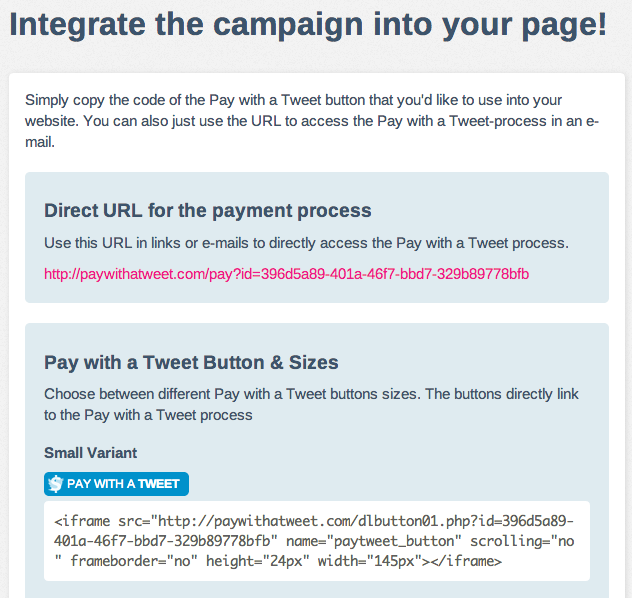




 Love is in the air. Online, love equals consumption of content.


