Shared posts

04 May 21:19

What to Do When You Can’t Control Your Stress

by Srini Pillay

Everyone can relate to a day at work that just starts off on the wrong foot.  Perhaps you have just had an argument with a spouse or loved one, or you’re late for an appointment even though you had a million reminders in your schedule, or your inbox contains e-mail after e-mail with what seem like impossible demands.  These days can feel really long, and before you know it, the smile is wiped off your face, and you dread your next customer or colleague-facing interaction.  In fact, you become filled with anxiety at the thought of your next appointment, and you realize that you have to get your act together.

At first glance, this seems easy.  Why not just refocus on positive things?  Or, even better, try to reframe.  “This day won’t last forever,” you think.  Didn’t somebody tell you recently that you do have control over your thoughts when you are anxious or expecting the worst?  Then how come this simply doesn’t feel easy when it is one of those days?

A recent study in Proceedings of the National Academy of Sciences by Raio and colleagues (September, 2013) explains why, when your stresses build up, it becomes more difficult to get your anxiety under control.  In a well-designed experiment, investigators found that people who had acquired a conditioned fear response (think Pavlov, or if that’s too obscure, think of “boss-panic” or “board meeting-freeze”) were able to suppress these associations and calm themselves down only if they did not enter the situation under stress.  If they were already under stress however, this threw the “fight or flight” system off, and controlling their thoughts was much more difficult.

When you’re having one of “those” days then, this stress can make it difficult to control your anxiety when you are dealing with your boss or board meeting.  No amount of “one step at a time” or “control only what you can” reminders actually work. This is because when you’re stressed by that argument at home or the inbox that makes your stomach turn, this stress interferes with your ability to control your automatic negative expectations.  Usually, this control relies on your prefrontal cortex (PFC), a brain region that is designed to manage your anxiety of anticipation without a problem.  However, when your emotions are already in a boil because you have just come out of a heated situation, your PFC cannot function normally, and it fails you.

So what?  Why is this study important?  Well, if you know that your day has started off on the wrong foot, then trying to control your PFC is probably not your go-to strategy.  Rather, managing your anxiety with methods that bypass the PFC or do not require it, would be the way to go.

These methods are much like mindfulness meditation, whereby instead of controlling your thoughts, you learn to let go of them.  This is also called emotional introspection, and is thought to quiet down the brain’s anxiety center directly without controlling thoughts. When your anxious thoughts come at you, rather than grappling with them, you let them just be.  Observe them.  Notice them.  And simply direct your attention to something other than your thoughts, such as your breath.  This may not be easy at first, but if you are having one of those days, it is likely to be much more successful before any meeting that provokes anxiety in anticipation of it.  Also, practice makes perfect.  If you practice this method often, you are likely to get better at it over time.

The moral of the story then is this:  If you are having a stressful day at work or come to work in an irritable frame of mind and have to enter a potentially anxiety provoking meeting, “reset the needle” on your brain’s anxiety center by closing your eyes for 5 minutes and trying out the breathing technique I described above.  It will likely be much more successful than trying to talk yourself out of your anticipatory anxiety or impending freak-out.

24 Feb 17:55

Why The Differences Between Buyer Profiling and Buyer Personas Matters

by Tony Zambito
Why The Differences Between Buyer Profiling and Buyer Personas Matters image 5054820405 51aeb16fca n

#9: difference (Photo credit: giuvax)

Many marketing and sales executives agree the need to understand buyers today is greater than ever. Markets and industries in B2B are still trying to figure out the impact of changing buying behaviors. There is heightened attention on customer acquisition – mainly because it has become a guessing game.

What many executives are discovering is the search for understanding and insights into changing buying behaviors can be confusing and lead to dead ends. One problematic area of confusion is the understanding and terminologies related to buyer profiling and buyer personas. Oftentimes, used interchangeably as if these two vastly different concepts are one and the same.

Choosing The Right Approach

How B2B organizations approach understanding buyers can make a big difference. During the past few years we have seen a rise in the use of the term buyer personas. However, it can be a major source of confusion. This is true when you start mixing terminologies and referring to buyer profiles as buyer persona profiling. Or calling any information related to profiling buyers – buyer personas. Worse yet, I have seen Big Data terminology referring to buyer persona analytics. To me, this is just getting carried way.

How do executives then make the right choices when it comes to understanding buyers? In a recent conversation helping a marketing executive, this very dilemma was posed to me. The dilemma sounds like this:

“Here’s what I am struggling with. You read and hear a lot of information on buyer personas these days. It is all over the map though. In a lot of cases I don’t see much difference from basic customer profiling that we get from our CRM and sales. So, help me understand what am I missing here.” Vice President, Marketing

I get this. There is plenty of incorrect information floating around on buyer personas. It seems anything or anyone related to content marketing has their own way of labeling buyer personas. For marketing and sales executive, it very well could be the case of the more you read and listen, the more confused you are bound to get.

Bringing Clarity To The Differences

With the need to gain deep understanding of buyers today, choosing how to approach doing so is of importance. Making the wrong choice can be a set back. To make the right choice, having clarity on the differences is critical. First, let us take a look at the reference chart:

Why The Differences Between Buyer Profiling and Buyer Personas Matters image Buyer profile versus buyer persona

What should be evident is buyer profiles have a broader focus on buying factors and processes. They are also slanted towards target and account segmentation perspectives. Obviously, a bent towards the traditional sales and product marketing approaches from the past few decades. On the other hand, buyer personas have chartered new territories into buyer insights, buying behaviors, goals, situational context, attitudinal mental modeling, and emotional as well as personal values.

Perhaps the most important clarity to be gained is while buyer profiling has its place for understanding buyers, it is a reflection of highly commoditized business factors – not deep buyer insights. Inadequate for understanding decision-making today heavily weighted towards brand experience and brand values. Simply stated, B2B businesses will not be able to differentiate solely on the basis of understanding commoditized business factors.

Buyer Story Lines

One of the main purposes of buyer personas is to help businesses understand the story of buyers. Delivering key insights into the buyer’s narrative and the impact on their goals, emotions, and personal values. Without this understanding, B2B organizations will have a tough time telling their own story. Their story will be out of context to their buyer’s story line.

When you have buyer profiles masquerading as buyer personas, this only hurts the ability of B2B businesses to tell their story. They wind up messaging buyers on factors as oppose to connecting on compelling insights-based story lines. One mantra I have stated over the years and is worth repeating is – placing a picture on a buyer profile does not make it a buyer persona. Sadly, this is what is occurring in many cases – causing confusion as the marketing executive above states.

There is plenty of evidence lately about the ineffectiveness of content marketing with upwards of 70% considered ineffective depending on which B2B marketing survey you read. At the core is poor understanding of buyers; even after companies have indicated they invested in buyer personas. I have personally been involved remedially with companies whom have previously invested in buyer personas. What is usually found is what were called buyer personas should have been classified as a buyer profiles.

Why It Matters

A compelling downside to getting confused between the two is it results in a lot of noise for your buyers. And, when it is too noisy, buyers will tune out. Buyers today are inundated with non-differentiating content and messaging. This is how buyers are reacting, according to a recent qualitative buyer interview I conducted:

“Look, I am a satisfied customer but I gotta tell you, I don’t read any of their stuff anymore. It is just too much, doesn’t mean anything, and I don’t have time. So, it just gets deleted in my mailbox.” Senior Director

Now, I could wax eloquently on why the differences matter. But, I think this basically makes the point.

Should B2B businesses do both buyer profiling and buyer persona development? Absolutely. What is important is to know is how each approach is designed for distinct purposes. While buyer profiling helps with broader understanding of likely groupings or segments of buyers, buyer personas help us understand the deeper goals and personal values of buyers influencing purchase decisions. And, as stated previously, helps us to understand the story of buyers.

Where confusion, noise, and downsides can occur is when buyer profiling is mistaken for buyer persona development. With plenty at stake in today’s rapidly changing business climates, this is a mistake B2B marketing and sales executives can ill-afford to make.

24 Feb 17:52

Is Your B2B Marketing Budget Too High? Too Low? Just Right?

by Ed Marsh

What’s a reasonable marketing budget?

B2B manufacturers are traditionally rather parsimonious in their marketing spend. So while Coke spent $2.9B (8.3% of $35B of revenue in ’10 – from BusinessInsider) on marketing, that’s irrelevant to a typical industrial manufacturing company.  Similarly the fact that Salesforce.com spent $25.4M to create $5.4M in it’s first revenue positive year (from Marketo) is meaningless.

Business models which require substantial investment in long-term assets to support manufacturing, and sizable current assets in the form of raw materials and inventory are quite different than knowledge based business models.  So intuitively it’s reasonable that budgets would be constructed differently.

And with nary an exception, in the industrial world of B2B marketing, the marketing budget is considered the first point of spending reduction flexibility in any budgeting cycle.  Per IndustryWeek, “marketing budgets are the most unloved of all budgets at most industrial companies.”

Sales vs. Marketing or Sales & Marketing

One distinction to consider is spending on direct sales vs. spending on marketing.  Traditionally, industrial companies have invested heavily in direct sales while marketing has occupied a lessor role – in perception and budget heft.

Research on recent changes in buying habits provides important insight into this allocation.  Where marketing used to support the first 10% of the sales process, with direct sales taking over thereafter, today buyers have learned to leverage digital tools and widely available information to self-service themselves through 70% of their buying process.  That reduces the burden on direct sales and substantially increases the marketing burden – not only in volume of work, but in scope and responsibilities as well.

Absolute vs. relative budgeting

If a manufacturing company is growing sales faster than they can grow production, clearly their marketing budget is more than adequate – even if it’s zero.  But precious few B2B industrial companies find themselves in that position.  Rather the question becomes “What must we spend to drive the results we require?”

That’s a notoriously difficult question to answer with traditional B2B marketing.  Techniques often offered no clear ROI and the impact of marketing activities was often difficult to associate with specific results.

That’s changed.  Now with properly planned digital marketing, B2B manufacturers in industrial markets can establish empirical goals for profit and revenue, and based on typical metrics, extrapolate what number of leads must be harvested and what activities will be required to drive those leads.  It’s even possible to predict how different intensity and pace of marketing will translate to different rates of business development success.

Therefore it’s not necessarily helpful to establish a marketing budget as a percent of revenue or some other arbitrary measure.

But there’s value in benchmarking

Is Your B2B Marketing Budget Too High?  Too Low?  Just Right? image b2b marketing budget for manufacturingNevertheless, since manufacturing companies have typically under spent, many are startled at the magnitude of investment that would be required to drive their desired results.

It’s instructive to look at guidelines and recommendations from various resources:

  • Gartner’s research on marketing budgets for ’12 found that on average manufacturing companies spent 10.6% of revenue on marketing.
  • Inc’s article on budgeting for ’14 marketing notes that according to IDC the weighted marketing spend (as % of revenue) is 6.4%.
  • Some marketing agencies angling for bigger contracts will suggest that B2B companies should spend up to 15%
  • The SBA suggests that companies with less than $5M in revenue should normally spend 7-8%

The bottom line?  Most B2B manufacturing companies in industrial verticals should probably plan to spend 5% of revenue on marketing.

That will create consternation for some and relief for others.  It’s not a hard and fast number, but it’s a “ballpark” planning guideline.

Any marketing spend should be against a detailed plan for execution with a clear ROI.  Simply making a small adjustment to last year’s number, or arbitrarily applying a percentage would be silly.  But understanding what’s generally considered appropriate will provide a solid basis for beginning your B2B marketing planning.

Want to understand how digital marketing could boost your B2B sales?  Check out our free guide.

Is Your B2B Marketing Budget Too High?  Too Low?  Just Right? image e4d93910 48ca 4b3b 818f df8a084b115e2

image / data source – Gartner.com
Is Your B2B Marketing Budget Too High?  Too Low?  Just Right? image

24 Feb 17:52

6 Best Practices in Remarketing

by Shanna Mallon

If your business isn’t remarketing, you’re missing a great opportunity. Remarketing (aka retargeting) is a powerful advertising tool for companies, whether they’re retail shops or B2B brands. It refreshes a lead’s memory and reinforces a brand’s message.

What’s more, when you use remarketing, you engage with warm leads, prospects that already have some familiarity with what you offer. Prospects who were interested in your products once are prospects likely to be interested again. So, when your business is ready to add remarketing to its outreach efforts, here are six best practices to keep in mind!6 Best Practices in Remarketing image increase roi2

  • Set clear objectives. It’s as true for remarketing as it is with any marketing practice: it’s hard to measure success without clear goals. Instead of coming up with a generic remarketing plan and then hoping for some good to come of it, establish super-specific, tangible goals you want to achieve. Examples of clear goals might be a certain percentage boost in traffic, a specific number of new sales in a month or a certain improvement in turning last month’s visitors who didn’t buy anything into new customers. Whatever the case, you want to make your goals specific, both in what you hope to achieve and in what time frame you hope to achieve it.
  • Test everything. You’ll see the best results from remarketing when you test every campaign you try. Track results on your PPC remarketing campaign for a set period of time, then change something (the call-to-action, the wording, the landing page for ads, etc.) to see how the results change. Keep conducting these trials and you’ll gain insight into what works best.
  • Segment specific audiences. Set up website metrics that collect specific audiences from your site’s existing traffic – people who spend a certain amount of time on a specific product page, people who exit at the call-to-action page, etc. This establishes targeted groups to which you may remarket later.

Related Class: How to Generate More Leads by Targeting Personas through Search and Social

6 Best Practices in Remarketing image small team presentation

  • Create custom messages. Craft your messages to your established targeted groups. Don’t use the same call-to-action or the same advertising style with every group. Rather, take time to evaluate and analyze the needs and interests of those particular users. This is one of the most useful features of online marketing and advertising. Customized messages greatly improve results, as demonstrated through Google’s dynamic remarketing where “clients (saw) click-through rates which were as much as 450% higher.”
  • Limit your ads. To avoid annoying followers or turning off your audience, implement limits as to how and when your remarketing efforts will display. For online ads, for example, you can limit the impressions your ads make to fans – allowing them to show a certain number of times a day. Likewise, you’re able to limit the types of places in which your ads will show — so you can prevent your ads from appearing on sites with suggestive, juvenile, profane, etc. content.
  • Use remarketing in multiple formats. There is more than one way to use remarketing, so don’t let yourself get locked into the box of thinking it’s only about Google AdWords or only about your PPC campaigns. There is also email remarketing, site remarketing, search remarketing, social media remarketing, etc. Each one presents potential value for converting specific groups of leads into customers.

Related Class: Reaching the Right Audience with Remarketing on the Google Display Network

Does your business already engage in remarketing, and, if so, what types? What other best practices have you seen to be important?

24 Feb 17:52

Sales Manager Chronicles: Coaching the Old-School Sales Pro

by Koka Sexton
My name is Barry Evolvowitz. I’m a sales manager in Anytown, USA. I love teaching my sales team how to generate leads, drive them through the sales funnel and close deals. I’m here to chronicle my journey as a Sales Manager so that others – like yourself – can learn from my experiences.

read more

22 Feb 19:28

WhatsApp and its ilk cost phone providers $33 billion in messaging revenue

Facebook’s $19 billion purchase of mobile-messaging startup is a stark reminder of how much money phone carriers are losing out on as competitors offer text and chat at no charge.
21 Feb 17:25

5 Ideas for Offers that Aren’t the Same Old eBooks

by Rachel Chapdelaine

What are some fresh ideas for content marketing offers?

5 Ideas for Offers that Arent the Same Old eBooks image ID 100194315 resized 600We love eBooks, but for the love of the digital gods, give us something else!

Your visitors are begging for it, and by now, you probably are too. Creating unique and valuable content can be difficult, especially when you are trying to provide diverse types of offers. Most inbound marketers seem to fall back on eBooks because they can be visually appealing, simple in design and hold a lot of information.

Although an eBook is sometimes the best format for presenting information to your visitors, it isn’t always the most appealing, especially when we fail as marketers to create the optimal visual to text ratio for the given content. While educating our visitors with words is important, we should keep in mind that visuals make up 90% of the information we process and are processed 60K times faster than text by the human brain.

Before you put all your content in the eBook basket, ask yourself the following questions:

  • “What format is best for this content?” Some content is not complex enough or appropriate for an eBook format.
  • What types of offers do I currently have on my website? If you only have a few types of offers, it may be time to diversify. If you’re not sure what’s going on here, take a look at the different types of website content offers at each stage of the buying process.
  • “How do my visitors prefer content to be presented?” Do your buyer personas prefer videos over eBooks? Creating offers relative to your buyer personas is one of the most influential factors in successful lead conversion and segmentation. With that in mind, your offers should target your buyer personas in both message and format.
  • “What types of offers will maximize lead conversion?” Offers are meant to educate your website visitors and convert them into leads. You can review previous offer analytics to see what types of offers have led to higher conversion rates, use a closed-loop marketing approach to help you discover what offers your previous or current customers have downloaded along the buyers journey, and run an AB test on offer types, not just CTAs, to see which offer format is more appealing to your leads.

So, let’s take a look at some top-of-the-funnel offers that aren’t eBooks.

1. Slideshows

You can create slides in your preferred presentation software and publish it in SlideShare or embed your own slideshow.

This is a great way to make your content more animated and download-free. Unlike most white papers (and some eBooks), this presentation format helps you cut your content into smaller chunks, making it easier for your audience to digest. Since your slide show will be embedded in your thank you page, be sure to include the link in your thank you e-mail for leads to access anytime after they exit the browser.

The slideshow below has excellent use of graphics, space, information and timing.

10 Powerful Body Language Tips for your next Presentation from soappresentations

2. Infographics

Infographics are useful for presenting information in an interesting way that is completely unique. They are excellent for combating information overload because they engage the viewer. In fact, studies have shown that colorful visuals increase willingness to read by 80%, and business that use infographics in their content marketing increase traffic by an average of 12%.

Yes, infographics typically aren’t placed behind a conversion form because they are images with social sharing potential. But with the time and detail that go into creating a great infographic, why wouldn’t you make an infographic collection offer?

Here are two examples of infographics that would do well behind a landing page:

Designer Katie Shelly created a collection of her favorite recipes as illustrations. In the food industry, a selection of infographic recipes is certainly enticing and form-worthy.

Neomam developed an infographic about infographics that is – wait for it – interactive! This is one of the coolest infographics I have seen. Its content is engaging, educational, unique in design and visually stimulating. How can you make your infographics stand apart from others about your industry?

3. How To and DIY Videos

Developing a video in-house can be time consuming, and let’s face it, time is money. Outsourcing video production can cost a pretty penny and delay publication due to revisions, so it’s best to start out simple.

You probably know that having a video on your homepage is a best practice, but how does one determine if creating a video offer provides the necessary ROI? Are video offers worth the investment?

Start by evaluating the value of potential leads you believe the videos will attract. Viewers are 85% more likely to purchase a product or service after watching a video about it. If you find the right balance between your investment and the number of leads generated, your effort will be worth it.

Efficiently optimizing your video all comes back to knowing your buyer personas’ preferences and pain points. Men spend 40% more time than females viewing online videos. 85% of internet users watch online videos, and of that audience, those 25 to 34 years old watch the most. What it the online behavior of your buyer personas?

4. Templates

Template offers can stand alone or be bundled with other content. Excel and design templates are an excellent way to educate your customer and help them along a process. If your content is complex, include an example in the download to make your offer a more valuable.

5 Ideas for Offers that Arent the Same Old eBooks image 605bafa6 4fe1 4949 8a5c 87d9929707a5

5. Checklists

You have years of experience in your industry. You know the best SOPs and the dos and don’ts. So, show your visitors a little love and guidance by showcasing your knowledge with a thorough checklist that your visitors can appreciate.  After all, you are an expert in your industry, right? Don’t leave them guessing.

image credit: nongpimmy/freedigitalphotos.net 5 Ideas for Offers that Arent the Same Old eBooks image

21 Feb 17:25

Your Top Questions on "Social Selling" Answered by LinkedIn, Evernote, and HubSpot

by dmcintyre@hubspot.com (David McIntyre)

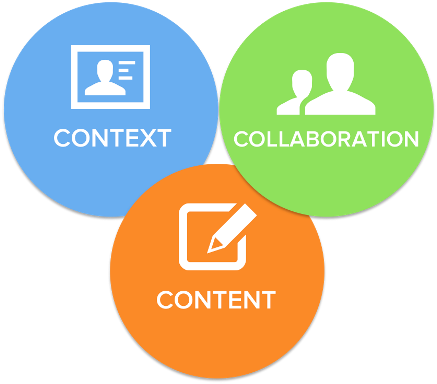
context-content-collaboration-1This post originally appeared on the Sales section of Inbound Hub. To read more content like this, subscribe here.

Social selling -- it's not just a buzzword anymore. It's a crucial part of how successful sales teams communicate with their prospects.

That's why last week, HubSpot, LinkedIn, and Evernote hosted a webinar to discuss how organizations can align their sales and marketing teams to develop the tools that make social selling work through context, content, and collaboration. Toward the end of the session, three critical and common questions were asked that we'd like to address today:

  1. My sales team doesn’t have the right materials to help my prospects solve their problems. What should I do?
  2. Our marketing team creates a lot of content each month, but the sales team never uses it. How can I solve this problem?
  3. How do you present yourself on social media in order to do social selling? How do you leverage your social presence as a salesperson?

Responses below come from our speakers: Mark Roberge, chief revenue officer at HubSpot, Koka Sexton, senior social marketing manager at LinkedIn, and Josh Zerkel, user education specialist at Evernote.  

Q: My sales team doesn’t have the right materials to help my prospects solve their problems. What should I do?

koka-sexton-linkedin-1

Koka Sexton, LinkedIn

linkedin-logo

"When it comes to the tools needed, I think it’s important for sales professionals to be as visible as possible within every social network that their customers may be a part of. That’s what social selling is all about. Obviously LinkedIn works well for that, because it’s a professional network, but it may be Twitter or other networks as well.

I think this is why what HubSpot and Evernote said about how marketing and sales can be aligned is so important. Mark put it best when he said, “There is no social selling without content.” And so to salespeople, I would say that you need to hold your marketing professionals accountable by providing you with the right content that’s in the right context for your buyers.

I think context is something that’s often overlooked because where the buyer is within the sales cycle should determine what type of content you’re handing them, and ultimately how you’re delivering it to them. If email open rates are low, then why not try posting something in your social stream so you can feed your prospects the information they need at the time that they need it?"

josh-zervel-evernote

Josh Zerkel, Evernote

evernote-logo

"When it comes to sales and marketing, I think it’s helpful to make sure there’s an open channel of communication so that collaboration can occur. So if a salesperson is talking to people on the phone and they know that they’re not able to send their prospects the right materials to close the sale or move things along, marketing needs to know that information.

That’s a sign that there needs to be more collaboration between sales and marketing to make sure the salespeople have the sales tools and materials that they need to close deals. And vice versa - communication goes in both directions. If marketing feels that they’re out of the loop when it comes to what customers are thinking or saying or what their actual questions are, it’s definitely worth it to have more involvement with sales."


Q: Our marketing team creates a lot of content each month, but the sales team never uses it. How can I solve this problem?

josh-zervel-evernote

Josh Zerkel, Evernote

evernote-logo

"There could be a couple of things going on. Sales might not be aware where the tools are or it may be that they feel it’s too difficult to access them. That’s why it’s critical to keep your content in a shared spot where it’s really easy to access and where salespeople feel comfortable.

The other thing that might be happening is that the tools that marketing thinks are so awesome may not, in fact, be so awesome when it comes to real world deployment and social selling. So it’s probably worth it at this point, if sales isn’t using the tools that are being deployed, to have an in-depth conversation about what is really needed, what are people asking for, and then go back to marketing and share those findings."

mark-roberge-hubspot

Mark Roberge, HubSpot

sprocket-hubspot-logo

"We’ve seen this problem at HubSpot ourselves to the nth degree -- it’s actually something we’ve been focusing on with some hacker technology in the HubSpot Sales Labs. As you can imagine, we’re producing boatloads of content that have to do with different problems people have, different industries, different buyer personas.

Then, on the other side of the fence, you’ve got sales actually out there talking to different buyers, on social media or via email, in specific industries with specific problems. It’s next to impossible, at this point, for those salespeople to know exactly the right content to follow up with -- there’s just too much out there.

We’re experimenting with a bunch of different solutions. We’re testing tagging content depending on the topic or persona, and then on the other side, having sales designate problems that different personas are having in our CRM. That way, the system can do some matching.


Q: How do you present yourself on social media in order to do social selling? How do you leverage your social presence as a salesperson?

koka-sexton-linkedin-1

Koka Sexton, LinkedIn

linkedin-logo

"Sales professionals, and really every professional, need to understand that their LinkedIn profile is not their online resume. They simply need to take themselves out of that frame of mind.

Your LinkedIn page is really your online brand, your professional profile.

So salespeople need to use their LinkedIn accounts as a resource, and not a resume. Internally at LinkedIn, we call that 'Resume to Reputation.' It’s really about the transformation in how you use your online persona, building your reputation and becoming that brand that draws people in.

This is where marketing can come in, too. If a salesperson is consistently posting great content about the industry, provided by the marketing team, it will be so much easier for that salesperson to build that personal brand and that social media credibility. That’s really what social selling is all about: Giving salespeople the tools they need to have genuine interactions on social media that help them in their sales processes.

Next Step: The 3 C's of Social Selling

With these core questions answered, feel free to check out the presentation deck from the webinar that prompted this discussion below. If you'd like to listen to the webinar recording for the full experience, just click here.

social media sales ebook  

subscribe to inbound sales

21 Feb 17:24

Consumer Decision Making Process and Social Media

by Angela Hausman, PhD

Consumer Decision Making Process and Social Media image decision making kgsolyUltimately, consumers face decisions. Consumers are a bundle of needs and they have to determine which needs to satisfy and how to satisfy them. Enter, the consumer decision making process.

In marketing, we’re really good at consumer decision making that involves deciding which brand to buy – do I want Tropicana or Minute Maid orange juice today? What we really DON’T understand is how consumers decide to buy orange juice versus water or even a new pair of shoes. Our understanding breaks down really fast as the products under consideration get more diverse. Hence, we’re better able to understand how consumers decide between brands or related products that satisfy the same needs, in this case water, versus a totally different product that satisfies a totally different need — shoes.

As marketers, we REALLY need to understand the consumer decision making process as that’s our only hope if we want to influence those decisions.

Consumer decision making process

We know consumers go through 5 steps in the consumer decision process:

1. Need recognition – the awareness that there’s a gap between where we are and where we want to be. For instance, I’m hungry and I want to be full. There’s some crap out there about Maslow’s hierarchy of needs, but it falls apart really quickly. Let’s just leave it at saying that consumers are little need satisfiers and move on.

2. Information search – once we determine that we have a little need we want to go away, we look at alternatives to satisfy that need. If I’m hungry, I start looking for a restaurant or rummaging through my fridge looking for something that isn’t too green or smells so bad I don’t know whether it’ll satisfy my hunger or kill me.

For more complex, risky decisions, we likely ask for advice (enter social media) or do some research about available alternatives (enter inbound marketing). For simple decisions, we access whatever memories, stories, and product recommendations we’ve stored away in the grey matter holding our important data – our brains.

3. Evaluation – which is just a fancy word meaning we use something to help us rank the product alternatives that turn up in our search. We might use a simple heuristic like einy meiny miney moe (sp? — anyone know how this is supposed to be spelled) or some complex cognitive decision making process, such as ranking each alternative on important features and benefits of the product that turned up in our search.

4. Decision — Whatever evaluation tool we use, we come up with some type of decision – we’re going to buy Brand X.

Now, don’t get me wrong, but sometimes things interfere with our decisions — we don’t have the money, we can’t find our preferred brand in the store, we can’t get credit, or someone talks us out of it. In fact, I’ve heard anecdotal evidence that there’s only a weak correlation between what we intend to do and actually accomplishing that purchase. It seems to me we should spend more time understanding why we’re so bad at actually following through on our purchase decisions, since marketers have spend a lot of effort (and money) getting us to that stage in the first place.

5. Post-purchase evaluation – but, we’re not done when we make our purchase, we still have to decide whether we like the product (satisfaction) and whether we like the process we used to make our decision.

Finally, we may have to overcome some cognitive dissonance, which is just a fancy word for being scared we made the wrong decision.

If you’re interested in learning more about the consumer decision making process, here’s a more in-depth analysis.

How social media impacts consumer decision making

Just a few years ago, advertising had a significant impact on the consumer decision making process. Sure, word of mouth had a bigger impact on consumer buying decisions, but pre-social networks, word of mouth just didn’t travel very far.

Now, social media gives word of mouth wings. The impact of social media on awareness, brand attitudes, and social norms is so strong we often refer to viral marketing or buzz marketing to reflect tactics designed to stimulate positive word of mouth.

In fact, check out this book on Word of Mouth Marketing from some really smart people:

Word of Mouth Marketing: How Smart Companies Get People Talking

So, how do you use social media to move folks through the consumer decision making process? Here are some ideas:

1. Need recognition - like I said early, we’re a bundle of needs. Social media shapes those needs. When you see pictures of Hawaii posted by a friend on your wall, you NEED Hawaii — in fact, I’m booking a trip there in May after seeing a friend’s honeymoon pics (Jen Consalvo and Frank Gruber from Tech Cocktail — check out their stuff. It’s great for tech startups and VCs).

Social networks also create norms. For instance, when I did a project for Disney, we found folks engaged in some friendly competition over who had visited Disney the most. This set the norm that it’s not only appropriate to visit the parks several times a year, but that somehow you’re odd if you don’t. That obviously increases revenue.

2. Information search – this is the most obvious impact on consumer buying decisions from social media. Folks ask friends for recommendation on social networks or consult social networks such as Yelp for evaluations before buying a product.

And friends offer unsolicited recommendation either directly, through their endorsement of the brand, or indirectly, by showing images of them with the brand or checking in at the location using apps like Foursquare.

4. Decision - yeah, I know I skipped 3. That’s because I’m not sure social media has a big impact on evaluations — the weighing of alternatives. But, heck. Maybe social networks impact evaluations by encouraging more emotional and less cognitive factors in the process.

Social media impacts consumers decisions because friends can help you find the brand you decided to buy, talk you out of it if they don’t agree, maybe even help find a way to pay for the item. Social media either helps overcome obstacles or puts more obstacles in the way of buyers who’ve decided on a purchase.

5. Post-purchase evaluations - social media has a big impact on cognitive dissonance. Let’s say you just bought a new car and a friend posts about a different new car they just bought and how wonderful it is. Cognitive dissonance.

Or, you just spent some money on a new dress and now your friends are talking about taking a ski trip next weekend, but you don’t have the money. Cognitive dissonance.

Or, you post an image of yourself in the new dress and everyone either tells you it’s ugly or ignores your post — because if you can’t say something nice, just don’t say anything.

How marketers can benefit from understanding the consumer decision making process

Duh. Isn’t it obvious.

Marketers need to understand the consumer decision making process in order to aid consumers in deciding to buy their brand — just one of the many reasons you should use a MARKETER to do your social media marketing NOT a journalist, an IT wiz (web design or business intelligence), or your cousin who has a great Facebook profile. You need to understand what’s going on in consumers’ heads to optimize your return.

Understanding the consumer decision making process and developing social media tactics to make sure your brand is making the cut at each stage in the process will propel your brand to the top.

Need help?

Whether you need a complete analytics strategy, some help with brand marketing, or some consulting to optimize your existing social media marketing, we can fill your digital marketing funnel. We can help you do your own social media marketing better or do it for you with our community managers, strategists, and account executives. You can request a FREE introductory meeting or sign up for my email newsletter to learn more about social media marketing.

21 Feb 17:24

How to Use Three Types of Data to Drive B2B Sales

by Megan Toohey

How to Use Three Types of Data to Drive B2B Sales image performance resized 600The following is an excerpt of a chapter from our recently published eBook, The Ultimate Inside Sales Prospecting and Management Success eBook.  

Lists and data go hand in hand. Some types of data can inform the way you develop your list, while other types of data are gleaned from already existing lists. According to NetProspex, more than 60% of B2B companies rely on “unreliable” data to fuel demand generation. In fact, bad data or poor data quality costs US businesses $600 billion annually. We want to show your company how you can prevent wasting money and use data to your advantage. In order to see success in inside sales, learn how to use data to drive sales by monitoring events that affect your B2B buyer and monitoring predictive analytics to inform you of the next step to take. Three different types of data can help you do this:

Big Data

Big data is a collection of data sets so large and complex that it becomes difficu to proces using CRMs or traditional data processing applications. The more data, the more diffic it is to visualize, capture, store, and analyze. According to The Big Data and Analytics Hub, only 23% of organizations that were assessed have an enterprise-wide big data strategy. However, big data helps sales reps spot large business trends and prospect accordingly. Data from diffeent social media outlets, industry trends, economic trends, transactions to videos, text documents, audio file are all outlets where Big Data can be aggregated. It comes in various formats so it is very challenging to collect and make factual sense from that data. Now that we know all of this information is available and we have the capability of capturing and recording the information, it is up to executives and marketers to understand how to utilize big data for their sales prospecting efforts whether they do so in-house or choose to pay for aggregated data business intelligence. While big data might seem like a catch-all term — it certainly includes trigger data and analytic data within — understanding how to use a large amount of data to your company’s advantage is crucial. Use the data to listen to your prospects and from those insights create the optimal message and contact them at the best predicted time possible.

Triggered Event Data

Triggered event data is information about an event that elicits a specific response in the sales cycle. In marketing, triggered event data can help guide workflows in the right direction. In inside sales, trigger data can help sales reps make more precise calls to the right buyers in their time of need. Here’s the process: First a trigger event occurs, which can be defined as an event that creates a pain or challenge, which precipitates a specific need to alleviate that expressed pain or challenge. Because of this newly created need, sales and marketing professionals can create a targeted list of prospects who have been or will be affected by the trigger event and will need to seek out a fitting solution for their company. The data in this list is trigger data, or data collected from a trigger event.

Inside sales managers may want to purchase a very specific list, or the trigger event could help inside sales reps focus on a targeted area of an existing list. For example, if Company ABC has a security breach regarding their financial software, that would be considered a trigger event and would elicit a response and create a need. The response would be finding a better solution to protect their financial information, and the created need would be something such as an upgrade to their existing security software that failed, working with their current software provider to ensure this will not happen again, or totally replacing their security software and purchasing from a new provider. If a security software company is notified of this trigger event through media coverage or through a business intelligence SaaS tool, the moment they are notified of the breach they could then immediately reach out to Company ABC and offer their solution. When using sales triggers to prospect, inside sales reps know where to focus their prospecting energy immediately. However, those who use trigger data need to constantly monitor events and be quick on the uptake.

Analytic Data: Predictive Analytics and Data Driven Sales

While trigger data helps inside sales reps pinpoint exactly when and where to prospect, analytic data helps inside sales reps find target audiences that are more likely to buy so they can focus their prospecting efforts there. Why would you want to use analytic data as well as trigger data? Analytic data can predict when and what companies are more likely to buy your service or product. Depending on what company you elect to use, their service can aggregate data from social media, industry trends, ERP data, data within your CRM, and other algorithms that calculate how likely a prospect would purchase your product or service.

Many inside sales reps have analytical data bolted into their CRM. When a sales rep looks up a company, their CRM will pull that analytical data on that company such as company size, revenue, number of employees, etc. For example, an inside sales rep is working on a health insurance project and is trying to convert prospects from one broker and carrier to another. If the sales rep is using predictive analytics they would be able to note that the prospect’s renewal date is not per calendar year and that they renew every November. Their buying cycle is therefore not the typical calendar year, so the sales rep can then assume it’s best to reach out to them in September before they start looking for other options. There are many different scenarios where inside sales reps can use these insights to better allocate their time and focus on prospects that are more likely to buy rather than those who are lower on the list. Here’s another example: an inside sales rep is selling high value technology. While using their predictive analytics service, they notice that 30% of their current list doesn’t even have the funding to purchase the technology they are selling. This data allows them to easily disqualify that portion of their list and spend more time prospecting those who have the necessary funds to purchase the technology.

Data-driven sales uses research from previous sales interactions to improve and forecast future conversions. Knowing how to manage your sales data, keep the information up to date, and monitor it for changes is essential. Data-driven prospecting, using the information and expertise at hand to analytically prospect, has better accuracy and provides a stronger and more accurate forecast. Using this method to prospect, along with predictive analytics, and lastly merging that data with sales reps’ experience will significantly increase your sales reps’ conversion rates.

What types of data do you use to develop lists and analyze and predict outcomes? Don’t forget to download our eBook to learn more prospecting and management strategies!

How to Use Three Types of Data to Drive B2B Sales image c3ef1458 7494 4afa 91ab 1102f7ccab2c4

How to Use Three Types of Data to Drive B2B Sales image 07f0bf66 1dcb 40ea acd9 7c4ff5605ab08

21 Feb 17:24

How to Use Content to Influence B2B Technology Buyers

by Rachel Foster

The B2B technology buying process involves more decision-makers than ever before. If you want to create content that helps you attract high-quality leads and turn them into customers, you must tailor your content for all of your audiences. This means you need to develop content not only for early-, mid- and late-stage leads, but also for all of the stakeholders within your customers’ organizations.

Related Class: How to Generate More Leads by Targeting Personas through Search and Social

According to a TechTarget Media Consumption Report, “corporate IT buying is a team decision-making process with 95% of IT buying teams having more than 2 members. The majority work in teams of 2–7 with a significant number of teams having 10 or more members.”

Here are examples of people who may be involved in the B2B technology buying process, along with what they are looking for in your content:

Researchers

Researchers are typically junior employees whose boss has asked them to research a specific product or service. Although these people usually do not have buying power, they have a lot of influence.

Researchers are often the first people who will visit your website to gather information. You want to make it easy for them to find what they need and pass it along to their boss. They may download your white papers or check out your blog to see if they like what you’re talking about. It’s also a good idea to provide them with a PDF overview of your products or services – such as a data sheet – so they can easily forward the information to their boss.

How to Use Content to Influence B2B Technology Buyers image iStock 000026565166Small3

End users

Your end users want to know that your solution works and will make their lives easier. Provide them with case studies and unbiased reviews from customers who have used your products and services. End users may also be interested in attending webcasts, watching demos, participating in forums and joining user groups.

IT influencers

If you sell technology products or services, your customer’s IT team will want to know how your solution will impact their network. Will it simplify things or make things more complex? How easy is it to implement your solution? How will it affect their network security? Be sure that your marketing materials address these concerns. You may need to create separate content geared specifically toward IT to answer these questions.

Finance decision-makers

Financial influencers will want to know if your product or service is worth the investment. After all, they are the ones who will sign your checks. Be sure to demonstrate your value in all of the marketing materials that you provide them – such as case studies, ROI calculators, data sheets, brochures and webinars.

Executives

Executives want proof that your products or services will help them reach their business goals and achieve ROI. Make sure that all of your content discusses the key business challenges that your customers are facing and how your solution helps to solve these challenges. White papers, case studies and ROI calculators can be valuable when you want to influence an executive.

Figure out who your key stakeholders are and create buyer personas for all of them. Learn how to identify these potential customers, build content that will educate them about your business, and compel them to move towards purchase in the Online Marketing Institute’s Demand Generation Certification Program.

Enroll today to gain an understanding of their needs and the types of content that will most appeal to them.

21 Feb 17:24

Content Creation Fundamentals

by Erika Goldwater

People have an irrational fear of writing I think. To be fair, I have a degree in journalism, so writing is not usually a struggle for me, however, there are times that I find the idea of writing daunting and I get stuck. Why do people struggle creating content, even short blog posts? I think it comes from wanting to be the best at everything and just not knowing how to start.

Content Creation Fundamentals image content typewriter1

How much content do we create? According to the State of Content Marketing Report 2014 Survey Report by LookBook HQ and Oracle Eloqua, marketers are producing a lot of content. In fact, 62% of content marketers produce at least one asset every two weeks, and 29% create multiple pieces per week.

How to start the writing process when you don’t know where to begin? One of my favorite pieces of advice came from last year’s MarketingProfs B2B Forum where I heard Erika Napoletano speak for the first time. She said, “Your words are the best words” and to me that pretty much sums it up. Stop worrying about writing War and Peace or the next “home run” piece, just start writing and then write some more and then optimize. Aspire to hit it out of the park, but don’t let it hinder your process.

The key to writing good content is having a holistic Demand Generation Strategy. You won’t get too far in developing relevant and engaging content without defining your audience, understanding what they need and want to hear, planning what you want to convey to your audience, and how you want to share information with them along their buying journey. Here are some guidelines for content creation to get you started keeping a few things in mind.

Strategy: A content strategy is not documenting how many pieces of content you will produce, the titles and when you will complete them. That is just an editorial calendar. To develop a basic strategy, you need to think about who your buyers are (because B2B purchases involve many different buyers), how they consume information, when they consume information in the buying cycle, what they actually like to read (or watch, or listen to), and why they consume information. When you create content think about how each piece is going to help your buyer with their needs and where it is most appropriate in their buying cycle. If you can’t do that- stop and figure that out first.

Audience: Always think about your buyer when you write. Don’t write unless you know who you are writing for. Write to them and for them. Your goal is to write something your buyer wants and NEEDS to read to help them solve their problems, not the latest product specs or brand propaganda. Not sure what motivates or concerns your buyer? Ask them. Ask your sales team too – just don’t make assumptions. Make understanding and helping your buyer top of mind when you write anything.

Content Type: All content types are not created equal. Content type is almost as important as the content itself. Not all information can be presented via a cool infographic no matter how much we as marketers want to develop one. Certain topics lend themselves better to certain formats. It all goes back to the strategy and knowing your audience. If you have technical content to share with your buyer, a white paper or instructional video with drawings on a white board might be the best choice verses a complex infographic or an eBook. You need to map content type to best fit the audience and their preferences and pay attention to when they consume the content in the buyer’s journey. Think about when and where your buyer will see this when you decide on which content type. It matters.

Voice: This part can be tricky – people often struggle to find their “voice” when writing content. Individuals have personalities and we tend to write and speak differently depending on topic and audience. It is important to let your personality/corporate identity shine through in certain areas (blog posts are an example where writing can be more informal) but not so for white papers or customer case studies. Again, know your audience and tailor your “voice” accordingly. You shouldn’t put forth cheeky, funny marketing-speak in your white paper or technical videos, but it might be appropriate for your eBook to a junior marketing audience. Once again, it goes back to understanding your buyer and that Demand Strategy.

When producing content, remember, you are the expert. Your voice and your content format matters, but you first have to have a buyer-centric strategy to ensure the content achieves your objectives. Don’t worry about perfection if you are new writer. Plan out what you need to accomplish, keeping the buyer’s needs in mind, and write. Then keep writing.

21 Feb 17:23

Is Your Content Created for Machines or Humans?

by Jeff Bullas

Is Your Content Created for Machines or Humans? image Is Your Content Created for Machines or Humans

Is your content created for machines or humans?

Content marketing faces the constant tension between writing for search engines or crafting it for people. But there is also another challenge that comes from decades of formal marketing education and training.

Overcoming the blind spot that demographic data sometimes imposes on marketers that has been collated and sifted by computers.

Marketers and business for a long time have often distilled their typical customer down to range of demographic data points.

If you really want to spell it out, according to WikipediaDemographics is the quantifiable statistics of a given population“. This means cold hard metrics and data such as gender, age, home ownership, employment and geographical location. This is data that marketers have used for decades to create and craft content, advertising and marketing messages.

These quantifiable statistics are a good start to understanding your target audience as a business or organisation but they are missing something.

A human face.

Why personas?

Personas have emerged in the past few years as a means to put a human face to the soulless and faceless stats of the demographic data scientist. The problem is that just considering a demographic profile misses that human element. So personas were invented to help the new breed of marketer understand the human side of the data.

Personas have problems, challenges and aspirations both as an individual and as an employee of a company.

Newspapers have understood this at a primal layer for a long time in what news they published on the front page. Editors and journalists have known for a long time that “If it bleeds it leads“. Fear sells newspapers.

Personas have personalities, they have fears, wants and passions. Demographics have ages, an assigned gender and even a college degree.

So it doesn’t matter whether you are a blogger, a brand or social media marketer, You need to make your content human.

Example of a persona

Personas can be very prescriptive or they can provide an overview of the type of person who is buying your product or service. Here is an example of a buyer persona used by Warehouse 1 (they are material handling equipment provider which supplies pallet racks and industrial shelving.

Is Your Content Created for Machines or Humans? image Content marketing Persona example 1

Source: Hubspot

Fred the facility manager is not just a demographic but someone who has goals and challenges. This buyer persona is putting that human face to the demographic of male, 45 and married with two children

The persona doesn’t just describe age and gender but lists the possible aspirations (goals) and problems (challenges) that a Warehouse 1 customer would face everyday in his job.

To develop a persona requires asking some questions.

Questions you need to be asking

To develop a persona you need to be asking some questions about your typical buyer. Here are a few to get you started.

  • What are their biggest problems and challenges in their job?
  • Where do they get their information from? Blogs, trade magazines, books?
  • What would stop them changing to your product or service?
  • What conferences do they attend?
  • How do they convince their boss to make a buying decision? Do they print off an ebook and put it on his desk?
  • What media do they consume? YouTube videos, white papers, podcasts?

When you start to know the answers to some of these questions then your content creation will begin to be relevant and appropriate.

Personas and content marketing

Creating a persona is both an art and a science. Contagious and engaging content that touches hearts and minds is your goal as a content marketer. The content not only needs to answer the questions but also be on the media preference of choice.

That maybe a video, a blog post and on Slideshare…. or maybe all three.

If you can put your content creators in the buyers shoes then you are well on your way to content marketing success.

What about you?

Who is your typical buyer? Have you given them a name, made them human and discovered their goals and challenges.

Look forward to your insights and feedback in the comments below.

Learn how to make your blog and content contagious

My book – “Blogging the Smart Way – How to Create and Market a Killer Blog with Social Media”will show you how.

21 Feb 17:23

How to Win at Marketing Today

by Patrick Murphy

How to Win at Marketing Today image Win at marketingEveryone in your company should be part of the marketing effort to attract and keep good customers. Often advertising is ineffective and the power of selling is overrated, because marketers don’t properly research and plan. Success comes from being customer-driven. Prioritize customers over internal meetings and paperwork. The best marketing people sell continually. They are not necessarily in big corporate sales forces — in fact, many run their own companies.

To keep up your customer appeal, hire people who value and honor customers and invest in training them how to exert extra effort to satisfy good customers. Empower your people to use their best judgment to do what’s needed to be responsive to customer needs.

Once customers become dissatisfied and feel they aren’t getting value for their dollar, they can easily go elsewhere, and it is very hard to get them to come back.

Are you employing Market Segmentation and Branding

To market effectively, segment your potential buyers for the purpose of positioning your product, creating your branding message and establishing your sales, pricing and packaging approaches. While you can segment your market by demographics or other distinctions, it is also effective to divide your customers into these four categories:

• Sophisticated (or knowledgeable) and okay — Typically these are big companies and good negotiators. You may sell on lower margins, but your sales are generally larger.

• Unsophisticated (or not knowledgeable) and okay — Typically these customers look to you for advice, technical assistance and support. You may sell less to each customer, but you have higher margins.

• Sophisticated and not okay — These are high risk and low margin customers, which often have long decision-making delays and payment delays.

• Unsophisticated and not okay — These are smaller customers who don’t appreciate your product, aren’t loyal and can sometimes spell trouble in the form of lawsuits.

Create your own definition of what is okay and not okay for your company. Direct your marketing toward those you consider okay. Don’t think that the customer is always right.  The “not okay” customer is always wrong. Let your “not okay” customers go away and treat the right customers like kings and queens.

Start on the ladder of growth

Develop action plans to build revenues with each of these seven growth levers for your company:

1. Innovate and bring out new products.

2. Increase the number of end-user customers in current markets, new markets and new territories.

3. Develop new applications of current products and sell them to existing customers.

4. Decrease the number of customers that quit buying from you.

5. Increase your prices.

6. Find companies to acquire.

7. Find ways to increase market demand.

Do not just read the list, create and implement plans covering each growth mechanism! And here are some Key Tips on how to win at marketing…

  • Keep your focus continually on the customer and what the customer values.
  • Target customers whom you consider “okay,” however you define a good customer.
  • Do not pursue customers who are “not okay.”
  • Use the seven growth levers, including bringing out new products, increasing the number of end-users and developing new applications of current products.
  • Continually support your brands by living and loving them everyday.
  • Calculate the dollar value of each product and use this “dollarization” to make decisions about what to promote.
  • Chose a brand name based on your product’s positioning and target segment.
  • Keep your brand name on top in your ads; put it in the headline, not just in the copy.
  • Try being your own customer to understand what customers experience in dealing with your company — and if you find problems, make changes to fix them.
  • Regularly thank your customer and keep your communications with them consistent.
  • Don’t reduce your product quality to cut costs; instead, sell the full value of your product and price it accordingly.

How to Win at Marketing Today image 87f5f98e b397 42e7 849b d77e9e259d8c

21 Feb 17:23

Sales: Breaking Down Barriers Of Doing Business

by Dan Newman

Let’s review some hot and not-so-hot items in the world of technology.

Hot: Cloud

Not: On Premise Software and Hardware Solutions

Hot: Software as a Service (SaaS)

Not: Perpetual License Based Software

Hot: Bring Your Own Device (BYOD)

Not: Appliances and Use Specific Devices

Besides the obvious fact that they are all technology related terms, what do cloud, SaaS and BYOD have in common that is driving all three of them to be “Hot”?

Before I answer, how much more likely are you to buy something when you are able to try it first?

Think about this in work and in life. Have you been to Costco over the past few years?

You walk down the aisle and it is a meal on wheels; carts everywhere with “Free” samples of Skinny Pop popcorn, chocolate covered blueberries, pork dumplings and VitaMix juice blends. My wife and I sometimes laugh about going there on the weekend for lunch because by the time we finish our shopping we are usually stuffed.

Notice the quotes I place around “free” sample.

Nothing is free. By the time you get out of Costco it is rarely under $200 (in my experience). And if you are anything like me, you wind up buying at least one thing that was on “free” sample each time you go.

The free trial once again worked and led to another conversion.

Let’s go back to those technology driven items I talked about at the beginning of the story.
Cloud, SaaS and BYOD—have you figured out what they have in common?

How about that each of them is a platform that allows the upmost simplicity for resellers to gain users?

How many free, freemium or free trial services are you using today?

Do you use Google Apps, Dropbox, Pandora, Base CRM, Amazon Prime, Netflix or Constant Contact? While all of these cloud-based services offer a free edition, every single one of them offers a premium (subscription service).

They also all drive revenue off of you using their free services so either you are paying to remove ads or you essentially are the product (by which ads are pushed to you).

The beauty of the model that all of these companies have is that they make it extraordinarily easy for you to try their products. In the past year I have used or I am currently using every one of those above applications and have upgraded to paid editions of three of the services. In every case where I upgraded to a paid version I started out using a free trial.

Bottom line is in the world of selling, whether it is the food you buy or the technology you consume, smart businesses are finding ways to let people try their product before they make you buy.

Can This Be Applied To Every Business?

Even if you aren’t in the business of selling cloud applications or groceries, is there still a place for your business to benefit by reducing barrier to entry?

In a world where people want to try before they buy, it should definitely be a consideration. Here are some questions to ask to determine opportunities to lower the barrier to entry.

What are the barriers to entry for the products and services we sell?

Are there opportunities for current and potential customers to become more familiar with or experience our products and services first hand prior to purchase?

Do we create unnecessary constraints to make it harder than necessary for a customer to try our products and services?

How could we set up no cost or low cost trials of our products/services?

While there are exceptions to every rule, businesses have long invested in ways to allow their customers more direct access to their offerings prior to obtaining a purchase.

Meaning even businesses that may not have a product they can completely give away have figured out ways to move their clients closer to a deliverable prior to asking for the sale.

Consider the following examples not in the Cloud/SaaS/BYOD world.

1) Car dealers have offered test drives, sometimes even allow buyers to keep a car for a day or two during the buying process and CarMax revolutionized the three-day, no fault return allowing people a no question out if they opt not to buy.

2) Homebuilders build model homes of the houses they are trying to sell to allow a potential buyer to imagine themselves living in the home.

3) Companies like Cisco, Apple and HP build elaborate experience centers where potential buyers can visit and become immersed with technology prior to purchase.

4) Numerous companies offer 30-day money back guarantees on their products and services.

Begging the question, what does your business do to make it easier for customers to engage?

Smart Businesses Find a Way

No matter what business you are in, there is a way to lower the barrier to entry and drive more customers to try what you have to sell.

The question you have to ask yourself is how much do you believe in what you sell?

If your offering meets a need and your customer experience leaves little to be desired, how risky is it to lower your customer’s barrier to entry?

Given that 68 percent of defection has to do with customer service and less than 15 percent defect because of product dissatisfaction, maybe getting more customers to experience what you have to offer is the key. Just so long as your customer experience makes the grade.

New Rules of Customer Engagement, an e-book for sales professionals (and their bosses)

21 Feb 17:23

The DeanBeat: What Facebook’s $16B acquisition of WhatsApp says about the rise of Asian games

by Dean Takahashi
The DeanBeat: What Facebook’s $16B acquisition of WhatsApp says about the rise of Asian games
Source: giaomeng/Flickr

Facebook’s $16 billion acquisition of WhatsApp, the mobile messaging service, certainly said a lot about how much the social network needs to catch up in mobile. But it also pointed to a big hole in the West’s strategy to capture mobile gamers and its vulnerability to faster changes happening in the Asian games market.

Facebook had previously been trying to tackle the fast-growing messaging market with Facebook Messenger. But it had very low penetration in places in Asia. The WhatsApp deal won’t help Facebook much with Asian market share, but it might very well stop the Asians — Line, Kakao Talk, and WeChat, from taking over in the rest of the world.

kakao 1Mobile messaging networks have taken off a lot faster in Asia, where mobile phone culture is much more pervasive and the networks are speedy. Japan was No. 1 in Google Play revenue in 2013, followed by South Korea, and then the United States. Games were the top category for both downloads and spending last year on Google Play and iOS. In South Korea, Kakao Talk games dominated the list of the top apps and games. In Japan, Line dominates the list of top downloads.

These were simple messaging apps in the past, but they are morphing into social messaging apps, or platforms sitting on top of mobile platforms. And they are becoming a great way to promote games as users share their activity with their friends.

In theory, if we get the same kind of fast mobile networks in the U.S. — as folks such as Redstone Technologies and Artemis Networks are promising — then these mobile messaging networks could take off here as well. And we’ll see a very grand battle between Facebook-WhatsApp and the Asian mobile messaging companies.

So why am I talking about this in a game column? Because cute games with gifting features have taken off on the mobile messaging networks in Asia. Games are making these networks monetize extremely well, and they are making these networks spread. Now that Facebook has acquired WhatsApp, it’s time for both of those companies to figure out how to make games work on their platform, and how to make money from those games.

So far, WhatsApp hasn’t embraced games in the same way that U.S. competitor Tango has. But that could change as the company’s attention turns to making money. In South Korea, about 90 percent of Google Play revenues come from games. AppAnnie describes Japan, South Korea, and the U.S. as “app store superpowers.”

The question is whether what has taken off in Asia will take off in the U.S. and the rest of the world. There are obstacles to that. Nongamers may come to hate the game spam on these networks, much like they objected to game spam on Facebook’s desktop application over time. And the U.S. may never have the same kind of mobile culture as the Asians and Europeans do.

This discussion about games on mobile messaging networks in Asia is just a subset of the larger picture in the game business. Alina Soltys, senior analyst at the merger and acquisition consulting firm The Corum Group, pointed out in a recent talk at Casual Connect Europe that nine out of ten of the top acquisitions in the game industry last year involved Asian buyers.

Line has become huge in Japan and other territories.
Line

Line has become huge in Japan and other territories.

Asia has an advantage because it pioneered the use of free-to-play as a business model. Bedeviled for years by piracy, Asian gaming firm Nexon pioneered free-to-play, where users play for free and pay real money for virtual goods, more than a decade ago. Now, on a worldwide basis, free-to-play dominates mobile games, accounting for 93 percent of all revenues in the app stores, according to AppAnnie.

Europe isn’t as poorly positioned as the U.S. for this transition to mobile and free-to-play. It has a big mobile culture and mobile gaming leaders such as Supercell, Rovio, and a longer tradition of leadership in mobile games. And it is good for the U.S. that it still is home to platform owners such as Microsoft, Amazon, Google, and Apple.

The U.S. still has its strengths in AAA content for all platforms. The best game developers in the world have traditionally been based here, a fact acknowledged by Tencent executive David Wallerstein. But the Asian companies have been buying U.S. companies. They have been investing in great studios such as Riot Games and Epic Games. And they are learning how to become great AAA game companies. When you put that together with the trends favoring them in smartphones and tablets, mobile messaging networks, fast network speeds, and free-to-play experience, it isn’t hard to figure out who the leaders of the game business are going to be in the future.

I don’t know if games on mobile messaging networks will take off in the U.S. But if they do, then the Asians will probably be the winners.

When you look at Facebook’s acquisition of WhatsApp, it almost seems like a move to counter this inevitable trend. And $16 billion doesn’t seem like such a big price to pay for that, after all.


21 Feb 17:21

How a Culture of Content Marketing Increased One Company’s Web Traffic by 3000% in One Year

by Marcus Sheridan
I’ve discussed again and again here at TSL the need every company has, if they truly want to skyrocket their web traffic, leads, and sales—to establish a *culture* of content marketing within the organization. In order to make this culture a reality, it’s critical all employees have a shared vision and understanding of what their [...]
21 Feb 17:21

How to Build Marketing Operational Efficiency

by Alexandra Burnett

How to Build Marketing Operational Efficiency image YzZww1WDBAOYTnrKQGSW 0ZLSe zL6MSZyugGU6cI05dbXyg4ktBzdO6CFYHeBULAVr27uR50 KDDd de s kSDSWYz 7he1gVLvBmSQoFha1INkkXMPO 6wPQ2

As the economy has struggled, operational efficiencies have become more and more important – we’ve come up with some ways to help you improve marketing efficiency in your organization.

As a business, you have to constantly consider and improve the efficiency and effectiveness across your marketing section.

But what are the best practices for maintaining and building your marketing department, and with that, your company?

Some questions that you should consider are:

  • How does your organization’s investment in marketing compare with your competitors and peers?

  • What are the best practices that other marketers are working to?

  • How aligned are your sales and marketing teams?

  • What ways can marketing and sales work together to eliminate duplicated effort?

  • How aligned are your activities and messages with your customer’s buying journey?

  • What does a best-in-class organisation’s marketing function look like at both strategic and tactical levels?

  • What KPIs can you use to judge the ROI of marketing?

  • How can technology help you to improve efficiency, prove ROI and bring sales and marketing processes together?

A 2012 survey of marketers  in the UK and Germany revealed that repetitive tasks are a major hurdle for marketers in improving efficiency. Marketing automation can help improve efficiency by:

  • Sending automatic lead nurturing emails when prospects take certain actions

  • Scoring leads based on engagement and interaction so prospects are only contacted by sales when they are ready

  • Showing you what content is effective and what is not

  • Segmenting your audience based on their responses to your digital communications

  • Delivering strategic intelligence for future improvements

The Aberdeen Group identified that in best-in-class companies, sales and marketing work together using inbound marketing techniques and marketing automation to:

  • Plan, execute and follow up on campaigns to drive efficiency and improvements

  • Define lead scoring and lead management processes that pass leads back and forth between them until they are ready to convert

  • Improve the quantity and quality of leads passed from marketing to sales

  • Develop content and collateral based on the input and ideas of both teams and what the data reveals about past activities

Organisations where marketing automation and CRM are integrated reap multiple rewards:

  • Shorter sales cycles

  • Larger deals

  • Proven ROI on marketing programmes

  • Fully trackable customer journeys

This infographic shows the difference integration can make:

How to Build Marketing Operational Efficiency image opDTzx0Js08T71hDzdwQmjVersASccQMLi7OP5KdnPqwg1eL86T 8lAuWO H7ZjrumzVGZ7Cvhp2FnT7iI3YPtAgDjMhLGW1QP1Mk9IxvQNJZJfQ2Y4rma8Bew2

To improve efficiency in your business, you need to know what marketing operations look like in the best-performing organisations. There are four key areas where you should improve process efficiency and overall marketing effectiveness:

  • Infrastructure – identifies the tools needed to drive efficiency, develops processes and manages data

  • Alignment – looks at where and how processes can be integrated to eliminate duplicated effort and silos

  • Measurement – puts in place benchmarks, process compliance procedures, performance measurements and processes for proving ROI

  • Insights – builds best practices and buyer knowledge resources to inform plans and budgets

For more guidance on improving efficiency, read our eGuide ‘Building a lean, mean sales and marketing organisation’ now!

21 Feb 17:20

The Ultimate B2B Marketing Guide to Drive Meaningful Sales Results [Infographic]

by Ross Simmonds

The world of B2B marketing is becoming more and more complex. The emergence of big data, social selling and content marketing has changed the way B2B marketing is done. As the industry continues to change, our approach to connecting with buyers and potential leads must also change.

This resource is meant to help you understand the B2B marketing and sales landscape so you can identify the right strategies and tactics for your organization. After careful analysis and years of experience in B2B marketing, we have looked at the effectiveness of everything from Twitter to cold calls. We hope that this infographic can act as a guide with all the b2b marketing and sales information you need to be insanely successful.

Feel free to share, tweet and even save it for a friend.

The Ultimate B2B Marketing Guide to Drive Meaningful Sales Results [Infographic] image infographic b2bmarketing

21 Feb 17:19

The Top 4 Reasons to Have a Facebook Business Page

by Laura Donovan

While most company owners are being told that having a Facebook business page is important, many are still not clear about why. This is actually dangerous for the business owner, who may start a page because it is expected, put the blue “F” on his website, and then not have a clue about what to do next. Here are my four reasons, with some explanations:The Top 4 Reasons to Have a Facebook Business Page image small biz socialmedia1

Impression and branding. While companies spend a lot of time polishing their images and using various branding techniques, Facebook business pages provide a more granular branding strategy. On Facebook, the company’s brand is not only defined by the company, but also by the fans of the page. The comments, questions and even the complaints of the page’s audience reveal a lot about what people think of the company. However, how the company responds to them often says even more. Companies must understand that this is an environment where they may not control the conversation, but can definitely steer it in the right direction. Companies that pay attention to how their fans are interacting with the page, acknowledge that interaction, and then tailor their content and responses accordingly will see a better result. These data can also be used by other departments within the company (sales, customer service, product development, etc.) to further shape and grow the business.

Related Class: 7 Elements of Highly Effective Facebook Marketing

Warm leads and referrals. In 2012, comScore released a report that analyzed the impact of social media exposure on several large companies. The results showed that fans of a large retail store were 19 percent more likely to purchase at that store in the four weeks following exposure. Even more impressive is that friends of fans were 27 percent more likely to purchase at the store. In a separate study of four leading retailers, they found that exposed fans spent more than twice as much at these stores, and friends of fans also spent significantly more. The data on friends of fans is significant, as the reach for brands on Facebook increases exposures of fans to friends by 50 to 200 percent.

The Top 4 Reasons to Have a Facebook Business Page image rsz shaking hands small2Customer service. No one wants to hear negative things about their products or services. However, these negatives can almost always be turned into positives when posted on Facebook. If the response is quick, appropriate and solves a problem, the loyalty of your fans may be strengthened. A sincere apology or, better yet, a good solution may spark positive comments that get shared among fans and even friends of fans. Even something as simple as providing a missing instruction booklet or helping someone understand how a specific product can be used more effectively can create the positive feelings a company desires. When fans, themselves, answer questions or help other fans, the page’s worth increases exponentially.

Website traffic/SEO. Many marketers believe that website traffic from Facebook and other social networking sites will soon surpass that from Google. While this is a bold statement, there are studies that confirm that Facebook does generate traffic back to websites. Also, Facebook posts, themselves, are indexed by Google and other search engines. With the right strategies, those posts are conduits back to a company’s website. Facebook managers routinely send Facebook fans and friends of fans to the company website. For example, writing a good profile with a website link, using a Facebook tab with a special website offer, linking to a contest on the website from Facebook or posting an interesting or provocative image with a link to a piece of content or a blog post on the website are just a few ways that savvy business owners are leveraging Facebook pages to generate website traffic.

As the social media field becomes more crowded, these skills are more crucial than ever. It’s not enough to simply post new product announcements on Facebook; marketers need to command attention, craft relevant informational content, and engage in authentic ways. Learn how by enrolling in the Online Marketing Institute’s Social Media Marketing Certification today!

21 Feb 17:19

Engage New Sales Leads with a Slow and Steady Approach

by Craig Klein

Engage New Sales Leads with a Slow and Steady Approach image Engage New Sales Leads with a Slow and Steady Approach

Personal and business relationships have a lot in common. Think about a time when you met someone new and they immediately started acting like you are long-lost-friends. In most cases, it feels a little icky and causes you to pull away. Even if you may have a foundation for forming a relationship, you stop the connection in its tracks to avoid encouraging a potential weirdo.

Your sales leads will apply this experience to companies who try to move to fast into their buyer-centric world. Being gentle and respecting their boundaries is crucial for you to be able to communicate with them on any level.

Sales Leads Source

Using your CRM software dashboards, you will see patterns for the sales leads from different channels of your marketing efforts. A sales lead you get from a trade show will move through the buying process in a different way than someone who traded contact information for a free eBook on your website.

Knowing the behavior of your sales leads and the actions they take with your content gives you clues about how to integrate your email marketing campaigns for results. Connecting the dots between lead source and sales lead behavior allows you to establish relationships in a way that is meaningful to the recipient of your emails.

Consistency Breeds Trust

You have also experienced having a friend who is inconsistent. As time goes by and you realize that you can’t rely on their behavior, the relationship suffers.

The same is true in your email marketing campaigns. The beauty of having CRM software fully integrated with your email marketing program is that consistency is a relatively easy goal to accomplish. When sales leads get used to the consistent content value, frequency and cadence of your messages, they are much more likely to open, read and respond to your email marketing. Consistency also affects the number of unsubscribe requests and complaints.

The trust developed from consistency begins with your welcome series. Set expectations about what, how and when the sales lead will get email from you. Use consistent “from” names, subject line structure and content formats. If you aren’t getting the results you want, it’s okay to make changes…but do it slowly. Don’t change everything overnight. The relationship will feel like you are a complete stranger if it all looks different.

Relevant and Useful

Revisit your customer data often. Set goals for your email marketing campaigns and use your CRM software to develop dashboards to inform you about what the sales lead wants.

Ask customers what they want. You can do that with surveys, welcome preference questionnaires or simply asking them one question in a personal sounding email. Allow each sales lead and customer to craft their own preferences within the options you offer them.

Some of your sales leads will unsubscribe if you send email marketing messages more than once per week. Others will forget about your company altogether if you don’t send them an email campaign every couple of days.

Increase engagement of your email marketing campaigns by simply making them feel heard and respected. They will trust your company on a deeper level and go a long way toward a long-term relationship.

Image via Shutterstock

21 Feb 17:19

Why Content Marketing is Key in 2014

by Trent Dyrsmid

Why Content Marketing is Key in 2014 image why content marketing is key in 2014

THE FUTURE…

People attempt to predict it every day.

From football bets to market shares, we like to think that we can know what’s going to happen tomorrow. I don’t claim to be able to see the future, but I have been in the business for awhile, and I have some ideas on how the landscape is changing for Content Marketing.

I think anyone who is in the business of selling (which should be everyone) should have some idea of how content strategy can help grow their business.

Before I make my predictions, I want to touch on a few key points of conversation. For those of you unfamiliar with content marketing, I feel it is important to explain what is changing, and why. This will give context to my projections.

  • Why Traditional Marketing is Losing Out
  • What Makes People Like Content Marketing
  • Things to Avoid When Creating Content
  • Ways to Make Quality Content
  • Future Predictions
  • What That Means For Your Company’s Future

Why People Are Leaving Traditional Marketing Behind

Imagine the stereotypical salesman type. Smart clothes, overly excited smile, a firm handshake and an unrelenting devotion to his product. Sound familiar?

Why Content Marketing is Key in 2014 image car1

Fun Fact: He Doesn’t Own That Same Car

It’s a persisting image, and buyers are quick to point these people out when they see them. The fact of the matter is, people hate feeling sold to, and traditional marketing often has this feel to it.

While traditional marketing is still a powerful player in the advertising world, the general public is getting better at identifying these prompts and blocking them out.

Not only that, there are companies literally selling tools to block your messages – for example, through DVR, Ad Block, or caller ID.

So how does this all come back to “content marketing”? Content marketing has become mandatory because consumers have shifted the buying process.

In a previous article on how to start a content marketing strategy, I explain how nearly 60% of the buying process is done before the customer even contacts a vendor. Even more telling, 64% of customers research a company and their product online before they make a first purchase, meaning your initial contact with a customer probably happened before you knew they even existed.

All in all, there is a shift in the possession of knowledge. There is less and less a need for a well informed sales staff, and more need for a way for self-informed customers to find your product.

So what if the information these customers want isn’t on your site? These people are looking for information from various sources to solve a problem, and if you don’t provide them with useful information they will look elsewhere.

If you don’t answer their questions someone else will. It’s that simple.

This is one reason that in an study from Allurent, they found a lack of information was the reason that 67% of customers did not buy.

This is why providing helpful information for your customers (content marketing) is one of the most important pieces of your inbound marketing strategy.

So Why Are People Drawn To Content Marketing?

Why Content Marketing is Key in 2014 image content growth

Provided by Refined Practice

Since customers are educating themselves on products and services, it’s critical to help them find the answers they are looking for.

Being helpful is the foundation of a proper content strategy. In the words of Jay Baer, author and content strategist, you should “help not hype”.

The idea is pretty simple.

Think about the last time you needed something and researched it online. What did you do?

You checked searched on Google for ratings, you looked at customer reviews (Amazon), you searched for competitors.

You used that content to make a decision and the site with the best content, the one that answered your questions best, probably won your vote. It’s the same when customers come looking for your product.

This is just how people buy today.

In the old days, advertisers tried to interrupt people from what they were interested in. Today, marketers need to become what people are interested in, and providing genuinely helpful information (content) is the way to do this.

The Problems Companies Have With Creating Content

First and foremost, quantity does not equal quality.

It’s one thing to put out posts and share to social media, it’s another entirely to start seeing a positive ROI from that content creation.

The beauty of a quality content marketing campaign is it can generate revenue for your company. I have proof of that, but it took many months and strategy adjustments in order for me to show a return.

It’s easy to see why some companies can get discouraged.

Neil Patel has some great examples of ways companies have been creating bad content. He brings up some great points, and I’ll summarize a few below.

1. Writing in a Vacuum.

Neil calls out companies who rely solely on the marketing department for content creation. His point is companies expect the marketers to do all the writing and content creation, and then when they need to create things for topics they don’t understand, are left out to dry.

So with that in mind:

What good is the content you create without the ability to satisfy readers? What good is it if it doesn’t answer their questions fully? Yes, quality content takes time and costs money, but if you’re providing low-quality content… well, what’s the point?

2. Winning the Audience Over

Why Content Marketing is Key in 2014 image meme

Russell Crowe Knows the Art of Crowd Pleasing

At the end of the day you need subscribers, conversions, whatever you created your blog for. In short:

  • Have A Goal
  • Make A Strategy
  • Stay Focused

You are putting time and energy (and probably money) into this program and expect it to provide results.

It will undoubtedly take time to see those results, so in the meantime you need to stay focused on your goal and use your content creation strategically to support you in that goal.

So what can you do to win over the audience?

Be helpful. Be authentic. Include comment sections and reply consistently to feedback. Create contests and give away free material to loyal subscribers. Ask your leads or customers about experiences they have had and to share them with you.

Coke does a great job of this without really pushing their product.

Look at the way customer happiness is alluded to throughout the page. Notice the prompts and hashtag suggestions, none of which explicitly refer to Coca-Cola.

Coke has consumers generating content for them – and Coke gains brand awareness and trust in the process. You don’t have to do what Coke has done, but you do want to consider how your marketing efforts can be more customer-focused.

3. Lack of (Correct) Sharing

It should be clear to you that content promotion is every bit as important as content creation, if not more so. What you want to consider is whether you’re using the right social media.

What is the “right” social media exactly? I honestly couldn’t tell you. I know what has provided the biggest return for Bright Ideas so far, but that is constantly evolving.

I do know that promotion and content syndication on StumbleUpon has had almost no impact on my subscriber list, but Peep Laja had nearly 10,000 referral traffic from the site. So where does that leave us?

The right plan depends on your company. Again, Neil Patel has another great resource on social media sites for blogging.

As you get started, know that almost all sites benefit from using the following:

  • Facebook
  • Twitter
  • Google +
  • LinkedIn

Otherwise, test and see what works and what doesn’t. It’s always a changing environment. Share what experiences have worked for you in the comments section below. I love to hear other people’s experience what’s working or not. Which brings me to my last point:

4. Not Measuring Your Results

All of these suggestions would be useless if you couldn’t tell whether or not they are working. A proper content strategy adjusts as you go. Find out where people are coming from and how they heard of your site.

For example:

  • Google Analytics provides some basic metrics for your to track where people are coming from and what media they used to find you.
  • Hootsuite is a social sharing tool we use to see what is being shared and where. It’s great way to gain insight on what people are saying about your blog or website after they visit.
  • Marketing Automation is a way for your company to track how your leads are behaving. You can then customize their experience by offering them relevant offers and products and by making points of what they do in your site. Infusionsoft is a powerful tool we use to monitor and automate our inbound marketing. If you need a way to manage your lead generation, please feel free to contact us.

The right analysis can provide ideas on how to grow your traffic and how to allocate your resources more effectively. Just throwing your content up and never stopping to see what sticks is not a sound strategy.

How You Can Create Quality Content

Creating great content starts with deciding who you are creating it for.

Next, you need to learn about their wants, needs, and desires. Once you understand your buyer persona, you are now ready to begin creating content for them.

Once you know what to write about, it’s time to get started.

When creating this content, be sure to reference other thought leaders. Mention them in your post. Link to them. Make them look good. In today’s world, this is one of the best ways to build a professional network – and when you help them, they will return the favor.

Future Projections

Ah, at last…

While I do not have much of a crystal ball, I do have a couple of educated guesses on the changing landscape. In a nutshell: All signs are pointing up.

Why Content Marketing is Key in 2014 image b2b content marketing

As you can see, the graph provided by KiSSmetrics shows 76% of Business to Business companies utilize blogging as part of their content marketing strategy and 87% use more than one content marketing technique.

Clearly there is a demand for these mediums and many companies are taking note.

As I mentioned earlier, a big reason for this is a shift in the buying process. People don’t like to be sold – but they do like to be informed.

I don’t see this trend reversing itself anytime soon. In fact, I see it accelerating.

As an example, consider Red Bull. The energy drink company has gone from promoting its product to becoming a full-fledged publisher. That’s crazy. Red Bull has been so good at creating content to drive interest in their brand that they have committed to massive undertakings in content creation.

They are creating amazing thrill-seeker videos and material which sometimes never even mentions the product they sell.

Why Content Marketing is Key in 2014 image youtube1

That’s 36 Million People Who Could Potentially Know Your Brand

Just take a look at the page Red Bull created for their space jump event. Red Bull could have plastered their log all over the video. Instead, they only put it in the places you’d expect. Judging from the 36 million views this video got, people didn’t mind the branding one bit.

Needless to say, it’s a promotional gold mine.

Some viral campaigns are informative, some are funny, some are thought provoking, but the point is they all do a great job of increasing awareness and promoting a product it for its benefits (tangible or otherwise).

I’m not suggesting you should buy a lucky rabbit’s foot and plan to make a viral video, I’m just noting the changes and the expectations customers have of companies.

Not everyone has the marketing budget to fund a space jump.

So what does the future look like for regular companies? Not everyone will have a huge viral success, but everyone can create content that the market will WANT to consume.

Here are some additional content marketing predictions from Jayson DeMers at Forbes, Shafqat Islam at Mashable, and Joe Pulizzi at Content Marketing Institute:

  • Content Will Be Its Own Department and Have a CO at Most Major Companies- This idea is pretty universal throughout all the prediction articles. Content is becoming such an integral part of inbound marketing campaigns that most companies – especially medium to large-sized – will employ full-time staff to keep up with demand. This should promote better content and push competitors in all industries to do the same.
  • Marketing ROI Will Be More Monitored Than Ever Before- With the more resources spent on content creation, companies will shift from having a “just get it done” attitude towards Social Media and Content Marketing, to a more conversion rate measured system. This shift will likely see the rise of more and more SaaS start-ups designed to monitor content marketing effectiveness.
  • Better Content Management Systems Will Arise- With the likely creation of content marketing effectiveness software, we will probably see a better system for the management of content creation (interestingly enough, my own SaaS falls into this category). Expect to see platforms which allow users to limit log-ins, monitor multiple forms of content simultaneously, and have a much cleaner way of distributing their information.
  • Mobile Content Strategies Will Determine Successful Campaigns- In May 2013, 56% of adults reported owning a smartphone. That number is only increasing. If companies plan on staying relevant to their consumer base, they will provide content which is mobile compatible at nearly all levels.
  • Google+ Will Grow With The Increase in B2B Companies Using It- Google has not quite seen the adoption rates people expected with the introduction of their new social media platform, but with the amount of businesses using the service and its importance to Google Site Rankings and Authorship, people expect to see growth in this new media.
  • RedBull Will Create A Netflix Original Series- Ok, maybe not. But it sounds good, doesn’t it?

By the way, Joe Pulizzi provided great insights in his Bright Ideas interview as well.

Lessons Learned

If you’ve come this far, you should walk away from this with a clear understanding of why Content Marketing is important and how it can help your company.

This is what you should take away from this:

  • Traditional Marketing is Intrusive, so Customers are Blocking it Out
  • People Like Content Marketing Because it Gives Them a Choice
  • Companies Write Bad Content Often – Don’t Be One Of Them
  • Writing Good Content Means Research
  • The Future Is Bright for Content Marketing

Be proactive, not reactive. Learn more from people who do content marketing well. I never stop looking for ideas and Influencers who can shift my perception.

Additional Resources

Don’t Be Shy

I want to hear about YOUR experiences. This is the whole reason I write this blog, to share with you and find out how you use or don’t use my advice. I’m a sucker for personal success stories. Nothing confirms my content is worth a damn quite like people telling me how it affected them.

From my own experience, and from talking with others who do a great job of it, I have collected tons of proven content marketing strategies.

P.S. Don’t forget about our contest: the best comment on each post gets a free copy of The Digital Marketing Handbook: The Ultimate Guide to Putting Client Attraction on Autopilot. (Proven digital marketing strategies you can put into action today.)
Contest ends one week after the post goes live.

Why Content Marketing is Key in 2014 image BIpostfooter7

21 Feb 17:19

What’s An “Online Lead Development Ecosystem”?

by Chris Creech

If you’re reading this, then you’re likely already using – or at least considering implementing – marketing automation (MA) software, such as Act-On. Which means you’ve already realized that marketing automation is key to the health of your digital marketing efforts. But what you may not have realized is that marketing automation is only one piece of your online lead development ecosystem.

Your – what?

OK, “online lead development ecosystem” may not make for the best buzz-term, but we at Newfangled feel it’s the best way to describe the many interrelated pieces of the online marketing puzzle that you should be using to capture new leads and nurture them into new business opportunities.

What’s An “Online Lead Development Ecosystem”? image Three Legs of Man   TriskelionThe lead development ecosystem consists of three key components: your website, marketing automation, and a CRM (customer relationship management) platform. All three need to be working together for you to effectively capture new leads, nurture them through the buying cycle, and achieve closed-loop reporting to attribute the revenue from these leads back to the marketing efforts that influenced them.

So let’s break the ecosystem down piece by piece, covering the key elements of each. This will allow you to evaluate your own lead development ecosystem and determine which of these three elements are in need of your attention.

1. The Website

Your website has three roles: attract, inform, and engage. It must attract new visitors to the site, inform them of your expertise, and then drive them to take action.

  • To attract new visitors, your site needs to be set up using the most current SEO best practices, which means that you should be utilizing meta data to frame your content, building links back to your site from other authoritative sources, and, most importantly, creating unique, indexable content on a regular basis. If you are doing these things, in addition to your other promotions via social or online advertising, then you should be organically attracting new visitors to your site on a regular basis.
  • To inform these visitors, you need to be creating expert content and adding it to your website on a regular basis. A good content strategy will provide content for every stage of sales-readiness: educational content for those researching your products or services, content for those evaluating your company as compared to your competitors, and content for those ready to purchase or even for existing customers.
  • Lastly, your site should drive visitors to take action. Getting visitors to engage is more than just putting a contact form on the site. Think about the various ways you can provide value in exchange for the visitor providing you with information. This can take the form of “premium” downloads for whitepapers or eBooks, event and webinar registrations, or subscriptions to receive content via email – as in a blog digest, newsletter, weekly specials, etc.

If your site is effectively attracting, informing, and engaging visitors, then it should help you maintain and grow your lead database in your MA software. Speaking of which…

2. Marketing Automation

The website will work to bring in new, fresh leads, but most of these leads will not be qualified … yet. This is where marketing automation comes in. Your MA solution needs to effectively gather leads from the website, segment them based on the information they provide and/or the behavior they have shown on the site, and then nurture them by sending targeted and relevant communications over time.

The goal here is to take these raw leads and score and nurture them until they reach a level where you can consider them to be qualified — that is, ready to be sent to your sales team.

I won’t go into great detail about the ins and outs of marketing automation, as there’s lots of great info about that already on this site. But I will say that your marketing automation platform, at a minimum, needs to offer all of the following features to do the job effectively:

  • List segmentation
  • Lead scoring
  • Automated programs
  • Email marketing
  • Reporting & analytics
  • Form and landing page creation
  • A/B testing
  • CRM integration

3. CRM

We use and recommend Salesforce to all of our clients, but I know that there are plenty of other great CRMs out there. The key to using your CRM as part of the lead development ecosystem is reporting. The CRM is the only one of the three pieces that knows when new business is closed. So, when you’re closing new business, you will need to make sure that you are updating it in your CRM and that it is pushing data back into your MA for closed-loop reporting.

A good CRM will also have campaign and lead source functionality. You will want to be very active about using these features, as they will help you track the effectiveness of your various campaigns as well as identify where your leads are originating – or at least what action resulted in their first being added into your leads database. These two things will show you what marketing efforts played a part in influencing that new business.

Integrating the ecosystem

The key with all three of these systems — your website, MA, and CRM — is that they are all well integrated. Information needs to pass freely from your website to your MA and then back and forth between your MA and CRM software. Our preferred combination for ease of integration of the three systems is: our proprietary content management system (CMS) for your website, Act-On Software for marketing automation, and Salesforce for CRM. These three have great integration capabilities and allow you to establish an online lead development ecosystem that works together seamlessly, making it easier for you to spend your time marketing and/or selling!

Drawing of Triskelion also from Wikimedia Commons.
21 Feb 17:19

Five Tips Friday: How Marketing Can Help Sales, Part One

by Margie Clayman

Five Tips Friday: How Marketing Can Help Sales, Part One image 2776596693 8a5f0384e1 nWe know, we know. Sales and marketing collaborating and getting along is kind of like suggesting that cats should start helping dogs. But sincerely, if you want your company to succeed, it is actually essential that your sales team and your marketing team work effectively together. The question may be, “Well, how do we do that?” For the next three weeks we are going to offer you ideas regarding specifically how marketing can help support the sales department. This week, our focus is going to be on how marketing can create advertisements that will help the sales team.

1. Promote the products that the sales team suggests should be promoted

Often marketing will want to promote the products that look the prettiest in an ad. However, for an ad to truly help the sales team, it is best to ask what products should be the focus of a new ad. This may vary by audience. If you are advertising in several different publications that information should be reviewed with your sales force so that they can make recommendations based on demographics.

2. Find out what arguments the sales team faces in the field

Marketers can have the tendency to infuse advertisements with…let’s just say it…some fluffy marketing-speak. One of the best ways to use advertisements, however, is to use them as a way to combat some of the most common complaints or arguments that your sales team faces on calls. This not only will make the ad more effective in general, but it will also give your sales representatives something to point to and reference when they face those questions in a meeting.

3. Hammer away at perceived strong points of your competitors

Your sales team hears right from the source what your potential customers may like about your competitors. They might hear that your competitors offer better pricing, a product that is easier to use, or a product that lasts longer. If you can do so in a credible fashion, pick away at those points, perhaps simply by reiterating your own strengths in those areas. Give your sales force a way combat those arguments.

4. Advertise in channels that will reach who the sales team most wants to reach

The head of your sales department very probably has a strategy in mind regarding how he or she wants to attack the market. The marketing department should not be afraid to ask that they become privy to those plans. By learning what industries and what titles are the most important for the sales effort, marketing can use tools like BPA audits to find the publications that will be most effective.

5. Qualify/Measure your leads

Reporting to a sales person that your banner ad got 75 clicks is essentially worthless. Forwarding qualified names and contact information to your sales department is a lot more valuable. Whether you are advertising in print or online, there are plenty of ways to qualify the leads that the opportunity will garner. Ultimately, this is the real point of your advertising effort – to drive qualified leads to your sales force so that they can nurture those leads and get the sale.

We hope these recommendations spark some ideas for your company. Next week we’ll be talking about how marketing can use social media to help the sales force at your company, so stay tuned!

Image Credit: http://www.flickr.com/photos/rainiernavidad/2776596693/ via Creative Commons

21 Feb 17:19

What Is A Lead Magnet And How Does It Help Sales?

by Todd Giannattasio

Driving traffic to your website is not enough to have an impact on your business. In order for those website visitors to provide any value to your company, they need to either become subscribers, leads, or customers through your website. One of the best ways to convert website visitors into leads is through the use of Lead Magnets. What is a Lead Magnet?

What Is A Lead Magnet?

A Lead Magnet is something that you offer prospects in exchange for something they give you in return. The most common goal of a Lead Magnet is to capture website visitors’ contact information and gain permission to market to them directly. In exchange for their valuable contact information, you as a business, need to offer something that your prospects deem of high enough value to trade their contact information for it.

The more information you hope to capture, the higher value your Lead Magnet needs to provide.

Lead Magnet’s get their name from their nature of attracting leads into the sales and marketing funnel.

What Are Different Kinds Of Lead Magnets?

What Is A Lead Magnet And How Does It Help Sales? image what is a lead magnetLead Magnets can come in many different shapes and sizes. Again, the more valuable your Lead Magnet is to your ideal customer, the more likely they will be to request it. Depending whether you are a service company or selling products, the kind of Lead Magnets you offer will vary. Some popular kinds of Lead Magnets are:

  1. Ebooks

  2. Templates or Digital Toolkits

  3. Email Series or “Mini-Courses”

  4. Industry Guide

  5. Buying Guide

  6. Educational Material On Ways To Use Your Product

  7. Free Consultation

  8. Free Assessment

  9. Free Demo

  10. Free Shipping/Discounted Price

How To Create A Lead Magnet

There are 4 basic steps to creating a quality Lead Magnet.

1. Choose A Product/Service To Promote

You want your Lead Magnet to be something valuable, but also highly relevant to your business so that you attract ideal customers and not just “everyone.” Think about companies who give away iPads if you enter their contest. Who wouldn’t want an iPad? Everyone is interested in getting an iPad for free, but that doesn’t mean they should be targeted as a potential customer for your business (unless of course you sell iPads or electronics or something).

2. Determine What Kind Of Value You Can Offer

Now that you know what product/service you are going to be promoting with this Lead Magnet, think about what kind of information you can put into a digital product that would be practical and valuable to your ideal customer.

Ebooks are always a way to put your expertise into a document that can help inform and educate prospects who are researching to make a purchasing decision. If you can put together some kind of worksheet with questions for a self-assessment or a spreadsheet with formulas to help people with their problem (you know, the one that you solve and they need you to fix), that can be something worthwhile to attract prospects.

If you sell products, offering a discounted price or free shipping is always an easy way to provide real dollar value to your prospects and get them to make a purchase. Offering a coupon code that will be emailed when someone signs up on your site is a good way to drive quick sales and memberships.

Whatever type of Lead Magnet you decide to go with, just remember that it must be seen as valuable to your prospects. Something that they really feel that they want and can help them.

3. Create A Landing Page For Your Lead Magnet

Once you have created your Lead Magnet, you will need a place for people to actually sign up for it. This would be a landing page on your website.

A landing page is a web page that has one, sole purpose, and that purpose is to convert that visitor into a lead.

Your landing page should be concise and simple, clearly telling your visitor what the value is, what they are getting, and how to get it. You’ll need a form to collect contact information.

The more information that you try to have a visitor fill out in a form will, however, deter them from filling it out and the length of the process leaves too much opportunity for them to be distracted and disappear before filling out the form. Keep your form as short and simple as possible, only ask for the information you absolutely need at this point. First name and email should be the max, and only using the First Name so that you can personalize your automated emails.

Oli Gardner has provided 101 more landing page optimization tips for you if you are going to be building it yourself.

4. Set Up An Email Autoresponse

You don’t want to have someone manually emailing everyone who fills out a form on your website. Plenty of different technology options are available today to automatically send email responses to your prospects. Whether you are using something built into a Gravity Form plugin, a lightweight email marketing third-party like MailChimp, or marketing automation software like Hubspot or Infusionsoft, this process should definitely be automated. It will save you time but more importantly, when someone fills out that form, they are going to expect their Lead Magnet offer immediately.

Driving Traffic To Your Landing Page

With your landing page set up, now you need visitors. We primarily focus on content marketing to drive traffic, but there are various techniques for driving traffic to your website. With content marketing, you would create different articles that focus on the same topic of your product/service and promote it via different social media channels. On those blog posts, you would have a link in your article as well as a Call To Action graphic in the sidebar and at the bottom of the post that would encourage the reader to go to your landing page.

A few other ways to drive traffic could be posting links to your landing page to your different social media channels. You could also run PPC campaigns for your Lead Magnet and drive those clicks to your landing page. Sending an email out to your list is a fast way to get traffic to your site, though they may not be ideal for this particular Lead Magnet if it’s focused on top of the funnel prospects.

Measure Your Results & Make Adjustments

As with anything in business, you need to be tracking and analyzing your Lead Magnet value. Using Google Analytics, setting up Goals is very simple for your website manager. Understanding how many people are getting to your landing page, where they are coming from, how many are actually converting into leads, and how many of those leads are becoming customers is how you can measure the effectiveness and ROI of your campaign.

Seeing where the best leads are coming from will allow you to focus more efforts in that direction and attract more prospects to your lead magnet. Understanding which leads are becoming customers and where they came from will increase the ROI of your efforts and make your business process more efficient and profitable.

Want To Learn More?

Want to learn more about strategies and tactics that can help your business grow?

21 Feb 17:18

57 Notable and Unique Content Marketing Ideas

by Jasmine Henry

The average marketer today uses 12 different content marketing tactics.

Let that statistic just sink in for a minute. Ten years ago, only a handful of us had even heard of content marketing. Today, your typical brand is investing in original articles, social media, blogs, eBooks and more. It goes without saying that the wider you’re able to cast your net, the better your results will be. You need to consistently come up with more content marketing ideas to publish even more engaging content.

Recent studies by the Content Marketing Institute have found that 78% of best-of-class marketers are creating more content than they were a year ago, and you can be sure this includes more visual content, audio files, and slideshows than ever before.

57 Notable and Unique Content Marketing Ideas image help

Audience is drowning in poor quality content these days.
Why not be their lifeguard at rescue with quality product they badly need?

To help you create a content strategy for the coming year that’s bigger, better, and bolder than ever before, we’ve compiled 57 fresh and inspiring content marketing ideas for new content types.

We’ve expanded beyond your basic blogs, eBooks, and white papers to incorporate some truly groundbreaking concepts:

1. Co-Creation

One of the fastest and most-effective ways to drastically increase the reach of your next blog article is with co-creation, a content marketing tactic where you collaborate with experts and compile their ideas.

2. Customer Interviews

Showcasing your client’s stories in content is pretty much a double-whammy – you and your audience benefit from the social proof of their story, while your customer can revel in the exposure.

3. Graphs & Charts

The easiest way to explain a complex idea isn’t with a ton of words, it’s probably with a helpful visual. We love the simplicity of the example below, which can be recreated in PowerPoint in about 30 seconds:

57 Notable and Unique Content Marketing Ideas image Content Marketer Graph

image credit: bruce clay

4. Employee Profiles

Major brands have been using their real-life employees to recruit and market for decades, an idea we famously saw with IBM’s “I am an IBM-er” campaign:

57 Notable and Unique Content Marketing Ideas image i am an imber

image credit: IBM

However, brands of all sizes can benefit from putting a more human face on their outreach efforts.

5. List.ly Posts

The only thing better than list posts are list.ly posts created in real-time, using a collaborative process. You can turn your blog into an interactive debate or strategy session with this awesome tool.

6. Brand Stories

The idea of the narrative is much older than content marketing, and there’s a fair chance it’s going to last much longer. If you’re in need of some inspiration on how to share your history, check out Aston Martin’s drool-worthy success in this arena.

7. Old-Fashioned Serials

Why not create a likeable brand hero and share their story in installments? While this tactic isn’t seen often, a well-written, longform story is sure to be an effective way to increase your subscribers and build some hype around your brand.

8. Podcasts

In case you hadn’t heard, podcasting is currently one of the fastest-growing forms of content marketing:

57 Notable and Unique Content Marketing Ideas image podcasting statistics

Don’t just settle for a single cast when you could launch a show, with the goal of growing a dedicated audience.

9. Thought Leader Interviews

What would you ask if you had a few minutes with Ann Handley? Or Joe Pulizzi, or anyone else in your niche? There’s a good chance your audience has wondered the same things you have.

10. Slideshare

Before you bristle at the idea of boring presentations, hear me out. Slideshare means serious business and serious traffic, and there’s no rule that says you have to use the network for sales-focused materials. Upload an visual-heavy eBook or create a storyboard – the sky is your limit.

11. Survey Results

Original studies and research may not be the easiest form of content marketing, but they’re a pretty darn effective way to build your thought leadership, improve links to your site, and gain loads of exposure once you publish the results.

12. Long-Form Articles

Google loves in-depth articles, which is why content that’s 2,000 words or more in length tends to rank higher in search. Strive for a mix of feasts, snacks, and meals with your content marketing.

13. Animated Gifs

Who doesn’t love an animated GIF? While these short, often humorous clips have traditionally been the domain of teens and humor-lovers, they’re a perfect way to break up your content.

14. Social Photography

Have a shutterbug on staff? Hand them a DLSR, and use the resulting images in all forms of content you publish. High-quality images will never go out of style.

15. Tip Sheets

The step-by-step guides your customer service representatives give over the phone to new customers every day could actually make a pretty awesome content offer to generate leads.

16. Pricing Guides

If you’re in a price-sensitive industry and offer better rates than your competitors, why not cut down your prospects’ research by creating a quick chart that shows how you stack up against the others?

17. Product Comparison Guides

It won’t take long to compile a chart that objectively compares your product or services to others in your industry, but you’ll be sure to win the hearts of prospects for making their life so much easier.

18. A Round-Up of Influencer Insights

Get straight to the heart of a complicated issue by interviewing a few thought leaders on a hot topic, and sharing their thoughts.

19. Online Communities

57 Notable and Unique Content Marketing Ideas image HomeDepotForums

By providing the space online and a commitment to moderate conversations among your prospects, you’ll win their trust and respect. The Home Depot is one of several brands with a highly-popular online community.

20. eLearning Portals

Imagine how much value you could provide to your customers by creating a center for online professional education, which could include videos, white papers, eBooks and more!

21. Quizzes

Silly, fun and educational quizzes have recently experienced a resurgence on social media. Why not provide value – or just a little entertainment – to your audience by building one fo your own?

22. Buyer’s Guides

What are the pitfalls of purchasing in your industry? Is there anything your customers need to know to make the most of their new product? Chances are, you know the answers to these questions like the back of your hand. Share the knowledge with a valuable buyer’s guide.

23. In-Person Events

Many marketers believe that in-person events, like free trainings or networking parties, are the single best way to get publicity with content marketing. If you haven’t invested in these yet, it’s certainly worth a try.

24. Company Manifesto

What does your brand value? Why do your employees love coming in every morning? These factors that make you unique also make you far more likeable, which is why they’re worth sharing with the world.

57 Notable and Unique Content Marketing Ideas image Manifesto 1

image credit:ComicsBulletin

25. Scavenger Hunts

Content marketing should be fun, which is why a scavenger hunt could turn your audience into a dedicated tribe of treasure hunters. The tactic’s been used successfully by major brands before, including Pepsi.

26. Mobile Apps

Designing an app for your own customers or prospects is actually pretty simple, with the help of easy-to-use tools like Conduit’s customer builder.

27. Statistics Round-Up Posts

You can provide an immense amount of value to your prospects by rounding up the hottest statistics and research findings in your industry into a single blog or eBook, a tactic we’ve used very successfully here at Writtent.

28. Conference Lists

It’s relatively simple to compile a list of upcoming industry conferences into a single, easy-to-use schedule for your audience – and this approach is actually bound to get you notice, since it’s a lot less common than you think!

29. Vine/Instagram Videos

Every second, at least 5 Vine videos are shared on Twitter. Short videos are one of the fastest-growing forms of content marketing, because they’re so incredibly easy to consume.

30. Instagram Direct Content

Less than 24 hours after Instagram’s Snapchat-inspired feature was released, the Gap was already using it to promote a contest. Entries were compiled when their customers sent in photos of themselves wearing the brand’s clothes.

31. Professional Groups Guides

Provide your customers with the tools to become better professionals by compiling lists of educational opportunities, including:

  • Networking Groups
  • LinkedIn and Google+ Communities
  • Twitter Chats
  • Free Educational Resources
  • Must-Follow Thought Leaders
  • Top Blogs
  • Webinars

Really, the sky is the limit when it comes to professional guide ideas for B2B content marketing.

32. Event-Specific Content

Make the most of your conference attendance by compiling insights on top speakers, most-ReTweeted thoughts on the event, or any other form of content marketing that can provide your audience with a first-hand look at the event.

33. Flickr Photostreams

Consider modeling your content marketing after Nightmares Fear Factory, a haunted house in Canada. They capture pictures of their frightened guests, which are published to a highly-popular and amusing Flickr Photostream.

57 Notable and Unique Content Marketing Ideas image flickr photostream

A terrific 1 Tb of cloud storage for free. Supports both photos and videos. Flickr is a killer platform to share your multimedia content.
image credit:Daniel Zeevi

34. QR Codes

QR codes aren’t just a trendy way to get your mobile prospects and customers engaged – they’ve got a load of potential for mystery or exclusivity-based marketing campaigns. Why not create a QR code that’s the only path to a secret landing page, and watch your hype build up?

35. Customer Loyalty Programs

If you haven’t invested in designing, promoting, and sharing a customer rewards program, it’s probably time to start. These initiatives can increase loyalty and referrals.

36. Infographics

Everyone loves an infographic – provided it’s valuable, unique, and has something new to bring to the table. Curate away, or create your own with a website like Piktochart.

37. Custom Images

Drastically increase shareability and appeal of your blogs by incorporating custom images, which can be created in seconds using a tool like Canva.

38. Employee Mascot

Does your company have a living or inanimate mascot, like a dog, cat, or even a teddy bear? Create some fun social media content “through the eyes” of your company’s unique representative.

39. A “Day-in-the-Life”

Inc magazine’s “The Way I Work” series offers revealing and fascinating portraits of how highly successful entrepreneurs spend their days. Repeat this formula on your own blog around employees, and expand to interviewing other leaders if it’s successful.

40. Tipping Point Portraits

Google ran a highly gutsy but successful content marketing campaign called “Zero Moments of Truth,” which profiled their customers’ thoughts in the moment when they decided to make a purchase. It’s certainly worth emulating!

41. Print Newsletters

Direct mail may be down, but what if your contacts could opt-in to an exclusive, mailed newsletter that included content you don’t print online?

42. Virtual Summits

Organize, sponsor, and promote a remote seminar or conference, where you invite industry leaders and experts to share via Webinar or Telecast software.

43. Spotlight Your Supply Chain

57 Notable and Unique Content Marketing Ideas image footprint chronicles

Eco-friendly brand Patagonia offers what they call “The Footprint Chronicles,” content designed to give their customers a look into where their clothing comes from. Why not showcase your vendors and supply chain in the same way?

44. Live-Streaming Broadcasts

Are your employees attending a valuable training? Why not share the insights you’re learning with a larger audience by broadcasting the session to the web?

45. Debates

57 Notable and Unique Content Marketing Ideas image marketing debate

image credit: hubspot

HubSpot isn’t afraid to let their employees go head-to-head on hot issues, in their highly-popular “Marketing Debates” series. Create a little tension and energy around topics that matter by sponsoring one of your own over webinar or a Twitter chat.

46. Screencasts

How do you accomplish your work load in a given day? Screencasts can be a highly effective form of tutorials, allowing you to showcase critical skills in video form without a need for expensive lighting or editing.

47. Exclusive Email Offers

Who hasn’t fallen for a “flash deal” that showed up in their email inbox? Let your subscribers know you appreciate their business by offering a limited-time offer that’s just too good to pass up.

48. Microsites

One of the most engaging ways to showcase one of your brand’s verticals, products, or even values is with microsites, which are literally mini-websites dedicated to just one topic. One of the most successful examples of this idea is Procter & Gamble’s “Being Girl,” dedicated to their pre-teen girl customers.

49. Tumblr

Tap into a younger audience and showcase your content curation skills on Tumblr, a fast-growing platform that fuses social media with blogging. While it’s a relatively underutilized form of content marketing, it’s become increasingly popular among brands.

50. Excel Spreadsheets

Make your prospect and customer’s jobs a little easier by letting your resident excel whiz put together a spreadsheet that quickly hacks a problem they may have. Who knows – you could even have one already that’s ready to share.

51. Powerpoint Templates

Literally everyone can use another original, visually-appealing and beautiful PowerPoint template in their lives. Sharing your designers’ work freely can be highly effective lead generation tactic.

52. Web Television Series

In one of the sharpest content marketing turns we can recall, XBox sponsored “The Guild,” a web television series about the lives of people who closely resembled their end users. Collaborate with indie artists in your community to do the same.

53. Facebook Apps

There are few shortcuts to developing a custom Facebook App…oh, wait. There definitely are. Even marketers who can’t code can create an engaging platform with App Builder or other similar tools.

54. Mobile Magazines

Just because consumers aren’t subscribing to print magazines like they used to doesn’t mean we don’t crave many attributes of traditional media – like the high-quality articles, gorgeous images, or exclusive ideas. Use a platform like FlippingBook to bring your publication to life.

55. Video Tutorials

Did you know that over 6 billion hours of video are watched on YouTube each month? You can capture some of this engagement by releasing your own, branded video tutorials.

56. Anonymous Insider Blogs

One of the most-popular brand presences on Tumblr is known simply as “OscarPRGirl,” which is supposedly written by an anonymous member of the Oscar DeLaRenta marketing team. Plausibility aside, it adds a layer of mystique to the insider glimpse given on this blog.

57. Web Comics

Are your buyer personas likely readers of XKCD, Toothpaste for Dinner and other beloved web comics? Why not create your own nerdy or funny comic strip to be shared regularly?

How many content marketing tactics do you use on a regular basis? Are there any you are especially excited to try out?

21 Feb 17:18

Features vs. Benefits: A Crash Course on Proper Messaging

by ssegundo@hubspot.com (Shawn Segundo)

presentWe've all been involved in a purchasing decision that required upfront research. Sometimes we're buying something we know a lot about, but more often than not, we are diving into some foreign territory.

As a consultant, my clients often ask me, "How should I speak to my audience?" Well, first and foremost, my answer is always make sure you're creating content that is valuable and helpful to your audience. But you've probably already heard that part. When we get into the nitty gritty details of that specific company's goals, however, we start talking about the importance of speaking to the benefits their organization offers, instead of focusing on the features. 

If that doesn't sound familiar -- selling the benefit over the feature -- this post will help you out with some reasons for doing this, and examples of how to do it properly.

Don't unnecessarily limit your audience.

A common pitfall I see my clients run into when they begin creating marketing content is that they assume a certain level of knowledge for their audience. There's a time and a place to do this, but remember, in the beginning phases of the buyer's journey, we need to talk to everyone in the initial awareness and educational phase first. Consider this the lowest common denominator -- or LCD.

When you get too technical and advanced in your writing style, you're potentially alienating a large portion of your audience. If you focus on highlighting the benefits of what you're offering, you'll naturally avoid this challenge.

Here's an example of what I'm talking about, using HubSpot's Sources application as the subject matter:

Features-heavy approach:

HubSpot's Sources application uses up to seven different original source types, and is flexible enough to let you isolate these different sources, and even view them using the time intervals of your choice.

What's wrong with this approach?

  • We're assuming a level of technical understanding. I've essentially removed the value of this snippet for anyone who doesn't have a thorough understanding of what those sources may be, or why they should care about them.
  • We're jumping the gun and assuming the audience is already versed in online marketing. 
  • We're not telling a good story, and storytelling is what makes your content meaningful at a visceral level.

Benefits-centric approach:

HubSpot's Sources application allows you to see exactly where all of your website visitors are coming from, and more importantly, tells you exactly where all of your new online customers are coming from. So instead of spending time wondering what areas of your marketing are generating ROI, you can know for sure, and spend more hours in your day focusing on the important things like blogging, social media, or determining which leads you should be sending to your sales team.

Why is this method so effective?

  • Remember the LCD concept I talked about earlier? We've removed the assumption of technical knowledge here, and we're talking to anyone who has any ideas spinning around in their head on how they can use the internet for marketing.
  • Talking to the LCD doesn't limit our audience, either. This statement is just as useful for people with high levels of technical or digital marketing knowledge.
  • We're telling a story that speaks to our audience's pain points. Everyone could use more time freed up in their day, and any marketer would love to know which activities are delivering the greatest return on investment.

Want some real life inspiration?

For inspiration on benefits-centric messaging most readers can find as close as their local mall, I'd suggest visiting an Apple Store.

From the most senior executive in Cupertino to the part time sales representatives in your local store, Apple has nailed benefits-centric messaging from the top down. Go in there and talk to anyone about any Apple product, ask why it's fantastic, useful, or so popular. After reading this article, I think you'll be pleasantly surprised to pick up on some of their tactics on how they use this skill.

Now go forth, tell a story, and talk about how you benefit your prospective customers!

Writing Good CTA

subscribe to the hubspot marketing blog

21 Feb 17:14

Can You Feel My Pain? Or Are You Blowing B2B Marketing Smoke?

by Ed Marsh

Our XXXXXXX product/service (e.g. machine, audit service, graphics software or travel agent) helps to reduce costs through greater efficiency.

An average justification

If you consume B2B marketing you’ve run across plenty of vanilla justifications like this.

It’s poor, at best, for lots of reasons:

  1. sounds like everyone else’s ‘reason’
  2. it’s based on generalizations and assumptions about circumstances
  3. it doesn’t articulate anything that anyone doesn’t know
  4. it remains focused on the product/service rather than the impact on the customers’ businesses

So why do companies continue to produce this sort of stuff?

  1. because that’s what ‘marketers’ are trained to do
  2. it’s easy and comfortable – nobody will get fired for being average
  3. they spend most of their time talking about their product – maybe they dig down into a primary business benefit, but probably probe no deeper
  4. with a myopic perspective of business they can’t empathetically embrace their customers’ real “why”
  5. the constant refrain of “people are too busy – they’ll only consume bullet points and don’t have time to really dig into business issues” constrains them

Are customers really so shallow?

Isn’t this a pretty insulting position to take?  That a B2B marketing campaign can’t really explain the value (as opposed to standard features and benefits) because customers’ won’t be patient enough or capable enough to grasp it?

Maybe it’s actually projection.  Or maybe it’s naiveté.  Either way everyone loses – because if it’s a legitimately good product, the manufacturer should be selling it, realizing profits and plowing some back into conceiving, creating, manufacturing and marketing other cool stuff.  Similarly the customers whose businesses would net benefit never have that opportunity.

So what’s the answer?  That’s complicated, but here’s a hint.  It’s not just marketing gimmicks.  Insightful metrics and slick marketing automation only really work if the product value, marketing insight and business value are substantial.

Sales excellence

Clearly the folks at the tip of your business development spear must be really, really, really good.  That means they must possess certain innate characteristics (intelligent, creative and courageous) and be free of others (fear of discussing money, coveting approval, counterproductive personal buying habits.)  And very few reps naturally develop the requisite skills.  So great sales training is important to polish their performance.  (Like that provided by Chris Mott – and here – and Frank Belzer@fbelzer)  But the tip of the spear is really now the very tippy tip – as research shows that the B2B buying process now is nearly 70% complete before a prospect is interested in speaking to a sales rep.  So increasingly companies need…

B2B marketing awesomeness

Your marketing used to arrange magazine ads and trade show booths.  Maybe you’d buy the phone directories for your reps to hammer on with cold calls, and perhaps you’d design a direct mail piece or two.  Now marketing’s role has changed (but often in B2B industrial companies the people – or at least the outlook and skill set hasn’t….) because they need to create (not just collect) sales qualified leads in a very turbulent and ‘noisy’ world….and then they need to sell them virtually because prospects aren’t interested in speaking to your rep!

But underlying them both

…is a need for real-world, broad business experience in the customers market.  Can all your staff be veterans of general management P&L responsibility?  Of course not.  But that means that key roles (like your sales manager and marketing resources) should not only have that experience, but have a Can You Feel My Pain? Or Are You Blowing B2B Marketing Smoke? image blinder b2b marketing agencies have blinders to industrial business issuesdemonstrated ability to abstract and apply their lessons learned and accumulated.  And further they must be able to coach and to tell the story in accessible ways for all your audiences.

Let me be blunt – most B2B marketing agencies are graphic design, website publishing and marcom/PR shops that have cobbled together buzzwords and technology to create a ‘digital marketing’ entity.  That’s fine for some clients.  But the disconnect in manufacturing and industrial areas is too big.  The approach and messaging simply don’t connect with the target buyers.

A representative justification

So back to the original ‘justification’ – let’s use an example of some sort of factory automation.  Of course there is an obvious benefit of increased efficiency and reduced labor cost.  Alert the media!  There’s a news flash!

But what if it’s a union shop, or a business in an area receiving municipal & state tax credits based on certain levels of employment?  What if labor costs are quite low?  Should you walk away from those deals?

The point is that only real pain for the buyer (not your shallow assumptions) matters – and even then, only pain which they can fix.  So what else might be lurking beneath the surface that you might uncover through questions (or blog posts, infographics, eBooks, videos, etc.) if you really understand their world?

  • Maybe there are quality issues – high reject and rework rates.  That can lead to lost customers, penalties for late/missed shipments and even jeopardize certain approvals and qualifications.  There are real, measurable costs associated with each of those.  (How many marketers have QC, industrial credentialing and manufacturing/delivery contract and logistics experience?)
  • Perhaps differentials in output between 1st & 3rd shift are even more pronounced than one would normally expect.  (How many marketers have industrial HR and production management experience?)
  • Maybe certain skills are particularly hard to staff.  (How many marketers have HR recruiting and retention experience for manual skilled labor?)
  • Perhaps bottlenecks in manual production result in large quantities of WIP inventory – and then as a result maybe there are constraints with commercial lending covenants that restrict investment in critical other areas of the business – or maybe even require expensive storage trailers (and inventory control losses) or are close to requiring an addition or move to a larger facility.  (How many marketers have negotiated commercial lending and factory real-estate transactions?)
  • And of course maybe demand is rising and there simply isn’t enough factory space to add new lines with the same manual production flow.  (How many marketers have lean manufacturing experience?)

Automation could potentially address all of these issues.  Some of them may be top of mind for the buyer.  Many may lurk below the surface as cascading implications aren’t necessarily obvious.  And nobody (whether they are a manufacturing guru or a marketing novice) will really be expert in all of them.

But having adequate business experience to understand the sorts of known and unknown pain points and challenges faced by a client’s customers (not just the client themselves) is critical to delivering real B2B industrial marketing value.

That’s what senior execs at manufacturing companies need to evaluate when they seek a marketing resource – not the portfolio and sample websites.

Want a perspective on how the B2B Sales & Marketing world is changing for manufacturers?  Download our book for free.

Can You Feel My Pain? Or Are You Blowing B2B Marketing Smoke? image 267ae2d9 7f5a 42b1 ac38 53b8d506a290

image – Mersky, Jaffe & Associates

20 Feb 17:12

Why 37signals Refocused on a Single Product: Basecamp

by Jason Fried

We're changing our name and changing our focus to just one product--and it's going to let us do even more for our customers.

A few months ago, I got into a heated debate with my business partner, David Heinemeier Hansson. We were discussing ambitious plans for new products and updates to existing products. I argued that we would need more people. He said he didn't want to run a company with 60-plus people, which is what we estimated we would ultimately need. I wasn't thrilled about going from 40 people to 60 people, either, but I didn't see an alternative, given our plans.

We realized that we really wanted the same thing: a company that was not too big, not too small--just right. But what did that company look like? We agreed to sleep on it for a while.

Fast-forward a few months. I had just gotten married and returned from an extended vacation, my first in years. As I checked in with everyone to see what people were working on and what they were excited about, everything suddenly clicked. I saw the company more clearly than I had in years.

So I dropped an email to David and two other company leaders and said, "I want to spend a few days together offsite to discuss the future of the company." I didn't let on what I was thinking other than to say I would present a vision for where I thought we should be going. I asked them to bring their own visions.

One morning the following week, in a hotel downtown, I started the meeting: "David and I have been talking about what products to build and how we should grow. We keep talking about doing more things, but we haven't entertained the other option: Do fewer. So I want to pitch something radical. I want us to put all of our efforts into a single product--our main product, Basecamp."

Basecamp, our project-management tool, represented about 87 percent of our revenue, 90 percent of our revenue growth, and 90 percent of our Web traffic, I noted. Our second most popular product was Highrise, a contacts manager that was very successful but represented a small fraction of revenue. Basecamp was our big hit, and it was time to be honest about it.

Then I dropped the big surprise: "Besides going all in on Basecamp, let's do something even more radical. Let's change the name of the company from 37signals to Basecamp. When we talk about who we are and what we do, we'll be saying the same thing. Basecamp the product, Basecamp the company."

We talked about pros and cons. What about the brand equity we've built into the name 37signals over 15 years? A lot of people, mostly in the tech community, value the name. But when you zoom out, far more people in the world know Basecamp. So while we were attached to the old name, we knew that Basecamp was the bigger bet.

We talked about how focusing on Basecamp would allow us to do more things with fewer people. We started riffing on all the things we would be able to do. We could expand Basecamp's reach: Basecamp for the Web, Basecamp for iPhone, Basecamp for iPad, Basecamp for Android. We were getting fired up. Every time we pushed back on the idea, we were able to push forward harder. It just made sense.

Many big questions remained: how to communicate the vision to everyone at the company, how to communicate it to customers, what to do with our other products and their users. By the time you read this column, the changes will have been announced, and in future columns, I'll talk about how we deal with some of these open questions. One thing is certain: We'll be able to give them the attention they deserve.


20 Feb 17:12

Now Anyone Can Publish Content on LinkedIn. Here's How

by Jeff Haden

How the program works, and tips to create content that could gain a major audience.

The question I'm most often asked is, "How can I be a LinkedIn Influencer?"

For those unfamiliar, the Influencers program started about two years ago. LinkedIn recruited movers and shakers, and thinkers and luminaries--and for some reason me--to write directly for LinkedIn Today (now called Pulse).

Previously, LinkedIn Today had simply aggregated outside content shared by users: the greater the velocity of user shares per unit time, the more likely a piece of content was to hit a category page or even the LinkedIn Today home page--the Holy Grail of page-view generation, since clicking links sent readers to the original site. (Unlike, say, the Yahoo carousel, which doesn't.)

Of course, that also meant readers left LinkedIn's site to consume content--and might not have returned. Hence the Influencers program to produce original content that resides on LinkedIn.

If you weren't an Influencer, you could, of course, share links to content you published elsewhere with your connections via your activity feed. Nice, but not the same.

Until now, that is. LinkedIn just announced that all users will be able to publish content directly on LinkedIn. The program will roll out over the next few months. You'll be able to write an article, publish it, distribute it to your connections, and if enough people read/share/like it, LinkedIn's publishing platform will give it wider distribution--just like the content published by Influencers.

Here's how it works. Once you sign in to LinkedIn you'll see a little pencil icon on the right-hand side of your "Share" box. Click the pencil and you'll go to a "compose" screen. You can add images, add links... simple.

Of course, publishing is the easy part; there's no guarantee you'll be widely read. If even a fraction of LinkedIn's 270 million-plus users publish articles, that will result in a lot of content fighting for attention. And LinkedIn's algorithm creates a natural meritocracy--to be seen by a broad audience, a number of people will need to read/like/share your content. (But at least you now have the opportunity to be widely noticed--which, if you think about it, is all anyone can ask.)

So how can your content have a better chance of being shared--and then distributed to a wider audience? There are already plenty of articles that recommend crafting clickable headlines, formatting articles to make them easy to digest, taking controversial positions to spark interest--standard stuff.

So here are my tips:

Write as if you're writing for one person.

When you hope for a big audience it's easy to write with that big audience in mind, and to go generic as a result.

Even if 100,000 people eventually read your article, each is an individual. Your article is a conversation (albeit one-sided) between you and one person. So don't think broader if you want your readership to be bigger. Write for one person. If your article can captivate or entertain or inform or motivate one person, it can do the same for hundreds of thousands. Don't talk to thousands--talk to me.

Think about why people share content.

Maybe controversial headlines work. Maybe an inflammatory article causes people to say, "WTF is up with this guy!" and share that article with their friends. Maybe. But I doubt it. Most people share content they feel is of value to their connections. Most people share content they feel reflects well on themselves: on their opinions, their points of view, their outlook on business or on life, etc.

So write what you feel. Write what you believe. Write what is important to you. Be genuine. People who think or feel or believe similarly will share your content with their connections, who are likely to think or feel or believe similarly, too, and may also share your content. And before you know it, you may have a lot of readers.

Think about what your readers need.

"Yay!" you think. "Now I can publish on LinkedIn! Think of all the business I'll generate!"

Maybe you will--but not if your content is a thinly-veiled sales piece for your products or services. (Or for you.) No one reads sales pieces. No one reads "look at me!" content. And even if someone does, definitely no one will share sales-pitch content. People read and share articles that benefit them--not you.

"But wait," you think. "If I can't follow the 80/20 rule and provide 80 percent content and 20 percent sales pitch, what's the point?"

If you focus on informing, educating, entertaining, motivating, inspiring, etc. other people, you will benefit--because other people will start to think highly of you. Focus solely on benefiting readers. That's the only way you will benefit, too. And it's the only way your content has a chance of being widely read.

In case it helps, here are a few of my articles that generated thousands of shares and 6- and 7-figure audiences:

Notice that while the topics are broad, the focus is on the individual reader. There are no sales pitches. And each provides the opportunity for individual readers to see themselves in the material--either who they are, or who they would like to be. Still, use them as thought starters. What works for me may not work as well for you.

Ultimately, your goal is to be yourself--because that is the best way to find your audience.